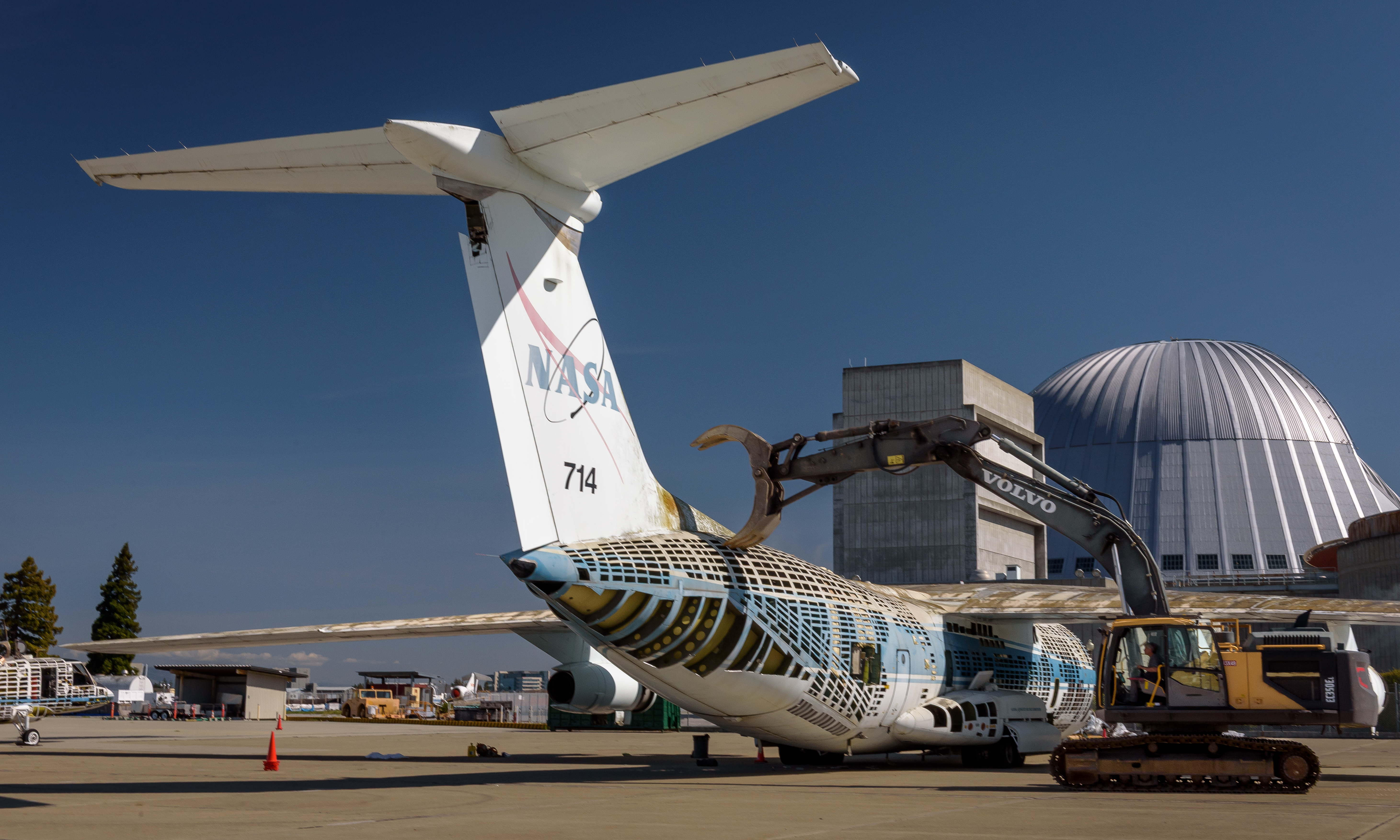
A Volvo Crawler Excavator severs the airframe, separating the tail section from the fuselage, of the modified C-141 Kuiper Airborne Observatory at Moffett Field, California.
NASA
The planned deconstruction, disposal, and preservation of historic parts of NASA’s decommissioned Kuiper Airborne Observatory is complete. Part of the airborne astronomy legacy of NASA’s Ames Research Center in California’s Silicon Valley, Kuiper conducted more than two decades of astronomical observations from 1975 to 1995. Later this year, the Kuiper cockpit will go on display at the Pima Air & Space Museum in Pima, Arizona, where NASA’s retired SOFIA (Stratospheric Observatory for Infrared Astronomy) aircraft is located, while its telescope will go on display at the Moffett Field Museum in the NASA Research Park.
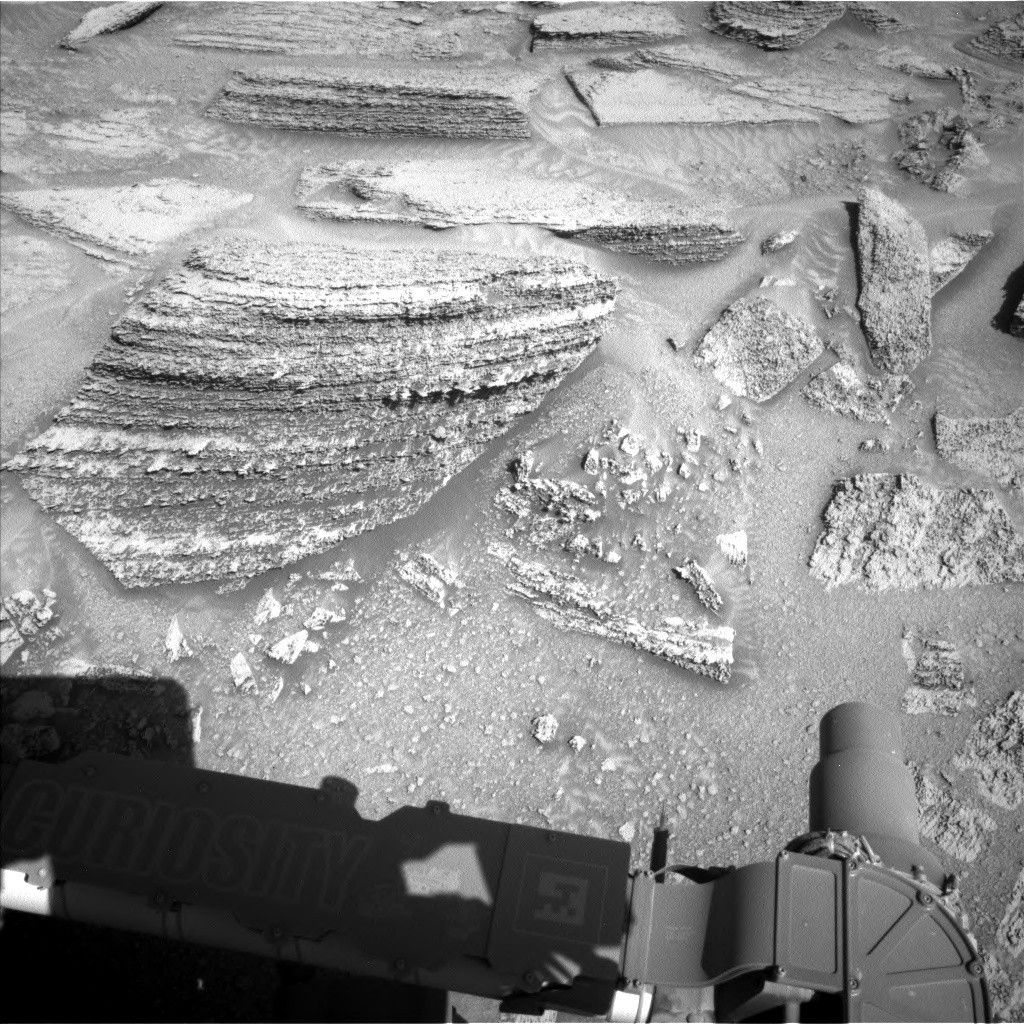
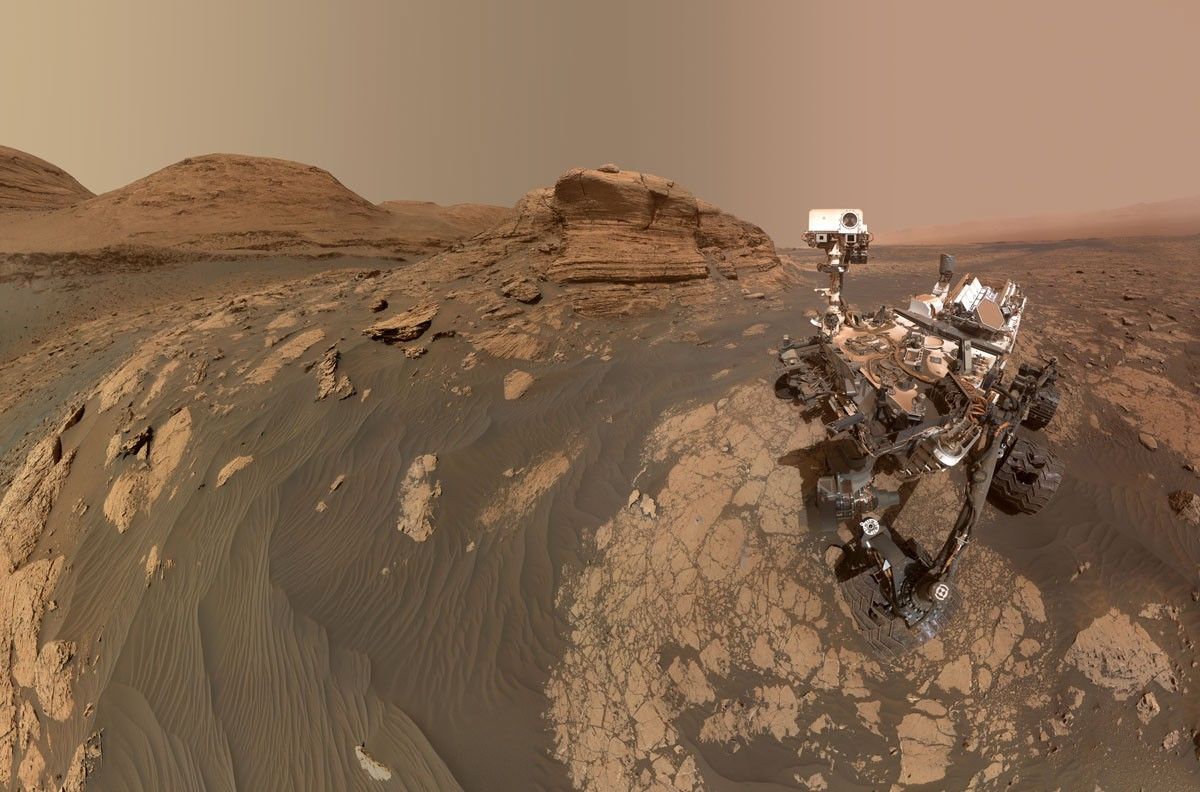
NASA’s Mars rover Curiosity acquired this image of target “Hale Telescope” (the layered rock left of center) using its Left Navigation Camera on April 23, 2025 — Sol 4519, or Martian day 4,519 of the Mars Science Laboratory mission — at 09:53:56 UTC.
NASA/JPL-Caltech
Written by Deborah Padgett, OPGS Task Lead at NASA’s Jet Propulsion Laboratory
Earth planning date: Friday, April 25, 2025
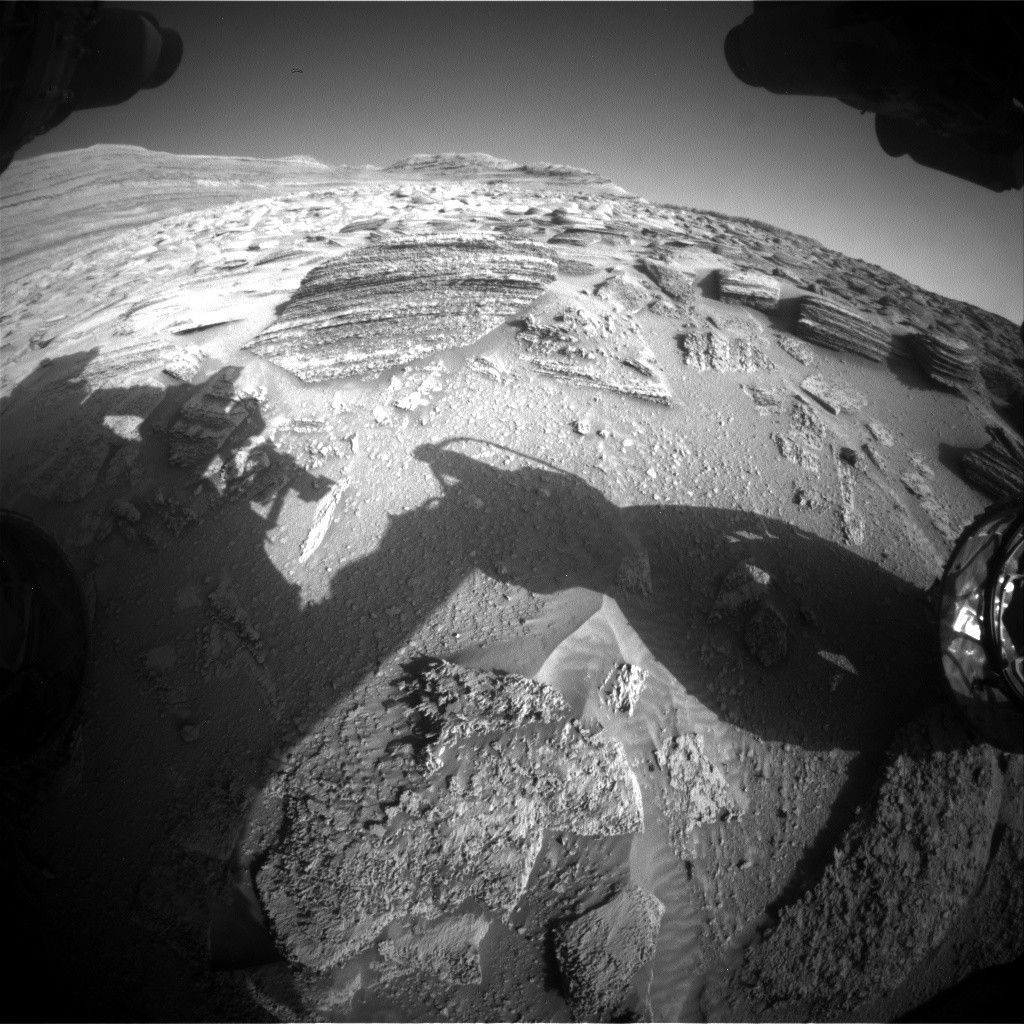
On Sols 4520 and 4521, Curiosity was supposed to study layered rocks in its workspace, then drive on. Unfortunately, a communications pass didn’t go as expected, preventing this plan from being transmitted. Our rover is fine, but it has been metaphorically “twiddling its thumbs” waiting for the expected Wednesday contact from Earth. This is a process known as “runout,” which happens when Earth fails to call a spacecraft at the appointed time. The communications stations are back up now, so the team assembled a weekend plan made from Wednesday’s postponed activities plus an extra day of untargeted science observations after the drive. The additional two days prior to plan execution allowed our science team to add another interesting target to contact science at the starting location.
On Sol 4522, Curiosity will start science observations with a Mastcam 14 x 3 mosaic on the new target “Mesa Peak,” a flat-topped, layered outcrop named for a mountain in the Santa Monica Mountains of Southern California covered with sandstone pinnacles and offering an ocean view toward Channel Islands National Park. This will be followed by two Mastcam examinations of troughs to document evidence of differential ground motion. ChemCam will then shine its laser on the “Fan Palm” nodular rock to determine its surface composition. Its telescopic RMI camera will then image distant “Torote Bowl.” After a set of REMS observations, Curiosity will un-stow its arm and begin a detailed study of “Hale Telescope,” a finely layered stone with a target name honoring the famous 200-inch telescope (5.1 meters) on Palomar Mountain, northeast of San Diego.
Despite being close to 80 years old, Palomar Observatory’s Hale Telescope still enables world-class astronomy with teams from Caltech and its partner organizations competing for observing time every year. Here, 5,500 feet “up on the roof” (thank you, Carole King!) of Southern California is where I spent some of my happiest times in graduate school.
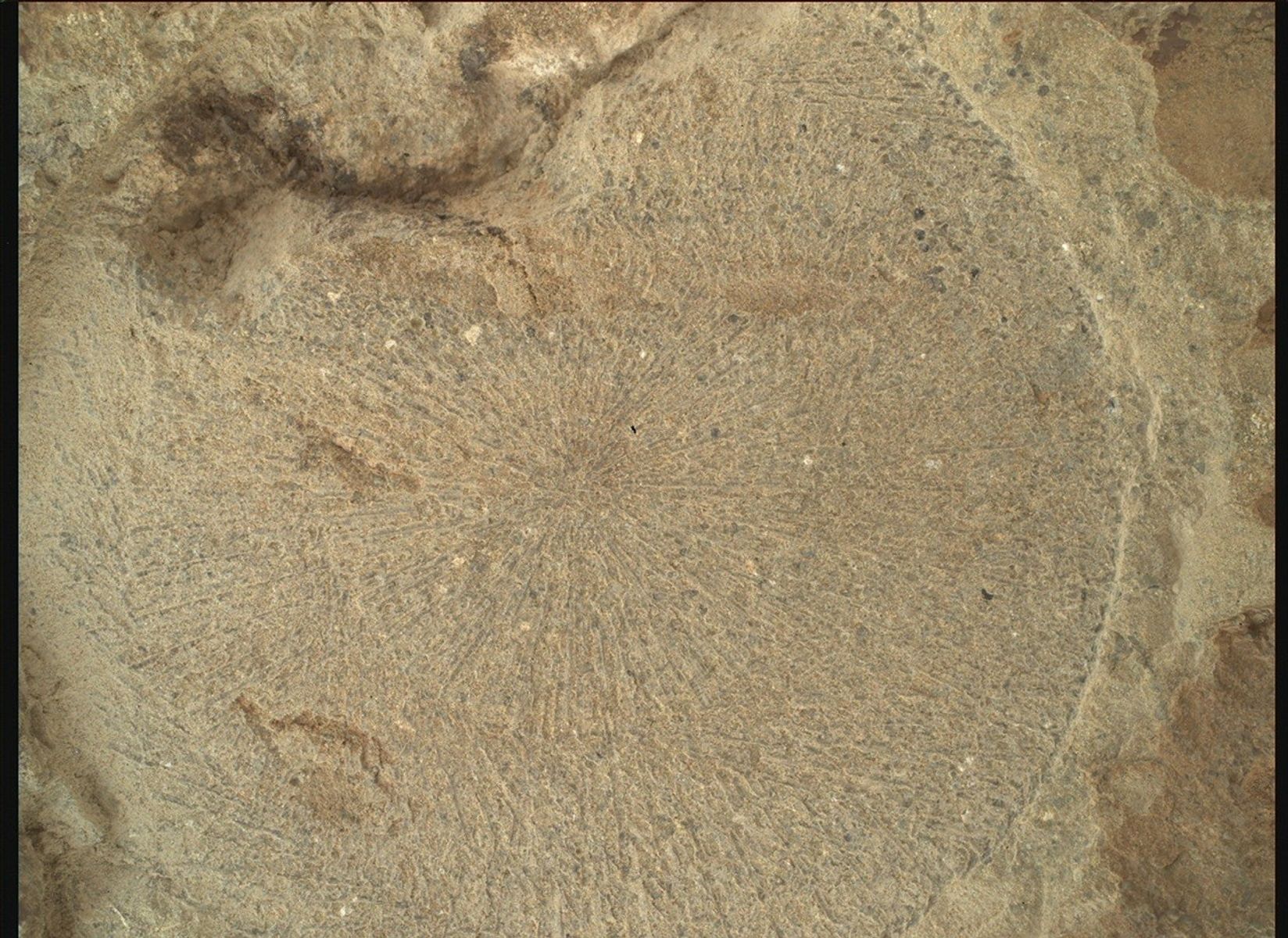
Curiosity’s arm will first deploy the APXS to touch “Hale Telescope.” Then, the MAHLI microscopic imager will take extreme close-up pictures of this rock and the neighboring “Cerro Alto” target. Finally, APXS will measure the composition of “Hale Telescope” in a measurement lasting two hours, similar to the exposure time required for the actual 200-inch telescope to measure the redshift of quasars, determining that they were located at cosmological distances. Sol 4522 ends with Curiosity stowing its arm in preparation for the next sol’s drive.
On 4523, Curiosity will perform Mastcam mosaics of “Puerto Suelo” and “Potrero Seco,” as well as companion observation of the ChemCam target “Fan Palm” and an AEGIS-selected target from Sol 4919. ChemCam will then use laser spectroscopy to obtain surface composition of “Mesa Peak” and train the RMI telescope on intriguing formations along the side of Texoli Butte. Mastcam will follow up with an “after the laser zap” picture of “Mesa Peak.” The science block ends with a Navcam 360-degree dust-devil survey. Afterwards, Curiosity will drive around 20 meters (about 66 feet), passing near or over some large rocks, followed by post-drive imaging with the Hazcams, Navcam, and Mastcam. Afterwards, the rover will do AEGIS observations and take a MARDI picture of the ground underneath the rover.
On Sol 4524, the science block will focus on the atmosphere, with a super horizon cloud movie, a dust-devil survey, and Mastcam dust opacity observation. There will also be ChemCam laser spectroscopy of a target selected by AEGIS.
Early on the morning of Sol 4525, Curiosity will wake to take a morning-light mosaic of the “boxwork” formations to the west with Navcam, then turn Navcam toward the sky for suprahorizon and zenith cloud movies and a dust opacity observation across Gale Crater. Mastcam will then perform its own dust observation, which will wrap up the plan. If the team finds that Curiosity’s wheels are firmly seated on Martian soil and not rocks, our rover will again do contact science on a new set of rocks and continue its journey toward the boxwork formation.
A number of NASA projects use mobile phone apps to put satellite data into the palm of your hand, and allow intrepid citizen scientists to upload data.
Credits: NASA
A cell phone, a computer—and your curiosity—is all you need to become a NASA citizen scientist and contribute to projects about Earth, the solar system, and beyond.
Science is built from small grains of sand, and you can contribute yours from any corner of the world.
All you need is a cell phone or a computer with an internet connection to begin a scientific adventure. Can you imagine making a pioneering discovery in the cosmos? Want to help solve problems that could improve life on our planet? Or maybe you dream of helping solve an ancient mystery of the universe? All of this is possible through NASA’s Citizen Science program.
NASA defines citizen science, or participatory science, as “science projects that rely on volunteers,” said Dr. Marc Kuchner, an astrophysicist and the Citizen Science Officer in the agency’s Science Mission Directorate in Washington, D.C.
For decades, volunteers have been supporting NASA researchers in different fields and in a variety of ways, depending on the project. They help by taking measurements, sorting data from NASA missions, and deepening our understanding of the universe and our home planet. It all counts.
“That’s science for you: It’s collaborative,” said Kuchner, who oversees the more than 30 citizen science projects NASA offers. “I connect the public and scientists to get more NASA science done.”
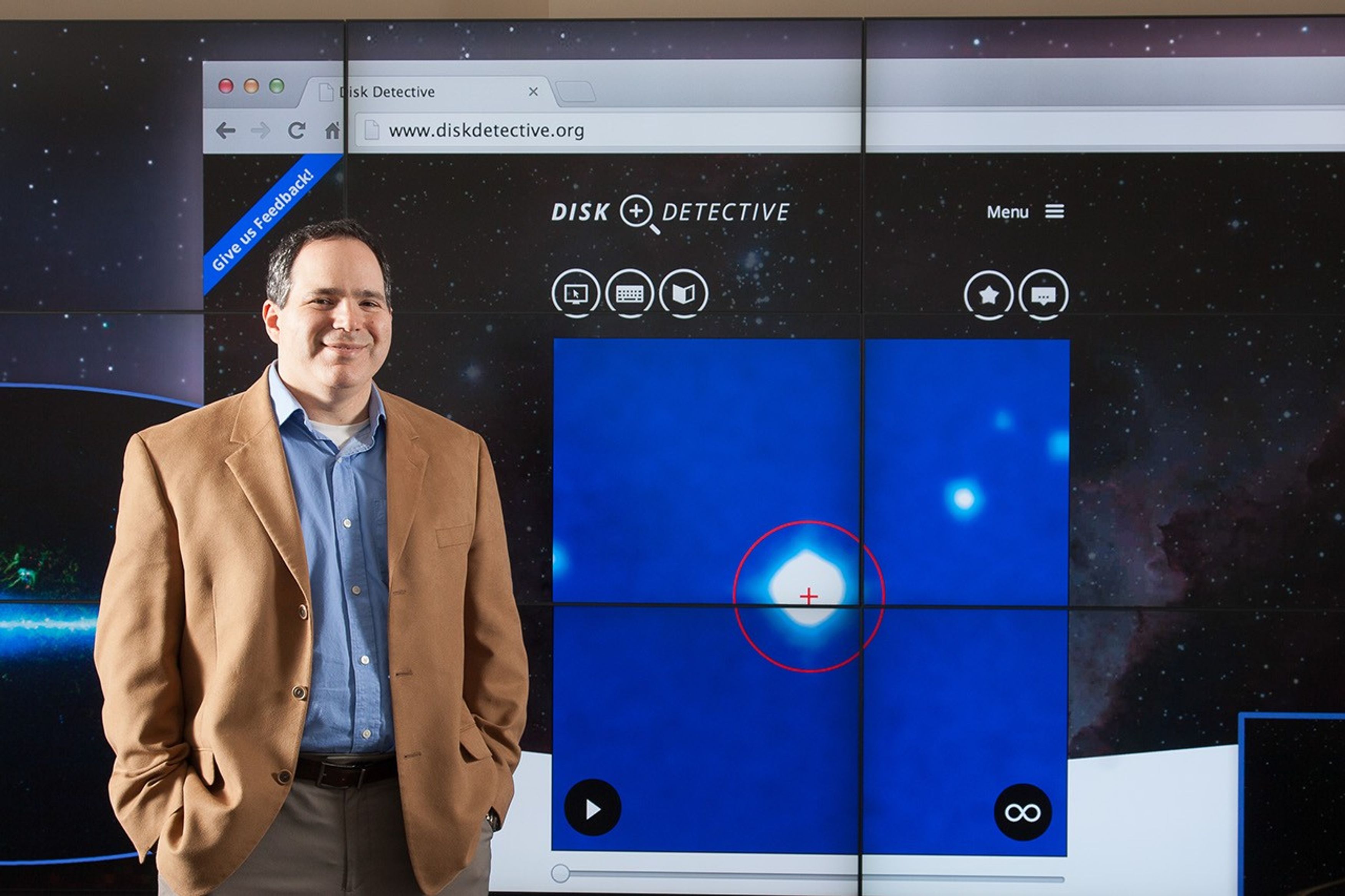
NASA astrophysicist Marc Kuchner is a pioneer in participatory science and today serves as NASA’s Citizen Science program officer. In 2014, Kuchner created the Disk Detective project, which helps NASA scientists study how planets form. Kuchner has also been the principal investigator for some of the agency’s many citizen science projects, but today he oversees the portfolio and promotes volunteer participation around the world. Credit: David Friedlander
A menu of projects for all tastes
Citizen scientists can come from anywhere in the world—they do not have to be U.S. citizens or residents. Volunteers help NASA look for planets in other solar systems, called exoplanets; sort clouds in Earth’s sky; observe solar eclipses; or detect comets and asteroids. Some of those space rocks are even named after the volunteers who helped find them.
Mass participation is key in initiatives that require as many human eyes as possible. “There are science projects that you can’t do without the help of a big team,” Kuchner said. For example, projects that need large datasets from space telescopes—or “things that are physically big and you need people in different places looking from different angles,” he said.
One example is Aurorasaurus, which invites people to observe and classify northern and southern auroras. “We try to study them with satellites, but it really helps to have people on the ground taking photos from different places at different times,” he explained.
“Part of the way we serve our country and humankind is by sharing not just the pretty pictures from our satellites, but the entire experience of doing science,” Kuchner said.
More than 3 million people have participated in the program. Kuchner believes that shows how much people want to be part of what he calls the “roller coaster” of science. “They want to go on that adventure with us, and we are thrilled to have them.”
The dream of discovering
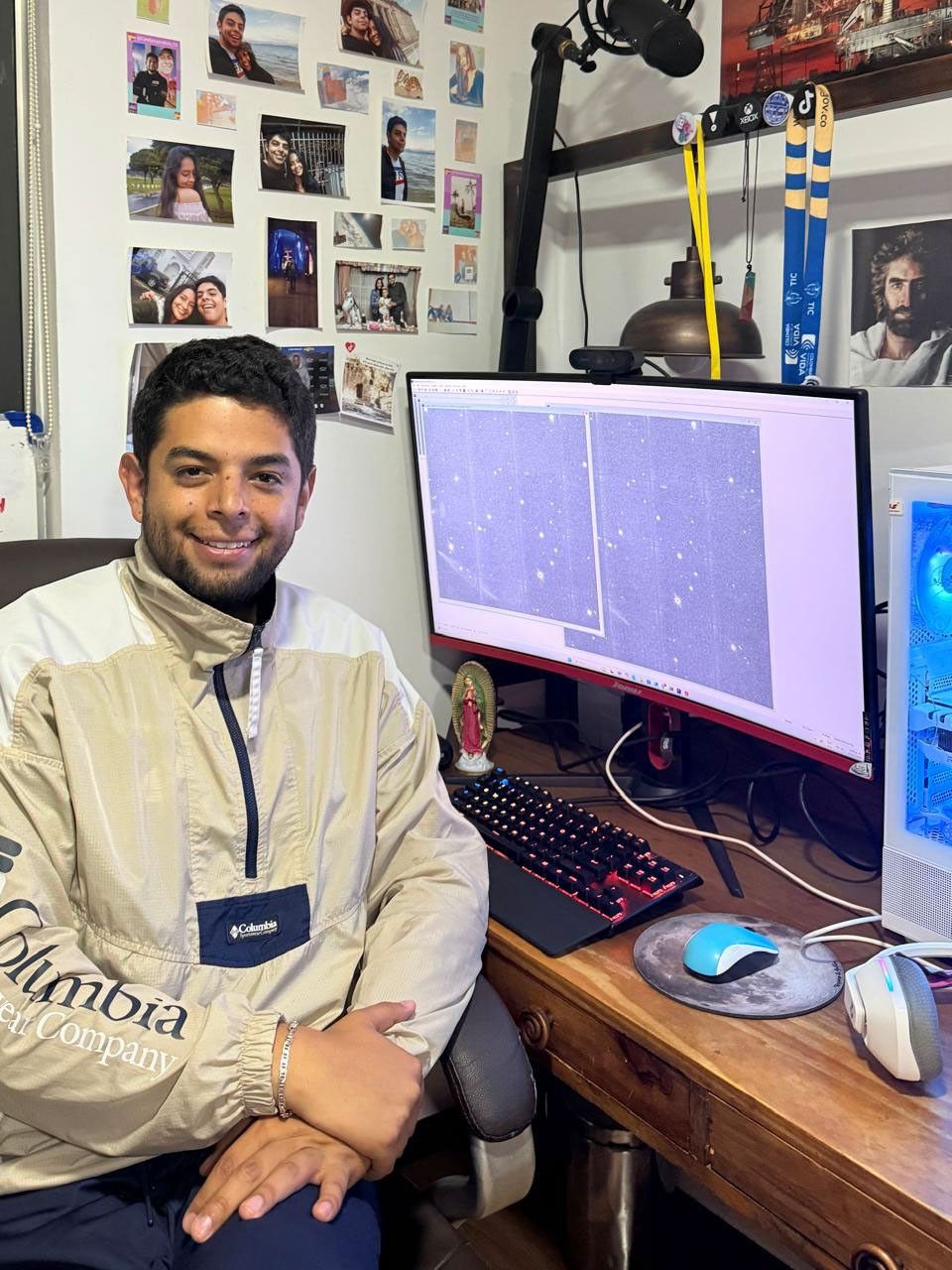
“You can help scientists who are now at NASA and other organizations around the world to discover interesting things,” said Faber Burgos, a citizen scientist and science communicator from Colombia. “Truth be told, I’ve always dreamed of making history.”
Colombian citizen scientist Faber Burgos studied Modern Languages at the Colombian School of Industrial Careers and has a university degree in Classical Archaeology. Today, he is dedicated to disseminating science content through his social media accounts, focusing on children. In 2020, he and his team launched a balloon probe into the stratosphere with a camera that captured the curvature of the Earth, with the aim of demonstrating that the Earth is round. The video of that feat exceeds 97 million views on his Facebook account, earning him a Guinness World Record. Credit: Courtesy of Faber Burgos
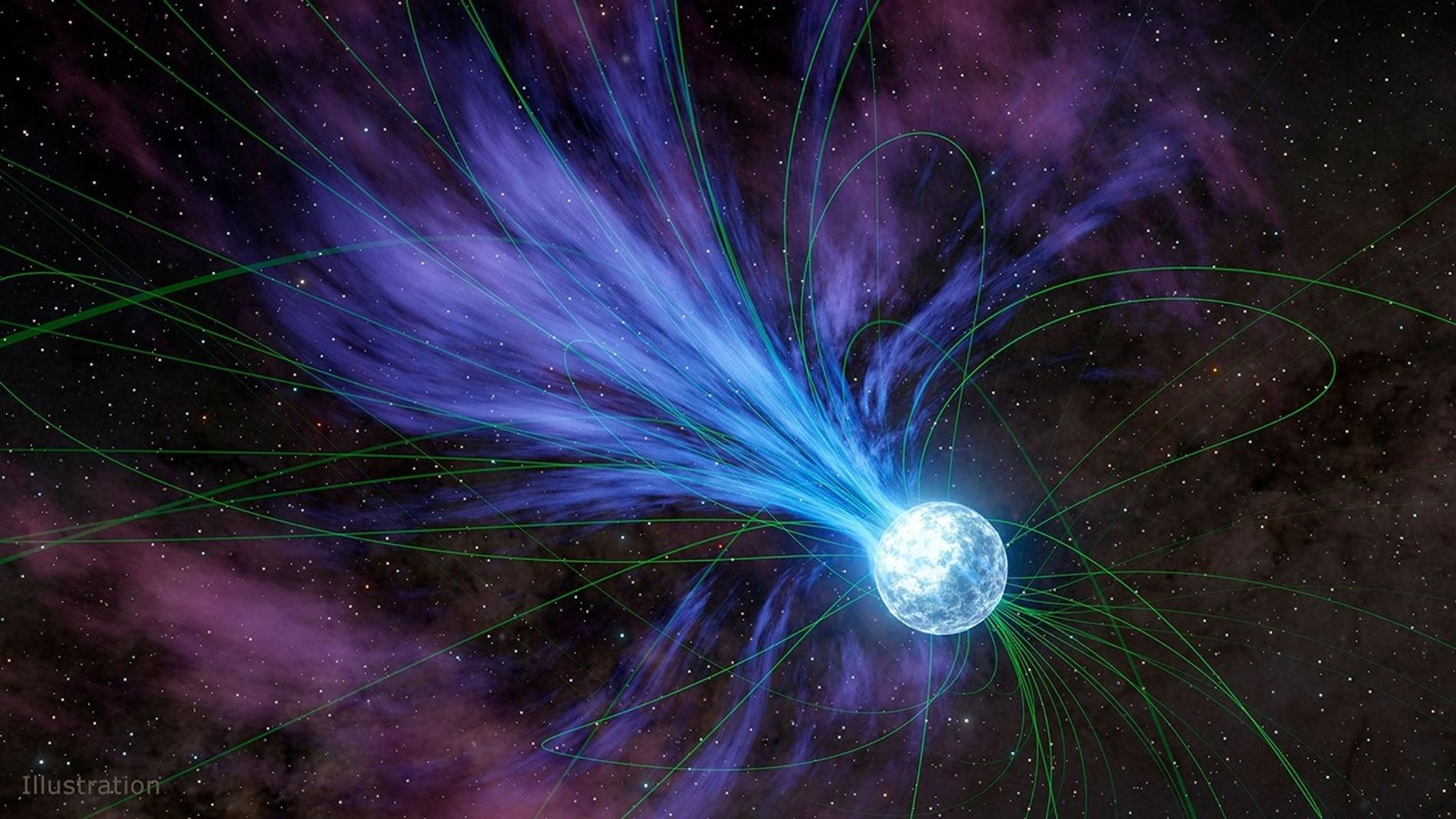
Burgos has been involved in two projects for the past four years: the International Astronomical Search Collaboration (IASC), which searches the sky for potentially dangerous asteroids, and Backyard Worlds: Planet 9. This project uses data from NASA’s now-completed Wide-field Infrared Survey Explorer (WISE) and its follow-up mission, NEOWISE, to search for brown dwarfs and a hypothetical ninth planet.
“There are really amazing participants in this project,” said Kuchner, who helped launch it in 2015. NASA’s WISE and NEOWISE missions detected about 2 billion sources in the sky. “So, the question is: Among those many sources, are any of them new unknowns?” he said.
The project has already found more than 4,000 brown dwarfs. These are Jupiter-sized objects—balls of gas that are too big to be planets, but too small to be stars. Volunteers have even helped discover a new type of brown dwarf.
Participants in the project are also hopeful they’ll find a hypothetical ninth planet, possibly Neptune-sized, in an orbit far beyond Pluto.
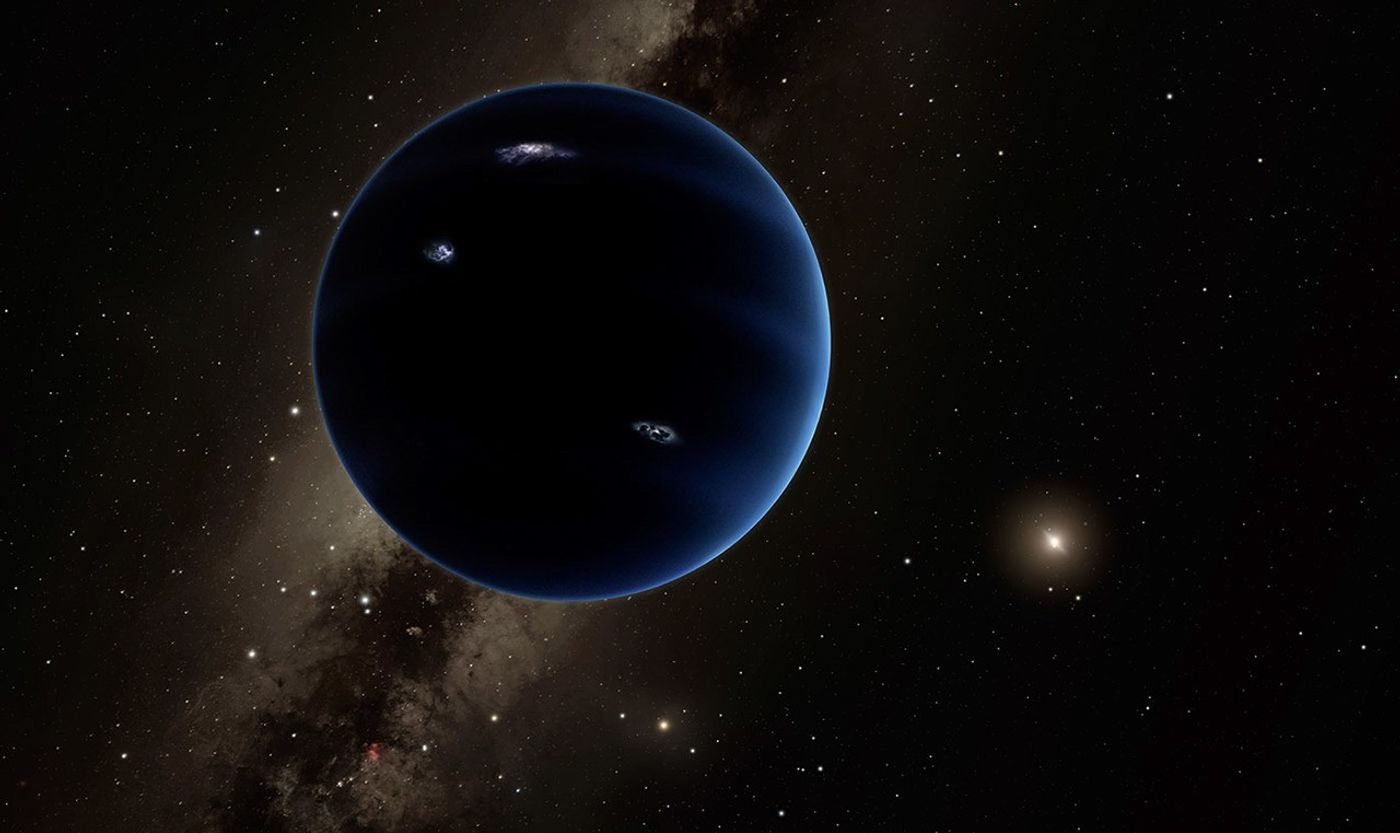
The Backyard Worlds: Planet 9 citizen science project asks volunteers to help search for new objects at the edge of our solar system. The assignment is to review images from NASA’s past WISE and NEOWISE missions in search of two types of astronomical objects: brown dwarfs(balls of gas the same size as Jupiter that have too little mass to be considered stars) and low-mass stars. Or, even, the hypothetical ninth planet of our Sun, known as Planet nine, or Planet X. The image shows an artist’s rendering of such a hypothetical world orbiting far from the Sun. Credit: Caltech/R. Hurt (IPAC)
Caltech/R. Hurt (IPAC)
Burgos explained that analyzing the images is easy. “If it’s a moving object, it’s obviously going to be something of interest,” he said. “Usually, when you see these images, everything is still. But if there’s an object moving, you have to keep an eye on it.”
Once a citizen scientist marks the object across the full image sequence, they send the information to NASA scientists to evaluate.
“As a citizen scientist, I’m happy to do my bit and, hopefully, one day discover something very interesting,” he said. “That’s the beauty of NASA—it invites everyone to be a scientist. Here, it doesn’t matter what you are, but your desire to learn.”
The first step
To become a NASA citizen scientist, start by visiting the program’s website. There you’ll find a complete list of available projects with links to their respective sites. Some are available in Spanish and other languages. Many projects are also hosted on the Zooniverse platform, which has been available since 2006.
“Another cool way to get involved is to come to one of our live events,” said Kuchner. These are virtual events open to the public, where NASA scientists present their projects and invite people to participate. “Pick a project you like—and if it’s not fun, pick a different one,” he advised. “There are wonderful relationships to be had if you reach out to scientists and other participants.”
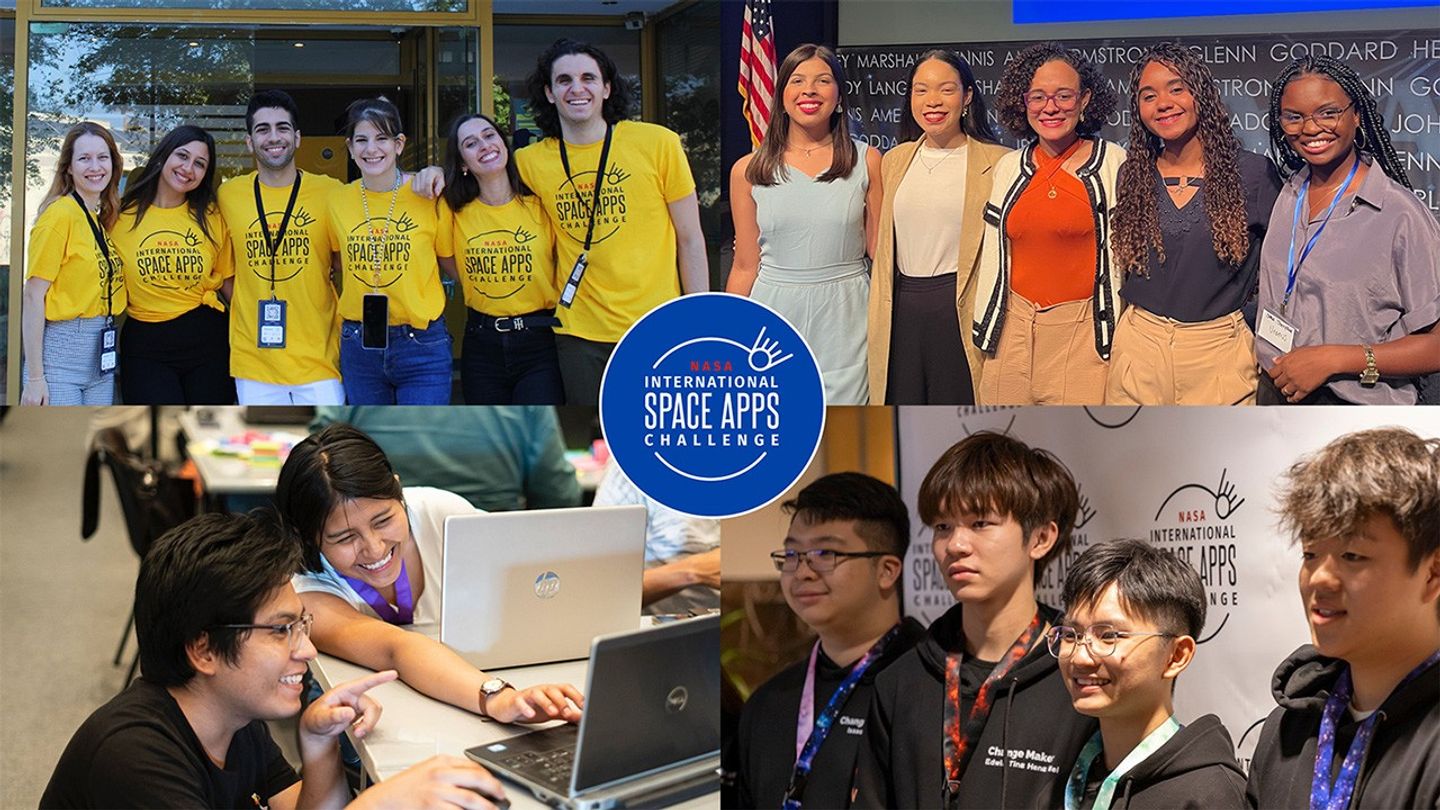
Another way for people to get involved in citizen science is to participate in the annual NASA International Space Apps Challenge, the largest global hackathon. This two-day event creates innovation through international collaboration, providing an opportunity for participants to use NASA’s free and open data and agency partners’ space-based data to tackle real-world problems on Earth and in space. The next NASA International Space Apps Challenge will be October 4-5, 2025. Credit: NASA
Age is not the limit
People of all ages can be citizen scientists. Some projects are kid-friendly, such as Nemo-Net, an iPad game that invites participants to color coral reefs to help sort them. “I’d like to encourage young people to start there—or try a project with one of the older people in their life,” Kuchner said.
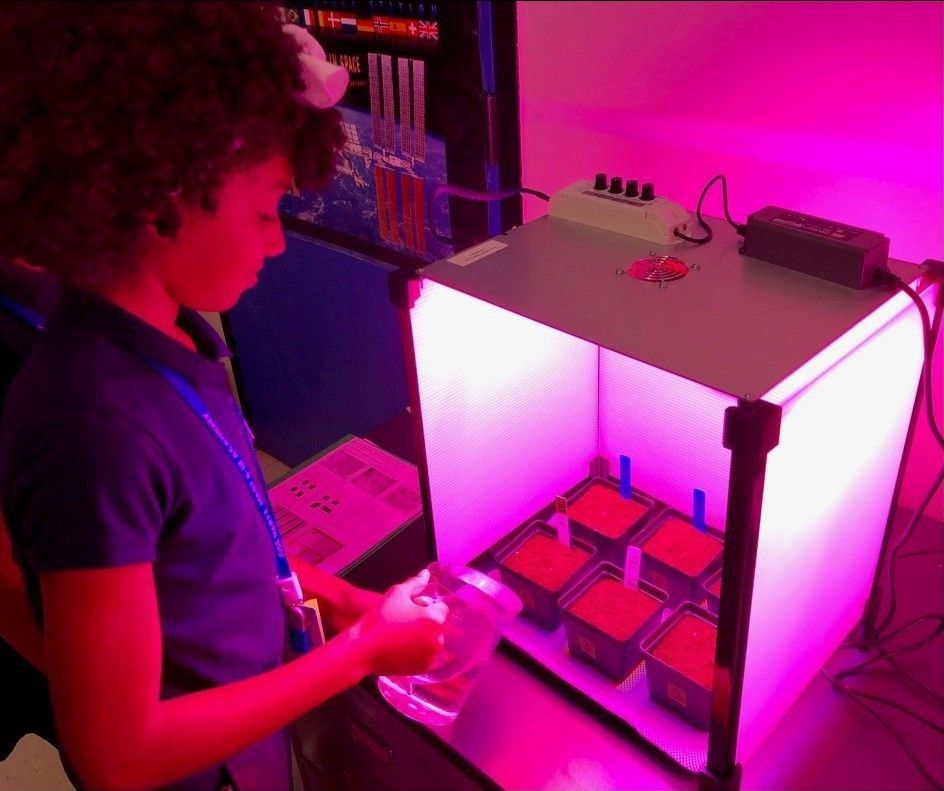
Citizen science can also take place in classrooms. In the Growing Beyond Earth project, teachers and students run experiments on how to grow plants in space for future missions. The IASC project also works with high schools to help students detect asteroids.
A student waters small plants inside a Growing Beyond Earth citizen science project grow box. Credit: NASA
Projects by the community, for the community
GLOBE Observer is another initiative with an international network of teachers and students. The platform offers a range of projects—many in Spanish—that invite people to collect data using their cell phones.
One of the most popular is the GLOBE Mosquito Habitat Mapper, which tracks the migration and spread of mosquitoes that carry diseases. “It’s a way to help save lives—tracking the vectors that transmit malaria and Zika, among others,” Kuchner said.
Other GLOBE projects explore everything from ground cover to cloud types. Some use astronomical phenomena visible to everyone. For example, during the 2024 total solar eclipse, participants measured air temperature using their phones and shared that data with NASA scientists.
The full experience of doing science
No prior studies are needed, but many volunteers go on to collaborate on—or even lead—scientific research. More than 500 NASA citizen scientists have co-authored scientific publications.
One of them is Hugo Durantini Luca, from Córdoba, Argentina, who has participated in 17 published articles, with more on the way. For years, he explored various science projects, looking for one where he could contribute more actively.
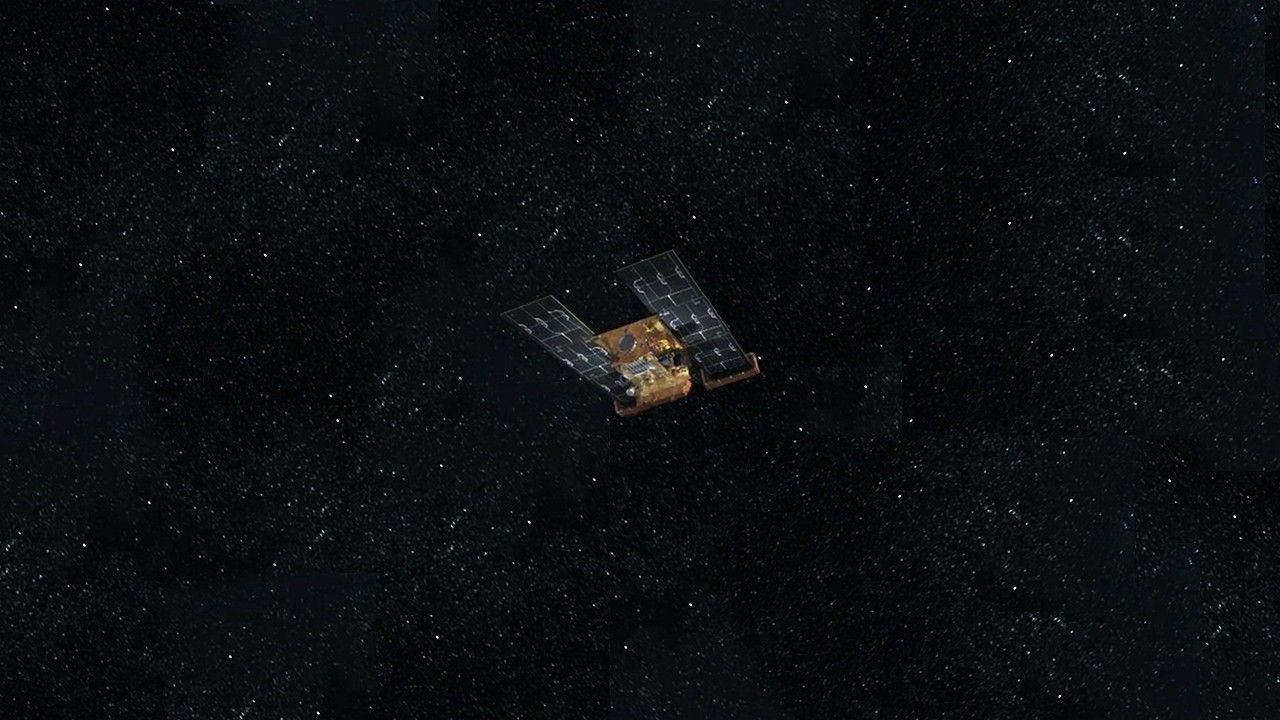
Durantini Luca participated in one of NASA’s first citizen science projects, launched in 2006: Stardust at home. Still ongoing, this project invites volunteers to participate in the search for evidence of interstellar dust on the aerogel and aluminum foil collectors returned by NASA’s Stardust mission, using an online virtual microscope. Credit: NASA
He participated in NASA’s first citizen science project, Stardust@home, which invites users to search for interstellar dust particles in collectors from the Stardust mission, using a virtual microscope.
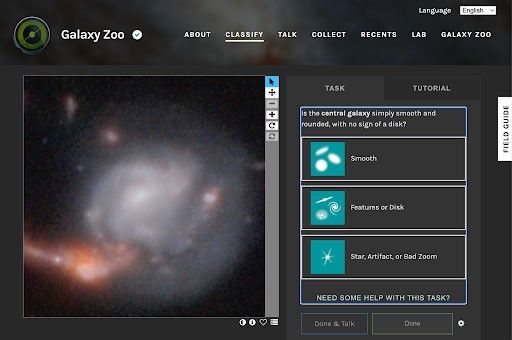
In 2014, he discovered Disk Detective, a project that searches for disks around stars, where planets may form. By looking at images from the WISE and NEOWISE missions, participants can help understand how worlds are born and how solar systems evolve.
“And, incidentally, if we find planets or some sign of life, all the better,” said Durantini Luca.
Although that remains a dream, they have made other discoveries—like a new kind of stellar disk called the “Peter Pan Disk,” which appears young even though the star it surrounds is not.
Durantini Luca participated in one of NASA’s first citizen science projects, launched in 2006: Stardust at home. Still ongoing, this project invites volunteers to participate in the search for evidence of interstellar dust on the aerogel and aluminum foil collectors returned by NASA’s Stardust mission, using an online virtual microscope. Credit: NASA
Science in person
In 2016, Durantini Luca got the chance to support Disk Detective with his own observations from the southern hemisphere. He traveled to El Leoncito Astronomical Complex (CASLEO), an observatory in San Juan, Argentina. There, he learned to use a spectrograph—an instrument that breaks down starlight to analyze its composition.
He treasures that experience. “Curiously, it was the first time in my life I used a telescope,” he said.
In 2016, citizen scientist Hugo Durantini Luca traveled for 18 hours to the El Leoncito Astronomical Complex (CASLEO), at the foot of the Andes Mountains. From there, he made observations of a candidate star of the Disk Detective project. Credit: Luciano García
While in-person opportunities are rare, both virtual and physical events help build community. Citizen scientists stay in touch weekly through various channels.
“Several of us are friends already—after so many years of bad jokes on calls,” said Durantini Luca.
“People send me pictures of how they met,” said Kuchner. He said the program has even changed how he does science. “It’s changed my life,” he said. “Science is already cool—and this makes it even cooler.”
What does the future of space exploration look like? At the 2025 FIRST Robotics World Championship in Houston, NASA gave student robotics teams and industry leaders a first-hand look—complete with lunar rovers, robotic arms, and real conversations about shaping the next era of discovery.
Students and mentors experience NASA exhibits at the 2025 FIRST Robotics World Championship at the George R. Brown Convention Center in Houston from April 16-18.
NASA/Sumer Loggins
NASA engaged directly with the Artemis Generation, connecting with more than 55,000 students and 75,000 parents and mentors. Through interactive exhibits and discussions, students explored the agency’s robotic technologies, learned about STEM career paths and internships, and gained insight into NASA’s bold vision for the future. Many expressed interest in internships—and dreams of one day contributing to NASA’s missions to explore the unknown for the benefit of all humanity.
Multiple NASA centers participated in the event, including Johnson Space Center in Houston; Jet Propulsion Laboratory in Southern California; Kennedy Space Center in Florida; Langley Research Center in Virginia; Ames Research Center in California; Michoud Assembly Facility in New Orleans; Armstrong Flight Research Center in Edwards, California; Glenn Research Center in Cleveland; Goddard Space Flight Center in Greenbelt, Maryland; and the Katherine Johnson Independent Verification and Validation Facility in West Virginia. Each brought unique technologies and expertise to the exhibit floor.
FIRST Robotics attendees explore NASA’s exhibit and learn about the agency’s mission during the event.
Space Exploration Vehicle: A pressurized rover prototype built for human exploration of planetary surfaces, offering attendees a look at how future astronauts may one day travel across the Moon or Mars.
Mars Perseverance Rover: An exhibit detailing the rover’s mission to search for ancient microbial life and collect samples for future return to Earth.
In-Situ Resource Utilization Pilot Excavator: A lunar bulldozer-dump truck hybrid designed to mine and transport regolith, supporting long-term exploration through the Artemis campaign.
Visitors view NASA’s Space Exploration Vehicle on display.
NASA/Robert Markowitz
“These demonstrations help students see themselves in NASA’s mission and the next frontier of lunar exploration,” said Johnson Public Affairs Specialist Andrew Knotts. “They can picture their future as part of the team shaping how we live and work in space.”
Since the FIRST Championship relocated to Houston in 2017, NASA has mentored more than 250 robotics teams annually, supporting elementary through high school students. The agency continued that tradition for this year’s event, and celebrated the fusion of science, engineering, and creativity that defines both robotics and space exploration.
NASA’s booth draws crowds at FIRST Robotics 2025 with hands-on exhibits.
NASA/Robert Markowitz
Local students also had the chance to learn about the Texas High School Aerospace Scholars program, which offers Texas high school juniors hands-on experience designing space missions and solving engineering challenges—an early gateway into NASA’s world of exploration.
As the competition came to a close, students and mentors were already looking ahead to the next season—energized by new ideas, strengthened friendships, and dreams of future missions.
NASA volunteers at the FIRST Robotics World Championship on April 17, 2025.
NASA/Robert Markowitz
“It was a true privilege to represent NASA to so many inspiring students, educators, and mentors,” said Jeanette Snyder, aerospace systems engineer for Gateway. “Not too long ago, I was a robotics student myself, and I still use skills I developed through FIRST Robotics in my work as a NASA engineer. Seeing so much excitement around engineering and technology makes me optimistic for the future of space exploration. I can’t wait to see these students become the next generation of NASA engineers and world changers.”
With the enthusiastic support of volunteers, mentors, sponsors, and industry leaders, and NASA’s continued commitment to STEM outreach, the future of exploration is in bold, capable hands.
See the full event come to life in the panorama videos below.
Landing on the Moon is not easy, particularly when a crew or spacecraft must meet exacting requirements. For Artemis missions to the lunar surface, those requirements include an ability to land within an area about as wide as a football field in any lighting condition amid tough terrain.
NASA’s official lunar landing requirement is to be able to land within 50 meters (164 feet) of the targeted site and developing precision tools and technologies is critically important to mission success.
NASA engineers recently took a major step toward safe and precise landings on the Moon – and eventually Mars and icy worlds – with a successful field test of hazard detection technology at NASA’s Kennedy Space Center Shuttle Landing Facility in Florida.
A joint team from the Aeroscience and Flight Mechanics Division at NASA’s Johnson Space Center’s in Houston and Goddard Space Flight Center in Greenbelt, Maryland, achieved this huge milestone in tests of the Goddard Hazard Detection Lidar from a helicopter at Kennedy in March 2025.
NASA’s Hazard Detection Lidar field test team at Kennedy Space Center’s Shuttle Landing Facility in Florida in March 2025.
NASA
The new lidar system is one of several sensors being developed as part of NASA’s Safe & Precise Landing – Integrated Capabilities Evolution (SPLICE) Program, a Johnson-managed cross-agency initiative under the Space Technology Mission Directorate to develop next-generation landing technologies for planetary exploration. SPLICE is an integrated descent and landing system composed of avionics, sensors, and algorithms that support specialized navigation, guidance, and image processing techniques. SPLICE is designed to enable landing in hard-to-reach and unknown areas that are of potentially high scientific interest.
The lidar system, which can map an area equivalent to two football fields in just two seconds, is a crucial program component. In real time and compensating for lander motion, it processes 15 million short pulses of laser light to quickly scan surfaces and create real-time, 3D maps of landing sites to support precision landing and hazard avoidance.
Those maps will be read by the SPLICE Descent and Landing Computer, a high-performance multicore computer processor unit that analyzes all SPLICE sensor data and determines the spacecraft’s velocity, altitude, and terrain hazards. It also computes the hazards and determines a safe landing location. The computer was developed by the Avionics Systems Division at Johnson as a platform to test navigation, guidance, and flight software. It previously flew on Blue Origin’s New Shepard booster rocket.
The NASA team prepares the Descent and Landing Computer for Hazard Detection Lidar field testing at Kennedy Space Center.
NASA
For the field test at Kennedy, Johnson led test operations and provided avionics and guidance, navigation, and control support. Engineers updated the computer’s firmware and software to support command and data interfacing with the lidar system. Team members from Johnson’s Flight Mechanics branch also designed a simplified motion compensation algorithm and NASA’s Jet Propulsion Laboratory in Southern California contributed a hazard detection algorithm, both of which were added to the lidar software by Goddard. Support from NASA contractors Draper Laboratories and Jacobs Engineering played key roles in the test’s success.
Primary flight test objectives were achieved on the first day of testing, allowing the lidar team time to explore different settings and firmware updates to improve system performance. The data confirmed the sensor’s capability in a challenging, vibration-heavy environment, producing usable maps. Preliminary review of the recorded sensor data shows excellent reconstruction of the hazard field terrain.
A Hazard Detection Lidar scan of a simulated hazard field at Kennedy Space Center (left) and a combined 3D map identifying roughness and slope hazards.
NASA
Beyond lunar applications, SPLICE technologies are being considered for use on Mars Sample Return, the Europa Lander, Commercial Lunar Payload Services flights, and Gateway. The DLC design is also being evaluated for potential avionics upgrades on Artemis systems.
Additionally, SPLICE is supporting software tests for the Advancement of Geometric Methods for Active Terrain Relative Navigation (ATRN) Center Innovation Fund project, which is also part of Johnson’s Aeroscience and Flight Mechanics Division. The ATRN is working to develop algorithms and software that can use data from any active sensor – one measuring signals that were reflected, refracted, or scattered by a body’s surface or its atmosphere – to accurately map terrain and provide absolute and relative location information. With this type of system in place, spacecraft will not need external lighting sources to find landing sites.
With additional suborbital flight tests planned through 2026, the SPLICE team is laying the groundwork for safer, more autonomous landings on the Moon, Mars, and beyond. As NASA prepares for its next era of exploration, SPLICE will be a key part of the agency’s evolving landing, guidance, and navigation capabilities.
Today’s rather aquatic-themed NASA/ESA Hubble Space Telescope image features the spiral galaxy Messier 77, also known as the Squid Galaxy, which sits 45 million light-years away in the constellation Cetus (The Whale).
The designation Messier 77 comes from the galaxy’s place in the famous catalog compiled by the French astronomer Charles Messier. Another French astronomer, Pierre Méchain, discovered the galaxy in 1780. Both Messier and Méchain were comet hunters who cataloged nebulous objects that could be mistaken for comets.
Messier, Méchain, and other astronomers of their time mistook the Squid Galaxy for either a spiral nebula or a star cluster. This mischaracterization isn’t surprising. More than a century would pass between the discovery of the Squid Galaxy and the realization that the ‘spiral nebulae’ scattered across the sky were not part of our galaxy but were in fact separate galaxies millions of light-years away. The Squid Galaxy’s appearance through a small telescope — an intensely bright center surrounded by a fuzzy cloud — closely resembles one or more stars wreathed in a nebula.
The name ‘Squid Galaxy’ is recent, and stems from the extended, filamentary structure that curls around the galaxy’s disk like the tentacles of a squid. The Squid Galaxy is a great example of how advances in technology and scientific understanding can completely change our perception of an astronomical object — and even what we call it!
Hubble previously released an image of M77 in 2013. This new image incorporates recent observations made with different filters and updated image processing techniques which allow astronomers to see the galaxy in more detail.
Preparations for Next Moonwalk Simulations Underway (and Underwater)
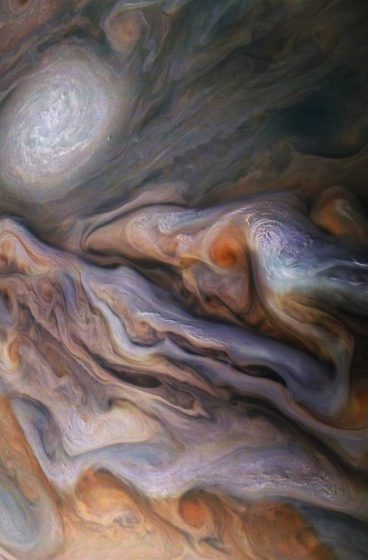
JunoCam, the visible light imager aboard NASA’s Juno, captured this enhanced-color view of Jupiter’s northern high latitudes from an altitude of about 36,000 miles (58,000 kilometers) above the giant planet’s cloud tops during the spacecraft’s 69th flyby on Jan. 28, 2025.
New data from the agency’s Jovian orbiter sheds light on the fierce winds and cyclones of the gas giant’s northern reaches and volcanic action on its fiery moon.
NASA’s Juno mission has gathered new findings after peering below Jupiter’s cloud-covered atmosphere and the surface of its fiery moon, Io. Not only has the data helped develop a new model to better understand the fast-moving jet stream that encircles Jupiter’s cyclone-festooned north pole, it’s also revealed for the first time the subsurface temperature profile of Io, providing insights into the moon’s inner structure and volcanic activity.
Team members presented the findings during a news briefing in Vienna on Tuesday, April 29, at the European Geosciences Union General Assembly.
“Everything about Jupiter is extreme. The planet is home to gigantic polar cyclones bigger than Australia, fierce jet streams, the most volcanic body in our solar system, the most powerful aurora, and the harshest radiation belts,” said Scott Bolton, principal investigator of Juno at the Southwest Research Institute in San Antonio. “As Juno’s orbit takes us to new regions of Jupiter’s complex system, we’re getting a closer look at the immensity of energy this gas giant wields.”
Made with data from the JIRAM instrument aboard NASA’s Juno, this animation shows the south polar region of Jupiter’s moon Io during a Dec. 27, 2024, flyby. The bright spots are locations with higher temperatures caused by volcanic activity; the gray areas resulted when Io left the field of view.
NASA/JPL/SwRI/ASI – JIRAM Team (A.M.)
Lunar Radiator
While Juno’s microwave radiometer (MWR) was designed to peer beneath Jupiter’s cloud tops, the team has also trained the instrument on Io, combining its data with Jovian Infrared Auroral Mapper (JIRAM) data for deeper insights.
“The Juno science team loves to combine very different datasets from very different instruments and see what we can learn,” said Shannon Brown, a Juno scientist at NASA’s Jet Propulsion Laboratory in Southern California. “When we incorporated the MWR data with JIRAM’s infrared imagery, we were surprised by what we saw: evidence of still-warm magma that hasn’t yet solidified below Io’s cooled crust. At every latitude and longitude, there were cooling lava flows.”
The data suggests that about 10% of the moon’s surface has these remnants of slowly cooling lava just below the surface. The result may help provide insight into how the moon renews its surface so quickly as well as how as well as how heat moves from its deep interior to the surface.
“Io’s volcanos, lava fields, and subterranean lava flows act like a car radiator,” said Brown, “efficiently moving heat from the interior to the surface, cooling itself down in the vacuum of space.”
Looking at JIRAM data alone, the team also determined that the most energetic eruption in Io’s history (first identified by the infrared imager during Juno’s Dec. 27, 2024, Io flyby) was still spewing lava and ash as recently as March 2. Juno mission scientists believe it remains active today and expect more observations on May 6, when the solar-powered spacecraft flies by the fiery moon at a distance of about 55,300 miles (89,000 kilometers).
This composite image, derived from data collected in 2017 by the JIRAM instrument aboard NASA’s Juno, shows the central cyclone at Jupiter’s north pole and the eight cyclones that encircle it. Data from the mission indicates these storms are enduring features.
NASA/JPL-Caltech/SwRI/ASI/INAF/JIRAM
Colder Climes
On its 53rd orbit (Feb 18, 2023), Juno began radio occultation experiments to explore the gas giant’s atmospheric temperature structure. With this technique, a radio signal is transmitted from Earth to Juno and back, passing through Jupiter’s atmosphere on both legs of the journey. As the planet’s atmospheric layers bend the radio waves, scientists can precisely measure the effects of this refraction to derive detailed information about the temperature and density of the atmosphere.
So far, Juno has completed 26 radio occultation soundings. Among the most compelling discoveries: the first-ever temperature measurement of Jupiter’s north polar stratospheric cap reveals the region is about 11 degrees Celsius cooler than its surroundings and is encircled by winds exceeding 100 mph (161 kph).
Polar Cyclones
The team’s recent findings also focus on the cyclones that haunt Jupiter’s north. Years of data from the JunoCam visible light imager and JIRAM have allowed Juno scientists to observe the long-term movement of Jupiter’s massive northern polar cyclone and the eight cyclones that encircle it. Unlike hurricanes on Earth, which typically occur in isolation and at lower latitudes, Jupiter’s are confined to the polar region.
By tracking the cyclones’ movements across multiple orbits, the scientists observed that each storm gradually drifts toward the pole due to a process called “beta drift” (the interaction between the Coriolis force and the cyclone’s circular wind pattern). This is similar to how hurricanes on our planet migrate, but Earthly cyclones break up before reaching the pole due to the lack of warm, moist air needed to fuel them, as well as the weakening of the Coriolis force near the poles. What’s more, Jupiter’s cyclones cluster together while approaching the pole, and their motion slows as they begin interacting with neighboring cyclones.
“These competing forces result in the cyclones ‘bouncing’ off one another in a manner reminiscent of springs in a mechanical system,” said Yohai Kaspi, a Juno co-investigator from the Weizmann Institute of Science in Israel. “This interaction not only stabilizes the entire configuration, but also causes the cyclones to oscillate around their central positions, as they slowly drift westward, clockwise, around the pole.”
The new atmospheric model helps explain the motion of cyclones not only on Jupiter, but potentially on other planets, including Earth.
“One of the great things about Juno is its orbit is ever-changing, which means we get a new vantage point each time as we perform a science flyby,” said Bolton. “In the extended mission, that means we’re continuing to go where no spacecraft has gone before, including spending more time in the strongest planetary radiation belts in the solar system. It’s a little scary, but we’ve built Juno like a tank and are learning more about this intense environment each time we go through it.”
More About Juno
NASA’s Jet Propulsion Laboratory, a division of Caltech in Pasadena, California, manages the Juno mission for the principal investigator, Scott Bolton, of the Southwest Research Institute in San Antonio. Juno is part of NASA’s New Frontiers Program, which is managed at NASA’s Marshall Space Flight Center in Huntsville, Alabama, for the agency’s Science Mission Directorate in Washington. The Italian Space Agency funded the Jovian InfraRed Auroral Mapper. Lockheed Martin Space in Denver built and operates the spacecraft. Various other institutions around the U.S. provided several of the other scientific instruments on Juno.
Intuitive Machines’ IM-2 captured an image March 6, 2025, after landing in a crater from the Moon’s South Pole. The lunar lander is on its side near the intended landing site, Mons Mouton. In the center of the image between the two lander legs is the Polar Resources Ice Mining Experiment 1 suite, which shows the drill deployed.
Intuitive Machines
Editor’s note: This article was updated on April 29, 2025, to correct the amount of data collected during Intuitive Machines’ IM-2 mission.
NASA’s PRIME-1 (Polar Resources Ice Mining Experiment 1) mission was designed to demonstrate technologies to help scientists better understand lunar resources ahead of crewed Artemis missions to the Moon. During the short-lived mission on the Moon, the performance of PRIME-1’s technology gave NASA teams reason to celebrate.
“The PRIME-1 mission proved that our hardware works in the harshest environment we’ve ever tested it in,” said Janine Captain, PRIME-1 co-principal investigator and research chemist at NASA’s Kennedy Space Center in Florida. “While it may not have gone exactly to plan, this is a huge step forward as we prepare to send astronauts back to the Moon and build a sustainable future there.”
Intuitive Machines’ IM-2 mission launched to the Moon on Feb. 26, 2025, from NASA Kennedy’s Launch Complex 39A, as part of the company’s second Moon delivery for NASA under the agency’s CLPS (Commercial Lunar Payload Services) initiative and Artemis campaign. The IM-2 Nova-C lunar lander, named Athena, carried PRIME-1 and its suite of two instruments: a drill known as TRIDENT (The Regolith and Ice Drill for Exploring New Terrain), designed to bring lunar soil to the surface; and a mass spectrometer, Mass Spectrometer Observing Lunar Operations (MSOLO), to study TRIDENT’s drill cuttings for the presence of gases that could one day help provide propellant or breathable oxygen to future Artemis explorers.
The IM-2 mission touched down on the lunar surface on March 6, just around 1,300 feet (400 meters) from its intended landing site of Mons Mouton, a lunar plateau near the Moon’s South Pole. The Athena lander was resting on its side inside a crater preventing it from recharging its solar cells, resulting in an end of the mission.
“We were supposed to have 10 days of operation on the Moon, and what we got was closer to 10 hours,” said Julie Kleinhenz, NASA’s lead systems engineer for PRIME-1, as well as the in-situ resource utilization system capability lead deputy for the agency. “It was 10 hours more than most people get so I am thrilled to have been a part of it.”
Kleinhenz has spent nearly 20 years working on how to use lunar resources for sustained operations. In-situ resource utilization harnesses local natural resources at mission destinations. This enables fewer launches and resupply missions and significantly reduces the mass, cost, and risk of space exploration. With NASA poised to send humans back to the Moon and on to Mars, generating products for life support, propellants, construction, and energy from local materials will become increasingly important to future mission success.
“In-situ resource utilization is the key to unlocking long-term exploration, and PRIME-1 is helping us lay this foundation for future travelers.” Captain said.
The PRIME-1 technology also set out to answer questions about the properties of lunar regolith, such as soil strength. This data could help inform the design of in-situ resource utilization systems that would use local resources to create everything from landing pads to rocket fuel during Artemis and later missions.
“Once we got to the lunar surface, TRIDENT and MSOLO both started right up, and performed perfectly. From a technology demonstrations standpoint, 100% of the instruments worked.” Kleinhenz said.
The lightweight, low-power augering drill built by Honeybee Robotics, known as TRIDENT, is 1 meter long and features rotary and percussive actuators that convert energy into the force needed to drill. The drill was designed to stop at any depth as commanded from the ground and deposit its sample on the surface for analysis by MSOLO, a commercial off-the-shelf mass spectrometer modified by engineers and technicians at NASA Kennedy to withstand the harsh lunar environment. Designed to measure the composition of gases in the vicinity of the lunar lander, both from the lander and from the ambient exosphere, MSOLO can help NASA analyze the chemical makeup of the lunar soil and study water on the surface of the Moon.
Once on the Moon, the actuators on the drill performed as designed, completing multiple stages of movement necessary to drill into the lunar surface. Prompted by commands from technicians on Earth, the auger rotated, the drill extended to its full range, the percussion system performed a hammering motion, and the PRIME-1 team turned on an embedded core heater in the drill and used internal thermal sensors to monitor the temperature change.
While MSOLO was able to perform several scans to detect gases, researchers believe from the initial data that the gases detected were all anthropogenic, or human in origin, such as gases vented from spacecraft propellants and traces of Earth water. Data from PRIME-1 accounted for some of the approximately 6.6 gigabytes of data collected during the IM-2 mission, and researchers will continue to analyze the data in the coming months and publish the results.
Preparations for Next Moonwalk Simulations Underway (and Underwater)
Nemanja Jovanovic, lead instrument scientist at Caltech, presents at the Emerging Technologies for Astrophysics workshop, held at NASA’s Ames Research Center in California’s Silicon Valley. The workshop brought together experts in astrophysics to discuss how advanced technologies could impact future mission planning.
NASA/Donald Richey
The future of astrophysics research could unlock the secrets of the universe, and emerging technologies like artificial intelligence, quantum sensing, and advanced materials may hold the key to faster, more efficient discovery. Advancements and implementations of new technologies are imperative for observational astrophysics to achieve the next level of detection.
NASA’s Emerging Technologies for Astrophysics workshop brought together subject matter experts from industry, government, and academia to explore the state of new and disruptive technologies. The meeting was an effort to identify specific applications for astrophysics missions and better understand how their infusion into future NASA space telescopes could be accelerated.
The workshop took place at NASA’s Ames Research Center in California’s Silicon Valley,. supporting the agency’s efforts to make partnership with public and private industry and collaborative mission planning possible.
“The profound questions about the nature of our universe that astrophysics at NASA answers require giant leaps in technology,” explained Mario Perez, chief technologist for the Astrophysics Division at NASA Headquarters in Washington. “Spotting potential in early-stage tech by encouraging discussions between imaginative researchers helps expand the scope of science and lessen the time required to achieve the next generation of astrophysics missions.”
Emerging technologies like artificial intelligence can support the design and optimization of future missions, and participants focused efforts on combining technologies to push research further. “Cross-pollination” of advanced materials like composites with advanced manufacturing, metamaterials, and photonic chips could support advancement in imaging missions beyond existing mechanical stability needs.
The United Nations Educational, Scientific and Cultural Organization (UNESCO) has dubbed 2025 the “International Year of Quantum Science and Technology” in recognition of a century of quantum mechanics. Workshop participants discussed how quantum sensing could enable more precise measurements, achieve “super resolution” by filling in missing details in lower resolution images, and provide greater capabilities in forthcoming space telescopes.
“This gathering of experts was an opportunity to find ways where we can increase the capabilities of future space instrumentation and accelerate technology development for infusion into NASA astrophysics missions,” said Naseem Rangwala, astrophysics branch chief at NASA Ames. “We can speed up the process of how we develop these future projects by using the emerging technologies that are incubated right here in Silicon Valley.”
The findings from this workshop and ongoing discussions will support efforts to study and invest in technologies to advance astrophysics missions with greater speed and efficiency.
Preparations for Next Moonwalk Simulations Underway (and Underwater)
Multinational corporations are using the M2M Intelligence platform in data centers and other settings. The system offers automated, secure communications on a ground-based global 5G network.
Getty Images
Artificial intelligence (AI) is advancing rapidly, as intelligent software proves capable of various tasks. The technology usually requires a “human in the loop” to train it and ensure accuracy. But long before the arrival of today’s generative artificial intelligence, a different kind of AI was born with the help of NASA’s Ames Research Center in California’s Silicon Valley — one that only exists between machines, running without any human intervention.
In 2006, Geoffrey Barnard founded Machine-to-Machine Intelligence Corp. (M2Mi) at Ames’ NASA Research Park, envisioning an automated, satellite-based communication network. NASA Ames established a Space Act Agreement with the company to develop artificial intelligence that would automate communications, privacy, security, and resiliency between satellites and ground-based computers.
Central to the technology was automating a problem-solving approach known as root cause analysis, which NASA has honed over decades. This methodology seeks to identify not only the immediate cause of a problem but also all the factors that contributed to the cause. This would allow a network to identify its own issues and fix itself.
NASA Ames’ director of nanotechnology at the time wanted to develop a communications network based on small, low-powered satellites, so Ames supported M2Mi in developing the necessary technology.
Barnard, now CEO and chief technology officer of Tiburon, California-based branch of M2Mi, said NASA’s support laid the foundation for his company, which employs the same technology in a ground-based network.
The company’s M2M Intelligence software performs secure, resilient, automated communications on a system that runs across hundreds of networks, connecting thousands of devices, many of which were not built to communicate with each other. The M2Mi company worked with Vodafone of Berkshire, England, to build a worldwide network across more than 500 smaller networks in over 190 countries. The companies M2M Wireless and TriGlobal have begun using M2M Intelligence for transportation logistics.
With NASA’s help, emerging industries are getting the boost they need to rapidly develop technologies to enhance our lives.
NASA astronauts Nick Hague, Suni Williams, Butch Wilmore, and Roscosmos cosmonaut Aleksandr Gorbunov land in a SpaceX Dragon spacecraft in the water off the coast of Tallahassee, Florida on March 18, 2025. Hague, Gorbunov, Williams, and Wilmore returned from a long-duration science expedition aboard the International Space Station.
Credit: NASA/Keegan Barber
Today is the 100th day of the Trump-Vance Administration after being inaugurated on Jan. 20. In his inaugural address, President Trump laid out a bold and ambitious vision for NASA’s future throughout his second term, saying, “We will pursue our manifest destiny into the stars, launching American astronauts to plant the Stars and Stripes on the planet Mars.” NASA has spent the first 100 days in relentless pursuit of this goal, continually exploring, innovating, and inspiring for the benefit of humanity.
“In just 100 days, under the bold leadership of President Trump and acting Administrator Janet Petro, NASA has continued to further American innovation in space,” said Bethany Stevens, NASA press secretary. “From expediting the return of American astronauts home after an extended stay aboard the state-of-the-art International Space Station, to bringing two new nations on as signatories of the Artemis Accords, to the historic SPHEREx mission launch that takes us one step closer to mapping the secrets of the universe, NASA continues to lead on the world stage. Here at NASA, we’re putting the America First agenda into play amongst the stars, ensuring the United States wins the space race at this critical juncture in time.”
A litany of victories in the first 100 days set the stage for groundbreaking success throughout the remainder of the term. Read more about NASA’s cutting-edge work in this short, yet dynamic, period of time below:
Bringing Astronauts Home Safely, Space Station Milestones
America brought Crew-9 safely home. NASA astronauts Butch Wilmore, Suni Williams, and Nick Hague, along with Roscosmos cosmonaut Aleksandr Gorbunov, returned to Earth after a successful mission aboard the International Space Station, splashing down in the Gulf of America. Their safe return reflects America’s unwavering commitment to the agency’s astronauts and mission success.
A new, American-led mission launched to space. The agency’s Crew-10 mission is currently aboard the space station, with NASA astronauts Anne McClain and Nichole Ayers, joined by international partners from Japan and Russia. NASA continues to demonstrate American leadership and the power of space diplomacy as we maintain a continuous human presence in orbit.
The agency welcomed home NASA astronaut Don Pettit, concluding a seven-month science mission aboard the orbiting laboratory. Pettit landed at 6:20 a.m. Kazakhstan time, April 20 on his 70th birthday, making him NASA’s oldest active astronaut and the third oldest person to reach orbit.
NASA astronaut Jonny Kim launched and arrived safely at the International Space Station, marking the start of his first space mission. Over eight months, he’ll lead groundbreaking research that advances science and improves life on Earth, proving once again that Americans are built to lead in space.
The four members of the agency’s SpaceX Crew-11, NASA astronauts Zena Cardman and Mike Fincke, JAXA (Japan Aerospace Exploration Agency) astronaut Kimiya Yui, and Roscosmos cosmonaut Oleg Platonov were named by NASA. Launching no earlier than July 2025, this mission continues America’s leadership in long-duration human spaceflight while strengthening critical global partnerships.
NASA announced Chris Williams will launch in November 2025 for his first spaceflight. His upcoming mission underscores the pipeline of American talent ready to explore space and expand our presence beyond Earth.
NASA is inviting U.S. industry to propose two new private astronaut missions to the space station in 2026 and 2027 – building toward a future where American companies sustain a continuous human presence in space and advance our national space economy.
NASA and SpaceX launched the 32nd Commercial Resupply Services mission, delivering 6,700 pounds of cargo to the International Space Station. These investments in science and technology continue to strengthen America’s leadership in low Earth orbit. The payload supports cutting-edge research, including:
New maneuvers for free-flying robots
An advanced air quality monitoring system
Two atomic clocks to explore relativity and ultra-precise timekeeping
Sending Humans to Moon, Mars
Teams began hot fire testing the first of three 12-kW Solar Electric Propulsion (SEP) thrusters. These high-efficiency thrusters are a cornerstone of next-generation spaceflight, as they offer greater fuel economy and mission flexibility than traditional chemical propulsion, making them an asset for long-duration missions to the Moon, Mars, and beyond. For Mars in particular, SEP enables three key elements required for success:
Sustained cargo transport
Orbital maneuvering
Transit operations
NASA completed the fourth Entry Descent and Landing technology test in three months, accelerating innovation to achieve precision landings on Mars’ thin atmosphere and rugged terrain.
NASA’s Deep Space Optical Communications experiment aboard Psyche broke new ground, enabling the high-bandwidth connections vital for communications with crewed missions to Mars.
Firefly Aerospace’s Blue Ghost Mission One successfully delivered 10 NASA payloads to the Moon, advancing landing, autonomy, and data collection skills for Mars missions.
Intuitive Machines’ IM-2 mission achieved the southernmost lunar landing, collecting critical data from challenging terrain to inform Mars exploration strategies.
NASA cameras aboard Firefly’s Blue Ghost lander captured unprecedented footage of engine plume-surface interactions, offering vital data for designing safer landings on the Moon and Mars.
The agency’s Stereo Cameras for Lunar Plume-Surface Studies (SCALPSS) 1.1 aboard Blue Ghost collected more than 9,000 images of lunar descent, providing insights on lander impacts and terrain interaction to guide future spacecraft design.
New SCALPSS hardware delivered for Blue Origin’s Blue Mark 1 mission also is enhancing lunar landing models, helping build precision landing systems for the Moon and Mars. The LuGRE (Lunar Global Navigation Satellite System Receiver Experiment) on Blue Ghost acquired Earth navigation signals from the Moon, advancing autonomous positioning systems crucial for lunar and Mars operations.
The Electrodynamic Dust Shield successfully cleared lunar dust, demonstrating a critical technology for protecting equipment on the Moon and Mars.
Astronauts aboard the space station conducted studies to advance understanding of how to keep crews healthy on long-duration Mars missions.
NASA’s Moon to Mars Architecture Workshop gathered industry, academic, and international partners to refine exploration plans and identify collaboration opportunities.
Artemis Milestones
NASA completed stacking the twin solid rocket boosters for Artemis II, the mission that will send American astronauts around the Moon for the first time in more than 50 years. This is a powerful step toward returning our nation to deep space.
At NASA’s Kennedy Space Center in Florida, teams joined the core stage with the solid rocket boosters inside the Vehicle Assembly Building.
Engineers lifted the launch vehicle stage adapter atop the SLS (Space Launch System) core stage, connecting key systems that will soon power NASA’s return to the Moon.
Teams received the Interim Cryogenic Propulsion Stage and moved the SLS core stage into the transfer aisle, clearing another milestone as the agency prepares to fully integrate America’s most powerful rocket.
NASA attached the solar array wings that will help power the Orion spacecraft on its journey around the Moon, laying the groundwork for humanity’s next giant leap.
Technicians installed the protective fairings on Orion’s service module to shield the spacecraft during its intense launch and ascent phase, as NASA prepares to send astronauts farther than any have gone in more than half a century.
The agency’s next-generation mobile launcher continues to take shape, with the sixth of 10 massive modules being installed. This structure will carry future Artemis rockets to the launch pad.
NASA and the Department of Defense teamed up aboard the USS Somerset for Artemis II recovery training, ensuring the agency and its partners are ready to safely retrieve Artemis astronauts after their historic mission around the Moon.
NASA unveiled the Artemis II mission patch. The patch designates the mission as “AII,” signifying not only the second major flight of the Artemis campaign but also an endeavor of discovery that seeks to explore for all and by all.
America First in Space
NASA announced the first major science results from asteroid Bennu, revealing ingredients essential for life, a discovery made possible by U.S. leadership in planetary science through the OSIRIS-REx (Origins, Spectral Interpretation, Resource Identification, and Security-Regolith Explorer) mission. The team found salty brines, 14 of the 20 amino acids used to make proteins, and all five DNA nucleobases, suggesting that the conditions and ingredients for life were widespread in our early solar system. And this is just the beginning – these results were from analysis of only 0.06% of the sample.
NASA was named one of TIME’s Best Companies for Future Leaders, underscoring the agency’s role in cultivating the next generation of American innovators.
NASA awarded contracts to U.S. industry supporting Earth science missions, furthering our understanding of the planet while strengthening America’s industrial base.
As part of the Air Traffic Management-Exploration project, NASA supported Boeing’s test of digital and autonomous taxiing with a Cessna Caravan at Moffett Federal Airfield. The test used real-time simulations from the agency’s Future Flight Central to gather data that will help Boeing refine its systems and safely integrate advanced technologies into national airspace, demonstrating American aviation leadership.
NASA successfully completed its automated space traffic coordination objectives between the agency’s four Starling spacecraft and SpaceX’s Starlink constellation. Teams demonstrated four risk mitigation maneuvers, autonomously resolving close approaches between two spacecraft with different owner/operators.
In collaboration with the National Institute of Aeronautics, NASA selected eight finalists in a university competition aimed at designing innovative aviation solutions that can help the agriculture industry. NASA’s Gateways to Blue Skies seeks ways to apply American aircraft and aviation technology to enhance the productivity, efficiency, and resiliency of American farms.
In Houston, United Airlines pilots successfully conducted operational tests of NASA-developed technologies designed to reduce flight delays. Using technologies from the Air Traffic Management Exploration project, pilots flew efficient re-routes, avoiding airspace with bad weather upon departure. United plans to expand the use of these capabilities, another example of how NASA innovations benefit all humanity.
On March 11, NASA’s newest astrophysics observatory, SPHEREx, launched on its journey to answer fundamental questions about our universe, thanks to the dedication and expertise of the agency’s team. Riding aboard a SpaceX Falcon 9 from Vandenberg Space Force Base, SPHEREx will scan the entire sky to study how galaxies formed, search for the building blocks of life, and look back to the universe’s earliest moments. After launch, SPHEREx turned on its detectors, and everything is performing as expected.
Also onboard were four small satellites for NASA’s PUNCH (Polarimeter to Unify the Corona and Heliosphere) mission, which will help scientists understand how the Sun’s outer atmosphere becomes solar wind. These missions reflect the best of the agency – pushing the boundaries of discovery and expanding our understanding of the cosmos.
On March 14, NASA’s EZIE (Electrojet Zeeman Imaging Explorer) mission launched from Vandenberg Space Force Base. This trio of small satellites will study auroral electrojets, or intense electric currents flowing high above Earth’s poles, helping the agency better understand space weather and its effects on our planet. The mission has taken its first measurements, demonstrating that the spacecraft and onboard instrument are working as expected.
The X-59 quiet supersonic aircraft cleared another hurdle on its way to first flight. The team successfully completed an engine speed hold test, confirming the “cruise control” system functions as designed.
NASA researchers successfully tested a prototype that could help responders fight and monitor wildfires, even in low-visibility conditions. The Portable Airspace Management System, developed by NASA’s Advanced Capabilities for Emergency Response Operations project, safely coordinated simulated operations involving drones and other aircraft, tackling a major challenge for those on the front lines. This is just one example of how NASA’s innovation is making a difference where it’s needed most.
NASA’s Parker Solar Probe completed its 23rd close approach to the Sun, coming within 3.8 million miles of the solar surface while traveling at 430,000 miles per hour – matching its own records for distance and speed. That same day, Parker Solar Probe was awarded the prestigious Collier Trophy, a well-earned recognition for its groundbreaking contributions to heliophysics.
In response to severe weather that impacted more than 10 states earlier this month, the NASA Disasters Response Coordination System activated to support national partners. NASA worked closely with the National Weather Service and the Federal Emergency Management Agency serving the central and southeastern U.S. to provide satellite data and expertise that help communities better prepare, respond, and recover.
As an example of how NASA’s research today is shaping the transportation of tomorrow, the agency’s aeronautics engineers began a flight test campaign focused on safely integrating air taxis into the national airspace. Using a Joby Aviation demonstrator aircraft, engineers are helping standardize flight test maneuvers, improving tools to assist with collision avoidance and landing operations, and ensuring safe and efficient air taxis operations in various weather conditions.
NASA premiered “Planetary Defenders,” a new documentary that follows the dedicated team behind asteroid detection and planetary defense. The film debuted at an event at the agency’s headquarters with digital creators, interagency and international partners, and now is streaming on NASA+, YouTube, and X. In its first 24 hours, it saw 25,000 views on YouTube – 75% above average – and reached 4 million impressions on X.
Finland became the 53rd nation to sign the Artemis Accords, reaffirming its commitment to the peaceful, transparent, and responsible exploration of space. This milestone underscores the growing global coalition led by the United States to establish a sustainable and cooperative presence beyond Earth.
In Dhaka, Bangladesh, NASA welcomed a new signatory to the Artemis Accords. Bangladesh became the 54th nation to commit to the peaceful, safe, and responsible exploration of space. It’s a milestone that reflects our shared values and growing global momentum, reaffirming the United States’ leadership in building a global coalition for peaceful space exploration.
At NASA’s Armstrong Flight Research Center in Edwards, California, engineers conducted calibration flights for a new shock-sensing probe that will support future flight tests of the X-59 quiet supersonic demonstrator. Mounted on a research F-15D that will follow the X-59 closely in flight, the probe will gather data on the shock waves the X-59 generates, providing important data about its ability to fly faster than sound, but produce only a quiet thump.
In its second asteroid encounter, Lucy flew by the asteroid Donaldjohanson and gave NASA a close look at a uniquely shaped fragment dating back 150 million years – an impressive performance ahead of its main mission target in 2027.
A celebration of decades of discovery, NASA’s Hubble Space Telescope celebrated its 35th anniversary with new observations ranging from nearby solar system objects to distant galaxies – proof that Hubble continues to inspire wonder and advance our understanding of the universe.
The SPHEREx team rang the closing bell at the New York Stock Exchange, spotlighting NASA’s newest space telescope and its bold mission to explore the origins of the universe.
NASA received six Webby Awards and six People’s Voice Awards across platforms – recognition of America’s excellence in digital engagement and public communication.
The NASA Electric Aircraft Testbed and Advanced Air Transport Technology project concluded testing of a 2.5-megawatt Wright Electric motor designed to eventually serve large aircraft. The testing used the project’s capabilities to simulate altitude conditions of up to 40,000 feet while the electric motor, the most powerful tested so far at the facility, ran at both full voltage and partial power. NASA partnered with the Department of Energy on the tests.
U.S. entities can now request the Glenn Icing Computational Environment (GlennICE) tool from the NASA Software Catalog and discover solutions to icing challenges for novel engine and aircraft designs. A 3D computational tool, GlennICE allows engineers to integrate icing-related considerations earlier in the aircraft design process and enable safer, more efficient designs while saving costs in the design process.
Sometimes an unexpected turn in a carefully planned career path leads to surprising opportunities for growth and exciting new experiences. For Jason Phillips, that turn steered toward NASA’s Johnson Space Center in Houston.
Official portrait of Jason Phillips.
NASA/Bill Stafford
Phillips joined the U.S. Air Force in 1994 and planned to serve for at least 20 years, but in 2010—while preparing for a third deployment after 14 years of service—he found himself facing a medical separation from the military. “In a very short amount of time I had to figure out next steps for a career and lifestyle that no longer involved being an active duty servicemember,” he said.
Thanks to a special hiring authority obtained by Peterson Air Force Base’s Office of Procurement, Phillips was able to transition to the civil service and apply his experience as an Air Force contracting officer to a new role. Phillips returned home to Houston and shifted from a Defense Department job to NASA as a contract specialist, spending his first 10 years at Johnson supporting all aspects of the Center Operations Directorate. He was then tasked with the challenge of serving as a lead contracting officer within Johnson’s procurement office for the International Space Station Program.
Phillips currently leads a team of highly skilled acquisition professionals who support a variety of contracts that sustain the International Space Station’s operations, maximize science conducted aboard the orbiting laboratory, and pave the way for a seamless transition to commercial low Earth orbit destinations. He oversees the team’s daily work, which includes strategic planning and acquisition of contracts valued at more than $21 billion. Specifically, the team handles NASA’s Cargo Resupply Services contracts, a cooperative agreement with the Center for the Advancement of Science in Space, and the Research, Engineering & Mission Integration Services-2 contract.
Jason Phillips (left) and Johnson Office of Procurement colleagues attend a National Contract Management Association conference at the Gilruth Center in 2016.
NASA/James Blair
“I am responsible for providing high-quality procurement products, services, and support to ensure that executive and technical customer needs are met and exceeded while maintaining compliance with applicable statutes, regulations, and guidelines,” he said. That work has included modifying the program’s original acquisition strategy to minimize delays, target cost savings, and emphasize critical infrastructure and services such as the Environmental Control and Life Support Systems aboard the space station.
Phillips enjoys seeing the direct impact of his work. “This career field almost always allows me to see the fruits of my labor, whether I am procuring office supplies and equipment or managing construction projects,” he said, noting that the remodeling of Johnson’s building 20 was his first project at the center. He is also proud to have supported the career progression of fellow procurement professionals and technical staff. “It’s a nod to those who came before me and provided me with their leadership and technical knowledge of procurement.”
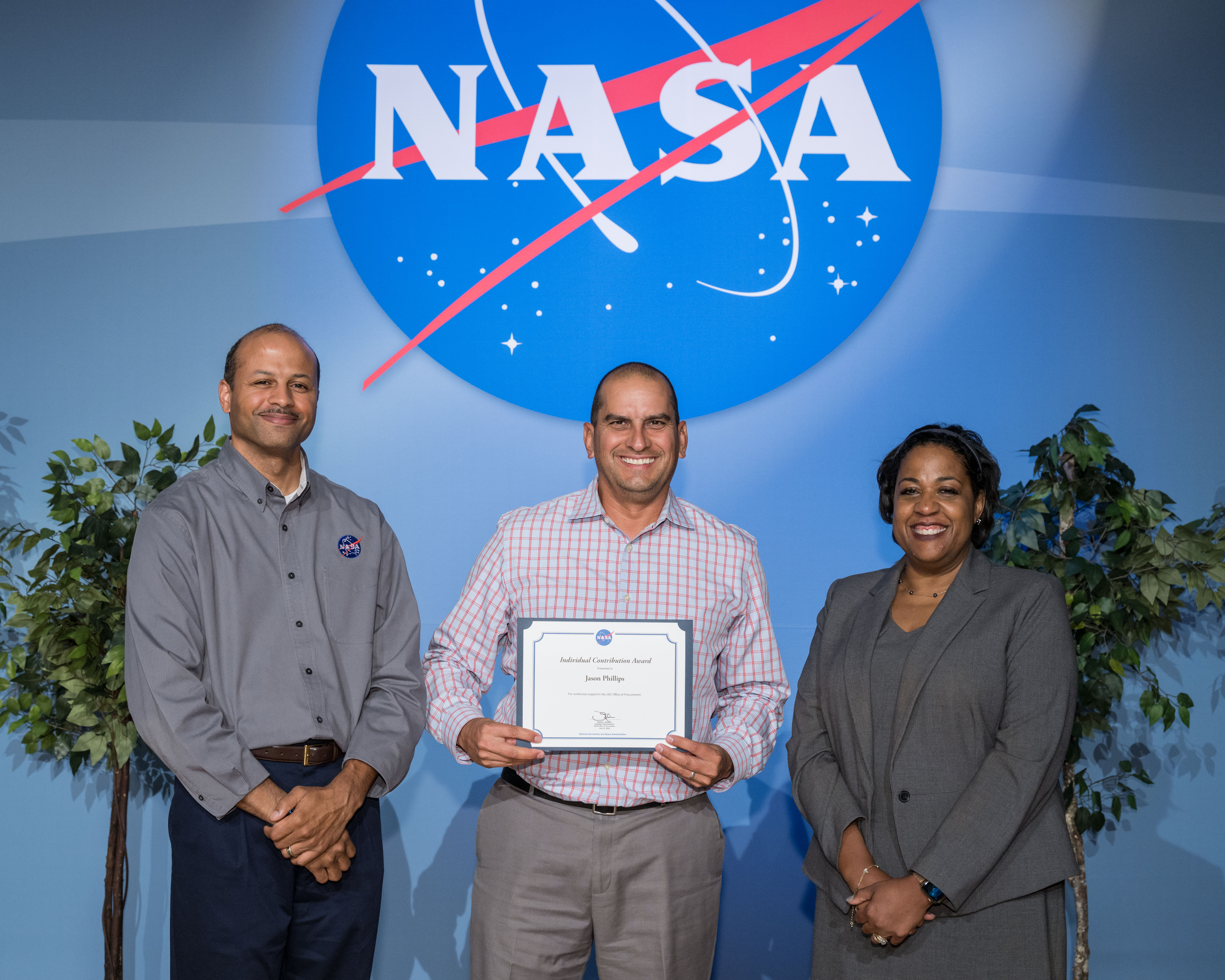
Jason Phillips received an Individual Contribution Award for continuous support in Johnson’s Office of Procurement from NASA Assistant Administrator for Procurement Karla Jackson in 2022.
NASA/Robert Markowitz
Phillips said that staying humble and accountable is key to finding mission-focused solutions that benefit everyone. He also cautioned against making assumptions. “The people around you are very willing to offer thoughts and insights into a solution to your problem,” he said. “There is so much knowledge to be gained by listening.”
He encourages the Artemis Generation to seek opportunities to expand their technical knowledge and grow professionally. “Help yourself so that you may help others.”
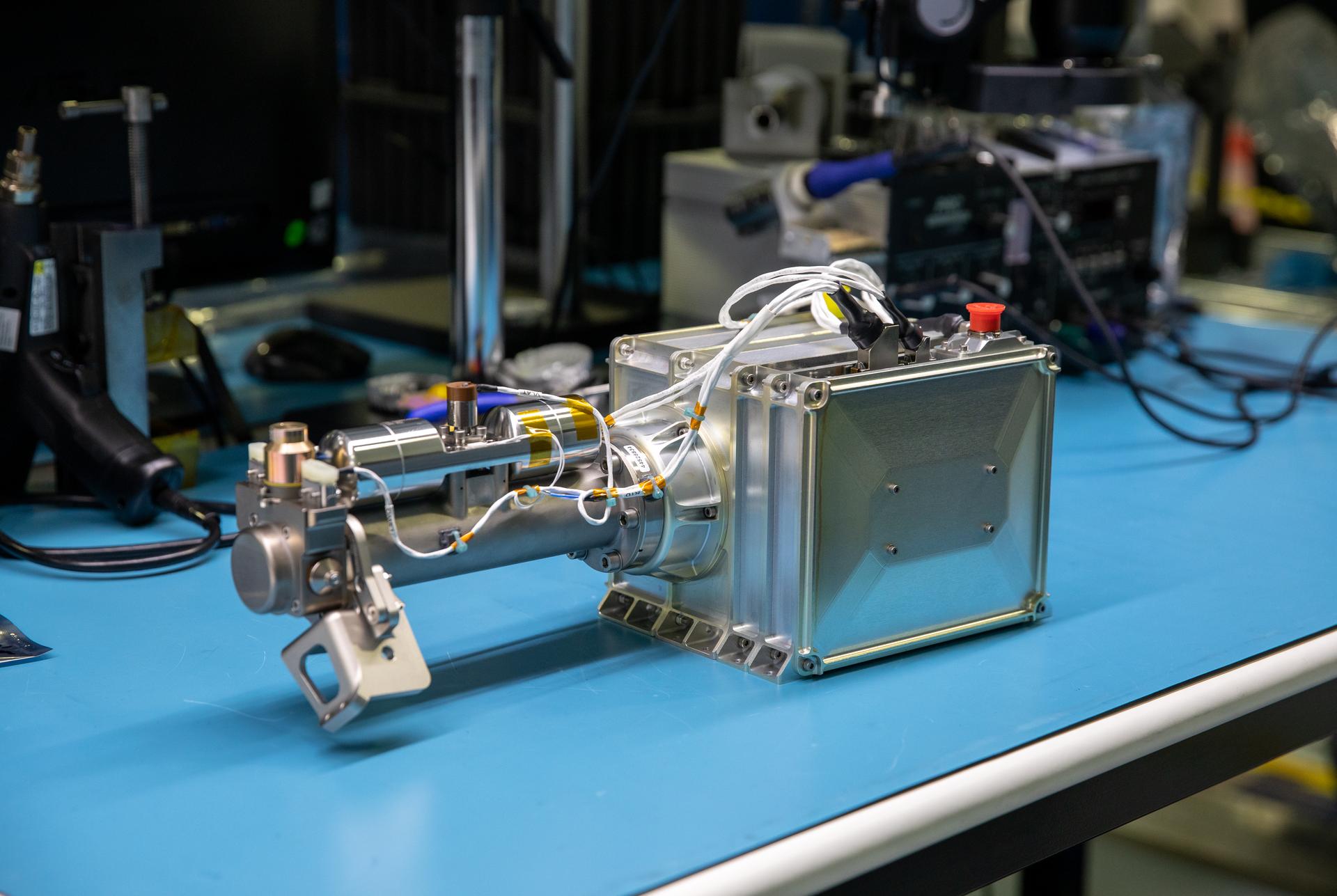
The Mass Spectrometer Observing Lunar Operations (MSolo) for NASA’s Volatile Investigating Polar Exploration Rover (VIPER) mission is prepared for packing inside a laboratory in the Space Station Processing Facility at NASA’s Kennedy Space Center in Florida on Feb. 21, 2023. MSolo is a commercial off-the-shelf mass spectrometer modified to work in space and it will help analyze the chemical makeup of landing sites on the Moon, as well as study water on the lunar surface.
NASA/Kim Shiflett
A NASA-developed technology that recently proved its capabilities in the harsh environment of space will soon head back to the Moon to search for gases trapped under the lunar surface thanks to a new Cooperative Research and Development Agreement between NASA and commercial company Magna Petra Corp.
The Mass Spectrometer Observing Lunar Operations (MSOLO) successfully demonstrated the full range of its hardware in lunar conditions during the Intuitive Machines 2 mission earlier this year. Under the new agreement, a second MSOLO, mounted on a commercial rover, will launch to the Moon no earlier than 2026. Once on the lunar surface, it will measure low molecular weight volatiles in hopes of inferring the presence of rare isotopes, such as Helium-3, which is theorized to exist, trapped in the regolith, or lunar dust, of the Moon.
“This new mission opportunity will help us determine what volatiles are present in the lunar surface, while also providing scientific insight for Magna Petra’s goals,” said Roberto Aguilar Ayala, research physicist at NASA’s Kennedy Space Center in Florida. “Learning more about the lunar volatiles and their isotopes supports NASA’s goal of sustaining long-term human space exploration. We will need to extract resources locally to enhance the capabilities of our astronauts to further exploration opportunities on the lunar surface.”
The MSOLO instrument will be integrated on a commercial rover, selected by Magna Petra. The rover will allow MSOLO to gather the data needed for researchers to understand which low-molecular weight gases reside within the Moon’s surface.
NASA will work with the partner to integrate MSOLO so that it will function properly with the rover, and the partner will analyze and share data in real time with NASA to understand the location of these volatiles on the Moon and their ability to be extracted in the future.
Magna Petra hopes to understand the presence of Helium-3 isotope within the Moon’s surface, with the ultimate goal of collecting it and bringing it back to Earth for use in a variety of industries, including energy production through nuclear fusion, quantum computing, health care, and specialized laboratory equipment.
The MSOLO instrument began as a commercial off-the-shelf mass spectrometer designed to analyze volatiles used in the manufacturing of semi-conductors, which helped keep NASA’s development costs down. NASA modified the device to withstand the rigors of spaceflight and the Moon’s harsh conditions. On its first journey to the Moon, MSOLO was part of the Polar Resources Ice Mining Experiment 1.
Signed on April 2, the reimbursable agreement is the first of its kind established at NASA Kennedy. Under the agreement, Magna Petra will reimburse NASA for costs such as supporting MSOLO integration and testing with the rover, pre-mission preparation and mission operations of the instruments, and expertise in system engineering, avionics, and software.
“This innovative agreement promises to provide valuable data to both partners,” said Jonathan Baker, chief of Spaceport Development at NASA Kennedy. “This approach demonstrates NASA’s commitment to finding unique ways to work with commercial industry to help advance technology in a fiscally responsible way and enabling innovation for the benefit of humankind.”
Throughout the mission, NASA will retain ownership of MSOLO. Once the mission is complete, the instrument will no longer have access to power and communications and will remain on the surface of the Moon. The valuable data gathered during the mission will be submitted to the Planetary Data System for public dissemination.
This website uses cookies to improve your experience. We'll assume you're ok with this, but you can opt-out if you wish.AcceptRead More
Privacy & Cookies Policy
Privacy Overview
This website uses cookies to improve your experience while you navigate through the website. Out of these, the cookies that are categorized as necessary are stored on your browser as they are essential for the working of basic functionalities of the website. We also use third-party cookies that help us analyze and understand how you use this website. These cookies will be stored in your browser only with your consent. You also have the option to opt-out of these cookies. But opting out of some of these cookies may affect your browsing experience.
Necessary cookies are absolutely essential for the website to function properly. This category only includes cookies that ensures basic functionalities and security features of the website. These cookies do not store any personal information.
Any cookies that may not be particularly necessary for the website to function and is used specifically to collect user personal data via analytics, ads, other embedded contents are termed as non-necessary cookies. It is mandatory to procure user consent prior to running these cookies on your website.