
In this photo from June 28, 2025, Expedition 73 flight engineer Jonny Kim and former NASA astronaut and director of human spaceflight at Axiom Space Peggy Whitson work together inside the International Space Station’s Destiny laboratory module setting up hardware for cancer research.
The hardware is used to culture patient-derived cancer cells, model their growth in microgravity, and test a state-of-the-art fluorescence microscope. Results of this study may lead to earlier cancer detection methods, development of advanced cancer treatments, and promote future stem cell research in space.
Whitson returned to Earth on July 15, 2025, with fellow Axiom Mission 4 crew members ISRO (Indian Space Research Organisation) astronaut Shubhanshu Shukla, ESA (European Space Agency) project astronaut Sławosz Uznański-Wiśniewski of Poland, and Hungarian to Orbit (HUNOR) astronaut Tibor Kapu of Hungary. They completed about two and a half weeks in space.
When a reservoir conduit cannot be closed, thousands of cubic feet of water can roar through uncontrolled, threatening public safety, irreplaceable reservoir storage, and power generation. Seal Team Fix invites engineers, fabricators, and creative problem-solvers to stop that torrent in its tracks. Your mission: design a rapid-deploying, temporary seal that can be deployed to a submerged 3- to 25-ft diameter conduit opening, accommodate differential pressure, and achieve a 95–98 % flow reduction – without leaning on trash racks or other non-structural surfaces. The competition unfolds in three phases: a short-format concept white paper, a funded prototype build, and a lab-scale hydraulic demonstration.
An international team of scientists have provided an unprecedented tally of elemental sulfur spread between the stars using data from the Japan-led XRISM (X-ray Imaging and Spectroscopy Mission) spacecraft.
Astronomers used X-rays from two binary star systems to detect sulfur in the interstellar medium, the gas and dust found in the space between stars. It’s the first direct measurement of both sulfur’s gas and solid phases, a unique capability of X-ray spectroscopy, XRISM’s (pronounced “crism”) primary method of studying the cosmos.
“Sulfur is important for how cells function in our bodies here on Earth, but we still have a lot of questions about where it’s found out in the universe,” said Lía Corrales, an assistant professor of astronomy at the University of Michigan in Ann Arbor. “Sulfur can easily change from a gas to a solid and back again. The XRISM spacecraft provides the resolution and sensitivity we need to find it in both forms and learn more about where it might be hiding.”
A paper about these results, led by Corrales, published June 27 in the Publications of the Astronomical Society of Japan.
Watch to learn how the XRISM (X-ray Imaging and Spectroscopy Mission) satellite took an unprecidented look at our galaxy’s sulfur. XRISM is led by JAXA (Japan Aerospace Exploration Agency) in collaboration with NASA, along with contributions from ESA (European Space Agency). NASA’s Goddard Space Flight Center
Using ultraviolet light, researchers have found gaseous sulfur in the space between stars. In denser parts of the interstellar medium, such as the molecular clouds where stars and planets are born, this form of sulfur quickly disappears.
Scientists assume the sulfur condenses into a solid, either by combining with ice or mixing with other elements.
When a doctor performs an X-ray here on Earth, they place the patient between an X-ray source and a detector. Bone and tissue absorb different amounts of the light as it travels through the patient’s body, creating contrast in the detector.
To study sulfur, Corrales and her team did something similar.
They picked a portion of the interstellar medium with the right density — not so thin that all the X-rays would pass through unchanged, but also not so dense that they would all be absorbed.
Then the team selected a bright X-ray source behind that section of the medium, a binary star system called GX 340+0 located over 35,000 light-years away in the southern constellation Scorpius.
This composite shows a section of the interstellar medium scientists X-rayed for sulfur using the Japan-led XRISM (X-ray Imaging and Spectroscopy Mission). X-ray binary GX 340+0 is the blue dot in the center. The composite contains a blend of imagery in X-rays (represented in deep blue), infrared, and optical light.
DSS/DECaPS/eRosita/NASA’s Goddard Space Flight Center
This composite shows a section of the interstellar medium scientists X-rayed for sulfur using the Japan-led XRISM (X-ray Imaging and Spectroscopy Mission). The X-ray binary 4U 1630–472 is highlighted at the center. The composite contains a blend of imagery in X-rays (represented in deep blue), infrared, and optical light.
DSS/DECaPS/eRosita/NASA’s Goddard Space Flight Center
Using the Resolve instrument on XRISM, the scientists were able to measure the energy of GX 340+0’s X-rays and determined that sulfur was present not only as a gas, but also as a solid, possibly mixed with iron.
“Chemistry in environments like the interstellar medium is very different from anything we can do on Earth, but we modeled sulfur combined with iron, and it seems to match what we’re seeing with XRISM,” said co-author Elisa Costantini, a senior astronomer at the Space Research Organization Netherlands and the University of Amsterdam. “Our lab has created models for different elements to compare with astronomical data for years. The campaign is ongoing, and soon we’ll have new sulfur measurements to compare with the XRISM data to learn even more.”
Iron-sulfur compounds are often found in meteorites, so scientists have long thought they might be one way sulfur solidifies out of molecular clouds to travel through the universe.
In their paper, Corrales and her team propose a few compounds that would match XRISM’s observations — pyrrhotite, troilite, and pyrite, which is sometimes called fool’s gold.
The researchers were also able to use measurements from a second X-ray binary called 4U 1630-472 that helped confirm their findings.
“NASA’s Chandra X-ray Observatory has previously studied sulfur, but XRISM’s measurements are the most detailed yet,” said Brian Williams, the XRISM project scientist at NASA’s Goddard Space Flight Center in Greenbelt, Maryland. “Since GX 340+0 is on the other side of the galaxy from us, XRISM’s X-ray observations are a unique probe of sulfur in a large section of the Milky Way. There’s still so much to learn about the galaxy we call home.”
XRISM is led by JAXA (Japan Aerospace Exploration Agency) in collaboration with NASA, along with contributions from ESA (European Space Agency). NASA and JAXA developed Resolve, the mission’s microcalorimeter spectrometer.
Feeling the Heat: Perseverance Looks for Evidence of Contact Metamorphism
NASA’s Mars Perseverance rover acquired this image of the boulders along the contact at Westport, using its Mastcam-Z Left Camera, one of a pair of cameras located high on the rover’s mast. The rover acquired the image on July 10, 2025 — Sol 1560, or Martian day 1,560 of the Mars 2020 mission — at the local mean solar time of 11:23:38.
NASA/JPL-Caltech/ASU
Written by Melissa Rice, Professor of Planetary Science at Western Washington University
Following a short break for the July 4th holiday, Perseverance drove westward to a site called “Westport,” where the clay-bearing “Krokodillen” unit meets an olivine-bearing rock formation. It is possible that the olivine-rich rocks are an intrusive igneous unit, meaning they could have formed when molten magma from deep within Mars got pushed upwards and cooled under the surface. If that’s the case, Westport could preserve a dramatic moment in Mars’ history when hot, molten material intruded into existing rock formations.
Those intrusive processes are common on Earth, and the heat of the intruding magma can fundamentally alter the surrounding geology through a process called “contact metamorphism.” The heat from the intrusion will “bake” nearby rocks, creating new minerals and potentially new environments for microbial life. Conversely, the intrusive rocks get rapidly “chilled” where they meet preexisting solid rock formations.
At Westport, Perseverance is looking for evidence that the Krokodillen rocks at the contact were baked, and that the olivine-bearing rocks at the contact were chilled. Images from the Mastcam-Z instrument reveal that the contact is littered with intriguing dark, rubbly rocks alongside lighter-toned, smooth boulders. Both rock types are proving challenging to study.
The dark fragments are too small and rough for Perseverance’s standard abrasion techniques, but the rover cleared off the surface of a rock called “Holyrood Bay” with its gas Dust Removal Tool (gDRT). Perseverance also tried to abrade a nearby boulder named “Drake’s Point,” but the rock shifted to the side, causing the abrasion to stop short. The science questions here are compelling enough, however, that Perseverance will keep trying to look within the rocks at this important boundary.
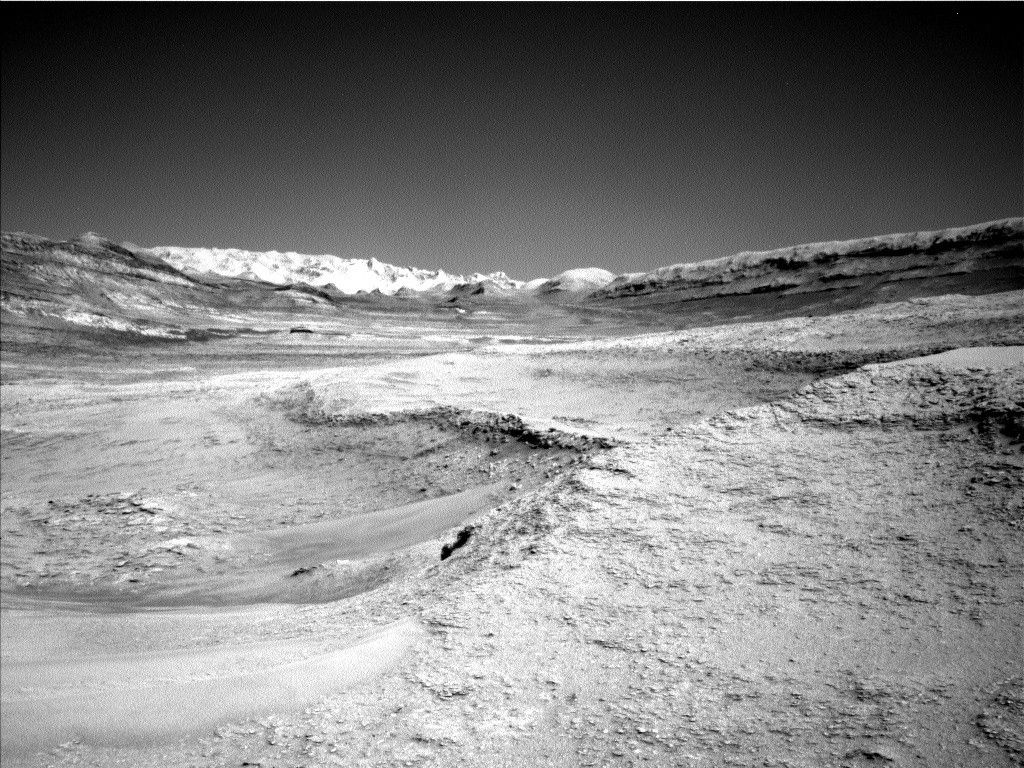
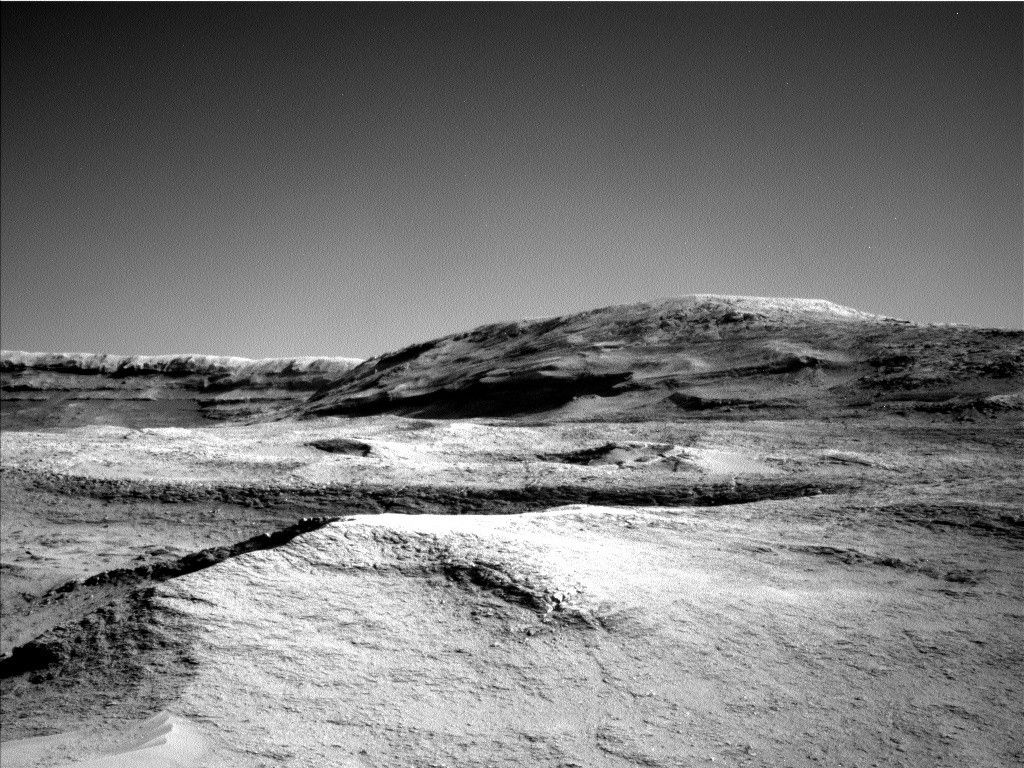
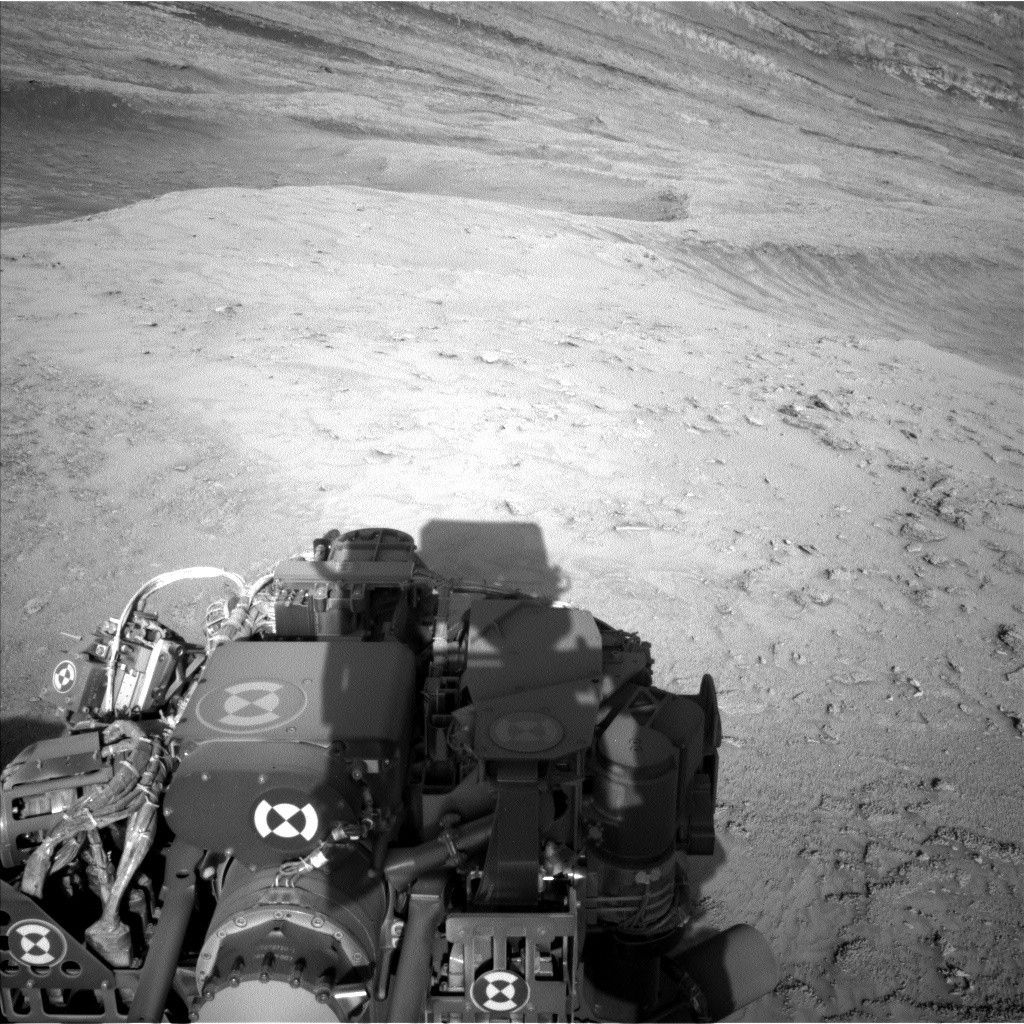
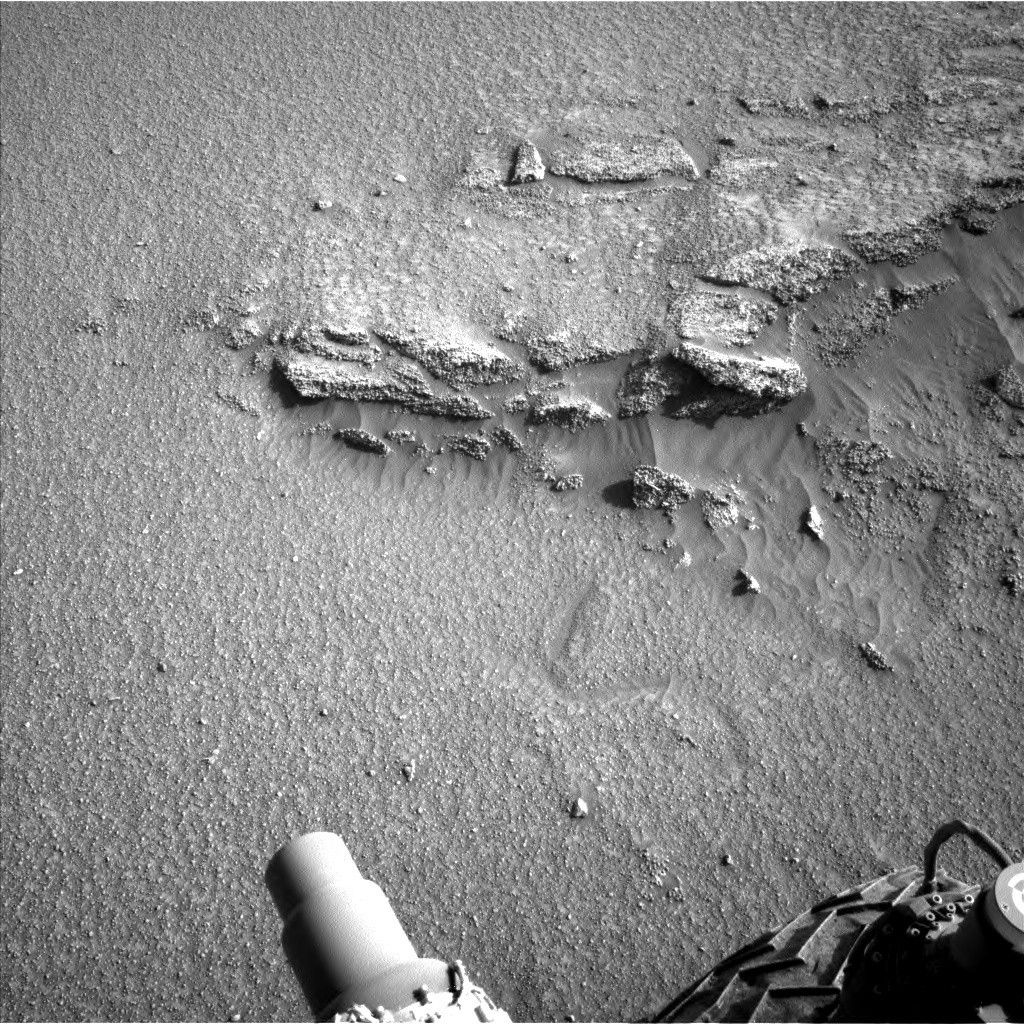
NASA’s Mars rover Curiosity acquired this image, looking toward the upper slopes of Mount Sharp, using its Left Navigation Camera (Left Navcam) on July 20, 2025. Curiosity captured the image on Sol 4605, or Martian day 4,605 of the Mars Science Laboratory mission, at 18:58:26 UTC.
NASA/JPL-Caltech
Written by Deborah Padgett, MSL OPGS Task Lead at NASA’s Jet Propulsion Laboratory
Earth planning date: Monday, July 21, 2025
Curiosity continues our exploration of the fractured boxwork terrain on the slopes of Mount Sharp. After a successful 5-meter drive (about 16 feet), our rover is resting in a hollow on its way to a boxwork ridge viewpoint. Over the weekend, Curiosity began an atmospheric observation with the SAM instrument, which will continue into today’s plan. Because the SAM instrument is complex and powerful, it uses a great deal of energy when it operates, causing what we call a “deep dip” in the battery charge level. This means that we have to wait a bit after the SAM observations complete for the battery to recharge enough for Curiosity to observe its surroundings with other science instruments, or move its arm or wheels. For this reason, the plan today does not include a drive, and contact science at this location will be done on the second sol of the plan.
On Sol 4607, Curiosity will begin the day with SAM atmospheric composition activity, which will run for several hours. After it finishes, we will use the rover’s navigation camera to perform a cloud altitude observation, looking for cloud shadows on the upper reaches of Mount Sharp, and clouds drifting by overhead at the zenith. Overnight, Curiosity’s battery will recharge, allowing us to perform a targeted science block on the morning of Sol 4608. This starts with Navcam observations of dust opacity across the floor of Gale Crater, then a measurement of dust in the air toward the Sun with Mastcam. Curiosity then turns Mastcam toward the ridge ahead to obtain a 15×1 mosaic on target “Cueva De Los Vencejos Y Murcielagos (Cave of Swifts and Bats).” Afterwards, Mastcam will look back along Curiosity’s tracks, hoping to see freshly broken rocks and determine the texture of disturbed ground. Next, ChemCam’s laser spectrograph will zap a nodular rock pillar named for the famous high-altitude “Lake Titicaca” bordering Bolivia and Peru. A second ChemCam observation with the RMI telescopic camera will study stratigraphy on the Mishe Mokwa butte with a 5×2 image mosaic. Mastcam will finish off this science block by looking at the pits left behind by the ChemCam laser on target “Lake Titicaca.”
In the afternoon, Curiosity’s arm will reach out to brush the dust from the bedrock target “La Tranquita,” then observe it with the MAHLI microscopic imager and APXS. MAHLI and APXS will also investigate plate-like rock formations at target “Aqua Dulce.” A third target with more complex rock structures dubbed “Paposo,” after a natural monument along the Pacific Coast of northern Chile, will be imaged only by MAHLI. The next morning will include another targeted science block. Curiosity will then drive away toward the next viewpoint in the boxwork terrain of Mars.
NASA eClips STEM Student Ambassadors Light Up CNU’s 2025 STEM Community Day
More than 2,000 curious visitors from Newport News and the surrounding Hampton Roads region of Virginia flocked to Christopher Newport University (CNU) on May 31, 2025 for their annual STEM (Science, Technology, Engineering, & Mathematics) Community Day, and the NASA eClips team from the National Institute of Aerospace’s Center for Integrative STEM Education (NIA-CISE) made sure every one of them left with their eyes—and imaginations—fixed on the Sun.
At the heart of the NASA eClips exhibit were NIA’s STEM Student Ambassadors—a team of carefully selected high school students from the Tidewater region of Virginia who underwent extensive training with NASA eClips educators during the summer of 2024. These bright, enthusiastic young leaders are passionate about communicating about and advocating for STEM. The STEM Student Ambassador program is made possible through a Coastal Virginia STEM Hub grant from the Virginia General Assembly and is already having an impact.
Throughout the day, the Ambassadors engaged learners of all ages with two creative, hands-on experiences that connected STEM and the arts:
Chalk Corona – Using black construction paper and vibrant chalk, participants recreated the Sun’s corona—the super-hot, gaseous “crown” that’s visible during a total solar eclipse. While they shaded and smudged, the Ambassadors explained why the corona is so important to solar research and handed out certified solar viewers for safe Sun-watching back home.
Pastel Auroras – Visitors also discovered how solar wind, storms, and coronal mass ejections (aka Sun “sneezes”) spark Earth’s dazzling auroras. Guided by the Ambassadors, budding artists layered pastels to capture swirling curtains of light, tying recent mid-Atlantic aurora sightings to real-time space weather.
Throughout the day, the Ambassadors’ energy was contagious, turning complex heliophysics into hands-on fun and opening eyes to the opportunities and careers that await in STEM. Judging by the smiles—and the dusting of chalk and pastels—NASA eClips’ presence was, quite literally, the “crowning” touch on an unforgettable community celebration of STEM.
The NASA eClips project provides educators with standards-based videos, activities, and lessons to increase STEM literacy through the lens of NASA. It is supported by NASA under cooperative agreement award number NNX16AB91A and is part of NASA’s Science Activation Portfolio. Learn more about how Science Activation connects NASA science experts, real content, and experiences with community leaders to do science in ways that activate minds and promote deeper understanding of our world and beyond: https://science.nasa.gov/learn
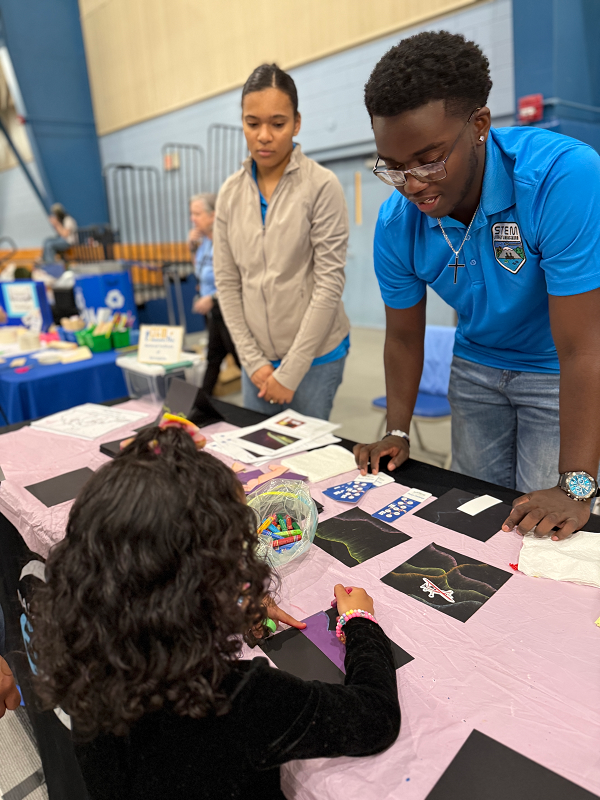
Two STEM Student Ambassadors engage a young girl while she creates her own Pastel Aurora artwork.
After months of work in the NASA Spacesuit User Interface Technologies for Students (SUITS) challenge, more than 100 students from 12 universities across the United States traveled to NASA’s Johnson Space Center in Houston to showcase potential user interface designs for future generations of spacesuits and rovers.
NASA Johnson’s simulated Moon and Mars surface, called “the rock yard,” became the students’ testing ground as they braved the humid nights and abundance of mosquitoes to put their innovative designs to the test. Geraldo Cisneros, the tech team lead, said, “This year’s SUITS challenge was a complete success. It provided a unique opportunity for NASA to evaluate the software designs and tools developed by the student teams, and to explore how similar innovations could contribute to future, human-centered Artemis missions. My favorite part of the challenge was watching how the students responded to obstacles and setbacks. Their resilience and determination were truly inspiring.”
Tess Caswell and the Rice Owls team from Rice University test their augmented reality heads-up display at Johnson Space Center’s Rock Yard in Houston on May 19, 2025.
NASA/James Blair
Students filled their jam-packed days not only with testing, but also with guest speakers and tours. Swastik Patel from Purdue University said, “All of the teams really enjoyed being here, seeing NASA facilities, and developing their knowledge with NASA coordinators and teams from across the nation. Despite the challenges, the camaraderie between all the participants and staff was very helpful in terms of getting through the intensity. Can’t wait to be back next year!”
John Mulnix with Team Cosmoshox from Wichita State University presents the team’s design during the Spacesuit User Interface Technologies for Students (SUITS) exit pitches at Johnson on May 22, 2025.
NASA/David DeHoyos
“This week has been an incredible opportunity. Just seeing the energy and everything that’s going on here was incredible. This week has really made me reevaluate a lot of things that I shoved aside. I’m grateful to NASA for having this opportunity, and hopefully we can continue to have these opportunities.”
At the end of test week, each student team presented their projects to a panel of experts. These presentations served as a platform for students to showcase not only their technical achievements but also their problem-solving approaches, teamwork, and vision for real-world application. The panel–composed of NASA astronaut Deniz Burnham, Flight Director Garrett Hehn, and industry leaders–posed thought-provoking questions and offered constructive feedback that challenged the students to think critically and further refine their ideas. Their insights highlighted potential areas for growth, new directions for exploration, and ways to enhance the impact of their projects. The students left the session energized and inspired, brimming with new ideas and a renewed enthusiasm for future development and innovation. Burnham remarked, “The students did such a great job. They’re all so creative and wonderful, definitely something that can be implemented in the future.”
Gamaliel Cherry, director of the Office of STEM Engagement at Johnson, presents the Artemis Educator Award to Maggie Schoonover from Wichita State University on May 22, 2025.
NASA/David DeHoyos
NASA SUITS test week was not only about pushing boundaries; it was about earning a piece of history. Three Artemis Student Challenge Awards were presented. The Innovation and Pay it Forward awards were chosen by the NASA team, recognizing the most groundbreaking and impactful designs. Students submitted nominations for the Artemis Educator Award, celebrating the faculty member who had a profound influence on their journeys. The Innovation Award went to Team JARVIS from Purdue University and Indiana State University, for going above and beyond in their ingenuity, creativity, and inventiveness. Team Selene from Midwestern State University earned the Pay it Forward Award for conducting meaningful education events in the community and beyond. The Artemis Educator Award was given to Maggie Schoonover from Wichita State University in Kansas for the time, commitment, and dedication she gave to her team.
“The NASA SUITS challenge completes its eighth year in operation due to the generous support of NASA’s EVA and Human Surface Mobility Program,” said NASA Activity Manager Jamie Semple. “This challenge fosters an environment where students learn essential skills to immediately enter a science, technology, engineering, and mathematics (STEM) career, and directly contribute to NASA mission operations. These students are creating proposals, generating designs, working in teams similar to the NASA workforce, utilizing artificial intelligence, and designing mission operation solutions that could be part of the Artemis III mission and beyond. NASA’s student design challenges are an important component of STEM employment development and there is no better way to learn technical skills to ensure future career success.”
The week serves as a springboard for the next generation of space exploration, igniting curiosity, ambition, and technical excellence among young innovators. By engaging with real-world challenges and technologies, participants not only deepen their understanding of space science but also actively contribute to shaping its future. Each challenge tackled, each solution proposed, and each connection formed represents a meaningful step forward; not just for the individuals involved, but for humanity as a whole. With every iteration of the program, the dream of venturing further into space becomes more tangible, transforming what once seemed like science fiction into achievable milestones.
Are you interested in joining the next NASA SUITS challenge? Find more information here.
The next challenge will open for proposals at the end of August 2025.
The 2025 NASA SUITS teams represent academic institutions across the United States.
Preparations for Next Moonwalk Simulations Underway (and Underwater)
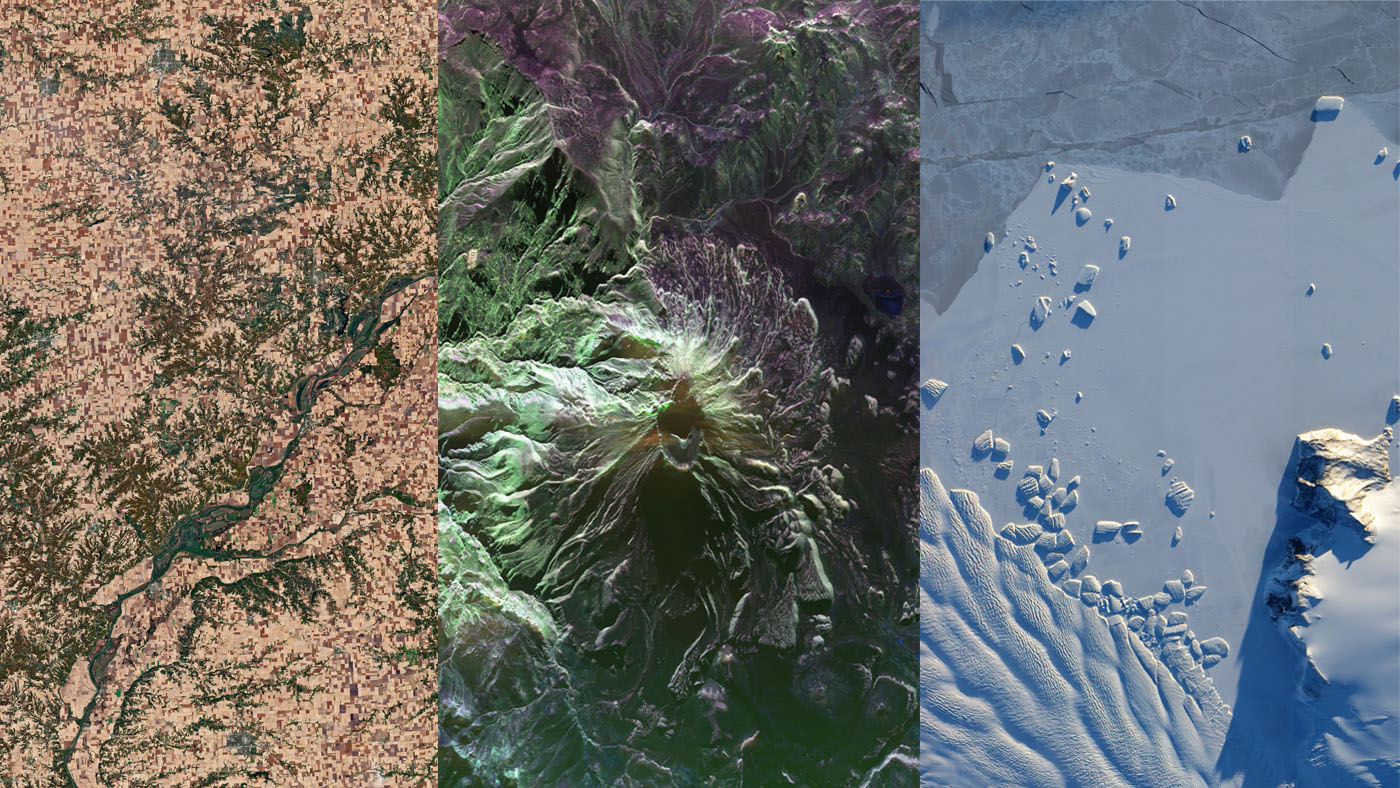
Information provided by the NASA-ISRO Synthetic Aperture Radar mission (NISAR) will help to protect and inform communities around the world. The data will aid in managing agricultural fields, monitoring volcanoes, and tracking land-based ice including glaciers.
Data from NISAR will map changes to Earth’s surface, helping improve crop management, natural hazard monitoring, and tracking of sea ice and glaciers.
A new U.S.-India satellite called NISAR (NASA-ISRO Synthetic Aperture Radar) will provide high-resolution data enabling scientists to comprehensively monitor the planet’s land and ice surfaces like never before, building a detailed record of how they shift over time. Hailed as a critical part of a pioneering year for U.S.-India civil space cooperation by President Trump and Prime Minister Modi during their visit in Washington in February, the NISAR launch will advance U.S.-India cooperation and benefit the U.S. in the areas of disaster response and agriculture.
As the first joint satellite mission between NASA and the Indian Space Research Organisation (ISRO), NISAR marks a new chapter in the growing collaboration between the two space agencies. Years in the making, the launch of NISAR builds on a strong heritage of successful programs, including Chandrayaan-1 and the recent Axiom Mission 4, which saw ISRO and NASA astronauts living and working together aboard the International Space Station for the first time.
The information NISAR provides will help decision-makers, communities, and scientists monitor agricultural fields, refine understanding of natural hazards such as landslides and earthquakes, and help teams prepare for and respond to disasters like hurricanes, floods, and volcanic eruptions. The satellite will also provide key global observations of changes to ice sheets, glaciers, and permafrost, as well as forests and wetlands.
The NISAR mission is slated to launch no earlier than July 30 from Satish Dhawan Space Centre on India’s southeastern coast aboard an ISRO Geosynchronous Satellite Launch Vehicle.
Here are five things to know about NISAR:
1. The NISAR satellite will provide a 3D view of Earth’s land and ice.
Two synthetic aperture radars (SARs) aboard NISAR will detect changes in the planet’s surface down to fractions of an inch. The spacecraft will bounce microwave signals off Earth’s surface and receive the return signals on a radar antenna reflector measuring 39 feet (12 meters) across. The satellite’s ability to “see” through clouds and light rain, day and night, will enable data users to continuously monitor earthquake- and landslide-prone areas and determine how quickly glaciers and ice sheets are changing. It also will offer unprecedented coverage of Antarctica, information that will help with studying how the continent’s ice sheet changes over time.
2. Data from NISAR will provide critical insights to help governments and decision-makers plan for natural and human-caused hazards.
Earthquakes, volcanoes, and aging infrastructure can pose risks to lives and property. Able to see subtle changes in Earth’s surface, NISAR can help with hazard-monitoring efforts and potentially give decision-makers more time to prepare for a possible disaster. For earthquakes, NISAR will provide insights into which parts of a fault slowly move without producing quakes and which are locked together and could potentially slip. The satellite will be able to monitor the area around thousands of volcanoes, detecting land movement that could be a precursor to an eruption. When it comes to infrastructure such as levees, aqueducts, and dams, NISAR data collected over time can help managers detect if nearby land motion could jeopardize key structures, and then assess the integrity of those facilities.
3. The most advanced radar system ever launched as part of a NASA or ISRO mission, NISAR will generate more data on a daily basis than any previous Earth satellite from either agency.
About the length of a pickup truck, NISAR’s main body contains a dual-radar payload — an L-band system with a 10-inch (25-centimeter) wavelength and an S-band system with a 4-inch (10-centimeter) wavelength. Each system is sensitive to land and ice features of different sizes and specializes in detecting certain attributes, such as moisture content, surface roughness, and motion. By including both radars on one spacecraft — a first — NISAR will be more capable than previous SAR missions. These two radars, one from NASA and one from ISRO, and the data they will produce, exemplify how collaboration between spacefaring allies can achieve more than either would alone.
The radars will generate about 80 terabytes of data products per day over the course of NISAR’s prime mission. That’s roughly enough data to fill about 150 512-gigabyte hard drives each day. The information will be processed, stored, and distributed via the cloud — and accessible to all.
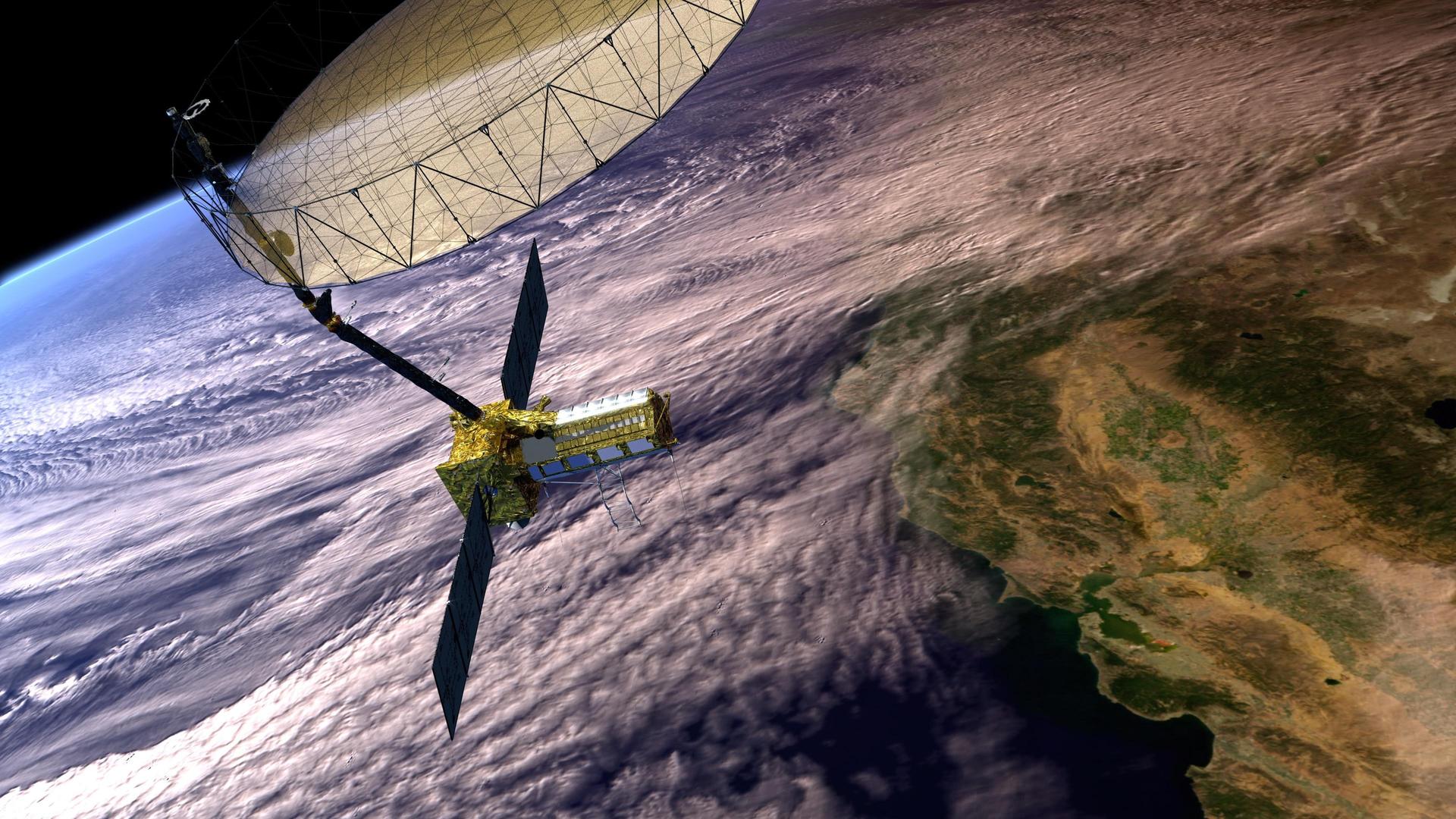
This artist’s concept depicts the NISAR satellite in orbit over central and Northern California. The spacecraft will survey all of Earth’s land and ice-covered surfaces twice every 12 days.
NASA/JPL-Caltech
4. The NISAR mission will help monitor ecosystems around the world.
The mission’s two radars will monitor Earth’s land and ice-covered surfaces twice every 12 days. Their near-comprehensive coverage will include areas not previously covered by other Earth-observing radar satellites with such frequency. The NISAR satellite’s L-band radar penetrates deep into forest canopies, providing insights into forest structure, while the S-band radar is ideal for monitoring crops. The NISAR data will help researchers assess how forests, wetlands, agricultural areas, and permafrost change over time.
5. The NISAR mission marks the first collaboration between NASA and ISRO on a project of this scale and marks the next step in a long line of Earth-observing SAR missions.
The NISAR satellite features components developed on opposite sides of the planet by engineers from ISRO and NASA’s Jet Propulsion Laboratory working together. The S-band radar was built at ISRO’s Space Applications Centre in Ahmedabad, while JPL built the L-band radar in Southern California. After engineers from JPL and ISRO integrated NISAR’s instruments with a modified ISRO I3K spacecraft bus and tested the satellite, ISRO transported NISAR to Satish Dhawan Space Centre in May 2025 to prepare it for launch.
The SAR technique was invented in the U.S. in 1952 and now countries around the globe have SAR satellites for a variety of missions. NASA first used the technique with a space-based satellite in 1978 on the ocean-observing Seasat, which included the first spaceborne SAR instrument for scientific observations. In 2012, ISRO began launching SAR missions starting with Radar Imaging Satellite (RISAT-1), followed by RISAT-1A in 2022, to support a wide range of applications in India.
More About NISAR
Managed by Caltech in Pasadena, JPL leads the U.S. component of the project and provided the L-band SAR. JPL also provided the radar reflector antenna, the deployable boom, a high-rate communication subsystem for science data, GPS receivers, a solid-state recorder, and payload data subsystem. NASA’s Goddard Space Flight Center manages the Near Space Network, which will receive NISAR’s L-band data.
The ISRO Space Applications Centre is providing the mission’s S-band SAR. The U R Rao Satellite Centre is providing the spacecraft bus. The rocket is from Vikram Sarabhai Space Centre, launch services are through Satish Dhawan Space Centre, and satellite mission operations are by the ISRO Telemetry Tracking and Command Network. The National Remote Sensing Centre is responsible for S-band data reception, operational products generation, and dissemination.
Calling all librarians! NASA sponsors dozens of research projects that need help from you and the people in your community. These projects invite everyone who’s interested to collaborate with scientists, investigating mysteries from how star systems form to how our planet sustains life. You can help by making observations with your cell phone or by studying fresh data on your laptop from spacecraft like the James Webb Space Telescope. You might discover a near-Earth asteroid or a new food option for astronauts. Participants learn new skills and meet scientists and other people around the world with similar interests.
Interested in sharing these opportunities with your patrons? Join us on August 26, 2025 at 1 p.m. EST for a 1-hour online information session. A librarian and a participatory science professional will provide you with a NASA Citizen Science Librarian Starter Kit and answer all your questions. The kit includes everything you need to host a NASA Science Program for patrons of all ages.
Preparations for Next Moonwalk Simulations Underway (and Underwater)
This woman is wearing an Ekoï jersey made from Outlast. The phase-change materials incorporated into the fabric help the wearer stay comfortable in any temperature.
Credit: Ekoï
During the Tour de France, athletes have to maintain a constant speed while bike riding for dozens of miles through cold rains and summer heat. These cyclists need gear that adapts to the different environments they encounter. One company is using a material with NASA origins to ensure these athletes stay comfortable while taking their grand tours.
Phase-change materials use basic properties of matter to maintain a steady temperature. When a substance melts from a solid to a liquid, the material absorbs heat, and when it becomes solid again, it releases that heat. In the 1980s, Triangle Research Corporation received a NASA Small Business Innovation Research award to explore how phase-change materials could be incorporated into textiles to control temperatures in spacesuit gloves. By placing phase-change materials in small capsules woven throughout a textile, these temperature-regulating properties can be tuned to the comfort of the human body. While these textiles weren’t incorporated into any gloves flown on NASA missions, they formed the basis for a new product, sold under the name Outlast.
Spacesuit gloves have to be both dexterous enough to use tools and insulating enough to protect against the temperature extremes of working in space. Working with industry, NASA explored the use of phase-change materials for these purposes, which was later commercialized under the name Outlast.
Credit: NASA
Outlast has since become one of the most widely distributed temperature-regulating fabrics, found in products such as bedding, loungewear, and office chairs. It has seen especially extensive use in activewear, ranging from jogging clothes to professional sports gear.
Founded in 2001 and based in Fréjus, France, the company Ekoï makes clothing and accessories for cyclists, particularly those who bike competitively. The company first encountered Outlast at the Performance Days fabric trade fair in Munich, Germany, and was impressed with its capabilities as well as its NASA heritage.
“When you say NASA, it’s always impressive.” said Celine Milan, director of textiles at Ekoï. “At the beginning we were even saying in here in our offices, ‘Wow, this technology was developed by NASA.’ It’s on another level.”
Ekoi’s Outlast line officially launched in July 2022, during that year’s Tour de France. Over the course of that race, the company found it improved cyclists’ performance in the event’s mountain stages, where elevation changes mean wide swings in temperature. It also improved athletes’ aerodynamics, as their jerseys could stay closed in warmer environments, rather than opening them to let in wind.
Today, Ekoï sells several products that incorporate Outlast materials, including jerseys, gloves, and socks. These products are internationally known for their NASA heritage. Whether engineering for astronaut’s comfort in space or competitive athletes, NASA aims for excellence.
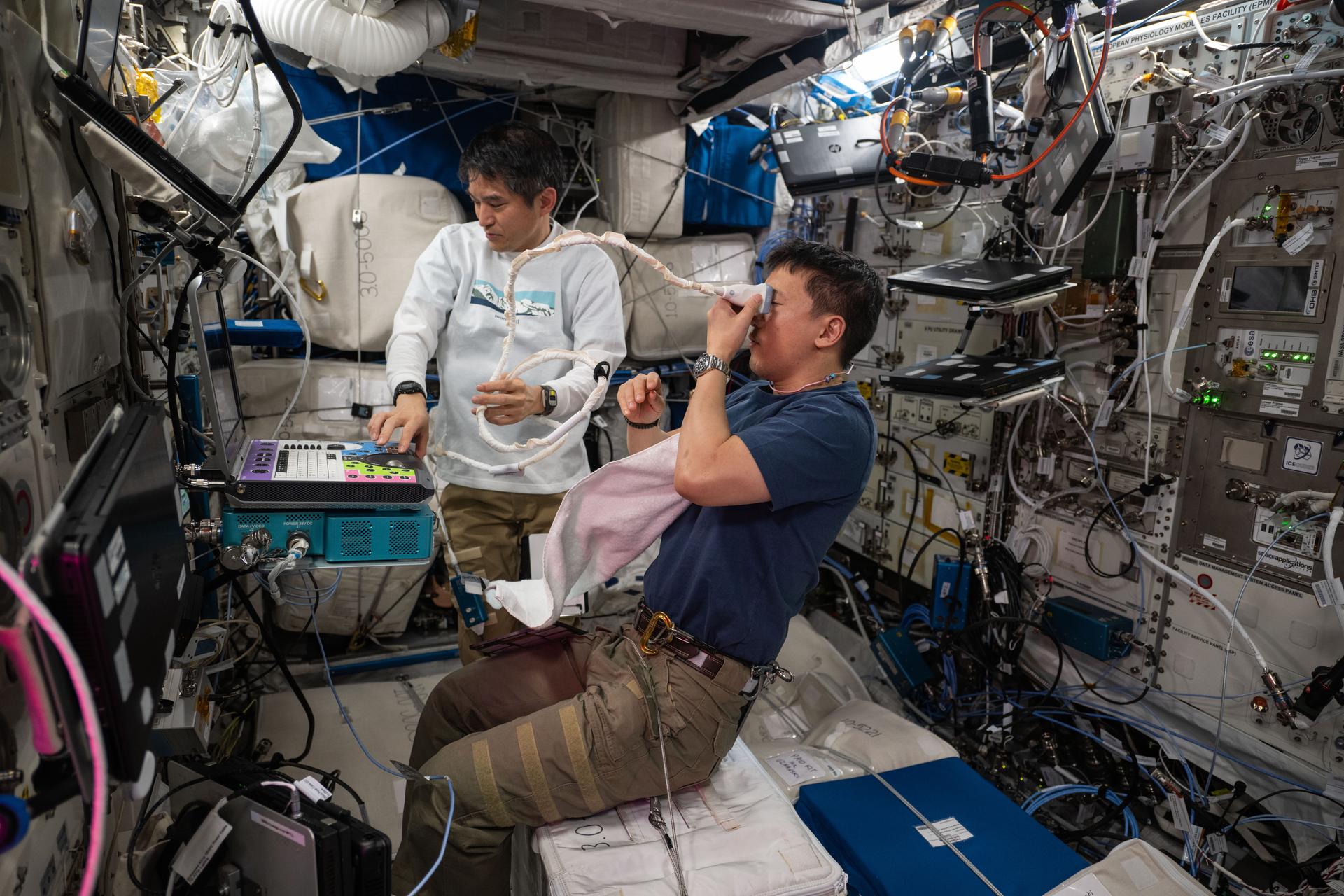
NASA astronaut Jonny Kim, assisted by JAXA astronaut Takuya Onishi, performs an eye ultrasound on the International Space Station.
Credits: NASA
Science in Space July 2025
When astronauts began spending six months and more aboard the International Space Station, they started to notice changes in their vision. For example, many found that, as their mission progressed, they needed stronger reading glasses. Researchers studying this phenomenon identified swelling in the optic disc, which is where the optic nerve enters the retina, and flattening of the eye shape. These symptoms became known as Space-Associated Neuro-Ocular Syndrome (SANS).
NASA astronaut Suni Williams wears a cuff on her left leg as she conducts an eye exam for the Thigh Cuff investigation.
NASA
Microgravity causes a person’s blood and cerebrospinal fluid to shift toward the head and studies have suggested that these fluid shifts may be an underlying cause of SANS. A current investigation, Thigh Cuff, examines whether tight leg cuffs change the way fluid moves around inside the body, especially around the eyes and in the heart and blood vessels. If so, the cuffs could serve as a countermeasure against the problems associated with fluid shifts, including SANS. A simple and easy-to-use tool to counter the headward shift of body fluids could help protect astronauts on future missions to the Moon and Mars. The cuffs also could treat conditions on Earth that cause fluid to build up in the head or upper body, such as long-term bed rest and certain diseases.
Following fluid shifts
NASA astronaut Shane Kimbrough sets up optical coherence tomography hardware.
NASA
The Fluid Shifts investigation, conducted from 2015 through 2020, was the first to reveal changes in how blood drains from the brain in microgravity. Vision Impairment and Intracranial Pressure (VIIP) began testing the role those fluid shifts and resulting increased brain fluid pressure might play in the development of SANS. This research used a variety of measures including clinical eye exams with and without dilatation, imaging of the retina and associated blood vessels and nerves, noninvasive imaging to measure the thickness of retinal structures, and magnetic resonance imaging of the eye and optic nerve. In addition, approximately 300 astronauts completed questionnaires to document vision changes during their missions.
In one paper published from the research, scientists described how these imaging techniques have improved the understanding of SANS. The authors summarized emerging research on developing a head-mounted virtual reality display that can conduct multimodal, noninvasive assessment to help diagnose SANS.
Other researchers determined that measuring the optic nerve sheath diameter shows promise as a way to identify and quantify eye and vision changes during spaceflight. The paper also makes recommendations for standardizing imaging tools, measurement techniques, and other aspects of study design.
Another paper reported on an individual astronaut who had more severe than usual changes after a six-month spaceflight and certain factors that may have contributed. Researchers also observed improvement in the individual’s symptoms that may have been due to B vitamin supplementation and lower cabin carbon dioxide levels following departure of some crew members. While a single case does not allow researchers to determine cause and effect, the magnitude of the improvements suggest this individual may be more affected by environmental conditions such as carbon dioxide. This may have been the first attempt to mitigate SANS with inflight B vitamin supplementation.
Eyeball tissue stiffness
Optical coherence tomography image of the back of the eyeball (top) and thickness of the middle wall of the eye (bottom) from the SANSORI investigation.
University of Montreal
SANSORI, a CSA (Canadian Space Agency) investigation, used an imaging technique called Optical Coherence Tomography to examine whether reduced stiffness of eye tissue contributes to SANS. On Earth, changes in stiffness of the tissue around the eyeball have been associated with aging and conditions such as glaucoma and myopia. Researchers found that long-duration spaceflight affected the mechanical properties of eye tissues, which could contribute to the development of SANS. This finding could improve understanding of eye changes during spaceflight and in aging patients on Earth.
Genetic changes, artificial gravity
The MHU-8 investigation from JAXA (Japan Aerospace Exploration Agency), which examined changes in DNA and gene expression in mice after spaceflight, found changes in the optic nerve and retinal tissue. Researchers also found that artificial gravity may reduce these changes and could serve as a countermeasure on future missions.
These and other studies ultimately could help researchers prevent, diagnose, and treat vision impairment in crew members and people on Earth.
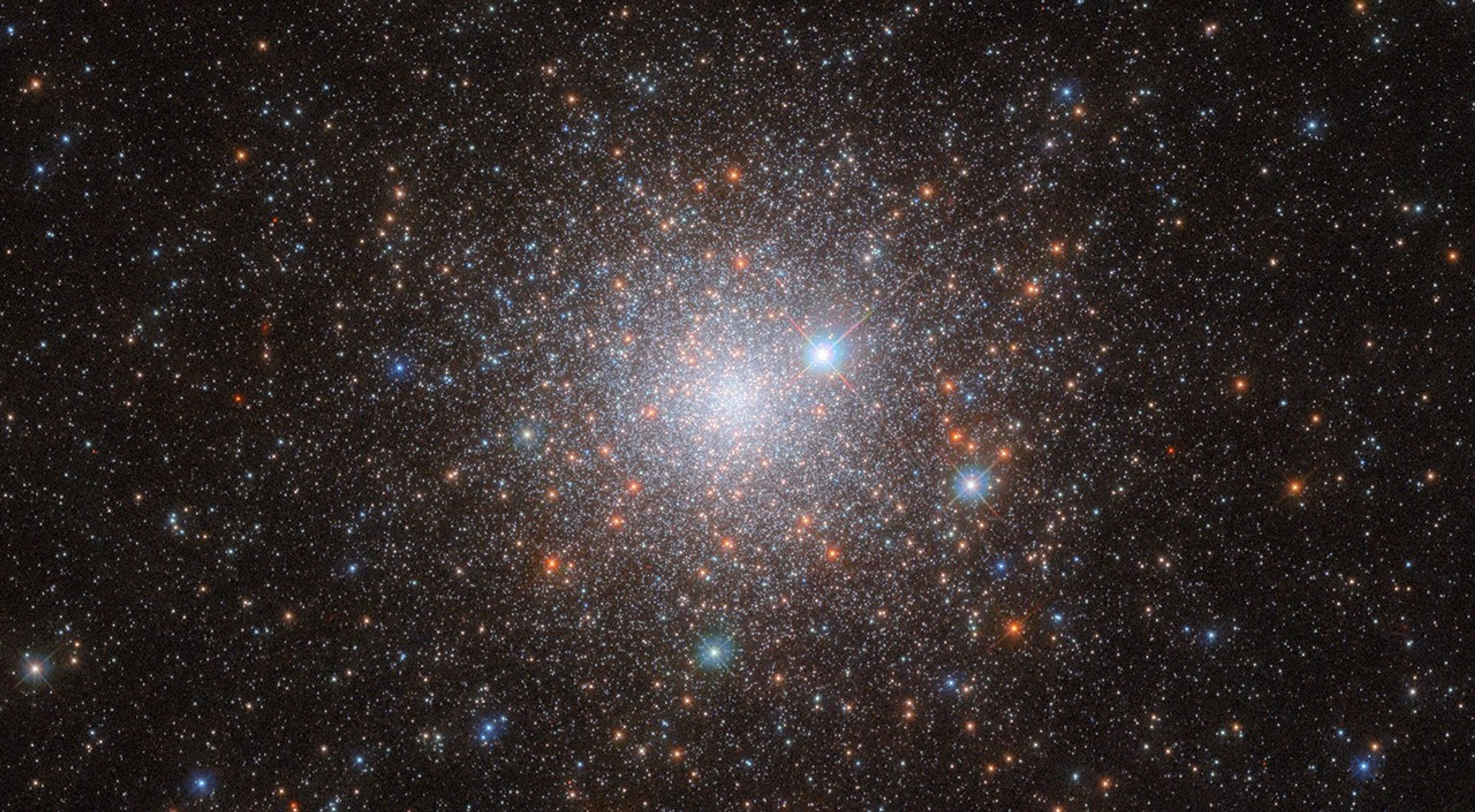
This NASA/ESA Hubble Space Telescope image features the globular cluster NGC 1786.
ESA/Hubble & NASA, M. Monelli; Acknowledgment: M. H. Özsaraç
This NASA/ESA Hubble Space Telescope image features the field of stars that is NGC 1786. The globular cluster is located in the Large Magellanic Cloud (LMC), a small satellite galaxy of the Milky Way Galaxy that is approximately 160,000 light-years away from Earth. NGC 1786 itself is in the constellation Dorado. It was discovered in the year 1835 by Sir John Herschel.
The data for this image comes from an observing program that compares old globular clusters in nearby dwarf galaxies — the LMC, the Small Magellanic Cloud, and the Fornax dwarf spheroidal galaxy — to globular clusters in the Milky Way galaxy. Our galaxy contains over 150 of these old, spherical collections of tightly-bound stars, which astronomers have studied in depth — especially with Hubble images like this one, which show them in previously unattainable detail. Being very stable and long-lived, globular clusters act as galactic time capsules, preserving stars from the earliest stages of a galaxy’s formation.
Astronomers once thought that stars in a globular cluster all formed together at about the same time, but the study of old globular clusters in our galaxy uncovered multiple populations of stars with different ages. To use globular clusters as historical markers, we must understand how they form and where these stars of varying ages come from. This observing program examined old globular clusters like NGC 1786 in these external galaxies to see if they, too, contain multiple populations of stars. This research can tell us more about how the LMC originally formed, but also the Milky Way Galaxy, too.

In this June 13, 2025, photo, NASA astronaut Anne McClain shows off a hamburger-shaped cake to celebrate 200 cumulative days in space for JAXA (Japan Aerospace Exploration Agency) astronaut Takuya Onishi since his first spaceflight as an Expedition 48-49 Flight Engineer in 2016.
Onishi and McClain launched to the International Space Station along with NASA astronaut Nichole Ayers and Roscosmos cosmonaut Kirill Peskov on March 14, 2025, as part of the Crew-10 mission. Aboard the orbital laboratory, the Crew-10 members conduct scientific research to prepare for human exploration beyond low Earth orbit and benefit humanity on Earth. McClain and Ayers also performed a spacewalk on May 1, 2025 – McClain’s third and Ayers’ first.
This website uses cookies to improve your experience. We'll assume you're ok with this, but you can opt-out if you wish.AcceptRead More
Privacy & Cookies Policy
Privacy Overview
This website uses cookies to improve your experience while you navigate through the website. Out of these, the cookies that are categorized as necessary are stored on your browser as they are essential for the working of basic functionalities of the website. We also use third-party cookies that help us analyze and understand how you use this website. These cookies will be stored in your browser only with your consent. You also have the option to opt-out of these cookies. But opting out of some of these cookies may affect your browsing experience.
Necessary cookies are absolutely essential for the website to function properly. This category only includes cookies that ensures basic functionalities and security features of the website. These cookies do not store any personal information.
Any cookies that may not be particularly necessary for the website to function and is used specifically to collect user personal data via analytics, ads, other embedded contents are termed as non-necessary cookies. It is mandatory to procure user consent prior to running these cookies on your website.














![This image has two parts. The top is an image with three bands of grey across the bottom half with different textures, the bottom two separated by a red dotted line and a yellow line and the middle and top bands separated by a thin white band underscored by a blue line. A green line traces the top edge. The upper half of the image is black. The bottom is a graph with the bottom axis marked “time[s]” and the left axis marked “AU.” Red and blue lines oscillate up and down across the bottom axis. A legend labels the blue line “Chroidal Thickness” and the red line “Oximeter Signal.”](https://www.nasa.gov/wp-content/uploads/2024/09/jsc2022e004236.jpg)