Tag: solar system

  • NASA Selects Firefly for New Artemis Science, Tech Delivery to Moon

    An artist’s concept of Blue Ghost Mission 4 shows Firefly’s Blue Ghost lunar lander and NASA payloads in the lunar South Pole Region, through NASA’s CLPS (Commercial Lunar Payload Services) initiative.
    This artist’s concept of Blue Ghost Mission 4 shows Firefly’s Blue Ghost lunar lander and NASA payloads in the lunar South Pole Region, through NASA’s CLPS (Commercial Lunar Payload Services) initiative.
    Credit: Firefly Aerospace

    NASA has awarded Firefly Aerospace of Cedar Park, Texas, $176.7 million to deliver two rovers and three scientific instruments to the lunar surface as part of the agency’s CLPS (Commercial Lunar Payload Services) initiative and Artemis campaign to explore more of the Moon than ever before.

    This delivery is the first time NASA will use multiple rovers and a variety of stationary instruments, in a collaborative effort with the CSA (Canadian Space Agency) and the University of Bern, to help us understand the chemical composition of the lunar South Pole region and discover the potential for using resources available in permanently shadowed regions of the Moon.

    “Through CLPS, NASA is embracing a new era of lunar exploration, with commercial companies leading the way,” said Joel Kearns, deputy associate administrator for exploration, Science Mission Directorate, NASA Headquarters in Washington. “These investigations will produce critical knowledge required for long-term sustainability and contribute to a deeper understanding of the lunar surface, allowing us to meet our scientific and exploration goals for the South Pole region of the Moon for the benefit of all.”

    Under the new CLPS task order, Firefly is tasked with delivering end-to-end payload services to the lunar surface, with a period of performance from Tuesday to March 29, 2030. The company’s lunar lander is targeted to land at the Moon’s South Pole region in 2029.

    This is Firefly’s fifth task order award and fourth lunar mission through CLPS. Firefly’s first delivery successfully landed on the Moon’s near side in March 2025 with 10 NASA payloads. The company’s second mission, targeting a launch in 2026, includes a lunar orbit drop-off of a satellite combined with a delivery to the lunar surface on the far side. Firefly’s third lunar mission will target landing in the Gruithuisen Domes on the near side of the Moon in 2028, delivering six experiments to study that enigmatic lunar volcanic terrain.

    “As NASA sends both humans and robots to further explore the Moon, CLPS deliveries to the lunar South Pole region will provide a better understanding of the exploration environment, accelerating progress toward establishing a long-term human presence on the Moon, as well as eventual human missions to Mars,” said Adam Schlesinger, manager of the CLPS initiative at NASA’s Johnson Space Center in Houston.

    The rovers and instruments that are part of this newly awarded flight include:

    • MoonRanger is an autonomous microrover that will explore the lunar surface. MoonRanger will collect images and telemetry data while demonstrating autonomous capabilities for lunar polar exploration. Its onboard Neutron Spectrometer System instrument will study hydrogen-bearing volatiles and the composition of lunar regolith, or soil.
      Lead development organizations: NASA’s Ames Research Center in California’s Silicon Valley, and Carnegie Mellon University and Astrobotic, both in Pittsburgh.
    • Stereo Cameras for Lunar Plume Surface Studies will use enhanced stereo imaging photogrammetry, active illumination, and ejecta impact detection sensors to capture the impact of the rocket exhaust plume on lunar regolith as the lander descends on the Moon’s surface. The high-resolution stereo images will help predict lunar regolith erosion and ejecta characteristics, as bigger, heavier spacecraft and hardware are delivered to the Moon near each other in the future.
      Lead development organization: NASA’s Langley Research Center in Hampton, Virginia. 
    • Laser Retroreflector Array is an array of eight retroreflectors on an aluminum support structure that enables precision laser ranging, a measurement of the distance between the orbiting or landing spacecraft to the reflector on the lander. The array is a passive optical instrument, which functions without power, and will serve as a permanent location marker on the Moon for decades to come.
      Lead development organization: NASA’s Goddard Space Flight Center in Greenbelt, Maryland.
    • A CSA Rover is designed to access and explore remote South Pole areas of interest, including permanently shadowed regions, and to survive at least one lunar night. The CSA rover has stereo cameras, a neutron spectrometer, two imagers (visible to near-infrared), a radiation micro-dosimeter, and a NASA-contributed thermal imaging radiometer developed by the Applied Physics Laboratory. These instruments will advance our understanding of the physical and chemical properties of the lunar surface, the geological history of the Moon, and potential resources such as water ice. It will also improve our understanding of the environmental challenges that await future astronauts and their life support systems.
      Lead development organization: CSA.
    • Laser Ionization Mass Spectrometer is a mass spectrometer that will analyze the element and isotope composition of lunar regolith. The instrument will utilize a Firefly-built robotic arm and Titanium shovel that will deploy to the lunar surface and support regolith excavation. The system will then funnel the sample into its collection unit and use a pulsed laser beam to identify differences in chemistry compared to samples studied in the past, like those collected during the Apollo program. Grain-by-grain analyses will provide a better understanding of the chemical complexity of the landing site and the surrounding area, offering insights into the evolution of the Moon.
      Lead development organization: University of Bern in Switzerland.

    Through the CLPS initiative, NASA purchases lunar landing and surface operations services from American companies. The agency uses CLPS to send scientific instruments and technology demonstrations to advance capabilities for science, exploration, or commercial development of the Moon, and to support human exploration beyond to Mars. By supporting a robust cadence of lunar deliveries, NASA will continue to enable a growing lunar economy while leveraging the entrepreneurial innovation of the commercial space industry.

    To learn more about CLPS and Artemis, visit:

    https://www.nasa.gov/clps

    -end-

    Alise Fisher
    Headquarters, Washington
    202-358-2546
    alise.m.fisher@nasa.gov

    Nilufar Ramji   
    Johnson Space Center, Houston
    281-483-5111
    nilufar.ramji@nasa.gov

    Details

    Last Updated

    Jul 29, 2025

  • Ames Exchange Lodging Info

    On-Site Lodging at Ames

    The Exchange at Ames operates a variety of lodging options, right on center.

    If you’re visiting Ames for an extended period, you’ll need lodging that’s in the area, and affordable. This article will go over the lodging options that we have on-center.

    Who May Stay?
    Personnel in the following categories are considered eligible:

    • APPEL course participants
    • ARC college student program participants
    • TDY visitors to NASA or other federal agencies on official orders
    • Visiting university faculty, post-doctoral students (to NASA only)
    • Visitors to ARC or other federal agency on-site contractors to conduct NASA or resident agency related business
    • Active duty or reserve-on-active-duty military with orders
    • ARC employees conducting business facilitated by overnight accommodation (e.g. ongoing experiment, major conference)
    • ARC employees for their personal convenience
    • NASA and military service retirees
    • Accompanying family members of the above
    • NRP Tenants and their guests (foreign nationals must be cleared through security prior to NRP and lodge access)

    Making A Reservation

    Please contact the front desk for all inquiries.

    Business Hours: Monday – Friday, 8:30am – 4:00pm

    Phone: (650) 604-8100

    Email:  info@nasalodge.com

    Check-In: 3:00 PM   (Contactless check-in is available after business hours.)
    Check-Out: 11:00 AM

    All reservations require an email address and a cell phone number. Credit card information is required prior to check-in by calling the front desk. Cancellations or changes must be done at least 24 hours prior to check-in via email at info@nasalodge.com or calling the front desk at (650) 604-8100. If you fail to cancel your reservation, you will be charged for one night’s stay.

    Building 19 Premium King Room

    • 24 Remodeled Modern Rooms
    • Luxurious Restroom with Walk-in Shower & Towel Warmers
    • Central A/C & Heating
    • Spacious Closet Space
    • Work Desk Space
    • Mini Refrigerator with Freezer
    • Flat Screen TV with Full DirecTV Access Including HBO, Showtime, Cinemax, Etc.
    • In-Room Safe
    • Complimentary Coffee & Bottled Water
    • Iron & Ironing Board
    • Robust Power Outlets USB-A & USB-C
    • Dimmable Lighting
    • Keyless RFID Entry
    • NASA-Connect Accessible
    • Free Parking
    • Complimentary Breakfast

    Building 19- Standard Queen Room

    • 20 Remodeled Queen Rooms
    • A/C Window Unit
    • Heater Unit
    • Work Desk Space
    • Private Bathroom
    • Mini Refrigerator with freezer
    • Flatscreen TV
    • In-Room Safe
    • Iron & Iron Board
    • NASA-Connect Accessible
    • Free Parking
    • Complimentary Breakfast

    Buildings 583 A & B Dorms

    • Queen & Twin Size Bed Options
    • Work Desk Space
    • Private Restroom
    • Microwave
    • Refrigerator with Freezer (Size varies)
    • Access Communal Kitchen
    • NASA-Connect Accessible
    • Flatscreen TV Available in Select Rooms

  • Visiting the NASA Silicon Valley Event Center

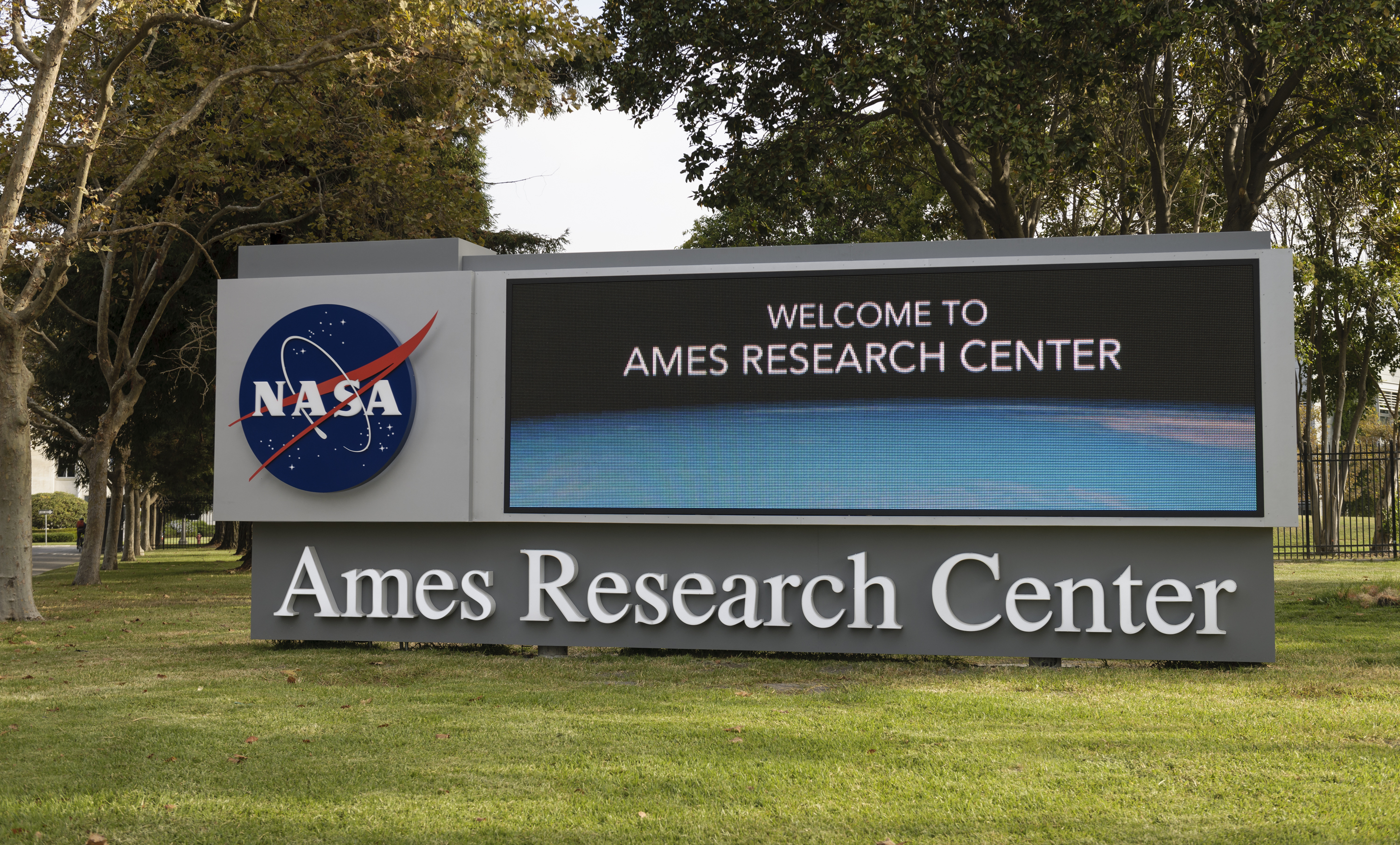
    New Electronic Ames Research Center sign a the corner of Arnold Avenue.

    Visiting the Event Center

    Due to the nature of being a NASA facility, there are some special considerations that must be taken into account.

    Traveling To & From
    The Event Center is located on the publicly accessible side of the Ames campus. If you plan to arrive via ride share, please be aware that the vehicle and driver must have a valid RealID Drivers License and vehicle registration documents. All passengers will need valid ID as well.

    U.S. Citizens must show a valid, officially-issued RealID at the NASA Research Park gate to enter onto the NASA Research Park, where the SVEC is located.
    All Foreign Nationals must go through NASA badging procedures to attend meetings at the SVEC.

    NASA Transfer Technology and Export Control
    If you are having NASA speakers and Non-NASA attendees, your speakers must clear the information with the “NASA” Export Control Office.

  • NASA Silicon Valley Event Center – Calendar of Events

    Generic Calendar

    Upcoming Events for the Public

    Check below for upcoming events that are open to the public being held at the Event Center

    Sunday Monday Tuesday Wednesday Thursday Friday Saturday

  • NASA Selects Human Space Flight Technical Integration Contractor

    The letters NASA on a blue circle with red and white detail, all surrounded by a black background
    Credit: NASA

    NASA has selected Barrios Technology, LLC, in Houston to provide technical integration services for the agency’s human space flight programs.

    The Mission Technical Integration Contract is a cost-plus-award-fee and cost-plus-incentive fee contract with core and indefinite-delivery/indefinite-quantity requirements. It has a total estimated value of approximately $450 million, and a period of performance beginning Oct. 1, and ending on Sept. 30, 2027, along with four one-year option periods through 2031.

    Under the contract, the contractor will provide technical integration and related services for multiple human space flight programs. These services include program, business, configuration and data management, information technology, systems engineering and integration, mission integration, safety and mission assurance, and operations.

    For information about the agency and its programs, visit:

    https://www.nasa.gov

    -end-

    Tiernan Doyle
    Headquarters, Washington
    202-358-1600
    tiernan.doyle@nasa.gov

    Details

    Last Updated

    Jul 28, 2025

  • Curiosity Blog, Sols 4609–4610: Recharged and Ready To Roll Onwards

    3 min read

    Curiosity Blog, Sols 4609–4610: Recharged and Ready To Roll Onwards

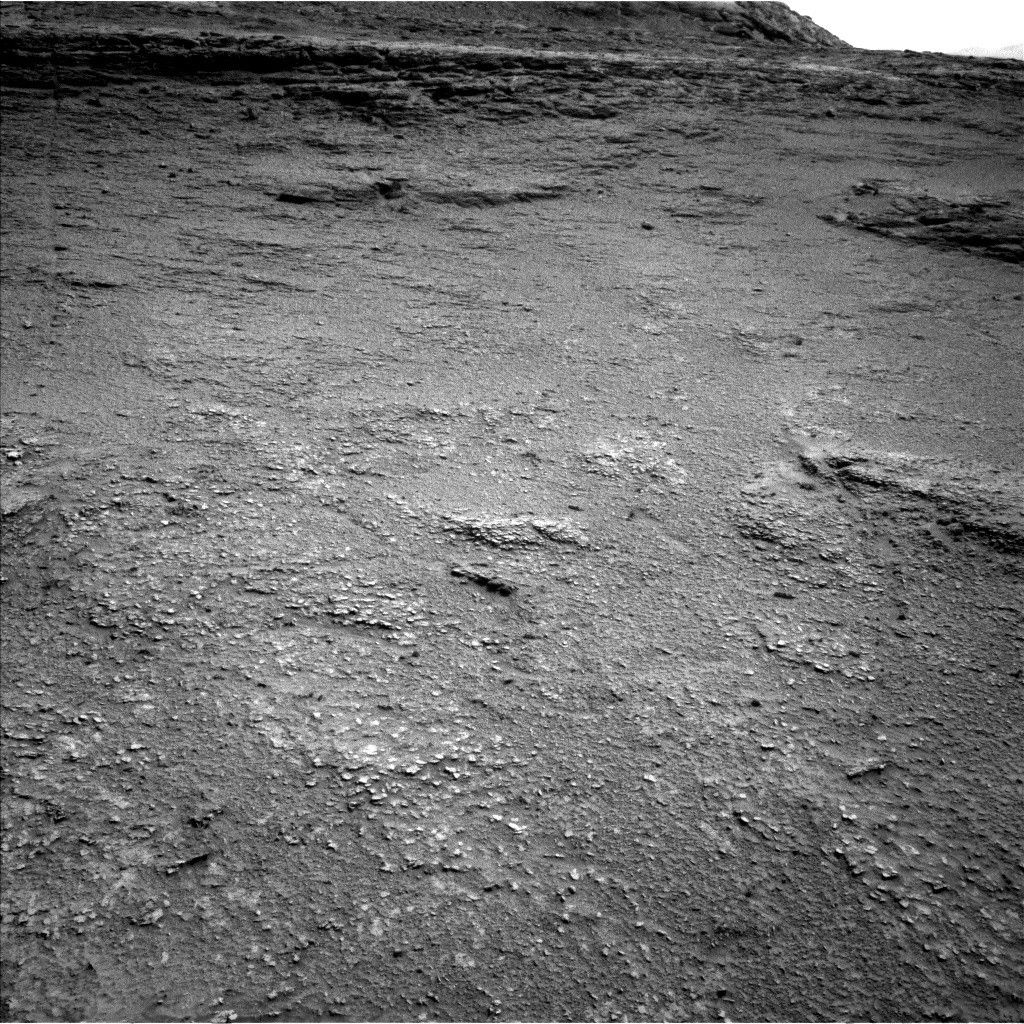
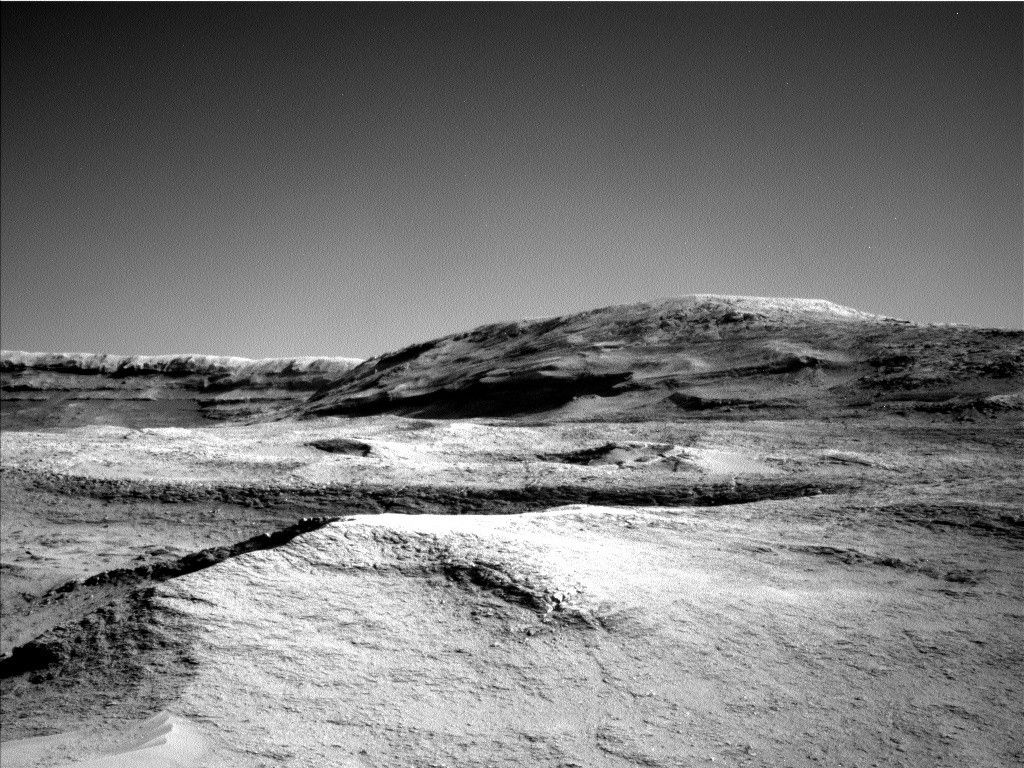
    A grayscale photo from the Martian surface shows rough, slightly uneven, dark gray, rocky terrain extending to a plateau that rises in the distance, at the top of the frame. In the foreground, many smaller rocks are poking above the surface, much lighter-toned than the surrounding ground, looking like white specks on the surface.
    NASA’s Mars rover Curiosity acquired this image showing the boxwork hollow where it is investigating, and the boxwork ridge on the far side of the hollow, using its Left Navigation Camera. Curiosity captured the image on July 20, 2025 — Sol 4605, or Martian day 4,605 of the Mars Science Laboratory mission — at 18:51:55 UTC.
    NASA/JPL-Caltech

    Written by Catherine O’Connell-Cooper, Planetary Geologist at University of New Brunswick

    Earth planning date: Wednesday, July 23, 2025

    For today’s planning, we were in the same workspace as the Monday plan — on purpose! We don’t often have a plan without a drive but in order to allow the battery to recover from some power-hungry SAM atmospheric measurements over the weekend and on Monday, we needed to stay put and skip our usual drive. As a result, we gained a bonus planning cycle at this interesting workspace. 

    We are in one of the “hollows” between the resistant ridges of the “boxwork” terrain, as you can see in the image for this blog. This made for a quieter Operations day for me as the APXS planner. As Deborah noted in Monday’s blog, we have already gotten three APXS and MAHLI measurements in this workspace, so we didn’t acquire more in this plan.

    This morning, we focused on documenting some small light-toned, rounded, white pebbles in the workspace (you can see them in the accompanying Navcam image), which look very different from the underlying bedrock. We used our one ChemCam LIBS analysis for the plan on “Yana Qaqa.” Mastcam will image this pebble, another at “Ojos del Salado,” and a really cool-looking target with a dendritic-looking texture at “Punta de Lobos.”

    Further afield, Mastcam will image the adjacent boxwork ridge and hollow in our drive direction, and a series of troughs with raised edges to the right of our current workspace. ChemCam will image a long-distance RMI mosaic of “Cueva de los Vencejos y Murciélagos,” which was imaged by Mastcam on Monday, and also acquire some further images of the “Mishe Mokwa” hill.

    We had a bumper couple of sols of atmospheric measurements over the weekend and Monday. Now we revert back to our more normal environmental and atmospheric monitoring. These do not get as much attention sometimes as the amazing images we take of the fascinating rocks we see, but have been taking place consistently and continuously since Curiosity’s landing almost 13 years ago now. This plan includes a series of Navcam movies (suprahorizon, dust devil) and a line-of-sight observation of dust, standard REMS and DAN observations, and two Mastcam tau measurements, looking at dust in the atmosphere.

    Our 24-meter drive (almost 79 feet) will take us out of this hollow and back up on top of a ridge. From here, we hope to be able to spy the best driving path through the boxwork. The ridges are up to 5 meters in diameter (about 16 feet), so we are cautiously hopeful that we can just trundle along one of the ridges as we investigate this fascinating terrain.

    Details

    Last Updated

    Jul 28, 2025

    Related Terms

  • 2025 NASA Space Apps Challenge

    Join the 2025 NASA International Space Apps Challenge: Learn, Launch, Lead

    Image of the NASA Space Apps Challenge 2025 logo

    On October 4–5, 2025, NASA—along with 14 international space agency partners—invites scientists, engineers, coders, designers, storytellers, and space enthusiasts of all kinds to take part in the 2025 NASA International Space Apps Challenge. This two-day global hackathon brings together diverse teams to tackle real-world problems using NASA’s open data, alongside space-based data from agencies around the world.

    This year’s theme, Learn, Launch, Lead, encourages participants to:

    • Learn new skills and deepen their understanding of STEM,
    • Launch bold ideas by transforming open data into actionable solutions, and
    • Lead communities in pioneering innovation and discovery.

    Participants will collaborate to develop creative, open-source projects that address Earth and space-related challenges. Whether you’re a seasoned developer, an aspiring student, or a creative thinker, there’s a place for you in this global movement.

    Together, we’ll use the power of open data and global collaboration to solve some of the world’s toughest challenges—on Earth and beyond.

    Learn more and register now!

  • OSDR Chats with Begum Mathyk

    OSDR Chats: Dr Begum Mathyk Presents Latest Research in this OSDR-Enabled Publication

    Welcome to “OSDR Chats,” an interview series featuring authors of publications that were enabled by the Open Science Data Repository (OSDR). Researchers share highlights and insights into their work, emphasizing the valuable roles played by the OSDR in their research. This newest interview features Dr Begum Mathyk  who discusses her paper “Spaceflight induces changes in gene expression profiles linked to insulin and estrogen“, one of 45 that were part of the Nature Press package publications.

    Organismal adaptations to spaceflight have been characterized at the molecular level in model organisms, including Drosophila and C. elegans. This study extends such molecular work to energy metabolism and sex hormone signaling in mice and humans. The findings of this research underscore the critical importance of in-depth hormonal studies on the effects of space travel, which are vital for enabling further human exploration of space. The study also emphasizes the need for further research focused on women’s health and the development of tailored healthcare strategies for space environments.

    OSDR recently spoke to Dr Mathyk to hear about the highlights of this publication and about how the OSDR and Analysis Working Groups (AWGs) enabled this publication.

    Link to Publication; Link to Datasets: OSD-48, OSD-98, OSD-99, OSD-100, OSD-101, OSD-102, OSD-103, OSD-104, OSD-105, OSD-168, OSD-238, OSD-239, OSD-240, OSD-241, OSD-254, OSD-530; Learn more about Analysis Working Groups (AWGs); Request to Join Analysis Working Groups (AWGs)
  • Hubble Spies Swirling Spiral

    A spiral galaxy with a disk made of several swirling arms. Patchy blue clouds of gas speckle the disk where stars are forming and lighting the gas around them. The core of the galaxy is large and shines brightly gold, while the spiral arms are a paler and faint reddish color. Neighboring galaxies – from small, elongated spots to larger swirling spirals – are visible across the black background.
    The NASA/ESA Hubble Space Telescope image features the spiral galaxy NGC 3285B, a member of the Hydra I cluster of galaxies.
    ESA/Hubble & NASA, R. J. Foley (UC Santa Cruz)

    The swirling spiral galaxy in this NASA/ESA Hubble Space Telescope image is NGC 3285B, which resides 137 million light-years away in the constellation Hydra (the Water Snake). Hydra has the largest area of the 88 constellations that cover the entire sky in a celestial patchwork. It’s also the longest constellation, stretching 100 degrees across the sky. It would take nearly 200 full moons, placed side by side, to reach from one side of the constellation to the other.

    NGC 3285B is a member of the Hydra I cluster, one of the largest galaxy clusters in the nearby universe. Galaxy clusters are collections of hundreds to thousands of galaxies bound to one another by gravity. The Hydra I cluster is anchored by two giant elliptical galaxies at its center. Each of these galaxies is about 150,000 light-years across, making them about 50% larger than our home galaxy, the Milky Way.

    NGC 3285B sits on the outskirts of its home cluster, far from the massive galaxies at the center. This galaxy drew Hubble’s attention because it hosted a Type Ia supernova in 2023. Type Ia supernovae happen when a type of condensed stellar core called a white dwarf detonates, igniting a sudden burst of nuclear fusion that briefly shines about 5 billion times brighter than the Sun. The supernova, named SN 2023xqm, is visible here as a blueish dot on the left edge of the galaxy’s disk.

    Hubble observed NGC 3285B as part of an observing program that targeted 100 Type Ia supernovae. By viewing each of these supernovae in ultraviolet, optical, and near-infrared light, researchers aim to disentangle the effects of distance and dust, both of which can make a supernova appear redder than it actually is. This program will help refine cosmic distance measurements that rely on observations of Type Ia supernovae.

    Text credit: ESA/Hubble

  • Melissa John Champions Environmental Stewardship at White Sands 

    For Melissa John, protecting the environment is her way of contributing to space exploration while preserving the Earth we call home.  

    As the sustainability program lead at NASA’s White Sands Test Facility in Las Cruces, New Mexico, John manages efforts to reduce waste, prevent pollution, and promote eco-conscious practices. Over the past 13 years, she has helped shape a workplace culture that values innovation and environmental responsibility. 

    A woman wearing a black top and maroon cardigan stands in front of a NASA flag.
    Official portrait of Melissa John.
    NASA/Brandon Teeples

    This is how I make a difference — by protecting the land, the community, and hopefully inspiring others to do the same.

    Melissa John

    Melissa John

    Sustainability Program Lead

    Through awareness campaigns and outreach events, John empowers employees to be mindful of their environmental impact. Whether she is fostering grassroots connections, leading hands-on events, or recognizing colleagues who prioritize climate-aware actions, John remains dedicated to making a lasting, positive impact on the planet. 

    John credits her Diné heritage and cultural values for fueling her passion to protect and preserve Earth for future generations. 

    John began her NASA career at White Sands as a document specialist, reviewing schedules and environmental reports. She later transitioned into technical editing and gradually got involved in green initiatives, volunteering her time before eventually stepping into her current leadership role. 

    Now, she coordinates a sitewide working group dedicated to reducing the facility’s environmental impact and inspires others to think critically about everyday actions and their ripple effects. 

    A woman sits on a bench with an embroidered blanket placed in front of her.
    Melissa John in the propulsion test area near the main water tank at NASA’s White Sands Test Facility in Las Cruces, New Mexico.
    NASA/Brandon Teeples

    John did not always know how she would make her mark. 

    “Growing up, I remember a teacher asking how we could make a difference in the world,” she said. “I never forgot that question.” 

    During the years she spent working in accounting and in the mining industry, she kept returning to that question. It was not until she joined NASA that she found her answer: 

    “This — this is how I make my difference in the world.” 

    The work also helped John grow in ways she did not expect. 

    “I was painfully shy as a kid and terrified of speaking in front of a crowd,” she said. “But when I took on this role, I knew I had to find my voice. I still have timid moments, but the pride I feel in this work helps me push through. I’ve been through a lot, but I’m still here learning, growing, and showing up for the team I now call family.” 

    John credits her strong support system for that transformation. “I am in awe of the women I’ve worked with,” she said. “I hope I can inspire others as they have inspired me.” 

    From left to right: Mary Canavan, Melissa John, Amanda Skarsgard, and Pam Egan at the annual Plant Fair Share at White Sands Test Facility.

    Whether on Earth or beyond it, John believes that thoughtful action today leads to a brighter tomorrow. She is committed to leaving the world a better place for the next generation. Her legacy is simple: “Clean air, clean water, and clean land — that’s what I want to pass on.”  

  • NASA Sets Coverage for Agency’s SpaceX Crew-11 Launch, Docking

    The crew of NASA’s SpaceX Crew-11 mission to the International Space Station pictured during a training session at SpaceX facilities in Florida.
    The crew of NASA’s SpaceX Crew-11 mission to the International Space Station pictured during a training session at SpaceX facilities in Florida.
    Credit: SpaceX

    NASA will provide coverage of the upcoming prelaunch and launch activities for the agency’s SpaceX Crew-11 mission to the International Space Station.

    Liftoff is targeted for 12:09 p.m. EDT, Thursday, July 31, from Launch Complex 39A at NASA’s Kennedy Space Center in Florida. The targeted docking time is approximately 3 a.m., Saturday, Aug. 2.

    Watch agency launch coverage on NASA+, Netflix, Amazon Prime and more. Learn how to watch NASA content through a variety of platforms, including social media.

    The SpaceX Dragon spacecraft will carry NASA astronauts Zena Cardman and Mike Fincke, JAXA (Japan Aerospace Exploration Agency) astronaut Kimiya Yui, and Roscosmos cosmonaut Oleg Platonov to the orbiting laboratory for a science mission. This is the 11th crew rotation mission and the 12th human spaceflight mission for NASA to the space station supported by the Dragon spacecraft since 2020 as part of the agency’s Commercial Crew Program.

    The deadline for media accreditation for in person coverage of this launch has passed. The agency’s media credentialing policy is available online. For questions about media accreditation, please email: ksc-media-accreditat@mail.nasa.gov.

    Media who need access to NASA live video feeds may subscribe to the agency’s media resources distribution list to receive daily updates and links.

    NASA’s mission coverage is as follows (all times Eastern and subject to change based on real-time operations):

    Saturday, July 26

    1 p.m. – Crew-11 arrival media event at NASA Kennedy with the following participants:

    • Zena Cardman, spacecraft commander, NASA
    • Mike Fincke, pilot, NASA
    • Kimiya Yui, mission specialist, JAXA
    • Oleg Platonov, mission specialist, Roscosmos

    Watch live coverage of the crew arrival media event on the NASA Kennedy’s social media accounts.

    This event is open to in person media only previously credentialed for this event. Follow @NASAKennedy on X for the latest arrival updates.

    Wednesday, July 30

    5:30 p.m. – Prelaunch news conference with the following participants:

    • Ken Bowersox, associate administrator, NASA’s Space Operations Mission Directorate
    • Steve Stich, manager, NASA’s Commercial Crew Program
    • Dana Weigel, manager, NASA’s International Space Station Program
    • William Gerstenmaier, vice president, Build and Flight Reliability, SpaceX
    • Sergei Krikalev, deputy director general, Manned and Automated Complexes, Roscosmos
    • Naoki Nagai, program manager, International Space Station, Human Spaceflight Technology Directorate, JAXA

    NASA will provide live coverage of the news conference on the agency’s YouTube channel.

    Media may ask questions in person and via phone. For the dial-in number and passcode, media should contact the Kennedy newsroom no later than one hour prior to the beginning of the news conference at: ksc-newsroom@mail.nasa.gov.

    Thursday, July 31

    8 a.m. – Launch coverage begins on NASA+, Netflix, and Amazon Prime.

    12:09 p.m. – Launch

    Following the conclusion of launch coverage, NASA will distribute audio-only discussions between Crew-11, the space station, and flight controllers during Dragon’s transit to the orbital complex. NASA+ coverage resumes at the start of rendezvous and docking and continues through hatch opening and the welcoming remarks. 

    1:30 p.m. – Postlaunch news conference with the following participants:

    • Ken Bowersox, associate administrator, NASA’s Space Operations Mission Directorate
    • Steve Stich, manager, NASA’s Commercial Crew Program
    • Dana Weigel, manager, NASA’s International Space Station Program
    • Sergei Krikalev, deputy director general, Manned and Automated Complexes, Roscosmos
    • Kazuyoshi Kawasaki, associate director general, Space Exploration Center/Space Exploration Innovation Hub Center, JAXA
    • Sarah Walker, director, Dragon Mission Management, SpaceX

    NASA will provide live coverage of the postlaunch news conference on the agency’s YouTube channel.

    Media may ask questions in person and via phone. Limited auditorium space will be available for in person participation. For the dial-in number and passcode, please contact the Kennedy newsroom no later than one hour prior to the beginning of the news conference at ksc-newsroom@mail.nasa.gov.

    Saturday, Aug. 2

    1 a.m. – Arrival coverage begins on NASA+.

    3 a.m. – Targeted docking to the space-facing port of the station’s Harmony module.

    4:45 a.m. – Hatch opening

    5:30 a.m. – Welcome ceremony

    All times are estimates and could be adjusted based on real-time operations after launch. Follow the space station blog for the most up-to-date operations information.

    Live Video Coverage Prior to Launch

    NASA will provide a live video feed of Launch Complex 39A approximately six hours prior to the planned liftoff of the Crew-11 mission. Pending unlikely technical issues, the feed will be uninterrupted until the prelaunch broadcast begins on NASA+, approximately four hours prior to launch. Once the feed is live, find it online at: http://youtube.com/kscnewsroom.

    NASA Website Launch Coverage

    Launch day coverage of the mission will be available on the NASA website. Coverage will include livestreaming and blog updates beginning no earlier than 8 a.m., July 31, as the countdown milestones occur. On-demand streaming video on NASA+ and photos of the launch will be available shortly after liftoff. For questions about countdown coverage, contact the NASA Kennedy newsroom at 321-867-2468. Follow countdown coverage on the commercial crew or Crew-11 blog.

    Attend Launch Virtually

    Members of the public may register to attend this launch virtually. NASA’s virtual guest program for this mission also includes curated launch resources, notifications about related opportunities or changes, and a stamp for the NASA virtual guest passport following launch.

    Audio Only Coverage

    Launch audio also will be available on Launch Information Service and Amateur Television System’s VHF radio frequency 146.940 MHz and KSC Amateur Radio Club’s UHF radio frequency 444.925 MHz, FM mode, heard within Brevard County on the Space Coast.

    Watch, Engage on Social Media

    Let people know you’re following the mission on X, Facebook, and Instagram by using the hashtags #Crew11 and #NASASocial. You may also stay connected by following and tagging these accounts:

    X: @NASA, @NASAKennedy, @Space_Station, @ISS National Lab, @SpaceX

    Facebook: NASA, NASAKennedy, ISS, ISS National Lab

    Instagram: @NASA, @NASAKennedy, @ISS, @ISSNationalLab, @SpaceX

    Coverage en Espanol

    Did you know NASA has a Spanish section called NASA en Espanol? Check out NASA en Espanol on X, Instagram, Facebook, and YouTube for additional mission coverage.

    Para obtener información sobre cobertura en español en el Centro Espacial Kennedy o si desea solicitar entrevistas en español, comuníquese con Antonia Jaramillo: 321-501-8425; antonia.jaramillobotero@nasa.gov; o Messod Bendayan: 256-930-1371; messod.c.bendayan@nasa.gov.

    NASA’s Commercial Crew Program has delivered on its goal of safe, reliable, and cost-effective transportation to and from the International Space Station from the United States through a partnership with American private industry. This partnership is opening access to low Earth orbit and the International Space Station to more people, more science, and more commercial opportunities. For almost 25 years, humans have continuously lived and worked aboard the International Space Station, advancing scientific knowledge and demonstrating new technologies that enable us to prepare for human exploration of the Moon as we prepare for Mars.

    For more information about the mission, visit:

    https://www.nasa.gov/commercialcrew

    -end-

    Joshua Finch / Claire O’Shea
    Headquarters, Washington
    202-358-1100
    joshua.a.finch@nasa.gov / claire.a.o’shea@nasa.gov

    Steven Siceloff / Stephanie Plucinsky
    Kennedy Space Center, Florida
    321-867-2468
    steven.p.siceloff@nasa.gov / stephanie.n.plucinsky@nasa.gov

    Joseph Zakrzewski
    Johnson Space Center, Houston
    281-483-5111
    joseph.a.zakrzewski@nasa.gov

  • NASA Launches Mission to Study Earth’s Magnetic Shield

    NASA’s TRACERS (Tandem Reconnection and Cusp Electrodynamics Reconnaissance Satellites) mission launched at 2:13 p.m. EDT atop a SpaceX Falcon 9 rocket at Space Launch Complex 4 East at Vandenberg Space Force Base in California.
    Credit: SpaceX

    NASA’s newest mission, TRACERS, soon will begin studying how Earth’s magnetic shield protects our planet from the effects of space weather. Short for Tandem Reconnection and Cusp Electrodynamics Reconnaissance Satellites, the twin TRACERS spacecraft lifted off at 11:13 a.m. PDT (2:13 p.m. EDT) Wednesday aboard a SpaceX Falcon 9 rocket from Space Launch Complex 4 East at Vandenberg Space Force Base in California.

    “NASA is proud to launch TRACERS to demonstrate and expand American preeminence in space science research and technology,” said acting NASA Administrator Sean Duffy. “The TRACERS satellites will move us forward in decoding space weather and further our understanding of the connection between Earth and the Sun. This mission will yield breakthroughs that will advance our pursuit of the Moon, and subsequently, Mars.”

    The twin satellites will fly one behind the other — following as closely as 10 seconds apart over the same location — and will take a record-breaking 3,000 measurements in one year to build a step-by-step picture of how magnetic reconnection changes over time.

    Riding along with TRACERS aboard the Falcon 9 were NASA’s Athena EPIC (Economical Payload Integration Cost), PExT (Polylingual Experimental Terminal), and REAL (Relativistic Electron Atmospheric Loss) missions — three small satellites to demonstrate new technologies and gather scientific data. These three missions were successfully deployed, and mission controllers will work to contact them over the coming hours and days.

    Ground controllers for the TRACERS mission established communications with the second of the two spacecraft at 3:43 p.m. PDT (6:43 p.m. EDT), about 3 hours after it separated from the rocket. During the next four weeks, TRACERS will undergo a commissioning period during which mission controllers will check out their instruments and systems.

    Once cleared, the twin satellites will begin their 12-month prime mission to study a process called magnetic reconnection, answering key questions about how it shapes the impacts of the Sun and space weather on our daily lives.

    “NASA’s heliophysics fleet helps to safeguard humanity’s home in space and understand the influence of our closest star, the Sun,” said Joe Westlake, heliophysics division director at NASA Headquarters in Washington. “By adding TRACERS to that fleet, we will gain a better understanding of those impacts right here at Earth.”

    The two TRACERS spacecraft will orbit through an open region in Earth’s magnetic field near the North Pole, called the polar cusp. Here, TRACERS will investigate explosive magnetic events that happen when the Sun’s magnetic field — carried through space in a stream of solar material called the solar wind — collides with Earth’s magnetic field. This collision creates a buildup of energy that causes magnetic reconnection, when magnetic field lines snap and explosively realign, flinging away nearby particles at high speeds.

    Flying through the polar cusp allows the TRACERS satellites to study the results of these magnetic explosions, measuring charged particles that race down into Earth’s atmosphere and collide with atmospheric gases — giving scientist the tools to reconstruct exactly how changes in the incoming solar wind affect how, and how quickly, energy and particles are coupled into near-Earth space.

    “The successful launch of TRACERS is a tribute to many years of work by an excellent team,” said David Miles, TRACERS principal investigator at the University of Iowa. “TRACERS is set to transform our understanding of Earth’s magnetosphere. We’re excited to explore the dynamic processes driving space weather.”

    Small Satellites Along for Ride

    Athena EPIC is a pathfinder mission that will demonstrate NASA’s use of an innovative and configurable commercial SmallSat architecture to improve flexibility of payload designs, reduce launch schedule, and reduce overall costs in future missions, as well as the benefits of working collaboratively with federal partners. In addition to this demonstration for NASA, once the Athena EPIC satellite completes its two-week commissioning period, the mission will spend the next 12 months taking measurements of outgoing longwave radiation from Earth.

    The PExT demonstration will test interoperability between commercial and government communication networks for the first time by demonstrating a wideband polylingual terminal in low Earth orbit. This terminal will use software-defined radios to jump between government and commercial networks, similar to cell phones roaming between providers on Earth. These terminals could allow future missions to switch seamlessly between networks and access new commercial services throughout its lifecycle in space.

    The REAL mission is a CubeSat that will investigate how energetic electrons are scattered out of the Van Allen radiation belts and into Earth’s atmosphere. Shaped like concentric rings high above Earth’s equator, the Van Allen belts are composed of a mix of high-energy electrons and protons that are trapped in place by Earth’s magnetic field. Studying electrons and their interactions, REAL aims to improve our understanding of these energetic particles that can damage spacecraft and imperil astronauts who pass through them. 

    The TRACERS mission is led by David Miles at the University of Iowa with support from the Southwest Research Institute in San Antonio, Texas. NASA’s Heliophysics Explorers Program Office at the agency’s Goddard Space Flight Center in Greenbelt, Maryland, manages the mission for the Heliophysics Division at NASA Headquarters in Washington. The University of Iowa, Southwest Research Institute, University of California, Los Angeles, and the University of California, Berkeley, all lead instruments on TRACERS.

    The Athena EPIC mission is led by NASA’s Langley Research Center in Hampton, Virginia, and is a partnership between National Oceanic and Atmospheric Administration, U.S. Space Force, and NovaWurks. Athena EPIC’s launch is supported by launch integrator SEOPS. The PExT demonstration is managed by NASA’s SCaN (Space Communications and Navigation) program in partnership with Johns Hopkins Applied Physics Laboratory, with launch support by York Space Systems. The REAL project is led by Dartmouth College in Hanover, New Hampshire, and is a partnership between Johns Hopkins Applied Physics Laboratory, Montana State University, and Boston University. Sponsored by NASA’s Heliophysics Division and CubeSat Launch Initiative, it was included through launch integrator Maverick Space Systems.

    NASA’s Launch Services Program, based at the agency’s Kennedy Space Center in Florida, manages the VADR (Venture-class Acquisition of Dedicated and Rideshare) contract.

    To learn more about TRACERS, visit:

    https://nasa.gov/tracers

    -end-

    Abbey Interrante / Karen Fox
    Headquarters, Washington
    301-201-0124 / 202-358-1600
    abbey.a.interrante@nasa.gov / karen.c.fox@nasa.gov

    Sarah Frazier
    Goddard Space Flight Center, Greenbelt, Maryland
    202-853-7191
    sarah.frazier@nasa.gov

    Details

    Last Updated

    Jul 24, 2025

  • NASA Sets Launch Coverage for Earth-Tracking NISAR Satellite

    An artist's concept of the NISAR mission. The NISAR Satellite is seen operating in orbit above Earth.
    A collaboration between NASA and the Indian Space Research Organisation, NISAR will use synthetic aperture radar to monitor nearly all the planet’s land- and ice-covered surfaces twice every 12 days.
    Credit: NASA/JPL-Caltech

    NASA will provide live coverage of launch activities for NISAR (NASA-ISRO Synthetic Aperture Radar), which is set to lift off at 8:10 a.m. EDT (5:40 p.m. IST), Wednesday, July 30, from Satish Dhawan Space Centre on India’s southeastern coast.

    A collaboration between NASA and the Indian Space Research Organisation (ISRO), the first-of-its-kind satellite will lift off aboard an ISRO Geosynchronous Satellite Launch Vehicle on a mission to scan nearly all the Earth’s land and ice surfaces twice every 12 days.

    Watch live coverage of the launch on NASA+ and the agency’s YouTube channel. Learn how to watch NASA content through a variety of platforms, including social media.

    With its two radar instruments — an S-band system provided by ISRO and an L-band system provided by NASA — the NISAR mission will provide high-resolution data to help decision-makers, communities, and scientists monitor major infrastructure, agricultural fields, and movement of land and ice surfaces.

    Hailed as a critical part of a pioneering year for United States – India civil space cooperation by President Trump and Prime Minister Modi during their visit in Washington in February, the NISAR launch will advance U.S. – India cooperation and benefit the U.S. in areas such as agriculture and preparation and response to disasters like hurricanes, floods, and volcanic eruptions.

    NASA’s mission coverage is as follows (all times Eastern and subject to change based on real-time operations):

    Monday, July 28  

    12 p.m. – Prelaunch teleconference with the following participants:

    • Karen St. Germain, director of Earth science, NASA Headquarters
    • Gerald Bawden, NISAR program scientist, NASA Headquarters
    • Shanna McClain, Disasters program manager, NASA Headquarters
    • Phil Barela, NISAR project manager, NASA Jet Propulsion Laboratory (JPL)
    • Marco Lavalle, NISAR deputy project scientist, NASA JPL

    The teleconference will stream on JPL’s YouTube Channel.

    Members of the media may ask questions via phone during the teleconference. To register, media must provide their name and affiliation by 4 p.m. on Sunday, July 27, to Rexana Vizza at: rexana.v.vizza@jpl.nasa.gov. Questions may also be asked via social media with the hashtag #AskNISAR.

    Wednesday, July 30

    7 a.m. – Launch coverage begins on NASA+ and YouTube.

    The launch broadcast begins from NASA’s Jet Propulsion Laboratory in Southern California, where the U.S. portion of the mission is managed.

    Follow launch events on NASA’s NISAR blog

    Watch, Engage on Social Media

    You can also stay connected by following and tagging these accounts:

    X: @NASA, @NASAEarth, @NASAJPL

    Facebook: NASA, NASA Earth, NASA JPL

    Instagram: @NASA, @NASAEarth, @NASAJPL

    Additional Resources

    The NISAR press kit features deeper dives into the mission as well as its science and technology.

    Explore NISAR videos as well as NISAR animations and b-roll media reel.

    The NISAR mission is the first joint satellite mission between NASA and ISRO, marking a new chapter in the growing collaboration between the two space agencies. The launch of NISAR, years in the making, builds on a strong heritage of successful programs, including Chandrayaan-1 and the recent Axiom Mission-4, which saw ISRO and NASA astronauts living and working together aboard the International Space Station for the first time.

    Learn more about the mission at:

    https://science.nasa.gov/mission/nisar

    -end-

    Elizabeth Vlock / Karen Fox
    Headquarters, Washington
    202-358-1600
    elizabeth.a.vlock@nasa.gov / karen.c.fox@nasa.gov

    Andrew Wang / Jane J. Lee 
    Jet Propulsion Laboratory, Pasadena, Calif.
    626-379-6874 / 818-354-0307 
    andrew.wang@jpl.nasa.gov / jane.j.lee@jpl.nasa.gov