Category: Solar system

http://www.nasa.gov/rss/dyn/solar_system.rss

  • c-FIRST Team Sets Sights on Future Fire-observing Satellite Constellations

    Two NASA-developed technologies are key components of a new high-resolution sensor for observing wildfires: High Operating Temperature Barrier Infrared Detector (HOT-BIRD), developed with support from NASA’s Earth Science Technology Office (ESTO), and a cutting-edge Digital Readout Integrated Circuit (DROIC), developed with funding from NASA’s Small Business Innovation Research (SBIR) program.
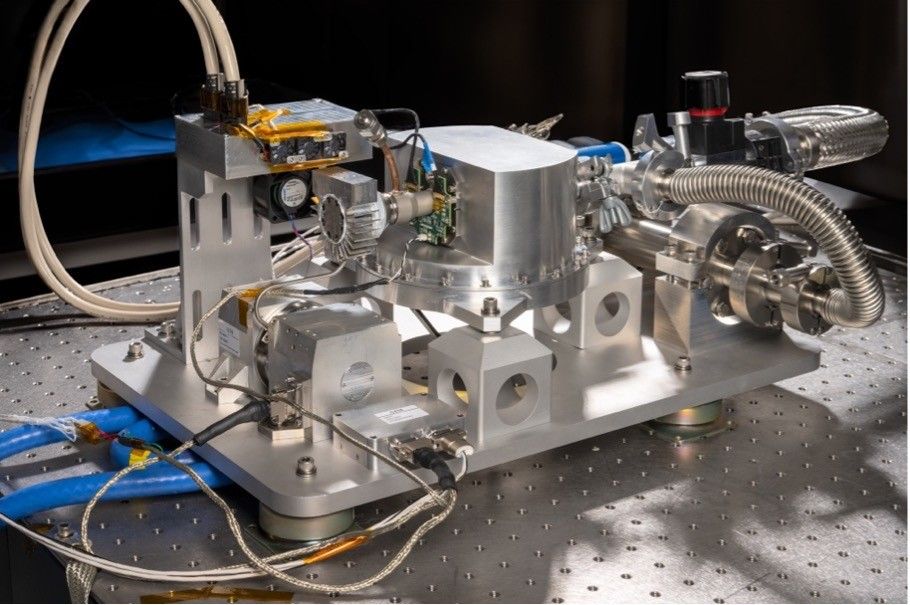
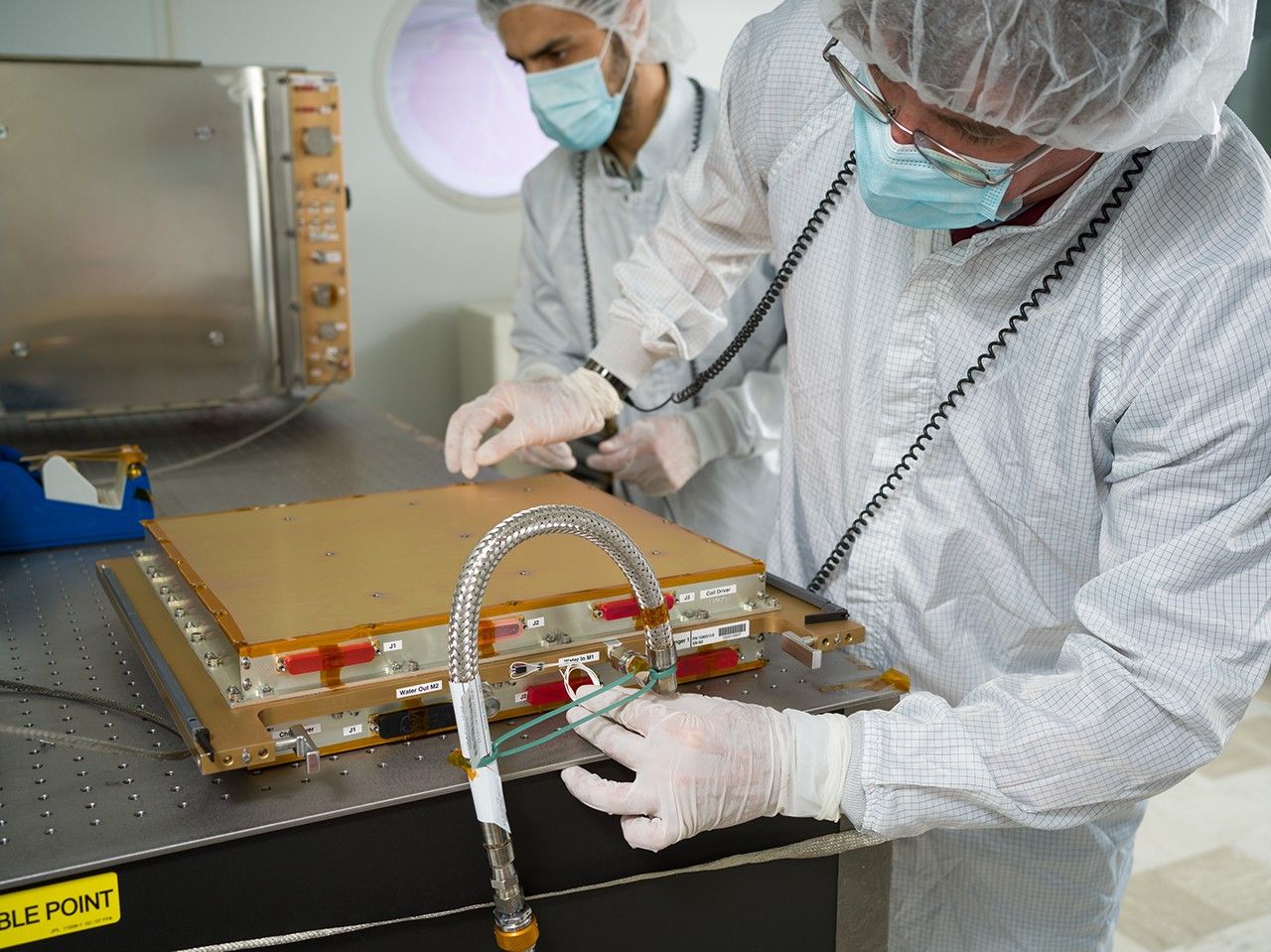
    complex metal device with various protruding tubes and wires sits on a metallic work surface
    NASA’s c-FIRST instrument could provide high resolution data from a compact space-based platform in under an hour, making it easier for wildfire managers to detect and monitor active burns.
    Credit: NASA/JPL

    A novel space-based sensor for observing wildfires could allow first responders to monitor burns at a global scale, paving the way for future small satellite (SmallSat) constellations dedicated entirely to fire management and prevention.

    Developed with support from NASA’s Earth Science Technology Office (ESTO), the “Compact Fire Infrared Radiance Spectral Tracker” (c-FIRST) is a small, mid-wave infrared sensor that collects thermal radiation data across five spectral bands. Most traditional space-based sensors dedicated to observing fires have long revisit times, observing a scene just once over days or even weeks. The compact c-FIRST sensor could be employed in a SmallSat constellation that could observe a scene multiple times a day, providing first responders data with high spatial resolution in under an hour.

    In addition, c-FIRST’s dynamic spectral range covers the entire temperature profile of terrestrial wild fires, making it easier for first-responders to detect everything from smoldering, low-intensity fires to flaming, high intensity fires.

    “Wildfires are becoming more frequent, and not only in California. It’s a worldwide problem, and it generates tons of by-products that create very unhealthy conditions for humans,” said Sarath Gunapala, who is an Engineering Fellow at NASA’s Jet Propulsion Laboratory (JPL) and serves as Principal Investigator for c-FIRST.

    The need for space-based assets dedicated to wildfire management is severe. During the Palisade and Eaton Fires earlier this year, strong winds kept critical observation aircraft from taking to the skies, making it difficult for firefighters to monitor and track massive burns.

    Space-based sensors with high revisit rates and high spatial resolution would give firefighters and first responders a constant source of eye-in-the-sky data.

    “Ground-based assets don’t have far-away vision. They can only see a local area. And airborne assets, they can’t fly all the time. A small constellation of CubeSats could give you that constant coverage,” said Gunapala.

    c-FIRST leverages decades of sensor development at JPL to achieve its compact size and high performance. In particular, the quarter-sized High Operating Temperature Barrier Infrared Detector (HOT-BIRD), a compact infrared detector also developed at JPL with ESTO support, keeps c-FIRST small, eliminating the need for bulky cryocooler subsystems that add mass to traditional infrared sensors.

    With HOT-BIRD alone, c-FIRST could gather high-resolution images and quantitative retrievals of targets between 300°K (about 80°F) to 1000°K (about 1300°F). But when paired with a state-of-the-art Digital Readout Integrated Circuit (DROIC), c-FIRST can observe targets greater than 1600°K (about 2400°F).

    Developed by Copious Imaging LLC. and JPL with funding from NASA’s Small Business Innovation Research (SBIR) program, this DROIC features an in-pixel digital counter to reduce saturation, allowing c-FIRST to capture reliable infrared data across a broader spectral range.

    Artifical intelligence (AI) will also play a role in c-FIRST’s success. Gunapala plans to leverage AI in an onboard smart controller that parses collected data for evidence of hot spots or active burns. This data will be prioritized for downlinking, keeping first responders one step ahead of potential wildfires.

    “We wanted it to be simple, small, low cost, low power, low weight, and low volume, so that it’s ideal for a small satellite constellation,” said Gunapala.

    Gunapala and his team had a unique opportunity to test c-FIRST after the Palisade and Eaton Fires in California. Flying their instrument aboard NASA’s B-200 Super King Air, the scientists identified lingering hot spots in the Palisades and Eaton Canyon area five days after the initial burn had been contained.

    Now, the team is eyeing a path to low Earth orbit. Gunapala explained that their current prototype employs a standard desktop computer that isn’t suited for the rigors of space, and they’re working to incorporate a radiation-tolerant computer into their instrument design.

    But this successful test over Los Angeles demonstrates c-FIRST is fit for fire detection and science applications. As wildfires become increasingly common and more destructive, Gunapala hopes that this tool will help first responders combat nascent wildfires before they become catastrophes.

    “To fight these things, you need to detect them when they’re very small,” said Gunapala.

    A publication about c-FIRST appeared in the journal “Society of Photo-Optical Instrumentation Engineers” (SPIE) in March, 2023.

    For additional details, see the entry for this project on NASA TechPort.

    To learn more about emerging technologies for Earth science, visit ESTO’s open solicitations page.

    Project Lead:  Sarath Gunapala, NASA Jet Propulsion Laboratory (JPL)

    Sponsoring Organization: NASA ESTO
  • Hubble Filters a Barred Spiral

    2 min read

    Hubble Filters a Barred Spiral

    A spiral galaxy. It has several arms that appear mixed together, yet it has an overall oval shape. The center of the galaxy glows brightly. There are bright pink patches and filaments of dark red dust spread across the galaxy’s center.
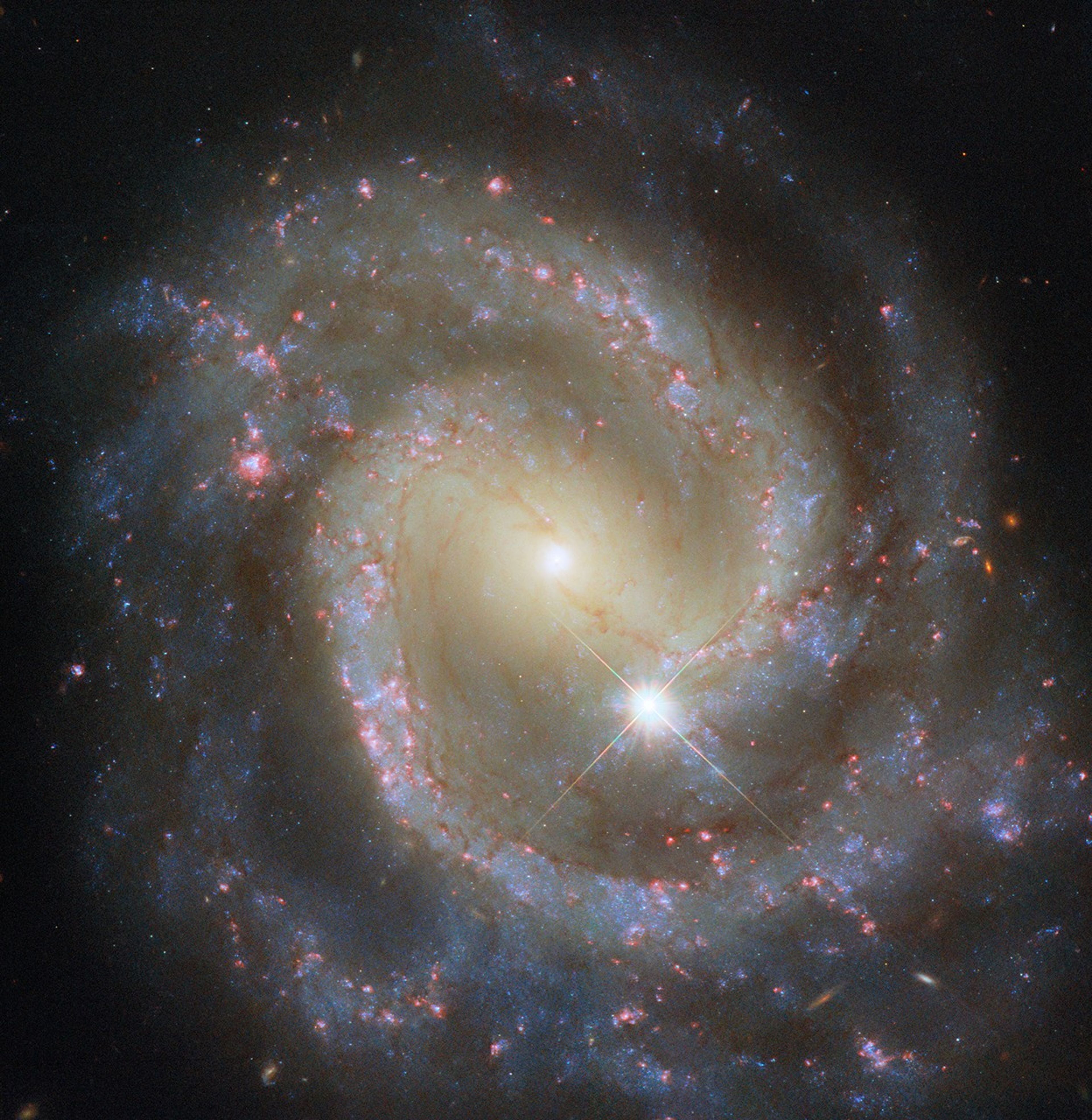
    This NASA/ESA Hubble Space Telescope image features the barred spiral galaxy NGC 1385.
    ESA/Hubble & NASA, R. Chandar, J. Lee and the PHANGS-HST team

    This NASA/ESA Hubble Space Telescope image features a luminous tangle of stars and dust called the barred spiral galaxy NGC 1385, located about 30 million light-years away. Hubble released an earlier image of NGC 1385, but the two images are notably different. This more recent image has far more pinkish-red and umber shades, whereas cool blues dominate the earlier image. This chromatic variation is not just a creative choice, but also a technical one, that represents the different number and types of filters used to collect the data that comprises the respective images.


    NGC 1385, released in 2021
    NGC 1385, released in 2023

    This jewel-bright image from the nasa/esa hubble space telescope shows ngc 1385, a spiral galaxy 68 million light-years from earth, which lies in the constellation fornax.

    A spiral galaxy. It has several arms that appear mixed together, yet it has an overall oval shape. The center of the galaxy glows brightly. There are bright pink patches and filaments of dark red dust spread across the galaxy’s center.
    This NASA/ESA Hubble Space Telescope image features a luminous tangle of stars and dust called the barred spiral galaxy NGC 1385, located about 30 million light-years away. Hubble released an earlier image of NGC 1385, but the two images are notably different. This more recent image has far more pinkish-red and umber shades, whereas cool blues dominate the earlier image. This chromatic variation is not just a creative choice, but also a technical one, that represents the different number and types of filters used to collect the data that comprises the respective images.Like all telescopes used in scientific research, Hubble holds a range of filters. These highly specialized filters are pieces of physical hardware that allow a range of wavelengths (broadband filters) or very specific wavelengths (narrowband filters) of light to enter the telescope. This allows astronomers to look for specific features in the object. The data can tell us what elements are present, the temperature, and pressure of the object. The ability to probe extremely specific parts of the electromagnetic spectrum is very useful to astronomers. It helps them better understand the physical processes and environments of the objects they study.
    ESA/Hubble & NASA, R. Chandar, J. Lee and the PHANGS-HST team

    This jewel-bright image from the nasa/esa hubble space telescope shows ngc 1385, a spiral galaxy 68 million light-years from earth, which lies in the constellation fornax.
    A spiral galaxy. It has several arms that appear mixed together, yet it has an overall oval shape. The center of the galaxy glows brightly. There are bright pink patches and filaments of dark red dust spread across the galaxy’s center.
    This NASA/ESA Hubble Space Telescope image features a luminous tangle of stars and dust called the barred spiral galaxy NGC 1385, located about 30 million light-years away. Hubble released an earlier image of NGC 1385, but the two images are notably different. This more recent image has far more pinkish-red and umber shades, whereas cool blues dominate the earlier image. This chromatic variation is not just a creative choice, but also a technical one, that represents the different number and types of filters used to collect the data that comprises the respective images.Like all telescopes used in scientific research, Hubble holds a range of filters. These highly specialized filters are pieces of physical hardware that allow a range of wavelengths (broadband filters) or very specific wavelengths (narrowband filters) of light to enter the telescope. This allows astronomers to look for specific features in the object. The data can tell us what elements are present, the temperature, and pressure of the object. The ability to probe extremely specific parts of the electromagnetic spectrum is very useful to astronomers. It helps them better understand the physical processes and environments of the objects they study.
    ESA/Hubble & NASA, R. Chandar, J. Lee and the PHANGS-HST team


    NGC 1385, released in 2021

    NGC 1385, released in 2023

    Before and After

    Two views of NGC 1385


    These two views of NGC 1385 illustrate how Hubble’s filters allow astronomers to see specific features in this barred spiral galaxy. The earlier (left) image shows areas where hot, young, blue stars dominate. The more recent (right) image features pinkish-red, dusty areas where stars are forming.

    Like all telescopes used in scientific research, Hubble holds a range of filters. These highly specialized filters are pieces of physical hardware that allow a range of wavelengths (broadband filters) or very specific wavelengths (narrowband filters) of light to enter the telescope. This allows astronomers to look for specific features in the object. The data can tell us what elements are present, the temperature, and pressure of the object. The ability to probe extremely specific parts of the electromagnetic spectrum is very useful to astronomers. It helps them better understand the physical processes and environments of the objects they study.

    Text Credit: ESA/Hubble

    Media Contact:

    Claire Andreoli (claire.andreoli@nasa.gov)
    NASA’s Goddard Space Flight CenterGreenbelt, MD

  • What’s Up: June 2025 Skywatching Tips from NASA

    Planets, Solstice, and the Galaxy

    Venus and Saturn separate, while Mars hangs out in the evening. Plus the June solstice, and dark skies reveal our home galaxy in all of its glory.

    Skywatching Highlights

    All Month – Planet Visibility:

    • Venus: Rises about 2 hours before the Sun in June, and shines very brightly, low in the eastern sky, in the morning all month.
    • Mars: Visible in the west for a couple of hours after sunset all month. Drops lower in the sky as June continues, and passes very close to Regulus in the constellation Leo on June 16 and 17. (They will be about half a degree apart, or the width of the full moon.) 
    • Jupiter: Visible quite low in the west after sunset for the first week of June, then lost in the Sun’s glare after. Will re-appear in July in the morning sky.
    • Mercury: Becomes visible low in the west about 30 to 45 minutes after sunset in the last week and a half of June.
    • Saturn: Rises around 3 a.m. in early June, and around 1 a.m. by the end of the month. Begins the month near Venus in the dawn sky, but rapidly pulls away, rising higher as June goes on.

    Daily Highlights:

    June 19 – Moon & Saturn – The third-quarter moon appears right next Saturn this morning in the hours before dawn. The pair rise in the east together around 1:30 a.m.

    June 22 – Moon & Venus – Venus rises this morning next to a slender and elegant crescent moon. Look for them in the east between about 3 a.m. and sunrise.

    June 20 – June Solstice – The June solstice is on June 20 for U.S. time zones (June 21 UTC). The Northern Hemisphere’s tilt toward the Sun is greatest on this day. This means the Sun travels its longest, highest arc across the sky all year for those north of the equator.

    June 16 & 17 – Mars & Regulus – Mars passes quite close to the bright bluish-white star Regulus, known as the “heart” of the lion constellation, Leo. They will appear about as far apart as the width of the full moon, and should be an excellent sight in binoculars or a small telescope.

    June 21-30 – Mercury becomes visible – For those with a clear view to the western horizon, Mercury becomes visible for a brief period each evening at the end of June. Look for it quite low in the sky starting 30 to 45 minutes after the Sun sets.

    All month – Mars: The Red Planet can be observed for a couple of hours after dark all month. It is noticeably dimmer than it appeared in early May, as Earth speeds away in its orbit, putting greater distance between the two worlds.

    All month – Milky Way core: The bright central bulge of our home galaxy, the Milky Way, is visible all night in June, continuing through August. It is best observed from dark sky locations far from bright city lights, and appears as a faint, cloud-like band arching across the sky toward the south.

    Transcript

    What’s Up for June? Mars grazes the lion’s heart, a connection to ancient times, and the galaxy in all its glory.

    June Planet Observing

    Starting with planet observing for this month, find Saturn and Venus in the eastern sky during the couple of hours before dawn each morning throughout the month. Saturn rapidly climbs higher in the sky each day as the month goes on. You’ll find the third quarter moon next to Saturn on the 19th, and a crescent moon next to Venus on the 22nd. 

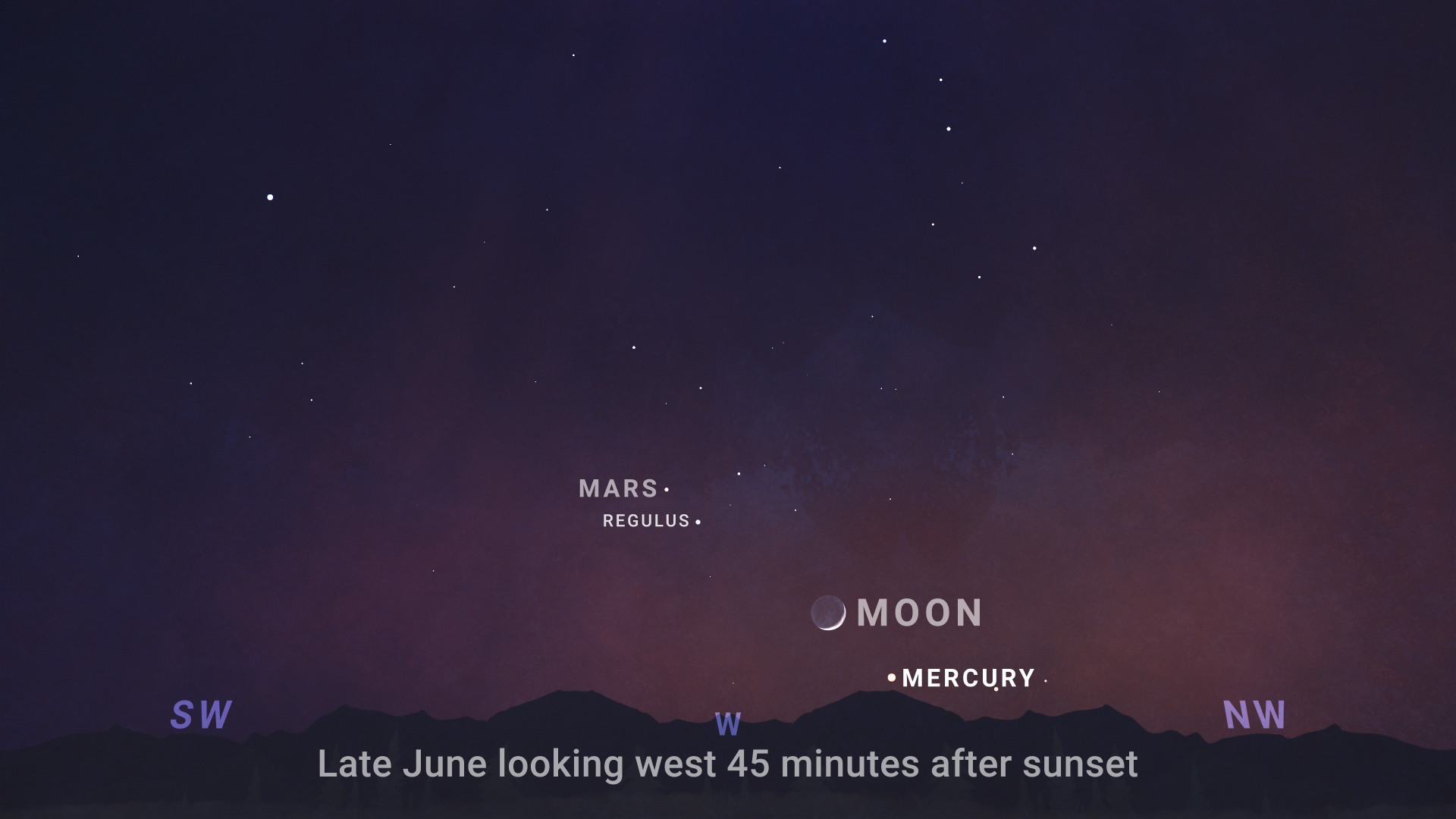
    Sky chart showing Mercury with the crescent Moon following sunset in late June, 2025.
    NASA/JPL-Caltech

    Mercury pops up toward the end of the month. Look for it quite low in the west, just as the glow of sunset is fading. It’s highest and most visible on the 27th.

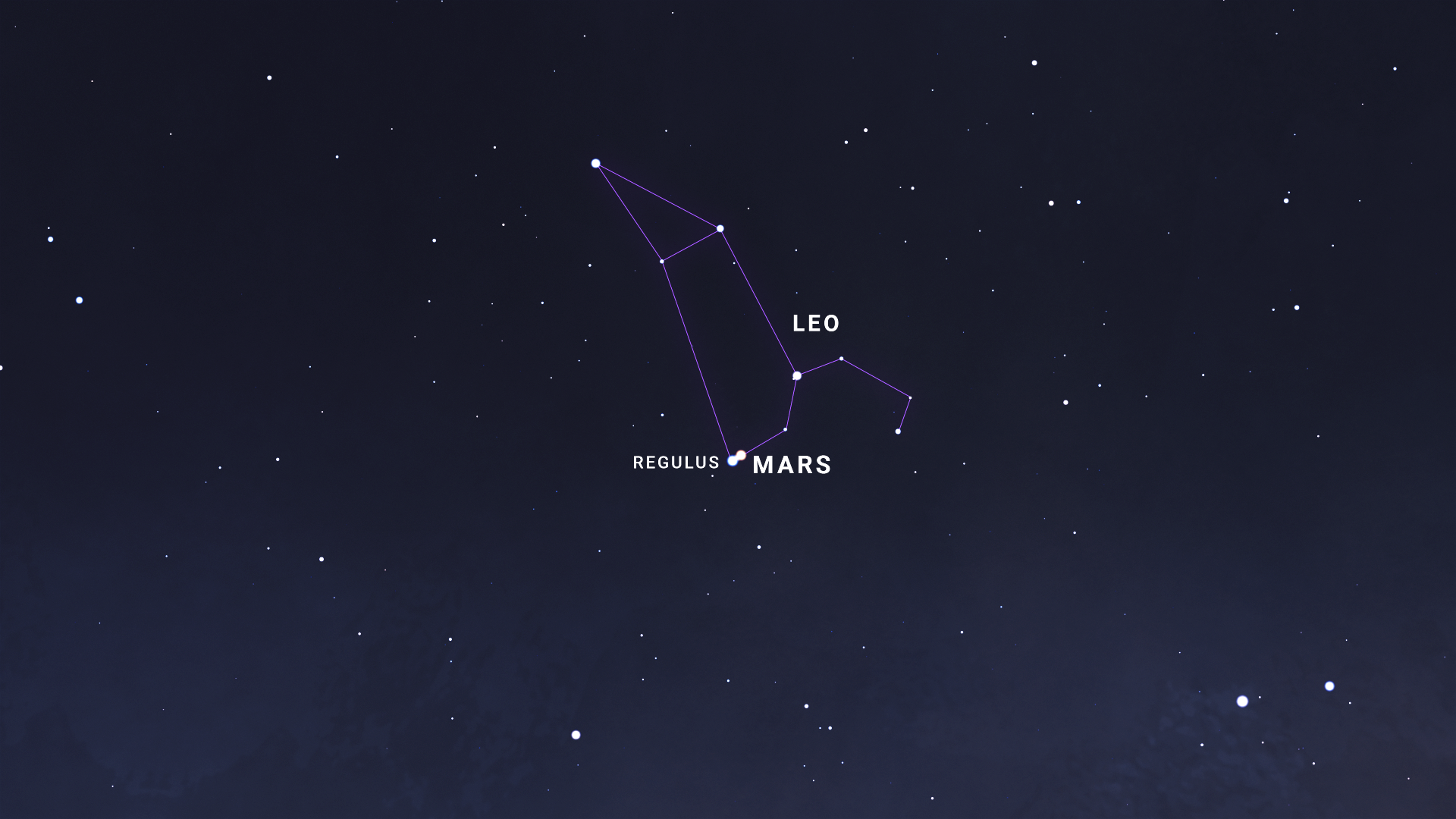
    Mars is still visible in the couple of hours after sunset toward the west, though it’s noticeably fainter than it was in early May. Over several days in mid-June, Mars passes quite close to Regulus, the bright star at the heart of the constellation Leo, the lion. Have a peek on the 16th and 17th with binoculars or a small telescope to see them as close as the width of the full moon.

    An illustrated sky chart shows a view of the western evening sky after dark. The scene features a nighttime background with faint stars. Near center is the constellation Leo, with its stars connected by thin lines. Mars and bright star Regulus appear very close together in the bottom corner of Leo.
    Sky chart showing Mars close to Regulus in the evening sky on June 16, 2025.
    NASA/JPL-Caltech

    Milky Way Core Season

    June means that Milky Way “Core Season” is here. This is the time of year when the Milky Way is visible as a faint band of hazy light arching across the sky all night. You just need to be under dark skies away from bright city lights to see it. What you’re looking at is the bright central core of our home galaxy, seen edge-on, from our position within the galaxy’s disk. 

    Long-exposure photos make the Milky Way’s bright stars and dark dust clouds even clearer. And while our eyes see it in visible light, NASA telescopes observe the galaxy across the spectrum — peering through dust to help us better understand our origins.

    However you observe it, getting out under the Milky Way in June is a truly remarkable way to connect with the cosmos.

    June Solstice

    June brings the summer solstice for those north of the equator, which is the winter solstice for those south of the equator. In the Northern Hemisphere, this is when the Sun is above the horizon longer than any other day, making it the longest day of the year. The situation is reversed for the Southern Hemisphere, where it’s the shortest day of the year. 

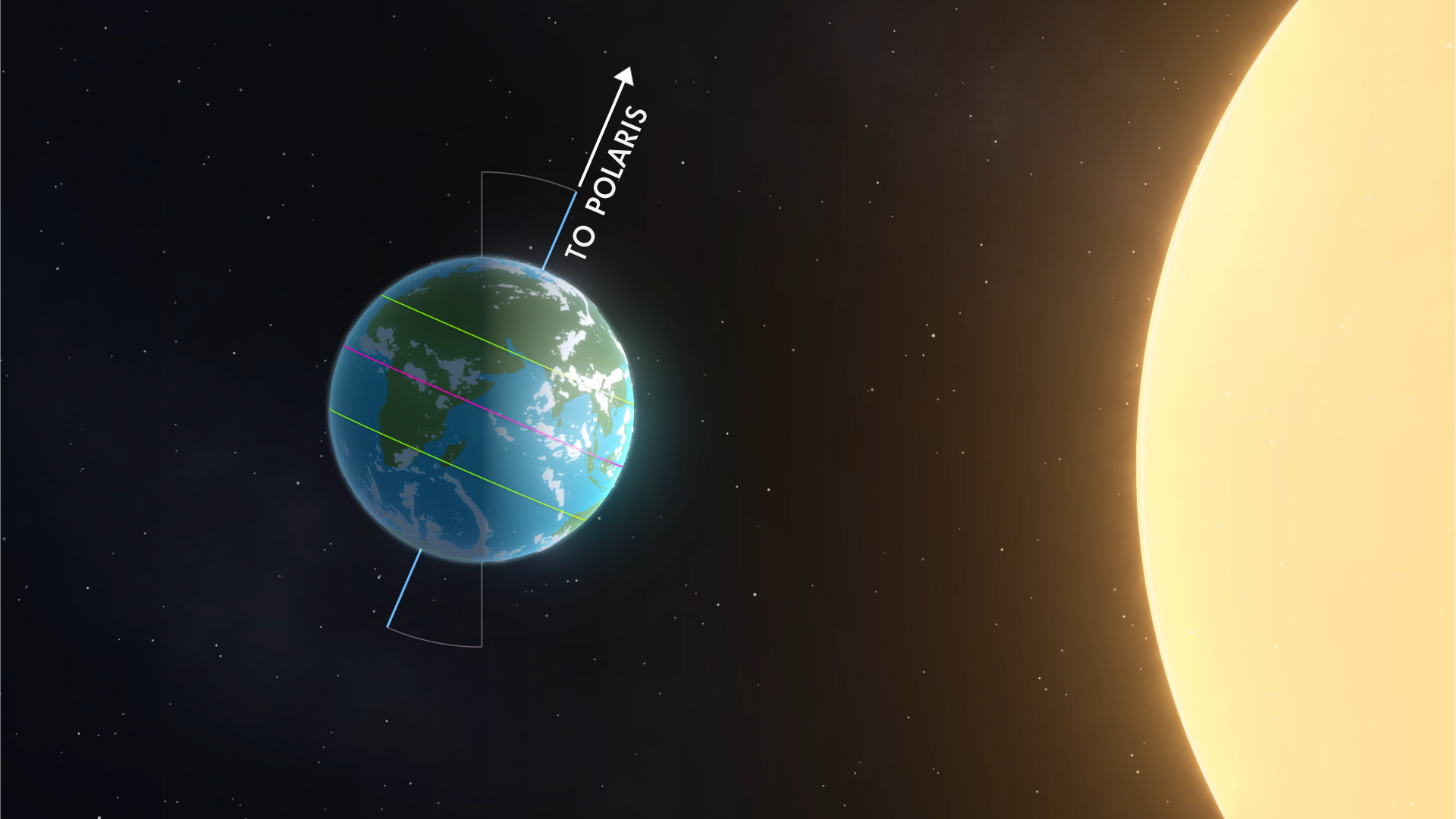
    Illustration from a NASA animation showing the tilt of Earth’s axis in June (Northern Hemisphere summer) with respect to the Sun, the planet’s orbit, and the North Star, Polaris.
    NASA’s Goddard Space Flight Center

    Earth’s tilted rotation is the culprit. The tilt is always in the same direction, with the North Pole always pointing toward Polaris, the North Star. And since that tilt stays the same, year round, when we’re on one side of the Sun in winter, the north part of the planet is tilted away from the Sun. But six months later, the planet moves halfway around its annual path, carrying us to the opposite side of Earth’s orbit, and the northern part of the planet now finds itself tilted toward the Sun. The June solstice is when this tilt is at its maximum. This is summertime for the north, bringing long days, lots more sunlight, and warmer temperatures.

    The June solstice marks a precise moment in Earth’s orbit – a consistent astronomical signpost that humans have observed for millennia. Ancient structures from Stonehenge to Chichén Itzá were built, in part, to align with the solstices, demonstrating how important these celestial events were to many cultures. 

    So whether you’re experiencing long summer days in the northern hemisphere or the brief daylight hours of winter in the south, find a quiet spot to watch the sunset on this special day and you’ll be participating in one of humanity’s oldest astronomical traditions, connecting you to observers across thousands of years of human history.

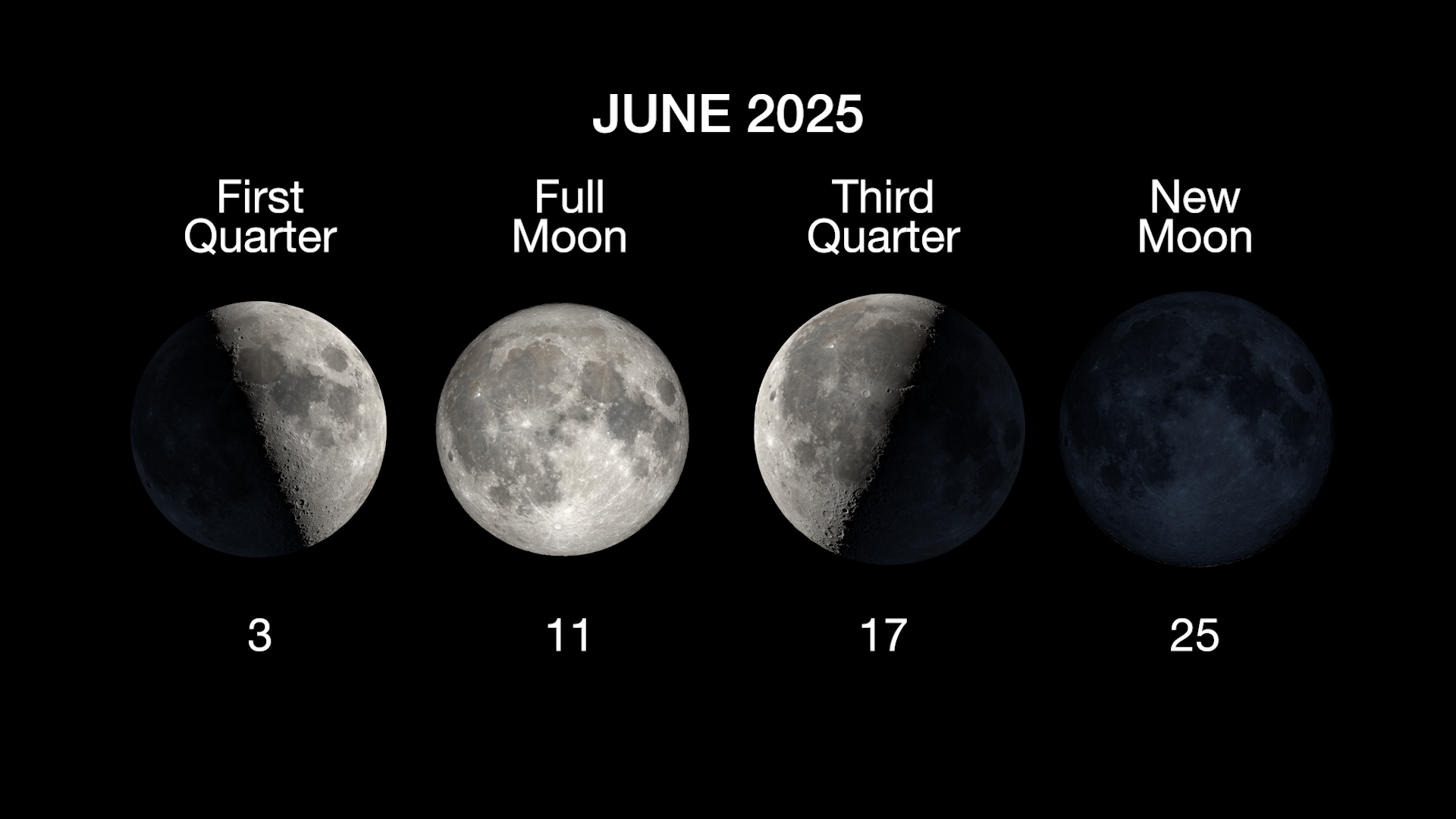
    Here are the phases of the Moon for June.

    The main phases of the Moon are illustrated in a horizontal row, with the first quarter moon on June 3, full moon on June 11, third quarter on June 17, and the new moon on June 25, 2025.
    The phases of the Moon for June 2025.

    You can stay up to date on all of NASA’s missions exploring the solar system and beyond at NASA Science. I’m Preston Dyches from NASA’s Jet Propulsion Laboratory, and that’s What’s Up for this month.

  • Apocalypse When? Hubble Casts Doubt on Certainty of Galactic Collision

    5 Min Read

    Apocalypse When? Hubble Casts Doubt on Certainty of Galactic Collision

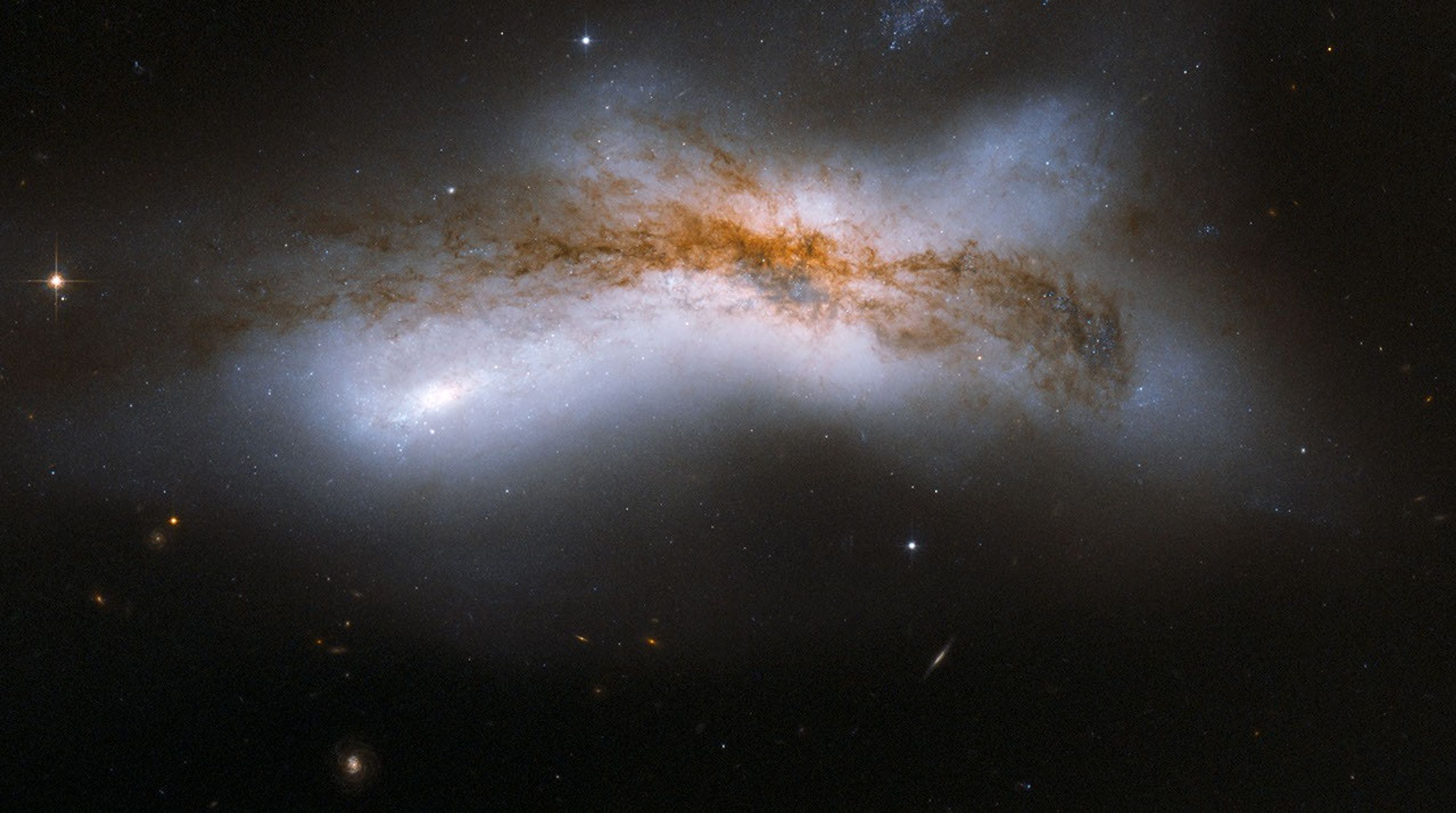
    Hubble Interacting Galaxy NGC 520

    This NASA Hubble Space Telescope image of NGC 520 offers one example of possible encounter scenarios between our Milky Way and the Andromeda galaxy. NGC 520 is the product of a collision between two disk galaxies that started 300 million years ago.

    Credits:
    NASA, ESA, the Hubble Heritage (STScI/AURA)-ESA/Hubble Collaboration, and B. Whitmore (STScI)

    As far back as 1912, astronomers realized that the Andromeda galaxy — then thought to be only a nebula — was headed our way. A century later, astronomers using NASA’s Hubble Space Telescope were able to measure the sideways motion of Andromeda and found it was so negligible that an eventual head-on collision with the Milky Way seemed almost certain.

    A smashup between our own galaxy and Andromeda would trigger a firestorm of star birth, supernovae, and maybe toss our Sun into a different orbit. Simulations had suggested it was as inevitable as, in the words of Benjamin Franklin, “death and taxes.”

    But now a new study using data from Hubble and the European Space Agency’s (ESA) Gaia space telescope says “not so fast.” Researchers combining observations from the two space observatories re-examined the long-held prediction of a Milky Way – Andromeda collision, and found it is far less inevitable than astronomers had previously suspected. 

    “We have the most comprehensive study of this problem today that actually folds in all the observational uncertainties,” said Till Sawala, astronomer at the University of Helsinki in Finland and lead author of the study, which appears today in the journal Nature Astronomy.

    His team includes researchers at Durham University, United Kingdom; the University of Toulouse, France; and the University of Western Australia. They found that there is approximately a 50-50 chance of the two galaxies colliding within the next 10 billion years. They based this conclusion on computer simulations using the latest observational data.

    A three-panel image, two at the top and one stretched across the bottom. At the top of the image is the title u201cThree Future Scenarios for Milky Way and Andromeda Encounter.u201d This title is extended over all three panels. In the top left panel, two spiral galaxies are widely separated against the black background of space. Beneath these galaxies are the words u201cGalaxies bypass at 1 million light-year separation.u201d In the top right panel, two face-on spiral galaxies are close together. Their spiral arms appear stretched toward each other. At the bottom of this panel are the words u201cAt 500,000 light-years, dark matter provides friction that brings galaxies to a close encounter.u201d In the bottom panel, two spiral galaxies have collided, resulting in a broad X-shaped patch of milky white. Mottled clouds of dark brown dust are superimposed. At the bottom of this panel are the words u201cA 100,000 light-year separation leads to a collision.u201d
    These galaxy images illustrate three possible encounter scenarios between our Milky Way and the neighboring Andromeda galaxy. Top left: Galaxies M81 and M82. Top right: NGC 6786, a pair of interacting galaxies. Bottom: NGC 520, two merging galaxies.
    Science: NASA, ESA, STScI, DSS, Till Sawala (University of Helsinki); Image Processing: Joseph DePasquale (STScI)

    Sawala emphasized that predicting the long-term future of galaxy interactions is highly uncertain, but the new findings challenge the previous consensus and suggest the fate of the Milky Way remains an open question.

    “Even using the latest and most precise observational data available, the future of the Local Group of several dozen galaxies is uncertain. Intriguingly, we find an almost equal probability for the widely publicized merger scenario, or, conversely, an alternative one where the Milky Way and Andromeda survive unscathed,” said Sawala.

    The collision of the two galaxies had seemed much more likely in 2012, when astronomers Roeland van der Marel and Tony Sohn of the Space Telescope Science Institute in Baltimore, Maryland published a detailed analysis of Hubble observations over a five-to-seven-year period, indicating a direct impact in no more than 5 billion years. 

    “It’s somewhat ironic that, despite the addition of more precise Hubble data taken in recent years, we are now less certain about the outcome of a potential collision. That’s because of the more complex analysis and because we consider a more complete system. But the only way to get to a new prediction about the eventual fate of the Milky Way will be with even better data,” said Sawala.

    100,000 Crash-Dummy Simulations

    Astronomers considered 22 different variables that could affect the potential collision between our galaxy and our neighbor, and ran 100,000 simulations called Monte Carlo simulations stretching to 10 billion years into the future. 

    “Because there are so many variables that each have their errors, that accumulates to rather large uncertainty about the outcome, leading to the conclusion that the chance of a direct collision is only 50% within the next 10 billion years,” said Sawala.

    “The Milky Way and Andromeda alone would remain in the same plane as they orbit each other, but this doesn’t mean they need to crash. They could still go past each other,” said Sawala. 

    Researchers also considered the effects of the orbits of Andromeda’s large satellite galaxy, M33, and a satellite galaxy of the Milky Way called the Large Magellanic Cloud (LMC).  

    “The extra mass of Andromeda’s satellite galaxy M33 pulls the Milky Way a little bit more towards it. However, we also show that the LMC pulls the Milky Way off the orbital plane and away from Andromeda. It doesn’t mean that the LMC will save us from that merger, but it makes it a bit less likely,” said Sawala. 

    In about half of the simulations, the two main galaxies fly past each other separated by around half a million light-years or less (five times the Milky Way’s diameter). They move outward but then come back and eventually merge in the far future. The gradual decay of the orbit is caused by a process called dynamical friction between the vast dark-matter halos that surround each galaxy at the beginning.

    In most of the other cases, the galaxies don’t even come close enough for dynamical friction to work effectively. In this case, the two galaxies can continue their orbital waltz for a very long time.

    The new result also still leaves a small chance of around 2% for a head-on collision between the galaxies in only 4 to 5 billion years. Considering that the warming Sun makes Earth uninhabitable in roughly 1 billion years, and the Sun itself will likely burn out in 5 billion years, a collision with Andromeda is the least of our cosmic worries. 

    The Hubble Space Telescope has been operating for over three decades and continues to make ground-breaking discoveries that shape our fundamental understanding of the universe. Hubble is a project of international cooperation between NASA and ESA (European Space Agency). NASA’s Goddard Space Flight Center in Greenbelt, Maryland, manages the telescope and mission operations. Lockheed Martin Space, based in Denver, also supports mission operations at Goddard. The Space Telescope Science Institute in Baltimore, which is operated by the Association of Universities for Research in Astronomy, conducts Hubble science operations for NASA.

    Explore More

    Details

    Last Updated

    Jun 02, 2025

    Editor
    Andrea Gianopoulos
    Contact

    Media

    Claire Andreoli
    NASA’s Goddard Space Flight Center
    Greenbelt, Maryland
    claire.andreoli@nasa.gov

    Ray Villard
    Space Telescope Science Institute
    Baltimore, Maryland

  • Sols 4554–4555: Let’s Try That One Again…

    2 min read

    Sols 4554–4555: Let’s Try That One Again…

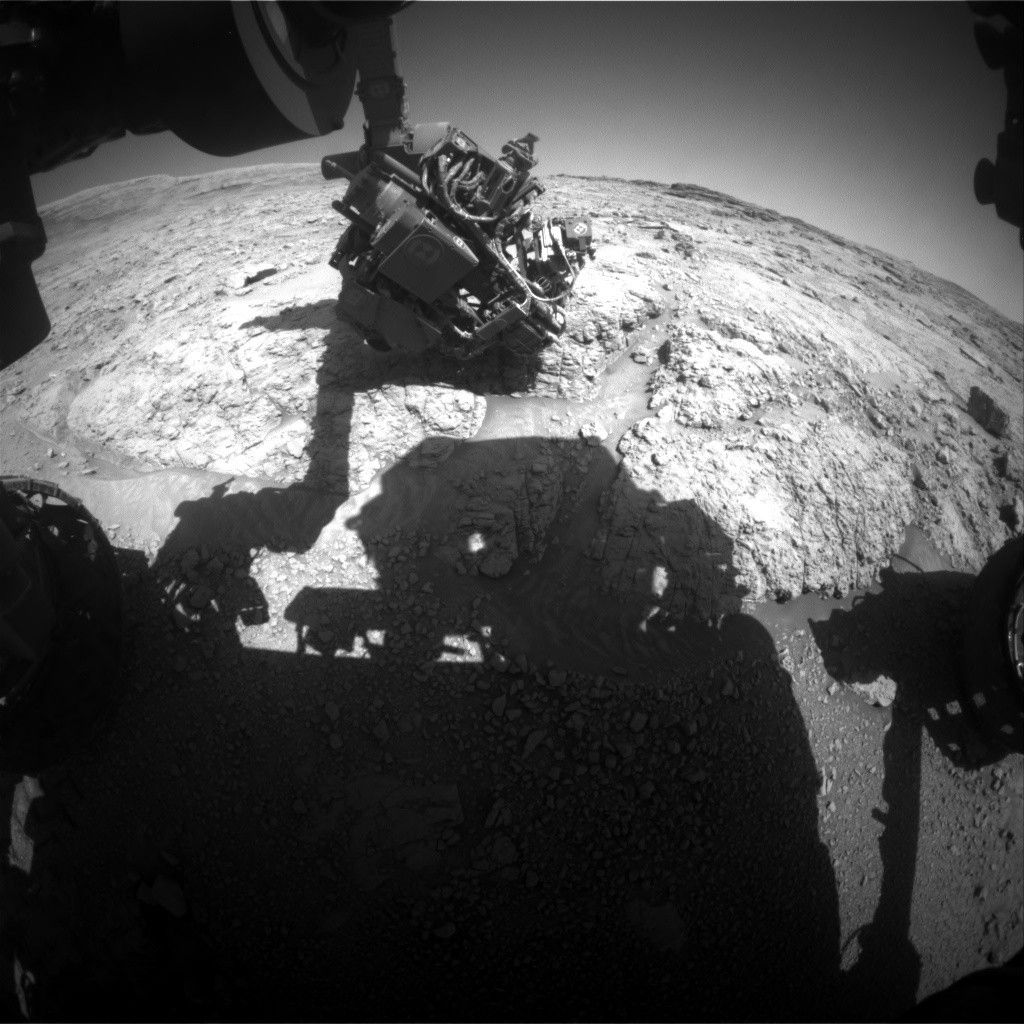
    A grayscale wide-angle view of the Martian surface (creating an exaggerated, curved horizon) shows very rough terrain in front of the Curiosity rover. Light gray, gravel-covered rocks extend to the horizon, separated by gouges in some areas. Reaching down from the top of the frame is Curiosity’s robotic arm, with the turret at its end holding science instruments reaching toward the ground. The rover’s shadow, including its body and robotic arm, darkens the bottom third of the image.
    NASA’s Mars rover Curiosity acquired this image using its Front Hazard Avoidance Camera (Front Hazcam) on May 28, 2025 — Sol 4553, or Martian day 4,553 of the Mars Science Laboratory mission — at 04:48:55 UTC.
    NASA/JPL-Caltech

    Written by Abigail Fraeman, Planetary Geologist at NASA’s Jet Propulsion Laboratory

    Earth planning date: Wednesday, May 28, 2025

    We came in early this morning and learned that part of Tuesday’s plan didn’t execute on Mars due to a temporary issue with the arm. We collected APXS data on the target “Palo Verde Mountains,” but were not able to take the corresponding MAHLI images or drive away. So it was a straightforward decision for the planning team today to pick up where we left off yesterday, giving ourselves a second chance to collect the MAHLI observation and then complete the same 29.5-meter drive to the west (about 97 feet) that we had planned on Tuesday.

     We love making lemonade from lemons when things don’t go exactly as expected in rover tactical planning, and today was no exception. Since we’re sticking around for a little bit longer, the science team decided to collect additional mosaics of impressive nearby features, including a 15×2 Mastcam mosaic of the “Mishe Mokwa” hill and an 11×2 Mastcam mosaic of fractures near “Lake Cachuma.” We’re also having another go at taking the epically long, long-distance RMI mosaic of a crater 91 kilometers away from Curiosity (almost 57 miles) that we planned yesterday, and we’re playing around with the focus settings to see if we can get a sharper image. 

    The team also had time for a second RMI mosaic of our very well-imaged “Texoli” butte, and a ChemCam LIBS observation on a target named “Santa Monica Bay,” which is just above the “Sisquoc River” target we observed yesterday on the bumpy rock in our workspace. As usual, we will also continue to monitor the environment around us with REMS, RAD, Navcam, and Mastcam observations.

    Details

    Last Updated

    May 30, 2025

    Related Terms

  • NASA’s SpaceX Demo-2 Launch Fifth Anniversary

    President Donald Trump walks onstage. Behind him is a white SpaceX Dragon crew spacecraft. It has a large rectangular window with two round windows on either side. The SpaceX, Dragon, and NASA logos can be seen on the spacecraft. In the background, the bottom of the United States flag (red and white stripes) are just visible at top, while the majority of the backdrop has small white lights, and another NASA
    NASA/Bill Ingalls

    President Donald Trump walks onstage to speak to a crowd at NASA’s Kennedy Space Center in Florida, following the launch of NASA’s SpaceX Demo-2 mission on May 30, 2020. The mission was the first crewed launch of the SpaceX Crew Dragon spacecraft and Falcon 9 rocket to the International Space Station as part of the agency’s Commercial Crew Program. This marked the first time American astronauts launched on an American rocket from American soil to low-Earth orbit since the conclusion of the Space Shuttle Program in 2011.

    Image credit: NASA/Bill Ingalls

  • Hubble Spies Paired Pinwheel on Its Own

    2 min read

    Hubble Spies Paired Pinwheel on Its Own

    A spiral galaxy seen face-on. Across its center, a broad bar of blazing stars shines. A glowing spiral arm extends from each end of this bar, both making almost a full turn through the galaxy’s disk before fading out. The arms contain sparkling blue stars, pink spots of star formation, and dark threads of dust that follow both spiral arms into and across the central bar. A foreground star sits atop the galaxy.
    This NASA Hubble Space Telescope image features the beautiful barred spiral galaxy NGC 3507
    ESA/Hubble & NASA, D. Thilker

    A single member of a galaxy pair takes centerstage in this NASA/ESA Hubble Space Telescope image. This beautiful spiral galaxy is NGC 3507, which is situated about 46 million light-years away in the constellation Leo (the Lion). NGC 3507’s classification is a barred spiral because the galaxy’s sweeping spiral arms emerge from the ends of a central bar of stars rather than the central core of the galaxy.

    Though pictured solo here, NGC 3507 actually travels the universe with a galactic partner named NGC 3501 that is located outside the frame. While NGC 3507 is a quintessential galactic pinwheel, its partner resembles a streak of quicksilver across the sky. Despite looking completely different, both are spiral galaxies, simply seen from different angles.

    For galaxies that are just a few tens of millions of light-years away, like NGC 3507 and NGC 3501, features like spiral arms, dusty gas clouds, and brilliant star clusters are on full display. More distant galaxies appear less detailed. See if you can spot any faraway galaxies in this image: they tend to be orange or yellow and can be anywhere from circular and starlike to narrow and elongated, with hints of spiral arms. Astronomers use instruments called spectrometers to split the light from these distant galaxies to study the nature of these objects in the early universe.

    In addition to these far-flung companions, a much nearer object joins NGC 3507. The object is marked by four spikes of light: a star within the Milky Way, a mere 436 light-years away from Earth.

    Text Credit: ESA/Hubble

    Media Contact:

    Claire Andreoli (claire.andreoli@nasa.gov)
    NASA’s Goddard Space Flight CenterGreenbelt, MD

  • June’s Night Sky Notes: Seasons of the Solar System

    2 Min Read

    June’s Night Sky Notes: Seasons of the Solar System

    Two views of the planet Uranus appear side-by-side for comparison. At the top, left corner of the left image is a two-line label. The top line reads Uranus November 9, 2014. The bottoms line reads HST WFC3/UVIS. At the top, left corner of the right image is the label November 9, 2022. At the left, bottom corner of each image is a small, horizontal, white line. In both panels, over this line is the value 25,400 miles. Below the line is the value 40,800 kilometers. At the top, right corner of the right image are three, colored labels representing the color filters used to make these pictures. Located on three separate lines, these are F467M in blue, F547M in green, and F485M in red. On the bottom, right corner of the right image are compass arrows showing north toward the top and east toward the left.

    Credits:
    NASA

    by Kat Troche of the Astronomical Society of the Pacific

    Here on Earth, we undergo a changing of seasons every three months. But what about the rest of the Solar System? What does a sunny day on Mars look like? How long would a winter on Neptune be? Let’s take a tour of some other planets and ask ourselves what seasons might look like there.

    Martian Autumn

    Although Mars and Earth have nearly identical axial tilts, a year on Mars lasts 687 Earth days (nearly 2 Earth years) due to its average distance of 142 million miles from the Sun, making it late autumn on the red planet. This distance and a thin atmosphere make it less than perfect sweater weather. A recent weather report from Gale Crater boasted a high of -18 degrees Fahrenheit for the week of May 20, 2025.

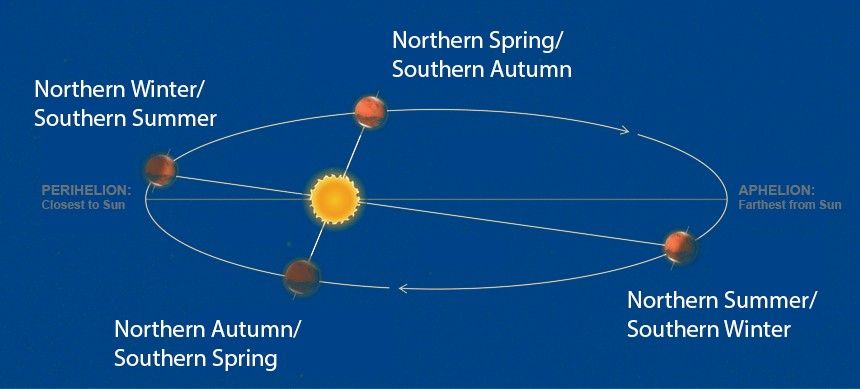
    A diagram of Mars' orbit around the Sun, labeled with seasons for both hemispheres (Northern Spring/Southern Autumn, Northern Winter/Southern Summer, etc.). Key points like perihelion (closest to Sun) and aphelion (farthest from Sun) are marked, illustrating how seasons align with orbital position.
    Credit: NASA/JPL-Caltech

    Seven Years of Summer

    Saturn has a 27-degree tilt, very similar to the 25-degree tilt of Mars and the 23-degree tilt of Earth. But that is where the similarities end. With a 29-year orbit, a single season on the ringed planet lasts seven years. While we can’t experience a Saturnian season, we can observe a ring plane crossing here on Earth instead. The most recent plane crossing took place in March 2025, allowing us to see Saturn’s rings ‘disappear’ from view.

    A Lifetime of Spring

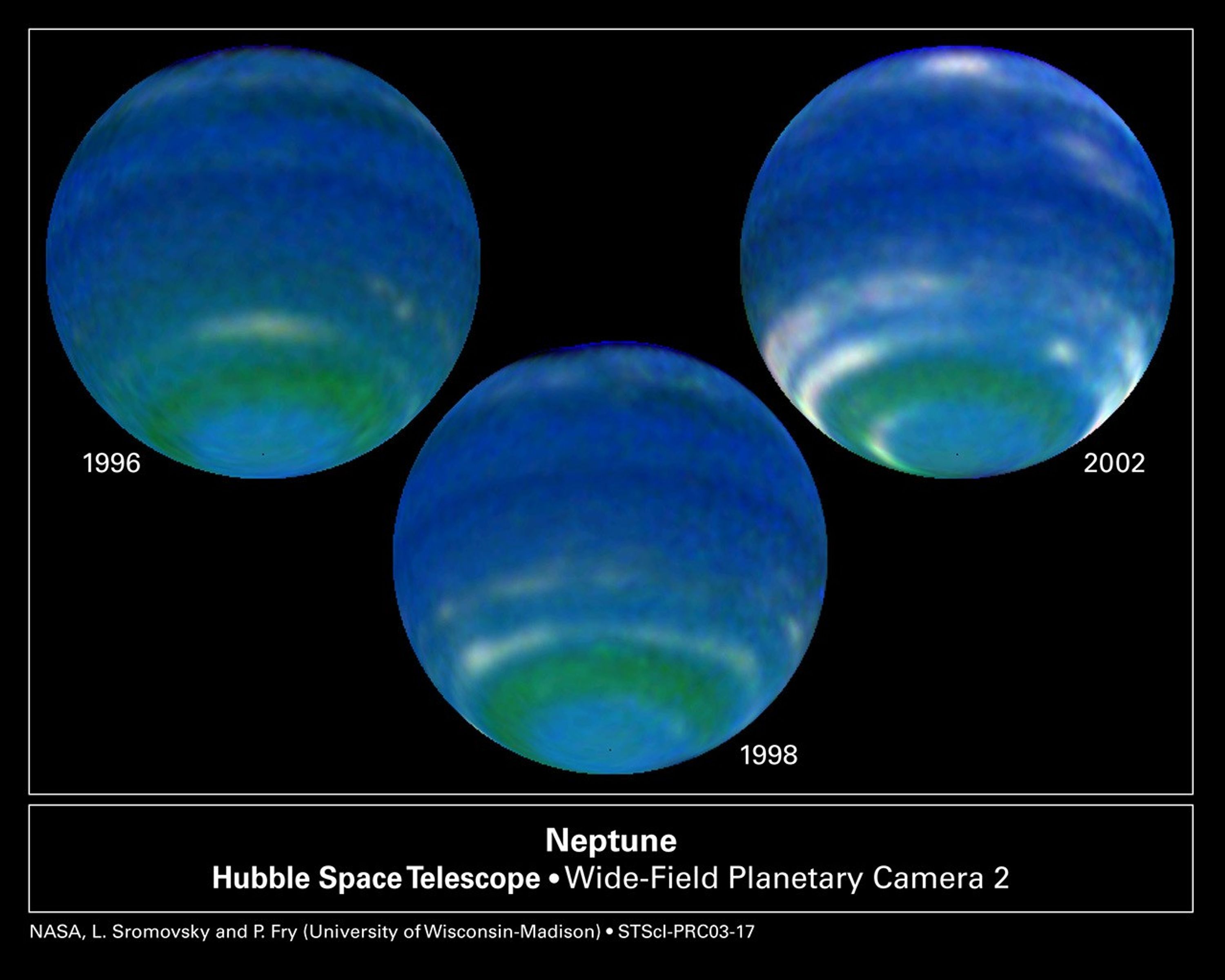
    Springtime on Neptune: Increased Brightness Shows Seasonal Change
    NASA Hubble Space Telescope observations in August 2002 show that Neptune’s brightness has increased significantly since 1996. The rise is due to an increase in the amount of clouds observed in the planet’s southern hemisphere. These increases may be due to seasonal changes caused by a variation in solar heating. Because Neptune’s rotation axis is inclined 29 degrees to its orbital plane, it is subject to seasonal solar heating during its 164.8-year orbit of the Sun. This seasonal variation is 900 times smaller than experienced by Earth because Neptune is much farther from the Sun. The rate of seasonal change also is much slower because Neptune takes 165 years to orbit the Sun. So, springtime in the southern hemisphere will last for several decades! Remarkably, this is evidence that Neptune is responding to the weak radiation from the Sun. These images were taken in visible and near-infrared light by Hubble’s Wide Field and Planetary Camera 2.
    Credit: NASA, L. Sromovsky, and P. Fry (University of Wisconsin-Madison)

    Even further away from the Sun, each season on Neptune lasts over 40 years. Although changes are slower and less dramatic than on Earth, scientists have observed seasonal activity in Neptune’s atmosphere. These images were taken between 1996 and 2002 with the Hubble Space Telescope, with brightness in the southern hemisphere indicating seasonal change.

    As we welcome summer here on Earth, you can build a Suntrack model that helps demonstrate the path the Sun takes through the sky during the seasons. You can find even more fun activities and resources like this model on NASA’s Wavelength and Energy activity. 

  • Sol 4553: Back to the Boxwork!

    2 min read

    Sol 4553: Back to the Boxwork!

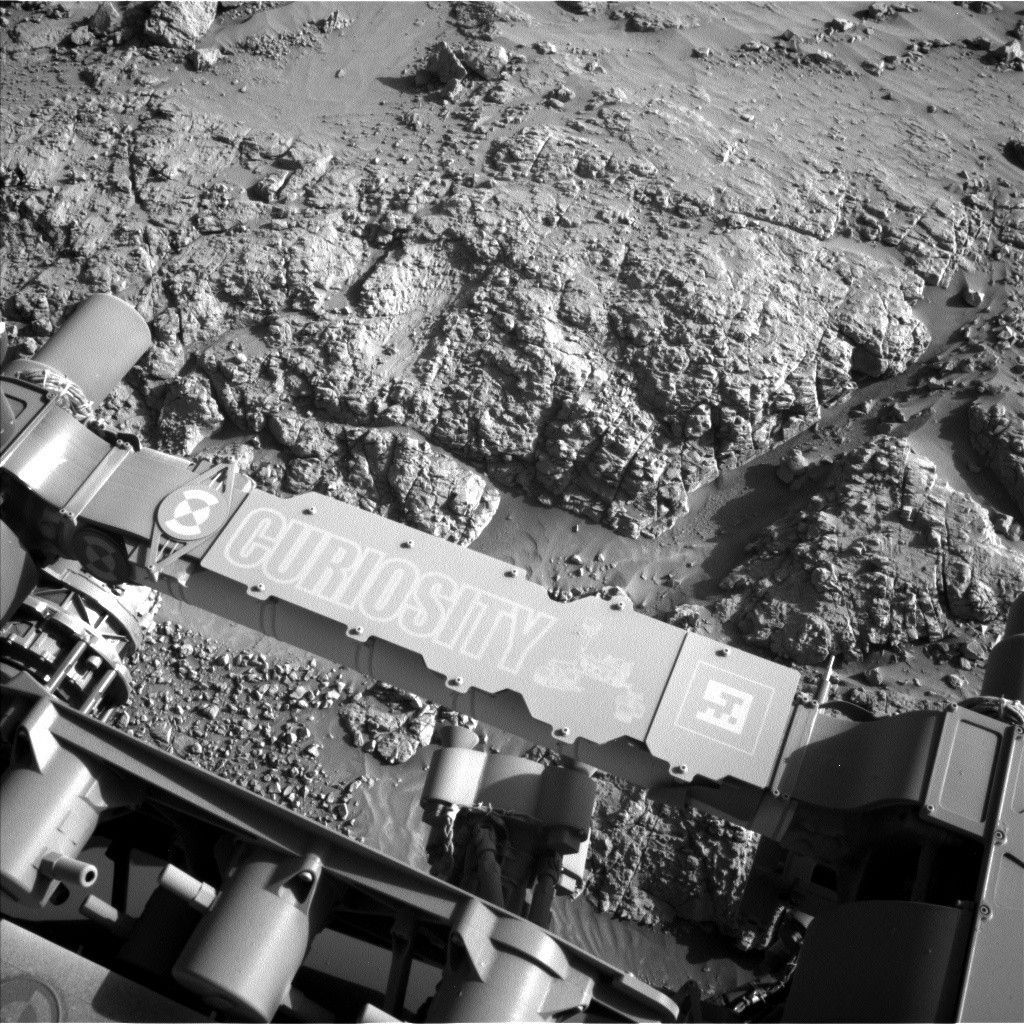
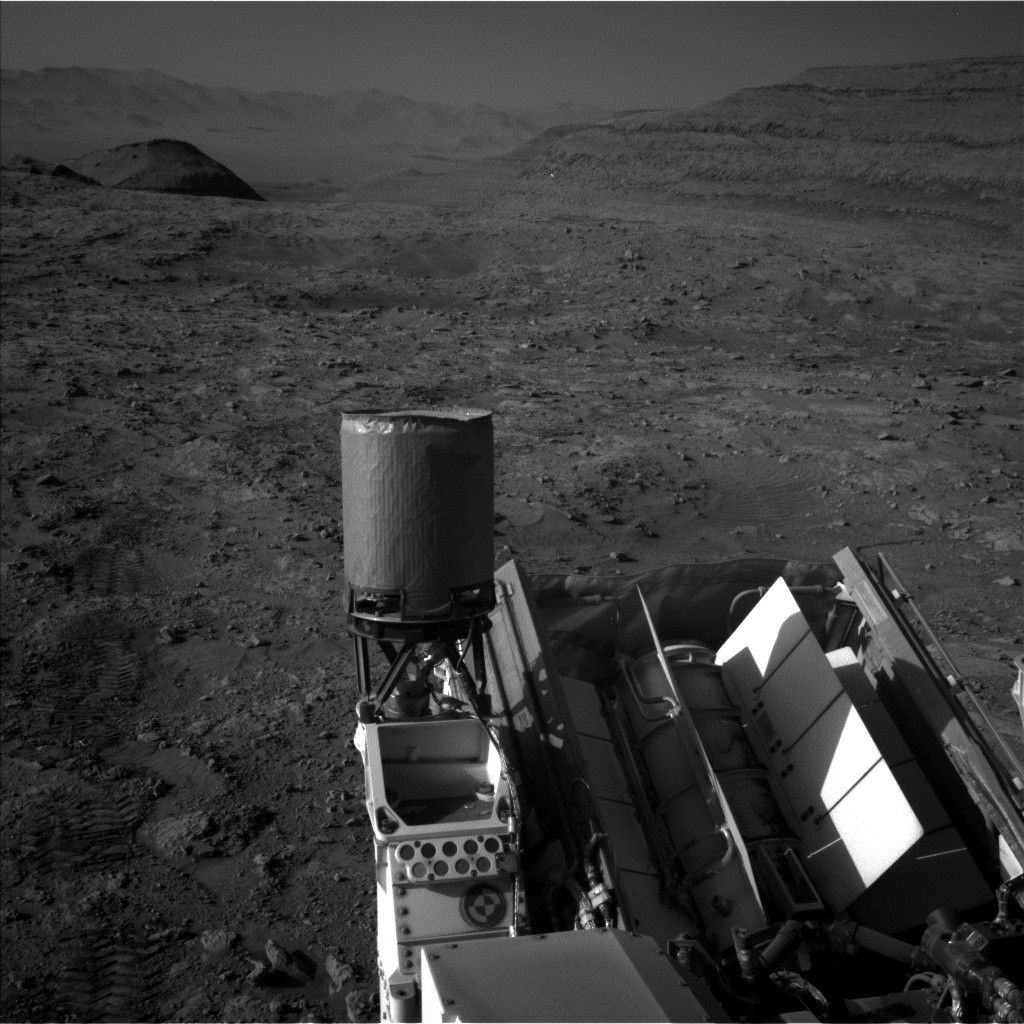
    A grayscale photograph of Martian terrain in front of the Curiosity rover shows very bumpy, uneven ground with large, polygonal sections of rock on the surface separated by gouges in the soil. The bumpy area and a smoother patch just beyond that all appear shiny. The bottom of the frame shows parts of the rover, running from the middle left edge to the lower right corner of the image, including part of its robotic arm which carries a nameplate imprinted with “Curiosity” outlined in white, all-capital letters, and to the right of that a line drawing of the rover.
    NASA’s Mars rover Curiosity acquired this image of its workspace in the “boxwork” terrain area, showing resistant, ridge-like features where it will investigate the targets dubbed “Sisquoc River” and “Palo Verde Mountains.” Curiosity acquired the image using its Left Navigation Camera on May 27, 2025 — Sol 4552, or Martian day 4,552 of the Mars Science Laboratory mission — at 08:38:12 UTC.
    NASA/JPL-Caltech

    Written by Lucy Thompson, Planetary Geologist at University of New Brunswick

    Earth planning date: Tuesday, May 27, 2005

    We return to planning today after a successful long weekend and about 42 meters of drive distance (about 138 feet). We planned four sols of activities on Friday to keep Curiosity busy, while the U.S.-based science team and engineers took time off yesterday for the Memorial Day holiday. As we got to admire the new workspace and drive direction view in front of the rover this morning, I realized that we have now driven about 35 kilometers (about 22 miles) and climbed more than 850 meters (2,789 feet) in elevation since landing nearly 13 years ago, and we continue to do exciting science on Mars, having recently driven onto new terrain. 

    The so-called boxwork structures are a series of resistant ridges observed both from orbit and in long-distance rover imaging (see Ashley’s blog here). Not only are the ridges of interest (do they indicate enhanced fluid-flow and cementation?), but the outcrop expression in general changed after we drove over a shallow trough onto the rocks that host the ridges.

    This plan will continue characterization of the interesting boxwork terrain. We had an example of a more resistant, ridge-like feature in our workspace today (see accompanying image). The composition of the ridge will be investigated using ChemCam (target “Sisquoc River”) and APXS (target “Palo Verde Mountains”), with accompanying Mastcam and MAHLI images. We will also acquire Mastcam imaging of a trough-like feature surrounding a bedrock slab, as part of our ongoing documentation of such structures, as well as of an apparent resistant boxwork ridge in the distance (“Lake Cachuma”). And a first for our mission, we are planning the longest-distance ChemCam remote imaging mosaic that we will have acquired — 91 kilometers (almost 57 miles) away! The intent is to compare the long-distance view from the ground with HiRISE orbital images in an attempt to create a 3D view. We also managed to squeeze in a Navcam large dust-devil survey before the planned 24-meter drive (about 79 feet). Once we arrive at our new location, MARDI will take an image of the terrain beneath the rover.

    The plan is rounded out with the standard REMS, DAN and RAD activities.

    Details

    Last Updated

    May 29, 2025

    Related Terms

  • A Dust Devil Photobombs Perseverance!

    3 min read

    A Dust Devil Photobombs Perseverance!

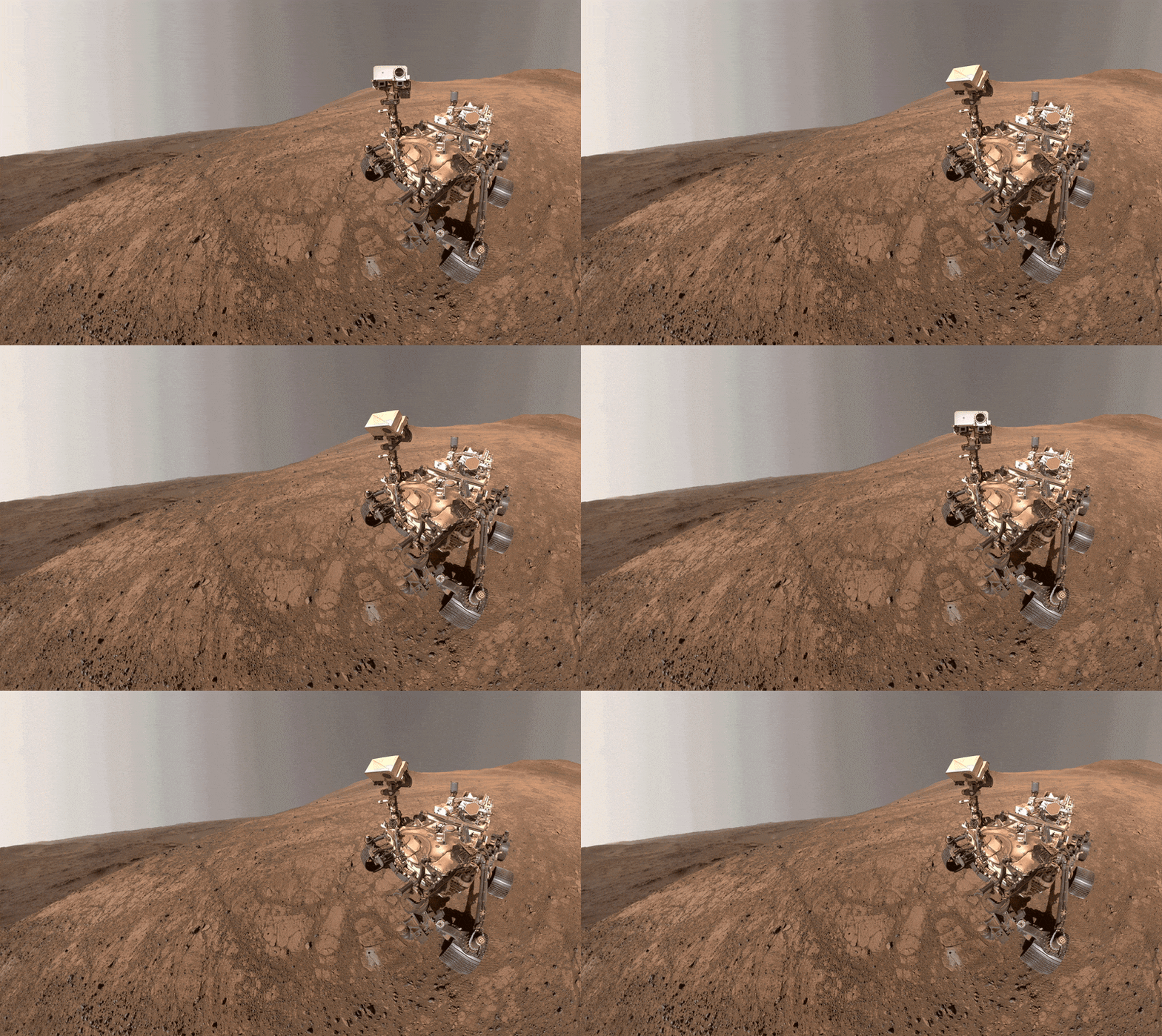
    NASA’s Perseverance rover takes a selfie on the surface of Mars with a faint dust devil swirling in the background.
    Perseverance self portrait, acquired by the WATSON camera on Sol 1500 on Mars. The Bell Island borehole where the rover acquired a sample is visible in the workspace in front of the rover.
    NASA/JPL-Caltech/MSSS

    Written by Athanasios Klidaras, Ph.D. candidate at Purdue University, and Megan Kennedy Wu, Senior Mission Operations Specialist at Malin Space Science Systems

    To celebrate her 1,500th Martian day (“Sol”) exploring the red planet, the Perseverance rover used its robotic arm to take a selfie of the rover and the surrounding landscape. But when team members reviewed the photo, they were surprised to find that Perseverance had been photobombed!  

    As the rover sat at the “Pine Pond” workspace, located on the outer rim of Jezero crater, which it has been exploring for the past several months, the Wide Angle Topographic Sensor for Operations and eNgineering (WATSON) camera on the end of its arm was used to acquire a 59-image mosaic of the rover. This is the fifth “selfie” that Perseverance has acquired since landing on Mars in 2021. The rover’s robotic arm is not visible in the self portrait because — just like a selfie you would take with your own cellphone camera — rover operators make sure not to have the arm get “in the way” of the body of the rover. This is even easier to do on Mars because Perseverance needs to take 59 different images at slightly different arm positions to build up the selfie, and the elbow of the robotic arm is kept out of the way while the images are acquired. You can find more details about the Sol 1500 selfie here, and this YouTube video shows how the rover arm moves when these activities take place. 

    While snapping away, Perseverance was photobombed by a dust devil in the distance! These are relatively common phenomena both on Mars and in Earth’s desert regions, and form from rising and rotating columns of warm air, which gives the appearance of a dust tornado. Just like many other weather patterns, there is a peak “season” for dust-devil activity, and Jezero crater is in the peak of that season now (late northern spring).  The one seen in the selfie is fairly large, about 100 meters, or 328 feet, across. While Perseverance regularly monitors the horizon for dust-devil activity with Navcam movies, this is the first time the WATSON camera on the end of the robotic arm has ever captured an image of a dust devil! 

    The dark hole in front of the rover, surrounded by gray rock powder created during the drilling process, shows the location of Perseverance’s 26th sample. Nicknamed “Bell Island” after an island near Newfoundland, Canada, this rock sample contains small spherules, thought to have formed by volcanic eruptions or impacts early in Martian history. Later, this ancient rock was uplifted during the impact that formed Jezero crater. Now that the rover has successfully acquired the spherule sample the science team was searching for, Perseverance is leaving the area to explore new rock exposures. Last week, the rover arrived at an exposure of light-toned bedrock called “Copper Cove,” and the science team was interested to determine if this unit underlies or overlies the rock sequence explored earlier. After performing an abrasion to get a closer look at the chemistry and textures, the rover drove south to scout out more sites along the outer edge of the Jezero crater rim.    

    Details

    Last Updated

    May 29, 2025

    Related Terms

  • NASA Tech Gives Treadmill Users a ‘Boost’  

    2 min read

    Preparations for Next Moonwalk Simulations Underway (and Underwater)

    A man runs on a high tech treadmill, a large bubble-like structure surrounds his lower body
    Boost Treadmills cofounder Sean Whalen runs on the Boost 2. The treadmill uses air pressure to counter gravity, making running possible for people with injuries and other conditions.
    Credit: Boost Treadmills LLC

    The antigravity treadmill, which has benefits in space and on Earth, was pioneered by Robert Whalen at NASA’s Ames Research Center in Silicon Valley, California, in the 1980s and ’90s. 

    Whalen built a system that placed a pressurized bulb over the user’s upper body, creating downward pressure that could simulate gravity for astronauts running on a treadmill in space. With support from Ames, he prototyped a treadmill in his garage that reversed the concept, with the bubble enclosing the user from the waist down to create lift. He thought the system could help patients rehabilitate.  

    Years later, his son recalled the prototype in the garage and turned it into the AlterG concept. The AlterG treadmill, which uses air pressure to take weight off the user, had proven popular with professional sports teams and rehabilitation clinics, but Whalen and his friends wanted to make it affordable enough for home use, so they founded Boost Treadmills in 2017.  

    Now Boost, based in Palo Alto, California, has cut the price of an antigravity treadmill by almost two thirds. In 2022, the company released the Boost 2, which is quieter and more energy-efficient than its predecessor, among other improvements. The Boost 2 has roughly tripled sales to individuals, progressing on the company’s goal of moving into the home.  

    Offloading weight during exercise is a clear solution for patients whose injuries prevent them from walking or running at their full weight, but Boost says it can be equally valuable for people with long-term mobility impairments, such as obesity or arthritis.  

    Advanced through NASA, the antigravity treadmill is one of many space-inspired technologies benefitting life on Earth.  

    Details

    Last Updated

    May 29, 2025

  • 45 Years Ago: NASA Announces Ninth Astronaut Group

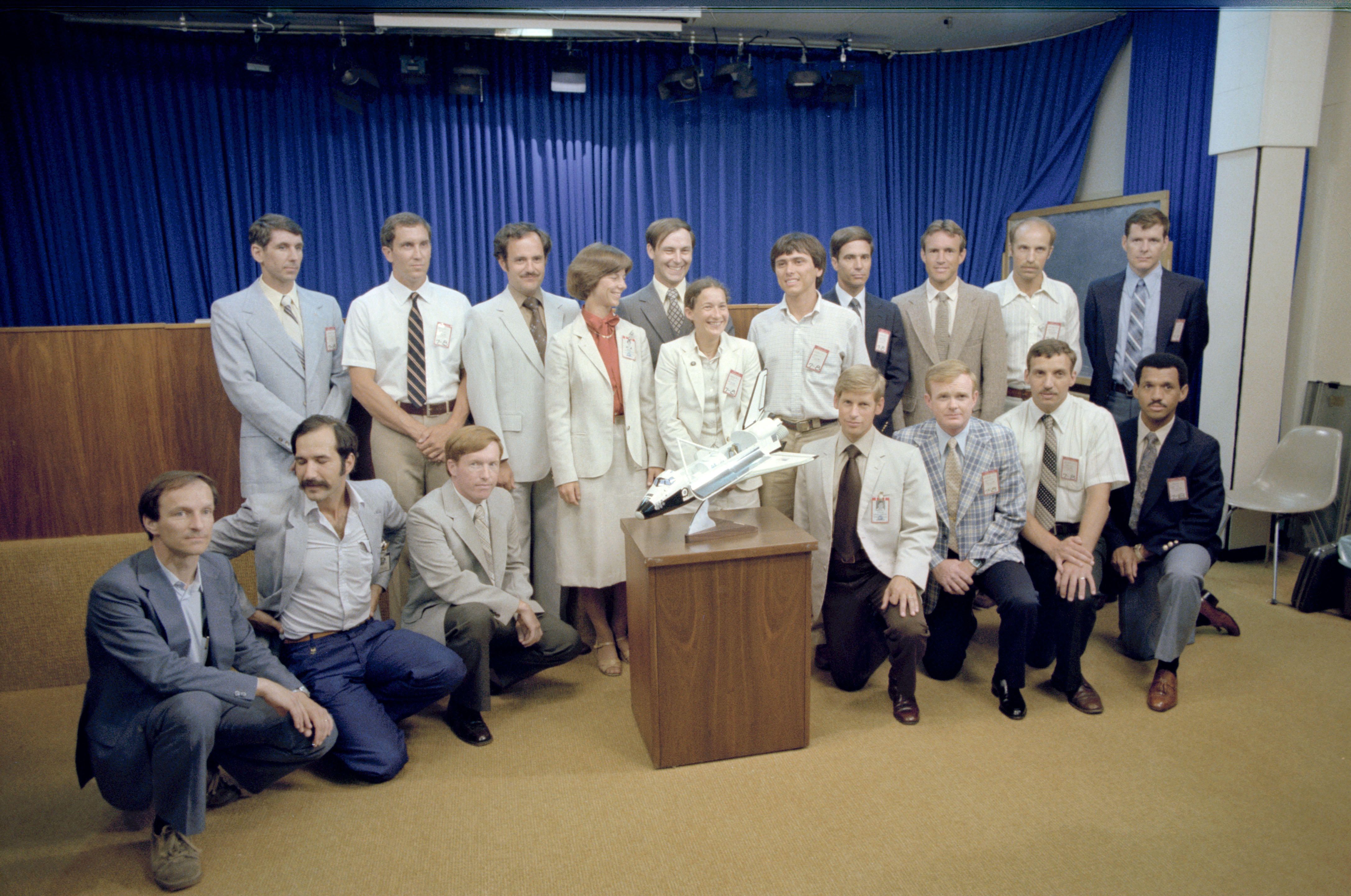
    A group of people dressed in suits pose for a picture behind a model of a spacecraft. The group is organized into two rows; the first row kneels while the back row stands.
    NASA

    Nearly all of NASA’s ninth class of astronaut candidates, along with two European trainees, poses for photos in the briefing room in the public affairs facility at NASA’s Johnson Space Center in Houston on July 7, 1980.

    Group 9 was announced on May 29, 1980; the candidates would go on to make history in spaceflight and at NASA. For example, Charles Bolden (kneeling at far right) traveled to orbit four times aboard the space shuttle between 1986 and 1994, then became the agency’s first African American administrator in 2009. Franklin Chang-Diaz (fifth from the right, standing) was the first Hispanic American to fly in space and Jerry Ross (middle, standing in the back) was the first person to be launched into space seven times.

    Image credit: NASA

  • Integrated Testing on Horizon for Artemis II Launch Preparations

    Graphic shows 10 integrated tests that must happen for Artemis II SLS Rocket and Orion Spacecraft Testing
    NASA

    Teams responsible for preparing and launching Artemis II at NASA’s Kennedy Space Center in Florida are set to begin a series of integrated tests to get ready for the mission. With the upper stage of the agency’s SLS (Space Launch System) integrated with other elements of the rocket, engineers are set to start the tests to confirm rocket and ground systems are working and communicating as planned.

    While similar to the integrated testing campaign conducted for NASA’s uncrewed Artemis I test flight, engineers have added tests ahead of Artemis II to prepare for NASA’s first crewed flight under the Artemis campaign – an approximately 10-day journey by four astronauts around the Moon and back. The mission is another step toward missions on the lunar surface and helping the agency prepare for future astronaut missions to Mars.

    Interface Verification Testing

    Verifies the functionality and interoperability of interfaces across elements and systems. Teams will conduct this test from the firing room in the Launch Control Center and perform health and status checks of various systems and interfaces between the SLS core stage, the solid rocket boosters, and the ground systems. It will ensure different systems, including core stage engines and booster thrust control, work as planned. Teams also will perform the same series of tests with the interim cryogenic propulsion stage and Orion before conducting a final interface test with all segments.

    Program Specific Engineering Test

    Teams will conduct separate engineering tests for the core stage, rocket boosters, and upper stage following the interface verification tests for each part of the rocket.

    End-to-End Communications Testing

    Integrated test of SLS core and upper stages, and Orion command and telemetry radio frequencies with mission control at NASA’s Johnson Space Center in Houston to demonstrate flight controllers’ ability to communicate with the ground systems and infrastructure. This test uses a radio frequency antenna in the Vehicle Assembly Building (VAB), another near the launch pad that will cover the first few minutes of launch, as well as a radio frequency that use the Tracking Data Relay Satellite and the Deep Space Network. Teams will do two versions of this test – one with the ground equipment communicating with a radio and telemetry station for checkouts, and one with all the hardware and equipment communicating with communications infrastructure like it will on launch day.

    Countdown Demonstration Test

    Teams will conduct a launch day demonstration with the Artemis II astronauts to test launch countdown procedures and make any final necessary adjustments ahead of launch. This test will be divided into two parts. The first will be conducted while SLS and Orion are in the VAB and include the Artemis II crew departing their crew quarters after suiting up at the Neil A. Armstrong Operations and Checkout Building and driving to the VAB where they will enter Orion like they will on launch day and practice getting strapped in. Part two will be completed once the rocket is at the launch pad and will allow the astronauts and Artemis launch team to practice how to use the emergency egress system, which would be used in the event of an unlikely emergency at the launch pad during launch countdown.

    Flight Termination System End-to-End Test

    Test to ensure the rocket’s flight termination system can be activated in the event of an emergency. For public safety, all rockets are required to have a flight termination system. This test will be divided into two parts inside the VAB. The first will take place ahead of Orion getting stacked atop SLS and the second will occur before the rocket and spacecraft roll out to the launch pad.

    Wet Dress Rehearsal

    Teams will practice loading cryogenic liquid propellant inside SLS once it’s at the launch pad and run through the launch countdown sequences just prior to engine ignition. The rehearsal will run the Artemis II launch team through operations to load liquid hydrogen and liquid oxygen into the rocket’s tanks, conduct a full launch countdown, demonstrate the ability to recycle the countdown clock, and also drain the tanks to give them an opportunity to practice the timelines and procedures they will use for launch.

    Teams will load more than 700,000 gallons of cryogenic, or super cold, propellants into the rocket at the launch pad on the mobile launcher according to the detailed timeline they will use on the actual launch day. They will practice every phase of the countdown, including weather briefings, pre-planned holds in the countdown, conditioning and replenishing the propellants as needed, and validation checks. The Artemis II crew will not participate in the rehearsal.