Category: Solar system

http://www.nasa.gov/rss/dyn/solar_system.rss

  • NASA’s MAVEN Makes First Observation of Atmospheric Sputtering at Mars

    After a decade of searching, NASA’s MAVEN (Mars Atmosphere Volatile Evolution) mission has, for the first time, reported a direct observation of an elusive atmospheric escape process called sputtering that could help answer longstanding questions about the history of water loss on Mars.

    Scientists have known for a long time, through an abundance of evidence, that water was present on Mars’ surface billions of years ago, but are still asking the crucial question, “Where did the water go and why?”

    Early on in Mars’ history, the atmosphere of the Red Planet lost its magnetic field, and its atmosphere became directly exposed to the solar wind and solar storms. As the atmosphere began to erode, liquid water was no longer stable on the surface, so much of it escaped to space. But how did this once thick atmosphere get stripped away? Sputtering could explain it.

    Sputtering is an atmospheric escape process in which atoms are knocked out of the atmosphere by energetic charge particles.

    “It’s like doing a cannonball in a pool,” said Shannon Curry, principal investigator of MAVEN at the Laboratory for Atmospheric and Space Physics at the University of Colorado Boulder and lead author of the study. “The cannonball, in this case, is the heavy ions crashing into the atmosphere really fast and splashing neutral atoms and molecules out.”

    While scientists had previously found traces of evidence that this process was happening, they had never observed the process directly. The previous evidence came from looking at lighter and heavier isotopes of argon in the upper atmosphere of Mars. Lighter isotopes sit higher in the atmosphere than their heavier counterparts, and it was found that there were far fewer lighter isotopes than heavy argon isotopes in the Martian atmosphere. These lighter isotopes can only be removed by sputtering.

    “It is like we found the ashes from a campfire,” said Curry. “But we wanted to see the actual fire, in this case sputtering, directly.”

    To observe sputtering, the team needed simultaneous measurements in the right place at the right time from three instruments aboard the MAVEN spacecraft: the Solar Wind Ion Analyzer, the Magnetometer, and the Neutral Gas and Ion Mass Spectrometer. Additionally, the team needed measurements across the dayside and the nightside of the planet at low altitudes, which takes years to observe.

    The combination of data from these instruments allowed scientists to make a new kind of map of sputtered argon in relation to the solar wind. This map revealed the presence of argon at high altitudes in the exact locations that the energetic particles crashed into the atmosphere and splashed out argon, showing sputtering in real time. The researchers also found that this process is happening at a rate four times higher than previously predicted and that this rate increases during solar storms.

    The direct observation of sputtering confirms that the process was a primary source of atmospheric loss in Mars’ early history when the Sun’s activity was much stronger.

    “These results establish sputtering’s role in the loss of Mars’ atmosphere and in determining the history of water on Mars,” said Curry.

    The finding, published this week in Science Advances, is critical to scientists’ understanding of the conditions that allowed liquid water to exist on the Martian surface, and the implications that it has for habitability billions of years ago.

    The MAVEN mission is part of NASA’s Mars Exploration Program portfolio. MAVEN’s principal investigator is based at the Laboratory for Atmospheric and Space Physics (LASP) at the University of Colorado Boulder, which is also responsible for managing science operations and public outreach and communications. NASA’s Goddard Space Flight Center in Greenbelt, Maryland, manages the MAVEN mission. Lockheed Martin Space built the spacecraft and is responsible for mission operations. NASA’s Jet Propulsion Laboratory in Southern California provides navigation and Deep Space Network support.

    By Willow Reed
    Laboratory for Atmospheric and Space Physics, University of Colorado Boulder

    Media Contacts: 

    Nancy N. Jones
    NASA’s Goddard Space Flight Center, Greenbelt, Md.

    Karen Fox / Molly Wasser
    Headquarters, Washington
    202-358-1600
    karen.c.fox@nasa.gov / molly.l.wasser@nasa.gov

    karen.c.fox@nasa.gov / molly.l.wasser@nasa.gov
    Details

    Last Updated

    May 28, 2025

  • NASA Langley Uses Height, Gravity to Test Long, Flexible Booms

    2 min read

    Preparations for Next Moonwalk Simulations Underway (and Underwater)

    Researchers look at a bend that occurred in a 94-foot triangular, rollable and collapsible boom during an off-axis compression test.
    Researchers look at a bend that occurred in the 94-foot triangular, rollable and collapsible boom during an off-axis compression test.
    NASA/David C. Bowman

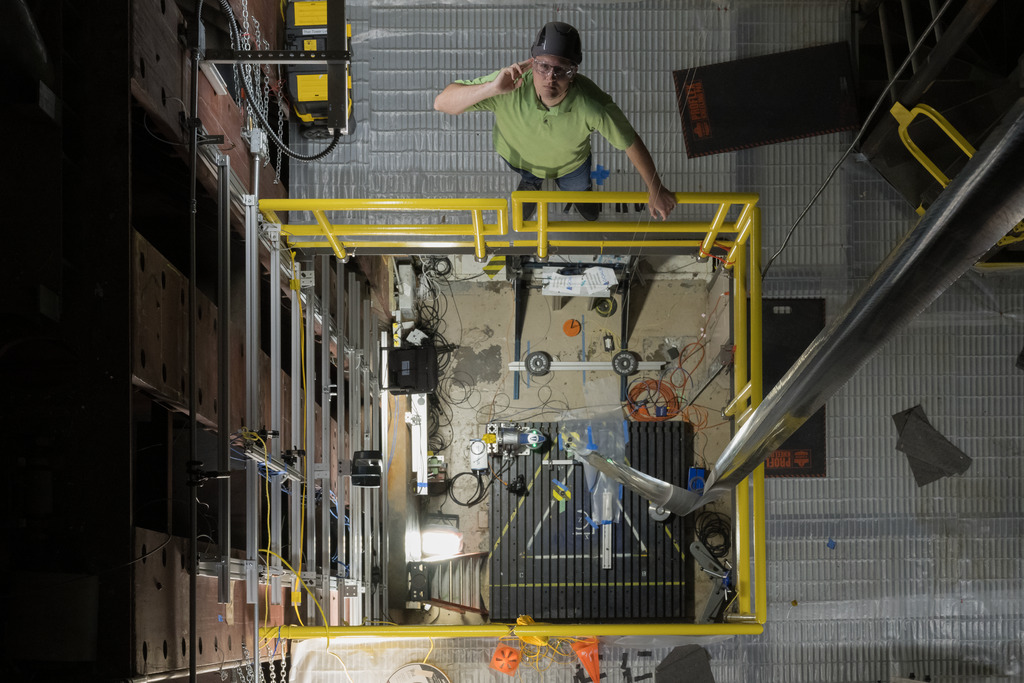
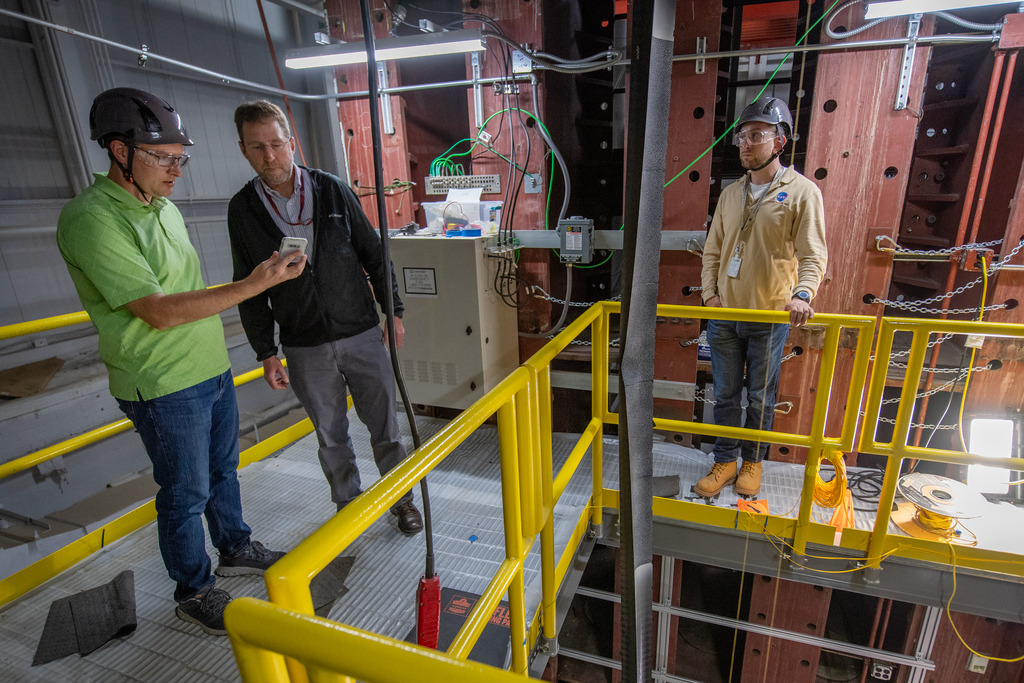
    Researchers at NASA’s Langley Research Center in Hampton, Virginia, have developed a technique to test long, flexible, composite booms for use in space in such a way that gravity helps, rather than hinders, the process. During a recent test campaign inside a 100-foot tower at a NASA Langley lab, researchers suspended a 94-foot triangular, rollable, and collapsible boom manufactured by Florida-based aerospace company, Redwire, and applied different forces to the boom to see how it would respond. 

    Having a facility tall enough to accommodate vertical testing is advantageous because horizontal tests require extra equipment to keep gravity from bending the long booms, but this extra equipment in turn affects how the boom responds. These mechanical tests are important because NASA and commercial space partners could use long composite booms for several functions including deployable solar sails and deployable structures, such as towers for solar panels, that could support humans living and working on the Moon.  

    Redwire will be able to compare the results of the physical testing at NASA Langley to their own numerical models and get a better understanding of their hardware. NASA’s Game Changing Development program in the agency’s Space Technology Mission Directorate funded the tests. 

    Researchers conducted the tests inside a 100-foot tower at NASA Langley. A researcher is visible here looking up at the boom from a platform in the tower.
    Researchers conducted the tests inside a 100-foot tower at NASA Langley.
    NASA/Mark Knopp
  • Eccentric ‘Star’ Defies Easy Explanation, NASA’s Chandra Finds

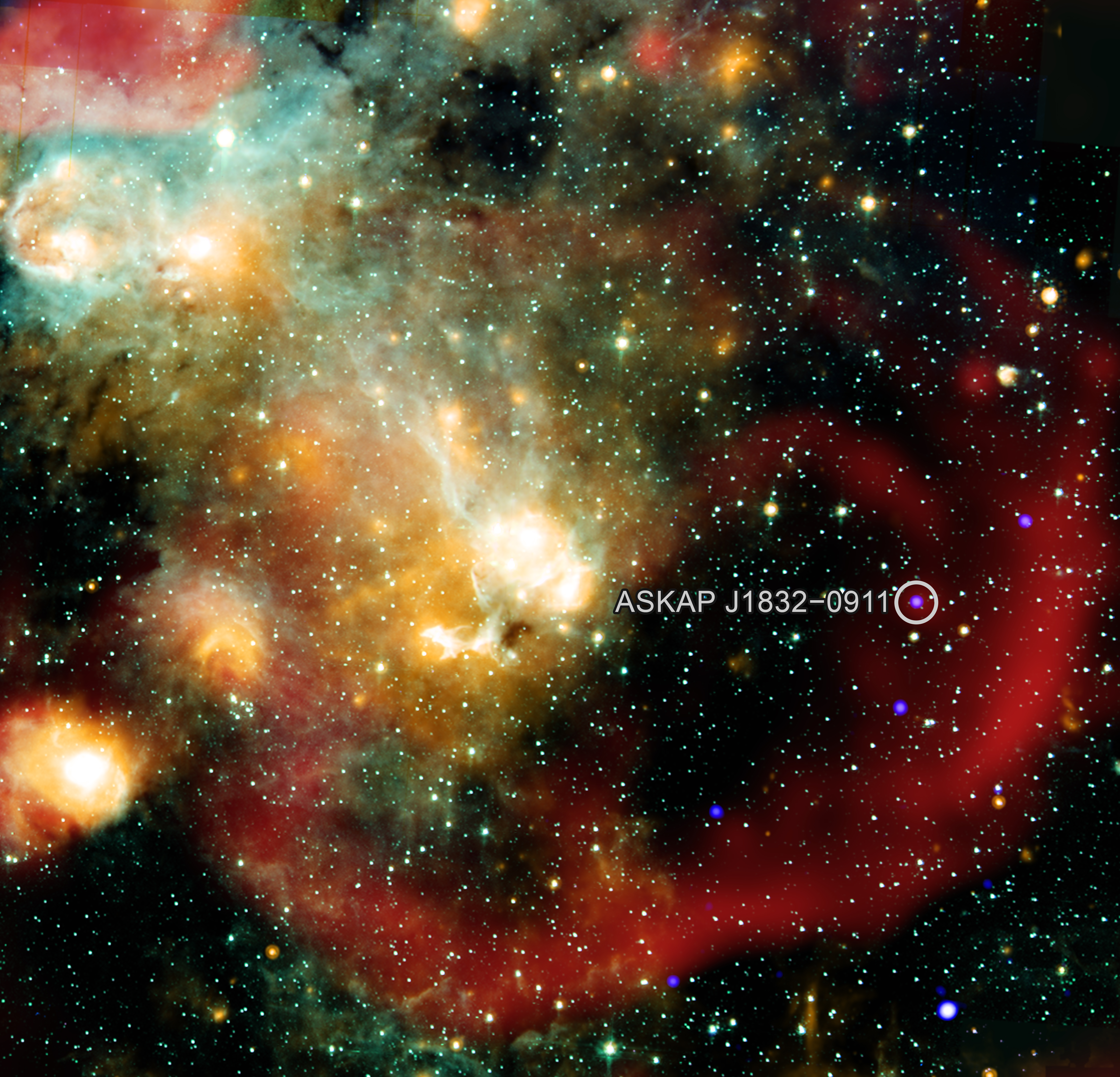
    Scientists have discovered a star behaving like no other seen before, giving new clues about the origin of a class of mysterious objects. This object, known as ASKAP J1832, shows regular changes in both radio wave and X-ray intensity every 44 minutes, the first time such variations have been seen for a class of objects discovered only three years ago. X-rays from Chandra are shown along with infrared data from the Spitzer Space Telescope, and radio from LOFAR. An inset shows a more detailed view of the immediate area around this unusual object in X-ray and radio light.
    X-ray: NASA/CXC/ICRAR, Curtin Univ./Z. Wang et al.; Infrared: NASA/JPL/CalTech/IPAC; Radio: SARAO/MeerKAT; Image processing: NASA/CXC/SAO/N. Wolk

    Scientists have discovered a star behaving like no other seen before, giving fresh clues about the origin of a new class of mysterious objects.

    As described in our press release, a team of astronomers combined data from NASA’s Chandra X-ray Observatory and the SKA [Square Kilometer Array] Pathfinder (ASKAP) radio telescope on Wajarri Country in Australia to study the antics of the discovered object, known as ASKAP J1832−0911 (ASKAP J1832 for short).

    ASKAP J1832 belongs to a class of objects called “long period radio transients” discovered in 2022 that vary in radio wave intensity in a regular way over tens of minutes. This is thousands of times longer than the length of the repeated variations seen in pulsars, which are rapidly spinning neutron stars that have repeated variations multiple times a second. ASKAP J1832 cycles in radio wave intensity every 44 minutes, placing it into this category of long period radio transients.

    Using Chandra, the team discovered that ASKAP J1832 is also regularly varying in X-rays every 44 minutes. This is the first time that such an X-ray signal has been found in a long period radio transient.

    In this composite image, X-rays from Chandra (blue) have been combined with infrared data from NASA’s Spitzer Space Telescope (cyan, light blue, teal and orange), and radio from LOFAR (red). An inset shows a more detailed view of the immediate area around this unusual object in X-ray and radio light.

    Scientists have discovered a star behaving like no other seen before, giving new clues about the origin of a class of mysterious objects. This object, known as ASKAP J1832, shows regular changes in both radio wave and X-ray intensity every 44 minutes, the first time such variations have been seen for a class of objects discovered only three years ago. X-rays from Chandra are shown along with infrared data from the Spitzer Space Telescope, and radio from LOFAR. An inset shows a more detailed view of the immediate area around this unusual object in X-ray and radio light.
    A wide field image of ASKAP J1832 in X-ray, radio, and infrared light.
    X-ray: NASA/CXC/ICRAR, Curtin Univ./Z. Wang et al.; Infrared: NASA/JPL/CalTech/IPAC; Radio: SARAO/MeerKAT; Image processing: NASA/CXC/SAO/N. Wolk

    Using Chandra and the SKA Pathfinder, a team of astronomers found that ASKAP J1832 also dropped off in X-rays and radio waves dramatically over the course of six months. This combination of the 44-minute cycle in X-rays and radio waves in addition to the months-long changes is unlike anything astronomers have seen in the Milky Way galaxy.

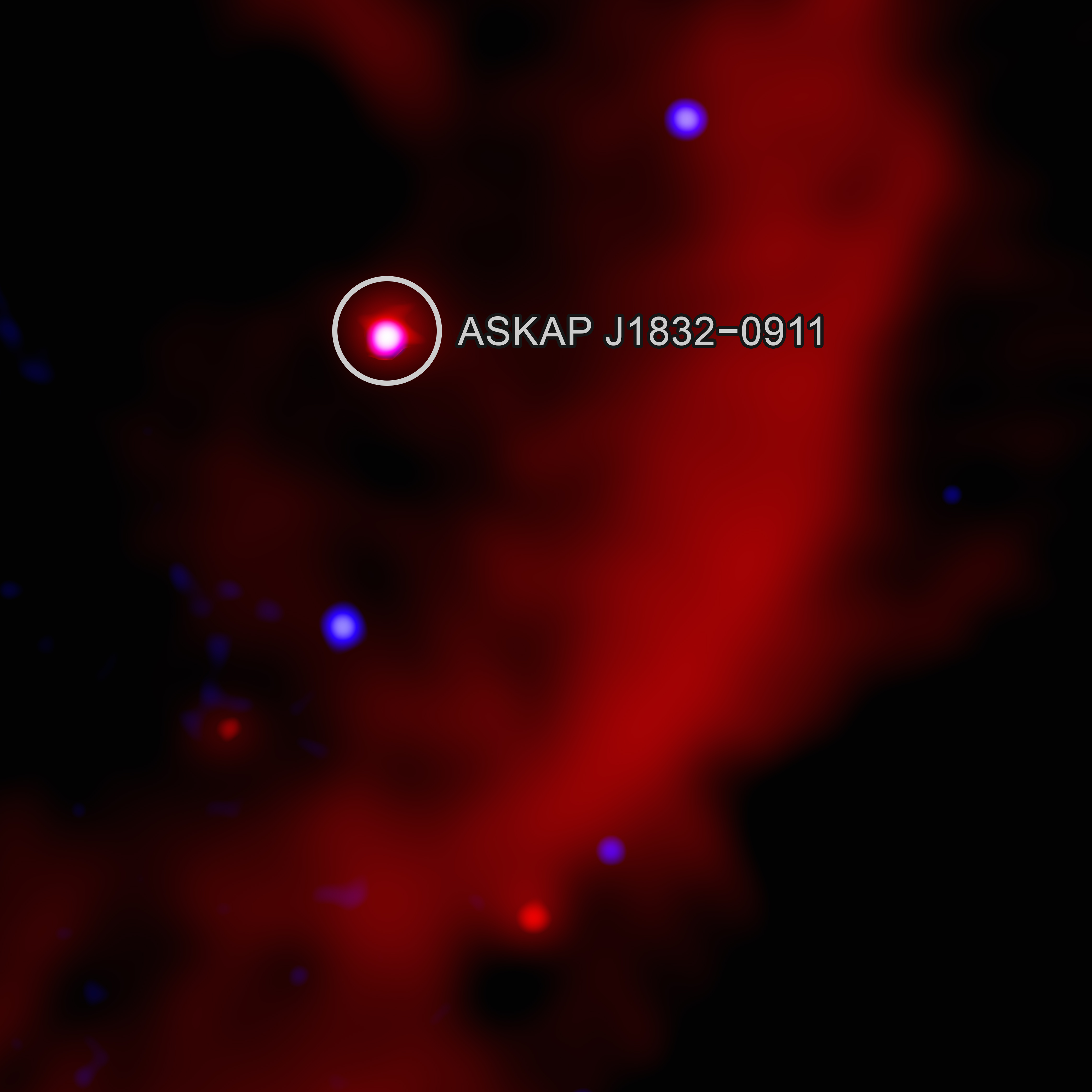
    A close-up image of ASKAP J1832 in X-ray and radio light.
    A close-up image of ASKAP J1832 in X-ray and radio light.
    X-ray: NASA/CXC/ICRAR, Curtin Univ./Z. Wang et al.; Radio: SARAO/MeerKAT; Image processing: NASA/CXC/SAO/N. Wolk

    The research team argues that ASKAP J1832 is unlikely to be a pulsar or a neutron star pulling material from a companion star because its properties do not match the typical intensities of radio and X-ray signals of those objects. Some of ASKAP J1832’s properties could be explained by a neutron star with an extremely strong magnetic field, called a magnetar, with an age of more than half a million years. However, other features of ASKAP J1832 — such as its bright and variable radio emission — are difficult to explain for such a relatively old magnetar.

    On the sky, ASKAP J1832 appears to lie within a supernova remnant, the remains of an exploded star, which often contain a neutron star formed by the supernova. However, the research team determined that the proximity is probably a coincidence and two are not associated with each other, encouraging them to consider the possibility that ASKAP J1832 does not contain a neutron star. They concluded that an isolated white dwarf does not explain the data but that a white dwarf star with a companion star might. However, it would require the strongest magnetic field ever known for a white dwarf in our galaxy.

    A paper by Ziteng Wang (Curtin University in Australia) and collaborators describing these results appears in the journal Nature. Another team led by Di Li from Tsinghua University in China independently discovered this source using the DAocheng Radio Telescope and submitted their paper to the arXiv on the same day as the team led by Dr Wang. They did not report the X-ray behavior described here.

    NASA’s Marshall Space Flight Center in Huntsville, Alabama, manages the Chandra program. The Smithsonian Astrophysical Observatory’s Chandra X-ray Center controls science operations from Cambridge, Massachusetts, and flight operations from Burlington, Massachusetts.

    Learn more about the Chandra X-ray Observatory and its mission here:

    https://www.nasa.gov/chandra

    https://chandra.si.edu

    Visual Description:

    This release features two composite images of a mysterious object, possibly an unusual neutron star or white dwarf, residing near the edge of a supernova remnant. The object, known as ASKAP J1832, has been intriguing astronomers from the Chandra X-ray Observatory and Square Kilometre Array Pathfinder radio telescope with its antics and bizarre behavior.

    Astronomers have discovered that ASKAP J1832 cycles in radio wave intensity every 44 minutes. This is thousands of times longer than pulsars, which are rapidly spinning neutron stars that have repeated variations multiple times a second. Using Chandra, the team discovered that the object is also regularly varying in X-rays every 44 minutes. This is the first time such an X-ray signal has been found in a long period radio transient like ASKAP J1832.

    In the primary composite image of this release, the curious object is shown in the context of the supernova remnant and nearby gas clouds. Radio data is red and and X-ray sources seen with Chandra are in dark blue. The supernova remnant is the large, wispy, red oval ring occupying the lower right of the image. The curious object sits inside this ring, to our right of center; a tiny purple speck in a sea of colorful specks. The gas cloud shows infrared data from NASA’s Spitzer Space Telescope and resembles a mottled green, teal blue, and golden orange cloud occupying our upper left half of the square image.

    The second, close-up image shows a view of the immediate area around ASKAP J1832. In this composite image, infrared data from Spitzer has been removed, eliminating the mottled cloud and most of the colorful background specks. Here, near the inside edge of the hazy red ring, the curious object resembles a bright white dot with a hot pink outer edge, set against the blackness of space. Upon close inspection, the hot pink outer edge is revealed to have three faint spikes emanating from the surface.

    The primary and close-up images are presented both unadorned, and with labels, including fine white circles identifying ASKAP J1832.

    News Media Contact

    Megan Watzke
    Chandra X-ray Center
    Cambridge, Mass.
    617-496-7998
    mwatzke@cfa.harvard.edu

    Lane Figueroa
    Marshall Space Flight Center, Huntsville, Alabama
    256-544-0034
    lane.e.figueroa@nasa.gov
  • How Do We Do Research in Zero Gravity? We Asked a NASA Expert: Episode 62

    3 min read

    Preparations for Next Moonwalk Simulations Underway (and Underwater)

    How do we do research in zero gravity?

    Actually when astronauts do experiments on the International Space Station, for instance, to environment on organisms, that environment is actually technically called microgravity. That is, things feel weightless, but we’re still under the influence of Earth’s gravity.

    Now, the very microgravity that we’re trying to study up there can make experiments actually really kind of difficult for a bunch of different reasons.

    First of all, stuff floats. So losing things in the ISS is a very real possibility. For example,

    there was a set of tomatoes that was harvested in 2022 put it in a bag and it floated away and we couldn’t find it for eight months.

    So to prevent this kind of thing from happening, we use a lot of different methods, such as using enclosed experiment spaces like glove boxes and glove bags. We use a lot of Velcro to stick stuff to.

    Another issue is bubbles in liquids. So, on Earth, bubbles float up, in space they don’t float up, they’ll interfere with optical measurements or stop up your microfluidics. So space experiment equipment often includes contraptions for stopping or blocking or trapping bubbles.

    A third issue is convection. So on Earth, gravity drives a process of gas mixing called convection and that helps circulate air. But without that in microgravity we worry about some of our experimental organisms and whether they’re going to get the fresh air that they need. So we might do things like adding a fan to their habitat, or if we can’t, we’ll take their habitat and put it somewhere where there might already be a fan on the ISS or in a corridor where we think they are going to be a lot of astronauts moving around and circulating the air.

    Yet another issue is the fact that a lot of the laboratory instruments we use on Earth are not designed for microgravity. So to ensure that gravity doesn’t play a factor in how they work, we might do experiments on the ground where we turn them on their side or upside down, or rotate them on a rotisserie to make sure that they keep working.

    So, as you can tell, for every experiment that we do on the International Space Station, there’s a whole team of scientists on the ground that has spent years developing the experiment design. And so I guess the answer to how we do research in microgravity is with a lot of practice and preparation.

    [END VIDEO TRANSCRIPT]

    Full Episode List

    Full YouTube Playlist

  • Summer Students Scan the Radio Skies with SunRISE

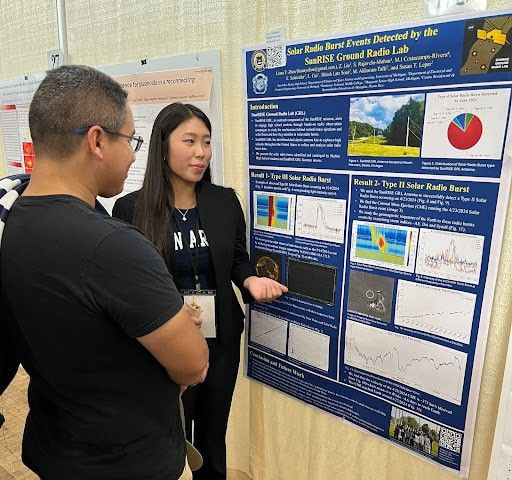
    L. Y. Zhou, a senior at Skyline High School, Ann Arbor, MI, representing the SunRISE Ground Radio Lab (GRL) summer research project team at the Solar Heliospheric and INterplanetary Environment (SHINE) conference, held in Juneau, AK in August 2024. Other contributing high school students were S. Rajavelu-Mohan (Washtenaw Technical Middle College, Ann Arbor, MI), M. I. Costacamps-Rivera (Centro Residencial de Oportunidades Educativas de Mayagüez, Mayagüez, PR), E. Schneider (Marquette Senior High School, Marquette, MI), and L. Cui (Skyline High School, Ann Arbor, MI).

    Solar radio bursts, intense blasts of radio emission associated with solar flares, can wreak havoc on global navigation systems. Now, as part of the Ground Radio Lab campaign led by the University of Michigan and NASA’s SunRISE (Sun Radio Interferometer Space Experiment) mission, which is managed by the agency’s Jet Propulsion Laboratory in Southern California, high school and college students across the nation are collecting, processing, and analyzing space weather data to help better understand these bursts. 

    Participating students have presented their findings at local science fairs and national conferences, including the Solar Heliospheric and INterplanetary Environment (SHINE) conference held in Juneau, Alaska in August 2024. These students sifted through thousands of hours of observations to identify and categorize solar radio bursts.  

    Your school can get involved too! 

    Participating high schools receive free, self-paced online training modules sponsored by the SunRISE mission that cover a range of topics, including radio astronomy, space physics, and science data collection and analysis. Students and teachers participate in monthly webinars with space science and astronomy experts, build radio telescopes from kits, and then use these telescopes to observe low frequency emissions from the Sun and other objects like Jupiter and the Milky Way. 

    Visit the Ground Radio Lab website to learn more about the new campaign and apply to participate.

    Details

    Last Updated

    May 28, 2025

  • NASA Helps with Progress on Vast’s Haven-1 Commercial Space Station

    2 min read

    Preparations for Next Moonwalk Simulations Underway (and Underwater)

    A digital rendering of the NASA-supported commercial space station, Vast’s Haven-1, which will provide a microgravity environment for crew, research, and in-space manufacturing.
    Vast

    NASA-supported commercial space station, Vast’s Haven-1, recently completed a test of a critical air filter system for keeping future astronauts healthy in orbit. Testing confirmed the system can maintain a safe and healthy atmosphere for all planned Haven-1 mission phases.

    Testing of the trace contaminant control system was completed at NASA’s Marshall Space Flight Center in Huntsville, Alabama, as part of a reimbursable Space Act Agreement. Vast also holds an unfunded Space Act Agreement with NASA as part of the second Collaborations for Commercial Space Capabilities initiative.

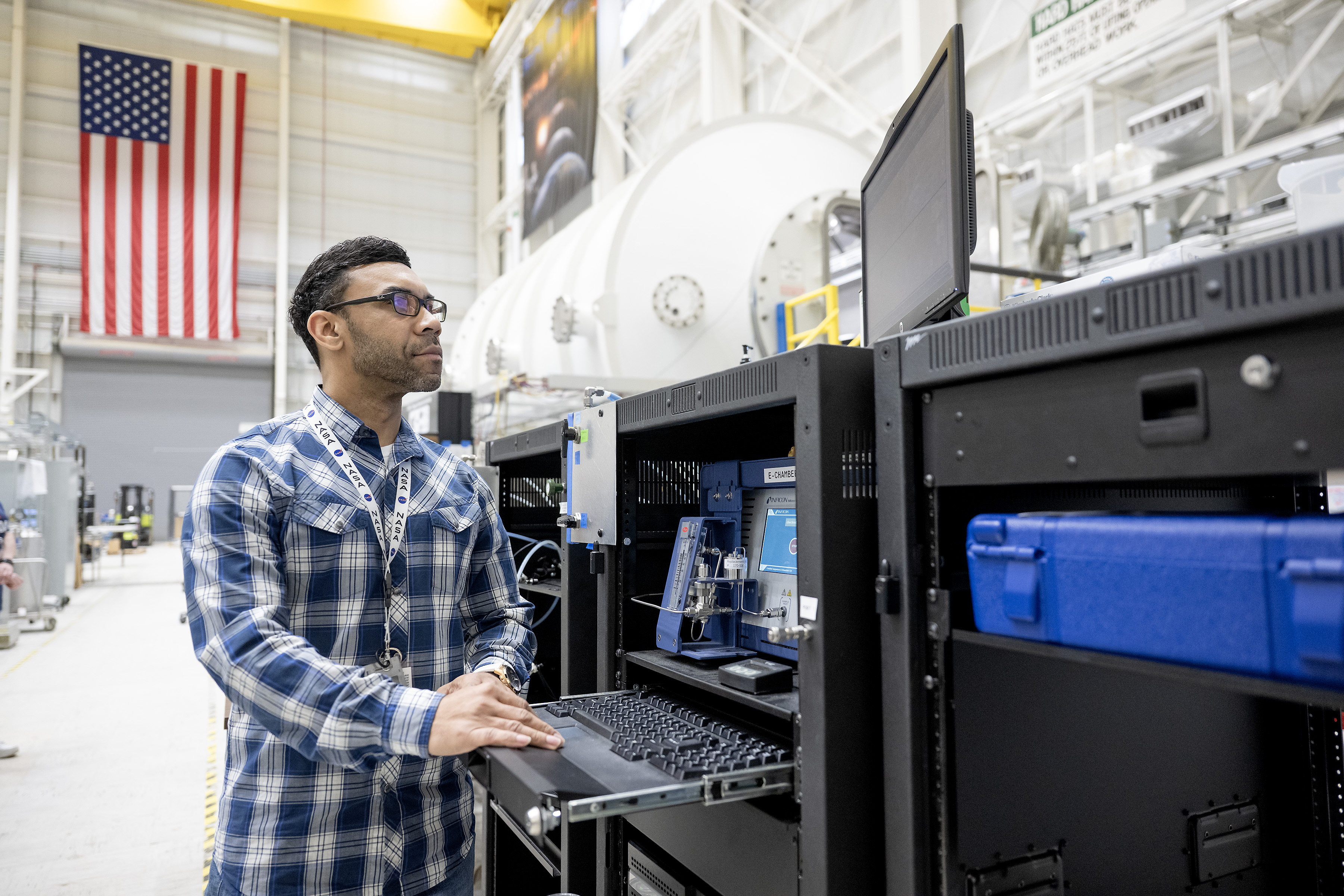
    Adrian Johnson, air chemist at NASA’s Marshall Space Flight Center in Huntsville, Alabama, operates the Micro-GC, which is used to measure carbon monoxide levels, during a trace contaminant control system test in the environmental chamber.
    NASA

    The subsystem of the environmental control and life support system is comprised of various filters designed to scrub hazardous chemicals produced by both humans and materials on the commercial station. During the test, a representative chemical environment was injected into a sealed environmental chamber, and the filtration system was turned on to verify the trace contaminant control system could maintain a healthy atmosphere.

    “Testing of environmental control systems and subsystems is critical to ensure the health and safety of future commercial space station crews,” said Angela Hart, program manager for NASA’s Commercial Low Earth Orbit Development Program at the agency’s Johnson Space Center in Houston. “Through NASA’s agreements with Vast and our other industry partners, the agency is contributing technical expertise, technologies, services, and facilities to support companies in the development of commercial stations while providing NASA important insight into the development and readiness to support future agency needs and services in low Earth orbit.”

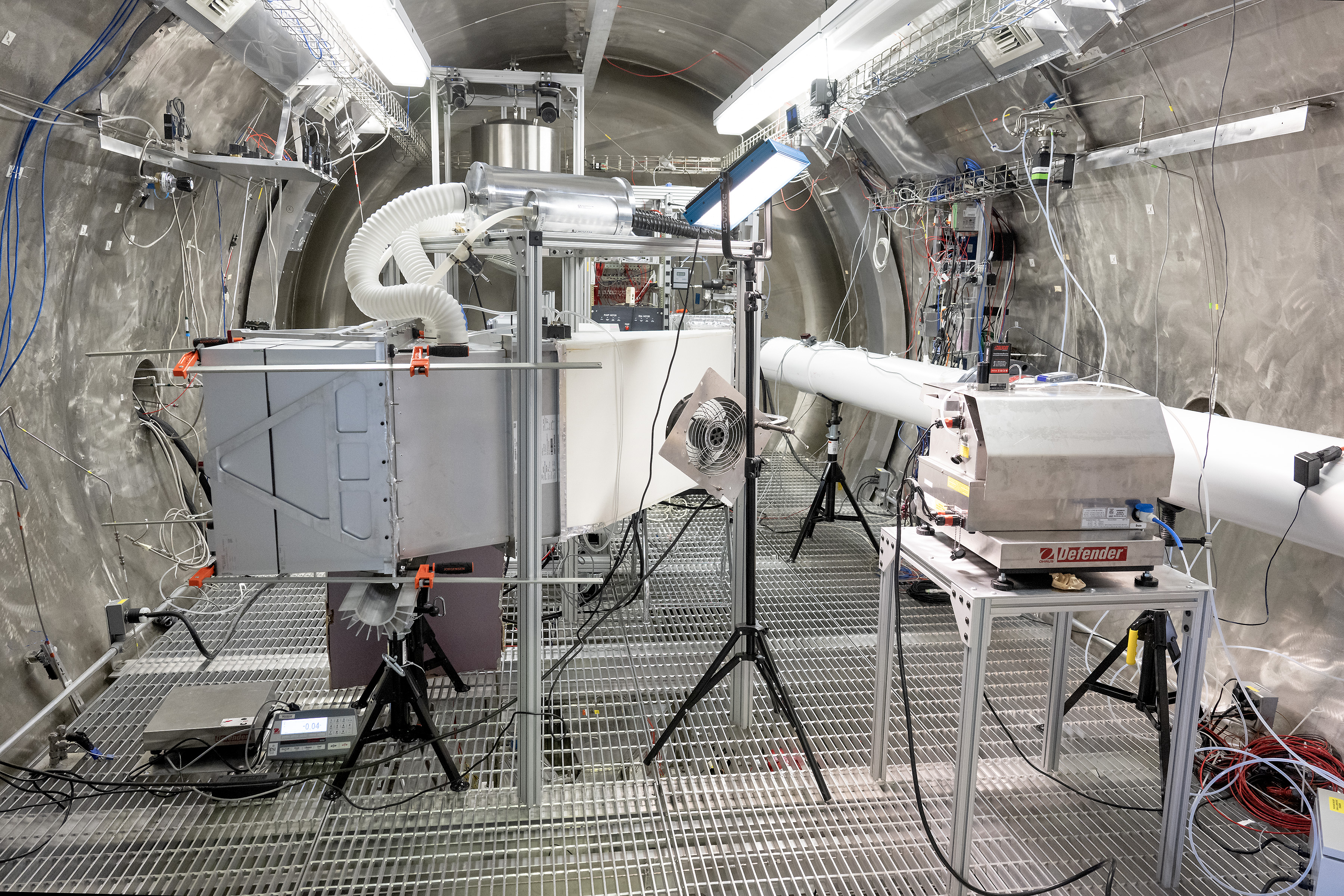
    NASA-supported commercial space station, Vast’s Haven-1, trace contaminant control filters and support hardware pictured within the environmental chamber at the agency’s Marshall Space Flight Center, Huntsville, Alabama.
    NASA

    Experts used the same environmental chamber at Marshall to test the International Space Station environmental control and life support system.

    The knowledge and data gained during the recent testing will help validate Vast’s Haven-1 and support future Haven-2 development.

    NASA supports the design and development of multiple commercial space stations through funded and unfunded agreements. NASA plans to procure services from one or more companies following the design and development phase as part of the agency’s strategy to become one of many customers for low Earth orbit stations.

    For more information about commercial space stations, visit:

    www.nasa.gov/commercialspacestations

  • NASA Interns Conduct Aerospace Research in Microgravity

    3 min read

    NASA Interns Conduct Aerospace Research in Microgravity

    The NASA Science Activation program’s STEM (Science, Technology, Engineering, and Mathematics) Enhancement in Earth Science (SEES) Summer Intern Program, hosted by the University of Texas Center for Space Research, continues to expand opportunities for high school students to engage in authentic spaceflight research. As part of the SEES Microgravity Research initiative, four interns were selected to fly with their experiments in microgravity aboard the ZERO-G parabolic aircraft. The students had 11 minutes of weightlessness over 30 parabolas in which to conduct their experiments.

    This immersive experience was made possible through a collaboration between SEES, Space for Teachers, the Wisconsin Space Grant Consortium, and the International Space Station National Laboratory (CASIS). Together, these partners provide students with access to industry-aligned training and direct experience in aerospace experiment design, testing, and integration.

    Congratulations to the 2025 SEES Microgravity Research Team:

    • Charlee Chandler, 11th grade, Rehobeth High School (Dothan, AL): Galvanic Vestibular Stimulation (GVS) and Vestibular-Ocular Reflex (VOR) in Microgravity
    • Aya Elamrani-Zerifi, 11th grade, Hereford High School (Parkton, MD): Thermocapillary-Induced Bubble Dynamics
    • Lily Myers, 12th grade, Eastlake High School (Sammamish, WA): Propellant Slosh Damping Using Polyurethane Foam
    • Nathan Scalf 11th grade, Lexington Christian Academy (Lexington, KY): Wound Irrigation System for Microgravity

    Selected from nearly 100 proposals submitted by 2024 SEES interns, these four students spent months preparing for flight through weekly technical mentorship and structured milestones. Their training included proposal development, design reviews, safety assessments, hardware testing, and a full payload integration process, working through engineering protocols aligned with industry and mission standards.

    In addition to their individual experiments, the students also supported the flight of 12 team-designed experiments integrated into the ZQube platform, a compact research carrier co-developed by Twiggs Space Lab, Space for Teachers, and NASA SEES. The ZQube enables over 150 SEES interns from across the country to contribute to microgravity investigations. Each autonomous experiment includes onboard sensors, cameras, and transparent test chambers, returning valuable video and sensor data for post-flight analysis.

    This microgravity research opportunity supports the broader SEES mission to prepare students for careers in aerospace, spaceflight engineering, and scientific research. Through direct engagement with NASA scientists, academic mentors, and commercial aerospace experts, students gain real-world insight into systems engineering and the technical disciplines needed in today’s space industry.

    The SEES summer intern program is a nationally competitive STEM experience for 10th-11th grade high school students. Interns learn how to interpret NASA satellite data while working with scientists and engineers in their chosen area of work, including astronomy, remote sensing, and space geodetic techniques to help understand Earth systems, natural hazards, and climate. It is supported by NASA under cooperative agreement award number NNH15ZDA004C and is part of NASA’s Science Activation Portfolio. Learn more about how Science Activation connects NASA science experts, real content, and experiences with community leaders to do science in ways that activate minds and promote deeper understanding of our world and beyond: https://science.nasa.gov/learn/about-science-activation/

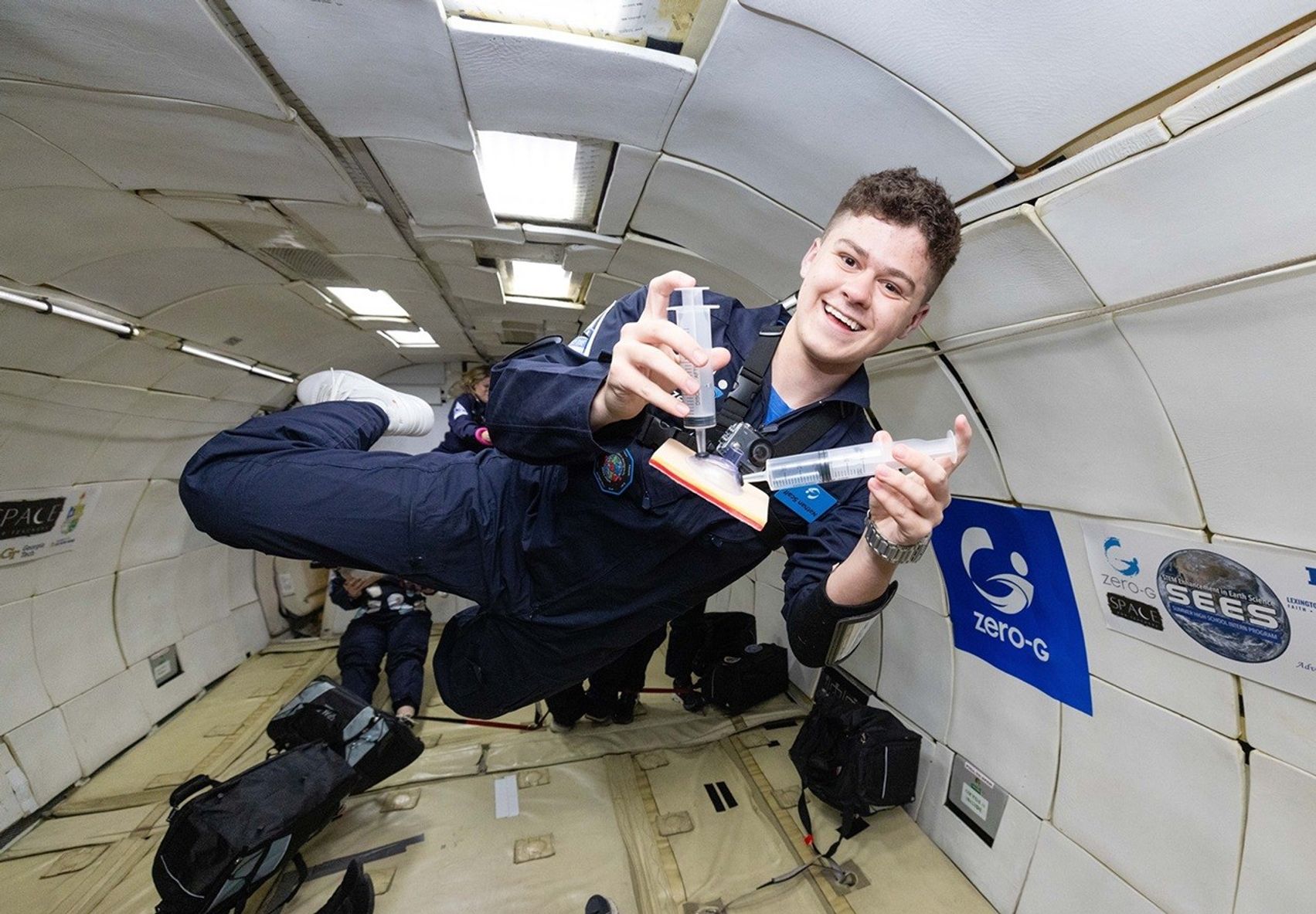
    A young man in a navy blue flight suit floats inside a microgravity simulation aircraft, smiling as he demonstrates a Wound Irrigation System using two syringes and a small device. The padded interior of the aircraft is visible behind him, along with logos for Zero-G and NASA SEES on the wall. He appears weightless, mid-air, during a parabolic flight aboard the ZERO-G G-FORCE ONE®.
    Nathan Scalf, one of four NASA SEES interns, from Lexington KY, tests his Wound Irrigation System for Microgravity experiment aboard the ZERO-G G-FORCE ONE® in May 2025.
    Steve Boxall, ZERO-G
  • Sols 4549-4552: Keeping Busy Over the Long Weekend

    4 min read

    Sols 4549-4552: Keeping Busy Over the Long Weekend

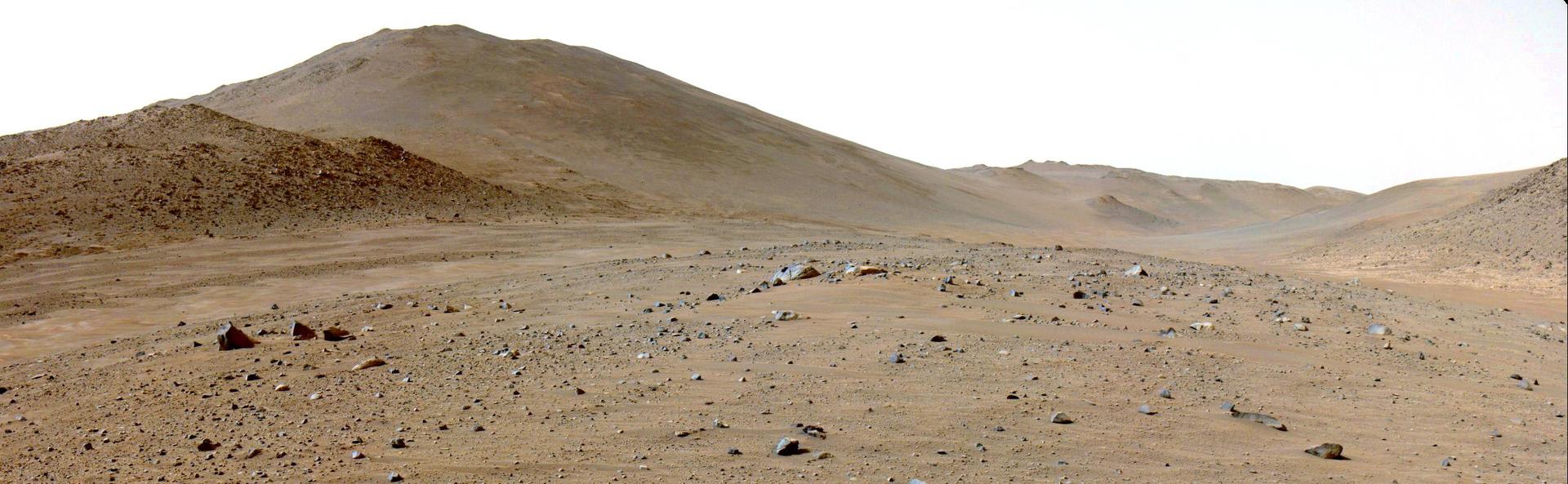
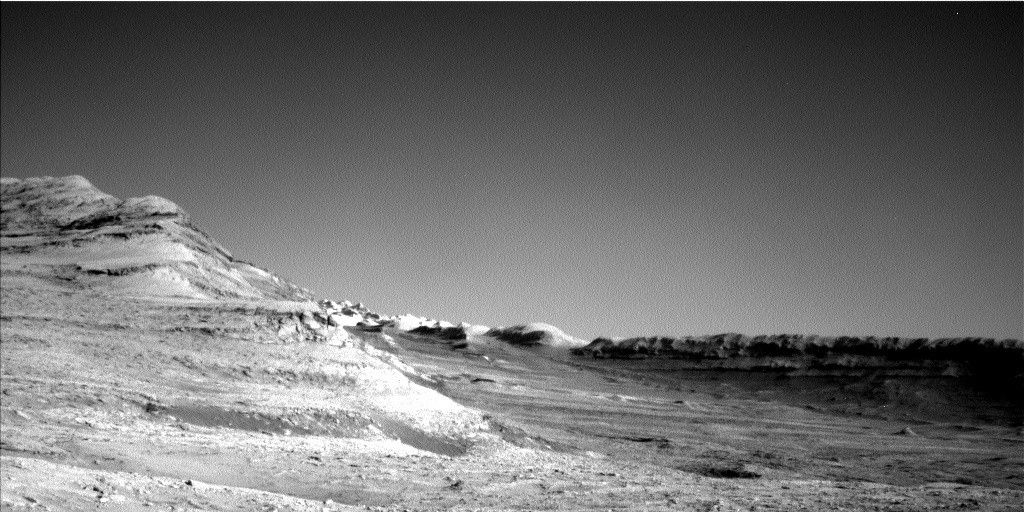
    A grayscale photo from the surface of Mars shows rocky, medium gray terrain. On the left a lighter gray, layered hill rises gently toward the upper left edge of the image. At right the horizon line is a jagged, horizontal line of darker materials, extending to the middle of the right edge of the image. The sky above is featureless but mostly bright, from light gray at the horizon and growing darker toward the top of the frame.
    NASA’s Mars rover Curiosity acquired this image using its Left Navigation Camera on May 23, 2025 — Sol 4548, or Martian day 4,548 of the Mars Science Laboratory mission — at 07:17:19 UTC.
    NASA/JPL-Caltech

    Written by Conor Hayes, Graduate Student at York University

    Earth planning date: Friday, May 23, 2025

    In Wednesday’s mission update, Alex mentioned that this past Monday’s plan included a “marathon” drive of 45 meters (148 feet). Today, we found ourselves almost 70 meters (230 feet) from where we were on Wednesday. This was our longest drive since the truly enormous 97-meter (318-foot) drive back on sol 3744

    Today’s plan looks a little different from our usual weekend plans. Because of the U.S. Memorial Day holiday on Monday, the team will next assemble on Tuesday, so an extra sol had to be appended to the weekend plan. This extra sol is mostly being used for our next drive (about 42 meters or 138 feet), which means that all of the science that we have planned today can be done “targeted,” i.e., we know exactly where the rover is. As a result, we can use the instruments on our arm to poke at specific targets close to the rover, rather than filling our science time exclusively with remote sensing activities of farther-away features. 

    The rover’s power needs are continuing to dominate planning. Although we passed aphelion (the farthest distance Mars is from the Sun) a bit over a month ago and so are now getting closer to the Sun, we’re just about a week away from winter solstice in the southern hemisphere. This is the time of year when Gale Crater receives the least amount of light from the Sun, leading to particularly cold temperatures even during the day, and thus more power being needed to keep the rover and its instruments warm. On the bright side, being at the coldest time of the year means that we have only warmer sols to look forward to!

    Given the need to keep strictly to our allotted power budget, everyone did a phenomenal job finding optimizations to ensure that we could fit as much science into this plan as possible. All together, we have over four hours of our usual targeted and remote sensing activities, as well as over 12 hours of overnight APXS integrations.

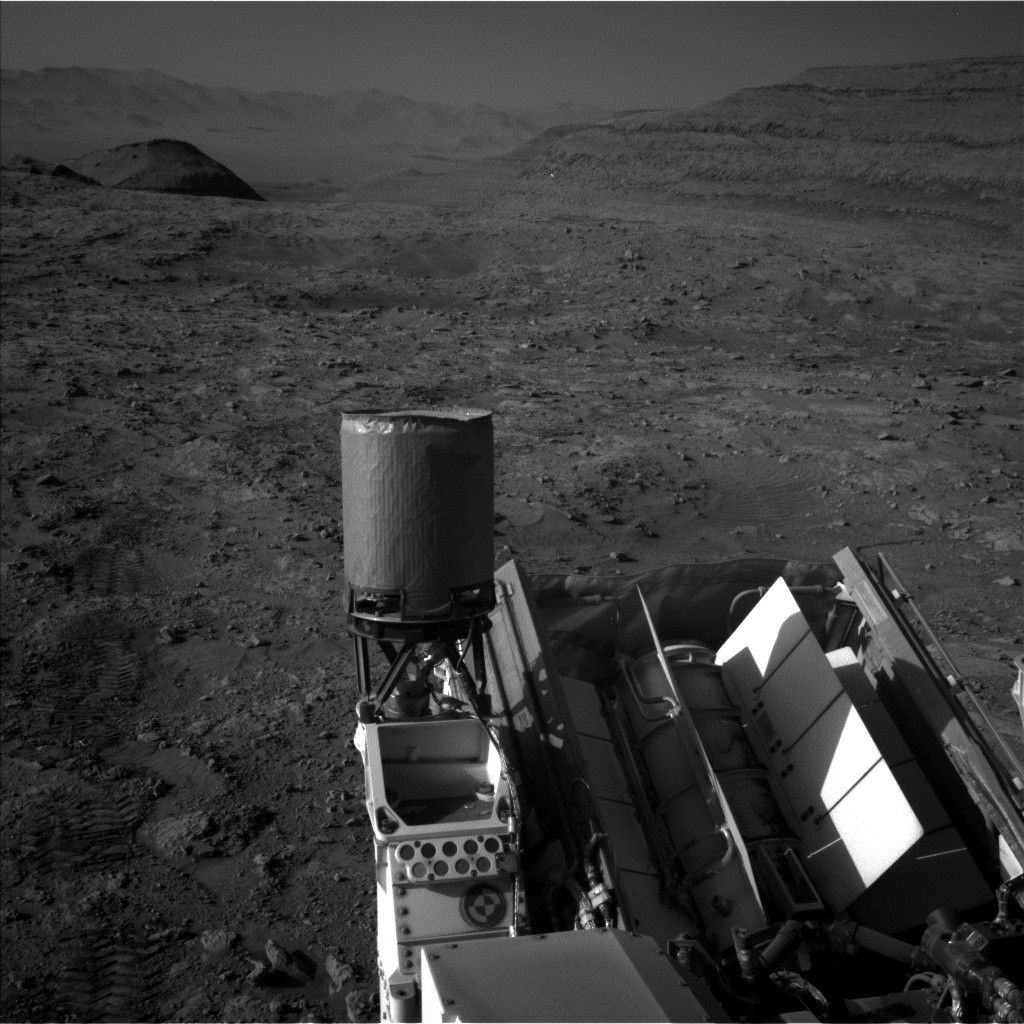
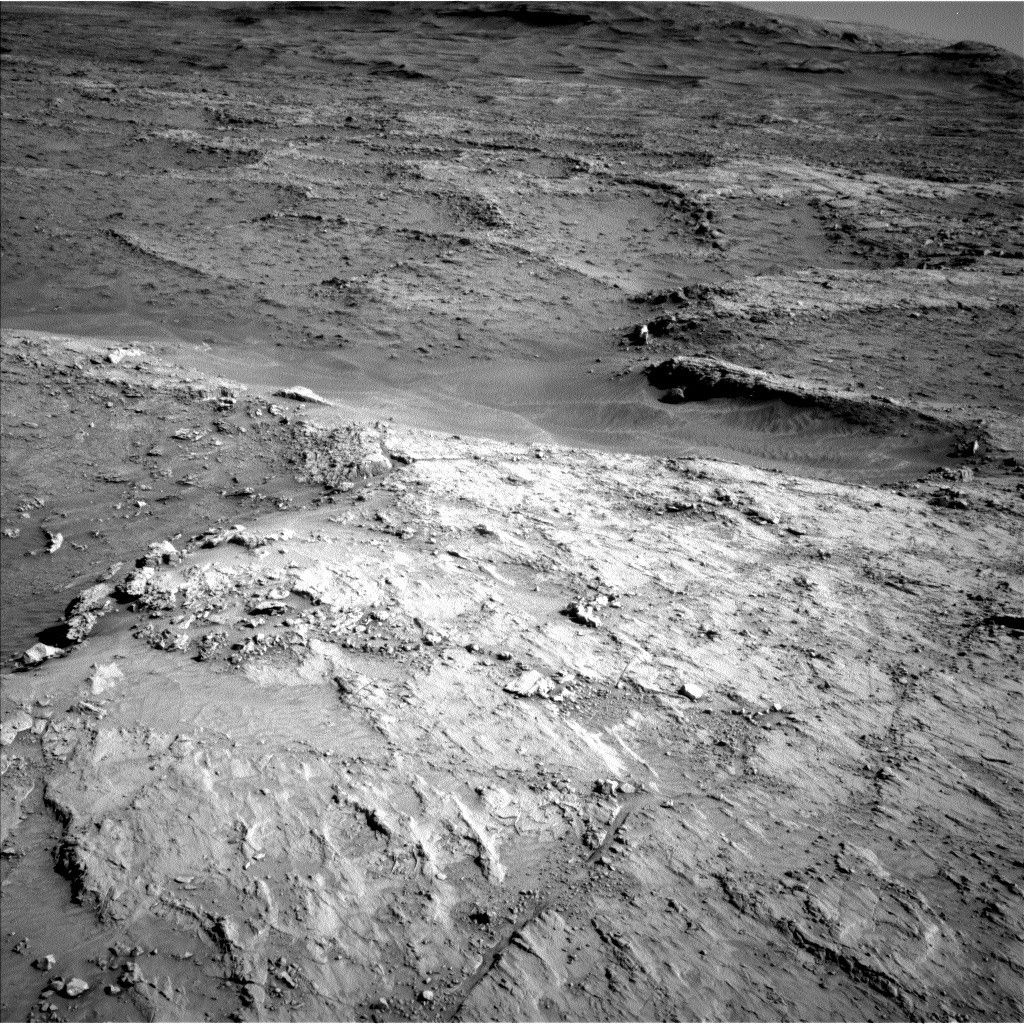
    Mastcam is spending much of its time today looking off in the distance, particularly focusing on the potential boxwork structures that we’re driving towards. These structures get two dedicated mosaics, totaling 42 images between the two of them. Mastcam will also observe “Mishe Mokwa” (a small butte about 15 meters, or 49 feet, to our south) and some bedrock troughs in our workspace, and will take two tau observations to characterize the amount of dust in the atmosphere.

    ChemCam has just one solo imaging-only observation in this plan: an RMI mosaic of Texoli butte off to our east. ChemCam will be collaborating with APXS to take some passive spectral observations (i.e., no LIBS) to measure the composition of the atmosphere. Mastcam and ChemCam will also be working together on observations of LIBS activities. This plan includes an extravagant three LIBS, on “Orocopia Mountains,” “Dripping Springs,” and “Mountain Center.” Both Mastcam and ChemCam also have a set of “dark” observations intended to characterize the performance of the instruments with no light on their sensors, something that’s very important for properly calibrating their measurements.

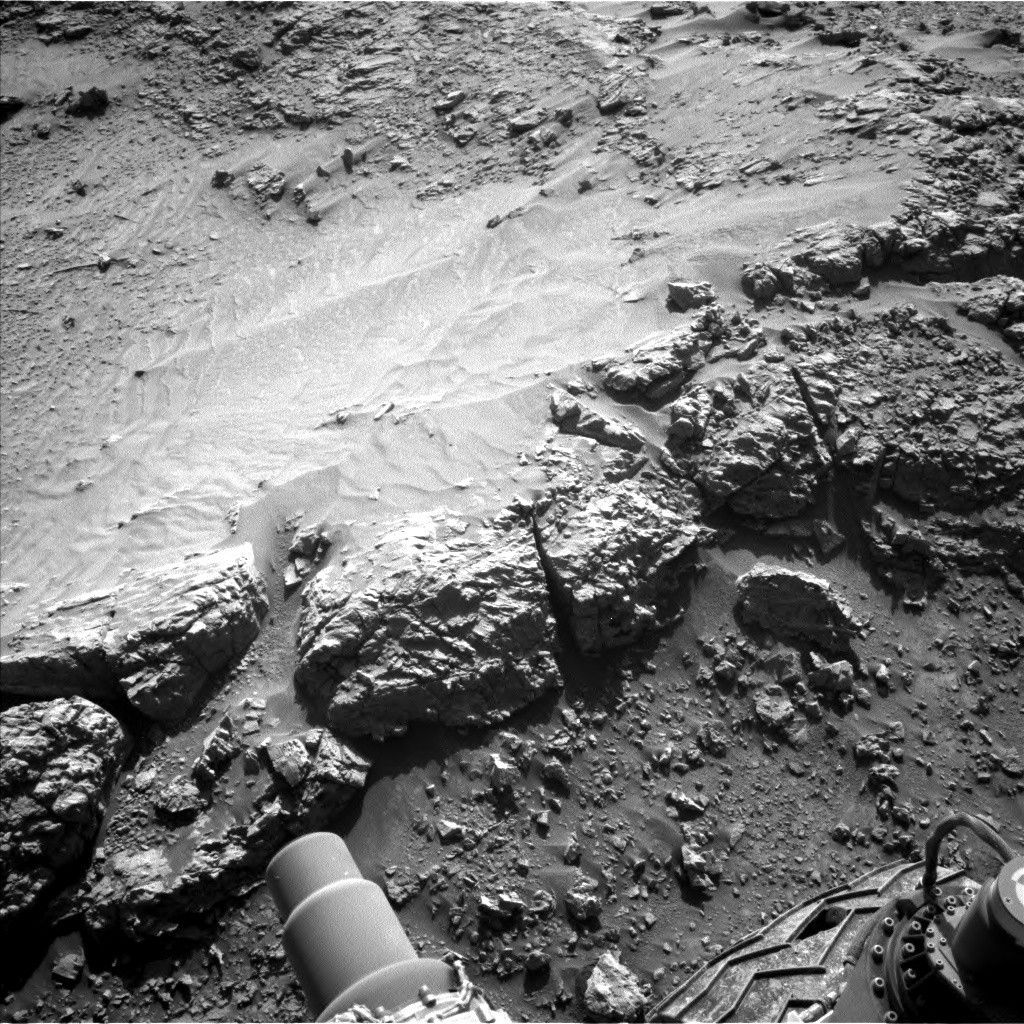
    Our single set of arm activities includes APXS, DRT, and MAHLI activities on “Camino Del Mar” and “Mount Baden-Powell,” both of which are bedrock targets in our workspace.

    Of course, I can’t forget to mention the collection of Navcam observations that we have in this plan to monitor the environment. These include a 360-degree survey looking for dust devils, two line-of-sight activities to measure the amount of dust in the air within Gale, and three cloud movies. As always, we’ve also got a typical collection of REMS, RAD, and DAN activities throughout.

    Details

    Last Updated

    May 27, 2025

    Related Terms

  • Autonomous Tritium Micropowered Sensors

    3 min read

    Preparations for Next Moonwalk Simulations Underway (and Underwater)

    Autonomous Tritium Micropowered Sensors concept in space
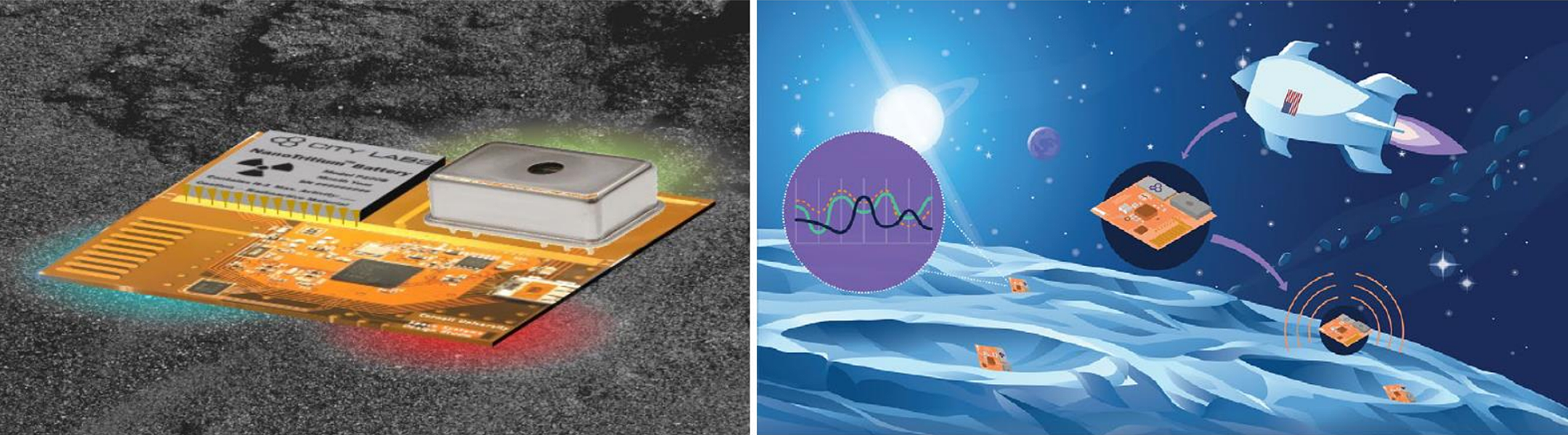
    Artist concept highlighting the novel approach proposed by the 2025 NIAC awarded selection of Autonomous Tritium Micropowered Sensors concept.
    NASA/Peter Cabauy

    Peter Cabauy
    City Labs, Inc.

    The NIAC Phase I study confirmed the feasibility of nuclear-micropowered probes (NMPs) using tritium betavoltaic power technology for autonomous exploration of the Moon’s permanently shadowed regions (PSRs). This work advanced the technology’s readiness level (TRL) from TRL 1 to TRL 2, validating theoretical models and feasibility assessments. Phase II will refine the technology, address challenges, and elevate the TRL to 3, with a roadmap for further maturation toward TRL 4 and beyond, supporting NASA’s mission for lunar and planetary exploration. A key innovation is tritium betavoltaic power sources, providing long-duration energy in extreme environments. The proposed 5cm x 5cm gram-scale device supports lunar spectroscopy and other applications. In-situ analyses at the Moon’s south pole are challenging due to cold, limited solar power, and prolonged darkness. Tritium betavoltaics harvest energy from radioactive decay, enabling autonomous sensing in environments unsuitable for conventional photovoltaics and chemical-based batteries.

    The proposal focuses on designing an ultrathin light weight tritium betavoltaic into an NMP for integrating various scientific instruments. Tritium-powered NMPs support diverse applications, from planetary science to scouting missions for human exploration. This approach enables large-scale deployment for high-resolution remote sensing. For instance, a distributed NMP array could map lunar water resources, aiding Artemis missions. Beyond the Moon, tritium-powered platforms enable a class of missions to Mars, Europa, Enceladus, and asteroids, where alternative power sources are impractical.

    Phase II objectives focus on improving energy conversion efficiency and resilience of tritium betavoltaic power sources, targeting 1-10 μW continuous electrical power with higher thermal output. The project will optimize NMP integration with sensor platforms, enhancing power management, data transmission, and environmental survivability in PSR conditions. Environmental testing will assess survivability under lunar landing conditions, including decelerations of 27,000-270,000g and interactions with lunar regolith. The goal is to advance TRL from 2 to 3 by demonstrating proof-of-concept prototypes and preparing for TRL 4. Pathways for NASA mission integration will be explored, assessing scalability, applicability, and cost-effectiveness compared to alternative technologies.

    A key discovery in Phase I was the thermal-survivability benefit of the betavoltaic’s tritium metal hydride, which generates enough heat to keep electronic components operational. This dual functionality–as both a power source and thermal stabilizer–allows NMP components to function within temperature specifications, a breakthrough for autonomous sensing in extreme environments. Beyond lunar applications, this technology could revolutionize planetary science, deep-space exploration, and terrestrial use cases. It could aid Mars missions, where dust storms and long nights challenge solar power, and Europa landers, which need persistent low-power operation. Earth-based applications such as biomedical implants and environmental monitoring could benefit from the proposed advancements in betavoltaic energy storage and micro-scale sensors. The Phase II study supports NASA’s Artemis objectives by enabling sustainable lunar exploration through enhanced resource characterization and autonomous monitoring. Tritium-powered sensing has strategic value for PSR scouting, planetary-surface mapping, and deep-space monitoring. By positioning tritium betavoltaic NMPs as a power solution for extreme environments, this study lays the foundation for transitioning the technology from concept to implementation, advancing space exploration and scientific discovery.

    2025 Selections

    Details

    Last Updated

    May 27, 2025

    Editor
    Loura Hall

  • Addressing Key Challenges To Mapping Sub-cm Orbital Debris in LEO via Plasma Soliton Detection

    3 min read

    Preparations for Next Moonwalk Simulations Underway (and Underwater)

    Artist rendition of novel concept for Plasma solutions
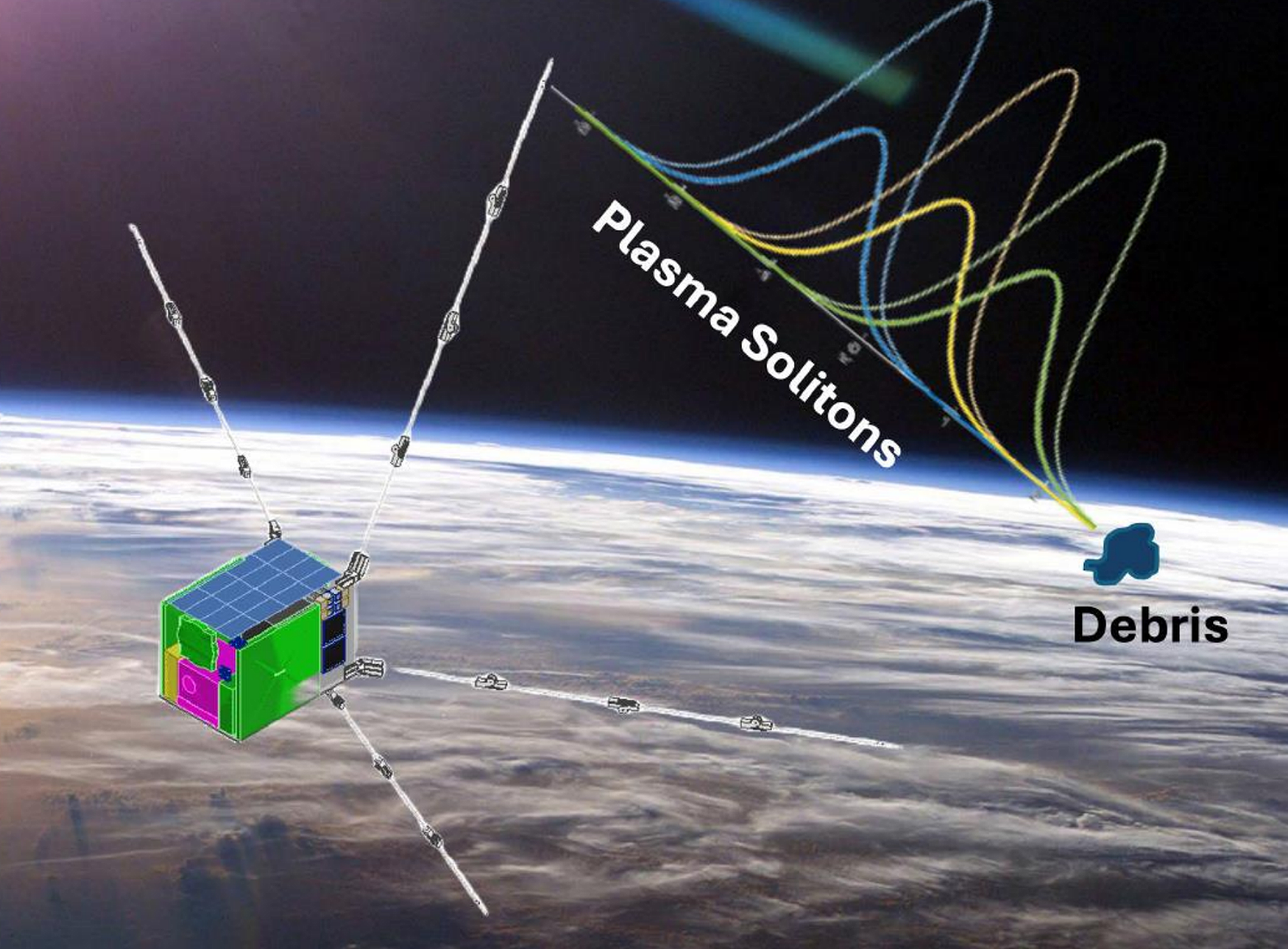
    Artist concept highlighting the novel approach proposed by the 2025 NIAC awarded selection of the Mapping Sub-cm Orbital Debris in LEO concept.
    NASA/Christine Hartzell

    Christine Hartzell
    University of Maryland, College Park

    The proposed investigation will address key technological challenges associated with a previously funded NIAC Phase I award titled “On-Orbit, Collision-Free Mapping of Small Orbital Debris”. Sub-cm orbital debris in LEO is not detectable or trackable using conventional technologies and poses a major hazard to crewed and un-crewed spacecraft. Orbital debris is a concern to NASA, as well as commercial and DoD satellite providers. In recent years, beginning with our NIAC Phase I award, we have been developing the idea that the sub-cm orbital debris environment may be monitored by detecting the plasma signature of the debris, rather than optical or radar observations of the debris itself. Our prior work has shown that sub-cm orbital debris may produce plasma solitons, which are a type of wave in the ionosphere plasma that do not disperse as readily as traditional waves. Debris may produce solitons that are co-located with the debris (called pinned solitons) or that travel ahead of the debris (called precursor solitons). We have developed computational models to predict the characteristics of the plasma solitons generated by a given piece of debris. These solitons may be detectable by 12U smallsats outfitted with multi-needle Langmuir probes.

    In this Phase II NIAC award, we will address two key technical challenges that significantly effect the value of soliton-based debris detection: 1. Develop an algorithm to constrain debris size and speed based on observed soliton characteristics. Our prior investigations have produced predictions of soliton characteristics as a function of debris characteristics. However, the inverse problem is not analytically solvable. We will develop machine learning algorithms to address this challenge. 2. Evaluate the feasibility and value of detecting soliton velocity. Multiple observations of the same soliton may allow us to constrain the distance that the soliton has traveled from the debris. When combined with the other characteristics of the soliton and knowledge of the local plasma environment, back propagation of the soliton in plasma simulations may allow us to extract the position and velocity vectors of the debris. If it is possible to determine debris size, position and velocity from soliton observations, this would provide a breakthrough in space situational awareness for debris that is currently undetectable using conventional technology. However, even if only debris size and speed can be inferred from soliton detections, this technology is still a revolutionary improvement on existing methods of characterizing the debris flux, which provide data only on a multi-year cadence. This proposed investigation will answer key technological questions about how much information can be extracted from observed soliton signals and trade mission architectures for complexity and returned data value. Additionally, we will develop a roadmap to continue to advance this technology.

    2025 Selections

    Details

    Last Updated

    May 27, 2025

    Editor
    Loura Hall

  • Breathing Beyond Earth: A Reliable Oxygen Production Architecture for Human Space Exploration

    3 min read

    Preparations for Next Moonwalk Simulations Underway (and Underwater)

    Labeled diagram of the Breathing Beyond Earth concept in space with Mars.
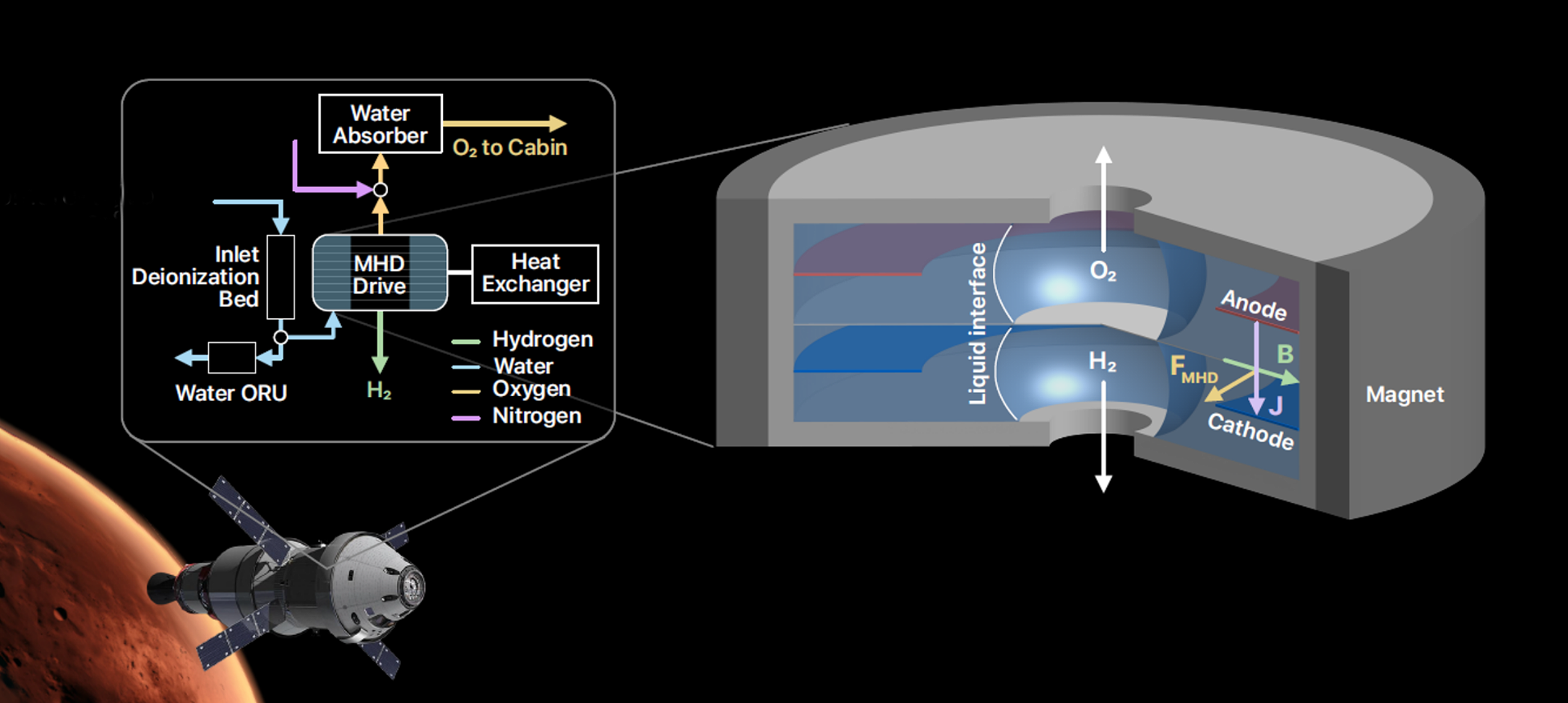
    Artist concept highlighting the novel approach proposed by the 2025 NIAC awarded selection of the Breathing Beyond Earth concept.
    NASA/Alvaro Romero-Calvo

    Alvaro Romero-Calvo
    Georgia Tech Research Corporation

    The reliable and efficient operation of spacecraft life support systems is challenged in microgravity by the near absence of buoyancy. This impacts the electrolytic production of oxygen and hydrogen from water by forcing the adoption of complex multiphase flow management technologies. Still, water splitting plays an essential role in human spaceflight, closing the regenerative environmental control and life support loop and connecting the water and atmosphere management subsystems. Existing oxygen generation systems, although successful for short-term crewed missions, lack the reliability and efficiency required for long-duration spaceflight and, in particular, for Mars exploration.

    During our Phase I NIAC effort, we demonstrated the basic feasibility of a novel water-splitting architecture that leverages contactless magnetohydrodynamic (MHD) forces to produce and separate oxygen and hydrogen gas bubbles in microgravity. The system, known as the Magnetohydrodynamic Oxygen Generation Assembly (MOGA), avoids the use of forced water recirculation loops or moving parts such as pumps or centrifuges for phase separation. This fundamental paradigm shift results in multiple operational advantages with respect to the state-of-the-art: increased robustness to over- and under-voltages in the cell stack, minimal risk of electrolyte leaching, wider operational temperature and humidity levels, simpler transient operation, increased material durability, enhanced system stability during dormant periods, modest water purity requirements, reduced microbial growth, and better component-level swap-ability, all of which result in an exceptionally robust system. Overall, these architectural features lead to a 32.9% mass reduction and 20.4% astronaut maintenance time savings with respect to the Oxygen Generation Assembly at the ISS for a four-crew Mars transfer, making the system ideally suited for long-duration missions. In Phase II, we seek to answer some of the key remaining unknowns surrounding this architecture, particularly regarding (i) the long-term electrochemical and multiphase flow behavior of the system in microgravity and its impact on power consumption and liquid interface stability, (ii) the transient operational modes of the MHD drive during start-up, shutdown, and dormancy, and (iii) architectural improvements for manufacturability and ease of repair. Toward that end, we will leverage our combined expertise in microgravity research by partnering with the ZARM Institute in Bremen and the German Aerospace Center to fly, free of charge to NASA, a large-scale magnetohydrodynamic drive system and demonstrate critical processes and components. An external review board composed of industry experts will assess the evolution of the project and inform commercial infusion. This effort will result in a TRL-4 system that will also benefit additional technologies of interest to NASA and the general public, such as water-based SmallSat propulsion and in-situ resource utilization.

    2025 Selections

    Details

    Last Updated

    May 27, 2025

    Editor
    Loura Hall

  • TFINER – Thin Film Isotope Nuclear Engine Rocket

    2 min read

    Preparations for Next Moonwalk Simulations Underway (and Underwater)

    Artist rendition of novel concept in space with Earth in distance and solar sail
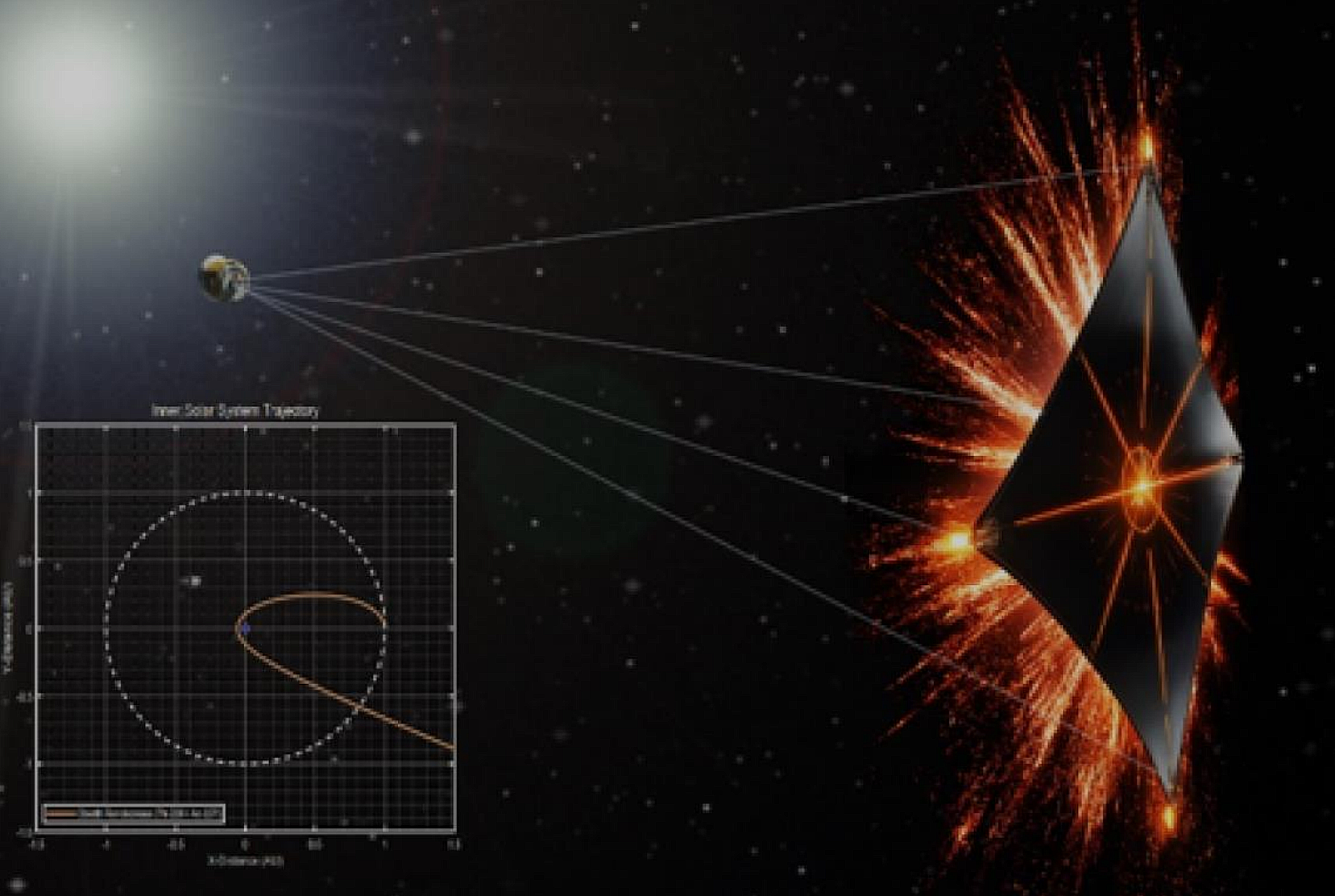
    Artist concept highlighting the novel approach proposed by the 2025 NIAC awarded selection of the TFINER concept.
    NASA/James Bickford

    James Bickford
    Charles Stark Draper Laboratory, Inc.

    The Thin-Film Nuclear Engine Rocket (TFINER) is a novel space propulsion technology that enables aggressive space exploration for missions that are impossible with existing approaches. The concept uses thin layers of energetic radioisotopes to directly generate thrust. The emission direction of its natural decay products is biased by a substrate to accelerate the spacecraft. A single stage design is very simple and can generate velocity changes of ~100 km/s using a few kilograms of fuel and potentially more than 150 km/s for more advanced architectures.

    The propulsion system enables a rendezvous with intriguing interstellar objects such as ‘Oumuamua that are on hyperbolic orbits through our solar system. A particular advantage is the ability to maneuver in deep space to find objects with uncertainty in their location. The same capabilities also enable a fast trip to the solar gravitational focus to image multiple potentially habitable exoplanets. Both types of missions require propulsion outside the solar system that is an order of magnitude beyond the performance of existing technology. The phase 2 effort will continue to mature TFINER and the mission design. The program will work towards small scale thruster experiments in the near term. In parallel, isotope production paths that can also be leveraged for other space exploration and medical applications will be pursued. Finally, advanced architectures such as an Oberth solar dive maneuver and hybrid approaches that leverage solar sails near the Sun, will be explored to enhance mission performance.

    2025 Selections

    Details

    Last Updated

    May 27, 2025

    Editor
    Loura Hall

  • Photophoretic Propulsion Enabling Mesosphere Exploration

    2 min read

    Preparations for Next Moonwalk Simulations Underway (and Underwater)

    Labeled diagram depicting Photophoretic Propulsion
    Artist concept highlighting the novel approach proposed by the 2025 NIAC awarded selection of Photophoretic Propulsion Enabling Mesosphere Exploration concept.
    NASA/Igor Bargatin

    Igor Bargatin
    University of Pennsylvania

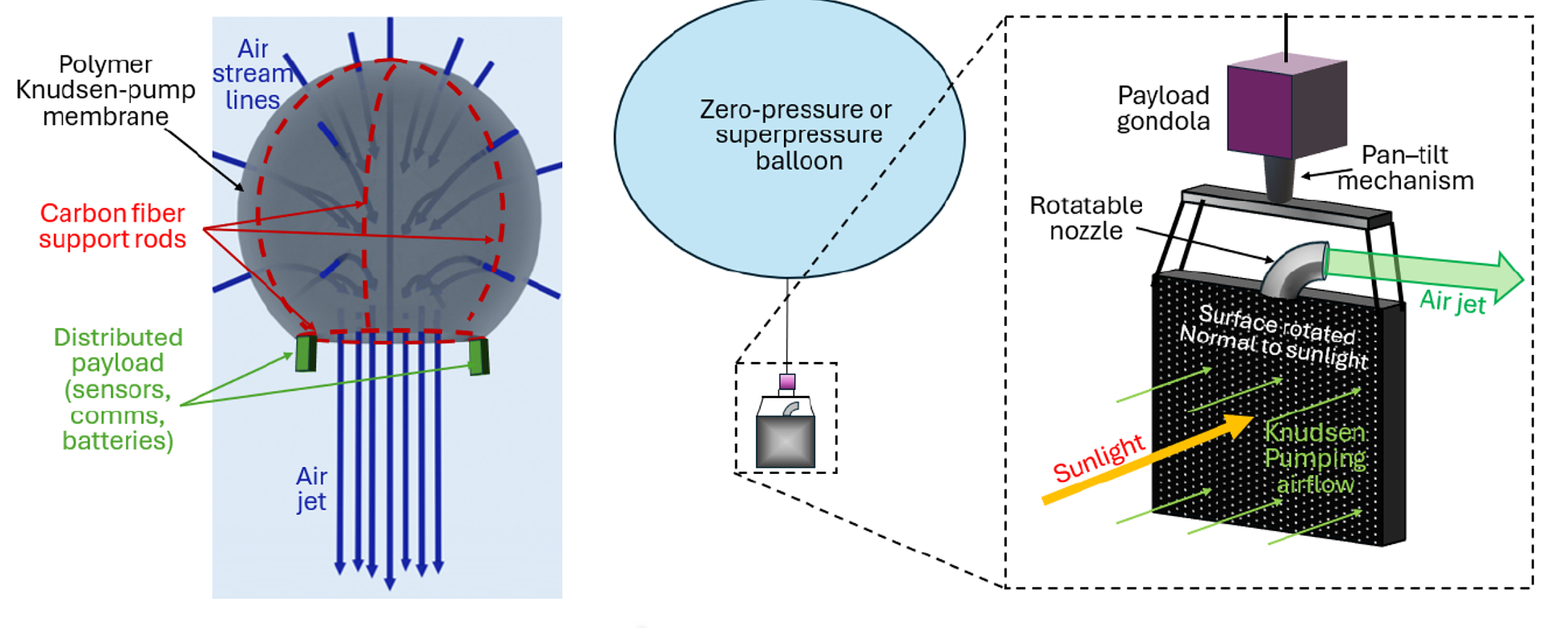
    We propose to use the photophoretic levitation and propulsion mechanism to create no-moving-parts flying vehicles that can be used to explore Earth’s upper atmosphere. The photophoretic force arises when a solid is heated relative to the ambient gas through illumination, inducing momentum exchange between the solid and the gas. The force creates lift in structures that absorb light on the bottom yet stay cool on the top, and we engineered our plate mechanical metamaterials to maximize this lift force and payload. The levitation and payload capabilities of our plates typically peak at ambient pressures in the 0.1-1000 Pa range, ideal for applications in Earth’s mesosphere and Mars’s low gravity and thin atmosphere. For example, in the Earth’s mesosphere (i.e., at altitudes from ~50 to ~80 km), the air is too thin for conventional airplanes or balloons but too thick for satellites, such that measurements can be performed for only a few minutes at a time during the short flight of a research rocket. However, the range of ambient pressures in the mesosphere (1-100 Pa) is nearly optimal for our plates’ payload capabilities. Phase 2 of the proposal focuses on the scalable fabrication of Knudsen pump structures that will enable missions with kg-scale payloads in the mesosphere as well as trajectory control with 1 m/s velocity control in existing stratospheric balloon vehicles.

    2025 Selections

    Details

    Last Updated

    May 27, 2025

    Editor
    Loura Hall