Category: Solar system

http://www.nasa.gov/rss/dyn/solar_system.rss

  • Sols 4559-4560: Drill Campaign — Searching for a Boxwork Bedrock Drill Site

    3 min read

    Sols 4559-4560: Drill Campaign — Searching for a Boxwork Bedrock Drill Site

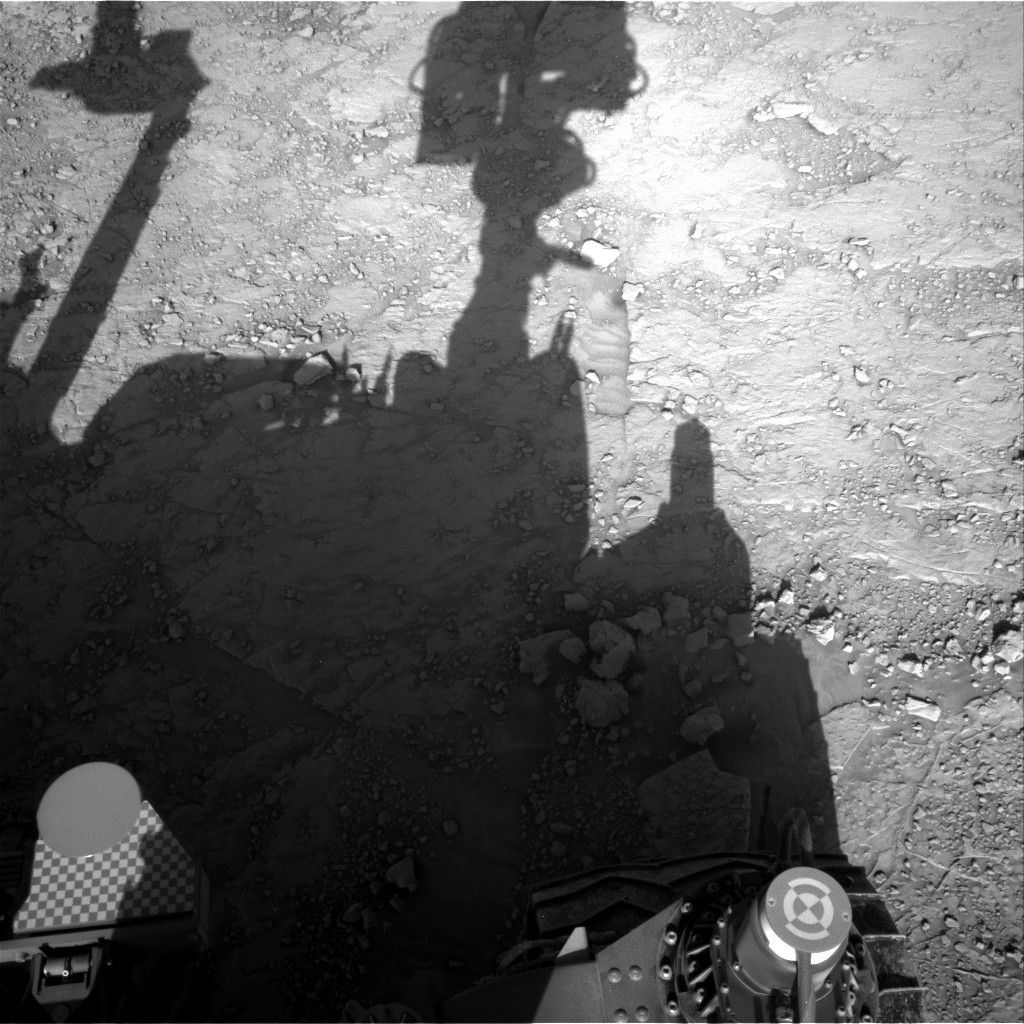
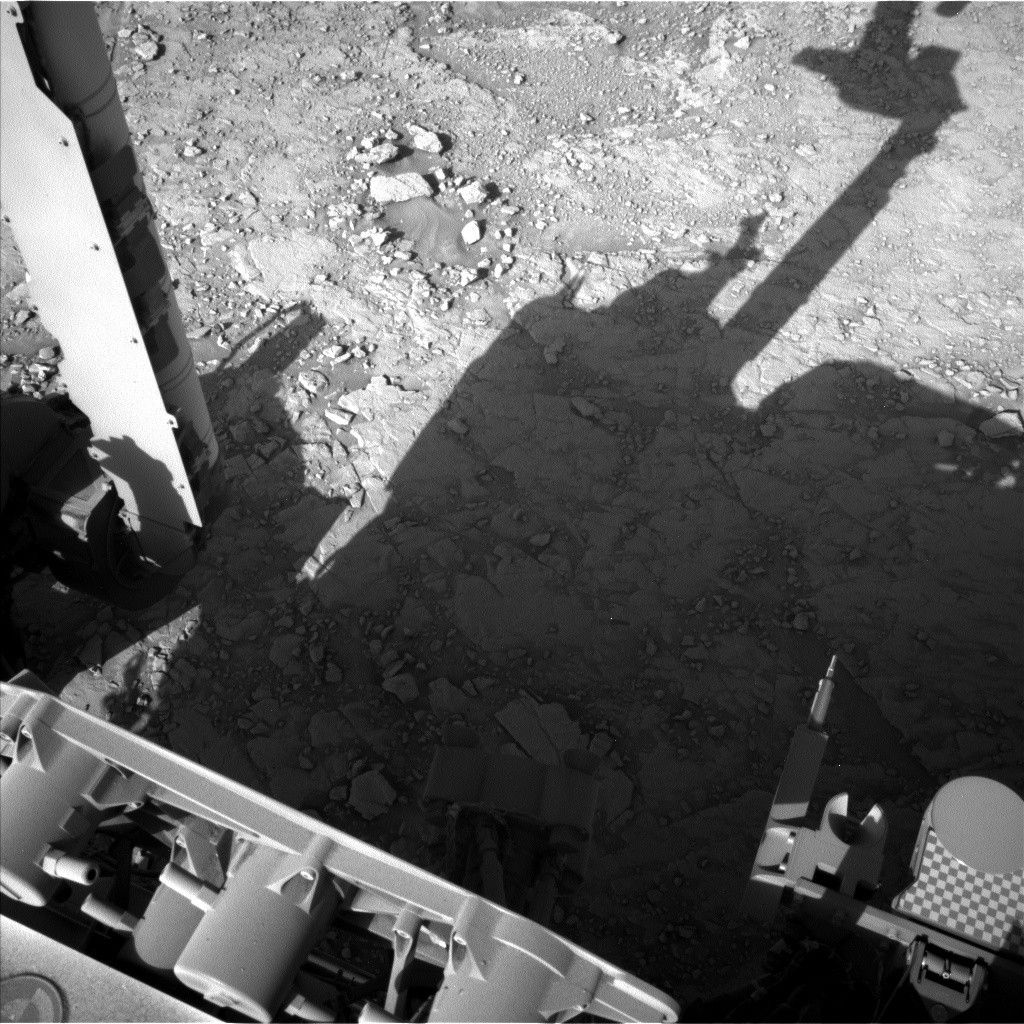
    A grayscale photo looking down at the Martian surface, showing very rough terrain in front of the Curiosity rover. Light gray, gravel-covered rocks are in bright sunlight in the upper half of the frame. A shadow silhouette of the rover covers much of the rest of the image, from the center toward the lower right corner. Portions of the rover itself are sunlit and visible at the bottom and left side of the image.
    NASA’s Mars rover Curiosity acquired this image of a portion of its workspace, full of interesting but not drillable bedrock, using its Left Navigation Camera on June 2, 2025 — Sol 4558, or Martian day 4,558 of the Mars Science Laboratory mission — at 12:23:24 UTC.
    NASA/JPL-Caltech

    Written by Lucy Lim, Planetary Scientist at NASA’s Goddard Space Flight Center

    Earth planning date: Monday, June 2, 2025

    Now that Curiosity has spent a few sols collecting close-up measurements of the rocks in the outer edge of the boxwork-forming geologic unit, the team has decided that it’s time to collect a drill sample. The geochemical measurements by APXS and ChemCam have shown changes since we crossed over from the previous layered sulfate unit, but we can’t figure out the mineralogy from those data alone. As we’ve often seen before on Mars, the same chemical elements can crystallize into a number of different mineral assemblages. That’s even more the case in sedimentary rocks such as we are driving through, in which different grains in our rocks may have formed in different times and places. This also means that when we do get our mineral data, those minerals will tell us a lot about the history of these new-to-us rocks.

    On board Curiosity, that mineral analysis is the job of the CheMin instrument, which uses X-ray diffraction to identify minerals. CheMin shines a narrow X-ray beam through a powdered sample in order to generate the diffraction pattern, which means that it needs a drilled sample. So the team today was busy looking for a drillable spot. Unfortunately the rover’s drill reach from today’s parking spot included only rocks that were too fractured or had too much debris sitting on them to be considered likely to produce a good drilled sample, so we will have to move, or “bump,” at least one more time before progressing to the drill preload test, which is the next step in drilling. 

    In the meantime, we are taking more measurements to understand the range of compositions that can be found in this rock layer. Dust removal (DRT) + APXS + LIBS + MAHLI were all planned for target “Holcomb Valley,” while a short distance away a second DRT/APXS/MAHLI measurement was planned for “Santa Ysabel Valley” and in another direction, a second LIBS for “Stough Saddle.” One long-distance ChemCam remote imaging mosaic was planned to cover a boxwork structure off in the distance. Mastcam had a relatively light day of imaging, with just a couple of small mosaics covering a nearby trough feature, and providing context for the RMI of the boxwork structure, in addition to documenting the two LIBS targets. The modern Mars environment was also recorded with a couple of movies to look for dust-devil activity, a measurement of atmospheric opacity, and a pair of suprahorizon observations to look for clouds, plus the usual passive observations by DAN and REMS to monitor the neutron environment, temperature, and humidity.

    I’ll be on rover planning Wednesday as Geology and Mineralogy Science Theme Lead and looking forward to what we find — hopefully some drillable boxwork-unit bedrock!

    Details

    Last Updated

    Jun 04, 2025

    Related Terms

  • NASA, ISRO Research Aboard Fourth Private Astronaut Mission to Station

    NASA and ISRO (Indian Space Research Organisation) are collaborating to launch scientific investigations aboard Axiom Mission 4, the fourth private astronaut mission to the International Space Station. These studies include examining muscle regeneration, growth of sprouts and edible microalgae, survival of tiny aquatic organisms, and human interaction with electronic displays in microgravity.

    The mission is targeted to launch no earlier than Tuesday, June 10, aboard a SpaceX Dragon spacecraft on the company’s Falcon 9 rocket from NASA’s Kennedy Space Center in Florida

    Regenerating muscle tissue

    Dark red fibers stretch from the top to bottom of this image. Glowing blue dots are scattered along the fibers, both single dots and lines and clusters of dots.
    Immunofluorescent image of human muscle fibers for Myogenesis-ISRO, showing nuclei (blue) and proteins (red).
    Institute for Stem Cell Science and Regenerative Medicine, India

    During long-duration spaceflights, astronauts lose muscle mass, and their muscle cells’ regenerative ability declines. Researchers suspect this may happen because microgravity interferes with metabolism in mitochondria, tiny structures within cells that produce energy. The Myogenesis-ISRO investigation uses muscle stem cell cultures to examine the muscle repair process and test chemicals known to support mitochondrial function. Results could lead to interventions that maintain muscle health during long-duration space missions, help people on Earth with age-related muscle loss and muscle-wasting diseases, and assist athletes and people recovering from surgery.

    Sprouting seeds

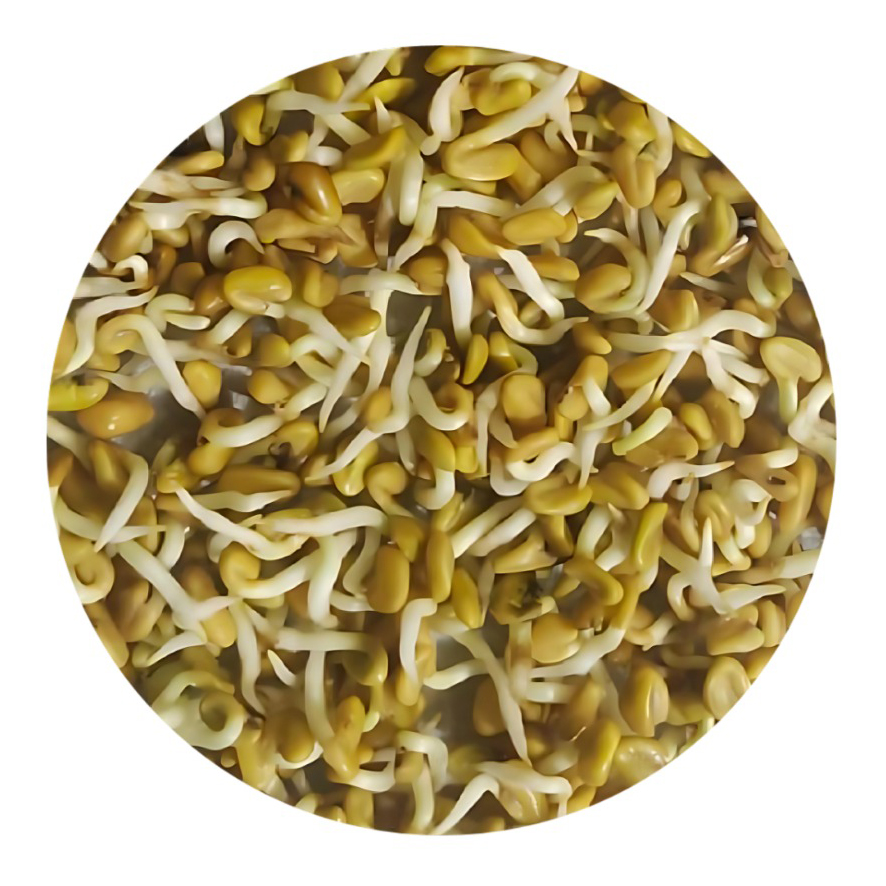
    A tangle of tannish-yellow seeds with small white sprouts fills a circular image.
    This preflight image shows sprouted fenugreek seeds for the Sprouts-ISRO investigation.
    Ravikumar Hosamani Lab, University of Agricultural Sciences, India

    The Sprouts-ISRO investigation looks at the germination and growth in microgravity of seeds from greengram and fenugreek, nutritious plants commonly eaten on the Indian subcontinent. Bioactive compounds in fenugreek seeds also have therapeutic properties, and the leaves contain essential vitamins and minerals. Learning more about how space affects the genetics, nutritional content, and other characteristics over multiple generations of plants could inform the development of ways for future missions to reliably produce plants as a food source. 

    Microalgae growth

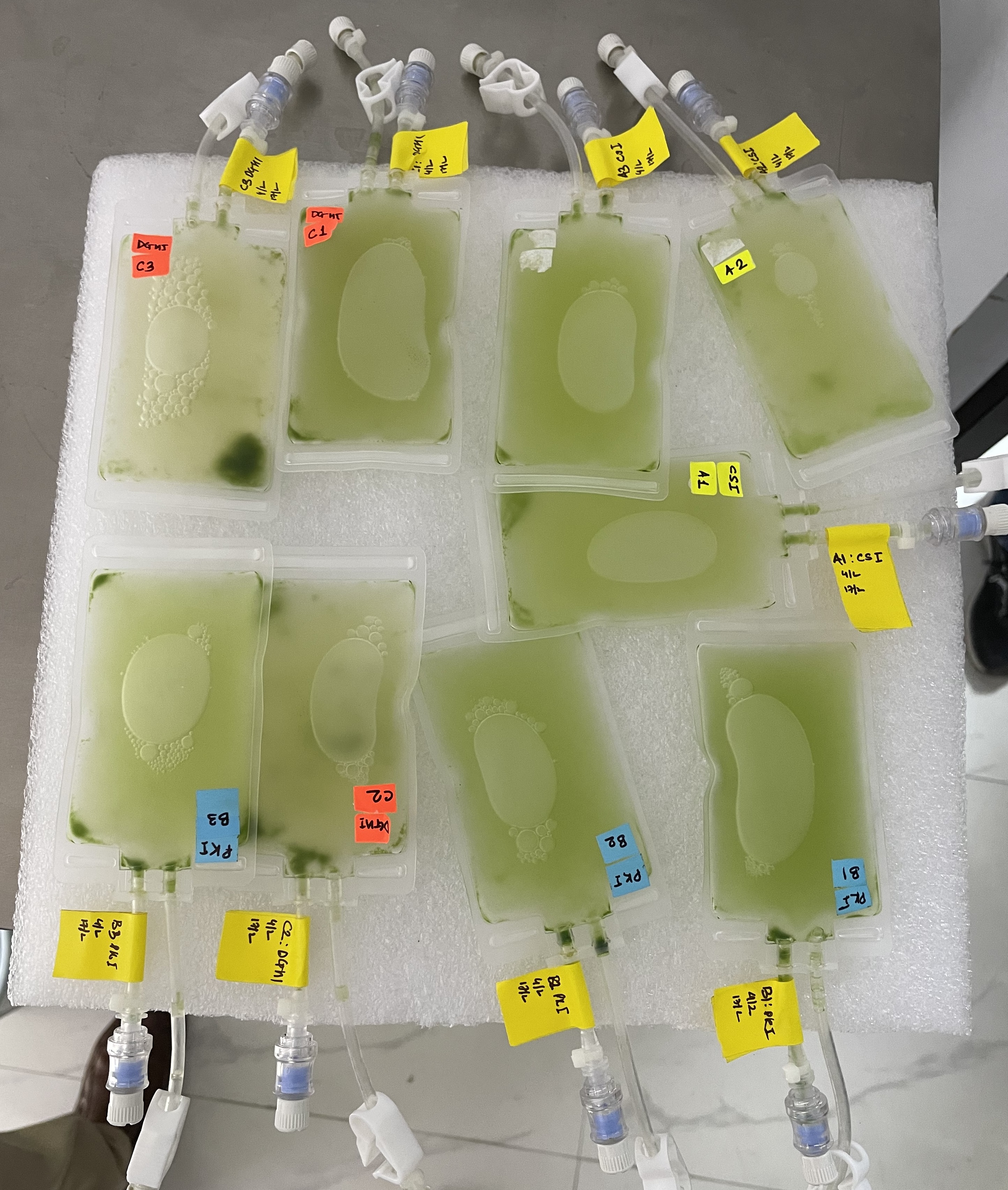
    A white square of foam holds nine rectangular clear bags filled with a pale green liquid. Each bag has two tubes protruding from it, one with a connection port and one with a clip, and there are yellow tags on one of the tubes for each bag, as well as stickers on the bags themselves.
    Culture bags for Space Microalgae-ISRO.
    Redwire

    Space Microalgae-ISRO studies how microgravity affects microalgae growth and genetics. Highly digestible microalgae species packed with nutrients could be a food source on future space missions. These organisms also grow quickly, produce energy and oxygen, and consume carbon dioxide, traits that could be employed in life support and fuel systems on spacecraft and in certain scenarios on Earth.  

    Tiny but tough

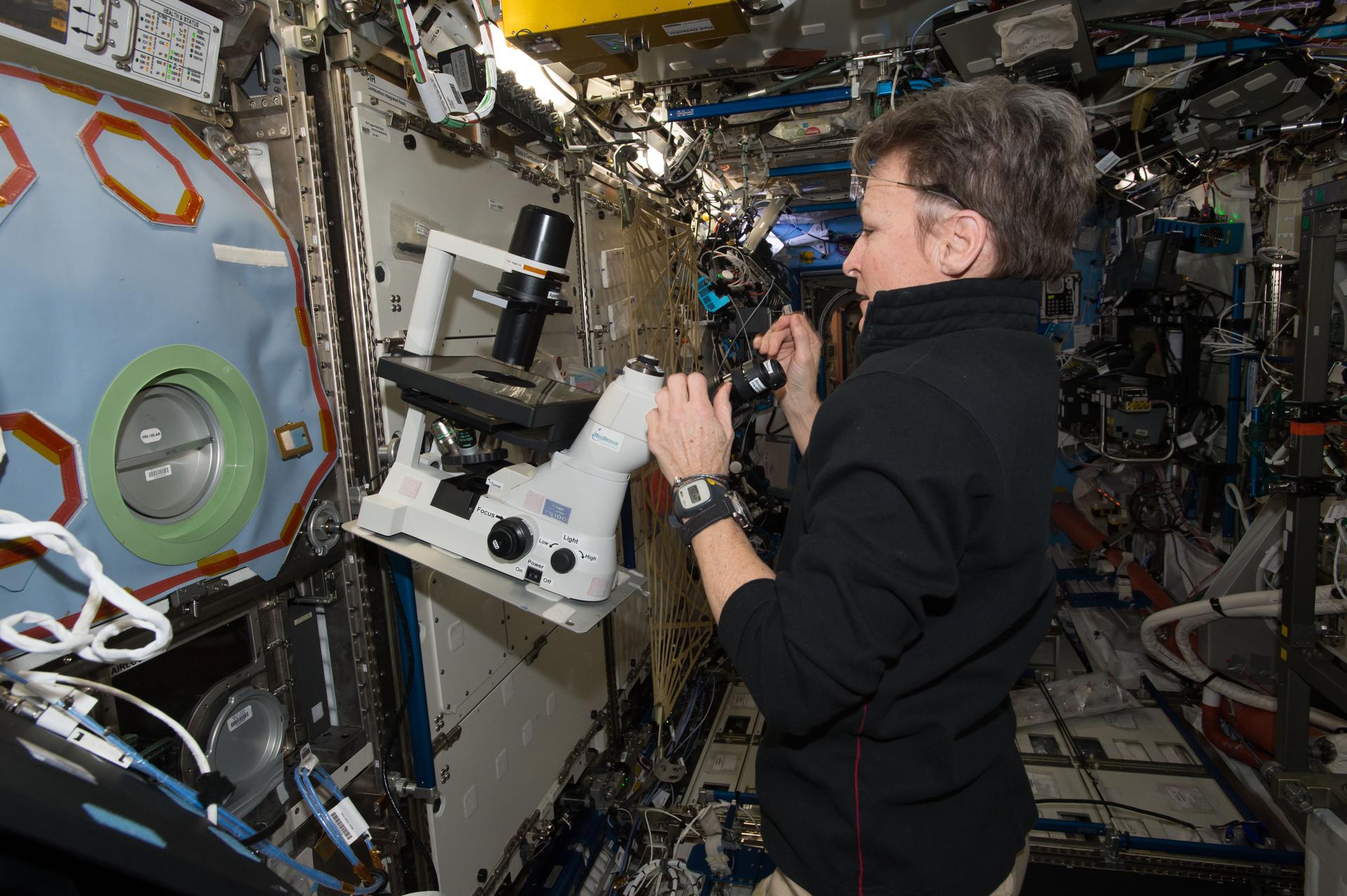
    Whitson, wearing a black jacket and a smart watch on her left wrist, is looking at the microscope in front of her. The device, mounted on a silver plate connected to a station wall, has a white base with a black eyepiece in front and behind it, a flat black plate on a white arm and a black lens mounted above it. There are two black dials on the side of the base facing the camera.
    NASA astronaut Peggy Whitson sets up the BioServe microscope, which will be used by the Voyager Tardigrade-ISRO investigation.
    NASA

    Tardigrades are tiny aquatic organisms that can tolerate extreme conditions on Earth. Voyager Tardigrade-ISRO tests the survival of a strain of tardigrades in the harsh conditions of space, including cosmic radiation and ultra-low temperatures, which kill most life forms. Researchers plan to revive dormant tardigrades, count the number of eggs laid and hatched during the mission, and compare the gene expression patterns of populations in space and on the ground. Results could help identify what makes these organisms able to survive extreme conditions and support development of technology to protect astronauts on future missions and those in harsh environments on Earth. 

    Improving electronic interactions

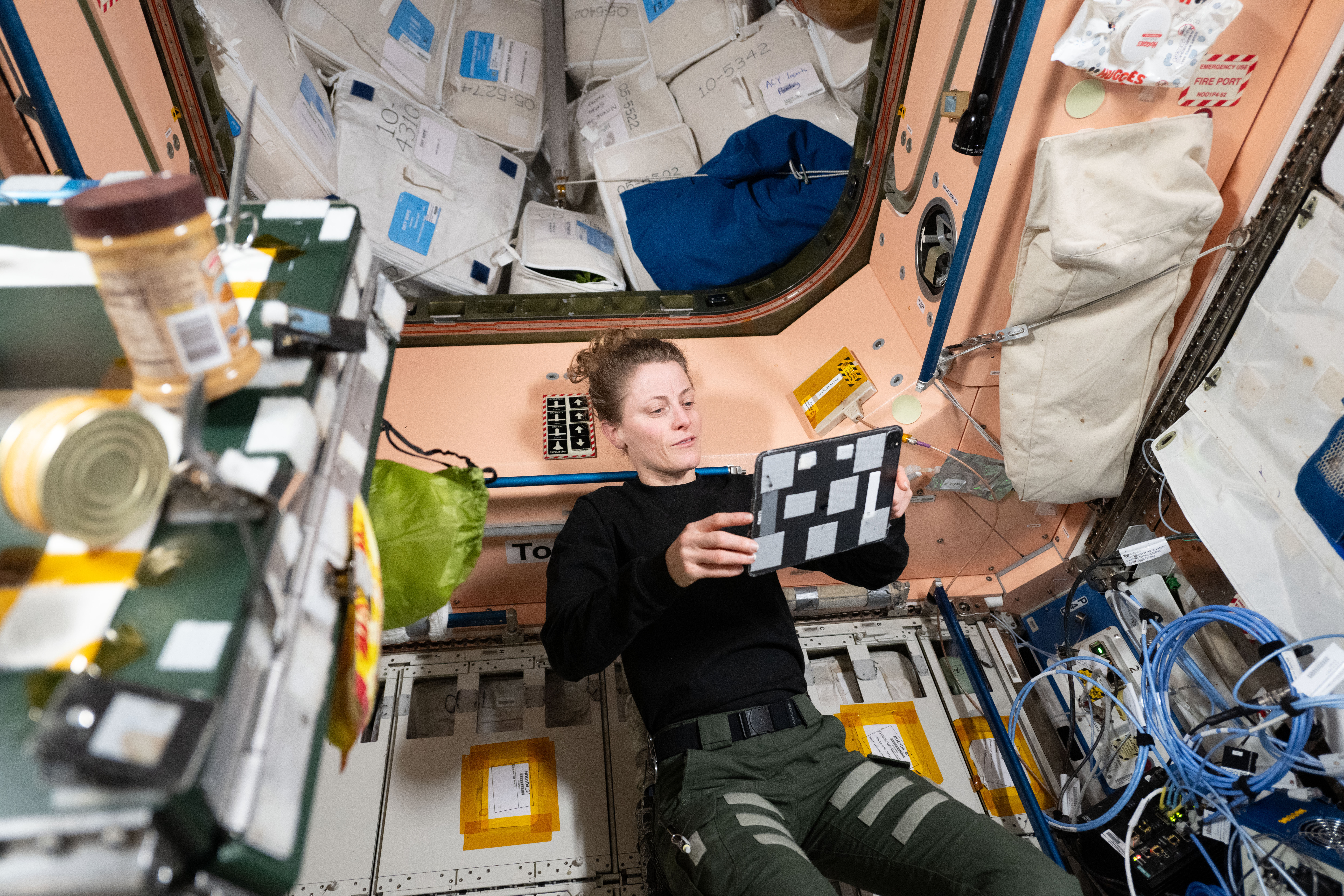
    O’Hara, wearing a long-sleeved black shirt and green pants, is holding an electronic tablet in front of her face with both hands. She is looking at the tablet. An open hatch behind her is filled with white storage containers.
    NASA astronaut Loral O’Hara interacts with a touchscreen. Voyager Displays-ISRO examines how spaceflight affects use of such devices.
    NASA

    Research shows that humans interact with touchscreen devices differently in space. Voyager Displays – ISRO examines how spaceflight affects interactions with electronic displays such as pointing tasks, gaze fixation, and rapid eye movements along with how these interactions affect the user’s feelings of stress or wellbeing. Results could support improved design of control devices for spacecraft and habitats on future space missions as well as for aviation and other uses on Earth.

    Download high-resolution photos and videos of the research mentioned in this article.

  • Galaxy Clusters on Course to Crash Again, NASA’s Chandra Finds

    Observations from Chandra and other telescopes have captured a powerful cosmic event: two galaxy clusters have collided and are now poised to head back for another swipe at each other. Galaxy clusters are some of the largest structures in the Universe held together by gravity. In these images, X-rays from Chandra and ESA’s XMM-Newton have been combined with LOFAR data and an optical image from Pan-STARRs of the stars and galaxies in the field of view.
    X-ray: NASA/CXC/CfA/Stroe, A. et al.; Optical: PanSTARRS; Radio: ASTRON/LOFAR; Image Processing: NASA/CXC/SAO/N. Wolk

    New observations from NASA’s Chandra X-ray Observatory and other telescopes have captured a rare cosmic event: two galaxy clusters have collided and are now poised to head back for another swipe at each other.

    Galaxy clusters are some of the largest structures in the Universe. Held together by gravity, they are monster-sized collections of hundreds or thousands of individual galaxies, massive amounts of superheated gas, and invisible dark matter.

    The galaxy cluster PSZ2 G181.06+48.47 (PSZ2 G181 for short) is about 2.8 billion light-years from Earth. Previously, radio observations from the LOw Frequency ARray (LOFAR), an antenna network in the Netherlands, spotted parentheses-shaped structures on the outside of the system. In this new composite image, X-rays from Chandra (purple) and ESA’s XMM-Newton (blue) have been combined with LOFAR data (red) and an optical image from Pan-STARRs of the stars in the field of view.

    These structures are probably shock fronts — similar to those created by jets that have broken the sound barrier — likely caused by disruption of gas from the initial collision about a billion years ago. Since the collision they have continued traveling outwards and are currently separated by about 11 million light-years, the largest separation of these kinds of structures that astronomers have ever seen.

    Observations from Chandra and other telescopes have captured a powerful cosmic event: two galaxy clusters have collided and are now poised to head back for another swipe at each other. Galaxy clusters are some of the largest structures in the Universe held together by gravity. In these images, X-rays from Chandra and ESA’s XMM-Newton have been combined with LOFAR data and an optical image from Pan-STARRs of the stars and galaxies in the field of view.
    Colliding galaxy clusters PSZ2 G181.06+48.47 (Labeled).
    X-ray: NASA/CXC/CfA/Stroe, A. et al.; Optical: PanSTARRS; Radio: ASTRON/LOFAR; Image Processing: NASA/CXC/SAO/N. Wolk

    Now, data from NASA’s Chandra and ESA’s XMM-Newton is providing evidence that PSZ2 G181 is poised for another collision. Having a first pass at ramming each other, the two clusters have slowed down and begun heading back toward a second crash.

    Astronomers made a detailed study of the X-ray observations of this collision site and found three shock fronts. These are aligned with the axis of the collision, and the researchers think they are early signs of the second, oncoming crash.

    The researchers are still trying to determine how much mass each of the colliding clusters contains. Regardless, the total mass of the system is less than others where galaxy clusters have collided. This makes PSZ2 G181 an unusual case of a lower-mass system involved in the rare event of colliding galaxy clusters.

    A paper describing these results appears in a recent issue of The Astrophysical Journal (ApJ) and is led by Andra Stroe from the Center for Astrophysics | Harvard & Smithsonian (CfA) and collaborators. It is part of a series of three papers in ApJ. The second paper is led by Kamlesh Rajpurohit, also of CfA, and the third paper is led by Eunmo Ahn, from Yonsei University in the Republic of Korea.

    NASA’s Marshall Space Flight Center in Huntsville, Alabama, manages the Chandra program. The Smithsonian Astrophysical Observatory’s Chandra X-ray Center controls science operations from Cambridge, Massachusetts, and flight operations from Burlington, Massachusetts.

    Learn more about the Chandra X-ray Observatory and its mission here:

    https://www.nasa.gov/chandra

    https://chandra.si.edu

    Visual Description

    In this release, a composite image illustrates a dramatic cosmic story unfolding 2.8 billion light years from Earth. Presented both with and without labels, the image details the fallout when two galaxy clusters collide.

    At the center of the image are the colliding galaxy clusters, which together are known as PSZ2 G181. This combined cluster somewhat resembles an irregular violet peanut shell, with bulbous ends linked by a tapered middle. Inside each bulbous end are several glowing dots; some of the galaxies within the clusters. The violet peanut shape is tilted at a slight angle, surrounded by a blue haze of X-ray gas.

    Far from the bulbous ends, at our upper left and lower right, are two blotchy, thick red lines. These are probably shock fronts, similar to those created by jets that have broken the sound barrier. Bracketing the combined galaxy cluster, these shock fronts were caused by the initial collision about a billion years ago. They are currently separated by 11 million light-years.

    New data from the Chandra and XMM-Newton observatories suggests that PSZ2 G181 is poised for another powerful cosmic event. Having already taken one swipe at each other, the two clusters within are once again on a collision course.

    News Media Contact

    Megan Watzke
    Chandra X-ray Center
    Cambridge, Mass.
    617-496-7998
    mwatzke@cfa.harvard.edu

    Lane Figueroa
    Marshall Space Flight Center, Huntsville, Alabama
    256-544-0034
    lane.e.figueroa@nasa.gov

  • 3 Black Holes Caught Eating Massive Stars in NASA Data

    5 Min Read

    3 Black Holes Caught Eating Massive Stars in NASA Data

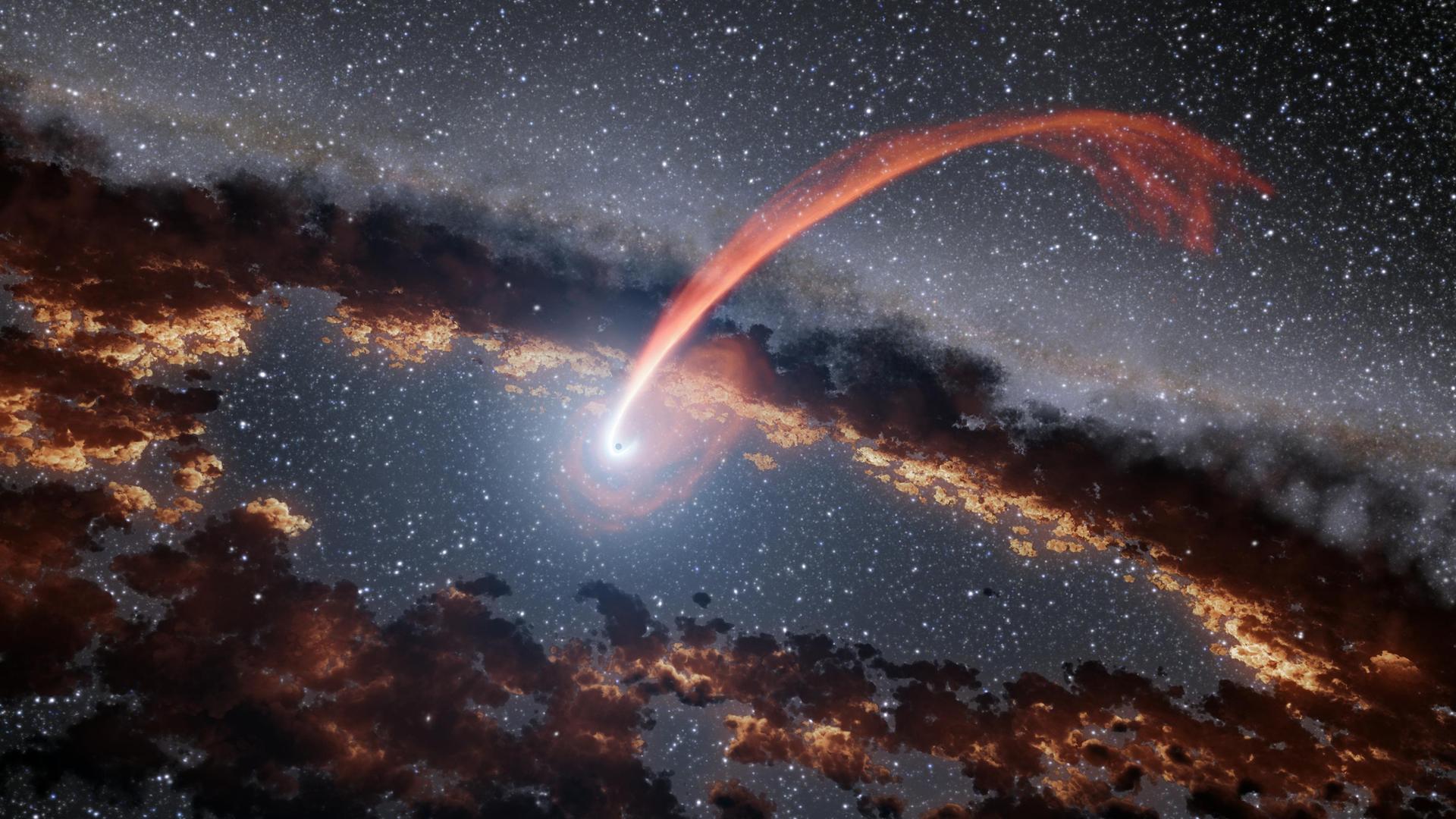
    A disk of hot gas swirls around a black hole in this illustration. The stream of gas is what remains of a star that was pulled apart by the black hole. A cloud of hot plasma above the black hole is known as a corona.

    A disk of hot gas swirls around a black hole in this illustration. Some of the gas came from a star that was pulled apart by the black hole, forming the long stream of hot gas on the right, feeding into the disk.

    Credits:
    NASA/JPL-Caltech

    Black holes are invisible to us unless they interact with something else. Some continuously eat gas and dust, and appear to glow brightly over time as matter falls in. But other black holes secretly lie in wait for years until a star comes close enough to snack on.

    Scientists have recently identified three supermassive black holes at the centers of distant galaxies, each of which suddenly brightened when it destroyed a star and then stayed bright for several months. A new study using space and ground-based data from NASA, ESA (European Space Agency), and other institutions presents these rare occurrences as a new category of cosmic events called “extreme nuclear transients.”

    Looking for more of these extreme nuclear transients could help unveil some of the most massive supermassive black holes in the universe that are usually quiet.

    “These events are the only way we can have a spotlight that we can shine on otherwise inactive massive black holes,” said Jason Hinkle, graduate student at the University of Hawaii and lead author of a new study in the journal Science Advances describing this phenomenon.

    The black holes in question seem to have eaten stars three to 10 times heavier than our Sun. Feasting on the stars resulted in some of the most energetic transient events ever recorded.

    This illustration shows a glowing stream of material from a star as it is being devoured by a supermassive black hole in a tidal disruption flare. Astronomers gained new insights into tidal disruption flares thanks to data from NASA's WISE.
    This illustration shows a glowing stream of material from a star as it is being devoured by a supermassive black hole. When a star passes within a certain distance of a black hole — close enough to be gravitationally disrupted — the stellar material gets stretched and compressed as it falls into the black hole.
    NASA/JPL-Caltech

    These events as unleash enormous amount of high-energy radiation on the central regions of their host galaxies. “That has implications for the environments in which these events are occurring,” Hinkle said. “If galaxies have these events, they’re important for the galaxies themselves.”

    The stars’ destruction produces high-energy light that takes over 100 days to reach peak brightness, then more than 150 days to dim to half of its peak. The way the high-energy radiation affects the environment results in lower-energy emissions that telescopes can also detect.

    One of these star-destroying events, nicknamed “Barbie” because of its catalog identifier ZTF20abrbeie, was discovered in 2020 by the Zwicky Transient Facility at Caltech’s Palomar Observatory in California, and documented in two 2023 studies. The other two black holes were detected by ESA’s Gaia mission in 2016 and 2018 and are studied in detail in the new paper.

    NASA’s Neil Gehrels Swift Observatory was critical in confirming that these events must have been related to black holes, not stellar explosions or other phenomena.  The way that the X-ray, ultraviolet, and optical light brightened and dimmed over time was like a fingerprint matching that of a black hole ripping a star apart.

    Scientists also used data from NASA’s WISE spacecraft, which was operated from 2009 to 2011 and then was reactivated as NEOWISE and retired in 2024. Under the WISE mission the spacecraft mapped the sky at infrared wavelengths, finding many new distant objects and cosmic phenomena. In the new study, the spacecraft’s data helped researchers characterize dust in the environments of each black hole. Numerous ground-based observatories additionally contributed to this discovery, including the W. M. Keck Observatory telescopes through their NASA-funded archive and the NASA-supported Near-Earth Object surveys ATLAS, Pan-STARRS, and Catalina.

    “What I think is so exciting about this work is that we’re pushing the upper bounds of what we understand to be the most energetic environments of the universe,” said Anna Payne, a staff scientist at the Space Telescope Science Institute and study co-author, who helped look for the chemical fingerprints of these events with the University of Hawaii 2.2-meter Telescope.

    A Future Investigators in NASA Earth and Space Science and Technology (FINESST) grant from the agency helped enable Hinkle to search for these black hole events. “The FINESST grant gave Jason the freedom to track down and figure out what these events actually were,” said Ben Shappee, associate professor at the Institute for Astronomy at the University of Hawaii, a study coauthor and advisor to Hinkle.

    Hinkle is set to follow up on these results as a postdoctoral fellow at the University of Illinois Urbana-Champaign through the NASA Hubble Fellowship Program. “One of the biggest questions in astronomy is how black holes grow throughout the universe,” Hinkle said.

    The results complement recent observations from NASA’s James Webb Space Telescope showing how supermassive black holes feed and grow in the early universe. But since only 10% of early black holes are actively eating gas and dust, extreme nuclear transients — that is, catching a supermassive black hole in the act of eating a massive star — are a different way to find black holes in the early universe.

    Events like these are so bright that they may be visible even in the distant, early universe. Swift showed that extreme nuclear transients emit most of their light in the ultraviolet. But as the universe expands, that light is stretched to longer wavelengths and shifts into the infrared — exactly the kind of light NASA’s upcoming Nancy Grace Roman Space Telescope was designed to detect.

    With its powerful infrared sensitivity and wide field of view, Roman will be able to spot these rare explosions from more than 12 billion years ago, when the universe was just a tenth of its current age. Scheduled to launch by 2027, and potentially as early as fall 2026, Roman could uncover many more of these dramatic events and offer a new way to explore how stars, galaxies, and black holes formed and evolved over time.

    “We can take these three objects as a blueprint to know what to look for in the future,” Payne said.

  • Core Components for NASA’s Roman Space Telescope Pass Major Shake Test

    The core portion of NASA’s Nancy Grace Roman Space Telescope has successfully completed vibration testing, ensuring it will withstand the extreme shaking experienced during launch. Passing this key milestone brings Roman one step closer to helping answer essential questions about the role of dark energy and other cosmic mysteries.

    “The test could be considered as powerful as a pretty severe earthquake, but there are key differences,” said Cory Powell, the Roman lead structural analyst at NASA’s Goddard Space Flight Center in Greenbelt, Maryland. “Unlike an earthquake, we sweep through our frequencies one at a time, starting with very low-level amplitudes and gradually increasing them while we check everything along the way. It’s a very complicated process that takes extraordinary effort to do safely and efficiently.”

    This video shows the core components of NASA’s Nancy Grace Roman Space Telescope undergoing a vibration test at the agency’s Goddard Space Flight Center. The test ensures this segment of the observatory will withstand the extreme shaking associated with launch.
    Credit: NASA’s Goddard Space Flight Center

    The team simulated launch conditions as closely as possible. “We performed the test in a flight-powered configuration and filled the propulsion tanks with approximately 295 gallons of deionized water to simulate the propellent loading on the spacecraft during launch,” said Joel Proebstle, who led this test, at NASA Goddard. This is part of a series of tests that ratchet up to 125 percent of the forces the observatory will experience.

    This milestone is the latest in a period of intensive testing for the nearly complete Roman Space Telescope, with many major parts coming together and running through assessments in rapid succession. Roman currently consists of two major assemblies: the inner, core portion (telescope, instrument carrier, two instruments, and spacecraft) and the outer portion (outer barrel assembly, solar array sun shield, and deployable aperture cover).

    Now, having completed vibration testing, the core portion will return to the large clean room at Goddard for post-test inspections. They’ll confirm that everything remains properly aligned and the high-gain antenna can deploy. The next major assessment for the core portion will involve additional tests of the electronics, followed by a thermal vacuum test to ensure the system will operate as planned in the harsh space environment.

    This video highlights some of the important hardware milestones as NASA’s Nancy Grace Roman Space Telescope moves closer to completion. The observatory is almost fully assembled, currently built up into two large pieces: the inner portion (telescope, instrument carrier, two instruments, and spacecraft) and outer portion (outer barrel assembly, solar array sun shield, and deployable aperture cover). This video shows the testing these segments have undergone between February and May 2025. Credit: NASA’s Goddard Space Flight Center

    In the meantime, Goddard technicians are also working on Roman’s outer portion. They installed the test solar array sun shield, and this segment then underwent its own thermal vacuum test, verifying it will control temperatures properly in the vacuum of space. Now, technicians are installing the flight solar panels to this outer part of the observatory.
     
    The team is on track to connect Roman’s two major assemblies in November, resulting in a whole observatory by the end of the year that will then undergo final tests. Roman remains on schedule for launch by May 2027, with the team aiming for as early as fall 2026.

    The Nancy Grace Roman Space Telescope is managed at NASA’s Goddard Space Flight Center in Greenbelt, Maryland, with participation by NASA’s Jet Propulsion Laboratory in Southern California; Caltech/IPAC in Pasadena, California; the Space Telescope Science Institute in Baltimore; and a science team comprising scientists from various research institutions. The primary industrial partners are BAE Systems Inc. in Boulder, Colorado; L3Harris Technologies in Rochester, New York; and Teledyne Scientific & Imaging in Thousand Oaks, California.
     
    By Ashley Balzer
    NASA’s Goddard Space Flight Center, Greenbelt, Md.

    Details

    Last Updated

    Jun 04, 2025

    Editor
    Ashley Balzer
    Contact
    Ashley Balzer
    Location
    Goddard Space Flight Center

  • How a Childhood Telescope Launched a NASA Career

    Christina Zeringue wearing a gray cardigan stands before a silver NASA insignia
    Christina Zeringue is the chief safety and mission assurance officer at NASA’s Stennis Space Center. She is responsible for the safety and mission success of all activities, including rocket propulsion testing and operation of the NASA Stennis federal city.
    NASA/Danny Nowlin

    Christina Zeringue remembers being 10 years old, looking to the sky through her new telescope to view the Moon and planets on Christmas night. It opened her eyes to space and inspired her journey from the backyard to NASA’s Stennis Space Center near Bay St. Louis, Mississippi.

    “I became fascinated with astronomy and learning about stars and constellations, the solar system and planetary orbits, solar and lunar eclipses, and challenging myself to find stars and nebula at different distances from Earth,” Zeringue said. “I was able to do and learn so much just from my own yard.”

    She became obsessed with following the development and images produced from the Hubble Space Telescope, which launched on a space shuttle that featured three main engines tested at NASA Stennis.

    Zeringue desired to learn more about the universe and find a way to be part of the effort to continue exploring. The Kenner, Louisiana, native ultimately made her way to NASA Stennis following graduation from the University of New Orleans.

    As the NASA Stennis chief safety and mission assurance officer, Zeringue is responsible for safety and mission success of all site activities. These include both rocket propulsion testing and operation of the NASA Stennis federal city, where NASA and more than 50 federal, state, academic, public, and private aerospace, technology, and research organizations located onsite share in operating costs while pursuing individual missions.

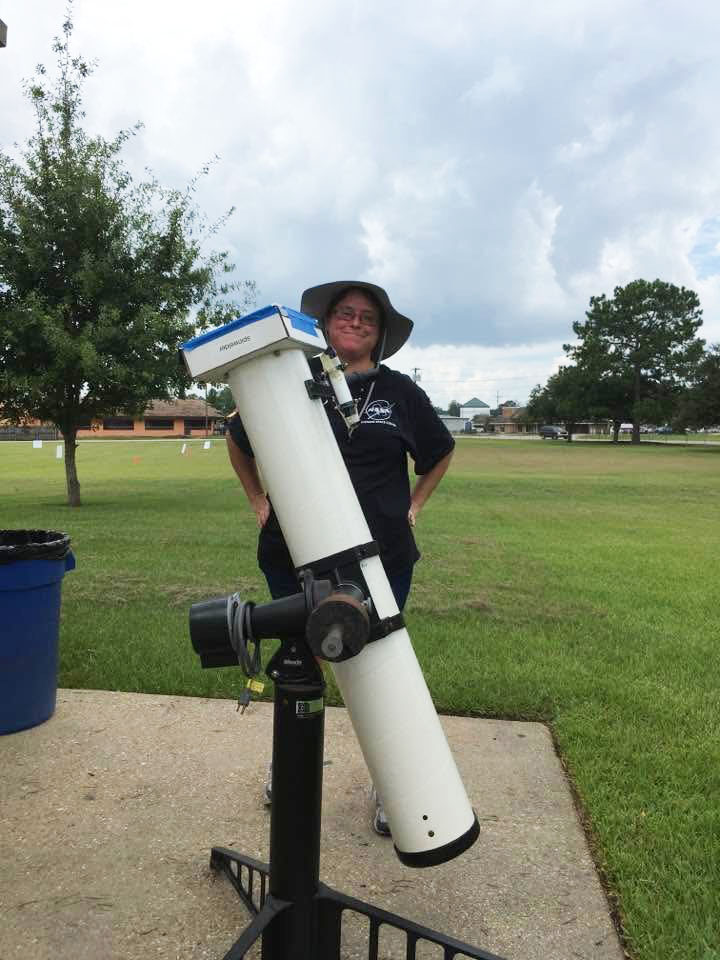
    Christina Zeringue is seen standing behind a telescope outdoors
    Christina Zeringue enjoys viewing the partial solar eclipse on Oct. 14, 2023, from Slidell, Louisiana.
    NASA/Danny Nowlin

    “I have a broad range of responsibilities, which allows me to work with many talented people, pushes me to learn and develop new skills, and keeps my work interesting every day,” Zeringue said.

    Zeringue’s work has supported NASA’s Artemis campaign to return astronauts to the Moon through her contributions to RS-25 engine testing and Green Run testing of NASA’s SLS (Space Launch System) core stage ahead of the successful launch of Artemis I.

    The Pearl River, Louisiana, resident often encounters engineering or safety challenges where there is not a clear answer to the solution.

    “We work together to understand new problems, determine the best course of action, and create new processes and ways to handle every challenge,” she said.

    In total, Zeringue has worked 28 years at NASA Stennis – 14 as a contractor and 14 with NASA.

    As a contractor, Zeringue initially worked as test article engineer for the Space Shuttle Main Engine Program. She followed that by serving as the quality systems manager, responsible for the quality engineering and configuration management of various engine systems, such as the space shuttle main engine, the RS-68 engine or Delta IV vehicles, and the J-2X upper stage engine.

    Zeringue transitioned to NASA in 2011, first as a facility systems safety engineer and then as chief of the operations support division within the NASA Stennis Safety and Mission Assurance Directorate. 

    Her proudest career moment came early when working on final inspection of a new high pressure fuel turbopump. She noted a piece of contamination lodged behind the turbine shroud, which had been missed in previous inspections. Ultimately, the part was returned for disassembly before its next flight.

    “While our post-test inspections can sometimes become routine, that day still stands out to me as a way that I really knew I directly contributed to the safety of our astronauts,” she said.

    From the time Zeringue first looked through her new telescope, to her role as NASA Stennis chief safety and mission assurance officer, each moment along the way has contributed to the advice Zeringue shares with anyone considering a career with NASA. “Stay curious, invest in your own development, share your expertise with others, and try something new every day,” she said.

  • I Am Artemis: Lili Villarreal

    3 Min Read

    I Am Artemis: Lili Villarreal

    Liliana Villarreal, Artemis landing and recovery director with Exploration Ground Systems (EGS), stands in front of the Crew Module Test Article (CMTA) at the turn basin in the Launch Complex 39 area at NASA’s Kennedy Space Center.

    Listen to this audio excerpt from Liliana Villarreal, Artemis Landing & Recovery Director:

    0:00 / 0:00

    Your browser does not support the audio element.

    Lili Villarreal fell in love with space exploration from an early age when she and her family visited the Kennedy Space Center Visitor Complex in Florida. So, it should come as no surprise that when the opportunity came for her to start working on NASA’s Artemis missions to explore the Moon and build the foundation for the first crewed mission to Mars, she jumped at it.  

    I was like, ‘Wow, we’re going back to the Moon. I mean, how cool would it be to be at the beginning stages of that?’

    Liliana Villareal

    Liliana Villareal

    Artemis Landing & Recovery Director

    She currently serves as the Artemis Landing and Recovery Director, helping retrieve the astronauts and Orion spacecraft after they splash down in the Pacific Ocean following their mission in space.

    Originally from Cartagena, Colombia, Villarreal moved to Miami, Florida, when she was 10 years old with the goal of one day entering the aerospace industry. In 2007, her dream came true, and she became a part of the NASA team.

    Prior to becoming the landing and recovery director, Villarreal served as the deputy flow director for the Artemis I mission, responsible for the integration, stacking, and testing of the SLS (Space Launch System) rocket and Orion spacecraft inside the Vehicle Assembly Building at the agency’s Kennedy Space Center.

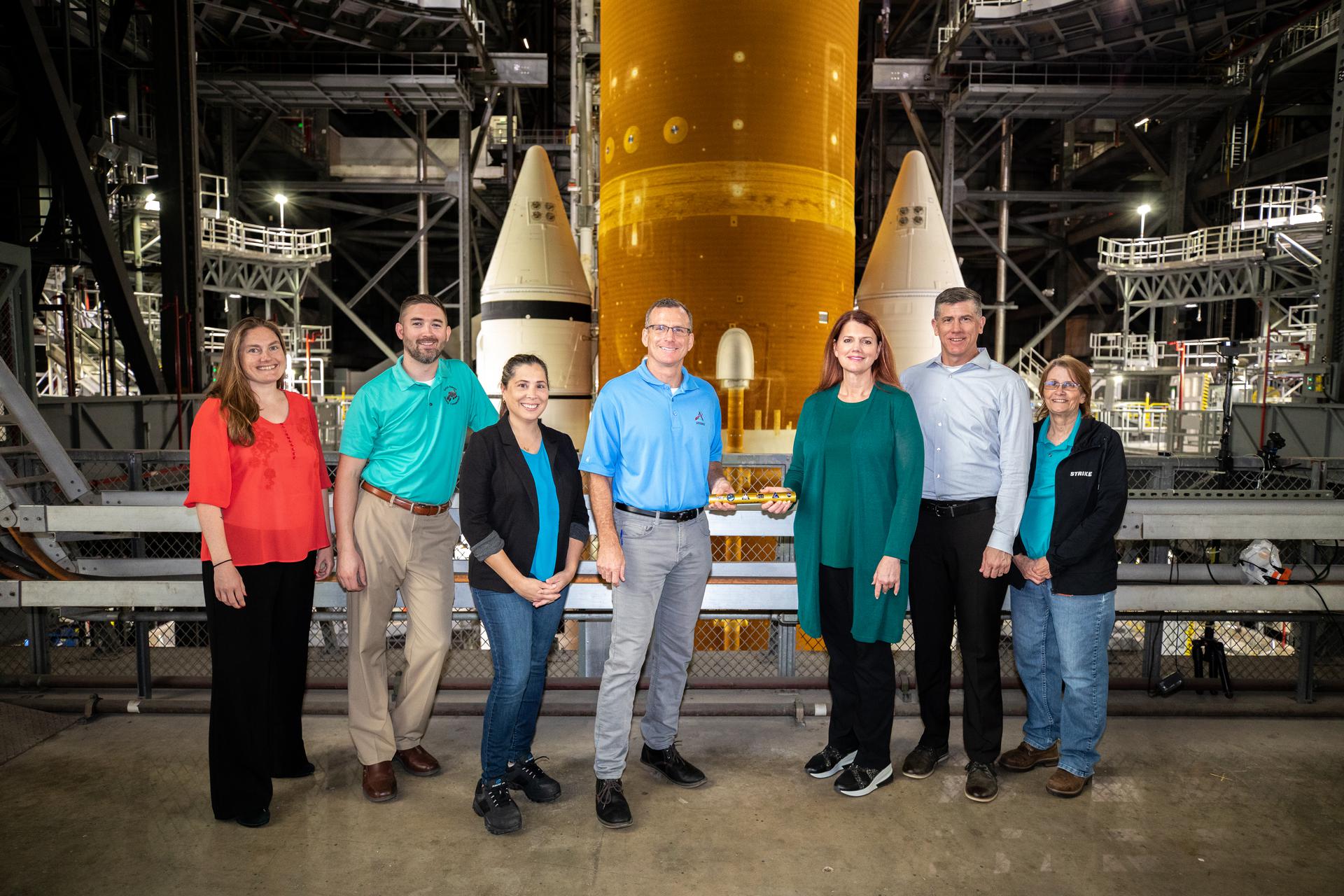
    Cliff Lanham, fourth from left, ground operations manager with Exploration Ground Systems (EGS), passes the baton to Charlie Blackwell-Thompson, Artemis I launch director, inside the Vehicle Assembly Building at NASA’s Kennedy Space Center in Florida on March 16, 2022. Joining them from left, are Stacey Bagg, Matt Czech, and Liliana Villareal, with EGS. Next to Blackwell-Thomson are Jeremy Graeber, deputy launch director, and Teresa Annulis.
    NASA/Glenn Benson

    “I kind of came in about a couple of years before we started processing Artemis I,” Villarreal said. “It took a while to get to the good parts of operations where it’s like, ‘Oh my god, we have everything here, and we’re starting to put everything together. And every day is a different day. Every day we have to figure out, ‘OK, what happened? How are we going to solve it?’ That’s the fun part about being an engineer out here.”

    Throughout her NASA career, she’s also had the opportunity to work in the operations division for the International Space Station Program.

    Every day I work on the Artemis missions, I imagine how the people who worked on Apollo felt because we are where they were back then.

    Liliana Villareal

    Liliana Villareal

    Artemis Landing & Recovery Director

    Currently, she and the team are training for Artemis II – the first crewed mission under Artemis to send four astronauts around the Moon and back. Part of the training includes rehearsing the steps and procedures to make sure they’re ready for crewed flights. This includes conducting underway recovery tests where NASA and U.S. Navy teams practice retrieving astronauts from a representative version of Orion at sea and bringing them and the spacecraft back to the ship.

    “I think it’s an amazing thing what we’re doing for humanity,” Villarreal said. “It’s going to better humanity, and it’s a steppingstone to eventually us living in other worlds. And I get to be part of that. You get to be part of that. How cool is that?”

    About the Author

    Antonia Jaramillo

    Antonia Jaramillo

  • Sols 4556-4558: It’s All in a Day’s (box)Work

    2 min read

    Sols 4556-4558: It’s All in a Day’s (box)Work

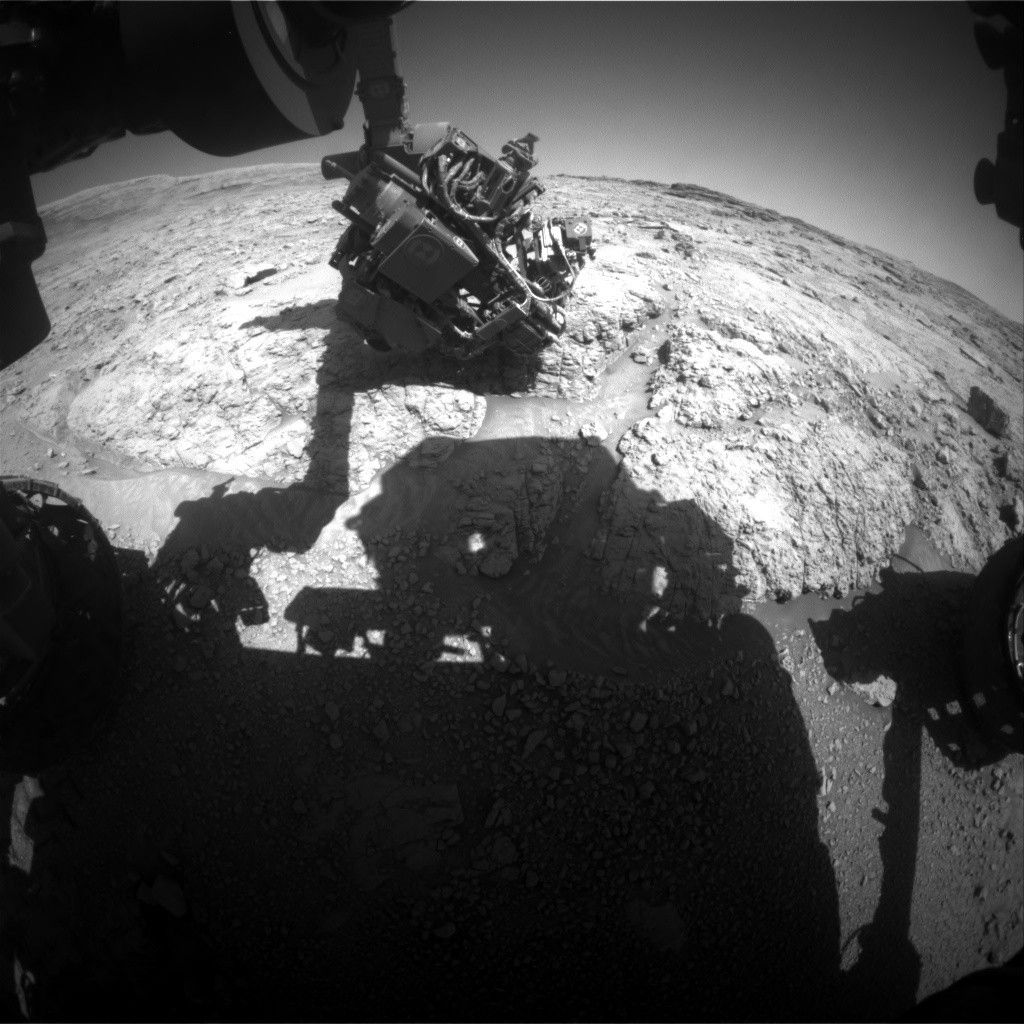
    A grayscale photo looking down at the Martian surface, showing very rough terrain in front of the Curiosity rover. Light gray, gravel-covered rocks are in bright sunlight in about half the frame, extending up diagonally toward the upper right corner of the image. A shadow silhouette of the rover covers most of the rest of the image, with its mast head and robotic arm appearing very prominently. Portions of the rover itself are shadowed but visible at the bottom of the image.
    NASA’s Mars rover Curiosity acquired this image using its Right Navigation Camera on June 2, 2025 — Sol 4558, or Martian day 4,558 of the Mars Science Laboratory mission — at 12:23:56 UTC.
    NASA/JPL-Caltech

    Written by Sharon Wilson Purdy, Planetary Geologist at the Smithsonian National Air and Space Museum

    Earth planning date: Friday, May 30, 2025

    When you are scheduled to participate in Science Operations for the rover’s weekend plan, you know it’s going to be a busy morning! Assembling the activities for Friday through Sunday (Sols 4556 through 4558) was no exception. I participated on this shift as the “keeper of the plan” for the geology and mineralogy theme group where I worked with members of the science and instrument teams to compile a set of observations for the rover to complete over the weekend. The rover continues to drive over a surface of shallow, sometimes sand-filled depressions that are separated by raised ridges — informally known as the “boxwork structures.” On this Friday, we were tasked with assessing the ground in our immediate vicinity to determine if the low-lying bedrock in the hollows was suitable for drilling.

    With a focus on packing the plan with remote sensing activities to understand the bedrock around us, we used the ChemCam laser to analyze the chemistry of two bedrock targets, “La Tuna Canyon” and “Cooper Canyon,” that were also documented by Mastcam. ChemCam and Mastcam also teamed up to image an interesting dark ridge nearby named “Encinal Canyon.” Mastcam created stereo mosaics to document the nature of the candidate drill sites that were near the rover, in addition to the “Blue Sky Preserve” stereo mosaic that beautifully captured the nature of the boxwork structures in front of us. The environmental theme group included some of their favorite activities in the plan to monitor the clouds, wind, and the atmosphere.

    Curiosity has successfully completed numerous long drives (about 20+ meters, or 66 feet and beyond) in the past several weeks but this weekend the rover got a bit of a reprieve — the rover will drive approximately 7 meters (about 23 feet) to get situated in front of a possible drill site. I’m eagerly looking forward to seeing what unfolds on Monday!  

    .

    Details

    Last Updated

    Jun 03, 2025

    Related Terms

  • Future Engineers Shine at NASA’s 2025 Lunabotics Robotics Competition

    4 Min Read

    Future Engineers Shine at NASA’s 2025 Lunabotics Robotics Competition

    Group of students from the University of Utah posing with their award

    And the winner is… the University of Utah in Salt Lake City. The Utah Student Robotics Club won the grand prize Artemis Award on May 22 for NASA’s 2025 Lunabotics Challenge held at The Astronauts Memorial Foundation’s Center for Space Education at the Kennedy Space Center Visitor Complex in Florida. 

    “Win was our motto for the whole year,” said Brycen Chaney, University of Utah, president of student robotics. “We had a mission objective to take our team and competition a step further, but win was right up front of our minds.”

    Lunabotics is an annual challenge where students design and build an autonomous and remote-controlled robot to navigate the lunar surface in support of the Artemis campaign. The students from the University of Utah used their robot to excavate simulated regolith, the loose, fragmented material on the Moon’s surface, as well as built a berm. The students, who competed against 37 other teams, won grand prize for the first time during the Lunabotics Challenge.

    “During the 16th annual Lunabotics University Challenge the teams continued to raise the bar on excavating, transporting, and depositing lunar regolith simulant with clever remotely controlled robots,” said Robert Mueller, senior technologist at NASA Kennedy for Advanced Products Development in the agency’s Exploration Research and Technology Programs Directorate, and lead judge and co-founder of the original Lunabotics robotic mining challenge. “New designs were revealed, and each team had a unique design and operations approach.”

    Students from University of Illinois Chicago receive first place for the Robotic Construction Award during the 2025 Lunabotics Challenge.
    NASA/Isaac Watson

    Other teams were recognized for their achievements: The University of Illinois Chicago placed first for the Robotic Construction Award. “It’s a total team effort that made this work,” said Elijah Wilkinson, senior and team captain at the University of Illinois Chicago. “Our team has worked long and hard on this. We have people who designed the robot, people who programmed the robot, people who wrote papers, people who wired the robot; teamwork is really what made it happen.”

    The University of Utah won second and the University of Alabama in Tuscaloosa came in third place, respectively. The award recognizes the teams that score the highest points during the berm-building operations in the Artemis Arena. Teams are evaluated based on their robot’s ability to construct berms using excavated regolith simulant, demonstrating effective lunar surface construction techniques.

    To view the robots in action from the Robot Construction Award winners, please click on the following links: University of Illinois Chicago, University of Utah, University of Alabama in Tuscaloosa.

    Picture shows a group of students from Purdue University holding an award and paper check.
    Students from Purdue University in Lafayette, Indiana received the Caterpillar Autonomy Award during the 2025 Lunabotics Challenge.
    NASA/Isaac Watson

    Students from Purdue University in Lafayette, Indiana received the Caterpillar Autonomy Award for their work. The University of Alabama placed second, followed by the University of Akron in Ohio. This award honors teams that successfully complete competition activities autonomously. It emphasizes the development and implementation of autonomous control systems in lunar robotics, reflecting real-world applications in remote and automated operations.

    An Artemis I flag flown during the Nov. 16, 2022, mission was presented to the University of Illinois Chicago, as well as the University of Virginia in Charlottesville as part of the Innovation Award. The recognition is given to teams for their original ideas, creating efficiency, effective results, and solving a problem.

    Dr. Eric Meloche from the College of DuPage in Glen Ellyn, Illinois, and Jennifer Erickson, professor from the Colorado School of Mines in Golden each received an Artemis Educator Award, a recognition for educators, faculty, or mentors for their time and effort inspiring students.

    The University of Utah received the Effective Use of Communications Power Award and the University of Virginia the agency’s Center for Lunar and Asteroid Surface Science Award.

    Picture shows college students posing for an award during the 2025 Lunabotics Challenge.
    Students from the Colorado School of Mines pose for a photo after receiving a Systems Engineering Award during the 2025 Lunabotics Competition.
    NASA/Isaac Watson

    Students from the Colorado School of Mines placed first receiving a Systems Engineering Award. University of Virginia in Charlottesville and the College of DuPage in Glen Ellyn, Illinois, came in second and third places.

    This is truly a win-win situation. The students get this amazing experience of designing, building, and testing their robots and then competing here at NASA in a lunar-like scenario while NASA gets the opportunity to study all of these different robot designs as they operate in simulated lunar soil. Lunabotics gives everyone involved new technical knowledge along with some pretty great experience.” 

    Kurt Leucht

    Kurt Leucht

    Commentator, Lunabotics Competition and Software Development team lead

    Below is a list of other awards given to students:

    • Systems Engineering Paper Award Nova Award: Liberty University in Lynchburg, Virginia; University of Virginia; College of DuPage
    • Best Use of Systems Engineering Tools: The University of Utah
    • Best Use of Reviews as Control Gates: The University of Alabama
    • Systems Engineering Paper Award Leaps and Bounds Award: The University of Miami in Florida
    • Best presentation award by a first year team: University of Buffalo in New York
    • Presentations and demonstrations awards: University of Utah, Colorado School of Mines, University of Miami

    About the Author

    Elyna Niles-Carnes

    Elyna Niles-Carnes

  • NASA Kennedy Digs Latest Robot Test

    Image shows a robot on a mound of simulated lunar soil with a man in a white bunny suit observing

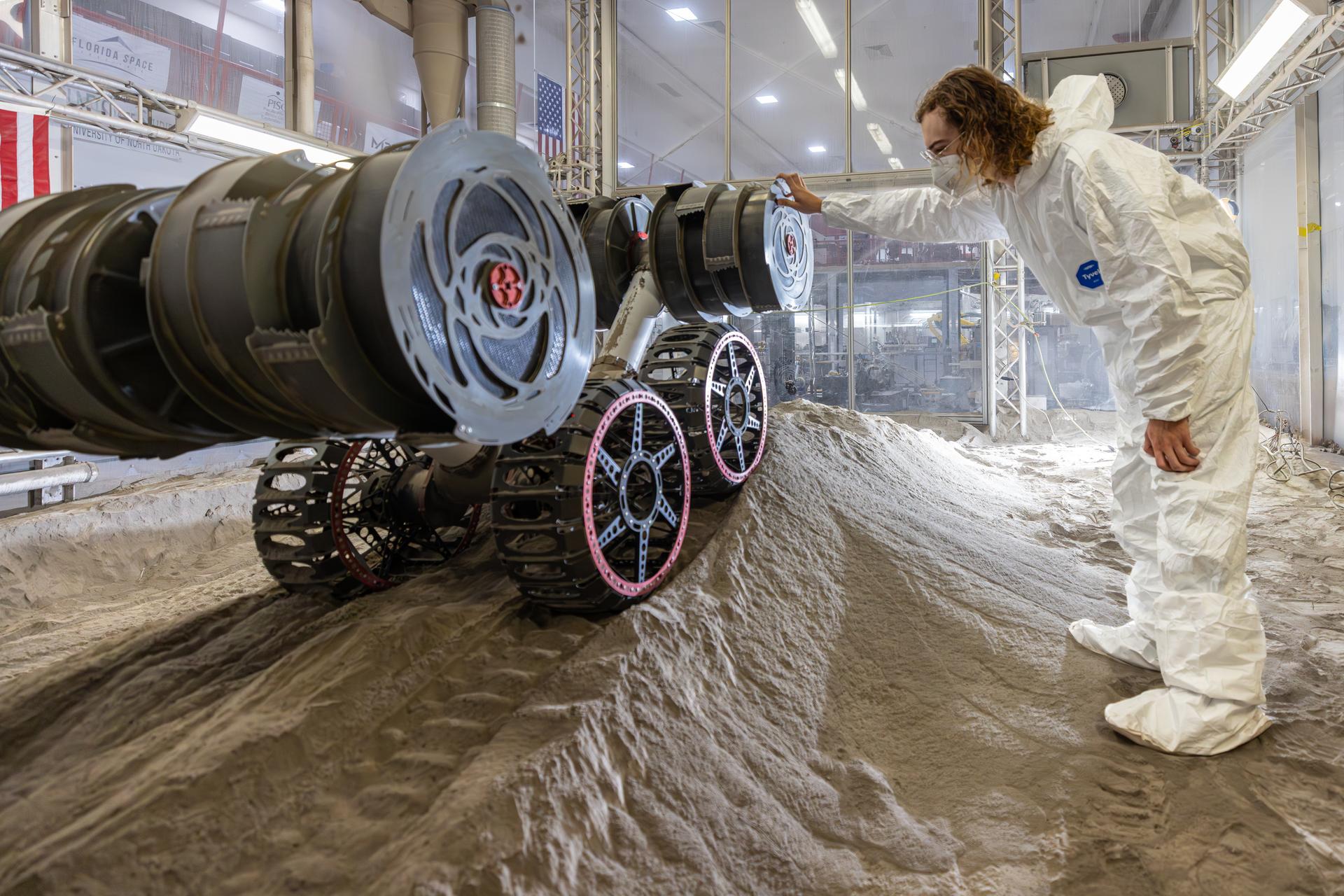
    NASA’s RASSOR (Regolith Advanced Surface Systems Operations Robot) undergoes testing to extract simulated regolith, or the loose, fragmental material on the Moon’s surface, inside of the Granular Mechanics and Regolith Operations Lab at the agency’s Kennedy Space Center in Florida on May 27. Ben Burdess, mechanical engineer at NASA Kennedy, observes RASSOR’s counterrotating drums digging up the lunar dust and creating a three-foot berm.

    The opposing motion of the drums helps RASSOR grip the surface in low-gravity environments like the Moon or Mars. With this unique capability, RASSOR can traverse the rough surface to dig, load, haul, and dump regolith that could later be broken down into hydrogen, oxygen, or water, resources critical for sustaining human presence.

    The primary objective was testing the bucket drums that will be used on NASA’s IPEx (In-Situ Resource Utilization Pilot Excavator). The RASSOR robot represents an earlier generation technology that informed the development of IPEx, serving as a precursor and foundational platform for the advanced excavation systems and autonomous capabilities now being demonstrated by this Moon-mining robot.

    Image credit: NASA/Frank Michaux

  • Take the Quiz

  • Interview with Dave Des Marais

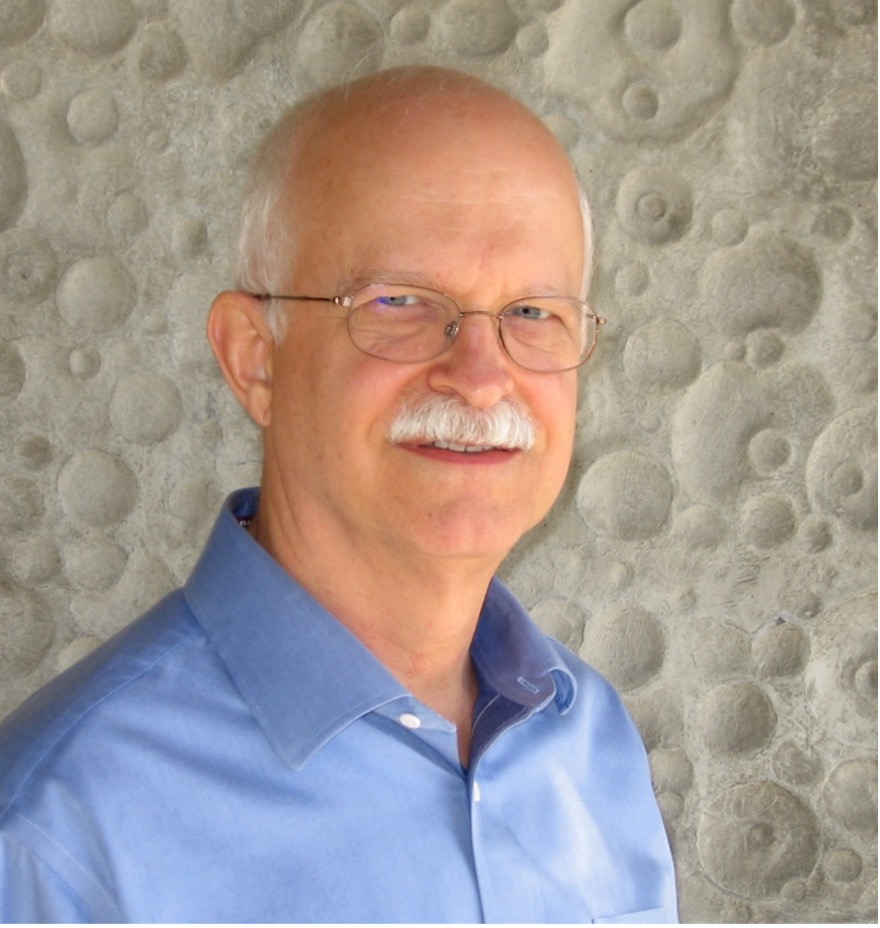
    Portrait of Des Morais wearing a blue collar button up dress shirt.
    Portrait of Dave Des Marais

    Let’s start with your childhood, where you’re from, your family at the time, if you have siblings, your early years, and when it was that you became interested in what has developed into your career as an astrophysicist or research scientist?

    I was born in Richmond, Virginia in 1948, the youngest of four siblings – two brothers, a sister and myself. My father was a civil engineer for DuPont chemical company and designed HVAC systems for plants built in the late 30’s and early 40’s for the war effort. Our family moved around frequently back then, so my siblings and I were born in different states. When our father transferred to  DuPont headquarters in Wilmington, Delaware, we moved to nearby Kennett Square, Pennsylvania, about 30 miles southwest of Philadelphia. During my childhood, my participation in outdoor activities with the Boy Scouts and my motivation by excellent high school chemistry and physics teachers stimulated my interest in the natural sciences.

    I attended Purdue University in Indiana in part because Purdue had an excellent chemistry curriculum and because my second older brother, whom I had always admired, received his chemical engineering degree there. As an undergraduate, I was particularly fascinated by the periodic table of the elements and analytical chemistry. Experiences outside the classroom were also important.  I noticed that another student in my dormitory had a little miner’s carbide headlamp on his desk. He explored caves as a member of the Purdue Outing Club and invited me to join. When we took caving and climbing trips in southern Indiana, I developed a fascination with geology, particularly about how caves form and about rocks generally. This kindled my interest in geochemistry, which ultimately guided my choices of graduate school and career. Three factors led to my decision in 1970 to attend Indiana University. One was IU’s strong geology and geochemistry programs. I also wanted to remain as near as possible to Shirley, my future spouse. The third reason was to continue exploring caves!

    While at IU I indeed continued cave exploration. I joined the Cave Research Foundation (CRF), which maps caves and supports research in the national parks, particularly in Mammoth Cave, Kentucky, which is the longest cave in the world, with 250 miles of mapped passageways. My involvement with CRF deepened my interest in other aspects of geology and geochemistry.

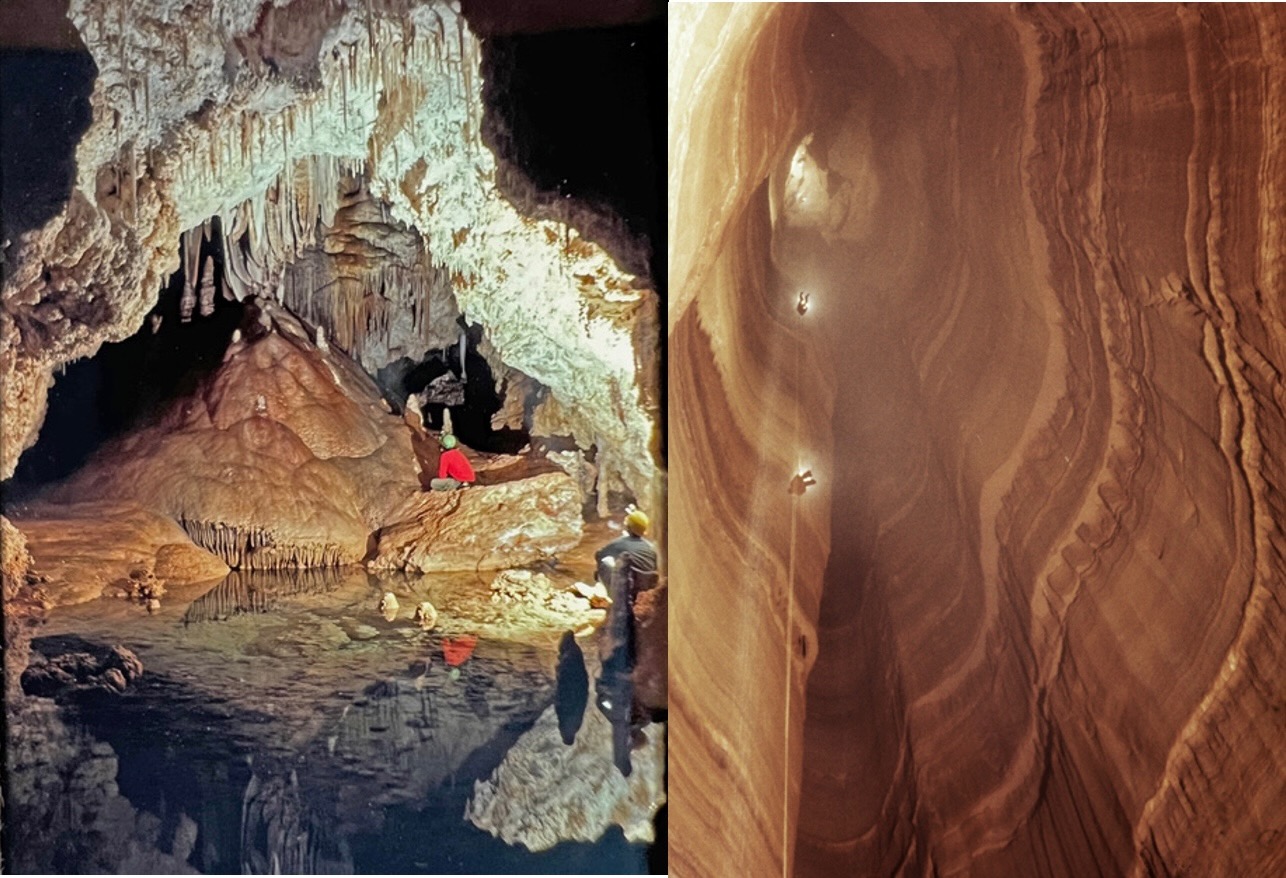
    Two photos side by side. The left showing cave in the Guadalupe Mountains of white, orange, and grey
    (left) Cave in the Guadalupe Mountains, NM (D. Des Marais, 1980). (right) Climbing the 510 ft.-pit in Ellisons Cave, GA (D. Des Marais, 1972)

    My NASA connection began when Dr. John Hayes became my graduate advisor in geochemistry. Hayes’ graduate dissertation had addressed organic compounds in meteorites. He was also involved with the Viking mission as a member of Klaus Bieman’s MIT research group, which created the mass spectrometer for the Mars Viking mission. I took Hayes’ class on mass spectrometry, and fortunately he liked my term paper! Soon after, I chose to do my dissertation with him on lunar sample analyses, focusing on carbon and other elements relevant to life. I first presented my work in 1972 at the third Lunar Science Conference, where I met Sherwood Chang, then chief of the Ames Exobiology branch. Sherwood was also investigating carbon and other elements in lunar samples. Sherwood, John, and others inspired me to continue in the space sciences.

    That’s an Interesting path because many of our researchers had a postdoc with somebody or attended a conference and met someone through that network and found their way to Ames that way.

    I then did a postdoctoral fellowship at UCLA with Dr. Isaac (Ian) Kaplan, whose biogeochemistry group also had analzed lunar samples. I continued developing methods for carbon isotopic analyses of very small samples. The carbon-13 to carbon-12 abundance ratios of molecules can offer clues about how they are formed. Isotopic measurements also help to identify contamination in meteorites and other extraterrestrial samples. Sherwood Chang wanted to create an isotope geochemistry laboratory in the Ames Exobiology Branch, and that led to my being hired at Ames in 1976.

    You mentioned contamination of the meteorites. Was it geo-contamination or contamination from elsewhere that concerned you?

    The basic analytical goal is to decipher the entire history of an extraterrestrial sample, starting with understanding the contents of an object when it was formed, which in most cases was billions of years ago. When an object was still in space, other events happened that altered its composition. But our major concern has been about what happens after a meteorite arrives here. Life has become so pervasive that its chemical ‘fingerprints’ are on virtually everything. It’s difficult to avoid these substances anywhere in the shallow Earth’s crust. Also, Earth is an inhospitable place for meteorites because its surface environments are relatively hot and moist compared to conditions in space. So our environment can alter the meteorites and add organic contamination.

    What has been your most interesting work here at Ames?

    I have had a near-unique opportunity to explore the biogeochemistry of carbon across a wide range of processes and environments that sustain our biosphere. I investigated the isotope geochemistry of carbon and nitrogen in lunar samples, meteorites, and oceanic basalts. Our molecular isotopic measurements of hydrocarbons in carbonaceous chondrites confirmed their extraterrestrial origins and provided clues about their synthesis. My measurements of mid-oceanic basalts and hydrocarbon gases in geothermal systems chracterized components from the mantle and from sedimentary organic carbon.

    Co-leading a field trip in Yellowstone National Park (2015)

    I participated in the Precambrian Paleobiology Research Group at U.C.L.A., led by Dr. J. W. Schopf. For example, we documented carbon isotopic evidence for the long-term evolution and oxygenation of Earth’s early environment. Later, I coordinated a long-term project to study the biogeochemistry of marine benthic microbial communities as modern analogs of Earth’s oldest known (>3 billion yr.-old) ecosystems. We characterized their enormous microbial diversity, their highly efficient harvesting of sunlight, their cycling of life-sustaining elements, and mechanisms for their fossilization in sedimentary rocks. These experiences, among others, informed me as I chaired the development of NASA’s Astrobiology Roadmaps in 2003 and 2008, and as I served as PI of Ames’ NASA Astrobiology Institute team from 1998 to 2014. These roles also informed my participation in NASA’s Mars Exploration Rover and Curiosity rover missions.

    Des Marais
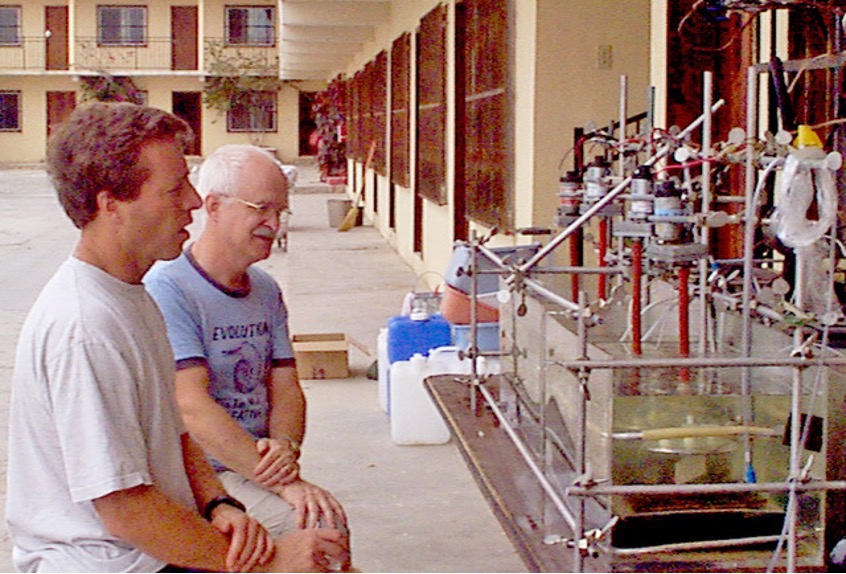
    Des Marais et al. with a microbial mat experiment in Baja California (2000)

    Now that you’ve described what your pursuit is, what your discipline or research interests are, how would you justify that to people who are not scientists as to why taxpayers should be funding this particular research for NASA?

    NASA’s research programs are uniquely positioned to explore and compare multiple planets, including Earth. All life depends critically upon interactions between organisms and the geological processes and climate of their host planet. My career has addressed these interactions in multiple ways. Studies such as these are important for understanding the future of life on Earth, and they also guide our search for evidence of life elsewhere and for planning human missions to other bodies in our solar system.

    A more specific answer to your question is that the public has been interested in any life on Mars. Searching for evidence of past or present life there requires environmental surveys and analyses to identify the most promising locations. NASA’s Viking mission illustrated why most of the Martian surface is really not suitable to look for evidence of life. At least 70% of the surface of Mars is clearly unsuitable, but the remaining more promising 30% is still a lot of territory. The surface area of Mars is equal to that of all the continents on Earth.  Much of my research has related to an assessment of habitability, namely, assessing the resources that an environment must provide to sustain life. Where are the best places to look? Our rovers have now visited places that we are convinced could have supported life some three or more billion years ago. The next questions are:  did any fossils survive and can we actually bring the right samples back to Earth to confirm any findings? 

    Also, could a human mission sustain itself there? Again, we must look for resources that might support life today. Geochemical analyses are a key aspect of that search. If we have any future interest in Mars related to astrobiology or to human missions, we need to assess the past habitability and the present life-sustaining resources of potential landing sites. The public generally supports these exploration goals.

    They do, that is true, and that’s really the answer to why NASA does what it does. It’s directed by Congress, and they are influenced by the public, by what the public wants. I’ve always thought, or at least for a long time, that robotic exploration is much more practical, but the country wants astronauts, that’s where the public support is.

    I agree totally!

    And so, we continue to do that, and they’ve done wonderful things. But the time will come when it’s not feasible to do astronautic things because we humans don’t live long enough given the distances involved.

    Certainly that’s applies for destinations beyond our solar system. And even if there is a human mission to Mars, astronauts are going to be in a station, with robots going out in all directions. So robots will be with us in many ways for the future.

    It’s a very fascinating career you’ve described and the work that has followed from it.

    Thanks! It’s certainly been very fulfilling personally.

    What advice might you give to a young person who sees what you’re doing, is intrigued by it, and would like to pursue it as a career, would like to become a researcher for NASA?

    The advice I would give a young person is just engage in multiple experiences. You don’t know what what will stimulate and motivate you until you try it. And once you find something in particular, like astrobiology, then apply to institutions, like universities or institutes that are involved. Go to a place where they’re doing stuff that’s related to astrobiology in some way. Secondly, see if you can get yourself in a lab and get some undergraduate research experience.

    As an example, what worked for my son? He’s not in astrobiology. He went to Berkeley as an undergraduate and wanted to be a physician. But then he had an opportunity to work in someone’s plant biology lab. By the time he was applying for graduate schools he was identifying professors with whom he might want to work.  Now, years later, he’s a professor in plant genetics at a major university. When I applied to graduate schools, my approach wasn’t nearly as rigorous as my son’s strategy! So, perhaps get an undergraduate experience in a lab and, in any case, get a sense of what’s interesting by giving yourself multiple experiences and not necessarily focusing too soon. That’s the most general advice.

    That is similar to what parents do with their children. They don’t know what their children are going to be interested in or would do well, so they expose them to music, to art, and to all kinds of things and with some of them there won’t be any connection, but at some point, they’ll be interested in something and want to pursue it. So, you’re right, get a broad exposure to a variety of things and something will resonate.

    Yes, the more experiences, the better chance you might hit something that really resonates for you.

    You’ve talked about your professional work and research interests but what do you do for fun?

    Well, along with a lot of the things I’ve already described, my interest in the outdoors has always been high. Our family has done a lot of hiking and travel.

    Do you still do caving or spelunking?

    I was still active after joining Ames in 1976. I got CRF involved at Sequoia-Kings Canyon National Park, and CRF is still working there. I’ve been fortunate to participate in this collaboration between CRF and the National Park Service at Mammoth Cave, Kentucky, Carlsbad Caverns, New Mexico, and Sequoia-Kings Canyon National Park, California. My active participation tapered off about the same time my involvement with Mars picked up in the 1990’s.

    Earlier, I mentioned a little miner’s carbide cap lamp in another student’s dormitory room that led me to the Outing Club, geology, and ultimately my career. So, over the years I’ve collected artifacts related to mining and interacted with folks who explore the history of mining and its economic importance. That has made me realize just how difficult were the lives of miners. What I hadn’t anticipated was how grateful I became that I am alive today and not 100+ years ago, or that I live in the US and not many other places today.

    I often feel that. There are a lot of places in the world where you can’t just go over to the wall and dial up the temperature you want. We are certainly blessed in that regard. So, the collecting has been kind of a hobby for you. Do you have any musical interest or talent, anything like that?

    I was pretty proficient at the piano until I got into high school. But I took up the saxophone and got into the high school band. Later, I joined the Purdue Marching Band and played at football games. That was a great experience but I didn’t continue beyond my college sophomore year. My daughter and son have continued on piano intermittently as an effective form of relaxation. This reminds me of Carl Pilcher (former NASA Senior Scientist for Astrobiology and Director of the NASA Astrobiology Institute) who was a really good pianist.

    I didn’t know that and that’s interesting to me because I knew Carl. This is one reason why we do these interviews, because there will be a number of people who will read this and they won’t have known that about Carl if they knew him, and that’s how these little things that we don’t know about people come out as we sit down and talk with each other. You’ve mentioned your wife, Shirley, and your son and your daughter.  Would you like to say anything else about your family? Or your pets, or things you like to do together or vacations, anything like that?

    Shirley and I have been married 54 years as of this interview. She was an elementary school teacher for more than 25 years. Her support was crucial while I was in graduate school. She became a full-time parent for our pre-school children but then returned to Redwood City schools for most of her teaching career. She then became deeply involved in the local chapter of the League of Women Voters, serving both as its chairman and in other leadership positions. Shirley is the keystone of our family and she has enabled my career achievements immeasurably.

    Our son is a is a molecular biologist. He went to Berkeley first aspiring to be a doctor probably because his high school biology teacher emphasized human physiology. At Berkeley he ventured from one interest to the next. He had not been inspired by plant biology in high school, probably because his teachers focused on rote memorization of facts. But later he gained research experience in a Berkeley plant lab and got really interested in them. He attended graduate school at Duke University and is now an assistant professor in plant genetics with the MIT civil engineering  department. Why, you ask, is a civil engineering department interested in plant genetics? MIT started a major climate change project and one key concern is how crops must adapt.  His specialty is plant water use efficiency, response to CO2 levels, and temperature, factors that would be affected by a changing climate.

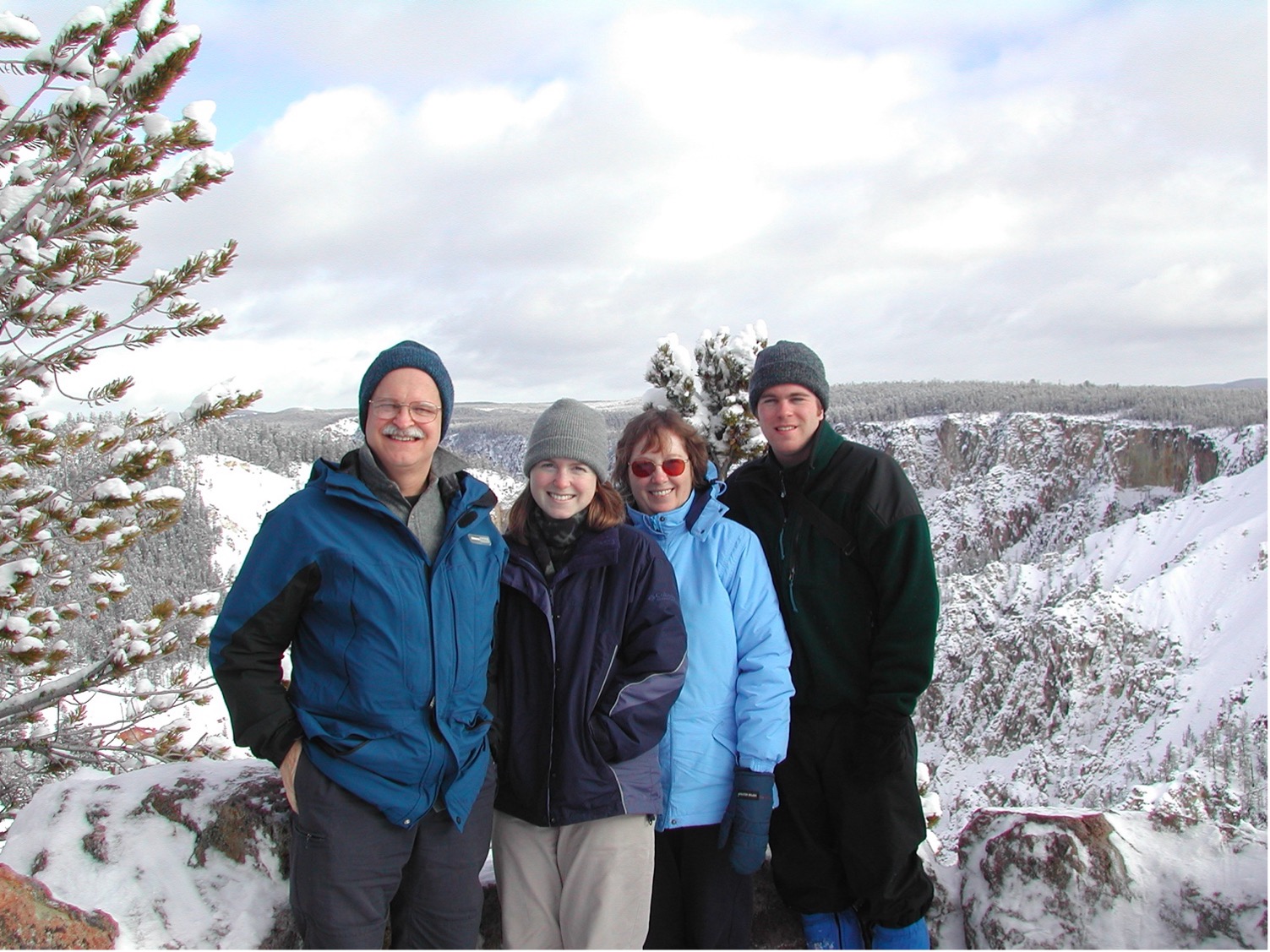
    Des Marais family in Yellowstone National Park (2001)

    Our daughter also attended Berkeley. She studied international economics of developing countries. She is good at math and also interested in social issues, so that curriculum motivated her. But her ultimate career choice arose from the focus on developing countries and her experiences in South America when she spent a semester at a university in Chile, and then worked with nonprofit organizations in Brazil. She then got a master’s degree in public health at the University of North Carolina.  She’s still involved in public health in North Carolina, working with a foundation that advises county health departments about treatments for drug addiction. The government has provided funds for counties, especially rural counties. She leads a group that’s advising them on how to administer these funds effectively.

    That’s very commendable. You should be proud of her as well.

    Yeah, we certainly are.

    We also had cats from the early ‘70’s up until maybe 2010 or something like that. We eventually achieved ‘parental freedom’ when the kids moved away and the pets passed away.  But our our family’s legacy lives on: both our son and our daughter have multiple cats in their houses! (laughs)

    We had cats too, and enjoyed them. My wife used to have to go away for a week or so every month to tend her parents, who were getting elderly, because she wanted to keep them in their home. I used to think it was funny that people talked to their pets, but when she was away, I talked to the cat all the time! I really enjoyed having her around. She would curl up on my lap if I was watching TV. She was good company.

    Yeah, no kidding. Dogs especially are like little kids that never grow up!

    Yes!

    One of the questions we like to ask is who or what has inspired you along your life path?

    My high school chemistry teacher inspired me about chemistry. He was also an outdoorsman type. My older brother was involved in Boy Scouts, and that also nurtured my interest in Scouts and the outdoors.

    At the time I was enrolled at Purdue University, a geology department had recently started and three faculty occupied the basement of an engineering building. Dr. Levandowski advocated that geochemistry might actually be a good match for me. At Indiana University, John Hayes, my thesis advisor, was very accomplished, charismatic, and inspirational. He was recognized internationally and ultimately inducted into the National Academy of Sciences. And, of course, Sherwood Chang and Chuck Klein helped inspire and guide my early career at Ames.

    Do you read for pleasure and if so, what do you like to read? What genre do you enjoy?

    I do not read fiction for pleasure.  I frequently read popular science and technology articles, so I guess that’s my pleasure reading. It’s still science, but it’s science that extends well beyond my own work, and I find that interesting.

    Absolutely it is.  I don’t read enough for pleasure. I buy a lot of books that I intend to read, but I just never get around to them. My wife says, in jest I think, when I’m gone, she’s going to have a big bonfire and burn all of them because they take up a lot of space. I would like to live to be 200 and read all of them, but I know I won’t! (laughs)

    One of the things that we like to do is add pictures to these interviews, of things we talked about, or any images that you particularly like.  What picture might you have on the wall there in your office, or perhaps in your home?  You could add something later after thinking about it a bit.  I had a map of the world, a satellite image of the world at night, in my office for a time. You’ve probably seen it. I was fascinated by it because you could tell so much about the countries by the lighting, the different colors, where it was and where it wasn’t.

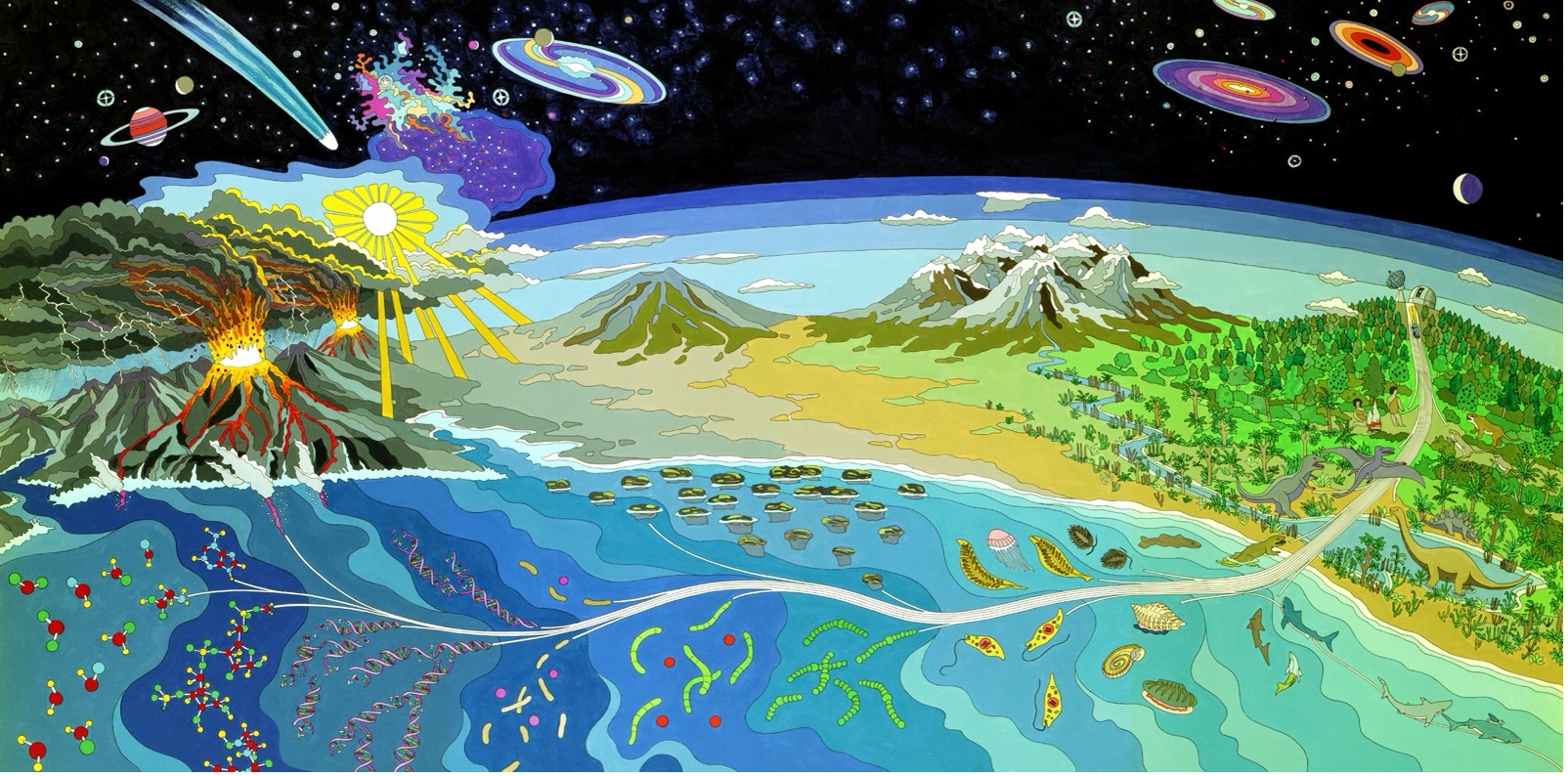
    I have a big map of the world that emphasizes geology and particularly shows a lot of details about the ocean floor, especially with the volcanoes and all the features there. And you’ve probably seen the exobiology mural? it was in building N-200.

    I think I know which one you’re talking about. It has sea life coming up from the ocean on one side across the land and up to the stars on the other side.

    Exobiology panorama featuring blue oceans, colorful purple and red space with spaceships and planets, and greenery that looks like
    Exobiology panorama (D. Des Marais, L. Jahnke, T. Scattergood, 1988)

    That’s right. Linda Jahnke, Tom Scattergood, and I created that back in 1980’s.

    You did?

    Yeah. When the art department made copies, I got one for my office, and several others have copies also.

    Oh, that’s wonderful. If you have an image of that you could include it when you send me back your edited transcript, and we could put it in and attribute it to you, Linda, and Tom.

    OK. That mural touches on several research topics I’ve addressed during my career. So, it would be a good one to include.

    We also ask if there is a favorite quote that has been particularly meaningful to you. We can put that in, too.

     ‘Life is what happens while you are busy making other plans’ (John Lennon)

    ‘We make a living by what we get, but we make a life by what we give.’ (the attribution to Winston Churchill is controversial)

    Thank you for getting in touch with me and for sitting down for an hour to do this. I will get this into a format where you can edit it. And then we’ll make a post out of it. And I think you’ll be pleased. And if not, you’ll have only yourself to blame! (laughs)

    That’s very cagey of you! (laughs) But then again, you’ve done this for quite a while.
    Your approach is quite sophisticated, so I appreciate that. I also appreciate your effort because so often stuff like this just disappears from history.

    Well, thank you, Dave. I’ve appreciated the chat and thank you for your time. We’ll make something out of it.

    Thanks for your commitment and for pursuing me to do this. Take care.

    You’re welcome.

    ________________________________________________

    Interview conducted by Fred Van Wert on January 13, 2025
  • NASA’s Webb Rounds Out Picture of Sombrero Galaxy’s Disk

    5 Min Read

    NASA’s Webb Rounds Out Picture of Sombrero Galaxy’s Disk

    An observation of the Sombrero galaxy. The galaxy is a very oblong, brownish yellowish disk that extends from left to right at an angle (from about 10 o’clock to 5 o’clock). The galaxy’s center glows white and extends above and below the disk.

    NASA’s James Webb Space Telescope’s new image of the famous Sombrero galaxy in near-infrared wavelengths shows dust from the outer ring blocking stellar light from the inner portions of the galaxy.

    Credits:
    NASA, ESA, CSA, STScI

    After capturing an image of the iconic Sombrero galaxy at mid-infrared wavelengths in late 2024, NASA’s James Webb Space Telescope has now followed up with an observation in the near-infrared. In the newest image, the Sombrero galaxy’s huge bulge, the tightly packed group of stars at the galaxy’s center, is illuminated, while the dust in the outer edges of the disk blocks some stellar light.

    Image A: Sombrero Galaxy (NIRCam)

    An observation of the Sombrero galaxy. The galaxy is a very oblong, brownish yellowish disk that extends from left to right at an angle (from about 10 o’clock to 5 o’clock). The galaxy’s center glows white and extends above and below the disk.
    NASA’s James Webb Space Telescope’s new image of the famous Sombrero galaxy in near-infrared wavelengths shows dust from the outer ring blocking stellar light from the inner portions of the galaxy.
    NASA, ESA, CSA, STScI

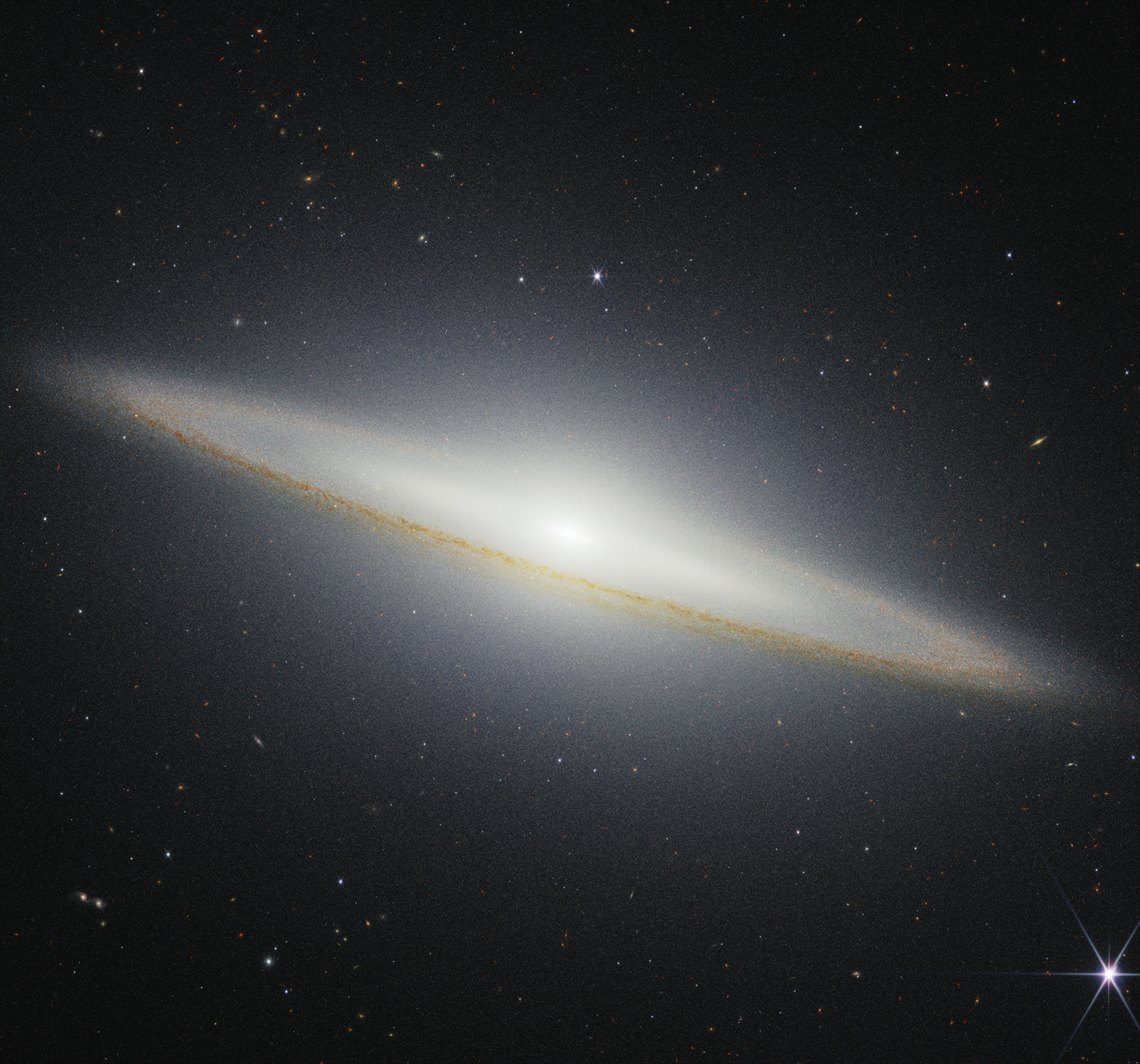
    Studying galaxies like the Sombrero at different wavelengths, including the near-infrared and mid-infrared with Webb, as well as the visible with NASA’s Hubble Space Telescope, helps astronomers understand how this complex system of stars, dust, and gas formed and evolved, along with the interplay of that material.

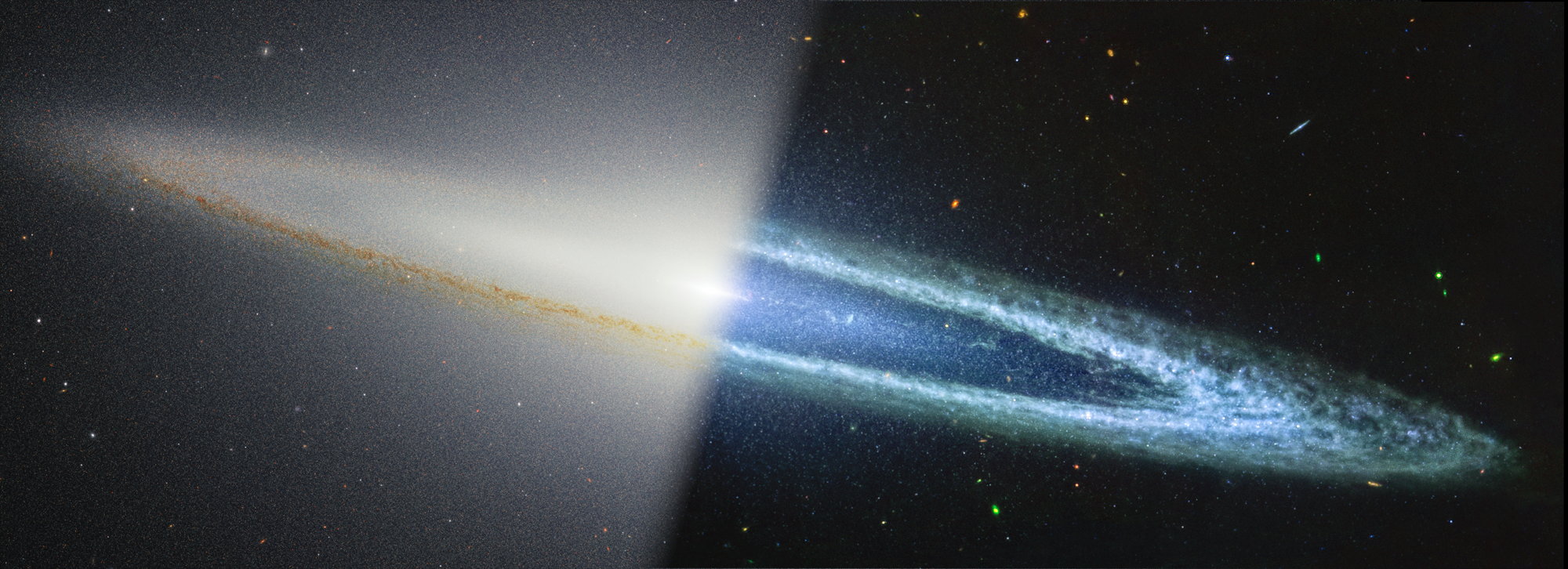
    When compared to Hubble’s visible light image, the dust disk doesn’t look as pronounced in the new near-infrared image from Webb’s NIRCam (Near-Infrared Camera) instrument. That’s because the longer, redder wavelengths of infrared light emitted by stars slip past dust more easily, so less of that stellar light is blocked. In the mid-infrared image, we actually see that dust glow.

    Image B: Sombrero Galaxy (NIRCam/MIRI)

    Two observations of the Sombrero galaxy are split diagonally, with Webb’s near-infrared observation at the left and Webb’s mid-infrared observation on the right. The galaxy is a very oblong disk that extends from left to right at an angle, from about 10 o’clock to 5 o’clock. The galaxy’s core is in the center. In the near-infrared image at left, the galaxy’s center glows white and extends above and below the disk. The outer edge of the disk is mottled brown clumps. In the mid-infrared image, the galaxy is light blue and clumpy, like clouds in the sky. There is an inner disk that is clearer, with speckles of stars scattered throughout. The background of space is black, scattered with tiny dots in a range of colors.
    The Sombrero galaxy is split diagonally in this image: near-infrared observations from NASA’s James Webb Space Telescope are at the left, and mid-infrared observations from Webb are at the right.
    NASA, ESA, CSA, STScI

    The Sombrero galaxy is located about 30 million light-years away from Earth at the edge of the Virgo galaxy cluster, and has a mass equal to about 800 billion Suns. This galaxy sits “edge on” to us, meaning we see it from its side.

    Studies have indicated that hiding behind the galaxy’s smooth dust lane and calming glow is a turbulent past. A few oddities discovered over the years have hinted this galaxy was once part of a violent merger with at least one other galaxy.

    The Sombrero is home to roughly 2,000 globular clusters, or collections of hundreds of thousands of old stars held together by gravity. Spectroscopic studies have shown the stars within these globular clusters are unexpectedly different from one another.

    Stars that form around the same time from the same material should have similar chemical ‘fingerprints’ – for example, the same amounts of elements like oxygen or neon. However, this galaxy’s globular clusters show noticeable variation. A merger of different galaxies over billions of years would explain this difference.

    Another piece of evidence supporting this merger theory is the warped appearance of the galaxy’s inner disk.

    While our view is classified as “edge on,” we’re actually seeing this nearly edge on. Our view six degrees off the galaxy’s equator means we don’t see it directly from the side, but a little bit from above. From this view, the inner disk appears tilted inward, like the beginning of a funnel, instead of flat.

    Video A: Sombrero Galaxy Fade (Visible, Near-Infrared, Mid-Infrared)

    This video compares images of the Sombrero galaxy, also known as Messier 104 (M104). The first image shows visible light observed by the Hubble Space Telescope’s Advanced Camera for Surveys. The second is in near-infrared light and shows NASA’s Webb Space Telescope’s look at the galaxy using NIRCam (Near-Infrared Instrument). The final image shows mid-infrared light observed by Webb’s MIRI (Mid-Infrared Instrument).
    Credit: NASA, ESA, CSA, STScI

    The powerful resolution of Webb’s NIRCam also allows us to resolve individual stars outside of, but not necessarily at the same distance as, the galaxy, some of which appear red. These are called red giants, which are cooler stars, but their large surface area causes them to glow brightly in this image. These red giants also are detected in the mid-infrared, while the smaller, bluer stars in the near-infrared “disappear” in the longer wavelengths.

    Also in the NIRCam image, galaxies of diverse shapes and colors are scattered throughout the backdrop of space. The variety of their colors provides astronomers with clues about their characteristics, such as their distance from Earth.

    The James Webb Space Telescope is the world’s premier space science observatory. Webb is solving mysteries in our solar system, looking beyond to distant worlds around other stars, and probing the mysterious structures and origins of our universe and our place in it. Webb is an international program led by NASA with its partners, ESA (European Space Agency) and CSA (Canadian Space Agency).

    To learn more about Webb, visit:

    https://science.nasa.gov/webb

    Downloads

    Click any image to open a larger version.

    View/Download all image products at all resolutions for this article from the Space Telescope Science Institute.

    Media Contacts

    Laura Betz – laura.e.betz@nasa.gov
    NASA’s Goddard Space Flight Center, Greenbelt, Md.

    Hannah Braunhbraun@stsci.edu
    Space Telescope Science Institute, Baltimore, Md.

    Christine Pulliamcpulliam@stsci.edu
    Space Telescope Science Institute, Baltimore, Md.

    Article: Types of Galaxies

    Video: Different types of galaxies

    Article: Sombrero Galaxy’s Halo Suggests Turbulent Past

    More Images: Images of the Sombrero Galaxy in different types of light

    Video: Sonification of Sombrero Galaxy images

    More Webb News

    More Webb Images

    Webb Science Themes

    Webb Mission Page

    What is the Webb Telescope?

    SpacePlace for Kids

    En Español

    Ciencia de la NASA

    NASA en español 

    Space Place para niños