Category: Solar system

http://www.nasa.gov/rss/dyn/solar_system.rss

  • Mars Roundtrip Success Enabled by Integrated Cooling through Inductively Coupled LED Emission (MaRS ICICLE)

    3 min read

    Preparations for Next Moonwalk Simulations Underway (and Underwater)

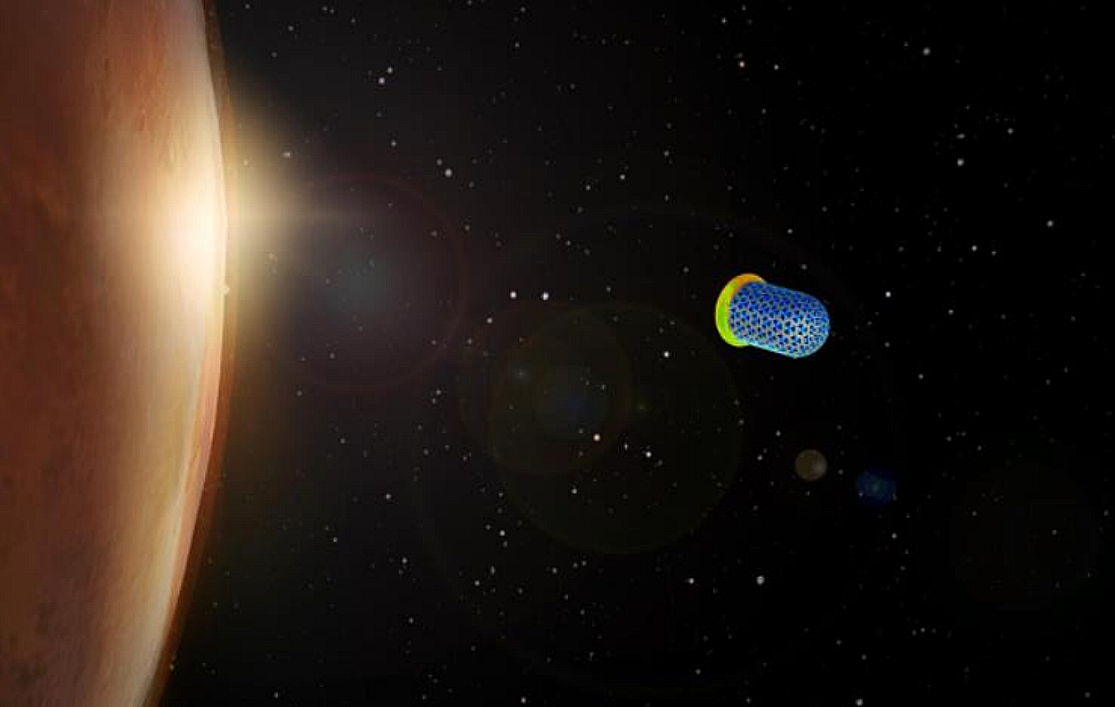
    Artist concept highlighting the novel approach proposed by the 2025 NIAC awarded selection of MaRS ICICLE concept.
    NASA/Aaswath Pattabhi Raman

    Aaswath Pattabhi Raman
    University of California, Los Angeles

    Exploration of Mars has captivated the public in recent decades with high-profile robotic missions and the images they have acquired seeding our collective imagination. NASA is actively planning for human exploration of Mars and laid out some of the key capabilities that must be developed to execute successful, cost-effective programs that would put human beings on the surface of another planet and bring them home safely. Efficient, flexible and productive round-trip missions will be key to further human exploration of Mars. New round-trip mission concepts however need substantially improved long-duration storage of cryogenic propellants in various space environments; relevant propellants include liquid Hydrogen (LH2) for high specific impulse Nuclear Thermal Propulsion (NTP) which can be deployed in strategic locations in advance of a mission. If enabled, such LH2 storage tanks could be used to refill a crewed Mars Transfer Vehicle (MTV) to send and bring astronauts home quickly, safely, and cost-effectively. A well-designed cryogenic propellant storage tank can reflect the vast majority of photons incident on the spacecraft, but not all. In thermal environments like Low Earth Orbit (LEO), there is residual heating due to light directly from the Sun, sunlight reflected off Earth, and blackbody thermal radiation from Earth. Over time, this leads to some of the propellant molecules absorbing the requisite latent heat of vaporization, entering the gas phase, and ultimately being released into space to prevent an unsustainable build-up of pressure in the tank. This slow “boil-off” process leads to significant losses of the cryogenic liquid into space, potentially leaving it with insufficient mass and greatly limiting Mars missions. We propose a breakthrough mission concept: an ultra-efficient round-trip Mars mission with zero boil off of propellants. This will be enabled by low-cost, efficient cryogenic liquid storage capable of storing LH2 and LOx with ZBO even in the severe and fluctuating thermal environment of LEO. To enable this capability, the propellant tanks in our mission will employs thin, lightweight, all-solid-state panels attached to the tank’s deep-space-facing surfaces that utilize a long-understood but as-yet-unrealized cooling technology known as Electro-Luminescent Cooling (ELC) to reject heat from cold solid surfaces as non-equilibrium thermal radiation with significantly more power density than Planck’s Law permits for equilibrium thermal radiation. Such a propellant tank would drastically lower the cost and complexity of propulsion systems for crewed Mars missions and other deep space exploration by allowing spacecraft to refill propellant tanks after reaching orbit rather than launching on the much larger rocket required to lift the spacecraft in a single-use stage. To achieve ZBO, a storage spacecraft must keep the storage tank’s temperature below the boiling point of the cryogen (e.g., < 90 K for LOx and < 20 K for liquid H2). Achieving this in LEO-like thermal environments requires both excellent reflectivity toward sunlight and thermal radiation from the Earth, Mars and other nearby bodies as well as a power-efficient cooling mechanism to remove what little heat inevitably does leak in, a pair of conditions ideally suited to the ELC cooling systems that will makes our full return-trip mission to Mars a success.

    2025 Selections

    Details

    Last Updated

    May 27, 2025

    Editor
    Loura Hall

  • Gravity Poppers: Hopping Probes for the Interior Mapping of Small Solar System Bodies

    2 min read

    Preparations for Next Moonwalk Simulations Underway (and Underwater)

    Artist illustration depicting futuristic Gravity Poppers concept with
    Artist concept highlighting the novel approach proposed by the 2025 NIAC awarded selection of Gravity Poppers: Hopping Probes for the Interior Mapping of Small Solar System Bodies concept.
    NASA/Benjamin Hockman

    Benjamin Hockman
    NASA Jet Propulsion Laboratory

    The goal of this effort is to develop a robust and affordable mission architecture that enables the gravimetric density reconstruction of small body interiors to unprecedented precision. Our architecture relies on the novel concept of “Gravity Poppers,” which are small, minimalistic probes that are deployed to the surface of a small body and periodically “pop” so as to perpetuate a random hopping motion around the body. By tracking a large swarm of poppers from orbit, a mother spacecraft can precisely estimate their trajectories and continuously refine a high-resolution map of the body’s gravity field, and thus, its internal mass distribution. Hopping probes are also equipped with minimalistic in-situ sensors to measure the surface temperature (when landed) and strength (when bouncing) in order to complement the gravity field and build a more accurate picture of the interior. The Phase I study focused on feasibility assessment of three core technologies that enable such a mission: (1) the mechanical design of hopping probes to be small, simple, robust, and “visible” to a distant spacecraft, (2) the tracking strategy for detecting and estimating the trajectories of a large number of ballistic probes, and (3) the algorithmic framework by which such measurements can be used to iteratively refine a gravity model of the body. The key finding was that the concept is feasible, and demonstrated to have the potential to resolve extremely accurate gravity models, allowing scientists to localize density anomalies such as “weighing” large boulders on the surface. This Phase II Proposal aims to further develop these three core technologies through continued mission trade studies and sensitivity analysis, case studies for simulated missions, and hardware prototypes demonstrating both hopping behavior and tracking performance.

    2025 Selections

    Details

    Last Updated

    May 27, 2025

    Editor
    Loura Hall

  • Johnson’s Paige Whittington Builds a Symphony of Simulations

    What do music ensembles and human spaceflight have in common? They require the harmonization of different elements to create an inspiring opus.

    NASA’s Paige Whittington has experience with both.

    As a principal flutist for Purdue University’s Wind Ensemble, Whittington helped fellow flutists play beautiful music together while pursuing her graduate degree. Now, as a space exploration simulation architect at Johnson Space Center in Houston, she strives for a cross-team harmony that can inform the agency’s Moon to Mars exploration approach.

    “Simulation often sits at the intersection of several teams because we integrate various designs and mission requirements,” she said. “We have to learn how to best fit those teams and their priorities together to enable cutting-edge human exploration.”

    A white woman with long brown hair, wearing a blue blouse and black cardigan, sits in front of an American flag and a NASA flag.
    Official NASA portrait of Paige Whittington.
    NASA/Josh Valcarcel

    Whittington is part of the NASA Exploration Systems Simulations (NExSyS) team, which develops physics-based simulations to evaluate various vehicles and mission concepts. Her role includes working with lunar and Mars architecture teams within NASA’s Strategy and Architecture Office to assess current and potential future elements of vehicle design, logistics, and planning.

    “Our simulations help inform engineers, astronauts, and managers about the new, challenging environments that await us on the Moon and Mars,” she said.

    One of the most challenging and rewarding projects she is working on is the Artemis Distributed Simulation. “NExSyS develops and maintains several individual simulations such as rovers, landers, and habitats. However, human exploration on other planetary bodies requires careful integration and coordination of these individual pieces,” she explained.

    The distributed simulation brings those pieces together to enable agency teams to envision a complete Artemis mission to the lunar surface. Different elements can be added or removed to create a wide variety of scenarios. The simulation can run automatically with predetermined settings or be responsive to real-time and randomized changes. Participants can operate the team’s video walls, mock-up mission control console, virtual reality platforms, and lander piloting facility to interact together within the chosen Artemis mission scenario.

    A woman wearing a black skirt and tank top stands in front of a video wall playing a simulation of a rover on the lunar surface.
    Paige Whittington standing in front of the Video Wall used for human-in-the-loop simulations located inside the Systems Engineering Simulator facility at NASA’s Johnson Space Center.
    Image courtesy of Paige Whittington

    “I am very proud to know that the simulations I help develop have impacted some of the decisions being made by NASA’s architecture teams,” she said.

    She is excited to take on a new responsibility, as well. Whittington recently became project manager of the JSC Engineering Orbital Dynamics software package. Also known as JEOD, this open-source tool was created by NASA to model spacecraft trajectories, such as proposed flight paths for a lunar lander. JEOD calculates gravitational and other environmental forces acting on spacecraft to simulate the position and orientation of those vehicles over time, whether they are orbiting a cosmic body or traveling between planets.

    Whittington’s family moved frequently during her childhood, calling five different states home as she grew up. Their time in Florida would have a life-long impact.

    “My parents drove me and my sister across the state to visit NASA’s Kennedy Space Center. It was mesmerizing, awe-inspiring, and seemingly a whole different world from where my 8-year-old self thought I was living,” she said. Her love of space never waned, and a high school physics teacher encouraged her to study aerospace engineering in college. “That was the turning point when I realized space exploration didn’t have to stay in my dreams – it was a career field I could actually work in.”

    Whittington took her teacher’s advice, earning a bachelor’s degree in aerospace engineering from the University of Texas at Austin. She also completed two internships at Johnson through the Universities Space Research Association and interned with a NASA contractor after graduation.  While pursuing a master’s degree in Aeronautics and Astronautics at Purdue, Whittington was accepted to NASA’s Pathways Program and did two rotations with the Simulation and Graphics Branch before joining the team as a full-time employee in June 2022.

    A woman in casual clothes poses with a cardboard cutout of an instagram photo frame.
    Paige Whittington celebrating the launch of Artemis I at Johnson Space Center in 2022.
    Image courtesy of Paige Whittington

    Whittington has learned several key lessons during her five years with NASA, including the essential part open, regular communication plays in understanding an individual’s or team’s core needs and limitations. She also stressed the importance of adaptability.

    “The path that you planned for may not be the path you end up choosing. But that planning enabled you to be who you are now and to make different choices,” she said. “I did not anticipate working in simulations when I started my aerospace engineering degree, but I took the opportunity when it was presented, and I am so happy that I did.”

  • Summary of the 2024 SAGE III/ISS Meeting

    19 min read

    Summary of the 2024 SAGE III/ISS Meeting

    Introduction

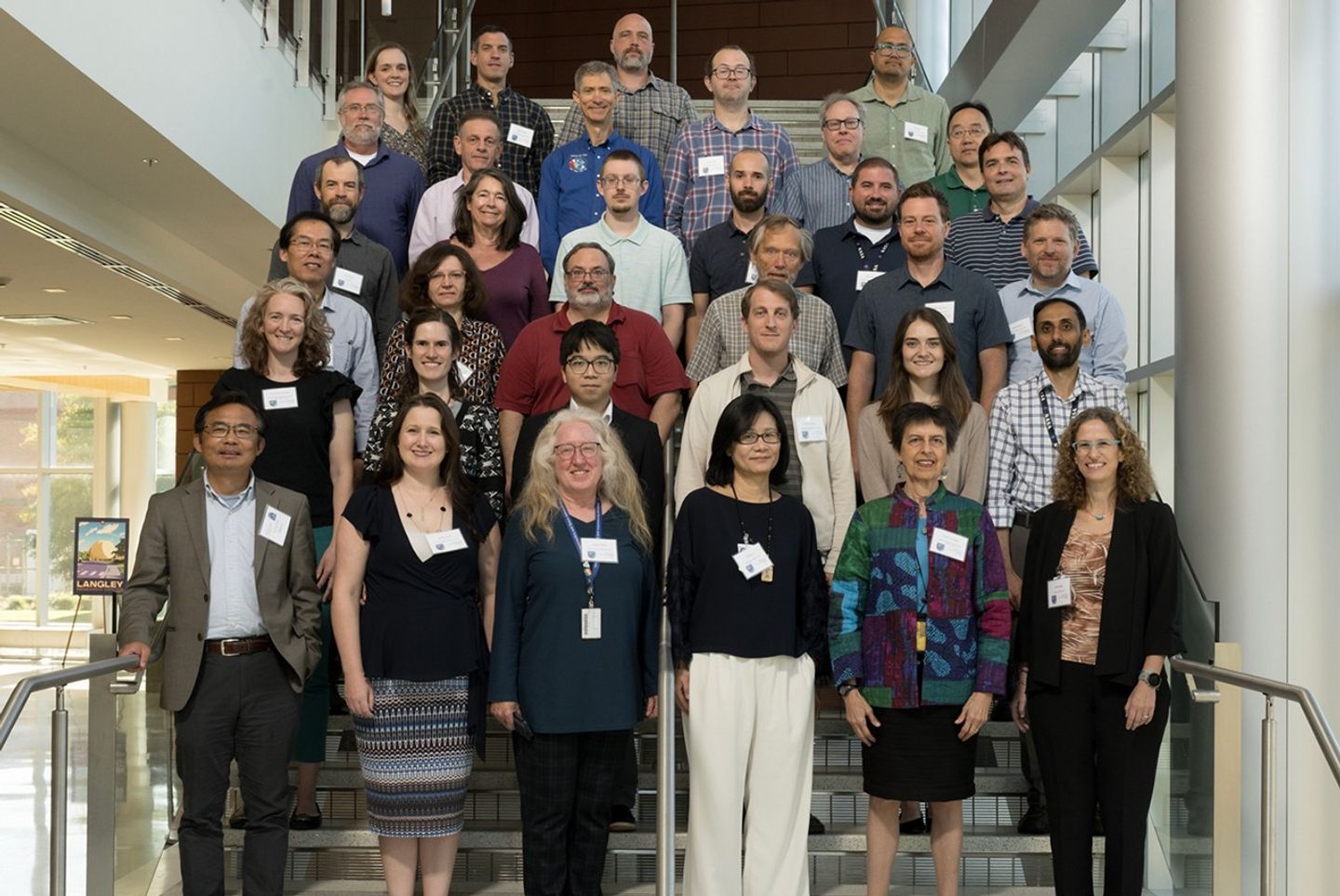
    The Stratospheric Aerosol and Gas Experiment (SAGE) III/International Space Station [SAGEIII/ISS] Science Team Meeting (STM) took place on October 22–23, 2024, in a hybrid format. Approximately 50 scientists attended in person at NASA’s Langley Research Center (LaRC) – see Photo. Participants included researchers from U.S. universities, NASA LaRC, NASA’s Goddard Space Flight Center (GSFC), the NASA/Jet Propulsion Laboratory (JPL), and National Oceanic and Atmospheric Administration (NOAA) laboratories. Speakers from Canada and Germany also attended.

    The history of the SAGE missions, the development and accomplishments of the SAGE III/ISS mission, and a summary of the 2022 STM appear in a previous article –  see “Summary of the SAGE III/ISS Science Team Meeting,” in The Earth Observer, May–June 2023, 35:3, 11–18.

    This article will summarize the content and key outcomes from the 2024 STM. The full agenda and presentations can be viewed at the SAGE III/ISS website. To access the presentations, use the link provided, then click on the Science Team tab and scroll about halfway down the page to find the 2024 meeting where they are listed.

    SAGE 3 photo
    Photo. Group photo of the in-person attendees of the SAGE III/ISS science team meeting, which took place at NASA’s Langley Research Center October 22–23, 2024.
    Photo Credit: NASA

    DAY ONE

    Jun Wang [University of Iowa—SAGE III/ISS Science Team Leader] and David Flittner [LaRC—SAGE III/ISS Project Scientist] kicked off the STM. The pair welcomed all participants and invited Richard Eckman [NASA Headquarters (HQ)—SAGE III/ISS Program Scientist, now emeritus (as of January 1, 2025)] to deliver opening remarks. Allison McMahon [LaRC/Science Systems and Applications, Inc. (SSAI)—SAGE III/ISS Communications Lead] then spoke and provided logistical details for the meeting.

    The morning sessions focused on project updates and the synergy between SAGE III/ISS and future missions currently in the planning phase, with potential launches in the early 2030s. The afternoon sessions were dedicated to aerosol research and the calibration/validation of SAGE III/ISS data products.

    Project Operation and Data Product Briefing

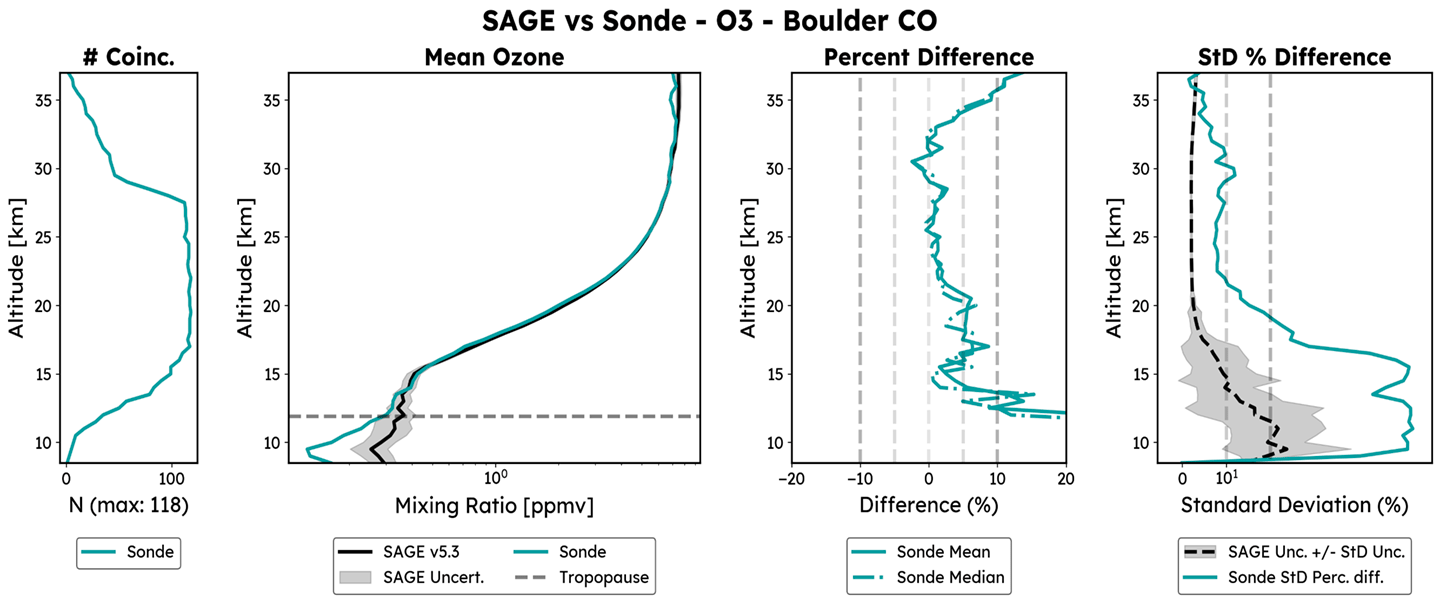
    David Flittner presented an update of the mission status, with over seven years and counting of data collection/analysis/release. SAGE III/ISS went through the 2023 Earth Science Senior Review (see page 15 of linked document for specific summary of the SAGE III/ISS results), and NASA HQ approved the proposal for continued operations for 2024–2026, with partial, overguide (i.e., above baseline request) funding approved to support community validation efforts, e.g., developing online quick look tools – see Figure 1 – and timely algorithm and product improvements. However, some reduction in mission staff and reorganization of work assignments have had to occur to stay within the allotted budget.

    Overall, Flittner described 2024 as “a year of growth” for many on the SAGE III/ISS Team. He referenced important mission activities planned during the current three-year tenure of the new Science Team cohort. This work includes supporting the 2026 World Meteorological Organization (WMO) International Ozone assessment with a release of improved solar/lunar product in early 2025, examination of product sensitivities to variable aerosol loadings, introduction of a research product with retrieved temperature and pressure profiles, and continuing a much sought-after summer internship program.

    SAGE 3 figure 1
    Figure 1. An example of an enhanced tool for the community to visualize SAGE III/ISS data validation.
    Figure Credit: Mary Cate McKee [LaRC]

    Robbie Manion [LaRC] presented version 6.0 (V6) of the SAGE III/ISS data products, which were released in April 2025. Owing to a change in source ozone (O3) cross sections, this version will resolve the longstanding low bias in retrieved aerosol extinction around 600 nm. As a result, some changes in the downstream data products for inferred particle size distribution and aerosol/cloud categorization are expected. In addition, V6 will allow for recovery of hundreds of profiles previously impeded by the recent proliferation of sunspots.

    Jamie Nehrir [LaRC] stated that SAGE III celebrated its seventh year onboard the ISS on February 19, 2024. [UPDATE: As of this publication, SAGE III/ISS has now passed eight years in orbit.] The payload continues to operate nominally surpassing 70,000 occultation events successfully acquired. Nehrir reported that SAGE III was not affected by the October 9, 2023, external leak from the Russian Nauka (or Multipurpose Laboratory) Module. However, the Disturbance Monitoring Package (DMP) lasers for the y- and z-axes on the instrument have been degrading. The operations team has been in a healthy dialog with the science and processing teams and external partners to determine the potential impact of these degradations on payload performance and on any ISS activities that could affect the science.

    Invited Presentations on Synergy with New Limb Missions in Formulation

    Lyatt Jaeglé [University of Washington] presented the mission concept for the Stratosphere Troposphere Response using Infrared Vertically-resolved light Explorer (STRIVE), which was recently selected for a competitive Phase A Concept Study within NASA’s 2023 Earth System Explorers Program (an element of the 2017–2027 Earth Science Decadal Survey). STRIVE fills a critical need for high vertical [1 km (0.6 mi)] resolution profiles of temperature, O3, trace gases, aerosols, and clouds in the upper troposphere–stratosphere (UTS). The system will provide near-global coverage and unparalleled horizontal sampling, producing 400,000 profiles each day. STRIVE will carry two synergistic instruments: a limb-scanning, infrared-imaging Dyson spectrometer to retrieve profiles of temperature, water vapor, trace gas concentrations, aerosol extinction, and cloud properties during day and night; and a dual-spectral, multi-directional, limb-profiling radiometer that retrieves detailed aerosol properties during day.

    Björn-Martin Sinnhuber [Karlsruhe Institute of Technology, Germany] gave an overview of the Changing-Atmosphere Infrared Tomography Explorer (CAIRT), a candidate mission for the upcoming European Space Agency (ESA) Earth Explorer 11 satellite. If selected, CAIRT would provide passive infrared limb imaging of atmospheric temperature and trace constituents from the upper troposphere at about 5 km (3 mi) altitude up to the lower thermosphere at 115 km (71 mi) altitude. The presentation highlighted how these observations can provide information on how atmospheric gravity waves drive middle atmosphere circulation, age-of-air in the middle atmosphere, the descent of nitrogen oxides (Nox) from the thermosphere into the stratosphere, as well as the detection of sulfur species and sulfate (SO42-) aerosols in the stratosphere.

    Aerosols

    Mahesh Mundakkara [LaRC] presented the research used to generate the Global Space-based Stratospheric Aerosol Climatology (GloSSAC) product, a critical resource for analyzing and modeling the climatic effects of stratospheric aerosols. His presentation focused on assessing the Ozone Mapping and Profiler Suite (OMPS) limb profiler (LP) by comparing its data with other datasets, particularly SAGE III/ISS. (NOTE: While OMPS currently flies on the NASA–NOAA Suomi National Polar-orbiting Partnership (Suomi NPP), NOAA-20, and NOAA-21 platforms; LP is only part of OMPS on NOAA–21.) The evaluation aims to identify discrepancies and assess the suitability of OMPS-LP data for integration into the GloSSAC framework.

    Jianglong Zhang [University of North Dakota] discussed the research plans of a newly funded SAGE project to investigate effective methods for improving stratospheric aerosol analyses and forecasts from aerosol models that can be used for future air quality and visibility forecasts and climate applications. Zhang also presented preliminary comparisons of collocated SAGE aerosol extinction and Cloud Aerosol Transport System (CATS) lidar aerosol extinction values in the stratosphere. [NOTE: CATS operated on ISS from 2015–2017.]

    Sara Lu [The State University of New York, Albany] discussed efforts to examine smoke aerosol radiative effects in the upper troposphere and lower stratosphere using SAGE III/ISS observations. Lu explained that this project aims to produce multiyear analysis of aerosol radiative effects from all known pyrocumulonimbus cloud (pyroCb) events worldwide over a range of pyroCb intensities and various injection altitudes, geographic locations, and backgrounds. He presented findings from a pyroCb inventory compiled by the Naval Research Lab (NRL).

    Xi Chen and Jun Wang [both University of Iowa] presented their new project on retrieving aerosol properties using SAGE III/ISS lunar measurements. They noted the challenges in normalizing lunar measurements caused by the Moon’s non-uniform surface. To address this, the team is developing a local normalization method to derive atmospheric transmissions from signals detected within each lunar event, enabling accurate aerosol retrieval. They reported that preliminary results are promising as evidenced by comparison with transmission product from collocated solar events – see Figure 2. This new processing will enrich the spatial and temporal coverage of SAGE III/ISS aerosol product by involving lunar events.

    SAGE 3 figure 2
    Figure 2. Preliminary results of the transmission derived from SAGE III/ISS lunar measurements (y-axis) and its comparison with collocated SAGE III/ISS solar measurements (x-axis). The comparisons are presented in two ways, one for the same wavelength color-coded by altitude [left] and another at the same altitude color-coded for the different wavelengths [right]. The results are for June 2017 through Novembe 2022, and the collocation criteria requires latitude separation smaller than 1˚ and observation times within 10 days. Note that if the transmission at any wavelength or altitude is smaller than 0.005, it is removed from the comparison for quality assurance purpose.
    Figure Credit: Xi Chen, University of Iowa

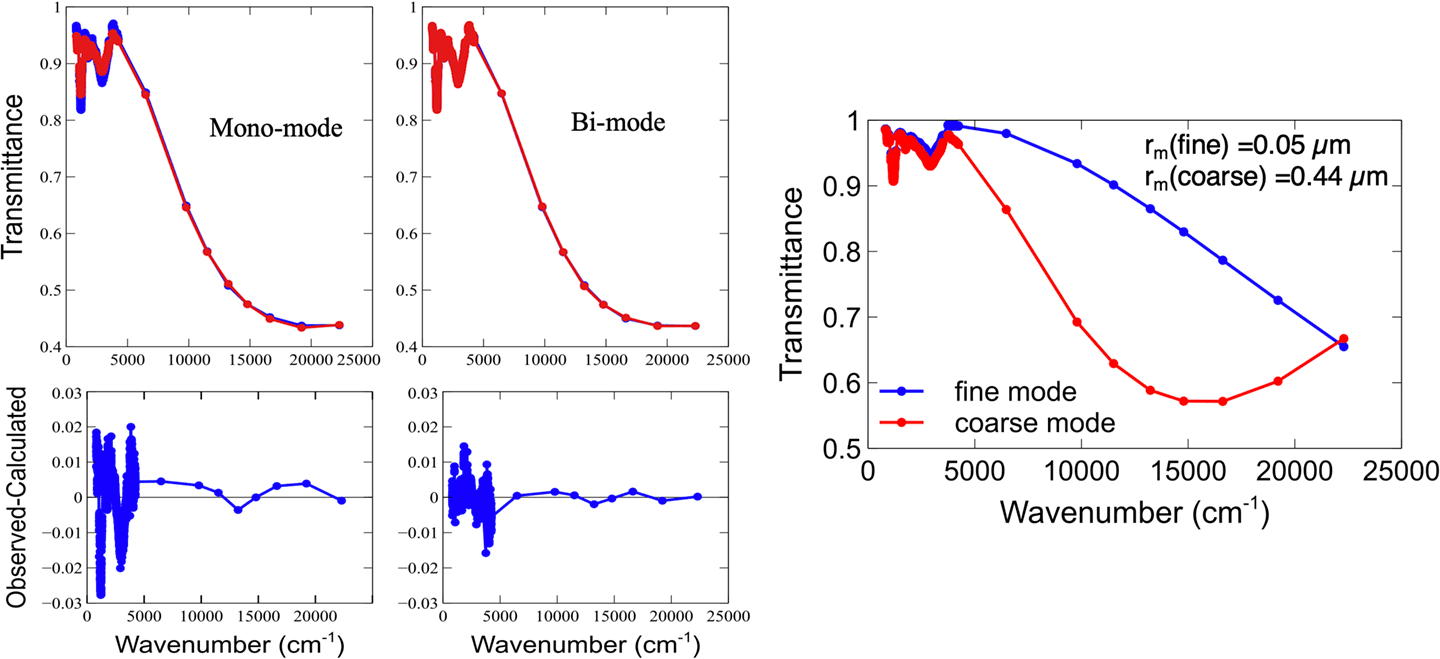
    Adam Pastorek and Peter Bernath [both Old Dominion University] discussed the properties of stratospheric SO42- aerosols from the infrared transmission spectra of Atmospheric Chemistry Experiment (ACE) – flying on the Canadian SCISAT satellite since 2003 – and optical extinction from SAGE III/ISS. Based on ACE infrared measurements, the researchers derived an empirical formula to determine the composition (weight % H2SO4) of volcanic plumes. They combined coincident ACE and SAGE III/ISS measurements, using bimodal, log-normal size distributions to reproduce the observations – see Figure 3. They used ACE observations of sulfur dioxide (SO2) to study the creation and destruction of stratospheric SO42- aerosols.

    SAGE 3 figure 3
    Figure 3. Combined transmittance fitting results from Atmospheric Chemistry Experiment– Fourier Transform Spectrometer (ACE-FTS), and SAGE III/ISS measurements demonstrate an improved characterization of sulfate particle size distribution using bi-lognormal (mode) distributions compared to a single lognormal distribution. The panels on the left show the transmittance fitting [top] and residuals [bottom] for the mono-mode distribution model, while the center panels show the transmittance fitting [top] and residuals [bottom] for the bi-mode distribution. The right panel illustrates the contributions of fine and coarse mode components to the total transmittance. The measurements for this figure were taken approximately four months after the January 2022 Hunga Tonga–Hunga Haʻapai eruption at a tangent height of 23.6 km (14.5 mi) in ACE occultation (ss100628), with coincident SAGE measurements from that same period (2022041609).
    Figure Credit: Adam Pastorek, adapted from a Figure in a paper published in Journal of Quantitative Spectroscopy and Radiative Transfer in January 2024.

    Sean Davis [NOAA, Chemistry Science Lab] presented on his research aimed at constraining decadal variability and assessing trends in stratospheric composition and tropospheric circulation using SAGE III/ISS and complementary satellite data sets. The team continues to include the SAGE water vapor and O3 products in the Stratospheric Water and OzOne Satellite Homogenized (SWOOSH) dataset. Davis also highlighted preliminary work evaluating V6 data in comparison to the former V5.3. He discussed line-of-sight, transmission-based filtering for O3 profiles and O3 diurnal variability corrections.

    Lars Kalnaajs [University of Colorado, Boulder] presented results from two studies of particle size distributions from SAGE aerosol extinction data. Kalnaajs summarized results from two papers in review. His team paired the Optical Particle Counter collected from balloon platforms with SAGE II data to derive the parameters for bi-mode aerosol size distribution. They also presented the work of using SAGE III extinction ratios, 448/756 versus 1544/756, to derive monomodal lognormal size distribution, which allows them to compute distribution moments and compare these to in situ measurements taken over Sweden in the winters of 2002 and 2004.

    Anne Thompson [GSFC, emeritus] presented on the Southern Hemisphere Additional Ozonesondes (SHADOZ) network and how that SHADOZ data are a satellite validation standard and can also be used to assess ozone trends in the upper troposphere and lower stratosphere. Thompson emphasized that SHADOZ O3 profiles are the only standard process to obtain measurements from surface to mid-stratosphere at 100–150 m (328–492 ft) resolution. Such measurements are essential to validate O3 measurements from SAGE-derived products. She also presented an update on the free tropospheric and lowermost stratospheric (LMS) O3 trends from eight equatorial SHADOZ sites. Newer calculations confirm that an apparent LMS seasonal decline (July–September) is associated with a roughly 100 m (328 ft) upward trend in tropopause height.

    DAY TWO

    The second day started with Jack Kaye [NASA Earth Science Division—Associate Director for Research for the Earth Science Divisionemeritus as of April 30, 2025] providing a historic perspective on SAGE and comments on its context within NASA’s overall Earth science program. A technical session was held with three invited presentations, followed by three additional sessions where science team members presented their research on trace gas studies, including data product calibration and validation. The meeting concluded with updates from the SAGE project team on the SAGE III/ISS website and ongoing operations aboard the ISS. In his presentation, Kaye shared about his past involvement with the SAGE program and his perspective on its future in the context of flight missions for Earth observations.

    Invited Presentations on Advanced Modeling and New Satellite Mission For UTS

    Steven Pawson [GSFC] presented on the comprehensive modeling and analysis capabilities of
    Upper troposphere and lower stratosphere (UTLS) dynamics and composition in the Goddard Earth Observing System (GEOS) model Pawson discussed the Global Modeling and Assimilation Office’s (GMAO) recent support for the Asian summer monsoon Chemical and CLimate Impact Project (ACCLIP) mission and the trend analysis of stratospheric O3. He also discussed future plans for GMAO, including improving the representation of water vapor in UTS through data assimilation and increasing horizontal and vertical resolution in the GEOS model.

    Kostas Tsigaridis [Columbia University] presented recent research on the composition and climate impacts of increasing launches to Low Earth Orbit (LEO). Assuming that there are 10,000 launches per year and all launches use liquefied natural gas (LNG) as a propellant, the team compiled launch-related emission inventories and highlighted key uncertainties that could significantly affect climate predictions – particularly the impact black carbon has on the radiative balance and heterogeneous chemistry of the UTS. In addition, water vapor was found to contribute to the heating of the stratosphere and to a nontrivial amount of O3 depletion – 13 Dobson units (DU) on the global mean.

    Adam Bourassa [University of Saskatchewan, Canada] introduced the satellite mission for High-altitude Aerosol, Water vapor, and Clouds (HAWC), planned as the Canadian contribution to the NASA Atmosphere Observing System (AOS) for launch in 2031 – a key component in NASA’s next generation Earth System Observatory. Bourassa highlighted the three Canadian instruments, which include limb profilers for water vapor and aerosol in the UTS and a far infrared imaging radiometer for ice cloud microphysics and radiative budget closure. He discussed instrument requirements and development progress as well as results from recent sub-orbital testing of prototypes on the NASA Earth Resources (ER)-2 and stratospheric balloons.

    Trace Gases

    Brian Soden [University of Miami] presented a new project that will use SAGE data to constrain climate sensitivity in climate models. Climate models differ substantially in their calculation of the radiative forcing from carbon dioxide (CO2), and these intermodel differences have remained largely unchanged for several decades. Soden highlighted the role of stratospheric temperature in modulating the radiative forcing from CO2. He explained that models that simulate a cooler stratosphere simulate a larger radiative forcing for the same change in CO2 compared to models that posit a warmer stratosphere. He added that determining the cause of the model biases in stratospheric temperature – particularly the role of water vapor in driving this intermodel spread – is an area of active research.

    Ray Wang [Georgia Institute of Technology] compared the uncertainty analysis of SAGE III retrieved O3 and water vapor data in V5.3 to the same parameters in V6.0. He then compared the SAGE III data to the correlative measurements from other platforms. For O3, the differences between SAGE and measurements from the Microwave Limb Sounder (MLS) on NASA’s Aura platform are less than 5% in the stratosphere. SAGE V6.0 ozone values are systematically about 1–2% higher than those from V5.3 O3 –  due to changes in how the O3 cross-section is represented in each version. For water vapor, SAGE data agree with MLS and Frost Point Hygrometer (FPH) data within 5%. Wang showed some differences between SAGE water vapor data retrievals using V5.3 and the same data obtained using version 6.0. He also said that a two-dimensional (i.e., spatial and temporal) regression model can be used to minimize sampling bias in climatology derived from non-uniform satellite measurements – ensuring more accurate representation of long-term trends.

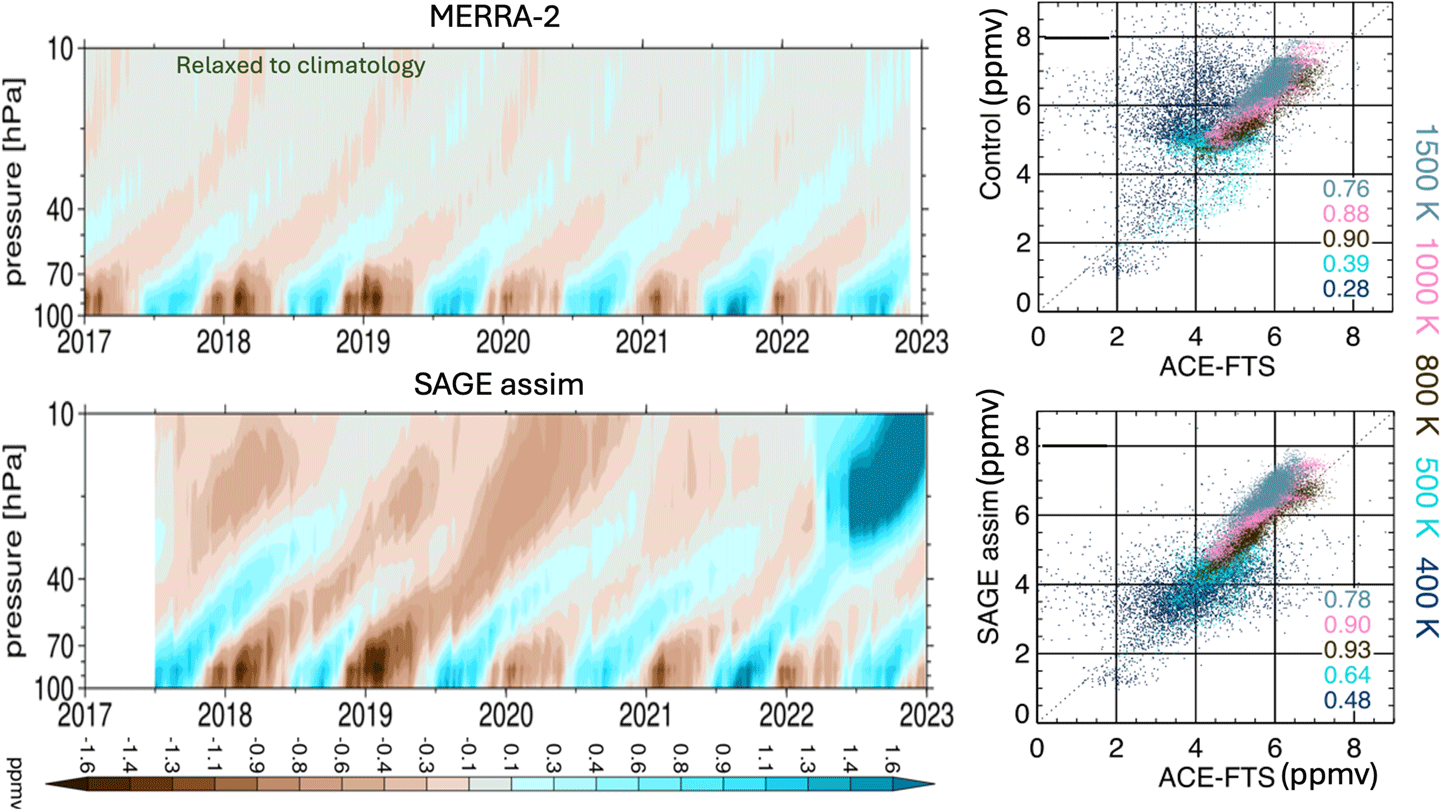
    Emma Knowland [GSFC/Morgan State University, Goddard Earth Sciences Technology and Research II (GESTAR II), now NASA HQ—SAGE III/ISS Program Scientist] discussed the progress of assimilating SAGE III water vapor data product into NASA’s GEOS re-analysis. Her team’s work demonstrated that while the number of solar occultation observations a day from SAGE III/ISS is about 1% of the total number of profiles observed globally by MLS, the chemical timescales of water vapor in the lower stratosphere are long enough that the SAGE III/ISS data can provide a valuable constraint on GEOS re-analysis, especially in the absence of MLS data – see Figure 4.

    SAGE 3 figure 4
    Figure 4. Hovmöller diagrams of the vertical distribution of 15°S–15°N average water vapor anomalies in upper troposphere–stratosphere with water vapor relaxed to a climatology [top left] and from data assimilation of SAGE III/ISS water vapor into the Goddard Earth Observing System (GEOS) model [bottom left]. Scatter plots show water vapor mixing ratios (y-axis) with [top right] and without [bottom right] data assimilation compared independent observations from the Atmospheric Chemistry Experiment – Fourier Transform Spectrometer (ACE-FTS) data (x-axis). The ACE–FTS data were not used in data assimilation. This shows that data assimilation of SAGE data improves the agreement with ACE-FTS – especially in the lower stratosphere (400 to 500 K).
    Figure Credit: Emma Knowland [NASA]

    Melody Avery [University of Colorado, Boulder] discussed using SAGE data  and data from the Cloud–Aerosol Lidar with Orthogonal Projection (CALIOP) instrument (on the former Cloud-Aerosol Lidar and Infrared Pathfinder Satellite Observations (CALIPSO) mission) to study thin clouds and aerosol distributions in the tropical tropopause region (TTL). Avery explained that these distributions from V5.3 of SAGE-III/ISS and V5.41 of CALIOP are shown to agree well, and CALIOP observations of cloud frequency are shown to be a sensitive metric for defining the width of the Hadley Cell near the tropical tropopause. Combining SAGE and CALIOP data produced a longer timescale to constrain and evaluate climate models that currently do not agree on how the tropical width at this altitude varies. They found that results derived using SAGE V6.0 versus V5.3 differ on the order of 2% in the TTL region.

    Pamela Wales [GESTAR II] introduced a new project that leverages SAGE III/ISS measurements to explore diurnal characteristics of O3 and nitrogen dioxide (NO2) in GEOS model products. Her team is exploring potentially using a GEOS reanalysis of stratospheric trace gases collected by MLS as a transfer standard to evaluate the consistency between the SAGE III/ISS solar and the less frequently measured lunar retrieval. They are also assessing uncertainties in stratospheric NO2 in the GEOS Composition Forecast (GEOS-CF) model using SAGE III/ISS and complementary satellite instruments. This work will inform how effectively GEOS-CF can be used in air quality studies to remove the stratospheric signal from column retrievals of NO2.

    Luis Millán [JPL] presented work on the change of stratospheric water vapor mass after the Hunga Tonga–Hunga Haʻapai (Hunga) volcano eruption in 2022. Millán found an increase (~10%) of total stratospheric water vapor – a potent greenhouse gas. Given their advanced age, MLS, ACE-FTS, and the Sounding of the Atmosphere using Broadband Emission Radiometry (SABER) instrument on NASA’s Thermosphere, Ionosphere, Mesosphere, Energetics and Dynamics (TIMED) mission (Heliosphere Division), are nearing the end of their missions, leaving SAGE III/ISS as the primary instrument for monitoring the plume’s evolution. Millán discussed how the SAGE III/ISS measurements might be sufficient to observe the dispersion of the excess Hunga water vapor from stratosphere in coming years. He also discussed a 39-year plus record of stratospheric water vapor mass using the overlapping periods between SAGE II, MLS, and SAGE III/ISS.

    Ryan Stauffer [GSFC] presented the operation and outcomes of the Ticosonde balloon-borne O3 and water vapor sonde project in San Jose, Costa Rica. Ongoing since July 2005, Ticosonde has collected over 700 O3 profiles and 270 water vapor profiles for climate and pollution studies and satellite validation. Because Ticosonde is the only long-term water vapor sonde station in the tropics, the stratospheric water vapor data is vital for validation of SAGE-III/ISS and MLS profiles. Ticosonde has been used to verify the success of updated water vapor retrieval algorithms for both instruments – which now agree within a few percent up to 25 km (15 mi) altitude.

    Natalya Kramarova [GSFC] showed the comparison of O3 profile retrieved from SAGE III with those derived from the OMPS-LP sensor – which is part of OMPS on NOAA-21 – from February 2023–June 2024. Diurnal corrections using the Goddard Diurnal Ozone Climatology (which is described in a 2020 article in Atmospheric Measurement Techniques) is applied to account for differences in measurement times between SAGE III’s sunrise or sunset observations and NOAA-21 LP’s midday measurements. Once the time correction is made, results show good agreement between the two instruments in depicting vertical ozone distribution across different geographical regions (e.g., tropics and mid-latitudes) and under various conditions (e.g., near the edge of the Antarctic O3 hole in October 2023). The mean biases between NOAA-21 LP and SAGE III are typically within ±5% between ~18–45 km (11–28 mi).

    Project Team and Operations Highlights

    Michael Heitz [LaRC] showed that V5.3 and previous versions of the SAGE III/ISS data product had a noticeable – and unphysical – dip in the retrieved aerosol extinction between 520–676 nm. This dip has been referred to as the aerosol “seagull.” However, adoption of a new absorption cross-section database into the V6.0 algorithm reduced the aerosol seagull effect significantly. Kevin Leavor [LaRC] presented new developments for the SAGE III/ISS quick look website. Mary Cate McKee [LaRC] introduced a new feature of the quick look website that showcases comparisons of O3 and water vapor sonde data at over 40 stations. Sonde data is sourced from the Network for the Detection of Atmospheric Composition Change (NDACC), GSFC’s SHADOZ, and the World Ozone and Ultraviolet Radiation Data Centre (WOUDC). Heitz explained that the comparison plots are updated continuously as new coincidences occur, providing the community with valuable insight to the quality of SAGE III/ISS data relative to this external network of ground stations. Future additions to the website include aerosol and lidar comparisons, additional plot statistics, and comparisons with novel homogenized datasets.

    Returning to a topic discussed in Jamie Nehrir’s presentation, Charles Hill [LaRC] showed that the SAGE III Disturbance Monitoring Package (DMP) correction to the data product – which was implemented beginning with V5.3 – has significantly reduced the product uncertainties caused by ISS vibrations. Approximately 7% of SAGE III occultation events are highly disturbed by mechanical vibrations, and the DMP correction has improved pointing registrations in these events significantly. The DMP’s x-axis gyroscope failed on August 8, 2023 – but this loss did not significantly affect the DMP correction to scan plane elevation. Future possible losses of either the y- or z-axes will end active correction of ISS disturbances.

    Conclusion

    Jun Wang, David Flittner, and Richard Eckman led the closing discussion that highlighted the growing interest in atmospheric composition change –  particularly due to emissions from large wildfires and volcanic eruptions in recent years. This increasing interest contrasts with the declining availability of observational data from the upper troposphere, following the retirement of CALIPSO in late 2023 and the planned decommissioning of Aura’s aging limb instruments in 2026. This gap underscores the critical importance of SAGE III/ISS data – not only for current UTS research but also for the next 5–7 years, during which no new limb measurements are planned.

    SAGE III/ISS remains essential for profiling key atmospheric constituents, including water vapor, aerosols, O₃, and NO₂. The long-term, consistent data record provided by the SAGE series of instruments since the late 1970s – including SAGE III/ISS since 2017 – has been invaluable for studying past and future changes in atmospheric composition within the UTS. To further support research and applications of SAGE data products, participants discussed the possibility of proposing a special collection of articles in AGU journals.

    Overall, the 2024 SAGE III/ISS meeting was a success. Participants received valuable updates on the status of SAGE III/ISS operations, data product calibration and validation, and new developments. The meeting also showcased the collective expertise and excellence in driving advancements in UTS research, from climate change studies to data assimilation for chemistry transport models and contributions to multi-sensor data fusion.

    Jun Wang
    University of Iowa
    jun-wang-1@uiowa.edu

    David Flittner
    Langley Research Center
    david.e.flittner@nasa.gov

    Richard Eckman
    NASA Langley Research Center
    richard.s.eckman@nasa.gov

    Emma Knowland
    NASA Headquarters
    k.e.knowland@nasa.gov
    Details

    Last Updated

    May 26, 2025

    Related Terms

  • NASA Awards Project Support Bridge Contract

    The letters NASA on a blue circle with red and white detail, all surrounded by a black background
    Credit: NASA

    NASA has awarded a bridge contract to ASRC Federal System Solutions LLC of Beltsville, Maryland, to provide financial support and project planning and control services to the agency.

    The Program Analysis and Control Bridge Contract has a total potential value up to $98 million with a 13-month period of performance beginning Saturday, May 24. The contract includes both cost-plus-fixed-fee and indefinite-delivery/indefinite-quantity components.

    The scope of the work includes business functions such as accounting, scheduling, documentation and configuration management, as well as security compliance. The work will occur at NASA Headquarters in Washington, Goddard Space Flight Center in Greenbelt, Maryland, and Langley Research Center in Hampton, Virginia.

    For information about NASA and agency programs, visit:

    https://www.nasa.gov/

    Tiernan Doyle
    Headquarters, Washington
    202-358-1600
    tiernan.doyle@nasa.gov
    Jeremy Eggers
    Goddard Space Flight Center, Greenbelt, Maryland
    757-824-2958
    jeremy.l.eggers@nasa.gov

  • Moon and Flag at NASA Michoud

    The American flag is directly in the foreground; it cannot be seen in its entirety. The white stars on blue and the red and white stripes are out of focus. A small sliver of the blue morning sky can be seen at top right. The waning gibbous moon (nearly full) is visible.
    NASA/Michael DeMocker

    Just after sunrise, the waning gibbous moon sets just behind a waving United States flag on March 19, 2025, in this image from NASA’s Michoud Assembly Facility in New Orleans. The waning gibbous moon phase comes after the full moon. As the Moon begins its journey back toward the Sun, the opposite side of the Moon now reflects the Moon’s light. The lighted side appears to shrink, but the Moon’s orbit is simply carrying it out of view from our perspective. The Moon also rises later and later each night.

    Image credit: NASA/Michael DeMocker

  • Student Coders Bring Novel Approaches to NASA Challenge 

    A collection of lanyards, folders, patches, and pins with the NASA seal and United States Forest Service seal are spread out over a wooden table. At the center of the image a 3D-printed award with the iconic red NASA “worm” logo as its centerpiece reads “Hackathon Winner 2025.”
    In collaboration with the United States Department of Agriculture, Amazon Web Services, and Colorado State University, NASA turned to students for AI-driven solutions. 
    NASA

    On March 28, 80 college students filed into Colorado State University’s (CSU) Nancy Richardson Design Center to receive pizza and a challenge: design an intelligent system capable of traversing rugged terrain to provide aid in emergency scenarios.

    They had 24 hours to complete this mission.

    Co-led by CSU, the United States Department of Agriculture (USDA) Forest Service, and NASA, the Spring 2025 CSU Hackathon forged a symbiotic relationship between federal agencies looking for novel AI solutions and innovative students hungry for a challenge.

    “One of the goals of the Career Center is to create opportunities for relationship building,” said Mika Dalton, CSU’s career center employer relations coordinator. “Events like these really help students connect with industry and identify different career pathways to expand their understanding of where their education could lead them after graduation.”

    In teams of four, students chose between two technical prompts grounded in real-world data. The USDA Forest Service posed the “Uncharted Challenge,” asking teams to develop an autonomous mapping system for uncharted National Forest System roads using high-resolution satellite imagery. In the “Rover Challenge” posed by NASA, students were asked to design an algorithm that could autonomously guide a rover across rough terrain to reach an injured firefighter.

    Over the next 24 hours, students analyzed lidar and satellite imagery, built algorithms, and tested their models in SageMaker, a development environment hosted by Amazon Web Services (AWS). As they collaborated on their solutions, students also helped NASA evaluate SageMaker’s potential for agency adoption.

    The students’ work delivered tangible value to both agencies, demonstrating novel approaches to real operational challenges like wildfire response, terrain mapping, and emergency search and rescue.

    The students did an incredible job showing how AI can solve tough problems, from navigating the Moon to handling emergencies, all in line with NASA’s mission.

    Martin Garcia

    Martin Garcia

    NASA’s artificial intelligence and innovation lead

    For the USDA, accurate and efficient trail maps can support fire crews and forest managers; for NASA, more advanced terrain navigation systems enhance efforts in AI-assisted robotics, including lunar rovers tasked with reaching astronauts or delivering supplies in critical missions. “The students’ consideration for energy efficient lunar vehicle traversal would benefit the agency’s mission to implement extended scientific and engineering missions on the lunar surface,” said NASA data scientist Andrew Wilder.

    Winning teams received recognition for Best Overall Project, Ingenuity, Simplicity, and Tenacity. Prizes included letters of recommendation from agency leaders and future opportunities to present their work to NASA and Forest Service staff.

    “I had a great team, and we were able to work through several setbacks with clear communication. I also got to meet professionals from NASA, USDA, Forest Service, and AWS. These were great opportunities and so I learned a lot of networking and interviewing from them,” said one participating CSU student.

    Ultimately, 98% of post-event student survey respondents indicated a strong enthusiasm to share this event with other students. Along with the endorsement, students shared that it was a great way to learn skills, network, and try something new. Many respondents, while strongly recommending the event, emphasized that the event was very challenging, intense, and a place to apply classroom knowledge.

    The hackathon demonstrated what’s possible when creativity, passion, and partnership align. For NASA’s Chief AI Officer (CAIO), it offered a clear proof of concept: a low-cost, high-impact model for advancing AI adoption by connecting real-world challenges with emerging talent. Beyond the technical outputs, NASA gained testable solutions, valuable insights into rapid prototyping, and deeper relationships with federal, academic, and industry partners. The hackathon also provided a repeatable framework for future events with other institutions.

    By bringing together mission teams, partners, and student innovators—and fueling them with pizza and friendly competition—NASA is accelerating innovation in bold, creative ways.

  • Hubble Spies a Spiral So Inclined

    2 min read

    Hubble Spies a Spiral So Inclined

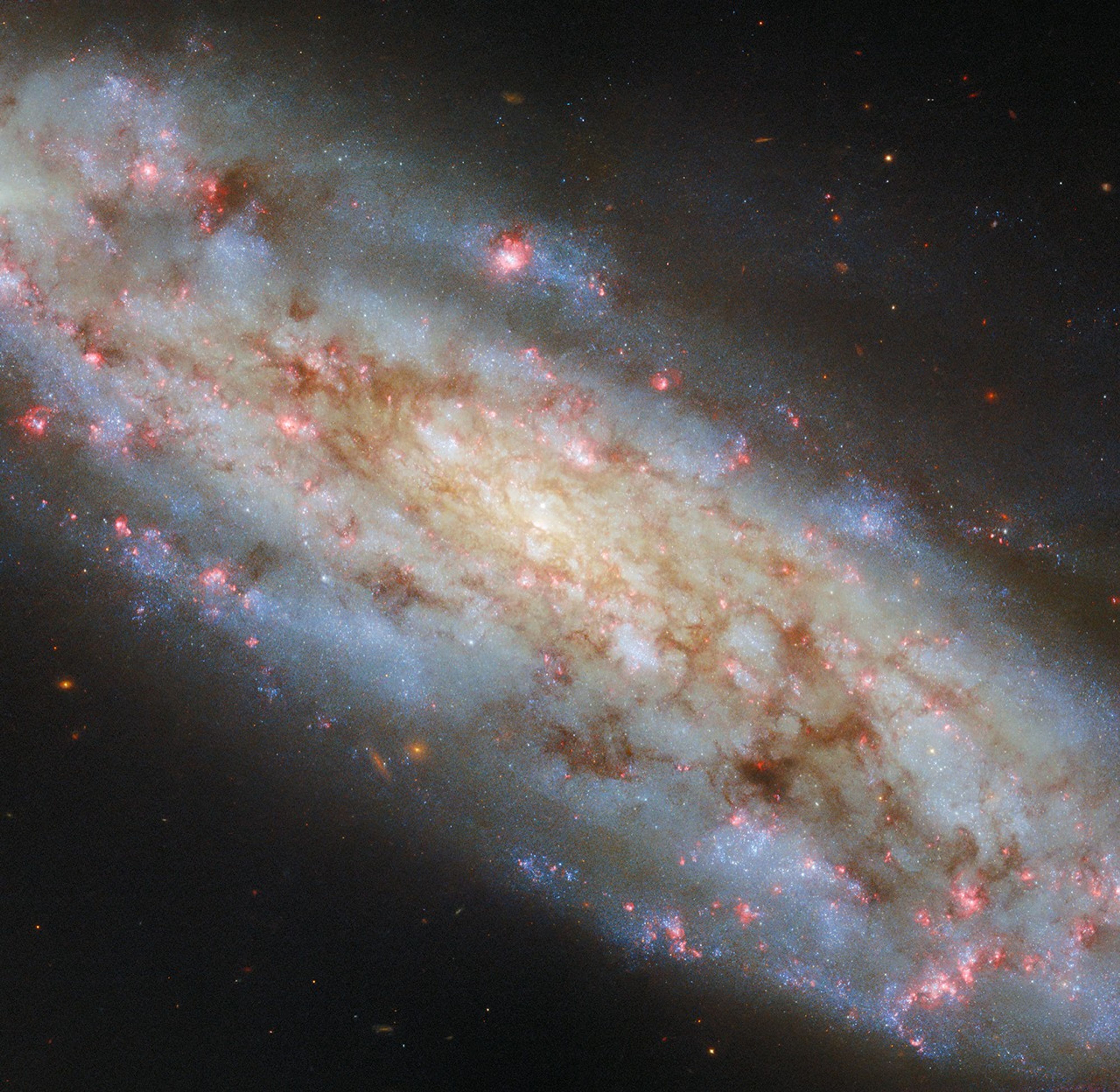
    A spiral galaxy in space. It is visible at a tilted angle and appears as a stormy disk filled with clouds of stars and dust. It is colored more yellowish in the center, and bluer out toward the edge of the disk, where the ends of curved spiral arms break away from the disk. Spots of red light scattered through the galaxy mark where stars are actively forming. The galaxy is on a black background.
    This NASA/ESA Hubble Space Telescope image features the spiral galaxy NGC 3511.
    ESA/Hubble & NASA, D. Thilker

    The stately and inclined spiral galaxy NGC 3511 is the subject of this NASA/ESA Hubble Space Telescope image. The galaxy is located 43 million light-years away in the constellation Crater (The Cup). From Hubble’s vantage point in orbit around Earth, NGC 3511 is tilted by about 70 degrees, intermediate between face-on galaxies that display the full disk of the spiral and its arms, and edge-on galaxies that offer a side view, revealing only their dense, flattened disks.

    Astronomers are studying NGC 3511 as part of a survey of the star formation cycle in nearby galaxies. For this observing program, Hubble will record the appearance of 55 local galaxies using five filters that allow in different wavelengths, or colors, of light.

    One of these filters allows only a specific wavelength of red light to pass through. Giant clouds of hydrogen gas glow in this red color when energized by ultraviolet light from hot young stars. As this image shows, NGC 3511 contains many of these bright red gas clouds, some of which are curled around clusters of brilliant blue stars. Hubble will help astronomers catalog and measure the ages of these stars, which are typically less than a few million years old and several times more massive than the Sun.

    Text Credit: ESA/Hubble

    Media Contact:

    Claire Andreoli (claire.andreoli@nasa.gov)
    NASA’s Goddard Space Flight CenterGreenbelt, MD

  • NASA Supports Artemis Accords Signatories Advancing Exploration

    Flags of all of the countries that have signed the Artemis Accords on a black background with the Moon partially displayed
    Credit: NASA

    The United States participated in an international Artemis Accords workshop May 21-22 to advance the safe and responsible exploration of the Moon, Mars, and beyond. Hosted by the United Arab Emirates (UAE), which was represented by the UAE Space Agency, the workshop took place at the Abu Dhabi National Exhibition Centre.

    The Artemis Accords are a set of non-binding principles signed by nations for a peaceful and prosperous future in space for all of humanity to enjoy. In October 2020, under the first Trump administration, the accords were created, and since then, 54 countries have joined with the United States in committing to transparent and responsible behavior in space.

    “Following President Trump’s visit to the Middle East, the United States built upon the successful trip through engagement with a global coalition of nations to further implement the accords – practical guidelines for ensuring transparency, peaceful cooperation, and shared prosperity in space exploration,” said acting NASA Administrator Janet Petro. “These accords represent a vital step toward uniting the world in the pursuit of exploration and scientific discovery beyond Earth. NASA is proud to lead in the overall accords effort, advancing the principles as we push the boundaries of human presence in space – for the benefit of all.”

    Participants from 30 countries joined the discussions and a tabletop exercise centered on defining challenges for operating in a complex environment.

    As the Artemis Accords workshop concluded Thursday, participants reaffirmed their commitment to upholding the principles outlined in the accords and to continue identifying best practices and guidelines for safe and sustainable exploration. The first workshop was hosted by Poland in 2023, followed by Canada in 2024.

    Artemis Accords signatories have committed to sharing information about their activities to the United Nations of Committee on the Peaceful Uses of Outer Space and other appropriate channels. Transparency and communication are key to peaceful exploration.

    The Artemis Accords signatories will gather for face-to-face discussions on the margins of the International Astronautical Congress in late September, where workshop recommendations and outcomes will be presented to the Artemis Accords principals. NASA anticipates additional countries will sign in the coming weeks and months.

    The Artemis Accords are grounded in the Outer Space Treaty and other agreements, including the Registration Convention and the Rescue and Return Agreement, as well as best practices for responsible behavior that NASA and its partners have supported, including the public release of scientific data. 

    Learn more about the Artemis Accords at:

    https://www.nasa.gov/artemis-accords

    Details

    Last Updated

    May 22, 2025

    Editor
    Jessica Taveau

  • NASA Astronaut to Answer Questions from Students in Washington State

    NASA astronaut Anne McClain points a camera at herself and takes a “space-selfie” during a May 1, 2025, spacewalk outside the International Space Station.
    NASA astronaut Anne McClain points a camera at herself and takes a “space-selfie” during a May 1, 2025, spacewalk outside the International Space Station.
    Credit: NASA

    NASA astronaut and Spokane, Washington, native Anne McClain will participate in an event with students from the Mobius Discovery Center located in her hometown. McClain will answer prerecorded questions submitted by students from aboard the International Space Station.

    Watch the 20-minute Earth-to-space call on the NASA STEM YouTube Channel.

    The event will take place at 1:25 p.m. EDT on Tuesday, May 27. Media interested in covering the event must RSVP no later than 5 p.m. EDT on Friday, May 23, to Karen Hudson at 509-321-7125 or via email at: mkhudson@mobiusspokane.org.

    The Mobius Discovery Center will host the event for elementary, middle, and high school students from various schools across the region, nonprofit organizations, and the Kalispel Tribe. This event is designed to foster imagination among students through exploration of hands-on exhibits and science, technology, engineering, art, and mathematics learning opportunities while inspiring students to consider McClain’s career path.

    For more than 24 years, astronauts have continuously lived and worked aboard the space station, testing technologies, performing science, and developing skills needed to explore farther from Earth. Astronauts aboard the orbiting laboratory communicate with NASA’s Mission Control Center in Houston 24 hours a day through SCaN’s (Space Communications and Navigation) Near Space Network.

    Important research and technology investigations taking place aboard the space station benefit people on Earth and lays the groundwork for other agency missions. As part of NASA’s Artemis campaign, the agency will send astronauts to the Moon to prepare for future human exploration of Mars, inspiring Artemis Generation explorers, and ensuring the United States continues to lead in space exploration and discovery.

    See videos of astronauts aboard the space station at:

    https://www.nasa.gov/stemonstation

    -end-

    Gerelle Dodson
    Headquarters, Washington
    202-358-1600
    gerelle.q.dodson@nasa.gov

    Sandra Jones
    Johnson Space Center, Houston
    281-483-5111
    sandra.p.jones@nasa.gov
  • Sols 4547-4548: Taking in the View After a Long Drive

    2 min read

    Sols 4547-4548: Taking in the View After a Long Drive

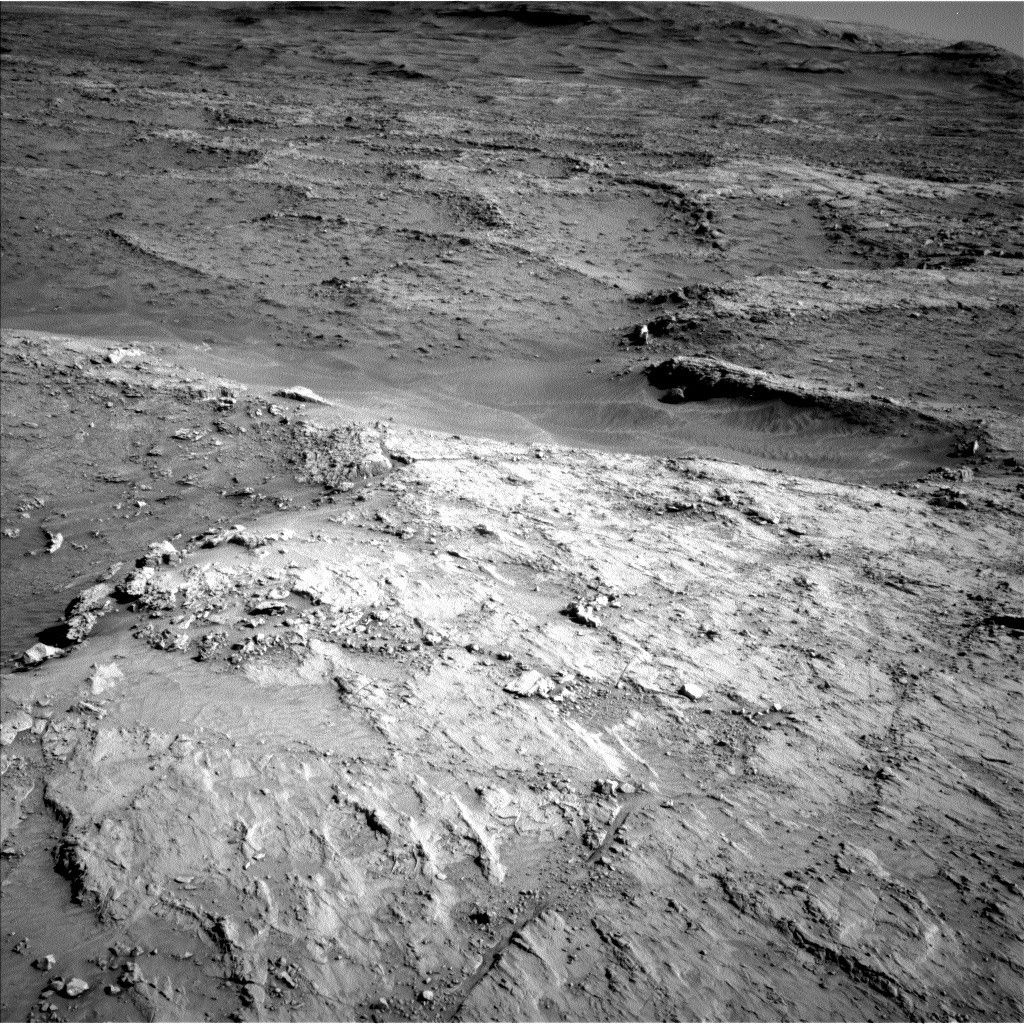
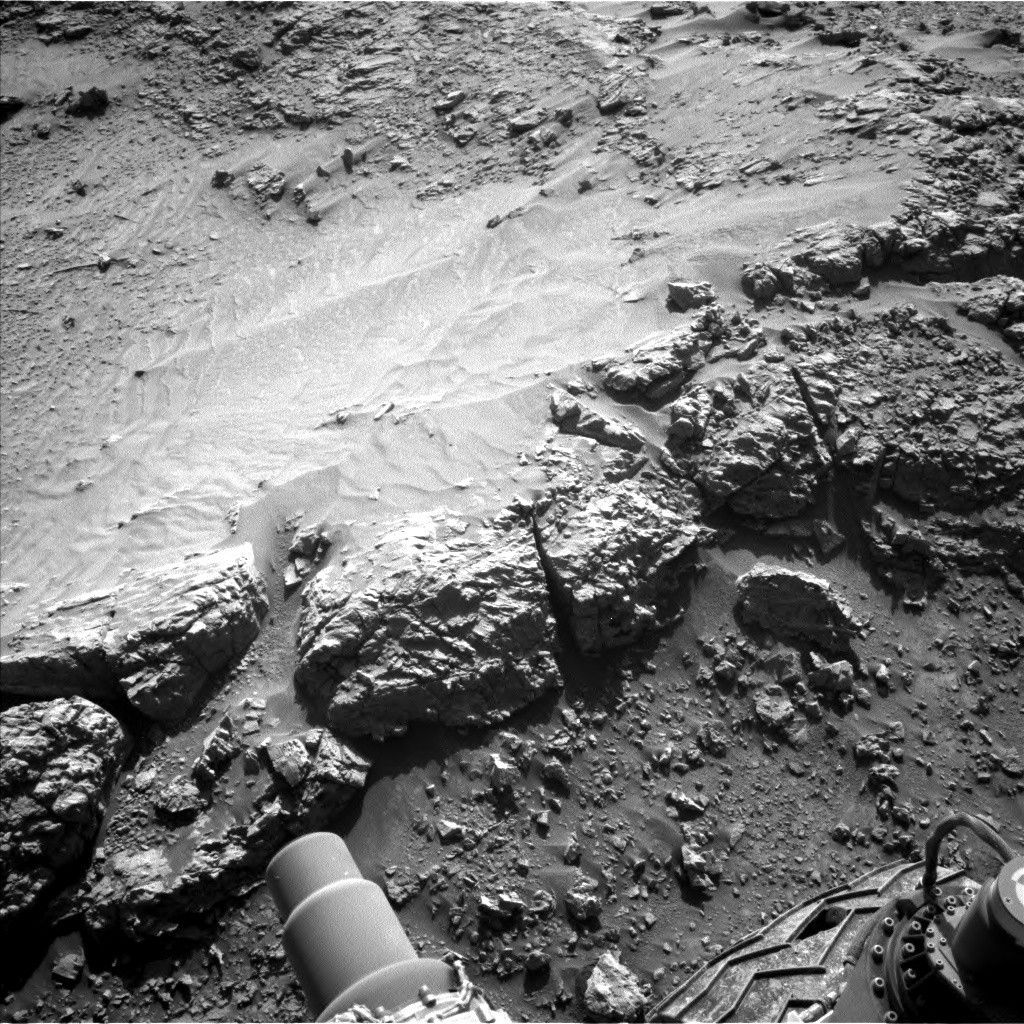
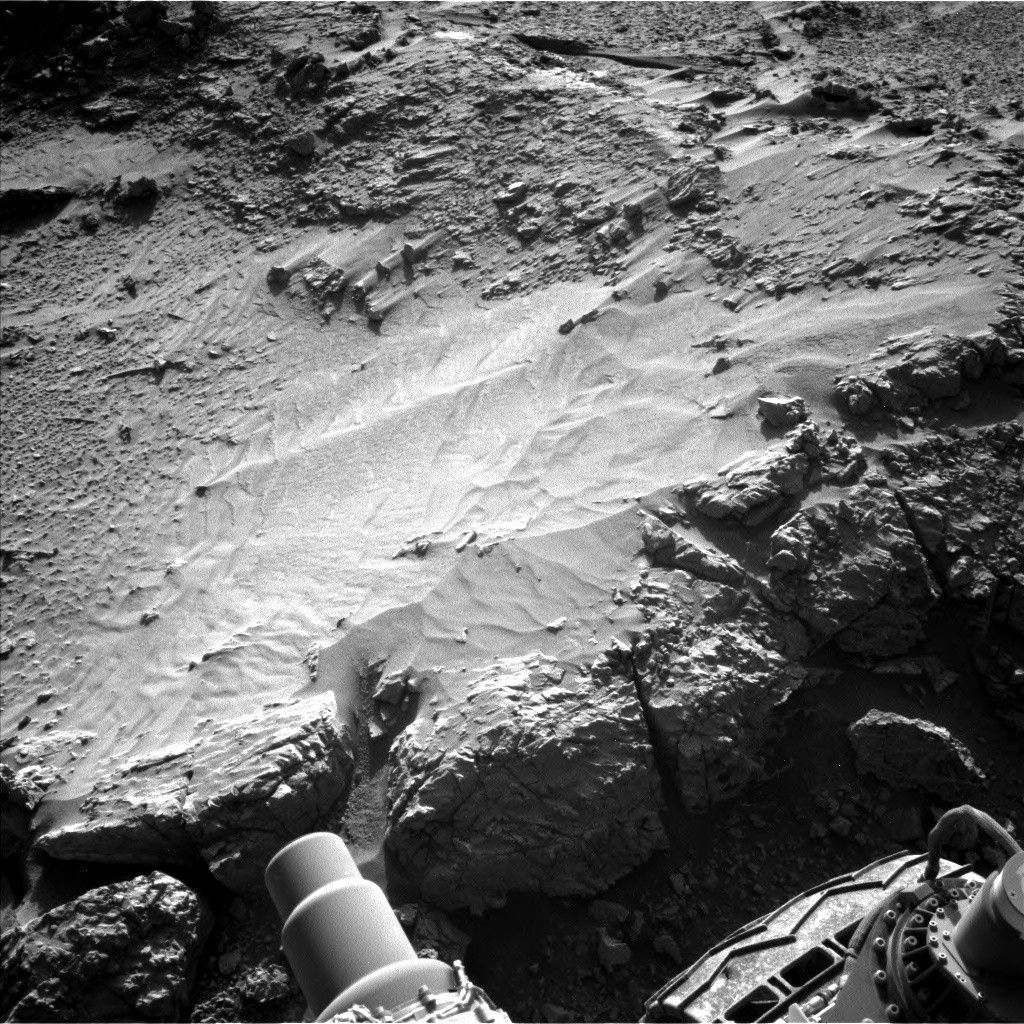
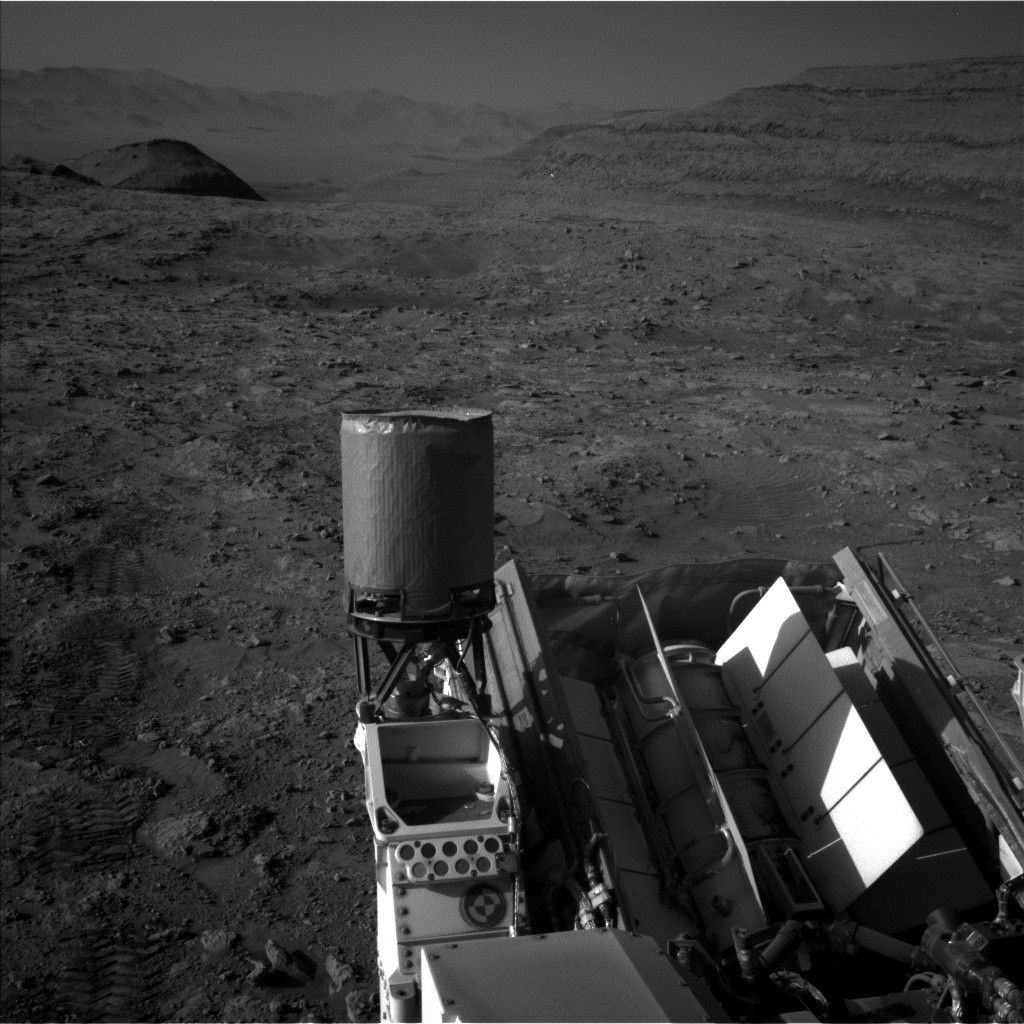
    A grayscale photo from the surface of Mars shows a vista of dark gray terrain – mostly flat and dotted with small chunks of gravel everywhere  – that extends to the horizon, where a low, layered hill rises at the right side of the image. At left is a much smaller and darker slope, while in the far distance beyond that, hills or dunes are visible, extending from the upper left side of the frame toward the right, where they disappear behind the layered hill. Parts of the Curiosity rover are visible in the foreground.
    NASA’s Mars rover Curiosity acquired this image using its Left Navigation Camera on May 21, 2025 — Sol 4546, or Martian day 4,546 of the Mars Science Laboratory mission — at 05:05:33 UTC.
    NASA/JPL-Caltech

    Written by Alex Innanen, Atmospheric Scientist at York University

    Earth planning date: Wednesday, May 21, 2025

    Monday’s single-sol plan included a marathon 45-meter drive (about 148 feet), which put us in position for two full sols of imaging. This means both sols have what we call “targeted” science blocks, in which we have images of the workspace down from the last plan and can carefully choose what we want to take a closer look at. This always means a lot of good discussion amongst the geology and mineralogy theme group (GEO) about what deserves this closer look. As an outsider on the environmental theme group (ENV), I don’t always grasp the complexities of these discussions, but it’s always interesting to see what GEO is up to and to learn new things about the geology of Mount Sharp.

    GEO ended up picking “Big Bear Lake” as our contact science target, which is getting its typical treatment from APXS and MAHLI, as well as a LIBS observation from ChemCam. Aside from that there was plenty of room for remote sensing. ChemCam is also taking a LIBS observation of “Volcan Mountains” and a long-distance mosaic of the Texoli butte. Mastcam is also taking mosaics of a nearby trough, as well as two depressions known as “Sulphur Spring,” a more distant boxwork structure, and the very distant Mishe Mokwa butte.

    All of ENV’s activities are remote sensing, and we managed to squeeze in a few of those too. We have a couple dust monitoring observations, looking for dust devils and checking the amount of dust in the atmosphere. And since we’re still in the cloudy season we always try to make room for cloud observations. Today that meant a suraphorizon movie looking for clouds just above the horizon to the south, and a phase function sky survey, which captures clouds all around the rover, to try to understand how these clouds scatter sunlight.

    Details

    Last Updated

    May 22, 2025

    Related Terms

  • Preflight Flower

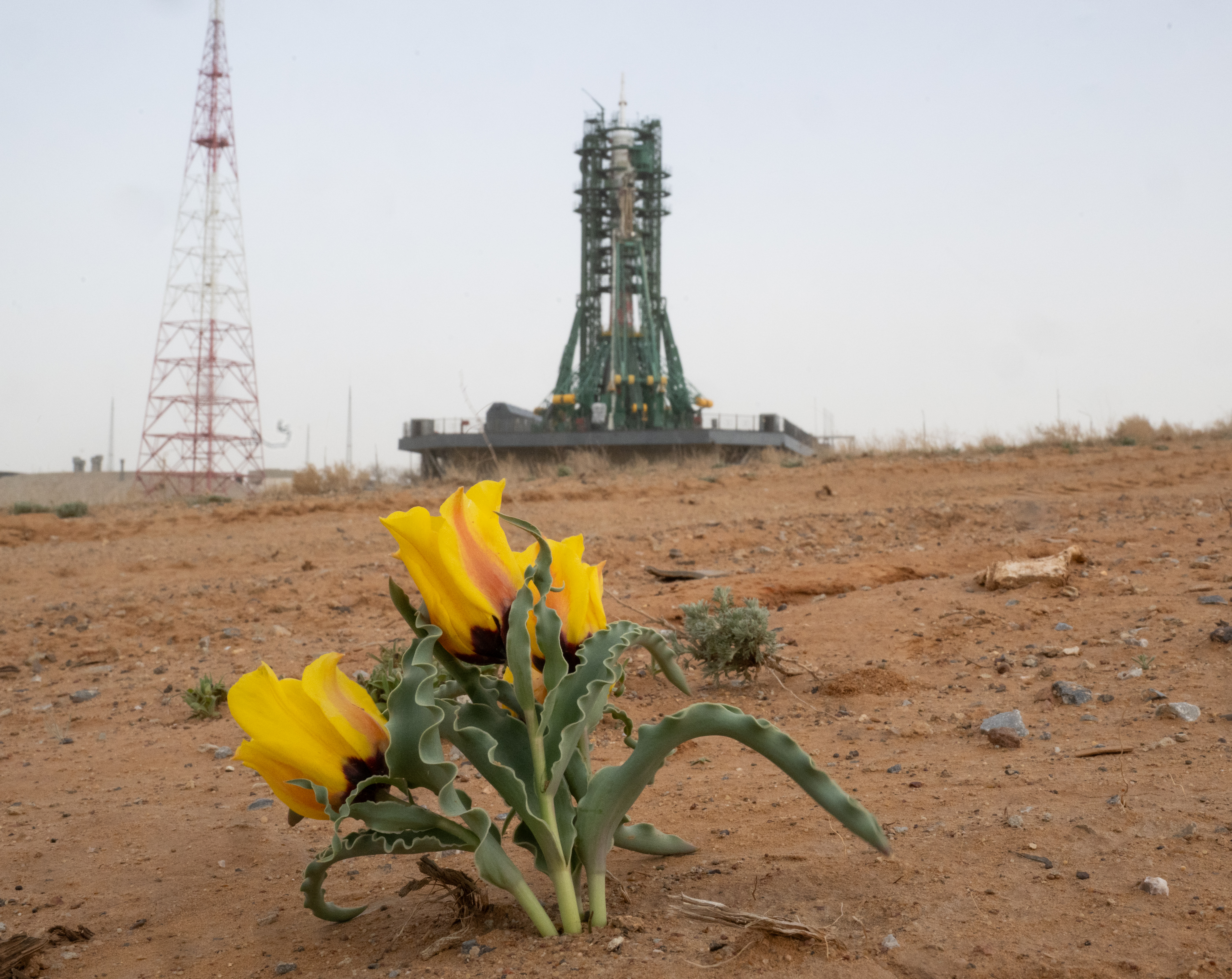
    Three bright yellow tulips with green leaves that have rippling edges sprouts out of the brown dirt in the foreground. In the distance is a Soyuz rocket on the launch pad.
    NASA/Joel Kowsky

    A NASA photographer took this picture of a flower called Borshchov’s tulip near the launch pad at the Baikonur Cosmodrome in Kazakhstan on April 7, 2025, ahead of NASA astronaut Jonny Kim and cosmonauts Sergey Ryzhikov and Alexey Zubritsky launching to the International Space Station. The flower is unique to Kazakhstan, attracting many to study and appreciate its beauty.
    Image credit: NASA/Joel Kowsky

  • What is Lunar Regolith? (Grades 5-8)

    5 Min Read

    What is Lunar Regolith? (Grades 5-8)

    This article is for students grades 5-8.

    The surface of the Moon is covered in a thick layer of boulders, rocks, and dust. This dusty, rocky layer is called lunar regolith.  It was created a long time ago when meteorites crashed into the Moon and broke up the ground. NASA scientists study the regolith to learn more about the Moon’s history. But the smallest parts of the regolith make exploring the Moon very hard! That is why scientists are working to understand it better and to keep astronauts safe during future lunar missions.

    What is lunar regolith like?

    Lunar regolith is full of tiny, sharp pieces that can act like little bits of broken glass. Unlike the dust and soil on Earth, the smallest pieces of regolith have not been worn down by wind or rain. These bits are rough, jagged, and cling to everything they touch – boots, gloves, tools, and even spacecraft!  In pictures it might look like soft, harmless gray powder, but it is actually scratchy and can damage lunar landers, spacesuits, and robots. This makes working on the Moon a lot harder than it looks!

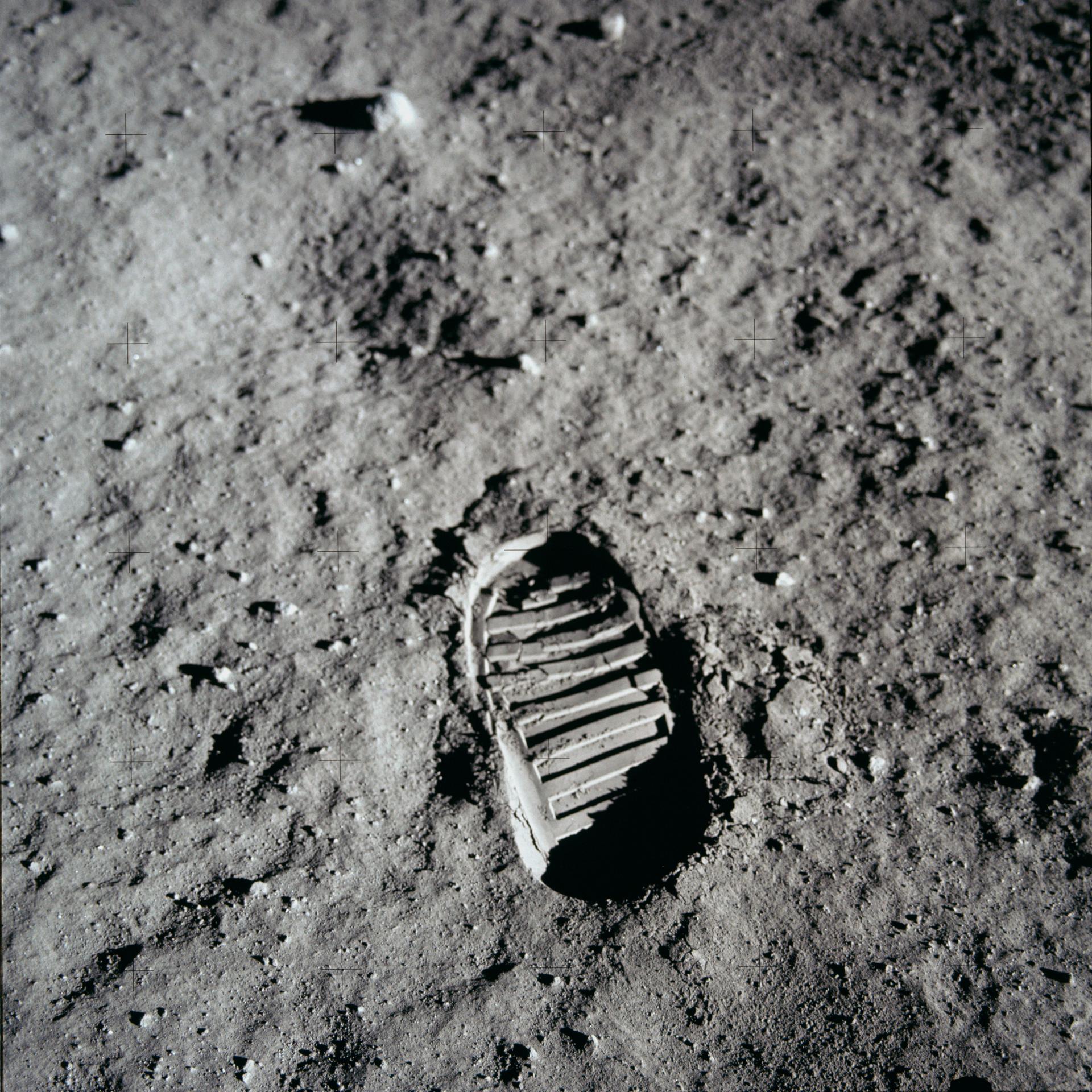
    Image of Apollo astronaut boot print on the moon.

    Is regolith harmful to astronauts?

    The small parts of lunar regolith get stuck on spacesuits and can be brought inside the spacecraft. Once it is inside, it can cause some serious problems. The tiny, sharp pieces can make astronauts’ skin itchy, irritate their eyes, and even make them cough. If it gets into their lungs, it can make them sick. Scientists worry the damage from breathing in lunar regolith could keep bothering astronauts for a long time, even after they are back on Earth. That is why NASA scientists and technologists are working hard to find smart ways to deal with regolith and protect astronauts!

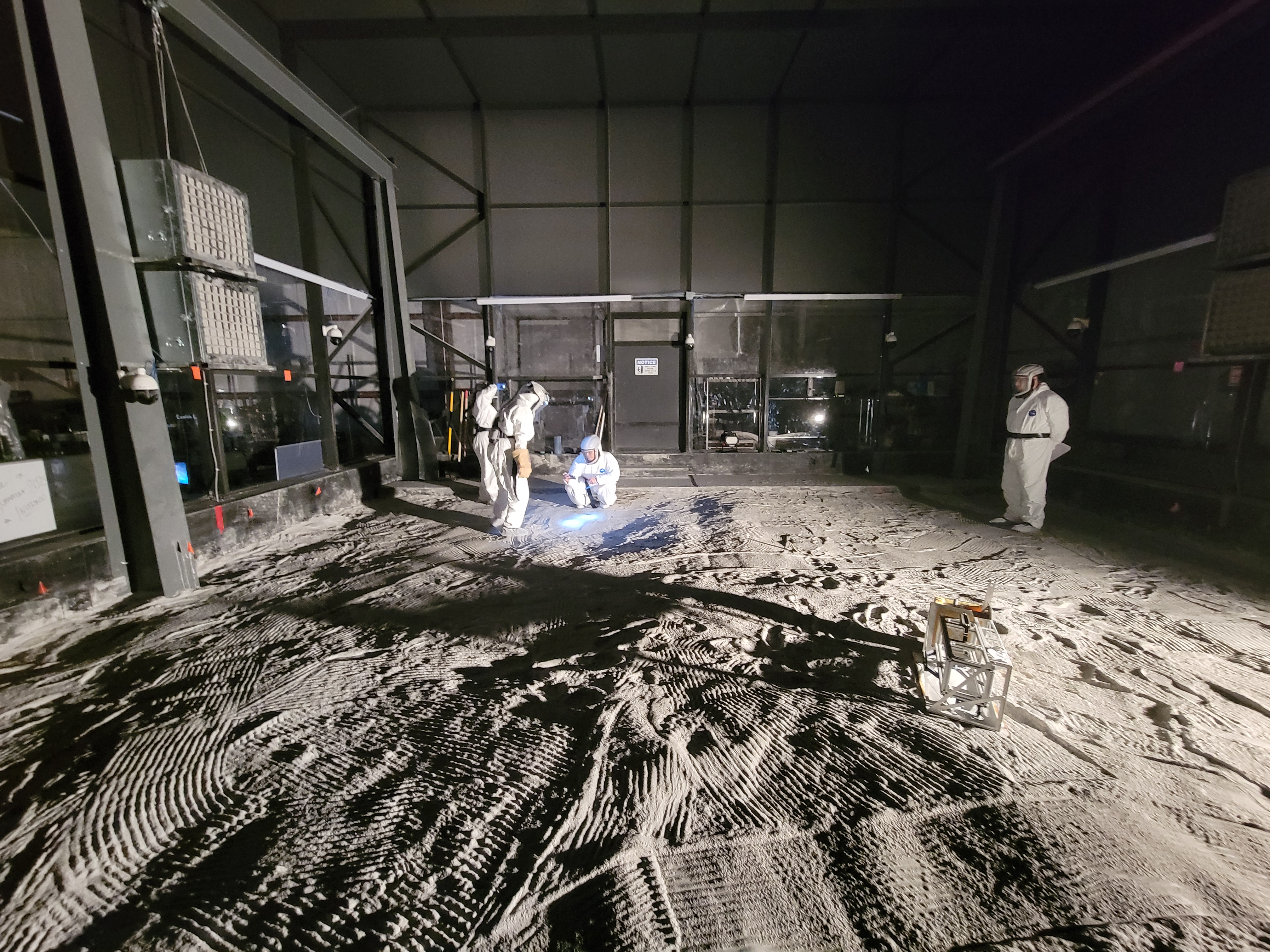
    Three people in white astronaut suits with helmets and orange gloves stand in an area of sand-like substance, holding science instruments. One instrument in buried slightly in the sand

    Can regolith damage NASA equipment?

    Regolith doesn’t just cause trouble for astronauts. It can also damage important machines! It can scratch tools and cover up solar panels, causing them to stop working. It can also clog radiators, which are used to keep machines cool. The small bits of regolith can make surfaces slippery and hard to walk on. It can even make it tough for robots to move around. Unlike Earth’s soil, the Moon’s regolith isn’t packed down. Any time we move things around on the Moon’s surface, we spread the rough, dusty particles around. Can you imagine what a mess launching and landing a spacecraft would make?

    All of this can make exploring the Moon much more difficult and even dangerous!

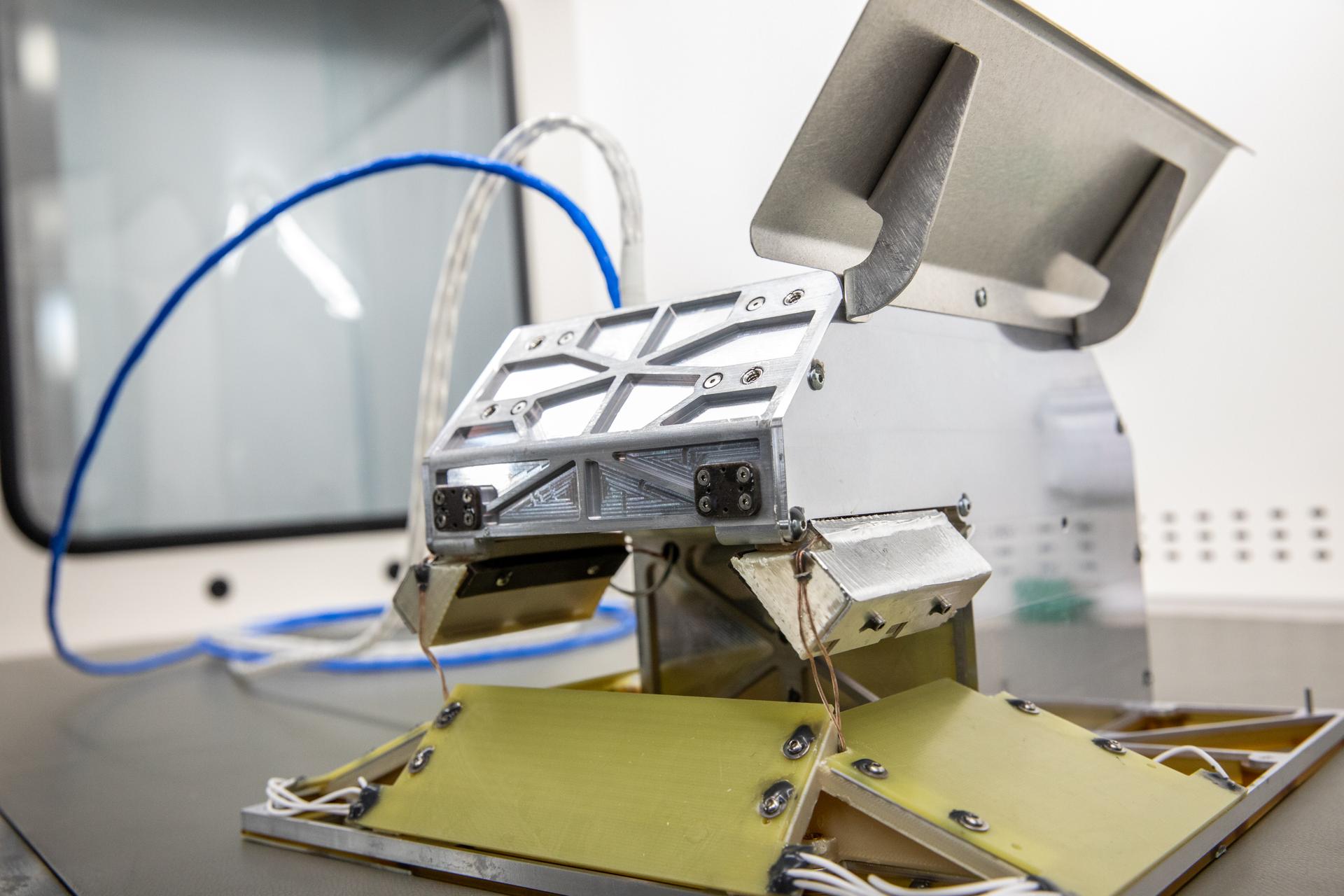
    A electrodynamic dust shield device is centered in this photo with a blue wire in the background.

    What is NASA doing to understand lunar regolith?

    NASA is building many cool technologies to help deal with the harm regolith can cause. One of the tools technologists have already developed is call an Electrodynamic Dust Shield (EDS). It uses electricity to create a kind of force field that pushes the small particles away from tools on the Moon!

    There are many ways NASA is working to understand lunar regolith. One interesting way is by using special cameras and lasers on landers to watch how the regolith moves when a spacecraft lands. This system is called SCALPPS, which stands for Stereo Cameras for Lunar Plume-Surface Studies. SCALPSS helps scientists see how the lunar regolith gets blown around during landings. It helps scientists to measure the size of the regolith pieces and the amount that flies up into the air during landing.

    The more NASA knows about how regolith behaves, the better they can plan for safe missions!

    Career Corner

    Many types of scientists and engineers work together to understand lunar regolith. If you want to study space, here are some cool jobs you could have!

    Planetary Geologist: These scientists are like detectives. They study how the things in space were formed, how they have changed, and what they can tell us about the rest of the solar system. Their work helps us understand what is in space.

    Chemist: Chemists look at space rocks and space dust. They want to know what these materials are made of and how they were created.

    Astrobiologist: Astrobiologists are studying to find clues of life beyond Earth. They study space to find out if life ever existed – or could exist – somewhere else in the universe.

    Planetary Scientist: These scientists use pictures, data from spacecraft, and even samples from rocks and dust to learn about other worlds. They explore space without ever leaving Earth!

    Remote Sensing Scientist: These scientists use satellites, drones, and special cameras to study planets from far away. It is like being a space spy who looks for clues from above.

    Engineers: Engineers solve problems! Civil engineers, materials engineers, and geotechnical engineers work together to understand how regolith can best be used for building materials and get useful resources on the Moon.

    Explore More

    Making Regolith Activity

    Watch: Mitigating Lunar Dust

    Watch: NASA SCALPSS

    Watch: Surprisingly STEM: Exploration Geologist Surprisingly STEM: Moon Rock Processors