Category: News

http://www.subtome.com/#/subscribe?feeds=http%3A%2F%2Fftr.fivefilters.org%2Fmakefulltextfeed.php%3Furl%3Dglobal.jaxa.jp%252Frss%252Fnew.rdf%26max%3D3%26links%3Dpreserve&back=http%3A%2F%2Fftr.fivefilters.org%2Fmakefulltextfeed.php%3Furl%3Dglobal.jaxa.jp%252Frss%252Fnew.rdf%26max%3D3%26links%3Dpreserve

  • [Research and Development Directorate] Low Shock Release Device (LSRD-10K/C-2000)

    Low Shock Release Device (LSRD-10K/C-2000)
    Registration date 2/12/2016
    JAXA development group Research Unit II, Research and Development Directorate
    View diagram See Attachment 1
    Environmental resistance See Attachment 2
    Patent number
    (publication number)
    N/A
    Reference N/A
    Satellite and launch date To be supplied after launch
    Note N/A

    Manufacturer

    Mitsubishi Electric Corporation
    Kamakura city, Kanagawa-ken, JAPAN
    http://www.mitsubishielectric.com/worldwide/index.html

    Features

    By converting the holding tension force to rotational motion of an inner rotor, it is possible to prolong the operating time to release (shock reduction).
    Shape memory alloy is adopted as trigger mechanism.

    • Low shock level (200 Gsrs or less @ 10kN)
    • Reusable
    • Small and light weight
    • Easy-handled

    Applications

    For many types of hold-down and release mechanisms.

    • Solar array panels
    • Launch locks of antenna
    • Small satellite separation mechanisms
    • and so on/li>

    Specifications

    Property Specification
    Load 10kN (2248 lbf)
    Shock level 200Gsrs ↓ @10kN
    Actuation period 150msec ↓
    Life 25times
    Reusability Resettable without refurbishment
    Dimension φ52×43mm(φ2.047×1.693inch)
    Weight 350g (12.35 oz) ↓
    Temperature range Nonoperating -80 to +60C(-112 to +140F)
    Operating -55 to +60C(-67 to +140F)
    Resistrance value 3.0±1.0Ω
    Actuation current 6.0+1.5/-0.7A
    Current pulse width 30±3msec

    Let’s block ads! (Why?)

  • [Aeronautical Technology Directorate] [PR brochure] JAXA Aeronautics Magazine "FLIGHT PATH" No.13/14

    Message from Director General of the Aeronautical Technology Directorate
    ”Shaping Dreams for Future Skies”

    <Feature 1>
    Challenges of the SafeAvio project
    For safe and comfortable air travel

    <Feature 2>
    FQUROH: Ready for flight demonstration
    Developing quiet aircraft technologies to reduce airport community noise

    Let’s block ads! (Why?)

  • [Interview] Jin Mayama, Novelist "Space Is No Longer Just a Dream"

    Space Is No Longer Just a Dream Jin Mayama, Novelist

    The novelist Jin Mayama produces book after book that examines the light and dark elements of modern society, and challenges the hypocrisy behind ‘common sense’ views. Mayama’s work Baikoku (Treason), published in 2014, tells the story of a prosecutor from the Special Investigation Department of the Tokyo District Public Prosecutors Office who becomes involved in the murky world of the politics surrounding space development. Mayama says that in the course of his research for the novel, he did a lot of interviews with specialists working on space vehicles. JAXA cooperated with the production of a TV movie based on Baikoku, which aired in October 2016.

    I wanted to give a shout-out to Japanese space development

    — What did you want to say in your novel Baikoku?

    Pocket edition of Baikoku (Treason)(© Bungeishunju)Pocket edition of Baikoku (Treason)(© Bungeishunju)

    Filming at JAXA. Saki Aibu plays the female scientist. (© TV Tokyo)Filming at JAXA. Saki Aibu plays the female scientist. (© TV Tokyo)

    The theme of this novel is the righteousness of the Special Investigation Department of the Tokyo District Public Prosecutors Office, and the dream of space development. The Special Investigation Department is responsible for pursuing consummate evil concealed in places that are hard for ordinary investigators to reach, such as political corruption. The public prosecutor from the Special Investigation Department who stands up to this great evil asks the question, “What is justice?” Meanwhile, there is a young female engineer who wants to launch a rocket that she has designed herself. The space program in which she has placed all her hopes involves technology that interests more people that just the State. What will become of her dreams when she becomes embroiled in political intrigue? I wrote about the nature of justice as well as how to protect hopes and dreams.

    — The TV drama based on this novel, Great Evil Never Dies, aired on TV Tokyo on October 5.

    The drama is fairly true to the original material, and properly portrays the themes of justice and dreams. In general, I feel that what ends up on screen is different from the original work, so I don’t ask that TV adaptations stick closely to my books, but I was impressed that this one managed to stay as close as it did to the original material. The unwavering pursuit of justice by the Special Investigation Department, and the potential that the human race will one day travel to space will surely be communicated to the audience.

    I found the scenes showing the main character’s feelings about space particularly impressive, because they were filmed at the JAXA Sagamihara Campus and the Uchinoura Space Center. When they were filming at the Sagamihara Campus, I asked Hiroshi Tamaki, the actor who plays the prosecutor, what he thought, and he said, “The real thing is amazing!” Sagamihara has the feel of a university campus, except there are actual rockets on display, and it seems that he could sense that cutting-edge research was taking place there.

    — It feels like the film allows us to experience the magnificence of the real thing, which so different from a film set.

    Yes, I think so. At first I was worried about whether JAXA would cooperate with the production, because, as you can imagine from the novel’s title, Treason, the story features an engineer who tries to sell Japanese space technology to other countries. But what I wanted to get across with this novel was not just the simple question of whether or not the engineer was guilty of treason. In the end, I wrote the novel with the question in mind of how the Japanese space program could expand its potential even further. It is, of course, fiction, but if the space program had had a bigger budget, and if the potential of space had been more developed, the engineer would not have tried to go against the national interest. I wanted to make the point that I want more people in Japan to take an interest in space so that this kind of misfortune does not occur in reality. I wrote this novel because I wanted to support the people involved in the Japanese space program.

    On-site research with a litany of surprises

    — I heard that you typically spend a year to a year and a half doing research before you start writing. How did you go about learning about the space program?

    Launch of the Epsilon Launch Vehicle in 2013Launch of the Epsilon Launch Vehicle in 2013

    I was able to talk to engineers involved in rocket development, including Yasuhiro Morita, the Project Manager of the Epsilon Launch Vehicle. Dr. Morita said to me, “As long as rocket launches are considered news, we’ve got a long way to go.” These days it has become commonplace to travel all over the world on airplanes, and a plane taking off is no longer news. He said the mission of space scientists is to open up an era in which sending people and objects into space is as ordinary as flying an airplane is today. He told me that we have to look more towards why we are going into space rather than just focusing on launching rockets, and I wanted to communicate that with my novel.

    I also went to see the launch of the Epsilon Launch Vehicle in 2013, when Baikoku was being serialized in a weekly magazine. I saw both the launch that was aborted 19 seconds before liftoff, on August 27, and the successful launch on September 14. There were observation seats for the media that day, but I won a seat in the lottery that was held for the general public, so I chose to sit there instead, because I wanted to see everyone’s reaction. I still remember clearly when the first launch was aborted. There were no reserved seats, so I got there early in the morning to make sure I got a good seat, and I waited on tenterhooks for hours and hours, clutching my telescope. But the launch time came and went, and the rocket did not blast off. I found out from the press conference afterward that the launch was aborted because the rocket’s autonomous inspection system erroneously detected an attitude abnormality. But Mr. Morita said, “This was not a failure, as the computer detected a defect and automatically stopped the launch. This is a positive result.” Even reporters who would usually call this a failure voiced their approval. This reaction surprised me. And so did the reaction of the public.

    — How did the public react?

    On an oppressively hot summer day, I was waiting for the launch along with the rest of the general public, and I thought that some people would get angry when they realized that the launch they had been anticipating for hours and hours had been aborted just before liftoff. But as far as I am aware, despite the conditions, no one got angry. The reaction was that there would be another opportunity in the future, and that surprised me.

    Project Manager Yasuhiro Morita (left) directly after the launch of the Epsilon Launch VehicleProject Manager Yasuhiro Morita (left) directly after the launch of the Epsilon Launch Vehicle

    Then I went to watch the second launch attempt. The seat lottery for the general public was only held once, so the same people gathered to watch, and even though it was now September and the new school year had started, almost everyone came back. I saw these strangers, who had come from all over the country, exchanging photos of the first launch, which they had all attended. I was captivated by the strong feelings these fans had for the space program – feelings of understanding and support. I would have liked people who call the space program a waste of taxpayers’ money to see this. I want them to know more about the importance of space development. It was with this in mind that I wrote about the Epsilon launch.

    — Your detailed description of the Epsilon launch day was impressive.

    The first thing that Dr. Morita said at the press conference after the successful launch was, “Congratulations, everybody. I’m really pleased that Epsilon has launched.” At first I thought I had heard him wrong. But he clearly turned to all the staff and paid tribute to them saying “thank you” and “good for you.” He took sole responsibility for the initial launch postponement, and shared the joy of success with staff, media and space fans alike. I was impressed – this is a project manager. My novel is fiction, but I wanted to reproduce what I learned through my on-site research as truthfully as possible, so I included Dr. Morita’s comments in the novel.

    Space can become a growth industry

    — Weren’t you originally planning to write about the aviation industry rather than rockets?

    Jin Mayama observing filming at JAXA(© OFFICE MAYAMAJIN)

    Jin Mayama observing filming at JAXA(© OFFICE MAYAMAJIN)Jin Mayama observing filming at JAXA(© OFFICE MAYAMAJIN)

    That’s right. I was preparing to write the novel around the time that the news broke about the first Japanese-made passenger jet, MRJ [Mitsubishi Regional Jet], and I thought of a plotline in which the advanced nations of the world are flustered by Japan’s serious foray into the aviation industry. But I found out that in the United States there is a rule that foreign manufacturers must apply for approval of design drawings for aircraft that will fly in the nation’s airspace. And that meant that my outline did not stand up to scrutiny because even if Japan built a new airplane, all the technology would be leaked to the U.S. And then, right when I discovered this problem, a student who was working for me in my office and who was knowledgeable about aerospace, suggested that it would be interesting to write about space. He lectured me for hours, and taught me that there are many things in Japanese space technology that cannot be imitated by other countries.

    Initially, I had negative feelings about the Japanese space program. Every time I saw news about Japanese astronauts going into space, I thought the only objective of these missions was the act of going to space itself. I didn’t see the results, and thought it was a waste of money. But as I talked to people involved in the field, I came to understand that in fact, space development would become one of the few growth industries in Japan. That’s when I decided to focus my novel on space.

    — You also did research in the U.S. How did that go?

    I felt a big difference between the U.S., where space development is already an industrial enterprise, and Japan, where it is still at the research stage. I was able to speak to specialists at NASA’s Jet Propulsion Laboratory; they are always thinking about how they can use their technology in business. This comes from the style of education in the U.S. For example, it is considered completely natural at U.S. graduate schools that research labs are closed if they do not produce profitable results. This is not limited to space science; students work hard together to come up with ways to monetize the research produced by their labs. They are not only clever; they also continually think about business. Students who can show discipline in this way do not just come from nowhere; they need to be trained from high school onwards. To teach Japanese students and researchers to think about industrial enterprise, we need to review the education system as a whole.

    Furthermore, I think the concept of failure also being a result has taken root in the American space program. I may be going too far, but I think that to them, a mission is a kind of experiment. In contrast, in Japan there is a sense of despair, in that if a mission fails, there will not be another. Not to mention the fact that Japan’s budget for space is one tenth that of the U.S. There is pressure to conduct research under extreme conditions in which failure is not allowed, with a thoroughly squeezed budget. But it’s normal that research and development achieves success only through repeated failure and trial and error. Consequently, I believe that Japan once again needs to acknowledge that it has been a world leader in science and technology all the way to the present day.

    Better opportunities for young scientists

    — What do you think we should do to improve Japanese space technology?

    We shouldn’t get too hung up on results, and we should give more opportunities to young researchers. When I asked the young scientists or engineers I interviewed about their dreams for the future, they happily talked about wanting to research warp engines, or to become the first space architect in the world. Meanwhile, the reality seems to be that they are overwhelmed with administrative work and cannot manage to secure enough time for their research. And there is not enough funding. There is no way that Japanese space technology can evolve if we continue like this. Because it’s difficult to obtain investment from private companies if the results are not immediate, the State allocates a budget and backs research by young scientists or engineers. We need to create an environment in which they can study freely and concentrate on research. I think it’s important to have ideas about how young people can continue to make good use of their outstanding talents. And we also need outstanding “producers.”

    — What do you mean by producers?

    People who can appraise a variety of cutting-edge technologies and raise funds. In other words, a producer is someone who can ascertain whether a technology has the potential to make money in the future, and can raise the funds to develop it. They would also need presentation skills to be able to get funding from investors. If the government gave subsidies to these kinds of outstanding producers, they would be trusted, and would be able to attract even more money. I feel that Japan still has a long way to go – rather than investing in key people, it continues to invest in objects. With regard to these key people, in Japan we tend to think that 10 out of 10 people must succeed, but in actual fact, it’s fine if one out of 10 succeeds. In other words, it’s OK to have nine failures out of 10, as long as the tenth one is a success and is the best in the world.

    After all, if we are going to make something new, something competitive, we need generous investment. Either way, we probably need to make sure that the Japanese people have a better understanding of the need for space development. As I said before, initially I didn’t know much about the Japanese space program, and I had negative feelings towards it.

    Going into space is a reality

    — How do you think we can encourage people’s interest in space development?

    We need to get rid of the old idea that space exploration is a dream. Today going into space is a reality. Space is a new frontier, and I believe we should explain to people, in easy-to-understand terms, about this modern world that offers new business opportunities.

    We change the way we speak to people depending on whether they are friendly or critical towards us, don’t we? It’s the same with space development. Not everyone is favorably disposed towards space, so you can’t talk to everyone on the assumption that it is something they like. I think in some cases it would be better to explain the missions more carefully, in order to connect with a critical audience.

    — Don’t critics feel the attraction when we talk about dreams?

    Today’s young people are realists, and few of them have dreams. It seems that they even think of people who talk about their dreams as reckless. They admire people who single-mindedly face up to reality, who repeatedly fail and pick themselves back up without losing heart, and who work towards their goals. They say they want to be like that when they grow up. So I think it would be better to tell the truth about how much research and how many failures go into developing technology, so that more people are moved by the effort that goes into it, and become interested in space development. We should focus on the real world rather than on dreams.

    — Tell us about your future aspirations.

    I want to keep writing stories that make readers want to keep on trying and become more positive. In my novels, I create professionals, I fully respect them, and I cheer them on. By “professionals” I mean people who have experience with technology and knowledge, and who can take responsibility in the end. It’s a shame, but there are fewer and fewer people like that in the real world, and that’s what has made Japan weak. This is precisely why I write about true professionals, and I think it would be good if people, in particular young people, wanted to be like them. During my research for Baikoku, professionals working in space programs helped me greatly. I hope that this dramatization will give not only my readers but also the people who see these images an opportunity to take an interest in space. I would really like to incorporate space development as a theme into one of my future novels.

    Jin Mayama

    Jin Mayama

    Mayama graduated from the Department of Political Science at the Faculty of Law at Doshisha University. After working as a newspaper journalist and a freelance writer, Mayama made his debut as a novelist in 2004, with Hagetaka (Vulture), a human drama involving corporate acquisitions. That novel was adapted for television and aired to great acclaim in 2007. Mayama has written a great many other works including: Magma, Beijing, Corruptio(Corruption), Can You See the Sea? and Tokakushi (The Kingmaker).

    [Nov 30, 2016 ]

    Let’s block ads! (Why?)

  • [Earth Observation Research Center (EORC)] "Glacier and Glacial Lake Inventory" was updated (Ver. 16.11).

    » Description (PDF File / 2.7MB) ···· download

    » “Glacier and Glacial Lake Inventory” (Ver. 16.11, zip Compress / 10.4MB)  ···· download

    The Japan Aerospace Exploration Agency (JAXA) is cordially announcing public release of “Glacier and Glacial Lake Inventory of Bhutan using the Advanced Land Observing Satellite (ALOS, nicknamed “Daichi”) Data” (Version 16.11), which is covered the entire country of Bhutan.
    In the Himalayan region, there are numerous lakes in the vicinity of glaciers. These glacial lakes impose potential risks for sudden outbursts and consequent floods. This type of flooding event is referred to as a glacial lake outburst flood (GLOF), which occurs frequently enough in the Himalayan region. With a growing amount of public and scientific concern about hazards, climate change, and water management associated with GLOFs, the “Bhutan GLOF Project” (*1) aims at updating and improving glacial lake inventory for Bhutan using new and high spatial resolution data from ALOS as well as glacier inventory. The motivation for this release is to support the research community and various domestic and international projects.
    The inventory is based on images taken between 2006 and 2011 from the two optical instruments, the Panchromatic Remote-sensing Instrument for Stereo Mapping (PRISM) and the Advanced Visible and Near Infrared Radiometer type 2 (AVNIR-2) onboard ALOS. The construction procedure consists of ortho-rectification, geometric correction, pan-sharpening, and digitization to extract water bodies. Glacial lakes included in the inventory are bodies of water that lay between the terminus of the mother glacier and the Little Ice Age moraine. Lakes located within 2 km of the Little Ice Age moraine down-valley are also included to take into account a possible flooding event with multiple lakes being involved. In addition, supraglacial lakes on debris-covered glaciers are included. Finally, we set 0.01 km2 as the minimum lake size considering small lakes contribute a less amount of GLOFs’ risk. The parameters included in the inventory are ID, latitude, longitude, area, and some references in addition to a shape file for each lake. In total, 733 glacial lakes are extracted in the Bhutan Himalaya, and total area of the lakes is about 82.5 km2. In this latest version (v13.00), an ALOS-derived glacier inventory which contains polygons of glacier body and debris-covered area was connected with the glacial lake inventory. The glacier outlines and debris-covered outlines were also generated from the ALOS images with visual interpretation and manual delineation.

    Figure 1 shows the pan-sharpened image covering the entire country of Bhutan overlaid the glacial lakes inventory (color polygons) and boundaries of river basin (red lines). Each color of polygons indicates an individual river basin. Figure 2 shows an enlarged image of Fig.1 around upper stream of Mangde Chu basin as example, which is overlaid the inventory (red polygons) and a Map ID.

    *1 The project is a collaborative work of Nagoya University, Rikkyo University, Hokkaido University, National Research Institute for Earth Science and Disaster Prevention (NIED), Hiroshima Institute of Technology, Japan Agency for Marine-Earth Science and Technology (JAMSTEC), Remote Sensing Technology Center of Japan (RESTEC), Niigata University, Research Institute for Humanity and Nature (RIHN), Earth System Science Co.,Ltd. (ESS), Hirosaki University, Nihon University, Teikyo Heisei University, Gunma University, Keio University and the Department of Mineral and Geology (DGM) of the Royal Government of Bhutan supported by the Japan Science and Technology Agency (JST) and the Japan International Cooperation Agency (JICA) under the “Science and Technology Research Partnership for Sustainable Development” (SATREPS).

    Figure 1: Pan-sharpened mosaic image by PRISM and AVNIR-2 in the Bhutan Himalayas as of July 2011 (R, G, B = Band 3, 2, 1 as true color composite). The red lines show boundaries of river basin and the color dots show extracted glacial lakes in this study.

    Figure 1: Pan-sharpened mosaic image by PRISM and AVNIR-2 in the Bhutan Himalayas as of July 2011 (R, G, B = Band 3, 2, 1 as true color composite).
    The red lines show boundaries of river basin and the color dots show extracted glacial lakes in this study.

    Figure 2: Enlarged image around upper stream of Mangde Chu basin with glacial lake inventory (red polygons).

    Figure 2: Enlarged image around upper stream of Mangde Chu basin with
    glacial lake inventory (red polygons).

    Figure 3: Example of delineated glaciers, debris-covered areas, and glacial lakes in a western part of Bhutan.

    Figure 3: Example of delineated glaciers, debris-covered areas, and
    glacial lakes in a western part of Bhutan.

    Papers to be referred:

    【Glacial lake inventory】
    Ukita, Jinro, et al. “Glacial lake inventory of Bhutan using ALOS data: methods and preliminary results.” Annals of Glaciology 52.58 (2011): 65-71.
    Tadono, Takeo, et al. “Development and validation of new glacial lake inventory in the Bhutan Himalayas using ALOS ‘DAICHI.’.” Global Environmental Research 16.1 (2012): 31-40.

    【Glacier inventory】
    Nagai, Hiroto, et al. “Comparison of multiple glacier inventories with a new inventory derived from high-resolution ALOS imagery in the Bhutan Himalaya.” The Cryosphere 10.1 (2016): 65-85.

    Related Link:

    » Link to “Glacial Lake Inventory of Bhutan using ALOS Data” (Version 12.03).
    » Link to “Glacial Lake Inventory of Bhutan using ALOS Data” (evaluation version, Version 11.02).

    Let’s block ads! (Why?)

  • [Earth Observation Research Center (EORC)] "Earth Observation Priority Research" page was opened

    Assembling observation data in earth observation priority research and promoting new research by combining it with models to contribute to the prosperity of humanity.

    In EORC, we do “Earth Observation Priority Research” where analysis and research are developed multi-dimensionally in cooperation with universities, research institutes and foreign researchers. The data is then sent from earth observation satellites in an integrated way. We aim to address issues in various fields including the oceans, the water cycle and water resources, the atmosphere, infrastructure monitoring, radioactive processes, ecosystems, agriculture and public health, etc.

    Yutaka Kaneko Manager Earth Observation Research Center Space Technology Directorate 1
    Yutaka Kaneko
    Manager
    Earth Observation Research Center
    Space Technology Directorate 1

    Collecting Earth Environment Data from Space using Earth Observation Satellites

    Our daily lives are endangered by changes in earth environment caused by human activities such as deforestation (tropical rain forests in particular), destruction of the ozone layer and global warming, and natural phenomena such as earthquakes, volcanic eruptions and climate change, etc.
    EORC calibrates and validates the earth environment data essential for our daily lives, including the oceans, the water cycle, the atmosphere, climate change, infrastructure and health, etc., for each earth observation satellite and project, and develops algorithms for the effective use of observation data. Moreover, we produce useful data output so that we can forecast the changes in earth environment and cope with disasters or climate change quickly by combining the data sets sent from two or more satellites and applying the cross-project data to earth environment modeling.

    Themes and Satellites to be used for Earth Observation Priority Research

    EORC managed study

    Themes and Satellites to be used for Earth Observation Priority Research

    ALOS-2: Advanced Land Observing Satellite “DAICHI 2”, GPM: Global Precipitation Measurement, TRMM: Tropical Rainfall Measuring Mission, EarthCARE: Earth, Clouds, Aerosols and Radiation Explorer Mission, GCOM: Global Change Observation Mission, GOSAT: Greenhouse Gases Observation Satellite “IBUKI”, “Himawari”: Geostationary Meteorological Satellite

    Open EORC and Maximizing the Availability of Research Results

    EORC intends to use human resources effectively including those in universities and research institutes and other foreign researchers. This is to develop an increase in the number of users and strengthen collaboration. This is a change from what was previously JAXAs stand-alone approach. The work now is to establish an all-Japan system and maximize the use of research results, as well as to reinforce the EORC’s research function by promoting Earth Observation Priority Research.
    Also, to create a more open and transparent EORC, the EORC advisory commission has been established to promote evaluation and dispatch of the research results.

    International Collaboration Obtaining data on the changes in earth environments multi-dimensionally, in collaboration with various organizations

    The most important issue related to environments that we face now is the global scale of problems, and we need to think of it not for single country, but from the international point of view. For example, GPM (Global Precipitation Measurement) is an international collaborative mission where high accuracy and high frequency global precipitation observations are made to elucidate climate change and water cycle change. It utilizes a main satellite (GPM/DPR: Global Precipitation Measurement/Dual-frequency Precipitation Radar) and the Constellation Satellites. Japan, the US, France and India participate in this project.
    For everyday weather forecasts, the observation data from GCOM-W (Global Change Observation Mission) “SHIZUKU” using the microwave radiation scale is used for high-accuracy rainfall prediction by as many as 264 meteorology organizations in 36 countries including the Japan Meteorological Agency.
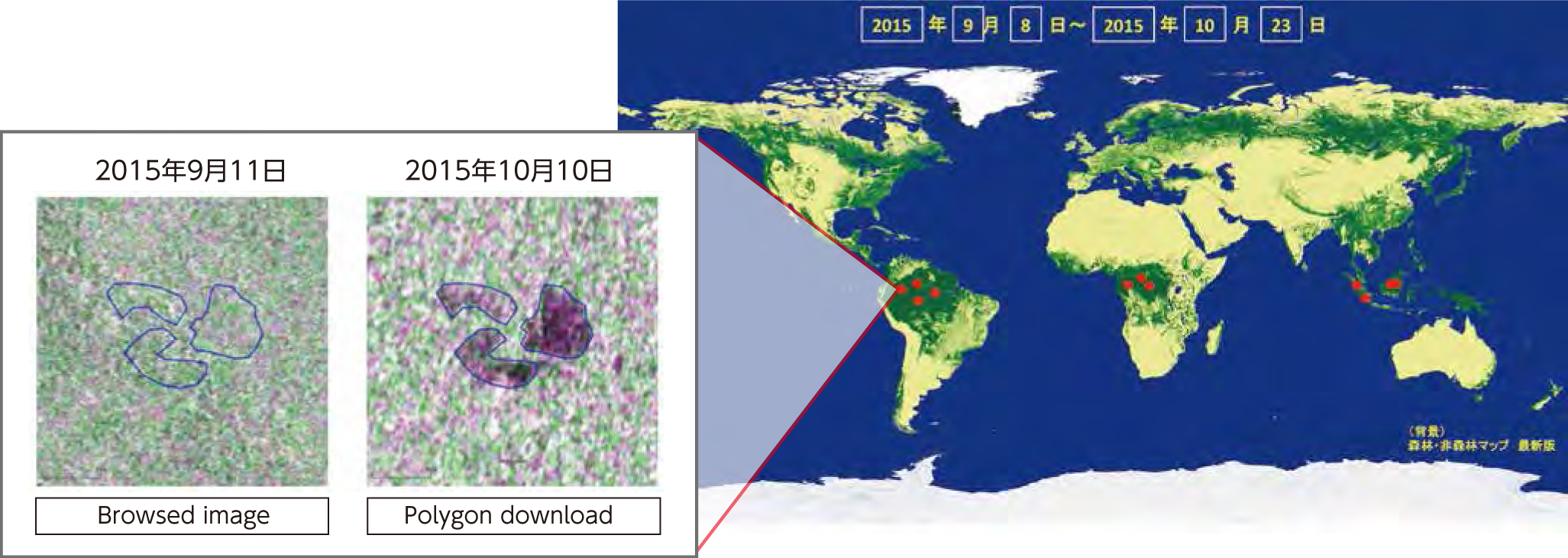
    Accumulated greenhouse gas emissions due to land use changes (deforestation) account for 25% of the total accumulations of gas from 1750 to 2010. The increase of such greenhouse effect gases is a significant factor for climate change. Forest preservation is recognized as an important project and countermeasure against climate change. Because of this, JAXA is going to start a tropical forest-monitoring program with satellites in cooperation with JICA (Japan International Cooperation Agency). This project is to contribute to effective countermeasures against climate change, to deter deforestation, prevent natural disasters, and also for biodiversity conservation. This project is expected to help limit deforestation in countries where the problem is serious due to illegal logging in the short term, and to overall forest preservation by the United Nations in the long term. EORC continues to challenge itself to find solutions to problems on the earth and the whole of humanity not only for the present, but also for the future.

    EORC’s Attempt to Restrict Illegal Logging and Global Warming with the Forest Change Detection System in collaboration with JICA

    EORC’s Attempt to Restrict Illegal Logging and Global Warming with the Forest Change Detection System in collaboration with JICA

    EORC cooperated with JICA to identify the illegal logging areas in the Amazon based on observation data from the Advanced Land Observation Satellite (ALOS) “DAICHI” from 2009 to 2012. In April 2014, JAXA and JICA concluded the cooperation agreement for the purpose of finding solutions to global issues particularly in developing areas of the world, using their aerospace technology. In COP 21 held in Paris in December 2015, they jointly announced the “Forest Governance Improvement Initiative”. According to its framework, the “Forest Change Detection System” will be built using the “Advanced Land Observing Satellite “DAICHI 2” (ALOS-2) effectively.

    Let’s block ads! (Why?)

  • [Earth Observation Research Center (EORC)] ALOS-2 PALSAR-2 Observation Results on New Zealand

    ALOS-2 PALSAR-2 Observation Results on New Zealand

    Posted: November 16, 2016, 7:30 (UTC)

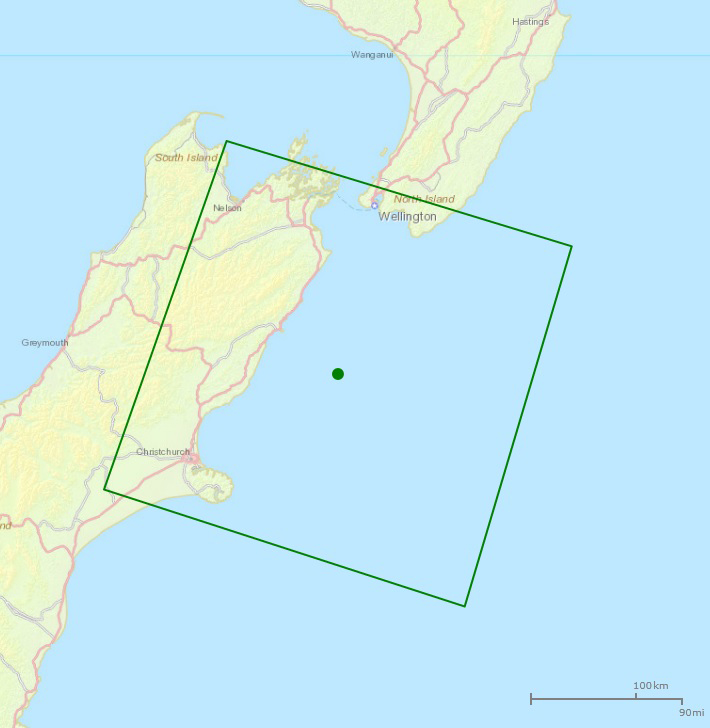
    On November 15, 2016 at 23:00 (UTC), an emergency observation with the Phased Array-type L-band Synthetic Aperture Radar-2 (PALSAR-2) aboard the Advanced Land Observing Satellite-2 (ALOS-2, “DAICHI-2”) was performed in response to the magnitude-7.8 earthquake in New Zealand on November 13, 2016 at 1:36 (UTC). Table 1 and Figure 1 shows the observation area.
    Japan Aerospace Exploration Agency (JAXA) has provided the acquired data to corresponding authorities.

    Table 1. Emergency observation information
    Observation date (UTC) Path No. Observation mode Polarization Direction Beam No.
    2016/11/15 194 ScanSAR HH+HV Right W2
    Fig.1: Area of the emergency observation on November 15, 2016 at 23:00 (UTC) Fig.1: Area of the emergency observation.
    (Click to view enlarged image)

    Observation on Nov 15, 2016:
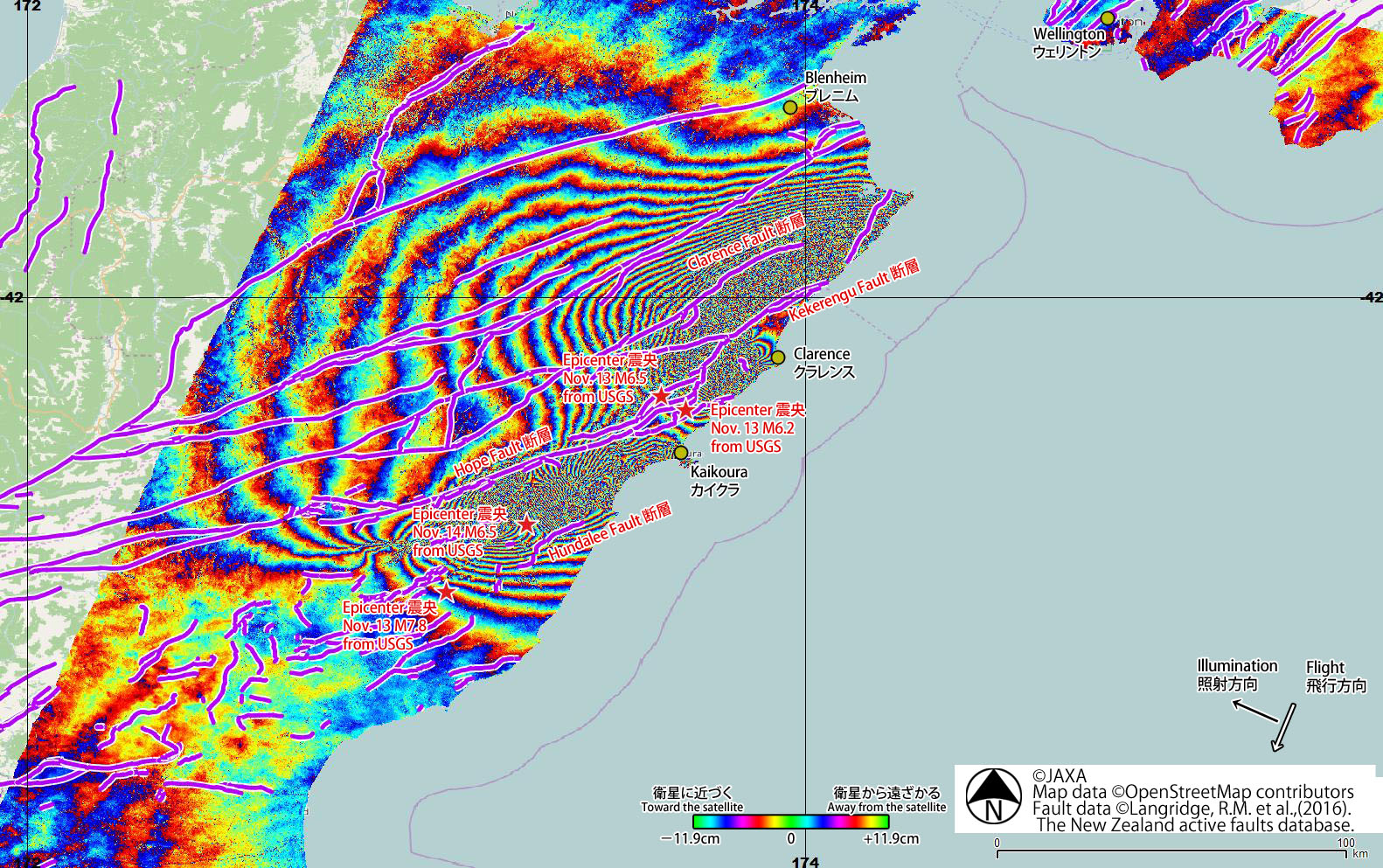
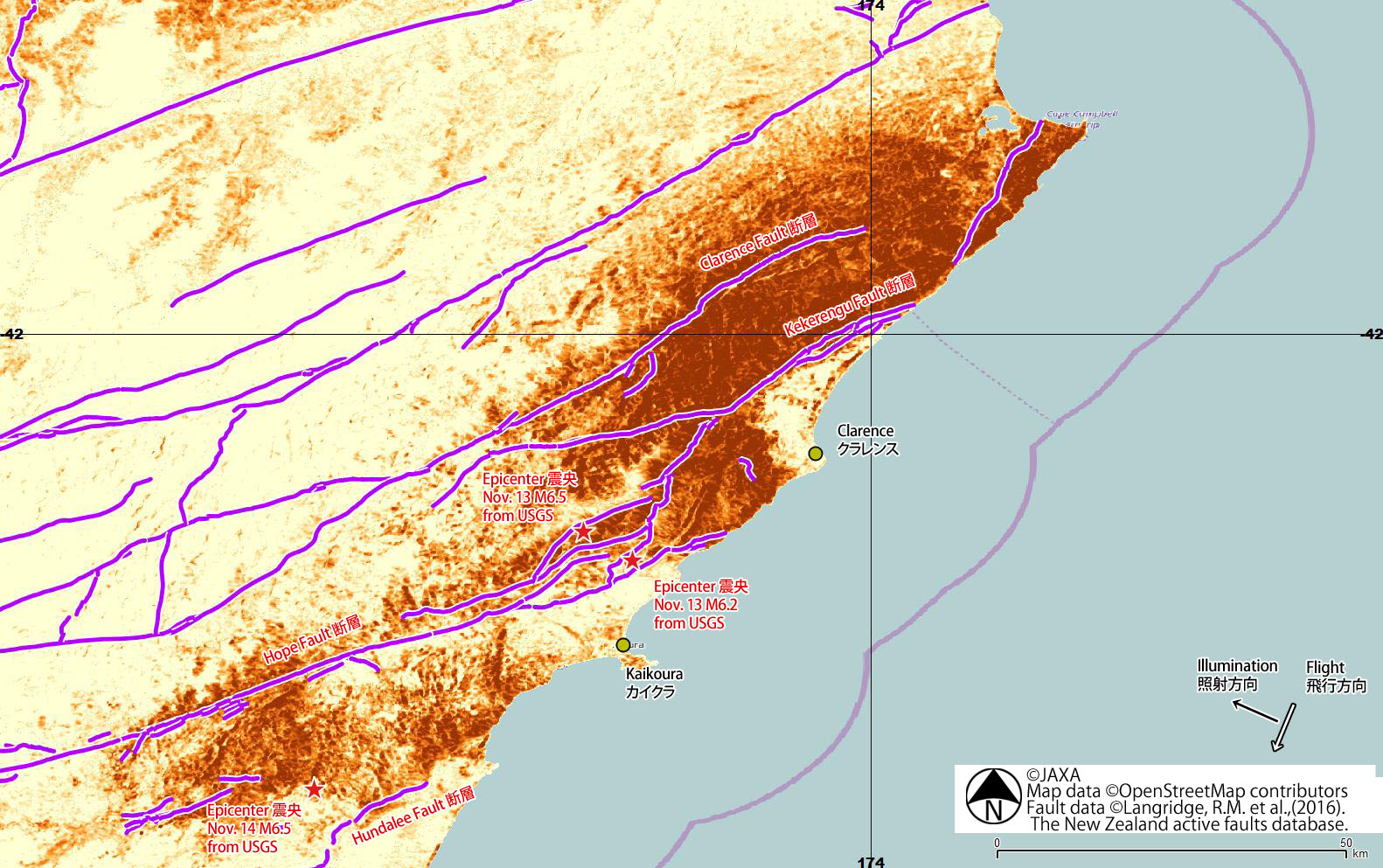
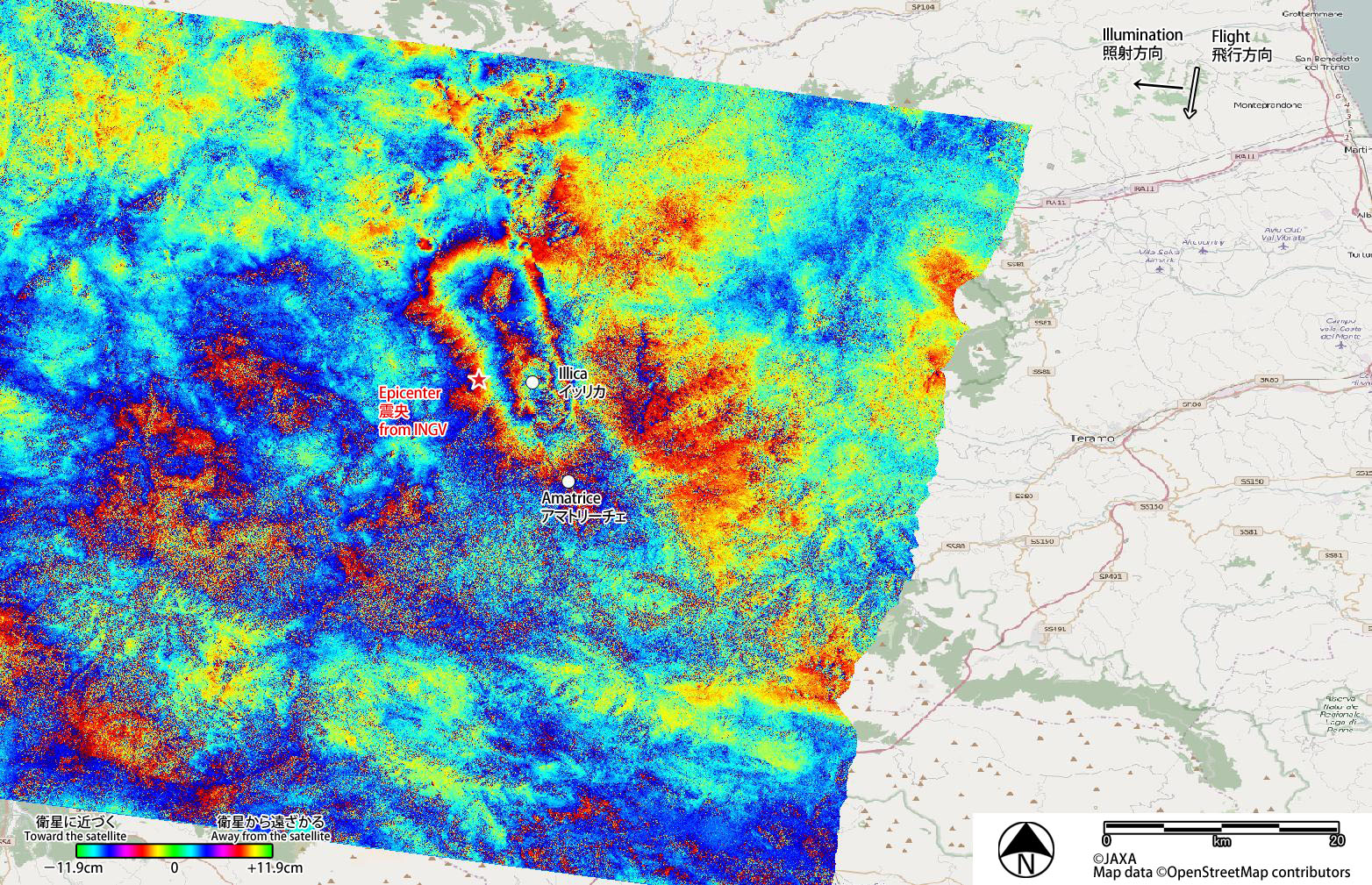
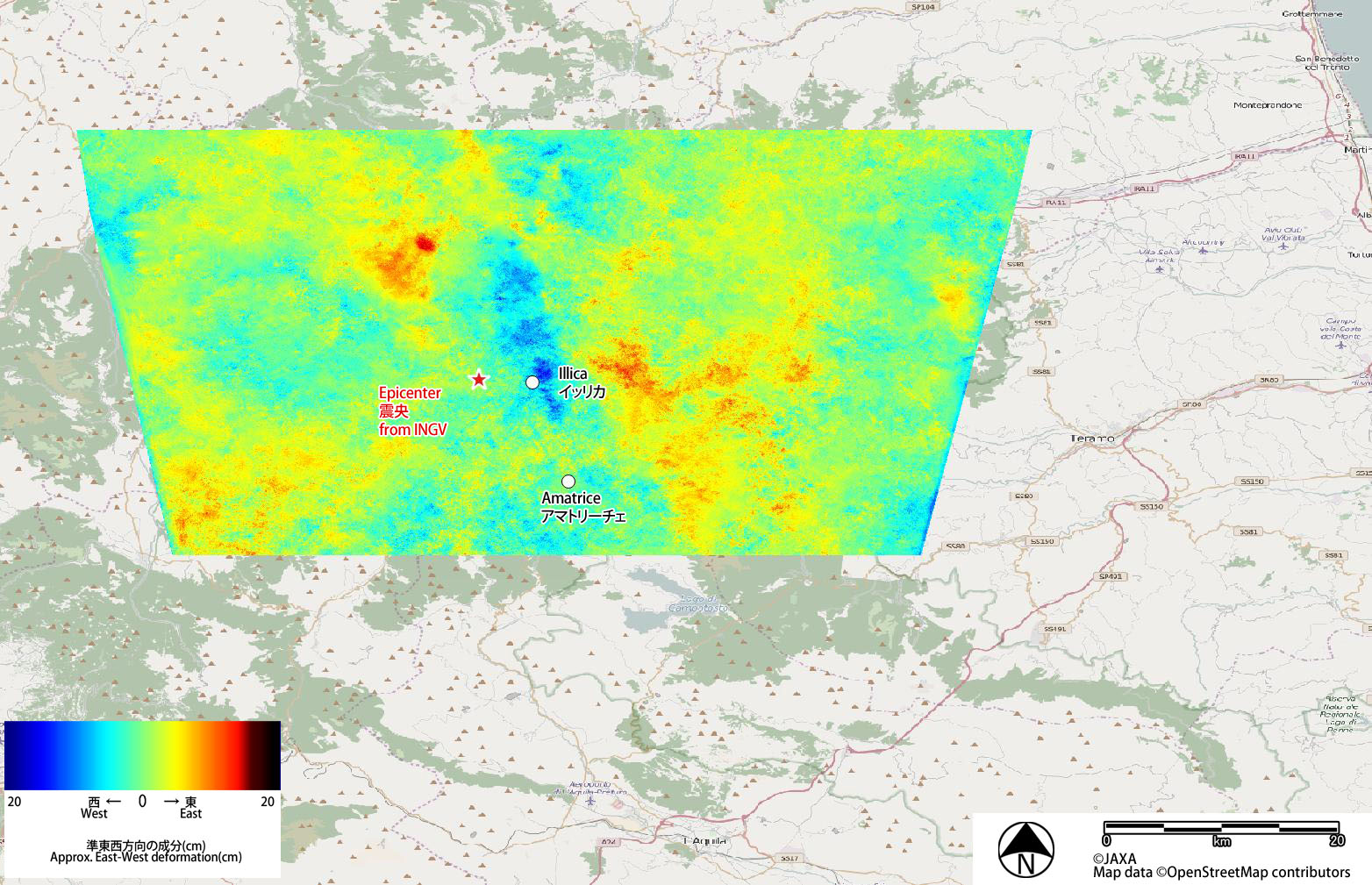
    Fig. 2 shows a differential interferometry (DInSAR) result derived from the PALSAR-2 data acquired before (October 18, 2015; UTC) and after (November 15, 2016; UTC) the earthquake. Two major deformation regions were found, approx. 100 km length deformation in north west of Clarence and approx. 70 km length deformation in south west of Kaikoura. Over 3m deformation close to the satellite (eastward and / or upward movement) was detected in the west region of Clarence. The deformation should be larger in the area between Kekerengu Fault and Clarence Fault.

    Fig.2: Differential interferometry (DInSAR) result using the ALOS-2 PALSAR-2 data acquired before (October 18, 2015; UTC) and after (November 15, 2016; UTC) the earthquake.

    Fig.2: DInSAR result using the ALOS-2 PALSAR-2 data acquired before (October 18, 2015; UTC) and after (November 15, 2016; UTC) the earthquake.
    (Click to view enlarged image)

    » KMZ File is here

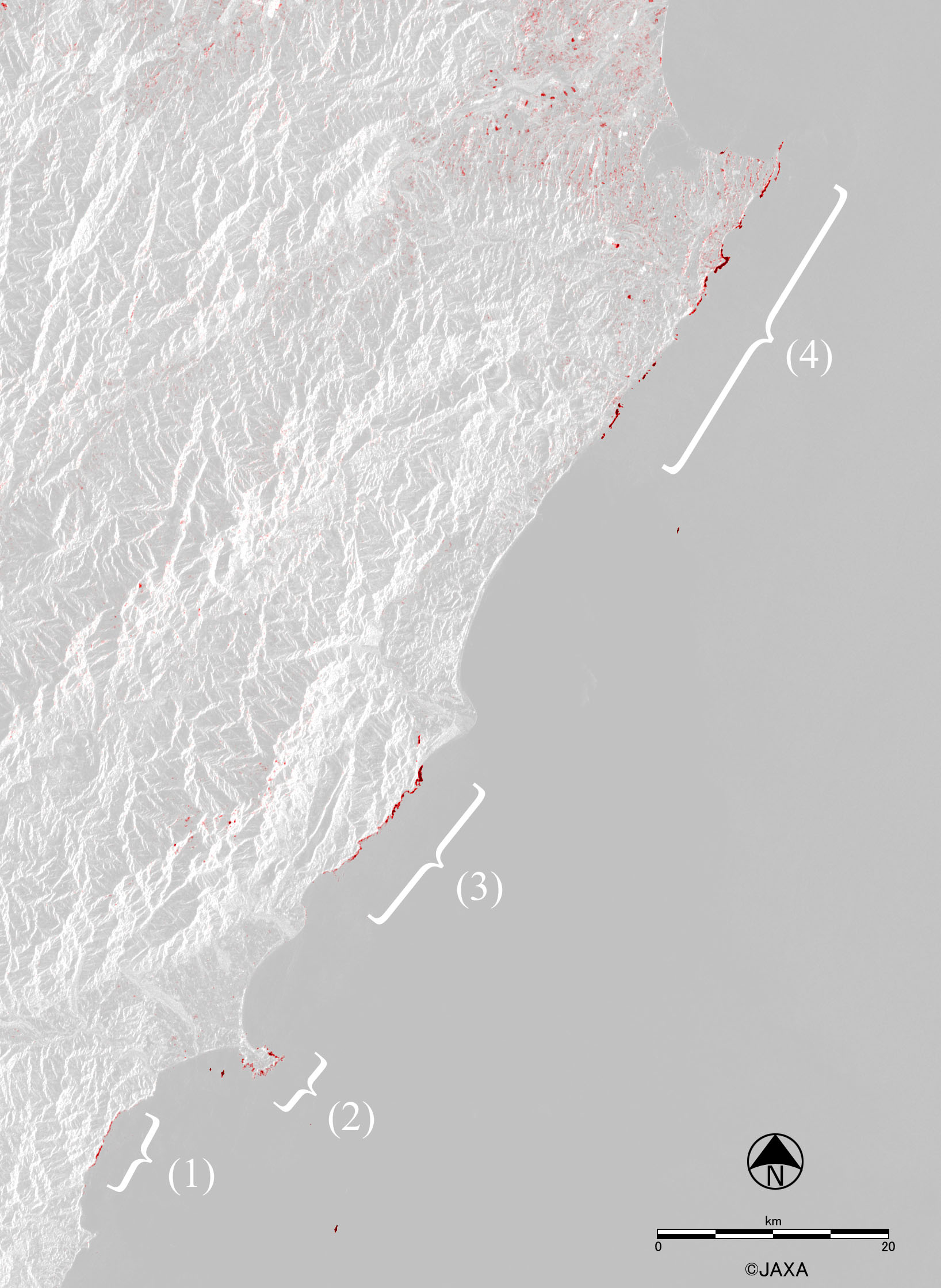
    Fig. 3 shows coastal line changes detected from the same dataset on Oct.18 and Nov.15, 2016. Red colored lines represent new land areas probably appeared during the crustal deformation of the earthquake. Significant changes can be seen in marked areas with numbers in this figure: (1) Goose Bay, (2) Kaikoura, (3) Half Moon Bay and (4) Ward.

    Fig.3: Differential of coastal line, changes detected from the same dataset on Oct.18 and Nov.15, 2016.

    Fig.3: Differential of coastal line.
    (Click to view enlarged image)

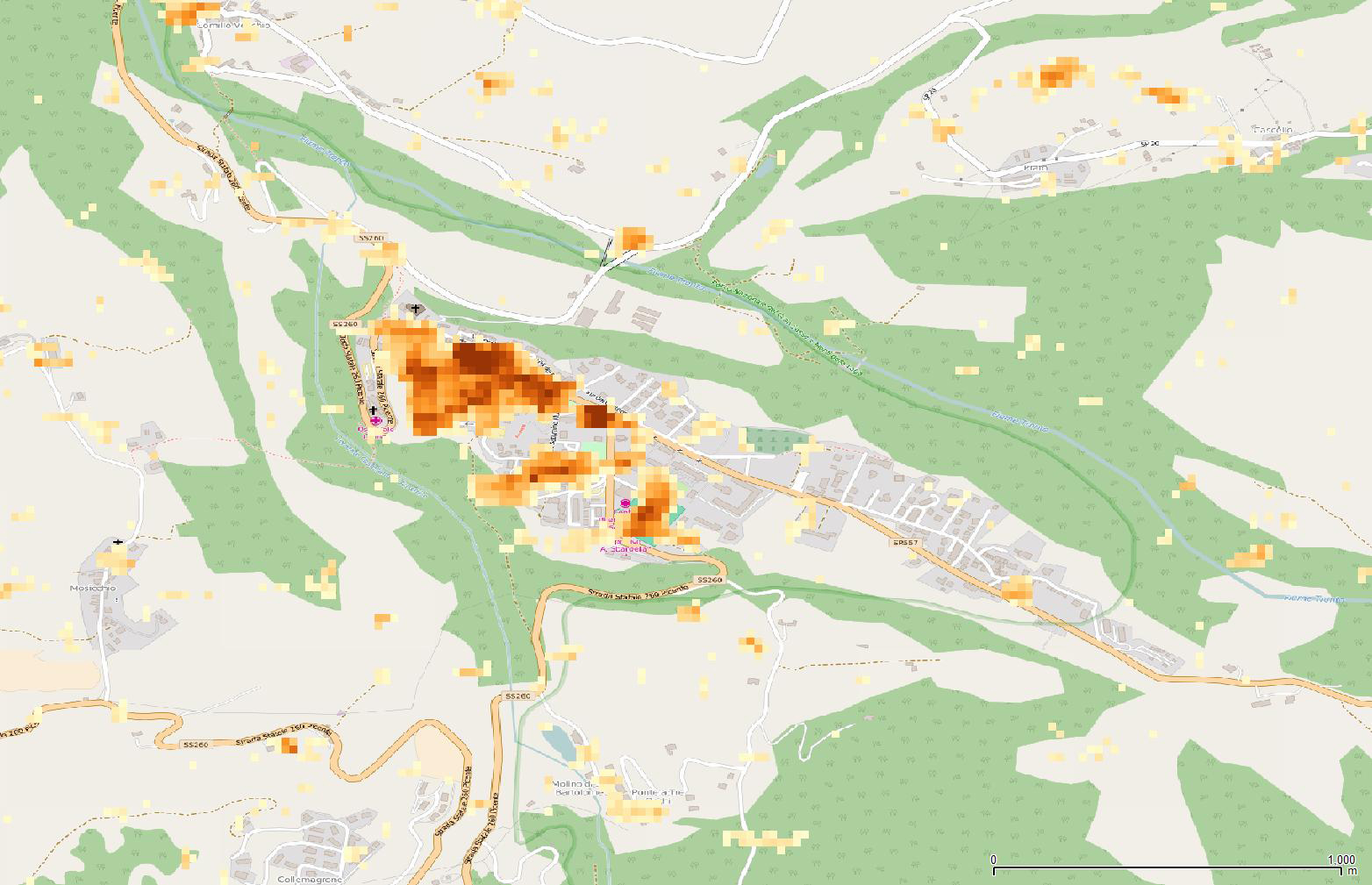
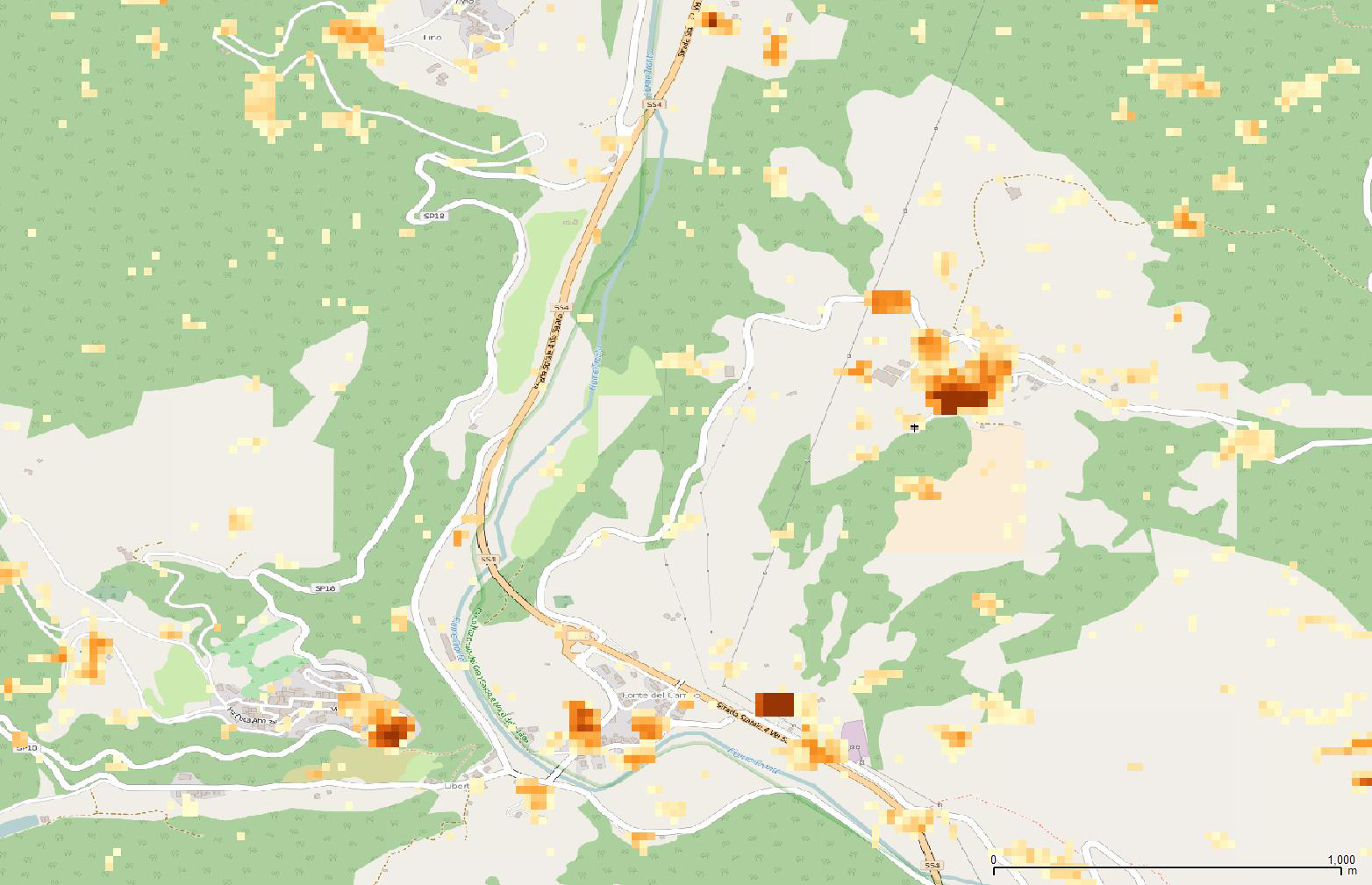
    Fig. 4 shows the damage proxy map of large deformation area generated by comparing the interferometric coherence values before (Jul. 26, 2016 and Oct. 18, 2016) and after (Nov. 15, 2016) the earthquake. The dense orange parts illustrate significant decrease of coherence caused by surface changes. Seasonal changes are included.

    Fig.4: Damage proxy map of large deformation area generated by comparing the interferometric coherence values before (Jul. 26, 2016 and Oct. 18, 2016) and after (Nov. 15, 2016) the earthquake.

    Fig.4: Damage proxy map generated by the interferometric coherence change analysis.
    (Click to view enlarged image)

    » KMZ File is here

    Related articles:
    Mar. 4, 2011: Magnitude-6.3 Earthquake in the South Island of New Zealand in 2011

    Reference:
    New Zealand Active Faults Database: https://data.gns.cri.nz/af/
    Langridge, R.M., Ries, W.F., Litchfield, N.J., Villamor, P., Van Dissen, R.J., Rattenbury, M.S., Barrell, D.J.A., Heron, D.W., Haubrock, S., Townsend, D.B., Lee, J.A., Cox, S., Berryman, K.R., Nicol, A., Stirling, M. (2016). The New Zealand active faults database: NZAFD250. accepted to New Zealand Journal of Geology and Geophysics 59 (1)

    © JAXA EORC

    Let’s block ads! (Why?)

  • [ISS / Japanese Experiment Module (KIBO)] Success of Synthesis and Structural Analysis of Artificial Blood for Dogs

    Success of Synthesis and Structural Analysis of Artificial Blood for Dogs
    — Encouraging solution for deficiency in transfusion blood and global demand —

    Last Updated: November 11, 2016

    Chuo University

    Japan Aerospace Exploration Agency

    Brief overview

    A research group of Prof. Teruyuki Komatsu of Department of Applied Chemistry, Faculty of Science and Engineering, Chuo University and Dr. Kiyohito Kihira, a research and development staff of Japan Aerospace Exploration Agency (JAXA), succeeded at synthesis and structural analysis of artificial blood for dogs. First, Prof. Komatsu et al. produced recombinant canine serum albumin” (hereinafter called “rCSA”) and clarified its three-dimensional structure through X-ray crystal structure analysis. Furthermore, they synthesized a (hemoglobin-rCSA) cluster, in which the rCSA encloses hemoglobin, oxygen-carrying protein (product name: HemoAct-C™), and demonstrated that HemoAct-C™ functions as an artificial oxygen-carrier (alternative for red blood cells) for dogs. A high quality protein crystallization technology (Hyper-Qpro) developed by JAXA was applied to the X-ray crystal structure analysis. This is a breakthrough invention to resolve a serious problem of securing transfusion blood for animal medical practice, and it is expected that it would greatly contribute to transfusion treatment in animals. These research results were published in an online journal, Scientific Reports (Nature Publishing Group), a British science journal, on November 10, 2016.

    [Researcher] Teruyuki Komatsu (Professor, Department of Applied Chemistry, Faculty of Science and Engineering, Chuo University)
    Kiyohito Kihira (Research and development staff, Japan Aerospace Exploration Agency (JAXA))
    [Journal] Nature Publishing Group, Scientific Reports 2016, 6, in press
    Article Tittle: “Artificial Blood for Dogs”
    DOI: 10.1038/srep36782

    [Research content]

    1. Background

    Japan is a major pet-loving country, in which more than 19.79 million cats and dogs are reared. The number of these pets is far greater than the number of young people (under 15-years old), 16.04 million children (data from the Bureau of Statistics, Ministry of Internal Affairs and Communications). Recently aging and obesity pets are advancing, and the demand for animal medical care is increasing year by year. However, the environment of such animal medical care has not been in place because there is no blood stock system for pet animals regarding “blood transfusion”. For severely affected animals (cats and dogs) requiring a blood transfusion therapy, blood donors are prepared by veterinarian himself/herself to endure transfusion blood as it now stands. In other words, the greatest challenge in blood transfusion therapy for pets is securement of donors providing blood.

    If a system that always stores artificial blood for pet animals in animal hospitals to provide it for pet animals with heavy bleeding or anemia is established, not only securement of donors but also blood compatibility test are not needed any more; and, as the results, blood transfusion procedure becomes greatly simplified. Products with excellent preservation stability also enable thoroughgoing emergency measures. In other words, there are high demands for artificial blood, especially “artificial oxygen-carrier, which is an alternative for red blood cells” in animal medical practice having a serious problem, and development and realization of them are strongly desired.

    For artificial oxygen-carrier for dogs, Bovine hemoglobin*1 polymer has been previously manufactured and marketed as a therapeutic agent for dogs with anemia in the United States and United Kingdom [product name: Oxyglobin® (former Biopure, US)]; however, a number of side effects including discoloration of the skin, mucosa and urine, black stools, decreased appetite and fever have been reported.

    2. Study results

    Komatsu et al. synthesized safe artificial oxygen-carrier for dogs that can be stored for long periods and used no matter when or where regardless of blood type, and clarified that the artificial oxygen-carrier can be used as a clinically applicable alternative for red blood cells in this study. More specifically, a (hemoglobin-rCSA) cluster, in which three molecules of the rCSA*2 are covalently bonded on the molecular surface of bovine hemoglobin, (product name: HemoAct-C™, Fig. 1) was developed, and its structure, physical properties and oxygen-binding ability were clarified.

    In case of products for animals, hemoglobin, which is a core of the cluster, must be covered with serum albumin derived from the animal. However, securing sufficient amount of canine serum albumin required for the manufacturing is impossible. Therefore, Komatsu et al. took advantage of gene recombination techniques to artificially produce canine serum albumin. Furthermore, they succeeded X-ray crystal structure analysis*3 of the artificial canine serum albumin for the first time to clarify its three-dimensional structure (Fig. 2).

    Because the production of rCSA became possible, an artificial oxygen-carrier for dogs, “HemoAct-C™” completed. In, Hyper-Qpro,*4 which is high quality protein crystallization technology developed through experiments implemented by JAXA in the International Space Station, was applied to the X-ray crystal structure analysis of rCSA.

    The precise molecular structure clarified in this study is used as the fundamental information to explain various data obtained from studies implemented aiming at commercialization of “HemoAct-C™”, and as information ensuring the safety of a formulation.

    It is expected that these results of the study not only greatly contribute to promotion of good health in pets but also would provide significant spillover effects on the entire animal medical treatment as well as our human life.

    The followings are a brief summary of the key accomplishments of this study:

    • A rCSA was produced through genetic engineering techniques. The physical properties of the rCSA were identical to those of canine serum albumin derived from the blood. Furthermore, the three-dimensional structure of the rCSA was clarified based on X-ray crystal structure analysis for the first time (collaboration between Chuo University and JAXA).
    • A (hemoglobin-rCSA) cluster, in which the rCSA encloses bovine hemoglobin, (product name: HemoAct-C™) was synthesized, and its structure and oxygen-binding ability were demonstrated.
    • HemoAct-C™ does not leak out from the vascular endothelial cell because the surface of HemoAct-C™ is negatively charged, and there are no side effects such as increased blood pressure. It is considered that the half-life in blood is longer than that of albumin.
    • Raw materials are only hemoglobin, rCSA and cross-linker (a marketed product). The manufacturing process consists of only 2 steps. HemoAct-C™ is easy to synthesize. No special devices are required.
    • The rCSA alone can be used as an artificial plasma expander; therefore, a number of applications are expected.

    3. Purposes and application areas

    Establishment of a system that can provide artificial oxygen-carrier for dogs that can be stored for long periods for routine or emergency medical cares by storing it in animal hospitals as solution or powder at all times is a long-held dream in animal medical care. The market of artificial blood, which can immediately deal with a large quantity of demand during an emergency, can be stored for long periods, has no blood types, has no concern of virus infection, and can be used no matter when or where, ranges spans the the entire world including developed and developing countries.

    HemoAct-C™ has various purposes and application areas. For example, in addition to uses as an alternative for red blood cells (resuscitation fluid for hemorrhage shock, replenisher solution during intraoperative hemorrhage, oxygen-supply solution used during transportation to hospital, oxygen-supply solution for dogs with anemia), applications as oxygen-supply solution for ischemia regions caused by heart failure, cerebral infarction and respiratory failure; replenisher solution for an extracorporeal circulation circuit, sensitizer for cancer treatment and others may be possible.

    HemoAct-C™ is a breakthrough invention to resolve a serious problem of securing blood donors for animal medical practice at once, and it is expected that it would greatly contribute to transfusion therapy in animals.

    Currently, a cooperative development with Kyoritsu Seiyaku Corporation aiming at commercialization of this formulation is proceeded.

    4. Outlook for the future (Application to human)

    Development of artificial oxygen-carrier for human aiming at clinical application has started in Europe, the United States and Japan since the 1990s, and intramolecularly cross-linked hemoglobin, hemoglobin polymer, polymer‐bound hemoglobin and others, which are produced by processing of hemoglobin, have been manufactured. However, it has not been put to practical use because of side effects (increased blood pressure due to vasoconstriction) and others.

    The above research results were about artificial blood for dogs, but research for human application is also in process. Currently, the research team is proceeding with crystallization and analysis of the three-dimensional structure of HemoAct™ using protein crystallization technology of JAXA in the Japanese Experiment Module (JEM) “Kibo” of the International Space Station, and design artificial oxygen-carriers with higher advantageous effect.

    [Contacts]

    Information about research
    Teruyuki Komatsu
    Professor of Department of Applied Chemistry, Faculty of Science and Engineering, Chuo University
    TEL: 03-3817-1910 (direct line), or 03-3817-1894 (office of Department of Applied Chemistry)
    E-mail: komatsu@kc.chuo-u.ac.jp
    Information about public relations
    Yuuki Kato
    Research Support Office, Chuo University
    TEL: 03-3817-1603、FAX:03-3817-1677
    E-mail: k-shien@tamajs.chuo-u.ac.jp
    Information about protein crystallization experiments using the International Space Station
    Public Affairs Department, Japan Aerospace Exploration Agency (JAXA)
    TEL: 050-3362-4374, FAX: 03-3258-5051

    [Glossary]

    *1: Hemoglobin
    Hemoglobin is a hemoprotein contained in red blood cell in blood of all animals including human. Molecular weight of hemoglobin is 64,500. Hemoglobin has ability to bind with oxygen molecules in a reversible manner and assumes a role to transfer oxygen from the lung to the periphery in the body.

    *2: Serum albumin
    Serum albumin is simple protein that most abundantly exists in animal serum. Molecular weight of canine serum albumin is 65,700. Serum albumin accounts for about 60% of total protein in the serum, and play the role in maintenance of colloid osmotic pressure and storage and transportation of a variety of endogenous and exogenous substances (metabolic products and drug etc.).

    *3: X-ray crystal structure analysis
    X-ray crystal structure analysis is a method to elucidate the three-dimensional structure of substances by irradiating a crystal with X-rays to obtain X-ray diffraction patterns, from which the electron density distribution of the crystal is calculated.

    **4: Hyper-Qpro
    Hyper-Qpro is a collective term of a suite of technologies applied to maximize the improvement effect on the quality of crystals produced in space in high quality protein crystallization experiments conducted in the Japanese Experiment Module (JEM), known as “Kibo”, of JAXA. In this process, physical properties (charge, dispersity etc.) of proteins in solution are comprehensively evaluated, if needed, samples are highly purified, and then crystallized. It is expected that high-quality crystals would become available not only in space but also on earth.

    Photo

    Figure 1. HemoAct-C™ has the structure that recombinant canine serum albumin encloses hemoglobin purified from bovine red blood cells. It is expected that HemoAct-C™ achieves a revolution in transfusion treatment in canine.

    Photo

    Figure 2. Three-dimensional structure of recombinant canine serum albumin clarified through X-ray crystal structure analysis (collaboration between Chuo University and JAXA).

    *All times are Japan Standard Time (JST)

    Let’s block ads! (Why?)

  • [JAXA President Monthly Press Conference] JAXA President Monthly Regular Press Conference October 2016

    JAXA President Monthly Regular Press Conference

    Date and time: From 1:30 – 2:00 p.m. on October 14 (Fri), 2016
    Venue: JAXA Tokyo Office Presentation Room (B1 floor)
    MC: Yoshikazu Shoji, JAXA Public Affairs Department Director

    IAC (International Astronautical Congress) ,2016

    IAC (International Astronautical Congress) was held in September in Guadalajara, Mexico. IAC is annually organized in autumn. I, Naoki Okumura, President of JAXA was an attendee among some 5,000, the biggest turnout ever, who represent some 300 space agencies, universities, and organizations. I was one of the panelists of the plenary panel. I also joined another discussion, which addressed the relation between Space and climate change in conjunction with COP21. There, I introduced Japan’s approach of aerospace exploration and emphasized the importance of international cooperation in developing space research and technology. It resonated well. In addition, the opportunity announcement of the second KIBO CubeSat mission was made together with UNOOSA (The United Nations Office for Outer Space Affairs) at the discussion. The mission invites developing countries to deploy a CubeSats from KIBO, the Japanese experimental module in the International Space Station (ISS). University of Nairobi, Kenya was selected as the first public participant of the mission. Their project is underway. Particularly interesting was that quite a few from private businesses attended this last IAC. They do not represent public agencies and are often called “new space”. I found interaction with them productive.
    IAF, the International Astronautical Federation sponsors IAC. Kiyoshi Higuchi, JAXA’s Technical Advisor served as chair of IAF. His term ended with IAC 2016. Its success gave him a memorable send-off.
    Prior to IAC, I met the Administrators of NASA and NOAA. We have agreed to reinforce our relationship and cooperation as well as reminded ourselves of the good terms that the agencies have been on. It was a rewarding trip.

    Astronaut Takuya Onishi’s Stay on the ISS

    It has been 3 months since Astronaut Onishi got on board the ISS. His return to Earth is scheduled around late October. In the early period of the stay, Onishi contributed to the missions of breeding mice. He operated the Mouse Habitat Unit in cooperation with ground crew. He keeps an exciting record on Google Plus, through which many on Earth are enthralled to learn about his missions and activity. On October 17, he will capture Orbital ATK’s Cygnus spacecraft with the station’s robotic arm. His experience as a former commercial pilot fully equips him for the job. On October 26, shortly before his comeback, JAXA, in cooperation with Google Inc. is planning an event where communication with the ISS and live space experiment are to take place. JAXA appreciates continuous support of dear readers.

    KOUNOTORI6 (HTV6)

    As was announced before, the necessary measures to ensure the safe operation of HTV6 have been taken. Therefore, HTV6 will be launched on December 9. On October 19, preceding its launch, it will be made public to the media in JAXA’s Tanegashima Space Center. HTV6 carries Japan-made lithium-ion batteries to the ISS. JAXA is making an attempt of on-orbit demonstration of electrodynamic tether (EDT) on HTV. It will illustrate whether electric current flows while reaching the target tether length. At the HTV6 media debut on October 19, the details will be explained. JAXA welcomes a large attendance.

    Open Innovation Hub

    JAXA’s “Open Innovation Hub for Expanding Humanosphere and Domain of Activity through Solar System Frontier Development” was selected for the innovation hub construction support, an operation conducted by the Japan Science and Technology agency. Hitoshi Kuninaka, a professor and aerospace engineer is in charge of the operation. Following June 9, JAXA made the second request for proposal to those who wish to participate. We hereby inform that 9 research requests out of 26 have been selected. The approved requests represent a wide range of research fields, regardless of connection with space exploration. JAXA will shortly contact the applicants and will finalize research plans. The details will be available on JAXA’s HP as soon as determined.

    JAXA to Strengthen Ties with Turkey

    On September 8, JAXA signed a cooperation agreement with the Ministry of Transport, Maritime Affairs and Communications of the Republic of Turkey. The agreement is designed to substantiate and to promote future cooperation of space development between the two parties. JAXA consents Turkey’s use of the Japanese Experimental Module KIBO to deploy a CubeSat and to conduct exposure experiments with Experiment Handrail Attachment Mechanism (ExHAM). JAXA’s experience in aerospace exploration and technology contribute to forming a robust cooperative relationship. The agreement has the objective of establishing a Turkish space agency through the bilateral endeavor in human resources. On October 5, Faruk Özlü, Turkish minister of the Ministry of Science, Industry and Technology visited JAXA’s Tsukuba Space Center. The Minister showed an incredible amount of interest. JAXA continues to strengthen its bonds with Turkey.

    Let’s block ads! (Why?)

  • [ISS / Japanese Experiment Module (KIBO)] Turkey hands over samples to Japan for space environment long-term exposure experiment to be conducted under Turkey-Japan cooperation on Kibo utilization

    Turkey hands over samples to Japan for space environment long-term exposure experiment to be conducted under Turkey-Japan cooperation on Kibo utilization! Samples to be loaded onboard “KOUNOTORI6”.

    Last Updated: November 4, 2016

    In September, JAXA and the Ministry of Transport, Maritime Affairs and Communications (MTMAC) of the Republic of Turkey signed a cooperation agreement on CubeSat deployment from the International Space Station (ISS) Japanese Experiment Module (Kibo) and exposure experiments using Experiment Handrail Attachment Mechanism (ExHAM). In this regard, samples from Tukey were handed over to JAXA today for the first joint space environment exposure experiment.

    This summer, JAXA initiated a full-scale technical examination and international coordination of the loading of samples toward the joint Kibo utilization project. The first experiment sample was hand-carried by Turkish officials to JAXA Tsukuba Space Center on November 2. The samples are confirmed that they are ready for the experiment in Kibo, and will be transported to “KOUNOTORI6” (HTV6) in Tanegashima Space Center, which is scheduled to be launched on December 9.

    MTMAC comments on completing the delivery of samples

    As Directorate General of Aeronautics and Space Technologies, the Ministry of Transport, Maritime and Communication of the Republic of Turkey, we are pleased with the studies which is conducted under the Memorandum of Understanding (MoU) on Satellite and Space Technologies signed between Turkey and Japan in 2010. Within this cooperation framework, we will perform joint experiments on International Space Station Japanese Experiment Module (KIBO) and jointly deploy a CubeSat from the International Space Station. We believe that such studies will serve as a bridge to strengthen the cooperation between our countries, and hope to elevate our cooperation to much higher levels than it is today. In this context, we would like to thank the Ministry of Education, Culture, Sports, Science and Technology (MEXT), the Minister for Space Policy of Japan and JAXA for their valuable contribution to our joint projects. We hope that our collaborative relationship will be further enhance especially in the space technologies field and Turkey-Japan friendship will continue to develop heretofore in the future.

    *All times are Japan Standard Time (JST)

    Let’s block ads! (Why?)

  • [International Cooperation] Turkey hands over samples to Japan for space environment long-term exposure experiment to be conducted under Turkey-Japan cooperation on Kibo utilization! Samples to be loaded onboard “KOUNOTORI6”.

    Topics List

    Nov. 4, 2016 Updated
    Turkey hands over samples to Japan for space environment long-term exposure experiment to be conducted under Turkey-Japan cooperation on Kibo utilization! Samples to be loaded onboard “KOUNOTORI6”.

    In September, JAXA and the Ministry of Transport, Maritime Affairs and Communications (MTMAC) of the Republic of Turkey signed a cooperation agreement on CubeSat deployment from the International Space Station (ISS) Japanese Experiment Module (Kibo) and exposure experiments using Experiment Handrail Attachment Mechanism (ExHAM). In this regard, samples from Tukey were handed over to JAXA today for the first joint space environment exposure experiment.

    This summer, JAXA initiated a full-scale technical examination and international coordination of the loading of samples toward the joint Kibo utilization project. The first experiment sample was hand-carried by Turkish officials to JAXA Tsukuba Space Center on November 2. The samples are confirmed that they are ready for the experiment in Kibo, and will be transported to “KOUNOTORI6” (HTV6) in Tanegashima Space Center, which is scheduled to be launched on December 9.

    MTMAC comments on completing the delivery of samples

    As Directorate General of Aeronautics and Space Technologies, the Ministry of Transport, Maritime and Communication of the Republic of Turkey, we are pleased with the studies which is conducted under the Memorandum of Understanding (MoU) on Satellite and Space Technologies signed between Turkey and Japan in 2010. Within this cooperation framework, we will perform joint experiments on International Space Station Japanese Experiment Module (KIBO) and jointly deploy a CubeSat from the International Space Station. We believe that such studies will serve as a bridge to strengthen the cooperation between our countries, and hope to elevate our cooperation to much higher levels than it is today. In this context, we would like to thank the Ministry of Education, Culture, Sports, Science and Technology (MEXT), the Minister for Space Policy of Japan and JAXA for their valuable contribution to our joint projects. We hope that our collaborative relationship will be further enhance especially in the space technologies field and Turkey-Japan friendship will continue to develop heretofore in the future.

    Turkey hands over samples to Japan for space environment long-term exposure experiment to be conducted under Turkey-Japan cooperation on Kibo utilization! Samples to be loaded onboard “KOUNOTORI6”.

    Sep. 30, 2016 Updated
    IAF President Kiyoshi Higuchi Completes his Term, Handing Over to Dr. Le Gall of CNES

    Mr. Kiyoshi Higuchi of JAXA completed his term as President of the International Astronautical Federation (IAF) at the 67th International Astronautical Congress (IAC) held in Guadalajara in September. He handed the Presidency over to Dr. Le Gall, President of the French Space Agency (CNES). IAF is one of the co-organizers of the IAC. During his four-year term, Mr. Higuchi held four successful IACs and brought many changes to the Federation including the amendment of the IAF Constitution, increasing the membership by 81 to reach a total of 327 members, and promoting the involvement of emerging actors and the young generation.

    Photo: Mr. Higuchi giving the opening speech at the 67th IAC

    IAF President Kiyoshi Higuchi Completes his Term, Handing Over to Dr. Le Gall of CNES

    Sep. 27, 2016 Updated
    UNOOSA and JAXA open second round of KiboCUBE

    JAXA and the United Nations Office for Outer Space Affairs (UNOOSA) launched a three year “KiboCUBE” programme in September 2015, which offered developing countries the opportunity to deploy cube satellites from the Japanese Experiment Module “Kibo” on the International Space Station (ISS).
    This initiative aims to contribute to the technological advancement of space activities in developing countries by providing the opportunity to deploy micro-satellites using unique capabilities of Kibo. The applicants are the educational or research institutes in developing countries that are member states of the United Nations.

    JAXA held a media briefing with UNOOSA in the 67th International Astronautical Congress (IAC 2016) at Guadalajara, Mexico. During the briefing, there was an announcement of the second round along with introduction of the programme. Moreover, the representative of the University of Nairobi presented a summary of a satellite “1KUNS-PF”, which was the first to benefit from KiboCUBE.

    Photo: Media Briefing at IAC 2016 in Guadalajara, Mexico on 26 September 2016 Dr. Koichi WAKATA, ISS Program Manager in JAXA (left), Simonetta Di Pippo, Director of UNOOSA (center) and Professor Mwangi Mbuthia, Dean, Department of Engineering, the University of Nairobi (right)

    UNOOSA and JAXA open second round of KiboCUBE

    Sep. 26, 2016 Updated
    Dr. Okumura Participated in the 67th IAC in Guadalajara

    On September 26-30, Dr. Okumura and a number of JAXA staff participated in the International Astronautical Congress (IAC) held in Guadalajara, Mexico. This year’s IAC was attended by a record number of 5,000 participants from over 300 member organizations including space agencies, universities and industry. Dr. Okumura joined the Heads of Agencies Panel and the Space and Climate event, introducing JAXA’s activities as well as the importance of international cooperation.

    Photo: Heads of Agencies Panel at the 67th IAC

    Dr. Okumura Participated in the 67th IAC in Guadalajara

    Sep. 23, 2016 Updated
    Dr. Okumura Visits U.S.A., Delivers Speeches in Washington D.C.

    On September 22-23, President Naoki Okumura of JAXA visited Washington D.C. and met with the heads of NASA and NOAA, reaffirming to further strengthen mutual cooperation. Dr. Okumura also gave speeches at the Dirksen Senate Office Building and the Japanese Ambassador’s residence. The talks, attended by many participants related to the Congress, space agencies and industry, were valuable opportunities to provide an overview of the Japanese space plans and activities including future perspectives.

    Photo: Dr. Okumura speaks at the Japanese Ambassador’s residence

    Dr. Okumura Visits U.S.A., Delivers Speeches in Washington D.C.

    Sep. 9, 2016 Updated
    JAXA and the MTMAC, Republic of Turkey sign a Cooperation Agreement

    On September 8, 2016, Mr. Yuichi Yamaura, Vice President of the JAXA and H.E. Dr. Cihan Kanl?goz, Director General of the Aeronautics and Space Technologies, the Ministry of Transport, Maritime Affairs and Communications of the Republic of Turkey, newly signed a Cooperation Arrangement concerning the utilization of the International Space Station (ISS) Japanese Experiment Module (Kibo).
    The cooperation is to offer opportunities to deploy a cube satellite (CubeSat) from the Kibo module and to conduct space experiments in an exposed environment using the Exposed Experiment Handrail Attachment Mechanism called ExHAM on board Kibo. With this agreement, both parties intend to promote concrete cooperation by utilizing experience in the field of space technology and its utilization that JAXA has practiced. Both parties will discuss further to enhance the collaborative relationship in such areas as support for the establishment of a space agency, which the Republic of Turkey aims to, and promotion of capacity-building activities.

    Photo:Mr. Yamaura, JAXA Vice President (right) and H.E. Dr.Kanlıgöz, Director General of Ministry of Transport, Maritime Affairs and Communications of the Republic of Turkey (left) shake hands after signing the agreement

    JAXA and the MTMAC, Republic of Turkey sign a Cooperation Agreement

    Sep. 2, 2016 Updated
    JICA Earth Observation Capacity Development Program Focusing on Rader (South Africa)/ Tanegashima Space Center & Tsukuba Space Center

    On June 15 and 16, 2016, remote sensing specialists namely from the South African National Space Agency (SANSA), together with the officers from the South African Maritime Safety Authority (SAMSA) and Department of Agriculture, Forestry and Fisheries (DAFF) visited JAXA’s Tanegashima Space Center and Tsukuba Space Center as part of the Earth Observation Capacity Development Program Focusing on Rader organized by the Japan International Cooperation Agency (JICA). The visit to Japan was a second part of a three-year JICA Program, which welcomed participants from a variety of agencies depending on the purposes of the satellite data use.

    Program participants visited the Tanegashima Space Center on June 15 and the Tsukuba Space Center on the following day. This was followed up with a seminar on JAXA’s earth observation activities, including earth-observation satellites such as DAICHI-2 (ALOS-2), and a lively Q&A session.

    Photo: Tsukuba Space Center

    Photo: Tanegashima Space Center

    JICA Earth Observation Capacity Development Program Focusing on Rader (South Africa)/ Tanegashima Space Center & Tsukuba Space Center

    Aug. 25, 2016 Updated
    University of Nairobi team selected for UNOOSA-JAXA KiboCUBE project

    The United Nations Office for Outer Space Affairs (UNOOSA) and JAXA have selected a team from the University of Nairobi to be the first to benefit from the UNOOSA-JAXA KiboCUBE programme.
    KiboCUBE was launched in September 2015 as a capacity-building initiative between UNOOSA and JAXA to offer educational and research institutions from developing countries the opportunity to deploy cube satellites (CubeSats) from the Kibo module of the International Space Station. Applications for the first round of KiboCUBE selection closed in March 2016 and a number of impressive applications were received.
    As the successful candidate, the University of Nairobi team plans to use its KiboCUBE CubeSat to test technologies it has developed for the future launch of a larger earth observation satellite. The team also hopes to apply data acquired from its CubeSat deployment to monitoring of agriculture and coastal areas.

    Messages from Key People

    Koichi Wakata, ISS Program Manager/JEM Mission Operations and Integration Center

    I am excited on the announcement by a cooperative effort by the United Nations Office for Outer Space Affairs (UNOOSA) and JAXA that a small satellite developed by University of Nairobi of Republic of Kenya will be deployed from the Japanese Experiment Module “Kibo” onboard the International Space Station (ISS) as the first satellite from the country. As “Kibo” is the only module onboard the ISS that has a capability to deploy small satellites, I am proud that JAXA is contributing to the development of space technologies of the various countries around the world utilizing the unique capacity of “Kibo”.

    Ms.Simonetta Di Pippo, UNOOSA Director

    “This is a very exciting moment and an important step in UNOOSA’s movement towards tangible initiatives in our capacity-building efforts. Innovative projects like KiboCUBE can achieve concrete results and have a real impact on space science and technology development for the benefit of all.”

    Prof. J. Mwangi Mbuthia, Dean, School of Engineering/University of Nairobi

    “As the winner of the call for the the opportunity to launch our Cubesat through Japanese Experiment Module “Kibo” as a ‘KiboCUBE’ program, the University of Nairobi is very excited and the team plans to use its KiboCUBE CubeSat to test technologies developed for the future launch of a larger earth observation satellite. The team also hopes to apply data acquired from its CubeSat deployment in monitoring of wildlife migration, agricultural activities in coastal and semi-arid areas.”

    University of Nairobi team selected for UNOOSA-JAXA KiboCUBE project

    Jun. 15, 2016 Updated
    First shot of earth images captured by the Philippine satellite deployed by Kibo

    On June 2, Tohoku University released images of the earth taken by ‘DIWATA-1’, the first Philippine microsatellite successfully deployed from the ISS by Japanese Experiment Module, ‘Kibo’, on April 27.

    This satellite is one of a realization of international cooperation in peaceful uses of outer space through the close collaboration between Japan and the Philippines. A team of young engineers from the Department of Science and Technology (DOST) of the Republic of the Philippines, in collaboration withTohoku University and Hokkaido University were responsible for the development and production of this satellite. JAXA was in charge of its launch and deployment into orbit. The success of deploying this 50 kg-class microsatellite also signified that JAXA has enhanced its satellite deployment capacity in addition to that of the CubeSat-class satellite.

    Photo:Satellite images of the Tohoku province, Japan, captured by DIWATA-1 on board with a wide field color camera (released by Tohoku University)

    Photo: Deployment of DIWATA-1 from Kibo

    Photo: DOST staffs pleased with the successful DIWATA-1deployment (April 27)

    First shot of earth images captured by the Philippine satellite deployed by Kibo

    Jun. 15, 2016 Updated
    JAXA holds its 1st Joint Committee with United Arab Emirates Space Agency (UAESA)

    The first joint committee between JAXA and the United Arab Emirates Space Agency (UAESA) was held on Wednesday, May 11, 2016 where both agencies entered into an interagency agreement earlier on March 22. The conference was chaired by Mr. Yamaura, Vice President of JAXA Members, and was attended by UAESA members (H.E. Dr. Khalifa Mohammad Thani Al-Romaithi, Chairman, Dr. Mohammed Naser Al Ahbabi, Director General, Mr. Hamad Al Mutawa, Head of Strategic Partnerships) and Dr. Ilias M. Fernini Associate Professor from University of Sharjah, UAE). Participating members and representatives of various collaborative projects opened up the conference with current updates on the successful deployment of small satellites from the Japanese Experiment Module (‘Kibo’, which means ‘hope’ in Japanese) from the ISS, and the materials science experiments conducted with the Exposed Experiment Handrail Attachment Mechanism (ExHAM) of Kibo’s Exposed Facility. They also discussed the interoperability of deep space network and explored potential future collaborations.

    During the visit, the Japanese Government (Cabinet Office, Ministry of Education, Culture, Sports, Science and Technology, and Ministry of Economy, Trade and Industry) also signed a Memorandum of Cooperation with the UAESA on promoting the future exchange and collaboration in R&D, expertise/capacity development, and the creation of space-related industries between the two countries.

    Photo: At Tsukuba Space Center (TKSC)

    Photo: 1st Joint Committee between JAXA and UAESA

    JAXA holds its 1st Joint Committee with United Arab Emirates Space Agency (UAESA)

    May 16, 2016 Updated
    JAXA Vice President Shizuo Yamamoto participated in the panel discussion of the 10th SPIE Asia-Pacific Remote Sensing Symposium

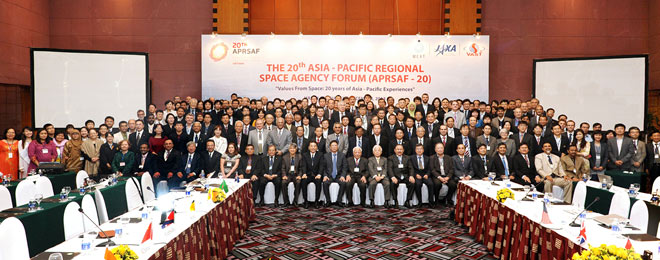
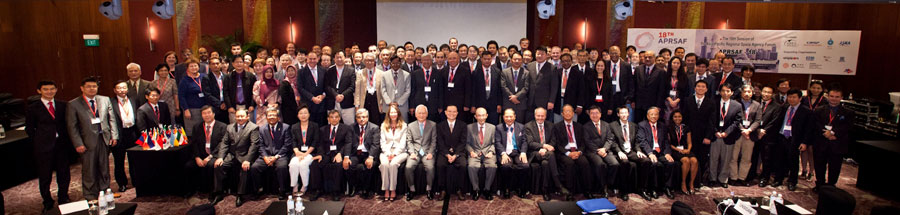
    The 10th International Society for Optics and Photonics (SPIE) Asia-Pacific Remote Sensing Symposium (APRS) was held in New Delhi, India from April 4 to 7, 2016. A special panel discussion featuring top-level space agency leaders from around the world was organized in the same symposium that commemorated the inaugural APRS conference in India and the 10th anniversary of SPIE. Mr. Shizuo Yamamoto, Vice President of JAXA (in charge of earth observations) was one of the panelists.

    Photo: Mr. A. S. Kiran Kumar, Chairman of ISRO on the right with Mr. Shizuo Yamamoto, Vice President of JAXA at the conference venue.

    In the session led by space agency heads, Mr. Yamamoto cited real-world instances (using JAXA’s observation data) of how space technologies have become an indispensable element in solving the challenges posed by disaster prevention and climate change as part of the social infrastructure. He also introduced future plans and the activities of the Asia-Pacific Regional Space Agency Forum (APRSAF) as a regional collaboration.

    In the panel discussion, space agency heads discussed various challenges and effective utilization strategies to manage global climate change and natural disasters. They also actively exchanged opinions on the integration and standardization of observation data collected by each national agency, and the promotion of further cooperation and international collaboration between ground networks and space agencies. Reinforcement of international cooperation by leveraging space technology to its fullest is also required to deal with various global issues.

    Photo: Special panel discussion by space agency leaders (April 4) From left to right, Maj. Gen. Charles Frank Bolden, Jr. – Administrator of the National Aeronautics and Space Administration (NASA, USA), Mr. A. S. Kiran Kumar – Chairman of the Indian Space Research Organization (ISRO, India), Mr. Jean-Yves Le Gall – President of the Centre National D’Études Spatiales (CNES, France), Mr. Shizuo Yamamoto – Vice President of Japan Space Exploration Agency (JAXA, Japan), Mr. Yan Hua Wu – Deputy Administrator of the Chinese National Space Agency (CNSA, China), Mr. Alain Ratier – Director-General of European Organisation for the Exploitation of Meteorological Satellites (EUMETSAT), Dr. Francisco Javier Mendieta Jiménez – General Director of the Mexican Space Agency (AEM, Mexico).

    JAXA Vice President Shizuo Yamamoto participated in the panel discussion of the 10th SPIE Asia-Pacific Remote Sensing Symposium

    Mar. 22, 2016 Updated
    JAXA and UAESA sign a Cooperation Arrangement

    On March 22, 2016, Dr. Naoki Okumura, President of the JAXA and H.E Dr. Khalifa Mohammed Thani Al-Romaithi, Chairman of the Board of Directors for the UAESA, newly signed an “Arrangement between the Japan Aerospace Exploration Agency and the United Arab Emirates Space Agency regarding Cooperation in Space Activities and Use of Outer Space for Peaceful Purposes” to strengthen the cooperation between JAXA and UAESA.
    JAXA have already started cooperation with UAE including JAXA’s microwave discharge neutralizer onboard UAE’s “DubaiSat-2” satellite launched in 2013. The UAESA was newly established in 2014 and has been actively promoting space activities including the Mars exploration mission. With this Arrangement, both agencies intend to develop a mutually beneficial relationship by utilizing technologies and human resources for space exploration and utilization JAXA have accumulated for a long time. The both agencies will discuss further to enhance the cooperation in the areas such as research and development, space applications, utilization of the International Space Station (ISS) “KIBO,” capacity building, and so on.

    JAXA and UAESA sign a Cooperation Arrangement

    Feb. 25, 2016 Updated
    DLR and JAXA strengthen cooperation

    On February 25, 2016, the German Aerospace Center (Deutsches Zentrum für Luft- und Raumfahrt; DLR) and JAXA have signed an “Inter Agency Arrangement between DLR and JAXA for Strategic Partnership” at the German Embassy in Tokyo, Japan. With this arrangement, both partners intend to jointly undertake the new role of space agencies and significantly contribute to the advancement of the world’s space development.
    The main goals of the Arrangement are:

    • the development and utilisation of aerospace technologies to provide solutions to global societal challenges
    • develop substantial joint work on research and development projects and missions
    • the development of synergies in German-Japanese cooperation, thereby strengthening the competitiveness of both countries

    In this context, DLR and JAXA intend to collaborate in the area of Space Utilization and R&D, use, for example, L- and X-band radar technologies for Earth observation, work together in disaster management, and conduct study into reusable launchers. Another important area is the exploration of the Solar System; at present, the DLR MASCOT lander is on board the JAXA Hayabusa 2 spacecraft, en route to asteroid Ryugu (previously 1999 JU3), where it will land after 2018 and explore its surface. Germany and Japan also utilise the International Space Station (ISS) intensively to answer questions in the fields of medicine, materials science and fundamental research.
    Industrial cooperation between the two countries will also be intensified.

    Photo: JAXA President Naoki Okumura (left) and Chair of the DLR Executive Board, Pascale Ehrenfreund (right) shake hands after signing.

    DLR and JAXA strengthen cooperation

    Feb. 18, 2016 Updated
    Space Education Seminar in the Philippines

    JAXA Space Education Center offers a space education seminar for educators in various Asian countries under the framework of the Space Education Working Group (SE WG) of the Asia-Pacific Regional Space Agency Forum (APRSAF).
    This fiscal year, we held a two-day seminar in Angeles city on February 16 and 17 for 25 high school science teachers from all over the Philippines.
    The contents of the seminar are customized according to the request of the host country. This year five activities, namely microgravity experiment, vacuum experiment, robot arm crafting, communication activity using rovers, and a lecture on the utilization of Earth observation satellites, were conducted. The teachers performed a mock class to implement what they had learned throughout the seminar. All teachers smoothly conducted their class while incorporating their own methods while teaching technical matters. We look forward to the implementation of their acquired knowledge to their real classes.

    Space Education Seminar in the Philippines

    Feb. 9, 2016 Updated
    Presentation at the Space Exploration Education Conference (SEEC) in Houston, Texas.

    JAXA sends Japanese educators who engage in space education to the Space Exploration Education Conference (SEEC) held in Houston every year. This year’s session from JAXA was performed by Mr. Aikawa from Okinawa Prefecture and Ms. Fukai from Hiroshima Prefecture. Mr. Aikawa’s presentation included constructing a plastic propeller stick and Ms. Fukai’s presentation had participants making an LED optical communication device.
    Prior to their presentation at SEEC, the selected teachers had the opportunity to visit a local elementary school and give their presentation directly to the local school children. This visit also allows the teachers to see what an American school is like and exchange ideas with the local teachers.
    JAXA’s teachers were given two sessions to present during SEEC. In addition, JAXA staff and the selected teachers attended other sessions during the conference to learn what other teachers are doing in their classrooms in regards to space education. We then bring back what we learned and see how we could implement such activities in Japan.

    Presentation at the Space Exploration Education Conference (SEEC) in Houston, Texas.

    Jan. 22, 2016 Updated
    Meeting Held Between DOST Delegation and JAXA President Dr. Okumura

    – First Filipino CubeSat delivered to the JAXA Tsukuba Space Center (TKSC) in preparation for deployment from the International Space Station (ISS) Japanese Experiment Module (Kibo) –

    On January 12, 2016, Dr. Amelia P. Guevara, Undersecretary for Research & Development, and Dr. Rowena Cristina L. Guevara, Undersecretary for Science & Technology at DOST (Department of Science Technology of the Philippines) visited the JAXA Headquarters in Tokyo and had a meeting with Dr. Naoki Okumura, President of JAXA.

    They visited Japan in conjunction with the development of DIWATA -1 (DIWATA means fairy in Filipino), the first Filipino CubeSat developed jointly by DOST, the University of the Philippines, Tohoku University and Hokkaido University. DIWATA-1 will be the first 50KG class CubeSat to be deployed from“Kibo”by JAXA’s JEM Small Satellite Orbital Deployer (J-SSOD). The cost of deployment will be borne by the government of the Philippines, and an agreement was drawn up between JAXA and Tohoku University to allow DIWATA-1 to be deployed from “Kibo” for a fee.

    Photo Right: From left to right, Dr. Rowena Cristina L. Guevara, Undersecretary for Science & Technology at DOST, Dr. Amelia P. Guevara, Undersecretary for Research & Development at DOST and Dr. Naoki Okumura, President of JAXA

    DIWATA-1(left), 50kg Class J-SSOD Container (right)

    In the meeting between the DOST delegation and Dr. Okumura, both parties confirmed that the joint development and active acceptance of Filipino students has facilitated interpersonal exchanges, and that the joint project has been progressing smoothly. They also talked about the importance of working together to solve common issues by utilizing satellite data

    As the 23rd session of the Asia Pacific Regional Space Agency Forum (APRSAF-23) is scheduled to be held in the Philippines at the end of 2016, they also confirmed their expectation for increased interchange and enhanced cooperation through this meeting.

    On the following day, January 13, a hand-over ceremony of DIWATA-1 to JAXA and a press conference were held at Tsukuba Space Center. The CubeSat is equipped with four kinds of Earth observation cameras, and will be utilized for disaster monitoring, agriculture, forestry and fishery.

    Meeting Held Between DOST Delegation and JAXA President Dr. Okumura

    Jan. 20, 2016 Updated
    Revision of the Memorandum of Cooperation between JAXA and LAPAN

    On December 3, 2015, Dr. Thomas Djamaluddin, Chairman of the Indonesian National Institute of Aeronautics and Space (LAPAN) and Naoki Okumura, President of JAXA signed an agreement that has been revised to strengthen cooperation between JAXA and LAPAN in the field of aerospace research and development.
    The signing ceremony for the Memorandum of Cooperation (MOC) between the two parties took place during the 22nd Session of the Asia-Pacific Regional Space Agency Forum (APRSAF-22), held in Bali, Indonesia. At the ceremony the heads of both organizations recognized the importance of solving social issues through the utilization of space technologies and their applications, and resolved to pursue deeper cooperation between the two agencies in the field of aerospace, and promote of the utilization of space for peaceful purposes through regional and global cooperation.
    The newly signed MOC includes potential cooperation in the fields of space science, and research and development in space exploration and aerospace technology, in addition to earth science, and the use of satellites in remote sensing, communication and navigation.

    Revision of the Memorandum of Cooperation between JAXA and LAPAN

    Jan. 6, 2016 Updated
    APRSAF-22 successfully held in Bali, Indonesia

    The 22nd session of the Asia-Pacific Regional Space Agency Forum (APRSAF-22) was successfully held from December 1 to 4, 2015 in Bali, Indonesia, jointly organized by the Ministry of Research, Technology and Higher Education of Indonesia(RISTEK-DIKTI), the National Institute of Aeronautics and Space of Indonesia (LAPAN), the Ministry of Education, Culture, Sports, Science and Technology of Japan (MEXT) and the Japan Aerospace Exploration Agency (JAXA).
    APRSAF, established in 1993, has been growing to become one of the largest international forums today in the Asia-Pacific region. It is annually organized by MEXT, JAXA and organizations of host countries. APRSAF-22 was organized under the main theme entitled “Sharing Solutions through Synergy in Space” with the aim of further promoting regional cooperation. The participants — around 480 representatives and experts from 28 countries and regions and from 10 international organizations — actively contributed to discussions on various topics under the main theme.

    Photo Top: The APRSAF-22 plenary session, Denpasar, Bali, Indonesia
    Photo Bottom: The first day of the APRSAF-22 plenary session, Denpasar, Bali, Indonesia (December 3, 2015)

    APRSAF-22 successfully held in Bali, Indonesia

    Dec. 21, 2015 Updated
    JICA and JAXA Announce Forest Monitoring System Using ALOS-2 Satellite

    Constant monitoring of deforestation throughout the tropics and open data access on the Internet

    On December 1, the Japan International Cooperation Agency (JICA) and the Japan Aerospace Exploration Agency (JAXA) announced the Initiative for Improvement of Forest Governance at the twenty-first session of the Conference of the Parties (COP21) to the United Nations Framework Convention on Climate Change (UNFCCC) in Paris. The initiative will create a new tropical forest monitoring system that tracks deforestation and forest loss with JAXA’s Advanced Land Observing Satellite-2 (ALOS-2).

    The initiative will be conducted by a partnership between JICA and JAXA, and supporting private corporations are expected to join the initiative to contribute to the conservation of the world’s tropical forests. Activities will include building a forest monitoring system, training human resources in developing countries on how to use the system, and spreading knowledge about successful forest conservation projects around the world.

    The forest monitoring system will maintain a constant watch on deforestation and forest loss in tropical regions of the globe and provide open access to its findings. With a resolution to 50 meters, the findings of the monitoring system will be updated about every six weeks on average to the JAXA website and other resources by March 2017. It is expected that these efforts will help countries with serious deforestation issues restrain illegal logging, and in the long term, help control the reduction of forests as an effective measure against climate change.

    Tropical forests serve as an immense storage tank to hold carbon dioxide in the form of carbon, and conserving the forests is critical in the fight against climate change. However, the loss of tropical forests continues unabated due to illegal logging and other factors, and implementing measures to stop the loss is a global priority. Aboard the ALOS-2 satellite is PALSAR-2 (L-band Synthetic Aperture Radar-2), a system that uses L band radio waves suitable for forest observation and capable of monitoring the ground surface 24 hours a day regardless of weather. PALSAR-2 can thus monitor for illegal logging and other changes in tropical forests despite the cloud cover that is typical found in such areas.

    With technical cooperation provided by JICA in Brazil from 2009 to 2012 and data gathered by ALOS, the predecessor to ALOS-2, illegal foresting was monitored and assistance provided in near-real time. More than 2,000 incidents were discovered and the action taken contributed to a 40 percent reduction in the amount of forest area destroyed. The ALOS-2 improves on the earlier satellite model by using two types of reflecting radio waves that make it possible to analyze the data and detect deforestation with greater precision.

    JICA and JAXA signed a partnership agreement in April 2014 with the objective of using aerospace technology to solve the many development challenges that developing countries face along with global issues. The Initiative for Improvement of Forest Governance with its incorporation of ALOS-2 was launched under the framework created by that agreement. Both agencies will continue to use satellite technology to conserve the world’s tropical forests.

    An example of how the data will be provided on the JAXA website

    * Polygon shapes outline areas where forest loss has been detected. The data will be provided about every six weeks in images with a resolution of 50 meters showing reduced forest cover.

    JICA and JAXA Announce Forest Monitoring System Using ALOS-2 Satellite

    Nov. 26, 2015 Updated
    International Advisory Board Workshop “Assessing the Impact of Satellite Earth Observation on Society and Policy”

    JAXA organised an International Advisory Board on 9-10 November 2015 in Tokyo jointly with the National Institute of Information and Communications Technologies (NICT), Keio University, Institute for Global Environmental Strategies (IGES), in support of the project funded by Japan Science and Technology Agency (JST), with the goal of “Assessing the Impact of Satellite Earth Observation on Society and Policy”. A series of discussions invited perspectives from experts to understand how Earth observations contribute to environmental and other policy-making, and how space agencies establish links between their programmes, scientific advance, industrial innovation, and societal well-being. The Advisory Board concluded with some *key findings* from the two days of meetings.

    Oct. 5, 2015 Updated
    Revision of the Mutual Cooperation Agreement between JAXA and CNES

    Dr. Naoki Okumura, President of the Japan Aerospace Exploration Agency (hereinafter referred to as JAXA), and Dr. Jean-Yves Le Gall, President of the Centre National d’Etudes Spatiales (hereinafter referred to as CNES), signed the revised agreement for the “Inter-Agency Arrangement between NASDA and CNES Concerning the Preparation of a Long Term Cooperation in the Field of Space Programs ” on 5 October 2015.

    The purpose of the revision is to achieve effective cooperation between space agencies of Japan and France, in light of the changes in the business environment., This includes the increasing presence of emerging countries and the private sector in space development and utilization, as well as changes in Japan such as the enactment of the new Basic Plan for Space Policy and the transition of JAXA to a National Research and Development Agency.

    On the occasion of the visit by Mr. Manuel Valls, Prime Minister of France to Japan, the exchange ceremony of signing agreement took place at the Prime Minister’s Office of Japan in the presence of Prime Ministers Shinzo Abe and Manuel Valls.

    Revision of the Mutual Cooperation Agreement between JAXA and CNES

    Sep. 8, 2015 Updated
    Collaboration between JAXA and UNOOSA to Offer Small Satellite Deployment Opportunity from Kibo

    JAXA and the United Nations Office for Outer Space Affairs (UNOOSA) agreed to cooperate in providing opportunities to deploy cube satellites (CubeSats) from the Japanese Experiment Module “Kibo” of the International Space Station (ISS).

    The Kibo is equipped with a special airlock system and robotic arm; hence a small satellite can be released to space from it by utilizing the Kibo’s distinct functions. Satellite deployment capability is the Kibo’s unique feature on the ISS.

    Small satellites can be manufactured at low cost and by utilizing relatively simple technology; therefore that can be useful for education, communication, disaster mitigation, and human resource development. With the agreement for collaboration this time, we can provide an opportunity for using space and verifying technology there to countries that do not possess the capacity to launch satellites.

    While taking maximum advantage of the Kibo’s strong points and employing the network and know-how with UN member countries, JAXA will offer opportunities of small satellite utilization from the Kibo to developing countries so that we continue to contribute to the improvement of their space technology.

    Collaboration between JAXA and UNOOSA to Offer Small Satellite Deployment Opportunity from Kibo

    Mar. 19, 2015 Updated
    JAXA, NIES, MOE and NASA signed a Memorandum of Understanding for cooperation on GOSAT, OCO-2 and GOSAT-2 missions

    The Ministry of the Environment (MOE), the Japan Aerospace Exploration Agency (JAXA), the National Institute for Environmental Studies (NIES), and the National Aeronautics and Space Administration (NASA) have come to an understanding regarding cooperation on the Greenhouse Gases Observation Satellite (GOSAT), the Greenhouse Gases Observing Satellite-2 (GOSAT-2) and the Orbiting Carbon Observatory-2 (OCO-2) missions. H.E. Mr. Mochizuki, Minister of the Environment, Dr. Okumura, President of JAXA, Dr. Sumi, President of NIES and Mr. Bolden, Administrator of NASA, signed a Memorandum of Understanding on March 17, 2015, in Tokyo.

    GOSAT, its successor GOSAT-2, and OCO-2 are satellite missions that observe the concentration and distribution of greenhouse gases in the Earth’s atmosphere from outer space for the purpose of studying climate change. In addition, GOSAT/GOSAT-2 contribute to the international effort toward the prevention of warming, including monitoring greenhouse gas absorption and emissions.

    The calibration and validation of space-based greenhouse gas data among different satellite missions has been limited. Cooperation under this MOU will enable the Parties to improve the quality of satellite data through calibration campaigns and the effective use of ground-based observation data.

    Under the MOU, the Parties will cross-calibrate instruments on the 3 CO2 missions, implement common validation, participate in joint mission science teams, and conduct joint presentations in international conferences.

    [Photo: Signing of the MOU
    (From Left)Mr.Bolden, Administrator of NASA / Mr.O’Brien, Associate Administrator of NASA / Dr. Okumura, President of JAXA / Mr.Yamamoto Vice President of JAXA / Mr.Hirabayashi GOSAT-2 Project Manager of JAXA ]

    JAXA, NIES, MOE and NASA signed a Memorandum of Understanding for cooperation on GOSAT, OCO-2 and GOSAT-2 missions

    Dec. 25, 2014 Updated
    APRSAF-21 successfully held in Tokyo

    First Day of APRSAF-21 Plenary Session (December 4, 2014 at the Tokyo International Exchange Center (Plaza Heisei))

    The 21st session of the Asia-Pacific Regional Space Agency Forum (APRSAF-21) was successfully held from December 2 to 5, 2014 at the National Museum of Emerging Science and Innovation (Miraikan) and the Tokyo International Exchange Center (Plaza Heisei), jointly organized by the Ministry of Education, Culture, Sports, Science and Technology of Japan (MEXT) and the Japan Aerospace Exploration Agency (JAXA).

    APRSAF, established in 1993, is the largest international forum in the Asia-Pacific region, annually organized by MEXT, JAXA and local host organizations. It was the first time in nine years since APRSAF had been held in Japan last time. Reaching a record high of 580 participants from 33 countries/regions and 12 international organizations, participants actively discussed under the main theme titled “Leap to the Next Stage: Delivering Innovative Ideas and Solutions” to promote further regional cooperation.

    Based on the Recommendations agreed in APRSAF-20 last year, newly-structured four working group sessions (Space Applications, Space Technology, Space Environment Utilization, and Space Education) were held in parallel in the first two days of APRSAF-21. Participants of the working groups confirmed the status of regional cooperative projects and discussed future activities in the areas of disaster management, environmental issues, utilization of the International Space Station (ISS), education and capacity building, etc.

    At the plenary session in the latter two days, activity reports were made by representatives from space agencies and related ministries in the region and international organizations. The special session titled “Societal Needs and Space for Practical Applications” was organized with the participation of space agencies, local implementation organizations and development aid agencies. Another special session titled “ISS and Beyond – Toward Global Space Exploration,” moderated by Mr. Soichi Noguchi, Japanese Astronaut and President of the Association of Space Explorers, also took place for sharing significance and prospect of human space activities, and then special presentations on international space exploration were delivered.

    Furthermore, the Asia-Pacific Space Leaders Meeting (AP-SLM) session was held in the afternoon of December 4 with the participation of high-level officers from space agencies and related ministries in the region and announced the Joint Statement for promoting further regional cooperation.

    During the week, there were also relevant events in conjunction with APRSAF-21 such as workshops of international projects (“Initiatives”) created through APRSAF (SAFE and Kibo-ABC), educational activities for the young generation (a water rocket event and a poster contest), and an exhibition.

    It was announced that the next session, APRSAF-22, will be hosted by National Institute of Aeronautics and Space of Indonesia (LAPAN), MEXT and JAXA and will take place in Denpasar, Indonesia.

    [Photo right: Announcement of the Joint Statement “Toward the Advancement of Activities in Exploration and Utilization of Outer Space for a Better Future of People on Earth” by the Asia-Pacific Space Leaders (5PM, December 4, 2014)]

    APRSAF-21 successfully held in Tokyo

    Nov. 28, 2014 Updated
    JAXA and NASA signed a Memorandum of Understanding for cooperation on the Hayabusa2 mission and OSIRIS-REx mission -Strengthen Relationships in Asteroid Exploration-

    The Japan Aerospace Exploration Agency (JAXA) and the National Aeronautics and Space Administration (NASA) came to an understanding regarding a Hayabusa2-OSIRIS-REx (Origins-Spectral Interpretation-Resource Identification-Security-Regolith EXplorer) mission agreement and Dr. Okumura, President of JAXA and Mr. Bolden, Administrator of NASA signed the Memorandum of Understanding on November 17, 2014 at the JAXA Tokyo Office.

    Asteroid explorer “Hayabusa2” will detect clues regarding the mystery of the origin and evolution of the Earth, sea and life by conducting sample return from a carbonaceous asteroid (C-type), which is more primitive than the asteroid Itokawa (S-type) explored by asteroid explorer “Hayabusa”. Furthermore “Hayabusa2” will lead the world by developing and maturing the deep space round-trip exploration technology that was demonstrated by “Hayabusa”, through new technological challenges such as creating an artificial crater on the asteroid.

    Similar to JAXA-NASA cooperation on the original Hayabusa mission, NASA provides support for Hayabusa2 including the NASA Deep Space Network which enables advanced and reliable mission operations. In addition, through scientific cooperation, asteroid sample exchange and joint participation during key mission phases with NASA’ s asteroid explorer OSIRIS-REx, JAXA and NASA will mutually maximize their missions’ results. OSIRIS-REx is scheduled to be launched in 2016, and its primary objective is also sample return from a carbonaceous asteroid.

    Memorandum Signature Ceremony
    [Photo: (Left)Dr. Okumura, President of JAXA , (Right)Mr. Bolden, Administrator of NASA]

    JAXA and NASA signed a Memorandum of Understanding for cooperation on the Hayabusa2 mission and OSIRIS-REx mission -Strengthen Relationships in Asteroid Exploration-

    Nov. 7, 2014 Updated
    JAXA Vice President Shizuo Yamamoto assumed the post of Chairman of the CEOS.

    On Oct. 30, JAXA Vice President Shizuo Yamamoto assumed the post of Chairman of the Committee of Earth Observation Satellites (CEOS.) The CEOS was established in 1984 to internationally coordinate activities of Earth observation missions from space. It is the only organization that specializes in Earth observation satellites in the world. For the last 30 years, the CEOS has been organizing Earth observation satellite missions planned by each country to facilitate collaboration with data users by promoting data sharing and problem solving for social issues by using acquired data.

    The year 2015 will be important to plan future Earth observations while JAXA plays the important role of the chairmanship of the CEOS. In this coming March, the United Nations World Conference on Disaster Reduction is scheduled to establish the international disaster preparation framework action plan, the post-Hyogo framework, for the next 10 years. The Group of Earth Observations will also decide the Earth observation strategic plan for the next 10 years within 2015. In the last 30 years, observation methods have been improving and diversifying thanks to technological developments; therefore, we are in an era of using space to solve social issues that Earth observation technologies face. For that, Earth observation satellites are expected to contribute to solving various issues for human beings with many projects and missions around the world through GEOS.

    JAXA assumes the CEOS chairmanship for a year until November 2015, and will promote the important role played by Earth observation satellites while aiming at making contributions to various activities in the next 10 years.

    [Photo: The passing of the chairmanship at the 28th CEOS (EUMETSAT Director General Alain Ratier, former chairman, hands over the chairman hammer to JAXA Vice President Shizuo Yamamoto.)]

    JAXA Vice President Shizuo Yamamoto assumed the post of Chairman of the CEOS.

    Oct. 20, 2014 Updated
    Party led by Deputy Prime Minister Phuc of Vietnam visited TKSC on Oct. 10

    A party led by Mr. Nguyen Xuan Phuc, Deputy Prime Minister of the Socialist Republic of Vietnam, visited the Tsukuba Space Center on October 10, 2014. JAXA President Naoki Okumura welcomed the party of 42 consisting of seven minister-level members including Prof. Dr. Chau Van Minh of the Vietnam Academy of Science and Technology (VAST) and media people from Vietnam.

    In conjunction with this visit, JAXA-VAST collaboration results were confirmed and a Joint Statement of Intent for Enhancing Partnership between VAST and JAXA was signed in the presence of Deputy Prime Minister Phuc.

    Pertinent agencies in Vietnam and JAXA are jointly working for various projects such as co-hosting the Asia-Pacific Regional Space Agency Forum (APRSAF), use of satellite data, development of a small satellite and its release from the Kibo on the International Space Station, and human resourse development.

    International cooperation is indispensable in many areas of aerospace activities. JAXA hopes to contribute to promoting space technology development and utilization and construction of good relations between Japan and those countries in facilitating effective cooperation with pertinent agencies in each country.

    [Photo: From left: Mr. Nguyen Xuan Phuc, Deputy Prime Minister of the Socialist Republic of Vietnam, Dr. Chau Van Minh of the Vietnam Academy of Science and Technology (VAST), JAXA President Naoki Okumura]

    Tsukuba Space Center at the H-IIA Launch Vehicle before

    Party led by Deputy Prime Minister Phuc of Vietnam visited TKSC on Oct. 10

    Sep. 9, 2014 Updated
    Mr. Elon Musk, CEO/CTO of Space Exploration Technologies (SpaceX) Visited JAXA

    Dr. Naoki Okumura, President of JAXA received a courtesy call from Mr. Elon Musk, CEO/CTO of Space Exploration Technologies (SpaceX), September 9, 2014 during his visit to Japan.

    They exchanged their views on current technical challenges, future space development including space transportation systems, space market. And also they exchanged their management vision.

    Both JAXA and SpaceX agreed on continuing their efforts to strengthen their contribution for space development.

    [Photo: JAXA President Okumura (Left), SpaceX CEO, Mr. Musk (Right)]

    Mr. Elon Musk, CEO/CTO of Space Exploration Technologies (SpaceX) Visited JAXA

    May 22, 2014 Updated
    JAXA co-hosted the First JAXA-NSC Polar Workshop in Tokyo

    JAXA and Norway Space Centre (NSC) hosted the First JAXA-NSC Polar Workshop on Friday, March 28, 2014 at the Royal Norwegian Embassy in Tokyo.

    This workshop was held under the JAXA-NSC agreement for cooperation in the civil uses of outer space. The experts from NSC, JAXA, and the organizations related to polar researches attended the workshop and discussed issues involving polar researches and space. The workshop helped to advance participants’ mutual understanding.

    Japan and Norway have a long history of cooperation. Japanese sounding rockets have been launched from Andøya Rocket Range and Svalbard in Norway; and the data from JAXA’s Earth Observation satellites, including Shizuku (GCOM-W1) and Ibuki (GOSAT), has been received at the Svalbard station.

    The issues in the arctic region – environmental management, energy and resources, fishing resources, Northern Sea routes, etc. – have become internationally critical. Eight countries in the Arctic region including Norway established the Arctic Council in 1996 to discuss common issues. The importance of the Arctic Region to Japan has also been rising and last year Japan became one of the observers of the Arctic Council, contributing through participation to working groups and other occasions.

    NSC and JAXA both recognizes the importance of NSC-JAXA bilateral cooperation for Earth Observation and polar researches. At the workshop, among various topics, potential cooperation projects such as observation of sea ice in the Northern Sea and comparison of radar data from European and Japanese satellites were suggested. NSC and JAXA agreed to continue the dialogue and to hold the 2nd Polar Workshop in early 2015 in Norway.

    [Photo: at Arctic Hall, Royal Norwegian Embassy, Tokyo]

    From left: JAXA President Okumura, Norwegian Ambassador Walther, NSC General Director Andersen, JAXA Vice President Yamamoto

    JAXA President Okumura and NSC General Director Andersen

    JAXA co-hosted the First JAXA-NSC Polar Workshop in Tokyo

    Apr. 23, 2014 Updated
    Signing of Partnership Agreement between JAXA and JICA

    Today, the Japan International Cooperation Agency (JICA) and the Japan Aerospace Exploration Agency (JAXA) signed a partnership agreement. The objective of the agreement is to promote collaboration between two institutions to contribute to solving various development challenges that developing countries are facing. The two institutions will also work on global issues using aerospace technology by further strengthening ties and exhibiting combined abilities to utilizing respective unique features and human resources.

    JICA President Akihiko Tanaka and JAXA President Naoki Okumura signed the agreement at a signing ceremony held in JAXA Tokyo Office. At the signing ceremony, referring to the plan that the Advanced Land Observing Satellite-2 “DAICHI-2” (ALOS-2) will be launched on May 24th, 2014, Okumura said “JAXA will be able to provide more accurate topography data, which can be utilized in various sectors such as flood disaster prevention.” Tanaka showed his expectation by adding that “Utilization of satellite information for ASEAN disaster management and protection of forests and preventing illegal deforestation of the Amazon are the best examples that aerospace technology provides effective solutions to development challenges. JAXA’s cutting edge technology becomes a comparative advantage of Japanese development cooperation, enabling JICA to work more effectively.”

    With this partnership agreement in place, collaboration between JICA and JAXA is expected to strengthen, and higher quality cooperation will be implemented in developing countries utilizing aerospace technologies.

    Signing of Partnership Agreement between JAXA and JICA

    Feb. 6, 2014 Updated
    20th APRSAF co-hosted by Japan and Vietnam

    *Click for Large Image

    The 20th session of the Asia-Pacific Regional Space Agency Forum (APRSAF-20), under the main theme entitled “Values From Space: 20 years of Asia-Pacific Experiences,” successfully concluded its four-day program on Friday, December 6, 2013, at Melia Hanoi Hotel, in Hanoi, Vietnam. APRSAF-20 was jointly organized by the Vietnam Academy of Science and Technology (VAST), the Ministry of Education, Culture, Sports, Science and Technology of Japan (MEXT), and the Japan Aerospace Exploration Agency (JAXA). Approximately 420 participants from 28 countries and 8 international organizations attended the session.
    APRSAF-20, as in the past, consisted of four working-group sessions that were held in parallel in the first two days and a plenary session in the second half of the forum. There were also relevant events in conjunction with APRSAF-20 such as a water rocket event, a SAFE workshop, a Kibo-ABC workshop, a poster contest, and an exhibition.
    Dr. Keisuke Isogai, Deputy Director General, Research and Development Bureau, MEXT, participated in the event as the general co-chair, Mr. Eigo Nomura, Counsellor, Office of National Space Policy, Cabinet Office of JAPAN, made a keynote address, Prof. Setsuko Aoki, Faculty of Policy Management, Keio University, made a special speech in the plenary session.
    Annual activity reports were made by space agency representatives from each country. Dr. Naoki Okumura, President of JAXA, reported on the recent JAXA activities (the deployment of the Vietnam small satellite “PicoDragon” from the ISS, the inaugural launch of the Epsilon rocket, Earth observation projects on disaster management and environment) and a future action plan (GPM and ALOS-2 satellites), and expressed the expectation for further development of the APRSAF. We also had presentations from international organizations such as the Group on Earth Observation (GEO), the United Nations Committee on the Peaceful Uses of Outer Space (UN-COPUOS), the United Nations Economic and Social Commission for Asia and the Pacific (UN-ESCAP) and the International Astronautical Federation (IAF) about their expectations for expansion of cooperation in the region.
    This time, the first trial of its kind in APRSAF has been made. The first joint statement for further space cooperation in the region by representatives from space agencies in the Asia-Pacific and past co-organizers of APRSAF was released through a panel discussion at the plenary. As part of a memorable 20th session, a special event “Values From ISS,” moderated by Dr. Satoshi Furukawa, Japanese Astronaut, also took place and a video message from Dr. Koichi Wakata, the Japanese Astronaut now aboard the International Space Station (ISS), was delivered from space. At the event, some cooperation missions were introduced with Asian countries for the utilization of the Japanese Experiment Module “Kibo” to encourage further cooperation in the region through the ISS.
    It was announced at the last plenary session, on December 6, that the next session, APRSAF-21, will be hosted by MEXT and JAXA and would take place in Tokyo, Japan.

    Nov. 25, 2013 Updated
    20th APRSAF to be held in Vietnam from Dec. 3

    The 20th Session of the Asia-Pacific Regional Space Agency Forum (APRSAF-20) will be held in Hanoi, Vietnam, between Dec. 3 (Tue.) to 6 (Fri.), 2013, hosted by Japan (Ministry of Education, Culture, Sports, Science and Technology and JAXA) and Vietnam (Vietnam Academy of Science and Technology, VAST).

    Space-related organizations, government agencies, space application organizations, researchers and people from universities in the Asia and Pacific region will get together for this forum to actively engage in discussions along with this year’s theme “Value from Space: 20 years of Asia-Pacific Experiences.”

    The forum consists of the plenary session and four working group sessions (for Earth Observation, Communication satellite Applications, Space Environment Utilization, and Space Education and Awareness.) Working group sessions will take place for the first two days, and the latter two days will be allocated for the plenary session for activity/initiative reports of participating organizations/agencies. The APRSAF, celebrating its 20th anniversary, will also hold various extra special sessions for promoting further cooperation in the space field in the Asia-Pacific region such as a special session aimed at finding new cooperation, a special guest lecture, and a special session by heads of space organizations of Asian countries including JAXA President Okumura.

    As of Nov. 22, some 420 people have already registered for participation from seven international organizations from 32 countries and regions mainly from the Asia-Pacific region.

    Jun. 19, 2013 Updated
    JAXA and ESA sign Amendment to the agreement concerning cooperation in the field of space parts

    JAXA and the European Space Agency (hereinafter referred to as ESA) have extended the Agreement concerning cooperation in the field of space parts and amended the Agreement by adding a field of materials in order to promote the cooperation relationship in the field of space parts and materials between JAXA and ESA. The agreement was signed on June 18, 2013.

    On June 19, 2007, JAXA and ESA have entered into an Agreement concerning cooperation in the field of space parts for a period of six years with the purpose of exchanging information regarding the procurement of space parts between Japan and Europe and promoting the usage of each other’s parts. We have been working toward this goal trying to avoid the overlapping of the part development by exchanging personnel, and exchanging information regarding the test/inspection requirements for space parts in order to promote mutual understanding in the field of space parts between Japan and Europe. From this, we achieved steady results; Japanese space parts began to be used in Europe and European space parts are now considered to be used in Japan. With this achievement, we agreed to sign the extended Agreement on the cooperation in the space parts field. We also agreed on including the field of material in addition to the field of space parts. With this Agreement signed, we hope to contribute to the advance of space activities in both Japan and Europe by promoting various efforts in cooperation such as mutual evaluation and use, and joint research and development of space parts.

    Jan. 27, 2013 Updated
    JAXA held 19 th APRSAF

    *Click for Large Image

    The nineteenth session of the Asia-Pacific Regional Space Agency Forum (APRSAF-19), under the main theme entitled “Enriching the quality of life through innovative space programs,” successfully concluded its 4-day program on Friday, December 14, 2012, at the Berjaya Times Square Hotel Malaysia, in Kuala Lumpur, Malaysia. APRSAF-19 was jointly organized by the Ministry of Science, Technology and Innovation of Malaysia (MOSTI), the National Space Agency of Malaysia (ANGKASA), the Ministry of Education, Culture, Sports, Science and Technology of Japan (MEXT), and the Japan Aerospace Exploration Agency (JAXA). Approximately 380 participants from 33 countries and 14 international organizations attended the session.

    APRSAF-19, as was the case in the past, consisted of four working group (EO WG, CSA WG, SEA WG, and SEU WG) sessions that were held in parallel and the plenary. There were also relevant events in conjunctions with APRSAF-19 such as the water rocket event, Colloquium on Astronomy from ISS Kibo, SAFE workshop, Kibo-ABC workshop, Poster Contest, and APRSAF-19 exhibition.

    At the plenary session on Day 3, on December 13, opening remarks were made by the general co-chairs, Dr. Mustafa Din Subari, Director General, ANGKASA, Malaysia and Dr. Satoru Otake, Deputy Director General, Research and Development Bureau, MEXT, Japan, and Keynote addresses were delivered by Mr. Yoshinari Akeno, Deputy Director-General, Office of National Space Policy, Cabinet Office, Japan and Prof. Datin Paduka Dr. Khatijah Bt. Mohd. Yusoff, Deputy Secretary General (Science), MOSTI, Malaysia. In the afternoon, a special session entitled “Enriching the quality of life through innovative space programs” was held with the participation as speakers of representatives of space agencies, such as ISRO/India, LAPAN/Indonesia, JAXA/Japan, KAZCOSMOS/Kazakhstan, GISTDA/Thailand and VAST/Vietnam. The session was chaired by Dr. Mustafai, Director General, ANGKASA.

    It was announced at the last plenary session, on December 14, that the next session, APRSAF-20, would be hosted by the Vietnam Academy of Science and Technology (VAST) and would take place in Hanoi, Vietnam.

    Jun. 6, 2012 Updated
    Dr. Yasushi Horikawa, JAXA’s Technical Counselor, appointed as the Chair of the United Nations Committee on the Peaceful Uses of Outer Space (COPUOS)

    The Japan Aerospace Exploration Agency (JAXA) would like to announce that on June 6th, on the outset of the fifty-fifth session of the Committee on the Peaceful Uses of Outer Space (COPUOS), Dr. Yasushi Horikawa, JAXA’s Technical Counselor, became its first Japanese Chair. He will chair the 55th and 56th sessions of COPUOS.

    COPUOS was established as a permanent Committee of the United Nations in 1959, to review the scope of international cooperation in the peaceful uses of outer space, to devise programmes in this field to be undertaken under United Nations auspices, to encourage continued research and development and the dissemination of information on outer space matters, and to study legal problems arising from the exploration of outer space. There are two Subcommittees of COPUOS, namely the Science and Technical Subcommittee and the Legal Subcommittee, and each of these bodies meets. once a year in Vienna. Consisting of 71 members, COPUOS has been working in the recent years, on developing guidelines for ensuring the long-term sustainability of outer space activities.
    Please refer to the links below for more information.

    As space activities have become increasingly diversified and dynamic in many countries, involving the participation from the private sector, COPUOS is expected to play an increasingly important role in promoting international cooperation in space science and technology areas, as well as legal areas.

    Dr. Horikawa’s assumption of the chairmanship of UN COPUOS is considered as part of Japanese contributions to the UN, by making its experts available to support the work of the UN in space activities, and it reflects JAXA’s readiness to actively participate in and contribute to the work of COPUOS.

    [Reference]
    Brief Bio of Dr. Yasushi Horikawa:
    Dr. Horikawa joined the National Space Development Agency of Japan (NASDA) in 1973. He was engaged in the development of both Geostationary meteorological and Earth observation satellites, as well as leading planning and international coordination duties. He was also engaged in the Japanese Experiment Module (JEM) development project for International Space Station from 1987. He has been a Technical Counselor for JAXA since 2009 after acting as a project manager for the JEM development project as well as for the Japanese International Space Station project. Most recently he has assumed a position of Executive Director of JAXA.

    Dec. 26, 2011 Updated
    JAXA held 18th APRSAF

    *Click for Large Image

    The eighteenth session of the Asia-Pacific Regional Space Agency Forum (APRSAF-18), under the main theme entitled “A regional collaboration for tomorrow’s environment”, successfully concluded its 4-day program on Friday, December 9, 2011, at Marina Mandarin Singapore. APRSAF-18 was jointly organized by the Singapore Space and Technology Association (SSTA), the Centre for Remote Imaging, Sensing and Processing, National University of Singapore (CRISP), the Ministry of Education, Culture, Sports, Science and Technology of Japan (MEXT), and the Japan Aerospace Exploration Agency (JAXA). Approximately 280 participants from 28 countries and region and 11 international organizations attended the session.

    APRSAF-18, as was the case in the past, consisted of four working group (Earth Observation WG, Communication Satellite Applications WG, Space Education and Awareness WG, and Space Environment Utilization WG) sessions that were held in parallel and the plenary. There were also relevant events in conjunction with APRSAF-18 such as the water rocket event, SAFE workshop, poster contest, and the special astronaut event entitled “Asians in Space: Achievements of Human Spaceflight in Asian Countries”.

    At the plenary session on Day3, on 8 December, opening remarks were made by Mr. Joseph Hui, Deputy Chief Executive, Technology & Corporate Development, National Environment Agency, Singapore, and keynote addresses were delivered by the representatives of the countries that co-organized APRSAF-18, namely, Dr. Tetsuhiko Ikegami, Chairman, Space Activities Commission (SAC), the Ministry of Education, Culture, Sports, Science and Technology (MEXT), Japan and Mr. Tan Choo Shian, Deputy Managing Director, Economic Development Board (EDB), Singapore.

    At a country report session, Dr. Keiji Tachikawa, President, JAXA made a presentation and introduced Japan’s climate change studies and adaptations. He also spoke about the utilization of KIBO (Japanese experimental module for International Space Station) and QZSS-1 (Quazi-Zenith Satellite System).

    It was announced at the last plenary session, on 9 December, that the next Session, APRSAF-19, would be hosted by ANGKASA (Malaysia) and take place in Kuala Lumpur, Malaysia from December 11 to 14, 2012.

    Oct. 28, 2011 Updated
    62nd International Astronautical Congress

    The 62nd International Astronautical Congress (IAC) was held for five days between October 3 and 7, in Cape Town, South Africa. The IAC is annuallly held in autumn cosponsored by International Astronautical Federation (IAF), International Academy of Astronautics (IAA), and International Instutite of Science of Space Law (IISL). It is the world’s largest space-related conference both nominally and practically attended by the agency heads and senior exectives of the world’s space agencies along with industry and academics. It is a first IAC held in the African continent under the theme of “African Astronaissance”, and about 3,000 space-related people from all over the world participated in the event.
    At the Heads of Agency Plenary session on the first day of the congress, Dr. Tachikawa, President of JAXA, Dr. Dordain, Director General of European Space Agency (ESA), Mr. Bolden, Administrator of National Aeronautics and Space Administration (NASA), Mr. Popovkin, Head of Russian Federal Space Agency (FSA), and Dr. Navalgund, Director of Space Applications Centre of Indian Space Research Organisation (ISRO) explained each organisation’s overview on current and future programs, followed by active discussions coordinated by the moderator. Each heads of agencies presented the view that international cooperation is essential to advance space activities. JAXA also set up the exhibition booth and made public relations activities for about 1,400 visitors introducing the development of space technologies and space related companies. JAXA participated in the Head of Agency Q&A Session with students organized as a part of activities of International Space Education Board (ISEB). In addition, JAXA introduced the overview of its space development in the seminar jointly held by the Embassy of Japan in South Africa and the Ministry of Science and Technology of South Africa. This event contributed to deepen the knowledge on space development of both countries.

    May 2, 2011 Updated
    Workshop on GIS and Space Technology for Sustainable Development of Asia

    The Workshop on GIS and Space Technology for Sustainable Development of Asia was held in Manila, Philippines, between February 21 and 22, 2011.
    The Workshop aimed to help countries to share knowledge on appropriate geographical information system (GIS) and space technologies for their various development sectors by identifying users’ problems in each country, match-make between demand and supply of available technologies, and create a national roadmap for their use and development towards sustainable development. Its focus sectors include disaster management, survey, urban development, agriculture, environment, forest, transport and infrastructure.
    Thoughts and cases on GIS and space technology were presented to brainstorm on new ideas for utilization, research, and development. Technical, legal, administrative and standardizing barriers in developing and introducing the space-technology-based system were discussed and ways to increase national support to GIS and space technologies were explored.
    A chair’s summary was produced to encourage and help all users and developers of the technologies in pursuing actions in their home countries. Participants’ input on specific requirement of technologies, (e.g. accuracy of satellite data,) will be reflected in satellite development program of space agencies, e.g. Japan Aerospace Exploration Agency (JAXA). Results of the workshop should lead to project formulation by ADB and other bilateral and multilateral financing institutions in partnership with countries in the region.

    Dec. 7, 2010 Updated
    JAXA held 17th APRSAF

    JAXA co-hosted the seventeenth session of the Asia-Pacific Regional Space Agency Forum (APRSAF-17) in Melbourne, Australia, between November 23 and 26, 2010. Approximately 230 delegates from 23 countries and region and 11 international organizations were in attendance. The following are the major achievements of APRSAF-17.

    1.Disaster Management Support System in the Asia-Pacific Region (Sentinel-Asia Project)
    We confirmed a smooth operation including: the increase of available satellites through the new STEP-2 system; coordination of the data analysis system; improvement of data transmission thanks to setting a ground station of the Wideband InterNetworking engineering test and Demonstration Satellite “KIZUNA” (WINDS); and the start of cooperation with the International Disaster Charter.

    2.Space Applications for Environment (SAFE)
    It was reported that eight verification and research initiatives (prototypings) are in progress including four new initiatives (prototypings,) namely fishery forecasts in Sri Lanka, water resource management in Pakistan, fishing ground management in Thailand and mangrove monitoring in Vietnam.

    3.Cooperation for coping with climate change in the Asia-Pacific region
    The theme this time was “the role of space technology and industry in addressing climate change,” and a panel discussion was held focusing on climate change. During the discussion, the following were reported: an activity report on the Global Climate Observation System (GCOS); prioritized challenges including water, forest, urban and transportation issues by the Asian Development Bank and the United Nations; report of a forest carbon accounting system from Indonesia; and introduction of JAXA’s activities for climate change observations and examples of satellite data applications. As a result, we reconfirmed the importance of continuing observations and information exchange, collaboration of space and ground technologies, and the APRSAF’s role for coordination. In addition, Australia proposed a new initiative called the “Climate Change Regional Readiness Review for key climate missions (Climate R3)” through which the needs of climate change information in the Asia-Pacific region can be grasped. With this initiative, Australia will cooperate with organizations that share the same interests to study the scope of research and implementation method, engage in pilot phase activities for a year, and report its achievements at the next annual meeting.

    4.Development of talent in the Asia-Pacific region
    We listened to a report about a new enterprise called “UNIFORM” (University International Formation Mission, micro satellite research and development by the alliance of Japanese universities) proposed by the Ministry of Education Culture Sports Science and Technology of Japan. Within the framework of the APRSAF, the Satellite Technology for the Asia-Pacific Region (STAR) program began in June 2009 for member countries to cooperate in satellite development in order to nurture talents in the region. We recognized that STAR program participants would join UNIFORM’s OJT to realize micro-satellites early.

    5.Application promotion of the Japanese Experiment Module “Kibo” of the International Space Station in the Asia-Pacific region
    To optimize use of the Kibo in the region, JAXA introduced activities using Kibo and HTV (a cargo transporter to the ISS) including a plant seed shipment/retrieval mission, proposal and promotion of Kibo/HTV collaborative use, and implementation of some educational programs at the ISS. JAXA called for active participation of member countries and region in such JAXA projects.

    6.Facilitating the use of the quasi-zenith satellite in the Asia-Pacific region
    JAXA launched the first quasi-zenith satellite “MICHIBIKI” in September 2010. The Asia-Pacific region is ahead of other regions in realizing an environment where the positioning system using a multiple number of satellites can become available. Along with the APRSAF-17, the second Asia Oceania Regional Workshop on GNSS (Global Navigation Satellite System) was held at the Royal Melbourne Institute of Technology on November 21 and 22. At the workshop, a new framework was established for a feasibility study on the use and joint research of the positioning system with multiple satellites including cooperative study for the use of the MICHIBIKI. Participants in the workshop were asked to join the multi-GNSS verification campaign.

    7.Further space education promotion
    We had a meaningful discussion on various issues including the further promotion and sharing of educational material development, next-step activities such as a sophisticated plastic rocket launch competition, and practical application of external funds. Also, it was reported that Bangladesh would hold a space education seminar, and Thailand was also scheduled to have a satellite data educational workshop in 2011. As side events, we held a water rocket competition and a poster contest, and successfully stirred interest in space education among youths.

    Nov. 22, 2010 Updated
    APRSAF-17 is being held in Australia from Nov. 23 to 26

    The 17th Asia-Pacific Regional Space Agency Forum (APRSAF-17) has been held in Melbourne, Australia, between November 23 and 26. The APRSAF is the largest space-related conference in the Asia-Pacific region. The APRSAF-17 this time is co-hosted with Japan (Ministry of Education, Culture, Sports, Science and Technology, and JAXA) and Australia (Department of Innovation, Industry, Science and Research) .
    As of November 18, some 290 participants from 27 countries and region and 7 international organizations mainly in the Asia-Pacific region have already registered for participation.
    During the conference, we are expecting significant discussions under the theme of “The role of space technology and industry in addressing climate change”. Space agencies, governmental bodies, and international organizations as well as companies, universities and research institutes take part in APRSAF. In addition to the plenary session, APRSAF organizes four working groups: Earth Observation (EO), Communication Satellite Applications (CSA), Space Environment Utilization (SEU), and Space Education and Awareness (SEA).
    Also, at the plenary session, we will hear some reports of achievements about on-going initiatives such as the Sentinel Asia.
    For more information about the APRSAF-17, please check the following site.

    Nov. 8, 2010 Updated
    JAXA and INPE Signing Letter of Intention in cooperation for REDD+ using DAICHI

    JAXA and the Instituto Nacional de Pesquisas Espaciai (INPE), a Brazilian national space research institute, signed a Letter of Intention (LOI) to cooperate in the program on Reducing Emissions from Deforestation and Forest Degradation in Developing Countries (REDD+) using the JAXA’s Advanced Land Observing Satellite “DAICHI.”
    JAXA will verify the effectiveness of observations by the DAICHI’s synthetic aperture radar to measure tropical forestry in cooperation with INPE in order to contribute to the cooperative action plan agreed at the Ministerial Meeting of the Conference of the Parties to the Convention on Biological Diversity last month. The plan is designed mainly to provide more support to developing countries in parallel with the REDD+.
    JAXA and IPEN will compare JAXA’s high resolution image data acquired by the DAICHI synthetic aperture radar and INPE’s local observation data to verify the accuracy.

    Oct. 18, 2010 Updated
    Agreement on wetland survey by DAICHI with Ramsar Convention Secretariat

    On October 18, JAXA and the Ramsar Convention Secretariat participated in the 10th Conference of the Parties (COP 10) to the Convention on Biological Diversity entitled “The role of the Ramsar Convention in the implementation of the Convention on Biological Diversity,” and agreed to cooperate in a global survey of the Wetlands of International Importance through the use of the Advanced Land Observing Satellite “DAICHI.” We have since signed the cooperation agreement.
    Although wetlands are extremely important for flora and fauna, many wetlands are under the threat of disappearance in the world. Data from the DAICHI can contribute to the appropriate maintenance of those wetlands all over the world as it can continuously monitor flora and fauna.
    After signing the agreement, images captured by the DAICHI will be published as a database to be useful for evaluating and maintaining wetlands as well as for compiling a wetland list.

    Sep. 30, 2010 Updated
    Inter-agency Cooperation Agreement with Italian, Norwegian, and French Space Agencies

    JAXA signed an inter-agency cooperation agreement with the Italian space agency, Agency Spaziale Italiana (ASI), the Norwegian Space Center (NSC) and the French space agency, Centre National d’Etudes Spatial (CNES), respectively.

    1. Agency Spaziale Italiana (ASI): Agreement outline

    • After the joint statement by both Presidents in 2004 to promote cooperative relations, cooperation activities have been specified. Accordingly, the agreement this time is for clarifying the framework and implementation conditions concerning space development and utilization activities for peaceful purposes.
    • Both organizations will study possible cooperation in space and astronautic science, earth observations, space transportation, the International Space Station and space environment utilization, and training and education.
    • Both organizations will hold an inter-agency meeting annually.
    • Both organizations determined the applicable general conditions for implementing a specific cooperative activity (including conditions concerning intellectual property rights, transfer of goods and technical data, and cross-waiver of liability).

    2. Norwegian Space Center (NSC): Agreement outline

    • Both organizations will identify potential cooperative areas and coordination procedures for promoting space cooperation for peaceful purposes.
    • Both organizations will study possible cooperation mainly in space science including sounding rocket activities, earth observations and utilization, space transportation, ground station operations, satellite communications, research and development, and other areas of mutual interests.
    • Both organizations will exchange information through contact points, and jointly carry out feasibility studies if any promising projects are specified.

    3. Centre National d’Etudes Spatial (CNES): Agreement outline

    • After the signing of “Inter-Agency Arrangement between CNES and NASDA* concerning the preparation of long-term cooperation in the field of space programs” in 1996, cooperative activities have been specified. Accordingly, the agreement this time is for clarifying the framework and terms of conditions concerning space development and utilization activities for peaceful purposes. (*current JAXA)
    • Both organizations will study possible cooperation mainly in space transportation, International Space Station utilization, earth observations and monitoring, space science and exploration of the universe, space research and technology, and ground network operations.
    • Both organizations will hold an inter-agency meeting annually.
    • Both organizations determined the applicable general conditions for implementing specific cooperative activities (including conditions concerning intellectual property rights, transfer of goods and technical data, and cross-waiver of liability).

    Jul. 21, 2010 Updated
    Signing a Letter of Intent (LOI) with Asia Development Bank (ADB)

    The JAXA and the Asian Development Bank (ADB) agreed to cooperate in promoting the application of satellite technology to disaster management, climate change mitigation and adaptation, forest monitoring, and water resource management.
    Based on this LOI, ADB will cooperate in providing technical assistance to ADB supported projects using satellite data and will work on capacity development on the use of satellite data through the training of persons from national institutions in Asia and the Pacific region. In addition, ADB will share cooperative achievements through workshops with JAXA, and study the possibility of accepting experts from JAXA.

    May 26, 2010 Updated
    Vietnam’s Deputy Prime Minister Nhan visits TKSC

    On May 19, Vietnam’s Deputy Prime Minister Nguyen Thien Nhan visited and toured around the Tsukuba Space Center (TKSC.)
    President Tachikawa of JAXA showed him the life-size models of Kibo, the Japanese Experiment Module of the International Space Station, and satellites, as well as training facilities for astronauts. The deputy prime minister also keenly listened to explanations presented by representatives of each project.
    JAXA and Vietnam’s space agency hold a cooperative agreement, and are working together on small satellite technology.

    Apr. 13, 2010 Updated
    Memorandum of Understanding between The Netherlands Space Office and JAXA

    JAXA is pleased to announce that President Keiji Tachikawa of JAXA and Dr. Ger Nieuwpoort, the Director of The Netherlands Space Office (NSO), concluded a Memorandum of understanding between JAXA and NSO for cooperation in space for peaceful purposes at the Netherlands Embassy in Japan on April 12, 2010. With this Memorandum of Understanding (MOU), the two organizations will identify potential areas for mutual cooperation to promote our collaborative efforts.
    With regard to cooperative relations with the Netherlands, JAXA and the Netherlands Institute for Space Research (SRON) concluded a cooperation agreement in the field of space science including the X-ray Astronomy Satellite “ASTRO-H,” for which collaborative areas have been specified. This cooperation in the space science field continues to be promoted under the MOU concluded at this time.

    Feb. 17, 2010 Updated
    JAXA held 16th APRSAF

    JAXA cosponsored the 16th Asia-Pacific Regional Space Agency Forum (APRSAF-16) in Bangkok, Thailand, between January 26 and 29, 2010. APRSAF-16 saw a gathering of 310 participants from 27 countries and region and 10 international organizations. The following are the major achievements of the forum.

    1.Enhancing our efforts to understand and manage the real status of disaster-stricken areas using satellites (Sentinel Asia Project)
    We will further promote work to build and begin operating a cooperative system between the Sentinel Asia Project and the International Disaster Charter. We decided to newly set up a working group on the Glacial Lake Outburst Flood Monitoring.

    2.Starting projects to tackle environmental problems using satellites (SAFE Program)
    Under this framework, we confirmed that we would work on six issues including two newly added projects namely in Indonesia (observing a potential drought) and Sri Lanka (risk of sea-level rise along coastal areas) .

    3.Improving a human resource development project such as fostering more skilled satellite engineers (STAR Program)
    This program started on a full scale in April 2009, and, at the APRSAF-16, it was reported that JAXA Sagamihara Campus has been accepting engineers dispatched from member organizations since June 2009.

    4.Expanding the applicable area of the Space Environment Utilization
    We decided to further promote the use of the space environment aiming at activating cooperation using the Japanese Experiment Module “Kibo”.

    5.Expanding the applicable area of the utilization of the Global Navigation Satellite Systems (GNSS)
    We held a workshop on the Global Navigation Satellite Systems (GNSS) including the utilization methods of the Quasi-Zenith Satellite System (QZSS) in Bangkok between January 25 and 26, 2010. Based on our discussion results, we decided to strive for a new initiative for the use of multiple navigation satellites including utilization of the QZSS in the next APRSAF.

    6.Promoting Space Education Awareness
    Concerning space education, we decided to enhance the new efforts including activating educational outreach activities and strengthening collaborative initiatives with international organizations for further development and activation.

    The next session, APRSAF-17 will be held in Australia in late November 2010.

    The results of APRSAF-16 including the Recommendations adopted by all the participants are now posted here.

    Feb. 16, 2010 Updated
    Signing an agreement with Kazcosmos for the future cooperation

    On January 27, 2010, President Tachikawa of JAXA and Chairman Musabayaev of the National Space Agency of the Republic of Kazakhstan (Kazcosmos) signed an agreement “Establishment of Cooperation in the Field of Space Activities for Peaceful Purposes” for the future cooperation between the two agencies in Bangkok, Thailand. We will proceed to the future cooperation in four specific areas namely space science, earth observation, satellite communication, and global satellite navigation.

    Jan. 21, 2010 Updated
    The 16th APRSAF to be held in Bangkok

    Japan (Ministry of Education, Culture, Sports, Science and Technology and JAXA) and Thailand (Ministry of Science and Technology and Geo-Informatics and Space Technology Development Agency, GISTDA) will jointly hold the 16th Asia-Pacific Regional Space Agency Forum (APRSAF-16) between January 26 and 29 in Bangkok, Thailand. This international forum is the largest of its kind for space agencies in the Asia-Pacific region.
    Currently, we expect some 320 participants from 79 agencies in 29 countries and seven international organizations mainly from the Asia-Pacific Region.
    At the forum all sorts of space development agencies and organizations who utilize space will get together from the region to actively discuss issues under the theme, “Space Applications: Contributions towards Human Safety and Security.” The forum will consist of a plenary session and four working groups (Earth Observation, Communication Satellite Applications, Space Environment Utilization, and Space Education and Awareness working groups.)
    At the forum, the following issues are scheduled to be discussed in addition to the space utilization and space development status of each country:

    1.the Sentinel Asia Project, a watchman for Asia to manage and control disaster prevention using earth surface images taken by satellites,

    2.the SAFE (Space Applications for Environment) project, which also uses earth surface images for better land use plans to cope with environmental changes, and

    3.the STAR (Satellite Technology for the Asia-Pacific Region) project, the human resource development program for satellite development.

    Nov. 10, 2009 Updated
    Lecture & Panel Discussion Featuring New NASA Administrator Charles F. Bolden

    The Japan Aerospace Exploration Agency (JAXA) will hold a lecture and panel discussion, “NASA-JAXA Cooperation: Into the Future,” from 10:00 a.m. on November 17 (Tuesday) at Takeda Hall, University of Tokyo.

    Newly-appointed NASA Administrator and former astronaut Charles F. Bolden will discuss U.S. space policy, NASA’s newest projects, and future plans. JAXA President Keiji Tachikawa, JAXA Astronaut Chiaki Mukai, and Professor Shinichi Nakasuka of the Department of Aeronautics and Astronautics at the School of Engineering, Graduate School of the University of Tokyo, will also join discussion on future directions for this important partnership.

    Oct. 28, 2009 Updated
    60th International Astronautical Congress
    JAXA booth received the “2009 BEST EXHIBITOR” award

    The 60th International Astronautical Congress (IAC) was held for five days between October 12 and 16, 2009, at the Daejeon Convention Centre in Daejeon, which is known as a science and technology city in South Korea. The IAC is the world’s largest space-related conference both nominally and practically. South Korea became the fourth Asian country to host this big event following Japan, India, and China. Under this year’s theme of “Space for Sustainable Peace and Progress,” about 2,200 space-related people participated in the event. At the opening ceremony, South Korean President Lee Myung-bak gave a speech to show his country’s strong determination to actively engage in space development for peaceful purposes by further promoting mutual cooperation between countries in the area of space. At the Heads of Agency Plenary session on the first day of the congress, the heads of National Aeronautics and Space Administration (NASA), Canadian Space Agency (CAS), European Space Agency (ESA), Indian Space Research Organization (ISRO), Russian Federal Space Agency (FSA), Korea Aerospace Research Institute (KARI) and JAXA explained each organization’s overview on current and future programs, followed by active discussions coordinated by the moderator mainly on measures for climate change issues and moon exploration. JAXA participated in not only the Heads of Agency Plenary session, but also played an important role as a panelist and a moderator in other sessions and academic sessions and held discussions with space-related people from other countries. In the area of space education, JAXA was actively involved in holding educational events, dispatching 41 Japanese students to the IAC, and supporting participation in the 18th Manfred Lachs Space Law Moot Court Competition from the Asia-Pacific Region. Some 1,800 people visited the JAXA exhibition booth during the five days, and we received the “2009 BEST EXHIBITOR” award.


    JAXA President Tachikawa at the Heads of Agency Plenary session.
    The JAXA booth at the Space Exhibition.

    Aug. 24, 2009 Updated
    JAXA and DLR initiated R&D Cooperation in Satellite Disaster Monitoring

    On the occasion of JAXA-DLR Strategy Dialogue in Tokyo, Dr. Keiji Tachikawa, President of Japan Aerospace Exploration Agency (JAXA), and Prof. Dr. –Ing. Johann-Dietrich Wörner, Chairman of the Executive Board of German Aerospace Center (DLR), signed today Letter of Intent (LOI) concerning Mutual cooperation for Satellite disaster monitoring

    In this LOI, both parties acknowledged the necessity to promote satellite application, especially Synthetic Aperture Radar (SAR) satellites, as well as related applied research, and to pursue such activities in an international manner.

    In addition, both parties confirmed the mutual intention of the following R&D cooperation, using on-orbit SAR satellites, ALOS and TerraSAR-X.

    Jun. 11, 2009 Updated
    Two former JAXA executive directors receive a letter of appreciation from NASA

    On June 4, 2009, Mr. Yasushi Horikawa (former JAXA executive director in charge of satellites) and Mr. Kiyo Higuchi (former JAXA executive director in charge of international cooperation and planet probe missions) received a letter of appreciation from NASA at the Embassy of the United States for their great contributions to cooperative relations between JAXA and NASA. They received the letters from Mr. James P. Zumwalt, Charge d’Affaires of the U.S. Embassy, on behalf of the NASA international administrator.


    Photo: at the U.S. Embassy, left: Mr. Horikawa, center: Mr. Zumwalt, right: Mr. Higuchi

    * Mr. Horikawa and Mr. Higuchi had been involved in the International Space Station (ISS) project since the 1980s, and greatly contributed to the development of the ISS Japanese Experiment Module and cooperative development of the ISS with the U.S. After leaving the ISS project, Mr. Horikawa became a JAXA executive director in charge of satellite development and utilization, and made remarkable contributions to global scale environmental issues in corporation with NASA through the development and utilization of the Tropical Rainfall Measuring Mission (TRMM,) which was a JAXA-NASA collaborative mission. Mr. Higuchi became a JAXA executive director in change of planet probe missions after leaving the ISS project, and made numerous significant achievements that have been highly evaluated internationally including the development and operation of the lunar explorer “KAGUYA.”

    The letters of appreciations are proof that JAXA’s and Japan’s technology levels and earnest commitments are recognized through various Japan-U.S. cooperation fields in the area of the International Space Station project and other satellite utilization projects.

    Dec. 24, 2008 Updated
    APRSAF-15 held in Vietnam

    The 15th Session of the Asia-Pacific Regional Space Agency Forum (APRSAF-15) was held in Hanoi and Ha Long Bay, Vietnam, between December 9 and 12, 2008.
    The following were the major issues discussed at the forum.

    1. We confirmed the smooth progress of the “Sentinel Asia,” which is a project to utilize images acquired by satellites for disaster measures through data provided by the South Korean and Thai space agencies in addition to JAXA and the Indian Space Research Organization (ISRO.)

    2. The STAR (Satellite Technology for the Asia-Pacific Region) program was established, and research and development on a satellite will be started collaboratively at the JAXA Sagamihara Campus in April 2009 by APRSAF participating countries.

    3. The SAFE (Satellite Application for Environment) project for monitoring environmental changes by earth observation satellites including the JAXA “DAICHI” satellite was also established.

    The APRSAF-16 next year will be held in Thailand.

    Dec. 5, 2008 Updated
    The 15th Session of the Asia-Pacific Regional Space Agency Forum (APRSAF-15)

    The 15th Session of the Asia-Pacific Regional Space Agency Forum (APRSAF-15) will be held in Hanoi and Ha Long Bay, Vietnam, between December 9-12, 2008.
    The forum is one of the largest space related international conferences in the Asia Pacific region.
    The forum this year is co-sponsored by Japan (Ministry of Education, Culture, Sports, Science and Technology (MEXT) and JAXA,) and Vietnam (Ministry of Information and Communication (MIC) and the Space Technology Institute (STI). Over 200 people from 65 organizations in 22 countries and six international institutions will participate (as of Dec. 4.)

    In the general sessions, various issues will be discussed for cooperation in the promotion of space utilization and how to solve its challenges in the Asia Pacific region based on the forum’s theme, “Space for Sustainable Development.” More specifically, discussions are scheduled on the Space Application for Environment (SAFE) project, which is an environment monitoring system using earth observation satellites, the APRSAF satellite Project, a collaborative satellite development project by APRSAF participating countries, and the expansion of the use of the Sentinel Asia Project for utilizing satellite data for disaster monitoring in Asian countries.

    Many splinter meetings are also scheduled for space education, space environment utilization, communication technology using satellites, and earth observations. Many space specialists from Asian countries will get together at the APRSAF.

    Nov. 27, 2008 Updated
    JAXA participated in the 59th IAC

    The 59th International Astronautical Congress (IAC) 2008 was held in Glasgow, Scotland, for five days between September 29 (Mon.) and October 3 (Fri.) 2008.
    The IAC is held every autumn and is cosponsored by the International Astronautical Federation (IAF,) the International Academy of Astronautics (IAA) and the International Academy of Astronautics (IAA.) It is the world’s largest space conference both nominally and actually as its participants are from various global space related organizations, companies, universities and other institutions.
    This year’s theme was “From Imagination to Reality,” and over 3,000 people attended from all over the world.
    During the IAC general session on the first day, activities and plans for the future of each organization were explained, then a question and answer session followed, with the participation of the heads or acting heads of major organizations including President Tachikawa of JAXA, Director General Dordain of the European Space Agency (ESA,) Administrator Griffin of NASA, President MacLean of the Canadian Space Agency (CSA,) Deputy Head Medvedchikov of the Russian Federal Space Agency, Administrator Sun of the China National Space Administration (CNSA,) and Suresh Deputy Chair of the Indian Space Research Organization (ISRO.)
    President Tachikawa of JAXA explained JAXA’s activities over the past year and future plans, and lectured under the theme of “the next expected big step in the space field.”


    President Tachikawa making a speech with the image taken by KAGUYA at the preliminary session


    JAXA booth at the IAC exhibition area

    Aug. 1, 2008 Updated
    JAXA joined the ISS Heads of Agency (HOA) meeting

    In July 2008, a meeting of the Heads of Agency (HOA) was held for the International Space Station project in Paris, France.


    From left to right: Guy Bujold, Canadian Space Agency president;
    Jean-Jacques Dordain, European Space Agency director-general;
    Anatolii N. Perminov, Russian Federal Space Agency head;
    and Keiji Tachikawa, Japan Aerospace Exploration Agency president. Credit: ESA.

    At this meeting, the heads of each space agency from Japan , the U.S., Canada, Europe, and Russia got together to discuss the development, operations, and other issues concerning the ISS. As all the major modules from the respective space agencies had arrived at the ISS by the second launch of the Kibo in June, the participants at the HOA this time celebrated the development of the ISS so far, and talked about the possibility of operating the ISS after 2015.

    Jun. 19, 2008 Updated
    26th ISTS in Hamamatsu, Japan

    The 26th International Symposium on Space Technology and Science (ISTS) took place on July 1 through 8, 2008 in Hamamatsu, Japan. ISTS is the biggest international conference in Japan in the area of space technology and science, and has been held basically biennially since 1959. It aims to provide specialists in space engineering, space science, space medicine and space law with a forum to exchange information through presentations and discussions, and to promote space related activities. This year, 852 participants from 26 countries attended ISTS, and around 700 papers were submitted. These figures are the highest in the ISTS history.

    At the “Space Agencies Session: National Space Programs” on the first day of the 26th ISTS, Vice President Kaoru Mamiya of JAXA as well as representatives of other space agencies in Asia such as the Korea Aerospace Research Institute (KARI), Thailand’s Geo-Informatics and Space Technology Development Agency (GISTDA) and Malaysian National Space Agency (ANGKASA) gave presentations on their respective space activities, along with the National Aeronautics and Space Administration (NASA) and European Space Agency (ESA). The strong presence of Asian space agencies made this session truly suitable for an international conference held in Japan. Mr. Mamiya elaborated JAXA’s Second Mid-term Plan which is a comprehensive plan of JAXA’s space activities in the next 5 years.


    Presentation by JAXA Vice President Mamiya at “National Space Program”


    JAXA Booth at “International Space Exhibition”

    The “International Space Exhibition” was also held in conjunction with the 26th ISTS. JAXA showed examples of space businesses in Japan, a full-scale model of the Greenhouse gases Observing SATellite (GOSAT), and a high-vision movie of the moon and earth taken by the SELenological and ENgineering Explorer (SELENE), “KAGUYA.” There were also exhibits displayed by 14 aerospace-related companies and 28 local companies, and 13,706 people in total visited and looked at these exhibits with interest.

    The 27th ISTS which commemorates ISTS’s 50th anniversary will be held as a special “Golden Jubilee Symposium” in Tsukuba, Japan in June 2009. JAXA plans to continue its support for international activities relating to space such as ISTS.

    Oct. 7, 2007 Updated
    JAXA Booth Wins Best Design Award – The 58th International Space Expo –

    The 58th International Astronautical Congress (IAC) was held between September 24 and 28, 2007 at Hyderabad, India.
    JAXA had a booth at the “International Space Expo,” which was also held as part of the IAC. About 3,500 visitors dropped by the booth where we displayed explanatory panels as well as models of the “KAGUYA,” which was launched on September 14, the “WINDS,” the “Kibo,” and the “HTV,” which are scheduled to be launched in the future.
    Exhibition booths were evaluated by the organization committee, and the JAXA booth received the Best Design Award.

    Jul. 9, 2005 Updated
    Former JAXA President Shuichiro Yamanouchi received the NASA medal

    On July 5, Former JAXA President Shuichiro Yamanouchi was awarded the NASA Distinguished Public Service Medal.

    This medal is the highest award among those granted at the 15 NASA agencies and organizations. It is awarded to an individual who made great contributions to NASA missions. NASA decided to give the medal to Mr. Yamanouchi for his exceptional efforts and significant achievements to strengthen relations in space development between Japan and the United States, including the International Space Station Project, while serving as president of NASDA from 2001 and JAXA from 2003.

    NASA decided to give the medal to Mr. Yamanouchi for his exceptional efforts and significant achievements to strengthen relations in space development between Japan and the United States, including the International Space Station Project.

    Mr. Yamanouchi is the first receiver of the NASA medal in Japan. President Bensoussan of the Centre National d’Etudes Spatiales (CNES, France) and Director-General Rododa of the European Space Agency (ESA) also received the medal in 2001 and 2002 respectively.

    Photos: At the medal award ceremony at the American Embassy on July 5

    Let’s block ads! (Why?)

  • [Earth Observation Research Center (EORC)] ALOS-2/PALSAR-2 Observation Results on M 6.2 earthquake in central Italy.

    ALOS-2/PALSAR-2 Observation Results on M 6.2 earthquake in central Italy

    Posted: August 25, 2016, 8:00 (UTC)
    Updated: September 1, 2016, 7:00 (UTC)
    Updated: November 4, 2016, 8:00 (UTC)

    On August 24, 2016 at 23:00 (UTC), an emergency observation with the Phased Array-type L-band Synthetic Aperture Radar-2 (PALSAR-2) aboard the Advanced Land Observing Satellite-2 (ALOS-2, “DAICHI-2”) was performed in response to the magnitude-6.2 earthquake in central Italy on August 24, 2016 at 1:36 (UTC). The second observation was performed on August 31, 2016 at 11:15 (UTC).
    Another magnitude 6.1 and 6.6 earthquakes struck the same region on October 26 and 30, respectively. In response to these earthquakes, ALOS-2 performed observations on October 28 and November 2.
    Japan Aerospace Exploration Agency (JAXA) has provided the acquired data to corresponding authorities.

    Table 1. Emergency observation information
    Observation date (UTC) Path No. Observation mode Polarization Direction Beam No.
    2016/08/24 197 Stripmap 10 m HH+HV Right F2-7
    2016/08/31 92 Stripmap 10 m HH+HV Right F2-6
    2016/10/28 198 Stripmap 10 m HH+HV Right F2-5
    2016/11/2 197 Stripmap 10 m HH+HV Right F2-7
    Fig.1: Area of the emergency observation on August 24, 2016 at 1:36 (UTC), Green: observed on Aug. 24, Red: observed on Aug.31 Fig.1: Area of the emergency observation. (Green: observed on Aug. 24, Red: observed on Aug.31)
    (Click to view enlarged image)

    Fig. 2 shows a differential interferometry (DInSAR) result derived from the PALSAR-2 data acquired before (September 9, 2015; UTC) and after (August 24, 2016; UTC) the earthquake. Approximately 20 cm deformation away from the satellite (eastward and / or downward movement) is detected in the east region of the epicenter. The deformation area extends approx. 20 km from north to south and 10 km from west to east. The city of Amatrice places its south end.

    Fig.2: Differential interferometry (DInSAR) result using the ALOS-2 PALSAR-2 data acquired before (September 9, 2015; UTC) and after (August 24, 2016; UTC) the earthquake.

    Fig.2: Differential interferometry (DInSAR) result using the ALOS-2 PALSAR-2 data acquired before (September 9, 2015; UTC) and after (August 24, 2016; UTC) the earthquake.
    (Click to view enlarged image)

    » KMZ File is here

    Fig. 3 and Fig. 4 show the damage proxy map of Amatrice and Illica generated by comparing the interferometric coherence values before and after the earthquake. The dense orange parts illustrate significant decrease of coherence caused by surface changes including collapse of buildings.

    Fig.3: Damage proxy map of Amatrice generated by the interferometric coherence change analysis.

    Fig.3: Damage proxy map of Amatrice generated by the interferometric coherence change analysis.
    (Click to view enlarged image)

    Fig.4: Damage proxy map of Illica generated by the interferometric coherence change analysis.

    Fig.4: Damage proxy map of Illica generated by the interferometric coherence change analysis.
    (Click to view enlarged image)


    Update on Sep. 1, 2016. Observation on Aug. 31, 2016.
    Fig. 5 shows a differential interferometry (DInSAR) result derived from the PALSAR-2 data acquired before (May 25, 2016; UTC) and after (August 31, 2016; UTC) the earthquake. Approximately 25 cm deformation away from the satellite (westward and / or downward movement) is detected in the east region of the epicenter.

    Fig.5: Differential interferometry (DInSAR) result using the ALOS-2 PALSAR-2 data acquired before (September 9, 2015; UTC) and after (August 24, 2016; UTC) the earthquake.

    Fig.5: Differential interferometry (DInSAR) result using the ALOS-2 PALSAR-2 data acquired before (May 25, 2016; UTC) and after (August 31, 2016; UTC) the earthquake.
    (Click to view enlarged image)

    » KMZ File is here

    Fig. 6 and Fig. 7 are the preliminary results of decomposition in east-west and vertical displacements using the interferograms from ascending orbit (Fig. 2) and descending orbit (Fig. 5). Approximately 15cm horizontal deformation and 20 cm vertical deformation are detected.

    Fig.6: Decomposed east-west displacement

    Fig.6: Decomposed east-west displacement
    (Click to view enlarged image)

    » KMZ File is here

    Fig.7: Decomposed up-down displacement

    Fig.7: Decomposed up-down displacement
    (Click to view enlarged image)

    » KMZ File is here


    Update on Nov. 4, 2016. Observation on Oct. 28 and Nov. 2, 2016
    Fig. 8 shows a DInSAR result derived from the PALSAR-2 data acquired before (February 5, 2016; UTC) and after (October 28, 2016; UTC) the earthquakes on August 24 and October 26.
    Approximately 20cm deformation away from the satellite (eastward and / or downward movement) is detected for two earthquakes separately.

    Fig.8: DInSAR result using the ALOS-2 PALSAR-2 data acquired before (February 5, 2016; UTC) and after (October 28, 2016; UTC) the earthquakes on August 24 and October 26.

    Fig.8: DInSAR result using the ALOS-2 PALSAR-2 data acquired before (February 5, 2016; UTC) and after (October 28, 2016; UTC) the earthquakes on August 24 and October 26.
    (Click to view enlarged image)

    » KMZ File is here

    Fig. 9 shows a differential interferometry (DInSAR) result derived from the PALSAR-2 data acquired before (August 24, 2016; UTC) and after (November 2, 2016; UTC) the earthquakes on October 26 and 30. Approximately 60 cm deformation away from the satellite (eastward and / or downward movement) is detected at the city of Castelluccio while 30 cm deformation close to the satellite (westward and / or upward movement) at the city of Norcia.

    Fig. 9: DInSAR result using the ALOS-2 PALSAR-2 data acquired before (August 24, 2016; UTC) and after (November 2, 2016; UTC) the earthquakes on October 26 and 30.

    Fig.9: DInSAR result using the ALOS-2 PALSAR-2 data acquired before (August 24, 2016; UTC) and after (November 2, 2016; UTC) the earthquakes on October 26 and 30.
    (Click to view enlarged image)

    » KMZ File is here

    Fig. 10 shows a differential interferometry (DInSAR) result derived from the PALSAR-2 data acquired before (September 9, 2015; UTC) and after (November 2, 2016; UTC) the three earthquakes. The deformation area extends approx. 50 km from north to south and more than 40 km from west to east. The city of Amatrice places its south end and the city of Pievebovigliana places its north end.

    Fig.10: DInSAR result using the ALOS-2 PALSAR-2 data acquired before (September 9, 2015; UTC) and after (November 2, 2016; UTC) the three earthquakes.

    Fig.10: DInSAR result using the ALOS-2 PALSAR-2 data acquired before (September 9, 2015; UTC) and after (November 2, 2016; UTC) the three earthquakes.
    (Click to view enlarged image)

    » KMZ File is here

    Related articles:
    Jun. 5, 2009: L’ Aquila earthquake in 2009

    © JAXA EORC

    Let’s block ads! (Why?)

  • [ISS / Japanese Experiment Module (KIBO)] Samples exposed to the space environment return to researchers

    Samples exposed to the space environment return to researchers

    Last Updated: October 31, 2016

    The first samples that had been attached to the Exposed Experiment Handrail Attachment Mechanism (ExHAM) for exposure in the space environment were returned to Earth at the end of August, and then later handed over to researchers at the Tsukuba Space Center (TKSC) on September 20.

    The duration of exposure in the space environment is about a year, from May 26, 2015 to June 13, 2016.
    (See article about the start of exposure.)

    This is the first handover of samples since the start of the exposure experiment using ExHAM. The samples handed over this time are as follows:

    • Astrobiology Exposure and Micrometeoroid Capture Experiments (TANPOPO)
      Principal Investigator (PI): Akihiko Yamagishi, Tokyo University of Pharmacy and Life Sciences
    • Quest for the compositional identification and chemical evolutional understanding of Interstellar Dust (QCC)
      PI: Itsuki Sakon, University of Tokyo

    Comments from Prof. Yamagishi
    Analysis will finally begin finally. The sample set includes various types of samples. I’ll distribute them to our cooperative experts for their responsible analysis.

    Prof. Yamagishi (right) receiving the samples

    Comments from Prof. Sakon
    A year of exposure seemed long, but was actually short. I’m rolling up my sleeves to begin our analysis and will do my best to make some suggestions.

    Prof. Sakon (right) receiving the samples

    ExHAM

    The Exposed Experiment Handrail Attachment Mechanism (ExHAM), in realizing simplified utilization of Kibo’s Exposed Facility (EF), is a device used for evaluating the durability of materials and parts in the space environment, and capturing objects floating in space.

    ExHAM enables easy transfer between Kibo’s Pressurized Module (PM) and the EF using a unique function that entails both an airlock and a robotic arm, and which is also used to deploy microsatellites. Currently, about 10 experiments have been conducted or are scheduled.

    ExHAM

    Plan ahead

    The samples will be analyzed by researchers. Other exposed samples in line with the two experiment themes above will also be returned to Japan in mid-October

    *All times are Japan Standard Time (JST)

    Let’s block ads! (Why?)

  • [Institute of Space and Astronautical Science (ISAS)] A joint observation by solar observing satellites Hinode and IRIS quantitatively explores the formation of the solar chromosphere

    TOP > Topics > 2016 > A joint observation by solar observing satellites Hinode and IRIS quantitatively explores the formation of the solar chromosphere

    Hinode and IRIS have shown that the dynamic solar chromosphere could be heated and formed by dissipation of the energy of waves. © NAOJ/JAXA
    Hinode and IRIS have shown that the dynamic solar chromosphere could be heated and formed by dissipation of the energy of waves. © NAOJ/JAXA Original size (3.7MB)

    Although the solar energy sources are located at the core of the Sun, the temperature of the upper part of the solar atmosphere (called the chromosphere and corona) is higher than that of the visible surface, i.e. photosphere. The mechanisms that produce such a peculiar behavior are still a mystery for solar researchers. Waves, which propagate upward along the magnetic field lines and dissipate (thermalize) the energy at the upper atmosphere, are one of the candidates that would transport the energy to the chromosphere and corona. In order to verify this idea, we need to check whether the amount of energy dissipated at the upper atmosphere is sufficient for maintaining the coronal temperature or not.

    A Japanese research team tried to tackle this for the first time evaluating how much energy is dissipated at the chromosphere through waves. The results show that the amount of dissipated energy is ten times larger than the required energy to maintain the chromosphere. Therefore, waves could be responsible to heat the upper chromosphere up to its present values, i.e. 10,000 Kelvin.

    This discovery was found thanks to a international collaboration between Japan-US solar observing satellites. The Hinode mission revealed photospheric tiny fluctuations of the physical parameters through spectropolarimetric observations. Moreover, the IRIS (Interface Region Imaging Spectrograph) performed spectroscopic observations to derive the physical information of the upper chromosphere. The combination of these satellites made possible to evaluate the dissipated energy by comparing the energy fluxes obtained at the two atmospheric layers.

    Link

    Oct 31, 2016

    Let’s block ads! (Why?)