Tag: solar system

  • NASA Invites Virtual Guests to Launch of SpaceX 32nd Resupply Mission

    2 min read

    Preparations for Next Moonwalk Simulations Underway (and Underwater)

    Image shows plume following a rocket launch at NASA's Kennedy Space Center in Florida.
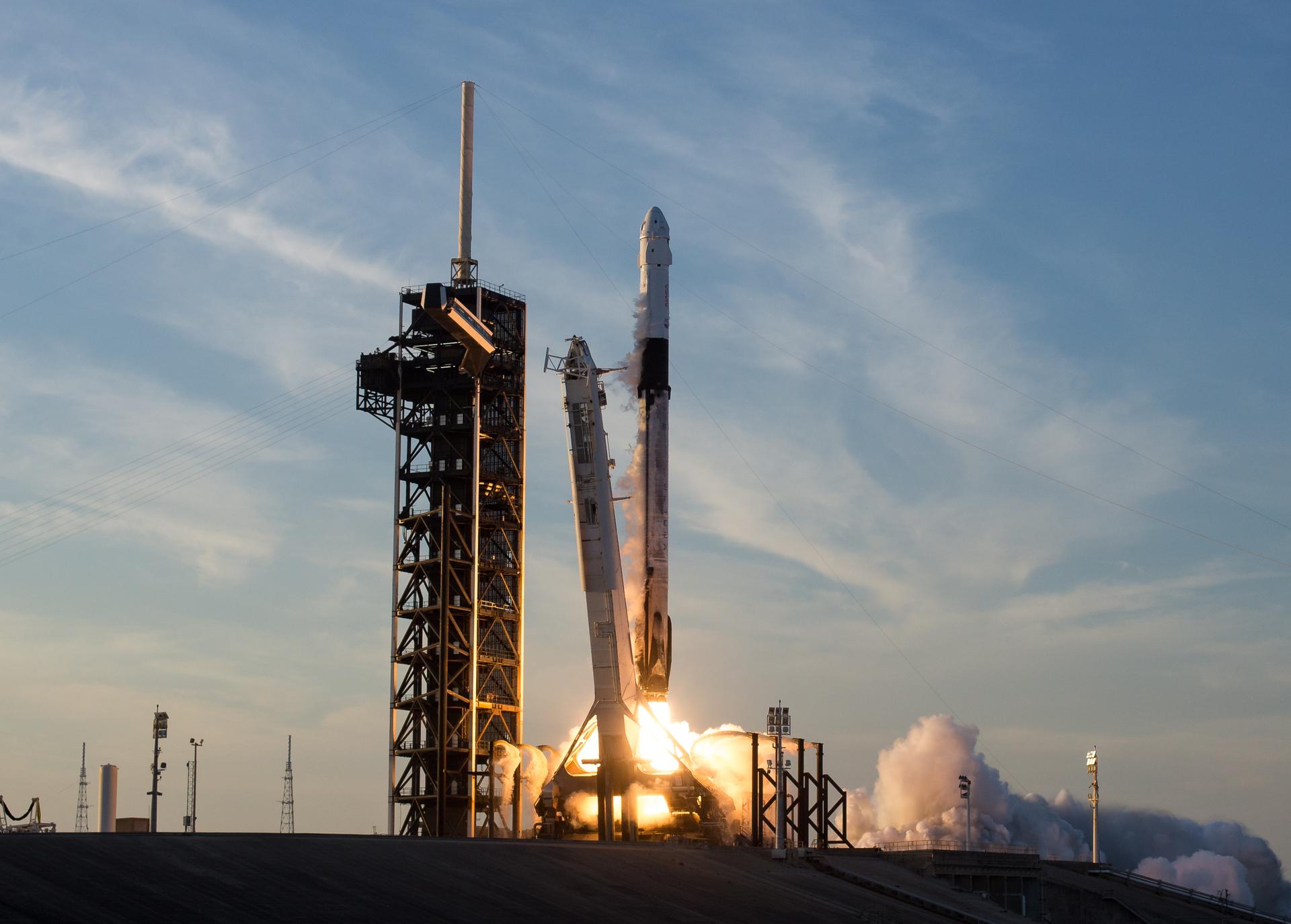
    The SpaceX Falcon 9 rocket carrying the Dragon spacecraft lifts off from Launch Complex 39A at NASA’s Kennedy Space Center in Florida on Thursday, Nov. 9, 2023, on the company’s 29th commercial resupply services mission for the agency to the International Space Station.
    SpaceX

    NASA invites the public to participate in virtual activities ahead of the launch of SpaceX’s 32nd commercial resupply services mission for the agency. NASA and SpaceX are targeting launch at 4:15 a.m. EDT Monday, April 21, from Launch Complex 39A at NASA’s Kennedy Space Center in Florida.

    In addition to food, supplies, and equipment for the crew, the SpaceX Dragon spacecraft will deliver several new experiments, including a demonstration of refined maneuvers for free-floating robots. Dragon also carries an enhanced air quality monitoring system that could protect crew members on exploration missions to the Moon and Mars, and two atomic clocks to examine fundamental physics concepts, such as relativity, and test worldwide synchronization of precision timepieces.

    The public can register to be virtual launch guests and receive curated mission resources, interactive opportunities, timely launch updates, and a mission-specific collectible stamp for their virtual guest passports delivered straight to their inbox after liftoff.

    A new way to collect and share passport stamps has arrived! Receive one for your virtual guest passport and another that is sized perfectly for sharing. Don’t have a passport yet? Print one here and start collecting!

    Learn more about NASA research and activities on the International Space Station at:

    https://www.nasa.gov/station.

  • Hubble Provides New View of Galactic Favorite

    4 Min Read

    Hubble Provides New View of Galactic Favorite

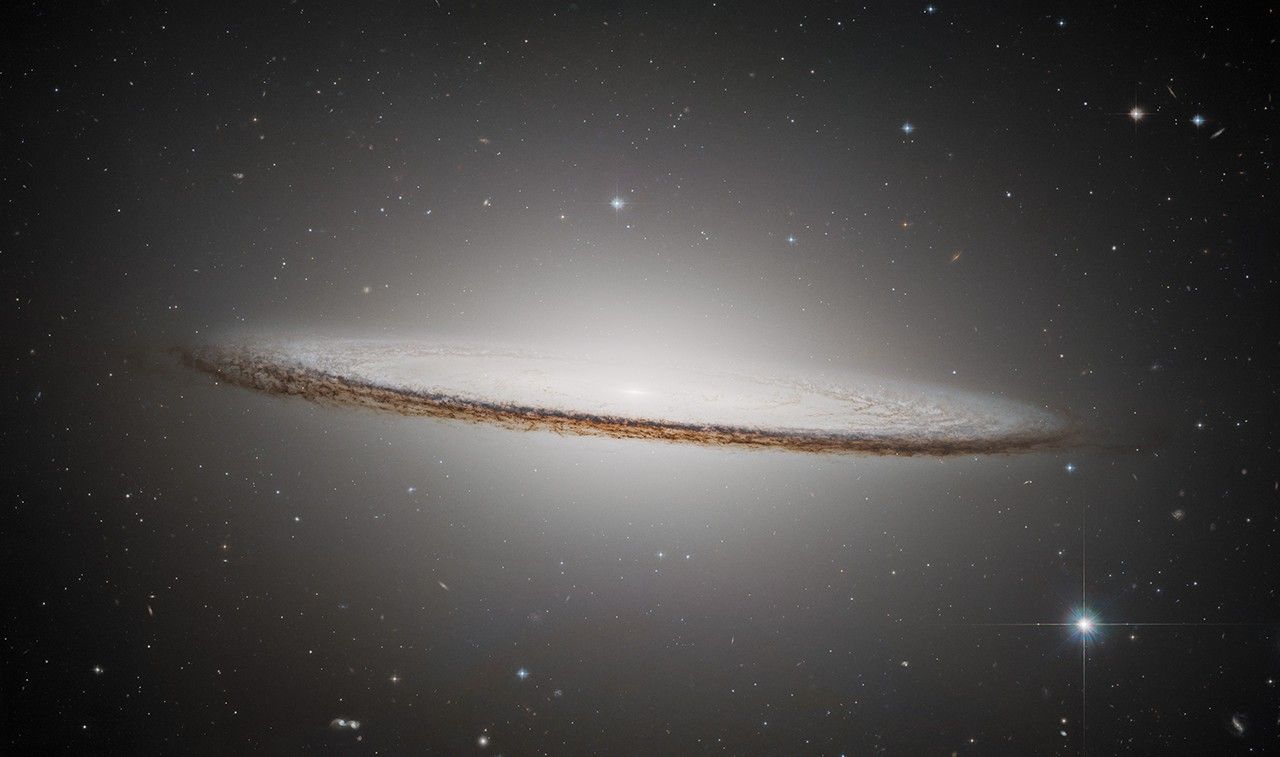
    The Sombrero Galaxy is an oblong, pale white disk with a glowing core. It appears nearly edge-on but slants slightly in the front, presenting a slight top-down view of the inner region of the galaxy and its bright core. The outer disk is darker with shades of brown and black. Different colored distant galaxies and various stars are speckled among the black background of space surrounding the galaxy.

    NASA/ESA Hubble Space Telescope image of the Sombrero Galaxy, also called Messier 104.

    Credits:
    ESA/Hubble & NASA, K. Noll

    As part of ESA/Hubble’s 35th anniversary celebrations, the European Space Agency (ESA) is sharing a new image series revisiting stunning, previously released Hubble targets with the addition of the latest Hubble data and new processing techniques.

    ESA/Hubble published a new image of NGC 346 as the first installment in the series. Now, they are revisiting a fan-favorite galaxy with new image processing techniques. The new image reveals finer detail in the galaxy’s disk, as well as more background stars and galaxies.

    Over the past two decades, Hubble has released several images of the Sombrero Galaxy, including this well-known Hubble image from October 2003. In November 2024, the NASA/ESA/CSA James Webb Space Telescope also provided an entirely new perspective on this striking galaxy.

    Located around 30 million light-years away in the constellation Virgo, the Sombrero Galaxy is instantly recognizable. Viewed nearly edge on, the galaxy’s softly luminous bulge and sharply outlined disk resemble the rounded crown and broad brim of the Mexican hat from which the galaxy gets its name.

    The Sombrero Galaxy is an oblong, pale white disk with a glowing core. It appears nearly edge-on but slants slightly in the front, presenting a slight top-down view of the inner region of the galaxy and its bright core. The outer disk is darker with shades of brown and black. Different colored distant galaxies and various stars are speckled among the black background of space surrounding the galaxy.
    NASA/ESA Hubble Space Telescope image of the Sombrero Galaxy, also called Messier 104.
    ESA/Hubble & NASA, K. Noll

    Though packed with stars, the Sombrero Galaxy is surprisingly not a hotbed of star formation. Less than one solar mass of gas is converted into stars within the knotted, dusty disk of the galaxy each year. Even the galaxy’s central supermassive black hole, which at nine billion solar masses is more than 2,000 times more massive than the Milky Way’s central black hole, is fairly calm.

    The galaxy is too faint to spot with the unaided eye, but it is readily viewable with a modest amateur telescope. Seen from Earth, the galaxy spans a distance equivalent to roughly one-third the diameter of the full Moon. The galaxy’s size on the sky is too large to fit within Hubble’s narrow field of view, so this image is actually a mosaic of several images stitched together.

    One of the things that makes this galaxy especially notable is its viewing angle, which is inclined just six degrees off of the galaxy’s equator. From this vantage point, intricate clumps and strands of dust stand out against the brilliant white galactic nucleus and bulge, creating an effect not unlike Saturn and its rings — but on an epic galactic scale.

    At the same time, this extreme angle makes it difficult to discern the structure of the Sombrero Galaxy. It’s not clear whether it’s a spiral galaxy, like our own Milky Way, or an elliptical galaxy. Curiously, the galaxy’s disk seems like a fairly typical disk for a spiral galaxy, and its spheroidal bulge and halo seem fairly typical for an elliptical galaxy — but the combination of the two components resembles neither a spiral nor an elliptical galaxy.

    Researchers used Hubble to investigate the Sombrero Galaxy, measuring the metals (what astronomers call elements heavier than helium) in stars in the galaxy’s expansive halo. This type of measurement can help astronomers better understand a galaxy’s history, potentially revealing whether it merged with other galaxies in the past. In the case of the Sombrero Galaxy, extremely metal-rich stars in the halo point to a possible merger with a massive galaxy several billion years ago. An ancient galactic clash, hinted at by Hubble’s sensitive measurements, could explain the Sombrero Galaxy’s distinctive appearance.

    The Hubble Space Telescope has been operating for over three decades and continues to make ground-breaking discoveries that shape our fundamental understanding of the universe. Hubble is a project of international cooperation between NASA and ESA (European Space Agency). NASA’s Goddard Space Flight Center in Greenbelt, Maryland, manages the telescope and mission operations. Lockheed Martin Space, based in Denver, also supports mission operations at Goddard. The Space Telescope Science Institute in Baltimore, which is operated by the Association of Universities for Research in Astronomy, conducts Hubble science operations for NASA.

    Details

    Last Updated

    Apr 16, 2025

    Editor
    Andrea Gianopoulos
    Contact

    Media

    Claire Andreoli
    NASA’s Goddard Space Flight Center
    Greenbelt, Maryland
    claire.andreoli@nasa.gov

    Bethany Downer
    ESA/Hubble
    bethany.downer@esahubble.org
    Garching, Germany

  • NASA Sees Progress on Blue Origin’s Orbital Reef Design Development

    3 min read

    Preparations for Next Moonwalk Simulations Underway (and Underwater)

    A digital rendering of the baseline configuration for Blue Origin’s free-flying commercial space station, Orbital Reef, which continues to be developed as part of a Space Act Agreement with NASA.
    Blue Origin

    A NASA-supported commercial space station, Blue Origin’s Orbital Reef, recently completed a human-in-the-loop testing milestone as the agency works toward developing commercial space stations in low Earth orbit.

    The human-in-the-loop test scenarios utilized individual participants or small groups to perform day-in-the-life walkthroughs in life-sized mockups of major station components. Participants provided feedback while simulating microgravity operations, including cargo transfer, trash transfer, stowage, and worksite assessments.

    “Human-in-the-loop and iterative testing are essential to inform key decisions and mitigate risks to crew health and safety,” said Angela Hart, program manager for NASA’s Commercial Low Earth Orbit Development Program at the agency’s Johnson Space Center in Houston. “NASA’s insight into our partner’s testing milestones enables the agency to gain insight into partner progress and share expertise, ultimately improving industry and NASA’s mission success.”

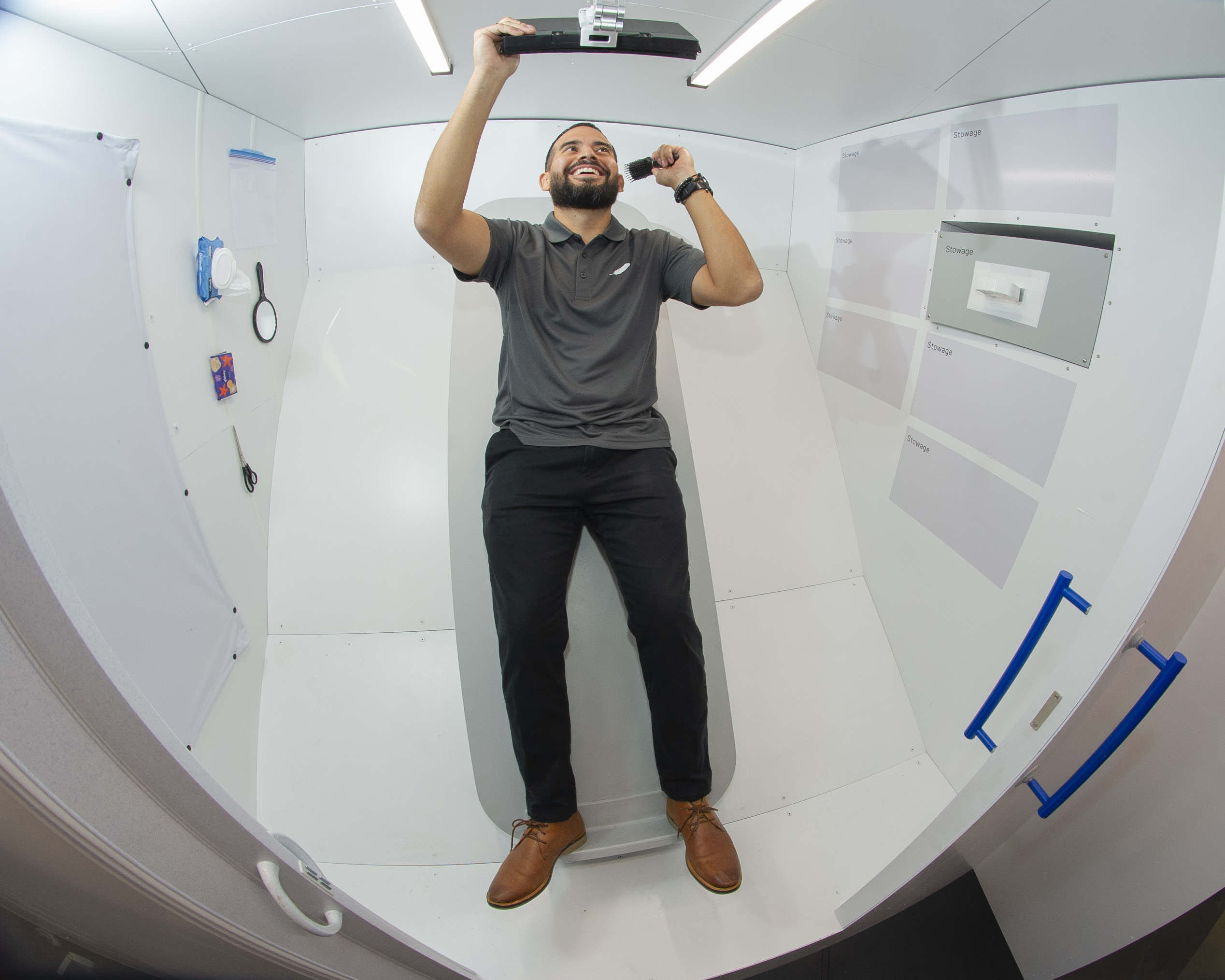
    Test subjects in the mockup for Blue Origin’s free-flying commercial space station, Orbital Reef, during the human-in-the-loop test.
    Blue Origin

    The milestone is part of a NASA Space Act Agreement originally awarded to Blue Origin in 2021 and focused on the design progress for multiple worksites, floors, and translation paths within the station. This ensures a commercial station can support human life, which is critical to advancing scientific research in a microgravity environment and maintaining a continuous human presence in low Earth orbit.

    The test evaluated various aspects of Orbital Reef’s environment to provide information needed for the space station’s design. Assessment areas included the private crew quarters, dining area, lavatory, research laboratory, and berthing and docking hatches.

    To facilitate the test, Blue Origin built stand-alone mockups of each floor in the internally developed habitable module. These mockups will be iteratively updated as the fidelity of components and subsystems matures, enabling future human-in-the-loop testing.

    A test subject in the mockup for Blue Origin’s free-flying commercial space station, Orbital Reef, during the human-in-the-loop test.
    Blue Origin

    The research team’s observations will be used to provide design recommendations for worksite volumes, layouts, restraint and mobility aid layouts, usability and workload, and positioning of interfaces and equipment.

    NASA supports the design and development of multiple commercial space stations, including Orbital Reef, through funded and unfunded agreements. The current design and development phase will soon be followed by the procurement of services from one or more companies, where NASA aims to be one of many customers for low Earth orbit stations.

    NASA is committed to maintaining a continuous human presence in low Earth orbit as the agency transitions from the International Space Station to commercial space stations. For nearly 25 years, NASA has supported a continuous presence in low Earth orbit aboard the space station and will continue to build on the agency’s extensive human spaceflight experience to advance future scientific and exploration goals.

    For more information about commercial space stations, visit:

    www.nasa.gov/commercialspacestations

  • Sols 4511-4512: Low energy after a big weekend?

    2 min read

    Sols 4511-4512: Low energy after a big weekend?

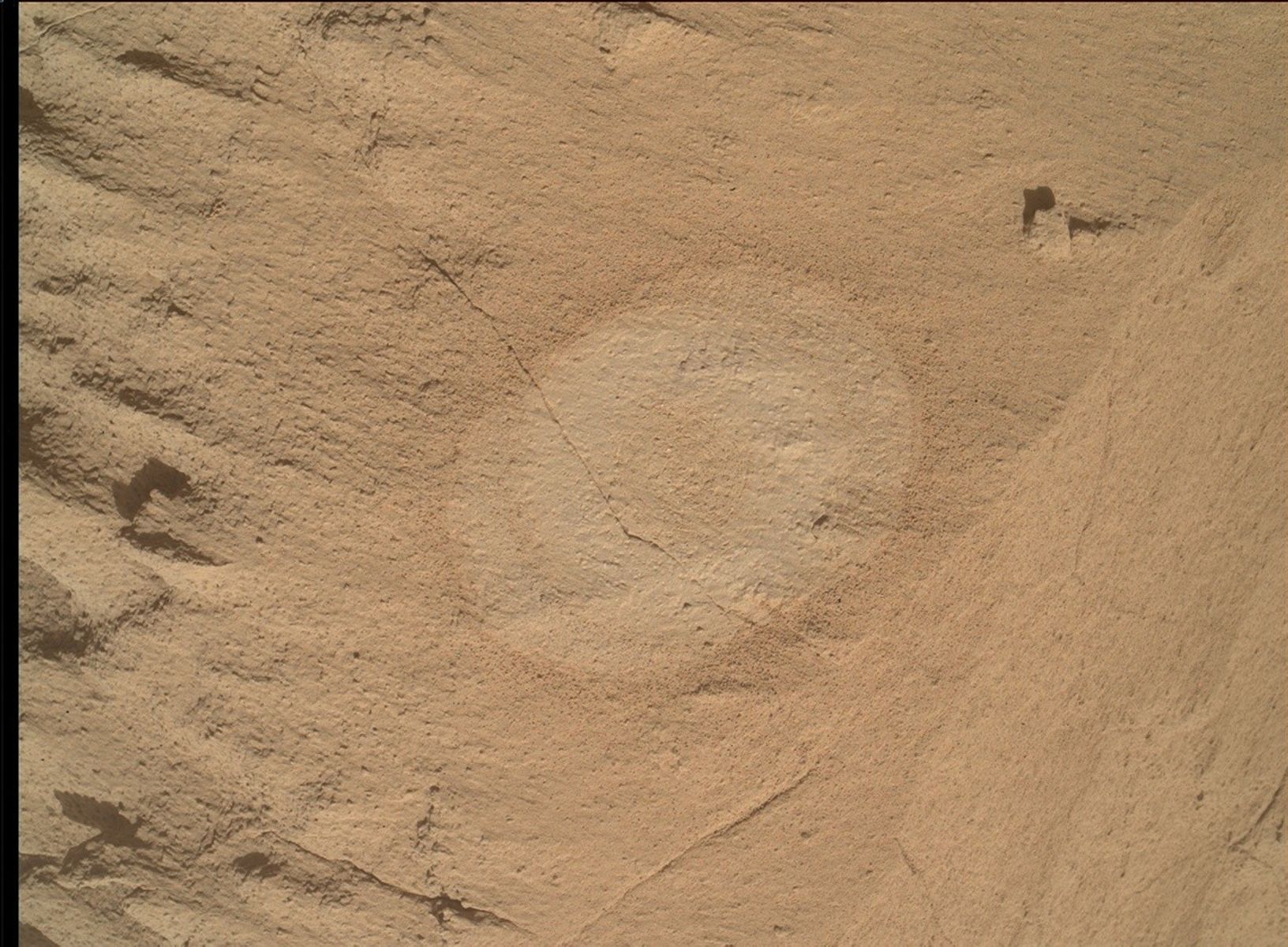
    A grayscale photograph of the Martian surface from the Curiosity rover
    This image was taken by Left Navigation Camera onboard NASA’s Mars rover Curiosity on Sol 4510 (2025-04-14 03:43:40 UTC).
    NASA/JPL-Caltech

    Written by Lauren Edgar, Planetary Geologist at USGS Astrogeology Science Center

    Earth planning date: Monday, April 14, 2025

    We all know the feeling: it’s Monday morning after a big weekend and you’re coming into the week wishing you’d had a little more time to rest and recharge.  Well, Curiosity probably feels the same way today. Curiosity accomplished a lot over the weekend, including full contact science, a MAHLI stereo imaging test, testing the collection of ChemCam passive spectral data at the same time as data transmission with one of the orbiters, and some APXS and MAHLI calibration target activities, plus a long 57 m drive. It was great to see all of those activities in the plan and to see some great drive progress. But that means we’re a bit tight on power for today’s plan!

    I was on shift as Long Term Planner today, and the team had to think carefully about science priorities to fit within our power limit for today’s plan, and how that will prepare us for the rest of the week.  The team still managed to squeeze a lot of activities into today’s 2-sol plan. First, Curiosity will acquire Mastcam mosaics to investigate local stratigraphic relationships and diagenetic features. Then we’ll acquire some imaging to document the sandy troughs between bedrock blocks to monitor active surface processes. We’ll also take a Navcam mosaic to assess atmospheric dust. The science block includes a ChemCam LIBS observation on the bedrock target “Santa Margarita” and a long distance RMI mosaic of “Ghost Mountain” to look for possible boxwork structures. Then Curiosity will use the DRT, APXS and MAHLI to investigate the finely-laminated bedrock in our workspace at a target named “The Grotto.”  We’ll also collect APXS and MAHLI data on a large nodule in the workspace named “Torrey Pines” (meanwhile the Torrey Pines here on Earth was shaking in today’s southern California earthquakes! All is well but it gave some of our team members an extra jolt of adrenaline right before the SOWG meeting).  The second sol is focused on continuing our drive to the south and taking post-drive imaging to prepare for Wednesday’s plan.

    Phew! Good job Curiosity, you made it through Monday.

  • Sols 4509-4510: A weekend of long drives

    3 min read

    Sols 4509-4510: A weekend of long drives

    A grayscale photograph of the Martian surface from the Curiosity rover
    This image was taken by Left Navigation Camera onboard NASA’s Mars rover Curiosity on Sol 4507 (2025-04-11 03:54:35 UTC).

    Written by Abigail Fraeman, Planetary Geologist at NASA’s Jet Propulsion Laboratory

    Earth planning date: Friday, April 11, 2025

    Curiosity is continuing to book it to the potential boxwork structures.  The rover drove over 50 meters on Wednesday, and we plan to drive more than 50 meters again in today’s plan thanks to an unusually good viewshed that allows us to see far ahead.  We’ve been able to see glimpses of the boxwork structures in the distance for a few weeks now, and I am really excited about being able to plan long drives that get us closer and closer. What will we find when we reach them?

    Power was on everyone’s mind as we put the plan together today. The science team had lots of amazing ideas about observations to collect from our current location, but we had to carefully plan and prioritize them to make sure we didn’t use too much power and leave the rover battery lower than we’d like for Monday’s plan.  Winter on Mars certainly keeps us on our toes!  We ended up putting together what I think is a pretty good set of activities for the weekend.  MAHLI, APXS, and ChemCam will all work together to observe a flat rock in front of us named “Iron Mountain.” MAHLI will also do an experiment with this rock, testing different combinations of camera positions to see which produces the best data to help us generate 3D models of the rock’s surface.  I know rocks don’t have feelings, but if they did, I hope Iron Mountain can use this time to feel a bit like a movie star on the red carpet, getting photographed from all angles. Mastcam will also be photographing the surroundings, working with ChemCam’s RMI imager to take images the ridge containing boxwork structures named “Ghost Mountain,” and taking some solo shots of targets in the foreground named “Redondo Flat,” “Silverwood Sanctuary,” and the oft photographed Gould Mesa.  Navcam, REMS, and DAN round out the science plan with some environmental observations. We’ll be getting one more science and engineering hybrid observation when we collect ChemCam passive spectral data of the instrument’s calibration target in parallel with one of our communication passes.  This observation is part of a series of tests we’re doing to run rover activities in parallel with these passes, and if successful, will allow us to be more even more power efficient in the future.

    We’re also celebrating a soliday this weekend, which means we only have a two-sol plan instead of our usual three as the Mars and Earth time zones re-align for the next few weeks.  I’m looking forward to seeing where Curiosity drives next week.

  • NASA Aims to Fly First Quantum Sensor for Gravity Measurements

    Researchers from NASA’s Jet Propulsion Laboratory in Southern California, private companies, and academic institutions are developing the first space-based quantum sensor for measuring gravity. Supported by NASA’s Earth Science Technology Office (ESTO), this mission will mark a first for quantum sensing and will pave the way for groundbreaking observations of everything from petroleum reserves to global supplies of fresh water.

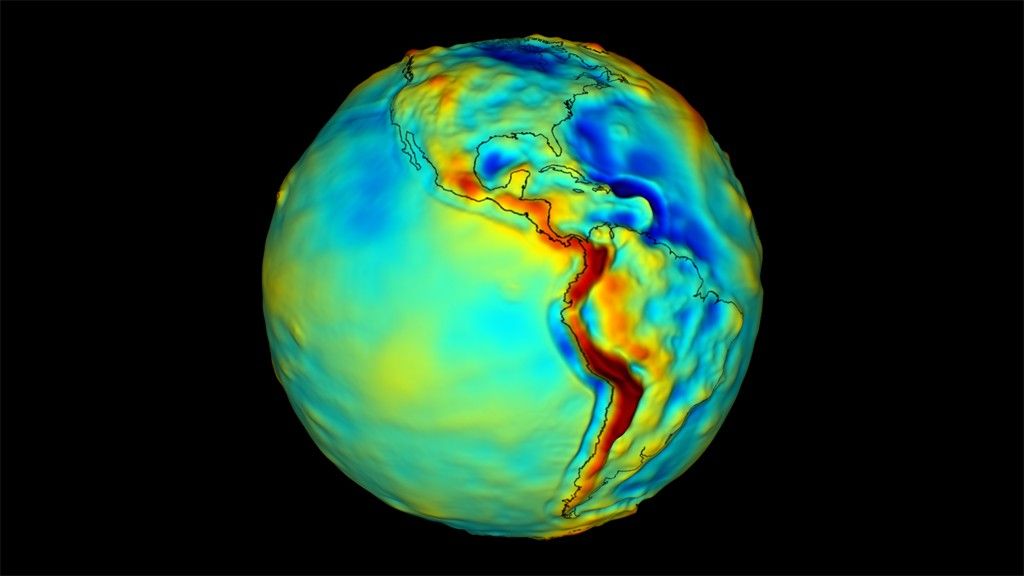
     Map of Earth's gravity with North and South America visible. The colors on the map vary and are yellow, green, blue, and red. Red indicates areas of greater gravitational pull and blue, less. South Central American through the western coast of South America are red, the Atlantic ocean is mostly blue and the Pacific ocean varies from yellow to teal.
    A map of Earth’s gravity. Red indicates areas of the world that exert greater gravitational pull, while blue indicates areas that exert less. A science-grade quantum gravity gradiometer could one day make maps like this with unprecedented accuracy.
    Image Credit: NASA

    Earth’s gravitational field is dynamic, changing each day as geologic processes redistribute mass across our planet’s surface. The greater the mass, the greater the gravity.

    You wouldn’t notice these subtle changes in gravity as you go about your day, but with sensitive tools called gravity gradiometers, scientists can map the nuances of Earth’s gravitational field and correlate them to subterranean features like aquifers and mineral deposits. These gravity maps are essential for navigation, resource management, and national security.

    “We could determine the mass of the Himalayas using atoms,” said Jason Hyon, chief technologist for Earth Science at JPL and director of JPL’s Quantum Space Innovation Center. Hyon and colleagues laid out the concepts behind their Quantum Gravity Gradiometer Pathfinder (QGGPf) instrument in a recent paper in EPJ Quantum Technology.

    Gravity gradiometers track how fast an object in one location falls compared to an object falling just a short distance away. The difference in acceleration between these two free-falling objects, also known as test masses, corresponds to differences in gravitational strength. Test masses fall faster where gravity is stronger.

    QGGPf will use two clouds of ultra-cold rubidium atoms as test masses. Cooled to a temperature near absolute zero, the particles in these clouds behave like waves. The quantum gravity gradiometer will measure the difference in acceleration between these matter waves to locate gravitational anomalies.

    Using clouds of ultra-cold atoms as test masses is ideal for ensuring that space-based gravity measurements remain accurate over long periods of time, explained Sheng-wey Chiow, an experimental physicist at JPL. “With atoms, I can guarantee that every measurement will be the same. We are less sensitive to environmental effects.”

    Using atoms as test masses also makes it possible to measure gravity with a compact instrument aboard a single spacecraft. QGGPf will be around 0.3 cubic yards (0.25 cubic meters) in volume and weigh only about 275 pounds (125 kilograms), smaller and lighter than traditional space-based gravity instruments.

    Quantum sensors also have the potential for increased sensitivity. By some estimates, a science-grade quantum gravity gradiometer instrument could be as much as ten times more sensitive at measuring gravity than classical sensors.

    The main purpose of this technology validation mission, scheduled to launch near the end of the decade, will be to test a collection of novel technologies for manipulating interactions between light and matter at the atomic scale.

    “No one has tried to fly one of these instruments yet,” said Ben Stray, a postdoctoral researcher at JPL. “We need to fly it so that we can figure out how well it will operate, and that will allow us to not only advance the quantum gravity gradiometer, but also quantum technology in general.”

    This technology development project involves significant collaborations between NASA and small businesses. The team at JPL is working with AOSense and Infleqtion to advance the sensor head technology, while NASA’s Goddard Space Flight Center in Greenbelt, Maryland is working with Vector Atomic to advance the laser optical system.

    Ultimately, the innovations achieved during this pathfinder mission could enhance our ability to study Earth, and our ability to understand distant planets and the role gravity plays in shaping the cosmos. “The QGGPf instrument will lead to planetary science applications and fundamental physics applications,” said Hyon.

    To learn more about ESTO visit: https://esto.nasa.gov

    Details

    Last Updated

    Apr 15, 2025

    Editor
    NASA Science Editorial Team
    Contact
    Gage Taylor
  • What Is Aerodynamics? (Grades 5-8)

    This article is for students grades 5-8.

    Aerodynamics is the way objects move through air. The rules of aerodynamics explain how an airplane is able to fly. Anything that moves through air is affected by aerodynamics, from a rocket blasting off, to a kite flying. Since they are surrounded by air, even cars are affected by aerodynamics.

    What Are the Four Forces of Flight?

    The four forces of flight are lift, weight, thrust and drag. These forces make an object move up and down, and faster or slower. The amount of each force compared to its opposing force determines how an object moves through the air.

    Four forces of flight; drag, lift, thrust, weight

    What Is Weight?

    Gravity is a force that pulls everything down to Earth. Weight is the amount of gravity multiplied by the mass of an object. Weight is also the downward force that an aircraft must overcome to fly. A kite has less mass and therefore less weight to overcome than a jumbo jet, but they both need the same thing in order to fly — lift.

    An illustration of a hot air balloon with weights hanging off the sides to demonstrate weight

    What Is Lift?

    Lift is the push that lets something move up. It is the force that is the opposite of weight. Everything that flies must have lift. For an aircraft to move upward, it must have more lift than weight. A hot air balloon has lift because the hot air inside is lighter than the air around it. Hot air rises and carries the balloon with it. A helicopter’s lift comes from the rotor blades. Their motion through the air moves the helicopter upward. Lift for an airplane comes from its wings.

    An illustration of an airplane wing to demonstrate the airfoil

    How Do an Airplane’s Wings Provide Lift?

    The shape of an airplane’s wings is what makes it possible for the airplane to fly. Airplanes’ wings are curved on top and flatter on the bottom. That shape makes air flow over the top faster than under the bottom. As a result, less air pressure is on top of the wing. This lower pressure makes the wing, and the airplane it’s attached to, move up. Using curves to affect air pressure is a trick used on many aircraft. Helicopter rotor blades use this curved shape. Lift for kites also comes from a curved shape. Even sailboats use this curved shape. A boat’s sail is like a wing. That’s what makes the sailboat move.

    What Is Drag?

    Drag is a force that pulls back on something trying to move. Drag provides resistance, making it hard to move. For example, it is more difficult to walk or run through water than through air. Water causes more drag than air. The shape of an object also affects the amount of drag. Round surfaces usually have less drag than flat ones. Narrow surfaces usually have less drag than wide ones. The more air that hits a surface, the more the drag the air produces.

    An illustration of air flowing over a car to demonstrate drag

    What Is Thrust?

    Thrust is the force that is the opposite of drag. It is the push that moves something forward. For an aircraft to keep moving forward, it must have more thrust than drag. A small airplane might get its thrust from a propeller. A larger airplane might get its thrust from jet engines. A glider does not have thrust. It can only fly until the drag causes it to slow down and land.

    An illustration of an airplane moving in a forward motion to demonstrate thrust

    Why Does NASA Study Aerodynamics?

    Aerodynamics is an important part of NASA’s work. The first A in NASA stands for aeronautics, which is the science of flight. NASA works to make airplanes and other aircraft better. Studying aerodynamics is an important part of that work. Aerodynamics is important to other NASA missions. Probes landing on Mars have to travel through the Red Planet’s thin atmosphere. Having to travel through an atmosphere means aerodynamics is important on other planets too.

    More About Aerodynamics

    Dynamics of Flight

    Read What Is Aerodynamics (Grades K-4)

  • What Is Aerodynamics? (Grades K-4)

    3 Min Read

    What Is Aerodynamics? (Grades K-4)

    NASA Knows

    This article is for students grades K-4.

    What Are the Four Forces of Flight?

    Aerodynamics is the way air moves around things. The rules of aerodynamics explain how an airplane is able to fly. Anything that moves through air reacts to aerodynamics. A rocket blasting off the launch pad and a kite in the sky react to aerodynamics. Aerodynamics even acts on cars, since air flows around cars.

    The four forces of flight are lift, weight, thrust and drag. These forces make an object move up and down, and faster or slower. How much of each force there is changes how the object moves through the air.

    Four forces of flight; drag, lift, thrust, weight

    What Is Weight?

    Everything on Earth has weight. This force comes from gravity pulling down on objects. To fly, an aircraft needs something to push it in the opposite direction from gravity. The weight of an object controls how strong the push has to be. A kite needs a lot less upward push than a jumbo jet does.

    An illustration of a hot air balloon with weights hanging off the sides to demonstrate weight

    What Is Lift?

    Lift is the push that lets something move up. It is the force that is the opposite of weight. Everything that flies must have lift. For an aircraft to move upward, it must have more lift than weight. A hot air balloon has lift because the hot air inside is lighter than the air around it. Hot air rises and carries the balloon with it. A helicopter’s lift comes from the rotor blades at the top of the helicopter. Their motion through the air moves the helicopter upward. Lift for an airplane comes from its wings.  

    An illustration of an airplane wing to demonstrate the airfoil

    How Do an Airplane’s Wings Provide Lift?

    The shape of an airplane’s wings is what makes it able to fly. Airplanes’ wings are curved on top and flatter on the bottom. That shape makes air flow over the top faster than under the bottom. So, less air pressure is on top of the wing. This condition makes the wing, and the airplane it’s attached to, move up. Using curves to change air pressure is a trick used on many aircraft. Helicopter rotor blades use this trick. Lift for kites also comes from a curved shape. Even sailboats use this concept. A boat’s sail is like a wing. That’s what makes the sailboat move.

    What Is Drag?

    Drag is a force that tries to slow something down. It makes it hard for an object to move. It is harder to walk or run through water than through air. That is because water causes more drag than air. The shape of an object also changes the amount of drag. Most round surfaces have less drag than flat ones. Narrow surfaces usually have less drag than wide ones. The more air that hits a surface, the more drag it makes.

    An illustration of air flowing over a car to demonstrate drag

    What Is Thrust?

    Thrust is the force that is the opposite of drag. Thrust is the push that moves something forward. For an aircraft to keep moving forward, it must have more thrust than drag. A small airplane might get its thrust from a propeller. A larger airplane might get its thrust from jet engines. A glider does not have thrust. It can only fly until the drag causes it to slow down and land.

    An illustration of an airplane moving in a forward motion to demonstrate thrust

    Read What Is Aerodynamics? (Grades 5-8)

  • Testing NASA’s IMAP (Interstellar Mapping and Acceleration Probe)


    A tunnel dramatically lit in violet light dominates the photo. In front of it, a small spacecraft is on a track.
    NASA/Johns Hopkins APL/Princeton/Ed Whitman

    NASA’s IMAP (Interstellar Mapping and Acceleration Probe) is loaded into the X-ray and Cryogenic Facility (XRCF) thermal vacuum chamber at NASA’s Marshall Space Flight Center in Huntsville, Alabama, in this photo from March 20, 2025. There, the spacecraft will undergo testing such as dramatic temperature changes to simulate the harsh environment of space.

    The IMAP mission is a modern-day celestial cartographer that will map the solar system by studying the heliosphere, a giant bubble created by the Sun’s solar wind that surrounds our solar system and protects it from harmful interstellar radiation. The IMAP mission will launch on a SpaceX Falcon 9 rocket from NASA’s Kennedy Space Center in Florida, no earlier than September 2025.

    Image credit: NASA/Johns Hopkins APL/Princeton/Ed Whitman

  • Experience the Launch of NASA’s SpaceX Crew-11 Mission

    A SpaceX Falcon 9 rocket carrying the company’s Dragon spacecraft is launched on NASA’s SpaceX Crew-10 mission to the International Space Station.
    NASA/Aubrey Gemignani

    Digital content creators are invited to register to attend the launch of NASA’s SpaceX Crew-11 mission to carry astronauts to the International Space Station for a science expedition as part of NASA’s Commercial Crew Program. This will be the 15th time a SpaceX Dragon spacecraft launched by a Falcon 9 rocket takes crews to the orbital laboratory. 

    Launch of the Crew-11 mission is targeted for no earlier than July 2025 on a SpaceX Falcon 9 rocket from Florida. The launch will carry NASA astronauts Commander Zena Cardman and Pilot Mike Fincke, and mission specialists JAXA (Japan Aerospace Exploration Agency) astronaut Kimiya Yui and Roscosmos cosmonaut Oleg Platonov. 

    If your passion is to communicate and engage the world online, then this is the event for you! Seize the opportunity to see and share the #Crew11 mission launch. 

    A maximum of 50 social media users will be selected to attend this two-day event and will be given exclusive access to NASA’s Kennedy Space Center in Florida. 

    NASA Social participants will have the opportunity to: 

    • View a crewed launch of the SpaceX Falcon 9 rocket and Dragon spacecraft 
    • Tour NASA facilities at the agency’s Kennedy Space Center in Florida 
    • Meet and interact with Crew-11 subject-matter experts 
    • Meet fellow space enthusiasts who are active on social media 

    NASA Social registration for the Crew-11 launch opens on Tuesday, April 15, and the deadline to apply is at 10 a.m. EDT on Monday, April 28. All social applications will be considered on a case-by-case basis. 

    APPLY NOW 

    Do I need to have a social media account to register? 

     Yes. This event is designed for people who: 

    • Actively use multiple social networking platforms and tools to disseminate information to a unique audience. 
    • Regularly produce new content that features multimedia elements. 
    • Have the potential to reach a large number of people using digital platforms, or reach a unique audience, separate and distinctive from traditional news media and/or NASA audiences. 
    • Must have an established history of posting content on social media platforms. 
    • Have previous postings that are highly visible, respected and widely recognized. 

    Users on all social networks are encouraged to use the hashtag #NASASocial and #Crew11. Updates and information about the event will be shared on X via @NASASocial and @NASAKennedy, and via posts to Facebook and Instagram

    How do I register? 

    Registration for this event opens on Tuesday, April 15, and the deadline to apply is at 10 a.m. EDT on Monday, April 28. Registration is for one person only (you) and is non-transferable. Each individual wishing to attend must register separately. Each application will be considered on a case-by-case basis. 

    Can I register if I am not a U.S. citizen? 

    Yes, this event is open for all to apply, ages 18 years and older. 

    When will I know if I am selected? 

    After registrations have been received and processed, an email with confirmation information and additional instructions will be sent to those selected. We expect to send the acceptance notifications by May 30. 

    What are NASA Social credentials? 

    All social applications will be considered on a case-by-case basis. Those chosen must prove through the registration process they meet specific engagement criteria. 

    If you do not make the registration list for this NASA Social, you still can attend the launch offsite and participate in the conversation online. Find out about ways to experience a launch here. 

    What are the registration requirements? 

    Registration indicates your intent to travel to NASA’s Kennedy Space Center in Florida and attend the two-day event in person. You are responsible for your own expenses for travel, accommodations, food, and other amenities. You must be able to attend all days of NASA Social activities in order to view the launch

    Some events and participants scheduled to appear at the event are subject to change without notice. NASA is not responsible for loss or damage incurred as a result of attending. NASA, moreover, is not responsible for loss or damage incurred if the event is cancelled with limited or no notice. Please plan accordingly. 

    NASA Kennedy is a government facility. Those who are selected will need to complete an additional registration step to receive clearance to enter the secure areas. 

    IMPORTANT: To be admitted, you will need to provide two forms of unexpired government-issued identification; one must be a photo ID and match the name provided on the registration. Those without proper identification cannot be admitted

    For a complete list of acceptable forms of ID, please visit: NASA Credentialing Identification Requirements

    All registrants must be at least 18 years old. 

    What if the launch date changes? 

    Many different factors can cause a scheduled launch date to change multiple times. If the launch date changes, NASA may adjust the date of the NASA Social accordingly to coincide with the new target launch date. NASA will notify registrants of any changes by email. 

    If the launch is postponed, attendees may be invited to attend a later launch date but that is not guaranteed. 

    NASA Social attendees are responsible for any additional costs they incur related to any launch delay. We strongly encourage participants to make travel arrangements that are refundable and/or flexible. 

    What if I cannot come to the Kennedy Space Center? 

    If you cannot come to the Kennedy Space Center and attend all days in person, you should not register for the NASA Social. You can follow the conversation online using #NASASocial.  

    You can also become a virtual guest for NASA launches and milestone events. This free program gives access to curated resources, schedule changes, and mission specific information delivered straight to your inbox. Join us today

    You can watch the launch on NASA+. NASA will provide regular launch and mission updates on X at @NASA, @NASAKennedy, and @Commercial_Crew, as well as on NASA’s Commercial Crew Program blog

    If you cannot make this NASA Social, don’t worry; NASA is planning many other Socials in the near future at various locations! 

  • Atomic Clock and Plant DNA Research Launching Aboard NASA’s SpaceX CRS-32 Mission 

    NASA’s SpaceX 32nd commercial resupply services mission, scheduled to lift off from the agency’s Kennedy Space Center in April, is heading to the International Space Station with experiments that include research on whether plant DNA responses in space correlate to human aging and disease, and measuring the precise effects of gravity on time.  

    Discover more details about the two experiments’ potential impacts on space exploration and how they can enhance life on Earth: 

    “Second Guessing” Time in Space 

    As outlined in Einstein’s general theory of relativity, how we experience the passage of time is influenced by gravity. However, there is strong evidence to believe this theory may not be complete and that there are unknown forces at play. These new physics effects may manifest themselves in small deviations from Einstein’s prediction.  

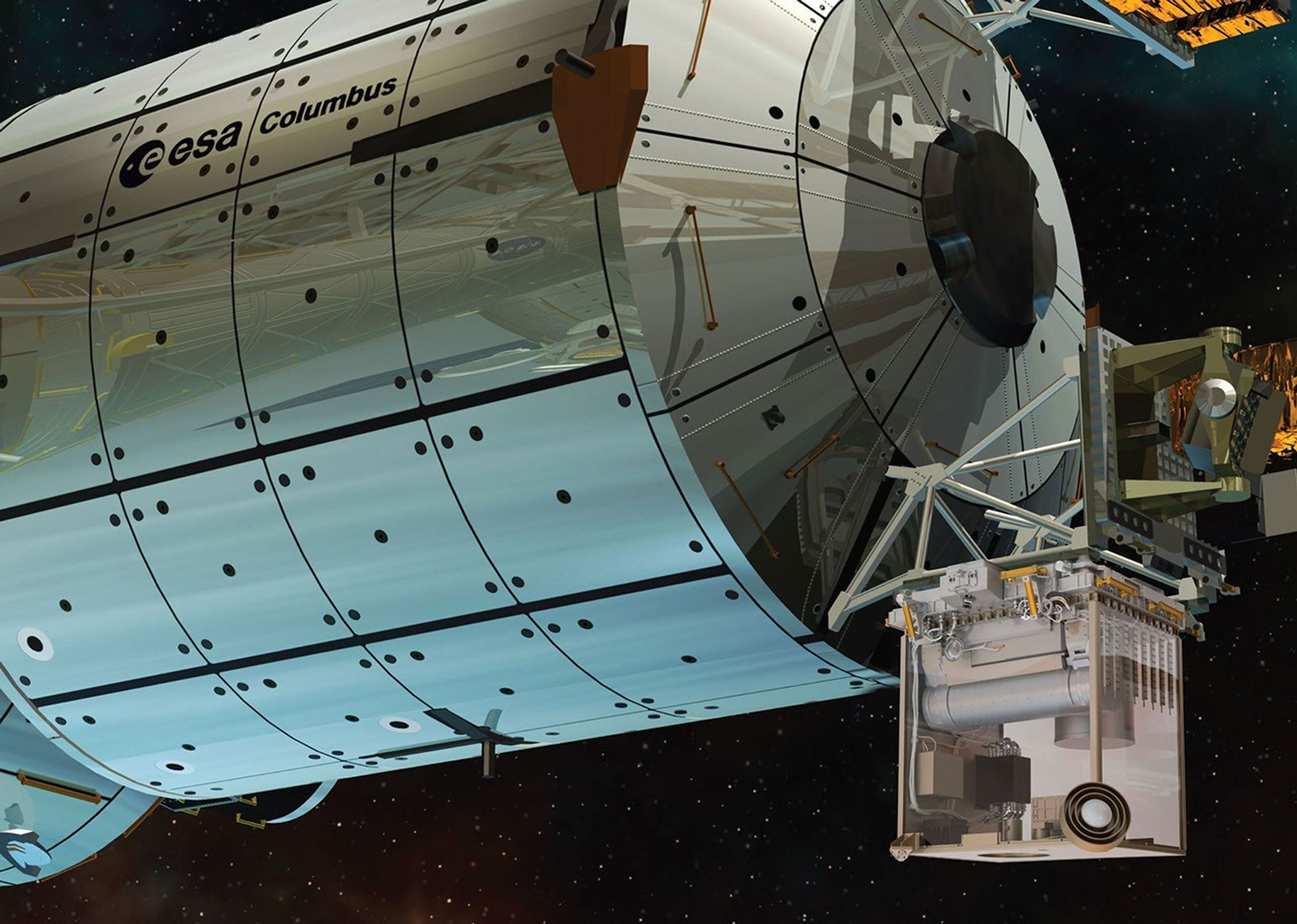
    The ACES (Atomic Clock Ensemble in Space) investigation is an ESA (European Space Agency) mission that aims to help answer fundamental physics questions. By comparing a highly precise atomic clock in space with numerous ground atomic clocks around the world, ACES could take global time synchronization and clock comparison experiments to new heights.  
    Sponsored by NASA, United States scientists are participating in the mission in various ways, including contributing ground station reference clocks. Scheduled to collect data for 30 months, this vast network of precise clocks is expected to provide fresh insights into the exact relationship between gravity and time, set new limits for unknown forces, and improve global time synchronization.  

    In addition to investigating the laws of physics, ACES will enable new terrestrial applications such as relativistic geodesy, which involves measuring Earth’s shape and gravitational field with extreme precision. These advancements are critical to space navigation, satellite operations, and GPS systems. For example, without understanding the time fluctuations between Earth and medium Earth orbit, GPS would be progressively less accurate. 

    A depiction of a robotic arm extends to attach a transparent gray metal box containing scientific equipment to a large white cylinder representing the space station.
    A robotic arm will attach ACES to the Columbus Laboratory module aboard the International Space Station.
    Image courtesy of ESA 

    Probing Plants for Properties to Protect DNA 

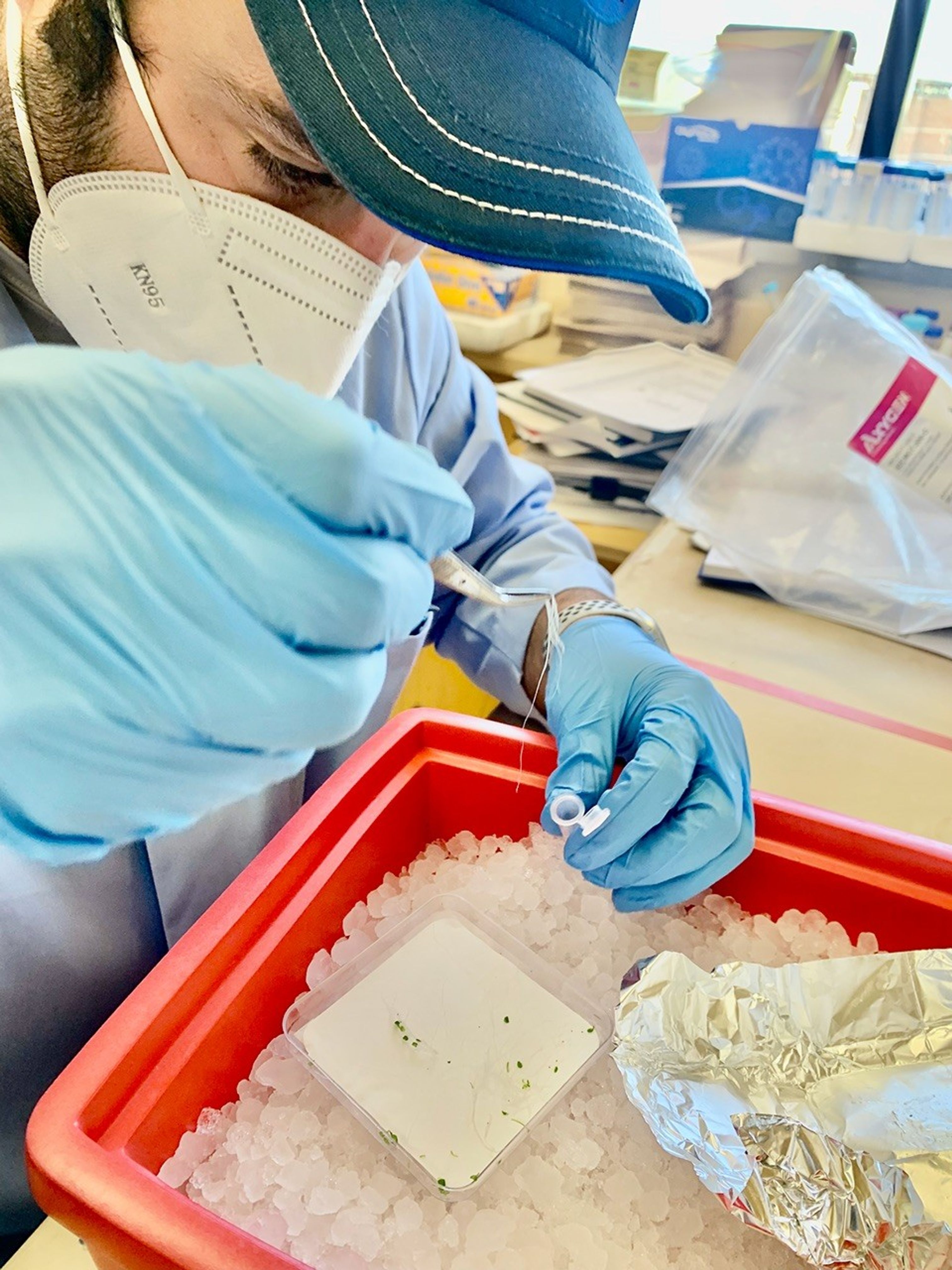
    The APEX-12 (Advanced Plant EXperiment-12) investigation will test the hypothesis that induction of telomerase activity in space protects plant DNA molecules from damage elicited by cellular stress evoked by the combined spaceflight stressors experienced by seedlings grown aboard the space station. It is expected that results will lead to a better understanding of differences between human and plant telomere behavior in space.   

    Data on telomerase activity in plants could be leveraged not only to develop therapies for age-related diseases in space and on Earth, but also for ensuring food crops are more resilient to spaceflight stress. 

    Telomeres and telomerase influence cell division and cell death, two processes crucial to understanding aging in humans. Telomeres are the protective end caps of chromosomes. Each time a cell divides, the telomeres shorten slightly, essentially acting as a biological clock for cell aging. Conversely, telomerase is an enzyme that adds nucleotide sequences to the ends of telomeres, lengthening them and counteracting their shortening.  

    In humans, telomere shortening is linked to various age-related conditions, such as cardiovascular diseases and certain cancers. In astronauts, studies have shown that spaceflight leads to changes in telomere length, with a notable lengthening observed. This phenomenon carries potential implications for astronaut health outcomes. By contrast, plant telomere length did not change during spaceflight, despite a dramatic increase in telomerase activity.

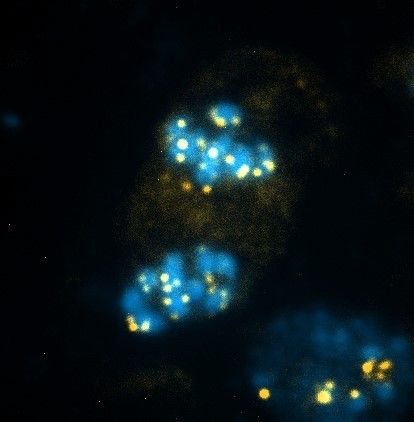
    In front of a black background there are two glowing X-shaped chromosomes in light blue with the end cap telomeres highlighted in yellow.
    A microscopic image of plant telomeres taken under a fluorescent microscope. The chromosomes are highlighted in blue. The telomeres are highlighted in yellow.
    Image courtesy of Texas A&M University 

    How this benefits space exploration: Experiments aboard NASA’s SpaceX CRS-32 mission is twofold. One, they have the potential to significantly enhance precision timekeeping, which is necessary to improve space navigation and communication. Two, they can provide insights into how plants adapt to protect DNA molecules from cellular stress caused by environmental factors experienced in spaceflight, in an effort to sustain plant life in space. 

    How this benefits humanity: The experiments conducted on NASA’s SpaceX CRS-32 mission offer a range of potential benefits to humanity. First, improving precision timekeeping for more accurate GPS technology. Second, capturing data about how telomerase activity correlates to cellular stress in plants, which could lead to assays which better correlate telomerase activity and cellular stress and provide fundamental research to contribute to potential therapies for humans.   

    About BPS 

    NASA’s Biological and Physical Sciences Division pioneers scientific discovery and enables exploration by using space environments to conduct investigations not possible on Earth. Studying biological and physical phenomenon under extreme conditions allows researchers to advance the fundamental scientific knowledge required to go farther and stay longer in space, while also benefitting life on Earth. 

  • Why Do We Grow Plants in Space?

    1 min read

    Preparations for Next Moonwalk Simulations Underway (and Underwater)

    Why do we grow plants in space?

    Plants are such versatile organisms that they can fulfill many roles in our exploration of space. Plants provide us with food, with oxygen, they can recycle water and waste, and they can even provide us with psychological benefits. So all these functions will help NASA in fulfilling our goal of trying to create a sustainable environment for human presence in space.

    But there are also other benefits. We can investigate how plants adapt to the novel environment of space, something that’s completely outside their evolutionary history. We can develop new processes and technologies to cultivate plants in difficult and even extreme environments. All these lessons learned will help us in ultimately improving the lives of humans here on Earth by being able to better cultivate plants.

    So why do we grow plants in space? To be able to create a sustainable environment for us to thrive in space, as well as improve lives and agricultural techniques here on Earth.

    [END VIDEO TRANSCRIPT]

    Full Episode List

    Full YouTube Playlist