Tag: solar system

  • Nighttime on the East Coast

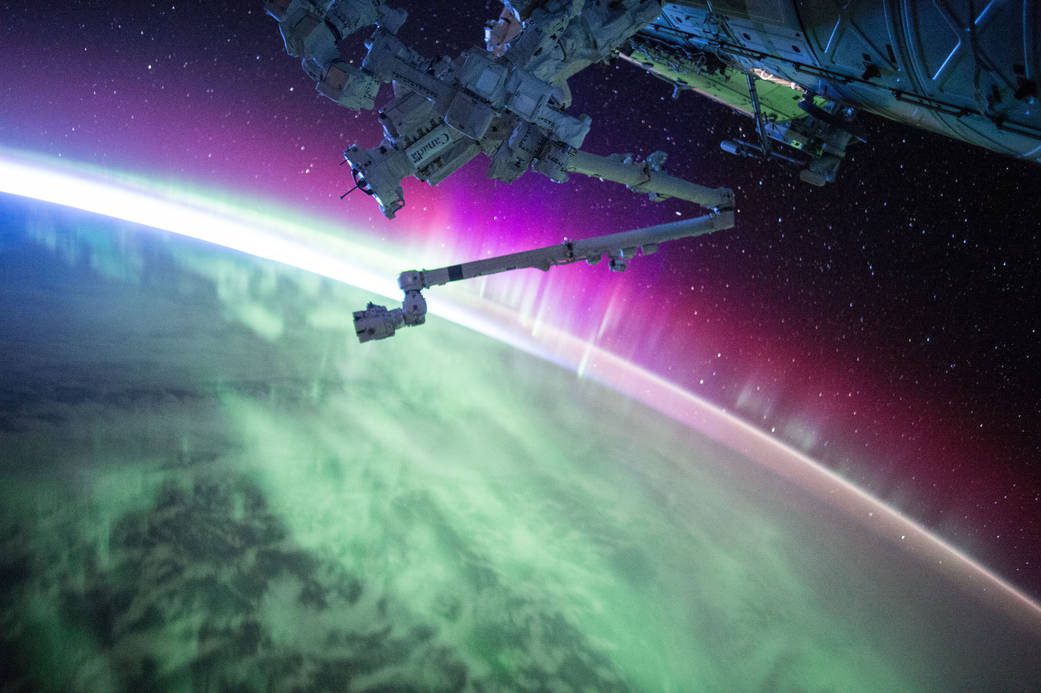
    The city lights of the northeastern United States are visible from the International Space Station. The rest of the surrounding land is mostly dark, as is space. At left, part of the orbital lab and a docking port on a Russian space station module are visible.
    NASA / Jasmin Moghbeli

    While aboard the International Space Station on Oct. 26, NASA astronaut Jasmin Moghbeli captured the city lights of the northeastern United States and major urban areas including Long Island, New York; Philadelphia, Pennsylvania; and Washington, D.C. At the time of this photograph, the orbital lab was 262 miles above Maine. In 24 hours, the space station makes 16 orbits of Earth, traveling through 16 sunrises and sunsets. To find out where the ISS is and when you can see it in your area, check out the Spot the Station site.

    Image Credit: NASA/Jasmin Moghbeli

  • NASA Flights Link Methane Plumes to Tundra Fires in Western Alaska

    Tundra wetlands are shown in late spring at the Yukon Delta National Wildlife Refuge in Alaska. Scientists are studying how fire and ice drive methane emissions in the Yukon-Kuskokwim Delta, within which the refuge is located.
    U.S. Fish and Wildlife Service

    Methane ‘hot spots’ in the Yukon-Kuskokwim Delta are more likely to be found where recent wildfires burned into the tundra, altering carbon emissions from the land.

    In Alaska’s largest river delta, tundra that has been scorched by wildfire is emitting more methane than the rest of the landscape long after the flames died, scientists have found. The potent greenhouse gas can originate from decomposing carbon stored in permafrost for thousands of years. Its release could accelerate climate warming and lead to more frequent wildfires in the tundra, where blazes have been historically rare.

    The new study was conducted by a team of scientists working as part of NASA’s Arctic-Boreal Vulnerability Experiment (ABoVE), a large-scale study of environmental change in Alaska and Western Canada. Researchers found that methane hot spots were roughly 29% more likely to occur in tundra that had been scorched by wildfire in the past 50 years compared to unburned areas. The correlation nearly tripled in areas where a fire burned to the edge of a lake, stream, or other standing-water body. The highest ratio of hot spots occurred in recently burned wetlands.

    The researchers first observed the methane hot spots using NASA’s next-generation Airborne Visible/Infrared Imaging Spectrometer (AVIRIS-NG) in 2017. Mounted on the belly of a research plane, the instrument has an optical sensor that records the interaction of sunlight with molecules near the land surface and in the air, and it has been used to measure and monitor hazards ranging from oil spills to crop disease.

    Methane bubbles pop on the surface of an Alaskan lake being studied by scientists with NASA’s Arctic-Boreal Vulnerability Experiment. A potent greenhouse gas, methane is released in bubble seeps when microbes consume carbon released from thawing permafrost.
    NASA/Kate Ramsayer

    Roughly 2 million hot spots – defined as areas showing an excess of 3,000 parts per million of methane between the aircraft and the ground – were detected across some 11,583 square miles (30,000 square kilometers) of the Arctic landscape. Regionally, the number of hot spot detections in the Yukon-Kuskokwim Delta were anomalously high in 2018 surveys, but scientists didn’t know what was driving their formation.

    Ice and Fire

    To help fill this gap, Elizabeth Yoseph, an intern at the time with the ABoVE campaign, focused on a methane-active region located in a wet and peaty area of the massive delta. Yoseph and the team used the AVIRIS-NG data to pinpoint hot spots across more than 687 square miles (1,780 square kilometers), then overlaid their findings on historical wildfire maps.

    “What we uncovered is a very clear and strong relationship between fire history and the distribution of methane hot spots,” said Yoseph, lead author of the new study.

    The connection arises from what happens when fire burns into the carbon-rich frozen soil, or permafrost, that underlies the tundra. Permafrost sequesters carbon from the atmosphere and can store it for tens of thousands of years. But when it thaws and breaks down in wet areas, flourishing microbes feed on and convert that old carbon to methane gas. The saturated soils around lakes and wetlands are especially rich stocks of carbon because they contain large amounts of dead vegetation and animal matter.


    Methane emission hot spots were observed from the air using NASA’s AVIRIS-NG instrument across broad regions of the North American Arctic as part of the agency’s Arctic-Boreal Vulnerability Experiment. Credit: NASA’s Scientific Visualization Studio

    “When fire burns into permafrost, there are catastrophic changes to the land surface that are different from a fire burning here in California, for example,” said Clayton Elder, co-author and scientist at NASA’s Jet Propulsion Laboratory in Southern California, which developed AVIRIS-NG. “It’s changing something that was frozen to thawed, and that has a cascading impact on that ecosystem long after the fire.”

    Rare but Increasing Risk

    Because of the cool marshes, low shrubs, and grasses, tundra wildfires are relatively rare compared to those in other environments, such as evergreen-filled forests. However, by some projections the fire risk in the Yukon-Kuskokwim Delta could quadruple by the end of the century due to warming conditions and increased lightning storms – the leading cause of tundra fires. Two of the largest tundra fires on record in Alaska occurred in 2022, burning more than 380 square miles (100,000 hectares) of primarily tundra landscapes.

    More research is needed to understand how a future of increasing blazes at high latitudes could impact the global climate. Arctic permafrost holds an estimated 1,700 billion metric tons of carbon – roughly 51 times the amount of carbon the world released as fossil fuel emissions in 2019.

    All that stored carbon also means that the carbon intensity of fire emissions from burning tundra is extremely high, said co-author Elizabeth Hoy, a fire researcher at NASA’s Goddard Space Flight Center in Greenbelt, Maryland. “Tundra fires occur in areas that are remote and difficult to get to, and often can be understudied,” she noted. “Using satellites and airborne remote sensing is a really powerful way to better understand these phenomena.”

    The scientists hope to continue exploring methane hot spots occurring throughout Alaska. Ground-based investigation is needed to better understand the links between fire, ice, and greenhouse gas emissions at the doorstep of the Arctic.

    The study was published in the journal Environmental Research Letters.

    News Media Contacts

    Jane J. Lee / Andrew Wang
    Jet Propulsion Laboratory, Pasadena, Calif.
    818-354-0307 / 626-379-6874
    jane.j.lee@jpl.nasa.gov / andrew.wang@jpl.nasa.gov

    Written by Sally Younger

    2023-159

  • NASA Sets Coverage for Next SpaceX Resupply Launch to Space Station

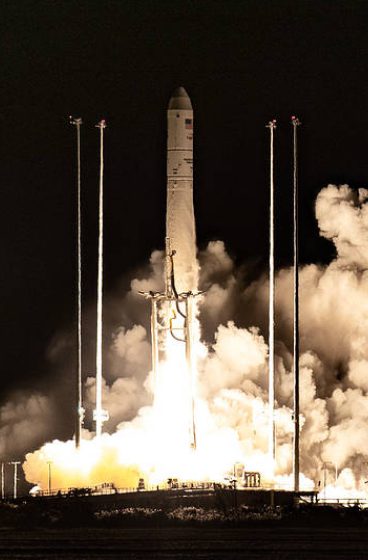
    The SpaceX Falcon 9 rocket carrying the Dragon capsule soars upward after lifting off from Launch Complex 39A at NASA’s Kennedy Space Center in Florida on July 14, 2022, on the company’s 25th Commercial Resupply Services mission for the agency to the International Space Station. Liftoff was at 8:44 p.m. EDT. Dragon will deliver more than 5,800 pounds of cargo, including a variety of NASA investigations, to the space station. The spacecraft is expected to spend about a month attached to the orbiting outpost before it returns to Earth with research and return cargo, splashing down off the coast of Florida.
    NASA/Kim Shiflett

    Editor’s note: This release was updated on Nov. 1, to reflect a change in the docking time for NASA’s SpaceX CRS-29 mission.

    NASA and SpaceX are targeting 9:16 p.m. EST Tuesday, Nov. 7, to launch the company’s 29th commercial resupply services mission to the International Space Station from Launch Complex 39A at the agency’s Kennedy Space Center in Florida.

    Live launch coverage will air on NASA Television, the NASA app, YouTube, and on the agency’s website, with prelaunch events starting Monday, Nov. 6. Learn how to stream NASA TV through a variety of platforms.

    SpaceX’s Dragon spacecraft will deliver new science investigations, food, supplies, and equipment to the international crew, including NASA’s AWE (Atmospheric Waves Experiment), which studies atmospheric gravity waves to understand the flow of energy through Earth’s upper atmosphere and space.

    The spacecraft also will deliver NASA’s ILLUMA-T (Integrated Laser Communications Relay Demonstration Low-Earth-Orbit User Modem and Amplifier Terminal), which aims to test high data rate laser communications from the space station to Earth via the agency’s LCRD (Laser Communications Relay Demonstration). Together, ILLUMA-T and LCRD will complete NASA’s first two-way, end-to-end laser communications relay system.

    Arrival to the station is planned for 12:15 p.m., Thursday, Nov. 9. The SpaceX Dragon spacecraft will dock autonomously to the forward-facing port of the station’s Harmony module.

    The spacecraft is expected to spend about a month attached to the orbital outpost before it returns to Earth with research and return cargo, splashing down off the coast of Florida.

    The deadline has passed for media accreditation for in-person coverage of this launch. The agency’s media accreditation policy is available online. More information about media accreditation is available by emailing: ksc-media-accreditat@mail.nasa.gov.

    Full coverage of this mission is as follows (all times Eastern and subject to change based on operations) Follow the International Space Station blog for updates.

    Monday, Nov. 6

    7:30 p.m. – Prelaunch media teleconference (no earlier than one hour after completion of the Launch Readiness Review) with the following participants:

    • Dana Weigel, deputy program manager, International Space Station Program
    • Meghan Everett, deputy chief scientist, International Space Station Program Research Office
    • Sarah Walker, director, Dragon mission management, SpaceX
    • Melody Lovin, launch weather officer, Cape Canaveral Space Force Station’s 45th Weather Squadron

    Media may ask questions during the media teleconference by phone only. For the dial-in number and passcode, please contact the Kennedy newsroom no later than 5 p.m. EST Monday, Nov. 6, at: ksc-newsroom@mail.nasa.gov

    Tuesday, Nov. 7

    8:45 p.m. – NASA TV launch commentary begins

    9:16 p.m. – Launch

    Thursday, Nov. 9

    10:30 a.m. – NASA TV coverage begins for Dragon docking to the space station

    12:15 p.m. – Docking

    Coverage is subject to change based on real-time operational activities. Follow the International Space Station blog for updates.

    NASA Television launch coverage

    Live coverage of the launch on NASA Television will begin at 8:45 p.m., Tuesday, Nov. 7. For downlink information, schedules, and links to streaming video, visit:

    https://www.nasa.gov/nasatv

    Audio only of the news conferences and launch coverage will be carried on the NASA “V” circuits, which may be accessed by dialing 321-867-1220, -1240, or -7135. On launch day, the full mission broadcast can be heard on -1220 and -1240, while the countdown net only can be heard on -7135 beginning approximately one hour before the mission broadcast begins.

    On launch day, live coverage of the launch without NASA Television commentary will be carried on the NASA Television media channel.

    NASA website launch coverage

    Launch day coverage of the mission will be available on the NASA website. Coverage will include live streaming and blog updates beginning no earlier than 8:45 p.m., Tuesday, Nov. 7, as the countdown milestones occur. On-demand streaming video and photos of the launch will be available shortly after liftoff. For questions about countdown coverage, contact the NASA Kennedy newsroom at 321-867-2468. Follow countdown coverage on our launch blog for updates.

    Attend launch virtually

    Members of the public can register to attend this launch virtually. Registrants will receive mission updates and activities by email. NASA’s virtual guest program for this mission also includes curated launch resources, notifications about related opportunities, and a virtual guest passport stamp following a successful launch.

    Watch, engage on social media

    Let people know you’re following the mission on X, Facebook, and Instagram by using the hashtags #Dragon and #CRS29. You can also stay connected by following and tagging these accounts:

    X: @NASA, @NASAKennedy, @NASASocial, @Space_Station, ISS_Research, @ISS National Lab

    Facebook: NASA, NASAKennedy, ISS, ISS National Lab

    Instagram: @NASA, @NASAKennedy, @ISS, @ISSNationalLab

    Para obtener información sobre cobertura en español en el Centro Espacial Kennedy o si desea solicitar entrevistas en español, comuníquese con Antonia Jaramillo o Messod Bendayan a: antonia.jaramillobotero@nasa.gov o messod.c.bendayan@nasa.gov.

    Learn more about NASA’s SpaceX commercial resupply services missions at:

    https://www.nasa.gov/spacex

    -end-

    Julian Coltre / Joshua Finch
    Headquarters, Washington
    202-358-1100
    julian.n.coltre@nasa.gov / joshua.a.finch@nasa.gov

    Stephanie Plucinsky / Steven Siceloff
    Kennedy Space Center, Florida
    321-876-2468
    stephanie.n.plucinsky@nasa.gov / steven.p.siceloff@nasa.gov

    Sandra Jones
    Johnson Space Center, Houston
    281-483-5111
    sandra.p.jones@nasa.gov

  • 2023 Ozone Hole Ranks 16th Largest, NASA and NOAA Researchers Find

    The 2023 Antarctic ozone hole reached its maximum size at 10 million square miles, or 26 million square kilometers, on Sept. 21, ranking as the 16th largest since 1979.
    This map shows the size and shape of the ozone hole over the South Pole on September 21, 2023, the day of its maximum extent, as calculated by the NASA Ozone Watch team. Moderate ozone losses (orange) are visible amid widespread areas of more potent ozone losses (red).
    NASA Earth Observatory

    Editor’s note: This article has been updated to clarify the ranking of the 2023 ozone hole.  It is the 12th largest single-day hole on record, and the 16th largest when averaged from Sept 7 to Oct 13.

    The 2023 Antarctic ozone hole reached its maximum size on Sept. 21, according to annual satellite and balloon-based measurements made by NASA and NOAA. At 10 million square miles, or 26 million square kilometers, the hole ranked as the 12th largest single-day ozone hole since 1979.

    During the peak of the ozone depletion season from Sept. 7 to Oct. 13, the hole this year averaged 8.9 million square miles (23.1 million square kilometers), approximately the size of North America, making it the 16th largest over this period. 

    “It’s a very modest ozone hole,” said Paul Newman, leader of NASA’s ozone research team and chief scientist for Earth sciences at NASA’s Goddard Space Flight Center in Greenbelt, Maryland. “Declining levels of human-produced chlorine compounds, along with help from active Antarctic stratospheric weather slightly improved ozone levels this year.”

    NOAA scientists launch a weather balloon carrying an ozonesonde at the South Pole on Oct. 1, 2023.
    NOAA scientists launch a weather balloon carrying an ozonesonde at the South Pole on Oct. 1, 2023.
    Marc Jaquart/IceCube

    The ozone layer acts like Earth’s natural sunscreen, as this portion of the stratosphere shields our planet from the Sun’s harmful ultraviolet radiation. A thinning ozone layer means less protection from UV rays, which can cause sunburns, cataracts, and skin cancer in humans.

    Every September, the ozone layer thins to form an “ozone hole” above the Antarctic continent. The hole isn’t a complete void of ozone; scientists use the term “ozone hole” as a metaphor for the area in which ozone concentrations above Antarctica drop well below the historical threshold of 220 Dobson Units. Scientists first reported evidence of ozone depletion in 1985 and have tracked Antarctic ozone levels every year since 1979.

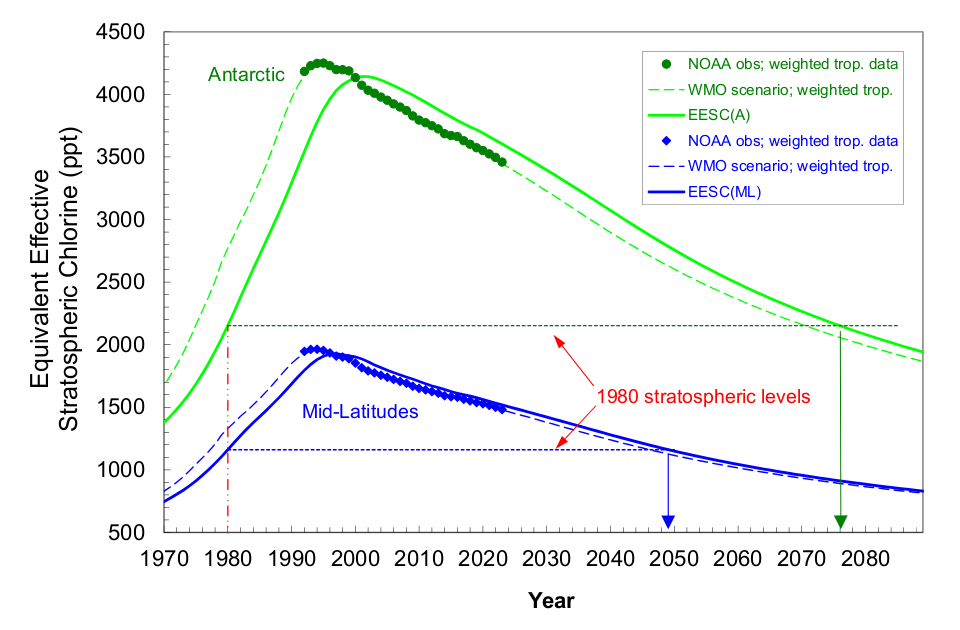
    Antarctic ozone depletion occurs when human-made chemicals containing chlorine and bromine first rise into the stratosphere. These chemicals are broken down and release their chlorine and bromine to initiate chemical reactions that destroy ozone molecules. The ozone-depleting chemicals, including chlorofluorocarbons (CFCs), were once widely used in aerosol sprays, foams, air conditioners, fire suppressants, and refrigerators. CFCs, the main ozone-depleting gases, have atmospheric lifetimes of 50 to over 100 years.

    The 1987 Montreal Protocol and subsequent amendments banned the production of CFCs and other ozone-destroying chemicals worldwide by 2010. The resulting reduction of emissions has led to a decline in ozone-destroying chemicals in the atmosphere and signs of stratospheric ozone recovery.

    NASA and NOAA researchers monitor the ozone layer over the pole and globally using instruments aboard NASA’s Aura, NOAA-NASA Suomi NPP, and NOAA-20 satellites. Aura’s Microwave Limb Sounder also estimates levels of ozone-destroying chlorine.

    Scientists also track the average amount of depletion by measuring the concentration of ozone inside the hole. At NOAA’s South Pole Baseline Atmospheric Observatory, scientists measure the layer’s thickness by releasing weather balloons carrying ozonesondes and by making ground-based measurements with a Dobson spectrophotometer.

    NOAA’s measurements showed a low value of 111 Dobson units (DU) over the South Pole on Oct 3. NASA’s measurements, averaged over a wider area, recorded a low of 99 DUs on the same date. In 1979, the average concentration above Antarctica was 225 DU.

    Credit: NASA’s Goddard Space Flight Center/ Kathleen Gaeta

    “Although the total column ozone is never zero, in most years, we will typically see zero ozone at some altitudes within the stratosphere over the South Pole,” said NOAA research chemist Bryan Johnson, project leader for the Global Monitoring Laboratory’s ozonesonde group. “This year, we observed about 95% depletion where we often see near 100% loss of ozone within the stratosphere.”

    The Hunga Tonga-Hunga Ha’apai volcano — which violently erupted in January 2022 and blasted an enormous plume of water vapor into the stratosphere – likely contributed to this year’s ozone depletion. That water vapor likely enhanced ozone-depletion reactions over the Antarctic early in the season.

    “If Hunga Tonga hadn’t gone off, the ozone hole would likely be smaller this year,” Newman said. “We know the eruption got into the Antarctic stratosphere, but we cannot yet quantify its ozone hole impact.”

    View the latest status of the ozone layer over the Antarctic with NASA’s ozone watch.

    ​​Media Contact:
    Jacob Richmond
    NASA’s Goddard Space Flight Center
    jacob.richmond@nasa.gov

  • NASA’s Sandra Irish Wins 2023 Society of Women Engineers Award

    3 min read

    NASA’s Sandra Irish Wins 2023 Society of Women Engineers Award

    Sandra Irish, mechanical systems lead structures engineer for NASA’s James Webb Space Telescope, has been selected to receive the Society of Women Engineers (SWE) Resnik Challenger Medal Award for her visionary contributions to the development, testing, transport, and launch of NASA’s premier space telescope since 2006. The medal was awarded during the World’s Largest Conference for Women in Engineering and Technology or WE23, which took place Oct. 26-28 in Los Angeles.

    Headshot of Sandra Irish
    Sandra Irish, lead structures engineer of NASA’s James Webb Space Telescope, was selected to receive the 2023 Society of Women Engineers Resnick Challenger Medal Award.
    NASA

    As an engineer at NASA’s Goddard Space Flight Center in Greenbelt, Maryland, for over 40 years, Irish’s mechanical systems expertise has helped to ensure the successful operation of many NASA programs including the Webb telescope.

    As Webb’s lead structures engineer, Irish led a group of 12 engineers that performed meticulous analysis and testing which helped confirm that the observatory’s mechanical design was fit to survive the rigors of spaceflight and on-orbit operations. While Irish’s primary focus was on preparing the telescope for a long life of service in space, she was also intimately involved in safely transporting the telescope to various locations around the United States for testing and assembly, and ultimately to its final destination where it launched from Europe’s Spaceport located near Kourou, French Guiana. Her steadfast dedication and expansive mechanical systems knowledge were key factors in the success of the notedly complex Webb mission. In addition to performing her duties on Webb, she served, and still actively serves, as the group lead for NASA Goddard’s mechanical systems analysis and simulation branch.

    Sandra Irish stands in from of a cleanroom window with the James Webb Space Telescope visible in the cleanroom shown in the background.
    Sandra Irish, lead structures engineer for NASA’s James Webb Space Telescope, stands in front of the nearly fully tested observatory she dedicated a significant part of her career to working on, just prior to its shipment to the launch site.
    Northrop Grumman

    “I am honored to be this year’s recipient of SWE’s Resnik Challenger Medal Award for my role in Webb,” said Irish. “For 16 years of my engineering career at NASA, I worked on designing, building, testing, and delivering the most amazing telescope that NASA has ever launched into space. It was a joy to lead Webb’s structures team of such dedicated and talented engineers. Each day we tackled challenging design and test problems together, which resulted in a telescope that is successfully operating a million miles away! I smile every time a new image or discovery is shared with the world. It was wonderful to have been a part of the Webb team!”

    About the Resnik Challenger Medal Award

    The Resnik Challenger Medal was established in 1986 to honor SWE’s Dr. Judith A. Resnik, NASA mission specialist on the Challenger space shuttle flight lost Jan. 28, 1986. It is awarded for visionary contributions to space programs to an individual who identifies as a woman with at least ten years of experience. This award acknowledges a specific engineering breakthrough or achievement that has expanded the horizons of human activities in space.

    SWE strives to advance and honor the contributions of women at all stages of their careers and recognize the successes of SWE members and individuals who enhance the engineering profession through contributions to the industry, education, and the community.

    The James Webb Space Telescope is the world’s premier space science observatory. Webb is solving mysteries in our solar system, looking beyond to distant worlds around other stars, and probing the mysterious structures and origins of our universe and our place in it. Webb is an international program led by NASA with its partners, ESA (European Space Agency) and the Canadian Space Agency.

    For more information about NASA’s Webb telescope visit: www.nasa.gov/webb

    Media Contacts

    Thaddeus Cesari
    NASA’s Goddard Space Flight Center, Greenbelt, Maryland

    Details

    Last Updated

    Nov 01, 2023

    Editor

    Marty McCoy

  • JPL Engineers Put Their Skills to the Test With Halloween Pumpkins

    3 min read

    JPL Engineers Put Their Skills to the Test With Halloween Pumpkins

    Pumpkin carving reaches new heights during the annual competition, where spacecraft-building engineers mix ingenuity and creativity for some spectacular results.

    When mechanical engineers accustomed to building one-of-a-kind spacecraft turn that focus to pumpkins, the results can be hauntingly good. The annual Halloween pumpkin-carving contest at NASA’s Jet Propulsion Laboratory in Southern California may be all in good fun, but to the 200 or so participants, it’s also serious business. Power tools are involved.

    JPL employee with a pumpkin carved guitar
    Pumpkins can even be turned into musical instruments during JPL’s annual pumpkin-carving contest.
    Credit: NASA/JPL-Caltech

    Dioramas can incorporate flying-saucer gourds, guitar-strumming pumpkins, and squashes that bear a striking resemblance to celebrities or famous deep space missions. Participants carve them on their breaks – 60 minutes of frantic sawing and drilling that sends vegetable detritus flying on a patio at JPL. (This year, one team had a minute-by-minute spreadsheet to make sure they stayed on schedule.)

    Carving complete, engineers race into two conference rooms in a nearby building to install the pumpkins into displays of up to 4 feet by 4 feet square. Non-pumpkin materials – motorized parts, lights, often elaborate props, and painted backdrops – can be prepared beforehand.

    “It’s not really a pumpkin-carving contest in the traditional sense. It’s a pumpkin art installation event with very few rules,” said Peter Waydo, who manages JPL’s spacecraft mechanical engineering section and emcees the carving. He’s been participating since the event began in 2011. “This is something everybody looks forward to every year – it just lets their creative juices flow completely unrestricted from the rules and processes we’re normally bound by.”

    For the 2023 event, more than two dozen teams produced displays. They ranged from a Barbenheimer-themed “atomic makeover” featuring a mirrored disco-ball pumpkin to a space octopus emerging from a Jupiter-colored pumpkin to greet NASA’s Europa Clipper spacecraft, and there were references to Taylor Swift, “Dune,” and the agency’s James Webb Space Telescope. All of the creations were on display for fellow engineers, scientists, technicians, and other JPL employees to admire.

    Of course, it wouldn’t be a competition without winners. A panel of judges named the year’s top six, with three from each of the two sections of engineers that participate. A display re-creating favorite items from JPL’s museum and an interactive Indiana Jones-themed display both won first. Second went to the Deep Squash Network – a spoof on NASA’s Deep Space Network, which enables spacecraft to communicate with Earth – and to a creation involving a descendent of NASA’s Ingenuity Mars Helicopter on the fictional planet Arrakis. The two third-place winners were an eyeball-pumpkin that resembled Las Vegas’ Sphere and the Barbenheimer display.

    The event comes on a special day for the lab, which, founded Oct. 31, 1936, was celebrating its 87th birthday.

    Additional photos from the pumpkin competition are available on JPL’s website; video is available on JPL’s Vimeo account.

    Caltech in Pasadena, California, manages JPL for NASA.

    News Media Contact

    Melissa Pamer
    Jet Propulsion Laboratory, Pasadena, Calif.
    626-314-4928
    melissa.pamer@jpl.nasa.gov

    2023-158

    Details

    Last Updated

    Oct 31, 2023

  • Previous NASA Awards for In Space Production Applications

    Astronaut Kayla Barron works on a space agriculture study
    NASA astronaut Kayla Barron works inside the Life Science Glovebox conducting botany research.
    NASA

    As of spring 2023, NASA has invested greater than $60M in more than twenty In Space Production Applications (InSPA) awards to U.S. entities seeking to demonstrate the production of advanced materials and products on the International Space Station.  These InSPA awards help the selected companies raise the technological readiness level of their products and move them to market, propelling U.S. industry toward the development of a sustainable, scalable, and profitable non-NASA demand for services and products manufactured in the microgravity environment of low-Earth orbit for use on Earth.

    Advanced Materials

    Flawless Photonics – Fabrication of Flawless Glass

    Contact: Dr. Michael Vestel
    Flawless Photonics of Los Altos Hills, California, in partnership with the University of Adelaide, Axiom Space, and Visioneering Space has been selected for their proposal to develop specialized glass manufacturing hardware to process Heavy-Metal Fluoride Glasses (HMFG) in microgravity. HMFG glasses are used in the terrestrial manufacturing of exotic optical fibers and other optics applications. Without convective forces present in 1g, HMFG made in microgravity are expected to achieve the ideal amorphous microstructure during synthesis, eliminating light scattering defects that limit lasing power and transmission over long fiber lengths.

    Apsidal – Intelligent Glass Optics

    Contact: Dr. Amrit De
    Apsidal LLC. of Los Angeles, California, is developing the IGO module to process various types of complex glasses in space from which optical fibers, fiber lasers, magnetic fibers, super-continuum sources, capillary optics and adiabatic tapers can be drawn. One of the key innovations is a custom Laser Doppler Sensor for real-time in-situ analysis and feedback control of the manufacturing process. Additionally, this technology is Artificial Intelligence (AI) assisted to be adaptive and to optimize production in a low Earth orbit (LEO) environment. The microgravity environment of space is needed as gravity-induced material convection and sedimentation in complex glasses on Earth subsequently leads to unwanted crystallization, thus creating defects which reduce performance. Market areas for products from this module include specialty fibers for low-loss and high bandwidth communications, high-power fiber-amplifiers, IR counter measures, supercontinuum sources, medical applications, remote sensing, X-ray optics, and laser processing.

    Fiber Optic Manufacturing in Space – Space Fibers

    Contact: Dr. Dmitry Starodubov
    FOMS Inc of San Diego, California, has developed a facility-class instrument for fiber fabrication in the microgravity environment to improve the quality of specialty optical fibers with the promise of up to 100x reduction in insertion loss due to the suppression of crystallization and phase separation. Two previous iterations of the facility have flown to the space station, with the third generation scheduled to launch on the 25th SpaceX cargo resupply services mission in May 2022.

    Mercury Systems Torrance – Fiber Optic Production

    Contact: Eric Rucker
    Mercury Systems of Torrance, California, has developed a facility-class instrument for fiber fabrication in the microgravity environment to improve the quality of specialty optical fibers with the promise of up to two orders of magnitude reduction in insertion loss compared to traditional SiO2 fibers due to the suppression of crystallization and sedimentation. The first generation of the facility has flown to the space station producing over 90m of ZBLAN optical fiber from a fluorinated exotic glass preform composed of Zirconium, Barium, Lanthanum, Aluminum, and Sodium (ZrF4-BaF2-LaF3-AlF3-NaF). The second-generation FOP-2 launches on SpaceX CRS-25 in May 2022 using a nitrogen purge previously demonstrated in reduced gravity on a parabolic flight.

    Redwire/Made In Space – Turbine Ceramic Manufacturing Module

    Contact: Justin Kugler
    Made In Space of Jacksonville, Florida, a Redwire company, is developing the TCMM to provide proof-of-principal for single-piece ceramic turbine blisk (blade + disk) manufacturing in microgravity for terrestrial use. Launched in October 2020 on Northrop Grumman’s CRS-14 mission, TCMM successfully demonstrated ceramic additive manufacturing in space for the first time in history. TCMM was also the first demonstration of stereolithography ceramic fabrication in space. The project focuses on advanced materials engineering ultimately leading to reductions in part mass, residual stress, and fatigue. Strength improvements of even 1-2 percent, as a result of being manufactured in microgravity, can yield years to decades of superior service life. Market applications include high performance turbines, nuclear plants, or internal combustion engines.

    Redwire/Made In Space – Turbine Superalloy Casting Module

    Made In Space of Jacksonville, Florida, a Redwire company, is developing the TSCM to provide proof of principle for polycrystal superalloy part manufacturing in microgravity for terrestrial use. Superalloys thermally processed in microgravity could have improved microstructure and mechanical properties over superalloys processed on Earth. This work expands utilization of the ISS National Lab into new commercial product areas not previously investigated.

    Delivered to space station on SpaceX CRS-24 in December 2021, TSCM investigates potential improvements in superalloy microstructure by heat treating in microgravity. Market applications include turbine engines in industries such as aerospace and power generation.

    Redwire/Techshot – Pharmaceutical In-space Laboratory 

    Contact: Rachel Ormsby
    Redwire Corporation Inc. of Greenville, Indiana, has been selected for its proposal to produce small, uniform crystals as stable seed batches for pharmaceutical and institutional research customers seeking improvements/refinements in product purification, formulation and/or delivery using crystalline formulations. Their Pharmaceutical In-space Laboratory Bio-crystal Optimization Xperiment (PIL-BOX) Dynamic Microscopy Cassette (DMC) will be capable of testing multiple crystallization conditions and providing samples to be returned to Earth for analysis. When grown in microgravity, crystals are produced more uniformly and have very low size coefficients of variation thereby allowing a more stable crystal growth, high concentration, and low viscosity parenteral formulation. The proposed innovation will provide manufacturing services to companies, institutions, and agencies pursuing uniform crystallization research.

    United Semiconductors – Semimetal-Semiconductor Composite Bulk Crystals

    Contact: Dr. Dutta
    United Semiconductors of Los Alamitos, California, has been selected for their proposal to produce semimetal-semiconductor composite bulk crystals commonly used in electromagnetic sensors for solving challenges in the energy, high performance computing and national security sectors. Together with teammates Axiom Space of Houston and Redwire of Greenville, Indiana, United Semiconductors intends to validate the scaling and efficacy of producing larger semimetal-semiconductor composite crystals under microgravity conditions with perfectly aligned and continuous semimetal wires embedded across the semiconductor matrix. If successful at eliminating defects found in those manufactured with terrestrial materials, United Semiconductors will have developed a processing technology for creating device-ready wafers from space-grown crystals.

    image of crystal growth in a semiconductor composite wafer
    Optical Micrograph depicting the expected morphology of Semimetal-Semiconductor Composite (SSC) wafers to be extracted from space grown bulk crystals. The continuous semimetal needles embedded in semiconductor matrix will provide high yield of high-performance electromagnetic sensors. Currently this desirable morphology is seen only in a small fraction of the terrestrial grown bulk crystals. Space grown bulk crystals is anticipated to provide a significant volume of the desirable morphology.
    United Semiconductors LLC
    image of crystal growth in a semiconductor composite wafer
    Optical Micrograph depicting the morphology of Semimetal-Semiconductor Composite (SSC) wafers extracted from terrestrial grown bulk crystals. Discontinuous semimetal needles embedded in semiconductor matrix leads to poor yield of high-performance electromagnetic sensors.
    United Semiconductors LLC

    Redwire/Made In Space – Industrial Crystallization Facility

    Contact: Justin Kugler
    Made In Space of Jacksonville, Florida, a Redwire company, is developing the ICF to provide proof-of-principle for diffusion-based crystallization methods to produce high-quality optical crystals in microgravity relevant for terrestrial use. ICF launched to the International Space Station on Northrop Grumman’s CRS-15 on February 20, 2021. It was the first facility to grow inorganic potassium dihydrogen phosphate (KDP) crystals aboard space station, offering important insight into microgravity-enabled growth processes for industrial crystals, which could yield opportunities for commercial production on-orbit. Market applications include ultra-fast optical switches, optical waveguides, optical circuit lithography, high-efficiency ultraviolet light production, and terahertz wave sensors. 

    Tissue Engineering & Biomanufacturing

    LambdaVision/Space Tango –Retinal Implant

    Contact: Alain Berinstain
    Space Tango of Lexington, Kentucky, and its partner, LambdaVision of Farmington, Connecticut, are developing a system to manufacture protein-based retinal implants, or artificial retinas, in microgravity. The market for this work is the millions of patients suffering from retinal degenerative diseases, including retinitis pigmentosa (RP) and age-related macular degeneration (AMD), a leading cause of blindness for adults over 55 years old. This effort builds on a validation flight completed in late 2018 that demonstrated the proof of concept for generating multilayered protein-based thin films in space using a miniaturized layer-by-layer manufacturing device. This project will further mature the manufacturing system, producing protein-based artificial retinas in space that would be returned to Earth for preclinical evaluation of the technology. This work will establish the necessary regulatory requirements for producing biomedical products in space station, including current Good Manufacturing Practices (cGMP). The microgravity environment of space hinders convection and sedimentation in the manufacturing process, enabling more uniform layers, improved stability and higher quality thin films than can be produced on Earth. The team successfully produced 200 layers of protein on their most recent flight on SpaceX Crew-4.

    diagram of a human eye and an artificial retina
    Using greater uniformity and better film deposition in microgravity to produce 100 layers of precisely aligned, precisely structured layers of bacterial rhodopsin crystals (vision protein) sandwiched between 100 layers of precisely deposited composite material with sufficient quality to enable an implantable artificial retina to FDA approval.
    LambdaVision

    Redwire/Made In Space – Manufacturing of Semiconductors and Thin-film Integrated Coatings (MSTIC)

    Contact: Justin Kugler
    Made In Space of Jacksonville, Florida, a Redwire company, is developing the MSTIC facility as an autonomous, high throughput manufacturing capability for production of high quality, lower cost semiconductor chips at a rapid rate. Terrestrial semiconductor chip production suffers from the impacts of convection and sedimentation in the manufacturing process. Fabricating in microgravity is expected to reduce the number of gravity-induced defects, resulting in more usable chips per wafer. Market applications include semiconductor supply chains for telecommunications and energy industries.

    Auxilium Biotechnologies/Space Tango – Drug Delivery Medical Devices

    Contact: Dr. Jacob Koffler
    Auxilium Biotechnologies with Space Tango has been selected for its proposal to develop a second-generation drug-delivery medical device to more effectively treat people who have sustained traumatic peripheral nerve injury. Auxilium’s Gen 1.0 NeuroSpan Bridge is a biomimetic nerve regeneration device that guides and accelerates nerve regeneration, eliminating the need for a patient to sacrifice a nerve in the leg to repair a nerve in the arm or face. Auxilium will use its expertise in fast, high-resolution 3D-printing to adapt its proprietary platform to a Gen 2.0 3D-print device in microgravity by adding novel drug delivery nanoparticles with the potential to substantially accelerate regeneration and improve functional outcomes for people on Earth.

    Lawrence Livermore National Lab/Space Tango – VAM Organ Production

    Contact: Dr. Maxim Shusteff
    Lawrence Livermore National Laboratory, located in Livermore, California, in partnership with Space Tango, has been selected for their proposal to adapt their terrestrial volumetric 3D bioprinting device for use in microgravity to demonstrate production of artificial cartilage tissue in space. The Volumetric Additive Manufacturing (VAM) technology is a revolutionary, ultra-rapid 3D printing method that solidifies a complete 3D structure from a photosensitive liquid resin in minutes. Because of the absence of settling and gravity-driven buoyancy and convective flows in the prepolymer, the cartilage tissues manufactured and matured in microgravity are expected to have superior structural, organizational, and mechanical properties suitable for use in long-term tissue repair and replacement.

    University of Connecticut, STORRS/Axiom – Biomimetic Fabrication of Multifunctional DNA-inspired Nanomaterials

    Contact: Dr. Yupeng Chen
    The University of Connecticut, out of Storrs, Connecticut, in partnership with Eascra Biotech of Boston, Massachusetts and Axiom Space of Houston has been selected for their proposed biomimetic fabrication of multifunctional nanomaterials, a cutting-edge breakthrough in biomedicine that can benefit from microgravity in space to accomplish controlled self-assembly of DNA-inspired Janus base nanomaterials (JBNs). These JBNs will be used as effective, safe and stable delivery vehicles for RNA therapeutics and vaccines, as well as first-in-kind injectable scaffolds for regenerative medicine. By leveraging the benefits of microgravity, the UConn/Eascra team expects to mature in-space production of different types of JBNs with more orderly structures and higher homogeneity over what is possible using terrestrial materials, improving efficacy for mRNA therapeutics and structural integrity for cartilage tissue repair.

    diagram of mRNA therapeutics manufacturing process
    In-space manufacturing of DNA-inspired Janus base nanomaterials for delivery of mRNA therapeutics and vaccines, and tissue repair and regeneration.
    Dr. Yupeng Chenu

    BioServe Space Technologies with University of Colorado – Expansion of Hematopoietic Stem Cells

    Contact: Dr. Louis Stodieck
    BioServe Space Technologies and The University of Colorado of Boulder, Colorado, in collaboration with the Mayo Clinic, ClinImmune Cell and Gene Therapy (University of Colorado Anschutz Medical Campus), RheumaGen, and with support from Sierra Space has been selected for their proposal to develop a specialized bioreactor that will produce large populations of Hematopoietic Stem Cells (HSCs) in microgravity to treat serious medical conditions including blood cancers (leukemias, lymphomas, multiple myeloma), blood disorders, severe immune diseases, and certain autoimmune diseases, such as rheumatoid arthritis. Expansion of HSCs in microgravity is expected to result in greater stem cell expansion with less cell differentiation than is seen in 1g. If successful, the technology may enable safe and effective cell therapy transplantation, especially in children and younger adults, where long-term bone marrow cell repopulation is critical to the patient’s lifetime health.

    image of an astronaut working with an experiment
    Astronaut Thomas Pesquet working in the Space Automated Bioproduct Laboratory (SABL). This image shows two SABL units, one open and one closed. SABL will be used for growing and expanding BioServe’s stem cells on board the ISS.
    NASA

    Cedars Sinai Regenerative Medicine Institute/Axiom – Stem Cell Therapy

    Contact: Dr. Clive Svendsen
    Cedars-Sinai Regenerative Medicine Institute, located in Los Angeles in partnership with Axiom Space of Houston has been selected for proposing to use cutting-edge methods related to the production and differentiation of induced pluripotent stem cells (iPSCs) on the International Space Station. Cedars-Sinai will explore in-space production of stem cells into heart, brain, and blood tissues in support of regenerative medicine uses on Earth. While stem cells and stem cell-derived tissues hold great promise for use in research and as clinical-grade therapeutic agents, safe and efficient expansion of stem cells and their derivatives continues to be a major challenge on Earth. Generating, expanding, and differentiating cells at scale in the microgravity environment of space with sufficient yields of a constant therapeutic cell product that meets FDA biologics requirements may be the answer to overcome those challenges.

    Redwire/Techshot – BioFabrication Facility

    Contact: Rich Boling
    Techshot of Greenville, Indiana, a Redwire company, is developing the BFF as a space-based 3D biomanufacturing platform capable of printing with live human cells (autologous or allogenic). The facility contains an XYZ gantry with multiple print heads and a bioreactor cassette in the X-Y plane. Without the addition of scaffolding or chemical bio-ink thickening agents, attempts to 3D print with cells on Earth only results in creating a puddle. With scaffolding and thickening agents, organ-like shapes can be printed on Earth, but they cannot function as such. BFF prints in space with low viscosity bio-inks that only contain cells and nutrients, which enable cells to remain healthy and mobile – a necessity for creating solid thick tissue. Following a weeks-long in-space conditioning phase inside a special Redwire bioreactor, the tissue constructs are strong enough to resist gravity and remain viable following their return to Earth. In 2020, Redwire manufactured test prints of a partial human meniscus aboard the International Space Station for the company’s DoD customer, the 4-Dimensional Bioprinting, Biofabrication, and Biomanufacturing, or 4D Bio3 program, based at Uniformed Services University of the Health Sciences. The program is a collaboration between the university and The Geneva Foundation, a non-profit organization that advances military medical research. A second round of printing in space for 4D Bio3 is scheduled for late 2022 after delivery of a 2nd generation printer on SpaceX CRS-26.  Redwire is planning additional bioprinting operations with the BFF, such as the Fabrication in Austere Military Environments (FAME) bioprinting program. Market applications include human tissue and organ repair or replacement.

    Redwire/Techshot – Cell Reprogramming Facility

    Contact: Rich Boling
    Techshot of Greenville, Indiana, a Redwire company, is developing the CRF to manufacture induced pluripotent stem cells (iPSCs) in orbit using adult cells, then enabling the cells to develop into many other types of cells, that can be used inside the BFF bioprinter and on Earth for regenerative medicine, especially cell therapies. The first element of the Cell Factory system – the CRF – is in development now. Market applications include cell therapies for restorative health and autologous cell sourcing for bioprinting and vascular applications.

    Cedars Sinai/Space Tango – Stem Cell Production

    Contact: Alain Berinstain
    Space Tango of Lexington, Kentucky, and its partner Cedars-Sinai of Los Angeles, California, are developing pilot-scale systems for the production in space of large batches of stem cells to be used in personalized medical treatment for a variety of diseases. The development of induced pluripotent stem cells (iPSC) for commercial personalized medicine applications is done in space because the work to date on the space station demonstrates stem cells retain their “stemness” for longer durations in microgravity, allowing a delay of differentiation that has the potential to enable larger batches of cells to be produced. The pilot-scale systems, built for the space station to serve as a basis for future commercial manufacturing systems, will incorporate regulatory strategies to support FDA clinical trial production of personalized medicine stem cell therapies on the space station. Including current Good Manufacturing Practices (cGMP) conditions, required for the production of stem cell therapies for human use in patients.

    Sanford/Space Tango – Integrated Space Stem Cell Orbiting Lab

    Contact: Alain Berinstain
    Space Tango of Lexington, Kentucky, and its partners at UC San Diego/Sanford Consortium in La Jolla, California, are working to establish a new on-orbit biomedical sector for stem cell advancement, with a fully operational self-sustaining orbital laboratory anticipated by 2025. The team is working to refine current hardware capabilities and process flows, extending the capabilities of ground-based laboratories with regular access to the space station via secured flight opportunities. Stem cells differentiate into tissue specific progenitors that can be used in microgravity to better understand aging and immune dysfunction, providing an opportunity to accelerate advances in regenerative medicine and the development of potential new therapeutic approaches. The target market for this orbital laboratory is a new approach to stem cell translational medicine.

    Wake Forest Institute of Regenerative Medicine/Axiom – Engineered Liver Tissue

    Contact: Dr. Anthony Atala

    Wake Forest Institute for Regenerative Medicine (WFIRM), located in Winston-Salem, North Carolina, has partnered with Axiom Space and BioServe Space Technologies to pursue a groundbreaking initiative. Their proposal takes advantage of the microgravity environment to develop and validate a platform that supports a ‘building block’ strategy for in-space manufacturing of vascularized and perfused liver tissue as a bridge to transplantation. This is a continuation of the NASA Centennial Vascular Tissue Challenge, where WFIRM teams won first and second place for creating metabolically active thick liver tissue that retained function for thirty days. The overarching goal is to enhance the formation of a microcapillary system within a perfusable 3D bioprinted vascularized engineered liver tissue constructs for biomanufacturing clinical-scale liver tissue constructs that allow integration into the recipient’s peripheral circulation for the treatment of liver disease. Once validated, this platform technology can produce multiple tissue construct types, including kidney and pancreas, among others. In Phase 1a, the team plans to evaluate various 3D bioprinted designs for vascularized tissue constructs to be evaluated in microgravity to identify the optimal parameters to produce liver tissue that is suitable in size to serve as a bridge to regeneration or transplantation. Phases 2 and 3 will involve biomanufacturing liver tissue constructs of the optimal design for human clinical trials and process scale-up for future commercialization.

  • NASA Kennedy Awards Operational, Institutional Support Contract

    A graphic of the NASA

    NASA has awarded the Kennedy Operational and Institutional Support (KOIS) contract to Chiricahua-Logical Joint Venture of Albuquerque, New Mexico, to provide services at the agency’s Kennedy Space Center in Florida.

    KOIS is an Indefinite-Delivery Indefinite-Quantity, Level of Effort contract that includes a one-month phase-in period beginning Nov. 1, 2023, followed by a 22-month base period and three 1-year option periods. The maximum total award value is not to exceed $20 million.

    The scope includes a broad range of operational and institutional support services including internal controls for property, logistics, American Sign Language interpreter, institutional training and development, and export control support.

    The contract covers onsite and offsite work at Kennedy, Cape Canaveral Space Force Station, and other locations authorized by the contracting officer, including other NASA Centers if the need arises.

    For more information about NASA and agency programs, visit:

    https://www.nasa.gov

    -end-

    Patti Bielling
    Kennedy Space Center, Florida
    321-501-7575
    patricia.a.bielling@nasa.gov

  • Halloween on the International Space Station

    Although no ghouls or goblins or trick-or-treaters come knocking at the International Space Station’s front hatch, crew members aboard the orbiting facility still like to get in the Halloween spirit. Whether individually or as an entire crew, they dress up in sometimes spooky, sometimes scary, but always creative costumes, often designed from materials available aboard the space station. Please enjoy the following scenes from Halloweens past even as we anticipate the costumes of the future.

    Wearing a black cape, Expedition 16 NASA astronaut Clayton C. Anderson channels his inner vampire for Halloween 2007 The Expedition 21 crew shows off its costumes Expedition 21 Flight Engineer NASA astronaut Nicole P. Stott shows off her Halloween costume
    Left: Wearing a black cape, Expedition 16 NASA astronaut Clayton C. Anderson channels his inner vampire for Halloween 2007. Image credit: courtesy Clayton C. Anderson. Middle: For Halloween 2009, the Expedition 21 crew shows off its costumes. Right: Expedition 21 Flight Engineer NASA astronaut Nicole P. Stott shows off her Halloween costume.

    Italian Space Agency astronaut Luca S. Parmitano finally gets his wish to fly like Superman during Expedition 37 NASA astronaut Scott J. Kelly celebrating Halloween in 2015 during his one-year mission
    Left: Italian Space Agency astronaut Luca S. Parmitano finally gets his wish to fly like Superman during Expedition 37. Right: Who’s that behind the scary mask? None other than NASA astronaut Scott J. Kelly celebrating Halloween in 2015 during his one-year mission.

    Expedition 53 Commander NASA astronaut Randolph J. “Randy” Bresnik showing off his costume Expedition 53 Flight Engineer NASA astronaut Joseph M. Acaba wearing Halloween colors Expedition 53 European Space Agency astronaut Paolo A. Nespoli showing off his Spiderman skills
    Left: Expedition 53 Commander NASA astronaut Randolph J. “Randy” Bresnik showing off his costume. Middle: Expedition 53 Flight Engineer NASA astronaut Joseph M. Acaba wearing Halloween colors. Right: Expedition 53 European Space Agency astronaut Paolo A. Nespoli showing off his Spiderman skills.

    Expedition 57 crewmembers in their Halloween best – European Space Agency astronaut and Commander Alexander Gerst, left, and NASA astronaut Serena M. Auñón-Chancellor Members of Expedition 61, NASA astronaut Christina H. Koch, top left, European Space Agency astronaut Luca S. Parmitano, NASA astronaut Andrew R. “Drew” Morgan, and NASA astronaut Jessica U. Meir, show off their Halloween spirit in 2019
    Left: Expedition 57 crewmembers in their Halloween best – European Space Agency astronaut and Commander Alexander Gerst, left, and NASA astronaut Serena M. Auñón-Chancellor. Right: Members of Expedition 61, NASA astronaut Christina H. Koch, top left, European Space Agency astronaut Luca S. Parmitano, NASA astronaut Andrew R. “Drew” Morgan, and NASA astronaut Jessica U. Meir, show off their Halloween spirit in 2019.

    Expedition 66 crewmembers NASA astronaut R. Shane Kimbrough, left, Thomas G. Pesquet of the European Space Agency, Akihiko Hoshide of the Japan Aerospace Exploration Agency, and NASA astronaut Mark T. Vande Hei showing off their Halloween cards hallowwen on iss
    Left: Expedition 66 crewmembers NASA astronaut R. Shane Kimbrough, left, Thomas G. Pesquet of the European Space Agency, Akihiko Hoshide of the Japan Aerospace Exploration Agency, and NASA astronaut Mark T. Vande Hei showing off their Halloween cards. Right: A hand rising from the grave?

    In October 2021, Crew-3 NASA astronauts Raja J. Chari, Thomas H. Marshburn, Kayla S. Barron, and Matthias J. Maurer of the European Space Agency (ESA), had some undisclosed plans for when they reached the space station just before Halloween. However, bad weather at NASA’s Kennedy Space Center in Florida thwarted those super-secret spooky Halloween plans, delaying their launch until Nov. 11. Undeterred, Expedition 66 crewmembers who awaited them aboard the station held their own Halloween shenanigans. ESA astronaut Thomas G. Pesquet posted on social media that “Strange things were happening on ISS for Halloween. Aki rising from the dead (or is it from our observation window?),” referring to fellow crew member Akihiko Hoshide of the Japan Aerospace Exploration Agency.

    In 2022, Expedition 68 astronauts Koichi Wakata of the Japan Aerospace Exploration Agency, left, and NASA astronauts Francisco “Frank” C. Rubio, Nicole A. Mann, and Josh A. Cassada dressed as popular video game and cartoon characters, using stowage containers in their Halloween costumes and holding improvised trick-or-treat bags Expedition 70 astronauts Jasmin Moghbeli of NASA, left, Satoshi Furakawa of the Japan Aerospace Exploration Agency, NASA astronaut Loral O’Hara, and European Space Agency astronaut Andreas Mogensen celebrate Halloween 2023
    Left: In 2022, Expedition 68 astronauts Koichi Wakata of the Japan Aerospace Exploration Agency, left, and NASA astronauts Francisco “Frank” C. Rubio, Nicole A. Mann, and Josh A. Cassada dressed as popular video game and cartoon characters, using stowage containers in their Halloween costumes and holding improvised trick-or-treat bags. Right: Expedition 70 astronauts Jasmin Moghbeli of NASA, left, Satoshi Furakawa of the Japan Aerospace Exploration Agency, NASA astronaut Loral O’Hara, and European Space Agency astronaut Andreas Mogensen celebrate Halloween 2023.

    The spookiness continues…

  • InSPA Inter-Agency Collaboration Goals

    Robotic hand reaching out to touch a human's hand wearing a spacesuit glove
    High quality production photos of Robonaut (R2) in Building 14 EMI chamber and R1/EMU photos in Building 32 – Robonaut Lab. Photo Date: June 1, 2010. Location: Building 14 – EMI Chamber/Building 32 – Robonaut Lab.
    NASA / Robert Markowitz & Bill Stafford

    NASA knows it takes a village to make commercial manufacturing in space a reality. NASA is collaborating with experts from industry, academia and other U.S. Government agencies on the technologies in play with the InSPA portfolio.  By joining forces with these experts, NASA can better support its commercial partners, accelerating the transition from proof-of-concept demonstrations on the International Space Station to commercial operations in future commercial low Earth orbit (LEO) destinations. NASA’s InSPA awards help the selected companies raise the technological readiness level of their products and move them to market, propelling U.S. industry toward the development of a sustainable, scalable, and profitable non-NASA demand for services and products manufactured in the microgravity environment of LEO for use on Earth.

    NASA is recruiting agency, government and industry experts to inform NASA’s InSPA priorities, accelerate learning and increase commercialization success.

    Establishing Priorities

    We will provide input on NASA Technology Roadmaps and/or evaluate proposals to inform awards for applications that serve national needs and U.S. competitiveness. We will also participate in working group discussions.

    CHIPS and Science Act

    Concepts that support the goals of the “CHIPS and Science Act” through semiconductor manufacturing in microgravity are of special interest to NASA. Those selected for further assessment will be invited to submit full proposals. NASA is seeking funding from the CHIPS and Science Act through the National Institute of Standards and Technology (NIST) to ensure US leadership in semiconductor manufacturing in microgravity. To support this initiative, NASA’s InSPA program may grant awards that come with funding for facilities, workforce development, academic support, and program development.

    SHERPA Support

    Space Hardware Experts for Research, Production, and Applications (SHERPA) shares knowledge as subject matter experts on science, technology, manufacturing, markets, and investors. Provide support directly to principal investigators or through NASA Technical Monitors to accelerate learning.

    Specific SHERPA activities:

    • Identify new InSPA candidates important to other government agencies where gravity is impeding development.
    • Assist in prioritization and decisions on down-selects.
    • Peer review at major milestones (design reviews, science requirements, ground and in-flight testing).
    • Develop performance goals and metrics that must be met to exceed current state-of-the-art.
    • Leverage artificial intelligence and machine learning (AI/ML) and expand space databases to improve models and increase value from each flight, across the years and programs.
    • Perform independent analysis and validation of flight results.
    • Conduct outreach to industry and other government agencies for Phase 2 and 3 sponsorships.

    Points of Contact

  • NASA Implementation Strategy for In Space Production Applications

    NASA’s In Space Production Applications (InSPA) implementation strategy consists of a multi-phase award process to demonstrate proof-of-concept, advance to high production quality, and ultimately to achieve scalability on a commercial low Earth orbit (LEO) destination or platform. InSPA seeks to identify awardees who propose promising manufacturing efforts in microgravity that will invigorate markets on Earth. These InSPA awards help the selected companies raise the technological readiness level of their products and move them to market, propelling U.S. industry toward the development of a sustainable, scalable, and profitable non-NASA demand for services and products manufactured in the microgravity environment of LEO for use on Earth.

    NASA Award Process

    On an annual and ongoing basis, NASA releases two calls for white papers by U.S. entities through Special Focus Area #1 (In Space Production Applications) of the NASA Research Announcement (NRA) NNJ13ZBG001N, “Research Opportunities for International Space Station Utilization.” Those entities with the highest rated white papers are then invited to submit a full proposal. After the proposal evaluation period, NASA makes selections, and awardees sign a Firm Fixed Price contract with NASA to develop and demonstrate their concept on the ISS National Laboratory. NRA white paper and proposal submissions are required at each phase of the lifecycle.

    Access to ISS National Laboratory

    Awardees are provided access to the ISS National Laboratory and all necessary on-orbit resources: upmass, downmass, U.S. Operating Segment (USOS) crew time, data transmission, and power, including flight manifesting and increment operations planning, at no cost. Payloads are subject to review and approval by the Center for the Advancement of Science in Space (CASIS), the operator of the ISS National Laboratory.

    Award Phases

    NASA has identified three InSPA phases (reference Figure 1) to characterize technology maturation from early concept studies through financially self-sustaining LEO production technologies.

    image of flowchart showing the proposal submission process

    InSPA Phase 1

    Enable early proof-of-concept studies and/or basic flight hardware development and test through multiple demonstrations on parabolic, sub-orbital, and orbital missions on the ISS to achieve TRL of 6 and MRL of 3. Proposals should identify the improvements sought and describe the number and type of demonstration tests appropriate to achieve exit criteria for the Phase. The goals of Phase 1 (i.e., exit criteria) are:

    1. To demonstrate hardware performance and validate the scientific basis for the technology benefit in a LEO space environment. 
    2. To establish a minimum level of production control to repeatedly produce the intended product to a quality or performance level comparable to Earth-based controls or state of the art. 
    3. To refine the business case with preliminary revenue forecasts based on actual microgravity demonstrations and gain support from potential partners or investors to capture a moderate level of non-NASA investment for Phase 2.

    InSPA Phase 2

    Enable design maturation and advanced flight hardware development with additional demonstrations on ISS to achieve a TRL of 8 and MRL of 7. NASA has an expectation of some degree of cost-sharing in this phase (reference Cost Sharing guideline in section 1.2.3 of the NRA). The goals of Phase 2 (i.e., exit criteria) are:

    1. To demonstrate full control of hardware, environments, and processes to meet specific performance standards for the application.  These standards are often set by the customer and should be to a level of performance or quality within the application setting that is significantly better than possible on Earth. 
    2. To refine the business case to a level that successfully captures significant investor commitment for Phase 3.

    InSPA Phase 3

    Enable scaled flight hardware production on ISS or an alternative commercial LEO destination/platform to demonstrate commercial operations and end-to-end logistics model producing sufficient quantities to achieve a TRL of 9 and MRL of 9 and to close the business case. NASA expects a significant degree of cost-sharing by industry for a Phase 3 award (reference Cost Sharing guideline in Section 1.2.3 of the NRA). The goals of Phase 3 are:

    • Demonstrate scaling to commercial quantities and quality to support market demand, including supply chain and regulatory approvals. 
    • To establish formal agreements with U.S. LEO transportation and destination partners for transition to commercial operations. 
    • Begin transition to commercial platform(s) and achieve sustainable revenues. 
    image of diagram showing three phases of proposal submission

    Reference

    NASA Research Announcement (NRA) NNJ13ZBG001N, “Research Opportunities for International Space Station Utilization”

  • In Space Production: Applications Within Reach

    diagram showing differences of crystal growth in Earth's gravity versus microgravity
    In microgravity, crystals grow more slowly, but the molecules have time to align more perfectly on the surface of the crystal, which returns much better research outcomes.
    NASA

    After four decades of microgravity research, NASA and the ISS National Lab have identified numerous applications that are within reach for NASA’s In Space Production Applications (InSPA) portfolio. Uniform crystals, semiconductors, specialized glass and optical fibers are just a few of the many advanced materials that can benefit from production in microgravity. Artificial retinas, drug delivery medical devices, as well as the production of pluripotent stem cells and bio inks are examples of how microgravity can stimulate the medical and bioscience industries. The most promising may be the production of small molecule crystalline proteins for pharmaceutical therapies. NASA’s InSPA objective is to enable sustainable, scalable, and profitable non-NASA demand for services and products manufactured in the microgravity environment of low-Earth orbit for use on Earth.

    Applications of Special Interest

    InSPA supports the goals of the White House’s “Cancer Moonshot” by seeking new applications that will accelerate the rate of progress against cancer. These projects are of special interest and may include manufacturing of compounds or therapeutics to address oncology applications on Earth.

    InSPA also supports the CHIPS and Science Act of 2022, which provides the Department of Commerce with $50 billion for a suite of programs strengthen and revitalize the U.S. position in semiconductor research, development, and manufacturing. InSPA projects centered around semiconductor manufacturing are of special interest and can ensure United States leadership in semiconductor production. (Source: https://www.nist.gov/chips)

    InSPA awards fall into two categories, Advanced Materials and Tissue Engineering and Biomanufacturing.

    Advanced Materials

    Advanced Materials use microgravity phenomena singly and in combination to produce a growing range of new products. For example:

    • Removing sedimentation and buoyancy enables unique alloys and compositions.
    • Surface tension processes can eliminate voids and ensure continuous contact between dissimilar materials.
    • Lack of convection provides quiescent environments that can remove or minimize defects.

    Crystal Production in microgravity has numerous applications in drug development, testing, and delivery, as well as semiconductors and inorganic frameworks. For example, crystals have the following properties in microgravity:

    • They grow more slowly, enabling optical fiber manufacturing that suppresses crystallization defects.
    • They grow in a more uniform manner that can better inform and enable better quality protein-based therapeutics.
    • They grow larger and more perfect enabling exceptional quality industrial crystals and macromolecular structures.
    microscopic image of crystals grown in microgravity
    A 2x-magnification of protein crystals grown during RTPCG-1, using
    techniques to be used in RTPCG-2.
    NASA

    Thin Layer Deposition in microgravity has applications in layering for medical devices, semiconductors, and ceramic coatings. For example:

    • Absence of sedimentation and buoyancy allow surface tension effects to dominate, resulting in more uniform and atomically and molecularly precise layering for artificial retinas and other devices.

    Tissue Engineering and Biomanufacturing

    In microgravity, tissues can be formed in three dimensions without supporting architecture, and living matter adapts to microgravity through a variety of mechanisms that can be used to model cellular dysfunction, which occurs on Earth. For example:

    • Gravity constrains tissue engineering on Earth by flattening and deforming 3D tissue constructs.
    • Microgravity allows larger tissues to be constructed and used to inform medicine.
    • Growing evidence indicates that the interaction of microgravity and living systems elicits responses similar to rapid aging on Earth that can be used to accelerate disease modeling and therapeutic development.
    • Combined 3D tissue engineering with accelerated aging effects, informed by latest biotech and artificial intelligence and machine learning (AI/ML) offers new and rapidly growing knowledge, opportunities, and products for disease modeling, testing, and drug development.
  • What is In Space Production Applications?

    NASA supports In Space Production Applications (InSPA) awards to help the selected companies raise the technological readiness level of their products and move them to market, propelling U.S. industry toward the development of a sustainable, scalable, and profitable non-NASA demand for services and products in low-Earth orbit. These commercialization awards provide opportunities for NASA to reduce its future costs in LEO enabling deep-space missions farther from Earth, including the Moon and Mars. NASA is leading commercial LEO development efforts to stimulate non-NASA demand for commercially owned and operated orbital destinations from which NASA can purchase services as one of many customers. As new commercial orbital destinations become available, NASA intends to foster an orderly transition from current space station operations and research to the new commercial enterprise as laid out in NASA’s International Space Station Transition Report.

    Mission

    Ensuring U.S. leadership of in-space manufacturing in low-Earth orbit by enabling the use of the ISS National Laboratory to demonstrate the production of advanced materials and products for terrestrial markets.

    Vision

    A robust and sustainable space economy where a diverse portfolio of U.S. companies operates a broad array of commercially owned productions facilities alongside government and private astronauts living and training on the LEO Commercial Destinations that follow the space station.

    Goals

    1. Serve national interests by developing in-space production applications for Earth that strengthen U.S. technological leadership, improve national security, and create high-quality jobs, and/or  
    2. Provide benefits to humanity by developing products in LEO that significantly improve the quality of life for people on Earth, and 
    3. Enable the development of a robust economy in LEO by stimulating scalable and sustainable non-NASA utilization of future commercial LEO destinations or orbital platforms.

    For more information about InSPA, please read: In Space for Earth! – In Space Production Applications Overview White Paper and InSPA Awards Provide Funding and Expertise to Help Promising U.S. Innovators.

    For contact information and frequently asked questions, please see: NASA Points of Contact and FAQs

    Download the InSPA logo here.