Tag: planethunt

  • NASA Finds Summer 2024 Hottest to Date

    5 min read

    Preparations for Next Moonwalk Simulations Underway (and Underwater)

    This bar graph shows temperature anomalies for the months of June, July and August in 2023 and 2024. 2023 is represented in yellow, 2024 is represented in red. For each month red rises above the yellow, although the numbers are close for July. A white line spanning the top of each bar shows the range of uncertainty for the measurements.
    This bar graph shows GISTEMP summer global temperature anomalies for 2023 (shown in yellow) and 2024 (shown in red). June through August is considered meteorological summer in the Northern Hemisphere. The white lines indicate the range of estimated temperatures. The warmer-than-usual summers continue a long-term trend of warming, driven primarily by human-caused greenhouse gas emissions.
    NASA/Peter Jacobs

    The agency also shared new state-of-the-art datasets that allow scientists to track Earth’s temperature for any month and region going back to 1880 with greater certainty.

    August 2024 set a new monthly temperature record, capping Earth’s hottest summer since global records began in 1880, according to scientists at NASA’s Goddard Institute for Space Studies (GISS) in New York. The announcement comes as a new analysis upholds confidence in the agency’s nearly 145-year-old temperature record.

    June, July, and August 2024 combined were about 0.2 degrees Fahrenheit (about 0.1 degrees Celsius) warmer globally than any other summer in NASA’s record — narrowly topping the record just set in 2023. Summer of 2024 was 2.25 F (1.25 C) warmer than the average summer between 1951 and 1980, and August alone was 2.34 F (1.3 C) warmer than average. June through August is considered meteorological summer in the Northern Hemisphere.

    “Data from multiple record-keepers show that the warming of the past two years may be neck and neck, but it is well above anything seen in years prior, including strong El Niño years,” said Gavin Schmidt, director of GISS. “This is a clear indication of the ongoing human-driven warming of the climate.”

    NASA assembles its temperature record, known as the GISS Surface Temperature Analysis (GISTEMP), from surface air temperature data acquired by tens of thousands of meteorological stations, as well as sea surface temperatures from ship- and buoy-based instruments. It also includes measurements from Antarctica. Analytical methods consider the varied spacing of temperature stations around the globe and urban heating effects that could skew the calculations.

    The GISTEMP analysis calculates temperature anomalies rather than absolute temperature. A temperature anomaly shows how far the temperature has departed from the 1951 to 1980 base average.

    New assessment of temperature record

    The summer record comes as new research from scientists at the Colorado School of Mines, National Science Foundation, the National Atmospheric and Oceanic Administration (NOAA), and NASA further increases confidence in the agency’s global and regional temperature data.

    “Our goal was to actually quantify how good of a temperature estimate we’re making for any given time or place,” said lead author Nathan Lenssen, a professor at the Colorado School of Mines and project scientist at the National Center for Atmospheric Research (NCAR).

    This visualization of GISTEMP monthly temperatures with the seasonal cycle derived from the Global Modeling and Assimilation Office’s MERRA-2 model compares 2023 (in red) and 2024 (in purple), with a transparent ribbon around each indicating the confidence intervals from the new GISTEMP uncertainty calculation. The white lines show monthly temperatures from the years 1961 to 2022. June, July, and August 2024 combined were about 0.2 degrees Fahrenheit (about 0.1 degrees Celsius) warmer globally than any other summer in NASA’s record — narrowly topping the record set in 2023.
    This visualization of GISTEMP monthly temperatures with the seasonal cycle derived from the Global Modeling and Assimilation Office’s MERRA-2 model compares 2023 (in red) and 2024 (in purple), with a transparent ribbon around each indicating the confidence intervals from the new GISTEMP uncertainty calculation. The white lines show monthly temperatures from the years 1961 to 2022. June, July, and August 2024 combined were about 0.2 degrees Fahrenheit (about 0.1 degrees Celsius) warmer globally than any other summer in NASA’s record — narrowly topping the record set in 2023.
    NASA/Peter Jacobs/Katy Mersmann

    The researchers affirmed that GISTEMP is correctly capturing rising surface temperatures on our planet and that Earth’s global temperature increase since the late 19th century — summer 2024 was about 2.7 F (1.51 C) warmer than the late 1800s — cannot be explained by any uncertainty or error in the data.

    The authors built on previous work showing that NASA’s estimate of global mean temperature rise is likely accurate to within a tenth of a degree Fahrenheit in recent decades. For their latest analysis, Lenssen and colleagues examined the data for individual regions and for every month going back to 1880.  

    Estimating the unknown

    Lenssen and colleagues provided a rigorous accounting of statistical uncertainty within the GISTEMP record. Uncertainty in science is important to understand because we cannot take measurements everywhere. Knowing the strengths and limitations of observations helps scientists assess if they’re really seeing a shift or change in the world.

    The study confirmed that one of the most significant sources of uncertainty in the GISTEMP record is localized changes around meteorological stations. For example, a previously rural station may report higher temperatures as asphalt and other heat-trapping urban surfaces develop around it. Spatial gaps between stations also contribute some uncertainty in the record. GISTEMP accounts for these gaps using estimates from the closest stations.

    Previously, scientists using GISTEMP estimated historical temperatures using what’s known in statistics as a confidence interval — a range of values around a measurement, often read as a specific temperature plus or minus a few fractions of degrees. The new approach uses a method known as a statistical ensemble: a spread of the 200 most probable values. While a confidence interval represents a level of certainty around a single data point, an ensemble tries to capture the whole range of possibilities.

    The distinction between the two methods is meaningful to scientists tracking how temperatures have changed, especially where there are spatial gaps. For example: Say GISTEMP contains thermometer readings from Denver in July 1900, and a researcher needs to estimate what conditions were 100 miles away. Instead of reporting the Denver temperature plus or minus a few degrees, the researcher can analyze scores of equally probable values for southern Colorado and communicate the uncertainty in their results.

    What does this mean for recent heat rankings?

    Every year, NASA scientists use GISTEMP to provide an annual global temperature update, with 2023 ranking as the hottest year to date.

    Other researchers affirmed this finding, including NOAA and the European Union’s Copernicus Climate Change Service. These institutions employ different, independent methods to assess Earth’s temperature. Copernicus, for instance, uses an advanced computer-generated approach known as reanalysis. 

    The records remain in broad agreement but can differ in some specific findings. Copernicus determined that July 2023 was Earth’s hottest month on record, for example, while NASA found July 2024 had a narrow edge. The new ensemble analysis has now shown that the difference between the two months is smaller than the uncertainties in the data. In other words, they are effectively tied for hottest. Within the larger historical record the new ensemble estimates for summer 2024 were likely 2.52-2.86 degrees F (1.40-1.59 degrees C) warmer than the late 19th century, while 2023 was likely 2.34-2.68 degrees F (1.30-1.49 degrees C) warmer.

    Details

    Last Updated

    Sep 11, 2024

    Location
    GISS

  • Chile Flowers Bloom in Space

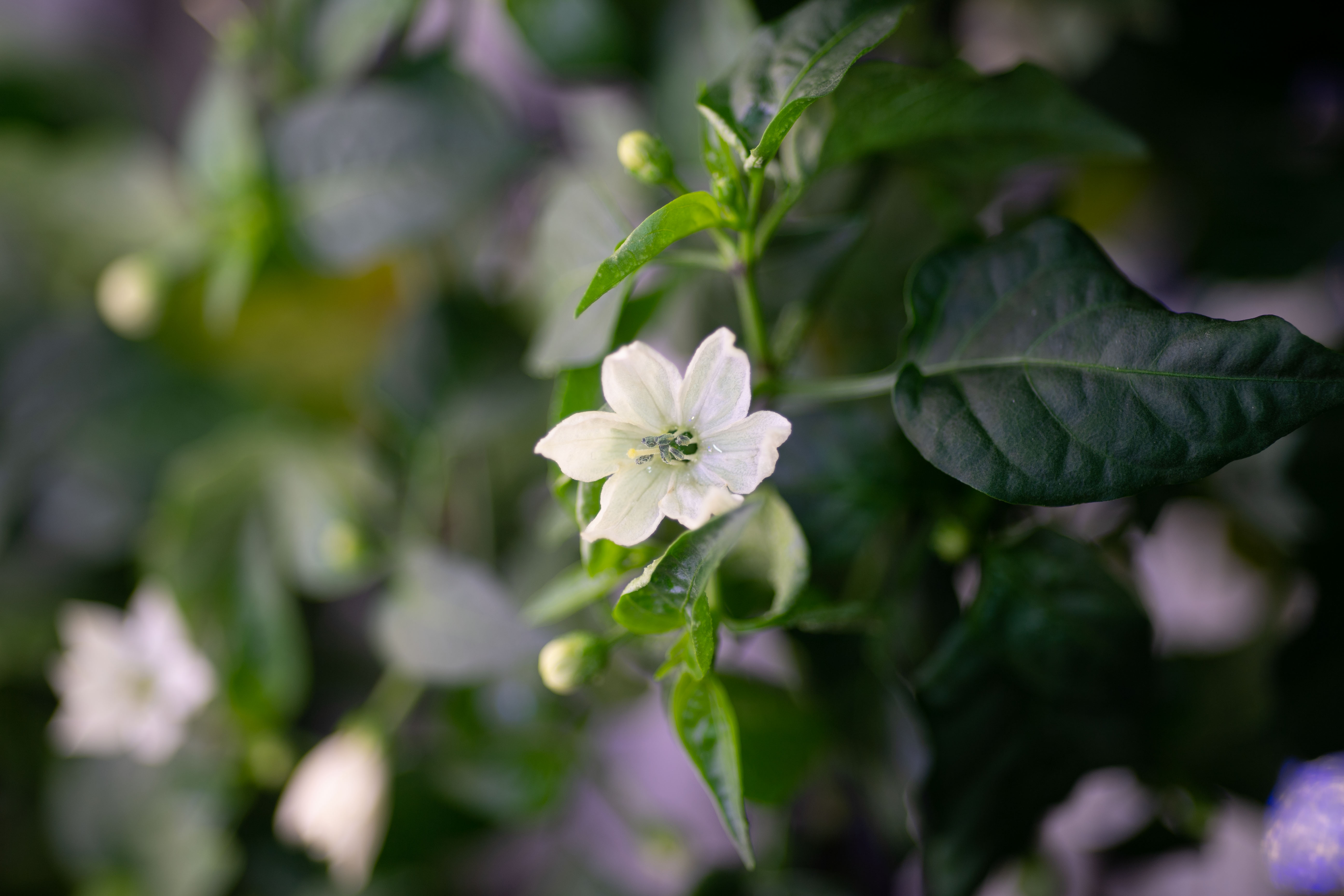
    A small flower's white petals stretch outward in the center of the image. The petals are slightly curly at the edges. There are bright and dark green leaves of varying sizes as well as flower buds around the flower. Other plants are out of focus in the background at left.
    Chile pepper plants growing in the Advanced Plant Habitat aboard the International Space Station bore fruit in the late summer and fall of 2021. Overcoming the challenges of growing fruit in microgravity is important to NASA for long-duration missions during which crew members will need good sources of Vitamin C to supplement their diets.
    NASA/Megan McArthur

    In July 2021, NASA astronauts aboard the International Space Station started growing chile peppers in the Advanced Plant Habitat, as part of the Plant Habitat-04 (PH-04) experiment. The astronauts and a team of researchers at Kennedy worked together to monitor the peppers’ growth before harvesting them. In this image from Sept. 30, 2021, chile flowers and buds can be seen.

    PH-04 was one of the longest and most challenging plant experiments attempted aboard the orbital lab. The second harvest resulted in a bumper crop: the 26 chile peppers grown broke the record for feeding the most astronauts from a crop grown in space.

    Image credit: NASA/Megan McArthur

  • Starship Super Heavy Breezes Through Wind Tunnel Testing at NASA Ames

    NASA and its industry partners continue to make progress toward Artemis III and beyond, the first crewed lunar landing missions under the agency’s Artemis campaign. SpaceX, the commercial Human Landing System (HLS) provider for Artemis III and Artemis IV, recently tested a 1.2% scale model of the Super Heavy rocket, or booster, in the transonic Unitary Plan Wind Tunnel at NASA’s Ames Research Center in California’s Silicon Valley. The Super Heavy rocket will launch the Starship human landing system to the Moon as part of Artemis.

    During the tests, the wind tunnel forced an air stream at the Super Heavy scale model at high speeds, mimicking the air resistance and flow the booster experiences during flight. The wind tunnel subjected the Super Heavy model, affixed with pressure-measuring sensors, to wind speeds ranging from Mach .7, or about 537 miles per hour, to Mach 1.4, or about 1,074 miles per hour. Mach 1 is the speed that sound waves travel, or 761 miles per hour, at sea level.

    Engineers then measured how Super Heavy model responded to the simulated flight conditions, observing its stability, aerodynamic performance, and more. Engineers used the data to update flight software for flight 3 of Super Heavy and Starship and to refine the exterior design of future versions of the booster. The testing lasted about two weeks and took place earlier in 2024.

    After Super Heavy completes its ascent and separation from Starship HLS on its journey to the Moon, SpaceX plans to have the booster return to the launch site for catch and reuse. The Starship HLS will continue on a trajectory to the Moon.

    To get to the Moon for the Artemis missions, astronauts will launch in NASA’s Orion spacecraft aboard the SLS (Space Launch System) rocket from the agency’s Kennedy Space Center in Florida. Once in lunar orbit, Orion will dock with the Starship HLS or with Gateway. Once the spacecraft are docked, the astronauts will move from Orion or Gateway to the HLS Starship, which will bring them to the surface of the Moon. After surface activities are complete, Starship will return the astronauts to Orion or Gateway waiting in lunar orbit. The astronauts will transfer to Orion for the return trip to Earth. 

    With Artemis, NASA will explore more of the Moon than ever before, learn how to live and work away from home, and prepare for future human exploration of the Red Planet. NASA’s SLS, exploration ground systems, and Orion spacecraft, along with the human landing system, next-generation spacesuits, Gateway lunar space station, and future rovers are NASA’s foundation for deep space exploration.

    For more information about Artemis, visit:

    https://www.nasa.gov/artemis

    News Media Contact

    Corinne Beckinger 
    Marshall Space Flight Center, Huntsville, Ala. 
    256.544.0034  
    corinne.m.beckinger@nasa.gov 

  • A Starry View

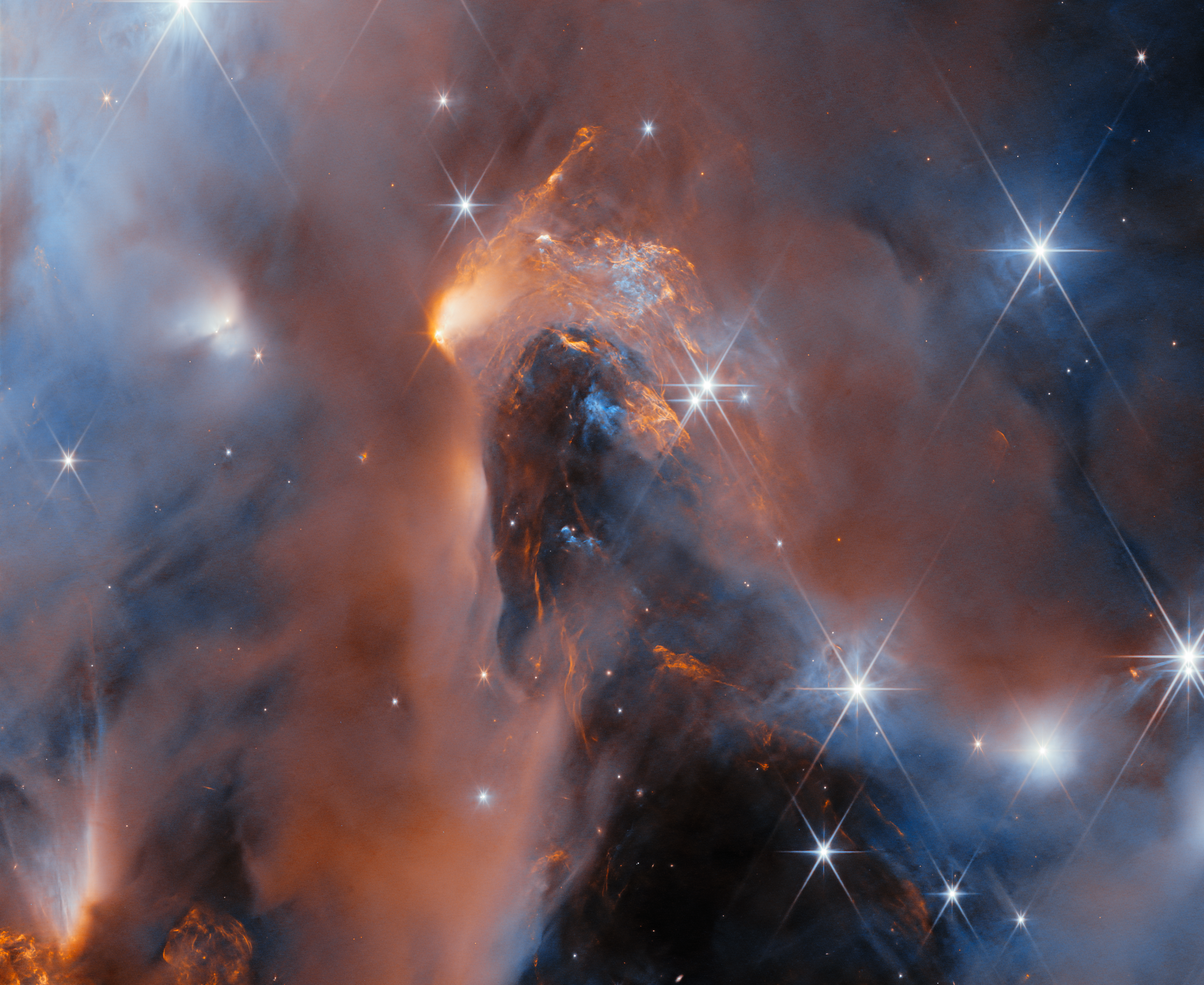
    A nebula made up of cloudy gas and dust in the form of soft and wispy clouds and, in the center, thin and highly detailed layers pressed close together. Large, bright stars surrounded by six long points of light are dotted over the image, as well as some small, point-like stars embedded in the clouds. The clouds are lit up in blue close to the stars; orange colors show clouds that glow in infrared light.
    ESA/Webb, NASA & CSA, A. Scholz, K. Muzic, A. Langeveld, R. Jayawardhana

    NASA’s James Webb Space Telescope has infrared vision that lets us peer through the dusty veil of nearby star-forming region NGC 1333. We can see planetary mass objects, newborn stars, and brown dwarfs; some of the faintest ‘stars’ in this mosaic image are in fact newly born free-floating brown dwarfs with masses comparable to those of giant planets. The images were captured as part of a Webb observation program to survey a large portion of NGC 1333. These data constitute the first deep spectroscopic survey of the young cluster.

    See Hubble’s view of the same nebula.

    Image credit: ESA/Webb, NASA & CSA, A. Scholz, K. Muzic, A. Langeveld, R. Jayawardhana

  • Voyager 1 Team Accomplishes Tricky Thruster Swap

    5 min read

    Voyager 1 Team Accomplishes Tricky Thruster Swap

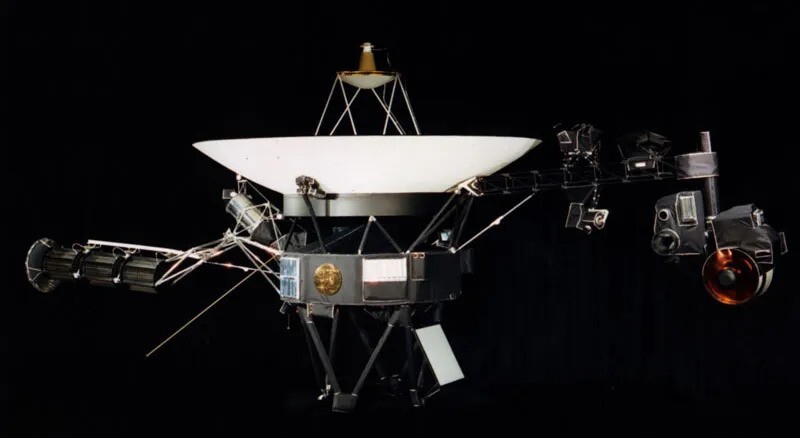
    A model of NASA’s Voyager spacecraft. The twin Voyagers have been flying since 1977 and are exploring the outer regions of our solar system.

    NASA/JPL-Caltech

    The spacecraft uses its thrusters to stay pointed at Earth, but after 47 years in space some of the fuel tubes have become clogged.

    Engineers working on NASA’s Voyager 1 probe have successfully mitigated an issue with the spacecraft’s thrusters, which keep the distant explorer pointed at Earth so that it can receive commands, send engineering data, and provide the unique science data it is gathering.

    After 47 years, a fuel tube inside the thrusters has become clogged with silicon dioxide, a byproduct that appears with age from a rubber diaphragm in the spacecraft’s fuel tank. The clogging reduces how efficiently the thrusters can generate force. After weeks of careful planning, the team switched the spacecraft to a different set of thrusters.

    The thrusters are fueled by liquid hydrazine, which is turned into gases and released in tens-of-milliseconds-long puffs to gently tilt the spacecraft’s antenna toward Earth. If the clogged thruster were healthy it would need to conduct about 40 of these short pulses per day.

    Both Voyager probes feature three sets, or branches, of thrusters: two sets of attitude propulsion thrusters and one set of trajectory correction maneuver thrusters. During the mission’s planetary flybys, both types of thrusters were used for different purposes. But as Voyager 1 travels on an unchanging path out of the solar system, its thruster needs are simpler, and either thruster branch can be used to point the spacecraft at Earth.

    In 2002 the mission’s engineering team, based at NASA’s Jet Propulsion Laboratory in Southern California, noticed some fuel tubes in the attitude propulsion thruster branch being used for pointing were clogging, so the team switched to the second branch. When that branch showed signs of clogging in 2018, the team switched to the trajectory correction maneuver thrusters and have been using that branch since then.

    Now those trajectory correction thruster tubes are even more clogged than the original branches were when the team swapped them in 2018. The clogged tubes are located inside the thrusters and direct fuel to the catalyst beds, where it is turned into gases. (These are different than the fuel tubes that send hydrazine to the thrusters.) Where the tube opening was originally only 0.01 inches (0.25 millimeters) in diameter, the clogging has reduced it to 0.0015 inches (0.035 mm), or about half the width of a human hair. As a result, the team needed to switch back to one of the attitude propulsion thruster branches.

    Warming Up the Thrusters

    Switching to different thrusters would have been a relatively simple operation for the mission in 1980 or even 2002. But the spacecraft’s age has introduced new challenges, primarily related to power supply and temperature. The mission has turned off all non-essential onboard systems, including some heaters, on both spacecraft to conserve their gradually shrinking electrical power supply, which is generated by decaying plutonium.

    While those steps have worked to reduce power, they have also led to the spacecraft growing colder, an effect compounded by the loss of other non-essential systems that produced heat. Consequently, the attitude propulsion thruster branches have grown cold, and turning them on in that state could damage them, making the thrusters unusable.

    The team determined that the best option would be to warm the thrusters before the switch by turning on what had been deemed non-essential heaters. However, as with so many challenges the Voyager team has faced, this presented a puzzle: The spacecraft’s power supply is so low that turning on non-essential heaters would require the mission to turn off something else to provide the heaters adequate electricity, and everything that’s currently operating is considered essential.

    Studying the issue, they ruled out turning off one of the still-operating science instruments for a limited time because there’s a risk that the instrument would not come back online. After additional study and planning, the engineering team determined they could safely turn off one of the spacecraft’s main heaters for up to an hour, freeing up enough power to turn on the thruster heaters.

    It worked. On Aug. 27, they confirmed that the needed thruster branch was back in action, helping point Voyager 1 toward Earth.

    “All the decisions we will have to make going forward are going to require a lot more analysis and caution than they once did,” said Suzanne Dodd, Voyager’s project manager at the Jet Propulsion Laboratory which manages Voyager for NASA.

    The spacecraft are exploring interstellar space, the region outside the bubble of particles and magnetic fields created by the Sun, where no other spacecraft are likely to visit for a long time. The mission science team is working to keep the Voyagers going for as long as possible, so they can continue to reveal what the interstellar environment is like.

    News Media Contact

    Calla Cofield
    Jet Propulsion Laboratory, Pasadena, Calif.
    626-808-2469
    calla.e.cofield@jpl.nasa.gov

  • Childhood Snow Days Transformed Linette Boisvert into a Sea Ice Scientist

    Linette Boisvert turned a childhood love of snow into a career as a sea ice scientist studying climate change.

    Name: Linette Boisvert
    Title: Assistant Lab Chief, Cryospheric Sciences Branch, and Deputy Project Scientist for the Aqua Satellite
    Formal Job Classification: Sea Ice Scientist
    Organization: Cryospheric Science Branch, Science Directorate (Code 615)

    Linette Boisvert sits on a large light blue glacier with her arms stretched out to both sides.
    “When it snowed, school was cancelled so I loved winter weather, and I was fascinated how weather could impact our daily lives,” said Linette. “One of my undergraduate classes had a guest lecturer talk about the Arctic and that is when decided that I wanted to become an Arctic scientist.”
    Photo credit: NASA/Kyle Krabill

    What do you do and what is most interesting about your role here at Goddard? 

    As a sea ice scientist, I study interactions between the sea ice and the atmosphere. I’m interested in how the changing sea ice conditions and loss of Arctic ice are affecting the atmospheric conditions in the Artic. 

    Why did you become a sea ice scientist? What is your educational background?  

    I grew up in Maryland. When it snowed, school was cancelled so I loved winter weather, and I was fascinated how weather could impact our daily lives. One of my undergraduate classes had a guest lecturer talk about the Arctic and that is when decided that I wanted to become an Arctic scientist. This also coincided with the Arctic sea ice minimum in 2007, at the time, a record low.

    In 2008, I got a B.S. in environmental science with a minor in math from the University of Maryland, Baltimore County (UMBC). I received my master’s and, in 2013, got a Ph.D. in atmospheric and oceanic sciences from the University of Maryland, College Park.

    How did you come to Goddard?

    My doctorate advisor worked at Goddard. In 2009, he brought me into Goddard’s lab to do my Ph.D. research. I became a post-doctorate in 2013, an assistant research scientist in 2016 (employed by UMD/ESSIC) and, in 2018, a civil servant.

    Linette Boisvert turns to smile at the camera as she sits in the center of a plane behind the pilots. Both pilots are visible along with the airplane controls. Through the front window of the plane, clouds are visible.
    Dr. Linette Boisvert is a sea ice scientist at NASA’s Goddard Space Flight Center in Greenbelt, Md.
    Photo credit: NASA/Jeremy Harbeck

    What is the most interesting field work you do as the assistant lab chief of Goddard’s Cryospheric Sciences Branch?

    From 2018 to 2020, I was the deputy project scientist for NASA’s largest and longest running airborne campaign, Operation IceBridge. This involved flying aircraft with scientific instruments over both land ice and sea ice in the Arctic and Antarctic. Every spring, we would set up a base camp in a U.S. Air Force base in Greenland and fly over parts of the sea ice over Greenland and the Arctic, and in the fall we would base out of places like Punta Arenas, Chile, and Hobart, Australia, to fly over the Antarctic. 

    We would fly low, at 1,500 feet above the surface. It is very, very cool to see the ice firsthand. It is so pretty, so vast, and complex. We would spend 12 hours a day on a plane just surveying the ice.

    Being based out of Greenland is very remote. Everything is white. Everything looks like it is closer than it is. You do not have a point of reference for any perspective. It is very quiet. There is no background ambient noise. You do not hear bugs, birds, or cars, just quiet. 

    Our team was about 20 people. Other people live at the base. The campaigns lasted six to eight weeks. I was there about three to four weeks each time. Many of the group had been doing these campaigns for a decade. I felt like I had joined a family. In the evenings, we would often cook dinner together and play games. On days we could not fly, we would go on adventures together like visiting a glacier or hiking. We saw musk ox, Arctic fox, Arctic hares, and seals. 

    How did it feel to become the deputy project scientist for the Aqua satellite, which provided most of the data you used for your doctorate and publications?

    In January 2023, I became the deputy project scientist for the Aqua satellite, which launched in 2002. Aqua measures the Earth’s atmospheric temperature, humidity, and trace gases. Most of my doctorate and publications used data from Aqua to look at how the sea ice loss in the Arctic is allowing for excess heat and moisture from the ocean to move into the atmosphere resulting in a warmer and wetter Arctic. 

    I am honored. I feel like I have come full circle. The team welcomed me into the mission and taught me a lot of things. I am grateful to be working with such a brilliant, hardworking team.

    Who is your science hero?

    My father encouraged me to get a doctorate in science. My father has a doctorate in computer science and math. He works at the National Institute of Standards and Technology. I wanted to be like him when I was growing up. I came close, working at NASA, another part of the federal government. My mother, a French pastry chef, always kept me well fed.

    Linette Boisvert sits on a bench inside of an airplane with her laptop on her lap. She is wearing a blue and white plaid shirt, black pants, and tennis shoes.
    “We would fly low, at 1,500 feet above the surface,” said Linette. “It is very, very cool to see the ice firsthand. It is so pretty, so vast, and complex. We would spend 12 hours a day on a plane just surveying the ice.”
    Photo credit: NASA/John Sonntag

    My father is very proud of me. He thinks I am more of a superstar than he was at my age, but I do not believe it. My mother is also proud and continues to keep me well fed.

    Who is your Goddard mentor?

    Claire Parkinson, now an emeritus, was the project scientist for Aqua since its inception. When she retired, she encouraged me to apply for the deputy position. She had confidence in me which gave me the confidence to apply for the position. She is still always available to answer any questions. I am very thankful that she has been there for me throughout my career.

    What advice do you give to those you mentor?

    I recently began advising young scientists; one undergraduate student, two graduate students, and one post-doctoral scientist. We meet weekly as a group and have one-on-one meetings when appropriate. They share their progress on their work. Sometimes we practice presentations they are about to give. 

    It is sometimes hard starting out to think that you are smart because Goddard is full of so many smart people. I tell them that they are just as capable when it comes to their research topic. I tell them that they fit in well with the Goddard community. I want to create a comfortable, respectful, and inclusive environment so that they remain in science. 

    What do you do for fun?

    I enjoy running and paddle boarding with my dog Remi, my long-haired dachshund. I enjoy reading. I love to travel and be around friends and family. But I do not enjoy cooking, so I do not bake French pastries like my mom. 

    Where do you see yourself in five years?

    I hope to continue doing research including field work. It would be great if some of my students finished their studies and joined my lab. I hope that I am still making people proud of me. 

    What is your “six-word memoir”? A six-word memoir describes something in just six words.

    Hard-working. Smart. Inquisitive. Adventurous. Kind. Happy. 

    By Elizabeth M. Jarrell
    NASA’s Goddard Space Flight Center, Greenbelt, Md.

    A banner graphic with a group of people smiling and the text

    Conversations With Goddard is a collection of Q&A profiles highlighting the breadth and depth of NASA’s Goddard Space Flight Center’s talented and diverse workforce. The Conversations have been published twice a month on average since May 2011. Read past editions on Goddard’s “Our People” webpage.

    Details

    Last Updated

    Sep 10, 2024

    Editor
    Madison Olson
    Contact
    Rob Garner
    Location
    Goddard Space Flight Center

  • 15 Years Ago: Japan launches HTV-1, its First Resupply Mission to the Space Station

    On Sept. 10, 2009, the Japan Aerospace Exploration Agency (JAXA) launched its first cargo delivery spacecraft, the H-II Transfer Vehicle-1 (HTV-1), to the International Space Station. The HTV cargo vehicles, also called Kounotori, meaning white stork in Japanese, not only maintained the Japanese Experiment Module Kibo but also resupplied the space station in general with pressurized and unpressurized cargo and payloads. Following its rendezvous with the space station, Expedition 20 astronauts grappled and berthed HTV-1 on Sept. 17, and spent the next month transferring its 9,900 pounds of internal and external cargo to the space station and filling the HTV-1 with trash and unneeded equipment. They released the craft on Oct. 30 and ground controllers commanded it to a destructive reentry on Nov. 1.

    View of the HTV-1 Kounotori cargo spacecraft during prelaunch processing at the Tanegashima Space Center in Japan View of the HTV-1 Kounotori cargo spacecraft during prelaunch processing at the Tanegashima Space Center in Japan Schematic illustration showing the HTV’s major components
    Left and middle: Two views of the HTV-1 Kounotori cargo spacecraft during prelaunch processing at the Tanegashima Space Center in Japan. Right: Schematic illustration showing the HTV’s major components. Image credits: courtesy JAXA.

    The HTV formed part of a fleet of cargo vehicles that at the time included NASA’s space shuttle until its retirement in 2011, Roscosmos’ Progress, and the European Space Agency’s (ESA) Automated Transfer Vehicle that flew five missions between 2008 and 2015. The SpaceX Cargo Dragon and Orbital (later Northrup Grumman) Cygnus commercial cargo vehicles supplemented the fleet starting in 2012 and 2013, respectively. The HTV weighed 23,000 pounds empty and could carry up to 13,000 pounds of cargo, although on this first flight carried only 9,900 pounds. The vehicle included both a pressurized and an unpressurized logistics carrier. Following its rendezvous with the space station, it approached to within 33 feet, at which point astronauts grappled it with the station’s robotic arm and berthed it to the Harmony Node 2 module’s Earth facing port. Space station managers added two flights to the originally planned seven, with the last HTV flying in 2020. An upgraded HTV-X vehicle will soon make its debut to carry cargo to the space station, incorporating the lessons learned from the nine-mission HTV program.

    Technicians place HTV-1 inside its launch protective shroud at the Tanegashima Space Center Workers truck the HTV-1 to Vehicle Assembly Building (VAB) The HTV-1 atop its H-II rolls out of the VAB on its way to the launch pad The HTV-1 mission patch
    Left: Technicians place HTV-1 inside its launch protective shroud at the Tanegashima Space Center. Middle left: Workers truck the HTV-1 to Vehicle Assembly Building (VAB). Middle right: The HTV-1 atop its H-II rolls out of the VAB on its way to the launch pad. Right: The HTV-1 mission patch. Image credits: courtesy JAXA.

    Prelaunch processing of HTV-1 took place at the Tanegashima Space Center, where engineers inspected and assembled the spacecraft’s components. Workers installed the internal cargo into the pressurized logistics carrier and external payloads onto the External Pallet that they installed into the unpressurized logistics carrier. HTV-1 carried two external payloads, the Japanese Superconducting submillimeter-wave Limb Emission Sounder (SMILES) and the U.S. Hyperspectral Imager for Coastal Ocean (HICO)-Remote Atmospheric and Ionospheric detection System (RAIDS) Experiment Payload (HREP). On Aug. 23, 2009, workers encapsulated the assembled HTV into its payload shroud and a week later moved it into the Vehicle Assembly Building (VAB), where they mounted it atop the H-IIB rocket. Rollout from the VAB to the pad took place on the day of launch.

    Liftoff of HTV-1 from the Tanegashima Space Center in Japan
    Liftoff of HTV-1 from the Tanegashima Space Center in Japan. Image credit: courtesy JAXA.

    The launch control center at the Tanegahsima Space Center in Japan The mission control room at the Tsukuba Space Center in Japan The HTV-1 control team in the Mission Control Center at NASA’s Johnson Space Center in Houston
    Left: The launch control center at the Tanegahsima Space Center in Japan. Middle: The mission control room at the Tsukuba Space Center in Japan. Image credits: courtesy JAXA. Right: The HTV-1 control team in the Mission Control Center at NASA’s Johnson Space Center in Houston.

    On Sept. 10 – Sept. 11 Japan time – HTV-1 lifted off its pad at Tanegashima on the maiden flight of the H-IIB rocket. Controllers in Tanegashima’s launch control center monitored the flight until HTV-1 separated from the booster’s second stage. At that point, HTV-1 automatically activated its systems and established communications with NASA’s Tracking and Data Relay Satellite System. Control of the flight shifted to the mission control room at the Tsukuba Space Center outside Tokyo. Controllers in the Mission Control Center at NASA’s Johnson Space Center in Houston also monitored the mission’s progress.

    HTV-1 approaches the space station NASA astronaut Nicole P. Stott grapples HTV-1 with the station’s robotic arm and prepares to berth it to the Node 2 module European Space Agency astronaut Frank DeWinne, left, Stott, and Canadian Space Agency astronaut Robert Thirsk in the Destiny module following the robotic operations to capture and berth HTV-1
    Left: HTV-1 approaches the space station. Middle: NASA astronaut Nicole P. Stott grapples HTV-1 with the station’s robotic arm and prepares to berth it to the Node 2 module. Right: European Space Agency astronaut Frank DeWinne, left, Stott, and Canadian Space Agency astronaut Robert Thirsk in the Destiny module following the robotic operations to capture and berth HTV-1.

    Following several days of systems checks, HTV-1 approached the space station on Sept. 17. Members of Expedition 20 monitored its approach, as it stopped within 33 feet of the orbiting laboratory. Using the space station’s Canadarm2 robotic arm, Expedition 20 Flight Engineer and NASA astronaut Nicole P. Stott grappled HTV-1. Fellow crew member Canadian Space Agency astronaut Robert Thirsk berthed the vehicle on the Harmony Node 2 module’s Earth-facing port. The following day, the Expedition 20 crew opened the hatch to HTV-1 to begin the cargo transfers.

    Canadian Space Agency astronaut Robert Thirsk inside HTV-1 NASA astronaut Nicole P. Stott transferring cargo from HTV-1 to the space station Stott in HTV-1 after completion of much of the cargo transfer
    Left: Canadian Space Agency astronaut Robert Thirsk inside HTV-1. Middle: NASA astronaut Nicole P. Stott transferring cargo from HTV-1 to the space station. Right: Stott in HTV-1 after completion of much of the cargo transfer.

    Over the next several weeks, the Expedition 20 and 21 crews transferred more than 7,900 pounds of cargo from the pressurized logistics carrier to the space station. The items included food, science experiments, robotic arm and other hardware for the Kibo module, crew supplies including clothing, toiletries, and personal items, fluorescent lights, and other supplies. They then loaded the module with trash and unneeded equipment, altogether weighing 3,580 pounds.

    The space station’s robotic arm grapples the Exposed Pallet (EP) to transfer it to the Japanese Experiment Module-Exposed Facility (JEM-EF) Canadian Space Agency astronaut Robert Thirsk and NASA astronaut Nicole P. Stott operate the station’s robotic arm to temporarily transfer the EP and its payloads to the JEM-EF
    Left: The space station’s robotic arm grapples the Exposed Pallet (EP) to transfer it to the Japanese Experiment Module-Exposed Facility (JEM-EF). Right: Canadian Space Agency astronaut Robert Thirsk and NASA astronaut Nicole P. Stott operate the station’s robotic arm to temporarily transfer the EP and its payloads to the JEM-EF.

    The Japanese robotic arm grapples one of the payloads from the Exposed Pallet (EP) to transfer it to the Japanese Experiment Module-Exposed Facility (JEM-EF) European Space Agency astronaut Frank DeWinne, left, and NASA astronaut Nicole P. Stott operate the Japanese robotic arm from inside the JEM
    Left: The Japanese robotic arm grapples one of the payloads from the Exposed Pallet (EP) to transfer it to the Japanese Experiment Module-Exposed Facility (JEM-EF). Right: European Space Agency astronaut Frank DeWinne, left, and NASA astronaut Nicole P. Stott operate the Japanese robotic arm from inside the JEM.

    Working as a team, NASA astronauts Stott and Michael R. Barratt along with Thirsk and ESA astronaut Frank DeWinne performed the transfer of the external payloads. On Sept. 23, using the station’s robotic arm, they grappled the Exposed Pallet (EP) and removed it from HTV-1’s unpressurized logistics carrier, handing it off to the Japanese remote manipulator system arm that temporarily stowed it on the JEM’s Exposed Facility (JEM-EF). The next day, using the Japanese arm, DeWinne and Stott transferred the SMILES and HREP experiments to their designated locations on the JEM-EF. On Sept. 25, they grappled the now empty EP and placed it back into HTV-1’s unpressurized logistics carrier.

    Astronauts transfer the empty Exposed Pallet back to HTV-1 NASA astronaut Nicole P. Stott poses in front of the now-closed hatch to HTV-1 European Space Agency astronaut Frank DeWinne, left, and Stott operate the station’s robotic arm to grapple HTV-1 for release
    Left: Astronauts transfer the empty Exposed Pallet back to HTV-1. Middle: NASA astronaut Nicole P. Stott poses in front of the now-closed hatch to HTV-1. Right: European Space Agency astronaut Frank DeWinne, left, and Stott operate the station’s robotic arm to grapple HTV-1 for release.

    The space station’s robotic arm grapples HTV-1 in preparation for its unberthing The station’s robotic arm has unberthed HTV-1 in preparation for its release The arm has released HTV-1 and it begins its separation from the space station
    Left: The space station’s robotic arm grapples HTV-1 in preparation for its unberthing. Middle: The station’s robotic arm has unberthed HTV-1 in preparation for its release. Right: The arm has released HTV-1 and it begins its separation from the space station.

    Following completion of all the transfers, Expedition 21 astronauts aboard the space station closed the hatch to HTV-1 on Oct. 29. The next day, Stott and DeWinne grappled the vehicle and unberthed it from Node 2. While passing over the Pacific Ocean, they released HTV-1 and it began its departure maneuvers from the station. On Nov. 1, the flight control team in Tsukuba sent commands to HTV-1 to execute three deorbit burns. The vehicle reentered the Earth’s atmosphere, burning up off the coast of New Zealand, having completed the highly successful 52-day first HTV resupply mission. Eight more HTV missions followed, all successful, with HTV-9 completing its mission in August 2020.

  • Sols 4300-4301: Rippled Pages

    3 min read

    Sols 4300-4301: Rippled Pages

    A grayscale photograph of the Martian surface from the Curiosity rover captures parts of the rover in the bottom half of the frame, including a crosspiece imprinted with its name and a line drawing of Curiosity. On the dark soil just below that is a very large, craggy rock in medium gray, while ahead of that is a much larger, much darker rock in the rover’s path, with the side showing looking like the raggedy edge view of the pages of a book torn in half.
    NASA’s Mars rover Curiosity prepares for a thorough examination of the unusual, dark “Tungsten Hills” rocks in front of it, studying these rugged boulders covered in paper-thin sedimentary layers, some of which contain intriguing ripple structures that may have formed in running water or windblown sand. This image was taken by Left Navigation Camera aboard Curiosity on Sol 4298 — Martian day 4,298 of the Mars Science Laboratory mission — on Sept. 8, 2024, at 06:35:57 UTC.
    NASA/JPL-Caltech

    Earth planning date: Monday, Sept. 9, 2024

    With today’s plan, Curiosity completes its most southerly planned exploration of the Gediz Vallis channel. From here, our rover will head north and climb out of the channel to explore terrain to the west. Our planned drive to the “Tungsten Hills” rocks, named for a famous mining district near Bishop, California, completed successfully over the weekend, placing a pile of unusual dark rocks within our workspace. Curiosity is currently in the “Bishop” quadrangle on our map, so all targets in this area of Mount Sharp are named after places in the Sierra Nevada and Owens Valley of California. On sols 4300-4301, Curiosity will perform a thorough examination of these rugged boulders, which are covered in paper-thin sedimentary layers like the pages of a book (see image). Some layers have intriguing ripple structures that may have formed in running water or windblown sand. These features are the prime targets for contact science and remote observation at this location.

    On Sol 4300, Curiosity will obtain ChemCam laser spectra and Mastcam imagery on a part of the closest plate-like rock called “Bonita Flat,” after a high valley above the southern Kern River canyon in Sequoia National Forest. ChemCam will also obtain telescopic views of a section of the Gediz Vallis channel banks with its RMI camera. Mastcam will take a mosaic of the upper reaches of the channel, then turn its cameras on the interesting bedrock of “Coffeepot Canyon,” honoring a ravine along the precipitous East Fork of the Kaweah River canyon in Sequoia National Park, unfortunately now engulfed in a huge wildfire.

    The first science block ends with atmospheric observations, including a dust-devil movie, supra-horizon cloud imaging, and Mastcam measurement of dust in the air across the crater. Curiosity will then use its arm to brush the dust from the closest block in an area dubbed “Pond Lily Lake,” for a petite meadow lake atop the canyon wall of the San Joaquin River, downstream of Devil’s Postpile National Monument. This cleared spot will then be imaged by MAHLI and Mastcam, and its composition will be measured by APXS spectroscopy. MAHLI will perform an intricate “dog’s eye” maneuver to obtain detailed images of ripples in “Window Cliffs,” named after sheer walls above the spectacular fault-controlled Kern River canyon west of 14,505-foot Mount Whitney, the tallest peak in the lower 48 states. MAHLI wraps up a very full day of work by imaging the scalloped edge of the largest nearby block, dubbed “Boneyard Meadow” for a wetland in the western Sierra foothills where many sheep sadly perished due to a late spring snowstorm in 1877.

    Early on sol 4301, Curiosity will use Mastcam to thoroughly document the Tungsten Hills in pre-sunrise morning light. Later in the day, a second science block starts with ChemCam spectroscopy and Mastcam imagery of “Castle Domes,” honoring the granite domes of Castle Valley, acclaimed as some of the most beautiful mountain scenery in Kings Canyon National Park. ChemCam RMI will perform telescopic observations of the channel floor. Mastcam will look for possible sulfur rocks at the base of the Tungsten Hills blocks in a target named “Hummingbird Lake,” for an alpine lake at 10,000 feet between Bloody and Lundy Canyons near Mono Lake. This science block of the plan ends with Navcam deck monitoring, dust measurement, and a large dust-devil survey. Curiosity will then drive north, taking a MARDI “sidewalk” video of the terrain under the rover during the drive.

    Written by Deborah Padgett, OPGS Task Lead at NASA’s Jet Propulsion Laboratory

    Details

    Last Updated

    Sep 10, 2024

    Related Terms

  • NASA Ames Fire Department to Conduct Live Aircraft Fire Training

    The NASA Ames Fire Department will conduct emergency response fire training on the west ramp of the Moffett Federal Airfield between 8 a.m. and 8 p.m. PDT Tuesday, Sept. 10 through Saturday, Sept. 14. The media and the public are advised that sirens may be audible and smoke plumes and flames may be visible from U.S. Highway 101 during this time. However, officials generally expect little to no smoke.

    The session will include a live burn created by a propane-fueled aircraft fire simulator at the field. The drill is intended to prepare Ames fire responders and Ames Emergency Operations Center staff for real-life fire emergencies.

    For more information about NASA’s Ames Research Center, visit: 

    https://www.nasa.gov/ames

    -end-

    Rachel Hoover
    Ames Research Center, Silicon Valley
    650-604-4789
    rachel.hoover@nasa.gov

  • NASA to Take Part in Hidden Figures Congressional Gold Medal Ceremony

    NASA research mathematician Katherine Johnson is photographed at her desk at NASA Langley Research Center with a globe, or “Celestial Training Device,” in 1962. Credit: NASA / Langley Research Center

    NASA Administrator Bill Nelson will represent the agency during a Congressional Gold Medal ceremony at 3 p.m. EDT Wednesday, Sept. 18, recognizing the women who contributed to the space race, including the NASA mathematicians who helped land the first astronauts on the Moon under the agency’s Apollo Program.

    Hosted by House Speaker Mike Johnson, the Congressional Gold Medal Ceremony will take place inside Emancipation Hall at the U.S. Capitol in Washington. Nelson is expected to be among the speakers.

    The event will stream live on the speaker’s YouTube channel. The agency will share a direct link on this advisory in advance of the event.

    Media without current congressional credentials on the Hill interested in participating in the event must RSVP by Sept. 13, to Abby Ronson at: abby.ronson@mail.house.gov.

    Medal Information

    Introduced by Rep. Eddie Bernice Johnson on Feb. 27, 2019, H.R.1396 – Hidden Figures Congressional Gold Medal Act – was signed into law later that year. Awards will include:

    • Congressional Gold Medal to Katherine Johnson, in recognition of her service to the United States as a mathematician
    • Congressional Gold Medal to Dr. Christine Darden, for her service to the United States as an aeronautical engineer
    • Congressional Gold Medals in commemoration of the lives of Dorothy Vaughan and Mary Jackson, in recognition of their service to the United States during the space race
    • Congressional Gold Medal in recognition of all the women who served as computers, mathematicians, and engineers at the National Advisory Committee for Aeronautics and NASA between the 1930s and the 1970s.

    For more information about NASA missions, visit:

    https://www.nasa.gov

    -end-

    Meira Bernstein / Cheryl Warner
    Headquarters, Washington
    202-358-1600
    meira.b.bernstein@nasa.gov / cheryl.m.warner@nasa.gov

  • NASA Scientific Balloon Takes Flight With Student-Built Payloads

    2 min read

    Preparations for Next Moonwalk Simulations Underway (and Underwater)

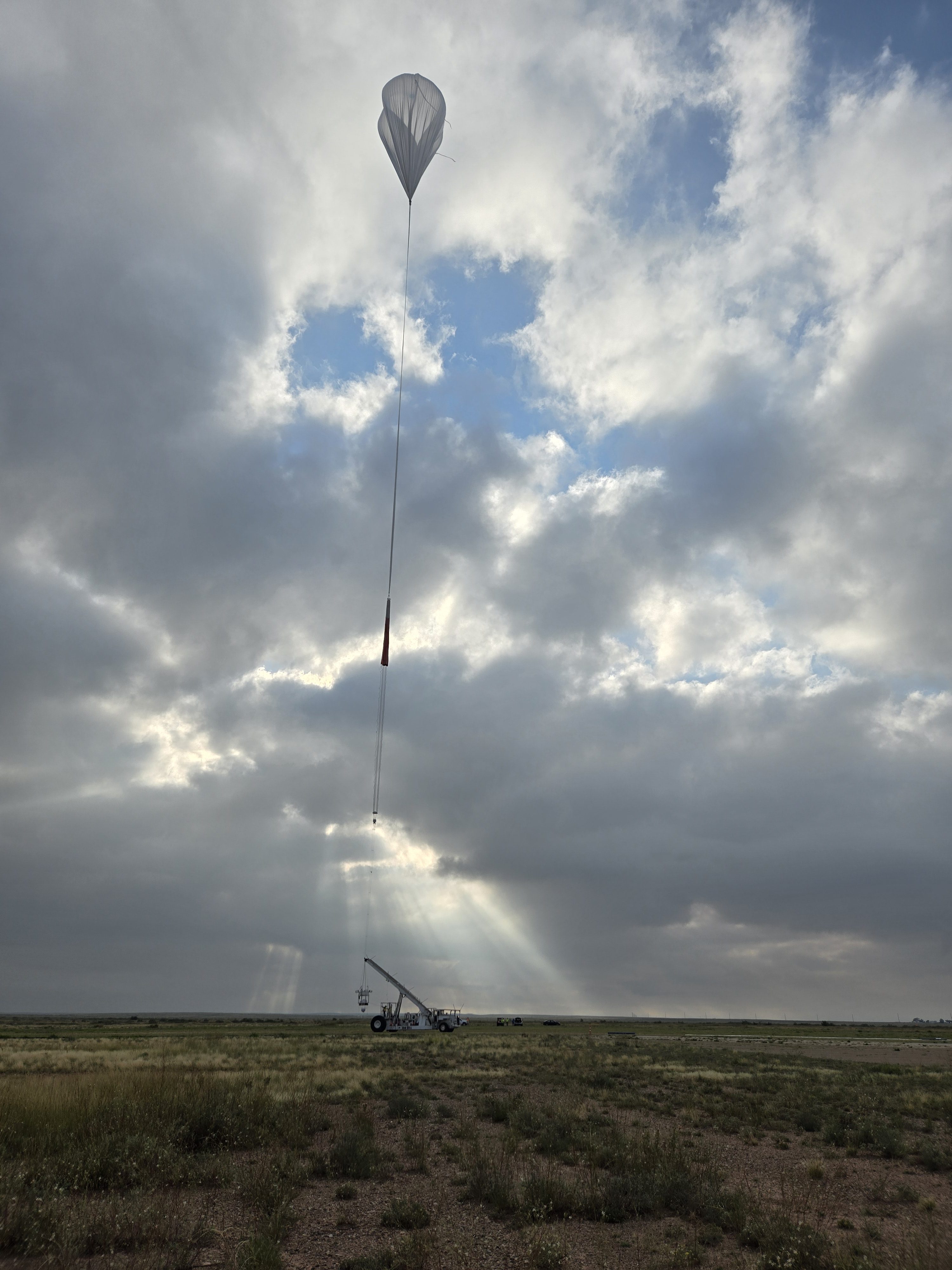
    A NASA balloon lifts off connected to HASP payload attached to a launch vehicle. The Sun peeks through clouds, shining on the gondola.
    The HASP 1.0 (High-Altitude Student Platform) scientific balloon mission launched Sept. 4, 2024, during NASA’s fall balloon campaign in Fort Sumner, N.M.
    NASA/Erin Reed

    NASA’s Scientific Balloon Program’s fifth balloon mission of the 2024 fall campaign took flight Wednesday, Sept. 4, 2024, from the agency’s Columbia Scientific Balloon Facility in Fort Sumner, New Mexico. The HASP 1.0 (High-Altitude Student Platform) mission remained in flight over 11 hours before it safely touched down. Recovery is underway.

    HASP is a partnership among the Louisiana Space Grant Consortium, the Astrophysics Division of NASA’s Science Mission Directorate, and the agency’s Balloon Program Office and Columbia Scientific Balloon Facility. The HASP platform supports up to 12 student-built payloads and is designed to flight test compact satellites, prototypes, and other small experiments. Since 2006, HASP has engaged more than 1,600 undergraduate and graduate students involved in the missions.

    Teams participating in the 2024 HASP 1.0 flight included: University of North Florida and University of North Dakota; Arizona State University; Louisiana State University; University of Colorado Boulder; College of the Canyons; Fort Lewis College; Capitol Technical College; University of Arizona; Universidad Nacional de Ingeniería (Peru); and McMaster University (Canada).

    A new, larger version of the High-Altitude Student Platform (HASP 2.0) had its engineering test flight a few days prior. HASP 2.0 will be able to accommodate twice as many student experiments as HASP 1.0 once operational in the next year.

    The remaining three balloon flights scheduled for the 2024 Fort Sumner fall campaign await next launch opportunities. To follow the missions, visit NASA’s Columbia Scientific Balloon Facility website for real-time updates on balloons altitudes and GPS locations during flight.

    For more information on NASA’s Scientific Balloon Program, visit:

    https://www.nasa.gov/scientificballoons

    Details

    Last Updated

    Sep 06, 2024

    Editor
    Olivia F. Littleton
    Contact
    Olivia F. Littleton

  • NASA Sets Coverage for Crew Launch; Trio to Join Expedition 71

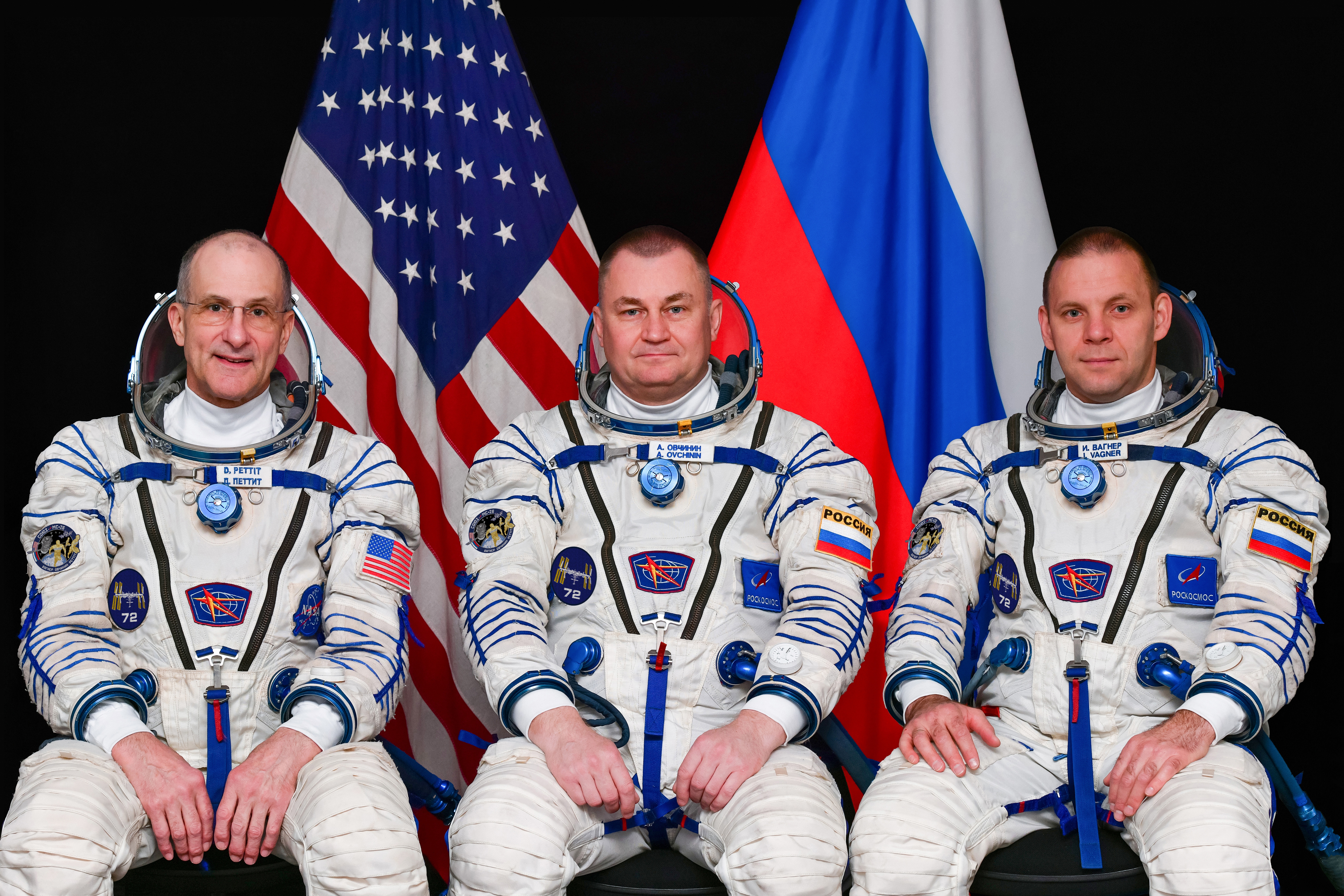
    A portrait image of a NASA astronaut and two Roscosmos cosmonauts sitting in front of the flags of the United States and Russia against a black backdrop.
    The Roscosmos Soyuz MS-26 spacecraft will launch from the Baikonur Cosmodrome in Kazakhstan to the International Space Station with (pictured left to right) NASA astronaut Don Pettit and Roscosmos cosmonauts Alexey Ovchinin and Ivan Vagner.
    Credit: Gagarin Cosmonaut Training Center

    NASA astronaut Don Pettit will launch aboard the Roscosmos Soyuz MS-26 spacecraft, accompanied by cosmonauts Alexey Ovchinin and Ivan Vagner, to the International Space Station where they will join the Expedition 71 crew in advancing scientific research.

    Pettit, Ovchinin, and Vagner will lift off at 12:23 p.m. EDT Wednesday, Sept. 11 (9:23 p.m. Baikonur time) from the Baikonur Cosmodrome in Kazakhstan.

    Coverage will stream on NASA+, the NASA app, and the agency’s website. Learn how to stream NASA content through a variety of platforms including social media.

    After a two-orbit, three-hour trajectory to the station, the spacecraft will automatically dock at 3:33 p.m. at the orbiting laboratory’s Rassvet module. Shortly after, hatches will open between the spacecraft and the station.

    Once aboard, the trio will join NASA astronauts Tracy C. Dyson, Mike Barratt, Matthew Dominick, Jeanette Epps, Butch Wilmore, and Suni Williams, as well as Roscosmos cosmonauts Nikolai Chub, Alexander Grebenkin, and Oleg Kononenko.

    NASA’s coverage is as follows (all times Eastern and subject to change based on real-time operations):

    11:15 a.m. – Launch coverage begins on NASA+, the NASA app, YouTube, and the agency’s website.

    12:23 p.m. – Launch

    2:30 p.m. – Rendezvous and docking coverage begins on NASA+, the NASA app, YouTube, and the agency’s website.

    3:33 p.m. – Docking

    5:30 p.m. – Hatch opening and welcome remarks coverage begins on NASA+, the NASA app, YouTube, and the agency’s website.

    5:50 p.m. – Hatch opening

    The trio will spend approximately six months aboard the orbital laboratory as Expedition 71 and 72 crew members before returning to Earth in the spring of 2025. This will be the fourth spaceflight for Pettit and Ovchinin, and the second for Vagner.

    For more than two decades, people have lived and worked continuously aboard the International Space Station, advancing scientific knowledge, and making research breakthroughs that are not possible on Earth. The station is a critical testbed for NASA to understand and overcome the challenges of long-duration spaceflight and to expand commercial opportunities in low Earth orbit. As commercial companies focus on providing human space transportation services and destinations as part of a robust low Earth orbit economy, NASA is focusing more resources on deep space missions to the Moon as part of Artemis in preparation for future human missions to Mars.

    Learn more about International Space Station research and operations at:

    https://www.nasa.gov/station

    -end-

    Joshua Finch / Claire O’Shea
    Headquarters, Washington
    202-358-1100
    joshua.a.finch@nasa.gov / claire.a.o’shea@nasa.gov

    Sandra Jones
    Johnson Space Center, Houston
    281-483-5111
    sandra.p.jones@nasa.gov

  • NASA Invites Media to Discuss Europa Clipper Mission

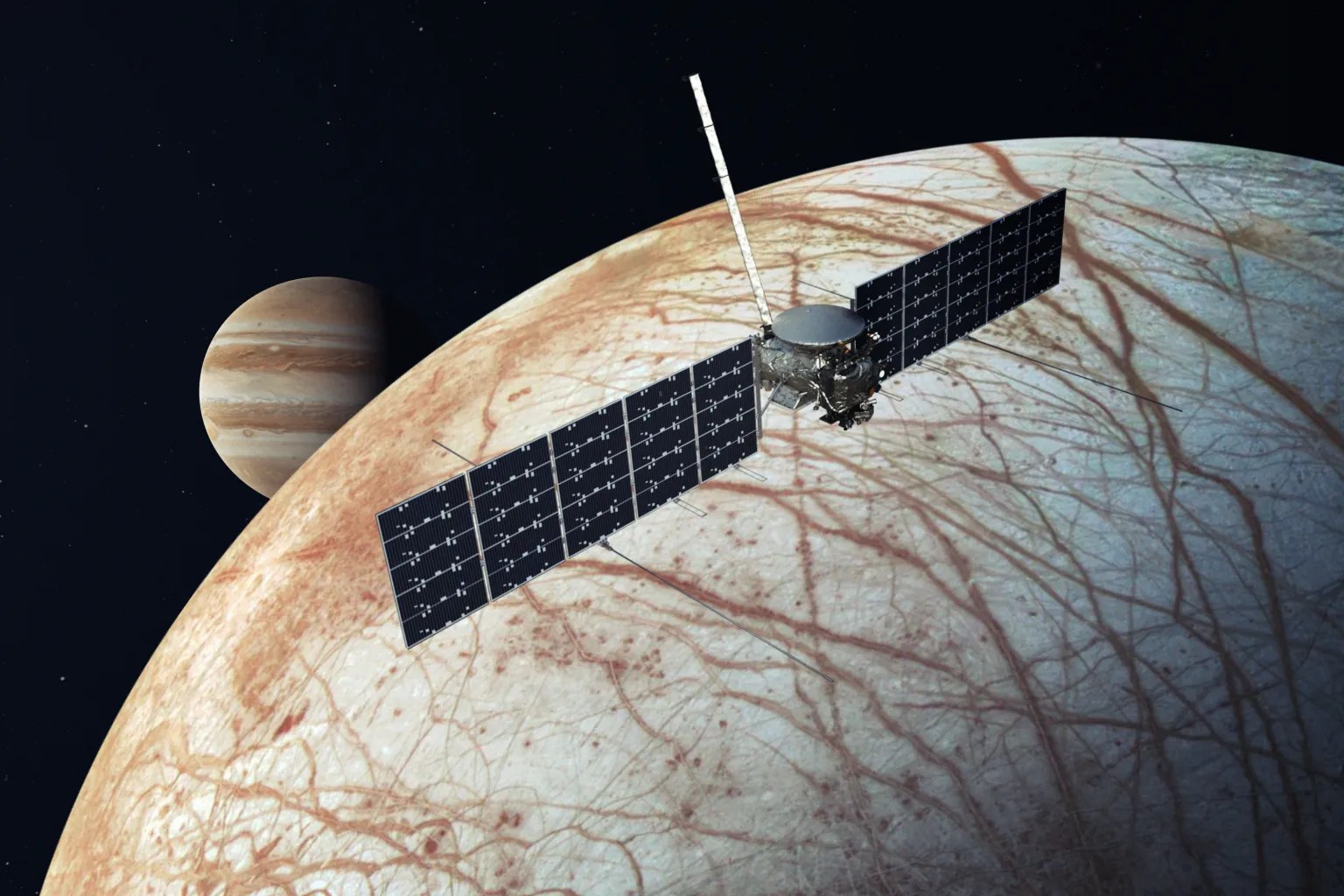
    Artist’s rendering of NASA’s Europa Clipper spacecraft.
    Credit: NASA/JPL-Caltech

    NASA will hold a media teleconference at 4 p.m. EDT, Monday, Sept. 9, to provide an update on Europa Clipper, a mission that will study whether Jupiter’s moon Europa could be hospitable to life. The teleconference will occur after a key decision point meeting earlier that day regarding next steps for the mission.

    Audio of the teleconference will stream live on the agency’s website at:

    https://www.nasa.gov/live

    Participants in the teleconference include:

    • Nicola Fox, associate administrator, Science Mission Directorate, NASA Headquarters
    • Laurie Leshin, center director, NASA’s Jet Propulsion Laboratory
    • Curt Niebur, Europa Clipper program scientist, NASA Headquarters
    • Jordan Evans, Europa Clipper project manager, NASA’s Jet Propulsion Laboratory

    To ask questions during the teleconference, media must RSVP no later than two hours before the event to Molly Wasser at: molly.l.wasser@nasa.gov. NASA’s media accreditation policy is available online.

    Europa Clipper’s main science goal is to determine whether there are places below the surface of Jupiter’s icy moon that could support life. The mission’s objectives are to understand the nature of Europa’s ice shell and the ocean beneath it, as well as to study the moon’s composition and geology. A detailed exploration of Europa also will help astrobiologists better understand the potential for habitable worlds beyond our planet.

    To learn more about Europa Clipper, visit: 

    https://europa.nasa.gov

    -end- 

    Karen Fox / Molly Wasser
    Headquarters, Washington 
    202-358-1600
    karen.c.fox@nasa.gov / molly.l.wasser@nasa.gov

    Gretchen McCartney
    Jet Propulsion Laboratory, Pasadena, Calif.
    818-393-6215
    gretchen.p.mccartney@jpl.nasa.gov

    Details

    Last Updated

    Sep 06, 2024