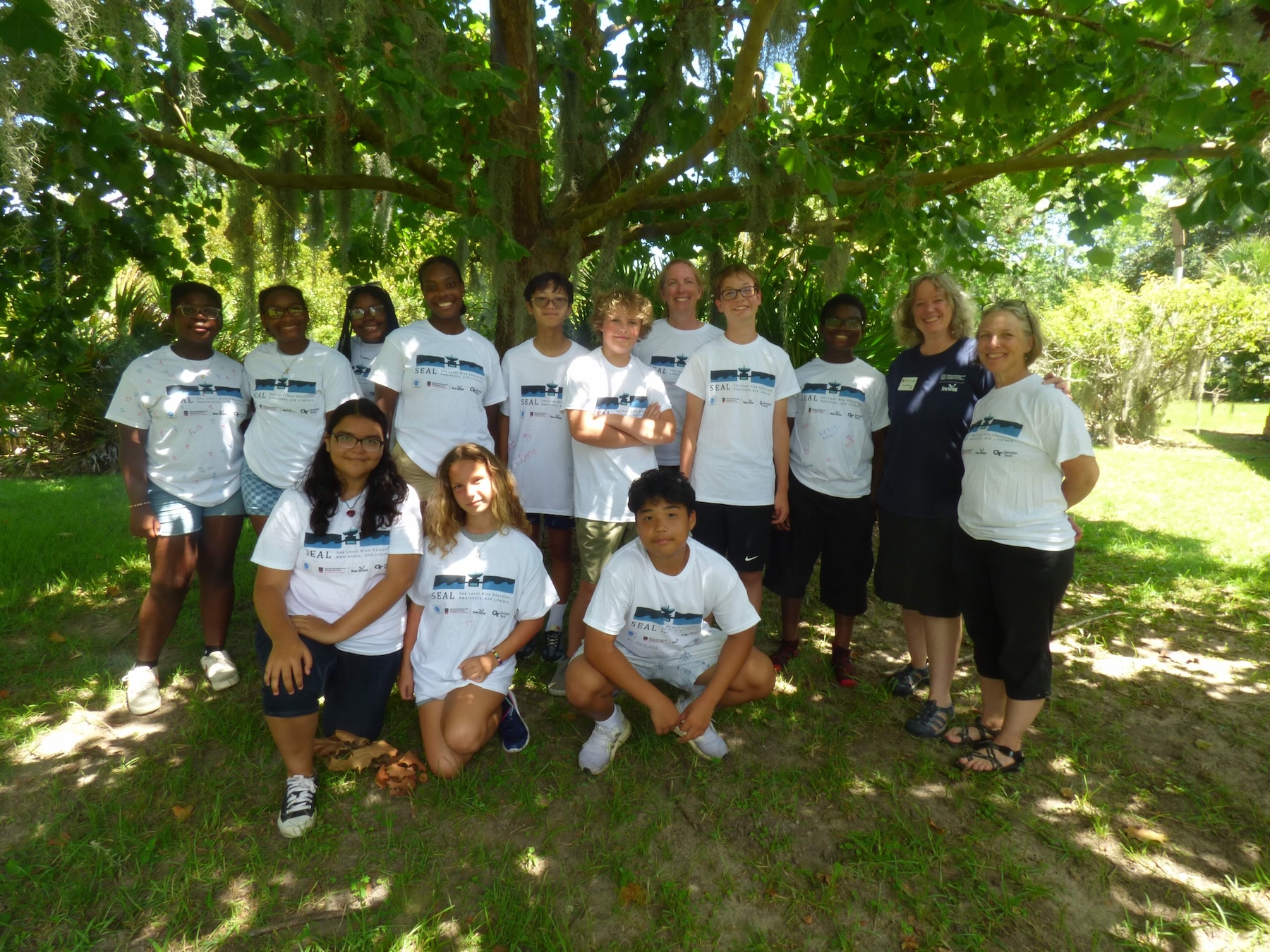
From July 15-19, 2024, the Coastal Equity and Resilience Hub at the Georgia Institute of Technology collaborated with the University of Georgia (UGA) Marine Extension and Georgia Sea Grant to host a week-long NASA Sea Level Changemakers Summer Camp. The camp introduced 14 rising 7th-8th graders to how coastal areas are changing due to sea level rise. Set at the UGA Marine Education Center and Aquarium on Skidaway Island, the camp offered students hands-on activities and outdoor educational experiences, where they analyzed real data collected by NASA scientists and learned about community adaptations to flooding. Students interacted with experts from NASA’s Jet Propulsion Laboratory, UGA, and Georgia Tech, gaining insights into satellite observations, green infrastructure, environmental sensors, and careers related to sea level rise. The camp also included a visit to the Pin Point Heritage Museum, where students engaged with leaders from the historic Gullah Geechee community of Pin Point. The camp concluded with a boat trip to Wassaw Island, where students observed the effects of sea level rise on an undeveloped barrier island and compared these observations with earlier findings from urban environments. Funding from the NASA’s Science Activation Program and its Sea Level Education, Awareness, and Literacy (SEAL) team ensured that the camp was accessible to all students, eliminating financial barriers for groups traditionally underrepresented in STEM education.
“This investment from NASA has provided an amazing opportunity for youth in coastal Georgia to utilize NASA data and resources on a critical issue affecting their communities,” said Jill Gambill, executive director of the Coastal Equity and Resilience (CEAR) Hub at Georgia Tech. “They have more confidence now in their knowledge of sea level rise and potential solutions.”
The Sea Level Education, Awareness, and Literacy (SEAL) team is supported by NASA under cooperative agreement award number NNH21ZDA001N-SCIACT and is part of NASA’s Science Activation Portfolio. Learn more about how Science Activation connects NASA science experts, real content, and experiences with community leaders to do science in ways that activate minds and promote deeper understanding of our world and beyond: https://science.nasa.gov/learn
Participants of the 2024 NASA Sea Level Changemakers Summer Camp in Savannah, GA
Preparations for Next Moonwalk Simulations Underway (and Underwater)
More than 100 scientists will participate in a field campaign involving a research vessel and two aircraft this month to verify the accuracy of data collected by NASA’s new PACE satellite: the Plankton, Aerosol, Cloud, ocean Ecosystem mission.
The process of data validation includes researchers comparing PACE data with data collected by similar, Earth-based instruments to ensure the measurements match up.
Since the mission’s Feb. 8, 2024 launch, scientists around the world have successfully completed several data validation campaigns; the September deployment — PACE-PAX — is its largest.
From sea to sky to orbit, a range of vantage points allow NASA Earth scientists to collect different types of data to better understand our changing planet. Collecting them together, at the same place and the same time, is an important step used to verify the accuracy of satellite data.
NASA’s Plankton, Aerosol, Cloud, ocean Ecosystem (PACE) satellite launched in February 2024 and is collecting observations of the ocean and measuring atmospheric particle and cloud properties. This data will help inform scientists and decision makers about the health of Earth’s ocean, land surfaces, and atmosphere and the interactions between them.
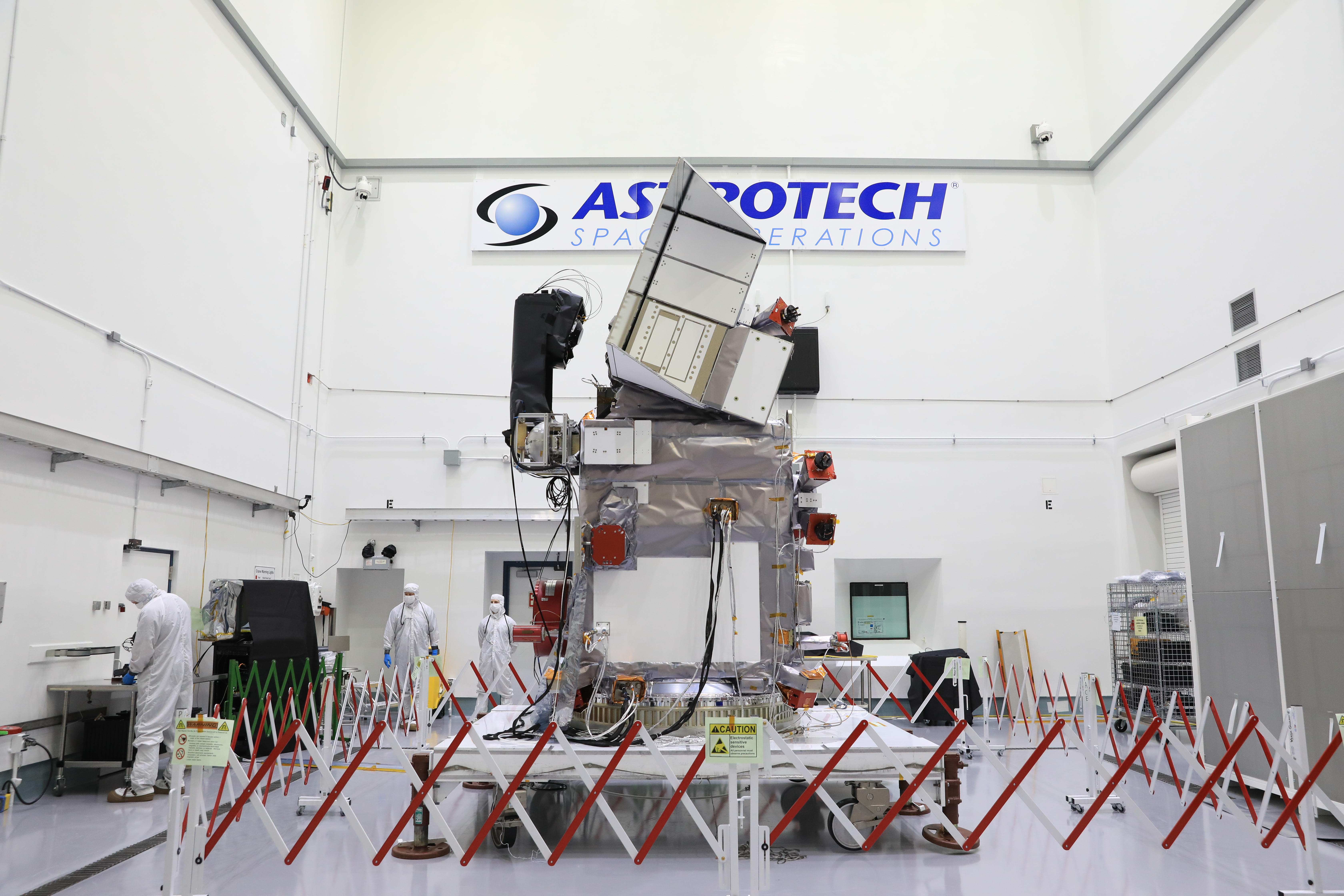
Technicians work to process the NASA’s Plankton, Aerosol, Cloud, ocean Ecosystem (PACE) observatory on a spacecraft dolly in a high bay at the Astrotech Space Operations Facility near the agency’s Kennedy Space Center in Florida on Monday, Dec. 4, 2023.
Credit: NASA/Kim Shiflett
To make sure the data from PACE’s instruments accurately represent the ocean and the atmosphere, scientists compare (or “validate”) the data collected from orbit with measurements they collect at or near Earth’s surface. The mission’s biggest validation campaign, called PACE Postlaunch Airborne eXperiment (PACE-PAX), began on Sept. 3, 2024, and will last the entire month.
“If we want to have confidence in the observations from PACE, we need to validate those observations,” said Kirk Knobelspiesse, mission scientist for PACE-PAX and an atmospheric scientist at NASA’s Goddard Space Flight Center in Greenbelt, Maryland. “This field campaign is focused on doing just that.”
Scientists will make measurements both from aircraft and ships. Based out of three locations across California — Marina, Santa Barbara, and NASA’s Armstrong Flight Research Center in Edwards — the campaign includes more than 100 people working in the field and several dozen instruments.
“This campaign allows us to validate data for both the atmosphere and the ocean, all in one campaign,” said Brian Cairns, deputy mission scientist for PACE-PAX and an atmospheric scientist at NASA’s Goddard Institute for Space Studies in New York City.
On the ocean, ships, including the National Oceanic and Atmospheric Administration (NOAA) research vessel Shearwater, will gather data on ocean biology and the optical properties of the water. Scientists onboard will gather water samples to help define the types of phytoplankton at different locations and their relative abundance, something that PACE’s hyperspectral Ocean Color Instrument measures from orbit.
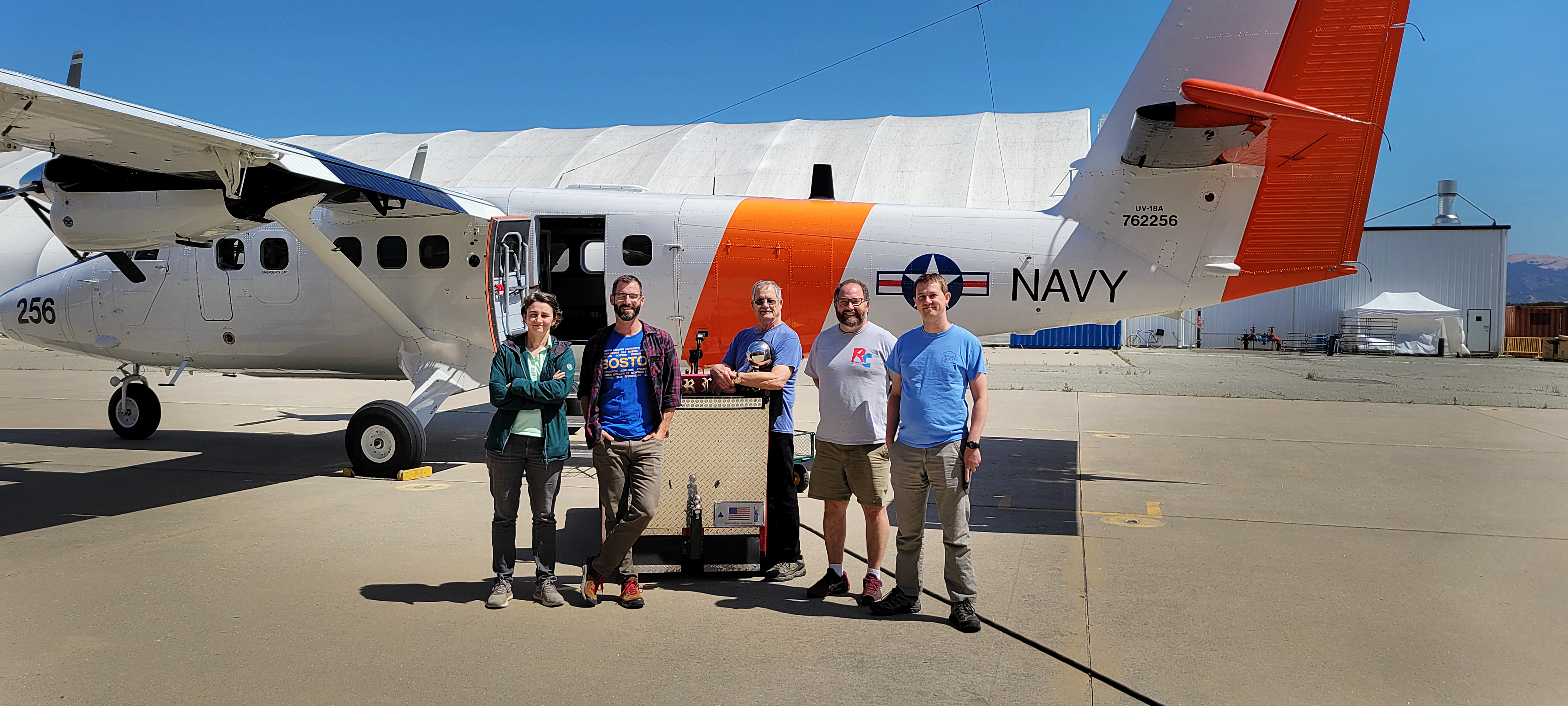
Members of the PACE-PAX team – from left to right, Cecile Carlson, Adam Ahern (NOAA), Dennis Hamaker (NPS), Luke Ziemba, and Michael Shook (NASA Langley Research Center) – in front of the Twin Otter aircraft as they prep for the start of the campaign.
Credit: Judy Alfter/NASA
Overhead, a Twin Otter research aircraft operated by the Naval Postgraduate School in Monterey, California, will collect data on the atmosphere. At altitudes of up to 10,000 feet, the aircraft will sample and measure cloud droplet sizes, aerosol sizes, and the amount of light that those particles scatter and absorb. These are the atmospheric properties that PACE observes with its two polarimeters, SPEXOne and HARP2.
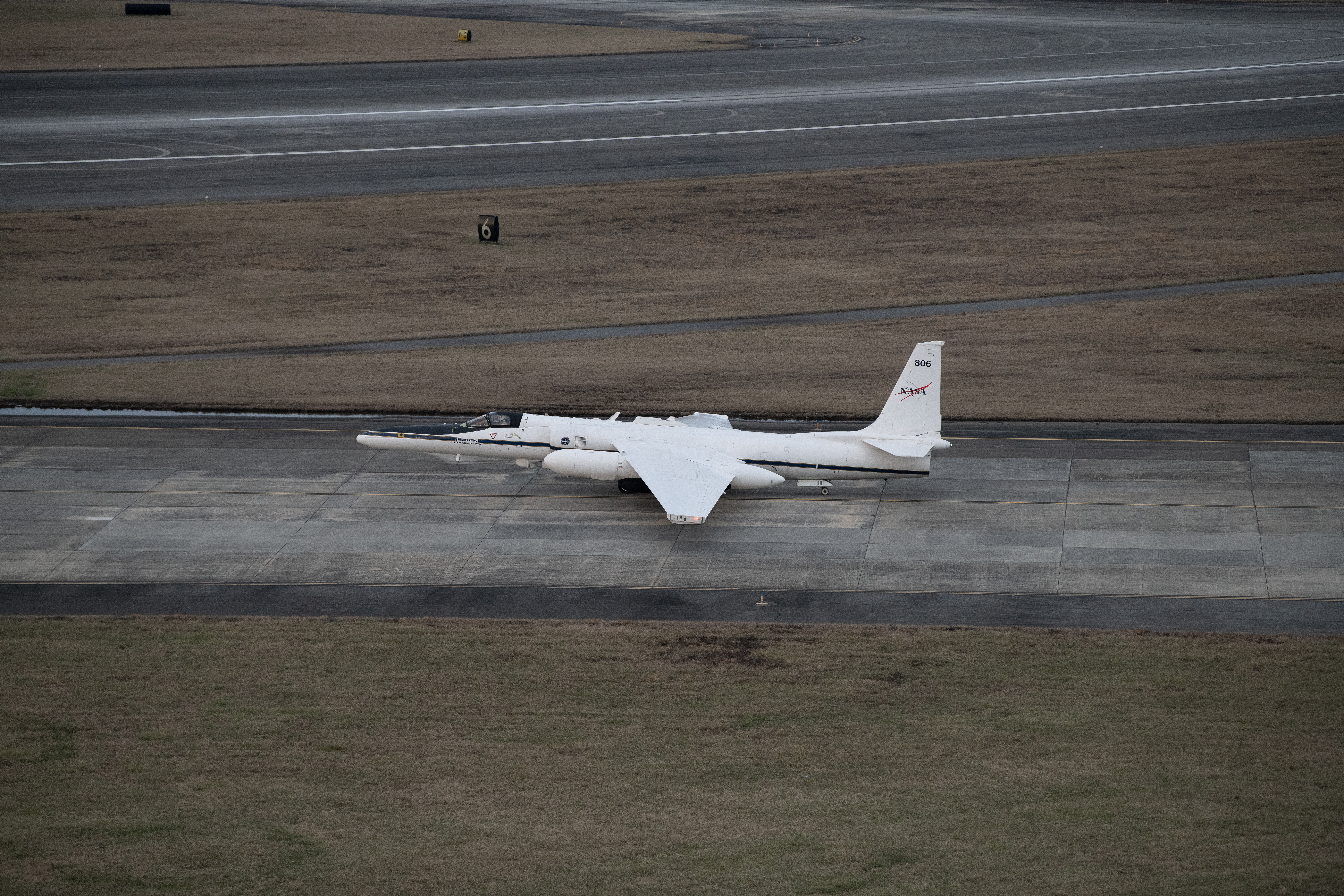
At a higher altitude — approximately 70,000 feet up — NASA’s ER-2 aircraft will provide a complementary view from above clouds, looking down on the atmosphere and ocean in finer detail than the satellite, but with a narrower view.
The NASA ER-2 high-altitude aircraft preparing for flight on Jan. 29, 2023. The aircraft is based at NASA’s Armstrong Flight Research Center Building 703 in Palmdale, California.
Credit: NASA/Carla Thomas
The plane will carry several instruments that are similar to those on PACE, including two prototypes of PACE’s polarimeters, called SPEXAirborne and AirHARP. In addition, two instruments called the Portable Remote Imaging SpectroMeter and Pushbroom Imager for Cloud and Aerosol Research and Development — from NASA’s Jet Propulsion Laboratory in Pasedena, California, and NASA’s Ames Research Center in California’s Silicon Valley, respectively — will measure essentially all the wavelengths of visible light (color). The remote sensing measurements are key for scientists who want to test the methods they use to analyze PACE satellite data.
Together, the instruments on the ER-2 approximate the data that PACE gathers and complement the in situ measurements from the ocean research vessel and the Twin Otter.
As the field campaign team gathers data, PACE will be observing the same areas of the ocean surface and atmosphere. Once the campaign is over, scientists will look at the data PACE returned and compare them to the measurements they took from the other three vantage points.
“Once you launch the satellite, there’s no more tinkering you can do,” said Ivona Cetinic, deputy mission scientist for PACE-PAX and an ocean scientist at NASA Goddard.
Though the scientists cannot alter the satellite anymore, the algorithms designed to interpret PACE data can be adjusted to make the measurements more accurate. Validation checks from campaigns like PACE-PAX help scientists ensure that PACE will be able to return accurate data about our oceans and atmosphere — critical to better understand our changing planet and its interconnected systems — for years to come.
“The ocean and atmosphere are such changing environments that it’s really important to validate what we see,” Cetinic said. “Understanding the accuracy of the view from the satellite is important, so we can use the data to answer important questions about climate change.”
Preparations for Next Moonwalk Simulations Underway (and Underwater)
A fisheye lens attached to an electronic still camera was used to capture this image of NASA astronaut Don Pettit.
NASA
Science ideas are everywhere. Some of the greatest discoveries have come from tinkering and toying with new concepts and ideas. NASA astronaut Don Pettit is no stranger to inventing and discovering. During his previous missions, Pettit has contributed to advancements for human space exploration aboard the International Space Station resulting in several published scientific papers and breakthroughs.
Pettit, accompanied by cosmonauts Alexey Ovchinin and Ivan Vagner, will launch to the orbiting laboratory in September 2024. In preparation for his fourth spaceflight, read about previous “science of opportunity” experiments Pettit performed during his free time with materials readily available to the crew or included in his personal kit.
Freezing Ice in Space
Thin ice under polarized light frozen aboard the International Space Station.
NASA
Have you ever noticed a white bubble inside the ice in your ice tray at home? This is trapped air that accumulates in one area due to gravity. Pettit took this knowledge, access to a -90° Celsius freezer aboard the space station, and an open weekend to figure out how water freezes in microgravity compared to on Earth. This photo uses polarized light to show thin frozen water and the visible differences from the ice we typically freeze here on Earth, providing more insight into physics concepts in microgravity.
Space Cup
NASA astronaut Don Pettit demonstrates how surface tension, wetting, and container shape hold coffee in the space cup.
NASA
Microgravity affects even the most mundane tasks, like sipping your morning tea. Typically, crews drink beverages from a specially sealed bag with a straw. Using an overhead transparency film, Pettit invented the prototype of theCapillary Beverage, or Space Cup. The cup uses surface tension, wetting, and container shape to mimic the role of gravity in drinking on Earth, making drinking beverages in space easier to consume and showing how discoveries aboard station can be used to design new systems.
Planetary Formation
Astronaut Don Pettit demonstrates a mixture of coffee grounds and sugar sticking together in microgravity to understand planetary formation.
NASA
Using materials that break into very small particles, such as table salt, sugar, and coffee, Pettit experimented to understand planetary formation. A crucial early step in planet formation is the aggregation or clumping of tiny particles, but scientists do not fully understand this process. Pettit placed different particulate mixtures in plastic bags, filled them with air, thoroughly shook the bags, and observed that the particles clumped within seconds due to what appears to be an electrostatic process. Studying the behavior of tiny particles in microgravity may provide valuable insight into how material composition, density, and turbulence play a role in planetary formation.
Orbital Motion
Charged water particles orbit a knitting needle, showing electrostatic processes in space.
NASA
Knitting needles made of different materials arrived aboard station as personal crew items. Pettit electrically charged the needles by rubbing each one with paper. Then, he released charged water from a Teflon syringe and observed the water droplets orbit the knitting needle, demonstrating electrostatic orbits in microgravity. The study was later repeated in a simulation that included atmospheric drag, and the 3D motion accurately matched the orbits seen in the space station demonstration. These observations could be analogous to the behavior of charged particles in Earth’s magnetic field and prove useful in designing future spacecraft systems.
Astrophotography
Top: NASA astronaut Don Pettit photographed in the International Space Station cupola surrounded by cameras.
Bottom: Star trails photographed by NASA astronaut Don Pettit in March of 2012.
NASA
An innovative photographer, Pettit has used time exposure, multiple cameras, infrared, and other techniques to contribute breathtaking images of Earth and star trails from the space station’s unique viewpoint. These photos contribute to a database researchers use to understand Earth’s changing landscapes, and this imagery can inspire the public’s interest in human spaceflight.
Christine Giraldo
International Space Station Research Communications Team
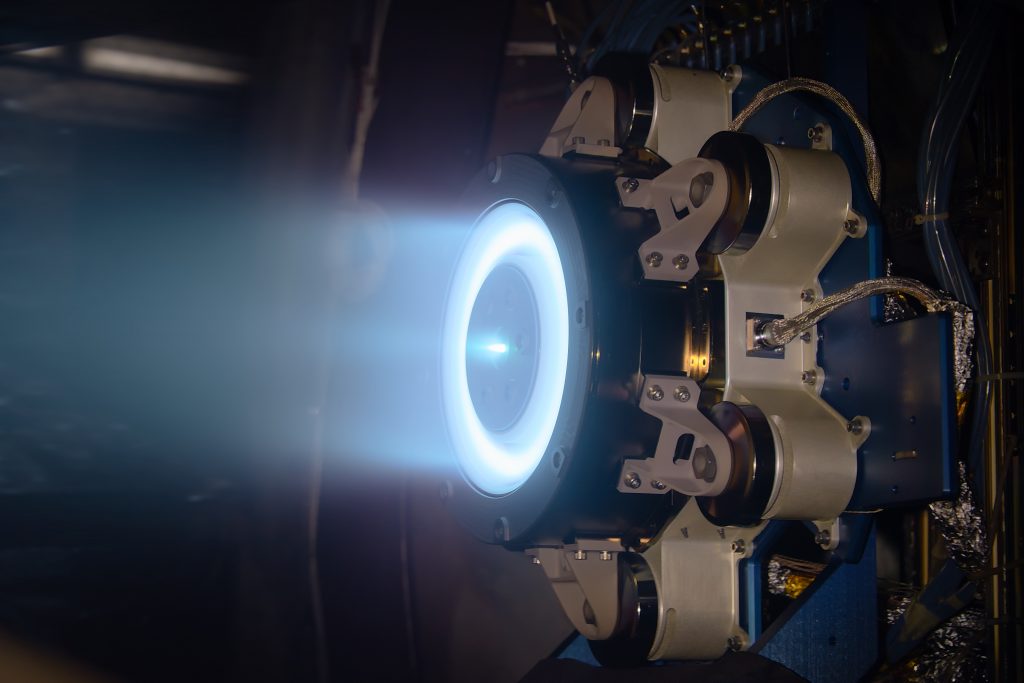
The powerhouse of Gateway, NASA’s orbiting outpost around the Moon and a critical piece of infrastructure for Artemis, is in the midst of several electric propulsion system tests.
The Power and Propulsion Element (PPE), being manufactured by Maxar Technologies, provides Gateway with power, high-rate communications, and propulsion for maneuvers around the Moon and to transit between different orbits. The PPE will be combined with the Habitation and Logistic Outpost (HALO) before the integrated spacecraft’s launch, targeted for late 2024 aboard a SpaceX Falcon Heavy. Together, these elements will serve as the hub for early Gateway crewed operations and various science and technology demonstrations as the full Gateway station is assembled around it in the coming years.
In this image, PPE engineers successfully tested the integration of Aerojet Rocketdyne’s thruster with Maxar’s power procession unit and Xenon Flow Controller.
Are you ready for this year’s NASA TechRise Student challenge? From researching Earth’s environment to designing experiments for space exploration, schools are invited to join NASA in its mission to inspire the world through discovery. If you are in sixth to 12th grade at a U.S. public, private, or charter school – including those in U.S. territories – your challenge is to team up with your schoolmates and develop a science or technology experiment idea for this year’s NASA TechRise flight vehicle – the high-altitude balloon! The High-Altitude Balloon will offer approximately four to eight hours of flight time at approximately 70,000 to 95,000 feet and exposure to Earth’s atmosphere, high-altitude radiation, and perspective views of our planet.
Award: $60,000 in total prizes
Open Date: August 1, 2024
Close Date: November 1, 2024
For more information, visit: https://www.futureengineers.org/nasatechrise
Preparations for Next Moonwalk Simulations Underway (and Underwater)
Sonifications of three images have been released to mark the 25th anniversary of Chandra’s “First Light” image. For Cassiopeia A, which was one of the first objects observed by Chandra, X-ray data from Chandra and infrared data from Webb have been translated into sounds, along with some Hubble data. The second image in the sonification trio, 30 Doradus, also contains Chandra and Webb data. NGC 6872 contains data from Chandra as well as an optical image from Hubble. Each of these datasets have been mapped to notes and sounds based on properties observed by these telescopes.
NASA/CXC/SAO/K.Arcand, SYSTEM Sounds (M. Russo, A. Santaguida)
A quarter of a century ago, NASA released the “first light” images from the agency’s Chandra X-ray Observatory. This introduction to the world of Chandra’s high-resolution X-ray imaging capabilities included an unprecedented view of Cassiopeia A, the remains of an exploded star located about 11,000 light-years from Earth. Over the years, Chandra’s views of Cassiopeia A have become some of the telescope’s best-known images.
To mark the anniversary of this milestone, new sonifications of three images – including Cassiopeia A (Cas A) – are being released. Sonification is a process that translates astronomical data into sound, similar to how digital data are more routinely turned into images. This translation process preserves the science of the data from its original digital state but provides an alternative pathway to experiencing the data.
This sonification of Cas A features data from Chandra as well as NASA’s James Webb, Hubble, and retired Spitzer space telescopes. The scan starts at the neutron star at the center of the remnant, marked by a triangle sound, and moves outward. Astronomers first saw this neutron star when Chandra’s inaugural observations were released 25 years ago this week. Chandra’s X-rays also reveal debris from the exploded star that is expanding outward into space. The brighter parts of the image are conveyed through louder volume and higher pitched sounds. X-ray data from Chandra are mapped to modified piano sounds, while infrared data from Webb and Spitzer, which detect warmed dust embedded in the hot gas, have been assigned to various string and brass instruments. Stars that Hubble detects are played with crotales, or small cymbals.
Another new sonification features the spectacular cosmic vista of 30 Doradus, one of the largest and brightest regions of star formation close to the Milky Way. This sonification again combines X-rays from Chandra with infrared data from Webb. As the scan moves from left to right across the image, the volume heard again corresponds to the brightness seen. Light toward the top of the image is mapped to higher pitched notes. X-rays from Chandra, which reveal gas that has been superheated by shock waves generated by the winds from massive stars, are heard as airy synthesizer sounds. Meanwhile, Webb’s infrared data show cooler gas that provides the raw ingredients for future stars. These data are mapped to a range of sounds including soft, low musical pitches (red regions), a wind-like sound (white regions), piano-like synthesizer notes indicating very bright stars, and a rain-stick sound for stars in a central cluster.
The final member of this new sonification triumvirate is NGC 6872, a large spiral galaxy that has two elongated arms stretching to the upper right and lower left, which is seen in an optical light view from Hubble. Just to the upper left of NGC 6872 appears another smaller spiral galaxy. These two galaxies, each of which likely has a supermassive black hole at the center, are being drawn toward one another. As the scan sweeps clockwise from 12 o’clock, the brightness controls the volume and light farther from the center of the image is mapped to higher-pitched notes. Chandra’s X-rays, represented in sound by a wind-like sound, show multimillion-degree gas that permeates the galaxies. Compact X-ray sources from background galaxies create bird-like chirps. In the Hubble data, the core of NGC 6872 is heard as a dark low drone, and the blue spiral arms (indicating active star formation) are audible as brighter, more highly pitched tones. The background galaxies are played as a soft pluck sound while the bright foreground star is accompanied by a crash cymbal.
More information about the NASA sonification project through Chandra, which is made in partnership with NASA’s Universe of Learning, can be found at https://chandra.si.edu/sound/. The collaboration was driven by visualization scientist Kimberly Arcand (CXC), astrophysicist Matt Russo, and musician Andrew Santaguida, (both of the SYSTEM Sounds project), along with consultant Christine Malec.
NASA’s Universe of Learning materials are based upon work supported by NASA under cooperative agreement award number NNX16AC65A to the Space Telescope Science Institute, working in partnership with Caltech/IPAC, Center for Astrophysics | Harvard & Smithsonian, and the Jet Propulsion Laboratory.
More about Chandra
Chandra, managed for NASA by Marshall in partnership with the CXC, is one of NASA’s Great Observatories, along with the Hubble Space Telescope and the now-retired Spitzer Space Telescope and Compton Gamma Ray Observatory. It was first proposed to NASA in 1976 by Riccardo Giacconi, recipient of the 2002 Nobel Prize for Physics based on his contributions to X-ray astronomy, and Harvey Tananbaum, who would later become the first director of the Chandra X-ray Center. Chandra was named in honor of the late Nobel laureate Subrahmanyan Chandrasekhar, who earned the Nobel Prize in Physics in 1983 for his work explaining the structure and evolution of stars.
Learn more about the Chandra X-ray Observatory and its mission here: https://www.nasa.gov/mission/chandra-x-ray-observatory/
Lunar geologist Zachary Morse scrabbles over Earth’s rocky landscapes to test equipment for future missions to the Moon and Mars.
Name: Zachary Morse Title: Assistant Research Scientist in Planetary Geology Organization: The Planetary Geology, Geophysics and Geochemistry Laboratory, Science Directorate (Code 698)
Zachary Morse is an assistant research scientist in planetary geology at NASA’s Goddard Space Flight Center in Greenbelt, Md.
Photo courtesy of Zachary Morse
What do you do and what is most interesting about your role here at Goddard? How do you help support Goddard’s mission?
I work with teams that integrate field instrumentation into future lunar and Mars exploration missions. We go to analog field sites, places on Earth that are geologically similar to the Moon or Mars, to test field instruments. I also support the development of science operations for crewed exploration of the lunar surface.
Why did you become a geologist? What is your educational background?
I always knew that I wanted to study space. In college I started in engineering, but switched to geology because much of the science NASA does on the Moon or Mars involves studying the rocks.
In 2013, I got a B.S. in geology from West Virginia University. In 2018, I got a Ph.D. in planetary science from Western University in London, Ontario.
“I work with teams that integrate field instrumentation into future lunar and Mars exploration missions,” said Zachary. “We go to analog field sites, places on Earth that are geologically similar to the Moon or Mars, to test field instruments.”
Photo courtesy of Zachary Morse
What brought you to Goddard?
In January 2020, I came to Goddard to do a post-doctoral fellowship because I wanted to work on the Remote, In Situ, and Synchrotron Studies for Science and Exploration 2 (Rise2) project. We go into the field to test handheld geologic instruments that could later be incorporated into missions.
What have been some of your favorite trips into the field?
Iceland, Hawaii, and the New Mexico desert, which is our primary field site for Rise2. These were organized as part of the Goddard Instrument Field Team, a group that hosts trips each year to different analog field sites.
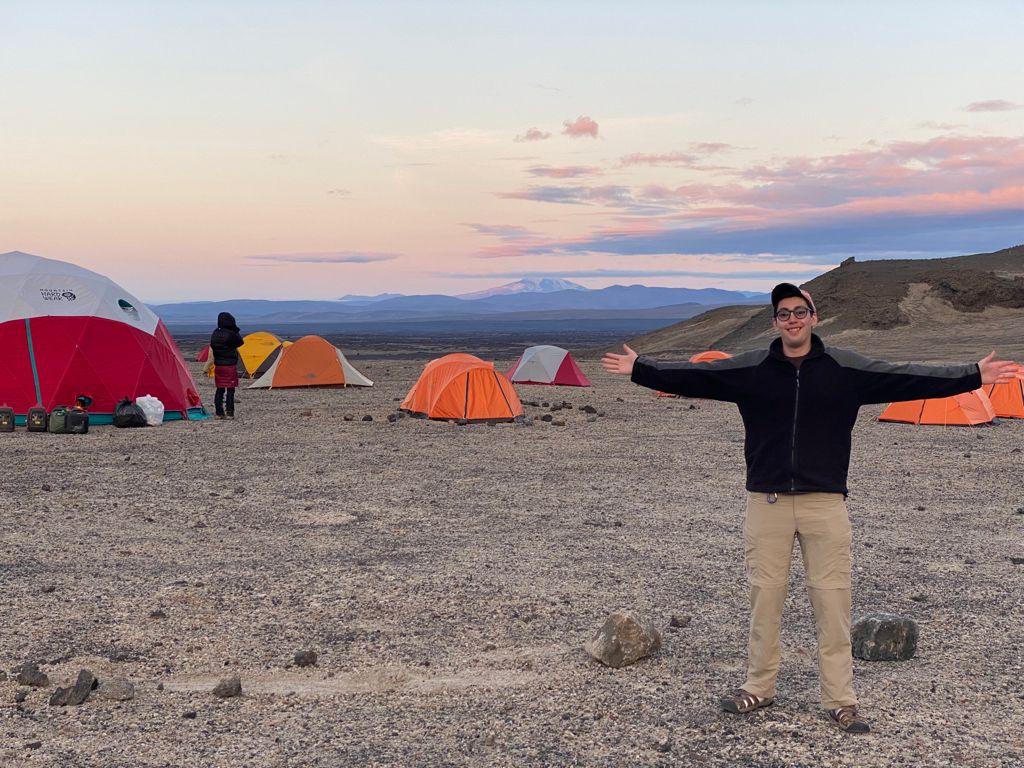
The Iceland trip was my favorite because the place we got to explore looked almost exactly like pictures of the Moon’s surface. It was beautiful and the right setting to learn about the Earth and the Moon. Our team was about 40 people. We were there for two weeks. We mostly camped.
It was definitely a unique experience, one hard to put in words. On Earth, you would normally go camping in a lush forest. But there were no trees, just rock and dust. It was absolutely beautiful in its own way.
The Hawaii trip was also unique. Our team of about 30 people spent almost the entire 10 days in the lava tubes. Not many people get to go into lava tubes. It was very exciting. The biggest part of the lava tube was about 20 feet high and about 10 feet wide. The smallest was so small we had to crawl through.
How do you document field work?
In addition to scientific data, we always take pictures of the rocks and outcrops. It is important to document what a site is like before people interact with it. Sometimes we collect rock samples to bring back to the lab, but we leave the place as we found it.
“I always knew that I wanted to study space,” said Zachary. “In college I started in engineering, but switched to geology because much of the science NASA does on the Moon or Mars involves studying the rocks.”
Photo courtesy of Zachary Morse
Where do you see yourself in five years?
I hope to remain at Goddard; I love it. The team is great and the science is fascinating and important. I want to keep pursuing opportunities for field work. My main goal is to get involved in a lunar mission and support Artemis lunar exploration.
What do you do for fun?
I love the outdoors. I love kayaking on lakes, rivers, and streams. My favorite place is in the Adirondacks. I also love hiking, which I do all over, especially in West Virginia.
Who is your mentor and what did your mentor teach you?
Kelsey Young is my supervisor and mentor. She has taught me so many things including how missions will function and how we can best test equipment in the field for future missions. She taught me how to be organized and focused.
Jack Schmitt is an Apollo 17 astronaut who inspired me because he is a geologist. He was the first and only professional geologist who walked on the surface of the Moon during the Apollo missions. I have heard him speak many times and have personally met him.
I would jump at the chance to be the next geologist-astronaut!
What rock formations in the world would you like to explore?
Top of my list would be to explore Acadia National Park in Maine. There is a ton of diverse geology in a small area and the pictures all look stunning. I would also love to visit Glacier National Park to experience the glacier before it melts.
What is your “six-word memoir”? A six-word memoir describes something in just six words.
Conversations With Goddard is a collection of Q&A profiles highlighting the breadth and depth of NASA’s Goddard Space Flight Center’s talented and diverse workforce. The Conversations have been published twice a month on average since May 2011. Read past editions on Goddard’s “Our People” webpage.
“Some people [may say], ‘You have too many cooks in the kitchen,’ but I think there’s a line. It’s good to have a lot of input because people bring many different perspectives that you would never even consider if you just pushed an idea forward with one person. This is especially true in the area we work in with digital [communications], which is changing so frequently; you constantly have to innovate, so including diverse voices and thoughts is important.
“I’m an older sister, and I don’t know if some of that [leadership style] comes from when we were kids, always making sure that I involved her and ensuring people could understand what she wanted or needed. And maybe that translated into who I am, making sure people have voices and are heard [at NASA]…I’ve achieved a lot that I didn’t even know I wanted to accomplish because I couldn’t have imagined this career progression for myself.
“But now that I’m here, I would like to achieve more in terms of what NASA looks like internally, especially after getting involved with the NASA Science IDEA working group and diversity efforts. I would love to one, help people outside of NASA realize that they could work here and two, push people internally to the forefront so that they can be considered for higher-level things and progress.”
– Emily Furfaro, Digital Manager, Science Mission Directorate, NASA Headquarters
Image Credit: NASA/Keegan Barber Interviewer: NASA/Tahira Allen
A partial lunar eclipse makes the full supermoon on Sept. 17th extra super. Also, chances to observe five planets this month, and a global night for observing.
Highlights
All month – Venus sits low in the west following sunset. Saturn’s visible all night. Jupiter and Mars rise in the couple of hours after midnight and are visible in the southeast before sunrise.
September 1-7 – If you’re in the Northern Hemisphere, you can spot Mercury this week during morning twilight if you can find an unobstructed view toward the east. It appears low in the east just before dawn.
September 2 – New moon
September 14 – Join fellow Moon enthusiasts around the world for International Observe the Moon Night tonight! Find an event or simply observe at home. Details at moon.nasa.gov/observe.
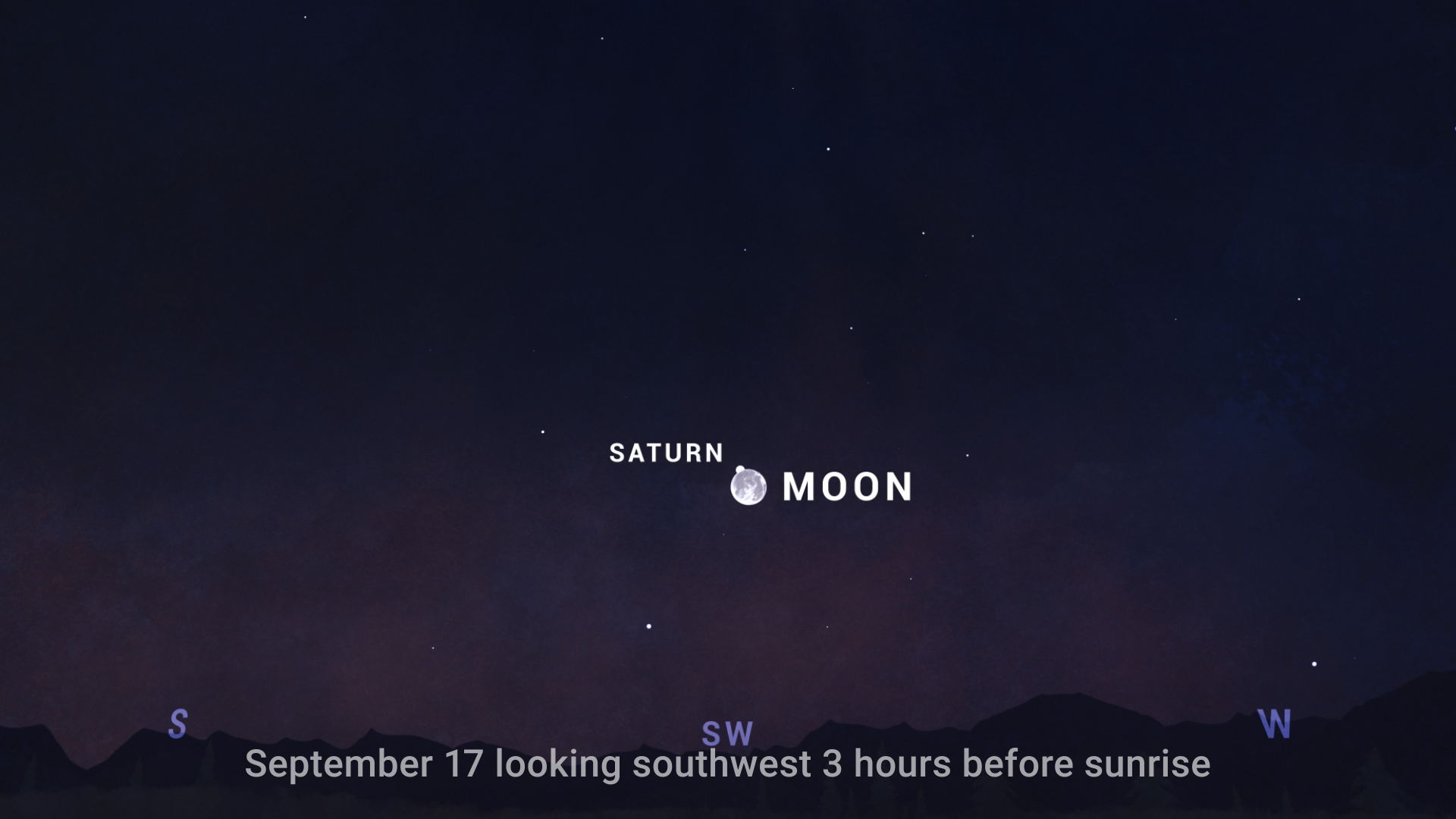
September 16 – The Moon leads Saturn across the sky tonight. Find them in the southeastern sky following sunset. For the western U.S., the Moon will begin to occult, or cover, Saturn the following morning before sunrise.
September 17 – Full moon – Harvest moon – Supermoon – Partial lunar eclipse. The eclipse is in the evening hours for U.S. observers (while the Moon is rising for the West Coast). The Moon looks ever so slightly bigger and brighter that the average full moon, though in practice it’s tough to tell the difference. The September full moon is often called the harvest moon, due to its association with harvest time in the Northern Hemisphere.
September 22 – The Moon passes through the Pleiades star cluster tonight for U.S. observers.
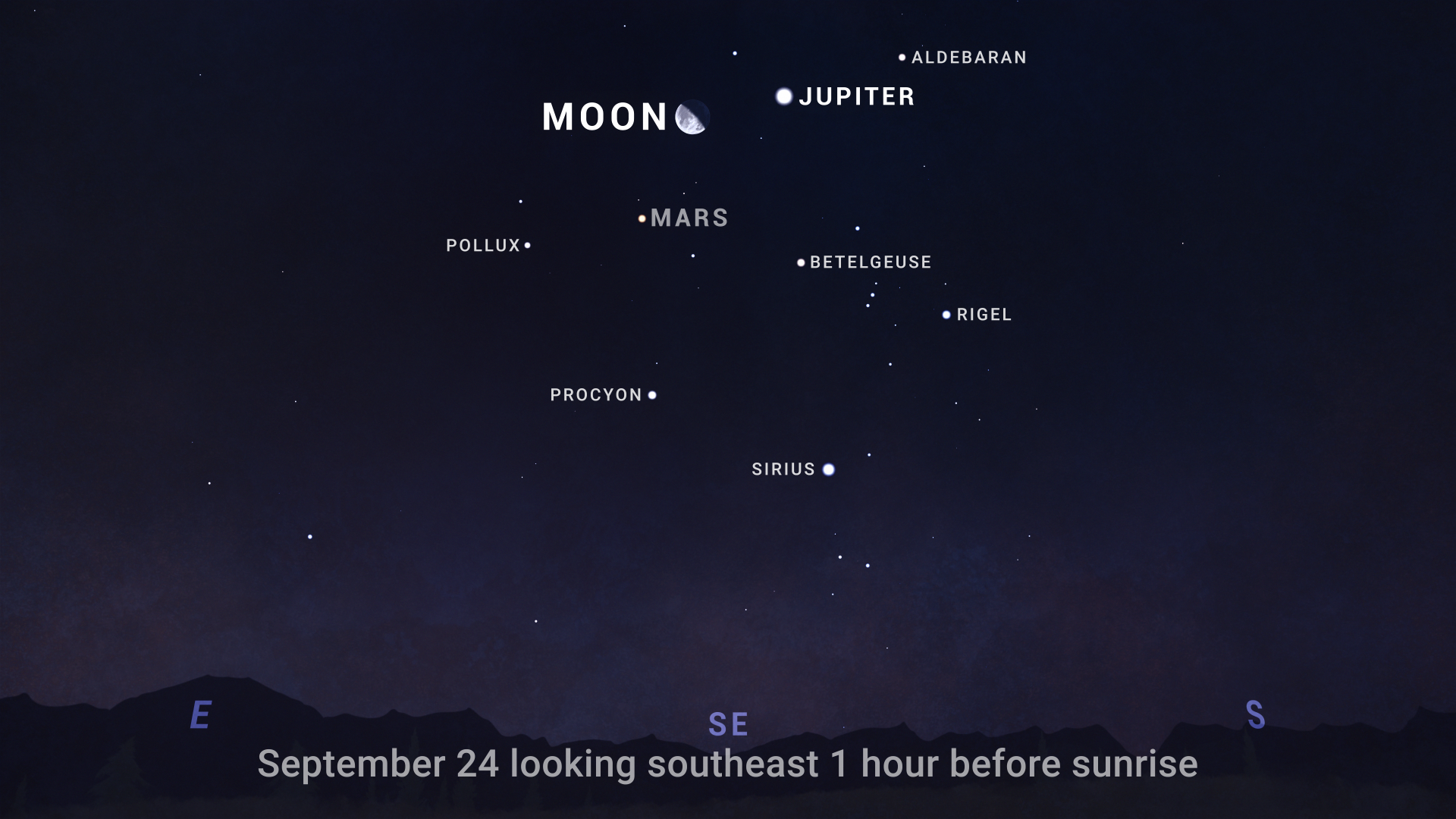
September 23 – Jupiter and the Moon glide across the sky together this evening. They rise late tonight and climb high into the southeast as dawn approaches.
September 25 – The crescent moon appears near Mars this morning. See them with Jupiter and the bright stars of the winter constellations in the predawn sky.
The Moon passes through the Pleiades star cluster tonight for U.S. observers.
Transcript
What’s Up for September? Five planets and a supermoon eclipse, a NASA solar sail that you can spot from the ground, and a global night for the Moon. And stick around until the end to view some highlights shared in last month’s video.
Starting with the visibility of the planets this month, you’ll notice Venus sitting very low in the west in the hour following sunset. Over the next several months it will rise higher, increasingly becoming a fixture of the early evening sky for the rest of the year. Saturn’s in the southeastern sky early in the evening. From there it’ll be visible overhead all night, and you’ll find it setting in the west as dawn approaches.
Sky chart showing The Moon near Jupiter in the morning sky before sunrise on September 24, along with some of the well-known (Northern Hemisphere) winter stars and constellations.
NASA/JPL-Caltech
As for the ongoing pair-up of Jupiter and Mars, Jupiter’s rising around midnight or soon after, with Mars rising an hour to an hour and a half behind it. So it’s best to look for them high in the south-southeastern sky in the early morning before sunrise. And in morning twilight during the first week of September, if you can find an unobstructed view toward the east, it’s a decent opportunity to spot Mercury for those in the Northern Hemisphere.
Turning now to the Moon, the full moon on September 17th is a supermoon, meaning it’s just a little bit closer to Earth in its orbit than your average full moon. It looks ever so slightly bigger and brighter, though in practice, the difference is hard to see. It really is super though, as the September full moon is often called the “Harvest Moon” given its association with harvest time in the Northern Hemisphere, plus it’s also going to show us a partial lunar eclipse.
You’ll see a little bite taken out of one side of the Moon over about an hour.
Check the timing of the eclipse for your local area using your favorite skywatching app or website. In Europe, the eclipse takes place in the early morning hours; while in the U.S., it’s in the evening – and that’s while the Moon’s rising, for the West Coast.
Sky chart showing the full moon very near Saturn in the morning sky for U.S. observers on September 17. The Moon occults, or passes in front of, Saturn as the pair get lower in the sky.
NASA/JPL-Caltech
As for Moon-planet pair-ups, the Moon leads Saturn across the sky on the 16th.
Look for the pair in the southeastern sky following sunset. For those in the U.S., the pair will appear very close together early the next morning on the 17th, as they get lower in the western sky. In fact, those in the western half of the U.S. can actually watch the Moon start to occult, or pass in front of Saturn before they set.
On the 22nd, the Moon rises a couple of hours after dark sitting super close to the Pleiades. And this is kind of a special pairing if you’re in the U.S., as the Moon will actually pass right through the Pleiades over the course of the night. So if you have binoculars or a small telescope, you can look periodically over the course of the night as the Moon crosses directly in front of the bright star cluster.
On the 23rd, the Moon rises in the late evening hours with giant Jupiter. They climb high into the southeast sky as dawn approaches.
And then on the morning of the 25th, the crescent Moon appears near Mars.
This last full week of September is really lovely before the sky brightens, as you have the Moon and two bright planets together with the bright stars of the winter constellations. So don’t miss it!
There’s a new opportunity to observe a bright NASA spacecraft sailing across the night sky. NASA’s Advanced Composite Solar Sail System, or “ACS3,” is a small satellite that’s testing new technologies in low Earth orbit. It recently deployed its 30-foot-wide solar sails. These are a means of propulsion that could allow small spacecraft to “sail on sunlight.” The ACS3 solar sails are highly reflective, and make the spacecraft appear nearly as bright as Sirius, the brightest star in the sky. You can find out when the solar sail spacecraft will pass over your location using the NASA app on your mobile device.
International Observe the Moon Night is September 14th. It’s an annual event when fellow Moon enthusiasts come together worldwide to participate in events and, you guessed it, observe our nearby natural satellite. You can join from wherever you are. Attend or host a virtual or in-person event, or simply observe the Moon from home.
20. On the 14th, in addition to many lunar maria and all 6 of the Apollo landing sites, this year offers an opportunity to see the Marius Hills – volcanic domes and cones that are notoriously difficult to observe even with a telescope, unless sunlight is streaming across them nearly horizontally. Fortunately, that will be the case on International Observe the Moon Night 2024, when we’ll get to watch a lunar sunrise across this knobby terrain. So however you pronounce it, grab your telescope, or find an event near you, and join this annual celebration of observation.
Here are a few views of the highlights in last month’s sky.
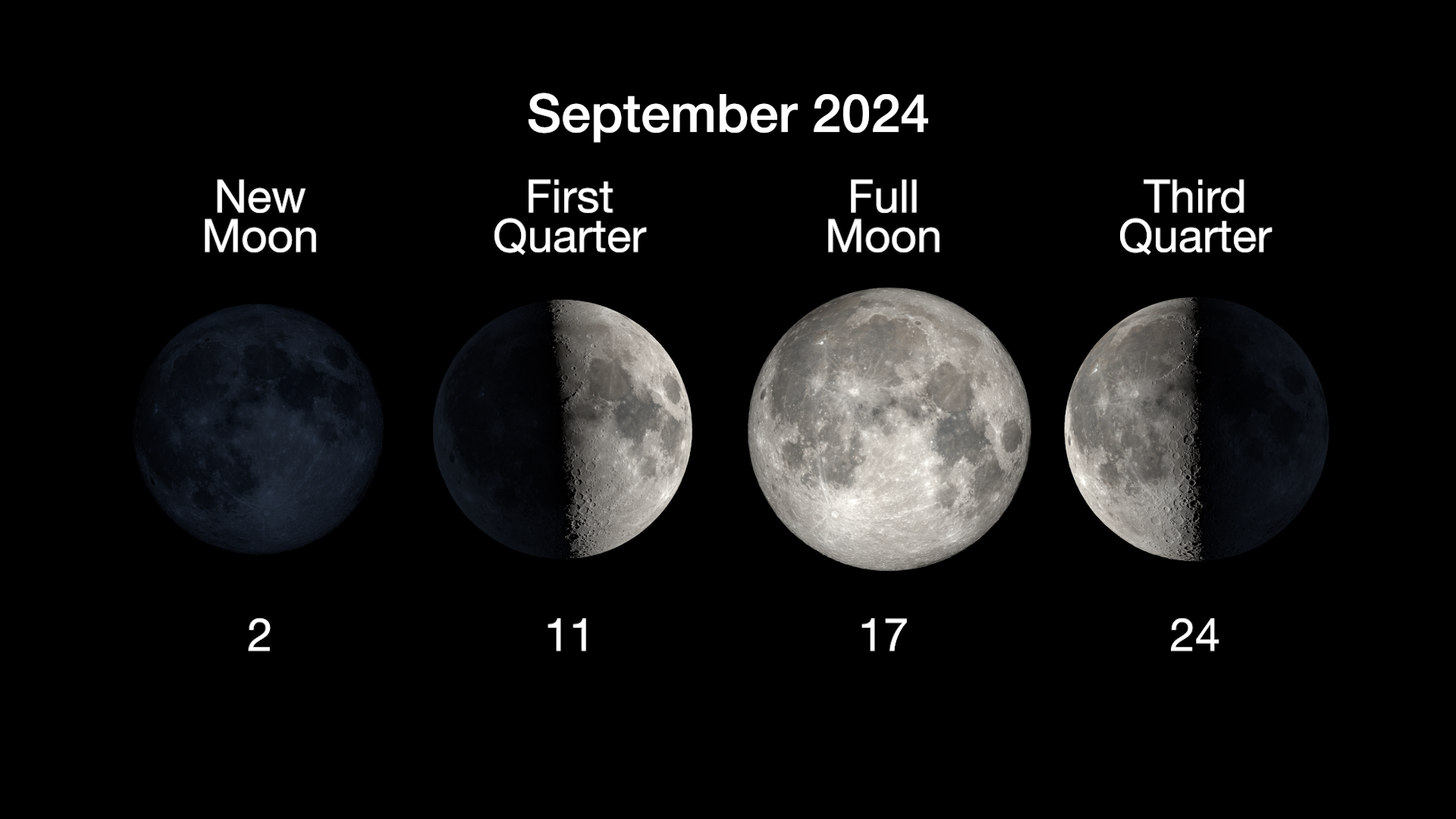
And here are the phases of the Moon for September.
The phases of the Moon for September 2024.
NASA/JPL-Caltech
Stay up to date on NASA’s missions exploring the solar system and beyond at science.nasa.gov. I’m Preston Dyches from NASA’s Jet Propulsion Laboratory, and that’s What’s Up for this month.
The shoebox-sized BurstCube satellite has observed its first gamma-ray burst, the most powerful kind of explosion in the universe, according to a recent analysis of observations collected over the last several months.
“We’re excited to collect science data,” said Sean Semper, BurstCube’s lead engineer at NASA’s Goddard Space Flight Center in Greenbelt, Maryland. “It’s an important milestone for the team and for the many early career engineers and scientists that have been part of the mission.”
The event, called GRB 240629A, occurred on June 29 in the southern constellation Microscopium. The team announced the discovery in a GCN (General Coordinates Network) circular on August 29.
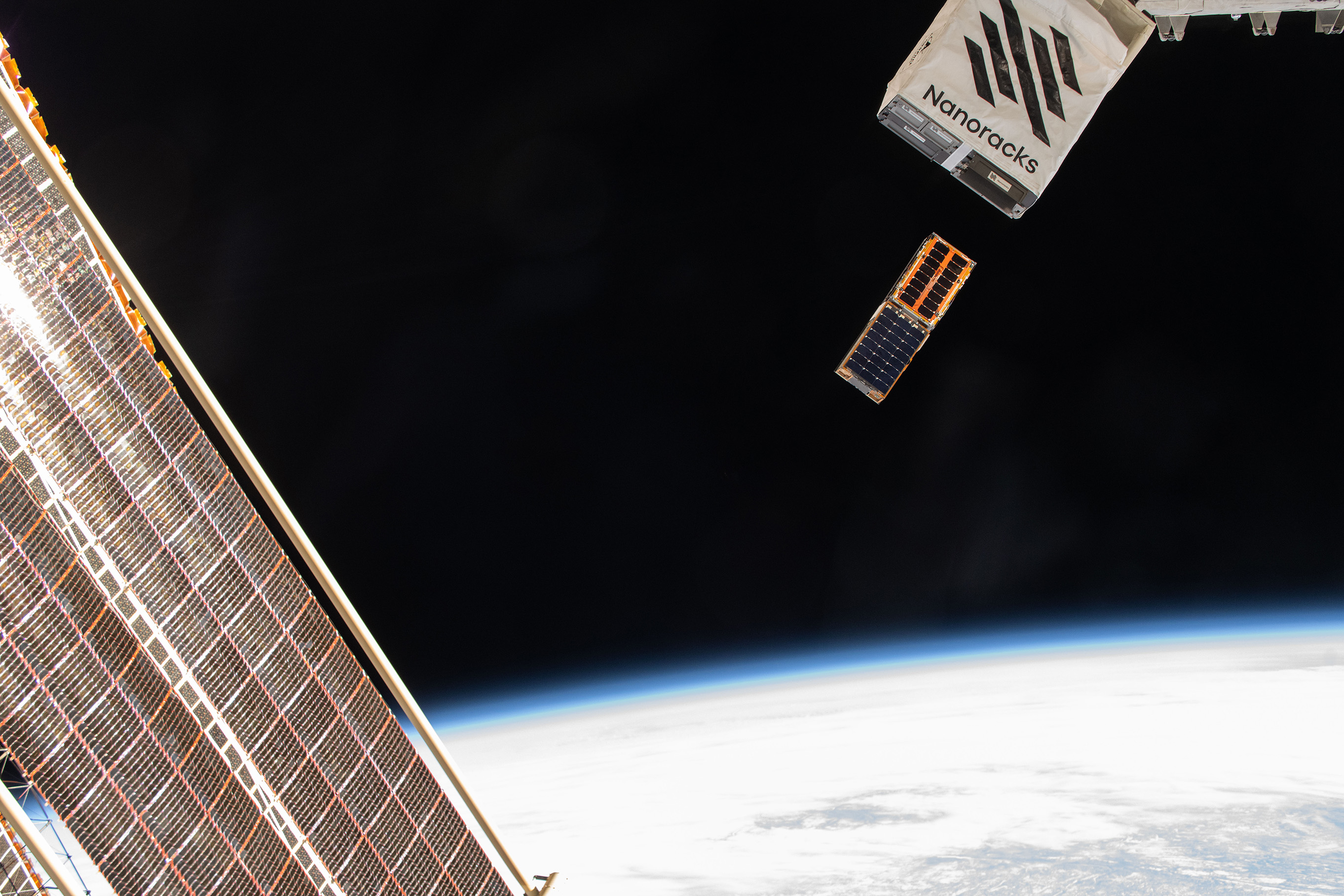
BurstCube, trailed by another CubeSat named SNOOPI (Signals of Opportunity P-band Investigation), emerges from the International Space Station on April 18, 2024.
NASA/Matthew Dominick
BurstCube deployed into orbit April 18 from the International Space Station, following a March 21 launch.
The mission was designed to detect, locate, and study short gamma-ray bursts, brief flashes of high-energy light created when superdense objects like neutron stars collide. These collisions also produce heavy elements like gold and iodine, an essential ingredient for life as we know it.
BurstCube is the first CubeSat to use NASA’s TDRS (Tracking and Data Relay Satellite) system, a constellation of specialized communications spacecraft. Data relayed by TDRS (pronounced “tee-driss”) help coordinate rapid follow-up measurements by other observatories in space and on the ground through NASA’s GCN.
BurstCube also regularly beams data back to Earth using the Direct to Earth system — both it and TDRS are part of NASA’s Near Space Network.
After BurstCube deployed from the space station, the team discovered that one of the two solar panels failed to fully extend. It obscures the view of the mission’s star tracker, which hinders orienting the spacecraft in a way that minimizes drag. The team originally hoped to operate BurstCube for 12-18 months, but now estimates the increased drag will cause the satellite to re-enter the atmosphere in September.
“I’m proud of how the team responded to the situation and is making the best use of the time we have in orbit,” said Jeremy Perkins, BurstCube’s principal investigator at Goddard. “Small missions like BurstCube not only provide an opportunity to do great science and test new technologies, like our mission’s gamma-ray detector, but also important learning opportunities for the up-and-coming members of the astrophysics community.”
BurstCube is led by Goddard. It’s funded by the Science Mission Directorate’s Astrophysics Division at NASA Headquarters. The BurstCube collaboration includes: the University of Alabama in Huntsville; the University of Maryland, College Park; the Universities Space Research Association in Washington; the Naval Research Laboratory in Washington; and NASA’s Marshall Space Flight Center in Huntsville.
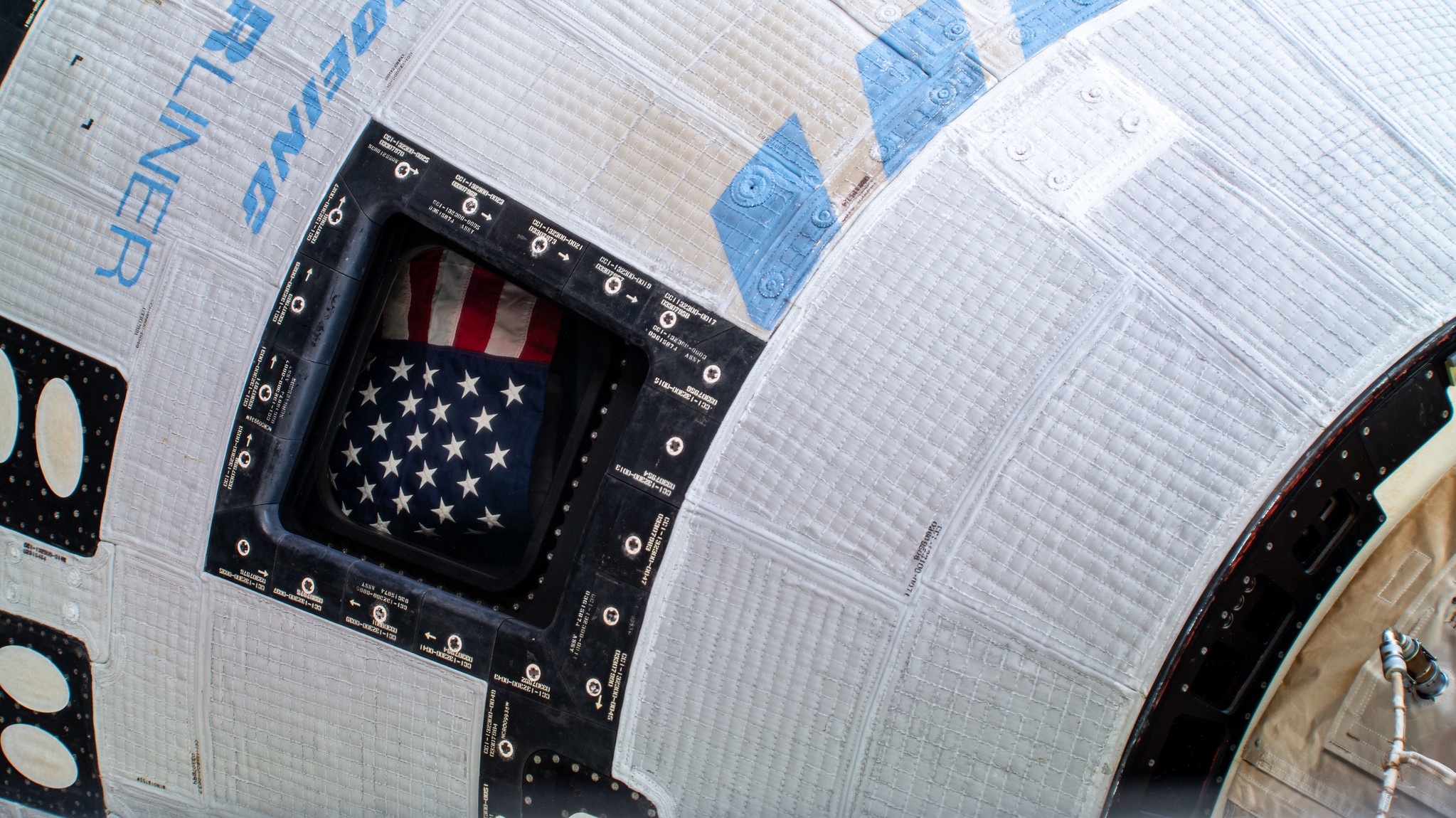
The American flag pictured inside the window of Boeing’s Starliner spacecraft at the International Space Station.
Credit: NASA
NASA will provide live coverage of the upcoming activities for Boeing’s Starliner spacecraft departure from the International Space Station and return to Earth. The uncrewed spacecraft will depart from the orbiting laboratory for a landing at White Sands Space Harbor in New Mexico.
Starliner is scheduled to autonomously undock from the space station at approximately 6:04 p.m. EDT Friday, Sept. 6, to begin the journey home, weather conditions permitting. NASA and Boeing are targeting approximately 12:03 a.m., Saturday, Sept. 7, for the landing and conclusion of the flight test.
NASA’s live coverage of return and related activities will stream on NASA+, the NASA app, and the agency’s website. Learn how to stream NASA programming through a variety of platforms including social media.
Ahead of Starliner’s return, NASA will host a pre-departure news conference at 12 p.m., Wednesday, Sept. 4, from the agency’s Johnson Space Center in Houston. NASA’s Commercial Crew and International Space Station Program managers and a flight director will participate.
To attend the pre-departure news conference in person, U.S. media must contact the NASA Johnson newsroom by 5 p.m., Tuesday, Sept. 3, at jsccommu@mail.nasa.gov or 281-483-5111. To join the pre-departure news conference by phone, media must contact the NASA newsroom no later than two hours prior to the start of the call.
NASA astronauts Butch Wilmore and Suni Williams launched aboard Boeing’s Starliner spacecraft on June 5 for its first crewed flight, arriving at the space station on June 6. As Starliner approached the orbiting laboratory, NASA and Boeing identified helium leaks and experienced issues with the spacecraft reaction control thrusters. For the safety of the astronauts, NASA announced on Aug. 24 that Starliner will return to Earth from the station without a crew. Wilmore and Williams will remain aboard the station and return home in February 2025 aboard the SpaceX Dragon spacecraft with two other crew members assigned to NASA’s SpaceX Crew-9 mission.
NASA’s coverage is as follows (all times Eastern and subject to change based on real-time operations):
Wednesday, Sept. 4
12 p.m. – Starliner pre-departure news conference from NASA’s Johnson Space Center on NASA+, the NASA app, YouTube, and the agency’s website.
10:50 p.m. – Coverage resumes for deorbit burn, entry, and landing on NASA+, the NASA app, YouTube, and the agency’s website.
Saturday, Sept. 7
12:03 a.m. – Targeted landing
1:30 a.m. – Post-landing news conference with the following participants:
Joel Montalbano, deputy associate administrator, Space Operations Mission Directorate at NASA Headquarters in Washington
Steve Stich, manager, Commercial Crew Program, NASA Kennedy Space Center in Florida
Dana Weigel, manager, International Space Station, NASA Johnson
John Shannon, vice president, Boeing Exploration Systems
Mark Nappi, vice president and program manager, Boeing Commercial Crew Program
Coverage of the post-landing news conference will stream live on NASA+, the NASA app, YouTube, and the agency’s website.
To attend the post-landing news conference in person, U.S. media must contact the NASA Johnson newsroom by 12 p.m., Sept. 6. To join the post-landing news conference by phone, media must contact the NASA Johnson newsroom no later than one hour prior to the start of the event.
See full mission coverage, NASA’s commercial crew blog, and more information about the mission at:
Co-creating authentic STEM learning experiences with Latino communities
Led by Arizona State University, the NASA Science Activation Program’s “Engaging Hispanic Communities in Authentic NASA Science” project advances NASA’s vision for science, technology, engineering, and mathematics (STEM) education by co-creating learning experiences with Latino communities in six locations in California, Arizona, New Mexico, and Texas. Partners at each site – including educational organizations, community groups, and subject matter experts – are collaborating to offer culturally sustaining learning experiences that reflect the people, priorities, and assets of each community.
In the San Francisco Bay area, the University of California Berkeley’s Lawrence Hall of Science is working with Bay Area Community Resources to offer hands-on Earth and space activities at hundreds of out-of-school-time programs. In San Diego, the Fleet Science Center and the San Ysidro STEM Committee are planning an annual STEM festival. In the Phoenix/Mesa metro area, Arizona State University and RAIL Community Development Corporation are working with community members and local artists to create STEAM (STEM + art) experiences that will be embedded in Hispanic neighborhoods. In Albuquerque, Explora and Horizons Albuquerque are hosting a teen summit to co-create a new futures-oriented exhibition for the science center. The Brownsville Children’s Museum in Texas is working with a variety of partners to engage families in STEM learning at community events across the area. Finally, in Houston, the Children’s Museum of Houston and Community Family Centers are offering STEM summer camp experiences in underserved Hispanic neighborhoods.
These activities have spanned across Spring and Summer 2024 and engaged over 10,000 learners in authentic STEM learning experiences. Looking ahead to the future, team members will continue to deepen their relationships among organizations and broaden participation across their local communities. The six sites also convene regularly as a community of practice, sharing insights, strategies, and practices. Learnings from the project and professional resources will also be shared widely across the STEM engagement and education professionals.
The Engaging Hispanic Communities in Authentic NASA Science project is supported by NASA under cooperative agreement award number 80NSSC22M0122 and is part of NASA’s Science Activation Portfolio. Learn more about how Science Activation connects NASA science experts, real content, and experiences with community leaders to do science in ways that activate minds and promote deeper understanding of our world and beyond: https://science.nasa.gov/learn
Family doing a hands-on activity at a science center.
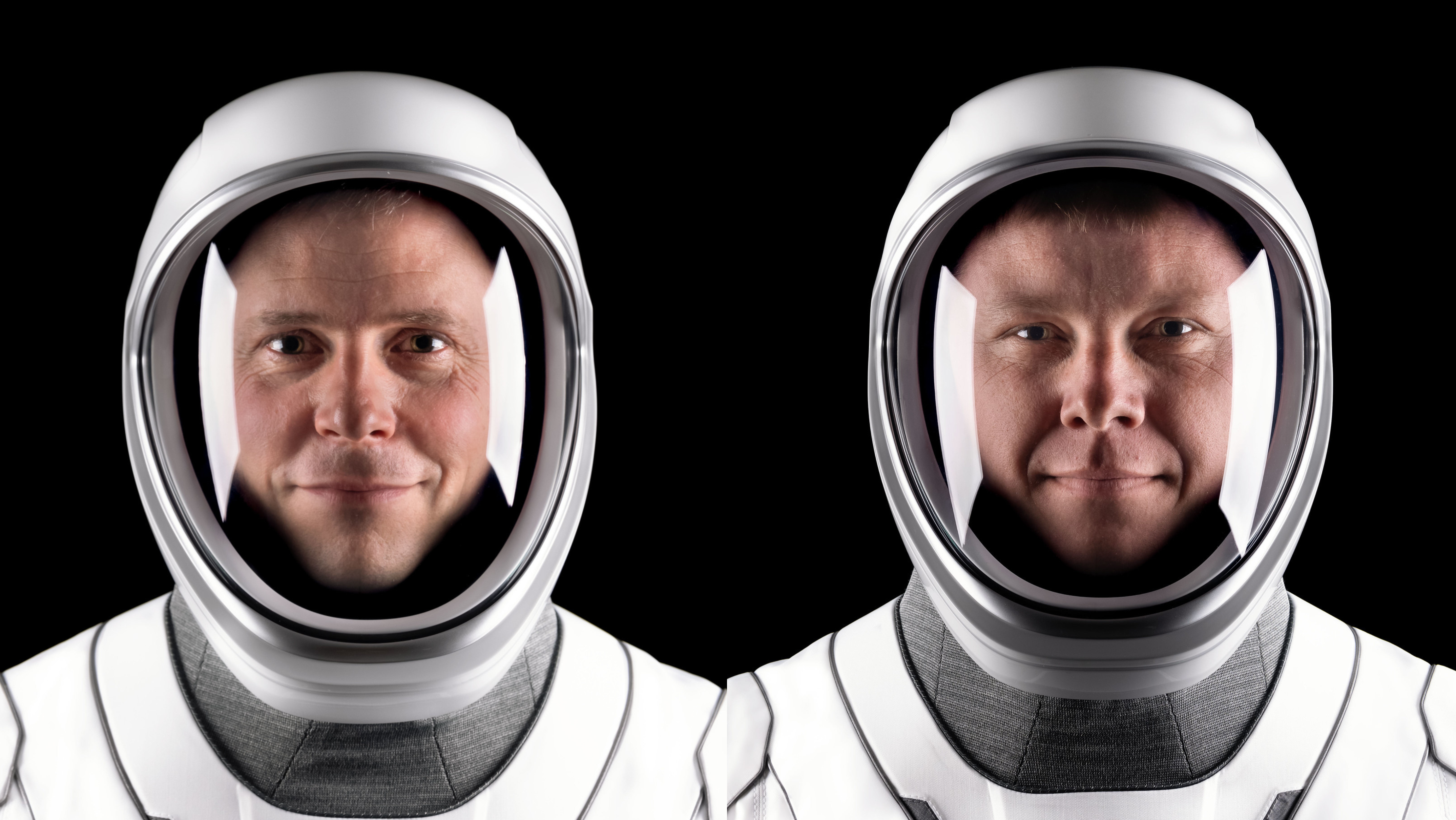
NASA astronaut Nick Hague and Roscosmos cosmonaut Aleksandr Gorbunov (Credit: NASA)
Editor’s note:This release was updated twice on Aug. 30, 2024. First, to correct Roscosmos cosmonaut Aleksandr Gorbunov’s role as a mission specialist. It was updated again to correct a launch date.
NASA astronaut Nick Hague and Roscosmos cosmonaut Aleksandr Gorbunov will launch no earlier than Tuesday, Sept. 24, on the agency’s SpaceX Crew-9 mission to the International Space Station. NASA astronauts Zena Cardman and Stephanie Wilson, previously announced as crewmates, are eligible for reassignment on a future mission.
Hague and Gorbunov will fly to the space station as commander and mission specialist, respectively, as part of a two-crew member flight aboard a SpaceX Dragon.
The updated crew complement follows NASA’s decision to return the agency’s Boeing Crew Flight Test uncrewed and launch Crew-9 with two unoccupied seats. NASA astronauts Butch Wilmore and Suni Williams, who launched aboard the Starliner spacecraft in June, will fly home with Hague and Gorbunov in February 2025.
The decision to fly Hague was made by NASA chief astronaut Joe Acaba at the agency’s Johnson Space Center in Houston. Acaba had to balance flying a NASA crew member with previous spaceflight experience to command the flight, while ensuring NASA maintains an integrated crew with a Roscosmos cosmonaut who can operate their critical systems for continued, safe station operations.
“While we’ve changed crew before for a variety of reasons, downsizing crew for this flight was another tough decision to adjust to given that the crew has trained as a crew of four,” said Acaba. “I have the utmost confidence in all our crew, who have been excellent throughout training for the mission. Zena and Stephanie will continue to assist their crewmates ahead of launch, and they exemplify what it means to be a professional astronaut.”
The agency will share reassignment details for Cardman and Wilson when available.
“I am deeply proud of our entire crew,” said Cardman, “and I am confident Nick and Alex will step into their roles with excellence. All four of us remain dedicated to the success of this mission, and Stephanie and I look forward to flying when the time is right.”
Wilson added, “I know Nick and Alex will do a great job with their work aboard the International Space Station as part of Expedition 72.”
With 203 days logged in space, this will be Hague’s third launch and second mission to the orbiting laboratory. During his first launch in October 2018, Hague and his crewmate, Roscosmos’ Alexey Ovchinin, experienced a rocket booster failure, resulting in an in-flight, post-launch abort, ballistic re-entry, and safe landing in their Soyuz MS-10 spacecraft. Five months later, Hague launched aboard Soyuz MS-12 and served as a flight engineer aboard the space station during Expeditions 59 and 60. Hague conducted three spacewalks to upgrade space station power systems and install a docking adapter for commercial spacecraft. An active-duty colonel in the U.S. Space Force, Hague completed a developmental rotation at the Defense Department, and served as the Space Force’s director of test and evaluation from 2020 to 2022. In August 2022, Hague resumed duties at NASA, working on the Boeing Starliner Program until this flight assignment. Follow @astrohague on X and Instagram.
This will be Gorbunov’s first trip to space and the station. Born in Zheleznogorsk, Kursk region, Russia, he studied engineering with qualifications in spacecraft and upper stages from the Moscow Aviation Institute. Gorbunov graduated from the military department with a specialty in operating and repairing aircraft, helicopters, and aircraft engines. Before his selection as a cosmonaut in 2018, he worked as an engineer for Rocket Space Corp. Energia and supported cargo spacecraft launches from the Baikonur Cosmodrome.
Hague and Gorbonov will become members of the Expedition 72 crew aboard the station. They will join Wilmore, Williams, fellow NASA astronaut Don Pettit, and Roscosmos cosmonauts Alexey Ovchinin and Ivan Vagner conducting scientific research and maintenance activities into the station’s 24th year of continuous human presence.
Learn more about International Space Station research and operations at:
This website uses cookies to improve your experience. We'll assume you're ok with this, but you can opt-out if you wish.AcceptRead More
Privacy & Cookies Policy
Privacy Overview
This website uses cookies to improve your experience while you navigate through the website. Out of these, the cookies that are categorized as necessary are stored on your browser as they are essential for the working of basic functionalities of the website. We also use third-party cookies that help us analyze and understand how you use this website. These cookies will be stored in your browser only with your consent. You also have the option to opt-out of these cookies. But opting out of some of these cookies may affect your browsing experience.
Necessary cookies are absolutely essential for the website to function properly. This category only includes cookies that ensures basic functionalities and security features of the website. These cookies do not store any personal information.
Any cookies that may not be particularly necessary for the website to function and is used specifically to collect user personal data via analytics, ads, other embedded contents are termed as non-necessary cookies. It is mandatory to procure user consent prior to running these cookies on your website.