Tag: planethunt

  • NASA’s SpaceX 33rd Commercial Resupply Mission Overview

    NASA's SpaceX 33rd commercial resupply mission will launch on the company’s Dragon spacecraft on the SpaceX Falcon 9 rocket to deliver research and supplies to the International Space Station
    NASA’s SpaceX 33rd commercial resupply mission will launch on the company’s Dragon spacecraft on the SpaceX Falcon 9 rocket to deliver research and supplies to the International Space Station
    NASA

    NASA and SpaceX are targeting no earlier than 2:45 a.m. EDT on Sunday, Aug. 24, for the next launch to deliver scientific investigations, supplies, and equipment to the International Space Station.

    Filled with more than 5,000 pounds of supplies, the SpaceX Dragon spacecraft, on the company’s Falcon 9 rocket, will lift off from Launch Complex 40 at Cape Canaveral Space Force Station in Florida. Dragon will dock autonomously about 7:30 a.m. on Monday, Aug. 25, to the forward port of the space station’s Harmony module.

    NASA’s SpaceX 33rd commercial resupply mission will launch from Launch Complex 40 at Cape Canaveral Space Force Station in Florida.
    NASA’s SpaceX 33rd commercial resupply mission will launch from Launch Complex 40 at Cape Canaveral Space Force Station in Florida.
    NASA

    This launch is the 33rd SpaceX commercial resupply services mission to the orbital laboratory for the agency, and the 13th SpaceX launch under the Commercial Resupply Services-2 contract. The first 20 launches were under the original resupply services contract.

    Watch agency launch and arrival coverage on NASA+, Netflix, Amazon Prime, and more. Learn how to watch NASA content through a variety of platforms, including social media.

    NASA’s live launch coverage will begin at 2:25 a.m. on Aug 24. Dragon’s arrival coverage will begin at 6 a.m. on Aug. 25. For nearly 25 years, the International Space Station has provided research capabilities used by scientists from over 110 countries to conduct more than 4,000 groundbreaking experiments in microgravity. Research conducted aboard the space station advances Artemis missions to the Moon and human exploration of Mars, while providing multiple benefits to humanity.

    Arrival & Departure

    The SpaceX Dragon spacecraft will arrive at the space station and dock autonomously to the forward port of the station’s Harmony module at approximately 7:30 a.m. on Monday, Aug. 25. NASA astronauts Mike Fincke and Jonny Kim will monitor the spacecraft’s arrival. It will stay docked to the orbiting laboratory for about four months before splashing down and returning critical science and hardware to teams on Earth.

    NASA astronauts Mike Fincke and Jonny Kim will monitor the arrival of the SpaceX Dragon cargo spacecraft from the International Space Station.
    NASA astronauts Mike Fincke and Jonny Kim will monitor the arrival of the SpaceX Dragon cargo spacecraft from the International Space Station.
    NASA

    Research Highlights

    Preventing bone loss in space

    Microgravity Associated Bone Loss-B (MABL-B) assesses the effects of microgravity on bone marrow stem cells and may provide a better understanding of the basic molecular mechanisms of bone loss that occurs during spaceflight and from normal aging on Earth.
    Microgravity Associated Bone Loss-B (MABL-B) assesses the effects of microgravity on bone marrow stem cells and may provide a better understanding of the basic molecular mechanisms of bone loss that occurs during spaceflight and from normal aging on Earth.

    study of bone-forming stem cells in microgravity could provide insight into the basic mechanisms of the bone loss astronauts experience during long-duration space flight ahead of future exploration of the Moon and Mars.

    Researchers identified a protein in the body called IL-6 that can send signals to stem cells to promote either bone formation or bone loss. This work evaluates whether blocking IL-6 signals could reduce bone loss during spaceflight. Results could improve our understanding of bone loss on Earth due to aging or disease and lead to new prevention and treatment strategies.

    Printing parts, tools in space

    Printing parts, tools in space
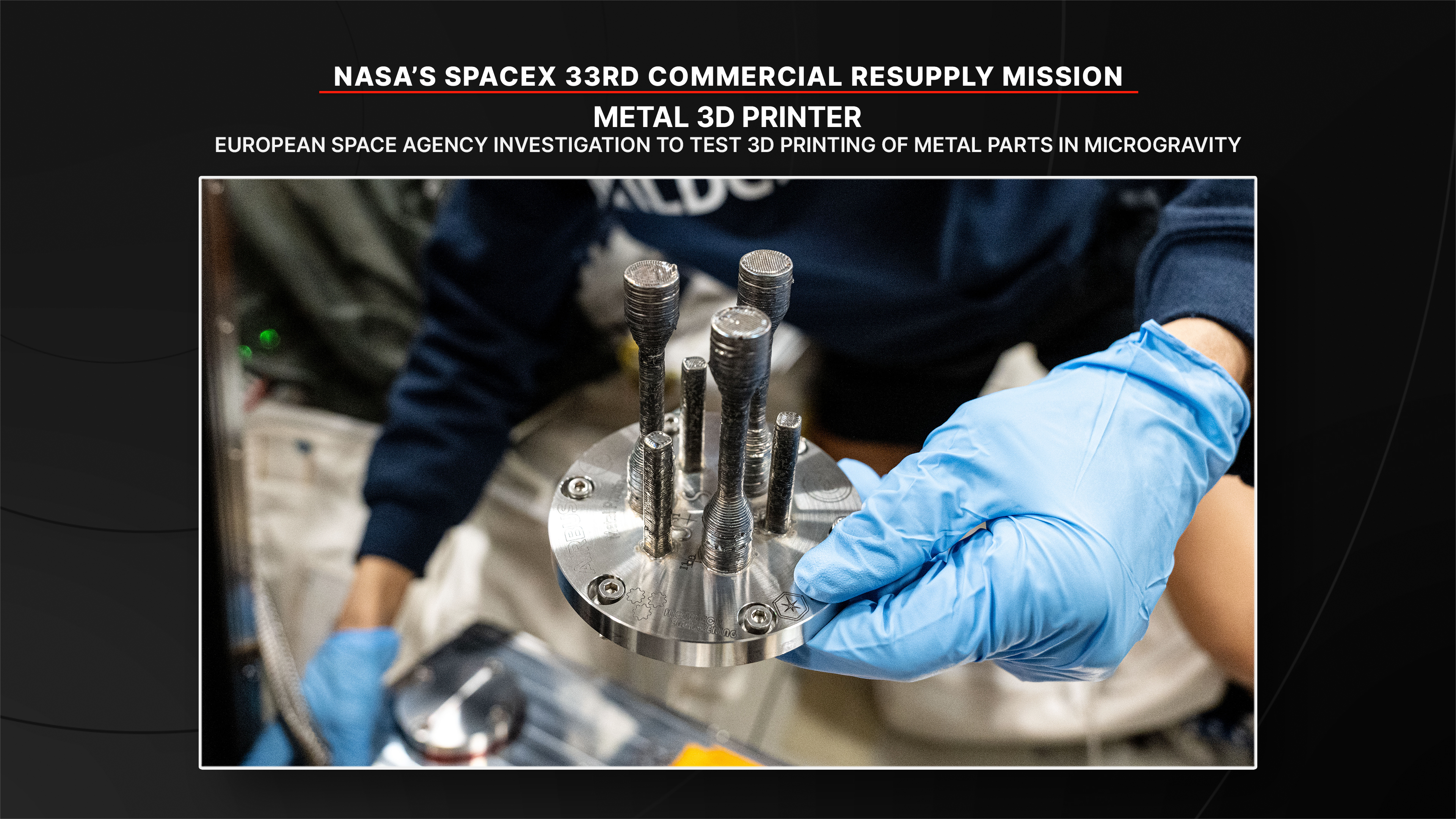
    The objective of the Metal 3D printer aboard the International Space Station is to gain experience with operating and evaluating the manufacturing of spare parts in microgravity to support long duration space missions.
    The objective of the Metal 3D printer aboard the International Space Station is to gain experience with operating and evaluating the manufacturing of spare parts in microgravity to support long duration space missions.
    NASA

    As mission duration and distance from Earth increase, resupply becomes harder. Additive manufacturing, or 3D printing, could be used to make parts and dedicated tools on demand, enhancing mission autonomy.

    Research aboard the space station has made strides in 3D printing with plastic, but it is not suitable for all uses. Investigations from ESA’s (European Space Agency) Metal 3D Printer builds on recent successful printing of the first metal parts in space.

    Bioprinting tissue in microgravity

    Maturation of Vascularized Liver Tissue Construct in Zero Gravity (MVP Cell-07) is a biotechnology experiment studying bioprinted, or lab grown, liver tissues complete with blood vessels in space. The results could improve astronaut health on long missions and lead to new ways to treat patients on Earth.
    Maturation of Vascularized Liver Tissue Construct in Zero Gravity (MVP Cell-07) is a biotechnology experiment studying bioprinted, or lab grown, liver tissues complete with blood vessels in space. The results could improve astronaut health on long missions and lead to new ways to treat patients on Earth.
    NASA

    Researchers plan to bioprint liver tissue containing blood vessels on the ground and examine how the tissue develops in microgravity. Results could help support the eventual production of entire functional organs for transplantation on Earth.

    A previous mission tested whether this bioprinted liver tissue survived and functioned in space. This experimental round could show whether microgravity improves the development of the bioprinted tissue.

    Biomanufacturing drug-delivery medical devices

    The InSPA-Auxilium Bioprinter will test 3D printing medical implant devices designed to deliver drugs and treat various health conditions such as nerve inuries. Printing on the International Space Station may produce higher-quality devices than on Earth.
    The InSPA-Auxilium Bioprinter will test 3D printing medical implant devices designed to deliver drugs and treat various health conditions such as nerve inuries. Printing on the International Space Station may produce higher-quality devices than on Earth.

    Scientists are creating an implantable device in microgravity that could support nerve regrowth after injuries. The device is created through bioprinting, a type of 3D printing that uses living cells or proteins as raw materials.

    Traumatic injuries can create gaps between nerves, and existing treatments have a limited ability to restore nerve function and may result in impaired physical function. A bioprinted device to bridge nerve gaps could accelerate recovery and preserve function.

    Cargo Highlights
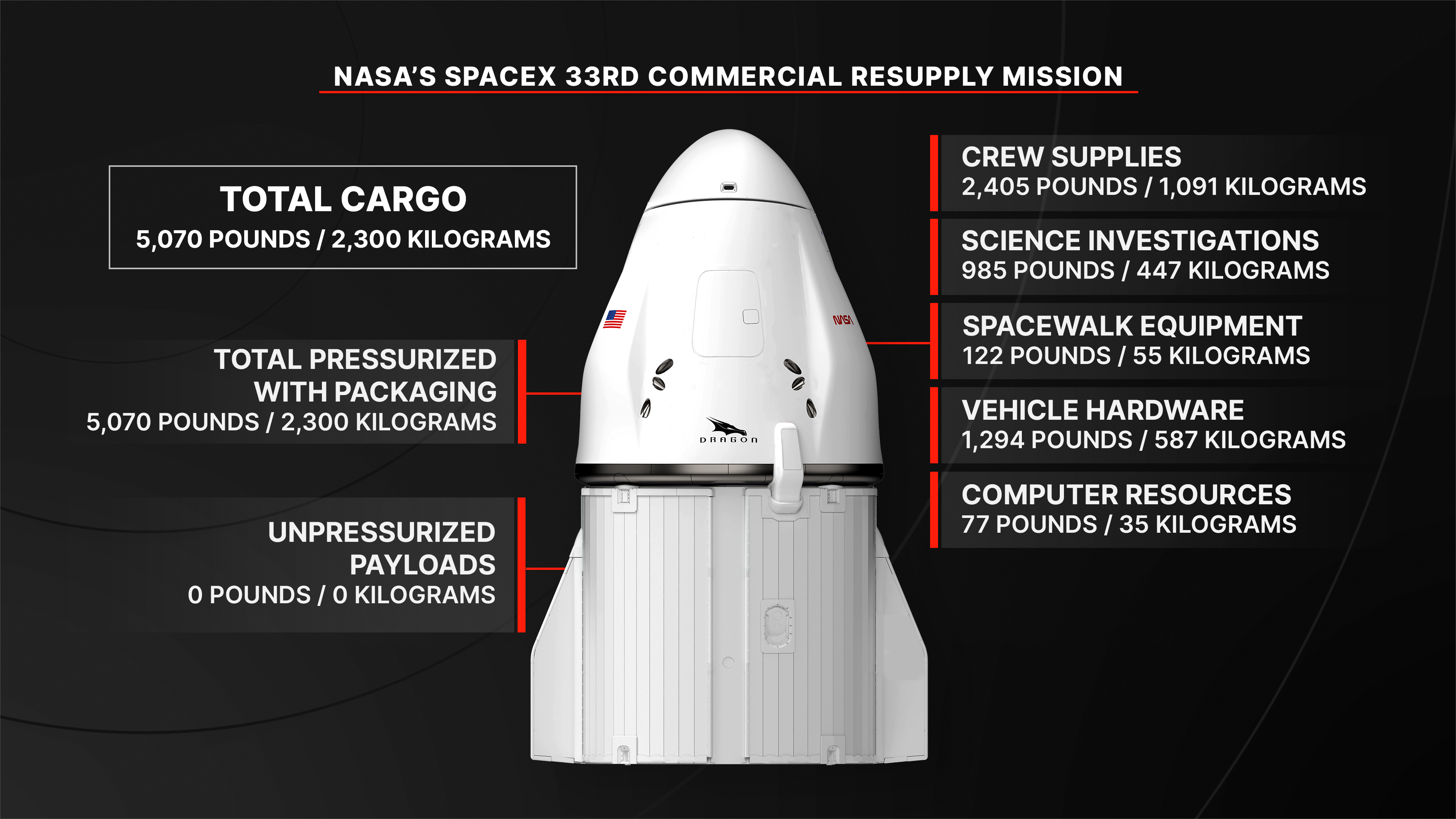
    NASA's SpaceX 33rd commercial resupply mission will launch on the company’s Dragon spacecraft on the SpaceX Falcon 9 rocket to deliver research and supplies to the International Space Station
    NASA’s SpaceX 33rd commercial resupply mission will launch on the company’s Dragon spacecraft on the SpaceX Falcon 9 rocket to deliver research and supplies to the International Space Station

    Hardware

    Launch:

    Reboost Kit – This kit will perform a reboost demonstration of the station to maintain its current altitude. The hardware, located in Dragon’s trunk, contains an independent propellant system, separate from the spacecraft’s main system, to fuel two Draco engines using existing hardware and propellant system design.

    The boost kit will demonstrate the capability to maintain the orbiting lab’s altitude starting in September with a series of burns planned periodically throughout the fall of 2025. During NASA’s SpaceX 31st commercial resupply services mission, the Dragon spacecraft first demonstrated these capabilities on Nov. 8, 2024.

    Poly Exercise Rope Kit – These exercise ropes distribute the desired exercise loads through a series of pulleys for the Advanced Restrictive Exercise Device. The ropes have a limited life cycle, and it will be necessary to replace them once they have reached their limit.

    Brine Filter – These filters remove solid particles from liquid in urine during processing as a part of the station’s water recovery system.

    Acoustic Monitor – A monitor that measures sound and records the data for download. This monitor will replace the sound level meter and the acoustic dosimeter currently aboard the orbiting laboratory.

    Multi-filtration Bed – This space unit will support the Water Processor Assembly and continue the International Space Station Program’s effort to replace a fleet of degraded units aboard the station to improve water quality through a single bed.

    Water Separator Orbital Unit – The unit draws air and condensate mixture from a condensing heat exchanger and separates the two components. The air is returned to the cabin air assembly outlet air-flow stream, and the water is delivered to the condensate bus. This unit launches to maintain in-orbit sparing while another is being returned for repair.

    Anomaly Gas Analyzer Top Assembly – This battery-powered device detects and monitors gases aboard the station, including oxygen, carbon dioxide, hydrogen chloride, hydrogen fluoride, ammonia, carbon monoxide, and hydrogen cyanide. It also measures cabin pressure, humidity, and temperature. It replaces the Compound Specific Analyzer Combustion Products as the primary tool for detecting airborne chemicals and conditions.

    Separator Pump (Water Recovery and Management) – This electrically-powered pump separates liquids and gases while rotating. It includes a scoop pump that moves the separated liquid into storage containers for use in other systems. The pump also contains sensor components and a filter to reduce electrical interference from the motor. Launching to maintain in-orbit sparing.

    Reducer Cylinder Assembly & Emergency Portable Breathing Apparatus – Together, this hardware provides 15 minutes of oxygen to a crew member in case of an emergency (smoke, fire, alarm). Two are launching to maintain a minimum in-orbit spare requirement. 

    Passive Separator Flight Experiment – This experiment will test a new method for separating urine and air using existing technology that combines a water-repellent urine hose with an airflow separator from the station’s existing Waste Hygiene Compartment.

    Improved Resupply Water Tanks – Two tanks, each holding approximately 160 pounds of potable water, to supplement the Urine Processing Assembly.

    NORS (Nitrogen/Oxygen Recharge System) Maintenance Tank/Recharge Tank Assembly, Nitrogen – The NORS maintenance kit comprises two assemblies: the NORS recharge tank assembly and the NORS vehicle interface assembly. The recharge tank assembly will be pressurized with nitrogen gas for launch. The vehicle interface assembly will protect the recharge tank assembly for launch and stowage aboard the space station. Launching to maintain reserve oxygen levels on station.

    Swab Kits – These quick-disconnect cleaning kits are designed and created to replace in-orbit inventory.

    Return:

    Oxygen Generation Assembly Pump The assembly pump converts potable water from the water recovery system into oxygen and hydrogen. The oxygen is sent to the crew cabin, and the hydrogen is either vented or used to produce more water. The International Space Station has been using this process to produce oxygen and hydrogen for 15 years, and this unit will be retired upon its return to Earth. The flight support equipment within will be refurbished and used in a new pump launched aboard a future flight.

    Carbon Dioxide Monitoring Assembly A carbon dioxide monitor that measures the gas using the infrared absorption sensor. It expired in July 2025 and will return for refurbishment.

    Meteoroid Debris Cover Center Section Assembly This external multilayer insulation provides thermal and micro-meteoroid orbital debris protection on the node port. After it is removed and replaced with a new assembly launching on NASA’s Northrop Grumman 23rd commercial resupply services mission, this unit will return for repair or used for spare parts.  

    Multi-filtration Bed – This spare unit supports the Water Processor Assembly, which improves water quality aboard the International Space Station. Its return is part of an ongoing effort to replace a degraded fleet of in-orbit units. After its use, this multi-filtration bed will be refurbished for future re-flight.

    Separator Pump – This electrically powered pump separates liquids and gases while rotating. It includes a scoop pump that moves the separated liquid into storage containers for use in other systems. The pump also contains sensor components and a filter to reduce electrical interference from the motor. This unit is designed to run to failure, and after investigation and testing, it will be returned for repair and future flight.

    Rate Gyro Enclosure Assembly – The Rate Gyro Assembly determines the space station’s rate of angular motion. It is returning for repair and refurbishment and will be used as a spare.

    NORS (Nitrogen/Oxygen Recharge System) Maintenance Kit (Oxygen) – The NORS Maintenance Kit comprises two assemblies: the NORS Recharge Tank Assembly and the NORS Vehicle Interface Assembly. The recharge tank assembly will be pressurized with Nitrogen gas for launch. The vehicle interface assembly will protect the recharge tank assembly for launch and stowage aboard the space station. They are routinely returned for reuse and re-flight. The kit also includes a VIA bag (vehicle interface assembly) with foam, which is used as a cargo transfer bag for launch and return to protect the tank.

    Watch, Engage

    Watch agency launch and arrival coverage on NASA+, Netflix, Amazon Prime, and more. Learn how to watch NASA content through a variety of platforms, including social media.

    NASA’s live launch coverage will begin at 2:25 a.m. on Aug 24. Dragon’s arrival coverage will begin at 6 a.m. on Aug. 25.

    Read more about how to watch and engage.

  • To See the World in a Grain of Sand: Investigating Megaripples at ‘Kerrlaguna’

    3 min read

    To See the World in a Grain of Sand: Investigating Megaripples at ‘Kerrlaguna’

    A color photo from the Martian surface shows a landscape of windblown pale-orange sandy soil. Two gently sloped dunes run diagonally in the upper left and the lower right corners of the image, looking as if they’ve been smoothed out over time by wind; between them is a gully – much less smooth, with small rocks exposed here and there – which runs from the upper right corner of the image to the lower left corner.
    NASA’s Mars Perseverance rover acquired this image of inactive megaripples at “Kerrlaguna,” Perseverance’s latest target of exploration, on Aug. 13, 2025. The rover acquired the image using its Right Mastcam-Z camera, one of a pair of cameras located high on the rover’s mast, on Sol 1593 — or, Martian day 1,593 of the Mars 2020 mission — at the local mean solar time of 12:05:13.
    NASA/JPL-Caltech/ASU

    Written by Athanasios Klidaras, Ph.D. candidate at Purdue University

    On Mars, the past is written in stone — but the present is written in sand. Last week, Perseverance explored inactive megaripples to learn more about the wind-driven processes that are reshaping the Martian landscape every day. 

    After wrapping up its investigation at the contact between clay and olivine-bearing rocks at “Westport,” Perseverance is journeying south once more. Previously, attempts were made to drive uphill to visit a new rock exposure called “Midtoya.” However, a combination of the steep slope and rubbly, rock-strewn soil made drive progress difficult, and after several attempts, the decision was made to return to smoother terrain. Thankfully, the effort wasn’t fruitless, as the rover was able to gather data on new spherule-rich rocks thought to have rolled downhill from “Midtoya,” including the witch hat or helmet-shaped rock “Horneflya,” which has attracted much online interest.  

    More recently, Perseverance explored a site called “Kerrlaguna” where the steep slopes give way to a field of megaripples: large windblown sand formations up to 1 meter (about 3 feet) tall. The science team chose to perform a mini-campaign to make a detailed study of these features. Why such interest? While often the rover’s attention is focused on studying processes in Mars’ distant past that are recorded in ancient rocks, we still have much to learn about the modern Martian environment.

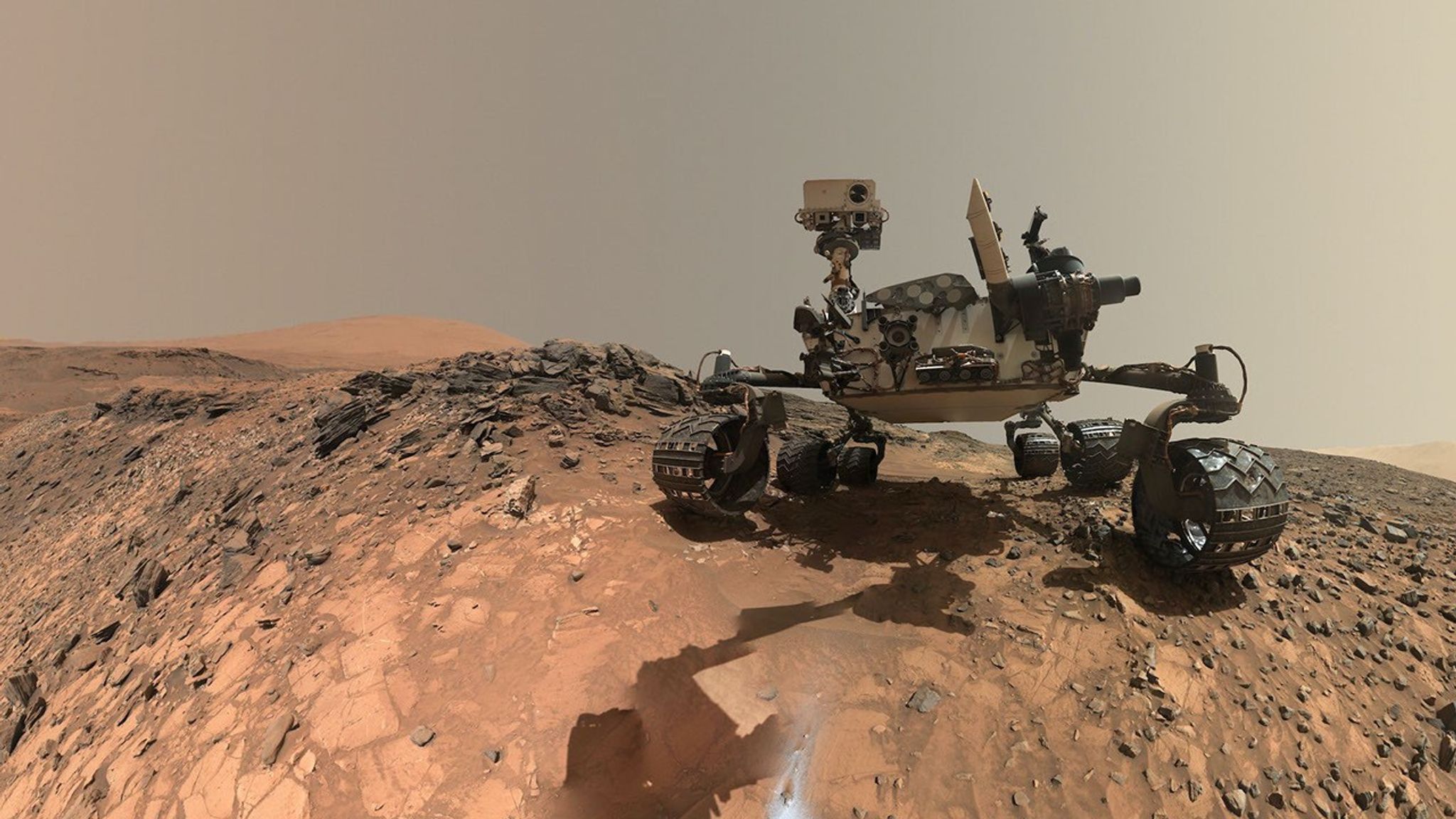
    Almost a decade ago, Perseverance’s forerunner Curiosity studied an active sand dune at “Namib Dune” on the floor of Gale crater, where it took a memorable selfie. However the smaller megaripples — and especially dusty, apparently no longer active ones like at “Kerrlaguna” — are also common across the surface of Mars. These older immobile features could teach us new insights about the role that wind and water play on the modern Martian surface.

    After arriving near several of these inactive megaripples, Perseverance performed a series of measurements using its SuperCam, Mastcam-Z, and MEDA science instruments in order to characterize the surrounding environment, the size and chemistry of the sand grains, and any salty crusts that may have developed over time.

    Besides furthering our understanding of the Martian environment, documenting these potential resources could help us prepare for the day when astronauts explore the Red Planet and need resources held within Martian soils to help them survive. It is hoped that this investigation at “Kerrlaguna” can provide a practice run for a more comprehensive campaign located at a more extensive field of larger bedforms at “Lac de Charmes,” further along the rover traverse. 

    Details

    Last Updated

    Aug 21, 2025

    Related Terms

  • NASA Astronauts to Answer Questions from Students in Ohio

    NASA astronauts Mike Fincke (left) and Zena Cardman photographed during training for their trip to the International Space Station at SpaceX facilities in Florida.
    NASA astronauts Mike Fincke (left) and Zena Cardman photographed during training for their trip to the International Space Station at SpaceX facilities in Florida.
    Credit: SpaceX

    NASA astronauts Michael Fincke and Zena Cardman will connect with students in Ohio as they answer prerecorded science, technology, engineering, and mathematics (STEM) questions aboard the International Space Station.

    The Earth-to-space call will begin at 10:15 a.m. EDT on Wednesday, Aug. 27, and will stream live on the agency’s Learn With NASA YouTube channel.

    Media interested in covering the event must RSVP by 5 p.m., Monday, Aug. 25, to Mary Beddell at: 330-492-3500 or at beddellm@plainlocal.org.

    The STEM Academy at Glen Oak High School will host this event in Canton, Ohio for high school students. The goal of this event is to expose learners to the excitement and challenges of engineering and technology, while bringing space exploration to life through cross-curricular instruction and language arts.

    For nearly 25 years, astronauts have continuously lived and worked aboard the space station, testing technologies, performing science, and developing skills needed to explore farther from Earth. Astronauts communicate with NASA’s Mission Control Center in Houston 24 hours a day through SCaN’s (Space Communications and Navigation) Near Space Network.

    Research and technology investigations taking place aboard the space station benefit people on Earth and lay the groundwork for other agency deep space missions. As part of NASA’s Artemis campaign, the agency will send astronauts to the Moon to prepare for future human exploration of Mars, inspiring the world through discovery in a new Golden Age of innovation and exploration.

    See more information on NASA in-flight calls at:

    https://www.nasa.gov/stemonstation

    -end-

    Gerelle Dodson
    Headquarters, Washington
    202-358-1600
    gerelle.q.dodson@nasa.gov

    Sandra Jones
    Johnson Space Center, Houston
    281-483-5111
    sandra.p.jones@nasa.gov

  • La NASA invita a los medios al lanzamiento conjunto de misiones sobre el Sol y la meteorología espacial

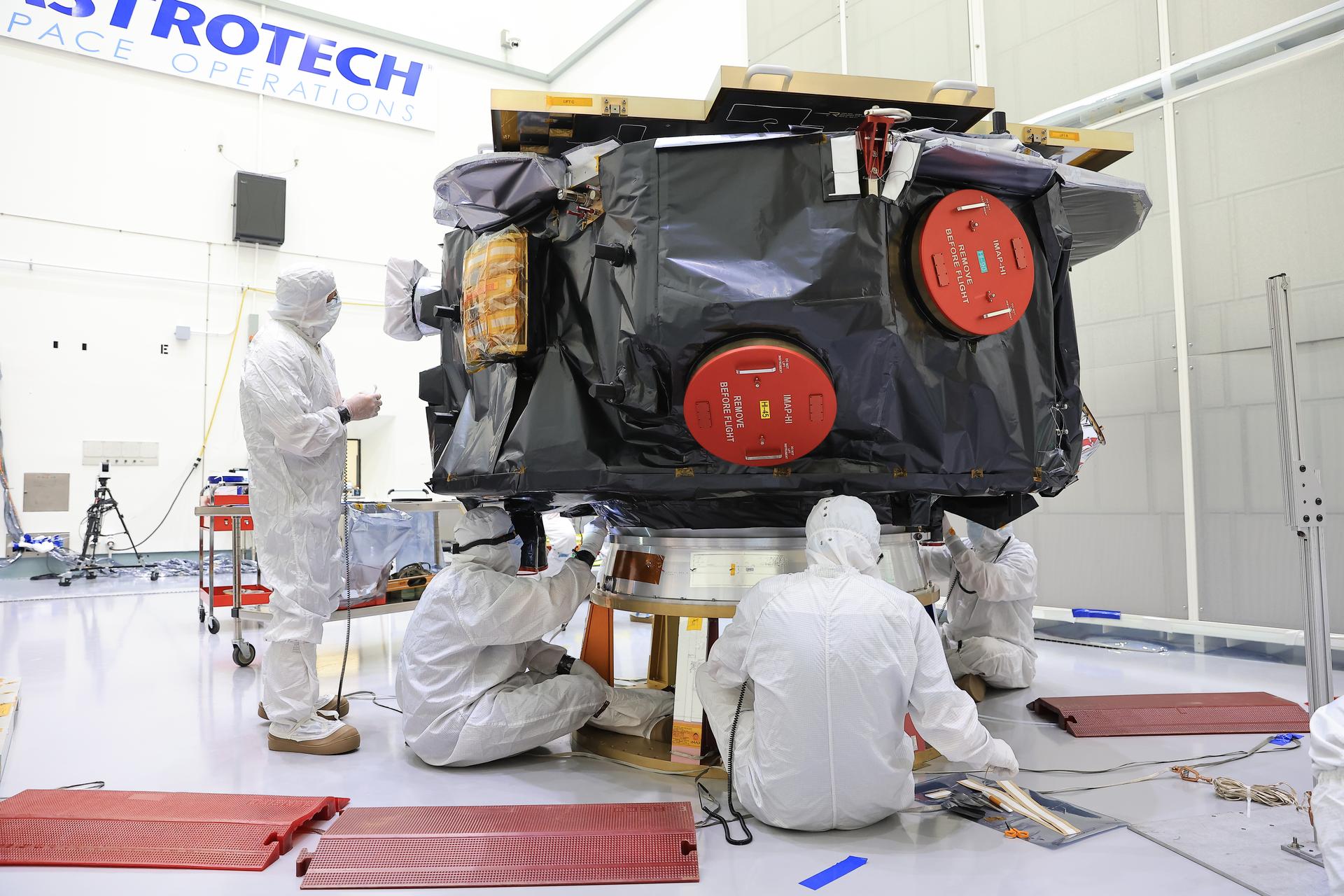
    Técnicos trabajan en el cierre del observatorio IMAP (Sonda de Cartografía y Aceleración Interestelar) de la NASA en las instalaciones Astrotech Space Operations Facility, cerca del Centro Espacial Kennedy de la NASA en Florida, el viernes 15 de agosto de 2025. La misión IMAP explorará y cartografiará los límites de la heliosfera —una enorme burbuja creada por el viento solar que encapsula todo nuestro sistema solar— y estudiará cómo interactúa la heliosfera con el vecindario galáctico local más allá de ella.
    Técnicos trabajan en el cierre del observatorio IMAP (Sonda de Cartografía y Aceleración Interestelar) de la NASA en las instalaciones Astrotech Space Operations Facility, cerca del Centro Espacial Kennedy de la NASA en Florida, el viernes 15 de agosto de 2025. La misión IMAP explorará y cartografiará los límites de la heliosfera —una enorme burbuja creada por el viento solar que encapsula todo nuestro sistema solar— y estudiará cómo interactúa la heliosfera con el vecindario galáctico local más allá de ella.
    Crédito: NASA/Kim Shiflett

    Read this release in English here.

    La NASA ha abierto el plazo para la acreditación de los medios para el lanzamiento de tres observatorios que estudiarán el Sol y mejorarán nuestra capacidad de hacer pronósticos precisos de meteorología espacial, ayudando a proteger los sistemas tecnológicos que impactan la vida en la Tierra.

    La NASA tiene previsto lanzar, no antes del martes 23 de septiembre, la sonda IMAP (por las siglas en inglés de Sonda de Cartografía y Aceleración Interestelar) de la agencia, el Observatorio Carruthers de la Geocorona y el observatorio Seguimiento de la Meteorología Espacial–Lagrange 1 (SWFO-L1, por su acrónimo en inglés) de la Administración Nacional Oceánica y Atmosférica (NOAA, por sus siglas en inglés). Los observatorios se lanzarán a bordo de un cohete SpaceX Falcon 9 desde el Complejo de Lanzamiento 39A del Centro Espacial Kennedy de la NASA en Florida.

    Los medios acreditados tendrán la oportunidad de participar en sesiones informativas previas al lanzamiento y entrevistas con miembros clave de la misión antes del lanzamiento, así como de cubrir el lanzamiento. La NASA comunicará más detalles sobre el calendario de eventos para los medios de comunicación a medida que se acerque la fecha del lanzamiento.

    Las fechas límites de acreditación de medios para el lanzamiento son:

    • Los miembros de medios de comunicación sin ciudadanía estadounidense deben enviar su solicitud a más tardar a las 11:59 p.m. EDT del domingo, 31 de agosto.
    • Los miembros de medios de comunicación con ciudadanía estadounidense deben enviar su solicitud a más tardar a las 11:59 p.m. EDT del jueves, 4 de septiembre.

    Todas las solicitudes de acreditación deben enviarse en línea en: 

    https://media.ksc.nasa.gov

    La política de acreditación de medios de la NASA está disponible en línea. Si tiene preguntas sobre el proceso de acreditación, por favor envíelas a: ksc-media-accreditat@mail.nasa.gov. Para otras preguntas, por favor póngase en contacto con el centro de prensa del centro Kennedy de la NASA: +1 321-867-2468.

    Para obtener información en español en sobre el Centro Espacial Kennedy, comuníquese con Antonia Jaramillo: 321-501-8425. Si desea solicitar entrevistas en español sobre IMAP, póngase en contacto con María-José Viñas: maria-jose.vinasgarcia@nasa.gov.  

    La sonda IMAP de la NASA utilizará diez instrumentos científicos para estudiar y mapear la heliosfera, una vasta burbuja magnética que rodea al Sol y protege nuestro sistema solar de la radiación proveniente del espacio interestelar. Esta misión y sus dos compañeros de viaje orbitarán el Sol cerca del punto de Lagrange 1, a aproximadamente 1,6 millones de kilómetros (un millón de millas) de la Tierra, donde escaneará la heliosfera, analizará la composición de partículas cargadas e investigará cómo esas partículas se mueven a través del sistema solar. Esto proporcionará información sobre cómo el Sol acelera las partículas cargadas, aportando información esencial para comprender el entorno meteorológico espacial en todo el sistema solar. IMAP también monitoreará continuamente el viento solar y la radiación cósmica. La comunidad científica podrá usar estos datos para evaluar capacidades nuevas y mejoradas para herramientas y modelos de predicción de la meteorología espacial, que son vitales para la salud de los humanos que exploran el espacio y la longevidad de sistemas tecnológicos, como satélites y redes eléctricas, que pueden afectar la vida en la Tierra.

    El Observatorio Carruthers de la Geocorona de la agencia es un pequeño satélite concebido para estudiar la exosfera, la parte más externa de la atmósfera de la Tierra. Utilizando cámaras ultravioletas, monitoreará cómo la meteorología espacial del Sol impacta la exosfera, la cual juega un papel crucial en la protección de la Tierra contra eventos de meteorología espacial que pueden afectar satélites, comunicaciones y líneas eléctricas. La exosfera, una nube de hidrógeno neutro que se extiende hasta la Luna y posiblemente más allá, se crea por la descomposición del agua y el metano por la luz ultravioleta del Sol, y su brillo, conocido como la geocorona, solo se ha observado a nivel mundial cuatro veces antes de esta misión.

    La misión SWFO-L1, gestionada por la NOAA y desarrollada con el Centro de Vuelo Espacial Goddard de NASA en Greenbelt, Maryland, y socios comerciales, utilizará un conjunto de instrumentos para proporcionar mediciones en tiempo real del viento solar, junto con un coronógrafo compacto para detectar eyecciones de masa coronal del Sol. El observatorio, que sirve como baliza de alerta temprana para fenómenos meteorológicos espaciales potencialmente destructivos, permitirá pronósticos más rápidos y precisos. Sus datos, disponibles las 24 horas del día, los 7 días de la semana, ayudarán al Centro de Predicción Meteorológica Espacial de la NOAA a proteger infraestructuras vitales, intereses económicos y la seguridad nacional, tanto en la Tierra como en el espacio.

    David McComas, profesor de la Universidad de Princeton, lidera la misión IMAP con un equipo internacional de 25 instituciones asociadas. El Laboratorio de Física Aplicada Johns Hopkins en Laurel, Maryland, construyó la nave espacial y opera la misión. IMAP de la NASA es la quinta misión en el portafolio del programa de Sondas Solares Terrestres de la NASA. La División de Exploradores y Proyectos de Heliofísica en el centro Goddard de la NASA gestiona el programa para la División de Heliofísica de la Dirección de Misiones Científicas de la NASA.

    Para más detalles (en inglés) sobre la misión IMAP y actualizaciones sobre los preparativos de lanzamiento, visite: 

    https://science.nasa.gov/mission/imap/

    -fin-

    Abbey Interrante / María José Viñas
    Sede central de la NASA, Washington
    301-201-0124
    abbey.a.interrante@nasa.gov / maria-jose.vinasgarcia@nasa.gov

    Sarah Frazier
    Centro de Vuelo Espacial Goddard, Greenbelt, Md.
    202-853-7191
    sarah.frazier@nasa.gov

    Leejay Lockhart
    Centro Espacial Kennedy, Fla.
    321-747-8310
    leejay.lockhart@nasa.gov

    John Jones-Bateman
    Servicio de Satélites e Información de la NOAA, Silver Spring, Md.
    202-242-0929
    john.jones-bateman@noaa.gov

  • Cities by the Bay

    California's San Francisco Bay Area as seen from the International Space Station orbiting 260 miles above. The water is slate gray, while the surrounding land is in shades of brown, deep green, and gray.
    NASA/Nichole Ayers

    NASA astronaut Nichole Ayers took this photo of California’s San Francisco Bay Area surrounded by the cities of San Francisco, Oakland, and San Jose, and their suburbs on Aug. 3, 2025. At the time, the International Space Station orbited 260 miles above the Golden State.

    The International Space Station serves as a unique platform for observing Earth with both hands-on and automated equipment. Station crew members have produced hundreds of thousands of images, recording phenomena such as storms in real time, observing natural events such as volcanic eruptions as they happen, and providing input to ground personnel for programming automated Earth-sensing systems.

    In its third decade of continuous human presence, the space station has a far-reaching impact as a microgravity lab hosting technology, demonstrations, and scientific investigations from a range of fields. The research done on the orbiting laboratory will inform long-duration missions like Artemis and future human expeditions to Mars.

    Learn more about Earth observation from the space station.

    Image credit: NASA/Nichole Ayers

  • X-ray and Radio go ‘Hand in Hand’ in New Image

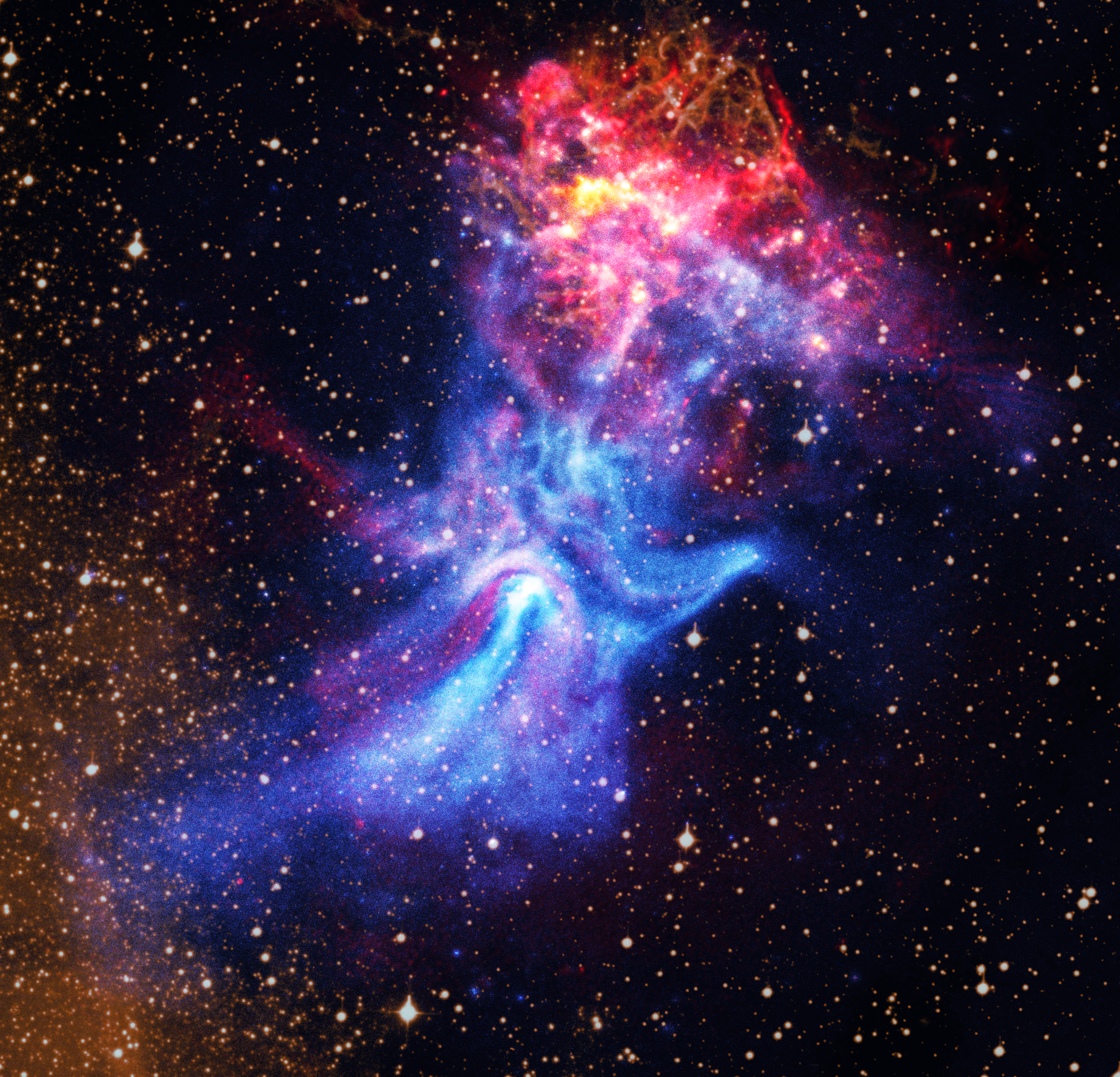
    Near the center of these images lies the pulsar B1509-58, a rapidly spinning neutron star that is only about 12 miles in diameter. This tiny object is responsible for producing an intricate nebula (called MSH 15-52) that spans over 150 light-years, or about 900 trillion miles. The nebula, which is produced by energetic particles, resembles a human hand with a palm and extended fingers pointing to the upper right in a view from NASA's Chandra X-ray Observatory. Radio data from the Australia Telescope Compact Array (ATCA) provides new information about this exploded star and its environment. This image also contains optical data of hydrogen gas. The bright red and gold areas near the top of the image show the remains of the supernova that formed the pulsar.
    X-ray: NASA/CXC/Univ. of Hong Kong/S. Zhang et al.; Radio: ATNF/CSIRO/ATCA; H-alpha: UK STFC/Royal Observatory Edinburgh; Image Processing: NASA/CXC/SAO/N. Wolk

    In 2009, NASA’s Chandra X-ray Observatory released a captivating image: a pulsar and its surrounding nebula that is shaped like a hand.

    Since then, astronomers have used Chandra and other telescopes to continue to observe this object. Now, new radio data from the Australia Telescope Compact Array (ATCA), has been combined with Chandra’s X-ray data to provide a fresh view of this exploded star and its environment, to help understand its peculiar properties and shape.

    At the center of this new image lies the pulsar B1509-58, a rapidly spinning neutron star that is only about 12 miles in diameter. This tiny object is responsible for producing an intricate nebula (called MSH 15-52) that spans over 150 light-years, or about 900 trillion miles. The nebula, which is produced by energetic particles, resembles a human hand with a palm and extended fingers pointing to the upper right in X-rays.

    Near the center of these images lies the pulsar B1509-58, a rapidly spinning neutron star that is only about 12 miles in diameter. This tiny object is responsible for producing an intricate nebula (called MSH 15-52) that spans over 150 light-years, or about 900 trillion miles. The nebula, which is produced by energetic particles, resembles a human hand with a palm and extended fingers pointing to the upper right in Chandra’s X-ray view. Radio data from ATCA provides new information about this exploded star and its environment. This image also contains optical data of hydrogen gas. The bright red and gold areas near the top of the image show the remains of the supernova that formed the pulsar.
    Labeled Version of the Image
    X-ray: NASA/CXC/Univ. of Hong Kong/S. Zhang et al.; Radio: ATNF/CSIRO/ATCA; H-alpha: UK STFC/Royal Observatory Edinburgh; Image Processing: NASA/CXC/SAO/N. Wolk

    The collapse of a massive star created the pulsar when much of the star crashed inward once it burned through its sustainable nuclear fuel. An ensuing explosion sent the star’s outer layers outward into space as a supernova.

    The pulsar spins around almost seven times every second and has a strong magnetic field, about 15 trillion times stronger than the Earth’s. The rapid rotation and strong magnetic field make B1509-58 one of the most powerful electromagnetic generators in the Galaxy, enabling it to drive an energetic wind of electrons and other particles away from the pulsar, creating the nebula.

    In this new composite image, the ATCA radio data (represented in red) has been combined with X-rays from Chandra (shown in blue, orange and yellow), along with an optical image of hydrogen gas (gold). The areas of overlap between the X-ray and radio data in MSH 15-52 show as purple. The optical image shows stars in the field of view along with parts of the supernova’s debris, the supernova remnant RCW 89. A labeled version of the figure shows the main features of the image.

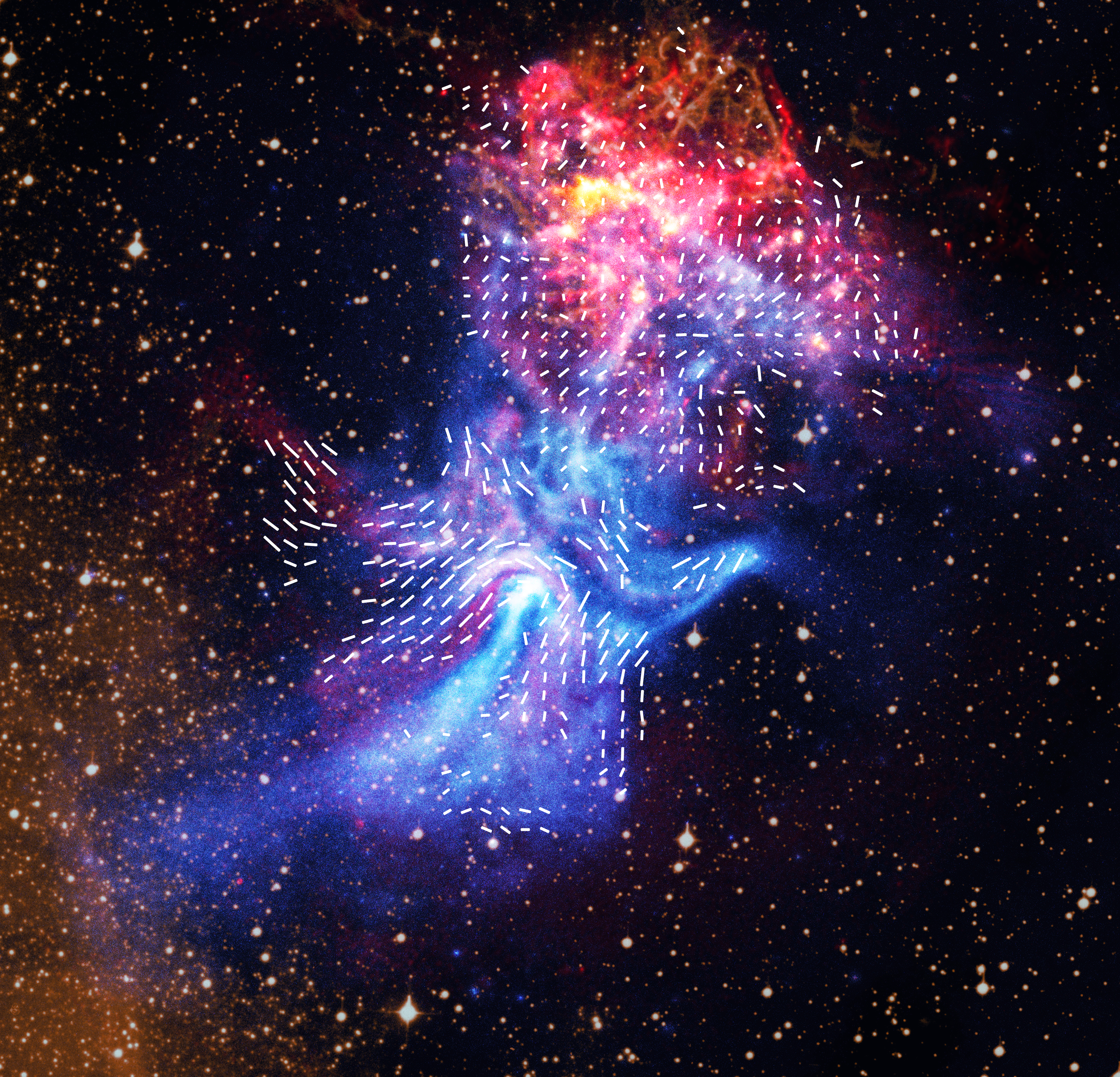
    Radio data from ATCA now reveals complex filaments that are aligned with the directions of the nebula’s magnetic field, shown by the short, straight, white lines in a supplementary image. These filaments could result from the collision of the pulsar’s particle wind with the supernova’s debris.

    Near the center of these images lies the pulsar B1509-58, a rapidly spinning neutron star that is only about 12 miles in diameter. This tiny object is responsible for producing an intricate nebula (called MSH 15-52) that spans over 150 light-years, or about 900 trillion miles. The nebula, which is produced by energetic particles, resembles a human hand with a palm and extended fingers pointing to the upper right in a view from NASA's Chandra X-ray Observatory. Radio data from the Australia Telescope Compact Array (ATCA) provides new information about this exploded star and its environment. This image also contains optical data of hydrogen gas. The bright red and gold areas near the top of the image show the remains of the supernova that formed the pulsar.
    Complex Filaments Aligned with the Directions of the Nebula’s Magnetic Field
    X-ray: NASA/CXC/Univ. of Hong Kong/S. Zhang et al.; Radio: ATNF/CSIRO/ATCA; H-alpha: UK STFC/Royal Observatory Edinburgh; Image Processing: NASA/CXC/SAO/N. Wolk

    By comparing the radio and X-ray data, researchers identified key differences between the sources of the two types of light. In particular, some prominent X-ray features, including the jet towards the bottom of the image and the inner parts of the three “fingers” towards the top, are not detected in radio waves. This suggests that highly energetic particles are leaking out from a shock wave — similar to a supersonic plane’s sonic boom — near the pulsar and moving along magnetic field lines to create the fingers.

    The radio data also shows that RCW 89’s structure is different from typical young supernova remnants. Much of the radio emission is patchy and closely matches clumps of X-ray and optical emission. It also extends well beyond the X-ray emission. All of these characteristics support the idea that RCW 89 is colliding with a dense cloud of nearby hydrogen gas.

    However, the researchers do not fully understand all that the data is showing them. One area that is perplexing is the sharp boundary of X-ray emission in the upper right of the image that seems to be the blast wave from the supernova — see the labeled feature. Supernova blast waves are usually bright in radio waves for young supernova remnants like RCW 89, so it is surprising to researchers that there is no radio signal at the X-ray boundary.

    MSH 15–52 and RCW 89 show many unique features not found in other young sources. There are, however, still many open questions regarding the formation and evolution of these structures. Further work is needed to provide better understanding of the complex interplay between the pulsar wind and the supernova debris.

    A paper describing this work, led by Shumeng Zhang of the University of Hong Kong, with co-authors Stephen C.Y. Ng of the University of Hong Kong and Niccolo’ Bucciantini of the Italian National Institute for Astrophysics, has been published in The Astrophysical Journal and is available at https://iopscience.iop.org/article/10.3847/1538-4357/adf333.

    NASA’s Marshall Space Flight Center in Huntsville, Alabama, manages the Chandra program. The Smithsonian Astrophysical Observatory’s Chandra X-ray Center controls science operations from Cambridge, Massachusetts, and flight operations from Burlington, Massachusetts.

    Learn more about the Chandra X-ray Observatory and its mission here:

    https://www.nasa.gov/chandra

    https://chandra.si.edu

    Visual Description

    This release features a composite image of a nebula and pulsar that strongly resembles a cosmic hand reaching for a neon red cloud.

    The neon red cloud sits near the top of the image, just to our right of center. Breaks in the cloud reveal interwoven strands of gold resembling spiderwebs, or a latticework substructure. This cloud is the remains of the supernova that formed the pulsar at the heart of the image. The pulsar, a rapidly spinning neutron star only 12 miles in diameter, is far too small to be seen in this image, which represents a region of space over 150 light-years across.

    The bottom half of the image is dominated by a massive blue hand reaching up toward the pulsar and supernova cloud. This is an intricate nebula called MSH 15-52, an energetic wind of electrons and other particles driven away from the pulsar. The resemblance to a hand is undeniable. Inside the nebula, streaks and swirls of blue range from pale to navy, evoking a medical X-ray, or the yearning hand of a giant, cosmic ghost.

    The hand and nebula are set against the blackness of space, surrounded by scores of gleaming golden specks. At our lower left, a golden hydrogen gas cloud extends beyond the edges of the image. In this composite, gold represents optical data; red represents ATCA radio data; and blue, orange, and yellow represent X-ray data from Chandra. Where the blue hand of the nebula overlaps with the radio data in red, the fingers appear hazy and purple.

    News Media Contact

    Megan Watzke
    Chandra X-ray Center
    Cambridge, Mass.
    617-496-7998
    mwatzke@cfa.harvard.edu

    Corinne Beckinger
    Marshall Space Flight Center, Huntsville, Alabama
    256-544-0034
    corinne.m.beckinger@nasa.gov

    Details

    Last Updated

    Aug 20, 2025

    Editor
    Lee Mohon
    Contact
    Corinne M. Beckinger

  • La NASA anunciará una nueva promoción de astronautas y adelantará detalles de la misión lunar Artemis II

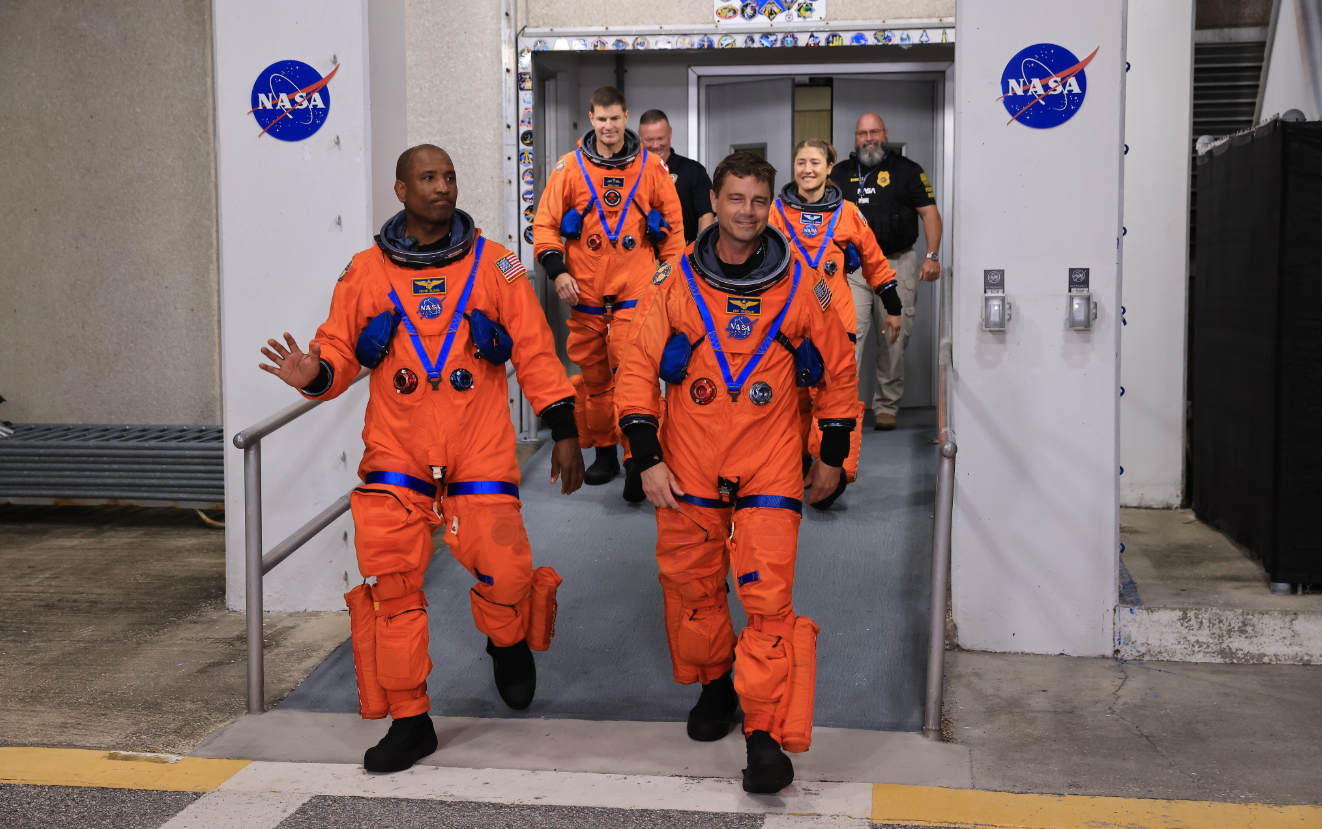
    Los astronautas de la NASA Victor Glover, piloto de Artemis II y Reid Wiseman, comandante de Artemis II, el astronauta de la CSA (Agencia Espacial Canadiense) Jeremy Hansen, especialista de misión para Artemis II, y la astronauta de la NASA Christina Koch, especialista de misión para Artemis II, se ponen los trajes espaciales y salen del Edificio de Operaciones y Control Neil A. Armstrong del Centro Espacial Kennedy de la NASA en Florida el 11 de agosto.
    Crédito: NASA/Kim Shiflett

    Nota del editor: Esta nota de medios fue actualizada el 20 de agosto para reflejar un cambio en los participantes de la sesión informativa sobre ciencia y tecnología de Artemis II.

    Read this release in English here.

    La NASA ha abierto el plazo para la acreditación de los medios a un programa de eventos de varios días de duración para presentar a la nueva promoción de astronautas de Estados Unidos y proporcionar información sobre el vuelo de prueba tripulado de la misión Artemis II alrededor de la Luna. Las actividades tendrán lugar en septiembre en el Centro Espacial Johnson de la agencia en Houston.

    Después de evaluar más de 8.000 solicitudes, la NASA presentará a su nueva generación de candidatos a astronauta de 2025 durante una ceremonia que se llevará a cabo el lunes 22 de septiembre a las 12:30 p.m. hora del este. Después de la ceremonia, los candidatos estarán disponibles para entrevistas con los medios.

    El evento de selección de astronautas se transmitirá en vivo en NASA+, Netflix, Amazon Prime, el canal de YouTube de la agencia y en la cuenta de X de la NASA, en idioma inglés.

    Los candidatos seleccionados se someterán a casi dos años de entrenamiento antes de graduarse como astronautas elegibles para el vuelo en las misiones de la agencia a la órbita baja de la Tierra, la Luna y, más adelante, el planeta Marte.

    A continuación de este evento, la NASA ofrecerá una serie de sesiones informativas para los medios de comunicación el martes 23 de septiembre y el miércoles 24 de septiembre, donde se dará un anticipo de la misión Artemis II, programada para despegar no más tarde de abril de 2026. Este vuelo de prueba —que será lanzado a bordo del cohete Sistema de Lanzamiento Espacial (SLS, por sus siglas en inglés) y la nave espacial Orion— enviará a los astronautas de la NASA Reid Wiseman, Victor Glover y Christina Koch, junto con el astronauta de la CSA (Agencia Espacial Canadiense) Jeremy Hansen, en una misión alrededor de la Luna que durará cerca de 10 días.

    Artemis II ayudará a comprobar el funcionamiento de los sistemas y el hardware necesarios para la exploración humana del espacio profundo. Esta misión es el primer vuelo tripulado de la campaña Artemis de la NASA, y es otro paso adelante hacia nuevas misiones tripuladas de Estados Unidos en la superficie de la Luna que ayudarán a la agencia a prepararse para enviar a astronautas estadounidenses a Marte.

    Los eventos de las sesiones informativas de Artemis II serán transmitidos en vivo por el canal de YouTube y la cuenta de X de la agencia, en idioma inglés. Este enlace ofrece más información (en inglés) sobre cómo ver contenido a través de las diferentes plataformas de la NASA.

    Después de las sesiones informativas, el 24 de septiembre la NASA ofrecerá una jornada para los medios de comunicación dedicada a Artemis II en el centro Johnson de la agencia, y mostrará las instalaciones de apoyo a la misión, los entrenadores y el hardware para las misiones Artemis. Asimismo, ofrecerá oportunidades de entrevistas con líderes, directores de vuelo, astronautas, científicos e ingenieros de esta campaña.

    Los representantes de los medios que deseen participar en persona deben comunicarse con la sala de prensa del centro Johnson de la NASA llamando al teléfono 281-483-5111 o escribiendo al correo electrónico jsccommu@mail.nasa.gov, indicando a qué eventos desean asistir. Los medios confirmados recibirán detalles adicionales sobre su participación en estos eventos. Una copia de la política de acreditación de medios de la NASA está disponible (en inglés) en el sitio web de la agencia. Los plazos de la acreditación de medios para la selección de candidatos a astronauta y los eventos de Artemis II son los siguientes:

    • Los miembros de medios de comunicación con ciudadanía estadounidense  que estén interesados en asistir en persona deben confirmar su asistencia a más tardar a las 5 p. m. hora del este del miércoles 17 de septiembre.
    • Los miembros de medios de comunicación sin ciudadanía estadounidense  deben confirmar su asistencia a más tardar a las 5 p. m. del miércoles 10 de septiembre. 

    Los medios que soliciten entrevistas en persona o virtuales con los candidatos a astronautas, los expertos de Artemis o la tripulación de Artemis II deben enviar sus solicitudes a la sala de prensa del centro Johnson de la NASA antes del miércoles 17 de septiembre. Las solicitudes de entrevistas en persona están sujetas a los plazos de acreditación indicados anteriormente.

    La información sobre la selección de candidatos a astronauta y los eventos de Artemis II, incluida la lista de participantes de las sesiones informativas, es la siguiente (todos los horarios son en hora del este de Estados Unidos):

    Lunes, 22 de septiembre 

    12:30 p.m.: 2025: Ceremonia de selección de candidatos a astronauta de 2025

    Martes, 23 de septiembre 

    11 a.m.: Informe general sobre la misión Artemis II

    • Lakiesha Hawkins, administradora adjunta interina, Dirección de Misiones de Desarrollo de Sistemas de Exploración, sede central de la NASA
    • Charlie Blackwell-Thompson, directora de lanzamiento de Artemis II, Centro Espacial Kennedy de la NASA en Florida
    • Jeff Radigan, director de vuelo principal de Artemis II, centro Johnson de la NASA
    • Judd Frieling, director principal de vuelo de ascenso de Artemis II, centro Johnson de la NASA
    • Rick Henfling, director principal de vuelo de ingreso de Artemis II, centro Johnson de la NASA
    • Daniel Florez, director de pruebas, Sistemas Terrestres de Exploración, centro Kennedy de la NASA [Florez es hispanohablante]

    1 p.m.: Sesión informativa sobre ciencia y tecnología de Artemis II

    • Matt Ramsey, gerente de la misión Artemis II, sede central de la NASA
    • Debbie Korth, gerente adjunta del programa Orion, centro Johnson de la NASA
    • Jake Bleacher, gerente de Ciencia, Uso de Tecnología e Integración, Dirección de Misiones de Desarrollo de Sistemas de Exploración, sede central de la NASA
    • Mark Clampin, administrador adjunto interino, Dirección de Misiones Científicas, sede central de la NASA

    Los medios que deseen participar por teléfono deben solicitar información de acceso telefónico antes de las 5 p. m. del 22 de septiembre, enviando un correo electrónico a la sala de prensa del centro Johnson de la NASA.

    Miércoles, 24 de septiembre

    10 a.m.: Conferencia de prensa de la tripulación de Artemis II

    • Reid Wiseman, comandante
    • Victor Glover, piloto
    • Christina Koch, especialista de misión 
    • Jeremy Hansen, especialista de misión 

    Los medios que deseen participar por teléfono deben solicitar información de acceso telefónico antes de las 5 p. m. del 23 de septiembre, enviando un correo electrónico a la sala de prensa del centro Johnson de la NASA.

    Encuentre más información sobre cómo la NASA lidera las iniciativas de vuelos espaciales tripulados en el sitio web (en inglés):  

    https://www.nasa.gov/humans-in-space

    -fin- 

    Jimi Russell / Rachel Kraft / María José Viñas 
    Sede central de la NASA, Washington 
    202-358-1100 
    james.j.russell@nasa.gov / rachel.h.kraft@nasa.gov  / maria-jose.vinasgarcia@nasa.gov

    Courtney Beasley / Chelsey Ballarte 
    Centro Espacial Johnson, Houston 
    281-910-4989 
    courtney.m.beasley@nasa.gov / chelsey.n.ballarte@nasa.gov 

    Details

    Last Updated

    Aug 20, 2025

  • NASA to Announce New Astronaut Class, Preview Artemis II Moon Mission

    NASA astronauts Victor Glover, Artemis II pilot; Reid Wiseman, Artemis II commander; CSA (Canadian Space Agency) astronaut Jeremy Hansen, Artemis II mission specialist, and NASA astronaut Christina Koch, Artemis II mission specialist; suit up and walk out of the Neil A. Armstrong Operations and Checkout Building at NASA’s Kennedy Space Center in Florida on Aug. 11.
    Credit: NASA/Kim Shiflett

    Editor’s note: This advisory was updated on Aug. 20 to reflect a change in the Artemis II Science and Technology Briefing participants.

    Lee esta nota de prensa en español aquí.

    NASA is opening media accreditation for multi-day events to introduce America’s newest astronaut class and provide briefings for the Artemis II crewed test flight around the Moon. The activities will take place in September at the agency’s Johnson Space Center in Houston.

    After evaluating more than 8,000 applications, NASA will debut its 2025 class of astronaut candidates during a ceremony at 12:30 p.m. EDT on Monday, Sept. 22. Following the ceremony, the candidates will be available for media interviews.

    The astronaut selection event will stream live on NASA+, Netflix, Amazon Prime, NASA’s YouTube channel, and the agency’s X account.

    The selected candidates will undergo nearly two years of training before they graduate as flight-eligible astronauts for agency missions to low Earth orbit, the Moon, and ultimately, Mars.

    Next, NASA will host a series of media briefings on Tuesday, Sept. 23, and Wednesday, Sept. 24, to preview the upcoming Artemis II mission, slated for no later than April 2026. The test flight, a launch of the SLS (Space Launch System) rocket and Orion spacecraft, will send NASA astronauts Reid Wiseman, Victor Glover, and Christina Koch, along with CSA (Canadian Space Agency) astronaut Jeremy Hansen, on an approximately 10-day mission around the Moon.

    Artemis II will help confirm the systems and hardware needed for human deep space exploration. This mission is the first crewed flight under NASA’s Artemis campaign and is another step toward new U.S.-crewed missions on the Moon’s surface that will help the agency prepare to send American astronauts to Mars.

    The Artemis II events briefings will stream live on the agency’s YouTube channel and X account. Learn how to watch NASA content through a variety of platforms.

    Following the briefings, NASA will host an Artemis II media day at NASA Johnson on Sept. 24, to showcase mission support facilities, trainers, and hardware for Artemis missions, as well as offer interview opportunities with leaders, flight directors, astronauts, scientists, and engineers.

    Media who wish to participate in person must contact the NASA Johnson newsroom at 281-483-5111 or jsccommu@mail.nasa.gov and indicate which events they plan to attend. Confirmed media will receive additional details about participating in these events. A copy of NASA’s media accreditation policy is available on the agency’s website. Media accreditation deadlines for the astronaut candidate selection and Artemis II events are as follows:

    • U.S. media interested in attending in person must RSVP no later than 5 p.m., Wednesday, Sept. 17.
    • International media without U.S. citizenship must RSVP no later than 5 p.m., Wednesday, Sept. 10.

    Media requesting in-person or virtual interviews with the astronaut candidates, Artemis experts, or the Artemis II crew must submit requests to the NASA Johnson newsroom by Wednesday, Sept. 17. In-person interview requests are subject to the credentialing deadlines noted above.

    Information for the astronaut candidate selection and Artemis II events, including briefing participants, is as follows (all times Eastern):

    Monday, Sept. 22

    12:30 p.m.: 2025 Astronaut Candidate Selection Ceremony

    Tuesday, Sept. 23

    11 a.m.: Artemis II Mission Overview Briefing  

    • Lakiesha Hawkins, acting deputy associate administrator, Exploration Systems Development Mission Directorate, NASA Headquarters
    • Charlie Blackwell-Thompson, Artemis launch director, NASA’s Kennedy Space Center in Florida
    • Judd Frieling, lead Artemis II ascent flight director, NASA Johnson
    • Jeff Radigan, lead Artemis II flight director, NASA Johnson
    • Rick Henfling, lead Artemis II entry flight director, NASA Johnson
    • Daniel Florez, test director, Exploration Ground Systems, NASA Kennedy

    1 p.m.: Artemis II Science and Technology Briefing

    • Matt Ramsey, Artemis II mission manager, NASA Headquarters
    • Debbie Korth, deputy Orion Program manager, NASA Johnson
    • Jacob Bleacher, manager, Science, Technology Utilization, and Integration, Exploration Systems Development Mission Directorate, NASA Headquarters
    • Mark Clampin, acting deputy associate administrator, Science Mission Directorate, NASA Headquarters

    Media who wish to participate by phone must request dial-in information by 5 p.m., Sept. 22, by emailing NASA Johnson’s newsroom.

    Wednesday, Sept. 24

    10 a.m.: Artemis II Crew News Conference

    • Reid Wiseman, commander
    • Victor Glover, pilot
    • Christina Koch, mission specialist
    • Jeremy Hansen, mission specialist

    Media who wish to participate by phone must request dial-in information by 5 p.m., Sept. 23, by emailing NASA Johnson’s newsroom.

    Learn more about how NASA leads human spaceflight efforts at:

    https://www.nasa.gov/humans-in-space

    -end-

    Jimi Russell / Rachel Kraft
    Headquarters, Washington
    202-358-1100
    james.j.russell@nasa.gov / rachel.h.kraft@nasa.gov

    Courtney Beasley / Chelsey Ballarte
    Johnson Space Center, Houston
    281-910-4989
    courtney.m.beasley@nasa.gov / chelsey.n.ballarte@nasa.gov

    Details

    Last Updated

    Aug 20, 2025

  • NASA: Ceres May Have Had Long-Standing Energy to Fuel Habitability

    4 min read

    Preparations for Next Moonwalk Simulations Underway (and Underwater)

    Dwarf planet Ceres
    Dwarf planet Ceres is shown in these enhanced-color renderings that use images from NASA’s Dawn mission. New thermal and chemicals models that rely on the mission’s data indicate Ceres may have long ago had conditions suitable for life.
    NASA/JPL-Caltech/UCLA/MPS/DLR/IDA

    The dwarf planet is cold now, but new research paints a picture of Ceres hosting a deep, long-lived energy source that may have maintained habitable conditions in the past.

    New NASA research has found that Ceres may have had a lasting source of chemical energy: the right types of molecules needed to fuel some microbial metabolisms. Although there is no evidence that microorganisms ever existed on Ceres, the finding supports theories that this intriguing dwarf planet, which is the largest body in the main asteroid belt between Mars and Jupiter, may have once had conditions suitable to support single-celled lifeforms.

    Science data from NASA’s Dawn mission, which ended in 2018, previously showed that the bright, reflective regions on Ceres’ surface are mostly made of salts left over from liquid that percolated up from underground. Later analysis in 2020 found that the source of this liquid was an enormous reservoir of brine, or salty water, below the surface. In other research, the Dawn mission also revealed evidence that Ceres has organic material in the form of carbon molecules — essential, though not sufficient on its own, to support microbial cells.

    The presence of water and carbon molecules are two critical pieces of the habitability puzzle on Ceres. The new findings offer the third: a long-lasting source of chemical energy in Ceres’ ancient past that could have made it possible for microorganisms to survive. This result does not mean that Ceres had life, but rather, that there likely was “food” available should life have ever arisen on Ceres.

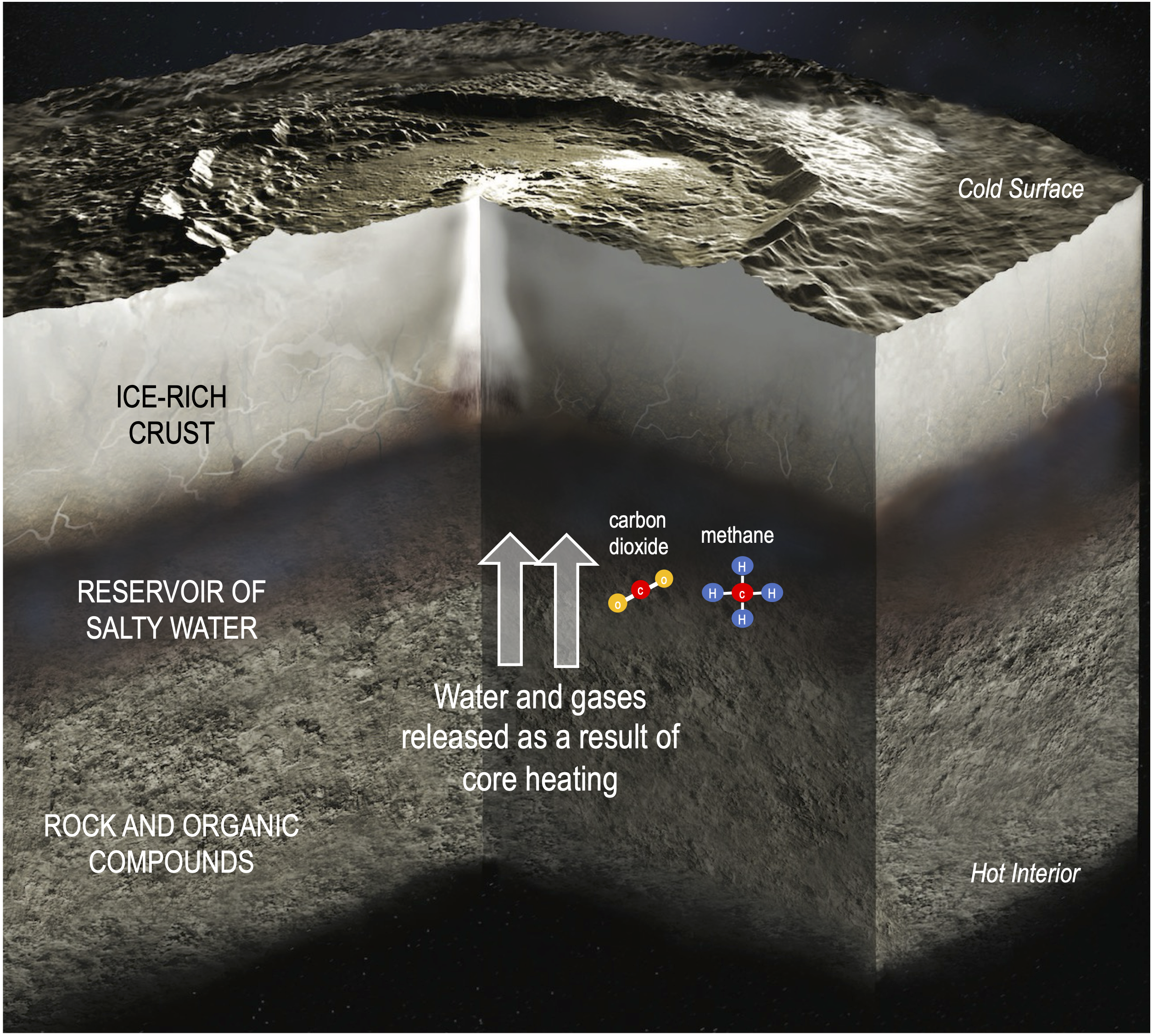
    This illustration depicts the interior of dwarf planet Ceres
    This illustration depicts the interior of dwarf planet Ceres, including the transfer of water and gases from the rocky core to a reservoir of salty water. Carbon dioxide and methane are among the molecules carrying chemical energy beneath Ceres’ surface.
    NASA/JPL-Caltech

    In the study, published in Science Advances on Aug. 20, the authors built thermal and chemical models mimicking the temperature and composition of Ceres’ interior over time. They found that 2.5 billion years or so ago, Ceres’ subsurface ocean may have had a steady supply of hot water containing dissolved gases traveling up from metamorphosed rocks in the rocky core. The heat came from the decay of radioactive elements within the dwarf planet’s rocky interior that occurred when Ceres was young — an internal process thought to be common in our solar system.

    “On Earth, when hot water from deep underground mixes with the ocean, the result is often a buffet for microbes — a feast of chemical energy. So it could have big implications if we could determine whether Ceres’ ocean had an influx of hydrothermal fluid in the past,” said Sam Courville, lead author of the study. Now based at Arizona State University in Tempe, he led the research while working as an intern at NASA’s Jet Propulsion Laboratory in Southern California, which also managed the Dawn mission.

    Catching Chill

    The Ceres we know today is unlikely to be habitable. It is cooler, with more ice and less water than in the past. There is currently insufficient heat from radioactive decay within Ceres to keep the water from freezing, and what liquid remains has become a concentrated brine.

    The period when Ceres would most likely have been habitable was between a half-billion and 2 billion years after it formed (or about 2.5 billion to 4 billion years ago), when its rocky core reached its peak temperature. That’s when warm fluids would have been introduced into Ceres’ underground water.

    The dwarf planet also doesn’t have the benefit of present-day internal heating generated by the push and pull of orbiting a large planet, like Saturn’s moon Enceladus and Jupiter’s moon Europa do. So Ceres’ greatest potential for habitability-fueling energy was in the past.

    This result has implications for water-rich objects throughout the outer solar system, too. Many of the other icy moons and dwarf planets that are of similar size to Ceres (about 585 miles, or 940 kilometers, in diameter) and don’t have significant internal heating from the gravitational pull of planets could have also had a period of habitability in their past.

    More About Dawn

    A division of Caltech in Pasadena, JPL managed Dawn’s mission for NASA’s Science Mission Directorate in Washington. Dawn was a project of the directorate’s Discovery Program, managed by NASA’s Marshall Space Flight Center in Huntsville, Alabama. JPL was responsible for overall Dawn mission science. Northrop Grumman in Dulles, Virginia, designed and built the spacecraft. The German Aerospace Center, Max Planck Institute for Solar System Research, Italian Space Agency and Italian National Astrophysical Institute were international partners on the mission team.

    For a complete list of mission participants, visit:

    https://solarsystem.nasa.gov/missions/dawn/overview/

    News Media Contacts

    Gretchen McCartney
    Jet Propulsion Laboratory, Pasadena, Calif.
    818-287-4115
    gretchen.p.mccartney@jpl.nasa.gov 

    Karen Fox / Molly Wasser
    NASA Headquarters, Washington

    2025-108

    Details

    Last Updated

    Aug 20, 2025

  • Viking 1 Begins Journey to Mars

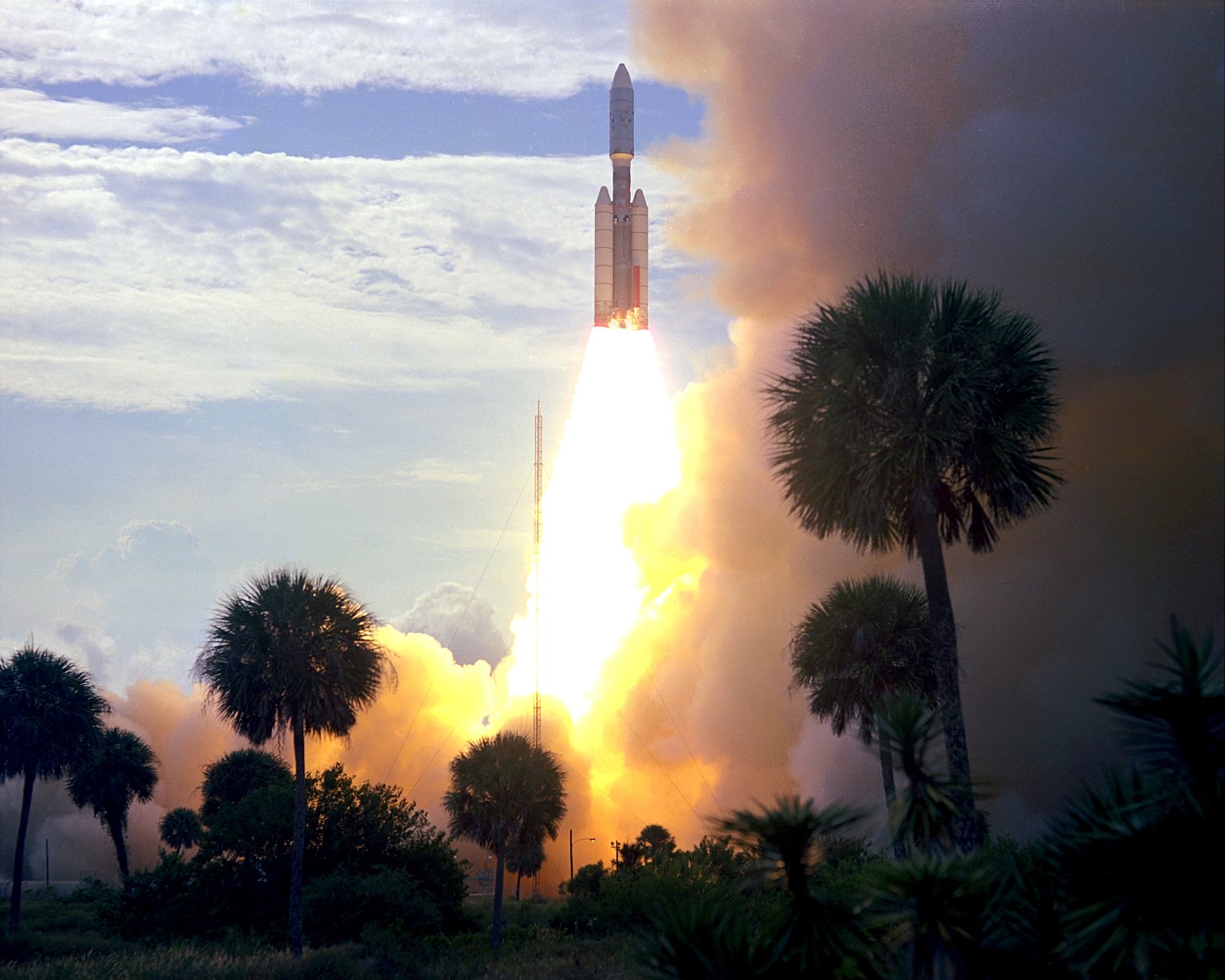
    A rocket launches upward. There is a very bright flame coming from the rocket, as well as clouds of white vapor. The clouds cover up the right side of the scene. On the left side, the sky is visible along with some thin white clouds. There are trees and other vegetation in the foreground of the image.
    NASA

    A Titan-Centaur rocket carrying the Viking 1 spacecraft launches from Complex 41 at Cape Canaveral Air Force Station on Aug. 20, 1975. Viking 1 touched down on the red planet on July 20, 1976, becoming the first truly successful landing on Mars. Viking 1 was the first of a pair of complex deep space probes that were designed to reach Mars and to collect evidence on the possibility on life on Mars.

    NASA’s exploration of Mars continues, with rovers exploring the planet’s surface and spacecraft studying from orbit. The agency’s Artemis missions will also lay the groundwork for the first crewed missions to Mars.

    Learn more about Viking 1 and see the first photo it took upon landing.

    Image credit: NASA

  • Steve Platnick Steps Down from NASA After 34 Years of Service

    Dr. Steven “Steve” Platnick has taken the NASA Deferred Resignation Program (DRP). His last work day was August 8, 2025. Steve spent more than three decades at, or associated with, NASA. While he began his civil servant career at NASA’s Goddard Space Flight Center (GSFC) in 2002, his Goddard association went back to 1993, first as a contractor and then as one of the earliest employees of the Joint Center for Earth Systems Technology (JCET), a cooperative agreement between the University of Maryland, Baltimore County (UMBC) and GSFC’s Earth Science Division. At JCET Steve helped lead the development of the Atmosphere Physics Track curricula. Previously, he held a National Research Council (NRC) post-doctoral fellow at NASA’s Ames Research Center. Along with his research work on cloud remote sensing from satellite and airborne sensors, Steve served as the Deputy Director for Atmospheres in GSFC’s Earth Sciences Division from January 2015–July 2024.

    Steve Platnick Photo
    Dr. Steve Platnick
    Image credit: NASA

    During his time at NASA, Steve played an integral role in the sustainability and advancement of NASA’s Earth Observing System platforms and data. In 2008, he took over as the Earth Observing System (EOS) Senior Project Scientist from Michael King. In this role, he led the EOS Project Science Office, which included support for related EOS facility airborne sensors, ground networks, and calibration labs. The office also supported The Earth Observer newsletter, the NASA Earth Observatory, and other outreach and exhibit activities on behalf of NASA Headquarters’ Earth Science Division and Science Mission Directorate (further details below). From January 2003– February 2010, Steve served as the Aqua Deputy Project Scientist.

    Improving Imager Cloud Algorithms

    Steve was actively involved in the Moderate Resolution Imaging Spectroradiometer (MODIS) Science Team serving as the Lead for the MODIS Atmosphere Discipline Team (cloud, aerosol and clear sky products) since 2008 and as the NASA Suomi National Polar-orbiting Partnership (Suomi NPP)/JPSS Atmosphere Discipline Lead/co-Lead from 2012–2020. His research team enhanced, maintained, and evaluated MODIS and Visible Infrared Imaging Radiometer Suite (VIIRS) cloud algorithms that included Level-2 (L2) Cloud Optical/Microphysical Properties components (MOD06 and MYD06 for MODIS on Terra and Aqua, respectively) and the Atmosphere Discipline Team Level-3 (L3) spatial/temporal products (MOD08, MYD08). The L2 cloud algorithms were developed to retrieve thermodynamic phase, optical thickness, effective particle radius, and derived water path for liquid and ice clouds, among other associated datasets. Working closely with longtime University of Wisconsin-Madison colleagues, the team also developed the CLDPROP continuity products designed to bridge the MODIS and VIIRS cloud data records by addressing differences in the spectral coverage between the two sensors; this product is currently in production for VIIRS on Suomi NPP and NOAA-20, as well as MODIS Aqua. The team also ported their CLDPROP code to Geostationary Operational Environmental Satellites (GOES) R-series Advanced Baseline Imager (ABI) and sister sensors as a research demonstration effort.

    Steve’s working group participation included the Global Energy and Water Exchanges (GEWEX) Cloud Assessment Working Group (2008–present); the International Cloud Working Group (ICWG), which is part of the Coordination Group for Meteorological Satellites (CGMS), and its original incarnation, the Cloud Retrieval Evaluation Working (CREW) since 2009; and the NASA Observations for Modeling Intercomparison Studies (obs4MIPs) Working Group (2011–2013). Other notable roles included Deputy Chair of the Plankton, Aerosol, Cloud, ocean Ecosystem (PACE) Science Definition Team (2011–2012) and membership in the Advanced Composition Explorer (ACE) Science Definition Team (2009–2011), the ABI Cloud Team (2005–2009), and the Climate Absolute Radiance and Refractivity Observatory (CLARREO) Mission Concept Team (2010–2011).

    Steve has participated in numerous major airborne field campaigns over his career. His key ER-2 flight scientist and/or science team management roles included the Monterey Area Ship Track experiment (MAST,1994), First (International Satellite Cloud Climatology Project (ISCCP) Regional Experiment – Arctic Cloud Experiment [FIRE-ACE, 1998], Southern Africa Fire-Atmosphere Research Initiative (SAFARI-2000), Cirrus Regional Study of Tropical Anvils and Cirrus Layers – Florida Area Cirrus Experiment (CRYSTAL-FACE, 2002), and Tropical Composition, Cloud and Climate Coupling (TC4, 2007).

    Supporting Earth Science Communications

    Through his EOS Project Science Office role, Steve has been supportive of the activities of NASA’s Science Support Office (SSO) and personally participated in many NASA Science exhibits at both national and international scientific conferences, including serving as a Hyperwall presenter numerous times.

    For The Earth Observer newsletter publication team in particular, Steve replaced Michael King as Acting EOS Senior Project Scientist in June 2008, taking over the authorship of “The Editor’s Corner” beginning with the May–June 2008 issue [Volume 20Issue 3]. The Acting label was removed beginning with the January–February 2010 issue [Volume 22Issue 1]. Steve has been a champion of continuing to retain a historical record of NASA science team meetings to maintain a chronology of advances made by different groups within the NASA Earth Science community. He was supportive of the Executive Editor’s efforts to create a series called “Perspectives on EOS,” which ran from 2008–2011 and told the stories of the early years of the EOS Program from the point of view of those who lived them. He also supported the development of articles to commemorate the 25th and 30th anniversary of The Earth Observer. Later, Steve helped guide the transition of the newsletter from a print publication – the November–December 2022 issue was the last printed issue – to fully online by July 2024, a few months after the publication’s 35th anniversary. The Earth Observer team will miss Steve’s keen insight, historical perspective, and encouragement that he has shown through his leadership for the past 85 issues of print and online publications.

    A Career Recognized through Awards and Honors

    Throughout his career, Steve has amassed numerous honors, including the Goddard William Nordberg Memorial Award for Earth Science in 2023 and the Verner E. Suomi Award from the American Meteorological Society (AMS) in 2016. He was named an AMS Fellow that same year. He received two NASA Agency Honor Awards – the Exceptional Achievement Medal in 2008 and the Exceptional Service Medal in 2015.

    Steve received his bachelor’s degree and master’s degree in electrical engineering from Duke University and the University of California, Berkeley, respectively. He earned a Ph.D. in atmospheric sciences from the University of Arizona.

  • Curiosity Blog, Sols 4631-4633: Radiant Ridge Revolution

    2 min read

    Curiosity Blog, Sols 4631-4633: Radiant Ridge Revolution

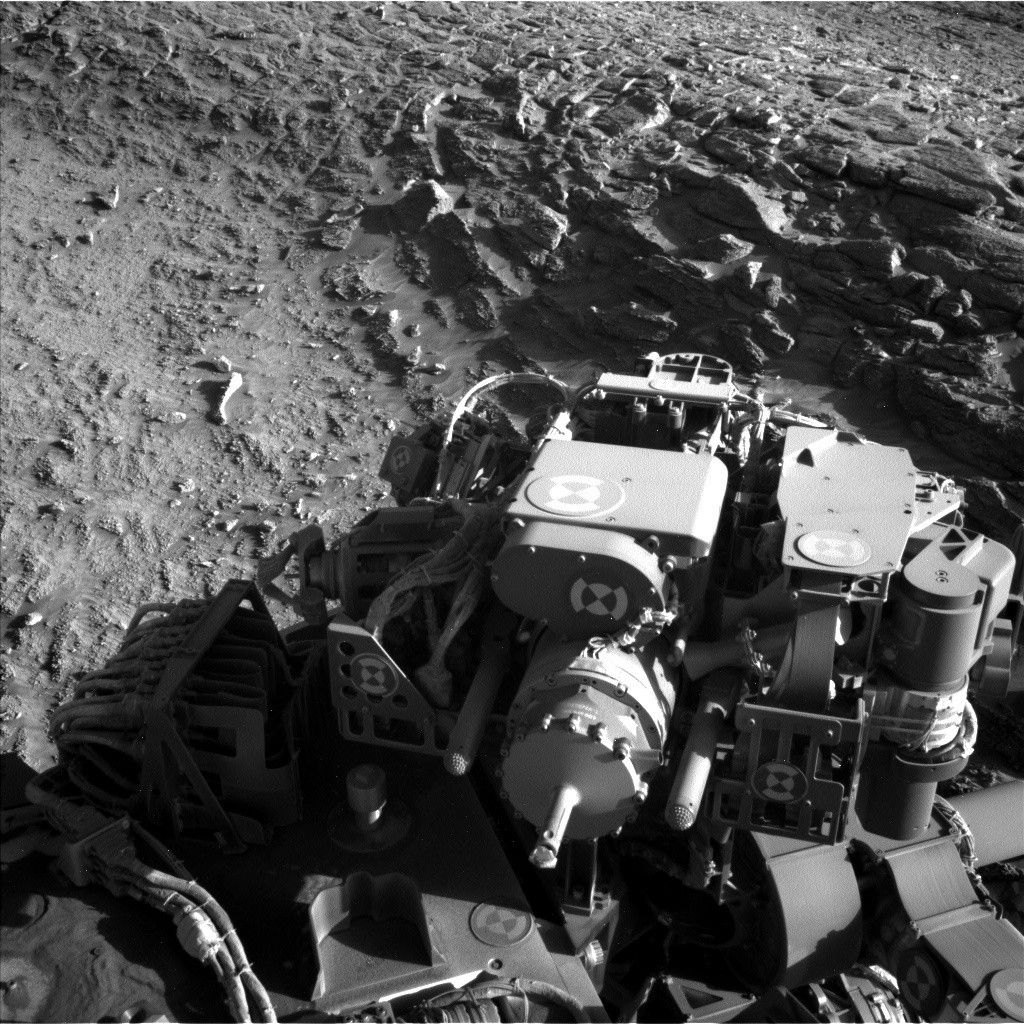
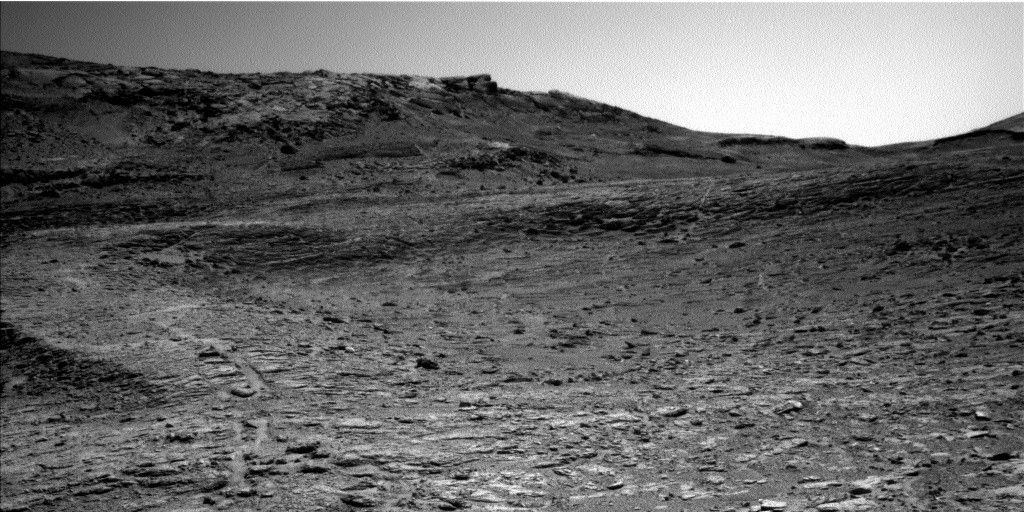
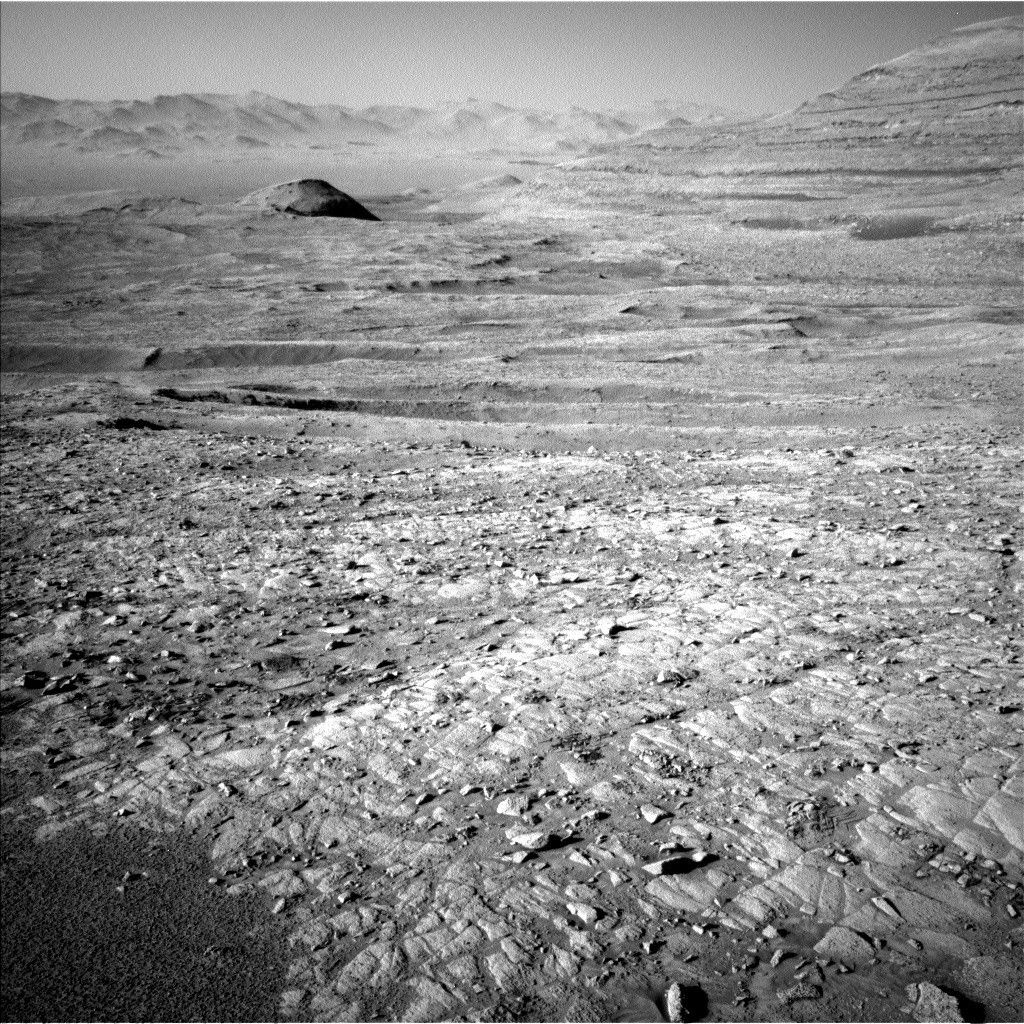
    A grayscale image from the Martian surface shows wavy terrain in medium gray, covered in numerous small rocks everywhere. The view extends to near the top of the image, where a butte rises from mid-frame toward the right side of the image, with a tiny hill or knoll at its left, near the upper center of the image. Beyond those in the distance, past what looks like a smooth desert, a line of peaks creates a jagged horizon line in lighter gray.
    NASA’s Mars rover Curiosity acquired this image using its Left Navigation Camera on Aug. 14, 2025 — Sol 4629, or Martian day 4,629 of the Mars Science Laboratory mission — at 12:11:32 UTC.
    NASA/JPL-Caltech

    Written by Remington Free, Operations Systems Engineer at NASA’s Jet Propulsion Laboratory

    Earth planning date: Friday, Aug. 15, 2025

    Today we uplinked a three-sol weekend plan with lots of exciting activities — to support both the science and engineering teams! 

    While usually our science activities take front and center stage, we often also do engineering maintenance activities as well to maintain the mechanisms and engineering health state of the rover. On Sol 4631, we planned a maintenance activity of our Battery Control Boards (BCBs) which are electronic control boards attached to the rover’s batteries and are what let us interact with the batteries as needed. This maintenance is done periodically to correct for any time drift on the BCBs, so we get as accurate of data as possible. 

    On this sol, we also did a dump of all of our parameters — these are essentially variables set onboard the rover which serve as inputs to a variety of functions. Occasionally we send a list of all these variables back down to the ground so we can verify they match as expected. We don’t want to have set a value and then forget about it!

    We, of course, also did science activities on this sol. After completing our engineering activities, we started off with some remote science; this included Mastcam imaging and ChemCam measurements of several interesting targets. These were chosen in order to assess variability within the “Cerro Paranal” ridge within view, and to document any layering or fractures in the rock. We then completed several arm activities in order to get more information on these targets through the use of our APXS spectrometer. 

    On Sol 4632, we planned some remote atmospheric science, including a Navcam dust-devil survey, a Mastcam tau (measurement of the atmospheric opacity), APXS atmospheric observations, and more imaging of some of the ridge targets we looked at in the previous sol. 

    On Sol 4633, we continued with more science imaging, including a horizon movie using Navcam and a dust-devil movie, before proceeding into our drive. We planned a drive of about 19 meters (about 62 feet) to the south, along the eastern edge of Cerro Paranal. After the drive, it is then standard for us to take new imaging of our new location. We’re excited to get these science images back and to hear how the drive went when the team comes back on Monday!

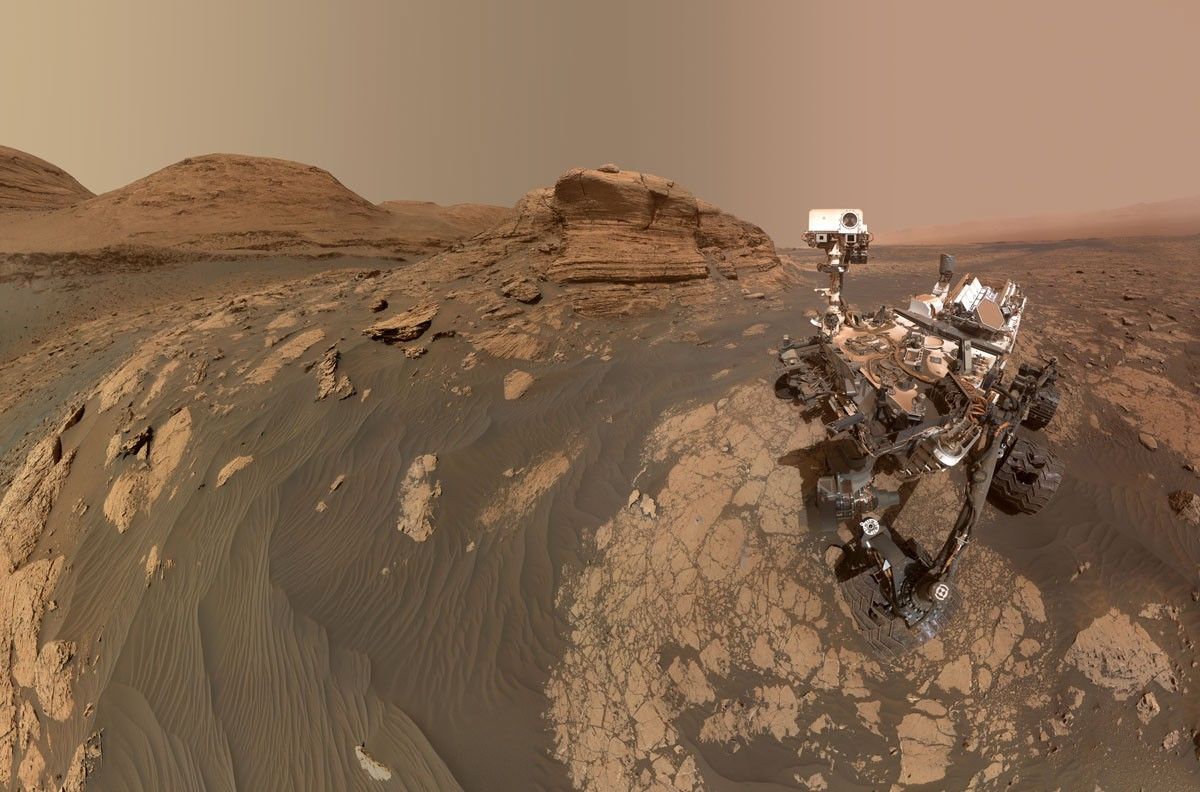
    A rover sits on the hilly, orange Martian surface beneath a flat grey sky, surrounded by chunks of rock.
    NASA’s Mars rover Curiosity at the base of Mount Sharp
    NASA/JPL-Caltech/MSSS

    Details

    Last Updated

    Aug 19, 2025

    Related Terms

  • Sun at the Center: Teacher Ambassadors Bring Heliophysics to Classrooms Nationwide

    3 min read

    Sun at the Center: Teacher Ambassadors Bring Heliophysics to Classrooms Nationwide

    For the fourth year in a row, the American Association of Physics Teachers, a collaborator on the NASA Heliophysics Education Activation Team (HEAT), selected eight new educators to serve as ambassadors for heliophysics education. Meeting in Boulder, CO, from July 14-17, 2025, these teachers met to work through AAPT’s lessons that bring physics content to life in the context of NASA heliophysics missions and the Framework for Heliophysics Education.

    The Ambassador program began in 2022 as an effort to identify highly-motivated secondary and tertiary educators who could encourage other educators to integrate NASA content into their teaching. The impact is clear – a handful of Ambassadors in the past few years have joined the program directly as a result of previous educators.

    New Jersey high school physics and astronomy teacher Erin Bontempo first learned about the program at the spring meeting of the National Science Teaching Association (NSTA). She attended a workshop led by Hava Turkakin and Francesca Viale, 2023 and 2024 Ambassadors and community college faculty. In a 60-minute interactive session, Hava and Francesca shared brief snapshots of four of AAPT’s lessons, connecting heliophysics to topics traditionally taught in core science courses, such as motion, light, and magnetism.

    Erin was intrigued by the lessons she saw: “When I began teaching astronomy eight years ago, I knew little about space. Ever since, I have been an avid student, constantly reading, researching, and in awe of the current NASA missions. I often look for courses to take to further my knowledge, and I feel like this is a perfect fit. When I attended the NSTA conference session on HEAT, it just clicked. The lessons that they brought using real data are the kind of exposure students need.”

    Ultimately, Erin was invited to be an Ambassador herself, along with seven other educators, to take part in the summit experience in Boulder. In addition to learning about heliophysics with the AAPT leadership team, the group visited the National Space Weather Prediction Center to hear first-hand how NASA, NOAA, and various federal and international agencies work to understand and respond to our changing Sun.

    Since the program began, 32 Ambassadors have been identified and participated in the multi-day professional learning experience, followed by a year of leadership and outreach to other educators. Beyond their own classrooms, they have reached educators across 36 local, state, and national events, holding extended workshops with nearly 500 other teachers.

    In addition to AAPT’s lessons, the AAPT/NASA HEAT Resources webpage also provides the names and states for all ambassadors as well as the schedule and topics for the upcoming ‘Physics in an Astronomy Context’ series of free online mini-workshops being planned for the 2025 Fall semester.

    NASA HEAT is part of NASA’s Science Activation Portfolio. Learn more about how Science Activation connects NASA science experts, real content, and experiences with community leaders to do science in ways that activate minds and promote deeper understanding of our world and beyond: https://science.nasa.gov/learn/about-science-activation/

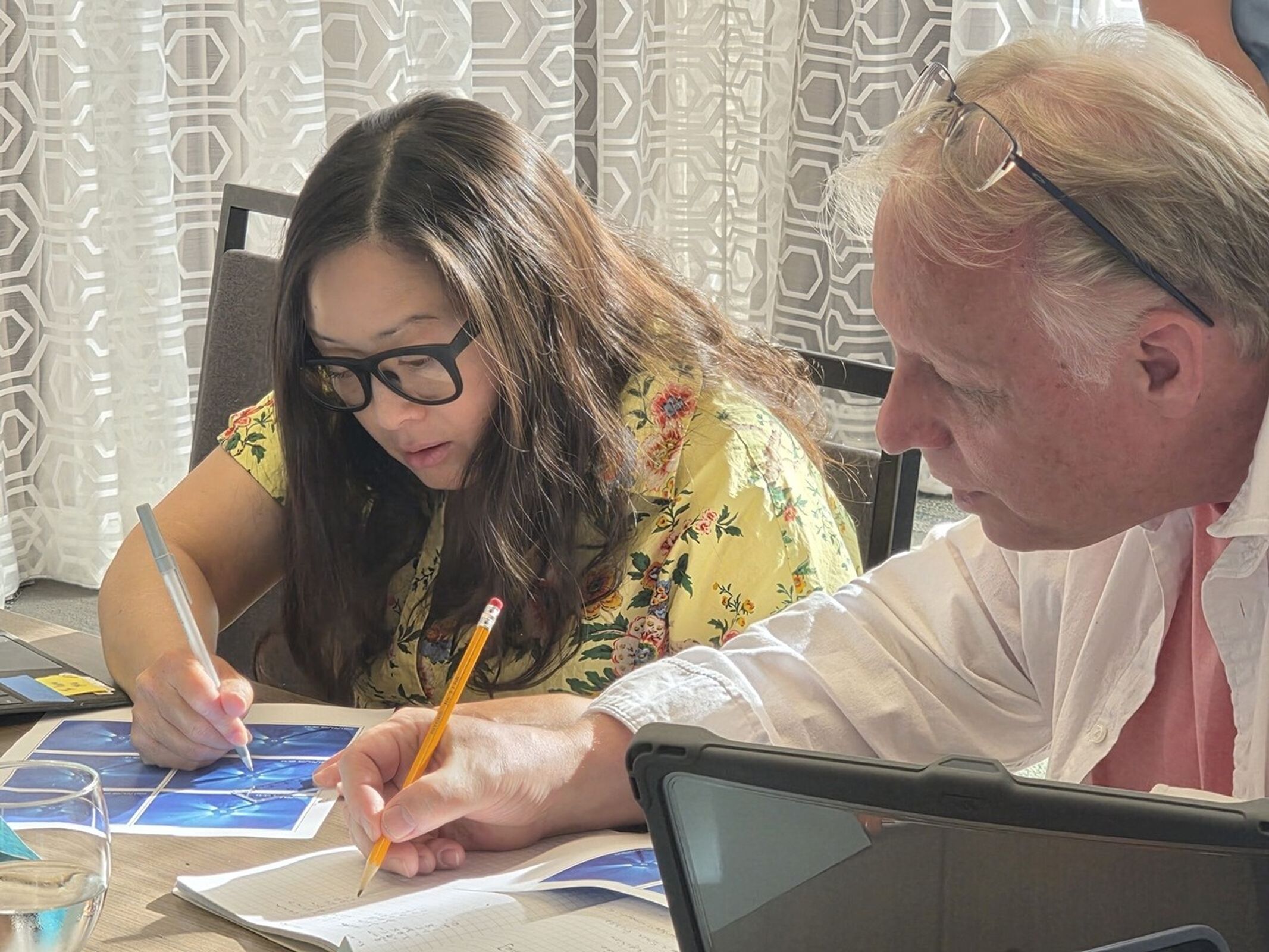
    Two teachers look at still images of a coronal mass ejection, using their pencils to note how far the edge of the ejection has moved across the field of view.
    Linh Ho and Samuel S. Macintire analyze the motion of a coronal mass ejection from the Sun.

    Details

    Last Updated

    Aug 19, 2025

    Editor
    NASA Science Editorial Team