Tag: planethunt

  • Interview with Dr. Caleb Scharf

    Cale Scharf in a grey blazer, dark blue zip-up sweater, and a white collar shirt beneath, smiling with glasses on
    Image of Caleb Scharf

    _________________________________________________________________________________________

    In the following interview, questions from the interviewer, Fred Van Wert, are in bold, and Caleb Scharf’s responses are in regular text.

    _________________________________________________________________________________________

    Let’s begin with your early years. Where you were born, something about your family, what your mother and father did, your early schooling, what got you interested in the career that you’ve been pursuing, that kind of thing.

    Well, I was born in London, England, about a ten minute walk from the British Museum, right in the center of Old London. My parents were very interesting. My dad was American and my mother was British.  They were both academics and both were art historians, in fact my dad was somewhat famous for his work in art history. My mother also did a lot of study in London. But when I was about three or four years old we moved out to a small village in England, in a county called Norfolk. It was just farms and us, so I actually grew up in a very rural part of England. Today it’s become a second home location for a lot of people but back then it was . . .  well, you were excited if you saw a loaf of white bread in the village shop! So, I have a bit of an eclectic background. Like I said, my dad was American, so I have a lot of family in the U.S., mostly in Los Angeles. My father’s family had emigrated from Austria to the U.S. My grandfather was a musician and in the 1930’s he played in the Hollywood Studios, and that’s how that side of the family ended up in LA. There’s music in the family but I missed that gene! (laughs).

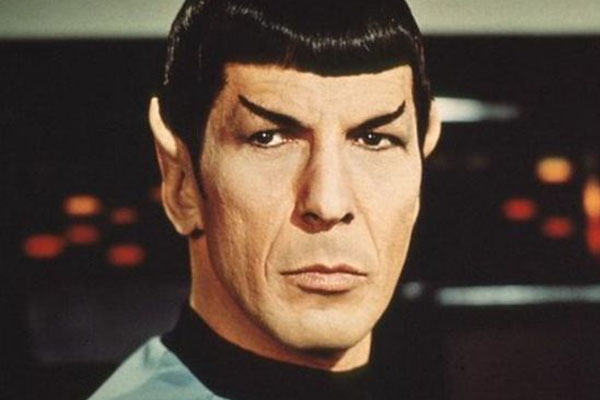
    Regarding the question of if there was something in my early childhood that got me interested in space, astronomy, and science, I feel like it may have been moving out into the countryside where suddenly you could see the sky at night. London in the late 1960’s and early ‘70’s had light pollution and other pollution everywhere. But I have memories of going out into the countryside at night, even as a little kid. I’d get excused from the dinner table and go outside to burn off some energy, and I could see these brilliant night skies, the Milky Way and all the other features, with my naked eyes. I remember spending a lot of time just gazing and thinking about that. And, although my parents wouldn’t let me watch much TV, for some reason they did let me watch Star Trek when it was a new thing. I remember being both terrified by it and hiding behind the couch, but also being fascinated. I didn’t really understand everything that was going on, but it was just so intriguing. There was this guy with pointy ears who wasn’t human. How could you not be human, right? That was a really interesting thing to me. But also seeing how this group of people, who were intelligent but weren’t sitting behind a desk all the time, could do interesting things – that stuck with me for a long time, so maybe it was a combination of pop culture and living in the countryside.
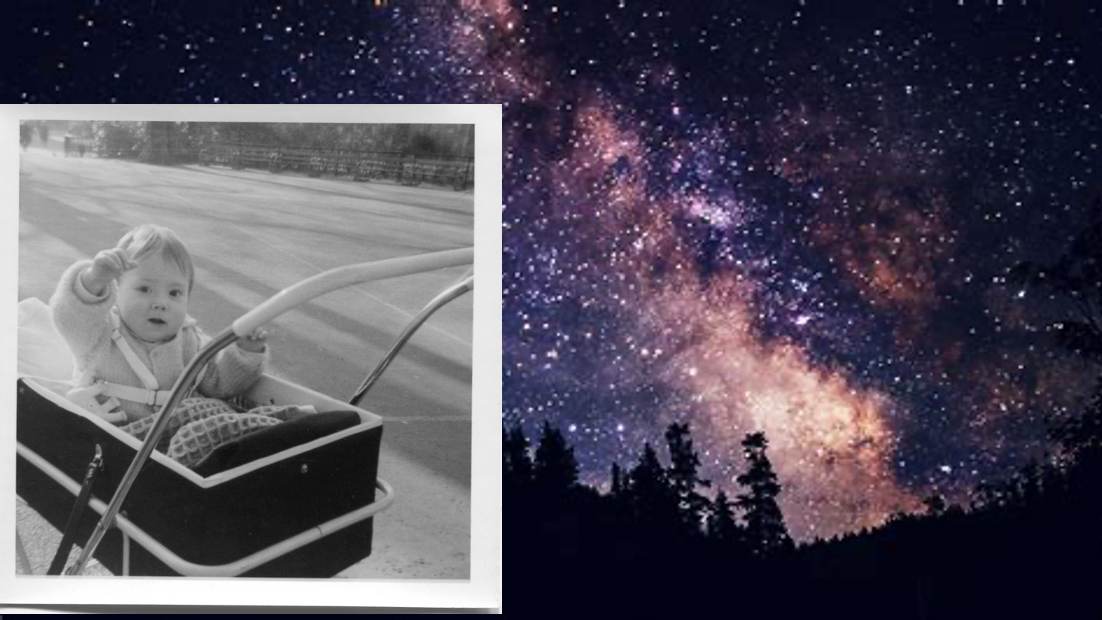
    Night sky with Milky Way, and a youthful scientist
    Star Trek’s Mr. Spock with pointy ears.

    It’s interesting to me how often something early on, like being  able to see the beautiful night sky clearly or as with one researcher who on a Sunday drive with her family looked out the window and saw beautiful clouds. And with that interest in clouds, she decided on a career in meteorology, and then realized there were clouds on Mars, and became a planetary scientist because she wanted to study the Martian atmosphere. And it all started with being interested in something as a little kid, so there’s a commonality there.

    Yeah, yeah, definitely.

    Do you have siblings?

    No, I’m an only child, for which my wife always pokes fun at me. She has a sister, but I’m an only child, which, growing up in the countryside, was good and bad because you had to make an effort to go see your friends since you were more distant from each other. You didn’t have neighbors right next door.

    So starting in school, at some point, you had a growing interest in the stars, and that’s a science, astronomy is science. Did you find yourself in school being drawn toward, and being good in, science classes?

    When I was in grade school I definitely was better at things like writing and art, that kind of thing. But by the time I was sixteen or seventeen, I started to realize that science classes were really interesting, and I also began to realize I could do some of this stuff. The math was, I wouldn’t say it was easy, but it came reasonably naturally to me. In England at that time you had to pick your academic direction by the time you were sixteen, which seems crazy early looking back. So, by sixteen, I was focusing on science and by the time I was eighteen I had completed some of the more specialized science classes. I did physics. I did chemistry. I did mathematics. And then it seemed to me that the most obvious thing I wanted to do was go to college and do physics. Physics seemed like the topic to go after because it felt more fundamental. Physicists are terrible this way, right? We think that if you do physics you can do anything, which of course isn’t really true, but it was the most attractive because it was a combination of simplicity and complexity, right? With simple rules you could learn things about very complex stuff, and I think that was something that attracted me. So I went to college to do physics. I studied at the University of Durham in the north of England, which is one of the equivalents to the various Ivy League schools in the U.S. or Cambridge, Oxford, or Imperial College in England.

    University of Durham, England

     I did physics with a concentration in theoretical physics, which drove me a little crazy because it was really difficult and I saw my limits there in the very theoretical aspects of physics, realizing that this was not for me. But we had a couple of really great astronomy classes as part of the physics degree and those kind of piqued my interest. Before graduating everyone was trying to figure out what to do next and I knew I didn’t want to go work in finance or industry. In England at that time, an undergraduate degree was three years, so it was intensive, and I felt that I hadn’t had enough chance to put into action what I had learned. So I decided to go to graduate school and earn a PhD. The things that came to my mind were astronomy, cosmology, and astrophysics, so that’s what I pursued.  I was really, really lucky to get into Cambridge University to do my PhD and there was a wonderful place called the Institute of Astronomy in Cambridge where Fred Hoyle, Steven Hawking, and many other luminaries of the field had worked and that was a really terrific experience. I ended up doing my PhD in cosmology, studying the large scale structure of the universe and trying to understand how we can make measurements today that inform us about the contents of the universe, things like dark matter and the history of the universe since the big bang. It was rather theoretical but it was also the beginnings of what I would call early data science. It was a lot of statistical work, a lot of analysis of catalogs of galaxies and other things like that. So that’s what I did.
    Cambridge University Institute of Astronomy

    Well, let me poke at this a little because what you’ve described is a very natural progression into your career field. The things that interested you, and were available, you were good at, and if you were going down a path that you didn’t think was right for you, you made choices, and wound up where you are, which is great. We usually ask those we interview about their path to Ames. You did your postdoc at Goddard and didn’t come to Ames until later when you were already prominent in your field. So how did you wind up coming here? Did you reach out because you wanted to come to Ames, or did Ames reach out to you because they wanted you here, Ames being the cradle of the science of astrobiology? Or was it a combination of both?

    I‘ve had a convoluted path! Having trained in cosmology and astrophysics, that’s what I wound up doing as a postdoc and then after, establishing a decent career. But then I switched fields almost entirely back in the early 2000’s. I made a conscious decision to switch to the kind of interesting stuff about exoplanets and astrobiology that had lingered in the background for me, but was then exploding as a field. And I established an astrobiology center at Columbia University. Then, after 22 years at Columbia, the opportunity came up to apply to the opening at Ames. It was intriguing, and I knew Ames’ reputation, I mean Ames and astrobiology, as you say, kind of go together. So it was very, very appealing, the idea of a bit of change and of coming to the place where so much of this science had begun or been scoped out in the early days, and seeing what I could do here, how I could help continue that legacy of innovation and of leading the field.

    Is the work that you do hindered at all by the Covid situation?  Do you go into the office every day?  Many people don’t anymore.

    I don’t run a physical lab, so while Covid was hugely impactful, it didn’t hit my work the way it did for many others. I actually work remotely, but really for family reasons. I was at Ames for seven months to get to know the place when I started in late 2022, and now I’m typically remote from New York. But I do come to Ames on a fairly regular basis. Today I’m sitting in our apartment in Manhattan. Often, I’m sitting in a falling down Victorian house up in the Catskills in New York, where it’s really quiet, and I can work to my heart’s content. I can sit in on my Teams calls and nobody knows any better! (laughs)

    We often ask for a comment on the value of your work to NASA and the taxpayer, but that’s probably redundant because one of the goals of astrobiology is the search for life, or evidence of life, in the Universe, and that’s the preeminent thing that people are interested in. The people underwriting our work, the taxpayers, would love an answer to that and anything that pursues the answer is going to be supported by the public at large. Has there been something important that has come from your research, some new finding or advancement in that quest, or in something else?

    If you’re lucky enough to stick around in science long enough, you’ll end up getting to do some things that make a genuine contribution to the field. I’ve been lucky to have worked on a number of projects in astrobiology, and also astrophysics, where we touched on new phenomena or developed new ideas that I think have been important. For instance, in astrobiology I’ve spent a number of years working with some really excellent scientists, most of whom are at NASA, developing sophisticated climate models for worlds that are not the Earth. Modeling the Earth’s climate is super difficult, but we’ve figured out how to do it well. However, modeling climate on worlds that may be configured very differently, may have a different star, may have a different day length, may be in a different orbit, may have a different configuration of land and oceans – that’s a real challenge because climate system variables are really complicated. We’ve developed ways to do this for exoplanets, for worlds where we’re just beginning to understand their configuration enough that we can plug that information into our model and derive things like how hot is this world, what kind of climate does it have, does it have seasons, what those seasons look like, what kind of cloud cover does it have, and so forth. I’ve only played a modest role in a lot of that, but I feel really happy with that work.  I think it’s made a significant contribution to understanding not only the possibilities for life but also the possibilities for planets themselves. Planets are interesting objects even if there isn’t anything living there. I was also very lucky to work on a number of astrophysics projects where I think we made some significant discoveries. One I’m particularly proud of was using the Chandra X-ray Telescope, one of NASA’s Great Observatories. It lets you study very energetic phenomenon, and in one project we found evidence of a super massive black hole in the very early universe, maybe a billion or two years after the Big Bang, that was spewing material out into the surrounding cosmos and we were actually able to detect that material. It’s hot gas, the result of some complicated physics and it suggests that black holes can influence the growth and evolution of entire galaxies. I remember that work particularly because, as with all these space telescopes, you propose for the data and then you wait. Eventually, if you’re lucky, the telescope takes your data, and it gets sent to you and you’re pretty much the first person to have seen it. I remember getting this data and creating an image on my computer screen, looking at it and thinking “that’s weird”.  And then printing it out, running to the printer down the hall and picking up this piece of paper, and seeing this crazy looking structure from a black hole that existed twelve and a half billion years ago, and I’m one of the first humans to hold it in my sweaty little hands and see it with my own eyes. It was a pretty thrilling moment because of the implications of that. It was at the time the most distant such object anyone had ever seen. So, there can be those “aha” moments where you’re excited and run down the hallway and tell your colleagues, “Look what I did!”
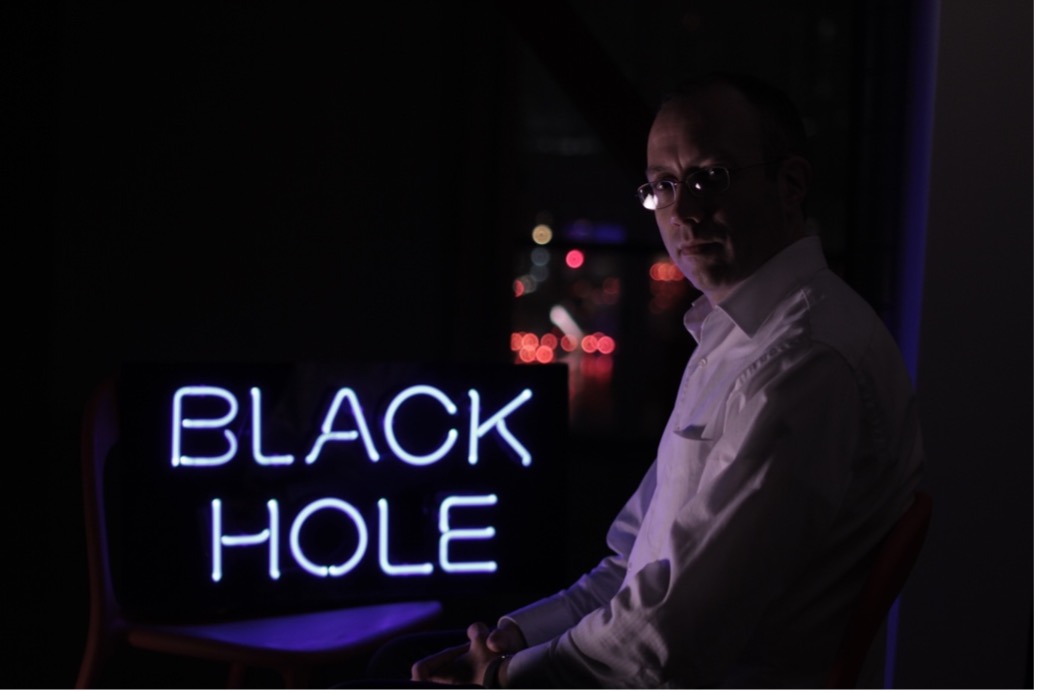
    Caleb during the making of a TV documentary on his work.

    And  you don’t know what your contribution might result in until years later, maybe after you’re gone. But something that you did was important.

    Yeah, yeah, yeah.

    It’s not the first time that I’ve heard this from scientists, the appeal of being the first one to find out something or to know something, or to see something.  There’s something very satisfying in that.  You mentioned the Chandra X-ray telescope and I have to ask you a question: in researching your bio there was a comment of yours that I found humorous. It was that the delays in JWST occurred so we had time to develop 4K and 8K TV to properly view the images. That prompted me to look at some JWST images and I found some were labeled JWST+Hubble. Were those images somehow combined or enhanced by each other, or are they dual images? I didn’t understand in what sense they were dual.

    I don’t know if I’ve seen those images, but Hubble is more sensitive to visible light and blue light than JWST, which looks at the infrared, so they are looking at different parts of the electromagnetic spectrum. So, if you are looking at a beautiful nebula, you will see slightly different phenomena or slightly different things. Putting the images together gives you a much grander painting of what’s there because you’re capturing much more of the electromagnetic spectrum. The spatial resolution of both Hubble and JWST is so exquisite that you can do that and not make a mess of things.

    I also wondered, since the perspective from different angles would be different, how can they combine them without overlap or something? But I’m sure they can do things with computers now.

    I think the perspective won’t really change because of the distances involved.

    Oh, sure, that’s true.

    But when aligning those images, as any person who builds instruments will tell you, there are always subtle imperfections, and a flat surface is not always a perfectly flat surface. Even though JWST and Hubble have some of the flattest surfaces, or precisely formed surfaces, humanity has ever managed to produce, there will still be differences. So yes, making those images is actually quite an art form. But people have put quite a lot of time into getting it all perfectly lined up so that it makes sense.

    Thank you for that explanation. I hadn’t thought of that, but it certainly makes sense. If you weren’t a physicist, have you ever thought about another career that you would have liked to pursue?

    It’s a great question! I really like what I do. I feel very privileged to get to do what I do. It’s close to my dream job. I do enjoy writing a great deal, which I do in my spare time, and some part of me likes the romantic idea of being the fabulous writer who is paid so well they don’t have to care about things, they can just focus on their art. (laughs) So a bit of me feels like that would be OK. That would be a kind of nice way to be. Just get up and think great things and put them down on paper. But I’ve also long wondered what it would be like to try to make movies. I think some of that comes from my dad’s career. He was an art historian, but his specialty was the topic of photography and how that changed the way humans thought about the world. So, film and that side of things. Hollywood director, best-selling author, those sound like good career choices to me!  (laughs)

    I liked your quote about being a writer. You said, “I’m a thinker, a writer, and sometimes both.” I don’t know if you remember that comment, but I got a kick out of it as I researched you online.

    Yes, I do remember that comment and it pretty much describes things. When you’re writing for your fellow scientists there are very specific ways that you construct your papers or your proposals and so on, and it’s not always clear that thinking at the same time is an advantage. (laughs)
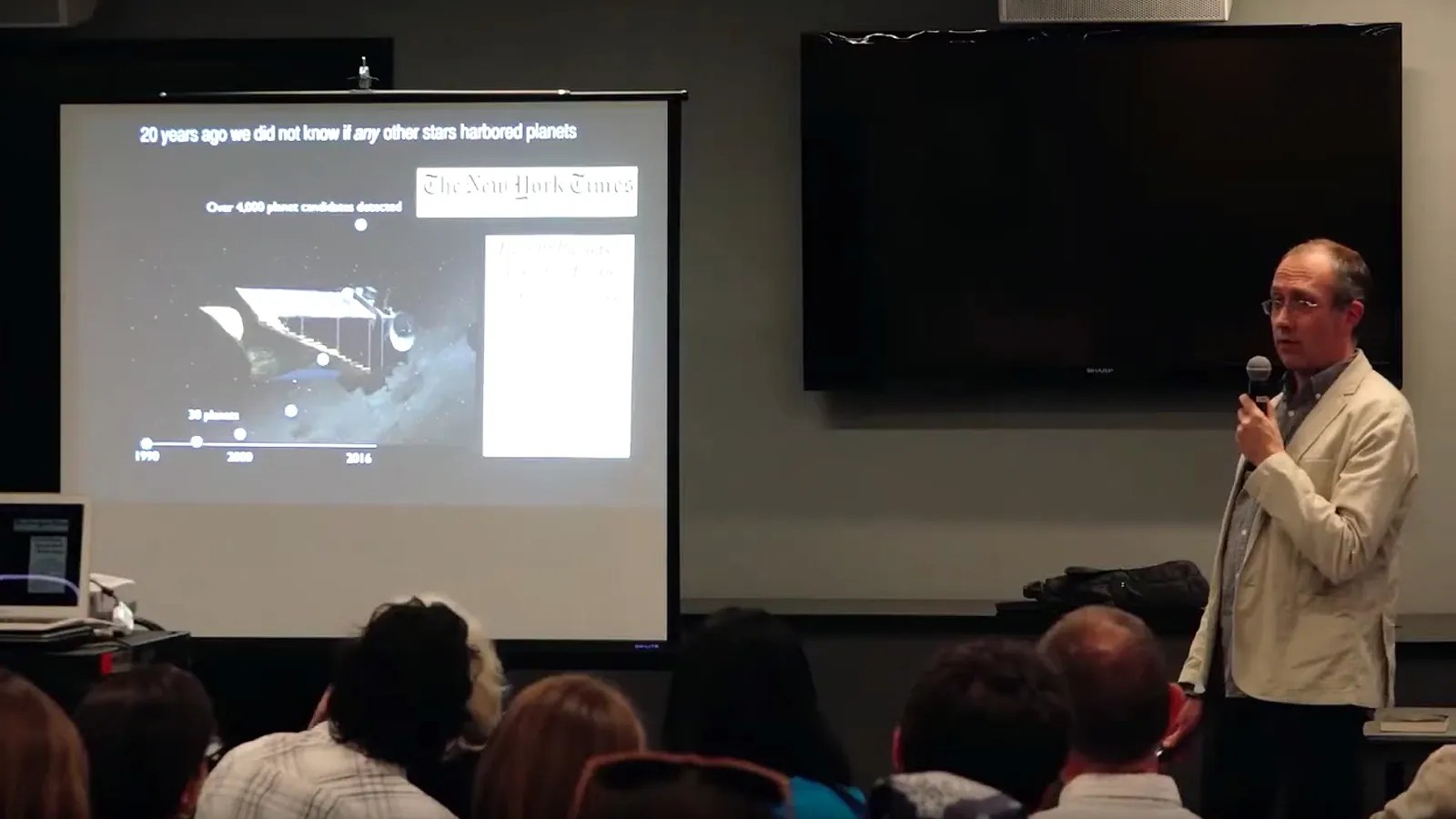
    Caleb speaking about NASA science.

    That’s a good way to put it. Would you like to share anything about your home life, your family? Do you have a wife, partner, kids, or pets?

    I’m married and have two daughters who are now in their twenties, one has just graduated from college and the other is getting close to graduating, and I’m extremely proud of them both. It’s really exciting as a parent to see them beginning to find their way in the world. We don’t have any pets because everybody in the family but me is allergic!

    Are your daughters pursuing science?

    No, not science, really. I think we’ll see what they end up wanting to do. One is interested in media, in making documentaries, and using those tools for underserved and underrepresented communities in the world, which is really interesting. She’s spent a lot of time in Spain, so is very fluent in Spanish and is interested in that culture. My other daughter is interested in psychology but also in history and the way humans function as a society, which is interesting to me but is very different from my interests. They’ve clearly not followed the purely scientific pathway, but I think they’re both analytic thinkers. I recognize that so maybe it is something that runs in the family.

    Well, congratulations to them on where they are now;  you said one has graduated and one is about to?

    The one who graduated is, as we speak, starting her first day working in a museum here in in New York.

    That’s wonderful. I can lose myself in museums. I could visit them every day. You’re obviously quite busy being a scientist and a writer and the other things that you’ve described, but when you have time, what do you like to do for fun?

    Sometimes I write, which may not like sound like fun to some people, but I do it also because I have books in my head that I want to write and publish. I also love being outdoors and that doesn’t mean just hiking, I just like being outside. When I’m out of a city, out in the countryside, I just like to wander around or sit there, absorbing all the plants, animals, and planetary goodness around me!  I don’t know if that really counts as a hobby, but it definitely is something I enjoy a great deal. I also like a bit of gardening. I’m a strange variety of person who enjoys mowing the lawn! I find it a nice thing to do. It’s nice to do something physical where there’s an immediate outcome versus so much of science, certainly the kind of science I do, where a lot of it is sitting at a computer and you don’t necessarily see the product of your work for a while. So, physical things I enjoy. And I enjoy cycling and traveling for sure. I don’t like the process of traveling but I like it when I get there, let’s put it that way.

    My wife says that, too. It piqued my interest when you said you liked to mow the lawn because you can see the results of your work immediately. When I was growing up, my two siblings and I each had to choose a room in the house to clean and I chose the kitchen. It was the hardest one to keep clean because everybody’s in there all the time and there are always dirty dishes and pots and pans, but once it was clean, you could really tell. You could look in there and tell it had been cleaned. If you are vacuuming somewhere, you can’t usually tell if that’s been done or not, so I, too, like the sense of seeing what I’ve accomplished.

    That’s right. That’s absolutely right. And I like hedge trimming as well. I’m definitely into that, which may be the British side of me! (laughs). We like carefully pruned hedges and shrubbery, and I’ve probably become a bit obsessed with that.

    You don’t make figures out of your hedges, shapes and things like that, do you?

    No, no yet, but I am tempted. (laughs)

    Would you have advice for a young postdoc? Perhaps one who’s just starting out, who would like to have the kind of career and success that you are having? What advice would you give them in pursuing their dream, be it science or whatever?

    That’s always an interesting and quite a difficult question to answer. Some of it depends on if they find astrobiology in particular an interesting topic. I myself came to astrobiology, not right away but via a circuitous route through astrophysics, getting interested in exoplanets, then just deciding to focus on the search for life. What else is there? This is such a profound thing to do. So I would say to people, young scientists, maybe postdocs or grad students, if you have an interest in something like astrobiology, it’s really important to do two things: one is to be really skillful at a few technical areas, to specialize in useful things, but also to make sure that you look for ways to apply that specialization more broadly because that’s really what astrobiology is all about. For me it’s this playground where you can take very specialized skill sets and find new ways to apply them. Astrobiology demands that you engage with people in different fields, it really does, more than any other science that I know. So be specialized, but also be engaged with everyone around you. Scientists you might not expect to have things in common with, talk to them. Learn. See commonalities. Look for those little threads to pull on because those little threads are the interesting stuff and that might lead you to something really, really interesting, where a physicist like me can have a productive engagement with microbiologists, with very useful results. So that’s part of the advice I would say to people: don’t shut off other things, especially in astrobiology.

    That’s very good advice, thank you. You may have already answered this because you said you weren’t particularly musical, so you probably don’t play musical instrument, but do you have other hobbies or interests? You mentioned bicycle riding and hiking. Anything else? Art perhaps? Or literature? Or something else you’d characterize as a hobby?

    It’s a good question. I’m a pretty good cook, although cooking for me is primarily because I enjoy eating, so I don’t know if that really qualifies as a hobby, but it’s definitely a skill that I put into practice and it’s very different from work. I like it because there’s an end result that you see right there and you can share it with other people and that’s kind of a lovely thing. But all in all, I’m pretty boring. I spend a lot of time thinking about science and/or writing about science , so I don’t think I have hobbies in the conventional sense.

    Trust me, you’re not boring. I can tell just from reading your bio and having this conversation that you’re not boring. What accomplishment in your life to date are you most proud of that’s not related to your science work?

    Well, I think it’s probably that between my wife and myself, we’ve brought up two daughters who seem to be high functioning, decent human beings, is probably my proudest thing outside of science.

    If you hadn’t said that, I would have wondered why. (laughs)  Who or what inspires you?

    That’s a very good question. I’ve been asked that question before in interviews and it’s always a struggle for me because I think I find inspiration in the most unexpected things all the time. I’ve had some of the most inspiring conversations in my life with farmers who lived down the lane from where I grew up in rural England. These people who have tended their fields for generations. They have this deep intuition about the way nature works but they were always inquisitive. As a little kid you could talk to them about all sorts of things. They were engaged with what was happening in the broader world as well as their own microcosm and I find that pretty inspiring. The ability to live a life where they’re not staring at TV screens, they’re not Tik-Tok influencers, but they’re thoughtful, observant, curious people. I always find that inspiring.  I also find nature inspiring. I can sit on my back deck and just watch the birds and the bees doing their thing and I always find questions that I hadn’t thought of before. So, I think it’s a combination of, not celebrities or famous people so much, although some of them are extremely inspiring and impressive, but I’m more inspired by the day to day, and the people going about their lives quietly and carefully.

    That’s a very thoughtful answer and I appreciate it. One of the things we do with these conversations is invite you to provide pictures of the things you’ve talked about. Of your work of course, but also of your family perhaps or of trips you’ve taken, things that go along with the narrative because it makes the whole post more interesting.  If there’s a JWST image that you find particularly appealing or interesting, one that we might we see on the wall of your office or in your house, you can include that and others when you return the edited transcript.

    Among the images I find most interesting are the earth from space, and the most interesting of those are where a spacecraft is on its way to do something else. Some of the earliest images were where you see the Earth and the moon in one frame and you realize how far apart they are from each other and how tiny they really are. There’s something about those images that I find quite disturbing, in a good way.
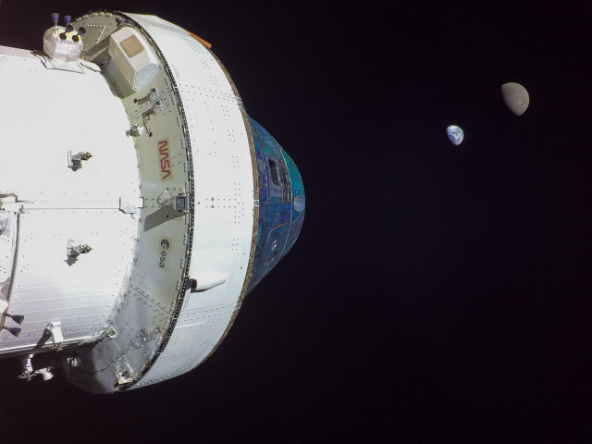
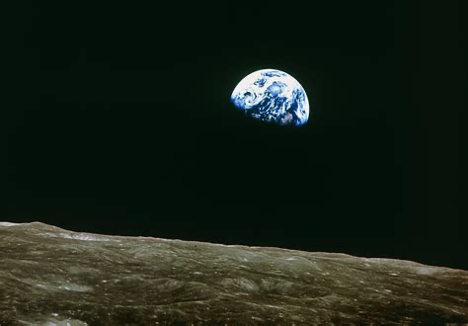
    Image of Artemis Orion Completing Final Lunar Departure Maneuver, December 2022 with a dark black background in space and a white
    Artemis Orion Completes Final Lunar Departure Maneuver, December 2022
    Earthrise over moon, Apollo 8, December 1969

    And there’s the famous blue dot, right?

    Yes. The pale blue dot.  it’s a pixel and I honestly look at that and I think it’s a bit of a dud! I have to really work hard in my imagination to get there, but when you see just enough of the earth and just enough of the moon to recognize what they are and where they are, just sitting in the blackness of space, that for me is both terrifying and exhilarating. That’s kind of a special thing, the sort of picture I would have looming over me.

    Voyager 1’s iconic Pale Blue Dot picture, February 1990

    I can just see you writing about these things and how interesting you find them. I’ll have to get one of your books and read it. Now is there a favorite quote that appeals to you because it’s clever or thought provoking or anything like that?

    I was thinking about this because I saw the questions and I immediately thought “Oh my  gosh!”, because for me humor is incredibly important. It just is. It’s how I cope with things, but also a sense of humor is so important because it cuts through cultural differences, it cuts through differences in background, all that stuff. Oh yeah! The best I could come up with, since I’m a fan of Yogi Berra, is one that I recall because it’s so beautifully daft, where he says, “When you come to a fork in the road, take it”. (laughs)
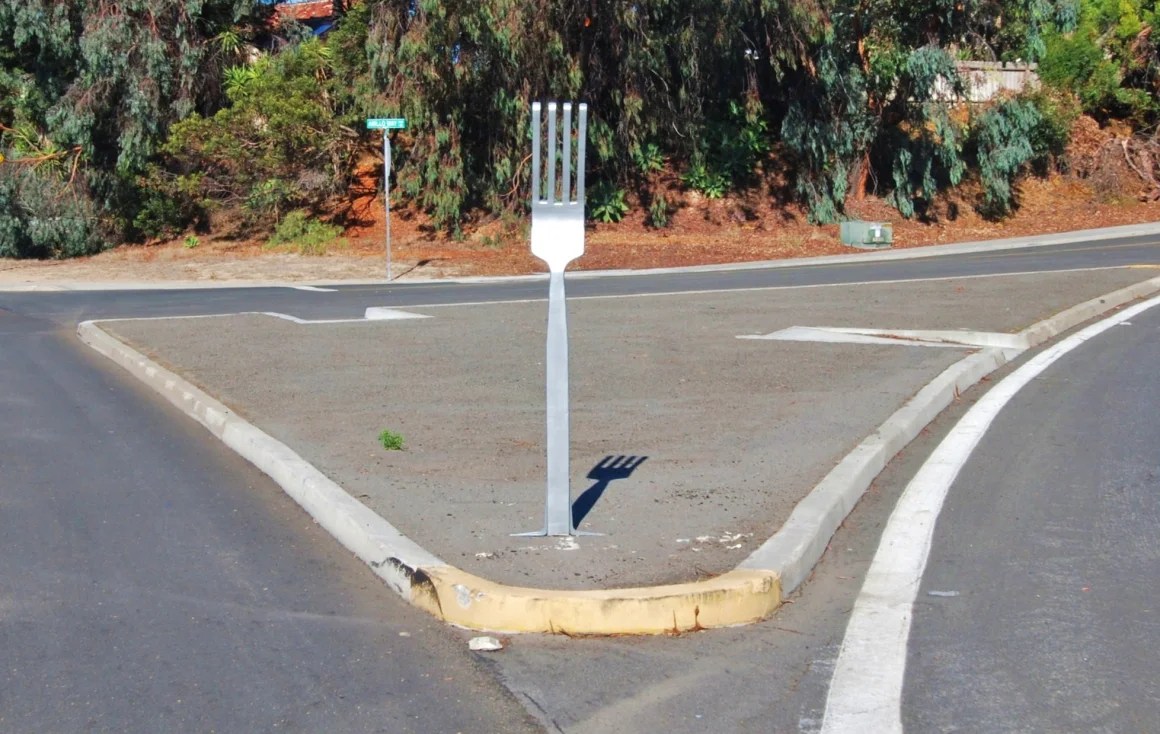
    “A fork in the road” (metaphor)

    That’s a good one!

    I like that because it makes you think for a moment, to realize that he’s not really saying anything, but he’s also saying everything. To me it means “You’re going to get through it no matter what.”  The most important thing is that you take that step and you will eventually find out the rest of it and everything will be OK.

    Is there something that you would like me to have asked you that I didn’t?

    No. Well, we didn’t talk much about my writing stuff.

    You can say something about that if you would like, sure.

    It’s kind of separate from science, but it is a big part of my life, and it was kind of unexpected.  At a certain point maybe about ten or twelve years ago I decided to try writing for a more general audience and it’s kind of turned into this parallel career that I’ve had since then, quite unexpectedly. And it’s resulted in my writing over five hundred pieces for Scientific American over ten years and I’ve also written a bunch of books. I’m working on a new book right now, if I can put in a plug for it.  It’s called “The Giant Leap” and it’s all about space exploration. That’s been an interesting turn for me, and it’s also made me realize that, much like teaching, there’s value to sitting down to write for a readership that is not specialist in any way. I try to imagine I’m writing for my mother or the guy who does my plumbing, you know? It’s incredibly useful as a scientist because it really helps you play with ideas, but it also helps you refine your own understanding because you can’t explain things simply unless you really understand them. And that’s been an interesting journey for me. Like I say, it’s been an entire parallel career, in the spare moments in between everything else, but it’s been marvelous. And as advice to younger scientists, think about that side of yourself, your capacity to share. We live in an era where it’s easier than ever to share, in many respects, for better or worse and I think scientists do have a certain obligation, especially as government scientists. We’re being paid by the taxpayer and we’re doing things for the good of the nation and for humanity. We should be more willing to share what we’re doing. People deserve to hear what we’re up to, and I think NASA does a great job at that. But as individuals, we can all help. There you go, that’s my soap box! (laughs)

    Thanks for the tip about your upcoming book “The Giant Leap”.  And let’s not be timid about plugging your books. A brief online survey revealed these:

    The Copernicus Complex: Our Cosmic Significance in a Universe of Planets and Probabilities

    Gravity’s Engines: How Bubble-Blowing Black Holes Rule Galaxies

    The Zoomable Universe: An Epic Tour Through Cosmic Scale, from Almost Everything to Nearly Nothing

    The Ascent of Information: Books, Bits, Genes, Machines, and Life’s Unending Algorythm

    Extrasolar Planets and Astrobiology

    These all look fascinating and I hope they are doing well. Your comments describe a great ethic not only for the agency but also for individuals. I liked what you said about your writing: “anything expressed here is my fault alone”. It’s another way of saying the author is responsible. It was a little piece of humor.  It’s been delightful to spend these few minutes chatting with you and I think we’re going to have a wonderful addition to our archive of scientist interviews.

    Sounds good.

    It’ll take probably two weeks, maybe three to get this on paper and then you can have whatever time you need and once you concur we will put it in a queue. It’s been a delight to chat with you today. Thank you again very much.

    My pleasure.

    Caleb standing beside a taxidermy moose head on display in Bryggen, a historic waterfront area with colorful wooden buildings in Bergen, Norway.

    ________________________________________________

    Interview conducted by Fred Van Wert on March 28, 2024

  • NASA 2026 Human Lander Challenge

    NASA’s Human Lander Challenge (HuLC) is an initiative supporting its Exploration Systems Development Mission Directorate’s (ESDMD’s) efforts to explore innovative solutions for a variety of known technology development areas for human landing systems (HLS). Landers are used to safely ferry astronauts to and from the lunar surface as part of the mission architecture for NASA’s Artemis campaign. Through this challenge, college students contribute to the advancement of HLS technologies, concepts, and approaches. Improvements in these technology areas have the potential to revolutionize NASA’s approach to space exploration, and contributions from the academic community are a valuable part of the journey to discovery. HuLC is open to teams comprised of full-time or part-time undergraduate and/or graduate students at an accredited U.S.-based community college, college, or university. HuLC projects allow students to incorporate their coursework into real aerospace design concepts and work together in a team environment. Interdisciplinary teams are encouraged.

    Award: $126,000 in total prizes

    Open Date: August 29, 2025

    Close Date: March 4, 2026

    For more information, visit: https://hulc.nianet.org/

  • Lydia Rodriguez Builds a Career of Service and Support at NASA 

    Lydia Rodriguez is an office administrator in the Flight Operations Directorate’s Operations Division and Operations Tools and Procedures Branch at NASA’s Johnson Space Center in Houston. 

    Over nearly two decades, she has supported nine organizations, helping enable NASA’s missions and forming lasting relationships along the way. 

    A woman poses in front of a blue background with the U.S. flag (left) and NASA flag (right) behind her.
    Official portrait of Lydia Rodriguez.
    NASA/Devin Boldt

    “I’ve had the opportunity to meet many different people at NASA who have become like family,” Rodriguez said. “I enjoy the culture and building relationships with people from all walks of life. I have learned so much from each person I’ve met and worked alongside.” 

    Her path to NASA began in high school, when her parents encouraged her to apply for a part-time Office Education student position at Johnson. That early opportunity gave her a glimpse into the agency’s culture — one that would inspire her to stay. 

    Lydia Rodriguez in the Mission Control Center Viewing Room during the Expedition 72 plaque hanging ceremony at NASA’s Johnson Space Center in Houston.

    Rodriguez takes pride in the practical support she has provided to her colleagues. She spent years in the Engineering Travel Office, helping team members plan their travel around the world. In 2013, the team was honored with a Group Achievement Award. 

    “I am proud of being confident and able to help others with their bookings and questions,” Rodriguez said. 

    Her NASA career has also taught her important lessons. Change has been a constant since she joined the center in 2008, and she has learned to adapt. 

    One of the greatest challenges came after Hurricane Harvey in 2017, when her home was flooded. Rodriguez learned to ask for support and leaned on employee resources at Johnson. 

    “I’ve learned that I am a resilient individual who takes on new challenges often,” she said. “What has helped me overcome obstacles is focusing on the mission and showing compassion toward people. We are all here for a reason and a purpose, and together we can accomplish greater things.” 

    Lydia Rodriguez skydiving for the second time in Houston.

    To the Artemis Generation, Rodriguez hopes to pass on the excitement of being part of the next frontier of space exploration. 

    “Take full advantage of the opportunities and resources available,” she said. “Meet new people, ask for help, never stop learning, growing, and contributing your experiences. Hopefully it will inspire others to do the same.” 

  • What’s Up: September 2025 Skywatching Tips from NASA

    Saturn’s spectacle, a Conjunction, and the Autumnal Equinox

    Saturn shines throughout the month, a conjunction sparkles in the sky, and we welcome the autumnal equinox. 

    Skywatching Highlights

    • All of September: Saturn is visible
    • Sept. 19: A conjunction between the Moon, Venus, and Regulus
    • Sept. 21: Saturn is at opposition
    • Sept. 22: The autumnal equinox

    Transcript

    What’s Up for September? Saturn puts on a spectacular show, a sunrise conjunction shines bright, and we ring in the autumnal equinox.

    Saturn at Opposition

    Saturn will be putting on an out-of-this-world performance this month. 

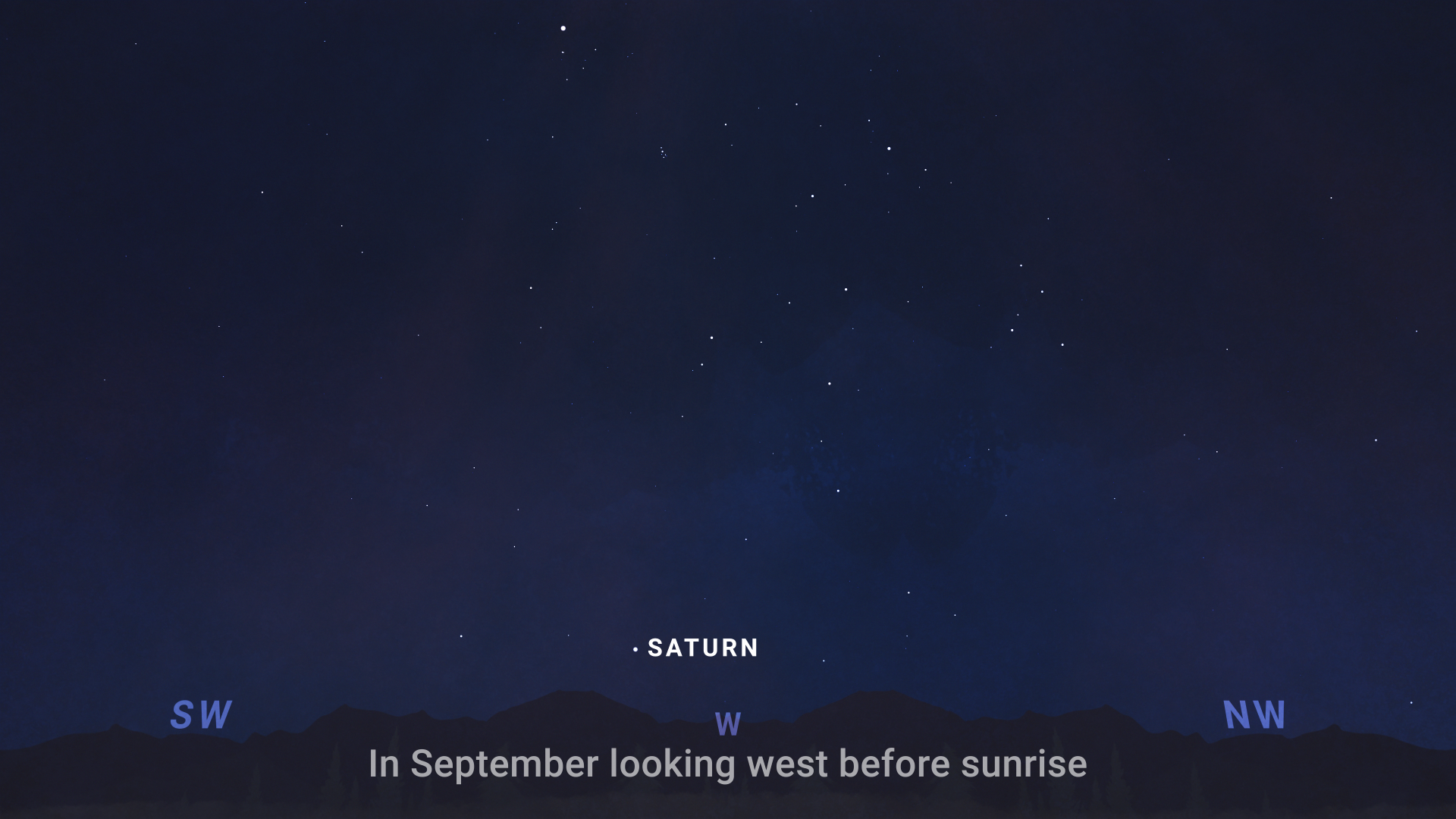
    While Venus and Jupiter shine in the eastern morning sky, the ringed planet will be incredibly bright in the sky throughout September in the eastern evening sky and western early morning sky.

    But why is Saturn the star of the show? Well, on September 21, Saturn will be at opposition, meaning Earth will find itself in between Saturn and the Sun, temporarily lined up. 

    This also means that Saturn is at its closest and brightest all year! 

    Saturn will be visible with just your eyes in the night sky, but with a small telescope, you might be able to see its rings!

    Sky chart showing Saturn in the western sky before sunrise in late September.
    NASA/JPL-Caltech

    Conjunction Trio

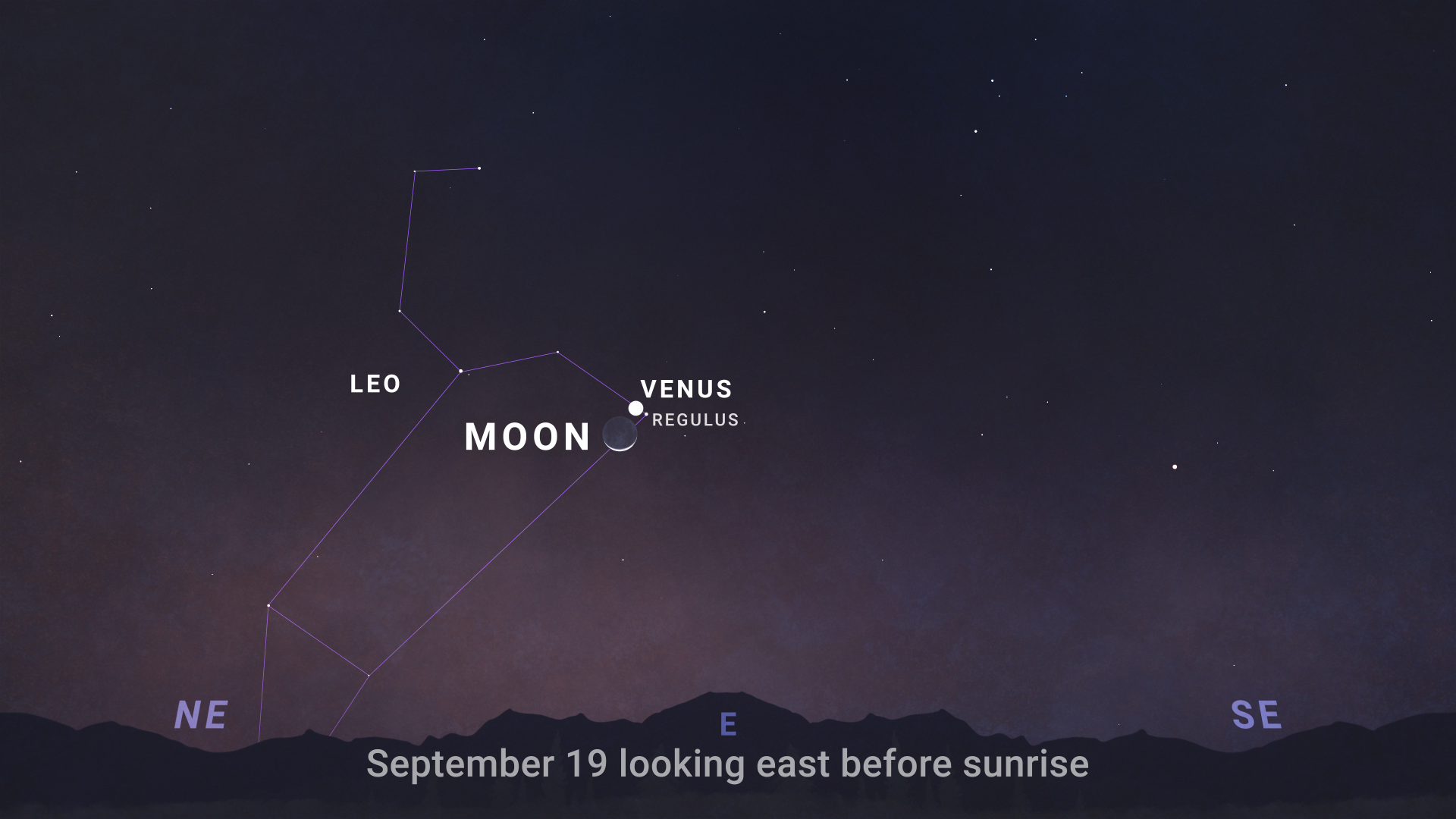
    If you look to the east just before sunrise on September 19, you’ll see a trio of celestial objects in a magnificent conjunction. 

    In the early pre-dawn hours, look east toward the waning, crescent Moon setting in the sky and you’ll notice something peculiar.
    The Moon will be nestled up right next to both Venus and Regulus, one of the brightest stars in the night sky. 

    The three are part of a conjunction, which simply means that they look close together in the sky (even if they’re actually far apart in space). 

    To find this conjunction, just look to the Moon. 

    And if you want some additional astronomical context, or want to specifically locate Regulus, this star lies within the constellation Leo, the lion. 

    Sky chart showing a conjunction between the Moon, Venus, and Regulus in the eastern sky before sunrise on September 19, 2025
    NASA/JPL-Caltech

    The Autumnal Equinox

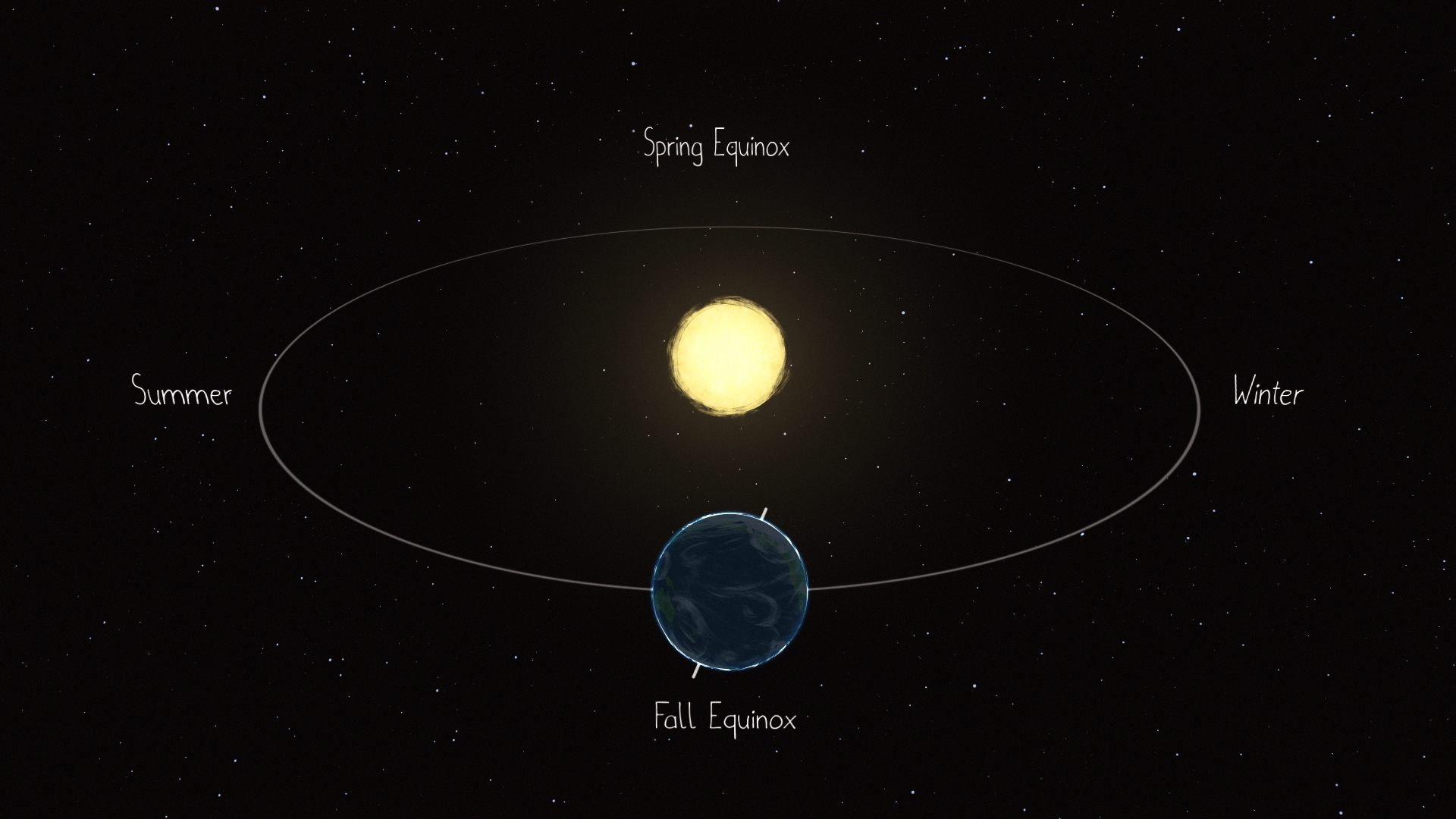
    On September 22, we mark the autumnal equinox or the official start of fall in the northern hemisphere. 

    Astronomically, this is the time when the Sun finds itself exactly above the equator.

    On this day, our planet isn’t tilted toward or away from the Sun, and both day and night are almost exactly 12 hours (with a few small exceptions). 

    An illustrated panel from an animation showing Earth’s positioning during the autumnal equinox.
    NASA/JPL-Caltech

    Moon Phases + Conclusion

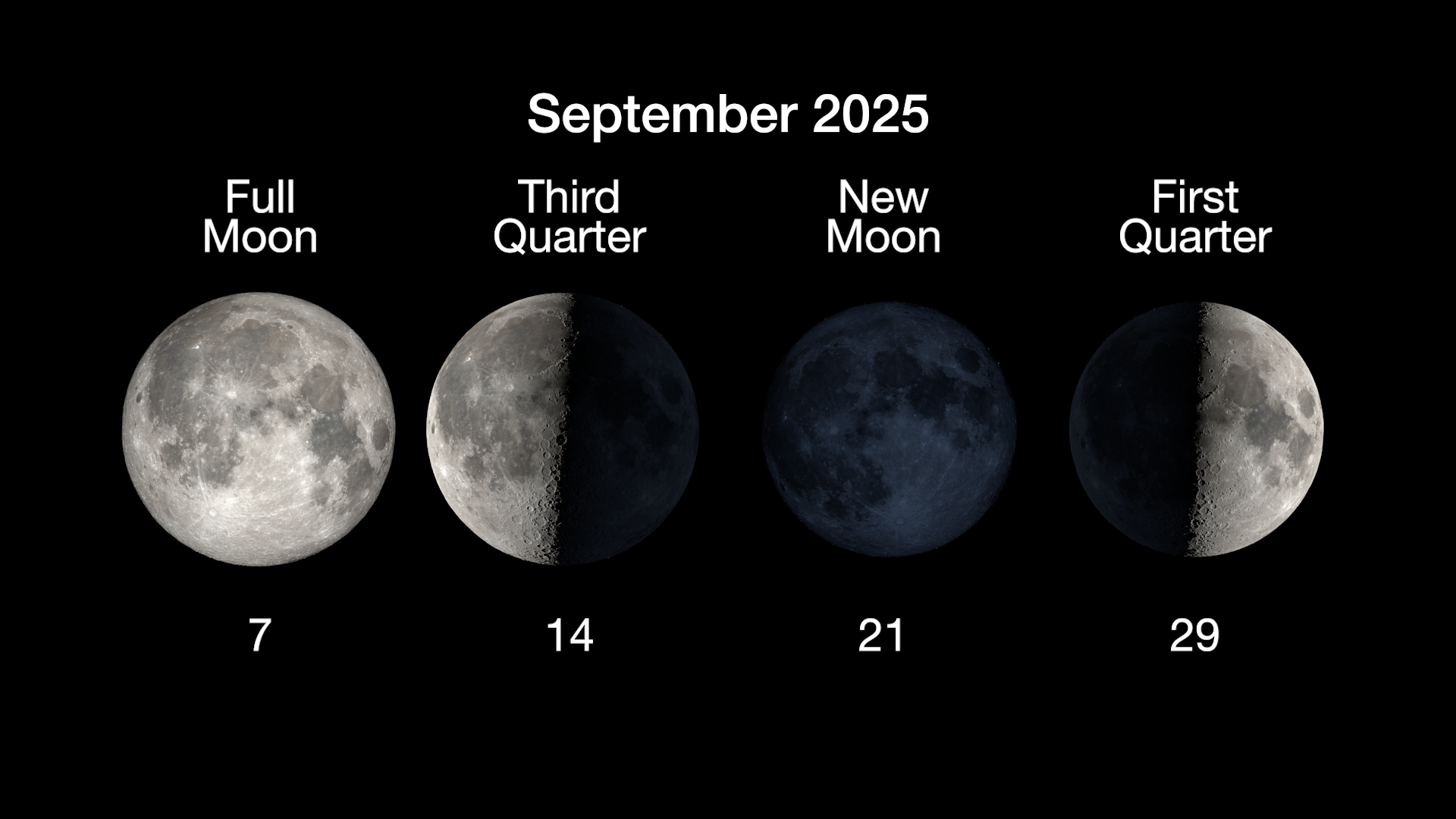
    Here are the phases of the Moon for September.

    You can stay up to date on all of NASA’s missions exploring the solar system and beyond at science.nasa.gov.

    I’m Chelsea Gohd from NASA’s Jet Propulsion Laboratory, and that’s What’s Up for this month.

    The main phases of the Moon are illustrated in a horizontal row, with the full moon on Sept. 7, the third quarter moon on Sept. 14, the new moon on Sept. 21, and the first quarter moon on Sept. 29.
    The phases of the Moon for September 2025.
    NASA/JPL-Caltech
  • NASA Astronaut Megan McArthur Retires

    Astronaut working on the International Space Station
    NASA astronaut and Expedition 65 Flight Engineer Megan McArthur removes Kidney Cells-02 hardware inside the Space Automated Bioproduct Laboratory and swaps media inside the Microgravity Science Glovebox. The human research study seeks to improve treatments for kidney stones and osteoporosis

    NASA astronaut Megan McArthur has retired, concluding a career spanning more than two decades. A veteran of two spaceflights, McArthur logged 213 days in space, including being the first woman to pilot a SpaceX Dragon spacecraft and the last person to “touch” the Hubble Space Telescope with the space shuttle’s robotic arm.

    McArthur launched as pilot of NASA’s SpaceX Crew-2 mission in April 2021, marking her second spaceflight and her first long-duration stay aboard the International Space Station. During the 200-day mission, she served as a flight engineer for Expeditions 65/66, conducting a wide array of scientific experiments in human health, materials sciences, and robotics to advance exploration of the Moon under Artemis and prepare to send American astronauts to Mars.

    Her first spaceflight was STS-125 in 2009, aboard the space shuttle Atlantis, the fifth and final servicing mission to Hubble. As a mission specialist, she was responsible for capturing the telescope with the robotic arm, as well as supporting five spacewalks to update and repair Hubble after its first 19 years in space. She also played a key role in supporting shuttle operations during launch, rendezvous with the telescope, and landing.

    “Megan’s thoughtful leadership, operational excellence, and deep commitment to science and exploration have made a lasting impact,” said Steve Koerner, acting director of NASA’s Johnson Space Center in Houston. “Her contributions have helped shape the future of human space exploration, and we are incredibly grateful for her service.”

    In addition to her flight experience, McArthur has served in various technical and leadership roles within NASA. In 2019, she became the deputy division chief of the Astronaut Office, supporting astronaut training, development, and ongoing spaceflight operations. She also served as the assistant director of flight operations for the International Space Station Program starting in 2017.

    Since 2022, McArthur has served as the chief science officer at Space Center Houston, NASA Johnson’s official visitor center. Continuing in this role, she actively promotes public engagement with space exploration themes, aiming to increase understanding of the benefits to humanity and enhance science literacy.

    “Megan brought a unique combination of technical skill and compassion to everything she did,” said Joe Acaba, chief of the Astronaut Office at NASA Johnson. “Whether in space or on the ground, she embodied the best of what it means to be an astronaut and a teammate. Her contributions will be felt by the next generation of explorers she helped train.”

    McArthur was born in Honolulu and raised as a “Navy kid” in many different locations worldwide. She earned a Bachelor of Science in aerospace engineering from the University of California, Los Angeles, and a doctorate in oceanography from the Scripps Institution of Oceanography at the University of California, San Diego. Before being selected as an astronaut in 2000, she conducted oceanographic research focusing on underwater acoustics, which involved shipboard work and extensive scuba diving.

    McArthur is married to former NASA astronaut Robert Behnken, who also flew aboard the Dragon Endeavour spacecraft during the agency’s SpaceX Demo-2 mission in 2020.

    “It was an incredible privilege to serve as a NASA astronaut, working with scientists from around the world on cutting-edge research that continues to have a lasting impact here on Earth and prepares humanity for future exploration at the Moon and Mars,” said McArthur. “From NASA’s Hubble Space Telescope to the International Space Station, our research lab in low Earth orbit, humanity has developed incredible tools that help us answer important scientific questions, solve complex engineering challenges, and gain a deeper understanding of our place in the universe. Seeing our beautiful planet from space makes it so clear how fragile and precious our home is, and how vital it is that we protect it. I am grateful I had the opportunity to contribute to this work, and I’m excited to watch our brilliant engineers and scientists at NASA conquer new challenges and pursue further scientific discoveries for the benefit of all.”

    To learn more about NASA’s astronauts and their contributions to space exploration, visit:

    https://www.nasa.gov/astronauts

    -end-

    Shaneequa Vereen
    Johnson Space Center, Houston
    281-483-5111
    shaneequa.y.vereen@nasa.gov

  • Landsat 9 Sees Buccaneer Archipelago

    A satellite image shows brown-red, jagged land in the bottom-right corner jutting into blue-green water. Numerous islands dot the rest of the scene. The water appears to swirl around the islands. Some of the coastal areas are dotted with green.
    In the sparsely populated Kimberley region of Western Australia, jagged landforms reach like fingers into the turquoise-blue ocean waters. Along the coastline north of Derby, they used to reach even farther. But rising sea levels submerged part of the coastal landscape, giving rise to hundreds of islands and low-lying reefs that compose the Buccaneer Archipelago.
    NASA/Michala Garrison; U.S. Geological Survey

    The Operational Land Imager on Landsat 9 captured this image of Buccaneer Archipelago on June 11, 2025. The scene encapsulates the striking interactions between land and water in the area where King Sound opens to the Indian Ocean.

    The powerful tidal currents stir up sediment in shallow areas, producing the beautiful turquoise swirls visible in this image. This power, however, can be hazardous to seafarers and divers as water rips through the archipelago’s constricted passages. One infamous place of turbulence, known as “Hell’s Gate,” lies in the passage between Gerald Peninsula and Muddle Islands.

    Learn more about this archipelago in Western Australia.

    Text credit: Kathryn Hansen

    Image credit: NASA/Michala Garrison; U.S. Geological Survey

  • Hubble Homes in on Galaxy’s Star Formation

    2 min read

    Hubble Homes in on Galaxy’s Star Formation

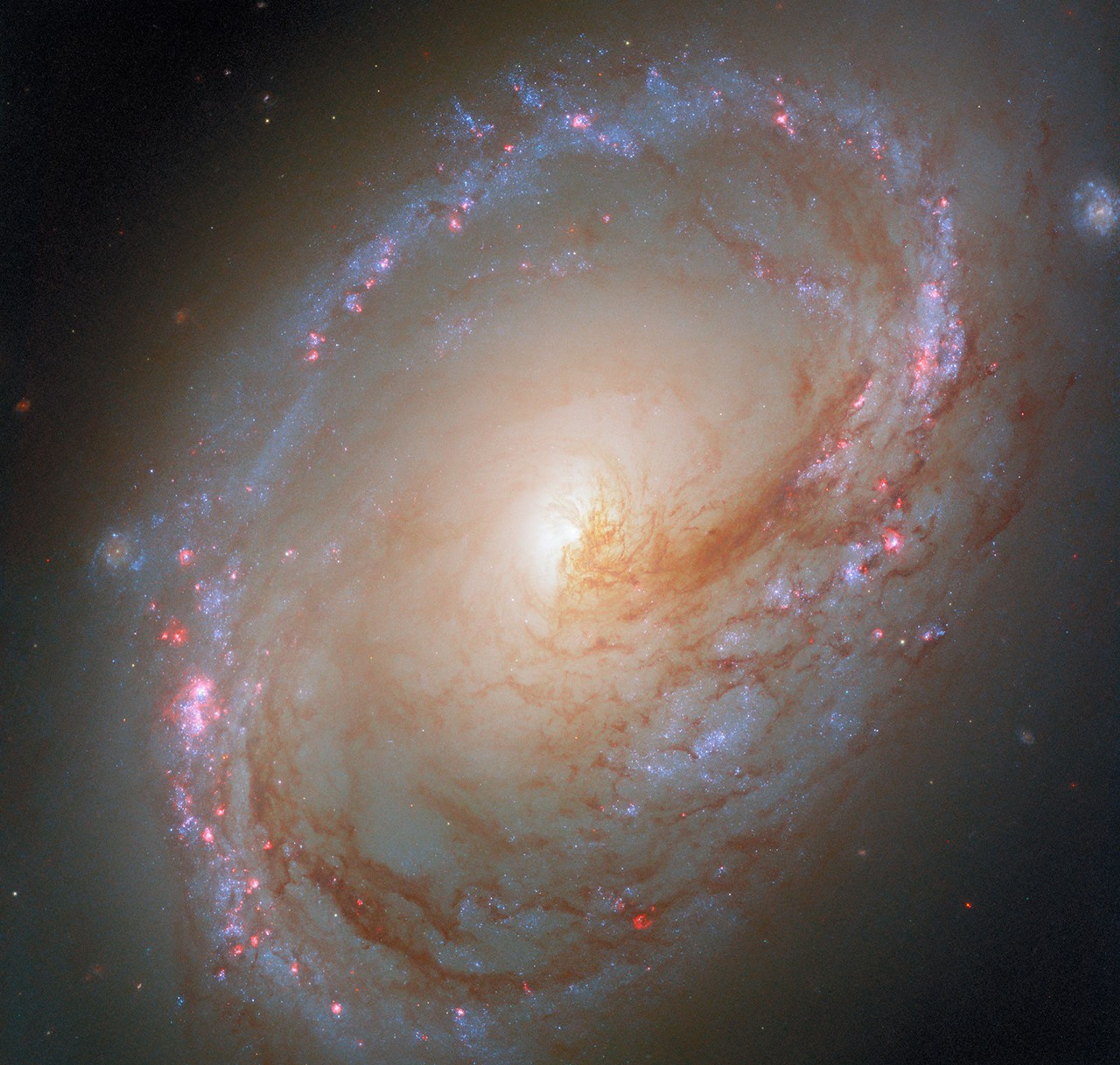
    A spiral galaxy, tilted nearly face-on to us, with a slightly unusual shape. Its spiral arms form an oval-shaped ring around the galaxy’s disk, filled with blue light from stars, as well as pink glowing gas bubbles where new stars are forming. Threads of dark red dust swirl around the brightly glowing core, blocking some of its light. The dust lanes extend into and follow the spiral arms.
    This NASA/ESA Hubble Space Telescope image features the asymmetric spiral galaxy Messier 96.
    ESA/Hubble & NASA, F. Belfiore, D. Calzetti

    This NASA/ESA Hubble Space Telescope image features a galaxy whose asymmetric appearance may be the result of a galactic tug of war. Located 35 million light-years away in the constellation Leo, the spiral galaxy Messier 96 is the brightest of the galaxies in its group. The gravitational pull of its galactic neighbors may be responsible for Messier 96’s uneven distribution of gas and dust, asymmetric spiral arms, and off-center galactic core.

    This asymmetric appearance is on full display in the new Hubble image that incorporates data from observations made in ultraviolet, near infrared, and visible/optical light. Earlier Hubble images of Messier 96 were released in 2015 and 2018. Each successive image added new data, building up a beautiful and scientifically valuable view of the galaxy.

    The 2015 image combined two wavelengths of optical light with one near infrared wavelength. The optical light revealed the galaxy’s uneven form of dust and gas spread asymmetrically throughout its weak spiral arms and its off-center core, while the infrared light revealed the heat of stars forming in clouds shaded pink in the image.

    The 2018 image added two more optical wavelengths of light along with one wavelength of ultraviolet light that pinpointed areas where high-energy, young stars are forming.

    This latest version offers us a new perspective on Messier 96’s star formation. It includes the addition of light that reveals regions of ionized hydrogen (H-alpha) and nitrogen (NII). This data helps astronomers determine the environment within the galaxy and the conditions in which stars are forming. The ionized hydrogen traces ongoing star formation, revealing regions where hot, young stars are ionizing the gas. The ionized nitrogen helps astronomers determine the rate of star formation and the properties of gas between stars, while the combination of the two ionized gasses helps researchers determine if the galaxy is a starburst galaxy or one with an active galactic nucleus.

    The bubbles of pink gas in this image surround hot, young, massive stars, illuminating a ring of star formation in the galaxy’s outskirts. These young stars are still embedded within the clouds of gas from which they were born. Astronomers will use the new data in this image to study how stars are form within giant dusty gas clouds, how dust filters starlight, and how stars affect their environments.

    Explore More:

    Media Contact:

    Claire Andreoli (claire.andreoli@nasa.gov)
    NASA’s Goddard Space Flight CenterGreenbelt, MD

  • NASA Awards Spaceflight Operations, Systems Organization Contract

    The letters NASA on a blue circle with red and white detail, all surrounded by a black background
    Credit: NASA

    NASA has awarded ASCEND Aerospace & Technology of Cape Canaveral, Florida, the Contract for Organizing Spaceflight Mission Operations and Systems (COSMOS), to provide services at the agency’s Johnson Space Center in Houston.

    The COSMOS is a single award, indefinite-delivery/indefinite-quantity contract valued at $1.8 billion that begins its five-year base period no earlier than Dec. 1, with two option periods that could extend until 2034. The Aerodyne Company of Cape Canaveral, Florida, and Jacobs Technology Company of Tullahoma, Tennessee, are joint venture partners.

    Work performed under the contract will support NASA’s Flight Operation Directorate including the Orion and Space Launch System Programs, the International Space Station, Commercial Crew Program, and the Artemis campaign. Services include Mission Control Center systems, training systems, mockup environments, and training for astronauts, instructors, and flight controllers.

    For more information about NASA and agency programs, visit:

    https://www.nasa.gov

    -end-

    Tiernan Doyle
    Headquarters, Washington
    202-358-1600
    tiernan.doyle@nasa.gov

    Chelsey Ballarte
    Johnson Space Center, Houston
    281-483-5111
    chelsey.n.ballarte@nasa.gov

  • NASA Invites Media to Learn About New Missions to Map Sun’s Influence

    A disk-shaped spacecraft hovers in space in front of a background of stars.
    NASA’s IMAP (Interstellar Mapping and Acceleration Probe) mission will map the boundaries of the heliosphere, the bubble created by the solar wind that protects our solar system from cosmic radiation.
    Credit: NASA/Princeton/Patrick McPike

    NASA will hold a media teleconference at 12 p.m. EDT on Thursday, Sept. 4, to discuss the agency’s upcoming Sun and space weather missions, IMAP (Interstellar Mapping and Acceleration Probe) and Carruthers Geocorona Observatory. The two missions are targeting launch on the same rocket no earlier than Tuesday, Sept. 23.

    The IMAP mission will map the boundaries of our heliosphere, the vast bubble created by the Sun’s wind that encapsulates our entire solar system. As a modern-day celestial cartographer, IMAP will explore how the heliosphere interacts with interstellar space, as well as chart the range of particles that fill the space between the planets. The IMAP mission also will support near real-time observations of the solar wind and energetic particles. These energetic particles can produce hazardous space weather that can impact spacecraft and other NASA hardware as the agency explores deeper into space, including at the Moon under the Artemis campaign.

    NASA’s Carruthers Geocorona Observatory will image the ultraviolet glow of Earth’s exosphere, the outermost region of our planet’s atmosphere. This data will help scientists understand how space weather from the Sun shapes the exosphere and ultimately impacts our planet. The first observation of this glow – called the geocorona – was captured during Apollo 16, when a telescope designed and built by George Carruthers was deployed on the Moon.

    Audio of the teleconference will stream live on the agency’s website at:

    https://www.nasa.gov/live

    Participants include:

    • Nicky Fox, associate administrator, Science Mission Directorate, NASA Headquarters in Washington
    • Teresa Nieves-Chinchilla, director, Moon to Mars Space Weather Analysis Office, NASA’s Goddard Space Flight Center in Greenbelt, Maryland
    • David J. McComas, IMAP principal investigator, Princeton University
    • Lara Waldrop, Carruthers Geocorona Observatory principal investigator, University of Illinois Urbana-Champaign

    To participate in the media teleconference, media must RSVP no later than 11 a.m. on Sept. 4 to Sarah Frazier at: sarah.frazier@nasa.gov. NASA’s media accreditation policy is available online.

    The IMAP and Carruthers Geocorona Observatory missions will launch on a SpaceX Falcon 9 rocket from Launch Complex 39A at NASA’s Kennedy Space Center in Florida. Also launching on this flight will be the National Oceanic and Atmospheric Administration’s (NOAA) Space Weather Follow On – Lagrange 1 (SWFO-L1), which will monitor solar wind disturbances and detect and track coronal mass ejections before they reach Earth.

    David McComas, professor, Princeton University, leads the IMAP mission with an international team of 27 partner institutions. The Johns Hopkins Applied Physics Laboratory in Laurel, Maryland, built the spacecraft and will operate the mission. NASA’s IMAP is the fifth mission in NASA’s Solar Terrestrial Probes Program portfolio.

    The Carruthers Geocorona Observatory mission is led by Lara Waldrop from the University of Illinois Urbana-Champaign. Mission implementation is led by the Space Sciences Laboratory at University of California, Berkeley, which also designed and built the two ultraviolet imagers. BAE Systems designed and built the Carruthers spacecraft.

    The Solar Terrestrial Probes Program Office, part of the Explorers and Heliophysics Project Division at NASA Goddard, manages the IMAP and Carruthers Geocorona Observatory missions for NASA’s Science Mission Directorate.

    NASA’s Launch Services Program, based at NASA Kennedy, manages the launch service for the mission.

    To learn more about IMAP, please visit:

    https://www.nasa.gov/imap

    -end-

    Abbey Interrante / Karen Fox
    Headquarters, Washington
    301-201-0124 / 202-358-1600
    abbey.a.interrante@nasa.gov / karen.c.fox@nasa.gov

    Sarah Frazier
    Goddard Space Flight Center, Greenbelt, Md.
    202-853-7191
    sarah.frazier@nasa.gov

  • NASA Marsquake Data Reveals Lumpy Nature of Red Planet’s Interior

    6 min read

    Preparations for Next Moonwalk Simulations Underway (and Underwater)

    Artist's concept of an asteroid
    Scientists believe giant impacts — like the one depicted in this artist’s concept — occurred on Mars 4.5 billion years ago, injecting debris from the impact deep into the planet’s mantle. NASA’s InSight lander detected this debris before the mission’s end in 2022.
    NASA/JPL-Caltech

    Rocky material that impacted Mars lies scattered in giant lumps throughout the planet’s mantle, offering clues about Mars’ interior and its ancient past.

    What appear to be fragments from the aftermath of massive impacts on Mars that occurred 4.5 billion years ago have been detected deep below the planet’s surface. The discovery was made thanks to NASA’s now-retired InSight lander, which recorded the findings before the mission’s end in 2022. The ancient impacts released enough energy to melt continent-size swaths of the early crust and mantle into vast magma oceans, simultaneously injecting the impactor fragments and Martian debris deep into the planet’s interior.

    There’s no way to tell exactly what struck Mars: The early solar system was filled with a range of different rocky objects that could have done so, including some so large they were effectively protoplanets. The remains of these impacts still exist in the form of lumps that are as large as 2.5 miles (4 kilometers) across and scattered throughout the Martian mantle. They offer a record preserved only on worlds like Mars, whose lack of tectonic plates has kept its interior from being churned up the way Earth’s is through a process known as convection.

    A cutaway view of Mars in this not-to-scale artist’s concept
    A cutaway view of Mars in this artist’s concept (not to scale) reveals debris from ancient impacts scattered through the planet’s mantle. On the surface at left, a meteoroid impact sends seismic signals through the interior; at right is NASA’s InSight lander.
    NASA/JPL-Caltech

    The finding was reported Thursday, Aug. 28, in a study published by the journal Science.

    “We’ve never seen the inside of a planet in such fine detail and clarity before,” said the paper’s lead author, Constantinos Charalambous of Imperial College London. “What we’re seeing is a mantle studded with ancient fragments. Their survival to this day tells us Mars’ mantle has evolved sluggishly over billions of years. On Earth, features like these may well have been largely erased.”

    InSight, which was managed by NASA’s Jet Propulsion Laboratory in Southern California, placed the first seismometer on Mars’ surface in 2018. The extremely sensitive instrument recorded 1,319 marsquakes before the lander’s end of mission in 2022.

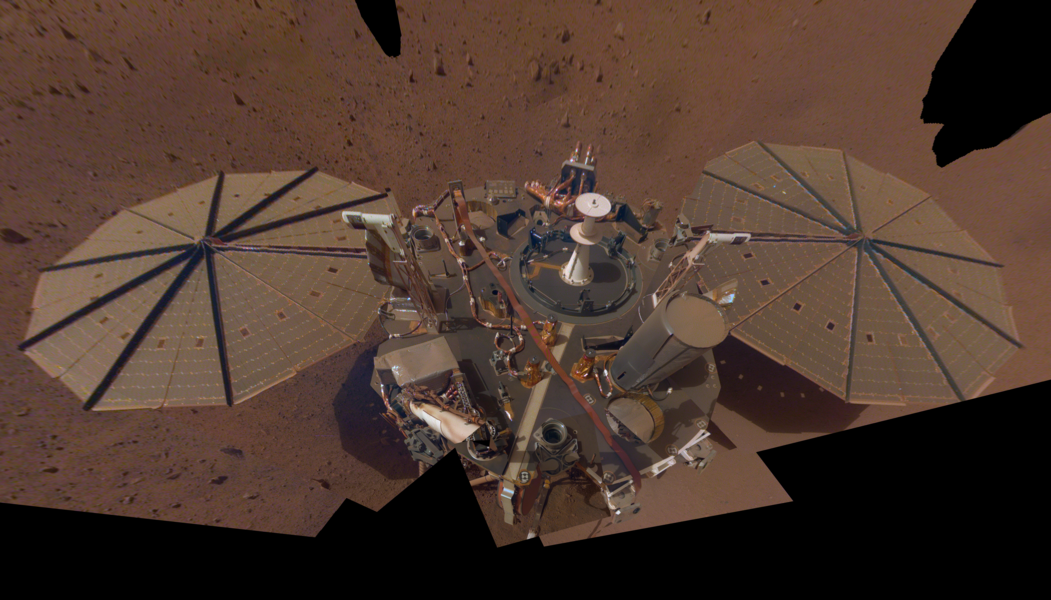
    A thin layer of Martian dust can be seen coating InSight in this selfie taken by the Instrument Deployment Camera on the lander’s robotic arm.
    NASA’s InSight took this selfie in 2019 using a camera on its robotic arm. The lander also used its arm to deploy the mission’s seismometer, whose data was used in a 2025 study showing impacts left chunks of debris deep in the planet’s interior.
    NASA/JPL-Caltech

    Quakes produce seismic waves that change as they pass through different kinds of material, providing scientists a way to study the interior of a planetary body. To date, the InSight team has measured the size, depth, and composition of Mars’ crust, mantle, and core. This latest discovery regarding the mantle’s composition suggests how much is still waiting to be discovered within InSight’s data.

    “We knew Mars was a time capsule bearing records of its early formation, but we didn’t anticipate just how clearly we’d be able to see with InSight,” said Tom Pike of Imperial College London, coauthor of the paper.

    Quake hunting

    Mars lacks the tectonic plates that produce the temblors many people in seismically active areas are familiar with. But there are two other types of quakes on Earth that also occur on Mars: those caused by rocks cracking under heat and pressure, and those caused by meteoroid impacts.

    Of the two types, meteoroid impacts on Mars produce high-frequency seismic waves that travel from the crust deep into the planet’s mantle, according to a paper published earlier this year in Geophysical Research Letters. Located beneath the planet’s crust, the Martian mantle can be as much as 960 miles (1,550 kilometers) thick and is made of solid rock that can reach temperatures as high as 2,732 degrees Fahrenheit (1,500 degrees Celsius).

    Scrambled signals

    The new Science paper identifies eight marsquakes whose seismic waves contained strong, high-frequency energy that reached deep into the mantle, where their seismic waves were distinctly altered.

    “When we first saw this in our quake data, we thought the slowdowns were happening in the Martian crust,” Pike said. “But then we noticed that the farther seismic waves travel through the mantle, the more these high-frequency signals were being delayed.”

    Using planetwide computer simulations, the team saw that the slowing down and scrambling happened only when the signals passed through small, localized regions within the mantle. They also determined that these regions appear to be lumps of material with a different composition than the surrounding mantle.

    With one riddle solved, the team focused on another: how those lumps got there.

    Turning back the clock, they concluded that the lumps likely arrived as giant asteroids or other rocky material that struck Mars during the early solar system, generating those oceans of magma as they drove deep into the mantle, bringing with them fragments of crust and mantle.

    Charalambous likens the pattern to shattered glass — a few large shards with many smaller fragments. The pattern is consistent with a large release of energy that scattered many fragments of material throughout the mantle. It also fits well with current thinking that in the early solar system, asteroids and other planetary bodies regularly bombarded the young planets.

    On Earth, the crust and uppermost mantle is continuously recycled by plate tectonics pushing a plate’s edge into the hot interior, where, through convection, hotter, less-dense material rises and cooler, denser material sinks. Mars, by contrast, lacks tectonic plates, and its interior circulates far more sluggishly. The fact that such fine structures are still visible today, Charalambous said, “tells us Mars hasn’t undergone the vigorous churning that would have smoothed out these lumps.”

    And in that way, Mars could point to what may be lurking beneath the surface of other rocky planets that lack plate tectonics, including Venus and Mercury.

    More about InSight

    JPL managed InSight for NASA’s Science Mission Directorate. InSight was part of NASA’s Discovery Program, managed by the agency’s Marshall Space Flight Center in Huntsville, Alabama. Lockheed Martin Space in Denver built the InSight spacecraft, including its cruise stage and lander, and supported spacecraft operations for the mission.

    A number of European partners, including France’s Centre National d’Études Spatiales (CNES) and the German Aerospace Center (DLR), supported the InSight mission. CNES provided the Seismic Experiment for Interior Structure (SEIS) instrument to NASA, with the principal investigator at IPGP (Institut de Physique du Globe de Paris). Significant contributions for SEIS came from IPGP; the Max Planck Institute for Solar System Research (MPS) in Germany; the Swiss Federal Institute of Technology (ETH Zurich) in Switzerland; Imperial College London and Oxford University in the United Kingdom; and JPL. DLR provided the Heat Flow and Physical Properties Package (HP3) instrument, with significant contributions from the Space Research Center (CBK) of the Polish Academy of Sciences and Astronika in Poland. Spain’s Centro de Astrobiología (CAB) supplied the temperature and wind sensors.

    News Media Contacts

    Andrew Good
    Jet Propulsion Laboratory, Pasadena, Calif.
    818-393-2433
    andrew.c.good@jpl.nasa.gov

    Karen Fox / Molly Wasser
    NASA Headquarters, Washington
    202-358-1600
    karen.c.fox@nasa.gov / molly.l.wasser@nasa.gov

    2025-110

  • NASA’s Chandra Reveals Star’s Inner Conflict Before Explosion

    This graphic features data from NASA’s Chandra X-ray Observatory of the Cassiopeia A (Cas A) supernova remnant that reveals that the star’s interior violently rearranged itself mere hours before it exploded. The main panel of this graphic is Chandra data that shows the location of different elements in the remains of the explosion: silicon (represented in red), sulfur (yellow), calcium (green) and iron (purple). The blue color reveals the highest-energy X-ray emission detected by Chandra in Cas A and an expanding blast wave. The inset reveals regions with wide ranges of relative abundances of silicon and neon. This data, plus computer modeling, reveal new insight into how massive stars like Cas A end their lives.
    This graphic features data from NASA’s Chandra X-ray Observatory of the Cassiopeia A (Cas A) supernova remnant that reveals that the star’s interior violently rearranged itself mere hours before it exploded. The main panel of this graphic is Chandra data that shows the location of different elements in the remains of the explosion: silicon (represented in red), sulfur (yellow), calcium (green) and iron (purple). The blue color reveals the highest-energy X-ray emission detected by Chandra in Cas A and an expanding blast wave. The inset reveals regions with wide ranges of relative abundances of silicon and neon. This data, plus computer modeling, reveal new insight into how massive stars like Cas A end their lives.
    X-ray: NASA/CXC/Meiji Univ./T. Sato et al.; Image Processing: NASA/CXC/SAO/N. Wolk

    The inside of a star turned on itself before it spectacularly exploded, according to a new study from NASA’s Chandra X-ray Observatory. Today, this shattered star, known as the Cassiopeia A supernova remnant, is one of the best-known, well-studied objects in the sky.

    Over three hundred years ago, however, it was a giant star on the brink of self-destruction. The new Chandra study reveals that just hours before it exploded, the star’s interior violently rearranged itself. This last-minute shuffling of its stellar belly has profound implications for understanding how massive stars explode and how their remains behave afterwards.

    Cassiopeia A (Cas A for short) was one of the first objects the telescope looked at after its launch in 1999, and astronomers have repeatedly returned to observe it.

    “It seems like each time we closely look at Chandra data of Cas A, we learn something new and exciting,” said Toshiki Sato of Meiji University in Japan who led the study. “Now we’ve taken that invaluable X-ray data, combined it with powerful computer models, and found something extraordinary.”

    As massive stars age, increasingly heavy elements form in their interiors by nuclear reactions, creating onion-like layers of different elements. Their outer layer is mostly made of hydrogen, followed by layers of helium, carbon and progressively heavier elements – extending all the way down to the center of the star. 

    Once iron starts forming in the core of the star, the game changes. As soon as the iron core grows beyond a certain mass (about 1.4 times the mass of the Sun), it can no longer support its own weight and collapses. The outer part of the star falls onto the collapsing core, and rebounds as a core-collapse supernova.

    The new research with Chandra data reveals a change that happened deep within the star at the very last moments of its life. After more than a million years, Cas A underwent major changes in its final hours before exploding.

    “Our research shows that just before the star in Cas A collapsed, part of an inner layer with large amounts of silicon traveled outwards and broke into a neighboring layer with lots of neon,” said co-author Kai Matsunaga of Kyoto University in Japan. “This is a violent event where the barrier between these two layers disappears.”

    This upheaval not only caused material rich in silicon to travel outwards; it also forced material rich in neon to travel inwards. The team found clear traces of these outward silicon flows and inward neon flows in the remains of Cas A’s supernova remnant. Small regions rich in silicon but poor in neon are located near regions rich in neon and poor in silicon. 

    The survival of these regions not only provides critical evidence for the star’s upheaval, but also shows that complete mixing of the silicon and neon with other elements did not occur immediately before or after the explosion. This lack of mixing is predicted by detailed computer models of massive stars near the ends of their lives.

    There are several significant implications for this inner turmoil inside of the doomed star. First, it may directly explain the lopsided rather than symmetrical shape of the Cas A remnant in three dimensions. Second, a lopsided explosion and debris field may have given a powerful kick to the remaining core of the star, now a neutron star, explaining the high observed speed of this object.

    Finally, the strong turbulent flows created by the star’s internal changes may have promoted the development of the supernova blast wave, facilitating the star’s explosion.

    “Perhaps the most important effect of this change in the star’s structure is that it may have helped trigger the explosion itself,” said co-author Hiroyuki Uchida, also of Kyoto University. “Such final internal activity of a star may change its fate—whether it will shine as a supernova or not.”

    These results have been published in the latest issue of The Astrophysical Journal and are available online.

    To learn more about Chandra, visit:

    https://science.nasa.gov/chandra

    Learn more about the Chandra X-ray Observatory and its mission here:

    https://www.nasa.gov/chandra

    https://chandra.si.edu

    Visual Description

    This release features a composite image of Cassiopeia A, a donut-shaped supernova remnant located about 11,000 light-years from Earth. Included in the image is an inset closeup, which highlights a region with relative abundances of silicon and neon.

    Over three hundred years ago, Cassiopeia A, or Cas A, was a star on the brink of self-destruction. In composition it resembled an onion with layers rich in different elements such as hydrogen, helium, carbon, silicon, sulfur, calcium, and neon, wrapped around an iron core. When that iron core grew beyond a certain mass, the star could no longer support its own weight. The outer layers fell into the collapsing core, then rebounded as a supernova. This explosion created the donut-like shape shown in the composite image. The shape is somewhat irregular, with the thinner quadrant of the donut to the upper left of the off-center hole.

    In the body of the donut, the remains of the star’s elements create a mottled cloud of colors, marbled with red and blue veins. Here, sulfur is represented by yellow, calcium by green, and iron by purple. The red veins are silicon, and the blue veins, which also line the outer edge of the donut-shape, are the highest energy X-rays detected by Chandra and show the explosion’s blast wave.

    The inset uses a different color code and highlights a colorful, mottled region at the thinner, upper left quadrant of Cas A. Here, rich pockets of silicon and neon are identified in the red and blue veins, respectively. New evidence from Chandra indicates that in the hours before the star’s collapse, part of a silicon-rich layer traveled outwards, and broke into a neighboring neon-rich layer. This violent breakdown of layers created strong turbulent flows and may have promoted the development of the supernova’s blast wave, facilitating the star’s explosion. Additionally, upheaval in the interior of the star may have produced a lopsided explosion, resulting in the irregular shape, with an off-center hole (and a thinner bite of donut!) at our upper left.

    News Media Contact

    Megan Watzke
    Chandra X-ray Center
    Cambridge, Mass.
    617-496-7998
    mwatzke@cfa.harvard.edu

    Corinne Beckinger
    Marshall Space Flight Center, Huntsville, Alabama
    256-544-0034
    corinne.m.beckinger@nasa.gov

  • Katie Bisci: Resourcing for Big Science

    Deputy Project Manager for Resources – Goddard Space Flight Center

    a portrait of Katie Bisci with a model of the Nancy Grace Roman Space Telescope
    Katie Bisci, photographed here with a model of NASA’s Nancy Grace Roman Space Telescope,
    Credit: NASA/Jolearra Tshiteya

    How are you helping set the stage for the Roman mission?

    I’m a deputy project manager for resources on the Nancy Grace Roman Space Telescope team, sharing the role with Kris Steeley. Together, we oversee the business team, finance, outreach, scheduling, and more. I focus more on the “down and in” of the day-to-day team — helping the financial team, resource utilization across the project, and support service contracts management — while Kris handles more of the “up and out” external work with center management and NASA Headquarters. Kris and I collaborate on many things as well. The two of us have been together on Roman for many years, and we have definitely become one brain in many aspects of the role. The main goal in the job is programmatics: We need to understand and help along the technical parts of the mission, while also supporting cost and schedule control since Roman is a cost-capped mission. I try to make sure that I partner with our engineers to understand the technical part of Roman as much as possible. I find that I can’t do my job well on the programmatic side without working together closely with our engineers to understand the hardware and testing.

    What drew you to NASA? Did you always intend to work here?

    I think I always knew I wanted to go into the business and finance side of things, but I thought I’d end up at a big investment bank. I interned at one during college, but it just didn’t feel right for me. After graduating, I worked on corporate events for defense contractors in New York City. Then my husband got a job in Annapolis, Maryland, and I took a leap and applied for a resource analyst job at NASA, where some college friends were working. Looking back, as an oldest daughter it probably should have been obvious that project management would be a good fit! Once I got to NASA, I was really drawn in by the missions and work we do. It was so different from the corporate world. Being able to work on some of the coolest missions with some of the most brilliant minds out there is a gift. Almost 15 years later, I’m still here.

    How did your career grow from there?

    After serving as a resource analyst in the Safety and Mission Assurance Directorate at NASA’s Goddard Space Flight Center in Greenbelt, Maryland, I moved into the center’s Astrophysics Projects Division, where I began working on Roman in 2012, back when it was just a small study called WFIRST (Wide Field Infrared Survey Telescope). I could never have imagined at the time what that small study would turn into. People at NASA often say they “grew up” on the James Webb Space Telescope, and for me I definitely “grew up” on Roman. I became the mission business manager, then financial manager, and now a deputy project manager for resources. I feel lucky that most of my career has been spent on Roman. Adding it up, I’ve been on this project for over a decade. I’ve worked with so many amazing people, not just at NASA Goddard, but across the United States. It’s hard to believe we are so close to launching.

    What’s been the highlight of your career so far?

    Becoming part of the management team on Roman, for sure. Working with the leadership team has been incredible. The best part about Roman is the people. It still cracks me up to look at the plethora of people we have in the same room for our weekly senior staff meeting, from the programmatic and finance types like myself, to engineers leading super complicated integration and test programs, Ph.D.s, and some of the most brilliant science minds I will probably ever know. The Roman team is amazing, and those relationships are what keep me excited to come to work every day.

    Has your work influenced your understanding or appreciation of astronomy?

    Absolutely. I’ve learned so much just by being around brilliant people like our project scientist Julie McEnery. I even recently gave a talk about Roman at my daughter’s school! Being able to stand up in front of a group of children and talk about what Roman science is going to do is something I never would have been able to do prior to working here. I’ve learned about how the Hubble Space Telescope, Webb, and Roman all build on each other during my time on this project. And it’s really incredible science. I’ve also developed a deep admiration for the engineers who have built Roman. As a business focused person, our engineering team has really helped me understand the different facets of what our engineering team does on Roman. They are so patient with me! It’s really fulfilling to be a small part of something so big.

    What advice do you have for others who are interested in doing similar work?

    If you’re in finance, don’t just learn the numbers — learn the work behind them. Understand the mission, the tech, the people. That’s what helps you move from analyst to leader. People can tell when you really get what they’re doing, and that’s how you become a better partner and manager.

    What’s life like outside NASA?

    I have three kids — ages 9, 5, and 3 — so life is busy! When I’m not working, I’m usually at their sports games or chauffeuring them around to one event or another. It’s a little bit of a rat race, but this season of life is also really fun. Recently, my family and I have gotten back into traveling now that my kids are a little bit older. We took a spring break trip to Europe, which was fantastic.  Spending time with my family and friends is everything. Whether it’s going to the beach, spending time at the pool, or hanging out on the sideline of a lacrosse game, just like at work it’s being with my people that I thrive on. And maybe one day I will have time for more hobbies again!

    By Ashley Balzer
    NASA’s Goddard Space Flight Center, Greenbelt, Md.

    Details

    Last Updated

    Aug 26, 2025

    Editor
    Ashley Balzer
    Location
    Goddard Space Flight Center

  • Over Soroya Ridge & Onward!

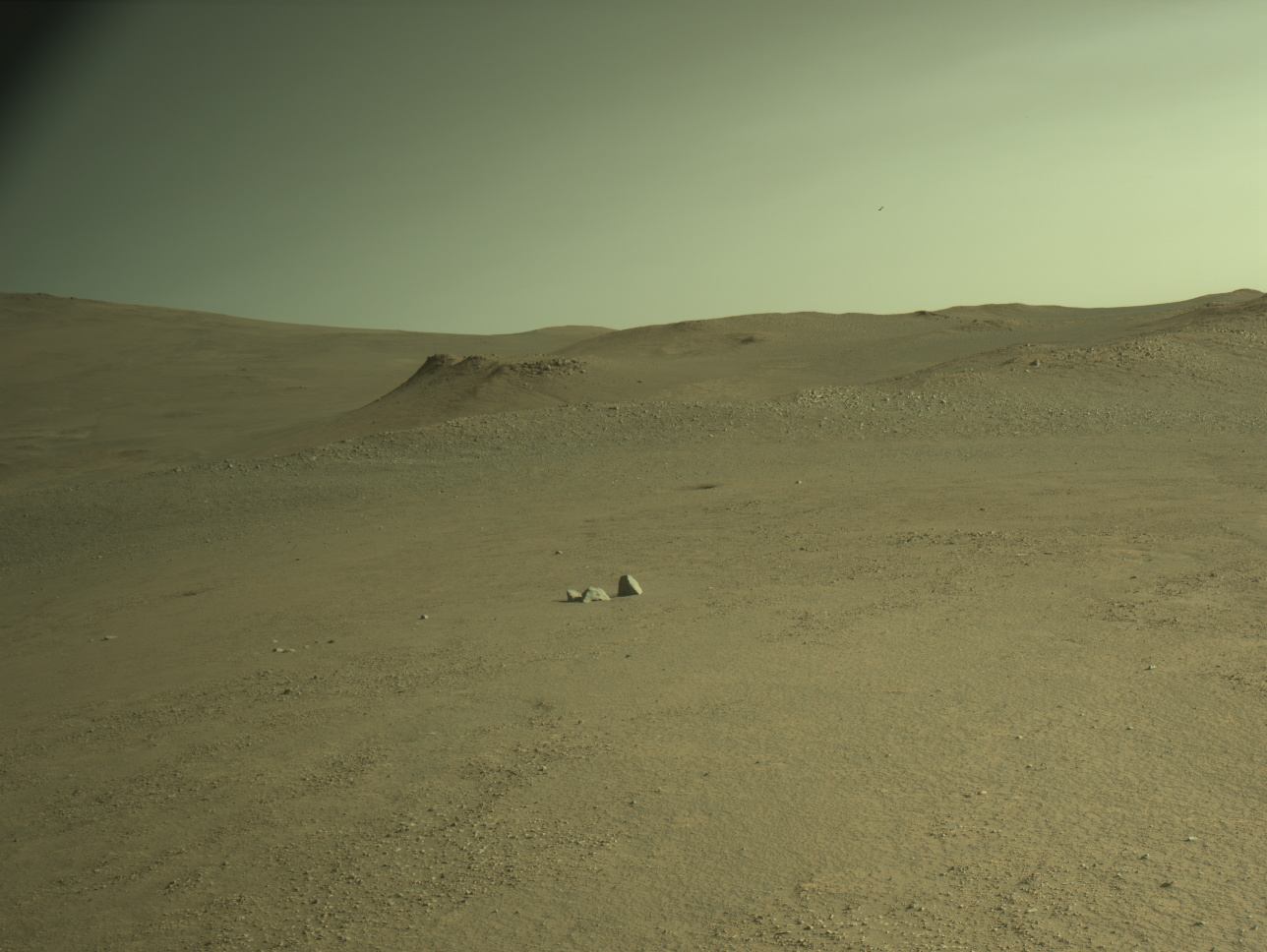
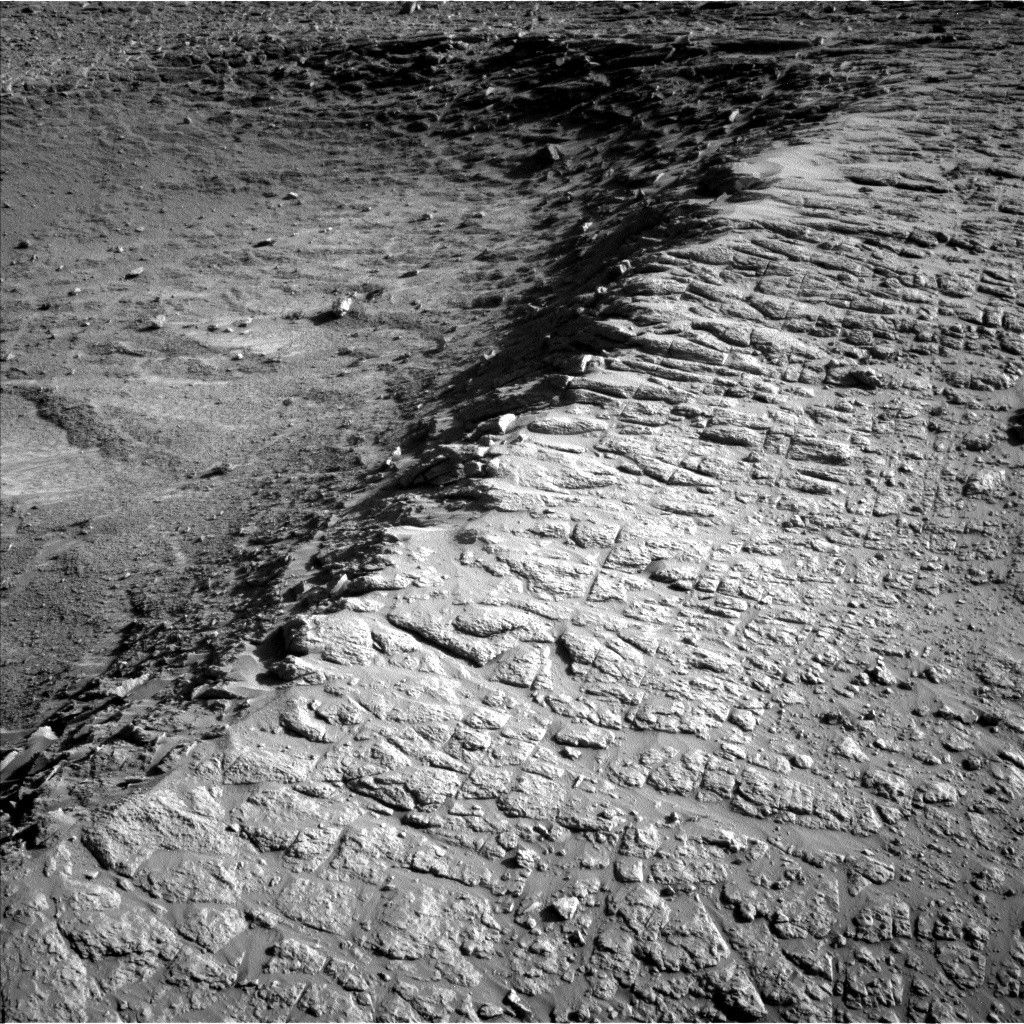
    This image was taken when Perseverance topped Soroya ridge
    This image was taken when Perseverance topped Soroya ridge. Using the Left Navigation Camera (Navcam), the image was acquired on Aug. 17, 2025 (Sol 1597) at the local mean solar time of 13:54:37.
    NASA/JPL-Caltech

    Written by Eleanor Moreland, Ph.D. Student Collaborator at Rice University

    Perseverance has continued exploring beyond the rim of Jezero crater, spending time last week at Parnasset conducting a mini-campaign on aeolian bedforms. After wrapping up that work, three separate drives brought Perseverance further southeast to an outcrop named Soroya.

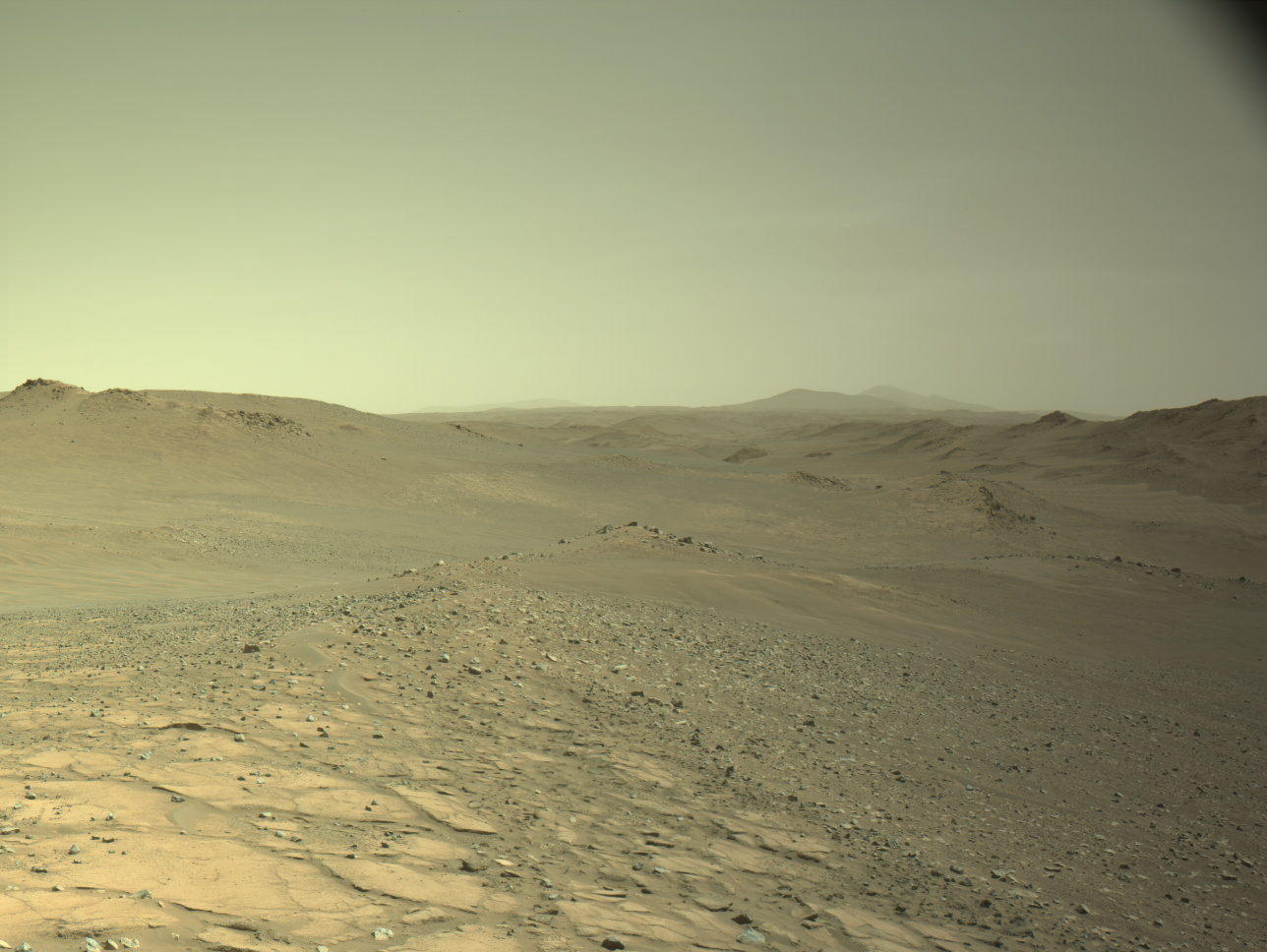
    Soroya was first picked out from orbital images as a target of interest because, as can be seen in the above image, it appears as a much lighter color compared to the surroundings. In previous landscape images from the surface, Mars 2020 scientists have been able to pick out the light-toned Soryoa outcrop, and they noted it forms a ridge-like structure, protruding above the surface. Soroya was easily identifiable from rover images (below) as Perseverance approached since it indeed rises above the surrounding low-lying terrain.

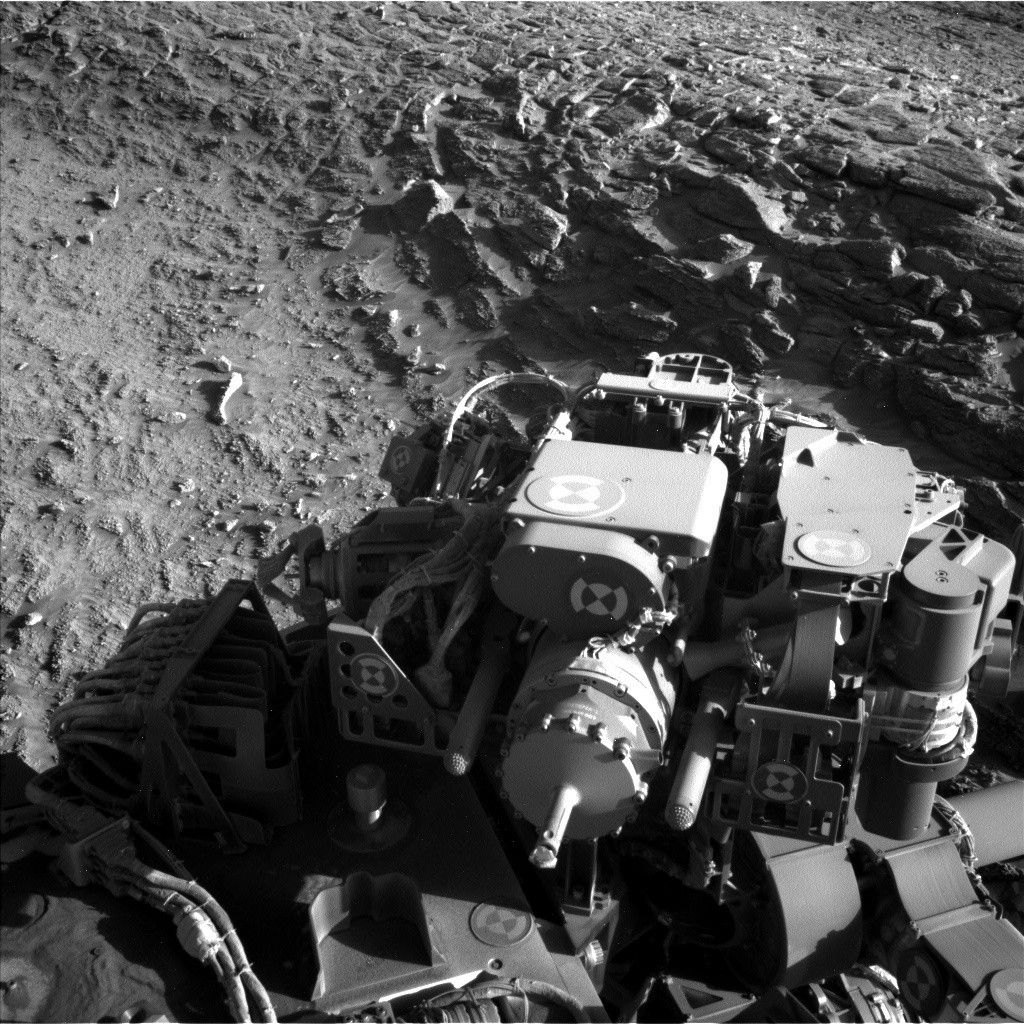
    The Perseverance rover acquired this image looking at Soroya
    The Perseverance rover acquired this image looking at Soroya using the onboard Left Navigation Camera (Navcam). This image was acquired on Aug. 15, 2025 (Sol 1595) at the local mean solar time of 16:34:53.
    NASA/JPL-Caltech

    From Parnasset to Soroya, the team planned a series of drives so that Perseverance would arrive at Soroya in a great workspace, and the plan was successful. As shown in the first image, we arrived at  an area with flat, exposed bedrock –  great for proximity science instruments.

    The WATSON and SHERLOC ACI cameras plan to acquire many high-resolution images to investigate textures and surface features. For chemistry, SCAM LIBS and ZCAM multispectral activities will give important contextual data for the outcrop while PIXL will acquire a high-resolution chemical map scan of a dust-cleared part of the bedrock. While parked, MEDA will continue monitoring environmental conditions and ZCAM will image the surrounding terrain to inform the next drive location. Take a look at where Perseverance is now – where would you explore next?

    Perseverance rover on Mars

    Details

    Last Updated

    Aug 27, 2025

    Related Terms