Tag: planethunt

  • NASA Seeks Industry Feedback on Fission Surface Power

    Credit: NASA

    As part of the agency’s initiative to return humanity to the Moon and eventually send the first astronaut – an American – to Mars, NASA is surveying industry for interest and feedback on a fission surface power system, through a Request for Information issued Thursday.

    Earlier this month, NASA declared its intent to put a nuclear reactor on the Moon by the mid-2030s to support lunar exploration, provide power generation on Mars, and strengthen national security in space.

    “Today’s call for industry input is an important step toward engaging the commercial space industry in powering the lunar economy and enabling future human exploration on Mars,” said Steve Sinacore, Fission Surface Power program executive at NASA’s Glenn Research Center in Cleveland. “Developing a safe, reliable, and efficient power supply is key to unlocking the future of human space exploration and ensuring America retains its dominance in space.”

    Building on its previous work, NASA will work with industry to design a fission surface power system that would provide at least 100 kilowatts of electrical power, have a mass allocation of less than 15 metric tons, and use a closed Brayton cycle power conversion system, which converts heat to electricity.

    NASA’s new Fission Surface Power effort builds on more than 60 years of agency experience in exploration technology. In 2022, NASA awarded three contracts for fission surface power system concepts for the Moon. In addition, NASA has used nuclear power sources in spacecraft and rovers over the years.

    The size, weight, and power capability of fission systems make them an effective continuous power supply regardless of location. Additionally, a nuclear reactor could be placed in lunar regions where sunlight cannot reach and could sustain nights on the Moon which can last more than 14 Earth days near the poles.

    Nuclear power is a key element for NASA’s Artemis missions and supporting a robust lunar economy. The Request for Information invites innovators to contribute to this effort, allowing NASA to access industry expertise and bolstering American ingenuity.

    Responses to the Request for Information are due Thursday, Aug. 21, and could be used to finalize a potential opportunity later this year.

    The Fission Surface Power effort is managed through NASA Glenn. The power system development is funded by the agency’s Exploration Systems Development Mission Directorate Moon to Mars Program.

  • Astronauts Plant Seed Pillows in New Space Agriculture Study

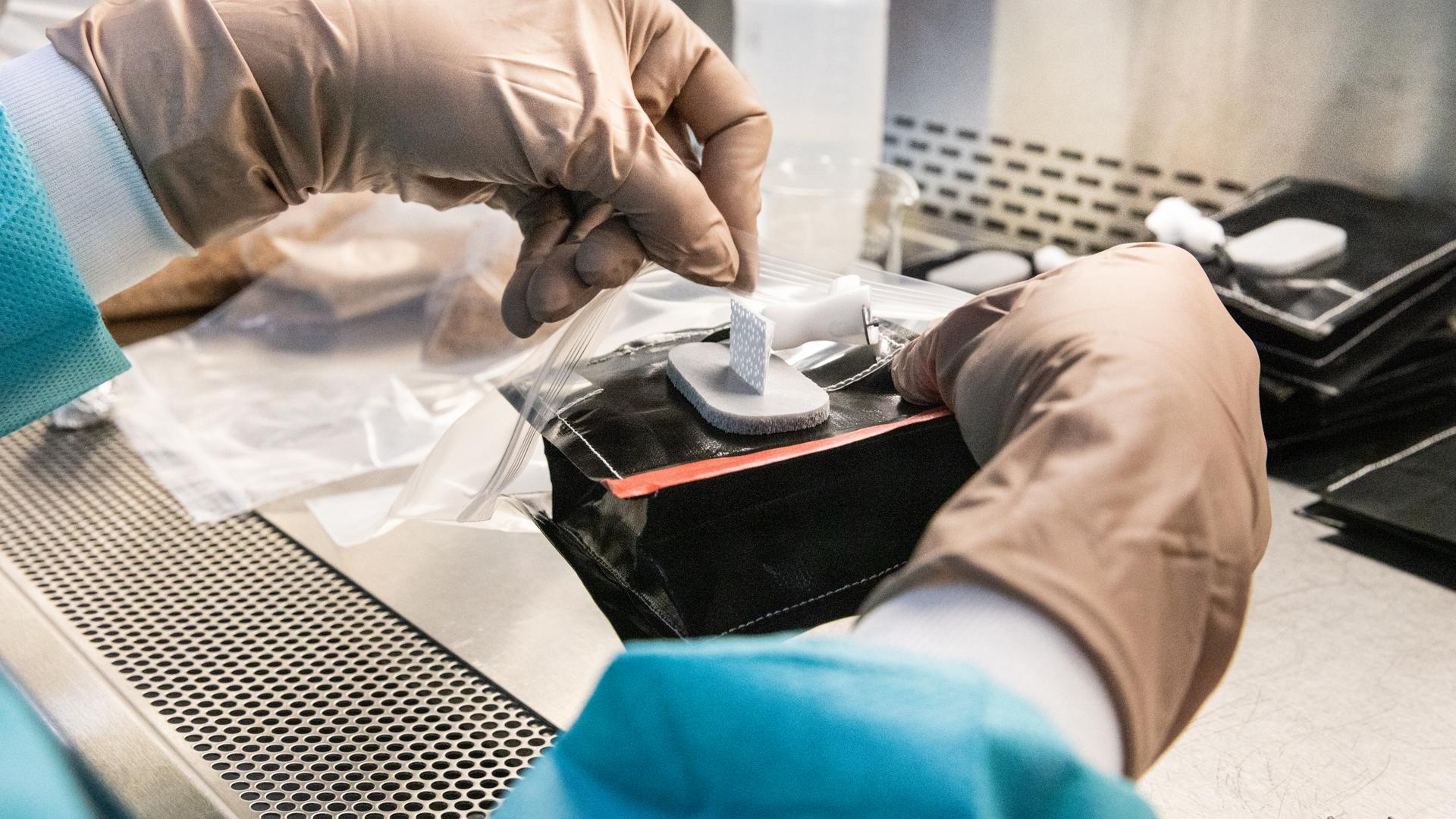
    A researcher in protective clothing and gloves works at a laboratory station, preparing components for plant growth experiments.
    A member of the space crop production team prepares materials for Veggie seed pillows inside the Space Systems Processing Facility at NASA’s Kennedy Space Center.
    NASA/Cory S Huston

    When the Crew-11 astronauts launched to the International Space Station on August 1, 2025, they carried with them another chapter in space farming: the latest VEG-03 experiments, complete with seed pillows ready for planting.

    Growing plants provides nutrition for astronauts, as well as psychological benefits that help maintain crew morale during missions.

    During VEG-03 MNO, astronauts will be able to choose what they want to grow from a seed library including Wasabi mustard greens, Red Russian Kale, and Dragoon lettuce.

    From Seed to Space Salad

    The experiment takes place inside Veggie, a chamber about the size of carry-on luggage. The system uses red, blue, and green LED lights to provide the right spectrum for plant growth. Clear flexible bellows — accordion-like walls that expand to accommodate maturing plants — create a semi-controlled environment around the growing area.

    Astronauts plant thin strips containing their selected seeds into fabric “seed pillows” filled with a special clay-based growing medium and controlled-release fertilizer. The clay, similar to what’s used on baseball fields, helps distribute water and air around the roots in the microgravity environment. 

    Crew members will monitor the plants, add water as needed, and document growth through regular photographs. At harvest time, astronauts will eat some of the fresh produce while freezing other samples for return to Earth, where scientists will analyze their nutritional content and safety.

    How this benefits space exploration

    Fresh food will become critical as astronauts venture farther from Earth on missions to the Moon and Mars. NASA aims to validate different kinds of crops to add variety to astronaut diets during long-duration space exploration missions, while giving crew members more control over what they grow and eat.

    How this benefits humanity

    The techniques developed for growing crops in space’s challenging conditions may also improve agricultural practices on Earth. Indoor crop cultivation approaches similar to what astronauts do in Veggie might also be adapted for horticultural therapy programs, giving elderly or disabled individuals new ways to experience gardening when traditional methods aren’t accessible.

    Related Resources

    VEG-03 MNO on the Space Station Research Explorer

    Veggie Vegetable Product System

    Veggie Plant Growth System Activated on International Space Station

    About BPS

    NASA’s Biological and Physical Sciences Division pioneers scientific discovery and enables exploration by using space environments to conduct investigations not possible on Earth. Studying biological and physical phenomenon under extreme conditions allows researchers to advance the fundamental scientific knowledge required to go farther and stay longer in space, while also benefitting life on Earth.

  • After Storied 34 Year Career, Steve Platnick Retires from NASA

    Dr. Steven “Steve” Platnick stepped down from his role at NASA on August 8, 2025, after more than three decades of public service. Steve began his career at NASA as a physical scientist at Goddard Space Flight Center in 2002. He moved to the Earth Science Division in 2009, where he has served in various senior management roles, including as the Earth Observing System (EOS) Senior Project Scientist. In this role, he led the EOS Project Science Office and continued periodic meetings of the EOS Project Scientists, initiated by Michael King during his tenure. Steve expanded these meetings to include representatives of non-EOS Earth observing missions and representatives from Earth Science Mission Operations (ESMO). In addition, Steve was named Deputy Director for Atmospheres in the Earth Science Division in January 2015 and served in this position until July 2024.

    Steve Platnick Photo
    Dr. Steve Platnick
    Image credit: NASA

    During his time at NASA, Steve played an integral role in the development, sustainability, and advancement of NASA’s Earth Observing System platforms. From January 2003 – February 2010, Steve served as Deputy Project Scientist for Aqua. In this role, he applied his expertise in theoretical and experimental studies of satellite, aircraft, and ground-based cloud remote sensing to improve algorithms to benefit the data gathered from remote observing systems.

    Taking the Lead to Improve Algorithms

    Steve was actively involved in the Moderate Resolution Imaging Spectroradiometer (MODIS) Science Team, serving as the MODIS Atmosphere Team Lead. Steve helped advance several key components of the MODIS instrument, which flies on NASA’s Terra and Aqua platforms. He led a team that enhanced, maintained, and evaluated MODIS algorithms that support the Level-2 (L2) Cloud Optical/Microphysical Properties components (e.g., COD06 and MYD06) for MODIS on Terra and Aqua. The algorithms were designed to retrieve thermodynamic phase, optical thickness, effective particle radius, and water path for liquid and ice clouds. The team’s work also contributes to L3 products that address cloud mask, aerosols, clouds, and clear sky radiance for data within  1° grids over one-day, eight-day, and one-month repeat cycles. Under Steve’s leadership, the team also developed L2 products (e.g., MODATML2 and MYDATML2) that include essential atmosphere datasets of samples collected at 5–10 km (3–6 mi) that is consistent with L3 products to ease storage requirements of core atmospheric data.

    Steve is also a member of the Suomi-National Polar-orbiting Partnership (Suomi NPP) Atmosphere Team, working on operational cloud optical and microphysical products. In this role, he contributed to algorithm development and refinement for the Cloud Product. In particular, he helped address a critical gap in the Visible Infrared Imaging Radiometer Suite (VIIRS) spectral channel, which was not designed to collect information for carbon dioxide (CO2) slicing and water vapor data in the same way as MODIS. Steve and his colleagues developed a suite of L2 algorithms for the spectral channels that were common to both MODIS and VIIRS to address cloud mask and cloud optical/microphysical properties. Through these efforts, the project has established a continuous cloud data record gathered from both instruments from 2017 to the present.

    Steve also participated in numerous other working groups during the past 30 years. He participated in the Global Energy and Water Exchanges (GEWEX) Cloud Assessment Working Group (2008–present), Arctic Radiation-Cloud-Aerosol-Surface Interaction Experiment (ARCSIX) Science Team (2023–present), ObseRvations of Aerosols above CLouds and their intEractionS (ORACLES) Earth–Venture Suborbital (EVS)-2 Science Team (2014–2023), Deep Space Climate Observatory (DSCOVR) Science Team (2014–present), Plankton, Aerosol, Cloud, ocean Ecosystem (PACE) Science Team (2014–2023), PACE Science Definition Team, Deputy Chair (2011–2012), Glory Science Team (2010–2014) NASA Observations for Modeling Intercomparison Studies (obs4MIPs) Working Group (2011), Advanced Composition Explorer (ACE) Science Definition Team (2009–2011), and Geostationary Operational Environmental Satellites (GOES) R-series Advanced Baseline Imager (ABI) Cloud Team (2005–2009).

    Steve has also participated in numerous major airborne field campaigns in various roles, including: GSFC Lidar Observation and Validation Experiment (GLOVE, 2025), PACE Postlaunch Airborne eXperiment (PAX, 2024), the Westcoast & Heartland Hyperspectral Microwave Sensor Intensive Experiment (WH2yMSIE, 2024), ORACLES Science Team (2015–2019), Studies of Emissions and Atmospheric Composition, Clouds and Climate Coupling by Regional Surveys (SEAC4RS) Science Team (2011–2015), Tropical Composition, Cloud and Climate Coupling (TC4) Management Team (2007), Cirrus Regional Study of Tropical Anvils and Cirrus Layers – Florida Area Cirrus Experiment (CRYSTAL-FACE) Science Management Team (2002), Southern Africa Fire-Atmosphere Research Initiative (SAFARI, 2000), First ISCCP Regional Experiment (FIRE) Arctic Cloud Experiment (ACE) (1998), Mikulski Archive for Space Telescopes (MAST, 1994), and ACE (1992).

    Supporting Earth Science Communications

    Through his senior leadership roles within ESD Steve has been supportive of the activities of NASA’s Science Support Office (SSO). He has participated in many NASA Science exhibits at both national and international scientific conferences, including serving as a Hyperwall presenter numerous times. He has met with task leaders frequently and has advocated on behalf of the SSO to management at NASA Headquarters, GSFC, and Global Sciences & Technology Inc.

    For The Earth Observer newsletter publication team in particular, Steve replaced Michael King as Acting EOS Senior Project Scientist in June 2008, taking over the authorship of “The Editor’s Corner” beginning with the May–June 2008 issue [Volume 20, Issue 3]. The Acting label was removed beginning with the January–February 2010 issue [Volume 22, Issue 1]. Steve has been a champion of continuing to retain a historical record of NASA meetings to maintain a chronology of advances made by different groups within the NASA Earth Science community. He was supportive of the Executive Editor’s efforts to create a series called “Perspectives on EOS,” which ran from 2008–2011 and told the stories of the early years of the EOS Program from the point of view of those who lived them. He also supported the development of articles to commemorate the 25th and 30th anniversary of The Earth Observer. Later, Steve helped guide the transition of the newsletterfrom a print publication – the November–December 2022 issue was the last printed issue – to fully online by July 2024, a few months after the publication’s 35th anniversary. The Earth Observer team will miss Steve’s keen insight, historical perspective, and encouragement that he has shown through his leadership for the past 85 issues of print and online publications.

    A Career Recognized through Awards and Honors

    Throughout his career, Steve has amassed numerous honors, including the Robert H. Goddard Award for Science: MODIS/VIIRS Cloud Products Science Team (2024) and the William Nordberg Memorial Award for Earth Science in 2023. He received the Verner E. Suomi Award from the American Meteorological Society (AMS) in 2016 and was named an AMS Fellow that same year.

    Steve has received numerous NASA Group Achievement Awards, including for the Cloud, Aerosol and Monsoon Processes Philippines Experiment (CAMP2Ex) Field Campaign Team (2020), Fire Influence of Regional to Global Environments and Air Quality (FIREX-AQ) Field Campaign Team (2020), ORACLES Field Campaign Team (2019), obs4MIPs Working Group (2015), SEAC4RS Field Campaign Team (2015), Advanced Microwave Scanning Radiometer for EOS (AMSR-E) Instrument Recovery Team (2013), Climate Absolute Radiance and Refractivity Observatory (CLARREO) Mission Concept Team (2012), Earth Science Constellation Red Team (2011), Science Mission Directorate ARRA Team (2011), TC4 Team (2009), MODIS Science Data Support Team (2007), Aqua Mission Team (2003), CRYSTAL-FACE Science Team (2003), and SAFARI 2000 International Leadership Team (2002).

    Steve received two NASA Agency Honor Awards – the Exceptional Service Medal in 2015 and the Exceptional Achievement Medal in 2008. He was also part of the NASA Agency Team Excellence Award in 2017 for his work with the Satellite Needs Assessment Team. The Laboratory for Atmospheres honored him with the Best Senior Author Publication Award in 2001 and the Scientific Research Peer Award in 2005.

    Steve received his bachelor’s degree and master’s degree in electrical engineering from Duke University and the University of California, Berkeley, respectively. He earned a Ph.D. in atmospheric sciences from the University of Arizona. He began his career at the Joint Center for Earth Systems Technology (JCET) at University of Maryland Baltimore County in 1996 as a research associate professor. He held this appointment until 2002. Steve has published more than 150 scholarly articles.
  • Small Companies Win Big in NASA’s TechLeap Challenge

    NASA announced 10 winning teams for its latest TechLeap Prize — the Space Technology Payload Challenge — on June 26. The winners emerged from a record-breaking field of more than 200 applicants to earn cash prizes worth up to $500,000, if they have a flight-ready unit. Recipients may also have the opportunity to flight test their technologies.
    NASA’s Biological and Physical Sciences (BPS) division is supporting the emerging space economy through challenges like TechLeap. The projects receive funding through the Commercially Enabled Rapid Space Science (CERISS) initiative, which pairs government research goals with commercial innovation.

    Two awardees’ capabilities specifically address BPS research priorities, which include conducting investigations that inform future space crops and advance precision health.  

    Ambrosia Space Manufacturing Corporation is developing a centrifuge system to separate nutrients from cell cultures — potentially creating space-based food processing that could turn algae into digestible meals for astronauts.
    Helogen Corporation is building an automated laboratory system that can run biological experiments without requiring astronaut involvement and may be able to transmit real-time data to researchers on Earth without having to wait for physical samples to return.

    “The innovations of these small- and midsize businesses could enable NASA to accelerate the pace of critical research,” says Dan Walsh, BPS’s program executive for CERISS. “It’s also an example of NASA enabling the emerging space industry to grow and thrive beyond big corporations.”

    Small Packages with Big Ambitions

    Every inch and ounce counts on a spacecraft, which means the winning teams have to think small while solving big problems.

    Commercial companies play a pivotal role in enabling space-based research — they bring fresh approaches to ongoing challenges. But space missions demand a different kind of innovation, and TechLeap teams face both time and size constraints for their experiments.

    Winners have six to nine months to demonstrate that their concepts work. That’s a significant contrast from traditional space technology development, which can stretch for years.

    The research serves a larger purpose as well. The technology helps NASA “know before we go” on longer, deep-space missions to the Moon and Mars. Understanding how technologies behave in microgravity or extreme environments can prevent costly failures when astronauts are far from Earth.

    Small investments in proof-of-concept technologies can bring in a high ROI. With the TechLeap Prize, BPS is betting that big ideas will come in small packages.

    Related Resources

    TechLeap Prize – Space Technology Payload Challenge (STPC)

    Space Technology Payload Challenge Winners

    Commercially Enabled Rapid Space Science Initiative

  • NASA’s Apollo Samples, LRO Help Scientists Forecast Moonquakes

    5 min read

    NASA’s Apollo Samples, LRO Help Scientists Forecast Moonquakes

    This mosaic of the Taurus-Littrow valley was made using images from the Narrow Angle Cameras onboard NASA’s Lunar Reconnaissance Orbiter. The orbiter has been circling and studying the Moon since 2009. The ancient-lava-filled valley is cut by the Lee-Lincoln thrust fault, visible as a sinuous, white line extending from South Massif (mountain in the bottom left corner) to North Massif (mountain in the top center) where the fault abruptly changes direction and cuts along the slope of North Massif. The Lee-Lincoln fault has been the source of multiple strong moonquakes causing landslides and boulder falls on both North and South massifs. The approximate location of the Apollo 17 landing site is indicated to the right of the fault with a white “x”.
    NASA/ASU/Smithsonian

    As NASA prepares to send astronauts to the surface of the Moon’s south polar region for the first time ever during the Artemis III mission, scientists are working on methods to determine the frequency of moonquakes along active faults there.

    Faults are cracks in the Moon’s crust that indicate that the Moon is slowly shrinking as its interior cools over time. The contraction from shrinking causes the faults to move suddenly, which generates quakes. Between 1969 and 1977, a network of seismometers deployed by Apollo astronauts on the Moon’s surface recorded thousands of vibrations from moonquakes.

    Moonquakes are rare, with the most powerful ones, about magnitude 5.0, occurring near the surface. These types of quakes are much weaker than powerful quakes on Earth (magnitude 7.0 or higher), posing little risk to astronauts during a mission lasting just a few days. But their effects on longer-term lunar surface assets could be significant. Unlike an earthquake that lasts for tens of seconds to minutes, a moonquake can last for hours, enough time to damage or tip over structures, destabilize launch vehicles on the surface, or interrupt surface operations.

    “The hazard probability goes way up depending on how close your infrastructure is to an active fault,” said Thomas Watters, senior scientist emeritus at the Smithsonian’s National Air & Space Museum in Washington.

    Watters is a long-time researcher of lunar geology and a co-investigator on NASA’s LRO (Lunar Reconnaissance Orbiter) camera. Recently, he and Nicholas Schmerr, a planetary seismologist at the University of Maryland in College Park, developed a new method for estimating the magnitude of seismic shaking by analyzing evidence of dislodged boulders and landslides in an area, as the scientists reported on July 30 in the journal Science Advances. Studies like these can help NASA plan lunar surface assets in safer locations.

    Unlike an earthquake that lasts for tens of seconds to minutes, a moonquake can last for hours, enough time to damage or tip over structures, destabilize launch vehicles on the surface, or interrupt surface operations.

    There are thousands of faults across the Moon that may still be active and producing quakes. Watters and his team have identified these faults by analyzing data from LRO, which has been circling the Moon since 2009, mapping the surface and taking pictures, providing unprecedented detail of features like faults, boulders, and landslides.

    For this study, Watters and Schmerr chose to analyze surface changes from quakes generated by the Lee-Lincoln fault in the Taurus-Littrow valley. NASA’s Apollo 17 astronauts, who landed about 4 miles west of the fault on Dec. 11, 1972, explored the area around the fault during their mission.

    By studying boulder falls and a landslide likely dislodged by ground shaking near Lee Lincoln, Watters and Schmerr estimated that a magnitude 3.0 moonquake — similar to a relatively minor earthquake — occurs along the Lee Lincoln fault about every 5.6 million years.

    “One of the things we’re learning from the Lee-Lincoln fault is that many similar faults have likely had multiple quakes spread out over millions of years,” Schmerr said. “This means that they are potentially still active today and may keep generating more moonquakes in the future.”

    The authors chose to study the Lee-Lincoln fault because it offered a unique advantage: Apollo 17 astronauts brought back samples of boulders from the area. By studying these samples in labs, scientists were able to measure changes in the boulders’ chemistry caused by exposure to cosmic radiation over time (the boulder surface is freshly exposed after breaking off a larger rock that would have otherwise shielded it).

    This cosmic radiation exposure information helped the researchers determine how long the boulders had been sitting in their current locations, which in turn helped inform the estimate of possible timing and frequency of quakes along the Lee-Lincoln fault.

    A person wearing a bulky, white spacesuit is partially visible on the left side of the image, extending a gloved hand toward a large, rough-textured, gray boulder. The boulder has a dusty, uneven surface with cracks and crevices. The person and boulder are lit up, while the background is mostly black. The person’s shadow provides a black shape cast on the boulder, highlighting the contours of both the boulder and the person.
    This 1972 image shows Apollo 17 astronaut Harrison H. Schmitt sampling a boulder at the base of North Massif in the Taurus-Littrow valley on the Moon. This large boulder is believed to have been dislodged by a strong moonquake that occurred about 28.5 million years ago. The source of the quake was likely a seismic event along the Lee-Lincoln fault. The picture was taken by astronaut Eugene A. Cernan, Apollo 17 commander.
    NASA/JSC/ASU

    Apollo 17 astronauts investigated the boulders at the bases of two mountains in the valley. The tracks left behind indicated that the boulders may have rolled downhill after being shaken loose during a moonquake on the fault. Using the size of each boulder, Watters and Schmerr estimated how hard the ground shaking would have been and the magnitude of the quake that would have caused the boulders to break free.

    The team also estimated the seismic shaking and quake magnitude that would be needed to trigger the large landslide that sent material rushing across the valley floor, suggesting that this incident caused the rupture event that formed the Lee-Lincoln fault.

    A computer simulation depicting the seismic waves emanating from a shallow moonquake on the Lee-Lincoln fault in the Taurus-Littrow valley on the Moon. The label “A17” marks the Apollo 17 landing site. The audio represents a moonquake that was recorded by a seismometer placed on the surface by astronauts. The seismic signal is converted into sound. Both audio and video are sped up to play 10 times faster than normal. The background image is a globe mosaic image from NASA’s Lunar Reconnaissance Orbiter’s Wide-Angle Camera. Red and blue are positive (upward ground motion) and negative (downward ground motion) polarities of the wave.
    Nicholas Schmerr

    Taking all these factors into account, Watters and Schmerr estimated that the chances that a quake would have shaken the Taurus-Littrow valley on any given day while the Apollo 17 astronauts were there are 1 in 20 million, the authors noted.

    Their findings from the Lee-Lincoln fault are just the beginning. Watters and Schmerr now plan to use their new technique to analyze quake frequency at faults in the Moon’s south polar region, where NASA plans to explore.

    NASA also is planning to send more seismometers to the Moon. First, the Farside Seismic Suite will deliver two sensitive seismometers to Schrödinger basin on the far side of the Moon onboard a lunar lander as part of NASA’s CLPS (Commercial Lunar Payload Services) initiative. Additionally, NASA is developing a payload, called the Lunar Environment Monitoring Station, for potential flight on NASA’s Artemis III mission to the South Pole region. Co-led by Schmerr, the payload will assess seismic risks for future human and robotic missions to the region.

    For more information on NASA’s LRO, visit:

    Media Contacts:

    Karen Fox / Molly Wasser

    Headquarters, Washington

    202-358-1600 

    karen.c.fox@nasa.gov / molly.l.wasser@nasa.gov

    Lonnie Shekhtman

    NASA’s Goddard Space Flight Center, Greenbelt, Md.

    lonnie.shekhtman@nasa.gov

    About the Author

    Lonnie Shekhtman

    Lonnie Shekhtman

  • U.S. Transportation Secretary & Acting NASA Administrator Sean P. Duffy Joins President Trump Executive Order Signing to Boost U.S. Space Competitiveness

    Image of the NASA logo
    Credit: NASA

    U.S. Transportation Secretary and acting NASA Administrator Sean Duffy joined President Donald J. Trump at the White House Wednesday for the historic signing of the Executive Order (EO), “Enabling Competition in the Commercial Space Industry.”

    “People think the Department of Transportation (DOT) is just planes, trains, and automobiles – but we have a critical role to play in unlocking the final frontier. By slashing red tape tying up spaceport construction, streamlining launch licenses so they can occur at scale, and creating high-level space positions in government, we can unleash the next wave of innovation. At NASA, this means continuing to work with commercial space companies and improving our spaceports’ ability to launch,” said Duffy. “Thanks to the leadership of President Trump, we will enable American space competitiveness and superiority for decades to come. I look forward to leveraging my dual role at DOT and NASA to make this dream a reality.”

    The EO will enable a competitive launch marketplace and substantially increase commercial space launch cadence and novel space activities by 2030.

    “The FAA strongly supports President Trump’s Executive Order to make sure the U.S. leads the growing space economy and continues to lead the world in space transportation and innovation,” said FAA Administrator Bryan Bedford. “This order safely removes regulatory barriers so that U.S. companies can dominate commercial space activities.”

    Executive Order highlights:
    The “Enabling Competition in the Commercial Space Industry” EO will help to:

    • Streamline commercial license and permit approvals for United States-based operators. This includes eliminating regulatory barriers and expediting environmental reviews for commercial launches and reentries.
    • Cut unnecessary red tape to make it easier to build new spaceports in the U.S. where more commercial space operations will be launched from. To ensure this Next Generation Spaceport Infrastructure, duplicate review process will be eliminated, and environmental reviews will be expedited.
    • Promote new space activities like in-space manufacturing and orbital refueling through a streamlined framework. Expediting and streamlining authorization for this Novel Space Activity is essential to American space competitiveness and superiority. 
    • Establish a new position in the Office of the Secretary with the responsibility of advising the Secretary of Transportation on fostering innovation and deregulation in the commercial space industry.
    • The FAA’s associate administrator for Commercial Space Transportation also will be a senior executive non-career employee, and the Office of Space Commerce will be elevated into the Office of the Commerce Secretary.
    • Mitigate the risk of the United States losing its competitive edge in the commercial space industry by dismantling regulatory barriers that prevent rapid innovation and expansion.

    For more information about the EO, visit:

    https://go.nasa.gov/3J8fMZ5

    -end-

    Bethany Stevens
    Headquarters, Washington
    202-358-1600
    bethany.c.stevens@nasa.gov 

    Details

    Last Updated

    Aug 13, 2025

  • The NASA RASC-AL 2026 Competition

    An artist's rendition of an astronaut on an extraterrestrial surface, facing forwards and holding a rock in front of them as lights from the spacesuit illuminate the object in hand. The words
    National Institute of Aerospace

    NASA is calling on the next generation of collegiate innovators to imagine bold new concepts pushing the boundaries of human exploration on the Moon, Mars, and beyond through the 2026 NASA Revolutionary Aerospace Systems Concepts – Academic Linkage (RASC-AL) competition. The RASC-AL challenge fuels innovation for aerospace systems concepts, analogs, and technology prototyping by bridging gaps through university engagement with NASA and industry. The competition is seeking U.S.-based undergraduate and graduate-level teams and their faculty advisors to develop new concepts to improve our ability to operate on the Moon and Mars. This year’s themes range from developing systems and technologies to support exploration of the lunar surface, to enhancing humanity’s ability to operate and return data from the surface of Mars.  

    Award: $112,000 in total prizes

    Open Date: August 13, 2025

    Close Date: February 23, 2026

    For more information, visit:  https://rascal.nianet.org/

  • NASA Seeks Moon and Mars Innovations Through University Challenge

    An artist's rendition of an astronaut on an extraterrestrial surface, facing forwards and holding a rock in front of them as lights from the spacesuit illuminate the object in hand. The words
    National Institute of Aerospace

    NASA is calling on the next generation of collegiate innovators to imagine bold new concepts l pushing the boundaries of human exploration on the Moon, Mars, and beyond through the agency’s 2026 NASA Revolutionary Aerospace Systems Concepts – Academic Linkage (RASC-AL) competition.  

    The RASC-AL challenge fuels innovation for aerospace systems concepts, analogs, and technology prototyping by bridging gaps through university engagement with NASA and industry. The competition is seeking U.S.-based undergraduate and graduate-level teams and their faculty advisors to develop new concepts to improve our ability to operate on the Moon and Mars. This year’s themes range from developing systems and technologies to support exploration of the lunar surface, to enhancing humanity’s ability to operate and return data from the surface of Mars.  

    “This competition is a unique opportunity for university students to play a role in the future of space innovation,” said Dan Mazanek, assistant branch head of NASA’s Exploration Space Mission Analysis Branch at NASA’s Langley Research Center in Hampton Virginia. “The RASC-AL challenge fuels creativity and empowers students to explore what’s possible. We’re excited for another year of RASC-AL and fresh ideas coming our way.”  

    Interested and eligible teams are invited to propose groundbreaking solutions and systems approaches that redefine how humans live and explore in deep space with relation to one of the following themes:  

    • Communications, Positioning, Navigation, and Timing Architectures for Mars Surface Operations 
    • Lunar Surface Power and Power Management and Distribution Architectures  
    • Lunar Sample Return Concept 
    • Lunar Technology Demonstrations Leveraging Common Infrastructure  

    Teams should express their intent to participate by submitting a non-binding notice of intent by Monday Oct. 13. Teams who submit a notice will be invited to a question-and-answer session with NASA subject matter experts on Monday Oct. 27.  

    The proposals, due Monday Feb. 23, 2026, are required to be seven-to-nine pages with an accompanying two-to-three-minute video. Proposals should demonstrate innovative solutions with original engineering and analysis in response to one of the four 2026 RASC-AL themes. Each team’s response should address novel and robust technologies, capabilities, and operational models that support expanding human’s ability to thrive beyond Earth. 

    Based on review of the team proposal and video submissions, in March, up to 14 teams will be selected to advance to the final phase of the competition – writing a technical paper, creating a technical poster, and presenting their concepts to a panel of NASA and industry experts in a competitive design review at the 2026 RASC-AL Forum in Cocoa Beach, Florida, beginning Monday June 1, 2026. 

    “The RASC-AL challenge enables students to think like NASA engineers—and in doing so, they often become the engineers who will carry NASA forward,” said Dr. Christopher Jones, RASC-AL program sponsor and Chief Technologist for the Systems Analysis and Concepts Directorate at NASA Langley. “The concepts they develop for this year’s competition will help inform our future strategies.”  

    Each finalist team will receive a $7,000 stipend to facilitate their full participation in the 2026 RASC-AL competition, and the top two overall winning teams will each be awarded an additional $7,000 cash prize as well as an invitation to attend and present their concept at an aerospace conference later in 2026. 

    The 2026 NASA RASC-AL competition is administered by the National Institute of Aerospace on behalf of NASA. The RASC-AL competition is sponsored by the agency’s Strategy and Architecture Office in the Exploration Systems Development Mission Directorate at NASA Headquarters, the Space Technology Mission Directorate (STMD), and the Systems Analysis and Concepts Directorate at NASA Langley. The NASA Tournament Lab, part of the Prizes, Challenges, and Crowdsourcing Program in STMD, manages the challenge. 

    For more information about the RASC-AL competition, including eligibility and submission guidelines, visit: https://rascal.nianet.org/

  • Compton J. Tucker Retires from NASA and is Named NAS Fellow

    Dr. Compton J. Tucker – a senior researcher at NASA’s Goddard Space Flight Center (GSFC) – joins 149 newly elected members to the National Academy of Sciences (NAS) – see Photo. NAS is one of the highest honors in American science. Compton gave a virtual presentation at GSFC on July 21, 2025, in which he showed highlights from his 50 years of research and reflected on the honor of being selected as an NAS fellow. He admitted that he was surprised upon learning of his election in April 2025 – despite his prestigious career.

    Tucker photo 1
    Photo 1. Compton Tucker uses satellites to address global environmental challenges.
    Photo credit: Colorado State University

    In some ways this award brings Compton’s career full circle. He first came to GSFC as a NAS postdoc in 1975 after having earned his Bachelor’s of Science degree at Colorado State University (CSU) in 1969. He followed with his Master’s of Science degree and Ph.D. from CSU’s College of Forestry in 1973 and 1975 respectively. Two years later, he joined NASA as a civil servant. After a prestigious 48 years of public service, Compton has decided to retire in March 2025.

    Compton is a well-known pioneer in the field of satellite-based environmental analysis, using data from various U.S. Geological Survey–NASA Landsat missions and from the National Oceanographic and Atmospheric Administration’s (NOAA) Advanced Very High Resolution Radiometer (AVHRR) instrument, the prototype of which launched aboard the Television Infrared Observation Satellite–N (TIROS-N) in 1978, with launches continuing on NOAA and European polar orbiting satellites throughout the next 40 years. The last two AVHRR instruments, which launched on the European Organisation for the Exploitation of Meteorological Satellites’ (EUMETSAT) Meteorological Operational satellites (METOP–B and -C) in 2012 and 2018 respectively, are still operational today.

    Tucker photo 2
    Photo 2. Earth scientist Compton Tucker, who has studied remote sensing of vegetation at NASA Goddard for 50 years, has been elected to the National Academy of Sciences.
    Photo credit: Compton Tucker

    In his GSFC presentation, Compton described how, in the course of doing their research, he and his colleague(s) realized the original plans for AVHRR resulted in Channel 1 and 2 overlapping one another. In short, he explained that his input helped persuade NOAA management to change the design for Channel 1 of AVHRR – beginning with NOAA-7. It is fair to say that this change had a lasting impact, with 16 more AVHRR instruments (with slight modifications over time) launched over the next four decades.

    Compton’s research has focused on global photosynthesis on land (e.g., grass-dominated savannas), determined land cover (i.e., forest fragmentation, deforestation, and forest condition), monitored droughts and food security, and evaluated ecologically coupled disease outbreaks. From 2005 to 2010, he was the co-chair of two Interagency Working Groups for Observations and Land Use and Land Cover Change. Compton was active in NASA’s Space Archaeology Program, participating in ground-based radar and magnetic surveys in Turkey, particularly at Troy, the Granicus River Valley, and Gordion. Over the course of his 50-year career, he has authored or co-authored more than 400 scholarly articles that have appeared in scientific journals – and in his presentation he hinted that more might be in store after retirement.

    Compton has received numerous scientific awards and honors. He was elected to a fellow of the American Geophysical Union in 2009 and to the American Association for the Advancement of Science in 2015. He received the Senior Executive Service Presidential Rank Award for Meritorious Service (2017), the Vega Medal from the Swedish Society of Anthropology and Geography (2014), the Galathea Medal from the Royal Danish Geographical Society (2004), the William T. Pecora Award from the U.S. Geological Survey (1997), the Michael Collins Trophy for Current Achievement from the National Air and Space Museum (1993), the Henry Shaw Medal from the Missouri Botanical Garden (1992), and the Exceptional Scientific Achievement Medal from NASA (1987).

    Compton enjoyed sharing his knowledge with the next generation of scientists. He served as an adjunct professor at the University of Maryland (1994–2024) and a consulting scholar at the University of Pennsylvania Museum of Archeology and Anthropology (2005–2024).

    Congratulations to Compton on earning this prestigious – and well-earned – recognition from NAS. Best wishes to him in whatever is next on his journey.

    Black Separator Line

    The National Academy of Sciences is a private, nonprofit institution that was established under a congressional charter signed by President Abraham Lincoln in 1863. It recognizes achievement in science by election to membership, and – with the National Academy of Engineering and the National Academy of Medicine – provides science, engineering, and health policy advice to the federal government and other organizations.

    Black Separator Line
  • Alligator Goes for a Swim

    An alligator swims through green and brown water. It is facing left and we can see the side of its face. A small wave of water marks where its front left leg is moving.
    NASA/Bill White

    An alligator moves through a brackish waterway at NASA’s Kennedy Space Center in Florida in this May 8, 2017, photo. The center shares space with the Merritt Island National Wildlife Refuge. More than 330 native and migratory bird species, 25 mammals, 117 fishes and 65 amphibians and reptiles call NASA Kennedy and the wildlife refuge home. The refuge is also home to over 1,000 known plant species.

    Image credit: NASA/Bill White

  • NASA’s Hubble Uncovers Rare White Dwarf Merger Remnant

    5 min read

    NASA’s Hubble Uncovers Rare White Dwarf Merger Remnant

    An illustration of a white dwarf star merging with a red giant star. The red giant is an arch across the bottom of the illustration, with a textured surface. The white dwarf is a white pinpoint object at upper center right. The white dwarf in embedded inside a teardrop-shaped cocoon of white gas. It is enveloped in a white open ellipsoid that is the bow shock from speeding through the red giant's outer atmosphere. The words u201cartistu2019s conceptu201d are at lower left.
    This is an illustration of a white dwarf star merging into a red giant star. A bow shock forms as the dwarf plunges through the star’s outer atmosphere. The passage strips down the white dwarf’s outer layers, exposing an interior carbon core.
    Artwork: NASA, ESA, STScI, Ralf Crawford (STScI)

    An international team of astronomers has discovered a cosmic rarity: an ultra-massive white dwarf star resulting from a white dwarf merging with another star, rather than through the evolution of a single star. This discovery, made by NASA’s Hubble Space Telescope’s sensitive ultraviolet observations, suggests these rare white dwarfs may be more common than previously suspected.

    “It’s a discovery that underlines things may be different from what they appear to us at first glance,” said the principal investigator of the Hubble program, Boris Gaensicke, of the University of Warwick in the United Kingdom. “Until now, this appeared as a normal white dwarf, but Hubble’s ultraviolet vision revealed that it had a very different history from what we would have guessed.”

    A white dwarf is a dense object with the same diameter as Earth, and represents the end state for stars that are not massive enough to explode as core-collapse supernovae. Our Sun will become a white dwarf in about 5 billion years. 

    In theory, a white dwarf can have a mass of up to 1.4 times that of the Sun, but white dwarfs heavier than the Sun are rare. These objects, which astronomers call ultra-massive white dwarfs, can form either through the evolution of a single massive star or through the merger of a white dwarf with another star, such as a binary companion. 

    This new discovery, published in the journal Nature Astronomy, marks the first time that a white dwarf born from colliding stars has been identified by its ultraviolet spectrum. Prior to this study, six white dwarf merger products were discovered via carbon lines in their visible-light spectra.  All seven of these are part of a larger group that were found to be bluer than expected for their masses and ages from a study with ESA’s Gaia mission in 2019, with the evidence of mergers providing new insights into their formation history.

    Astronomers used Hubble’s Cosmic Origins Spectrograph to investigate a white dwarf called WD 0525+526. Located 128 light-years away, it is 20% more massive than the Sun. In visible light, the spectrum of WD 0525+526’s atmosphere resembled that of a typical white dwarf. However, Hubble’s ultraviolet spectrum revealed something unusual: evidence of carbon in the white dwarf’s atmosphere. 

    White dwarfs that form through the evolution of a single star have atmospheres composed of hydrogen and helium. The core of the white dwarf is typically composed mostly of carbon and oxygen or oxygen and neon, but a thick atmosphere usually prevents these elements from appearing in the white dwarf’s spectrum. 

    When carbon appears in the spectrum of a white dwarf, it can signal a more violent origin than the typical single-star scenario: the collision of two white dwarfs, or of a white dwarf and a subgiant star. Such a collision can burn away the hydrogen and helium atmospheres of the colliding stars, leaving behind a scant layer of hydrogen and helium around the merger remnant that allows carbon from the white dwarf’s core to float upward, where it can be detected.  

    WD 0525+526 is remarkable even within the small group of white dwarfs known to be the product of merging stars. With a temperature of almost 21,000 kelvins (37,000 degrees Fahrenheit) and a mass of 1.2 solar masses, WD 0525+526 is hotter and more massive than the other white dwarfs in this group.

    WD 0525+526’s extreme temperature posed something of a mystery for the team. For cooler white dwarfs, such as the six previously discovered merger products, a process called convection can mix carbon into the thin hydrogen-helium atmosphere. WD 0525+526 is too hot for convection to take place, however. Instead, the team determined a more subtle process called semi-convection brings a small amount of carbon up into WD 0525+526’s atmosphere. WD 0525+526 has the smallest amount of atmospheric carbon of any white dwarf known to result from a merger, about 100,000 times less than other merger remnants.

    The high temperature and low carbon abundance mean that identifying this white dwarf as the product of a merger would have been impossible without Hubble’s sensitivity to ultraviolet light. Spectral lines from elements heavier than helium, like carbon, become fainter at visible wavelengths for hotter white dwarfs, but these spectral signals remain bright in the ultraviolet, where Hubble is uniquely positioned to spot them.

    “Hubble’s Cosmic Origins Spectrograph is the only instrument that can obtain the superb quality ultraviolet spectroscopy that was required to detect the carbon in the atmosphere of this white dwarf,” said study lead Snehalata Sahu from the University of Warwick.

    Because WD 0525+526’s origin was revealed only once astronomers glimpsed its ultraviolet spectrum, it’s likely that other seemingly “normal” white dwarfs are actually the result of cosmic collisions — a possibility the team is excited to explore in the future.

    “We would like to extend our research on this topic by exploring how common carbon white dwarfs are among similar white dwarfs, and how many stellar mergers are hiding among the normal white dwarf family,” said study co-leader Antoine Bedrad from the University of Warwick. “That will be an important contribution to our understanding of white dwarf binaries, and the pathways to supernova explosions.”

    The Hubble Space Telescope has been operating for more than three decades and continues to make ground-breaking discoveries that shape our fundamental understanding of the universe. Hubble is a project of international cooperation between NASA and ESA (European Space Agency). NASA’s Goddard Space Flight Center in Greenbelt, Maryland, manages the telescope and mission operations. Lockheed Martin Space, based in Denver, also supports mission operations at Goddard. The Space Telescope Science Institute in Baltimore, which is operated by the Association of Universities for Research in Astronomy, conducts Hubble science operations for NASA.

    To learn more about Hubble, visit: https://science.nasa.gov/hubble

    Details

    Last Updated

    Aug 13, 2025

    Editor
    Andrea Gianopoulos
    Contact

    Media

    Claire Andreoli
    NASA’s Goddard Space Flight Center
    Greenbelt, Maryland
    claire.andreoli@nasa.gov

    Ray Villard
    Space Telescope Science Institute
    Baltimore, Maryland

    Bethany Downer
    ESA/Hubble
    Garching, Germany

  • Curiosity Blog, Sols 4624-4626: A Busy Weekend at the Boxwork

    2 min read

    Curiosity Blog, Sols 4624-4626: A Busy Weekend at the Boxwork

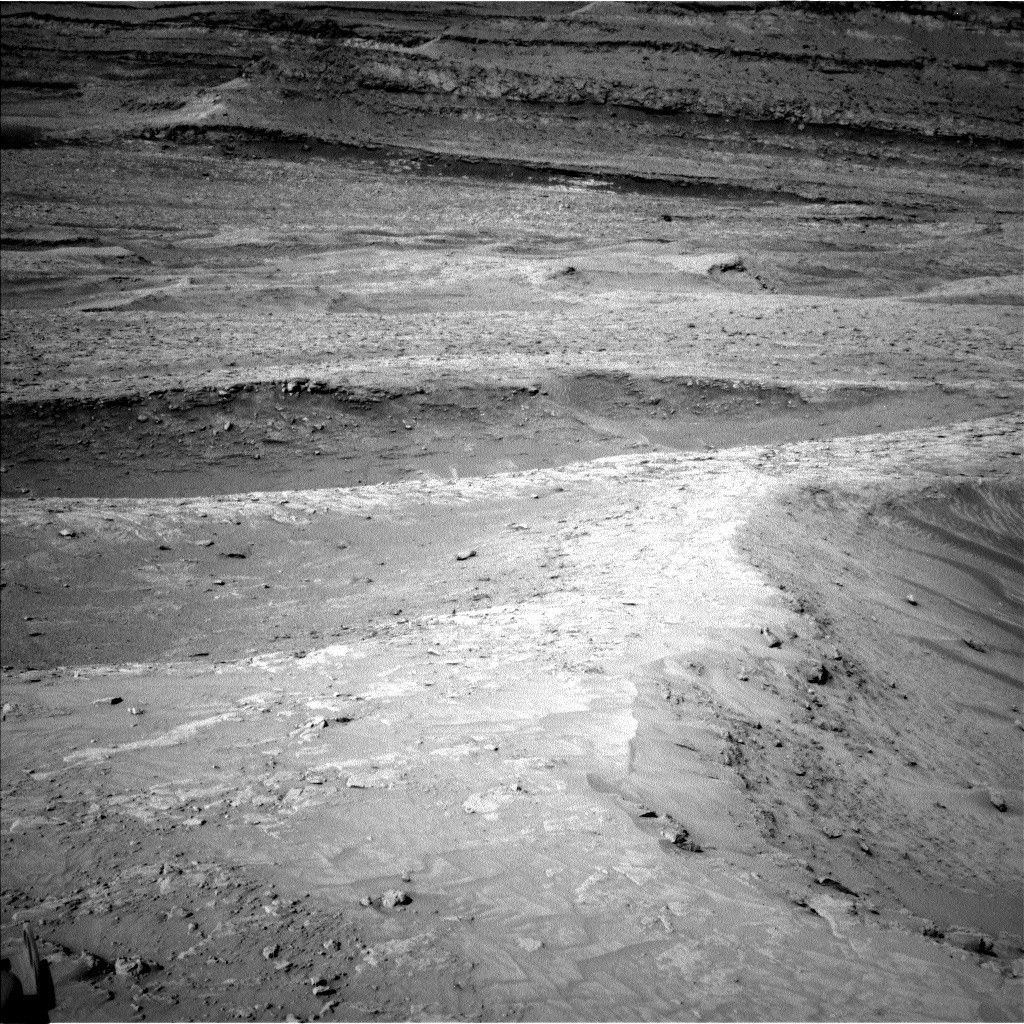
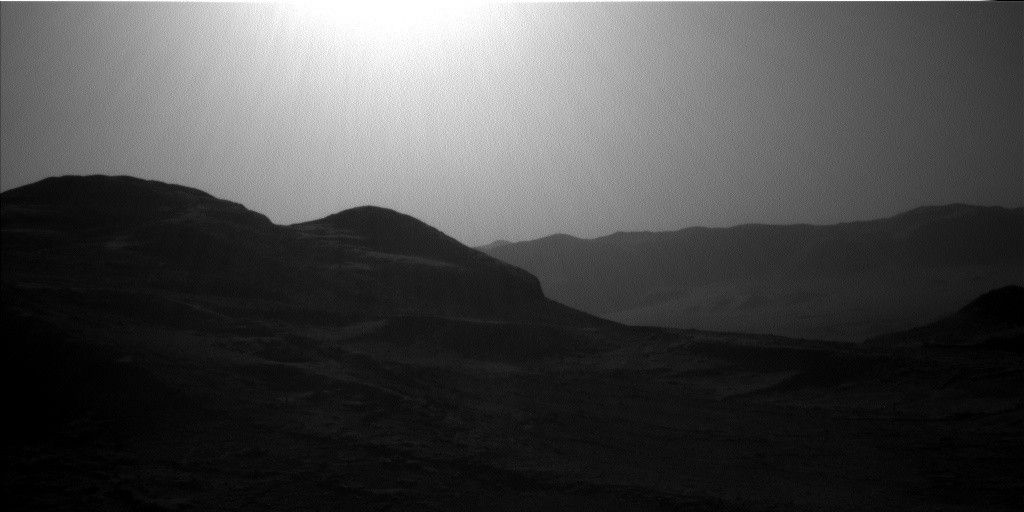
    A grayscale photo from the Martian surface shows rocky, uneven, light-gray terrain marked by numerous ridges, running at various angles to each other, creating lines atop the sandy, gravelly soil.
    NASA’s Mars rover Curiosity captured this image of the three intersecting ridges in front of it this weekend that make a sort of “peace sign” shape. Curiosity acquired the image using its Left Navigation Camera on Aug. 8, 2025 — Sol 4623, or Martian day 4,623 of the Mars Science Laboratory mission — at 06:20:38 UTC.
    NASA/JPL-Caltech

    Written by Alex Innanen, Atmospheric Scientist at York University

    Earth planning date: Friday, Aug. 8, 2025

    We continue to progress through the boxwork structures, arriving today at the “peace sign” ridges we were aiming for in our last drive. We’re spending the first two sols of the weekend at this location, learning everything we can about the boxwork ridges all around us. Then we’re driving further along and spending our third sol at our next location doing a bit more untargeted science. 

    Our first sol includes three contact science targets, “Palmira,” “Casicasi,” and “Bococo,” which both MAHLI and APXS will be checking out nice and close. ChemCam is also using its LIBS laser to check out Bococo, and taking a mosaic of some more distant boxwork ridges. Not to be left out, Mastcam is taking a mosaic of the intersecting peace-sign-shaped ridges, which have been given the name “Ayopaya,” as well as another mosaic of the edge of one of the nearby ridges. The environmental science group (ENV) is also taking a dust-devil movie and a surpahorizon cloud movie.

    On our second sol, ChemCam has another LIBS observation of “Britania.” Mastcam has some more mosaics, today looking back at our wheel tracks to see what we might have turned up on our drive, as well as out to the more distant ridges. We also have another cloud movie coinciding with imaging from above by the CaSSIS camera on board the Trace Gas Orbiter, trying to spot the same clouds from above and below. After our drive Curiosity gets to take a nice long snooze before waking up early for our typical weekend morning ENV block, which includes three different cloud observations (it’s still the cloudy season, after all!) and two observations to look at dust in the crater and in the sky above. Later on this sol ChemCam will use AEGIS to autonomously pick a LIBS target, we’ll have a 360-degree survey to try to catch dust devils. Finally, we’re setting our sights back on the clouds, using cloud shadows on Mount Sharp to estimate cloud altitudes.

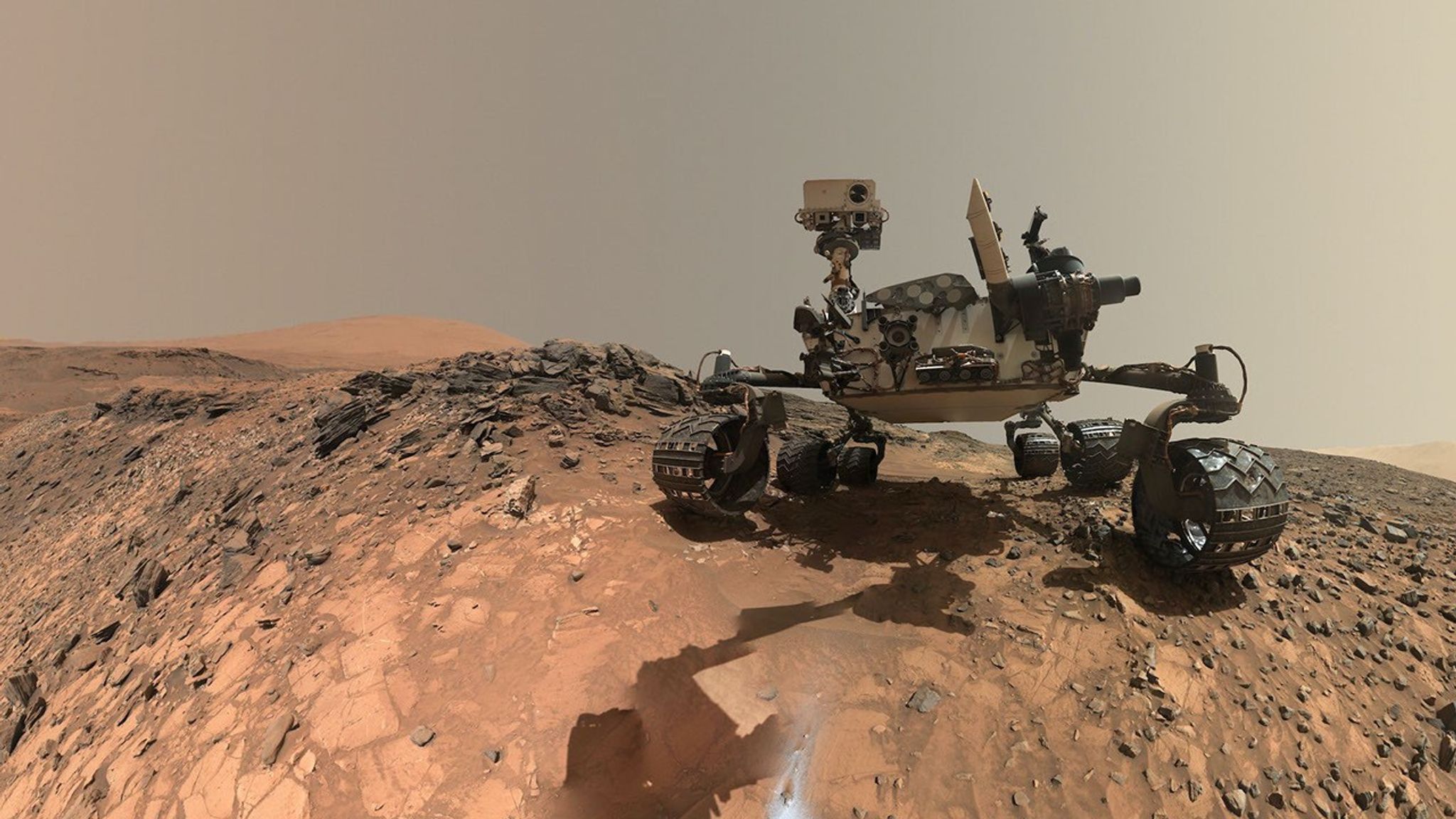
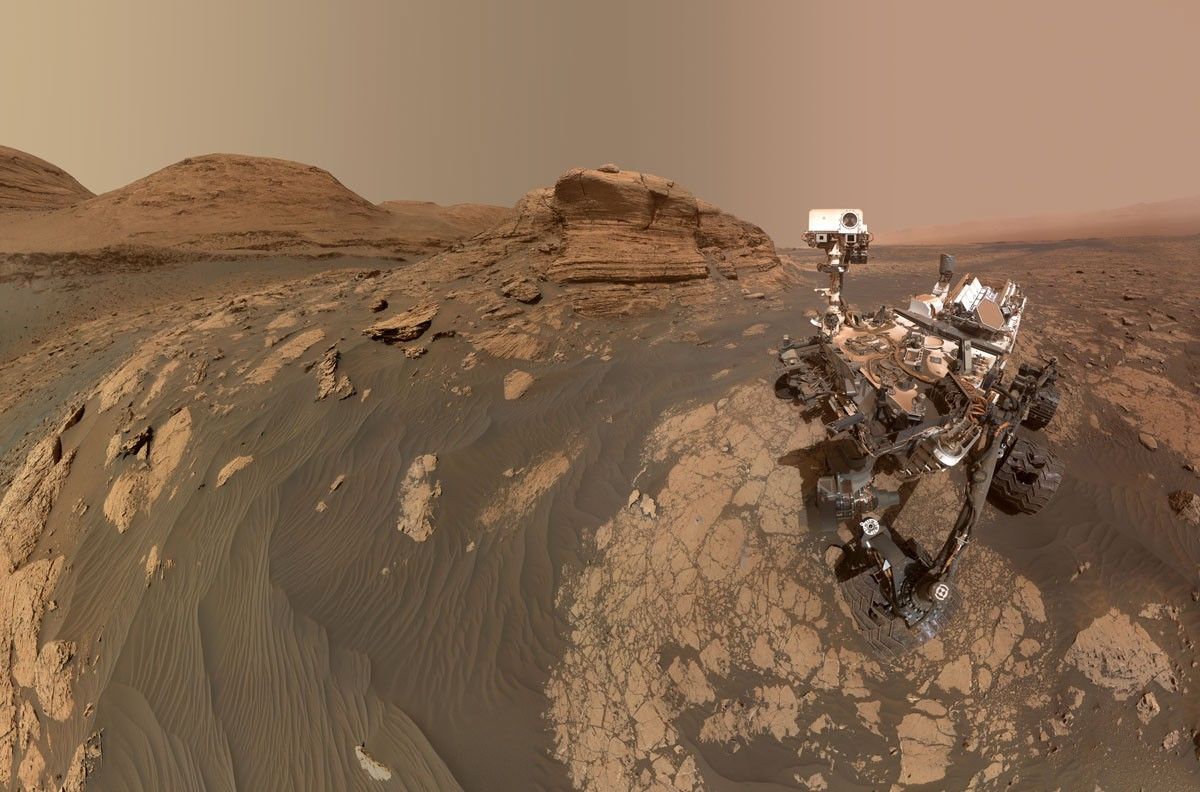
    A rover sits on the hilly, orange Martian surface beneath a flat grey sky, surrounded by chunks of rock.
    NASA’s Mars rover Curiosity at the base of Mount Sharp
    NASA/JPL-Caltech/MSSS

    Details

    Last Updated

    Aug 12, 2025

    Related Terms

  • NASA IXPE’s ‘Heartbeat Black Hole’ Measurements Challenge Current Theories

    4 min read

    Preparations for Next Moonwalk Simulations Underway (and Underwater)

    Written by Michael Allen

    An international team of astronomers using NASA’s IXPE (Imaging X-ray Polarimetry Explorer), has challenged our understanding of what happens to matter in the direct vicinity of a black hole.

    With IXPE, astronomers can study incoming X-rays and measure the polarization, a property of light that describes the direction of its electric field.

    The polarization degree is a measurement of how aligned those vibrations are to each other. Scientists can use a black hole’s polarization degree to determine the location of the corona – a region of extremely hot, magnetized plasma that surrounds a black hole – and how it generates X-rays.

    An illustration of a black hole with a dark circle surrounded by light discs.
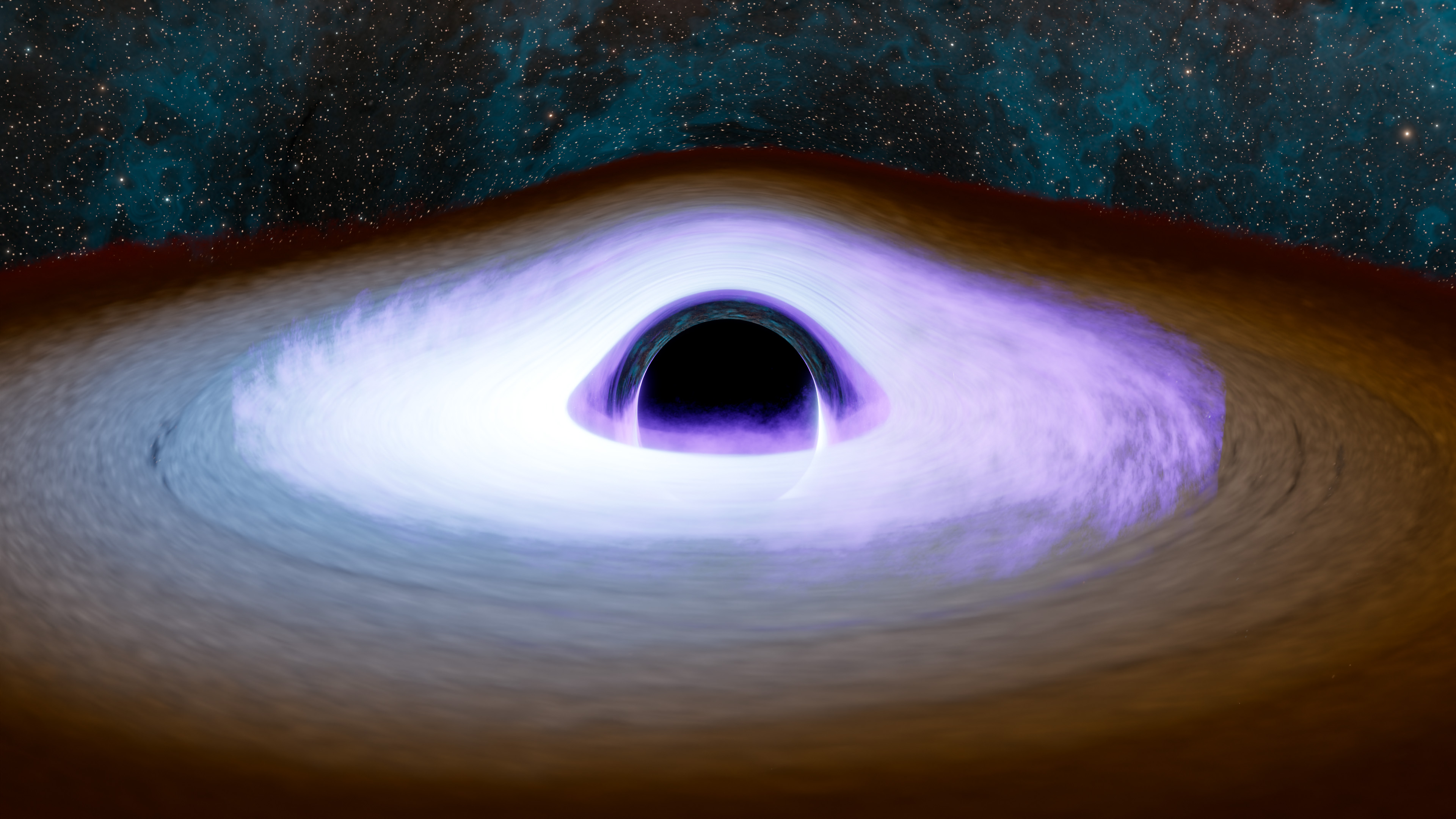
    This illustration of material swirling around a black hole highlights a particular feature, called the “corona,” that shines brightly in X-ray light. In this depiction, the corona can be seen as a purple haze floating above the underlying accretion disk, and extending slightly inside of its inner edge. The material within the inner accretion disk is incredibly hot and would glow with a blinding blue-white light, but here has been reduced in brightness to make the corona stand out with better contrast. Its purple color is purely illustrative, standing in for the X-ray glow that would not be obvious in visible light. The warp in the disk is a realistic representation of how the black hole’s immense gravity acts like an optical lens, distorting our view of the flat disk that encircles it.
    NASA/Caltech-IPAC/Robert Hurt

    In April, astronomers used IXPE to measure a 9.1% polarization degree for black hole IGR J17091-3624, much higher than they expected based on theoretical models.

    “The black hole IGR J17091-3624 is an extraordinary source which dims and brightens with the likeness of a heartbeat, and NASA’s IXPE allowed us to measure this unique source in a brand-new way.” said Melissa Ewing, the lead of the study based at Newcastle University in Newcastle upon Tyne, England.

    In X-ray binary systems, an extremely dense object, like a black hole, pulls matter from a nearby source, most often a neighboring star. This matter can begin to swirl around, flattening into a rotating structure known as an accretion disc.

    The corona, which lies in the inner region of this accretion disc, can reach extreme temperatures up to 1.8 billion degrees Fahrenheit and radiate very luminous X-rays. These ultra-hot coronas are responsible for some of the brightest X-ray sources in the sky.

    Despite how bright the corona is in IGRJ17091-364, at some 28,000 light-years from Earth, it remains far too small and distant for astronomers to capture an image of it.

    “Typically, a high polarization degree corresponds with a very edge-on view of the corona. The corona would have to be perfectly shaped and viewed at just the right angle to achieve such a measurement,” said Giorgio Matt, professor at the University of Roma Tre in Italy and a co-author on this paper. “The dimming pattern has yet to be explained by scientists and could hold the keys to understanding this category of black holes.”

    The stellar companion of this black hole isn’t bright enough for astronomers to directly estimate the system’s viewing angle, but the unusual changes in brightness observed by IXPE suggest that the edge of the accretion disk was directly facing Earth.

    The researchers explored different avenues to explain the high polarization degree.

    In one model, astronomers included a “wind” of matter lifted from the accretion disc and launched away from the system, a rarely seen phenomenon. If X-rays from the corona were to meet this matter on their way to IXPE, Compton scattering would occur, leading to these measurements.

    Fast Facts

    • Polarization measurements from IXPE carry information about the orientation and alignment of emitted X-ray light waves. The high the degree of polarization, the more the X-ray waves are traveling in sync.
    • Most polarization in the corona come from a process known as Compton scattering, where light from the accretion disc bounces off the hot plasma of the corona, gaining energy and aligning to vibrate in the same direction.

    “These winds are one of the most critical missing pieces to understand the growth of all types of black holes,” said Maxime Parra, who led the observation and works on this topic at Ehime University in Matsuyama, Japan. “Astronomers could expect future observations to yield even more surprising polarization degree measurements.”

    Another model assumed the plasma in the corona could exhibit a very fast outflow. If the plasma were to be streaming outwards at speeds as high as 20% the speed of light, or roughly 124 million miles per hour, relativistic effects could boost the observed polarization.

    In both cases, the simulations could recreate the observed polarization without a very specific edge-on view. Researchers will continue to model and test their predictions to better understand the high polarization degree for future research efforts.

    More about IXPE

    IXPE, which continues to provide unprecedented data enabling groundbreaking discoveries about celestial objects across the universe, is a joint NASA and Italian Space Agency mission with partners and science collaborators in 12 countries. IXPE is led by NASA’s Marshall Space Flight Center in Huntsville, Alabama. BAE Systems, Inc., headquartered in Falls Church, Virginia, manages spacecraft operations together with the University of Colorado’s Laboratory for Atmospheric and Space Physics in Boulder.

    Learn more about IXPE’s ongoing mission here:

    https://www.nasa.gov/ixpe