Tag: image

  • MetOp-SG-A1 and Sentinel-5 launch highlights


    Video:
    00:01:36

    Europe’s first MetOp Second Generation, MetOp-SG-A1, weather satellite – which hosts the Copernicus Sentinel-5 mission –  has launched aboard an Ariane 6 rocket from Europe’s Spaceport in French Guiana. The rocket lifted off on 13 August at 02:37 CEST (12 August 21:37 Kourou time).

    MetOp-SG-A1 is the first in a series of three successive pairs of satellites. The mission as a whole not only ensures the continued delivery of global observations from polar orbit for weather forecasting and climate analysis for more than 20 years, but also offers enhanced accuracy and resolution compared to the original MetOp mission – along with new measurement capabilities to expand its scientific reach.

    This new weather satellite also carries the Copernicus Sentinel-5 mission to deliver daily global data on air pollutants and atmospheric trace gases as well as aerosols and ultraviolet radiation.

  • MetOp-SG-A1 and Sentinel-5 launch on Ariane 6


    Video:
    00:01:20

    Europe’s first MetOp Second Generation, MetOp-SG-A1, weather satellite – which hosts the Copernicus Sentinel-5 mission –  has launched aboard an Ariane 6 rocket from Europe’s Spaceport in French Guiana. The rocket lifted off on 13 August at 02:37 CEST (12 August 21:37 Kourou time).

    MetOp-SG-A1 is the first in a series of three successive pairs of satellites. The mission as a whole not only ensures the continued delivery of global observations from polar orbit for weather forecasting and climate analysis for more than 20 years, but also offers enhanced accuracy and resolution compared to the original MetOp mission – along with new measurement capabilities to expand its scientific reach. 

    This new weather satellite also carries the Copernicus Sentinel-5 mission to deliver daily global data on air pollutants and atmospheric trace gases as well as aerosols and ultraviolet radiation.

  • First MetOp-SG and Sentinel-5 launched

    MetOp-SG-A1 and Sentinel-5 take to the skies

    Ushering in a new era of weather and climate monitoring from polar orbit, the first in a new series of satellites, MetOp Second Generation, has been lofted into orbit aboard an Ariane 6 rocket from the European spaceport in Kourou, French Guiana. As part of this new satellite’s sophisticated instrument package is the new Copernicus Sentinel-5 instrument, which is designed to deliver critical data on air pollutants, ozone and climate-related gases.

  • Hubble Captures a Tarantula

    Hubble Captures a Tarantula

    This NASA/ESA Hubble Space Telescope image shows a portion of the Tarantula Nebula.

  • CREAM: avoiding collisions in space through automation

    Model of the distribution of space debris around Earth

    Earth orbit is becoming increasingly crowded. With over 11 000 active satellites and many thousands more expected in the coming years as well as over 1.2 million pieces of space debris greater than 1 cm, the risk of in-orbit collisions has turned into a daily operational concern. ESA is investing in automation technologies that can help satellite operators respond more effectively to collision risks.

  • NASA’s SpaceX Crew-10 Splashes Down in Pacific Ocean

    NASA’s SpaceX Crew-10 Splashes Down in Pacific Ocean

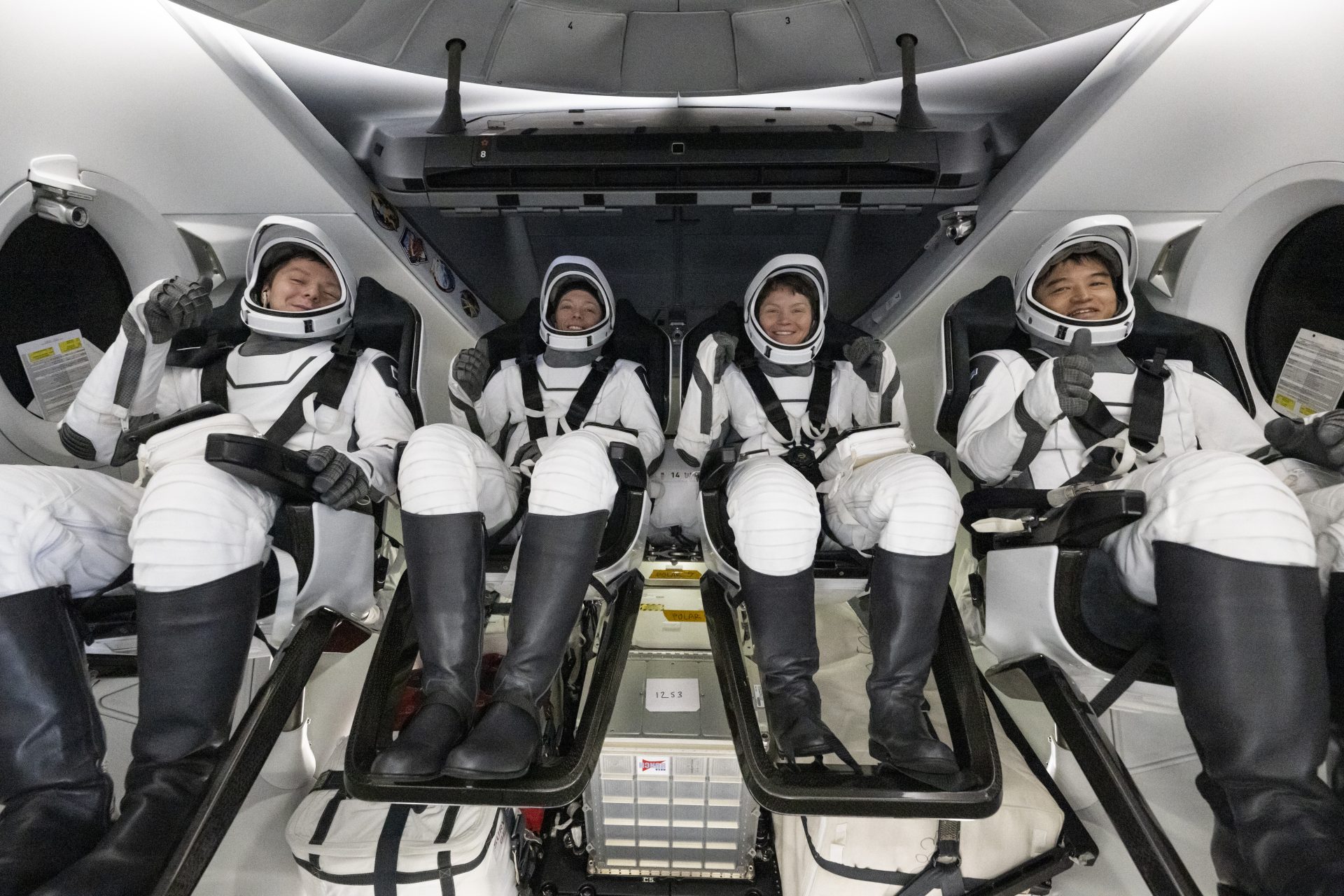
    Roscosmos cosmonaut Kirill Peskov, left, NASA astronauts Nichole Ayers and Anne McClain, and JAXA (Japan Aerospace Exploration Agency) astronaut Takuya Onishi are seen inside the SpaceX Dragon Endurance spacecraft aboard the SpaceX recovery ship SHANNON shortly after having landed in the Pacific Ocean off the coast of San Diego, Calif., Saturday, Aug. 9, 2025. McClain, Ayers, Onishi, and Peskov returned after 147 days in space as part of Expedition 73 aboard the International Space Station.

  • Behind the scenes with MetOp-SG and Sentinel-5


    Video:
    00:01:45

    Experience the preparation of the MetOp-SG-A1 satellite, hosting Copernicus Sentinel-5, scheduled for liftoff on an Ariane 6 rocket from Europe’s Spaceport in Kourou, French Guiana, on 13 August 2025 at 02:37 CEST (12 August 21:37 Kourou time). This timelapse video captures key stages from the encapsulation within the Ariane 6 fairing to the installation in the launch tower.

    MetOp-SG-A1 is the first in a series of three successive pairs of satellites. The mission as a whole not only ensures the continued delivery of global observations from polar orbit for weather forecasting and climate analysis for more than 20 years, but also offers enhanced accuracy and resolution compared to the original MetOp mission – along with new measurement capabilities to expand its scientific reach.

    This new weather satellite also carries the Copernicus Sentinel-5 mission to deliver daily global data on air pollutants and atmospheric trace gases as well as aerosols and ultraviolet radiation.

  • Rare Type of Black Hole Snacks on Star

    Rare Type of Black Hole Snacks on Star

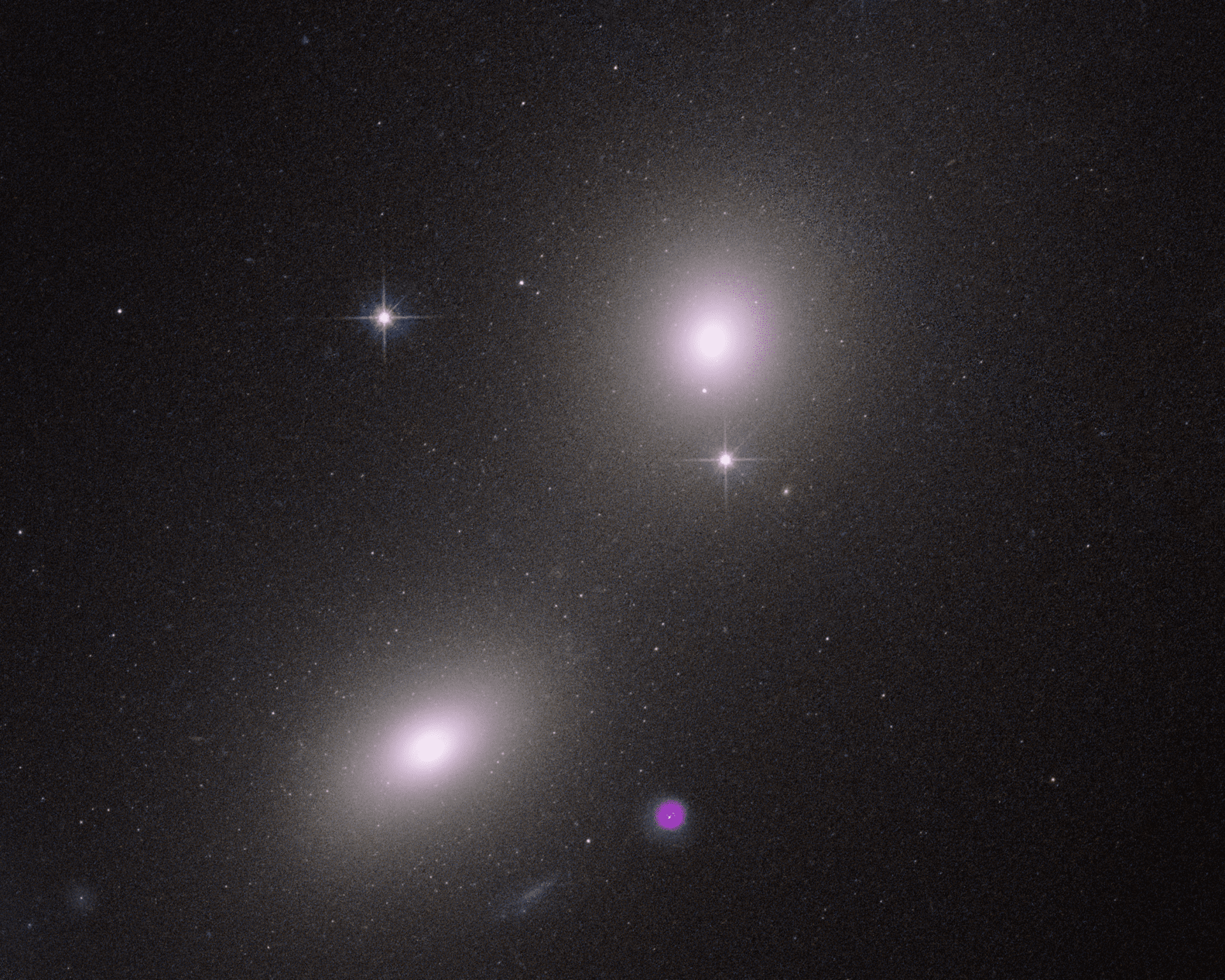
    NASA’s Hubble Space Telescope and NASA’s Chandra X-ray Observatory have teamed up to identify a new possible example of a rare class of black holes. Called NGC 6099 HLX-1, this bright X-ray source seems to reside in a compact star cluster in a giant elliptical galaxy.

  • Week in images: 04-08 August 2025

    Week in images: 04-08 August 2025

    Discover our week through the lens

  • Human minds, robotic hands


    Video:
    00:05:33

    Last July, a team of robots explored a simulated martian landscape in Germany, guided by an astronaut aboard the International Space Station. This was the final session of the Surface Avatar experiment, a joint initiative between ESA and the German Aerospace Center (DLR) to investigate how astronauts can remotely control robotic teams.

    This latest session took place at the DLR site in Oberpfaffenhofen and introduced new levels of autonomy, decision-making and realism, bringing Europe one step closer to seamless human-robot collaboration in space exploration.

  • NASA’s Artemis II Crew Trains in Orion

    NASA’s Artemis II Crew Trains in Orion

    The Artemis II crew (from left to right) CSA (Canadian Space Agency) Jeremy Hansen, mission specialist; Christina Koch, mission specialist; Victor Glover, pilot; and Reid Wiseman, commander, don their Orion Crew Survival System Suits for a multi-day crew module training beginning Thursday, July 31, 2025, at NASA’s Kennedy Space Center in Florida. Behind the crew, wearing clean room apparel, are members of the Artemis II closeout crew.

  • Webb finds new hints for planet around closest solar twin

    Astronomers using the NASA/ESA/CSA James Webb Space Telescope have found strong evidence of a giant planet orbiting a star in the stellar system closest to our own Sun. At just 4 light-years away from Earth, the Alpha Centauri triple star system has long been a compelling target in the search for worlds beyond our solar system.

  • Hubble sizes up rare interstellar comet


    Image:

    A team of astronomers has taken the sharpest-ever picture of the unexpected interstellar comet 3I/ATLAS, using the crisp vision of the NASA/ESA Hubble Space Telescope.

    ESA’s Planetary Defence Office responded promptly to the discovery of the comet, and has been tracking it since the beginning of July.

    Now, Hubble’s observations from space are allowing astronomers to more accurately estimate the size of the comet’s solid icy nucleus. The upper limit on the diameter of the nucleus is 5.6 km, but it could be as small as 320 m across, researchers report.

    Though the Hubble images put tighter constraints on the nucleus size compared to previous ground-based estimates, the solid heart of the comet presently cannot be directly seen, even by Hubble. Further observations, including by the NASA/ESA/CSA James Webb Space Telescope, will help refine our knowledge about the comet, including its chemical makeup.

    Hubble also captured a dust plume ejected from the Sun-warmed side of the comet, and the hint of a dust tail streaming away from the nucleus. Hubble’s data show that the comet is losing dust in a similar manner to that from previously seen Sun-bound comets originating within our Solar System.

    The big difference is that this interstellar visitor originated in some other stellar systems, elsewhere in our Milky Way galaxy.

    3I/ATLAS is traveling through our Solar System at roughly 210 000 km per hour, the highest speed ever recorded for a Solar System visitor. This breathtaking sprint is evidence that the comet has been drifting through interstellar space for many billions of years. The gravitational slingshot effect from innumerable stars and nebulae the comet passed added momentum, ratcheting up its speed. The longer 3I/ATLAS was out in space, the higher its speed grew.

    This comet was discovered by the Asteroid Terrestrial-impact Last Alert System (ATLAS) on 1 July 2025 at a distance of 675 million km from the Sun. 3I/ATLAS should remain visible to ground-based telescopes until September, after which it will pass too close to the Sun to observe. It is expected to reappear on the other side of the Sun by early December.

    Icy wanderers such as 3I/ATLAS offer a rare, tangible connection to the broader galaxy. To actually visit one would connect humankind with the Universe on a far greater scale. To this end, ESA is preparing the Comet Interceptor mission. The spacecraft will be launched in 2029 into a parking orbit, lying in wait for a suitable target – a pristine comet from the distant Oort Cloud that surrounds our Solar System, or, unlikely but highly appealing, an interstellar object.

    While it is improbable that we will discover an interstellar object that is reachable for Comet Interceptor, as a first demonstration of a rapid response mission that waits in space for its target, it will be a pathfinder for possible future missions to intercept these mysterious visitors.

    The research paper based on Hubble observations will be published in The Astrophysical Journal Letters.

    [Image description: At the center of the image is a comet that appears as a teardrop-shaped bluish cocoon of dust coming off the comet’s solid, icy nucleus and seen against a black background. The comet appears to be heading to the bottom left corner of the image. About a dozen short, light blue diagonal streaks are seen scattered across the image, which are from background stars that appeared to move during the exposure because the telescope was tracking the moving comet.]