Tag: image

  • Iberian wildfires seen from space

    Iberian fires August 2025

    Southern Europe is once again in the grip of extreme summer heat. Soaring temperatures and bone-dry land have fuelled widespread wildfires, with the Iberian Peninsula among the regions hardest hit. Flames continue to sweep across parched landscapes, as these images show.

  • New moon of Uranus

    New moon of Uranus
    Image:
    New moon of Uranus

  • Moonlight and Our Atmosphere

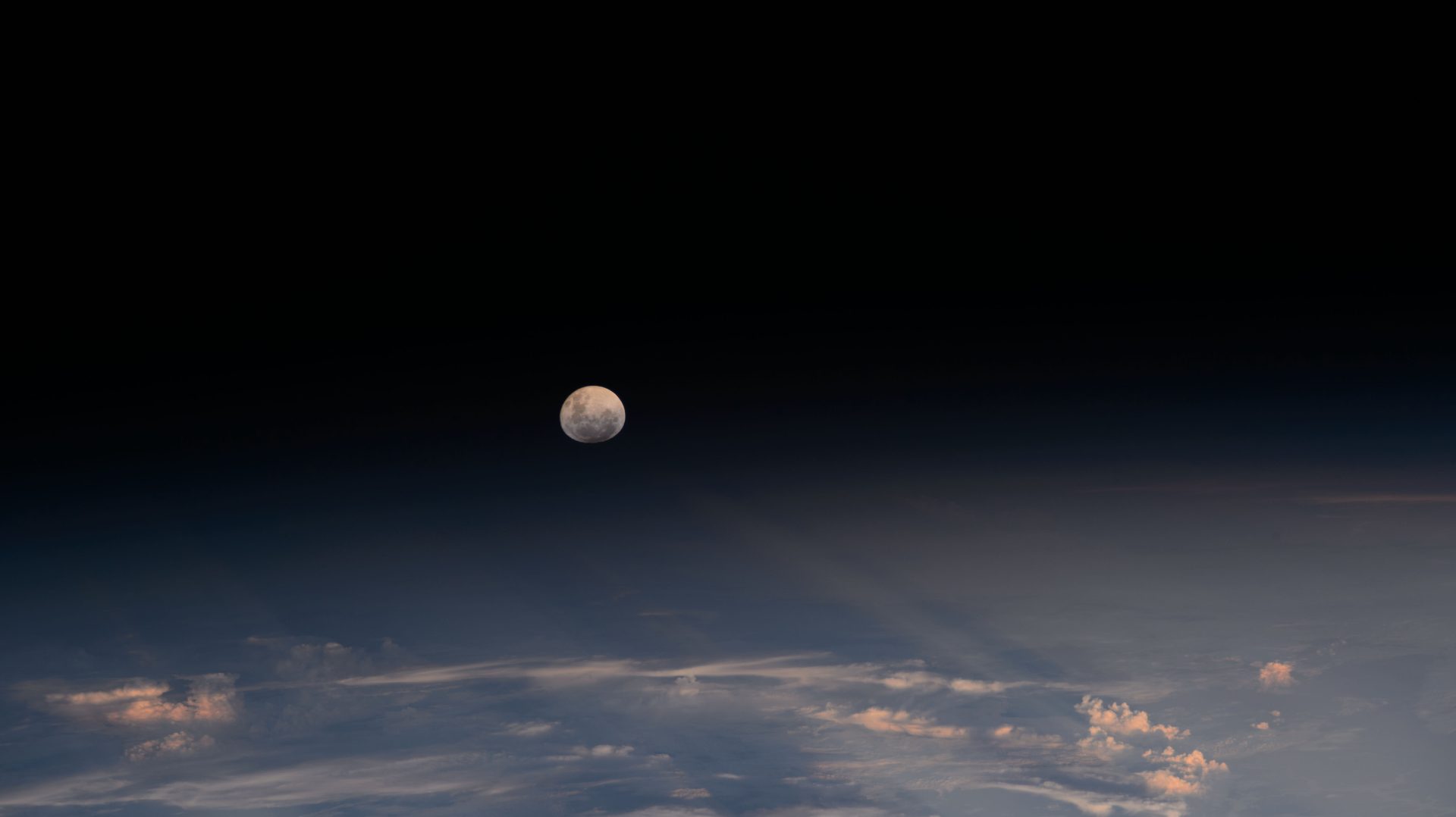
    Moonlight and Our Atmosphere

    The Moon’s light is refracted by Earth’s atmosphere, giving it a spheroid shape in this April 13, 2025, photograph from the International Space Station as it orbited into a sunset 264 miles above the border between Bolivia and Brazil in South America.

  • Artemis II Crew Practices Night Launch Scenario

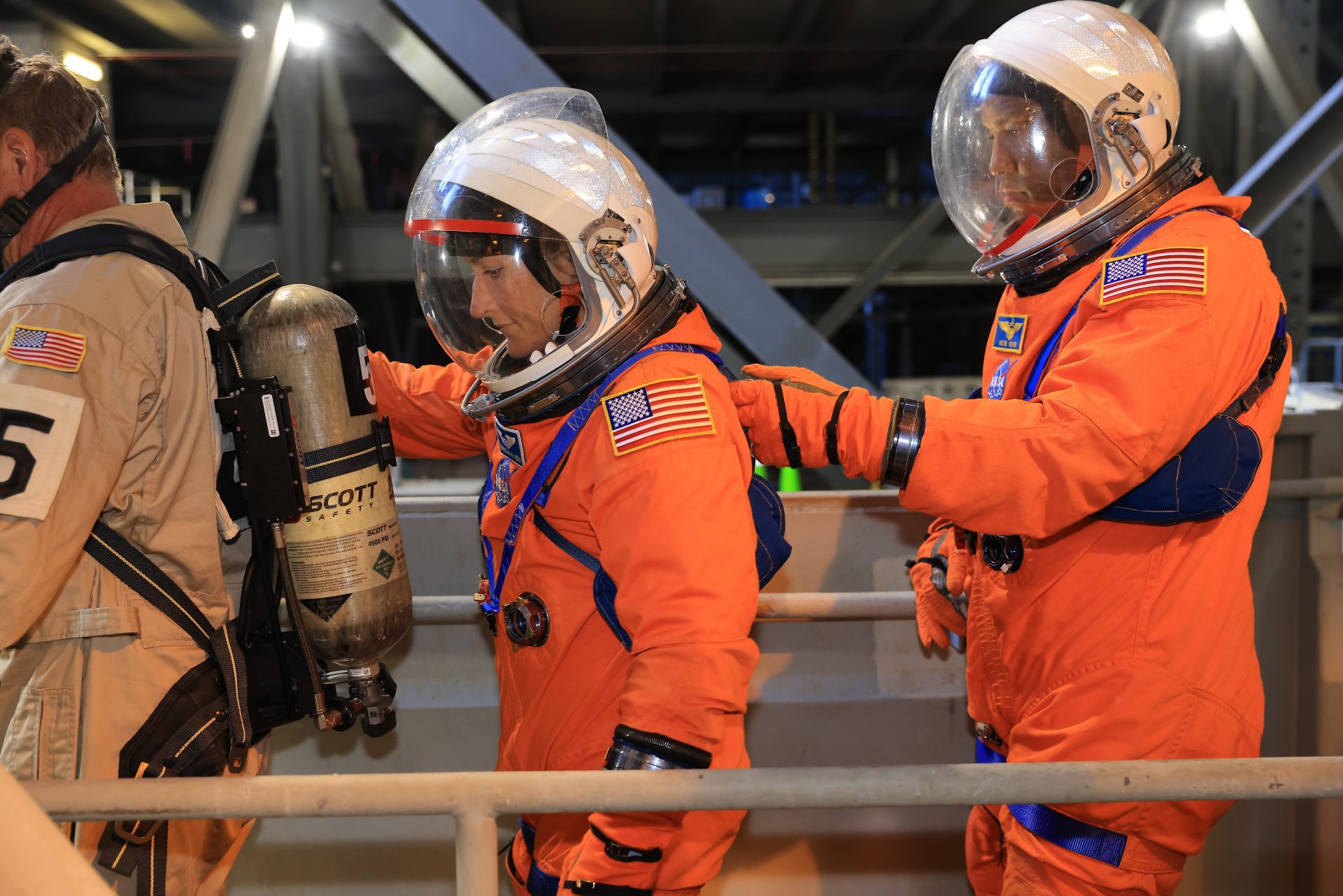
    Artemis II Crew Practices Night Launch Scenario

    NASA astronauts Christina Koch, Artemis II mission specialist, and Victor Glover, Artemis II pilot, walk on the crew access arm of the mobile launcher in the Vehicle Assembly Building at NASA’s Kennedy Space Center in Florida on Tuesday, Aug. 12, 2025.

  • Spacewalk Pop-Up

    Spacewalk Pop-Up

    Former NASA astronaut Shane Kimbrough is photographed during a spacewalk in January 2017.

  • Week in images: 11-15 August 2025

    Ariane 6 lofts MetOp-SG-A1 and Sentinel-5 into orbit

    Week in images: 11-15 August 2025

    Discover our week through the lens

  • Say Cheese!

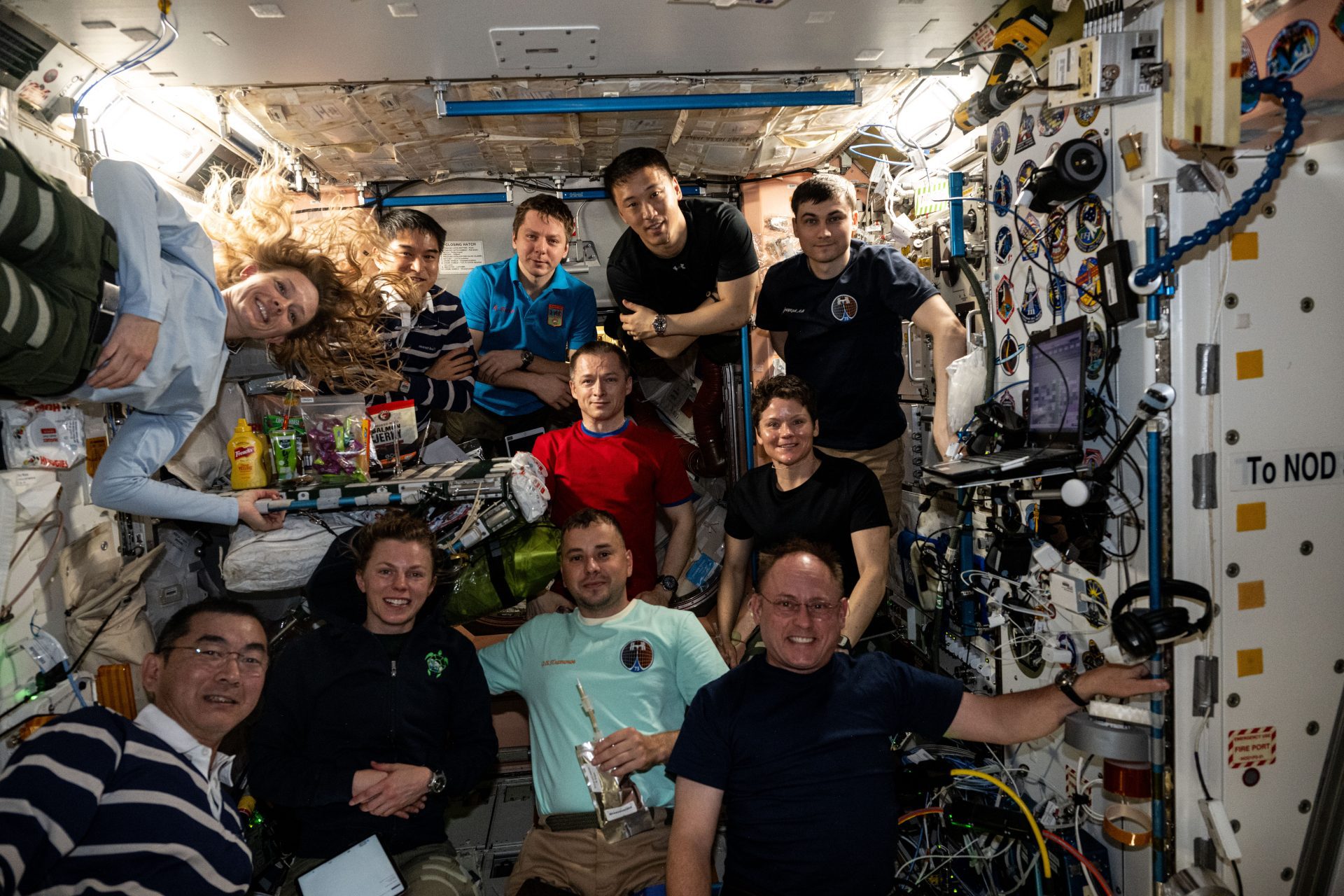
    Say Cheese!

    Eleven International Space Station crew members gather inside the International Space Station’s Unity module for a portrait on Aug. 3, 2025.

  • MetOp-SG-A1 and Sentinel-5: from cleanroom to space


    Video:
    00:04:21

    Europe’s first MetOp Second Generation, MetOp-SG-A1, weather satellite – which hosts the Copernicus Sentinel-5 mission –  has launched aboard an Ariane 6 rocket from the European spaceport in French Guiana. The rocket lifted off on 13 August at 02:37 CEST (12 August 21:37 Kourou time).

    MetOp-SG-A1 is the first in a series of three successive pairs of satellites. The mission as a whole not only ensures the continued delivery of global observations from polar orbit for weather forecasting and climate analysis for more than 20 years, but also offers enhanced accuracy and resolution compared to the original MetOp mission – along with new measurement capabilities to expand its scientific reach.

    This new weather satellite also carries the Copernicus Sentinel-5 mission to deliver daily global data on air pollutants and atmospheric trace gases as well as aerosols and ultraviolet radiation.

    Ariane 6 is Europe’s heavy launcher and a key element of ESA’s efforts to ensure autonomous access to space for Europe’s citizens. Ariane 6 has three stages: two or four boosters, and a main and upper stage. For this flight, VA264, the rocket was used in its two-booster configuration.

  • FLEX instrument meets its satellite

    The development of ESA’s Earth Explorer FLEX mission has recently passed a significant milestone: the mission’s all-important instrument has been joined to its satellite platform.
    Image:
    The development of ESA’s Earth Explorer FLEX mission has recently passed a significant milestone: the mission’s all-important instrument has been joined to its satellite platform.

  • Alligator Goes for a Swim

    Alligator Goes for a Swim

    An alligator moves through a brackish waterway at NASA’s Kennedy Space Center in Florida. The center shares space with the Merritt Island National Wildlife Refuge. More than 330 native and migratory bird species, 25 mammals, 117 fishes and 65 amphibians and reptiles call NASA Kennedy and the wildlife refuge home.

  • Tracking the climate-driven shift in Antarctic plankton from space

    Penguins resting on Antarctic sea ice

    Combining 25 years of space-based data with ocean sampling, scientists have uncovered a change in the microscopic organisms that underpin the Southern Ocean’s food chain and carbon storage.

  • No Earth-like atmosphere on TRAPPIST-1 d

    The exoplanet TRAPPIST-1 d intrigues astronomers looking for possibly habitable worlds beyond our solar system because it is similar in size to Earth, rocky, and resides in an area around its star where liquid water on its surface is theoretically possible. But according to a new study using data from the NASA/ESA/CSA James Webb Space Telescope, it does not have an Earth-like atmosphere.