Tag: image

  • 342nd Council: Media information session


    Video:
    00:00:00

    Watch the replay of the media information session in which ESA Director General Josef Aschbacher and ESA Council Chair Renato Krpoun (CH) update journalists on key decisions taken at the ESA Council meeting, held at ESA Headquarters in Paris on 17 and 18 December 2025.

  • Gaia finds hints of planets in baby star systems


    Image:

    Ever wondered how planetary systems like our own Solar System form? Thanks to the European Space Agency’s Gaia space telescope, we’re getting a unique peek behind the cosmic curtain into these dusty environments.

    In this collage, we see the images of 31 baby star systems. Click on the white dots next to each system to find out more about them. The bar on the top right shows the scale of the image in Astronomical Units (AU).

    The collage also shows our own Solar System for reference on the bottom right, as it is predicted to have looked at an age of 1 million years, with the Sun at its centre (not visible).

    All of the systems are centred around very young stars that have recently collapsed from vast clouds of gas and dust.

    After the clouds collapsed under their own gravity, they spun faster and flattened into discs with hot, dense centres. These centres became the stars, sometimes multiple stars were formed. The discs around them are called protoplanetary discs.

    The 31 baby systems are shown here in orange-purple, as seen by the Atacama Large Millimeter Array (ALMA) ground-based telescope.

    Astronomers expect the remaining material in protoplanetary discs to clump together to form planets, but until now it’s been very difficult to spot them because of all the dust and gas present in discs. To date, very few planets have been detected around forming stars.

    Enter Gaia.

    In 31 out of 98 young star systems, Gaia has detected subtle motions that suggest the presence of unseen companions. For seven of these systems, the observed motions are consistent with objects of planetary mass. In eight systems, the data best match the presence of brown dwarfs – objects larger than planets but smaller than stars. The remaining sixteen systems likely have additional stars around.

    Gaia’s predicted locations of these companions in the systems are shown in cyan. In the reference image of our baby Solar System, Jupiter’s orbit is also shown in cyan.

    Gaia discovered the companions in the baby star systems thanks to its unique ability to sense the gravitational tug or ‘wobble’ a planet or companion induces on a star. This technique had already been used to find companions around older stars. But now, for the first time, a team of astronomers led by Miguel Vioque of the European Southern Observatory, Germany, has used this Gaia technique to find planets and companions around stars that are still forming.

    The all-sky, large-scale nature of the Gaia survey enabled the team to study hundreds of forming stars and identify companions across large samples for the first time. This in contrast to costly ground-based searches that can only target a few stars at a time.

    This ability of Gaia is revolutionising the field of star and planet formation. The companions that the telescope has already found, can now be followed up by telescopes like the NASA/ESA/CSA James Webb Space telescope that can study the inner discs of the baby systems in more detail.

    With Gaia’s upcoming fourth data release, many more hidden planets are expected to be uncovered.

    This new finding has been described in ‘Astrometric view of companions in the inner dust cavities of protoplanetary disks’ by M. Vioque et al., accepted for publication in Astronomy & Astrophysics

    Learn more

    [Image description: A collage of 32 glowing discs on a black background. Each disc shows concentric rings in vivid colours: purple, orange, and yellow, with bright cyan centres. The discs vary in size and orientation, creating a striking pattern of circular and elliptical shapes.]

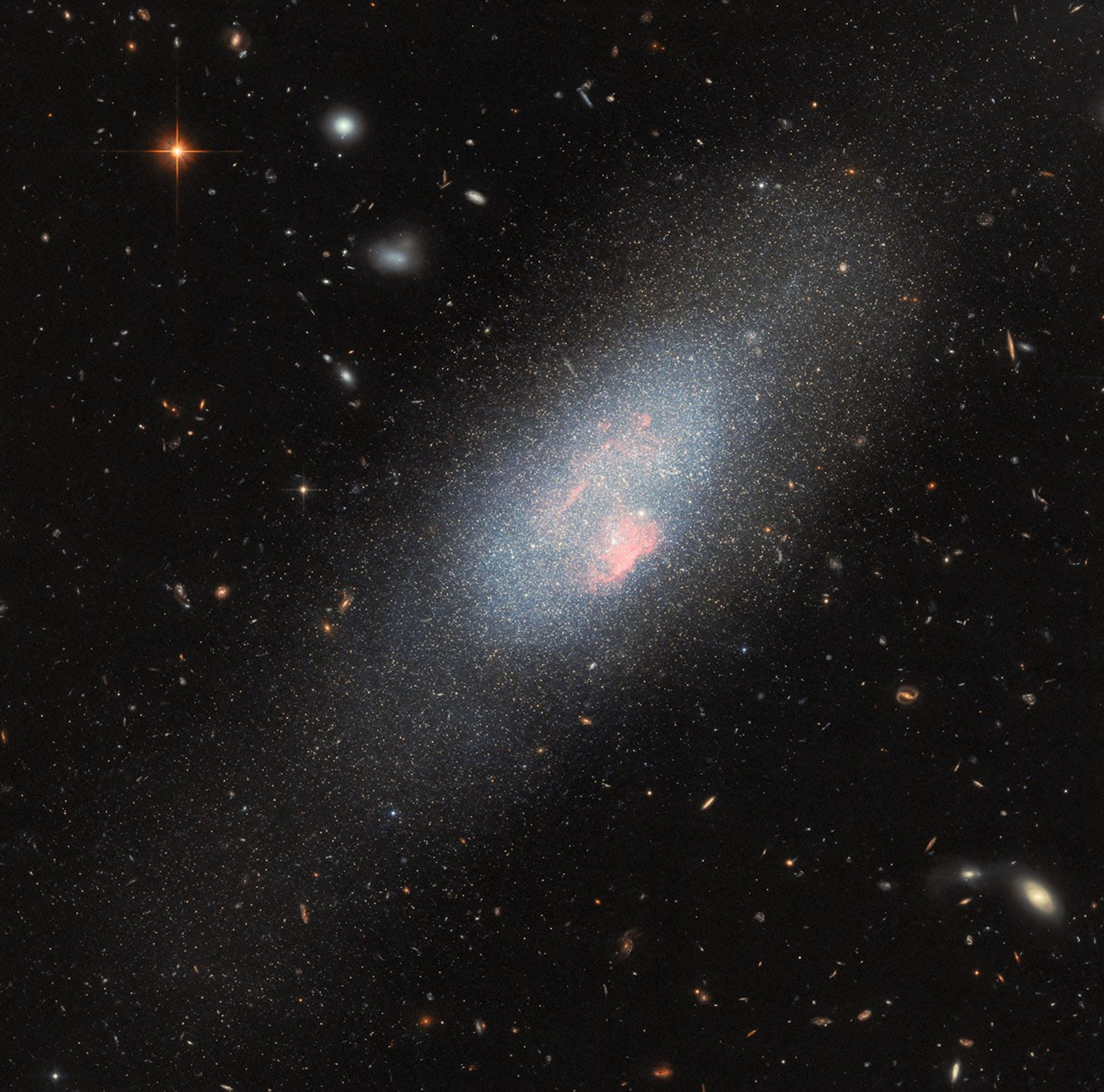
  • Massive Stars Make Their Mark in Hubble Image

    Massive Stars Make Their Mark in Hubble Image

    This NASA/ESA Hubble Space Telescope image features the blue dwarf galaxy Markarian 178 (Mrk 178) against a backdrop of distant galaxies in all shapes and sizes. Some of these distant galaxies even shine through the diffuse edges of Mrk 178.

  • Proba-3 fills the solar observation gap

    Coronal mass ejection captured by Proba-2, Proba-3 and SOHO

    It has been a busy year for the European Space Agency’s Proba-3 mission. The satellite duo has already created more than 50 artificial solar eclipses in orbit since the mission operations began less than a year ago. The resulting data confirm Proba-3’s ability to provide the missing puzzle piece in our observations of the Sun’s enigmatic atmosphere – the corona.

  • Galileo’s first Ariane 6 launch strengthens European resilience

    Galileo launch 14 liftoff

    On 17 December, two Galileo satellites lifted off from Europe’s Spaceport in French Guiana aboard an Ariane 6 rocket. This marked the 14th launch for Europe’s Galileo constellation, reinforcing Europe’s satellite navigation capabilities, resilience and autonomy. 

  • Galileo L14 liftoff on Ariane 6


    Video:
    00:01:06

    On 17 December, two new Galileo satellites lifted off from Europe’s Spaceport in French Guiana aboard an Ariane 6 rocket. This marked the 14th launch for Europe’s satellite navigation operational satellite programme, reinforcing Europe’s resilience and autonomy.

    The European Space Agency (ESA) is responsible for carrying out the Galileo launch with Arianespace on behalf of the European Commission. The Galileo satellites were manufactured by OHB, under contract with ESA. Once in orbit, the EU Agency for the Space Programme (EUSPA) will bring the satellites into service and oversee their operation.

    The flight, designated VA266, was the first launch of Galileo satellites on Europe’s newest heavy-lift launcher Ariane 6.

    Follow the launch campaign

    Access the related broadcast quality video material

  • Peekaboo!

    Peekaboo!

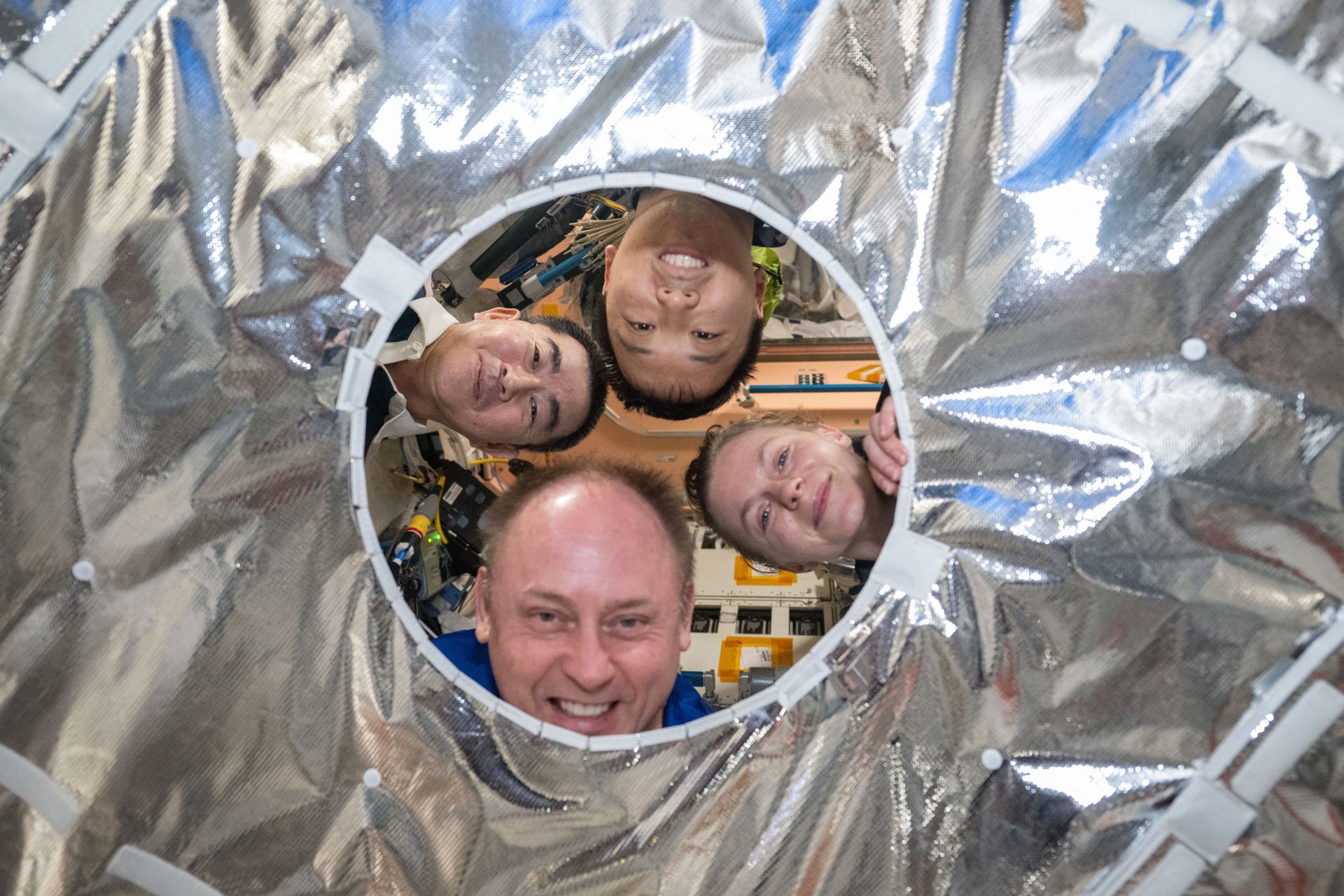
    Clockwise from left, JAXA (Japan Aerospace Exploration Agency) astronaut Kimiya Yui and NASA astronauts Jonny Kim, Zena Cardman, and Mike Fincke pose for a playful portrait through a circular opening in a hatch thermal cover aboard the International Space Station on Sept. 18, 2025.

  • Bassac River, Southern Vietnam

    Bassac River, Southern Vietnam

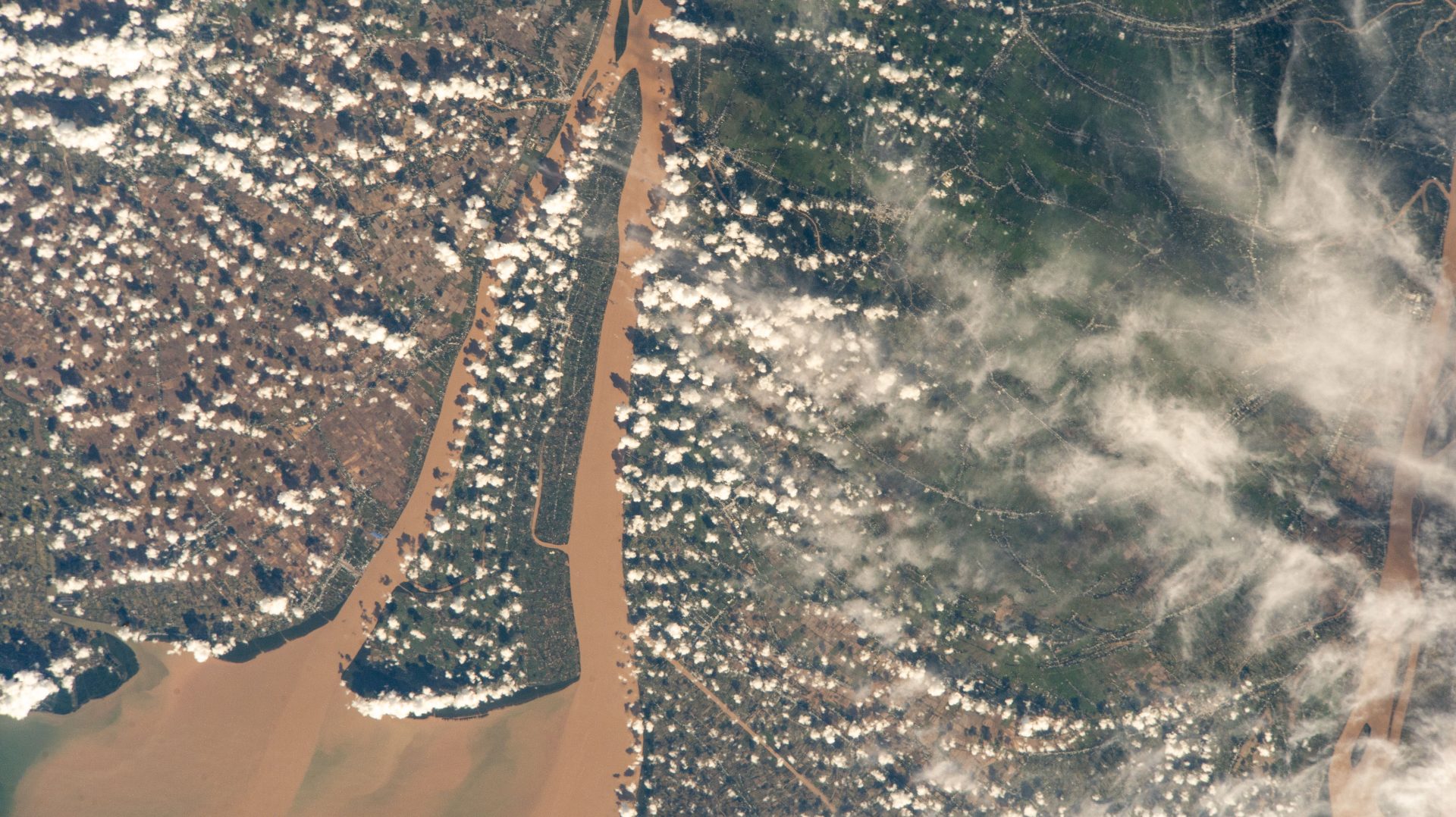
    The Bassac River surrounds Cù Lao Dung, a river islet district in southern Vietnam, before emptying into the South China Sea.

  • The Calabash clash

    The Calabash clash

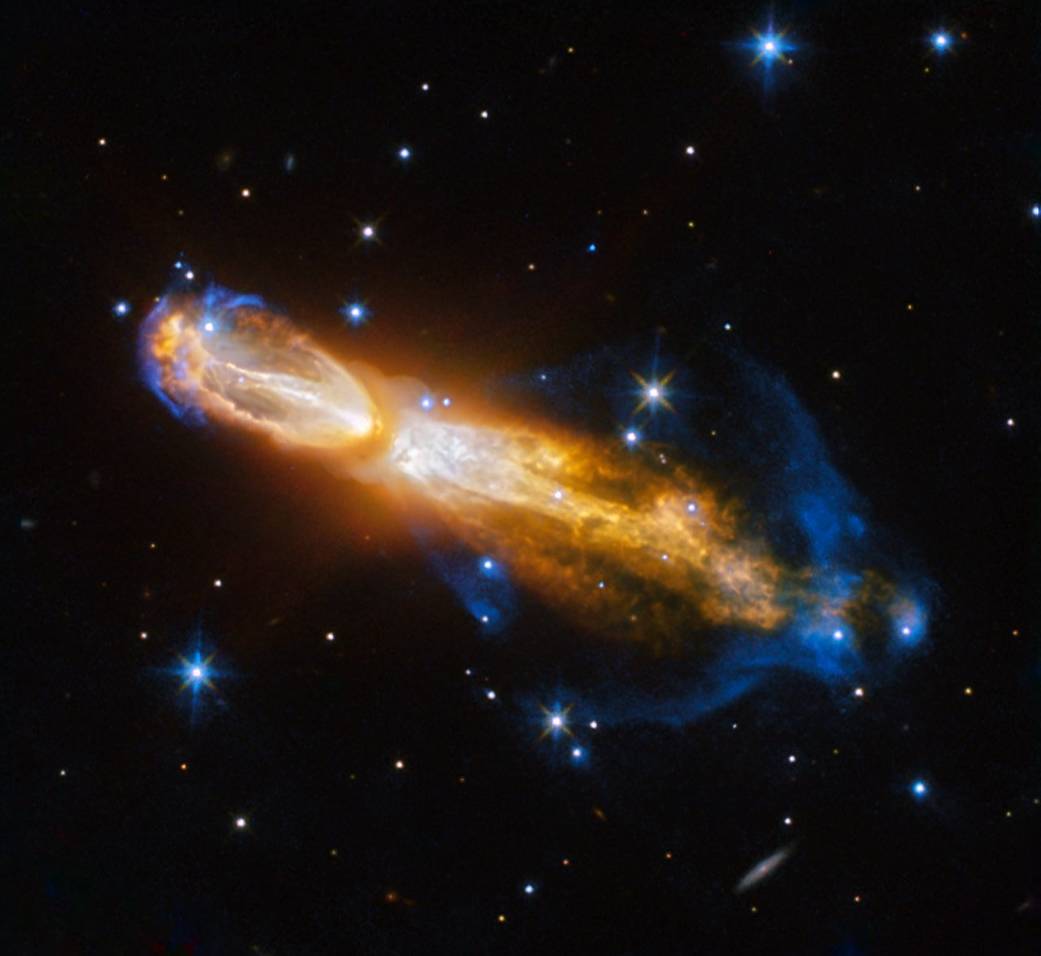
    The Calabash Nebula, pictured here — which has the technical name OH 231.8+04.2 — is a spectacular example of the death of a low-mass star like the Sun. This image taken by the NASA/ESA Hubble Space Telescope shows the star going through a rapid transformation from a red giant to a planetary nebula, during which it blows its outer layers of gas and dust out into the surrounding space. The recently ejected material is spat out in opposite directions with immense speed — the gas shown in yellow is moving close to a million kilometres an hour. Astronomers rarely capture a star in this phase of its evolution because it occurs within the blink of an eye — in astronomical terms. Over the next thousand years the nebula is expected to evolve into a fully fledged planetary nebula. The nebula is also known as the Rotten Egg Nebula because it contains a lot of sulphur, an element that, when combined with other elements, smells like a rotten egg — but luckily, it resides over 5000 light-years away in the constellation of Puppis (The Poop deck).

  • XMM-Newton sees comet 3I/ATLAS in X-ray light

    XMM-Newton sees comet 3I/ATLAS in X-ray light
    Image:
    XMM-Newton sees comet 3I/ATLAS in X-ray light

  • Stellar Jet

    Stellar Jet

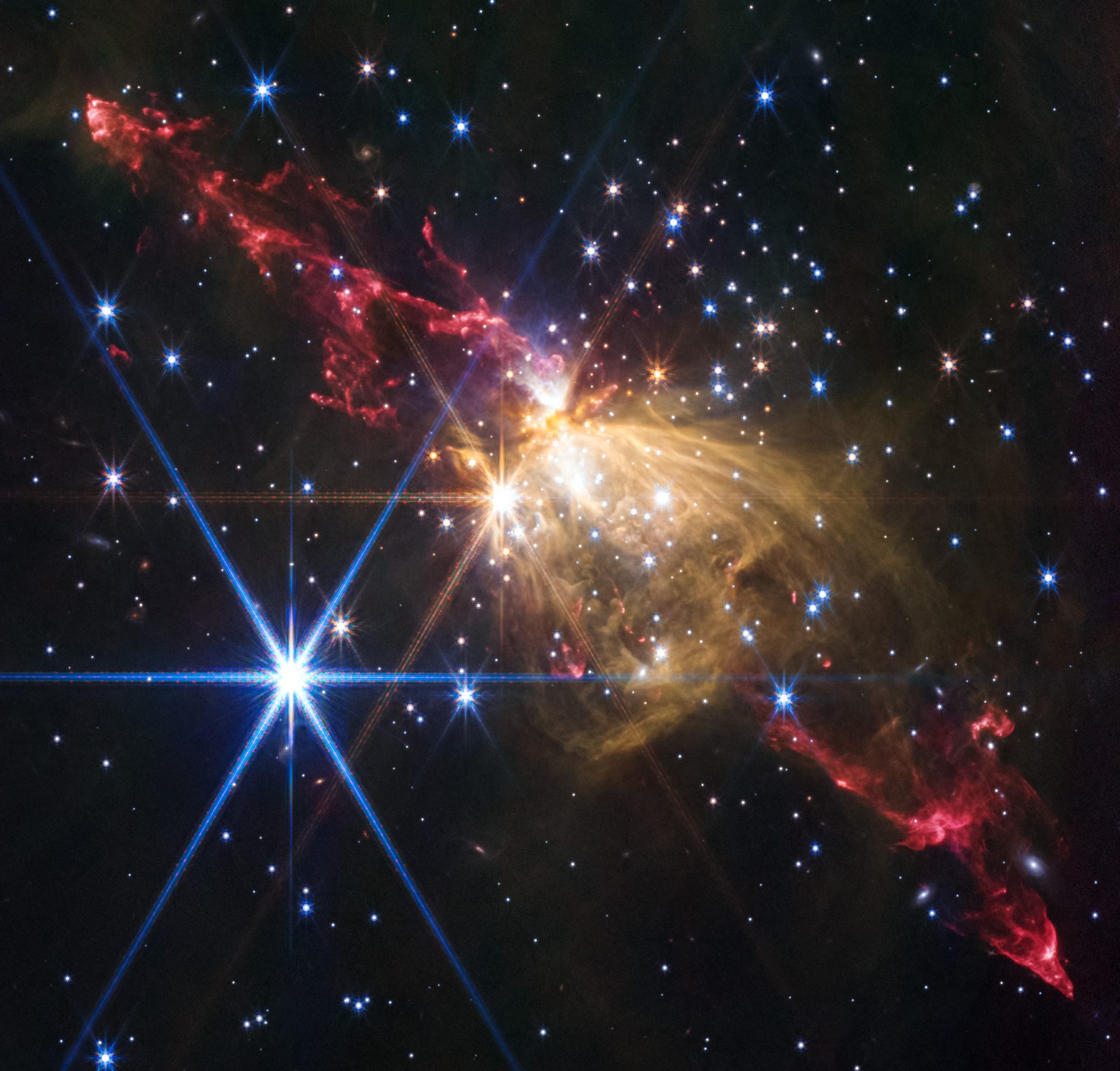
    Webb’s image of the enormous stellar jet in Sh2-284 provides evidence that protostellar jets scale with the mass of their parent stars—the more massive the stellar engine driving the plasma, the larger the resulting jet.

  • The journey of Juice – episode 2


    Video:
    00:12:24

    ESA’s Jupiter Icy Moons Explorer (Juice) is on an epic eight-year journey to Jupiter. It left Earth in April 2023 and is due to arrive at the gas giant in 2031. 

    2025 has been another big year for Juice. It made its closest approach to the Sun and flew close by Venus for a gravity boost to help it on its way. This second episode of ‘The journey of Juice’ takes us on a journey of our own, discovering what Juice – and the humans behind it – have experienced this year. 

    In a clean room at ESA’s technical centre, thermal engineer Romain Peyrou-Lauge shows us the technologies that protect Juice from the intense heat of the Sun during this period. 

    In Uppsala, Sweden, scientists get together for a ‘science working team’ meeting to discuss the scientific aspects of the mission. Juice Project Scientist Olivier Witasse talks about how important it is to continue working as a team to prepare for Juice’s precious time spent collecting data at Jupiter. 

    The video culminates with operations engineer Marc Costa taking us to the Cebreros station in Madrid for the Venus flyby. There we meet deputy station manager Jorge Fauste, Juice intern Charlotte Bergot and Juice Mission Manager Nicolas Altobelli. 

    This series follows on from ‘The making of Juice’ series, which covered the planning, testing and launch of this once-in-a-generation mission.

  • Swarm detects rare proton spike during solar storm

    High-energy protons during solar storm over the North Pole

    The European Space Agency’s Swarm mission detected a large but temporary spike of high-energy protons at Earth’s poles during a geomagnetic storm in November. It did this not with the scientific instruments for measuring Earth’s magnetic field, but with its ‘star tracker’ positioning instruments – a first for the Swarm mission.