Category: Kepler

http://www.nasa.gov/mission_pages/kepler/news/kepler-newsandfeatures-RSS.rss

  • NASA Missions Help Explain, Predict Severity of Solar Storms

    An unexpectedly strong solar storm rocked our planet on April 23, 2023, sparking auroras as far south as southern Texas in the U.S. and taking the world by surprise. 

    Two days earlier, the Sun blasted a coronal mass ejection (CME) — a cloud of energetic particles, magnetic fields, and solar material — toward Earth. Space scientists took notice, expecting it could cause disruptions to Earth’s magnetic field, known as a geomagnetic storm. But the CME wasn’t especially fast or massive, and it was preceded by a relatively weak solar flare, suggesting the storm would be minor. But it became severe.

    Using NASA heliophysics missions, new studies of this storm and others are helping scientists learn why some CMEs have more intense effects — and better predict the impacts of future solar eruptions on our lives.
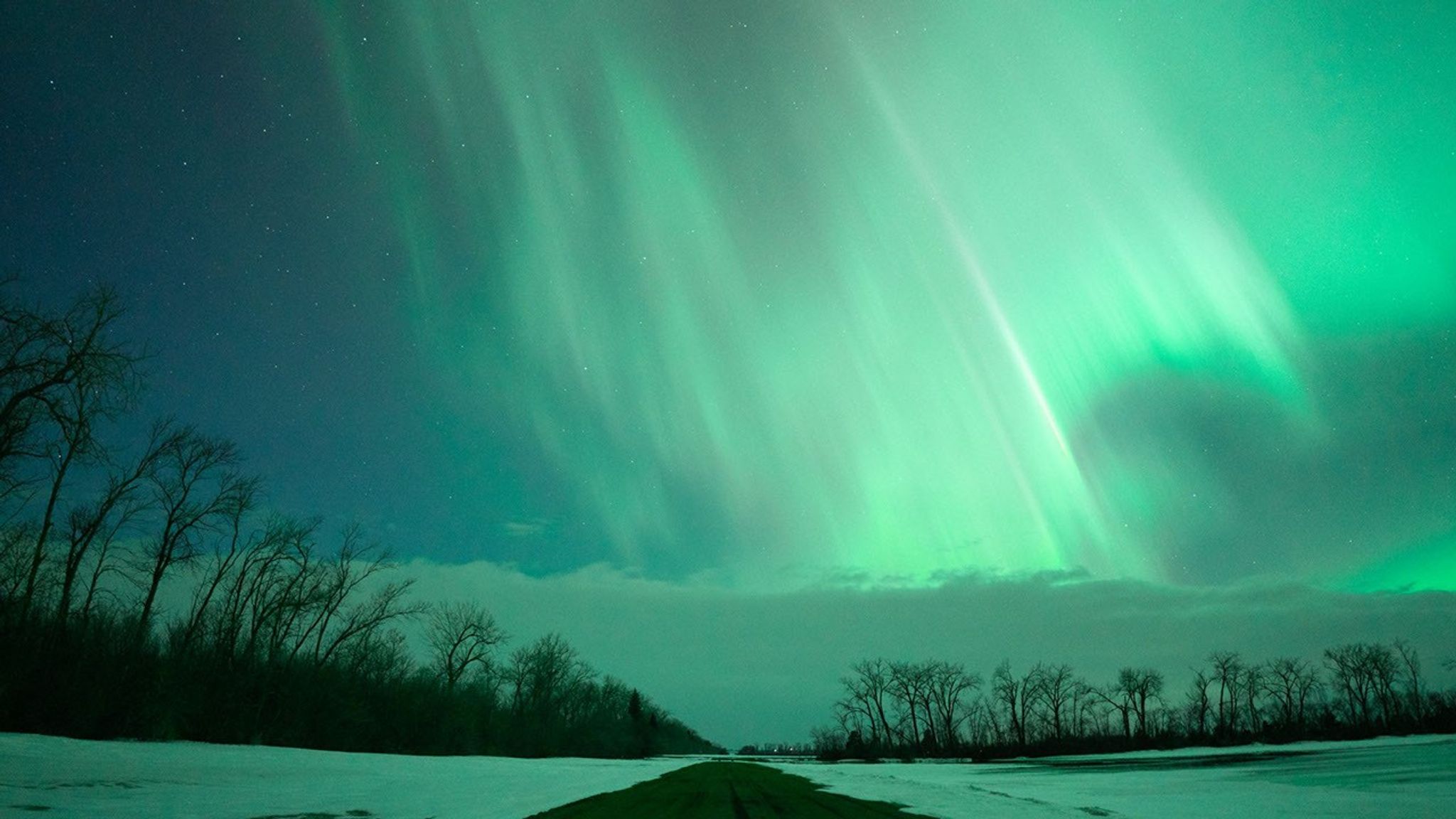
    Curtains of green aurora shimmer against a dark blue night sky above a flat, snowy landscape. A small, dark road stretches away from the photographer toward the horizon. Leafless trees stand along the left side of the road and in the distance on the right. A band of white clouds separates the horizon from the green aurora above.
    During the night of April 23 to 24, 2023, a geomagnetic storm produced auroras that were witnessed as far south as Arizona, Arkansas, and Texas in the U.S. This photo shows green aurora shimmering over Larimore, North Dakota, in the early morning of April 24.
    Copyright Elan Azriel, used with permission

    Why Was This Storm So Intense?

    paper published in the Astrophysical Journal on March 31 suggests the CME’s orientation relative to Earth likely caused the April 2023 storm to become surprisingly strong.

    The researchers gathered observations from five heliophysics spacecraft across the inner solar system to study the CME in detail as it emerged from the Sun and traveled to Earth.

    They noticed a large coronal hole near the CME’s birthplace. Coronal holes are areas where the solar wind — a stream of particles flowing from the Sun — floods outward at higher than normal speeds.

    “The fast solar wind coming from this coronal hole acted like an air current, nudging the CME away from its original straight-line path and pushing it closer to Earth’s orbital plane,” said the paper’s lead author, Evangelos Paouris of the Johns Hopkins Applied Physics Laboratory in Laurel, Maryland. “In addition to this deflection, the CME also rotated slightly.”

    Paouris says this turned the CME’s magnetic fields opposite to Earth’s magnetic field and held them there — allowing more of the Sun’s energy to pour into Earth’s environment and intensifying the storm.
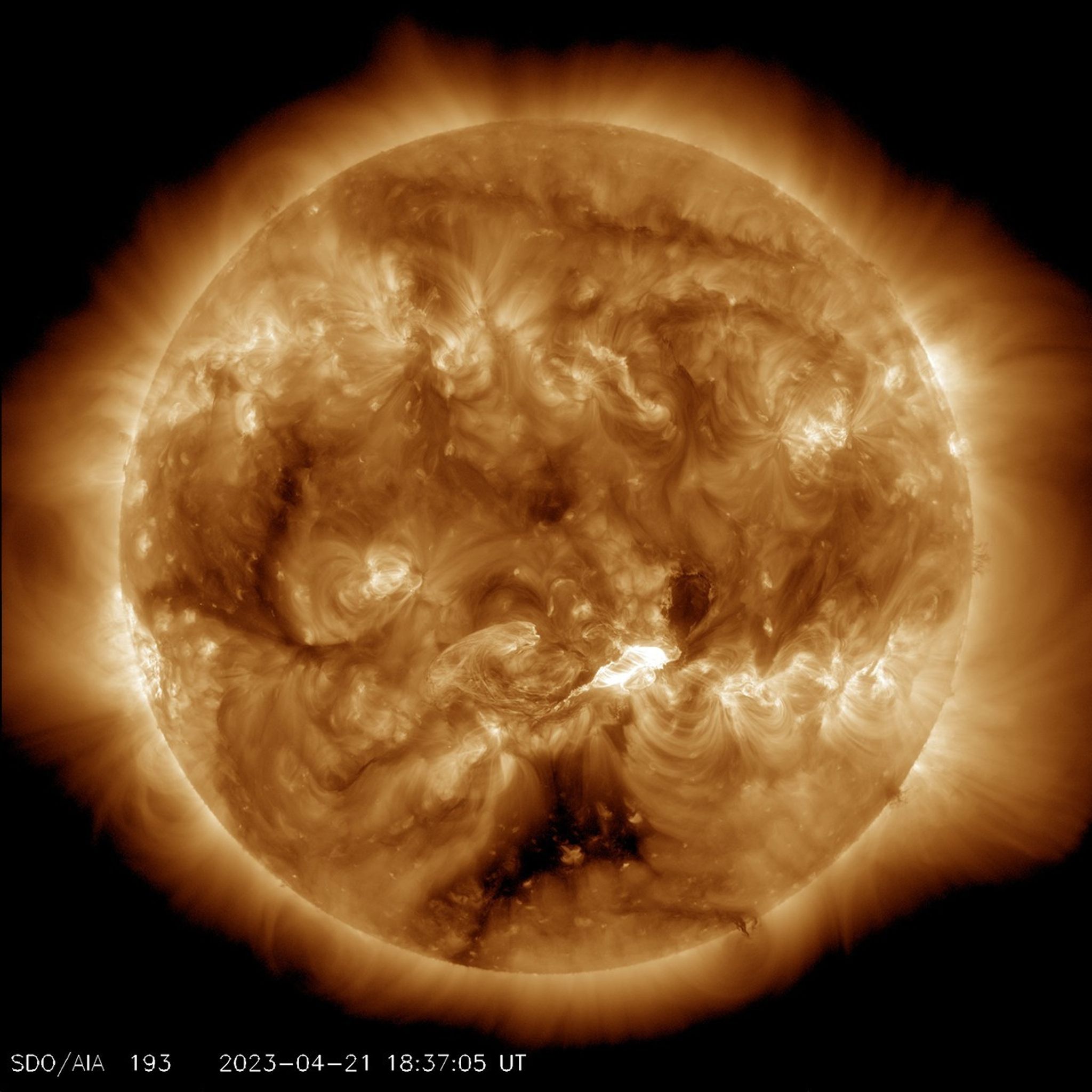
    The Sun appears in shades of gold with some brighter and darker regions, set against a black background. In the lower right part of the Sun is a bright flash of white, a solar flare.
    The strength of the April 2023 geomagnetic storm was a surprise in part because the coronal mass ejection (CME) that produced it followed a relatively weak solar flare, seen as the bright area to the lower right of center in this extreme ultraviolet image of the Sun from NASA’s Solar Dynamics Observatory. The CMEs that produce severe geomagnetic storms are typically preceded by stronger flares. However, a team of scientists think fast solar wind from a coronal hole (the dark area below the flare in this image) helped rotate the CME and made it more potent when it struck Earth.
    NASA/SDO

    Cool Thermosphere

    Meanwhile, NASA’s GOLD (Global-scale Observations of Limb and Disk) mission revealed another unexpected consequence of the April 2023 storm at Earth.

    Before, during, and after the storm, GOLD studied the temperature in the middle thermosphere, a part of Earth’s upper atmosphere about 85 to 120 miles overhead. During the storm, temperatures increased throughout GOLD’s wide field of view over the Americas. But surprisingly, after the storm, temperatures dropped about 90 to 198 degrees Fahrenheit lower than they were before the storm (from about 980 to 1,070 degrees Fahrenheit before the storm to 870 to 980 degrees Fahrenheit afterward).

    “Our measurement is the first to show widespread cooling in the middle thermosphere after a strong storm,” said Xuguang Cai of the University of Colorado, Boulder, lead author of a paper about GOLD’s observations published in the journal JGR Space Physics on April 15, 2025.

    The thermosphere’s temperature is important, because it affects how much drag Earth-orbiting satellites and space debris experience.

    “When the thermosphere cools, it contracts and becomes less dense at satellite altitudes, reducing drag,” Cai said. “This can cause satellites and space debris to stay in orbit longer than expected, increasing the risk of collisions. Understanding how geomagnetic storms and solar activity affect Earth’s upper atmosphere helps protect technologies we all rely on — like GPS, satellites, and radio communications.”
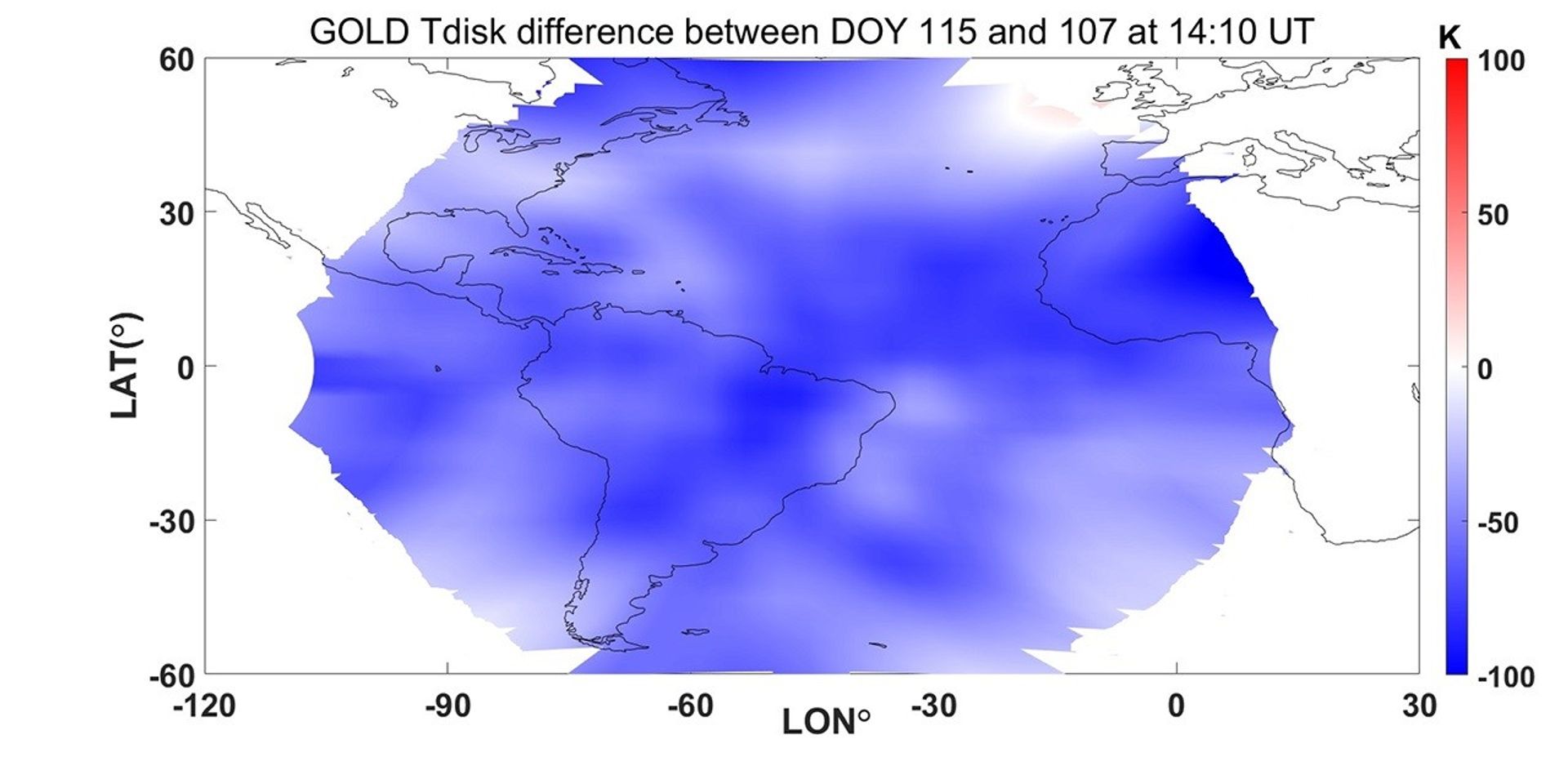
    A rectangular map shows most of the western hemisphere of Earth, with the continents of North America and South America outlined on the left and the continents of Europe and Africa outlined on the right. Overlaid on the center of the map, covering much of the Atlantic Ocean and parts of the continents, is a blue oval with darker and lighter patches. On the right is a scale bar representing temperatures from -100 Kelvin at the bottom mapped to dark blue, -50 Kelvin to lighter blue, 0 Kelvin to white, 50 Kelvin to light red, and 100 Kelvin to dark red.
    Before, during, and after the severe geomagnetic storm in April 2023, NASA’s GOLD (Global-scale Observations of Limb and Disk) spacecraft measured the temperature in Earth’s middle thermosphere across a wide area, something other spacecraft cannot do. This map shows the difference in temperature between April 17 (DOY 107) and April 25 (DOY 115), with red indicating warmer temperatures and blue showing cooler. It reveals that the middle thermosphere was cooler on April 25, the day after the geomagnetic storm ended, than it was on April 17, before the storm began.
    Xuguang Cai (University of Colorado, Boulder)

    Predicting When Storms Strike

    To predict when a CME will trigger a geomagnetic storm, or be “geoeffective,” some scientists are combining observations with machine learning. A paper published last November in the journal Solar Physics describes one such approach called GeoCME.

    Machine learning is a type of artificial intelligence in which a computer algorithm learns from data to identify patterns, then uses those patterns to make decisions or predictions.

    Scientists trained GeoCME by giving it images from the NASA/ESA (European Space Agency) SOHO (Solar and Heliospheric Observatory) spacecraft of different CMEs that reached Earth along with SOHO images of the Sun before, during, and after each CME. They then told the model whether each CME produced a geomagnetic storm.

    Then, when it was given images from three different science instruments on SOHO, the model’s predictions were highly accurate. Out of 21 geoeffective CMEs, the model correctly predicted all 21 of them; of 7 non-geoeffective ones, it correctly predicted 5 of them.

    “The algorithm shows promise,” said heliophysicist Jack Ireland of NASA’s Goddard Space Flight Center in Greenbelt, Maryland, who was not involved in the study. “Understanding if a CME will be geoeffective or not can help us protect infrastructure in space and technological systems on Earth. This paper shows machine learning approaches to predicting geoeffective CMEs are feasible.”
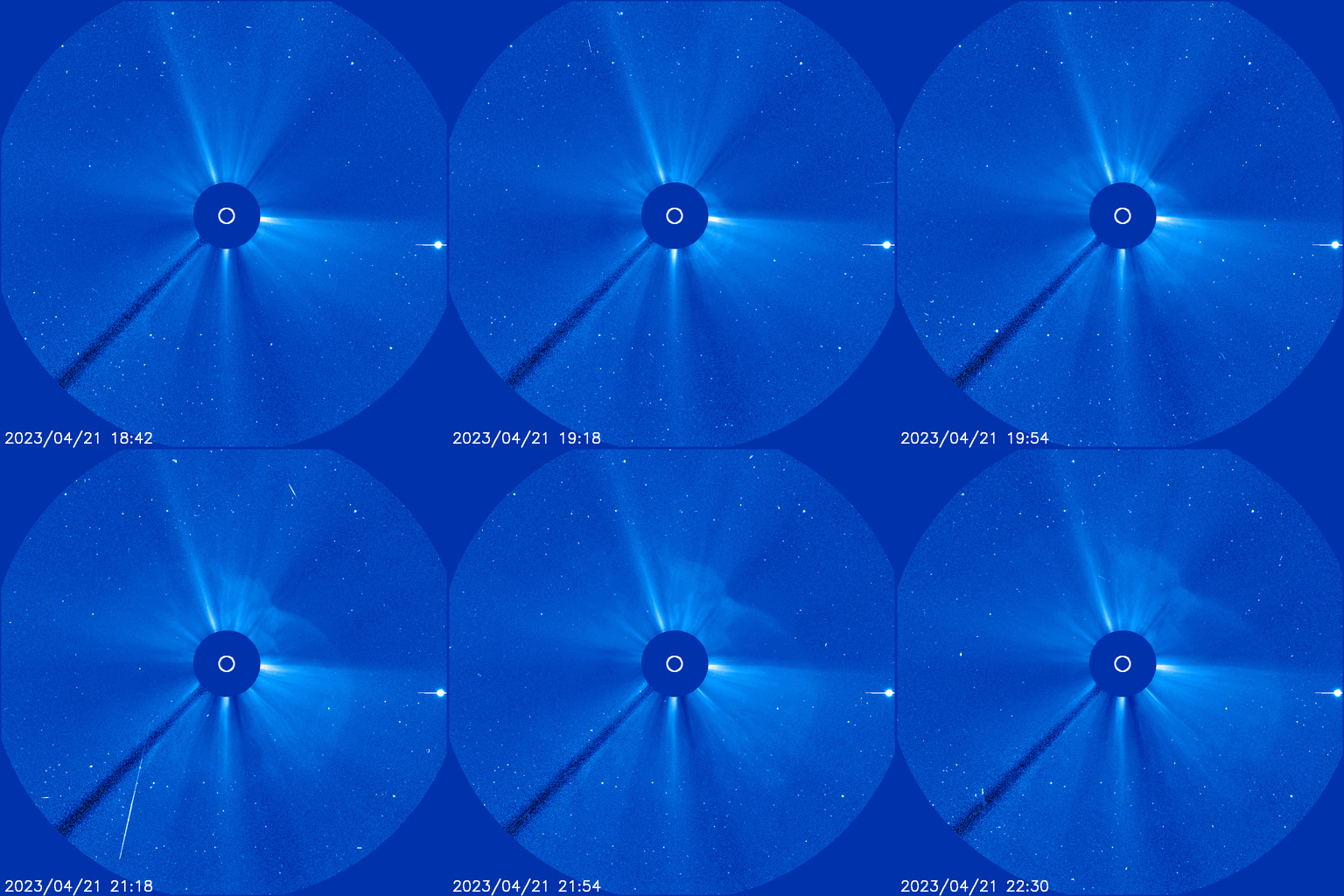
    A circular, blue-colored view shows stars around the Sun, which is covered by a dark blue disk at the center. A small white circle in the center of the disk shows the size of the Sun. Streams of material extend away from the disk, and then a white halo of material erupts and moves away from the disk in all directions. A bright dot appears on the right.
    The white cloud expanding outward in this image sequence is a coronal mass ejection (CME) that erupted from the Sun on April 21, 2023. Two days later, the CME struck Earth and produced a surprisingly strong geomagnetic storm. The images in this sequence are from a coronagraph on the NASA/ESA (European Space Agency) SOHO (Solar and Heliospheric Observatory) spacecraft. The coronagraph uses a disk to cover the Sun and reveal fainter details around it. The Sun’s location and size are indicated by a small white circle. The planet Jupiter appears as a bright dot on the far right.
    NASA/ESA/SOHO

    Earlier Warnings

    During a severe geomagnetic storm in May 2024 — the strongest to rattle Earth in over 20 years — NASA’s STEREO (Solar Terrestrial Relations Observatory) measured the magnetic field structure of CMEs as they passed by.

    When a CME headed for Earth hits a spacecraft first, that spacecraft can often measure the CME and its magnetic field directly, helping scientists determine how strong the geomagnetic storm will be at Earth. Typically, the first spacecraft to get hit are one million miles from Earth toward the Sun at a place called Lagrange Point 1 (L1), giving us only 10 to 60 minutes advanced warning.

    By chance, during the May 2024 storm, when several CMEs erupted from the Sun and merged on their way to Earth, NASA’s STEREO-A spacecraft happened to be between us and the Sun, about 4 million miles closer to the Sun than L1.

    paper published March 17, 2025, in the journal Space Weather reports that if STEREO-A had served as a CME sentinel, it could have provided an accurate prediction of the resulting storm’s strength 2 hours and 34 minutes earlier than a spacecraft could at L1.

    According to the paper’s lead author, Eva Weiler of the Austrian Space Weather Office in Graz, “No other Earth-directed superstorm has ever been observed by a spacecraft positioned closer to the Sun than L1.”
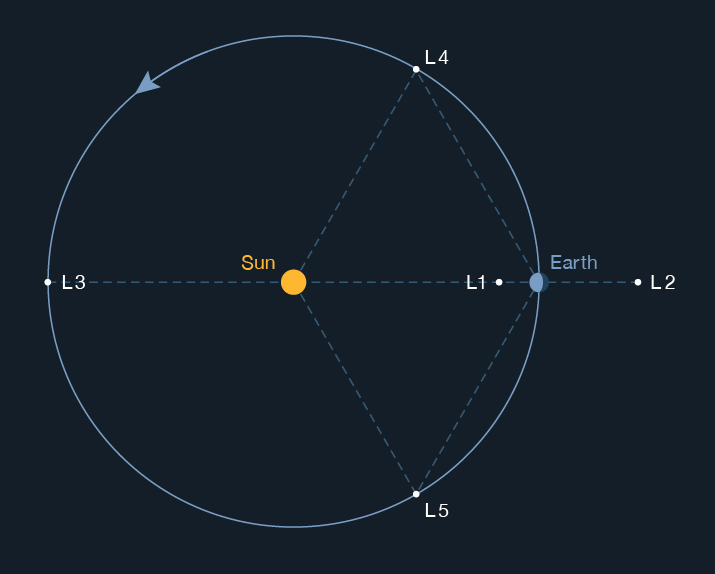
    A graphic shows the Sun at the center with Earth's orbit drawn as a blue circle around it. Earth appears along the orbit to the right of the Sun, at the 3 o'clock position on the circle. L1 is marked as a white dot to the left of Earth along a horizontal dashed line that extends from the left side of the circle through the Sun and beyond Earth and the right side of the circle. L2 is marked as a white dot to the right of Earth at the right end of the dashed line. L3 is marked with a white dot on the left side of the circle, to the left of the Sun, at the left end of the dashed line. L4 is marked with a white dot near the top of the circle, at about the 1 o'clock position. L5 is marked with a white dot along the lower right part of the circle, near the 5 o'clock position.
    Earth’s Lagrange points are places in space where the gravitational pull between the Sun and Earth balance, making them relatively stable locations to put spacecraft.
    NASA

    By Vanessa Thomas
    NASA’s Goddard Space Flight Center, Greenbelt, Md.

  • Pódcast en español de la NASA estrena su tercera temporada

    Credit: NASA/Krystofer Kim

    Read this release in English here.

    La NASA estrenó el martes el primer episodio de la tercera temporada de Universo curioso de la NASA, el único pódcast en español de la agencia.

    Los episodios se centran en algunas de las principales misiones y temas de investigación de la NASA para 2025, llevando la maravilla de la exploración, la tecnología espacial y los descubrimientos científicos al público de habla hispana de todo el mundo.

    “La ciencia de la NASA está literalmente en todas partes, y trasciende la geografía y los idiomas para ofrecer beneficios, en tiempo real, en la vida cotidiana de las personas de todo el mundo que utilizan nuestras innovaciones, datos y descubrimientos científicos alcanzados desde el punto de vista único del espacio”, dijo la doctora Nicky Fox, administradora asociada de la Dirección de Misiones Científicas, en la sede central de la NASA en Washington. “El pódcast Universo curioso de la NASA comparte los descubrimientos de la NASA con las comunidades de habla hispana de todo el mundo, inspirando a futuros exploradores a unirse a nuestro viaje mientras regresamos a la Luna y nos aventuramos hacia Marte en beneficio de toda la humanidad”.

    Todos los meses se presentarán nuevos episodios hasta el final del año. El primer episodio, centrado en los objetivos científicos de la misión a la Luna Artemis II de la NASA, está disponible en:

    https://go.nasa.gov/4l9lmbN

    Universo curioso es presentado por Noelia González, especialista en comunicaciones en el Centro de Vuelo Espacial Goddard de la NASA en Greenbelt, Maryland. Esta temporada tendrá al coanfitrión Andrés Almeida, escritor técnico y anfitrión del pódcast de la NASA Small Steps, Giant Leaps (Pasos pequeños, grandes saltos) en la sede central de la NASA. A lo largo de la temporada, los oyentes celebrarán el legado del telescopio espacial Hubble de la NASA, aprenderán sobre una próxima misión al Sol y explorarán la energía oscura y cómo la estudiará el futuro telescopio espacial Roman, entre otros temas.

    Universo curioso de la NASA es una iniciativa conjunta de los programas de comunicaciones en español y audio de la agencia. La nueva temporada, así como los episodios anteriores, están disponibles en Apple Podcasts, Spotify, SoundCloud y el sitio web de la NASA.

    Escucha el pódcast y descarga materiales de arte relacionados en el sitio web:

    https://ciencia.nasa.gov/universocurioso

    Details

    Last Updated

    Jul 01, 2025

    Editor
    Jessica Taveau

    Related Terms

  • NASA’s Spanish-language Podcast Debuts Third Season

    Podcast cover illustration for “Universo curioso de la NASA.” The colorful image shows a cosmic landscape with various celestial bodies: a bright yellow Sun, Earth in vibrant blue, green, fuchsia and orange colors; a large red and orange planet representing Mars, a black hole with an accretion disk, and the Moon in purple tones. The title 'Universo curioso' appears in the center with a gradient effect in various colors, and 'DE LA NASA' in smaller dark coral letters. The background is black and dark violet, dotted with small yellow stars and waves that create a vibrant space atmosphere.
    Credit: NASA/Krystofer Kim

    Lee esta nota en español aquí.

    NASA released the first episode Tuesday of its third season of Universo curioso de la NASA, the agency’s only Spanish-language podcast.

    Episodes focus on some of NASA’s top missions and research topics for 2025, bringing the wonder of exploration, space technology, and scientific discoveries to Spanish-speaking audiences around the world. 

    “NASA Science is literally everywhere, transcending geography and language to provide real time benefits to everyday lives across the globe using our scientific innovations, data, and discoveries from the unique vantage point of space,” said Dr. Nicky Fox, associate administrator, Science Mission Directorate, at NASA Headquarters in Washington. “The Universo curioso de la NASA podcast shares NASA’s discoveries with Spanish-speaking communities across the globe, inspiring future explorers to join our journey as we return to the Moon and venture onward to Mars for the benefit of all humanity.”

    New episodes will post every month through the end of the year. The first episode, centered on the science objectives of NASA’s Artemis II mission to the Moon, is available at:

    https://go.nasa.gov/4l9lmbN

    Universo curioso is hosted by Noelia González, communications specialist at NASA’s Goddard Space Flight Center in Greenbelt, Maryland. This season introduces co-host Andrés Almeida, technical writer and host of NASA’s Small Steps, Giant Leaps podcast at NASA’s Headquarters. Throughout the season, listeners will celebrate the legacy of NASA’s Hubble Space Telescope, learn about an upcoming mission to the Sun, and explore dark energy and how the future Roman Space Telescope will study it, among other topics.

    Universo curioso de la NASA is a joint initiative of the agency’s Spanish-language communications and audio programs. The new season, as well as previous episodes, are available on Apple Podcasts, Spotify, SoundCloud and NASA’s website.

    Listen to the podcast and download related art materials at:

    https://ciencia.nasa.gov/universocurioso

    Details

    Last Updated

    Jul 01, 2025

    Editor
    Jessica Taveau

    Related Terms

  • NASA Assigns Astronaut Anil Menon to First Space Station Mission

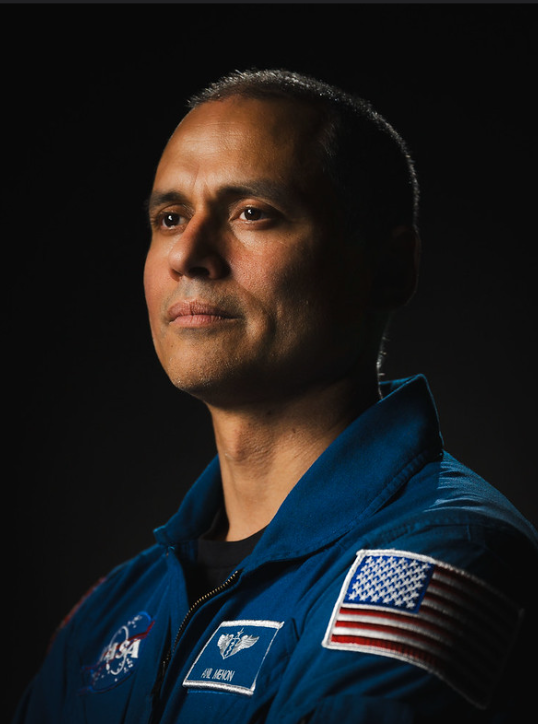
    NASA astronaut Anil Menon poses for a portrait at NASA’s Johnson Space Center in Houston.
    Credit: NASA/Josh Valcarcel

    NASA astronaut Anil Menon will embark on his first mission to the International Space Station, serving as a flight engineer and Expedition 75 crew member.

    Menon will launch aboard the Roscosmos Soyuz MS-29 spacecraft in June 2026, accompanied by Roscosmos cosmonauts Pyotr Dubrov and Anna Kikina. After launching from the Baikonur Cosmodrome in Kazakhstan, the trio will spend approximately eight months aboard the orbiting laboratory.

    During his expedition, Menon will conduct scientific investigations and technology demonstrations to help prepare humans for future space missions and benefit humanity.

    Selected as a NASA astronaut in 2021, Menon graduated with the 23rd astronaut class in 2024. After completing initial astronaut candidate training, he began preparing for his first space station flight assignment.

    Menon was born and raised in Minneapolis and is an emergency medicine physician, mechanical engineer, and colonel in the United States Space Force. He holds a bachelor’s degree in neurobiology from Harvard University in Cambridge, Massachusetts, a master’s degree in mechanical engineering, and a medical degree from Stanford University in California. Menon completed his emergency medicine and aerospace medicine residency at Stanford and the University of Texas Medical Branch in Galveston.

    In his spare time, he still practices emergency medicine at Memorial Hermann’s Texas Medical Center and teaches residents at the University of Texas’ residency program. Menon served as SpaceX’s first flight surgeon, helping to launch the first crewed Dragon spacecraft on NASA’s SpaceX Demo-2 mission and building SpaceX’s medical organization to support humans on future missions. He served as a crew flight surgeon for both SpaceX flights and NASA expeditions aboard the space station.

    For nearly 25 years, people have lived and worked continuously aboard the International Space Station, advancing scientific knowledge and conducting critical research for the benefit of humanity and our home planet. Space station research supports the future of human spaceflight as NASA looks toward deep space missions to the Moon under the Artemis campaign and in preparation for future human missions to Mars, as well as expanding commercial opportunities in low Earth orbit and beyond. 

    Learn more about International Space Station at:

    https://www.nasa.gov/station

    -end-

    Joshua Finch / Jimi Russell
    Headquarters, Washington
    202-358-1100
    joshua.a.finch@nasa.gov / james.j.russell@nasa.gov

    Shaneequa Vereen
    Johnson Space Center, Houston
    281-483-5111
    shaneequa.y.vereen@nasa.gov   

  • NASA, SpaceX Invite Media to Watch Crew-11 Launch to Space Station

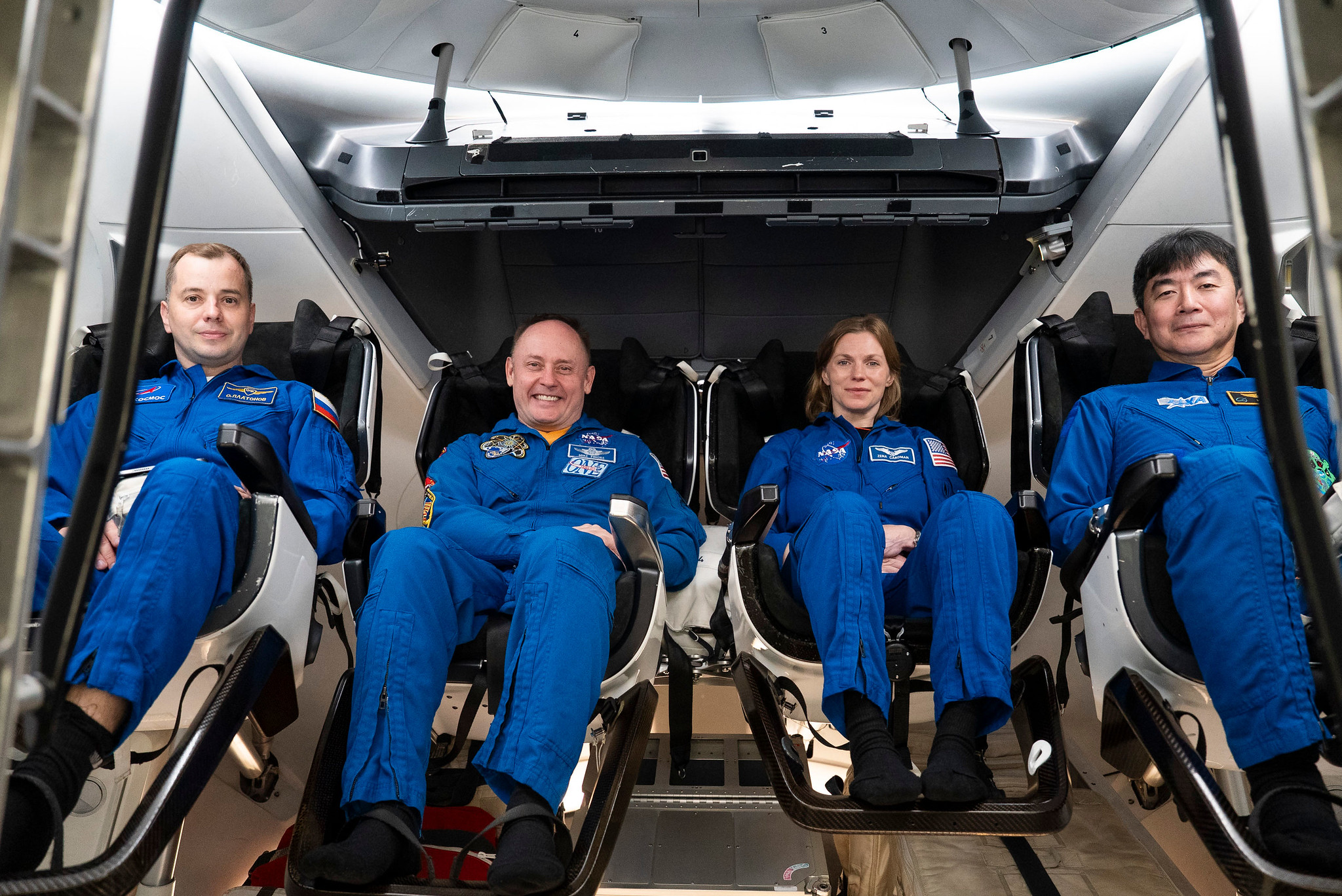
    The four crew members of NASA’s SpaceX Crew-11 mission to the International Space Station train inside a SpaceX Dragon spacecraft in Hawthorne, California. From left to right: Roscosmos cosmonaut Oleg Platonov, NASA astronauts Mike Fincke and Zena Cardman, and JAXA astronaut Kimiya Yui.
    Credit: SpaceX

    Media accreditation is open for the launch of NASA’s 11th rotational mission of a SpaceX Falcon 9 rocket and Dragon spacecraft carrying astronauts to the International Space Station for a science expedition. NASA’s SpaceX Crew-11 mission is targeted to launch in the late July/early August timeframe from Launch Complex 39A at the agency’s Kennedy Space Center in Florida.

    The mission includes NASA astronauts Zena Cardman, serving as commander; Mike Fincke, pilot; JAXA (Japan Aerospace Exploration Agency) astronaut Kimiya Yui, mission specialist; and Roscosmos cosmonaut Oleg Platonov, mission specialist. This is the first spaceflight for Cardman and Platonov, the fourth trip for Fincke, and the second for Yui, to the orbiting laboratory.

    Media accreditation deadlines for the Crew-11 launch as part of NASA’s Commercial Crew Program are as follows:

    • International media without U.S. citizenship must apply by 11:59 p.m. EDT on Sunday, July 6.
    • U.S. media and U.S. citizens representing international media organizations must apply by 11:59 p.m. on Monday, July 14.

    All accreditation requests must be submitted online at:

    https://media.ksc.nasa.gov

    NASA’s media accreditation policy is online. For questions about accreditation or special logistical requests, email: ksc-media-accreditat@mail.nasa.gov. Requests for space for satellite trucks, tents, or electrical connections are due by Monday, July 14.

    For other questions, please contact NASA Kennedy’s newsroom at: 321-867-2468.

    Para obtener información sobre cobertura en español en el Centro Espacial Kennedy o si desea solicitar entrevistas en español, comuníquese con Antonia Jaramillo: 321-501-8425, o Messod Bendayan: 256-930-1371.

    For launch coverage and more information about the mission, visit:

    https://www.nasa.gov/commercialcrew

    -end-

    Joshua Finch / Claire O’Shea
    Headquarters, Washington
    202-358-1100
    joshua.a.finch@nasa.gov / claire.a.o’shea@nasa.gov

    Steve Siceloff / Stephanie Plucinsky
    Kennedy Space Center, Florida
    321-867-2468
    steven.p.siceloff@nasa.gov / stephanie.n.plucinsky@nasa.gov

    Joseph Zakrzewski
    Johnson Space Center, Houston
    281-483-5111
    joseph.a.zakrzewski@nasa.gov

  • NASA Hosts ISRO Officials at Johnson, Kennedy

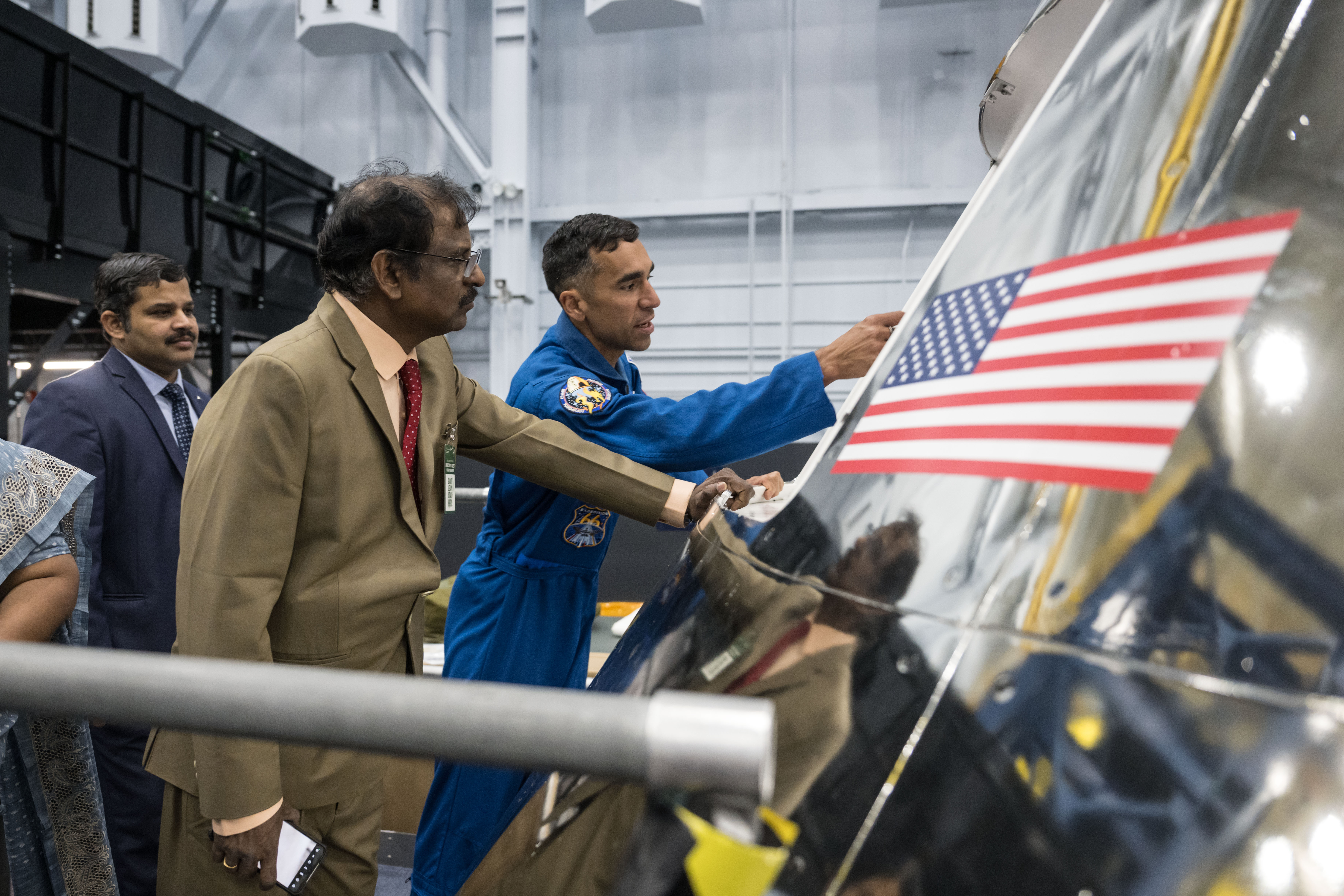
    NASA astronaut Raja Chari and Dr. V. Narayanan, chairman of ISRO (Indian Space Research Organisation), interact outside the Orion spacecraft mockup at NASA’s Johnson Space Center in Houston.
    NASA

    NASA astronaut Raja Chari and Dr. V. Narayanan, chairman of ISRO (Indian Space Research Organisation), interact outside the Orion spacecraft mockup at NASA’s Johnson Space Center in Houston. Narayanan and Indian officials visited NASA Johnson and NASA’s Kennedy Space Center in Florida, ahead of the Axiom Mission 4 launch to the International Space Station.

    As part of a collaboration between NASA and ISRO, Axiom Mission 4 delivers on a commitment highlighted by President Trump and Indian Prime Minister Narendra Modi to send the first ISRO astronaut to the station. The space agencies are participating in five joint science investigations and two in-orbit science, technology, engineering, and mathematics demonstrations. NASA and ISRO have a long-standing relationship built on a shared vision to advance scientific knowledge and expand space collaboration.

  • NASA+ is Coming to Netflix This Summer

    Artist’s concept.
    Credit: NASA

    NASA announced Monday its latest plans to team up with a streaming service to bring space a little closer to home. Starting this summer, NASA+ live programming will be available on Netflix.

    Audiences now will have another option to stream rocket launches, astronaut spacewalks, mission coverage, and breathtaking live views of Earth from the International Space Station.

    “The National Aeronautics and Space Act of 1958 calls on us to share our story of space exploration with the broadest possible audience,” said Rebecca Sirmons, general manager of NASA+ at the agency’s headquarters in Washington. “Together, we’re committed to a Golden Age of Innovation and Exploration – inspiring new generations – right from the comfort of their couch or in the palm of their hand from their phone.”

    Through this partnership, NASA’s work in science and exploration will become even more accessible, allowing the agency to increase engagement with and inspire a global audience in a modern media landscape, where Netflix reaches a global audience of more than 700 million people.

    The agency’s broader efforts include connecting with as many people as possible through video, audio, social media, and live events. The goal is simple: to bring the excitement of the agency’s discoveries, inventions, and space exploration to people, wherever they are.

    NASA+ remains available for free, with no ads, through the NASA app and on the agency’s website.

    Additional programming details and schedules will be announced ahead of launch.

    For more about NASA’s missions, visit:

    https://www.nasa.gov

    -end-

    Cheryl Warner
    Headquarters, Washington
    202-358-1600
    cheryl.m.warner@nasa.gov

    Details

    Last Updated

    Jun 30, 2025

    Related Terms

  • Hubble Captures an Active Galactic Center

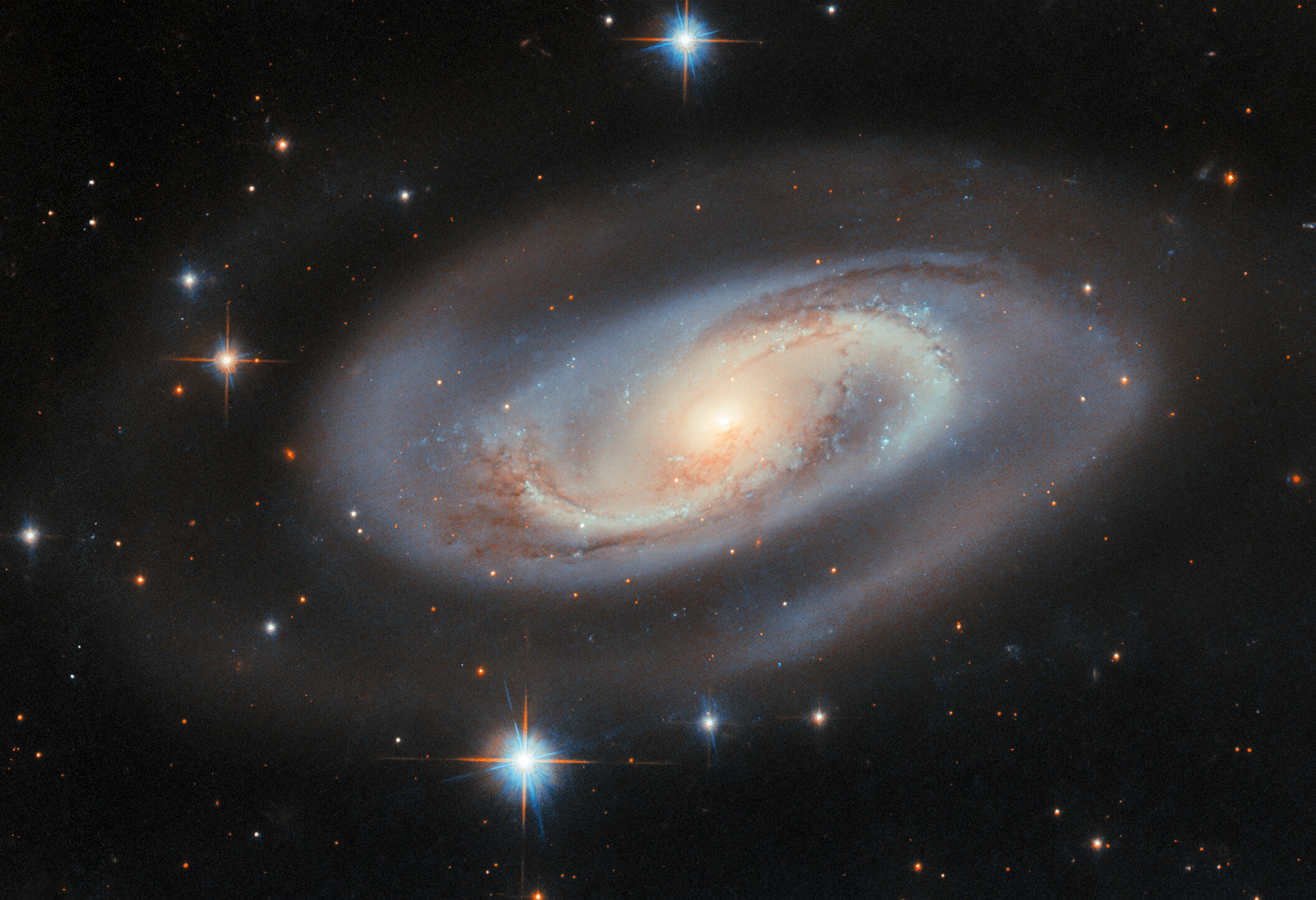
    A spiral galaxy, seen at an angle that gives it an oval shape. It has two spiral arms that curl out from the center. They start narrow but broaden out as they wrap around the galaxy before merging into a faint halo. The galaxy’s disk is golden in the center with a bright core, and pale blue outside that. A swirl of dark dust strands and speckled blue star-forming regions follow the arms through the disk.
    ESA/Hubble & NASA, M. J. Koss, A. J. Barth

    The light that the NASA/ESA Hubble Space Telescope collected to create this image reached the telescope after a journey of 250 million years. Its source was the spiral galaxy UGC 11397, which resides in the constellation Lyra (The Lyre). At first glance, UGC 11397 appears to be an average spiral galaxy: it sports two graceful spiral arms that are illuminated by stars and defined by dark, clumpy clouds of dust.

    What sets UGC 11397 apart from a typical spiral lies at its center, where a supermassive black hole containing 174 million times the mass of our Sun grows. As a black hole ensnares gas, dust, and even entire stars from its vicinity, this doomed matter heats up and puts on a fantastic cosmic light show.

    Material trapped by the black hole emits light from gamma rays to radio waves, and can brighten and fade without warning. But in some galaxies, including UGC 11397, thick clouds of dust hide much of this energetic activity from view in optical light. Despite this, UGC 11397’s actively growing black hole was revealed through its bright X-ray emission — high-energy light that can pierce the surrounding dust. This led astronomers to classify it as a Type 2 Seyfert galaxy, a category used for active galaxies whose central regions are hidden from view in visible light by a donut-shaped cloud of dust and gas.

    Using Hubble, researchers will study hundreds of galaxies that, like UGC 11397, harbor a supermassive black hole that is gaining mass. The Hubble observations will help researchers weigh nearby supermassive black holes, understand how black holes grew early in the universe’s history, and even study how stars form in the extreme environment found at the very center of a galaxy.

    Text credit: ESA

    Image credit: ESA/Hubble & NASA, M. J. Koss, A. J. Barth

  • Going the Distance: Lisa Pace Leads Exploration Development Integration at Johnson

    Lisa Pace knows a marathon when she sees one. An avid runner, she has participated in five marathons and more than 50 half marathons. Though she prefers to move quickly, she also knows the value of taking her time. “I solve most of my problems while running – or realize those problems aren’t worth worrying about,” she said.

    She has learned to take a similar approach to her work at NASA’s Johnson Space Center in Houston. “Earlier in my career, I raced to get things done and felt the need to do as much as possible on my own,” she said. “Over time, I’ve learned to trust my team and pause to give others an opportunity to contribute. There are times when quick action is needed, but it is often a marathon, not a sprint.”

    A woman with short, curly blonde hair, wearing a dark gray blazer and a beige blouse, sits in front of a NASA and an American flag.
    Official portrait of Lisa Pace.
    NASA/Josh Valcarcel

    Pace is chief of the Exploration Development Integration Division within the Exploration Architecture, Integration, and Science Directorate at Johnson. In that role, she leads a team of roughly 120 civil servants and contractors in providing mission-level system engineering and integration services that bring different architecture elements together to achieve the agency’s goals. Today that team supports Artemis missions, NASA’s Commercial Lunar Payload Services initiative and other areas as needed.

    Fourteen people of different ages and races sit around a conference table, with another 20 individuals seated in chairs to either side of the table, while they participate in a team meeting.
    Lisa Pace, seated at the head of the table, leads an Exploration Development Integration Division team meeting at NASA’s Johnson Space Center in Houston.
    NASA/James Blair

    “The Artemis missions come together through multiple programs and projects,” Pace explained. “We stitch them together to ensure the end-to-end mission meets its intended requirements. That includes verifying those requirements before flight and ensuring agreements between programs are honored and conflicts resolved.” The division also manages mission-level review and flight readiness processes from planning through execution, up to the final certification of flight readiness.

    Leading the division through the planning, launch, and landing of Artemis I was a career highlight for Pace, though she feels fortunate to have worked on many great projects during her time with NASA. “My coolest and most rewarding project involved designing and deploying an orbital debris tracking telescope on Ascension Island about 10 years ago,” she said. “The engineers, scientists, and military personnel I got to work and travel with on that beautiful island is tough to top!”  

    Pace says luck and great timing led her to NASA. Engineering jobs were plentiful when she graduated from Virginia Tech in 2000, and she quickly received an offer from Lockheed Martin to become a facility engineer in Johnson’s Astromaterials Research and Exploration Science Division, or ARES. “I thought working in the building where they keep the Moon rocks would be cool – and it was! Twenty-five years later, I’m still here,” Pace said.

    During that time, she has learned a lot about problem-solving and team building. “I often find that when we disagree over the ‘right’ way to do something, there is no one right answer – it just depends on your perspective,” she said. “I take the time to listen to people, understand their side, and build relationships to find common ground.”

    Two women in professional attire sit at a conference room table, decorating a holiday gingerbread house.
    Lisa Pace, right, participates in a holiday competition hosted by her division.
    Image courtesy of Lisa Pace

    She also emphasizes the importance of getting to know your colleagues. “Relationships are everything,” she said. “They make the work so much more meaningful. I carry that lesson over to my personal life and value my time with family and friends outside of work.”

    Investing time in relationships has given Pace another unexpected skill – that of matchmaker. “I’m responsible for setting up five couples who are now married, and have six kids between them,” she said, adding that she knew one couple from Johnson.

    She hopes that strong relationships transfer to the Artemis Generation. “I hope to pass on a strong NASA brand and the family culture that I’ve been fortunate to have, working here for the last 25 years.”

  • NASA Welcomes Axiom Mission 4 to the International Space Station

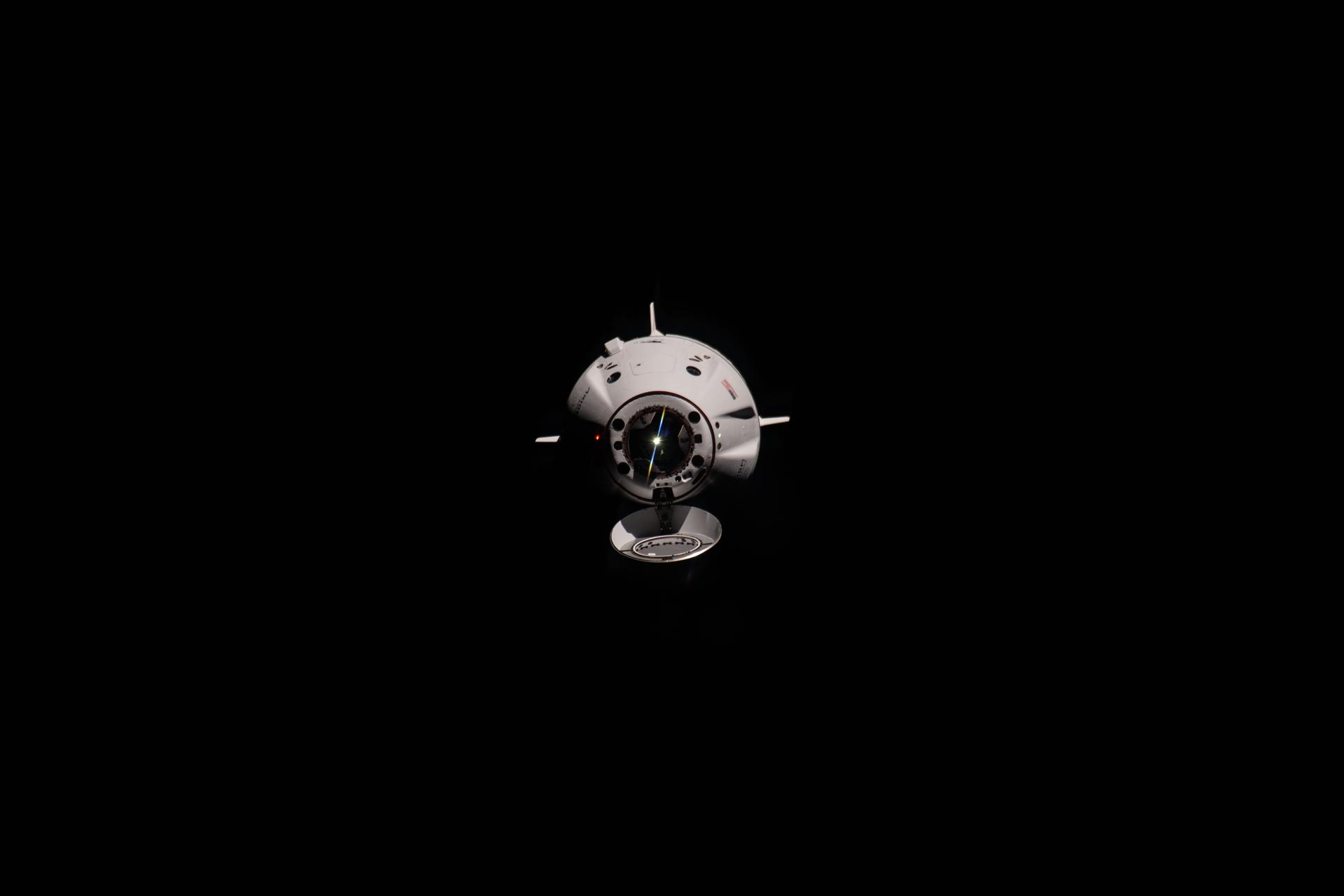
    SpaceX Dragon spacecraft carrying the Axiom Mission 4 (Ax-4) crew from Axiom Space approaches the International Space Station
    NASA/Nichole Ayers

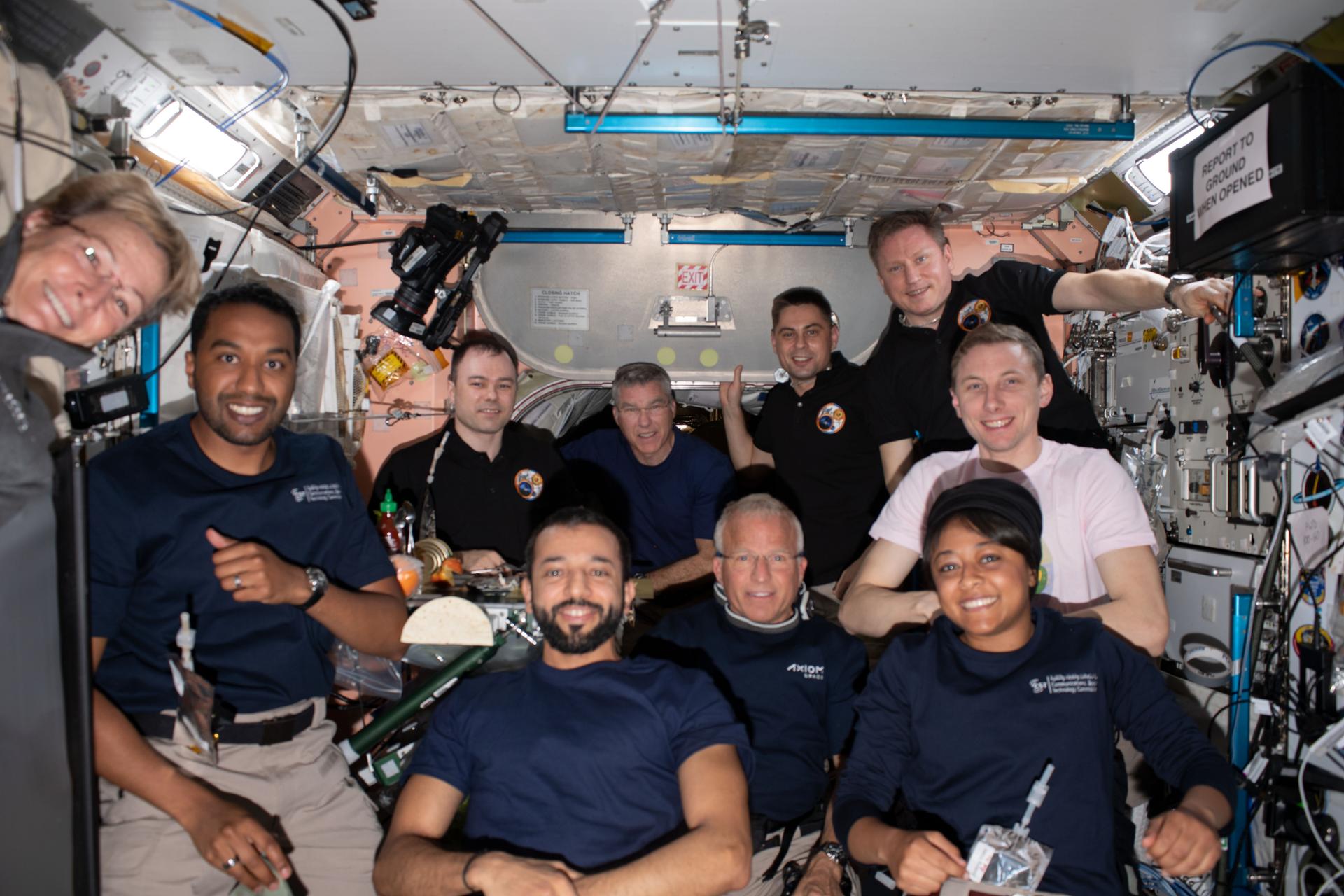
    A SpaceX Dragon spacecraft carrying the Axiom Mission 4 crew docks to the space-facing port of the International Space Station’s Harmony module on June 26. Axiom Mission 4 is the fourth all-private astronaut mission to the orbiting laboratory, welcoming commander Peggy Whitson, former NASA astronaut and director of human spaceflight at Axiom Space, ISRO (Indian Space Research Organisation) astronaut and pilot Shubhanshu Shukla, and mission specialists ESA (European Space Agency) project astronaut Sławosz Uznański-Wiśniewski of Poland and HUNOR (Hungarian to Orbit) astronaut Tibor Kapu of Hungary.

    The crew is scheduled to remain at the space station, conducting microgravity research, educational outreach, and commercial activities, for about two weeks. This mission serves as an example of the success derived from collaboration between NASA’s international partners and American commercial space companies.

  • NASA Announces Winners of 2025 Human Lander Challenge

    2025 Human Lander Challenge (HuLC) banner image

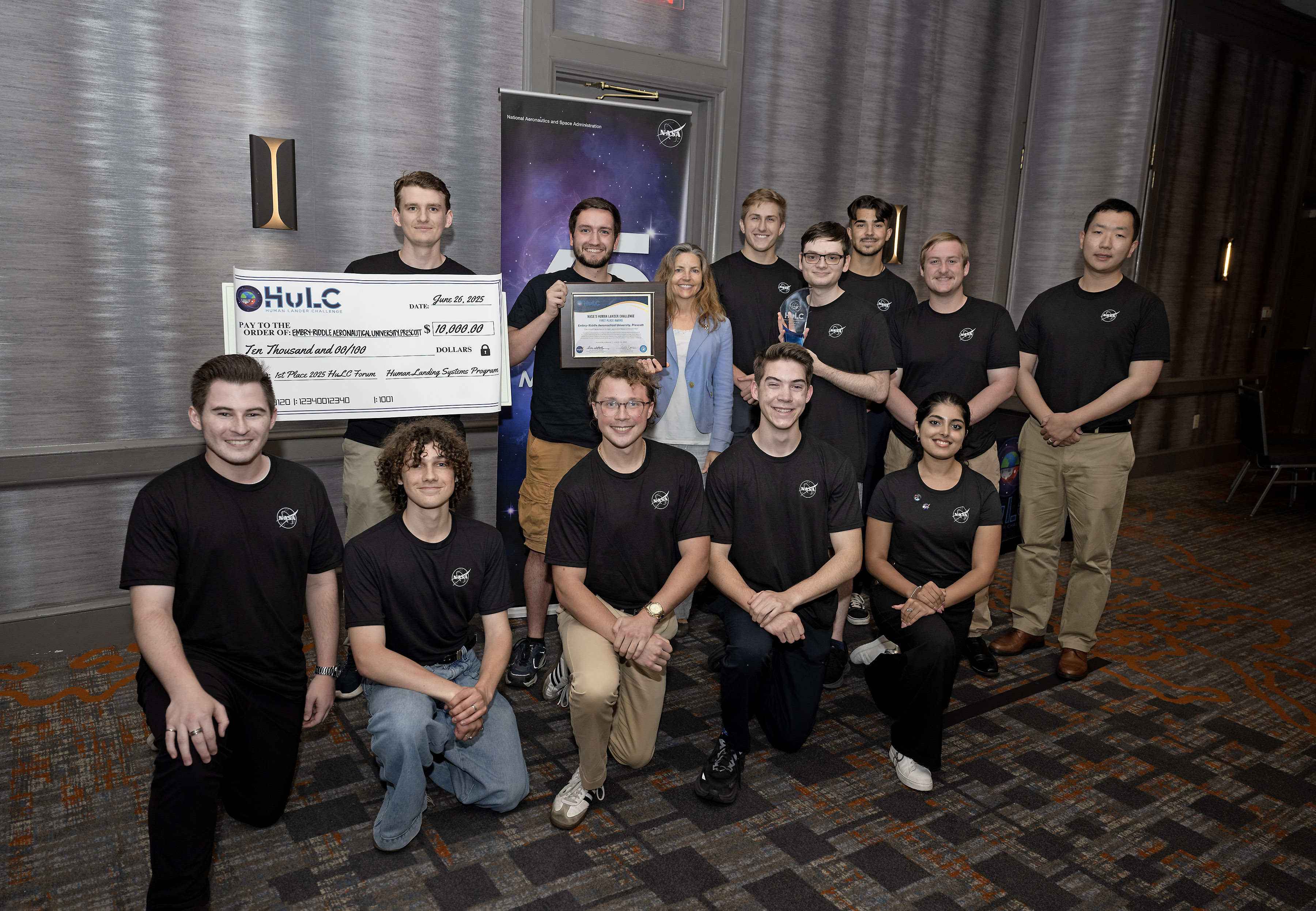
    NASA’s Human Lander Challenge marked its second year on June 26, awarding $18,000 in prize money to three university teams for their solutions for long-duration cryogenic, or super chilled, liquid storage and transfer systems for spaceflight.

    Building on the crewed Artemis II flight test, NASA’s Artemis III mission will send astronauts to explore the lunar South Pole region with a human landing system and advanced spacesuits, preparing humanity to ultimately go to Mars. In-space propulsion systems that use cryogenic liquids as propellants must stay extremely cold to remain in a liquid state and are critical to mission success. The Artemis mission architecture will need these systems to function for several weeks or even months.

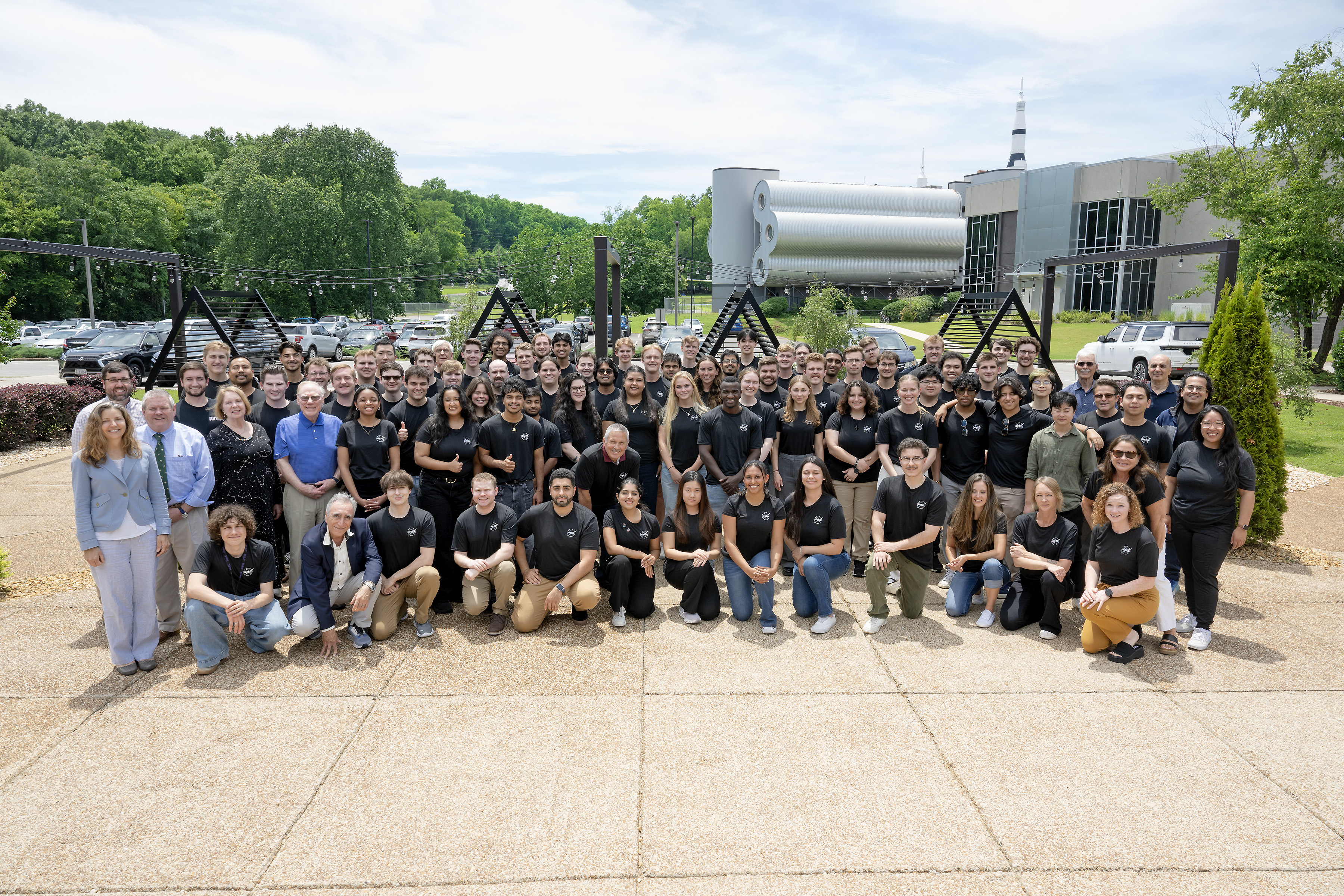
    Students and advisors with the 12 finalist teams for the 2025 Human Lander Challenge competed in Huntsville, Alabama, near the agency’s Marshall Space Flight Center between June 24-26.
    Students and advisors with the 12 finalist teams for the 2025 Human Lander Challenge competed in Huntsville, Alabama, near the agency’s Marshall Space Flight Center between June 24-26.
    NASA/Charles Beason

    NASA announced Embry-Riddle Aeronautical University, Prescott as the overall winner and recipient of the $10,000 top prize award. Old Dominion University won second place and a $5,000 award, followed by Massachusetts Institute of Technology in third place and a $3,000 award.

    Before the winners were announced, 12 finalist teams selected in April gave their presentations to a panel of NASA and industry judges as part of the final competition in Huntsville. As part of the 2025 Human Lander Challenge, university teams developed systems-level solutions that could be used within the next 3-5 years for Artemis.

    NASA selected Embry-Riddle Aeronautical University, Prescott as the overall winner of NASA’s 2025 Human Lander Challenge Forum June 26. Lisa Watson-Morgan, manager of NASA’s Human Landing System Program, presented the awards at the ceremony.
    NASA selected Embry-Riddle Aeronautical University, Prescott as the overall winner of NASA’s 2025 Human Lander Challenge Forum June 26. Lisa Watson-Morgan, manager of NASA’s Human Landing System Program, presented the awards at the ceremony.
    NASA/Charles Beason

    “Today’s Golden Age of Innovation and Exploration students are tomorrow’s mission designers, systems engineers, and explorers,” said Juan Valenzuela, main propulsion systems and cryogenic fluid management subsystems lead for NASA’s Human Landing System Program at NASA’s Marshall Space Flight Center in Huntsville, Alabama. “The Human Lander Challenge concepts at this year’s forum demonstrate the ingenuity, passion, and determination NASA and industry need to help solve long-duration cryogenic storage challenges to advance human exploration to deep space.”

    The challenge is sponsored by the agency’s Human Landing System Program within the Exploration Systems Development Mission Directorate and managed by the National Institute of Aerospace.

    Through the Artemis campaign, NASA will send astronauts to explore the Moon for scientific discovery, economic benefits, and to build the foundation for the first crewed missions to Mars – for the benefit of all.

    For more information about Artemis missions, visit:

    https://www.nasa.gov/artemis

    News Media Contact

    Corinne Beckinger 
    Marshall Space Flight Center, Huntsville, Ala. 
    256.544.0034  
    corinne.m.beckinger@nasa.gov 

  • Astronaut Joe Engle Flies X-15

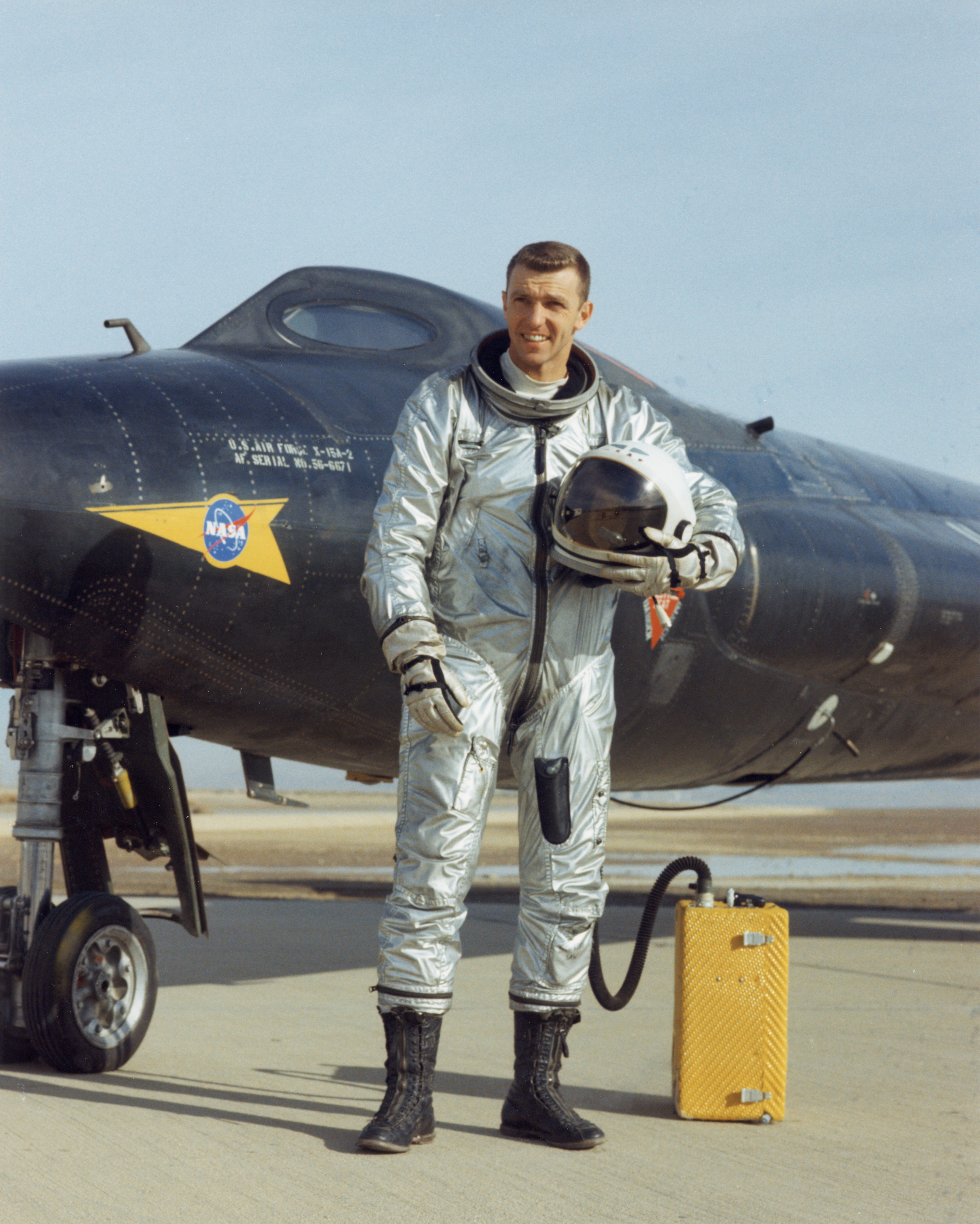
    A man in a silver suit holds a helmet in his left arm. He looks off to the side. He is standing in front of a black plane.
    In 1963, Captain Engle was assigned as one of two Air Force test pilots to fly the X-15 Research Rocket aircraft. In 1965, he flew the X-15 to an altitude of 280,600 feet, and became the youngest pilot ever to qualify as an astronaut. Three of his sixteen flights in the X-15 exceeded the 50-mile (264,000 feet) altitude required for astronaut rating.
    NASA

    Former NASA astronaut Joe Engle poses in front of an X-15 plane in this Dec. 2, 1965, photo. On June 29, 1965, Engle flew the X-15 to 280,600 feet, becoming the youngest U.S. pilot to qualify as an astronaut.

    The Kansas native flew the X-15 for the U.S. Air Force 16 times from 1963 to 1965. Three times Engle flew an X-15 higher than 50 miles (the altitude required for astronaut rating), officially qualifying him for Air Force astronaut wings and providing him a brief moment for sightseeing at the edge of space.

    “You could glance out and see the blackness of space above and the extremely bright Earth below. The horizon had the same bands of color you see from the shuttle, with black on top, then purple to deep indigo, then blues and whites,” he said.

    Image credit: NASA

  • Curiosity Blog, Sols 4580-4581: Something in the Air…

    2 min read

    Curiosity Blog, Sols 4580-4581: Something in the Air…

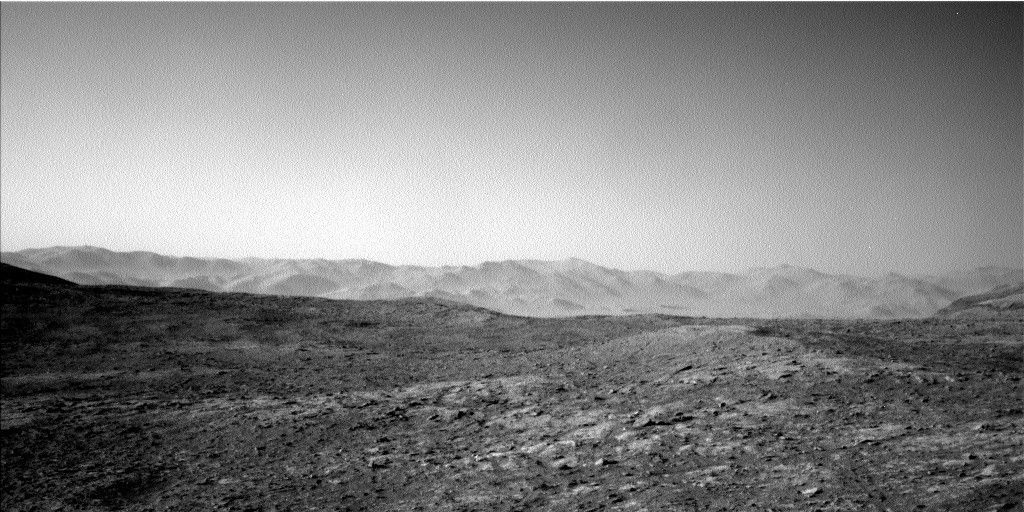
    A grayscale photo of a Martian landscape shows a wide, expansive landscape. Dark gray, rough terrain covered in small to medium rocks extends from the foreground to a horizon line stretching across the frame — almost to the middle on the left side, and dipping lower as it extends to the right. Just above that is a line of peaks far in the distance, much lighter gray, narrow and stretching across the middle of the image, looking like sand dunes from a distance. Above that is an empty sky, very light gray at left, transitioning to dark gray near the upper right corner of the image.
    NASA’s Mars rover Curiosity acquired this image using its Left Navigation Camera on June 23, 2025 — Sol 4578, or Martian day 4,578 of the Mars Science Laboratory mission — at 02:38:50 UTC.
    NASA/JPL-Caltech

    Written by Scott VanBommel, Planetary Scientist at Washington University in St. Louis

    Earth planning date: Monday, June 23, 2025

    Curiosity was back at work on Monday, with a full slate of activities planned. While summer has officially arrived for much of Curiosity’s team back on Earth, Mars’ eldest active rover is recently through the depths of southern Mars winter and trending toward warmer temperatures itself. Warmer temperatures mean less component heating is required and therefore more power is freed up for science and driving. However, the current cooler temperatures do present an opportunity to acquire quality short-duration APXS measurements first thing in the morning, which is what Curiosity elected to do once again.

    Curiosity’s plan commenced by brushing a rock target with potential cross-cutting veins, “Hornitos,” and subsequently analyzing it with APXS. A sequence of Mastcam images followed on targets such as “Volcán Peña Blanca,” “La Pacana,” “Iglesia de Jarinilla de Umatia,” and “Ayparavi.” ChemCam, returning to action after a brief and understood hiatus, rounded out the morning’s chemical analysis activities with a 5-point analysis of Ayparavi. After some images of the brush, and a handful of MAHLI snaps of Hornitos, Curiosity was on its way with a planned drive of about 37 meters (about 121 feet).Curiosity’s night would not be spent entirely dreaming of whatever rovers dream, but rather conducting a lengthy APXS analysis of the atmosphere. These analyses enable Curiosity’s team to assess the abundance of argon in the atmosphere — from a volume about the size of a pop can (or soda can, depending on your unit of preference) — which can be used to trace global circulation patterns and better understand modern Mars. Recently, Curiosity has been increasing the frequency of these measurements and pairing them with ChemCam “Passive Sky” observations. These ChemCam activities do not utilize the instrument’s laser, but instead use its other components to characterize the air above the rover. By combining APXS and ChemCam observations of the atmosphere, Curiosity’s team is able to better assess daily and seasonal trends in gases around Gale crater. A ChemCam “Passive Sky” was the primary observation in the second sol of the plan, with Curiosity spending much of the remaining time recharging and eagerly awaiting commands from Wednesday’s team.

    Details

    Last Updated

    Jun 26, 2025

    Related Terms