Is it an insect? A strange fossil? An otherworldly eye, or even a walnut? No, it’s an intriguing kind of martian butterfly spotted by ESA’s Mars Express.
Is it an insect? A strange fossil? An otherworldly eye, or even a walnut? No, it’s an intriguing kind of martian butterfly spotted by ESA’s Mars Express.
5 min read
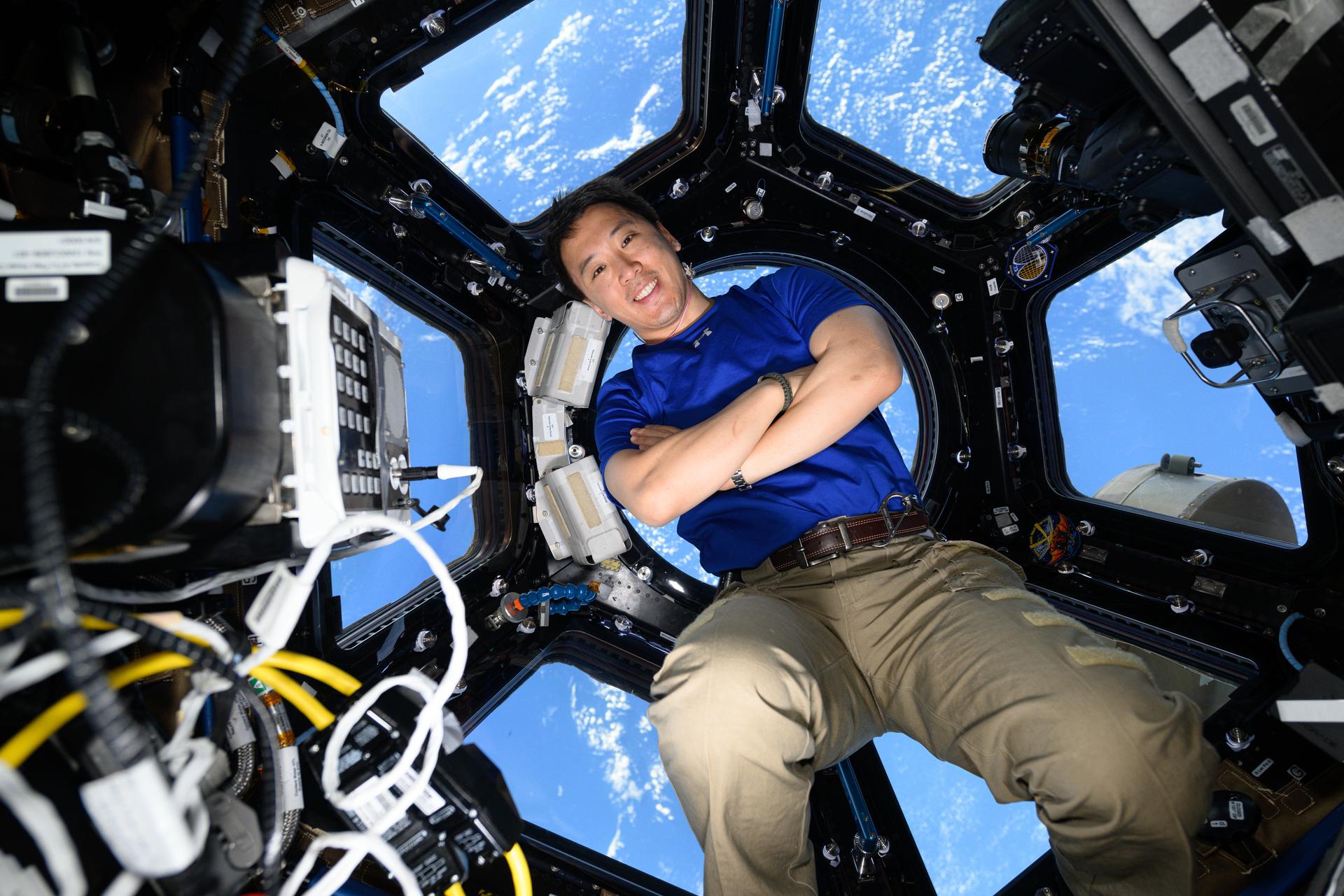
NASA astronaut Jonny Kim is wrapping up his first mission aboard the International Space Station in early December. During his stay, Kim conducted scientific experiments and technology demonstrations to benefit humanity on Earth and advance NASA’s Artemis campaign in preparation for future human missions to Mars.
Here is a look at some of the science Kim completed during his mission:
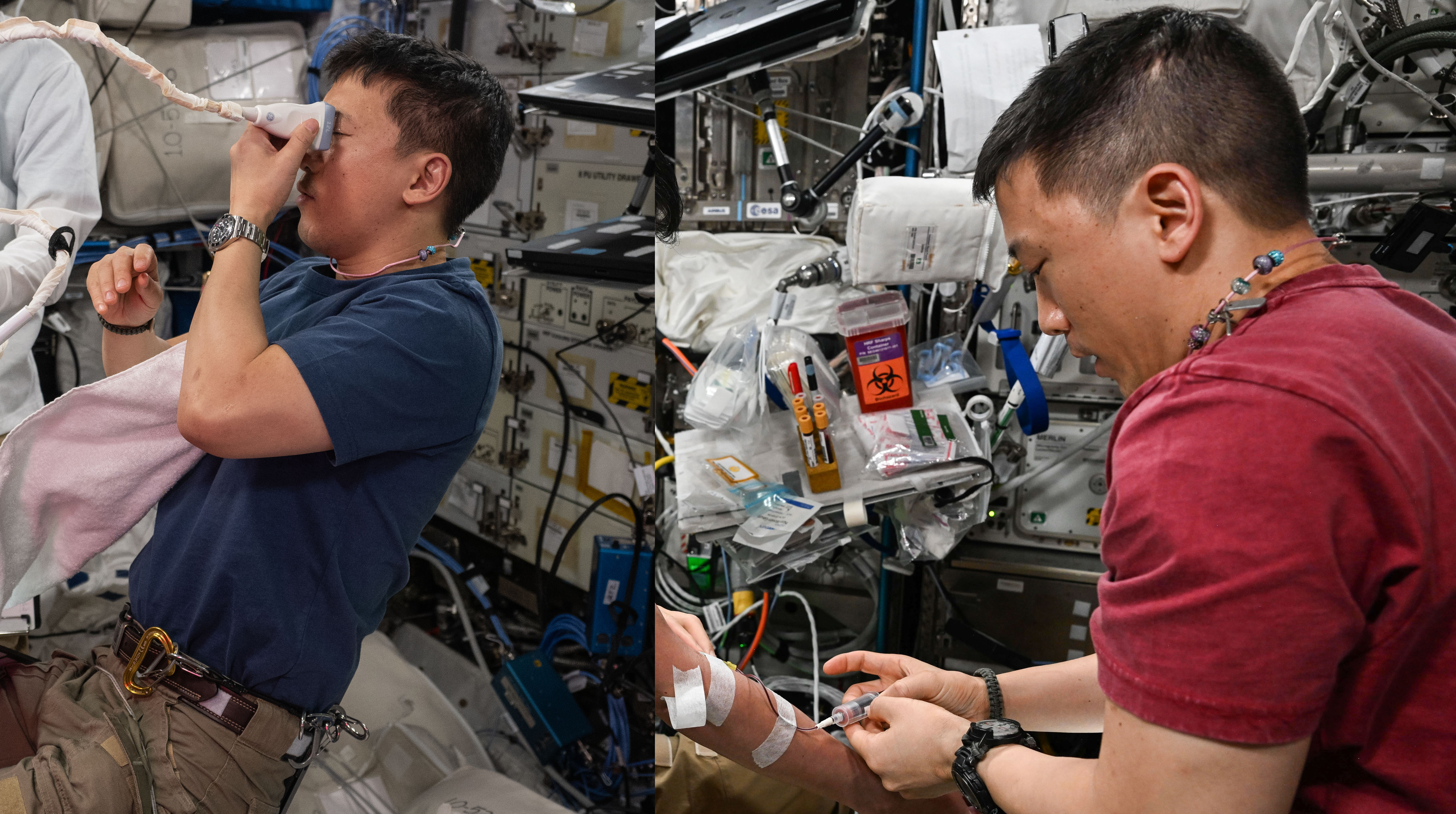
NASA astronaut Jonny Kim, a medical doctor, completed several routine medical exams while aboard the International Space Station. NASA flight surgeons and researchers monitor crew health using a variety of tools, including blood tests, eye exams, and ultrasounds.
Kim conducts an ultrasound of his eye in the left image. Eye exams are essential as long-duration spaceflight may cause changes to the eye’s structure and affect vision, a condition known as spaceflight associated neuro-ocular syndrome, or SANS. In the right image, Kim draws blood from a fellow crew member. These blood sample collections provide important insights into crew cartilage and bone health, cardiovascular function, inflammation, stress, immune function, and nutritional status.
NASA astronauts complete regular medical exams before, during, and after spaceflight to monitor astronaut health and develop better tools and measures for future human exploration missions to the Moon and Mars.
Learn more about human research on space station.
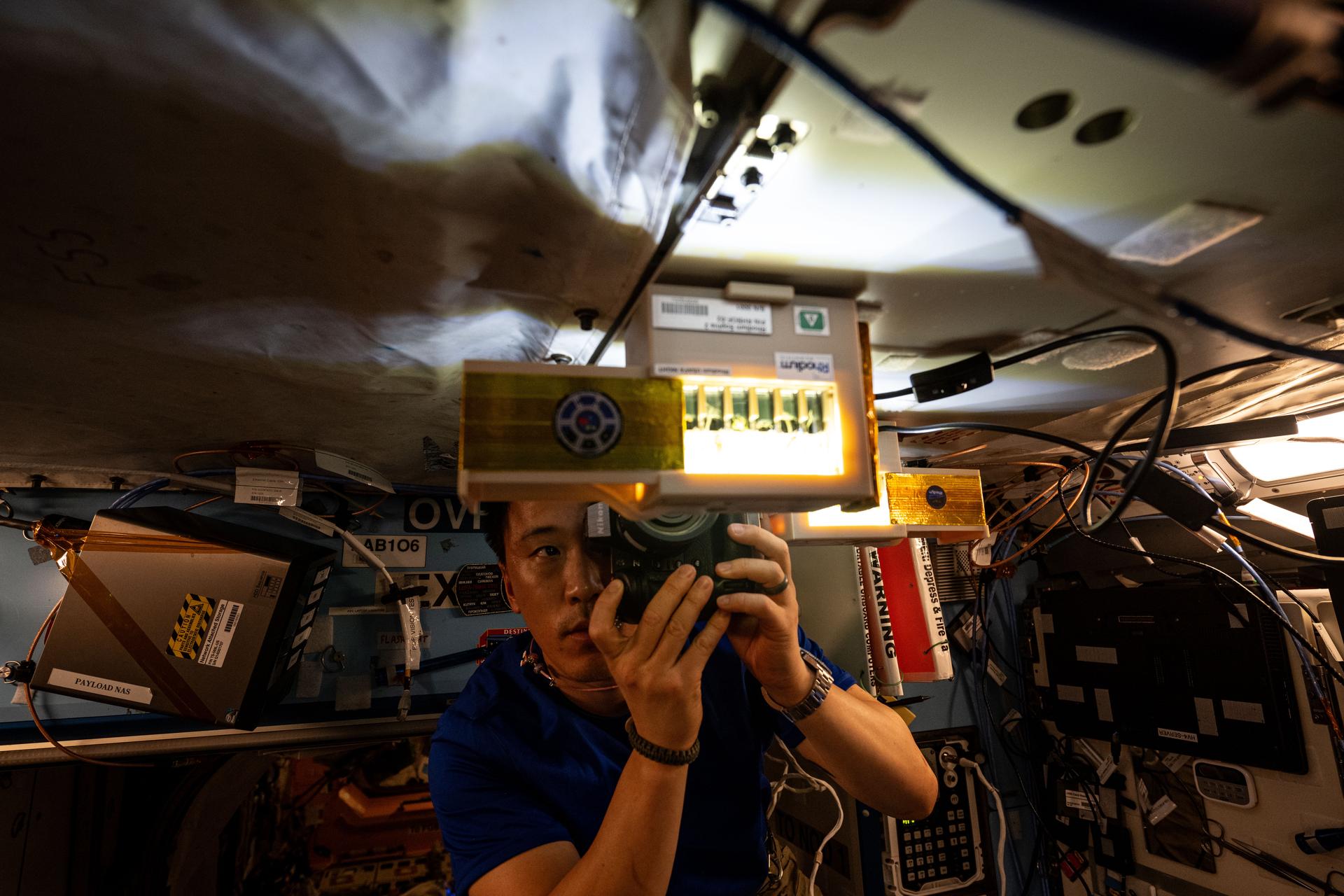
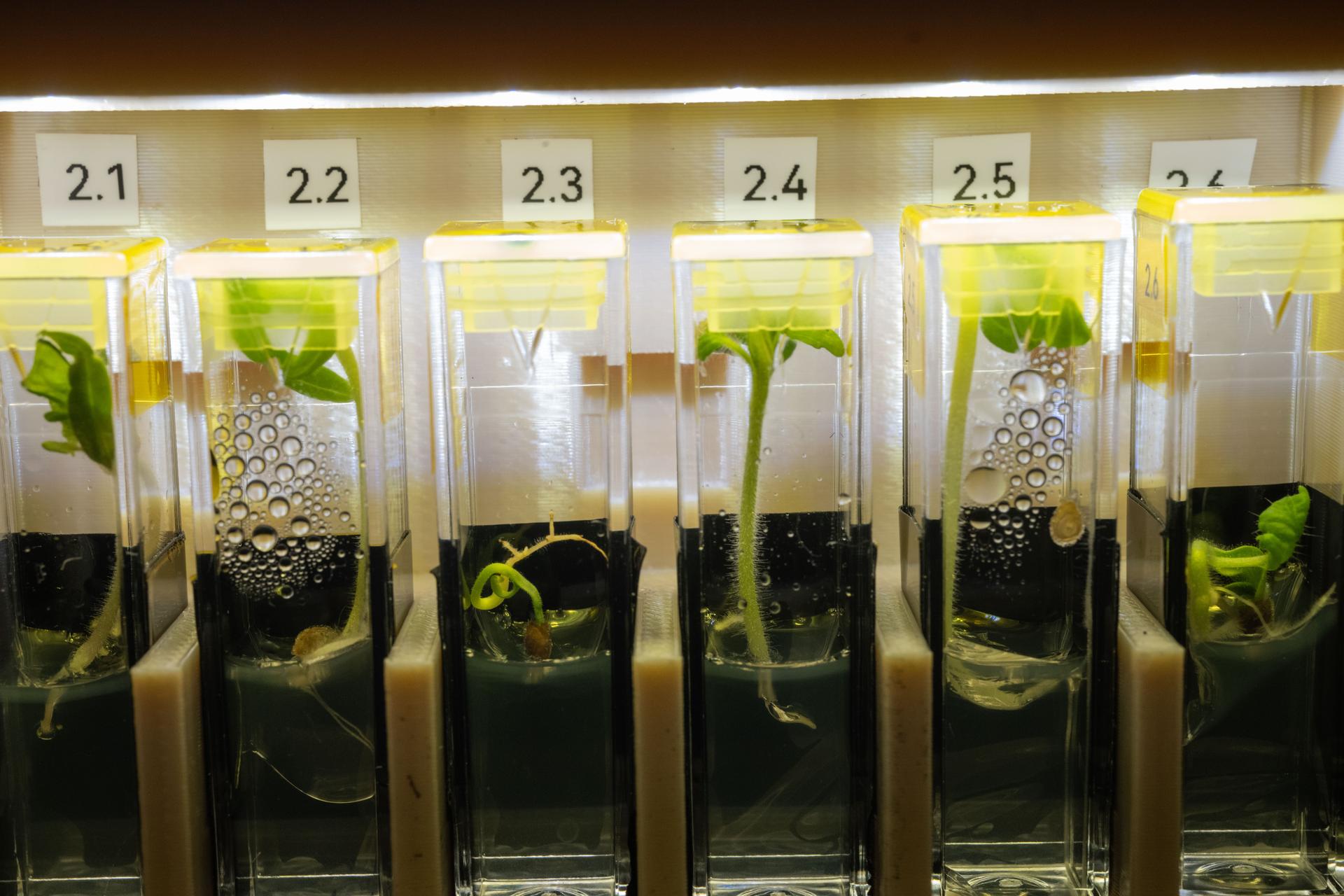
NASA astronaut Jonny Kim photographs dwarf tomato sprouts grown using a nutrient supplement instead of photosynthesis as part of a study on plant development and gene expression. The plants are given an acetate supplement as a secondary nutrition source, which could increase growth and result in better yields, all while using less power and fewer resources aboard the space station and future spacecraft.
Learn more about Rhodium USAFA NIGHT.
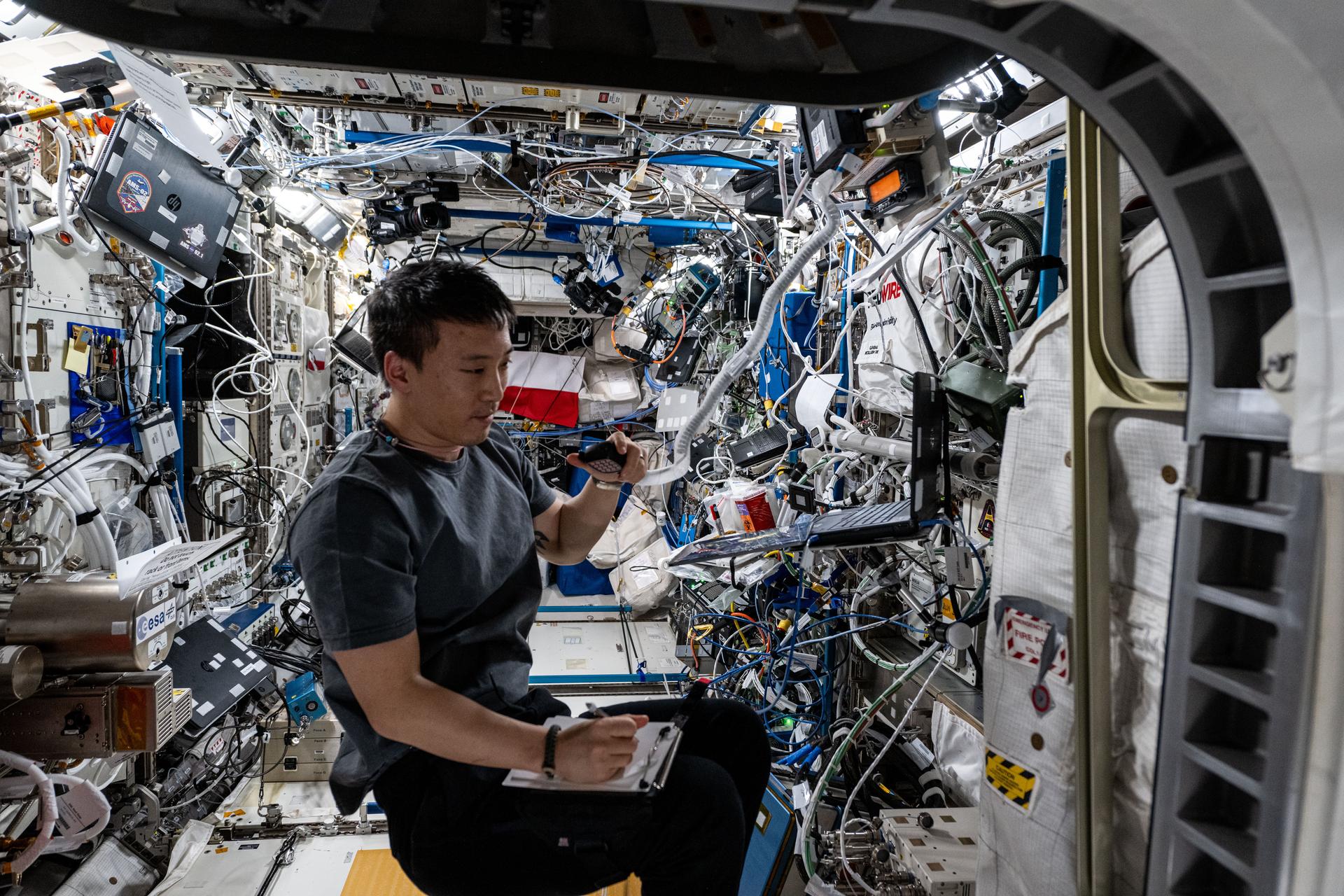
NASA astronaut Jonny Kim uses a ham radio to speak with students on Earth via an educational program connecting students worldwide with astronauts aboard the International Space Station. Students can ask about life aboard the orbiting laboratory and the many experiments conducted in microgravity. This program encourages an interest in STEM (science, technology, engineering, and mathematics) and inspires the next generation of space explorers.
Learn more about ISS Ham Radio.
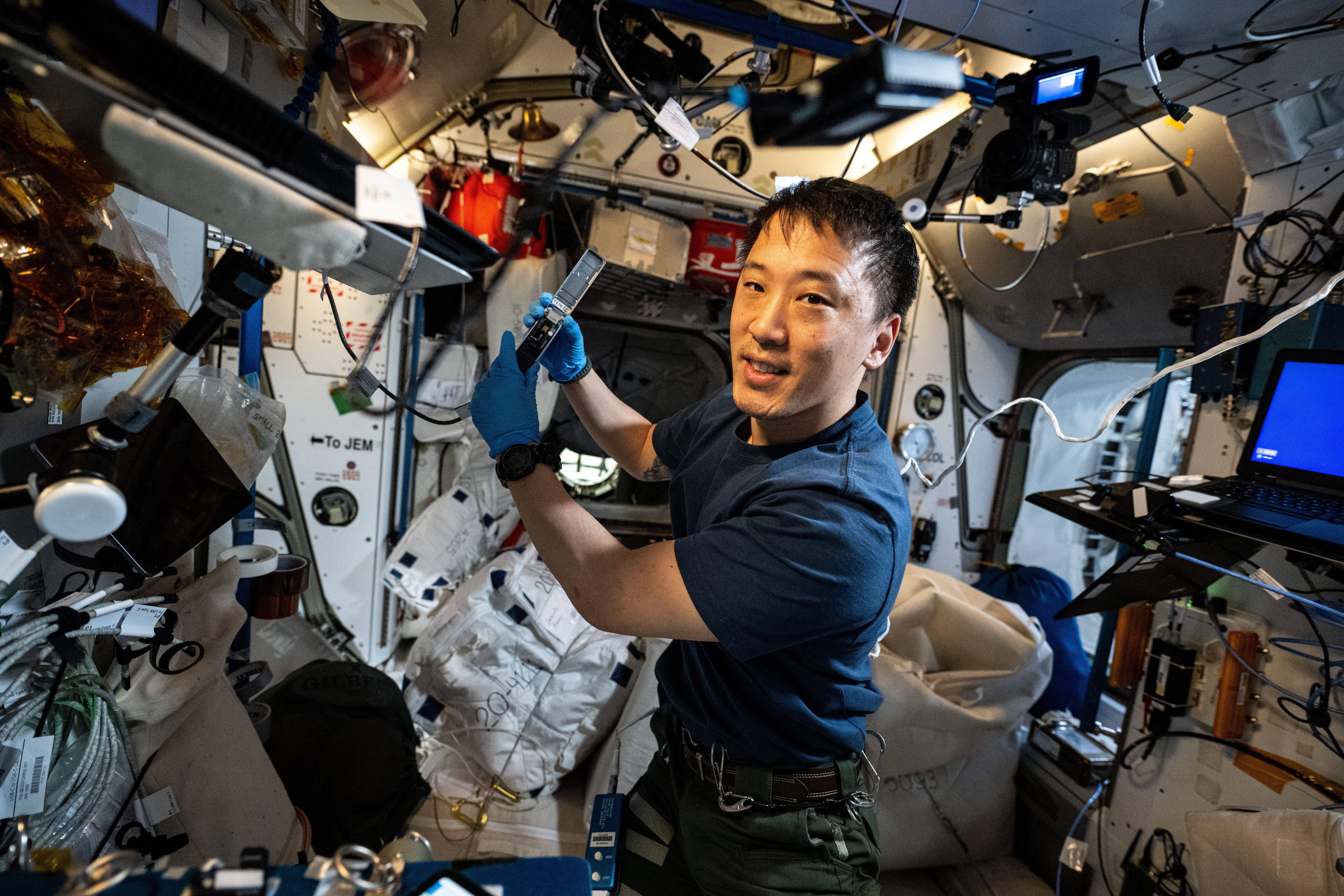
Secure and reliable data storage and transmission are essential to maintain the protection, accuracy, and accessibility of information. In this photo, NASA astronaut Jonny Kim displays research hardware that tests the viability of encoding, transmitting, and decoding encrypted information via DNA sequences. As part of this experiment, DNA with encrypted information is sequenced aboard the space station to determine the impact of the space environment on its stability. Using DNA to store and transmit data could reduce the weight and energy requirements compared to traditional methods used for long-duration space missions and Earth-based industries.
Learn more about Voyager DNA Decryption.

Future deep space exploration could rely on robotics remotely operated by humans. NASA astronaut Jonny Kim tests a technology demonstration that allows astronauts to remotely control robots on Earth from the International Space Station. Findings from this investigation could help fine-tune user-robot operating dynamics during future missions to the Moon, Mars, and beyond.
Learn more about Surface Avatar.
NASA astronaut Jonny Kim conducts an investigation to assess the effects of microgravity on bone marrow stem cells, including their ability to secrete proteins that form and dissolve bone. Bone loss, an age-related factor on Earth, is aggravated by weightlessness and is a health concern for astronauts. Researchers are evaluating whether blocking signals that cause loss could protect astronauts during long-duration spaceflights. The findings could also lead to preventative measures and treatments for bone loss caused by aging or disease on Earth.
Learn more about MABL-B.
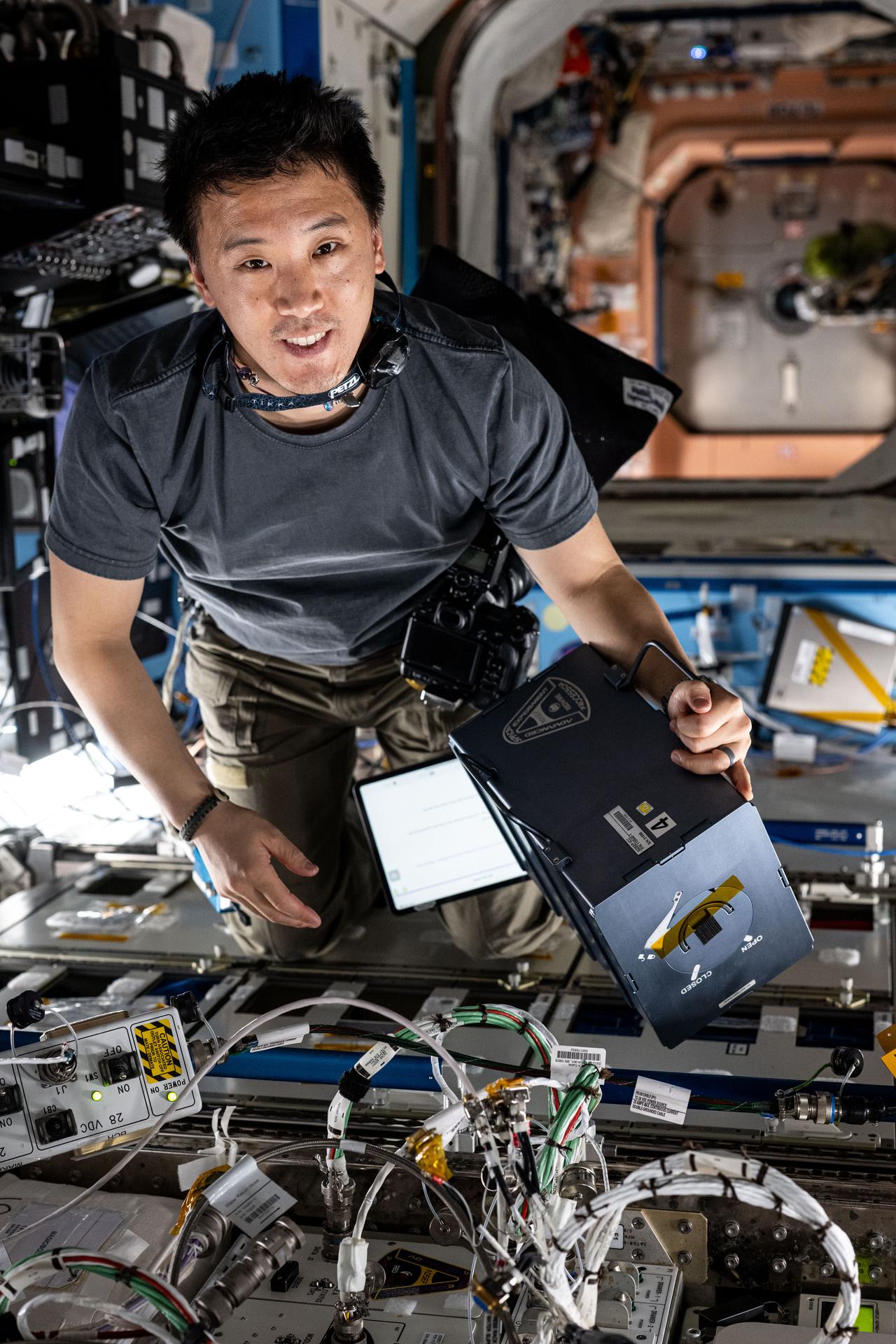
NASA astronaut Jonny Kim tests new hardware installed to an existing crystallization facility that enables increased production of crystals and other commercially relevant materials, like golden nanospheres. These tiny, spherical gold particles have optical and electronic applications, and are biocompatible, making them useful for medication delivery and diagnostics. As part of this experiment aboard the space station, Kim attempted to process larger, more uniform golden nanospheres than those produced on the ground.
Learn more about ADSEP-ICC.
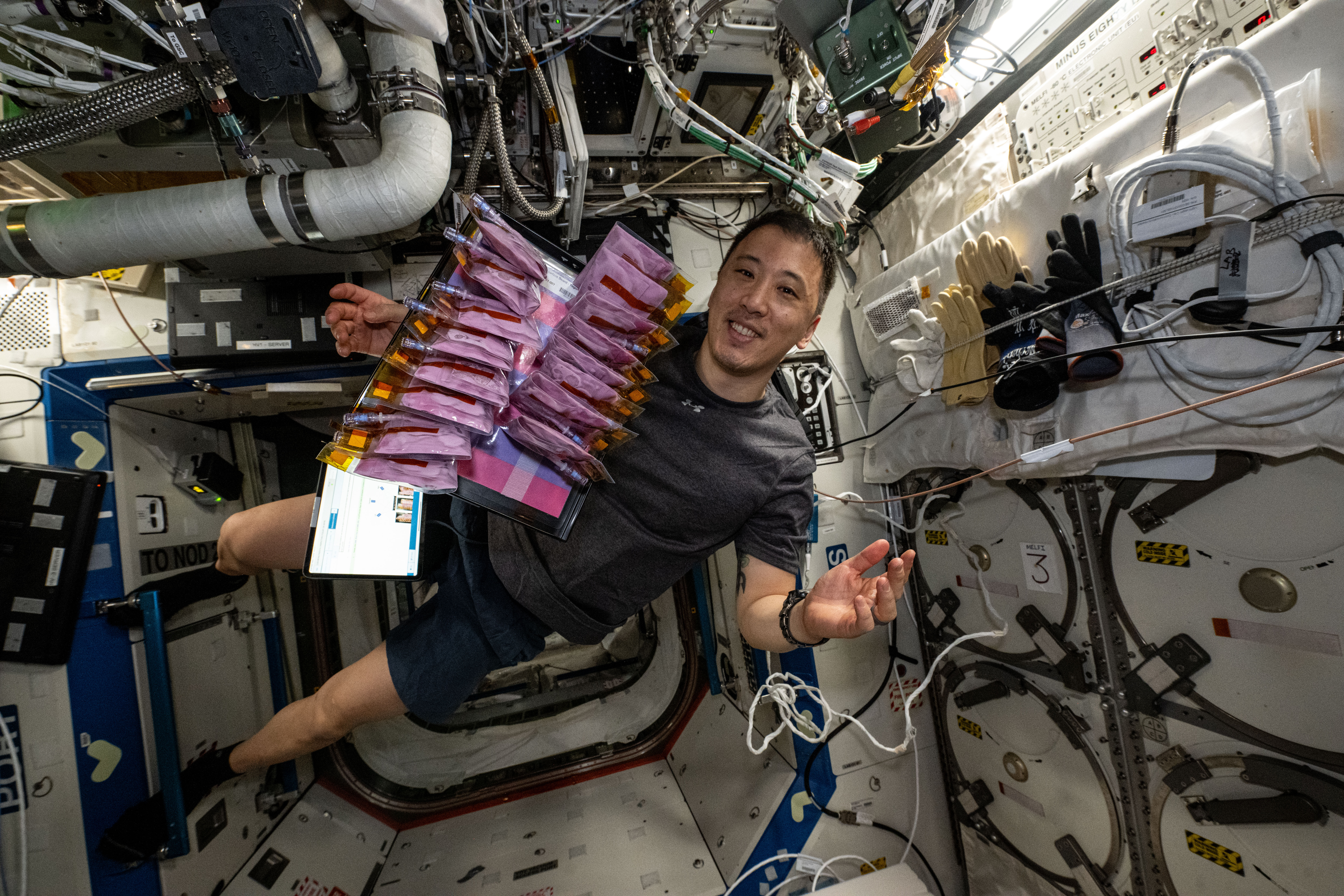
Some vitamins and nutrients in foods and supplements lose their potency during long-term storage, and insufficient intake of even a single nutrient can lead to diseases and other health issues. NASA astronaut Jonny Kim displays purple-pink production bags for an investigation aimed at producing nutrient-rich yogurt and kefir using bioengineered yeasts and probiotics. The unique color comes from a food-grade pH indicator that allows astronauts to visually monitor the fermentation process.
Learn more about BioNutrients-3.
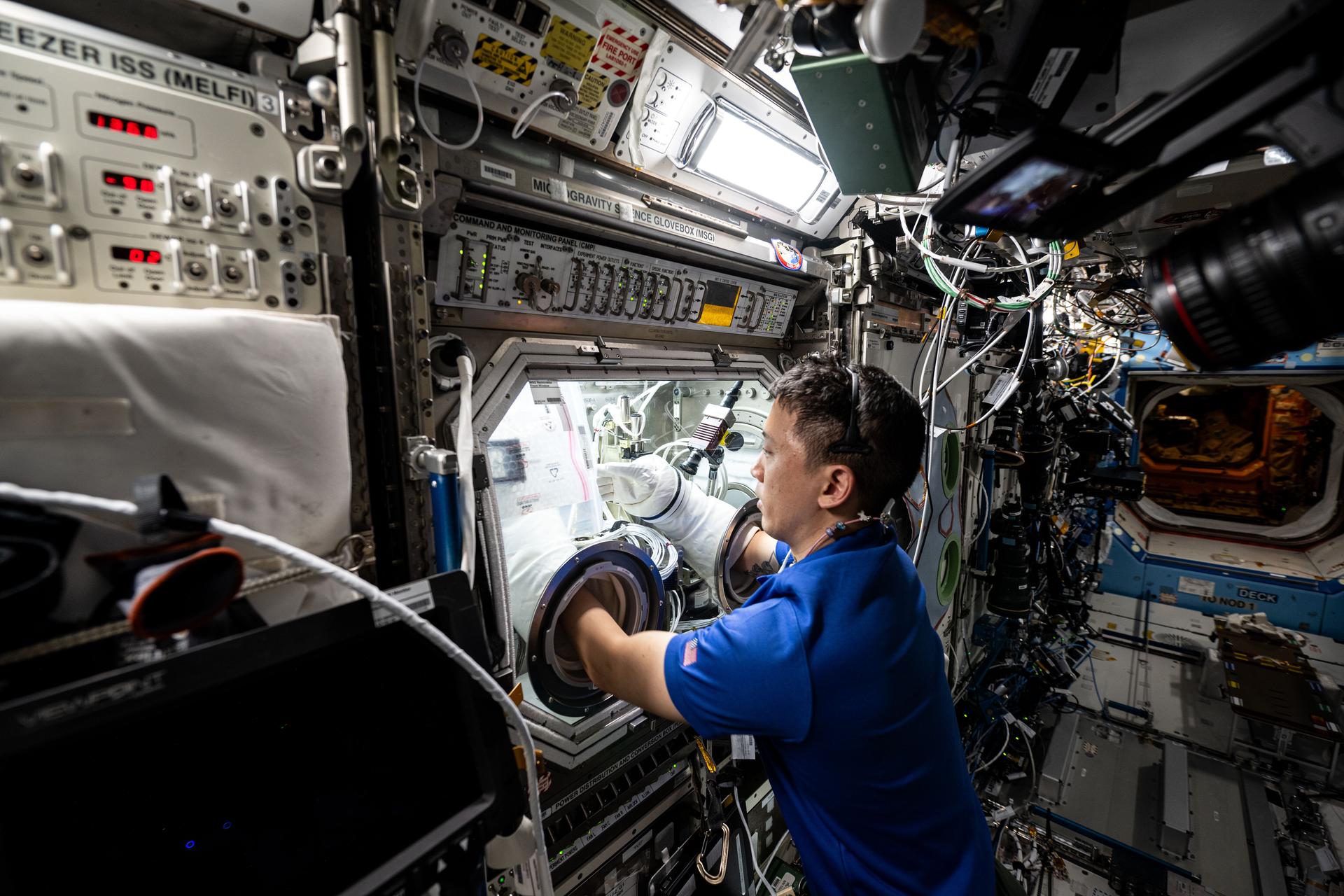
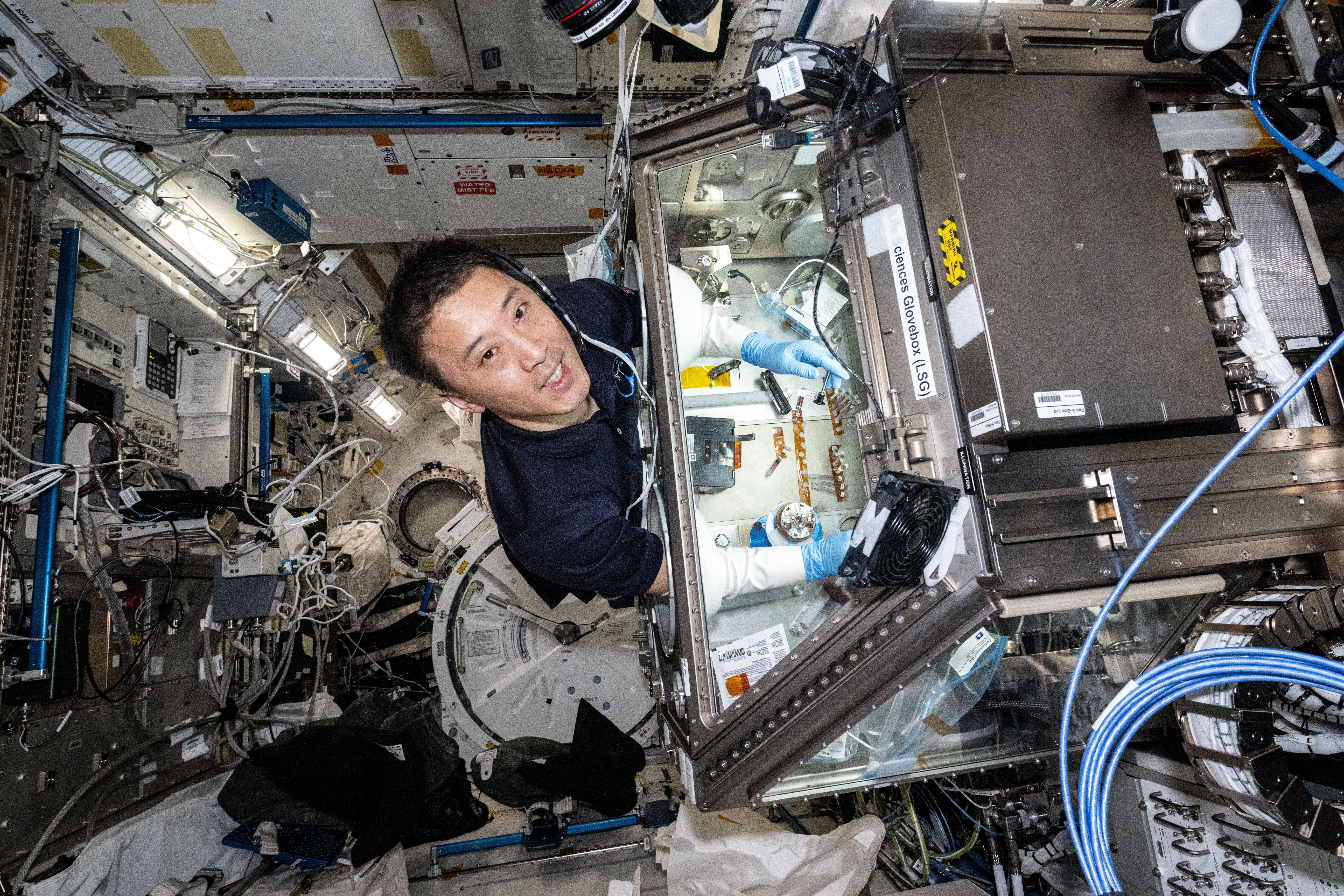
NASA astronaut Jonny Kim uses the Microgravity Science Glovebox to study how high-concentration protein fluids behave in microgravity. This study helps researchers develop more accurate models to predict the behavior of these complex fluids in various scenarios, which advances manufacturing processes in space and on Earth. It also can enable the development of next-generation medicines for treating cancers and other diseases.
Learn more about Ring Sheared Drop-IBP-2.

On Sept. 28, 2025, NASA astronaut Jonny Kim photographed Hurricane Humberto from the International Space Station. Located at 250 miles above Earth, the orbiting laboratory’s unique orbit allows crew members to photograph the planet’s surface including hurricanes, dust storms, and fires. These images are used to document disasters and support first responders on the ground.
Learn more about observing Earth from space station.
NASA has selected the University of Alabama at Birmingham to provide the necessary systems required to return temperature sensitive science payloads to Earth from the Moon.
The Lunar Freezer System contract is an indefinite-delivery/indefinite-quantity award with cost-plus-fixed-fee delivery orders. The contract begins Thursday, Dec. 4, with a 66-month base period along with two optional periods that could extend the award through June 3, 2033. The contract has a total estimated value of $37 million.
Under the contract, the awardee will be responsible for providing safe, reliable, and cost-effective hardware and software systems NASA needs to maintain temperature-critical science materials, including lunar geological samples, human research samples, and biological experimentation samples, as they travel aboard Artemis spacecraft to Earth from the lunar surface. The awarded contractor was selected after a thorough evaluation by NASA engineers of the proposals submitted. NASA’s source selection authority made the selection after reviewing the evaluation material based on the evaluation criteria contained in the request for proposals.
For information about NASA and other agency programs, visit:
-end-
Tiernan Doyle
Headquarters, Washington
202-358-1600
tiernan.doyle@nasa.gov
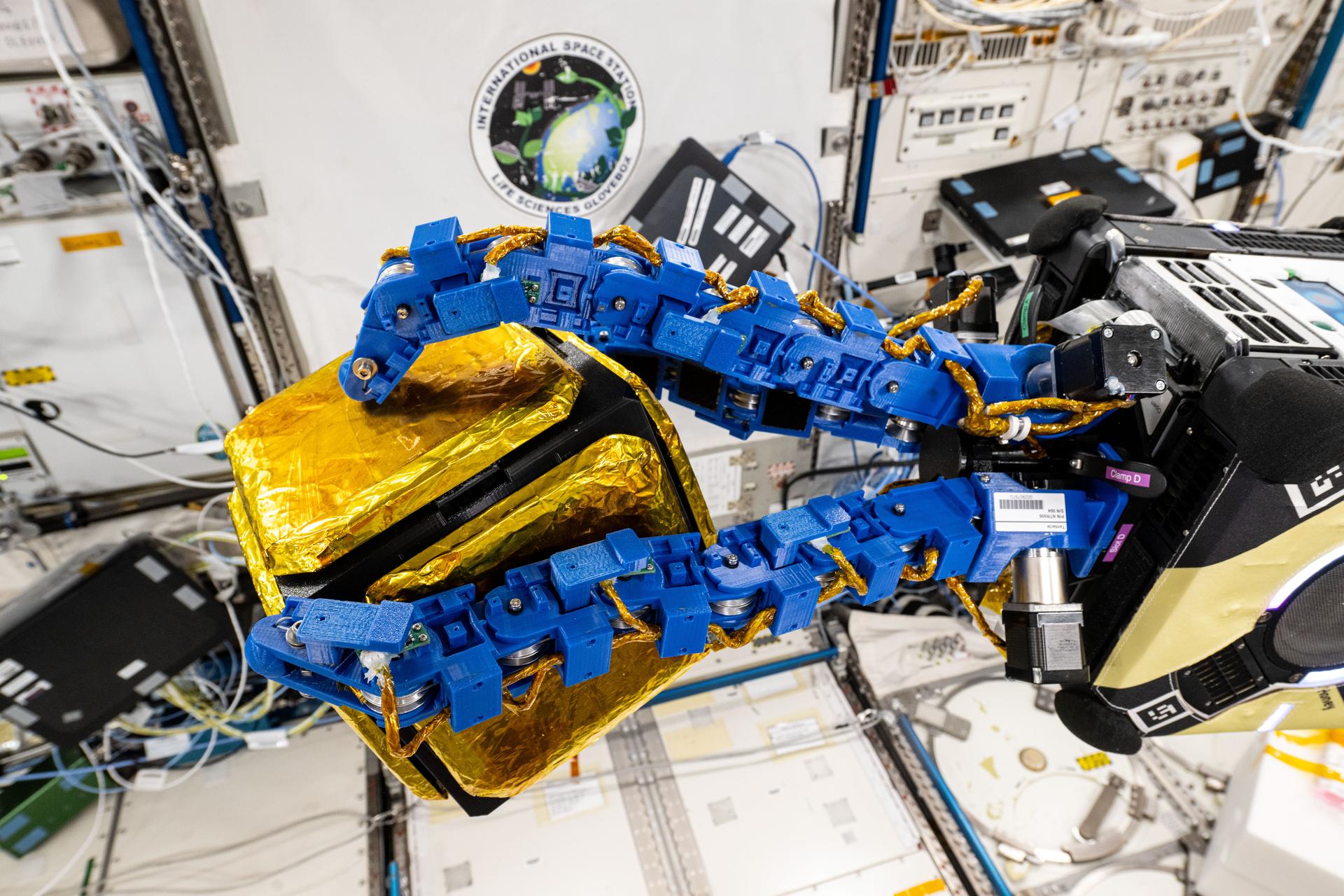
NASA and industry partners will fly and operate a commercial robotic arm in low Earth orbit through the Fly Foundational Robots mission set to launch in late 2027. This mission aims to revolutionize in-space operations, a critical capability for sustainably living and working on other planets. By enabling this technology demonstration, NASA is fostering the in-space robotics industry to unlock valuable tools for future scientific discovery and exploration missions.
“Today it’s a robotic arm demonstration, but one day these same technologies could be assembling solar arrays, refueling satellites, constructing lunar habitats, or manufacturing products that benefit life on Earth,” said Bo Naasz, senior technical lead for In-space Servicing, Assembly, and Manufacturing (ISAM) in the Space Technology Mission Directorate at NASA Headquarters in Washington. “This is how we build a dominant space economy and sustained human presence on the Moon and Mars.”

The Fly Foundational Robots (FFR) mission will leverage a robotic arm from small business Motiv Space Systems capable of dexterous manipulation, autonomous tool use, and walking across spacecraft structures in zero or partial gravity. This mission could enable ways to repair and refuel spacecraft, construct habitats and infrastructure in space, maintain life support systems on lunar and Martian surfaces, and serve as robotic assistants to astronauts during extended missions. Advancing robotic systems in space could also enhance our understanding of similar technologies on Earth across industries including construction, medicine, and transportation.
To demonstrate FFR’s commercial robotic arm in space, NASA’s Space Technology Mission Directorate is contracting with Astro Digital to provide a hosted orbital test through the agency’s Flight Opportunities program.
Guest roboticists will have the opportunity to contribute to the FFR mission, and participation will allow them to use Motiv’s robotic platform as a testbed and perform unique tasks. NASA will serve as the inaugural guest operator and is currently seeking other interested U.S. partners to participate.
The future of in-space robotics relies on testing robotic operations in space prior to launching more complex and extensive servicing and refueling missions. Through FFR, the demonstration of Motiv’s robotic arm operations in space will begin to push open the door to endless possibilities.
NASA’s Fly Foundational Robots demonstration is funded through the NASA Space Technology Mission Directorate’s ISAM portfolio and managed by NASA’s Goddard Space Flight Center in Greenbelt, Maryland. Motiv Space Systems of Pasadena, California, will supply the mission’s robotic arm system through a NASA Small Business Innovation Research Phase III award. Astro Digital of Littleton, Colorado, will flight test Motiv’s robotic payload through NASA’s Flight Opportunities program managed by NASA’s Armstrong Flight Research Center in Edwards, California.
Learn more about In-space Servicing, Assembly, and Manufacturing at NASA.
By Colleen Wouters
NASA’s Goddard Space Flight Center, Greenbelt, Md.
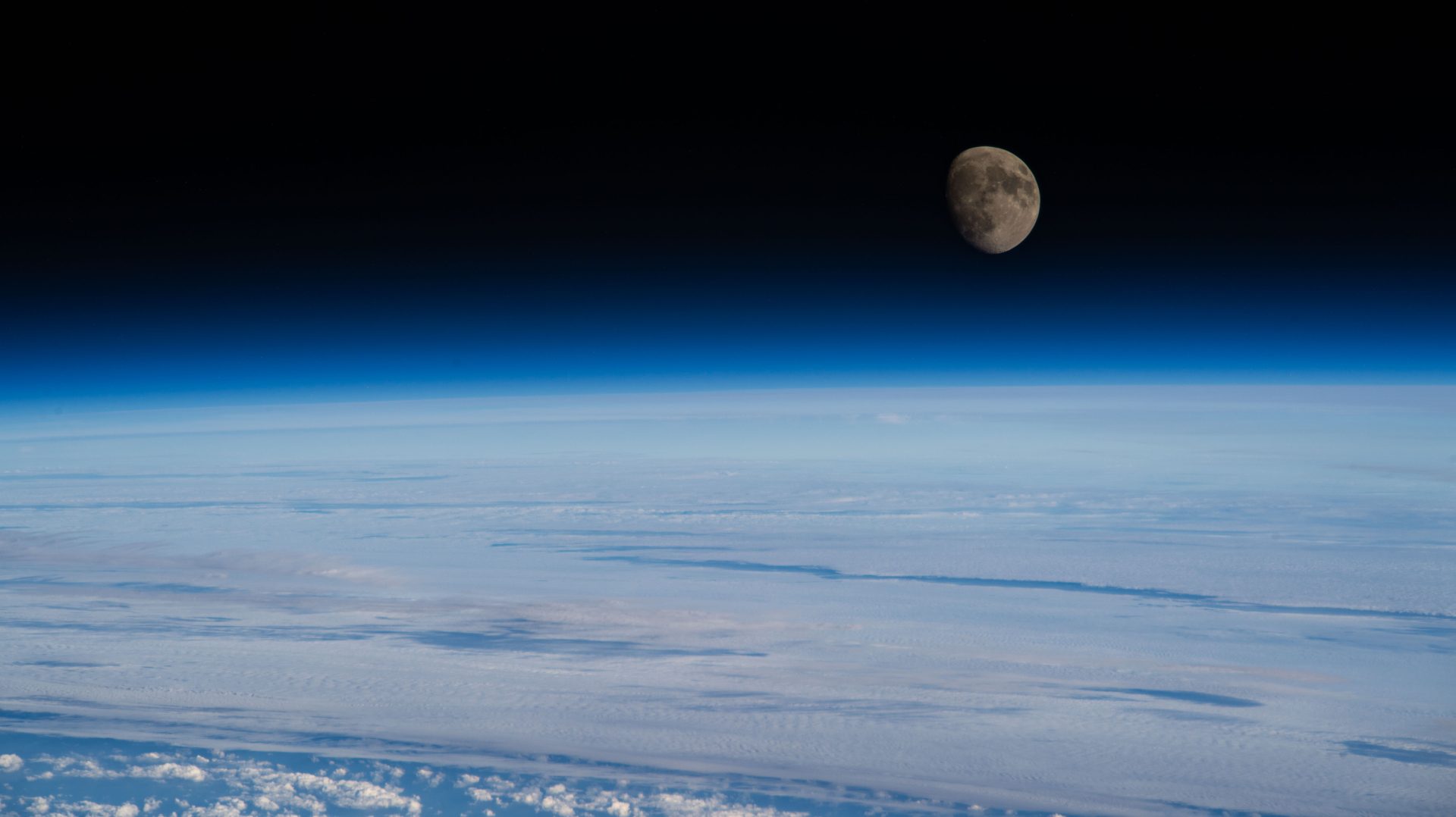
The waxing gibbous Moon rises above Earth’s blue atmosphere in this photograph taken from the International Space Station as it orbited 263 miles above a cloudy Atlantic Ocean off the coast of Quebec, Canada.
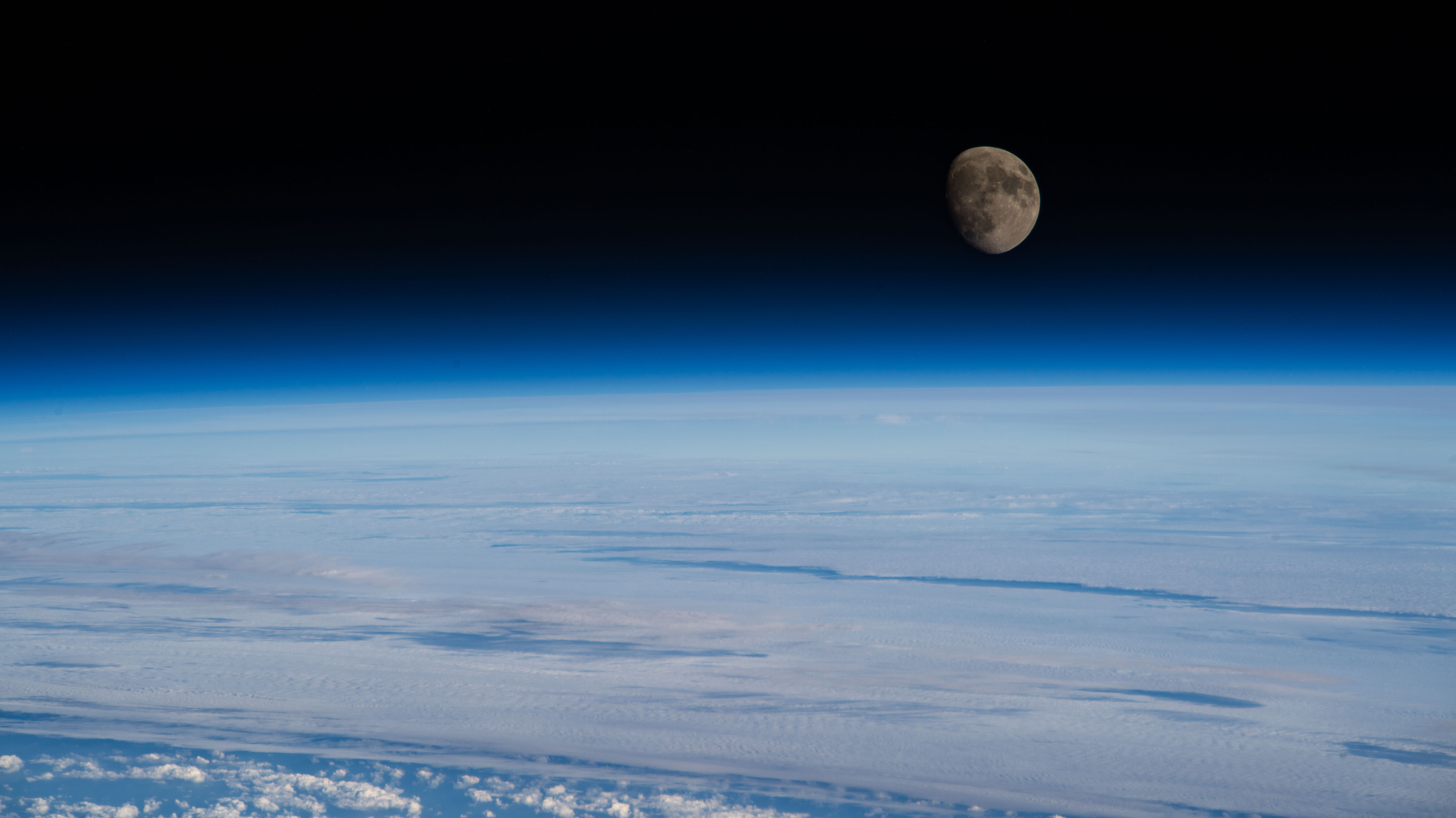
The waxing gibbous moon rises above Earth’s blue atmosphere in this photograph taken from the International Space Station on Oct. 3, 2025, as it orbited 263 miles above a cloudy Atlantic Ocean off the coast of Quebec, Canada.
In our entire solar system, the only object that shines with its own light is the Sun. That light always beams onto Earth and the Moon from the direction of the Sun, illuminating half of our planet in its orbit and reflecting off the surface of the Moon to create moonlight. Sometimes the entire face of the Moon glows brightly. Other times we see only a thin crescent of light. Sometimes the Moon seems to disappear. These shifts are called Moon phases. The waxing gibbous phase comes just before the full moon.
Image credit: NASA


Next-generation drone flight software is just one of 25 technologies for the Red Planet that the space agency funded for development this year.
When NASA engineers want to test a concept for exploring the Red Planet, they have to find ways to create Mars-like conditions here on Earth. Then they test, tinker, and repeat.
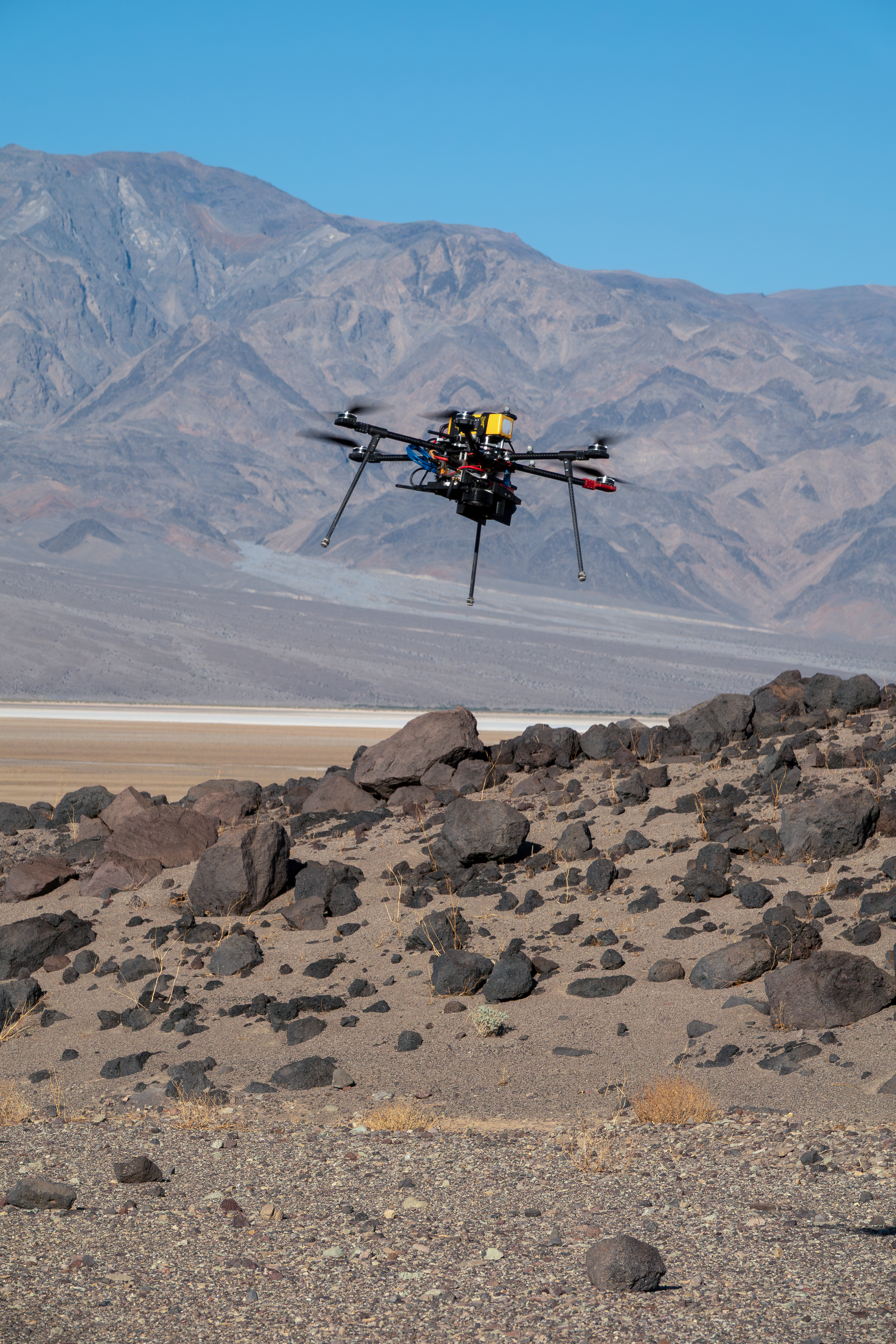
That’s why a team from NASA’s Jet Propulsion Laboratory in Southern California took three research drones to California’s Death Valley National Park and the Mojave Desert earlier this year. They needed barren, featureless desert dunes to hone navigation software. Called Extended Robust Aerial Autonomy, the work is just one of 25 projects funded by the agency’s Mars Exploration Program this past year to push the limits of future technologies. Similar dunes on Mars confused the navigation algorithm of NASA’s Ingenuity Mars Helicopter during several of its last flights, including its 72nd and final flight on the Red Planet.
“Ingenuity was designed to fly over well-textured terrain, estimating its motion by looking at visual features on the ground. But eventually it had to cross over blander areas where this became hard,” said Roland Brockers, a JPL researcher and drone pilot. “We want future vehicles to be more versatile and not have to worry about flying over challenging areas like these sand dunes.”
Whether it’s new navigation software, slope-scaling robotic scouts, or long-distance gliders, the technology being developed by the Mars Exploration Program envisions a future where robots can explore all on their own — or even help astronauts do their work.
NASA scientists and engineers have been going to Death Valley National Park since the 1970s, when the agency was preparing for the first Mars landings with the twin Viking spacecraft. Rubbly volcanic boulders on barren slopes earned one area the name Mars Hill, where much of this research has taken place. Almost half a century later, JPL engineers tested the Perseverance rover’s precision landing system by flying a component of it in a piloted helicopter over the park.
For the drone testing, engineers traveled to the park’s Mars Hill and Mesquite Flats Sand Dunes in late April and early September. The JPL team received only the third-ever license to fly research drones in Death Valley. Temperatures reached as high as 113 degrees Fahrenheit (45 degrees Celsius); gathered beneath a pop-up canopy, team members tracked the progress of their drones on a laptop.
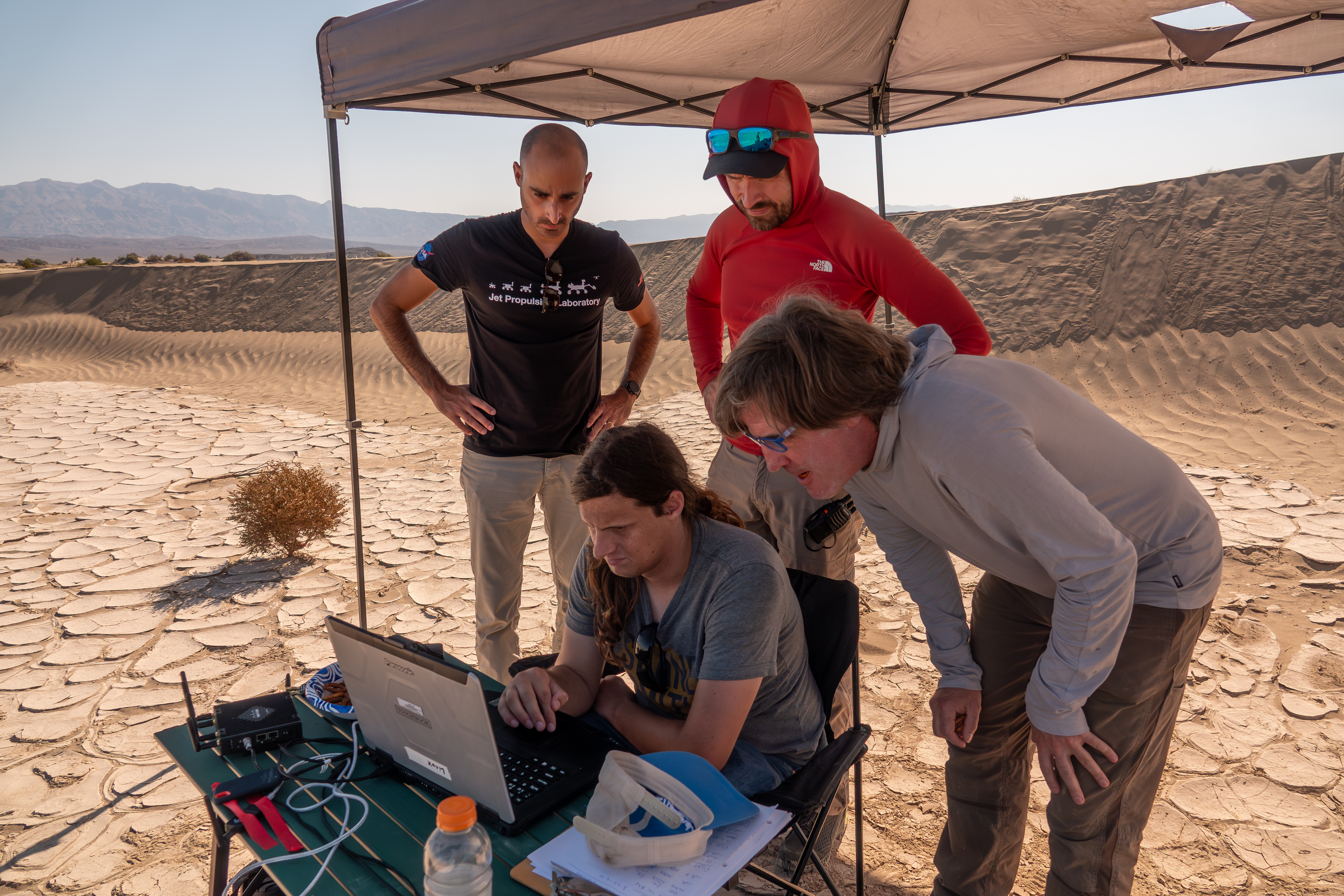
The test campaign has already resulted in useful findings, including how different camera filters help the drones track the ground and how new algorithms can guide them to safely land in cluttered terrain like Mars Hill’s.
“It’s incredibly exciting to see scientists using Death Valley as a proving ground for space exploration,” said Death Valley National Park Superintendent Mike Reynolds. “It’s a powerful reminder that the park is protected not just for its scenic beauty or recreational opportunities, but as a living laboratory that actively helps us understand desert environments and worlds beyond our own.”
For additional testing during the three-day excursion, the team ventured to the Mojave Desert’s Dumont Dunes. The site of mobility system tests for NASA’s Curiosity rover in 2012, the rippled dunes there offered a variation of the featureless terrain used to test the flight software in Death Valley.
“Field tests give you a much more comprehensive perspective than solely looking at computer models and limited satellite images,” said JPL’s Nathan Williams, a geologist on the team who previously helped operate Ingenuity. “Scientifically interesting features aren’t always located in the most benign places, so we want to be prepared to explore even more challenging terrains than Ingenuity did.”
The California desert isn’t the only field site where Mars technology has been tested this year. In August, researchers from NASA’s Johnson Space Center in Houston ventured to New Mexico’s White Sands National Park, another desert location that has hosted NASA testing for decades.
They were there with a doglike robot called LASSIE-M (Legged Autonomous Surface Science In Analogue Environments for Mars). Motors in the robot’s legs measure physical properties of the surface that, when combined with other data, lets LASSIE-M shift gait as it encounters terrain that is softer, looser, or crustier — variations often indicative of scientifically interesting changes.
The team’s goal is to develop a robot that can scale rocky or sandy terrain — both of which can be hazardous to a rover — as it scouts ahead of humans and robots alike, using instruments to seek out new science.
Another Mars Exploration Program concept funded this past year is an autonomous robot that trades the compactness of the Ingenuity helicopter for the range that comes with wings. NASA’s Langley Research Center in Hampton, Virginia, has been developing the Mars Electric Reusable Flyer (MERF), which looks like a single wing with twin propellers that allow it to lift off vertically and hover in the air. (A fuselage and tail would be too heavy for this design.) While the flyer skims the sky at high speeds, instruments on its belly can map the surface.
At its full size, the MERF unfolds to be about as long as a small school bus. Langley engineers have been testing a half-scale prototype, sending it soaring across a field on the Virgina campus to study the design’s aerodynamics and the robot’s lightweight materials, which are critical to flying in Mars’ thin atmosphere.
With other projects focused on new forms of power generation, drills and sampling equipment, and cutting-edge autonomous software, there are many new ways for NASA to explore Mars in the future.
News Media Contacts
Andrew Good
Jet Propulsion Laboratory, Pasadena, Calif.
818-393-2433
andrew.c.good@jpl.nasa.gov
Alise Fisher / Alana Johnson
NASA Headquarters, Washington
202-617-4977 / 202-672-4780
alise.m.fisher@nasa.gov / alana.r.johnson@nasa.gov
2025-131
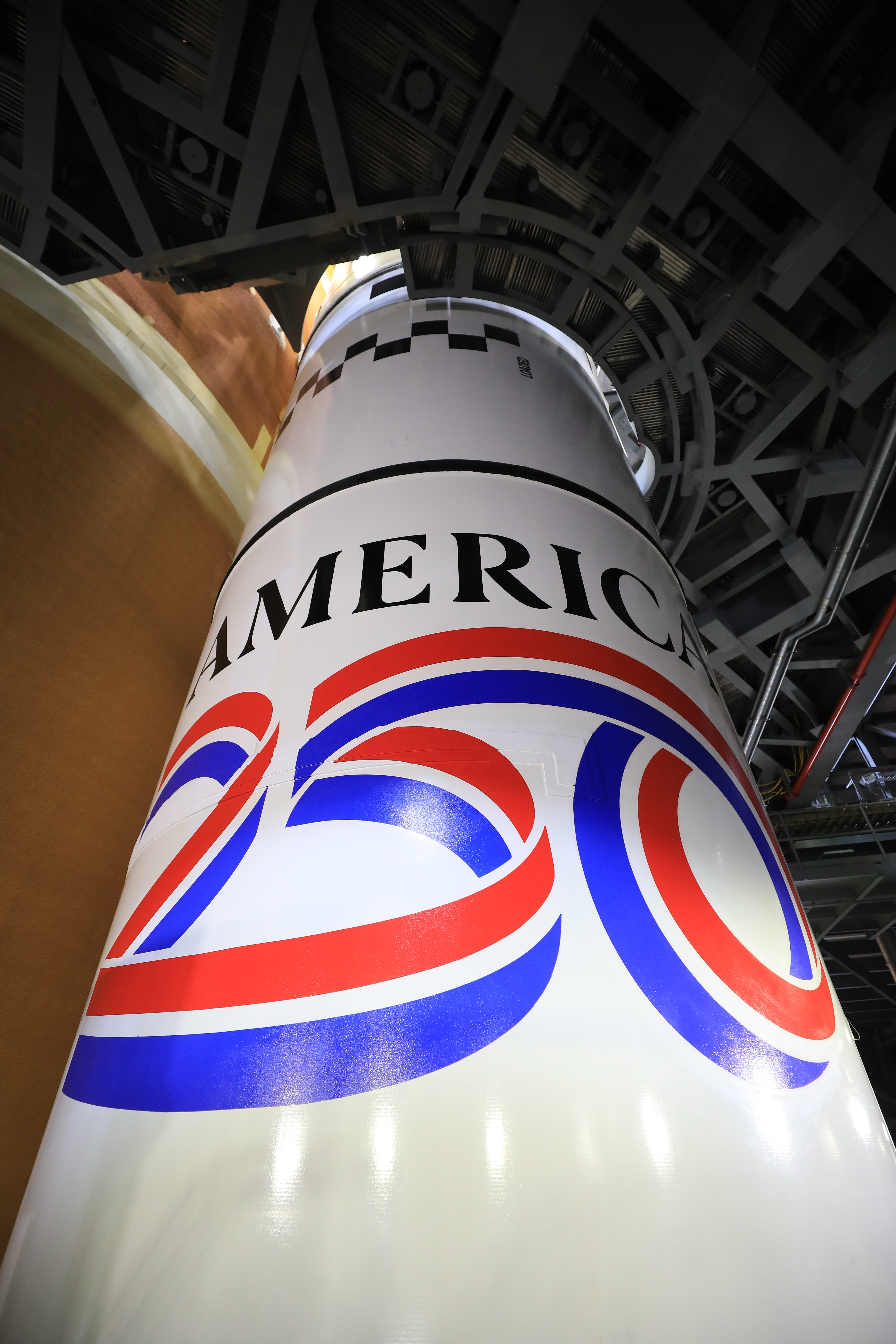
NASA is marking America’s 250th year with a bold new symbol of the nation’s relentless drive to explore.
The America 250 emblem is now on the twin solid rocket boosters of the SLS (Space Launch System) rocket for Artemis II — the powerhouse that will launch a crew of four around the Moon next year. Unveiled Tuesday, the design echoes the America 250 Commission’s Spirit of Innovation theme, honoring a country that has never stopped pushing the horizon forward.
At NASA’s Kennedy Space Center in Florida, technicians spent recent weeks carefully applying the emblem on the rocket inside the Vehicle Assembly Building — the same place where rockets for Apollo once stood. Engineers are running final tests on SLS and the Orion spacecraft as preparations intensify for Artemis II.
The roughly 10-day Artemis II journey around the Moon will mark a defining moment in this new era of American exploration — paving the way for U.S. crews to land on the lunar surface and ultimately push onward to Mars.
America’s spirit of discovery is alive, and Artemis is carrying it to the Moon and beyond.
Image credit: NASA/Ben Smegelsky
The asteroid Bennu continues to provide new clues to scientists’ biggest questions about the formation of the early solar system and the origins of life. As part of the ongoing study of pristine samples delivered to Earth by NASA’s OSIRIS-REx (Origins, Spectral Interpretation, Resource Identification, and Security-Regolith Explorer) spacecraft, three new papers published Tuesday by the journals Nature Geosciences and Nature Astronomy present remarkable discoveries: sugars essential for biology, a gum-like substance not seen before in astromaterials, and an unexpectedly high abundance of dust produced by supernova explosions.
Sugars essential to life
Scientists led by Yoshihiro Furukawa of Tohoku University in Japan found sugars essential for biology on Earth in the Bennu samples, detailing their findings in the journal Nature Geoscience. The five-carbon sugar ribose and, for the first time in an extraterrestrial sample, six-carbon glucose were found. Although these sugars are not evidence of life, their detection, along with previous detections of amino acids, nucleobases, and carboxylic acids in Bennu samples, show building blocks of biological molecules were widespread throughout the solar system.
For life on Earth, the sugars deoxyribose and ribose are key building blocks of DNA and RNA, respectively. DNA is the primary carrier of genetic information in cells. RNA performs numerous functions, and life as we know it could not exist without it. Ribose in RNA is used in the molecule’s sugar-phosphate “backbone” that connects a string of information-carrying nucleobases.
“All five nucleobases used to construct both DNA and RNA, along with phosphates, have already been found in the Bennu samples brought to Earth by OSIRIS-REx,” said Furukawa. “The new discovery of ribose means that all of the components to form the molecule RNA are present in Bennu.”
The discovery of ribose in asteroid samples is not a complete surprise. Ribose has previously been found in two meteorites recovered on Earth. What is important about the Bennu samples is that researchers did not find deoxyribose. If Bennu is any indication, this means ribose may have been more common than deoxyribose in environments of the early solar system.
Researchers think the presence of ribose and lack of deoxyribose supports the “RNA world” hypothesis, where the first forms of life relied on RNA as the primary molecule to store information and to drive chemical reactions necessary for survival.

“Present day life is based on a complex system organized primarily by three types of functional biopolymers: DNA, RNA, and proteins,” explains Furukawa. “However, early life may have been simpler. RNA is the leading candidate for the first functional biopolymer because it can store genetic information and catalyze many biological reactions.”
The Bennu samples also contained one of the most common forms of “food” (or energy) used by life on Earth, the sugar glucose, which is the first evidence that an important energy source for life as we know it was also present in the early solar system.
Mysterious, ancient ‘gum’
A second paper, in the journal Nature Astronomy led by Scott Sandford at NASA’s Ames Research Center in California’s Silicon Valley and Zack Gainsforth of the University of California, Berkeley, reveals a gum-like material in the Bennu samples never seen before in space rocks – something that could have helped set the stage on Earth for the ingredients of life to emerge. The surprising substance was likely formed in the early days of the solar system, as Bennu’s young parent asteroid warmed.
Once soft and flexible, but since hardened, this ancient “space gum” consists of polymer-like materials extremely rich in nitrogen and oxygen. Such complex molecules could have provided some of the chemical precursors that helped trigger life on Earth, and finding them in the pristine samples from Bennu is important for scientists studying how life began and whether it exists beyond our planet.

Scott SandFord
Astrophysicist, NASA’s Ames Research Center
Bennu’s ancestral asteroid formed from materials in the solar nebula – the rotating cloud of gas and dust that gave rise to the solar system – and contained a variety of minerals and ices. As the asteroid began to warm, due to natural radiation, a compound called carbamate formed through a process involving ammonia and carbon dioxide. Carbamate is water soluble, but it survived long enough to polymerize, reacting with itself and other molecules to form larger and more complex chains impervious to water. This suggests that it formed before the parent body warmed enough to become a watery environment.
“With this strange substance, we’re looking at, quite possibly, one of the earliest alterations of materials that occurred in this rock,” said Sandford. “On this primitive asteroid that formed in the early days of the solar system, we’re looking at events near the beginning of the beginning.”
Using an infrared microscope, Sandford’s team selected unusual, carbon-rich grains containing abundant nitrogen and oxygen. They then began what Sandford calls “blacksmithing at the molecular level,” using the Molecular Foundry at Lawrence Berkeley National Laboratory (Berkeley Lab) in Berkeley, California. Applying ultra-thin layers of platinum, they reinforced a particle, welded on a tungsten needle to lift the tiny grain, and shaved the fragment down using a focused beam of charged particles.
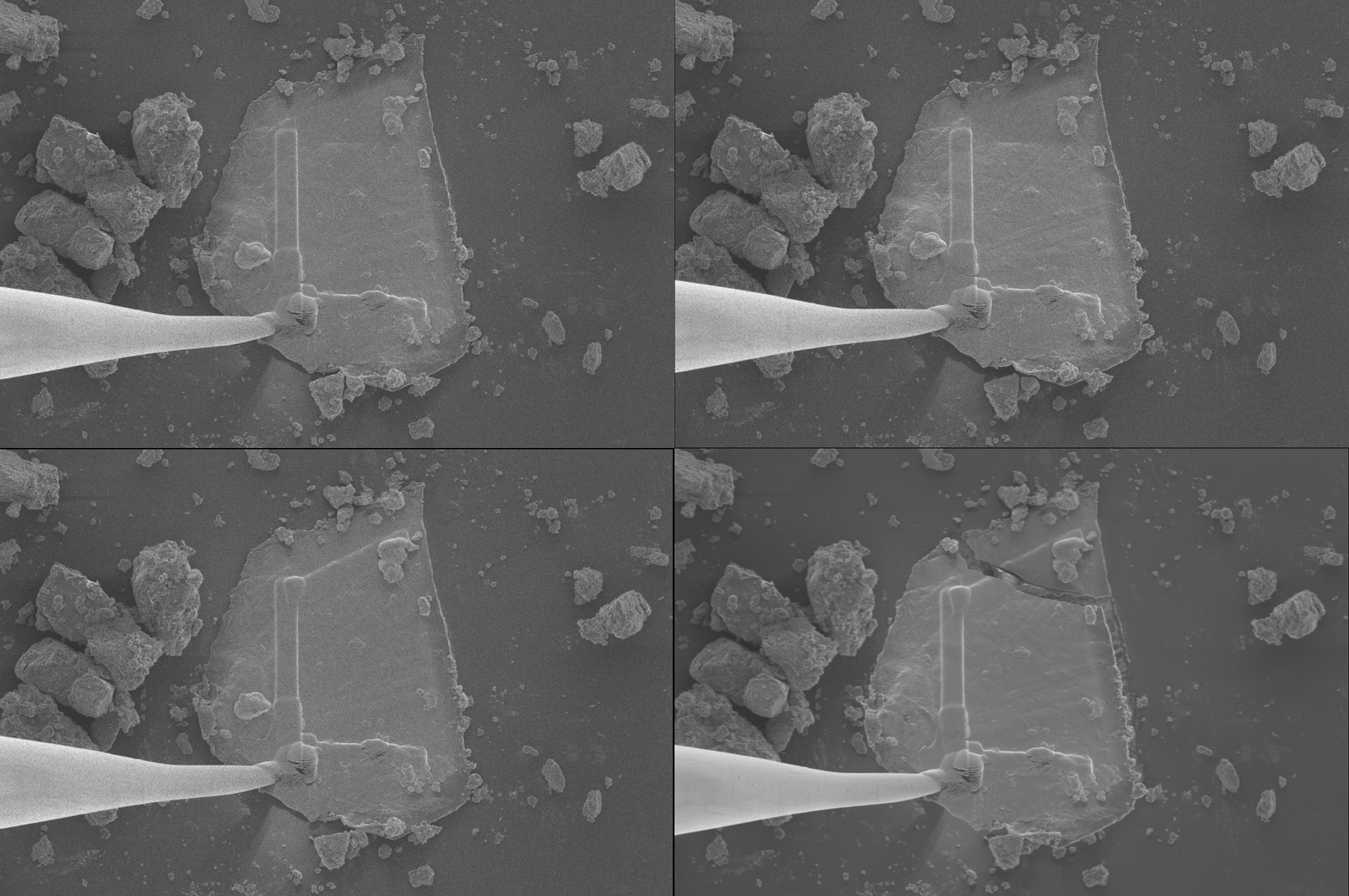
When the particle was a thousand times thinner than a human hair, they analyzed its composition via electron microscopy at the Molecular Foundry and X-ray spectroscopy at Berkeley Lab’s Advanced Light Source. The ALS’s high spatial resolution and sensitive X-ray beams enabled unprecedented chemical analysis.
“We knew we had something remarkable the instant the images started to appear on the monitor,” said Gainsforth. “It was like nothing we had ever seen, and for months we were consumed by data and theories as we attempted to understand just what it was and how it could have come into existence.”
The team conducted a slew of experiments to examine the material’s characteristics. As the details emerged, the evidence suggested the strange substance had been deposited in layers on grains of ice and minerals present in the asteroid.
It was also flexible – a pliable material, similar to used gum or even a soft plastic. Indeed, during their work with the samples, researchers noticed the strange material was bendy and dimpled when pressure was applied. The stuff was translucent, and exposure to radiation made it brittle, like a lawn chair left too many seasons in the sun.
“Looking at its chemical makeup, we see the same kinds of chemical groups that occur in polyurethane on Earth,” said Sandford, “making this material from Bennu something akin to a ‘space plastic.’”
The ancient asteroid stuff isn’t simply polyurethane, though, which is an orderly polymer. This one has more “random, hodgepodge connections and a composition of elements that differs from particle to particle,” said Sandford. But the comparison underscores the surprising nature of the organic material discovered in NASA’s asteroid samples, and the research team aims to study more of it.
By pursuing clues about what went on long ago, deep inside an asteroid, scientists can better understand the young solar system – revealing the precursors to and ingredients of life it already contained, and how far those raw materials may have been scattered, thanks to asteroids much like Bennu.
Abundant supernova dust
Another paper in the journal Nature Astronomy, led by Ann Nguyen of NASA’s Johnson Space Center in Houston, analyzed presolar grains – dust from stars predating our solar system – found in two different rock types in the Bennu samples to learn more about where its parent body formed and how it was altered by geologic processes. It is believed that presolar dust was generally well-mixed as our solar system formed. The samples had six-times the amount of supernova dust than any other studied astromaterial, suggesting the asteroid’s parent body formed in a region of the protoplanetary disk enriched in the dust of dying stars.
The study also reveals that, while Bennu’s parent asteroid experienced extensive alteration by fluids, there are still pockets of less-altered materials within the samples that offer insights into its origin.

“These fragments retain a higher abundance of organic matter and presolar silicate grains, which are known to be easily destroyed by aqueous alteration in asteroids,” said Nguyen. “Their preservation in the Bennu samples was a surprise and illustrates that some material escaped alteration in the parent body. Our study reveals the diversity of presolar materials that the parent accreted as it was forming.”
NASA’s Goddard Space Flight Center provided overall mission management, systems engineering, and the safety and mission assurance for OSIRIS-REx. Dante Lauretta of the University of Arizona, Tucson, is the principal investigator. The university leads the science team and the mission’s science observation planning and data processing. Lockheed Martin Space in Littleton, Colorado, built the spacecraft and provided flight operations. Goddard and KinetX Aerospace were responsible for navigating the OSIRIS-REx spacecraft. Curation for OSIRIS-REx takes place at NASA’s Johnson Space Center in Houston. International partnerships on this mission include the OSIRIS-REx Laser Altimeter instrument from CSA (Canadian Space Agency) and asteroid sample science collaboration with JAXA’s (Japan Aerospace Exploration Agency’s) Hayabusa2 mission. OSIRIS-REx is the third mission in NASA’s New Frontiers Program, managed by NASA’s Marshall Space Flight Center in Huntsville, Alabama, for the agency’s Science Mission Directorate in Washington.
For more information on the OSIRIS-REx mission, visit:
https://www.nasa.gov/osiris-rex
Karen Fox / Molly Wasser
Headquarters, Washington
202-285-5155 / 240-419-1732
karen.c.fox@nasa.gov / molly.l.wasser@nasa.gov
On Nov. 2, 2025, NASA honored 25 years of continuous human presence aboard the International Space Station. What began as a fragile framework of modules has evolved into a springboard for international cooperation, advanced scientific research and technology demonstrations, the development of a low Earth orbit economy, and NASA’s next great leaps in exploration, including crewed missions to the Moon and Mars.
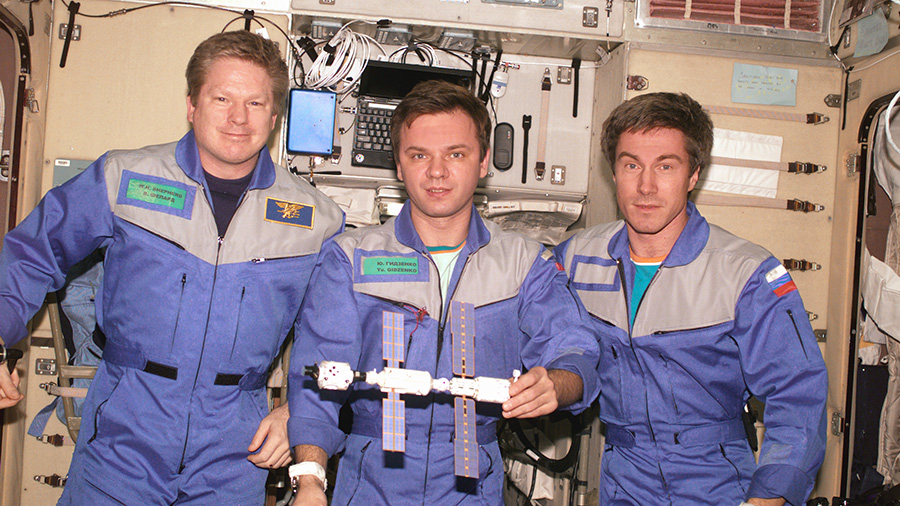
This legacy of achievement in global human endeavors began with the first crew’s arrival to the space station on Nov. 2, 2000. Expedition 1 crew members NASA astronaut William M. Shepherd and Russian Aviation and Space Agency, now Roscosmos, cosmonauts Yuri P. Gidzenko and Sergei K. Krikalev launched from the Baikonur Cosmodrome in Kazakhstan two days prior. After a successful docking, the crew transferred aboard the station and began bringing it to life. Their primary tasks during their four-month mission included installing and activating the life support and communications systems and working with three visiting space shuttle crews to continue the station’s assembly. The trio returned to Earth in March 2001 aboard space shuttle Discovery, after having turned the station over to the Expedition 2 crew.
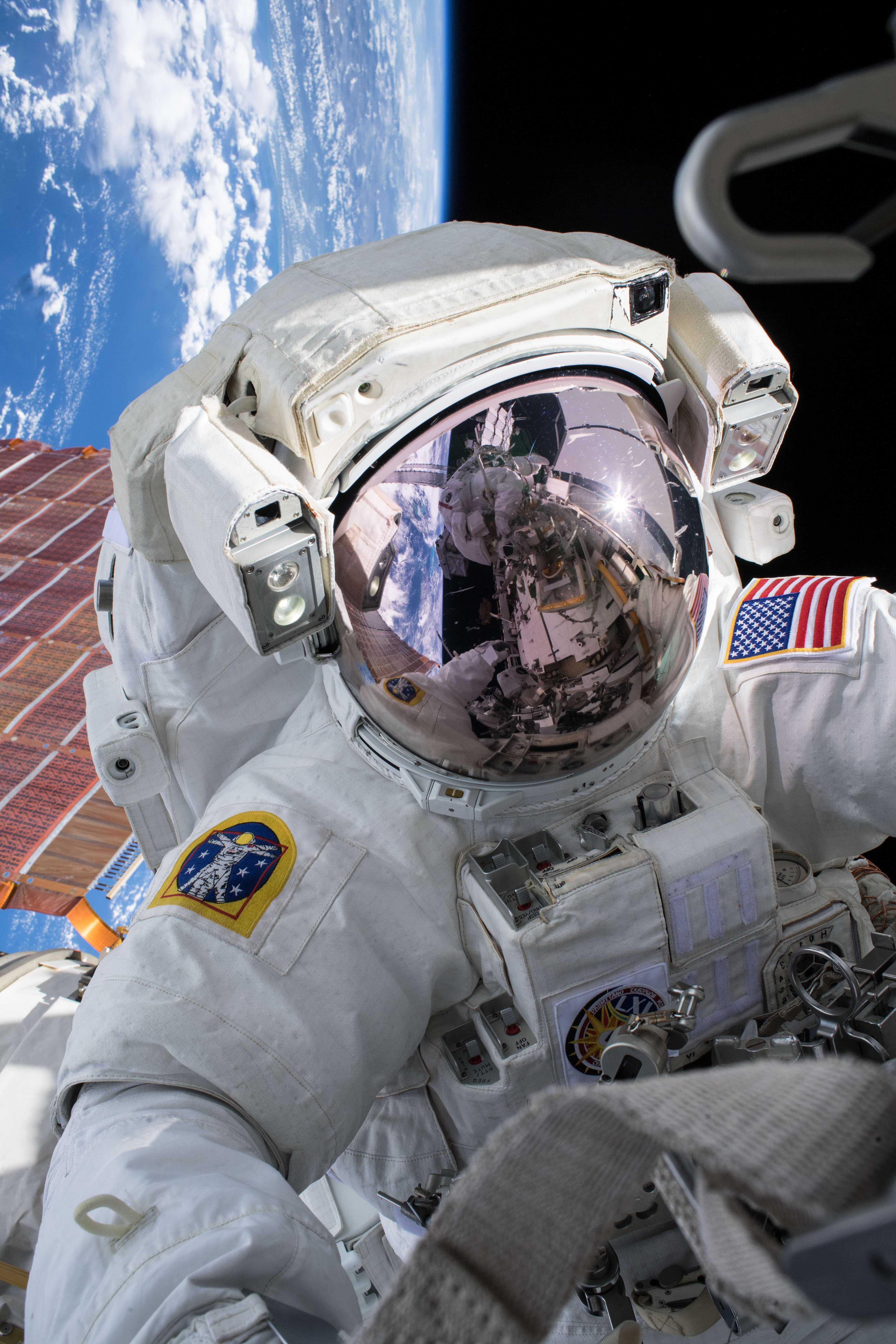
Assembly and maintenance of the International Space Station would not be possible without the skilled work of crew members performing intricate tasks, in bulky spacesuits, in the harsh environment of space. In addition to station upkeep, spacewalks provide a platform for testing and improving spacesuits and tools – critical information for future exploration of the Moon and Mars. Other spacewalks have included operations for scientific research. In Jan. 2025, for example, crew members collected samples for an investigation examining whether microorganisms have exited through station vents and can survive in space, to better inform spacecraft design that helps prevent human contamination of Mars and other destinations.
More than 270 spacewalks dedicated to the space station have been accomplished in the last quarter century. Several made station and human spaceflight history:
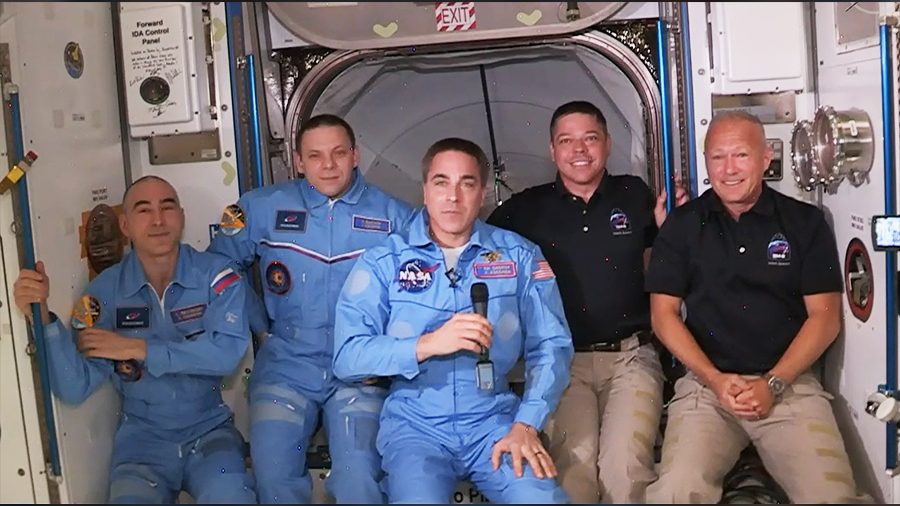
The International Space Station welcomed its first commercial crew members on May 31, 2020, when former NASA astronauts Robert Behnken and Douglas Hurley joined Expedition 63 Commander and NASA astronaut Chris Cassidy and Roscosmos cosmonauts Anatoly Ivanishin and Ivan Vagner aboard the orbiting laboratory.
Behnken and Hurley lifted off from Kennedy Space Center in Florida the day before on NASA’s SpaceX Demo-2 test flight – the first launch of American astronauts from U.S. soil since the space shuttle’s retirement in 2011.
The duo quickly integrated with the rest of the crew and participated in a number of scientific experiments, spacewalks, and public engagement events during their 62 days aboard station. Overall, the pair spent 64 days in orbit, completed 1,024 orbits around Earth, and contributed more than 100 hours of time to supporting the orbiting laboratory’s investigations before splashing down on Aug. 2.
Successful completion of the Demo-2 mission paved the way for regular SpaceX flights carrying astronauts to and from the space station. With another certified crew transportation system in place, the International Space Station Program added research time and increased the opportunity for discovery aboard humanity’s testbed for exploration, including preparations for human exploration of the Moon and Mars.

On Sept. 27, 2023, NASA astronaut Frank Rubio returned to Earth after spending 371 days aboard the International Space Station—the longest single spaceflight by a U.S. astronaut in history. His mission surpassed the previous record of 355 days, set by NASA astronaut Mark Vande Hei, and provided scientists with an unprecedented look at how the human body adapts to more than a year in microgravity.
Rubio’s record-setting mission supported six human research studies, including investigations into diet, exercise, and overall physiology and psychology. He was the first astronaut to test whether limited workout equipment could still maintain health and fitness, an important consideration for future spacecraft with tighter living quarters. He also contributed biological samples, surveys, and tests for NASA’s Spaceflight Standard Measures, a study that collects health data from astronauts to better understand how the body adapts to space—knowledge that helps prepare crews for the Artemis campaign to the Moon and future trips to Mars.
Alongside his fellow crew members, Rubio participated in dozens of investigations and technology demonstrations, from growing tomato plants with hydroponic and aeroponic techniques to materials science experiments that advance spacecraft design.
Long-duration missions help inform future spaceflight and lay the groundwork for the next era of human exploration.

The space station is one of the most ambitious international collaborations ever attempted. It brings together international flight crews, multiple launch vehicles, globally distributed launch and flight operations, training, engineering, and development facilities, communications networks, and the international scientific research community for the benefit of all humanity.
An international partnership of space agencies operates the elements of the orbiting laboratory: NASA, Roscosmos, ESA (European Space Agency), JAXA (Japan Aerospace Exploration Agency), and CSA (Canadian Space Agency). Each partner takes primary responsibility for managing and running the station hardware it provides, as well as on-Earth construction, launch support, mission operations, communications, and research and technology facilities that support the station.
At least 290 individuals representing 26 countries, and the five international partners have visited the orbiting laboratory during its 25 years of continuous human presence. Some of those visitors flew to the station on private astronaut missions. These missions contribute to scientific, outreach, and commercial activities. They also help demonstrate the demand for future commercial space stations and are an important component of NASA’s strategy for enabling a robust and competitive commercial economy in low Earth orbit.
The results of the international partnership created through the space station and its accomplishments exemplifies how countries can work together to overcome complex challenges and achieve collaborative goals.

On 2 December 1995 the ESA/NASA Solar and Heliospheric Observatory (SOHO) blasted into space – on what was supposed to be a two-year mission.
From its outpost 1.5 million km away from Earth in the direction of the Sun, SOHO enjoys uninterrupted views of our star. It has provided a nearly continuous record of our Sun’s activity for close to three 11-year-long solar cycles.

This article is for students grades 5-8.
Artificial intelligence, or AI, is a type of technology that helps machines and computers have “thinking” abilities similar to humans. Devices using AI can learn words and concepts, recognize objects, see patterns, or make predictions. They can also be taught how to work autonomously. AI is often used to help people understand and solve problems more quickly than they could on their own.
AI includes:
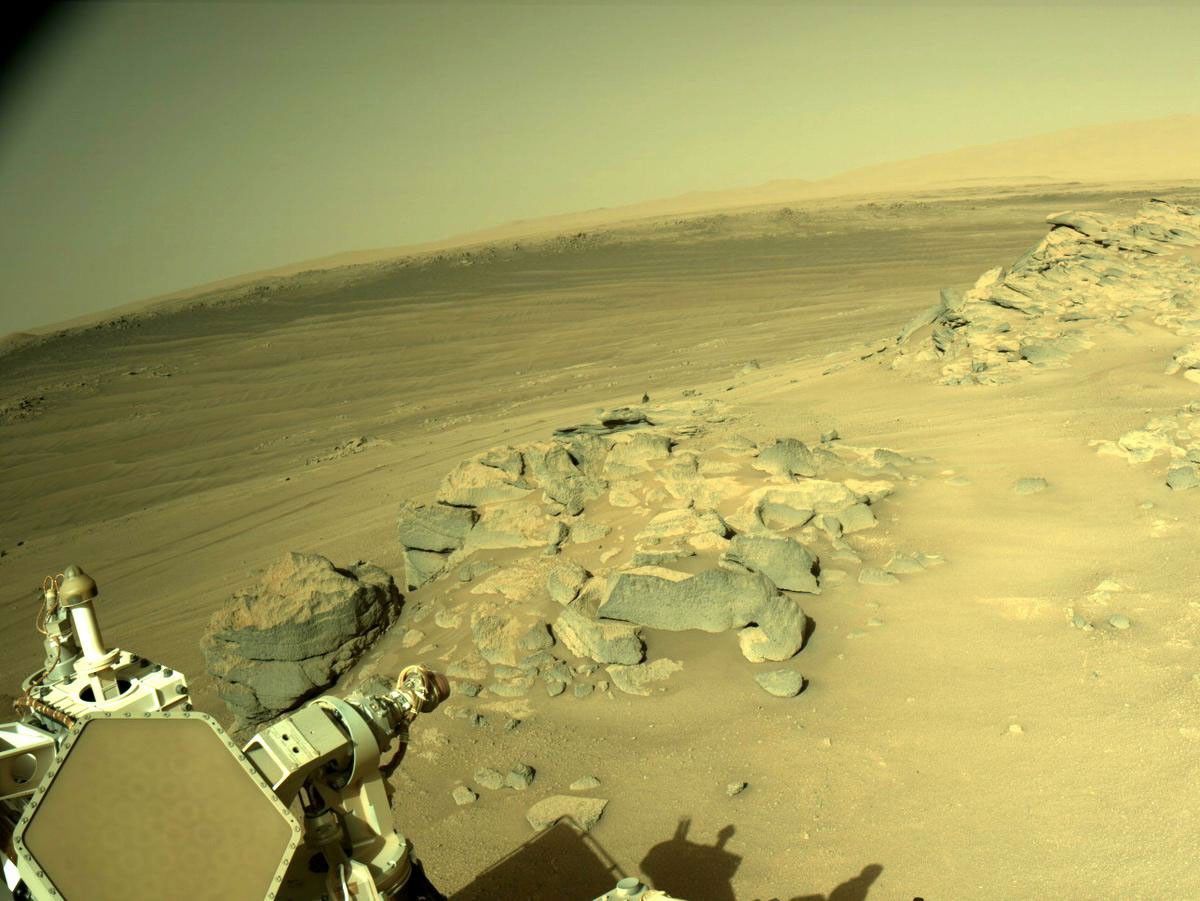
NASA has found uses for AI in many of its missions and programs.
For missions to the Moon, AI can use satellite imagery to create detailed 3D maps of dark craters. This data could help scientists plan missions, spot hazards, and even identify where future crews might find water ice. On Mars, the Perseverance rover uses AI to drive itself autonomously. It takes pictures of the ground, sees obstacles, and chooses the safest path.
AI also helps NASA search for planets outside our solar system. For example, AI has helped citizen scientists find over 10,000 pairs of binary stars. These pairs orbit each other and block each other’s light. This information could help scientists search for new planets and learn more about how stars form.
———————————————————————————————
Autonomous: acting or operating independently, without external control. An autonomous technology can perform duties without human intervention.
Citizen scientist: a member of the public, often a volunteer, who collects data that can be used by scientists. When members of the public participate in research in this way, it’s called citizen science.
———————————————————————————————
NASA also uses AI to support its work on Earth. The agency uses AI to aid disaster relief efforts during and after natural disasters like hurricanes or wildfires. For example, AI can count tarps on roofs in satellite images to measure damage after a storm. NASA is also supporting flight controllers and pilots by using AI to plan better flight routes, making air travel safer and more efficient.
AI is helping NASA explore space, protect people, and make amazing discoveries!
“AI is a great field for people who like solving problems, building things, or asking questions about how the world works. People use AI to help doctors understand diseases, to teach robots how to explore space, and to help communities prepare for things like floods or wildfires. If you like using technology to help people and discover new things, AI could be a great career for you!” – Krista Kinnard, NASA’s Deputy Chief AI Officer

NASA roles that may involve AI include:
Astronauts: Astronauts on the International Space Station can use an AI “digital assistant” to get medical recommendations. This is helpful when communication with Earth is interrupted. It could also be useful on future missions to distant destinations like Mars.
Engineers: Engineers can use AI to help them generate designs for things like new spacecraft.
Astronomers: AI helps astronomers analyze satellite and deep space telescope data to find stars and exoplanets.
Meteorologists: Weather experts can use machine learning to make climate projections.
Programmers: Programmers can use AI to update code used in older missions, bringing it up to modern standards.
IT professionals: AI can enable IT experts to understand outages across NASA, allowing them to get programs back up and running faster.
Program managers: Program managers can use AI to plan and model NASA missions.
Build Your Computer Science Skills With NASA
Gaining Traction on Mars Activity
NASA Space Detective: Can You Spot a Star or a Galaxy
Video: Hack Into Computer Science With NASA
Artificial Intelligence at NASA