NASA’s James Webb Space Telescope took a look at the Sagittarius B2 molecular cloud, the most massive, and active star-forming region in our galaxy, located only a few hundred light years from our central supermassive black hole.
Tag: space
-
Sagittarius B2 Molecular Cloud
 NASA, ESA, CSA, STScI, Adam Ginsburg (University of Florida), Nazar Budaiev (University of Florida), Taehwa Yoo (University of Florida); Image Processing: Alyssa Pagan (STScI)
The Mid-Infrared Instrument (MIRI) on NASA’s James Webb Space Telescope captured glowing cosmic dust heated by very young massive stars in unprecedented detail in this image of the Sagittarius B2 (Sgr B2) molecular cloud released on Sept. 24, 2025.
Sgr B2 is the most massive, and active star-forming region in our galaxy, located only a few hundred light years from our central supermassive black hole. While Sgr B2 has only 10% of the galactic center’s gas, it produces 50% of its stars. Astronomers want to figure out why it is so much more active than the rest of the galactic center.
MIRI has both a camera and a spectrograph that sees light in the mid-infrared region of the electromagnetic spectrum. MIRI’s view reveals colorful stars punctuated occasionally by bright clouds of gas and dust. Further research into these stars will reveal details of their masses and ages, which will help astronomers better understand the process of star formation in this dense, active galactic center region.
Image credit: Image: NASA, ESA, CSA, STScI, Adam Ginsburg (University of Florida), Nazar Budaiev (University of Florida), Taehwa Yoo (University of Florida); Image Processing: Alyssa Pagan (STScI)
-
Flooding in Sri Lanka

Image:
Puttalam district in North Western Sri Lanka is currently facing severe flooding, landslides and rockfalls, caused by heavy monsoon rains across the region. Copernicus Sentinel-2 captured an image over the region yesterday, 30 November 2025, as well an image one month ago, showing the extent of flooding. -
Mark Elder: Building the Future of Spacewalking for Artemis and Beyond
For more than 25 years, Mark Elder has helped make human spaceflight safe and possible. As the International Space Station EVA hardware manager in the Extravehicular Activity (EVA) Office within the EVA and Human Surface Mobility Program, he leads the team responsible for the spacesuits, tools, and logistics that keep astronauts protected during spacewalks—and ensures NASA is ready for the next era of Artemis exploration.
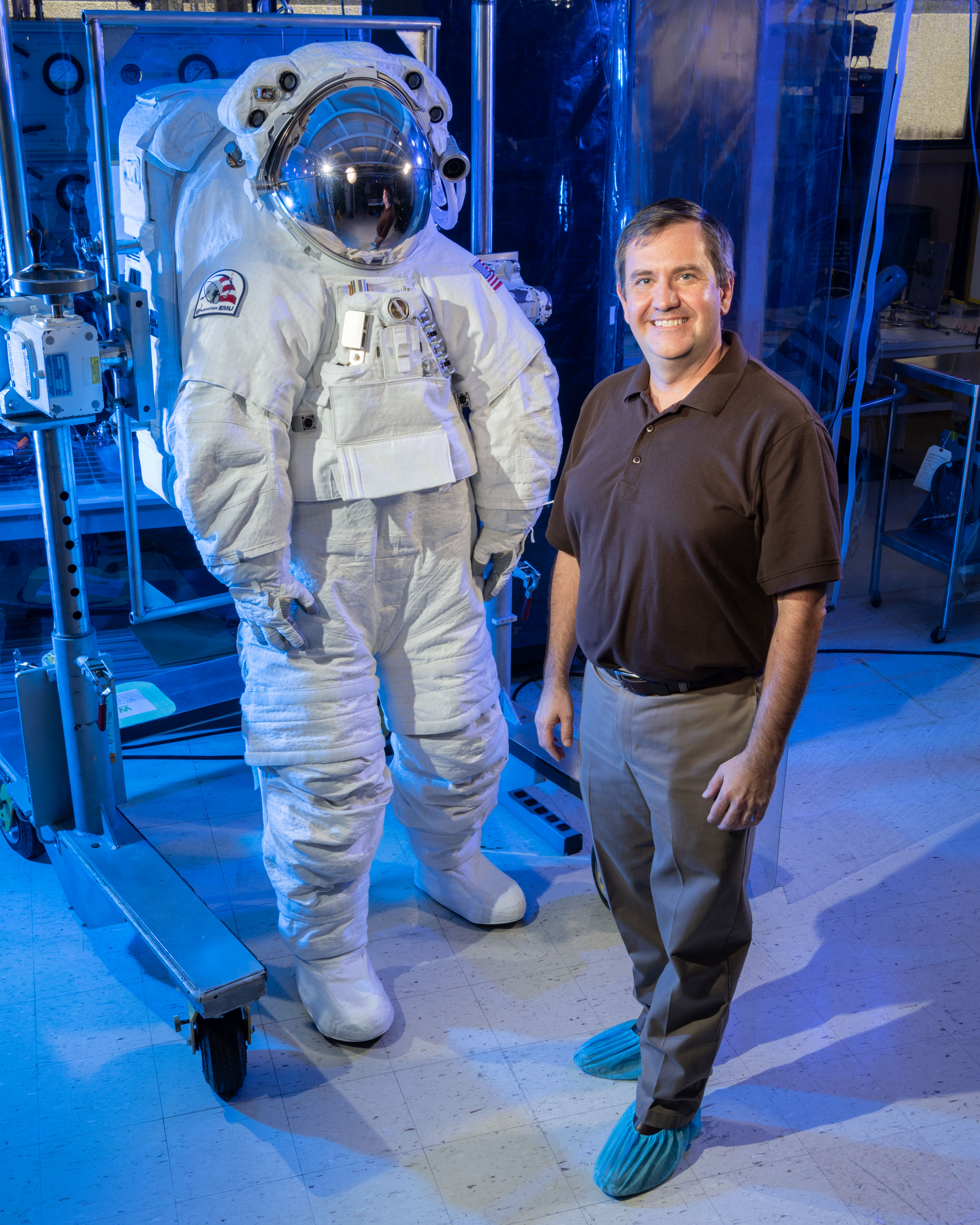
 Mark Elder with NASA’s Exploration Extravehicular Mobility Unit (xEMU) spacesuit at Johnson Space Center in Houston.NASA/Bill Stafford
His team is programmatically responsible for the Extravehicular Mobility Unit, or EMU, spacesuit. That means every bolt, bearing, and battery astronauts rely on outside the International Space Station ultimately falls under their watch. He also oversees the EVA Space Operations Contract, which provides engineering and technical support to keep spacesuit systems flight ready.
Elder’s work directly supports every EVA, or spacewalk, conducted at the station. His team coordinates with astronauts, engineers, and the Mission Control Center in Houston to make sure the suits and tools operate reliably in the most unforgiving environment imaginable. Their work helps ensure every EVA is conducted safely and successfully.
Elder’s passion for NASA began at an early age.
“When I was little, my parents gave me a book called ‘The Astronauts,’” he said. “It had drawings of a reusable spacecraft—the space shuttle—and I fell in love with it. From then on, I told everyone I was going to work at NASA.”
That dream took off at age 16, when he attended Space Academy in Huntsville, Alabama. “That cemented my dream of someday working at NASA, and it taught me a little bit more about the different roles within the agency,” he said.
While attending Case Western Reserve University as a mechanical engineering student, he learned about a new NASA program that allowed college students to design and build an experiment and then come to Johnson Space Center for a week to fly with their experiment on the Boeing KC-135 Stratotanker. “I jumped on the chance to be part of the team,” he said. “The experience further cemented my dream of working at NASA one day—Johnson in particular.”
After graduation, Elder worked with Pratt & Whitney on jet engines. While the experience was invaluable, he knew his heart belonged in human spaceflight. “I learned that one of Pratt’s fellow companies under the United Technologies umbrella was Hamilton Sundstrand, which was the prime contractor for the spacesuit,” he said. “I jumped at the chance to transfer, and my career at NASA finally began.”
Elder spent his first three years at Johnson performing tool-to-tool fit checks on spacewalking equipment, giving him hands-on experience with nearly every tool that he would eventually become responsible for as a hardware manager.
 Mark Elder stands in front of the Space Shuttle Atlantis before the STS-117 launch on June 8, 2007.
His early years coincided with the shuttle return-to-flight era, when he worked on reinforced carbon-carbon panel repairs and thermal protection systems. Those experiences built his technical foundation and prepared him for the leadership roles to come.
Over time, Elder took on increasingly complex assignments, eventually leading the team that developed the EVA Long Life Battery—the first human-rated lithium battery used in space. His team created a rigorous test plan to certify the battery for human spaceflight at a time when lithium batteries were under scrutiny for safety concerns.
“Finally signing the certification paperwork was satisfying, but watching an EVA powered by the batteries provided a great sense of pride,” he said.
This innovation set the stage for future generations of even safer, higher-capacity batteries that power today’s spacewalking operations and will eventually support lunar surface activities.
Looking back, Elder said some of his greatest lessons came from learning how to lead with purpose. “The great thing about NASA is the highly motivated and dedicated workforce,” he said. “When I first became a team lead, I thought success meant making quick decisions and moving fast. I learned that leadership is really about listening. Strong teams are built on trust and open communication.”
Another defining lesson, he said, has been learning to assume positive intent. “In a place like NASA, everyone is deeply passionate about what they do,” he said. “It’s easy to misinterpret a disagreement as opposition, but when you remember that everyone is working toward the same goal, the conversation changes. You focus on solving problems, not winning arguments.”
That mindset has guided Elder through some of NASA’s most complex programs and helped him build lasting partnerships across the agency.
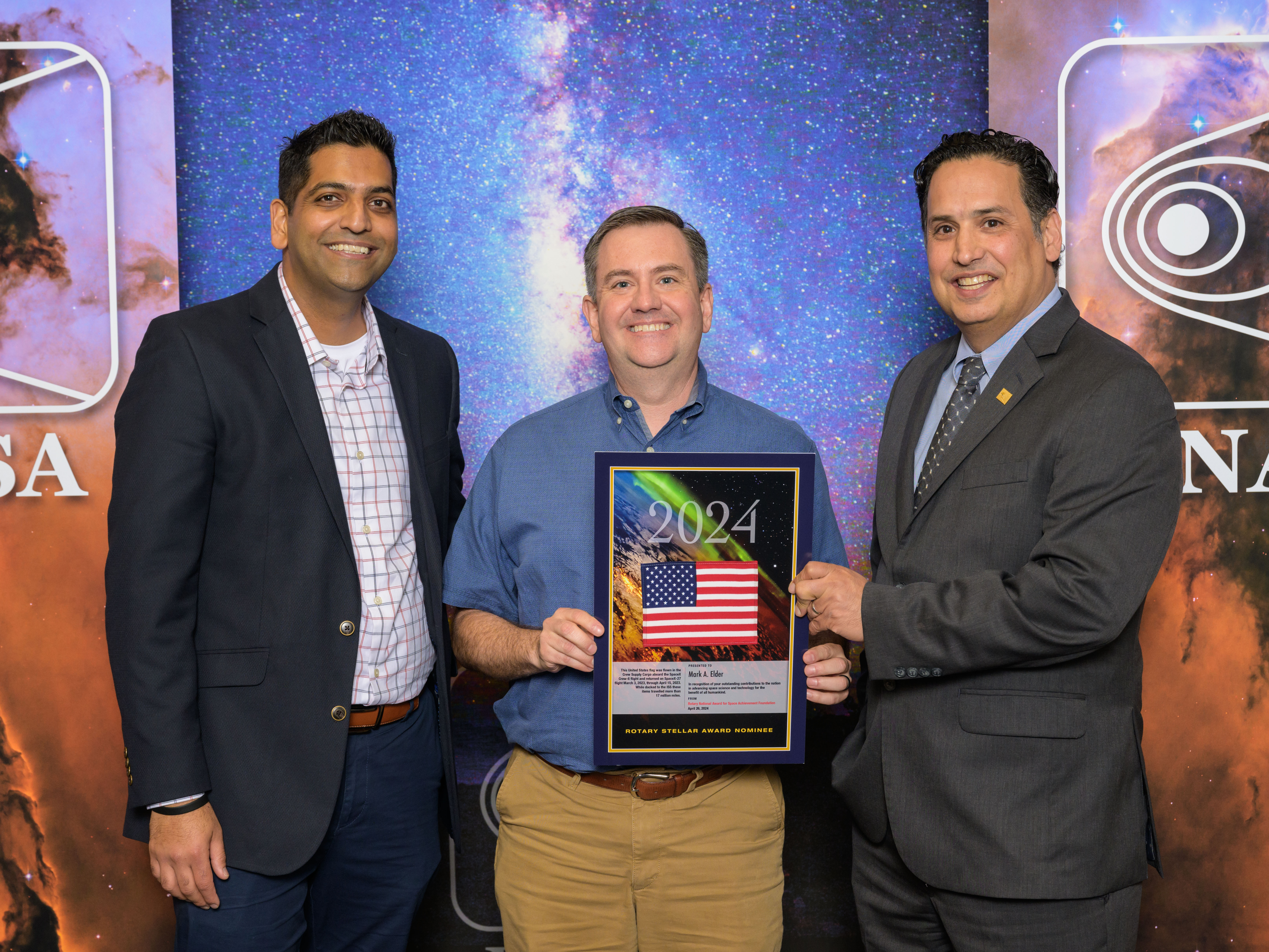
 Mark Elder receives an award at the 2024 Rotary National Award for Space Achievement Stellar Awards ceremony at the Hyatt Regency in downtown Houston.NASA/Josh Valcarcel
Today, Elder’s work extends beyond the orbiting laboratory. As NASA prepares for Artemis missions to the Moon, his team’s experience maintaining and improving the EMU informs the design of next-generation exploration suits.
“The foundation we’ve built on the space station is critical for the future,” he said. “Every tool we’ve refined, every system we’ve upgraded—it all feeds into how we’ll operate on the lunar surface and eventually on Mars.”
Elder believes that the key to future success lies in perseverance. He advises the next generation to never stop dreaming. “My path wasn’t direct, and it would have been easy for me to give up,” he said. “But dreams have a way of guiding you if you don’t let go of them.”
When he’s not supporting those missions, Elder’s creativity takes shape in his workshop. “In my spare time, I love woodworking,” he said. “Building something useful from a pile of rough-sawn boards helps calm me and gives me a great sense of accomplishment. I love being able to build furniture for my family,” he added, after recently finishing a desk for his youngest son.
The same patience and precision he brings to woodworking defines his approach to exploration—steady progress, careful craftmanship, and attention to detail. “As NASA goes to the Moon and Mars, there will be challenges,” Elder said. “As long as we keep dreaming, we will see the next generation walking on the Moon and heading to Mars.”
-
Europe’s next mission to Venus – Envision this (introduction)

Video:
00:01:01Meet Envision. Europe’s next mission to Venus. Planned for launch in 2031.
Envision will study Venus from its core to its upper atmosphere to reveal more about the planet’s history, geological activity, and climate. It will help us understand why Earth’s closest neighbour – in distance as well as in physical characteristics – has evolved into such a hostile planet.
A mission like Envision takes years of planning, involving much teamwork between scientists and engineers. It’s as much a human as a technical endeavour. This video provides a peek behind the scenes at this process.
This short episode is the introduction to a new series called ‘Envision this’, which will follow the development of the mission. Keep an eye on our dedicated Envision website for future episodes.
-
The new Discovery and Preparation podcast showcases innovation for space

ESA Discovery and Preparation has launched a new podcast series highlighting the innovative space technologies being developed through its activities.
-
A Glimpse of History in Benin City
 January 11, 2025
In some ways, Benin City is like dozens of other fast-growing cities in Nigeria. Buoyed by burgeoning industrial and agricultural sectors, the city’s population rose by 1.7 million people over the past four decades as its footprint on the West African landscape expanded several times over.
Amid bustling new networks of roads, residential neighborhoods, markets, and workshops, lie signs of a much earlier era, when the city was the seat of a powerful pre-colonial kingdom. Remnants of ancient earthworks, thought to be among the longest in the world, can even be seen in images of the city captured from space.
Benin Iya (sometimes called the Benin Earthworks, the Walls of Benin, and the Benin Moat) is a vast, cellular network of interlocking earthen walls, ramparts, and ditches that radiate outward from a central moat at the heart of the city. Built in sections over hundreds of years between the 7th and 14th centuries, the system was key to marking defensive, political, and economic boundaries and played an important role in maintaining order and stability in the Kingdom of Benin.
The OLI-2 (Operational Land Imager-2) on Landsat 9 captured this image of the remains of earthworks on January 11, 2025. The features appear as dark green lines that trace arcing patterns in a densely settled area near the airport on the west bank of the Ikpoba River. Trees and vegetation growing in the moats give the features a dark green color.
Most of the earthworks consisted of relatively narrow and shallow linear ramparts and ditches that spread widely across the landscape. Many sections have been destroyed or are too small or too obscured by modern development to be easily detected by satellites or astronauts in orbit. However, some inner sections that run through the modern Oredo, Egor, and Ikpoba-Okha areas of the city had true walls and moats and are among the most visible in Landsat imagery.
Archaeological research indicates that the earthworks spanned more than 16,000 kilometers (10,000 miles) and enclosed roughly 6,500 square kilometers (2,500 square miles)—an area as large as the U.S. state of Delaware. Such length means the features hold the Guinness World Record for being the “longest earthworks of the pre-mechanical era.” By some measures, the features were together significantly longer than the Great Wall of China.
NASA Earth Observatory image by Lauren Dauphin, using Landsat data from the U.S. Geological Survey. Story by Adam Voiland.
References & Resources
- Guinness World Records Longest earthworks of the pre-mechanical era. Accessed November 25, 2025.
- The Met (2025, May 31) Benin City Earthworks and Urban Planning, Nigeria. Accessed November 25, 2025.
- MOWAA The Benin Iya Survey. Accessed November 25, 2025.
- MOWAA Benin City’s Moat (Iya) System. Accessed November 25, 2025.
- Onwuanyi, N. et al. (2021) The Benin City Moat System: Functional Space or Urban Void? African Journal of Environmental Research, 3(1), 21-39.
- Schepers, C. et al. (2025) Current Condition of the Iya in Benin City, the Gates and Future Preservation Strategies. African Archaeological Review, 42, 519-537.
- UNESCO (1995) Benin Iya / Sungbo’s Eredo. Accessed November 25, 2025.
- World Monuments Fund (2025) Benin City Earthworks. Accessed November 25, 2025.
You may also be interested in:
Stay up-to-date with the latest content from NASA as we explore the universe and discover more about our home planet.
 Breaking New Ground in Mekele5 min read
Researchers are using satellites to study development patterns in this fast-growing city in Ethiopia.
Article From Forest to Field in Pará2 min read
The Santarem plateau in the northern Brazilian state displays a patchwork of cleared and uncleared land bordering a densely forested…
Article The First Labor Day Parade3 min read
New York City’s Manhattan Island was the site of the nation’s first Labor Day parade on September 5, 1882.
Article -
Italian mission adds to growing IRIDE space fleet

The Italian programme IRIDE, which provides public sector services based on data from its fleet of Earth observation constellations, has added eight satellites to its second constellation, Eaglet II.
-
High-resolution radar satellites launched for Greece

Thanks to the EU-funded Recovery and Resilience Facility, and through collaboration between the Greek government, the private satellite company ICEYE and the European Space Agency (ESA), two new high-resolution radar satellites have been launched to strengthen disaster management, environmental monitoring and national security across Greece.
-
ESA’s HydroGNSS mission launched to ‘scout’ for water

The European Space Agency’s first Scout mission, HydroGNSS, was launched today, 28 November, marking a significant step in advancing global understanding of water availability and the effects of climate change on Earth’s water cycle.
The two twin HydroGNSS satellites were carried into orbit at 19:44 CET aboard a SpaceX Falcon 9 rocket, as part of the Transporter-15 rideshare flight from the Vandenberg Space Force Base in California.
-
HydroGNSS launch highlights

Video:
00:02:51ESA’s first Scout mission, HydroGNSS, was launched on 28 November 2025, marking a significant step in advancing global understanding of water availability and the effects of climate change on Earth’s water cycle.
The two twin HydroGNSS satellites were carried into orbit aboard a SpaceX Falcon 9 rocket from the Vandenberg Space Force Base in California, US.
Embracing the New Space concept, HydroGNSS is one of ESA’s new Scout missions being developed within the Earth Observation FutureEO programme.
-

Newly Found Organics in Enceladus’ Plumes
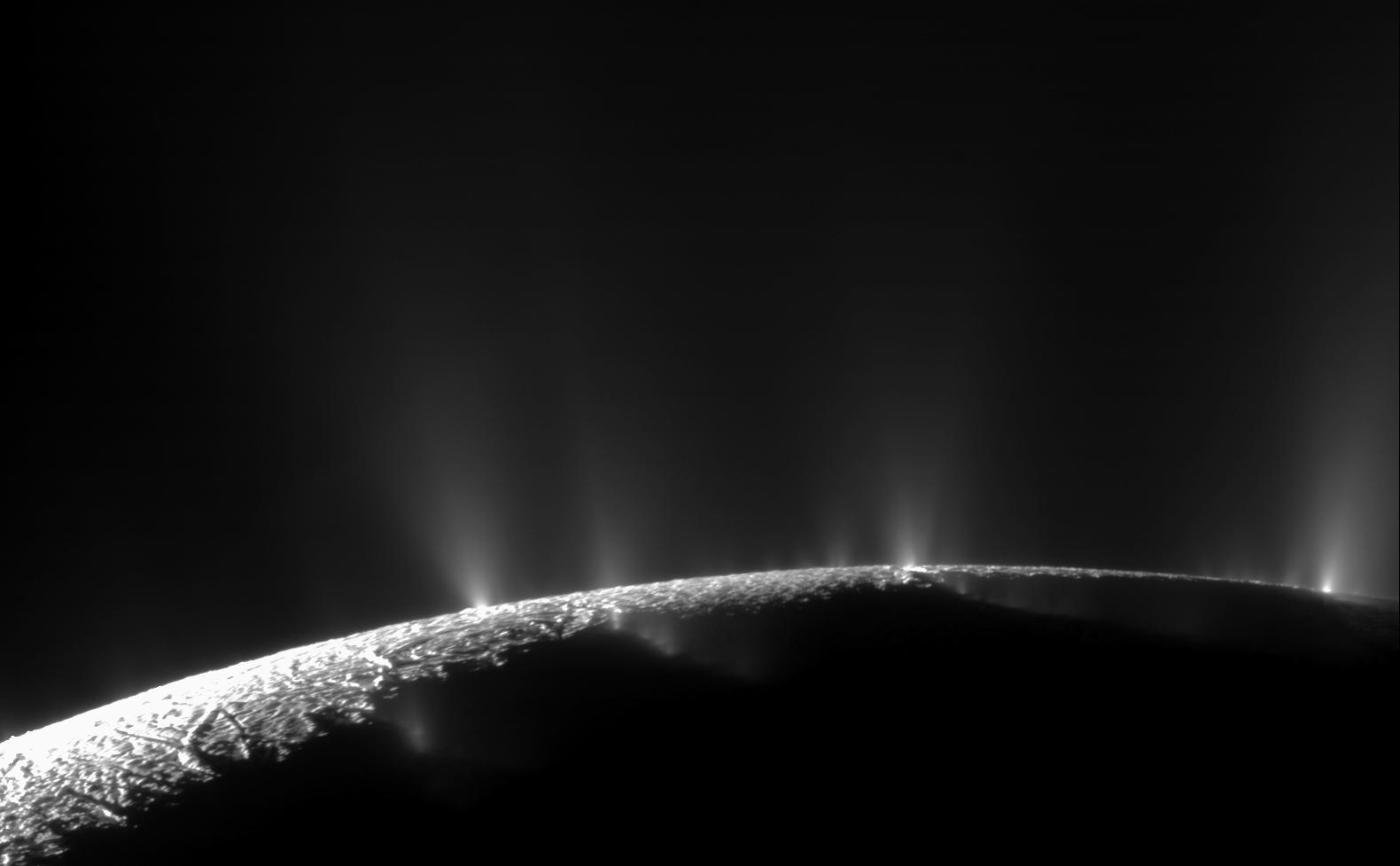
NASA’s Cassini spacecraft captured dramatic plumes, both large and small, spray water ice out from many locations along the famed ‘tiger stripes’ near the south pole of Saturn’s moon Enceladus.
-
Newly Found Organics in Enceladus’ Plumes
 NASA/JPL-Caltech/Space Science Institute
Dramatic plumes, both large and small, spray water ice out from many locations along the famed tiger stripes near the south pole of Saturn’s moon Enceladus in this image released on Feb. 23, 2010. A study published in October 2025 analyzed data from NASA’s Cassini mission and found evidence of previously undetected organic compounds in a plume of ice particles like the ones seen here. The ice particles were ejected from the ocean that lies under Enceladus’ frozen shell. Researchers spotted not only molecules they’ve found before but also new ones that lay a potential path to chemical or biochemical activity.
Learn more about what they discovered.
Image credit: NASA/JPL-Caltech/Space Science Institute