Tag: solar system

  • Repair, Refurbishment, and Modification

    Repair, Refurbishment, and Modification

    Components can be refurbished as a cost effective alternative to the cost of new equipment.
    WSTF Staff

    Components can be refurbished as a cost effective alternative to the cost of new equipment.

    Credits: NASA WSTF

    Our engineers refurbish, repair, and redesign fluid components such as check valves, relief valves, solenoid valves, and manual valves ensuring relief valves and other components are operating within manufacturer’s specifications and comply with the requirements of

    Facilities and Certifications
    Component Services is an approved “VR” certified facility holding the National Board Inspection Code (NBIC) Certificate of Authorization and “VR” Symbol Stamp for the repair of pressure relief valves. 
    Our team is also certified to manufacture flight hardware by NASA and the International Space Station (ISS) Program.

    Repair and Refurbishment
    Repair and refurbishment is a cost effective alternative to replacement and our highly skilled team disassembles, inspects, and precision cleans each item received. We ensure the parts being used for repair and replacement are from the original manufacturer, or from a vendor approved by the National Board verifying replacement parts meet original manufacturer specifications. Spares and replacements can be manufactured by our in-house NASA certified Machining and Fabrication workforce to replace parts that are no longer commercially available.

    Modification
    Equipment can be modified to work safely in your pressure system or in specific media such as oxidizer, oxygen service, fuels, and propellants. Guided by the knowledge gained from 40 years or research and testing by our Oxygen System and Propellants and Aerospace Fluids engineers, our team can modify equipment with recommended parts to operated safely and avoid costly mistakes created by using the wrong components.

    Last Updated: Aug 6, 2017

    Editor: Judy Corbett

  • Environmental Management

    We take an active role in limiting our impacts on the environment and being responsible for the environmental quality of our community. Management support and grassroots efforts have helped to educate employees about environmental concerns, encourage our site’s involvement in sustainability activities, and embrace and implement employee ideas.

    This support has led to a facility-wide culture of environmental awareness and sustainability that reaches across our site. Waste minimization projects, innovative technologies, sustainable acquisition, recycling activities, and other “green” initiatives have become routine site procedures.

  • Propulsion Systems

    Since the first rocket engine test in 1964, our facility has performed development and certification testing of space propulsion systems for manned and unmanned spacecraft.

    Along with our half century of propulsion system testing and analysis, our ISO 9001 certified processes provide rigorous but flexible testing ensuring quality data for our customer. Our site also houses on-site propulsion related expertise in composite pressure systemsoxygen systems, and propellants and aerospace fluids for further testing support.

    In addition to this expertise, we work closely with our Environmental Management and Safety and Mission Assurance teams to provide all environmental permitting, and ensure the safety of our personnel, environment, and site.

  • Oxygen Systems

    Oxygen

    Specializing in the study of oxygen compatibility in space, aircraft, medical, and industrial applications, we investigate the effects of increased oxygen concentration on the ignition and burning of materials and components to help ensure the safety of personnel and equipment.
    In systems or environments with higher oxygen content and/or pressure, materials that normally do not burn have a lower ignition temperature, are more vigorously combustible, and have a higher flame temperature if they do burn.  In response to the reactivity of oxygen, vigorous testing and requirements for the selection, combination, and cleanliness of material and components used in oxygen service have been developed with our world renowned experts often leading the way.

  • Machining And Fabrication

    WSTF Staff

    White Sands Test Facility’s Machining and Fabrication craftsmen specialize in the prototype and production of parts used on the International Space Station, ground support equipment, and facility and test hardware. 

    We combine high-end Computer Numerical Control (CNC) precision machining and welding with experienced personnel and advanced inspection techniques and equipment to deliver the highest quality components to aerospace, defense and other commercial industries.

    Our fabrication team is skilled in working with many ferrous and non-ferrous metals including stainless steel, aluminum, and brass. We have expertise working with exotic metals like Monel®, Inconel®, Kovar®, titanium, carbon, and alloy steels.

  • Calibration

    NASA WSTF

    Our calibration team supports mission critical testing for the International Space Station and other NASA space exploration efforts, and helps to safeguard the lives and equipment used in these high risk endeavors. 

    Calibration is a critical step for all instrumentation used in our testing and ensures that the data received from calibrated instruments is converted into meaningful and accurate measurements.

    To minimize measurement uncertainty, our calibration processes are performed in an environmentally-controlled laboratory with regulated temperature and humidity when needed and our standards are traceable to the National Institute of Standards and Technology (NIST) standards.

  • Materials Flight Acceptance

    NASA WSTF

    Our Materials flight acceptance workforce performs NASA Technical Standard “Flammability, Offgassing, and Compatibility Requirements  and Test Procedures”, NASA-STD-6001 and related customized testing designed to verify space flight materials and system performance with a focus on ensuring safety during manned space flights.

    We always work with our customers to identify their root concern, making sure they get the data they want and the tests they need. 

  • Propellants and Aerospace Fluids

    The safety and performance of hazardous propellant systems is a main focus at White Sands Test Facility. Our workforce conducts laboratory micro-analysis to full-scale field explosion tests. With the expertise we have developed, we provide training to the aerospace industry in the safe handling of various propellants.
    We also provide analysis of systems and operational safety, propellant spec analysis, personal protective equipment assessment, and detection technologies for both industrial and flight applications for our propulsion testing team and end users in aerospace and industry.

  • NASA Prepares Artemis II Moon Rocket Core Stage for Final Assembly Phase

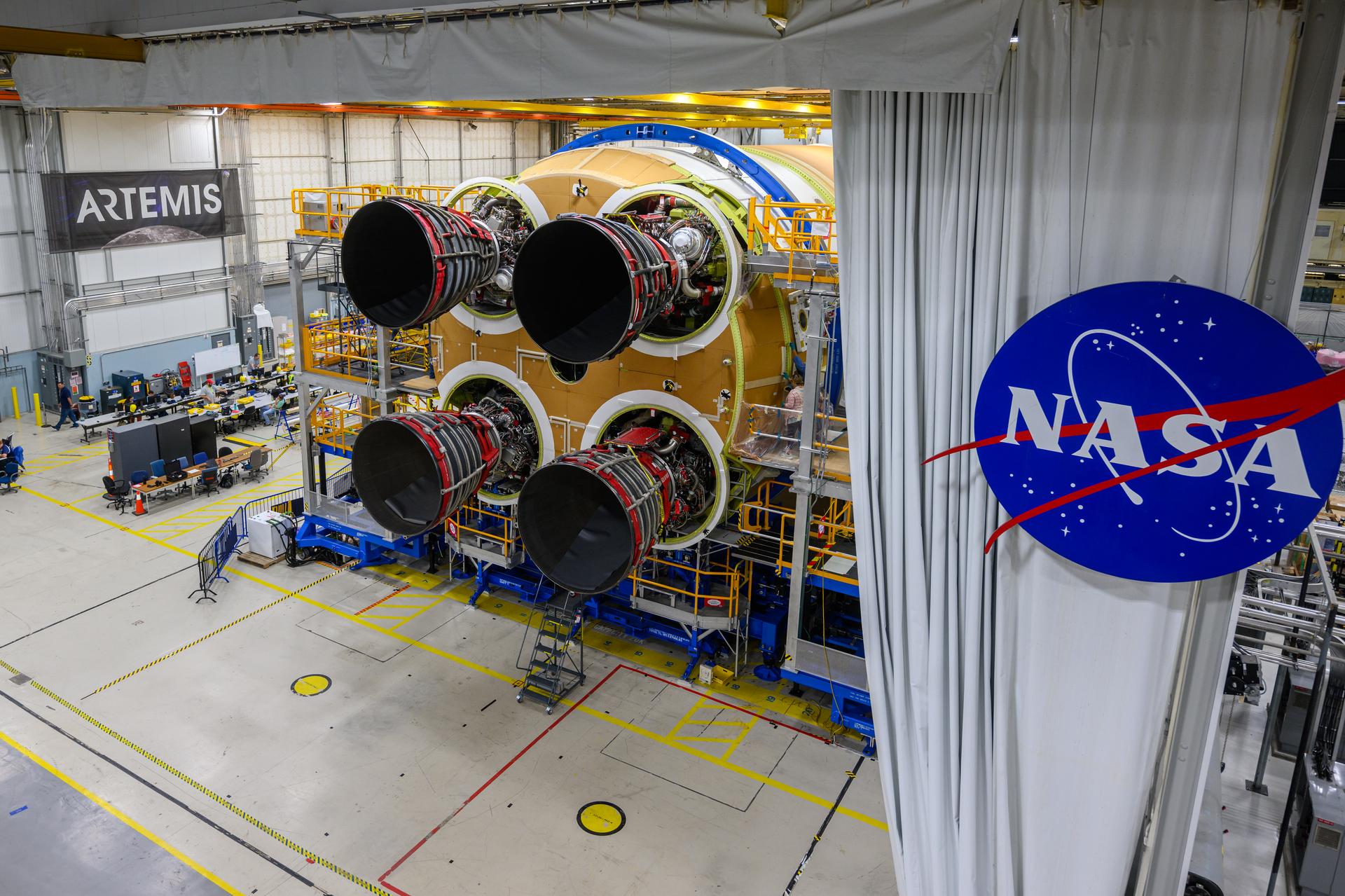
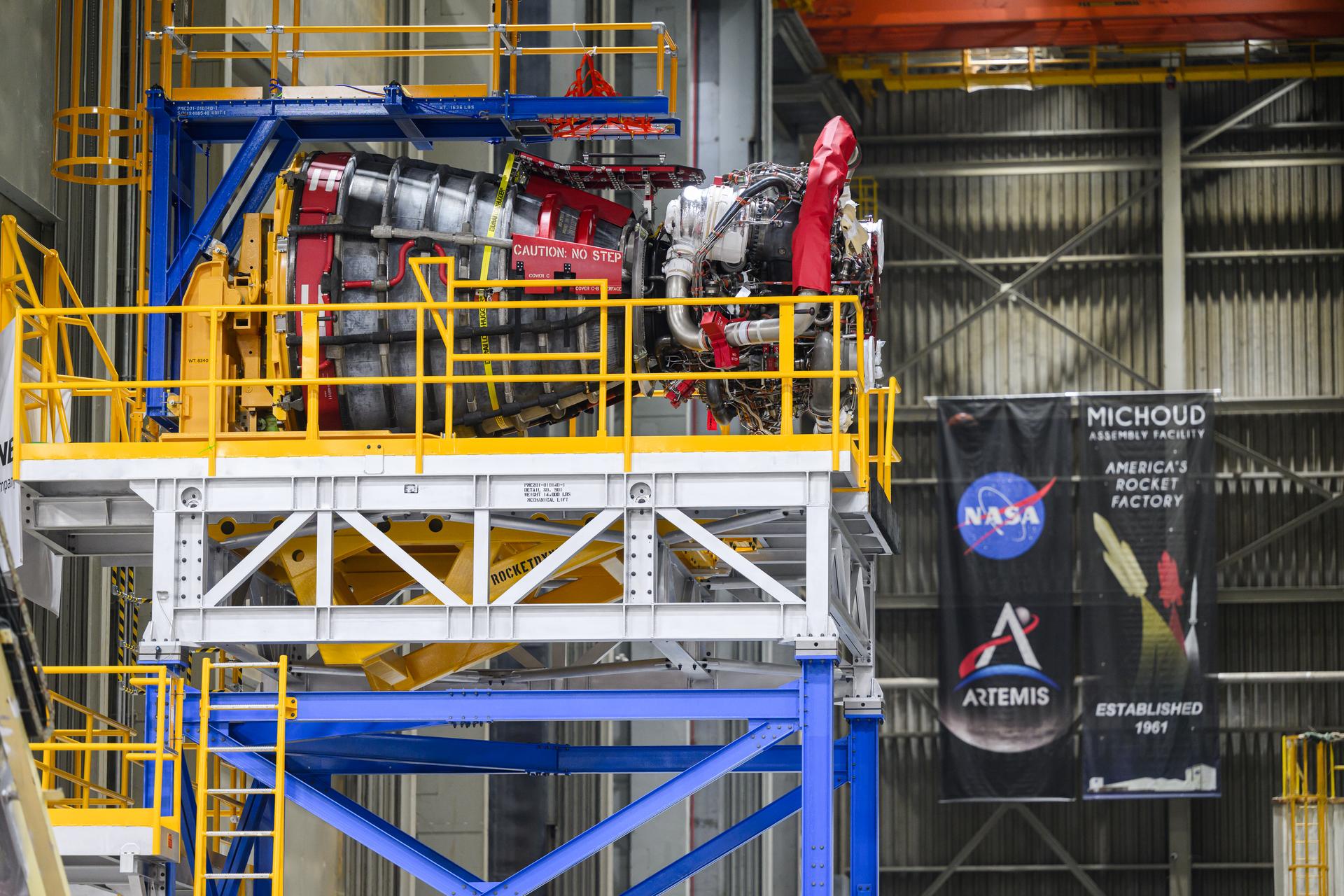
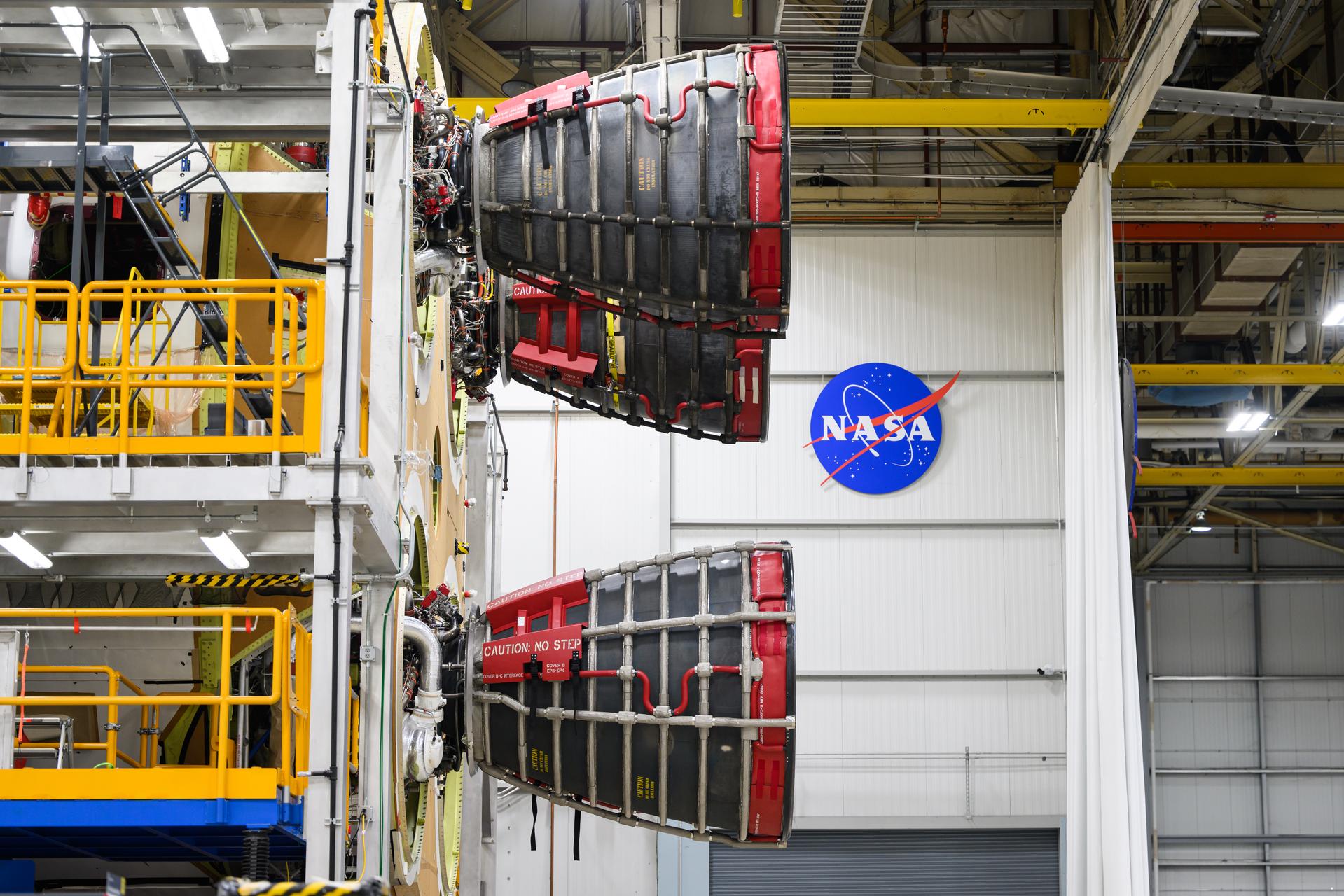
    These photos and videos show how technicians at NASA’s Michoud Assembly Facility in New Orleans installed the third and fourth RS-25 engines onto the core stage for the agency’s SLS (Space Launch System) rocket that will help power NASA’s first crewed Artemis mission to the Moon.   Technicians added the first engine to the SLS core stage Sept. 11. The second engine was installed onto the stage Sept. 15 with the third and fourth engines following Sept. 19 and Sept. 20. Engineers consider the engines to be “soft” mated to the rocket stage. Technicians with NASA, Aerojet Rocketdyne, an L3Harris Technologies company and the RS-25 engines lead contractor, along with Boeing, the core stage lead contractor, will now focus efforts on the complex tax of fully securing the engines to the stage and integrating the propulsion and electrical systems within the structure.   NASA is working to land the first woman and first person of color on the Moon under Artemis. SLS is part of NASA’s backbone for deep space exploration, along with Orion and the Gateway in orbit around the Moon. SLS is the only rocket that can send Orion, astronauts, and supplies to the Moon in a single mission.
    All four RS-25 engines have been installed onto the SLS (Space Launch System) core stage for NASA’s Artemis II mission. The installation of the engines signals the core stage is nearly finished with assembly and will soon be ready for shipment to NASA’s Kennedy Space Center in Florida. During launch, the rocket’s engines provide more than two million pounds of combined thrust.
    Credits: NASA

    By Megan Carter

    NASA and its partners have fully secured the four RS-25 engines onto the core stage of the agency’s SLS (Space Launch System) rocket for the Artemis II flight test. The core stage, and its engines, is the backbone of the SLS mega rocket that will power the flight test, the first crewed mission to the Moon under Artemis.

    Engineers have begun final integration testing at NASA’s Michoud Assembly Facility in New Orleans, in preparation for acceptance ahead of shipment of the stage to Kennedy Space Center in Florida in the coming months.

    “NASA integrated many lessons learned from the first-time build and assembly of the SLS core stage for Artemis I to increase efficiencies during manufacturing and cross-team collaboration with our partners for Artemis II. NASA teams in New Orleans remain focused on assembling and preparing the SLS rocket’s liquid-fueled stage to support the flight.”

    Julie Bassler

    Julie Bassler

    Manager of the Stages Office for the SLS Program

    The 212-foot-tall core stage includes two massive liquid propellant tanks and four RS-25 engines at its base. For Artemis II, the core stage and its engines act as the powerhouse of the rocket, providing more than two million pounds of thrust for the first eight minutes of flight to send the crew of four astronauts inside NASA’s Orion spacecraft on an approximately 10-day mission around the Moon.

    NASA, Aerojet Rocketdyne, an L3Harris Technologies company and the RS-25 engines lead contractor, along with Boeing, the core stage lead contractor, secured the engines to the maze of propulsion and avionics systems within the core stage Oct. 6. In the coming weeks, engineers will perform testing on the entire stage and its avionics and electrical systems, which act as the “brains” of the rocket to help control it during flight.

    Once testing of the stage is complete and the hardware passes its acceptance review, the core stage will be readied for shipping to Kennedy via the agency’s Pegasus barge, based at Michoud.

    As teams prepare the core stage for Artemis II, rocket hardware is also under construction on our factory floor for Artemis III, IV, and V that will help send the future Artemis astronauts to the lunar South Pole.

    The engines were first soft mated one by one onto the stage beginning in early September. The last RS-25 engine was structurally installed onto the stage Sept. 20. Installing the four engines is a multi-step, collaborative process for NASA, Boeing, and Aerojet Rocketdyne.

    Following the initial structural connections of the individual engines, securing and outfitting all four engines to the stage is the lengthiest part of the engine assembly process and includes securing the thrust vector control actuators, ancillary interfaces, and remaining bolts before multiple tests and checkouts.

    All major hardware elements for the SLS rocket that will launch Artemis II are either complete or in progress. The major components for the rocket’s two solid rocket boosters are at Kennedy. The rocket’s two adapters, produced at Marshall, along with the rocket’s upper stage, currently at lead contractor United Launch Alliance’s facility in Florida near Kennedy, will be prepared for shipment in the spring.

    NASA is working to land the first woman and first person of color on the Moon under Artemis. SLS is part of NASA’s backbone for deep space exploration, along with Orion and the Gateway in orbit around the Moon, and commercial human landing systems. SLS is the only rocket that can send Orion, astronauts, and supplies to the Moon in a single mission.

    Corinne Beckinger
    Marshall Space Flight Center, Huntsville, Ala.
    256.544.0034
    corinne.m.beckinger@nasa.gov

  • Portrait of ESA astronaut Andreas Mogensen

    Official portrait of ESA (European Space Agency) astronaut Andreas Mogensen in a spacesuit.
    jsc2022e017100_alt (March 22, 2023) — Official portrait of ESA (European Space Agency) astronaut Andreas Mogensen in a spacesuit. Credit: NASA/Bill Stafford
    NASA
  • Portrait of ESA astronaut Andreas Mogensen

    Official portrait of ESA (European Space Agency) astronaut Andreas Mogensen in a spacesuit.
    jsc2022e017107_alt (March 22, 2023) — Official portrait of ESA (European Space Agency) astronaut Andreas Mogensen in a spacesuit. Credit: NASA/Bill Stafford
    NASA
  • Portrait of ESA astronaut Andreas Mogensen

    Official portrait of ESA (European Space Agency) astronaut Andreas Mogensen in a spacesuit.
    jsc2022e017115_alt (March 22, 2023) — Official portrait of ESA (European Space Agency) astronaut Andreas Mogensen in a spacesuit. Credit: NASA/Bill Stafford
    NASA
  • Portrait of NASA astronaut Jasmin Moghbeli

    Official portrait of NASA astronaut Jasmin Moghbeli in a spacesuit.
    jsc2022e068687_alt (Sept. 6, 2023) — Official portrait of NASA astronaut Jasmin Moghbeli in a spacesuit. Credit: NASA/Robert Markowitz
    NASA