Tag: planethunt

  • ScienceCraft for Outer Planet Exploration (SCOPE)

    2 min read

    Preparations for Next Moonwalk Simulations Underway (and Underwater)

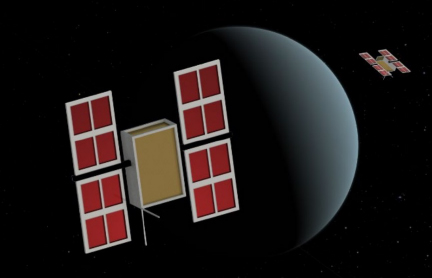
    Artist’s depiction of ScienceCraft, which integrates the science instrument with the spacecraft by printing a quantum dot spectrometer directly on the solar sail to form a monolithic, lightweight structure
    Artist’s depiction of ScienceCraft, which integrates the science instrument with the spacecraft by printing a quantum dot spectrometer directly on the solar sail to form a monolithic, lightweight structure.
    Mahmooda Sultana

    Mahmooda Sultana
    NASA Goddard Space Flight Center

    Missions to the outer solar system are an important part of NASA’s goals because these scarcely visited worlds, particularly the ice giants Neptune and Uranus, hold secrets about the formation and evolution of our solar system and countless others. However, due to the high cost, long travel time and narrow window for mission implementation, outer solar system exploration has been extremely limited in more than 60 years of space exploration. In this NIAC, we are developing a mission architecture that addresses all of these challenges by using a ScienceCraft and enables science missions at the outer planet system. Sciencraft integrates a science instrument and spacecraft into one monolithic and lightweight structure. By printing an ultra-lightweight quantum dot-based spectrometer, developed by the PI Sultana, directly on the solar sail we create a breakthrough spacecraft architecture allowing an unprecedented parallelism and throughput of data collection, and rapid travel across the solar system. Unlike conventional solar sails that serve only to propel small cubesats, ScienceCraft puts its area at use for spectroscopy, pushing the boundary of scientific exploration of the outer solar system. ScienceCraft offers an attractive low resource platform that can enable

    science missions at a significantly lower cost and provide a large number of launch opportunities as a secondary payload. By leveraging these benefits, we propose a mission concept to Triton, a unique planetary body in our solar system, within the short window that closes around 2045 to answer compelling science questions about Triton’s atmosphere, ionosphere, plumes and internal structure. In Phase I, we performed an end-to-end feasibility study for a Neptune-Triton mission using a ScienceCraft, as well as identifying the key technologies needed for such a mission and tall poles that we need to address. As part of phase II, we plan to further mature the mission concept, develop and demonstrate some of the key technologies, address the tall poles identified in phase I and develop a roadmap for implementing SCOPE.

    2024 Phase I Selection

  • Flexible Levitation on a Track (FLOAT)

    3 min read

    Preparations for Next Moonwalk Simulations Underway (and Underwater)

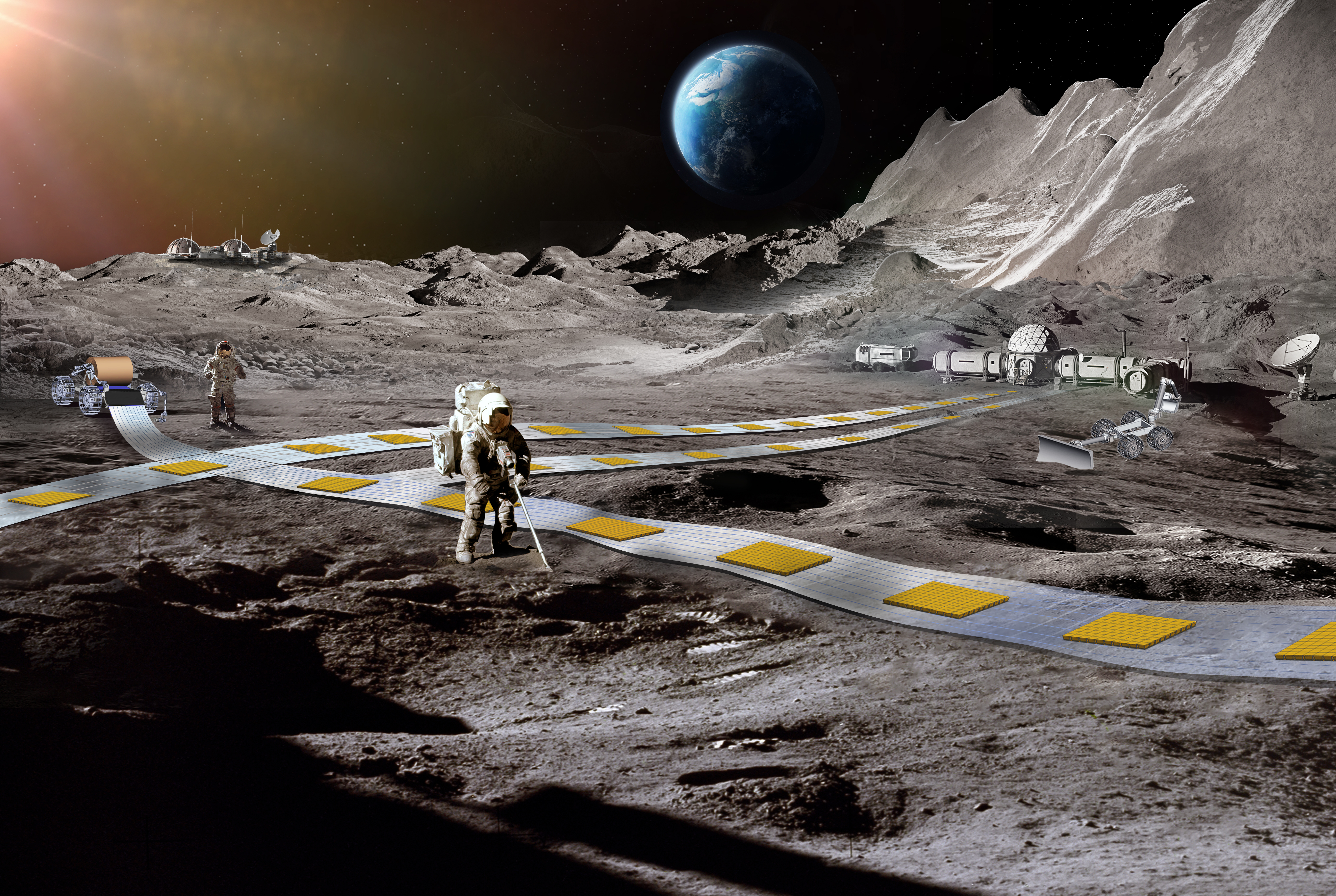
    Astronaut working on levitation track on lunar surface with Earth in distant sky.
    Artist concept of novel approach proposed by a 2024 NIAC Phase II awardee for possible future missions depicting lunar surface with planet Earth on the horizon.
    Credit: Ethan Schaler

    Ethan Schaler
    NASA Jet Propulsion Laboratory

    We want to build the first lunar railway system, which will provide reliable, autonomous, and efficient payload transport on the Moon. A durable, long-life robotic transport system will be critical to the daily operations of a sustainable lunar base in the 2030’s, as envisioned in NASA’s Moon to Mars plan and mission concepts like the Robotic Lunar Surface Operations 2 (RLSO2), to:

    — Transport regolith mined for ISRU consumables (H2O, LOX, LH2) or construction

    — Transport payloads around the lunar base and to / from landing zones or other outposts

    We propose developing FLOAT — Flexible Levitation on a Track — to meet these transportation needs.

    The FLOAT system employs unpowered magnetic robots that levitate over a 3-layer flexible film track: a graphite layer enables robots to passively float over tracks using diamagnetic levitation, a flex-circuit layer generates electromagnetic thrust to controllably propel

    robots along tracks, and an optional thin-film solar panel layer generates power for the base when in sunlight. FLOAT robots have no moving parts and levitate over the track to minimize lunar dust abrasion / wear, unlike lunar robots with wheels, legs, or tracks.

    FLOAT tracks unroll directly onto the lunar regolith to avoid major on-site construction — unlike conventional roads, railways, or cableways. Individual FLOAT robots will be able to transport payloads of varying shape / size (>30 kg/m^2) at useful speeds (>0.5m/s), and a large-scale FLOAT system will be capable of moving up to 100,000s kg of regolith / payload multiple kilometers per day. FLOAT will operate autonomously in the dusty, inhospitable lunar environment with minimal site preparation, and its network of tracks can be rolled-up / reconfigured over time to match evolving lunar base mission requirements.

    In Phase 2, we will continue to retire risks related to the manufacture, deployment, control, and long-term operation of meter-scale robots / km-scale tracks that support human exploration (HEO) activities on the Moon, by accomplishing the following key tasks:

    — Design, manufacture, and test a series of sub-scale robot / track prototypes, culminating with a demonstration in a lunar-analog testbed (that includes testing various site preparation and track deployment strategies)

    — Investigate impacts of environmental effects (e.g. temperature, radiation, charging, lunar regolith simulant contamination, etc.) on system performance and longevity

    — Investigate / define a technology roadmap to address technology gaps and mature manufacturing capability for critical hardware (e.g. large-area magnetic arrays with mm-scale magnetic domains, and large-area flex-circuit boards)

    — Continue refining simulations of FLOAT system designs with increased fidelity, to provide improved performance estimates under the RLSO2 mission concept We will also leverage these sub-scale prototypes to explore opportunities for follow-on technology demonstrations on sub-orbital flights (via Flight Opportunities / TechFlights) or lunar technology demos (via LSII / CLPS landers)

    2024 Phase I Selection

  • Radioisotope Thermoradiative Cell Power Generator

    3 min read

    Preparations for Next Moonwalk Simulations Underway (and Underwater)

    Artist’s depiction of Radioisotope Thermoradiative Cell Power Generator
    Artist’s depiction of Radioisotope Thermoradiative Cell Power Generator
    Stephen Polly

    Stephen Polly
    Rochester Institute of Technology

    In this project we will continue our Phase I efforts to develop and demonstrate the feasibility of a revolutionary power source for missions to the outer planets utilizing a new paradigm in thermal power conversion, the thermoradiative cell (TRC). Operating like a solar cell in reverse, the TRC converts heat from a radioisotope source into infrared light which is sent off into the cold universe. In this process, electricity is generated. In our Phase I study, we showed 8 W of electrical power is possible from the 62.5 W Pu-238 pellet from a general purpose heat source using a 0.28 eV bandgap TRC operating at 600 K. The necessary array includes 1,125 cm² of TRC emitters, or just over 50% of the surface area of a 6U cubesat. With a mass (heat source + TRC) of 622 g, a mass specific power of 12.7 W/kg is possible, over a 4.5x improvement from heritage multi-mission radioisotope thermoelectric generator (MMRTG) was shown. Building on our results from Phase I, we believe there is much more potential to unlock here.

    Using low-bandgap III-V materials such as InAsSb in nanostructured arrays to limit potential loss mechanisms, a 25x improvement in mass specific power and a four order of magnitude decrease in volume from a MMRTG is an early estimate, with higher performance possible depending on operating conditions. TRC technology will allow a proliferation of small versatile spacecraft with power requirements not met by photovoltaic arrays or bulky, inefficient MMRTG systems. This will directly enable small-sat missions to the outer planets as well as operations in permanent shadow such as polar lunar craters.

    This study will investigate the thermodynamics and feasibility of the development of a radioisotope enabled thermoradiative power source focusing on system size, weight, power (SWaP) while continuing to integrate the effects of potential power and efficiency loss mechanisms developed in Phase I. Experimentally, materials and TRC devices will be grown including InAsSb-based type-II superlattices by metalorganic vapor phase epitaxy (MOVPE) to target low-bandgap materials with suppressed Auger recombination. Metal-semiconductor contacts capable of surviving the required elevated temperatures will be investigated. TRC devices will be tested for performance at elevated temperature facing a cold ambient under vacuum in a modified cryostat testing apparatus developed in Phase I.

    We will analyze a radioisotope thermoradiative converter to power a cubesat mission operating at Uranus. This will include an engineering design study of our reference mission with the Compass engineering team at NASA Glenn Research Center with expertise on the impact of new technologies on spacecraft design in the context of an overall mission, incorporating all engineering disciplines and combining them at a system level. Finally, we will develop a technological roadmap for the necessary components of the TRC to power a future mission.

    2024 Phase I Selection

  • The Great Observatory for Long Wavelengths (GO-LoW)

    3 min read

    Preparations for Next Moonwalk Simulations Underway (and Underwater)

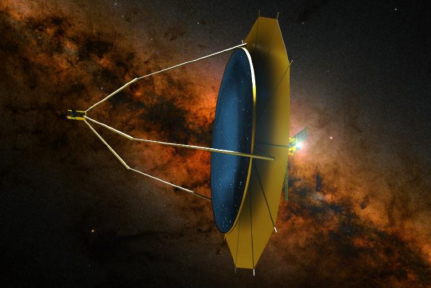
    Artist’s depiction of The Great Observatory for Long Wavelengths (GO-LoW)
    Artist’s depiction of The Great Observatory for Long Wavelengths (GO-LoW)
    Mary Knapp

    Mary Knapp
    MIT

    Humankind has never before seen the low frequency radio sky. It is hidden from ground-based telescopes by the Earth’s ionosphere and challenging to access from space with traditional missions because the long wavelengths involved (meter- to kilometer-scale)

    require infeasibly massive telescopes to see clearly. Electromagnetic radiation at these low frequencies carries crucial information about exoplanetary and stellar magnetic fields (a key ingredient to habitability), the interstellar/intergalactic medium, and the earliest

    stars and galaxies.

    The Great Observatory for Long Wavelengths (GO-LoW) proposes an interferometric array of thousands of identical SmallSats at an Earth-Sun Lagrange point (e.g. L5) to measure the magnetic fields of terrestrial exoplanets via detections of their radio emissions at

    frequencies between 100 kHz and 15 MHz. Each spacecraft will carry an innovative Vector Sensor Antenna, which will enable the first survey of exoplanetary magnetic fields within 5 parsecs.

    In a departure from the traditional approach of a single large and expensive spacecraft (i.e. HST, Chandra, JWST) with many single points of failure, we propose an interferometric Great Observatory comprised of thousands of small, cheap, and easily-replaceable

    nodes. Interferometry, a technique that combines signals from many spatially separated receivers to form a large ‘virtual’ telescope, is ideally suited to long wavelength astronomy. The individual antenna/receiver systems are simple, no large structures are required, and the very large spacing between nodes provides high spatial resolution.

    In our Phase I study, we found that a hybrid constellation architecture was most efficient. Small and simple “listener” nodes (LNs) collect raw radio data using a deployable vector sensor antenna. A small number of larger, more capable “communication and computation” nodes (CCNs) collect data from LNs via a local radio network, perform beamforming processing to reduce the data volume, and then transmit the data to Earth via free space optics (lasercomm). Cross correlation of the beamformed data is performed on Earth, where computational resources are not tightly constrained. The CCNs are also responsible for constellation management, including timing distribution and ranging. The Phase I study also showed that the LN-CCN architecture optimizes packing efficiency, allowing a small number of super-heavy lift launch vehicles (e.g. Starship) to deploy the entire constellation to L4.

    The Phase I study showed that the key innovation for GO-LoW is the “system of systems.” The technology needed for each individual piece of the observatory (e.g. lasercomm, CubeSats, ranging, timing, data transfer, data processing, orbit propagation) is not a big leap from current state of the art, but the coordination of all these physical elements, data products, and communications systems is novel and challenging, especially at scale.

    In the proposed study, we will (1) develop a real-time, multi-agent simulation of the GO-LoW constellation that demonstrates the autonomous operations architecture required to achieve a

    large (up to 100k) constellation outside of Earth’s orbit, (2) continue to refine the science case and requirements by simulating science output from the constellation and assessing major error sources informed by the real-time simulation, (3) develop appropriate orbital modeling to assess propulsion requirements for stationkeeping at a stable Lagrange point, and (4) further refine the technology roadmap required to make GO-LoW feasible in the next 10-20 years. GO-LoW represents a disruptive new paradigm for space missions. It achieves reliability through massive redundancy rather than extensive testing. It can evolve and grow with new technology rather than being bound to a fixed point in hardware/software development. Finally, it promises to open a new spectral window on the universe where unforeseen discoveries surely await.

    2024 Phase I Selection

  • Pulsed Plasma Rocket (PPR): Shielded, Fast Transits for Humans to Mars

    2 min read

    Preparations for Next Moonwalk Simulations Underway (and Underwater)

    Labeled simplified diagram of the PPR system.
    Simplified image of the PPR system.
    Brianna Clements

    Brianna Clements
    Howe Industries

    The future of a space-faring civilization will depend on the ability to move both cargo and humans efficiently and rapidly. Due to the extremely large distances that are involved in space travel, the spacecraft must reach high velocities for reasonable mission transit times. Thus, a propulsion system that produces a high thrust with a high specific impulse is essential. However, no such technologies are currently available.

    Howe Industries is currently developing a propulsion system that may generate up to 100,000 N of thrust with a specific impulse (Isp) of 5,000 seconds. The Pulsed Plasma Rocket (PPR) is originally derived from the Pulsed Fission Fusion concept, but is smaller, simpler, and more affordable. The exceptional performance of the PPR, combining high Isp and high thrust, holds the potential to revolutionize space exploration. The system’s high efficiency allows for manned missions to Mars to be completed within a mere two months. Alternatively, the PPR enables the transport of much heavier spacecraft that are equipped with shielding against Galactic Cosmic Rays, thereby reducing crew exposure to negligible levels. The system can also be used for other far range missions, such as those to the Asteroid Belt or even to the 550 AU location, where the Sun’s gravitational lens focuses can be considered. The PPR enables a whole new era in space exploration.

    The NIAC Phase I study focused on a large, heavily shielded ship to transport humans and cargo to Mars for the development of a Martian base. The main topics included: assessing the neutronics of the system, designing the spacecraft, power system, and necessary subsystems, analyzing the magnetic nozzle capabilities, and determining trajectories and benefits of the PPR. Phase II will build upon these assessments and further the PPR concept.

    In Phase II, we plan to:

    1. Optimize the engine design for reduced mass and higher Isp
    2. Perform proof-of-concept experiments of major components
    3. Complete a ship design for shielded human missions to Mars

    2024 Phase I Selection

  • Fluidic Telescope (FLUTE): Enabling the Next Generation of Large Space Observatories

    3 min read

    Preparations for Next Moonwalk Simulations Underway (and Underwater)

    Artist rendition of the Fluidic Telescope
    Artist’s depiction of the Fluidic Telescope (FLUTE)
    Edward Balaban

    Edward Balaban
    NASA ARC

    The future of space-based UV/optical/IR astronomy requires ever larger telescopes. The highest priority astrophysics targets, including Earth-like exoplanets, first generation stars, and early galaxies, are all extremely faint, which presents an ongoing challenge for current missions and is the opportunity space for next generation telescopes: larger telescopes are the primary way to address this issue.

    With mission costs depending strongly on aperture diameter, scaling current space telescope technologies to aperture sizes beyond 10 m does not appear economically viable. Without a breakthrough in scalable technologies for large telescopes, future advances in

    astrophysics may slow down or even completely stall. Thus, there is a need for cost-effective solutions to scale space telescopes to larger sizes.

    The FLUTE project aims to overcome the limitations of current approaches by paving a path towards space observatories with largeaperture, unsegmented liquid primary mirrors, suitable for a variety of astronomical applications. Such mirrors would be created in

    space via a novel approach based on fluidic shaping in microgravity, which has already been successfully demonstrated in a laboratory neutral buoyancy environment, in parabolic microgravity flights, and aboard the International Space Station (ISS). Theoretically

    scale-invariant, this technique has produced optical components with superb, sub-nanometer (RMS) surface quality. In order to make the concept feasible to implement in the next 15-20 years with near-term technologies and realistic cost, we limit the diameter of the primary mirror to 50 meters.

    In the Phase I study, we: (1) explored choices of mirror liquids, deciding to focus on ionic liquids, (2) conducted an extensive study of ionic liquids with suitable properties, (3) worked on techniques for ionic liquid reflectivity enhancement, (4) analyzed several alternative architectures for the main mirror frame, (5) conducted modeling of the effects of slewing maneuvers and temperature variations on the mirror surface, (6) developed a detailed mission concept for a 50-m fluidic mirror observatory, and (7) created a set of initial concepts for a subscale small spacecraft demonstration in low Earth orbit.

    In Phase II, we will continue maturing the key elements of our mission concept. First, we will continue our analysis of suitable mirror frame architectures and modeling of their dynamic properties. Second, we will take next steps in our machine learning-based modeling and experimental work to develop reflectivity enhancement techniques for ionic liquids. Third, we will further advance the work of modeling liquid mirror dynamics. In particular, we will focus on modeling the effects from other types of external disturbances (spacecraft control accelerations, tidal forces, and micrometeorite impacts), as well as analyzing and modeling the impact of the thermal Marangoni effect on nanoparticle-infused ionic liquids. Fourth, we will create a model of the optical chain from the liquid mirror surface to the science instruments. Fifth, we will further develop the mission concept for a larger-scale, 50-m aperture observatory, focusing on its highest-risk elements. Finally, we will mature the concept for a small spacecraft technology demonstration mission in low Earth orbit, incorporating the knowledge gained in other parts of this work.

    2024 Phase I Selection

  • NASA Sets Coverage for Boeing Starliner’s First Crewed Launch, Docking

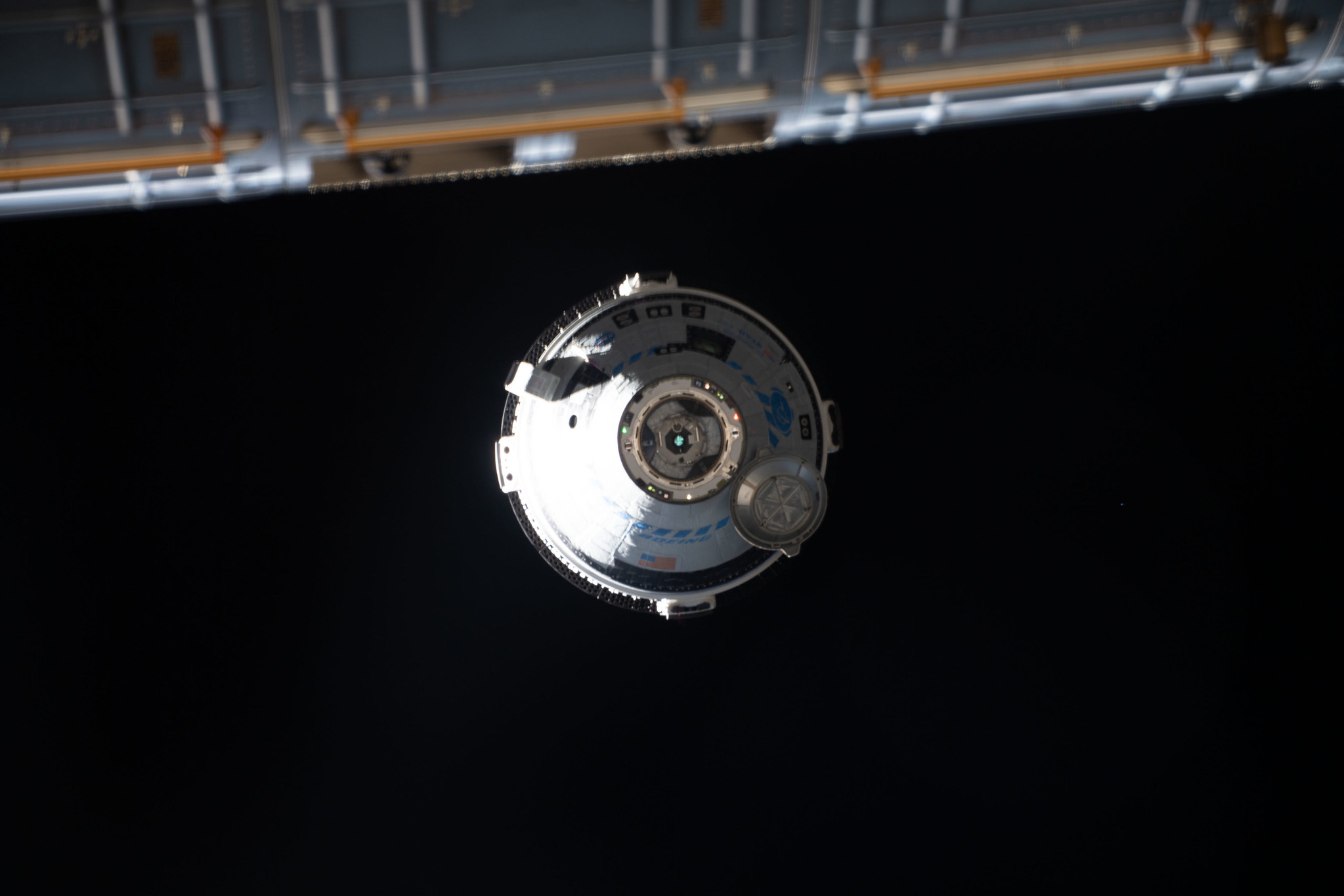
    Boeing’s Starliner spacecraft approaches the International Space Station. NASA astronauts Butch Wilmore and Suni Williams will launch aboard Starliner on a United Launch Alliance Atlas V rocket for NASA’s Boeing Crew Flight Test.
    Credits: NASA

    NASA will provide live coverage of prelaunch and launch activities for the agency’s Boeing Crew Flight Test, which will carry NASA astronauts Butch Wilmore and Suni Williams to and from the International Space Station.

    Launch of the ULA (United Launch Alliance) Atlas V rocket and Boeing Starliner spacecraft is targeted for 10:34 p.m. EDT Monday, May 6, from Space Launch Complex-41 at Cape Canaveral Space Force Station in Florida.

    The flight test will carry Wilmore and Williams to the space station for about a week to test the Starliner spacecraft and its subsystems before NASA certifies the transportation system for rotational missions to the orbiting laboratory for the agency’s Commercial Crew Program.

    Starliner will dock to the forward-facing port of the station’s Harmony module at 12:48 a.m., Wednesday, May 8.

    The deadline for media accreditation for in-person coverage of this launch has passed. The agency’s media credentialing policy is available online. For questions about media accreditation, please email: ksc-media-accreditat@mail.nasa.gov.

    NASA’s mission coverage is as follows (all times Eastern and subject to change based on real-time operations):

    Wednesday, May 1

    1:30 p.m. – Virtual news conference at Kennedy with the flight test astronauts:

    • NASA astronaut Butch Wilmore
    • NASA astronaut Suni Williams

    Coverage of the virtual news conference will stream live on NASA+, NASA Television, the NASA app, YouTube, and the agency’s website.

    Media may ask questions via phone only. For the dial-in number and passcode, please contact the Kennedy newsroom no later than 12:30 p.m., Wednesday, May 1, at: ksc-newsroom@mail.nasa.gov.

    Friday, May 3
    12:30 p.m. – Prelaunch news conference at Kennedy (no earlier than one hour after completion of the Launch Readiness Review) with the following participants:

    • NASA Administrator Bill Nelson
    • Steve Stich, manager, NASA’s Commercial Crew Program
    • Dana Weigel, manager, NASA’s International Space Station Program
    • Emily Nelson, chief flight director, NASA
    • Jennifer Buchli, chief scientist, NASA’s International Space Station Program
    • Mark Nappi, vice president and program manager, Commercial Crew Program, Boeing
    • Gary Wentz, vice president, Government and Commercial Programs, ULA
    • Brian Cizek, launch weather officer, 45th Weather Squadron, Cape Canaveral Space Force Station

    Coverage of the prelaunch news conference will stream live on NASA+, NASA Television, the NASA app, YouTube, and the agency’s website.

    Media may ask questions in person and via phone. Limited auditorium space will be available for in-person participation. For the dial-in number and passcode, media should contact the Kennedy newsroom no later than 11:30 a.m., Friday, May 3, at ksc-newsroom@mail.nasa.gov.

    3:30 p.m. – NASA Social panel live stream event at Kennedy with the following participants:

    • Ian Kappes, deputy launch vehicle office manager, NASA’s Commercial Crew Program
    • Amy Comeau Denker, Starliner associate chief engineer, Boeing
    • Caleb Weiss, system engineering and test leader, ULA
    • Jennifer Buchli, chief scientist, NASA’s International Space Station Program

    Coverage of the panel live stream event will stream live at @NASAKennedy on YouTube, @NASAKennedy on X, and @NASAKennedy on Facebook. Members of the public may ask questions online by posting questions to the YouTube, X, and Facebook livestreams using #AskNASA.

    Monday, May 6

    6:30 p.m. – Launch coverage begins on NASA+, NASA Television, the NASA app, YouTube, and the agency’s website.

    10:34 p.m. – Launch

    Launch coverage on NASA+ will end shortly after Starliner orbital insertion. NASA Television will provide continuous coverage leading up to docking and through hatch opening and welcome remarks.

    Tuesday, May 7

    12 a.m. – Postlaunch news conference with the following participants:

    • NASA Deputy Administrator Pam Melroy
    • Ken Bowersox, associate administrator, NASA’s Space Operations Mission Directorate
    • Steve Stich, manager, NASA’s Commercial Crew Program
    • Dana Weigel, manager, NASA’s International Space Station Program
    • Mark Nappi, vice president and program manager, Commercial Crew Program, Boeing
    • Gary Wentz, vice president, Government and Commercial Programs, ULA

    Coverage of the postlaunch news conference will air live on NASA+, NASA Television, the NASA app, YouTube, and the agency’s website.

    NASA+ will resume coverage and NASA Television’s media channel will break from in-orbit coverage to carry the postlaunch news conference. Mission operational coverage will continue on NASA Television’s public channel and the agency’s website. Once the postlaunch news conference is complete, NASA+ coverage will end, and mission coverage will continue on both NASA channels.

    Media may ask questions in person and via phone. Limited auditorium space will be available for in-person participation. For the dial-in number and passcode, media should contact the Kennedy newsroom no later than 10:30 p.m., Monday, May 6, at ksc-newsroom@mail.nasa.gov.

    10:15 p.m. – Arrival coverage resumes on NASA+, the NASA app, and YouTube, and continues on NASA Television and the agency’s website.

    Wednesday, May 8
    12:48 a.m. – Targeted docking to the forward-facing port of the station’s Harmony module

    2:35 a.m. – Hatch opening

    3:15 a.m. – Welcome remarks

    4:15 a.m. – Post-docking news conference at Johnson with the following participants:

    • NASA Associate Administrator Jim Free
    • Steve Stich, manager, NASA’s Commercial Crew Program
    • Dana Weigel, manager, NASA’s International Space Station Program
    • Mark Nappi, vice president and program manager, Commercial Crew Program, Boeing

    Coverage of the post-docking news conference will air live on NASA+, NASA Television, the NASA app, YouTube, and the agency’s website.

    All times are estimates and could be adjusted based on operations after launch. Follow the space station blog for the most up-to-date operations information.

    Audio Only Coverage

    Audio only of the news conferences and launch coverage will be carried on the NASA “V” circuits, which may be accessed by dialing 321-867-1220, -1240 or -7135. On launch day, “mission audio,” countdown activities without NASA Television launch commentary, will be carried on 321-867-7135.

    Launch audio also will be available on Launch Information Service and Amateur Television System’s VHF radio frequency 146.940 MHz and KSC Amateur Radio Club’s UHF radio frequency 444.925 MHz, FM mode, heard within Brevard County on the Space Coast.

    Live Video Coverage Prior to Launch

    NASA will provide a live video feed of Space Launch Complex-41 approximately 48 hours prior to the planned liftoff of the mission. Pending unlikely technical issues, the feed will be uninterrupted until the prelaunch broadcast begins on NASA Television, approximately four hours prior to launch. Once the feed is live, find it here: http://youtube.com/kscnewsroom.

    NASA Website Launch Coverage

    Launch day coverage of the mission will be available on the agency’s website. Coverage will include live streaming and blog updates beginning no earlier than 6:30 p.m., May 6 as the countdown milestones occur. On-demand streaming video and photos of the launch will be available shortly after liftoff.

    For questions about countdown coverage, contact the Kennedy newsroom at 321-867-2468. Follow countdown coverage on the commercial crew or the Crew Flight Test blog.

    Attend the Launch Virtually

    Members of the public can register to attend this launch virtually. NASA’s virtual guest program for this mission also includes curated launch resources, notifications about related opportunities or changes, and a stamp for the NASA virtual guest passport following launch.

    Watch and Engage on Social Media

    Let people know you’re following the mission on X, Facebook, and Instagram by using the hashtags #Starliner and #NASASocial. You can also stay connected by following and tagging these accounts:

    X: @NASA, @NASAKennedy, @NASASocial, @Space_Station, @ISS_Research, @ISS National Lab, @BoeingSpace, @Commercial_Crew

    Facebook: NASA, NASAKennedy, ISS, ISS National Lab

    Instagram: @NASA, @NASAKennedy, @ISS, @ISSNationalLab

    Coverage en Espanol

    Did you know NASA has a Spanish section called NASA en Espanol? Check out NASA en Espanol on X, Instagram, Facebook, and YouTube for additional mission coverage.

    Para obtener información sobre cobertura en español en el Centro Espacial Kennedy o si desea solicitar entrevistas en español, comuníquese con Antonia Jaramillo: 321-501-8425; antonia.jaramillobotero@nasa.gov; o Messod Bendayan: 256-930-1371; messod.c.bendayan@nasa.gov.

    NASA’s Commercial Crew Program has delivered on its goal of safe, reliable, and cost-effective transportation to and from the International Space Station from the United States through a partnership with American private industry. This partnership is changing the arc of human spaceflight history by opening access to low-Earth orbit and the International Space Station to more people, science, and commercial opportunities. The space station remains the springboard to NASA’s next great leap in space exploration, including future missions to the Moon and, eventually, to Mars.

    For NASA’s launch blog and more information about the mission, visit:

    https://www.nasa.gov/commercialcrew

    -end-

    Joshua Finch / Claire O’Shea
    Headquarters, Washington
    202-358-1100
    joshua.a.finch@nasa.gov / claire.a.o’shea@nasa.gov

    Steven Siceloff / Danielle Sempsrott / Stephanie Plucinsky
    Kennedy Space Center, Florida
    321-867-2468
    steven.p.siceloff@nasa.gov / danielle.c.sempsrott@nasa.gov / stephanie.n.plucinsky@nasa.gov

    Leah Cheshier
    Johnson Space Center, Houston
    281-483-5111
    leah.d.cheshier@nasa.gov
  • The Horse’s Mane

    A clumpy dome of blueish-gray clouds rises about a third of the way from the bottom. Above it, streaky, translucent red wisps brush upward to about halfway up the image. The top half of the image is the black background of space with one prominent, bright white star with Webb’s 8-point diffraction spikes. Additional stars and galaxies are scattered throughout the image, although very few are seen through the thick clouds at bottom, and all are significantly smaller than the largest star.
    Rising from turbulent waves of dust and gas is the Horsehead Nebula, otherwise known as Barnard 33, which resides roughly 1300 light-years away. The NASA/ESA/CSA James Webb Space Telescope has captured the sharpest infrared images to date of one of the most distinctive objects in our skies, the Horsehead Nebula. Webb’s new view focuses on the illuminated edge of the top of the nebula’s distinctive dust and gas structure.

    This image of part of the Horsehead Nebula, captured by NASA’s James Webb Space Telescope and released on April 29, 2024, shows the nebula in a whole new light, capturing the region’s complexity with unprecedented spatial resolution. Located roughly 1,300 light-years away, the nebula formed from a collapsing interstellar cloud of material, and glows because it is illuminated by a nearby hot star. The gas clouds surrounding the Horsehead have already dissipated, but the jutting pillar is made of thick clumps of material and therefore is harder to erode. Astronomers estimate that the Horsehead has about 5 million years left before it too disintegrates.

    Image Credit: NASA, ESA, CSA, K. Misselt (University of Arizona) and A. Abergel (IAS/University Paris-Saclay, CNRS)

  • NASA Sets Coverage for Dragon Spacecraft Relocation on Space Station

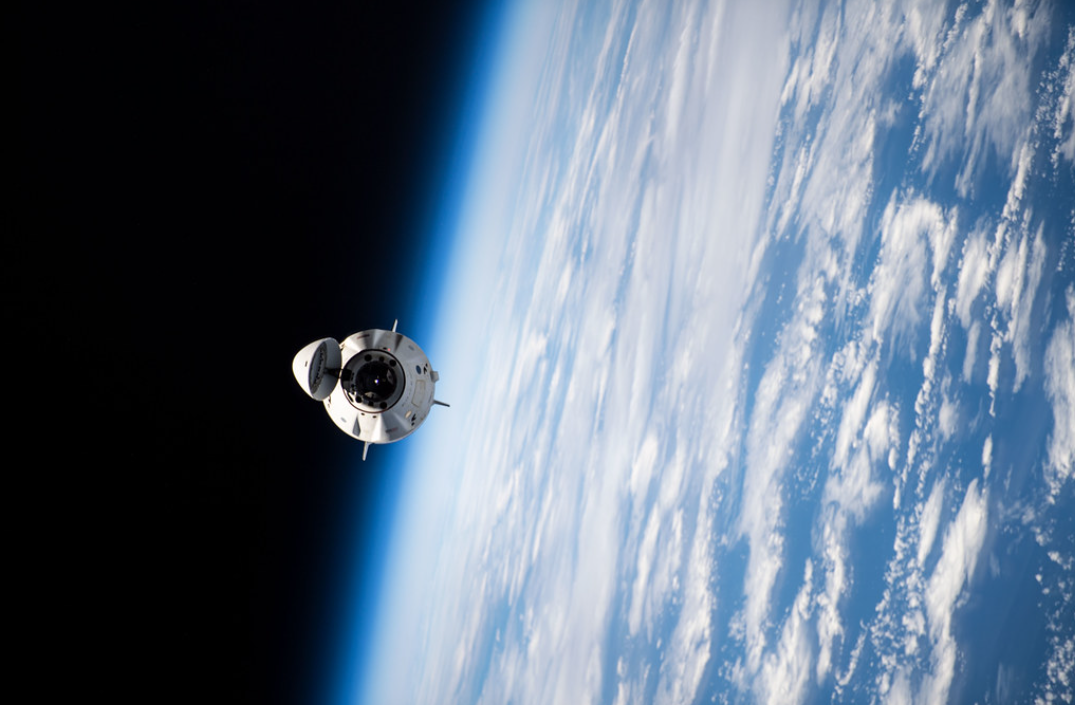
    The SpaceX Dragon crew spacecraft pictured from the International Space Station.
    Credit: NASA

    In preparation for the arrival of NASA’s Boeing Crew Flight Test, four crew members aboard the International Space Station will relocate the SpaceX Dragon crew spacecraft to a different docking port Thursday, May 2, to make way for Boeing’s Starliner spacecraft.

    NASA will provide live coverage of the move beginning at 7:30 a.m. EDT on NASA+, NASA Television, the NASA app, YouTube, and the agency’s website. Learn how to stream NASA TV through a variety of platforms including social media.

    NASA astronauts Matt Dominick, Mike Barratt, and Jeanette Epps, as well as Roscosmos cosmonaut Alexander Grebenkin, will undock from the forward-facing port of the station’s Harmony module at 7:45 a.m. The spacecraft will then autonomously dock with the module’s space-facing port at 8:28 a.m.

    The relocation, supported by flight controllers at NASA’s Johnson Space Center in Houston and SpaceX in Hawthorne, California, will free up Harmony’s forward-facing port for the docking of the Boeing Starliner spacecraft for its first flight with astronauts in May. Starliner will autonomously dock to the forward-facing port of the Harmony module, delivering NASA astronauts Butch Wilmore and Suni Williams to the space station.

    This will be the fourth port relocation of a Dragon spacecraft with crew, following previous relocations during the Crew-1, Crew-2, and Crew-6 missions.

    NASA’s SpaceX Crew-8 mission launched March 3 from NASA’s Kennedy Space Center in Florida and docked to the space station March 5. Crew-8, targeted to return this fall, is the eighth rotational crew mission from NASA and SpaceX as a part of the agency’s Commercial Crew Program.

    Learn more about space station activities by following @space_station and @ISS_Research on X, as well as the ISS Facebook, ISS Instagram, and the space station blog.

    -end-

    Joshua Finch / Claire O’Shea
    Headquarters, Washington
    202-358-1100
    joshua.a.finch@nasa.gov / claire.a.o’shea@nasa.gov

    Sandra Jones / Anna Schneider
    Johnson Space Center, Houston
    281-483-5111
    sandra.p.jones@nasa.gov / anna.c.schneider@nasa.gov
  • NASA-Led Study Provides New Global Accounting of Earth’s Rivers

    5 min read

    Preparations for Next Moonwalk Simulations Underway (and Underwater)

    Colorado River
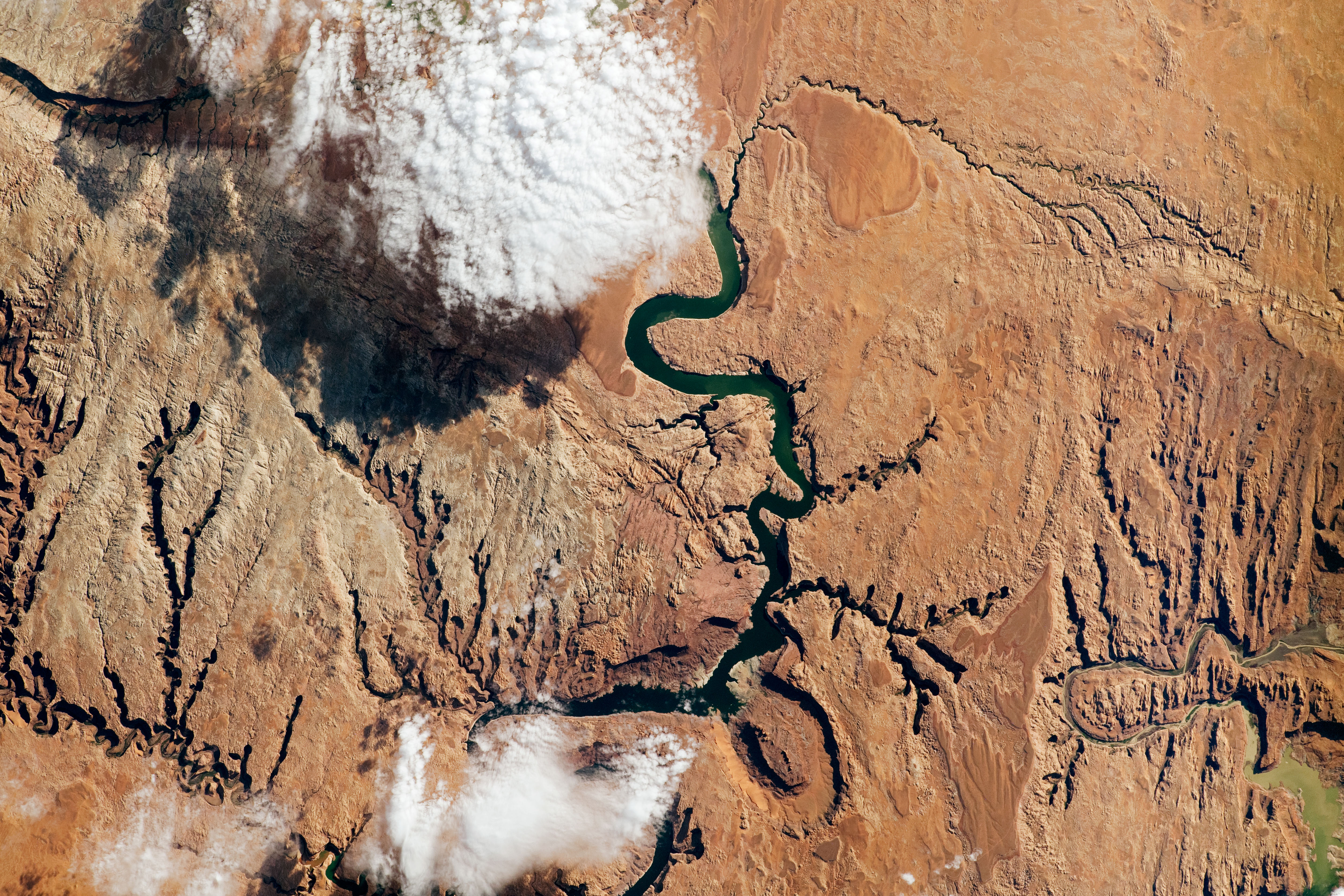
    The Colorado River supplies water to more than 40 million people as it snakes through seven U.S. states, including the part of southeastern Utah seen in this photo snapped by an astronaut aboard the International Space Station. The Colorado basin was identified in a NASA-led study as a region experiencing intense human water use.
    NASA

    The novel approach to estimating river water storage and discharge also identifies regions marked by ‘fingerprints’ of intense water use.

    A study led by NASA researchers provides new estimates of how much water courses through Earth’s rivers, the rates at which it’s flowing into the ocean, and how much both of those figures have fluctuated over time — crucial information for understanding the planet’s water cycle and managing its freshwater supplies. The results also highlight regions depleted by heavy water use, including the Colorado River basin in the United States, the Amazon basin in South America, and the Orange River basin in southern Africa.

    For the study, which was recently published in Nature Geoscience, researchers at NASA’s Jet Propulsion Laboratory in Southern California used a novel methodology that combines stream-gauge measurements with computer models of about 3 million river segments around the world.

    Computer models of 3 million river segments
    A NASA-led study combined stream-gauge measurements with computer models of 3 million river segments to create a global picture of how much water Earth’s rivers hold. It estimated that the Amazon basin contains about 38% of the world’s river water, the most of any hydrological region evaluated.
    NASA

    The scientists estimate that the total volume of water in Earth’s rivers on average from 1980 to 2009 was 539 cubic miles (2,246 cubic kilometers). That’s equivalent to half of Lake Michigan’s water and about 0.006% of all fresh water, which itself is 2.5% of the global volume. Despite their small proportion of all the planet’s water, rivers have been vital to humans since the earliest civilizations.

    Although researchers have made numerous estimates over the years of how much water flows from rivers into the ocean, estimates of the volume of water rivers collectively hold — known as storage — have been few and more uncertain, said JPL’s Cédric David, a co-author of the study.

    He likened the situation to spending from a checking account without knowing the balance. “We don’t know how much water is in the account, and population growth and climate change are further complicating matters,” David said. “There are many things we can do to manage how we’re using it and make sure there is enough water for everyone, but the first question is: How much water is there? That’s fundamental to everything else.”

    Computer models of 3 million river segments
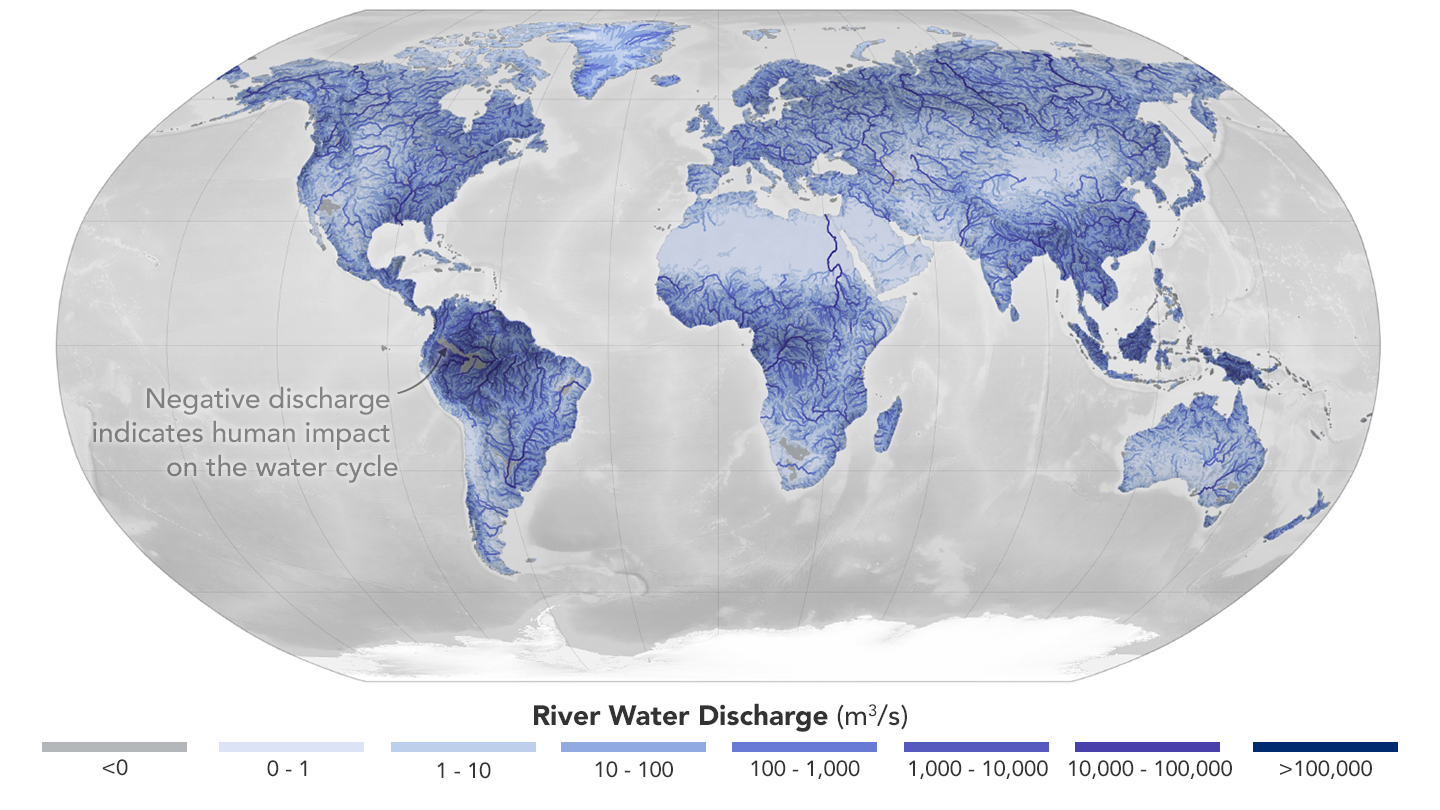
    The NASA-led study estimated flow through 3 million river segments, identifying locations around the world marked by intense human water use, including parts of the Colorado, Amazon, Orange, and Murray-Darling river basins, shown as gray here.
    NASA

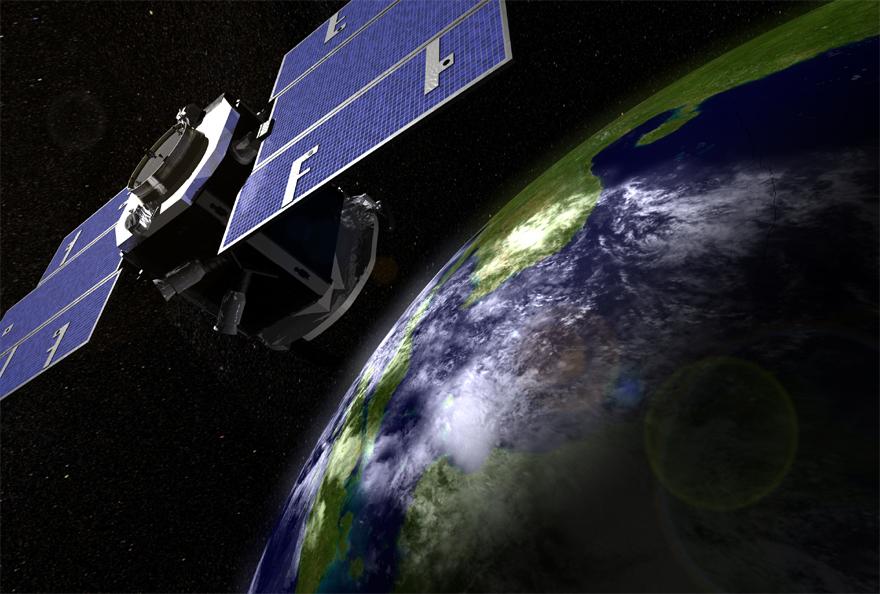
    Estimates in the paper could eventually be compared with data from the international Surface Water and Ocean Topography (SWOT) satellite to improve measurements of human impacts on Earth’s water cycle. Launched in December 2022, SWOT is mapping the elevation of water around the globe, and changes in river height offer a way to quantify storage and discharge.

    ‘Fingerprints’ of Water Use

    The study identified the Amazon basin as the region with the most river storage, holding about 204 cubic miles (850 cubic kilometers) of water — roughly 38% of the global estimate. The same basin also discharges the most water to the ocean: 1,629 cubic miles (6,789 cubic kilometers) per year. That’s 18% of the global discharge to the ocean, which averaged 8,975 cubic miles (37,411 cubic kilometers) per year from 1980 to 2009.

    Although it’s not possible for a river to have negative discharge — the study’s approach doesn’t allow for upstream flow — for the sake of accounting, it is possible for less water to come out of some river segments than went in. That’s what the researchers found for parts of the Colorado, Amazon, and Orange river basins, as well as the Murray-Darling basin in southeastern Australia. These negative flows mostly indicate intense human water use.

    “These are locations where we’re seeing fingerprints of water management,” said lead author Elyssa Collins, who conducted the analysis as a JPL intern and doctoral student at North Carolina State University in Raleigh.

    A New Way to Quantify Rivers

    For decades, most estimates of Earth’s total river water were refinements of a 1974 United Nations figure, and no study has illustrated how the amount has varied with time. Better estimates have been hard to come by, David said, due to a lack of observations of the world’s rivers, particularly those far from human populations.

    Another issue has been that there are many more stream gauges monitoring the levels and flow of large rivers than there are of small ones. There’s also broad uncertainty in estimates of land runoff — the rainwater and snowmelt that flow into rivers.

    The new study started from the premise that runoff flowing into and through a river system should roughly equal the amount that gauges measure downstream. Where the researchers found inconsistencies between simulated runoff from three land surface models and gauge measurements taken from approximately 1,000 locations, they used the gauge measurements to correct the simulated runoff numbers.

    Then they modeled the runoff through rivers on a high-resolution global map developed using land-elevation data and imagery from space, including from NASA’s Shuttle Radar Topography Mission. This approach yielded discharge rates, which were used to estimate average and monthly storage for individual rivers and the planet’s rivers in total. 

    Using a consistent methodology enables comparisons in flow and human drawdown between different regions. 

    “That way we can see where in the world the most amount of river water is stored, or where the most amount of water is being emptied into oceans from rivers,” said Collins, now a postdoctoral researcher at the University of North Carolina at Chapel Hill.

    News Media Contacts

    Andrew Wang / Jane J. Lee
    Jet Propulsion Laboratory, Pasadena, Calif.
    626-379-6874 / 818-354-0307
    andrew.wang@jpl.nasa.gov / jane.j.lee@jpl.nasa.gov

    2024-051

  • Hubble Spots a Magnificent Barred Galaxy

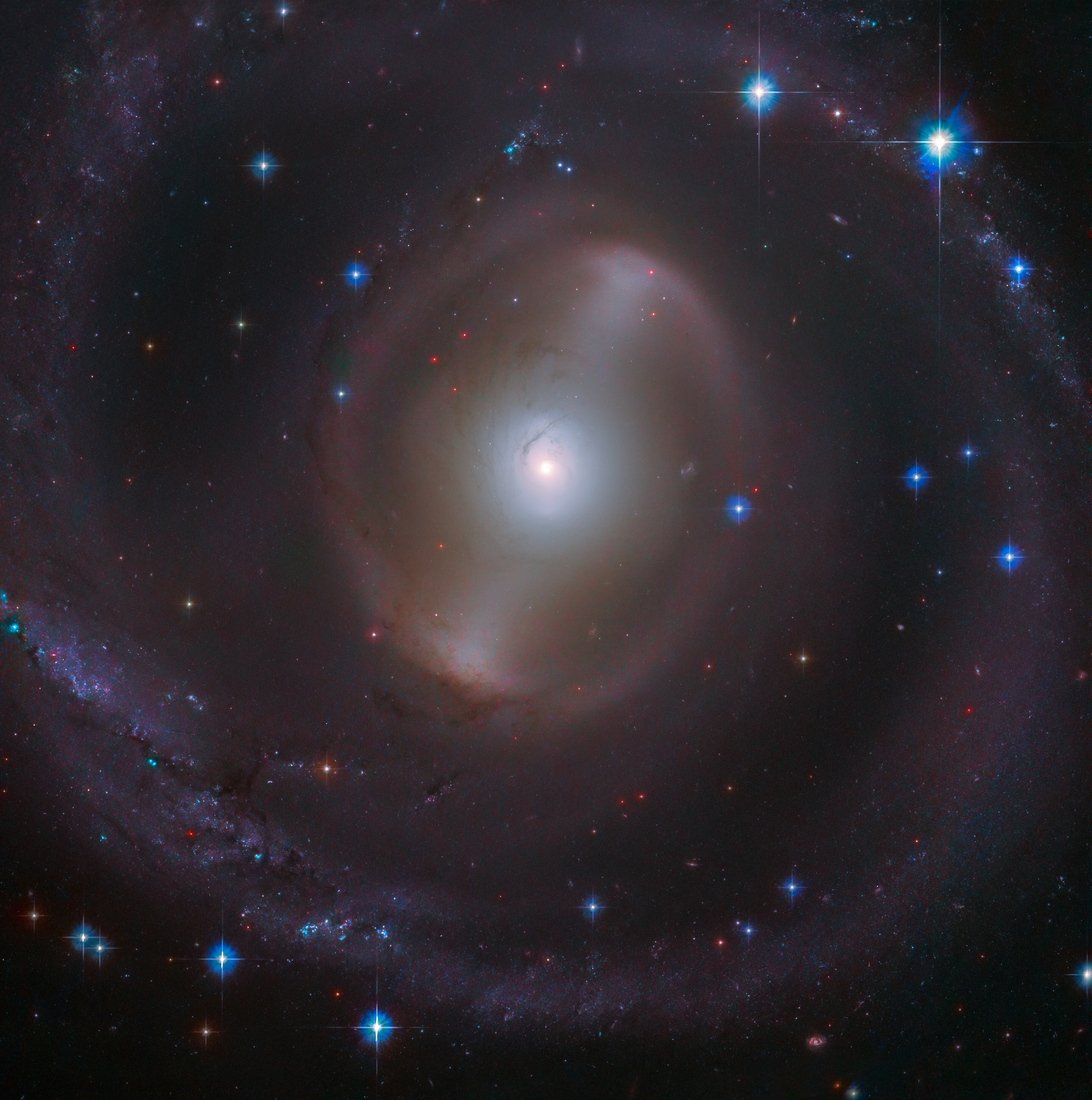
    A bright, white galactic core shines near the center of the image with a faint bar of stars extending from it, diagonally to the right. Faint, hazy spiral arms encircle the core, with several distant stars and bright blue foreground stars with diffraction spikes scattered throughout the image, all against black space.
    This NASA/ESA Hubble Space Telescope images showcases the galaxy NGC 2217.
    ESA/Hubble & NASA, J. Dalcanton; Acknowledgement: Judy Schmidt (Geckzilla)

    The magnificent central bar of NGC 2217 (also known as AM 0619-271) shines bright in the constellation of Canis Major (The Greater Dog), in this image taken by the NASA/ESA Hubble Space Telescope. Roughly 65 million light-years from Earth, this barred spiral galaxy is a similar size to our Milky Way at 100,000 light-years across. Many stars are concentrated in its central region forming the luminous bar, surrounded by a set of tightly wound spiral arms.

    The central bar in these types of galaxies plays an important role in their evolution, helping to funnel gas from the disk into the middle of the galaxy. The transported gas and dust are then either formed into new stars or fed to the supermassive black hole at the galaxy’s center. Weighing from a few hundred to over a billion times the mass of our Sun, supermassive black holes are present in almost all large galaxies.

    This image was colorized with data from the Panoramic Survey Telescope and Rapid Response System (Pan-STARRS).

    Text credit: European Space Agency (ESA)

    Media Contact:

    Claire Andreoli
    NASA’s Goddard Space Flight CenterGreenbelt, MD
    claire.andreoli@nasa.gov

  • NASA’s Optical Comms Demo Transmits Data Over 140 Million Miles

    6 min read

    Preparations for Next Moonwalk Simulations Underway (and Underwater)

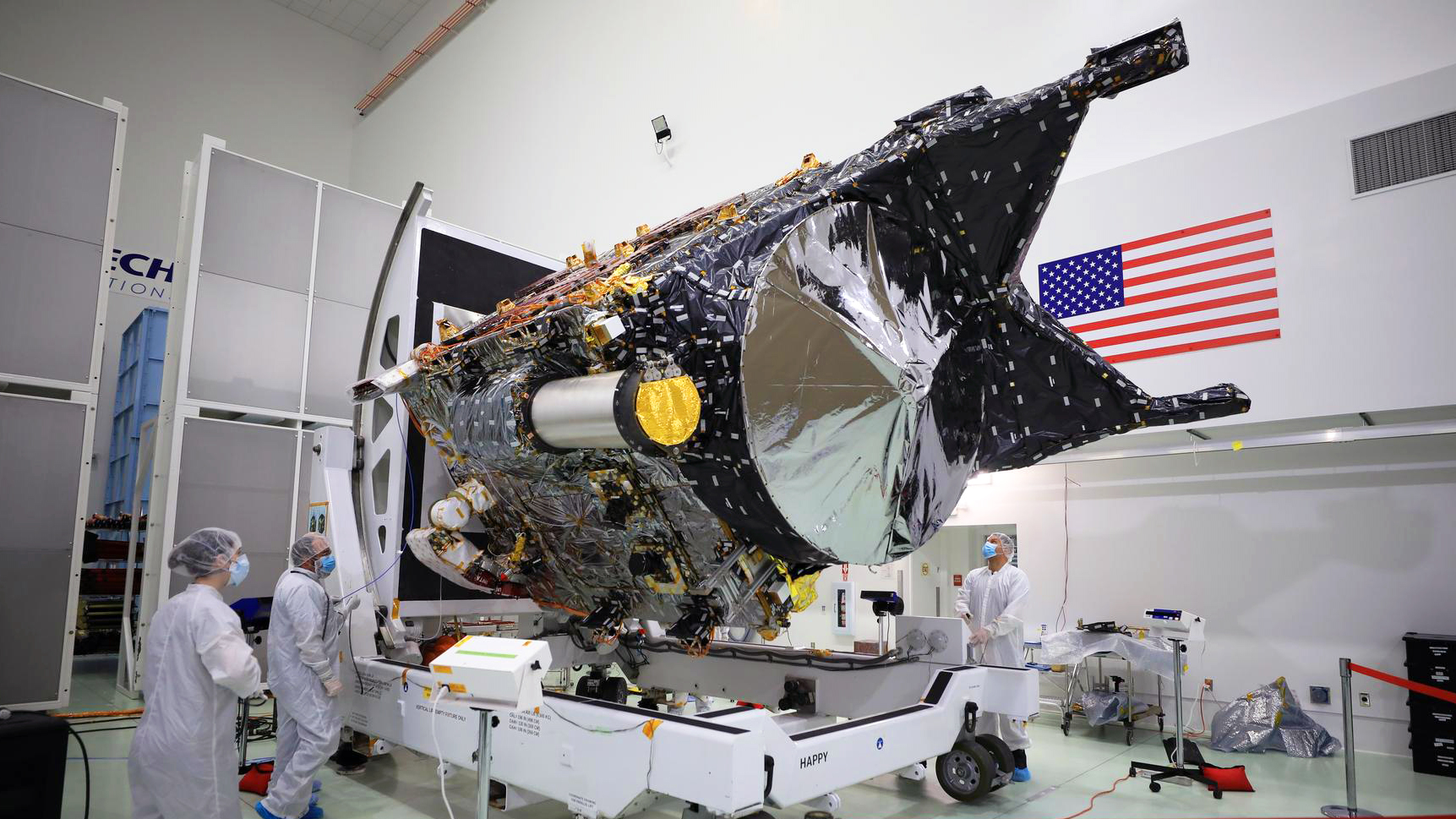
    NASA’s Psyche spacecraft is shown in a clean room
    NASA’s Psyche spacecraft is shown in a clean room at the Astrotech Space Operations facility near the agency’s Kennedy Space Center in Florida on Dec. 8, 2022. DSOC’s gold-capped flight laser transceiver can be seen, near center, attached to the spacecraft.
    NASA/Ben Smegelsky

    NASA’s Deep Space Optical Communications experiment also interfaced with the Psyche spacecraft’s communication system for the first time, transmitting engineering data to Earth.

    Riding aboard NASA’s Psyche spacecraft, the agency’s Deep Space Optical Communications technology demonstration continues to break records. While the asteroid-bound spacecraft doesn’t rely on optical communications to send data, the new technology has proven that it’s up to the task. After interfacing with the Psyche’s radio frequency transmitter, the laser communications demo sent a copy of engineering data from over 140 million miles (226 million kilometers) away, 1½ times the distance between Earth and the Sun.

    This achievement provides a glimpse into how spacecraft could use optical communications in the future, enabling higher-data-rate communications of complex scientific information as well as high-definition imagery and video in support of humanity’s next giant leap: sending humans to Mars.

    “We downlinked about 10 minutes of duplicated spacecraft data during a pass on April 8,” said Meera Srinivasan, the project’s operations lead at NASA’s Jet Propulsion Laboratory in Southern California. “Until then, we’d been sending test and diagnostic data in our downlinks from Psyche. This represents a significant milestone for the project by showing how optical communications can interface with a spacecraft’s radio frequency comms system.”

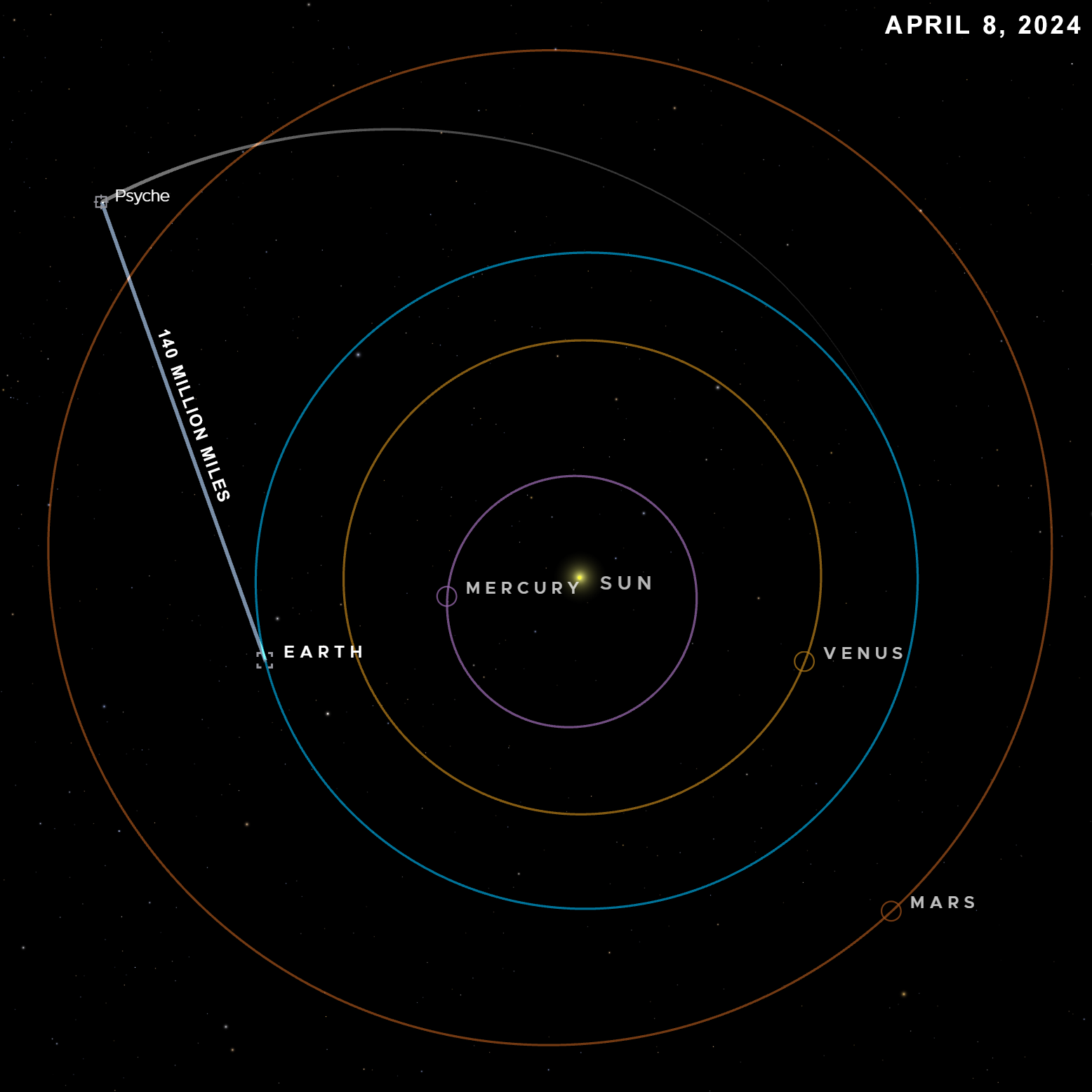
    This visualization shows the Psyche spacecraft’s position on April 8
    This visualization shows the Psyche spacecraft’s position on April 8 when the DSOC flight laser transceiver transmitted data at a rate of 25 Mbps over 140 million miles to a downlink station on Earth.
    NASA/JPL-Caltech

    The laser communications technology in this demo is designed to transmit data from deep space at rates 10 to 100 times faster than the state-of-the-art radio frequency systems used by deep space missions today.

    After launching on Oct. 13, 2023, the spacecraft remains healthy and stable as it journeys to the main asteroid belt between Mars and Jupiter to visit the asteroid Psyche.

    Surpassing Expectations

    NASA’s optical communications demonstration has shown that it can transmit test data at a maximum rate of 267 megabits per second (Mbps) from the flight laser transceiver’s near-infrared downlink laser — a bit rate comparable to broadband internet download speeds.

    That was achieved on Dec. 11, 2023, when the experiment beamed a 15-second ultra-high-definition video to Earth from 19 million miles away (31 million kilometers, or about 80 times the Earth-Moon distance). The video, along with other test data, including digital versions of Arizona State University’s Psyche Inspired artwork, had been loaded onto the flight laser transceiver before Psyche launched last year.

    Now that the spacecraft is more than seven times farther away, the rate at which it can send and receive data is reduced, as expected. During the April 8 test, the spacecraft transmitted test data at a maximum rate of 25 Mbps, which far surpasses the project’s goal of proving at least 1 Mbps was possible at that distance.

    The project team also commanded the transceiver to transmit Psyche-generated data optically. While Psyche was transmitting data over its radio frequency channel to NASA’s Deep Space Network (DSN), the optical communications system simultaneously transmitted a portion of the same data to the Hale Telescope at Caltech’s Palomar Observatory in San Diego County, California — the tech demo’s primary downlink ground station.

    “After receiving the data from the DSN and Palomar, we verified the optically downlinked data at JPL,” said Ken Andrews, project flight operations lead at JPL. “It was a small amount of data downlinked over a short time frame, but the fact we’re doing this now has surpassed all of our expectations.”

    Fun With Lasers

    After Psyche launched, the optical communications demo was initially used to downlink pre-loaded data, including the Taters the cat video. Since then, the project has proven that the transceiver can receive data from the high-power uplink laser at JPL’s Table Mountain facility, near Wrightwood, California. Data can even be sent to the transceiver and then downlinked back to Earth on the same night, as the project proved in a recent “turnaround experiment.”

    This experiment relayed test data — as well as digital pet photographs — to Psyche and back again, a round trip of up to 280 million miles (450 million kilometers). It also downlinked large amounts of the tech demo’s own engineering data to study the characteristics of the optical communications link.

    “We’ve learned a great deal about how far we can push the system when we do have clear skies, although storms have interrupted operations at both Table Mountain and Palomar on occasion,” said Ryan Rogalin, the project’s receiver electronics lead at JPL. (Whereas radio frequency communications can operate in most weather conditions, optical communications require relatively clear skies to transmit high-bandwidth data.)

    JPL recently led an experiment to combine Palomar, the experimental radio frequency-optical antenna at the DSN’s Goldstone Deep Space Communications Complex in Barstow, California, and a detector at Table Mountain to receive the same signal in concert. “Arraying” multiple ground stations to mimic one large receiver can help boost the deep space signal. This strategy can also be useful if one ground station is forced offline due to weather conditions; other stations can still receive the signal.

    More About the Mission

    Managed by JPL, this demonstration is the latest in a series of optical communication experiments funded by the Technology Demonstration Missions (TDM) program under NASA’s Space Technology Mission Directorate and the agency’s SCaN (Space Communications and Navigation) program within the Space Operations Mission Directorate. Development of the flight laser transceiver is supported by MIT Lincoln Laboratory, L3 Harris, CACI, First Mode, and Controlled Dynamics Inc., and Fibertek, Coherent, and Dotfast support the ground systems. Some of the technology was developed through NASA’s Small Business Innovation Research program.

    Arizona State University leads the Psyche mission. JPL is responsible for the mission’s overall management, system engineering, integration and test, and mission operations. Psyche is the 14th mission selected as part of NASA’s Discovery Program under the Science Mission Directorate, managed by the agency’s Marshall Space Flight Center in Huntsville, Alabama. NASA’s Launch Services Program, based at the agency’s Kennedy Space Center in Florida, managed the launch service. Maxar Technologies provided the high-power solar electric propulsion spacecraft chassis from Palo Alto, California.

    For more information about the laser communications demo, visit:

    https://www.jpl.nasa.gov/missions/dsoc

    News Media Contacts

    Ian J. O’Neill
    Jet Propulsion Laboratory, Pasadena, Calif.
    818-354-2649
    ian.j.oneill@jpl.nasa.gov

    2024-049      

  • Hubble Spots the Little Dumbbell Nebula

    Taking up most of the image, is a multi-colored nebula in shades of blue, pink, yellow, orange, purple, and white. It appears as two translucent orbs attached by a white band.
    In celebration of the 34th anniversary of the launch of NASA’s Hubble Space Telescope, astronomers took a snapshot of the Little Dumbbell Nebula, also known as Messier 76, or M76, located 3,400 light-years away in the northern circumpolar constellation Perseus. The name ‘Little Dumbbell’ comes from its shape that is a two-lobed structure of colorful, mottled, glowing gases resembling a balloon that’s been pinched around a middle waist. Like an inflating balloon, the lobes are expanding into space from a dying star seen as a white dot in the center. Blistering ultraviolet radiation from the super-hot star is causing the gases to glow. The red color is from nitrogen, and blue is from oxygen.
    NASA, ESA, STScI

    To celebrate the 34th anniversary of the Hubble Space Telescope’s launch, the telescope captured an image of the Little Dumbbell Nebula, or M76. M76 is a planetary nebula, an expanding shell of glowing gases that were ejected from a dying red giant star that eventually collapses to an ultra-dense and hot white dwarf. It gets its descriptive name from its shape: a ring, seen edge-on as the central bar structure, and two lobes on either opening of the ring.

    Since its launch in 1990 Hubble has made 1.6 million observations of over 53,000 astronomical objects. Most of Hubble’s discoveries were not anticipated before launch, such as supermassive black holes, the atmospheres of exoplanets, gravitational lensing by dark matter, the presence of dark energy, and the abundance of planet formation among stars.

    Learn more about the Little Dumbbell Nebula and Hubble.

    Image Credit: NASA, ESA, STScI