Acting NASA Administrator Sean Duffy and Australian Space Agency Head Enrico Palermo signed an agreement Sept. 30, 2025, in Sydney that strengthens collaboration in aeronautics and space exploration between the two nations.
Credit: NASA/Max van Otterdyk
At the International Astronautical Congress (IAC) taking place in Sydney this week, representatives from the United States and Australia gathered to sign a framework agreement that strengthens collaboration in aeronautics and space exploration between the two nations.
Acting NASA Administrator Sean Duffy and Australian Space Agency Head Enrico Palermo signed the agreement Tuesday on behalf of their countries, respectively.
“Australia is an important and longtime space partner, from Apollo to Artemis, and this agreement depends on that partnership,” said Duffy. “International agreements like this one work to leverage our resources and increase our capacities and scientific returns for all, proving critical to NASA’s plans from low Earth orbit to the Moon, Mars, and beyond.”
Australian Minister for Industry and Innovation and Minister for Science Tim Ayres said the signing builds on more than half a century of collaboration between the two nations.
“Strengthening Australia’s partnership with the U.S. and NASA creates new opportunities for Australian ideas and technologies, improving Australia’s industrial capability, boosting productivity, and building economic resilience,” Ayres said.
Known as the “Framework Agreement between the Government of the United States of America and the Government of Australia on Cooperation in Aeronautics and the Exploration and Use of Airspace and Outer Space for Peaceful Purposes,” it recognizes cooperation that’s mutually beneficial for the U.S. and Australia and establishes the legal framework under which the countries will work together.
Potential areas for cooperation include space exploration, space science, Earth science including geodesy, space medicine and life sciences, aeronautics research, and technology.
NASA has collaborated with Australia on civil space activities since 1960, when the two countries signed their first cooperative space agreement. The Canberra Deep Space Communication Complex played a vital role in supporting NASA’s Apollo Program, most notably during the Apollo 13 mission. Today, the complex is one of three global stations in NASA’s Deep Space Network, supporting both robotic and human spaceflight missions.
One of the original signatories to the Artemis Accords, Australia joined the United States under President Donald Trump and six other nations in October 2020, in supporting a basic set of principles for the safe and responsible use of space. Global space leaders from many of the 56 signatory countries met at IAC in Sydney this week to further their implementation.
As part of an existing partnership with the Australian Space Agency, Australia is developing a semi-autonomous lunar rover, which will carry a NASA analysis instrument intended to demonstrate technology for scientific and exploration purposes. The rover is scheduled to launch by the end of this decade through NASA’s CLPS (Commercial Lunar Payload Services) initiative.
NASA’s international partnerships reflect the agency’s commitment to peaceful, collaborative space exploration. Building on a legacy of cooperation, from the space shuttle to the International Space Station and now Artemis, international partnerships support NASA’s plans for lunar exploration under the Artemis campaign and future human exploration of Mars.
To learn more about NASA’s international partnerships, visit:
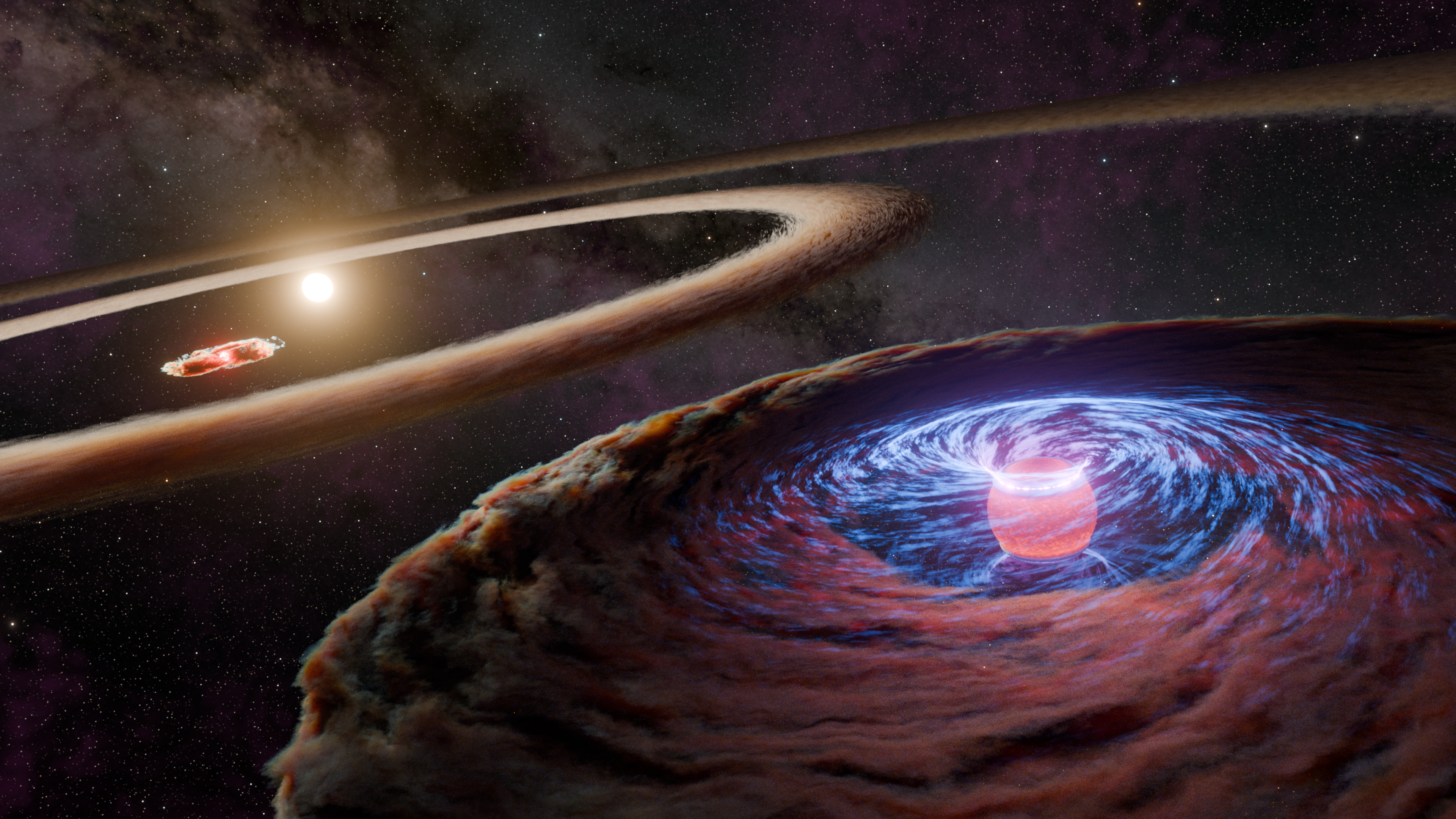
This artist’s concept depicts the protoplanet WISPIT 2b accreting matter as it orbits around its star, WISPIT 2.
NASA/JPL-Caltech/R. Hurt (IPAC)
The (Proto) Planet:
WISPIT 2b
The Discovery:
Researchers have discovered a young protoplanet called WISPIT 2b embedded in a ring-shaped gap in a disk encircling a young star. While theorists have thought that planets likely exist in these gaps (and possibly even create them), this is the first time that it has actually been observed.
This image of the WISPIT 2 system was captured by the Magellan Telescope in Chile and the Large Binocular Telescope in Arizona. The protoplanet WISPIT 2b is a small purple dot to the right of a bright white ring of dust surrounding the system’s star. A fainter white ring outside of WISPIT 2b can be seen.
Laird Close, University of Arizona
Key Takeaway:
Researchers have directly detected – essentially photographed – a new planet called WISPIT 2b, labeled a protoplanet because it is an astronomical object that is accumulating material and growing into a fully-realized planet. However, even in its “proto” state, WISPIT 2b is a gas giant about 5 times as massive as Jupiter. This massive protoplanet is just about 5 million years old, or almost 1,000 times younger than the Earth, and about 437 light-years from Earth.
Being a giant and still-growing baby planet, WISPIT 2b is interesting to study on its own, but its location in this protoplanetary disk gap is even more fascinating. Protoplanetary disks are made of gas and dust that surround young stars and function as the birthplace for new planets.
Within these disks, gaps or clearings in the dust and gas can form, appearing as empty rings. Scientists have long suggested that these growing planets are likely responsible for clearing the material in these gaps, pushing and scattering dusty disk material outwards and greeting the ring gaps in the first place. Our own solar system was once just a protoplanetary disk, and it’s possible that Jupiter and Saturn may have cleared ring gaps like this in that disk many, many years ago.
But despite continued observation of stars with these kinds of disks, there was never any direct evidence of a growing planet found in one of these ring gaps. That is, until now. As reported in this paper, WISPIT 2b was directly observed in one of the ring gaps around its star, WISPIT 2.
Another interesting aspect of this discovery is that WISPIT 2b appears to have formed where it was found, it didn’t form elsewhere and move into the gap somehow.
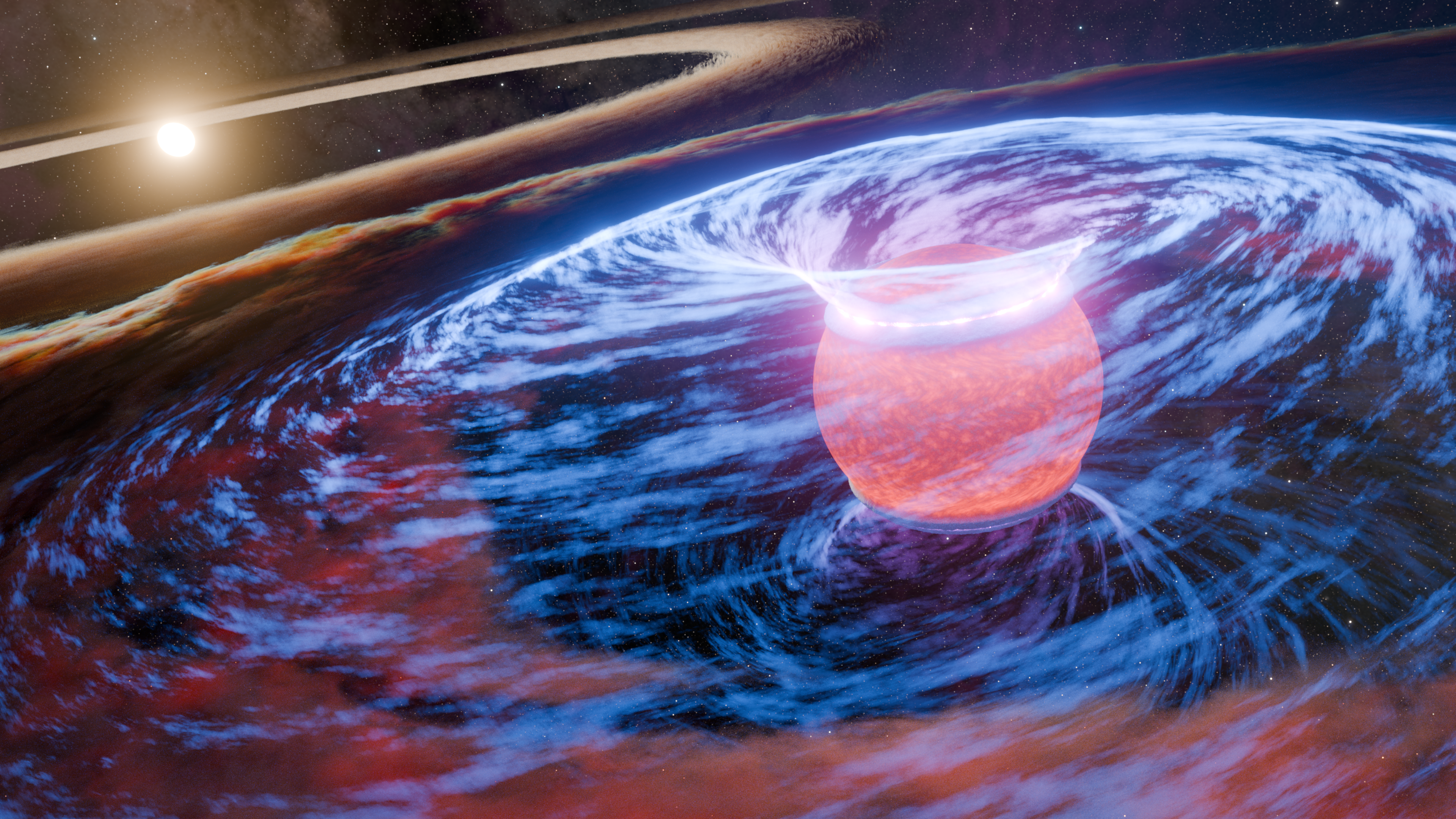
This artist’s concept depicts a close-up of the protoplanet WISPIT 2b accreting matter as it orbits around its star, WISPIT 2.
NASA/JPL-Caltech/R. Hurt (IPAC)
Details:
The star WISPIT 2 was first observed using VLT-SPHERE (Very Large Telescope – Spectro-Polarimetric High-contrast Exoplanet REsearch), a ground-based telescope in northern Chile operated by the European Southern Observatory. In these observations, the rings and gap around this star were first seen.
Following these observations of the system, researchers looked at WISPIT 2, and spotted the planet WISPIT 2b for the first time, using the University of Arizona’s MagAO-X extreme adaptive optics system, a high-contrast exoplanet imager at the Magellan 2 (Clay) Telescope at Las Campanas Observatory in Chile.
This technology adds another unique layer to this discovery. The MagAO-X instrument captures direct images, so it didn’t just detect WISPIT 2b, it essentially captured a photograph of the protoplanet.
The team used this technology to study the WISPIT 2 system in what is called H-alpha, or Hydrogen-alpha, light. This is a type of visible light that is emitted when hydrogen gas falls from a protoplanetary disk onto young, growing planets. This could look like a ring of super heated plasma circling the planet. This plasma emits the H-alpha light that MagAO-X is specially designed to detect (even if it is a very faint signal compared to the bright star nearby).
When looking at the system in H-alpha light, the team spotted a clear dot in one of the dark ring gaps in the disk around WISPIT 2. This dot? The planet WISPIT 2b.
In addition to observing the protoplanet’s H-alpha emission using MagAO-X, the team also studied the protoplanet in other wavelengths of infrared light using the LMIRcam detector as part of the The Large Binocular Telescope Interferometer instrument on the University of Arizona’s Large Binocular Telescope.
Fun Facts:
In addition to discovering WISPIT 2b, this team spotted a second dot in one of the other dark ring gaps even closer to the star WISPIT 2. This second dot has been identified as another candidate planet that will likely be investigated in future studies of the system.
The Discoverers:
WISPIT-2b was discovered by a team led by University of Arizona astronomer Laird Close and Richelle van Capelleveen, an astronomy graduate student at Leiden Observatory in the Netherlands. This followed the recent discovery of the WISPIT 2 disk and ring system using the VLT, which was led by van Capelleveen.
This discovery was detailed in the paper “Wide Separation Planets in Time (WISPIT): Discovery of a Gap Hα Protoplanet WISPIT 2b with MagAO-X,” published August 26, 2025 in the Astrophysical Journal Letters. A second paper led by van Capelleveen and the University of Galway published on the same day in the Astrophysical Journal Letters.
This research was partially supported by a grant from the NASA eXoplanet Research Program. MagAO-X was developed in part by a grant from the U.S. National Science Foundation with support from the Heising-Simons Foundation.
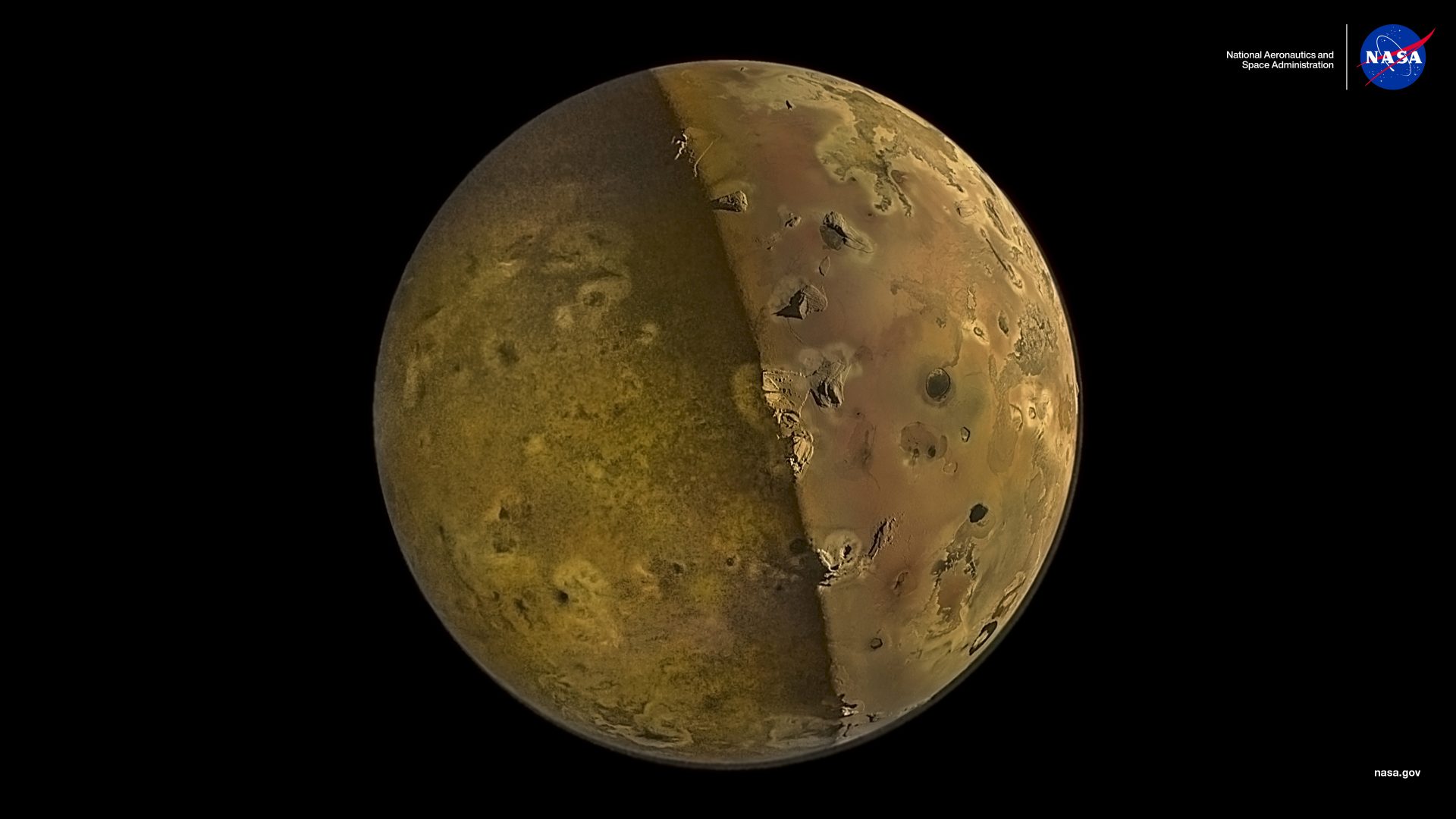
During its close flyby of Jupiter’s moon Io on December 30, 2023, NASA’s Juno spacecraft captured some of the most detailed imagery ever of Io’s volcanic surface. This image is the NASA Science Image of the Month for October 2025.
During its close flyby of Jupiter’s moon Io on December 30, 2023, NASA’s Juno spacecraft captured some of the most detailed imagery ever of Io’s volcanic surface. In this image, taken by the JunoCam instrument from about 930 miles (1,500 kilometers) above the moon, Io’s night side [left lobe] is illuminated by “Jupitershine,” which is sunlight reflected from the planet’s surface.
This image is the NASA Science Image of the Month for October 2025. Each month, NASA’s Science Mission Directorate chooses an image to feature, offering desktop wallpaper downloads, as well as links to related topics, activities, and games.
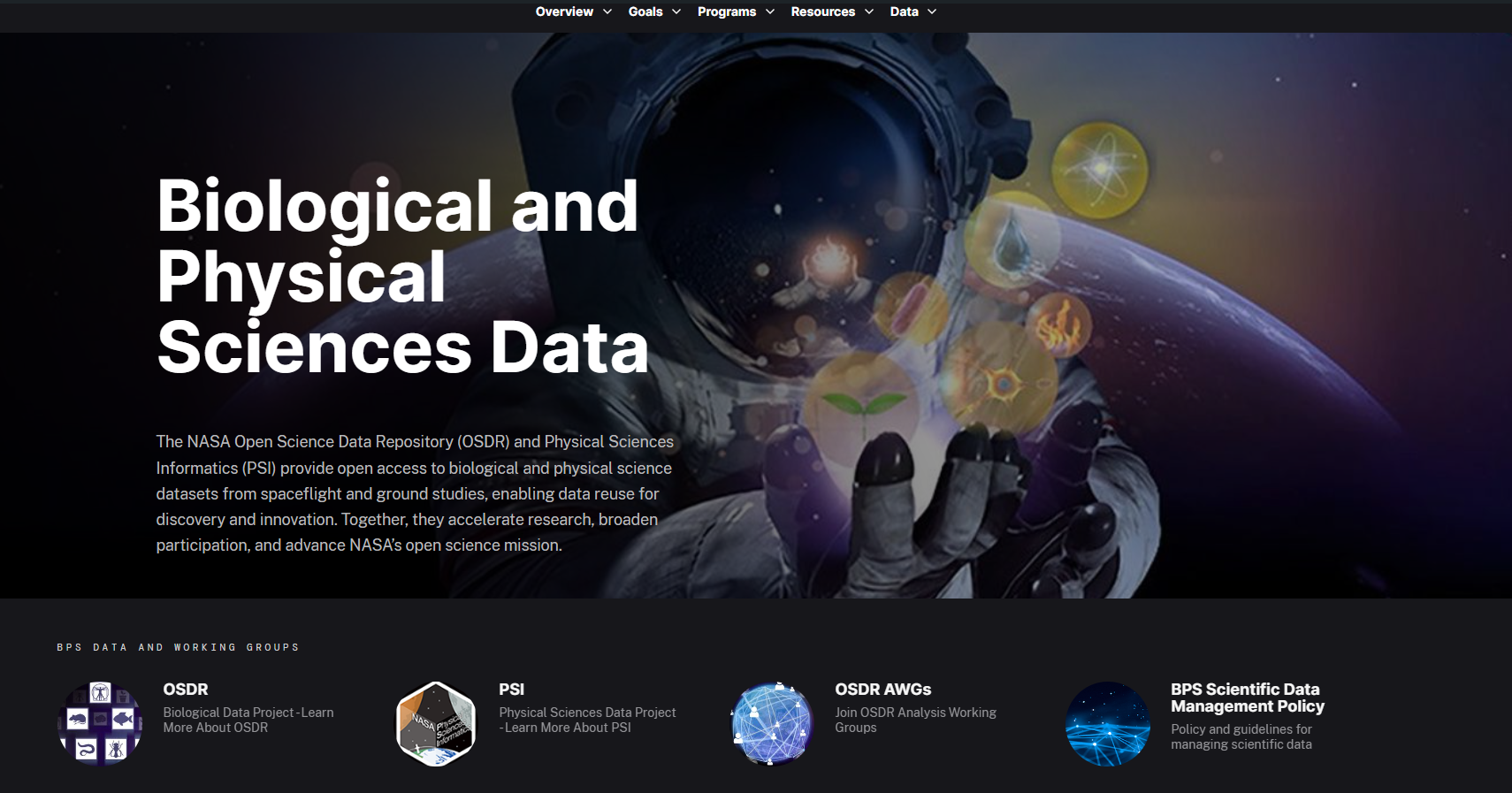
The Open Science Data Repository (OSDR) and Physical Sciences Informatics (PSI) has a new home. As part of NASA’s website consolidation initiative, the OSDR and PSI site have officially transitioned to the Biological and Physical Sciences (BPS) Data page, accessible through the “Data” menu on the Science Mission Directorate’s (SMD) website at science.nasa.gov. This strategic move reflects NASA’s broader effort to streamline user access to resources, unify digital platforms, and provide a more consistent experience across the SMD divisions.
The OSDR and PSI consolidation brings together two powerful resources, giving researchers a single point of access to search both biological and physical sciences datasets. By integrating these repositories, NASA is expanding opportunities for cross-disciplinary research, enabling scientists to draw connections across fields and gain deeper insights into how biology and physical systems respond to spaceflight environments.
The redesigned OSDR website continues to serve as a hub for open access to space science data, offering a modernized layout, improved navigation, and direct pathways to explore datasets and analysis tools, and submit data through the submission portals enabled by OSDR and PSI. Whether you are a scientist seeking resources for new investigations, a student learning about space research, or a collaborator from another discipline, the updated platform makes accessing NASA’s open science data easier than ever. Check out the new BPS Data and OSDR, and PSI websites now!
The launch of the new consolidated OSDR and PSI websites underscores NASA’s commitment to open science and to advancing knowledge through transparent, accessible, and reusable data. By situating OSDR under the BPS data ecosystem and combining it with PSI, NASA is strengthening visibility, fostering collaboration, and ensuring that both biological and physical sciences research in space continues to thrive.
International Space Station: Launching NASA and Humanity into Deep Space
Curiosity and the desire to explore are traits deeply rooted in human nature. Space exploration is no exception; it reflects humanity’s timeless drive to seek new horizons, challenge our limits, and understand our universe.
The advancements of modern civilization—from the electricity that powers our homes to basic hygienic breakthroughs that ensure our health— happened thanks to humanity’s dedication to expanding our knowledge and transforming our world. Similarly, before we can venture into deep space, we must expand our knowledge to understand life beyond Earth. The International Space Station provides the platform for sharpening the skills, technology, and understanding that has springboarded humanity forward, leading us back to the Moon, Mars, and beyond.
In November 2025, NASA and its international partners will surpass 25 years of continuous human presence aboard the International Space Station. As NASA prepares for Artemis missions to the Moon and sets sights on Mars, the space station continues to enable groundbreaking research not possible on Earth, making significant strides in our journey farther into the final frontier.
Step 1: Mastering a New Environment
NASA astronauts Raja Chari, Tom Marshburn, and Kayla Barron demonstrate the unique physical environment aboard the space station.
NASA
Space presents an entirely new physical environment with a unique set of challenges. Without Earth’s gravity, researchers first needed to master techniques for basic tasks like drinking water, sleeping, exercising, and handling various materials. Fundamental research in the early days of the space station helped us address these basic challenges and move forward to more advanced physics, building multiple space-based research facilities, developing life support systems, and even improving consumer products for life on Earth.
The human body experiences challenges in space like adapting to different gravitational fields and living for long periods in a closed environment. For example, fluid shifts in the body due to microgravity can cause changes with the eyes, brain, bones, muscles, and cardiovascular system. Being able to see, breathe, and function optimally are critical to living and working in space. Research aboard the space station is producing solutions to these challenges and equipping humans for deep space exploration though research like simulating moon landings to clarify how gravitational transitions affect piloting capabilities and decision-making.
Step 2: Creating Self Sufficiency in Space
In 2021, astronauts aboard the International Space Station harvested chile peppers for the first time, and taste-tested the fruits of their labor.
NASA
As missions venture farther from Earth, reliable technologies and self-sustaining ecosystems become essential. The space station provides a testbed to refine these systems before human’s travel to distant destinations.
Food, water, and air are among the basic needs for human survival. Thanks to testing aboard the space station, we have developed state-of-the-art life support systems that could be used on future commercial space stations and the Artemis missions. The space station also has enabled testing of evolving technologies to recycle air, water, and waste. In the U.S. segment of space station, NASA achieved 98% water recovery, the ideal level needed for missions beyond low Earth orbit.
Deep space missions could last several years, and astronauts will need enough food to sustain them the entire time. Packaged food can degrade and lose nutrients and vitamins over time, and a deficiency in vitamins can cause health issues. Growing and producing fresh foods and nutrients will be vital during these missions. Over 50 species of plants have been grown aboard the space station, including a variety of vegetables, leafy greens, grains, and legumes. Scientists are testing different systems for scalable crop growth, including aeroponic and hydroponic systems. Research is also being conducted to produce vital nutrients in orbit using microbes.
Researchers have also advanced 3D printing in space, enabling astronauts to make tools and parts on-demand. This ability is especially important in planning for missions to the Moon and Mars because additional supplies cannot quickly be sent from Earth and cargo capacity is limited. Experiments on the space station have made it possible to 3D print plastic parts and tools, and test ways to reuse waste like plastic bags and packing foam as material for 3D printers. In 2024, ESA (European Space Agency) successfully 3D printed the first metal part aboard space station, a step towards more diverse manufacturing during future missions.
Step 3: Preparing for Lunar and Martian Exploration
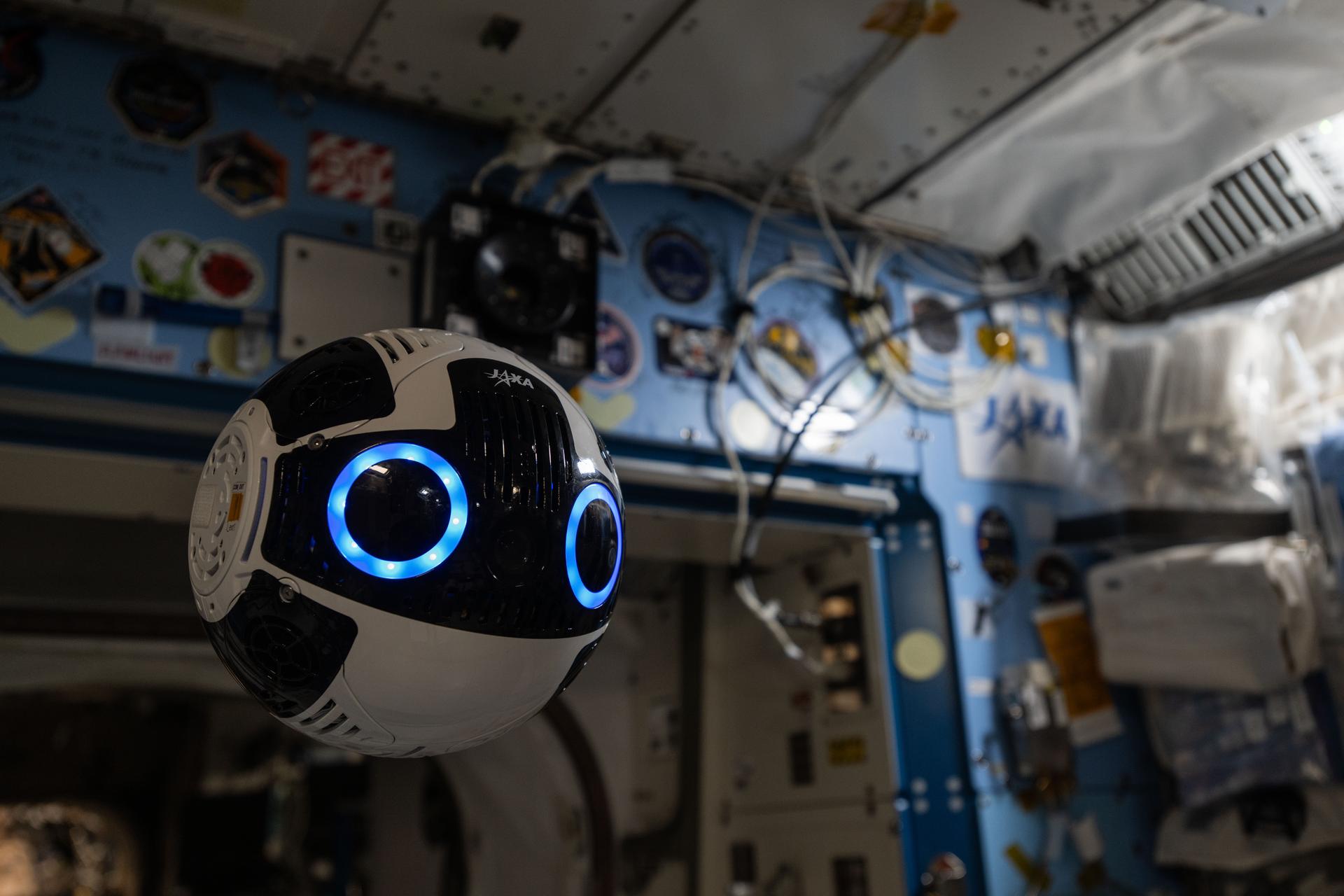
The Internal Ball Camera 2 tests automatically capturing imagery of crew activities aboard the International Space Station.
JAXA/Takuya Onishi
Before astronauts explore new terrains, we first must collect data and imagery to better characterize the surface of these cosmic destinations. Astronauts aboard the space station have collected photographs to document Earth’s surface through Crew Earth Observations. Now, those same techniques are being adapted for Artemis II , where astronauts will use handheld cameras to capture images of the Moon’s surface—including the largely unexplored far side. These observations will increase our understanding of the lunar environment and help prepare for exploration missions.
When they land, astronauts will need shelter from radiation, debris, and contaminants. Technology demonstrations aboard the space station tested the packing techniques, protection capabilities, and venting systems of lightweight inflatable habitats. For more permanent structures, space station experiments have studied how concrete hardens in reduced gravity and tested 3D printing nozzles designed to use regolith – the dust present on the Moon and Mars- as material for constructing habitats on-site.
Robotic experiments aboard the space station are demonstrating tasks like moving objects, early detection of equipment issues, 3D sensing, and mapping. Robots could support astronauts during deep space missions by performing routine tasks, responding to hazards, and reducing the need for risky spacewalks.
Analyzing samples though DNA sequencing has historically been expensive and time intensive, limiting its use in space. Advancements have led to DNA processing aboard the space station and refined sequencing techniques. Not only can this ability potentially identify DNA-based life off Earth, but it is necessary for microbial monitoring to keep crews safe and healthy.
Communications is another important component of space exploration. NASA used the space station to demonstrate laser communications capabilities, enabling transmission of more data at faster rates. This communication could serve as a critical two-way link to keep astronauts connected to Earth as they explore deep space.
Step 4: Testing Beyond Low Earth Orbit
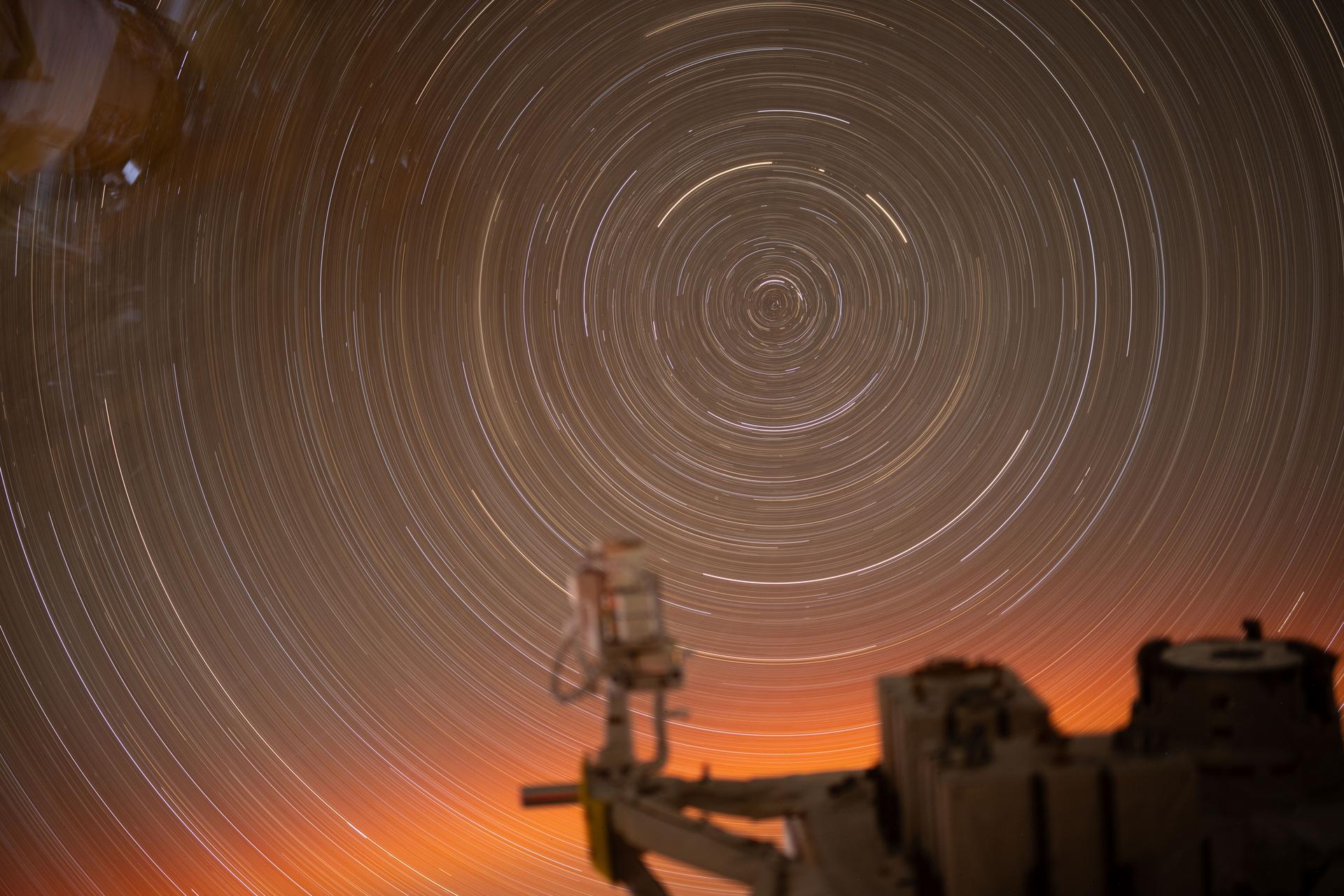
September’s full Moon, the Harvest Moon, is photographed from the International Space Station, perfectly placed in between exterior station hardware.
NASA
Experiments and technologies first tested aboard the space station made their way around the Moon in an uncrewed Orion vehicle during the Artemis I mission. Radiation technology verified on station confirmed that the Orion spacecraft’s design protects against harmful exposure. An identical BioSentinel experiment on both space station and Artemis I studied how yeast cells respond to different levels of space radiation.
Additionally, Moon Imagery research calibrated cameras for Orion’s navigation systems using photos of the Moon taken from space station, ensuring accurate guidance even if communication with Earth is lost.
Three experiments that landed on the Moon during Firefly Aerospace’s Blue Ghost Mission-1 were made possible by earlier research on the space station. These studies help improve space weather monitoring, tested computer recovery from radiation damage, and advanced lunar navigation systems.
Methods used to conduct research on the space station are making their way aboard Artemis II, a mission to place four astronauts in orbit around the Moon. Adapted from human health measurements conducted during space station missions, measurements taken on Artemis II crew will expand a repository of human health data to provide a snapshot of how spaceflight affects the human body beyond low Earth orbit. NASA researchers hope to use this data repository to develop protocols aimed at keeping astronauts healthy on missions to the Moon, Mars, and beyond. Small devices called tissue or organ chips, used for several experiments aboard space station, will continue their scientific journey in the lunar environment. Organ-chip research could improve crew prevention measures and create personalized medical treatments for humans, on Earth and in space.
The International Space Station remains a vital scientific platform, providing the foundation needed to survive and thrive as humanity ventures into the unexplored territories of our universe.
A recent update to the PSI database improves how large dataset downloads are handled, resulting in more efficient processing for users.
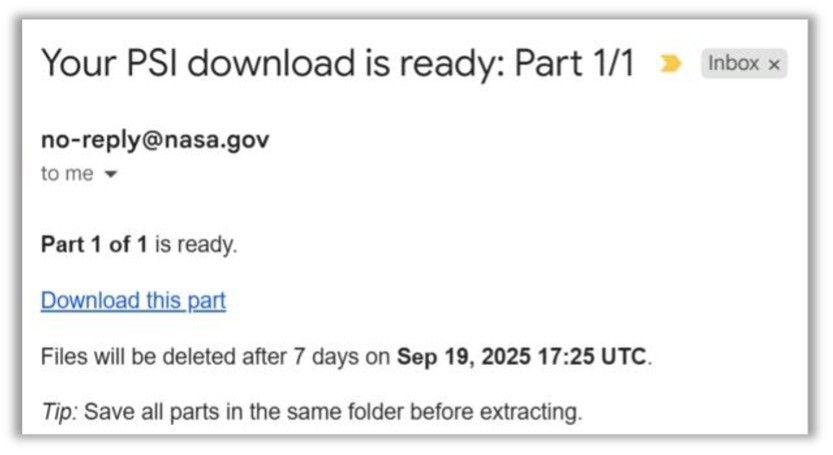
Download requests larger than 1GB are now delivered via email, rather than downloading directly from the website. This allows the system to prepare your files in the background so you can continue working without delays, accessing the files at your convenience once your request is processed.
Why The Change?
This update improves user experience by:
Reducing system lag and download interruptions.
Allowing you to stay productive while files are processed in the background.
Increasing reliability of large downloads.
Delivering files in manageable parts, making them easier to handle and extract.
How Does it Work?
To download files larger than 1GB:
1. Users select 2 or more desired files and click “Download Zip.”
2. In the Prepared Large Download section:
Enter the email address where the download access links should be sent.
Check the box to confirm: “I understand large downloads are delivered in multiple parts via email.”
Click “Send me the links.”
3. Users will receive an email confirming the download request has been submitted.
4. Once the files are ready, users receive a second email with link(s) to access the download. NOTE: Download links are valid for 7 days from the time you receive the email. Be sure to save the requested files before the links expire.
Best Practices
To ensure a smooth and efficient download experience, especially when working with large datasets, follow these best practices to help reduce processing time, prevent errors, and simplify file handling.
Download only what you need: Smaller requests are processed faster.
Split very large requests: If possible, divide and submit large requests into smaller sets to speed up processing.
Avoid simultaneous large requests: Submit one large download at a time for smoother performance.
Before extracting, save all ZIP parts to the same folder: This ensures proper extraction of multi-part downloads.
Download promptly: Remember, download links will expire. Save your files while the link is active.
Use a reliable email address: Double-check for typos and check your spam/junk folder if you don’t receive the emails.
Joe A. Adam Presents Ring Sheared Drop (RSD) Research at 2025 ISSRDC
The Ring-Sheared Drop (RSD) experiment, conducted in the Microgravity Glovebox on ISS, helps scientists learn more about Alzheimer’s & Dementia in hopes of a future cure to similar neurological diseases.
NASA
At the virtual 2025 ISS Research and Development Conference (ISSDRC), Joe A. Adam of Rensselaer Polytechnic Institute, presented the topic titled “Surface Science in Microgravity – Fluid Geometry in the Ring-Sheared Drop,” presented to a broad audience from academia and the scientific community during the Physical Sciences and Materials Development session.
Dr. Adam provided a comprehensive overview of the Ring Sheared Drop (RSD) hardware, experiment campaigns and the evolving role of RSD in advancing biophysical science, particularly in the characterization of proteins. Leveraging the absence of gravity aboard the ISS, the RSD enables researchers to isolate shear-induced aggregation processes relevant to neurodegenerative diseases such as Alzheimer’s and Parkinson’s, offering insight into mechanisms that are difficult to observe with ground-based experiments.
The presentation traced the RSD development, beginning with the initial campaign in 2016 which was funded by Biological and Physical Sciences (BPS) for hardware development and the first science campaign, and culminating in the most recent 2025 flight campaign, which involved the study of three key proteins: Immunoglobulin G (IgG), Insulin, and Human Serum Albumin (HSA).
A highlight of the session was a discussion of the RSD’s custom camera configuration, which has enabled a novel fluid characterization technique known as Particle Tracking Velocimetry (PTV). This method allows researchers to visually track particle motion within the fluid drop, supporting the validation and refinement of theoretical and computational models describing protein behavior in microgravity.
Adam further explained how in-situ imaging and velocimetry techniques, enabled by the unique RSD camera setup, enhance the analysis of fluid flow and shear-driven aggregation at the molecular level.
The presentation showcased a series of comparative videos from past and current RSD campaigns, illustrating protein dynamics under varying sample compositions. He emphasized how flight data are being compared against Earth analog experiments to 1) validate predictive models and 2) inform the design of future microgravity research – the two-fold focus of the research from the beginning.
The session concluded with a summary of preliminary findings from the 2025 campaign, including multi-geometry rheometry results, which offer deeper insight into the viscoelastic behavior of proteins under shear. These findings may well contribute to the development of future pharmaceutical and therapeutic strategies.
To view the entire presentation, a recording is available for downloaded from the 2025 ISSRDC site.
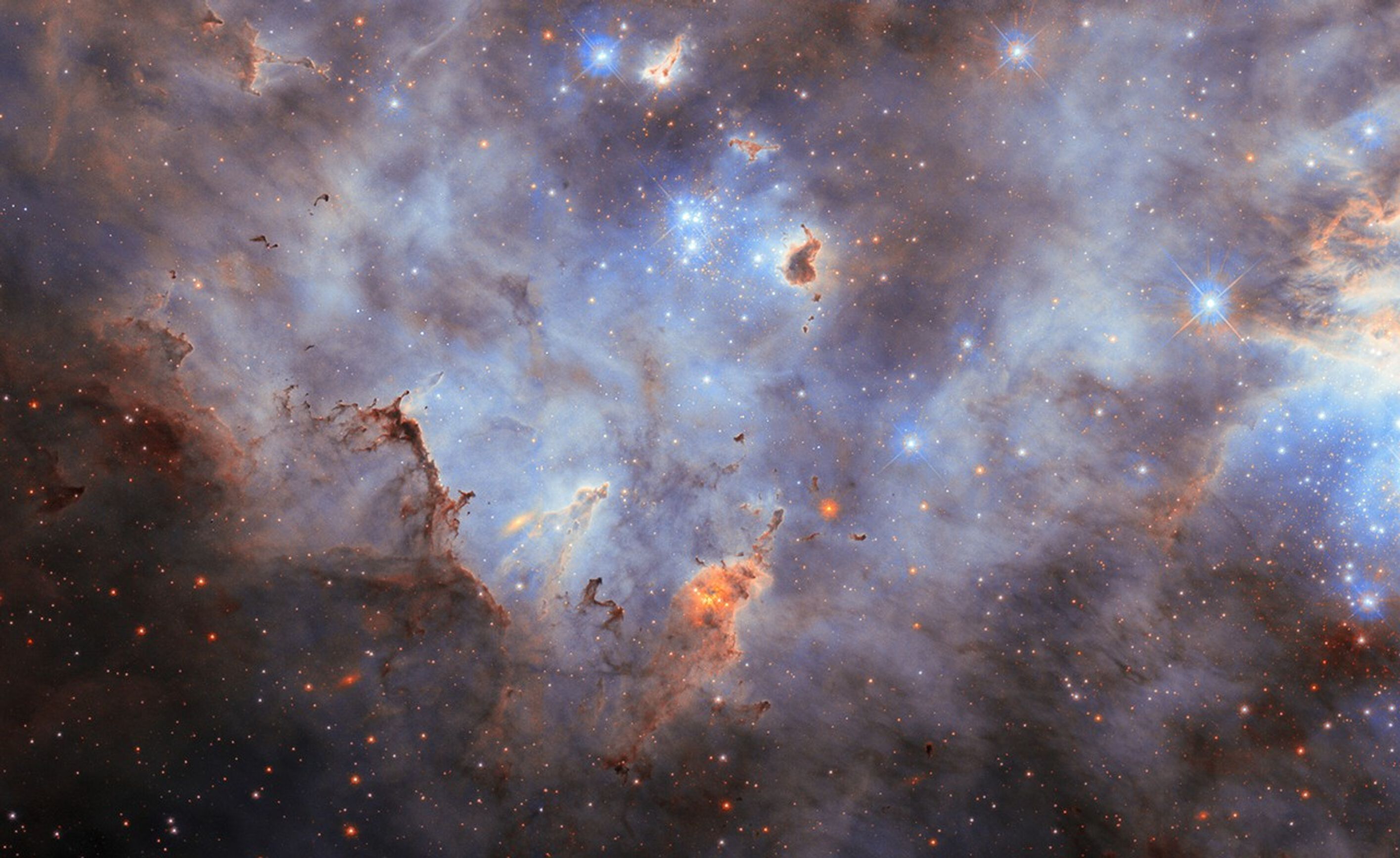
This NASA/ESA Hubble Space Telescope image released on Sept. 12, 2025, features a cloudy starscape from an impressive star cluster. This scene is in the Large Magellanic Cloud, a dwarf galaxy situated about 160,000 light-years away in the constellations Dorado and Mensa. With a mass equal to 10–20% of the mass of the Milky Way, the Large Magellanic Cloud is the largest of the dozens of small galaxies that orbit our galaxy.
The Large Magellanic Cloud is home to several massive stellar nurseries where gas clouds, like those strewn across this image, coalesce into new stars. Today’s image depicts a portion of the galaxy’s second-largest star-forming region, which is called N11. (The most massive and prolific star-forming region in the Large Magellanic Cloud, the Tarantula Nebula, is a frequent target for Hubble.) We see bright, young stars lighting up the gas clouds and sculpting clumps of dust with powerful ultraviolet radiation.
This image marries observations made roughly 20 years apart, a testament to Hubble’s longevity. The first set of observations, which were carried out in 2002–2003, capitalized on the exquisite sensitivity and resolution of the then-newly-installed Advanced Camera for Surveys. Astronomers turned Hubble toward the N11 star cluster to do something that had never been done before at the time: catalog all the stars in a young cluster with masses between 10% of the Sun’s mass and 100 times the Sun’s mass.
The second set of observations came from Hubble’s newest camera, the Wide Field Camera 3. These images focused on the dusty clouds that permeate the cluster, providing us with a new perspective on cosmic dust.
NASA announced its newest class of astronaut candidates on Sept. 22, 2025, at the agency’s Johnson Space Center in Houston. After the welcome ceremony, the 10 highly qualified individuals rolled up their sleeves and prepared for the next step in their journey to the stars: nearly two years of training to become flight-eligible for missions to low Earth orbit, the Moon, and ultimately, Mars.
NASA astronaut Chris Williams participates in a spacewalk safety system training in the virtual reality lab at NASA’s Johnson Space Center.
NASA/Riley McClenaghan
The training astronaut candidates complete is comprehensive and rigorous. They learn about NASA’s history and vision, and how astronauts advance the agency’s mission. They take classes on space health – gaining an understanding of radiation exposure, microgravity’s effects on the human body, space food and nutrition, and how to use the exercise equipment aboard the International Space Station. They also study first aid and practice providing medical care for crewmates. Each candidate will receive flight training, learning to pilot or improving their current piloting skills through the T-38 supersonic jet and other aviation platforms.
NASA astronauts Andre Douglas, Christina Birch, Christopher Williams, and Deniz Burnham during life support systems training in a mockup of an International Space Station airlock at Johnson Space Center.
NASA/James Blair
With NASA’s plans for the future of exploration, this class of astronauts may have opportunities to fly to low Earth orbit, or even beyond. Some may contribute to research and technology investigations taking place aboard the space station – which is about to celebrate 25 years of continuous human presence in space. Others may venture to the Moon to prepare for future Mars missions.
NASA astronaut Marcos Berríos studies a rock sample during Earth and planetary sciences field training in northern Arizona.
NASA/Riley McClenaghan
To be ready for any destination, this class will complete both space station training and advanced preparation for deep space. These exercises allow astronaut candidates to work through problems and build relationships with their classmates while preparing them for space flights.
“Training was such an intense period that we got to know each other really well,” said NASA astronaut Anil Menon, who joined the agency as part of the 2021 class – astronaut group 23. “Now when we come together, there are these moments – like we might be handing off a capcom shift, or we might be flying a jet together – and in those moments, I feel like I know them so well that we know how to navigate all sorts of challenges together and just be our best selves as a team.”
NASA astronaut Luke Delaney prepares for a training flight in a T-38 jet.
NASA/Robert Markowitz
Astronaut candidate training also teaches foundational skills that can be applied to any destination in space. The group will complete several dives in the Neutral Buoyancy Laboratory, simulating spacewalks in different environments and learning how to do maintenance tasks in microgravity with a full-scale underwater mockup of the International Space Station as their worksite. They will also train inside other mockups of space vehicles, learning emergency procedures, maintenance, and repair of spacecraft, along with how to contribute to future developmental programs.
NASA astronaut Anil Menon suits up before completing a training dive in the Neutral Buoyancy Laboratory at Johnson Space Center.
NASA/Josh Valcarcel
Robotics training will prepare them to use the station’s Canadarm2 robotic arm. They will trek through the wilderness as part of their land and water survival training, and they will study geology in the classroom and in the field. The group will practice tasks in a variety of simulations, leveraging Johnson’s world-class facilities, virtual reality, and immersive technologies. Additionally, the class will work shifts in the Mission Control Center in Houston to experience a day in the life of the people who keep watch over the astronauts and vehicles.
Astronaut candidates who successfully complete the training program celebrate their achievement in a graduation ceremony, after which they are officially flight-eligible members of NASA’s astronaut corps. They will also receive office and ground support roles at Johnson while they await future flight assignments.
NASA astronauts Anil Menon, Nichole Ayers, and Andrea Douglas work to build a shelter during wilderness survival training at Ft. Rucker, Alabama.
NASA/Robert Markowitz
“I’ve been exposed to a lot of different parts of what we do at Johnson Space Center, working both with the current increment of supporting operations aboard the International Space Station, as well as supporting some development of the Orion spacecraft and Artemis II preparations,” said NASA astronaut Chris Birch, another member of astronaut group 23.
Many members of NASA’s active astronaut corps emphasize that the learning does not stop when astronaut candidate training ends. “You have the foundational training and you continue to build off of that,” said Deniz Burnham, adding that the hardest days can be the most educational. “You get to learn, you get to improve, and then you’re still getting the opportunity. It’s such a positively unique experience and environment, and you can’t help but be grateful.”
As NASA astronaut Frank Rubio, class mentor, told the group, “You’ll become part of a legacy of those who trained before you, continuing the adventure they started, and looking ahead to future human exploration.”
NASA’s Webb Telescope Studies Moon-Forming Disk Around Massive Planet
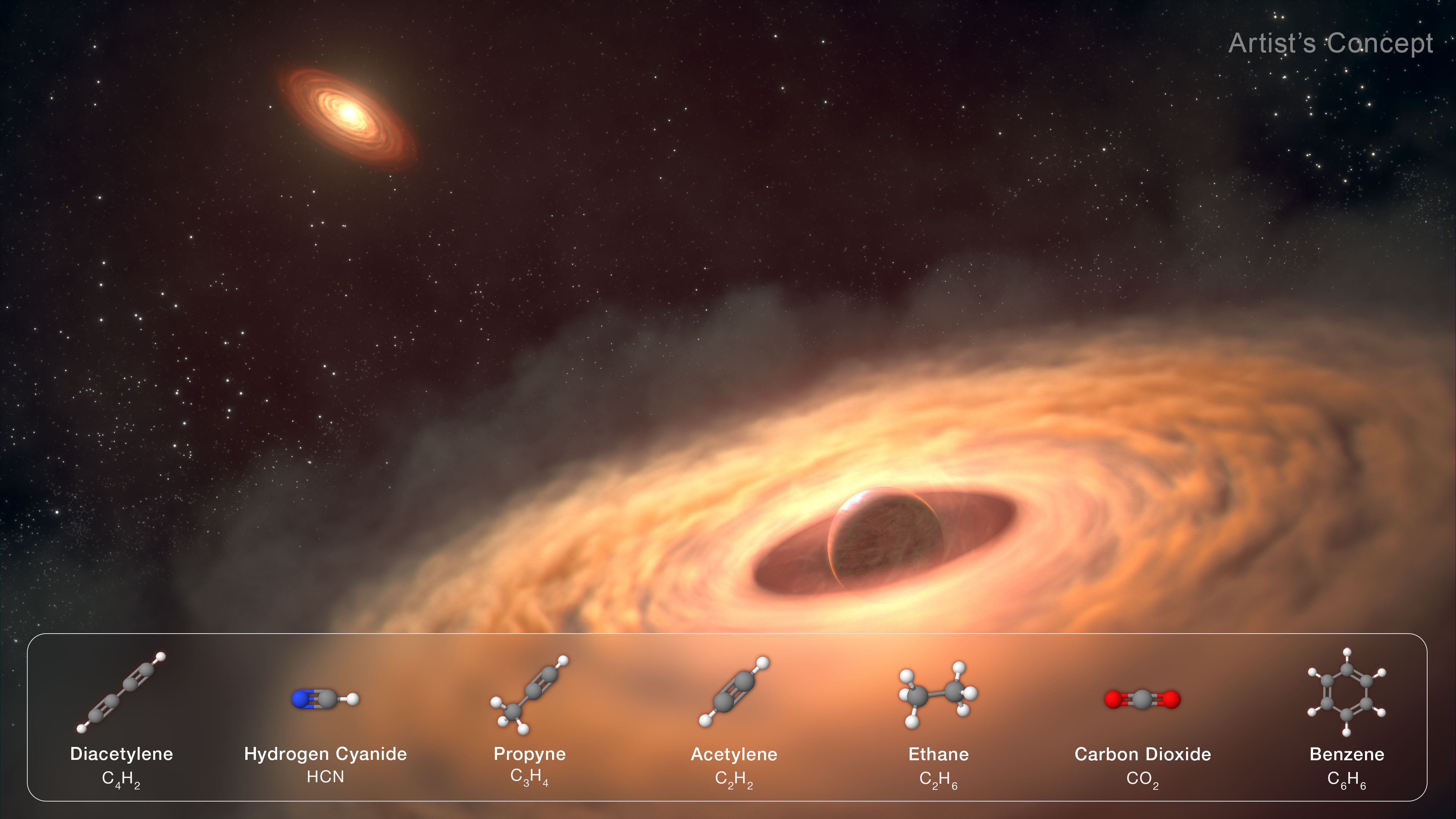
An artistic rendering of a dust and gas disk encircling the young exoplanet, CT Cha b, 625 light-years from Earth. Full image, annotation, and caption shown below.
Credits: Illustration: NASA, ESA, CSA, STScI, Gabriele Cugno (University of Zürich, NCCR PlanetS), Sierra Grant (Carnegie Institution for Science), Joseph Olmsted (STScI), Leah Hustak (STScI)
NASA’s James Webb Space Telescope has provided the first direct measurements of the chemical and physical properties of a potential moon-forming disk encircling a large exoplanet. The carbon-rich disk surrounding the world called CT Cha b, which is located 625 light-years away from Earth, is a possible construction yard for moons, although no moons are detected in the Webb data.
The young star the planet orbits is only 2 million years old and still accreting circumstellar material. However, the circumplanetary disk discovered by Webb is not part of the larger accretion disk around the central star. The two objects are 46 billion miles apart.
Observing planet and moon formation is fundamental to understanding the evolution of planetary systems across our galaxy. Moons likely outnumber planets, and some might be habitats for life as we know it. But we are only now entering an era where we can witness their formation.
This discovery fosters a better understanding of planet and moon formation, say researchers. Webb’s data is invaluable for making comparisons to our solar system’s birth over 4 billion years ago.
“We can see evidence of the disk around the companion, and we can study the chemistry for the first time. We’re not just witnessing moon formation — we’re also witnessing this planet’s formation,” said co-lead author Sierra Grant of the Carnegie Institution for Science in Washington.
“We are seeing what material is accreting to build the planet and moons,” added main lead author Gabriele Cugno of the University of Zürich and member of the National Center of Competence in Research PlanetS.
Image A: Circumplanetary Disk (Artist’s Concept)
An artistic rendering of a dust and gas disk encircling the young exoplanet, CT Cha b, 625 light-years from Earth. Spectroscopic data from NASA’s James Webb Space Telescope suggests the disk contains the raw materials for moon formation: diacetylene, hydrogen cyanide, propyne, acetylene, ethane, carbon dioxide, and benzene. The planet appears at lower right, while its host star and surrounding circumstellar disk are visible in the background.
Illustration: NASA, ESA, CSA, STScI, Gabriele Cugno (University of Zürich, NCCR PlanetS), Sierra Grant (Carnegie Institution for Science), Joseph Olmsted (STScI), Leah Hustak (STScI)
Dissecting starlight
Infrared observations of CT Cha b were made with Webb’s MIRI (Mid-Infrared Instrument) using its medium resolution spectrograph. An initial look into Webb’s archival data revealed signs of molecules within the circumplanetary disk, which motivated a deeper dive into the data. Because the planet’s faint signal is buried in the glare of the host star, the researchers had to disentangle the light of the star from the planet using high-contrast methods.
“We saw molecules at the location of the planet, and so we knew that there was stuff in there worth digging for and spending a year trying to tease out of the data. It really took a lot of perseverance,” said Grant.
Ultimately, the team discovered seven carbon-bearing molecules within the planet’s disk, including acetylene (C2H2) and benzene (C6H6). This carbon-rich chemistry is in stark contrast to the chemistry seen in the disk around the host star, where the researchers found water but no carbon. The difference between the two disks offers evidence for their rapid chemical evolution over only than 2 million years.
Genesis of moons
A circumplanetary disk has long been hypothesized as the birthplace of Jupiter’s four major moons. These Galilean satellites must have condensed out of such a flattened disk billions of years ago, as evident in their co-planar orbits about Jupiter. The two outermost Galilean moons, Ganymede and Callisto, are 50% water ice. But they presumably have rocky cores, perhaps either of carbon or silicon.
“We want to learn more about how our solar system formed moons. This means that we need to look at other systems that are still under construction. We’re trying to understand how it all works,” said Cugno. “How do these moons come to be? What are their ingredients? What physical processes are at play, and over what timescales? Webb allows us to witness the drama of moon formation and investigate these questions observationally for the first time.”
In the coming year, the team will use Webb to perform a comprehensive survey of similar objects, to better understand the diversity of physical and chemical properties in the disks around young planets.
The James Webb Space Telescope is the world’s premier space science observatory. Webb is solving mysteries in our solar system, looking beyond to distant worlds around other stars, and probing the mysterious structures and origins of our universe and our place in it. Webb is an international program led by NASA with its partners, ESA (European Space Agency) and CSA (Canadian Space Agency).
From City Lights to Moonlight: NASA Training Shows How Urban Parks Can Connect Communities with Space Science
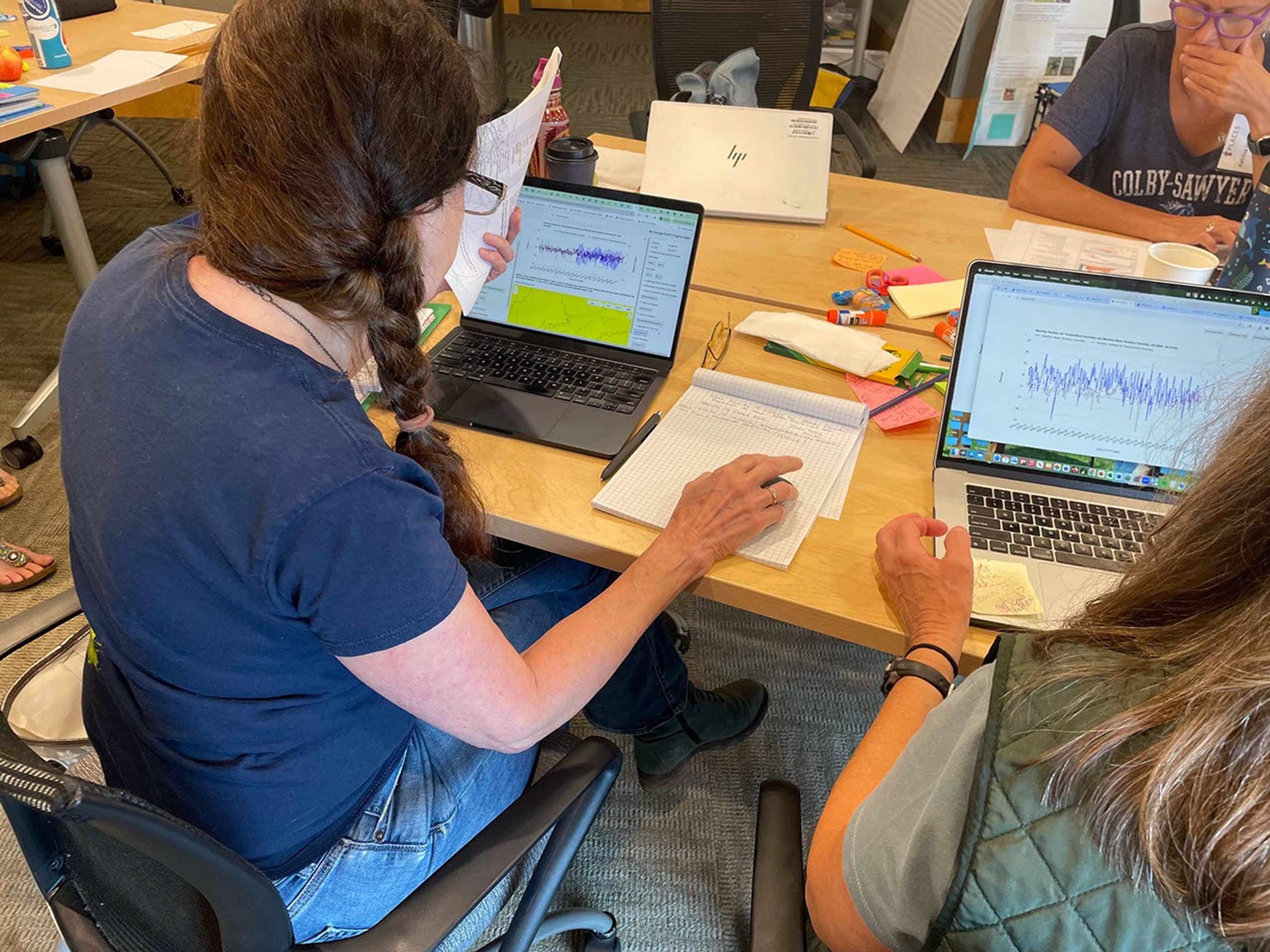
When you think about national park and public land astronomy programs, you might picture remote locations far from city lights. But a recent NASA Earth to Sky training, funded by NASA’s Science Activation Program, challenges that assumption, demonstrating how urban parks, wildlife refuges, museums, and green spaces can be incredible venues for connecting communities with space science. Programs facilitated in urban spaces can reach people where they already live, work, and recreate. This creates opportunities for ongoing engagement as urban astronomy program participants can discover that the skies above their neighborhoods hold the same wonders as remote locations.
During the first week of August in 2025, NASA Earth to Sky collaborated with the National Park Service and U.S. Fish and Wildlife Service to deliver an innovative astronomy training program called “Rivers of Stars and Stories: Interpreting the Northern Night Sky” at Minnesota Valley National Wildlife Refuge in Minneapolis-St. Paul. This three-day course brought together 28 park ranger interpreters, environmental educators, and outdoor communicators from across the Twin Cities area. Presentations and discussions centered around engaging urban audiences with the wonders of space science by leveraging the benefits of metropolitan spaces and the unique opportunities that city skies provide.
Throughout this immersive training, participants explored everything from lunar observations and aurora science to NASA’s Artemis Program and astrobiology. The training empowered participants by affirming that everyone is an effective stargazer and night sky storyteller, transforming beginners into confident astronomy communicators. One participant captured their experience by noting they went from “not knowing much of anything to having a much better grasp on basic concepts and most importantly, where to find more resources!” In addition to sharing resources, this training also launched a community of practice where communicators can continue to collaborate. Participants engaged in discussions on how to respectfully incorporate the local indigenous perspectives into astronomy programming and honor the traditional stewards of the land while avoiding appropriation or misrepresentation of indigenous science.
Participants’ sense of belonging to the Earth to Sky community increased dramatically. These outcomes support NASA’s strategic goal of building sustained public engagement with Earth and space science. The overwhelmingly positive feedback, with 100% of participants expressing interest in taking more courses like this, demonstrates the tremendous value it is for Earth to Sky to collaborate with the National Park Service and US Fish and Wildlife Service, as all agencies’ public communication goals are addressed.
This kind of collaborative work is crucial because it builds a network of science communicators who can reach thousands of visitors across Minneapolis-St. Paul’s parks, nature centers, and outdoor spaces. By training local informal educators to confidently share NASA’s discoveries and missions, the program expands access to space science for urban audiences throughout the Twin Cities region.
The Earth to Sky team will continue fostering these valuable partnerships with the National Park Service and U.S. Fish and Wildlife Service, as well as other state and local agencies and nonprofit organizations. Learn more about Earth to Sky’s work with park interpreters and nonformal educators to share NASA space science by visiting: https://science.nasa.gov/sciact-team/earth-to-sky/
Learn more about how Science Activation connects NASA science experts, real content, and experiences with community leaders to do science in ways that activate minds and promote deeper understanding of our world and beyond: https://science.nasa.gov/learn/about-science-activation/.
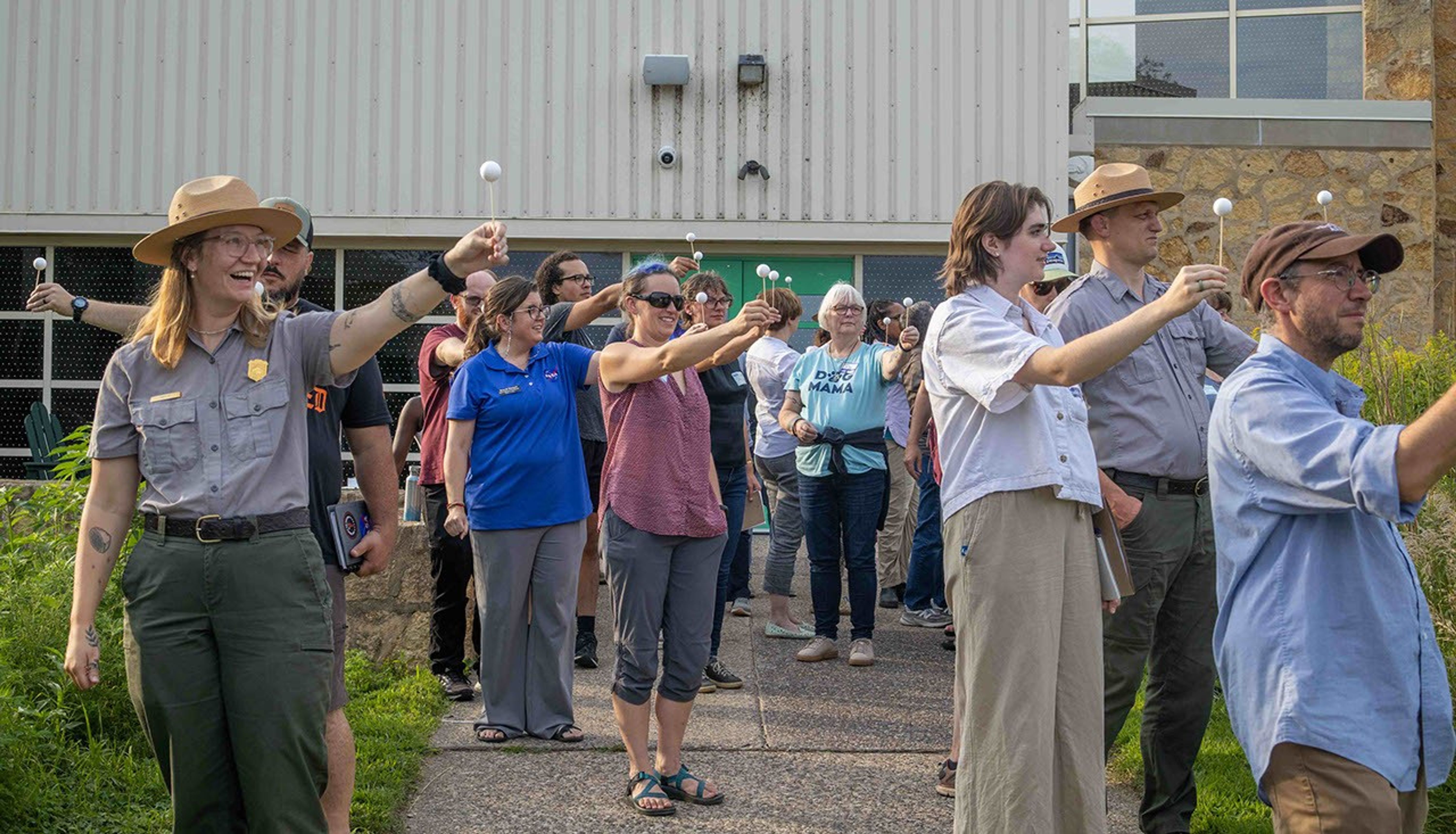
Participants of the “Rivers of Stars and Stories: Interpreting the Northern Night Sky” training model moon phases outside of the Minnesota Valley National Wildlife Refuge Education Center.
This website uses cookies to improve your experience. We'll assume you're ok with this, but you can opt-out if you wish.AcceptRead More
Privacy & Cookies Policy
Privacy Overview
This website uses cookies to improve your experience while you navigate through the website. Out of these, the cookies that are categorized as necessary are stored on your browser as they are essential for the working of basic functionalities of the website. We also use third-party cookies that help us analyze and understand how you use this website. These cookies will be stored in your browser only with your consent. You also have the option to opt-out of these cookies. But opting out of some of these cookies may affect your browsing experience.
Necessary cookies are absolutely essential for the website to function properly. This category only includes cookies that ensures basic functionalities and security features of the website. These cookies do not store any personal information.
Any cookies that may not be particularly necessary for the website to function and is used specifically to collect user personal data via analytics, ads, other embedded contents are termed as non-necessary cookies. It is mandatory to procure user consent prior to running these cookies on your website.