Tag: NASA

  • Curiosity Blog, Sols 4702-4708: It’s Only Spooky Here on Earth Today!

    4 min read

    Curiosity Blog, Sols 4702-4708: It’s Only Spooky Here on Earth Today!
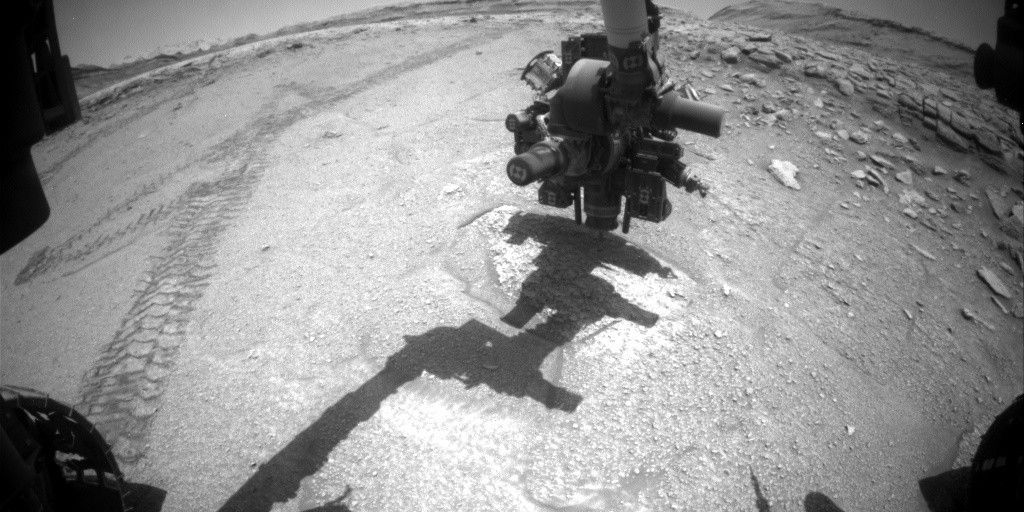
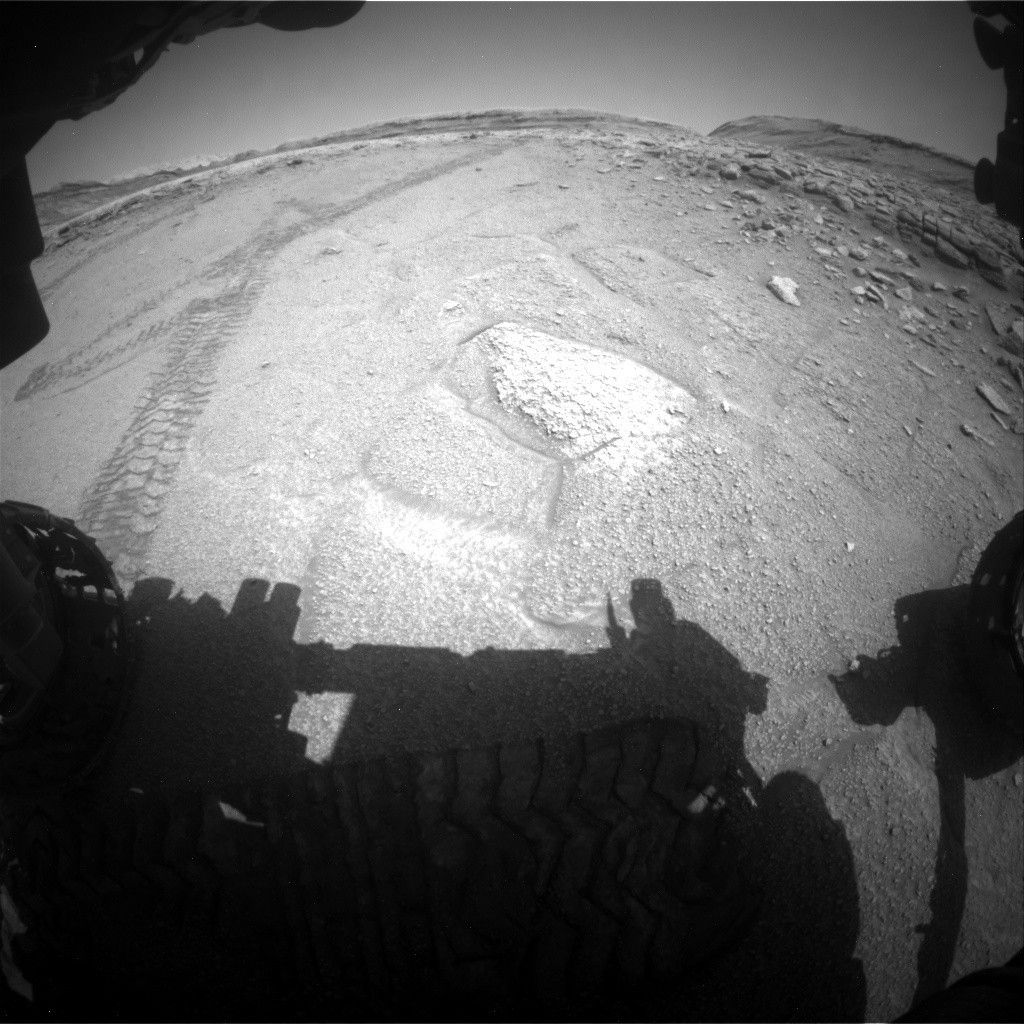
    A wide-angle, grayscale photo from the Mars surface shows mostly flat, medium gray, slightly rough terrain ahead of the rover, with a lighter-toned indentation in the round directly in front of it. In the distance at the upper right of the image, the ground becomes much more uneven and rocky, with a mesa rising from the ground on the horizon beyond that. Parts of the rover are visible, but dark and shadowed. Rover tracks are also visible, zig-zagging on the ground along the left edge of the image. The end of the rover’s robotic arm, with its fist-like collection of instruments, is poised just above the lighter-colored indentation in the ground, and its shadow runs on the ground back to the rover body at the bottom of the frame.
    NASA’s Mars rover Curiosity acquired this image at the start of the drilling activity at the “Valle de la Luna” site, “caught in the act” as this image was taken on Oct. 19, 2025. Curiosity used its Front Hazard Avoidance Camera (Front Hazcam) on Sol 4693, or Martian day 4,693 of the Mars Science Laboratory mission, at 01:54:37 UTC.
    NASA/JPL-Caltech

    By Susanne P. Schwenzer, Professor of Planetary Mineralogy at The Open University, U.K.

    Earth planning date: Friday, Oct. 31, 2025

    I am writing this blog and it’s still daytime — and I am looking forward to accompanying one of my favorite kids to trick-and-treating afterwards. That’s a new feeling for me because I am usually in the U.K., which means my Curiosity shifts start in the late afternoon when everyone else finishes working. But for now, I am in the U.S. (Houston, Texas), and it’s daytime, which is a lovely change, especially today as I don’t have to hide from trick-and-treaters’ interruptions but instead can give out all the candy they can possibly eat! Looking forward to that… but before, let’s see what Curiosity was up to this week!

    You’ll have seen the blog by my colleague Bill, “Searching for Answers at Monte Grande,” about our analysis of the “Valle de la Luna” sample with CheMin and SAM EGA. This week we were continuing the SAM analysis of the 44th drilled sample, which always takes a lot of power, so that leaves less room for other investigations. Hence, you might notice that there were fewer ChemCam and Mastcam activities. The rover also did not drive while sample is still in the turret ready for delivery of the next SAM activities. Curiosity has now completed the deliveries to CheMin and SAM, though, and the last action in Friday’s plan was to clean out the remaining sample from the drill in preparation for driving away here in Monday’s plan. 

    In Monday’s plan we’ll reposition the rover to get a very good look at the potential next drill targets on the ridge. We’ve been able to scout them already in previous images and have a few candidates, but decision-making will require images from Monday’s parking position, since we are currently parked in a hollow and cannot really see what’s up on the ridge.

    That said, being stationary has always been a golden opportunity for looking at wind action, and this week was no difference as Mastcam looked at the drill fines several times over the time we were stationary, to ascertain the safety for MAHLI to approach — and of course to use those images for atmospheric science, too. In addition, Mastcam took the opportunity to get comprehensive imaging of the entire area. There are several mosaics that document the near-field, for example at target “Nazareth.” In the mid- and far-field distances, Mastcam assembled a large mosaic on “Monte Grande” and “Ticaco” to document the different rocks in the surrounding ridge walls and wider afield. There are so many interesting textures and alteration features, alongside troughs and fractures, that the team will have a fun time analyzing them all in great detail individually, as well as their relationships to each other.  

    ChemCam has investigated the Valle de la Luna drill hole and tailings as per the usual cadence of post-drilling activities, and in addition investigated target Nazareth to understand how the block that Curiosity drilled might vary chemically. Another ChemCam target was “Pachica,” as the team observed many nodules in this target and we are interested in their chemical variability and “Palpana,” a more smooth block. Further investigations of the Valle de la Luna drill hole with ChemCam are targets “Anapia” and “Bandara” to further investigate the chemical diversity of the drill target block.

    ChemCam Remote Micro Imager (RMI) observations were also taken in the near-field and farther away. In the near-field, RMI images are documenting further details on the Valle de la Luna drill hole and its tailings, while further afield the Monte Grande Wall is one of the RMI targets alongside with other details in the boxwork ridges around us. On Friday, the RMI was pointed far uphill to continue imaging the yardang unit, which is one of our next goals in the longer term future.

    In addition to all the drill activities and rock investigations, the atmosphere received attention too. We have the usual cadence of environmental investigations, building our long-term pressure, temperature, and humidity record of Mars; and we observe the atmospheric opacity, dust-devil activities, and clouds. Of course, we are all looking forward to next week, when we will decide on the second drill target in this area, this time on the ridge. Let’s see what block will be looking best, both from a science and an engineering point of view – we’ve got a short list of candidates; the detailed images are for Monday’s plan. Meanwhile, we’ll enjoy trick-and-treating here on Earth and our weekends while Curiosity finishes the drill activities at Valle de la Luna.
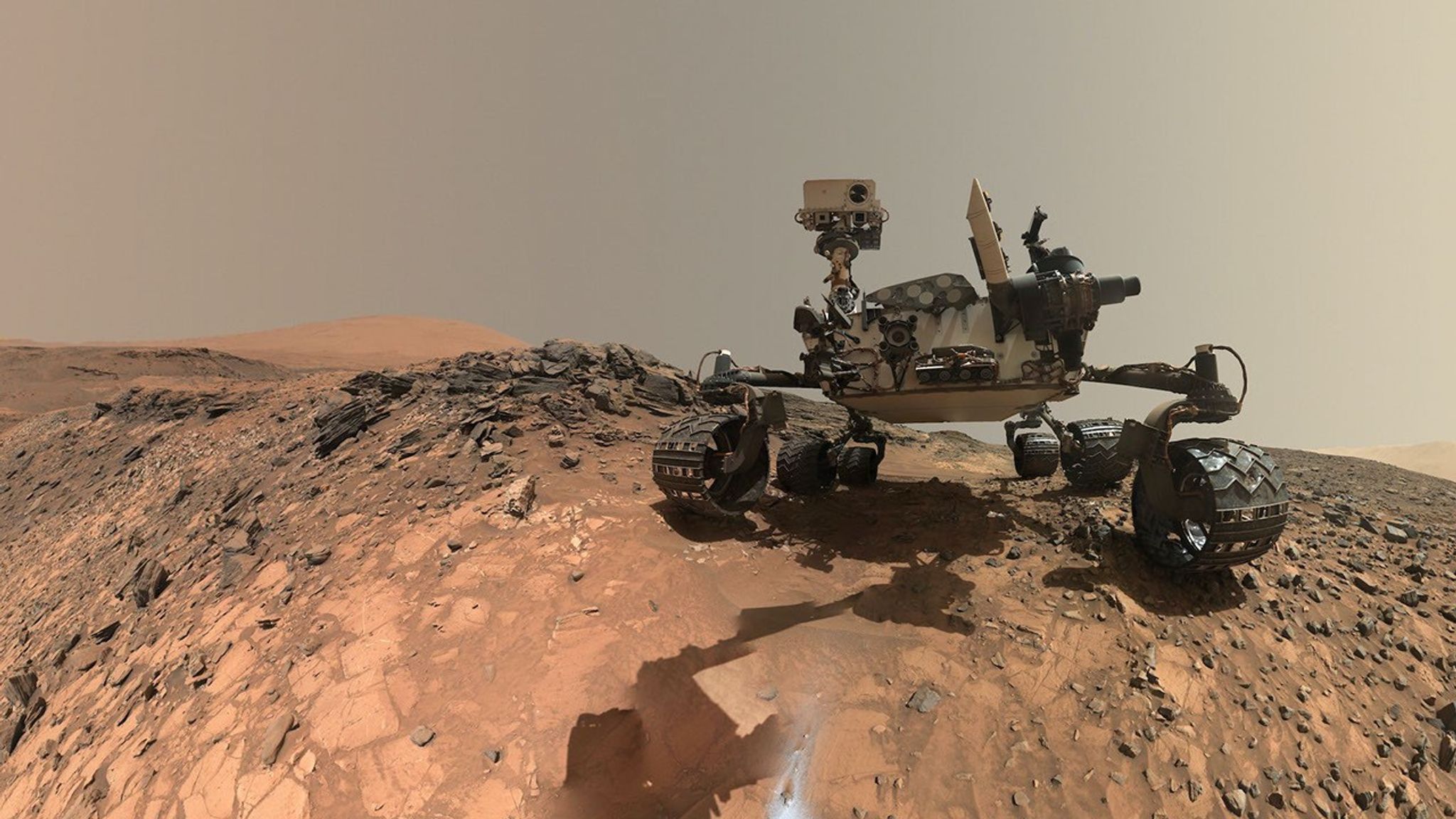
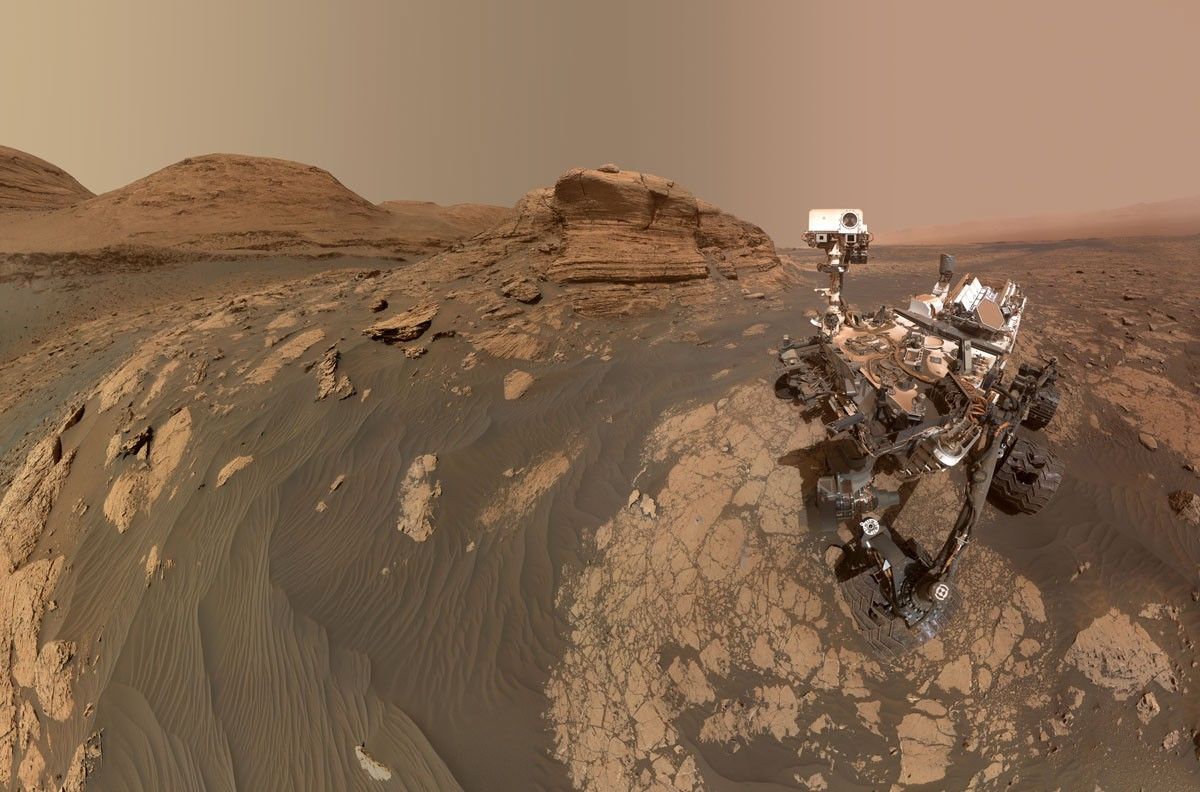
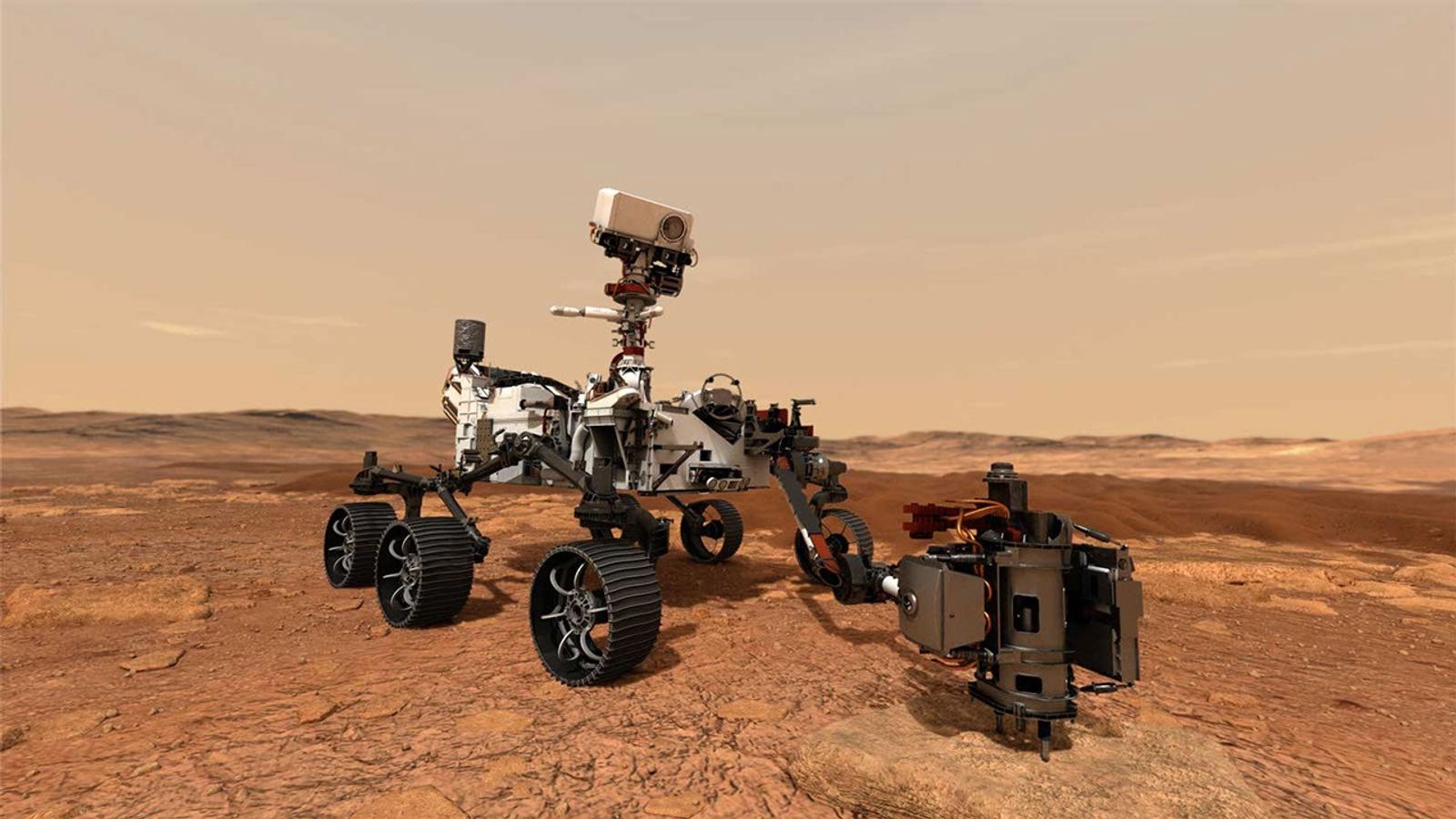
    A rover sits on the hilly, orange Martian surface beneath a flat grey sky, surrounded by chunks of rock.
    NASA’s Mars rover Curiosity at the base of Mount Sharp
    NASA/JPL-Caltech/MSSS

    Details

    Last Updated

    Nov 13, 2025

    Related Terms

  • Curiosity Blog, Sols 4695-4701: Searching for Answers at Monte Grande

    3 min read

    Curiosity Blog, Sols 4695-4701: Searching for Answers at Monte Grande

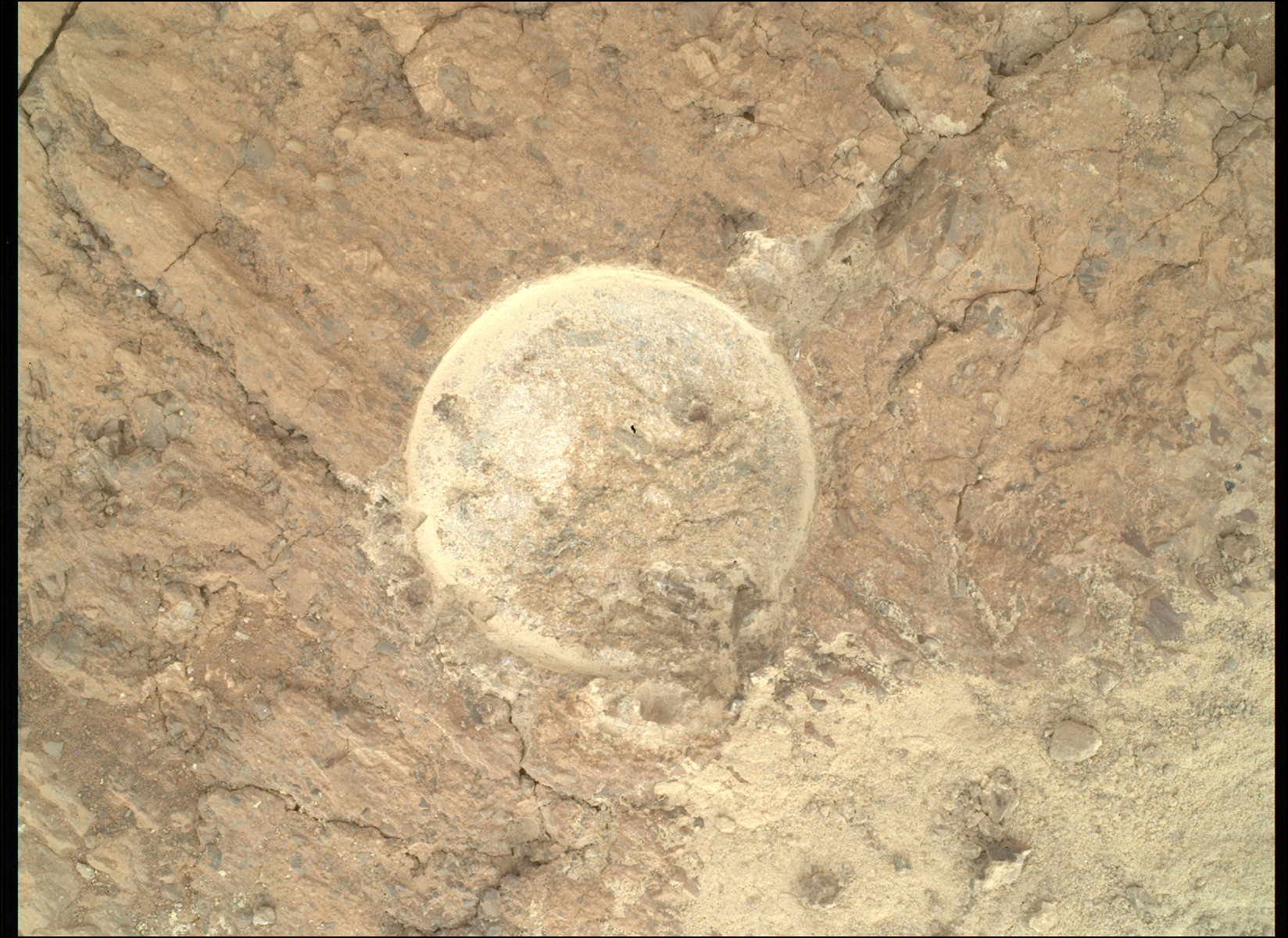
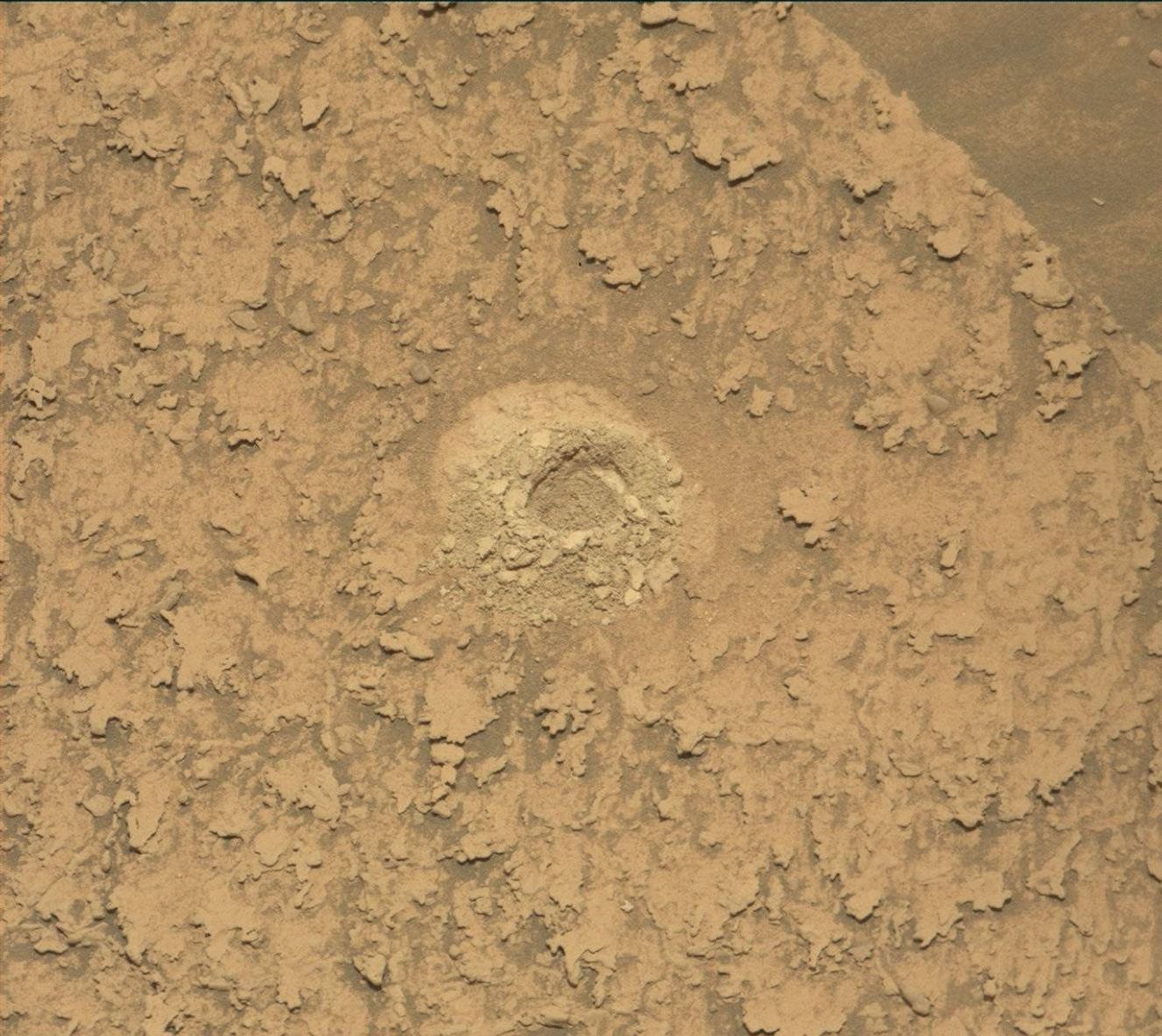
    A color close-up photo of the Martian surface shows dry, flaky, tan-orange ground. At the image center is a hole cored into the ground, surrounded by material dug out from the hole, which looks like a mixture of soil and sharp flakes or shards of rock, and is slightly lighter-toned than the surrounding ground.
    NASA’s Mars rover Curiosity acquired this image of the “Valle de la Luna” drill hole using its Mast Camera (Mastcam) on Oct. 19, 2025 — Sol 4693, or Martian day 4,693 of the Mars Science Laboratory mission — at 02:04:29 UTC.
    NASA/JPL-Caltech/MSSS

    Written by William Farrand, Senior Research Scientist, Space Science Institute

    Earth planning date: Friday, Oct. 24, 2025

    Curiosity has successfully drilled its 44th hole on Mars, which is a major milestone in our investigation of the enigmatic “boxwork unit,” a region of resistant ridges surrounding pits or “hollows” of less-resistant rock. The drilling took place over the past weekend within the “Monte Grande” hollow at the “Valle de la Luna” target. 

    Rover planning this week consisted of ensuring that the granular drill tailings from Valle de la Luna were transferred to the SAM (Sample Analysis at Mars) and CheMin (X-ray diffraction) instruments, and analyzing the results. Results from these instruments, which will provide mineralogical and other compositional information, will be especially critical for determining how the boxwork features formed, since chemistry from the APXS and ChemCam instruments and reflectance spectra from ChemCam have revealed subtle, but not striking, differences between the rocks making up the ridges and those making up the hollows. Thus, a compositional explanation for the differences between the two terrain types has yet to be determined.

    While these internal studies of the Valle de la Luna samples were going on, remote sensing data were collected by Mastcam of a series of targets, as well as atmospheric remote sensing. Among the Mastcam studies being conducted is a photometry study, a kind of study usually only carried out during an extended stationary period, such as the current drill campaign. Photometry is the study of changes in the apparent reflected brightness of rocks and soils based on the illumination geometry (for example, whether the Sun is low on the horizon or high in the sky). During this photometry campaign, multiple images are collected of the same target regions at different times of day.

    In the final plan of the week, as part of the ongoing assessment of the Valle de la Luna sample, material will undergo an evolved gas analysis (EGA) in which the drilled sample is baked in an oven in SAM and volatile molecules including H2O, CO2, and SO2 are released and used to further aid in the characterization of the target materials. Mastcam observations will include further images collected as part of the photometry campaign. Also mosaics of the west wall of the Monte Grande hollow will be collected as well as several atmospheric measurements.

    Next week the rover will continue analyzing the drilled sample with more SAM experiments, and also analyze the tailings. The team is also starting to search for a suitable drilling location on a ridge as the next drilling site, in order to compare with the results from the Monte Grande hollow.

    A rover sits on the hilly, orange Martian surface beneath a flat grey sky, surrounded by chunks of rock.
    NASA’s Mars rover Curiosity at the base of Mount Sharp
    NASA/JPL-Caltech/MSSS

    Details

    Last Updated

    Nov 13, 2025

    Related Terms

  • Curiosity Blog, Sols 4689-4694: Drill in the Boxwork Unit is GO!

    3 min read

    Curiosity Blog, Sols 4689-4694: Drill in the Boxwork Unit is GO!

    A wide-angle, grayscale photo from the Mars surface shows mostly flat, medium gray, slightly rough terrain ahead of the rover, with a lighter-toned indentation in the round directly in front of it. In the distance at the upper right of the image, the ground becomes much more uneven and rocky, with a mesa rising from the ground on the horizon beyond that. Parts of the rover are visible, but dark and shadowed, around the sides and bottom of the image, including two of its wheels at the bottom of the frame.
    NASA’s Mars rover Curiosity acquired this image showing the “Valle de la Luna” block in the “Monte Grande” hollow, a location it targeted for drilling the weekend of Oct. 18-19, 2025. Curiosity captured the image with its Front Hazard Avoidance Camera (Front Hazcam) on Oct. 12, 2025 — Sol 4687, or Martian day 4,687 of the Mars Science Laboratory mission — at 23:11:12 UTC.
    NASA/JPL-Caltech

    Written by Catherine O’Connell-Cooper, APXS Payload Uplink/Downlink Lead, University of New Brunswick

    Earth planning date: Friday, Oct. 17, 2025

    Curiosity has been investigating the “boxwork unit” for several months now. Readers might remember we drilled at the edge of the boxwork at “Altadena,” back in June. Since then, we have driven just under a kilometer across the boxwork unit (about 0.6 miles) and now we are ready to acquire the next drill target, in an area where the structure is really well preserved.

    The boxwork structures are a series of ridges and hollows, so our plan is to drill within one of the hollows and then on one of the adjacent ridges. On Monday, we did our drill triage on “Valle de la Luna” within the hollow “Monte Grande” – a multi-instrument endeavor. We assessed the chemistry using APXS and ChemCam, to make sure it is within the expected range and not something completely different from the bedrock compositions we have been tracking. The rover planners (RPs) use a “pre-load” test, putting pressure on the bedrock surface to characterize how the rover arm and rock might behave during drilling. We take multiple images (including images before and after the pre-load test), using MAHLI and Mastcam to help the RPs assess the surface of the potential drill area.

    Finding a suitable place to drill in the hollows was a challenge, as the low point of each hollow (what we are most interested in) is often covered in sand or small pebbles, with just sparse bedrock peeking through, as you can see in the accompanying image. However, we got lucky here in Monte Grande. The chemistry shows that this rock is within our expected compositional range. The MAHLI images show a smoother surface in the center of the brushed area (where the drill will focus), and the before-and-after images indicated that the rock reacted well to the pre-load test. On Friday, the RPs and mission scientists pored over the data in a very intensive meeting called the “Target Acquisition Assessment Meeting,” or TAAM. We have drilled 43 holes on Mars now and it’s always nerve-wracking, waiting to see if the information we gathered during our initial contact science and preload give us a go-ahead. About midway through the planning day, we got the news that TAAM said yes to drilling here, so we will drill on the first sol of this weekend plan.

    If the drill is successful, we will have no contact science for at least a week, as the arm cannot be deployed during a drill campaign. Normally, as I’m APXS PUDL (responsible for uplinking new APXS targets and assessing downlink of previous targets), the idea of a week with no contact science would be disappointing to me — but not during a drill campaign! CheMin (Chemistry Mineralogy) and SAM (Sample Analysis at Mars) will use the drilled sample to give us extra depth of information, looking at mineralogy and composition in a way that is not possible for APXS and ChemCam.

    We can then use that drill data to help us interpret the APXS and ChemCam data and better understand the formation of these boxworks, especially if we can pair it with a suitable target on the ridges.

    In the meantime of course, we continue to monitor the atmosphere and environment around us. The Mastcam team are planning some amazing images from this site and ChemCam will continue to characterize the nearby bedrock and image the far-off hills. 

    A rover sits on the hilly, orange Martian surface beneath a flat grey sky, surrounded by chunks of rock.
    NASA’s Mars rover Curiosity at the base of Mount Sharp
    NASA/JPL-Caltech/MSSS

    Details

    Last Updated

    Nov 13, 2025

    Related Terms

  • Curiosity Blog, Sols 4682-4688: Seven Mars Years

    4 min read

    Curiosity Blog, Sols 4682-4688: Seven Mars Years

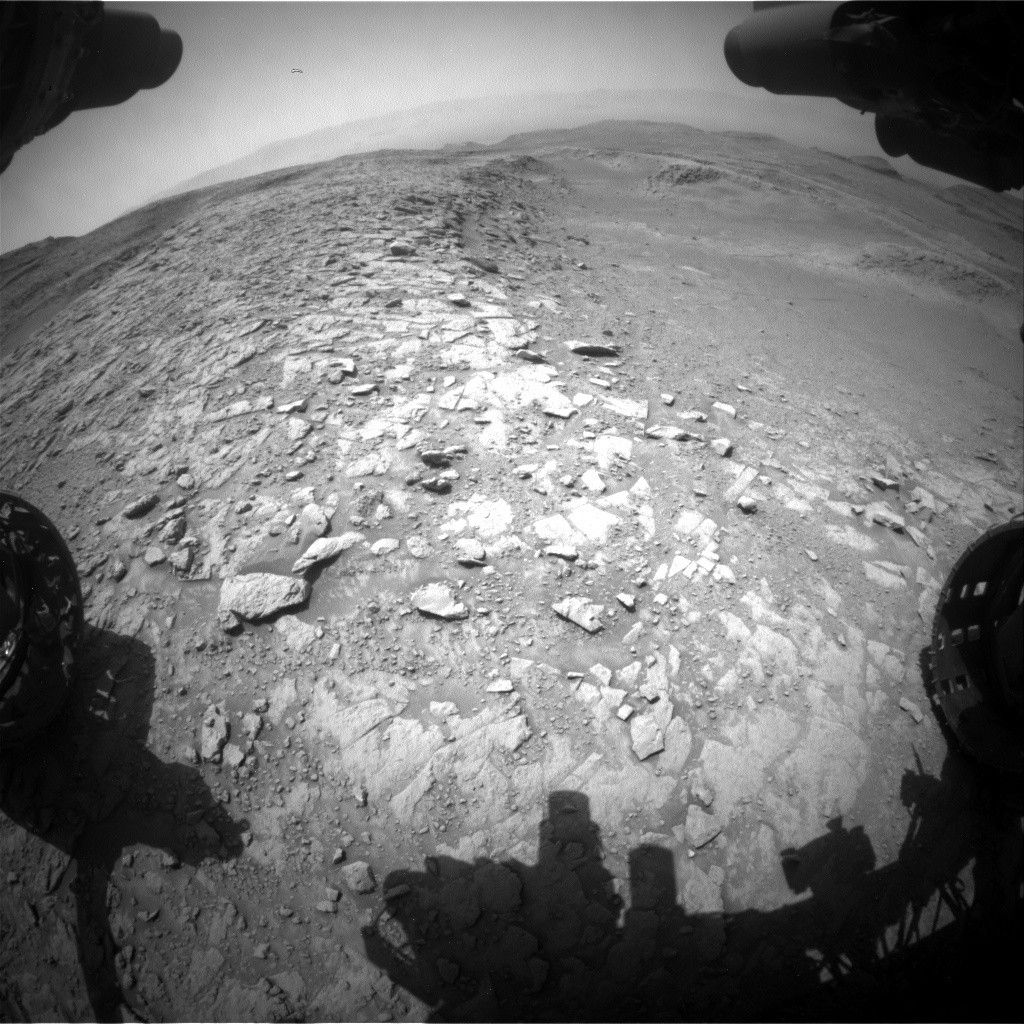
    A wide-angle grayscale photo from the Martian surface shows very uneven, rocky terrain covering the left side of the image from the foreground to the horizon, which falls off to smoother ground descending toward the right side of the frame, down into a crater. On the left and ridge edges of the frame, near the top, large rocky outcrops arise from the horizon, while more peaks are visible but hazy in the far distance. Portions of the rover’s shadow darken the lower left and right corners of the image.
    NASA’s Mars rover Curiosity acquired this image that looks down toward both the floor of Gale Crater, where we started our journey up Mount Sharp more than a decade ago, and toward the “Monte Grande” hollow that we hope will contain our next drill target. Curiosity captured the image using its Front Hazard Avoidance Camera (Front Hazcam) on Oct. 9, 2025 — Sol 4684, or Martian day 4,684 of the Mars Science Laboratory mission — at 21:28:14 UTC.
    NASA/JPL-Caltech

    Written by Diana Hayes, Graduate Student at York University, Toronto

    Earth planning date: Friday, Oct. 10, 2025

    This week was one of seasonal changes and milestones for the mission. As was mentioned several weeks ago, Mars has now moved out of its “cloudy season” and is transitioning into the “dusty season” as the planet moves closer to the Sun. This means that we should expect to see an increase in dust lifting and dust-devil activity over the next several months. With more dust in the atmosphere, we expect to lose the beautifully clear skies that have allowed us to take pictures of features at tremendous distances from the rover, like a mountain 57 miles (91 kilometers) away, outside of Gale Crater. We’ll also be keeping an eye out for the possible development of a global dust storm this season, as one has not occurred since 2018

    Back in August, we celebrated 13 Earth years since Curiosity landed in Gale back in 2012. This Monday, Oct. 6, a bit after 1 a.m. UTC (8 p.m. EDT Oct. 5), our intrepid rover marked its seventh full Mars year on the surface. (Because Mars is farther from the Sun than Earth is, a year on Mars — or one full trip around the Sun — lasts 687 Earth days.) Curiosity is only the second vehicle on Mars to reach that milestone, behind only Opportunity. Although Curiosity has not yet matched Opportunity’s longevity or distance driven, over the last seven Mars years we have put together the longest and most comprehensive record of the modern Martian climate. REMS has been recording weather conditions at least once an hour almost every hour since 2012, and RAD has now measured surface radiation conditions for more than a full solar cycle, data that will be critical to future human exploration of Mars. We’ve taken more than 3,000 cloud movies and countless more observations of atmospheric opacity, dust lifting, and dust-devil activity. I’ve been a member of our environmental science team for just over five (Earth) years now (or about 2 ½ Mars years), and I can still hardly believe that I’ve been able to help contribute to this incredible legacy. Although our well-traveled rover is now in its fifth Extended Mission, as a team we have no intention of slowing down any time soon.

    Other than celebrating these milestones, this week was focused on setting up for the first of our two planned drills in the boxwork region. This first drill will be in one of the boxwork “hollows.” We’re currently targeting a hollow we’ve nicknamed “Monte Grande,” with the goal that we’ll be set up to drill there next week. Once we’re done at Monte Grande, we plan to drive up to one of the raised ridges that give the boxwork region its spiderweb-like appearance. By comparing the results of these two drill campaigns, our hope is that we’ll be able to gain a better understanding of the processes in Mars’ past that led to the formation of these fascinating features. 

    As we prepare to drill, both science theme groups continued their usual cadence of contact science and remote sensing to characterize the local geology and environment. This weekend will be particularly busy on the environmental science side of the mission, with coordinated observations with APXS and ChemCam to track seasonal changes in the composition of the atmosphere. We’ll also be using SAM’s Tunable Laser Spectrometer instrument to measure the amount of atmospheric methane at Gale. This is an activity that we’ve performed periodically over the mission, and has inspired much spirited debate over the sources and destruction mechanisms of Martian methane

    Here’s to many more years of roving and scientific discovery!

    A rover sits on the hilly, orange Martian surface beneath a flat grey sky, surrounded by chunks of rock.
    NASA’s Mars rover Curiosity at the base of Mount Sharp
    NASA/JPL-Caltech/MSSS

    Details

    Last Updated

    Nov 13, 2025

    Related Terms

  • Curiosity Blog, Sols 4675-4681: Deciding Where to Dig Into the Boxworks

    3 min read

    Curiosity Blog, Sols 4675-4681: Deciding Where to Dig Into the Boxworks

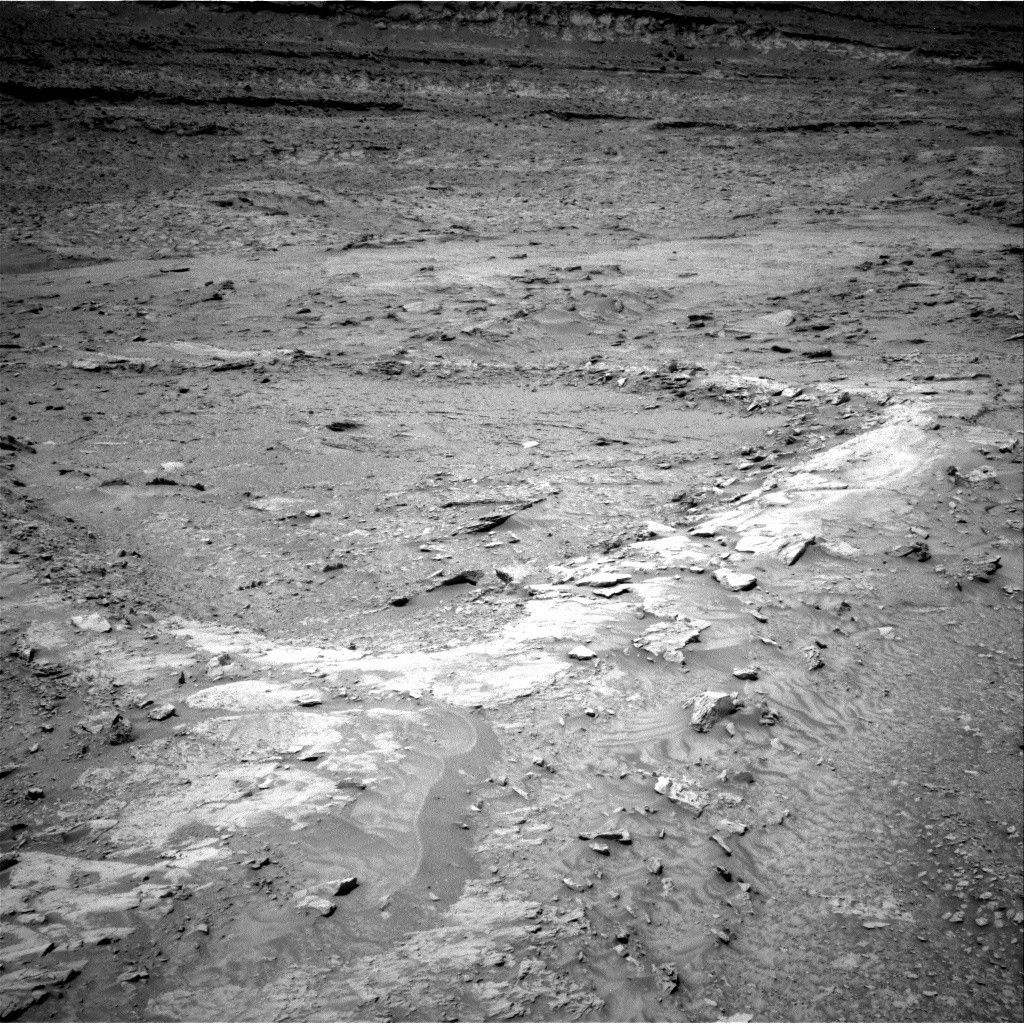
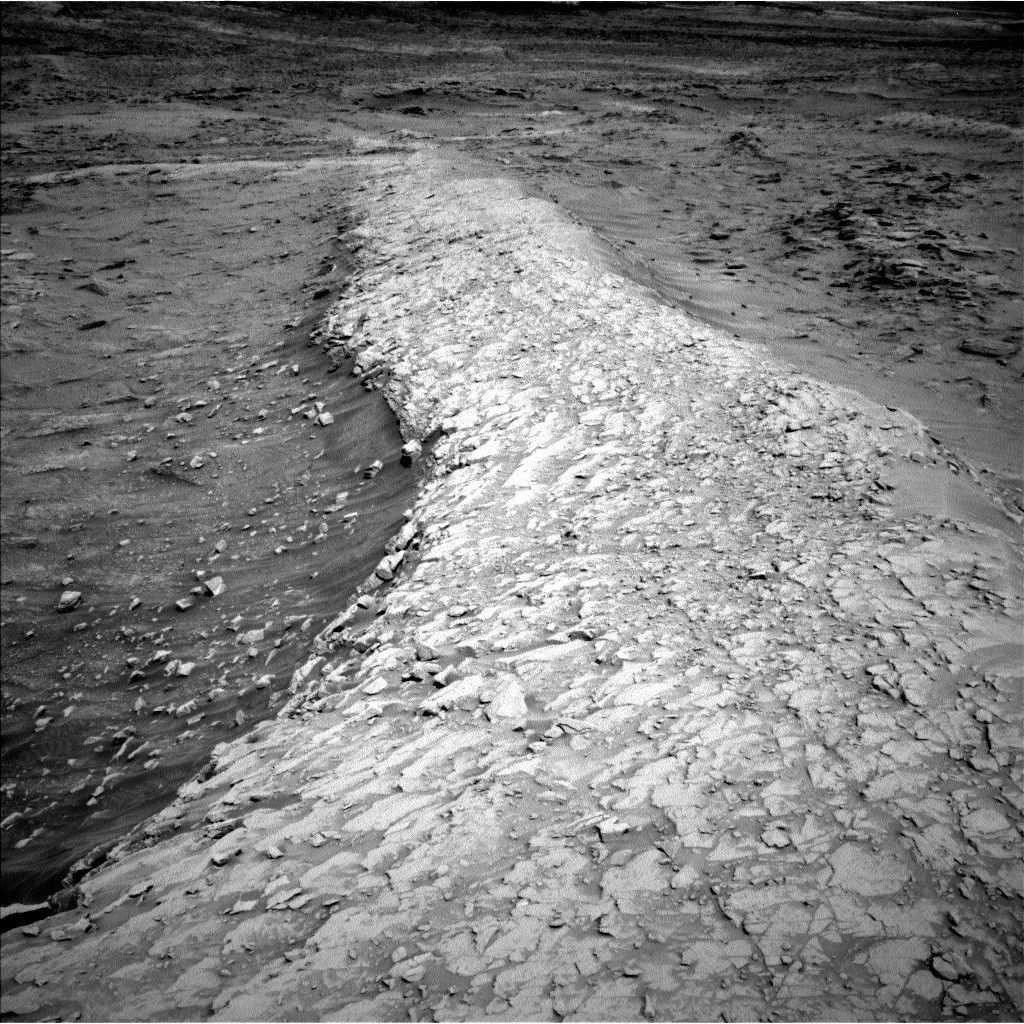
    A grayscale photo from the Martian surface shows a landscape with an elevated ridge running from the foreground, at the bottom left  of the image, toward the middle right side of the frame, with two branches extending toward the left side of the frame, creating a U-shaped depression between them. The top of the ridge is much lighter colored than the medium gray surrounding terrain, which extends off to the horizon at the top of the frame, and is interspersed with areas of scattered small, jagged rocks and wavy sand deposits.
    NASA’s Mars rover Curiosity acquired this image using its Right Navigation Camera, showing the three types of geologic features that have held the mission team’s attention for months — a bright, arcuate boxwork ridge, a darker, sand-filled hollow, and, in the distance, the “Mishe Mokwa” butte. Curiosity captured the image on Oct. 2, 2025 — Sol 4677, or Martian day 4,677 of the Mars Science Laboratory mission — at 15:49:32 UTC.
    NASA/JPL-Caltech

    Written by Michelle Minitti, MAHLI Deputy Principal Investigator at Framework

    Earth planning date: Friday, Oct. 3, 2025

    Before Curiosity landed 13 years ago, the science team eyed all the geologic wonders scattered across the flanks of Mount Sharp and looked forward to the day when we could put the rover to work on them. We have visited so many of these wonders — valleys, river channels, lakebeds — and found a few that we were not expecting. 

    Since Sol 4600, we have been exploring the heart of one of these long-awaited wonders — the boxwork structures — to uncover what created this expansive network of ridges and hollows. Each stop along the traverse since then has been an exercise in systematic detective work. 

    APXS and ChemCam analyses from the center of a ridge, to its edges, and into its neighboring hollow looked for chemical variations that indicate what is holding the ridges together, making them higher than the hollows. Mastcam and ChemCam RMI imaging mapped the architecture of the ridges and hollows looking for structures that provide clues to their formation. Their imaging of more distant features such as the buttes that rise hundreds of meters on either side of the valley hosting the boxworks helped define the geologic context of the area. MAHLI imaging of ridge and hollow targets sought variations in grain size that might indicate how the boxwork bedrock was deposited. DAN surveyed the ground under the rover at every stop, measuring hydrogen (and thus assumed, water) content to see how it varies between ridges and hollows. 

    This week, the team ingested all the results from this thorough exploration to make a decision about our next drill site, where SAM and CheMin will have their chance to interrogate the boxworks. The rover will head north to the “Monte Grande” hollow in which we identified promising bedrock for sampling. Eventually, we will drill a ridge but that is for a future blog. Comparing the mineralogy, volatile content, and organic chemistry of the ridges and hollows will give us our most detailed insight into how the boxworks formed.

    REMS and RAD do not particularly care if they are parked over a ridge or hollow, as the sky above is their domain. Both instruments kept their steady watch on the weather — Martian and space, respectively. Navcam and Mastcam helped with the environmental watch by measuring dust in the atmosphere, looking for dust devils, and capturing the last of the cloudy season. 

    A rover sits on the hilly, orange Martian surface beneath a flat grey sky, surrounded by chunks of rock.
    NASA’s Mars rover Curiosity at the base of Mount Sharp
    NASA/JPL-Caltech/MSSS

    Details

    Last Updated

    Nov 13, 2025

    Related Terms

  • A Robotic Helping Hand

    A Robotic Helping Hand

    The 57.7-foot-long Canadarm2 robotic arm extends from a data grapple fixture on the International Space Station’s Harmony module in this July 23, 2025, image.

  • A Stranger in Our Midst?

    Perseverance Encounters a Possible Meteorite

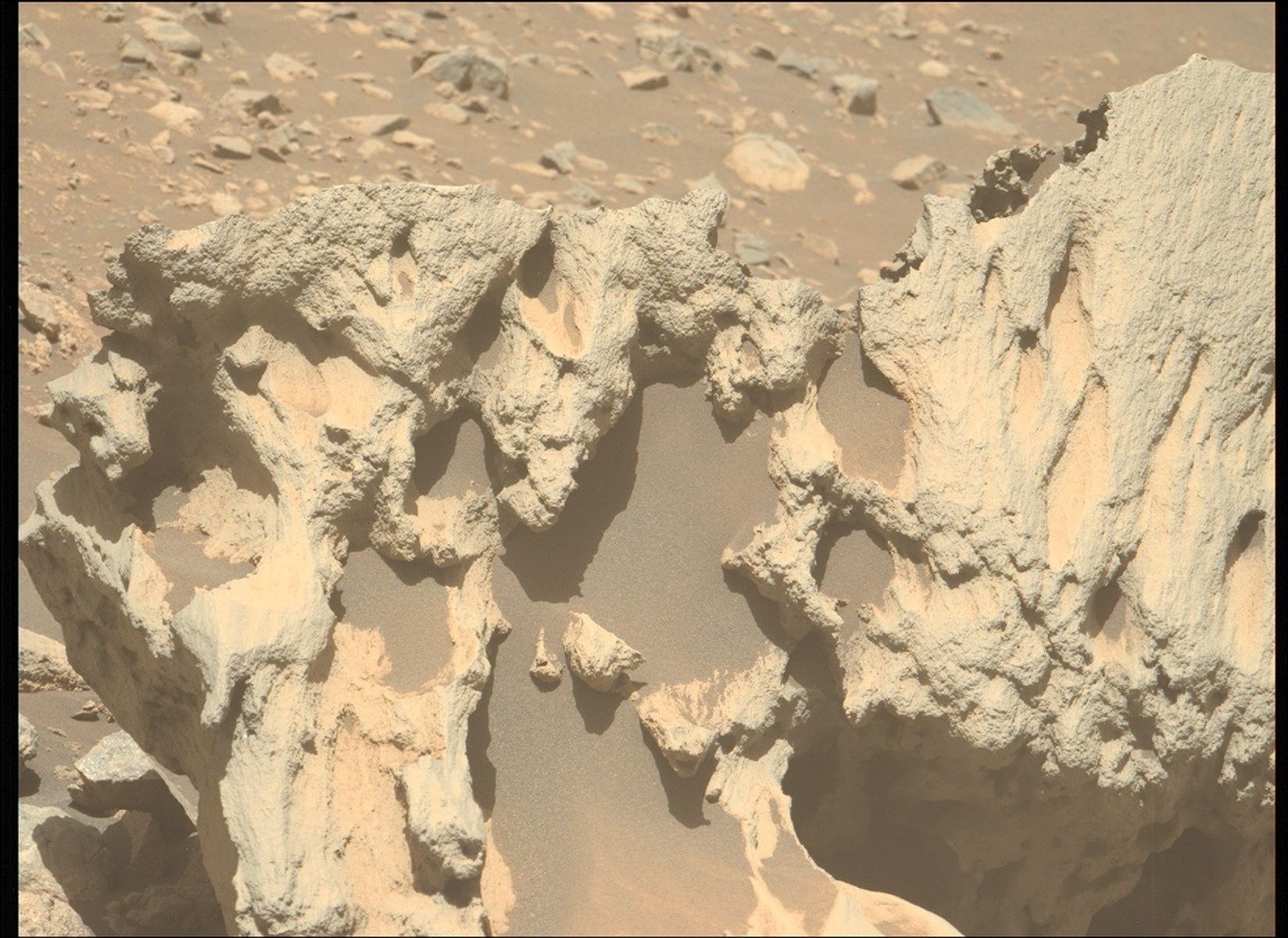
    A color photo from the Martian surface shows a close-up of a large tan and pale orange rock pockmarked with numerous large holes, which are mostly filled with dark, rust-colored sand. In the background, pale orange, very rocky terrain is visible in the top third of the image.
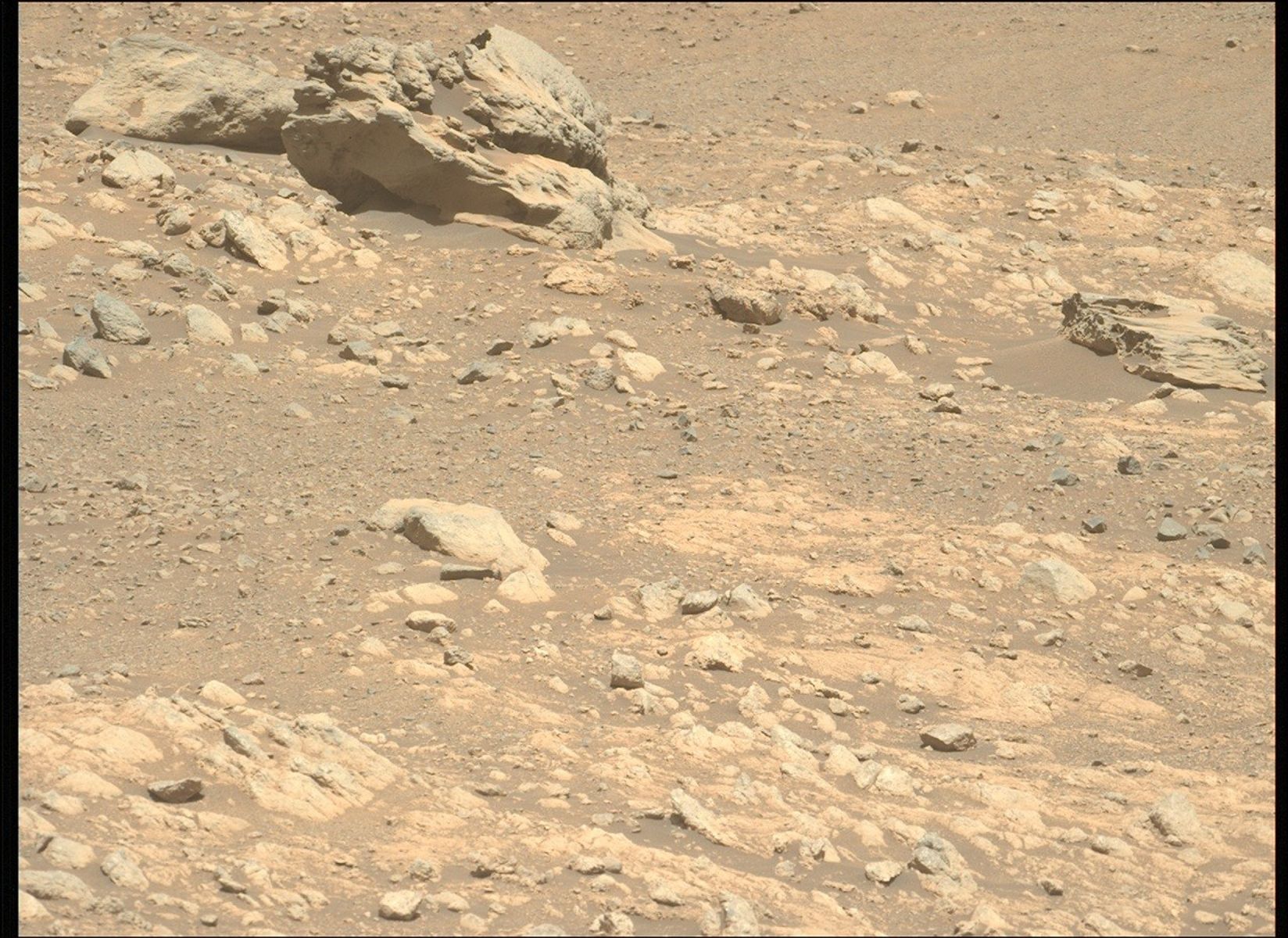
    NASA’s Mars Perseverance rover acquired this close-up view showing the cavernous weathering texture of an unusually shaped rock, “Phippsaksla,” targeted for investigation based on its appearance that differed from the low-lying surrounding rocks. Study showed that it is high in iron and nickel content, suggesting that it might be a meteorite. Perseverance captured the image using its Left Mastcam-Z camera, one of a pair of cameras located high on the rover’s mast, on Sept. 19, 2025 — Sol 1629, or Martian day 1,629 of the Mars 2020 mission — at the local mean solar time of 12:11:25.
    NASA/JPL-Caltech/ASU

    Written by Candice Bedford, Research Scientist at Purdue University

    Oct. 1, 2025

    During the rover’s recent investigation of the bedrock at “Vernodden,” Perseverance encountered an unusually shaped rock about 80 centimeters across (about 31 inches) called “Phippsaksla.” This rock was identified as a target of interest based on its sculpted, high-standing appearance that differed from that of the low-lying, flat and fragmented surrounding rocks. Last week, Perseverance targeted Phippsaksla with the SuperCam instrument revealing that it is high in iron and nickel. This element combination is usually associated with iron-nickel meteorites formed in the core of large asteroids, suggesting that this rock formed elsewhere in the solar system. 

    A color photo from the Martian surface shows pale orange, very rocky terrain in the foreground, with a large, pockmarked rock in the background at upper left.
    NASA’s Mars Perseverance rover acquired this image of the unusually shaped rock, “Phippsaksla,” in the distance at upper left, which is suspected to be a meteorite because of its high iron and nickel content. Perseverance captured the image using its Left Mastcam-Z camera, one of a pair of cameras located high on the rover’s mast, on Sept. 2, 2025 — Sol 1612, or Martian day 1,612 of the Mars 2020 mission — at the local mean solar time of 12:45:41.
    NASA/JPL-Caltech/ASU

    This is not the first time a rover has encountered an exotic rock on Mars. The Curiosity rover has identified many iron-nickel meteorites across its traverse in Gale crater including the 1-meter wide (about 39 inches) “Lebanon” meteorite back in 2014 and the “Cacao” meteorite spotted in 2023. Both Mars Exploration Rovers, Opportunity and Spirit, also found iron-nickel meteorites during their missions. As such, it has been somewhat unexpected that Perseverance had not seen iron-nickel meteorites within Jezero crater, particularly given its similar age to Gale crater and number of smaller impact craters suggesting that meteorites did fall on the crater floor, delta, and crater rim throughout time. Now, on the outside of the crater, atop bedrock known to have formed from impact processes in the past, Perseverance has potentially found one. Due to the exotic composition of this rock, more investigation by the team needs to be done to confirm its status as a meteorite. But if this rock is deemed to be a meteorite Perseverance can at long last add itself to the list of Mars rovers who have investigated the fragments of rocky visitors to Mars. 

  • NASA Patent Remix Challenge

    NASA’s Technology Transfer Office invites entrepreneurs, innovators, and creative thinkers to apply NASA’s patented technologies to practical applications. Participants will select an existing NASA patent and develop a business or product concept that will be evaluated based on value proposition, business model viability, development feasibility, and quality of presentation. Entries should clearly demonstrate creativity, feasibility, and a compelling rationale for how the concept could create real-world impact.

    Award: $13,000 in total prizes

    Open Date: October 6, 2025

    Close Date: December 15, 2025

    For more information, visit: https://nasapatentremixchallenge.org/

  • October’s Night Sky Notes: Let’s Go, LIGO!

    4 Min Read

    October’s Night Sky Notes: Let’s Go, LIGO!

    An artist's impression of gravitational waves generated by binary neutron stars. Near the upper right there are two aqua spheres and radiating out in a circular funnel pattern is an aqua blue wave with a faint grid pattern underneath it all.

    An artist’s impression of gravitational waves generated by binary neutron stars.

    Credits:
    R. Hurt/Caltech-JPL

    by Kat Troche of the Astronomical Society of the Pacific

    September 2025 marks ten years since the first direct detection of gravitational waves as predicted by Albert Einstein’s 1916 theory of General Relativity. These invisible ripples in space were first directly detected by the Laser Interferometer Gravitational-Wave Observatory (LIGO). Traveling at the speed of light (~186,000 miles per second), these waves stretch and squeeze the fabric of space itself, changing the distance between objects as they pass.

    Waves In Space

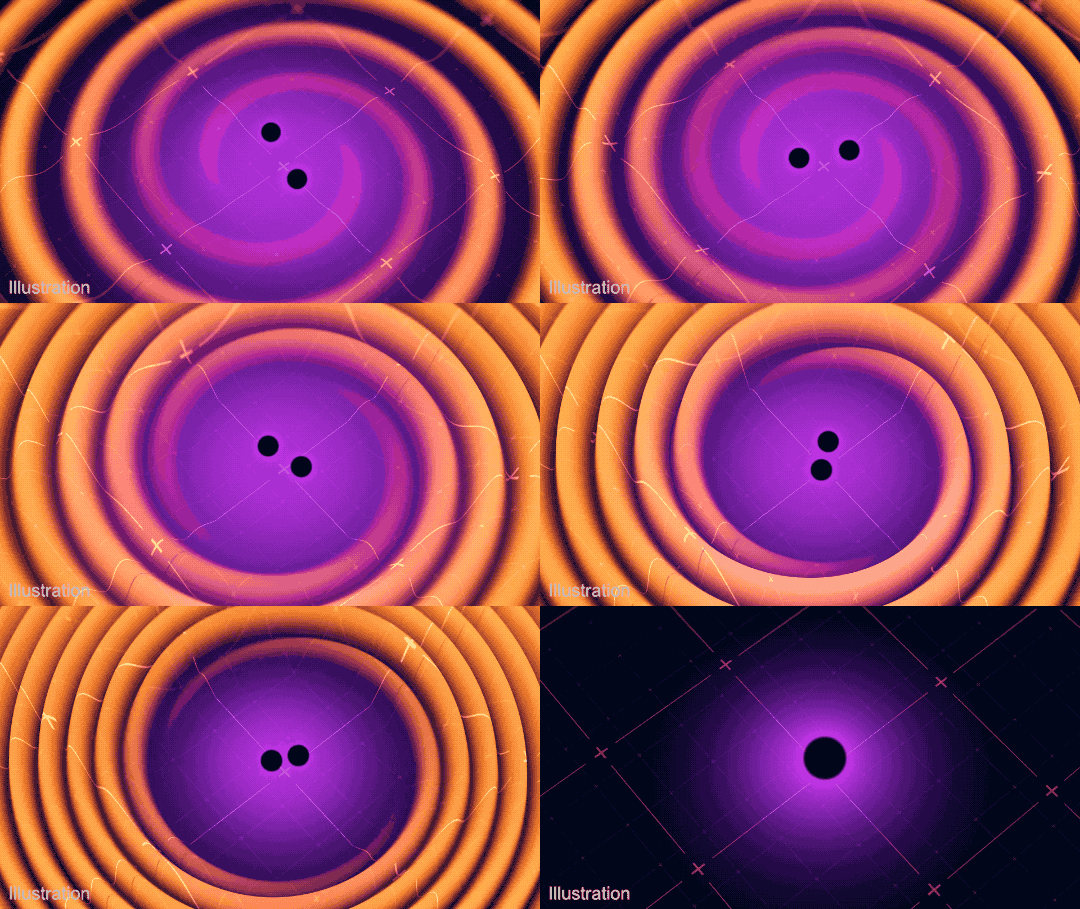
    Gravitational waves are created when massive objects accelerate in space, especially in violent events. LIGO detected the first gravitational waves when two black holes, orbiting one another, finally merged, creating ripples in space-time. But these waves are not exclusive to black holes. If a star were to go supernova, it could produce the same effect. Neutron stars can also create these waves for various reasons. While these waves are invisible to the human eye, this animation from NASA’s Science Visualization Studio shows the merger of two black holes and the waves they create in the process.

    Two black dots circle each other at the center of this animation. Gravitational waves are represented stylistically by spirals that begin as purple, trialing right behind each black hole and then swirling around as they expand off the edge of the screen. The black holes get closer and closer, while the spirals get denser and more frequent until the two black holes merge. As soon as they merge, the new spirals stop, while the existing ones expand away from the single black dot at the center. In the end there is just a single black hole on a black background with a grid, representing space-time.
    Two black holes orbit each other, generating space-time ripples called gravitational waves in this animation. As the black holes get closer, the waves increase in until they merge completely.
    NASA’s Goddard Space Flight Center Conceptual Image Lab

    How It Works

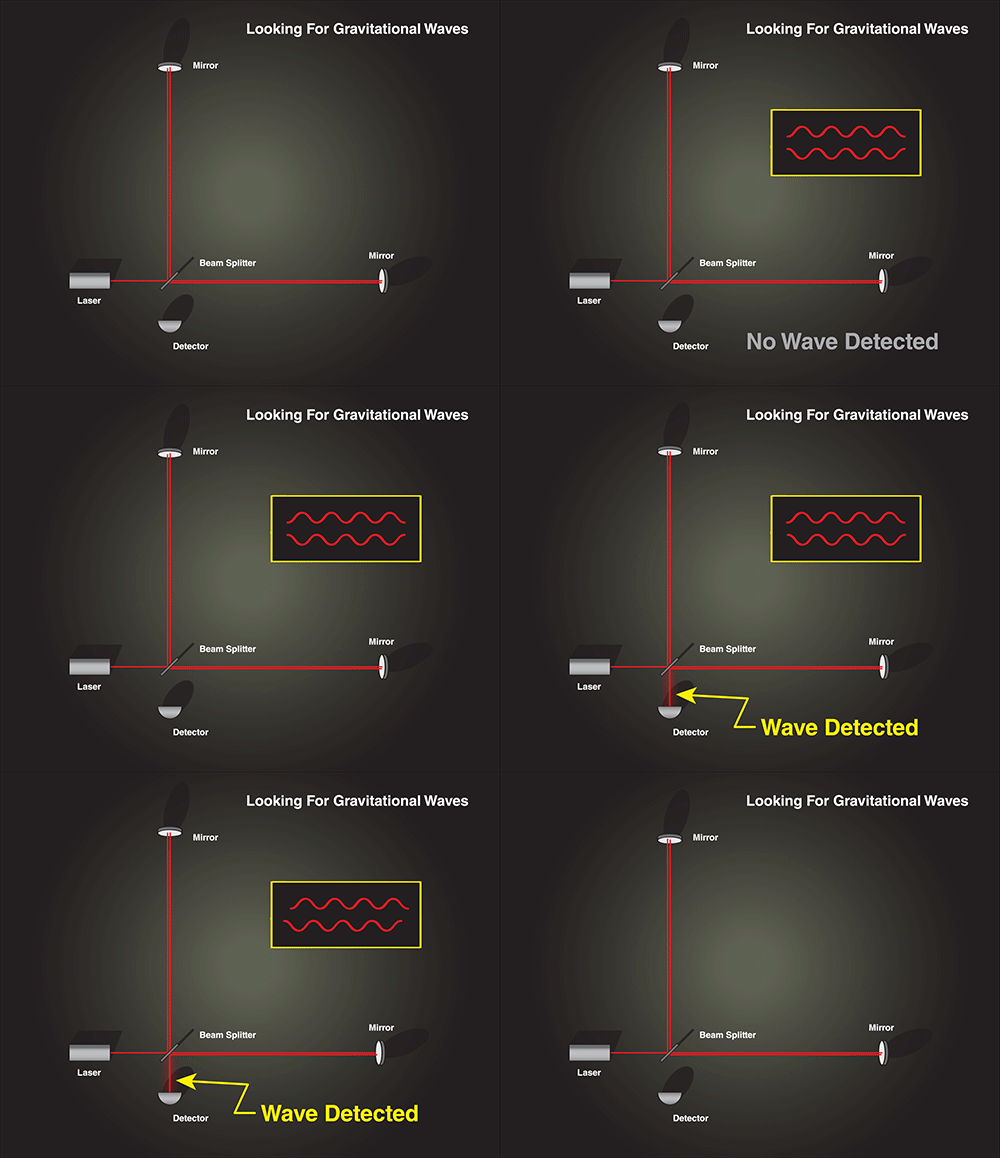
    A gravitational wave observatory, like LIGO, is built with two tunnels, each approximately 2.5 miles long, arranged in an “L” shape. At the end of each tunnel, a highly polished 40 kg mirror (about 16 inches across) is mounted; this will reflect the laser beam that is sent from the observatory. A laser beam is sent from the observatory room and split into two, with equal parts traveling down each tunnel, bouncing off the mirrors at the end. When the beams return, they are recombined. If the arm lengths are perfectly equal, the light waves cancel out in just the right way, producing darkness at the detector. But if a gravitational wave passes, it slightly stretches one arm while squeezing the other, so the returning beams no longer cancel perfectly, creating a flicker of light that reveals the wave’s presence.

    Animation of gravitational waves being detected.
    When a gravitational wave passes by Earth, it squeezes and stretches space. LIGO can detect this squeezing and stretching. Each LIGO observatory has two “arms” that are each more than 2 miles (4 kilometers) long. A passing gravitational wave causes the length of the arms to change slightly. The observatory uses lasers, mirrors, and extremely sensitive instruments to detect these tiny changes.
    NASA

    The actual detection happens at the point of recombination, when even a minuscule stretching of one arm and squeezing of the other changes how long it takes the laser beams to return. This difference produces a measurable shift in the interference pattern. To be certain that the signal is real and not local noise, both LIGO observatories — one in Washington State (LIGO Hanford) and the other in Louisiana (LIGO Livingston) — must record the same pattern within milliseconds. When they do, it’s confirmation of a gravitational wave rippling through Earth. We don’t feel these waves as they pass through our planet, but we now have a method of detecting them!

    Get Involved

    With the help of two additional gravitational-wave observatories, VIRGO and KAGRA, there have been 300 black hole mergers detected in the past decade; some of which are confirmed, while others await further study.

    While the average person may not have a laser interferometer lying around in the backyard, you can help with two projects geared toward detecting gravitational waves and the black holes that contribute to them:

    • Black Hole Hunters: Using data from the TESS satellite, you would study graphs of how the brightness of stars changes over time, looking for an effect called gravitational microlensing. This lensing effect can indicate that a massive object has passed in front of a star, such as a black hole.
    • Gravity Spy: You can help LIGO scientists with their gravitational wave research by looking for glitches that may mimic gravitational waves. By sorting out the mimics, we can train algorithms on how to detect the real thing.

    You can also use gelatin, magnetic marbles, and a small mirror for a more hands-on demonstration on how gravitational waves move through space-time with JPL’s Dropping In With Gravitational Waves activity!

  • NASA, Blue Origin Invite Media to Attend Mars Mission Launch

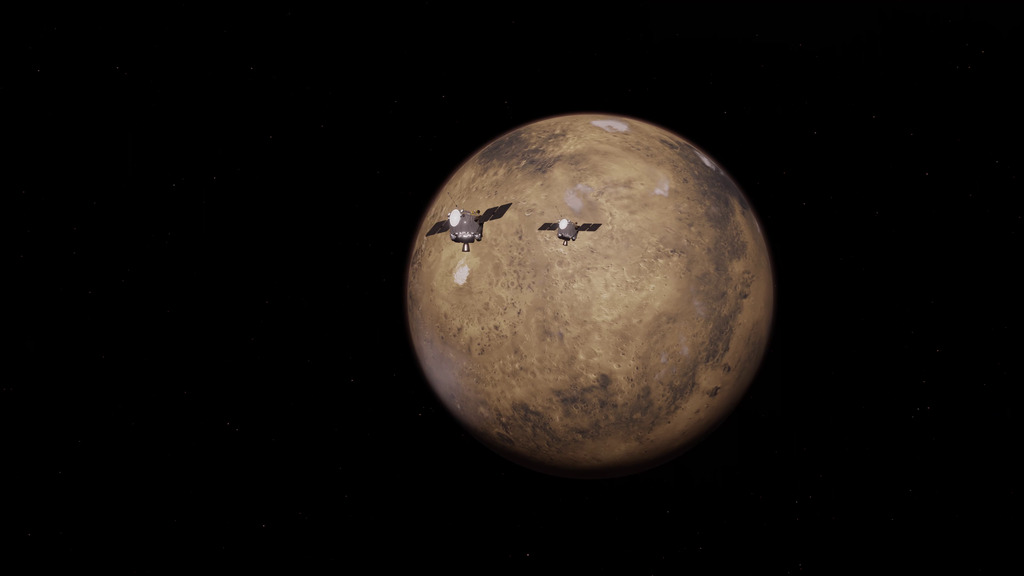
    A stylized illustration shows the twin ESCAPADE spacecraft entering Mars’ orbit.
    Credits: James Rattray/Rocket Lab USA

    NASA and Blue Origin are reopening media accreditation for the launch of the agency’s ESCAPADE (Escape and Plasma Acceleration and Dynamics Explorers) mission. The twin ESCAPADE spacecraft will study the solar wind’s interaction with Mars, providing insight into the planet’s real-time response to space weather and how solar activity drives atmospheric escape. This will be the second launch of Blue Origin’s New Glenn rocket.

    Media interested in covering ESCAPADE launch activities must apply for media credentials. Media who previously applied for media credentials for the ESCAPADE launch do not need to reapply.

    U.S. media and U.S. citizens representing international media must apply by 11:59 p.m. EDT on Monday, Oct. 13. Media accreditation requests should be submitted online to: https://media.ksc.nasa.gov.

    A copy of NASA’s media accreditation policy is available online. For questions about accreditation, please email: ksc-media-accreditat@mail.nasa.gov. For other mission questions, please contact NASA Kennedy’s newsroom: 321-867-2468.

    Blue Origin is targeting later this fall for the launch of New Glenn’s second mission (NG-2) from Space Launch Complex 36 at Cape Canaveral Space Force Station in Florida. Accredited media will have the opportunity to participate in prelaunch media activities and cover the launch. Once a specific launch date is targeted, NASA and Blue Origin will communicate additional details regarding the media event schedule.

    NASA will post updates on launch preparations for the twin Martian orbiters on the ESCAPADE blog.

    The ESCAPADE mission is part of the NASA Small Innovative Missions for Planetary Exploration program and is funded by the agency’s Heliophysics Division. The mission is led by the University of California, Berkeley Space Sciences Laboratory, and Rocket Lab designed the spacecraft. The agency’s Launch Services Program, based at NASA’s Kennedy Space Center in Florida, secured launch services under the VADR (Venture-class Acquisition of Dedicated and Rideshare) contract.

    To learn more about ESCAPADE, visit:

    https://science.nasa.gov/mission/escapade

    -end-

    Abbey Interrante
    Headquarters, Washington
    301-201-0124
    abbey.a.interrante@nasa.gov

    Leejay Lockhart
    Kennedy Space Center, Florida
    321-747-8310
    leejay.lockhart@nasa.gov

  • NASA, International Partners Deepen Commitment to Artemis Accords

    Representatives of the Artemis Accords signatories, including acting NASA Administrator Sean Duffy and NASA Associate Administrator Amit Kshatriya, met Sept. 29, 2025, for a principals meeting during the 76th International Astronautical Congress in Sydney.
    Credit: NASA/Max van Otterdyk

    NASA, along with leaders from global space agencies and government representatives worldwide, convened on Monday to further the implementation of the Artemis Accords — practical principles designed to guide the responsible exploration of the Moon, Mars, and beyond.

    The meeting was held during the 76th International Astronautical Congress (IAC) taking place in Sydney. In opening remarks, acting NASA Administrator Sean Duffy highlighted the five-year anniversary of the Artemis Accords next month.

    “When President Trump launched the Artemis Accords in his first term, he made sure American values would lead the way – bringing together a coalition of nations to set the rules of the road in space and ensure exploration remains peaceful. After five years, the coalition is stronger than ever. This is critical as we seek to beat China to the Moon, not just to leave footprints, but this time to stay,” said Duffy.

    The United States, led by NASA and the U.S. Department of State, signed the accords on Oct. 13, 2020, with seven other founding nations. The accords were created in response to the growing global interest in lunar activities by governments and private companies. They now comprise 56 country signatories — nearly 30% of the world’s countries.

    The event was co-chaired by NASA, the Australian Space Agency, and the UAE Space Agency. Dozens of nations were represented, creating the foundation for future space exploration for the Golden Age of exploration and innovation.

    “Australia is a proud founding signatory of the Artemis Accords and is focused on supporting new signatories in the Indo-Pacific region,” said Head of Australian Space Agency Enrico Palermo. “The purpose of the accords is as important — if not more important — as it was when first established. This annual gathering of principals at IAC 2025 is a key opportunity to reaffirm our collective commitment to exploring the Moon, Mars and beyond in a peaceful, safe, and sustainable way.”

    During the meeting, leaders discussed recommendations for non-interference in each other’s space activities including transparency on expected launch dates, general nature of activities, and landing locations. They also discussed orbital debris mitigation and disposal management, interoperability of systems for safer and more efficient operations, and the release of scientific data.

    In May 2025, the United Arab Emirates hosted an Artemis Accords workshop focused on topics, such as non-interference and space object registration and reporting beyond Earth orbit.

    “Through our active participation in the Artemis Accords and by organizing specialised workshops, we aim to reinforce the principles of transparency, sustainability, and innovation in space activities. We are committed to strengthening international partnerships and facilitating the exchange of expertise, thereby contributing to the development of a robust global framework for safe and responsible space exploration, while opening new frontiers for scientific research,” said UAE Minister of Sports and Chairman of UAE Space Agency Ahmad Belhoul Al Falasi. “This reflects the UAE’s unwavering commitment to enhancing international cooperation in space exploration and promoting the peaceful use of space.”

    More countries are expected to sign the Artemis Accords in the months and years ahead, as NASA continues its work to establish a safe, peaceful, and prosperous future in space.

    Learn more about the Artemis Accords at:

    https://www.nasa.gov/artemis-accords

    -end-

    Bethany Stevens / Elizabeth Shaw
    Headquarters, Washington
    202-358-1600
    bethany.c.stevens@nasa.gov / elizabeth.a.shaw@nasa.gov

  • What’s Up: October 2025 Skywatching Tips from NASA

    A supermoon, and meteor showers from the Draconids and Orionids

    A supermoon takes over the sky, the Draconid meteor shower peeks through, and the Orionid meteor shower shines bright.

    Skywatching Highlights

    • Oct. 6: The October supermoon
    • Oct. 6-10: The Draconid meteor shower
    • Oct. 21: The Orionid meteor shower peaks (full duration Sept. 26 – Nov. 22)

    Transcript

    What’s Up for October? A Supermoon takes over, the Draconid meteor shower peeks through, and the Orionid meteors sparkle across the night sky.

    The evening of October 6, look up and be amazed as the full moon is bigger and brighter because – it’s a supermoon!

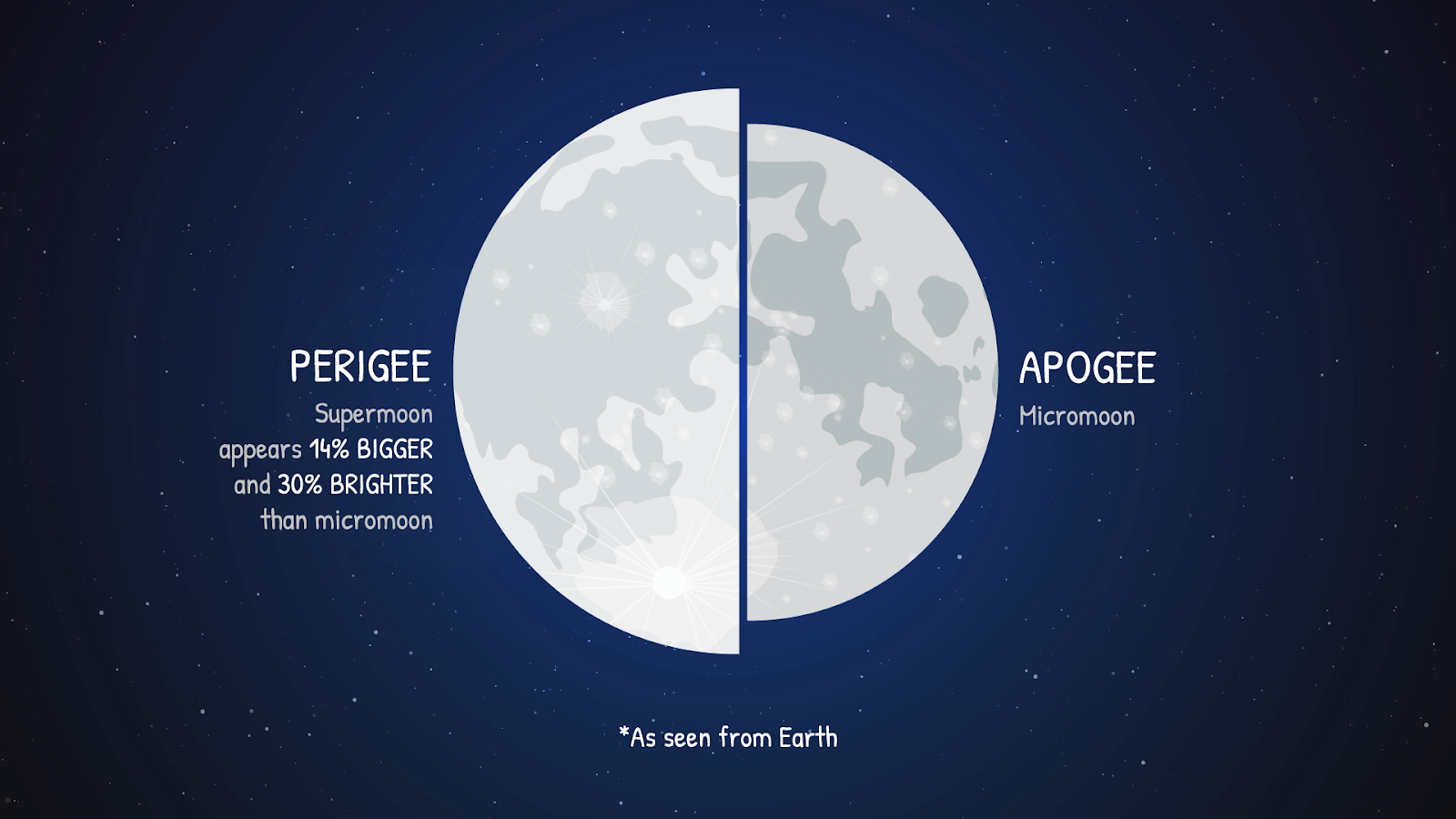
    An illustrated infographic shows two halves of a moon against a dark blue sky background. On the left-hand side, the moon is larger, representing a supermoon during perigee as seen from Earth. On the right-hand side, the moon is smaller, representing a micromoon during apogee as seen from Earth.
    Illustrated infographic showing the difference (as seen from Earth) between perigee, when a supermoon appears, and apogee, when a micromoon appears.
    NASA/JPL-Caltech

    This evening, the moon could appear to be about 30% brighter and up to 14% larger than a typical full moon. But why?

    Supermoons happen when a new moon or a full moon coincides with “perigee,” which is when the moon is at its closest to Earth all month.

    So this is an exceptionally close full moon! Which explains its spectacular appearance.

    And what timing – while the supermoon appears on October 6th, just a couple of days before on October 4th is “International Observe the Moon Night”!

    It’s an annual, worldwide event when Moon enthusiasts come together to enjoy our natural satellite.You can attend or host a moon-viewing party, or simply observe the Moon from wherever you are.

    So look up, and celebrate the moon along with people all around the world!

    The supermoon will light up the sky on October 6th, but if you luck into some dark sky between October 6th and 10th, you might witness the first of two October meteor showers – the Draconids!

    The Draconid meteor shower comes from debris trailing the comet 21P Giacobini-Zinner burning up in Earth’s atmosphere

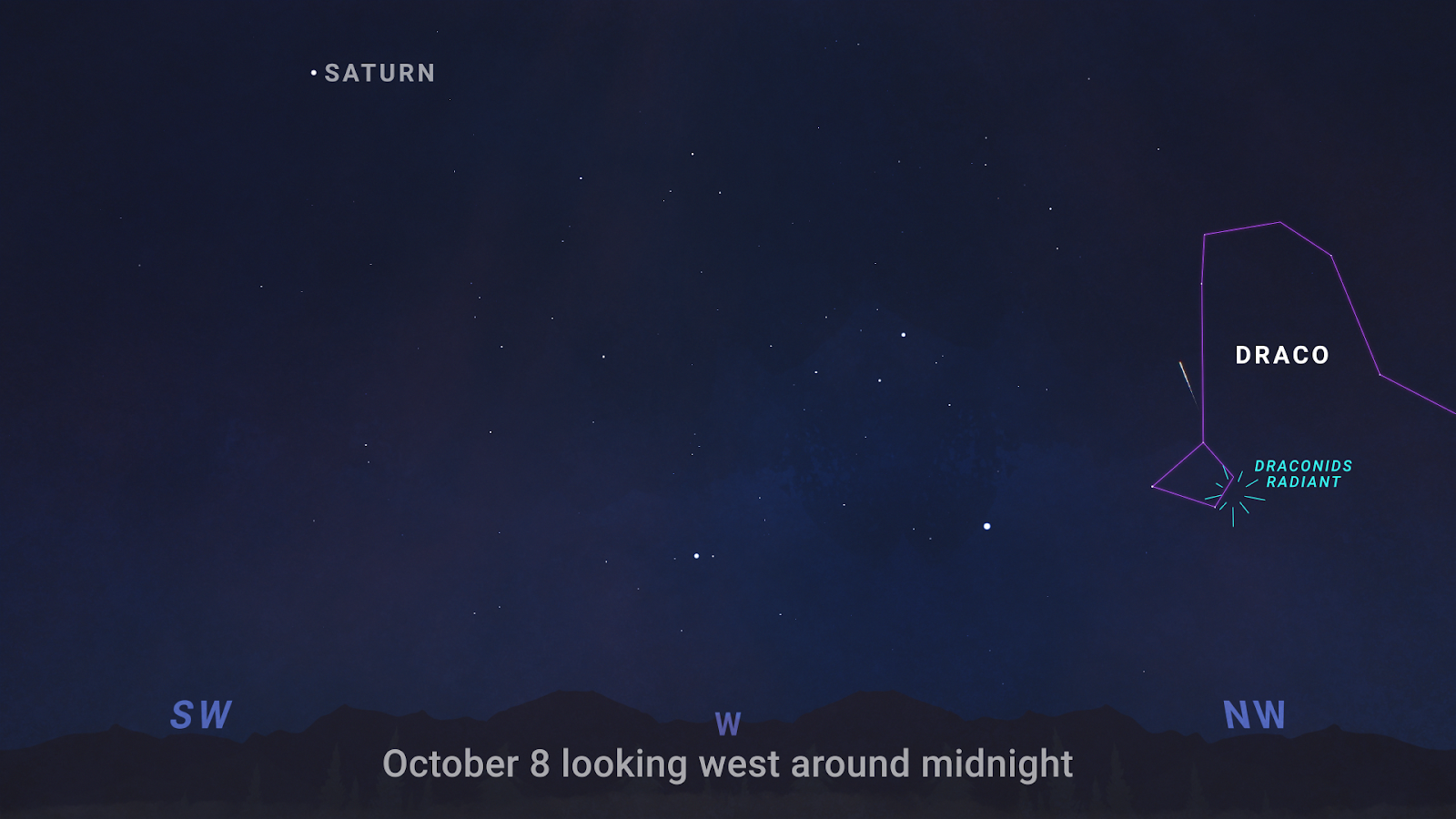
    These meteors originate from nearby the head of the constellation Draco the dragon in the northern sky and the shower can produce up to 10 meteors per hour!

    The Draconids peak around October 8th, but if you don’t see any, you can always blame the bright supermoon and wait a few weeks until the next meteor shower – the Orionids!

    A star chart showing the Draconid meteor shower on October 8, looking west around midnight. The radiant of the shower is shown within the constellation Draco in the northwest sky, with the planet Saturn visible to the left.
    Sky chart showing the Draconid meteor shower, including the radiant point of the shower and the Draco constellation where the meteors in the shower are often seen and stem from.
    NASA/JPL-Caltech

    The Orionid meteor shower, peaking October 21, is set to put on a spectacular show, shooting about 20 meteors per hour across the night sky. 

    This meteor shower happens when Earth travels through the debris trailing behind Halley’s Comet and it burns up in our atmosphere.

    The full duration of the meteor shower stretches from September 26 to November 22, but your best bet to see meteors is on October 21 before midnight until around 2 am.

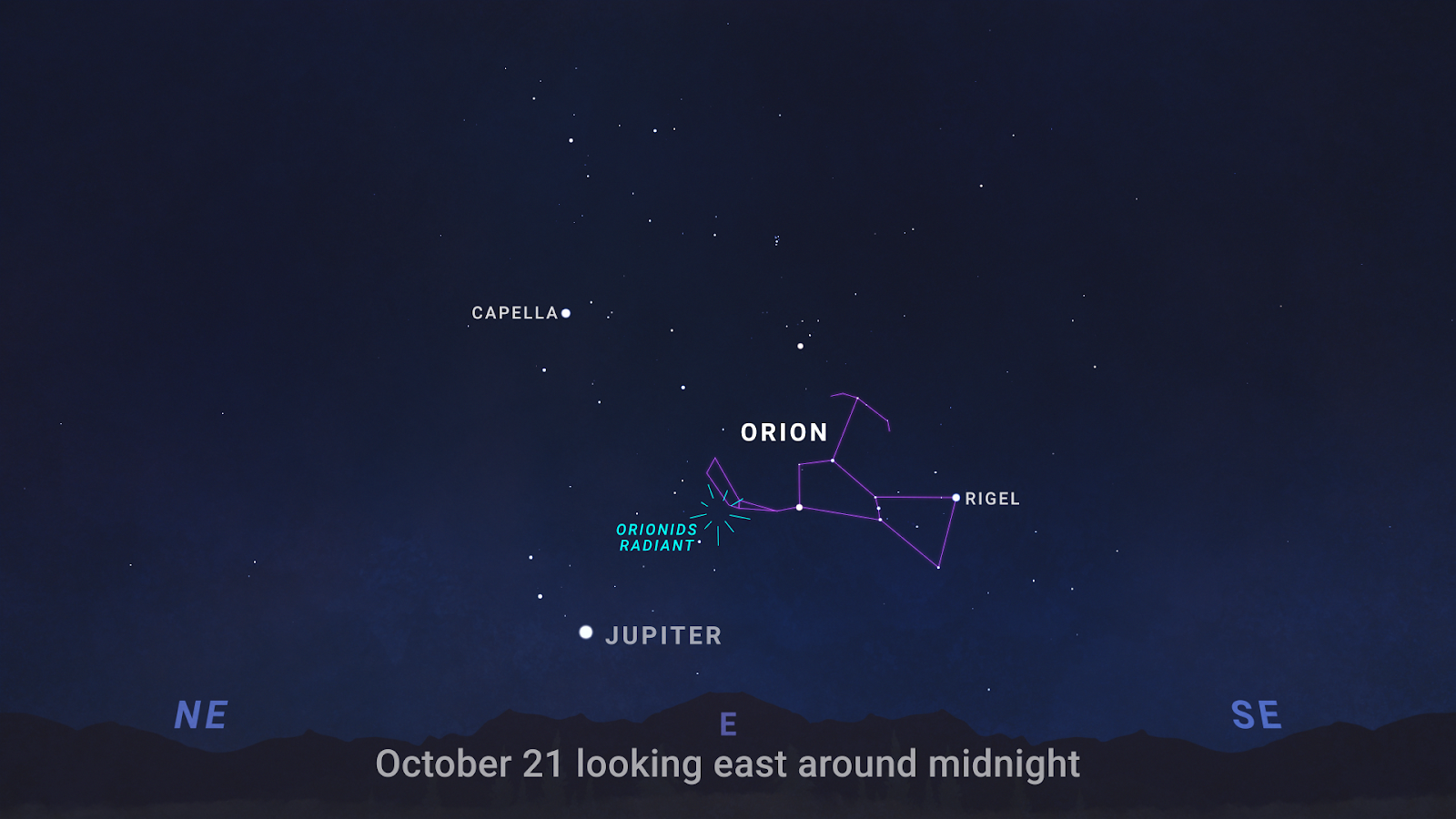
    Sky chart showing the Orionid meteor shower, including the radiant point of the shower and the Orion constellation where the meteors in the shower are often seen and stem from.
    NASA/JPL-Caltech

    This is because, not only is this night the shower’s peak, it is also the October new moon, meaning the moon will be between the Earth and the Sun, making it dark and invisible to us.

    With a moonless sky, you’re much more likely to catch a fireball careening through the night.

    So find a dark location after the sun has set, look to the southeast sky (if you’re in the northern hemisphere) and the northeast (if you’re in the southern hemisphere) and enjoy!

    Orionid meteors appear to come from the direction of the Orion constellation but you might catch them all across the sky.

    Here are the phases of the Moon for October.

    You can stay up to date on all of NASA’s missions exploring the solar system and beyond at science.nasa.gov.

    I’m Chelsea Gohd from NASA’s Jet Propulsion Laboratory, and that’s What’s Up for this month.

  • Helio Highlights: October 2025

    5 min read

    Helio Highlights: October 2025

    5 Min Read

    Helio Highlights: October 2025

    NASA Education Specialist Christine Milotte demonstrates heliophysics activities during a teacher professional development event hosted by the NASA Heliophysics Education Activation Team (HEAT) at the Dallas Arboretum, Saturday, April 6, 2024.

    Credits:
    NASA/Keegan Barber

    The Sun and Our Lives

    On a clear night, you might see thousands of stars in the sky. Most of these stars are dozens or hundreds of light years away from us. A light year is the distance a beam of light travels in a year: about 5.88 trillion miles (9.46 trillion kilometers). This means that for those stars we see at night, it takes their light, which travels at about 186,000 miles per second (or about 300 thousand kilometers per second), dozens or hundreds of years to reach us.

    But in the daytime, we only see one star: the Sun. It dominates the daytime sky because it is so close – about 93 million miles (or 150 million kilometers) away. That distance is also called one astronomical unit, and its another unit of measurement astronomers use to record distance in space. But even if 1 astronomical unit seems like a long way, it’s still about 270 thousand times closer than Alpha Centauri, the next nearest star system.

    The Sun isn’t just close – it’s also gigantic! The Sun is large enough to fit more than a million Earths inside it, and has more mass than 330 thousand Earths put together. Its light also provides the energy which allows life as we know it to flourish. For these reasons, the Sun is a powerful presence in our lives. We all have a relationship with the Sun, so knowing about it, and about the benefits and hazards of its presence, is essential.

    Teaching About the Sun

    Autumn is when most students in the United States return for a new school year after summer vacation. This back-to-school time offers a wonderful opportunity to reach students fresh off of a few months of fun in the Sun and capture their imaginations with new information about how our native star works and how it impacts their lives.

    To that end, NASA conducts efforts to educate and inform students and educators about the Sun, its features, and the ways it impacts our lives. NASA’s Heliophysics Education Activation Team (HEAT) teaches people of all ages about the Sun, covering everything from how to safely view an eclipse to how to mitigate the effects of geomagnetic storms.

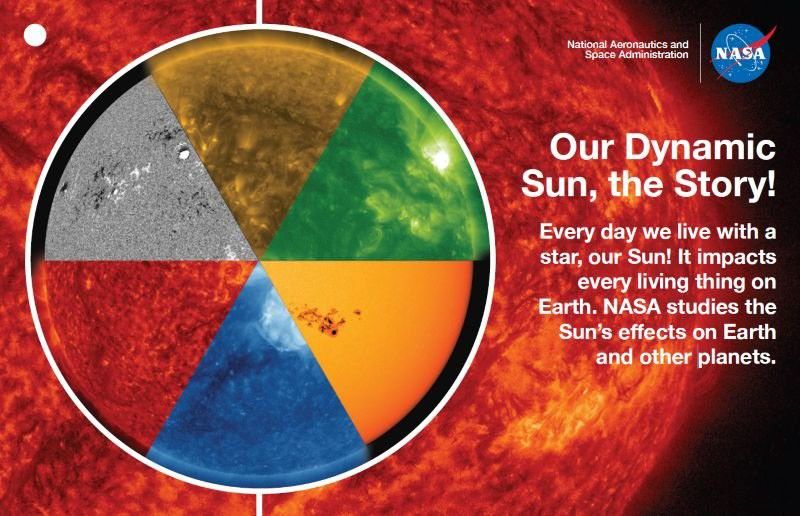
    The central image is a multicolored circle divided into six overlapping sections, each showing a different way the Sun is observed: Blue (Extreme UV): Shows solar wind origins; Red (Hydrogen-alpha): Reveals features like filaments, prominences, and plages; Orange (Visible Light): Shows cooler sunspots; Gray (Magnetogram): Highlights magnetically active regions; Green (X-rays): Highlights solar flares and coronal mass ejections; Purple (UV): Shows material distribution above the surface.  Surrounding the Sun image are planets (not to scale): Neptune, Uranus, Saturn, Jupiter, Mars, and Earth—each shown with auroras caused by their magnetic fields interacting with solar particles.  A circle shows Earth's tiny relative size compared to the Sun. Text describes solar features like the inner corona seen during an eclipse and stresses safe solar viewing. Logos of NASA, Night Sky Network, Astronomical Society of the Pacific (ASP), NASA HEAT, and Solar Science Education appear at the bottom.
    This “Our Dynamic Sun” banner is one of many educational outreach products offered by NASA HEAT. It uses imagery of the Sun at different wavelengths of light to demonstrate the features of our nearest star, and features information about how the Sun interacts with the rest of the Solar System.
    NASA HEAT

    This often means tailoring lesson plans for educators. By connecting NASA scientists who study Heliophysics with education specialists who align the material to K-12 content standards, HEAT gets Heliophysics out of the lab and into the classroom. Making Sun science accessible lets learners of all ages and backgrounds get involved in and excited about the discovery, and instills a lifelong thirst for knowledge that builds the next generation of scientists.

    Since 2007, NASA’s Living With a Star (LWS) program and the University Corporation for Atmospheric Research’s Cooperative Programs for the Advancement of Earth System Science (CPAESS) have cooperated to offer the Heliophysics Summer School program for doctoral students and postdoctoral scholars. This program aims to foster heliophysics as an integrated science, teaching a new generation of researchers to engage in cross-disciplinary communication while they are still in the early days of their career.

    One Way to Get Involved

    As part of its efforts to increase awareness of the scientific and social importance of heliophysics, and to both inspire future scientists and spark breakthroughs in heliophysics as a discipline, the NASA Heliophysics Education Activation Team (NASA HEAT) is working on a slate of educational materials designed to get students involved with real-world mission data.

    My NASA Data, in collaboration with NASA HEAT, has released a new set of resources for educators centered around space weather. My NASA Data supports the use of authentic NASA data as part of classroom learning materials. These materials include lesson plans, mini-lessons (shorter activities for quick engagement), student-facing web-based interactives, and a longer “story map,” which deepens the investigation of the phenomenon over multiple class periods.

    These resources are designed to engage learners with data and observations collected during both past and ongoing missions, including the European Space Agency’s Solar Orbiter, NASA’s Parker Solar Probe and Solar Dynamics Observatory (SDO), and more.

    One example of this is the educational material published to support outreach efforts focusing on the 2023 and 2024 American solar eclipses. These materials allowed learners to collect their own data on cloud and temperature observations during the eclipses with the GLOBE Observer Eclipse tool. This gave them the chance to participate in the scientific process by contributing meaningfully to our understanding of the Earth system and global environment.

    New Ways to Engage

    Groups like HEAT don’t just spark interest in science for the sake of inspiring the next generation of heliophysicists. Just like amateur astronomers can bring in a lot more data than their professional counterparts, citizen scientists can do a lot to support the same institutions that may have inspired them to take up the practice of citizen science. This can mean anything from helping to track sunspots to reporting on the effects of space weather events.

    2023 Partial Solar Eclipse Viewing at Camino Real Marketplace with the View the Santa Barbara Astronomical Unit.
    2023 Partial Solar Eclipse Viewing at Camino Real Marketplace with the View the Santa Barbara Astronomical Unit. Events like this, which can take place during major events such as eclipses or during impromptu circumstances, offer an excellent opportunity for the public to get involved in and excited about heliophysics.
    Photo by Chuck McPartlin

    These enthusiasts are also adept at sharing knowledge of heliophysics. Even just one person inspired to buy a telescope with the right solar filter (international standard ISO 12312-2), set it up in a park, and teach their neighbors about the Sun can do amazing work, and there are a lot more of them than there are professional scientists. That means these amateur heliophysicists can reach farther than even the best official outreach.

    Whether they take place in the classroom, at conferences, or in online lectures, the efforts of science communicators are a vital part of the work done at NASA. Just as scientists make new discoveries, these writers, teachers, audio and video producers, and outreach specialists are passionate about making those discoveries accessible to the public.

    All of this work helps to inspire the scientists of tomorrow, and to instill wonder in the citizen scientists of today. The Sun is a constant and magnificent presence in our lives, and it offers plenty of reasons to be inspired, both now and in the future.

    Additional Resources