Tag: Kepler

  • 6 Things to Know From NASA About New US, European Sea Satellite

    6 min read

    Preparations for Next Moonwalk Simulations Underway (and Underwater)
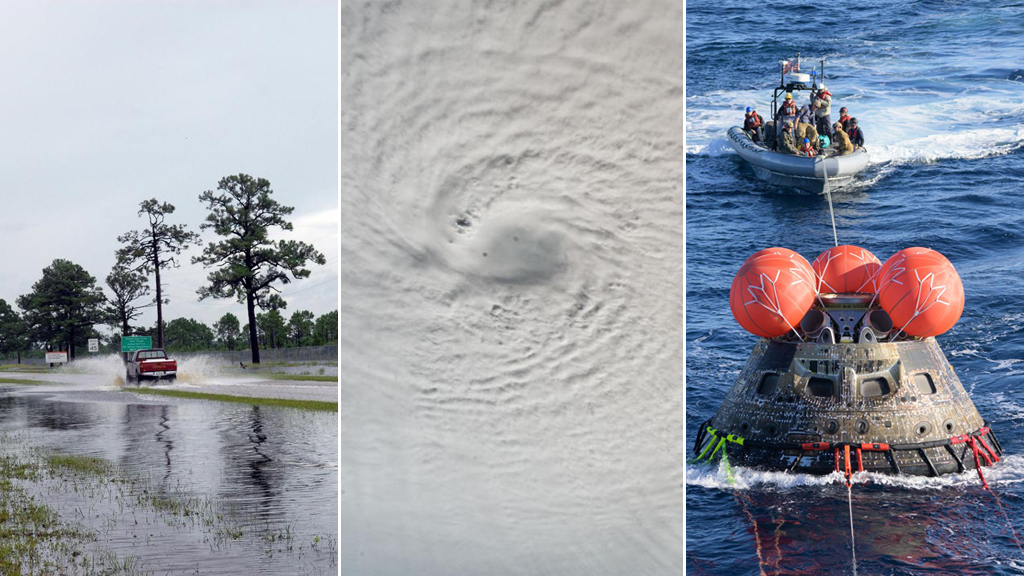
    Set to launch no earlier than Nov. 16, Sentinel-6B will continue a decades-long data record of sea level measurement that will help decision-makers manage coastal flooding, support hurricane intensity forecasts, and assist in the return of astronauts from space.
    NASA

    Data from Sentinel-6B will continue a decades-long record of sea surface height, helping to improve coastal planning, protect critical infrastructure, and advance weather forecasts.

    With launch set for no earlier than 12:21 a.m. EST Monday, Nov. 17, Sentinel-6B is the latest satellite in a series of spacecraft NASA and its partners have used to measure sea levels since 1992. Their data has helped meteorologists improve hurricane forecasts, managers protect infrastructure, and coastal communities plan. 

    After launch, Sentinel-6B will begin the process of data cross-calibration with its predecessor, Sentinel-6 Michael Freilich, to provide essential information about Earth’s ocean. 

    Sentinel-6B is the second of two satellites that constitute the Sentinel-6/Jason-CS (Continuity of Service) mission, a collaboration between NASA, ESA (European Space Agency), EUMETSAT (European Organisation for the Exploitation of Meteorological Satellites), and the National Oceanic and Atmospheric Administration (NOAA). The European Commission contributed funding support while France’s space agency CNES (Centre National d’Études Spatiales) provided technical expertise.

    Here are six things to know about Sentinel-6B and the broader Copernicus Sentinel-6/Jason-CS mission: 

    1. Sentinel-6B will deliver data on about 90% of Earth’s ocean, providing direct benefits to humanity.

    Sentinel-6B will contribute to a multidecade dataset for sea level measurements from space. This data is key to helping improve public safety, city planning, and protecting commercial and defense interests. 

    Pioneered by NASA and its partners, the dataset enables users in government, industry, and the research community to better understand how sea levels change over time. Combined with information from other NASA satellites, data from Copernicus Sentinel-6/Jason-CS is vital for tracking how heat and energy move through Earth’s seas and atmosphere, as well as for monitoring ocean features such as currents and eddies. The measurements come courtesy of a radar altimeter that measures sea levels for nearly all of Earth’s ocean, providing information on large-scale currents that can aid in commercial and naval navigation, search and rescue, and the tracking of debris and pollutants from disasters at sea.

    Sentinel-6B is part of a U.S.-European mission that will continue 30-year-plus record of sea-level measurements. Its observations will help build an accurate picture of local and global sea surface heights to support storm forecasting, secure coastal infrastructure, and help optimize commercial activities, such as shipping.
    Credit: NASA/JPL-Caltech

    2. Data from the Copernicus Sentinel-6/Jason-CS mission helps NASA prepare for the next phase of space exploration.

    The better we understand Earth, the better NASA can carry out its mission to explore the universe. Data from the Copernicus Sentinel-6/Jason-CS mission is used to refine the Goddard Earth Observing System atmospheric forecast models, which the NASA Engineering Safety Center uses to plan safer reentry of astronauts returning from Artemis missions.

    Additionally, changes to Earth’s ocean, observed by satellites, can have measurable effects beyond our planet. For instance, while the Moon influences ocean tides on Earth, changes in those tides can also exert a small influence on the Moon. Data from Copernicus Sentinel-6/Jason-CS can help improve understanding of this relationship, knowledge that can contribute to future lunar exploration missions.

    3. The Copernicus Sentinel-6/Jason-CS mission helps the U.S. respond to challenges by putting actionable information into the hands of decision-makers.

    Data collected by the mission helps city planners, as well as local and state governments, to make informed decisions on protecting coastal infrastructure, real estate, and energy facilities. The mission’s sea level data also improves meteorologists’ weather predictions, which are critical to commercial and recreational navigation. By enhancing weather prediction models, data provided by Copernicus Sentinel-6/Jason-CS improves forecasts of hurricane development, including the likelihood of storm intensification, which can aid disaster preparedness and response.

    4. Data from Sentinel-6B will support national security efforts.

    The ocean and atmosphere measurements from Sentinel-6B will enable decision-makers to better protect coastal military installations from such events as nuisance flooding while aiding national defense efforts by providing crucial information about weather and ocean conditions. The satellite will do so by feeding near-real time data on Earth’s atmosphere and seas to forward-looking weather and ocean models. Since the measurements are part of a long-term dataset, they also can add historical context that puts the new data in perspective.

    5. The Copernicus Sentinel-6/Jason-CS mission’s direct observation of sea levels delivers information critical to protecting coastlines, where nearly half of the world’s population lives.

    Sea level rise varies from one area to another, meaning that some coastlines are more vulnerable than others to flooding, erosion, and saltwater contamination of underground freshwater supplies, the latter of which threatens farmland and drinking water. Sea level measurements from Sentinel-6 Michael Freilich, and soon, Sentinel-6B, form the basis of U.S. flood predictions for coastal infrastructure, real estate, energy storage sites, and other coastal assets. Knowing which regions are more vulnerable to these risks will enable U.S. industries and emergency managers to make better-informed decisions about transportation and commercial infrastructure, land-use planning, water management, and adaptation strategies.

    6. The international collaboration behind the mission enables the pooling of capabilities, resources, and expertise.

    The multidecadal dataset that this mission supports is the result of years of close work between NASA and several collaborators, including NASA, ESA, EUMETSAT, CNES, and NOAA. By pooling expertise and resources, this partnership has delivered cost-effective solutions that have made precise, high-impact data available to industry and government agencies alike.

    More about Sentinel-6B

    Copernicus Sentinel-6/Jason-CS was jointly developed by ESA, EUMETSAT, NASA, and NOAA, with funding support from the European Commission and technical support from CNES. The mission also marks the first international involvement in Copernicus, the European Union’s Earth Observation Programme. 

    Managed for NASA by Caltech in Pasadena, JPL contributed three science instruments for each Sentinel-6 satellite: the Advanced Microwave Radiometer, the Global Navigation Satellite System – Radio Occultation, and the laser retroreflector array. NASA is also contributing launch services, ground systems supporting operation of the NASA science instruments, the science data processors for two of these instruments, and support for the international ocean surface topography community. 

    For more about Sentinel-6B, visit:

    https://science.nasa.gov/mission/sentinel-6B

    News Media Contacts

    Elizabeth Vlock
    NASA Headquarters, Washington
    202-358-1600
    elizabeth.a.vlock@nasa.gov

    Andrew Wang / Andrew Good
    Jet Propulsion Laboratory, Pasadena, Calif.
    626-379-6874 / 626-840-4291
    andrew.wang@jpl.nasa.gov / andrew.c.good@jpl.nasa.gov

    2025-124

  • NASA Sets Launch Coverage for International Ocean Tracking Mission

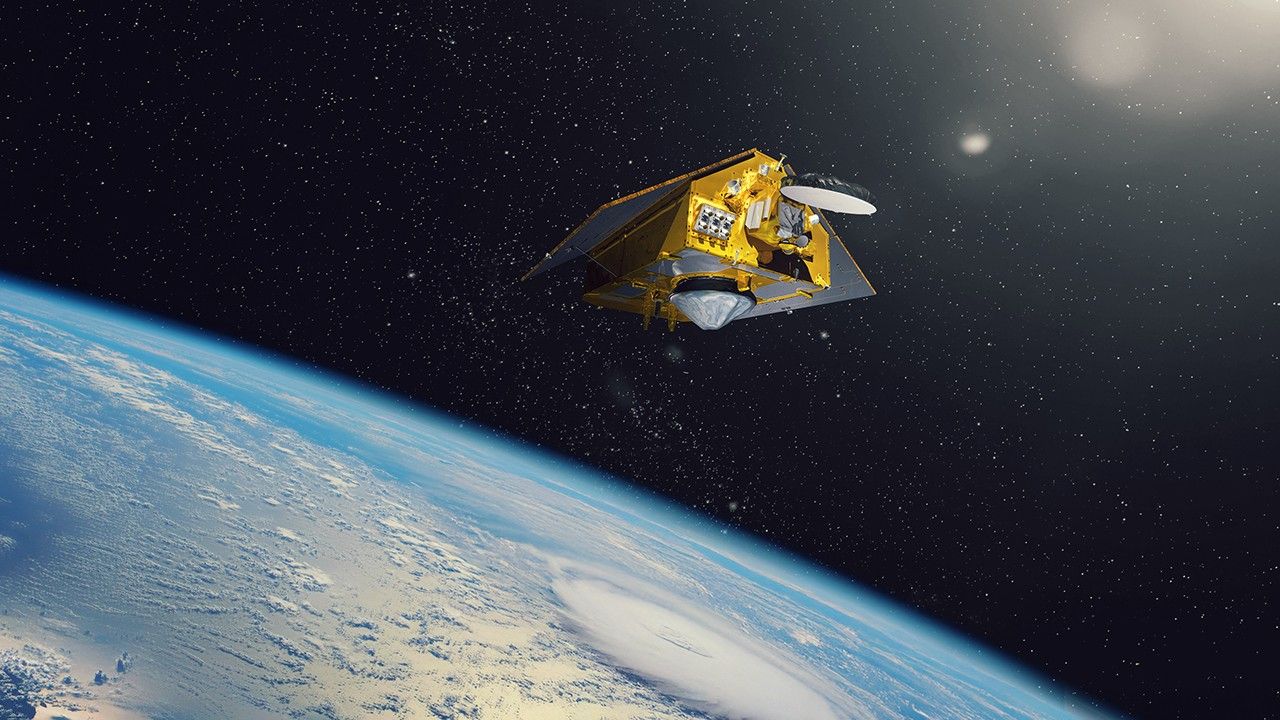
    In this artist’s concept, the ocean-observing satellite Sentinel-6B orbits Earth with its deployable solar panels extended.
    In this artist’s concept, the ocean-observing satellite Sentinel-6B orbits Earth with its deployable solar panels extended.
    Credit: NASA/JPL-Caltech

    NASA will provide live coverage of prelaunch and launch activities for Sentinel-6B, an international mission delivering critical sea level and ocean data to protect coastal infrastructure, improve weather forecasting, and support commercial activities at sea.

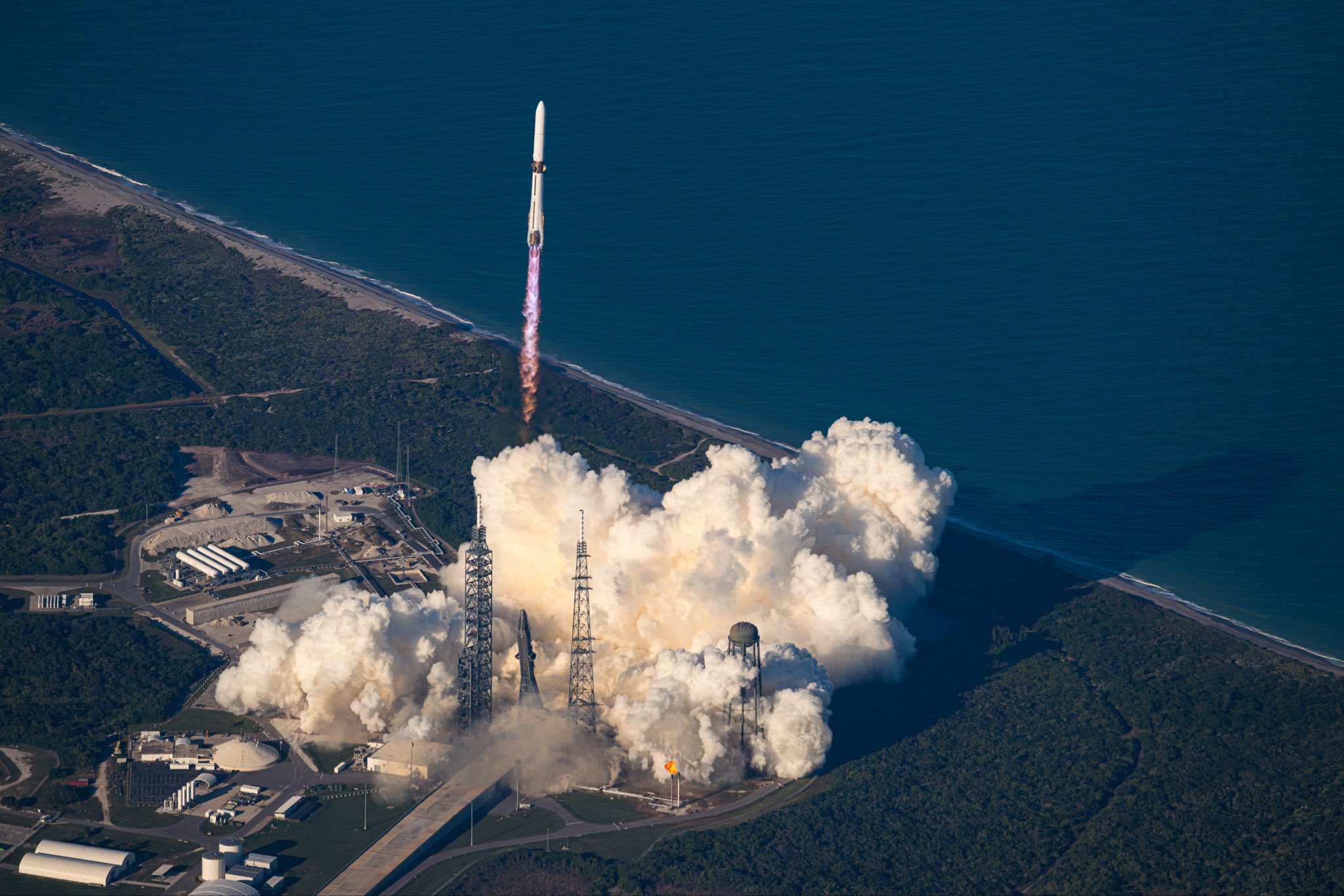
    Launch is targeted at 12:21 a.m. EST, Monday, Nov. 17 (9:21 p.m. PST, Sunday, Nov. 16) aboard a SpaceX Falcon 9 rocket from Space Launch Complex 4 East at Vandenberg Space Force Base in California.
    Watch coverage beginning at 11:30 p.m. EST (8:30 p.m. PST) on NASA+, Amazon Prime, and more. Learn how to watch NASA content through a variety of platforms, including social media.

    The Sentinel-6B mission continues a decades-long effort to monitor global sea level and ocean conditions using precise radar measurements from space. Since the early 1990s, satellites launched by NASA and domestic and international partners have collected precise sea level data. The launch of Sentinel-6B will extend this dataset out to nearly four decades.

    NASA’s mission coverage is as follows (all times Eastern and subject to change based on real-time operations):

    Saturday, Nov. 15

    4 p.m. – NASA Prelaunch Teleconference on International Ocean Tracking Mission

    • Karen St. Germain, director, Earth Science Division, NASA Headquarters in Washington
    • Pierrik Veuilleumier, Sentinel-6B project manager, ESA (European Space Agency)
    • Parag Vaze, Sentinel-6B project manager, NASA’s Jet Propulsion Laboratory in Pasadena, California
    • Tim Dunn, senior launch director, Launch Services Program, NASA’s Kennedy Space Center in Florida
    • Julianna Scheiman, director, NASA Science Missions, SpaceX
    • 1st Lt. William Harbin, launch weather officer, U.S. Air Force

    Audio of the teleconference will stream on the NASA Video YouTube channel.  

    Media interested in participating by phone must RSVP no later than two hours prior to the start of the call at: ksc-newsroom@mail.nasa.gov. A copy of NASA’s media accreditation policy is online.

    Sunday Nov. 16

    11:30 p.m. – Launch coverage begins on NASA+, Amazon Prime, and more.

    Audio-only coverage

    Audio-only of the launch coverage will be carried on the NASA “V” circuits, which may be accessed by dialing 321-867-1220 or -1240. On launch day, “mission audio” countdown activities without NASA+ launch commentary will be carried at 321-867-7135.

    NASA website launch coverage

    Launch day coverage of the mission will be available on the agency’s website. Coverage will include links to live streaming and blog updates beginning no earlier than 11 p.m. EST, Nov. 16, as the countdown milestones occur. Streaming video and photos of the launch will be accessible on demand shortly after liftoff. Follow countdown coverage on NASA’s Sentinel-6/Jason-CS blog.

    For questions about countdown coverage, contact the NASA Kennedy newsroom at: 321-867-2468.

    Attend launch virtually

    Members of the public can register to attend this launch virtually. NASA’s virtual guest program for this mission includes curated launch resources, notifications about related opportunities or changes, and a stamp for the NASA virtual guest passport following launch.

    Watch, engage on social media

    Let people know you’re watching the mission on X, Facebook, and Instagram by following and tagging these accounts:

    X: @NASA, @NASAKennedy, @NASAJPL, @NASAEarth

    Facebook: NASA, NASA Kennedy, NASA JPL, NASA Earth

    Instagram: @NASA, @NASAKennedy, @NASAJPL, @NASAEarth

    Sentinel-6B is the second of twin satellites in the Copernicus Sentinel-6/Jason-CS (Continuity of Service) mission, a collaboration among NASA, ESA, EUMETSAT (European Organisation for the Exploitation of Meteorological Satellites), and the National Oceanic and Atmospheric Administration (NOAA). The first satellite in the mission, Sentinel-6 Michael Freilich, launched in November 2020. The European Commission contributed funding support, while France’s space agency CNES (Centre National d’Études Spatiales) provided technical expertise. The mission also marks the first international involvement in Copernicus, the European Union’s Earth Observation Programme.

    For more information about these missions, visit:

    https://science.nasa.gov/mission/sentinel-6b/

    -end-

    Elizabeth Vlock
    NASA Headquarters, Washington
    202-358-1600
    elizabeth.a.vlock@nasa.gov

    Leejay Lockhart
    Kennedy Space Center, Fla.
    321-747-8310
    leejay.lockhart@nasa.gov

    Andrew Wang / Andrew Good
    Jet Propulsion Laboratory, Pasadena, Calif.
    626-379-6874 / 818-393-2433
    andrew.wang@jpl.nasa.gov / andrew.c.good@jpl.nasa.gov

  • Mapping Dark Matter

    Webb near-infrared data combined with Chandra X-ray data of the Bullet Cluster show many overlapping objects, including foreground stars, galaxies in galaxy clusters, and distorted background galaxies behind the galaxy clusters. The objects are all at various distances set against the black background of space. Most galaxies appear as tiny fuzzy ovals in white, orange, or red. A slightly larger, very bright, light blue spiral galaxy is at center. To its immediate left and right are two large bright pink splotches representing X-rays. The right pink area has a rounded nose facing right, where it is darker pink, and fades to the left as a triangular shape. This is referred to as the Bullet. To the far left and far right, next to the pink regions, are two blue regions representing dark matter mass. The left blue region is a large, long oval at an angle. The blue region at right is a far smaller oval.
    NASA, ESA, CSA, STScI, CXC

    This image released on June 30, 2025, combines data from NASA’s James Webb Space Telescope and NASA’s Chandra X-ray Observatory to visualize dark matter. Researchers used Webb’s observations to carefully measure the mass of the galaxy clusters shown here as well as the collective light emitted by stars that are no longer bound to individual galaxies.

    Learn more.

    Image credit: NASA, ESA, CSA, STScI, CXC

  • NASA Glenn Teams Win 2025 R&D 100 Awards 

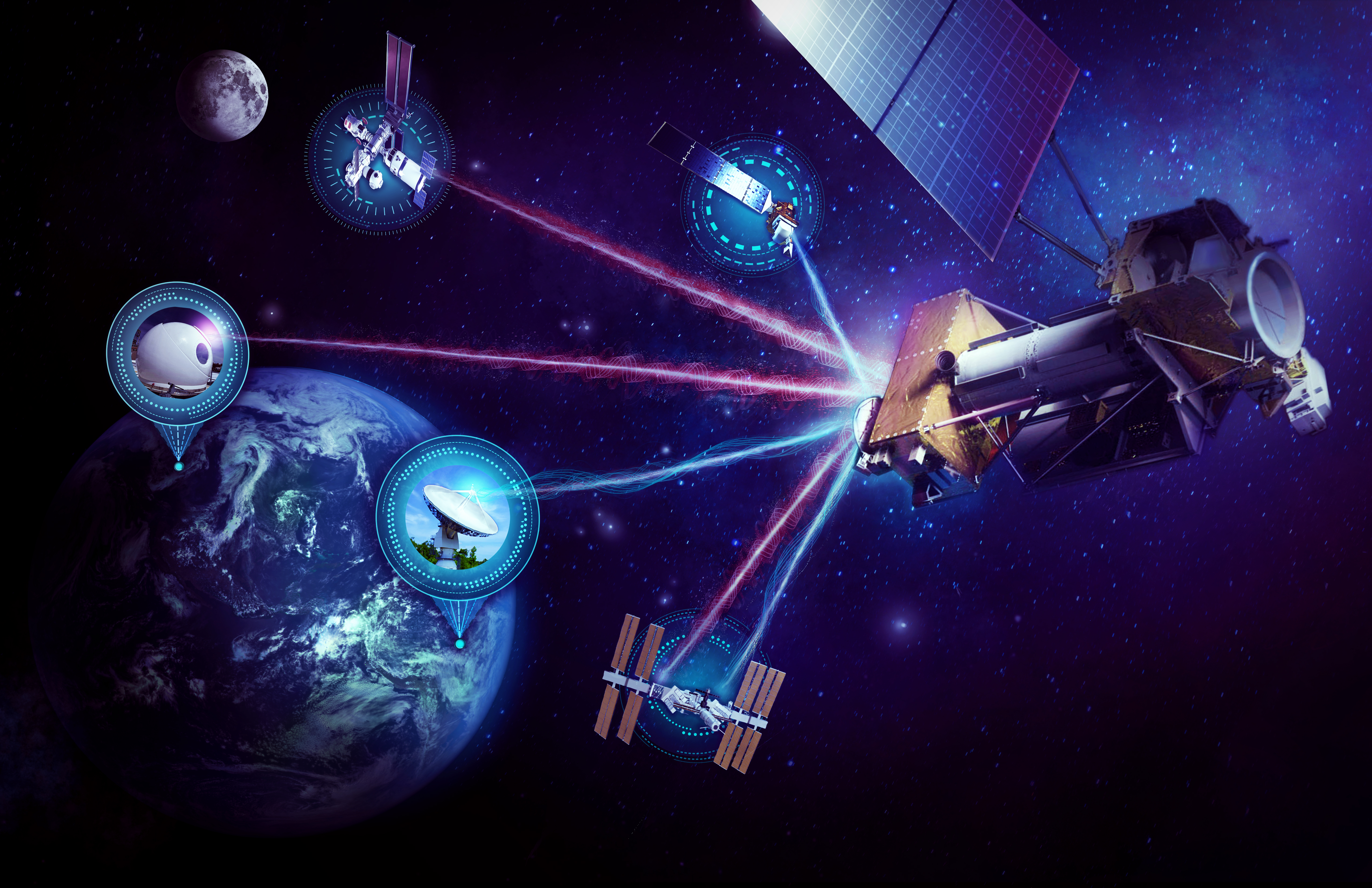
    Graphic drawing showing the Earth and the Moon with satellites in space linked by lasers to circles showing planetary habitats, satellite dishes, and the space station.
    Artistic rendering of the High-Rate Delay Tolerant Networking protocol being used on the Laser Communications Relay Demonstration to transfer radio and optical communications between Earth and space.
    Credit: NASA 

    NASA’s Glenn Research Center in Cleveland has earned 2025 R&D 100 Awards for developing a system that delivers high-speed internet for space and co-inventing technology for a new class of soft magnetic nanocrystalline materials designed to operate at extreme temperatures. This brings NASA Glenn’s total to 130 R&D 100 Awards. 

    High-Rate Delay Tolerant Networking  

    NASA Glenn’s Daniel Raible and Rachel Dudukovich led their team of engineers to create High-Rate Delay Tolerant Networking  (HDTN), a cutting-edge software solution designed to revolutionize data streaming and communication in space. HDTN enables reliable, high-speed transmission of data between space and Earth — even under the extreme conditions of space — minimizing loss and system delay. 

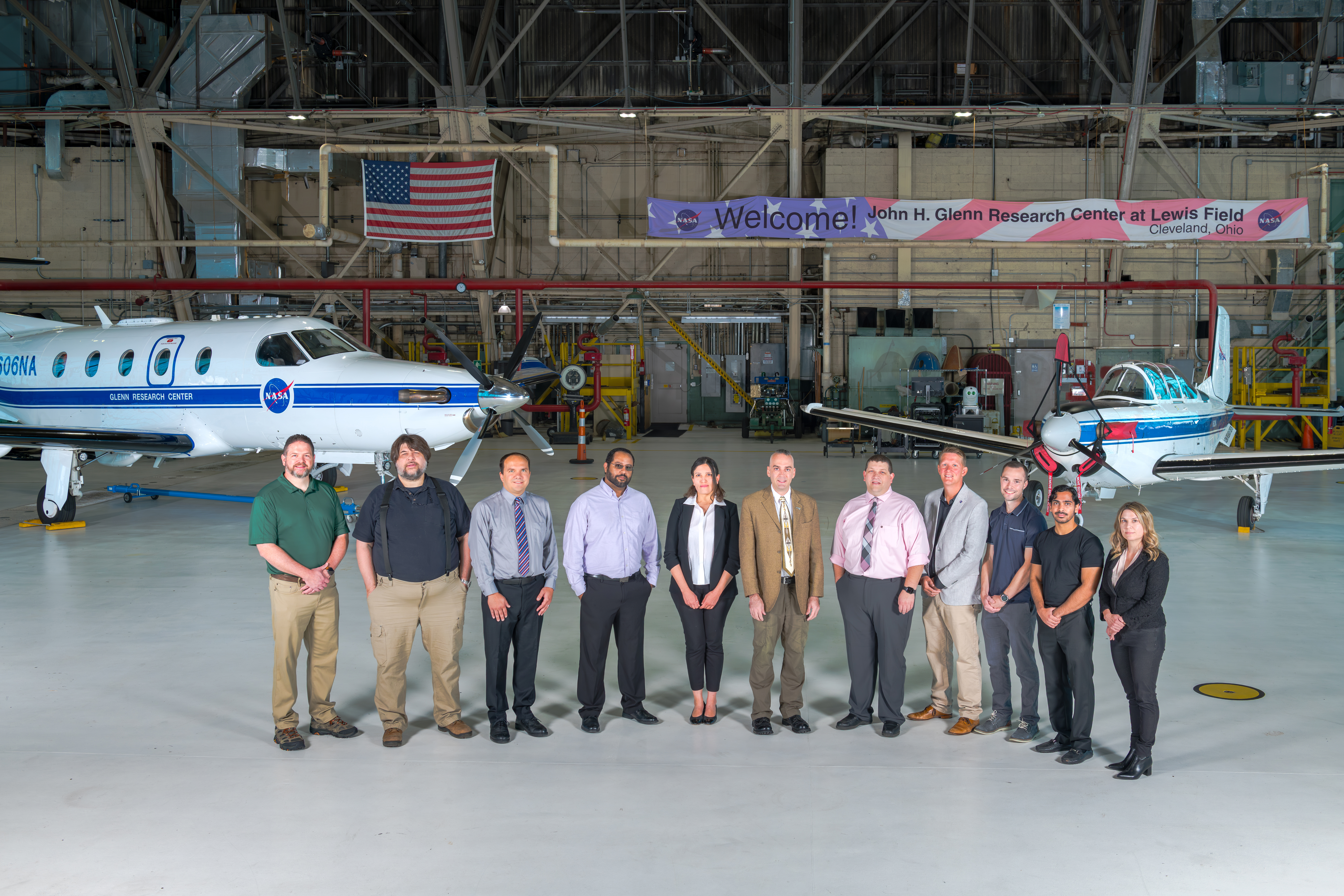
    Eleven people stand next to one another inside an airplane hangar. Two small planes sit behind them. An American flag and a banner reading “Welcome! John H. Glenn Research Center at Lewis Field, Cleveland, Ohio” are visible behind the group.
    High-Rate Delay Tolerant Networking team photo, left to right: Tad Kollar, Eric Brace, Brian Tomko, José Lombay-González, Nadia Kortas, Daniel Raible, John Nowakowski, Shaun McKeehan, Ethan Schweinsberg, Prash Choksi, and Rachel Dudukovich.
    Credit: NASA/Jef Janis 

    “The HDTN software protocol allows faster, automated, and seamless data transfer between spacecraft, even across communication systems operating on different link speeds,” Raible said. “It’s up to 10 times faster than current delay-tolerant networking (DTN).” 

    This advanced technology has far-reaching implications beyond NASA. With its open-source code, HDTN paves the way for collaboration, innovation, and adoption across the rapidly expanding commercial space industry, offering near real-time communication capabilities. 

    Looking ahead, HDTN could form the foundation of a solar system-wide internet, supporting data exchange between Earth, spacecraft, and even future missions involving human travel to the Moon and Mars. 

    VulcanAlloy 

    In a project led by the University of Pittsburgh, researchers at NASA Glenn, including Nick Bruno, Grant Feichter, Vladimir Keylin, Alex Leary, and Ron Noebe, partnered with CorePower Magnetics to develop VulcanAlloy — a breakthrough soft magnetic nanocrystalline material. 

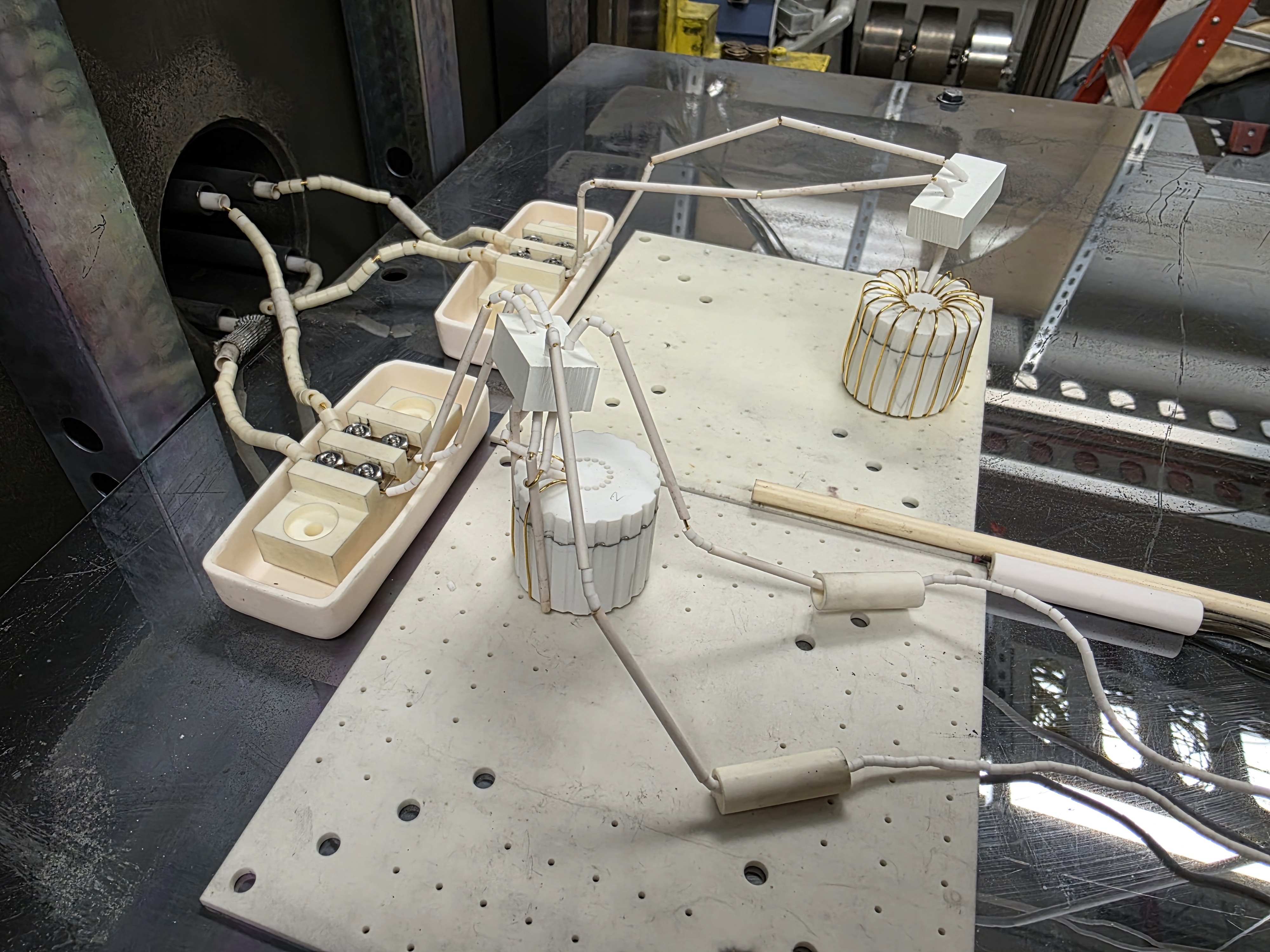
    Two packaged inductors with electrical windings sit on a large plate with wiring attached to the inductors and to the Glenn Extreme Environments Rig.
    NASA’s Glenn Research Center in Cleveland tested high-temperature inductors using VulcanAlloy technology in the NASA Glenn Extreme Environments Rig, which simulates the conditions on Venus’ surface, on May 13, 2025.
    Credit: NASA 

    VulcanAlloy, developed under NASA’s High Operating Temperature Technology Program using processing capability established by the Advanced Air Transport Technology project, operates above 500°C, far beyond the limits of conventional soft magnetic materials. Its nano-engineered structure maintains efficiency at high temperatures and frequencies. 

    With adjustable magnetic properties, it can replace multiple materials in components like inductors, transformers, motors, and sensors while reducing the need for bulky cooling systems — ideal for extreme environments. 

    Raytheon has tested VulcanAlloy cores, highlighting their potential in electrified aircraft, defense, and aerospace systems. 

    This innovation also promises major impact in electric vehicles, data centers, microgrids, and energy systems, where smaller, lighter, and more efficient components are key to advancing next-generation power electronics. 

    The R&D 100 Awards, a worldwide science and innovation competition, received entries from organizations around the world. Now in its 63rd year, this year’s judging panel included industry professionals from across the globe who evaluated breakthrough innovations in technology and science. 

  • Hubble Studies Star Ages in Colorful Galaxy

    2 min read

    Hubble Studies Star Ages in Colorful Galaxy

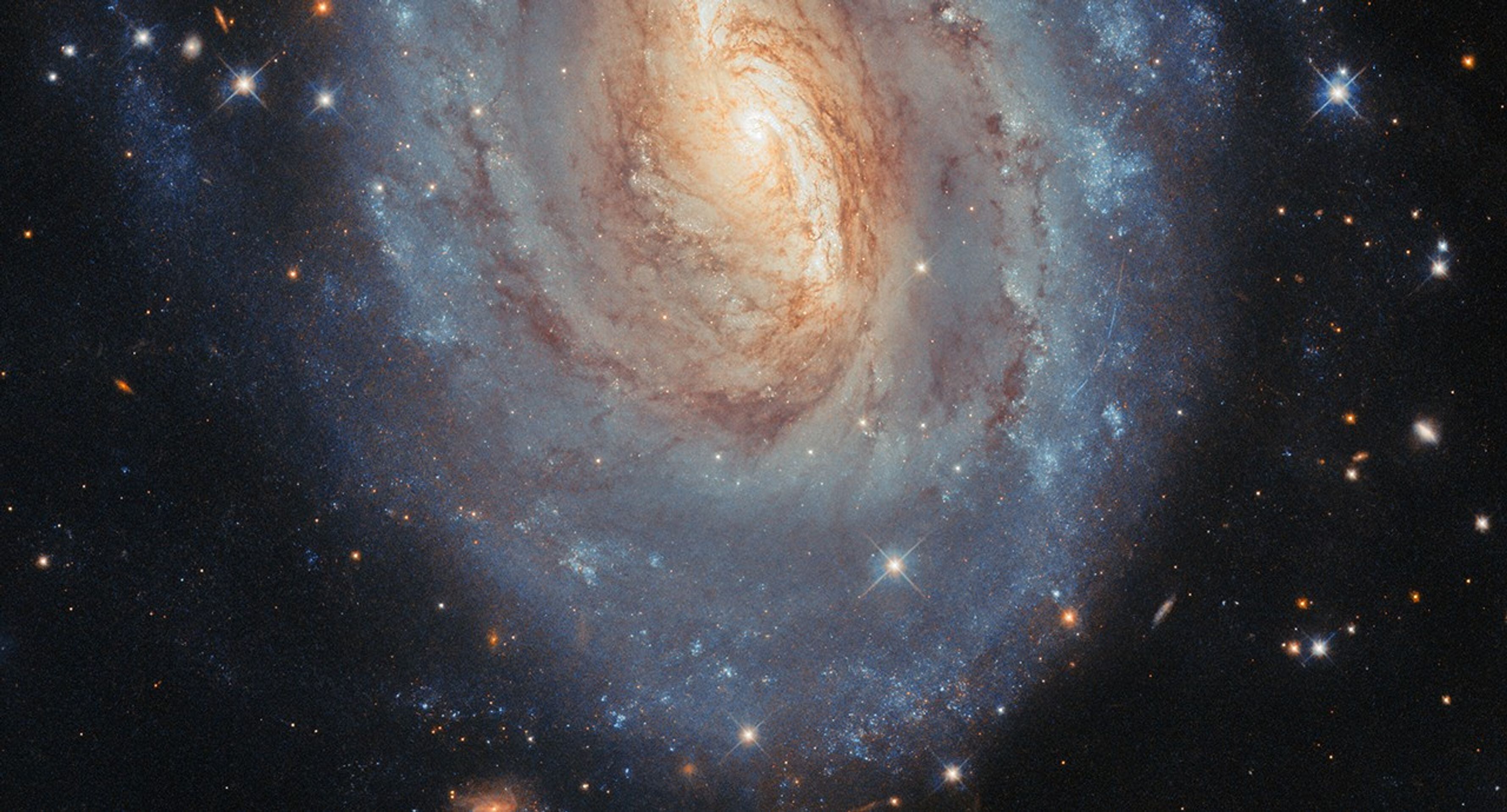
    An oval-shaped spiral galaxy. Only the center and lower half of the galaxy is in frame. Its center is primarily golden in color with a white glowing core, while its thick spiral arms are mostly blue, particularly at the outskirts; these colors merge in between. Dark lanes of dust swirl through the center, blocking some of the galaxy’s light. Stars and distant galaxies are visible around the edges on a black background.
    This NASA/ESA Hubble Space Telescope image features the spiral galaxy called NGC 6000.
    ESA/Hubble & NASA, A. Filippenko; Acknowledgment: M. H. Özsaraç

    Stars of all ages are on display in this NASA/ESA Hubble Space Telescope image of the sparkling spiral galaxy called NGC 6000, located 102 million light-years away in the constellation Scorpius.

    NGC 6000 has a glowing yellow center and glittering blue outskirts. These colors reflect differences in the average ages, masses, and temperatures of the galaxy’s stars. At the heart of the galaxy, the stars tend to be older and smaller. Less massive stars are cooler than more massive stars, and somewhat counterintuitively, cooler stars are redder, while hotter stars are bluer. Farther out along NGC 6000’s spiral arms, brilliant star clusters host young, massive stars that appear distinctly blue.

    Hubble collected the data for this image while surveying the sites of recent supernova explosions in nearby galaxies. NGC 6000 hosted two recent supernovae: SN 2007ch in 2007 and SN 2010as in 2010. Using Hubble’s sensitive detectors, researchers can discern the faint glow of supernovae years after the initial explosion. These observations help constrain the masses of supernovae progenitor stars and can indicate if they had any stellar companions.

    By zooming in to the right side of the galaxy’s disk in this image, you can see a set of four thin yellow and blue lines. These lines are an asteroid in our solar system that was drifting across Hubble’s field of view as it gazed at NGC 6000. The four lines are due to four different exposures recorded one after another with slight pauses in between. Image processors combined these four exposures to create the final image. The lines appear dashed with alternating colors because each exposure used a filter to collect very specific wavelengths of light, in this case around red and blue. Having these separate exposures of particular wavelengths is important to study and compare stars by their colors — but it also makes asteroid interlopers very obvious!

    Media Contact:

    Claire Andreoli (claire.andreoli@nasa.gov)
    NASA’s Goddard Space Flight CenterGreenbelt, MD

  • NASA, Blue Origin Launch Two Spacecraft to Study Mars, Solar Wind

    NASA’s ESCAPADE (Escape and Plasma Acceleration and Dynamics Explorers) mission launched at 3:55 p.m. EST atop a Blue Origin New Glenn rocket at Launch Complex 36 at Cape Canaveral Space Force Station in Florida.
    Credit: Blue Origin

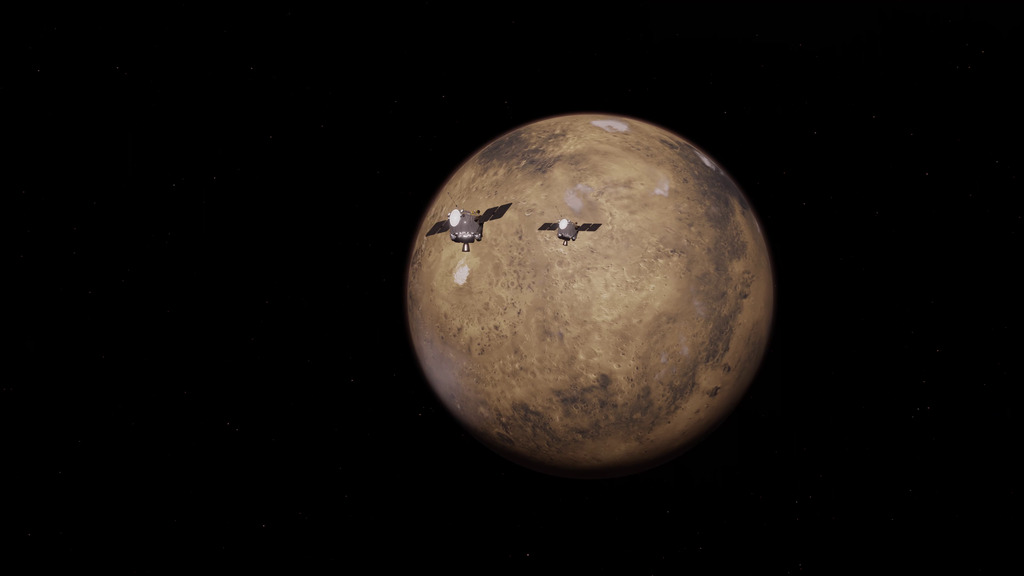
    A pair of NASA spacecraft ultimately destined for Mars will study how its magnetic environment is impacted by the Sun. The mission also will help the agency prepare for future human exploration of Mars.

    NASA’s ESCAPADE (Escape and Plasma Acceleration and Dynamics Explorers) spacecraft launched at 3:55 p.m. EST, Thursday, aboard a Blue Origin New Glenn rocket from Launch Complex 36 at Cape Canaveral Space Force Station in Florida.

    “Congratulations to Blue Origin, Rocket Lab, UC Berkeley, and all our partners on the successful launch of ESCAPADE. This heliophysics mission will help reveal how Mars became a desert planet, and how solar eruptions affect the Martian surface,” said acting NASA Administrator Sean Duffy. “Every launch of New Glenn provides data that will be essential when we launch MK-1 through Artemis. All this information will be critical to protect future NASA explorers and invaluable as we evaluate how to deliver on President Trump’s vision of planting the Stars and Stripes on Mars.”

    The twin spacecraft, built by Rocket Lab, will investigate how a never-ending, million-mile-per-hour stream of particles from the Sun, known as the solar wind, has gradually stripped away much of the Martian atmosphere, causing the planet to cool and its surface water to evaporate. The mission is led by the University of California, Berkeley.

    Ground controllers for the ESCAPADE mission established communications with both spacecraft by 10:35 p.m. EST.

    “The ESCAPADE mission is part of our strategy to understand Mars’ past and present so we can send the first astronauts there safely,” said Nicky Fox, associate administrator, Science Mission Directorate at NASA Headquarters in Washington. “Understanding Martian space weather is a top priority for future missions because it helps us protect systems, robots, and most importantly, humans, in extreme environments.”

    New Glenn also carried a space communications technology demonstration from Viasat Inc., supporting NASA’s efforts to commercialize next-generation satellite relay services for science missions. Funded by the agency’s Communications Services Project, the demonstration transmitted launch telemetry data from the rocket’s second stage to an operations center on Earth through Viasat’s geostationary satellite network.

    Blazing new trails

    Recent solar activity, which triggered widespread auroras on Earth, caused a slight delay in launch to prevent solar storms from negatively impacting post-launch spacecraft commissioning. When ESCAPADE arrives at Mars, it will study present-day effects of the solar wind and solar storms on the Red Planet in real time. This will provide insights about Martian space weather and help NASA better understand the conditions astronauts will face when they reach Mars.

    “The ESCAPADE spacecraft are now about to embark on a unique journey to Mars never traversed by any other mission,” said Alan Zide, ESCAPADE program executive at NASA Headquarters.

    Rather than heading directly to Mars, the twin spacecraft will first head to a location in space a million miles from Earth called Lagrange point 2. Right now, Earth and Mars are on opposite sides of the Sun, which makes it harder to travel from one planet to the other. In November 2026, when Earth and Mars are closely aligned in their orbits, the ESCAPADE spacecraft will loop back to Earth and use Earth’s gravity to slingshot themselves toward Mars.

    In the past, Mars missions have waited to launch during a brief window of time when Earth and Mars are aligned, which happens roughly every two years. However, with the type of trajectory ESCAPADE is using, future missions could launch nearly anytime and wait in space, queueing up for their interplanetary departure, until the two planets are in position.

    This original “Earth-proximity” or “loiter” orbit also will make ESCAPADE the first mission to ever pass through a distant region of Earth’s magnetotail, part of our planet’s magnetic field that gets stretched out away from the Sun by the solar wind.

    Studying Mars in stereo

    After a 10-month cruise, ESCAPADE is expected to arrive at Mars in September 2027, becoming the first coordinated dual-spacecraft mission to enter orbit around another planet.

    Over several months, the two spacecraft will arrange themselves in their initial science formation, in which the twin spacecraft will follow each other in the same “string-of-pearls” orbit, passing through the same areas in quick succession to investigate for the first time how space weather conditions vary on short timescales. This science campaign will begin in June 2028.

    Six months later, both spacecraft will shift into different orbits, with one traveling farther from Mars and the other staying closer to it. Planned to last for five months, this second formation aims to study the solar wind and Mars’ upper atmosphere simultaneously, allowing scientists to investigate how the planet responds to the solar wind in real time.

    In addition, ESCAPADE will provide more information about Mars’ ionosphere — a part of the upper atmosphere that future astronauts will rely on to send radio and navigation signals around the planet.

    The ESCAPADE mission is funded by NASA’s Heliophysics Division and is part of NASA’s Small Innovative Missions for Planetary Exploration program. NASA’s Goddard Space Flight Center in Greenbelt, Maryland, Embry-Riddle Aeronautical University, and Advanced Space support the mission. NASA’s Launch Services Program, based at Kennedy Space Center in Florida, secured the launch service with Blue Origin under the Venture-class Acquisition of Dedicated and Rideshare contract.

    To learn more about the ESCAPADE mission, visit:

    https://science.nasa.gov/mission/escapade/

    -end-

    Abbey Interrante
    Headquarters, Washington
    301-201-0124
    abbey.a.interrante@nasa.gov

    Leejay Lockhart
    Kennedy Space Center, Fla.
    321-747-8310
    leejay.lockhart@nasa.gov

  • Curiosity Blog, Sols 4702-4708: It’s Only Spooky Here on Earth Today!

    4 min read

    Curiosity Blog, Sols 4702-4708: It’s Only Spooky Here on Earth Today!

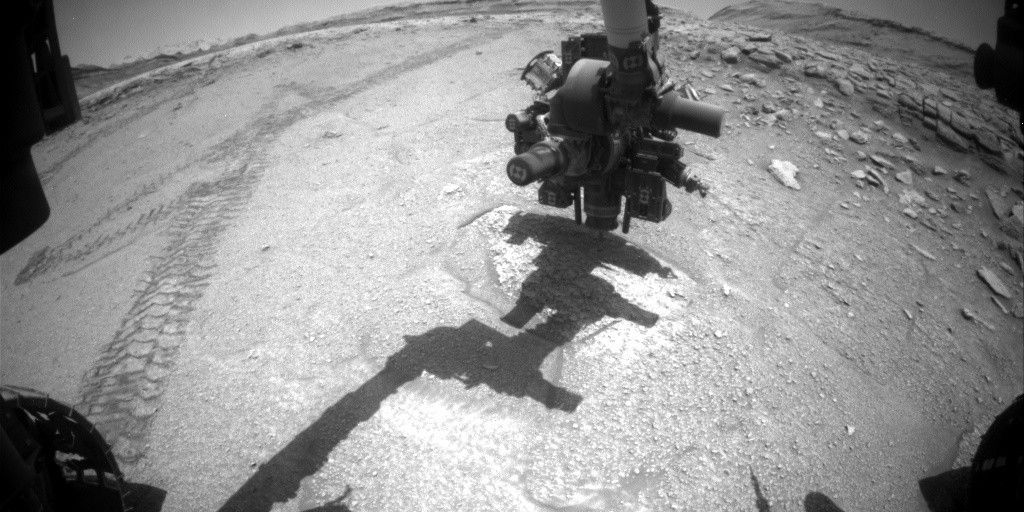
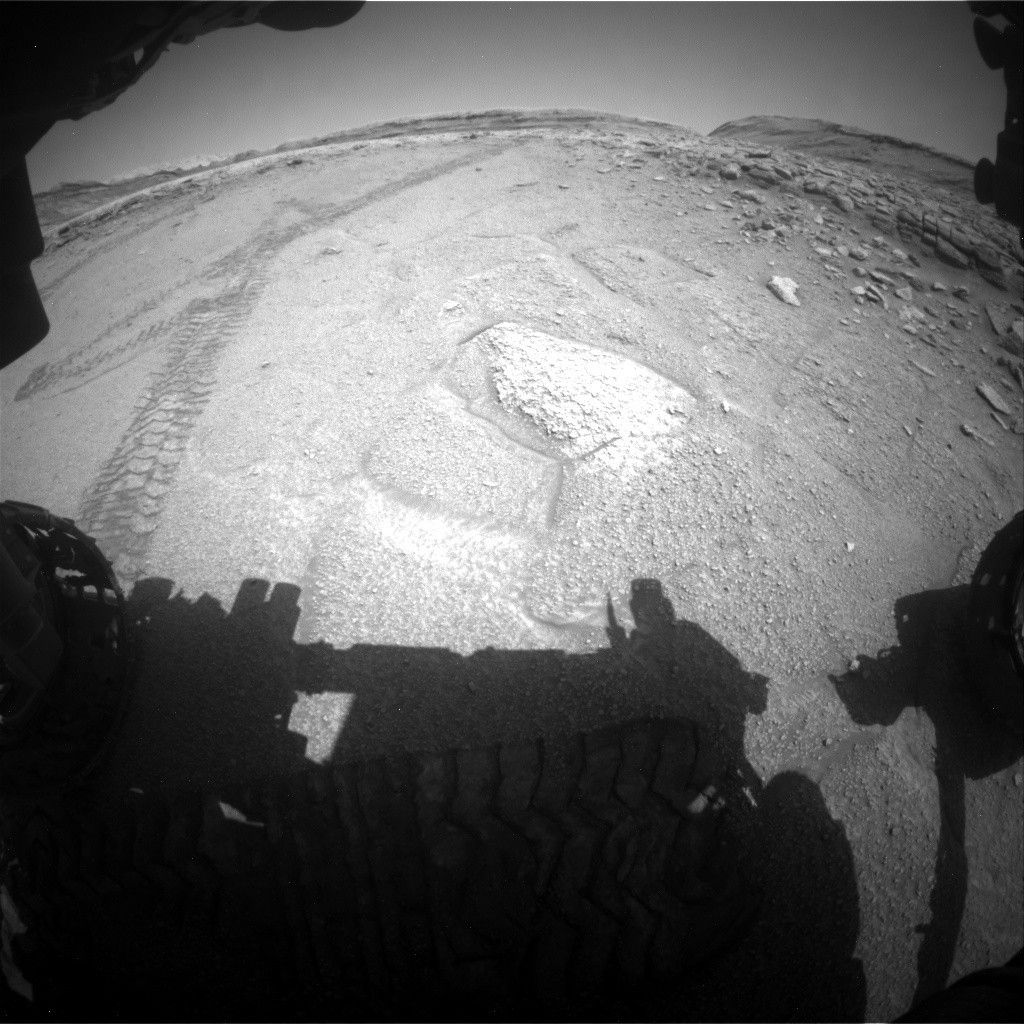
    A wide-angle, grayscale photo from the Mars surface shows mostly flat, medium gray, slightly rough terrain ahead of the rover, with a lighter-toned indentation in the round directly in front of it. In the distance at the upper right of the image, the ground becomes much more uneven and rocky, with a mesa rising from the ground on the horizon beyond that. Parts of the rover are visible, but dark and shadowed. Rover tracks are also visible, zig-zagging on the ground along the left edge of the image. The end of the rover’s robotic arm, with its fist-like collection of instruments, is poised just above the lighter-colored indentation in the ground, and its shadow runs on the ground back to the rover body at the bottom of the frame.
    NASA’s Mars rover Curiosity acquired this image at the start of the drilling activity at the “Valle de la Luna” site, “caught in the act” as this image was taken on Oct. 19, 2025. Curiosity used its Front Hazard Avoidance Camera (Front Hazcam) on Sol 4693, or Martian day 4,693 of the Mars Science Laboratory mission, at 01:54:37 UTC.
    NASA/JPL-Caltech

    By Susanne P. Schwenzer, Professor of Planetary Mineralogy at The Open University, U.K.

    Earth planning date: Friday, Oct. 31, 2025

    I am writing this blog and it’s still daytime — and I am looking forward to accompanying one of my favorite kids to trick-and-treating afterwards. That’s a new feeling for me because I am usually in the U.K., which means my Curiosity shifts start in the late afternoon when everyone else finishes working. But for now, I am in the U.S. (Houston, Texas), and it’s daytime, which is a lovely change, especially today as I don’t have to hide from trick-and-treaters’ interruptions but instead can give out all the candy they can possibly eat! Looking forward to that… but before, let’s see what Curiosity was up to this week!

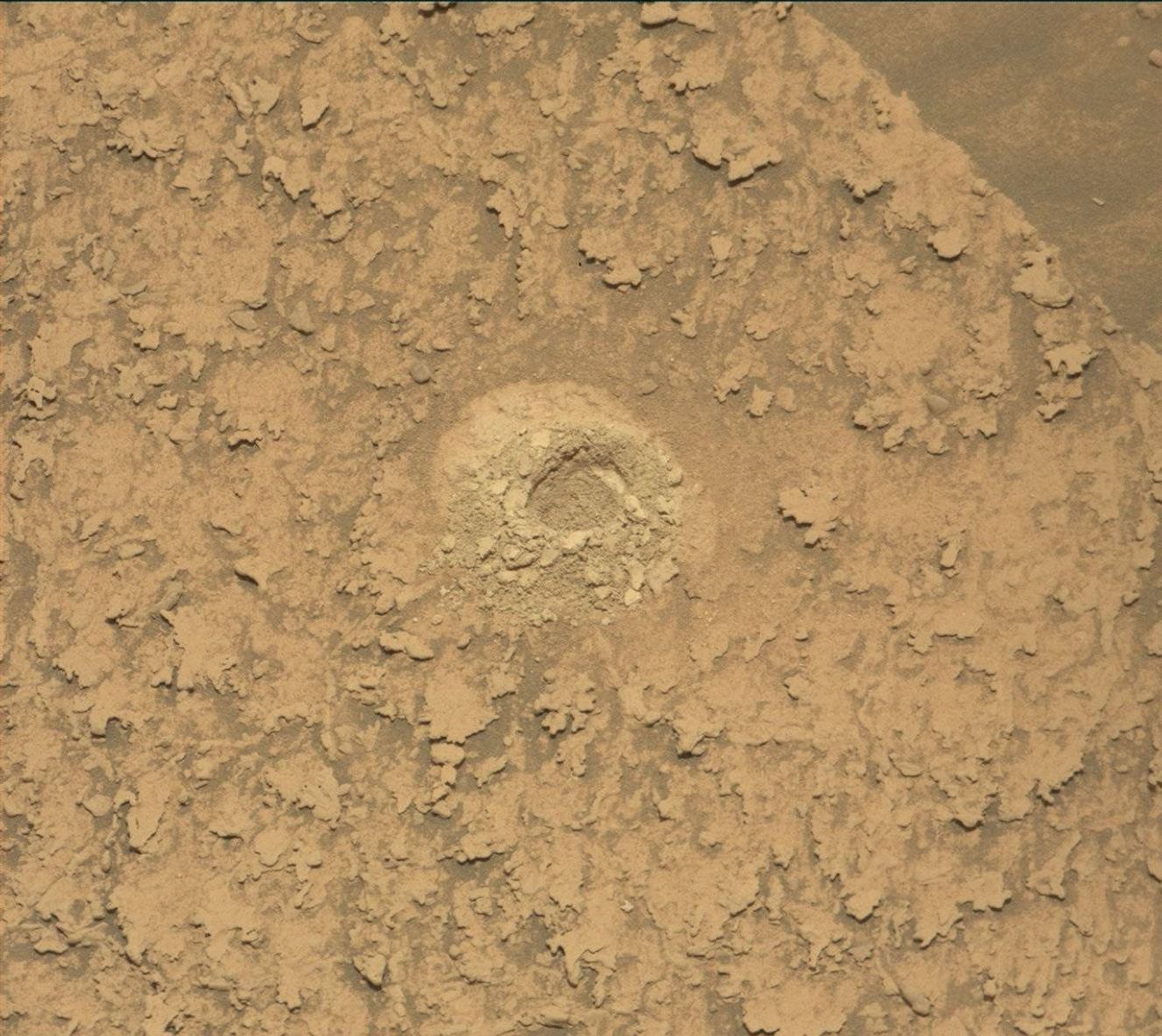
    You’ll have seen the blog by my colleague Bill, “Searching for Answers at Monte Grande,” about our analysis of the “Valle de la Luna” sample with CheMin and SAM EGA. This week we were continuing the SAM analysis of the 44th drilled sample, which always takes a lot of power, so that leaves less room for other investigations. Hence, you might notice that there were fewer ChemCam and Mastcam activities. The rover also did not drive while sample is still in the turret ready for delivery of the next SAM activities. Curiosity has now completed the deliveries to CheMin and SAM, though, and the last action in Friday’s plan was to clean out the remaining sample from the drill in preparation for driving away here in Monday’s plan. 

    In Monday’s plan we’ll reposition the rover to get a very good look at the potential next drill targets on the ridge. We’ve been able to scout them already in previous images and have a few candidates, but decision-making will require images from Monday’s parking position, since we are currently parked in a hollow and cannot really see what’s up on the ridge.

    That said, being stationary has always been a golden opportunity for looking at wind action, and this week was no difference as Mastcam looked at the drill fines several times over the time we were stationary, to ascertain the safety for MAHLI to approach — and of course to use those images for atmospheric science, too. In addition, Mastcam took the opportunity to get comprehensive imaging of the entire area. There are several mosaics that document the near-field, for example at target “Nazareth.” In the mid- and far-field distances, Mastcam assembled a large mosaic on “Monte Grande” and “Ticaco” to document the different rocks in the surrounding ridge walls and wider afield. There are so many interesting textures and alteration features, alongside troughs and fractures, that the team will have a fun time analyzing them all in great detail individually, as well as their relationships to each other.  

    ChemCam has investigated the Valle de la Luna drill hole and tailings as per the usual cadence of post-drilling activities, and in addition investigated target Nazareth to understand how the block that Curiosity drilled might vary chemically. Another ChemCam target was “Pachica,” as the team observed many nodules in this target and we are interested in their chemical variability and “Palpana,” a more smooth block. Further investigations of the Valle de la Luna drill hole with ChemCam are targets “Anapia” and “Bandara” to further investigate the chemical diversity of the drill target block.

    ChemCam Remote Micro Imager (RMI) observations were also taken in the near-field and farther away. In the near-field, RMI images are documenting further details on the Valle de la Luna drill hole and its tailings, while further afield the Monte Grande Wall is one of the RMI targets alongside with other details in the boxwork ridges around us. On Friday, the RMI was pointed far uphill to continue imaging the yardang unit, which is one of our next goals in the longer term future.

    In addition to all the drill activities and rock investigations, the atmosphere received attention too. We have the usual cadence of environmental investigations, building our long-term pressure, temperature, and humidity record of Mars; and we observe the atmospheric opacity, dust-devil activities, and clouds. Of course, we are all looking forward to next week, when we will decide on the second drill target in this area, this time on the ridge. Let’s see what block will be looking best, both from a science and an engineering point of view – we’ve got a short list of candidates; the detailed images are for Monday’s plan. Meanwhile, we’ll enjoy trick-and-treating here on Earth and our weekends while Curiosity finishes the drill activities at Valle de la Luna.

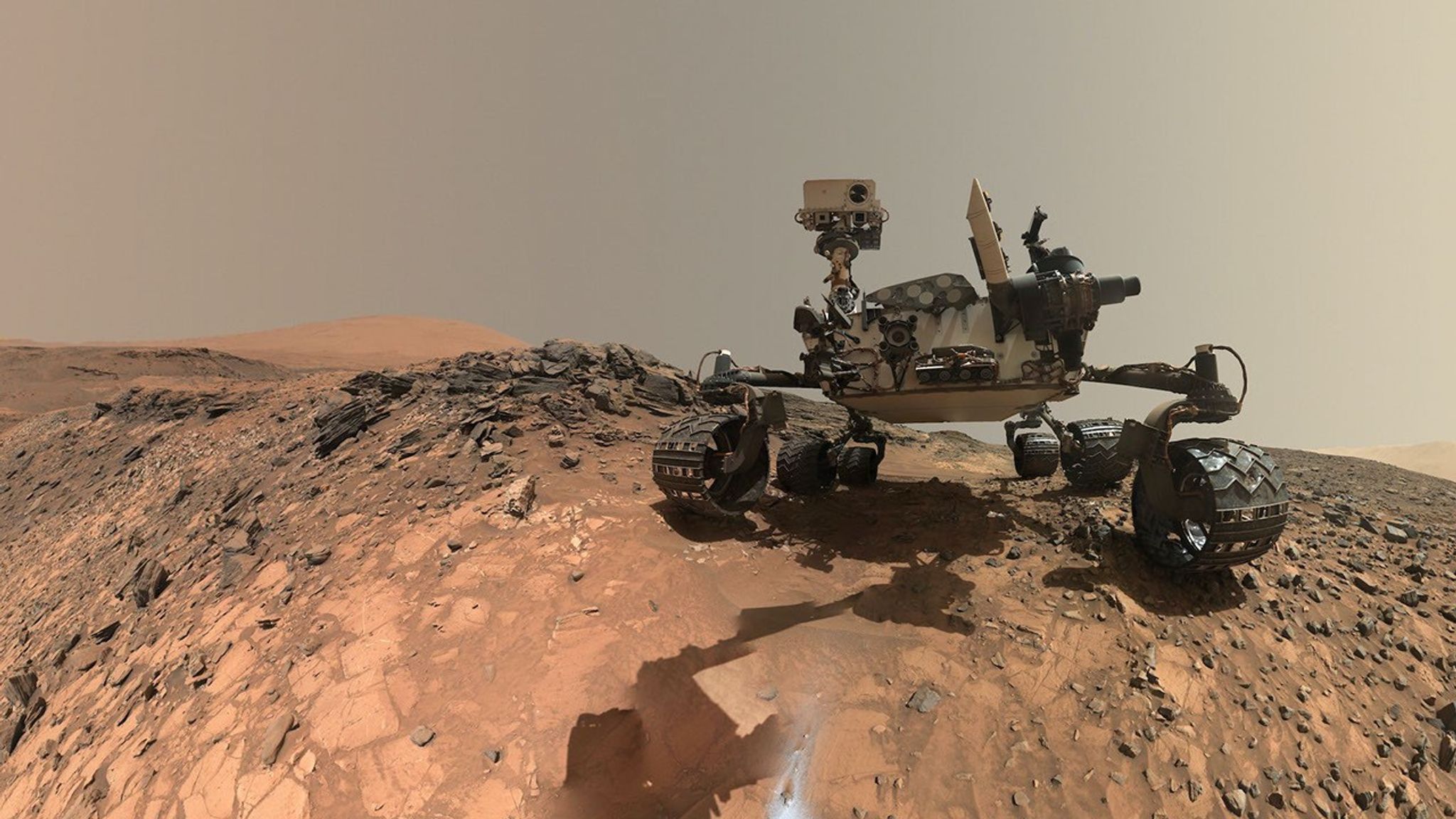
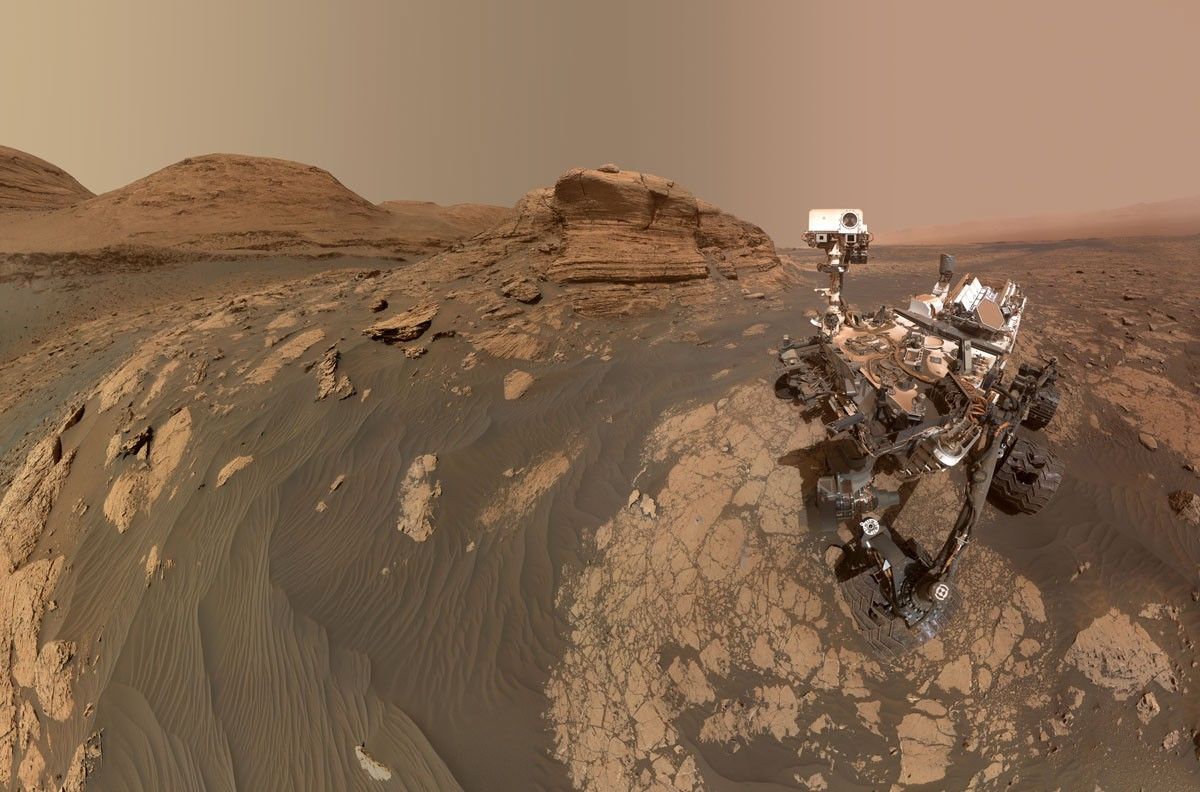
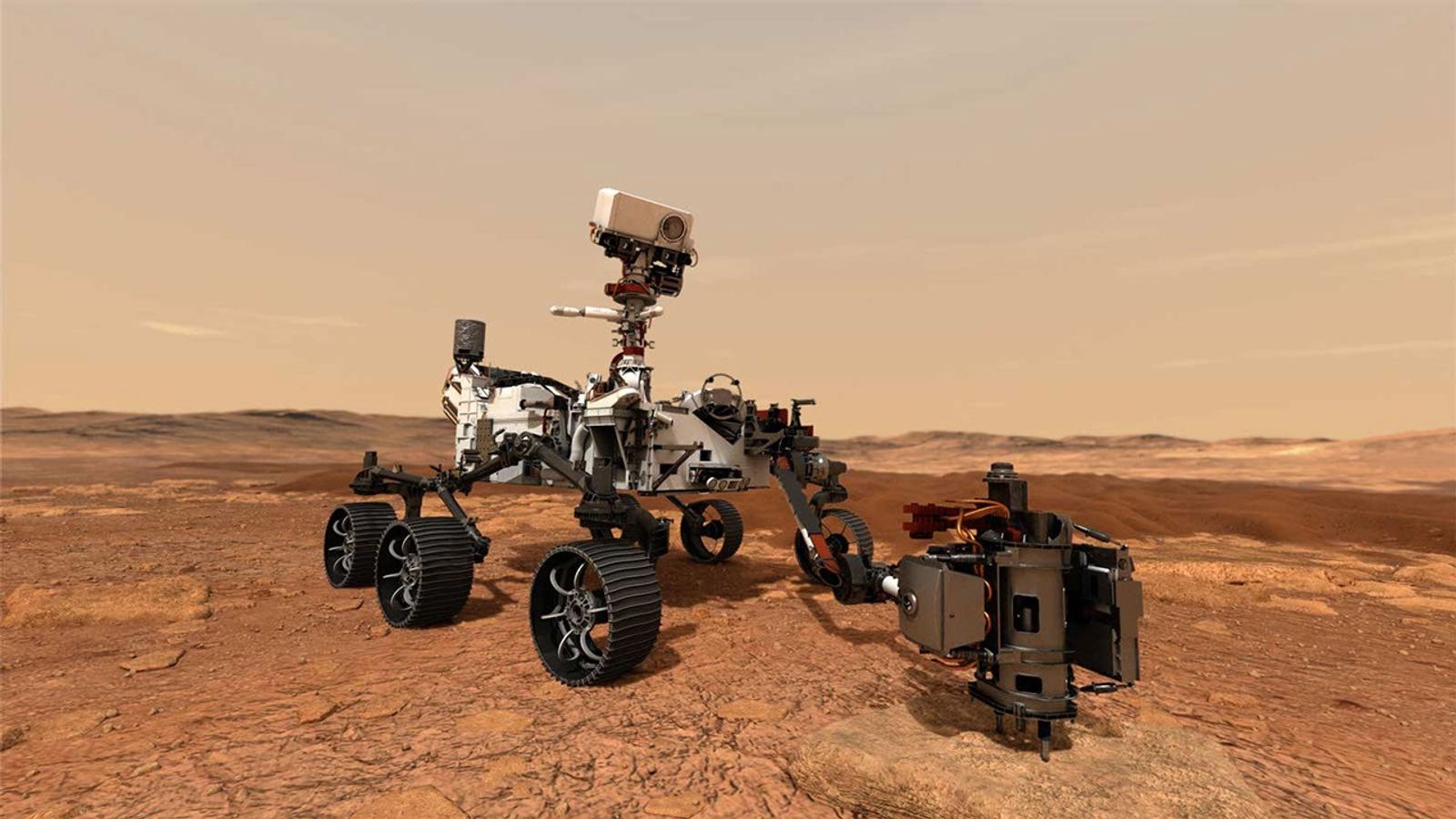
    A rover sits on the hilly, orange Martian surface beneath a flat grey sky, surrounded by chunks of rock.
    NASA’s Mars rover Curiosity at the base of Mount Sharp
    NASA/JPL-Caltech/MSSS

    Details

    Last Updated

    Nov 13, 2025

    Related Terms

  • A Stranger in Our Midst?

    Perseverance Encounters a Possible Meteorite

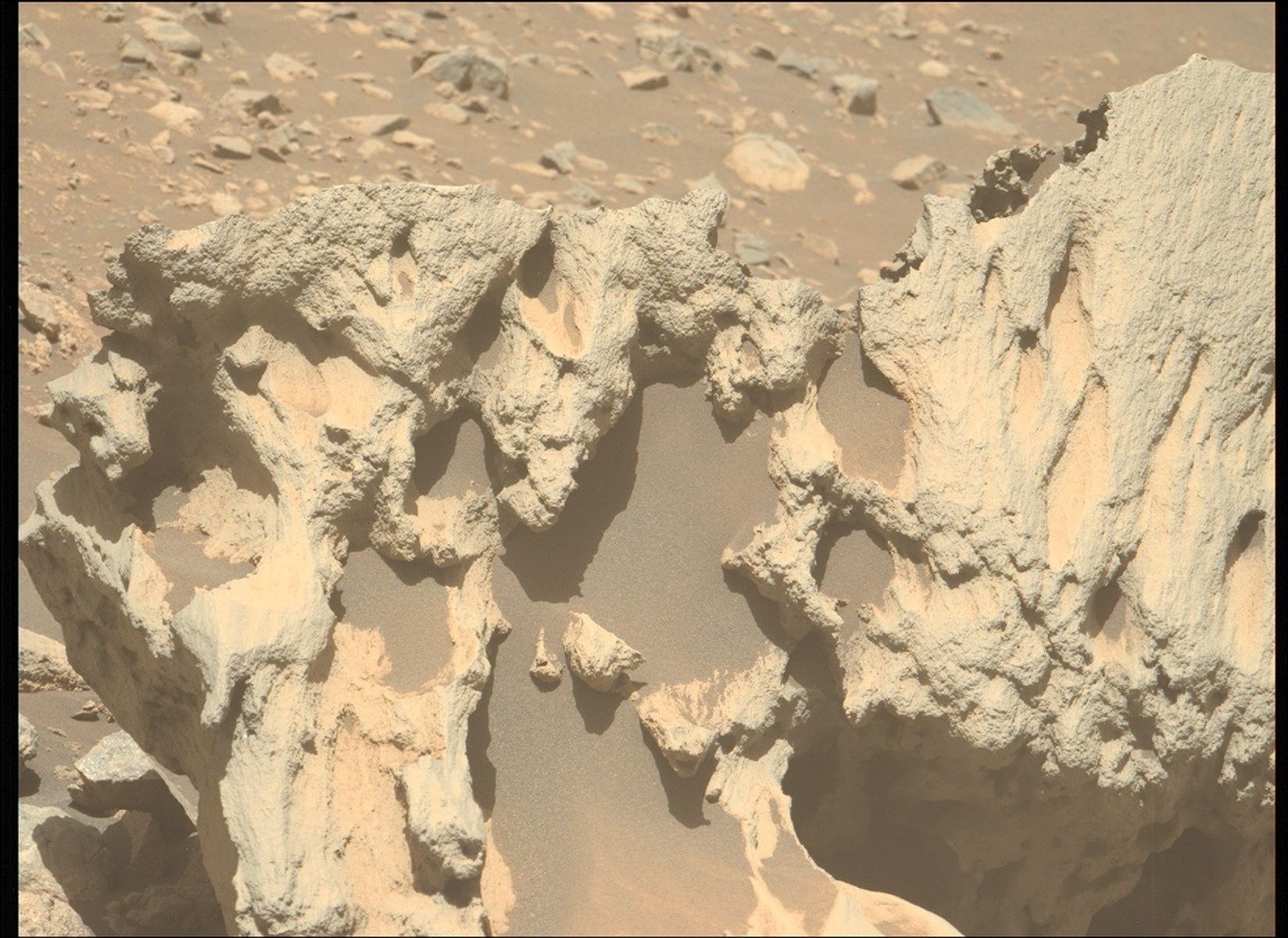
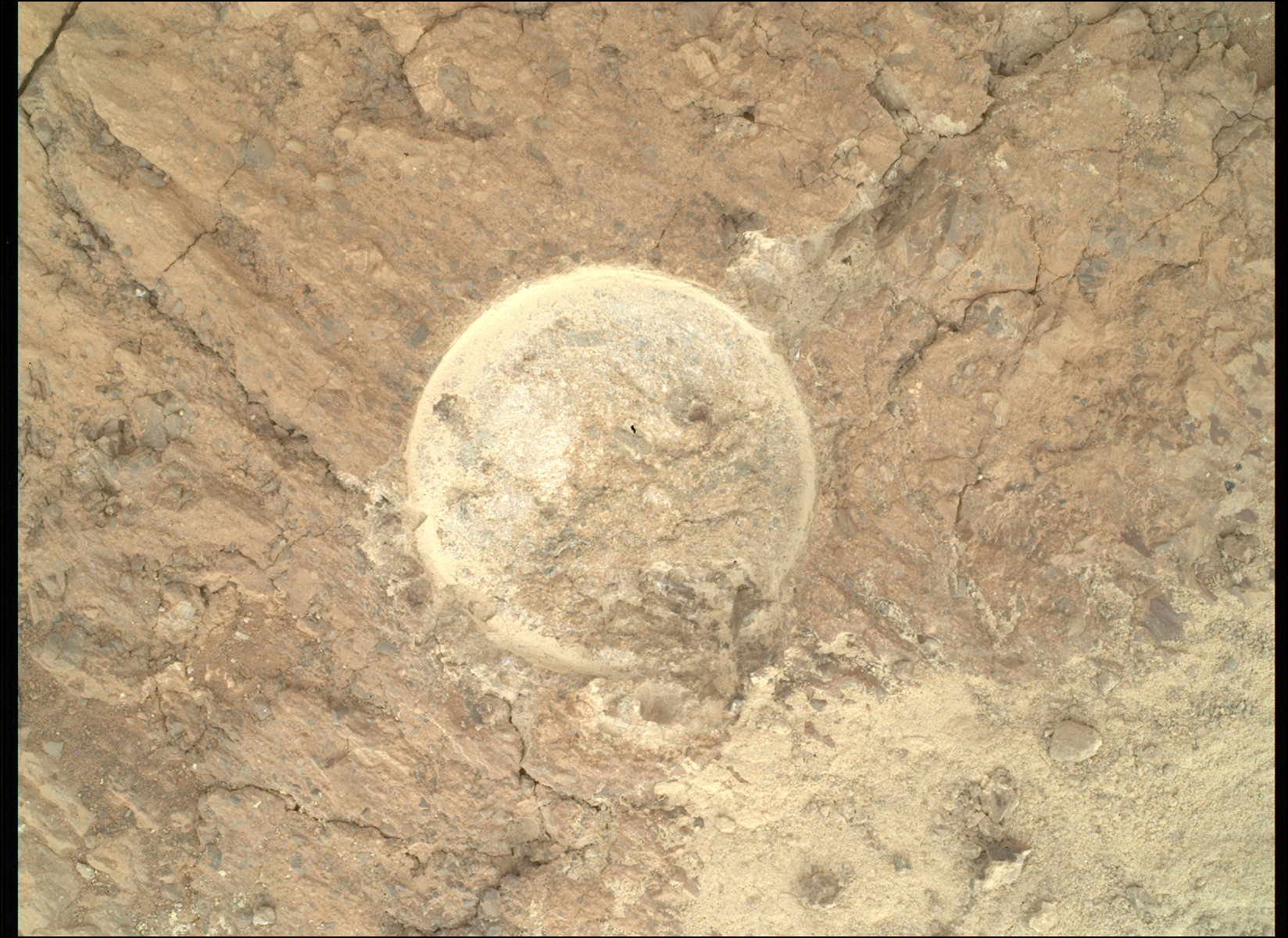
    A color photo from the Martian surface shows a close-up of a large tan and pale orange rock pockmarked with numerous large holes, which are mostly filled with dark, rust-colored sand. In the background, pale orange, very rocky terrain is visible in the top third of the image.
    NASA’s Mars Perseverance rover acquired this close-up view showing the cavernous weathering texture of an unusually shaped rock, “Phippsaksla,” targeted for investigation based on its appearance that differed from the low-lying surrounding rocks. Study showed that it is high in iron and nickel content, suggesting that it might be a meteorite. Perseverance captured the image using its Left Mastcam-Z camera, one of a pair of cameras located high on the rover’s mast, on Sept. 19, 2025 — Sol 1629, or Martian day 1,629 of the Mars 2020 mission — at the local mean solar time of 12:11:25.
    NASA/JPL-Caltech/ASU

    Written by Candice Bedford, Research Scientist at Purdue University

    Oct. 1, 2025

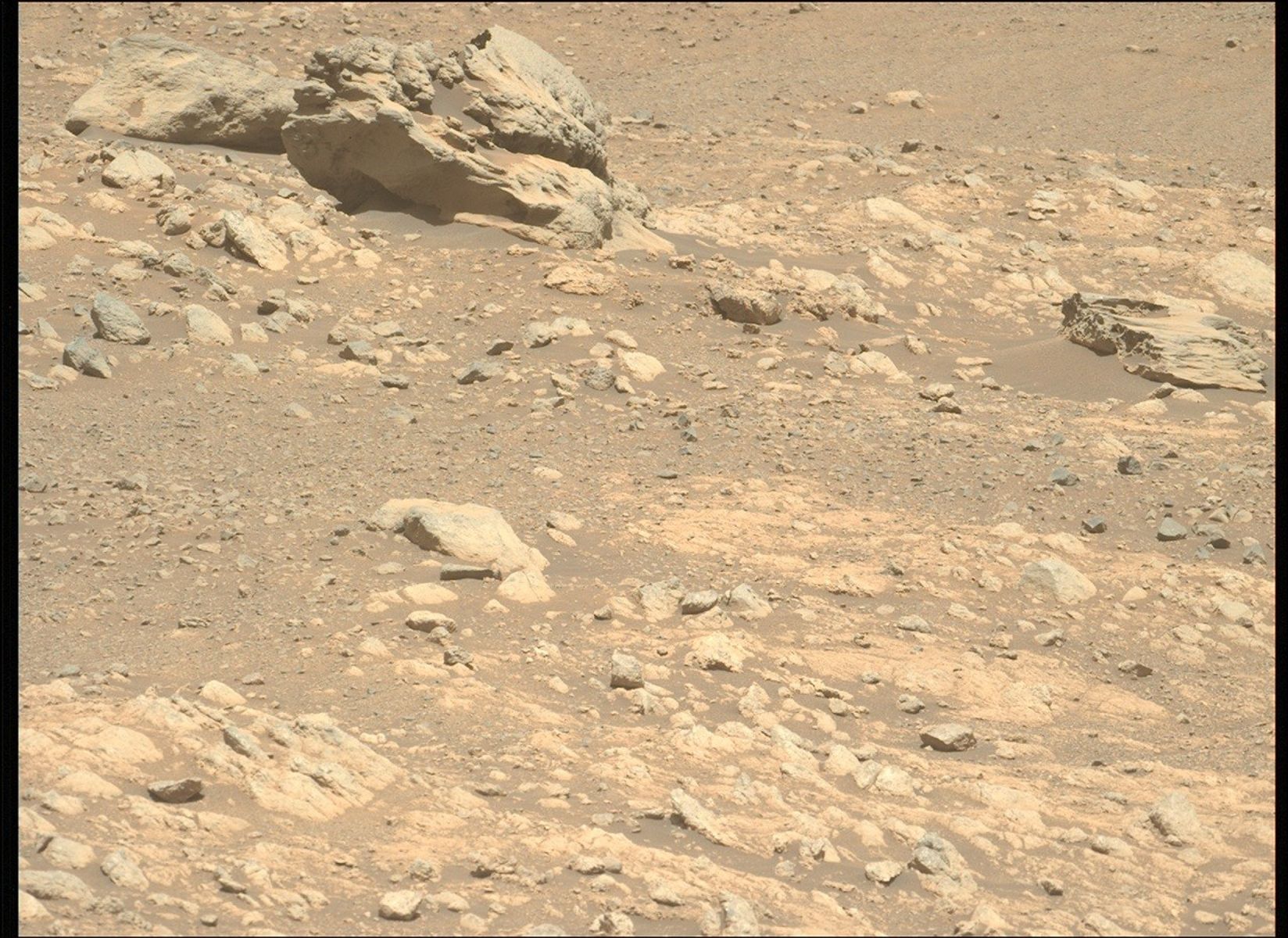
    During the rover’s recent investigation of the bedrock at “Vernodden,” Perseverance encountered an unusually shaped rock about 80 centimeters across (about 31 inches) called “Phippsaksla.” This rock was identified as a target of interest based on its sculpted, high-standing appearance that differed from that of the low-lying, flat and fragmented surrounding rocks. Last week, Perseverance targeted Phippsaksla with the SuperCam instrument revealing that it is high in iron and nickel. This element combination is usually associated with iron-nickel meteorites formed in the core of large asteroids, suggesting that this rock formed elsewhere in the solar system. 

    A color photo from the Martian surface shows pale orange, very rocky terrain in the foreground, with a large, pockmarked rock in the background at upper left.
    NASA’s Mars Perseverance rover acquired this image of the unusually shaped rock, “Phippsaksla,” in the distance at upper left, which is suspected to be a meteorite because of its high iron and nickel content. Perseverance captured the image using its Left Mastcam-Z camera, one of a pair of cameras located high on the rover’s mast, on Sept. 2, 2025 — Sol 1612, or Martian day 1,612 of the Mars 2020 mission — at the local mean solar time of 12:45:41.
    NASA/JPL-Caltech/ASU

    This is not the first time a rover has encountered an exotic rock on Mars. The Curiosity rover has identified many iron-nickel meteorites across its traverse in Gale crater including the 1-meter wide (about 39 inches) “Lebanon” meteorite back in 2014 and the “Cacao” meteorite spotted in 2023. Both Mars Exploration Rovers, Opportunity and Spirit, also found iron-nickel meteorites during their missions. As such, it has been somewhat unexpected that Perseverance had not seen iron-nickel meteorites within Jezero crater, particularly given its similar age to Gale crater and number of smaller impact craters suggesting that meteorites did fall on the crater floor, delta, and crater rim throughout time. Now, on the outside of the crater, atop bedrock known to have formed from impact processes in the past, Perseverance has potentially found one. Due to the exotic composition of this rock, more investigation by the team needs to be done to confirm its status as a meteorite. But if this rock is deemed to be a meteorite Perseverance can at long last add itself to the list of Mars rovers who have investigated the fragments of rocky visitors to Mars. 

  • NASA Patent Remix Challenge

    NASA’s Technology Transfer Office invites entrepreneurs, innovators, and creative thinkers to apply NASA’s patented technologies to practical applications. Participants will select an existing NASA patent and develop a business or product concept that will be evaluated based on value proposition, business model viability, development feasibility, and quality of presentation. Entries should clearly demonstrate creativity, feasibility, and a compelling rationale for how the concept could create real-world impact.

    Award: $13,000 in total prizes

    Open Date: October 6, 2025

    Close Date: December 15, 2025

    For more information, visit: https://nasapatentremixchallenge.org/

  • October’s Night Sky Notes: Let’s Go, LIGO!

    4 Min Read

    October’s Night Sky Notes: Let’s Go, LIGO!

    An artist's impression of gravitational waves generated by binary neutron stars. Near the upper right there are two aqua spheres and radiating out in a circular funnel pattern is an aqua blue wave with a faint grid pattern underneath it all.

    An artist’s impression of gravitational waves generated by binary neutron stars.

    Credits:
    R. Hurt/Caltech-JPL

    by Kat Troche of the Astronomical Society of the Pacific

    September 2025 marks ten years since the first direct detection of gravitational waves as predicted by Albert Einstein’s 1916 theory of General Relativity. These invisible ripples in space were first directly detected by the Laser Interferometer Gravitational-Wave Observatory (LIGO). Traveling at the speed of light (~186,000 miles per second), these waves stretch and squeeze the fabric of space itself, changing the distance between objects as they pass.

    Waves In Space

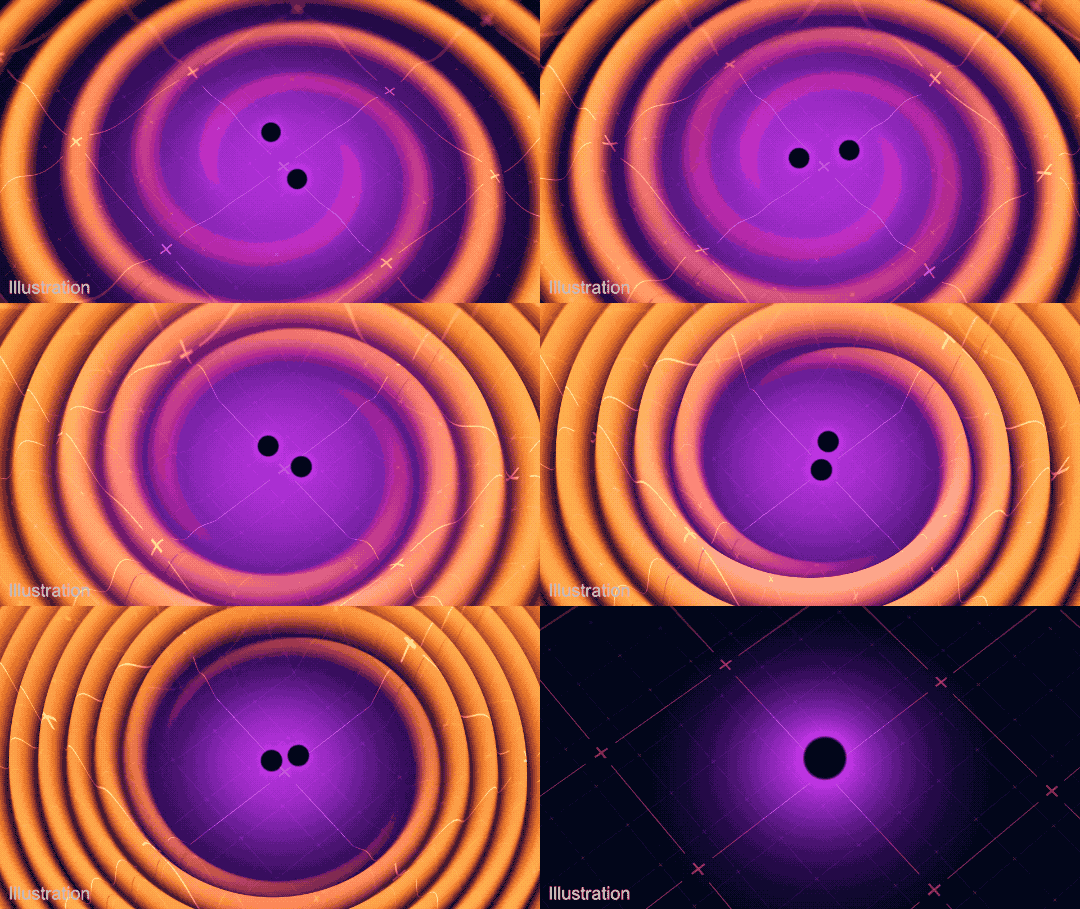
    Gravitational waves are created when massive objects accelerate in space, especially in violent events. LIGO detected the first gravitational waves when two black holes, orbiting one another, finally merged, creating ripples in space-time. But these waves are not exclusive to black holes. If a star were to go supernova, it could produce the same effect. Neutron stars can also create these waves for various reasons. While these waves are invisible to the human eye, this animation from NASA’s Science Visualization Studio shows the merger of two black holes and the waves they create in the process.

    Two black dots circle each other at the center of this animation. Gravitational waves are represented stylistically by spirals that begin as purple, trialing right behind each black hole and then swirling around as they expand off the edge of the screen. The black holes get closer and closer, while the spirals get denser and more frequent until the two black holes merge. As soon as they merge, the new spirals stop, while the existing ones expand away from the single black dot at the center. In the end there is just a single black hole on a black background with a grid, representing space-time.
    Two black holes orbit each other, generating space-time ripples called gravitational waves in this animation. As the black holes get closer, the waves increase in until they merge completely.
    NASA’s Goddard Space Flight Center Conceptual Image Lab

    How It Works

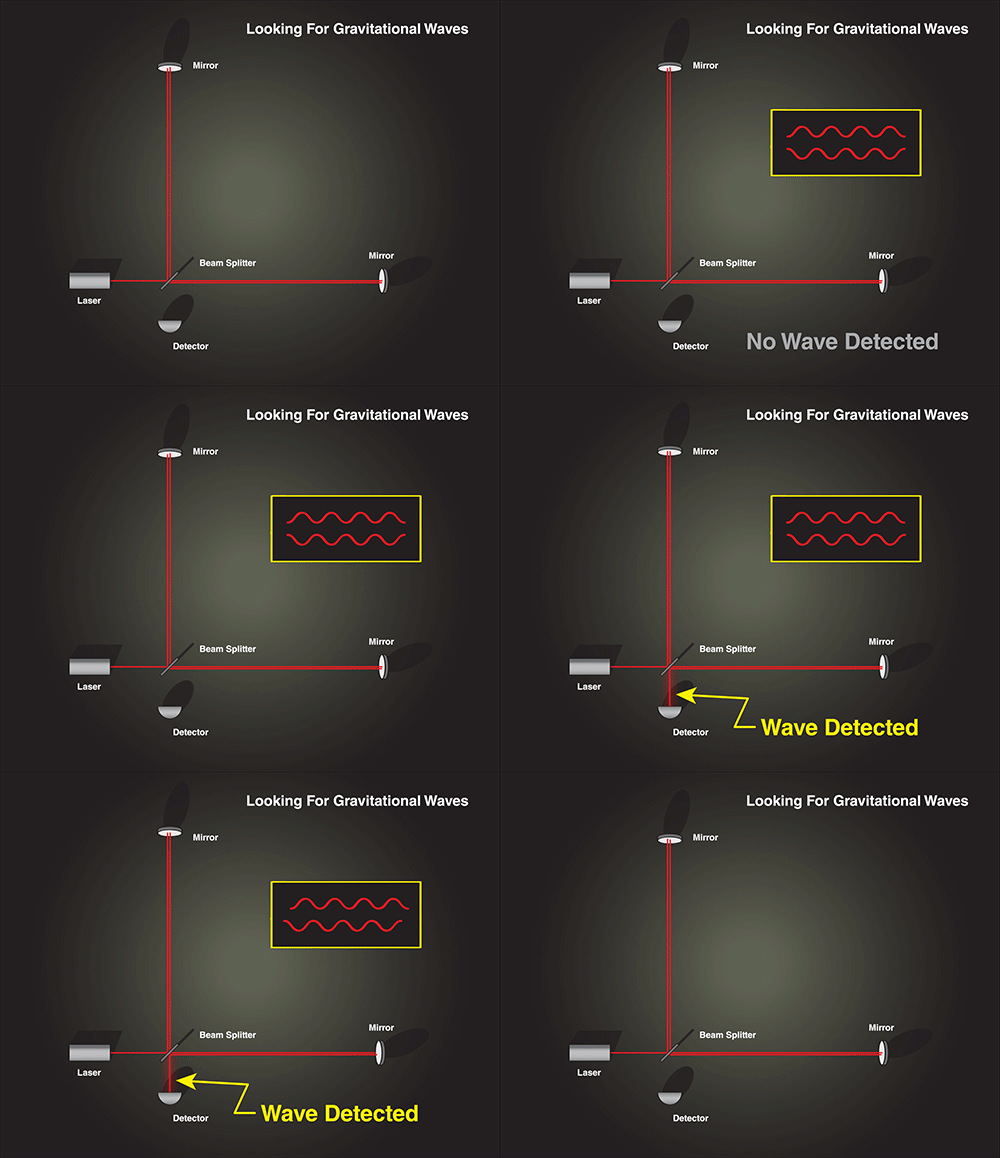
    A gravitational wave observatory, like LIGO, is built with two tunnels, each approximately 2.5 miles long, arranged in an “L” shape. At the end of each tunnel, a highly polished 40 kg mirror (about 16 inches across) is mounted; this will reflect the laser beam that is sent from the observatory. A laser beam is sent from the observatory room and split into two, with equal parts traveling down each tunnel, bouncing off the mirrors at the end. When the beams return, they are recombined. If the arm lengths are perfectly equal, the light waves cancel out in just the right way, producing darkness at the detector. But if a gravitational wave passes, it slightly stretches one arm while squeezing the other, so the returning beams no longer cancel perfectly, creating a flicker of light that reveals the wave’s presence.

    Animation of gravitational waves being detected.
    When a gravitational wave passes by Earth, it squeezes and stretches space. LIGO can detect this squeezing and stretching. Each LIGO observatory has two “arms” that are each more than 2 miles (4 kilometers) long. A passing gravitational wave causes the length of the arms to change slightly. The observatory uses lasers, mirrors, and extremely sensitive instruments to detect these tiny changes.
    NASA

    The actual detection happens at the point of recombination, when even a minuscule stretching of one arm and squeezing of the other changes how long it takes the laser beams to return. This difference produces a measurable shift in the interference pattern. To be certain that the signal is real and not local noise, both LIGO observatories — one in Washington State (LIGO Hanford) and the other in Louisiana (LIGO Livingston) — must record the same pattern within milliseconds. When they do, it’s confirmation of a gravitational wave rippling through Earth. We don’t feel these waves as they pass through our planet, but we now have a method of detecting them!

    Get Involved

    With the help of two additional gravitational-wave observatories, VIRGO and KAGRA, there have been 300 black hole mergers detected in the past decade; some of which are confirmed, while others await further study.

    While the average person may not have a laser interferometer lying around in the backyard, you can help with two projects geared toward detecting gravitational waves and the black holes that contribute to them:

    • Black Hole Hunters: Using data from the TESS satellite, you would study graphs of how the brightness of stars changes over time, looking for an effect called gravitational microlensing. This lensing effect can indicate that a massive object has passed in front of a star, such as a black hole.
    • Gravity Spy: You can help LIGO scientists with their gravitational wave research by looking for glitches that may mimic gravitational waves. By sorting out the mimics, we can train algorithms on how to detect the real thing.

    You can also use gelatin, magnetic marbles, and a small mirror for a more hands-on demonstration on how gravitational waves move through space-time with JPL’s Dropping In With Gravitational Waves activity!

  • NASA, Blue Origin Invite Media to Attend Mars Mission Launch

    A stylized illustration shows the twin ESCAPADE spacecraft entering Mars’ orbit.
    Credits: James Rattray/Rocket Lab USA

    NASA and Blue Origin are reopening media accreditation for the launch of the agency’s ESCAPADE (Escape and Plasma Acceleration and Dynamics Explorers) mission. The twin ESCAPADE spacecraft will study the solar wind’s interaction with Mars, providing insight into the planet’s real-time response to space weather and how solar activity drives atmospheric escape. This will be the second launch of Blue Origin’s New Glenn rocket.

    Media interested in covering ESCAPADE launch activities must apply for media credentials. Media who previously applied for media credentials for the ESCAPADE launch do not need to reapply.

    U.S. media and U.S. citizens representing international media must apply by 11:59 p.m. EDT on Monday, Oct. 13. Media accreditation requests should be submitted online to: https://media.ksc.nasa.gov.

    A copy of NASA’s media accreditation policy is available online. For questions about accreditation, please email: ksc-media-accreditat@mail.nasa.gov. For other mission questions, please contact NASA Kennedy’s newsroom: 321-867-2468.

    Blue Origin is targeting later this fall for the launch of New Glenn’s second mission (NG-2) from Space Launch Complex 36 at Cape Canaveral Space Force Station in Florida. Accredited media will have the opportunity to participate in prelaunch media activities and cover the launch. Once a specific launch date is targeted, NASA and Blue Origin will communicate additional details regarding the media event schedule.

    NASA will post updates on launch preparations for the twin Martian orbiters on the ESCAPADE blog.

    The ESCAPADE mission is part of the NASA Small Innovative Missions for Planetary Exploration program and is funded by the agency’s Heliophysics Division. The mission is led by the University of California, Berkeley Space Sciences Laboratory, and Rocket Lab designed the spacecraft. The agency’s Launch Services Program, based at NASA’s Kennedy Space Center in Florida, secured launch services under the VADR (Venture-class Acquisition of Dedicated and Rideshare) contract.

    To learn more about ESCAPADE, visit:

    https://science.nasa.gov/mission/escapade

    -end-

    Abbey Interrante
    Headquarters, Washington
    301-201-0124
    abbey.a.interrante@nasa.gov

    Leejay Lockhart
    Kennedy Space Center, Florida
    321-747-8310
    leejay.lockhart@nasa.gov

  • What’s Up: October 2025 Skywatching Tips from NASA

    A supermoon, and meteor showers from the Draconids and Orionids

    A supermoon takes over the sky, the Draconid meteor shower peeks through, and the Orionid meteor shower shines bright.

    Skywatching Highlights

    • Oct. 6: The October supermoon
    • Oct. 6-10: The Draconid meteor shower
    • Oct. 21: The Orionid meteor shower peaks (full duration Sept. 26 – Nov. 22)

    Transcript

    What’s Up for October? A Supermoon takes over, the Draconid meteor shower peeks through, and the Orionid meteors sparkle across the night sky.

    The evening of October 6, look up and be amazed as the full moon is bigger and brighter because – it’s a supermoon!

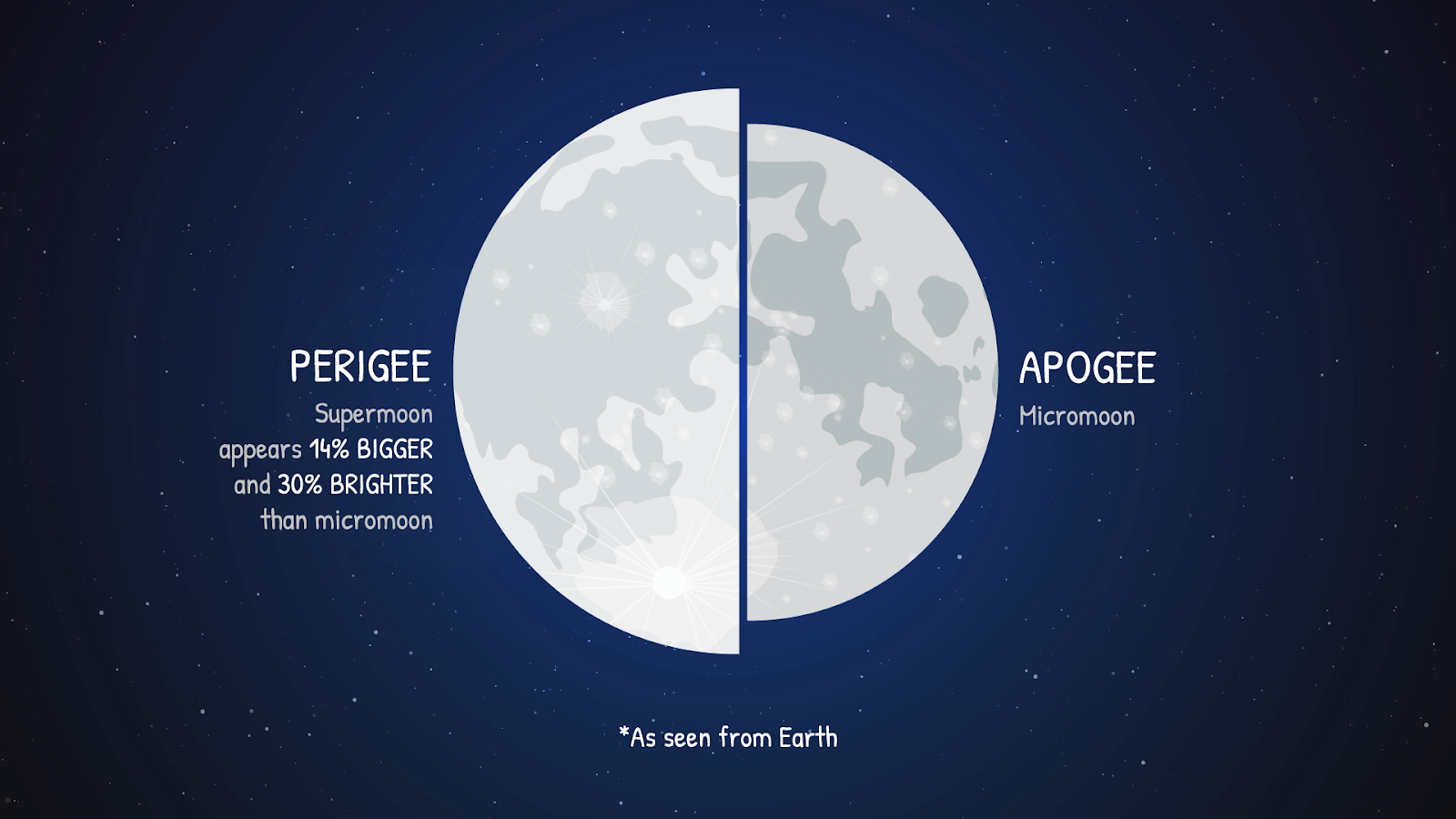
    An illustrated infographic shows two halves of a moon against a dark blue sky background. On the left-hand side, the moon is larger, representing a supermoon during perigee as seen from Earth. On the right-hand side, the moon is smaller, representing a micromoon during apogee as seen from Earth.
    Illustrated infographic showing the difference (as seen from Earth) between perigee, when a supermoon appears, and apogee, when a micromoon appears.
    NASA/JPL-Caltech

    This evening, the moon could appear to be about 30% brighter and up to 14% larger than a typical full moon. But why?

    Supermoons happen when a new moon or a full moon coincides with “perigee,” which is when the moon is at its closest to Earth all month.

    So this is an exceptionally close full moon! Which explains its spectacular appearance.

    And what timing – while the supermoon appears on October 6th, just a couple of days before on October 4th is “International Observe the Moon Night”!

    It’s an annual, worldwide event when Moon enthusiasts come together to enjoy our natural satellite.You can attend or host a moon-viewing party, or simply observe the Moon from wherever you are.

    So look up, and celebrate the moon along with people all around the world!

    The supermoon will light up the sky on October 6th, but if you luck into some dark sky between October 6th and 10th, you might witness the first of two October meteor showers – the Draconids!

    The Draconid meteor shower comes from debris trailing the comet 21P Giacobini-Zinner burning up in Earth’s atmosphere

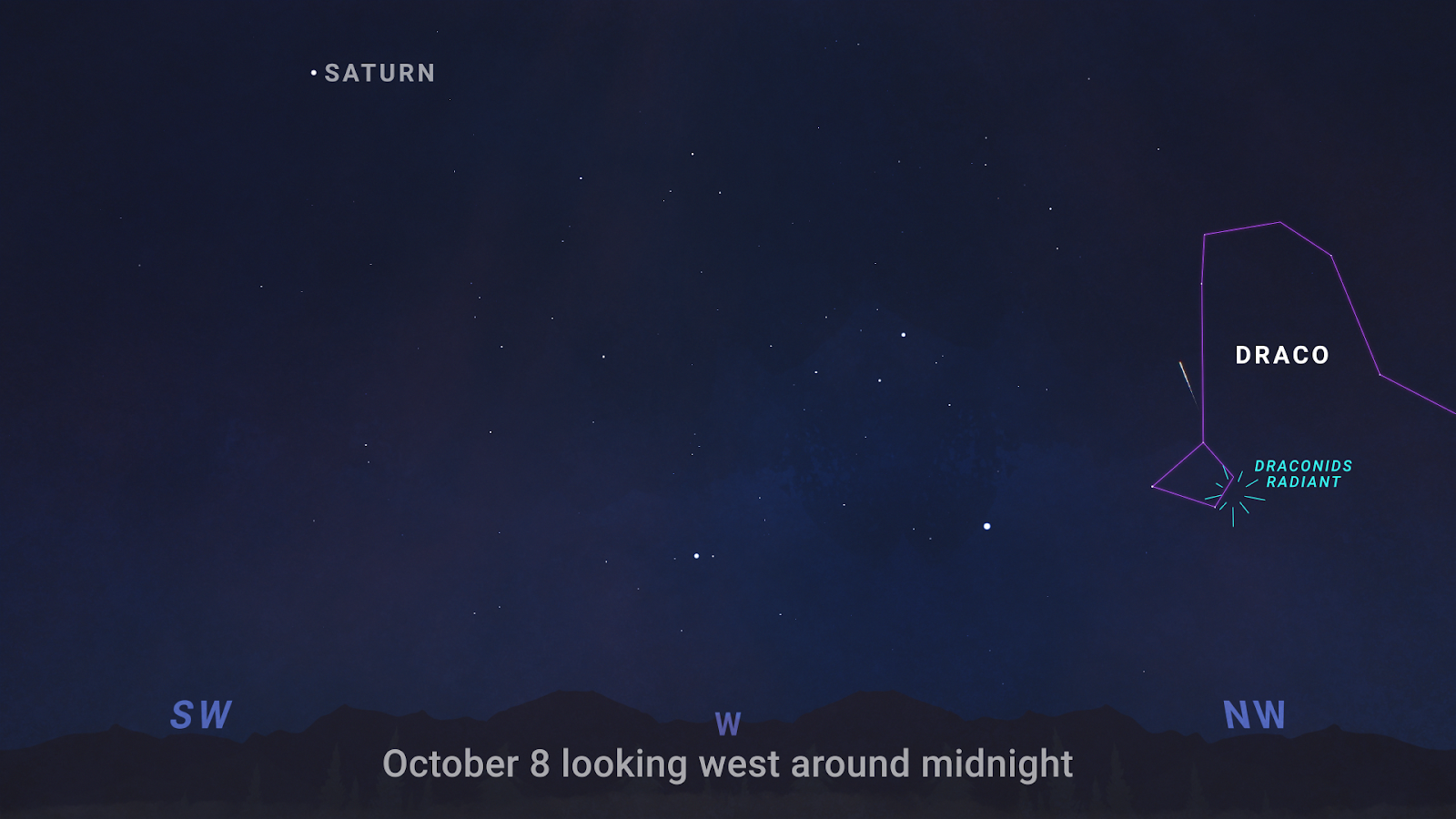
    These meteors originate from nearby the head of the constellation Draco the dragon in the northern sky and the shower can produce up to 10 meteors per hour!

    The Draconids peak around October 8th, but if you don’t see any, you can always blame the bright supermoon and wait a few weeks until the next meteor shower – the Orionids!

    A star chart showing the Draconid meteor shower on October 8, looking west around midnight. The radiant of the shower is shown within the constellation Draco in the northwest sky, with the planet Saturn visible to the left.
    Sky chart showing the Draconid meteor shower, including the radiant point of the shower and the Draco constellation where the meteors in the shower are often seen and stem from.
    NASA/JPL-Caltech

    The Orionid meteor shower, peaking October 21, is set to put on a spectacular show, shooting about 20 meteors per hour across the night sky. 

    This meteor shower happens when Earth travels through the debris trailing behind Halley’s Comet and it burns up in our atmosphere.

    The full duration of the meteor shower stretches from September 26 to November 22, but your best bet to see meteors is on October 21 before midnight until around 2 am.

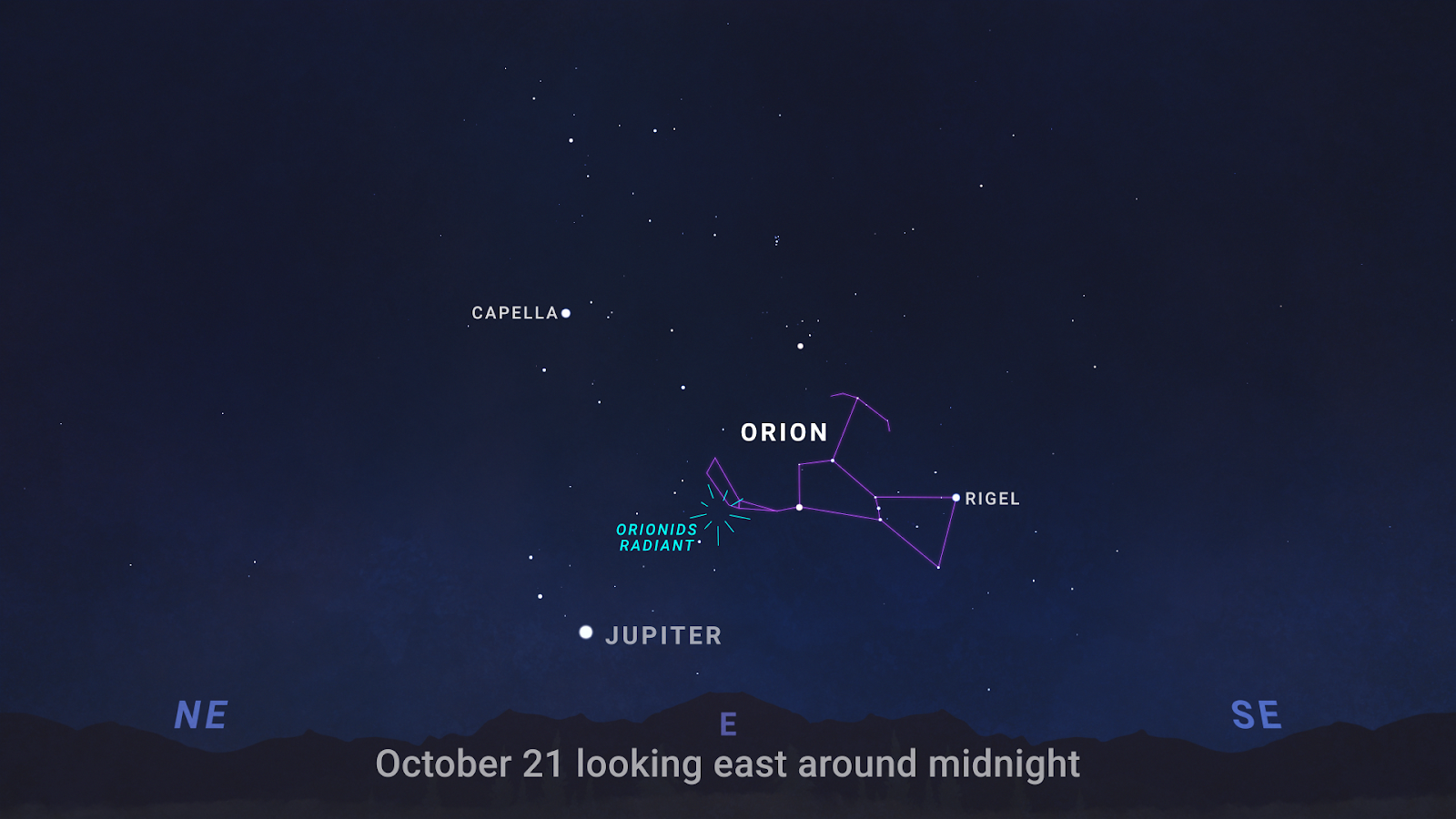
    Sky chart showing the Orionid meteor shower, including the radiant point of the shower and the Orion constellation where the meteors in the shower are often seen and stem from.
    NASA/JPL-Caltech

    This is because, not only is this night the shower’s peak, it is also the October new moon, meaning the moon will be between the Earth and the Sun, making it dark and invisible to us.

    With a moonless sky, you’re much more likely to catch a fireball careening through the night.

    So find a dark location after the sun has set, look to the southeast sky (if you’re in the northern hemisphere) and the northeast (if you’re in the southern hemisphere) and enjoy!

    Orionid meteors appear to come from the direction of the Orion constellation but you might catch them all across the sky.

    Here are the phases of the Moon for October.

    You can stay up to date on all of NASA’s missions exploring the solar system and beyond at science.nasa.gov.

    I’m Chelsea Gohd from NASA’s Jet Propulsion Laboratory, and that’s What’s Up for this month.

  • Helio Highlights: October 2025

    5 min read

    Helio Highlights: October 2025

    5 Min Read

    Helio Highlights: October 2025

    NASA Education Specialist Christine Milotte demonstrates heliophysics activities during a teacher professional development event hosted by the NASA Heliophysics Education Activation Team (HEAT) at the Dallas Arboretum, Saturday, April 6, 2024.

    Credits:
    NASA/Keegan Barber

    The Sun and Our Lives

    On a clear night, you might see thousands of stars in the sky. Most of these stars are dozens or hundreds of light years away from us. A light year is the distance a beam of light travels in a year: about 5.88 trillion miles (9.46 trillion kilometers). This means that for those stars we see at night, it takes their light, which travels at about 186,000 miles per second (or about 300 thousand kilometers per second), dozens or hundreds of years to reach us.

    But in the daytime, we only see one star: the Sun. It dominates the daytime sky because it is so close – about 93 million miles (or 150 million kilometers) away. That distance is also called one astronomical unit, and its another unit of measurement astronomers use to record distance in space. But even if 1 astronomical unit seems like a long way, it’s still about 270 thousand times closer than Alpha Centauri, the next nearest star system.

    The Sun isn’t just close – it’s also gigantic! The Sun is large enough to fit more than a million Earths inside it, and has more mass than 330 thousand Earths put together. Its light also provides the energy which allows life as we know it to flourish. For these reasons, the Sun is a powerful presence in our lives. We all have a relationship with the Sun, so knowing about it, and about the benefits and hazards of its presence, is essential.

    Teaching About the Sun

    Autumn is when most students in the United States return for a new school year after summer vacation. This back-to-school time offers a wonderful opportunity to reach students fresh off of a few months of fun in the Sun and capture their imaginations with new information about how our native star works and how it impacts their lives.

    To that end, NASA conducts efforts to educate and inform students and educators about the Sun, its features, and the ways it impacts our lives. NASA’s Heliophysics Education Activation Team (HEAT) teaches people of all ages about the Sun, covering everything from how to safely view an eclipse to how to mitigate the effects of geomagnetic storms.

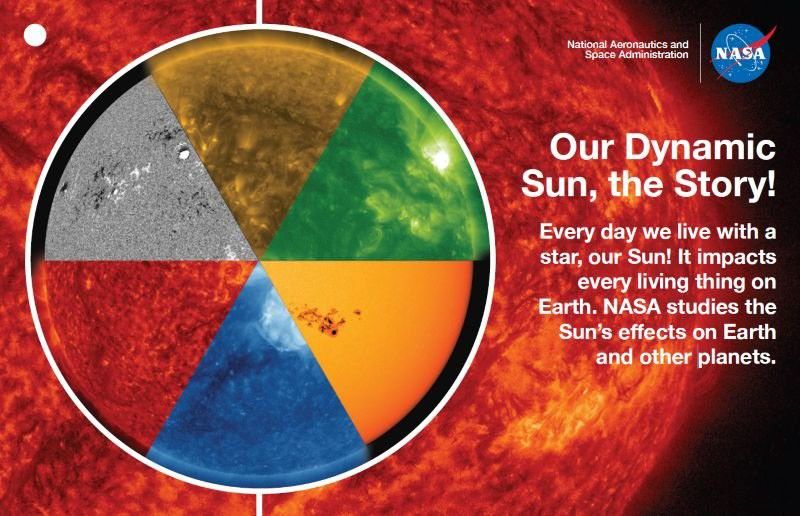
    The central image is a multicolored circle divided into six overlapping sections, each showing a different way the Sun is observed: Blue (Extreme UV): Shows solar wind origins; Red (Hydrogen-alpha): Reveals features like filaments, prominences, and plages; Orange (Visible Light): Shows cooler sunspots; Gray (Magnetogram): Highlights magnetically active regions; Green (X-rays): Highlights solar flares and coronal mass ejections; Purple (UV): Shows material distribution above the surface.  Surrounding the Sun image are planets (not to scale): Neptune, Uranus, Saturn, Jupiter, Mars, and Earth—each shown with auroras caused by their magnetic fields interacting with solar particles.  A circle shows Earth's tiny relative size compared to the Sun. Text describes solar features like the inner corona seen during an eclipse and stresses safe solar viewing. Logos of NASA, Night Sky Network, Astronomical Society of the Pacific (ASP), NASA HEAT, and Solar Science Education appear at the bottom.
    This “Our Dynamic Sun” banner is one of many educational outreach products offered by NASA HEAT. It uses imagery of the Sun at different wavelengths of light to demonstrate the features of our nearest star, and features information about how the Sun interacts with the rest of the Solar System.
    NASA HEAT

    This often means tailoring lesson plans for educators. By connecting NASA scientists who study Heliophysics with education specialists who align the material to K-12 content standards, HEAT gets Heliophysics out of the lab and into the classroom. Making Sun science accessible lets learners of all ages and backgrounds get involved in and excited about the discovery, and instills a lifelong thirst for knowledge that builds the next generation of scientists.

    Since 2007, NASA’s Living With a Star (LWS) program and the University Corporation for Atmospheric Research’s Cooperative Programs for the Advancement of Earth System Science (CPAESS) have cooperated to offer the Heliophysics Summer School program for doctoral students and postdoctoral scholars. This program aims to foster heliophysics as an integrated science, teaching a new generation of researchers to engage in cross-disciplinary communication while they are still in the early days of their career.

    One Way to Get Involved

    As part of its efforts to increase awareness of the scientific and social importance of heliophysics, and to both inspire future scientists and spark breakthroughs in heliophysics as a discipline, the NASA Heliophysics Education Activation Team (NASA HEAT) is working on a slate of educational materials designed to get students involved with real-world mission data.

    My NASA Data, in collaboration with NASA HEAT, has released a new set of resources for educators centered around space weather. My NASA Data supports the use of authentic NASA data as part of classroom learning materials. These materials include lesson plans, mini-lessons (shorter activities for quick engagement), student-facing web-based interactives, and a longer “story map,” which deepens the investigation of the phenomenon over multiple class periods.

    These resources are designed to engage learners with data and observations collected during both past and ongoing missions, including the European Space Agency’s Solar Orbiter, NASA’s Parker Solar Probe and Solar Dynamics Observatory (SDO), and more.

    One example of this is the educational material published to support outreach efforts focusing on the 2023 and 2024 American solar eclipses. These materials allowed learners to collect their own data on cloud and temperature observations during the eclipses with the GLOBE Observer Eclipse tool. This gave them the chance to participate in the scientific process by contributing meaningfully to our understanding of the Earth system and global environment.

    New Ways to Engage

    Groups like HEAT don’t just spark interest in science for the sake of inspiring the next generation of heliophysicists. Just like amateur astronomers can bring in a lot more data than their professional counterparts, citizen scientists can do a lot to support the same institutions that may have inspired them to take up the practice of citizen science. This can mean anything from helping to track sunspots to reporting on the effects of space weather events.

    2023 Partial Solar Eclipse Viewing at Camino Real Marketplace with the View the Santa Barbara Astronomical Unit.
    2023 Partial Solar Eclipse Viewing at Camino Real Marketplace with the View the Santa Barbara Astronomical Unit. Events like this, which can take place during major events such as eclipses or during impromptu circumstances, offer an excellent opportunity for the public to get involved in and excited about heliophysics.
    Photo by Chuck McPartlin

    These enthusiasts are also adept at sharing knowledge of heliophysics. Even just one person inspired to buy a telescope with the right solar filter (international standard ISO 12312-2), set it up in a park, and teach their neighbors about the Sun can do amazing work, and there are a lot more of them than there are professional scientists. That means these amateur heliophysicists can reach farther than even the best official outreach.

    Whether they take place in the classroom, at conferences, or in online lectures, the efforts of science communicators are a vital part of the work done at NASA. Just as scientists make new discoveries, these writers, teachers, audio and video producers, and outreach specialists are passionate about making those discoveries accessible to the public.

    All of this work helps to inspire the scientists of tomorrow, and to instill wonder in the citizen scientists of today. The Sun is a constant and magnificent presence in our lives, and it offers plenty of reasons to be inspired, both now and in the future.

    Additional Resources