Tag: Kepler

  • PLANETS Units Have Landed – Free NASA-Funded Out-of-School Time Resources

    4 min read

    PLANETS Units Have Landed – Free NASA-Funded Out-of-School Time Resources
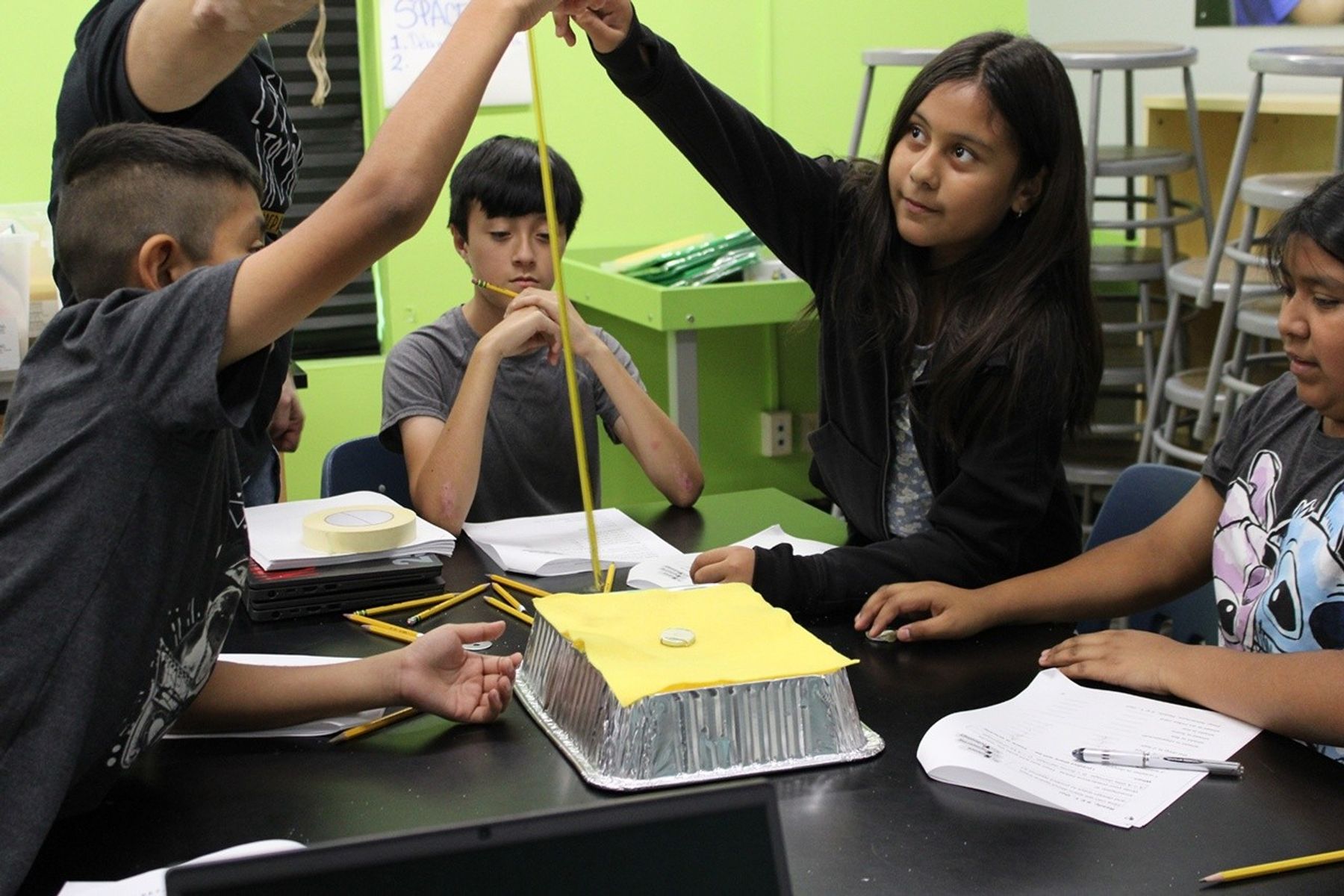
    An out of school time educator holds a measuring tape as an elementary aged girl drops a weight to test the space craft shield her group created. Her group members, two boys and one girl, watch as she drops the weight.
    Constructing a three dimensional topographic map from the Remote Sensing Science Pathway.

    The NASA Science Activation program’s PLANETS (Planetary Learning that Advances the Nexus of Engineering, Technology, and Science) project, led by Northern Arizona University (NAU), is pleased to announce the official launch of three free out-of-school (OST) time units that give all learners in grades 3-5 and 6-8 the chance to do real planetary science and engineering. These units are supported by comprehensive educator guides, videos, and resources.

    These three units – Space Hazards, Water in Extreme Environments, and Remote Sensing – have complementary engineering and science pathways that can be taught on their own or together. Subject matter experts in planetary science from the USGS Astrogeology Science Center were involved in every part of developing the activities, working with STEM (Science, Technology, Engineering, & Mathematics) education experts from Northern Arizona University Center for STEM Teaching & Learning, the Boston Museum of Science, and WestEd to ensure the activities are educational, engaging, and accurate.

    PLANETS intentionally designed the units to benefit all learners. The curriculum reflects research-based pedagogical strategies, including those for multilingual learners, Indigenous learners, and learners with differing physical abilities. The units have been tested extensively in out-of-school time programs across the country and revised based on their feedback to ensure the needs of all learners are met. PLANETS provides a practical guide for out-of-school time educators with useful advice to effectively teach all students. All units also include educator background on the subject matter, as well as videos, and many useful tips and links to relevant NASA projects and resources.

    “PLANETS is one of the most thoughtfully designed STEM resources I’ve used in an out-of-school setting. The hands-on activities are engaging, accessible, and grounded in real-world challenges that spark curiosity in every learner. What sets it apart is the intentional support for diverse learners and the clear, practical guidance for facilitators—making it truly turnkey for OST educators at any experience level. If you’re looking to build STEM identity, teamwork, and creative problem-solving in your program, PLANETS is a must.” ~ Kara Branch, CEO & Founder, Black Girls Do Engineer

    In the Space Hazards unit, intended for learners in grades 3-5, students play a card game to learn about how to protect against the different hazards that people face on Earth and that astronauts and robotic probes face in space. The engineering pathway for this unit presents students with a challenge: design a space glove that will keep astronauts safe while still allowing them to do their work.

    The Water in Extreme Environments unit is designed for grades 6-8. In the science pathway, students use planet “water cards” to learn where there is the most water in our solar system (hint: it’s not Earth!). The engineering pathway introduces learners to the scarcity of fresh water, both in extreme environments on Earth and for astronauts in space. Students design a filtration system to purify water for reuse.

    The engineering pathway for the Remote sensing unit, also designed for grades 6-8, puts students into the shoes of NASA spacecraft engineers, designing remote sensing devices to learn about the surface of planets, like Mars. The science pathway then uses real NASA remote sensing data from Mars landing site candidates to choose the best place to land a rover on Mars.

    All PLANETS materials are available at no cost on the website: planets-stem.org. Check them out and empower every learner to see themselves as scientists and engineers.

    PLANETS is supported by NASA under cooperative agreement award number NNX16AC53 and is part of NASA’s Science Activation Portfolio. Learn more about how Science Activation connects NASA science experts, real content, and experiences with community leaders to do science in ways that activate minds and promote deeper understanding of our world and beyond: https://science.nasa.gov/learn/about-science-activation/.

    Details

    Last Updated

    Nov 26, 2025

    Editor
    NASA Science Editorial Team
  • Artemis II Orion Spacecraft Stacked

    The orange core stage of the Artemis II rocket with white boosters on each side fully stacked inside the Vehicle Assembly Building at NASA's Kennedy Space Center in Florida on Saturday, Oct. 18, 2025.
    NASA/Kim Shiflett

    In this Oct. 20, 2025, photo, NASA’s Artemis II Orion spacecraft with its launch abort system is stacked atop the agency’s SLS (Space Launch System) rocket in the Vehicle Assembly Building at NASA’s Kennedy Space Center in Florida.

    Orion will carry NASA astronauts Reid Wiseman, Victor Glover, Christina Koch, and CSA (Canadian Space Agency) astronaut Jeremy Hansen on a 10-day mission around the Moon and back in early 2026.

    Follow along with the mission on the NASA Artemis blog.

    Image credit: NASA/Kim Shiflett

  • LSAH Newsletter

    1 min read

    Preparations for Next Moonwalk Simulations Underway (and Underwater)

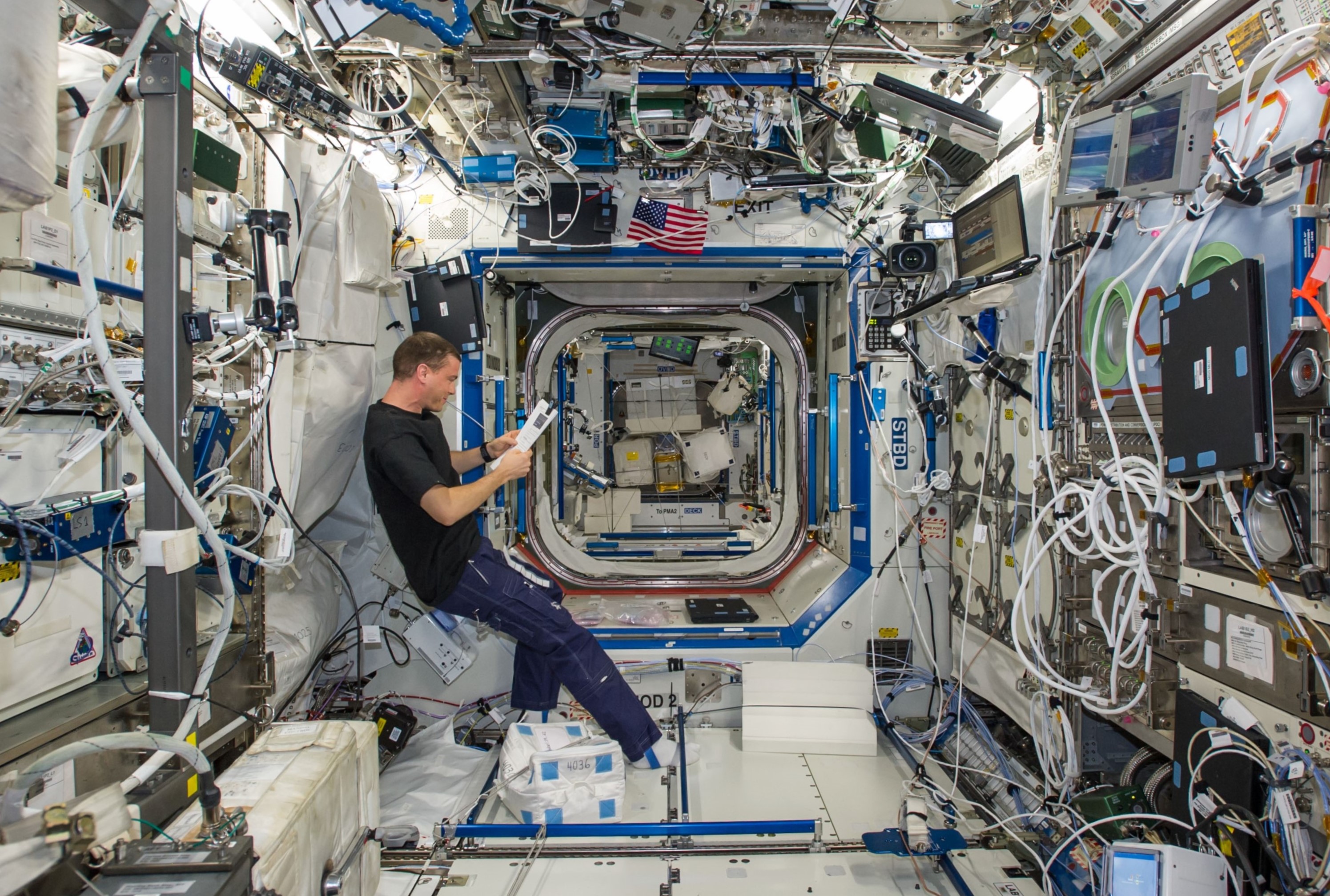
    Reid Wiseman in the station’s Destiny lab.
    Reid Wiseman finds a little peace and quiet in the station’s Destiny lab.
    NASA

    The Lifetime Surveillance of Astronaut Health (LSAH) program collects, analyzes, and interprets medical, physiological, hazard exposure, and environmental data for the purpose of maintaining astronaut health and safety as well as preventing occupationally induced injuries or disease related to space flight or space flight training. It allows NASA to effectively understand and mitigate the long-term health risks of human spaceflight, as well as support the physical and mental well-being of astronauts during future exploration missions.

    The LSAH Newsletter serves to inform and update former astronauts on how their medical data is being utilized by the LSAH team. It is published and distributed bi-annually.

    + October 2025 | Vol 30 Issue 2 – LSAH Newsletter

    + Past LSAH Newsletters and Publications

    Details

    Last Updated

    Nov 25, 2025

    Editor
    Robert E. Lewis

  • NASA & GLOBE Connect People, Land, and Space

    4 min read

    NASA & GLOBE Connect People, Land, and Space

    A screenshot of the GLOBE Land Cover satellite comparison table. The table includes information and photographs of the land, submitted by the volunteer, as well as a Moderate Resolution Imaging Spectroradiometer (MODIS) land cover classification image for that location and a Landsat and Sentinel-2 image closest in time to the GLOBE Observer observation.
    The GLOBE Land Cover satellite comparison table is generated weekly for every GLOBE Land Cover observation. GLOBE volunteers receive an email with a link to the table. Information about the table may be found on the GLOBE Observer website.

    A group of elementary-aged students gather outside of Oldham County Public Library in La Grange, Kentucky, United States to look at clouds in the sky. “If anyone asks what you are doing, tell them, ‘I am a citizen scientist and I am helping NASA,’” Children’s Programming Librarian, Cheri Grinnell, tells the kids. Grinnell supports an afterschool program called Leopard Spot where she engages K-5 students in collecting environmental data with the GLOBE (Global Learning & Observations to Benefit the Environment) Program.

    “One little boy really got excited about that, and I heard him tell his mom he was working for NASA as they were leaving,” says Grinnell. That idea is reinforced when the program receives an email from NASA with satellite data that align with the cloud data the students submitted. “I forwarded the NASA satellite response to the after-school coordinator, and she read it to them. That really excited them because it was evidence this is the real deal.”

    This experience is one the GLOBE Observer Team (part of the NASA Science Activation program’s NASA Earth Science Education Collaborative, NESEC) hears often: GLOBE volunteers of all ages love getting an email from NASA that compares satellite data with their cloud observations. “Feedback from NASA is huge. It’s the hook,” says Tina Rogerson, the programmer at NASA Langley Research Center who manages the satellite comparison emails. “It ties NASA science into what they saw when they did the observation.”

    Now, volunteers will have more opportunities to receive a satellite comparison email from NASA. GLOBE recently announced that, in addition to sending emails about satellite data that align with the cloud observations made by learners, they will now also be sending emails that compare the GLOBE Observer Land Cover observations made by learners with satellite data. The new satellite comparison for land cover builds on the system used to create cloud comparisons at NASA Langley Research Center.

    When a volunteer receives the email, they will see a link for each observation they have submitted. The link will open a website with a satellite comparison table. Their observation is at the top, followed by a satellite-based assessment of the land cover at that location. The last row of the table shows the most recent Landsat and Sentinel-2 satellite images of the observation site. Rogerson pulls GLOBE land cover data from the public GLOBE database to generate and send the comparison tables on a weekly basis. While users may opt out of receiving these emails, most participants will be excited to review their data from the space perspective.

    These new collocated land cover observations are expected to raise greater awareness of how NASA and its interagency partners observe our changing home planet from space in order to inform societal needs. They will help every GLOBE volunteer see how their observations of the land fit in with the wider space-based view and how they are participating in the process of science. Based on the response to cloud satellite emails, seeing that bigger, impactful perspective via the satellite comparison email is motivating. The hope is to encourage volunteers to continue being NASA citizen scientists, collecting Earth system observations for GLOBE’s long-term environmental record.

    “I’m excited that land cover is finally becoming part of the operational satellite comparison system,” says Rogerson. This means that GLOBE volunteers will routinely receive satellite data for both land cover and clouds. “We are bringing real science right into your world.”

    NESEC, led by the Institute for Global Environmental Strategies (IGES) and supported by NASA under cooperative agreement award number NNX16AE28A, is part of NASA’s Science Activation Portfolio. Learn more about how Science Activation connects NASA science experts, real content, and experiences with community leaders to do science in ways that activate minds and promote deeper understanding of our world and beyond: https://science.nasa.gov/learn/about-science-activation/.
    Details

    Last Updated

    Nov 25, 2025

    Editor
    NASA Science Editorial Team
  • NASA’s Roman Observatory Passes Spate of Key Tests

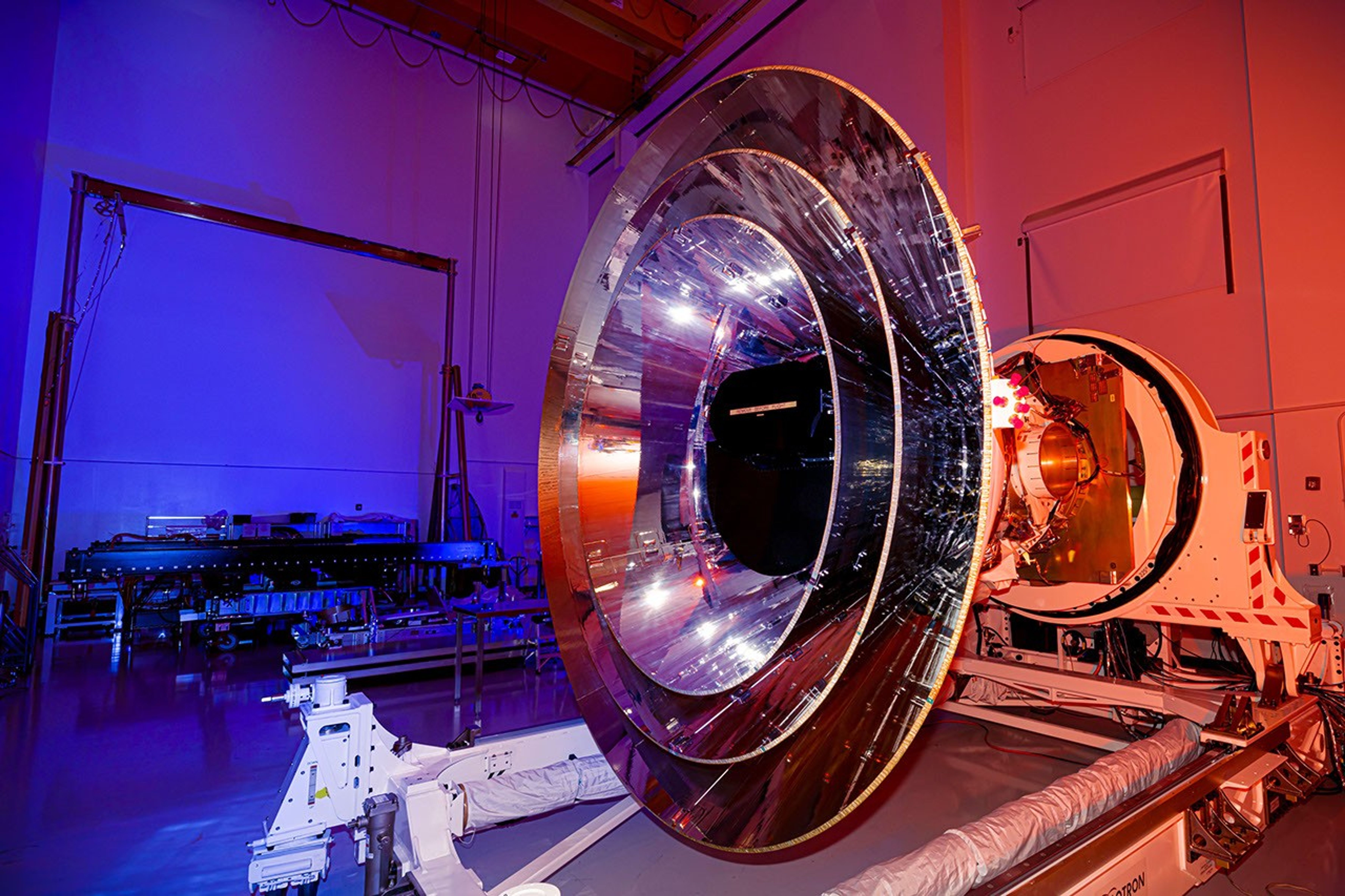
    NASA’s nearly complete Nancy Grace Roman Space Telescope has made another set of critical strides toward launch. This fall, the outer portion passed two tests — a shake test and an intense sound blast — to ensure its successful launch. The inner portion of the observatory underwent a major 65-day thermal vacuum test, showing that it will function properly in space. As NASA’s next flagship space telescope, Roman will address essential questions in the areas of dark energy, planets outside our solar system, and astrophysics.

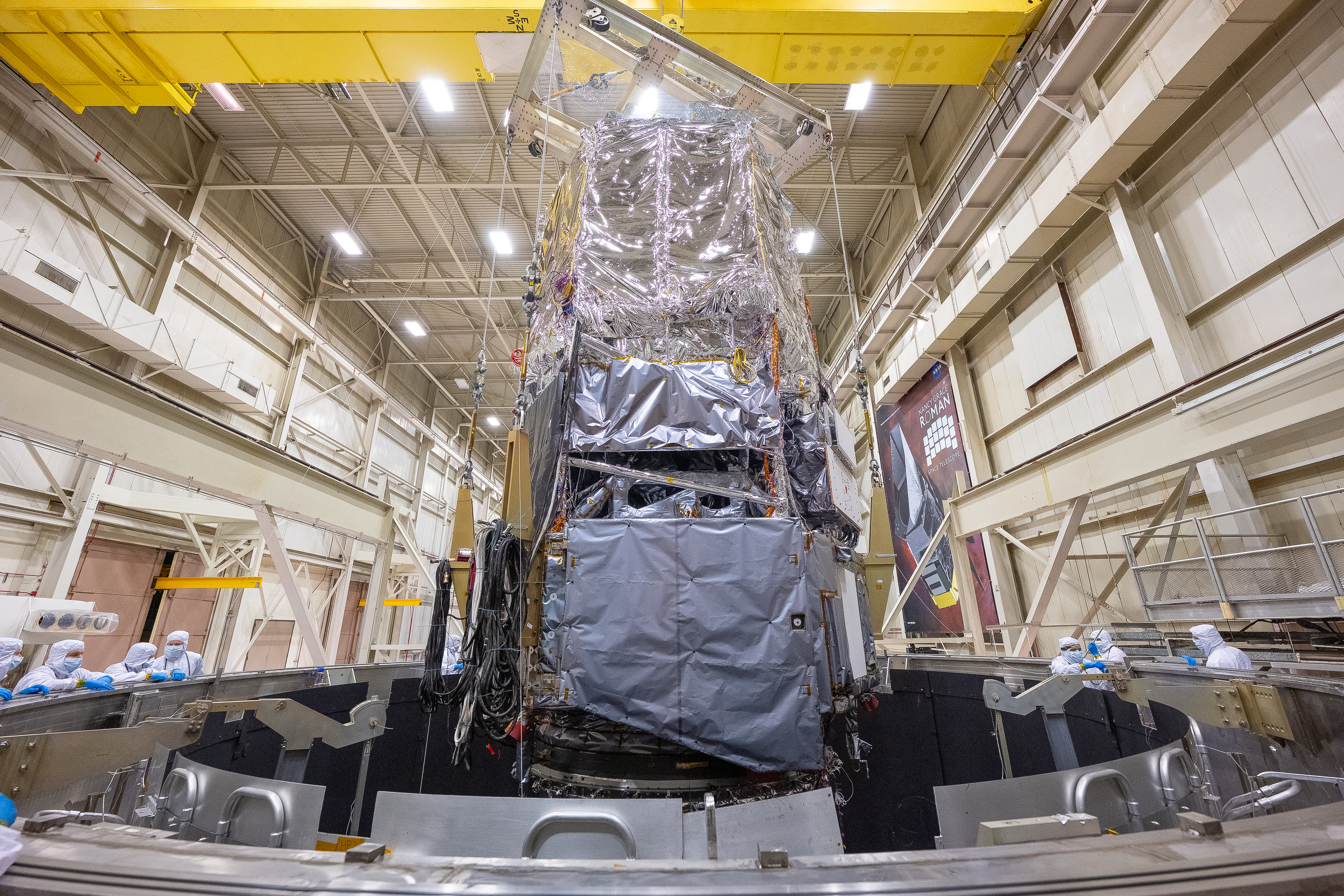
    Core portion of Roman observatory exiting test chamber
    The inner portion of NASA’s Nancy Grace Roman Space Telescope (which consists of the telescope, instrument carrier, two instruments, and spacecraft) recently passed thermal vacuum testing. In this photo, the assembly is being lifted out of the Space Environment Simulator after completing 65 days of assessments.
    Credit: NASA/Jolearra Tshiteya

    “We want to make sure Roman will withstand our harshest environments,” said Rebecca Espina, a deputy test director at NASA’s Goddard Space Flight Center in Greenbelt, Maryland. “From a mechanical standpoint, our heaviest loads and stresses come from launch, so we use testing to mimic the launch environment.”

    The vibration and acoustic testing were the final round of launch simulations for the outer portion of the Roman observatory, which consists of the outer barrel assembly, deployable aperture cover, and recently installed flight solar panels.

    During acoustic testing, a large chamber with gigantic horns emulated the launch’s thunderous sounds, which cause high-frequency vibrations. Test operators outfitted the chamber and assembly with various sensors to monitor the hardware’s response to the sound, which gradually ramped up to a full minute at 138 decibels — louder than a jet plane’s takeoff at close range!

    After moving to a massive shaker table, Roman’s outer assembly went through testing to replicate the rocket launch’s lower-frequency vibrations. Each individual test lasts only about a minute, sweeping from 5 to 50 hertz (the lowest note on a grand piano vibrates at 27.5 hertz), but NASA engineers tested three axes of movement over several weeks, breaking up the tests with on-the-spot data analysis.

    Like in acoustic testing, the team installed sensors to capture the assembly’s response to the shaking. Structural analysts and test operators use this information not only to evaluate success but also to improve models and subsequent assessments.

    “There’s a real sense of accomplishment when you get a piece of hardware this large through this test program,” said Shelly Conkey, lead structural analyst for this assembly at NASA Goddard. “I am proud of the work that our team of people has done.”

    The outer portion of the Roman observatory stands in the acoustic testing chamber
    The outer portion of NASA’s Nancy Grace Roman Space Telescope (which consists of the outer barrel assembly, deployable aperture cover, and solar panels) recently passed vibration and acoustic testing. The structure is shown here in the acoustic testing chamber at NASA’s Goddard Space Flight Center in Greenbelt, Md., where it was blasted with intense sound to simulate launch conditions.
    Credit: NASA/Jolearra Tshiteya

    The core portion of the observatory (the telescope, instrument carrier, two instruments, and spacecraft bus) moved into the Space Environment Simulator test chamber at NASA Goddard in August. There, it was subjected to extreme temperatures to mimic the chill of space and heat from the Sun. A team of more than 200 people ran simulations continuously for more than two months straight, assessing the telescope’s optics and the assembly’s overall mission readiness.

    “The thermal vacuum test marked the first time the telescope and instruments were used together,” said Dominic Benford, Roman’s program scientist at NASA Headquarters in Washington. “The next time we turn everything on will be when the observatory is in space!”

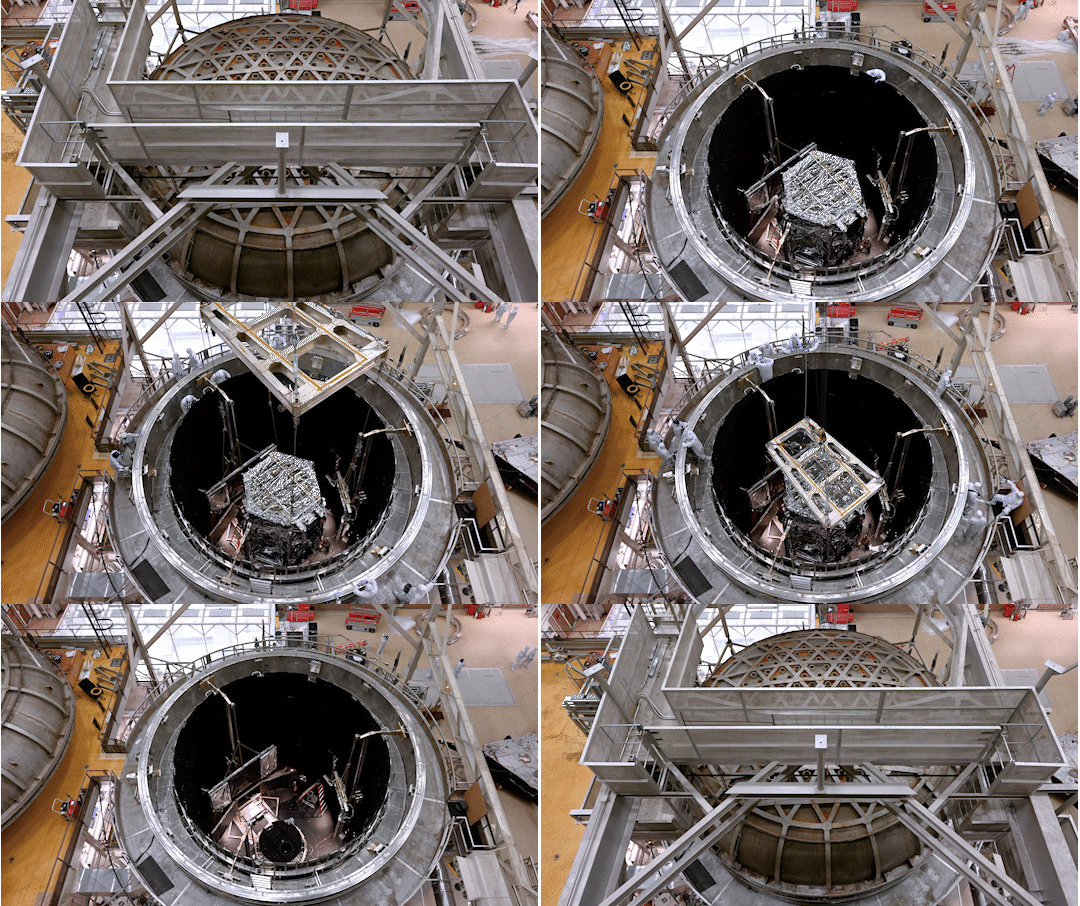
    Gif of the inner portion of the observatory exiting thermal vacuum testing
    Following extensive assessments, the core portion of NASA’s Nancy Grace Roman Space Telescope was removed from the test chamber (as shown in this gif) and returned to the largest clean room at NASA’s Goddard Space Flight Center in Greenbelt, Md. Next, it will be prepped for final integration.
    Credit: NASA/Sophia Roberts

    The team expects to connect Roman’s two major parts in November, resulting in a complete observatory by the end of the year. Following final tests, Roman will move to the launch site at NASA’s Kennedy Space Center in Florida for launch preparations in summer 2026. Roman remains on schedule for launch by May 2027, with the team aiming for as early as fall 2026.

    The Nancy Grace Roman Space Telescope is managed at NASA’s Goddard Space Flight Center in Greenbelt, Maryland, with participation by NASA’s Jet Propulsion Laboratory in Southern California; Caltech/IPAC in Pasadena, California; the Space Telescope Science Institute in Baltimore; and a science team comprising scientists from various research institutions. The primary industrial partners are BAE Systems Inc. in Boulder, Colorado; L3Harris Technologies in Rochester, New York; and Teledyne Scientific & Imaging in Thousand Oaks, California.

    For more information about the Roman Space Telescope, visit:

    https://www.nasa.gov/roman

    By Laine Havens and Ashley Balzer
    NASA’s Goddard Space Flight Center, Greenbelt, Md.

    Media contact:

    Claire Andreoli
    NASA’s Goddard Space Flight Center, Greenbelt, Md.
    301-286-1940

    Details

    Last Updated

    Nov 25, 2025

    Editor
    Ashley Balzer
    Contact
    Ashley Balzer
    Location
    Goddard Space Flight Center

  • Red Spider Nebula

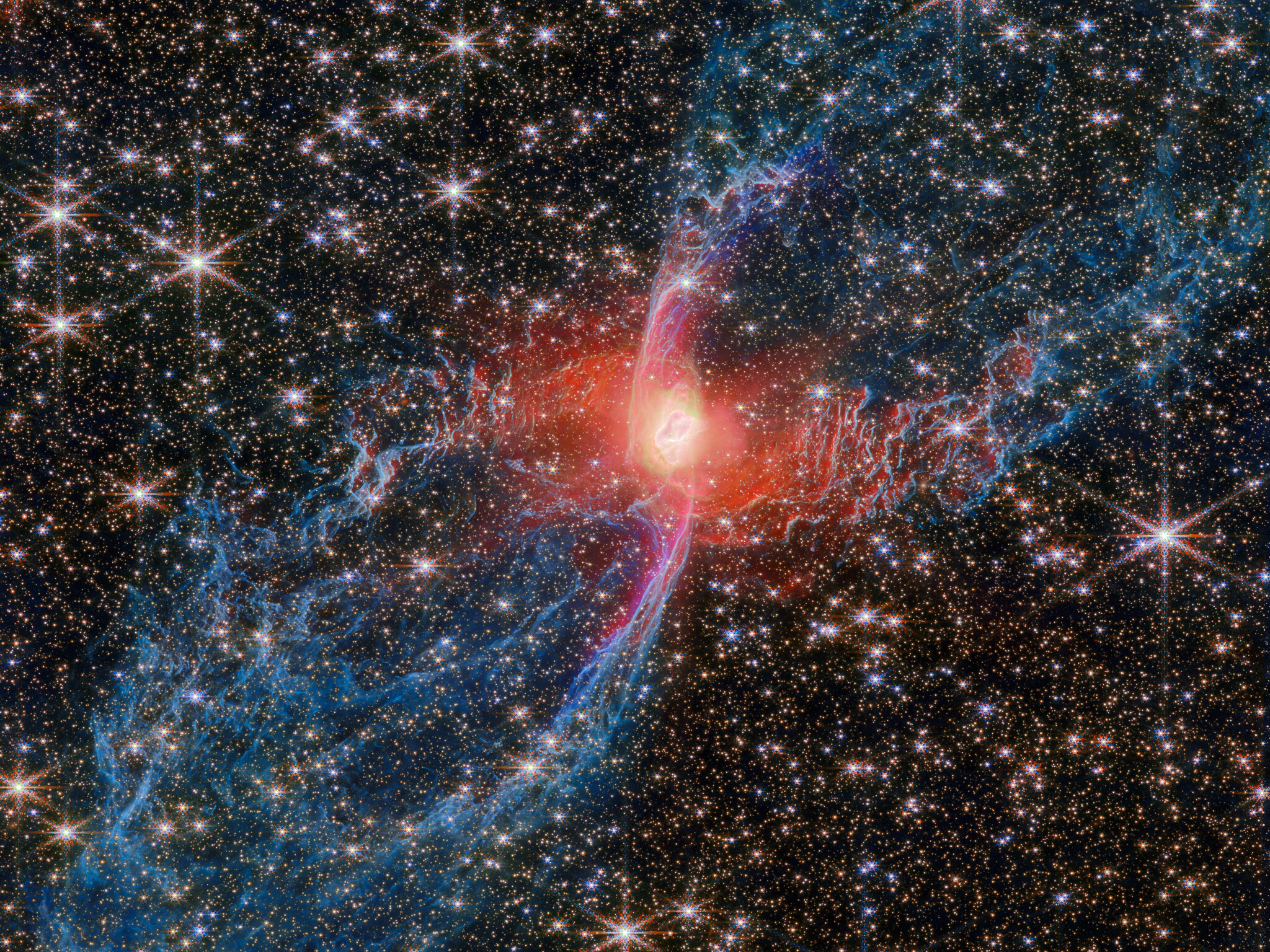
    A multicolored nebula stands out against the star-studded background of space. The nebula’s central star is hidden by a blotchy pinkish cloud of dust. A strong red light radiates from this area, lighting up the nearby dust. An elongated purple ‘S’ shape is centered on the heart of the nebula, while two blue lobes stretch diagonally outward to the edges of the image, making the entire structure look like a tilted hourglass.
    ESA/Webb, NASA & CSA, J. H. Kastner (Rochester Institute of Technology)

    Using its Near-InfraRed Camera (NIRCam), NASA’s James Webb Space Telescope captured never-before-seen details of the Red Spider Nebula, a planetary nebula, in this image released on Oct. 26, 2025. NIRCam is Webb’s primary near-infrared imager, providing high-resolution imaging and spectroscopy for a wide variety of investigations.

    Webb’s new view of the Red Spider Nebula reveals for the first time the full extent of the nebula’s outstretched lobes, which form the ‘legs’ of the spider. These lobes, shown in blue, are traced by light emitted from H2 molecules, which contain two hydrogen atoms bonded together. Stretching over the entirety of NIRCam’s field of view, these lobes are shown to be closed, bubble-like structures that each extend about 3 light-years. Outflowing gas from the center of the nebula has inflated these massive bubbles over thousands of years.

    Image credit: ESA/Webb, NASA & CSA, J. H. Kastner (Rochester Institute of Technology)

  • NASA Crater Detection Challenge

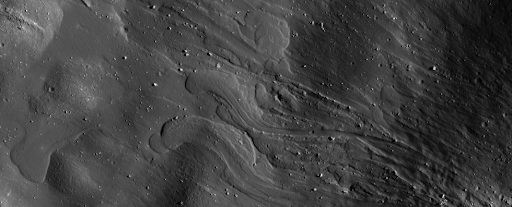
    A close-up image of the Moon's surface, which fades from smooth gray at the left, to craggy craters and black shadow at the right.
    NASA’s Lucy spacecraft captured images of the Moon’s surface on Oct 16, 2022, after flying by the Earth for its first of three gravity assists.

    Crater rims are vital landmarks for planetary science and navigation. Yet detecting them in real imagery is tough, with shadows, lighting shifts, and broken edges obscuring their shape.

    This project invites you to develop methods that can reliably fit ellipses to crater rims, helping advance future space exploration.

    In the pursuit of next generation, terrain-based optical navigation, NASA is developing a system that will use a visible-light camera on a spacecraft to capture orbital images of lunar terrain and process the imagery to:

    • detect the crater rims in the images,
    • identify the craters from a catalog, and
    • estimate the camera/vehicle position based on the identified craters.

    The focus of this project is the crater detection process.

    Natural imagery varies significantly in lighting and will impact the completeness of crater rims in the images.

    Award: $55,000 in total prizes

    Open Date: November 25, 2025

    Close Date: January 19, 2026

    For more information, visit: https://www.topcoder.com/nasa-crater-detection

  • CHAPEA Crew Begins Stay Inside NASA’s Mars Habitat for Second Mission

    CHAPEA mission 2 crew members (from left) Ross Elder, Ellen Ellis, Matthew Montgomery, and James Spicer, pose in front of the door to the simulated Martian landscape for their first photo inside the CHAPEA habitat after their mission began in October 2025
    CHAPEA mission 2 crew members (from left) Ross Elder, Ellen Ellis, Matthew Montgomery, and James Spicer pose in front of the door to the simulated Martian landscape for their first photo inside the CHAPEA habitat after their mission began in October 2025. Credits: NASA/CHAPEA Crew

    A crew of four research volunteers stepped inside NASA’s CHAPEA (Crew Health and Performance Exploration Analog) habitat on Oct. 19, marking the start of the agency’s second 378-day simulated Mars mission.

    Ross Elder, Ellen Ellis, Matthew Montgomery, and James Spicer are living and working inside the roughly 1,700-square-foot 3D-printed habitat at the agency’s Johnson Space Center in Houston until Oct. 31, 2026.

    “The information and lessons learned through CHAPEA will inform real-life mission planning, vehicle and surface habitat designs, and other resources NASA needs to support crew health and performance as we venture beyond low-Earth orbit,” said Sara Whiting, Human Research Program project scientist. “Through these lessons, NASA’s Human Research Program is reducing human health and performance risks of spaceflight to enable safe and successful crewed missions to the Moon, Mars, and beyond.”

    The crew will face the challenges of a real Mars mission, and only leave to perform simulated “Marswalk” activities directly outside the habitat, wearing spacesuits, to traverse a simulated Mars environment filled with red sand. During these Marswalks, they will remain isolated within the building that houses CHAPEA at NASA Johnson.

    “These crewmembers will help provide foundational data for mission planning and vehicle design and inform trades between resources, methods, and technologies that best support health and performance within the constraints of living on Mars,” said Grace Douglas, CHAPEA principal investigator. “The information gained from these simulated missions is critical to NASA’s goal of sending astronauts to explore Mars.”

    During the year ahead, the crew will complete a variety of activities designed to replicate life and work on a long-duration mission on Mars, including high-tempo simulated Marswalks, robotic operations, habitat maintenance, physical exercise, and crop cultivation. The mission also aims to investigate how the crew adapts and responds to various environmental stressors that may arise during a real Martian mission, including limited access to resources, prolonged isolation, 22-minute communication delays, and equipment failures. Researchers will study how the team manages these conditions, which will inform future protocols and plans ahead of future crewed missions to Mars.

    The first CHAPEA mission, which took place in the same habitat, concluded on July 6, 2024.

    ____

    NASA’s Human Research Program

    NASA’s Human Research Program pursues methods and technologies to support safe, productive human space travel. Through science conducted in laboratories, ground-based analogs, commercial missions, the International Space Station and Artemis missions, the program scrutinizes how spaceflight affects human bodies and behaviors. Such research drives the program’s quest to innovate ways that keep astronauts healthy and mission ready as human space exploration expands to the Moon, Mars, and beyond.

  • NASA’s 2025 Astronaut Candidates: Shaping Artemis Exploration 

    5 Min Read

    NASA’s 2025 Astronaut Candidates: Shaping Artemis Exploration 

    NASA’s Johnson Space Center Director Vanessa Wyche introduces the agency’s 24th astronaut class on Sept. 22, 2025.

    Credits:
    NASA/James Blair

    When NASA’s 2025 astronaut candidates arrived at the agency’s Johnson Space Center in Houston this fall, they stepped into history, sharing a common mission to master the skills and teamwork that define NASA’s next era of exploration. 

    Selected from a pool of more than 8,000 applicants, the new class represents a range of backgrounds — military test pilots, engineers, a physician, and a scientist — but all were inspired by moments in their lives that set them on a path to space.  

    They will spend nearly two years in training before becoming eligible for missions to low Earth orbit, the Moon, and eventually, Mars. When they graduate, they will join NASA’s active astronaut corps, advancing science aboard the International Space Station and supporting Artemis missions that will carry human exploration farther than ever before. 

    During the class announcement at Johnson on Sept. 22, 2025, Center Director Vanessa Wyche celebrated the moment as a milestone for exploration. 

    “Today is an exciting day for our nation and for all of humanity as we introduce NASA’s 2025 astronaut candidates — the next generation who will help us explore the Moon, Mars, and beyond,” Wyche said. “Each one of these candidates brings unique experiences and perspectives that reflect the diversity of America and the spirit of exploration that defines NASA.” 

    Behind their new blue flight suits are years of preparation and stories as multifaceted as the missions they will one day support. 

    Different Roads to the Same Horizon 

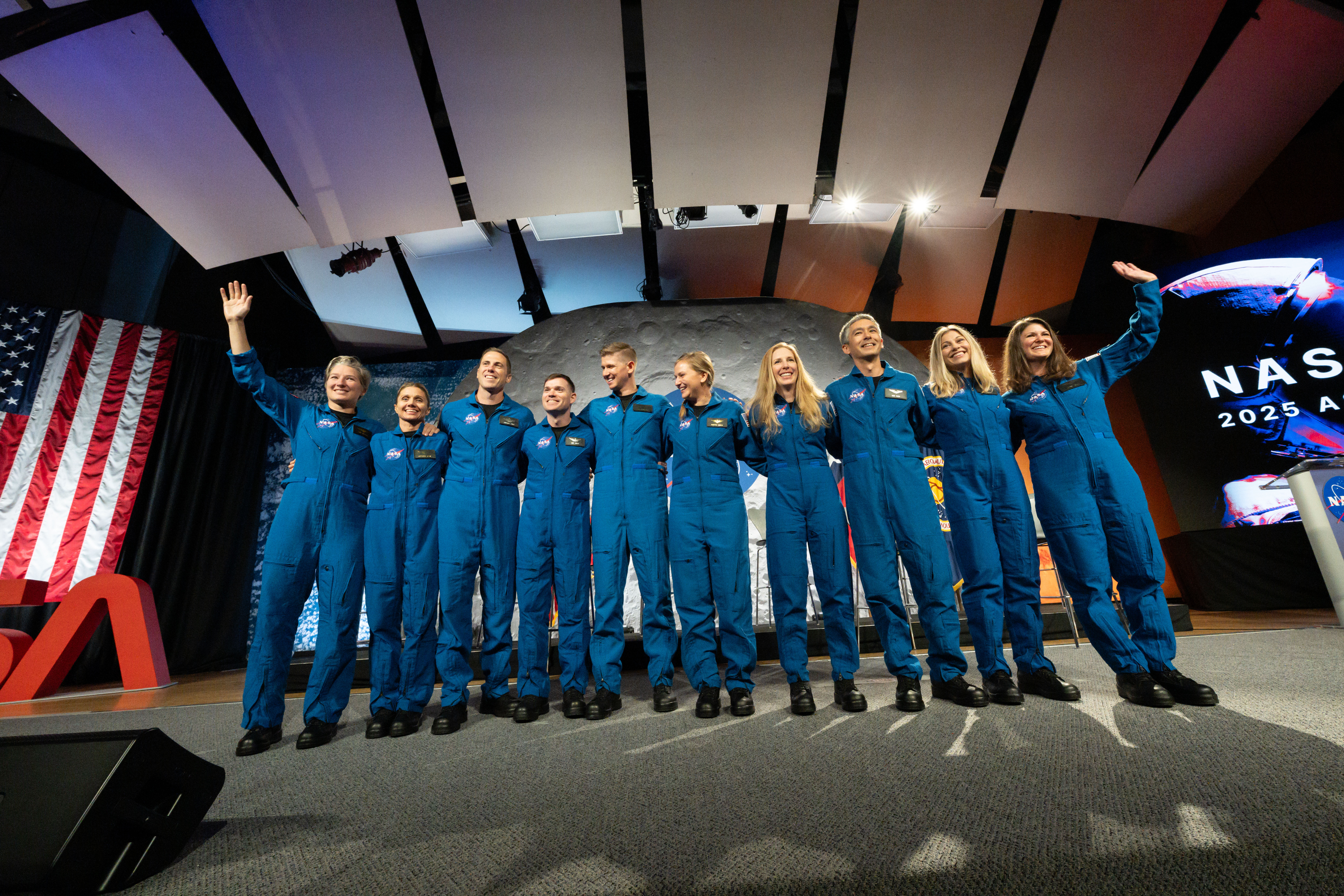
    Ten people in blue flight suits wave to an audience in an auditorium.
    NASA’s new astronaut candidates greet the crowd for the first time at Johnson Space Center in Houston.
    NASA/James Blair

    Some of the candidates built their careers in the air, where precision, communication, and teamwork were part of every mission. Former U.S. Navy pilot and test pilot Rebecca Lawler says that is exactly what drew her to NASA. 

    “All of these people are coming from different disciplines and levels of expertise, and you’re all working together to get science to fly,” she said. “That’s what excites me most — bringing those experiences together as a team.” 

    Imelda Muller, an anesthesiologist and former U.S. Navy undersea medical officer, said her experience supporting experimental diving teams taught her how people from different backgrounds can come together under one mission, something she sees echoed at NASA. 

    Muller remembers looking up at the night sky as a kid, able to see almost every star on a clear night. Her grandfather worked on the Apollo program and used to share stories with her, and she says the mix of stargazing and imagining those missions inspired her dream of becoming an astronaut. 

    Anna Menon, a biomedical engineer and former flight controller, has seen the human side of spaceflight from the ground and from space. She supported astronaut health aboard the space station from the Mission Control Center in Houston and served as a mission specialist and medical officer aboard SpaceX’s Polaris Dawn mission.

    As more people venture into space, we have this incredible opportunity to learn how the human body changes in microgravity. That knowledge will help keep crews healthy as we go farther than ever before.

    Anna Menon

    Anna Menon

    Astronaut Candidate

    A Houston native, she discovered her passion for exploration in the fourth grade during a field trip to Johnson. “That experience lit a fire in me to want to be part of the space industry,” she said. 

    The Language of Human Spaceflight 

    A woman speaks during a ceremony. Three people are beside her. The U.S. flag (left) and NASA meatball insignia are behind them.
    NASA astronaut candidate Erin Overcash speaks during the class announcement ceremony at Johnson Space Center.
    NASA/James Blair

    For the test pilots — including Adam Fuhrmann, Cameron Jones, Ben Bailey, and Erin Overcash — flight testing taught adaptability, composure, and the discipline to make quick decisions when it matters most. As Fuhrmann put it, it is about knowing when to lead and when to listen. 

    In flight test, nothing happens alone. We work with incredible engineers and professionals to plan and execute complex missions. That teamwork translates perfectly to human spaceflight.

    Adam Fuhrmann

    Adam Fuhrmann

    Astronaut Candidate

    Every astronaut candidate will spend nearly two years learning spacecraft systems, practicing spacewalks in the Neutral Buoyancy Laboratory, flying T-38 jets, and studying geology, robotics, and survival training. 

    As U.S. Army Chief Warrant Officer and helicopter test pilot Ben Bailey said, it is not one skill that matters most — it is the combination. 

    “Each one is exciting on its own — flying, language training, spacewalks — but getting to do them all together, as a crew, that’s the best part,” Bailey said. 

    During the event, current astronauts welcomed the new class and shared advice drawn from their own journeys in human spaceflight. “Thankfully, you will have some of the most talented, passionate instructors and an incredibly dedicated team here at NASA,” said NASA astronaut Chris Williams. “Some of the most special moments will come as you find how much you get to learn from each other.” 

    From the International Space Station, NASA astronaut Zena Cardman encouraged the candidates to “learn everything you can, get to know each other, and enjoy the ride.” 

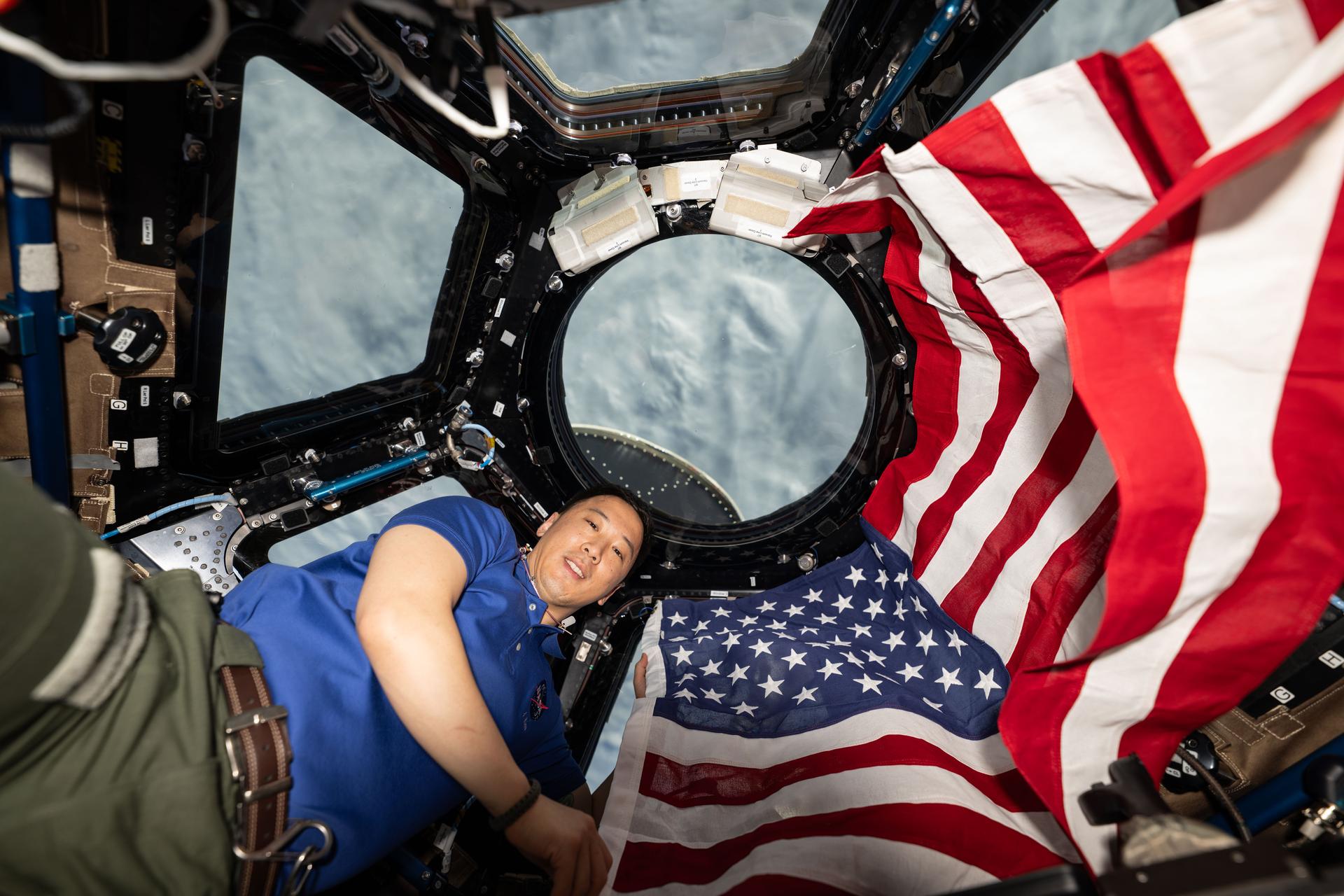
    NASA astronaut Jonny Kim followed with a reminder every explorer carries forward: “The people sitting beside you now will become lifelong friends.” 

    Explorers of the Golden Age 

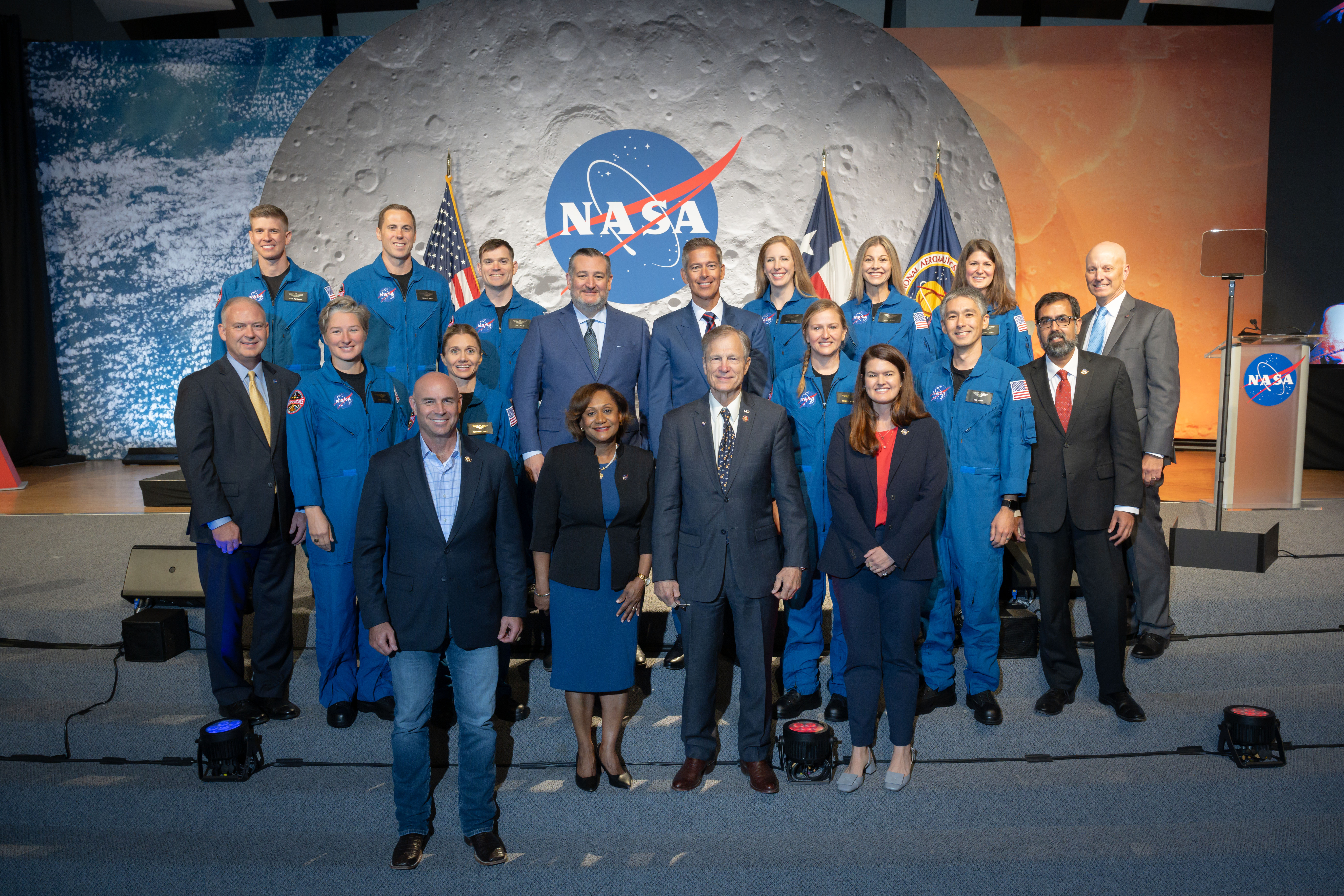
    The 2025 astronaut candidates with NASA leadership during their class announcement.
    NASA/James Blair

    From geologist Lauren Edgar, who worked on the Curiosity Mars Rover and the Artemis III science team, to engineers like Yuri Kubo, who completed seven NASA internships, and Katherine Spies, who designed and tested flight systems that make exploration possible, each brings a layer of expertise to the agency’s future on the Moon and beyond. 

    I’ve always loved figuring out how things work and finding ways to make them better. That’s what drew me to engineering, and it’s what keeps me excited about exploration.

    Yuri Kubo

    Yuri Kubo

    Astronaut Candidate

    A New Era Begins 

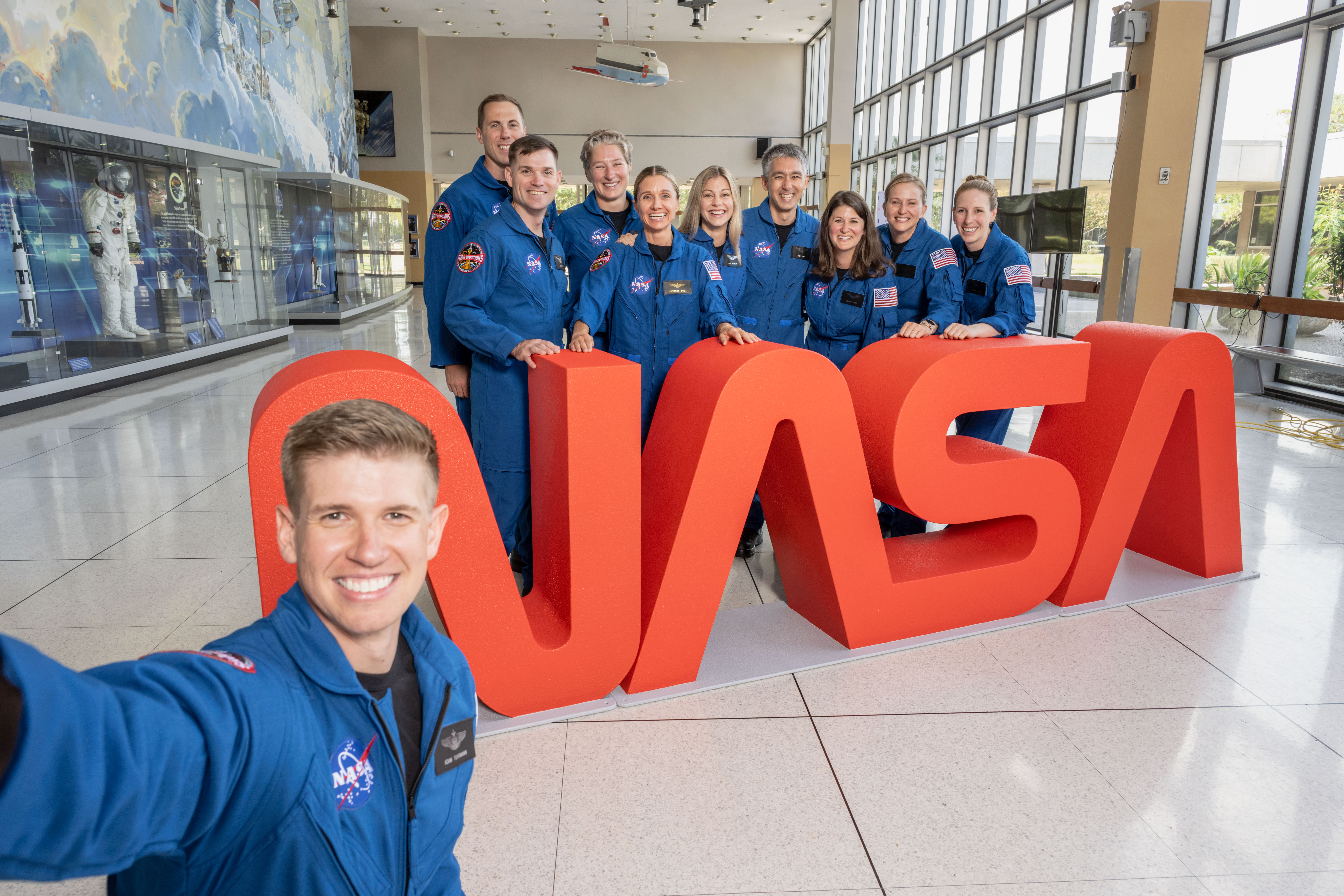
    A man in a blue flight suit takes a selfie with a group and the NASA worm insignia in the background.
    NASA’s astronaut candidate class pose for a selfie during their first week at Johnson Space Center.
    NASA

    At the announcement ceremony, NASA Flight Operations Director Norm Knight said, “Every lesson learned aboard station has paved the way for where we’re headed next – to the Moon, this time to stay, and on to Mars. We have a group of individuals who are not only exceptional, but who will be inspirational for the United States of America and for our planet.”  

    Together, the astronaut candidates reflect the spirit of Artemis — curiosity, courage, and continuous learning as humanity prepares for its next giant leap. 

    About the Author

    Sumer Loggins

    Sumer Loggins

    Details

    Last Updated

    Nov 20, 2025

  • New NASA HEAT and My NASA Data Resources Bring Space Weather Science into Classrooms

    3 min read

    New NASA HEAT and My NASA Data Resources Bring Space Weather Science into Classrooms

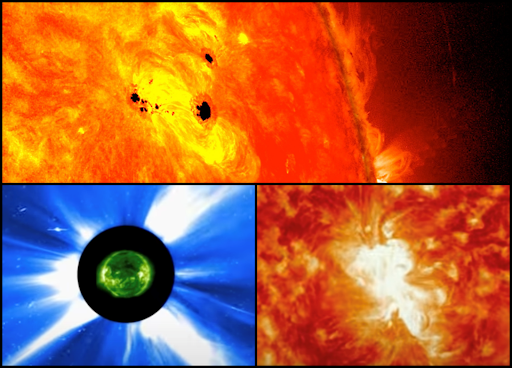
    Three views of the Sun shown through the eyes of different space missions. The top image shows dark sunspots on the Sun, the bottom left shows the Sun's corona flaring out into space, and the bottom right shows the Sun's burning plasma surface.
    Space weather is an important part of the Sun’s interaction with the space around it. Scientists called heliophysicists study these phenomena to help us better understand how and why it happens, and the effects it can have on the rest of our solar system.

    As the Sun enters a period of heightened activity, students now have a new way to explore its powerful effects on Earth and space. NASA’s Heliophysics Education Activation Team (NASA HEAT), in collaboration with My NASA Data, has released a new set of classroom resources that invite students and educators to engage with real NASA mission data to study space weather phenomena in real time.

    Hands-On Learning with Real NASA Data

    Developed as part of NASA HEAT’s mission to increase awareness and understanding of heliophysics, these new materials help learners connect directly with the science of the Sun and its influence on the solar system. The resources include:

    • Lesson plans and mini-lessons for quick classroom engagement
    • Interactive web-based tools that let students visualize and analyze real mission data
    • StoryMaps, longer-form digital experiences that guide multi-day investigations into space weather events

    These activities draw from data collected by NASA’s Parker Solar Probe, the Solar Dynamics Observatory (SDO), and the European Space Agency’s Solar Orbiter, among others, giving students a chance to explore how scientists monitor and study the Sun’s behavior.

    Understanding Space Weather

    Space weather is driven by the Sun’s activity – its bursts of energy, radiation, and plasma that stream through space. When these events interact with Earth’s magnetic field, they can produce stunning auroras but also cause radio disruptions, satellite interference, and power grid issues.

    By engaging with these new resources, students can learn how NASA monitors and predicts these solar phenomena and why studying space weather is essential for keeping astronauts, spacecraft, and technology safe.

    Learning During Solar Maximum

    This launch comes at a perfect time. In late 2024, the Sun entered solar maximum, the most active part of its 11-year cycle, providing students a front-row seat to increased solar flares, sunspots, and coronal mass ejections. The new NASA HEAT and My NASA Data resources encourage educators to use this unique moment to deepen classroom discussions on magnetism, energy, and the Sun–Earth connection through observation and data-driven exploration.

    Inspiring Future Scientists

    Both NASA HEAT and My NASA Data, part of GLOBE Mission Earth (Global Learning and Observations to Benefit the Environment), are part of the NASA Science Activation (SciAct) program, which connects learners of all ages with authentic NASA science content, experts, and experiences. By bringing real-world data and current scientific phenomena into the classroom, these new tools empower students to think like scientists and see themselves as contributors to ongoing discovery.

    Explore the New Resources

    Details

    Last Updated

    Nov 24, 2025

    Editor
    NASA Science Editorial Team
  • NASA, NOAA Rank 2025 Ozone Hole as 5th Smallest Since 1992

    5 min read

    NASA, NOAA Rank 2025 Ozone Hole as 5th Smallest Since 1992

    While continental in scale, the ozone hole over the Antarctic was small in 2025 compared to previous years and remains on track to recover later this century, NASA and the National Oceanic and Atmospheric Administration (NOAA) reported. The hole this year was the fifth smallest since 1992, the year a landmark international agreement to phase out ozone-depleting chemicals began to take effect.

    At the height of this year’s depletion season from Sept. 7 through Oct. 13, the average extent of the ozone hole was about 7.23 million square miles (18.71 million square kilometers) — that’s twice the area of the contiguous United States. The 2025 ozone hole is already breaking up, nearly three weeks earlier than usual during the past decade.

    This map shows the size and shape of the ozone hole over the South Pole on the day of its 2025 maximum extent. Moderate ozone losses (orange) are visible amid areas of more potent ozone losses (red). Scientists describe the ozone “hole” as the area in which ozone concentrations drop below the historical threshold of 220 Dobson units.
    NASA Earth Observatory image by Lauren Dauphin, using data courtesy of NASA Ozone Watch and GEOS-5 data from the Global Modeling and Assimilation Office at NASA GSFC

    The hole reached its greatest one-day extent for the year on Sept. 9 at 8.83 million square miles (22.86 million square kilometers). It was about 30% smaller than the largest hole ever observed, which occurred in 2006, and had an average area of 10.27 million square miles (26.60 million square kilometers).

    “As predicted, we’re seeing ozone holes trending smaller in area than they were in the early 2000s,” said Paul Newman, a senior scientist with the University of Maryland, Baltimore County, and leader of the ozone research team at NASA’s Goddard Space Flight Center in Greenbelt, Maryland. “They’re forming later in the season and breaking up earlier. But we still have a long way to go before it recovers to 1980s levels.”

    NASA and NOAA scientists say this year’s monitoring showed that controls on ozone-depleting chemical compounds established by the Montreal Protocol and subsequent amendments are driving the gradual recovery of the ozone layer in the stratosphere, which remains on track to recover fully later this century.

    The ozone-rich layer acts as a planetary sunscreen that helps shield life from harmful ultraviolet (UV) radiation from the Sun. It is located in the stratosphere, which is found between 7 and 31 miles above the Earth’s surface. Reduced ozone allows more UV rays to reach the surface, resulting in crop damage as well as increased cases of skin cancer and cataracts, among other adverse health impacts.

    The ozone depletion process starts when human-made compounds containing chlorine and bromine rise high into the stratosphere miles above Earth’s surface. Freed from their molecular bonds by the more intense UV radiation, the chlorine and bromine-containing molecules then participate in reactions that destroy ozone molecules. Chlorofluorocarbons and other ozone-depleting compounds were once widely used in aerosol sprays, foams, air conditioners, and refrigerators. The chlorine and bromine from these compounds can linger in the atmosphere for decades to centuries.

    “Since peaking around the year 2000, levels of ozone-depleting substances in the Antarctic stratosphere have declined by about a third, relative to pre-ozone-hole levels,” said Stephen Montzka, a senior scientist with NOAA’s Global Monitoring Laboratory

    As part of the 1987 Montreal Protocol, countries agreed to replace ozone-depleting substances with less harmful alternatives.

    “This year’s hole would have been more than one million square miles larger if there was still as much chlorine in the stratosphere as there was 25 years ago,” Newman said.

    Still, the now-banned chemicals persist in old products like building insulation and in landfills. As emissions from those legacy uses taper off over time, projections show the ozone hole over the Antarctic recovering around the late 2060s.

    NASA and NOAA previously ranked ozone hole severity using a time frame dating back to 1979, when scientists began tracking Antarctic ozone levels with satellites. Using that longer record, this year’s hole area ranked 14th smallest over 46 years of observations.

    Factors like temperature, weather, and the strength of the wind encircling Antarctica known as the polar vortex also influence ozone levels from year to year. A weaker-than-normal polar vortex this August helped keep temperatures above average and likely contributed to a smaller ozone hole, said Laura Ciasto, a meteorologist with NOAA’s Climate Prediction Center.

    Researchers monitor the ozone layer around the world using instruments on NASA’s Aura satellite, the NOAA-20 and NOAA-21 satellites, and the Suomi National Polar-orbiting Partnership satellite, jointly operated by NASA and NOAA.

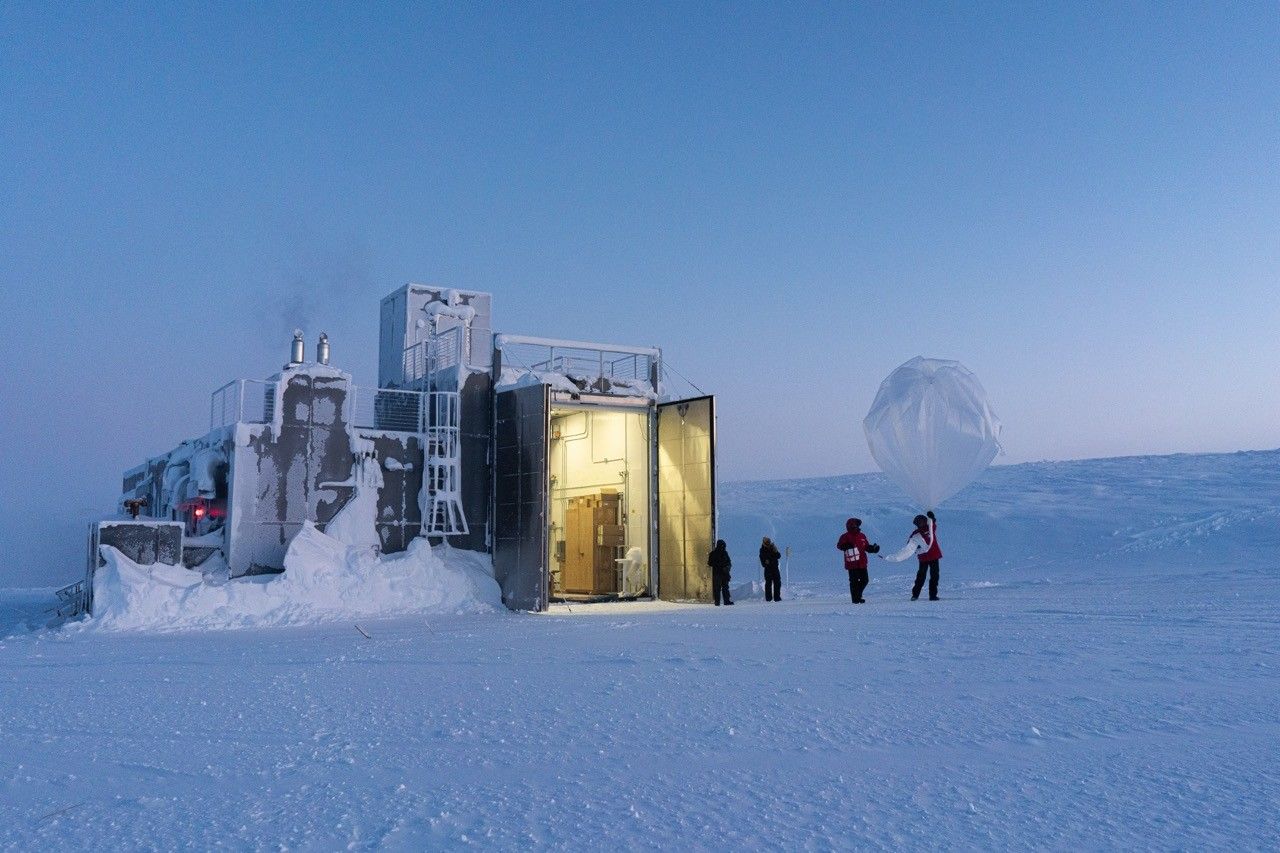
    NOAA scientists also use instruments carried on weather balloons and upward-looking surface-based instruments to measure stratospheric ozone directly above the South Pole Atmospheric Baseline Observatory. Balloon data showed that the ozone concentration reached its lowest value of 147 Dobson Units this year on Oct. 6. The lowest value ever recorded over the South Pole was 92 Dobson Units in October 2006.

    a partially snow encased metal building with a large open door to a utility space sits in the background of wholly snow covered landscape with two people holding onto a translucent plastic looking balloon which is roughly the diameter of the person holding it.
    NOAA scientists launch a weather balloon carrying an ozonesonde near the South Pole in September 2025.
    Simeon Bash/IceCube – courtesy of NOAA

    The Dobson Unit is a measurement that indicates the total number of ozone molecules present throughout the atmosphere above a certain location. A measurement of 100 Dobson Units corresponds to a layer of pure ozone 1 millimeter thick — about as thick as a dime — at standard temperature and pressure conditions.

    View the latest status of the ozone layer over the Antarctic with NASA’s ozone watch.

    By Sally Younger

    NASA’s Earth Science News Team

    News Media Contacts:

    Elizabeth Vlock
    NASA Headquarters, Washington
    202-358-1600
    elizabeth.a.vlock@nasa.gov

    Peter Jacobs
    NASA’s Goddard Space Flight Center, Greenbelt, Md.
    301-286-3308
    peter.jacobs@nasa.gov

    Theo Stein
    NOAA Communications
    303-819-7409
    theo.stein@noaa.gov

    About the Author

    Sally Younger

    Details

    Last Updated

    Nov 24, 2025

    Related Terms

  • NASA Citizen Science Toolkit for Librarians

    2 min read

    NASA Citizen Science Toolkit for Librarians

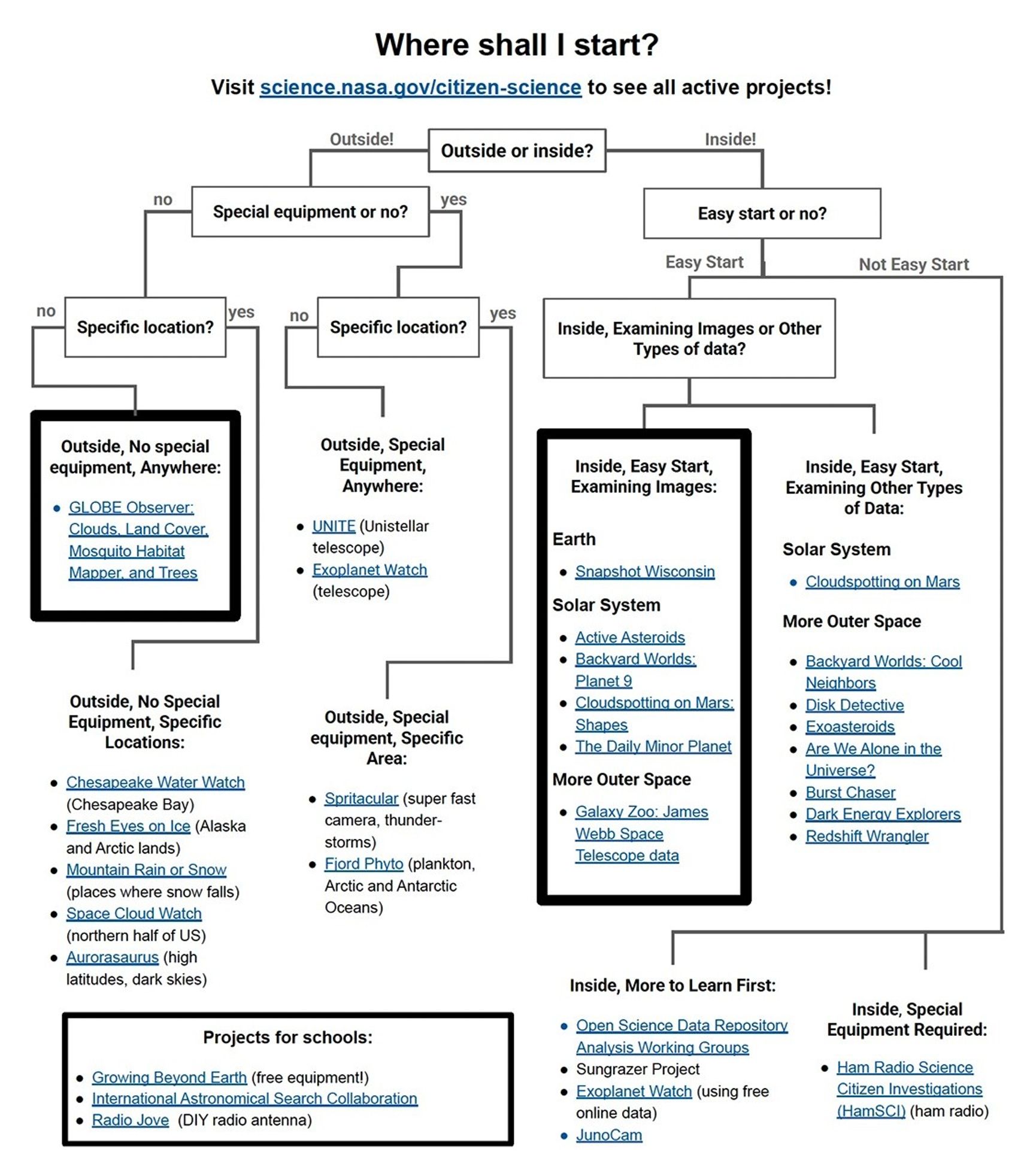
    Librarians: NASA Citizen Science has something for you!

    Our new Toolkit for Librarians can help you share NASA citizen science opportunities with your patrons and community members. Rural and urban libraries, informal educators, youth group leaders, and retirement community coordinators can all benefit from this resource. Together, we can open the door for more people to join the fun, learning, and thrill of doing NASA science.  

    The toolkit prepares a program leader to lead a NASA Science event for people ages 8 and up. The toolkit includes: 

    • A guide to help you prepare for the event, from choosing and equipping the space, to becoming familiar with the citizen science project that will be the focus of the event
    • An editable 8.5” by 11” poster to advertise your event
    • A model agenda to follow during your event
    • A handout for you and your participants to help you explore NASA-sponsored citizen science project opportunities 

    The toolkit creators, Sarah Kirn (Participatory Science Strategist, NASA, from the Gulf of Maine Research Institute) and Kara Reiman (librarian), together with NASA’s Citizen Science Officer Marc Kuchner, also recorded a video walk-through of this Toolkit. 

    “I appreciate this so much!” said one participant. “I have started Citizen Science Kits for circulation over this past year and am excited to share new opportunities with our patrons!”

    “Living in a very rural and primarily native community, the kids here are limited with their nearby opportunities, so sharing this with them is a huge win…” said another.

    Flowchart sequencing which citizen science projects could be interesting for you.
    Which NASA citizen project is best for you? You’ll find all these projects at science.nasa.gov/citizen-science, and you’ll find more resources like this in our Toolkit for Librarians!
    Sarah Kirn, GMRI + Marc Kuchner, NASA

    Details

    Last Updated

    Nov 24, 2025

    Related Terms

  • City Lights and Atmospheric Glow

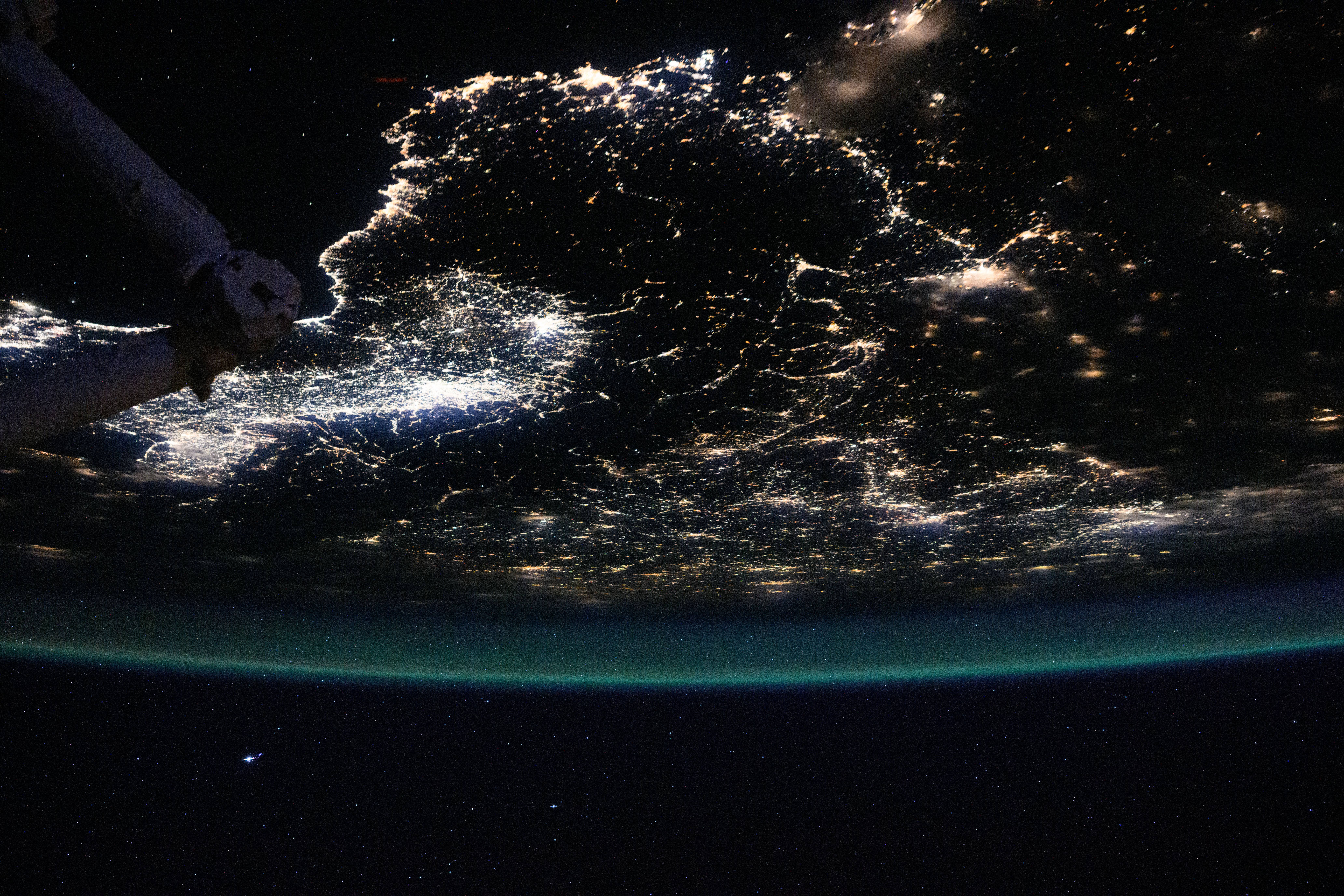
    Earth is a dark sphere with a glowing green border in this photo. We can only see one portion of it; in this photo’s orientation, we’re looking at the “bottom” of Earth’s sphere. City lights shine brightly at middle left; they are more dispersed throughout the rest of Earth that’s visible. Part of the space station is just barely visible at top left.
    JAXA/Kimiya Yui

    JAXA (Japan Aerospace Exploration Agency) astronaut Kimiya Yui captured this photo of southern Europe and the northwestern Mediterranean coast from the International Space Station as it orbited 261 miles above Earth on Aug. 30, 2025. At left, the Po Valley urban corridor in Italy shines with the metropolitan areas of Milan and Turin and their surrounding suburbs.

    Crew members aboard the orbital lab have produced hundreds of thousands of images of the land, oceans, and atmosphere of Earth, and even of the Moon through Crew Earth Observations. Their photographs of Earth record how the planet changes over time due to human activity and natural events. This allows scientists to monitor disasters and direct response on the ground and study a number of phenomena, from the movement of glaciers to urban wildlife.

    Image credit: JAXA/Kimiya Yui