Tag: JAXA

  • JAXA Astronaut Noguchi's Next ISS Mission Logo

    JAXA Astronaut Noguchi’s Next ISS Mission Logo

    Last Updated:
    January 10, 2019

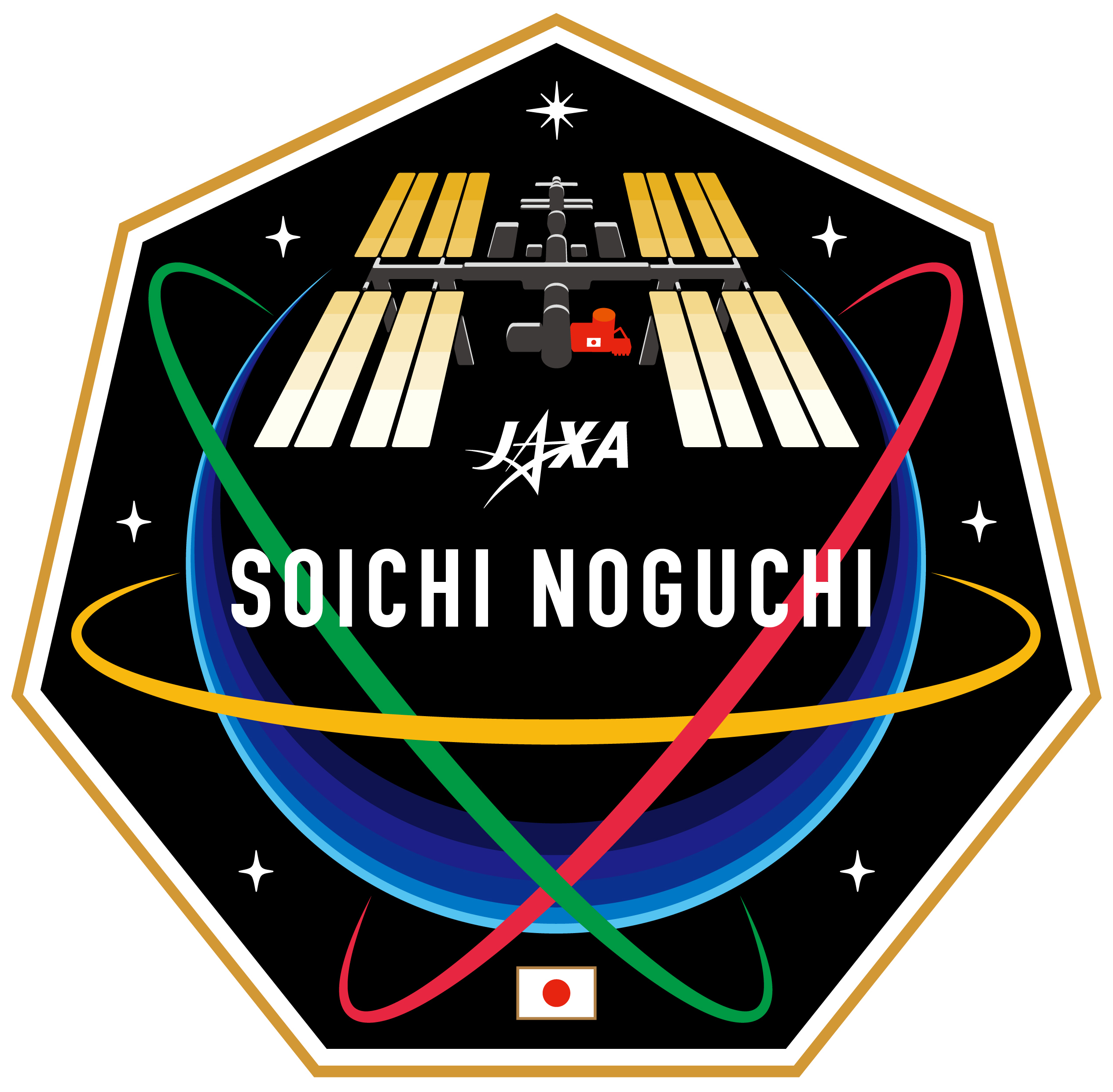
    Three rings around Earth represent “turning point” to the new era of space exploration, “challenge” for the next-generation spaceship as the first Japanese person, and “2020” which has important missions such as ISS long-duration mission of a Japanese astronaut, launch of Japanese new flagship rocket ”H3”, and Hayabusa2 return. Intersections of the rings symbolizes the bright future of Japan and Earth, as well as ISS and the Japanese Experiment Module “Kibo” heading to the future.

    The heptagon and seven stars, resembling JAXA’s seven astronauts, indicate the firm will to support astronaut Noguchi as ”Team Japan”. The shining star at the top represents Astronaut Noguchi leading humankind to the era of deep space exploration.

    JAXA Astronaut Noguchi’s Next ISS Mission Logo

    Let’s block ads! (Why?)

  • Report from Kibo-ABC Workshop at the 25th APRSAF in Singapore

    Report from Kibo-ABC Workshop at the 25th APRSAF in Singapore

    Last Updated: December 12, 2018

    The Kibo-ABC workshop, co-chaired by Mr. Cheng Hai Tan from SSTA and Mr. Fumiaki Tanigaki from JAXA, was held on November 6 at the Sheraton Towers Singapore. It was organized under the Space Environment Utilization Working Group (SEUWG), and the 25th session of the Asia-Pacific Regional Space Agency Forum (APRSAF-25). Thirty-five participants from twenty organizations in fourteen countries attended. While Kibo-ABC initiative members are continuing the monthly WEB meeting, this workshop also provides opportunities for face-to-face meetings.

    Program [PDF: 274KB]

    Kibo-ABC Workshop at APRSAF-25 (Credit: JAXA)

    Various ongoing programs of Kibo-ABC member countries were actively discussed at the meeting. One highlight activity was Asian Try Zero-G 2018 (ATZ-G 2018) which was performed onboard ISS/Kibo by astronaut Norishige Kanai in February 2018. In addition to the onboard experiment results, the achievement of improvements from previous ATZ-G programs were reviewed and discussed for example, the first attempt to launch experiment tools dedicated for the ATZ-G experiment to ISS/Kibo so that proposers were able to apply a wider range of experiment ideas. Another example was having various feedback opportunities for proposers such as an explanation of space customized experiment procedures, real-time observation of onboard experiment at the Kibo Mission Control Room in JAXA Tsukuba Space Center, giving a special lecture and having an experiment result meeting with the astronaut Norishige Kanai. It was also reported that the number of applications for the ATZ-G 2018 increased threefold compared to the previous ATZ-G. All Kibo-ABC members acknowledged that such improvements have made the ATZ-G a more attractive program and recognized the importance of further improvements. Participants of the workshop enjoyed the movie of the ATZ-G 2018.

    Kibo-ABC Workshop at APRSAF-25 (Credit: JAXA)

    Asian Try Zero-G 2018 (Credit: JAXA)

    Active discussion for Asian Herb in Space (AHiS) and fee-based parabolic flight opportunities were conducted as well.
    At the end of the workshop, JAXA introduced a new program of Kibo utilization for Kibo-ABC countries “Robotics Programing Competition” with Int-Ball (Kibo’s internal drone) and Astrobee (NASA’s 1feet3 robot) to be performed under the Japan US Open Platform Partnership Program (JP-US OP3) from 2020. Details of the robot competition will be discussed at Kibo-ABC meetings.

    Int-Ball (Credit: JAXA)

    The result of the SEUWG was reported by Co-Chairs at the plenary session of the APRSAF-25 on November 8, 2018.

    Wire Top presentation

    [PDF: 948KB]

    Let’s block ads! (Why?)

  • Report from Space Environment Utilization Working Group (SEUWG) at the 25th APRSAF, in Singapore

    Report from Space Environment Utilization Working Group (SEUWG) at the 25th APRSAF, in Singapore

    Last Updated: December 11, 2018

    The 25th session of the Asia-Pacific Regional Space Agency Forum (APRSAF-25) was successfully convened at Sheraton Towers Singapore from November 6 to 9, 2018. The Space Environment Utilization Working Group (SEUWG) [PDF: 61KB] and the Kibo-ABC Workshop, co-chaired by Mr. Cheng Hai Tan from SSTA and Mr. Fumiaki Tanigaki from JAXA, were held.

    Co-Chairs of SEUWG (left: Mr.Tanigaki, right: Mr.Tan) (Credit: JAXA)

    At the keynote speech of the plenary session Dr. Hiroshi Yamakawa, president of JAXA, introduced Asian Try Zero-G 2018 (ATZ-G 2018) and described the great collaborative results of Kibo utilization in Asian countries. ATZ-G 2018 related activities were also mentioned by representatives of the Philippines, Singapore and Vietnam as well as upcoming Kibo utilization opportunities such as cube sat deployment by J-SSOD and protein crystallization. APRSAF-25 was successfully completed with the strong support of Singapore.

    Summary of the SEUWG: 6-7th November, 2018

    Program [PDF: 274KB]

    SEUWG at APRSAF-25 (Credit: JAXA)

    The SEUWG took place with 75 participants from 20 countries.

    The event started with country reports from Indonesia, Japan, Malaysia, New Zealand, the Philippines, Singapore, Thailand and Vietnam.

    On the 2nd day, professor Shinichi Nakasuka from the University of Tokyo presented the keynote “Micro/nano/pico-satellites for affordable space utilizations and international collaborations”. Participants acknowledged the advantages of J-SSOD and i-SEEP for small satellites through the presentation.

    Keynote Speech by Prof. Shinichi Nakasuka (Credit: JAXA)

    Following the keynote speech, representatives of various CubeSats to be deployed from J-SSOD actively discussed various topics, including the other experiment which uses ExHAM and in-flight radiation dosimeter.

    Dr. Xueliang Bai from the National University of Singapore (NUS) gave a presentation of SpooQy-1, 3U CubeSat to be deployed from ISS/Kibo. (Credit: JAXA)

    Professor Nakasuka gave technical advices to a young engineer of Surya Sat (Indonesia)at coffee break. (Credit: JAXA)

    Introduction of UBAKUSAT (Turkey), 3U CubeSat deployed from ISS/Kibo, by Mr. Ali Baygeldi. (Credit: JAXA)

    Principal Investigator and Co-investigator of SOFPADS experiment, Dr. Noramaliza Binti Mohd Noor (right) and Dr. Fathinul Fikri Ahamd Saad (left) from University Putra Malaysia (UPM). (Credit: JAXA)

    During a special session at this year’s SEUWG, a variety of speakers discussed ISS commercialization. Following the introduction of the special session by Mr. Cheng Hai Tan (SSTA), two service providers for small satellite deployment from Kibo explained the value of CubeSat development for Asian countries, and their perspective of future business. After discussing Russia’s commercialization program and UNOOSA’s contribution, Mr. Kazuyoshi Kawasaki (JAXA) introduced the collaboration with private sectors for international space exploration.

    The result of the SEUWG was reported by Co-Chairs at the plenary session of the APRSAF-25 on November 8, 2018.

    Wire Top presentation

    [PDF: 1MB]

    Let’s block ads! (Why?)

  • Kibo-ABC Members Participated in the Special Lecture of the "Protein Crystal Growth" Experiment

    Kibo-ABC Members Participated in the Special Lecture of the “Protein Crystal Growth” Experiment

    Last Updated: November 29, 2018

    Dr. Yoshizaki

    Dr. Yoshizaki (Credit: JAXA)

    Dr. Izumi Yoshizaki, the project manager of the JAXA Protein Crystal Growth project (JAXA PCG), joined the Kibo-ABC regular monthly web conference on September 27th to give a special lecture on the PCG experiment.
    The goal of the JAXA PCG project is to “contribute to society by determining the precise protein structure from high quality crystals obtained onboard ISS”.

    The expected outcomes of this project are:

    • Drug design by pharmaceutical company
    • Industrial enzyme design
    • New findings in biology/biochemistry by academic users.

    Microgravity suppresses solution flow (convection) and allows protein crystals to grow in a stable environment with less impurities delivered to the crystal surfaces. This is why we often obtain better crystals in space (see Figure 1).

    Wire top experiment team

    Fig.1 Crystals Obtained in Microgravity (Credit: JAXA)

    “Counter Diffusion method” shown in Figure 2 is used for PCG experiment.
    One end of a glass capillary containing a protein solution is sealed with clay and a silicon tube filled with agarose gel is attached to the other end. The gel side is immersed in a crystallization solution in a sealed container. As both the crystallization and the protein solutions diffuse through the agarose gel, concentration gradient is gradually formed in the capillary. The gradient changes over time. Within one to two months of the incubation period, concentration gradient is gradually formed in the capillary. The gradient changes over time. Within one to two months of the incubation period, crystals are grown at the appropriate concentration area in the capillary.
    Currently, four or five space experiments per year are available. An experiment temperature of 20 degree C or 4 degree C can be selected. The crystals obtained in Kibo are subjected to X-ray analysis after sample return from the ISS.

    Wire top experiment team

    Fig.2 Counter diffusion method (Credit: JAXA)

    PROTEIN CRYSTAL GROWTH On the International Space Station

    FAQ

    Q. Have you presented these works at international medical/biotech conferences?

    No, not in those conferences. I presented something similar at the ISS R&D conference 2018.

    Q. How long does it take for ground preparation before launch (sample check etc.)?

    The time for ground preparation is usually half a year if the samples are well prepared, and the crystallization conditions are well established.

    Q. If we already know the crystallization conditions, will it take less time?

    We still need to modify the crystallization condition for counter diffusion method which takes about 1 month. Moreover, we have to go over the paperwork including the safety review, which takes four months before launch.

    Let’s block ads! (Why?)

  • Presentations to be delivered at AMS 2018 on the current status of Kibo utilization research and the experimental equipment on board

    Presentations to be delivered at AMS 2018 on the current status of Kibo utilization research and the experimental equipment on board

    Last Updated:
    November 12, 2018

    The Japan Aerospace Exploration Agency (JAXA) will make two presentations at the 12th Asian Microgravity Symposium (AMS 2018) which will be held in Zhuhai of Guangdong, China, from 12th to 16th of November, 2018 on the current status of research utilizing the Japanese Experiment Module “Kibo” and the experimental equipment on board.

    Current Status of the Investigation on Materials Flammability under Microgravity in “FLARE” Project

    • Presenter: Masao Kikuchi, JAXA (on November 13)
    • A presentation will be made on the current status of the project Flammability Limits at Reduced Gravity Experiment (FLARE) -(Name of the experiment theme: Evaluation of solid material flammability in microgravity as a basis for fire safety in space), which will have experiments on board “Kibo” from 2019 to 2020.
    • Click here for the presentation paper.
    What is the FLARE project?

    Fire safety, one of the top priorities in human space activity, has become increasingly important as the deep space exploration extends to the moon and beyond in full scale. The purpose of the FLARE project is to scientifically clarify the role which gravity plays on combustion of solid materials such as ignition and flame spread by utilizing various solid materials and the unique environment of the International Space Station (ISS) without natural convections.

    Results of Thermophysical Property Measurements of Oxide Melts at Extremely High Temperature Using Electrostatic Levitation Furnace (ELF) onboard ISS-KIBO

    • Presenter: Hideki Saruwatari, JAXA (on November 15)
    • The presentation is intended to introduce the ELF installed on the Japanese Experiment Module “Kibo” and the result of measurements of the density, viscosity, and surface tension of the ultra-high temperature oxides acquired by using the ELF.
    • Click here for the presentation paper.
    • Click here for further information of the ELF.

    *All times are Japan Standard Time (JST)

    Let’s block ads! (Why?)

  • Reentry of KOUNOTORI7 was confirmed

    Reentry of KOUNOTORI7 was confirmed

    Last Updated: November 11, 2018

    The reentry of the H-II Transfer Vehicle KOUNOTORI7(HTV7) into Earth’s atmosphere was comfirmed.

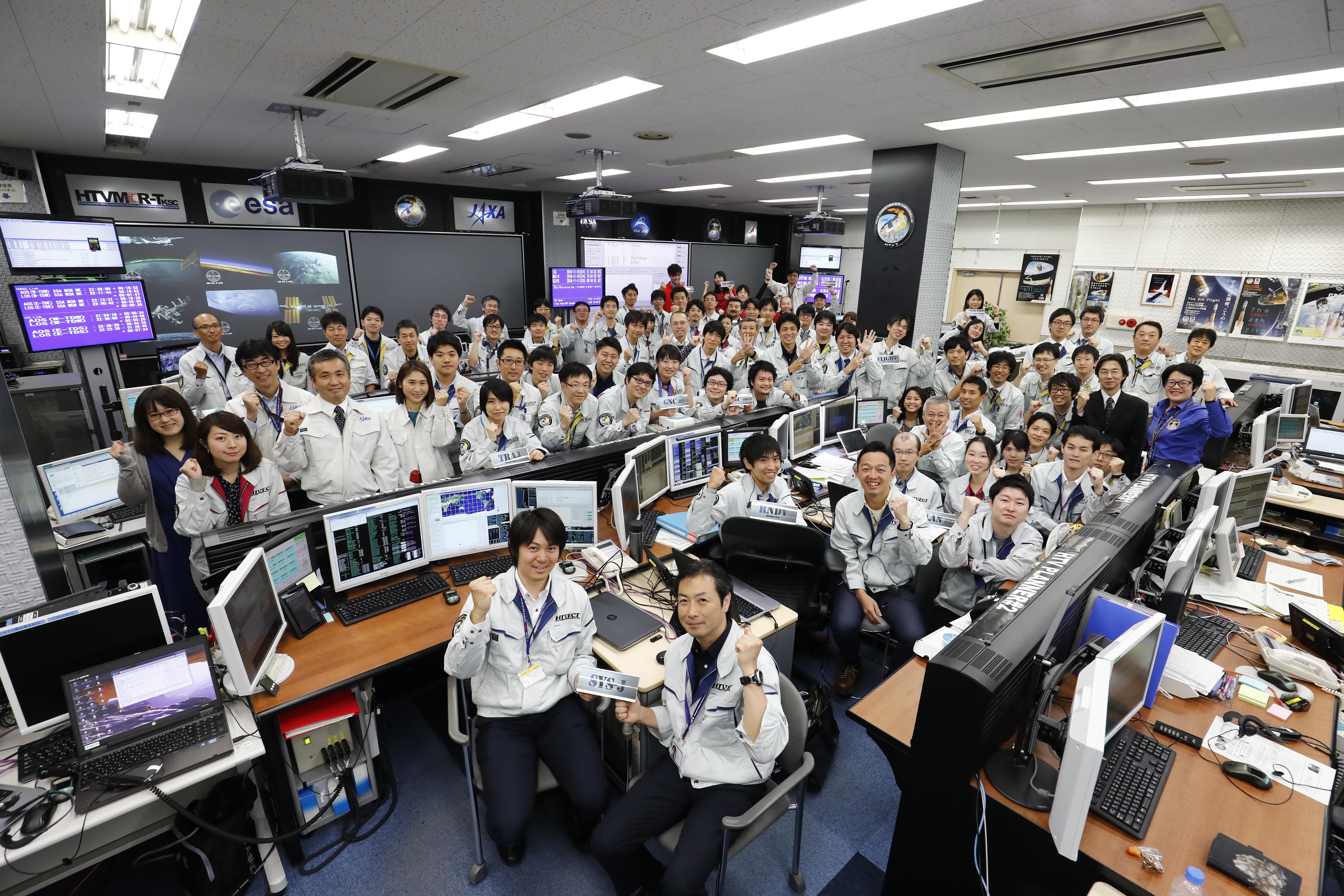
    「こうのとり」7号機再突入時のHTV運用管制室の様子(出展:JAXA)

    「こうのとり」7号機のミッション成功を祝して記念撮影を行うHTV関係者(出展:JAXA)

    HTV Mission Control Room during the reentry of KOUNOTORI7 at the Tsukuba Space Center (Credit: JAXA)

    *All times are Japan Standard Time (JST. UTC + 9 hours)

    Let’s block ads! (Why?)

  • KOUNOTORI7 finished final de-orbit maneuver for reentry

    KOUNOTORI7 finished final de-orbit maneuver for reentry

    Last Updated: November 11, 2018

    At 6:14 a.m. on November 11, KOUNOTORI7(HYV7) performed the third de-orbit maneuver for reentry into Earth’s atmosphere. All maneuver were completed norminal.

    *All times are Japan Standard Time (JST. UTC + 9 hours)

    Let’s block ads! (Why?)

  • KOUNOTORI7 Leaves the ISS

    KOUNOTORI7 Leaves the ISS

    Last Updated: November 8, 2018

    KOUNOTORI7 was fastened to Harmony

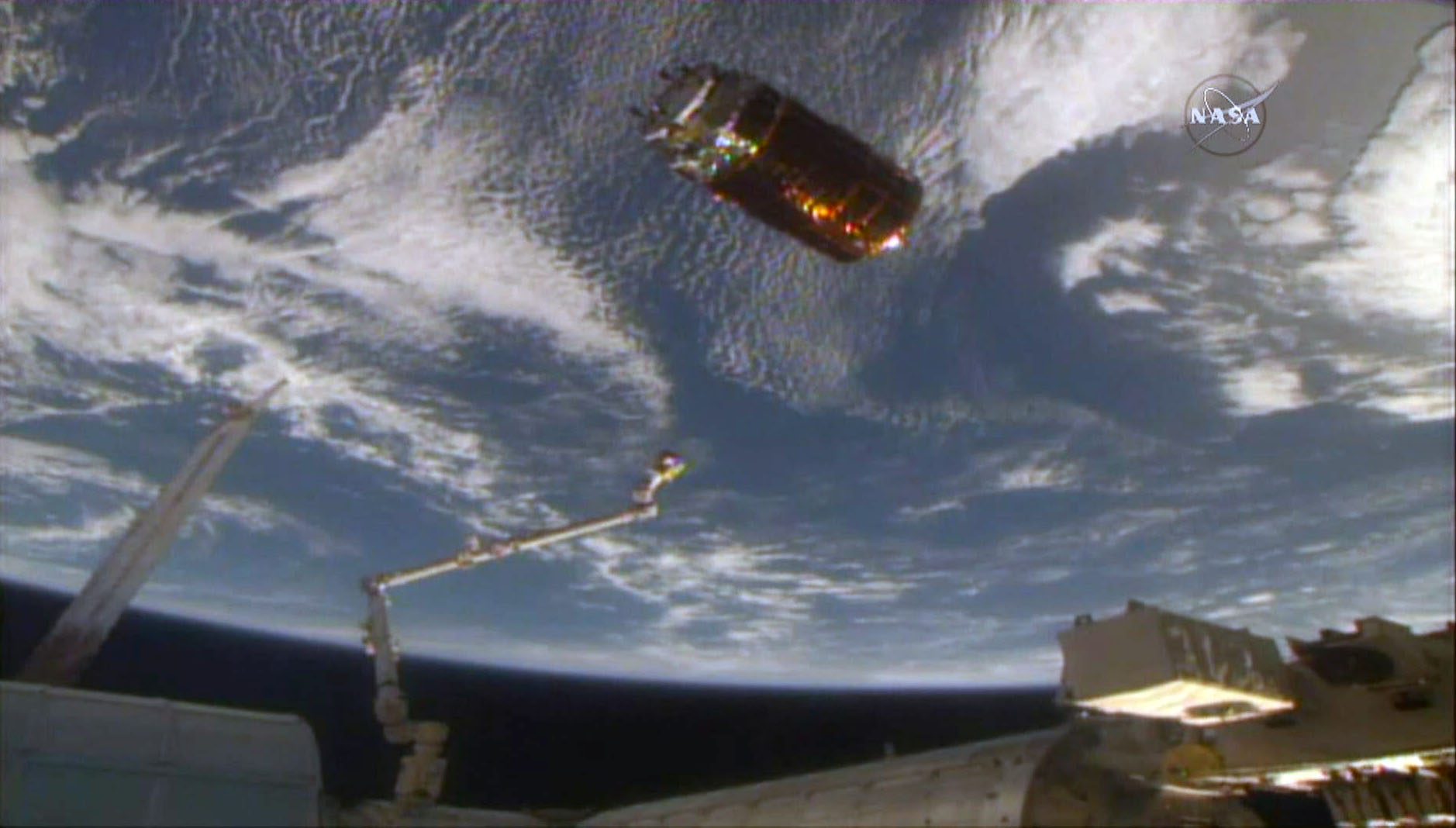
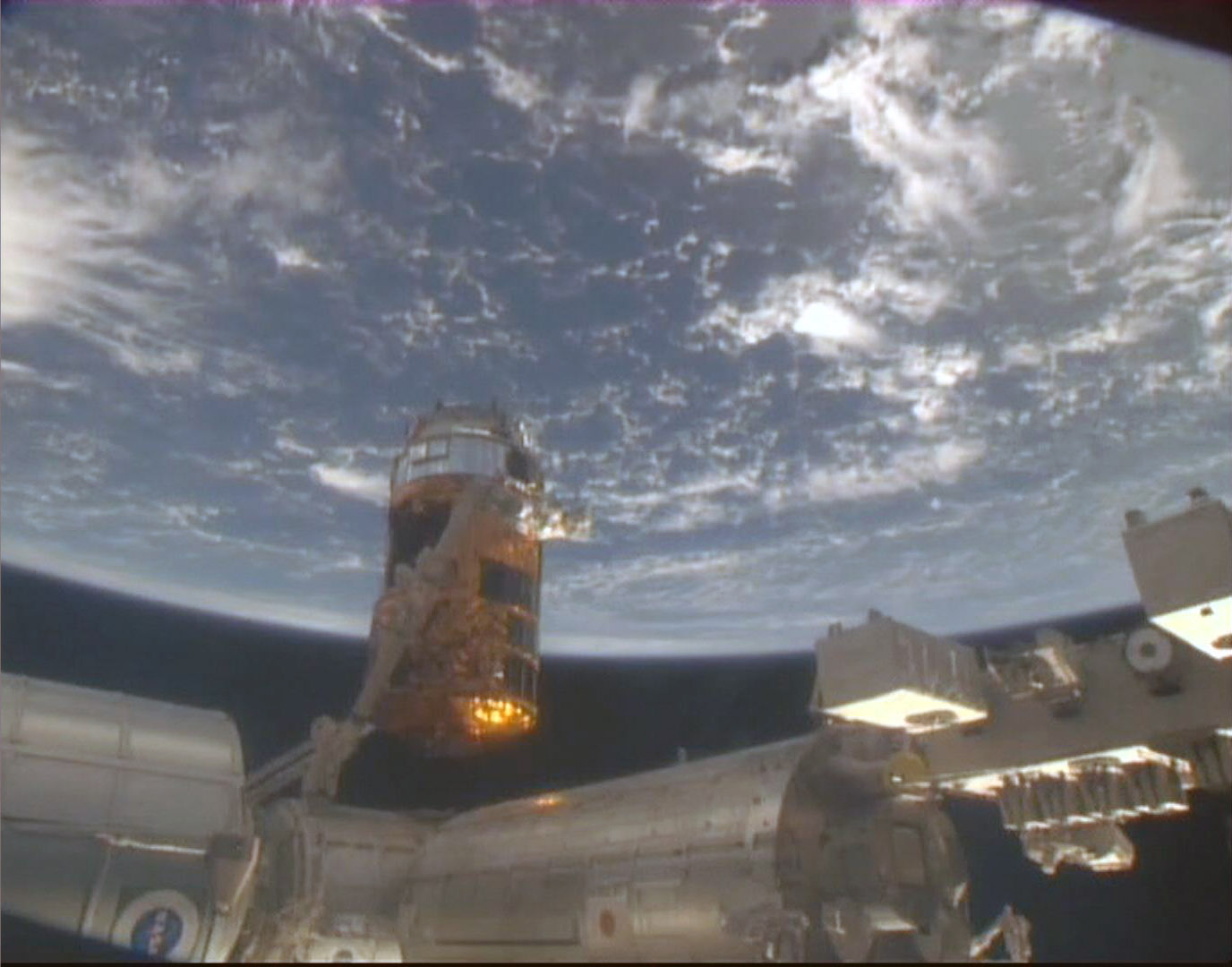
    KOUNOTORI7 being released by the SSRMS (Credit: JAXA/NASA)

    Captured by the Space Station Remote Manipulator System (SSRMS), KOUNOTORI7(HTV7) was moved to the releasing point below the station and released into orbit at 01:50 a.m., November 8.

    After the HTV7 release, between the ISS, HTV Flight Control Room at Tsukuba Space Center, and Jonson Space Center (JSC) Mission Control Center had a following
    nice conversation.

    • ESA Astronaut Alexander Gerst :
      “arigatou gozaimasu” (Thank you very much) from ISS Expedition 57 crew、and “kio tsukete” (take care.)
    • HTV FD (Flight Director) Ms. Nakano:
      “arigatou gozaimasu”(Thank you very much) from HTV FD.
    • JSC CAPCOM:
      “utsukushii fune arigatou gozaimashita” (Thank you very much for beautiful ship) “soshite sayonara”(and goodbye.)

    *All times are Japan Standard Time (JST. UTC + 9 hours)

    Let’s block ads! (Why?)

  • Malaysian Samples Handed Over to JAXA, Exposure Experiments on ExHAM starts next spring

    Malaysian Samples Handed Over to JAXA, Exposure Experiments on ExHAM starts next spring

    Last Updated: November 8, 2018

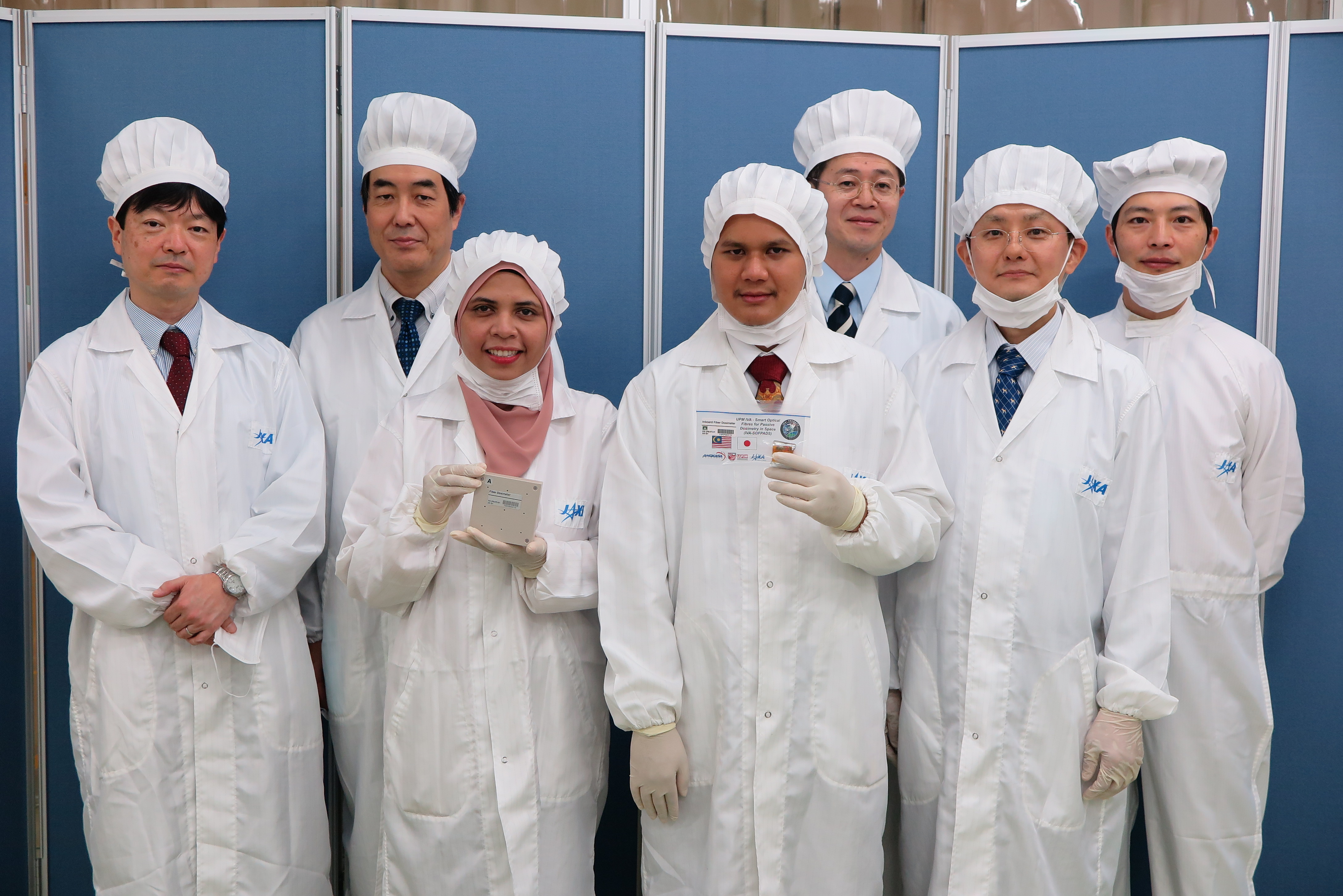
    On November 2, 2018, Dr. Noramaliza Mohd Noor, a senior lecturer of Universiti Putra Malaysia, handed over samples of the Material Exposure Experiment to JAXA at the Tsukuba Space Center, while the researchers, ground operators and other stakeholders to the experiment were observing the sample inspection. The samples will be prepared for launch to the International Space Station (ISS) early next year.

    The sample handover is based on the agreement of Kibo utilization for long-term material exposure experiment using Exposed Experiment Handrail Attachment Mechanism (ExHAM) on Kibo Exposed Facility, along with inner vehicle experiment in Kibo pressurized module using Passive Dosimeter for Life-science Experiments in Space (PADLES). In October 2018, JAXA and Universiti Putra Malaysia (UPM) finalized this agreement.

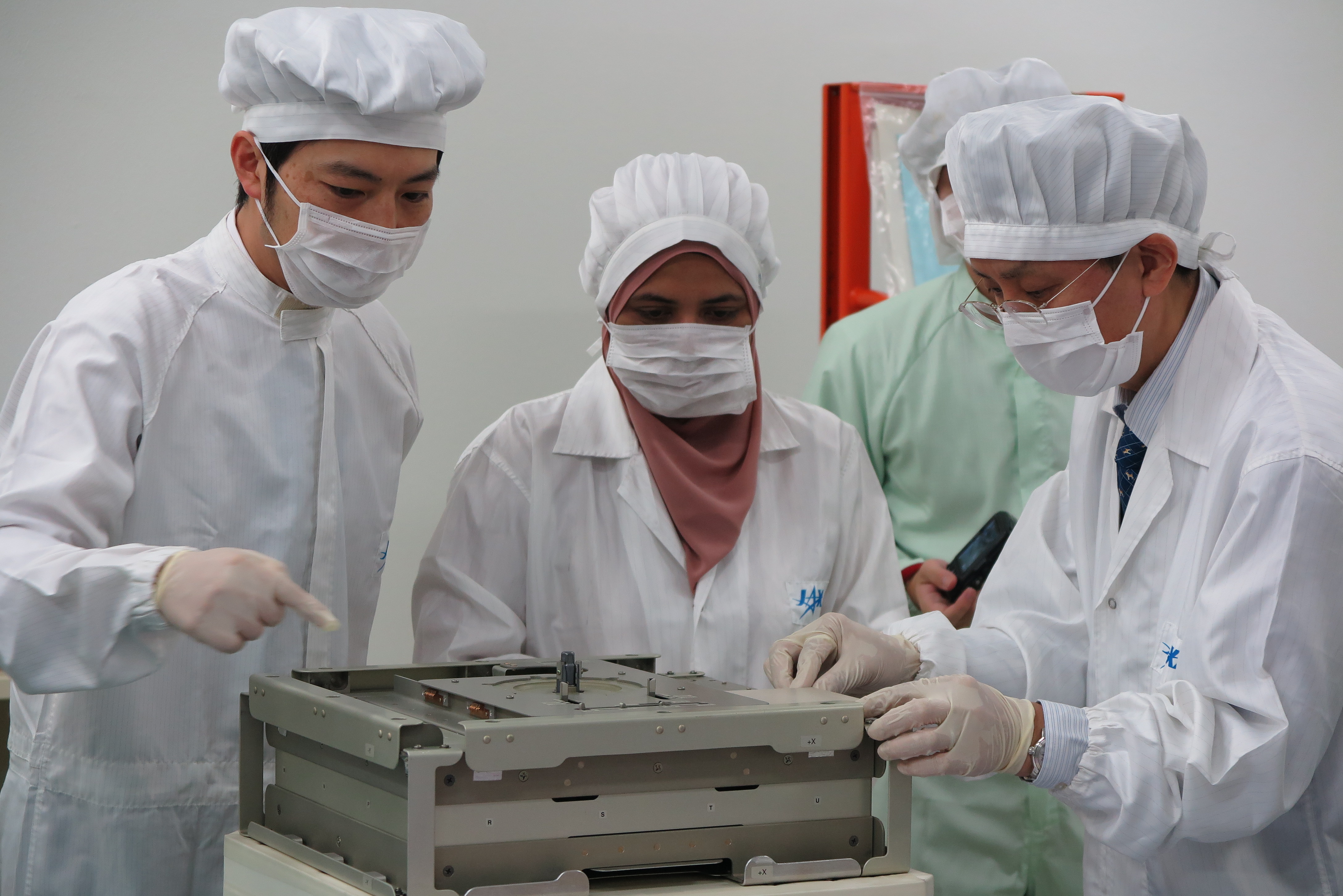
    On November 2, two researchers of UPM hand-carried the samples to the Tsukuba Space Center, then a sample was attached to the ExHAM’s mockup.

    Fit check attaching to the ExHAM mockup, November 2, 2018 (Credit: JAXA)

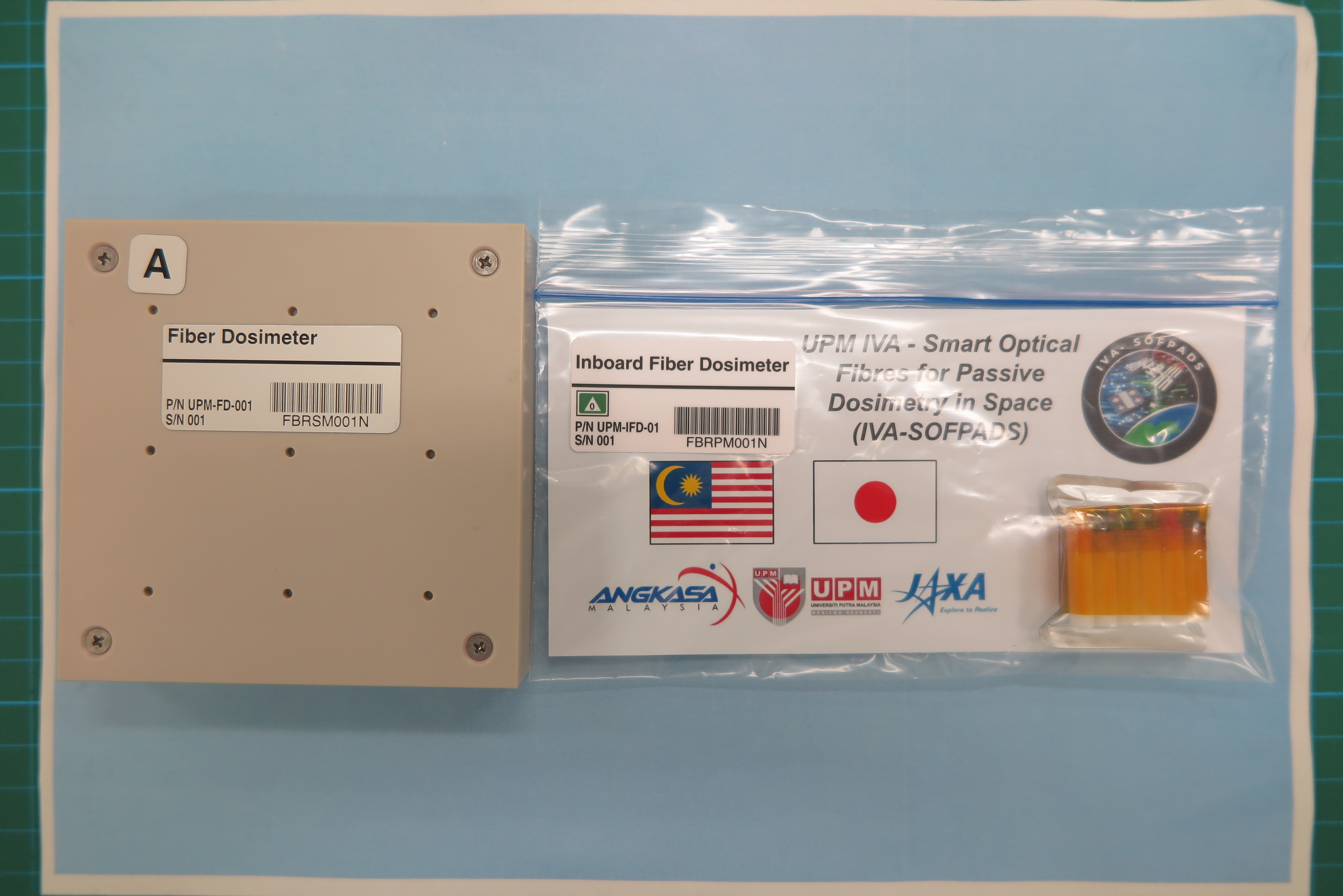
    Prepared flight samples of UPM, November 2, 2018 (Credit: JAXA)

    With samples handed over, November 2, 2018 (Credit: JAXA

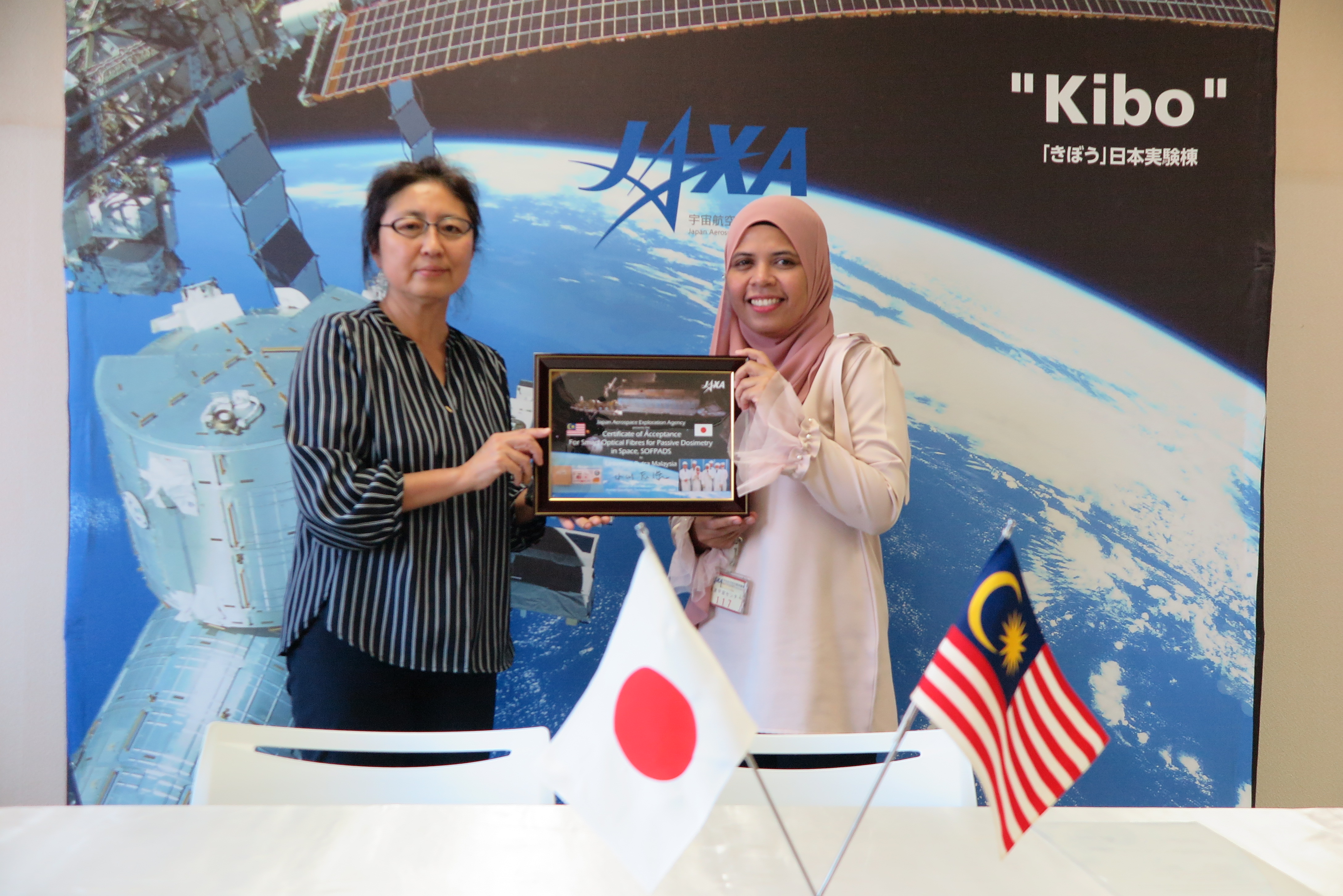
    After all verifications were completed, the director of JAXA, Ms. Shiho Ogawa presented the certificate of acceptance to Dr. Noor. The samples will be shipped to the United States for delivery to ISS in February 2018.

    Ms. Shiho Ogawa, Director of JEM Utilization Center, JAXA and Dr. Noramaliza Mohd Noor, Senior lecturer of UPM, with the certificate of acceptance, November 2, 2018 (Credit: JAXA)

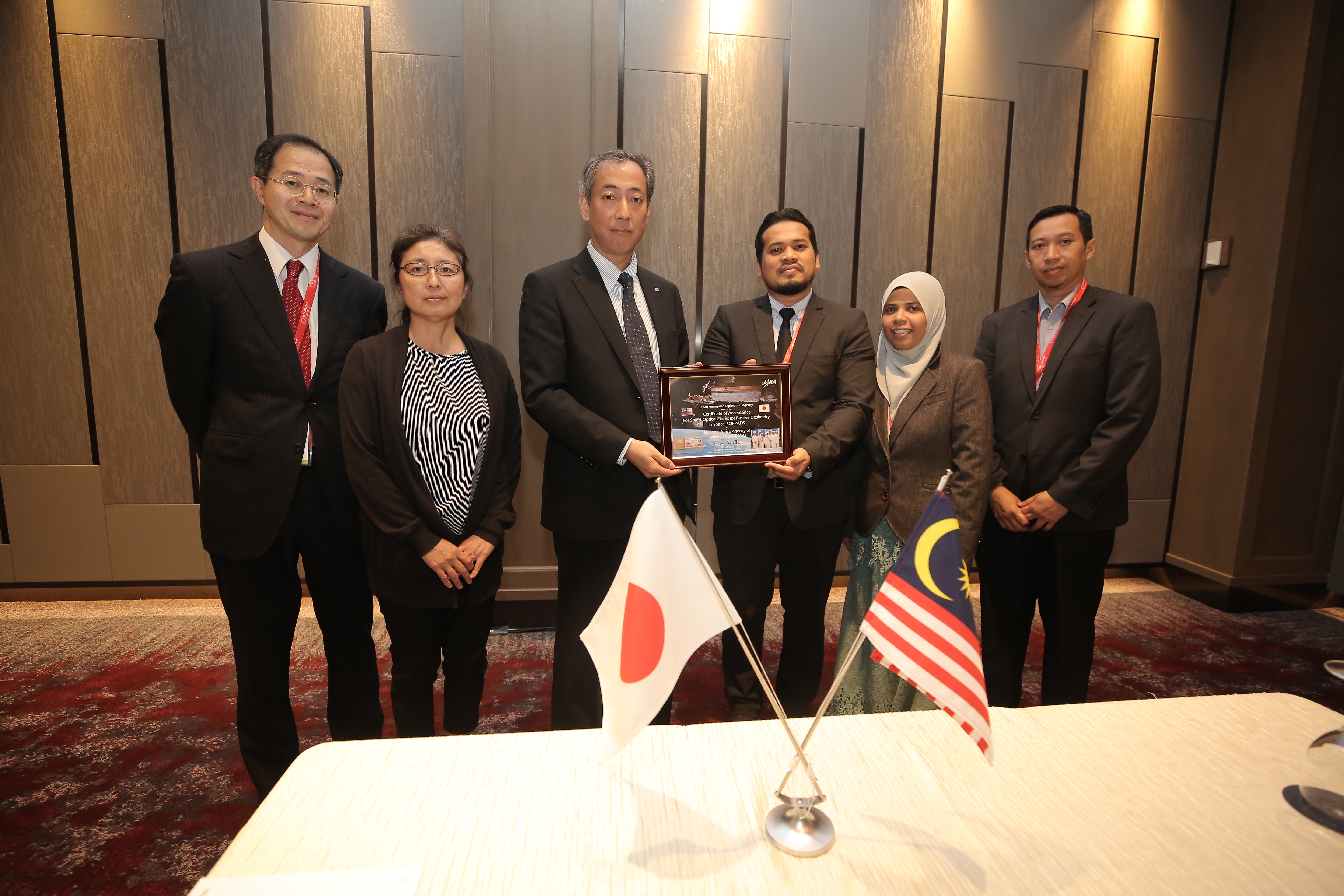
    During the APRSAF-25 sessions were held in Singapore this year, on November 7, the JAXA President Yamakawa praised the start of Kibo utilization cooperation with Malaysia, among relevant parties of ANGKASA and UPM.

    At APRSAF-25, with the certificate of acceptance, November 7, 2018 (Credit: JAXA)

    The experiment was proposed by the researchers of UPM to demonstrate utilization of the Smart Optical Fibres for Passive Dosimetry in Space (SOFPADS), which has been organizing under the leadership of the National Space Agency of Malaysia (ANGKASA). The passive dosimeter of optical fibres will be exposed in space under various conditions and stored afterward in the Kibo module with the JAXA Passive Dosimeter for Life-Science Experiments in Space (PADLES) for comparative analysis. After sample return to Earth, Malaysian researchers will verify the usability of the passive dosimeter in space.

    JAXA, who acts as only one of the ISS partners in Asian region, expects that the collaboration of Kibo utilization with Malaysia will contribute to development of space technologies in the Asia and promote a mutually beneficial relationship among the Asian space agencies.

    Let’s block ads! (Why?)
  • KOUNOTORI7 was unberthed from the nadir port of Harmony (Node 2) by the SSRMS

    KOUNOTORI7 was unberthed from the nadir port of Harmony (Node 2) by the SSRMS

    Last Updated: November 8, 2018

    KOUNOTORI7 was fastened to Harmony

    KOUNOTORI7 unberthed from the ISS by the SSRMS. (Credit: JAXA/NASA)

    KOUNOTORI7(HTV7) was unberthed from the nadir port of Harmony (Node 2) by the Space Station Remote Manipulator System (SSRMS) at 8:32 p.m., November 7.

    HTV7 will be moved to the releasing point below the station.

    *All times are Japan Standard Time (JST. UTC + 9 hours)

    Let’s block ads! (Why?)

  • The hatch of KOUNOTORI7 was closed

    The hatch of KOUNOTORI7 was closed

    Last Updated: November 7, 2018

    photo

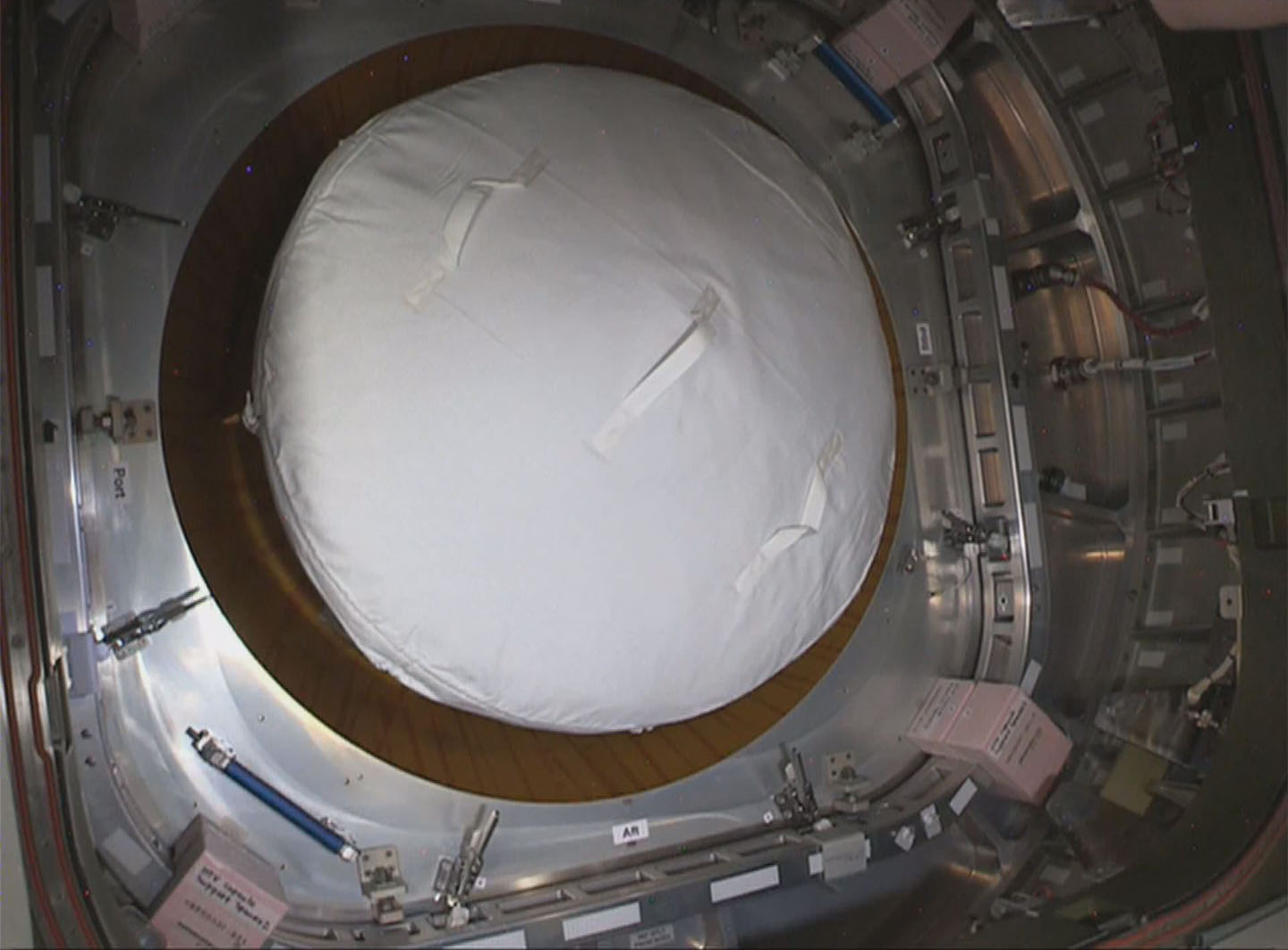
    Hatch of the HTV7 was closed. This hach is HRSC unique structue and including HRSC itself. HRSC is installed under the white cover. (Credit: JAXA/NASA)

    The KOUNOTORI7 hatch closure was confirmed at 0:26 a.m., November 7.

    *All times are Japan Standard Time (JST. UTC + 9 hours)

    Let’s block ads! (Why?)

  • MAXI's discovery and 200-day observations of MAXI J1535-571, one of the brightest X-ray novae of this century, are published in the astronomical journal of Japan!

    MAXI’s discovery and 200-day observations of MAXI J1535-571, one of the brightest X-ray novae of this century, are published in the astronomical journal of Japan!

    Last Updated:
    November 2, 2018

    Japan Aerospace Exploration Agency (JAXA)
    RIKEN
    Ehime University

    Summary

    A research group lead by Dr. Satoshi Nakahira, visiting researcher of JAXA from RIKEN, and Dr. Megumi Shidatsu, assistant professor at Ehime University, including other researchers in Japan carried out a 200-day observation for a new X-ray nova MAXI J1535-571 that had been discovered with the Monitor of All-sky X-ray Image (MAXI) mounted on the Exposed Facility of the Japanese Experiment Module “Kibo” of the International Space Station (ISS). An article summarizing the X-ray activities and research results was published in the on-line issue of September 11, 2018 of The Publications of the Astronomical Society of Japan.

    The MAXI J1535-571 was discovered on September 2, 2017 in the constellation Norma, and this source is now considered to be a black hole binary. Fifteen days later, the X-ray intensity increased by a factor of 100, five times higher than that of Crab Nebula. It is the highest among the X-ray novae discovered in this century and is ranked seventh in the entire observation history. The very bright X-ray of MAXI J1535-571 allowed us to investigate this peculiar X-ray nova with the short but repeated observations of MAXI, from the beginning through the ending of the activity.

    MAXI J1535-571 was also observed by many observatories in the world. The report on MAXI’s observation of the entire activity of the nova was swiftly published. The data shown in the report will help researchers to proceed with more detailed studies.

    Information on the Research Article

    Journal:Publications of the Astronomical Society of Japan

    Title:Discovery and state transitions of the new Galactic black hole candidate MAXI J1535-571

    Co-authors:Satoshi Nakahira, Megumi Shidatsu, Kazuo Makishima, Yoshihiro Ueda, Kazutaka Yamaoka, Tatehiro Mihara, Hitoshi Negoro, Tomofumi Kawase, Nobuyuki Kawai and Kotaro Morita

    *All times are Japan Standard Time (JST)

    Let’s block ads! (Why?)