Protein crystals grown in Kibo have returned to the ground (JAXA PCG experiment)
Last Updated: October 16, 2015
Samples of the protein crystals for the JAXA PCG experiment launched alongside Astronaut Kimiya Yui aboard the Soyuz TMA-17M spacecraft (43S) on July 23 have completed growth in space and were returned to Earth on September 12. The samples later arrived in Japan on September 14 for analysis.
Regarding this protein crystal growth experiment (JAXA PCG), Yui tweeted, “This experiment grows high quality protein crystals in microgravity. The samples were launched into space with me, and I handled them very gently as if the crystals were babies. The samples were then returned to Earth onboard Soyuz ahead of me for analysis. This experiment is expected to yield valuable results such as the development of new medicine.”
Returned protein crystals were handed over to JAXA at a facility of a cooperative research institute in Russia.
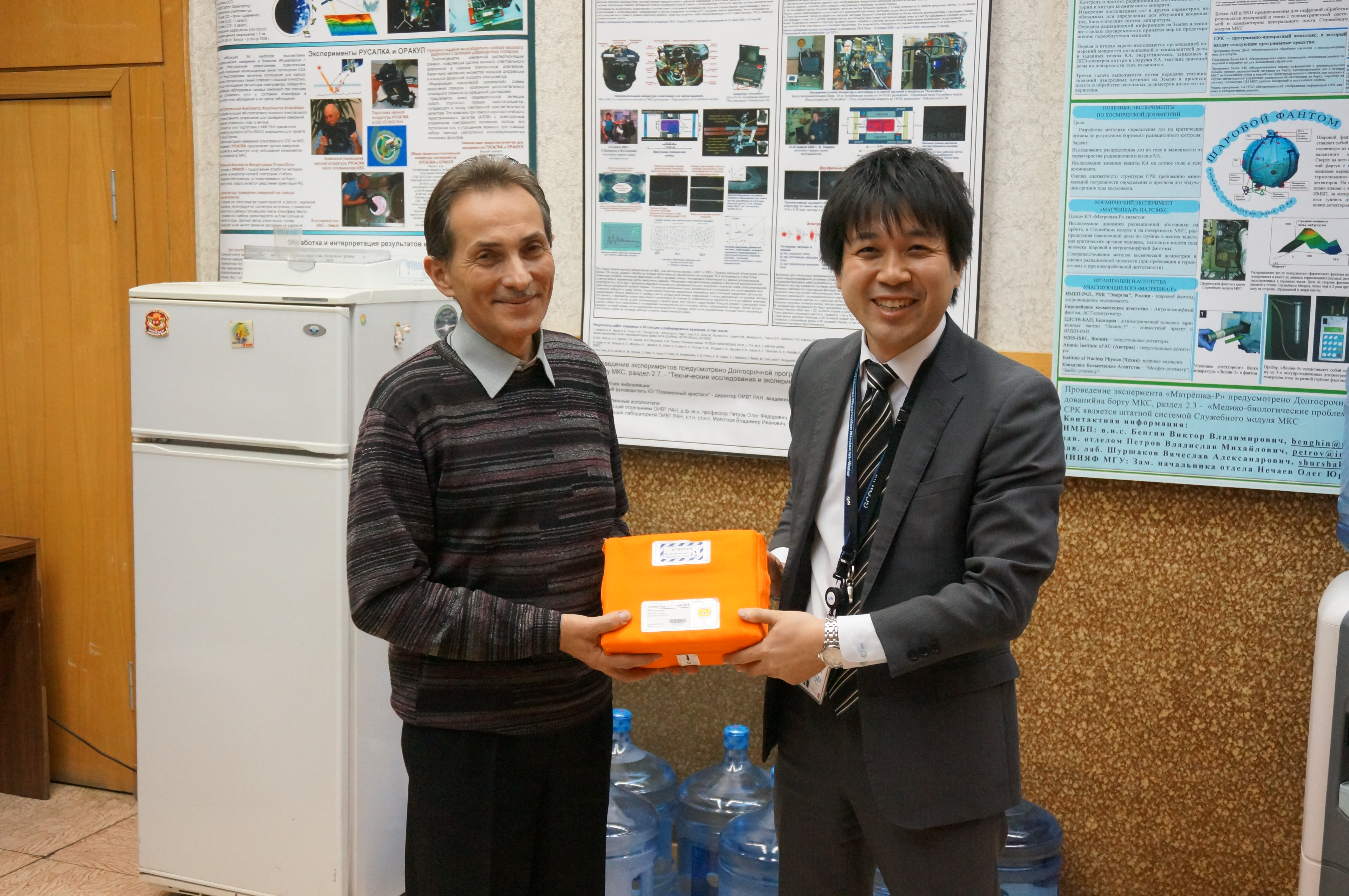
Sample handover in Russia (Left: Dr. Igor Srokin, technical manager of RKK Energia)
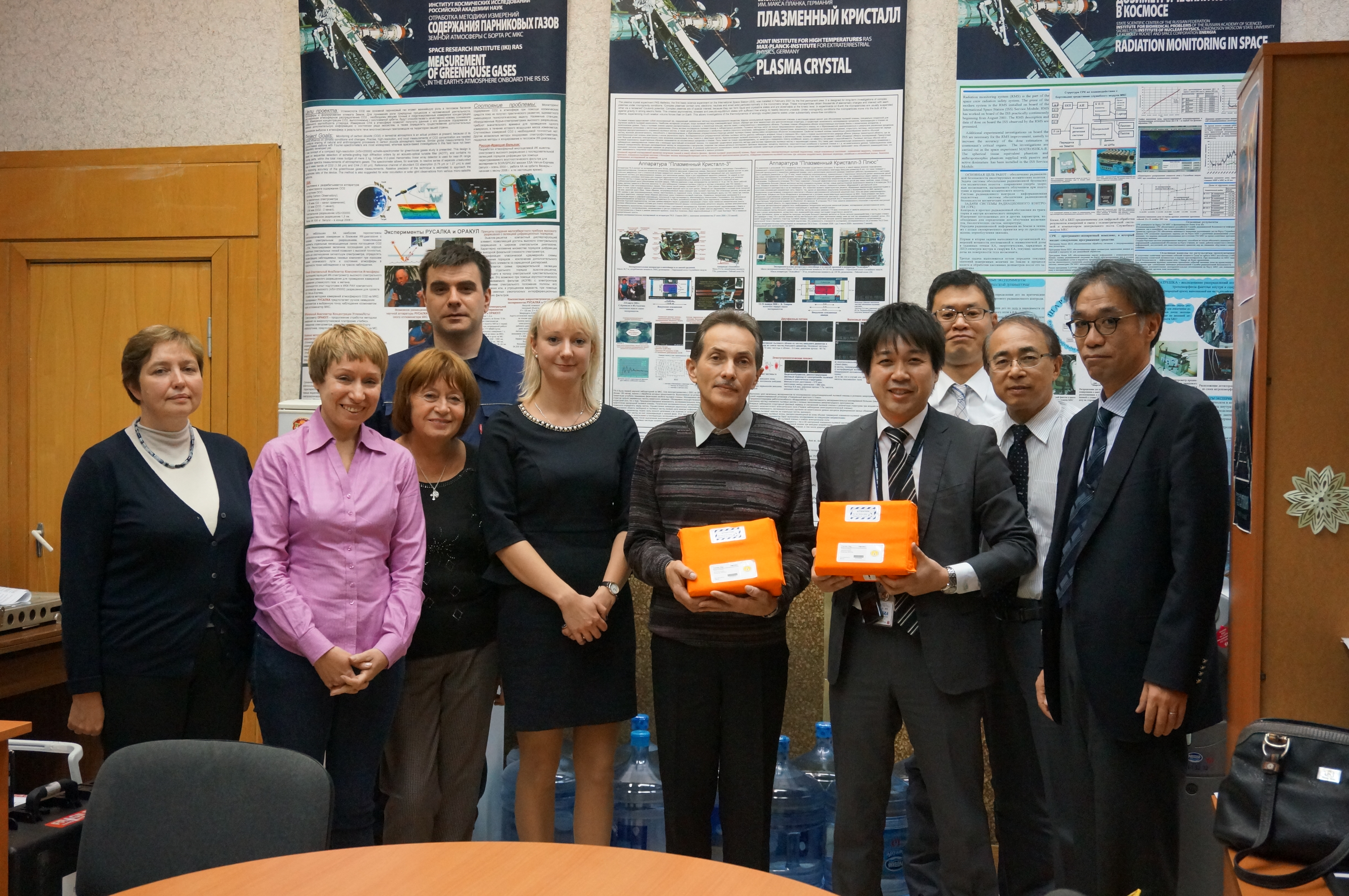
A group photo of the experiment staff (Leftmost: Dr. Valeria Prudkoglyad, mission scientist of the Central Research Institute of Machine Building)
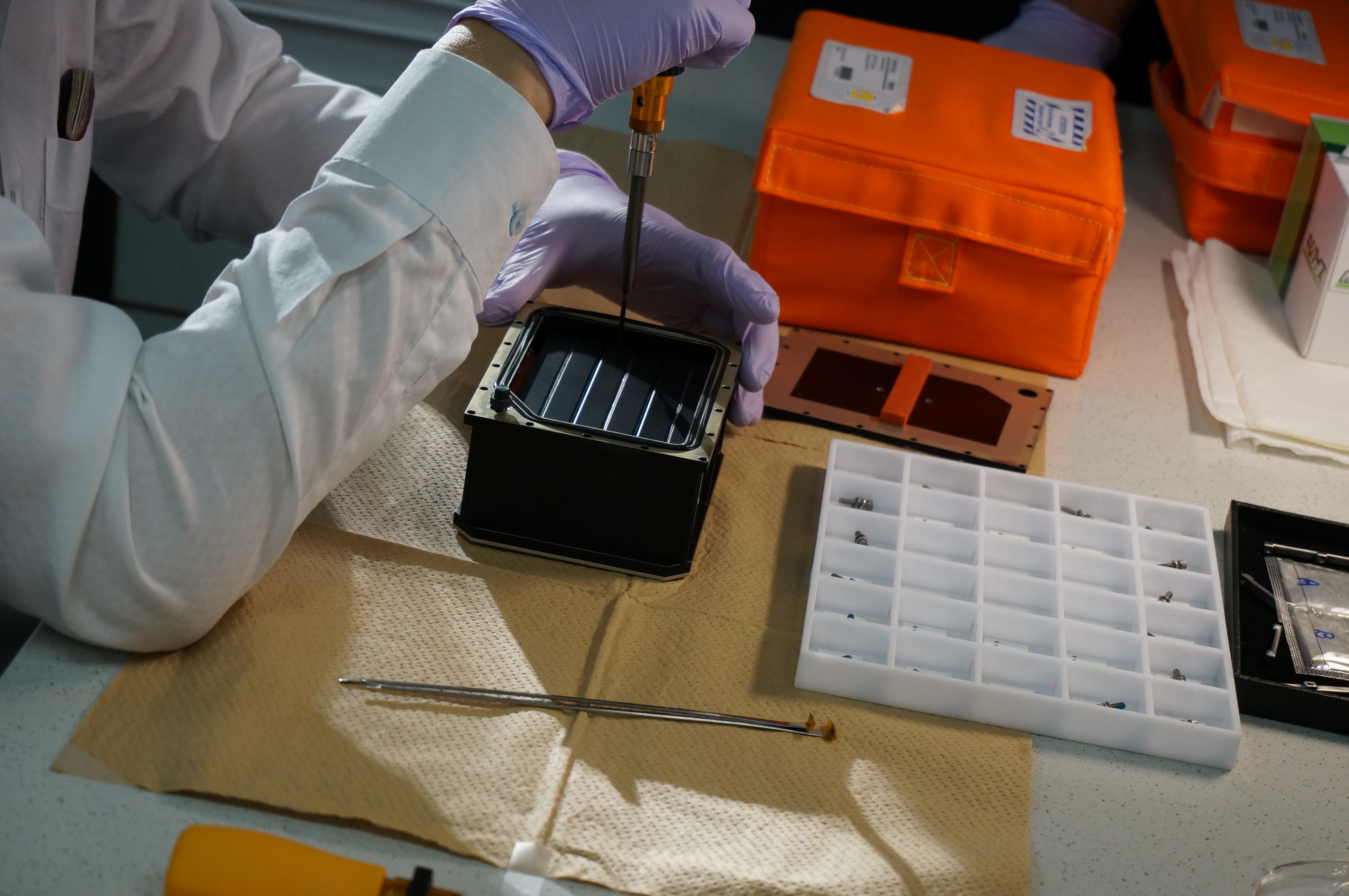
Taking samples out
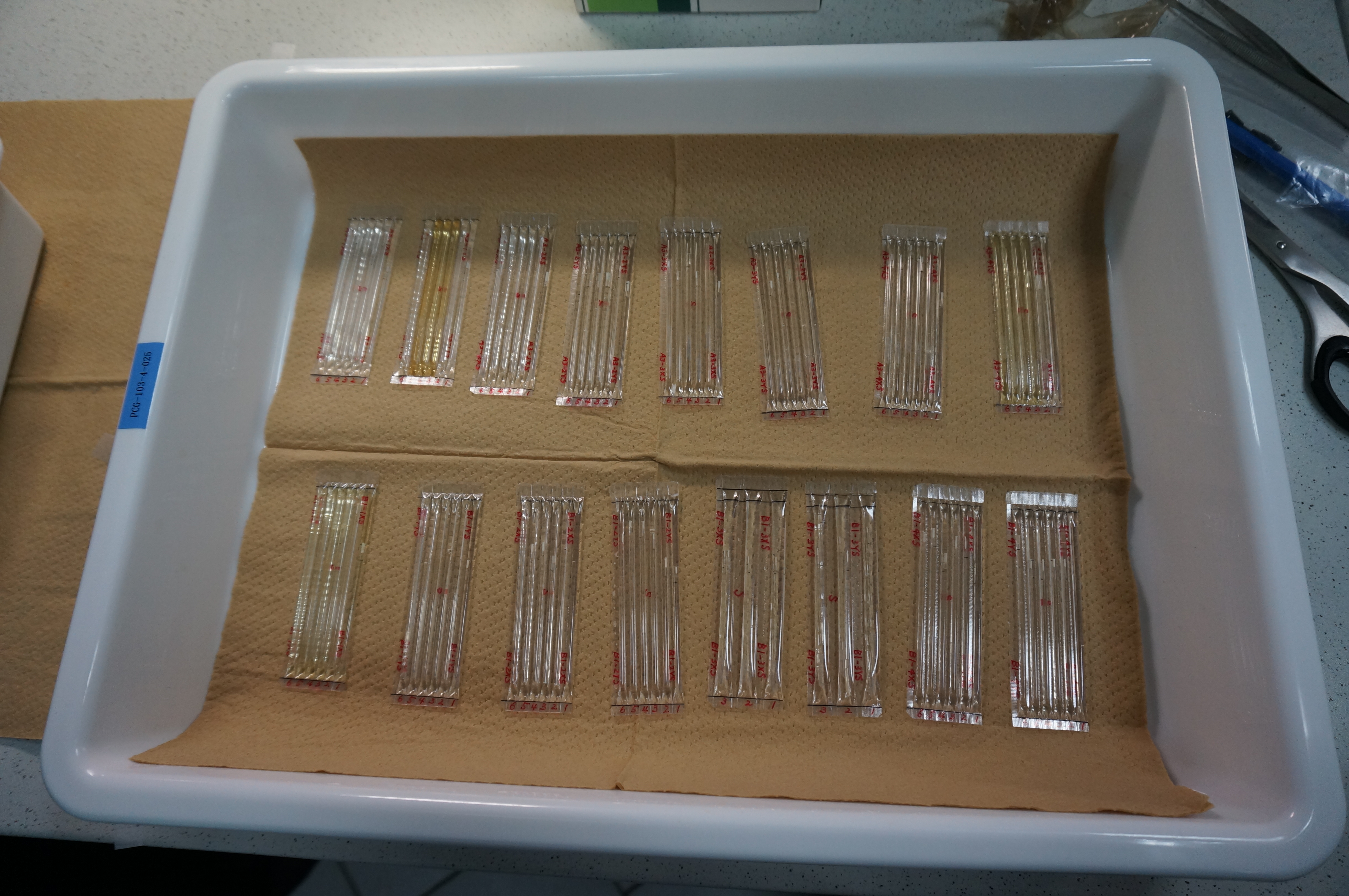
Gel-Tube cartridge containing crystallization capillaries
Microscope images of protein crystals grown on Kibo (a flash report)
Protein crystals returned from the International Space Station (ISS) on September 12 were immediately retrieved and viewed under a microscope on September 15, in order to determine their condition. These obtained samples will be handed over to researchers for analysis at synchrotron radiation facilities (such as SPring-8).
Here we introduce some microscope images of the JAXA-sponsored protein crystals.
1. Creation of artificial red cells (substitutes for blood transfusion) for human beings and pet animals
Principal Investigator (PI): Prof. Teruyuki Komatsu, Faculty of Science and Engineering, Chuo University
【Overview】
In 2013, the group headed by Professor Komatsu of Chuo University developed a candidate protein for artificial red cells that can be created by altering naturally occurring proteins. The team now intends to obtain detailed structural data by conducting a space experiment to validate safety and efficacy for commercialization.
Through the space experiment, the team obtained bigger crystals than those created on the ground and expects to acquire better data (see image below.)
The results of this research may lead to the development of artificial blood that can be stored for a long term, and which could resolve the shortage of donated blood in the event of a large-scale disaster or due to a reduced birth rate.
Crystals of candidate protein for artificial blood

Crystals obtained via the ground study
(© Chuo University/JAXA)


Crystals grown in space
(microscope image)
(© Chuo University/JAXA)
2. Development of probes for the detection and removal of human iPS cells
PI: Tomomi Kubota, Senior Researcher, National Institute of Advanced Industrial Science and Technology (AIST)
【Overview】
The AIST team developed a probe* that selectively isolates anaplastic human iPS and ES cells without affecting the growth and life of differentiated somatic cells.
*Probe: A substance used to detect specific molecules or cells.
There are high expectations for human iPS and ES cells to be used in regeneration medicine; however, differentiating all human iPS and ES cells to the intended cells is currently quite difficult. A certain number of anaplastic cells are included in the transplanted cells and could cause a tumor afterward. The probe was developed to remove such anaplastic iPS and ES cells.
This probe visualizes live human iPS cells to remove anaplastic iPS cells for transplant, and is expected to accelerate the application of iPS cells to regeneration medicine.
Crystals obtained this time show a different shape than those grown on the ground. Favorable data acquisition is expected (see image below).
This research aims to closely study the structural data of crystals obtained in space and investigate how the probes and cells are combined, which will result in the creation of a high-precision probe useful for the quality control of human iPS cells.
Protein crystals specifically respond to human iPS cells

Crystals obtained via the ground study
(© AIST/JAXA)

Crystals grown in space
(microscope image)
(© AIST/JAXA)
3. Development of antibacterial drugs for multidrug-resistant bacteria and periodontal disease
Yasumitsu Sakamoto, Assistant Professor, Iwate Medical University School of Pharmacy
【Overview】
Through space experiments the team has studied the 3D conformation and mechanisms of the substrate binding of peptide-degrading enzymes that are important for the growth of multidrug-resistant bacteria and periodontal disease bacteria.
Crystals obtained this time show a different shape than those grown on the ground. Favorable data acquisition is expected (see image below).
To seek for a drug candidate and conduct rational development, the group aims to clarify the 3D conformationa of a complex combined with a candidate inhibitor.
Hopefully the result will to lead to the development of a new antibacterial drug for multi-drug resistant bacteria, a cause of nosocomial infections, and also a drug for periodontal disease.
Crystals of peptide-degrading enzymes important for the treatment of periodontal disease

Crystals obtained via the ground study
(© Iwate Medical University/JAXA)
(microscope image)” />
Crystals grown in space
(microscope image)
(© Iwate Medical University/JAXA)
*All times are Japan Standard Time (JST)
This entry passed through the Full-Text RSS service – if this is your content and you’re reading it on someone else’s site, please read the FAQ at fivefilters.org/content-only/faq.php#publishers.


