
The European Space Agency and the Korea AeroSpace Administration (KASA) have announced they will work together on peaceful uses of space, starting with space weather monitoring and sharing space communications facilities.
The European Space Agency and the Korea AeroSpace Administration (KASA) have announced they will work together on peaceful uses of space, starting with space weather monitoring and sharing space communications facilities.

The European Space Agency (ESA) has signed a €50 million contract with aerospace company Thales Alenia Space to begin the preliminary design phase of the Security And cryptoGrAphic (SAGA) mission. This agreement enables SAGA to continue to its preliminary design review, marking a relevant step towards establishing secure, space-based communications using quantum technologies.

Following its arrival in California a few weeks ago, the time has come for spacecraft engineers to ready the next sea-level monitoring satellite, Copernicus Sentinel-6B, for launch, which is slated for November.
The first step has been to carefully remove this precious new satellite from its storage container and to start a series of comprehensive checks.

The third day of the 76th International Astronautical Congress was again full of interactions between the European Space Agency and international partners.

Scientists digging through data collected by the Cassini spacecraft have found new complex organic molecules spewing from Saturn’s moon Enceladus. This is a clear sign that complex chemical reactions are taking place within its underground ocean. Some of these reactions could be part of chains that lead to even more complex, potentially biologically relevant molecules.
Published today in Nature Astronomy, this discovery further strengthens the case for a dedicated European Space Agency (ESA) mission to orbit and land on Enceladus.
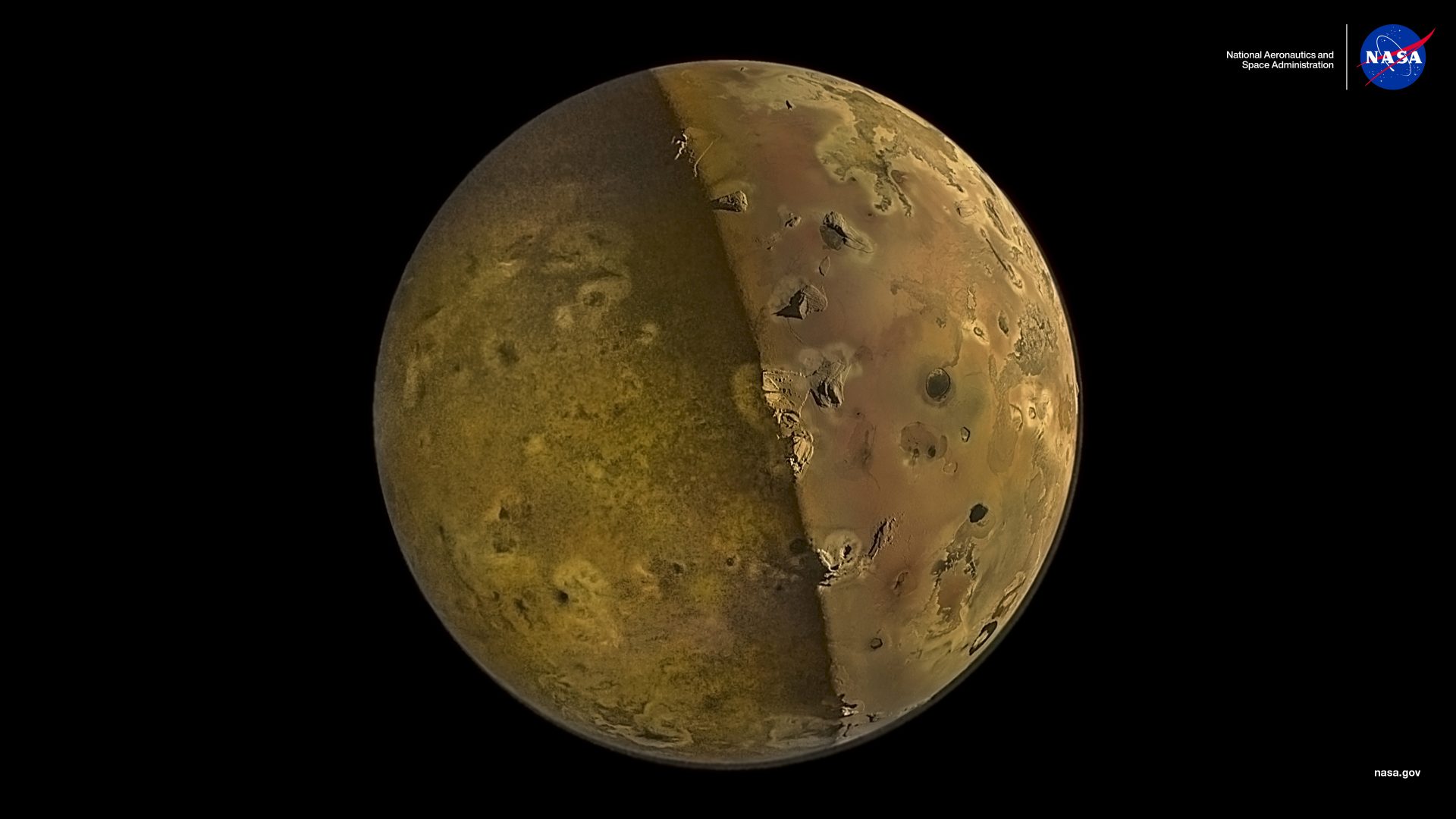
During its close flyby of Jupiter’s moon Io on December 30, 2023, NASA’s Juno spacecraft captured some of the most detailed imagery ever of Io’s volcanic surface. This image is the NASA Science Image of the Month for October 2025.

Our interactive publication covering captivating stories and stunning images from the most recent quarter of the year.

Our Milky Way galaxy never sits still: it rotates and wobbles. And now, data from the European Space Agency’s Gaia space telescope reveal that our galaxy also has a giant wave rippling outwards from its centre.

The European Space Agency (ESA) and the Australian Space Agency (ASA) will pursue new ways of working together following discussions during the 76th International Astronautical Congress in Sydney, Australia.

This NASA/ESA Hubble Space Telescope image features the nebula LMC N44C.

The NASA/ESA/CSA James Webb Space Telescope has provided the first direct measurements of the chemical and physical properties of a potential moon-forming disc encircling a large exoplanet. The carbon-rich disc surrounding the world called CT Cha B, which is located 625 light years away from Earth, is a possible construction yard for moons, although no moons are detected in the Webb data. The disc offers insight into how the moons of Solar System gas giants like Jupiter might have formed.

Video:
00:14:08
Watch the one-to-one interview with Josef Aschbacher, Director General of the European Space Agency (ESA), extracted from Plenary 1 of the 76th International Astronautical Congress (IAC 2025). In this session, he shares his insights into ESA’s strategic vision.
