Image:
Part of the icy landscape of the Northeast Greenland National Park, the largest national park in the world, is pictured in this Copernicus Sentinel-2 image.
Tag: space
-
Earth from Space: Northeast Greenland National Park
-
NASA Flights Study Cosmic Ray Effects for Air, Future Space Travelers
4 min read
Preparations for Next Moonwalk Simulations Underway (and Underwater)
Recent airborne science flights to Greenland are improving NASA’s understanding of space weather by measuring radiation exposure to air travelers and validating global radiation maps used in flight path planning. This unique data also has value beyond the Earth as a celestial roadmap for using the same instrumentation to monitor radiation levels for travelers entering Mars’ atmosphere and for upcoming lunar exploration.
NASA’s Space Weather Aviation Radiation (SWXRAD) aircraft flight campaign took place August 25-28 and conducted two five-hour flights in Nuuk, Greenland. Based out of NASA’s Langley Research Center in Hampton, Virginia, the mission gathered dosimetry measurements, or the radiation dose level, to air travelers from cosmic radiation. Cosmic radiation is caused by high-energy particles from outer space that originate from our Sun during eruptive events like solar flares and from events farther away, like supernovae in our Milky Way galaxy and beyond.
 Science team partners from Honeywell reviewing dosimeter data on board NASA’s B200 King Air during a flight over Nuuk, Greenland.NASA/Guillaume Gronoff
“With NASA spacecraft and astronauts exploring the Moon, Mars, and beyond, we support critical research to understand – and ultimately predict – the impacts of space weather across the solar system,” said Jamie Favors, director of NASA’s Space Weather Program at NASA Headquarters in Washington. “Though this project is focused on aviation applications on Earth, NAIRAS could be part of the next generation of tools supporting Artemis missions to the Moon and eventually human missions to Mars.”
 Jamie Favors, NASA Space Weather Program director, and Chris Mertens, SWXRAD principal investigator, discussing a dosimeter at NASA’s Langley Research Center as specialized instruments are integrated onto NASA’s B200 King Air aircraft before deploying to Greenland.NASA/Mark Knopp
NASA’s Nowcast of Aerospace Ionizing Radiation System, or NAIRAS, is the modeling system being enhanced by the SWXRAD airborne science flights. The model features real-time global maps of the hazardous radiation in the atmosphere and creates exposure predictions for aircraft and spacecraft.
 NASA’s B200 King Air on the runway in Goose Bay, Canada, a stop during the flight to Nuuk, Greenland.NASA/Guillaume Gronoff
“The radiation exposure is maximum at the poles and minimum at the equator because of the effect of Earth’s magnetic field. In the polar regions, the magnetic field lines are directed into or out of the Earth, so there’s no deflection or shielding by the fields of the radiation environment that you see everywhere else.” explained Chris Mertens, principal investigator of SWXRAD at NASA Langley. “Greenland is a region where the shielding of cosmic radiation by Earth’s magnetic field is zero.”
That means flight crews and travelers on polar flights from the U.S. to Asia or from the U.S. to Europe are exposed to higher levels of radiation.
 Frozen and rocky terrain in the Polar region observed from above Nuuk, Greenland during NASA’s SWXRAD science flights.NASA/Guillaume Gronoff
The data gathered in Greenland will be compared to the NAIRAS modeling, which bases its computation on sources around the globe that include neutron monitors and instruments that measure solar wind parameters and the magnetic field along with spaceborne data from instruments like the NOAA GOES series of satellites.
“If the new data doesn’t agree, we have to go back and look at why that is,” said Mertens. “In the radiation environment, one of the biggest uncertainties is the effect of Earth’s magnetic field. So, this mission eliminates that variable in the model and enables us to concentrate on other areas, like characterizing the particles that are coming in from space into the atmosphere, and then the transport and interactions with the atmosphere.”
 An aerial view of Nuuk, Greenland.NASA/Guillaume Gronoff
The SWXRAD science team flew aboard NASA’s B200 King Air with five researchers and crew members. In the coming months, the team will focus on measurement data quality checks, quantitative modeling comparisons, and a validation study between current NAIRAS data and the new aircraft dosimeter measurements.
All of this information is endeavoring to protect pilots and passengers on Earth from the health risks associated with radiation exposure while using NASA’s existing science capabilities to safely bring astronauts to the Moon and Mars.
 Northern Lights, or auroras, seen over the city of Nuuk, Greenland. Auroras are considered space weather and are easily visible effects of activity from the Sun interacting with the magnetosphere and Earth’s atmosphere.NASA/Guillaume Gronoff
“Once you get to Mars and even the transit out to Mars, there would be times where we don’t have any data sets to really understand what the environment is out there,” said Favors. “So we’re starting to think about not only how do we get ready for those humans on Mars, but also what data do we need to bring with them? So we’re feeding this data into models exactly like NAIRAS. This model is thinking about Mars in the same way it’s thinking about Earth.”
The SWXRAD flight mission is funded through NASA’s Science Mission Directorate Heliophysics Division. NASA’s Space Weather Program Office is hosted at NASA Langley and facilitates researchers in the creation of new tools to predict space weather and to understand space weather effects on Earth’s infrastructure, technology, and society.
For more information on NASA Heliophysics and NAIRAS modeling visit:
NASA’s Nowcast of Aerospace Ionizing Radiation System
About the Author

Charles G. Hatfield
Science Public Affairs Officer, NASA Langley Research CenterShare
Related Terms
Explore More
-
NASA Opens 2026 Human Lander Challenge for Life Support Systems, More
3 Min ReadNASA Opens 2026 Human Lander Challenge for Life Support Systems, More

NASA’s 2026 Human Lander Challenge is seeking ideas from college and university students to help evolve and transform technologies for life support and environmental control systems. These systems are critical for sustainable, long-duration human spaceflight missions to the Moon, Mars, and beyond.
The Human Lander Challenge supports NASA’s efforts to foster innovative solutions to a variety of areas for NASA’s long-duration human spaceflight plans at the Moon under the Artemis campaign. The Human Lander Challenge is sponsored by the Human Landing System Program within the Exploration Systems Development Mission Directorate.
The 2026 competition invites undergraduate and graduate-level teams based in the U.S., along with their faculty advisors, to develop innovative, systems-level solutions to improve aspects for a lander’s ECLSS (Environmental Control and Life Support System) performance. These air, water, and waste systems provide vital life support so future Artemis astronauts can live and work safely and effectively on the Moon during crewed missions.
Each proposed solution should focus on one of the following long-duration ECLSS subtopics:
- Noise suppression and control
- Sensor reduction in hardware health monitoring systems
- Potable water dispenser
- Fluid transfer between surface assets on the Moon and Mars
“A robust ECLSS transforms a spacecraft like a lander from just hardware into a livable environment, providing breathable air, clean water, and safe conditions for astronauts as they explore the Moon,” said Kevin Gutierrez, acting office manager for the Human Landing Systems Missions Systems Management Office at NASA Marshall. “Without ECLSS we can’t sustain human presence on the Moon or take the next steps toward Mars. The subtopics in the 2026 Human Lander Challenge reflect opportunities for students to support the future of human spaceflight.”
2026 Competition
Teams should submit a non-binding notice of intent by Monday, Oct. 20, if they intend to participate. Proposal packages are due March 4, 2026.
Based on proposal package evaluations in Phase 1, up to 12 finalist teams will be selected to receive a $9,000 stipend and advance to Phase 2 of the competition, which includes a final design review near NASA’s Marshall Space Flight Center in Huntsville, Alabama, June 23-25, 2026. The top three placing teams from Phase 2 will share a total prize of $18,000.
Landers are in development by SpaceX and Blue Origin as transportation systems that will safely ferry astronauts from lunar orbit to the Moon’s surface and back for the agency’s Artemis campaign. NASA Marshall manages the Human Landing System Program.
The challenge is administered by the National Institute of Aerospace on behalf of the agency.
Through the agency’s Artemis campaign, NASA will send astronauts to explore the Moon for scientific discovery, economic benefits, and to build the foundation for the first crewed missions to Mars – for the benefit of all.
For more information on NASA’s Human Lander Challenge and how to participate, visit:
Share
Details
Last UpdatedSep 25, 2025EditorLee MohonContactCorinne M. BeckingerRelated Terms
Explore More
-
NASA, Sierra Space Modify Commercial Resupply Services Contract
 The Sierra Space Dream Chaser winged spacecraft is seen stacked atop its Shooting Star cargo module on the vibration table at NASA’s Armstrong Test Facility in Sandusky, Ohio, while undergoing testing to simulate launch and re-entry conditions.NASA
In 2016, NASA awarded a Commercial Resupply Services-2 contract to Sierra Space, formerly part of Sierra Nevada Corporation, to resupply the International Space Station with its Dream Chaser spaceplane and companion Shooting Star cargo module. As part of its contract, Sierra Space was awarded a minimum seven flights, and the agency previously issued firm-fixed price task orders for four Dream Chaser resupply missions based on the needs of the space station.
After a thorough evaluation, NASA and Sierra Space have mutually agreed to modify the contract as the company determined Dream Chaser development is best served by a free flight demonstration, targeted in late 2026. Sierra Space will continue providing insight to NASA into the development of Dream Chaser, including through the flight demonstration. NASA will provide minimal support through the remainder of the development and the flight demonstration. As part of the modification, NASA is no longer obligated for a specific number of resupply missions, however, the agency may order Dream Chaser resupply flights to the space station from Sierra Space following a successful free flight as part of its current contract.
“Development of new space transportation systems is difficult and can take longer than what’s originally planned. The ability to perform a flight demonstration can be a key enabler in a spacecraft’s development and readiness, as well as offering greater flexibility for NASA and Sierra Space,” said Dana Weigel, manager of NASA’s International Space Station Program. “As NASA and its partners look toward space station deorbit in 2030, this mutually agreed to decision enables testing and verification to continue on Dream Chaser, as well as demonstrating the capabilities of the spaceplane for future resupply missions in low Earth orbit.”
NASA, and its commercial and international partners, will continue to supply the orbital complex with critical science, supplies, and hardware as the agency prepares to transition to commercial space stations in low Earth orbit. NASA continues to work with a variety of private companies to develop a competitive, space industrial base for cargo services, which will be needed for future commercial space stations. With a strong economy in low Earth orbit, NASA will be one of many customers of private industry as the agency explores the Moon under the Artemis campaign and Mars along with commercial and international partners.
-
3-in-1 Launch
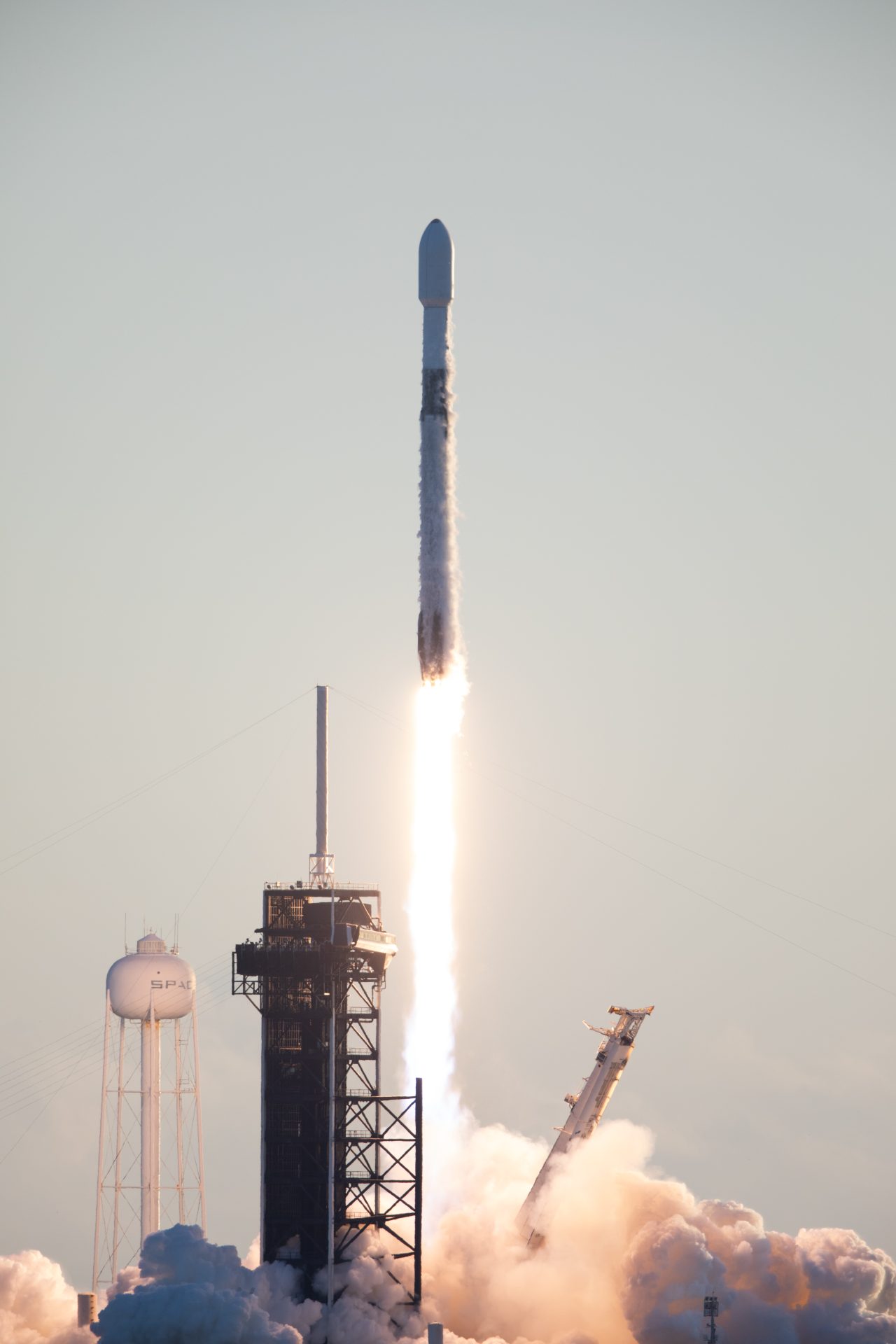
A SpaceX Falcon 9 rocket carrying NASA’s IMAP (Interstellar Mapping and Acceleration Probe), the agency’s Carruthers Geocorona Observatory, and National Oceanic and Atmospheric Administration’s (NOAA) Space Weather Follow On–Lagrange 1 (SWFO-L1) spacecraft lifts off from Launch Complex 39A at NASA’s Kennedy Space Center in Florida at 7:30 a.m. EDT Wednesday, Sept. 24, 2025. The missions will each focus on different effects of the solar wind — the continuous stream of particles emitted by the Sun — and space weather — the changing conditions in space driven by the Sun — from their origins at the Sun to their farthest reaches billions of miles away at the edge of our solar system.
-
3-in-1 Launch
 NASA/Kim Shiflett
A SpaceX Falcon 9 rocket lifts off from NASA’s Kennedy Space Center in Florida on Sept. 24, 2025, carrying three missions that will investigate the Sun’s influence across the solar system.
NASA’s IMAP (Interstellar Mapping and Acceleration Probe), the agency’s Carruthers Geocorona Observatory, and National Oceanic and Atmospheric Administration’s (NOAA) Space Weather Follow On–Lagrange 1 (SWFO-L1) spacecraft will each focus on different effects of the solar wind – the continuous stream of particles emitted by the Sun – and space weather – the changing conditions in space driven by the Sun – from their origins at the Sun to their farthest reaches billions of miles away at the edge of our solar system.
Image credit: NASA/Kim Shiflett
-
NASA-ISRO Satellite Sends First Radar Images of Earth’s Surface
 Captured on Aug. 21, this image from NISAR’s L-band radar shows Maine’s Mount Desert Island. Green indicates forest; magenta represents hard or regular surfaces, like bare ground and buildings. The magenta area on the island’s northeast end is the town of Bar Harbor.Credit: NASA/JPL-Caltech
The NISAR (NASA-ISRO Synthetic Aperture Radar) Earth-observing radar satellite’s first images of our planet’s surface are in, and they offer a glimpse of things to come as the joint mission between NASA and ISRO (Indian Space Research Organisation) approaches full science operations later this year.
“Launched under President Trump in conjunction with India, NISAR’s first images are a testament to what can be achieved when we unite around a shared vision of innovation and discovery,” said acting NASA Administrator Sean Duffy. “This is only the beginning. NASA will continue to build upon the incredible scientific advancements of the past and present as we pursue our goal to maintain our nation’s space dominance through Gold Standard Science.”
Images from the spacecraft, which was launched by ISRO on July 30, display the level of detail with which NISAR scans Earth to provide unique, actionable information to decision-makers in a diverse range of areas, including disaster response, infrastructure monitoring, and agricultural management.
“By understanding how our home planet works, we can produce models and analysis of how other planets in our solar system and beyond work as we prepare to send humanity on an epic journey back to the Moon and onward to Mars,” said NASA Associate Administrator Amit Kshatriya. “The successful capture of these first images from NISAR is a remarkable example of how partnership and collaboration between two nations, on opposite sides of the world, can achieve great things together for the benefit of all.”
On Aug. 21, the satellite’s L-band synthetic aperture radar (SAR) system, which was provided by NASA’s Jet Propulsion Laboratory in Southern California, captured Mount Desert Island on the Maine coast. Dark areas represent water, while green areas are forest, and magenta areas are hard or regular surfaces, such as bare ground and buildings. The L-band radar system can resolve objects as small as 15 feet (5 meters), enabling the image to display narrow waterways cutting across the island, as well as the islets dotting the waters around it.
Then, on Aug. 23, the L-band SAR captured data of a portion of northeastern North Dakota straddling Grand Forks and Walsh counties. The image shows forests and wetlands on the banks of the Forest River passing through the center of the frame from west to east and farmland to the north and south. The dark agricultural plots show fallow fields, while the lighter colors represent the presence of pasture or crops, such as soybean and corn. Circular patterns indicate the use of center-pivot irrigation.
 On Aug. 23, NISAR imaged land adjacent to northeastern North Dakota’s Forest River. Light-colored wetlands and forests line the river’s banks, while circular and rectangular plots throughout the image appear in shades that indicate the land may be pasture or cropland with corn or soy.Credit: NASA/JPL-Caltech
The images demonstrate how the L-band SAR can discern what type of land cover — low-lying vegetation, trees, and human structures — is present in each area. This capability is vital both for monitoring the gain and loss of forest and wetland ecosystems, as well as for tracking the progress of crops through growing seasons around the world.
“These initial images are just a preview of the hard-hitting science that NISAR will produce — data and insights that will enable scientists to study Earth’s changing land and ice surfaces in unprecedented detail while equipping decision-makers to respond to natural disasters and other challenges,” said Nicky Fox, associate administrator, Science Mission Directorate at NASA Headquarters in Washington. “They are also a testament to the years of hard work of hundreds of scientists and engineers from both sides of the world to build an observatory with the most advanced radar system ever launched by NASA and ISRO.”
The L-band system uses a 10-inch (25-centimeter) wavelength that enables its signal to penetrate forest canopies and measure soil moisture and motion of ice surfaces and land down to fractions of an inch, which is a key measurement in understanding how the land surface moves before, during, and after earthquakes, volcanic eruptions, and landslides.
The preliminary L-band images are an example of what the mission team will be able to produce when the science phase begins in November. The satellite was raised into its operational 464-mile (747-kilometer) orbit in mid-September.
The NISAR mission also includes an S-band radar, provided by ISRO’s Space Applications Centre, that uses a 4-inch (10-centimeter) microwave signal that is more sensitive to small vegetation, making it effective at monitoring certain types of agriculture and grassland ecosystems.
The spacecraft is the first to carry both L- and S-band radars. The satellite will monitor Earth’s land and ice surfaces twice every 12 days, collecting data using the spacecraft’s drum-shaped antenna reflector, which measures 39 feet (12 meters) wide — the largest NASA has ever sent into space.
The NISAR mission is a partnership between NASA and ISRO spanning years of technical and programmatic collaboration. The successful launch and deployment of NISAR builds on a strong heritage of cooperation between the United States and India in space.
The Space Applications Centre provided the mission’s S-band SAR. The U R Rao Satellite Centre provided the spacecraft bus. The launch vehicle was provided by Vikram Sarabhai Space Centre, and launch services were through Satish Dhawan Space Centre. Key operations, including boom and radar antenna reflector deployment, are now being executed and monitored by the ISRO Telemetry, Tracking and Command Network’s global system of ground stations.
Managed by Caltech in Pasadena, NASA JPL leads the U.S. component of the project. In addition to the L-band SAR, reflector, and boom, JPL also provided the high-rate communication subsystem for science data, a solid-state data recorder, and payload data subsystem. NASA’s Goddard Space Flight Center in Greenbelt, Maryland, manages the Near Space Network, which receives NISAR’s L-band data.
To learn more about NISAR, visit:
-end-
Liz Vlock
Headquarters, Washington
202-358-1600
elizabeth.a.vlock@nasa.govAndrew Wang / Jane J. Lee
Jet Propulsion Laboratory, Pasadena, Calif.
626-379-6874 / 818-354-0307
andrew.wang@jpl.nasa.gov / jane.j.lee@jpl.nasa.gov -
NASA & STEM Learning Ecosystems: Opportunities & Benefits for Everyone
2 min read
NASA & STEM Learning Ecosystems: Opportunities & Benefits for Everyone
STEM learning ecosystems are intentionally designed, community-wide partnerships that enable all Americans to actively participate in science, technology, engineering, and math (STEM) throughout their lifetimes. Lifelong STEM learning helps people build critical knowledge and skills, access economic opportunities, drive innovation, and make informed decisions in a changing world. STEM learning ecosystems draw on expertise and resources to provide access to these benefits for the entire community.
NASA’s Science Activation (SciAct) program, a competitively-selected network of collaborative projects that connect NASA science with people of all ages and backgrounds, includes new and growing STEM learning ecosystems in American communities from Alaska to Maine and creates free, high-quality resources that educators across the country can use to share the excitement of Earth and space science.
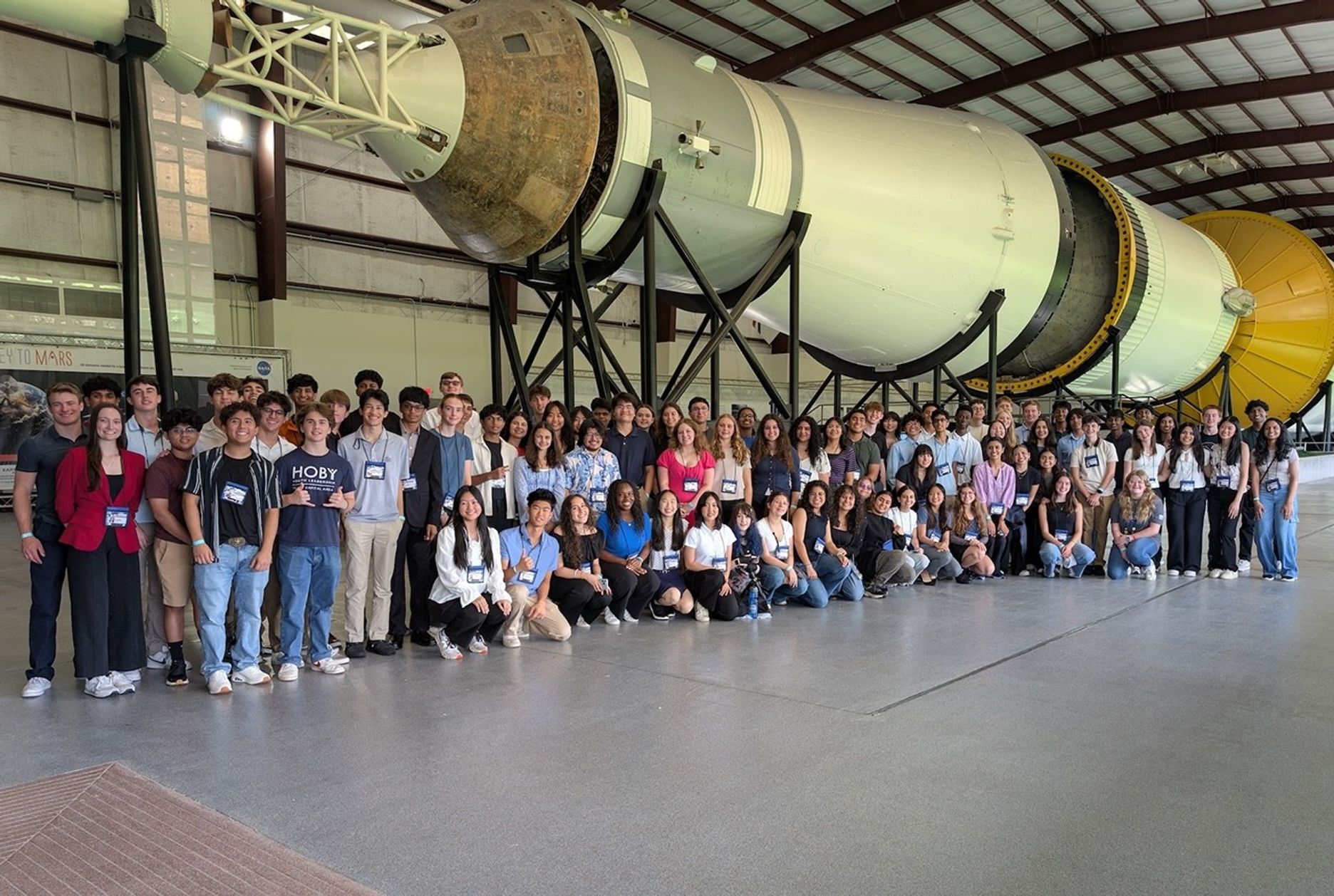
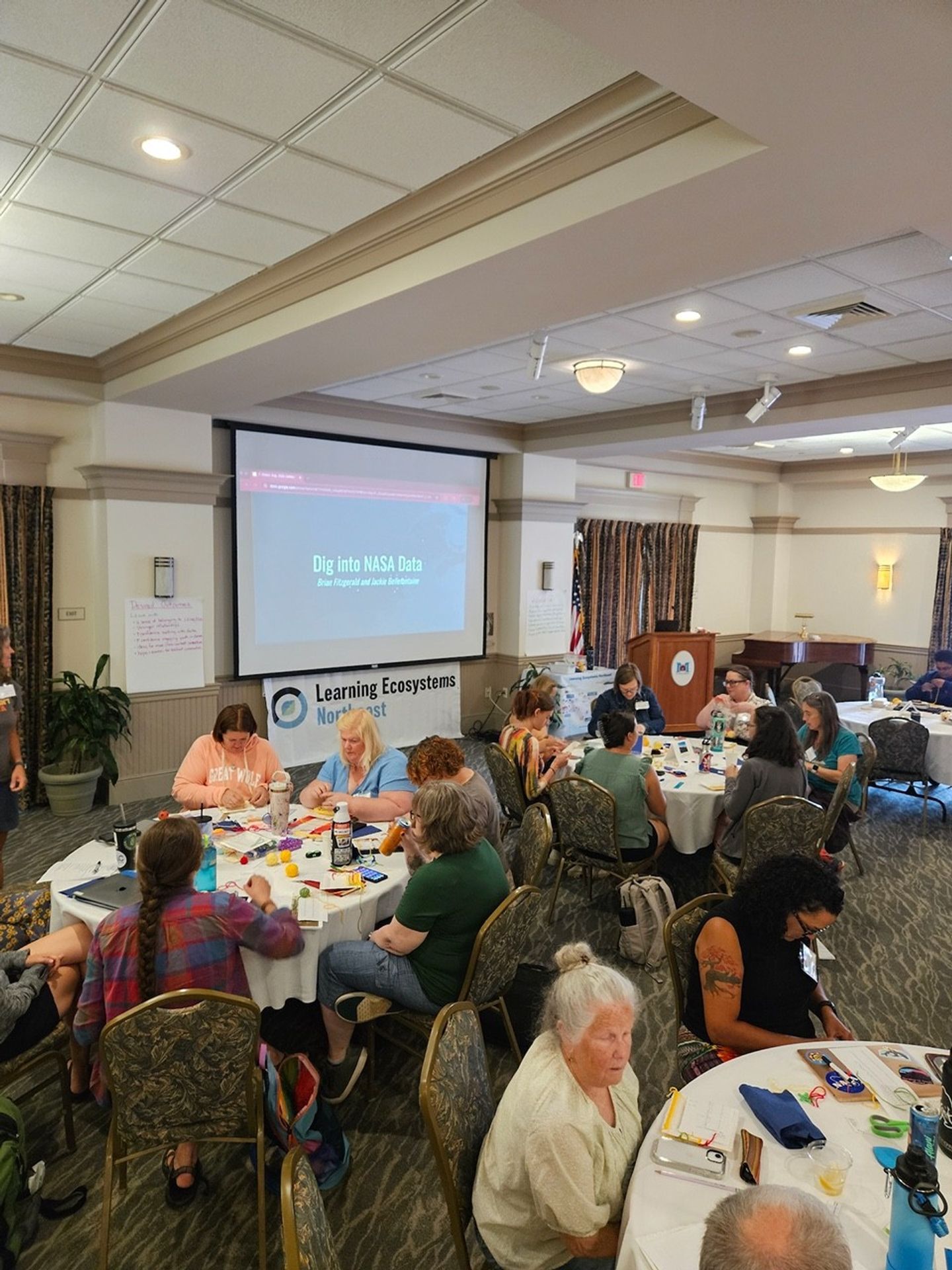
To further support connections among STEM learning ecosystems and NASA, the SciAct STEM Ecosystems project held a meeting in Saint Paul, Minnesota on August 4-6, 2025. Approximately 100 educators, evaluators, subject matter experts, and other STEM learning facilitators from around the nation participated to share approaches, learn about resources, and build relationships. The gathering offered an opportunity to connect NASA SciAct teams with each other and with external networks and learning ecosystems for mutual benefit.
Meeting goals included sharing ways to create effective partnerships and engage learners in Earth and space science, discovering NASA resources and assets to use in STEM education efforts, and strengthening connections among participants. To accomplish these goals, meeting activities included plenaries, breakout sessions, and networking opportunities.
Led by Arizona State University, the SciAct STEM Ecosystems project is a collaboration among several regional partnerships/SciAct project teams: Arctic and Earth SIGNs, Learning Ecosystems Northeast, Rural Activation and Innovation Network, and the Smoky Mountains STEM Collaborative. The project also partners with the National Informal STEM Education Network to create professional resources.
For those who were unable to attend in person, the STEM Ecosystems project makes a variety of resources available online: https://www.nisenet.org/stem-learning-ecosystems.
SciAct STEM Ecosystems is supported by NASA under cooperative agreement award number 80NSSC21M0007 and is part of NASA’s Science Activation Portfolio. Learn more about how Science Activation connects NASA science experts, real content, and experiences with community leaders to do science in ways that activate minds and promote deeper understanding of our world and beyond: https://science.nasa.gov/learn/about-science-activation/.
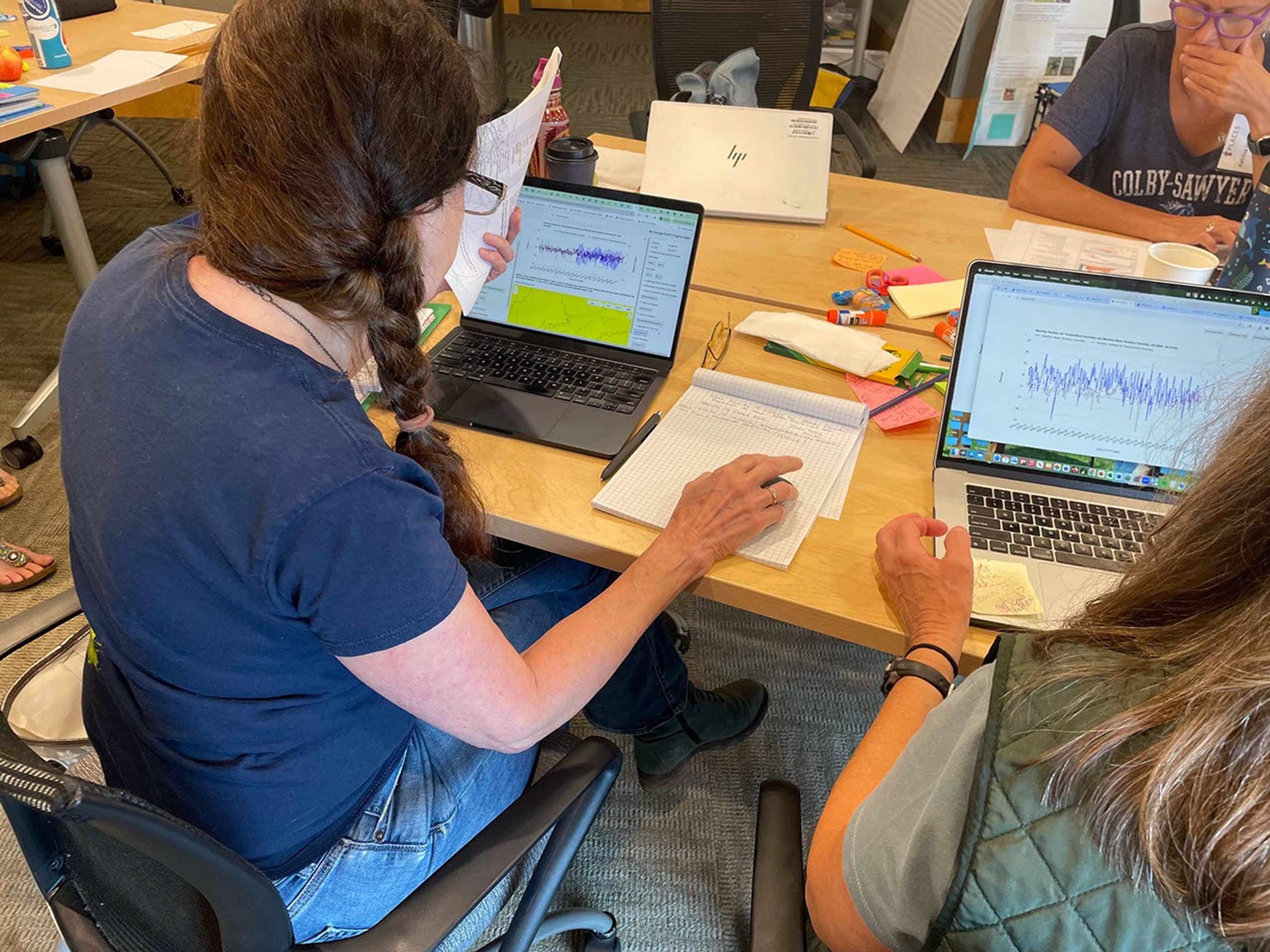
 Meeting participants took advantage of opportunities to network and strengthen their relationships.Emily Maletz/NISE Network
Share
Details
Last UpdatedSep 25, 2025EditorNASA Science Editorial TeamRelated Terms
Explore More
-
NASA Astronaut Chris Williams to Discuss Upcoming Launch, Mission
 NASA astronaut Chris Williams poses for an official portrait at the agency’s Johnson Space Center in Houston.Credit: NASA
NASA will host a news conference at 2 p.m. EDT Wednesday, Oct. 1, from the agency’s Johnson Space Center in Houston to highlight the upcoming mission of astronaut Chris Williams to the International Space Station.
The news conference will stream live on NASA’s website and YouTube channel. Learn how to watch NASA content through a variety of platforms, including social media.
The Soyuz MS-28 spacecraft, targeted to launch Nov. 27 from the Baikonur Cosmodrome in Kazakhstan, will carry Williams on his first flight, as well as Sergey Kud-Sverchkov and Sergey Mikaev of Roscosmos, to the space station for an eight-month mission as part of Expeditions 73/74.
Media interested in participating must contact the newsroom at NASA Johnson no later than 5 p.m., Monday, Sept. 29, at 281-483-5111 or jsccommu@mail.nasa.gov. A copy of NASA’s media accreditation policy is online. Media interested in participating by phone must contact the Johnson newsroom by 10 a.m. the day of the event.
Selected as a candidate in 2021, Williams graduated with the 23rd astronaut class in 2024. He began training for his first space station flight assignment immediately after completing initial astronaut candidate training.
Williams was born in New York City, and considers Potomac, Maryland, his hometown. He holds a bachelor’s degree in physics from Stanford University in California and a doctorate in physics from the Massachusetts Institute of Technology in Cambridge, where his research focused on astrophysics. Williams completed medical physics residency training at Harvard Medical School in Boston. He was working as a clinical physicist and researcher at the Brigham and Women’s Hospital in Boston when he was selected as an astronaut candidate.
The International Space Station is a convergence of science, technology, and human innovation enabling research not possible on Earth. For nearly 25 years, NASA has supported a continuous U.S. human presence aboard the orbiting laboratory, where astronauts have learned to live and work in space for extended periods of time. The space station is a springboard for developing a low Earth economy and NASA’s next great leaps in human exploration at the Moon under the Artemis campaign and Mars.
Learn more about the International Space Station:
https://www.nasa.gov/international-space-station
-end-
Jimi Russell / Joshua Finch
Headquarters, Washington
202-358-1100
james.j.russell@nasa.gov / joshua.a.finch@nasa.govShaneequa Vereen
Johnson Space Center, Houston
281-483-5111
shaneequa.y.vereen@nasa.gov -
NASA Glenn Reinforces Role in Aerospace Innovation During Ohio Space Week
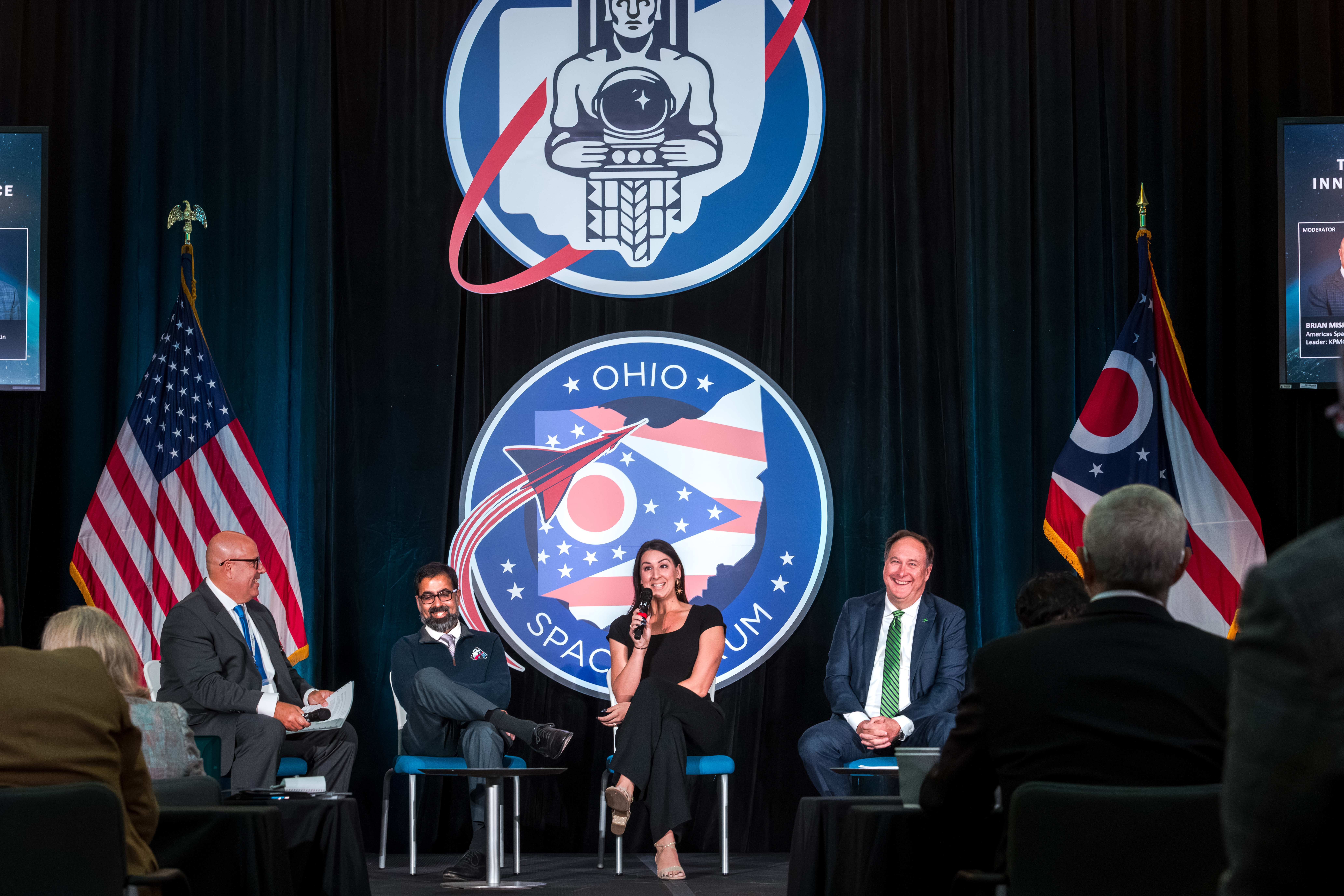
 Left to right: Moderator Brian Miske, Americas Space Leader, KPMG radio, with panelists Amit Kshatriya, NASA associate administrator; Jacki Cortese, senior director, Civil Space: Blue Origin; and Robert Lightfoot, president, Lockheed Martin Space (former NASA associate administrator) discuss balancing innovation, risk, and readiness in space during the Ohio Space Forum.Credit: NASA/Jef Janis
Ohio Space Week, Sept. 8–13, highlighted the state’s aerospace legacy and the role NASA’s Glenn Research Center has in advancing space technology.
The week kicked off with the American Astronautical Society’s Glenn Space Technology Symposium, Sept. 8–10, hosted by Case Western Reserve University. Experts, students, and industry leaders gathered to discuss emerging space technologies. NASA Glenn Director Dr. Jimmy Kenyon delivered opening remarks, and astronaut Doug “Wheels” Wheelock gave a keynote on his spaceflight experience.
On Sept. 11, Team NEO hosted the Sixth Annual Ohio Space Forum at NASA Glenn, bringing together leaders from aerospace, government, academia, and research. The forum spotlighted Ohio’s leadership in space innovation, including advances in nuclear electric and nuclear thermal propulsion. Key participants included NASA Associate Administrator Amit Kshatriya, astronaut Sunita “Suni” Williams, several local and state officials, and other community partners. 3News Chief Meteorologist Betsy Kling emceed the event.
The City Club of Cleveland welcomed astronauts Williams and Wheelock for a presentation to the local community, Sept. 11, and Cleveland Guardians fans cheered as Williams threw out the first pitch during the game at Progressive Field later that day.
 NASA Glenn experts conduct a wind tunnel demonstration using a portable wind tunnel for visitors during Discovery Days at Great Lakes Science Center in Cleveland on Friday, Sept. 12, 2025.Credit: NASA/Lily Hammel
 Visitors view items that are part of the “Evolution of the Spacesuit” exhibit during Discovery Days at Great Lakes Science Center in Cleveland on Friday, Sept. 12, 2025.Credit: NASA/Lily Hammel
 Astronaut Sunita Williams has fun on the sidelines before she throws out the first pitch prior to a Guardians game at Progressive Field in Cleveland on Thursday, Sept. 11, 2025.Credit: NASA/Lily Hammel
 A family takes a photo with Astronaut Doug Wheelock during Discovery Days at Great Lakes Science Center in Cleveland on Friday, Sept. 12, 2025.Credit: NASA/Lily Hammel
 Two young visitors at Discovery Days at Great Lakes Science Center in Cleveland on Friday, Sept. 12, 2025, share the NASA spotlight.Credit: NASA/Lily Hammel
 Guests interact with several aeronautics-focused exhibits in the Great Lakes Science Center promenade area on Friday, Sept. 12, 2025, during Discovery Days.Credit: NASA/Lily Hammel
 NASA Astronauts Doug Wheelock, left, and Sunita Willams at The City Club of Cleveland luncheon on Thursday, Sept. 11, 2025. NASA Glenn Center Director Dr. Jimmy Kenyon stands at the podium and addresses the audience.Credit: NASA/Lily Hammel
 Using the Lunar Habitat Power Grid model, NASA Glenn Research Center experts demonstrate how payloads will need power to achieve a viable human presence on the Moon during Discovery Days at Great Lakes Science Center in Cleveland on Friday, Sept. 12, 2025.Credit: NASA/Lily Hammel
 NASA Glenn Research Center’s astronaut mascot stands behind the NASA worm logo during Discovery Days at Great Lakes Science Center in Cleveland on Friday, Sept. 12, 2025.Credit: NASA/Lily Hammel
 During Discovery Days at Great Lakes Science Center in Cleveland on Friday, Sept. 12, NASA Glenn Research Center experts share with visitors about primary fuel cells, which convert propellants into electricity, and regenerative fuel cells, which store electrical energy like rechargeable batteries.Credit: NASA/Lily Hammel
 Astronaut Sunita Williams talks with students in Great Lakes Science Center’s DOME Theater during Discovery Days in Cleveland on Friday, Sept. 12, 2025.Credit: NASA/Lily Hammel
 Left to right: Moderator Brian Miske, Americas Space Leader, KPMG radio, with panelists Amit Kshatriya, NASA associate administrator; Jacki Cortese, senior director, Civil Space: Blue Origin; and Robert Lightfoot, president, Lockheed Martin Space (former NASA associate administrator) discuss balancing innovation, risk, and readiness in space during the Ohio Space Forum.Credit: NASA/Jef Janis
Discovery Days, the capstone of Ohio Space Week, welcomed nearly 5,000 visitors to Cleveland’s Great Lakes Science Center — home of the NASA Glenn Visitor Center — on Sept. 12–13. This immersive event brought NASA beyond its gates and into the community, offering the public a firsthand look at major missions and cutting-edge technology.
Visitors explored interactive demonstrations and exhibits led by NASA Glenn experts, highlighting innovations that support NASA’s Artemis missions and future exploration of Mars and beyond, including developments in power, propulsion, and communications.
The astronauts were on hand during Discovery Days to talk with students and guests – inspiring the next generation of explorers through direct engagement and storytelling.
From the Wright brothers’ first flight to pioneering advancements in space exploration, Ohio has been at the forefront of aerospace innovation for generations. Ohio Space Week celebrated these deep-rooted contributions to the aeronautics and space industries, highlighting the people, institutions, and businesses that continue to shape the future of flight and exploration.
-
NASA Glenn’s AeroSpace Frontiers Newsletter Takes a Bow

3 min read
Preparations for Next Moonwalk Simulations Underway (and Underwater)
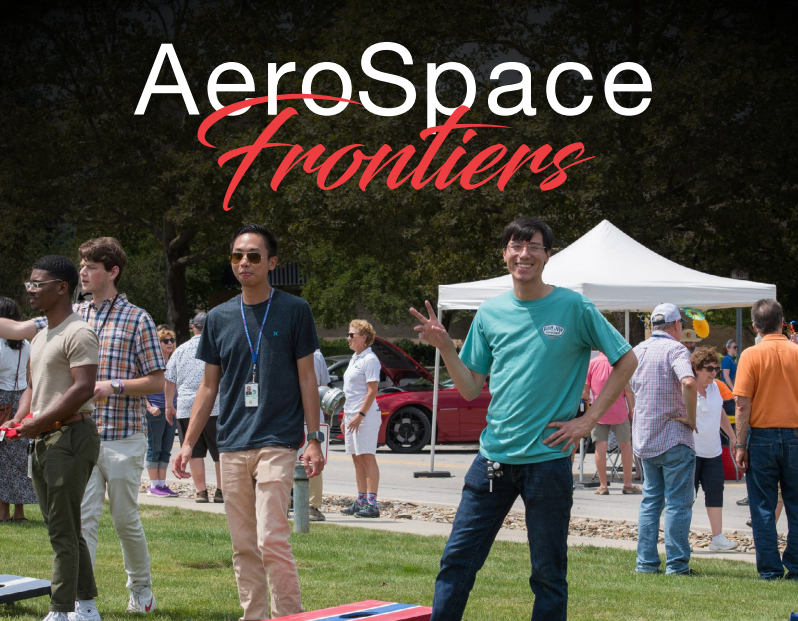
Since April 1999, the AeroSpace Frontiers (AF) newsletter has shared information monthly on NASA Glenn Research Center’s people, projects, and progress. If you were looking for news on any of these topics, there was a good chance you could read all about them in AF each month.
The newsletter has evolved in the last 26 years, changing with the times, to improve how and when we communicate with our audiences. From updating the hard copy layout to offering the issue online, we adjusted and enhanced AF to meet our customers’ needs.
As methods of sharing news and information are now available that allow us to reach you sooner, we are shifting our focus to these platforms and discontinuing our monthly newsletter. This September issue will be our last.
We hope you’ll stay connected with us through our official website and social media channels: Facebook, X, Instagram, LinkedIn, and YouTube. We thank you for your readership!
Before closing, we want to celebrate and reflect on the newsletter’s remarkable tenure (and interesting names) over the years.
 Credit: NASA
The Story Behind the Name: A Look Back
While the center published a newsletter continually (with a brief pause in the early 1960s) since its opening in 1942, its name, layout, and content evolved over the decades. It began in 1942 as Wing Tips, an internal biweekly newsletter, and was later renamed Orbit in October 1958 as the National Advisory Committee for Aeronautics transitioned to NASA. In 1961, the center paused the newsletter’s publication to focus its resources on the early space program.
The publication reemerged in 1964 as Lewis News and expanded to a larger newsletter format in 1969, in conjunction with the Apollo 11 Moon landing. This format continued until 1995, when Lewis News moved to a monthly schedule with expanded, but physically smaller, issues as part of an overall effort to reduce spending.
Then, in 1999 – prior to the center being renamed NASA’s John H. Glenn Research Center – employees and center management were surveyed for a new newsletter title that would not be tied to future changes in research activities or center names. The group selected AeroSpace Frontiers to represent the modernization of the newsletter’s appearance and its expanded subject matter. It was now a monthly news magazine that included a variety of graphics and photographs, as well as additional content that addressed audiences beyond the center.
About Our Amazing Editor
 Portrait of editor Doreen Zudell, taken in 1990 at NASA’s Glenn Research Center in Cleveland. At that time, the center newsletter was known as Lewis News.Credit: NASA
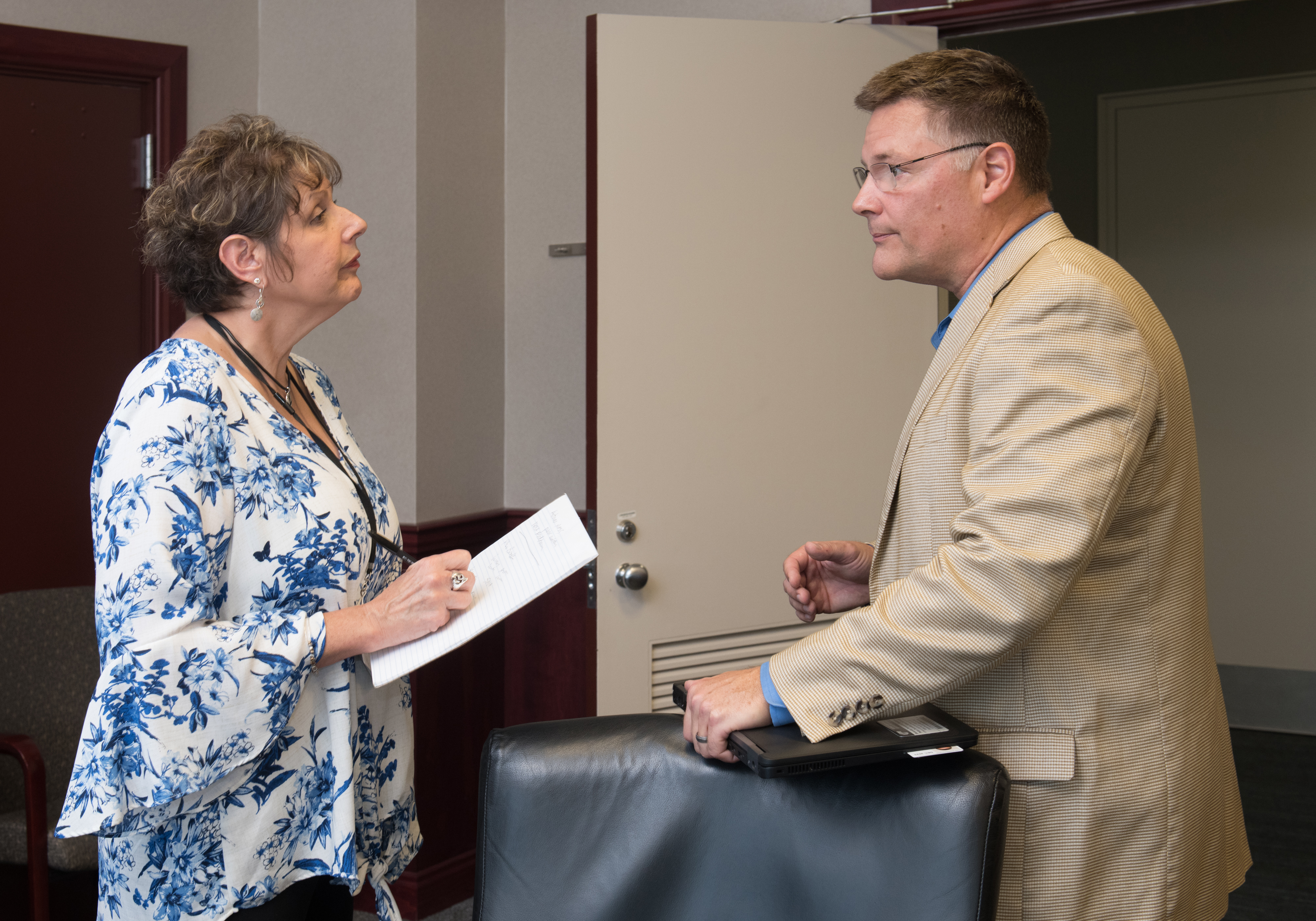
Doreen Zudell has served as the editor of AeroSpace Frontiers (AF) since the first issue in 1999 and has been a driving force behind the publication ever since. In addition to writing and editing stories each month, she also has navigated many format changes over the years.
 Editor Doreen Zudell interviews NASA astronaut Doug Wheelock at NASA’s Glenn Research Center in Cleveland in 2019.Credit: NASA/Marvin Smith
“We appreciate Doreen’s knowledge, experience, and passion for sharing Glenn’s news and accomplishments with AF readers,” said NASA Glenn Office of Communications Director Kristen Parker. “Her compassion, journalistic flair, and dedication to putting employees’ needs first is evident in everything she does.”
-
Glenn Highlights Space Exploration at Minnesota State Fair
1 min read
Preparations for Next Moonwalk Simulations Underway (and Underwater)
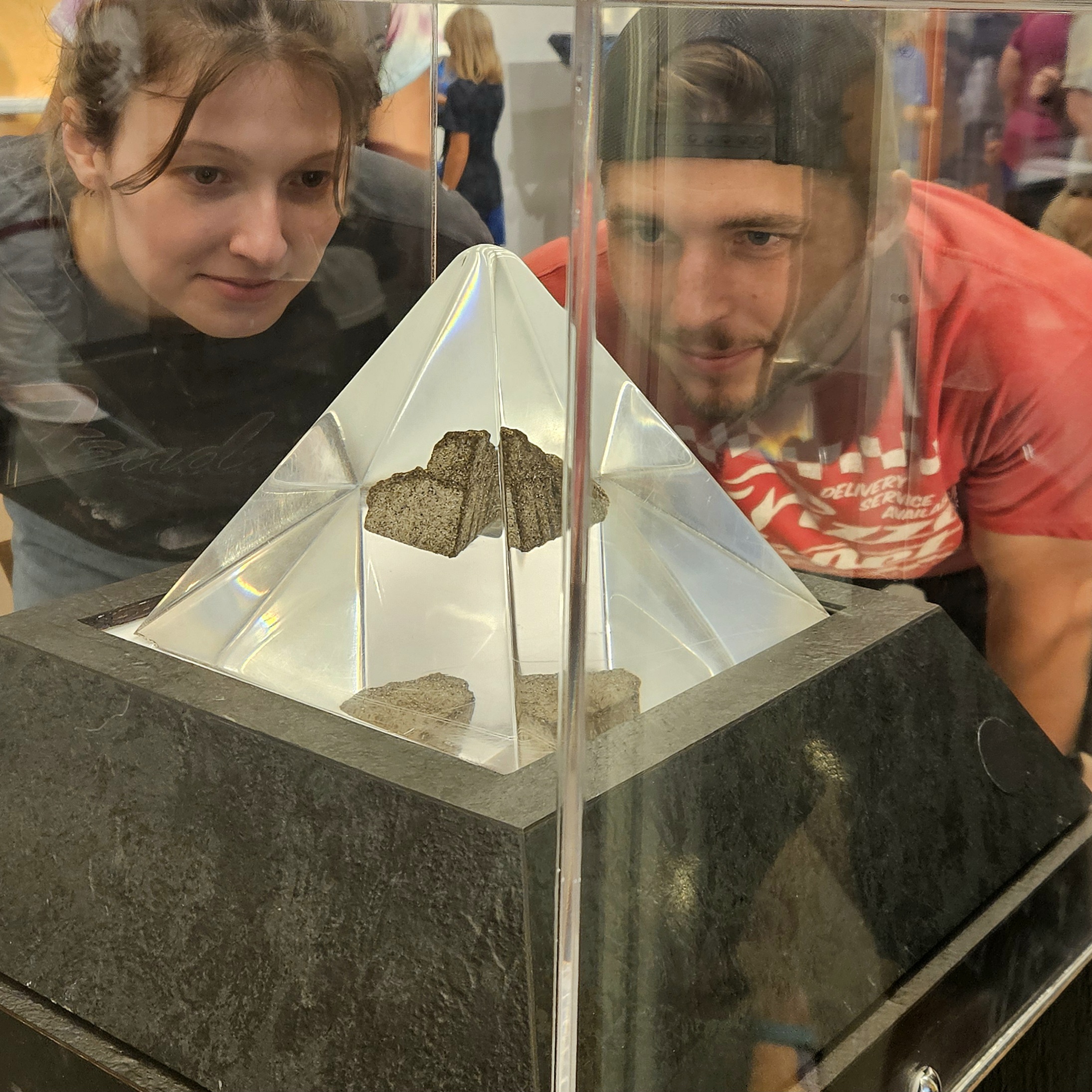
 Visitors at the Minnesota State Fair get an up-close look at a Moon rock on Friday, Aug. 22, 2025.Credit: NASA/Christopher Richards
NASA brought the excitement of space exploration to the Minnesota State Fair from Aug. 21–24, offering exhibits and interactive experiences for the whole family. Led by NASA’s Glenn Research Center in Cleveland, the agency showcased the future of space exploration and the technologies making it possible — from next-generation spacesuits to the Artemis missions that will return humans to the Moon.
A major attraction was Glenn’s “Suits and Boots” exhibit, along with an Apollo 15 Moon rock, which drew large crowds to the North End Event Center. Glenn staff, joined by Mike Lammers, deputy chief of the Flight Director’s Office at NASA’s Johnson Space Center in Houston, engaged with both media and fairgoers to highlight spacesuit advancements, Glenn’s unique role as the only NASA center in the Midwest, and upcoming plans for returning to the Moon and journeying to Mars through Artemis.
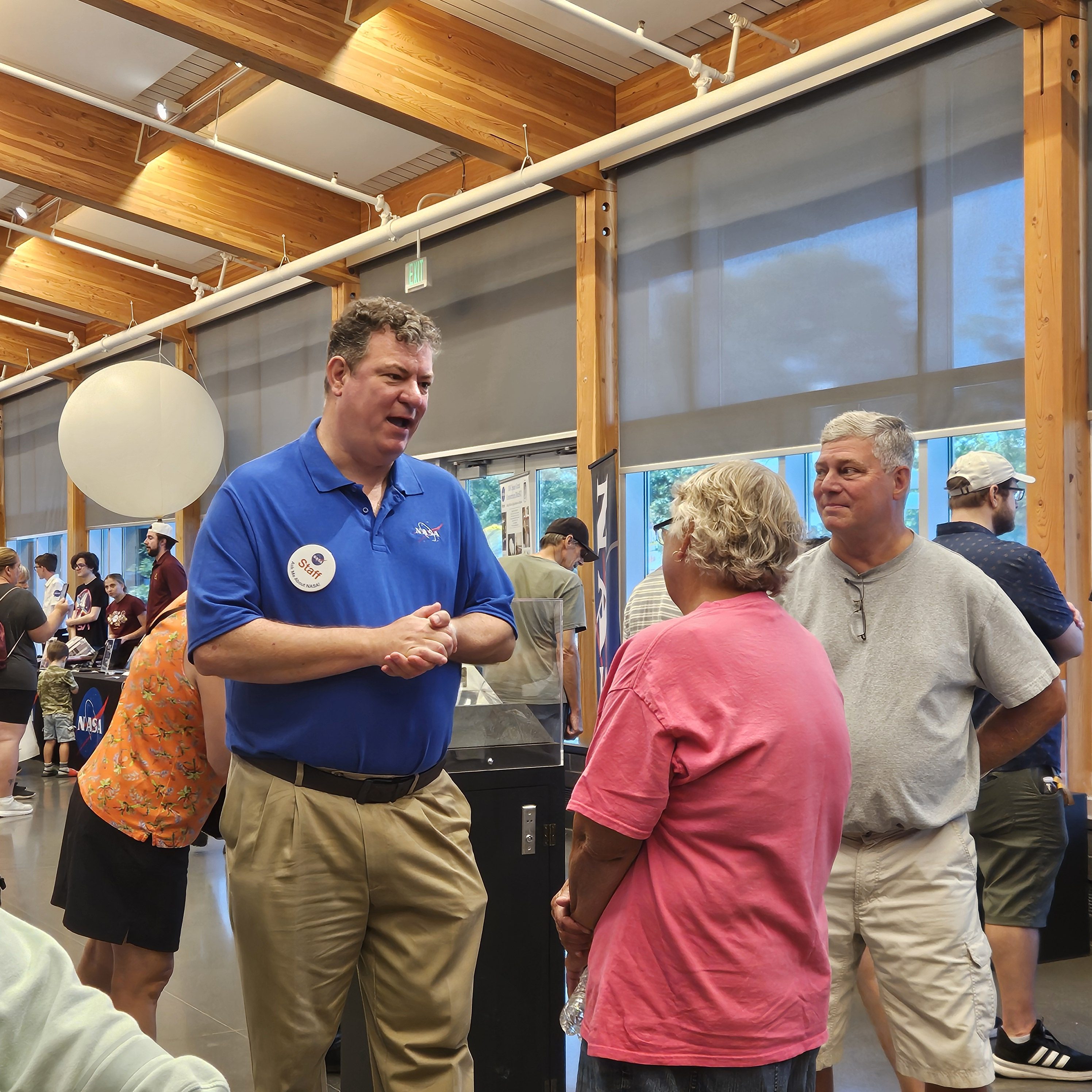
 Mike Lammers, Minnesota native and deputy chief of the Flight Director’s Office at NASA’s Johnson Space Center in Houston, talks with visitors at the Minnesota State Fair on Friday, Aug. 22, 2025.Credit: NASA/Christopher Richards
The team reached an estimated 57,000 people directly, with additional exposure through traditional and social media efforts.
-
NASA Names Glenn’s Steven Sinacore to Lead Fission Surface Power
 Steven SinacoreCredit: NASA
NASA leadership has named NASA Glenn Research Center’s Steven A. Sinacore as the agency’s program executive for Fission Surface Power with Lindsay Kaldon as deputy program executive.
Sinacore will lead a team within the Exploration Systems Development Mission Directorate dedicated to advancing fission surface power technology in support of lunar exploration, providing high power energy generation on Mars, and strengthening national security.
 Lindsay KaldonCredit: NASA
Sinacore has more than 20 years of leadership and project management experience. Most recently, he served as director of Aeronautics at NASA Glenn in Cleveland. Prior to that, he was deputy project manager of the Gateway Power and Propulsion Element. After joining NASA Glenn in 2005, Sinacore held numerous systems engineering, project management, and mission operations positions, and he has been instrumental in developing and executing intergovernmental partnerships.
His strong background leading cross-agency teams, combined with NASA Glenn’s longstanding expertise in space power technology development, will equip the agency to further advance U.S. competition and lunar surface leadership under the Artemis campaign.
Last month, NASA declared its intent to put a system that would provide at least 100 kilowatts of electrical power on the Moon by fiscal year 2030. NASA then surveyed industry for their interest and feedback on an announcement for partnership proposals.
This new effort builds on previous Glenn-led work to advance fission surface power technology development and concept designs.