Tag: space

  • Curiosity Blog, Sols 4682-4688: Seven Mars Years

    4 min read

    Curiosity Blog, Sols 4682-4688: Seven Mars Years
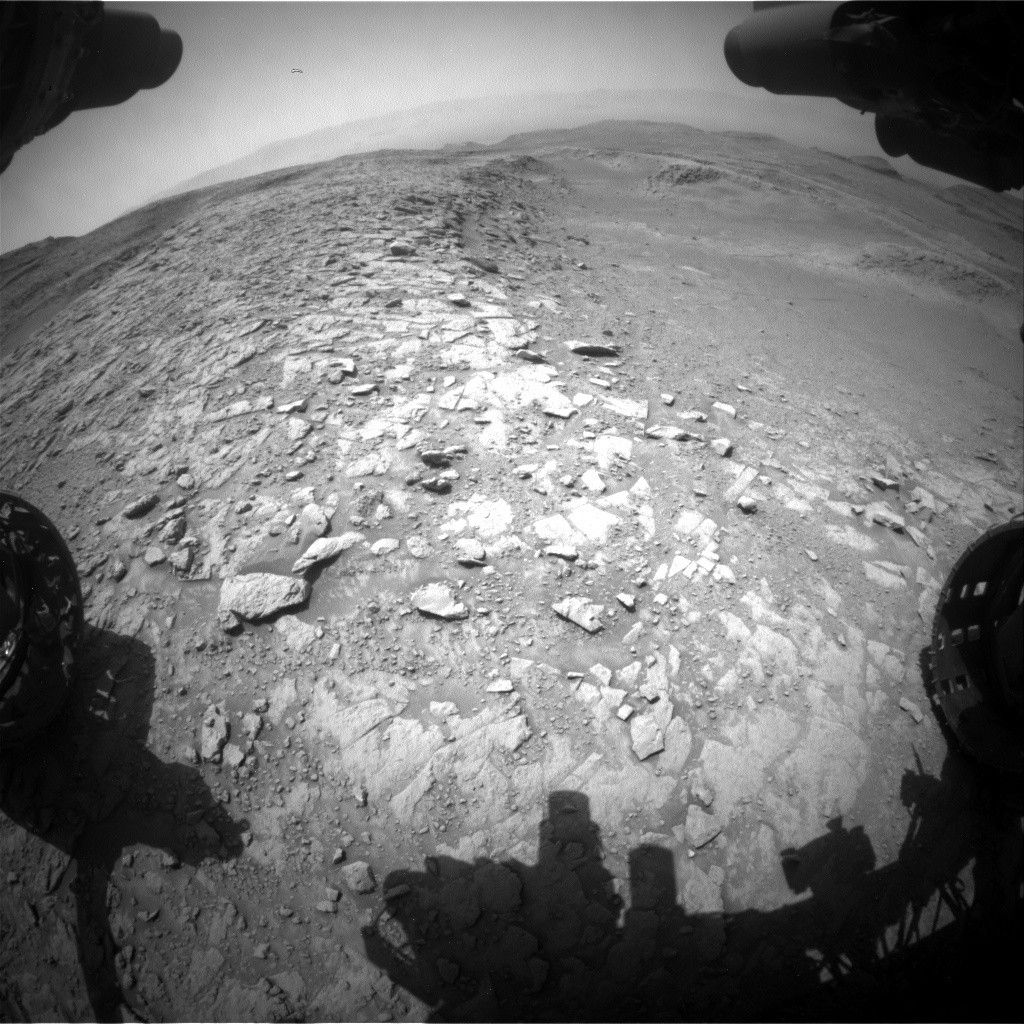
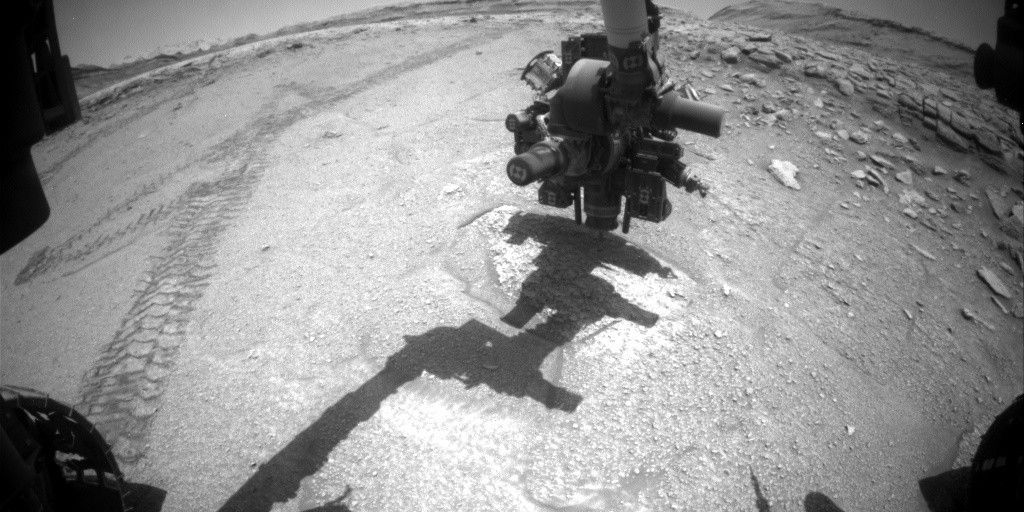
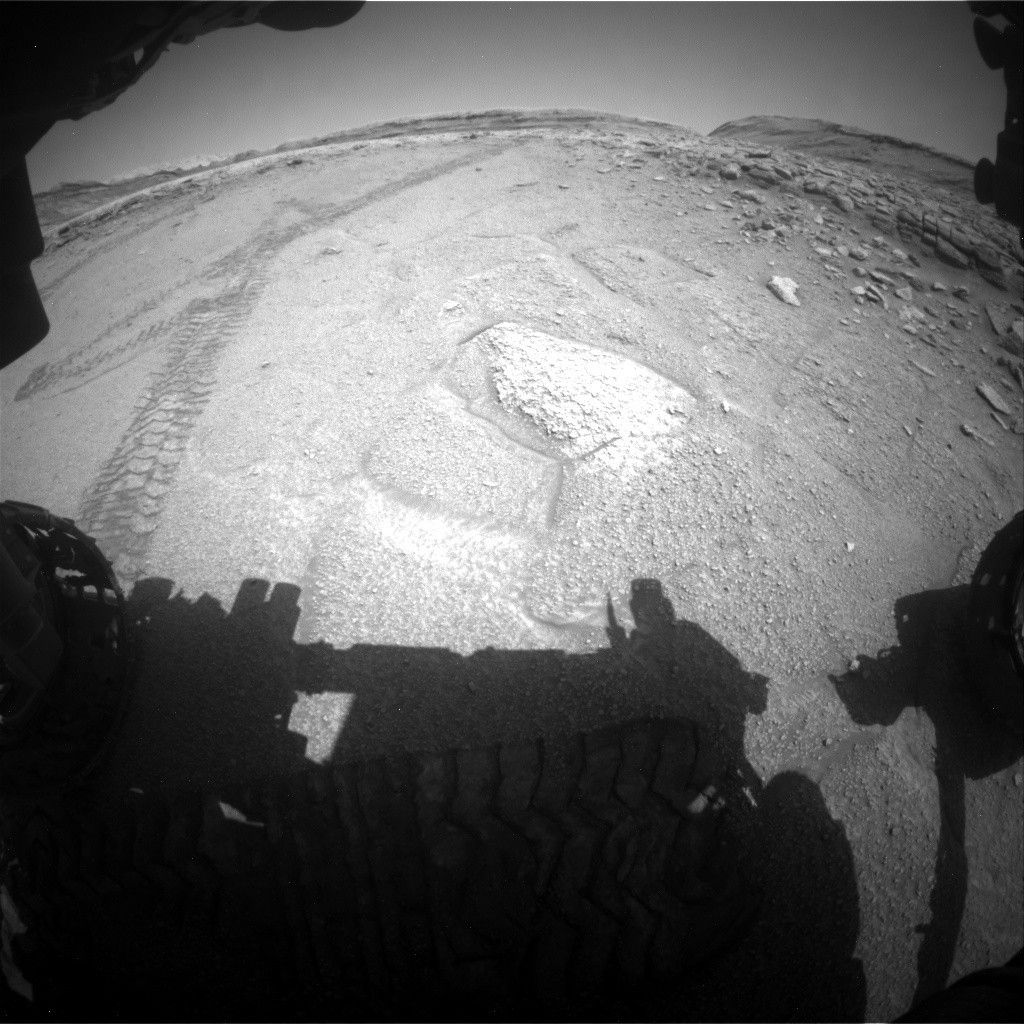
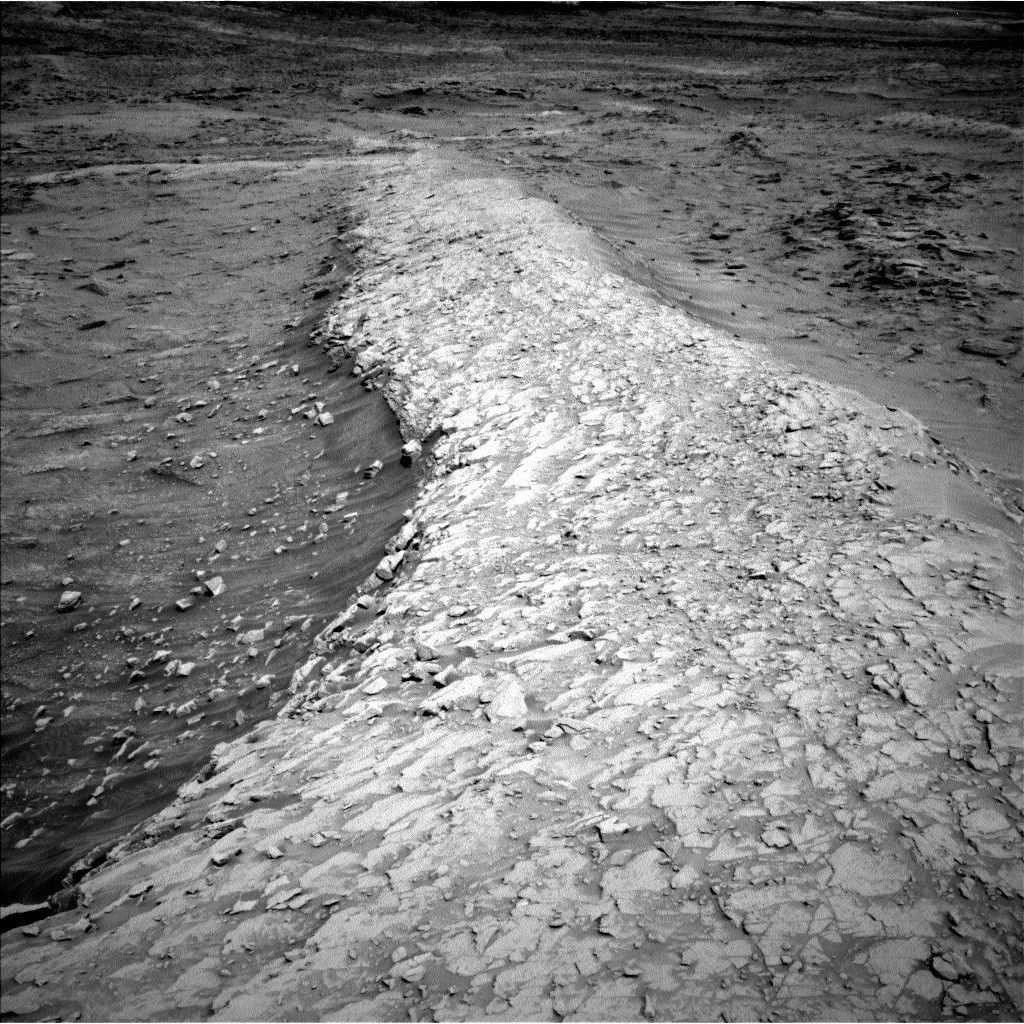
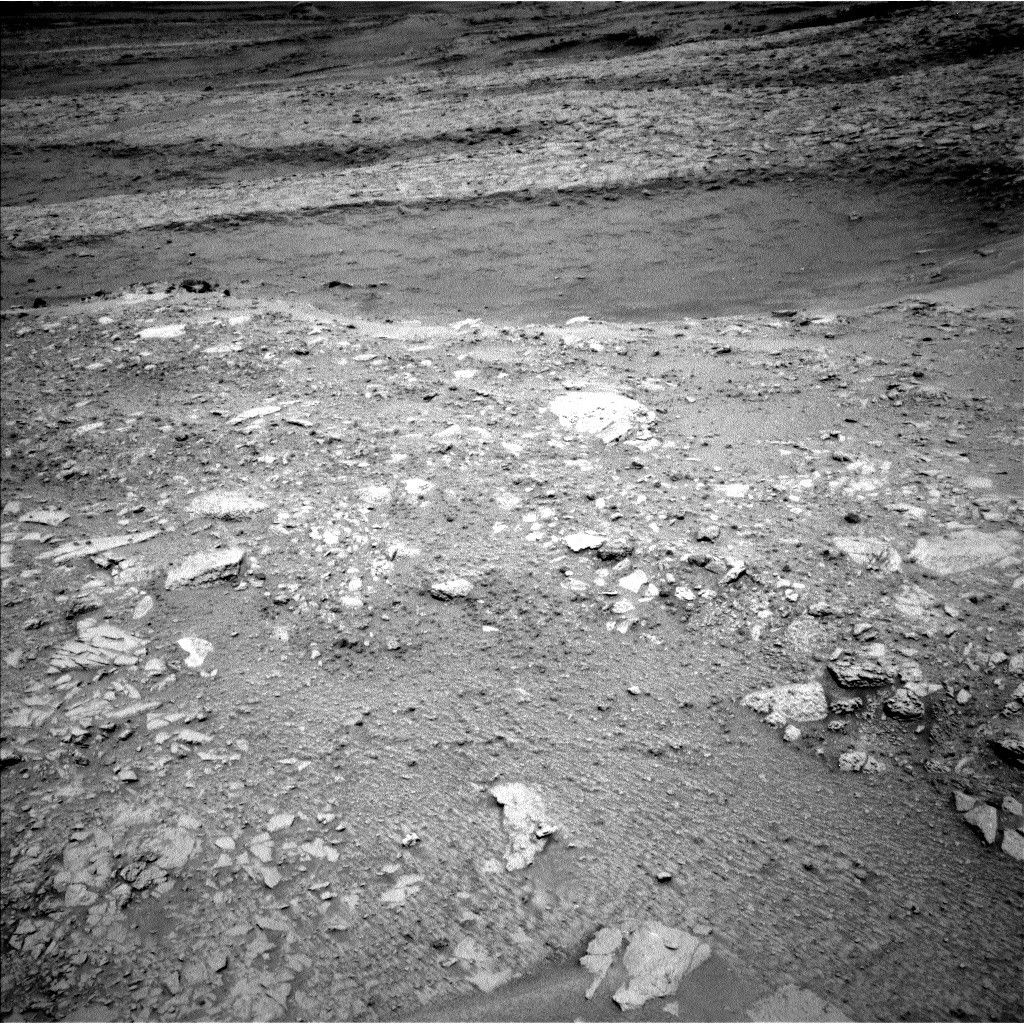
    A wide-angle grayscale photo from the Martian surface shows very uneven, rocky terrain covering the left side of the image from the foreground to the horizon, which falls off to smoother ground descending toward the right side of the frame, down into a crater. On the left and ridge edges of the frame, near the top, large rocky outcrops arise from the horizon, while more peaks are visible but hazy in the far distance. Portions of the rover’s shadow darken the lower left and right corners of the image.
    NASA’s Mars rover Curiosity acquired this image that looks down toward both the floor of Gale Crater, where we started our journey up Mount Sharp more than a decade ago, and toward the “Monte Grande” hollow that we hope will contain our next drill target. Curiosity captured the image using its Front Hazard Avoidance Camera (Front Hazcam) on Oct. 9, 2025 — Sol 4684, or Martian day 4,684 of the Mars Science Laboratory mission — at 21:28:14 UTC.
    NASA/JPL-Caltech

    Written by Diana Hayes, Graduate Student at York University, Toronto

    Earth planning date: Friday, Oct. 10, 2025

    This week was one of seasonal changes and milestones for the mission. As was mentioned several weeks ago, Mars has now moved out of its “cloudy season” and is transitioning into the “dusty season” as the planet moves closer to the Sun. This means that we should expect to see an increase in dust lifting and dust-devil activity over the next several months. With more dust in the atmosphere, we expect to lose the beautifully clear skies that have allowed us to take pictures of features at tremendous distances from the rover, like a mountain 57 miles (91 kilometers) away, outside of Gale Crater. We’ll also be keeping an eye out for the possible development of a global dust storm this season, as one has not occurred since 2018

    Back in August, we celebrated 13 Earth years since Curiosity landed in Gale back in 2012. This Monday, Oct. 6, a bit after 1 a.m. UTC (8 p.m. EDT Oct. 5), our intrepid rover marked its seventh full Mars year on the surface. (Because Mars is farther from the Sun than Earth is, a year on Mars — or one full trip around the Sun — lasts 687 Earth days.) Curiosity is only the second vehicle on Mars to reach that milestone, behind only Opportunity. Although Curiosity has not yet matched Opportunity’s longevity or distance driven, over the last seven Mars years we have put together the longest and most comprehensive record of the modern Martian climate. REMS has been recording weather conditions at least once an hour almost every hour since 2012, and RAD has now measured surface radiation conditions for more than a full solar cycle, data that will be critical to future human exploration of Mars. We’ve taken more than 3,000 cloud movies and countless more observations of atmospheric opacity, dust lifting, and dust-devil activity. I’ve been a member of our environmental science team for just over five (Earth) years now (or about 2 ½ Mars years), and I can still hardly believe that I’ve been able to help contribute to this incredible legacy. Although our well-traveled rover is now in its fifth Extended Mission, as a team we have no intention of slowing down any time soon.

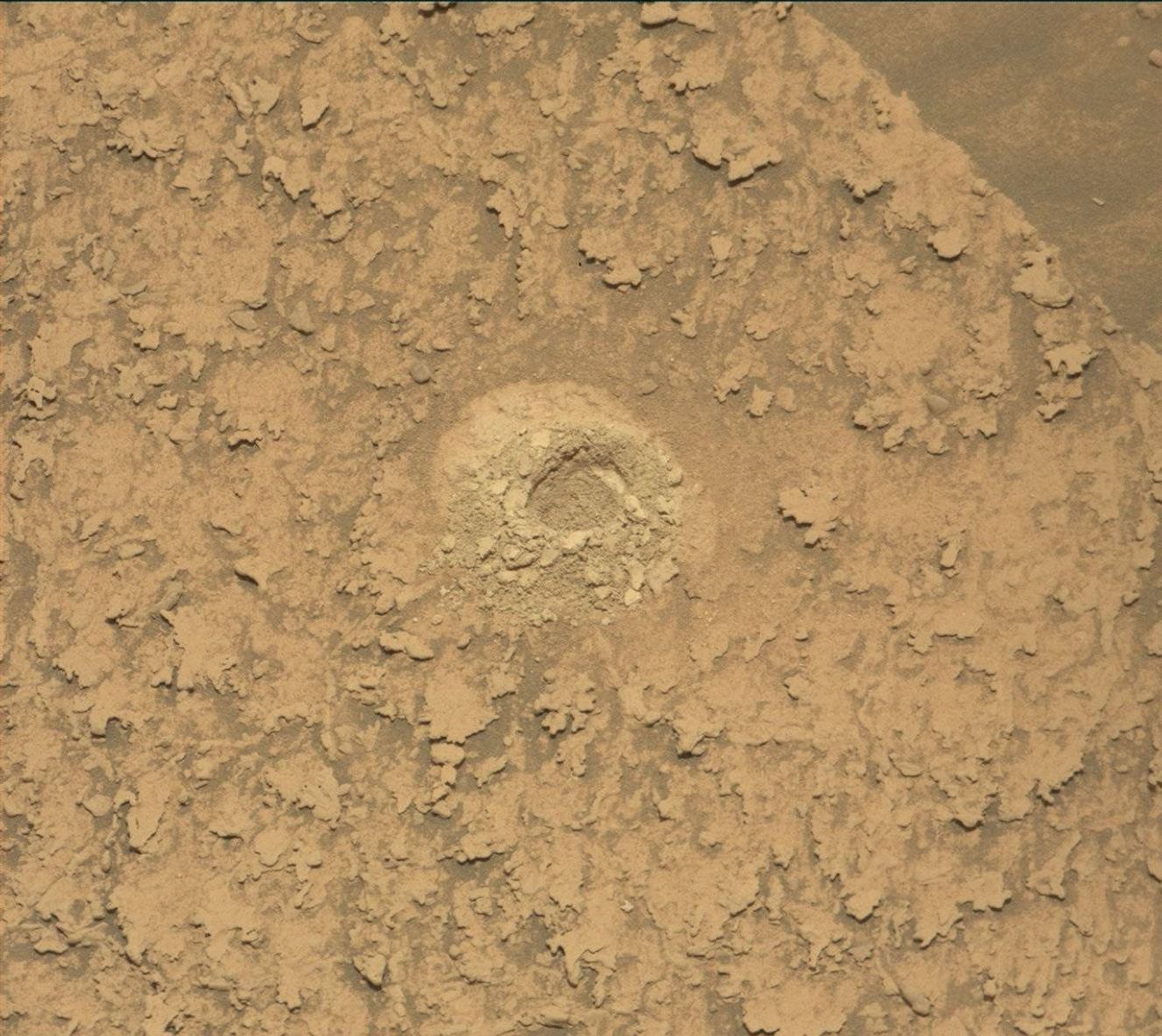
    Other than celebrating these milestones, this week was focused on setting up for the first of our two planned drills in the boxwork region. This first drill will be in one of the boxwork “hollows.” We’re currently targeting a hollow we’ve nicknamed “Monte Grande,” with the goal that we’ll be set up to drill there next week. Once we’re done at Monte Grande, we plan to drive up to one of the raised ridges that give the boxwork region its spiderweb-like appearance. By comparing the results of these two drill campaigns, our hope is that we’ll be able to gain a better understanding of the processes in Mars’ past that led to the formation of these fascinating features. 

    As we prepare to drill, both science theme groups continued their usual cadence of contact science and remote sensing to characterize the local geology and environment. This weekend will be particularly busy on the environmental science side of the mission, with coordinated observations with APXS and ChemCam to track seasonal changes in the composition of the atmosphere. We’ll also be using SAM’s Tunable Laser Spectrometer instrument to measure the amount of atmospheric methane at Gale. This is an activity that we’ve performed periodically over the mission, and has inspired much spirited debate over the sources and destruction mechanisms of Martian methane

    Here’s to many more years of roving and scientific discovery!
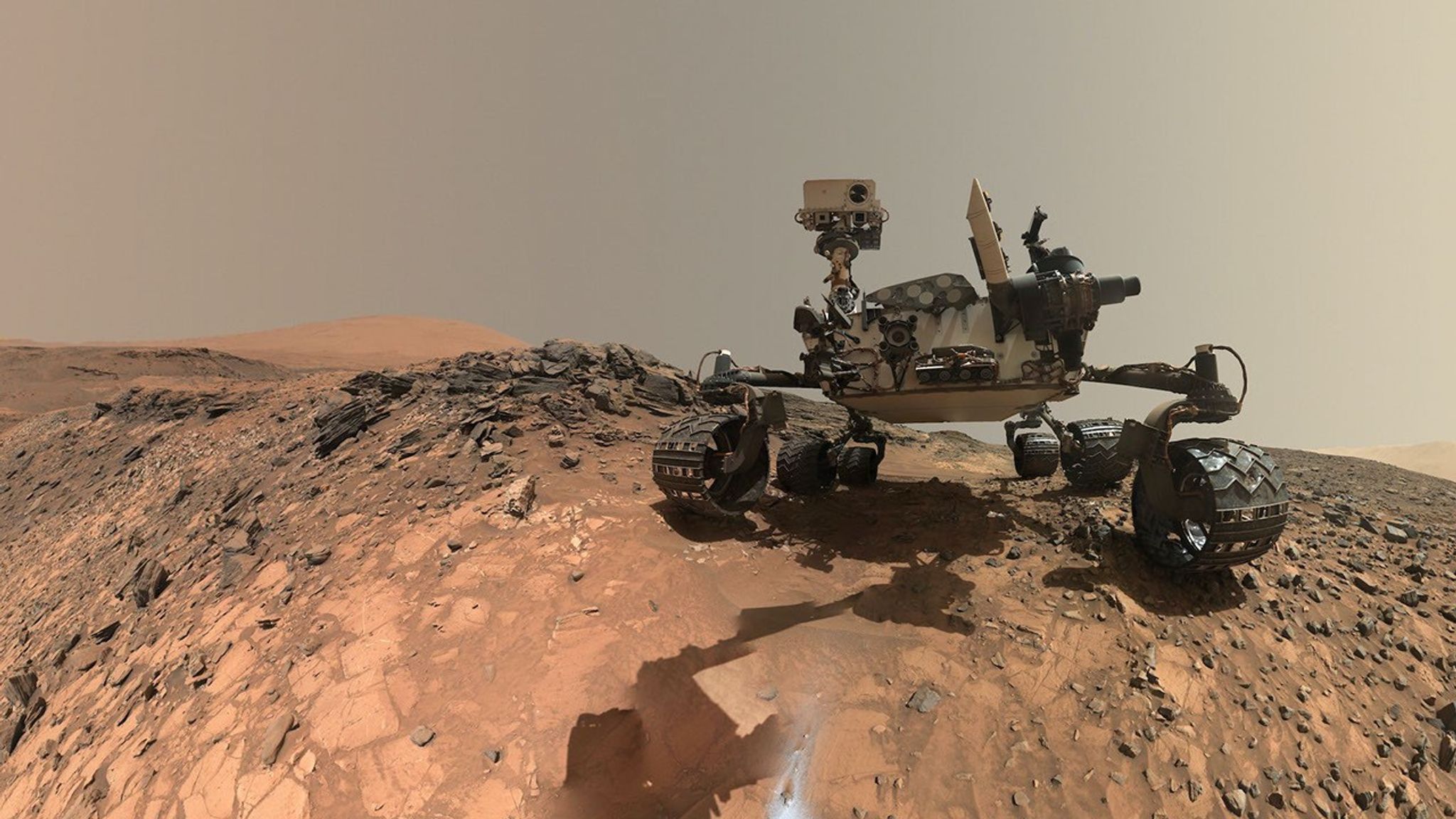
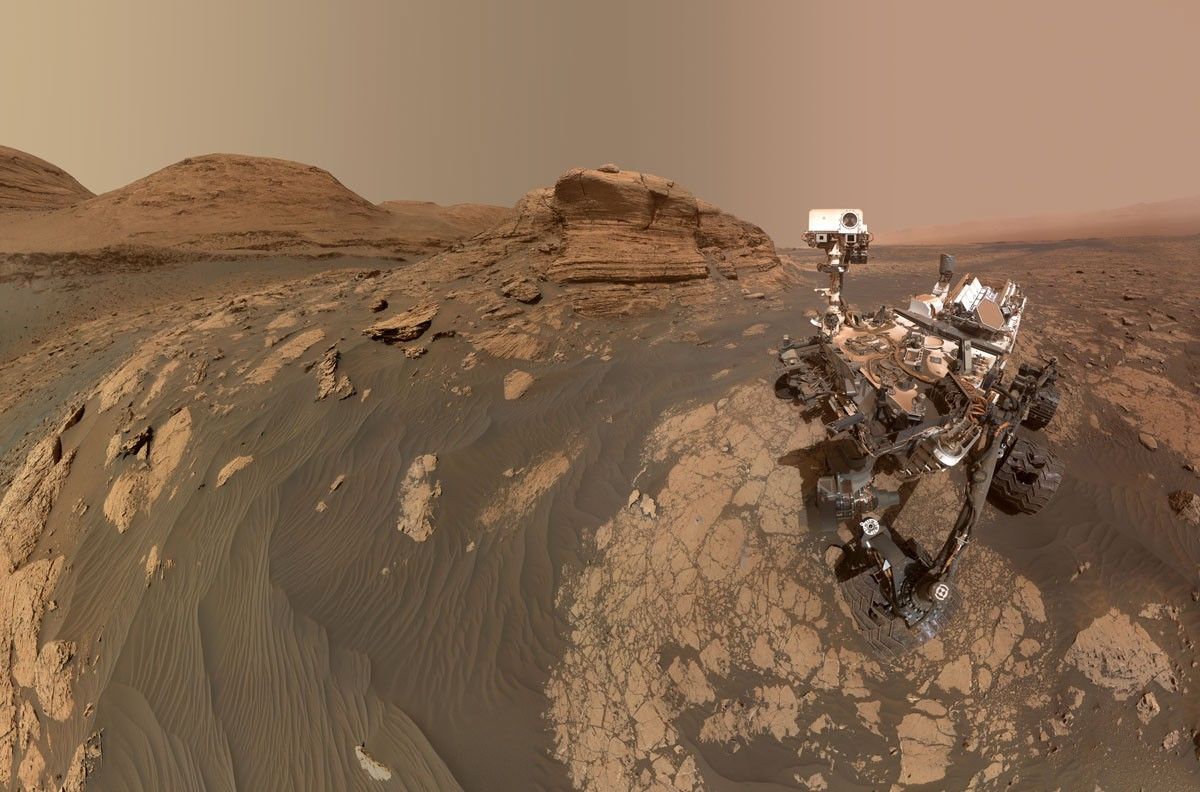
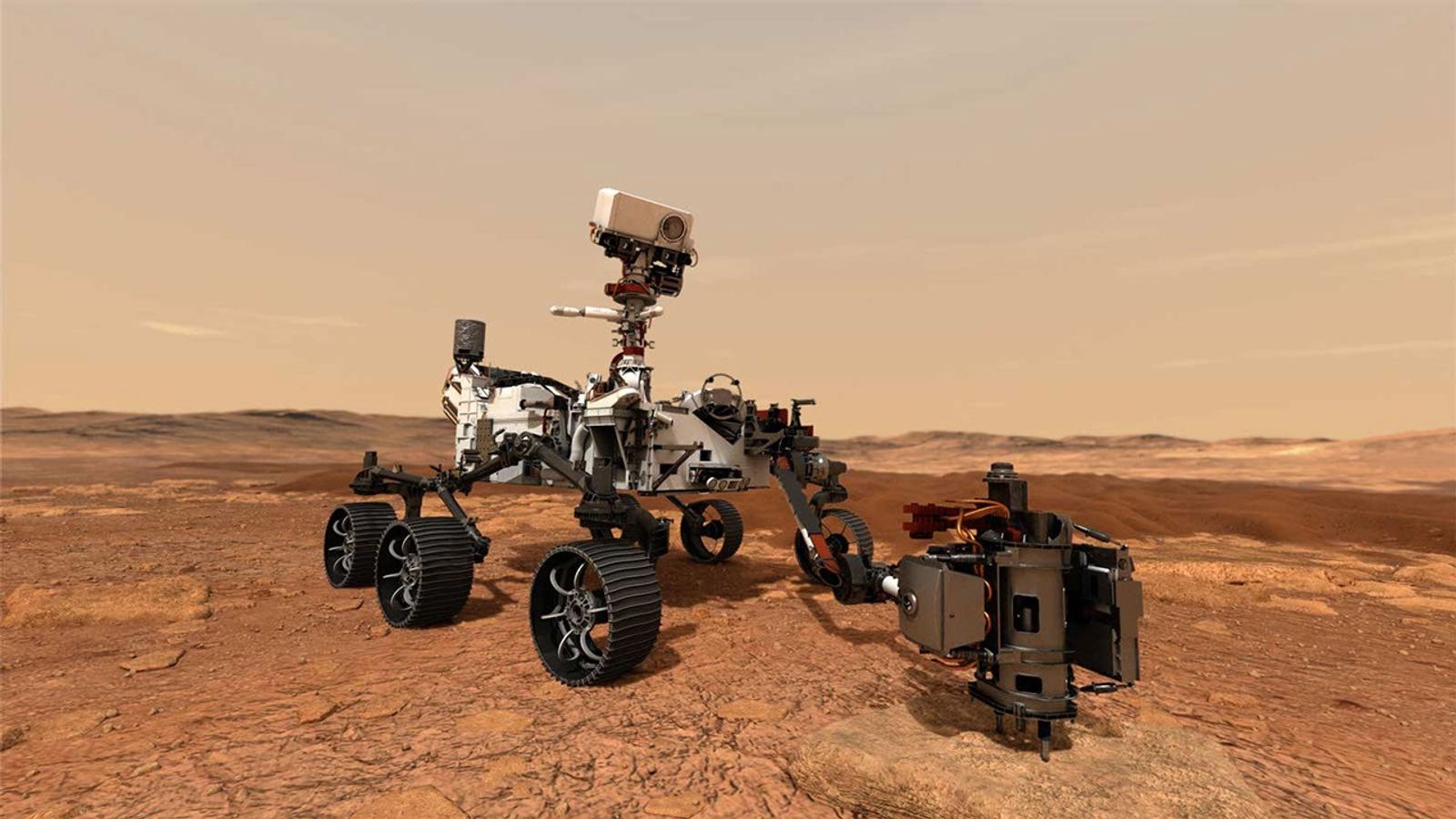
    A rover sits on the hilly, orange Martian surface beneath a flat grey sky, surrounded by chunks of rock.
    NASA’s Mars rover Curiosity at the base of Mount Sharp
    NASA/JPL-Caltech/MSSS

    Details

    Last Updated

    Nov 13, 2025

    Related Terms

  • Curiosity Blog, Sols 4675-4681: Deciding Where to Dig Into the Boxworks

    3 min read

    Curiosity Blog, Sols 4675-4681: Deciding Where to Dig Into the Boxworks

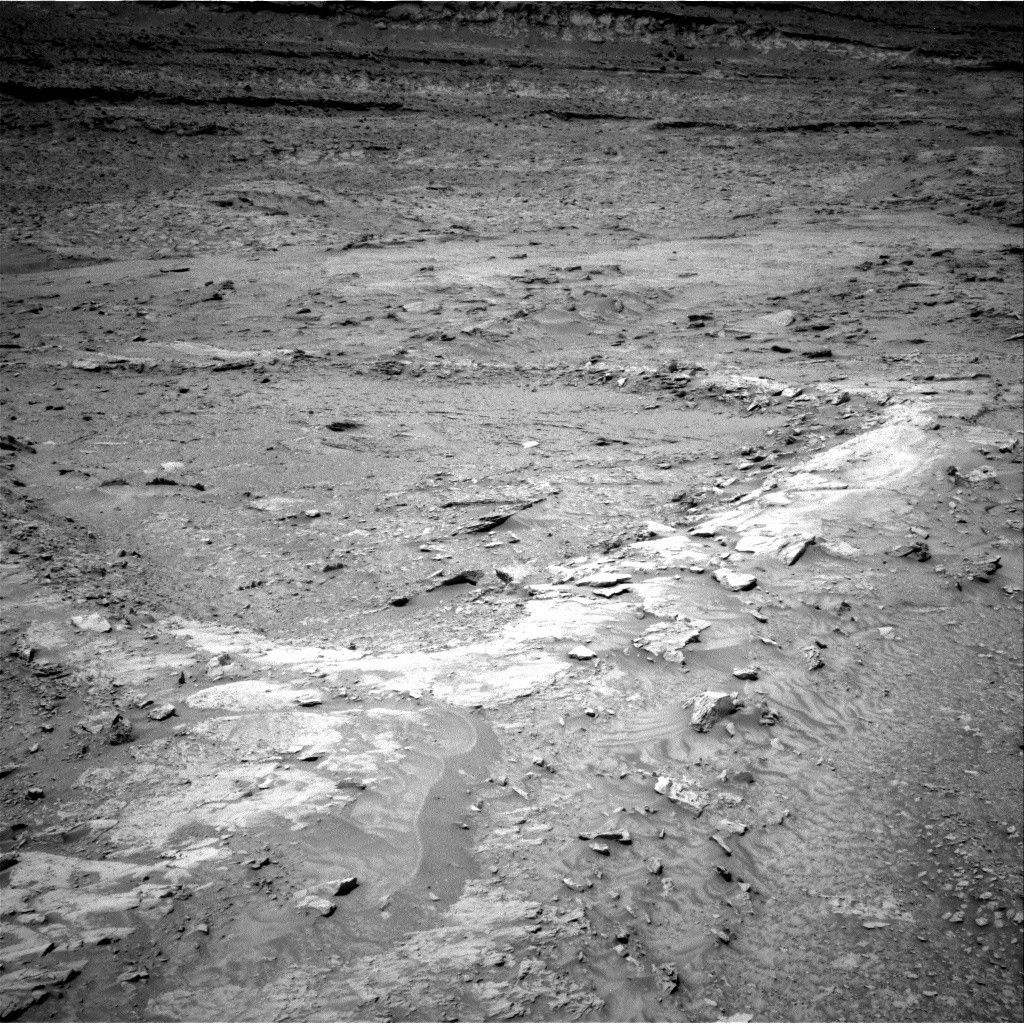
    A grayscale photo from the Martian surface shows a landscape with an elevated ridge running from the foreground, at the bottom left  of the image, toward the middle right side of the frame, with two branches extending toward the left side of the frame, creating a U-shaped depression between them. The top of the ridge is much lighter colored than the medium gray surrounding terrain, which extends off to the horizon at the top of the frame, and is interspersed with areas of scattered small, jagged rocks and wavy sand deposits.
    NASA’s Mars rover Curiosity acquired this image using its Right Navigation Camera, showing the three types of geologic features that have held the mission team’s attention for months — a bright, arcuate boxwork ridge, a darker, sand-filled hollow, and, in the distance, the “Mishe Mokwa” butte. Curiosity captured the image on Oct. 2, 2025 — Sol 4677, or Martian day 4,677 of the Mars Science Laboratory mission — at 15:49:32 UTC.
    NASA/JPL-Caltech

    Written by Michelle Minitti, MAHLI Deputy Principal Investigator at Framework

    Earth planning date: Friday, Oct. 3, 2025

    Before Curiosity landed 13 years ago, the science team eyed all the geologic wonders scattered across the flanks of Mount Sharp and looked forward to the day when we could put the rover to work on them. We have visited so many of these wonders — valleys, river channels, lakebeds — and found a few that we were not expecting. 

    Since Sol 4600, we have been exploring the heart of one of these long-awaited wonders — the boxwork structures — to uncover what created this expansive network of ridges and hollows. Each stop along the traverse since then has been an exercise in systematic detective work. 

    APXS and ChemCam analyses from the center of a ridge, to its edges, and into its neighboring hollow looked for chemical variations that indicate what is holding the ridges together, making them higher than the hollows. Mastcam and ChemCam RMI imaging mapped the architecture of the ridges and hollows looking for structures that provide clues to their formation. Their imaging of more distant features such as the buttes that rise hundreds of meters on either side of the valley hosting the boxworks helped define the geologic context of the area. MAHLI imaging of ridge and hollow targets sought variations in grain size that might indicate how the boxwork bedrock was deposited. DAN surveyed the ground under the rover at every stop, measuring hydrogen (and thus assumed, water) content to see how it varies between ridges and hollows. 

    This week, the team ingested all the results from this thorough exploration to make a decision about our next drill site, where SAM and CheMin will have their chance to interrogate the boxworks. The rover will head north to the “Monte Grande” hollow in which we identified promising bedrock for sampling. Eventually, we will drill a ridge but that is for a future blog. Comparing the mineralogy, volatile content, and organic chemistry of the ridges and hollows will give us our most detailed insight into how the boxworks formed.

    REMS and RAD do not particularly care if they are parked over a ridge or hollow, as the sky above is their domain. Both instruments kept their steady watch on the weather — Martian and space, respectively. Navcam and Mastcam helped with the environmental watch by measuring dust in the atmosphere, looking for dust devils, and capturing the last of the cloudy season. 

    A rover sits on the hilly, orange Martian surface beneath a flat grey sky, surrounded by chunks of rock.
    NASA’s Mars rover Curiosity at the base of Mount Sharp
    NASA/JPL-Caltech/MSSS

    Details

    Last Updated

    Nov 13, 2025

    Related Terms

  • A Robotic Helping Hand

    A Robotic Helping Hand

    The 57.7-foot-long Canadarm2 robotic arm extends from a data grapple fixture on the International Space Station’s Harmony module in this July 23, 2025, image.

  • A Stranger in Our Midst?

    Perseverance Encounters a Possible Meteorite

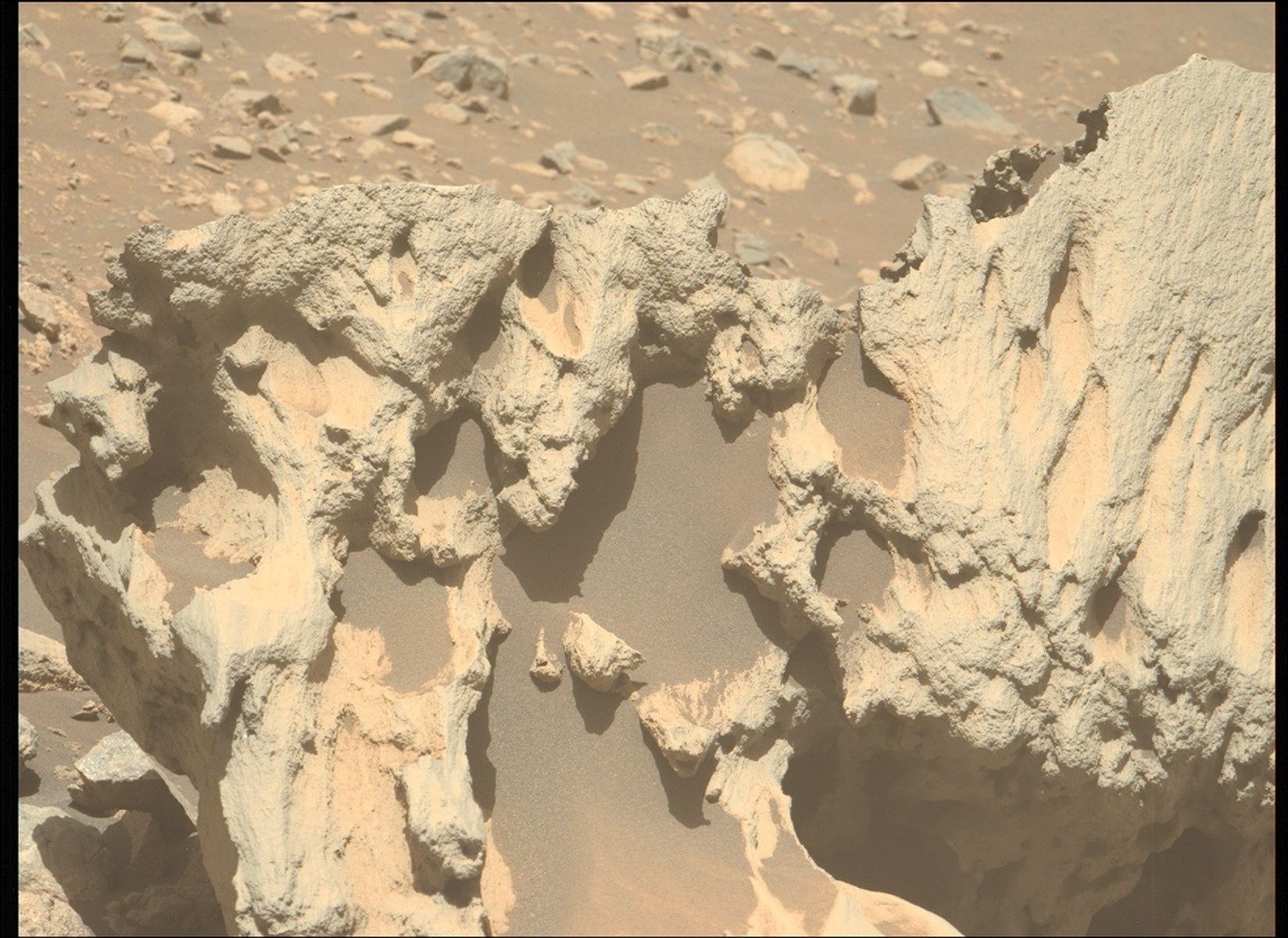
    A color photo from the Martian surface shows a close-up of a large tan and pale orange rock pockmarked with numerous large holes, which are mostly filled with dark, rust-colored sand. In the background, pale orange, very rocky terrain is visible in the top third of the image.
    NASA’s Mars Perseverance rover acquired this close-up view showing the cavernous weathering texture of an unusually shaped rock, “Phippsaksla,” targeted for investigation based on its appearance that differed from the low-lying surrounding rocks. Study showed that it is high in iron and nickel content, suggesting that it might be a meteorite. Perseverance captured the image using its Left Mastcam-Z camera, one of a pair of cameras located high on the rover’s mast, on Sept. 19, 2025 — Sol 1629, or Martian day 1,629 of the Mars 2020 mission — at the local mean solar time of 12:11:25.
    NASA/JPL-Caltech/ASU

    Written by Candice Bedford, Research Scientist at Purdue University

    Oct. 1, 2025

    During the rover’s recent investigation of the bedrock at “Vernodden,” Perseverance encountered an unusually shaped rock about 80 centimeters across (about 31 inches) called “Phippsaksla.” This rock was identified as a target of interest based on its sculpted, high-standing appearance that differed from that of the low-lying, flat and fragmented surrounding rocks. Last week, Perseverance targeted Phippsaksla with the SuperCam instrument revealing that it is high in iron and nickel. This element combination is usually associated with iron-nickel meteorites formed in the core of large asteroids, suggesting that this rock formed elsewhere in the solar system. 

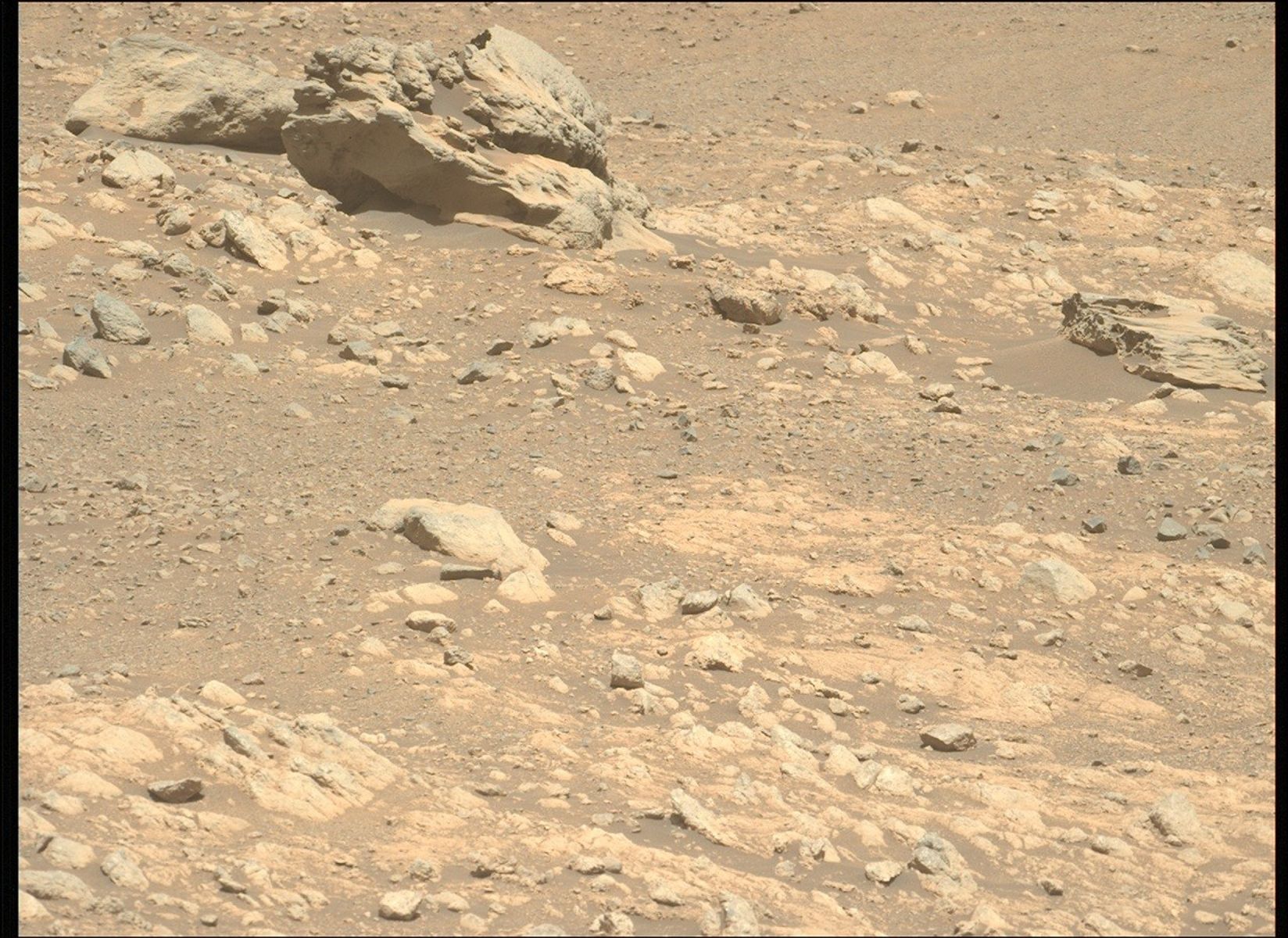
    A color photo from the Martian surface shows pale orange, very rocky terrain in the foreground, with a large, pockmarked rock in the background at upper left.
    NASA’s Mars Perseverance rover acquired this image of the unusually shaped rock, “Phippsaksla,” in the distance at upper left, which is suspected to be a meteorite because of its high iron and nickel content. Perseverance captured the image using its Left Mastcam-Z camera, one of a pair of cameras located high on the rover’s mast, on Sept. 2, 2025 — Sol 1612, or Martian day 1,612 of the Mars 2020 mission — at the local mean solar time of 12:45:41.
    NASA/JPL-Caltech/ASU

    This is not the first time a rover has encountered an exotic rock on Mars. The Curiosity rover has identified many iron-nickel meteorites across its traverse in Gale crater including the 1-meter wide (about 39 inches) “Lebanon” meteorite back in 2014 and the “Cacao” meteorite spotted in 2023. Both Mars Exploration Rovers, Opportunity and Spirit, also found iron-nickel meteorites during their missions. As such, it has been somewhat unexpected that Perseverance had not seen iron-nickel meteorites within Jezero crater, particularly given its similar age to Gale crater and number of smaller impact craters suggesting that meteorites did fall on the crater floor, delta, and crater rim throughout time. Now, on the outside of the crater, atop bedrock known to have formed from impact processes in the past, Perseverance has potentially found one. Due to the exotic composition of this rock, more investigation by the team needs to be done to confirm its status as a meteorite. But if this rock is deemed to be a meteorite Perseverance can at long last add itself to the list of Mars rovers who have investigated the fragments of rocky visitors to Mars. 

  • NASA Patent Remix Challenge

    NASA’s Technology Transfer Office invites entrepreneurs, innovators, and creative thinkers to apply NASA’s patented technologies to practical applications. Participants will select an existing NASA patent and develop a business or product concept that will be evaluated based on value proposition, business model viability, development feasibility, and quality of presentation. Entries should clearly demonstrate creativity, feasibility, and a compelling rationale for how the concept could create real-world impact.

    Award: $13,000 in total prizes

    Open Date: October 6, 2025

    Close Date: December 15, 2025

    For more information, visit: https://nasapatentremixchallenge.org/

  • Brazil gears up to harness ESA’s Biomass data

    Forest floor and forest canopy

    As the COP30 climate conference gets underway in Brazil, the world’s attention is once again drawn to the plight of the Amazon – the planet’s largest and most vital rainforest. With the European Space Agency’s Earth Explorer Biomass satellite now in orbit, ESA is helping Brazil prepare to transform this new mission’s groundbreaking data into actionable knowledge for protecting the rainforest and confronting climate change.

  • First confirmed sighting of explosive burst on nearby star

    Artist's impression of an explosion on another star

    Astronomers using the European Space Agency’s XMM-Newton space observatory and the LOFAR telescope have definitively spotted an explosive burst of material thrown out into space by another star – a burst powerful enough to strip away the atmosphere of any unlucky planet in its path.

  • What a martian ice age left behind

    The patterns of Coloe Fossae: What a martian ice age left behind

    Travelling up from Mars’s equator towards its north pole, we find Coloe Fossae: a set of intriguing scratches within a region marked by deep valleys, speckled craters, and signs of an ancient ice age.

  • Celebrating 30 years of European satellite navigation


    Video:
    00:03:42

    The year 2025 marked three decades of satellite navigation in Europe. To celebrate this milestone, on 2 September, the European Space Agency (ESA) opened the doors of ESTEC, its research and technology centre. Partners from across the continent joined a sensational event that took the audience on a journey through time, honouring the achievements and collaboration that have shaped the success story of the systems we rely on today: Galileo and EGNOS. 

  • John McFall | Prosthetics, Possibility & Parabolic Flights | ESA Explores #16


    Video:
    00:12:53

    Meet John McFall – Paralympian, medical doctor and member of ESA’s Astronaut Reserve. As part of ESA’s groundbreaking FLY initiative, John is helping prove that physical disability is no barrier to space. In this episode, he shares the results of a feasibility study showing no technical showstoppers for flying to the International Space Station with a prosthesis and talks about what’s next—from hardware certification and scientific proposals to astronaut reserve training and running in microgravity.

    In this miniseries, we take you on a journey through the ESA Astronaut Reserve, diving into the first part of their Astronaut Reserve Training (ART) at the European Astronaut Centre (EAC) near Cologne, Germany. Our “ARTists” are immersing themselves in everything from ESA and the International Space Station programme to the European space industry and institutions. They’re gaining hands-on experience in technical skills like spacecraft systems and robotics, alongside human behaviour, scientific lessons, scuba diving and survival training. 

    ESA’s Astronaut Reserve Training programme is all about building Europe’s next generation of space explorers—preparing them for the opportunities of future missions in Earth orbit and beyond.

    This interview was recorded in February 2025.

    You can listen to this episode on all major podcast platforms.

    Keep exploring with ESA Explores!

  • Paxi and the start of the great space adventure


    Video:
    00:04:49

    English: Paxi and the Start of the Great Space Adventure

    Join Paxi on a journey through time! Learn how humans first started exploring space, why countries in Europe teamed up to create the European Space Agency (ESA), what ESA does today, and how kids can be part of the adventure. 

    Czech: Paxi a Začátek velkého vesmírného dobrodružství

    Vydejte se s Paxi na cestu časem! Dozvíte se, jak lidé začali zkoumat vesmír, proč se evropské země spojily a založily Evropskou kosmickou agenturu (ESA), čím se ESA dnes zabývá a jak se děti mohou zapojit do tohoto dobrodružství. 

    Danish: Paxi og begyndelsen på det store rumeventyr

    Tag med Paxi på en rejse gennem tiden! Lær, hvordan mennesket begyndte at udforske rummet, hvorfor lande i Europa gik sammen om at oprette Den Europæiske Rumorganisation (ESA), hvad ESA laver i dag, og hvordan børn kan være en del af eventyret. 

    Dutch: Paxi en het begin van het grote ruimteavontuur

    Ga met Paxi mee op een reis door de tijd! Ontdek hoe mensen voor het eerst de ruimte gingen verkennen, waarom Europese landen samen de Europese Ruimtevaartorganisatie (ESA) hebben opgericht, wat ESA vandaag de dag doet en hoe kinderen deel kunnen uitmaken van dit avontuur. 

    Estonian: Paxi ja suure kosmoseseikluse algus

    Liitu Paxiga ajarännakule! Õpi, kuidas inimesed hakkasid kosmost uurima, miks Euroopa riigid ühinesid Euroopa Kosmoseagentuuri (ESA) loomiseks, mida ESA täna teeb ja kuidas lapsed saavad sellest seiklusest osa võtta. 

    Finnish: Paxi ja suuren avaruusseikkailun alku

    Lähde Paxin kanssa matkalle ajassa taaksepäin! Opi, miten ihmiset alkoivat tutkia avaruutta, miksi Euroopan maat perustivat yhdessä Euroopan avaruusjärjestön (ESA), mitä ESA tekee nykyään ja miten lapset voivat osallistua seikkailuun.

    French: Paxi et le début de la grande aventure spatiale

    Rejoignez Paxi dans un voyage à travers le temps ! Découvrez comment les humains ont commencé à explorer l’espace, pourquoi les pays européens se sont associés pour créer l’Agence spatiale européenne (ESA), ce que fait l’ESA aujourd’hui et comment les enfants peuvent participer à l’aventure. 

    German: Paxi und der Beginn des großen Weltraumabenteuers

    Begleite Paxi auf einer Reise durch die Zeit! Erfahre, wie die Menschen begannen, den Weltraum zu erforschen, warum sich europäische Länder zusammengeschlossen haben, um die Europäische Weltraumorganisation (ESA) zu gründen, was die ESA heute macht und wie Kinder Teil dieses Abenteuers werden können. 

    Greek: Ο Πάξι και η αρχή της μεγάλης διαστημικής περιπέτειας

    Ελάτε μαζί με τον Paxi σε ένα ταξίδι στο χρόνο! Μάθετε πώς οι άνθρωποι άρχισαν να εξερευνούν το διάστημα, γιατί οι χώρες της Ευρώπης συνεργάστηκαν για να δημιουργήσουν τον Ευρωπαϊκό Οργανισμό Διαστήματος (ESA), τι κάνει σήμερα ο ESA και πώς τα παιδιά μπορούν να συμμετάσχουν σε αυτή την περιπέτεια. 

    Hungrarian: Paxi és a nagy űrkaland kezdete

    Csatlakozz Paxihoz egy időutazásra! Tudj meg, hogyan kezdték el az emberek az űr kutatását, miért álltak össze az európai országok az Európai Űrügynökség (ESA) létrehozására, mit csinál ma az ESA, és hogyan vehetnek részt a gyerekek is ebben a kalandban. 

    Italian: Paxi e l’inizio della grande avventura nello Spazio

    Unisciti a Paxi in un viaggio attraverso il tempo! Scopri come gli esseri umani hanno iniziato a esplorare lo spazio, perché i paesi europei hanno collaborato per creare l’Agenzia Spaziale Europea (ESA), cosa fa oggi l’ESA e come i bambini possono partecipare a questa avventura. 

    Norwegian: Paxi og starten på det store romeventyret

    Bli med Paxi på en reise gjennom tiden! Lær hvordan menneskene først begynte å utforske verdensrommet, hvorfor landene i Europa gikk sammen om å opprette Den europeiske romorganisasjonen (ESA), hva ESA gjør i dag, og hvordan barn kan være med på eventyret. 

    Polish: Paxi i początek wielkiej kosmicznej przygody

    Dołącz do Paxi w podróży przez czas! Dowiedz się, jak ludzie zaczęli odkrywać kosmos, dlaczego kraje europejskie połączyły siły, aby stworzyć Europejską Agencję Kosmiczną (ESA), czym zajmuje się obecnie ESA i jak dzieci mogą wziąć udział w tej przygodzie. 

    Portuguese: Paxi e o início da grande aventura espacial

    Junte-se a Paxi numa viagem pelo tempo! Saiba como os humanos começaram a explorar o espaço, por que os países da Europa se uniram para criar a Agência Espacial Europeia (ESA), o que a ESA faz hoje e como as crianças podem fazer parte dessa aventura. 

    Romanian: Paxi și începutul marii aventuri spațiale

    Alătură-te lui Paxi într-o călătorie în timp! Află cum au început oamenii să exploreze spațiul, de ce țările din Europa s-au asociat pentru a crea Agenția Spațială Europeană (ESA), ce face ESA astăzi și cum pot copiii să participe la această aventură. 

    Slovenian: Paxi in začetek velike vesoljske pustolovščine

    Pridružite se Paxiju na potovanju skozi čas! Spoznajte, kako so ljudje začeli raziskovati vesolje, zakaj so se evropske države združile in ustanovile Evropsko vesoljsko agencijo (ESA), kaj ESA počne danes in kako lahko otroci sodelujejo v tej pustolovščini. 

    Spanish: Paxi y el comienzo de la gran aventura espacial

    ¡Acompaña a Paxi en un viaje a través del tiempo! Descubre cómo los seres humanos comenzaron a explorar el espacio, por qué los países europeos se unieron para crear la Agencia Espacial Europea (ESA), qué hace la ESA hoy en día y cómo los niños pueden formar parte de la aventura. 

    Swedish: Paxi & början på det stora rymdäventyret

    Följ med Paxi på en resa genom tiden! Lär dig hur människan började utforska rymden, varför länderna i Europa gick samman för att bilda Europeiska rymdorganisationen (ESA), vad ESA gör idag och hur barn kan vara med på äventyret. 

  • Copernicus Sentinel-1D journey to space


    Video:
    00:03:39

    The Copernicus Sentinel-1D satellite has joined the Sentinel-1 mission in orbit. Launch took place on 4 November 2025 at 22:02 CET (18:02 local time) on board an Ariane 6 launcher from Europe’s Spaceport in French Guiana.

    The Sentinel-1 mission delivers high-resolution radar images of Earth’s surface, performing in all weathers, day-and-night. This service is used by disaster response teams, environmental agencies, maritime authorities and climate scientists, who depend on frequent updates of critical data.

    Sentinel-1D will work in tandem with Sentinel-1C, flying in the same orbit but 180° apart, to optimise global coverage and data delivery. Both satellites have a C-band synthetic aperture radar (SAR) instrument on board, which captures high-resolution imagery of Earth’s surface. They are also equipped with Automatic Identification System (AIS) instruments to improve detection and tracking of ships. When Sentinel-1D is fully operational, it will enable more frequent AIS observations, including data on vessel identity, location and direction of passage, enabling precise tracking.

    Sentinel-1D was launched on Europe’s heavy-lift rocket Ariane 6 on flight designated VA265. 

    Read full story: Copernicus Sentinel-1D reaches orbit on Ariane 6

    Access the related broadcast quality video material: Sentinel-1D launch on Ariane 6 – VA265 / Sentinel-1 mission animations