Tag: NASA

  • I Am Artemis: Joe Pavicic

    2 Min Read

    I Am Artemis: Joe Pavicic

    Image shows man smiling in black shirt with NASA's Artemis logo.

    Listen to this audio excerpt from Joe Pavicic, Artemis operations project engineer

    0:00 / 0:00

    Your browser does not support the audio element.

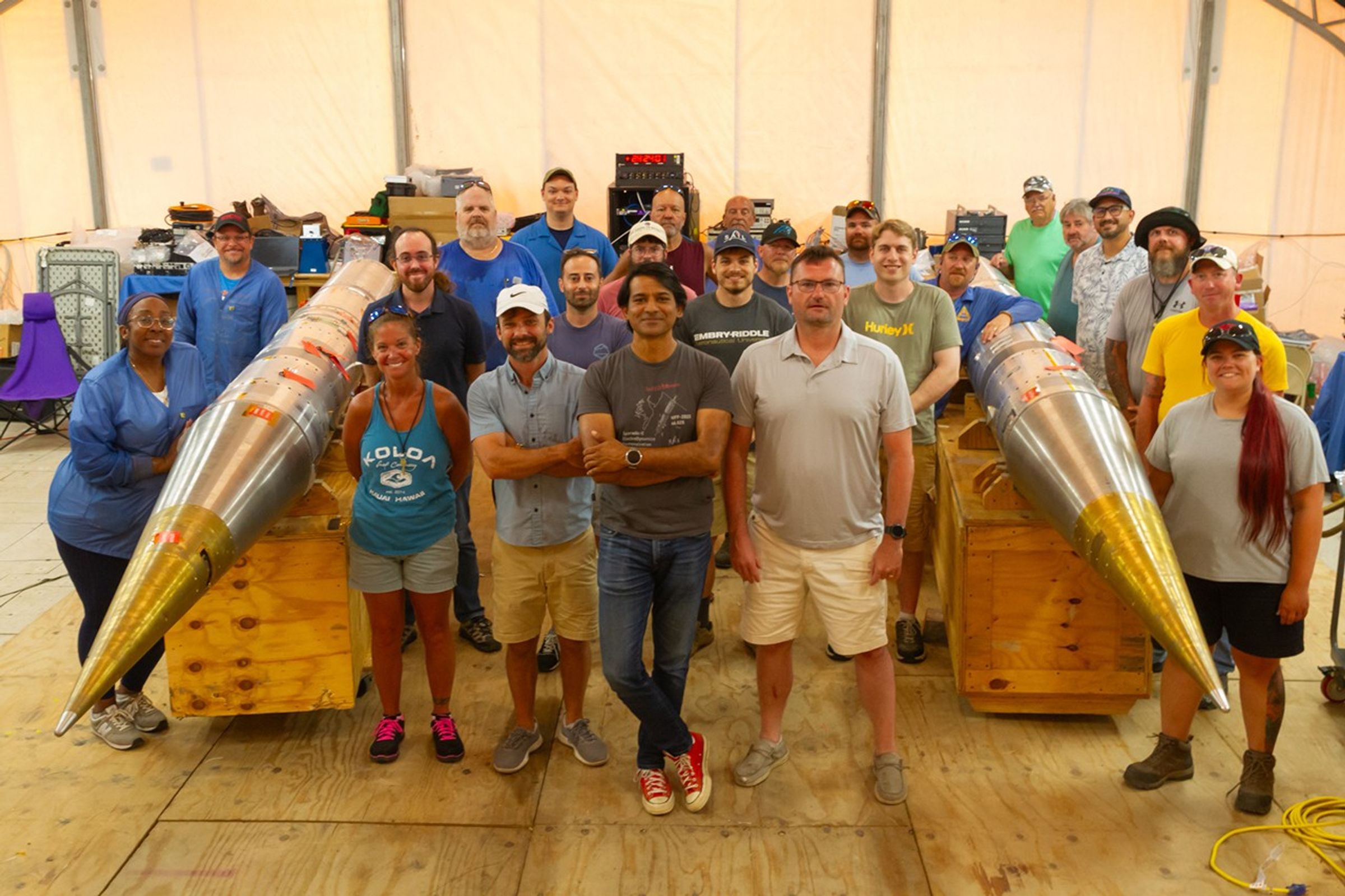
    Joe Pavicic will never forget when he told the Artemis launch director teams were NO-GO for launch.

    Before Artemis I lifted off from NASA’s Kennedy Space Center in Florida in November 2022, the launch team made multiple launch attempts the months prior.  

    “During a previous Artemis I launch attempt, there was an issue with engine three,” said Pavicic, operations project engineer who worked on the engines console during Artemis I. “One sensor was showing that it wasn’t seeing liquid hydrogen through it. It was showing that it was at ambient temperature.”

    And I had to tell the launch director, ‘We can’t get there today with the current criteria that we have. My recommendation is a NO-GO.’

    Joe pavicic

    Joe pavicic

    Operations Project Engineer

    Prior to engine ignition, launch team controllers must first chill the engines before the cryogenic liquid propellant fuels and lifts the SLS (Space Launch System) rocket and Orion spacecraft into the heavens and onward to the Moon. Chilling the engines ensures the hardware doesn’t get damaged when exposed to the super-cooled liquid hydrogen at -423 degrees Fahrenheit.   
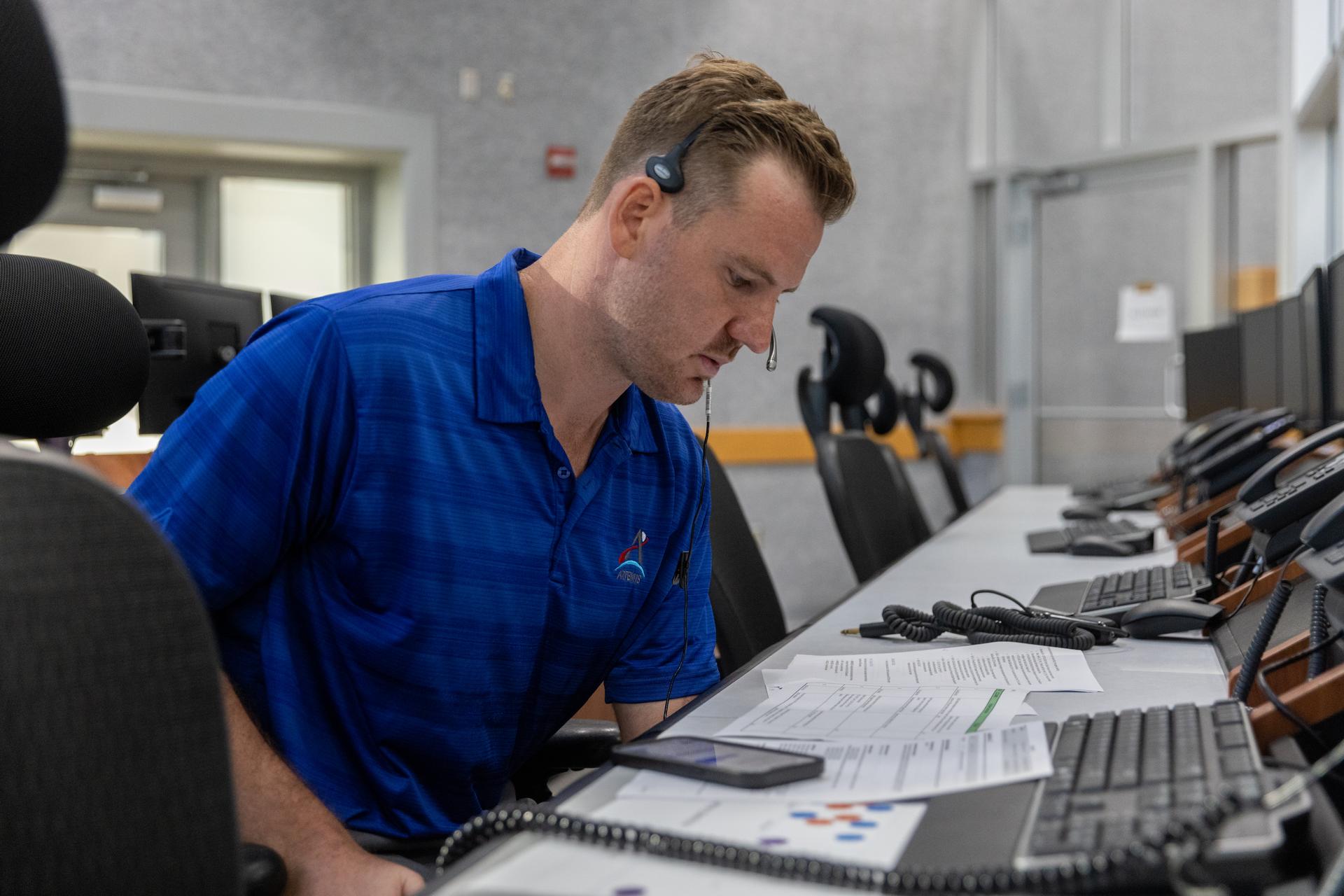
    NASA/Kim Shiflett

    “We tried everything we could think of,” Pavicic recalls. “Any procedure we could try, we tried it, and we just never saw those rates that we should have.” 

    Thus, Pavicic, who is originally from West Palm Beach and studied aerospace engineering at Embry Riddle Aeronautical University in Daytona Beach, Florida, went back to the drawing board with the rest of his team, working days and nights rewriting procedures and learning new lessons about the engines and sensors until they were finally able to get to a successful launch. 

    “I just remember after I said, ‘NO-GO,’ I felt like all these people came to watch the launch, all my family, and I’m like, ‘I’m the guy,’ but I told myself, ‘I’m not going to be the one to say this for the next launch attempt. I’m going to do what I can to get us there.’ 

    joe pavicic

    joe pavicic

    Operations Project Engineer

    NASA successfully launched and flew the Artemis I mission and now, Pavicic is working as one of the operations project engineers, continuing to help the launch team develop new launch commit criteria and procedures within the launch countdown ahead of Artemis II, the first crewed Artemis mission, which will send four astronauts around the Moon and back in 10 days next year.  

    About the Author

    Antonia Jaramillo

    Antonia Jaramillo
    Details

    Last Updated

    Jul 09, 2025

  • Polar Tourists Give Positive Reviews to NASA Citizen Science in Antarctica

    2 min read

    Polar Tourists Give Positive Reviews to NASA Citizen Science in Antarctica

    Citizen science projects result in an overwhelmingly positive impact on the polar tourism experience. That’s according to a new paper analyzing participant experiences in the first two years of FjordPhyto, a NASA Citizen Science project..  

    The FjordPhyto citizen science project invites travelers onboard expedition cruise vessels to gather data and samples during the polar summer season, helping researchers understand changes in microalgae communities in response to melting glaciers. Travelers in Antarctica from November to March help collect phytoplankton and ocean data from polar regions facilitated by trained expedition guides. 

    The new research found that ninety-seven percent of respondents reported that participating in citizen science enriched their travel experience. The paper provides a first understanding of the impact of citizen science projects on the tourism experience.  

    “I was worried that I would feel guilty being a tourist in a place as remote and untouched as Antarctica,” said one anonymous FjordPhyto participant. “But being able to learn and be a part of citizen science, whilst constantly being reminded of our environmental responsibilities, made me feel less like just a visitor and more a part of keeping the science culture that Antarctica is known for alive and well.” 

    For more information and to sign up, visit the FjordPhyto website

    Scientists in cold-weather gear collect a water sample from a small boat in a polar region, with others observing from a nearby inflatable boat.
    Travelers in Antarctica participate in collecting phytoplankton and ocean data from polar regions facilitated by trained expedition guides.
    Credit: Mathew Farrell courtesy of Robert Gilmore

    Details

    Last Updated

    Jul 09, 2025

  • Continuing the Quest for Clays

    3 min read

    Continuing the Quest for Clays

    A color photo from the Martian surface shows an area of pale brownish-orange rocks, mostly medium to large and flat, with varied edges and cracks. Among them are numerous smaller rocks that are more jagged, poking up. In between the rocks the area is covered in fine soil, slightly darker-toned than the rocks.
    NASA’s Mars Perseverance rover acquired this image showing the target “Jigging Cove,” named by Make-A-Wish participant Madeline, located in the center of the image. Perseverance used its Left Mastcam-Z camera, one of a pair of cameras located high on the rover’s mast, to capture the image on June 27, 2025 (Sol 1547, or Martian day 1,547 of the Mars 2020 mission) at the local mean solar time of 11:26:04.
    NASA/JPL-Caltech/ASU

    Written by Eleanor Moreland, Ph.D. Student Collaborator at Rice University

    For the past month and a half, Perseverance has been exploring the Krokodillen plateau in search of clay-bearing rocks. An earlier blog discussed that these rocks could hold clues to Mars’ watery past, and Perseverance has been exploring multiple potential locations to find a suitable target to sample. When a coring target could not be found at the previous outcrop, the Science Team decided to return to the “Main Topsail” locality. In a single drive to this area, Perseverance drove 411.7 meters (1,350.7 feet, or just over a quarter mile) — the longest driving distance ever accomplished by a robotic vehicle on another planet. Go, Percy, go! 

    Back in the region near “Main Topsail” and “Salmon Point,” the team attempted to abrade and sample the clay-bearing rocks at a few different targets. These rocks, however, are proving very breakable and difficult to sample and abrade. Perseverance has experienced challenging fine-grained rocks before, such as during the fan front campaign inside Jezero crater. In that scenario and this one, the Science and Engineering teams work together diligently to find the highest priority targets and find rocks that could withstand the abrasion and coring processes. In this case, the team has decided to return to the site of a previous abrasion, “Strong Island,” to sample the rock we have already abraded and analyzed. This abrasion showed the strong clay signature the team is looking to sample, and we will make another coring attempt this week. 

    A color image from the Martian surface shows uneven yellow-tan ground, covered in gravel and much larger flat, angular rocks showing above the surface. A portion of the Perseverance rover is visible in the lower left corner of the image.
    NASA’s Mars Perseverance rover acquired this image of the target “Gallants,” named by Make-A-Wish participant Joshua, located in the lower left quadrant of the image. Perseverance used its onboard Left Navigation Camera (Navcam), which is located high on the rover’s mast and aids in driving, to capture the image on July 1, 2025 (Sol 1551 or Martian day 1,551 of the Mars 2020 mission), at the local mean solar time of 13:10:08.
    NASA/JPL-Caltech

    This past week, the Perseverance team hosted two very special visitors, Madeline and Joshua, and had the unique honor of fulfilling their wishes through the Make-A-Wish foundation. During their visits to JPL, Madeline and Joshua were named honorary Mars 2020 Operations Team Members. They visited the test rovers in the JPL Mars Yard, watched data arrive from the rover with the Perseverance operations team, and attended a rover planning meeting, collaborating with the science and engineering team members on campus. Madeline and Joshua will forever be connected to the Mars 2020 mission, as each selected the name of one of our planning targets. Madeline’s target, “Jigging Cove,” was a target for Mastcam-Z and SuperCam “all techniques” analysis, including LIBS, VISIR, and RMI. Joshua’s selection, “Gallants,” will be used for the next coring target. Carrying forward the resilience shown by Madeline and Joshua, Perseverance will attempt to sample this clay-rich bedrock before continuing the investigation along the Jezero crater rim. 

    Details

    Last Updated

    Jul 08, 2025

    Related Terms

  • Helio Highlights: May 2025

    3 min read

    Helio Highlights: May 2025

    3 Min Read

    Helio Highlights: May 2025

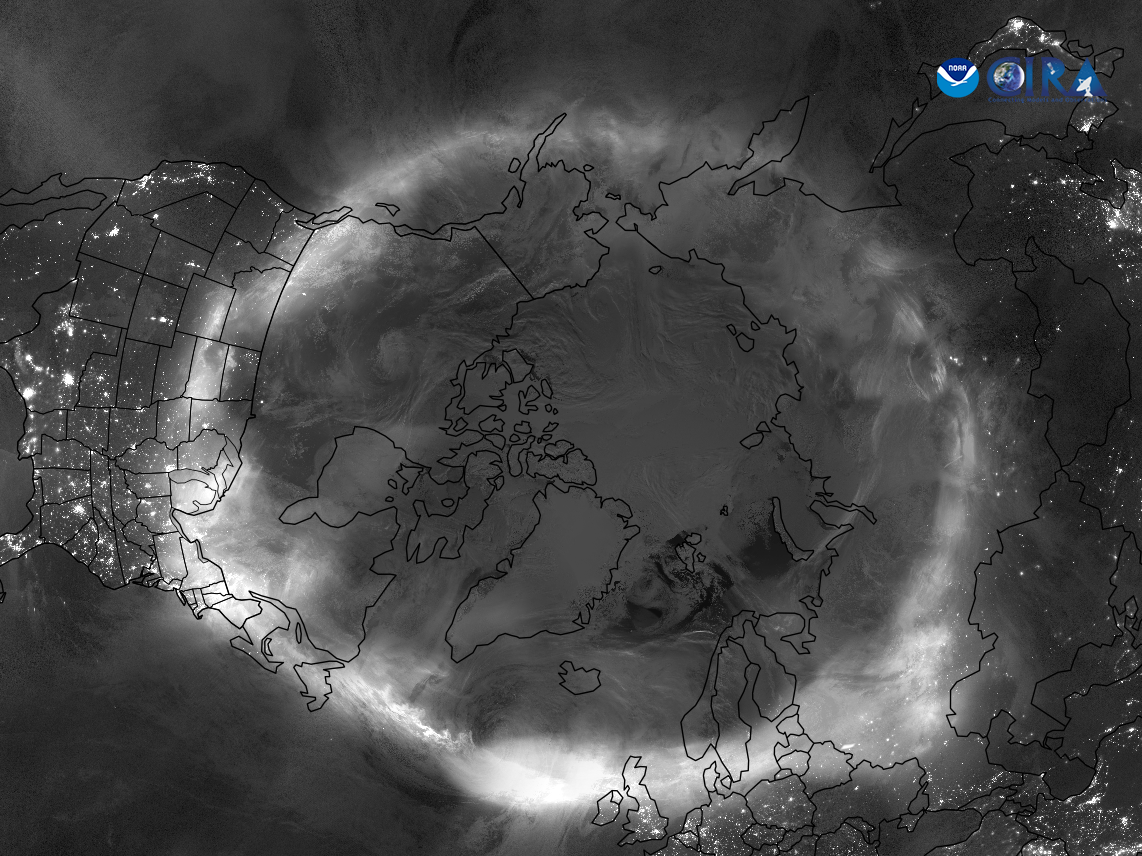
    A grayscale top-down image of the North Pole showing the glowing band of the Northern Lights circling the Earth

    A satellite image showing the extent of the Northern Lights during part of the Mother’s Day 2024 solar storms.

    Credits:
    NOAA

    One year ago, solar storms lit up the night sky. Why?

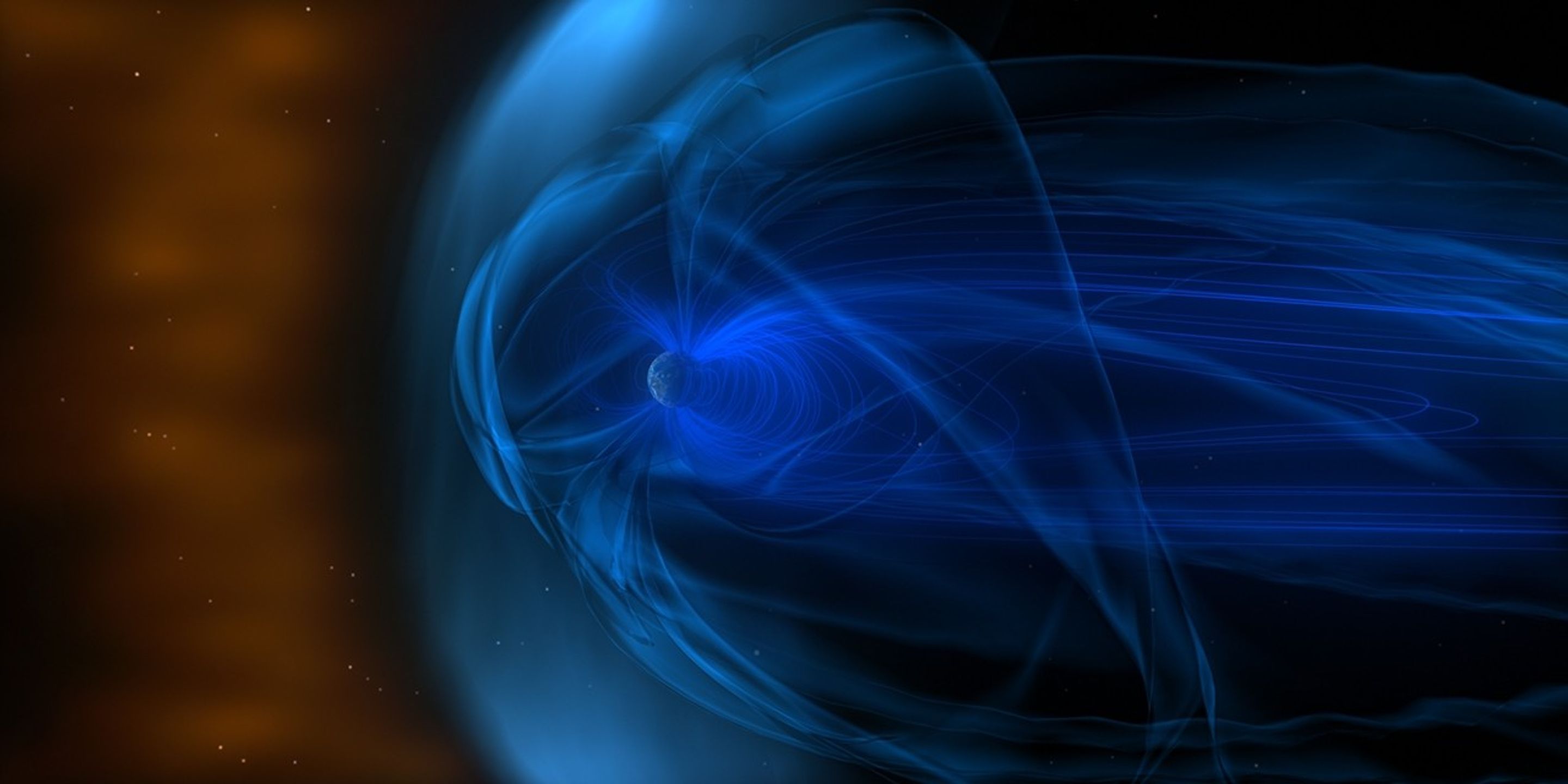
    The Sun is 93 million miles away from Earth, on average. Even though it’s far away, we can still see and feel its effects here. One of the most beautiful effects are the auroras – colorful lights that dance across the sky near the North and South Poles. These are also called the Northern and Southern Lights. They happen when tiny particles from the Sun hit gas molecules in our atmosphere and give off energy.

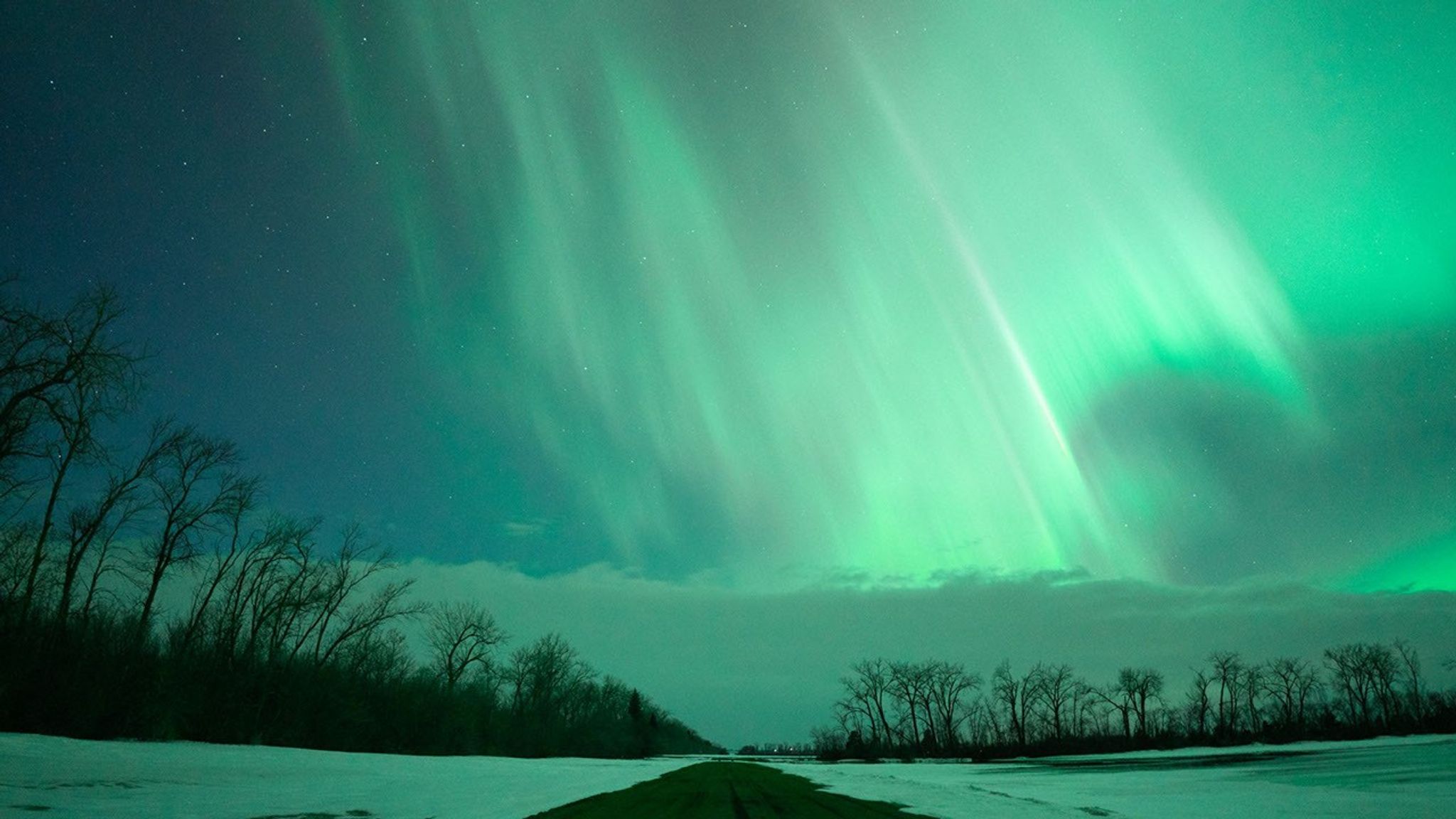
    Sometimes the Sun becomes very active and sends out a lot more energy than normal. When this happens, we can see auroras in places much farther from the poles than normal. In May 2024, around Mother’s Day, the Sun sent powerful solar storms in the direction of Earth. These storms were also called the Gannon Storms, named after Jennifer Gannon, a scientist who studied space weather. The Northern Lights could be seen as far south as Puerto Rico, Hawaii, Mexico, Jamaica, and the Bahamas. The Southern Lights were also visible as far north as South Africa and New Zealand.

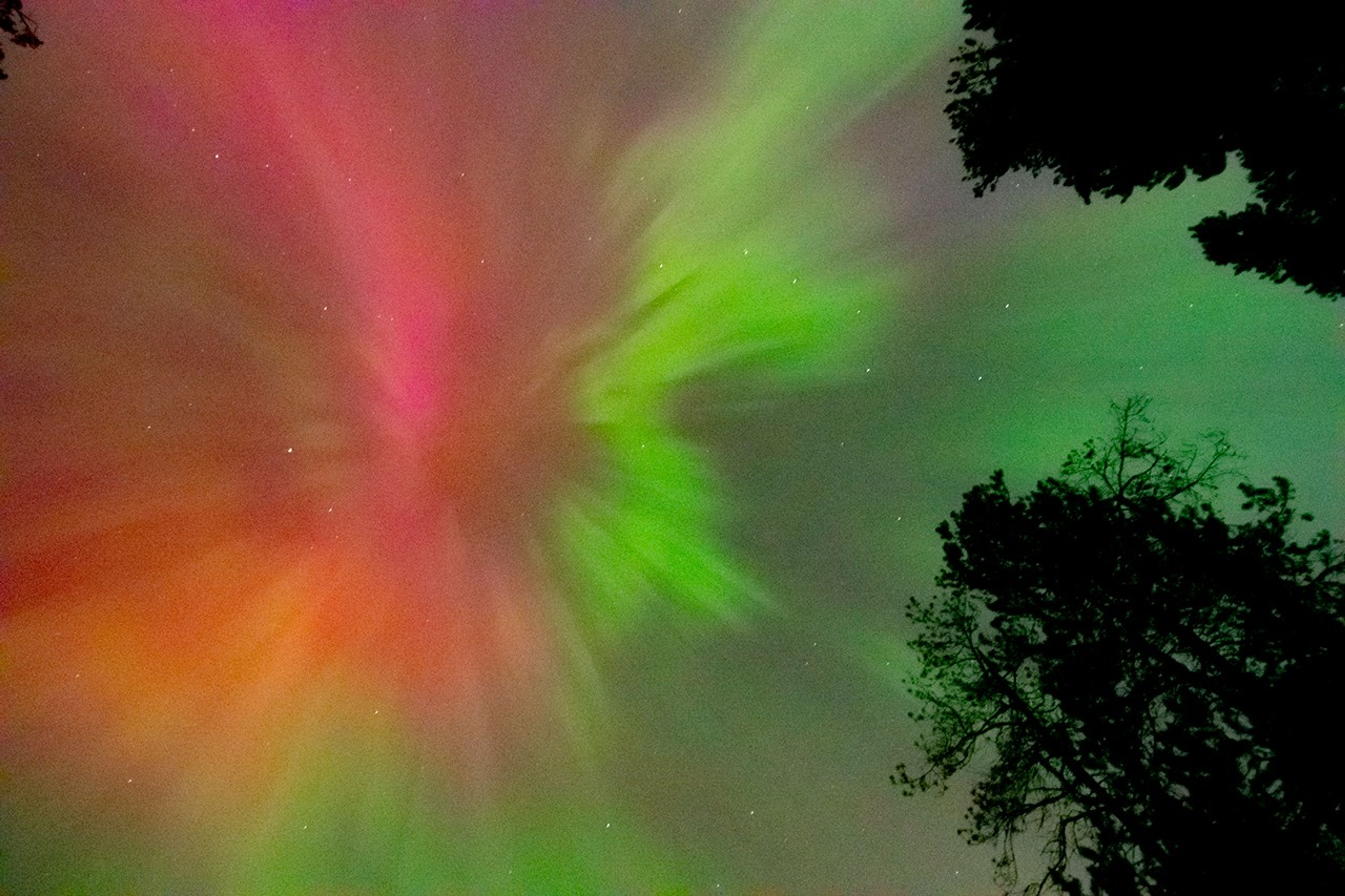
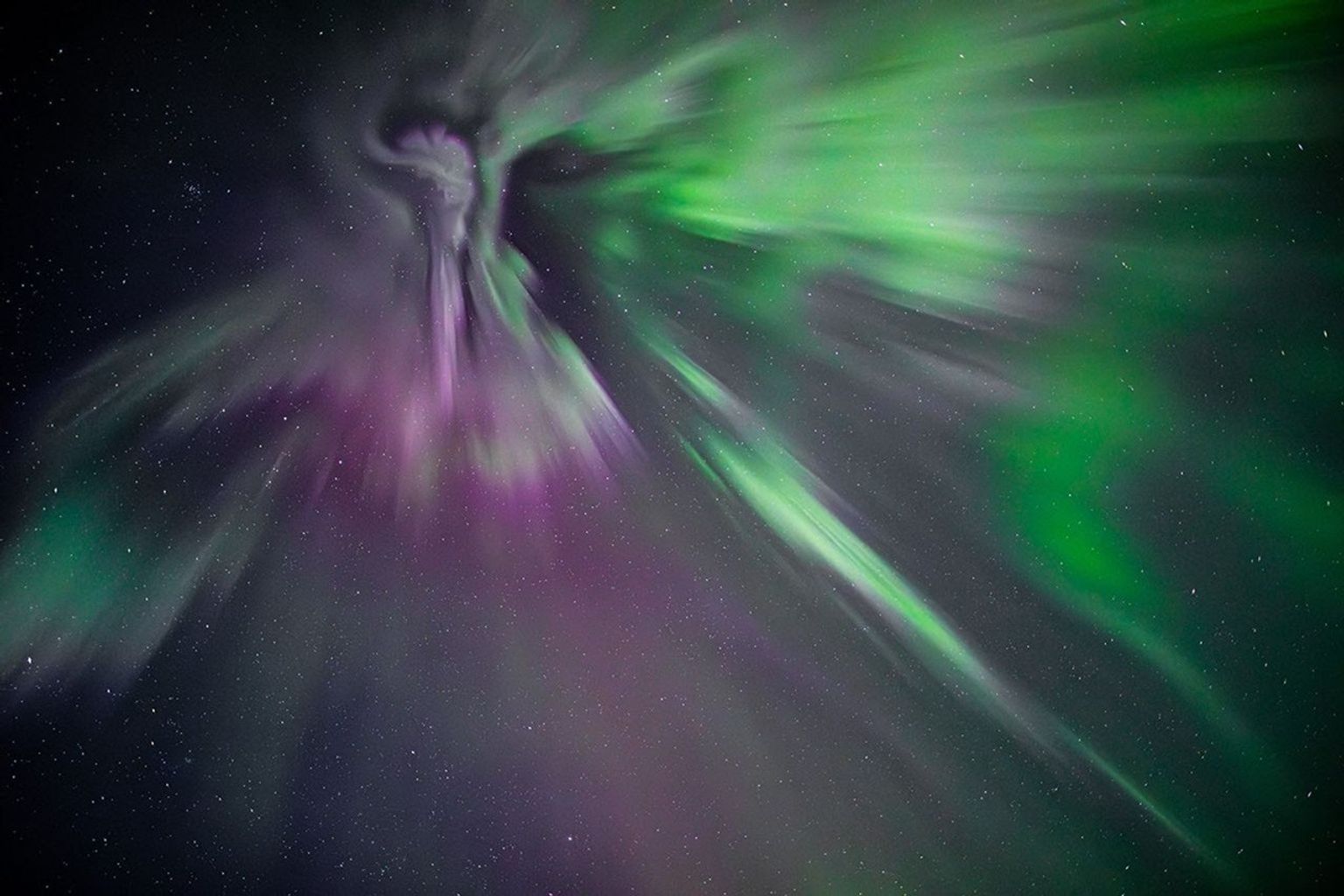
    Red and green streaks of an aurora radiate out from the center of the photo. Black silhouettes of trees line the edge.
    Aurora Borealis seen from British Columbia, Canada on May 10, 2024.
    NASA/Mara Johnson-Groh

    Scientists who study the Sun and its effects on our solar system work in a field called heliophysics. Their studies of the Sun have shown that it goes through cycles of being more active and less active. Each one of these cycles lasts about 11 years, but can be anywhere from 8 to 14 years long. This is called the Solar Cycle.

    The middle of each cycle is called Solar Maximum. During this time, the Sun has more dark spots (called sunspots) and creates more space weather events. The big storms in May 2024 happened during the Solar Maximum for Solar Cycle 25.

    On May 8 and 9, 2024, an active area on the Sun called AR3664 shot out powerful solar flares and several huge bursts of energy called coronal mass ejections (CMEs). These CMEs headed straight for Earth. The first CME pushed aside the normal solar wind, making a clear path for the others to reach us faster. When all this energy hit our atmosphere, it created auroras much farther from the poles than usual. It was like the Sun gave the auroras a huge power boost!

    A grayscale top-down image of the North Pole showing the glowing band of the Northern Lights circling the Earth
    Eruptions of Solar material into space as seen on May 7 (right) and May 8 (left), 2024. These types of eruptions often come just before a larger Coronal Mass Ejection (CME), including the ones which caused the Mother’s Day solar storms.
    NASA/SDO

    Auroras are beautiful to watch, but the space weather that creates them can also cause problems. Space weather can mess up radio signals, power grids, GPS systems, and satellites. During the May 2024 storms, GPS systems used by farmers were disrupted. Many farmers use GPS to guide their self-driving tractors. Since this happened during peak planting season, it may have cost billions of dollars in lost profit.

    Because space weather can cause so many problems, scientists at NASA and around the world watch the Sun closely to predict when these events will happen. You can help too! Join local science projects at schools, teach others about the Sun, and help make observations in your area. All of this helps us to learn more about the Sun and how it affects our planet.

    Here are some resources to connect you to the Sun and auroras

  • Stellar Duo

    Stellar Duo

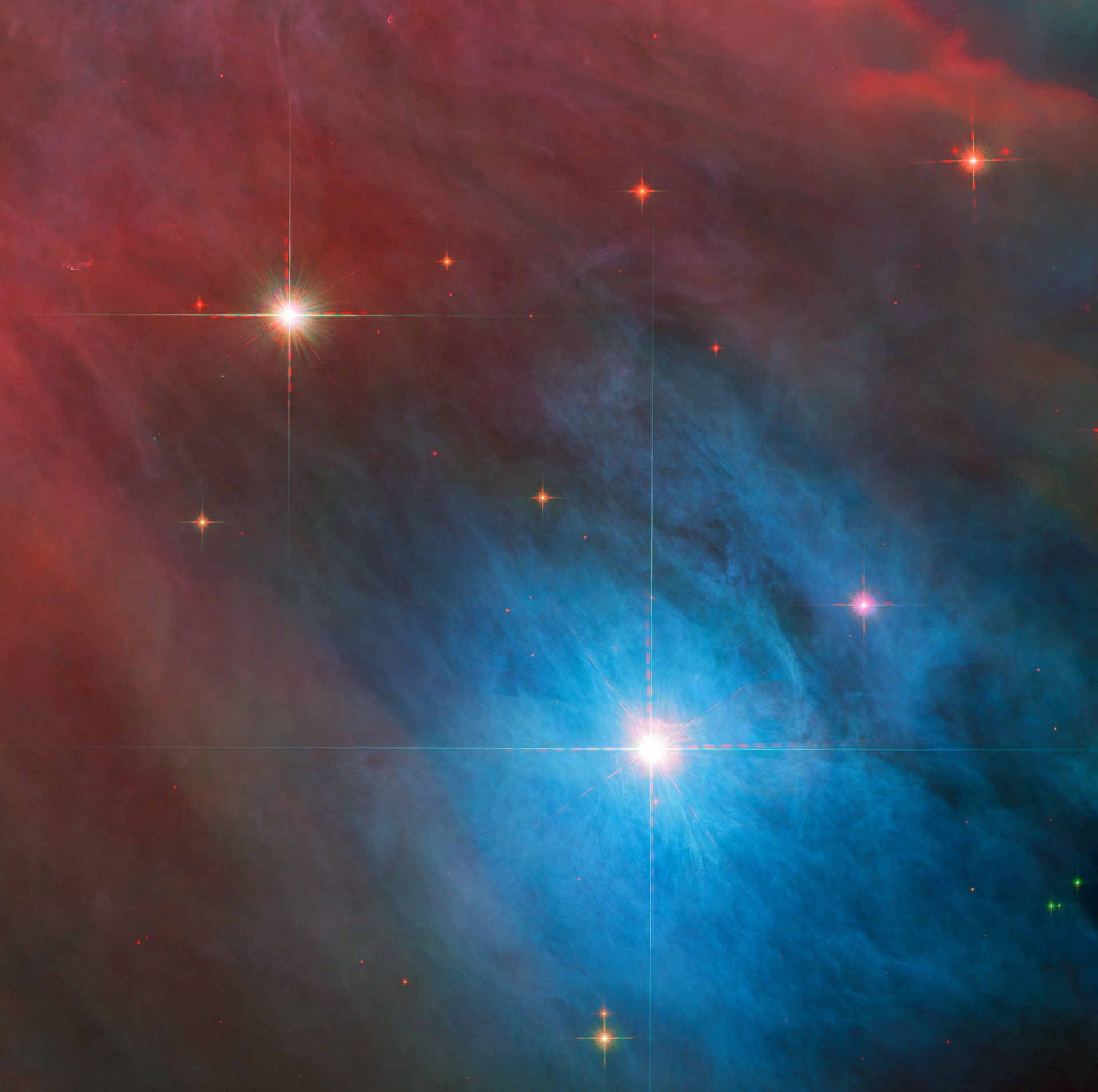
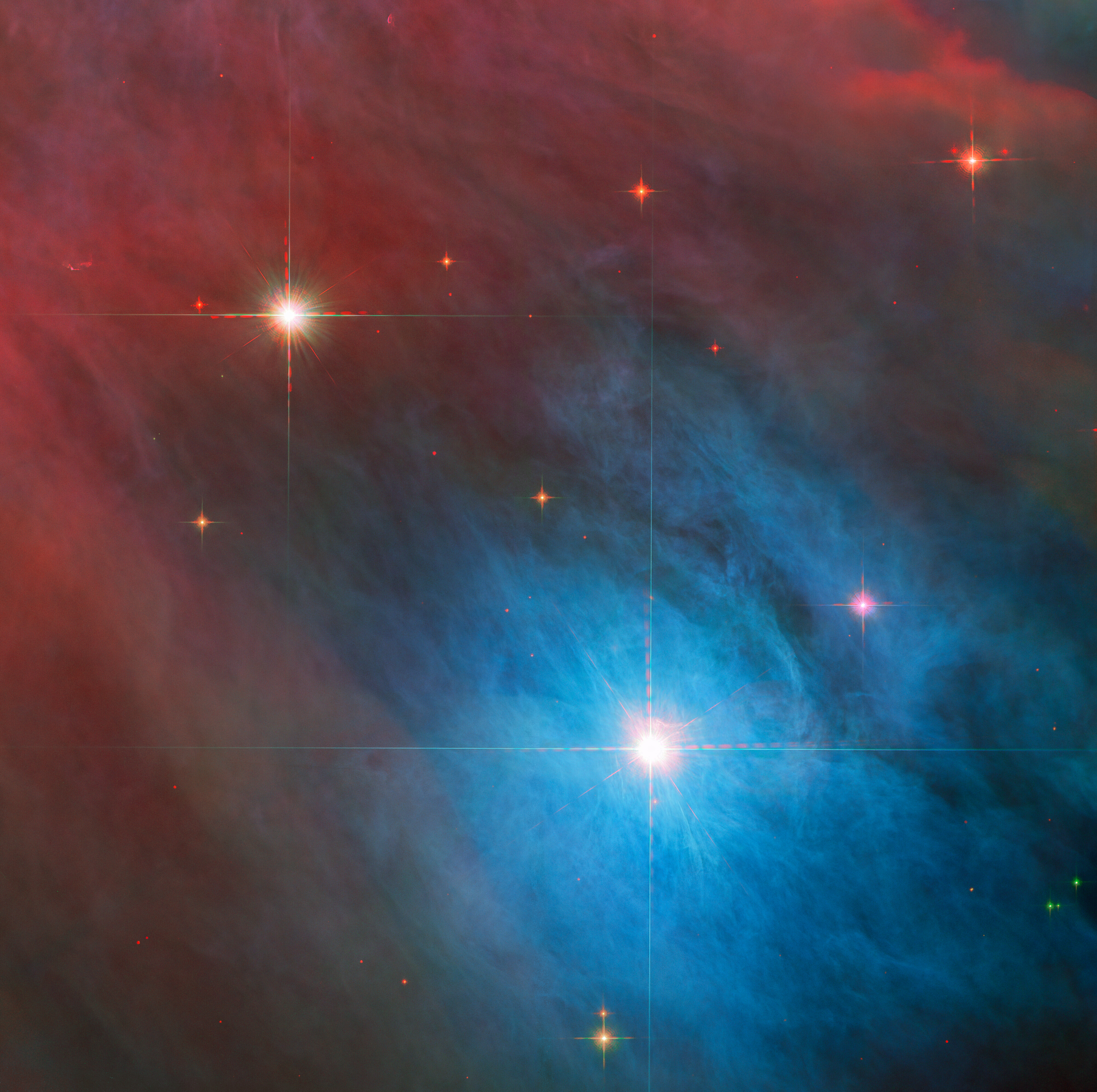
    The bright variable star V 372 Orionis takes center stage in this image from the NASA/ESA Hubble Space Telescope, which has also captured a smaller companion star in the upper left of this image. Both stars lie in the Orion Nebula, a colossal region of star formation roughly 1450 light years from Earth.

  • Stellar Duo

    Two stars with diffraction spikes shine brightly in the image. The larger star, at lower right, is in a bright blue cloud of gas and dust, while the smaller star at upper left is in a red haze. The clouds are somewhat patchy. Smaller red stars are scattered around them.
    ESA/Hubble & NASA, J. Bally, M. Robberto

    NASA’s Hubble Space Telescope captured a bright variable star, V 372 Orionis, and its companion in this festive image in this image released on Jan. 27, 2023. The pair lie in the Orion Nebula, a colossal region of star formation roughly 1,450 light-years from Earth.

    V 372 Orionis is a particular type of variable star known as an Orion Variable. These young stars experience some tempestuous moods and growing pains, which are visible to astronomers as irregular variations in luminosity. Orion Variables are often associated with diffuse nebulae, and V 372 Orionis is no exception; the patchy gas and dust of the Orion Nebula pervade this scene.

    Text credit: European Space Agency (ESA)

    Image credit: ESA/Hubble & NASA, J. Bally, M. Robberto

  • Curiosity Blog, Sols 4589 – 4592: Setting up to explore Volcán Peña Blanca

    A grayscale photo of a Martian landscape shows very rough, rocky, and cracked terrain
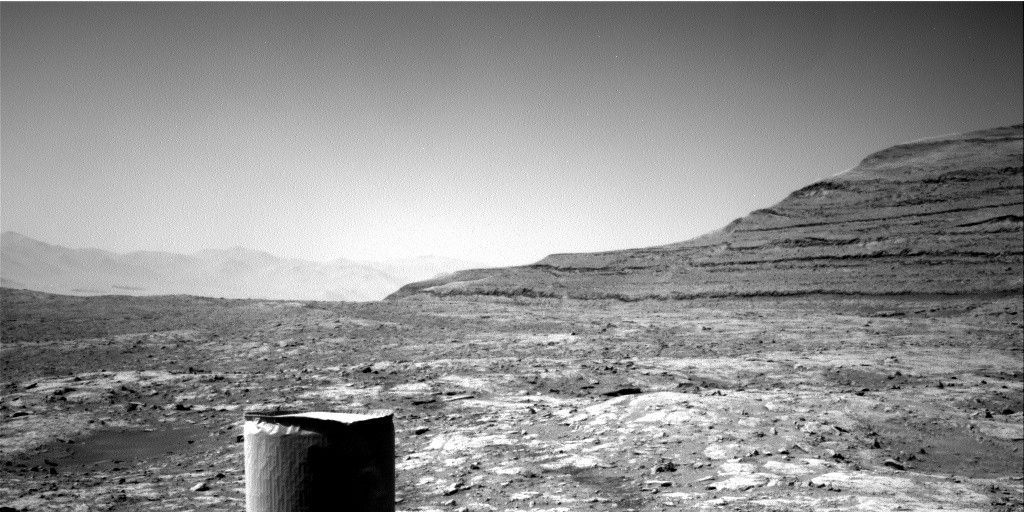
    Navcam view of the ~3 ft high ridge that marks the eastern side of Volcán Peña Blanca.  The ridge is currently about 35 ft away from the rover, and the team used images like this during today’s planning to decide the exact location for Curiosity’s approach.
    NASA/JPL-Caltech

    Written by Abigail Fraeman, Deputy Project Scientist at NASA’s Jet Propulsion Laboratory

    Earth planning date: Thursday, July 3, 2025

    The team was delighted this morning to learn that Wednesday’s drive had completed flawlessly, placing us in a stable position facing a ~3 foot high ridge located ~35 feet away.  This ridge is the eastern edge of a feature the team has informally named “Volcán Peña Blanca.” This feature certainly looked intriguing in orbital images, but once we saw Curiosity’s pictures of it from the ground, we decided it was cool enough to spend the time to investigate it closer.  The images from the ground show a lot more detail than is visible in orbit, including clear sedimentary structures exposed along the ridge face which could provide important clues about how the rocks in the boxwork-bearing terrain were initially deposited – dunes? Rivers? Lakes? The team picked their favorite spot to approach the ridge and take a closer look during Wednesday’s planning, so Curiosity made a sharp right turn to take us in that direction.  Using today’s images, we refined our plan for the exact location to approach and planned a drive to take us there, setting us up for contact science on Monday.

    We had the opportunity to plan four sols today, to cover the U.S. 4th of July holiday weekend, so there was lots of time for activities besides the drive.  Curiosity is currently sitting right in front of some light toned rocks, including one we gave the evocative name “Huellas de Dinosaurios.” It’s extremely unlikely we’ll see dinosaur footprints in the rock, but we will get the chance to investigate it with APXS, MAHLI, and ChemCam.  We also have a pair of ChemCam only targets on a more typical bedrock target named “Amboro” and some pebbles named “Tunari.”  Mastcam will take a high resolution of mosaic covering Volcán Peña Blanca, some nearby rocks named “Laguna Verde,” a small light colored rock named “Suruto,” and various patterns in the ground. Two ChemCam RMI mosaics of features in the distant Mishe Mokwa face and environment monitoring activities round out the plan.

  • Curiosity Blog, Sol 4588: Ridges and troughs

    A grayscale photo of a Martian landscape shows very rough, rocky, and cracked terrain extending from the foreground to a horizon line in the distance, across the middle of the frame.
    NASA’s Mars rover Curiosity acquired this image using its Left Navigation Camera onboard NASA’s Mars rover Curiosity on Sol 4,587 (2025-07-02 07:33:39 UTC).
    NASA/JPL-Caltech

    Written by Lucy Thompson, APXS Collaborator and Senior Research Scientist at the University of New Brunswick, Canada

    Earth planning date: Wednesday, July 2, 2025

    As we traverse the boxwork terrain, we are encountering a series of more resistant ridges/bedrock patches, and areas that are more rubbly and tend to form lower relief polygonal or trough-like features. We came into planning this morning in one of the trough-like features after another successful drive. The science team is interested in determining why we see these different geomorphological and erosional expressions. Is the rock that comprises the more resistant ridges and patches a different composition to the rock in the troughs and low relief areas? How do the rocks vary texturally? Might the resistant bedrock be an indicator of what we will encounter when we reach the large boxworks that we are driving towards?

    We managed to find a large enough area of rock to safely brush (target – “Guapay”), after which we will place APXS and MAHLI to determine the composition and texture. ChemCam will also analyze a different rock target, “Taltal” for chemistry and texture, and we will also acquire an accompanying Mastcam documentation image. The resistant ridge that we are planning to drive towards (“Volcan Pena Blanca”) and eventually investigate will be captured in a Mastcam mosaic. ChemCam will utilize their long-distance imaging capabilities to image the “Mishe Mokwa” butte off to the southeast of our current location, which likely contains bedrock layers that we will eventually pass through as we continue our climb up Mount Sharp.

    After a planned drive, taking us closer to the “Volcan Pena Blanca” ridge, MARDI will image the new terrain beneath the wheels, before we execute some atmospheric observations. Mastcam will make a tau observation to monitor dust in the atmosphere and Navcam will acquire a zenith movie. Standard DAN, RAD and REMS activities round out the plan.

  • Working in Space

    Working in Space

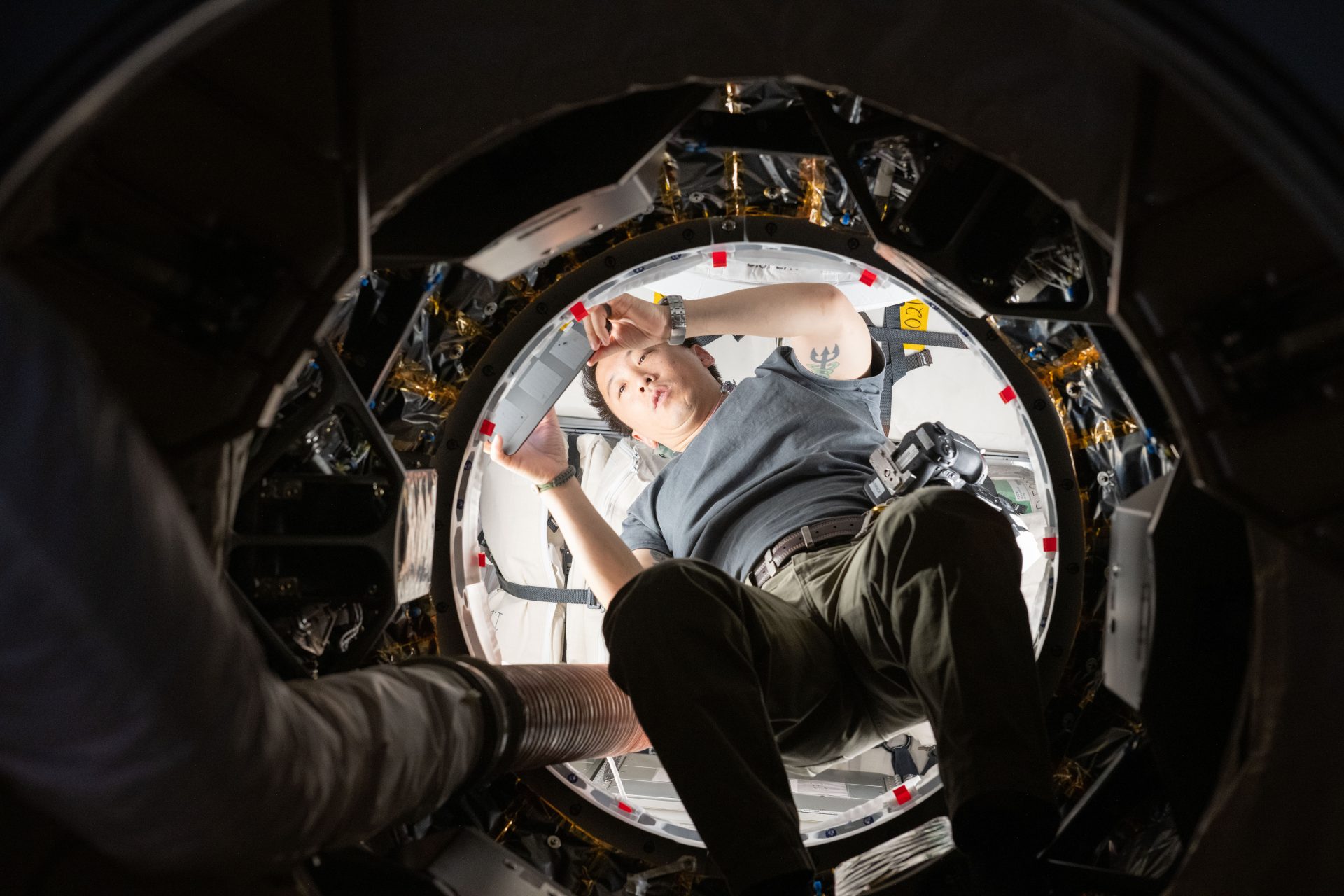
    NASA astronaut and Expedition 73 Flight Engineer Jonny Kim works inside the SpaceX Dragon cargo spacecraft completing cargo operations before it undocked from the International Space Station’s Harmony module several hours later.

  • Working in Space

    We look upward at an Asian man holding a silver tablet. He is wearing a gray t-shirt and green pants with a belt. He is halfway through a round opening. The inside of the craft he's working in is lit, but the rest of the room is dark.
    NASA; JAXA (Japan Aerospace Exploration Agency)/Takuya Onishi

    In this May 23, 2025, image, NASA astronaut Jonny Kim works inside the SpaceX Dragon cargo spacecraft completing cargo operations before it undocked from the International Space Station’s Harmony module several hours later. Kim launched to the International Space Station on April 8, 2025; this is his first mission.

    See what Kim and other space station crew do aboard the orbital lab.

    Image credit: NASA; JAXA (Japan Aerospace Exploration Agency)/Takuya Onishi

  • NASA’s Hubble and Webb Telescopes Reveal Two Faces of a Star Cluster Duo

    3 min read

    NASA’s Hubble and Webb Telescopes Reveal Two Faces of a Star Cluster Duo

    Bluish clouds of gas are wound through with red-glowing lanes and filaments of dust.. The clouds contain cavities filled with stars and many more stars are visible in the background and scattered throughout the clouds. The clouds are concentrated in the upper right and the lower middle of the image. Tiny background galaxies are also sprinkled throughout the image.
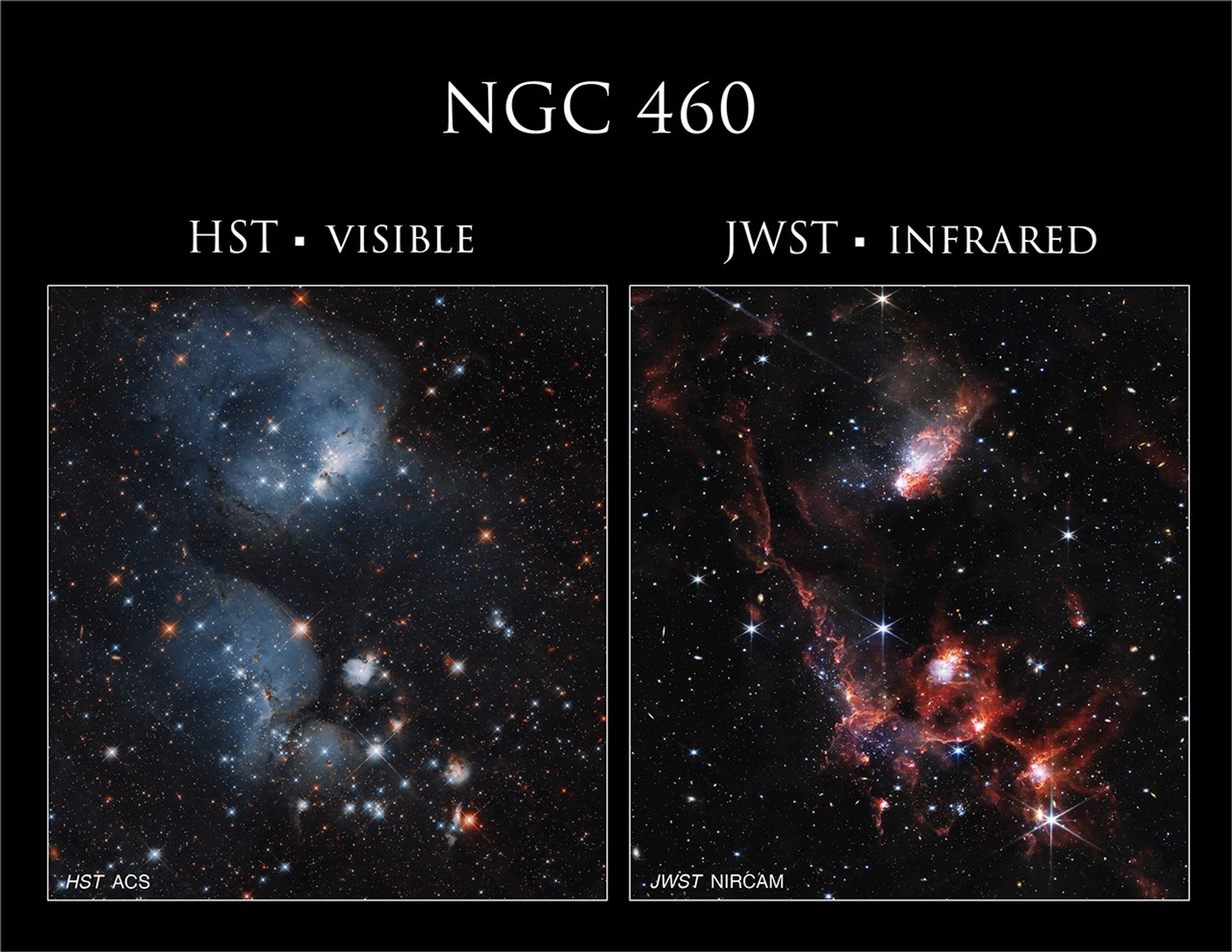
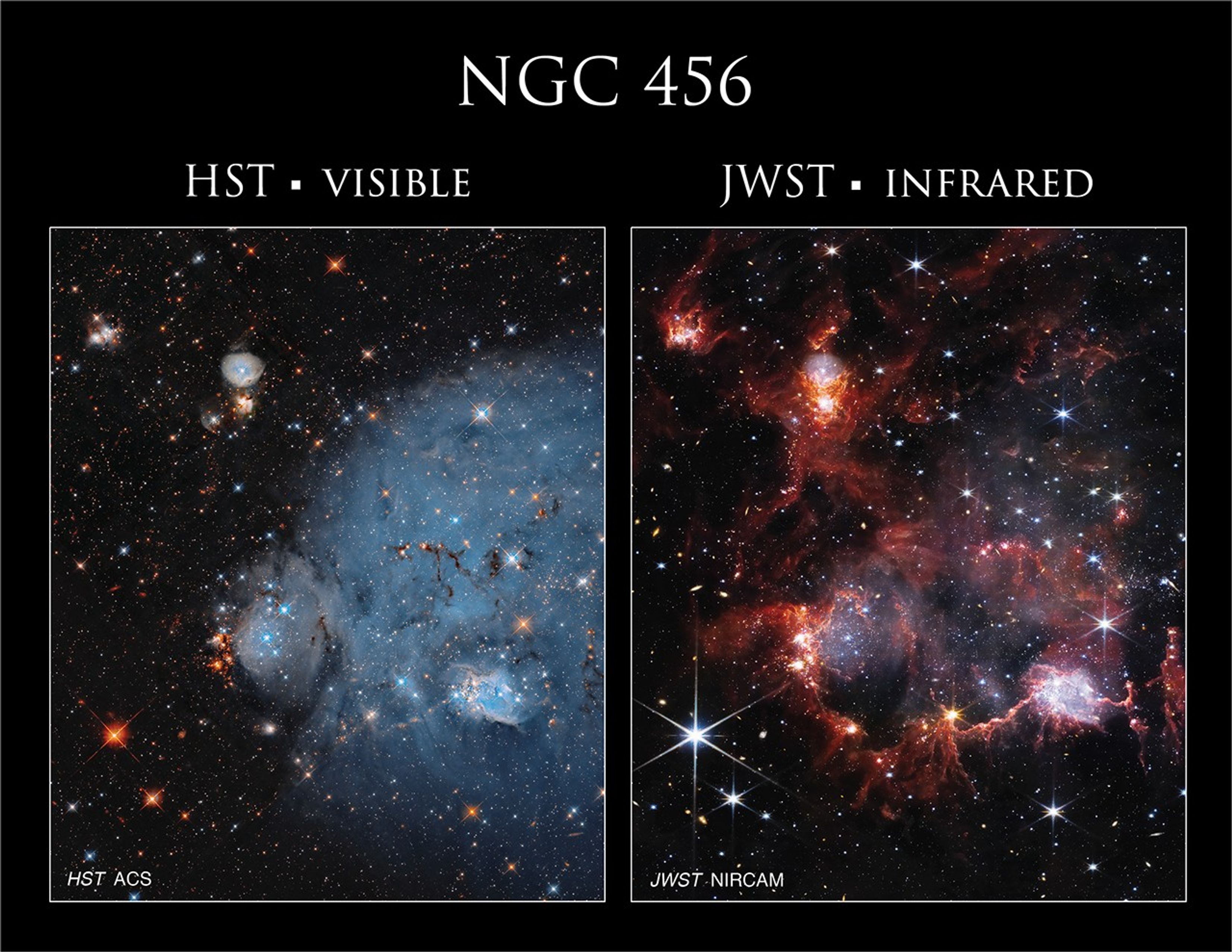
    A vast network of stars, gas, and dust is strung among a duo of star clusters in this combined image from NASA’s Hubble and Webb space telescopes. Open clusters NGC 460 and NGC 456 reside in the Small Magellanic Cloud, a dwarf galaxy orbiting the Milky Way. This highly detailed 527 megapixel mosaic consists of 12 overlapping observations and includes both visible and infrared wavelengths. To view some of its incredible detail, download the 40.1 MB file and zoom in.
    NASA, ESA, and C. Lindberg (The Johns Hopkins University); Processing: Gladys Kober (NASA/Catholic University of America)

    A riotous expanse of gas, dust, and stars stake out the dazzling territory of a duo of star clusters in this combined image from NASA’s Hubble and Webb space telescopes.

    Open clusters NGC 460 and NGC 456 reside in the Small Magellanic Cloud, a dwarf galaxy orbiting the Milky Way. Open clusters consist of anywhere from a few dozen to a few thousand young stars loosely bound together by gravity. These particular clusters are part of an extensive complex of star clusters and nebulae that are likely linked to one another. As clouds of gas collapse, stars are born. These young, hot stars expel intense stellar winds that shape the nebulae around them, carving out the clouds and triggering other collapses, which in turn give rise to more stars.

    In these images, Hubble’s view captures the glowing, ionized gas as stellar radiation blows “bubbles” in the clouds of gas and dust (blue), while Webb’s infrared vision highlights the clumps and delicate filamentary structures of dust (red). In Hubble images, dust is often seen silhouetted against and blocking light, but in Webb’s view, the dust – warmed by starlight – shines with its own infrared glow. This mixture of gas and dust between the universe’s stars is known as the interstellar medium.


    Hubble (ACS)
    Webb (NIRCAM)

    Bluish-white, bubble-shaped clouds of gas dominate this image, sprinkled with clusters of stars. Plentiful stars and some background galaxies are visible throughout the image. The gas clouds are concentrated in the upper right and lower middle of the image.
    This Hubble image shows a duo of open clusters, NGC 460 and NGC 456. The nebulae’s glowing gas, ionized by the radiation of nearby stars, is distinct in Hubble’s view.
    NASA, ESA, and C. Lindberg (The Johns Hopkins University); Processing: Gladys Kober (NASA/Catholic University of America)

    Tendrils and filaments of dust glow red in this infrared image. The region is bright with myriad stars, star clusters, and background galaxies. The dust is concentrated in the upper right and middle of the image, as well as the lower left.
    In Webb’s infrared view of open clusters NGC 460 and NGC 456, dusty areas are visible as bright structures glowing red. Many background galaxies are visible, their infrared light passing through the region’s obscuring clouds of gas and dust.
    NASA, ESA, and C. Lindberg (The Johns Hopkins University); Processing: Gladys Kober (NASA/Catholic University of America)

    Bluish-white, bubble-shaped clouds of gas dominate this image, sprinkled with clusters of stars. Plentiful stars and some background galaxies are visible throughout the image. The gas clouds are concentrated in the upper right and lower middle of the image.
    This Hubble image shows a duo of open clusters, NGC 460 and NGC 456. The nebulae’s glowing gas, ionized by the radiation of nearby stars, is distinct in Hubble’s view.
    NASA, ESA, and C. Lindberg (The Johns Hopkins University); Processing: Gladys Kober (NASA/Catholic University of America)

    Tendrils and filaments of dust glow red in this infrared image. The region is bright with myriad stars, star clusters, and background galaxies. The dust is concentrated in the upper right and middle of the image, as well as the lower left.
    In Webb’s infrared view of open clusters NGC 460 and NGC 456, dusty areas are visible as bright structures glowing red. Many background galaxies are visible, their infrared light passing through the region’s obscuring clouds of gas and dust.
    NASA, ESA, and C. Lindberg (The Johns Hopkins University); Processing: Gladys Kober (NASA/Catholic University of America)


    Hubble (ACS)

    Webb (NIRCAM)

    Hubble and Webb view a duo of open star clusters


    Slide to switch between Hubble and Web images. Hubble’s view captures visible light and some infrared wavelengths, while Webb’s view is exclusively infrared. The nebulae’s glowing gas, ionized by the radiation of nearby stars, is distinct in Hubble’s view. Dusty areas that appear dark in the Hubble image are visible as bright structures in the Webb image, and more background galaxies are visible since infrared light from fainter and farther galaxies can pass through the obscuring clouds of gas and dust.

    Downloads

    Hubble

    JPEG

    (47 MB)

    Webb

    JPEG

    (35 MB)

    The nodules visible in these images are scenes of active star formation, with stars ranging from just one to 10 million years old. In contrast, our Sun is 4.5 billion years old. The region that holds these clusters, known as the N83-84-85 complex, is home to multiple, rare O-type stars, hot and extremely massive stars that burn hydrogen like our Sun. Astronomers estimate there are only around 20,000 O-type stars among the approximately 400 billion stars in the Milky Way.

    On the left is a Hubble image of NGC 460, showing bluish bubbles of gas and stars. On the right is a Webb telescope image of NGC 460, showing red filaments of dust and stars.
    Clouds of ionized gas dominate open cluster NGC 460 in the Hubble image (left), while tendrils of dust are on display in the Webb image (right). Together, the two images provide a more comprehensive look at the region.
    NASA, ESA, and C. Lindberg (The Johns Hopkins University); Processing: Gladys Kober (NASA/Catholic University of America)
    On the left is a Hubble image of NGC 460, a round,bubble-shaped bluish cloud of gas and dust. On the right is a Webb telescope image of NGC 460, showing a cavern-like outline of red filaments of dust. Both are studded with stars.
    The Hubble image of NGC 456 (left) shows a puffy, bluish cloud of ionized gas, while the Webb image (right) displays the same cluster’s cavern-like outline of dust.
    NASA, ESA, and C. Lindberg (The Johns Hopkins University); Processing: Gladys Kober (NASA/Catholic University of America)

    The Small Magellanic Cloud is of great interest to researchers because it is less enriched in metals than the Milky Way. Astronomers call all elements heavier than hydrogen and helium – that is, with more than two protons in the atom’s nucleus – “metals.”  This state mimics conditions in the early universe, so the Small Magellanic Cloud provides a relatively nearby laboratory to explore theories about star formation and the interstellar medium at early stages of cosmic history. With these observations of NGC 460 and NGC 456, researchers intend to study how gas flows in the region converge or divide; refine the collision history between the Small Magellanic Cloud and its fellow dwarf galaxy, the Large Magellanic Cloud; examine how bursts of star formation occur in such gravitational interactions between galaxies; and better understand the interstellar medium.

    Explore More

    Media Contact:

    Claire Andreoli
    NASA’s Goddard Space Flight CenterGreenbelt, MD
    claire.andreoli@nasa.gov

  • Aaisha Ali: From Marine Biology to the Artemis Control Room 

    As humanity prepares to return to the lunar surface, Aaisha Ali is behind the scenes ensuring mission readiness for astronauts set to orbit the Moon during Artemis II. 

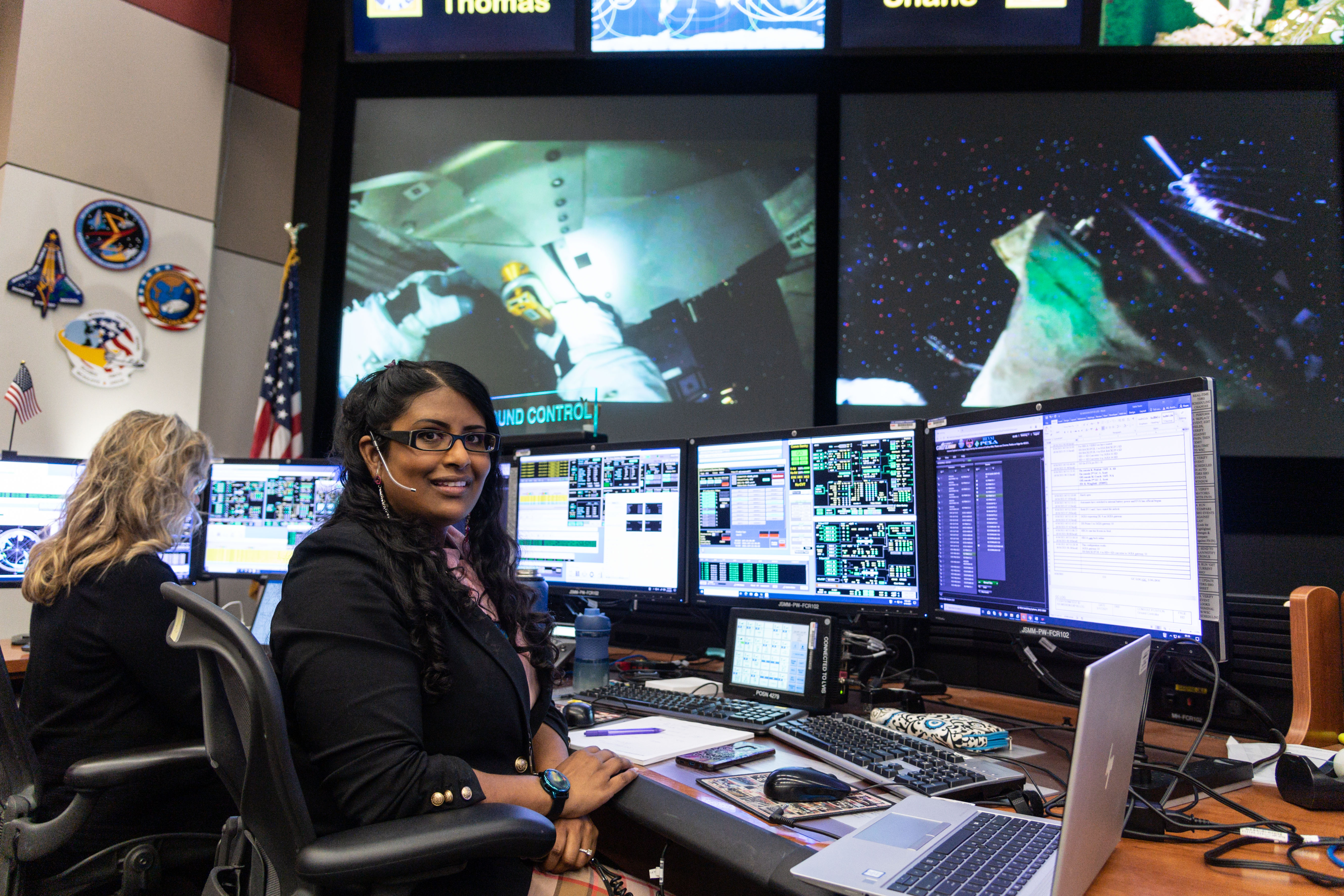
    Ali is the Artemis ground control flight lead at NASA’s Johnson Space Center in Houston. She makes sure her team has the resources needed for the next giant leap to the Moon and beyond. 

    A woman sits at a desk and poses in front of three monitors. Multiple monitors display live data and video of astronauts on the International Space Station. An American flag and NASA mission patches are visible on the wall behind her.
    Aaisha Ali on console in the International Space Station Flight Control Room at NASA’s Johnson Space Center in Houston.
    NASA/Robert Markowitz

    My passion has always been science. I started by exploring the ocean, and now I get to help explore the stars.

    Aaisha Ali

    Aaisha Ali

    Artemis Ground Control Flight Lead

    Ali received a bachelor’s degree in biology from Texas A&M University at Galveston before beginning a career as a marine biologist. Her curiosity about science and communication eventually led her from studying marine life to sharing NASA’s mission with the public. With a robust skill set that includes public relations, media relations, and strategic communications, she went on to work at Space Center Houston and later at Johnson on the protocol and digital imagery teams.

    Today, Ali leads the ground control team supporting Artemis II, ensuring that systems, simulations, and procedures are ready for the mission. Her role includes developing flight rules, finalizing operations plans and leading training sessions – known as “network sims” – that prepare her team to respond quickly and effectively. 

    “Because I’ve had a multifaceted career path, it has given me a different outlook,” she said. “Diversity of mindsets helps us approach problems. Sometimes a different angle is exactly what we need.” 

    Aaisha Ali, right, with her two siblings.

    Her perspective was also shaped by visits to her grandmother in the Caribbean as a child. “She lived in the tropical forest in a small village in Trinidad,” Ali said. “I was fortunate enough to spend summers on the island and experience a different way of life, which has helped me grow into the person I am today.”  

    Communication, she explained, is just as critical as technical expertise. “When we report to the flight director, we are the experts in our system. But we have to be clear and concise. You don’t get a lot of time on the flight loop to explain.” 

    That clarity, humility, and sense of teamwork are values Ali says have shaped her journey. 

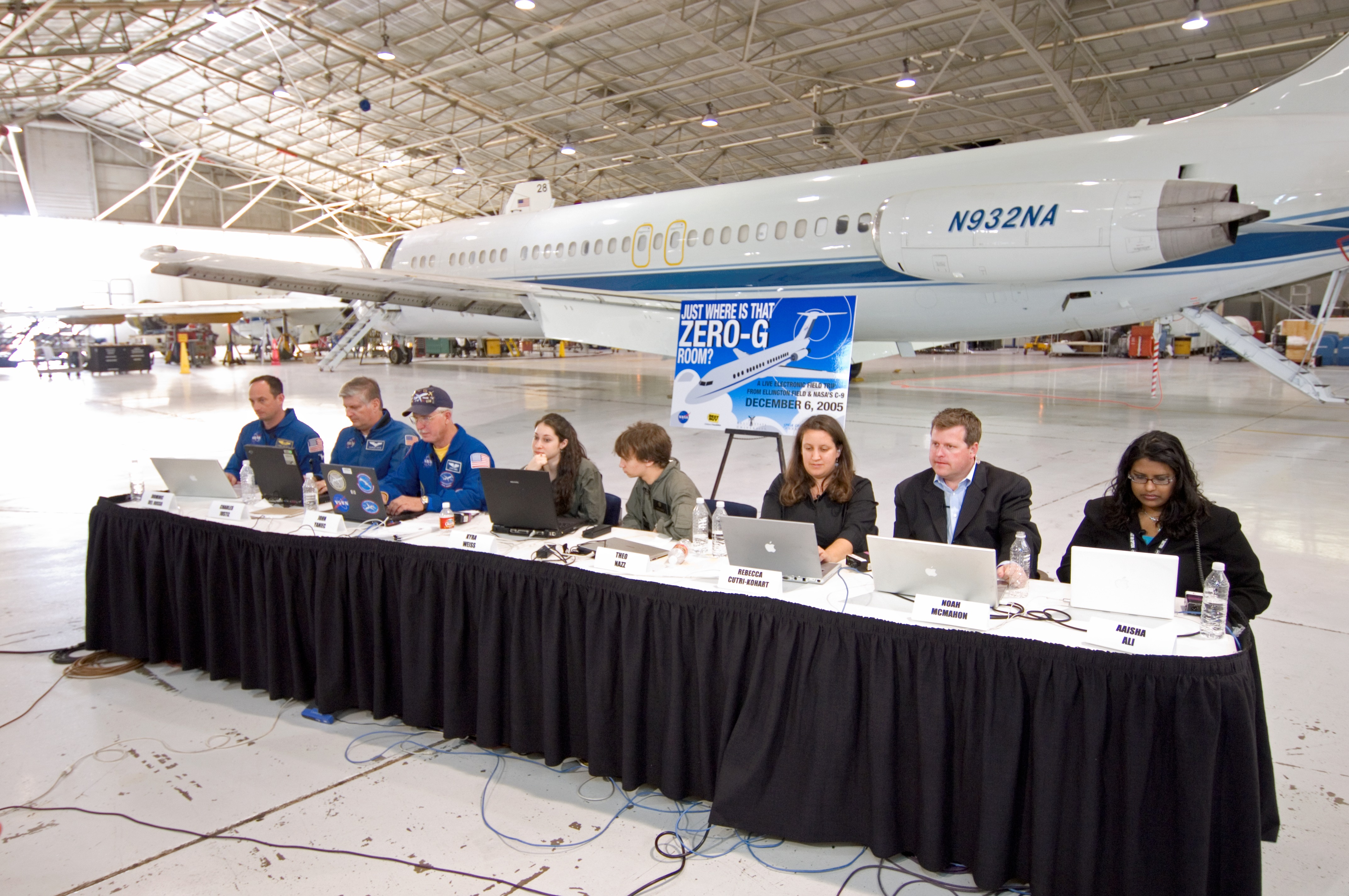
    Eight people sit at a long table in front of their computers in a large facility. An airplane is parked behind them.
    Aaisha Ali participates in a public affairs event at Ellington Field Joint Reserve Base in Houston in 2005.

    We don’t do it by ourselves. Everyone — from our engineers to custodial staff to cafeteria workers — plays a role in getting us to the Moon. NASA is for the world. And it takes all of us.

    Aaisha ali

    Aaisha ali

    Artemis Ground Control Flight Lead

    Looking ahead, Ali is especially passionate about inspiring the Artemis Generation — those who will one day explore the Moon and Mars. She often shares advice with her nieces and nephews, including one determined nephew who has dreamed of becoming an astronaut since age 7. 

    “Do what you love, and NASA will find a place for you,” she said. “NASA is a big place. If you love the law, we have lawyers. If you love art, science, or technology, there’s a place for you. Passion is what we’re looking for.” 

    A woman as Disney World wearing a
    Aaisha Ali at Walt Disney World in Orlando, Florida.

    In her free time, Ali enjoys photography and connecting with nature by camping and visiting national parks. She also loves planning trips to Walt Disney World, meeting new people, experiencing different cultures, and learning new things. 

    Even as her days are packed with simulations and mission prep, Ali knows landing astronauts on the lunar surface for Artemis III is not far behind. 

    “There’s a lot of uphill left to climb,” she said. “But we’re ready.” 

  • NASA Remembers Former Johnson Director Jefferson Howell

    NASA Director Howell giving a speech
    Former Johnson Director Jefferson Howell

    July 3, 2025

    Jefferson Davis Howell, Jr., former director of NASA’s Johnson Space Center in Houston, died July 2, in Bee Cave, Texas. He was 85 years old.

    Howell was a champion of the construction of the International Space Station, working on a deadline to complete the orbiting lab by 2004. He oversaw four space shuttle crews delivering equipment and hardware to reach that goal. He also served as director during a pivotal moment for the agency: the loss of STS-107 and the crew of space shuttle Columbia. He made it his personal responsibility to meet with the families, look after them, and attend memorial services, all while keeping the families informed of the accident investigation as it unfolded.

    “Gen. Howell led NASA Johnson through one of the most difficult chapters in our history, following the loss of Columbia and her crew,” said acting associate administrator Vanessa Wyche. “He brought strength and steady direction, guiding the workforce with clarity and compassion. He cared deeply for the people behind the mission and shared his leadership skills generously with the team. We extend our heartfelt condolences to his family and all who knew and loved him.”

    At the time of his selection as director, he was serving as senior vice president with Science Applications International Corporation (SAIC) as the program manager for the safety, reliability, and quality assurance contract at Johnson. Following the accident, he made it his mission to improve the relationship between the civil servant and contractor workforce. He left his position and the agency, in October 2005, shortly after the Return-to-Flight mission of STS-114.

    “General Howell stepped into leadership at Johnson during a pivotal time, as the International Space Station was just beginning to take shape. He led and supported NASA’s successes not only in space but here on the ground — helping to strengthen the center’s culture and offering guidance through both triumph and tragedy,” said Steve Koerner, Johnson Space Center’s acting director. “On behalf of NASA’s Johnson Space Center, we offer our deepest sympathies to his family, friends, and all those who had the privilege of working alongside him. The impact of his legacy will continue to shape Johnson for decades to come.”

    The Victoria, Texas, native was a retired lieutenant general in the U.S. Marine Corps with a decorated military career prior to his service at NASA. He flew more than 300 combat missions in Vietnam and Thailand.

    Howell is survived by his wife Janel and two children. A tree dedication will be held at NASA Johnson’s memorial grove in the coming year.

    -end-

    Chelsey Ballarte

    Johnson Space Center, Houston

    281-483-5111

    chelsey.n.ballarte@nasa.gov