Dr. Compton J. Tucker – a senior researcher at NASA’s Goddard Space Flight Center (GSFC) – joins 149 newly elected members to the National Academy of Sciences (NAS) – see Photo. NAS is one of the highest honors in American science. Compton gave a virtual presentation at GSFC on July 21, 2025, in which he showed highlights from his 50 years of research and reflected on the honor of being selected as an NAS fellow. He admitted that he was surprised upon learning of his election in April 2025 – despite his prestigious career.
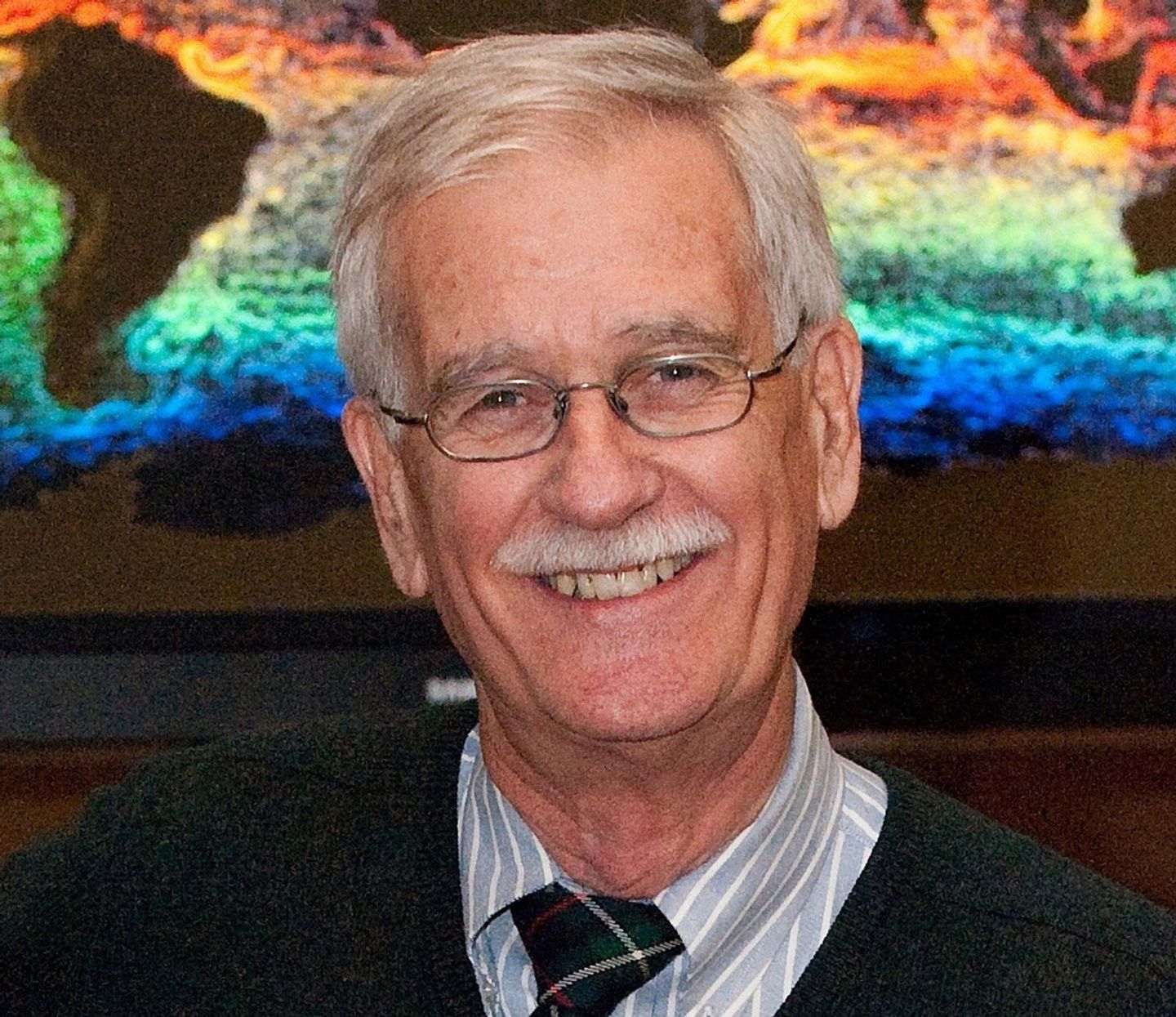
Photo 1. Compton Tucker uses satellites to address global environmental challenges.
Photo credit: Colorado State University
In some ways this award brings Compton’s career full circle. He first came to GSFC as a NAS postdoc in 1975 after having earned his Bachelor’s of Science degree at Colorado State University (CSU) in 1969. He followed with his Master’s of Science degree and Ph.D. from CSU’s College of Forestry in 1973 and 1975 respectively. Two years later, he joined NASA as a civil servant. After a prestigious 48 years of public service, Compton has decided to retire in March 2025.
Compton is a well-known pioneer in the field of satellite-based environmental analysis, using data from various U.S. Geological Survey–NASA Landsat missions and from the National Oceanographic and Atmospheric Administration’s (NOAA) Advanced Very High Resolution Radiometer (AVHRR) instrument, the prototype of which launched aboard the Television Infrared Observation Satellite–N (TIROS-N) in 1978, with launches continuing on NOAA and European polar orbiting satellites throughout the next 40 years. The last two AVHRR instruments, which launched on the European Organisation for the Exploitation of Meteorological Satellites’ (EUMETSAT) Meteorological Operational satellites (METOP–B and -C) in 2012 and 2018 respectively, are still operational today.
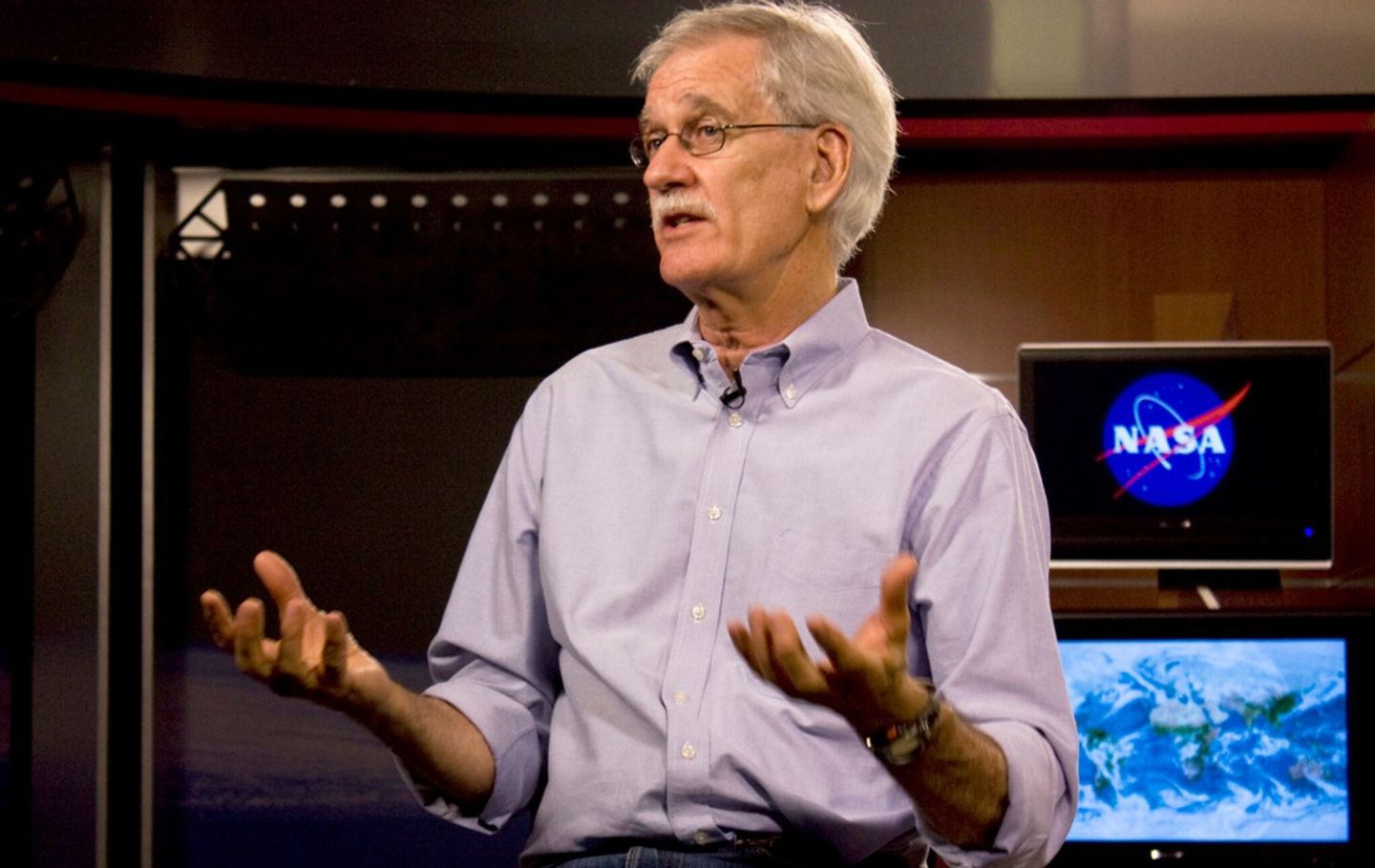
Photo 2. Earth scientist Compton Tucker, who has studied remote sensing of vegetation at NASA Goddard for 50 years, has been elected to the National Academy of Sciences.
Photo credit: Compton Tucker
In his GSFC presentation, Compton described how, in the course of doing their research, he and his colleague(s) realized the original plans for AVHRR resulted in Channel 1 and 2 overlapping one another. In short, he explained that his input helped persuade NOAA management to change the design for Channel 1 of AVHRR – beginning with NOAA-7. It is fair to say that this change had a lasting impact, with 16 more AVHRR instruments (with slight modifications over time) launched over the next four decades.
Compton’s research has focused on global photosynthesis on land (e.g., grass-dominated savannas), determined land cover (i.e., forest fragmentation, deforestation, and forest condition), monitored droughts and food security, and evaluated ecologically coupled disease outbreaks. From 2005 to 2010, he was the co-chair of two Interagency Working Groups for Observations and Land Use and Land Cover Change. Compton was active in NASA’s Space Archaeology Program, participating in ground-based radar and magnetic surveys in Turkey, particularly at Troy, the Granicus River Valley, and Gordion. Over the course of his 50-year career, he has authored or co-authored more than 400 scholarly articles that have appeared in scientific journals – and in his presentation he hinted that more might be in store after retirement.
Compton has received numerous scientific awards and honors. He was elected to a fellow of the American Geophysical Union in 2009 and to the American Association for the Advancement of Science in 2015. He received the Senior Executive Service Presidential Rank Award for Meritorious Service (2017), the Vega Medal from the Swedish Society of Anthropology and Geography (2014), the Galathea Medal from the Royal Danish Geographical Society (2004), the William T. Pecora Award from the U.S. Geological Survey (1997), the Michael Collins Trophy for Current Achievement from the National Air and Space Museum (1993), the Henry Shaw Medal from the Missouri Botanical Garden (1992), and the Exceptional Scientific Achievement Medal from NASA (1987).
Compton enjoyed sharing his knowledge with the next generation of scientists. He served as an adjunct professor at the University of Maryland (1994–2024) and a consulting scholar at the University of Pennsylvania Museum of Archeology and Anthropology (2005–2024).
Congratulations to Compton on earning this prestigious – and well-earned – recognition from NAS. Best wishes to him in whatever is next on his journey.
The National Academy of Sciences is a private, nonprofit institution that was established under a congressional charter signed by President Abraham Lincoln in 1863. It recognizes achievement in science by election to membership, and – with the National Academy of Engineering and the National Academy of Medicine – provides science, engineering, and health policy advice to the federal government and other organizations.
An alligator moves through a brackish waterway at NASA’s Kennedy Space Center in Florida. The center shares space with the Merritt Island National Wildlife Refuge. More than 330 native and migratory bird species, 25 mammals, 117 fishes and 65 amphibians and reptiles call NASA Kennedy and the wildlife refuge home.
An alligator moves through a brackish waterway at NASA’s Kennedy Space Center in Florida in this May 8, 2017, photo. The center shares space with the Merritt Island National Wildlife Refuge. More than 330 native and migratory bird species, 25 mammals, 117 fishes and 65 amphibians and reptiles call NASA Kennedy and the wildlife refuge home. The refuge is also home to over 1,000 known plant species.
Webb Narrows Atmospheric Possibilities for Earth-sized Exoplanet TRAPPIST-1 d
This artist’s concept depicts planet TRAPPIST-1 d passing in front of its turbulent star, with other members of the closely packed system shown in the background. Full illustration and caption show below.
Credits: NASA, ESA, CSA, Joseph Olmsted (STScI)
The exoplanet TRAPPIST-1 d intrigues astronomers looking for possibly habitable worlds beyond our solar system because it is similar in size to Earth, rocky, and resides in an area around its star where liquid water on its surface is theoretically possible. But according to a new study using data from NASA’s James Webb Space Telescope, it does not have an Earth-like atmosphere.
“Ultimately, we want to know if something like the environment we enjoy on Earth can exist elsewhere, and under what conditions. While NASA’s James Webb Space Telescope is giving us the ability to explore this question in Earth-sized planets for the first time, at this point we can rule out TRAPPIST-1 d from a list of potential Earth twins or cousins,” said Caroline Piaulet-Ghorayeb of the University of Chicago and Trottier Institute for Research on Exoplanets (IREx) at Université de Montréal, lead author of the study published in The Astrophysical Journal.
Planet TRAPPIST-1 d
The TRAPPIST-1 system is located 40 light-years away and was revealed as the record-holder for most Earth-sized rocky planets around a single star in 2017, thanks to data from NASA’s retired Spitzer Space Telescope and other observatories. Due to that star being a dim, relatively cold red dwarf, the “habitable zone” or “Goldilocks zone” – where the planet’s temperature may be just right, such that liquid surface water is possible – lies much closer to the star than in our solar system. TRAPPIST-1 d, the third planet from the red dwarf star, lies on the cusp of that temperate zone, yet its distance to its star is only 2 percent of Earth’s distance from the Sun. TRAPPIST-1 d completes an entire orbit around its star, its year, in only four Earth days.
Webb’s NIRSpec (Near-Infrared Spectrograph) instrument did not detect molecules from TRAPPIST-1 d that are common in Earth’s atmosphere, like water, methane, or carbon dioxide. However, Piaulet-Ghorayeb outlined several possibilities for the exoplanet that remain open for follow-up study.
“There are a few potential reasons why we don’t detect an atmosphere around TRAPPIST-1 d. It could have an extremely thin atmosphere that is difficult to detect, somewhat like Mars. Alternatively, it could have very thick, high-altitude clouds that are blocking our detection of specific atmospheric signatures — something more like Venus. Or, it could be a barren rock, with no atmosphere at all,” Piaulet-Ghorayeb said.
Image: TRAPPIST-1 d (Artist’s Concept)
This artist’s concept depicts planet TRAPPIST-1 d passing in front of its turbulent star, with other members of the closely packed system shown in the background. The TRAPPIST-1 system is intriguing to scientists for a few reasons. Not only does the system have seven Earth-sized rocky worlds, but its star is a red dwarf, the most common type of star in the Milky Way galaxy. If an Earth-sized world can maintain an atmosphere here, and thus have the potential for liquid surface water, the chance of finding similar worlds throughout the galaxy is much higher. In studying the TRAPPIST-1 planets, scientists are determining the best methods for separating starlight from potential atmospheric signatures in data from NASA’s James Webb Space Telescope. The star TRAPPIST-1’s variability, with frequent flares, provides a challenging testing ground for these methods.
NASA, ESA, CSA, Joseph Olmsted (STScI)
The Star TRAPPIST-1
No matter what the case may be for TRAPPIST-1 d, it’s tough being a planet in orbit around a red dwarf star. TRAPPIST-1, the host star of the system, is known to be volatile, often releasing flares of high-energy radiation with the potential to strip off the atmospheres of its small planets, especially those orbiting most closely. Nevertheless, scientists are motivated to seek signs of atmospheres on the TRAPPIST-1 planets because red dwarf stars are the most common stars in our galaxy. If planets can hold on to an atmosphere here, under waves of harsh stellar radiation, they could, as the saying goes, make it anywhere.
“Webb’s sensitive infrared instruments are allowing us to delve into the atmospheres of these smaller, colder planets for the first time,” said Björn Benneke of IREx at Université de Montréal, a co-author of the study. “We’re really just getting started using Webb to look for atmospheres on Earth-sized planets, and to define the line between planets that can hold onto an atmosphere, and those that cannot.”
The Outer TRAPPIST-1 Planets
Webb observations of the outer TRAPPIST-1 planets are ongoing, which hold both potential and peril. On the one hand, Benneke said, planets e, f, g, and h may have better chances of having atmospheres because they are further away from the energetic eruptions of their host star. However, their distance and colder environment will make atmospheric signatures more difficult to detect, even with Webb’s infrared instruments.
“All hope is not lost for atmospheres around the TRAPPIST-1 planets,” Piaulet-Ghorayeb said. “While we didn’t find a big, bold atmospheric signature at planet d, there is still potential for the outer planets to be holding onto a lot of water and other atmospheric components.”
“As NASA leads the way in searching for life outside our solar system, one of the most important avenues we can pursue is understanding which planets retain their atmospheres, and why,” said Shawn Domagal-Goldman, acting director of the Astrophysics Division at NASA Headquarters in Washington. “NASA’s James Webb Space Telescope has pushed our capabilities for studying exoplanet atmospheres further than ever before, beyond extreme worlds to some rocky planets – allowing us to begin confirming theories about the kind of planets that may be potentially habitable. This important groundwork will position our next missions, like NASA’s Habitable Worlds Observatory, to answer a universal question: Are we alone?”
The James Webb Space Telescope is the world’s premier space science observatory. Webb is solving mysteries in our solar system, looking beyond to distant worlds around other stars, and probing the mysterious structures and origins of our universe and our place in it. Webb is an international program led by NASA with its partners, ESA (European Space Agency) and CSA (Canadian Space Agency).
Research traveling to the International Space Station aboard NASA’s SpaceX 33rd commercial resupply mission includes testing 3D bioprinting of an implantable medical device, observing behavior of engineered liver tissues, examining microgravity’s effects on bone-forming cells, and additional 3D printing of metal in space. The SpaceX Dragon spacecraft is scheduled to launch to the orbiting laboratory in late August.
For nearly 25 years, the International Space Station has provided research capabilities used by scientists from over 110 countries to conduct more than 4,000 groundbreaking experiments in microgravity. Research conducted aboard the space station advances future space exploration – including missions to the Moon and Mars – and provides multiple benefits to humanity.
Read more about some of the latest investigations headed to the orbiting lab.
Better nerve bridge
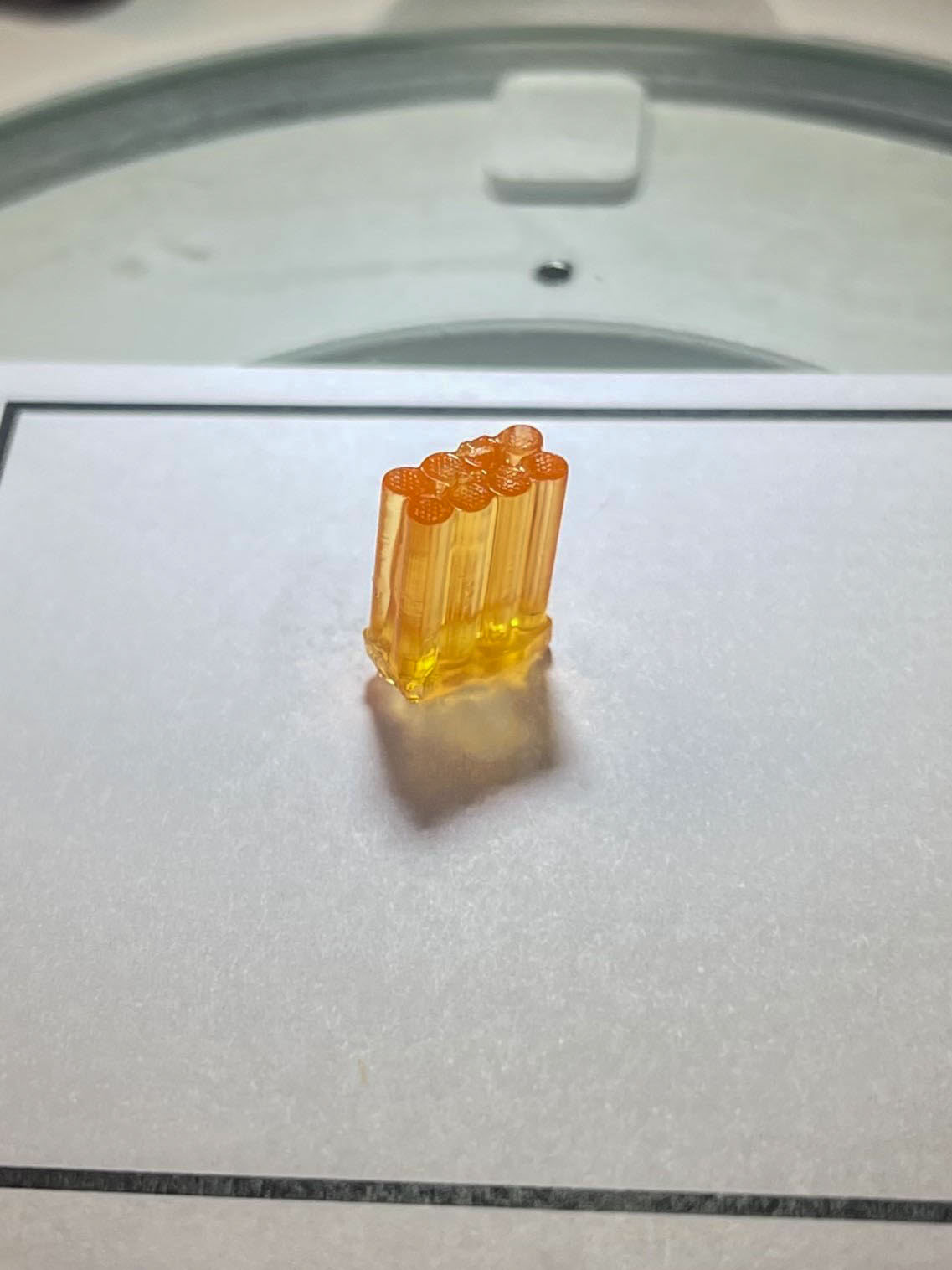
Eight implantable nerve devices printed on the space station.
Auxilium Biotechnologies
Scientists are creating an implantable device in microgravity that could support nerve regrowth after injuries. The device is created through bioprinting, a type of 3D printing that uses living cells or proteins as raw materials.
Traumatic injuries can leave a gap between nerves, and existing treatments have limited ability to restore nerve function and may result in impaired physical function. A bioprinted device to bridge the nerve gap could accelerate recovery and preserve function.
“On this mission, we plan to print up to 18 of the implants and anticipate using them in preclinical studies on the ground in 2026 and 2027,” said Jacob Koffler, principal investigator at Auxilium Biotechnologies Inc in San Diego. Tissues bioprinted in microgravity may be higher quality than those made on Earth and results could support future manufacturing of medical devices in space for crew members on space missions and patients on Earth.
Bioprinted tissues with blood vessels
A researcher holds vascularized tissue bioprinted on the ground for study in space.
The Wake Forest Institute of Regenerative Medicine
Researchers plan to bioprint liver tissue containing blood vessels on the ground and examine how the tissue develops in microgravity. Results could help support the eventual production of entire functional organs for transplantation on Earth.
A previous mission tested whether this type of bioprinted liver tissue survived and functioned in space, according to James Yoo, principal investigator at the Wake Forest Institute of Regenerative Medicine in Winston-Salem. This round could show whether microgravity improves development of the bioprinted tissue.
“We are especially keen on accelerating the development of vascular networks in the tissue,” Yoo said. Vascular networks produce the blood vessels needed to keep these tissues functional and healthy.
Blocking bone loss
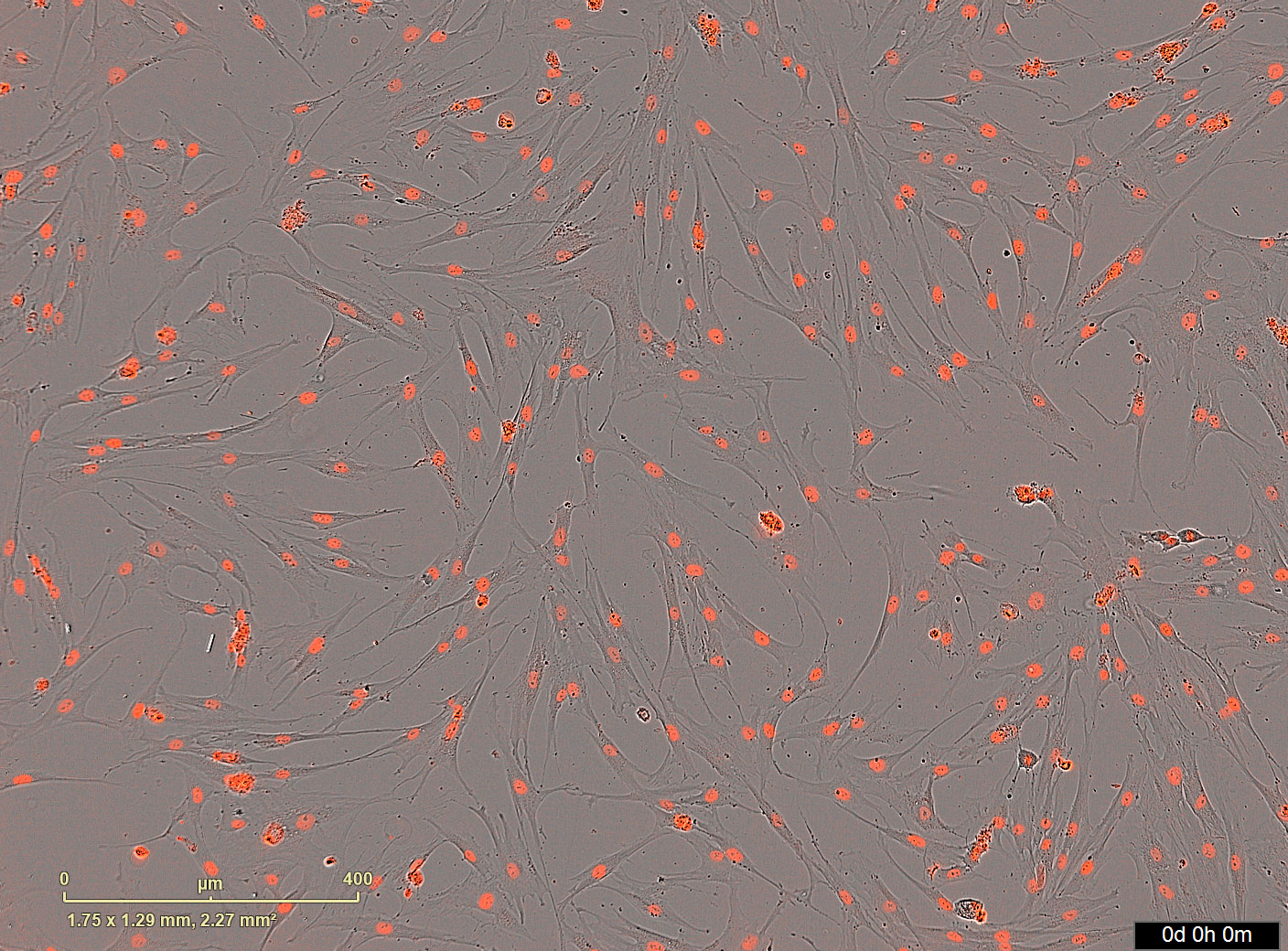
A microscopic image of stem cells derived from human bone marrow stained with red dye.
Mayo Clinic
A study of bone-forming stem cells in microgravity could provide insight into the basic mechanisms of the bone loss astronauts experience during space flight.
Researchers identified a protein in the body called IL-6 that can send signals to stem cells to promote either bone formation or bone loss. This work evaluates whether blocking IL-6 signals could reduce bone loss during spaceflight.
“If we are successful, the compound also can be evaluated for the treatment of conditions associated with bone loss on Earth, such as osteoporosis and certain types of cancers,” said Abba Zubair, principal investigator at the Mayo Clinic in Florida.
Space printing goes metal
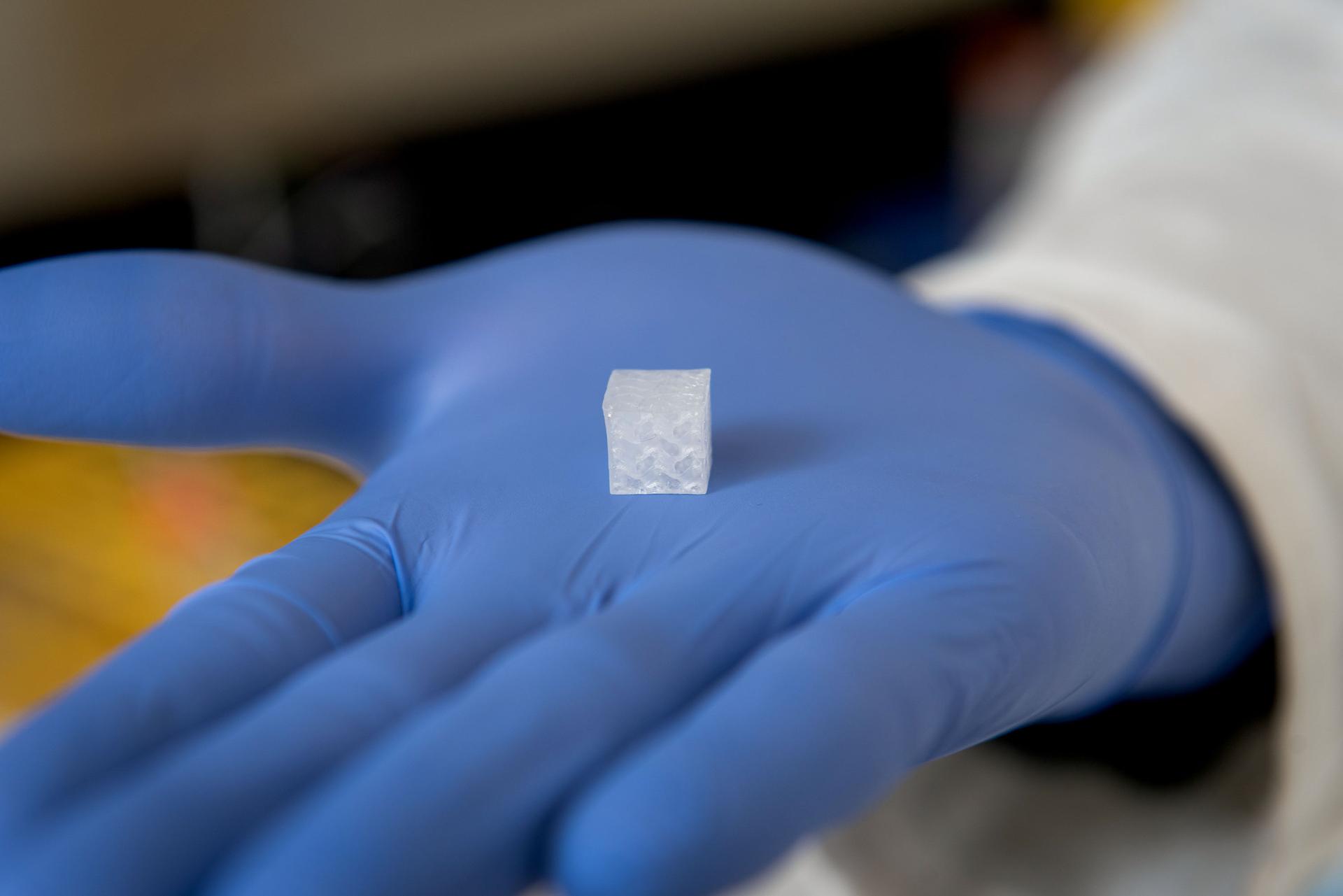
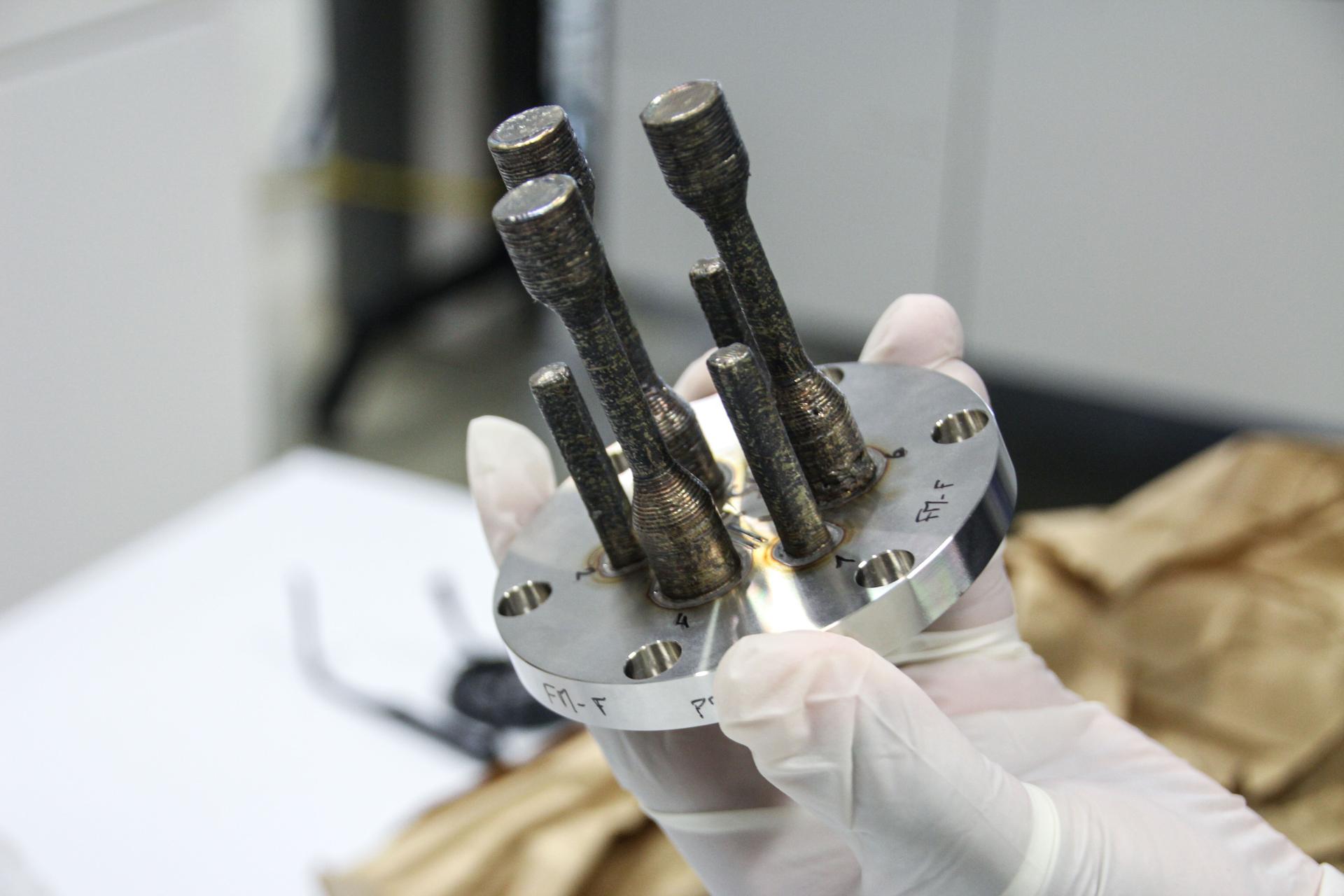
Metal specimens printed on the ground for ESA’s Metal 3D Printer investigation.
Airbus Defence and Space SAS
As mission duration and distance from Earth increase, resupply becomes harder. Additive manufacturing or 3D printing could be used to make parts and dedicated tools on demand, enhancing mission autonomy.
Research on the space station has made great strides in 3D printing with plastic, but it is not suitable for all uses. The ESA (European Space Agency) Metal 3D Printer investigation builds on recent successful printing of the first metal parts in space.
“We’ll print several small cubes using different strategies to help determine the optimal approach for metal printers in space,” said Rob Postema, ESA technical officer. Quality of the space-printed items will be compared against reference prints made on the ground.
This investigation is a continuation of ESA’s efforts to develop in-space manufacturing and materials recycling capabilities. The ESA investigation team includes Airbus Defence and Space SAS and the User Support Centre CADMOS in France.
Download high-resolution photos and videos of the research mentioned in this article.
Learn more about the research aboard the International Space Station at:
NASA’s Hubble Uncovers Rare White Dwarf Merger Remnant
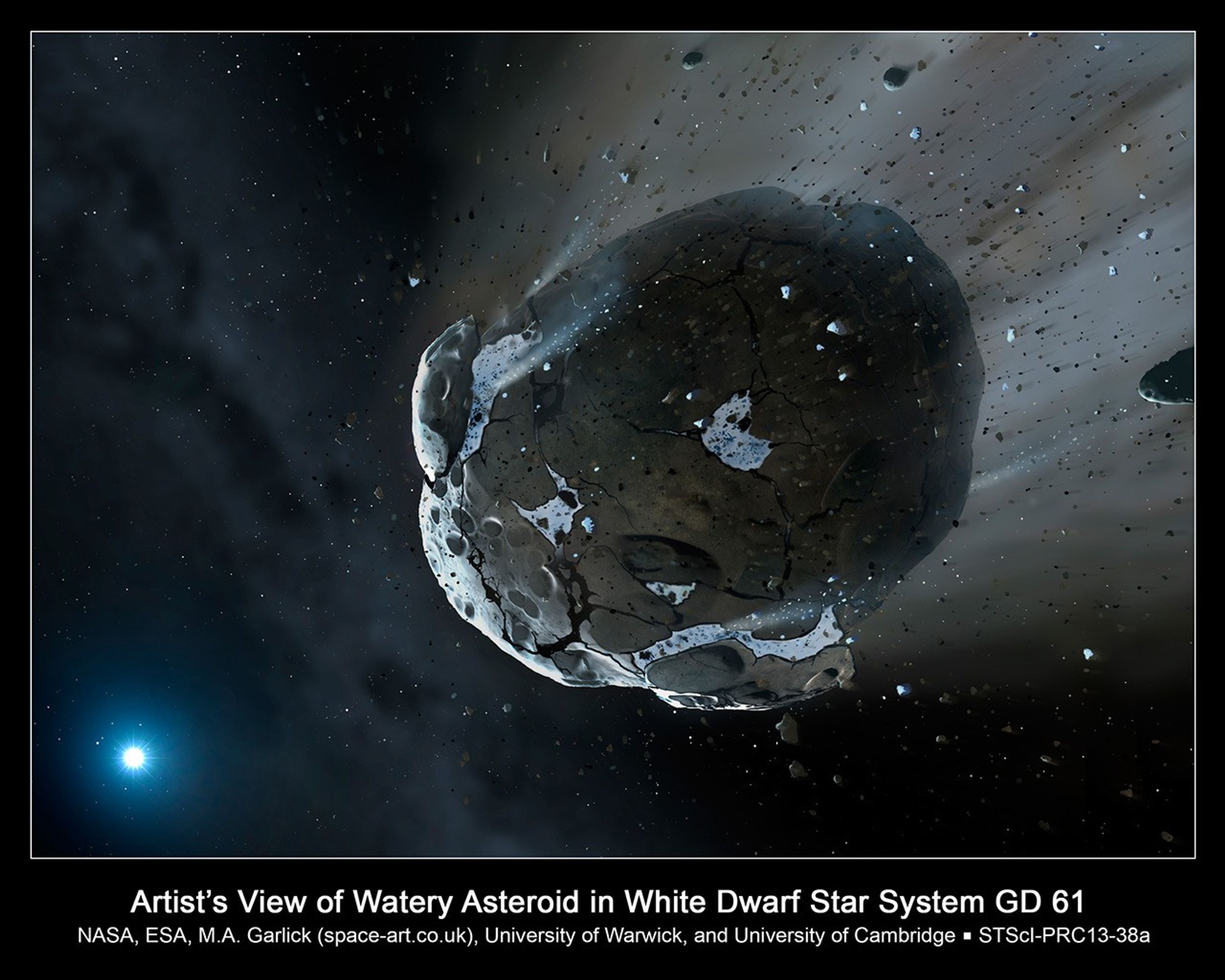
This is an illustration of a white dwarf star merging into a red giant star. A bow shock forms as the dwarf plunges through the star’s outer atmosphere. The passage strips down the white dwarf’s outer layers, exposing an interior carbon core.
Artwork: NASA, ESA, STScI, Ralf Crawford (STScI)
An international team of astronomers has discovered a cosmic rarity: an ultra-massive white dwarf star resulting from a white dwarf merging with another star, rather than through the evolution of a single star. This discovery, made by NASA’s Hubble Space Telescope’s sensitive ultraviolet observations, suggests these rare white dwarfs may be more common than previously suspected.
“It’s a discovery that underlines things may be different from what they appear to us at first glance,” said the principal investigator of the Hubble program, Boris Gaensicke, of the University of Warwick in the United Kingdom. “Until now, this appeared as a normal white dwarf, but Hubble’s ultraviolet vision revealed that it had a very different history from what we would have guessed.”
A white dwarf is a dense object with the same diameter as Earth, and represents the end state for stars that are not massive enough to explode as core-collapse supernovae. Our Sun will become a white dwarf in about 5 billion years.
In theory, a white dwarf can have a mass of up to 1.4 times that of the Sun, but white dwarfs heavier than the Sun are rare. These objects, which astronomers call ultra-massive white dwarfs, can form either through the evolution of a single massive star or through the merger of a white dwarf with another star, such as a binary companion.
This new discovery, published in the journal Nature Astronomy, marks the first time that a white dwarf born from colliding stars has been identified by its ultraviolet spectrum. Prior to this study, six white dwarf merger products were discovered via carbon lines in their visible-light spectra. All seven of these are part of a larger group that were found to be bluer than expected for their masses and ages from a study with ESA’s Gaia mission in 2019, with the evidence of mergers providing new insights into their formation history.
Astronomers used Hubble’s Cosmic Origins Spectrograph to investigate a white dwarf called WD 0525+526. Located 128 light-years away, it is 20% more massive than the Sun. In visible light, the spectrum of WD 0525+526’s atmosphere resembled that of a typical white dwarf. However, Hubble’s ultraviolet spectrum revealed something unusual: evidence of carbon in the white dwarf’s atmosphere.
White dwarfs that form through the evolution of a single star have atmospheres composed of hydrogen and helium. The core of the white dwarf is typically composed mostly of carbon and oxygen or oxygen and neon, but a thick atmosphere usually prevents these elements from appearing in the white dwarf’s spectrum.
When carbon appears in the spectrum of a white dwarf, it can signal a more violent origin than the typical single-star scenario: the collision of two white dwarfs, or of a white dwarf and a subgiant star. Such a collision can burn away the hydrogen and helium atmospheres of the colliding stars, leaving behind a scant layer of hydrogen and helium around the merger remnant that allows carbon from the white dwarf’s core to float upward, where it can be detected.
WD 0525+526 is remarkable even within the small group of white dwarfs known to be the product of merging stars. With a temperature of almost 21,000 kelvins (37,000 degrees Fahrenheit) and a mass of 1.2 solar masses, WD 0525+526 is hotter and more massive than the other white dwarfs in this group.
WD 0525+526’s extreme temperature posed something of a mystery for the team. For cooler white dwarfs, such as the six previously discovered merger products, a process called convection can mix carbon into the thin hydrogen-helium atmosphere. WD 0525+526 is too hot for convection to take place, however. Instead, the team determined a more subtle process called semi-convection brings a small amount of carbon up into WD 0525+526’s atmosphere. WD 0525+526 has the smallest amount of atmospheric carbon of any white dwarf known to result from a merger, about 100,000 times less than other merger remnants.
The high temperature and low carbon abundance mean that identifying this white dwarf as the product of a merger would have been impossible without Hubble’s sensitivity to ultraviolet light. Spectral lines from elements heavier than helium, like carbon, become fainter at visible wavelengths for hotter white dwarfs, but these spectral signals remain bright in the ultraviolet, where Hubble is uniquely positioned to spot them.
“Hubble’s Cosmic Origins Spectrograph is the only instrument that can obtain the superb quality ultraviolet spectroscopy that was required to detect the carbon in the atmosphere of this white dwarf,” said study lead Snehalata Sahu from the University of Warwick.
Because WD 0525+526’s origin was revealed only once astronomers glimpsed its ultraviolet spectrum, it’s likely that other seemingly “normal” white dwarfs are actually the result of cosmic collisions — a possibility the team is excited to explore in the future.
“We would like to extend our research on this topic by exploring how common carbon white dwarfs are among similar white dwarfs, and how many stellar mergers are hiding among the normal white dwarf family,” said study co-leader Antoine Bedrad from the University of Warwick. “That will be an important contribution to our understanding of white dwarf binaries, and the pathways to supernova explosions.”
The Hubble Space Telescope has been operating for more than three decades and continues to make ground-breaking discoveries that shape our fundamental understanding of the universe. Hubble is a project of international cooperation between NASA and ESA (European Space Agency). NASA’s Goddard Space Flight Center in Greenbelt, Maryland, manages the telescope and mission operations. Lockheed Martin Space, based in Denver, also supports mission operations at Goddard. The Space Telescope Science Institute in Baltimore, which is operated by the Association of Universities for Research in Astronomy, conducts Hubble science operations for NASA.
This is an illustration of a white dwarf star merging into a red giant star. A bow shock forms as the dwarf plunges through the star’s outer atmosphere. The passage strips down the white dwarf’s outer layers, exposing an interior carbon core.
Explore More
Spectroscopy
Studying light in detail allows astronomers to uncover the very nature of the objects that emit, absorb, or reflect light.
Hubble Directly Measures Mass of Lone White Dwarf
Astronomers using Hubble have for the first time directly measured the mass of a single, isolated white dwarf.
Dead Star Caught Ripping Up Planetary System
Astronomers have observed a white dwarf star that is consuming both rocky-metallic and icy material, the ingredients of planets.
Water-rich Planetary Building Blocks Found Around White Dwarf
Astronomers using Hubble found the building blocks of solid planets that are capable of having substantial amounts of water.
NASA Glenn Research Center High School Engineering Institute participants, left to right: Evan Ricchetti, Edan Liahovetsky, and Doris Chen, prepare to add weights to their rover to test the effectiveness of their wheel grouser designs on Friday, July 18, 2025.
Credit:NASA/Jef Janis
This summer, NASA’s Glenn Research Center in Cleveland hosted the NASA Glenn High School Engineering Institute, a free, work-based learning experience designed to prepare rising high school juniors and seniors for careers in the aerospace workforce.
“The institute immerses students in NASA’s work, providing essential career readiness tools for future science, technology, engineering, and mathematics-focused academic and professional pursuits,” said Jerry Voltz of NASA Glenn’s Office of STEM Engagement.
Throughout the five-day sessions (offered three separate weeks in July), students used authentic NASA mission content and collaborated with Glenn’s technical experts. They gained a deeper understanding of the engineering design process, developed practical engineering solutions to real-world challenges, and tested prototypes to address key mission areas such as:
Acoustic dampening: How can we reduce noise pollution from jet engines?
Power management and distribution: How can we develop a smart power system for future space stations?
Simulated lunar operations: Can we invent tires that don’t use air?
NASA Glenn Research Center High School Engineering Institute participants, left to right: Adriana Pudloski, Anadavel Sakthi, Aditya Rohatgi, and Alexa Apshago, make modifications to the control system program for their rover on Friday, July 18, 2025.
Credit:NASA/Jef Janis
Voltz said he hoped students left the program with three key takeaways: a deeper curiosity and excitement for STEM careers, firsthand insight into how cutting-edge technology developed in Cleveland contributes to NASA’s most prominent missions, and most importantly, a feeling of empowerment gained from engaging with some of NASA’s brightest minds in the field.
Astronaut Victor Glover interacts with an Orion spacecraft simulator during NASA’s “All-Star Shoot for the Stars” event at The Children’s Museum of Indianapolis on Saturday, July 18, 2025.
Credit: NASA/Zach Lucas
From astronauts to athletes, researchers to referees, and communicators to coaches, NASA is much like basketball – we all train to reach the top of our game. Staff from NASA’s Glenn Research Center in Cleveland drove home this point during the “All-Star Shoot for the Stars” event at The Children’s Museum of Indianapolis, July 17-19. As part of WNBA All-Star Game activities, this event highlighted NASA technology while illuminating the intersection of sports and STEM.
The event offered a captivating look into space exploration, thanks to the combined efforts of NASA and museum staff. Highlights included a detailed Orion exhibit, a new spacesuit display featuring five full-scale spacesuits, and virtual reality demonstrations. Visitors also had the chance to enjoy an interactive spacesuit app and a unique cosmic selfie station.
On Friday, July 18, 2025, visitors at NASA’s “All-Star Shoot for the Stars” event at The Children’s Museum of Indianapolis look at a new spacesuit display featuring five full-scale spacesuits.
Credit: NASA/Christopher Richards
The event was made even more memorable by Artemis II astronaut Victor Glover, who connected with visitors and posed for photos. WNBA legend Tamika Catchings also made a special appearance, inspiring attendees with a message to “aim high!”
“All Star Weekend presented an excellent opportunity to share NASA’s mission with the Indianapolis community and people across the Midwest who were in town for the game,” said Jan Wittry, Glenn’s news chief. “I saw children’s faces light up as they interacted with the exhibits and talked to NASA experts, sparking a curiosity among our potential future STEM workforce.”
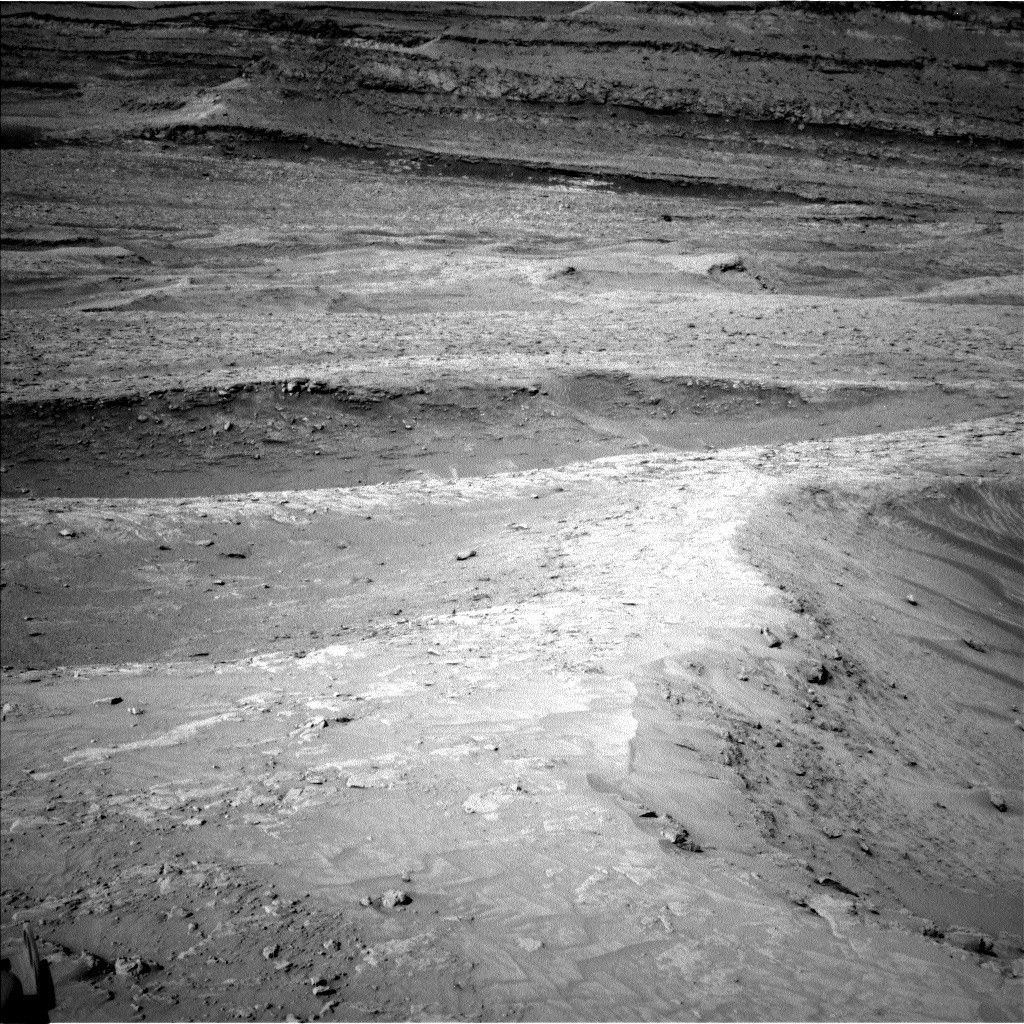
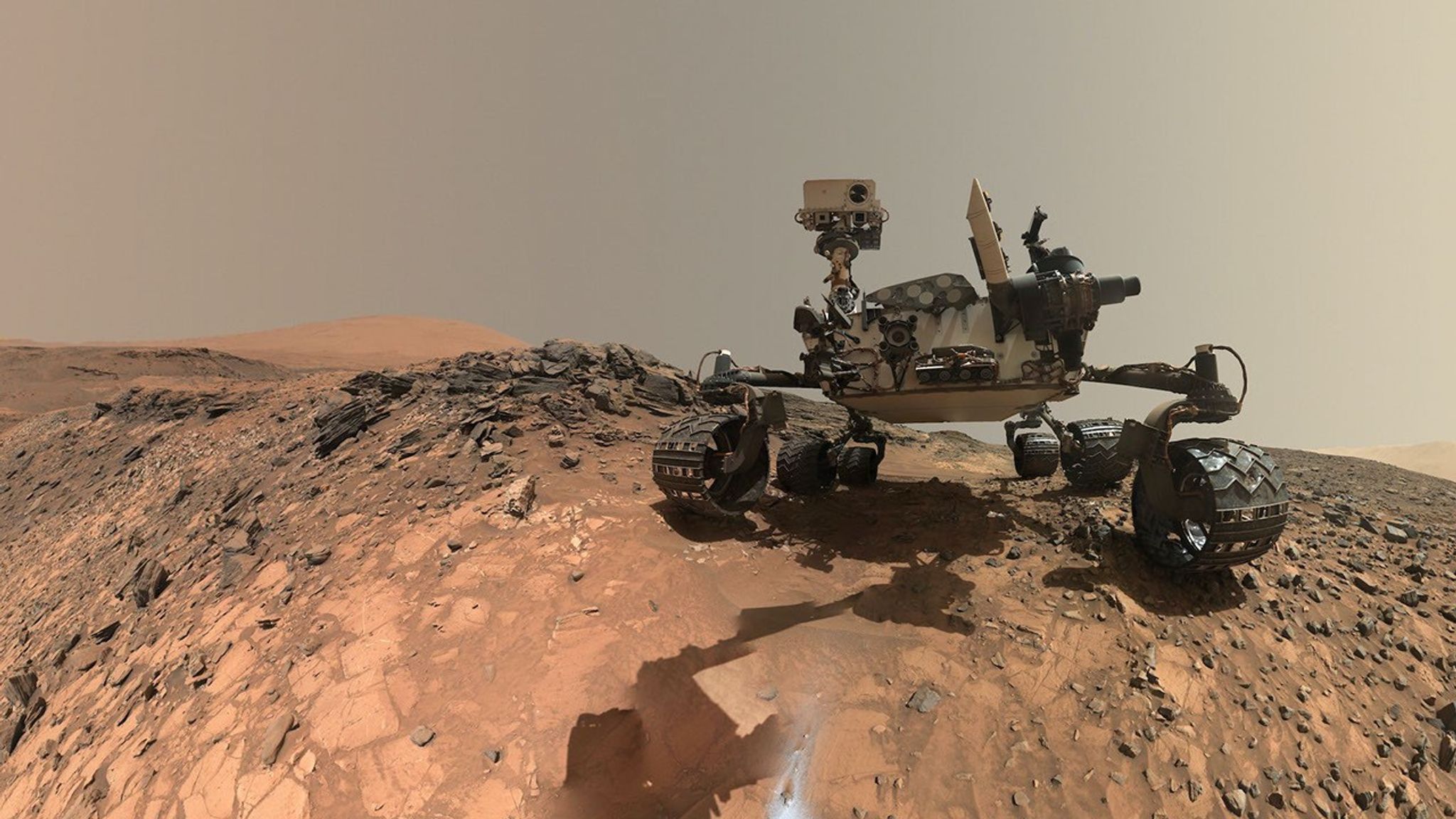
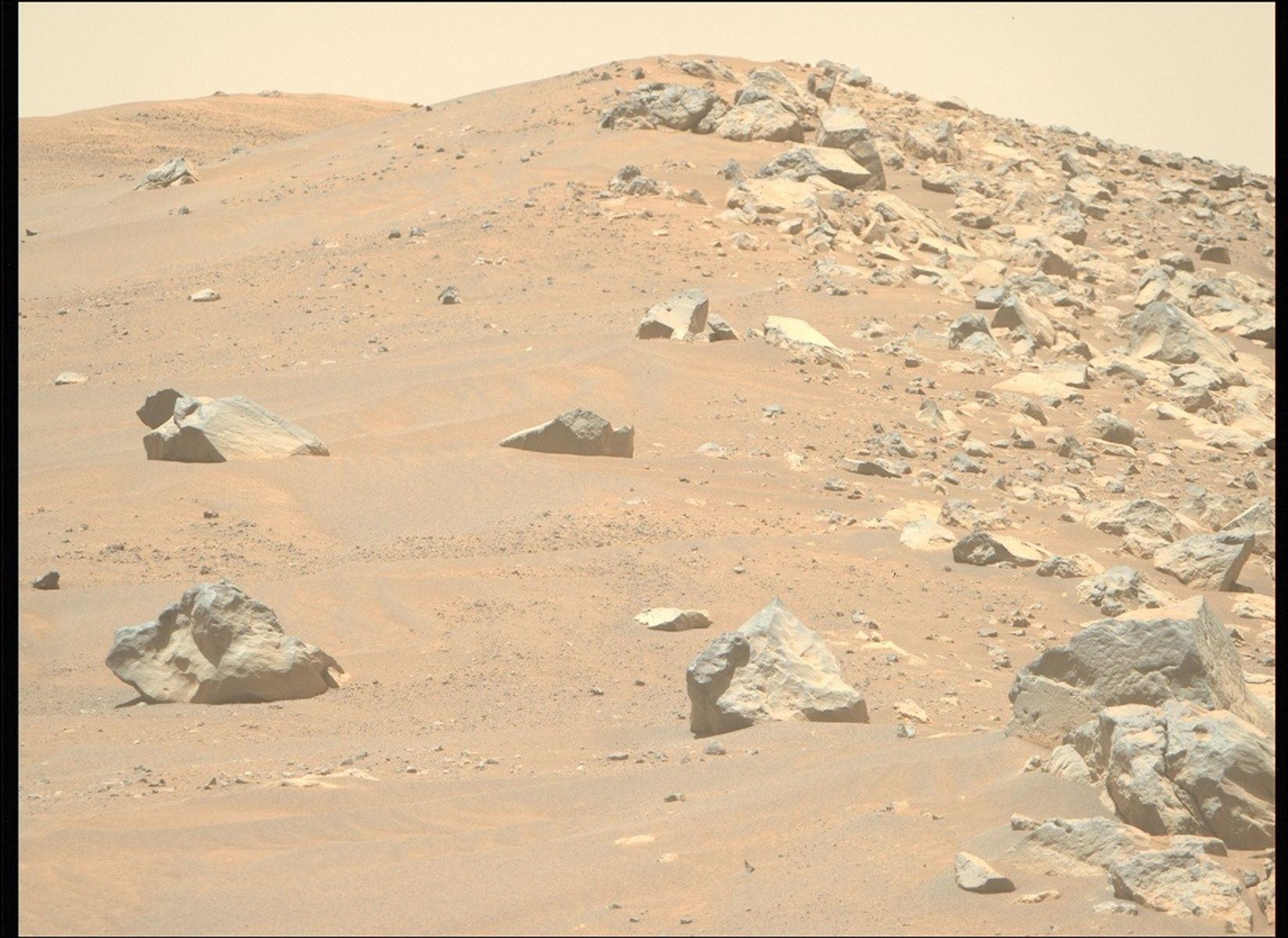
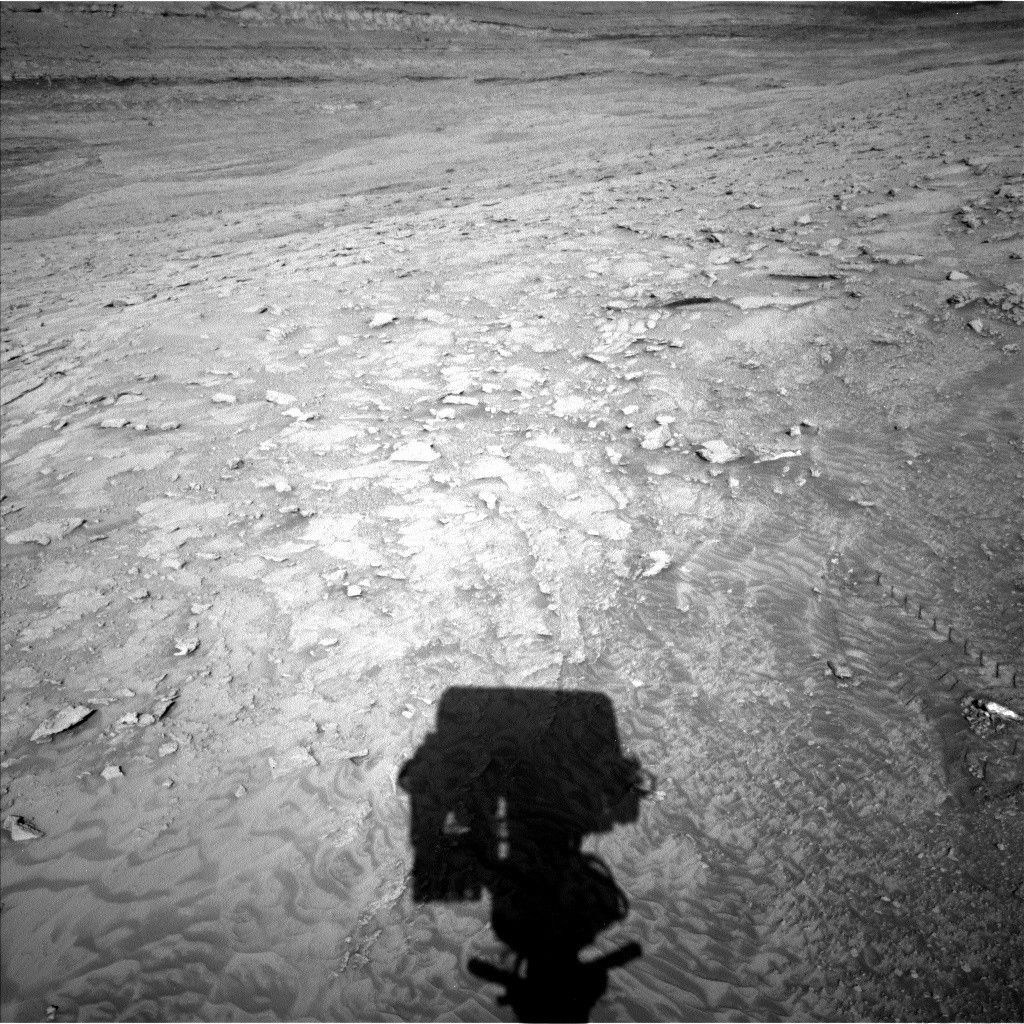
Curiosity Blog, Sols 4624-4626: A Busy Weekend at the Boxwork
NASA’s Mars rover Curiosity captured this image of the three intersecting ridges in front of it this weekend that make a sort of “peace sign” shape. Curiosity acquired the image using its Left Navigation Camera on Aug. 8, 2025 — Sol 4623, or Martian day 4,623 of the Mars Science Laboratory mission — at 06:20:38 UTC.
NASA/JPL-Caltech
Written by Alex Innanen, Atmospheric Scientist at York University
Earth planning date: Friday, Aug. 8, 2025
We continue to progress through the boxwork structures, arriving today at the “peace sign” ridges we were aiming for in our last drive. We’re spending the first two sols of the weekend at this location, learning everything we can about the boxwork ridges all around us. Then we’re driving further along and spending our third sol at our next location doing a bit more untargeted science.
Our first sol includes three contact science targets, “Palmira,” “Casicasi,” and “Bococo,” which both MAHLI and APXS will be checking out nice and close. ChemCam is also using its LIBS laser to check out Bococo, and taking a mosaic of some more distant boxwork ridges. Not to be left out, Mastcam is taking a mosaic of the intersecting peace-sign-shaped ridges, which have been given the name “Ayopaya,” as well as another mosaic of the edge of one of the nearby ridges. The environmental science group (ENV) is also taking a dust-devil movie and a surpahorizon cloud movie.
On our second sol, ChemCam has another LIBS observation of “Britania.” Mastcam has some more mosaics, today looking back at our wheel tracks to see what we might have turned up on our drive, as well as out to the more distant ridges. We also have another cloud movie coinciding with imaging from above by the CaSSIS camera on board the Trace Gas Orbiter, trying to spot the same clouds from above and below. After our drive Curiosity gets to take a nice long snooze before waking up early for our typical weekend morning ENV block, which includes three different cloud observations (it’s still the cloudy season, after all!) and two observations to look at dust in the crater and in the sky above. Later on this sol ChemCam will use AEGIS to autonomously pick a LIBS target, we’ll have a 360-degree survey to try to catch dust devils. Finally, we’re setting our sights back on the clouds, using cloud shadows on Mount Sharp to estimate cloud altitudes.
Preparations for Next Moonwalk Simulations Underway (and Underwater)
Written by Michael Allen
An international team of astronomers using NASA’s IXPE (Imaging X-ray Polarimetry Explorer), has challenged our understanding of what happens to matter in the direct vicinity of a black hole.
With IXPE, astronomers can study incoming X-rays and measure the polarization, a property of light that describes the direction of its electric field.
The polarization degree is a measurement of how aligned those vibrations are to each other. Scientists can use a black hole’s polarization degree to determine the location of the corona – a region of extremely hot, magnetized plasma that surrounds a black hole – and how it generates X-rays.
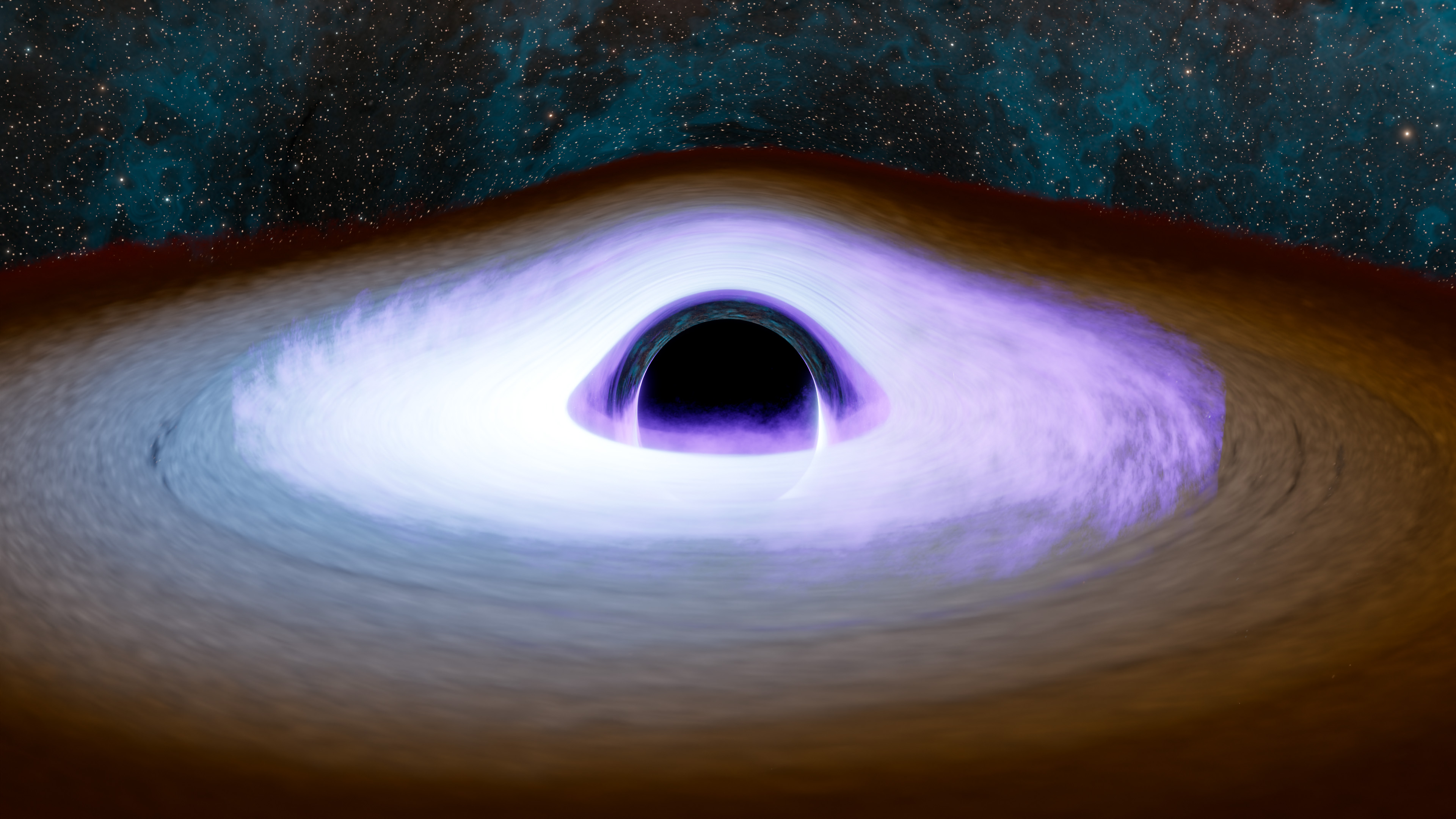
This illustration of material swirling around a black hole highlights a particular feature, called the “corona,” that shines brightly in X-ray light. In this depiction, the corona can be seen as a purple haze floating above the underlying accretion disk, and extending slightly inside of its inner edge. The material within the inner accretion disk is incredibly hot and would glow with a blinding blue-white light, but here has been reduced in brightness to make the corona stand out with better contrast. Its purple color is purely illustrative, standing in for the X-ray glow that would not be obvious in visible light. The warp in the disk is a realistic representation of how the black hole’s immense gravity acts like an optical lens, distorting our view of the flat disk that encircles it.
NASA/Caltech-IPAC/Robert Hurt
In April, astronomers used IXPE to measure a 9.1% polarization degree for black hole IGR J17091-3624, much higher than they expected based on theoretical models.
“The black hole IGR J17091-3624 is an extraordinary source which dims and brightens with the likeness of a heartbeat, and NASA’s IXPE allowed us to measure this unique source in a brand-new way.” said Melissa Ewing, the lead of the study based at Newcastle University in Newcastle upon Tyne, England.
In X-ray binary systems, an extremely dense object, like a black hole, pulls matter from a nearby source, most often a neighboring star. This matter can begin to swirl around, flattening into a rotating structure known as an accretion disc.
The corona, which lies in the inner region of this accretion disc, can reach extreme temperatures up to 1.8 billion degrees Fahrenheit and radiate very luminous X-rays. These ultra-hot coronas are responsible for some of the brightest X-ray sources in the sky.
Despite how bright the corona is in IGRJ17091-364, at some 28,000 light-years from Earth, it remains far too small and distant for astronomers to capture an image of it.
“Typically, a high polarization degree corresponds with a very edge-on view of the corona. The corona would have to be perfectly shaped and viewed at just the right angle to achieve such a measurement,” said Giorgio Matt, professor at the University of Roma Tre in Italy and a co-author on this paper. “The dimming pattern has yet to be explained by scientists and could hold the keys to understanding this category of black holes.”
The stellar companion of this black hole isn’t bright enough for astronomers to directly estimate the system’s viewing angle, but the unusual changes in brightness observed by IXPE suggest that the edge of the accretion disk was directly facing Earth.
The researchers explored different avenues to explain the high polarization degree.
In one model, astronomers included a “wind” of matter lifted from the accretion disc and launched away from the system, a rarely seen phenomenon. If X-rays from the corona were to meet this matter on their way to IXPE, Compton scattering would occur, leading to these measurements.
Fast Facts
Polarization measurements from IXPE carry information about the orientation and alignment of emitted X-ray light waves. The high the degree of polarization, the more the X-ray waves are traveling in sync.
Most polarization in the corona come from a process known as Compton scattering, where light from the accretion disc bounces off the hot plasma of the corona, gaining energy and aligning to vibrate in the same direction.
“These winds are one of the most critical missing pieces to understand the growth of all types of black holes,” said Maxime Parra, who led the observation and works on this topic at Ehime University in Matsuyama, Japan. “Astronomers could expect future observations to yield even more surprising polarization degree measurements.”
Another model assumed the plasma in the corona could exhibit a very fast outflow. If the plasma were to be streaming outwards at speeds as high as 20% the speed of light, or roughly 124 million miles per hour, relativistic effects could boost the observed polarization.
In both cases, the simulations could recreate the observed polarization without a very specific edge-on view. Researchers will continue to model and test their predictions to better understand the high polarization degree for future research efforts.
More about IXPE
IXPE, which continues to provide unprecedented data enabling groundbreaking discoveries about celestial objects across the universe, is a joint NASA and Italian Space Agency mission with partners and science collaborators in 12 countries. IXPE is led by NASA’s Marshall Space Flight Center in Huntsville, Alabama. BAE Systems, Inc., headquartered in Falls Church, Virginia, manages spacecraft operations together with the University of Colorado’s Laboratory for Atmospheric and Space Physics in Boulder.
A Tapestry of Tales: 10th Anniversary Reflections from NASA’s OCO-2 Mission
When woven together, the tapestry of experiences of staff and scientists provide the complete picture of OCO-2.
Breathe in… Breathe out.
This simple rhythm sets the foundation of life on Earth – and it’s a pattern that a NASA satellite has been watching from space for over a decade.
On July 2, 2024, NASA’s Orbiting Carbon Observatory-2 (OCO-2) celebrated 10 years since its launch. Built by NASA/Jet Propulsion Laboratory (NASA/JPL), OCO-2 is now viewed as the gold standard for carbon dioxide (CO2) measurements from space and has quietly become a powerful driver of technological, ecological and even economic progress – including providing unexpected insights into plant health, crop-yield forecasting, drought early warning systems, and forest and rangeland management.
While the mission can point to many scientific achievements – some of which will be highlighted in the pages that follow – these accomplishments have occurred in the context of a larger human story. Scientists from around the world have come together to bring the important data from this satellite to the broader community, making OCO-2 the success that it is today.
This article provides readers an introduction to several transformative characters in this carbon story. The text peers behind the scenes to reveal the circuitous path that scientists and engineers must navigate to take a brilliant scientific concept and turn it into flight hardware that can be launched into space to make beneficial observations. The article depicts milestones that mark the mission’s successes, but also the failures, dead ends, long nights, and discouragements that make up the complexity of any science story.
2003: The First OCO Science Team Meeting
Measuring CO2 from space: Great idea but can it really be done?
When the idea for OCO was first proposed, it wasn’t universally embraced. At the time, more than a few experts scoffed at the idea that CO2 could be measured from space. Unlike nitrogen and oxygen, which are the dominant components of Earth’s atmosphere, CO2 is a trace gas, often no more than a few hundred parts per million. Miniscule, elusive, and nomadic, these measurements, though challenging, are crucial because of the important role CO2 plays in global climate.
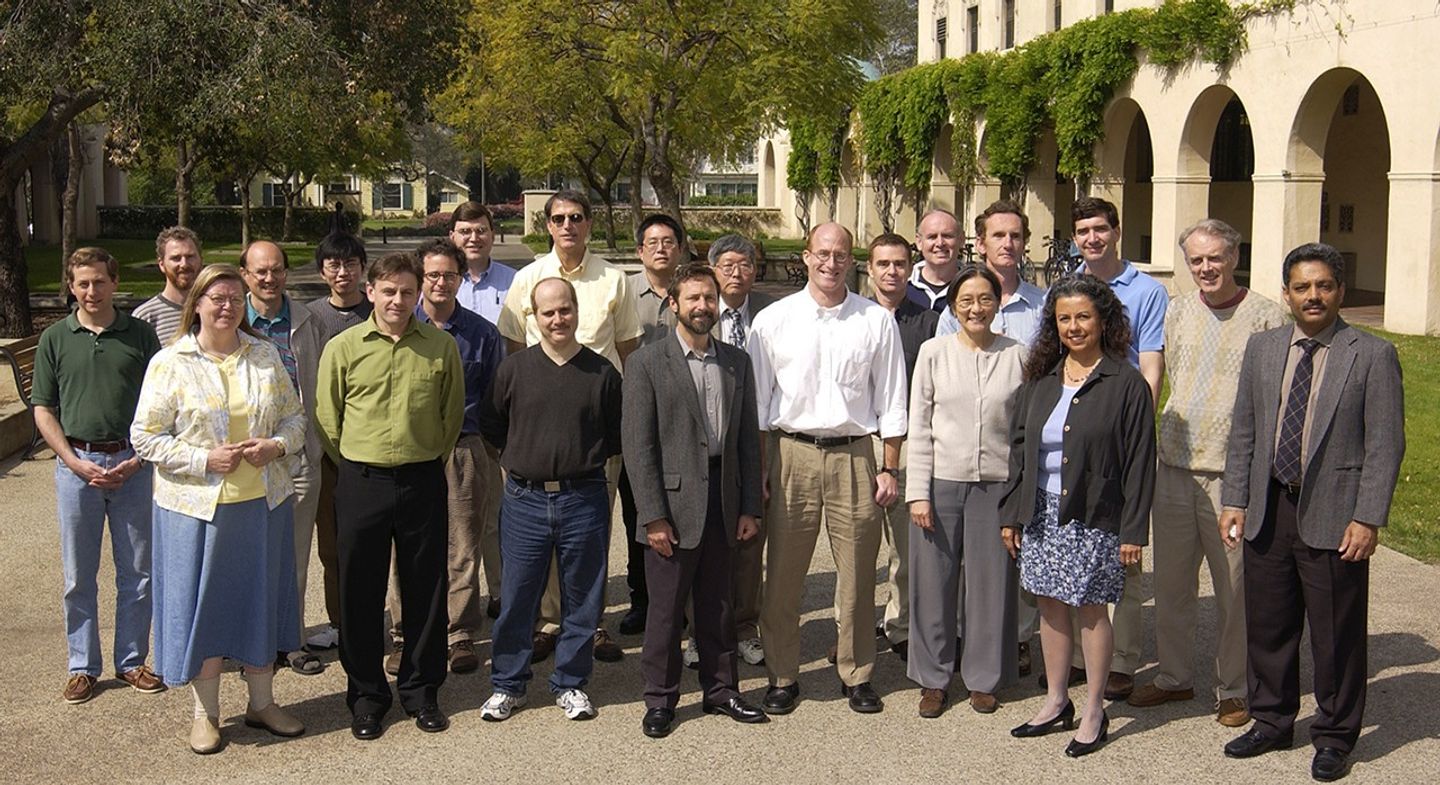
In April 2003, a handful of hopeful scientists gathered at the California Institute for Technology (Caltech) for the first OCO Science Team meeting. To mark the occasion, they took a break during the meetings and lined up for a group photo – see Photo 1. Upon returning to work, they took up the arduous task of determining how to measure CO2 from space with a satellite and instrument hardware that simply did not exist.
OCO-2 was developed as part of NASA’s Earth System Science Pathfinder program, which supports small, low-cost missions that can still provide tremendous value for high-impact goals. The satellite carries a high-resolution spectrometer that collects data in three, narrow spectral bands. These spectral bands follow a divide and conquer strategy – two measure the clear “fingerprint” that CO2 leaves when it absorbs sunlight, and one takes the same measurement for oxygen (O2). The satellite is able to estimate CO2 concentrations by comparing the CO2 and O2 measurements.
Photo 1. A photo of participants during the original OCO Science Team meeting in 2003 at the California Institute of Technology.
2014: A Night at Vandenberg Air Force Base – To Launch or Not to Launch
A Mother and daughter await the midnight launch.
On a warm July evening in 2014, Vivienne Payne [JPL—current OCO-2 Project Scientist] would normally have tucked her four-year-old daughter into bed. But this night was special. They were lined up in a crowd waiting for a bus to take them to Vandenberg Air Force Base (now Space Force Base) in California. The group huddled in the chill night air awaiting the launch of the OCO satellite into the cosmos.
Shortly after midnight, hundreds of guests spread blankets across the gravelly ground to make their wait more comfortable. The air was charged with excitement. The participants waited quietly, murmuring to one another while the soft slosh of the Pacific Ocean offered a steady pendulum counting down to the impending launch. Like most people there that night, Vivienne felt upbeat and excited, but she also understood the gravity of the moment – a lot was riding on this launch.
While Vivienne had not been part of OCO since inception – having joined the project in 2012 – she knew OCO’s story. The first launch in 2009 ended in failure – when a faulty launch vehicle doomed the first OCO to a watery grave just moments after launch. In the aftermath, the OCO community were left in limbo, unsure if the project would survive. All was not lost. The Japan Aerospace Exploration Agency (JAXA) had successfully launched the Greenhouse-gas Observing satellite (GOSAT or IBUKI, Japanese for “breath”) that same year. This launch gave the OCO team an opportunity to test and refine their methods and algorithms using data from GOSAT.
As the gravel poked through the thick flannel blankets, Vivienne shifted uncomfortably waiting for the interminable countdown to reach its conclusion – and then everything stopped. A technical issue was detected, triggering a command to abort the launch.
Vivienne tried to explain to her disappointed daughter that this was simply how things went with space work. Sometimes you put in 1000 work-years of labor, get up in the middle of the night, and sit on uneven ground just to have everything stopped, unceremoniously.
Fortunately, the problem was quickly resolved, and the launch was rescheduled for the very next night. The participants returned to the staging site – rinse and repeat. This time Vivienne’s daughter was decidedly more sluggish. At 3:00 AM PDT, OCO-2 launched flawlessly into space. Unfortunately, a layer of fog obscured the spectators’ view. While it could not be seen, the resounding boom of the rocket taking off could be heard for miles.
For Vivienne, the sonic boom shocked the ears and rumbled through the bodies of the assembled crowd, who erupted in cheers. Having invested a lot of her time in the OCO project during the past two years, she was thrilled to see a successful launch.
As they returned to their hotel, Vivienne’s daughter remained unimpressed. “Mummy, let’s not do that again,” she said as she splayed out on the hotel bed and soon fell fast asleep.
2014: OCO-2 Joins A Larger Earth Observing Story
Leading to surprising new insights about how we see plants – and fires.
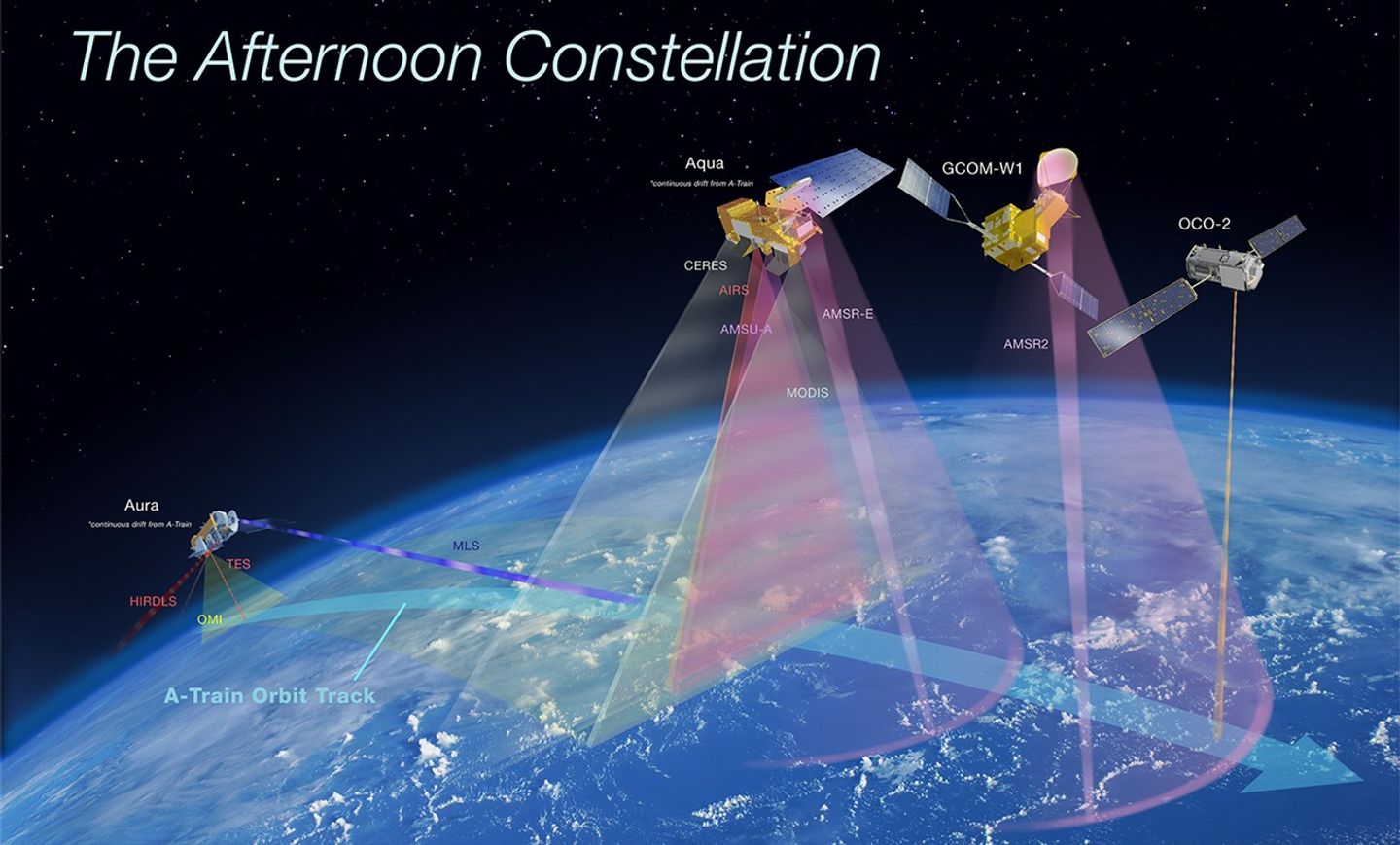
When OCO-2 launched in 2014, it joined a tightly coordinated group of Earth-observing satellites known as the Afternoon Constellation (or the “A-Train”) – see Figure 1. Flying in formation, the satellites could combine their observations to unlock more than any one mission could reveal on its own. Around the same time, scientists discovered that OCO-2 could do more than measure CO2 – it could also detect signs of plant health.
Figure 1. As of January 2024, the international Afternoon Constellation (“A-Train”) has two missions remaining: OCO-2 and GCOM-W. While Aqua and Aura continue to collect science data, the satellites have both slowly drifted out of the constellation – and will soon be decommissioned. CALIPSO ended its scientific mission on August 1, 2023. CloudSat radar operations ceased on December 20, 2023.
Figure credit: NASA
This discovery opened the possibilities for many different people, including Madeleine Festin, a former wildland firefighter in Montana, to work with OCO-2 data through an internship sponsored by the DEVELOP program, under the Earth Action element (formerly known as Applied Sciences) of NASA’s Earth Science Division.
When she was on the ground battling fires, Madeleine faced the harsh reality that fire prediction is notoriously difficult. In the field, she might be surrounded by smoke with just 20 ft (6 m) of visibility and red flames tearing through dry brush. Through her internship, she’s continued to tackle fires – just from a very different vantage point.
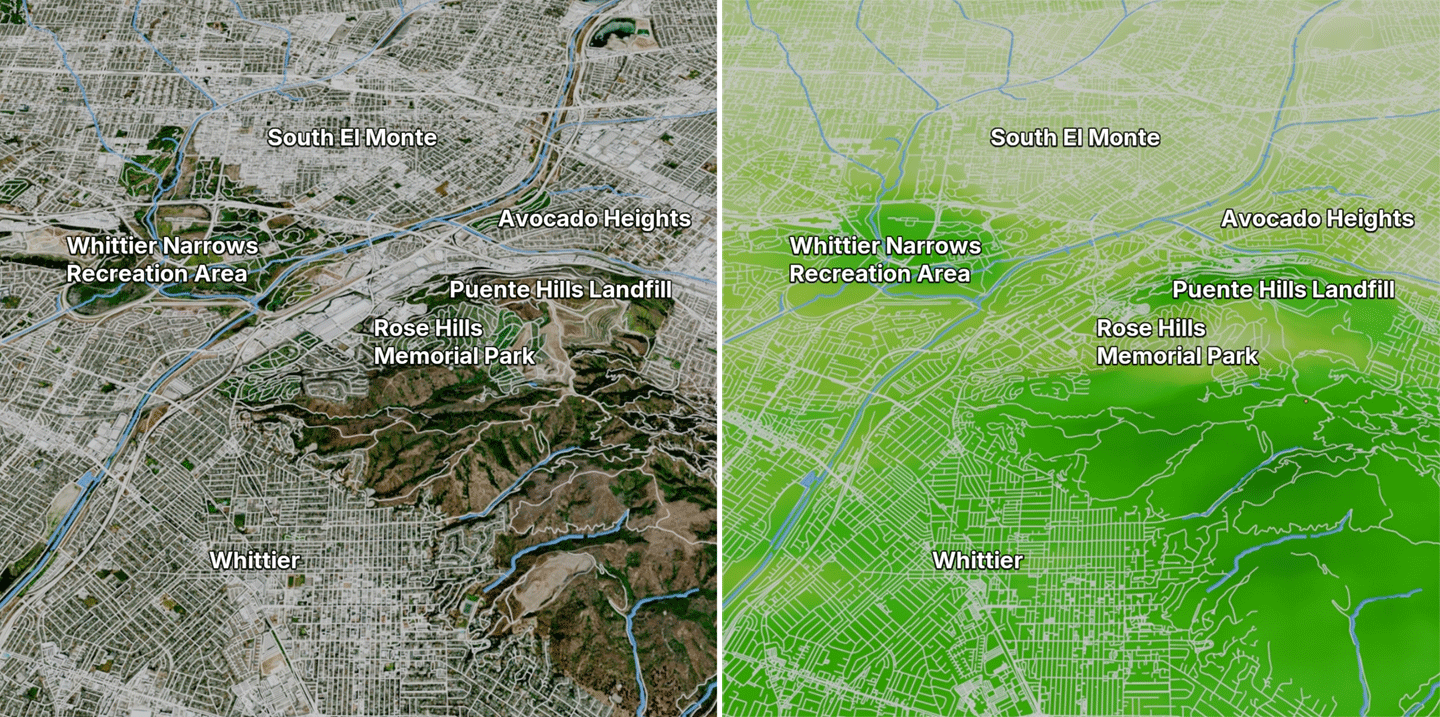
OCO-2 can detect the faint glow given off by plants during photosynthesis. This glow, called solar-induced fluorescence (SIF), offers a fast, sensitive indicator of plant health – see Figure 2. While other satellite-based tools, such as soil moisture or vegetation indices often detect stress only after damage has already occurred, SIF values drop the moment photosynthesis slows down – even if the plant still looks green. These data open the door to new applications: monitoring crop performance, identifying flood-damaged areas, and tracking drought before it sparks wildfires. That’s exactly how Madeleine is now using the data.
Madeleine’s team, a collaboration between OCO-2 scientists and the U.S. Forest Service, is working to update fire-risk models – some of which were developed in the 1980s – by incorporating SIF data.
“It’s fulfilling to know that you’re helping people,” Madeleine says. “And it’s nice to see science and firefighting work align.”
What makes the data even more powerful is OCO-2’s synergy with its A-Train counterpart, the Moderate Resolution Imaging Spectroradiometer (MODIS) instrument on NASA’S Aqua platform. MODIS contributes land-cover information that, when paired with OCO-2’s SIF measurements, creates a detailed, global dataset of plant photosynthesis far beyond what either satellite could produce on its own. This example is a perfect synergistic pairing of measurements the A-Train has made possible. This information gives Madeleine and her team a better foundation for improving fire prediction tools.
“When firefighting, I used to hear about all these fire indices and metrics, and never knew what they meant,” Madeleine says. “Now, I’m learning the science behind it. And it’s interesting to think about how to get that information to firefighters on the ground, without overburdening them. What do they really need to know, and how can we deliver it in a way that helps?”
Figure 2. OCO-2 can measure plant health and photosynthesis from space. Puente Hills in eastern Los Angeles County, CA was once one of the largest landfills in the United States. The landfill has since been closed and its surface replanted to resemble a natural hill rising above the surrounding densely populated neighborhoods. These two images show how solar induced fluorescence (SIF), or “plant glow,” measured from OCO-2 and OCO-3 can be used to study urban greenery. The satellite image of the landfill and surrounding area [left] is followed by the SIF data overlay [right]. It is possible to compare the photosynthetic activity in the reclaimed landfill to nearby green spaces, as well as the plant health in the surrounding neighborhoods.
A technologist tramps around in the desert for instrument calibration.
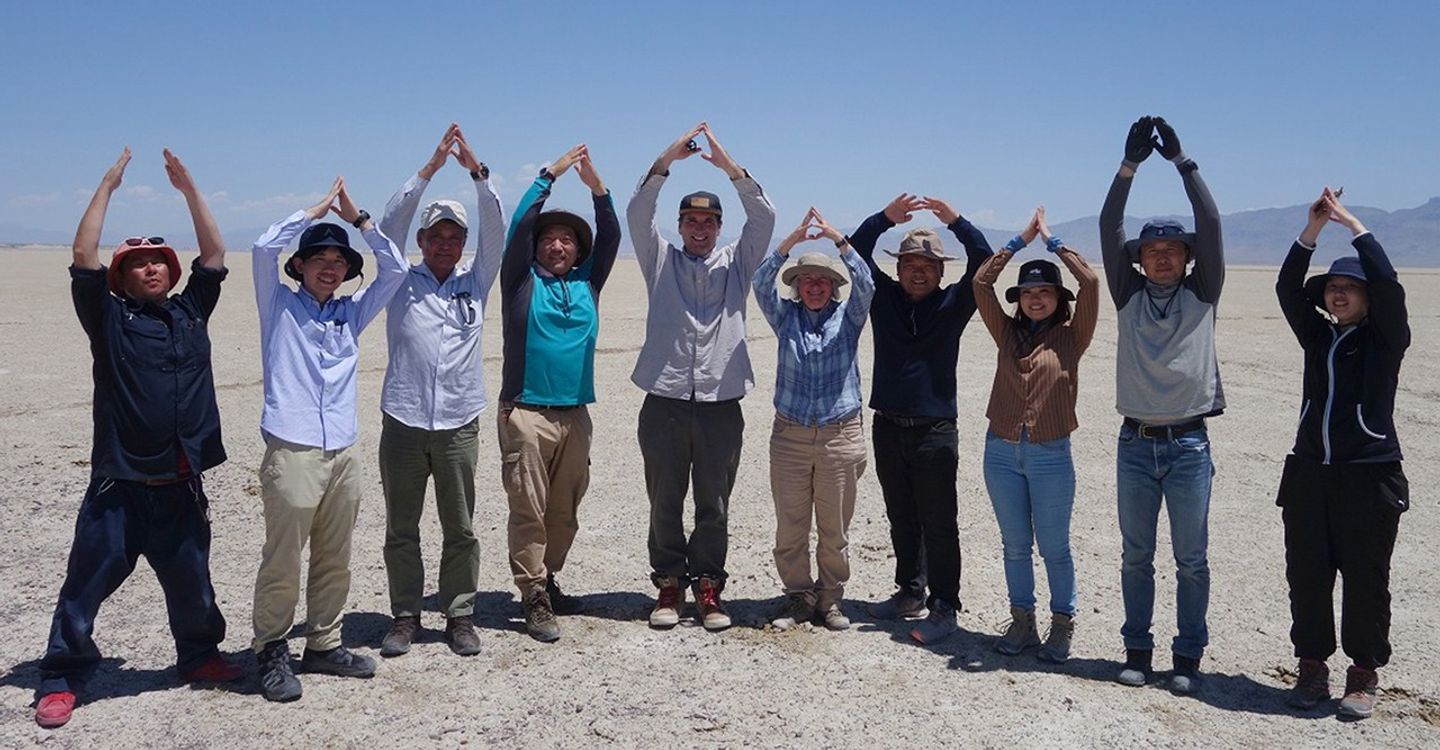
Carol Bruegge [OCO-2—Technologist] had been to the Nevada desert so many times that she knew the way by heart. After skirting the Sequoia Forest and stopping for the night just past the Nevada border, she led a caravan of scientists along Highway 6 to mile marker 100, turning right onto a dirt road between two fence posts. Traveling 10 mi (16.5 km) down the road, a cloud of dust raised up from the car tires before the vehicle came to a stop at their destination – a patch of spindly instruments hammered into the barren desert floor. A big plaque marked the spot with the NASA logo and the words, “Satellite Test Site.” Standing under vast blue sky, Carol felt like she’d come home. Over the past few years, Carol had grown accustomed to leading these summer expeditions to Railroad Valley, NV. Often the team from JPL is joined by guests from Japan and other international colleagues representing various satellite missions – see Photo 2.
Photo 2. Group photo at Railroad Valley, NV during a summer field campaign. Carol Bruegge [OCO-2—Technologist, fifth from left] joins JPL members and guests from Japan working on the Greenhouse-gas Observing satellite. The group included [left to right] Hirokazu Yamamoto, Atsushi Yasuda, Hideaki Nakajima, Kei Shiomi, Thomas Pongetti, Bruegge, Dejian Fu, Junko Fukuchi, Makoto Saito, and Rio Kajiura.
Photo credit: Tom Pongetti
Carol knew that a successful field campaign required that they protect the instruments from the thick corrosive salt on the ground. Then the work could begin. The team hiked through the desert, collecting data that would ensure that OCO-2 could continue to provide high-quality data. As they hiked, the team carried hand-held spectrometers and measured the reflection of sunlight off Earth’s surface – timed precisely to match the moment the satellite passes overhead. By comparing the satellite’s readings with the ground-based measurements, the team can check the accuracy of the satellite readings. Reflection is one ingredient used in calculating the concentration of CO2 in the overlying air.
This remote location in Nevada wasn’t chosen by accident. In this part of the desert, the ground is perfectly flat, free of plants, and surrounded by ground littered with salt. This smooth, bare surface means no bumps and textures could disrupt the signal. For satellite calibration, it doesn’t get better than this.
2018: A Contentious Meeting in Noordwijk, Netherlands Sparks A Revolution
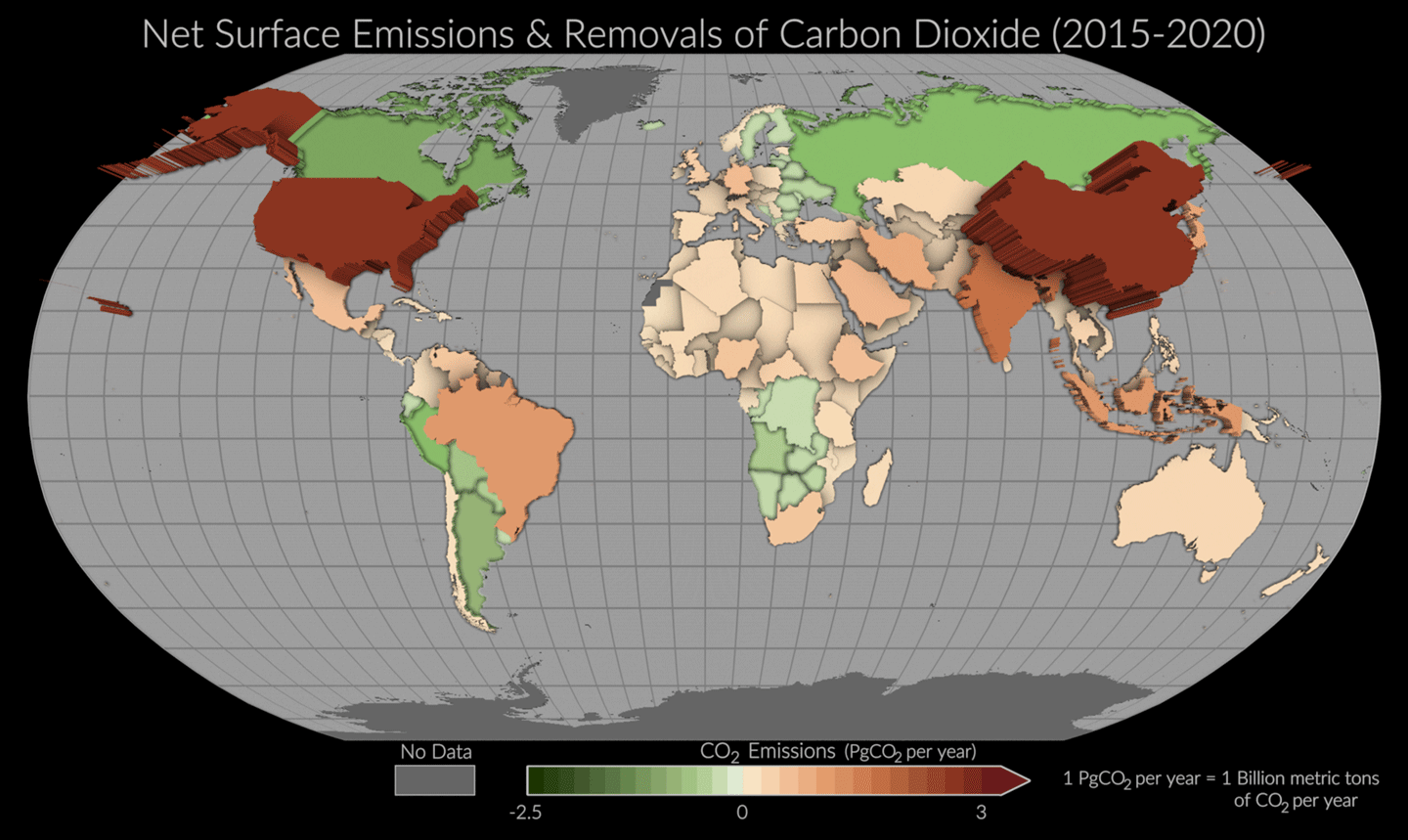
Could OCO-2 data be used to construct a nation-by-nation CO2 budget?
David Crisp [JPL emeritus—original OCO Principal Investigator and formerOCO Science Team Leader] was tired. He didn’t know if it was jet lag or a reflection of the 16- to 18-hour workdays that had persisted for weeks. This particular week had started with a 10-hour flight from Los Angeles to the Netherlands. Now, he was standing in front of carbon scientists who had gathered from around the world.
“We need to put together a team that will be brave enough to make a CO2 budget, nation-by-nation,” David said.
His statement was met with thoughtful silence. Neither the data nor the models were ready. The consensus in the room was that the proposed venture may not work. David was magnanimous toward his critics, but he persisted with his idea.
Despite the rocky start, David met with representatives in charge of creating national emission inventories. He could see exasperation on their faces – running ragged, short-staffed, and trying to tally up every single barrel of oil and bushel of coal burned within their country’s boundaries. Even more challenging was tallying other tasks, such as deforestation and agricultural practices. David firmly believed that if OCO-2 could provide independent estimates from space as promised, it would provide the on-the-ground “carbon accountants” a reliable comparison – see Figure 3.
“We might have a satellite that can help,” Dave told them.
Although David has since retired, his perseverance is now bearing fruit. What began as a hypothetical solution is now much closer to reality. OCO-2’s high-precision measurements can now detect CO2 linked not just to countries, but large cities, industrial zones, and even individual power plants – all while researchers continue perfecting efforts to identify contributions from specific city sectors. OCO-2 provides a valuable, independent reference that nations can use to track the progress of their emission inventories. Researchers have created an entire OCO-2-sourced database of CO2 estimates by country, available through the U.S. Greenhouse Gas Center.
Figure 3. A map of the net emissions and removals of carbon dioxide (CO2) for 2015–2020 using estimates informed by OCO-2. Green depressions represent countries that remove more CO2 than emitted. Tan or red ridges represent countries with higher CO2 emissions than removed.
Figure credit: NASA Science Data Visualization Studio
2019: Another OCO Takes flight – This Time to The International Space Station
Using “spare parts” to get more details about plant health and the carbon cycle.
After completing OCO-2, enough spare parts remained to construct a sister mission — OCO-3, which launched in 2019 to continue the work of measuring CO2 in the atmosphere from the International Space Station (ISS). The satellite’s unique orbit gives it a new vantage point. While OCO-2 continues to orbit Earth in a near-polar path, OCO-3 travels aboard the ISS in a lower, shifting orbit that allows it to study different areas of Earth’s surface at different times of day. OCO-3 also features a special scanning mode, called the snapshot area mapping (SAM) that lets scientists zoom in on areas of interest (e.g., cities or volcanoes) to study carbon emissions and vegetation in greater detail. Together, OCO-2 and OCO-3 provide complementary perspectives on Earth’s carbon cycle and plant health at space and time resolutions that have not been possible from space before.
2021: LA During a Pandemic Is a Far Cry from Finland
A data scientist foregoes saunas and berry-picking to make the dream of OCO-2 a reality.
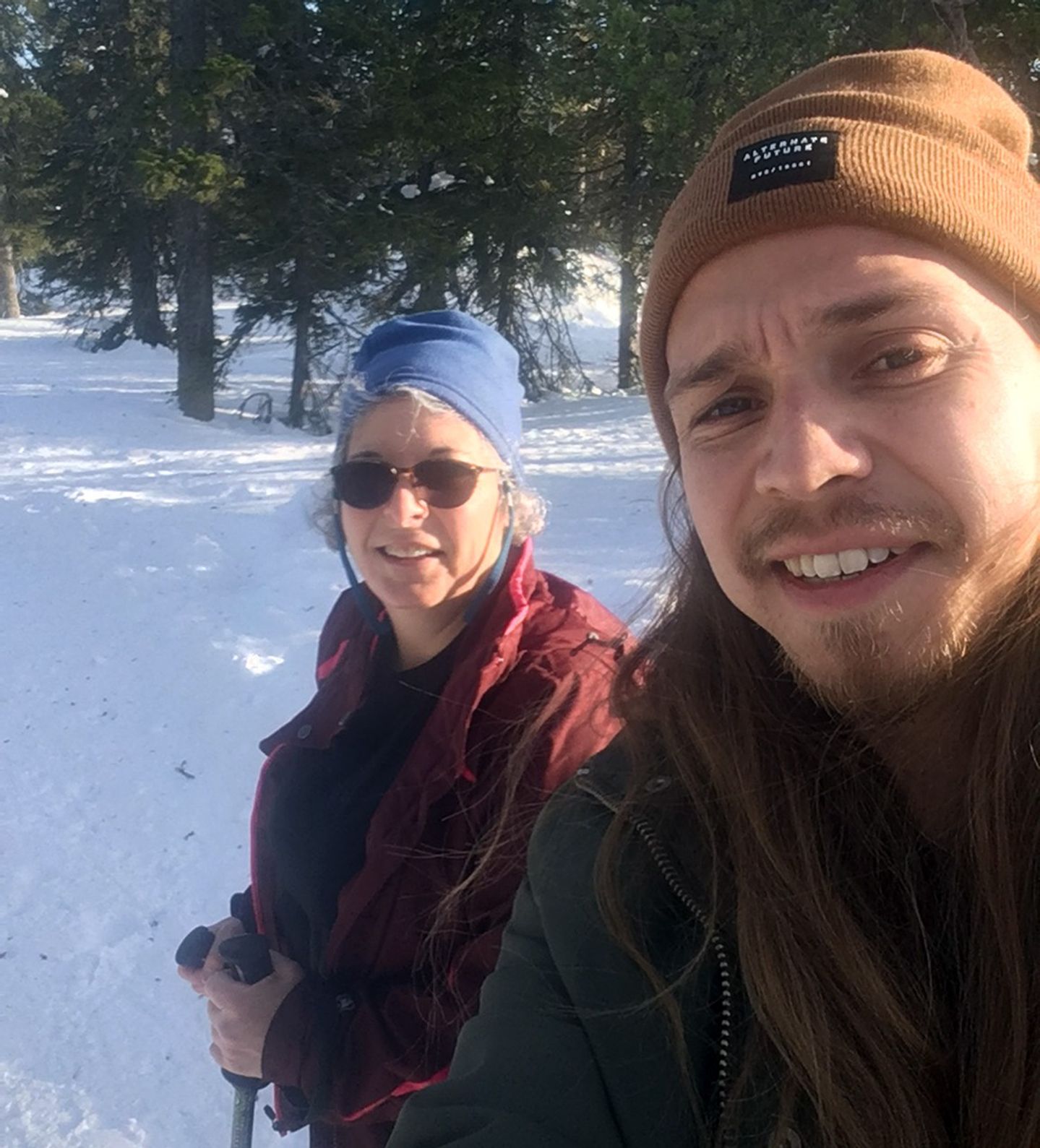
Otto Lamminpää [JPL—Data Scientist] opened the picture his sister had texted him. His family looked back with wide smiles, holding buckets overflowing with scarlet berries and framed by the velvety firs of Finland. It had been almost two years since he’d seen them in person. He’d moved to Los Angeles to work at JPL on the OCO-2 and OCO-3 mission just as the COVID-19 pandemic engulfed the planet – see Photo 3.
Photo 3. Otto Lamminpää and Amy Braveman [both from JPL] in Finland.
Photo credit: Otto Lamminpää
Otto had never gone a week without seeing his family or skipped a berry-hunting party in the forests of his native Finland. With the forced distance, he placed himself in his home forests in his mind. He used this memory to marvel at the capacity of the vast forests to “breathe in” CO2 and convert it into trunks, branches, and roots through photosynthesis. With the COVID-19-imposed travel restrictions, Otto wasn’t sure how long he’d have to wait to go back home.
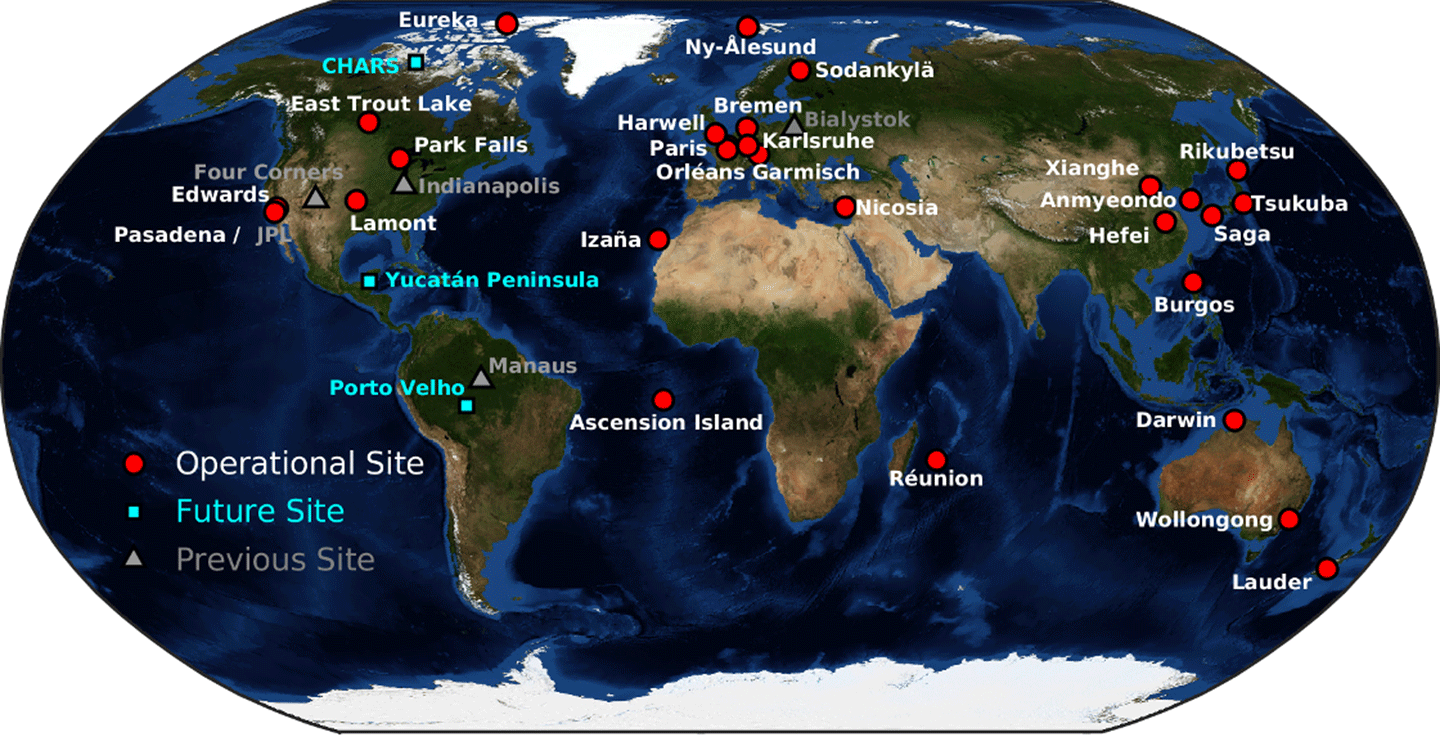
But whenever that homecoming occurred, Otto knew that a piece of OCO-2 would be waiting for him. North of the Arctic Circle in Sodankylä, a cluster of Earth instruments nestled in a snowy meadow include a field station that is part of the Total Carbon Column Observing Network (TCCON) of Fourier Transform Spectrometers (FTS). These stations act as OCO-2 and OCO-3’s “ground crew.” As the satellites orbit Earth, the FTS simultaneously measures direct solar spectra in the near-infrared spectral region, which allows for retrieval of column-averaged CO2 concentrations, as well as other key atmospheric constituents, over the snowy meadow. Back in the lab, Otto, along with other OCO-2 and OCO-3 scientists, compare the data collected at the field station to the satellite data. This feature was detailed in The Earth Observer article, titled “Integrating Carbon from the Ground Up: TCCON Turns Ten,” was published July–August 2014, Volume 26 issue 4, pp. 13–17).
Figure 4. Global map of the ground stations, also known as the Total Carbon Column Observing Network (TCCON). The red dots mark the active ground observation stations to validate OCO-2 and OCO-3 data.
Figure credit: NASA-JPL/OCO-2
The station in Finland is one of about 30 similar TCCON sites scattered across the world, located in a variety of settings, from isolated tropical islands to the Pacific rim of Asia – see Figure 4. The stations in the far north play an especially valuable role since satellites often struggle to accurately measure CO2 over snow-covered ground. Therefore, reliable measurements from the ground stations become crucial to adjust and improve the satellite data.
Validation efforts such as the one described here are crucial to satellite observations. Comparisons between OCO-2 and TCCON show agreement is good, with a less than 1 ppm difference. It’s an impressive level of accuracy for a satellite orbiting more than 435 mi (700 km) away in polar orbit. The “ground truth” data collected at these field sites help to ensure that the satellite is accurately measuring “Earth’s breathing.”
For Otto, not just his family, but OCO-2 and OCO-3 itself was calling him home. As the pandemic began to ease, he returned to Finland to pick berries, jump in the sauna every night, and follow it up with snow angels. The homecoming was also coordinated with a trip past the Arctic Circle to the TCCON field station. The mission was part of him. Wherever he was, OCO-2 and OCO-3 would be there, too.
2023: The Annual Science Team Meeting Continues
Tracking changes in soil moisture during a colorful fall day.
Saswati Das [JPL—Postdoctoral Fellow] had missed the magnificent display of fall colors in deciduous forests of the East Coast of the United States. She’d seen nothing of the sort since moving to Los Angeles in 2022 to work on OCO-2. Before that, she’d been working on her Ph.D. at the Virginia Polytechnic Institute and State University (Virginia Tech), where the surrounding mountain peaks, meadows, and forests burned and sparked with crimson and gold in the autumn – see Photo 4. Now she was in another mountain town, Boulder, CO, to attend the OCO science team meeting. The aspens glittered like golden lanterns as her gang carpooled up the Flatiron Range to the science institute at Table Mesa.
Photo 4. Saswati Das takes a break from her Ph.D studies at nearby Virginia Tech (located in Blacksburg, VA) to enjoy the famous fall colors in the mountains of West Virginia.
Photo credit: Saswati Das
The research presented that week spanned a variety of topics. OCO-2 was being used to develop early drought forecasts. Because of its ability to detect the SIF “glow” that results from plant photosynthesis, OCO-2 can hint at flash droughts as early as three months before environmental decay unfold. By pairing OCO-2 data from other satellites, such as soil moisture data from NASA’s Soil Moisture Active Passive (SMAP) mission, scientists have opened a new window into drought forecasts and how water supply affects plant growth.
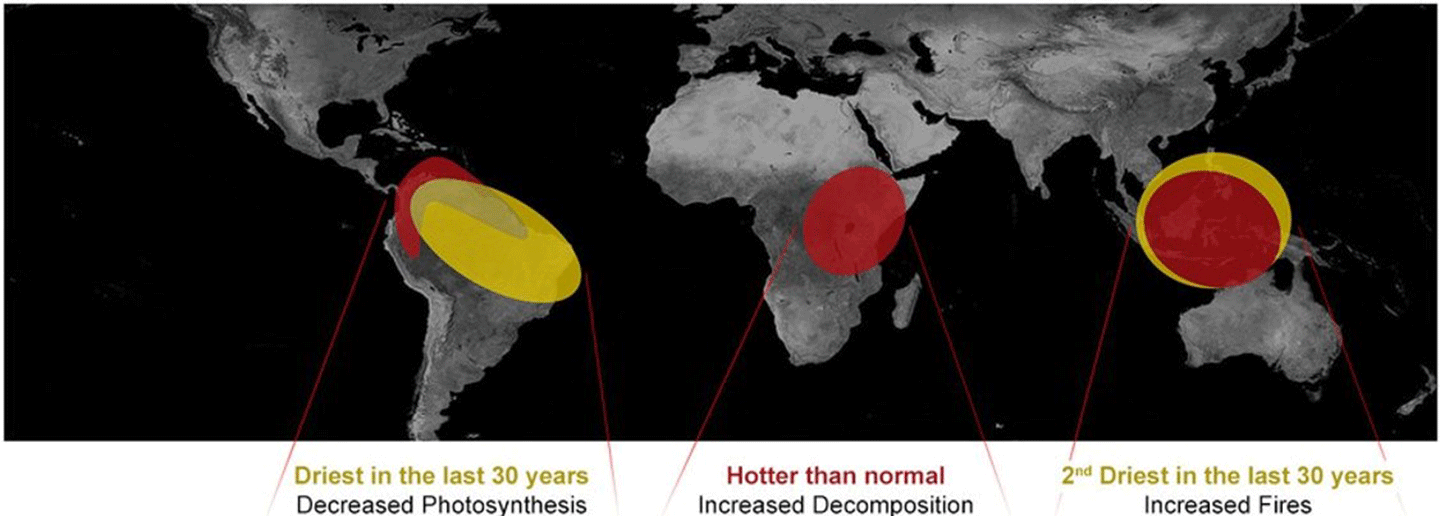
Surprises about our planet have also emerged. The tropical rainforests, long nicknamed the “lungs” of our planet, don’t always inhale and store carbon. At times, this region can exhale CO2, such as during the 2015–2016 El Niño. That period saw large tropical forests temporarily transform into net carbon sources – see Figure 5. The driver for this shift varied by region. The Amazon rainforest was driven by drought. Central Africa was driven by unusually high temperatures. Indonesia was driven by widespread fires.
Figure 5. The 2015–2016 El Niño increased the net carbon dioxide released by Earth’s tropical regions into the atmosphere.
Figure credit: NASA-JPL/Caltech
Data from OCO-2 and OCO-3 have also been used to study emissions from both cities and large power plants. This approach offers a new way to track changing emissions over time – without needing to continuously measure them on the ground. In addition, scientists are combining the satellite data with wind models and urban maps to trace CO2 to its sources (e.g., factories, ships, and roadways), helping to disentangle emissions from overlapping city sectors. These methods have been used to isolate industrial emissions in places, such as Europe, China, as well as over cities, such as Los Angeles, Paris, and Seoul. It has also revealed pandemic-era drops in traffic-related CO2 and increases in CO2 tied to shipping backlogs at the port. Two representatives from the World Bank shared how they used data from OCO-2 to demonstrate that building subway systems in cities can lower emissions. The goal is to eventually use these tools to evaluate local strategies (e.g., bike lanes and public transit) to reduce local carbon footprints.
When massive wildfires blazed through Australian forests and bushland in 2019, researchers used OCO-2 data to study the unfolding crisis. OCO-2 captured the increase in atmospheric CO2, and scientists used this data to refine estimates of how these events contribute to the global carbon budget.
As her mind wandered from the rich research she’d been immersed in for the past hour, Saswati spied Otto Lamminpää across the aisle in the wood-paneled auditorium. She thought back to the forests she loved on the East Coast, and the forests in Finland where Otto had grown up. OCO-2 was telling a story about the role that forests play in absorbing carbon and how this has changed over time.
2025 and Beyond
The Tapestry Continues to Expand…
In many ways, OCO-2 has had a long and unexpected journey. So has Hannah Murphy, another DEVELOP intern who will be starting a Master’s degree at Hunter College in New York in Fall 2025. She’s studied art and worked as a set designer in Los Angeles. She never pictured herself working with satellite data, but then she saw how visual it could be. The glowing, evocative images of Earth from space spoke to her artistic heart.
Now, Hannah works on SIF data as a 2025 NASA DEVELOP intern with the OCO-2 team, developing tools for wildfire risks. This project in particular hits close to home for Hannah, because she lived through the wildfires that tore through Los Angeles in January 2025. Although she remained safe, she knew several people who lost their homes, and the air was unsafe to breathe for weeks.
Just a few short months later, Hannah began studying the data from OCO-2. She is now part of the new generation of researchers that will take the mission’s remote sensing data and pave the way for implementing the findings to benefit society. Hannah understands, on a personal level, how closely our lives are linked to Earth systems that satellites, such as OCO-2 and OCO-3, study from space.
OCO-2 (and OCO-3) are built to study CO2 and plant health, but its impact goes deeper to the connections that tie our atmosphere, ecosystems, and lives together. That work continues to the new generation of scientists – one breath at a time.
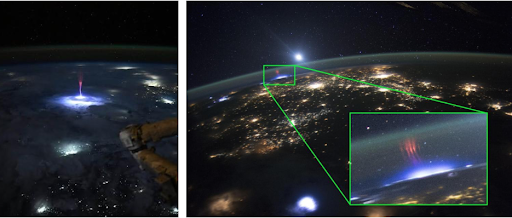
Left: Gigantic Jet Event from the International Space Station, taken by NASA Astronaut Nichole Ayers. (Credit: Ayers) Right: Sprite event appearing over a lightning strike, seen from space. This photo was taken by astronauts aboard the International Space Station during Expedition 44.
Credit: NASA astronauts on board Expedition 44
Did you see that gorgeous photo NASA astronaut Nichole Ayers took on July 3, 2025?Originally thought to be a sprite, Ayers confirmed catching an even rarer form of a Transient Luminous Events (TLEs) — a gigantic jet.
“Nichole Ayers caught a rare and spectacular form of a TLE from the International Space Station — a gigantic jet,” said Dr. Burcu Kosar, Principal Investigator of the Spritacular project.
Gigantic jets are a powerful type of electrical discharge that extends from the top of a thunderstorm into the upper atmosphere. They are typically observed by chance — often spotted by airline passengers or captured unintentionally by ground-based cameras aimed at other phenomena. Gigantic jets appear when the turbulent conditions at towering thunderstorm tops allow for lightning to escape the thunderstorm, propagating upwards toward space. They create an electrical bridge between the tops of the clouds (~20 km) and the upper atmosphere (~100 km), depositing a significant amount of electrical charge.
Sprites, on the other hand, are one of the most commonly observed types of TLEs — brief, colorful flashes of light that occur high above thunderstorms in the mesosphere, around 50 miles (80 kilometers) above Earth’s surface. Unlike gigantic jets, which burst upward directly from thundercloud tops, sprites form independently, much higher in the atmosphere, following powerful lightning strikes. They usually appear as a reddish glow with intricate shapes resembling jellyfish, columns, or carrots and can span tens of kilometers across. Sprites may also be accompanied or preceded by other TLEs, such as Halos and ELVEs (Emissions of Light and Very Low Frequency perturbations due to Electromagnetic Pulse Sources), making them part of a larger and visually spectacular suite of high-altitude electrical activity. The world of Transient Luminous Events is a hidden zoo of atmospheric activity playing out above the storms. Have you captured an image of a jet, sprite, or other type of TLE? Submit your photos to Spritacular.org to help scientists study these fascinating night sky phenomena!
This NASA/ESA Hubble Space Telescope image shows a portion of the Tarantula Nebula.
This website uses cookies to improve your experience. We'll assume you're ok with this, but you can opt-out if you wish.AcceptRead More
Privacy & Cookies Policy
Privacy Overview
This website uses cookies to improve your experience while you navigate through the website. Out of these, the cookies that are categorized as necessary are stored on your browser as they are essential for the working of basic functionalities of the website. We also use third-party cookies that help us analyze and understand how you use this website. These cookies will be stored in your browser only with your consent. You also have the option to opt-out of these cookies. But opting out of some of these cookies may affect your browsing experience.
Necessary cookies are absolutely essential for the website to function properly. This category only includes cookies that ensures basic functionalities and security features of the website. These cookies do not store any personal information.
Any cookies that may not be particularly necessary for the website to function and is used specifically to collect user personal data via analytics, ads, other embedded contents are termed as non-necessary cookies. It is mandatory to procure user consent prior to running these cookies on your website.