Tag: NASA

  • NASA Challenge Winners Cook Up New Industry Developments

    4 min read

    Preparations for Next Moonwalk Simulations Underway (and Underwater)

    A person in a white jumpsuit stands in front of Interstellar's NuCLEUS technology, comprised of nine food-producing chambers arranged in a 3x3 stack.
    NuCLEUS, developed by Interstellar Lab, is an autonomous system that grows microgreens, vegetables, and more for astronauts to eat in space.
    Interstellar Lab

    NASA invests in technologies that have the potential to revolutionize space exploration, including the way astronauts live in space. Through the Deep Space Food Challenge, NASA, in partnership with CSA (Canadian Space Agency), sought novel food production systems that could provide long-duration human space exploration missions with safe, nutritious, and tasty food. Three winners selected last summer are now taking their technology to new heights – figuratively and literally – through commercial partnerships. 

    Interstellar Lab of Merritt Island, Florida, won the challenge’s $750,000 grand prize for its food production system NuCLEUS (Nutritional Closed-Loop Eco-Unit System), by demonstrating an autonomous operation growing microgreens, vegetables, and mushrooms, as well as sustaining insects for use in an astronaut’s diet. To address the requirements of the NASA challenge, NuCLEUS includes an irrigation system that sustains crop growth with minimal human intervention. This end-to-end system supplies fresh ingredients to support astronauts’ health and happiness, with an eye toward what the future of dining on deep space missions to Mars and the Moon may look like. 

    Since the close of the challenge, Interstellar Lab has partnered with aerospace company Vast to integrate a spinoff of NuCLEUS, called Eden 1.0, on Haven-1, a planned commercial space station. Eden 1.0 is a plant growth unit designed to conduct research on plants in a microgravity environment using functions directly stemming from NuCLEUS.  

    “The NASA Deep Space Food Challenge was a pivotal catalyst for Interstellar Lab, driving us to refine our NuCLEUS system and directly shaping the development of Eden 1.0, setting the stage for breakthroughs in plant growth research to sustain life both in space and on Earth,” said Barbara Belvisi, founder and CEO of Interstellar Lab. 

    A man wearing gloves and a hairnet uses a flat spatula-like mechanism to remove a cylindrical omelet from a small cylindrical oven, called SATED. Behind him, a smiling woman observes the food.
    Fuanyi Fobellah, one of the “Simunauts” from The Ohio State University who tested food production technologies as part of the Deep Space Food Challenge, removes a cooked omelet from the SATED appliance.
    NASA/Savannah Bullard

    Team SATED (Safe Appliance, Tidy, Efficient & Delicious) of Boulder, Colorado, earned a $250,000 second prize for its namesake appliance, which creates an artificial gravitational force that presses food ingredients against its heated inner surface for cooking. The technology was developed by Jim Sears, who entered the contest as a one-person team and has since founded the small business SATED Space LLC.  

    At the challenge finale event, the technology was introduced to the team of world-renowned chef and restaurant owner, José Andrés. The SATED technology is undergoing testing with the José Andrés Group, which could add to existing space food recipes that include lemon cake, pizza, and quiche. The SATED team also is exploring partnerships to expand the list of ingredients compatible with the appliance, such as synthetic cooking oils safe for space. 

    Delicious food was a top priority in the Deep Space Food Challenge. Sears noted the importance of food that is more than mere sustenance. “When extremely high performance is required, and the situations are demanding, tough, and lonely, the thing that pulls it all together and makes people operate at their best is eating fresh cooked food in community.” 
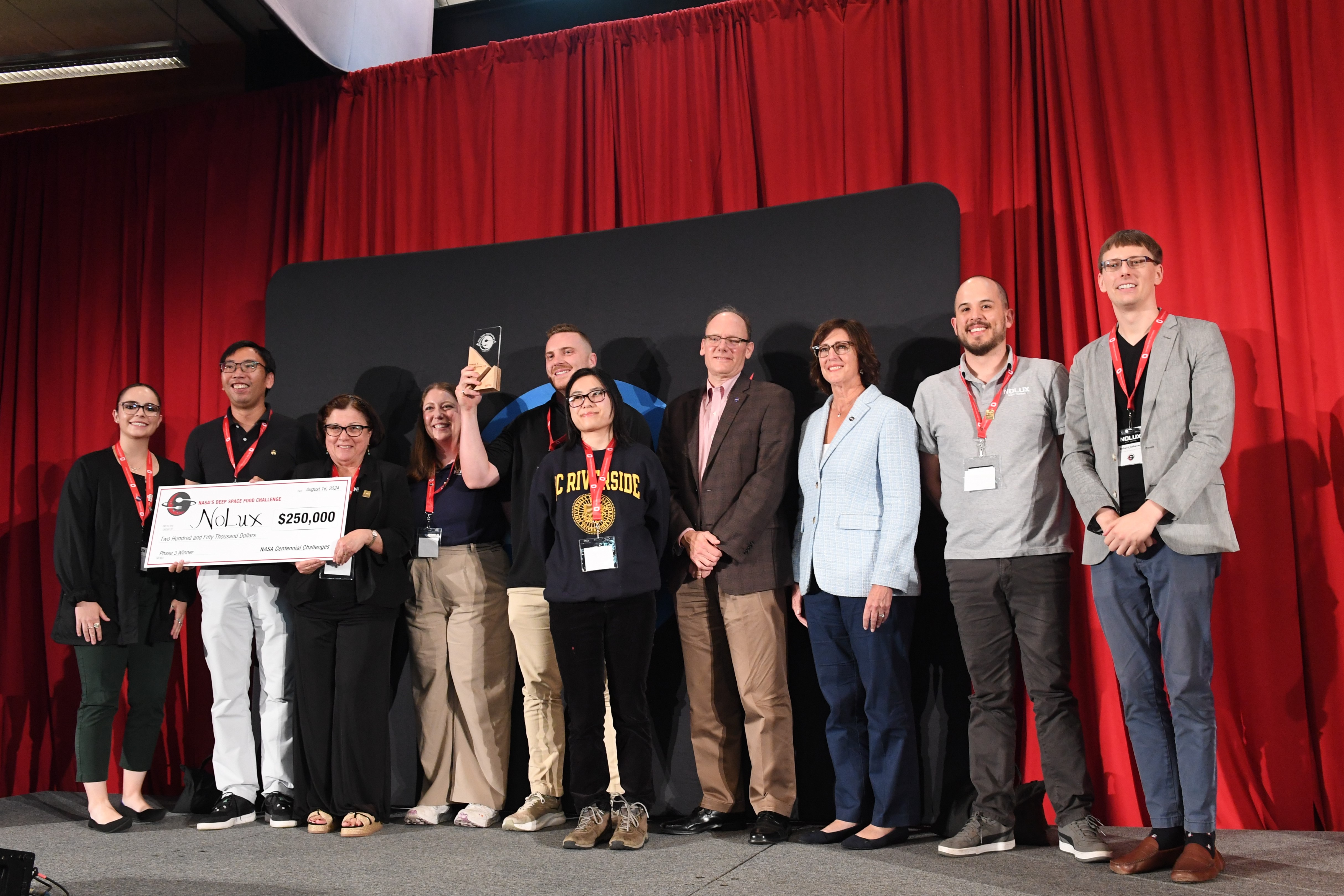
    A group of ten people stand on a stage smiling and facing forward with a red curtain backdrop. One of the people on the left holds a giant check, on which
    Team Nolux won a $250,000 second-place prize for its Nolux food system that uses artificial photosynthesis to grow ingredients that could be used by astronauts in space.
    OSU/CFAES/Kenneth Chamberlain

    Team Nolux, formed from faculty members, graduate, and undergraduate students from the University of California, Riverside, also won a $250,000 second prize for its artificial photosynthesis system. The Nolux system – whose name means “no light” – grows plant and fungal-based foods in a dark chamber using acetate to chemically stimulate photosynthesis without light, a capability that could prove valuable in space with limited access to sunlight.  

    Some members of the Nolux team are now commercializing select aspects of the technology developed during the challenge. These efforts are being pursued through a newly incorporated company focused on refining the technology and exploring market applications. 

    A competition inspired by NASA’s Deep Space Food Challenge will open this fall.  

    Stay tuned for more information: https://www.nasa.gov/prizes-challenges-and-crowdsourcing/centennial-challenges/  
  • Curiosity Blog, Sols 4629-4630: Feeling Hollow

    2 min read

    Curiosity Blog, Sols 4629-4630: Feeling Hollow

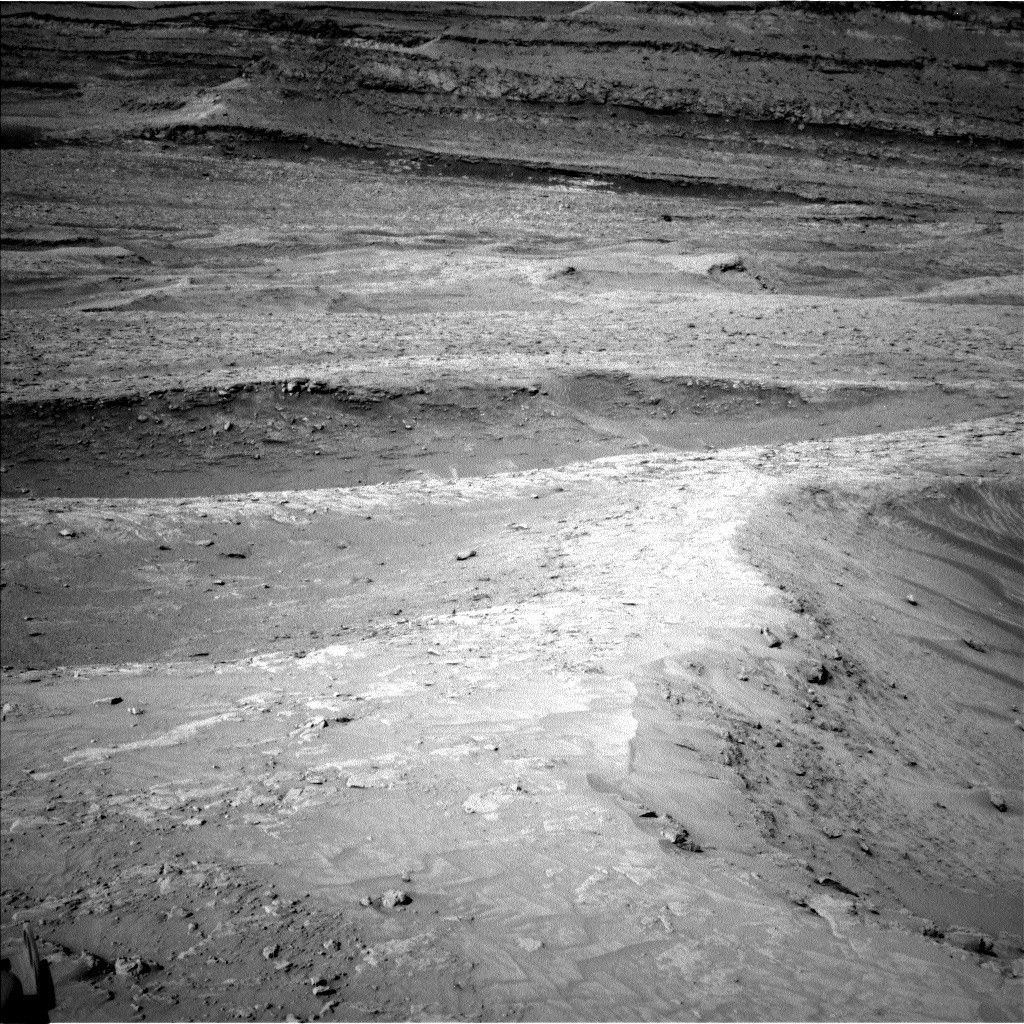
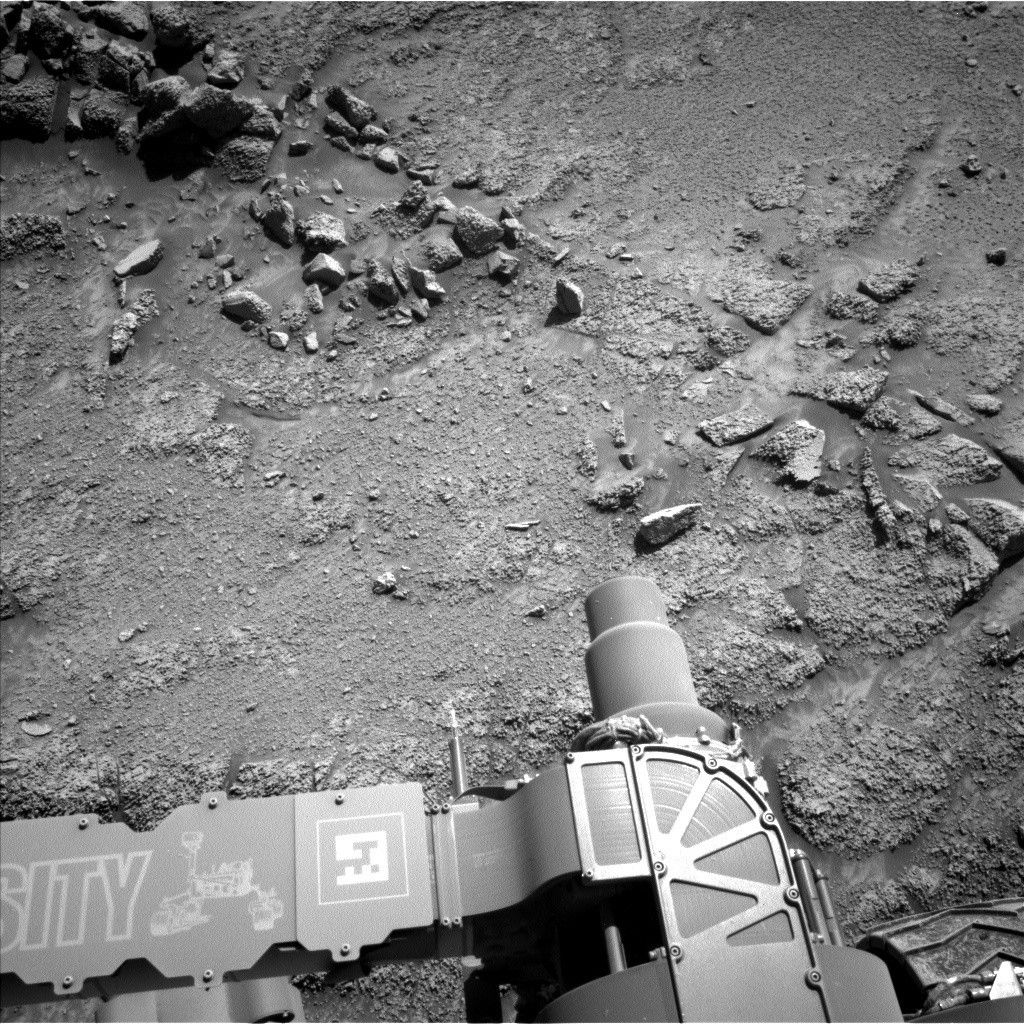
    A grayscale photograph of Martian terrain in front of the Curiosity rover shows uneven, medium-gray ground with numerous rocks of many sizes scattered around, mostly running in a diagonal line from the upper left corner of the image to the center-right edge of the frame. The bottom of the frame shows parts of the Curiosity rover, with a wheel visible in the lower right corner of the frame, and part of its robotic arm running from the lower-left corner to the bottom center of the image, with a nameplate imprinted with “Curiosity” outlined in white, all-capital letters, and to the right of that a line drawing of the rover. A small crescent-shaped rock is visible on the ground above the “SI” printed on the arm.
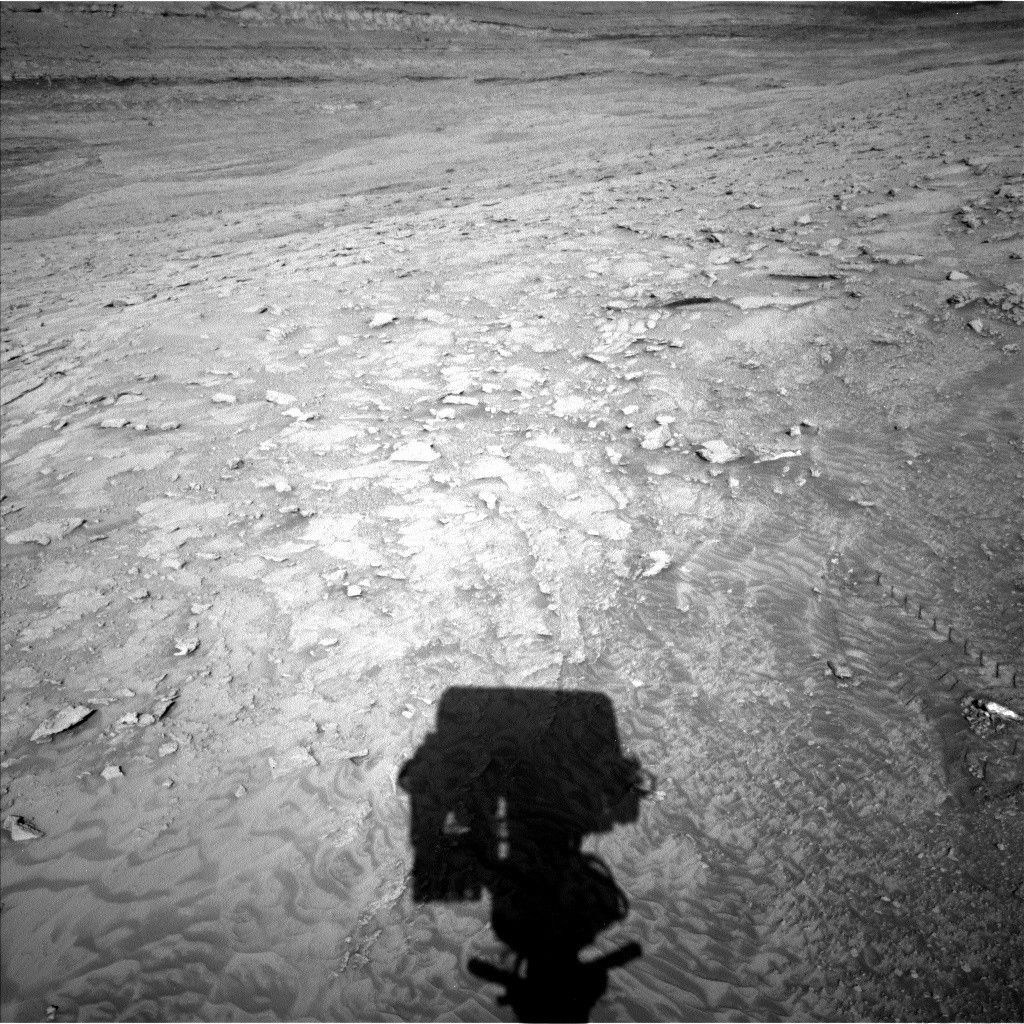
    NASA’s Mars rover Curiosity acquired this image of its workspace, including the small crescent-shaped rock named “Wedge Tailed Hillstar,” visible in the image just above the letters “SI” written on Curiosity’s arm. Curiosity captured the image using its Left Navigation Camera on Aug. 13, 2025 — Sol 4628, or Martian day 4,628 of the Mars Science Laboratory mission — at 08:54:46 UTC.
    NASA/JPL-Caltech

    Written by Elena Amador-French, Science Operations Coordinator at NASA’s Jet Propulsion Laboratory

    Earth planning date: Wednesday, Aug. 13, 2025

    Today’s team investigated the texture and chemistry of the bedrock within a topographic low, or hollow, found within the greater boxwork area. We will place our APXS instrument on the “Asiruqucha” target, some light-toned, small-scale nodular bedrock in the middle of our workspace. These data will help illuminate any systematic chemical trends between the hollows and ridges in this area. We always take an associated MAHLI image with every APXS measurement to help contextualize the chemistry. We will also observe a small crescent-shaped rock named “Wedge Tailed Hillstar” with MAHLI, visible in the above Navcam image just above the letters “SI” written on Curiosity’s arm.

    We will use our remote sensing instruments to continue documenting the region taking stereo Mastcam images of “Cerro Paranal,” “Rio Frio,” and “Anchoveta.”  The ChemCam instrument will take an image of, and collect chemical information for, the target “Camanchaca,” as well as use its Remote Micro Imager (RMI) to take high-resolution imaging of more distant boxwork features. 

    Once these observations are completed Curiosity will set off on a 30-meter drive (about 98 feet), taking us to an interesting ridge feature to investigate in Friday’s plan.

    As usual we will continue to take our regular atmospheric monitoring observations using REMS, RAD, and DAN.

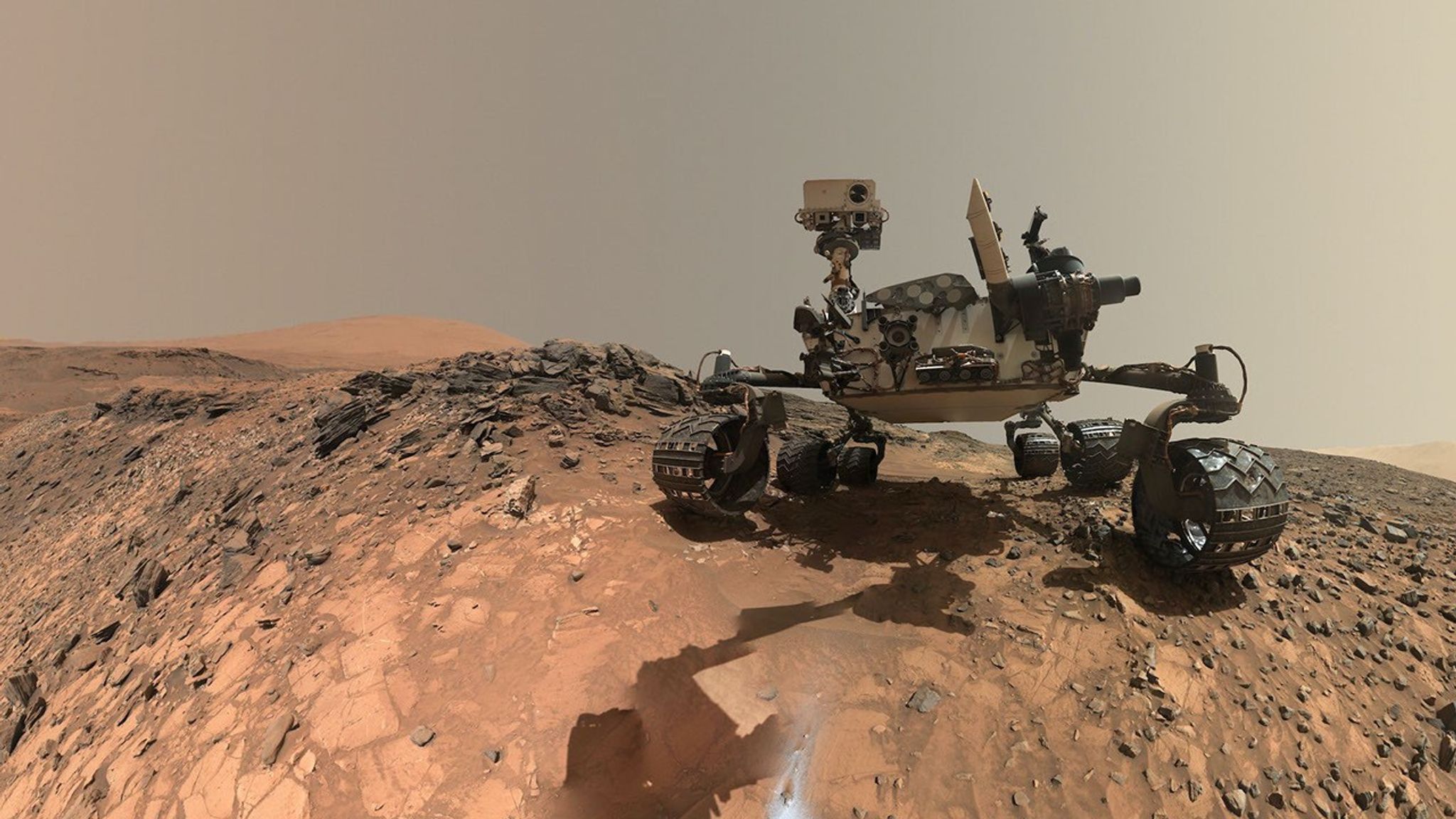
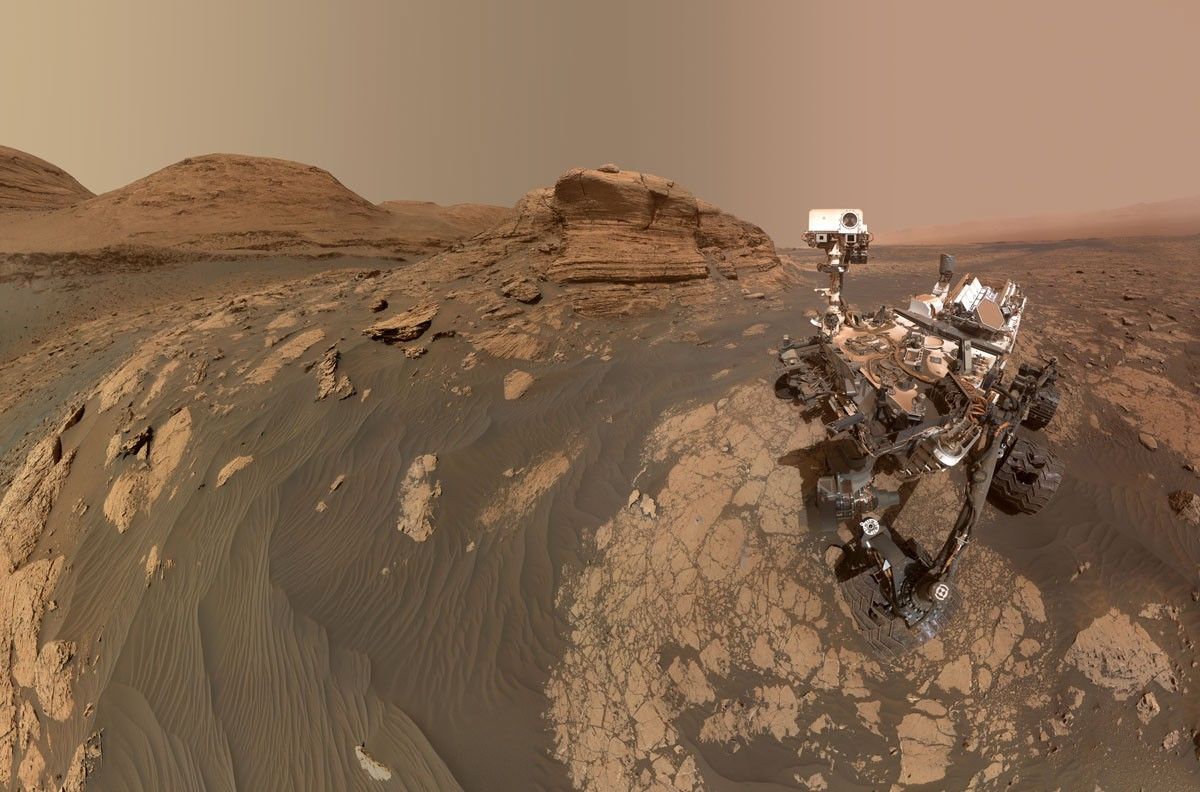
    A rover sits on the hilly, orange Martian surface beneath a flat grey sky, surrounded by chunks of rock.
    NASA’s Mars rover Curiosity at the base of Mount Sharp
    NASA/JPL-Caltech/MSSS

    Details

    Last Updated

    Aug 18, 2025

    Related Terms

  • NASA-Developed Printable Metal Can Take the Heat

    3 min read

    Preparations for Next Moonwalk Simulations Underway (and Underwater)

    A metallic cast of the NASA insignia. Half of the disk is silver, while the other half is ablaze, subjected to high heat.
    GRX-810 is a new metal alloy developed by NASA for 3D printing parts that can withstand the extreme temperatures of rocket engines, allowing affordable printing of high-heat parts.
    NASA

    Until now, additive manufacturing, commonly known as 3D printing, of engine components was limited by the lack of affordable metal alloys that could withstand the extreme temperatures of spaceflight. Expensive metal alloys were the only option for 3D printing engine parts until NASA’s Glenn Research Center in Cleveland, Ohio, developed the GRX-810 alloy.

    The primary metals in the GRX-810 alloy include nickel, cobalt, and chromium. A ceramic oxide coating on the powdered metal particles increases its heat resistance and improves performance. Known as oxide dispersion strengthened (ODS) alloys, these powders were challenging to manufacture at a reasonable cost when the project started. 

    However, the advanced dispersion coating technique developed at Glenn employs resonant acoustic mixing. Rapid vibration is applied to a container filled with the metal powder and nano-oxide particles. The vibration evenly coats each metal particle with the oxide, making them inseparable. Even if a manufactured part is ground down to powder and reused, the next component will have the qualities of ODS.

    The benefits over common alloys are significant – GRX-10 could last up to a year at 2,000°F under stress loads that would crack any other affordable alloy within hours. Additionally, 3D printing parts using GRX-810 enables more complex shapes compared to metal parts manufactured with traditional methods.

    Elementum 3D, an Erie, Colorado-based company, produces GRX-810 for customers in quantities ranging from small batches to over a ton. The company has a co-exclusive license for the NASA-patented alloy and manufacturing process and continues to work with the agency under a Space Act Agreement to improve the material.

    “A material under stress or a heavy load at high temperature can start to deform and stretch almost like taffy,” said Jeremy Iten, chief technical officer with Elementum 3D. “Initial tests done on the large-scale production of our GRX-810 alloy showed a lifespan that’s twice as long as the small-batch material initially produced, and those were already fantastic.”

    Commercial space and other industries, including aviation, are testing GRX-810 for additional applications. For example, one Elementum 3D customer, Vectoflow, is testing a GRX-810 flow sensor. Flow sensors monitor the speed of gases flowing through a turbine, helping engineers optimize engine performance. However, these sensors can burn out in minutes due to extreme temperatures. Using GRX-810 flow sensors could improve airplane fuel efficiency, reduce emissions and hardware replacements.

    Working hand-in-hand with industry, NASA is driving technology developments that are mutually beneficial to the agency and America’s space economy. Learn more: https://spinoff.nasa.gov/

  • Human Rating and NASA-STD-3001

    3 min read

    Preparations for Next Moonwalk Simulations Underway (and Underwater)

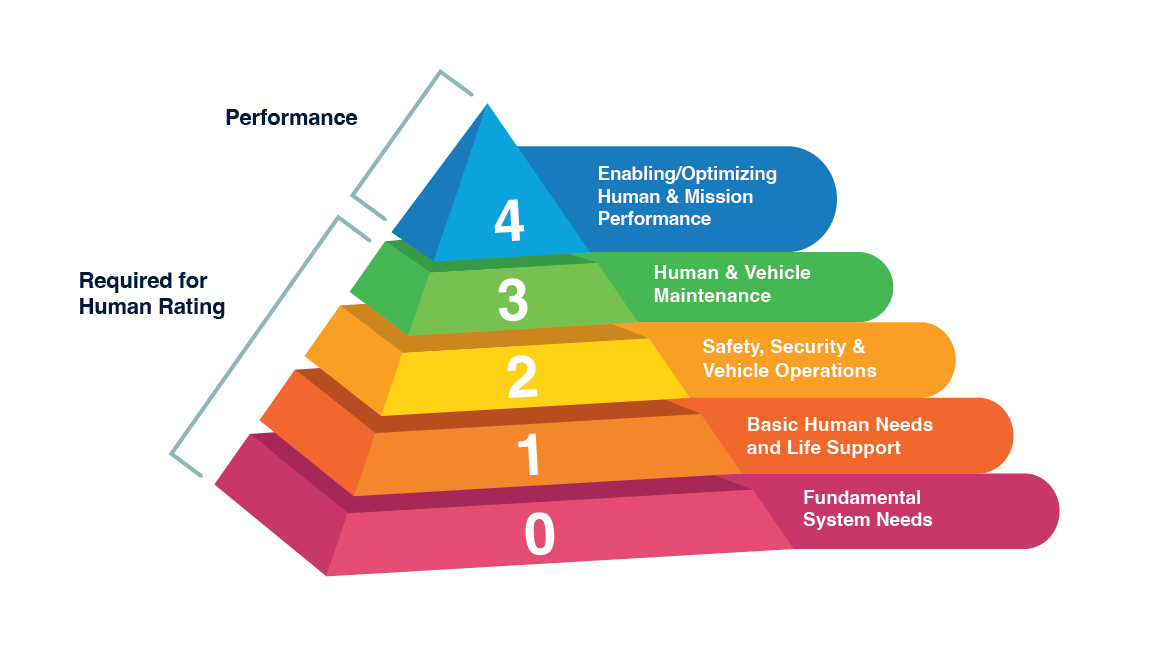
    Human-rating is a critical certification process that validates the safety, reliability, and suitability of space systems—including orbiters, launch vehicles, rovers, spacesuits, habitats, and other crewed elements—for human use and interaction. This process ensures that systems are designed not only to protect human life but also to accommodate human needs and effectively integrate human capabilities. Human-rating requires that systems can tolerate failures, provide life-sustaining environments, and offer the crew sufficient control and situational awareness. NASA’s standards, such as a maximum allowable probability of loss of crew of 1 in 500 for ascent or descent, reflect the agency’s commitment to minimizing risk in human spaceflight.

    Over the decades, the concept of human-rating has evolved significantly. Early efforts focused primarily on basic crew survival and redundancy in critical systems. Today, human-rating is an interdisciplinary effort that integrates engineering, medical, operational, and various other expertise to ensure that systems are not only survivable but also support optimal human function in extreme environments. As missions became more complex and extended in duration, the scope of human-rating will continue to evolve to meet the demands of space travel.

    Modern human-rating standards—such as NASA Procedural Requirements (NPR) 8705.2CNASA-STD-8719.29 (Technical Requirements for Human-Rating), and NASA-STD-3001 (Human System Standards)—form the foundation of NASA’s approach. These documents emphasize risk-informed design, fault tolerance, human factors engineering, and the ability to recover from hazardous situations. They also provide detailed guidance on system safety, crew control interfaces, abort capabilities, and environmental health requirements. Together, they ensure that human spaceflight systems are designed to accommodate, utilize, and protect the crew throughout all mission phases.

    The human-rating certification process is rigorous and iterative. It involves extensive testing, validation, and verification of system performance, including simulations, flight tests, and integrated safety analyses. Certification also requires continuous monitoring, configuration control, and maintenance to ensure that systems remain in their certified state throughout their operational life. Importantly, human-rating is not just a checklist of technical requirements—it represents a cultural commitment to crew safety. It fosters a mindset in which every team member, from design engineers to mission operators, shares responsibility for protecting human life.

    To support program and project teams in applying these standards, NASA has conducted cross-reviews of documents like NASA-STD-3001 in relation to NASA-STD-8719.29. These assessments help identify relevant human health and performance requirements that should be considered during system design and development. While not a substitute for detailed applicability assessments, such reviews provide valuable guidance for integrating human-rating principles into mission planning and vehicle architecture.

    NASA/Sydney Bergen-Hill
  • NASA Astronauts to Answer Questions from Students in Minnesota

    The crew of NASA’s SpaceX Crew-11 mission pose for a photo during a training session.
    Credit: SpaceX

    NASA astronauts Michael Fincke and Zena Cardman will connect with students in Minnesota as they answer prerecorded science, technology, engineering, and mathematics (STEM) questions aboard the International Space Station.

    The Earth-to-space call will begin at 11 a.m. EDT on Wednesday, Aug. 20, and will stream live on the agency’s Learn With NASA YouTube channel.

    Media interested in covering the event must RSVP by 5 p.m., Tuesday, Aug. 19, to Elizabeth Ross at: 952-838-1340 or elizabeth.ross@pacer.org.

    The PACER center will host this event in Bloomington for students in their Tech for Teens program. The organization aims to improve educational opportunities and enhance the quality of life for children and young adults with disabilities and their families. The goal of this event is to help educate and inspire teens with disabilities to consider opportunities in STEM fields.

    For nearly 25 years, astronauts have continuously lived and worked aboard the space station, testing technologies, performing science, and developing skills needed to explore farther from Earth. Astronauts communicate with NASA’s Mission Control Center in Houston 24 hours a day through SCaN’s (Space Communications and Navigation) Near Space Network.

    Research and technology investigations taking place aboard the space station benefit people on Earth and lay the groundwork for other agency missions. As part of NASA’s Artemis campaign, the agency will send astronauts to the Moon to prepare for future human exploration of Mars; inspiring Golden Age explorers and ensuring the United States continues to lead in space exploration and discovery.

    See more information on NASA in-flight downlinks at:

    https://www.nasa.gov/stemonstation

    -end-

    Gerelle Dodson
    Headquarters, Washington
    202-358-1600
    gerelle.q.dodson@nasa.gov

    Sandra Jones
    Johnson Space Center, Houston
    281-483-511
    sandra.p.jones@nasa.gov

  • Countdown to Space Station’s Silver Jubilee with Silver Research

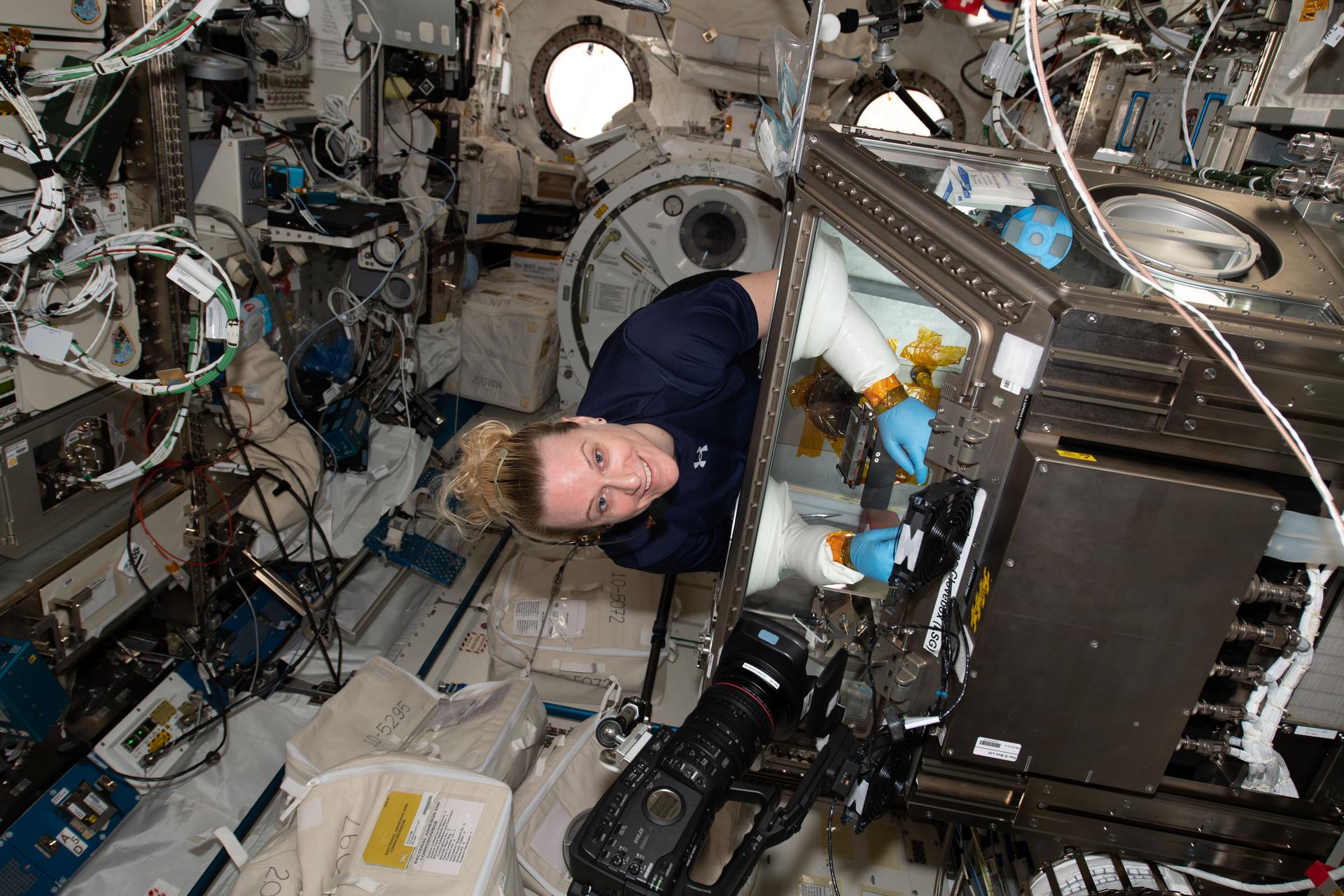
    Rubins stands at an angle wearing a navy-blue shirt, smiling while conducting an experiment inside a glovebox. The metallic glovebox is about the size of a washing machine, with a glass cover. Rubins’ arms are inserted through the glass cover, wearing protective blue latex gloves and white protective sleeves. A black camera is pointed towards the glovebox, and the surrounding walls have many wires, hardware, and containers attached.
    On January 7, 2021, NASA astronaut Kate Rubins serviced samples for Bacterial Adhesion and Corrosion. This investigation looked at how spaceflight affects the formation of microbial biofilms and tested a silver-based disinfectant.
    NASA

    This November marks a quarter century of continuous human presence aboard the International Space Station, which has served as a springboard for developing a low Earth economy and NASA’s next great leaps in exploration, including human missions to the Moon and Mars. To kick off the orbiting laboratory’s silver 25th anniversary countdown, here are a few silver-themed science investigations that have advanced research and space exploration.

    Antimicrobial properties

    Silver has been used for centuries to fight infection, and researchers use its unique properties to mitigate microbial growth aboard the space station. Over time, microbes form biofilms, sticky communities that can grow on surfaces and cause infection. In space, biofilms can become resistant to traditional cleaning products and could infect water treatment systems, damage equipment, and pose a health risk to astronauts. The Bacterial Adhesion and Corrosion investigation studied the bacterial genes that contribute to the formation of biofilms and tested whether a silver-based disinfectant could limit their growth.

    Another experiment focused on the production of silver nanoparticles aboard the space station. Silver nanoparticles have a bigger surface-to-volume ratio, allowing silver ions to come in contact with more microbes, making it a more effective antimicrobial tool to help protect crew from potential infection on future space missions. It also evaluated whether silver nanoparticles produced in space are more stable and uniform in size and shape, characteristics that could further enhance their effectiveness.

    Wearable tech

    Silver is a high-conductivity precious metal that is very malleable, making it a viable option for smart garments. NASA astronauts aboard the orbiting laboratory tested a wearable monitoring vest with silver-coated sensors to record heart rates, cardiac mechanics, and breathing patterns while they slept. This smart garment is lightweight and more comfortable, so it does not disturb sleep quality. The data collected provided valuable insight into improving astronauts’ sleep in space.

    Silver crystals

    In microgravity, there is no up or down, and weightlessness does not allow particles to settle, which impacts physical and chemical processes. Researchers use this unique microgravity environment to grow larger and more uniform crystals unaffected by the force of Earth’s gravity or the physical processes that would separate mixtures by density. The NanoRacks-COSMOS investigation used the environment aboard the station to grow and assess the 3D structure of silver nitrate crystals. The molecular structure of these superior silver nitrate crystals has applications in nanotechnology, such as creating silver nanowires for nanoscale electronics.

    Details

    Last Updated

    Aug 14, 2025

  • Spacewalk Pop-Up

    Spacewalk Pop-Up

    Former NASA astronaut Shane Kimbrough is photographed during a spacewalk in January 2017.

  • Spacewalk Pop-Up

    An astronaut in a white spacesuit comes out of a hatch on the International Space Station. We can see parts of the space station in the photo.
    NASA

    Former NASA astronaut Shane Kimbrough is photographed as he left the airlock hatch during a spacewalk on Jan. 13, 2017. Kimbrough performed nine spacewalks during his three spaceflights. He retired in July 2022.

    Astronauts conduct spacewalks to perform maintenance on the space station, install new equipment, or deploy science experiments. These activities also inform future missions like the Artemis campaign and exploring Mars; through NASA’s Extravehicular Activity and Human Surface Mobility Program, the agency develops next-generation spacesuits, human-rated rovers (pressurized and unpressurized), and tools, along with all the necessary spacewalking support systems for use in microgravity, on the lunar surface and, eventually, on other planets.

    Learn more about spacewalks at the International Space Station.

    Image credit: NASA

  • NASA Seeks Proposals for 2026 Human Exploration Rover Challenge 

    3 min read

    Preparations for Next Moonwalk Simulations Underway (and Underwater)

    NASA now is accepting proposals from student teams for a contest to design, build, and test rovers for Moon and Mars exploration through Sept. 15.

    Known as the Human Exploration Rover Challenge, student rovers should be capable of traversing a course while completing mission tasks. The challenge handbook has guidelines for remote-controlled and human-powered divisions.

    Two astronauts ride in a lunar rover in this illustration for the cover of the HERC 2026 handbook.
    The cover of the HERC 2026 handbook, which is now available online.

    “Last year, we saw a lot of success with the debut of our remote-controlled division and the addition of middle school teams,” said Vemitra Alexander, the activity lead for the challenge at NASA’s Marshall Space Flight Center in Huntsville, Alabama. “We’re looking forward to building on both our remote-controlled and human-powered divisions with new challenges for the students, including rover automation.” 

    This year’s mission mimics future Artemis missions to the lunar surface. Teams are challenged to test samples of soil, water, and air from sites along a half-mile course that includes a simulated field of asteroid debris, boulders, erosion ruts, crevasses, and an ancient streambed. Human-powered rover teams will play the role of two astronauts in a lunar terrain vehicle and must use a custom-built task tool to manually collect samples needed for testing. Remote-controlled rover teams will act as a pressurized rover, and the rover itself will contain the tools necessary to collect and test samples onboard. 

    “NASA’s Human Exploration Rover Challenge creates opportunities for students to develop the skills they need to be successful STEM professionals,” said Alexander. “This challenge will help students see themselves in the mission and give them the hands-on experience needed to advance technology and become the workforce of tomorrow.” 

    Seventy-five teams comprised of more than 500 students participated in the agency’s 31st rover challenge in 2025. Participants represented 35 colleges and universities, 38 high schools, and two middle schools, across 20 states, Puerto Rico, and 16 nations around the world.

    The 32nd annual competition will culminate with an in-person event April 9-11, 2026, at the U.S. Space & Rocket Center near NASA Marshall.

    The rover challenge is one of NASA’s Artemis Student Challenges, reflecting the goals of the Artemis campaign, which seeks to explore the Moon for scientific discovery, technology advancement, and to learn how to live and work on another world as we prepare for human missions to Mars. NASA uses such challenges to encourage students to pursue degrees and careers in the fields of science, technology, engineering, and mathematics. 

    Since its inception in 1994, more than 15,000 students have participated in the rover challenge – with many former students now working at NASA or within the aerospace industry.    

    To learn more about HERC, visit: 

    https://www.nasa.gov/roverchallenge/

    Details

    Last Updated

    Aug 15, 2025

    Editor
    Beth Ridgeway

  • Hubble Examines Low Brightness, High Interest Galaxy

    2 min read

    Hubble Examines Low Brightness, High Interest Galaxy

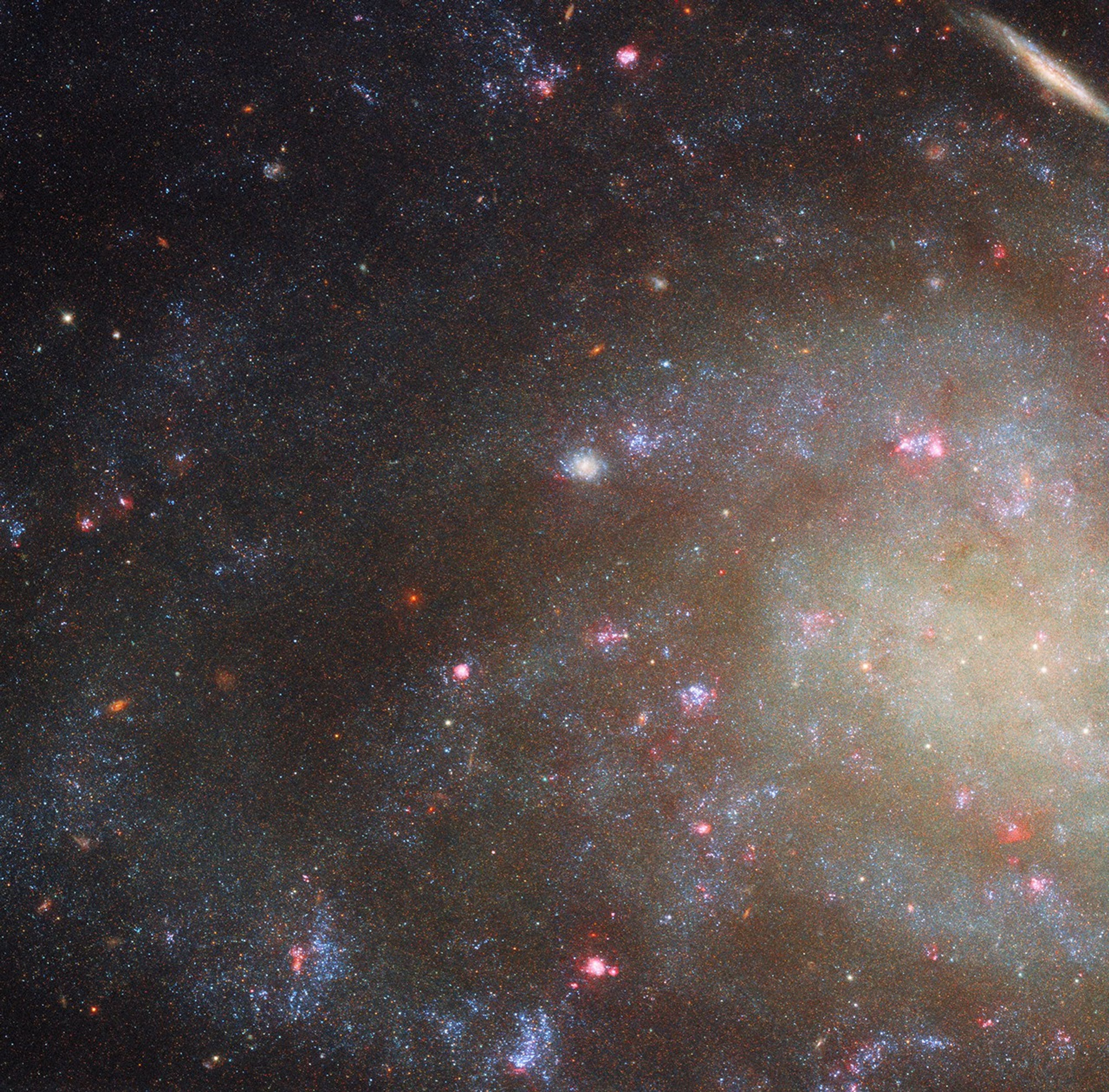
    This Hubble image features a close-up view of the outer arms of the spiral galaxy NGC 45. Tiny blue dots (stars) and glowing pink clouds (star-forming nebulae) fill its spiral arms. The galaxy is visible against a dark background.
    This NASA/ESA Hubble Space Telescope image features a portion of the spiral galaxy NGC 45.
    ESA/Hubble & NASA, D. Calzetti, R. Chandar; Acknowledgment: M. H. Özsaraç

    This NASA/ESA Hubble Space Telescope image zooms in on the feathery spiral arms of the galaxy NGC 45, which lies just 22 million light-years away in the constellation Cetus (the Whale).

    The portrait uses data drawn from two complementary observing programs. The first took a broad view of 50 nearby galaxies, leveraging Hubble’s ability to observe ultraviolet through visible into near-infrared light to study star formation in these galaxies. The second program examined many of the same nearby galaxies as the first, narrowing in on a particular wavelength of red light called H-alpha. Star-forming nebulae are powerful producers of H-alpha light, and several of these regions are visible across NGC 45 as bright pink-red patches.

    These observing programs aimed to study star formation in galaxies of different sizes, structures, and degrees of isolation — and NGC 45 is a particularly interesting target. Though it may appear to be a regular spiral galaxy, NGC 45 is a remarkable type called a low surface brightness galaxy.

    Low surface brightness galaxies are fainter than the night sky itself, making them incredibly difficult to detect. They appear unexpectedly faint because they have relatively few stars for the volume of gas and dark matter they carry. In the decades since astronomers serendipitously discovered the first low surface brightness galaxy in 1986, researchers have learned that 30–60% of all galaxies may fall into this category. Studying these hard-to-detect galaxies is key to understanding how galaxies form and evolve, and Hubble’s sensitive instruments are equal to the task.

    Text Credit: ESA/Hubble

  • Summer Triangle Corner: Altair

    3 min read

    Summer Triangle Corner: Altair

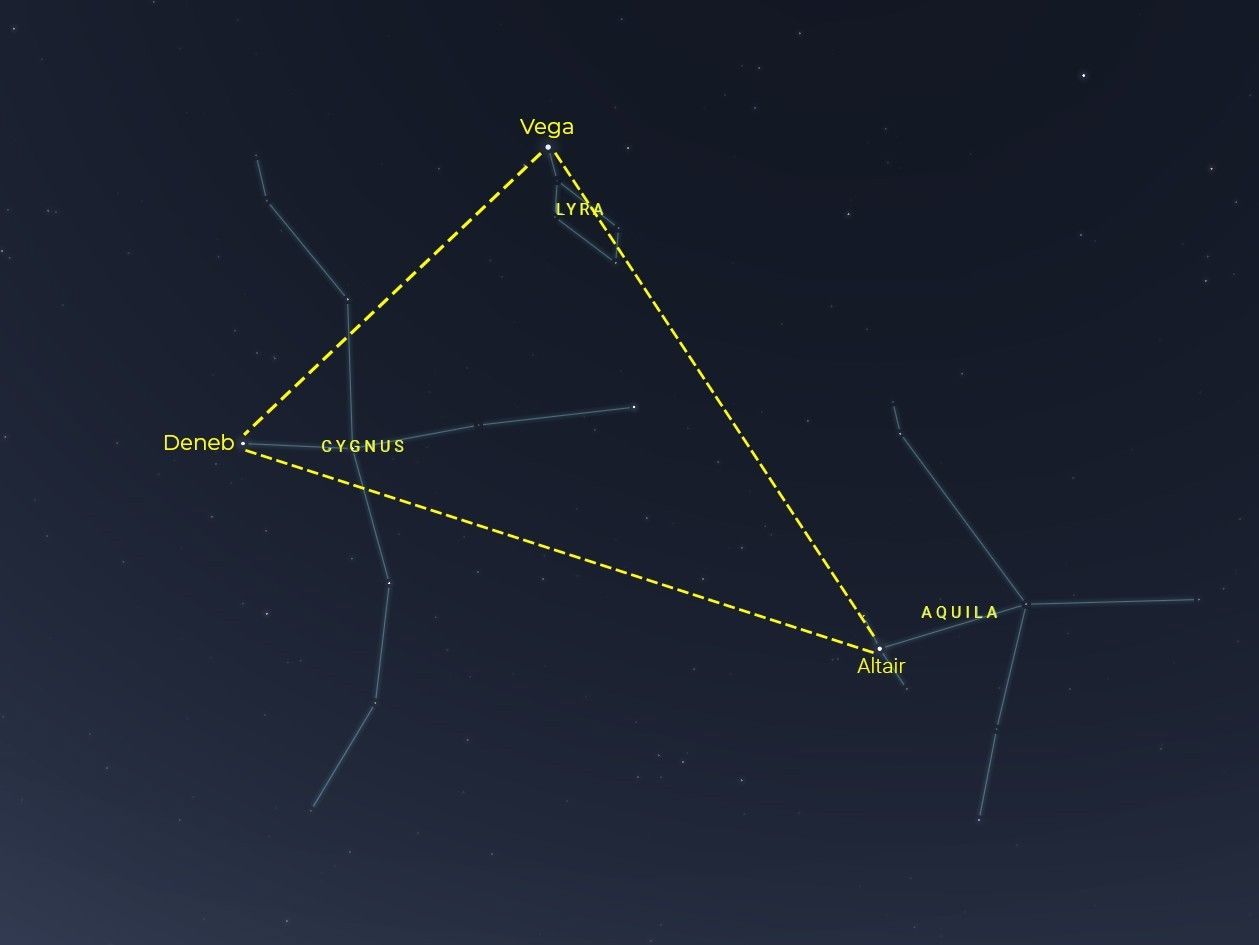
    The star map of the asterism known as the Summer Triangle. This asterism is made up of three stars: Vega in the Lyra constellation, Altair in the Aquila constellation, and Deneb in the Cygnus constellation. These three stars are connected by a dotted yellow line to outline the shape of the triangle. The constellation shapes are mapped with blue lines.
    A map of the asterism known as the Summer Triangle. This asterism is made up of three stars: Vega in the Lyra constellation, Altair in the Aquila constellation, and Deneb in the Cygnus constellation.
    Stellarium Web

    Altair is the last stop on our trip around the Summer Triangle! The last star in the asterism to rise for Northern Hemisphere observers before summer begins, brilliant Altair is high overhead at sunset at the end of the season in September. Altair might be the most unusual of the three stars of the Triangle, due to its great speed: this star spins so rapidly that it appears “squished.”

    Altair is the brightest star in the constellation of Aquila, the Eagle. A very bright star, Altair holds a notable place in the mythologies of cultures around the world. As discussed in a previous article, Altair represents the cowherd in the ancient tale “Cowherd and the Weaver Girl.” While described as part of an eagle by ancient peoples around the Mediterranean, it was also seen as part of an eagle by the Koori people in Australia. They saw the star itself as representing a wedge-tailed eagle, and two nearby stars as his wives, a pair of black swans. More recently, one of the first home computers was named after the star: the Altair 8800.

    Two side-by-side blue sphere illustrations compare a model and a real image of a fast-spinning star. The left image, labeled
    A rapidly spinning star darkens and exhibits a bulge at the equator, as shown by the model at left. At right, an actual CHARA interferometer image of the star Altair.
    NASA/NSF/Center for High Angular Resolution Astronomy/Zina Deretsky

    Altair’s rapid spinning was first detected in the 1960s. The close observations that followed tested the limits of technology available to astronomers, eventually resulting in direct images of the star’s shape and surface by using a technique called interferometry, which combines the light from two or more instruments to produce a single image. Predictions about how the surface of a rapidly spinning massive star would appear held true to the observations; models predicted a squashed, almost “pumpkin-like” shape instead of a round sphere, along with a dimming effect along the widened equator, and the observations confirmed this!

    This equatorial dimming is due to a phenomenon called gravity darkening. Altair is wider at the equator than it is at the poles due to centrifugal force, resulting in the star’s mass bulging outwards at the equator. This results in the denser poles of the star being hotter and brighter, and the less dense equator being cooler and therefore dimmer. This doesn’t mean that the equator of Altair or other rapidly spinning stars are actually dark, but rather that the equator is dark in comparison to the poles; this is similar in a sense to sunspots. If you were to observe a sunspot on its own, it would appear blindingly bright, but it is cooler than the surrounding plasma in the Sun and so appears dark in contrast.

    As summer winds down, you can still take a Trip Around the Summer Triangle with this activity from the Night Sky Network. Mark some of the sights in and around the Summer Triangle at: bit.ly/TriangleTrip.

    Originally posted by Dave Prosper: August 2020
    Last Updated by Kat Troche: July 2025

  • Curiosity Blog, Sols 4627-4628: A Ridge Stop in the Boxworks

    2 min read

    Curiosity Blog, Sols 4627-4628: A Ridge Stop in the Boxworks

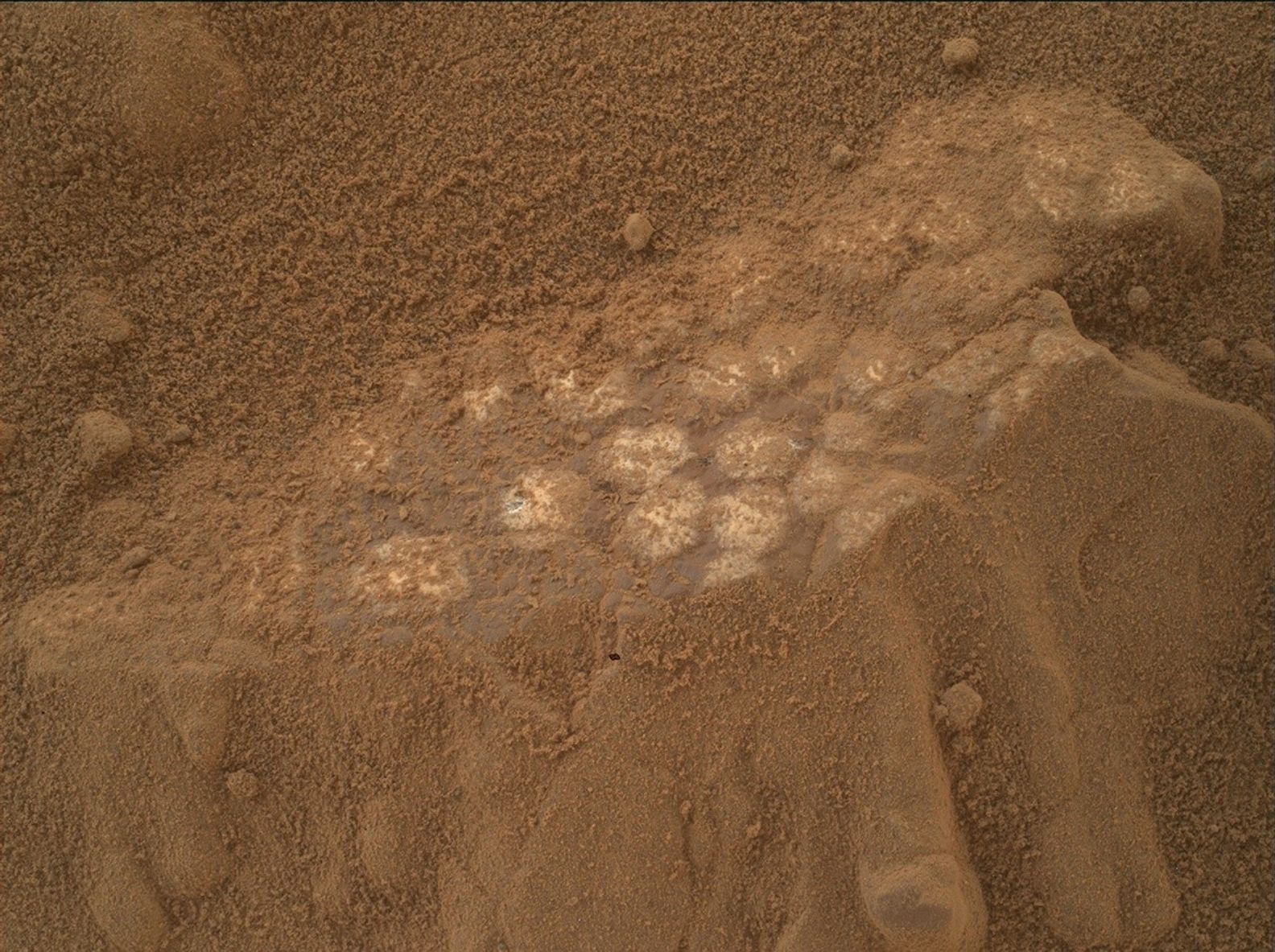
    A close-up color photo from Mars shows slightly rocky terrain covered with medium orange-brown soil that appears almost fluffy, like wet sand stirred up at the beach. At image center are about two dozen smallish, rounded stones, much lighter to almost white in color, just visible under a scattered layer of the soil. They look like marshmallows slightly submerged in hot chocolate.
    NASA’s Mars rover Curiosity acquired this close-up view of the rock target “Bococo” at the intersection of several boxwork ridges, showing bright millimeter-scale nodules likely to be calcium sulfate. Curiosity acquired this image using its Mars Hand Lens Imager (MAHLI), located on the turret at the end of the rover’s robotic arm, which uses an onboard focusing process to merge multiple images of the same target, acquired at different focus positions, to bring all (or, as many as possible) features into focus in a single image. Curiosity performed the merge on Aug. 10, 2025 — Sol 4625, or Martian day 4,625 of the Mars Science Laboratory mission — at 08:00:39 UTC.
    NASA/JPL-Caltech/MSSS

    Earth planning date: Monday Aug. 11, 2025

    Written by Lucy Lim, Planetary Scientist at NASA’s Goddard Space Flight Center

    On the Curiosity team, we’re continuing our exploration of the boxwork-forming region in Gale Crater. A successful 25-meter drive (about 82 feet) brought the rover from the “peace sign” ridge intersection to a new ridge site. Several imaging investigations were pursued in today’s plan, including Mastcam observations of a potential incipient hollow (“Laguna Miniques”), and of a number of troughs to examine how fractures transition from bedrock to regolith.

    With six wheels on the ground, Curiosity was also ready to deploy the rover arm for some contact science. APXS and MAHLI measurements were planned to explore the local bedrock at two points with a brushed (DRT) measurement (“Santa Catalina”) and a non-DRT measurement (“Puerto Teresa”). A third MAHLI observation will be co-targeted with one of the LIBS geochemical measurements on a light-toned block, “Palma Seca.” Because we’re in nominal sols for this plan, we were able to plan a second targeted LIBS activity to measure the composition of a high-relief feature on another block, “Yavari” before the drive.

    The auto-targeted LIBS (AEGIS) that executed post-drive on sol 4626 had fallen on a bedrock target and will be documented in high resolution via Mastcam imaging.

    Two long-distance imaging mosaics were planned for the ChemCam remote imager (RMI): one on a potential scarp and lens in sediments exposed on the “Mishe Mokwa” butte in the strata above the rover’s current position, and the second on an east-facing boxwork ridge with apparently exposed cross-bedding that may be related to the previously explored “Volcán Peña Blanca” ridge.

    As usual, the modern Martian environment will also be observed with camera measurements of the atmospheric opacity, a Navcam movie to watch for dust lifting, and the usual REMS and DAN passive monitoring of the temperature, humidity, and neutron flux at the rover’s location.

    The next drive is planned to bring us to a spot in a hollow where we hope to plan contact science on the erosionally recessive hollow bedrock in addition to imaging with a good view of the rock layers exposed in the wall of another prominent ridge.

    A rover sits on the hilly, orange Martian surface beneath a flat grey sky, surrounded by chunks of rock.
    NASA’s Mars rover Curiosity at the base of Mount Sharp
    NASA/JPL-Caltech/MSSS

    Details

    Last Updated

    Aug 14, 2025

    Related Terms

  • NASA Seeks Industry Feedback on Fission Surface Power

    Credit: NASA

    As part of the agency’s initiative to return humanity to the Moon and eventually send the first astronaut – an American – to Mars, NASA is surveying industry for interest and feedback on a fission surface power system, through a Request for Information issued Thursday.

    Earlier this month, NASA declared its intent to put a nuclear reactor on the Moon by the mid-2030s to support lunar exploration, provide power generation on Mars, and strengthen national security in space.

    “Today’s call for industry input is an important step toward engaging the commercial space industry in powering the lunar economy and enabling future human exploration on Mars,” said Steve Sinacore, Fission Surface Power program executive at NASA’s Glenn Research Center in Cleveland. “Developing a safe, reliable, and efficient power supply is key to unlocking the future of human space exploration and ensuring America retains its dominance in space.”

    Building on its previous work, NASA will work with industry to design a fission surface power system that would provide at least 100 kilowatts of electrical power, have a mass allocation of less than 15 metric tons, and use a closed Brayton cycle power conversion system, which converts heat to electricity.

    NASA’s new Fission Surface Power effort builds on more than 60 years of agency experience in exploration technology. In 2022, NASA awarded three contracts for fission surface power system concepts for the Moon. In addition, NASA has used nuclear power sources in spacecraft and rovers over the years.

    The size, weight, and power capability of fission systems make them an effective continuous power supply regardless of location. Additionally, a nuclear reactor could be placed in lunar regions where sunlight cannot reach and could sustain nights on the Moon which can last more than 14 Earth days near the poles.

    Nuclear power is a key element for NASA’s Artemis missions and supporting a robust lunar economy. The Request for Information invites innovators to contribute to this effort, allowing NASA to access industry expertise and bolstering American ingenuity.

    Responses to the Request for Information are due Thursday, Aug. 21, and could be used to finalize a potential opportunity later this year.

    The Fission Surface Power effort is managed through NASA Glenn. The power system development is funded by the agency’s Exploration Systems Development Mission Directorate Moon to Mars Program.