Tag: NASA

  • Envía tu nombre alrededor de la Luna en 2026 con la misión Artemis II de la NASA

    Los nombres de los participantes irán en tarjetas de embarque a bordo de la misión Artemis II de la NASA en 2026.
    Crédito: NASA

    Read this press release in English here.

    La NASA invita al público a unirse al vuelo de prueba Artemis II de la agencia en el que cuatro astronautas emprenderán un viaje alrededor de la Luna y de regreso a la Tierra para poner a prueba los sistemas y el hardware necesarios para la exploración del espacio profundo. Como parte de la iniciativa de la agencia “Envía tu nombre con Artemis II”, cualquiera puede asegurar su lugar a registrándose antes del 21 de enero. 

    Los nombres de los participantes en esta iniciativa viajarán en la nave espacial Orion y el cohete Sistema de Lanzamiento Espacial (SLS, por sus siglas en inglés) junto a los astronautas de la NASA Reid Wiseman, Victor Glover, Christina Koch y el astronauta de la CSA (Agencia Espacial Canadiense) Jeremy Hansen. 

    “Artemis II es un vuelo de prueba clave en nuestro esfuerzo por enviar de nuevo a seres humanos a la superficie de la Luna y desarrollar futuras misiones a Marte. También es una oportunidad para inspirar a personas de todo el mundo y darles la oportunidad de acompañarnos mientras lideramos el camino en la exploración humana hacia lugares más profundos en el espacio”, dijo Lori Glaze, administradora asociada interina en la Dirección de Misiones de Desarrollo de Sistemas de Exploración en la sede central de la NASA en Washington. 

    Los nombres recopilados se incluirán en una tarjeta de memoria SD que será cargada a bordo de Orion antes del lanzamiento. A cambio, los participantes pueden descargar una tarjeta de embarque con su nombre como un recuerdo coleccionable. 

    Para añadir tu nombre y recibir una tarjeta de embarque en español, visita el sitio web:

    https://go.nasa.gov/TuNombreArtemis

    Para añadir tu nombre y recibir una tarjeta de embarque en inglés, visita el sitio web: 

    https://go.nasa.gov/artemisnames

    Como parte de una edad de oro de innovación y exploración, el vuelo de prueba Artemis II es el primer vuelo tripulado de la campaña Artemis de la NASA. Tendrá una duración aproximada de 10 días y despegará a más tardar en abril de 2026. Este es otro paso hacia nuevas misiones tripuladas de Estados Unidos a la superficie de la Luna que ayudarán a la agencia a prepararse para enviar a los primeros astronautas estadounidenses a Marte.

    Para obtener más información acerca de esta misión, visita el sitio web (en inglés): 

    https://www.nasa.gov/mission/artemis-ii/

    -fin-

    Rachel Kraft / María José Viñas 
    Sede central, Washington 
    202-358-1600
    rachel.h.kraft@nasa.gov / maria-jose.vinasgarcia@nasa.gov

  • Crossroads to the Future – NASA Stennis Grows into a Model Federal City

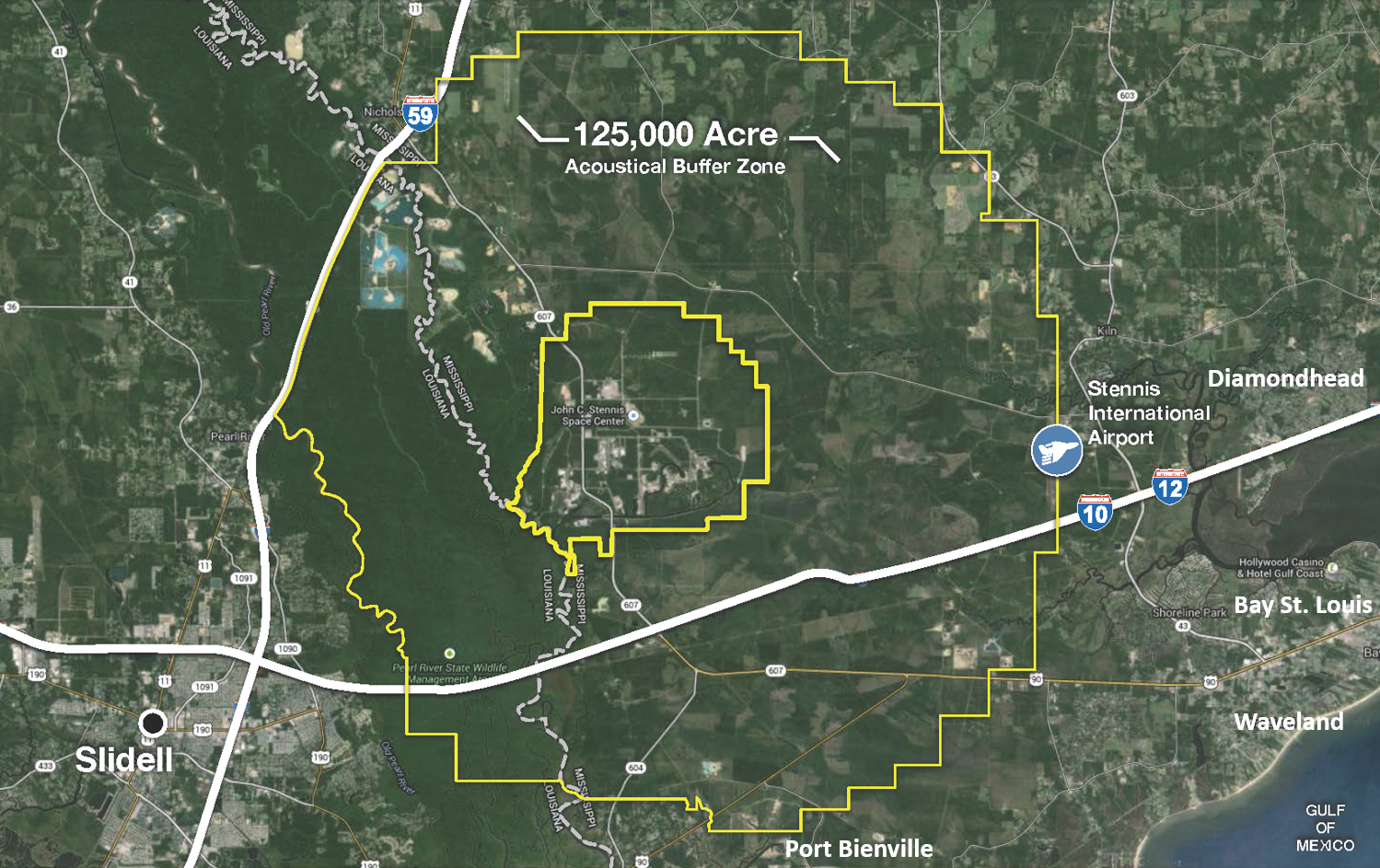
    Satellite image of Stennis Buffer Zone
    NASA Stennis Buffer Zone
    NASA / Stennis

    NASA’s Stennis Space Center is widely known for rocket propulsion testing, especially to support the NASA Artemis program to send astronauts to the Moon to prepare for future human exploration of Mars.

    What may not be so widely known is that the site also is a unique federal city, home to more than 50 federal, state, academic, and commercial tenants and serving as both a model of government efficiency and a powerful economic engine for its region.

    “NASA Stennis is a remarkable story of vision and innovation,” Center Director John Bailey said. “That was the case 55 years ago when the NASA Stennis federal city was born, and it remains the case today as we collaborate and grow to meet the needs of a changing aerospace world.”

    Apollo Years

    Nearly four years after its first Saturn V stage test, NASA’s Stennis Space Center faced a crossroads to the future. Indeed, despite its frontline role in supporting NASA’s Apollo lunar effort, it was not at all certain a viable future awaited the young rocket propulsion test site.

    In 1961, NASA announced plans to build a sprawling propulsion test site in south Mississippi to support Apollo missions to the Moon. The news was a significant development for the sparsely populated Gulf Coast area.  

    The new site, located near Bay St. Louis, Mississippi, conducted its first hot fire of a Saturn V rocket stage in April 1966. Saturn V testing progressed steadily during the next years. In fall 1969, however, NASA announced an end to Apollo-related testing, leading to an existential crisis for the young test site.

    What was to become of NASA Stennis?

    An Expanded Vision

    Some observers speculated the location would close or be reduced to caretaker status, with minimal staffing. Either scenario would deliver a serious blow to the families who had re-located to make way for the site and the local communities who had heavily invested in municipal projects to support the influx of workforce personnel.

    Such outcomes also would run counter to assurances provided by leaders that the new test site would benefit its surrounding region and involve area residents in “something great.”

    For NASA Stennis manager Jackson Balch and others, such a result was unacceptable. Anticipating the crisis, Balch had been working behind the scenes to communicate – and realize – the vision of a multiagency site supporting a range of scientific and technological tenants and missions.

    A Pivotal Year

    The months following the Saturn V testing announcement were filled with discussions and planning to ensure the future of NASA Stennis. The efforts began to come to fruition in 1970 with key developments:

    • In early 1970, NASA Administrator Thomas Paine proposed locating a regional environmental center at NASA Stennis. U.S. Sen. John C. Stennis (Mississippi) responded with a message of the president, “urgently requesting” that a National Earth Resources and Environmental Data Program be established at the site.
    • In May 1970, President Richard Nixon offered assurances that an Earth Resources Laboratory would be established at NASA Stennis and that at least two agencies are preparing to locate operations at the site.
    • U.S. congressional leaders earmarked $10 million to enable the location of an Earth Resources Laboratory at NASA Stennis.
    • On July 9, 1970, the U.S. Coast Guard’s National Data Buoy Project (now the National Data Buoy Center) announced it was relocating to NASA Stennis, making it the first federal city tenant. The project arrived onsite two months later on September 9.
    • On Sept. 9, 1970, NASA officially announced establishment of an Earth Resources Laboratory at NASA Stennis.

    Time to Grow

    By the end of 1970, Balch’s vision was taking shape, but it needed time to grow. The final Saturn V test had been conducted in October – with no new campaign scheduled.

    A possibility was on the horizon, however. NASA was building a reusable space shuttle vehicle. It would be powered by the most sophisticated rocket engine ever designed – and the agency needed a place to conduct developmental and flight testing expected to last for decades.

    Three sites vied for the assignment. Following presentations and evaluations, NASA announced its selection on March 1, 1971. Space shuttle engine testing would be conducted at NASA Stennis, providing time for the location to grow.

    A Collaborative Model

    By the spring of 1973, preparations for the space shuttle test campaign were progressing and NASA Stennis was on its way to realizing the federal city vision. Sixteen agencies and universities were now located at NASA Stennis.

    The resident tenants followed a shared model in which they shared in the cost of basic site services, such as medical, security, and fire protection. The shared model freed up more funding for the tenants to apply towards innovation and assigned mission work. It was a model of government collaboration and efficiency.

    As the site grew, leaders then began to call for it to be granted independent status within NASA, a development not long in coming. On June 14, 1974, just more than a decade after site construction began, NASA Administrator James Fletcher announced the south Mississippi location would be renamed National Space Technology Laboratories and would enjoy equal, independent status alongside other NASA centers.

    “Something Great”

    For NASA Stennis leaders and supporters, independent status represented a milestone moment in their effort to ensure NASA Stennis delivered on its promise of greatness.

    There still were many developments to come, including the first space shuttle main engine test and the subsequent 34-year test campaign, the arrival and growth of the U.S. Navy into the predominant resident presence onsite, the renaming of the center to NASA Stennis, and the continued growth of the federal city.

    No one could have imagined it all at the time. However, even in this period of early development, one thing was clear – the future lay ahead, and NASA Stennis was on its way.

    Details

    Last Updated

    Sep 09, 2025

    Editor
    NASA Stennis Communications
    Contact
    C. Lacy Thompson
    Location
    Stennis Space Center

    Related Terms

  • Launch Your Name Around Moon in 2026 on NASA’s Artemis II Mission 

    Boarding passes will carry participants’ names on NASA’s Artemis II mission in 2026.
    Credit: NASA

    Lee este comunicado de prensa en español aquí.

    NASA is inviting the public to join the agency’s Artemis II test flight as four astronauts venture around the Moon and back to test systems and hardware needed for deep space exploration. As part of the agency’s “Send Your Name with Artemis II” effort, anyone can claim their spot by signing up before Jan. 21.
     
    Participants will launch their name aboard the Orion spacecraft and SLS (Space Launch System) rocket alongside NASA astronauts Reid Wiseman, Victor Glover, Christina Koch, and CSA (Canadian Space Agency) astronaut Jeremy Hansen.
     
    “Artemis II is a key test flight in our effort to return humans to the Moon’s surface and build toward future missions to Mars, and it’s also an opportunity to inspire people across the globe and to give them an opportunity to follow along as we lead the way in human exploration deeper into space,” said Lori Glaze, acting associate administrator, Exploration Systems Development Mission Directorate at NASA Headquarters in Washington. 
     
    The collected names will be put on an SD card loaded aboard Orion before launch. In return, participants can download a boarding pass with their name on it as a collectable.
     
    To add your name and receive an English-language boarding pass, visit: 

    https://go.nasa.gov/artemisnames
     

    To add your name and receive a Spanish-language boarding pass, visit: 

    https://go.nasa.gov/TuNombreArtemis

     
    As part of a Golden Age of innovation and exploration, the approximately 10-day Artemis II test flight, launching no later than April 2026, is the first crewed flight under NASA’s Artemis campaign. It is another step toward new U.S.-crewed missions on the Moon’s surface that will help the agency prepare to send the first astronauts – Americans – to Mars.
     
    To learn more about the mission visit:

     
    https://www.nasa.gov/mission/artemis-ii/
     
    -end-

     
    Rachel Kraft
    Headquarters, Washington
    202-358-1600
    rachel.h.kraft@nasa.gov

    Details

    Last Updated

    Sep 09, 2025

    Related Terms

  • NASA Stennis Provides Ideal Location for Range of Site Tenants

    vapor clouds are aglow and reflected on a small body of water as the sun sets during test firing at Stennis Space Center
    Teams at NASA’s Stennis Space Center conduct a hot fire test of an Aerojet AJ26 rocket engine on the E-1 Test Stand in November 2013.
    NASA/Stennis

    If location, location, location is the overarching mantra in real estate, it is small wonder that NASA’s Stennis Space Center is considered a national asset and prime aerospace and technology operations site.

    It has long stood as a premier – and the nation’s largest – rocket propulsion test site. With unparalleled test infrastructure and expertise, NASA Stennis has helped power the nation’s human space exploration for almost 60 years. It continues to do so, testing systems and engines for NASA’s Artemis program to send astronauts to the Moon to prepare for future human exploration of Mars.

    In addition, NASA Stennis is the choice location for a range of agencies, organizations, offices, and companies, all of whom readily attest to the values of the setting. Ask resident tenants to note the value of their NASA Stennis location, and one hears terms like “strategic advantages,” “ideal location,” “local expertise and experience,” “collaborative opportunities,” “hub of innovation,” and “valuable security buffer.”

    For the NASA Shared Services Center, its location at the south Mississippi test site provides “substantial strategic advantages” that helps the NSSC maximize its work and provide streamlined business operations for the agency.

    Likewise, NASA Stennis provides an ideal location for the North Gulf Institute operated by Mississippi State University, as it conducts frontline work in hurricane forecasting, modeling and assessment, as well as fishery and ecosystem management. The location is strengthened further by the proximity to collaborative partners like the Naval Meteorology and Oceanography Command and the National Data Buoy Center.

    The same holds true for the National Centers for Environmental Information operated by the National Oceanic and Atmospheric Administration. A spokesperson said the centers’ mission success is “firmly rooted in its strategic co-location with other federal partners,” including the Naval Meteorology and Oceanography Command, the National Data Buoy Center, and the Northern Gulf Institute.

    For Relativity Space, the largest NASA Stennis test complex tenant, the “unparalleled infrastructure” at NASA Stennis has been key to enabling the company’s rocket engine testing. “NASA’s Stennis Space Center plays a vital role in getting Terran R to space,” said Clay Walker, vice president of test and launch for Relativity Space. “The infrastructure here allows us to test high-performance engines in ways no other place can.”

    Other companies express similar sentiments, citing the unique opportunities NASA Stennis provides, as well as the value of the local workforce. For instance, L3Harris Technologies has operated at NASA Stennis under various names since the 1960s, providing support to the Apollo, Space Shuttle, and, now, Artemis programs. In 2008, Lockheed Martin opened a start-to-finish facility for production of propulsion systems, making use of the various NASA Stennis propulsion test services and resources.

    Evolution Space is capitalizing on decades of aerospace experience at NASA Stennis, as well as “world-class” site infrastructure to establish production and test capabilities for solid rocket motors onsite.

    Both Mississippi and Louisiana have established technology offices onsite. As a Mississippi Enterprise for Technology statement noted, “The NASA Stennis environment enhances our ability to support emerging technologies, strengthen Mississippi’s technology ecosystem, and contribute to the economic vitality of the region,” said Davis Pace, chief executive officer for the Mississippi Enterprise for Technology.

    Meanwhile, the site’s most prominent tenant – the U.S. Navy – operates various offices at NASA Stennis. The Navy’s move to the site began in the 1970s to take advantage of the security provided by the surrounding NASA Stennis acoustical buffer zone. Various Navy functions eventually located continuing operations onsite, including the Naval Meteorology and Oceanography Command, the Naval Oceanographic Office, the Naval Small Craft Instruction and Technical Training School, the Navy Office of Civilian Human Resources, and the Naval Research Laboratory.

    In similar fashion, the U.S. Department of Homeland Security credits the “high-quality, secure, and resilient” NASA Stennis site for its decision to location information technology and applications operations onsite.

    As the very first NASA Stennis federal city tenant, arriving onsite in September 1970, the National Data Buoy Center has borne witness to it all.

    “From its inception, Sen. John Stennis (and other leaders) envisioned a place where America would push the boundaries of the unknown – from the depths of the oceans to the far reaches of space,” said Dr. William Burnett, director of the National Data Buoy Center onsite. “That vision lives on at NASA Stennis, now home to one of the world’s largest concentrations of oceanographers. At the National Data Buoy Center, we proudly carry out our mission to safeguard maritime safety by harnessing the full strength of this unique scientific and technical community.

    “We are deeply rooted in the community and grateful to thrive within the collaborative spirit that defines Stennis. It’s an honor to be part of its legacy – and its future.”

    Details

    Last Updated

    Sep 09, 2025

    Editor
    NASA Stennis Communications
    Contact
    C. Lacy Thompson
    Location
    Stennis Space Center

    Related Terms

  • Life After Microgravity: Astronauts Reflect on Post-Flight Recovery 

    Space changes you. It strengthens some muscles, weakens others, shifts fluids within your body, and realigns your sense of balance. NASA’s Human Research Program works to understand—and sometimes even counter—those changes so astronauts can thrive on future deep space missions.  

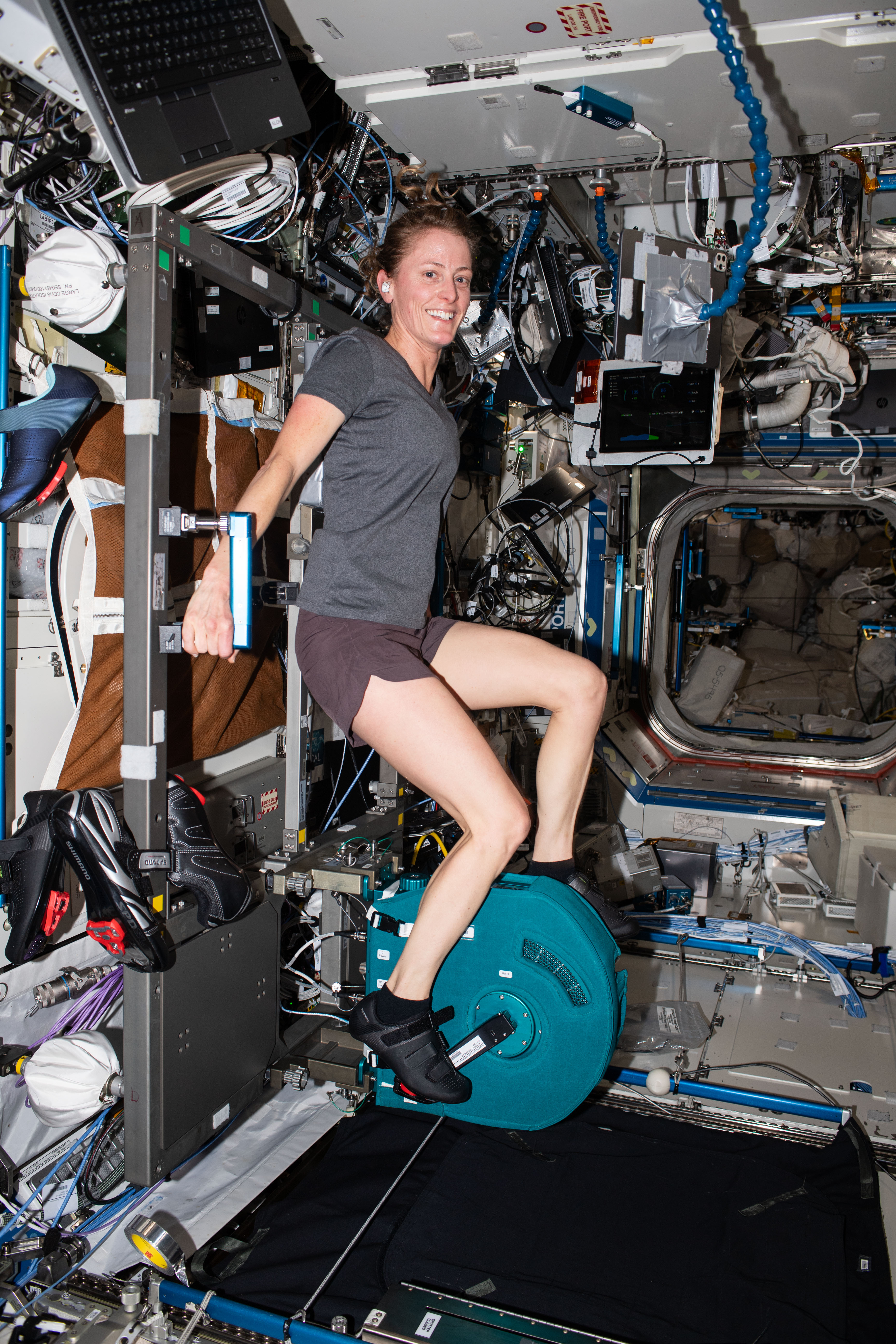
    An astronaut exercises on a stationary bicycle inside the International Space Station, surrounded by equipment, cables, and monitors. 
    NASA astronaut Loral O’Hara pedals on the Cycle Ergometer Vibration Isolation System (CEVIS) inside the International Space Station’s Destiny laboratory module.
    NASA

    Astronauts aboard the International Space Station work out roughly two hours a day to protect bone density, muscle strength and the cardiovascular system, but the longer they are in microgravity, the harder it can be for the brain and body to readapt to gravity’s pull. After months in orbit, returning astronauts often describe Earth as heavy, loud, and strangely still. Some reacclimate within days, while other astronauts take longer to fully recover.

    Adjusting to Gravity  

    NASA’s SpaceX Crew-7 astronaut Jasmin Moghbeli after landing in the Gulf of America on March 12, 2024, completing 197 days in space.
    NASA/Joel Kowsky

    The crew of NASA’s SpaceX Crew-7 mission— NASA astronaut Jasmin Moghbeli, ESA (European Space Agency) astronaut Andreas Mogensen, JAXA (Japan Aerospace Exploration Agency) astronaut Satoshi Furukawa, and Roscosmos cosmonaut Konstantin Borisov—landed in March 2024 after nearly 200 days in space. One of the first tests volunteer crew members completed was walking with their eyes open and then closed.  

    “With eyes closed, it was almost impossible to walk in a straight line,” Mogensen said. In space, vision is the primary way astronauts orient themselves, but back on Earth, the brain must relearn how to use inner-ear balance signals. Moghbeli joked her first attempt at the exercise looked like “a nice tap dance.”   

    “I felt very wobbly for the first two days,” Moghbeli said. “My neck was very tired from holding up my head.” She added that, overall, her body readapted to gravity quickly.  

    Astronauts each recover on their own timetable and may encounter different challenges. Mogensen said his coordination took time to return. Furukawa noted that he could not look down without feeling nauseated. “Day by day, I recovered and got more stable,” he said. 

    Three people in blue flight suits stand around a woman in a white space suit who
    NASA astronaut Loral O’Hara after landing in a remote area near the town of Zhezkazgan, Kazakhstan, on April 6, 2024.
    NASA/Bill Ingalls

    NASA astronaut Loral O’Hara returned in April 2024 after 204 days in space. She said she felt almost completely back to normal a week after returning to Earth. O’Hara added that her prior experience as an ocean engineer gave her insight into space missions. “Having those small teams in the field working with a team somewhere else back on shore with more resources is a good analog for the space station and all the missions we’re hoping to do in the future,” she said. 

    NASA astronaut Nichole Ayers, who flew her first space mission with NASA’s SpaceX Crew-10, noted that the brain quickly adapts to weightlessness by tuning out the vestibular system, which controls balance. “Then, within days of being back on Earth, it remembers again—it’s amazing how fast the body readjusts,” she said. 

    Expedition 69 NASA astronaut Frank Rubio outside the Soyuz MS-23 spacecraft after landing near the town of Zhezkazgan, Kazakhstan, on Sept. 27, 2023.
    NASA/Bill Ingalls

    When NASA astronaut Frank Rubio landed in Kazakhstan in September 2023, he had just completed a record 371-day mission—the longest single U.S. spaceflight.  

    Rubio said his body adjusted to gravity right away, though his feet and lower back were sore after more than a year without weight on them. Thanks to consistent workouts, Rubio said he felt mostly recovered within a couple of weeks.  

    Mentally, extending his mission from six months to a year was a challenge. “It was a mixed emotional roller coaster,” he said, but regular video calls with family kept him grounded. “It was almost overwhelming how much love and support we received.” 

    Crew-8 astronauts Matt Dominick, Jeanette Epps, Michael Barratt, and cosmonaut Alexander Grebenkin splashed down in October 2024 after 235 days on station. Dominick found sitting on hard surfaces uncomfortable at first. Epps felt the heaviness of Earth immediately. “You have to move and exercise every day, regardless of how exhausted you feel,” she said.  

    Barratt, veteran astronaut and board certified in internal and aerospace medicine, explained that recovery differs for each crew member, and that every return teaches NASA something new. 

    Still a Challenge, Even for Space Veterans  

    A woman gives a thumbs up in a white spacesuit
    NASA astronaut Suni Williams is helped out of a SpaceX Dragon spacecraft aboard the SpaceX recovery ship after splashing down off the coast of Tallahassee, Florida, March 18, 2025.
    NASA/Keegan Barber

    Veteran NASA astronauts Suni Williams and Butch Wilmore returned from a nine-month mission with Crew-9 in early 2025. Despite her extensive spaceflight experience, Williams said re-adapting to gravity can still be tough. “The weight and heaviness of things is surprising,” she said. Like others, she pushed herself to move daily to regain strength and balance.  

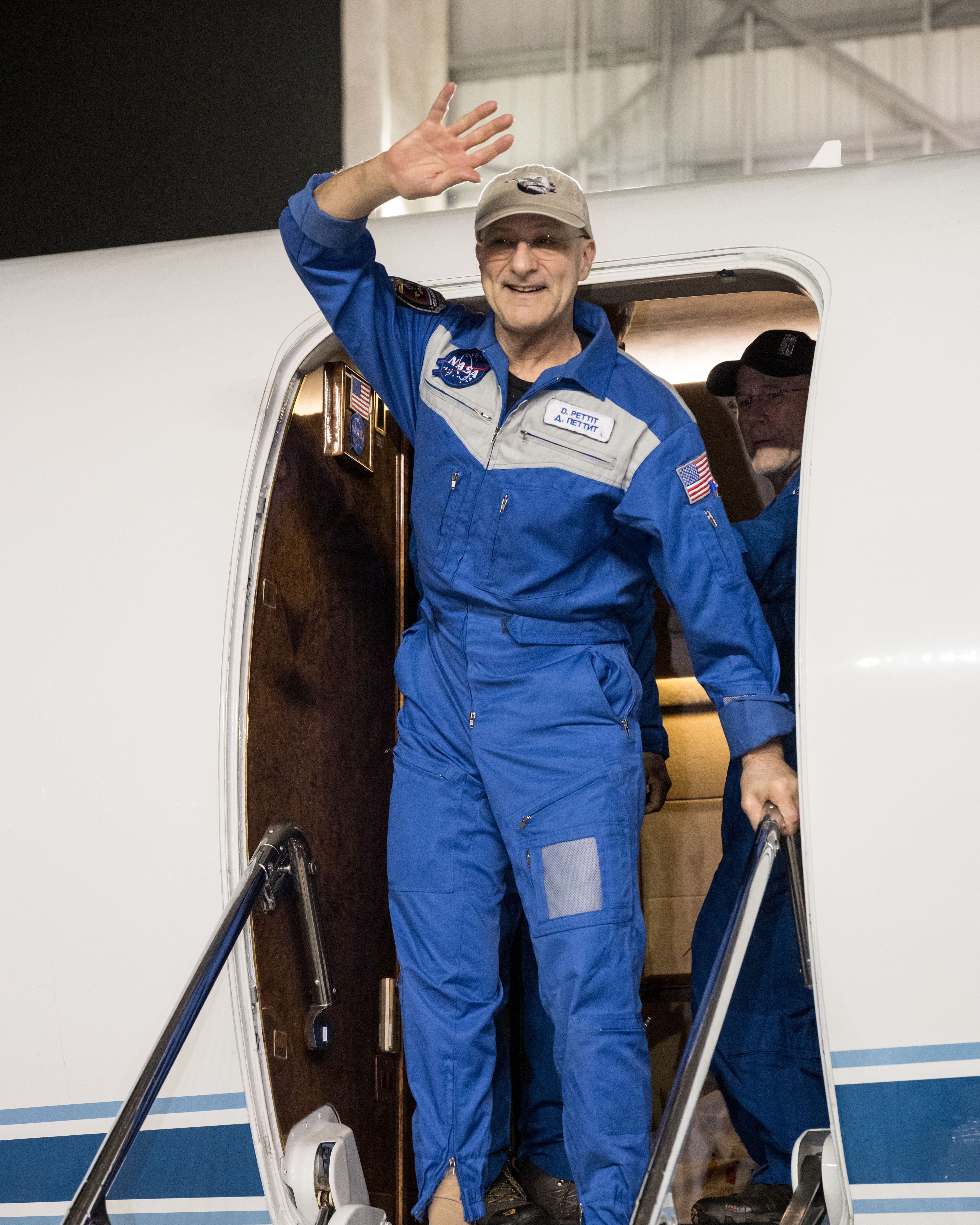
    A man in a blue flight suit stands and waves as he exits a plane.
    NASA astronaut Don Pettit arrives at Ellington Field in Houston on April 20, 2025, after returning to Earth aboard the Soyuz MS-25 spacecraft.
    NASA/Robert Markowitz

    NASA astronaut Don Pettit, also a veteran flyer, came home in April 2025 after 220 days on the space station. At 70 years old, he is NASA’s oldest active astronaut—but experience did not make gravity gentler.  During landing, he says he was kept busy, “emptying the contents of my stomach onto the steppes of Kazakhstan.” Microgravity had eased the aches in his joints and muscles, but Earth’s pull brought them back all at once.  

    Pettit said his recovery felt similar to earlier missions. “I still feel like a little kid inside,” he said. The hardest part, he explained, isn’t regaining strength in big muscle groups, but retraining the small, often-overlooked muscles unused in space. “It’s a learning process to get used to gravity again.”  

    Recovery happens day by day—with help from exercise, support systems, and a little humor. No matter how long an astronaut is in space, every journey back to Earth is unique. 

    The Human Research Program help scientists understand how spaceflight environments affect astronaut health and performance and informs strategies to keep crews healthy for future missions to the Moon, Mars, and beyond. The program studies astronauts before, during, and after spaceflight to learn how the human body adapts to living and working in space. It also collects data through Earth-based analog missions that can help keep astronauts safer for future space exploration.  

    To learn more about how microgravity affects the human body and develop new ways to help astronauts stay healthy, for example, its scientists conduct bedrest studies – asking dozens of volunteers to spend 60 days in bed with their heads tilted down at a specific angle.  Lying in this position tricks the body into responding as it would if the body was in space which allows scientists to trial interventions to hopefully counter some of microgravity’s effects.  Such studies, through led by NASA, occur at the German Aerospace Center’s Cologne campus at a facility called :envihab – a combination of “environment” and “habitat.”  

    Additional Earth-based insights come from the Crew Health and Performance Exploration Analog (CHAPEA) and the Human Exploration Research Analog (HERA) at NASA’s Johnson Space Center in Houston. Both analogs recreate the remote conditions and scenarios of deep space exploration here on Earth with volunteer crews who agree to live and work in the isolation of ground-based habitats and endure challenges like delayed communication that simulates the type of interactions that will occur during deep space journeys to and from Mars. Findings from these ground-based missions and others will help NASA refine its future interventions, strategies, and protocols for astronauts in space. 

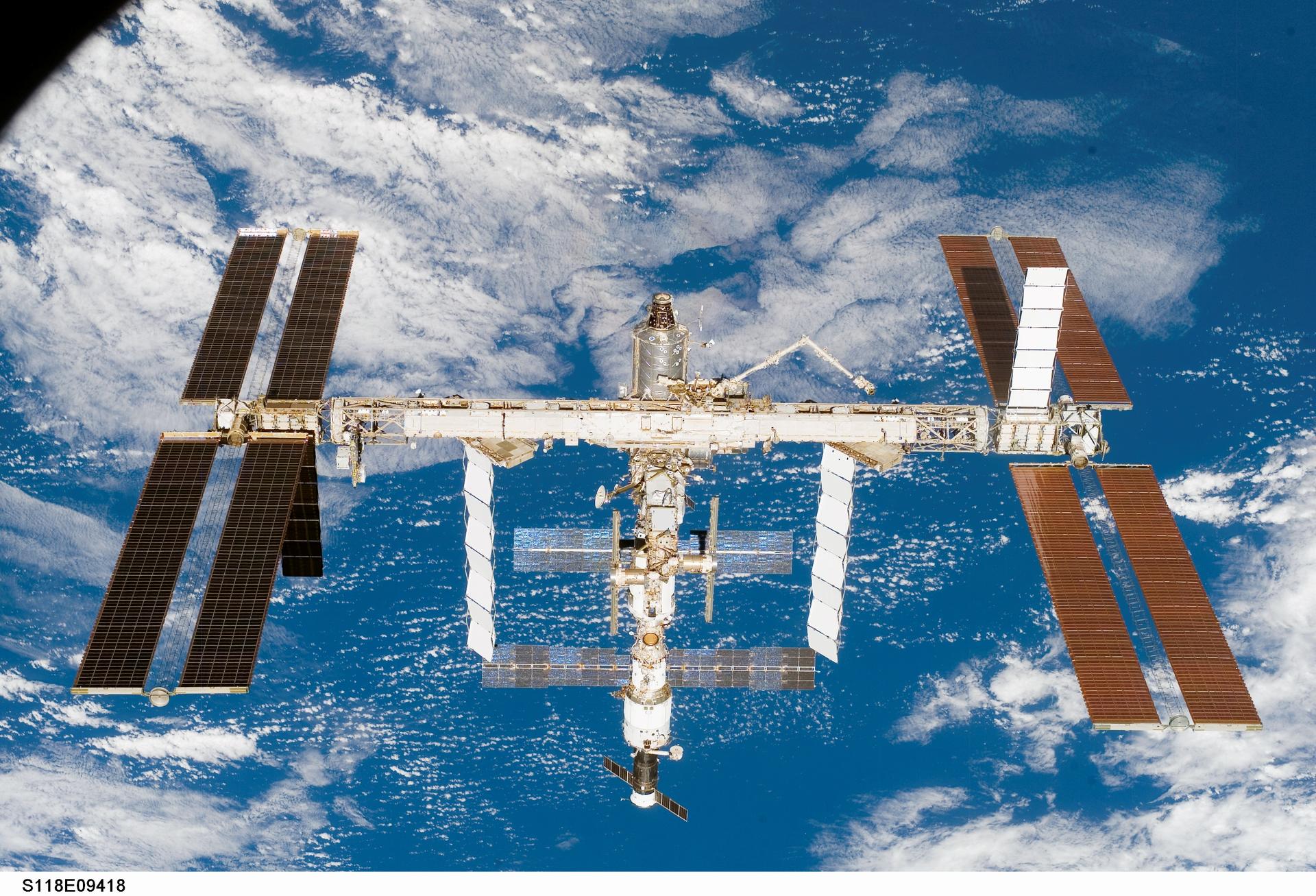
    NASA and its partners have supported humans continuously living and working in space since November 2000. After nearly 25 years of continuous human presence, the space station remains the sole space-based proving ground for training and research for deep space missions, enabling NASA’s Artemis campaign, lunar exploration, and future Mars missions. 

  • Perseverance Meets the Megabreccia

    2 min read

    Perseverance Meets the Megabreccia

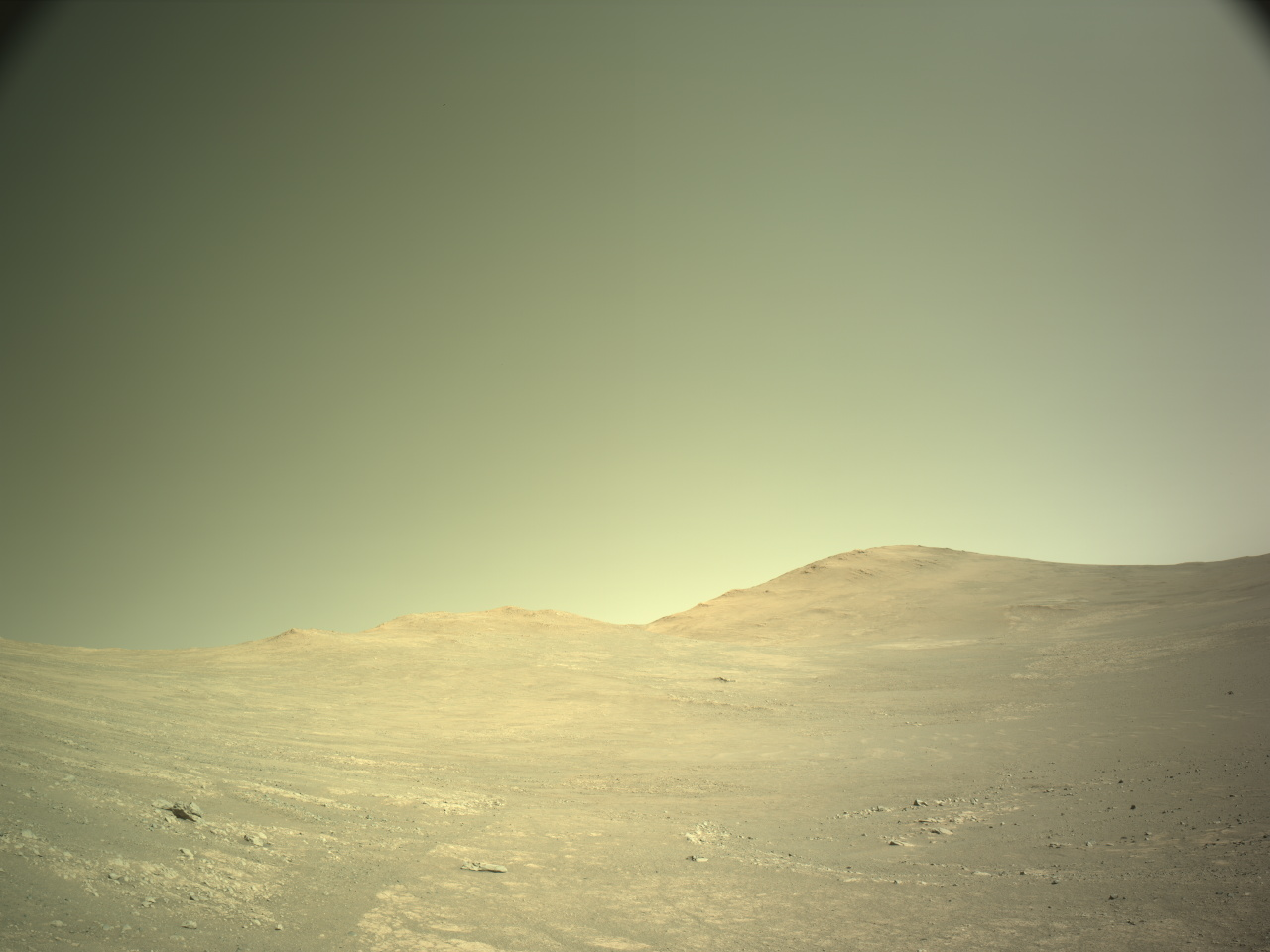
    A color photo from the Martian surface shows a landscape with terrain appearing light mustard brown, beneath a sky of gray-green gold. The ground is hilly but fairly smooth, with a few small scattered rocks, and a wavy horizon line about mid-frame.
    NASA’s Mars Perseverance rover acquired this image of the “Scotiafjellet” workspace on Aug. 31, 2025, using its onboard Left Navigation Camera (Navcam). The camera is located high on the rover’s mast and aids in driving. This image was acquired on Sol 1610, or Martian day 1,610 of the Mars 2020 mission, at the local mean solar time of 14:52:20.
    NASA/JPL-Caltech

    Written by By Henry Manelski, Ph.D. student at Purdue University

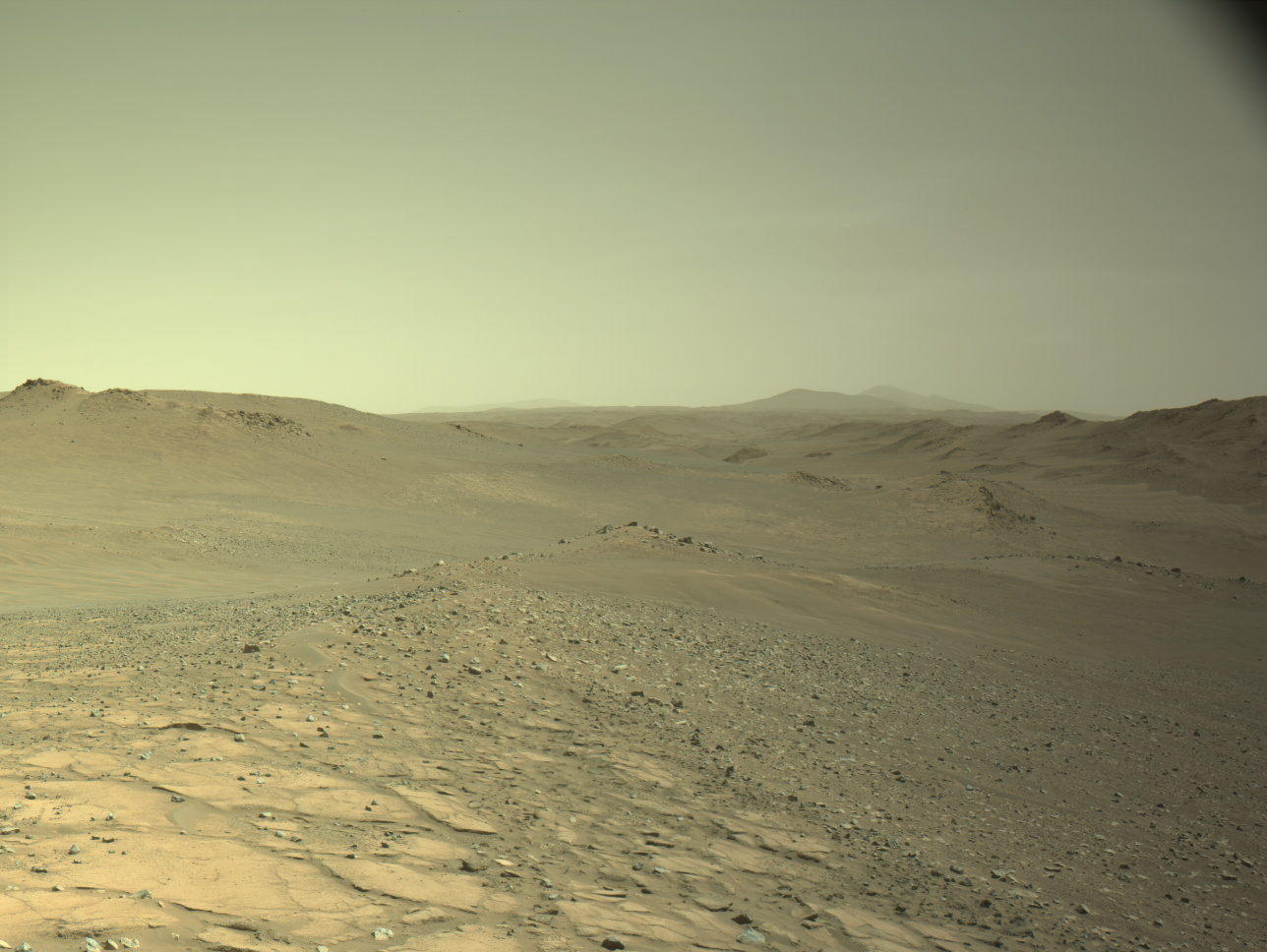
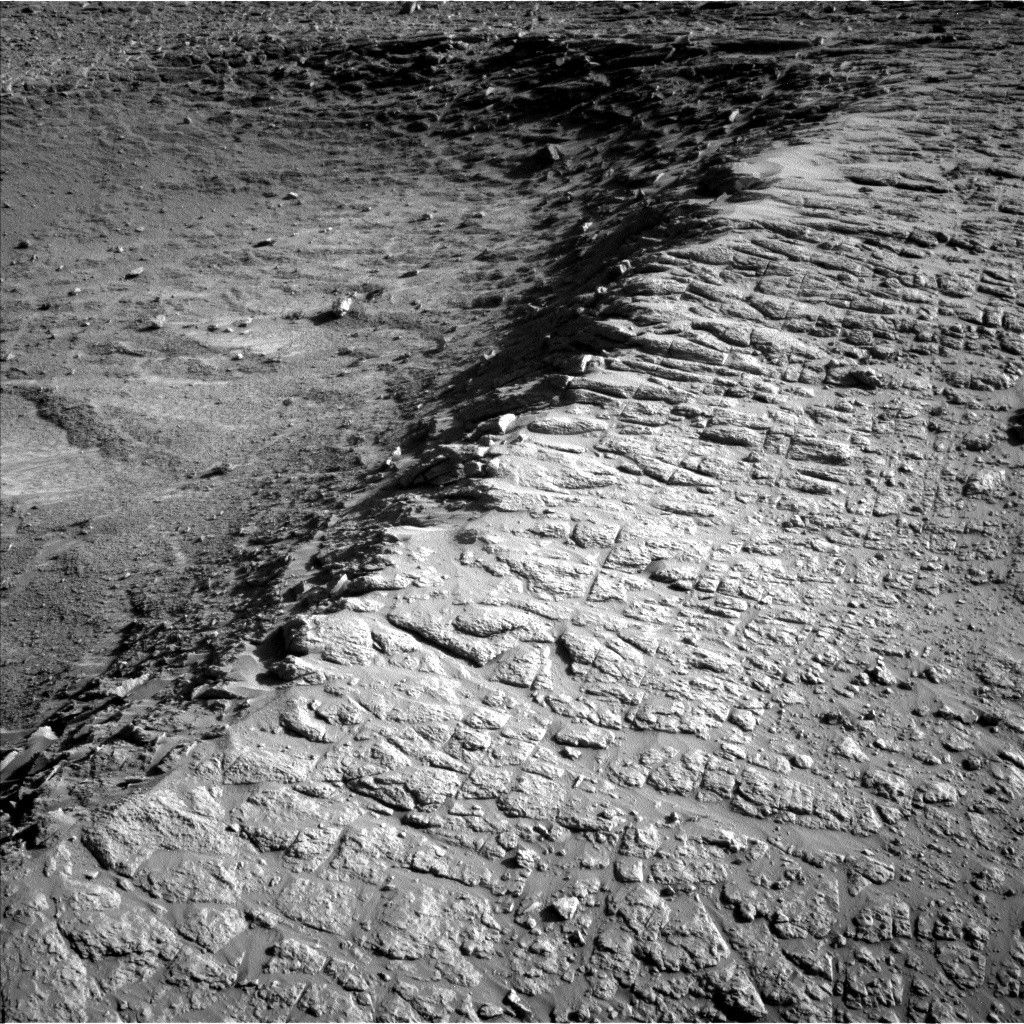
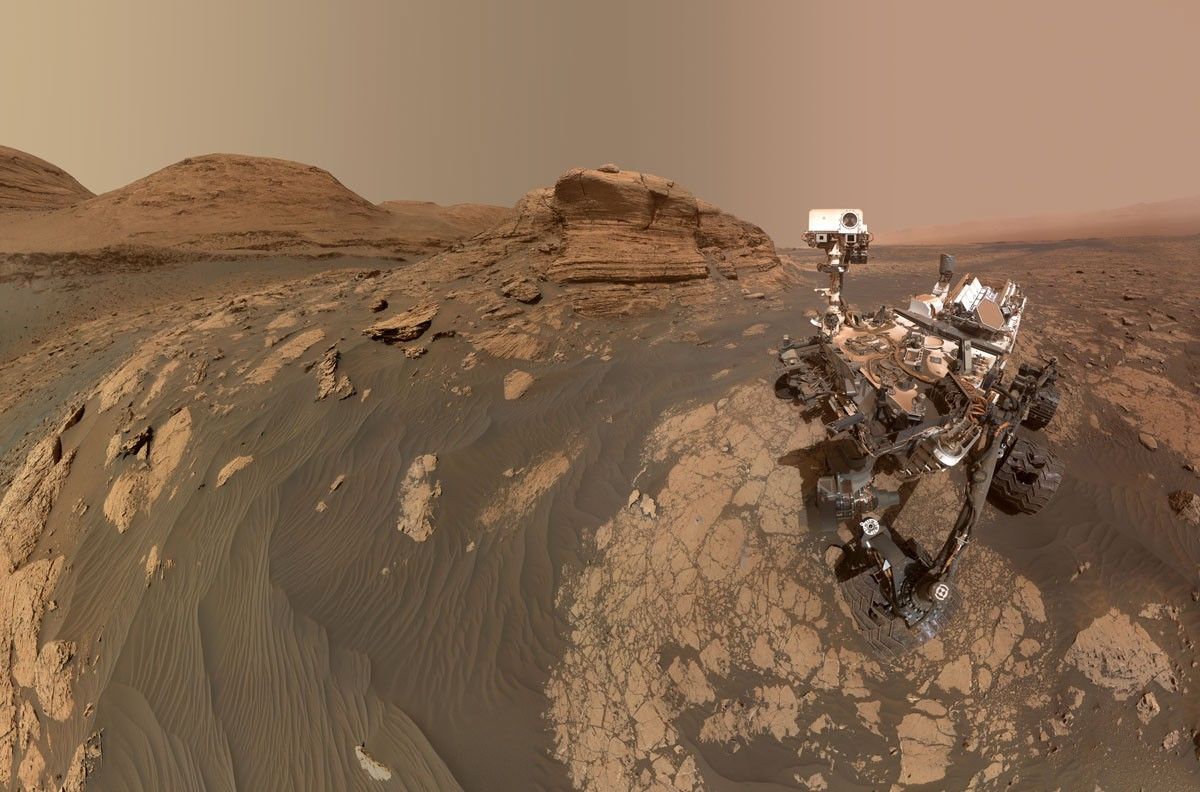
    Last week, the Perseverance rover began an exciting new journey. Driving northwest of the Soroya ridge, Perseverance entered an area filled with a diverse range of boulders that the science team believes could hold clues to Mars’ early history. The terrain we are exploring is known as megabreccia: a chaotic mixture of broken rock fragments likely produced during ancient asteroid impacts. Some blocks may have originated in the gargantuan Isidis impact event, which created a 1,200-mile-wide crater (about 1,930 kilometers) just east of Jezero. Studying megabreccia could help us link Jezero’s geology to the wider region around Isidis Basin, tying local observations to Mars’ global history. 

    The rover is now beginning a systematic exploration of these rocks, starting at Scotiafjellet. If they are truly megabreccia, they could contain pieces of deep crustal material, offering a rare glimpse into Mars’ interior. These rocks likely predate the deltaic and volcanic deposits we explored earlier in Jezero Crater, making them some of the oldest accessible rocks Perseverance will ever encounter. They may therefore reveal to what extent water was present on ancient Mars — a key question as we continue our search for signs of past life on the Red Planet. In short, by venturing into this jumbled terrain, Perseverance is giving us a front-row seat to the earliest chapters of Mars’ story.


    Details

    Last Updated

    Sep 08, 2025

    Related Terms

  • NASA Astronaut Frank Rubio in Space Station Cupola

    NASA Astronaut Frank Rubio in Space Station Cupola

    NASA astronaut and Expedition 68 Flight Engineer Frank Rubio is pictured inside the cupola, the International Space Station’s “window to the world,” as the orbiting lab flew 263 miles above southeastern England on Oct. 1, 2022.

  • NASA Astronaut Frank Rubio in Space Station Cupola

    A man in a dark polo shirt smiles at the camera with his arms crossed. He is in the cupola of the International Space Station, an area with multiple windows through which Earth and space can be seen. Earth's clouds can be seen through the windows behind him.
    NASA astronaut and Expedition 68 Flight Engineer Frank Rubio is pictured inside the cupola, the International Space Station’s “window to the world,” as the orbiting lab flew 263 miles above southeastern England on Oct. 1, 2022.
    NASA/Frank Rubio

    NASA astronaut Frank Rubio poses for a picture in the International Space Station’s cupola on Oct. 1, 2022.

    Rubio was selected as a NASA astronaut in 2017. He trained as a flight engineer and member of the Expedition 68 crew. Rubio, along with cosmonauts Sergey Prokopyev and Dmitry Petelin of Roscosmos, launched Sept. 21, 2022, on the Soyuz MS-22 spacecraft from the Baikonur Cosmodrome in Kazakhstan to the space station.

    While aboard the orbital laboratory, Rubio and his fellow crew members conducted dozens of scientific investigations and technology demonstrations, including growing tomato plants to study hydroponic and aeroponic techniques, participating in crew health experiments, and studying how materials react in microgravity. Research like this and other activity on the orbital outpost will inform long-duration missions like Artemis and future human expeditions to Mars.

    Rubio spent 371 days in space, surpassing NASA’s single spaceflight record for continuous days in space made by astronaut Mark Vande Hei. Rubio and his crewmates landed in Kazakhstan on Sept. 27, 2023. Rubio’s mission is the longest single spaceflight by a U.S. astronaut in history.

    Image credit: NASA/Frank Rubio

  • NASA Webb Looks at Earth-Sized, Habitable-Zone Exoplanet TRAPPIST-1 e

    6 Min Read

    NASA Webb Looks at Earth-Sized, Habitable-Zone Exoplanet TRAPPIST-1 e

    Illustration of a star with multiple flares and four small orbiting planets. Star is off center to the lower right, with a silhouetted planet to its lower right. A smaller planet is shown an inch to the left, also silhouetted. A third planet is directly to the left of the star, gray and white but without much detail, and farther out near the left edge of the image is the fourth planet, also gray with little detail.

    This artist’s concept shows the volatile red dwarf star TRAPPIST-1 and its four most closely orbiting planets. Full image and caption shown below.

    Credits:
    Artwork: NASA, ESA, CSA, STScI, Joseph Olmsted (STScI)

    Scientists are in the midst of observing the exoplanet TRAPPIST-1 e with NASA’s James Webb Space Telescope. Careful analysis of the results so far presents several potential scenarios for what the planet’s atmosphere and surface may be like, as NASA science missions lay key groundwork to answer the question, “are we alone in the universe?” 

    “Webb’s infrared instruments are giving us more detail than we’ve ever had access to before, and the initial four observations we’ve been able to make of planet e are showing us what we will have to work with when the rest of the information comes in,” said Néstor Espinoza of the Space Telescope Science Institute in Baltimore, Maryland, a principal investigator on the research team. Two scientific papers detailing the team’s initial results are published in the Astrophysical Journal Letters.

    Image A: Trappist-1 e (Artist’s Concept)

    Illustration of a star with multiple flares and four small orbiting planets. Star is off center to the lower right, with a silhouetted planet to its lower right. A smaller planet is shown an inch to the left, also silhouetted. A third planet is directly to the left of the star, gray and white but without much detail, and farther out near the left edge of the image is the fourth planet, also gray with little detail.
    This artist’s concept shows the volatile red dwarf star TRAPPIST-1 and its four most closely orbiting planets, all of which have been observed by NASA’s James Webb Space Telescope. Webb has found no definitive signs of an atmosphere around any of these worlds yet. 
    Artwork: NASA, ESA, CSA, STScI, Joseph Olmsted (STScI)

    Of the seven Earth-sized worlds orbiting the red dwarf star TRAPPIST-1, planet e is of particular interest because it orbits the star at a distance where water on the surface is theoretically possible — not too hot, not too cold — but only if the planet has an atmosphere. That’s where Webb comes in. Researchers aimed the telescope’s powerful NIRSpec (Near-Infrared Spectrograph) instrument at the system as planet e transited, or passed in front of, its star. Starlight passing through the planet’s atmosphere, if there is one, will be partially absorbed, and the corresponding dips in the light spectrum that reaches Webb will tell astronomers what chemicals are found there. With each additional transit, the atmospheric contents become clearer as more data is collected. 

    Primary atmosphere unlikely

    Though multiple possibilities remain open for planet e because only four transits have been analyzed so far, the researchers feel confident that the planet does not still have its primary, or original, atmosphere. TRAPPIST-1 is a very active star, with frequent flares, so it is not surprising to researchers that any hydrogen-helium atmosphere with which the planet may have formed would have been stripped off by stellar radiation. However many planets, including Earth, build up a heavier secondary atmosphere after losing their primary atmosphere. It is possible that planet e was never able to do this and does not have a secondary atmosphere. Yet researchers say there is an equal chance there is an atmosphere, and the team developed novel approaches to working with Webb’s data to determine planet e’s potential atmospheres and surface environments. 

    World of (fewer) possibilities

    The researchers say it is unlikely that the atmosphere of TRAPPIST-1 e is dominated by carbon dioxide, analogous to the thick atmosphere of Venus and the thin atmosphere of Mars. However, the researchers also are careful to note that there are no direct parallels with our solar system.

    “TRAPPIST-1 is a very different star from our Sun, and so the planetary system around it is also very different, which challenges both our observational and theoretical assumptions,” said team member Nikole Lewis, an associate professor of astronomy at Cornell University. 

    If there is liquid water on TRAPPIST-1 e, the researchers say it would be accompanied by a greenhouse effect, in which various gases, particularly carbon dioxide, keep the atmosphere stable and the planet warm.  

    “A little greenhouse effect goes a long way,” said Lewis, and the measurements do not rule out adequate carbon dioxide to sustain some water on the surface. According to the team’s analysis, the water could take the form of a global ocean, or cover a smaller area of the planet where the star is at perpetual noon, surrounded by ice. This would be possible because, due to the TRAPPIST-1 planets’ sizes and close orbits to their star, it is thought that they all are tidally locked, with one side always facing the star and one side always in darkness. 

    Image B: TRAPPIST-1 e Transmission Spectrum (NIRSpec)

    Infographic titled “Exoplanet TRAPPIST-1 e Transmission Spectrum” showing data points from the NIRSpec instrument on NASA’s James Webb Space Telescope compared with model spectrums.
    This graphic compares data collected by Webb’s NIRSpec (Near-Infrared Spectrograph) with computer models of exoplanet TRAPPIST-1 e with (blue) and without (orange) an atmosphere. Narrow colored bands show the most likely locations of data points for each model.
    Illustration: NASA, ESA, CSA, STScI, Joseph Olmsted (STScI)

    Innovative new method

    Espinoza and co-principal investigator Natalie Allen of Johns Hopkins University are leading a team that is currently making 15 additional observations of planet e, with an innovative twist. The scientists are timing the observations so that Webb catches both planets b and e transiting the star one right after the other. After previous Webb observations of planet b, the planet orbiting closest to TRAPPIST-1, scientists are fairly confident it is a bare rock without an atmosphere. This means that signals detected during planet b’s transit can be attributed to the star only, and because planet e transits at nearly the same time, there will be less complication from the star’s variability. Scientists plan to compare the data from both planets, and any indications of chemicals that show up only in planet e’s spectrum can be attributed to its atmosphere. 

    “We are really still in the early stages of learning what kind of amazing science we can do with Webb. It’s incredible to measure the details of starlight around Earth-sized planets 40 light-years away and learn what it might be like there, if life could be possible there,” said Ana Glidden, a post-doctoral researcher at Massachusetts Institute of Technology’s Kavli Institute for Astrophysics and Space Research, who led the research on possible atmospheres for planet e. “We’re in a new age of exploration that’s very exciting to be a part of,” she said.

    The four transits of TRAPPIST-1 e analyzed in the new papers published today were collected by the JWST Telescope Scientist Team’s DREAMS (Deep Reconnaissance of Exoplanet Atmospheres using Multi-instrument Spectroscopy) collaboration.

    The James Webb Space Telescope is the world’s premier space science observatory. Webb is solving mysteries in our solar system, looking beyond to distant worlds around other stars, and probing the mysterious structures and origins of our universe and our place in it. Webb is an international program led by NASA with its partners, ESA (European Space Agency) and CSA (Canadian Space Agency).

    To learn more about Webb, visit:

    https://science.nasa.gov/webb

    Webb Blog: Reconnaissance of Potentially Habitable Worlds with NASA’s Webb

    Video: How to Study Exoplanets

    Video: How do we learn about a planet’s Atmosphere?

    View more about Exoplanets

    More Webb News

    More Webb Images

    Webb Science Themes

    Webb Mission Page

    What is the Webb Telescope?

    SpacePlace for Kids

    En Español

    Ciencia de la NASA

    NASA en español 

    Space Place para niños

    Details

    Last Updated

    Sep 08, 2025

    Editor
    Marty McCoy
    Contact
    Contact

    Media

    Laura Betz
    NASA’s Goddard Space Flight Center
    Greenbelt, Maryland
    laura.e.betz@nasa.gov

    Leah Ramsay
    Space Telescope Science Institute
    Baltimore, Maryland

    Hannah Braun
    Space Telescope Science Institute
    Baltimore, Maryland

  • NASA Launches 2026 Lunabotics Challenge

    Students prepare their robots to enter Artemis Arena during NASA’s Lunabotics competition on May 20, 2025, at the Center for Space Education near the Kennedy Space Center Visitor Complex in Florida.
    Students prepare their robots to enter Artemis Arena during NASA’s Lunabotics competition on May 20, 2025, at the Center for Space Education near the Kennedy Space Center Visitor Complex in Florida.
    NASA/Isaac Watson

    As college students across the country embark upon the academic year, NASA is giving them something else to look forward to – the agency’s 2026 Lunabotics Challenge. Teams interested in participating can submit their applications and supporting materials through NASA’s Stem Gateway portal beginning Monday, Sept. 8.

    Key dates and challenge details are available in the 2026 Lunabotics Challenge Guidebook. Once all applications and supporting materials are received and evaluated, NASA will notify the selected teams to begin the challenge.

    Student teams participating in this year’s challenge will create robots capable of building berms out of lunar regolith – the loose, fragmental material on the Moon’s surface. Structures like these will be important during lunar missions as blast protection during lunar landings and launches, shading for cryogenic propellant tank farms, radiation shielding around nuclear power plants, and other uses critical to future Moon missions.

    “We are excited to continue the Lunabotics competition for universities as NASA develops new Moon to Mars technologies for the Artemis program,” said Robert Mueller, senior technologist at NASA, as well as co-founder and chief judge of the Lunabotics competition. “Excavating and moving regolith is a fundamental need to build infrastructure on the Moon and Mars and this competition creates 21st century skills in the future workforce.”

    An in-person qualifying event will be held May 12-17, 2026, at the University of Central Florida’s Space Institute’s Exolith Lab in Orlando. From this round, the top 10 teams will be invited to bring their robots to the final competition on May 19-21, at the Kennedy Space Center Visitor Complex’s Artemis Arena in Florida, which has an area filled with a lunar regolith simulant. The team scoring the most points will receive the Lunabotics Grand Prize and participate in an exhibition-style event at NASA Kennedy.

    By encouraging innovative construction techniques and assessing student designs and data the same way it does its own prototypes, NASA casts a wider net to find innovative solutions to challenges inherent in future Artemis missions, like developing future lunar excavators, in-situ resource utilization capabilities, and living on the Moon or Mars. With its multidisciplinary approach, Lunabotics also serves as a workforce pipeline, with teams gaining valuable hands-on experience in computer coding, engineering, manufacturing, fabricating, and other crucial skills, while also receiving technical expertise in space technology development.

    NASA’s Lunabotics Challenge, held annually since 2010, is one of several Artemis Student Challenges. The two-semester competition provides U.S. college and technical school teams an opportunity to design, build, and operate a prototype lunar robot using NASA systems engineering processes. Competitions help NASA get innovative design and operational data, reduce risks, and cultivate new ideas needed to return to the Moon under the Artemis campaign to prepare for human exploration of Mars.

    To learn more about Lunabotics, visit:

    https://www.nasa.gov/learning-resources/lunabotics-challenge/

  • Jeni Morrison Continues a Family Legacy of Service at NASA 

    A child of the Space Shuttle Program, Jeni Morrison grew up walking the grounds of NASA’s Johnson Space Center in Houston with her parents and listening to family stories about human spaceflight. 

    Now, with more than 15 years at NASA, Morrison serves as one of Johnson’s Environmental Programs managers. She ensures the center complies with laws that protect its resources by overseeing regulatory compliance for cultural and natural resources, stormwater and drinking water programs, and the National Environmental Policy Act. She also safeguards Johnson’s historic legacy as Johnson’s Cultural Resources manager. 

    A woman smiles outside in front of green
    Jeni Morrison in the mall area at NASA’s Johnson Space Center in Houston, where employees often see local wildlife, including turtles, birds, deer, and the occasional alligator.

    “I make sure our actions comply with the National Historic Preservation act, since the center is considered a historic district with two National Historic Landmarks onsite,” Morrison said. “I make sure we respect and document Johnson’s heritage while paving the way for new efforts and mission objectives.” 

    Morrison takes pride in finding solutions that increase efficiency while protecting resources. One example was a project with Johnson’s Geographic Information System team to create an interactive material and chemical spill plan map. The new system helps responders quickly trace spill paths above and underground to deploy resources faster, reducing cleanup costs and minimizing environmental impacts. 

    “Every improvement we make not only saves time and resources, but strengthens our ability to support NASA’s mission,” she said.  

    By the very nature of our work, NASA makes history all the time. That history is important for all people, both to remember the sacrifices and accomplishments of so many, but also to ensure we don’t repeat mistakes as we strive for even bolder achievements.

    Jeni Morrison

    Jeni Morrison

    Environmental Program Manager

    Jeni Morrison presents an overview of environmental compliance and center initiatives to employees at NASA’s Johnson Space Center in 2014.
    NASA/Lauren Harnett

    For Morrison, success often comes down to teamwork. She has learned to adapt her style to colleagues’ needs to strengthen collaboration.  

    “By making the effort to accommodate others’ communication styles and learn from different perspectives, we create better, more efficient work,” she said. “Thankfully, so many people here at NASA are willing to teach and to share their experiences.”  

    Her message to the Artemis Generation is simple: Always keep learning! 

    “You never know when a side conversation could give you an answer to a problem you are facing down the line,” she said. “You must be willing to ask questions and learn something new to find those connections.” 

    A group of twelve people pose in a facility with a miachie behind them.
    Jeni Morrison (second from right) with the Biobased Coolant Project Team at NASA’s Johnson Space Center in 2018. The team tested biobased metalworking coolants and identified a product that outperformed petroleum-based options, meeting flight hardware specifications while reducing waste disposal costs and labor hours.

    Even as a young child visiting NASA Johnson, I could feel the sense of adventure, accomplishment, and the drive to reach new heights of human capability. I realize that those experiences gave me a fascination with learning and an inherent need to find ways to do things better.

    jENI mORRISON

    jENI mORRISON

    Environmental Program Manager

    Her passion for learning and discovery connects to a family tradition at NASA. Her grandfather contributed to multiple Apollo missions, including helping solve the oxygen tank malfunction on Apollo 13. Her mother worked at the center transcribing astronaut recordings and writing proposals, and her father flew experiments aboard the space shuttle and International Space Station. Morrison’s sister and extended family also worked at Johnson.  

    Now her son is growing up on the center grounds while attending the JSC Child Care Center. “As the fourth generation to be at Johnson, he is already talking about how he loves science and can’t wait to do his own experiments,” she said. 

    For Morrison, carrying that family legacy forward through environmental stewardship is a privilege. “Being able to contribute to NASA’s mission through environmental compliance feels like the best of both worlds for me,” Morrison said. “It combines my love of science and NASA with my drive to find more efficient ways to operate while protecting this incredible site and everything it represents.” 

  • NASA Seeks Industry Input on Next Phase of Commercial Space Stations

    3 Min Read

    NASA Seeks Industry Input on Next Phase of Commercial Space Stations

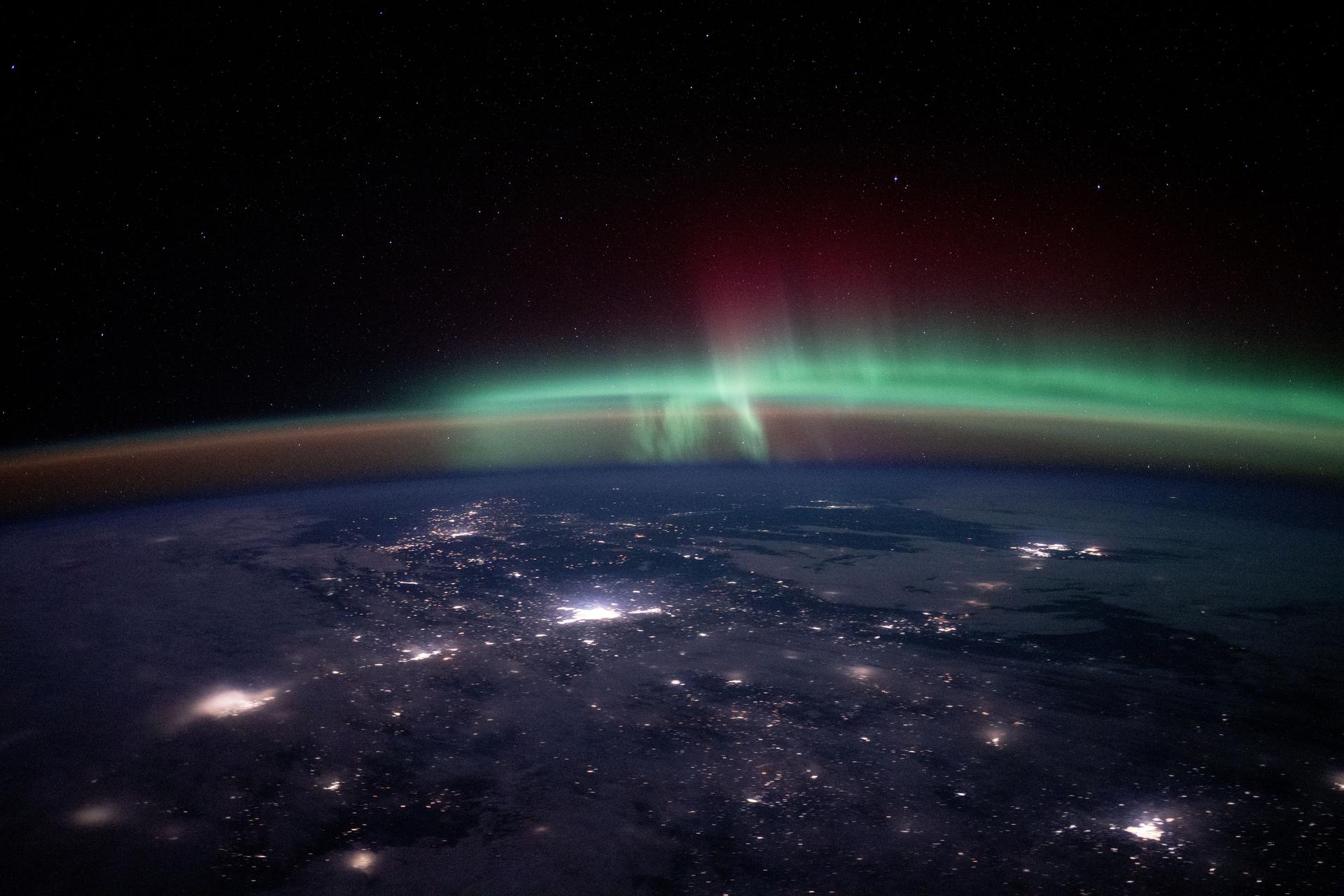
    The aurora australis appears to lap over the Earth like a tide washing ashore in this photograph taken at approximately 3:45 a.m. local time from the International Space Station as it orbited 269 miles above the Indian Ocean southwest of Australia.

    The aurora australis appears over the Earth in this photograph taken from the International Space Station as it orbited 269 miles above the Indian Ocean southwest of Australia.

    Credits:
    NASA

    NASA is requesting feedback from American companies on the next phase of its commercial space stations strategy to ensure a seamless transition of activities in low Earth orbit from the International Space Station.

    The agency released a draft Phase 2 Announcement for Partnership Proposals (AFPP) Friday, asking for feedback from industry partners by 1 p.m. EDT Friday, Sept. 12. NASA will hold an informational industry briefing on Monday, Sept. 8, to provide a top-level summary of the documents and expectations.

    Under the direction of acting NASA Administrator Sean Duffy, the agency reassessed the commercial space stations acquisition strategy to ensure mission continuity, affordability, and national alignment, and to reduce the potential for a gap of a crew-capable platform in low Earth orbit.

    “NASA has led in low Earth orbit for 25 years and counting. Now, as we prepare for deorbiting the International Space Station in 2030, we’re calling on our commercial space partners to maintain this historic human presence,” Duffy said. “The American space industry is booming. Insight from these innovative companies will be invaluable as we work to chart the next phase of commercial space stations.”

    In Phase 2, NASA intends to support industry’s design and demonstration of commercial stations through multiple funded Space Act Agreements, selected through a full and open competition.

    “NASA is committed to continuing our partnership with industry to ensure a continuity in low Earth orbit,” said Angela Hart, manager, Commercial Low Earth Orbit Development Program at NASA’s Johnson Space Center in Houston. “The work done under our Phase 1 contracts and agreements have put us in a prime position to be successful for this next funded Space Act Agreement phase. By leveraging these agreements, we provide additional flexibility to our commercial partners to define the best path forward to provide NASA a safe and affordable crewed demonstration.”

    The Phase 2 agreements are expected to include funded milestones leading to critical design review readiness and an in-space crewed demonstration of four crew members for a minimum of 30 days. Agreements are expected to include up to a five-year period of performance.

    The agency’s phased approach will culminate in a follow-on Phase 3 using Federal Acquisition Regulation-based contract(s) to purchase station services through a full and open competition. This final phase will also provide formal design acceptance and certification, ensuring the commercial stations meet NASA’s safety requirements.

    NASA remains committed to fostering innovation and collaboration within the American space industry.

    The agency’s commercial strategy for low Earth orbit will provide the government with reliable and safe services at a lower cost, enabling the agency to focus on the next step in humanity’s exploration of the solar system while also continuing to use low Earth orbit as an ideal environment for training and a proving ground for Artemis missions to the Moon and Mars.

    Learn more about commercial space stations at:

    https://www.nasa.gov/commercialspacestations

  • NASA Announces CHAPEA Crew for Year-Long Mars Mission Simulation

    A view inside the sandbox portion of the Crew Health and Performance Analog, where research volunteers participate in simulated walks on the surface of Mars. Credit: NASA

    Four research volunteers will soon participate in NASA’s year-long simulation of a Mars mission inside a habitat at the agency’s Johnson Space Center in Houston. This mission will provide NASA with foundational data to inform human exploration of the Moon, Mars, and beyond.

    Ross Elder, Ellen Ellis, Matthew Montgomery, and James Spicer enter into the 1,700-square-foot Mars Dune Alpha habitat on Sunday, Oct. 19, to begin their mission. The team will live and work like astronauts for 378 days, concluding their mission on Oct. 31, 2026. Emily Phillips and Laura Marie serve as the mission’s alternate crew members.

    Through a series of Earth-based missions called CHAPEA (Crew Health and Performance Exploration Analog), carried out in the 3D-printed habitat, NASA aims to evaluate certain human health and performance factors ahead of future Mars missions. The crew will undergo realistic resource limitations, equipment failures, communication delays, isolation and confinement, and other stressors, along with simulated high-tempo extravehicular activities. These scenarios allow NASA to make informed trades between risks and interventions for long-duration exploration missions.

    “As NASA gears up for crewed Artemis missions, CHAPEA and other ground analogs are helping to determine which capabilities could best support future crews in overcoming the human health and performance challenges of living and operating beyond Earth’s resources – all before we send humans to Mars,” said Sara Whiting, project scientist with NASA’s Human Research Program at NASA Johnson.  

    Crew members will carry out scientific research and operational tasks, including simulated Mars walks, growing a vegetable garden, robotic operations, and more. Technologies specifically designed for Mars and deep space exploration will also be tested, including a potable water dispenser and diagnostic medical equipment.

    “The simulation will allow us to collect cognitive and physical performance data to give us more insight into the potential impacts of the resource restrictions and long-duration missions to Mars on crew health and performance,” said Grace Douglas, CHAPEA principal investigator. “Ultimately, this information will help NASA make informed decisions to design and plan for a successful human mission to Mars.”

    This mission, facilitated by NASA’s Human Research Program, is the second one-year Mars surface simulation conducted through CHAPEA. The first mission concluded on July 6, 2024.

    The Human Research Program pursues methods and technologies to support safe, productive human space travel. Through applied research conducted in laboratories, simulations, and aboard the International Space Station, the program investigates the effects spaceflight has on human bodies and behaviors to keep astronauts healthy and mission-ready.

    Primary Crew

    Ross Elder, Commander

    Ross Elder, from Williamstown, West Virginia, is a major and experimental test pilot in the United States Air Force. At the time of his selection, he served as the director of operations of the 461st Flight Test Squadron. He has piloted over 35 military aircraft and accumulated more than 1,800 flying hours, including 200 combat hours, primarily in the F-35, F-15E/EX, F-16, and A-10C. His flight test experience focuses on envelope expansion, crewed-uncrewed teaming, artificial intelligence, autonomy, mission systems, and weapons modernization.

    Elder earned a Bachelor of Science in astronautical engineering from the U.S. Air Force Academy in Colorado Springs, Colorado, and commissioned as an Air Force officer upon graduation. He earned a Master of Science in mechanical engineering from the University of Colorado in Colorado Springs and a master’s degree in flight test engineering from the U.S. Air Force Test Pilot School at Edwards Air Force Base in California.

    Ellen Ellis, Medical Officer

    Ellen Ellis, from North Kingstown, Rhode Island, is a colonel and an acquisitions officer in the United States Space Force. She currently serves as a senior materiel leader in the National Reconnaissance Office (NRO) Communications Systems Directorate. She is responsible for fielding commercial cloud and traditional information technology hosting solutions and building modernized data centers for the NRO. She previously served as an Intercontinental Ballistic Missile operations officer and GPS satellite engineer, and she also developed geospatial intelligence payloads and ground processing systems.  

    She earned a Bachelor of Science in aerospace engineering at Syracuse University in New York and holds four master’s degrees, including a Master of Science in systems engineering from the Naval Postgraduate School in California, and a Master of Science in emergency and disaster management from Georgetown University in Washington.

    Matthew Montgomery, Science Officer

    Matthew Montgomery, from Los Angeles, is a hardware engineering design consultant who works with technology startup companies to develop, commercialize, and scale their products. His focus areas include LED lighting, robotics, controlled environment agriculture, and embedded control systems.

    Montgomery earned a Bachelor of Science and a Master of Science in electrical engineering from the University of Central Florida. He is also a founder and co-owner of Floating Lava Studios, a film production company based in Los Angeles.

    James Spicer, Flight Engineer

    James Spicer is a technical director in the aerospace and defense industry. His experience includes building radio and optical satellite communications networks; space data relay networks for human spaceflight; position, navigation, and timing research; and hands-on spacecraft design, integration, and tests.

    Spicer earned a Bachelor of Science and Master of Science in aeronautics and astronautics, and holds a Notation in Science Communication from Stanford University in California. He also holds commercial pilot and glider pilot licenses.

    Alternate Crew

    Emily Phillips

    Emily Phillips, from Waynesburg, Pennsylvania, is a captain and pilot in the United States Marine Corps. She currently serves as a forward air controller and air officer attached to an infantry battalion stationed at the Marine Corps Air Ground Combat Center in Twentynine Palms, California.

    Phillips earned a Bachelor of Science in computer science from the U.S. Naval Academy in Annapolis and commissioned as a Marine Corps officer upon graduation. She attended flight school, earning her Naval Aviator wings and qualifying as an F/A-18C Hornet pilot. Phillips has completed multiple deployments to Europe and Southeast Asia.

    Laura Marie

    Born in the United Kingdom, Laura Marie immigrated to the U.S. in 2016. She is a commercial airline pilot specializing in flight safety, currently operating passenger flights in Washington.

    Marie began her aviation career in 2019 and has amassed over 2,800 flight hours. She holds a Bachelor of Arts in philosophy and a Master of Science in aeronautics from Liberty University in Lynchburg, Virginia. In addition to her Airline Transport Pilot License, she also possesses flight instructor and advanced ground instructor licenses. Outside the flight deck, Marie dedicates her time to mentoring and supporting aspiring pilots as they navigate their careers.