The Artemis I SLS (Space Launch System) rocket and Orion spacecraft is pictured in the Vehicle Assembly Building at NASA’s Kennedy Space Center in Florida before rollout to launch pad 39B, in March 2022.
Credit: NASA/Frank Michaux
Media are invited to see NASA’s fully assembled Artemis II SLS (Space Launch System) rocket and Orion spacecraft in mid-October before its crewed test flight around the Moon next year.
The event at NASA’s Kennedy Space Center in Florida will showcase hardware for the Artemis II lunar mission, which will test capabilities needed for deep space exploration. NASA and industry subject matter experts will be available for interviews.
Attendance is open to U.S. citizens and international media. Media accreditation deadlines are as follows:
International media without U.S. citizenship must apply by 11:59 p.m. EDT on Monday, Sept. 22.
U.S. media and U.S. citizens representing international media organizations must apply by 11:59 p.m. EDT on Monday, Sept. 29.
Media wishing to take part in person must apply for credentials at:
Credentialed media will receive a confirmation email upon approval, along with additional information about the specific date for the mid-October activities when they are determined. NASA’s media accreditation policy is available online. For questions about accreditation, please email: ksc-media-accreditat@mail.nasa.gov. For other questions, please contact the NASA Kennedy newsroom at: 321-867-2468.
Prior to the media event, the Orion spacecraft will transition from the Launch Abort System Facility to the Vehicle Assembly Building at NASA Kennedy, where it will be placed on top of the SLS rocket. The fully stacked rocket will then undergo complete integrated testing and final hardware closeouts ahead of rolling the rocket to Launch Pad 39B for launch. During this effort, technicians will conduct end-to-end communications checkouts, and the crew will practice day of launch procedures during their countdown demonstration test.
Artemis II will send NASA astronauts Reid Wiseman, Victor Glover, Christina Koch, and CSA (Canadian Space Agency) astronaut Jeremy Hansen on an approximately 10-day journey around the Moon and back. As part of a Golden Age of innovation and exploration, Artemis will pave the way for new U.S.-crewed missions on the lunar surface ahead in preparation toward the first crewed mission to Mars.
To learn more about the Artemis II mission, visit:
NASA satellite data and trainings helped Uruguay create a drought-response tool that its National Water Authority now uses to monitor reservoirs and guide emergency decisions. A similar approach could be applied in the United States and other countries around the world.
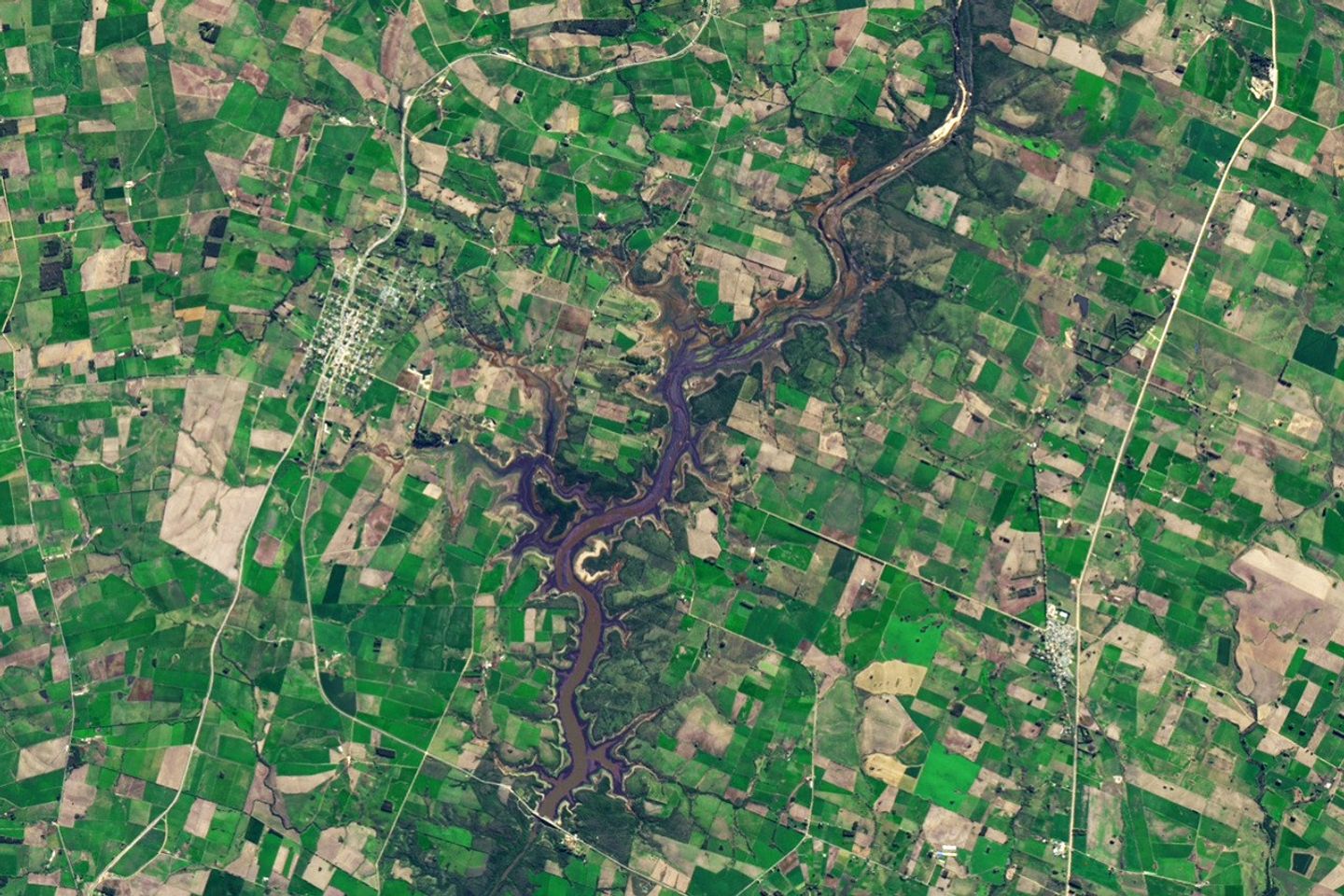
From 2018 to 2023, Uruguay experienced its worst drought in nearly a century. The capital city of Montevideo, home to nearly 2 million people, was especially hard hit. By mid-2023, Paso Severino, the largest reservoir and primary water source for Montevideo, had dropped to just 1.7% of its capacity. As water levels declined, government leaders declared an emergency. They began identifying backup supplies and asked: Was there water left in other upstream reservoirs — mainly used for livestock and irrigation — that could help?
That’s when environmental engineer Tiago Pohren and his colleagues at the National Water Authority (DINAGUA – Ministry of Environment) turned to NASA data and trainings to build an online tool that could help answer that question and improve monitoring of the nation’s reservoirs.
“Satellite data can inform everything from irrigation scheduling in the Great Plains to water quality management in the Chesapeake Bay,” said Erin Urquhart, manager of the water resources program at NASA Headquarters in Washington. “NASA provides the reliable data needed to respond to water crises anywhere in the world.”
Learning to Detect Water from Space
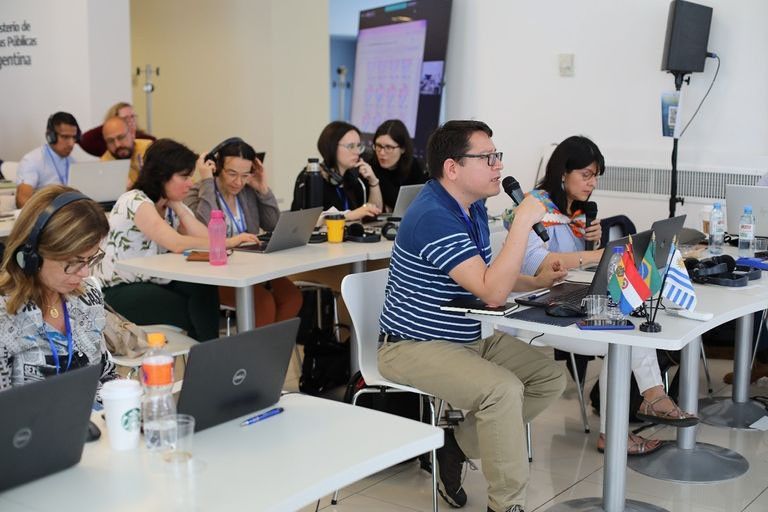
The DINAGUA team learned about NASA resources during a 2022 workshop in Buenos Aires, organized by the Interagency Science and Applications Team (ISAT). Led by NASA, the U.S. Army Corps of Engineers, and the U.S. Department of State, the workshop focused on developing tools to help manage water in the La Plata River Basin, which spans multiple South American countries including Uruguay.
At the workshop, researchers from NASA introduced participants to methods for measuring water resources from space. NASA’s Applied Remote Sensing (ARSET) program also provided a primer on remote sensing principles.
DINAGUA team supervisor Jose Rodolfo Valles León asks a question during a 2022 workshop in Buenos Aires. Other members of the Uruguay delegation — Florencia Hastings, Vanessa Erasun Rodríguez de Líma, Vanessa Ferreira, and Teresa Sastre (current Director of DINAGUA) — sit in the row behind.
Organization of American States
“NASA doesn’t just deliver data,” said John Bolten, NASA’s lead scientist for ISAT and chief of the Hydrological Sciences Laboratory at NASA’s Goddard Space Flight Center in Greenbelt, Maryland. “We collaborate with our partners and local experts to translate the data into information that is useful, usable, and relevant. That kind of coordination is what makes NASA’s water programs so effective on the ground, at home and around the world.”
The DINAGUA team brought ideas and provided guidelines to Pohren for a tool that applies Landsat and Sentinel satellite imagery to detect changes in Uruguay’s reservoirs. Landsat, a joint NASA-U.S. Geological Survey mission, provides decades of satellite imagery to track changes in land and water. The Sentinel missions, a part of the European Commission managed Copernicus Earth Observation program and operated by ESA (the European Space Agency), provide complementary visible, infrared, and microwave imagery for surface water assessments.
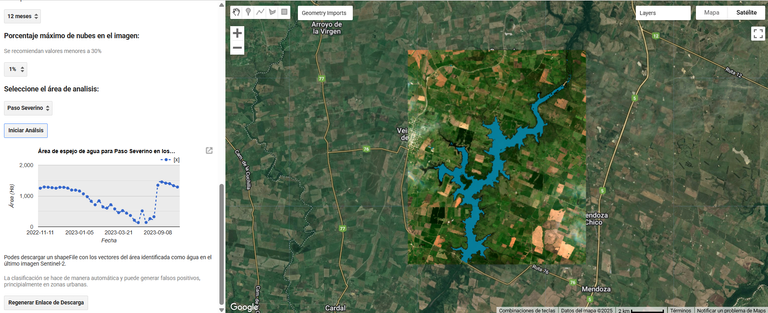
From a young age, Pohren was familiar with water-related challenges, as floods repeatedly inundated his relatives’ homes in his hometown of Montenegro, Brazil. It was extra motivation for him as he scoured ARSET tutorials and taught himself to write computer code. The result was a monitoring tool capable of estimating the surface area of Uruguay’s reservoirs over time.
A screenshot of the reservoir monitoring tool shows the Paso Severino’s surface water coverage alongside time-series data tracking its variations.
Tiago Pohren
The tool draws on several techniques to differentiate the surface water extent of reservoirs. These techniques include three optical indicators derived from the Landsat 8 and Sentinel-2 satellites:
Normalized Difference Water Index, which highlights water by comparing how much green and near-infrared light is reflected. Water absorbs infrared light, so it stands out clearly from land.
Modified Normalized Difference Water Index, which swaps near-infrared with shortwave infrared to improve the contrast and reduce errors when differentiating between water and built-up or vegetated areas.
Automated Water Extraction Index, which combines four types of reflected light — green, near-infrared, and two shortwave infrared bands — to help separate water from shadows and other dark features.
From Emergency Tool to Everyday Asset
In 2023, the DINAGUA team used Pohren’s tool to examine reservoirs located upstream from Montevideo’s drinking water intake. But the data told a tough story.
“There was water available in other reservoirs, but it was a very small amount compared to the water demand of the Montevideo metropolitan region,” Pohren said. Simulations showed that even if all of the water were released, most of it would not reach the water intake for Montevideo or the Paso Severino reservoir.
Despite this news, the analysis prevented actions that might have wasted important resources for maintaining productive activities in the upper basin, Pohren said. Then, in August 2023, rain began to refill Uruguay’s reservoirs, allowing the country to declare an end to the water crisis.
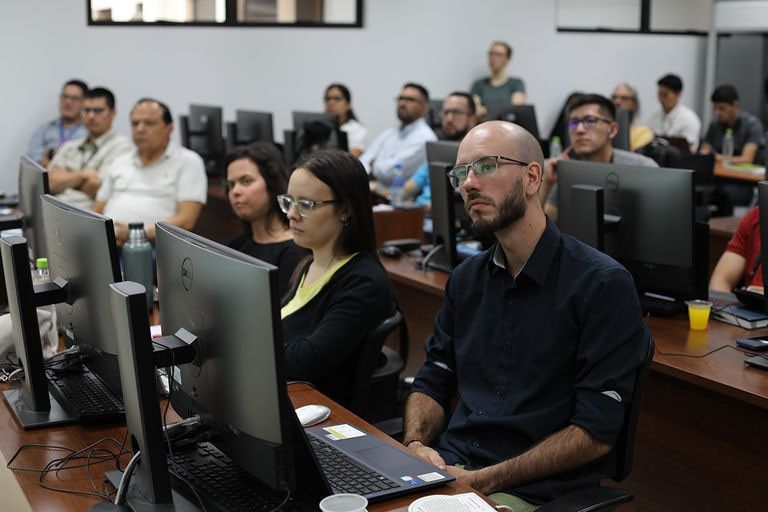
From right to left: Tiago Pohren, Vanessa Erasun, and Florencia Hastings at the second ISAT workshop in March 2024.
Organization of American States
Though the immediate water crisis has passed, the tool Pohren created will be useful in the future in Uruguay and around the world. During an ISAT workshop in 2024, he shared his tool with international water resources managers with the hope it could aid their own drought response efforts. And DINAGUA officials still use it to identify and monitor dams, irrigation reservoirs, and other water bodies in Uruguay.
Pohren continues to use NASA training and data to advance reservoir management. He’s currently exploring an ARSET training on how the Surface Water and Ocean Topography (SWOT) mission will further improve the system by allowing DINAGUA to directly measure the height of water in reservoirs. He is also following NASA’s new joint mission with ISRO (the Indian Space Research Organization) called NISAR, which launched on July 30. The NISAR satellite will provide radar data that detects changes in water extent, regardless of cloud cover or time of day. “If a drought happens again,” Pohren said, “with the tools that we have now, we will be much more prepared to understand what the conditions of the basin are and then make predictions.”
Environmental engineer Tiago Pohren conducts a field inspection on the Canelón Grande reservoir, the second-largest reservoir serving Montevideo, during the drought.
Tiago Pohren
By Melody Pederson, Rachel Jiang
The authors would like to thank Noelia Gonzalez, Perry Oddo, Denise Hill, and Delfina Iervolino for interview support as well as Jerry Weigel for connecting with Tiago about the tool’s development.
This animation depicts water disappearing over time in the Martian river valley Neretva Vallis, where NASA’s Perseverance Mars takes the rock sample named “Sapphire Canyon” from a rock called “Cheyava Falls,” which was found in the “Bright Angel” formation. Credit: NASA
A sample collected by NASA’s Perseverance Mars rover from an ancient dry riverbed in Jezero Crater could preserve evidence of ancient microbial life. Taken from a rock named “Cheyava Falls” last year, the sample, called “Sapphire Canyon,” contains potential biosignatures, according to a paper published Wednesday in the journal Nature.
A potential biosignature is a substance or structure that might have a biological origin but requires more data or further study before a conclusion can be reached about the absence or presence of life.
“This finding by Perseverance, launched under President Trump in his first term, is the closest we have ever come to discovering life on Mars. The identification of a potential biosignature on the Red Planet is a groundbreaking discovery, and one that will advance our understanding of Mars,” said acting NASA Administrator Sean Duffy. “NASA’s commitment to conducting Gold Standard Science will continue as we pursue our goal of putting American boots on Mars’ rocky soil.”
NASA’s Perseverance rover discovered leopard spots on a reddish rock nicknamed “Cheyava Falls” in Mars’ Jezero Crater in July 2024. Scientists think the spots may indicate that, billions of years ago, the chemical reactions in this rock could have supported microbial life; other explanations are being considered.
Credit: NASA/JPL-Caltech/MSSS
NASA’s Perseverance Mars rover took this selfie, made up of 62 individual images, on July 23, 2024. A rock nicknamed “Cheyava Falls,” which has features that may bear on the question of whether the Red Planet was long ago home to microscopic life, is to the left of the rover near the center of the image.
Credit: NASA/JPL-Caltech/MSSS
Perseverance came upon Cheyava Falls in July 2024 while exploring the “Bright Angel” formation, a set of rocky outcrops on the northern and southern edges of Neretva Vallis, an ancient river valley measuring a quarter-mile (400 meters) wide that was carved by water rushing into Jezero Crater long ago.
“This finding is the direct result of NASA’s effort to strategically plan, develop, and execute a mission able to deliver exactly this type of science — the identification of a potential biosignature on Mars,” said Nicky Fox, associate administrator, Science Mission Directorate at NASA Headquarters in Washington. “With the publication of this peer-reviewed result, NASA makes this data available to the wider science community for further study to confirm or refute its biological potential.”
The rover’s science instruments found that the formation’s sedimentary rocks are composed of clay and silt, which, on Earth, are excellent preservers of past microbial life. They also are rich in organic carbon, sulfur, oxidized iron (rust), and phosphorous.
“The combination of chemical compounds we found in the Bright Angel formation could have been a rich source of energy for microbial metabolisms,” said Perseverance scientist Joel Hurowitz of Stony Brook University, New York and lead author of the paper. “But just because we saw all these compelling chemical signatures in the data didn’t mean we had a potential biosignature. We needed to analyze what that data could mean.”
First to collect data on this rock were Perseverance’s PIXL (Planetary Instrument for X-ray Lithochemistry) and SHERLOC (Scanning Habitable Environments with Raman & Luminescence for Organics & Chemicals) instruments. While investigating Cheyava Falls, an arrowhead-shaped rock measuring 3.2 feet by 2 feet (1 meter by 0.6 meters), they found what appeared to be colorful spots. The spots on the rock could have been left behind by microbial life if it had used the raw ingredients, the organic carbon, sulfur, and phosphorus, in the rock as an energy source.
In higher-resolution images, the instruments found a distinct pattern of minerals arranged into reaction fronts (points of contact where chemical and physical reactions occur) the team called leopard spots. The spots carried the signature of two iron-rich minerals: vivianite (hydrated iron phosphate) and greigite (iron sulfide). Vivianite is frequently found on Earth in sediments, peat bogs, and around decaying organic matter. Similarly, certain forms of microbial life on Earth can produce greigite.
The combination of these minerals, which appear to have formed by electron-transfer reactions between the sediment and organic matter, is a potential fingerprint for microbial life, which would use these reactions to produce energy for growth. The minerals also can be generated abiotically, or without the presence of life. Hence, there are ways to produce them without biological reactions, including sustained high temperatures, acidic conditions, and binding by organic compounds. However, the rocks at Bright Angel do not show evidence that they experienced high temperatures or acidic conditions, and it is unknown whether the organic compounds present would’ve been capable of catalyzing the reaction at low temperatures.
The discovery was particularly surprising because it involves some of the youngest sedimentary rocks the mission has investigated. An earlier hypothesis assumed signs of ancient life would be confined to older rock formations. This finding suggests that Mars could have been habitable for a longer period or later in the planet’s history than previously thought, and that older rocks also might hold signs of life that are simply harder to detect.
“Astrobiological claims, particularly those related to the potential discovery of past extraterrestrial life, require extraordinary evidence,” said Katie Stack Morgan, Perseverance’s project scientist at NASA’s Jet Propulsion Laboratory in Southern California. “Getting such a significant finding as a potential biosignature on Mars into a peer-reviewed publication is a crucial step in the scientific process because it ensures the rigor, validity, and significance of our results. And while abiotic explanations for what we see at Bright Angel are less likely given the paper’s findings, we cannot rule them out.”
The scientific community uses tools and frameworks like the CoLD scale and Standards of Evidence to assess whether data related to the search for life actually answers the question, Are we alone? Such tools help improve understanding of how much confidence to place in data suggesting a possible signal of life found outside our own planet.
Marked by seven benchmarks, the Confidence of Life Detection, or CoLD, scale outlines a progression in confidence that a set of observations stands as evidence of life.
Credit: NASA
Sapphire Canyon is one of 27 rock cores the rover has collected since landing at Jezero Crater in February 2021. Among the suite of science instruments is a weather station that provides environmental information for future human missions, as well as swatches of spacesuit material so that NASA can study how it fares on Mars.
Managed for NASA by Caltech, NASA JPL built and manages operations of the Perseverance rover on behalf of the agency’s Science Mission Directorate as part of NASA’s Mars Exploration Program portfolio.
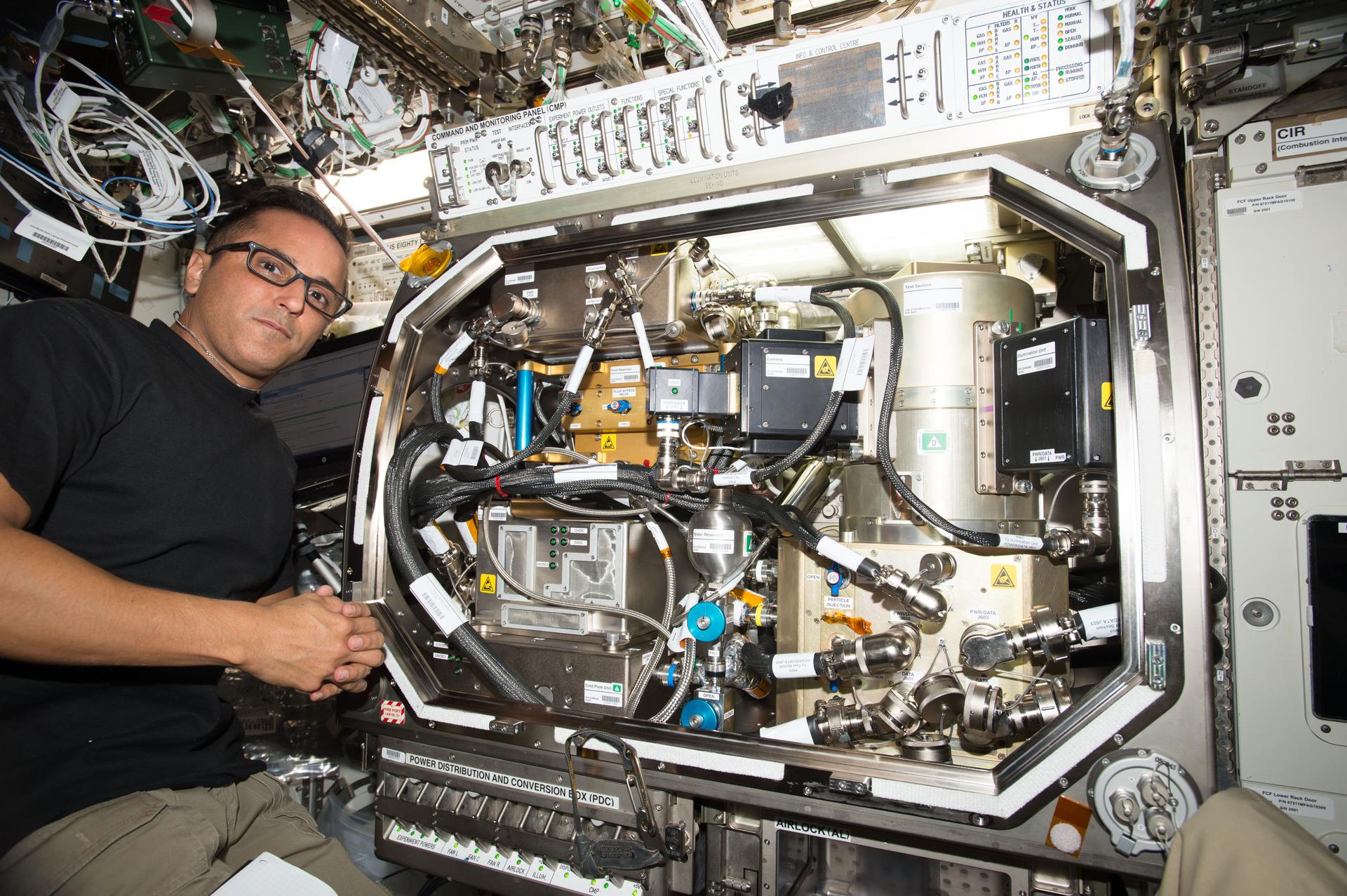
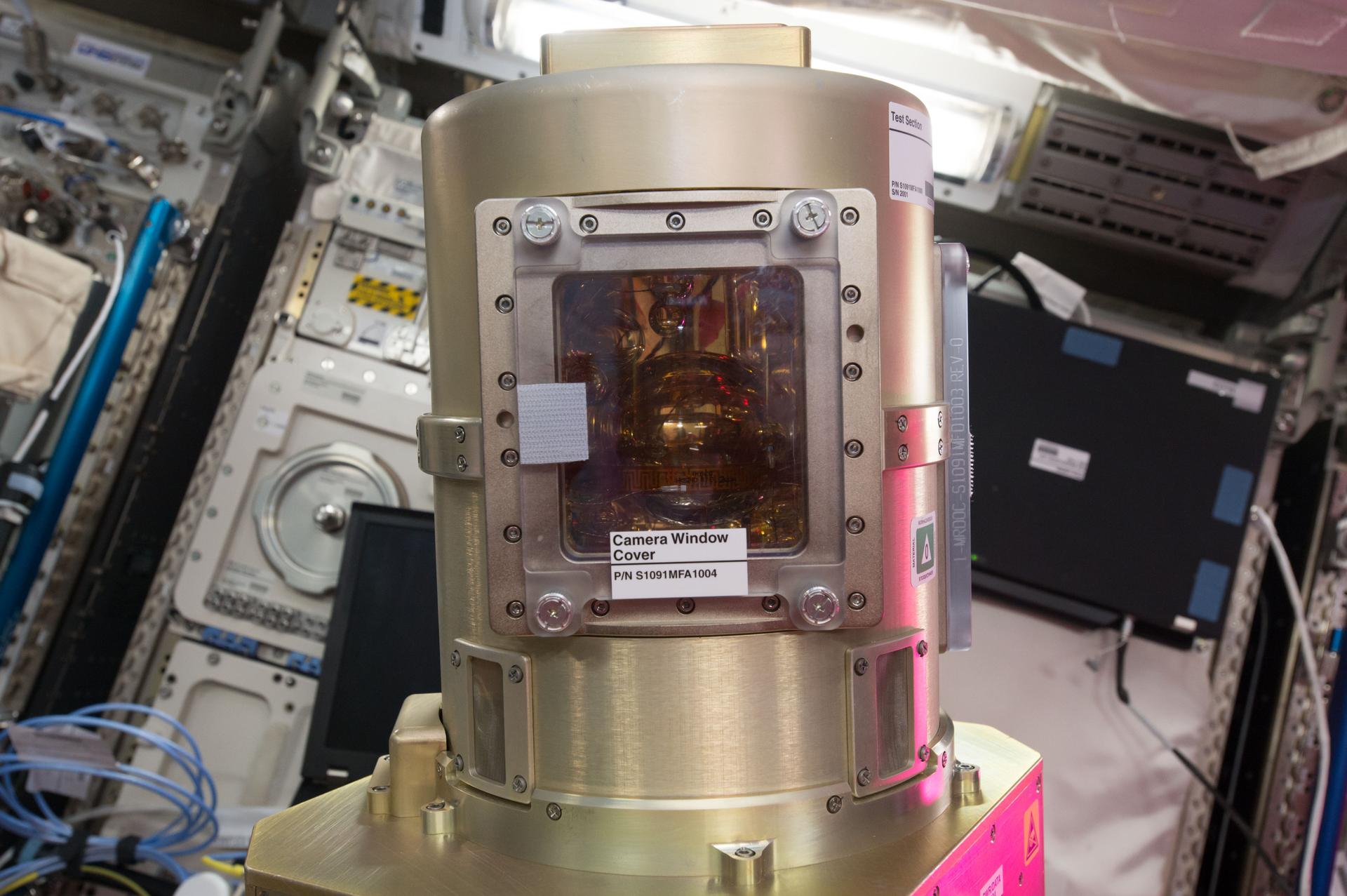
Flight Engineer Joe Acaba works in the U.S. Destiny laboratory module on the International Space Station, setting up hardware for the Zero Boil-Off Tank (ZBOT) experiment.
Joe Acaba
Space missions rely on cryogenic fluids — extremely cold liquids like liquid hydrogen and oxygen — for both propulsion and life support systems. These fuels must be kept at ultra-low cryogenic temperatures to remain in liquid form; however, solar heating and other sources of heat increase the rate of evaporation of the liquid and cause the pressure in the storage tank to increase. Current storage methods require venting the cryogenic propellant to space to control the pressure in fuel tanks.
NASA’s Zero Boil-Off Tank Noncondensables (ZBOT-NC) experiment is the continuation of Zero Boil-Off studies gathering crucial data to optimize fuel storage systems for space missions. The experiment will launch aboard Northrop Grumman’s 23rd resupply mission to the International Space Station.
When Cold Fuel Gets Too Warm
Even with multilayer insulation, heat unavoidably seeps into cryogenic fuel tanks from surrounding structures and the space environment, causing an increase in the liquid temperature and an associated increase in the evaporation rate. In turn, the pressure inside the tank increases. This process is called “boil-off” and the increase in tank pressure is referred to as “self-pressurization.”
Venting excess gas to the environment or space when this process occurs is highly undesirable and becomes mission-critical on extended journeys. If crew members used current fuel storage methods for a years-long Mars expedition, all propellant might be lost to boil-off before the trip ends.
NASA’s ZBOT experiments are investigating active pressure control methods to eliminate wasteful fuel venting. Specifically, active control through the use of jet mixing and other techniques are being evaluated and tested in the ZBOT series of experiments.
The Pressure Control Problem
ZBOT-NC further studies how noncondensable gases (NCGs) affect fuel tank behavior when present in spacecraft systems. NCGs don’t turn into liquid under the tank’s operating conditions and can affect tank pressure.
The investigation, which is led out of Glenn Research Center, will operate inside the Microgravity Science Glovebox aboard the space station to gather data on how NCGs affect volatile liquid behavior in microgravity. It’s part of an effort to advance cryogenic fluid management technologies and help NASA better understand low-gravity fluid behavior.
Researchers will measure pressure and temperature as they study how these gases change evaporation and condensation rates. Previous studies indicate the gases create barriers that could reduce a tank’s ability to maintain proper pressure control — a potentially serious issue for extended space missions.
How this benefits space exploration
The research directly supports Mars missions and other long-duration space travel by helping engineers design more efficient fuel storage systems and future space depots. The findings may also benefit scientific instruments on space telescopes and probes that rely on cryogenic fluids to maintain the extremely low temperatures needed for operation.
How this benefits humanity
The investigation could improve tank design models for medical, industrial, and energy production applications that depend on long-term cryogenic storage on Earth.
Latest Content
Stay up-to-date with the latest content from NASA as we explore the universe and discover more about our home planet.
Zero Boil-Off Tank Noncondensables (ZBOT-NC) Principal Investigator(s): Overview: Zero Boil-Off Tank Noncondensables (ZBOT-NC) investigates how noncondensable gases interfere with fuel…
Learn More Growing Beyond Earth student teams have helped select 5 of the 20 species that have been tested as…
Topic
Biological & Physical Sciences Division
NASA’s Biological and Physical Sciences Division pioneers scientific discovery and enables exploration by using space environments to conduct investigations not possible on Earth. Studying biological and physical phenomenon under extreme conditions allows researchers to advance the fundamental scientific knowledge required to go farther and stay longer in space, while also benefitting life on Earth.
Dinner is served aboard the International Space Station! One tray features shrimp cocktail on whole grain wheat crackers, while the other holds sushi made with seaweed, Spam, tuna, and rice.
Dinnertime fare on the International Space Station takes center stage in this Aug. 15, 2025, photo. One tray features shrimp cocktail on whole grain wheat crackers, while the other holds sushi made with seaweed, Spam, tuna, and rice. Both trays are secured with Velcro strips to keep them stable inside the Unity module’s galley. The shrimp and crackers are held in place by condiments, while the sushi stays put thanks to surface tension from its moisture.
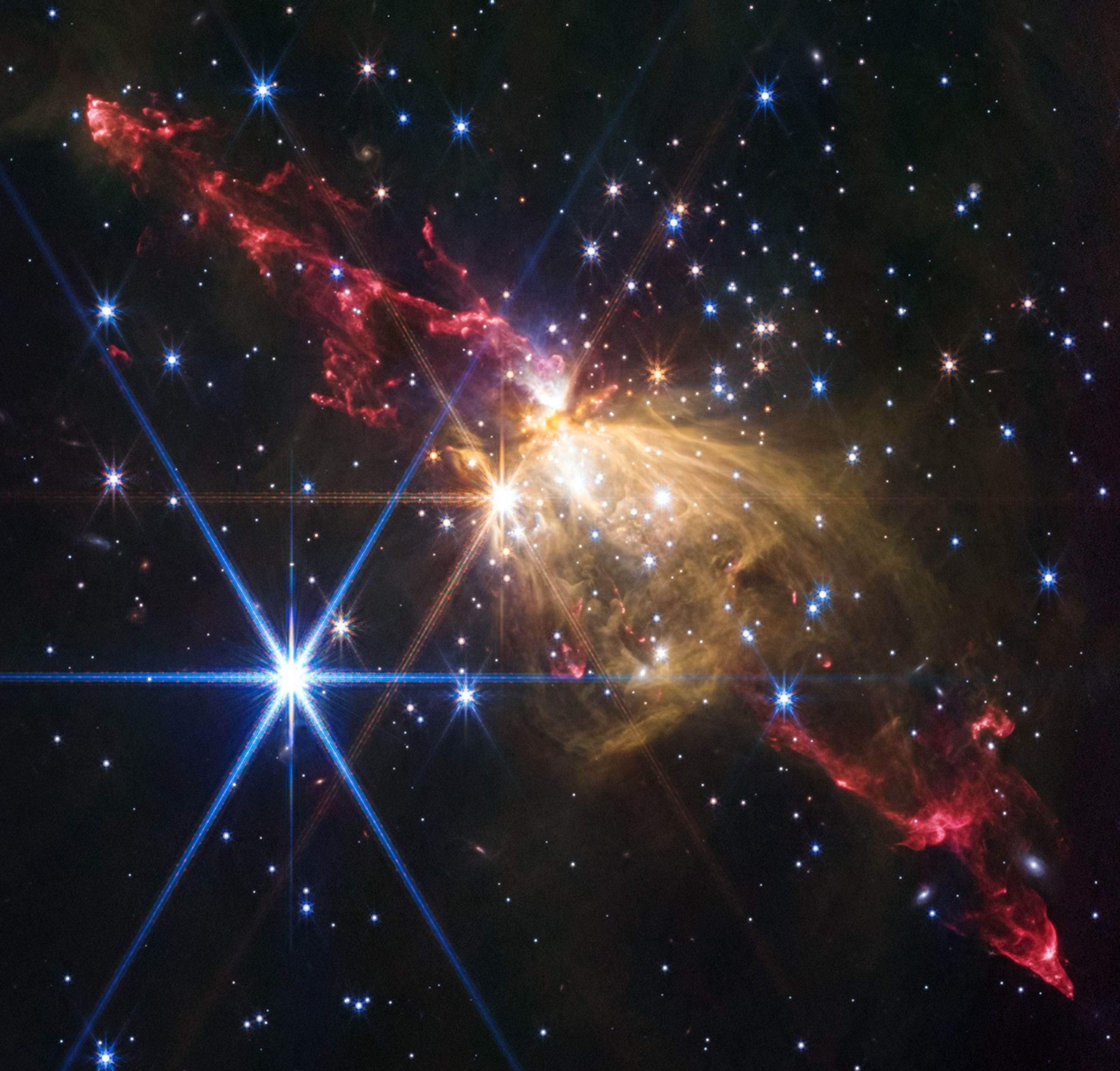
NASA’s Webb Observes Immense Stellar Jet on Outskirts of Our Milky Way
Webb’s image of the enormous stellar jet in Sh2-284 provides evidence that protostellar jets scale with the mass of their parent stars—the more massive the stellar engine driving the plasma, the larger the resulting jet. Full image shown below.
Credits: Image: NASA, ESA, CSA, STScI, Yu Cheng (NAOJ); Image Processing: Joseph DePasquale (STScI)
A blowtorch of seething gasses erupting from a volcanically growing monster star has been captured by NASA’s James Webb Space Telescope. Stretching across 8 light-years, the length of the stellar eruption is approximately twice the distance between our Sun and the next nearest stars, the Alpha Centauri system. The size and strength of this particular stellar jet, located in a nebula known as Sharpless 2-284 (Sh2-284 for short), qualifies it as rare, say researchers.
Streaking across space at hundreds of thousands of miles per hour, the outflow resembles a double-bladed dueling lightsaber from the Star Wars films. The central protostar, weighing as much as ten of our Suns, is located 15,000 light-years away in the outer reaches of our galaxy.
The Webb discovery was serendipitous. “We didn’t really know there was a massive star with this kind of super-jet out there before the observation. Such a spectacular outflow of molecular hydrogen from a massive star is rare in other regions of our galaxy,” said lead author Yu Cheng of the National Astronomical Observatory of Japan.
Image A: Stellar Jet in Sh2-284 (NIRCam Image)
Webb’s image of the enormous stellar jet in Sh2-284 provides evidence that protostellar jets scale with the mass of their parent stars—the more massive the stellar engine driving the plasma, the larger the resulting jet.
Image: NASA, ESA, CSA, STScI, Yu Cheng (NAOJ); Image Processing: Joseph DePasquale (STScI)
This unique class of stellar fireworks are highly collimated jets of plasma shooting out from newly forming stars. Such jetted outflows are a star’s spectacular “birth announcement” to the universe. Some of the infalling gas building up around the central star is blasted along the star’s spin axis, likely under the influence of magnetic fields.
Today, while hundreds of protostellar jets have been observed, these are mainly from low-mass stars. These spindle-like jets offer clues into the nature of newly forming stars. The energetics, narrowness, and evolutionary time scales of protostellar jets all serve to constrain models of the environment and physical properties of the young star powering the outflow.
“I was really surprised at the order, symmetry, and size of the jet when we first looked at it,” said co-author Jonathan Tan of the University of Virginia in Charlottesville and Chalmers University of Technology in Gothenburg, Sweden.
Its detection offers evidence that protostellar jets must scale up with the mass of the star powering them. The more massive the stellar engine propelling the plasma, the larger the gusher’s size.
The jet’s detailed filamentary structure, captured by Webb’s crisp resolution in infrared light, is evidence the jet is plowing into interstellar dust and gas. This creates separate knots, bow shocks, and linear chains.
The tips of the jet, lying in opposite directions, encapsulate the history of the star’s formation. “Originally the material was close into the star, but over 100,000 years the tips were propagating out, and then the stuff behind is a younger outflow,” said Tan.
Outlier
At nearly twice the distance from the galactic center as our Sun, the host proto-cluster that’s home to the voracious jet is on the periphery of our Milky Way galaxy.
Within the cluster, a few hundred stars are still forming. Being in the galactic hinterlands means the stars are deficient in heavier elements beyond hydrogen and helium. This is measured as metallicity, which gradually increases over cosmic time as each passing stellar generation expels end products of nuclear fusion through winds and supernovae. The low metallicity of Sh2-284 is a reflection of its relatively pristine nature, making it a local analog for the environments in the early universe that were also deficient in heavier elements.
“Massive stars, like the one found inside this cluster, have very important influences on the evolution of galaxies. Our discovery is shedding light on the formation mechanism of massive stars in low metallicity environments, so we can use this massive star as a laboratory to study what was going on in earlier cosmic history,” said Cheng.
Unrolling Stellar Tapestry
Stellar jets, which are powered by the gravitational energy released as a star grows in mass, encode the formation history of the protostar.
“Webb’s new images are telling us that the formation of massive stars in such environments could proceed via a relatively stable disk around the star that is expected in theoretical models of star formation known as core accretion,” said Tan. “Once we found a massive star launching these jets, we realized we could use the Webb observations to test theories of massive star formation. We developed new theoretical core accretion models that were fit to the data, to basically tell us what kind of star is in the center. These models imply that the star is about 10 times the mass of the Sun and is still growing and has been powering this outflow.”
For more than 30 years, astronomers have disagreed about how massive stars form. Some think a massive star requires a very chaotic process, called competitive accretion.
In the competitive accretion model, material falls in from many different directions so that the orientation of the disk changes over time. The outflow is launched perpendicularly, above and below the disk, and so would also appear to twist and turn in different directions.
“However, what we’ve seen here, because we’ve got the whole history – a tapestry of the story – is that the opposite sides of the jets are nearly 180 degrees apart from each other. That tells us that this central disk is held steady and validates a prediction of the core accretion theory,” said Tan.
Where there’s one massive star, there could be others in this outer frontier of the Milky Way. Other massive stars may not yet have reached the point of firing off Roman-candle-style outflows. Data from the Atacama Large Millimeter Array in Chile, also presented in this study, has found another dense stellar core that could be in an earlier stage of construction.
The James Webb Space Telescope is the world’s premier space science observatory. Webb is solving mysteries in our solar system, looking beyond to distant worlds around other stars, and probing the mysterious structures and origins of our universe and our place in it. Webb is an international program led by NASA with its partners, ESA (European Space Agency) and CSA (Canadian Space Agency).
Webb’s image of the enormous stellar jet in Sh2-284 provides evidence that protostellar jets scale with the mass of their parent stars–the more massive the stellar engine driving the plasma, the larger the resulting jet.
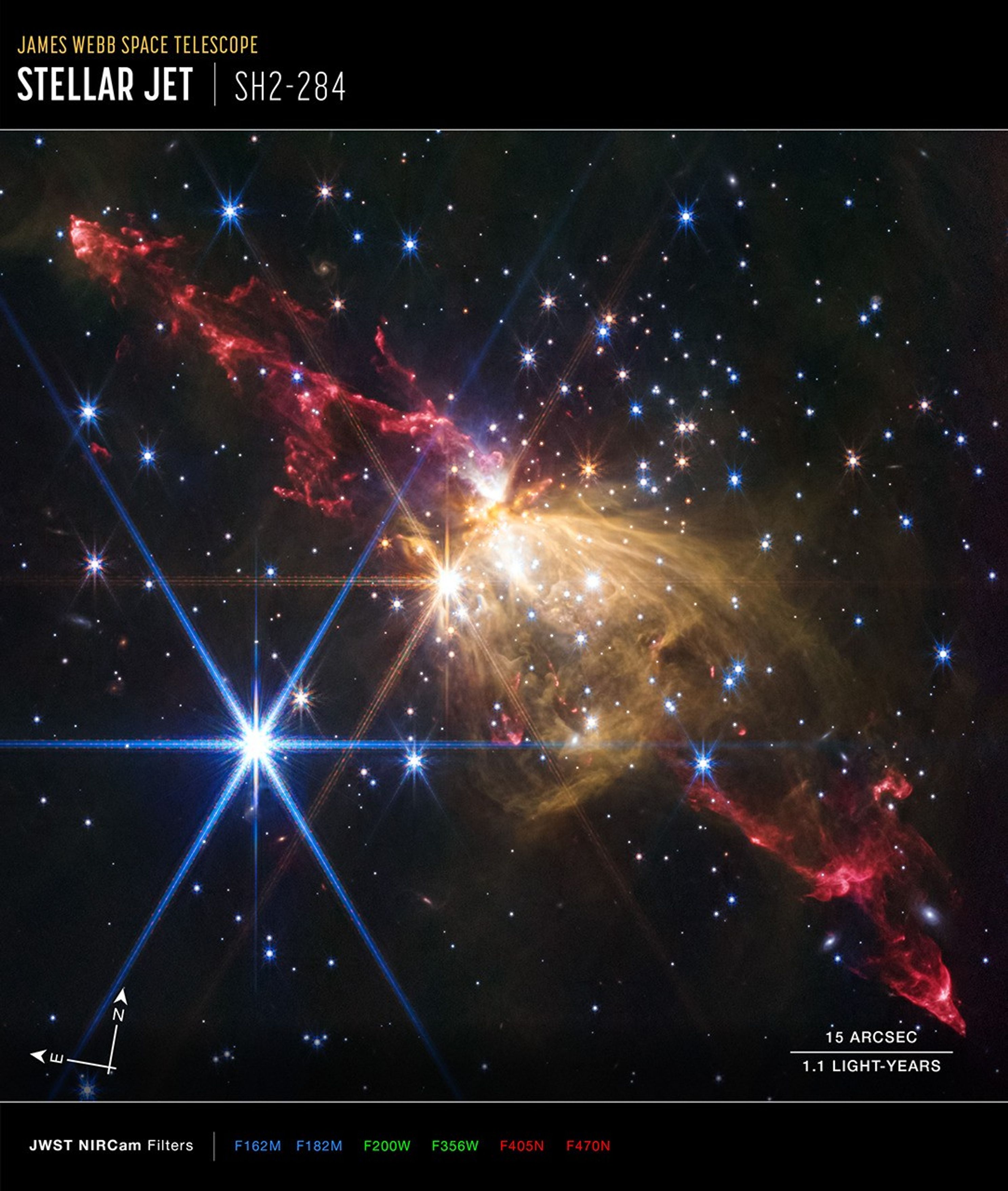
Stellar Jet in Sh2-284 (NIRCam Compass Image)
This image of the stellar jet in Sh2-284, captured by NASA’s James Webb Space Telescope’s NIRCam (Near-Infrared Camera), shows compass arrows, scale bar, and color key for reference.
Immense Stellar Jet in Sh2-284
This video shows the relative size of two different protostellar jets imaged by NASA’s James Webb Space Telescope. The first image shown is an extremely large protostellar jet located in Sh2-284, 15,000 light-years away from Earth. The outflows from the massive central prot…
Preparations for Next Moonwalk Simulations Underway (and Underwater)
What Would It Take to Say We Found Life?
We call this the podium test. What would it take for you personally to confidently stand up in front of an international audience and make that claim? When you put it in that way, I think for a lot of scientists, the bar is really high.
So of course, there would be obvious things, you know, a very clear signature of technology or a skeleton or something like that. But we think that a lot of the evidence that we might encounter first will be much more subtle. For example, chemical signs of life that have to be detected above a background of abiotic chemistry. And really, what we see might depend a lot on where we look.
On Mars, for example, the long history of exploration there gives us a lot of context for what we might find. But we’re potentially talking about samples that are billions of years old in those cases, and on Earth, those kinds of samples, the evidence of life is often degraded and difficult to detect.
On the ocean worlds of our outer solar system, so places like Jupiter’s moon Europa and Saturn’s moon Enceladus, there’s the tantalizing possibility of extant life, meaning life that’s still alive. But potentially we’re talking about exceedingly small amounts of samples that would have to be analyzed with a relatively limited amount of instrumentation that can be carried from Earth billions of miles away.
And then for exoplanets, these are planets beyond our own solar system. Really, what we’re looking for there are very large magnitude signs of life that can be detectable through a telescope from many light-years away. So changes like the oxygenation of Earth’s atmosphere or changes in surface color.
So any one of those things, if they rose to the suspicion of being evidence of life, would be really heavily scrutinized in a very sort of specific and custom way to that particular observation. But I think there are also some general principles that we can follow. And the first is just: Are we sure we’re seeing what we think we’re seeing? Many of these environments are not very well known to us, and so we need to convince ourselves that we’re actually seeing a clear signal that represents what we think it represents.
Carl Sagan once said, “Life is the hypothesis of last resort,” meaning that we ought to work hard for such a claim to rule out alternative possibilities. So what are those possibilities? One is contamination. The spacecraft and the instruments that we use to look for evidence of life are built in an environment, Earth, that is full of life. And so we need to convince ourselves that what we’re seeing is not evidence of our own life, but evidence of indigenous life.
If that’s the case, we should ask, should life of the type we’re seeing live there? And finally, we need to ask, is there any other way than life to make that thing, any of the possible abiotic processes that we know and even the ones that we don’t know? And as you can imagine, that will be quite a challenge.
Once we have a piece of evidence in hand that we really do think represents evidence of life, now we can begin to develop hypotheses. For example, do we have separate independent lines of evidence that corroborate what we’ve seen and increase our confidence of life?
Ultimately, all of this has to be looked at hard by the entire scientific community, and in that sense, I think the really operative word in our question is we. What does it take to say we found evidence of life? Because really, the answer, I think, depends on the full scientific community scrutinizing and skepticizing this observation to finally say that we scientists, we as a community and we as humanity found life.
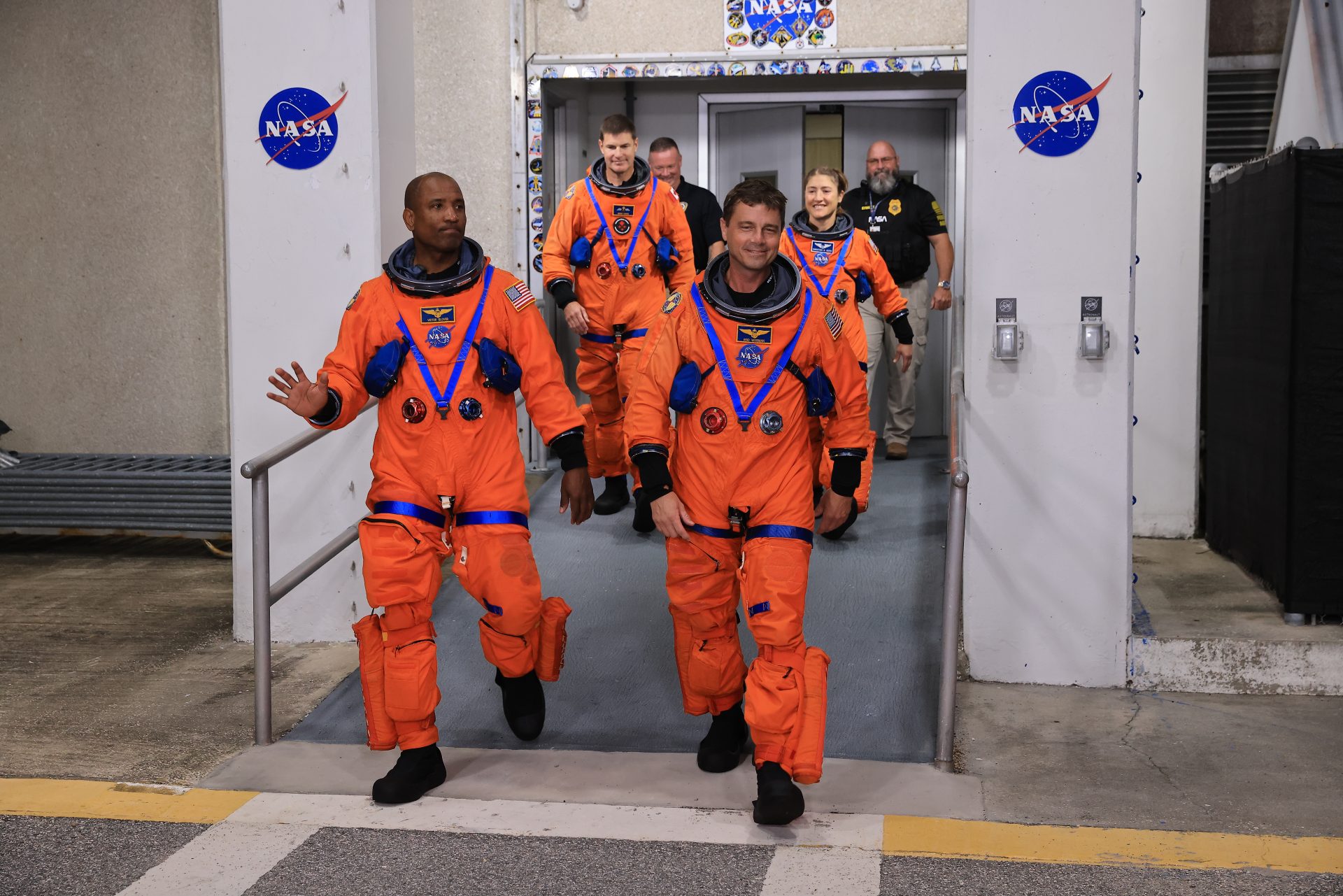
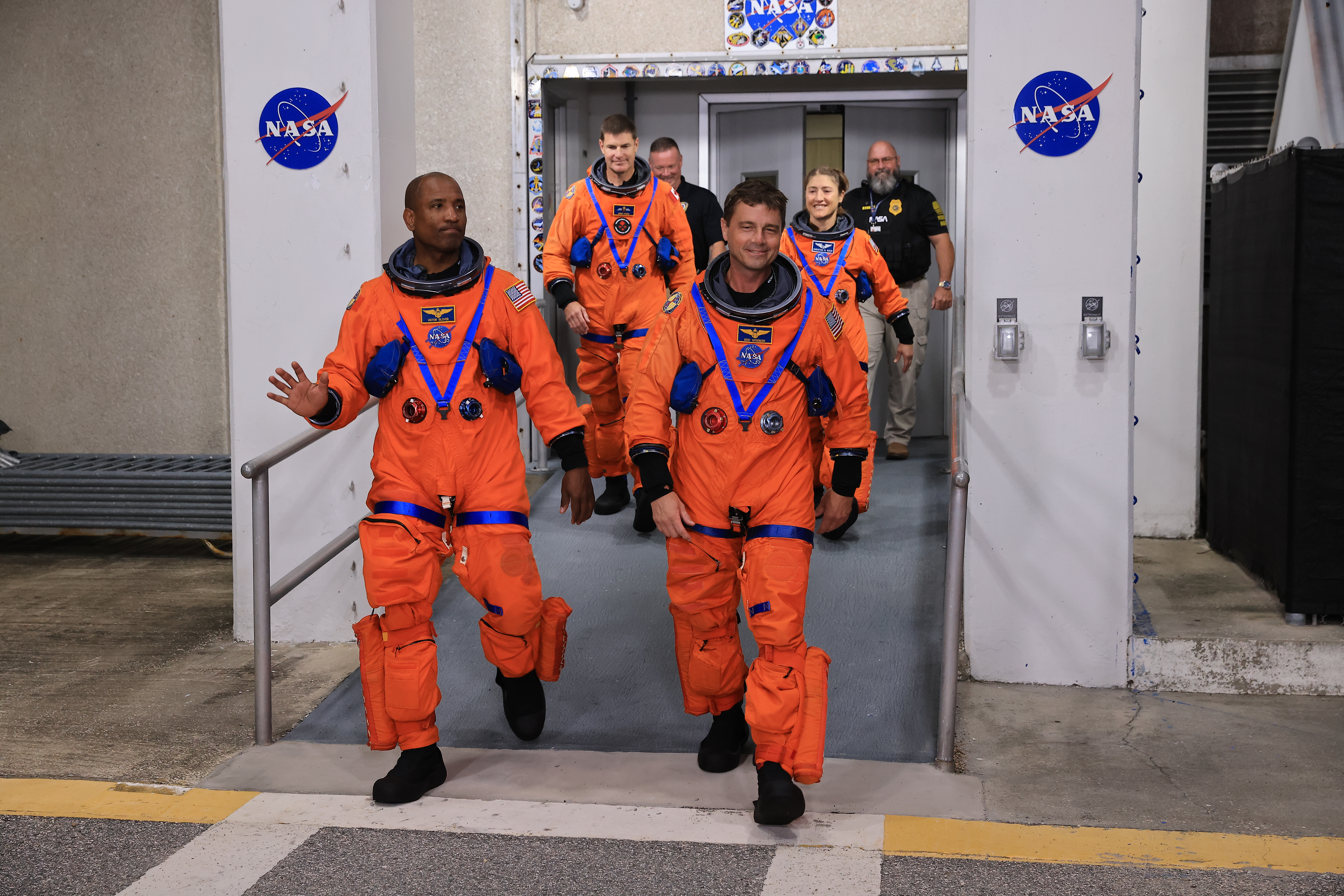
From left to right, NASA astronauts Victor Glover, Artemis II pilot; Reid Wiseman, Artemis II commander; CSA (Canadian Space Agency) astronaut Jeremy Hansen, Artemis II mission specialist, and NASA astronaut Christina Koch, Artemis II mission specialist, suit up and walk out of the Neil A. Armstrong Operations and Checkout Building at NASA’s Kennedy Space Center in Florida on Monday, Aug. 11, 2025. During a two-day operation, the Artemis II team practiced night-run demonstrations of different launch day scenarios for the Artemis II test flight.
Preparations for Next Moonwalk Simulations Underway (and Underwater)
While auroras are a beautiful sight on Earth, the solar activity that causes them can wreak havoc with space-based infrastructure like satellites. Using artificial intelligence to predict these disruptive solar events was a focus of KX’s work with FDL.
Credit: Sebastian Saarloos
In the summer of 2024, people across North America were amazed when auroras lit up the night sky across their hometowns, but the same solar activity that makes auroras can cause disruptions to satellites that are essential to systems on Earth. The solution to predicting these solar events and warning satellite operators may come through artificial intelligence.
The Frontier Development Lab of Mountain View, California, is an ongoing partnership between NASA and commercial AI firms to apply advanced machine learning to problems that matter to the agency and beyond. Since 2016, the Frontier Development Lab has applied AI on behalf of NASA in planetary defense, Heliophysics, Earth science, medicine, and lunar exploration.
Through a collaboration with a company called KX Systems, the Frontier Development Lab looked to use proven software in an innovative new way. The company’s flagship data analytics software, called kdb+, is typically used in the financial industry to keep track of rapid shifts in market trends, but the company was exploring how it could be used in space.
Between 2017 and 2019, KX Systems participated in the Frontier Development Lab partnership through NASA’s Ames Research Center in Silicon Valley, California. Working with NASA scientists, KX applied the capabilities of kdb+ to searching for exoplanets and predicting space weather, areas which could be improved with AI models. One question the Frontier Development Lab worked to answer was whether kdb+ could forecast the kind of space weather that creates the auroras to predict when GPS satellites might experience signal interruption due to the Sun.
By importing several datasets monitoring the ionosphere, solar activity, and Earth’s magnetic field, then applying machine learning algorithms to them, the Frontier Development Lab researchers were able to predict disruptive events up to 24 hours in advance.
While this was a scientific application of AI, KX Systems says some of this development work has made it back into its commercial offerings, as there are similarities between AI models developed to find patterns in satellite signal losses and ones that predict maintenance needs for industrial manufacturing equipment.
A division of FD Technologies plc., KX Systems is a technology company that offers database management and analytics software for customers that need to make decisions quickly. While KX started in 1993, its AI-driven business has grown considerably, and the company credits work done with NASA for accelerating some of its capabilities.
From protecting valuable satellites to keeping manufacturing lines moving at top performance, pairing NASA’s expertise with commercial ingenuity is a combination for success.
The Artemis II crew (from front left to back right) – pilot Victor Glover, commander Reid Wiseman, mission specialist Jeremy Hansen of CSA (Canadian Space Agency), and mission specialist Christina Koch – walk out of the Neil A. Armstrong Operations and Checkout Building at NASA’s Kennedy Space Center in Florida on Monday, Aug. 11, 2025.
Join the Artemis II mission and sign up to launch your name aboard the Orion spacecraft and SLS (Space Launch System) rocket alongside the crew.
Through the Artemis program, NASA will send astronauts to explore the Moon for scientific discovery, economic benefits, and to build the foundation for the first crewed missions to Mars – for the benefit of all.
Research Astrophysicist and Roman’s Deputy Wide Field Instrument Scientist – Goddard Space Flight Center
From a young age, Ami Choi — now a research astrophysicist at NASA — was drawn to the vast and mysterious. By the fifth grade, she had narrowed her sights to two career paths: marine biology or astrophysics.
“I’ve always been interested in exploring big unknown realms, and things that aren’t quite tangible,” Choi said. That curiosity has served her all throughout her career.
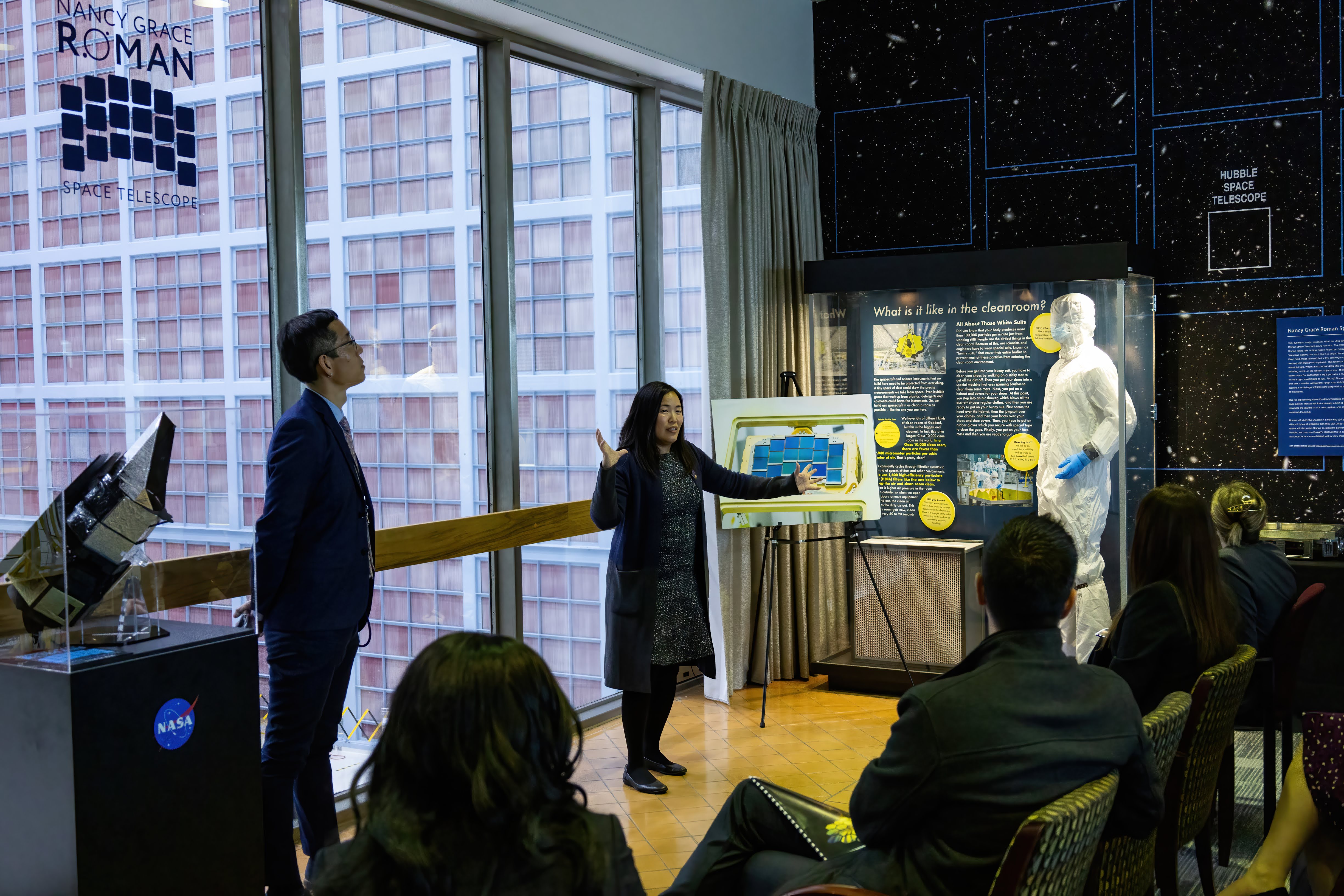
In addition to conducting research, Ami Choi shares science with the public at various outreach events, including tours at NASA’s Goddard Space Flight Center in Greenbelt, Md. This photo captures one tour stop, outside the largest clean room at Goddard.
Credit: NASA/Travis Wohlrab
As a student at University Laboratory High School in Urbana, Illinois, Choi gravitated toward astrophysics and was fascinated by things like black holes. She studied physics as an undergraduate at the University of Chicago, though she says math and physics didn’t necessarily come easily to her.
“I wasn’t very good at it initially, but I really liked the challenge so I stuck with it,” Choi said.
Early opportunities to do research played a pivotal role in guiding her career. As an undergraduate, Choi worked on everything from interacting galaxies to the stuff in between stars in our galaxy, called the interstellar medium. She learned how to code, interpret data, and do spectroscopy, which involves splitting light from cosmic objects into a rainbow of colors to learn about things like their composition.
After college, Choi read an article about physicist Janet Conrad’s neutrino work at Fermilab and was so inspired by Conrad’s enthusiasm and inclusivity that she cold-emailed her to see if there were any positions available in her group.
On October 14, 2023, Ami took a break from a thermal vacuum shift to snap a selfie with a partial eclipse. She was visiting BAE, Inc. in Boulder, Co., where the primary instrument for NASA’s Nancy Grace Roman Space Telescope was undergoing testing.
Credit: Courtesy of Ami Choi
“That one email led to a year at Fermilab working on neutrino physics,” Choi said.
She went on to earn a doctorate at the University of California, Davis, where she studied weak gravitational lensing — the subtle warping of light by gravity — and used it to explore dark matter, dark energy, and the large-scale structure of the universe.
Her postdoctoral work took Choi first to the University of Edinburgh in Scotland, where she contributed to the Kilo-Degree Survey, and later to The Ohio State University, where she became deeply involved in DES (the Dark Energy Survey) and helped lay the groundwork for the Nancy Grace Roman Space Telescope — NASA’s next flagship astrophysics mission.
“One of my proudest moments came in 2021, when the DES released its third-year cosmology results,” Choi said. “It was a massive team effort conducted during a global pandemic, and I had helped lead as a co-convener of the weak lensing team.”
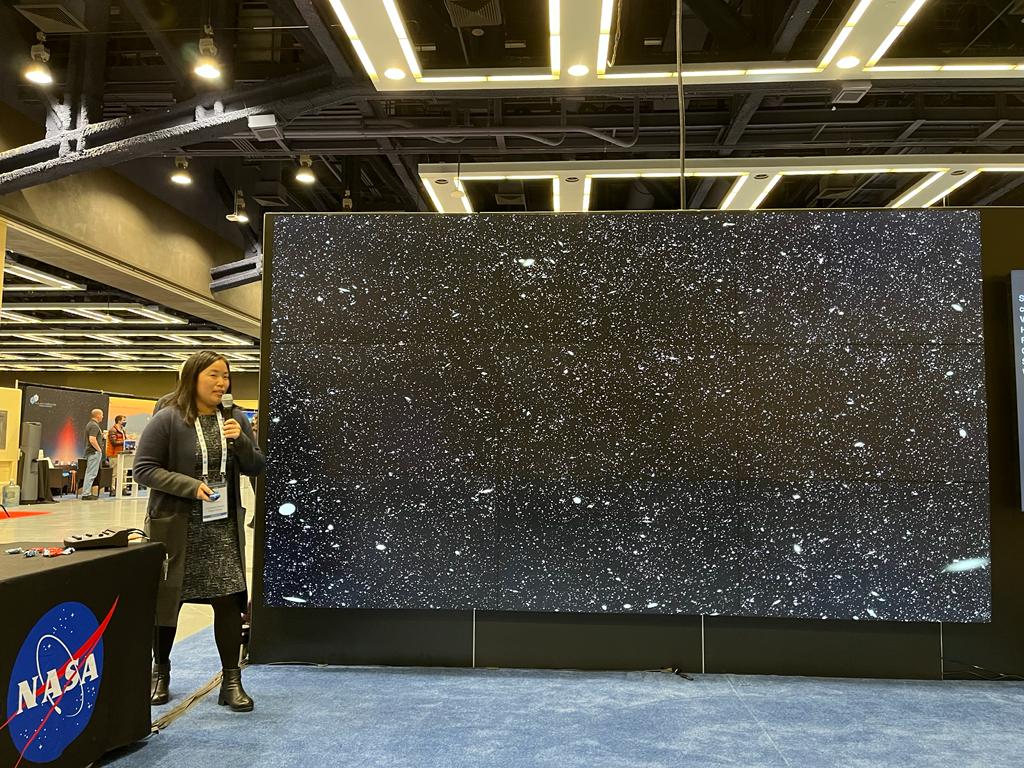
Choi regularly presents information about NASA’s Nancy Grace Roman Space Telescope to fellow scientists and the public. Here, she gives a Hyperwall talk at an AAS (American Astronomical Society) meeting.
Credit: Courtesy of Ami Choi
After a one-year stint at the California Institute of Technology in Pasadena, where Choi worked on SPHEREx (Spectro-Photometer for the History of the Universe, Epoch of Reionization and Ices Explorer)—an observatory that’s surveying stars and galaxies—she became a research astrophysicist at NASA’s Goddard Space Flight Center in Greenbelt, Maryland. She also serves as the deputy Wide Field Instrument scientist for Roman. Choi operates at the intersection of engineering, calibration, and cosmology, helping translate ground-based testing into flight-ready components that will help Roman reveal large swaths of the universe in high resolution.
“I’m very excited for Roman’s commissioning phase — the first 90 days when the spacecraft will begin transmitting data from orbit,” Choi said.
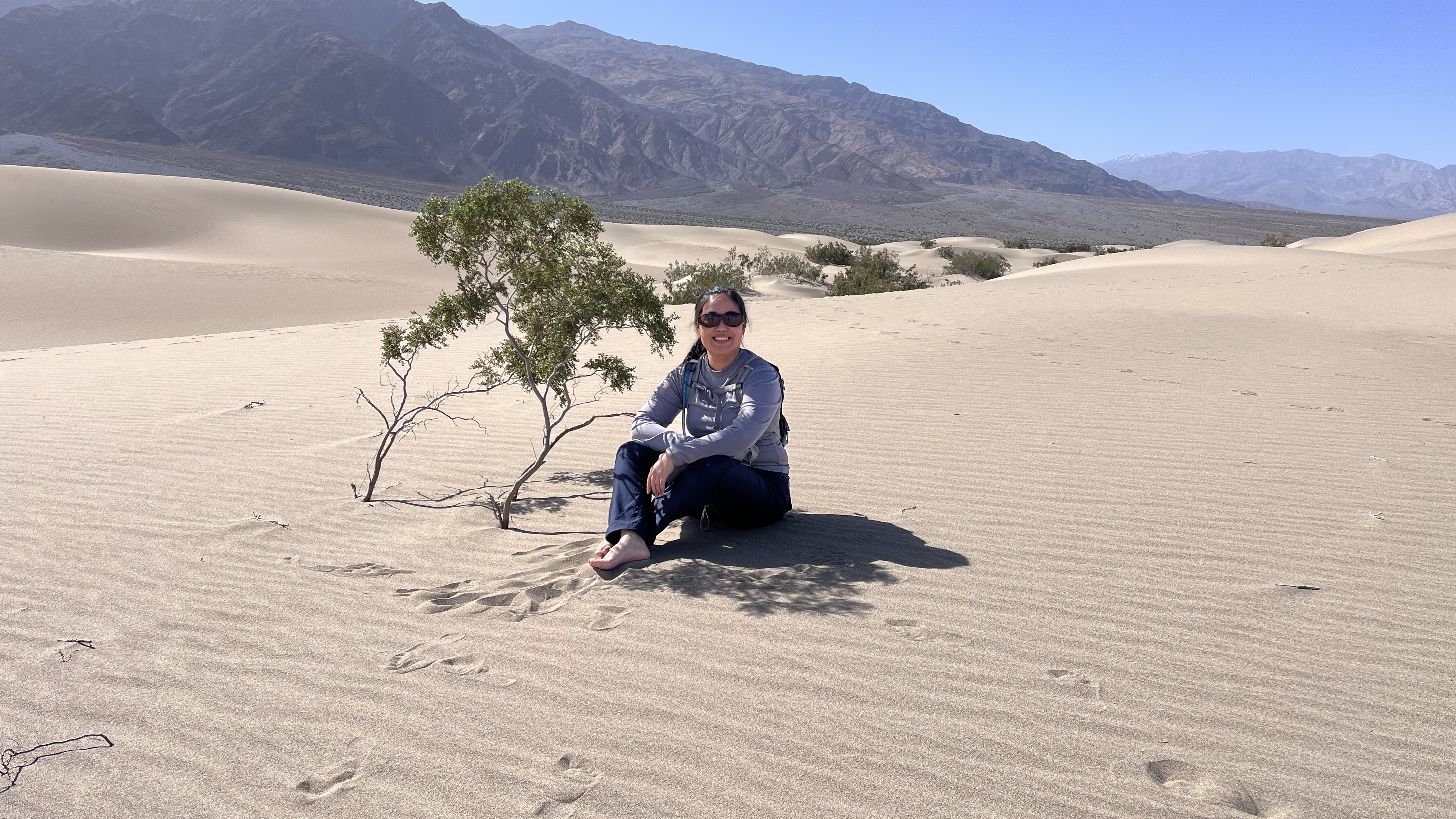
Choi, photographed here in Death Valley, finds joy in the natural world outside of work. She cycles, hikes, and tends a small vegetable garden with a friend from grad school.
Credit: Insook Choi (used with permission)
She’s especially drawn to so-called systematics, which are effects that can alter the signals scientists are trying to measure. “People sometimes think of systematics as nuisances, but they’re often telling us something deeply interesting about either the physics of something like a detector or the universe itself,” Choi said. “There’s always something more going on under the surface.”
While she’s eager to learn more about things like dark energy, Choi is also looking forward to seeing all the other ways our understanding of the universe grows. “It’s more than just an end goal,” she said. “It’s about everything we learn along the way. Every challenge we overcome, every detail we uncover, is an important discovery too.”
For those who hope to follow a similar path, Choi encourages staying curious, being persistent, and taking opportunities to get involved in research. And don’t let the tricky subjects scare you away! “You don’t have to be perfect at math or physics right away,” she said. “What matters most is a deep curiosity and the tenacity to keep pushing through.”
By Ashley Balzer NASA’s Goddard Space Flight Center, Greenbelt, Md.
Preparations for Next Moonwalk Simulations Underway (and Underwater)
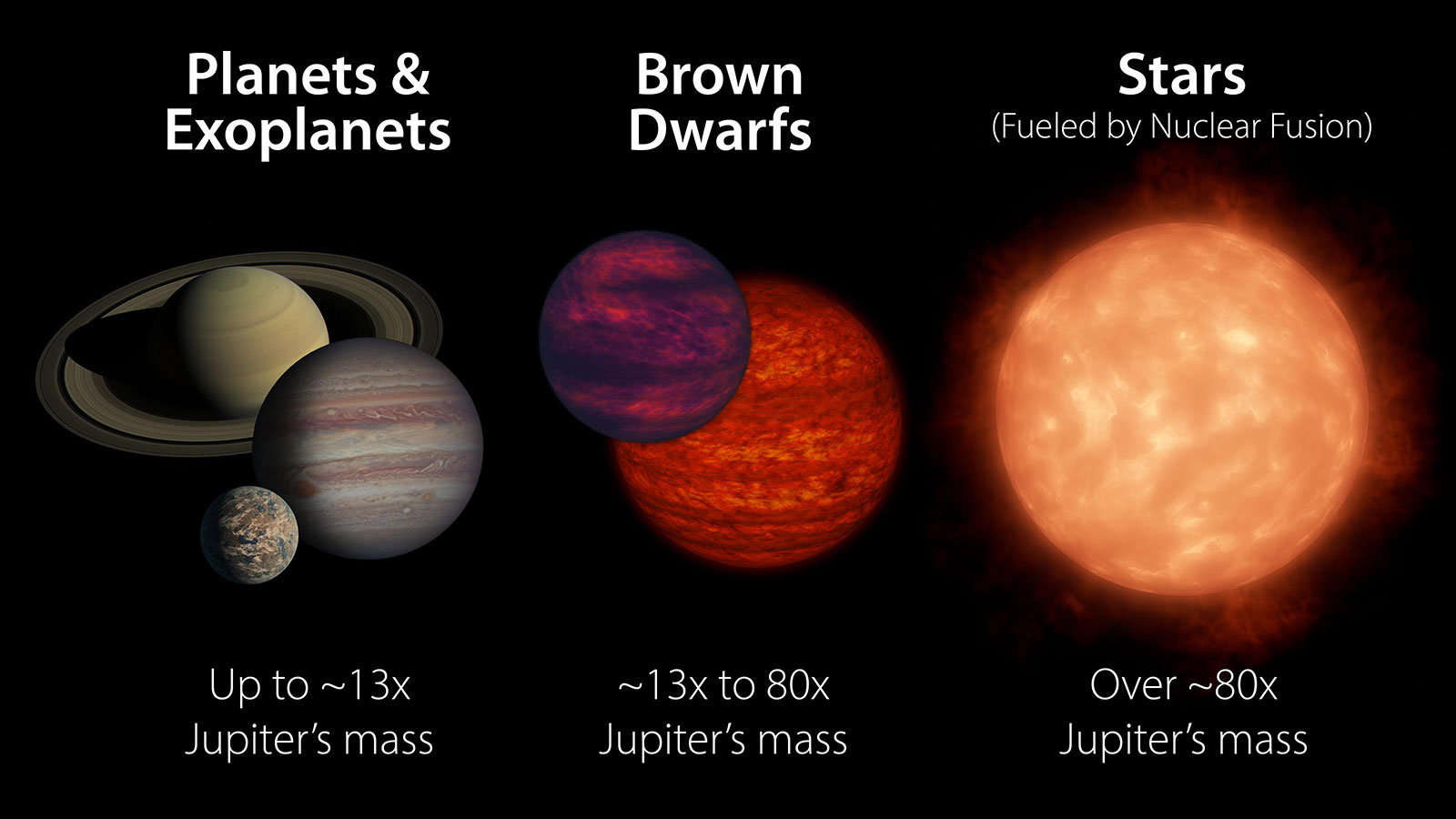
This artist’s concept shows a brown dwarf — an object larger than a planet but not massive enough to kickstart fusion in its core like a star. Brown dwarfs are hot when they form and may glow like this one, but over time they get closer in temperature to gas giant planets like Jupiter.
NOIRLab/NSF/AURA/R. Proctor
An unusual cosmic object is helping scientists better understand the chemistry hidden deep in Jupiter and Saturn’s atmospheres — and potentially those of exoplanets.
Why has silicon, one of the most common elements in the universe, gone largely undetected in the atmospheres of Jupiter, Saturn, and gas planets like them orbiting other stars? A new study using observations from NASA’s James Webb Space Telescope sheds light on this question by focusing on a peculiar object that astronomers discovered by chance in 2020 and called “The Accident.”
The results were published on Sept. 4 in the journal Nature.
As shown in this graphic, brown dwarfs can be far more massive than even large gas planets like Jupiter and Saturn. However, they tend to lack the mass that kickstarts nuclear fusion in the cores of stars, causing them to shine.
NASA/JPL-Caltech
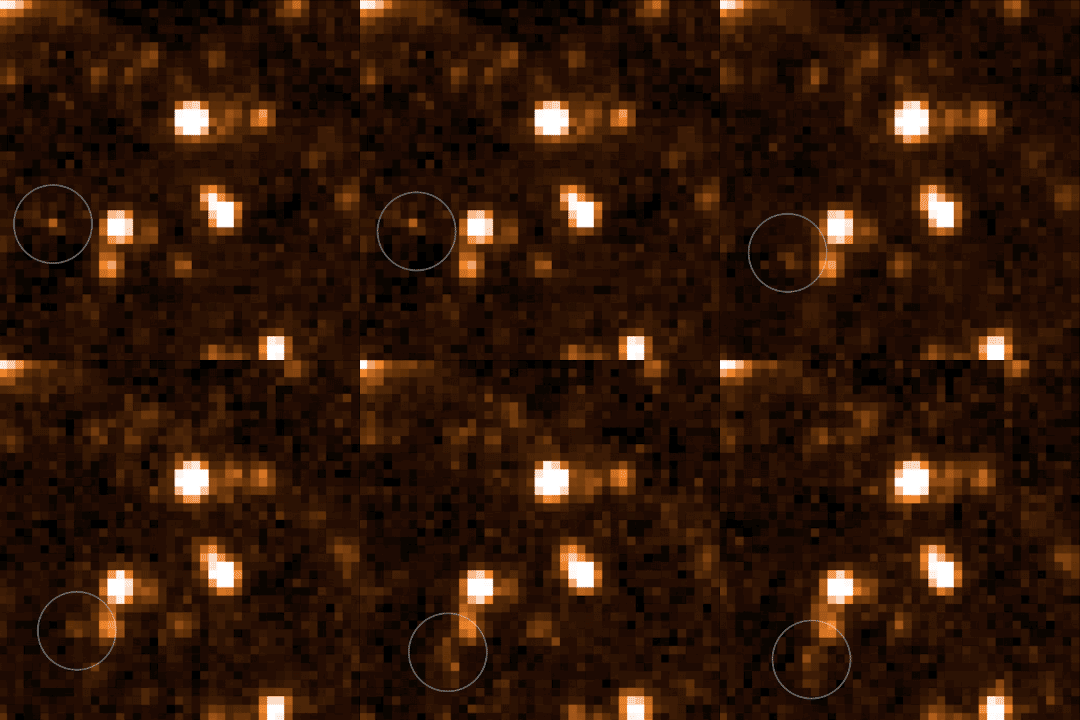
The Accident is a brown dwarf, a ball of gas that’s not quite a planet and not quite a star. Even among its already hard-to-classify peers, The Accident has a perplexing mix of physical features, some of which have been previously seen in only young brown dwarfs and others seen only in ancient ones. Because of those features, it slipped past typical detection methods before being discovered five years ago by a citizen scientist participating in Backyard Worlds: Planet 9. The program lets people around the globe look for new discoveries in data from NASA’s now-retired NEOWISE (Near-Earth Object Wide-field Infrared Survey Explorer), which was managed by NASA’s Jet Propulsion Laboratory in Southern California.
The brown dwarf nicknamed “The Accident” can be seen moving in the bottom left corner of this video, which shows data from NASA’s now-retired NEOWISE (Near-Earth Object Wide-Field Infrared Survey Explorer), launched in 2009 with the moniker WISE.
NASA/JPL-Caltech/Dan Caselden
The Accident is so faint and odd that researchers needed NASA’s most powerful space observatory, Webb, to study its atmosphere. Among several surprises, they found evidence of a molecule they couldn’t initially identify. It turned out to be a simple silicon molecule called silane (SiH4). Researchers have long expected — but been unable — to find silane not only in our solar system’s gas giants, but also in the thousands of atmospheres belonging to brown dwarfs and to the gas giants orbiting other stars. The Accident is the first such object where this molecule has been identified.
Scientists are fairly confident that silicon exists in Jupiter and Saturn’s atmospheres but that it is hidden. Bound to oxygen, silicon forms oxides such as quartz that can seed clouds on hot gas giants, bearing a resemblance to dust storms on Earth. On cooler gas giants like Jupiter and Saturn, these types of clouds would sink far beneath lighter layers of water vapor and ammonia clouds, until any silicon-containing molecules are deep in the atmosphere, invisible even to the spacecraft that have studied those two planets up close.
Some researchers have also posited that lighter molecules of silicon, like silane, should be found higher up in these atmospheric layers, left behind like traces of flour on a baker’s table. That such molecules haven’t appeared anywhere except in a single, peculiar brown dwarf suggests something about the chemistry occurring in these environments.
“Sometimes it’s the extreme objects that help us understand what’s happening in the average ones,” said Faherty, a researcher at the American Museum of Natural History in New York City, and lead author on the new study.
Happy accident
Located about 50 light-years from Earth, The Accident likely formed 10 billion to 12 billion years ago, making it one of the oldest brown dwarfs ever discovered. The universe is about 14 billion years old, and at the time that The Accident developed, the cosmos contained mostly hydrogen and helium, with trace amounts of other elements, including silicon. Over eons, elements like carbon, nitrogen, and oxygen forged in the cores of stars, so planets and stars that formed more recently possess more of those elements.
Webb’s observations of The Accident confirm that silane can form in brown dwarf and planetary atmospheres. The fact that silane seems to be missing in other brown dwarfs and gas giant planets suggests that when oxygen is available, it bonds with silicon at such a high rate and so easily, virtually no silicon is left over to bond with hydrogen and form silane.
So why is silane in The Accident? The study authors surmise it is because far less oxygen was present in the universe when the ancient brown dwarf formed, resulting in less oxygen in its atmosphere to gobble up all the silicon. The available silicon would have bonded with hydrogen instead, resulting in silane.
“We weren’t looking to solve a mystery about Jupiter and Saturn with these observations,” said JPL’s Peter Eisenhardt, project scientist for the WISE (Wide-field Infrared Survey Explorer) mission, which was later repurposed as NEOWISE. “A brown dwarf is a ball of gas like a star, but without an internal fusion reactor, it gets cooler and cooler, with an atmosphere like that of gas giant planets. We wanted to see why this brown dwarf is so odd, but we weren’t expecting silane. The universe continues to surprise us.”
Brown dwarfs are often easier to study than gas giant exoplanets because the light from a faraway planet is typically drowned out by the star it orbits, while brown dwarfs generally fly solo. And the lessons learned from these objects extend to all kinds of planets, including ones outside our solar system that might feature potential signs of habitability.
“To be clear, we’re not finding life on brown dwarfs,” said Faherty. “But at a high level, by studying all of this variety and complexity in planetary atmospheres, we’re setting up the scientists who are one day going to have to do this kind of chemical analysis for rocky, potentially Earth-like planets. It might not specifically involve silicon, but they’re going to get data that is complicated and confusing and doesn’t fit their models, just like we are. They’ll have to parse all those complexities if they want to answer those big questions.”
More about WISE, Webb
A division of Caltech, JPL managed and operated WISE for NASA’s Science Mission Directorate. The mission was selected competitively under NASA’s Explorers Program managed by the agency’s Goddard Space Flight Center in Greenbelt, Maryland. The NEOWISE mission was a project of JPL and the University of Arizona in Tucson, supported by NASA’s Planetary Defense Coordination Office.
The James Webb Space Telescope is the world’s premier space science observatory, and an international program led by NASA with its partners, ESA (European Space Agency) and CSA (Canadian Space Agency).
This website uses cookies to improve your experience. We'll assume you're ok with this, but you can opt-out if you wish.AcceptRead More
Privacy & Cookies Policy
Privacy Overview
This website uses cookies to improve your experience while you navigate through the website. Out of these, the cookies that are categorized as necessary are stored on your browser as they are essential for the working of basic functionalities of the website. We also use third-party cookies that help us analyze and understand how you use this website. These cookies will be stored in your browser only with your consent. You also have the option to opt-out of these cookies. But opting out of some of these cookies may affect your browsing experience.
Necessary cookies are absolutely essential for the website to function properly. This category only includes cookies that ensures basic functionalities and security features of the website. These cookies do not store any personal information.
Any cookies that may not be particularly necessary for the website to function and is used specifically to collect user personal data via analytics, ads, other embedded contents are termed as non-necessary cookies. It is mandatory to procure user consent prior to running these cookies on your website.