Tag: Kepler

  • NASA to Launch SNIFS, Sun’s Next Trailblazing Spectator

    4 min read

    NASA to Launch SNIFS, Sun’s Next Trailblazing Spectator

    July will see the launch of the groundbreaking Solar EruptioN Integral Field Spectrograph mission, or SNIFS. Delivered to space via a Black Brant IX sounding rocket, SNIFS will explore the energy and dynamics of the chromosphere, one of the most complex regions of the Sun’s atmosphere. The SNIFS mission’s launch window at the White Sands Missile Range in New Mexico opens on Friday, July 18. 

    The chromosphere is located between the Sun’s visible surface, or photosphere, and its outer layer, the corona. The different layers of the Sun’s atmosphere have been researched at length, but many questions persist about the chromosphere. “There’s still a lot of unknowns,” said Phillip Chamberlin, a research scientist at the University of Colorado Boulder and principal investigator for the SNIFS mission.  
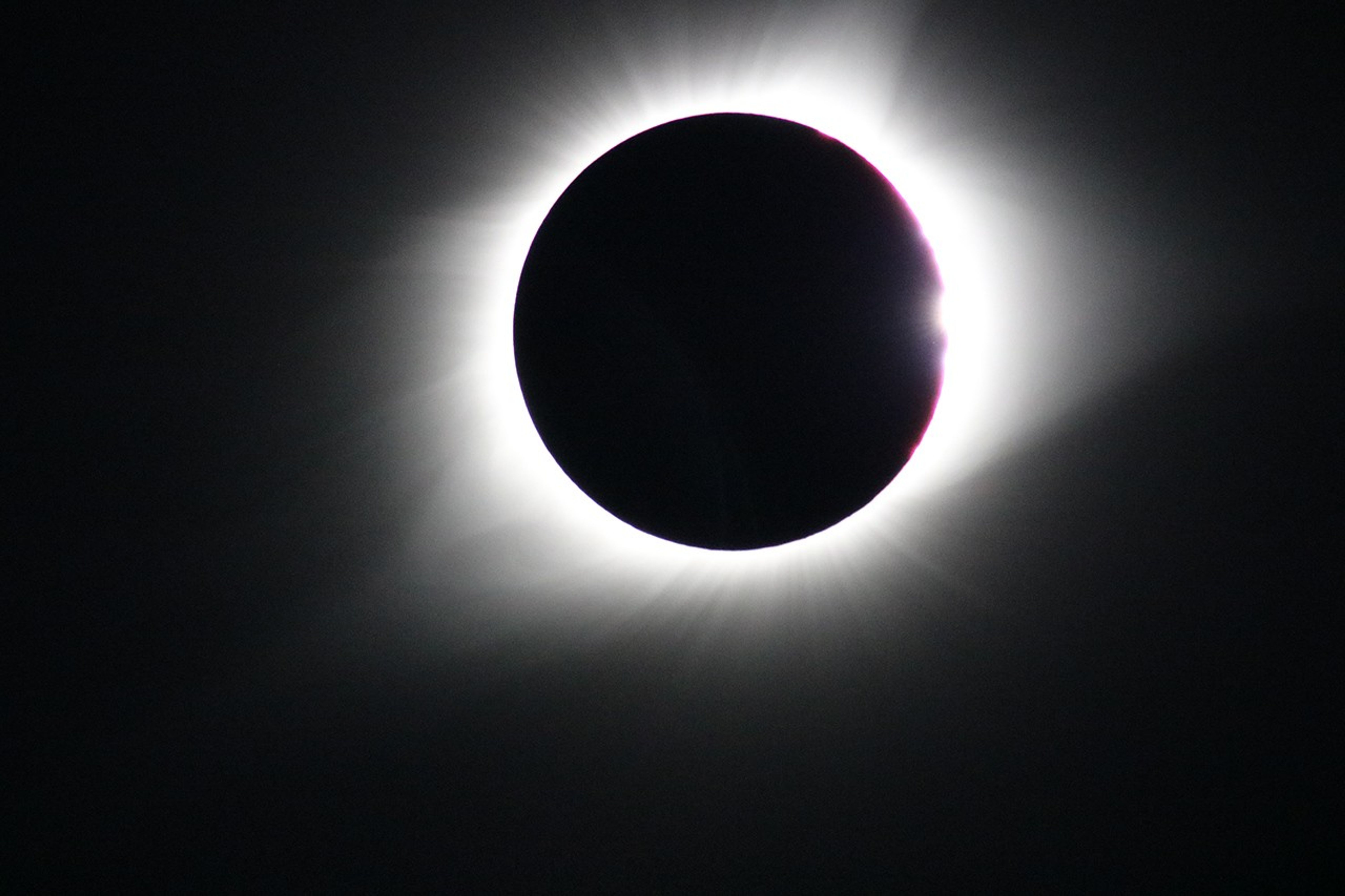
    A total solar eclipse showing the dark silhouette of the Moon completely covering the Sun, with the Sun’s bright corona radiating around the edges against a dark sky. A faint sliver of red appears on the upper right of the eclipse, showing the Sun's chromosphere.
    The reddish chromosphere is visible on the Sun’s right edge in this view of the Aug. 21, 2017, total solar eclipse from Madras, Oregon.
    Credit: NASA/Nat Gopalswamy

    The chromosphere lies just below the corona, where powerful solar flares and massive coronal mass ejections are observed. These solar eruptions are the main drivers of space weather, the hazardous conditions in near-Earth space that threaten satellites and endanger astronauts. The SNIFS mission aims to learn more about how energy is converted and moves through the chromosphere, where it can ultimately power these massive explosions.  

    “To make sure the Earth is safe from space weather, we really would like to be able to model things,” said Vicki Herde, a doctoral graduate of CU Boulder who worked with Chamberlin to develop SNIFS.  

    This footage from NASA’s Solar Dynamics Observatory shows the Sun in the 304-angstrom band of extreme ultraviolet light, which primarily reveals light from the chromosphere. This video, captured on Feb. 22, 2024, shows a solar flare — as seen in the bright flash on the upper left.
    Credit: NASA/SDO

    The SNIFS mission is the first ever solar ultraviolet integral field spectrograph, an advanced technology combining an imager and a spectrograph. Imagers capture photos and videos, which are good for seeing the combined light from a large field of view all at once. Spectrographs dissect light into its various wavelengths, revealing which elements are present in the light source, their temperature, and how they’re moving — but only from a single location at a time. 

    The SNIFS mission combines these two technologies into one instrument.  

    “It’s the best of both worlds,” said Chamberlin. “You’re pushing the limit of what technology allows us to do.” 

    By focusing on specific wavelengths, known as spectral lines, the SNIFS mission will help scientists to learn about the chromosphere. These wavelengths include a spectral line of hydrogen that is the brightest line in the Sun’s ultraviolet (UV) spectrum, and two spectral lines from the elements silicon and oxygen. Together, data from these spectral lines will help reveal how the chromosphere connects with upper atmosphere by tracing how solar material and energy move through it. 

    The SNIFS mission will be carried into space by a sounding rocket. These rockets are effective tools for launching and carrying space experiments and offer a valuable opportunity for hands-on experience, particularly for students and early-career researchers.
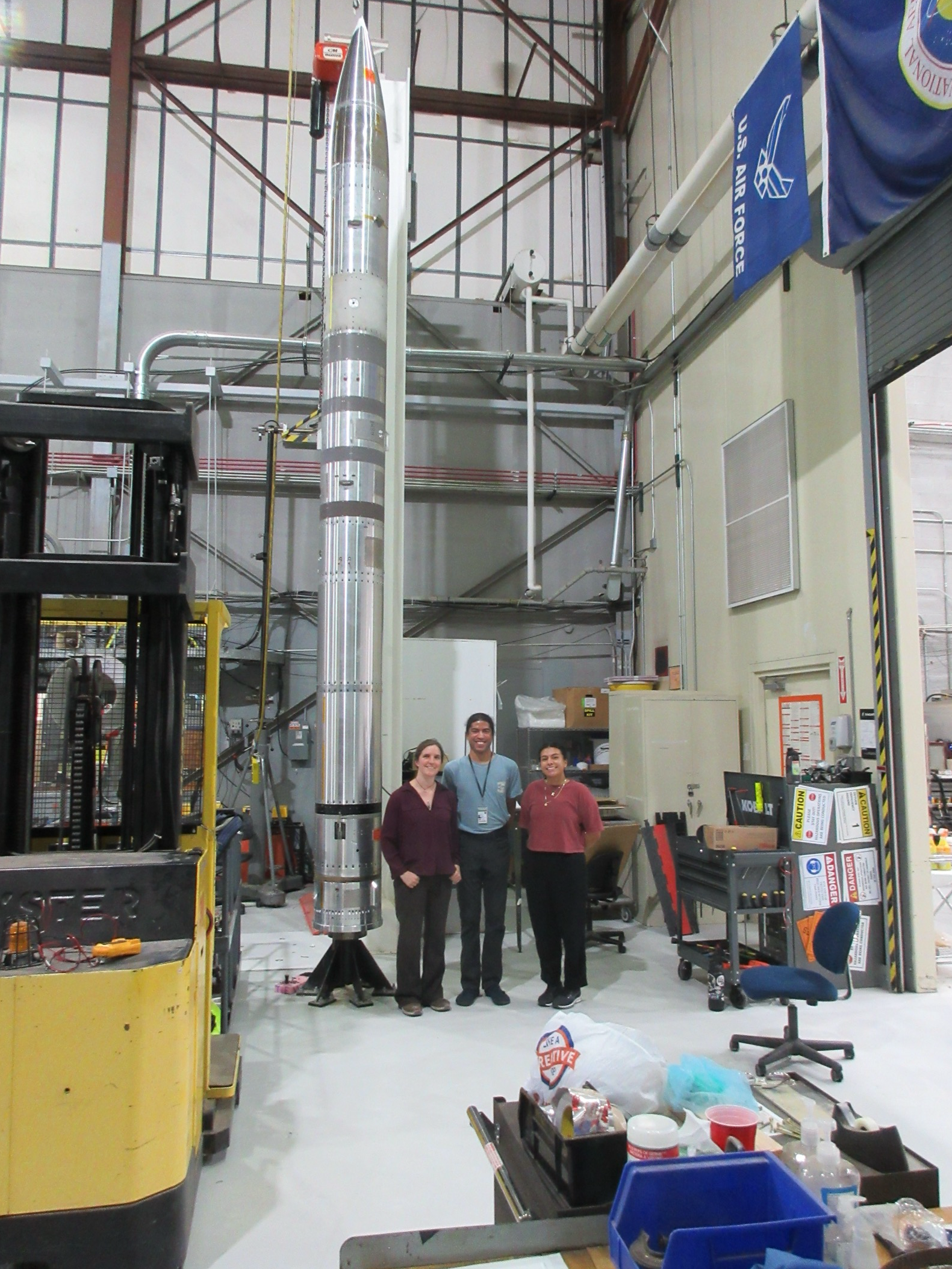
    Three people stand smiling in front of a tall, silver rocket inside an industrial workshop. The workspace contains equipment, tools, a forklift, and an Air Force flag hanging above.
    (From left to right) Vicki Herde, Joseph Wallace, and Gabi Gonzalez, who worked on the SNIFS mission, stand with the sounding rocket containing the rocket payload at the White Sands Missile Range in New Mexico.
    Credit: courtesy of Phillip Chamberlin

    “You can really try some wild things,” Herde said. “It gives the opportunity to allow students to touch the hardware.” 

    Chamberlin emphasized how beneficial these types of missions can be for science and engineering students like Herde, or the next generation of space scientists, who “come with a lot of enthusiasm, a lot of new ideas, new techniques,” he said. 

    The entirety of the SNIFS mission will likely last up to 15 minutes. After launch, the sounding rocket is expected to take 90 seconds to make it to space and point toward the Sun, seven to eight minutes to perform the experiment on the chromosphere, and three to five minutes to return to Earth’s surface.  

    A previous sounding rocket launch from the White Sands Missile Range in New Mexico. This mission carried a copy of the Extreme Ultraviolet Variability Experiment (EVE).
    Credit: NASA/University of Colorado Boulder, Laboratory for Atmospheric and Space Physics/James Mason

    The rocket will drift around 70 to 80 miles (112 to 128 kilometers) from the launchpad before its return, so mission contributors must ensure it will have a safe place to land. White Sands, a largely empty desert, is ideal. 

    Herde, who spent four years working on the rocket, expressed her immense excitement for the launch. “This has been my baby.” 

    By Harper Lawson
    NASA’s Goddard Space Flight Center, Greenbelt, Md.

  • NASA Invites Media to Marshall’s 65th Anniversary Celebration July 19

    2 min read

    Preparations for Next Moonwalk Simulations Underway (and Underwater)

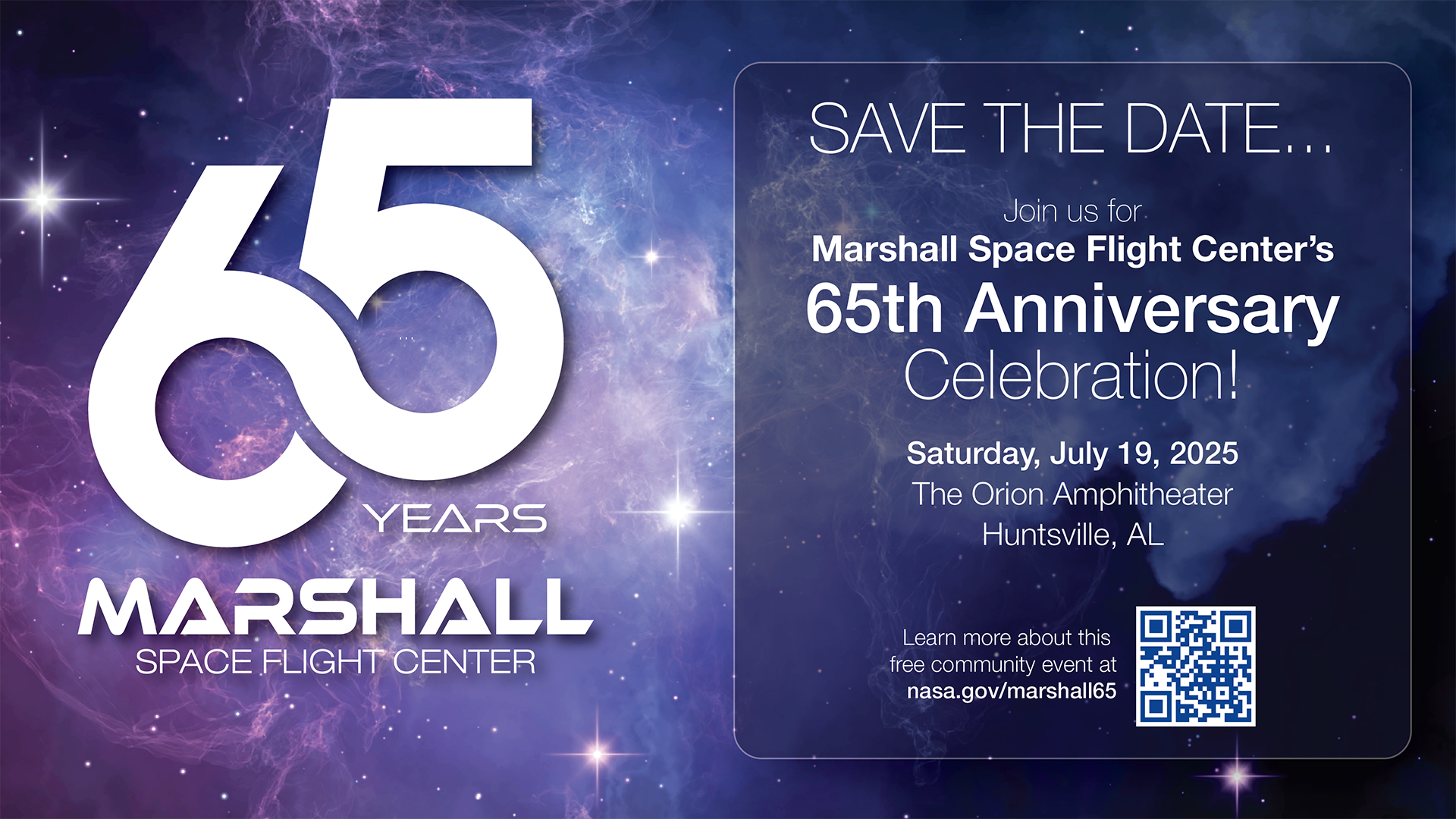
    An invitation to the Marshall 65 event.
    NASA

    NASA’s Marshall Space Flight Center will host astronauts for a media opportunity as the center celebrates its 65th anniversary during a free, community event on Saturday, July 19, from noon to 5 p.m. CDT at The Orion Amphitheater in Huntsville, Alabama.

    Marshall, along with its partners and collaborators, will fill the amphitheater with space exhibits, music, food vendors, and hands-on activities for all ages. The summer celebration will mark 65 years of innovation and exploration, not only for Marshall, but for Huntsville and other North Alabama communities.

    The event will kick off with a program at 12:30 p.m. led by Joseph Pelfrey, director of NASA Marshall, and will include a presentation from some of the Expedition 72 crew members who recently returned from their mission after dedicating more than 1,000 combined hours to scientific research and technology demonstrations aboard the International Space Station. The crew will share their experiences in space with the community.

    The official portrait of the International Space Station's Expedition 72 crew. At the top (from left) are Roscosmos cosmonaut and Flight Engineer Alexey Ovchinin, NASA astronaut and space station Commander Suni Williams, and NASA astronaut and Flight Engineer Butch Wilmore. In the middle row are Roscosmos cosmonaut and Flight Engineer Ivan Vagner and NASA astronaut and Flight Engineer Don Pettit. In the bottom row are Roscosmos cosmonaut and Flight Engineer Aleksandr Gorbunov and NASA astronaut and Flight Engineer Nick Hague.
    The official portrait of the International Space Station’s Expedition 72 crew. At the top (from left) are Roscosmos cosmonaut and Flight Engineer Alexey Ovchinin, NASA astronaut and space station Commander Suni Williams, and NASA astronaut and Flight Engineer Butch Wilmore. In the middle row are Roscosmos cosmonaut and Flight Engineer Ivan Vagner and NASA astronaut and Flight Engineer Don Pettit. In the bottom row are Roscosmos cosmonaut and Flight Engineer Aleksandr Gorbunov and NASA astronaut and Flight Engineer Nick Hague.
    NASA/Bill Stafford and Robert Markowitz

    Media are invited to attend the event and participate in a news conference with the astronauts after the presentation but must confirm their attendance by 4:30 p.m., Thursday, July 17, to Lance D. Davis – lance.d.davis@nasa.gov – in Marshall’s Office of Communications.

    Media should arrive at the front entrance of The Orion Amphitheater by 11:45 a.m., Saturday, July 19, to be escorted by the Office of Communications.

    Founded July 1, 1960, in Huntsville, Marshall has shaped or supported nearly every facet of the nation’s ongoing mission of space exploration and discovery, solving the most complex, technical flight challenges, and contributing to science to improve life and protect resources around the world.

    Learn more about Marshall’s 65th anniversary celebration at:

    https://www.nasa.gov/marshall65/

    Lance D. Davis
    Marshall Space Flight Center, Huntsville, Ala. 
    256-640-9065 
    lance.d.davis@nasa.gov

    Details

    Last Updated

    Jul 16, 2025

    Editor
    Beth Ridgeway

  • Summer Triangle Corner: Vega

    3 min read

    Summer Triangle Corner: Vega

    If you live in the Northern Hemisphere and look up during July evenings, you’ll see the brilliant star Vega shining overhead. Did you know that Vega is one of the most studied stars in our skies? As one of the brightest summer stars, Vega has fascinated astronomers for thousands of years.

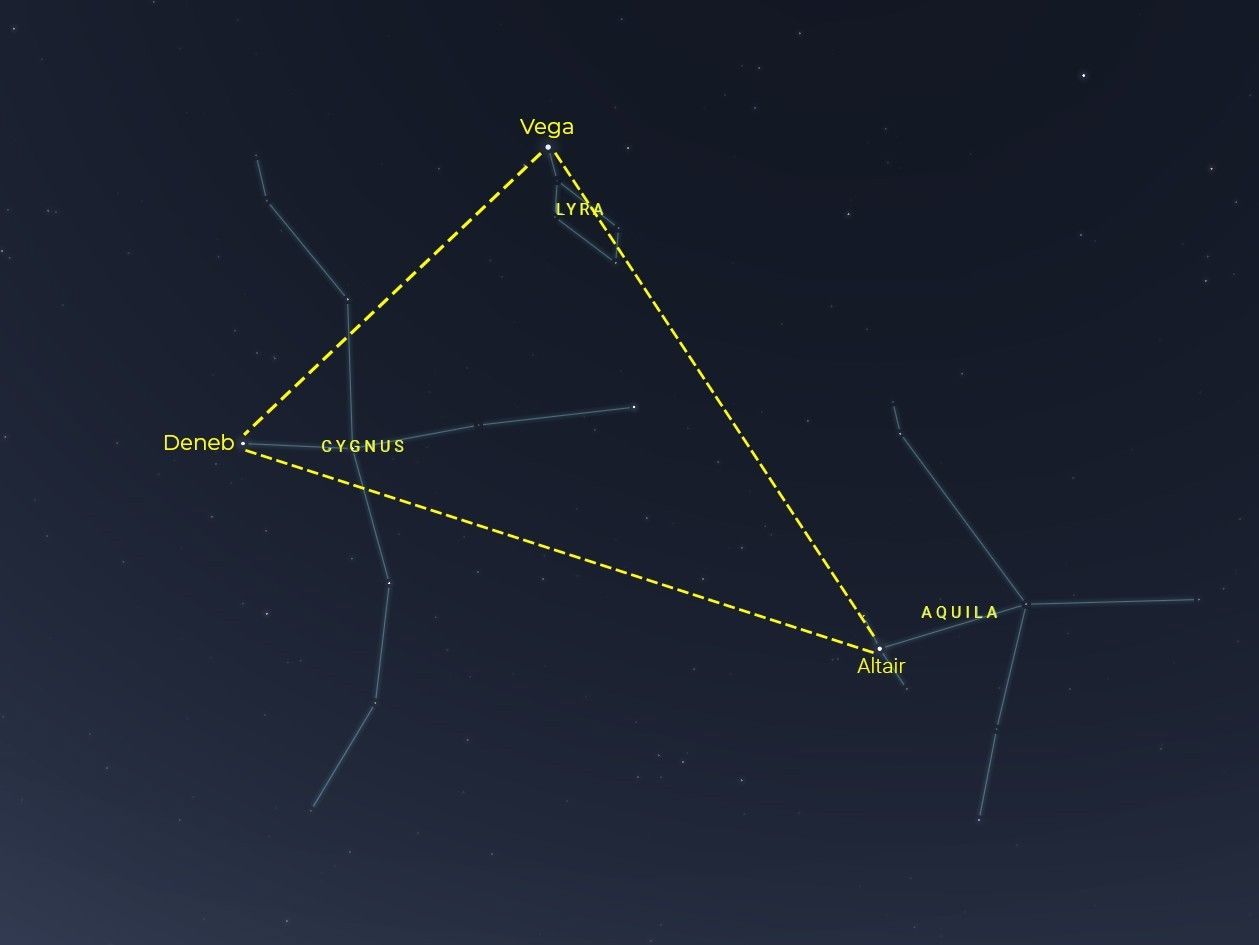
    Vega is the brightest star in the small Greek constellation of Lyra, the harp. It’s also one of the three points of the large “Summer Triangle” asterism, making Vega one of the easiest stars to find for novice stargazers. Ancient humans from 14,000 years ago likely knew Vega for another reason: it was the Earth’s northern pole star! Compare Vega’s current position with that of the current north star, Polaris, and you can see how much the direction of Earth’s axis changes over thousands of years. This slow movement of axial rotation is called precession, and in 12,000 years, Vega will return to the northern pole star position.

    The star map of the asterism known as the Summer Triangle. This asterism is made up of three stars: Vega in the Lyra constellation, Altair in the Aquila constellation, and Deneb in the Cygnus constellation. These three stars are connected by a dotted yellow line to outline the shape of the triangle. The constellation shapes are mapped with blue lines.
    A map of the asterism known as the Summer Triangle. This asterism is made up of three stars: Vega in the Lyra constellation, Altair in the Aquila constellation, and Deneb in the Cygnus constellation.
    Stellarium Web

    Bright Vega has been observed closely since the beginning of modern astronomy and even helped to set the standard for the current magnitude scale used to categorize the brightness of stars. Polaris and Vega have something else in common, besides being once and future pole stars: their brightness varies over time, making them variable stars. Variable stars’ light can change for many different reasons. Dust, smaller stars, or even planets may block the light we see from the star. Or the star itself might be unstable with active sunspots, expansions, or eruptions changing its brightness. Most stars are so far away that we only record the change in light, and can’t see their surface.

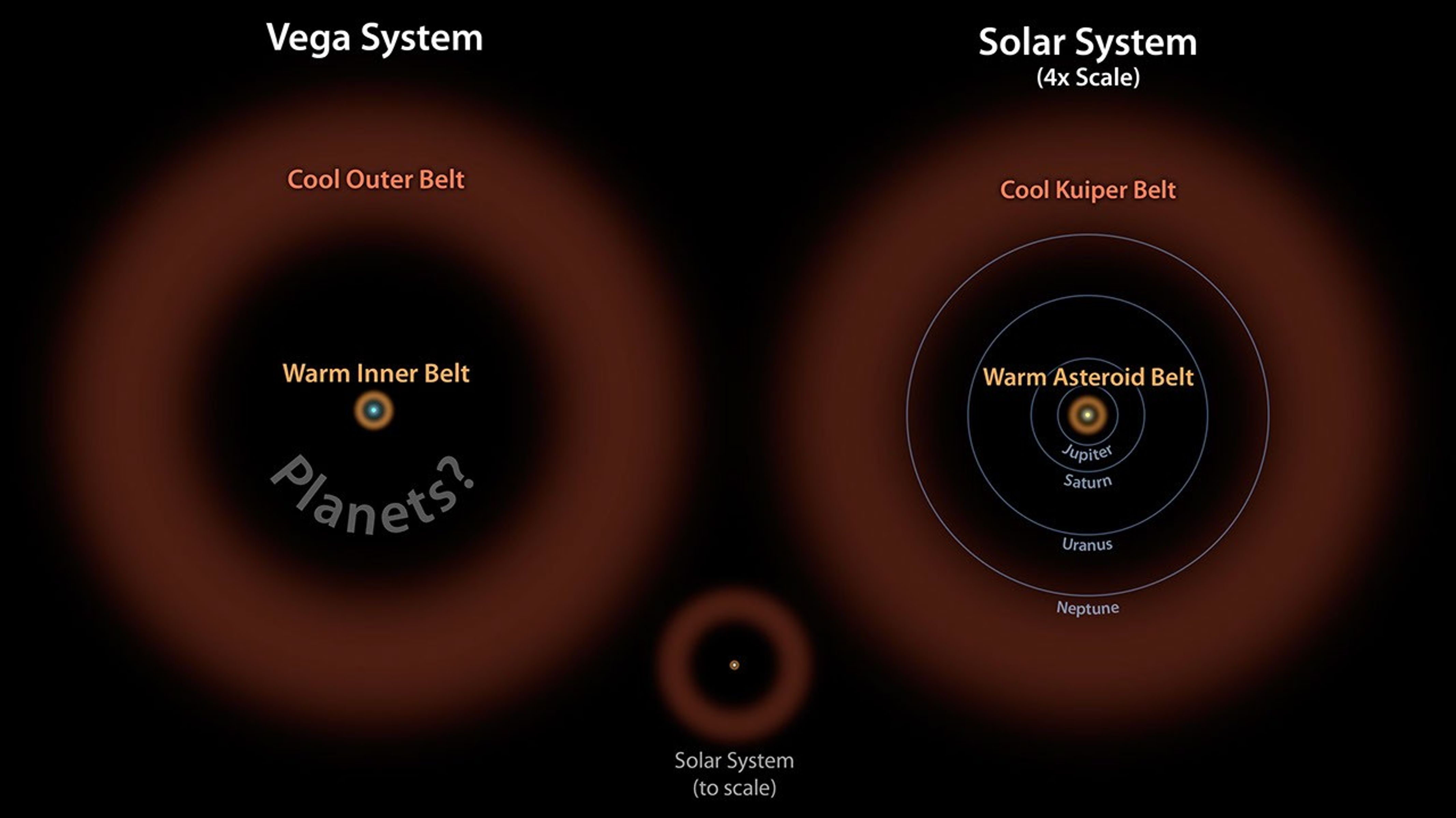
    In this diagram, the Vega system, which was already known to have a cooler outer belt of comets (orange), is compared to our solar system with its asteroid and Kuiper belts. The ring of warm, rocky debris was detected using NASA's Spitzer Space Telescope.
    Astronomers have discovered what appears to be a large asteroid belt around the bright star Vega, as illustrated here at left in brown. The ring of warm, rocky debris was detected using NASA’s Spitzer Space Telescope, and the European Space Agency’s Herschel Space Observatory, in which NASA plays an important role.
    NASA/JPL-Caltech

    NASA’s TESS satellite has ultra-sensitive light sensors primed to look for the tiny dimming of starlight caused by transits of extrasolar planets. Their sensitivity also allowed TESS to observe much smaller pulsations in a certain type of variable star’s light than previously observed. These observations of Delta Scuti variable stars will help astronomers model their complex interiors and make sense of their distinct, seemingly chaotic pulsations. This is a major contribution towards the field of astroseismology: the study of stellar interiors via observations of how sound waves “sing” as they travel through stars. The findings may help settle the debate over what kind of variable star Vega is. Find more details on this research, including a sonification demo that lets you “hear” the heartbeat of one of these stars, at: bit.ly/DeltaScutiTESS
     
    In 2024, the James Webb Space Telescope revisited the Vega system to reveal a 100-billion-mile-wide disk of dust around this star. While the debris disk is confirmed, there is no evidence of planets as of today.

    Originally posted by Dave Prosper: June 2020
    Last Updated by Kat Troche: July 2025

  • NASA to Preview Advanced US-India Radar Mission Ahead of Launch

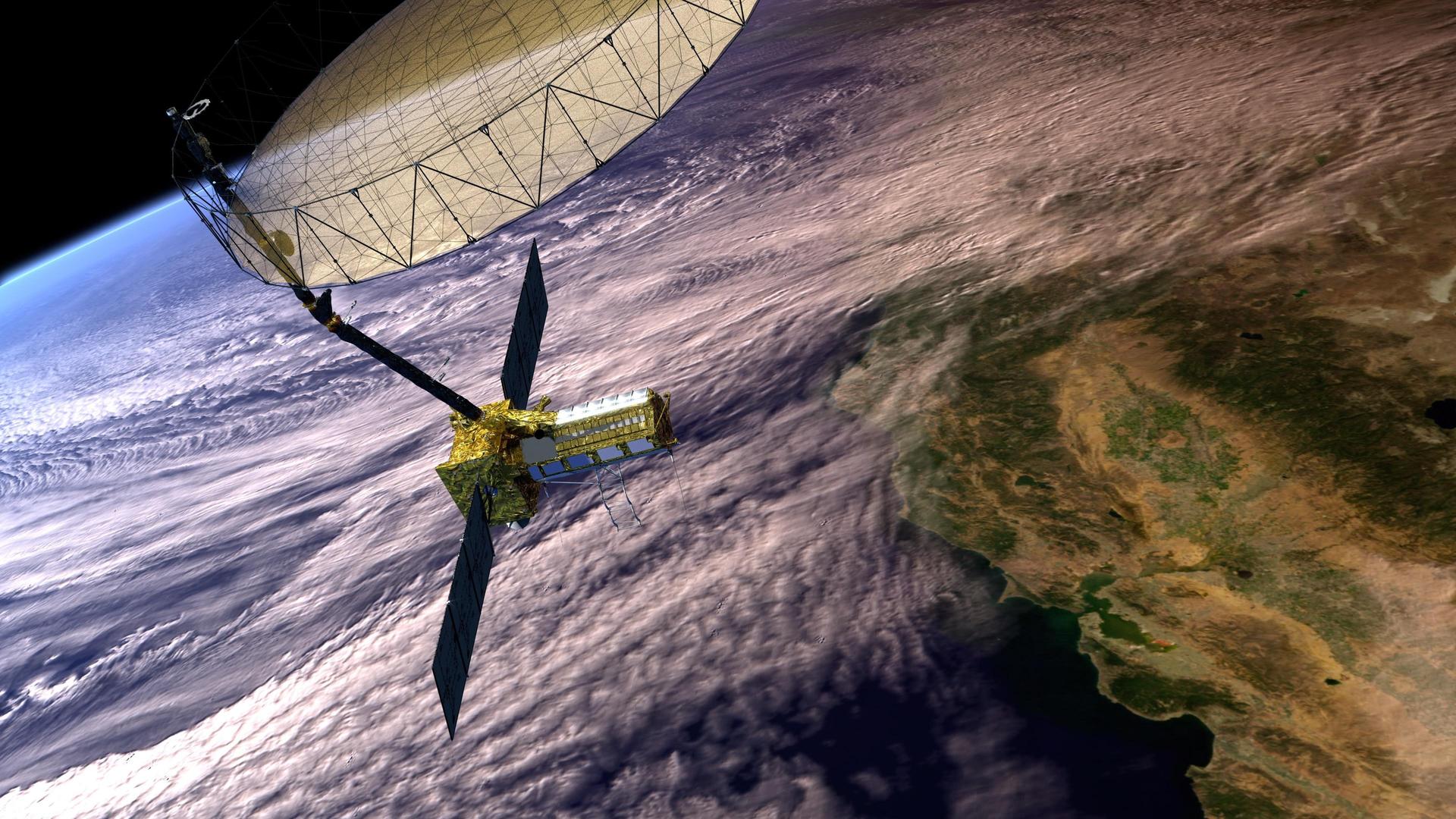
    A satellite with gold metallic accents orbits the cloudy Earth.
    A collaboration between NASA and the Indian Space Research Organisation, NISAR will use synthetic aperture radar to monitor nearly all the planet’s land- and ice-covered surfaces twice every 12 days.
    Credit: NASA

    NASA will host a news conference at 12 p.m. EDT Monday, July 21, to discuss the upcoming NISAR (NASA-ISRO Synthetic Aperture Radar) mission.

    The Earth-observing satellite, a first-of-its-kind collaboration between NASA and ISRO (Indian Space Research Organisation), carries an advanced radar system that will help protect communities by providing a dynamic, three-dimensional view of Earth in unprecedented detail and detecting the movement of land and ice surfaces down to the centimeter.

    The NISAR mission will lift off from ISRO’s Satish Dhawan Space Centre in Sriharikota, on India’s southeastern coast. Launch is targeted for no earlier than late July.

    NASA’s Jet Propulsion Laboratory in Southern California will stream the briefing live on its X, Facebook, and YouTube channels. Learn how to watch NASA content through a variety of platforms, including social media.

    Participants in the news conference include:

    • Nicky Fox, associate administrator, Science Mission Directorate, NASA Headquarters
    • Karen St. Germain, director, Earth Science Division, NASA Headquarters
    • Wendy Edelstein, deputy project manager, NISAR, NASA JPL
    • Paul Rosen, project scientist, NISAR, NASA JPL

    To ask questions by phone, members of the media must RSVP no later than two hours before the start of the event to: rexana.v.vizza@jpl.nasa.gov. NASA’s media accreditation policy is available online. Questions can be asked on social media during the briefing using #AskNISAR.

    With its two radar instruments — an S-band system provided by ISRO and an L-band system provided by NASA — NISAR will use a technique known as synthetic aperture radar (SAR) to scan nearly all the planet’s land and ice surfaces twice every 12 days. Each system’s signal is sensitive to different sizes of features on Earth’s surface, and each specializes in measuring different attributes, such as moisture content, surface roughness, and motion.

    These capabilities will help scientists better understand processes involved in natural hazards and catastrophic events, such as earthquakes, volcanic eruptions, land subsidence, and landslides.

    Additionally, NISAR’s cloud penetrating ability will aid urgent responses to communities during weather disasters such as hurricanes, storm surge, and flooding. The detailed maps the mission creates also will provide information on both gradual and sudden changes occurring on Earth’s land and ice surfaces.

    Managed by Caltech for NASA, JPL leads the U.S. component of the NISAR project and provided the L-band SAR. NASA JPL also provided the radar reflector antenna, the deployable boom, a high-rate communication subsystem for science data, GPS receivers, a solid-state recorder, and payload data subsystem. NASA’s Goddard Space Flight Center in Greenbelt, Maryland, manages the Near Space Network, which will receive NISAR’s L-band data.

    Multiple ISRO centers have contributed to NISAR. The Space Applications Centre is providing the mission’s S-band SAR. The U R Rao Satellite Centre provided the spacecraft bus. The rocket is from Vikram Sarabhai Space Centre, launch services are through Satish Dhawan Space Centre, and satellite mission operations are by the ISRO Telemetry Tracking and Command Network. The National Remote Sensing Centre is responsible for S-band data reception, operational products generation, and dissemination.

    To learn more about NISAR, visit:

    https://nisar.jpl.nasa.gov

    -end-

    Karen Fox / Elizabeth Vlock
    Headquarters, Washington
    202-358-1600
    karen.c.fox@nasa.gov / elizabeth.a.vlock@nasa.gov

    Andrew Wang / Scott Hulme
    Jet Propulsion Laboratory, Pasadena, Calif.
    626-379-6874 / 818-653-9131
    andrew.wang@jpl.nasa.gov / scott.d.hulme@jpl.nasa.gov

  • NASA’s Chandra Finds Baby Exoplanet is Shrinking

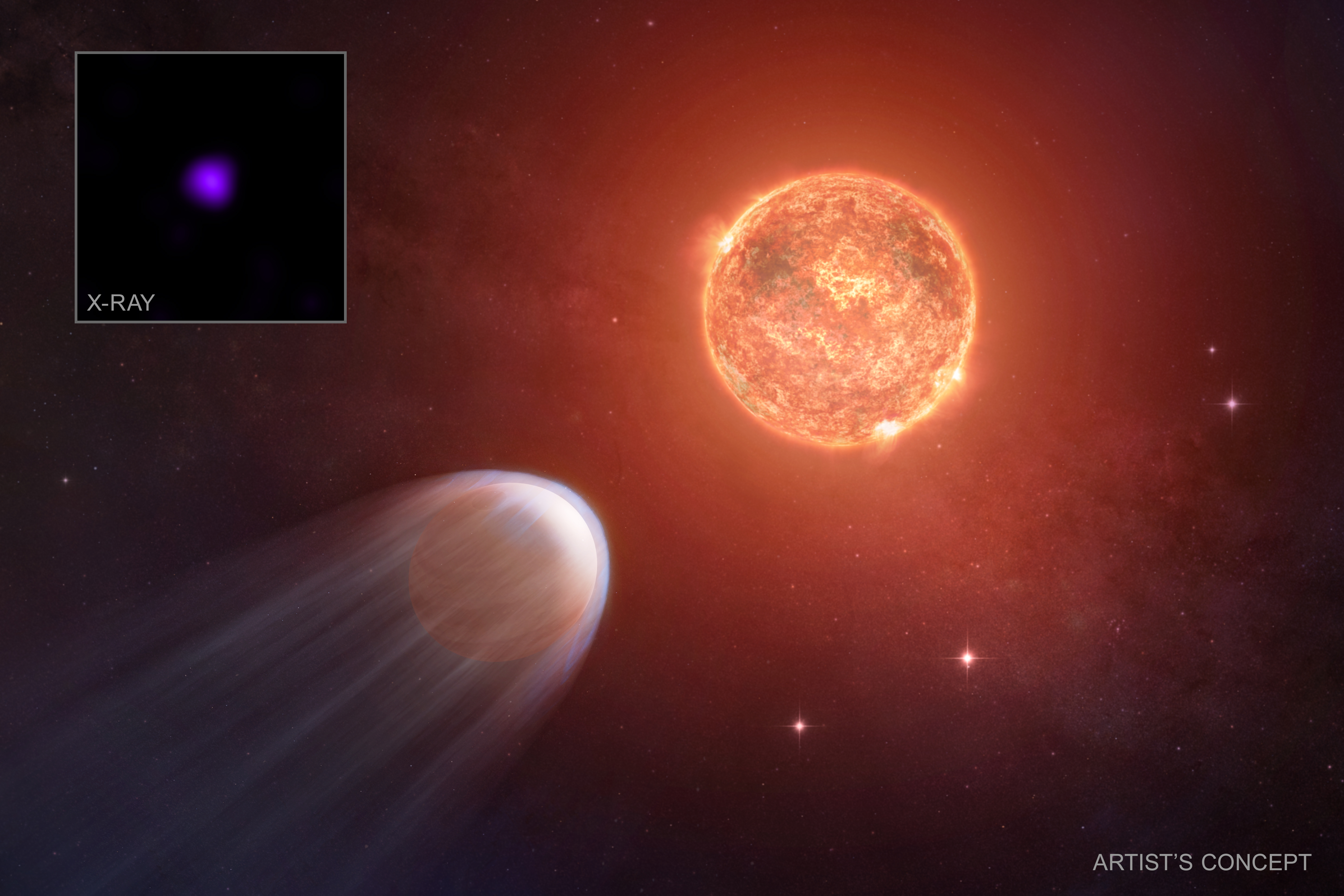
    This release features an artist's illustration of a Jupiter-sized planet closely orbiting a faint red star. An inset image, showing the star in X-ray light from Chandra, is superimposed on top of the illustration at our upper left corner.
    X-ray: NASA/CXC/RIT/A. Varga et al.; Illustration: NASA/CXC/SAO/M. Weiss; Image Processing: NASA/CXC/SAO/N. Wolk

    star is unleashing a barrage of X-rays that is causing a closely-orbiting, young planet to wither away an astonishing rate, according to a new study using data from NASA’s Chandra X-ray Observatory and described in our latest press release. A team of researchers has determined that this planet will go from the size of Jupiter down to a small, barren world.

    This graphic provides a visual representation of what astronomers think is happening around the star (known as TOI 1227) and a planet that is orbiting it at a fraction the distance between Mercury and the Sun. This “baby” planet, called TOI 1227 b, is just about 8 million years old, about a thousand times younger than our Sun. The main panel is an artist’s concept that shows the Jupiter-sized planet (lower left) around TOI 1227, which is a faint red star. Powerful X-rays from the star’s surface are tearing away the atmosphere of the planet, represented by the blue tail. The star’s X-rays may eventually completely remove the atmosphere.

    The team used new Chandra data — seen in the inset — to measure the amounts of X-rays from TOI 1227 that are striking the planet. Using computer models of the effects of these X-rays, they concluded they will have a transformative effect, rapidly stripping away the planet’s atmosphere. They estimate that the planet is losing a mass equivalent to a full Earth’s atmosphere about every 200 years.

    The researchers used different sets of data to estimate the age of TOI 1227 b. One method exploits measurements of how TOI 1227 b’s host star moves through space in comparison to nearby populations of stars with known ages. A second method compared the brightness and surface temperature of the star with theoretical models of evolving stars. The very young age of TOI 1227 b makes it the second youngest planet ever to be observed passing in front of its host star (a so-called transit). Previously the planet had been estimated by others to be about 11 million years old.

    Of all the exoplanets astronomers have found with ages less than 50 million years, TOI 1227 b stands out for having the longest year and the host planet with the lowest mass. These properties, and the high dose of X-rays it is receiving, make it an outstanding target for future observations.

    A paper describing these results has been accepted publication in The Astrophysical Journal and a preprint is available here. The authors of the paper are Attila Varga (Rochester Institute of Technology), Joel Kastner (Rochester Institute of Technology), Alexander Binks (University of Tubingen, Germany), Hans Moritz Guenther (Massachusetts Institute of Technology), and Simon J. Murphy (University of New South Wales Canberra in Australia).

    NASA’s Marshall Space Flight Center in Huntsville, Alabama, manages the Chandra program. The Smithsonian Astrophysical Observatory’s Chandra X-ray Center controls science operations from Cambridge, Massachusetts, and flight operations from Burlington, Massachusetts.

    Learn more about the Chandra X-ray Observatory and its mission here:

    https://www.nasa.gov/chandra

    https://chandra.si.edu

    Visual Description

    This release features an artist’s illustration of a Jupiter-sized planet closely orbiting a faint red star. An inset image, showing the star in X-ray light from Chandra, is superimposed on top of the illustration at our upper left corner.

    At our upper right, the red star is illustrated as a ball made of intense fire. The planet, slightly smaller than the star, is shown at our lower left. Powerful X-rays from the star are tearing away the atmosphere of the planet, causing wisps of material to flow away from the planet’s surface in the opposite direction from the star. This gives the planet a slight resemblance to a comet, complete with a tail.

    X-ray data from Chandra, presented in the inset image, shows the star as a small purple orb on a black background. Astronomers used the Chandra data to measure the amount of X-rays striking the planet from the star. They estimate that the planet is losing a mass equivalent to a full Earth’s atmosphere about every 200 years, causing it to ultimately shrink from the size of Jupiter down to a small, barren world.

    News Media Contact

    Megan Watzke
    Chandra X-ray Center
    Cambridge, Mass.
    617-496-7998
    mwatzke@cfa.harvard.edu

    Corinne Beckinger
    Marshall Space Flight Center, Huntsville, Alabama
    256-544-0034
    corinne.m.beckinger@nasa.gov

  • NASA Software Catalog Puts Agency Solutions at Innovators’ Fingertips

    Andy Burroughs (left) and Paul Friz in the roles of air taxi pilots running through air taxi integration simulations focusing on urban air space at NASA’s Langley Research in Hampton, Virginia on Sept. 25, 2024.
    Andy Burroughs (left) and Paul Friz in the roles of air taxi pilots running through air taxi integration simulations focusing on urban air space at NASA’s Langley Research in Hampton, Virginia on Sept. 25, 2024.
    Credit: NASA

    NASA’s latest open Software Catalog, released Wednesday, offers more than 1,200 downloadable codes developed by agency engineers that could enable faster solutions to energize the space economy and stimulate American ingenuity. The catalog is part of NASA’s effort to place advanced technologies, including agency software, into the hands of businesses, researchers, and entrepreneurs to foster economic growth and innovation.

    Agency developers will provide more information about the Software Catalog, the only repository of its kind in the federal government, during NASA’s summer software webinar series beginning Tuesday, July 22.

    “NASA has droves of talented experts creating software to automate elements of agency missions,” said Dan Lockney, program executive, Technology Transfer at NASA Headquarters in Washington. “The resulting efficiency benefits humankind, and its public value increases exponentially when the agency provides access to those software programs for companies, enabling them to save time and money, improve commercial offerings, and build their businesses.”

    The four webinars accompanying this year’s NASA Software Catalog feature developers of popular programs for mission planning, systems design, propulsion analysis, and more, each consisting of a presentation followed by a live question-and-answer session.

    Programs offered in NASA’s 2025-2026 Software Catalog are grouped into 15 categories that may be useful for organizations working with spacecraft and aircraft. For example, the Vehicle Management category includes a tool for designing satellite constellations and a software library for minimizing public safety risks around expendable launch vehicles. The Aeronautics section includes several programs that are widely used by industry for creating, modifying, and analyzing aircraft designs.

    Although the categories have specific themes, the codes are meant to be useful to various innovators. Companies can use aircraft programs NASA wrote to design cars, trucks, and countless other products. The catalog’s Business Systems and Project Management section includes software for estimating project costs, building and assessing complex schedules, and uncovering root causes of mishaps. Other popular programs support 3D rendering for simulation and virtual reality, bring hyper-accuracy to GPS tracking, and analyze electrical power system architectures.

    NASA released its first Software Catalog more than a decade ago in 2013, and since then, the agency’s annual rate of software downloads has skyrocketed, reaching up to 5,722 downloads in a single year.

    The Software Catalog is a product of NASA’s Technology Transfer program, managed by the agency’s Space Technology Mission Directorate. NASA routinely makes improvements to the Software Catalog website, ensuring the process is fast and easy. Access restrictions apply to some software that may be limited to use by U.S. citizens or for U.S. government purposes only.

    View and learn more about NASA’s Software Catalog by visiting:

    https://software.nasa.gov

    -end-

    Jasmine Hopkins
    Headquarters, Washington
    321-432-4624
    jasmine.s.hopkins@nasa.gov   

  • Aurora Australis

    The
    NASA/Nichole Ayers

    The aurora australis arcs above a partly cloudy Indian Ocean in this photograph from the International Space Station as it orbited 269 miles above in between Australia and Antarctica on June 12, 2025.

    Astronauts aboard the space station take photos using handheld digital cameras, usually through windows in the station’s cupola, for Crew Earth Observations. Crew members have produced hundreds of thousands of images of the Moon and Earth’s land, oceans, and atmosphere.

    Image credit: NASA/Nichole Ayers

  • NASA Selects Companies for Architect-Engineer Services Contract

    The letters NASA on a blue circle with red and white detail, all surrounded by a black background
    Credit: NASA

    NASA has selected seven companies to assist the agency with architectural and engineering services at multiple agency centers and facilities.

    The Western Regional Architect-Engineer Services is an indefinite-delivery/indefinite-quantity multiple award contract has a total estimated value not to exceed $75 million. The contract was awarded on July 14 with a five-year period of performance with the possibility of a six-month extension.

    The selected contractors are:

    • DYNOTEC-KZF JV LLC of Columbus, Ohio
    • Merrick-IMEG JV LLP of Greenwood Village, Colorado
    • G Squared Design of Lakewood, Colorado
    • Kal Architects Inc. of Irvine, California
    • AECOM Technical Services Inc. of Los Angeles
    • Stell SIA Sala O’Brien LLC DBA S3, LLC (S3) of Mountlake Terrace, Washington
    • Jacobs Engineering Group Inc. of Arlington, Virginia

    Under the contract, the awarded companies will support general construction, alteration, modification, maintenance and repair, new construction of buildings, facilities, and real property for NASA’s Ames Research Center in California’s Silicon Valley and Armstrong Flight Research Center in Edwards, California. Support also includes optional back-up capacity in support of other NASA centers and federal tenants at agency facilities, including NASA’s Jet Propulsion Laboratory in Southern California, Goldstone Deep Space Communications Complex in Fort Irwin, California, and the NASA launch alliance at Vandenberg Space Force Base in California.

    For information about NASA and other agency programs, visit:

    https://www.nasa.gov

    -end-

    Tiernan Doyle
    Headquarters, Washington
    202-358-1600
    tiernan.doyle@nasa.gov

  • NASA SCoPE Summer Symposium Celebrates Early Career Scientists and Cross-Team Collaboration

    4 min read

    NASA SCoPE Summer Symposium Celebrates Early Career Scientists and Cross-Team Collaboration

    From June 16–18, 2025, the NASA Science Mission Directorate Community of Practice for Education (SCoPE) Summer Symposium brought together a community of scientists, educators, and outreach professionals to celebrate and strengthen NASA’s commitment to developing its workforce and broadening participation in science.

    NASA SCoPE is a NASA-funded initiative at Arizona State University that connects early career scientists with NASA Science Activation (SciAct) program teams to build capacity in science communication, community engagement, and educational outreach. Through targeted support like Seed Grants, Travel Grants, and Mission Liaison opportunities, SCoPE equips scientists with the skills and networks needed to meaningfully engage the public with NASA science.

    Held in collaboration with key SciAct teams—including Infiniscope, Co-creating with Communities, NASA’s Community College Network, and NASA’s Universe of Learning—the 2025 symposium highlighted the incredible impact of SCoPE over the past four and a half years. The program has financially supported more than 100 early career scientists across a growing network of nearly 1,000 participants.

    Over the course of the three-day event, 23 awardees of SCoPE Seed Grants, Travel Grants, and Mission Liaison Grants came together to share their work, connect across disciplines, and explore new avenues for collaboration. Twelve Seed Grant awardees presented their projects, illustrating the transformative power of partnerships with SciAct teams. Highlights included learning how to write for young audiences through mentorship from NASA eClips in support of the children’s book ‘Blai and Zorg Explore the Moon’, designed for elementary learners; a collaborative effort between ‘Lost City, Icy Worlds’ and OpenSpace that evolved into long-term networking and visualization opportunities; and an Antarctic research project that, through collaboration with the Ocean Community Engagement and Awareness using NASA Earth Observations and Science (OCEANOS) project and Infiniscope, both expanded training opportunities for expedition guides and brought polar science to Puerto Rican high school summer interns.

    Beyond formal sessions, the symposium embraced community building through shared meals, informal networking, and hands-on experiences like a 3D planetarium show using OpenSpace software, a telescope demonstration with 30 high school students, and a screening of NASA’s Planetary Defenders documentary. Workshop topics addressed the real-world needs of early career professionals, including grant writing, logic model development, and communicating with the media.

    Survey responses revealed that 95% of attendees left with a stronger sense of belonging to a community of scientists engaged in outreach. Participants reported making valuable new connections—with peers, mentors, and potential collaborators—and left inspired to try new approaches in their own work, from social media storytelling to designing outreach for hospital patients or other specialized audiences.

    As one participant put it, “Seeing others so passionate about Science Communication inspired me to continue doing it in different ways… it feels like the start of a new wave.” Another attendee remarked, “I want to thank the entire team for SCoPE to even exist. It is an incredible team/program/resource and I can’t even imagine the amount of work, dedication and pure passion that has gone into this entire project over the years. Although I only found SCoPE very recently, I feel like it has been incredibly helpful in my scientific journey and I only wish I had learned of the program sooner. Thank you to the entire team for what was a truly educational and inspirational workshop, and the wonderful community that SCoPE has fostered.”

    This successful event was made possible through the dedication of NASA SciAct collaborators and the leadership of SciAct Program Manager Lin Chambers, whose continued support of early career engagement through SCoPE has created a growing, connected community of science communicators. The SCoPE Summer Symposium exemplifies how cross-team collaboration and community-centered design can effectively amplify the reach of NASA science.

    Learn more about how NASA’s Science Activation program connects NASA science experts, real content, and experiences with community leaders to do science in ways that activate minds and promote deeper understanding of our world and beyond: https://science.nasa.gov/learn/about-science-activation/

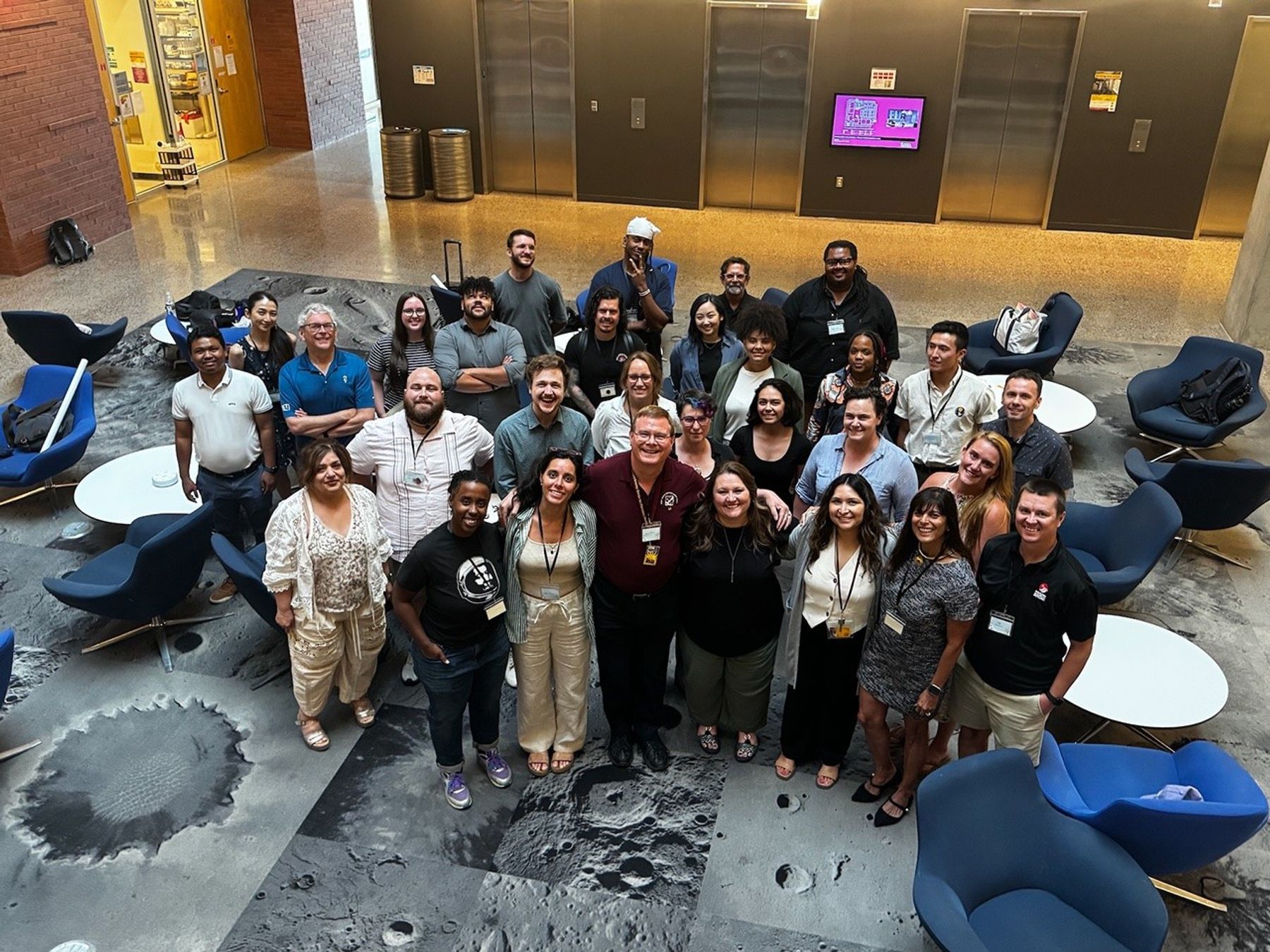
    Group photo of SCoPE-funded scientists and attendees at the SCoPE Summer Symposium, gathered in a circular formation and smiling up at the camera in a modern indoor atrium. The carpet beneath features a variety of craters and terrain of the Moon and Mars, emphasizing the space science theme. Lounge chairs and tables surround the group.
    SCoPE-funded scientists and collaborators gather at the 2025 SCoPE Summer Symposium to celebrate program success, share ideas, build partnerships, and advance science communication and education efforts across NASA’s Science Activation program.

    Details

    Last Updated

    Jul 15, 2025

    Editor
    NASA Science Editorial Team
  • Hubble Observations Give “Missing” Globular Cluster Time to Shine

    Bright stars cluster against a black background. The stars are more densely concentrated in the center of the image. The stars appear mostly white, but bright red and blue stars are also visible sprinkled throughout the image.⁣
    This NASA Hubble Space Telescope image features a dense and dazzling array of blazing stars that form globular cluster ESO 591-12.
    NASA, ESA, and D. Massari (INAF — Osservatorio di Astrofisica e Scienza dello Spazio); Processing: Gladys Kober (NASA/Catholic University of America)

    A previously unexplored globular cluster glitters with multicolored stars in this NASA Hubble Space Telescope image. Globular clusters like this one, called ESO 591-12 or Palomar 8, are spherical collections of tens of thousands to millions of stars tightly bound together by gravity. Globular clusters generally form early in the galaxies’ histories in regions rich in gas and dust. Since the stars form from the same cloud of gas as it collapses, they typically hover around the same age. Strewn across this image of ESO 591-12 are a number of red and blue stars. The colors indicate their temperatures; red stars are cooler, while the blue stars are hotter.

    Hubble captured the data used to create this image of ESO 591-12 as part of a study intended to resolve individual stars of the entire globular cluster system of the Milky Way. Hubble revolutionized the study of globular clusters since earthbound telescopes are unable to distinguish individual stars in the compact clusters. The study is part of the Hubble Missing Globular Clusters Survey, which targets 34 confirmed Milky Way globular clusters that Hubble has yet to observe.

    The program aims to provide complete observations of ages and distances for all of the Milky Way’s globular clusters and investigate fundamental properties of still-unexplored clusters in the galactic bulge or halo. The observations will provide key information on the early stages of our galaxy, when globular clusters formed.

    Image credit: NASA, ESA, and D. Massari (INAF — Osservatorio di Astrofisica e Scienza dello Spazio); Processing: Gladys Kober (NASA/Catholic University of America)

  • NASA’s SpaceX Crew-11 Mission Gears Up for Space Station Research

    A host of scientific investigations await the crew of NASA’s SpaceX Crew-11 mission during their long-duration expedition aboard the International Space Station. NASA astronauts Zena Cardman and Mike Fincke, and JAXA (Japan Aerospace Exploration Agency) astronaut Kimiya Yui, are set to study plant cell division and microgravity’s effects on bacteria-killing viruses, as well as perform experiments to produce a higher volume of human stem cells and generate on-demand nutrients.

    Here are details on some of the research scheduled during the Crew-11 mission:

    Making more stem cells

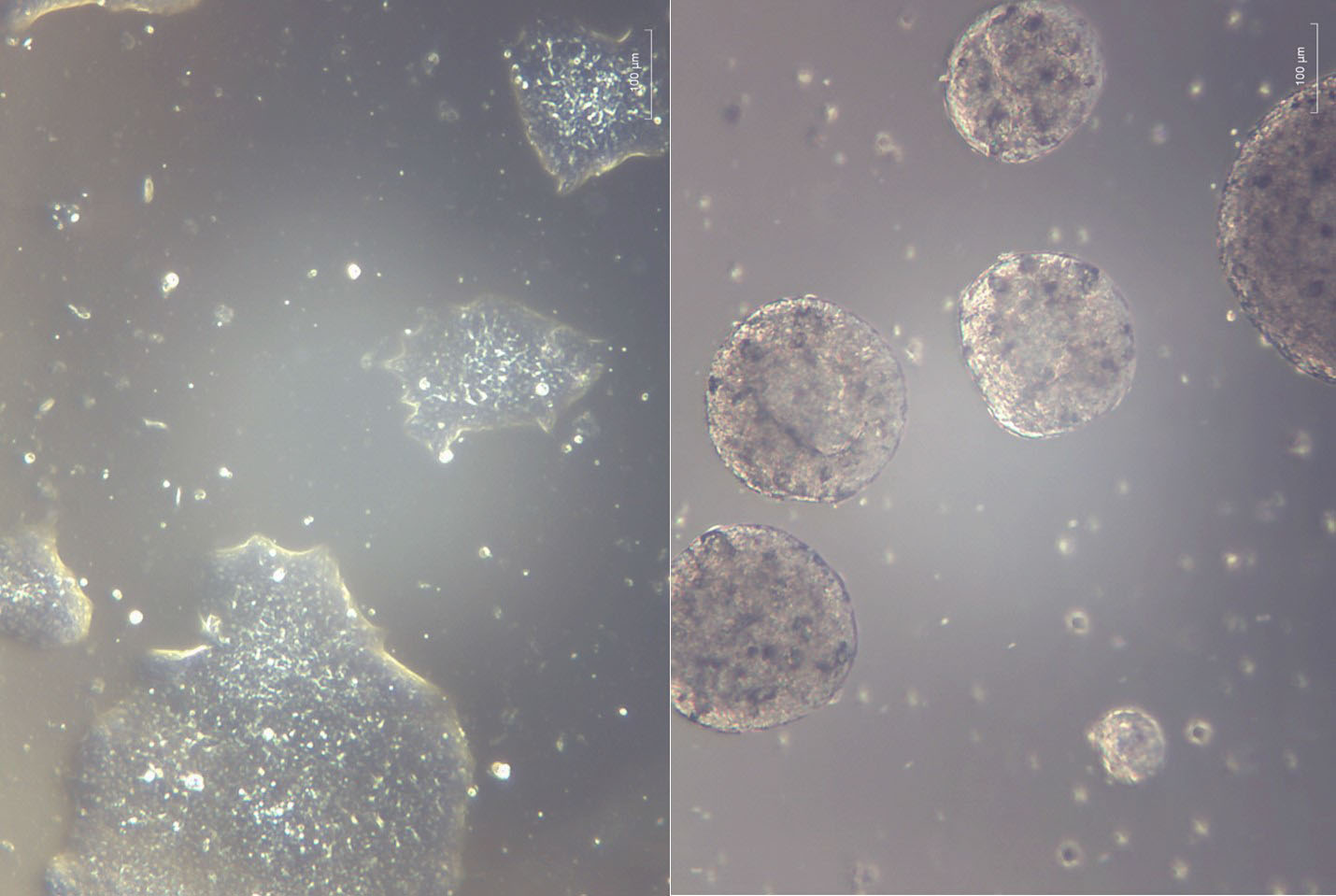
    This image has two side-by-side panels. On the left are irregular, translucent cells with textured surfaces in varying shades of gray and white and scattered irregular particles. On the right are spherical cells with textured surfaces and defined edges, with more circular scattered particles around them.
    Cultures of stem cells grown in 2D on Earth, left, and as 3D spheres in simulated microgravity on Earth.
    BioServe

    A stem cell investigation called StemCellEx-IP1 evaluates using microgravity to produce large numbers of induced pluripotent stem cells. Made by reprogramming skin or blood cells, these stem cells can transform into any type of cell in the body and are used in regenerative medicine therapies for many diseases. However, producing enough cells on the ground is a challenge.

    Researchers plan to use the microgravity environment aboard the space station to demonstrate whether generating 1,000 times more cells is possible and whether these cells are of higher quality and better for clinical use than those made on Earth. If proven, this could significantly improve future patient outcomes.

    “This type of stem cell research is a chance to find treatments and maybe even cures for diseases that currently have none,” said Tobias Niederwieser of BioServe Space Technologies, which developed the investigation. “This represents an incredible potential to make life here on Earth better for all of us. We can take skin or blood cells from a patient, convert them into stem cells, and produce custom cell-therapy with little risk for rejection, as they are the person’s own cells.”

    Alternative to antibiotics

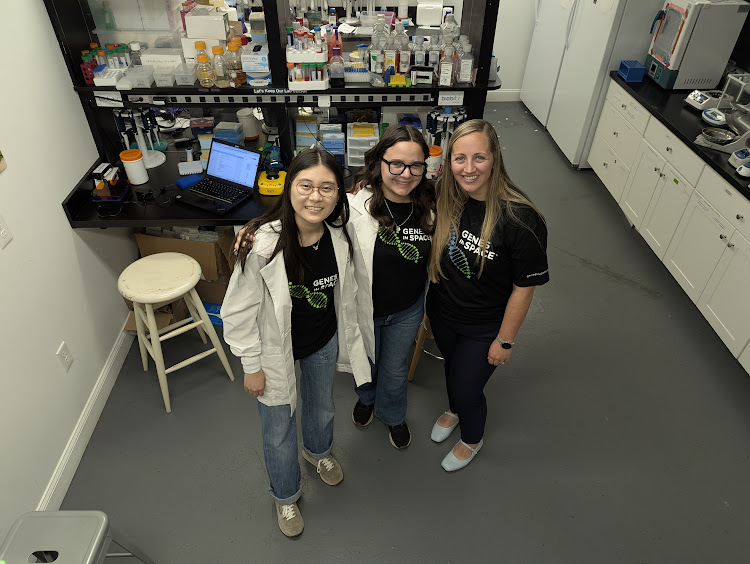
    Two students and their mentor are in the center of the image with their arms around each other, smiling at the camera. All three are wearing black t-shirts with the Genes in Space logo visible on the front. One student is wearing a white lab coat over their t-shirt. A black work bench and shelves holding lab equipment are behind them, and there is a white lab stool on the left side of the image.
    Genes in Space-12 student investigators Isabella Chuang, left, and Julia Gross, middle, with mentor Kayleigh Ingersoll Omdahl.
    Genes in Space

    Genes in Space is a series of competitions in which students in grades 7 through 12 design DNA experiments that are flown to the space station. Genes in Space-12 examines the effects of microgravity on interactions between certain bacteria and bacteriophages, which are viruses that infect and kill bacteria. Bacteriophages already are used to treat bacterial infections on Earth.

    “Boeing and miniPCR bio co-founded this competition to bring real-world scientific experiences to the classroom and promote molecular biology investigations on the space station,” said Scott Copeland of Boeing, and co-founder of Genes in Space. “This investigation could establish a foundation for using these viruses to treat bacterial infections in space, potentially decreasing the dependence on antibiotics.”

    “Previous studies indicate that bacteria may display increased growth rates and virulence in space, while the antibiotics used to combat them may be less effective,” said Dr. Ally Huang, staff scientist at miniPCR bio. “Phages produced in space could have profound implications for human health, microbial control, and the sustainability of long-duration remote missions. Phage therapy tools also could revolutionize how we manage bacterial infections and microbial ecosystems on Earth.”

    Edible organisms

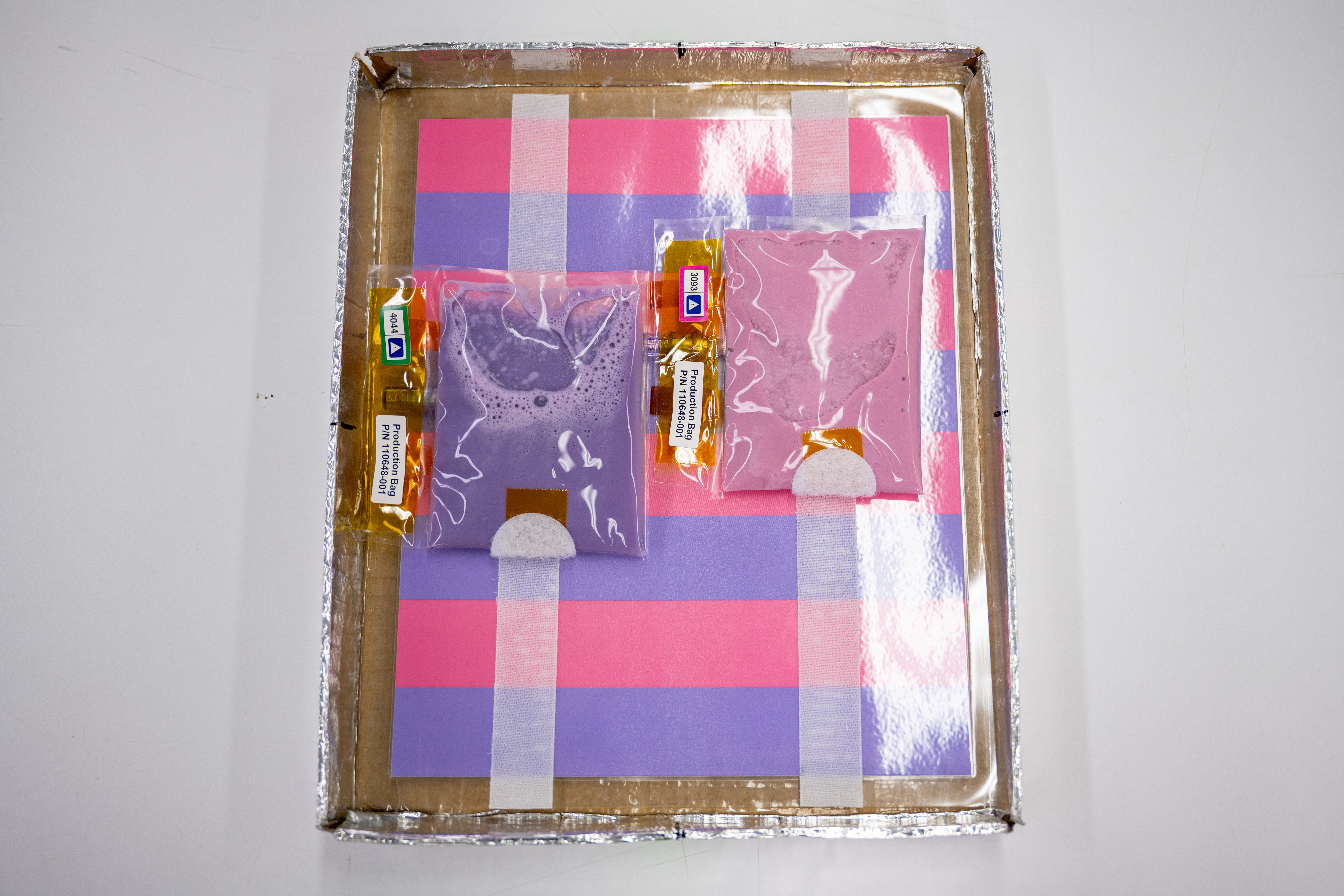
    Two square, clear plastic bags are taped to a rectangular tray covered with alternating purple and pink stripes. The bag on the left contains a purple liquid and the bag on the right a pink liquid.
    A purple, pre-incubation BioNutrients-3 bag, left, and a pink bag, right, which has completed incubation, on a purple and pink board used for comparison.
    NASA

    Some vitamins and nutrients in foods and supplements lose their potency during prolonged storage, and insufficient intake of even a single nutrient can lead to serious diseases, such as a vitamin C deficiency, causing scurvy. The BioNutrients-3 experiment builds on previous investigations looking at ways to produce on-demand nutrients in space using genetically engineered organisms that remain viable for years. These include yogurt and a yeast-based beverage made from yeast strains previously tested aboard station, as well as a new, engineered co-culture that produces multiple nutrients in one sample bag.

    “BioNutrients-3 includes multiple food safety features, including pasteurization to kill microorganisms in the sample and a demonstration of the feasibility of using a sensor called E-Nose that simulates an ultra-sensitive nose to detect pathogens,” said Kevin Sims, project manager at NASA’s Ames Research Center in California’s Silicon Valley.

    Another food safety feature is a food-grade pH indicator to track bacterial growth.

    “These pH indicators help the crew visualize the progress of the yogurt and kefir samples,” Sims said. “As the organisms grow, they generate lactic acid, which lowers the pH and turns the indicator pink.”

    The research also features an investigation of yogurt passage, which seeds new cultures using a bit of yogurt from a finished bag, much like maintaining a sourdough bread starter. This method could sustain a culture over multiple generations, eliminating concerns about yogurt’s shelf life during a mission to the Moon or Mars while reducing launch mass.

    Understanding cell division

    Multiple green cells, roughly the shape of corn kernels, form a circular cluster in the center of the image. Two individual cells are visible just below the cluster and another to its left.
    Cells of green algae dividing.
    University of Toyama

    The JAXA Plant Cell Division investigation examines how microgravity affects cell division in green algae and a strain of cultured tobacco cells. Cell division is a fundamental element of plant growth, but few studies have examined it in microgravity.

    “The tobacco cells divide frequently, making the process easy to observe,” said Junya Kirima of JAXA. “We are excited to reveal the effects of the space environment on plant cell division and look forward to performing time-lapse live imaging of it aboard the space station.”

    Understanding this process could support the development of better methods for growing plants for food in space, including on the Moon and Mars. This investigation also could provide insight to help make plant production systems on Earth more efficient.

    For nearly 25 years, people have lived and worked continuously aboard the International Space Station, advancing scientific knowledge and conducting critical research for the benefit of humanity and our home planet. Space station research supports the future of human spaceflight as NASA looks toward deep space missions to the Moon under the Artemis campaign and in preparation for future human missions to Mars, as well as expanding commercial opportunities in low Earth orbit and beyond.

    Learn more about the International Space Station at:

    https://www.nasa.gov/station

  • NASA’s IXPE Imager Reveals Mysteries of Rare Pulsar

    4 min read

    Preparations for Next Moonwalk Simulations Underway (and Underwater)

    An international team of astronomers has uncovered new evidence to explain how pulsing remnants of exploded stars interact with surrounding matter deep in the cosmos, using observations from NASA’s IXPE (Imaging X-ray Polarimetry Explorer) and other telescopes. 

    Scientists based in the U.S., Italy, and Spain, set their sights on a mysterious cosmic duo called PSR J1023+0038, or J1023 for short. The J1023 system is comprised of a rapidly rotating neutron star feeding off of its low-mass companion star, which has created an accretion disk around the neutron star. This neutron star is also a pulsar, emitting powerful twin beams of light from its opposing magnetic poles as it rotates, spinning like a lighthouse beacon.

    The J1023 system is rare and valuable to study because the pulsar transitions clearly between its active state, in which it feeds off its companion star, and a more dormant state, when it emits detectable pulsations as radio waves. This makes it a “transitional millisecond pulsar.” 

    An artist’s illustration depicting the central regions of the binary system PSR J1023+0038, including the pulsar, the inner accretion disc and the pulsar wind. 
    Credit: Marco Maria Messa, University of Milan/INAF-OAB; Maria Cristina Baglio, INAF-OAB

    “Transitional millisecond pulsars are cosmic laboratories, helping us understand how neutron stars evolve in binary systems,” said researcher Maria Cristina Baglio of the Italian National Institute of Astrophysics (INAF) Brera Observatory in Merate, Italy, and lead author of a paper in The Astrophysical Journal Letters illustrating the new findings. 

    The big question for scientists about this pulsar system was: Where do the X-rays originate? The answer would inform broader theories about particle acceleration, accretion physics, and the environments surrounding neutron stars across the universe.

    The source surprised them: The X-rays came from the pulsar wind, a chaotic stew of gases, shock waves, magnetic fields, and particles accelerated near the speed of light, that hits the accretion disk.  

    To determine this, astronomers needed to measure the angle of polarization in both X-ray and optical light. Polarization is a measure of how organized light waves are. They looked at X-ray polarization with IXPE, the only telescope capable of making this measurement in space, and comparing it with optical polarization from the European Southern Observatory’s Very Large Telescope in Chile. IXPE launched in Dec. 2021 and has made many observations of pulsars, but J1023 was the first system of its kind that it explored. 

    NASA’s NICER (Neutron star Interior Composition Explorer) and Neil Gehrels Swift Observatory provided valuable observations of the system in high-energy light. Other telescopes contributing data included the Karl G. Jansky Very Large Array in Magdalena, New Mexico. 

    The result: scientists found the same angle of polarization across the different wavelengths.

    “That finding is compelling evidence that a single, coherent physical mechanism underpins the light we observe,” said Francesco Coti Zelati of the Institute of Space Sciences in Barcelona, Spain, co-lead author of the findings. 

    This interpretation challenges the conventional wisdom about neutron star emissions of radiation in binary systems, the researchers said. Previous models had indicated that the X-rays come from the accretion disk, but this new study shows they originate with the pulsar wind. 

    “IXPE has observed many isolated pulsars and found that the pulsar wind powers the X-rays,” said NASA Marshall astrophysicist Philip Kaaret, principal investigator for IXPE at NASA’s Marshall Space Flight Center in Huntsville, Alabama. “These new observations show that the pulsar wind powers most of the energy output of the system.”

    Astronomers continue to study transitional millisecond pulsars, assessing how observed physical mechanisms compare with those of other pulsars and pulsar wind nebulae. Insights from these observations could help refine theoretical models describing how pulsar winds generate radiation – and bring researchers one step closer, Baglio and Coti Zelati agreed, to fully understanding the physical mechanisms at work in these extraordinary cosmic systems.

    More about IXPE

    IXPE, which continues to provide unprecedented data enabling groundbreaking discoveries about celestial objects across the universe, is a joint NASA and Italian Space Agency mission with partners and science collaborators in 12 countries. IXPE is led by NASA’s Marshall Space Flight Center in Huntsville, Alabama. BAE Systems, Inc., headquartered in Falls Church, Virginia, manages spacecraft operations together with the University of Colorado’s Laboratory for Atmospheric and Space Physics in Boulder. Learn more about IXPE’s ongoing mission here:

    https://www.nasa.gov/ixpe

  • Helio Highlights: June 2025

    4 min read

    Helio Highlights: June 2025

    4 Min Read

    Helio Highlights: June 2025

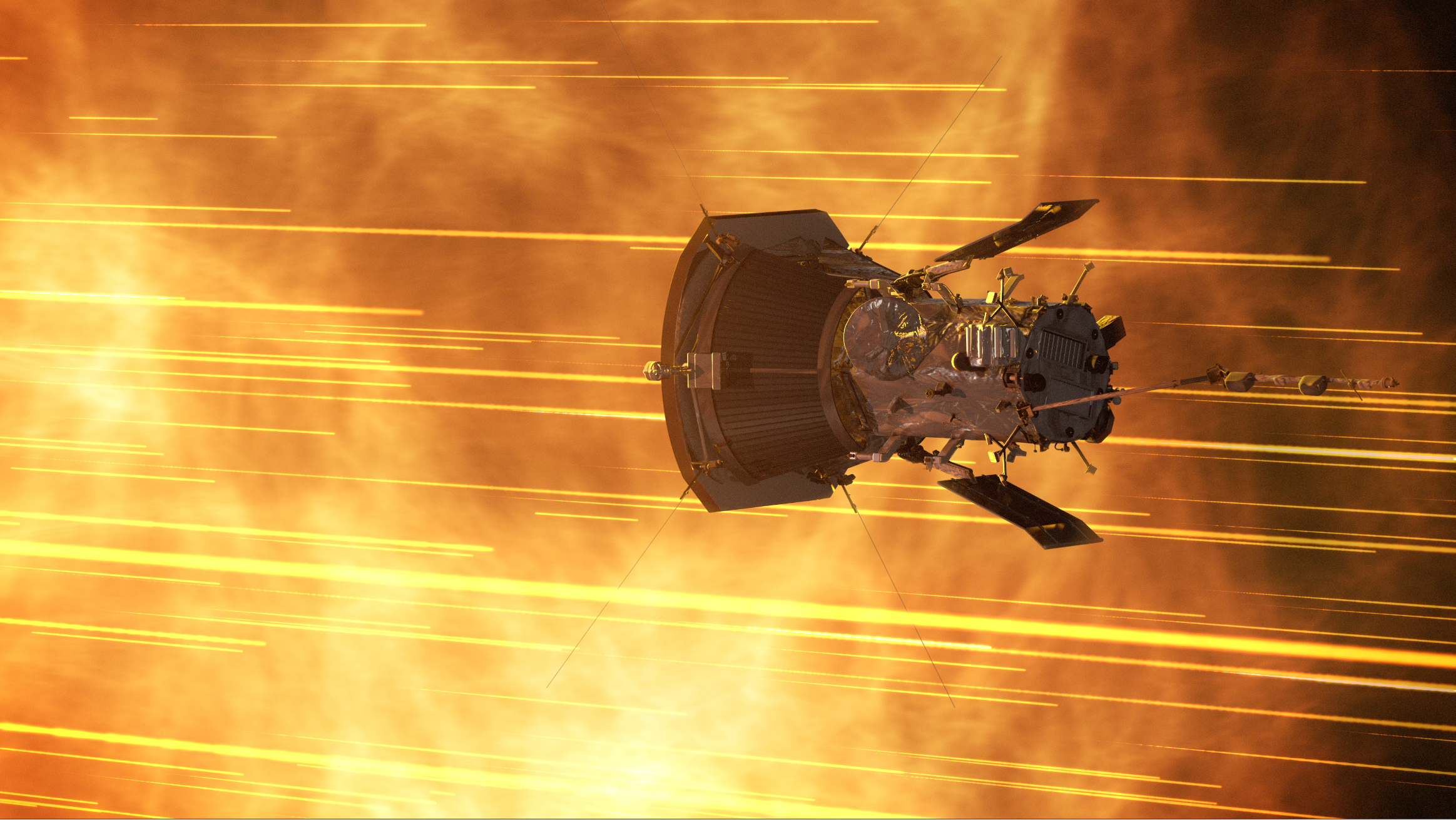
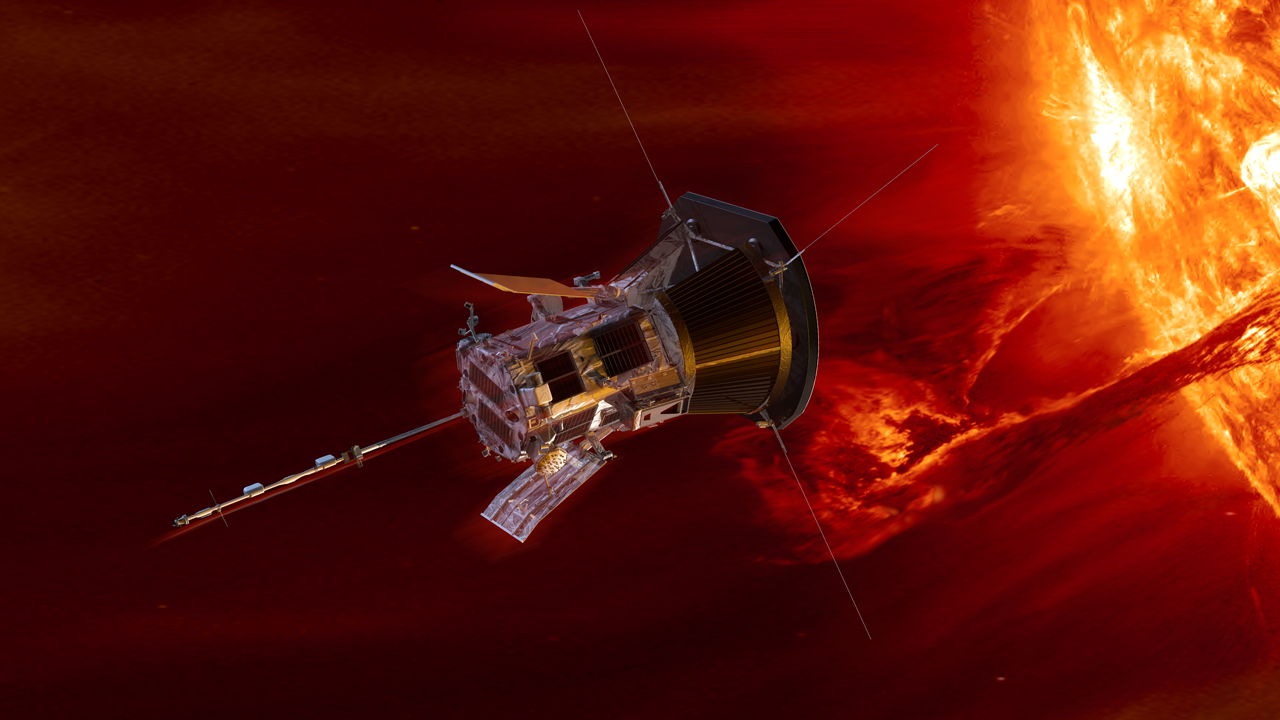
    NASA's Parker Solar Probe -- with its heat shield facing forward and twin solar panels partially extended -- flies through particles in space.

    An artist’s interpretation of the Parker Solar Probe flying through the corona.

    Credits:
    NASA

    Two Stars in Solar Science

    It takes a lot of work to make space missions happen. Hundreds or even thousands of experts work as a team to put together the spacecraft. Then it has to be tested in conditions similar to space, to be sure that it can survive out there once it is launched. Fixing big issues that pop up after launch is either impossible or very difficult, so it is important that everything works before the mission gets to space.

    The Parker Solar Probe and Solar Orbiter missions study the Sun from different points of view. Parker is led by NASA and was built to fly into the upper atmosphere of the Sun, called the corona. Solar Orbiter is led by the European Space Agency (ESA) and has gotten our first peek at the Sun’s poles. Together, they both provide a deeper understanding of the Sun and how it affects the rest of the solar system.

    A New Way of Seeing

    It takes a lot of teamwork to build and launch any space mission, and Solar Orbiter was no different. It also had to go through a lot of testing in conditions similar to outer space before it made its final journey to the launch site.

    The Solar Orbiter mission has taken the highest-ever-resolution images of the Sun and recently sent back the first ever close-up images of the Sun’s poles. It has also studied the solar wind to see what it is made of and helped scientists find out where on the Sun the solar wind comes from. Working hand-in-hand with Parker, it has also shown how the solar wind gets a magnetic “push” that increases its total speed.

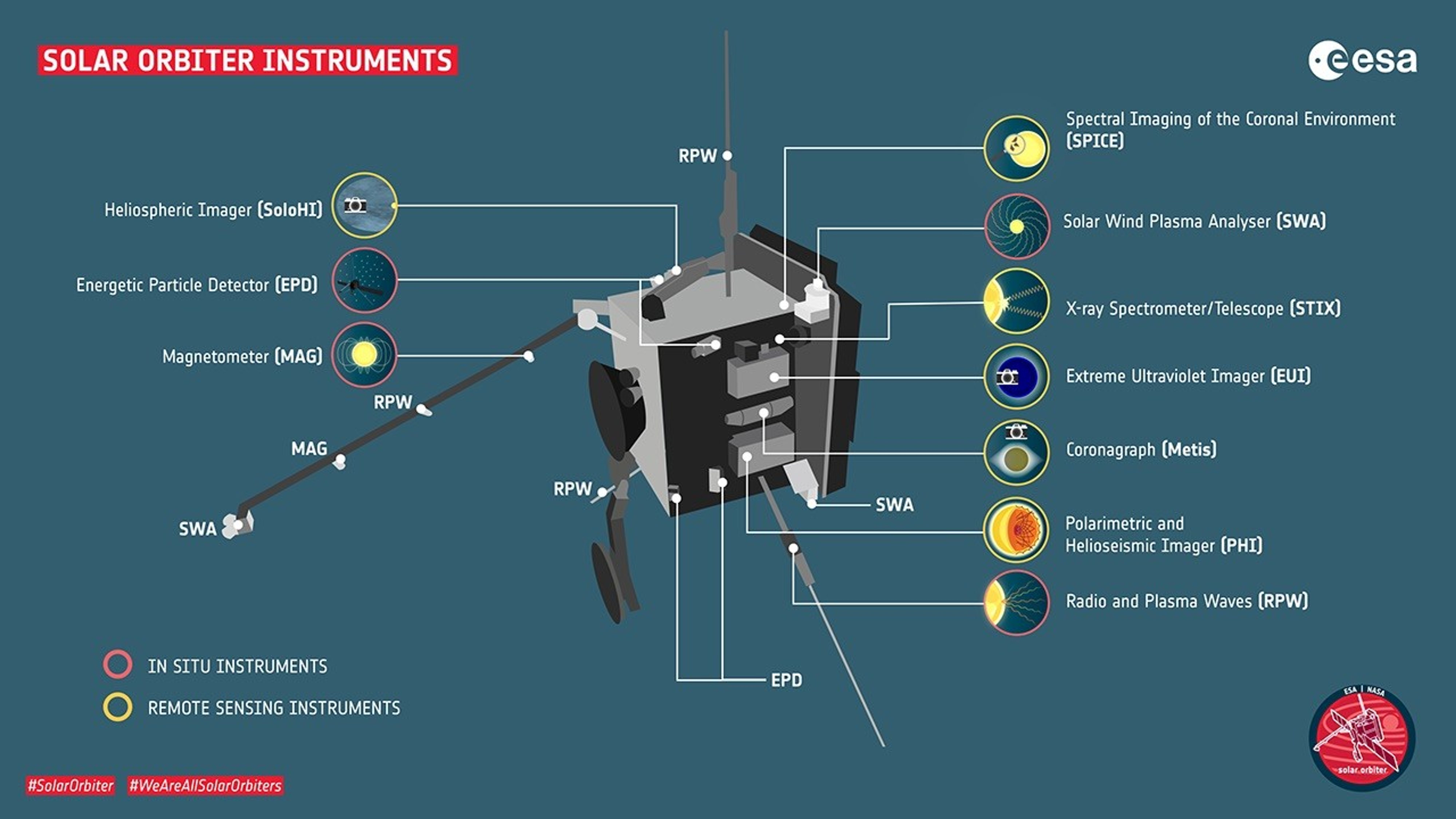
    An infographic showing the ten scientific instruments carried aboard Solar Orbiter
    European Space Agency

    To get all of this done, the spacecraft carries ten different scientific instruments on its voyage around the Sun. These instruments work together to provide a total overview of our star. Six of them are remote-sensing instruments (above in gold), which “see” the Sun and return imagery to Earth. The other four are what’s called in-situ instruments (above in pink), which measure the environment all  around the spacecraft. This includes the solar wind, and the electric and magnetic fields embedded within it.

    Faster and Closer Than Ever Before

    The Parker Solar Probe was named for Dr. Eugene N. Parker, who pioneered our modern understanding of the Sun. In the mid-1950s, Parker developed a theory that predicted the solar wind. The probe named after him is designed to swoop within 4 million miles (6.5 million kilometers) of the Sun’s surface to trace its energy flow, to study the heating of the corona, and to explore what accelerates the solar wind.

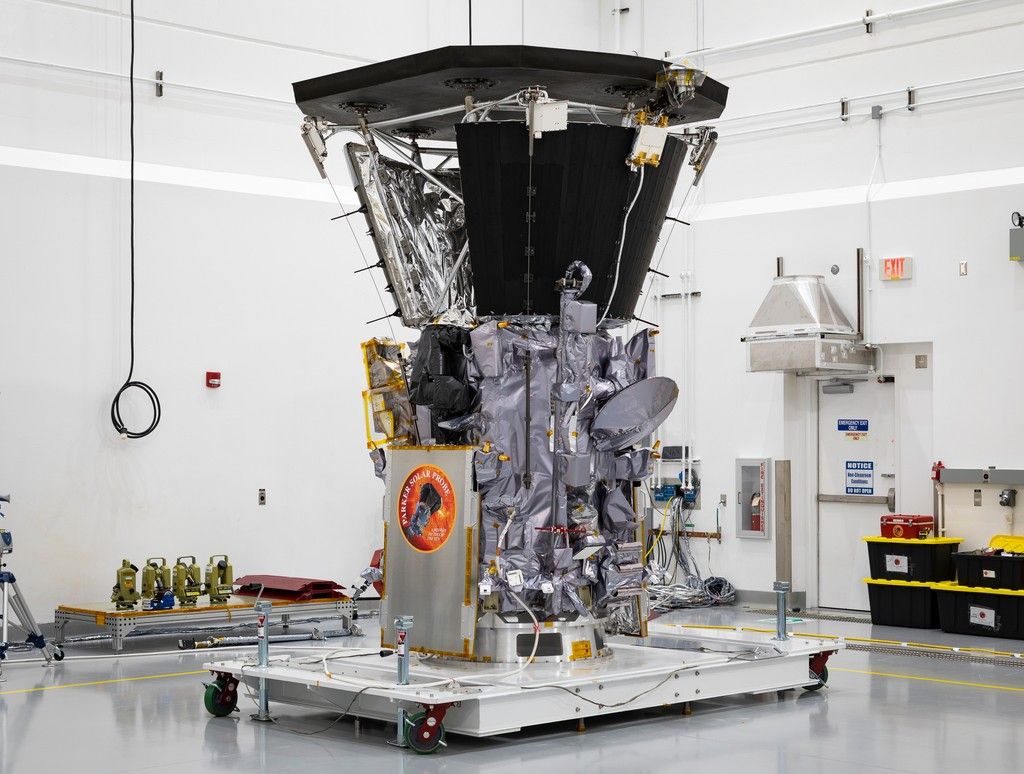
    To get all this done, the probe has to survive the blazing hot corona. It can get up to about 2 million °F (1.1 million °C)!  Parker uses high-tech thermal engineering to protect itself, including an eight-foot diameter heat shield called the Thermal Protection System (TPS). The TPS is made of two panels of carbon composite with a lightweight 4.5-inch-thick carbon foam core. This heat shield sandwich keeps things about 85 °F (29 °C) in its shadow, even though the Sun-facing side reaches about 2,500 °F (1,377 °C)!

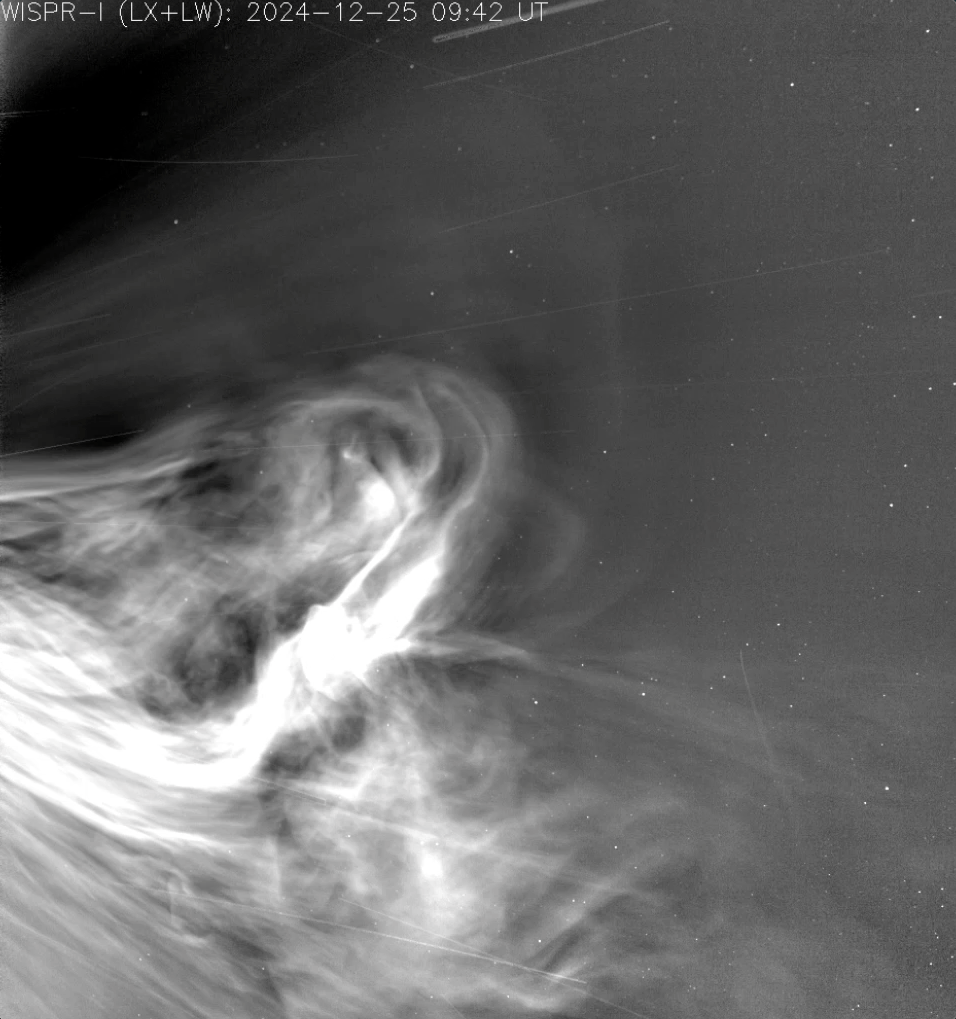
    In 2018, the Parker Solar Probe became the fastest spacecraft ever built, at about 430,000 miles per hour (700,000 kilometers per hour). It also got seven times closer to the Sun than any other spacecraft, getting within 3.8 million miles (6.2 million kilometers). It made this record-breaking close encounter on Christmas Eve of 2024.

    From Yesterday to Tomorrow

    The Parker Solar Probe was launched on August 12, 2018, and Solar Orbiter was launched on February 10, 2020. Both of them took off from Cape Canaveral Air Station in Florida. Some pieces of Solar Orbiter were transported in trucks, but the completed spacecraft made the journey from Europe to the U.S. on a gigantic Antonov cargo plane designed especially for transporting spacecraft.

    Together, these spacecraft have done a lot to improve our knowledge of the Sun. Both missions are currently in their main operational phase, with projected end-of-mission sometime in 2026, and could continue returning data for a few years to come.

    Additional Resources