Tag: Kepler

  • NASA Tests Epic Solution for Supersonic Parachute Deliveries

    2 min read

    Preparations for Next Moonwalk Simulations Underway (and Underwater)

    NASA/Lori Losey

    The best way to solve a mystery is by gathering evidence and building a case. That’s exactly what NASA researchers are doing with a series of research flights aimed at advancing a sensor for supersonic parachutes. The clues they find could help make these parachutes more reliable and safer for delivering scientific instruments and payloads to Mars.

    These investigative research flights are led by the EPIC (Enhancing Parachutes by Instrumenting the Canopy) team at NASA’s Armstrong Fight Research Center in Edwards, California. During a June flight test, a quadrotor aircraft, or drone, air-launched a capsule that deployed a parachute equipped with a sensor. The flexible, strain-measuring sensor attached to the parachute did not interfere with the canopy material, just as the EPIC team had predicted. The sensors also provided data, a bonus for planning upcoming tests.

    “Reviewing the research flights will help inform our next steps,” said Matt Kearns, project manager for EPIC at NASA Armstrong. “We are speaking with potential partners to come up with a framework to obtain the data that they are interested in pursuing. Our team members are developing methods for temperature testing the flexible sensors, data analysis, and looking into instrumentation for future tests.”

    The flight tests were a first step toward filling gaps in computer models to improve supersonic parachutes. This work could also open the door to future partnerships, including with the aerospace and auto racing industries.

    NASA’s Space Technology Mission Directorate (STMD) funds the EPIC work through its Entry Systems Modeling project at NASA’s Ames Research Center in California’s Silicon Valley. The capsule and parachute system were developed by NASA’s Langley Research Center in Hampton, Virginia. NASA Armstrong interns worked with Langley to build and integrate a similar system for testing at NASA Armstrong. An earlier phase of the work focused on finding commercially available flexible strain sensors and developing a bonding method as part of an STMD Early Career Initiative project.

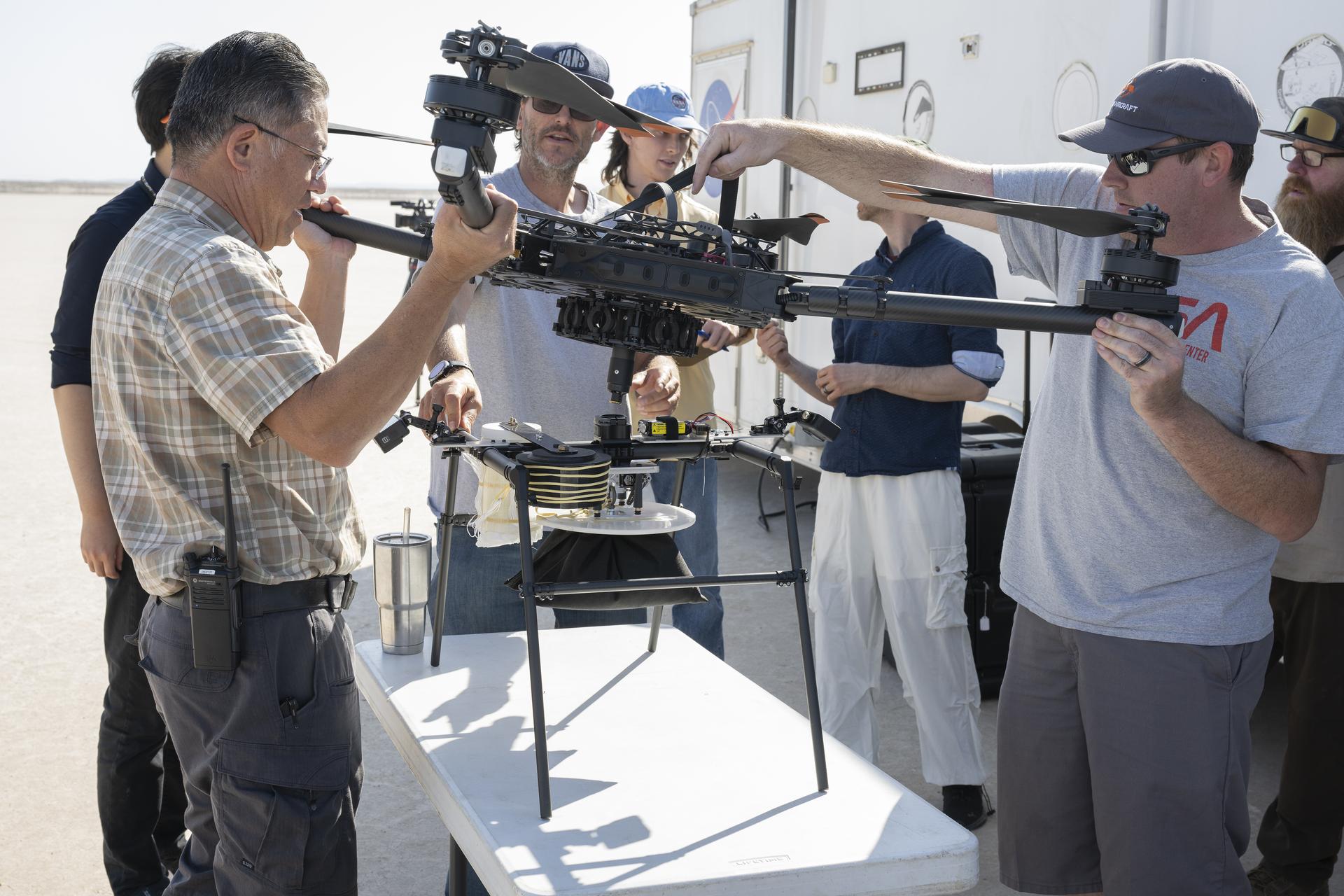
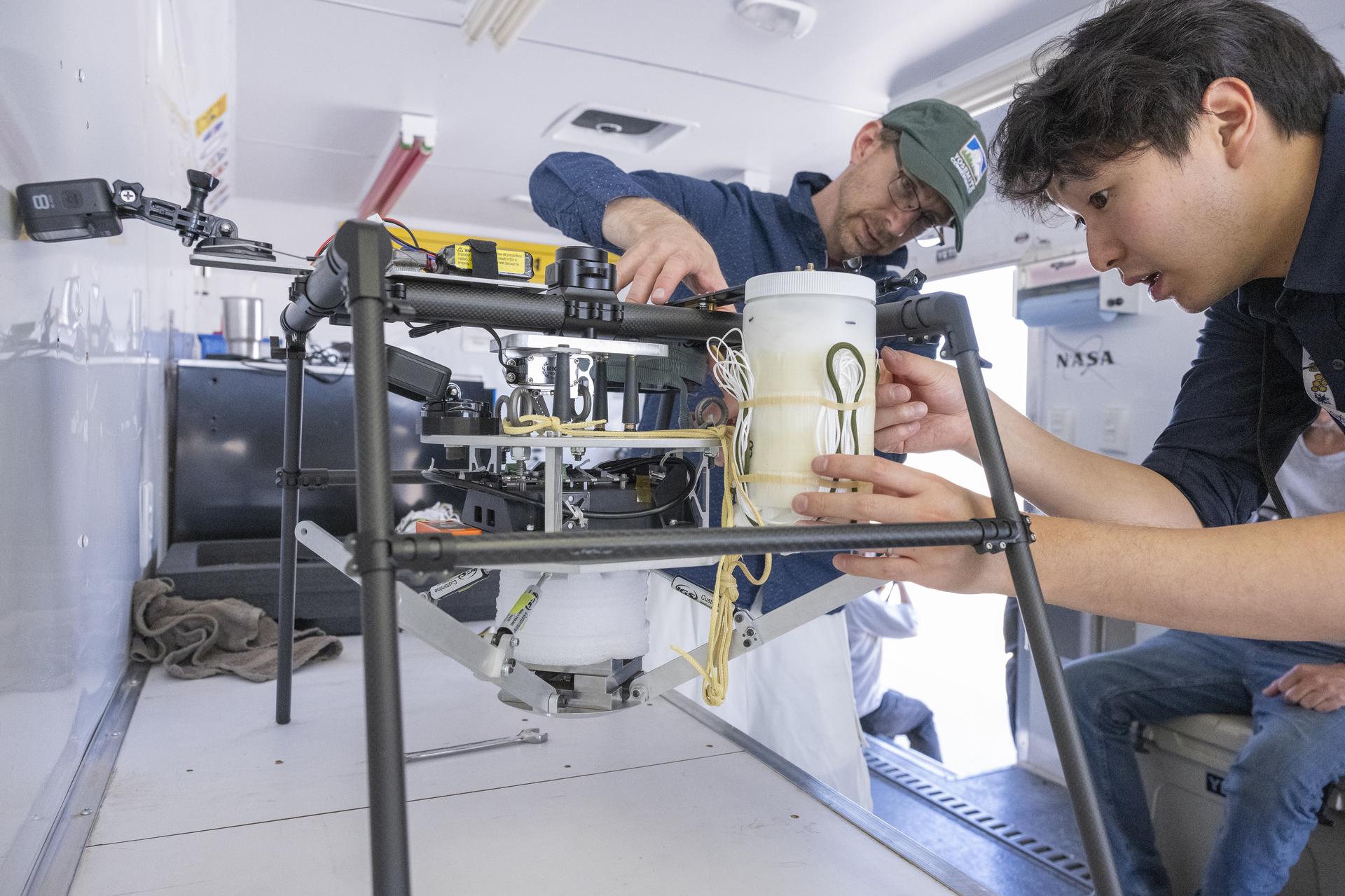
    One man secures a cannister containing a parachute to a system that will be carried by an Alta X drone, while another man assists.
    NASA researchers Paul Bean, center, and Mark Hagiwara, right, attach the capsule with parachute system to the Enhancing Parachutes by Instrumenting the Canopy test experiment on June 4, 2025, at NASA’s Armstong Flight Research Center in Edwards, California. NASA researchers are developing technology to make supersonic parachutes safer and more reliable for delivering science instruments and payloads to Mars.
    NASA/Christopher LC Clark
    Two men attached a science experiment to a drone for a research flight.
    Derek Abramson, left, and Justin Link, right, attach an Alta X drone to the Enhancing Parachutes by Instrumenting the Canopy test experiment on June 4, 2025, at NASA’s Armstong Flight Research Center in Edwards, California. Abramson is NASA chief engineer at the center’s Dale Reed Subscale Flight Research Laboratory, where Link also works as a pilot for small uncrewed aircraft systems. NASA researchers are developing technology to make supersonic parachutes safer and more reliable for delivering science instruments and payloads to Mars.
    NASA/Christopher LC Clark
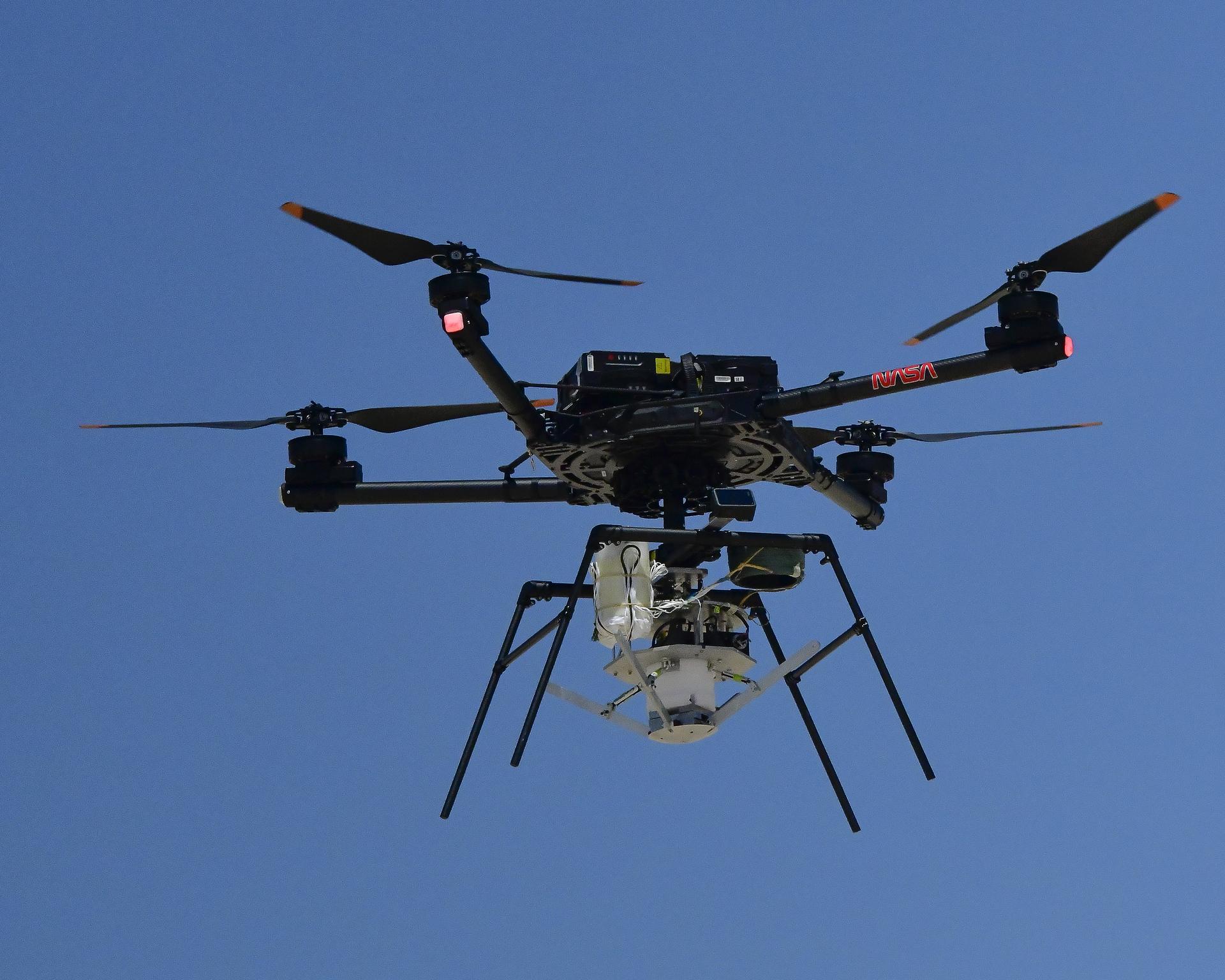
    A drone with four rotors hoovers against a canvas of deep blue sky prior to releasing the experiment it carries high above the desert floor.
    An Alta X drone is positioned at altitude for an air launch of the Enhancing Parachutes by Instrumenting the Canopy test experiment on June 4, 2025, at NASA’s Armstong Flight Research Center in Edwards, California. NASA researchers are developing technology to make supersonic parachutes safer and more reliable for delivering science instruments and payloads to Mars.
    NASA/Christopher LC Clark
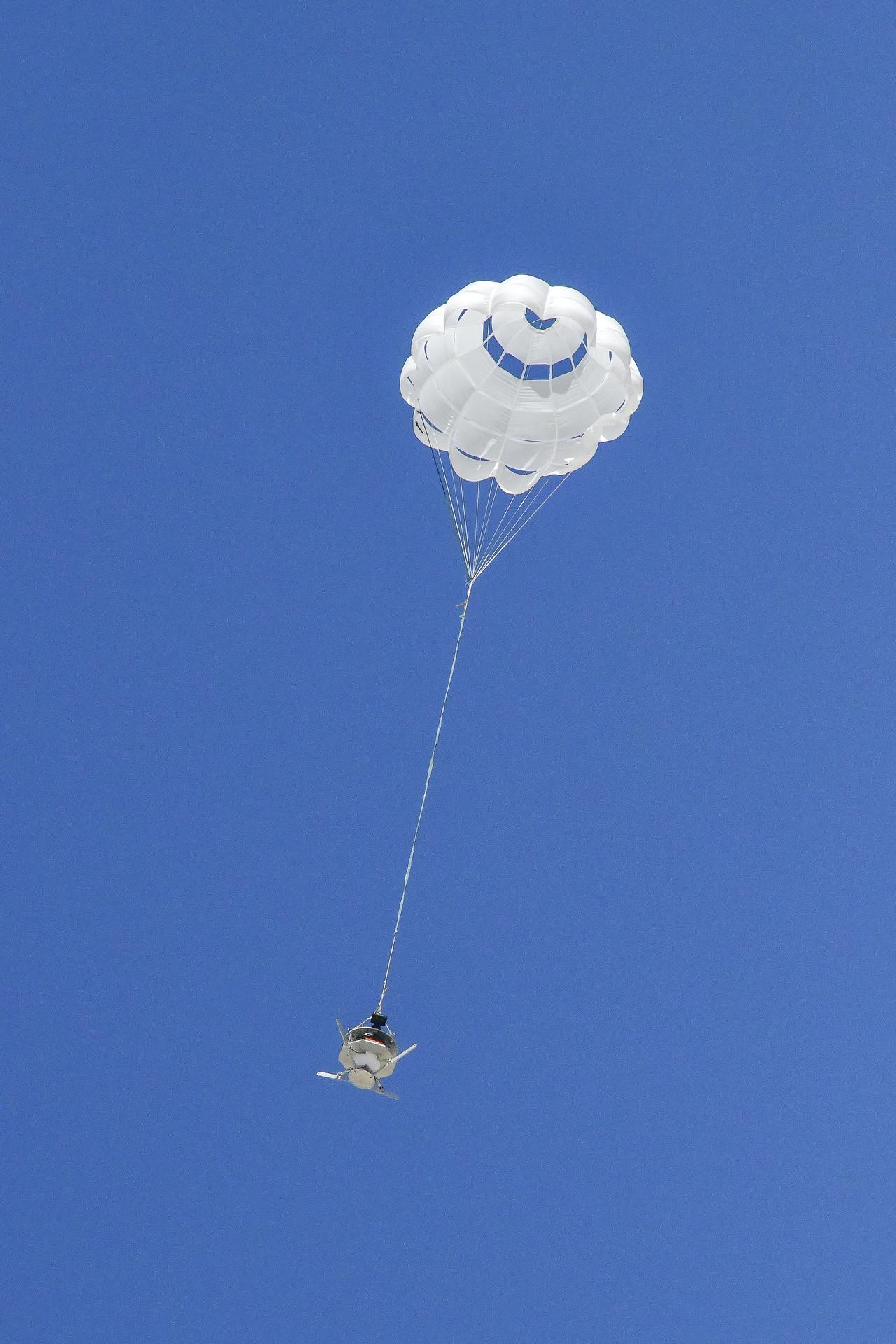
    A parachute carrying a capsule is fully open against a canvas of deep blue sky.
    The parachute of the Enhancing Parachutes by Instrumenting the Canopy test experiment deploys following an air launch from an Alta X drone on June 4, 2025, at NASA’s Armstong Flight Research Center in Edwards, California. NASA researchers are developing technology to make supersonic parachutes safer and more reliable for delivering science instruments and payloads to Mars.
    NASA/Christopher LC Clark
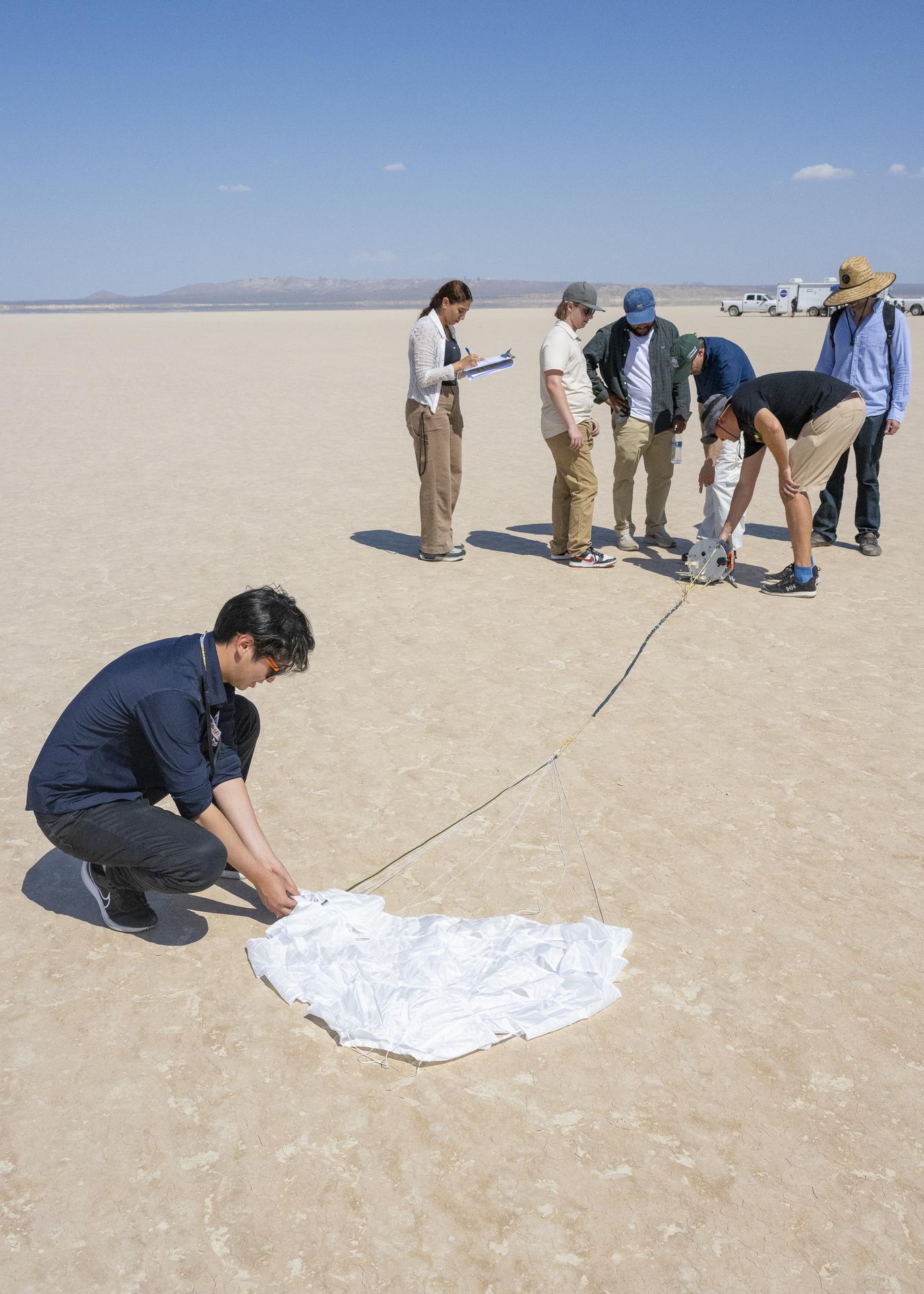
    A group of researchers on a barren dry lake examine a capsule after it was released from a drone and carried by an instrumented parachute.
    The Enhancing Parachutes by Instrumenting the Canopy project team examines a capsule and parachute following an air launch from an Alta X drone on June 4, 2025, at NASA’s Armstong Flight Research Center in Edwards, California. NASA researchers are developing technology to make supersonic parachutes safer and more reliable for delivering science instruments and payloads to Mars.
    NASA/Christopher LC Clark
  • NASA-ISRO Satellite Lifts Off to Track Earth’s Changing Surfaces

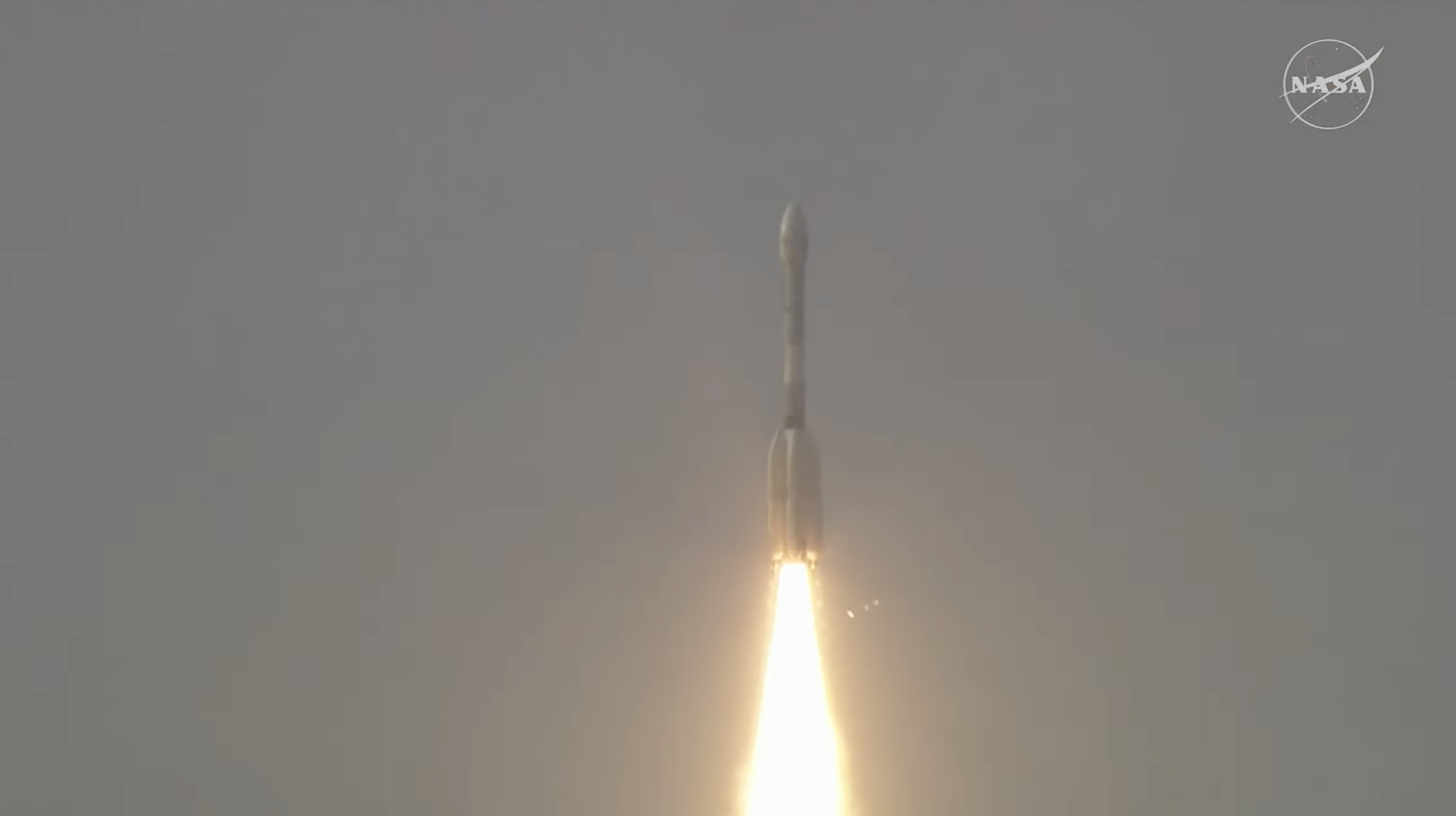
    A large white rocket with a fiery trail launches through a cloudy sky above India.
    The Indian Space Research Organisation’s Geosynchronous Satellite Launch Vehicle lifts off from Satish Dhawan Space Centre on India’s southeastern coast at 5:40 p.m. IST (8:10 a.m. EDT), July 30, 2025.
    Credit: ISRO

    Editor’s Note: This release was edited on July 30, 2025, to correct the mission launch time in the IST time zone.

    Carrying an advanced radar system that will produce a dynamic, three-dimensional view of Earth in unprecedented detail, the NISAR (NASA-ISRO Synthetic Aperture Radar) satellite has launched from Satish Dhawan Space Centre in Sriharikota, Andhra Pradesh, India.

    Jointly developed by NASA and the Indian Space Research Organisation (ISRO), and a critical part of the United States – India civil-space cooperation highlighted by President Trump and Prime Minister Modi earlier this year, the satellite can detect the movement of land and ice surfaces down to the centimeter. The mission will help protect communities by providing unique, actionable information to decision-makers in a diverse range of areas, including disaster response, infrastructure monitoring, and agricultural management. 

    The satellite lifted off aboard an ISRO Geosynchronous Satellite Launch Vehicle (GSLV) rocket at 5:40 p.m. IST (8:10 a.m. EDT), Wednesday. The ISRO ground controllers began communicating with NISAR about 20 minutes after launch, at just after 8:29 a.m. EDT, and confirmed it is operating as expected.

    “Congratulations to the entire NISAR mission team on a successful launch that spanned across multiple time zones and continents in the first-ever partnership between NASA and ISRO on a mission of this sheer magnitude,” said Nicky Fox, associate administrator, Science Mission Directorate at NASA Headquarters in Washington. “Where moments are most critical, NISAR’s data will help ensure the health and safety of those impacted on Earth, as well as the infrastructure that supports them, for the benefit of all.”

    From 464 miles (747 kilometers) above Earth, NISAR will use two advanced radar instruments to track changes in Earth’s forests and wetland ecosystems, monitor deformation and motion of the planet’s frozen surfaces, and detect the movement of Earth’s crust down to fractions of an inch — a key measurement in understanding how the land surface moves before, during, and after earthquakes, volcanic eruptions, and landslides.

    “ISRO’s GSLV has precisely injected NISAR satellite into the intended orbit, 747 kilometers. I am happy to inform that this is GSLV’s first mission to Sun-synchronous polar orbit. With this successful launch, we are at the threshold of fulfilling the immense scientific potential NASA and ISRO envisioned for the NISAR mission more than 10 years ago,” said ISRO Chairman V Narayanan. “The powerful capability of this radar mission will help us study Earth’s dynamic land and ice surfaces in greater detail than ever before.”

    The mission’s two radars will monitor nearly all the planet’s land- and ice-covered surfaces twice every 12 days, including areas of the polar Southern Hemisphere rarely covered by other Earth-observing radar satellites. The data NISAR collects also can help researchers assess how forests, wetlands, agricultural areas, and permafrost change over time.

    “Observations from NISAR will provide new knowledge and tangible benefits for communities both in the U.S. and around the world,” said Karen St. Germain, director, Earth Science division at NASA Headquarters. “This launch marks the beginning of a new way of seeing the surface of our planet so that we can understand and foresee natural disasters and other changes in our Earth system that affect lives and property.”

    The NISAR satellite is the first free-flying space mission to feature two radar instruments — an L-band system and an S-band system. Each system is sensitive to features of different sizes and specializes in detecting certain attributes. The L-band radar excels at measuring soil moisture, forest biomass, and motion of land and ice surfaces, while S-band radar excels at monitoring agriculture, grassland ecosystems, and infrastructure movement.

    Together, the radar instruments will enhance all of the satellite’s observations, making NISAR more capable than previous synthetic aperture radar missions. Unlike optical sensors, NISAR will be able to “see” through clouds, making it possible to monitor the surface during storms, as well as in darkness and light.

    NASA’s Jet Propulsion Laboratory in Southern California provided the L-band radar, and ISRO’s Space Applications Centre in Ahmedabad developed the S-band radar. The NISAR mission marks the first time the two agencies have co-developed hardware for an Earth-observing mission.

    “We’re proud of the international team behind this remarkable satellite. The mission’s measurements will be global but its applications deeply local, as people everywhere will use its data to plan for a resilient future,” said Dave Gallagher, director, NASA JPL, which manages the U.S. portion of the mission for NASA. “At its core is synthetic aperture radar, a technology pioneered at NASA JPL that enables us to study Earth night and day, through all kinds of weather.”

    Including L-band and S-band radars on one satellite is an evolution in SAR airborne and space-based missions that, for NASA, started in 1978 with the launch of Seasat. In 2012, ISRO began launching SAR missions starting with Radar Imaging Satellite (RISAT-1), followed by RISAT-1A in 2022, to support a wide range of applications in India.

    In the coming weeks, the spacecraft will begin a roughly 90-day commissioning phase during which it will deploy its 39-foot (12-meter) radar antenna reflector. This reflector will direct and receive microwave signals from the two radars. By interpreting the differences between the two, researchers can discern characteristics about the surface below. As NISAR passes over the same locations twice every 12 days, scientists can evaluate how those characteristics have changed over time to reveal new insights about Earth’s dynamic surfaces.

    The NISAR mission is an equal collaboration between NASA and ISRO. Managed for the agency by Caltech, NASA JPL leads the U.S. component of the project and is providing the mission’s L-band SAR. NASA also is providing the radar reflector antenna, the deployable boom, a high-rate communication subsystem for science data, GPS receivers, a solid-state recorder, and payload data subsystem.

    Space Applications Centre Ahmedabad, ISRO’s lead center for payload development, is providing the mission’s S-band SAR instrument and is responsible for its calibration, data processing, and development of science algorithms to address the scientific goals of the mission. U R Rao Satellite Centre in Bengaluru, which leads the ISRO components of the mission, is providing the spacecraft bus. The launch vehicle is from ISRO’s Vikram Sarabhai Space Centre, launch services are through ISRO’s Satish Dhawan Space Centre, and satellite operations are by ISRO Telemetry Tracking and Command Network. National Remote Sensing Centre in Hyderabad is responsible for S-band data reception, operational products generation, and dissemination.

    To learn more about NISAR, visit:

    https://nisar.jpl.nasa.gov

    -end-

    Karen Fox / Elizabeth Vlock
    Headquarters, Washington
    202-358-1600
    karen.c.fox@nasa.gov / elizabeth.a.vlock@nasa.gov

    Andrew Wang / Jane J. Lee
    Jet Propulsion Laboratory, Pasadena, Calif.
    626-379-6874 / 818-354-0307
    andrew.wang@jpl.nasa.gov / jane.j.lee@jpl.nasa.gov
  • NASA’s Webb Traces Details of Complex Planetary Nebula

    5 Min Read

    NASA’s Webb Traces Details of Complex Planetary Nebula

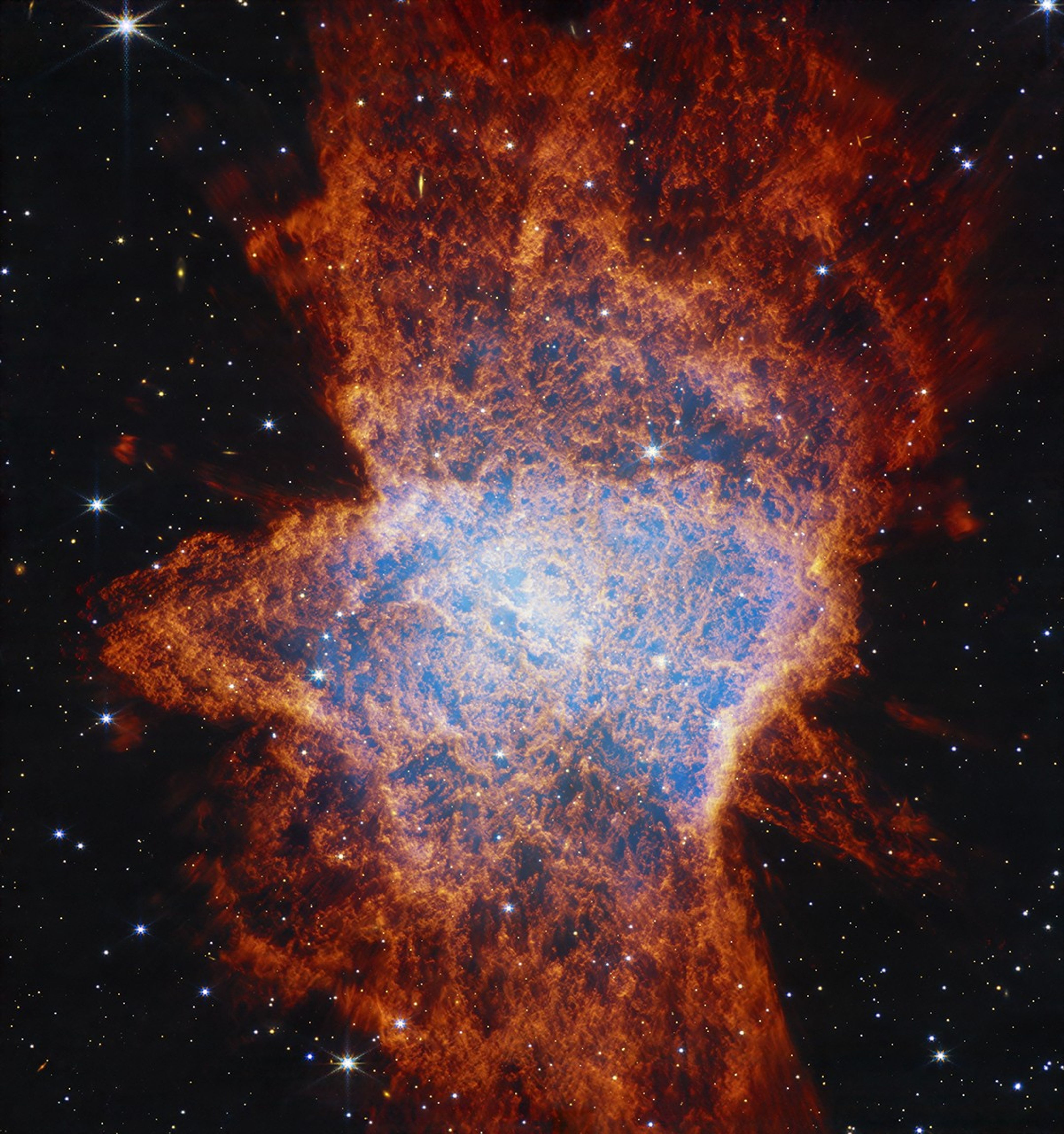
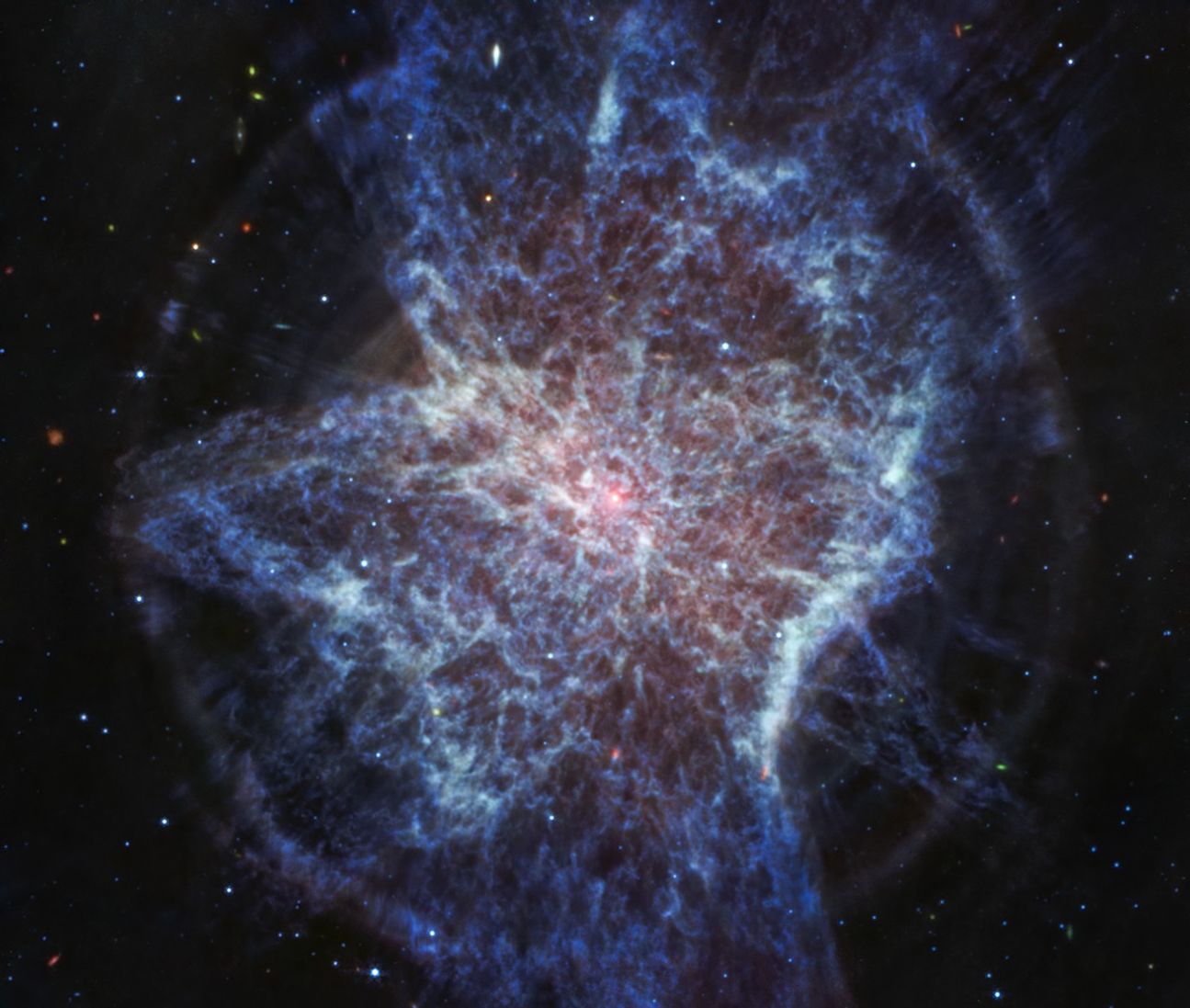
    Colorful, mostly red glowing cloud with a distorted, asymmetrical shape that is illuminated from within by a bright central star. The asymmetrical shape resembles a large squished bug on the ground. In the center, a light blue glow appears over areas of dark pockets that look dark blue and are traced with orange material. It has a clumpy appearance. Shells of gas and dust appear as lobes stretching from roughly 11 to 5 o’clock, another from 1 to 7 o’clock, and possibly a third from 12 to 6 o’clock. The shells become a deeper red with distance from the center. These outflows push gas toward the equatorial plane, forming a disk that appears to span from 9 to 3 o’clock. The background of space is black and speckled with tiny bright stars and distant galaxies.

    NASA’s James Webb Space Telescope’s view of planetary nebula NGC 6072 in the near-infrared shows a complex scene of multiple outflows expanding out at different angles from a dying star at the center of the scene. In this image, the red areas represent cool molecular gas, for example, molecular hydrogen. Full image below.

    Credits:
    NASA, ESA, CSA, STScI

    Since their discovery in the late 1700s, astronomers have learned that planetary nebulae, or the expanding shell of glowing gas expelled by a low-intermediate mass star late in its life, can come in all shapes and sizes. Most planetary nebula present as circular, elliptical, or bi-polar, but some stray from the norm, as seen in new high-resolution images of planetary nebulae by NASA’s James Webb Space Telescope.

    Webb’s newest look at planetary nebula NGC 6072 in the near- and mid-infrared shows what may appear as a very messy scene resembling splattered paint. However, the unusual, asymmetrical appearance hints at more complicated mechanisms underway, as the star central to the scene approaches the very final stages of its life and expels shells of material, losing up to 80 percent of its mass. Astronomers are using Webb to study planetary nebulae to learn more about the full life cycle of stars and how they impact their surrounding environments.

    Image A: NGC 6072 (NIRCam Image)

    Colorful, mostly red glowing cloud with a distorted, asymmetrical shape that is illuminated from within by a bright central star. The asymmetrical shape resembles a large squished bug on the ground. In the center, a light blue glow appears over areas of dark pockets that look dark blue and are traced with orange material. It has a clumpy appearance. Shells of gas and dust appear as lobes stretching from roughly 11 to 5 o’clock, another from 1 to 7 o’clock, and possibly a third from 12 to 6 o’clock. The shells become a deeper red with distance from the center. These outflows push gas toward the equatorial plane, forming a disk that appears to span from 9 to 3 o’clock. The background of space is black and speckled with tiny bright stars and distant galaxies.
    NASA’s James Webb Space Telescope’s view of planetary nebula NGC 6072 in the near-infrared shows a complex scene of multiple outflows expanding out at different angles from a dying star at the center of the scene. In this image, the red areas represent cool molecular gas, for example, molecular hydrogen.
    NASA, ESA, CSA, STScI

    First, taking a look at the image from Webb’s NIRCam (Near-Infrared Camera), it’s readily apparent that this nebula is multi-polar. This means there are several different elliptical outflows jetting out either way from the center, one from 11 o’clock to 5 o’clock, another from 1 o’clock to 7 o’clock, and possibly a third from 12 o’clock to 6 o’clock. The outflows may compress material as they go, resulting in a disk seen perpendicular to it.

    Astronomers say this is evidence that there are likely at least two stars at the center of this scene. Specifically, a companion star is interacting with an aging star that had already begun to shed some of its outer layers of gas and dust.

    The central region of the planetary nebula glows from the hot stellar core, seen as a light blue hue in near-infrared light. The dark orange material, which is made up of gas and dust, follows pockets or open areas that appear dark blue. This clumpiness could be created when dense molecular clouds formed while being shielded from hot radiation from the central star. There could also be a time element at play. Over thousands of years, inner fast winds could be ploughing through the halo cast off from the main star when it first started to lose mass.

    Image B: NGC 6072 (MIRI Image)

    Colorful, mostly blue image of mid-infrared light from a glowing cloud with a distorted, asymmetrical shape. A star at the center of the image is a small point of pinkish-white light. The asymmetrical shape of the expanding cloud of gas and dust resembles paint splattered on the ground. The filaments of the expanding shells are wispy, and mostly white and blue. The shells appear as lobes stretching from roughly 11 to 5 o’clock, another from 1 to 7 o’clock, and possibly a third from 12 to 6 o’clock. These outflows push gas toward the equatorial plane, forming a disk that appears to span from 9 to 3 o’clock. A perfect circle of whitish blue dust traces the outer edges of the shells. The background of the image is black and speckled with tiny bright stars and distant galaxies.
    The mid-infrared view of planetary nebula NGC 6072 from NASA’s James Webb Space Telescope show expanding circular shells around the outflows from the dying central star. In this image, the blue represents cool molecular gas seen in red in the image from Webb’s NIRCam (Near-Infrared Camera) due to color mapping.
    NASA, ESA, CSA, STScI

    The longer wavelengths captured by Webb’s MIRI (Mid-Infrared Instrument) are highlighting dust, revealing the star researchers suspect could be central to this scene. It appears as a small pinkish-whitish dot in this image.

    Webb’s look in the mid-infrared wavelengths also reveals concentric rings expanding from the central region, the most obvious circling just past the edges of the lobes.

    This may be additional evidence of a secondary star at the center of the scene hidden from our view. The secondary star, as it circles repeatedly around the original star, could have carved out rings of material in a bullseye pattern as the main star was expelling mass during an earlier stage of its life.

    The rings may also hint at some kind of pulsation that resulted in gas or dust being expelled uniformly in all directions separated by say, thousands of years.

    The red areas in NIRCam and blue areas in MIRI both trace cool molecular gas (likely molecular hydrogen) while central regions trace hot ionized gas.

    As the star at the center of a planetary nebula cools and fades, the nebula will gradually dissipate into the interstellar medium — contributing enriched material that helps form new stars and planetary systems, now containing those heavier elements.

    Webb’s imaging of NGC 6072 opens the door to studying how the planetary nebulae with more complex shapes contribute to this process.

    The James Webb Space Telescope is the world’s premier space science observatory. Webb is solving mysteries in our solar system, looking beyond to distant worlds around other stars, and probing the mysterious structures and origins of our universe and our place in it. Webb is an international program led by NASA with its partners, ESA (European Space Agency) and CSA (Canadian Space Agency).

    To learn more about Webb, visit:

    https://science.nasa.gov/webb

    Downloads

    View/Download all image products at all resolutions for this article from the Space Telescope Science Institute.

    Media Contacts

    Laura Betz – laura.e.betz@nasa.gov
    NASA’s Goddard Space Flight Center, Greenbelt, Md.

    Hannah Braunhbraun@stsci.edu
    Space Telescope Science Institute, Baltimore, Md.

    View more Webb planetary nebula images

    Learn more about planetary nebula

    Interactive: Explore the Helix Nebula planetary nebula

    Watch ViewSpace videos about planetary nebulas

    More Webb News

    More Webb Images

    Webb Science Themes

    Webb Mission Page

    What is the Webb Telescope?

    SpacePlace for Kids

    En Español

    Ciencia de la NASA

    NASA en español 

    Space Place para niños

  • Looking Forward to the Moon

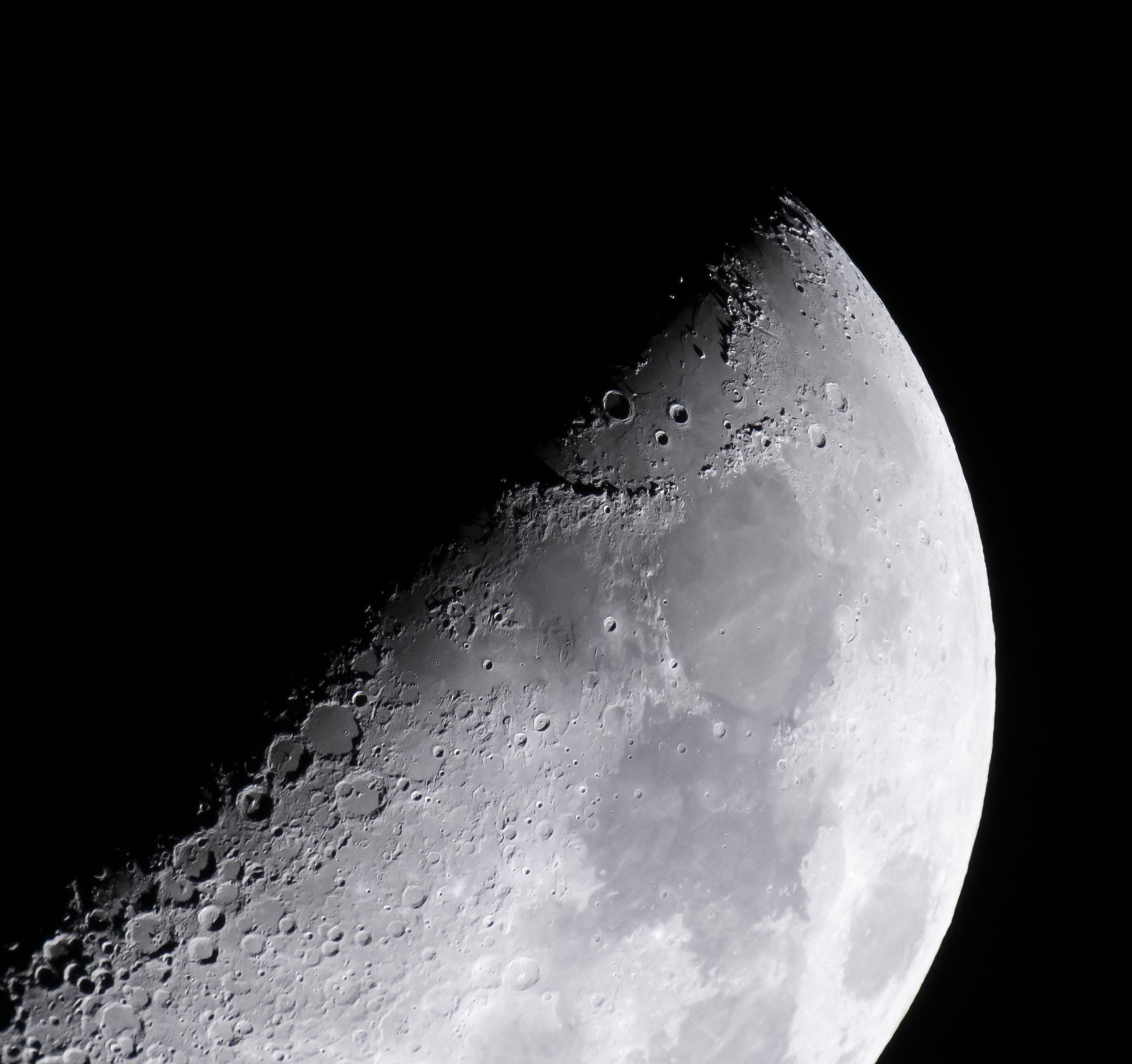
    The Moon is lit so only half of it, diagonally, is visible. Along that line, craters of different sizes are visible. As you look toward the right, you can see light and dark gray areas on the Moon's surface. The Apollo 15 landing site
    NASA/Shawn Quinn

    On May 8, 2022, NASA’s Exploration Ground Systems’ Program Manager Shawn Quinn captured this crop of a full frame image of the Hadley–Apennine region of Earth’s Moon including the Apollo 15 landing site (very near the edge of the shadow of one of the lunar mountains in the area). Building upon the pioneers from the Apollo Program, Artemis crews will plan to verify capabilities for humans to explore deep space and pave the way for long-term exploration and science on the lunar surface.

    Read the Artemis blog for the latest mission updates.

    Image credit: NASA/Shawn Quinn

  • Laine Havens: Melding Science and Storytelling

    Science Communication Intern – Goddard Space Flight Center

    Laine Havens — now a senior at Cornell University and three-time NASA intern — grew up with a deep curiosity about how the universe works and a family that encouraged her to explore it. Throughout her childhood, Laine was immersed in science and exposed to wonderful science communicators by her mother and grandfather. 

    Her grandfather, a retired Kodak engineer, encouraged inquisition into all matters — whether it be the inner workings of a telescope or an abandoned hornet’s nest. Laine spent summer evenings watching Mythbusters or Cosmos, and her mother’s favorite science podcast soundtracked car trips. Inspired by the likes of Carl Sagan, Laine originally intended to become a scientist.

    “I fell in love with physics in high school,” she says. “I figured I would study it in college all the way through to a Ph.D.”

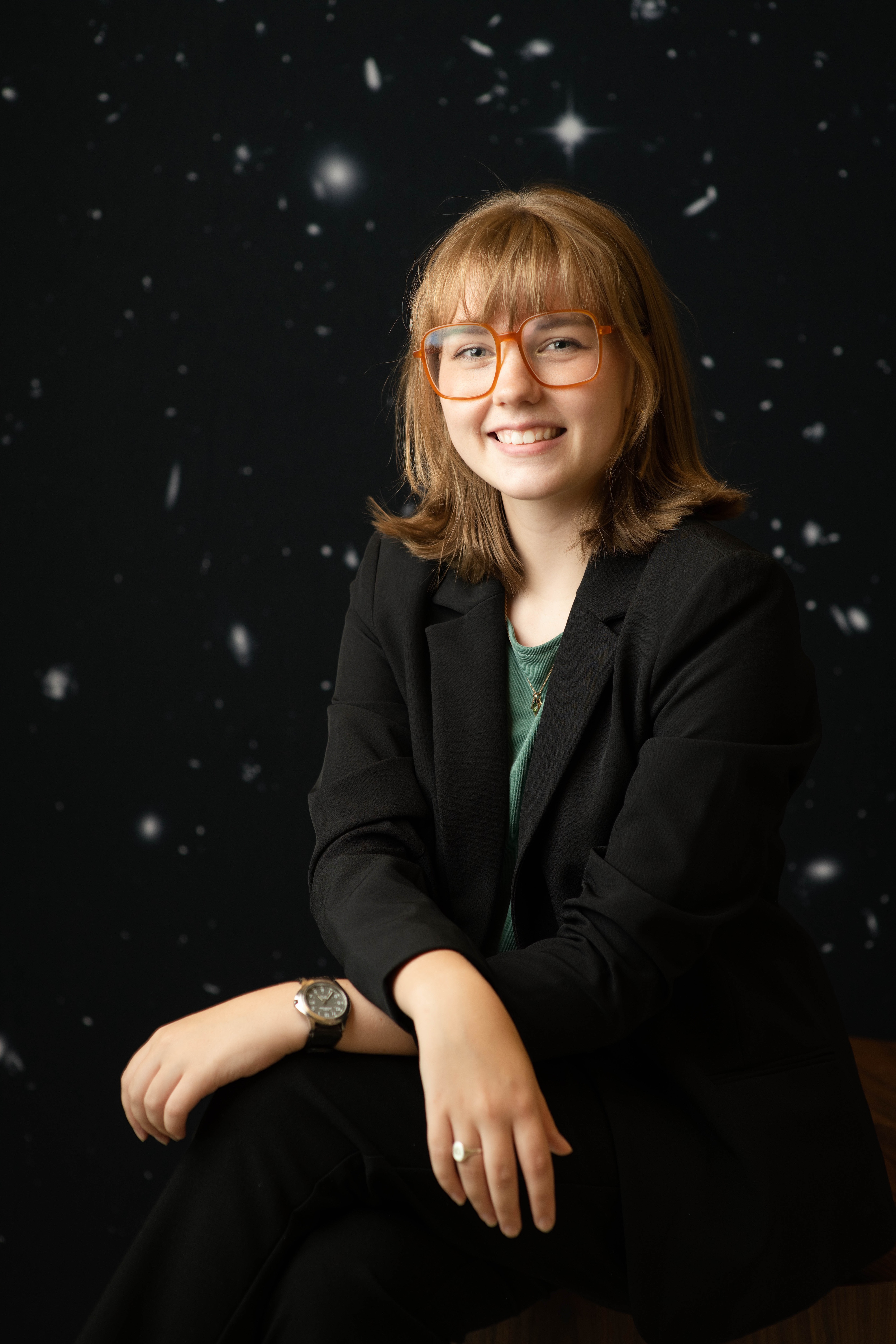
    A headshot of Laine Havens
    As a three-time NASA communications intern, Laine Havens has translated science for an audience of millions of people around the globe through science writing, social media, and video production.
    Credit: Kristin Rutkowski Photography

    Laine enrolled at Cornell and originally majored in physics as planned. But then she discovered an even more exciting option serendipitously while browsing an academic catalog: science and technology studies.

    “I was scrolling through looking for a different class, but then I saw science and technology studies and began reading more about what it involved,” Laine says. “It was all about studying science — the philosophy of what it is, and how it interacts with social, political, ethical, and historical dimensions.”

    Seeing the new program made Laine realize she could connect her love for critical analysis with her interest in science. She changed her program to a double-major in science and technology studies and astronomy, resolving to not only study and communicate science but to better understand the factors that influence it.

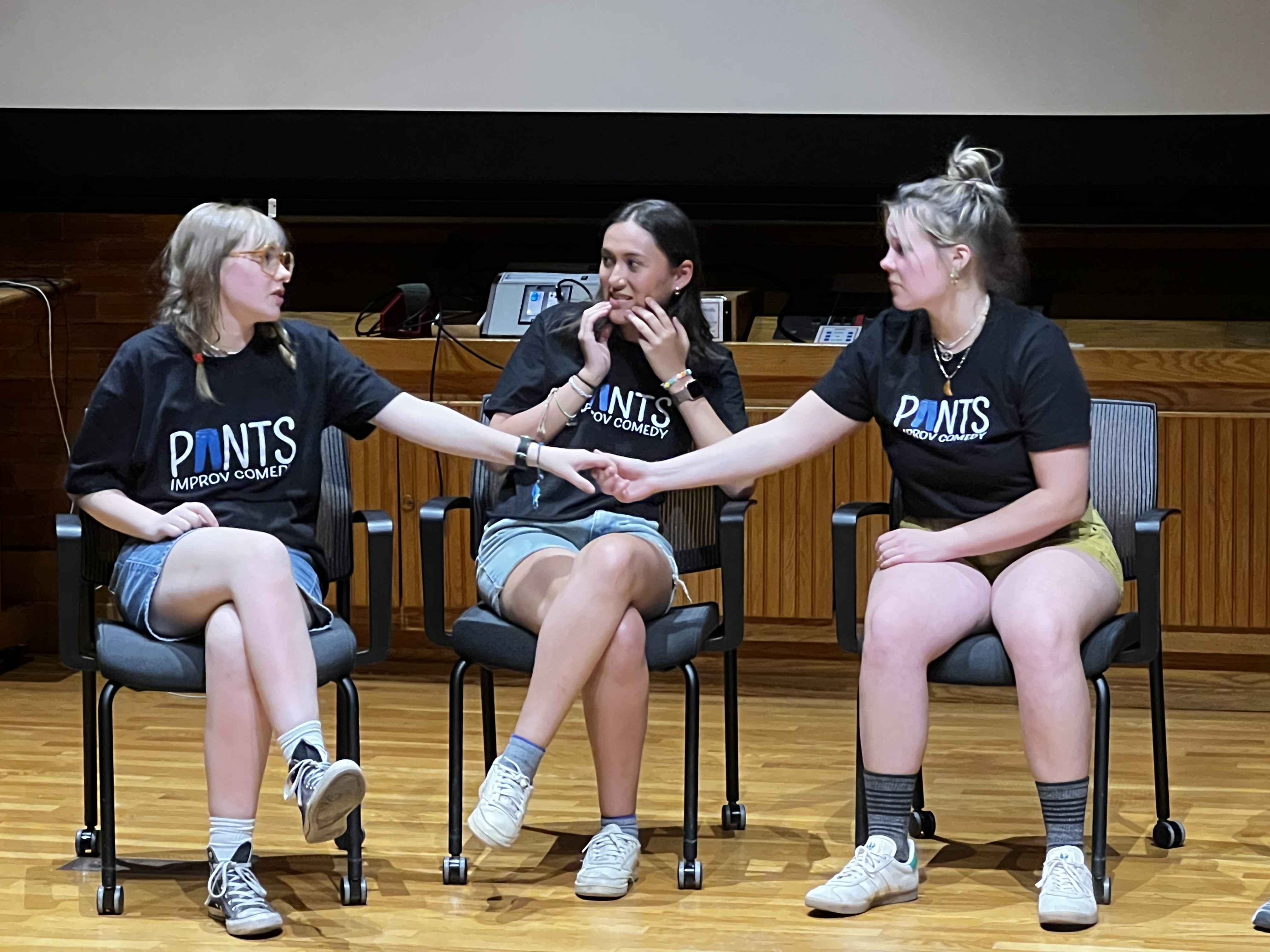
    A photo of Laine and two classmates
    Laine (left) is a senior at Cornell University, where she double-majors in astronomy and science and technology studies. She served as the student newspaper’s science editor and president of the Pants Improv Comedy group. Laine channeled her comedic skills for some of her NASA projects, including a reel that used puns to discuss the agency’s upcoming Nancy Grace Roman Space Telescope.
    Credit: Courtesy of Laine Havens

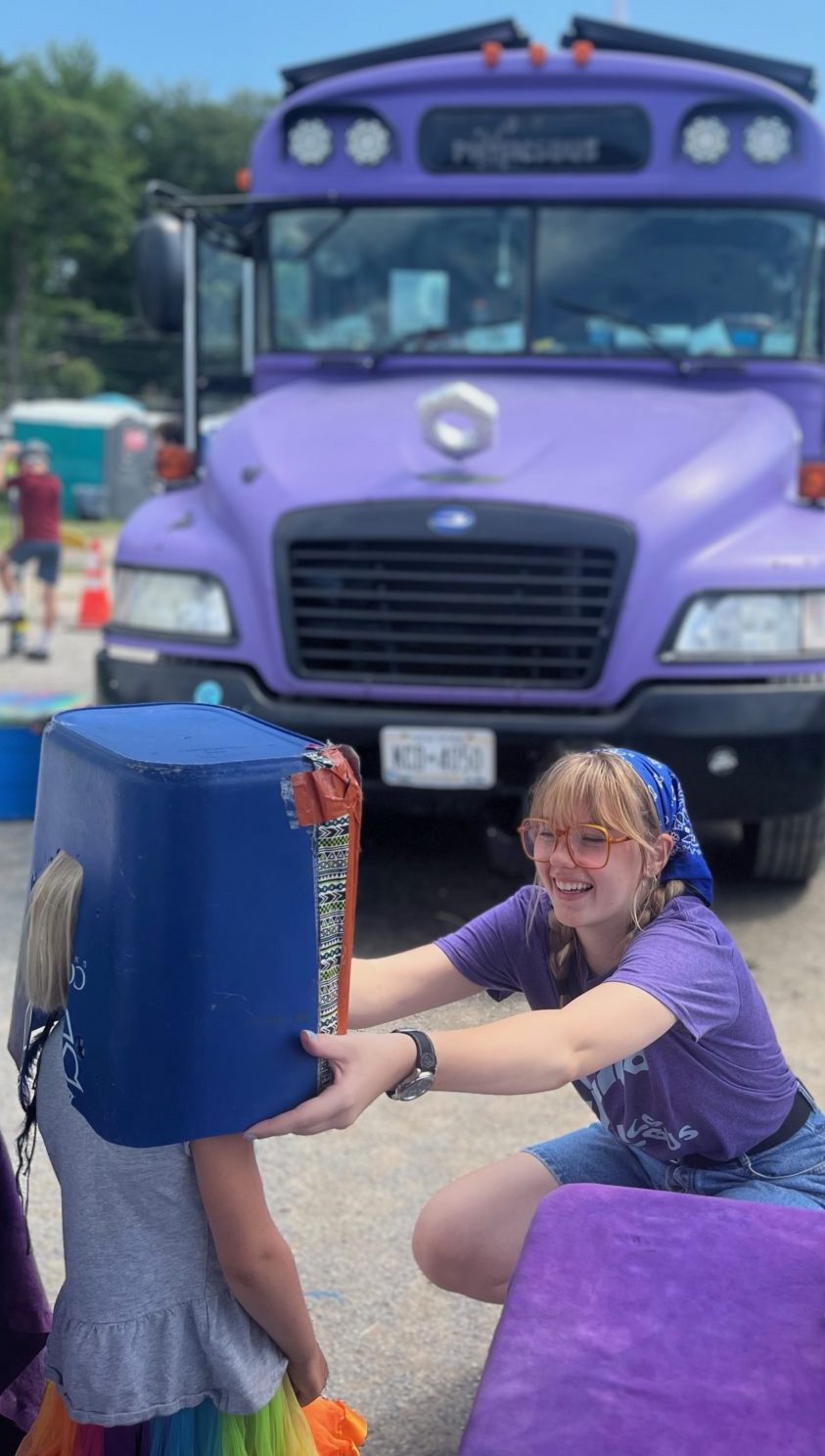
    Laine began by working as a science writer at her university’s student-run newspaper, The Cornell Daily Sun, where she later became the science editor. Meanwhile, she volunteered with The Physics Bus — basically a mini science museum on wheels with experiments for kids — and the Free Science Workshop, an after school program offering kids an opportunity to build things or craft using all sorts of materials and gadgets.

    “When you first hear about physics there’s a huge stigma, so we aimed to expose kids to it at a young age so they would associate it with fun,” Laine says.

    A photo of Laine Havens and a child at the Physics Bus
    Laine volunteered with The Physics Bus to introduce kids to the subject in a fun environment, helping them see the magic of how the world works before they learn to associate physics with boredom or intimidation.
    Credit: Courtesy of Laine Havens

    During her junior year, Laine started searching for science communication internships and found one at NASA’s Goddard Space Flight Center in Greenbelt, Maryland. She applied and was accepted to one focusing on NASA’s upcoming Nancy Grace Roman Space Telescope. Following her first internship, Laine came back for two more with the same team. 

    “Every day here at NASA is inspiring,” Laine says. “I’ve learned so much about both hard and soft skills involved in science communication.”

    During her first internship, Laine leaned into her background as a science writer to cover engineering milestones and craft a Tumblr post that walks readers through the universe’s different stages. She also produced videos, including one about Goddard’s biggest clean room.

    “Everybody let me take that and run,” Laine says. “I got to write the script, host the video, and edit it.” The video, which garnered millions of views on social media, was the first of several Laine created to engage NASA’s traditional audience while drawing in others who don’t typically follow NASA or science very closely.

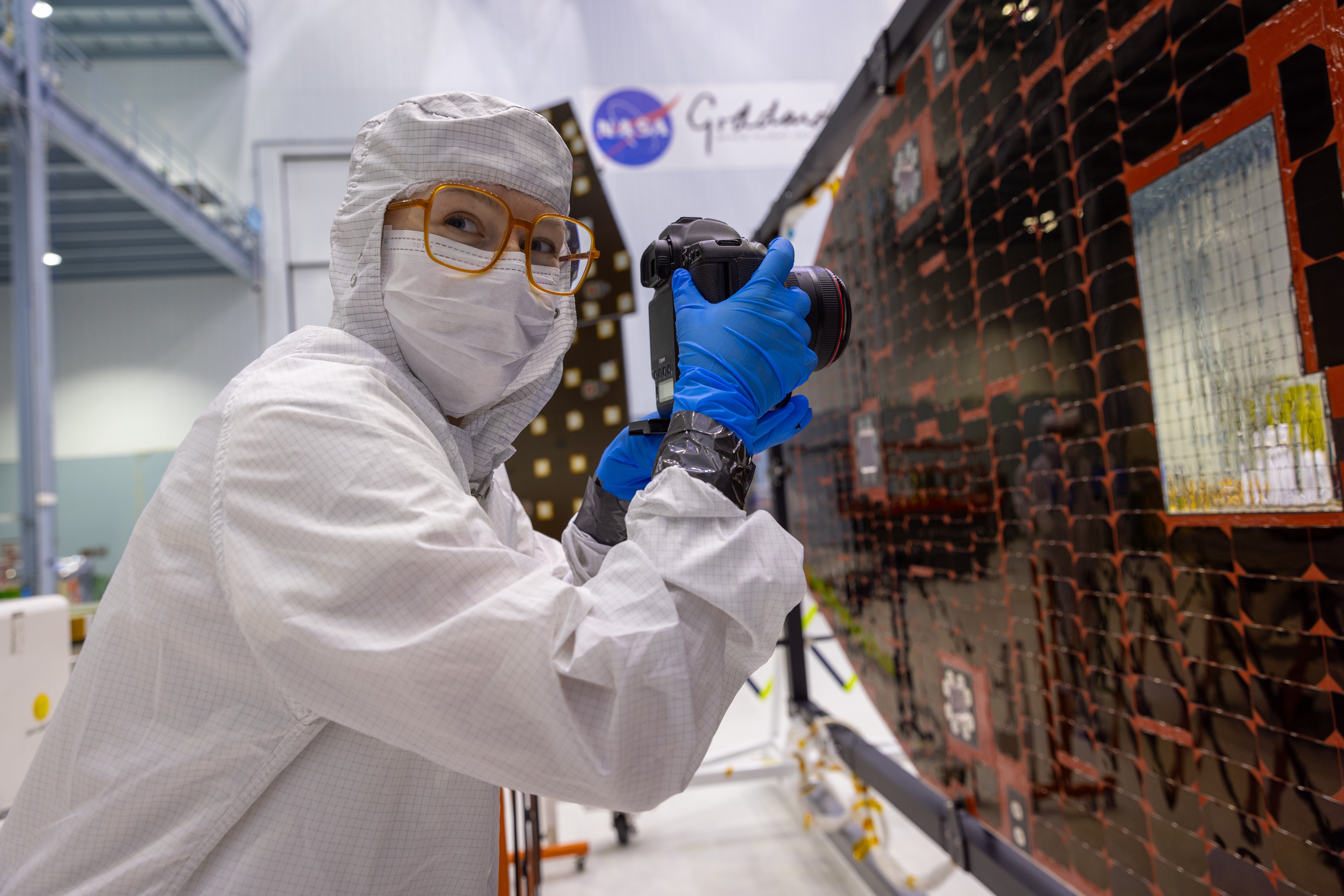
    In addition to her usual assigned tasks, Laine took opportunities to be involved in many different aspects of science storytelling. This photo was taken while Laine worked as a drone spotter, helping to ensure a camera-equipped drone wouldn’t damage sensitive space hardware.
    Credit: NASA/Sophia Roberts

    Throughout her internships, Laine also led tours to teach people more about Roman, helped manage a celebrity visit with John Rhys-Davies, wrote Roman team member profiles, helped gather drone footage, contributed to the release of the NASA documentary Cosmic Dawn, emceed an intern day event, and supported Live Shots — short, live TV interviews with NASA experts. 

    “It’s been cool to see a different side of things,” Laine says. “I ultimately want to keep doing what I’ve been doing, but also become engaged in how to make it better — the science of science communication.”

    To others who are interested in interning at NASA, Laine recommends speaking up.

    “Just ask people things, whether it’s for help or an opportunity,” she says. “Sometimes you don’t want to impose or risk looking dumb, but for the most part everyone wants to help you and see you succeed. I’m very grateful to the Roman team for making it feel like a safe space where I could speak up.” 

    A photo of Laine in the big Goddard clean room
    In preparation for a clean room “Get Ready With Me” video, Laine shadowed NASA videographer Sophia Roberts in the clean room at the agency’s Goddard Space Flight Center, where she supported documentation of integration milestones for NASA’s Nancy Grace Roman Space Telescope. 
    Credit: NASA/Sophia Roberts

    Sometimes that meant pitching ideas that were ultimately rejected, but that still provided an opportunity for discussion. “Not everything works, but in talking about it you might think of something else that does work,” she says. “There’s no consequence to it, because either way you’re learning something from it — either from the process of seeing it through or figuring out why you can’t do it.”

    The same advice applies to securing an internship in the first place.

    “Don’t be afraid to advocate for yourself,” Laine says. “If you find something you love, you can’t wait for it to happen on its own — you have to decide to go for it and find a way to make it happen.”

    By Ashley Balzer
    NASA’s Goddard Space Flight Center, Greenbelt, Md.

    Details

    Last Updated

    Jul 30, 2025

    Editor
    Ashley Balzer
    Contact
    Ashley Balzer
    Location
    Goddard Space Flight Center

  • Adam and Hirsa Present Research on the Ring-Sheared Drop

    3 min read

    Adam and Hirsa Present Research on the Ring-Sheared Drop

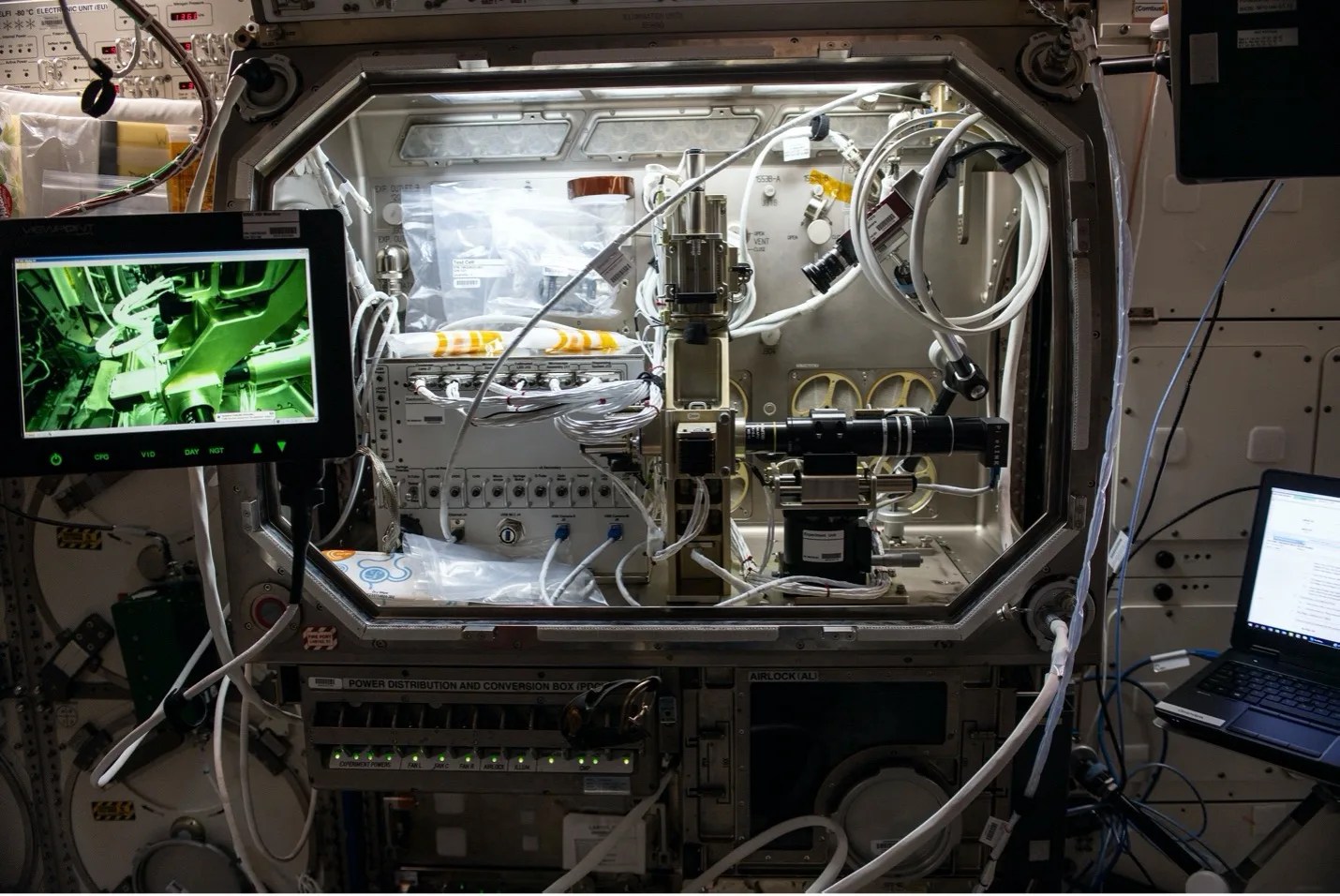
    A silver laboratory structure with wires and controls, connected to two laptops
    Abnormal fibrous, extracellular, proteinaceous deposits found in organs and tissues are associated with neurodegenerative diseases such as Alzheimer’s. (“Amyloid fibril formation in microgravity: Distinguishing interfacial and flow effects” NNX13AQ22G). The Ring Sheared Drop investigation studies the biophysics of protein amyloidogenesis in the absence of gravity in order to study fibril formation at fluid interfaces, in the absence of solid walls.
    NASA

    Researchers across Space Biology and Physical Sciences come together for a special presentation at the May PSI Users Group.

    The Ring-Sheared Drop (RSD) is a Microgravity Science Glovebox experiment that launched in July 2019 to the ISS to study shearing flow in the absence of solid walls. The major goals of this project were to adapt and use the RSD module to develop and test predictive models of non-Newtonian flow of high-concentration proteins at the interface.

    At the May Physical Sciences Informatics (PSI) User Group, Dr. Joe Adam, Research Scientist at Rensselaer Polytechnic Institute and University Payload Director of the RSD module, presented, “Protein Solution Hydrodynamic Studies in the Ring-Sheared Drop” detailing the history of RSD, research campaigns and data to be released in PSI. This investigation was led by Principal Investigator, Prof. Amir Hirsa of Rensselaer Polytechnic Institute.

    The ring-sheared drop interfacial bioprocessing of pharmaceuticals-I (RSD-IBP-I) campaign aimed to study non-Newtonian interfacial hydrodynamics of the blood transport proteins bovine serum albumin (BSA) and human serum albumin (HSA) in microgravity. Specifically, scientific aims focus on the effects of protein primary structure (BSA or HSA), protein concentration and interfacial shear rate on microgravity fluid flow, measured using velocimetry of hollow glass microsphere tracer particles within protein samples. This campaign intended to confer improved understanding of interfacial protein flows in relation to physiology, the environment, and industry relevant to both spaceflight and Earth. Results from this line of research could have applications to in situ pharmaceutical production, tissue engineering, and diseases such as Alzheimer’s, Parkinson’s, infectious prions, and type 2 diabetes.

    To encourage collaboration across common areas of BPS’s Physical Sciences and Biology research, PSI invited Ryan Scott, ALSDA lead Scientist, and members of the ADBR (Alz Disease & Brain Resilience) and Parkinson’s AWG subgroups to attendee this month’s meeting which fueled discussions and led to several connections. During the discussions the two relevant collaborative publications that were shared are:

    • McMackin, P., Adam, J., Griffin, S. et al. Amyloidogenesis via interfacial shear in a containerless biochemical reactor aboard the International Space Station. npj Microgravity 8, 41 (2022). https://doi.org/10.1038/s41526-022-00227-2
    • Nilufar Ali paper resulting in part from a collaboration within the Parkison’s AWG subgroup

    Ali, N., Beheshti, A. & Hampikian, G. Space exploration and risk of Parkinson’s disease: a perspective review. npj Microgravity 11, 1 (2025). https://doi.org/10.1038/s41526-024-00457-6

    Ring-Sheared Drop – Interfacial Bioprocessing of Pharmaceuticals(RSD-IBP-I) is now accessible in PSI. http://doi.org/10.60555/smat-bb74

    Details

    Last Updated

    Jul 29, 2025

    Related Terms

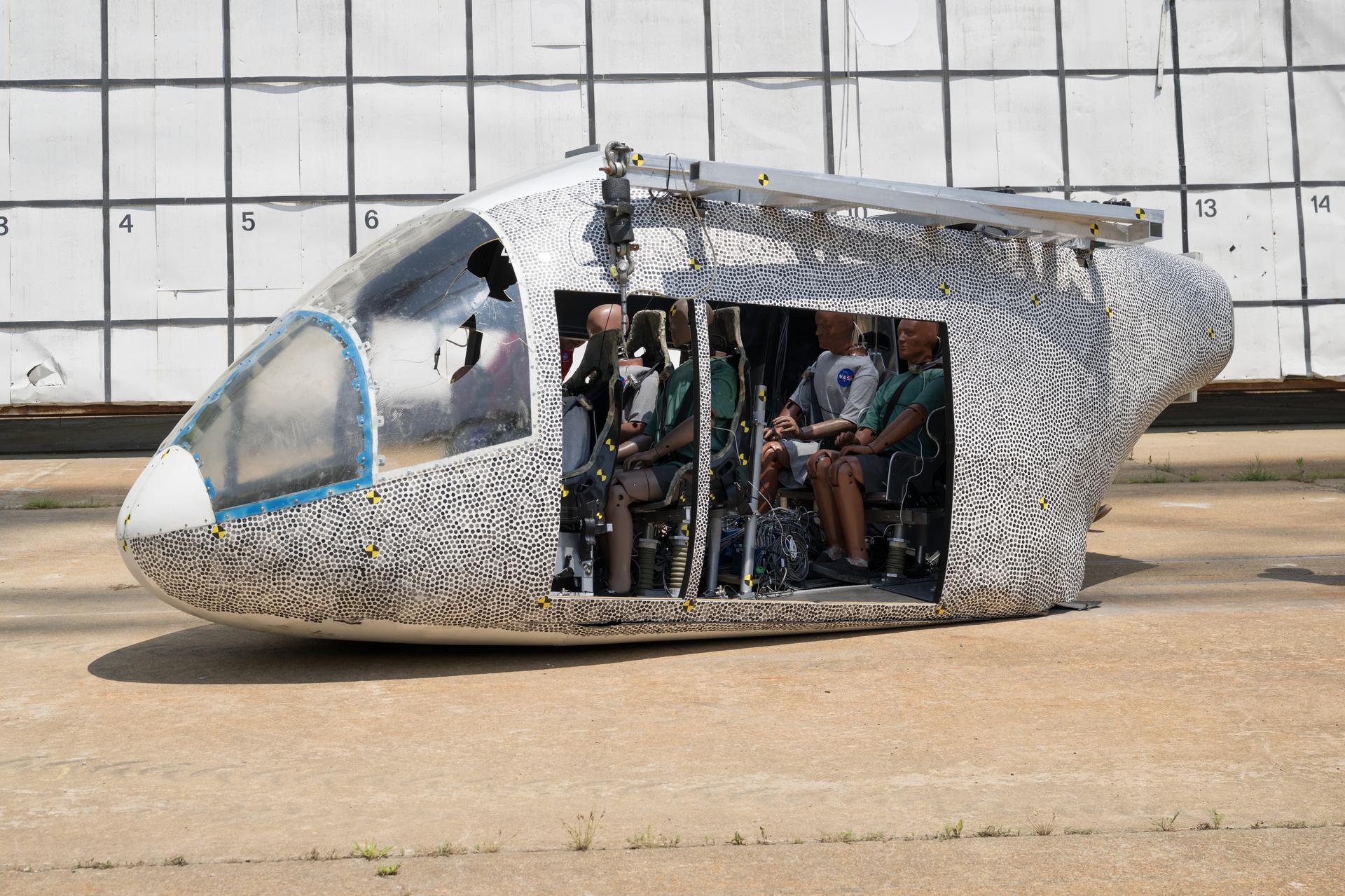
  • NASA Drop Test Supports Safer Air Taxi Designs

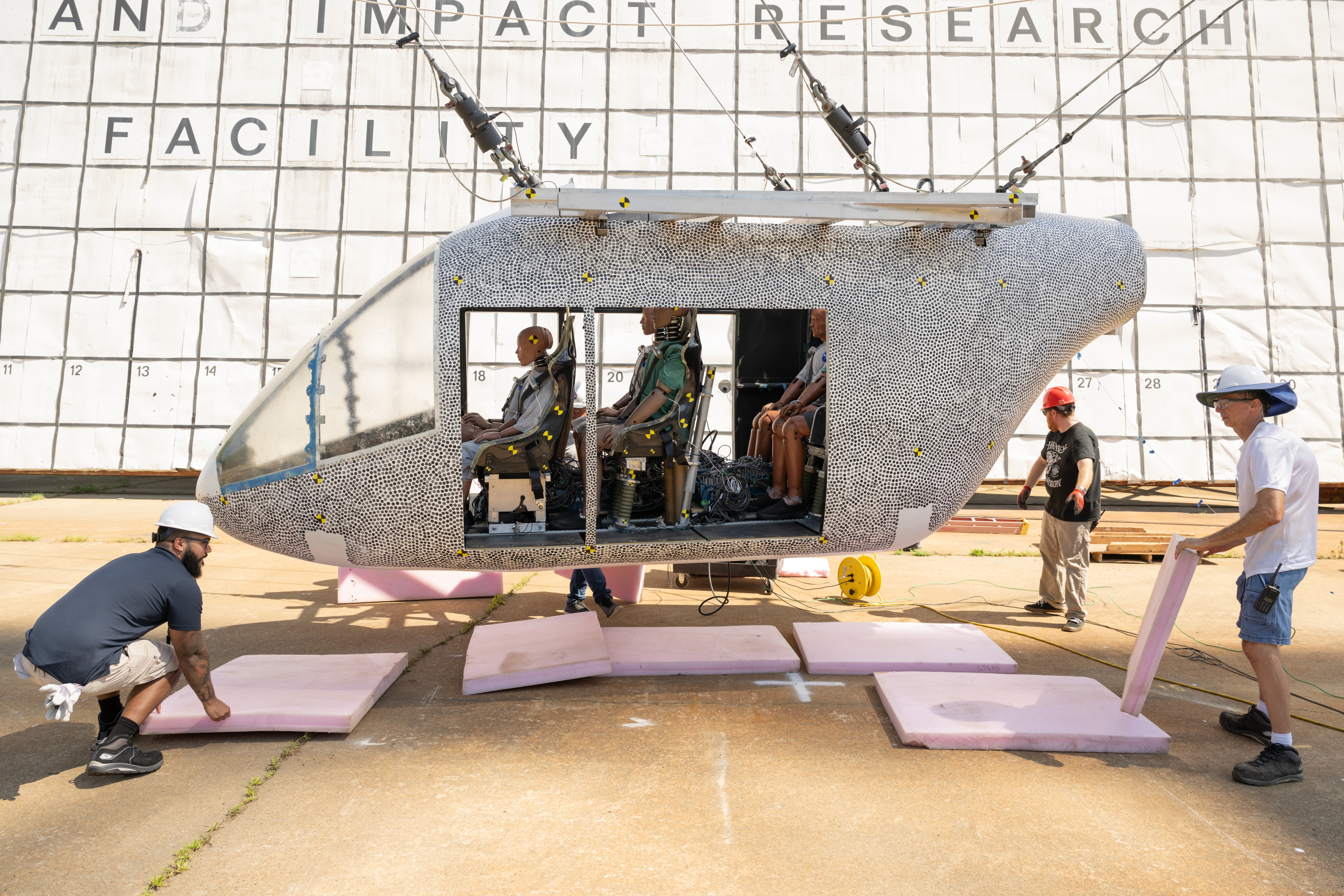
    A white aircraft body with small black dots is hoisted in the air by cables. There are several test dummies inside of the aircraft. The aircraft does not hang far off of the ground. Three workers with hardhats remove pink foam squares from underneath the aircraft. Behind the aircraft is a large white board to measure the height, which includes many black squares with small numbers inside some of the bottom squares.
    An aircraft body modeled after an air taxi with weighted test dummies inside is being prepared for a drop test by researchers at NASA’s Langley Research Center in Hampton, Virginia. The test was completed June 26, 2025, at Langley’s Landing and Impact Research Facility. The aircraft was dropped from a tall steel structure, known as a gantry, after being hoisted about 35 feet in the air by cables. NASA researchers are investigating aircraft materials that best absorb impact forces in a crash.
    NASA/Mark Knopp

    As the aviation industry works to design air taxis and other new electric aircraft, there’s a growing need to understand how the materials behave. That’s why NASA is investigating potential air taxi materials and designs to best protect passengers in the event of a crash.

    On June 26, 2025, at NASA’s Langley Research Center in Hampton, Virginia, researchers dropped a full-scale aircraft body modeled after an air taxi from a tall steel structure, known as a gantry.

    The NASA researchers behind this test and a previous one in late 2022 investigated materials that best absorb impact forces, generating data that will enable manufacturers to design safer advanced air mobility aircraft.

    Image Credit: NASA/Mark Knopp

  • NASA Astronaut Kate Rubins, First to Sequence DNA in Space, Retires

    Astronaut Kate Rubins
    NASA Astronaut Kate Rubins
    NASA

    NASA astronaut and microbiologist Kate Rubins retired Monday after 16 years with the agency. During her time with NASA, Rubins completed two long-duration missions aboard the International Space Station, logging 300 days in space and conducting four spacewalks.
     
    “I want to extend my sincere gratitude to Kate for her dedication to the advancement of human spaceflight,” said Steve Koerner, acting director of NASA’s Johnson Space Center in Houston. “She is leaving behind a legacy of excellence and inspiration, not only to our agency, but to the research and medical communities as well. Congratulations, Kate, on an extraordinary career.”
     
    Rubins’ first mission to the orbiting laboratory began in July 2016, aboard the first test flight of the new Soyuz MS spacecraft. As part of Expedition 48/49, she contributed to more than 275 scientific experiments, including molecular and cellular biology research, and she was the first person to sequence DNA in space. Her work enabled significant advances with in-flight molecular diagnostics, long-duration cell culture, and the development of molecular biology tools and processes, such as handling and transferring small amounts of liquids in microgravity. Rubins also led the integration and deployment of biomedical hardware aboard the space station, supporting crew health and scientific research in space and on Earth.
     
    She again launched in October 2020, aboard a Soyuz spacecraft from the Baikonur Cosmodrome in Kazakhstan, taking part in Expedition 63/64. Alongside her crewmates, Rubins spent hundreds of hours working on new experiments and furthering research investigations conducted during her mission, including heart research and multiple microbiology studies. She also advanced her work on DNA sequencing in space, which could allow future astronauts to diagnose illness or identify microbes growing aboard the station or during future exploration missions.
     
    “From her groundbreaking work in space to her leadership on the ground, Kate has brought passion and excellence to everything she’s done,” said Joe Acaba, chief of the Astronaut Office at NASA Johnson. “She’s been an incredible teammate and role model. We will miss her deeply, but her impact will continue to inspire.”
     
    In addition to her flight assignments, Rubins served as acting deputy director of NASA’s Human Health and Performance Directorate, where she helped guide strategy for crew health and biomedical research. More recently, she contributed to developing next-generation lunar spacesuits, helping prepare for future Artemis missions to the Moon.
     
     
    Before her selection as an astronaut in 2009, Rubins received a bachelor’s degree in molecular biology from the University of California, San Diego, and a doctorate in cancer biology from Stanford University Medical School’s Biochemistry Department and Microbiology and Immunology Department. After returning from her second space mission, Rubins commissioned as a major in the U.S. Army Reserve, serving as a microbiologist in the Medical Service Corps. She currently holds the role of innovation officer with the 75th U.S. Army Reserve Innovation Command’s MedBio Detachment, headquartered in Boston. 

    A frequent keynote speaker at scientific, educational, and industry events on space biology, biomedical engineering, and human exploration, Rubins has advocated for NASA’s scientific and exploration missions. As she transitions from government service, she remains committed to advancing innovation at the intersection of biology, technology, and space.
     
    “It has been the honor of a lifetime to live and work in space,” said Rubins. “I am grateful for the extraordinary advances at NASA, and it was a privilege to serve and contribute to something so meaningful. The mission of exploration continues, and I can’t wait to watch this nation do what once seemed impossible.”
     

    Learn more about how NASA explores the unknown and innovates for the benefit of humanity at:

    https://www.nasa.gov/

    -end-

    Raegan Scharfetter

    Johnson Space Center, Houston

    281-910-4989

    raegan.r.scharfetter@nasa.gov

  • Curiosity Blog, Sols 4611-4613: Scenic Overlook

    2 min read

    Curiosity Blog, Sols 4611-4613: Scenic Overlook

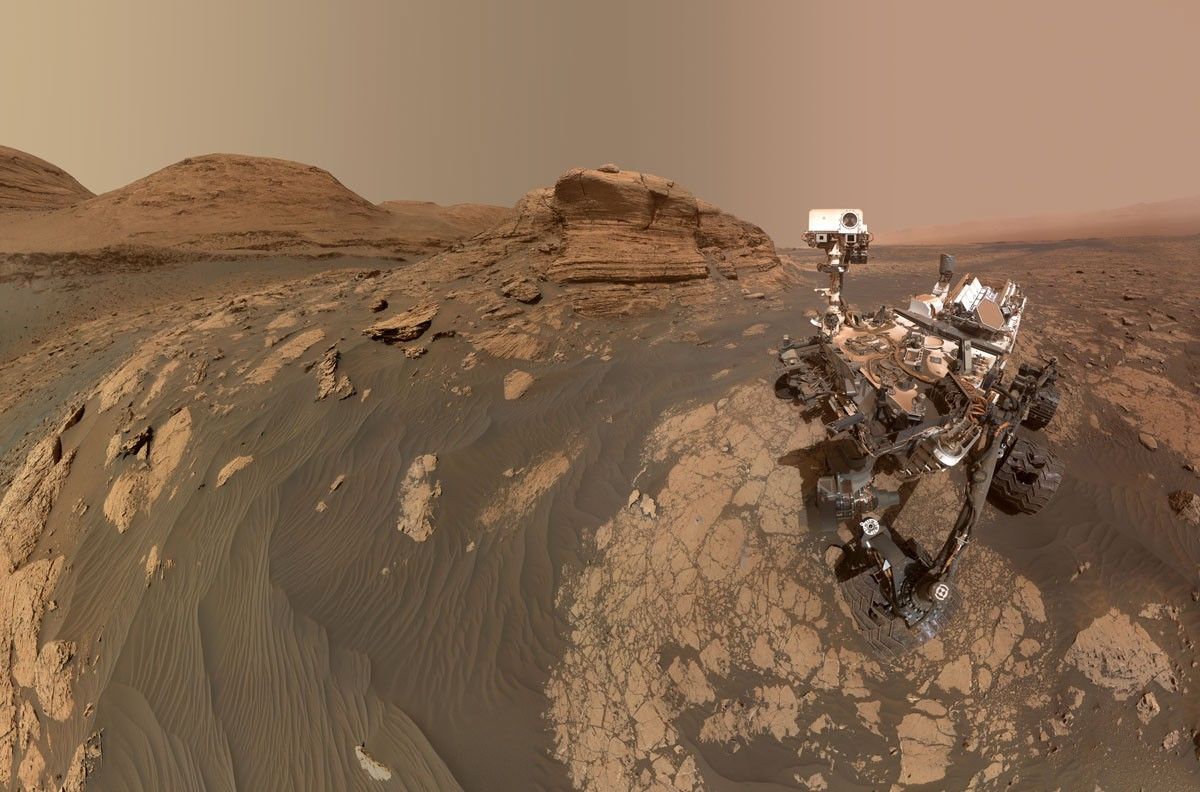
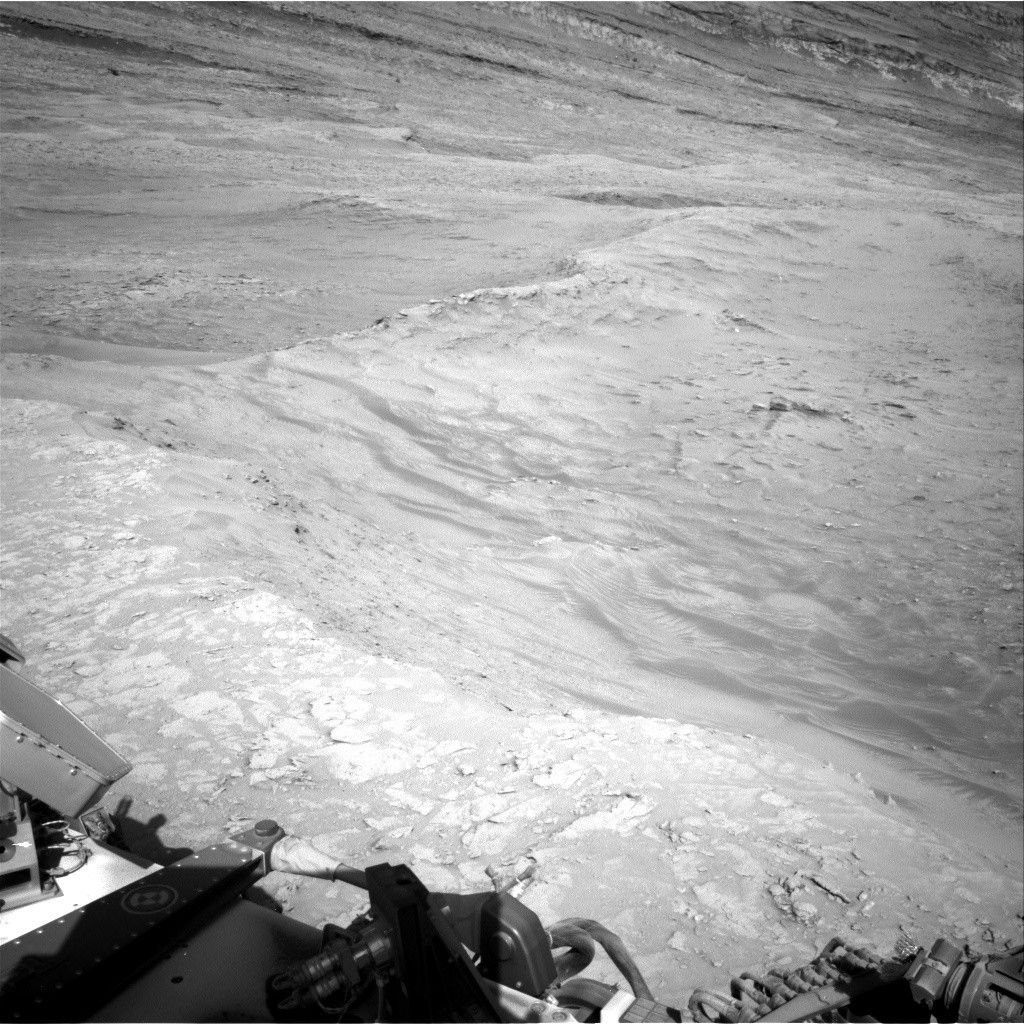
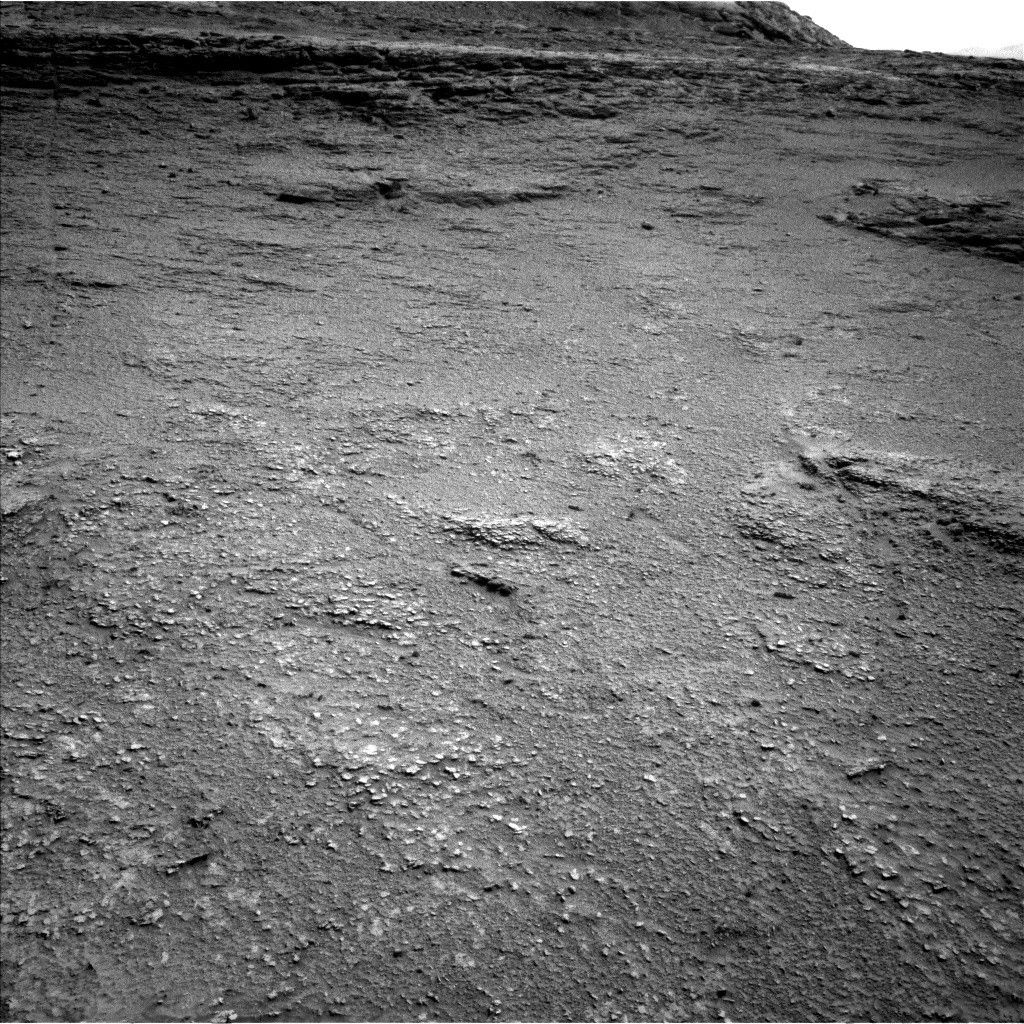
    A grayscale photo from the Martian surface shows rocky, uneven, light-gray terrain that slopes downward, away from the rover. Parts of the rover are visible in the bottom of the frame, and the downward slope extends from the bottom of the frame toward the top of the frame, with a ridge line tracing the descent.
    NASA’s Mars rover Curiosity acquired this image, sitting on top of the distinctive ridge-and-hollow terrain of the boxwork-forming unit for a panoramic view, on July 24, 2025. Curiosity used its Right Navigation Camera on Sol 4609, or Martian day 4,609 of the Mars Science Laboratory mission, at 21:29:43 UTC.
    NASA/JPL-Caltech

    Written by Lucy Lim, Planetary Scientist at NASA’s Goddard Space Flight Center

    Earth planning date: Friday, July 25, 2025

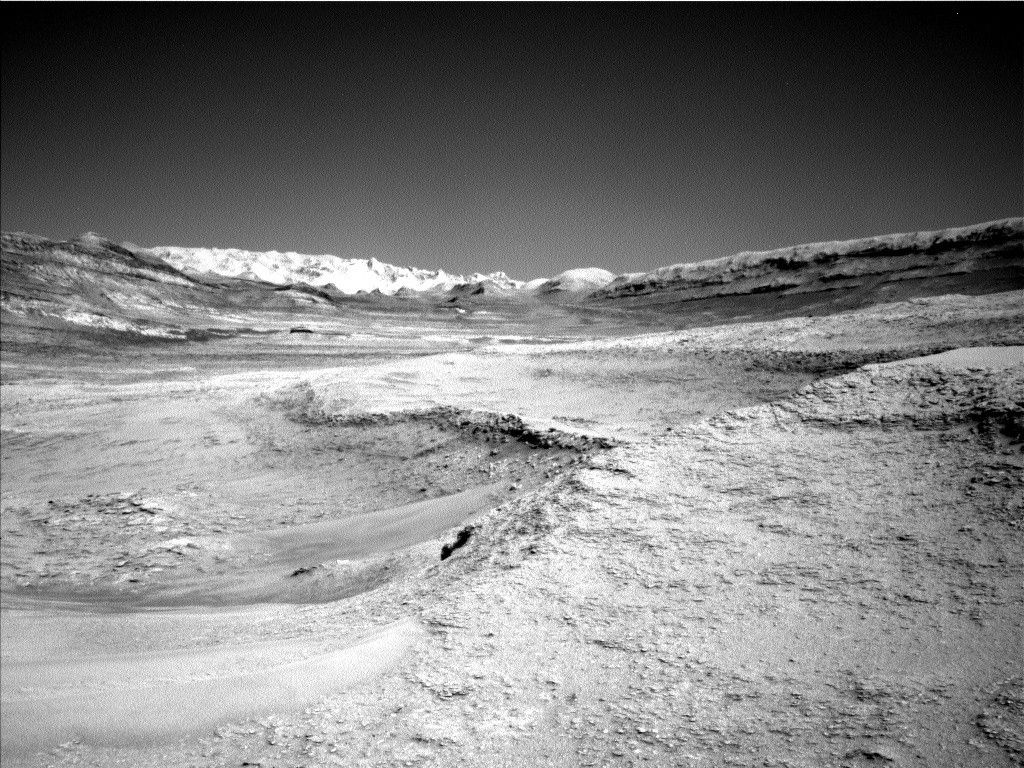
    A 23-meter drive (about 75 feet) brought Curiosity to today’s planned “look-about” spot. The highlight of the plan will be the 360-degree Mastcam panorama that will document the ridge-and-hollow topography of the boxwork-forming unit we’ve been exploring, in addition to overlying stratigraphy in some of the nearby buttes. The right-angle ridge pattern is quite prominent in the HiRISE orbital imaging, which enabled us to plan for this stop. It has been 70 sols since the last panorama, and the rover has driven quite some distance in that time!

    Additional detailed imaging was planned with the ChemCam remote imager (RMI) and Mastcam high-resolution M100: mosaics will cover the exposed strata underneath the ridge we’re planning to drive on (“Arequipa Airport”), two linear fractures, one parallel to the large ridge and one cross-cutting it (“Laguna de Salinas” and “Laguna Santa Rosa”), some troughs around a nearby light-toned float block (“Arubai”), and the Uyuni butte in the middle distance.

    The bedrock texture here was a noticeable change from the previous workspace, with a knobbly oriented texture interspersed occasionally with platier exposures. Geochemical measurements were planned with the ChemCam LIBS to complement the auto-targeted post-drive AEGIS measurement: “La Coca” on a block that appeared to show unusual colors, and “El Algodón” on a knobbly textured chunk of bedrock. APXS geochemistry was planned with dust removal on the “Yura Tuff” knobbly target and without dust removal on the “Tipnis” target. MAHLI will also provide close-up imaging on the two APXS targets.

    For the modern Martian environment, it’s still the cloudy season at Gale so we are planning several cloud-related activities. The Mastcam sky survey will measure abundances of atmospheric dust and water ice, whereas a special cloud altitude observation will include video of clouds and their shadows so that the altitudes and velocities of the clouds and related winds can be calculated. A separate short movie will search for dust lifting (dust devil) activity. Finally, the usual passive REMS and DAN observations will monitor the temperature, humidity, and neutron environment at Curiosity’s current location.

    Details

    Last Updated

    Jul 28, 2025

    Related Terms

  • Join Second Lady Usha Vance as She Reads to Children at NASA Johnson

    As part of her Summer Reading Challenge, Second Lady Usha Vance will host an event for children in grades K-8 on Monday, Aug. 4, at NASA’s Johnson Space Center in Houston.
    As part of her Summer Reading Challenge, Second Lady Usha Vance will host an event for children in grades K-8 on Monday, Aug. 4, at NASA’s Johnson Space Center in Houston.
    Credit: White House

    As part of her Summer Reading Challenge, Second Lady Usha Vance will host an event for children in grades K-8 on Monday, Aug. 4, at NASA’s Johnson Space Center in Houston. Media are invited.

    NASA astronaut Suni Williams will join Ms. Vance to read a space-related book to children and participate in other space-related activities.

    Live coverage of the reading will stream about 2:45 p.m. EDT on NASA+. Learn how to watch NASA content through a variety of platforms, including social media.

    U.S. media interested in participating in this event must RSVP to NASA Press Secretary Bethany Stevens at: bethany.c.stevens@nasa.gov, as well as Office of the Second Lady Communications Director Nicole Reeves at: nicole.e.reeves@ovp.eop.gov. Requests must be made no later than 1 p.m. EDT on Thursday, July 31. Confirmed media will receive additional details from NASA. The agency’s media accreditation policy is online.

    Through her reading challenge, the Second Lady is encouraging youth to seek adventure, imagination, and discovery between the pages of a book. Students interested in participating in the challenge must read 12 books by Friday, Sept. 5. Additional details, including where to download a reading log, and how to submit it to the White House, are available online.

    As part of NASA’s Artemis campaign, the agency will send astronauts to the Moon to prepare for future human exploration of Mars, inspiring Golden Age explorers, and ensuring the United States continues to lead in space exploration and discovery.

    Learn more about NASA missions online at:

    https://www.nasa.gov

    -end-

    Bethany Stevens / Cheryl Warner
    Headquarters, Washington
    202-358-1600
    bethany.c.stevens@nasa.gov / cheryl.m.warner@nasa.gov

    Details

    Last Updated

    Jul 29, 2025

  • Silicon Valley Event Center – Parking Information

    SVEC building locations including parking areas.
    SVEC building locations including parking areas.

    Where to Park at the Event Center

    We have event spaces in multiple buildings. See below for details.

    At the main Event Center in building 3, at the front of the building (East side) there is a large lot with standard and accessible spaces. This is the best place to park as it affords the easiest access to the entry doors, which have an ADA accessible ramp. At the rear of the building, there is a secondary large over-flow lot. As this is on the back side of the building, you will need to walk all the way around to enter through the main entrance, or make arrangements to enter through the ADA accessible doors at the rear of the building.

    Inside the NASA security fence, at building N232 and the N201 Syverston Auditorium, there is very little parking available and it is first-come first-serve. We highly recommend walking or carpooling to these locations if you are attending an event in either of them

    Please keep in mind that if you are driving in, the driver will need a valid, RealID, drivers license. In addition, everyone in the car must have a valid form of ID; Government issued RealID, valid passport, or other form of accepted identification.

  • Celebrating 25 Years of Continuous Human Presence Aboard the International Space Station 

    GMT198_16_39_Jonny Kim_Deferred Release Attn. Dylan Mathis for 25th Anniversary Cupola Photo
    NASA/Jonny Kim

    NASA and its partners have supported humans continuously living and working in space since November 2000. A truly global endeavor, the International Space Station has been visited by more than 280 people from 23 countries and a variety of international and commercial spacecraft. The unique microgravity laboratory has hosted more than 4,000 experiments from more than 5,000 researchers in more than 110 countries. The space station also is facilitating the growth of a commercial market in low Earth orbit for research, technology development, and crew and cargo transportation.

    NASA created a dedicated logo to symbolize this historic achievement. The logo is visible in the cupola of the space station in this July 17, 2025, image. The central astronaut figure is representative of all those who have lived and worked aboard the station during the 25 years of continuous human presence. In the dark sky of space surrounding the astronaut are 15 stars, which symbolize the 15 partner nations that support the orbiting laboratory.

    There is a visual representation of the space station toward the edge of the design, where humans have had a continuous presence for the past 25 years. The Earth represents the planet which the station orbits and that science conducted aboard the orbiting laboratory is for the benefit of all. Integrated into the border of the design is the number “25” to further represent the 25 years of human presence aboard the space station.

    After 25 years of continuous human presence, the space station remains a training and proving ground for deep space missions, enabling NASA to focus on Artemis missions to the Moon and Mars.

    For more information about the International Space Station, please visit https://www.nasa.gov/international-space-station/.

    Text credit: Kara Slaughter

    Image credit: NASA/Jonny Kim

  • NASA Invites Media to SpaceX’s 33rd Resupply Launch to Space Station

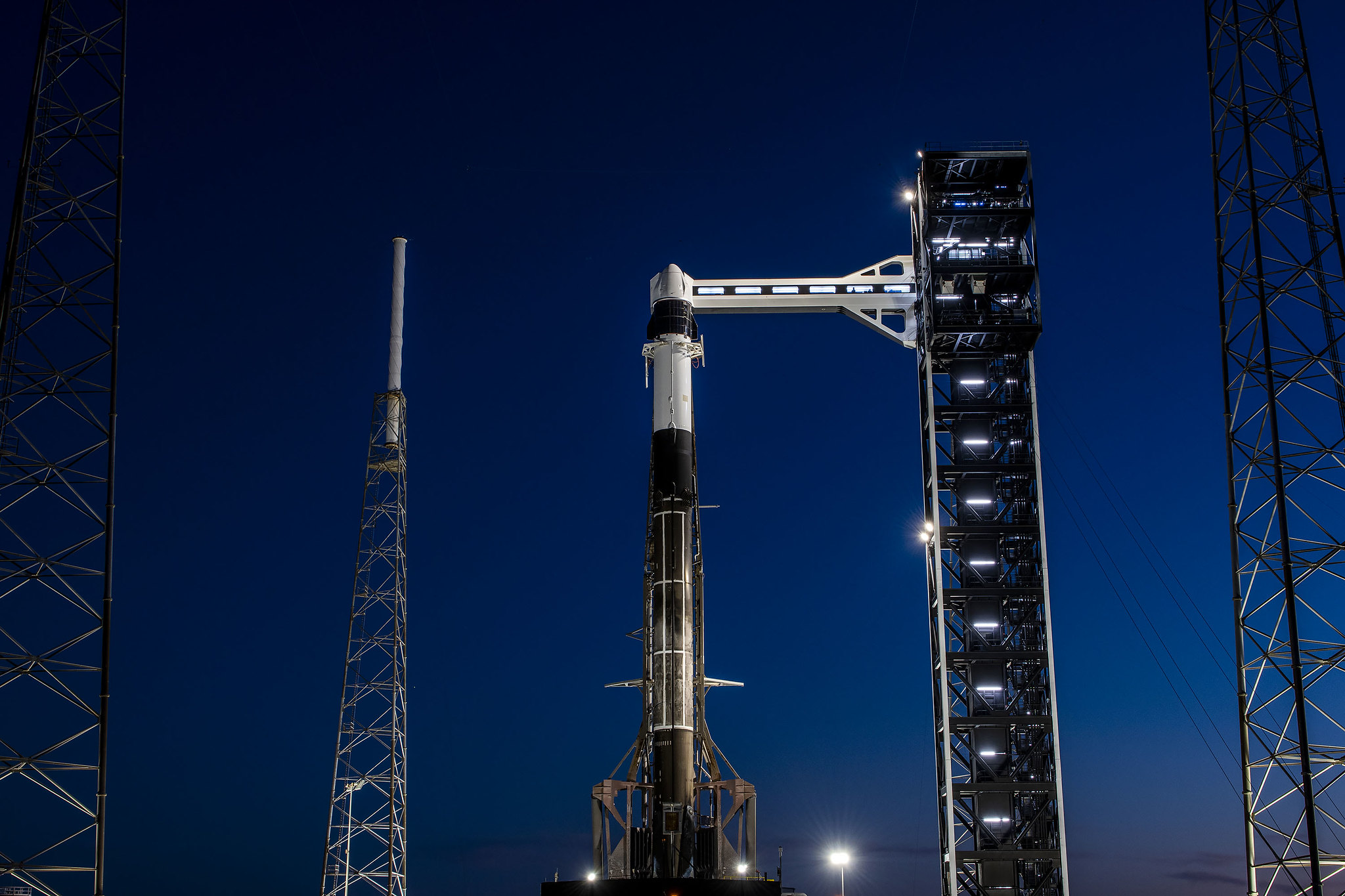
    A SpaceX Falcon 9 rocket, with the company’s Dragon spacecraft, stands in a vertical position at Space Launch Complex 40 at Cape Canaveral Space Force Station in Florida on Tuesday, March 19, 2024
    A SpaceX Falcon 9 rocket, with the company’s Dragon spacecraft, stands in a vertical position at Space Launch Complex 40 at Cape Canaveral Space Force Station in Florida on Tuesday, March 19, 2024.
    SpaceX

    Media accreditation is open for the next launch to deliver NASA science investigations, supplies, and equipment to the International Space Station. This launch is the 33rd SpaceX commercial resupply services mission to the orbital laboratory for NASA and will liftoff on the company’s Falcon 9 rocket.

    NASA and SpaceX are targeting no earlier than Thursday, Aug. 21, to launch the SpaceX Dragon spacecraft from Space Launch Complex-40 at Cape Canaveral Space Force Station in Florida.

    Credentialing to cover prelaunch and launch activities is open to U.S. media. The application deadline for U.S. citizens is 11:59 p.m. EDT, Sunday, Aug. 3. All accreditation requests must be submitted online at:

    https://media.ksc.nasa.gov
    Credentialed media will receive a confirmation email upon approval. NASA’s media accreditation policy is available online. For questions about accreditation, or to request special logistical support, email: ksc-media-accreditat@mail.nasa.gov. For other questions, please contact NASA’s Kennedy Space Center newsroom at: 321-867-2468.

    Para obtener información sobre cobertura en español en el Centro Espacial Kennedy o si desea solicitor entrevistas en español, comuníquese con Antonia Jaramillo o Messod Bendayan a: antonia.jaramillobotero@nasa.gov o messod.c.bendayan@nasa.gov.

    Each resupply mission to the station delivers scientific investigations in the areas of biology and biotechnology, Earth and space science, physical sciences, and technology development and demonstrations. Cargo resupply from U.S. companies ensures a national capability to deliver scientific research to the space station, significantly increasing NASA’s ability to conduct new investigations aboard humanity’s laboratory in space.

    In addition to food, supplies, and equipment for the crew, Dragon will deliver several new experiments, including bone-forming stem cells for studying bone loss prevention and materials to 3D print medical implants that could advance treatments for nerve damage on Earth. Dragon also delivers bioprinted liver tissue to study blood vessel development in microgravity and supplies to 3D print metal cubes in space.

    For almost 25 years, humans have continuously lived and worked aboard the International Space Station, advancing scientific knowledge and demonstrating new technologies that enable us to prepare for human exploration of the Moon as we prepare for Mars.

    Learn more about NASA’s commercial resupply missions at:

    https://www.nasa.gov/station

    -end-

    Claire O’Shea
    Headquarters, Washington
    202-358-1100
    claire.a.o’shea@nasa.gov
    Stephanie Plucinsky / Steven Siceloff / Danielle Sempsrott
    Kennedy Space Center, Fla.
    321-876-2468
    stephanie.n.plucinsky@nasa.gov / steven.p.siceloff@nasa.gov / danielle.c.sempsrott@nasa.gov
    Sandra Jones
    Johnson Space Center, Houston
    281-483-5111
    sandra.p.jones@nasa.gov

    Details

    Last Updated

    Jul 25, 2025