
An Ariane 5 has delivered two telecom satellites, Arabsat-6B and GSAT-15, into their planned orbits.
An Ariane 5 has delivered two telecom satellites, Arabsat-6B and GSAT-15, into their planned orbits.

On 11 November 2015 we are launching TEDxESA. Watch the livestream from 17:00 CET
On Nov. 6, 2015, NASA astronauts Scott Kelly and Kjell Lindgren spent 7 hours and 48 minutes working outside the International Space Station on the 190th spacewalk in support of station assembly and maintenance. The astronauts restored the port truss (P6) ammonia cooling system to its original configuration, the main task for the spacewalk.

On Nov. 6, 2015, NASA astronauts Scott Kelly and Kjell Lindgren spent 7 hours and 48 minutes working outside the International Space Station on the 190th spacewalk in support of station assembly and maintenance. The astronauts restored the port truss (P6) ammonia cooling system to its original configuration, the main task for the spacewalk.

Human spaceflight and operations image of the week: After more than 270 days of Antarctic isolation, the first plane touches down at Europe’s Concordia research station
Last Updated: November 10, 2015
This is JAXA’s Japanese astronaut activity report for August, 2015.

Launch of the H-IIB rocket with the HTV5 on board (Credit: JAXA)
On August 19, at 8:50 p.m., the H-II transfer vehicle (HTV) “KOUNOTORI” (white stork) 5 was launched aboard the H-IIB rocket from the Tanegashima Space Center (TNSC).
JAXA astronauts engaged in the HTV5 mission in various ways.
At the launch site, Astronaut Akihiko Hoshide explained the HTV5 mission to the visiting press corps.
On the International Space Station (ISS), Astronaut Kimiya Yui welcomed KOUNOTORI5’s arrival.

KOUNOTORI5 being grappled by the SSRMS (Credit: JAXA/NASA)
On August 24 (Japan time), Yui assumed responsibility for capturing KOUNOTORI5 with the Space Station Remote Manipulator System (SSRMS). In demonstrating the results of his training, Yui succeeded in the capture of KOUNOTORI5.
Meanwhile, at the NASA Mission Control Room (MCR) in Houston, Astronaut Koichi Wakata was on duty serving as CAPCOM (a communicator with the onboard astronauts) in support of Yui’s duty and other crew for the series of operations involved in KOUNOTORI5’s rendezvous for capture by the SSRMS.
The success of KOUNOTORI capture was the result of collaboration among Yui in orbit, Wakata at NASA, and the HTV Flight Control Team directed by HTV5 Flight Director Mayumi Matsuura in Japan.
The next day after KOUNOTORI’s arrival, Yui opened the hatch between KOUNOTORI and the ISS, and then the crew began transferring cargo to the ISS.

Yui floating fresh fruits (oranges and lemons)
KOUNOTORI5’s cargo included fresh fruits (oranges and lemons), marking the first time that KOUNOTORI had delivered fresh food. Accepting goods that cannot be kept for a long time is one of the features of KOUNOTORI. The so-called “late access” service of loading last-minute cargo and taking them first flexibly answers such urgent requests as changing the content of cargo and experiment samples that require high-quality retention.
Astronaut Takuya Onishi, a crew member for the ISS Expedition 48/49 mission, underwent training at Russia’s Gagarin Cosmonaut Training Center (GCTC) in early August, followed in the latter half of the month by training at the NASA Johnson Space Center (JSC).
In Russia, flight simulation training aboard the Soyuz spacecraft was conducted at the GCTC.
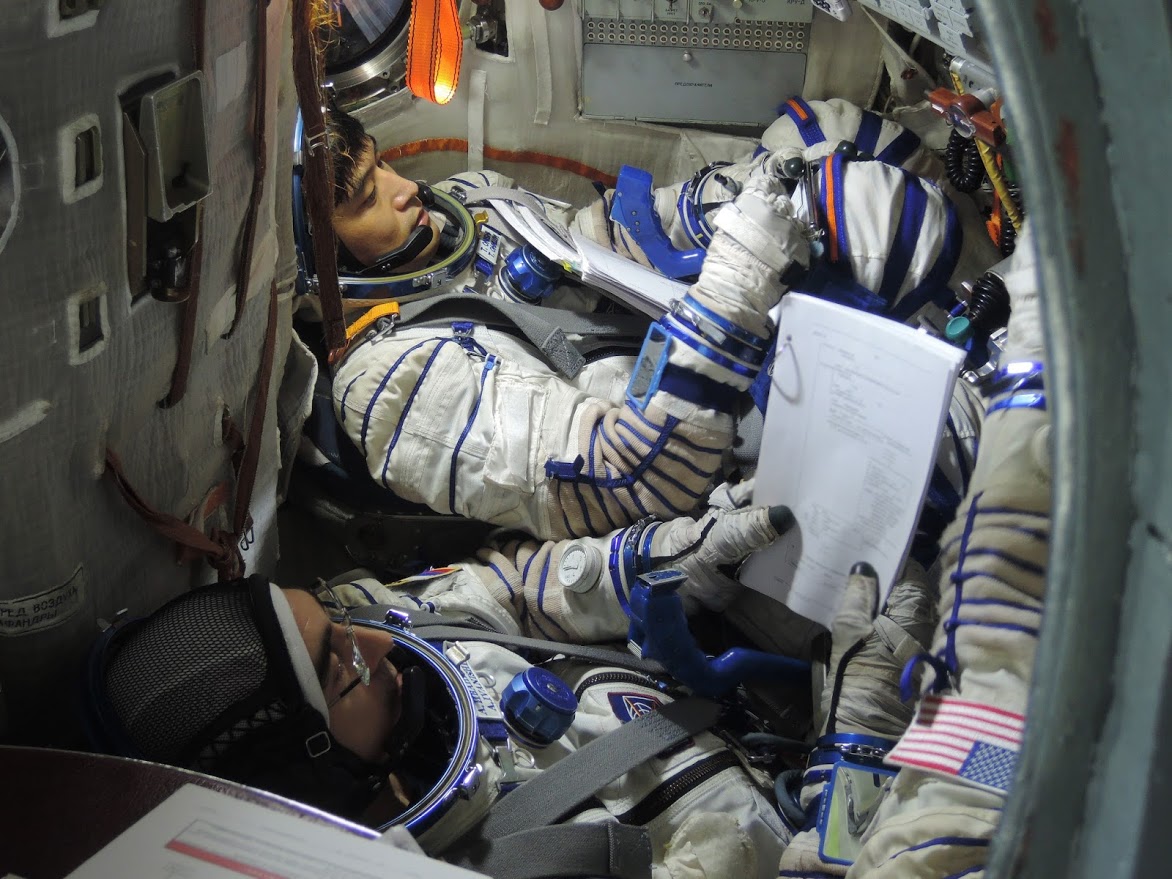
Part of the simulation training (Photo courtesy of Takuya Onishi)
By using a simulator, Onishi and his crewmates practiced a series of crew operations from launch to docking with the ISS, and then undocking from the ISS and returning to Earth.
By repeating simulations, they enhanced their techniques for flying safely while responding to possible anomalies. Using the Soyuz simulator, Onishi practiced how to deal with hardware failure and air leaks, and also performed manual operations.
At the GCTC, Onishi experienced the hypergravity condition generated by a huge centrifuge accelerator, which he would experience during the launch and descent of the Soyuz spacecraft. Specifically, he experienced acceleration of 4G – 8G and learned the proper respiratory strategy to prevent a loss of consciousness while under the accelerated condition.
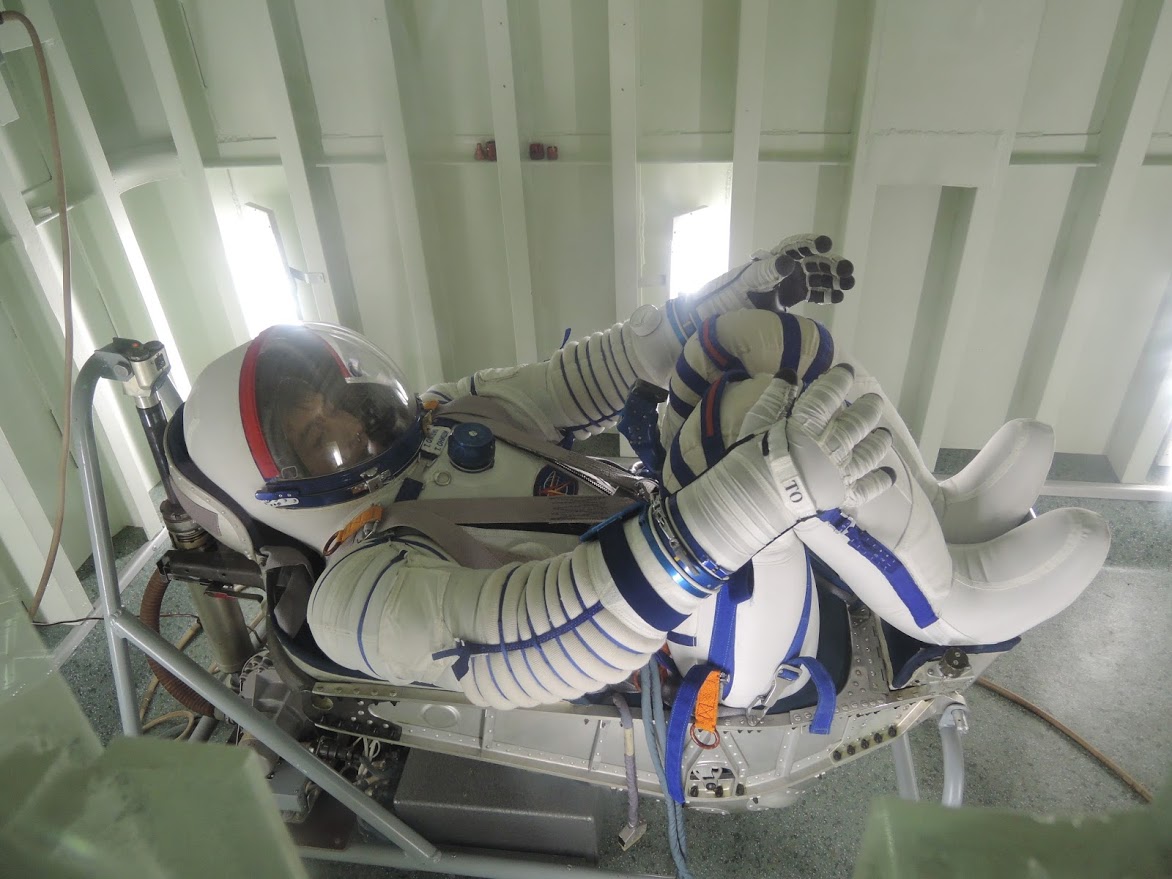
Onishi experiencing the depressurization test in the Sokol spacesuit (Photo courtesy of Takuya Onishi)
Aside from training, Onishi had an opportunity to visit RSC Energia, the Soyuz spacecraft developer, and was able check out the actual spacecraft he would be aboard. He also visited NPP Zvezda, the manufacturer of Sokol spacesuits, to check the functions of his custom-made spacesuit.
He also visited a facility equipped with the depressurization function where he practiced opening and closing hatches to identify any air-leaking points in the ISS Russian segment in an actual depressurized environment.
At the JSC, Onishi underwent training for Extravehicular Activity (EVA) to simulate maintenance operations for exposed equipment installed on the exterior of the ISS. Onishi also trained on how to obtain his own medical data for onboard medical experiments, and practiced hardware operations to be used for experiments.

JAXA Astronaut Norishige Kanai (Credit: JAXA)
On August 26 (Japan time), JAXA announced that they had assigned Astronaut Norishige Kanai as a member of a future ISS long-duration mission.
Kanai will commence his stay on the ISS for about six months from around November 2017 as a flight engineer of Expedition 54/55.
Following the assignment, Kanai held a press conference at the JAXA Tokyo Office on August 27.
During the press conference, Kanai mentioned that new experiments were ongoing on Kibo, such as micro satellite (CubeSat) deployment that had not been intended at Kibo’s development stage. Talking about his enthusiasm for the mission, Kanai said, “I imagine many interesting or breakthrough experiments will be conducted in 2017. I will do my best until then.”

Yui and his crewmates speaking with the ground (Credit: JAXA/NASA)
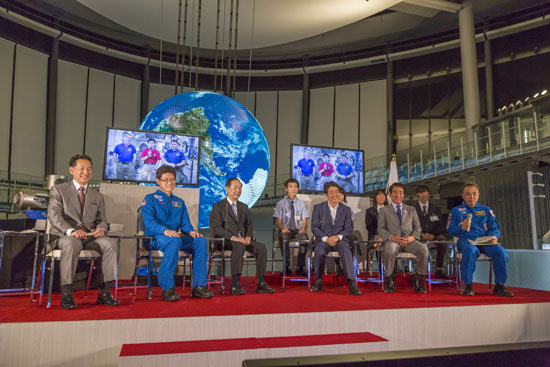
The venue on the ground (Credit: JAXA)
On the night of August 26 (Japan time), Astronaut Kimiya Yui and NASA Astronauts Scott Kelly and Kjell Lindgren communicated with the ground for 20 minutes, and spoke with Japanese Prime Minister Shinzo Abe in an event called “VIP call.” Abe was joined by Hirofumi Shimomura, Minister of Education, Culture, Sports, Science and Technology (MEXT), Shunichi Yamaguchi, Minister of State for Special Missions, and high school students in Tokyo.
Astronaut Satoshi Furukawa moderated the communication event. In addition, Mamoru Mohri, a former JAXA astronaut and current director of the National Museum of Emerging Science and Innovation (MeSci), and Astronaut Norishige Kanai also participated in the event.
Prime Minister Abe congratulated the successful berthing of KOUNOTORI5 and said that he believes that Japanese space technology has become more reliable. And he also believes that many Japanese are proud of the fact that all of the main tasks involved Japanese personnel.
In reply, Yui thanked Prime Minister Abe saying “Space development is quite difficult, but I’m glad that Japan took an important role and coordinated internationally to achieve success.”
During the event, Prime Minister Abe announced that Astronaut Kanai had been assigned as a crew member for the ISS Expedition 54/55.
Kanai stated, “Human space development resembles a road running relay. Astronaut Mohri wore a sash and began running as the first runner. In two years I will wear the sash, which is now worn by Astronaut Yui onboard the ISS. I will do my best so as to pass down it to younger generations.”
This entry passed through the Full-Text RSS service – if this is your content and you’re reading it on someone else’s site, please read the FAQ at fivefilters.org/content-only/faq.php#publishers.
Result of the high-altitude drop test of a simulated small return capsule to establish return technology
Last Updated: November 10, 2015
JAXA is developing a small return capsule that can be carried aboard the H-II Transfer Vehicle (HTV) KOUNOTORI, aiming to devise return capsule technologies and increase cargo return opportunities for precious samples obtained through space experiments on the ISS, so as to maximize the results of space utilization.
As part of this technology development, a high-altitude drop test of a simulated small return capsule was conducted off the coast of Taiki-cho, Hokkaido on October 22, 2015. At about 10:46 a.m., the return capsule was released from a helicopter at an altitude of 2 km and splashed down in the ocean three minutes later.
The parachute and other equipment worked normally, and the test ended without any trouble. The data obtained will be analyzed to realize completion of the small return capsule.
October 20 (two days before drop test)
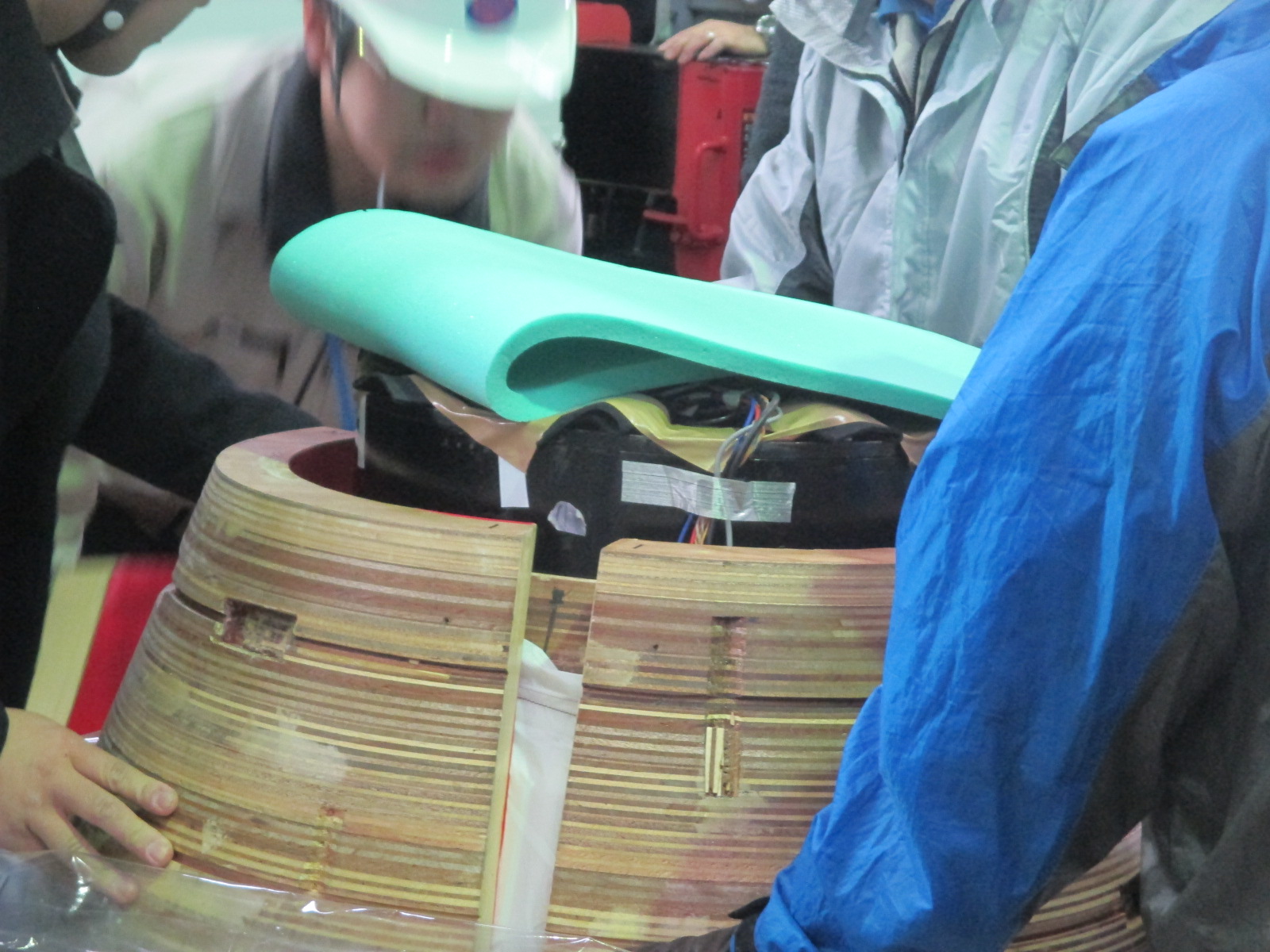
Capsule preparation
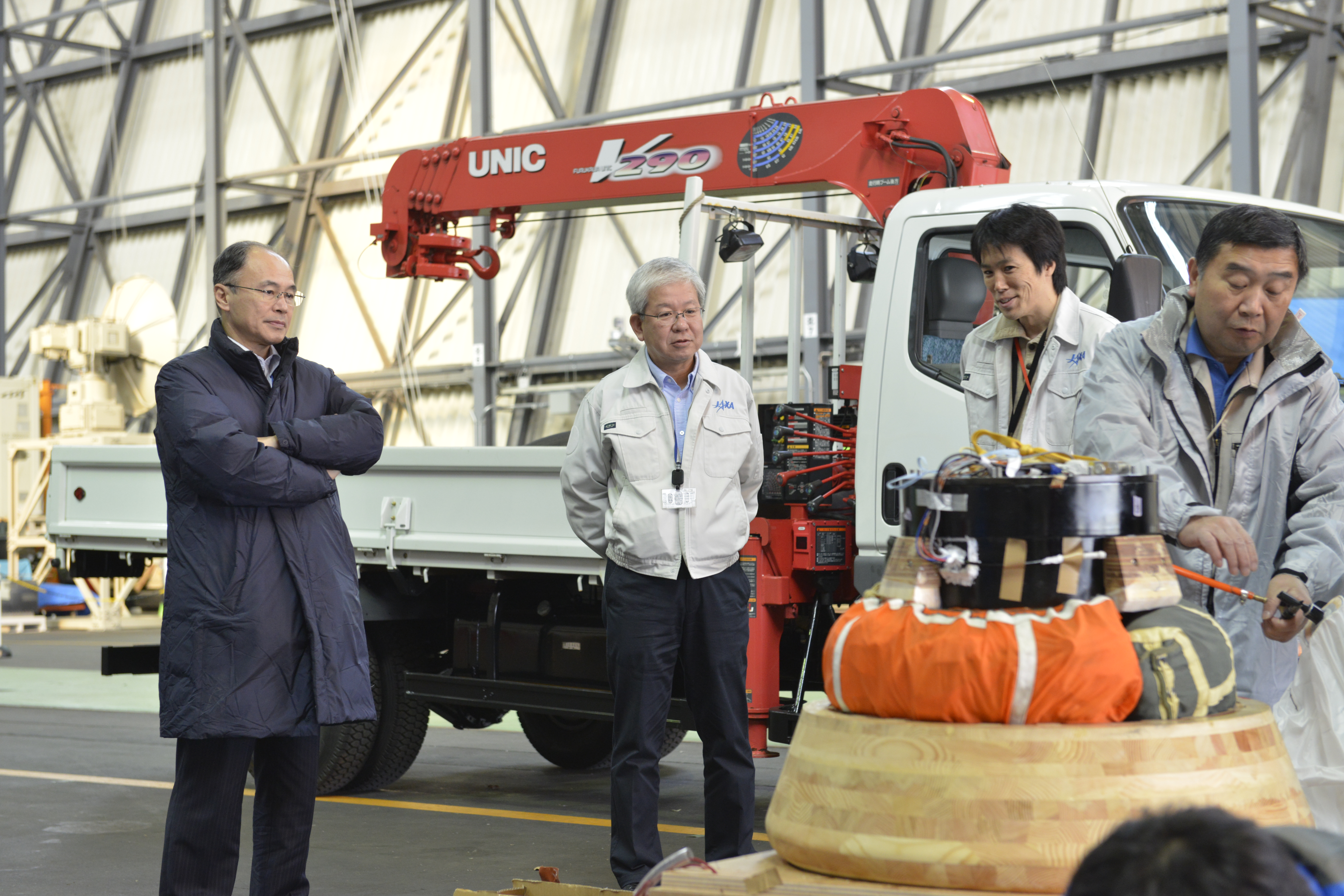
Capsule preparation
October 22 (The test day)
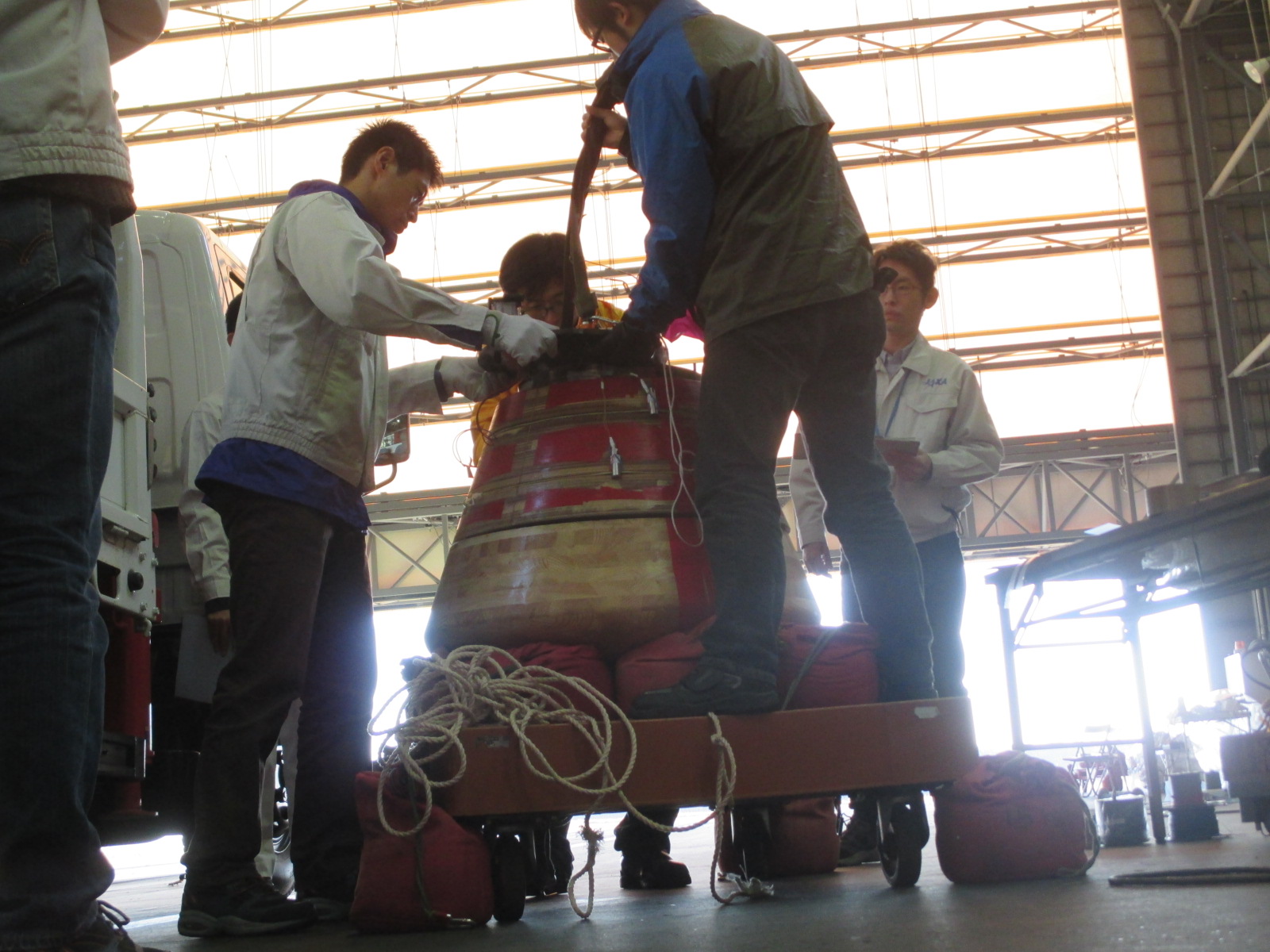
Final preparation (Taiki Aerospace Research Field in Hokkaido)

Final preparation (Taiki Aerospace Research Field in Hokkaido)
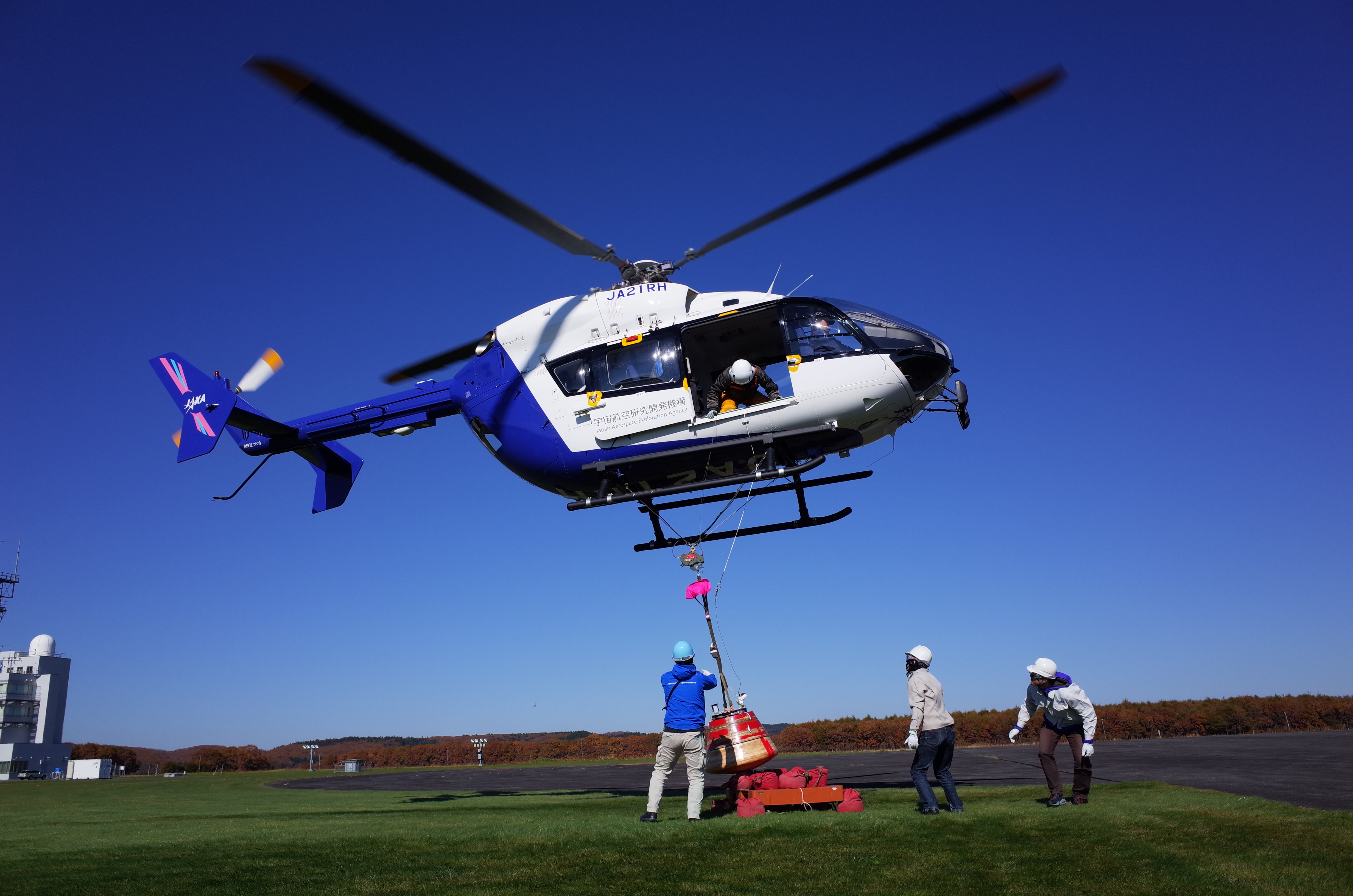
Lifting the capsule (Taiki Aerospace Research Field)
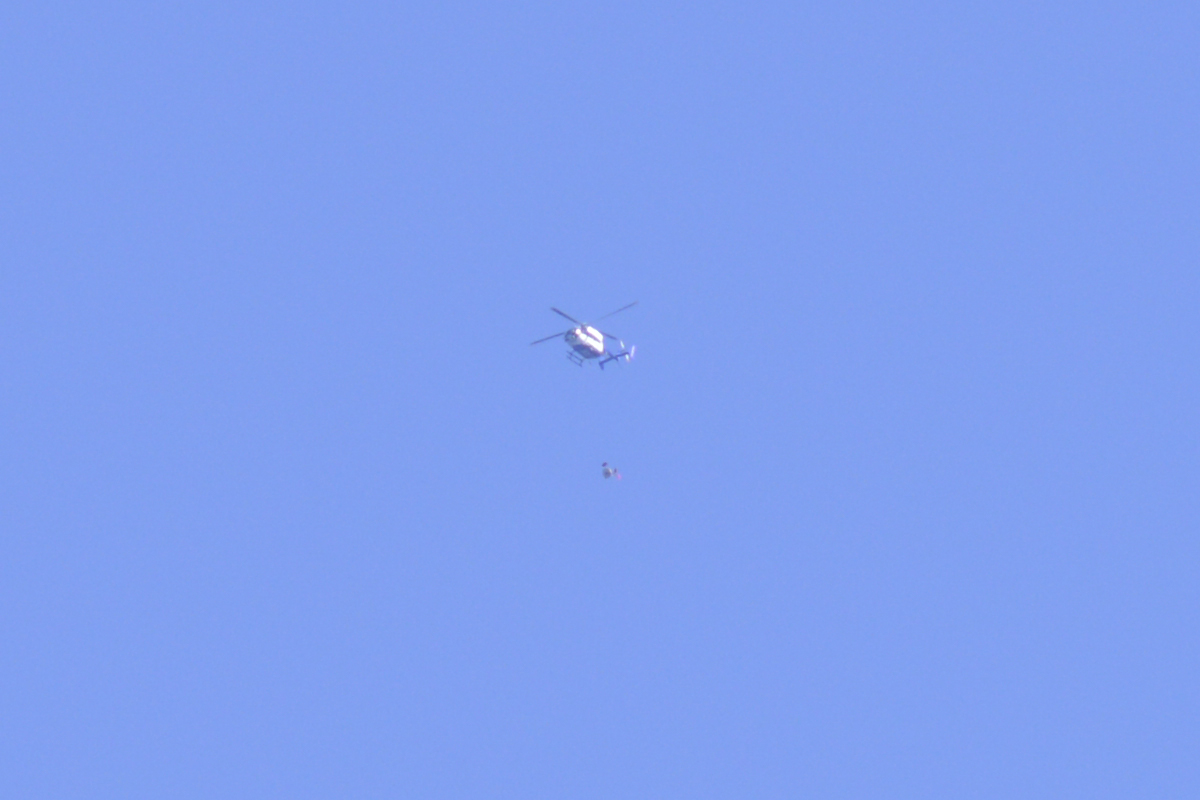
Capsule dropped from helicopter

Capsule descending with parachute
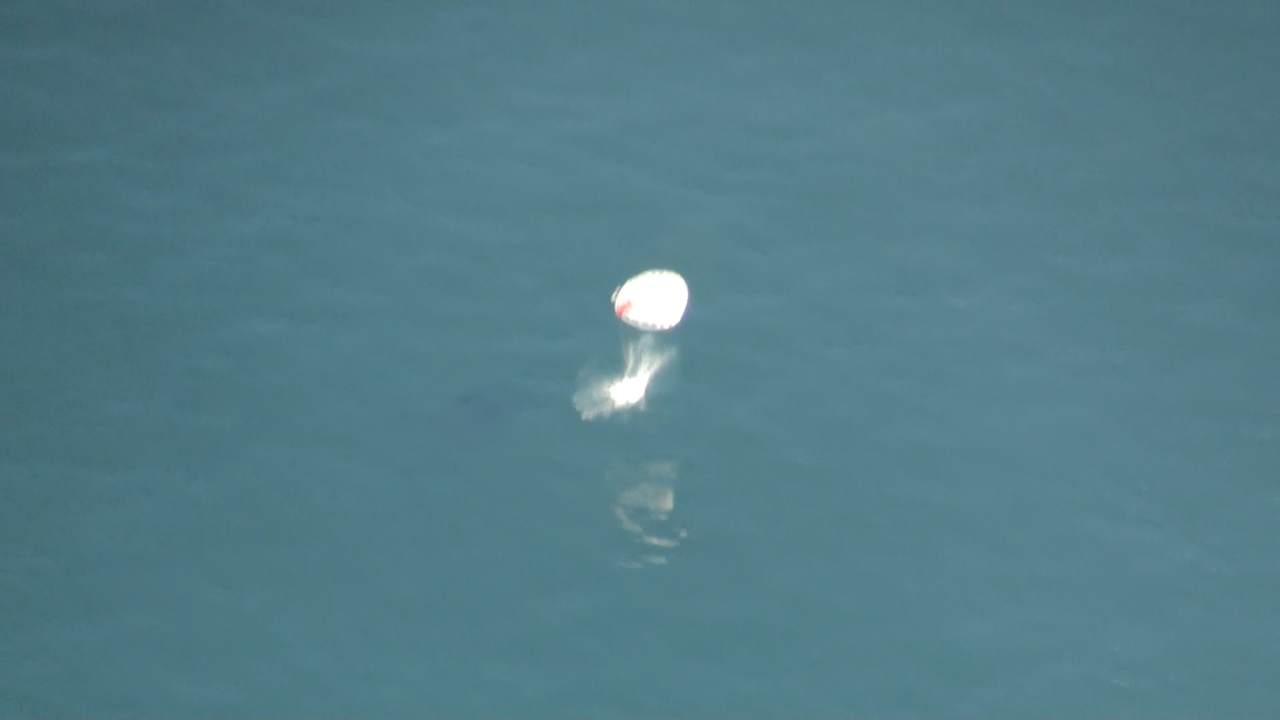
Splashdown

Collecting the capsule
(All photos courtesy of JAXA)
*All times are Japan Standard Time (JST)
This entry passed through the Full-Text RSS service – if this is your content and you’re reading it on someone else’s site, please read the FAQ at fivefilters.org/content-only/faq.php#publishers.
Ophir Chasma forms the northern portion of the vast Mars canyon system Valles Marineris, and this image, acquired on Aug. 10, 2015, by the High Resolution Imaging Science Experiment (HiRISE) camera on NASA’s Mars Reconnaissance Orbiter, features a small part of its wall and floor.

Ophir Chasma forms the northern portion of the vast Mars canyon system Valles Marineris, and this image, acquired on Aug. 10, 2015, by the High Resolution Imaging Science Experiment (HiRISE) camera on NASA’s Mars Reconnaissance Orbiter, features a small part of its wall and floor.

Space Science Image of the Week: These striking images of Venus’ dynamic south pole were recorded by ESA’s Venus Express during its eight years orbiting the planet

Europe’s fifth and sixth Galileo satellites – subject to complex salvage manoeuvres following their launch last year into incorrect orbits – will help to perform an ambitious year-long test of Einstein’s most famous theory.

