Category: Kepler

http://www.nasa.gov/mission_pages/kepler/news/kepler-newsandfeatures-RSS.rss

  • STEM Educators Are Bringing Hands-On NASA Science into Virginia Classrooms

    4 min read

    STEM Educators Are Bringing Hands-On NASA Science into Virginia Classrooms

    Professional learning experiences are integral to the enhancement of classroom instruction. Teachers, at the forefront of Science, Technology, Engineering, & Mathematics (STEM) education, play a key role in the advancement of STEM learning ecosystems and citizen science.

    On June 24-25, 2025 – despite a major east coast heat wave – twenty-four educators from eight school districts in the Hampton Roads region of southeastern Virginia (Newport News, Hampton City, Virginia Beach City, Isle of Wight County, Poquoson City, Norfolk, York County, and Suffolk Public Schools) converged at the National Institute of Aerospace (NIA) in Hampton, VA for a professional development workshop led by experts from NASA Langley Research Center and the NASA Science Activation program’s NIA-led NASA eClips team. Developed in collaboration with another NASA Science Activation team, GLOBE (Global Learning and Observations to Benefit the Environment) Mission Earth, and with support from the Coastal Virginia STEM Hub (COVA STEM) – a “STEM learning ecosystem targeting pre-K to adult residents in Coastal Virginia” – this two-day training, also provided comprehensive resources, including lesson plans, pacing guides, classroom activities, and books, all designed for integration into Hampton Roads classrooms.

    The NASA Langley team led workshop participants through a training about GLOBE, a program dedicated to advancing Earth System science through data collected by volunteer members of the public, also known as ‘citizen scientists’. GLOBE invites educators, students, and members of the public worldwide (regardless of citizenship) to collect and submit cloud, surface temperature, and land cover observations using the GLOBE Observer app – a real-time data collection tool available right on their smartphones. These observations are then used to help address scientific questions at local, regional, and global scales. Through this training, the educators participated in K-20 classroom-friendly sample lessons, hands-on activities, and exploring the GLOBE Observer app, ultimately qualifying them as GLOBE Certified Educators. Earth System science lessons, activities, and information on how to download the GLOBE Observer citizen science app are available on the GLOBE website. Similarly, NASA eClips, which focuses on increasing STEM literacy in K-12 students, provided educators with free, valuable, standards-based classroom resources such as educator guides, informational videos, engineering design packets, and hands-on activities, which are available to educators and students alike on the NASA eClips’ website. Throughout the training, educators collaborated in grade-level groups, brainstorming new ways to integrate these standards-based NASA science resources.

    One educator envisioned incorporating GLOBE’s cloud resources and supportive NASA eClips videos into her energy budget unit. Others explored modifying a heat-lamp experiment to include humidity and heat capacity. One teacher enthusiastically noted in response to a GLOBE urban heat island lesson plan, “The hands-on elements are going to be really great deliverables!” The creative energy and passion for education were palpable.

    The dedication of both NIA and NASA Langley to education and local community support was evident. This professional learning experience offered educators immediately-applicable classroom activities and fostered connections among NASA science, NASA eClips, the GLOBE Program, and fellow educators across district lines. One educator highlighted the value of these networking opportunities, stating, “I do love that we’re able to collaborate with our colleagues so we can plan for our future units during the school year”. Another participant commented, “This is a great program…I am going to start embedding [this] in our curriculum.”

    GME (supported by NASA under cooperative agreement award number NNX16AC54A) and NASA eClips (supported by NASA under cooperative agreement award number NNX16AB91A) are part of NASA’s Science Activation Portfolio. Learn more about how Science Activation connects NASA science experts, real content, and experiences with community leaders to do science in ways that activate minds and promote deeper understanding of our world and beyond: https://science.nasa.gov/learn
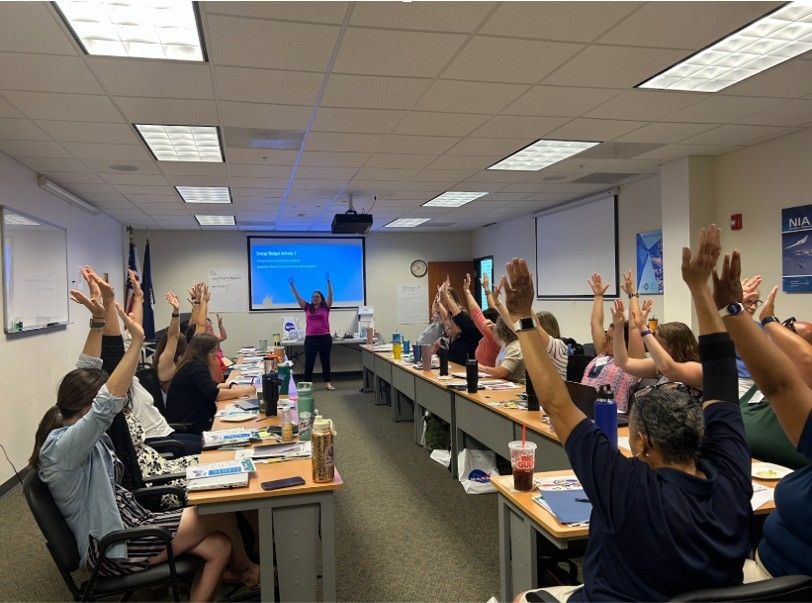
    Approximately 25 people sitting at long tables raise their arms up in the air with their fingers tips spread out, waving arms from side to side.
    GLOBE educator Marilé Colón Robles demonstrates a kinesthetic activity.

    Details

    Last Updated

    Aug 04, 2025

    Editor
    NASA Science Editorial Team
    Location
    NASA Langley Research Center
  • NASA’s Lunar Trailblazer Moon Mission Ends

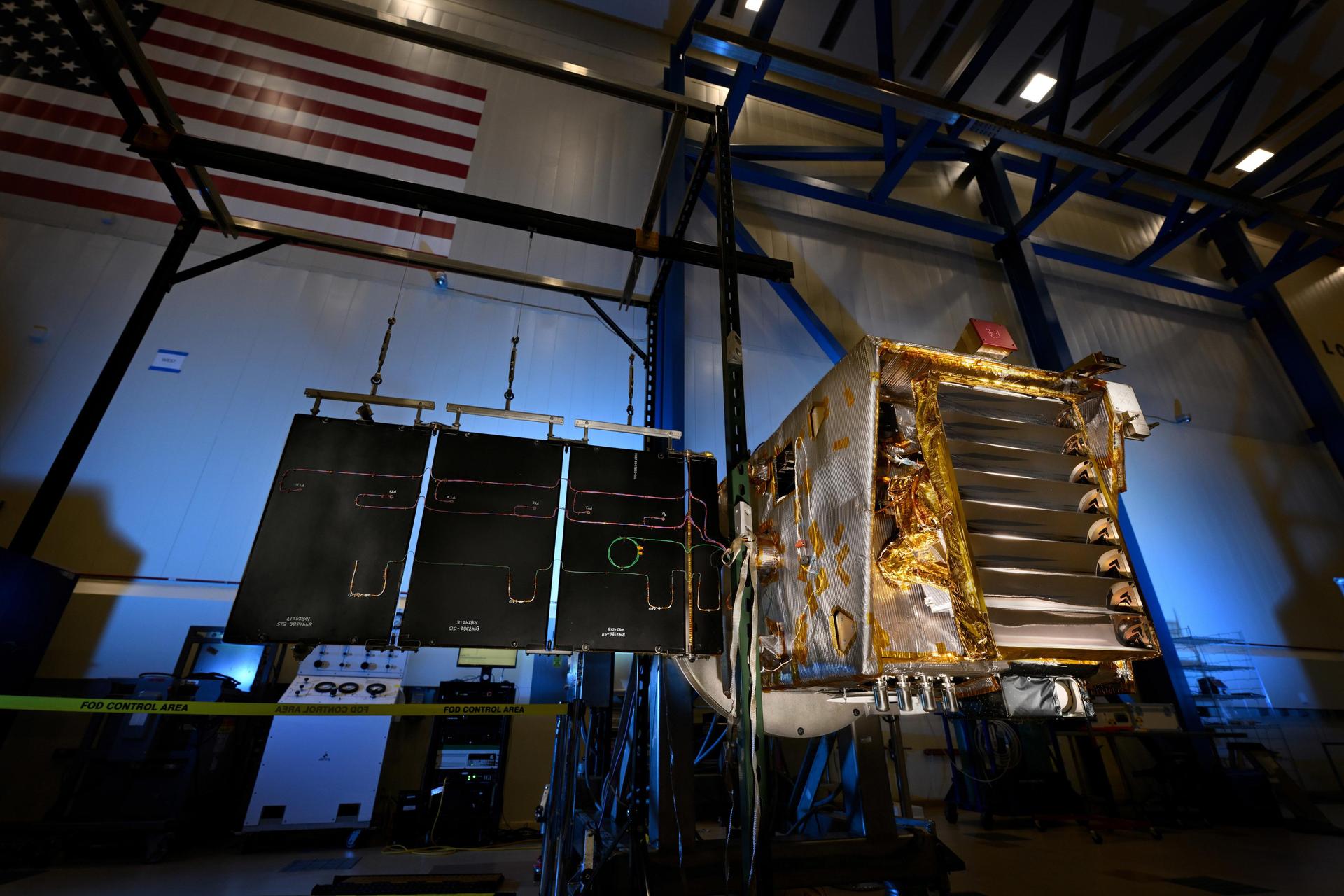
    NASA's Lunar Trailblazer spacecraft sits in a clean room in August 2024 after undergoing environmental testing at Lockheed Martin Space in Littleton, Colorado.
    With one of its solar arrays deployed, NASA’s Lunar Trailblazer sits in a clean room at Lockheed Martin Space in Colorado during testing in August 2024. The mission was to investigate the nature of the Moon’s water, but controllers lost contact with the spacecraft a day after launch in February 2025.
    Lockheed Martin Space

    The small satellite was to map lunar water, but operators lost contact with the spacecraft the day after launch and were unable to recover the mission.

    NASA’s Lunar Trailblazer ended its mission to the Moon on July 31. Despite extensive efforts, mission operators were unable to establish two-way communications after losing contact with the spacecraft the day following its Feb. 26 launch.

    The mission aimed to produce high-resolution maps of water on the Moon’s surface and determine what form the water is in, how much is there, and how it changes over time. The maps would have supported future robotic and human exploration of the Moon as well as commercial interests while also contributing to the understanding of water cycles on airless bodies throughout the solar system.

    Lunar Trailblazer shared a ride on the second Intuitive Machines robotic lunar lander mission, IM-2, which lifted off at 7:16 p.m. EST on Feb. 26 aboard a SpaceX Falcon 9 rocket from the agency’s Kennedy Space Center in Florida. The small satellite separated as planned from the rocket about 48 minutes after launch to begin its flight to the Moon. Mission operators at Caltech’s IPAC in Pasadena established communications with the small spacecraft at 8:13 p.m. EST. Contact was lost the next day.

    Without two-way communications, the team was unable to fully diagnose the spacecraft or perform the thruster operations needed to keep Lunar Trailblazer on its flight path.

    “At NASA, we undertake high-risk, high-reward missions like Lunar Trailblazer to find revolutionary ways of doing new science,” said Nicky Fox, associate administrator, Science Mission Directorate at NASA Headquarters in Washington. “While it was not the outcome we had hoped for, mission experiences like Lunar Trailblazer help us to learn and reduce the risk for future, low-cost small satellites to do innovative science as we prepare for a sustained human presence on the Moon. Thank you to the Lunar Trailblazer team for their dedication in working on and learning from this mission through to the end.”

    The limited data the mission team had received from Lunar Trailblazer indicated that the spacecraft’s solar arrays were not properly oriented toward the Sun, which caused its batteries to become depleted.

    For several months, collaborating organizations around the world — many of which volunteered their assistance — listened for the spacecraft’s radio signal and tracked its position. Ground radar and optical observations indicated that Lunar Trailblazer was in a slow spin as it headed farther into deep space.

    “As Lunar Trailblazer drifted far beyond the Moon, our models showed that the solar panels might receive more sunlight, perhaps charging the spacecraft’s batteries to a point it could turn on its radio,” said Andrew Klesh, Lunar Trailblazer’s project systems engineer at NASA’s Jet Propulsion Laboratory in Southern California. “The global community’s support helped us better understand the spacecraft’s spin, pointing, and trajectory. In space exploration, collaboration is critical — this gave us the best chance to try to regain contact.”

    However, as time passed, Lunar Trailblazer became too distant to recover as its telecommunications signals would have been too weak for the mission to receive telemetry and to command.

    Technological Legacy

    The small satellite’s High-resolution Volatiles and Minerals Moon Mapper (HVM3) imaging spectrometer was built by JPL to detect and map the locations of water and minerals. The mission’s Lunar Thermal Mapper (LTM) instrument was built by the University of Oxford in the United Kingdom and funded by the UK Space Agency to gather temperature data and determine the composition of silicate rocks and soils to improve understanding of why water content varies over time.

    “We’re immensely disappointed that our spacecraft didn’t get to the Moon, but the two science instruments we developed, like the teams we brought together, are world class,” said Bethany Ehlmann, the mission’s principal investigator at Caltech. “This collective knowledge and the technology developed will cross-pollinate to other projects as the planetary science community continues work to better understand the Moon’s water.”

    Some of that technology will live on in the JPL-built Ultra Compact Imaging Spectrometer for the Moon (UCIS-Moon) instrument that NASA recently selected for a future orbital flight opportunity. The instrument, which has has an identical spectrometer design as HVM3, will provide the Moon’s highest spatial resolution data of surface lunar water and minerals.

    More About Lunar Trailblazer

    Lunar Trailblazer was selected by NASA’s SIMPLEx (Small Innovative Missions for Planetary Exploration) competition, which provides opportunities for low-cost science spacecraft to ride-share with selected primary missions. To maintain the lower overall cost, SIMPLEx missions have a higher risk posture and less-stringent requirements for oversight and management. This higher risk acceptance bolsters NASA’s portfolio of targeted science missions designed to test pioneering mission approaches.

    Caltech, which manages JPL for NASA, led Lunar Trailblazer’s science investigation, and Caltech’s IPAC led mission operations, which included planning, scheduling, and sequencing of all spacecraft activities. Along with managing Lunar Trailblazer, NASA JPL provided system engineering, mission assurance, the HVM3 instrument, and mission design and navigation. Lockheed Martin Space provided the spacecraft, integrated the flight system, and supported operations under contract with Caltech. The University of Oxford developed and provided the LTM instrument, funded by the UK Space Agency. Lunar Trailblazer, a project of NASA’s Lunar Discovery and Exploration Program, was managed by NASA’s Planetary Missions Program Office at Marshall Space Flight Center in Huntsville, Alabama, for the agency’s Science Mission Directorate in Washington.

    News Media Contacts

    Karen Fox / Molly Wasser
    NASA Headquarters, Washington
    202-358-1600
    karen.c.fox@nasa.gov / molly.l.wasser@nasa.gov

    Ian J. O’Neill
    Jet Propulsion Laboratory, Pasadena, Calif.
    818-354-2649
    ian.j.oneill@jpl.nasa.gov

    Isabel Swafford
    Caltech IPAC
    626-216-4257
    iswafford@ipac.caltech.edu

    2025-099

  • NASA Opens Simulated Mars Habitat to Media Ahead of Second Mission

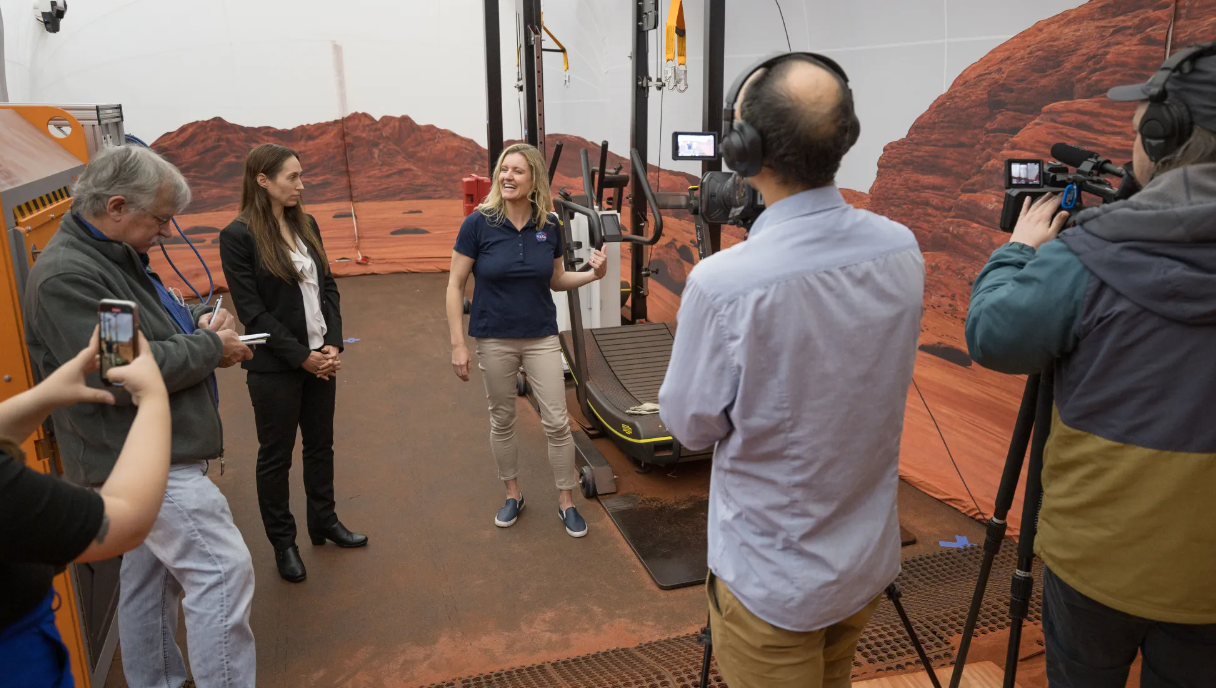
    The Crew Health and Performance Exploration Analog (CHAPEA) team hosts a media day at NASA’s Johnson Space Center in Houston in 2023.
    Credit: NASA

    As NASA prepares for its second year-long Mars simulated mission, media are invited to visit the ground-based habitat where the mission will take place, on Friday, Aug. 22, at the agency’s Johnson Space Center in Houston.

    Scheduled to begin in October, four volunteer crew members will enter the agency’s Crew Health and Performance Exploration Analog (CHAPEA) 3D-printed habitat to live and work for a year to inform NASA’s preparations for human Mars missions.

    The in-person media event includes an opportunity to speak with subject matter experts, and capture b-roll and photos inside the habitat. Crew members will not be available for interviews as they will arrive at NASA Johnson at a later date.

    International media wishing to attend must request accreditation no later than 6 p.m. EDT (5 p.m. CDT), on Monday, Aug. 11. United States-based media have a deadline of 6 p.m. EDT (5 p.m. CDT), on Wednesday, Aug. 20, to register.  

    To request accreditation, media must contact the NASA Johnson newsroom at: 281-483-5111 or jsccommu@mail.nasa.gov. Space is limited. A copy of NASA’s media accreditation policy is available online.

    Once the crew members kick off their mission, they will carry out various activities, including simulated Mars walks, robotic operations, habitat maintenance, medical technology tests, exercise, and crop growth. The crew also will face environmental stresses such as resource limitations, isolation, communication delays, and equipment failure, and work through these scenarios with the resources available inside the habitat.

    To learn more about CHAPEA, visit:

    https://www.nasa.gov/humans-in-space/chapea

    -end-

    Lauren Low
    Headquarters, Washington
    202-358-1600
    lauren.e.low@nasa.gov

    Kelsey Spivey / Mohi Kumar
    Johnson Space Center, Houston
    281-483-5111
    kelsey.m.spivey@nasa.gov / mohi.kumar@nasa.gov

  • Marking 13 Years on Mars, NASA’s Curiosity Picks Up New Skills

    5 min read

    Preparations for Next Moonwalk Simulations Underway (and Underwater)

    New capabilities allow the rover to do science with less energy from its batteries.

    Thirteen years since Curiosity landed on Mars, engineers are finding ways to make the NASA rover even more productive. The six-wheeled robot has been given more autonomy and the ability to multitask — improvements designed to make the most of Curiosity’s energy source, a multi-mission radioisotope thermoelectric generator (MMRTG). Increased efficiency means the rover has ample power as it continues to decipher how the ancient Martian climate changed, transforming a world of lakes and rivers into the chilly desert it is today.

    Curiosity recently rolled into a region filled with boxwork formations. These hardened ridges are believed to have been created by underground water billions of years ago. Stretching for miles on this part of Mount Sharp, a 3-mile-tall (5-kilometer-tall) mountain, the formations might reveal whether microbial life could have survived in the Martian subsurface eons ago, extending the period of habitability farther into when the planet was drying out.

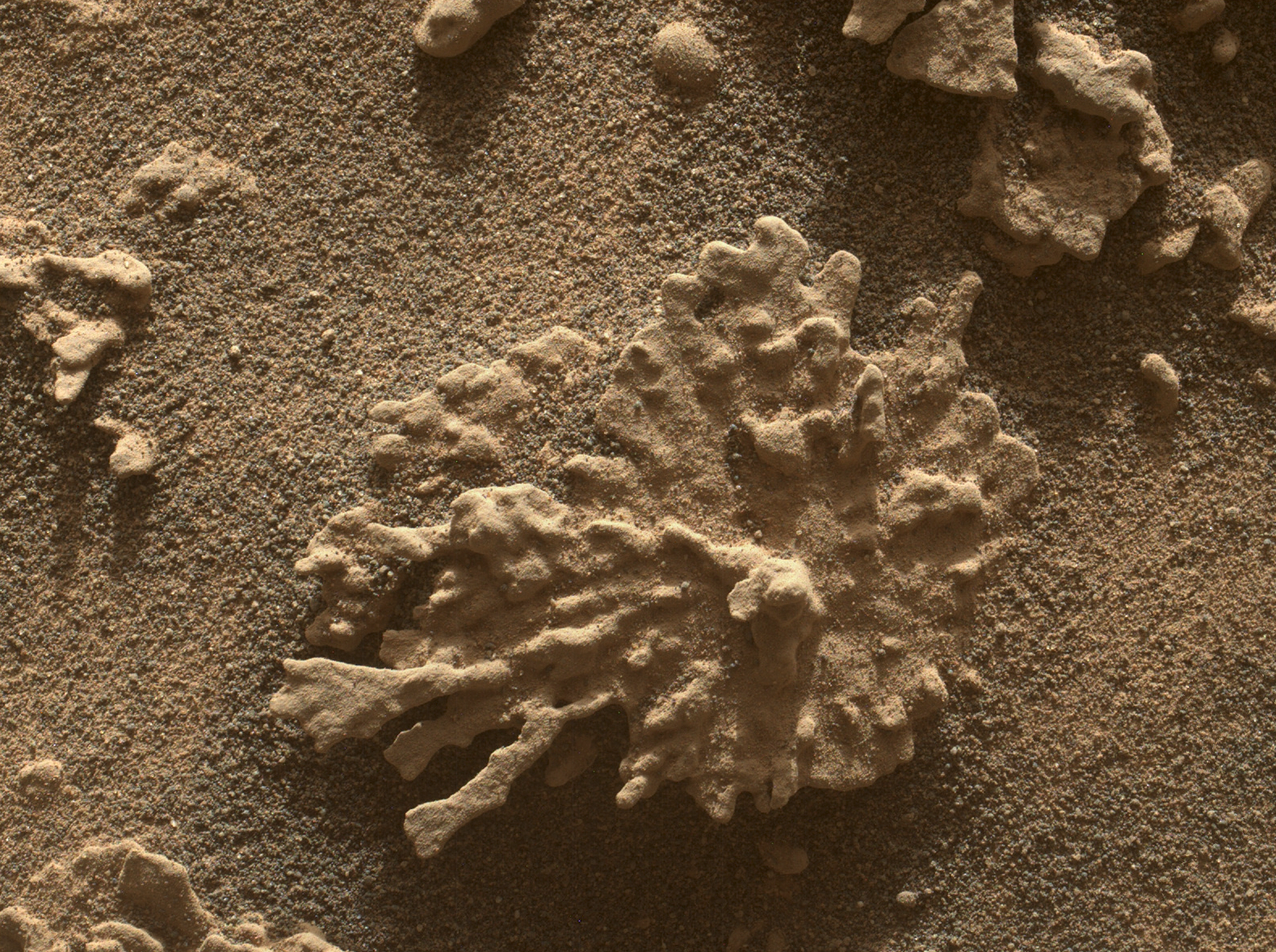
    NASA’s Curiosity viewed this rock shaped like a piece of coral on July 24, 2025
    NASA’s Curiosity viewed this rock shaped like a piece of coral on July 24, 2025, the 4,608th Martian day of the mission. The rover has found many rocks that — like this one — were formed by minerals deposited by ancient water flows combined with billions of years of sandblasting by wind.
    NASA/JPL-Caltech/MSSS

    Carrying out this detective work involves a lot of energy. Besides driving and extending a robotic arm to study rocks and cliffsides, Curiosity has a radio, cameras, and 10 science instruments that all need power. So do the multiple heaters that keep electronics, mechanical parts, and instruments operating at their best. Past missions like the Spirit and Opportunity rovers and the InSight lander relied on solar panels to recharge their batteries, but that technology always runs the risk of not receiving enough sunlight to provide power.

    Instead, Curiosity and its younger sibling Perseverance each use their MMRTG nuclear power source, which relies on decaying plutonium pellets to create energy and recharge the rover’s batteries. Providing ample power for the rovers’ many science instruments, MMRTGs are known for their longevity (the twin Voyager spacecraft have relied on RTGs since 1977). But as the plutonium decays over time, it takes longer to recharge Curiosity’s batteries, leaving less energy for science each day.

    The team carefully manages the rover’s daily power budget, factoring in every device that draws on the batteries. While these components were all tested extensively before launch, they are part of complex systems that reveal their quirks only after years in the extreme Martian environment. Dust, radiation, and sharp temperature swings bring out edge cases that engineers couldn’t have expected.

    “We were more like cautious parents earlier in the mission,” said Reidar Larsen of NASA’s Jet Propulsion Laboratory in Southern California, which built and operates the rover. Larsen led a group of engineers who developed the new capabilities. “It’s as if our teenage rover is maturing, and we’re trusting it to take on more responsibility. As a kid, you might do one thing at a time, but as you become an adult, you learn to multitask.”

    More Efficient Science

    Generally, JPL engineers send Curiosity a list of tasks to complete one by one before the rover ends its day with a nap to recharge. In 2021, the team began studying whether two or three rover tasks could be safely combined, reducing the amount of time Curiosity is active.

    For example, Curiosity’s radio regularly sends data and images to a passing orbiter, which relays them to Earth. Could the rover talk to an orbiter while driving, moving its robotic arm, or snapping images? Consolidating tasks could shorten each day’s plan, requiring less time with heaters on and instruments in a ready-to-use state, reducing the energy used. Testing showed Curiosity safely could, and all of these have now been successfully demonstrated on Mars.

    Another trick involves letting Curiosity decide to nap if it finishes its tasks early. Engineers always pad their estimates for how long a day’s activity will take just in case hiccups arise. Now, if Curiosity completes those activities ahead of the time allotted, it will go to sleep early.

    By letting the rover manage when it naps, there is less recharging to do before the next day’s plan. Even actions that trim just 10 or 20 minutes from a single activity add up over the long haul, maximizing the life of the MMRTG for more science and exploration down the road.

    Miles to Go

    In fact, the team has been implementing other new capabilities on Curiosity for years. Several mechanical issues required a rework of how the robotic arm’s rock-pulverizing drill collects samples, and driving capabilities have been enhanced with software updates. When a color filter wheel stopped turning on one of the two cameras mounted on Mastcam, Curiosity’s swiveling “head,” the team developed a workaround allowing them to capture the same beautiful panoramas.

    JPL also developed an algorithm to reduce wear on Curiosity’s rock-battered wheels. And while engineers closely monitor any new damage, they aren’t worried: After 22 miles (35 kilometers) and extensive research, it’s clear that, despite some punctures, the wheels have years’ worth of travel in them. (And in a worst-case scenario, Curiosity could remove the damaged part of the wheel’s “tread” and still drive on the remaining part.)

    Together, these measures are doing their job to keep Curiosity as busy as ever.

    More About Curiosity

    Curiosity was built by NASA’s Jet Propulsion Laboratory, which is managed by Caltech in Pasadena, California. JPL leads the mission on behalf of NASA’s Science Mission Directorate in Washington as part of NASA’s Mars Exploration Program portfolio. Malin Space Science Systems in San Diego built and operates Mastcam.

    For more about Curiosity, visit:

    science.nasa.gov/mission/msl-curiosity

    News Media Contacts

    Andrew Good
    Jet Propulsion Laboratory, Pasadena, Calif.
    818-393-2433
    andrew.c.good@jpl.nasa.gov

    Karen Fox / Molly Wasser
    NASA Headquarters, Washington
    202-358-1600
    karen.c.fox@nasa.gov / molly.l.wasser@nasa.gov

    2025-098

  • Helio Highlights: July 2025

    5 min read

    Helio Highlights: July 2025

    5 Min Read

    Helio Highlights: July 2025

    23. VIDEOAnimated b-roll of NASA Gateway/Commercial Lunar Payload Services. The first two science investigations to be conducted from the Gateway in lunar orbit will study space weather and monitor the radiation environment there.Credit: NASA

    When astronauts return to the Moon, they will need to know what the Sun is doing in order to keep themselves safe and healthy.

    Credits:
    NASA

    A Trip to the Moon

    In July 1969, astronauts Neil Armstrong and Buzz Aldrin became the first humans to walk on the Moon. Now, NASA and its international partners in the Artemis accords are working to send humans back there, this time to stay. The trip will be challenging, especially since space is a very uninviting place for humans! One unexpected source of danger will be the Sun.

    The Sun: Friend and Foe

    The energy the Sun provides allows life on Earth to thrive. But this energy can also be dangerous to us. This danger can be as simple as getting a sunburn if you are out in the sunlight for too long, or as complex as a geomagnetic storm causing chaos in our satellite network.

    Animation of a simulation created based on the MAGE model's data of how Earth's magnetosphere reacted to being hit by a geospace sotrm in May 2024.
    This animation demonstrates a simulation by the MAGE model of Earth’s magnetosphere being hit by a geospace storm in May 2024, the strongest in nearly 20 years. Storms like this are caused by solar weather that could endanger astronauts en route to the Moon or active on its surface during future missions.
    NASA’s Scientific Visualization Studio and CGS Team

    Things get more complicated in space. On Earth, the atmosphere and magnetosphere protect us from most solar energy. But spacecraft and astronauts in space don’t have this protection. For astronauts on upcoming Artemis missions to the Moon, the Sun’s radiation could cause anything from ruined electronics to a greater long-term risk of cancer.

    The Real Risks

    On August 2, 1972, a massive solar storm began with the eruption of sunspot MR11976. One of the Coronal Mass Ejections (CMEs) it produced raced from the Sun to Earth in less than 15 hours. That’s a record that still stands today! This led to power grid fluctuations and caused havoc with spacecraft in flight. Recently declassified U.S. military records show that the storm caused sea mines off the Vietnamese coast to explode, as well.

    Importantly, the August 1972 solar storm happened in between the Apollo 16 and 17 missions to the Moon. Studies show that astronauts en route to the Moon, and especially astronauts on the surface, could have been badly sickened by the radiation that came with it. This threat remains real if a solar storm of similar severity were to occur during future Lunar missions.

    Watchful Protectors

    Organizations like NASA and NOAA keep an eye on the Sun, to forecast potential sources of danger. If a solar flare or Coronal Mass Ejection (CME) is on the way, scientists should be able to spot the danger ahead of time so that steps can be taken to reduce the damage. For astronauts going to the Moon, this may be as simple as taking shelter in a special part of their spacecraft.

    Blue and white shaded image of a Coronal Mass Ejection erupting from the Sun
    An animated gif of a Coronal Mass Ejection (CME) erupting from the surface of the Sun in September 2024. If a CME like this was aimed at the Moon, the intense energy it carried could damage spacecraft electronics and even cause severe radiation sickness in astronauts.
    NOAA/NASA

    NOAA’s Space Weather Follow-On (SWFO) program sustains their space weather observations and measurements. NOAA’s CCOR-1 flew on the GOES-19 spacecraft and provides crucial near-real-time CME data. The CCOR-2 instrument will fly on SWFO-L1. Other missions include SOHO, a long-running collaboration between NASA and the European Space Agency, and HERMES, a NASA heliophysics instrument intended for the Lunar Gateway that will orbit the Moon.

    NASA’s Moon to Mars Space Weather Analysis Office (M2M SWAO) also conducts real-time space weather assessments. These support new capabilities for understanding space weather impacts on NASA exploration activities, including on the Moon.

    The Moon as a Laboratory

    A big part of the reason we want to go back to the Moon is the amazing level of information we can learn about the history of the Solar System. “Any object in our solar system doesn’t just exist in isolation,” explains Prabal Saxena, a Research Space Scientist in the Planetary Geology, Geophysics & Geochemistry Lab at NASA’s Goddard Space Flight Center. “It is constantly interacting with meteorites and meteors. That’s why you see a lot of the impact creators on the Moon. But it is also constantly interacting with the Sun.” This can come from the solar wind, CMEs, and other forms of solar energy hitting the Moon’s barren surface.

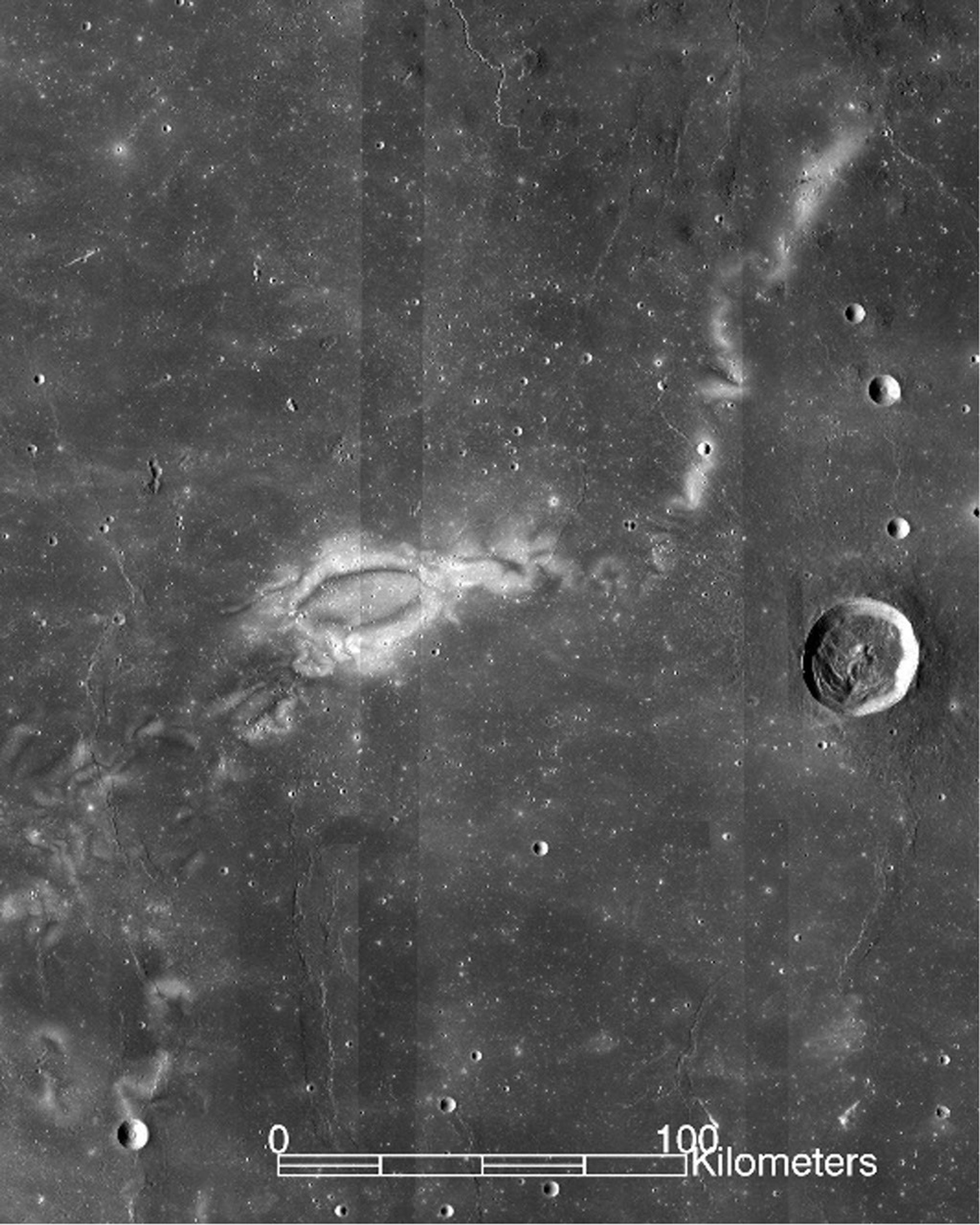
    The image is of a large geological feature on the lunar surface. The majority of the image is dark grey and appearing to show a relatively flat expanse. A few small craters are scattered throughout and one large one on the far right. In the center-left of the image, Reiner Gamma appears as a light-colored oval with wispy, white edges like a cloud. Additional scattered streaks of white extend up and to the right of the swirl. Along the bottom of the image is a scale indicating that the main part of the swirl
    Pictured is the Lunar Swirl Reiner Gamma, a geological feature on the surface of the moon. In areas that are magnetically protected, the ground stays relatively bright. Just outside of the shielded regions, radiation-induced chemical reactions darken the landscape, effectively “sunburning” the lunar surface.
    NASA/GSFC/Arizona State University

    Saxena points out that the Moon’s relative lack of a magnetosphere means that Lunar surface material effectively traps evidence of the past habits of the Sun. “A lot of the energetic particles that we would otherwise see deflected by Earth’s magnetosphere and atmosphere are impacting the surface of the Moon. So you can actually trace back what the history of the Sun might be.”

    He compares this to scientists taking ice cores to get a glimpse into Earth’s atmospheric history. With everything from evidence of the prehistoric solar atmosphere to information on how the Sun affects water on the lunar surface locked in rocks left largely untouched for millions of years, it is clear why NASA wants to go back and have another look around.

    Going Back

    But it is still important to keep an eye on the potential dangers to explorers both metallic and organic. In an interview, Lennard Fisk, former NASA Associate Administrator for Space Science and Applications, described a conversation he had with Neil Armstrong. More than anything else during Apollo 11, Armstrong was afraid of a solar flare. He knew he could depend on his spacecraft and crewmates. But space weather was an uncontrollable variable.

    We had a different understanding of space weather in 1969. Space radiation, including the solar wind, was a new discovery back then. But research done in those early days helped make breakthroughs still paying off today, and we are building upon these discoveries with new missions that continue to advance our knowledge of the Sun and the rest of our solar system.

    Additional Resources

  • NUBE: New Card Game Helps Learners Identify Cloud Types Through Play

    4 min read

    NUBE: New Card Game Helps Learners Identify Cloud Types Through Play

    Different clouds types can have different effects on our weather and climate, which makes identifying cloud types important – but learning to identify cloud types can be tricky! Educational games make the learning process easier and more enjoyable for learners of all ages and create an opportunity for families and friends to spend quality time together.

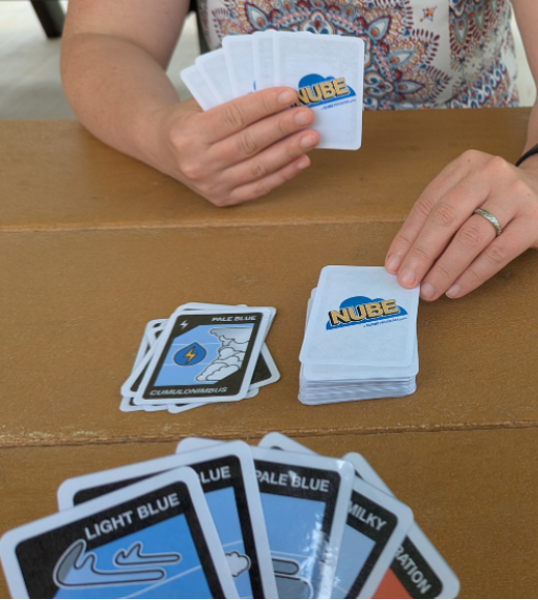
    The NASA Science Activation Program’s NASA Earth Science Education Collaborative (NESEC) and the Queens Public Library co-developed a new Global Learning & Observations to Benefit the Environment (GLOBE) card game called NUBE (pronounced noo-beh) – the Spanish word for cloud. During this fun, interactive game, players match cards by cloud type or sky color – with 11 cloud types and 5 shades of blue (in real life, sky color can be an indication of how many aerosols are in the atmosphere). There are also special cards in the deck, such as Rainmakers, which change the order of play; Obscurations, which require the next player to draw two cards; and Mystery cards, which require players to give hints while other players guess the cloud type. By playing the game, participants practice learning the names of clouds while they begin to appreciate the differences in cloud type and sky color.

    NESEC is collaborating with another NASA Science Activation project team – NASA@ My Library (NAML, led by the Space Science Institute, SSI – to get the game into library programs. NAML recruited and is distributing sets of two or four card decks to 292 U.S. libraries. Participating libraries are located in 45 states, with a large number (>50%) serving rural communities. SSI also promoted the opportunity to its network of libraries and co-presented a webinar with NESEC for interested libraries. Library applications described how they plan to use the game with their patrons, including programs for audiences ranging from kids to seniors related to weather and safety programs, citizen science clubs, home school groups, summer reading, game nights, circulating kits and more. Libraries that receive NUBE commit to use the game in at least one program and complete a short evaluation survey.

    NUBE evolved through several iterations as staff from several Queens Public Library branches tested the game with different age groups, from young kids to teens and adults. The game was also tested at the Challenger Center and the Center for Science, Technology, Education, & Mathematics (STEM) Teaching and Learning at Northern Arizona University. Alex Hernandez Bonifacio, an early Learning Educator at Queens Public Library reported, “It was amazing to see what kids reflected on as they were playing NUBE. For example, there was this third grader who was surprised to realize something could obscure our view of the clouds. She used to think clouds were too high in the sky for anything to block our view of them. While playing NUBE, she became very intrigued about the obscuration cards, and she realized that things closer to the ground like heavy snow could in fact block our view of the clouds!” After incorporating feedback from testers and counting the votes for different graphic design options, NUBE is now ready to be downloaded and enjoyed by all!

    If you’re excited to play this awesome GLOBE Clouds card game and want to learn even more about clouds, you can download the GLOBE Observer app on your smartphone to participate in hands-on NASA scientific research – sharing observations of your environment as a citizen scientist (no citizenship required)! Learn more and discover additional resources for engaging in clouds activities with the GLOBE Observer Clouds Toolkit.

    NESEC, led by the Institute for Global Environmental Strategies (IGES) and supported by NASA under cooperative agreement award number NNX16AE28A, is part of NASA’s Science Activation Portfolio. Learn more about how Science Activation connects NASA science experts, real content, and experiences with community leaders to do science in ways that activate minds and promote deeper understanding of our world and beyond: https://science.nasa.gov/learn
    NUBE, a GLOBE Clouds card game
  • Crew-11 Launches to International Space Station

    A rocket lifts off from the launchpad, leaving a trail of flames and plumes of vapor in its wake. A white structure and the black gantry can be seen on the left. On the right, a white arm falls away. The photo is taken from a distance.
    NASA/Aubrey Gemignani

    A SpaceX Falcon 9 rocket carrying the SpaceX Dragon spacecraft Endeavour lifts off from Launch Complex 39A at NASA’s Kennedy Space Center in Florida on Aug. 1, 2025. NASA astronauts Zena Cardman and Mike Fincke, JAXA (Japan Aerospace Exploration Agency) astronaut Kimiya Yui, and Roscosmos cosmonaut Oleg Platonov are aboard the spacecraft. After the crew arrives at the International Space Station, they will perform research, technology demonstrations, and maintenance activities aboard the orbiting laboratory. Crew-11 will also contribute to NASA’s Artemis campaign by simulating Moon landing scenarios that astronauts may encounter near the lunar South Pole, showing how the space station helps prepare crews for deep space human exploration.

    The flight is the 11th crew rotation mission with SpaceX to the space station as part of NASA’s Commercial Crew Program.

    Image credit: NASA/Aubrey Gemignani

  • NASA’s Europa Clipper Radar Instrument Proves Itself at Mars

    5 min read

    Preparations for Next Moonwalk Simulations Underway (and Underwater)

    Europa Clipper’s radar instrument received echoes of its very-high-frequency radar signals that bounced off Mars
    Europa Clipper’s radar instrument received echoes of its very-high-frequency radar signals that bounced off Mars and were processed to develop this radargram. What looks like a skyline is the outline of the topography beneath the spacecraft.
    NASA/JPL-Caltech/UT-Austin

    The agency’s largest interplanetary probe tested its radar during a Mars flyby. The results include a detailed image and bode well for the mission at Jupiter’s moon Europa.

    As it soared past Mars in March, NASA’s Europa Clipper conducted a critical radar test that had been impossible to accomplish on Earth. Now that mission scientists have studied the full stream of data, they can declare success: The radar performed just as expected, bouncing and receiving signals off the region around Mars’ equator without a hitch.

    Called REASON (Radar for Europa Assessment and Sounding: Ocean to Near-surface), the radar instrument will “see” into Europa’s icy shell, which may have pockets of water inside. The radar may even be able to detect the ocean beneath the shell of Jupiter’s fourth-largest moon.

    “We got everything out of the flyby that we dreamed,” said Don Blankenship, principal investigator of the radar instrument, of the University of Texas at Austin. “The goal was to determine the radar’s readiness for the Europa mission, and it worked. Every part of the instrument proved itself to do exactly what we intended.”

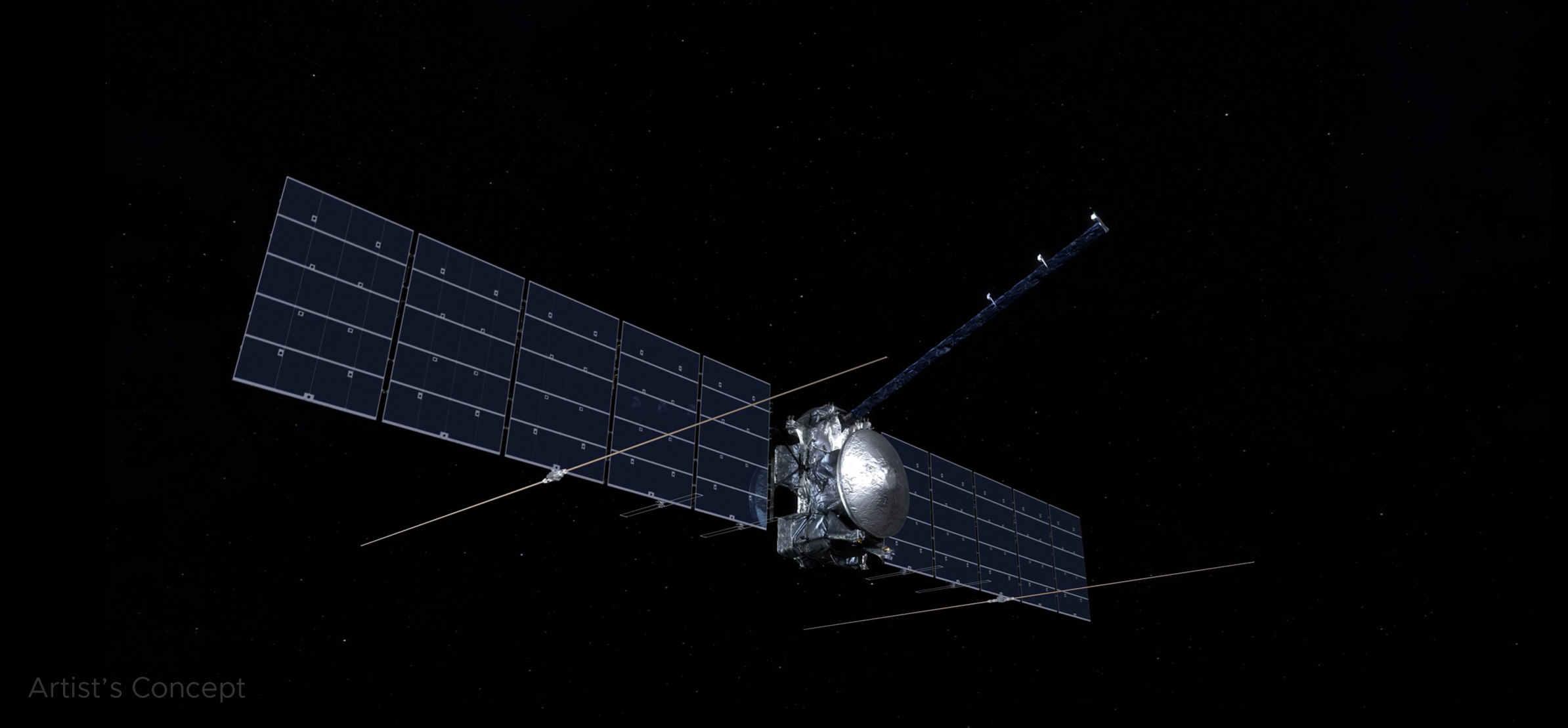
    In this artist’s concept, Europa Clipper’s radar antennas
    In this artist’s concept, Europa Clipper’s radar antennas — seen at the lower edge of the solar panels — are fully deployed. The antennas are key components of the spacecraft’s radar instrument, called REASON.
    NASA/JPL-Caltech

    The radar will help scientists understand how the ice may capture materials from the ocean and transfer them to the surface of the moon. Above ground, the instrument will help to study elements of Europa’s topography, such as ridges, so scientists can examine how they relate to features that REASON images beneath the surface.

    Limits of Earth

    Europa Clipper has an unusual radar setup for an interplanetary spacecraft: REASON uses two pairs of slender antennas that jut out from the solar arrays, spanning a distance of about 58 feet (17.6 meters). Those arrays themselves are huge — from tip to tip, the size of a basketball court — so they can catch as much light as possible at Europa, which gets about 1/25th the sunlight as Earth.

    The instrument team conducted all the testing that was possible prior to the spacecraft’s launch from NASA’s Kennedy Space Center in Florida on Oct. 14, 2024. During development, engineers at the agency’s Jet Propulsion Laboratory in Southern California even took the work outdoors, using open-air towers on a plateau above JPL to stretch out and test engineering models of the instrument’s spindly high-frequency and more compact very-high-frequency antennas.

    But once the actual flight hardware was built, it needed to be kept sterile and could be tested only in an enclosed area. Engineers used the giant High Bay 1 clean room at JPL, where the spacecraft was assembled, to test the instrument piece by piece. To test the “echo,” or the bounceback of REASON’s signals, however, they’d have needed a chamber about 250 feet (76 meters) long — nearly three-quarters the length of a football field.

    Enter Mars

    The mission’s primary goal in flying by Mars on March 1, less than five months after launch, was to use the planet’s gravitational pull to reshape the spacecraft’s trajectory. But it also presented opportunities to calibrate the spacecraft’s infrared camera and perform a dry run of the radar instrument over terrain NASA scientists have been studying for decades.

    As Europa Clipper zipped by the volcanic plains of the Red Planet — starting at 3,100 miles (5,000 kilometers) down to 550 miles (884 kilometers) above the surface — REASON sent and received radio waves for about 40 minutes. In comparison, at Europa the instrument will operate as close as 16 miles (25 kilometers) from the moon’s surface.

    All told, engineers were able to collect 60 gigabytes of rich data from the instrument. Almost immediately, they could tell REASON was working well. The flight team scheduled the full dataset to download, starting in mid-May. Scientists relished the opportunity over the next couple of months to examine the information in detail and compare notes. 

    “The engineers were excited that their test worked so perfectly,” said JPL’s Trina Ray, Europa Clipper deputy science manager. “All of us who had worked so hard to make this test happen — and the scientists seeing the data for the first time — were ecstatic, saying, ‘Oh, look at this! Oh, look at that!’ Now, the science team is getting a head start on learning how to process the data and understand the instrument’s behavior compared to models. They are exercising those muscles just like they will out at Europa.” 

    Europa Clipper’s total journey to reach the icy moon will be about 1.8 billion miles (2.9 billion kilometers) and includes one more gravity assist — using Earth — in 2026. The spacecraft is currently about 280 million miles (450 million kilometers) from Earth.

    More About Europa Clipper

    Europa Clipper’s three main science objectives are to determine the thickness of the moon’s icy shell and its interactions with the ocean below, to investigate its composition, and to characterize its geology. The mission’s detailed exploration of Europa will help scientists better understand the astrobiological potential for habitable worlds beyond our planet.

    Managed by Caltech in Pasadena, California, NASA’s Jet Propulsion Laboratory in Southern California leads the development of the Europa Clipper mission in partnership with the Johns Hopkins Applied Physics Laboratory in Laurel, Maryland, for NASA’s Science Mission Directorate in Washington. APL designed the main spacecraft body in collaboration with JPL and NASA’s Goddard Space Flight Center in Greenbelt, Maryland, NASA’s Marshall Space Flight Center in Huntsville, Alabama, and Langley Research Center in Hampton, Virginia. The Planetary Missions Program Office at NASA Marshall executes program management of the Europa Clipper mission. NASA’s Launch Services Program, based at NASA Kennedy, managed the launch service for the Europa Clipper spacecraft. The REASON radar investigation is led by the University of Texas at Austin.

    Find more information about Europa Clipper here:

    https://science.nasa.gov/mission/europa-clipper/

    News Media Contacts

    Gretchen McCartney
    Jet Propulsion Laboratory, Pasadena, Calif.
    818-287-4115
    gretchen.p.mccartney@jpl.nasa.gov 

    Karen Fox / Molly Wasser
    NASA Headquarters, Washington
    202-358-1600
    karen.c.fox@nasa.gov / molly.l.wasser@nasa.govt

    2025-097

    Details

    Last Updated

    Aug 01, 2025

  • What’s Up: August 2025 Skywatching Tips from NASA

    Venus-Jupiter Conjunction and Meteor Mojo

    Jupiter and Venus shine brightly in the mornings as they appear to graze each other in the sky on the 11th and 12th. The Perseids are washed out by the Moon.

    Skywatching Highlights

    All Month – Planet Visibility:

    • Mercury: Pops up above the horizon during the second half of August. Appears very low, below 10 degrees altitude.
    • Venus: Shines very brightly in the east each morning before sunrise, about 20 to 30 degrees above the horizon.
    • Mars: Can be observed low in the west during the hour after sunset, appearing about as bright as the brightest stars in the Big Dipper.
    • Jupiter: Appears in the east each morning, together with Venus, but much less bright.
    • Saturn: Observable late night to dawn. Rises around 10:30 p.m. early in the month, and around 8:30 p.m. by the end of the month. Find it high in the south as sunrise approaches.

    Skywatching Highlights:

    August 11 & 12 – Venus-Jupiter Conjunction – The two brightest planets have a close meetup over several days, appearing closest over two days on the 11th and 12th, at just a degree apart.

    August 19 & 20 – Moon with Jupiter & Venus – A slim lunar crescent joins Jupiter and Venus — still relatively close in the sky after their conjunction. They appear in the east in the several hours preceding sunrise.

    August 12th-13th – Perseids Peak – The celebrated annual meteor shower will be hampered by an 84%-full Moon on the peak night. A few bright meteors may still be seen in the pre-dawn hours, but viewing conditions are not ideal this year.

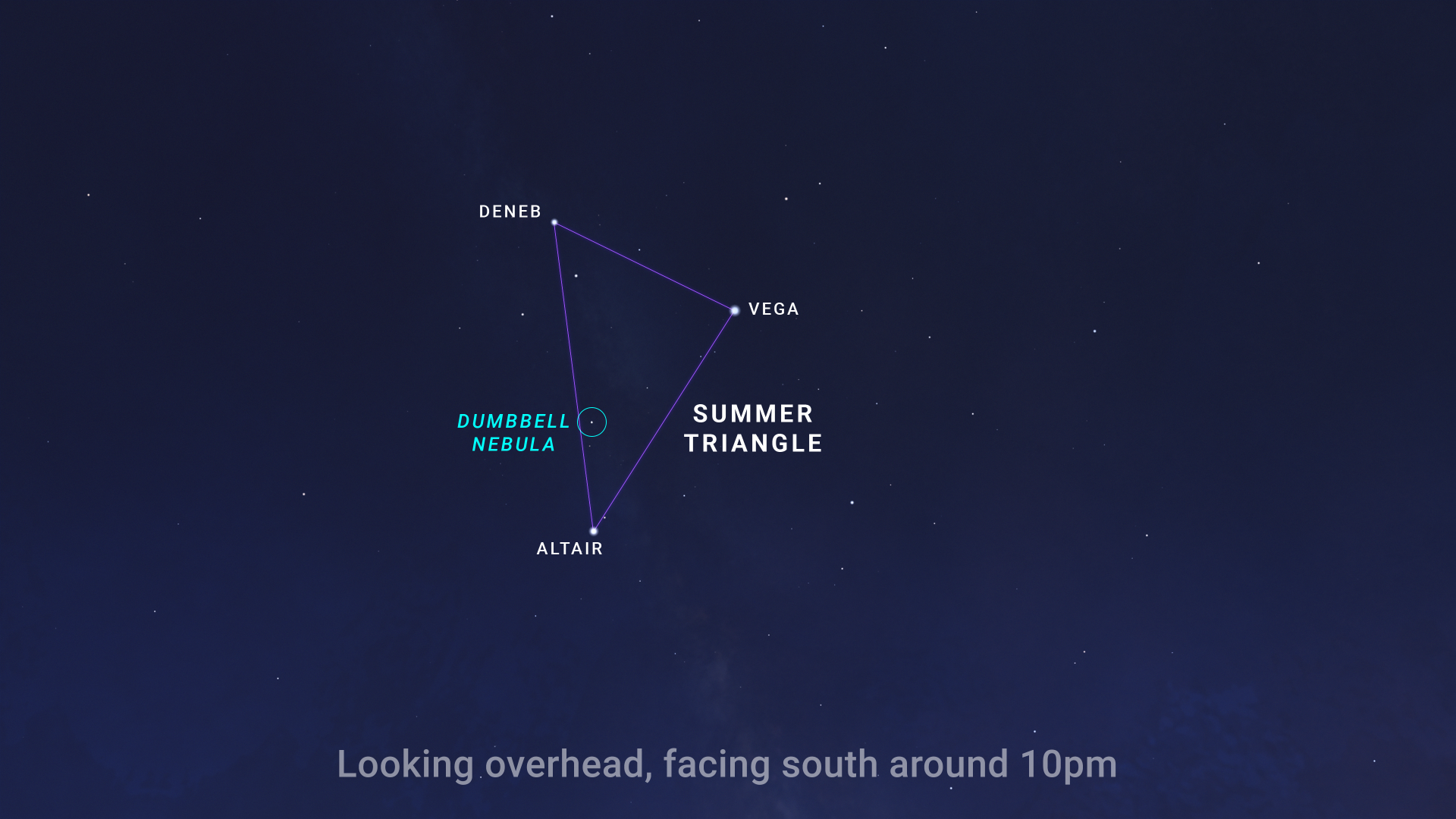
    All month – The Dumbbell Nebula (M27) – One of the easiest planetary nebulas to observe, M27 appears within the Summer Triangle star pattern, high overhead in the first half of the night.

    Transcript

    What’s Up for August? Jupiter and Venus have a morning meetup, we check out this year’s Perseid meteor shower, and peek into the future of our own Sun.

    Mars is the lone planet in the early evening sky this month, visible low in the west for about an hour after the sky starts to darken. It’s now only about 60% as bright as it appeared back in May. 

    Saturn is rising by about 10 pm, and you’ll see it showing up a bit earlier each evening as the month goes on. You’ll find it in the east after dark with the constellations Cassiopeia and Andromeda. The Ringed Planet makes its way over to the western part of the sky by dawn, where early risers will find it on August mornings.

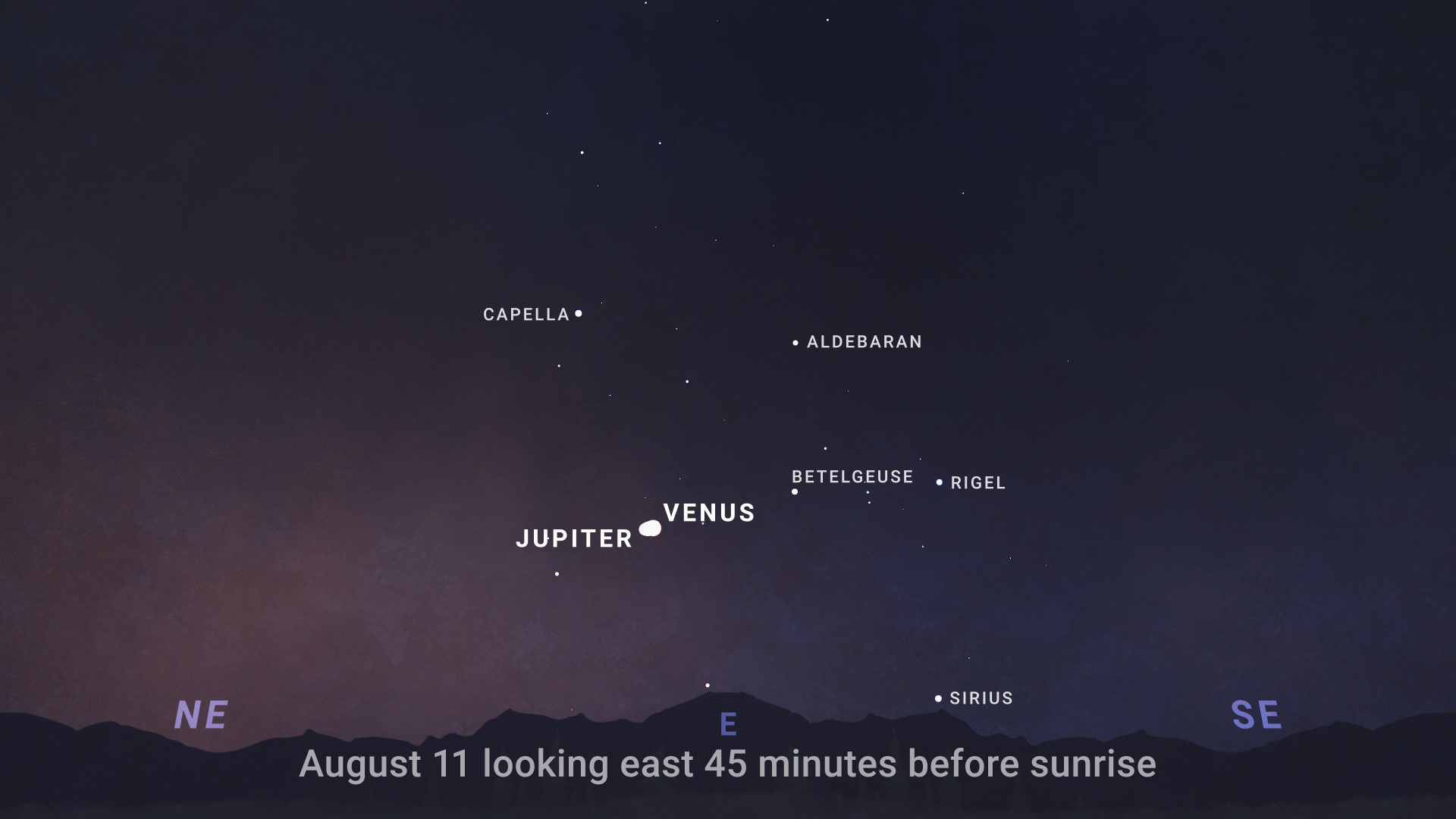
    The real highlight of August is the close approach of Jupiter and Venus. They shine brightly in the east before sunrise throughout the month. The pair begin the month farther apart, but quickly approach each other in the sky. They appear at their closest on the 11th and 12th — only about a degree apart. Their rendezvous happens against a backdrop of bright stars including Orion, Taurus, Gemini, and Sirius. A slim crescent Moon joins the pair of planets after they separate again, on the mornings of the 19th and 20th.

    An illustrated sky chart shows a predawn sky, facing east on August 11th. Several bright stars are labeled: Capella, Aldebaran, Rigel, Betegeuse, and Sirus. Just left of center is a pair of very bright objects in the sky, Jupiter and Venus. The bright pair are so close in the sky that they almost appear as a single object.
    Sky chart showing the eastern sky before sunrise on August 11th, with Venus and Jupiter only a degree apart.
    NASA/JPL-Caltech

    One of the best annual meteor showers, the Perseids, peaks overnight on August 12th and into the 13th. Unfortunately, this year the Moon is nearly full on the peak night, and its glare will wash out all but the brightest meteors. While that’s not so great for Perseid watchers, the good news is that another favorite annual meteor shower, the Geminids, is poised for Moon-free viewing in December.

    August is a great time to see one of the easiest-to-observe nebulas in the sky. 

    The Dumbbell Nebula, also known as M27, is high overhead on August nights. It’s a type of nebula called a “planetary nebula.” 

    A nebula is a giant cloud of gas and dust in space, and planetary nebulas are produced by stars like our Sun when they become old and nuclear fusion ceases inside them. They blow off their outer layers, leaving behind a small, hot remnant called a white dwarf. The white dwarf produces lots of bright ultraviolet light that illuminates the nebula from the inside, as the expanding shell of gas absorbs the UV light and re-radiates it as visible light. 

    The Dumbbell Nebula, nicknamed for its dumbbell-like shape, appears as a small, faint patch of light about a quarter of the width of the full moon in binoculars or a small telescope. It lies within the Summer Triangle, a pattern of stars that’s easy to find overhead in the August sky. You’ll find the nebula about a third of the way between its bright stars Altair and Deneb.

    An illustrated sky chart shows a dark, nighttime sky with stars scattered as points of light. Three bright stars are labeled and form a triangle shape: Vega, Deneb, and Altair. A circle between Deneb and Altair indicates the location of the Dumbbell Nebula.
    Sky chart showing the Summer Triangle asterism, with the location of the Dumbbell Nebula (M27) indicated.
    NASA/JPL-Caltech

    Here’s hoping you get a chance to observe this glimpse into the future that awaits our Sun about 5 billion years from now. It’s part of a cycle that seeds the galaxy with the ingredients for new generations of stars and planets — perhaps even some not too different from our own.

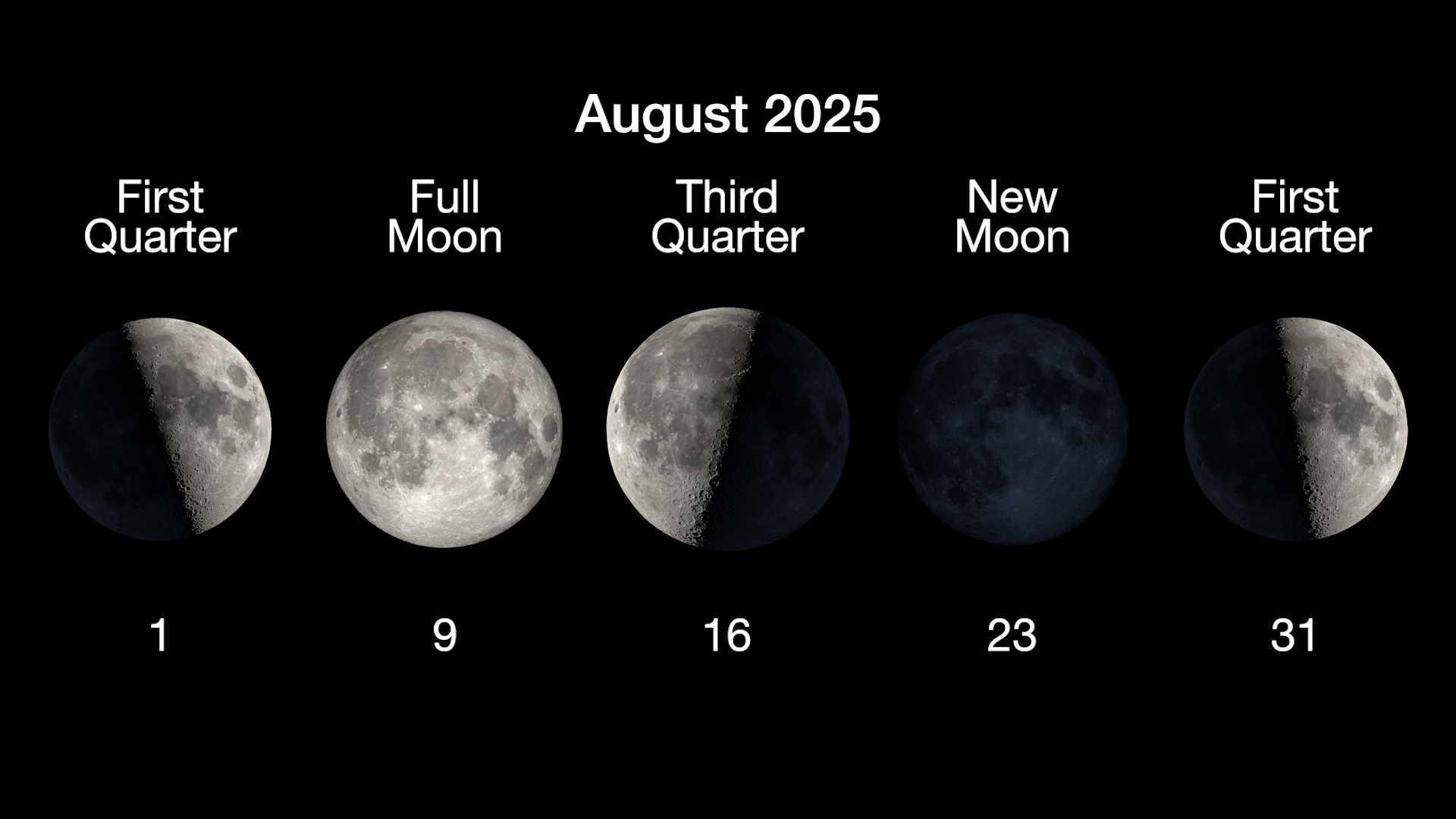
    Here are the phases of the Moon for August.

    The main phases of the Moon are illustrated in a horizontal row, with the first quarter moon on August 1, full moon on August 9, third quarter on August 16, new moon on August 23, and a second first quarter moon on August 31.
    The phases of the Moon for August 2025.
    NASA/JPL-Caltech

    You can stay up to date on all of NASA’s missions exploring the solar system and beyond at science.nasa.gov. I’m Chelsea Gohd from NASA’s Jet Propulsion Laboratory, and that’s What’s Up for this month.

  • Sunrise on Crew-11 Launch Attempt

    In the distance, the Sun rises, casting an orange glow over the surrounding sky. It is also reflected in the water below it, where it looks like a column of orange light. The outlines of several structures are visible in the middle ground. At the top of the photo are white clouds that look like streaks of paint. At the bottom of the photo, those clouds are partially reflected in the water (at right) and some foliage peeks in (at left).
    NASA/Cory S. Huston

    The Sun rises on the morning of July 31, 2025, ahead of NASA’s SpaceX Crew-11 mission launch from NASA’s Kennedy Space Center in Florida. The launch was postponed due to an unfavorable weather forecast. Teams are now targeting 11:43 a.m. EDT Friday, Aug. 1.

    NASA astronauts Zena Cardman and Mike Fincke, JAXA (Japan Aerospace Exploration Agency) astronaut Kimiya Yui, and Roscosmos cosmonaut Oleg Platonov will launch to the International Space Station, where they will perform research, technology demonstrations, and maintenance activities.

    Image credit: NASA/Cory S. Huston

  • NASA Installs Key ‘Sunblock’ Shield on Roman Space Telescope

    Technicians have successfully installed two sunshields onto NASA’s Nancy Grace Roman Space Telescope’s inner segment. Along with the observatory’s Solar Array Sun Shield and Deployable Aperture Cover, the panels (together called the Lower Instrument Sun Shade), will play a critical role in keeping Roman’s instruments cool and stable as the mission explores the infrared universe.

    This video shows technicians installing two sunshields onto NASA’s nearly complete Nancy Grace Roman Space Telescope on July 17. The large yet lightweight panels will block sunlight, keeping Roman’s instruments cool and stable as the mission explores the infrared universe.
    Credit: NASA/Sophia Roberts

    The team is on track to join Roman’s outer and inner assemblies this fall to complete the full observatory, which can then undergo further prelaunch testing.

    “This shield is like an extremely strong sunblock for Roman’s sensitive instruments, protecting them from heat and light from the Sun that would otherwise overwhelm our ability to detect faint signals from space,” said Matthew Stephens, an aerospace engineer at NASA’s Goddard Space Flight Center in Greenbelt, Maryland.

    The sunshade, which was designed and engineered at NASA Goddard, is essentially an extension of Roman’s solar panels, except without solar cells. Each sunshade flap is roughly the size of a garage door — about 7 by 7 feet (2.1 by 2.1 meters) — and 3 inches (7.6 centimeters) thick.

    “They’re basically giant aluminum sandwiches, with metal sheets as thin as a credit card on the top and bottom and the central portion made up of a honeycomb structure,” said Conrad Mason, an aerospace engineer at NASA Goddard.

    This design makes the panels lightweight yet stiff, and the material helps limit heat transfer from the side facing the Sun to the back—no small feat considering the front will be hot enough to boil water (up to 216 degrees Fahrenheit, or 102 degrees Celsius) while the back will be much colder than Antarctica’s harshest winter (minus 211 Fahrenheit, or minus 135 Celsius). A specialized polymer film blanket will wrap around each panel to temper the heat, with 17 layers on the Sun side and one on the shaded side.

    The sunshade will be stowed and gently deploy around an hour after launch.

    In this time-lapse video, technicians manually deploy the Lower Instrument Sun Shield for NASA’s Nancy Grace Roman Space Telescope. The test helps verify the panels will operate as designed in space.
    NASA/Sophia Roberts

    “The deploying mechanisms have dampers that work like soft-close hinges for drawers or cabinets, so the panels won’t slam open and rattle the observatory,” Stephens said. “They each take about two minutes to move into their final positions. This is the very first system that Roman will deploy in space after the spacecraft separates from the launch vehicle.”

    Now completely assembled, Roman’s inner segment is slated to undergo a 70-day thermal vacuum test next. Engineers and scientists will test the full functionality of the spacecraft, telescope, and instruments under simulated space conditions. Following the test, the sunshade will be temporarily removed while the team joins Roman’s outer and inner assemblies, and then reattached to complete the observatory. The mission remains on track for launch no later than May 2027 with the team aiming for as early as fall 2026.

    Download high-resolution video and images from NASA’s Scientific Visualization Studio

    The Nancy Grace Roman Space Telescope is managed at NASA’s Goddard Space Flight Center in Greenbelt, Maryland, with participation by NASA’s Jet Propulsion Laboratory in Southern California; Caltech/IPAC in Pasadena, California; the Space Telescope Science Institute in Baltimore; and a science team comprising scientists from various research institutions. The primary industrial partners are BAE Systems Inc. in Boulder, Colorado; L3Harris Technologies in Rochester, New York; and Teledyne Scientific & Imaging in Thousand Oaks, California.

    By Ashley Balzer
    NASA’s Goddard Space Flight Center, Greenbelt, Md.

    Details

    Last Updated

    Jul 31, 2025

    Editor
    Ashley Balzer
    Contact
    Ashley Balzer
    Location
    Goddard Space Flight Center

  • NASA Invites Proposals to Lease Aircraft Hangar in Cleveland

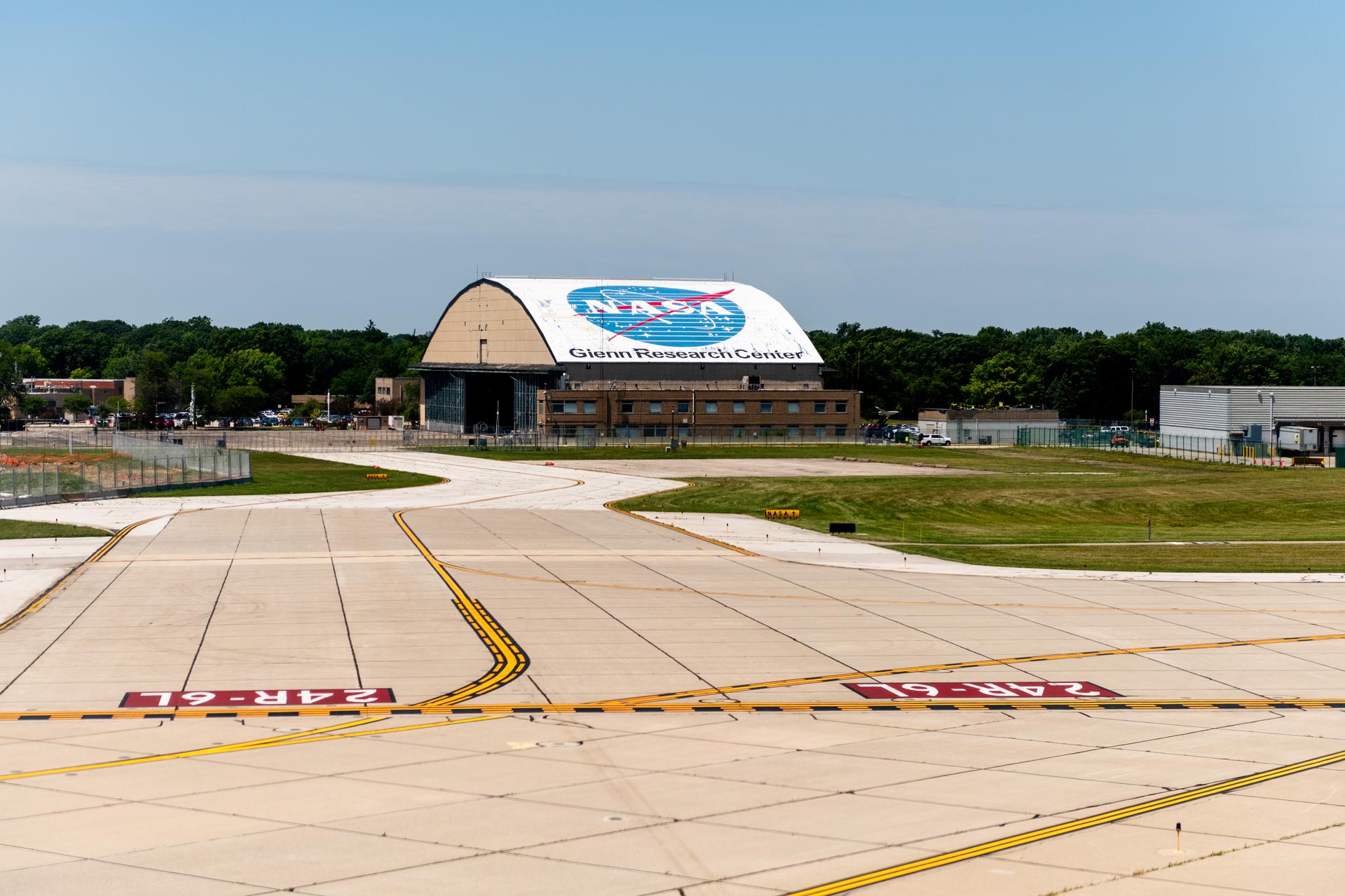
    The large blue, red, and white NASA “meatball” logo appears prominently on the roof of the NASA Glenn aircraft hangar under a clear blue sky. Cleveland Hopkins International Airport runway 24R-6L is in the foreground, and a lush green tree line shows in the background.
    View of the NASA Glenn Research Center hangar from the Cleveland Hopkins International Airport runway during a testing flight on Thursday, June 13, 2024. The Operations and Integration Building sits to the hangar’s right.
    Credit: NASA/Sara Lowthian Hanna

    NASA’s Glenn Research Center in Cleveland is seeking proposals for the use of its historic aircraft hangar, along with a parking lot, tarmac, and a small neighboring office building. Proposals are due by 1 p.m. EDT on Nov. 28.  

    The hangar, formally known as the Flight Research Building, is available for lease by signing a National Historic Preservation Act agreement for a 10-year base period and two optional five-year extensions.

    NASA first announced plans to lease the Flight Research Building and other facilities in May 2024 under the government’s Enhanced Use Lease authority. These lease agreements allow space, aeronautics, and other related industries to use agency land and facilities, reducing NASA’s maintenance costs while fostering strategic partnerships that spur innovation.

    “Glenn is making great progress as we modernize our Cleveland and Sandusky campuses to support NASA’s future missions,” said Dr. Jimmy Kenyon, Glenn’s center director. “Through Enhanced Use Leases, we’re ensuring full use of land and facilities while preserving an iconic, historic building and creating regional economic opportunities.”

    The property available for lease includes up to 6.7 acres of land, which contains the heated aircraft hangar, Operations and Integration Building, parking lot, and tarmac. The hangar is 160 feet by 280 feet, and the Operations and Integration Building is 5,947 square feet. Proceeds from this lease will be used to maintain Glenn facilities and infrastructure. 

    Visible from Brookpark Road and Cleveland Hopkins International Airport, Glenn’s hangar was the first building completed after the center was established in 1941. It has sheltered many unique aircraft used to perform vital research. From studying ice accumulation on aircraft wings to the first use of laser communications to stream 4K video from an aircraft to the International Space Station, Glenn flight research has contributed to aviation safety, atmospheric studies, and cutting-edge technology development.

    Interested parties should contact both Carlos Flores at carlos.a.flores-1@nasa.gov and Diana Munro at diana.c.munro@nasa.gov to sign up for a walk-through from Monday, Sept. 8, to Friday, Sept. 12, or the week of Oct. 6.  

    For a 360-degree virtual tour of the Flight Research Building, visit:

    https://www3.nasa.gov/specials/hangar360/

    -end-

    Jan Wittry
    Glenn Research Center, Cleveland
    216-433-5466
    jan.m.wittry-1@nasa.gov

    Details

    Last Updated

    Jul 31, 2025

  • NASA Releases Opportunity to Boost Commercial Space Tech Development

    5 min read

    Preparations for Next Moonwalk Simulations Underway (and Underwater)

    NASA meatball logo

    NASA has released a new proposal opportunity for industry to tap into agency know-how, resources, and expertise. The Announcement of Collaboration Opportunity (ACO), managed by the Space Technology Mission Directorate, enables valuable collaboration without financial exchanges between NASA and industry partners. Instead, companies leverage NASA subject matter experts, facilities, software, and hardware to accelerate their technologies and prepare them for future commercial and government use. 

    On Wednesday, NASA issued a standing ACO announcement for partnership proposals which will be available for five years and will serve as the umbrella opportunity for topic-specific appendix releases. NASA intends to issue appendices every six to 12 months to address evolving space technology needs. The 2025 ACO appendix is open for proposals until Sept. 24.  

    NASA will host an informational webinar about the opportunity and appendix at 2 p.m. EDT on Wednesday, Aug. 6. Interested proposers are encouraged to submit questions which will be answered during the webinar and will be available online after the webinar.   

    NASA teaming with industry isn’t new – decades of partnerships have resulted in ambitious missions that benefit all of humanity. But in recent years, NASA has also played a key role as a technology enabler, providing one-of-a-kind tools, resources, and infrastructure to help commercial aerospace companies achieve their goals.  

    Since 2015, NASA has collaborated with industry on approximately 80 ACO projects. Here are some ways the collaborations have advanced space technology: 

    Lunar lander systems 

    Blue Origin and NASA worked together on several ACOs to mature the company’s lunar lander design. NASA provided technical reports and assessments and conducted tests at multiple centers to help Blue Origin advance a stacked fuel cell system for a lander’s primary power source. Other Blue Origin ACO projects evaluated high-temperature engine materials and advanced a landing navigation and guidance system. 

    Blue Origin’s Blue Moon Mark 1 (MK1) lander is delivering NASA science and technology to the Moon through the agency’s Commercial Lunar Payload Services initiative. In 2023, NASA selected Blue Origin as a Human Landing System provider to develop its Blue Moon MK2 lander for future crewed lunar exploration. 

    Artist concept of Blue Origin’s Blue Moon Mark 1 (MK1) lander.
    Blue Origin

    Blue Origin’s Blue Moon Mark 1 (MK1) lander is delivering NASA science and technology to the Moon through the agency’s Commercial Lunar Payload Services initiative. In 2023, NASA selected Blue Origin as a Human Landing System provider to develop its Blue Moon MK2 lander for future crewed lunar exploration. 

    Cryogenic fluid transfer 

    Throughout a year-long ACO, NASA and SpaceX engineers worked together to perform in-depth computational fluid analysis of proposed propellant transfer methods between two SpaceX Starship spacecraft in low-Earth orbit. The SpaceX-specific analysis utilized Starship flight data and data from previous NASA research and development to identify potential risks and help mitigate them during the early stages of commercial development. NASA also provided inputs as SpaceX developed an initial concept of operations for its orbital propellant transfer missions. 

    Artist’s concept of Starship propellant transfer in space with Earth above.
    Artist’s concept of Starship propellant transfer in space.
    SpaceX

    SpaceX used the ACO analyses to inform the design of its Starship Human Landing System, which NASA selected in 2021 to put the first Artemis astronauts on the Moon. 

    Autonomous spacecraft navigation solution 

    Advanced Space and NASA partnered to advance the company’s Cislunar Autonomous Positioning System – software that allows lunar spacecraft to determine their location without relying exclusively on tracking from Earth.  

    Dylan Schmidt, CAPSTONE assembly integration and test lead, installs solar panels onto the CAPSTONE spacecraft at Tyvak Nano-Satellite Systems, Inc., in Irvine, California.
    NASA/Dominic Hart

    The CAPSTONE (Cislunar Autonomous Positioning System Technology Operations and Navigation Experiment) spacecraft launched to the Moon in 2022 and continues to operate and collect critical data to refine the software. Under the ACO, Advanced Space was able to use NASA’s Lunar Reconnaissance Orbiter to conduct crosslink experiments with CAPSTONE, helping mature the navigation solution for future missions. The mission’s Cislunar Autonomous Positioning System technology was initially supported through the NASA Small Business Innovation Research program. 

    Multi-purpose laser sensing system 

    Sensuron and NASA matured a miniature, rugged fiber optic sensing system capable of taking thermal and shape measurements for multiple applications. Throughout the ACO, Sensuron benefitted from NASA’s expertise in fiber optics and electrical, mechanical, and system testing engineering to design, fabricate, and “shake and bake” its prototype laser. 

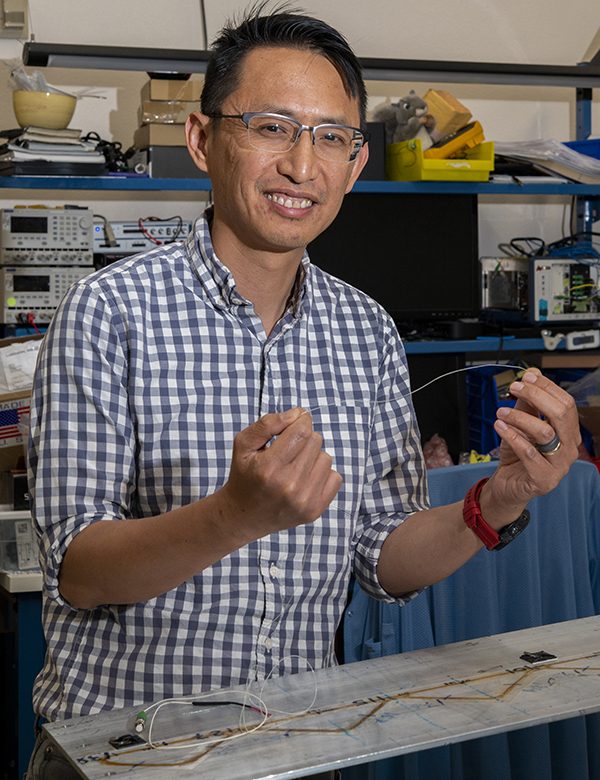
    NASA’s Armstrong Flight Research Center’s FOSS, Fiber Optic Sensing System, recently supported tests of a system designed to turn oxygen into liquid oxygen, a component of rocket fuel. Patrick Chan, electronics engineer, and NASA Armstrong’s FOSS portfolio project manager, shows fiber like that used in the testing.
    NASA/Genaro Vavuris

    Space missions could use the technology to monitor cryogenic propellant levels and determine a fuel tank’s structural integrity throughout an extended mission. The laser technology also has medical applications on Earth, which ultimately resulted in the Sensuron spinoff company, The Shape Sensing Company. 

    Flexible lunar tires 

    In 2023, Venturi Astrolab began work with NASA under an ACO to test its flexible lunar tire design. The company tapped into testing capabilities unique to NASA, including heat transfer to cold lunar soil, traction, and life testing. The data validated the performance of tire prototypes, helping ready the design to support future NASA missions. 

    In 2024, NASA selected three companies, including Venturi Astrolab, to advance capabilities for a lunar terrain vehicle that astronauts could use to travel around the lunar surface, conducting scientific research on the Moon and preparing for human missions to Mars. 

    Artist rendition of the flex venturi wheel
    Venturi Lab designed and developed a durable, robust, and hyper-deformable lunar wheel.
    Venturi Lab

    The Announcement of Collaboration Opportunity (ACO) is one of many ways NASA enables commercial industry to develop, build, own, and eventually operate space systems. To learn more about these technology projects and more, visit: https://techport.nasa.gov/.