Category: Kepler

http://www.nasa.gov/mission_pages/kepler/news/kepler-newsandfeatures-RSS.rss

  • NASA Invites Media to View Heliophysics, NOAA Space Weather Missions

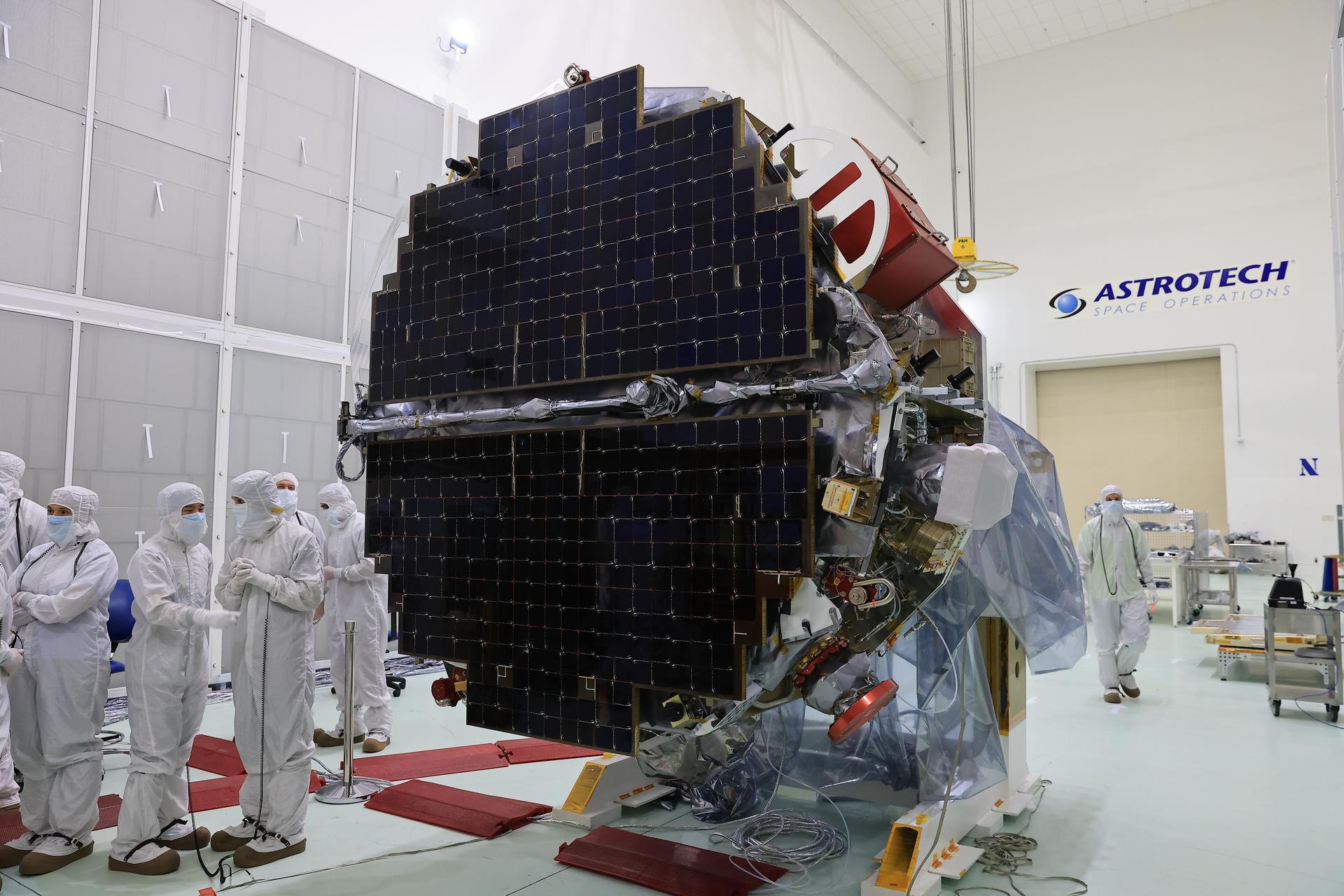
    Technicians at the Astrotech Space Operations Facility near NASA’s Kennedy Space Center in Florida conduct illumination testing on Friday, July 18, 2025, by flashing a bright light that simulates the Sun into the two-panel solar array that will help power the agency’s IMAP (Interstellar Mapping and Acceleration Probe) observatory on its upcoming journey to a destination about one million miles away from Earth Lagrange Point 1.
    Technicians at the Astrotech Space Operations Facility near NASA’s Kennedy Space Center in Florida conduct illumination testing on Friday, July 18, 2025, by flashing a bright light that simulates the Sun into the two-panel solar array that will help power the agency’s IMAP (Interstellar Mapping and Acceleration Probe) observatory on its upcoming journey to a destination about one million miles away from Earth Lagrange Point 1.
    Credit: NASA/Kim Shiflett

    NASA invites media to view the agency’s IMAP (Interstellar Mapping and Acceleration Probe) spacecraft and two other missions — the Carruthers Geocorona Observatory and the National Oceanic and Atmospheric Administration’s (NOAA) Space Weather Follow On–Lagrange 1 (SWFO-L1) observatory, which will launch along with IMAP as rideshares.

    Media will have the opportunity to photograph the three spacecraft and speak with subject matter experts representing all three missions. The event will take place on Thursday, Aug. 28, at the Astrotech Space Operations payload processing facility in Titusville, Florida. Confirmed media will receive additional details after registering.

    To participate in the event, media must RSVP by 11:59 p.m. on Tuesday, Aug. 19, by submitting their request online at: https://media.ksc.nasa.gov.

    The IMAP mission will study the heliosphere, a vast magnetic bubble created by the Sun that protects our solar system from radiation incoming from interstellar space. Carruthers will use its ultraviolet cameras to monitor how material from the Sun impacts the outermost part of Earth’s atmosphere. The SWFO-L1 mission will observe solar eruptions, and monitor incoming space weather 24/7, providing early warnings and validating forecasts that protect vital communication and navigation infrastructure, economic interests, and national security, both on Earth and in space.

    NASA is targeting no earlier than September for the launch of these three missions on a SpaceX Falcon 9 rocket from Launch Complex 39A at the agency’s Kennedy Space Center in Florida.

    NASA’s media accreditation policy is available online. For questions about accreditation, please email: ksc-media-accreditat@mail.nasa.gov.

    Facility Access
    Due to spacecraft cleanliness requirements, this invitation is open to a limited number of media with no more than two individuals per media organization. This event is open to U.S. citizens who possess a valid government-issued photo identification and proof of U.S. citizenship, such as a passport or birth certificate.

    Media attending this event must comply with cleanroom guidelines. This includes wearing specific cleanroom garments; avoiding cologne, cosmetics, and high-heeled shoes; cleaning camera equipment under the supervision or assistance of contamination control specialists; and placing all electronics in airplane mode in the designated areas near the spacecraft. NASA will provide detailed guidance to approved media.

    Observatories Information
    The three observatories are preparing to launch to Lagrange point 1, which lies about a million miles from Earth toward the Sun. There, they will orbit this gravitational balance point, holding a steady position between Earth and the Sun. NASA’s IMAP will use its 10 instruments to map the heliosphere’s edge and reveal how the Sun accelerates charged particles, filling in essential puzzle pieces to understand the space weather environment across the solar system. The mission’s varied instruments also will provide near real-time space weather data to scientists on Earth.

    The Carruthers observatory will image the glow of ultraviolet light emitted by the uppermost parts of Earth’s atmosphere — called the geocorona — to help researchers understand how our planet’s atmosphere is shaped by conditions in space. NOAA’s SWFO-L1 will use its suite of instruments to sample the solar wind and interplanetary magnetic field, while its onboard coronagraph will detect coronal mass ejections and other solar events. Together, these real-time observations of space weather enable precautionary actions to protect satellites, power grids, aviation, and communication and navigation technology.

    Learn more about NASA’s IMAP at:

    https://science.nasa.gov/mission/imap/

    -end-

    Abbey Interrante
    Headquarters, Washington
    301-201-0124
    abbey.a.interrante@nasa.gov

    Sarah Frazier
    Goddard Space Flight Center, Greenbelt, Md.
    202-853-7191
    sarah.frazier@nasa.gov

    Leejay Lockhart
    Kennedy Space Center, Florida
    321-747-8310
    leejay.lockhart@nasa.gov

  • Rare Type of Black Hole Snacks on Star

    Two elliptical galaxies at upper right and lower left appear as fuzzy white ovals. At bottom center is a fuzzy purple blob. The main image also has two bright stars with prominent diffraction spikes. The background of space is black and is speckled with tiny white dots.⁣
    Science: NASA, ESA, CXC, Yi-Chi Chang (National Tsing Hua University); Image Processing: Joseph DePasquale (STScI)

    NASA’s Hubble Space Telescope and NASA’s Chandra X-ray Observatory teamed up to identify a new possible example of a rare class of black holes, identified by X-ray emission (in purple) in this image released on July 24, 2025. Called NGC 6099 HLX-1, this bright X-ray source seems to reside in a compact star cluster in a giant elliptical galaxy. These rare black holes are called intermediate-mass black holes (IMBHs) and weigh between a few hundred to a few 100,000 times the mass of our Sun.

    Learn more about IMBHs and what studying them can tell us about the universe.

    Image credit: Science: NASA, ESA, CXC, Yi-Chi Chang (National Tsing Hua University); Image Processing: Joseph DePasquale (STScI)

  • Hubble Captures a Tarantula

    2 min read

    Hubble Captures a Tarantula

    A colorful nebula. The image’s top-left is filled with layers of fluffy pink and greenish clouds. Long strands of green clouds stretch out from here; a faint layer of translucent blue dust combines with them to create a three-dimensional scene. A sparse network of dark dust clouds in the foreground adds reddish-black patches atop the nebula. Blue-white and orange stars, from our galaxy and beyond, are spread throughout the clouds.
    This NASA/ESA Hubble Space Telescope image shows a portion of the Tarantula Nebula.
    ESA/Hubble & NASA, C. Murray

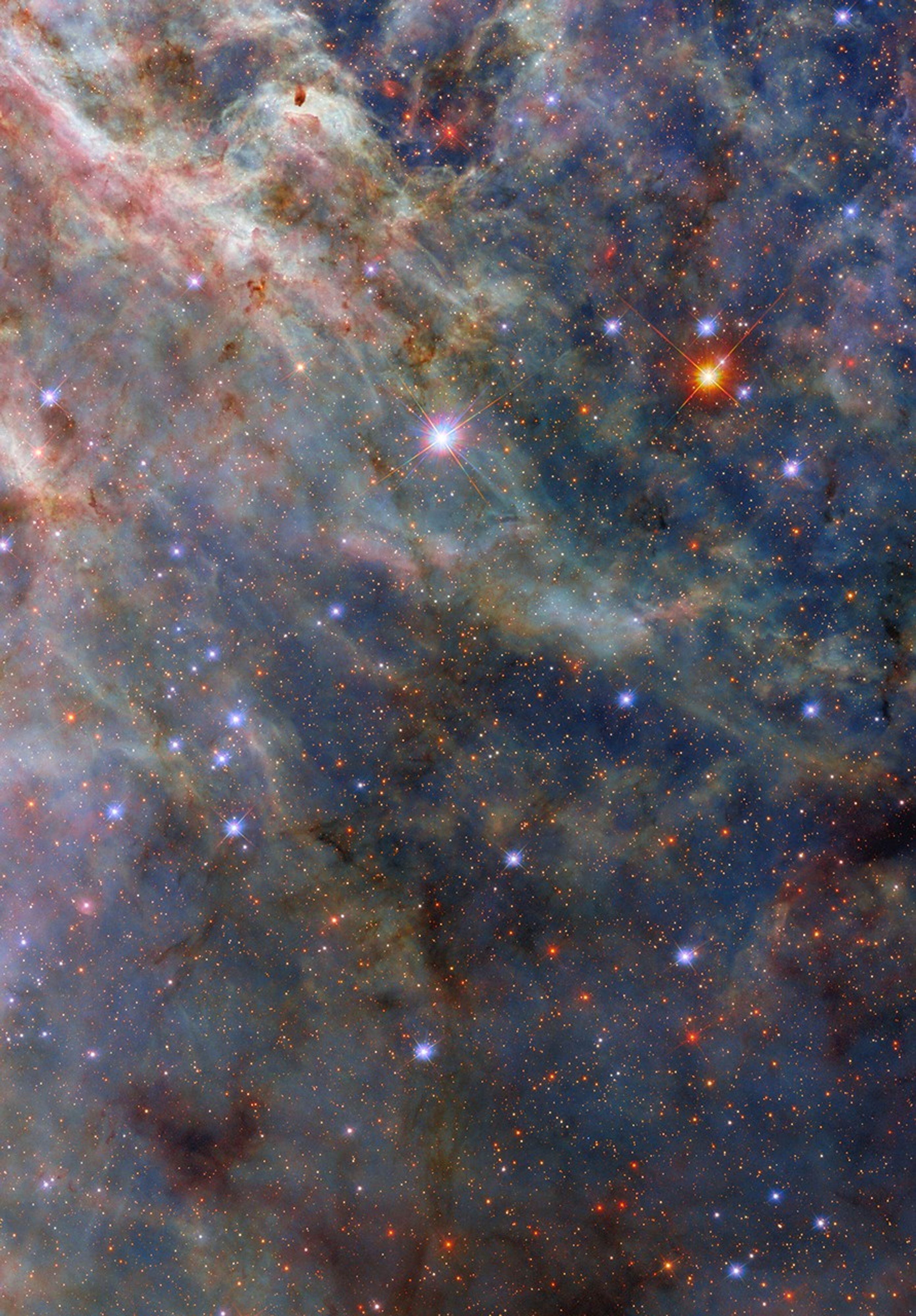
    This NASA/ESA Hubble Space Telescope image captures incredible details in the dusty clouds of a star-forming factory called the Tarantula Nebula. Most of the nebulae Hubble images are in our galaxy, but this nebula is in the Large Magellanic Cloud, a dwarf galaxy located about 160,000 light-years away in the constellations Dorado and Mensa.

    The Large Magellanic Cloud is the largest of the dozens of small satellite galaxies that orbit the Milky Way. The Tarantula Nebula is the largest and brightest star-forming region, not just in the Large Magellanic Cloud, but in the entire group of nearby galaxies to which the Milky Way belongs.

    The Tarantula Nebula is home to the most massive stars known, some roughly 200 times as massive as our Sun. This image is very close to a rare type of star called a Wolf–Rayet star. Wolf–Rayet stars are massive stars that have lost their outer shell of hydrogen and are extremely hot and luminous, powering dense and furious stellar winds.

    This nebula is a frequent target for Hubble, whose multiwavelength capabilities are critical for capturing sculptural details in the nebula’s dusty clouds. The data used to create this image come from an observing program called Scylla, named for a multi-headed sea monster from Greek mythology. The Scylla program was designed to complement another Hubble observing program called ULLYSES (Ultraviolet Legacy Library of Young Stars as Essential Standards). ULLYSES targets massive young stars in the Small and Large Magellanic Clouds, while Scylla investigates the structures of gas and dust that surround these stars.

    Explore More:

    Media Contact:

    Claire Andreoli (claire.andreoli@nasa.gov)
    NASA’s Goddard Space Flight CenterGreenbelt, MD

  • Linking Local Lithologies to a Larger Landscape

    2 min read

    Linking Local Lithologies to a Larger Landscape

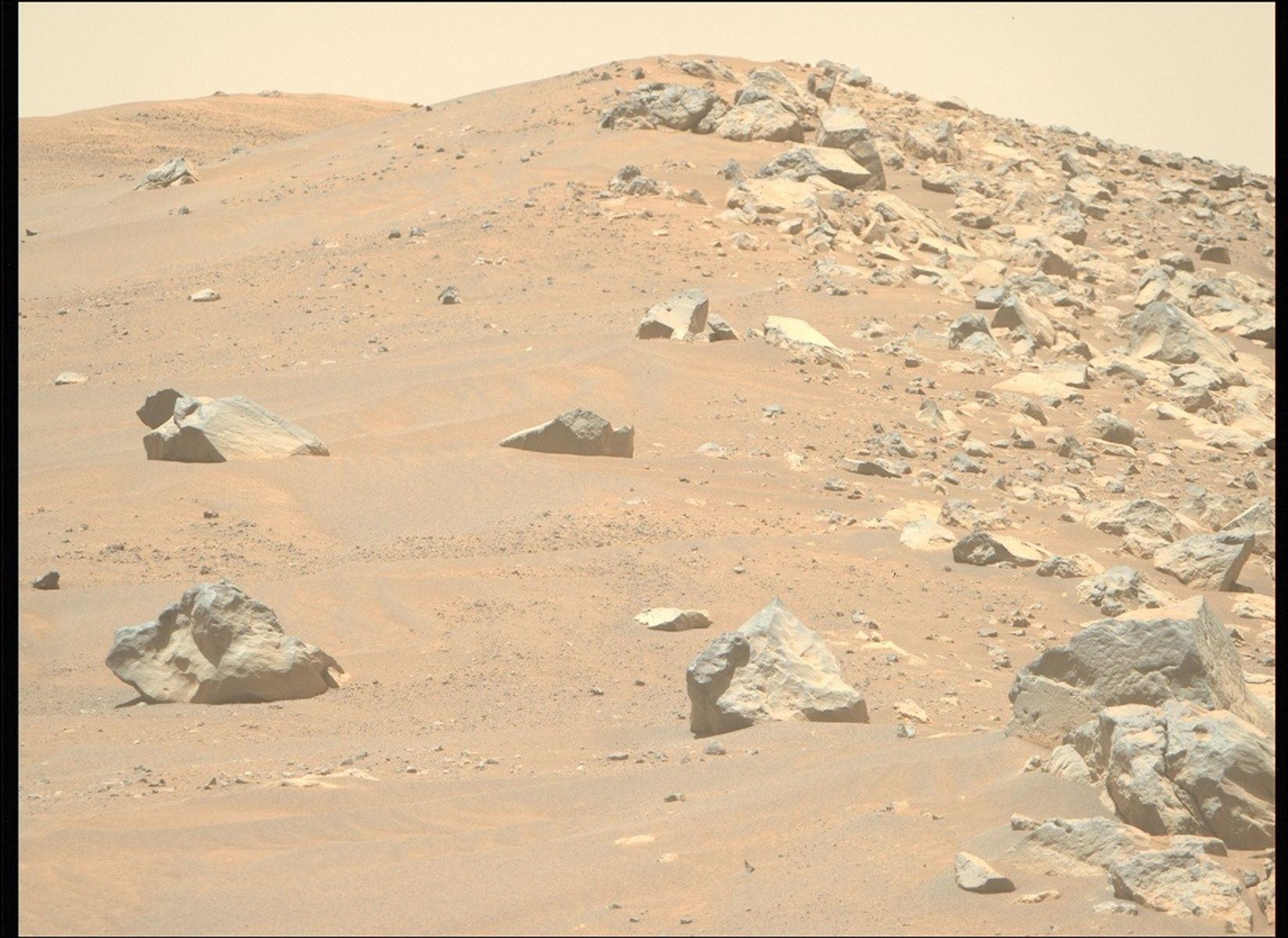
    A color photo from the Martian surface shows a landscape of sandy, rocky terrain. What looks like a pair of light orange-brown sand dunes rise in the background. Four or five large, sharp-edged rocks are strewn among the sand on the left side of the image. But a clear vertical dividing line extends from the center of the image to the right side, where the sand is covered by similar rocks of all sizes. A pale yellow sky is visible above the scene.
    This image from NASA’s Mars Perseverance rover, taken by the Mastcam-Z instrument’s right eye, shows a collection of ridge-forming boulders. The rover acquired this image looking south along the ridge while exploring the “Westport” region of the outer crater rim on July 18, 2025 — Sol 1568, or Martian day 1,568 of the Mars 2020 mission — at the local mean solar time of 11:53:04.
    NASA/JPL-Caltech/ASU

    Written by Margaret Deahn, Ph.D. Student at Purdue University

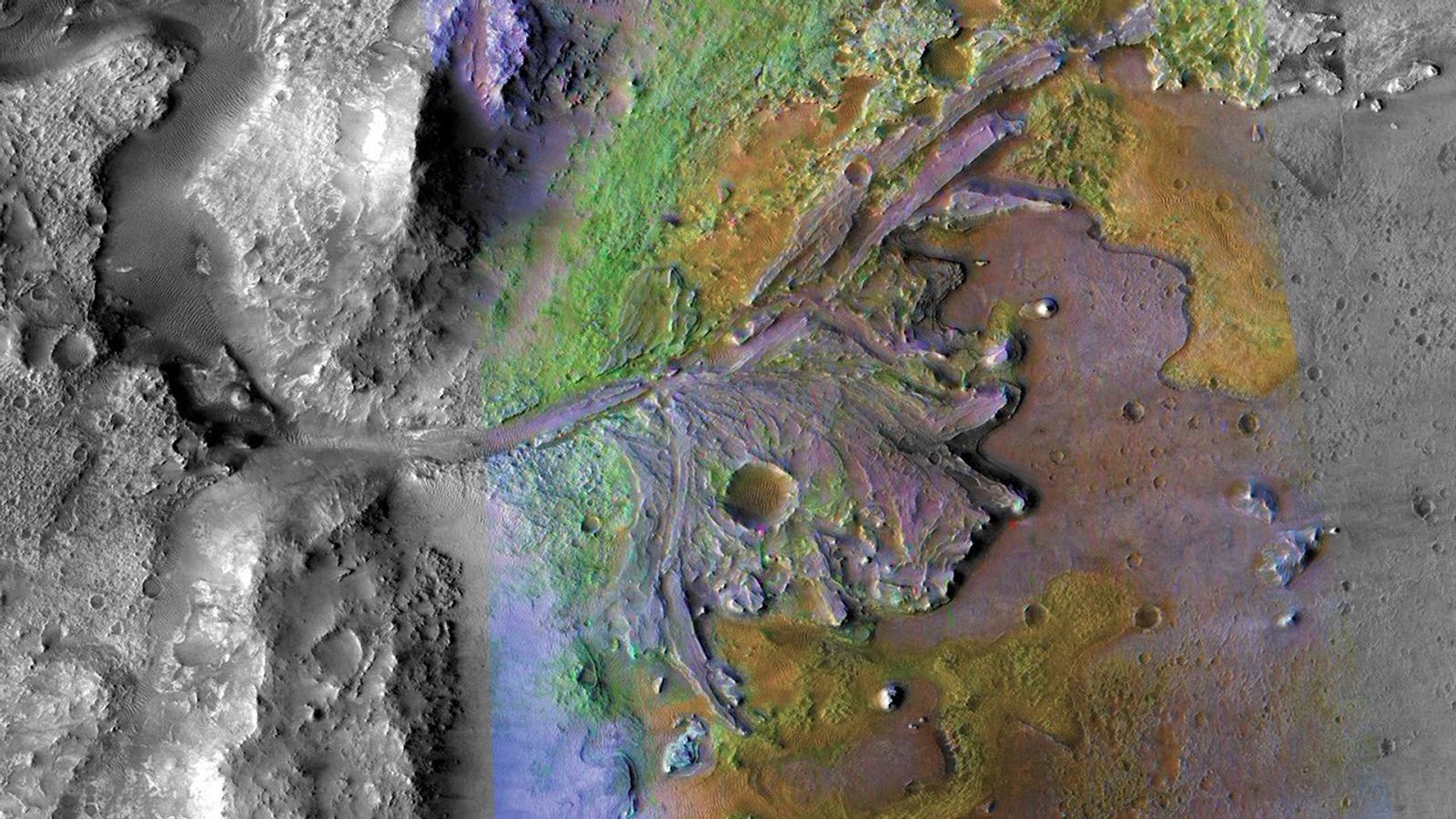
    NASA’s Mars 2020 rover is continuing to explore a boundary visible from orbit dividing bright, fractured outcrop from darker, smoother regolith (also known as a contact). The team has called this region “Westport,” (a fitting title, as the rover is exploring the western-most rim of Jezero), which hosts a contact between the smoother, clay-bearing “Krokodillen” unit and an outcrop of olivine-bearing boulders that converge to form a ridge on the outer Jezero crater rim. To learn more about the nature of this contact, see this blog post by Dr. Melissa Rice. Piecing together geologic events like the formation of this olivine-bearing material on Jezero’s crater rim may allow us to better understand Mars’ most ancient history. 

    The rover has encountered several olivine-bearing rocks while traversing the rim, but it is unclear if, and how these rocks are all connected. Jezero crater is in a region of Mars known as Northeast Syrtis, which hosts the largest contiguous exposure (more than 113,000 square kilometers, or more than 43,600 square miles) of olivine-rich material identified from orbit on Mars (about the same square mileage as the state of Ohio!). The olivine-rich materials are typically found draping over older rocks, often infilling depressions, which may provide clues to their origins. Possible origins for the olivine-rich materials in Northeast Syrtis may include (but are not limited to): (1) intrusive igneous rocks (rocks that cool from magma underground), (2) melt formed and deposited during an impact event, or (3) pyroclastic ash fall or flow from a volcanic eruption. 

    The Perseverance rover’s investigation of the olivine-bearing materials on the rim of Jezero crater may allow us to better constrain the history of the broader volcanic units present in the Northeast Syrtis region. Olivine-rich material in Northeast Syrtis is consistently sandwiched between older, clay-rich rock and younger, more olivine-poor material (commonly referred to as the “mafic capping” unit), and may act as an important marker for recording early alteration by water, which could help us understand early habitable environments on Mars. We see potential evidence of all of these units on Jezero crater’s rim based on orbital mapping. If the olivine-bearing rocks the Perseverance rover is encountering on the rim are related to these materials, we may be able to better constrain the age of this widespread geologic unit on Mars. 

    Details

    Last Updated

    Aug 07, 2025

    Related Terms

  • US-French SWOT Satellite Measures Tsunami After Massive Quake

    4 min read

    Preparations for Next Moonwalk Simulations Underway (and Underwater)

    The SWOT satellite caught the leading edge of the tsunami wave
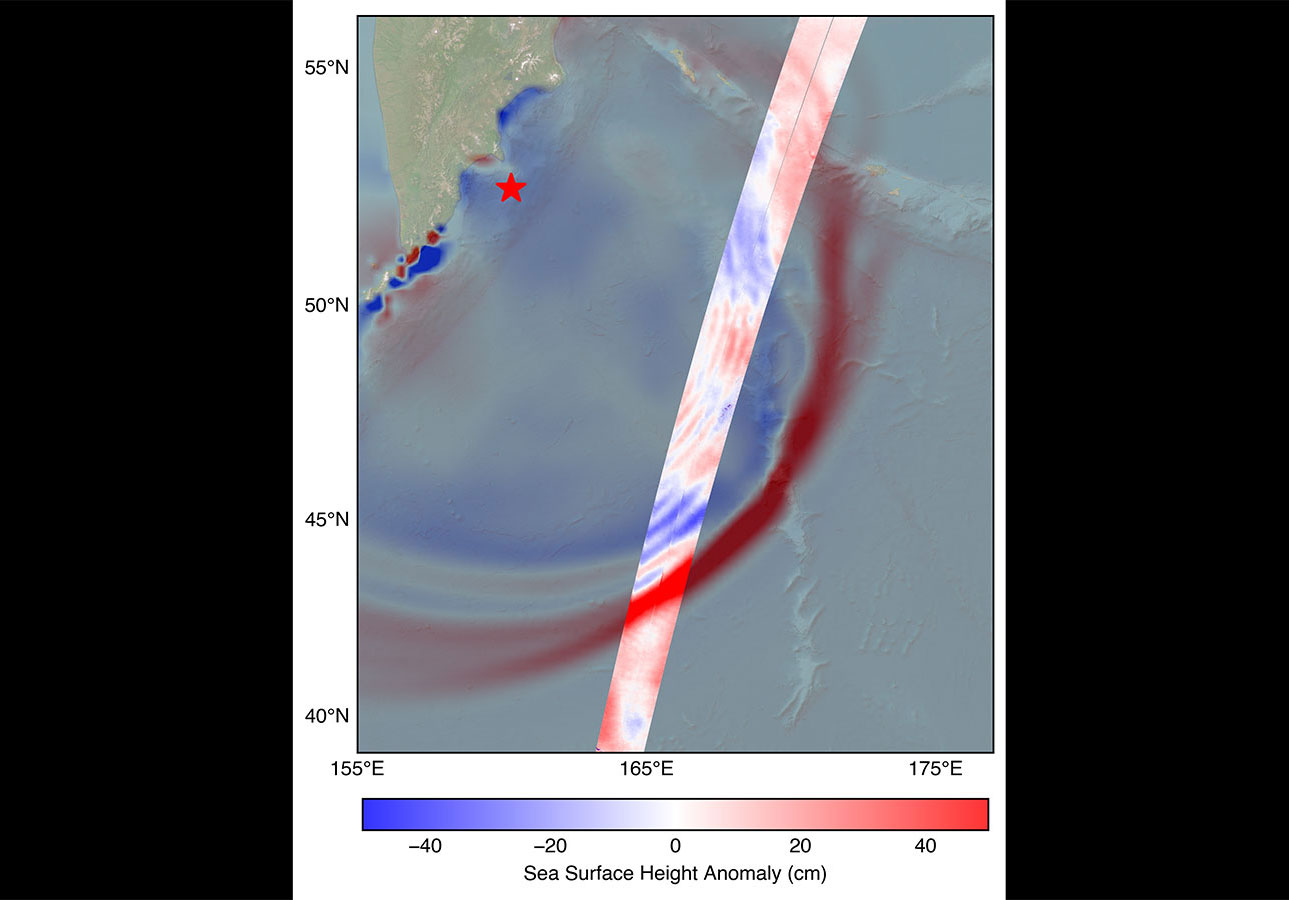
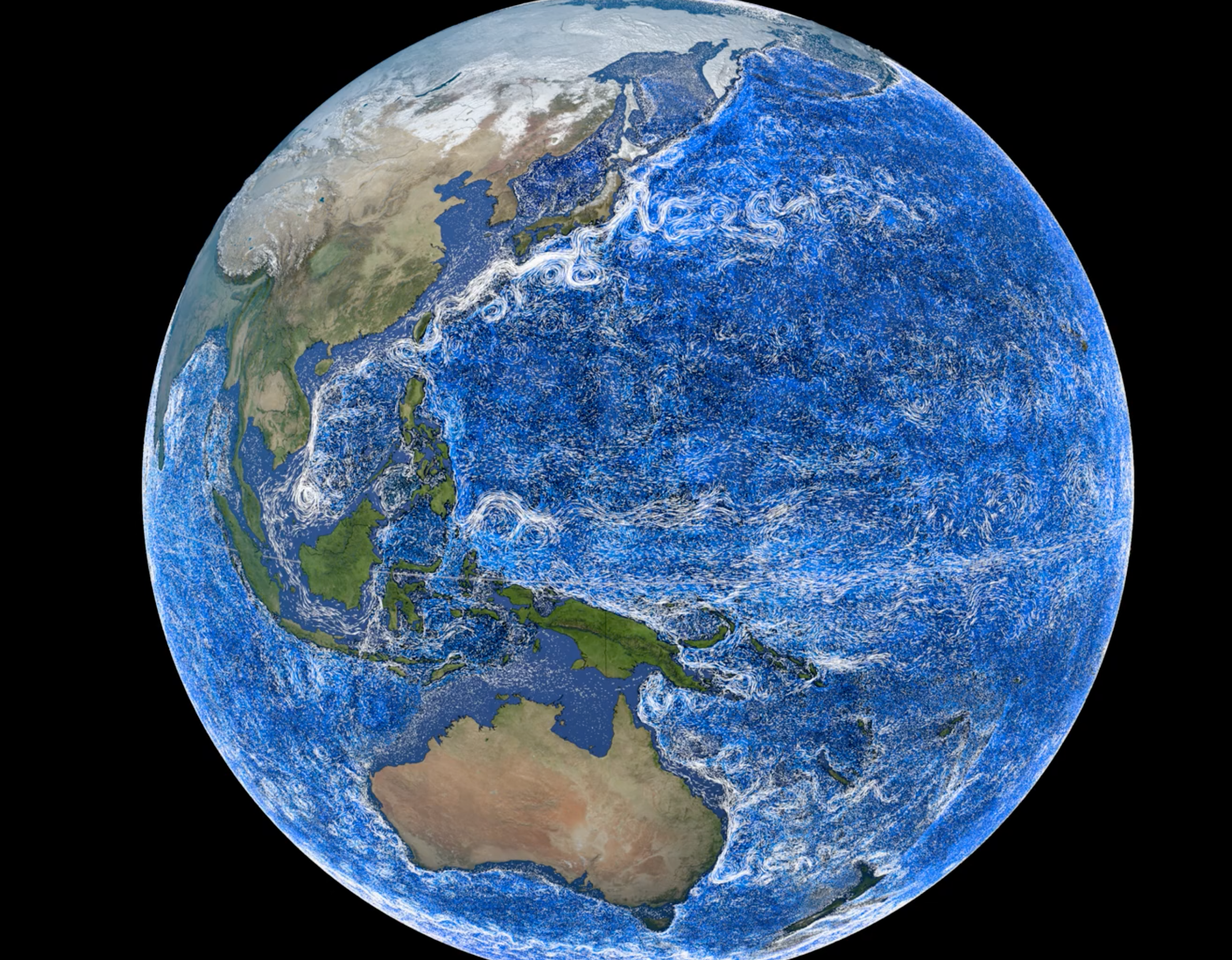
    The SWOT satellite caught the leading edge of the tsunami wave (red) that rolled through the Pacific Ocean on July 30. Sea level data, shown in the highlighted swath, is plotted against a NOAA tsunami forecast model in the background. A red star marks the location of the earthquake that spawned the tsunami.
    NASA/JPL-Caltech

    Data provided by the water satellite, a joint effort between NASA and the French space agency, is helping to improve tsunami forecast models, benefitting coastal communities.

    The SWOT (Surface Water and Ocean Topography) satellite captured the tsunami spawned by an 8.8 magnitude earthquake off the coast of Russia’s Kamchatka Peninsula on July 30, 11:25 a.m. local time. The satellite, a joint effort between NASA and the French space agency CNES (Centre National d’Études Spatiales), recorded the tsunami about 70 minutes after the earthquake struck.

    Disturbances like an earthquake or underwater landslide trigger a tsunami when the event is large enough to displace the entire column of seawater from the ocean floor to the surface. This results in waves that ripple out from the disturbance much like dropping a pebble into a pond generates a series of waves.

    “The power of SWOT’s broad, paintbrush-like strokes over the ocean is in providing crucial real-world validation, unlocking new physics, and marking a leap towards more accurate early warnings and safer futures,” said Nadya Vinogradova Shiffer, NASA Earth lead and SWOT program scientist at NASA Headquarters in Washington.

    This visualization depicts the leading edge of the tsunami
    This visualization depicts the leading edge of the tsunami based on sea surface height data from SWOT looking from south to north, when the leading edge was more than 1.5 feet (45 centimeters) east of Japan in the Pacific Ocean.
    NASA/JPL-Caltech

    Data from SWOT provided a multidimensional look at the leading edge of the tsunami wave triggered by the Kamchatka earthquake. The measurements included a wave height exceeding 1.5 feet (45 centimeters), shown in red in the highlighted track, as well as a look at the shape and direction of travel of the leading edge of the tsunami. The SWOT data, shown in the highlighted swath running from the southwest to the northeast in the visual, is plotted against a forecast model of the tsunami produced by the U.S. National Oceanic and Atmospheric Administration (NOAA) Center for Tsunami Research. Comparing the observations from SWOT to the model helps forecasters validate their model, ensuring its accuracy.

    “A 1.5-foot-tall wave might not seem like much, but tsunamis are waves that extend from the seafloor to the ocean’s surface,” said Ben Hamlington, an oceanographer at NASA’s Jet Propulsion Laboratory in Southern California. “What might only be a foot or two in the open ocean can become a 30-foot wave in shallower water at the coast.”

    The tsunami measurements SWOT collected are helping scientists at NOAA’s Center for Tsunami Research improve their tsunami forecast model. Based on outputs from that model, NOAA sends out alerts to coastal communities potentially in the path of a tsunami. The model uses a set of earthquake-tsunami scenarios based on past observations as well as real-time observations from sensors in the ocean.

    The SWOT data on the height, shape, and direction of the tsunami wave is key to improving these types of forecast models. “The satellite observations help researchers to better reverse engineer the cause of a tsunami, and in this case, they also showed us that NOAA’s tsunami forecast was right on the money,” said Josh Willis, a JPL oceanographer.

    The NOAA Center for Tsunami Research tested their model with SWOT’s tsunami data, and the results were exciting, said Vasily Titov, the center’s chief scientist in Seattle. “It suggests SWOT data could significantly enhance operational tsunami forecasts — a capability sought since the 2004 Sumatra event.” The tsunami generated by that devastating quake killed thousands of people and caused widespread damage in Indonesia.

    More About SWOT

    The SWOT satellite was jointly developed by NASA and CNES, with contributions from the Canadian Space Agency (CSA) and the UK Space Agency. NASA JPL, managed for the agency by Caltech in Pasadena, California, leads the U.S. component of the project. For the flight system payload, NASA provided the Ka-band radar interferometer (KaRIn) instrument, a GPS science receiver, a laser retroreflector, a two-beam microwave radiometer, and NASA instrument operations. The Doppler Orbitography and Radioposition Integrated by Satellite system, the dual frequency Poseidon altimeter (developed by Thales Alenia Space), the KaRIn radio-frequency subsystem (together with Thales Alenia Space and with support from the UK Space Agency), the satellite platform, and ground operations were provided by CNES. The KaRIn high-power transmitter assembly was provided by CSA.

    To learn more about SWOT, visit:

    https://swot.jpl.nasa.gov

    News Media Contacts

    Jane J. Lee / Andrew Wang
    Jet Propulsion Laboratory, Pasadena, Calif.
    818-354-0307 / 626-379-6874
    ane.j.lee@jpl.nasa.gov
    / andrew.wang@jpl.nasa.gov

    2025-103

  • NASA Uses Wind Tunnel to Test Advanced Air Mobility Aircraft Wing

    3 min read

    Preparations for Next Moonwalk Simulations Underway (and Underwater)

    Two men are installing a vertical wing with mounted propellers inside a large wind tunnel facility.
    NASA employees Broderic J. Gonzalez, left, and David W. Shank install pieces of a 7-foot wing model in preparation for testing in the 14-by-22-Foot Subsonic Wind Tunnel at NASA’s Langley Research Center in Hampton, Virginia, in May 2025. The lessons learned will be shared with the public to support advanced air mobility aircraft development.
    NASA/Mark Knopp

    The advanced air mobility industry is currently working to produce novel aircraft ranging from air taxis to autonomous cargo drones, and all of those designs will require extensive testing – which is why NASA is working to give them a head-start by studying a special kind of model wing. The wing is a scale model of a design used in a type of aircraft called a “tiltwing,” which can swing its wing and rotors from vertical to horizontal. This allows the aircraft to take off, hover, and land like a helicopter, or fly like a fixed-wing airplane. This design enables versatility in a range of operating environments.

    Several companies are working on tiltwings, but NASA’s research into the scale wing will also impact nearly all types of advanced air mobility aircraft designs.

    “NASA research supporting advanced air mobility demonstrates the agency’s commitment to supporting this rapidly growing industry,” said Brandon Litherland, principal investigator for the test at NASA’s Langley Research Center in Hampton, Virginia. “Tool improvements in these areas will greatly improve our ability to accurately predict the performance of new advanced air mobility aircraft, which supports the adoption of promising designs. Gaining confidence through testing ensures we can identify safe operating conditions for these new aircraft.”

    A man is adjusting a propeller blade attached to a test model, with a blue-lit background.
    NASA researcher Norman W. Schaeffler adjusts a propellor, which is part of a 7-foot wing model that was recently tested at NASA’s Langley Research Center in Hampton, Virginia. In May and June, NASA researchers tested the wing in the 14-by-22-Foot Subsonic Wind Tunnel to collect data on critical propeller-wing interactions. The lessons learned will be shared with the public to support advanced air mobility aircraft development.
    NASA/Mark Knopp

    In May and June, NASA tested a 7-foot wing model with multiple propellers in the 14-by-22-Foot Subsonic Wind Tunnel at Langley. The model is a “semispan,” or the right half of a complete wing. Understanding how multiple propellers and the wing interact under various speeds and conditions provides valuable insight for the advanced air mobility industry. This information supports improved aircraft designs and enhances the analysis tools used to assess the safety of future designs.

    This work is managed by the Revolutionary Vertical Lift Technology project under NASA’s Advanced Air Vehicles Program in support of NASA’s Advanced Air Mobility mission, which seeks to deliver data to guide the industry’s development of electric air taxis and drones.

    “This tiltwing test provides a unique database to validate the next generation of design tools for use by the broader advanced air mobility community,” said Norm Schaeffler, the test director, based at Langley. “Having design tools validated for a broad range of aircraft will accelerate future design cycles and enable informed decisions about aerodynamic and acoustic performance.”

    Close-up view of two propellers mounted on a vertical metal structure in a testing facility.
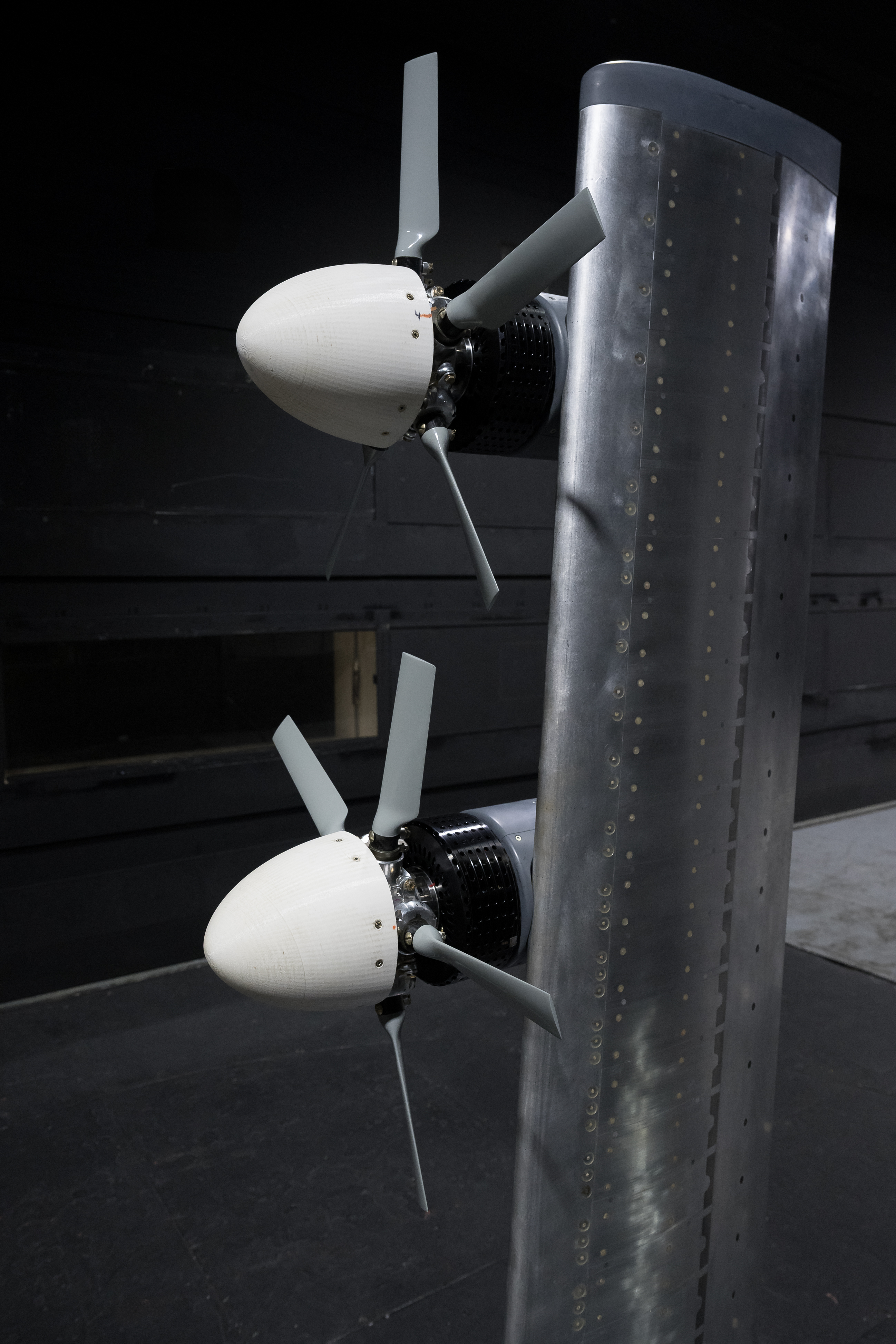
    In May and June, NASA researchers tested a 7-foot wing model in the 14-by-22-Foot Subsonic Wind Tunnel at NASA’s Langley Research Center in Hampton, Virginia. The team collected data on critical propeller-wing interactions over the course of several weeks.
    NASA/Mark Knopp

    The wing is outfitted with over 700 sensors designed to measure pressure distribution, along with several other types of tools to help researchers collect data from the wing and propeller interactions. The wing is mounted on special sensors to measure the forces applied to the model. Sensors in each motor-propeller hub to measure the forces acting on the components independently.

    The model was mounted on a turntable inside the wind tunnel, so the team could collect data at different wing tilt angles, flap positions, and rotation rates. The team also varied the tunnel wind speed and adjusted the relative positions of the propellers.  

    Researchers collected data relevant to cruise, hover, and transition conditions for advanced air mobility aircraft. Once they analyze this data, the information will be released to industry on NASA’s website.

  • NASA’s Artemis II Crew Trains in Orion

    The Artemis II crew stands in front of the Orion spacecraft. They are wearing orange spacesuits without helmets. Orion is silver-colored and reflective. There is a round railing surrounding the spacecraft. There is also a group of people wearing blue jumpsuits, hairnets, and gloves standing behind Orion; they are members of the Artemis II closeout crew.
    NASA/Rad Sinyak

    The Artemis II crew (from left to right) CSA (Canadian Space Agency) astronaut Jeremy Hansen, and NASA astronauts Christina Koch, Victor Glover, and Reid Wiseman don their Orion Crew Survival System Suits for a multi-day crew module training beginning July 31, 2025, at the agency’s Kennedy Space Center in Florida. Behind the crew, wearing clean room apparel, are members of the Artemis II closeout crew.

    Testing included a suited crew test and crew equipment interface test, performing launch day and simulated orbital activities inside the Orion spacecraft. This series of tests marks the first time the crew entered their spacecraft that will take them around the Moon and back to Earth while wearing their spacesuits.

    Image credit: NASA/Rad Sinyak

  • NASA’s Webb Finds New Evidence for Planet Around Closest Solar Twin

    6 Min Read

    NASA’s Webb Finds New Evidence for Planet Around Closest Solar Twin

    Illustration of a large spherical object that looks like a gas giant planet. The object appears to have bands of tan, orange, and dark red horizontal lines forming patterns similar to those in the atmosphere of Jupiter. The background is filled with thousands of distant stars that form a Milky Way-like band running from left to right. The host star, Alpha Centauri A, appears as a glowing white circle to the upper left of the planet. Further off in the distance above and to the right of the planet is a smaller glowing circle, nearby Alpha Centauri B. The words “Artist’s Concept” are in the lower left corner.

    This artist’s concept shows what a gas giant orbiting Alpha Centauri A could look like. Observations of the triple star system Alpha Centauri using NASA’s James Webb Space Telescope indicate the potential gas giant, about the mass of Saturn, orbiting the star by about two times the distance between the Sun and Earth. Full illustration and caption shown below.

    Credits:
    Artwork: NASA, ESA, CSA, STScI, R. Hurt (Caltech/IPAC)

    Astronomers using NASA’s James Webb Space Telescope have found strong evidence of a giant planet orbiting a star in the stellar system closest to our own Sun. At just 4 light-years away from Earth, the Alpha Centauri triple star system has long been a compelling target in the search for worlds beyond our solar system.

    Visible only from Earth’s Southern hemisphere, it’s made up of the binary Alpha Centauri A and Alpha Centauri B, both Sun-like stars, and the faint red dwarf star Proxima Centauri. Alpha Centauri A is the third brightest star in the night sky. While there are three confirmed planets orbiting Proxima Centauri, the presence of other worlds surrounding Alpha Centauri A and Alpha Centauri B has proved challenging to confirm.

    Now, Webb’s observations from its Mid-Infrared Instrument (MIRI) are providing the strongest evidence to date of a gas giant orbiting Alpha Centauri A. The results have been accepted in a series of two papers in The Astrophysical Journal Letters.

    If confirmed, the planet would be the closest to Earth that orbits in the habitable zone of a Sun-like star. However, because the planet candidate is a gas giant, scientists say it would not support life as we know it.

    “With this system being so close to us, any exoplanets found would offer our best opportunity to collect data on planetary systems other than our own. Yet, these are incredibly challenging observations to make, even with the world’s most powerful space telescope, because these stars are so bright, close, and move across the sky quickly,” said Charles Beichman, NASA’s Jet Propulsion Laboratory and the NASA Exoplanet Science Institute at Caltech’s IPAC astronomy center, co-first author on the new papers. “Webb was designed and optimized to find the most distant galaxies in the universe. The operations team at the Space Telescope Science Institute had to come up with a custom observing sequence just for this target, and their extra effort paid off spectacularly.”

    Image A: Alpha Centauri 3 Panel (DSS, Hubble, Webb)

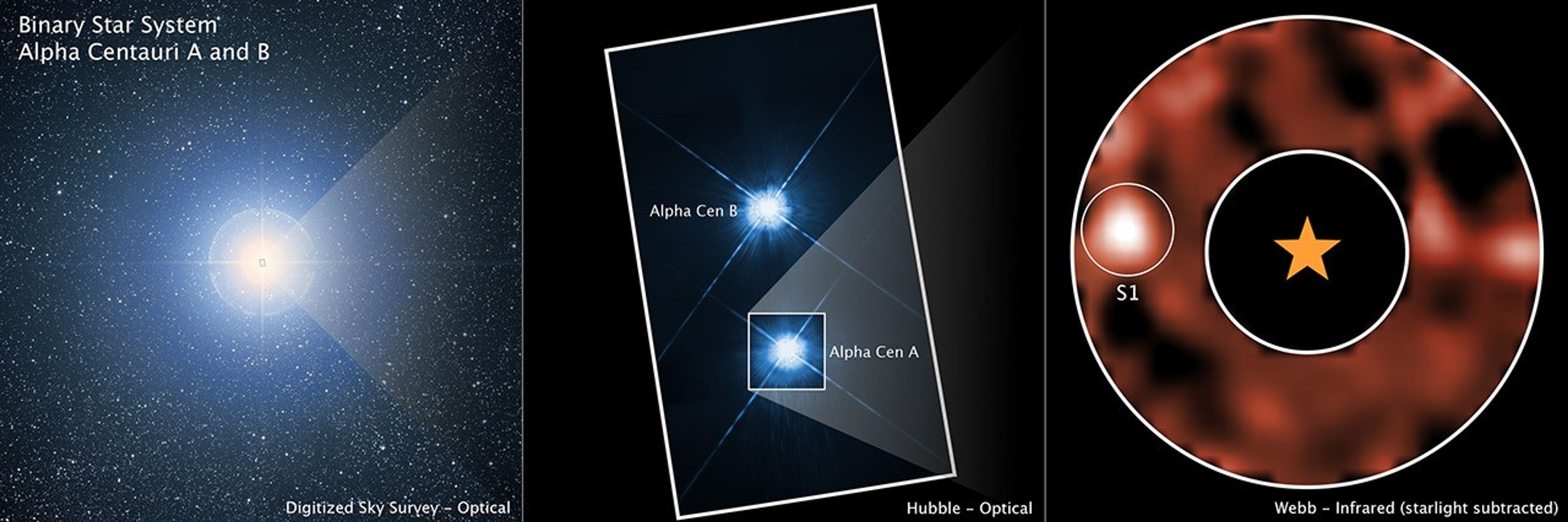
    Three panels, each showing a different view of the binary star system Alpha Centauri. The panel at the left is a Digitized Sky Survey image showing a single bright point source at the center of a black image with small stars scattered throughout. The very center of this bright source is outlined with a vertical box, tilted slightly to the left, with two diagonal lines leading to the second panel. The Hubble Space Telescope image shows two white stars with 4 diffraction spikes each against a black background. The top star is labeled Alpha Cen B and the bottom Alpha Cen A. Alpha Cen A is outlined with a white square with two diagonal lines leading to the third panel at the furthest right, which shows a James Webb Space Telescope image of the star. Within a large white circle there is a blurry red-toned field with an orange star icon and central black circle outlined in white marking the location of Alpha Cen A. A bright orange blob at 9 o’clock in relation to the star is labeled “S1” and circled.
    This image shows the Alpha Centauri star system from several different ground- and space-based observatories: the Digitized Sky Survey (DSS), NASA’s Hubble Space Telescope, and NASA’s James Webb Space Telescope. Alpha Centauri A is the third brightest star in the night sky, and the closest Sun-like star to Earth. The ground-based image from DSS shows the triple system as a single source of light, while Hubble resolves the two Sun-like stars in the system, Alpha Centauri A and Alpha Centauri B. The image from Webb’s MIRI (Mid-Infrared Instrument), which uses a coronagraphic mask to block the bright glare from Alpha Centauri A, reveals a potential planet orbiting the star.
    Science: NASA, ESA, CSA, STScI, DSS, A. Sanghi (Caltech), C. Beichman (NExScI, NASA/JPL-Caltech), D. Mawet (Caltech); Image Processing: J. DePasquale (STScI)

    Several rounds of meticulously planned observations by Webb, careful analysis by the research team, and extensive computer modeling helped determine that the source seen in Webb’s image is likely to be a planet, and not a background object (like a galaxy), foreground object (a passing asteroid), or other detector or image artifact.

    The first observations of the system took place in August 2024, using the coronagraphic mask aboard MIRI to block Alpha Centauri A’s light. While extra brightness from the nearby companion star Alpha Centauri B complicated the analysis, the team was able to subtract out the light from both stars to reveal an object over 10,000 times fainter than Alpha Centauri A, separated from the star by about two times the distance between the Sun and Earth.

    Image B: Alpha Centauri 3 Panel (Webb MIRI Image Detail)

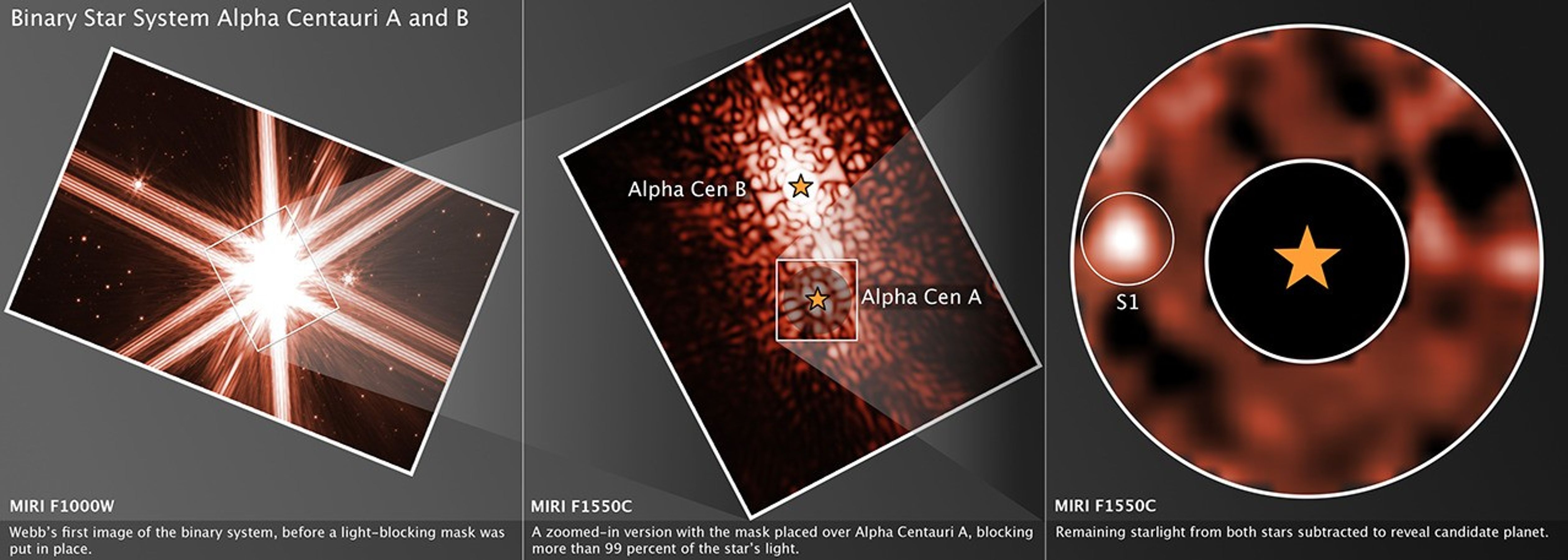
    Three panels, each showing a different view of the binary star system Alpha Centauri from the Webb. The left panel shows a rectangular image tilted at a 45 degree angle outlined in white on a grey background. The image is a blown-out bright source at the center, with 8, double columned reddish white diffraction spikes. The center of this bright source is outlined with a vertical box, tilted slightly to the left, with two diagonal lines leading to the second panel. This shows a view of both Alpha Centauri A at the bottom and Alpha Centauri B at the top, both with orange star icons over each star. The star icons are surrounded by mottled red and white blotches. The bottom star is outlined with a white square with two diagonal lines leading to the third panel. Within a large white circle there is a blurry red-toned field with an orange star icon and central black circle outlined in white marking the location of Alpha Cen A. A bright orange blob at 9 o’clock in relation to the star is labeled “S1” and circled.
    This three-panel image captures NASA’s James Webb Space Telescope’s observational search for a planet around the nearest Sun-like star, Alpha Centauri A. The initial image shows the bright glare of Alpha Centauri A and Alpha Centauri B, and the middle panel then shows the system with a coronagraphic mask placed over Alpha Centauri A to block its bright glare. However, the way the light bends around the edges of the coronagraph creates ripples of light in the surrounding space. The telescope’s optics (its mirrors and support structures) cause some light to interfere with itself, producing circular and spoke-like patterns. These complex light patterns, along with light from the nearby Alpha Centauri B, make it incredibly difficult to spot faint planets. In the panel at the right, astronomers have subtracted the known patterns (using reference images and algorithms) to clean up the image and reveal faint sources like the candidate planet.
    Science: NASA, ESA, CSA, STScI, A. Sanghi (Caltech), C. Beichman (NExScI, NASA/JPL-Caltech), D. Mawet (Caltech); Image Processing: J. DePasquale (STScI)

    While the initial detection was exciting, the research team needed more data to come to a firm conclusion. However, additional observations of the system in February 2025 and April 2025 (using Director’s Discretionary Time) did not reveal any objects like the one identified in August 2024.

    “We are faced with the case of a disappearing planet! To investigate this mystery, we used computer models to simulate millions of potential orbits, incorporating the knowledge gained when we saw the planet, as well as when we did not,” said PhD student Aniket Sanghi of Caltech in Pasadena, California. Sanghi is a co-first author on the two papers covering the team’s research.

    In these simulations, the team took into account both a 2019 sighting of the potential exoplanet candidate by the European Southern Observatory’s Very Large Telescope, the new data from Webb, and considered orbits that would be gravitationally stable in the presence of Alpha Centauri B, meaning the planet wouldn’t get flung out of the system.

    Researchers say a non-detection in the second and third round of observations with Webb isn’t surprising.

    “We found that in half of the possible orbits simulated, the planet moved too close to the star and wouldn’t have been visible to Webb in both February and April 2025,” said Sanghi.

    Image C: Alpha Centauri A Planet Candidate (Artist’s Concept)

    Illustration of a large spherical object that looks like a gas giant planet. The object appears to have bands of tan, orange, and dark red horizontal lines forming patterns similar to those in the atmosphere of Jupiter. The background is filled with thousands of distant stars that form a Milky Way-like band running from left to right. The host star, Alpha Centauri A, appears as a glowing white circle to the upper left of the planet. Further off in the distance above and to the right of the planet is a smaller glowing circle, nearby Alpha Centauri B. The words “Artist’s Concept” are in the lower left corner.
    This artist’s concept shows what a gas giant orbiting Alpha Centauri A could look like. Observations of the triple star system Alpha Centauri using NASA’s James Webb Space Telescope indicate the potential gas giant, about the mass of Saturn, orbiting the star by about two times the distance between the Sun and Earth. In this concept, Alpha Centauri A is depicted at the upper left of the planet, while the other Sun-like star in the system, Alpha Centauri B, is at the upper right. Our Sun is shown as a small dot of light between those two stars.
    Artwork: NASA, ESA, CSA, STScI, R. Hurt (Caltech/IPAC)

    Based on the brightness of the planet in the mid-infrared observations and the orbit simulations, researchers say it could be a gas giant approximately the mass of Saturn orbiting Alpha Centauri A in an elliptical path varying between 1 to 2 times the distance between Sun and Earth.

    “If confirmed, the potential planet seen in the Webb image of Alpha Centauri A would mark a new milestone for exoplanet imaging efforts,” Sanghi says. “Of all the directly imaged planets, this would be the closest to its star seen so far. It’s also the most similar in temperature and age to the giant planets in our solar system, and nearest to our home, Earth,” he says. “Its very existence in a system of two closely separated stars would challenge our understanding of how planets form, survive, and evolve in chaotic environments.”

    If confirmed by additional observations, the team’s results could transform the future of exoplanet science.

    “This would become a touchstone object for exoplanet science, with multiple opportunities for detailed characterization by Webb and other observatories,” said Beichman.

    For example, NASA’s Nancy Grace Roman Space Telescope, set to launch by May 2027 and potentially as early as fall 2026, is equipped with dedicated hardware that will test new technologies to observe binary systems like Alpha Centauri in search of other worlds. Roman’s visible light data would complement Webb’s infrared observations, yielding unique insights on the size and reflectivity of the planet.

    The James Webb Space Telescope is the world’s premier space science observatory. Webb is solving mysteries in our solar system, looking beyond to distant worlds around other stars, and probing the mysterious structures and origins of our universe and our place in it. Webb is an international program led by NASA with its partners, ESA (European Space Agency) and CSA (Canadian Space Agency).

    To learn more about Webb, visit:

    https://science.nasa.gov/webb

    Downloads

    Click any image to open a larger version.

    View/Download all image products at all resolutions for this article from the Space Telescope Science Institute.

    View/Download the science paper by C. Beichman et al.

    View/Download the science paper by A. Sanghi et al.

    Media Contacts

    Laura Betz – laura.e.betz@nasa.gov
    NASA’s Goddard Space Flight Center, Greenbelt, Md.

    Hannah Braunhbraun@stsci.edu
    Space Telescope Science Institute, Baltimore, Md.

    Christine Pulliam – cpulliam@stsci.edu
    Space Telescope Science Institute, Baltimore, Md.

    Video: How to Study Exoplanets: Webb and Challenges

    Webb Blog: NASA’s Webb Takes Its First-Ever Direct Image of Distant World

    Webb Blog: How Webb’s Coronagraphs Reveal Exoplanets in the Infrared

    Video: Eclipse/Coronagraph Animation

    More Webb News

    More Webb Images

    Webb Science Themes

    Webb Mission Page

    What is the Webb Telescope?

    SpacePlace for Kids

    En Español

    Ciencia de la NASA

    NASA en español 

    Space Place para niños

  • Curiosity Blog, Sols 4618-4619: The Boxwork Structures Continue to Call to Us

    3 min read

    Curiosity Blog, Sols 4618-4619: The Boxwork Structures Continue to Call to Us

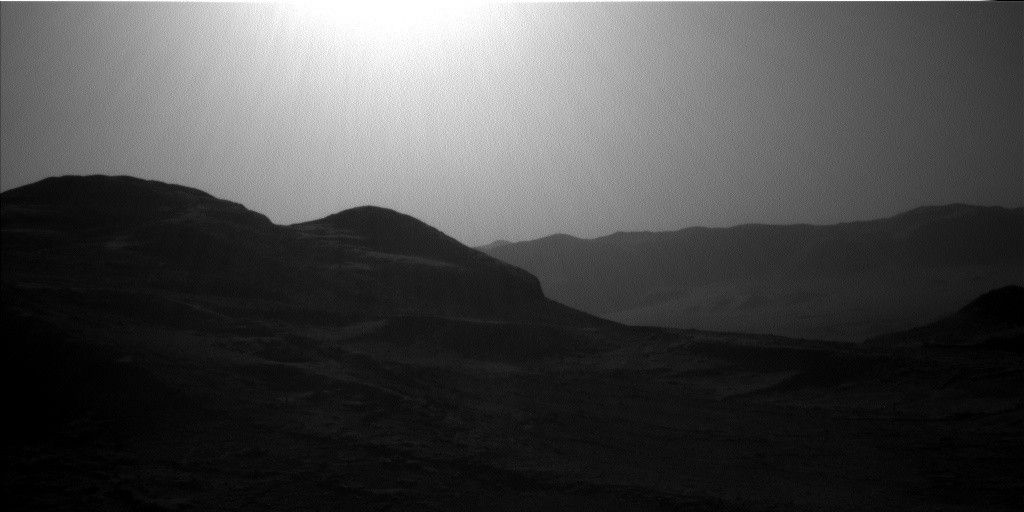
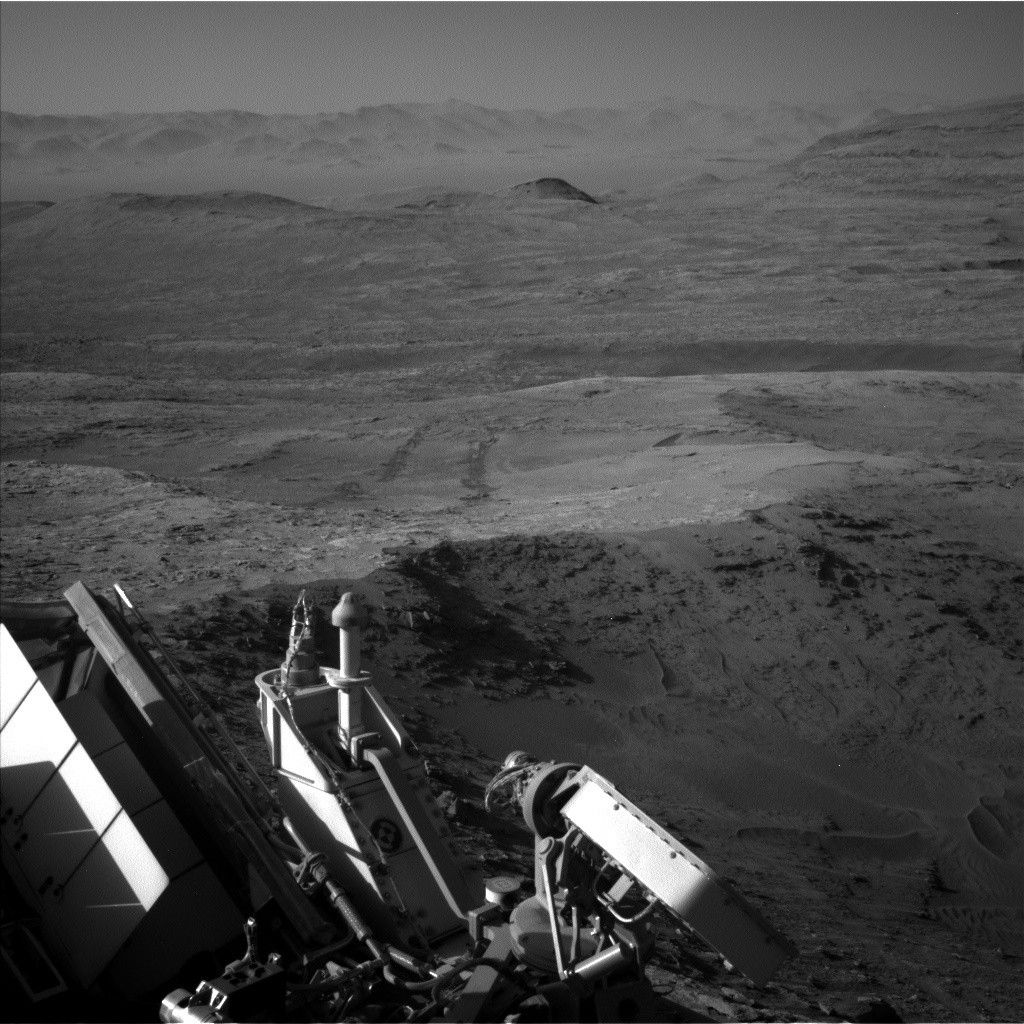
    A grayscale photo from the Martian surface shows a backlit, hilly landscape. In the foreground a pair of peaks on the left side of the image — shadowed and nearly black — descend gently toward the right side, where the ground rises again slightly at the edge of the frame. Beyond that on the right side, a ridge of very dark gray terrain is topped by a wavy line of small peaks, creating a horizon line that disappears behind the foreground hills. The sky is a uniform lighter gray, with a blinding sun visible at the top center of the frame.
    NASA’s Mars rover Curiosity acquired this image using its Left Navigation Camera on Aug. 1, 2025 — Sol 4616, or Martian day 4,616 of the Mars Science Laboratory mission — at 03:36:56 UTC.
    NASA/JPL-Caltech

    Written by Ashley Stroupe, Mission Operations Engineer and Rover Planner at NASA’s Jet Propulsion Laboratory

    Earth planning date: Friday, Aug. 1, 2025.

    Now that we have reached August, our “landiversary” (anniversary of landing — Aug. 5 PDT) is less than a week away! The team is looking forward to being able to celebrate the milestone of our rover becoming a teenager at 13. Today’s image is a beautiful back-lit late afternoon image of the nearby mountains and the distant crater rim. These views make working on Mars never get old!

    The first sol of today’s plan is very busy because we will only have data from the first sol down in time for planning on Monday. Today I was working as a Rover Planner, supporting both arm and drive activities. We start first thing with arm activities; we DRT brush and do APXS integration on the target “San Cristóbal,” which is a bedrock target, and the only place in the workspace smooth and flat enough for us to brush. 

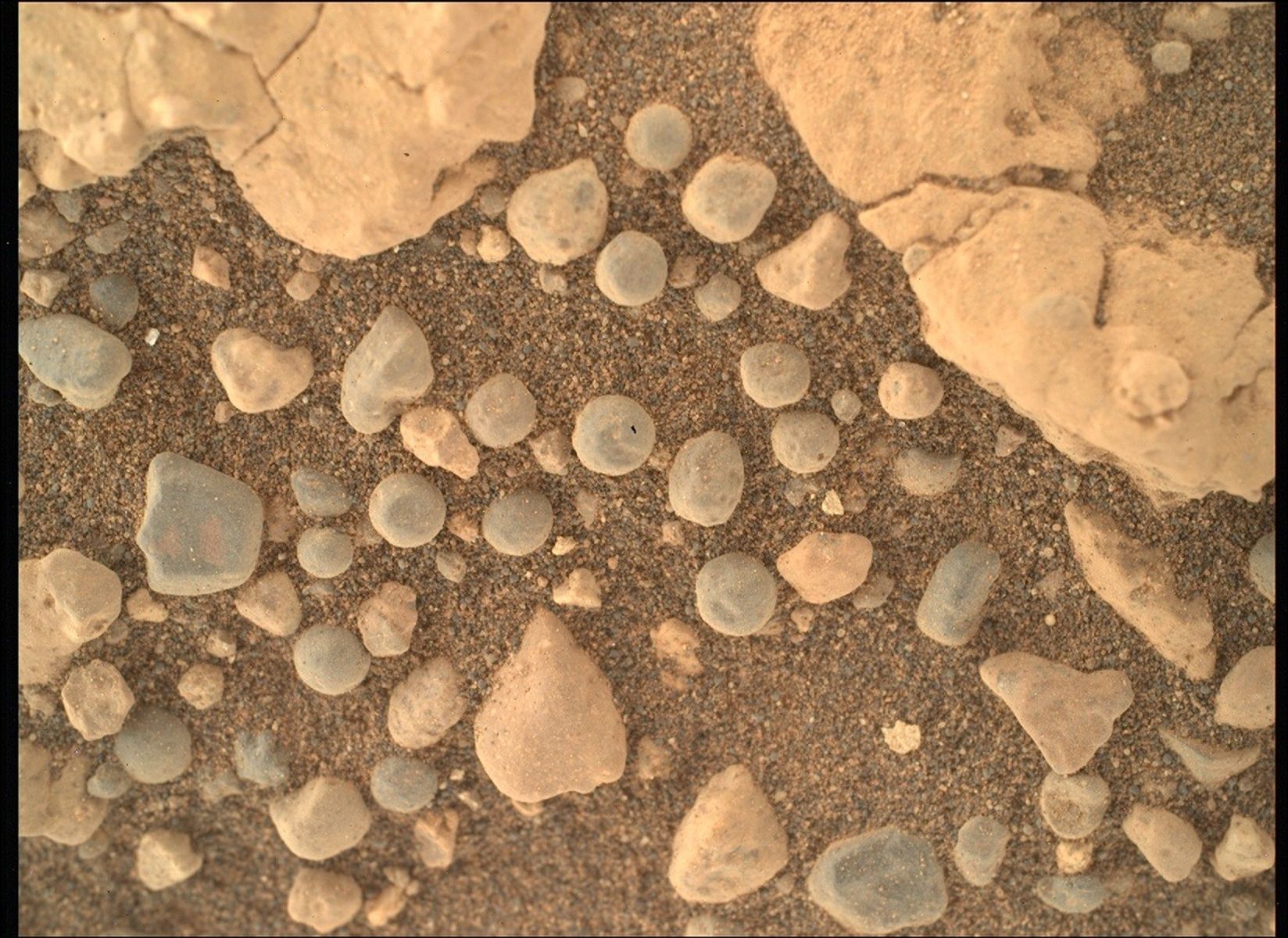
    After a brief nap, we have an extensive imaging campaign. We take Mastcam images of the AEGIS target from the previous plan and two potential vein targets “Rio Satja” and “Río Ichilo.”  We then take Mastcam stereo mosaics of boxwork targets “Pontezuelo” and “Catedrales de Tara.”  Additionally we have stereo mosaics of “Llanos de Challe,” a transition between the bedrock in the boxwork hollow and the boxwork ridge, a nearby light-toned exposure, and some additional troughs and ridges. ChemCam then takes a LIBS observation of “Airport Domes,” which is another hollow in the boxworks. Finally, we take a ChemCam RMI and a Mastcam of Pontezuelo.

    After finishing all the imaging, we continue with the rest of the arm activities. We split the arm activities to accommodate conflicting constraints — both APXS and ChemCam both need to be as early as possible. In this set of arm activities, we begin with MAHLI imaging of the two targets, San Cristóbal and “Salar de Agua Amara,” which consists of delicate branching structures likely made by groundwater. 

    After another short nap, we do a small adjustment in our position to get another interesting piece of bedrock ridge in our workspace. In order to approach it at a good angle, we first drive parallel to the ridge to be lined up with the target, and then we turn and drive straight to it. Due to constraints on how we like to park at targets, sometimes these shorter drives can be more complicated than longer ones — but today it was simpler. After completing the drive, we unstow the arm to get a clear view of our workspace for Monday’s planning as well as our standard post-drive imaging and then Curiosity goes to sleep for the night. 

    The second sol of the plan is a bit more leisurely. Around midday, Curiosity will be taking some atmospheric observations, including a Navcam dust-devil survey and a south-facing suprahorizon movie, followed by an AEGIS activity where the rover gets to pick targets and observe them herself. Then, early the next morning, Curiosity will wake up to take some additional atmospheric observations, including Navcam zenith and suprahorizon movies, Navcam line-of-sight toward the crater rim, and a Mastcam solar tau to measure dust in the atmosphere. Finally, she’ll get a short nap before waking up to start the next plan.

    Details

    Last Updated

    Aug 05, 2025

    Related Terms

  • NASA Selects Six Companies to Provide Orbital Transfer Vehicle Studies

    NASA has selected six companies to produce studies focused on lower-cost ways to launch and deliver spacecraft of various sizes and forms to multiple, difficult-to-reach orbits.

    The firm-fixed-price awards comprise nine studies with a maximum total value of approximately $1.4 million. The awardees are:

    • Arrow Science and Technology LLC, Webster, Texas
    • Blue Origin LLC, Merritt Island, Florida
    • Firefly Aerospace Inc., Cedar Park, Texas
    • Impulse Space Inc., Redondo Beach, California
    • Rocket Lab, Long Beach, California
    • United Launch Services LLC, Centennial, Colorado

    “With the increasing maturity of commercial space delivery capabilities, we’re asking companies to demonstrate how they can meet NASA’s need for multi-spacecraft and multi-orbit delivery to difficult-to-reach orbits beyond current launch service offerings,” said Joe Dant, orbital transfer vehicle strategic initiative owner for the Launch Services Program at NASA’s Kennedy Space Center in Florida. “This will increase unique science capability and lower the agency’s overall mission costs.”

    Each of the six companies will deliver studies exploring future application of orbital transfer vehicles for NASA missions:

    Arrow will partner with Quantum Space for its study. Quantum’s Ranger provides payload delivery service as a multi-mission spacecraft engineered for rapid maneuverability and adaptability, enabling multi-destination delivery for missions from low Earth orbit to lunar orbit.

    Blue Origin will produce two studies, including one for Blue Ring, a large, high-mobility space platform providing full-service payload delivery, on-board edge computing, hosting, and end-to-end mission operations. It uses hybrid solar-electric and chemical propulsion capability to reach geostationary, cislunar, Mars, and interplanetary destinations. The second is a New Glenn upper stage study.

    Firefly’s line of Elytra orbital vehicles offers on-demand payload delivery, imaging, long-haul communications, and domain awareness across cislunar space. Firefly’s Elytra Dark is equipped to serve as a transfer vehicle and enable ongoing operations in lunar orbit for more than five years.

    Impulse Space will produce two studies. The company provides in-space mobility with two vehicles, Mira and Helios. Mira is a high-thrust, highly maneuverable spacecraft for payload hosting and deployment, while Helios is a high-energy kick stage to rapidly deliver payloads from low Earth to medium Earth orbits, geostationary orbits and beyond.

    Rocket Lab’s two studies will feature the upper stage of the company’s Neutron rocket, as well as a long-life orbital transfer vehicle based on its Explorer spacecraft. Both vehicles are equipped with their own propulsion systems and other subsystems for missions to medium Earth and geosynchronous orbit and deep space destinations like the Moon, Mars, and near-Earth asteroids.

    United Launch Alliance will assess the cislunar mission capabilities of an extended-duration Centaur V upper stage. Centaur would be capable of directly delivering multiple rideshare spacecraft to two different orbital destinations in cislunar space, avoiding the need for an additional rocket stage or orbital transfer vehicle.

    The studies will be complete by mid-September. NASA will use the findings to inform mission design, planning, and commercial launch acquisition strategies for risk-tolerant payloads, with a possibility of expanding delivery services to larger-sized payloads and to less risk-tolerant missions in the future.

    NASA’s Launch Services Program selected providers through the agency’s VADR (Venture-Class Acquisition of Dedicated and Rideshare Launch Services) contract, which helps foster growth of the U.S. commercial launch market, enabling greater access to space at a lower cost for science and technology missions.

    For more information about NASA’s Launch Services Program, visit:

    https://www.nasa.gov/launch-services-program

    -end-

    Josh Finch
    Headquarters, Washington
    202-358-1100
    joshua.a.finch@nasa.gov

    Leejay Lockhart
    Kennedy Space Center, Florida
    321-747-8310
    leejay.lockhart@nasa.gov
    Details

    Last Updated

    Aug 05, 2025

    Location
    Kennedy Space Center

  • NASA’s SpaceX Crew-10 Looks Back at Science Mission

    7 Min Read

    NASA’s SpaceX Crew-10 Looks Back at Science Mission

    From left, NASA's SpaceX Crew-10 members Kirill Peskov of Roscosmos, NASA astronauts Nichole Ayers and Anne McClain, and JAXA (Japan Aerospace Exploration Agency) astronaut Takuya Onishi share a light moment during a group portrait inside the International Space Station's Kibo laboratory module.

    NASA’s SpaceX Crew-10 Looks Back at Science Mission

    NASA’s SpaceX Crew-10 mission with agency astronauts Anne McClain and Nichole Ayers, JAXA (Japan Aerospace Exploration Agency) astronaut Takuya Onishi, and Roscosmos cosmonaut Kirill Peskov is preparing to return to Earth in early August after a long-duration mission aboard the International Space Station. During their stay, McClain, Ayers, and Onishi completed dozens of experiments and technology demonstrations, helping push the boundaries of scientific discovery aboard the orbiting laboratory.
    Here’s a look at some scientific milestones accomplished during the Crew-10 mission:

    Orbital effects on plants

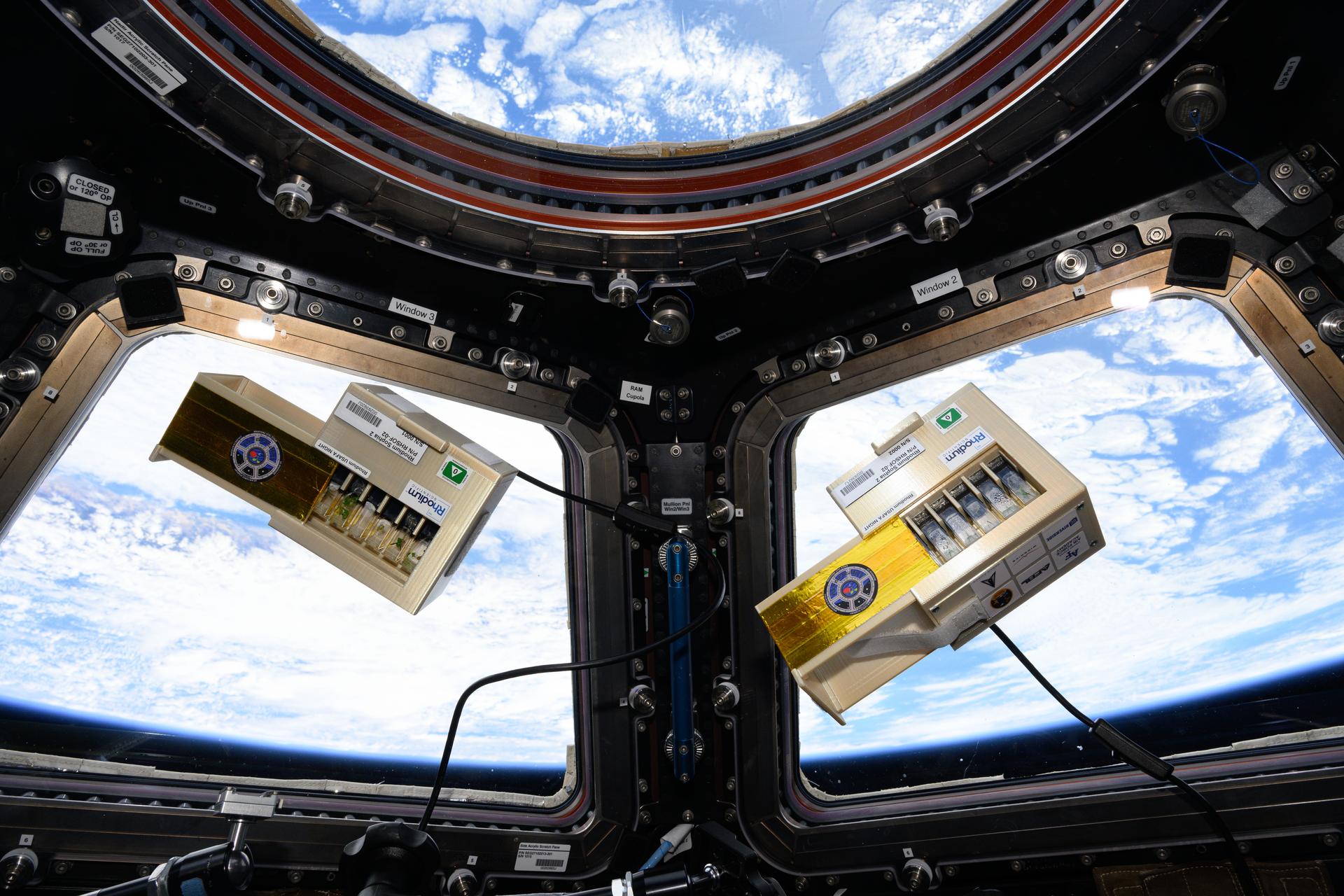
    Two gold box-shaped canisters, about the size of a large tissue box, have sections slid open, revealing five clear tubes containing small green plants. There are condensation droplets inside the tubes. The canisters are floating in front of the space station’s cupola windows with Earth’s blue, cloud-covered surface filling the background.
    NASA

    The canisters floating in the cupola of the International Space Station contain wild-type and genetically-modified thale cress plants for the Rhodium Plant LIFE experiment. The investigation studies how radiation and gravity environments at different orbital altitudes affect plant growth by comparing Crew-10 data with plants flown aboard the Polaris Dawn mission, which flew deeper into space. Studies have shown microgravity affects growth rates, and a better understanding of the mechanisms behind this could improve plant growth techniques in space and on Earth.

    Solar spacewalk

    McClain, wearing a white spacesuit with a U.S. flag on the left arm and an Expedition 73 patch on the chest, reaches over her right shoulder. A reflective helmet visor obscures her face. Behind her, a solar array extends from the space station, with Earth’s blue, cloud-covered surface filling the background.
    NASA

    NASA astronaut Anne McClain conducts a spacewalk to upgrade the International Space Station’s power generation systems, which include main solar arrays like the one visible behind her. McClain is installing hardware to support an IROSA (International Space Station Roll-Out Solar Array), a type of array that is more compact and produces more power than the station’s original ones. The IROSAs were first demonstrated aboard the orbiting laboratory in June 2017, and eight have been installed to augment the power available for scientific research and other activities.

    Microalgae on the menu

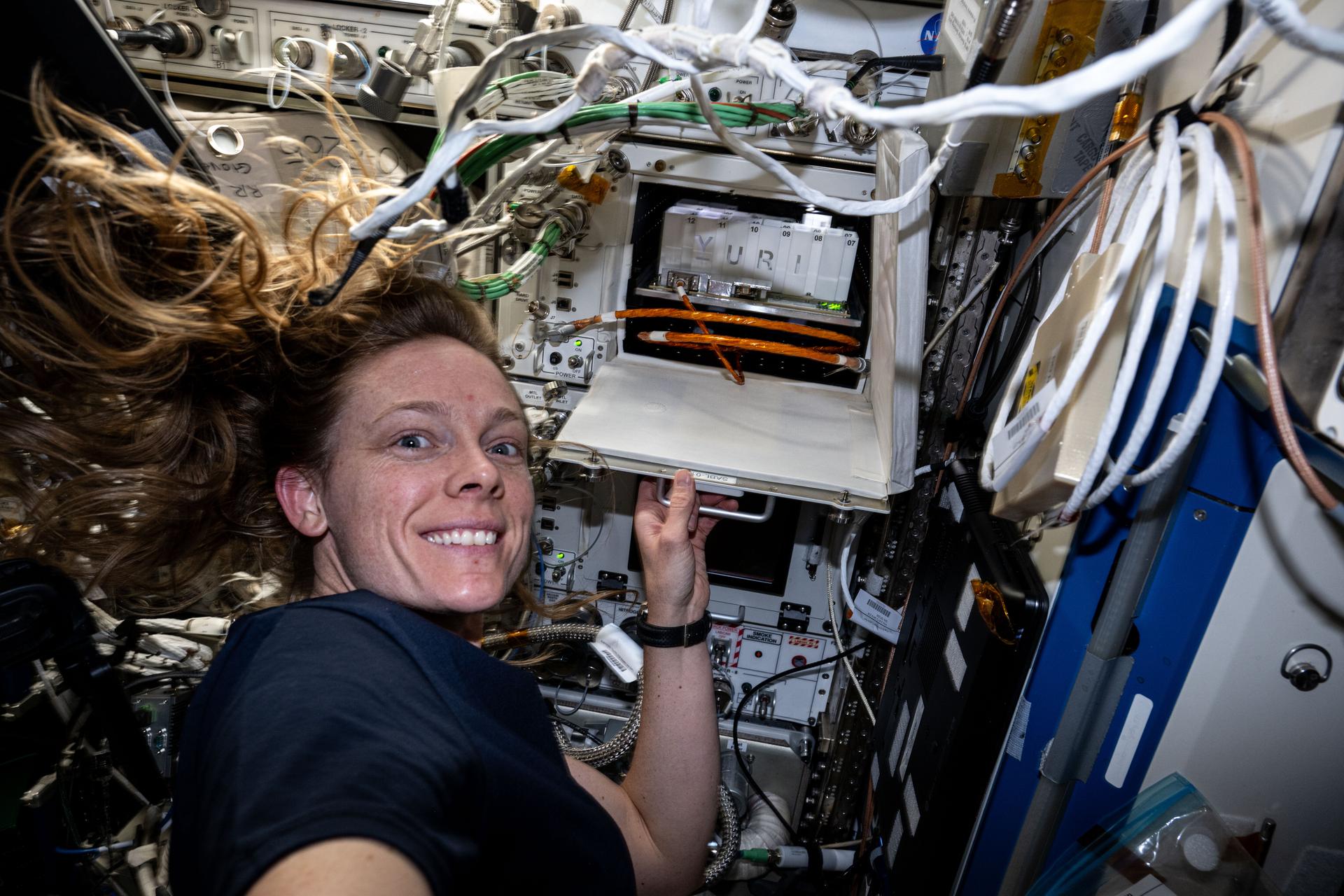
    Ayers, wearing a black T-shirt, is smiling at the camera. With her left hand, she is holding the bioproduct laboratory door open. A white box mounted to the wall of the space station has a row of smaller white square containers and a few orange cords along the bottom.
    NASA

    NASA astronaut Nichole Ayers uses the International Space Station’s Space Automated Bioproduct Laboratory to process samples for SOPHONSTER, a study of microgravity’s effects on the protein yield of microalgae. These organisms are highly nutritious, producing amino acids, fatty acids, B vitamins, iron, and fiber. The microalgae could provide sustainable meat and dairy alternatives during long-duration space missions. It also could be used to make biofuels and bioactive compounds in medicines in space and on Earth.

    Looking down on lightning

    Two intense thundercloud tops are illuminated with circles of bright white lightning flashes against a black night sky.
    NASA

    The International Space Station orbits more than 250 miles above Earth, giving astronauts a unique view of their home planet, where they can photograph familiar places and interesting phenomena. While passing over a stormy night, NASA astronaut Nichole Ayers captured this image of simultaneous lightning at the top of two thunderstorms. Scientists use instruments installed on the space station to study lightning and other weather conditions in Earth’s upper atmosphere. This research helps protect communication systems and aircraft while improving atmospheric models and weather predictions.

    Testing the tips of DNA

    NASA

    In this time-lapse video, JAXA (Japan Aerospace Exploration Agency) astronaut Takuya Onishi and NASA astronaut Nichole Ayers harvest samples for the APEX-12 investigation, which examines how space radiation affects telomere activity in thale cress plants. Telomeres, which are repetitive DNA sequences that protect the ends of chromosomes, become shorter each time a cell divides and indicate cell aging. The APEX-12 investigation could clarify the role of telomeres in aging and diseases and help scientists equip plants and other organisms for the stress of long-duration spaceflight.

    Microscopic motion

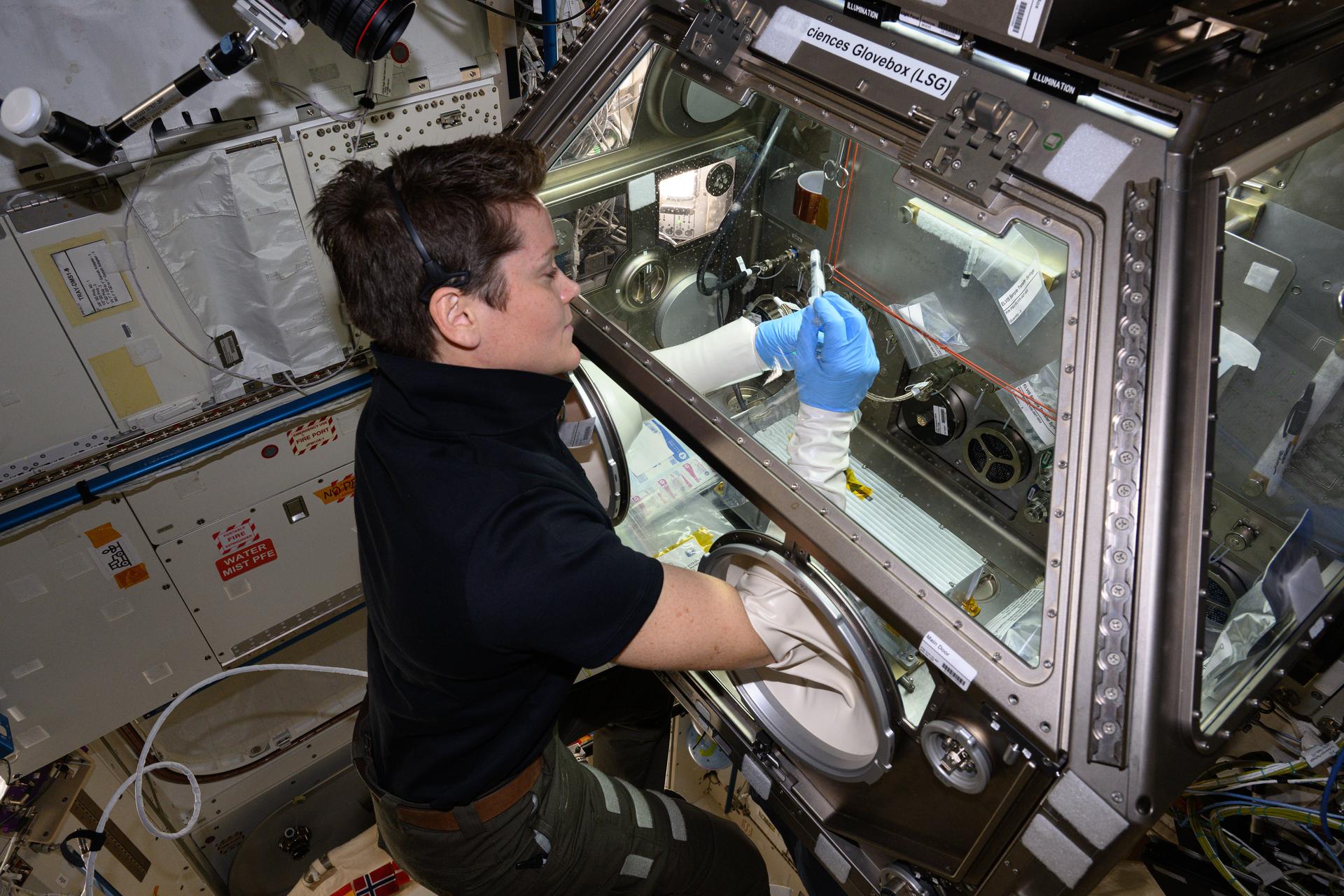
    McClain, wearing a black polo and dark green khaki pants, has her arms inside the glove sleeves of the space station’s life sciences glovebox. She is holding a large syringe in her right hand and looking intently at it.
    NASA

    A fluorescent microscope, known as ELVIS, captures the motion of microscopic algae and bacteria in 3D, a new capability aboard the International Space Station. The technology could be helpful in various applications in space and on Earth, such as monitoring water quality and detecting potentially infectious organisms. NASA astronaut Anne McClain prepares bacterial samples for viewing with the microscope.

    How cells sense gravity

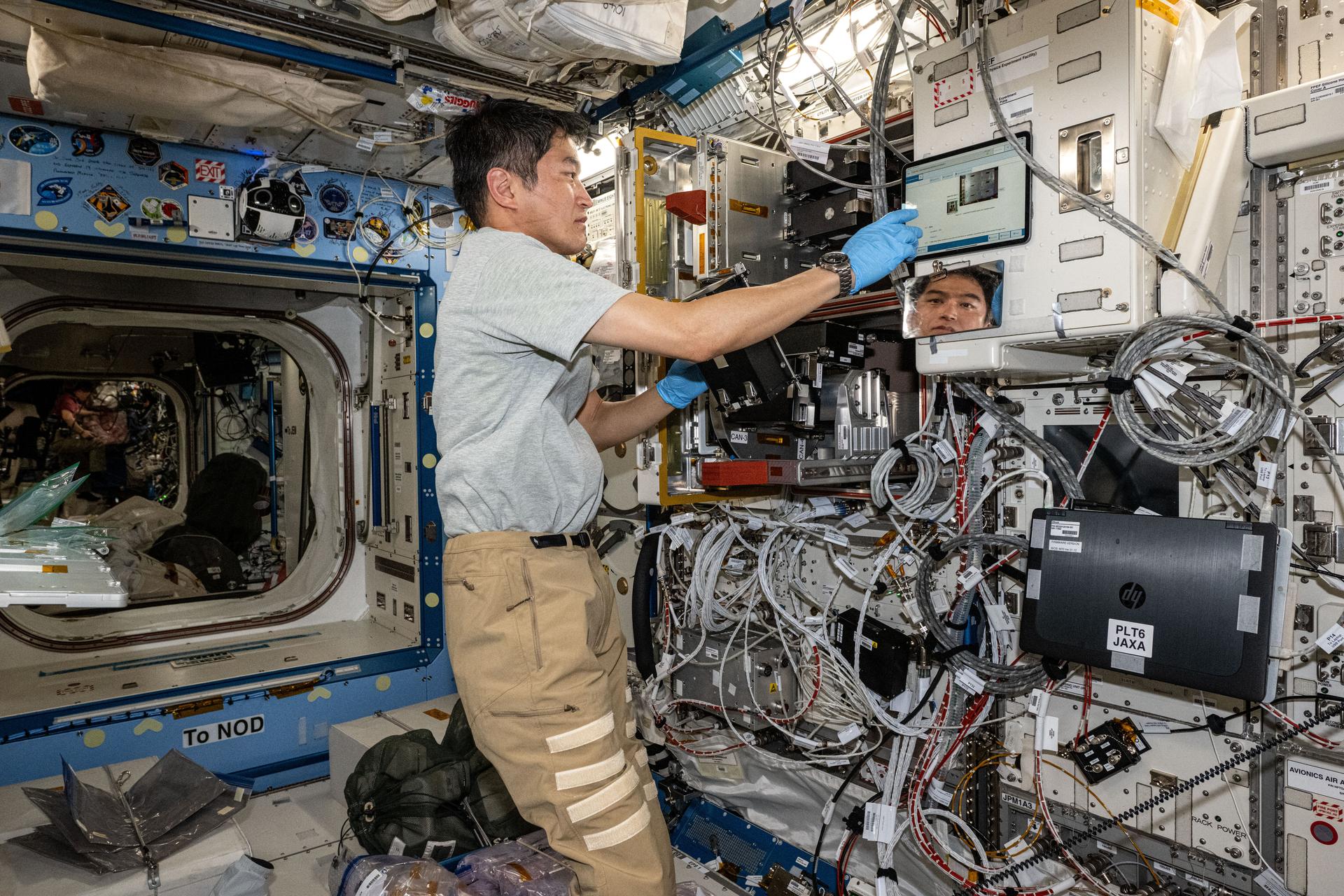
    Onishi, wearing a gray T-shirt, khaki pants, and blue latex gloves, is facing a piece of equipment that is pulled out from the space station’s wall. On it sits a black circular metal sample canister. He is reaching out to touch a screen with his right hand, and a mirror below the screen reflects his face.
    NASA

    Individual cells in our bodies can respond to the effects of gravity, but how they do this is largely unknown. The Cell Gravisensing investigation is an effort to observe the mechanism that enables cells to sense gravity and could lead to therapies to treat muscle and bone conditions, like muscle atrophy during long-duration spaceflight and osteoporosis on Earth. JAXA (Japan Aerospace Exploration Agency) astronaut Takuya Onishi processes research samples in the International Space Station’s Kibo laboratory module.

    Water works

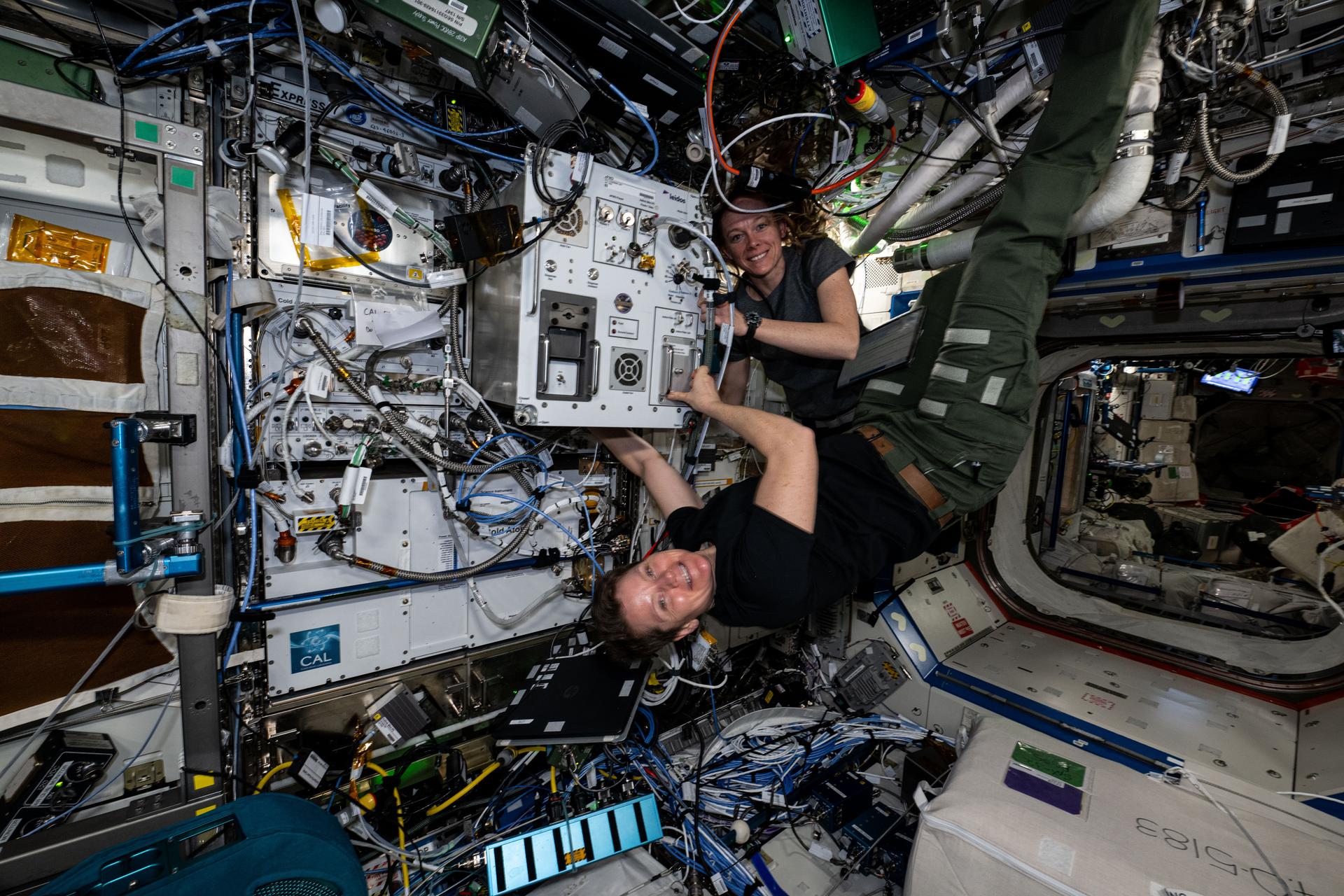
    At the top of the image, Ayers is smiling at the camera and wearing a green T-shirt. She is holding onto a square white equipment box with her left hand. The box, which has multiple connections, ports, switches, and vents, is slightly pulled out from the space station’s wall. In the center of the image, McClain is floating upside down, smiling at the camera. She is wearing a black T-shirt and green pants and is holding onto the same equipment box with both hands.
    NASA

    NASA astronauts Nichole Ayers and Anne McClain work on installing hardware for the International Space Station’s Exploration Potable Water Dispenser. Scientists are evaluating the device’s water sanitization and microbial growth reduction technology. The dispenser provides room temperature and hot water for crew consumption and food preparation. This technology could be adopted for future exploration missions.

    Free-flying camera

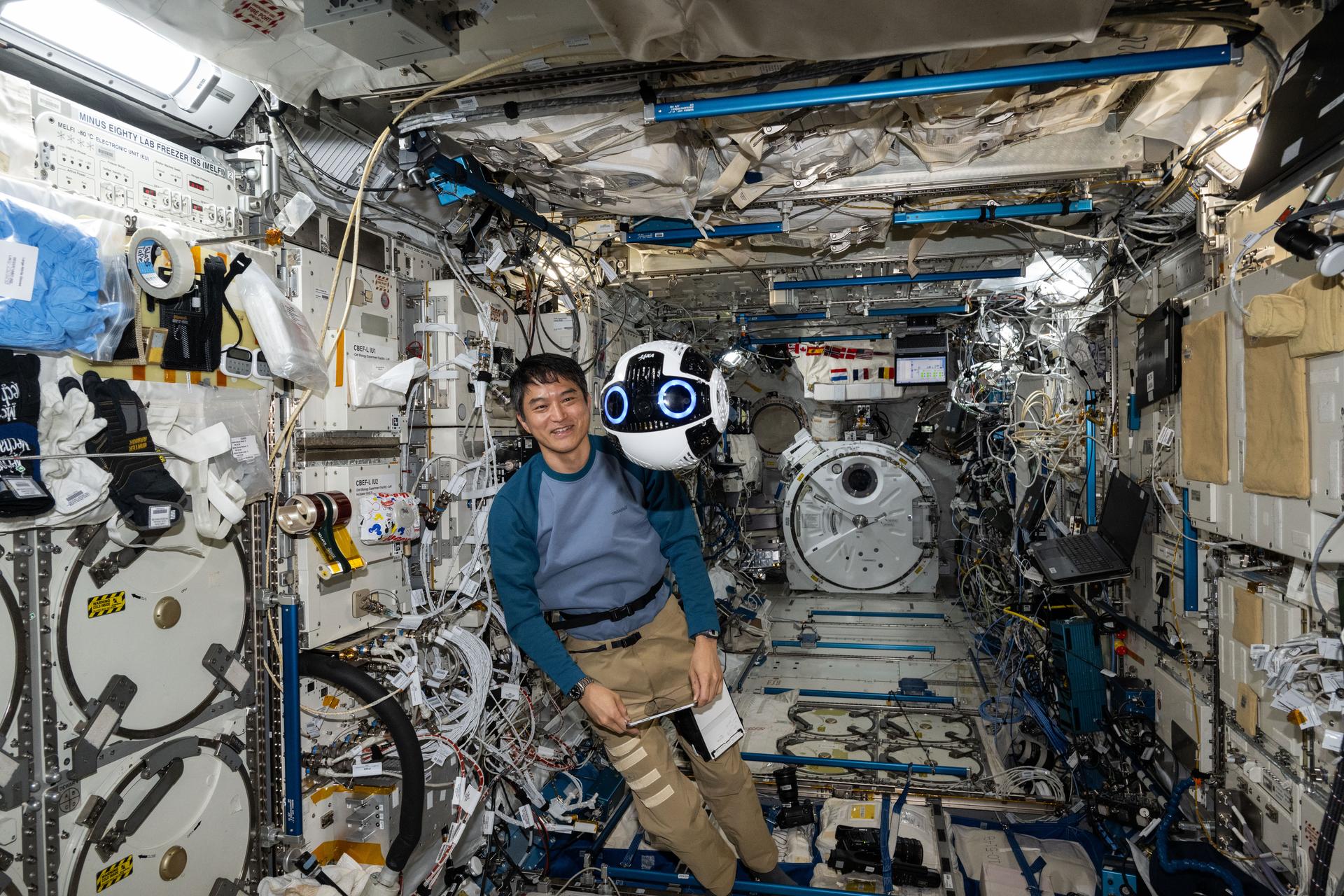
    Onishi is wearing a long-sleeved, two-toned blue shirt and khaki pants and holding a tablet with both hands. A black-and-white robot, about the size of a soccer ball, with two round, blue lights that resemble eyes, floats in front of him. Onishi is looking at the robot and smiling.
    NASA

    Astronaut Takuya Onishi of JAXA (Japan Aerospace Exploration Agency) monitors the JEM Internal Ball Camera 2 as it floats through the International Space Station. The free-flying, rechargeable camera provides a visual field outside the other cameras installed aboard the space station. JAXA is testing the robot’s ability to capture video and imagery of scientific experiments and other activities, which could free up crew time for research and other duties.

    Two rings to pin them all

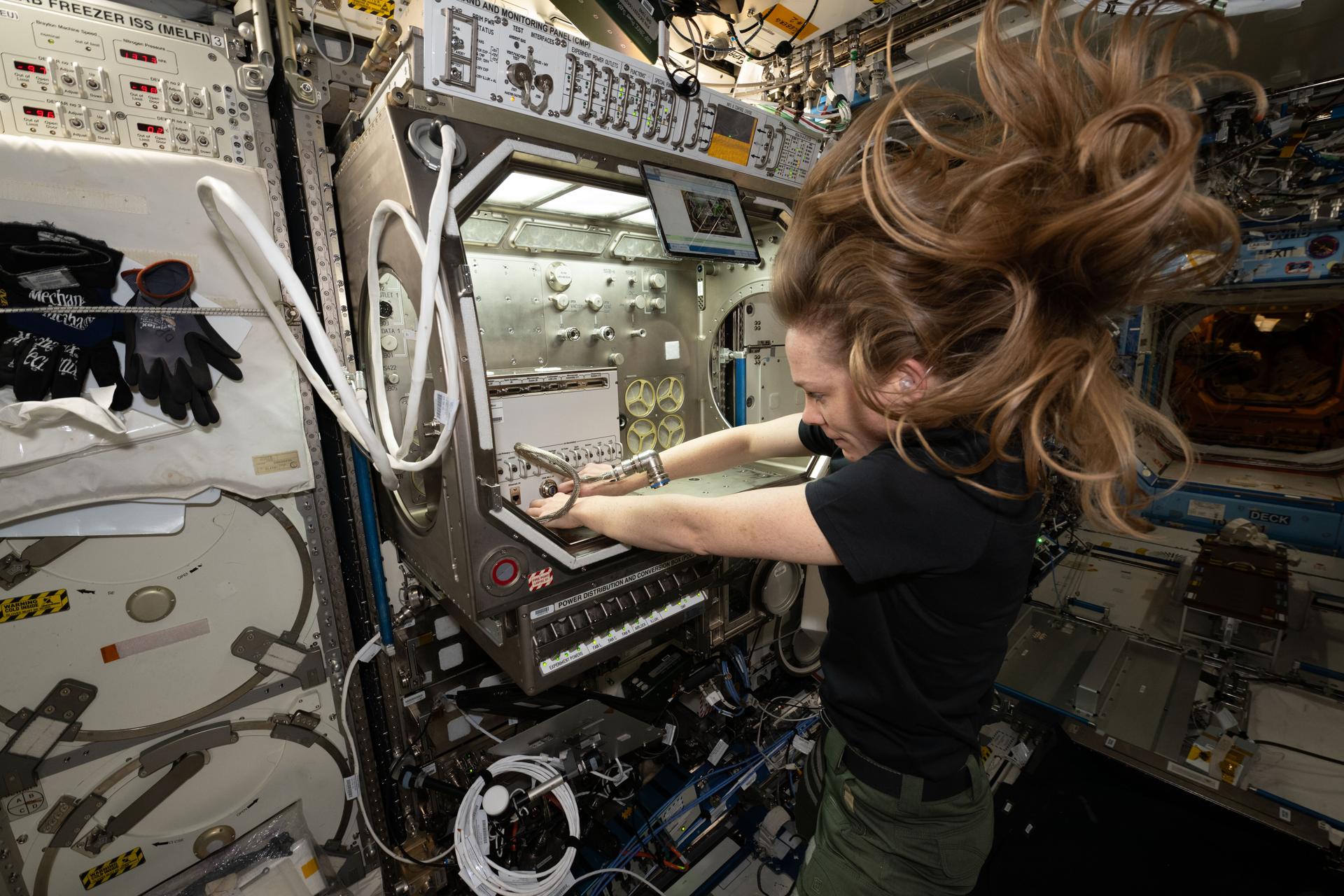
    Ayers is wearing a black T-shirt and green pants, with her hair floating around her head. She has both hands on a connection port on the front of a white panel with a row of black buttons. A thick silver cord floats next to her left arm. A bank of lights is above the equipment, and a tablet is mounted in front of the lights.
    NASA

    NASA astronaut Nichole Ayers sets up the space station’s Ring Sheared Drop device, which uses surface tension to pin a drop of liquid between two rings. The device makes it possible to study liquid proteins without a solid container, eliminating interactions between the solutions and container walls that can affect results. The Ring Sheared Drop-IBP-2 experiment studies the behavior of protein fluids in microgravity and tests predictive computer models. Better models could help advance manufacturing processes in space and on Earth for next-generation medicines to treat cancers and other diseases.

    Crystallization research

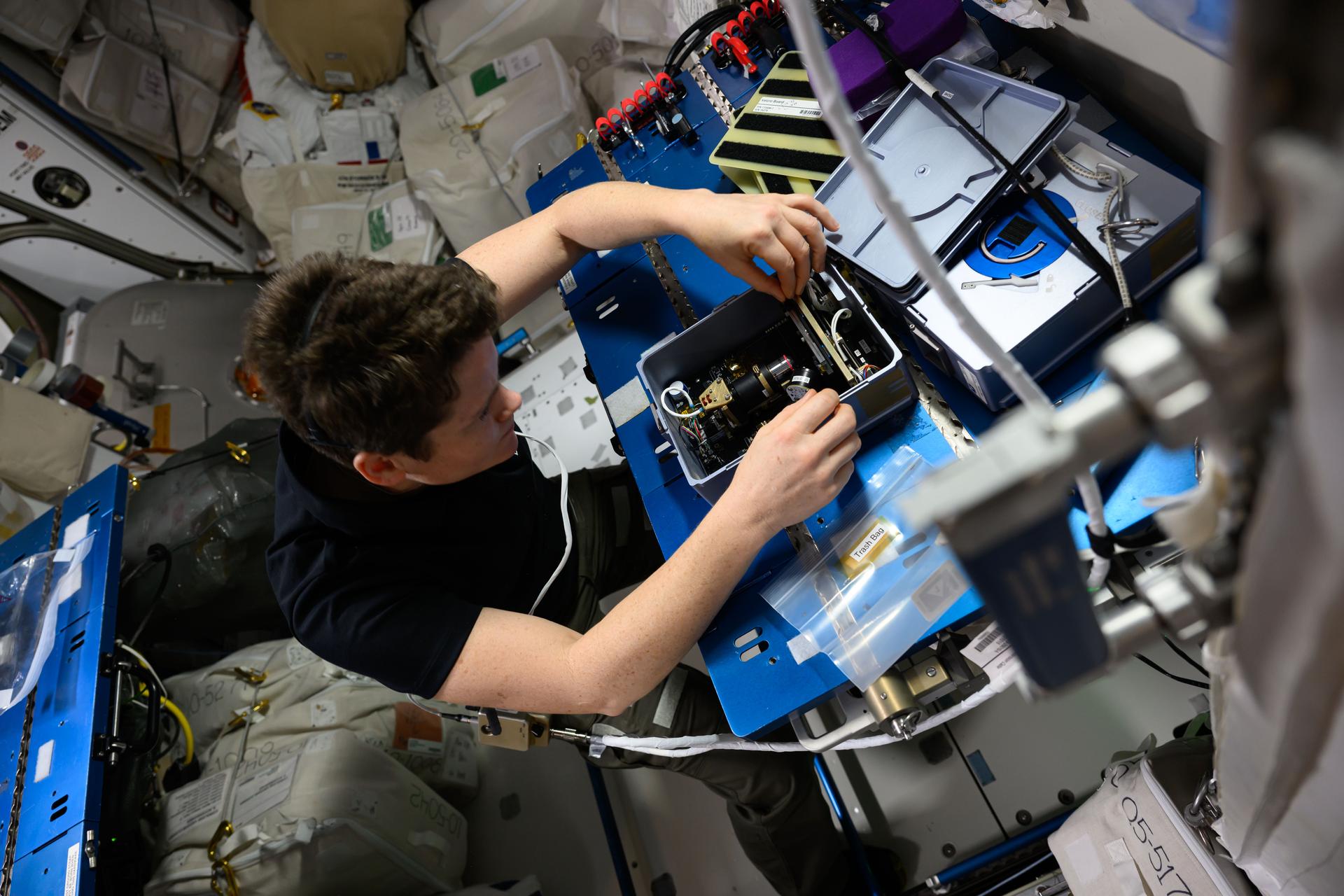
    McClain, wearing a black t-shirt and green pants, examines an open gray box on a blue workbench. She reaches into the box with both hands, adjusting the hardware inside. The box lid lies on the bench. Inside the box is a cylindrical black device with a gold screw plate and multiple attached wires.
    NASA

    NASA astronaut Anne McClain swaps out hardware in the International Space Station’s Advanced Space Experiment Processor-4, which enables physical science and crystallization research. A current investigation uses the processor to demonstrate technology that may be able to produce medications during deep space missions and improve pharmaceutical manufacturing on Earth.

    Monitoring astronaut health

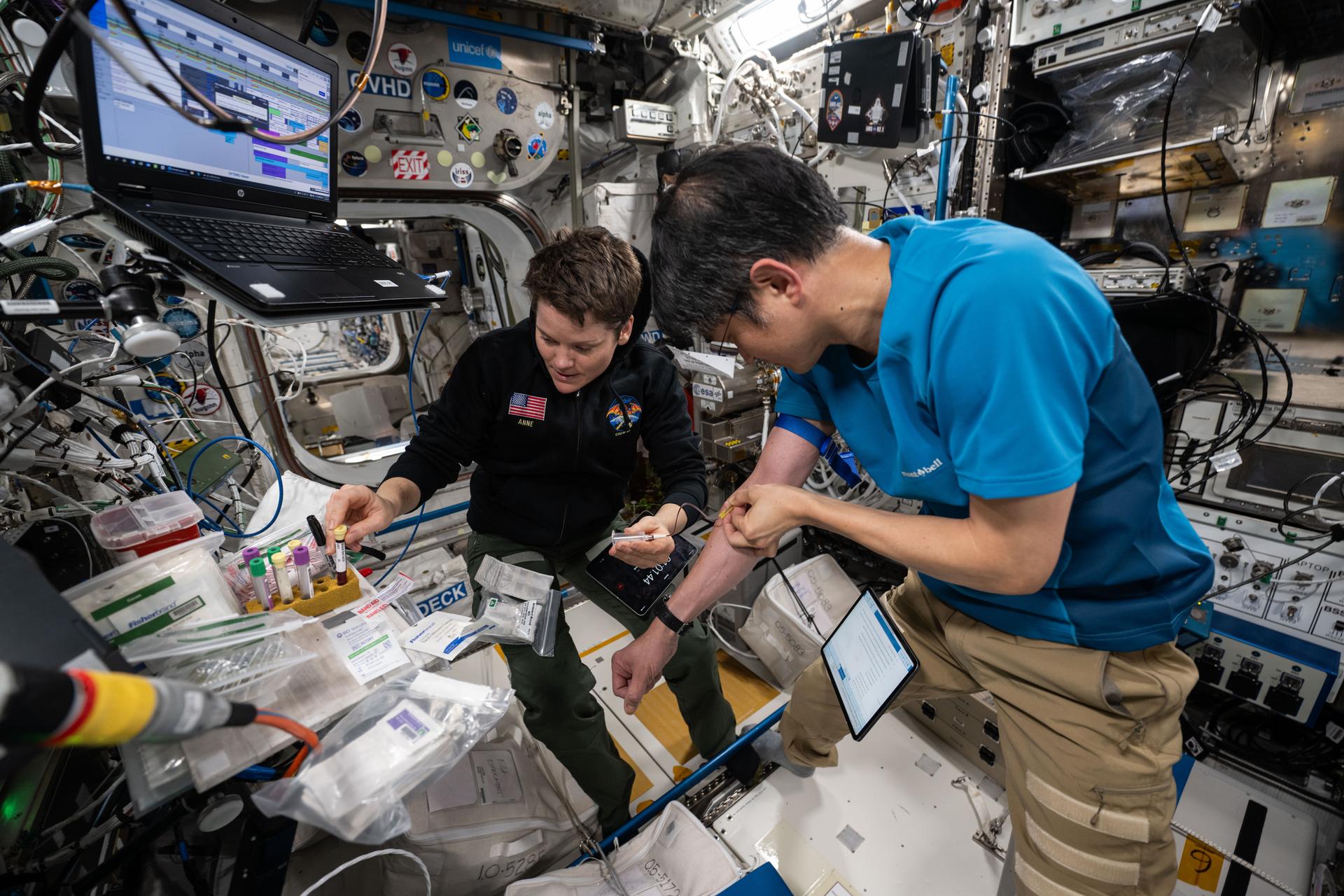
    Onishi, wearing a blue shirt and khaki pants with a tablet attached to his right leg, inserts a needle into his right arm. A tube connects the needle to a syringe held by McClain, who wears green pants, a black jacket with an American flag and Crew 10 patch, and she also has a tablet on her leg. With her right hand, she places a vial into a rack holding six other vials and a marker.
    NASA

    NASA astronaut Anne McClain helps JAXA (Japan Aerospace Exploration Agency) astronaut Takuya Onishi collect a sample of his blood. Analysis of blood samples is one tool NASA uses to continuously monitor crew health, including cardiovascular and immune system functions, bone and muscle mass changes, nutritional and metabolic status, and mental well-being. Crew members aboard the International Space Station also participate in various ongoing studies to better understand how different body systems adapt to weightlessness.

    Catching a corona

    The lower right corner of this image is a black arc, which is a portion of the Sun with its light blocked. A thin blue line marks the edge of the arc, and above it is a swath of light green interspersed with red and yellow blotches. The green and yellow extend up and down into a band of blue above, marked at the top by a thin purple line.
    NASA/KASI/INAF/CODEX

    This animated, color-coded heat map shows temperature changes in the Sun’s outer atmosphere, or corona, over several days, with red indicating hotter regions and purple showing cooler ones. Scientists can observe these changes thanks to the International Space Station’s CODEX, which collected data during the Crew-10 mission. The instrument uses a coronagraph to block out sunlight and reveal details in the Sun’s corona. Data from this investigation could help scientists understand the energy source of the solar wind, a flow of charged particles from the Sun that constantly bombards Earth.

    Expanding in-space crystallization

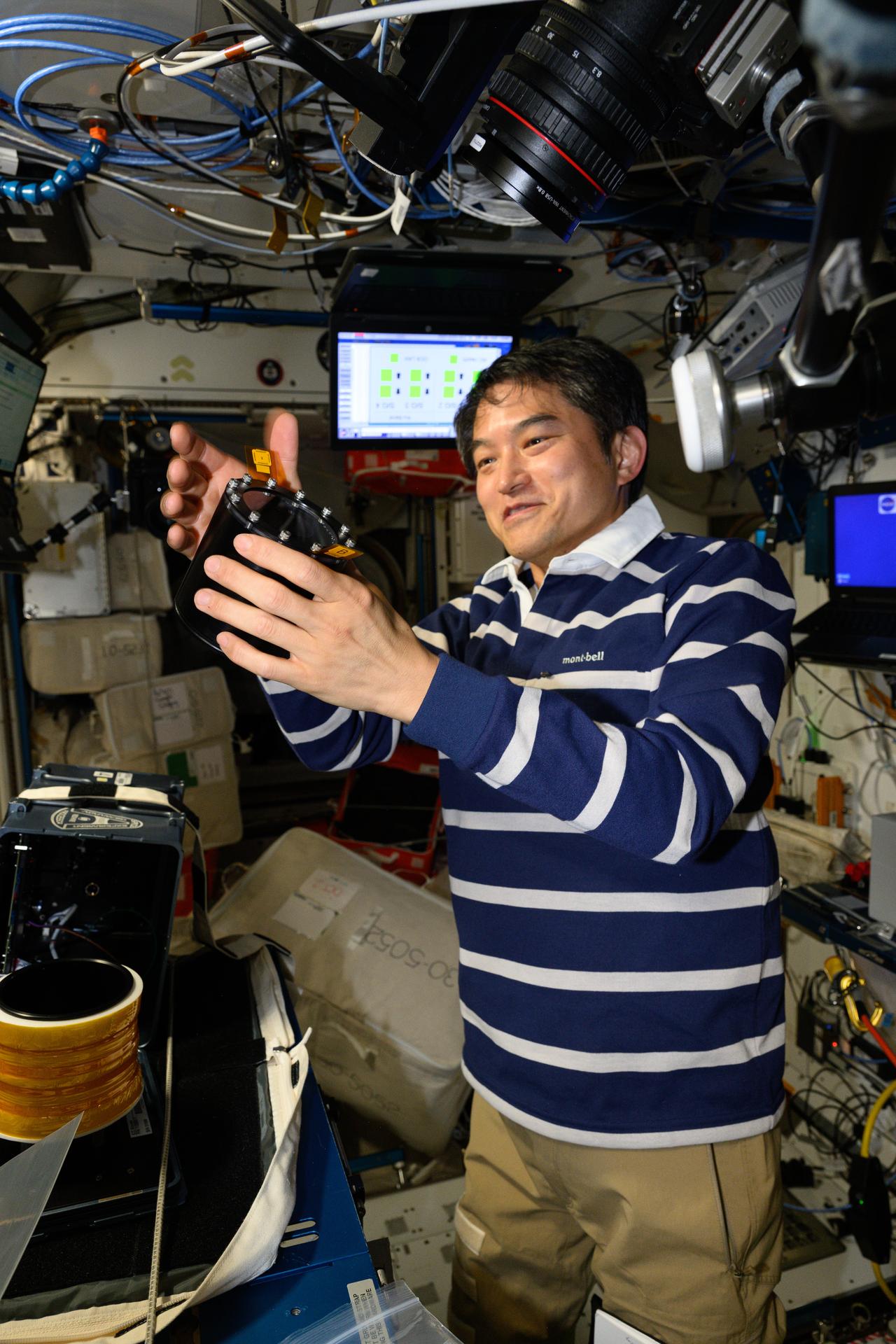
    Onishi wears a long-sleeved blue-and-white striped shirt and khaki pants. He is looking at a piece of equipment in his hands and smiling. The equipment is a black cylinder slightly larger than a soup can, with 12 metal screw caps around its top edge.
    NASA

    Astronaut Takuya Onishi of JAXA (Japan Aerospace Exploration Agency) services the International Space Station’s Advanced Space Experiment Processor-4 in preparation for ADSEP-Industrial Crystallization Cassette. This investigation tests new hardware that scales up research and could enable in-space production of pharmaceuticals and other materials for commercial space applications.

    Sowing seeds in space

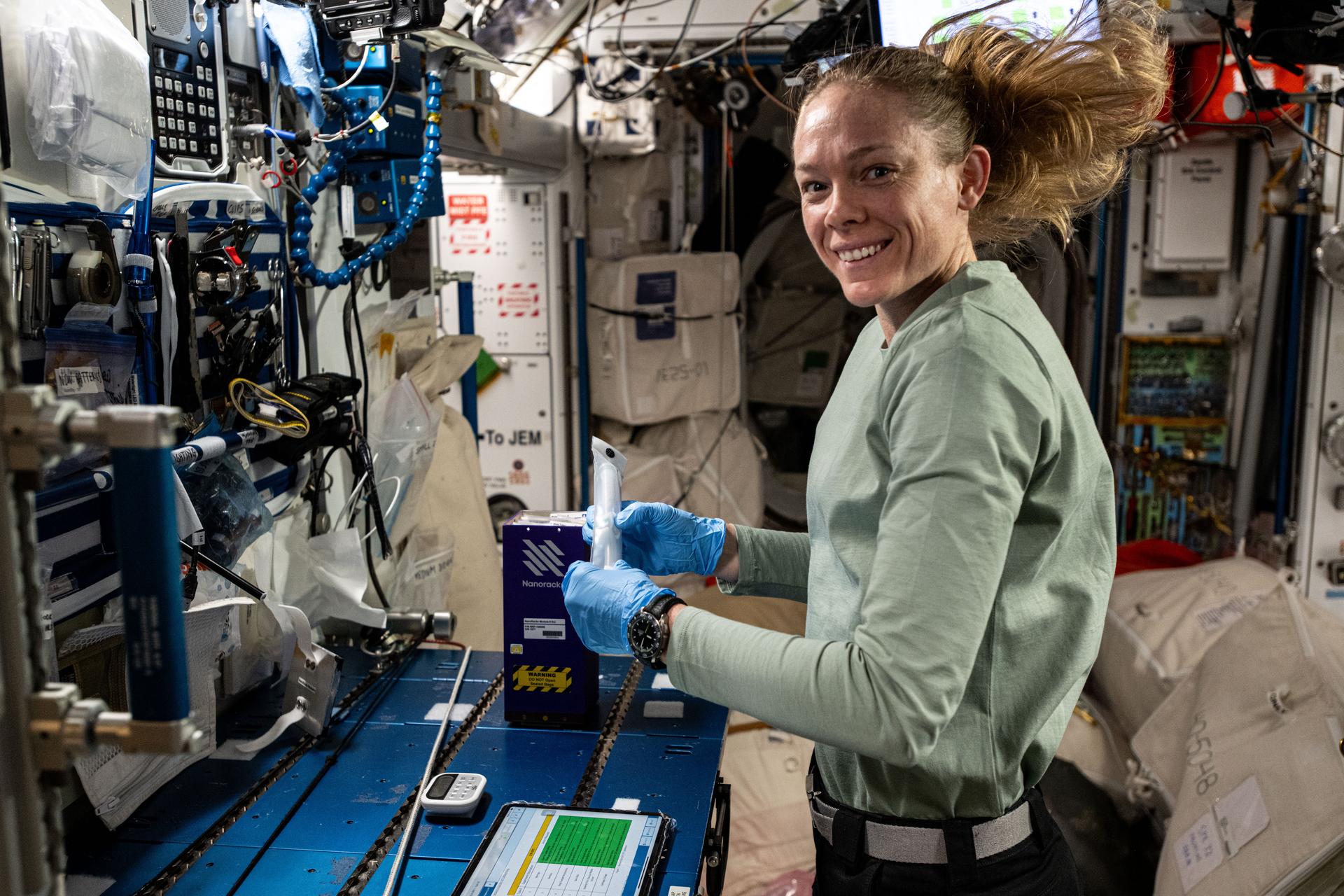
    Ayers is wearing a long-sleeved light green shirt and blue latex gloves. Her hair is in a ponytail. She floats in front of a blue workbench, smiling at the camera over her left shoulder. She is holding a packaged mixture tube in both hands.
    NASA

    NASA astronaut Nichole Ayers prepares mixture tubes containing samples for Nanoracks Module-9 Swiss Chard. This student-designed experiment examines whether the size, shape, color, and nutritional content of Swiss chard seeds germinated in space differ from those grown on Earth. The International Space Station hosts ongoing plant research as a source of food and other benefits, including contributing to astronaut well-being, for future long-duration missions.

    Protecting astronaut vision

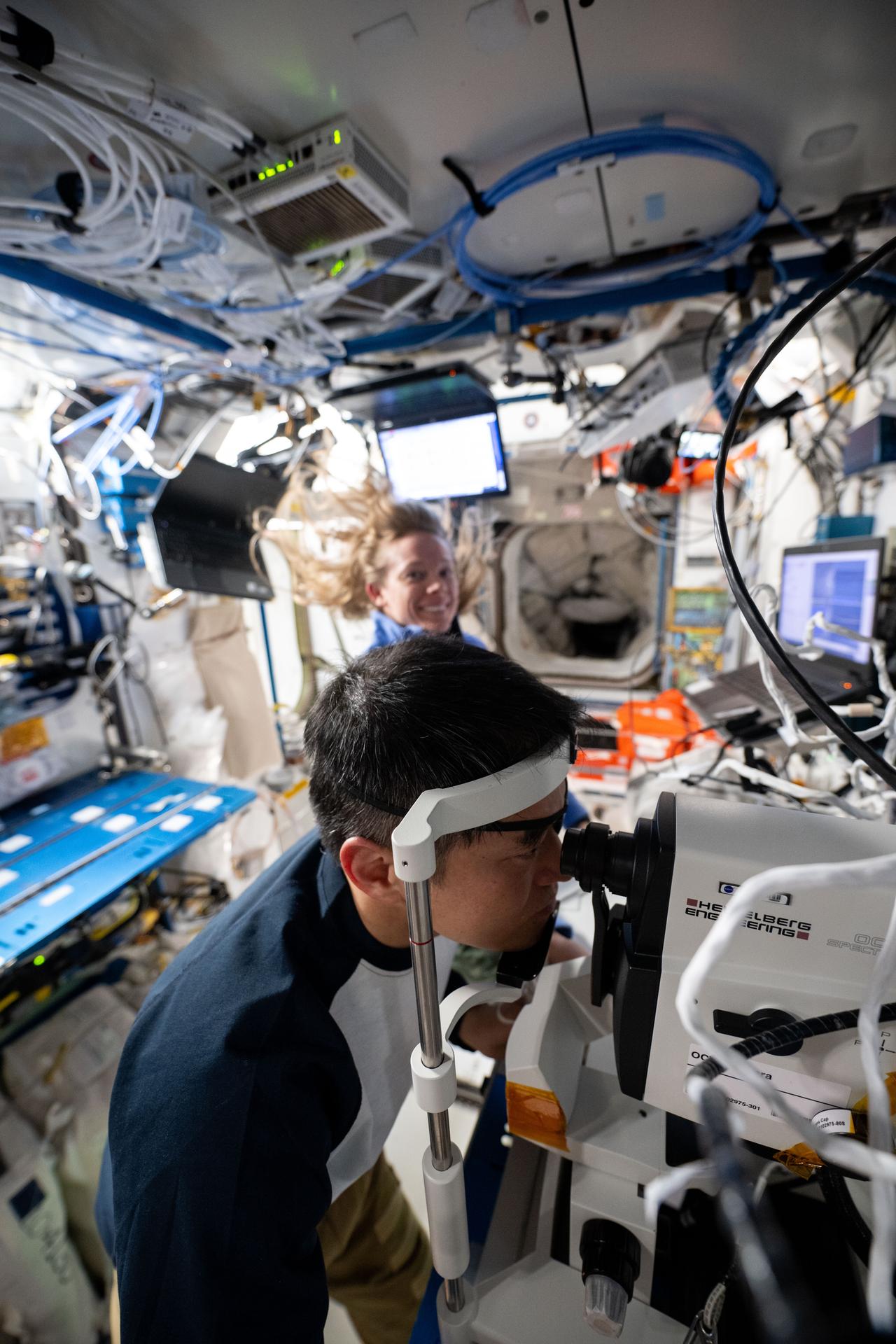
    Onishi, wearing a long-sleeved dark blue and white shirt, is facing the eye exam equipment, which is a white box about the size of a shoebox with a black eyepiece extending from the front. He is looking into the device with his forehead against a white bar and his chin on a black chin rest. Ayers is behind him, smiling but slightly out of focus.
    NASA

    Spaceflight can cause changes to eye structure and vision, so crew members monitor eye health throughout their missions. Astronaut Takuya Onishi of JAXA (Japan Aerospace Exploration Agency), assisted by NASA astronaut Nichole Ayers, conducts an eye exam aboard the International Space Station using optical coherence tomography. This technology uses reflected light to produce 3D images of the retina, nerve fibers, and other eye structures and layers.

    Details

    Last Updated

    Aug 05, 2025

  • Curiosity Blog, Sols 4616-4617: Standing Tall on the Ridge

    4 min read

    Curiosity Blog, Sols 4616-4617: Standing Tall on the Ridge

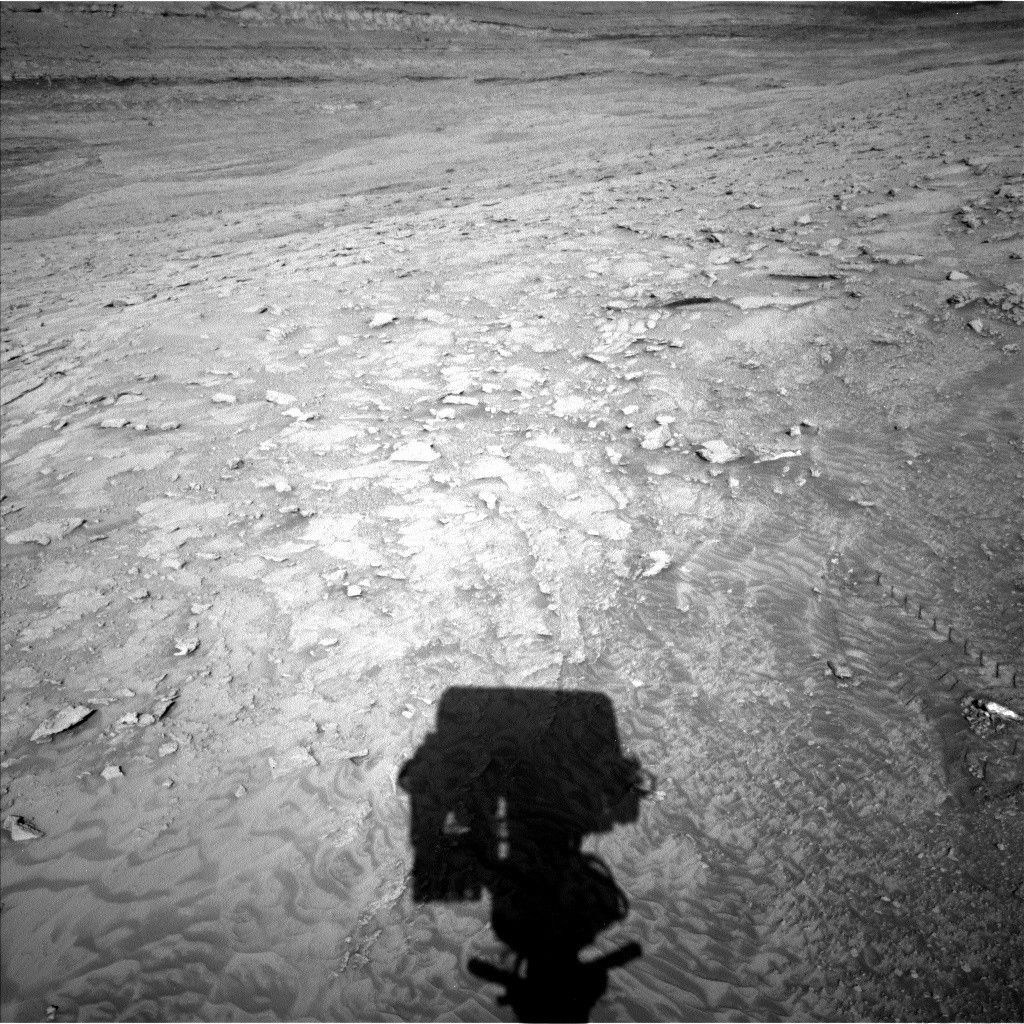
    An extreme wide-angle, grayscale photo from the Mars surface shows uneven terrain ahead of the rover, covered in numerous small to medium-sized rocks, all light gray and illuminated by sunlight. Impressions in the middle ground ahead form swooping backward Cs, and in the far distance a mountain rises from the ground, but looks very broad and squat, because of the distortion from the wide-angle lens. Parts of the rover are visible around the sides and bottom of the image, and its shadow fills much of the foreground.
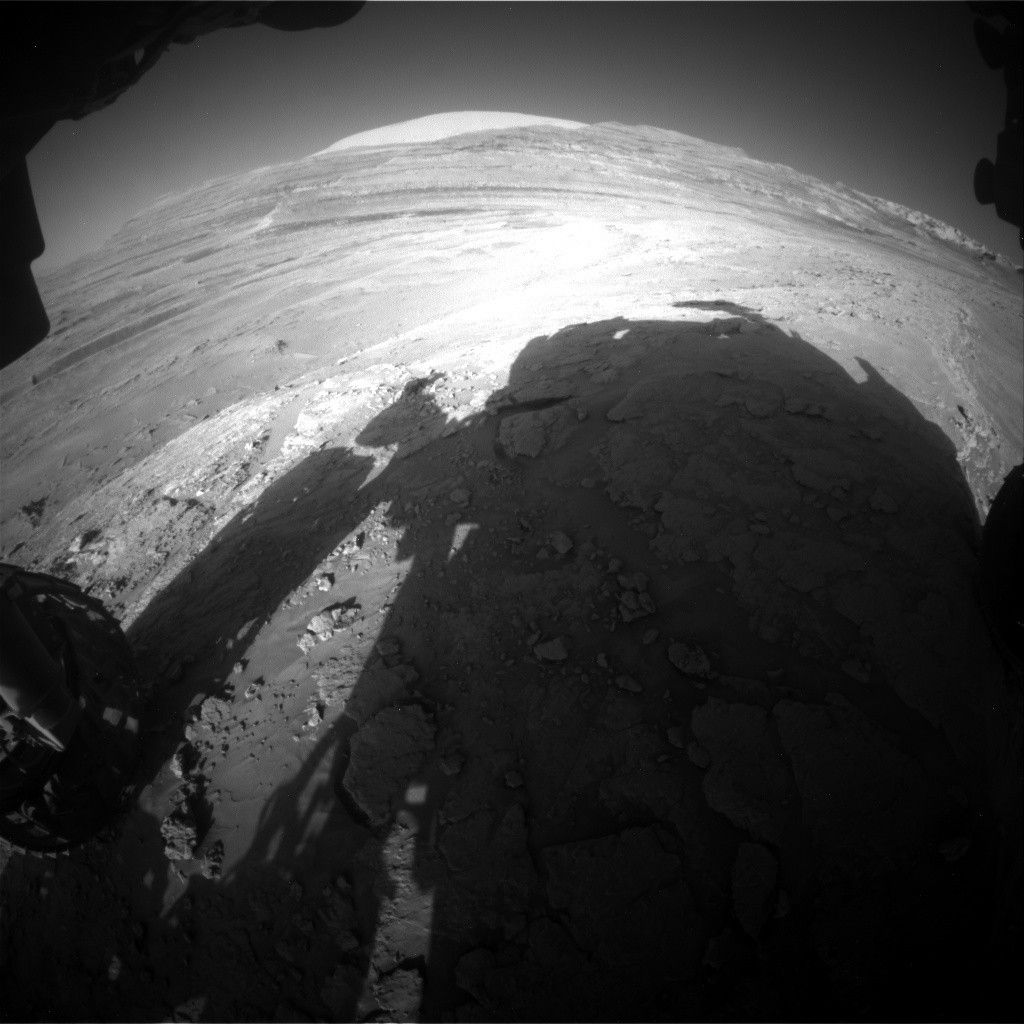
    NASA’s Mars rover Curiosity acquired this image, showing the impressive landscape it is currently navigating. The rover is standing tall on the ridge, its shadow casting forward, and Mount Sharp towers over the scene in the distance. Curiosity captured this image with its Front Hazard Avoidance Camera (Front Hazcam) on July 30, 2025 — Sol 4614, or Martian day 4,614 of the Mars Science Laboratory mission — at 02:24:02 UTC.
    NASA/JPL-Caltech

    Written by Susanne P. Schwenzer, Professor of Planetary Mineralogy at The Open University, UK

    Earth planning date: Wednesday, July 30, 2025

    The day started with a little celebration of NISAR, a new Earth observation satellite that made it successfully into orbit a few hours before our planning started. We joined in by saying “GO NISAR, NASA, JPL, and ISRO” (the Indian Space Research Organisation, NASA’s mission partner, which launched NISAR). Learn more at the NISAR mission hub. Although our team studies Mars, Earth is a planet, too, and we are very happy for our colleagues’ successful launch!

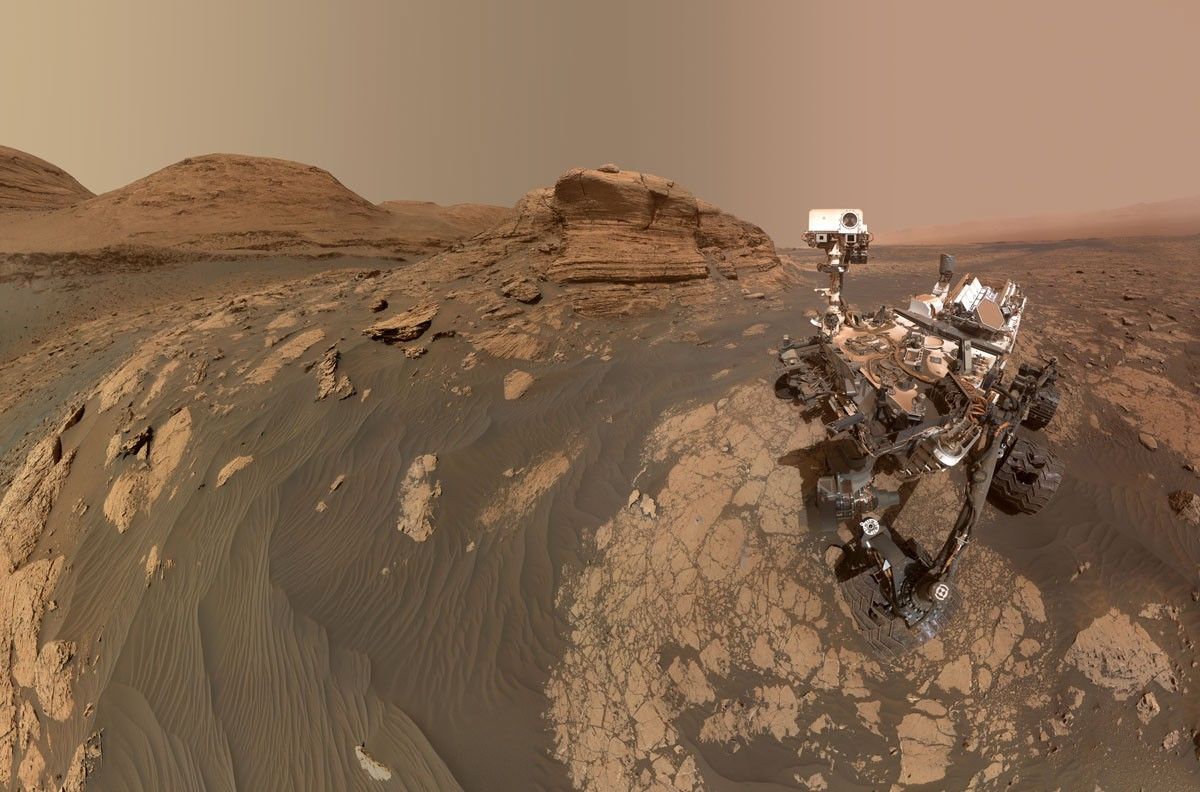
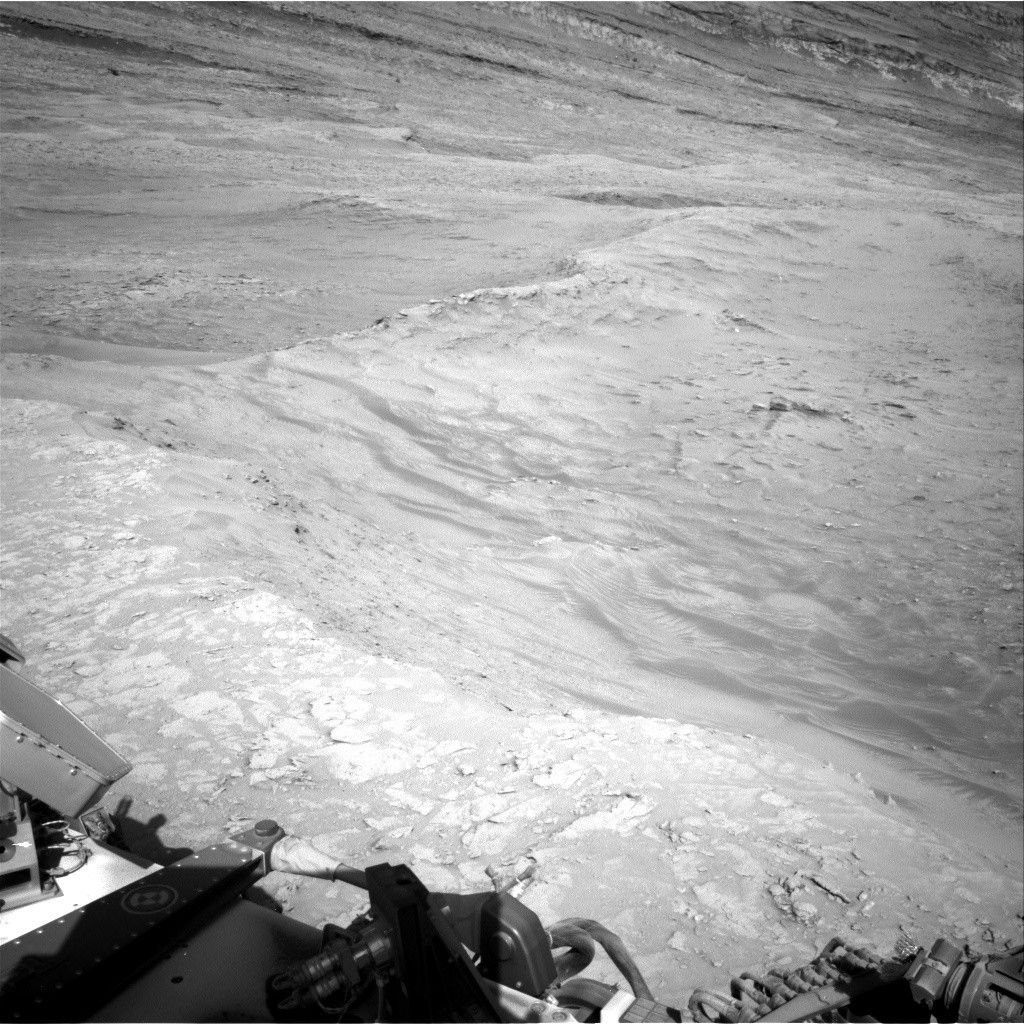
    On Mars, it’s still winter and the topic of every planning is how to maximize the science we can do given the increased power needs for heating our rover at this time of the year. Curiosity is parked on top of the main ridge, nicknamed the “autobahn.” It turned out to be not as smooth as its terrestrial namesake, as you can see in the image above. To arrive at this parking position, our rover drivers decided to take a small detour down into a flatter area and back up onto the ridge for safe off-road driving. The rover’s parking position allows for beautiful views around us, laying out the land of hollows and ridges perfectly to plan our next steps and to admire Mount Sharp in the distance.

    Standing tall on the ridge, we got several investigations of the ridge-forming materials into today’s plan. APXS, MAHLI, and ChemCam are all teaming up to investigate the target “El Salto.” This is a target that could get us a glimpse into what formed the central line that is running along the big ridge. If you look closely at the images there are subtle differences in color and texture, and we are all curious whether that translates to chemical differences, too.

    Of course, it’s not all about chemistry. Mastcam is busy documenting a small mound, and its context with veins and the hollow surrounding it, at the target “Llullaillaco.” The target “Cementerio De Tortugas” will capture sand ripples within a trough area, there is an extension of the workspace imaging in the plan for more context of today’s observations, and finally the ridge intersection is of interest at the target “Villa Abecia.” Of course, Mastcam didn’t forget the documentation of the ChemCam target “El Salto” and the AEGIS target from the last plan. Speaking of ChemCam: It’s using its imaging capabilities to document the side of the ridge to give finer details of the sedimentary structures of the target “Llullaillaco.”

    Atmospheric observations are also of highest interest at this time of the day. We continue our atmospheric monitoring by looking for dust devils as well as up toward the clouds in a joint observation with the CASSIS instrument, which is aboard the European Space Agency’s Trace Gas Orbiter. In addition, Curiosity continues to monitor wind and temperature throughout the plan, and the DAN (dynamic albedo of neutrons) instrument observes the rocks underneath the rover for their water content.

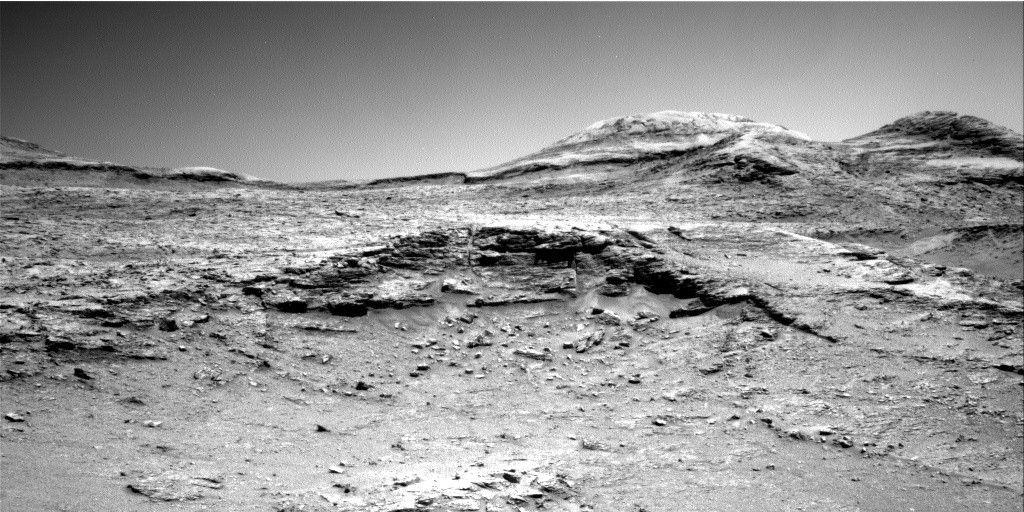
    After completing the observations at the current parking location, Curiosity will be driving off the ridge again, but this time to stay within the hollow, so we can make observations of the material that forms those hollows. Let’s see if we can find any chemical differences between those materials that might explain why one is standing up tall and the other one is weathering out. If you want to get a better impression of what I am talking about when I say ridges and troughs, have a look at this recent navigation camera mosaic.

    Details

    Last Updated

    Aug 04, 2025

    Related Terms