Category: News

http://www.subtome.com/#/subscribe?feeds=http%3A%2F%2Fftr.fivefilters.org%2Fmakefulltextfeed.php%3Furl%3Dglobal.jaxa.jp%252Frss%252Fnew.rdf%26max%3D3%26links%3Dpreserve&back=http%3A%2F%2Fftr.fivefilters.org%2Fmakefulltextfeed.php%3Furl%3Dglobal.jaxa.jp%252Frss%252Fnew.rdf%26max%3D3%26links%3Dpreserve

  • [Space Transportation Systems] H-IIA UPGRADE – Moving to a new stage

    H-IIA UPGRADE

    Enhanced launch performance to cope with geostationary satellite launch –
    Adopting it to the H-IIA Launch Vehicle No. 29, our upgraded flagship launch vehicle

    The “geostationary orbit” is about 36,000 km above the Earth’s equator. The orbit is used by meteorological and communication satellites.
    For entering into the geostationary orbit, a satellite is injected into the “geostationary transfer orbit (GTO)” by a launch vehicle. To date, a satellite has to fly to the geostationary orbit by its own thrust (in other words, by using its onboard engine consuming its loaded propellant) after being inserted into the GTO. Long-Coast (Improving the launch vehicle engine for longer space flight) and multiple-time ignitions enables us to inject a satellite into a closer point to the geostationary orbit.
    By placing a satellite into the orbit closer to the geostationary orbit, less propellant is necessary for the satellite to move to the final destination, thus the volume (weight) for that unnecessary propellant can be used for a larger observation sensor or extra propellant for longer satellite life.

    Renovated flight performance and launch vehicle engine to take a satellite farther

    1. Painting the liquid hydrogen tank in white to reduce propellant evaporation due to sun light
      During space flight, the launch vehicle is constantly heated by the sun and the liquid hydrogen (which is about minus 250 degrees Celsius) in the tank evaporates. By coting the tank surface with special white paint, the tank surface reflects the sun light to reduce propellant evaporation to contribute to Long-Coast.
    2. Decreasing the volume of liquid oxygen for cooling to a third by renovating the engine cooling function
      To ignite the engine, the turbo pump has to be cooled using liquid oxygen. We have developed a new cooling system called the “trickle pre-cooling” to significantly reduce the consumption of liquid oxygen during Long-Coast so that more liquid oxygen can be used for engine operation.
    3. BBQ rolling the launch vehicle to prevent avionics from being heated by the sun
      When one specific side of the launch vehicle is constantly hit by sunlight, the temperature of only that side goes up. By slowly rolling the launch vehicle like a (barbecue (BBQ) roll) while maintaining its attitude vertically against sunlight, we can keep the temperature of all parts of the launch vehicle constant.
    4. Reducing the consumption of propellant for attitude control by effectively utilizing evaporating propellant
      During the Long-Coast, propellant has to be held at the bottom part of the tank to avoid propellant evaporation as much as possible. For that, the propellant for attitude control (Hydrazine) used to be emitted backwards. In the case of Long-Coast, the volume of Hydrazine will not be enough; therefore, in the new system, evaporating propellant will be effectively used.
    5. Equipped with a large volume power source and high performance antenna for long flight
      We developed a large-size lithium ion battery to secure power for avionics during the Long-Coast. A high performance antenna is also installed on the launch vehicle for assuring communication with the launch vehicle even from 36,000 km away to acquire flight status data from the vehicle, such as the engine operation status, even when it reaches near the geostationary orbit.

    Adding the function to control second stage engine thrust (engine power)

    The speed of the launch vehicle near the geostationary orbit (apogee) is slow, thus, if the second stage engine is ignited to full power (100% thrust), it is too powerful to precisely inject a payload into the target orbit. Therefore, we added a function called the “throttling function” to control the second stage engine thrust to 60% so that more flexible orbit insertion becomes possible.

    1. Ignite the second stage engine (second time) at the perigee to increase speed.
    2. Long space flight (“long coast”) for about four hours without separating the second stage and a payload.
    3. Ignite the second stage engine for the third time at the apogee to increase speed, and separate the payload to inject it into the upgraded geostationary transfer orbit (upgraded GTO).
    4. The payload increases its speed at the apogee and enters into the geostationary orbit.

    This entry passed through the Full-Text RSS service – if this is your content and you’re reading it on someone else’s site, please read the FAQ at fivefilters.org/content-only/faq.php#publishers.

  • [Project Topics] “Ryugu” was selected as name of Hayabusa2 target asteroid

    Topics List

    Oct. 5, 2015 Updated
    “Ryugu” was selected as name of Hayabusa2 target asteroid

    Asteroid 1999 JU3, a target of the Asteroid Explorer “Hayabusa2,” was named “Ryugu”.
    One major reason for the selection was that, in the Japanese ancient story “Urashima Taro”, the main character, Taro Urashima, brought back a casket from the Dragon’s palace, or the “Ryugu” Castle, at the bottom of the ocean, and the theme of “bringing back a treasure” is common as the Hayabusa2 will also bring back a capsule with samples. It was selected among 7,336 entries.
    The Lincoln Near Earth Asteroid Research (LINEAR) Team of the United States, which discovered 1999 JU3, proposed the suggested name of “Ryugu” to the International Asteroid Union (IAU), and it was finalized by being listed on the Minor Planet Names: Alphabetical List of the IAU Minor Planet Center.
    Thank you very much to so many of you who took part in the naming campaign.

    “Ryugu” was selected as name of Hayabusa2 target asteroid

    Sep. 2, 2015 Updated
    Hayabusa2 additional ion engine operation for Earth swing-by

    On Sept. 1 (Tue.) and 2 (Wed.), the ion engine of the Hayabusa2 was additionally operated in order to increase the orbit control accuracy for the Earth swing-by.
    The additional jet emission was completed as scheduled, and the ion engine was operated for about 12 hours in total.
    We will analyze telemetry data (data sent from the explorer to indicate its condition) in detail to confirm the status of the engine during the operation and orbit control before and after the emission.
    Figure: Positional relation of Hayabusa2, the Earth, the Sun, and Asteroid 1999JU3 (Schematic as of Sept. 1, 2015)

    Hayabusa2 additional ion engine operation for Earth swing-by

    Jul. 22, 2015 Updated
    Naming Proposal Campaign: Become a godparent of asteroid “1999 JU3”, destination of Hayabusa2!

    JAXA is holding a naming proposal campaign to christen the asteroid “1999 JU3″,which the Hayabusa2 is scheduled to visit in June or July 2018. Why don’t you try to become a godparent of the asteroid?
    The application period is from 1:30 p.m. on July 22 thru 11:59 p.m. on August 31 (Japan Standard Time.)

    August 31, 2015 at 11:59 p.m. (Japan Standard Time). (Extended from 10:00)

    Jun. 8, 2015 Updated
    Hayabusa2 second ion engine continuous operation completed

    The Hayabusa2 has been continuously operating its ion engine for the second time since June 2, and successfully completed its operations at 0:25 a.m. on June 7 (Japan Standard Time.) The second continuous operation lasted for 102 hours as scheduled.
    The Hayabusa2 performed the ion engine continuous operation in preparation for the Earth swing-by planned in December, and the total hours of the first and second operations (409 hours and 102 hours respectively) reached 511 hours.
    The ion engine operation may be conducted again if needs arise for subtle orbit change after carefully examining the second operation result.

    Hayabusa2 second ion engine continuous operation completed

    Apr. 10, 2015 Updated
    Baton pass to new Hayabusa2 project manager

    The Hayabusa2 is stably flying in space. The new fiscal year has just started in Japan, and JAXA is taking a new step as we became a National Research and Development Agency from the previous independent administrative agency. The Hayabusa2 project is also taking a fresh step with a new team, including handing the baton over to a new project manager. All members of the project are engaged in the mission with a fresh mindset.

    Message from New Project Manager Yuichi Tsuda

    The Hayabusa2 is stably flying since its launch and smoothly continuing it interplanetary cruising. I can, therefore, take over the mission at the best condition from my predecessor, former Project Manager Hitoshi Kuninaka, who led the development of the project. With many operation experts joining the new team, we would like to successfully send the Hayabusa2 to the asteroid 1999JU3, and have it come home safely.
    The Hayabusa2 mission is challenging an unexplored field. We would like to contribute to enhancing the value of technology, science and space exploration through our accomplishments in traveling through the solar system in this six-year mission.

    Message from Former Project Manager Hitoshi Kuninaka

    As the development phase is over, Hayabusa2’s deep space exploration has started.
    At the beginning of this fiscal year, a multiple number of our project members including myself were subject to personnel changes. Our team worked well with good team spirit to tackle and overcome various obstacles and difficulties. Therefore, I felt a bit disappointed to see part of the team was shuffled. Having said that, those who remain in the team as well as the leaving members vow to work hard and do our best using our expertise in space projects no matter what department we are assigned to. Your continued support for the Hayabusa2 is very much appreciated.

    Photo: left: New Project Manager Yuichi Tsuda, right: Former Project Manager Hitoshi Kuninaka

    Baton pass to new Hayabusa2 project manager

    Mar. 5, 2015 Updated
    Hayabusa2 initial functional confirmation completed and moved to cruising phase to asteroid

    The Asteroid Explorer “Hayabusa2,” launched on Dec. 3, 2014, completed its initial functional confirmation period of about three months. The explorer was moving to the cruising phase on March 3 while heading to the asteroid “1999 JU3.”
    The Hayabusa2 is in good health. It will be under preparatory operation including speed increase by continuous operation of the ion engines for an Earth swing-by scheduled in Nov. or Dec., 2015.

    Hayabusa2 initial functional confirmation completed and moved to cruising phase to asteroid

    Feb. 3, 2015 Updated
    Hayabusa2 in great shape – Initial functional confirmation going smoothly

    The Hayabusa2, launched on Dec. 3, 2014 (JST), is now undergoing the initial functional confirmation. Basic operations and performance of onboard instruments and ground systems have been tested one by one as of the end of January.
    Here are some major examples of what we confirmed.

    1. Ion engine test operation (one unit at a time)
      Four ion engines were being operated one by one. A thrust of 7-10 mN was generated on the orbit for the first time.
    2. Establishing communication by Ka band communication equipment (Between Jan. 5 to 10, 2015)
      Communication was successful between the Hayabusa2 and NASA DSN stations to establish deep-space Ka-band communication for the first time for a Japanese space explorer. Ka-band communication will be used to send observation data during the mission for the Hayabusa2 to stay near the asteroid.
    3. Ion engine can autonomously operate for 24 hours.
      Long duration of autonomous operation (*1) with two or three ion engines was tested, and 24-hour continuous operation was attained.
      The maximum thrust was confirmed to be about 28 mN, which is the expected value.

    The explorer is currently in good shape.
    We will further confirm the coordinated function of multiple instruments of the Hayabusa2, and plan to move to the cruise operation phase (*2) sometime in March.

    *1 The autonomous operation is automatic control of an engine without instructions from the ground.
    *2 The mode of full-scale navigation operation toward the asteroid through acceleration and orbit control by ion engine thrust.

    Hayabusa2 in great shape – Initial functional confirmation going smoothly

    Dec. 5, 2014 Updated
    Hayabusa2 flying smoothly!

    JAXA confirmed the completion of a sequence of the important operations for the “Hayabusa2” mission. With this confirmation, the critical operation phase* of the Hayabusa2 was completed.
    The explorer is now in a stable condition.

    We would like to express our sincere appreciation to all parties and personnel concerned for their support and cooperation with the Hayabusa2 launch and tracking control operations.
    In addition, we would also like to ask for your continued cooperation and support for the long-term Hayabusa2 space exploration mission.

    Please send your support messages for the mission! (you can send a message from Hayabusa2 Project page or tweet with hashtag #hayabusa2).

    Hayabusa2 flying smoothly!

    Dec. 3, 2014 Updated
    “Hayabusa2” successfully launched!

    H-IIA F26 with the Asteroid Explorer “Hayabusa2” onboard launched at 1:22:04 p.m. on Dec 3, 2014 (JST) from the Tanegashima Space Center.
    The rocket flew smoothly, and, at about approximately one hour, 47 minutes and 21 seconds after liftoff, “Hayabusa2” was separated from the H-IIA F26. We will update you with the latest information on the “Hayabusa2” on the project page.
    Please send your support messages for the mission! (you can send a message from Hayabusa2 Project page or tweet with hashtag #hayabusa2).

    Nov. 30, 2014 Updated
    “Hayabusa2” Launch rescheduled to 1:22:04 p.m. on December 3 (Mon.) 2014

    Mitsubishi Heavy Industries, Ltd. and JAXA have decided to postpone the launch of “Hayabusa2” and piggyback payloads by the H-IIA F26 to 1:22:04 p.m. on Dec 3 (Wed. JST).

    The live launch report will begin at 12:25 p.m. on December 3 (Mon. , JST). The report will be broadcast through the Internet.
    Please send your support messages for the mission! (you can send a message from Hayabusa2 Project page or tweet with hashtag #hayabusa2).

    We decided to postpone as a result of the go/no go decision meeting today which carefully checked the weather forecast and found that strong wind exceeding the weather restrictions was projected around the launch pad at the scheduled launch time on the previous schedule launch day of Dec. 1 (Mon.), 2014.
    *The launch may be delayed further depending on weather conditions and other factors.

    Nov. 29, 2014 Updated
    “Hayabusa2” Launch rescheduled to 1:22:43 p.m. on December 1 (Mon.) 2014

    The launch of the Asteroid Explorer “Hayabusa2” and three micro piggyback payloads by the H-IIA Launch Vehicle No. 26 was rescheduled at 1:22:43 p.m. on December 1 (Mon. Japan Standard Time, JST) after carefully studying the weather conditions.
    Accordingly, the live launch report will begin at 12:25 p.m. on December 1 (Mon. , JST). The report will be broadcast through the Internet.
    Please send your support messages for the mission, or tweet it including the hashtag #hayabusa2.

    Nov. 28, 2014 Updated
    Hayabusa2 launch postponement

    H-IIA Launch Vehicle No.26 with the Asteroid Explorer “Hayabusa2” onboard has been rescheduled as clouds including a freezing layer that exceeds the restrictions for suitable weather are forecast to be generated at around the scheduled launch time on November 30 (Sun.), 2014 (Japan Standard Time.)
    The new launch day will be announced as soon as it is determined.

    Hayabusa2 launch postponement

    Nov. 27, 2014 Updated
    New movie “Ready to Face New Challenges -Hayabusa2- “

    The new video clip titled “Ready to Face New Challenges -Hayabusa2- ” was uploaded to the YouTube.
    It has been four years since the Hayabusa’s dramatic return from space,bringing back the world’s first samples from an asteroid. To further clarify the mystery of the origin and evolution of human beings, the Hayabusa2 is leaving for space. This video explains the special features and significance of the Hayabusa2 mission in an easy and simple manner.

    Nov. 4, 2014 Updated
    “Hayabusa2″ Launch Live Broadcast (by H-IIA F26)

    JAXA will broadcast a live report of the Asteroid Explorer Hayabusa2’s launch by the H-IIA Launch Vehicle No.26 (H-IIA F26) from the Tanegashima Space Center. The report will cover launch events from the liftoff to the payload separation from the launch vehicle.

    Program summary

    The broadcast program consists of two parts. The first half mainly focuses on launch events prior to and after liftoff. Then the latter half covers events before and after the Hayabusa2’s separation from the launch vehicle.

    *Please be aware that the time schedule of the program is subject to change due to progress of the launch operations.

    Program contents

    Part I
    Prior and after liftoff of H-IIA F26/Hayabusa2

    • Introduction of the Hayabusa2 mission including a VTR of its preparation operation
    • Introduction of piggyback payloads
    • Live launch report from the control room

    *The scheduled launch time is 1:24 p.m.

    Part I broadcast day and time
    12:30 p.m. thru 1:45 p.m. (75 minutes) on Nov. 30 (Sun.)

    • Prior to and after the Hayabusa2’s separation from the launch vehicle

    * Images of piggyback payloads’ separation will NOT be broadcast.
    * Hayabusa2’s separation is scheduled to take place one hour and 47 minutes after liftoff.

    Part II broadcast day and time
    3:00 p.m. to 3:30 p.m. (30 minutes) on Nov. 30 (Sun.)

    Internet live broadcast

    JAXA will distribute our live report through the following Internet channels.

    * The copyright of the live broadcast belongs to JAXA.
    * Please be aware that a slight time lag up to a few minutes may occur due to the Internet’s characteristics.

    We are welcoming support messages at the special site. Please send your messages for the mission, or tweet it. To tweet on Twitter, please attach the hashtag, #hayabusa2.
    Click the following link to send a message to JAXA.

    “Hayabusa2

    Sep. 30, 2014 Updated
    New voyager to travel deep into space! Hayabusa2 to be launched on Nov. 30

    The launch date and time for the H-IIA Launch Vehicle No. 26 (H-IIA F26) with the Asteroid Explorer “Hayabusa2” onboard was decided to be at 1:24:48 p.m. on November 30 (Sunday), 2014 (Japan Standard Time)*.
    Launch site is Yoshinobu Launch Complex at the Tanegashima Space Center.
    * Launch time will be set for each launch day if the launch is delayed.

    The latest information about “Hayabusa2” and its launch preparation status will be updated on the “Hayabusa2” project page.
    We welcome your support message for the Hayabusa2.
    Please send your support messages for the mission, or tweet it including the hashtag #hayabusa2.

    New voyager to travel deep into space! Hayabusa2 to be launched on Nov. 30

    Sep. 5, 2014 Updated
    Hayabusa2 revealed to the media

    The Asteroid Explorer “Hayabusa2” was shown to the media at Sagamihara Campus on August 31, 2014.

    The Hayabusa2 is the successor of the Hayabusa, which captured sample particles from an asteroid and returned to the Earth in 2010. By capitalizing on the experience of the Hayabusa, the Hayabusa2 aims at acquiring samples and bringing them back from the C-type asteroid “1999JU3” to elucidate the origin and evolution of the solar system and material for life.

    “I am bracing for the new voyage of the Hayabusa2.” said Project Manager Kuninaka.
    The Hayabusa2 will be transferred to the Tanegashima Space Center for its launch in this winter after its final check there.

    Hayabusa2 revealed to the media

    Nov. 20, 2013 Updated
    Hayabusa2 Small Carry-on Impactor undergoes test

    Hayabusa2’s Small Carry-on Impactor (SCI) underwent a test in October, 2013.
    The SCI is a device to create an artificial crater of the asteroid 1999JU3, which the Hayabusa 2 will travel toward. By making and observing an artificial crater, we can acquire data not only about the surface but also about the inside of the asteroid. In addition, by sampling near the crater, we can collect inside samples of the asteroid.
    Hayabusa2 applies a method to throw a metal projectile against the asteroid with high speed to create an artificial crater. Through the test this time, we confirmed the accelerating part of the projectile while aiming to verify if its speed, configuration, and thrown direction precision met the design when the pyrotechnics, which were comparable to those of actual ones for the flight, were ignited to set off the projectile.
    The test results were very impressive as the speed and configuration were almost as designed, and the direction precision was also good as the SCI precisely hit a target that was 100 meters away. We were able to successfully complete the performance confirmation test of the SCI pyrotechnic part.

    Hayabusa2 SCI test [JAXA Digital Archives]

    Hayabusa2 Small Carry-on Impactor undergoes test

    Jul. 17, 2013 Updated
    Campaign extended till August 9 (Fri.)!
    – Let’s attach your name and message to Hayabusa2 –

    JAXA has been conducting a campaign to attach names and messages of Hayabusa2 mission supporters from all over the world to the space probe! We would love to share this superb moment and feeling of achievement with you through this campaign.

    We would like to express our sincere appreciation to all of you who joined the campaign since it began on April 10 till today. Also we appreciate your cooperation for registering or sending your names and messages on time. Thank you very much.

    As we read the support messages for the Hayabusa2, we strongly felt that we would like to support this mission by being united with more of you.
    Luckily, the Hayabusa2 manufacturing schedule has allowed us to extend the campaign period!

    We are looking forward to hearing from more of you as an individual and/or as a community such as a family, a school or a company, and/or with your friends!

    With the Hayabusa2
    Let’s go to asteroid 1999 JU3, and return to Earth

    Jun. 14, 2013 Updated
    Hayabusa2 completes first integration test

    All processes of the Hayabusa2’s first integration test since January this year were completed on June 7. The test aimed at installing all onboard devices onto the satellite structure and confirming interfaces among them. During the mass property measurement, the last process of the integration test, the “Hayabusa2” exposed its full shape for the first time with all devices for the test installed.
    We will remove each device from the main body of the Hayabusa2, then the devices will be given their final touches. They will be tested again and assembled again to the explorer for the next-phase test. All the project team members will do our best as we have done to steadily implement the Hayabusa2 project.

    Mar. 29, 2013 Updated
    Hayabusa2 can carry your names and messages to space

    JAXA is holding a campaign to record your names, messages and illustrations onboard the asteroid probe Hayabusa2.
    Hayabusa2 is scheduled to be launched by the H-IIA launch vehicle in FY2014, then arrive at an asteroid in 2018 and investigate it for about one and half years, before returning to the earth in 2020.
    The campaign will start from April 10. We welcome your participation!

    Dec. 27, 2012 Updated
    Hayabusa2 revealed before the first integration test

    On Dec. 26, the Hayabusa2 was revealed at the Sagamihara Campus. As its design was completed this spring, the Hayabusa2 will soon undergo the first integration test to confirm the interfaces among onboard devices as well as between the devices and the explorer’s bus after assembling them onto the bus. Also, the flight models of the Hayabusa2’s main body and solar array paddles have already been manufactured, thus those models will be verified through a vibration test. In addition, the exposed environment for the onboard devices will also be measured. JAXA is developing the Hayabusa2 to be ready for its launch in FY2014.

    This entry passed through the Full-Text RSS service – if this is your content and you’re reading it on someone else’s site, please read the FAQ at fivefilters.org/content-only/faq.php#publishers.

  • [Gender Equality Office] Updated the Summary of Childcare Support System provided by JAXA

    Support systems provided by JAXA

    Hoshinoko Nursery School

    Hoshinoko Nursery School is an employer-provided nursery school opened in the Tsukuba Space Center in April 2012 as part of the support provided to JAXA employees that would ensure the healthy balance between meeting the demands of work and childcare. Hoshinoko Nursery School has a maximum admission capacity of 18 children (from 57 days old to the age before children attend elementary school) of JAXA employees and fulltime partner-employees at the Tsukuba Space Center (i.e., temporary workers and employees from subcontracting companies). This school provides children with a rich natural environment as a nursing environment where they could explore freely and easily. The target users of Hoshinoko Nursery School are the employees of JAXA and fulltime partner-employees at the Tsukuba Space Center.

    Special Leave

    From the stage of pregnancy until the stages of childbirth and after childbirth

    Leave System for Female Employees

    ① Health guidance and health examination for female employees who are expecting or nursing mothers or who have just given birth

    This system allows female employees who are expecting or nursing mothers or who have just given birth to leave from work and receive health guidance in accordance with their health examination results.

    Until the 23rd week of pregnancy: once per 4 weeks
    From the 24th week until the 35th week: once per 2 weeks
    From the 36th week until childbirth: once per week
    One year after childbirth (to be calculated from the day after the date of childbirth): once

    However, in the event that she receives a different instruction from her doctor, this system shall follow the said doctor’s instruction.

    ② Breaks during pregnancy

    When a pregnant female employee is instructed by a doctor or midwife to take breaks, this system allows such an employee to extend her break time or increase the frequency of her break periods in accordance with the instructions of the doctor or midwife.
    During pregnancy, such a female employee may take her breaks as instructed by the doctor or midwife.

    ③ Relief from work during pregnancy

    When a doctor or midwife instructs a pregnant female employee to take a period of relief from work, this system allows such a female employee to shorten or leave from work or take other actions in accordance with the instructions of the doctor or midwife.
    When a pregnant female employee is instructed by a doctor or midwife to render shorter work hours, such a female employee may do so, if necessary; she may take one hour or less off from work, either at the start or end of a normal work day.

    ④ Leave before childbirth

    This system grants pregnant female employees a special leave for the period within 6 weeks (14 weeks in case of multiple pregnancies) from their estimated due date.
    A special leave may be granted for the period within 6 weeks (14 weeks in case of multiple pregnancies) before their expected delivery date. However, they must apply for the above special leave by the day before its start date.

    ⑤ Leave after childbirth

    This system grants female employees a leave for the period within eight weeks after the date of childbirth. This leave shall be granted to such female employees for the period for which they applied, with the limit of eight weeks from the day after their delivery date. When such female employees apply to return to work six weeks after their delivery date, they may do so if they are given a clearance by a doctor for the same. (However, this application will not be accepted until six weeks after childbirth).

    Leave System for Male Employees

    ⑥ Leave for male employees whose spouse will give birth

    This system grants a special leave to male employees whose spouse will give birth.
    The maximum period of this special leave is three days, which will be granted as necessary within the period from their spouse’s hospitalization date to two weeks after delivery date. This special leave may be granted to such male employees for non-consecutive days.

    ⑦ Leave for male employees taking part in childcare

    In the event that a male employee’s spouse gives birth, this system grants a special leave for the period before and after childbirth to such a male employee who takes care (i.e., performing related daily tasks) of a child who is expected to be born or child who has not reached the age for attending the fourth year at elementary school.
    Example: This leave may apply to the case where a male employee nurses or attends to his newborn child, or takes his older child to and from nursery school or other such facility.

    The duration of this special leave is five days at maximum within the period of before and after the spouse’s childbirth (only after childbirth for the first child). Such male employees may take this special leave on a day and/or an hour basis. The time duration of one day shall be 7 hours and 30 minutes.

    Leave after childbirth and during nursing (applicable for both sexes)
    ⑧ Leave for nursing

    This system grants a special leave to employees of both sexes who take care of a child before such a child reaches his/her first birthday.
    Such employees may take this special leave twice a day for 30 minutes each until the said child reaches his/her first birthday.

    ⑨ Leave for tending to a sick/injured child

    This system grants a special leave to employees who take care of a child (such as to have a child vaccinated or undergo health examination) before such a child who has not reached the age for attending the fourth year at elementary school , but only in the case where it is found appropriate to grant a leave request to look after the said child in the event of injury or sickness.

    If the number of children younger than the minimum age to attend elementary school is 1: not more than 5 days in a year
    If the number of children younger than the minimum age to attend elementary school is 2 or more: not more than 10 days in a year
    The unit of time to be granted for this special leave is 1 day or 1 hour.
    The time duration of 1 day shall be 7 hours and 30 minutes.

    Working Hours and Working Conditions

    ① Restrictions on working overtime, on a day-off, and late at night.

    For female employees: from pregnancy until one year after the birth of the child.

    A female employee who is pregnant or had a child less than a year ago at the time of allocation of work has the right to refuse to work under any of the above conditions; if such a refusal occurs, no work can be allocated to them under the listed conditions.

    For employees of both sexes: child who has not reached the age for attending the fourth year at elementary school.

    An employee who is nursing the said child has the right to refuse to work under any of the above conditions until the time when the child who has not reached the age for attending the fourth year at elementary school. employees if such a refusal occurs, no work can be allocated to them under the listed conditions. Overtime work here refers to working overtime, on a day-off, and late at night (from 22:00 to 5:00).
    In the event that a request should be made for limiting the overtime work of employees who have child who has not reached the age for attending the fourth year at elementary school, their overtime shall be within the period of 4 hours per day, 24 hours per month, and 150 hours per year, respectively.

    ② Work restrictions for female employees

    It is prohibited to assign such employees who are expectant or nursing mothers, jobs which may be harmful to their pregnancy, childbirth, nursing and the like (from the time of pregnancy until one year after the birth of the child).

    ③ Reduction of workload (female employees)

    In the event that employees, who are expectant or nursing mothers, request a reduction in workload, jobs with lighter duties shall be assigned to such employees (from the time of pregnancy until one year after the birth of the child).

    ④ Procedures to adopt to meet the condition of female employees during pregnancy or after childbirth.

    In the event that employees request relevant procedures to be adopted during their pregnancy, any procedure(s) shall be taken in accordance with the instructions and advice by a doctor and other persons, including a reduction in workload, assignment of jobs with lighter duties, and granting of leave (from the time of pregnancy until one year after the birth of the child).

    ⑤ Shorter working hours for childcare (employees of both sexes).

    For employees who take care of child who has not reached the age for attending the fourth year at elementary school, they may request approval from the Director of the Human Resources Department for the following:

    1. Work 4 hours per day.
    2. Work 5 hours per day.
    3. Take 2 days leave between Monday and Friday, and work 7 hours and 30 minutes per day on the remaining 3 days.
    4. Take 2 days leave during between Monday and Friday, and work for 7 hours and 30 minutes per day on 2 days, and 5 hours on 1 day.
    ⑥ Reduction of working hours for childcare (employees of both sexes).

    For employees who take care of child who has not reached the age for attending the fourth year at elementary school and have not applied for childcare leave or shorter working hours for childcare, they may reduce their daily working hours by no more than 2 hours, at the unit of 30 minutes per day (at the start or end of their normal work day).

    ⑦ Flextime System (employees of both sexes).

    This system is granted to employees who take care of children attending third year of elementary school or younger, have not applied for shorter working hours for childcare, and have not been exempt from overtime work.

    Leave from Work (applicable for employees of both sexes)

    ① Childcare leave (for employees who care for children aged three years or younger).

    Eligible employees are entitled to take childcare leave. (This is unpaid leave; however, if the conditions are met, they will receive childcare leave benefits from the government under the Employment Insurance until the said child reaches one year of age).

    ② Partial leave for childcare.

    Employees, who take care of children not old enough to elementary school, may reduce their daily working hours for taking care of the said child (employees are not paid during this leave).
    This leave may be granted up to 2 hours per day until the child reaches the age to attend elementary school.

    Prohibition of Disadvantageous Treatment (employees of both sexes).

    Dismissal or any other disadvantageous treatment shall not be meted out to any employees on account of having applied for, or taken, childcare leave, reduced working hours for childcare, reduction of working hours for childcare, or sick/injured childcare leave.

    Summary of Childcare Support System provided by JAXA

    Support System for Childcare Available for Male Employees

    • Leave for male employees whose spouse gives birth
    • Leave for male employees taking part in childcare
    • Limits on and prohibition of overtime
    • Prohibited from working on a day-off and overtime
    • Childcare time
    • Childcare leave (in the event that employees have used childcare leave for more than 20 days, they are entitled to receive childcare leave benefits from the government)
    • Shorter working hours for childcare
    • Reduction of working hours for childcare
    • Flextime system
    • Leave to care for children
    • Prohibition of disadvantageous treatment

    Leave Before and After Childbirth: Example of Childcare Leave

    Explanation
    • Prior to childbirth, develop a plan for leave based on the expected date of birth (April 1).
    • Employees are entitled to 6 weeks leave prior to the expected date of birth (i.e., 42 days including Saturdays and Sundays, which in this case would be February 19).
    • Leave after childbirth can be planned for a period of 8 weeks subsequent to the expected date of birth (i.e., 54 days including Saturdays and Sundays).
    • After taking leave after childbirth, annual leave is available before taking childcare leave.
    • Childcare leave is available until one day before the said child reaches three years of age.
    • Employees may apply for shorter or reduced working hours for childcare after returning to work, providing they do not take childcare leave.
    • Employees can apply for shorter or reduced working hours for childcare until the said child is old enough to attend elementary school.

    Allowances paid

    One-off Payment for Childbirth (Article 101 and Article 106 of the Health Insurance Act)

    When persons insured by a health insurance system or their dependents have given birth, the amount of JPY 420,000 per child is paid to the persons as one-off payment for childbirth (* the amount is JPY 390,000 unless such persons give birth at a medical institution that is a member of a compensation scheme of obstetrical care).
    Since October 2009, a direct payment system has been in place. Under this system, as medical institutions are directly paid by insurers, the actual expenses of childbirth are paid directly to medical institutions by insurers. In the event that this amount is within the limits of the direct payment, the difference will be paid to the insured persons. In the event that the amount of actual expenses of childbirth exceeds that of the direct payment, the insured persons must pay the difference to the medical institutions. When you apply for the direct payment system, you must sign a letter of consent for the payment system. * The number of medical institutions requesting for you to join the compensation scheme of obstetrical care and the direct payment system have recently increased.

    Example:
    In the case that the amount of actual expenses of childbirth is JPY 360, 000, Insurer → payment of JPY 360,000 → medical institution (the amount of overpayment 42-36 = JPY 60, 000).
    Insurer → payment of excess amount, JPY 60,000 → person insured.

    In the case that the amount of actual expenses of childbirth is JPY 500, 000,
    Insurer → payment of JPY 420,000 → medical institution (the amount of overpayment 50-42 = JPY 80,000).
    Person insured → payment of excess amount, JPY 80,000 → medical institution.

    *The Compensation Scheme of Obstetrical Care is as follows: In the event that a baby is born at an institution handling childbirth (hospital, medical office, or a birth center which handles childbirth), which is a member of the system managed by the Japan Council for Quality Health Care, and if the baby suffered from cerebral palsy in connection with its childbirth and meets the prescribed requirements, this scheme will reduce the economic burden on the baby and its family, diagnose the outbreak of cerebral palsy, and provide information which may be useful for preventing the recurrence of any similar cases (by the Japan Council for Quality Health Care).
    If a baby is born after January 1, 2009 and meets all of the following requirements, the baby is eligible for coverage under this compensation:

    • (1) Its birth weight is over 2,000 g, and its fetus week number is more than 33 weeks, or its fetus week number is more than 28 weeks and meets the prescribed conditions.
    • (2) Its cerebral palsy is equivalent to the First Grade/Second Grade of the Physical Disability Certificate.
    • (3) Its cerebral palsy is not congenital or due to any factor related to the neonatal period.

    For details of the Compensation Scheme of Obstetrical Care, please visit the website of the Japan Council for Quality Health Care.

    Structure of Compensation Scheme of Obstetrical Care

    * If you give birth at an institution handling childbirth that is a member of this system, you will receive JPY 30,000 as the amount equivalent to the contribution to this system, in addition to a one-off payment for childbirth from your health insurance.

    Benefits for Childbirth (Article 102 and Article 104 of the Health Insurance Act)

    In the event that persons insured by health insurance are absent from work because of childbirth and their wages are not paid by employer, these benefits will be granted.
    Even in the case that such persons have lost their status as an insured person, if such status had been in existence for more than one year and if they had received the benefits for childbirth, or fulfilled all the criteria to receive the benefits up until one day before the loss of qualification, they remain eligible to receive the benefits.

    ・Period when persons insured are eligible to receive the benefits for childbirth:
    the number of days = (42 days before childbirth ± the difference between the expected date of birth and the actual date of birth) +56 days after childbirth.

    ・Amount of benefits:
    daily amount of standard remuneration x 2/3 x number of days

    Employees of JAXA

    The amount of the benefit is different between “the members of health insurance /welfare association” and “the members of National Public Service MAA/welfare association, or the members of National Public Service MAA.”

    Members of Health Insurance/Welfare Associations (e.g., the Science and Technology Health Insurance Society)

    ・Female insured persons who give birth:
    Lump Sum Birth Allowance: JPY 420,000 per child.
    Additional to Lump Sum Birth Allowance: JPY 100,000 per child.

    ・A dependent family member of persons insured who gives birth:
    Lump Sum Birth Allowance for Family Member: JPY 420,000 per child.
    Additional to Lump Sum Birth Allowance for Family Member: JPY 100,000 per child.

    ・Benefits for Childbirth: Two-thirds (approx. 67%) per day of the daily amount of standard remuneration.

    ・Additional Benefits For Childbirth: 10% per day of the daily amount of standard remuneration.

    ・Subsidy to Guidance For Infant Insurance: JPY 2,300 each time, up to 5 times.

    ・Lending System for the Expenses for Childbirth: amount equivalent to 80% (up to JPY 350,000) of the estimated amount of Lump Sum Birth Allowance, free of interest.

    ・Childbirth After Retirement: Lump Sum Birth Allowance/Benefits For Childbirth.

    Members of National Public Service MAA/Welfare Association or Members of National Public Service MAA

    ① Benefits by the Science and Technology Health Insurance Society, etc.

    ・A dependent family member of persons insured who gives birth. Childbirth expenses for the dependent family member: JPY 390,000.

    • ① If the period of pregnancy is greater than four months (85 days), benefits for childbirth or benefits for childbirth for the dependent family member will be granted, even in the cases of abnormal childbirth, such as a stillbirth, a miscarriage, or an induced abortion.
    • ② In the case of giving birth to twins or more, the benefits will be granted according to the number of babies.
    • ③ If you give birth at a medical institution or the like which is a member of the Compensation Scheme of Obstetrical Care, you will receive the benefits along with an additional amount of JPY 30,000. (in case of less than JPY 30,000, the amount will be substantially equivalent to JPY 30,000) which is equivalent to the contribution to the Compensation Scheme of Obstetrical Care.
    • ④ The direct payment system has been introduced for the expenses of childbirth from October 1, 2009 to March 31, 2011. Under this system, any payment relating to childbirth expenses is made directly to a medical institution or the like.

    This system aims to reduce economic burden for payment of the expenses for childbirth at the counter of medical institution or the like.
    For more detailed information, please contact a person in charge of mutual aid at a branch of your association.

    ・General loan: up to 6 times of your monthly salary (interest rate: 4.26% per annum).

    ・Loan available during childcare leave (please see Section 7).
    If you had an existing loan and had to borrow a new loan during childcare leave, you may request a grace period on the principal of your loans during childcare leave.

    Please click here: the website of the Ministry of Education, Culture, Sports, Science and Technology Mutual Aid Association.

    * If you have any queries, please contact the Division of Allowance and Welfare.

    ② Benefits granted by the Welfare Association.

    ・Special Loan: Up to JPY 500,000 per child (interest rate: 2.16% per annum).

    Childcare Leave Benefits (For All Employees)

    Benefits are granted in the following case:

    An employee leaves work to care for a child under one year of age (under the age of one year and two months in certain cases, and under the age of one year and six months in cases where his or her application was not accepted by any day-care center for children) and returns to work after taking such leave; the employee has been insured for more than 12 months during the two-year period prior to taking such leave.

    Benefits are granted to fixed-term employees in the following cases:
    • ① The employee has worked for the same employer for more than one year at the time he or she begins childcare leave; further, he or she is expected to remain employed by the same employer, with renewal of the employment contract, for more than three years after completing such childcare leave.
    • ② The employee has worked for the same employer for more than three years at the time he or she begins childcare leave; moreover, he or she is expected to remain employed by the same employer, with renewal of the employment contract, for more than one year after completing such childcare leave.
    Conditions to qualify for childcare leave benefits:
    • ① The employee has maintained insured status continuously from the starting date to the ending date of the payment period unit.
    • ② The employee has a full day of childcare leave for 20 or more days during the payment period unit. This full day of leave includes Sundays and national holidays, which are not prescribed as working days.
    • ③ The wages paid to the employee during the payment period unit are less than 80% of his or her monthly wages at the start of childcare leave.

    The payment period unit shall be defined as follows: in cases where the payment period is divided monthly calculated from the starting date of childcare leave, if such a divided month includes the last date of childcare leave or the date when the child reaches one year of age, the payment period unit is the period until the last day of childcare leave or until one day before the child’s first birthday.

    Applicable payment period:

    The period extends from the starting date of childcare leave until the date when the child reaches one year of age (one day before the child’s first birthday). If childcare leave ends before the date when the child turns one, the period ends with the finishing date of childcare leave.

    If an employee wants to receive, and has already applied for, nursing service for the child at a nursery, and no nursery has accepted the application after the child has turned one, the applicable payment period may be extended until the child reaches one year and six months.

    Conditions to qualify for an extension of the payment period:

    • ① An employee has applied for admission to a nursery (the proposed nursery starting date shall be before the child’s first birthday) and plans to return to work when the child turns one (the initial period of childcare proposed in the application form shall end by the day before the child turns one) but cannot due to “an unavoidable reason” (such as waiting for admission).
    • ② The reason for the extension submitted to the employer is consistent with the above-mentioned circumstances (under the changes in the law that took effect in August 2011).

    Extension of the payment period will not be accepted in the following cases:

    • ① The employee did not apply for admission because, when he or she inquired with the department in charge at the municipality, the reply was that it was difficult to accept an application in the middle of the term or to accept the next application because of over-capacity.
    • ② The employee applied for admission to an unauthorized nursery.
    • ③ The employee’s proposed starting date for admission is after the child’s first birthday. (Some municipalities will only accept applications for the first day of each month. For example, if the child’s birthday is on October 29, the payment will not be extended unless your proposed admission date is before October 1. Please note the above procedure.)

    * The new system known as “Childcare Leave plus Scheme Joined by Mom and Dad” (i.e., the applicable period of childcare leave is extended for both fathers and mothers) has been in effect since June 30, 2010. When employees take childcare leave under this new system and meet the requirements, they will receive benefits for a period of one year, up until one day before the child reaches one year and two months. For this reason, when applying under this new system, “one year of age” will be replaced with “the day after the expected last day of the leave period.”

    Amount of benefits:

    Fifty percent, equivalent to the amount obtained by multiplying daily wages at the time childcare leave starts by the number of days to be paid.

    Procedure:

    An application documents to be submitted will be sent to the employee from the Personnel Department within two months of the start of childcare leave. An application will be processed at the Personnel Department.

    * This information is provided only for your reference. It is your responsibility to collect information from and use the services of municipalities.

    Contact details for the branches of the Public Employment Security Office, which has jurisdiction over enterprises, can be found here: https://www.hellowork.go.jp/

    Social Insurance Premium (Social Insurance and Employee Pension Insurance)

    The following are applicable until the child reaches three years of age:

    • ① If an application is made by both employer and employee, payment of the insurance premium is exempt during childcare leave.
      • * Employees are eligible to receive health insurance benefits regardless of exemption from payment.
      • * The number of years the exemption period lasts is added to the length of the eligibility period, which is reflected in the calculation of employee annuity in the future.
    • ② If the amount of standard monthly remuneration decreases due to a reduction in working hours or other factors, the amount the employee received before the decrease is considered the amount of standard monthly remuneration during childcare leave.
    • ③ The amount of standard monthly remuneration may be revised after the period of childcare leave.

    Benefits Granted by Municipalities

    • Childcare allowance (from children before reaching the age to finish the elementary school until graduating from the junior high school; ages will vary depending on the municipality)
    • Expenses for feeding infants
    • Subsidies for infant medical expenses
    • Subsidies for installing child seats
    • Birthday gifts (commemorative gifts) and others

    The benefits system will be different for each municipality. For details, please visit the municipality’s website.

    Consultation Services

    Individualized consultation is available with childcare and family-care advisers. We welcome private inquiries on various topics, such as using the support systems provided by JAXA, using the services provided by communities, problems concerning childcare, maintaining a good balance between work and parenting, and so forth.

    Childcare Seminars and Exchange Meetings

    We plan to invite childcare specialists to hold childcare seminars and exchange meetings for employees. By exchanging childcare information, we help employees resolve childcare anxieties and maintain a good balance between work and parenting.

    Tuesday, July 14, 2015 Childcare exchange meetings were held.
    Venue: Tsukuba (main), Sagamihara, Tokyo, Chofu, Chofu Branch
    Participants (Staff, Related parties): 27
    Childcare exchange meetings were held at each office and/or facility.
    Chofu Aerospace Center: November 7 (Friday), Participants (Staff): 7
    Tokyo Office: November 17 (Monday), Participants (Staff): 6
    Sagamihara Campus: November 18 (Tuesday), Participants (Staff, Related parties): 15
    Monday, October 27, 2014 Child Raising Seminar for staff was held.
    Venue: Tsukuba (main), Sagamihara, Tokyo, Chofu, Chofu Branch, Kakuda
    Participants (Staff): 26

    General Information on Childcare

    To maintain a good balance between work and parenting, there may be a need to utilize institutions and personnel who accept and look after children during work hours. In most cases, parents leave their children with a nursery school (day-care center for children) so they can work. However, there are many more institutions and services that support parents, such as certified children centers, facilities combining kindergarten and nursery school, kindergartens, childcare givers, babysitters, and family support. It is important to select the service that seems most suitable for your way of working, your childcare needs, your family circumstances, and your communities.

    References: Brochures are issued by the Department of Support for Children, Department of Education for Children, Chiyoda-ku, Tokyo; the City of Sagamihara; the Ministry of Health, Labour and Welfare; and the Bureau of Social Welfare and Public Health, Tokyo Metropolitan Government.

    What Are Nursery Schools and Day-Care Centers for Children?

    Each municipality prescribes its screening criteria for nursery schools (day-care centers for children) based on applicants’ personal information, the application period, and other conditions. It is important to know the criteria and provisions of the municipality to which you want your children to be admitted. Request information from the Department in charge at the appropriate municipal office.
    A nursery school is a child welfare facility under the jurisdiction of the Ministry of Health, Labour and Welfare. Nursery schools nurse children on behalf of their guardians when they are unable to care for them due to work, poor health, or family care. There are other institutions that provide services, although they differ in their criteria for establishment, staff assignments, and nursing content. These include licensed nursery schools, certified nursery schools (specific to Tokyo Metropolis), nonlicensed nursery schools, and others.
    Each municipality prescribes its own criteria for admitting children to day-care centers according to its bylaws.
    Please refer to the criteria provided by the “Child Support Department” (or similar) of each municipality.

    Examples of admission criteria (for Chiyoda-ku, Tokyo):

    (1) The residence or workplace of the guardians should be in Chiyoda-ku
    (only licensed nursery schools are available for guardians who work in Chiyoda-ku).

    (2) The guardians are unable to nurse their children for any of the following reasons:
    ① They work during the day.
    ② They have conditions such as childbirth, poor health, injuries, or physical/mental handicaps.
    ③ They have to care for a family member who is in poor health, is injured, or has physical/mental handicaps.
    ④ They are engaged in rescue activities at a disaster area.
    ⑤ They are enrolled in an official class curriculum of a university or other institution.
    ⑥ They have similar conditions that prevent them from caring for their children.

    (3) Relatives (under 65 years of age) or other people who live with the guardians are unable to care for their children.

    Target ages for nursing:

    Usually, the targets for nursing range from eight-week-old babies to children just about to enter elementary school. The target ages may vary according to different day-care facilities.

    Nursing period:

    The nursing period at a day-care center for children typically runs through the end of March in the year the child becomes old enough to attend elementary school; it can also fall within the time frame requested by its guardian. However, the time frame may be shorter when the guardian applies because of job hunting, childbirth, or ill health.
    If a guardian wants to continue receiving nursing service beyond the specified period, another screening will be performed to check whether he or she meets the practice criteria of the day-care center.
    Further, a survey of the family’s situation will be conducted annually for all people who receive nursing service at a day-care center. If the survey results show that their conditions do not meet the practice criteria of the day-care center, they will no longer be able to use the day-care center’s services.

    Operating hours of day-care centers and daily nursing hours:

    Operating hours may vary depending on the day-care center. Daily nursing hours will be decided based on the center’s operating hours and in consideration of the guardians’ working hours, commute times, and others factors. Please consult with the day-care center where you want your children to be admitted. At the start, when a child may need time to adjust to communal living, staff members will provide nursing services to the child and communicate with the guardians regarding his or her situation. Day-care centers are closed on Sundays, national holidays, and the holiday period from December 29 to January 3.

    Overtime nursing:

    Day-care centers for children that provide overtime nursing provide services outside their regular operating hours. If you want to use such services, additional fees will apply.

    Nursing on holidays:

    Some day-care centers offer service on holidays (i.e., they take in and watch children on holidays while other day-care centers are closed). To use such a service, you will need to make your request in advance and pay additional fees.

    Care of children during and after illness:

    If a child is unable to receive group nursing service because he or she is sick or recovering from illness, and the guardian cannot care for the child at home, municipalities provide “Nursing service for children during and after illness,” which temporarily looks after such children. To use this service, you need to obtain a special memorandum issued by a doctor (you will need to pay a fee for the issuance) and pay extra fees in addition to regular nursing service fees.

    Click HERE for Details on Sick and Recovering Child Care

    Temporary childcare as a favor to guardians:

    If you have difficultly caring for your child at home due to an emergency (being in the hospital, ceremonial occasions, etc.), you may temporarily place your child with a day-care center for children.

    Types of Nursery Schools

    Licensed day-care centers for children:

    A licensed day-care center for children is a child welfare facility established under the Child Welfare Act and licensed by the governor of a prefecture or mayor of a municipality. The facility meets the requirements specified by government agencies regarding the size of the space, the number of staff members, adequacy for providing meals, disaster prevention management, hygienic management, and so forth. Such facilities admit and look after children (below elementary school age) when their guardians are unable to care for them due to work, illness, etc. There are public day-care centers managed by municipalities and private (nongovernmental) ones managed by social welfare service corporations. Licensed day-care centers for children are managed at the public’s expense.

    Selection criteria for admission:

    Nursery schools have selection criteria for admission. Each municipality has its own criteria and determines admissions based on the higher scores on the list of selection criteria. The list is prepared with reference to an adjustment chart for the selection criteria and with consideration for the family’s conditions.

    Certified nursery schools (specific to Tokyo Metropolis):

    These facilities meet the various needs of guardians while maintaining high-quality services based on the standards for certified nursery schools prescribed by Tokyo Metropolis. Applications for admission are accepted by each facility individually.

    Certified children centers:

    These facilities provide consistent childcare services for children zero to five years old by combining the existing functions of nursery schools and kindergartens. There are various types of centers, including kindergarten and day-care center collaborations, kindergartens, nursery schools, and facilities managed by local authorities at their own discretion.
    These facilities are available to guardians regardless of whether they work.
    For details, please visit the following website:
    http://www.youho.go.jp/gaiyo.html (MEXT/MHLW: Office for Advancing Kindergartens and Day-Care Centers)

    Other Facilities and Childcare Services Schools

    Kindergarten:

    Kindergarten is an educational institution based on the School Education Law, under the jurisdiction of the Ministry of Education, Culture, Sports, Science and Technology. It is positioned as an educational institution where education is provided by instructors specifically qualified to teach kindergarten. The target ages are three to six (below elementary school age), and there is approximately four hours of instruction per day. In recent years, some kindergartens have begun to take in and look after children until around 18:00 or provide after-school education (English classes, art, gym, etc.). There are support systems for advancing after-school education.

    Websites for reference (Ministry of Education, Culture, Sports, Science and Technology):

    Childcare professionals (family day-care service):

    Childcare professionals provide services for infants or toddlers at their homes or other places. Family day-care services are required to be certified by the municipality (Article 6.3, Section 9 of the Child Welfare Act). Childcare professionals have a certificate from the municipality. They are required to obtain certain qualifications such as nursery teacher, teacher, midwife, health nurse, nurse, and others. A single childcare professional is allowed to accept no more than three children.

    If you want to receive family day-care (childcare professional) services, we recommend inquiring with the municipality about its application methods and childcare fees. Conditions vary for each municipality.
    A guardian whose child was not admitted to nursery school, or who wants family day-care service rather than group nursing, may want to use this service.

    Babysitting:

    Babysitting is a service that looks after children at home or other places. While the All Japan Childcare Services Association prescribes the “Requirements for Certified Babysitters,” babysitters, unlike nursery school or kindergarten teachers, are not required to hold any legal capacity. This service requires no qualifications. Babysitting has many advantages, such as flexibility regarding time/needs and taking care of children at home; however, guardians should be careful about using this service. For details, please visit the following websites:

    参考サイト

    Family Support (Center Project)


    Source: Ministry of Health, Labour and Welfare

    The Family Support Center project accepts as members people who work while taking care of children, such as infants or elementary school students, and who stay at home. This project communicates and coordinates mutual aid activities (i.e., people who want to provide support help those who want to receive support) between the providers and the receivers of the family support service.

    This service includes the following activities: picking up and taking children to childcare facilities; watching children before or after they are taken to childcare facilities (or after school); looking after children when guardians are sick, on urgent business, at ceremonial occasions, or at school events; watching children who are sick; and looking after children early in the morning or late at night (this case is only applicable in municipalities that implemented the enhanced project for emergency responses to children who are sick or face other events).

    The fundamental project is carried out by 699 municipalities, and the enhanced project for emergency responses to children who are sick or face other events is carried out by 122 municipalities (figures, results from FY 2012).
    To receive this service, you need to register with the Family Support Center in your municipality. Advisers at the center will introduce and coordinate the members who hope to receive service (users of support) and the members who hope to provide service (providers of support); then, the service will start.

    After the service is completed, fees are paid to the support providers. Fees and registration methods differ depending on the municipality. Accordingly, please contact the family support center in your municipality for details.

    Reference: Information about the Family Support Center (a leaflet issued by the Ministry of Health, Labour and Welfare)

    Sick and Recovering Child Care

    This organization provides temporary child care service for sick and recovering children at municipally designated day-care centers, non-registered nurseries, or private day-care service facilities when these children are unable to attend their usual group day-care centers, or their guardians are unable to nurse them at home due to work etc. (Guide for Sick Child Care, Japan Sick Childcare Association

    Depending on the facility, elementary school children can also avail of this service. Some districts have provisions for supporters to care for the recovering children as part of the family-support service. Some organizations send trained nurses and/or nursery staff to visit the homes of the sick children. (Florence, NPO)
    To avail of the sick and recovering child care, a utilization memo from a doctor (charged) and extra child care fee, apart from the usual child care fee, are mandatory.

    Procedure to Use General Sick and Recovering Child Care

    Pre-registration

    (Example of districts using this system: Minato-ku and Chofu-shi)
    The Sick and Recovering Child Care Application Form should be submitted either to the division in charge of child care (such as Family Support Division) at your municipal office, or directly to the sick and recovering child care nursery at the time of deciding your child’s normal child care or when opting for the service. (Confirm the registration procedure by referring to the home page of your local municipality website or the municipality website of your child’s nursery.)

    Measures to avoid panic when your child becomes unwell

    • Confirm the schedule, and decide on roles for the next week assuming that your child gets sick.
    • Make preparations (maternity passbook, medicine card, diapers, change of clothes etc. by referring to the list of things to bring as listed on the home pages and other relevant pages of each child care facility) for going to the Sick and Recovering Child Care Facilities.

    When your child becomes sick

    Call your home doctor (Make a reservation if possible, and inform them that you need a utilization memo for sick and recovering child care)
    Call the Sick and Recovering Child Care Facility (and confirm the vacancy)/Application forms may be required for each visit depending on the facility.
    Who in your family requires a consultation? Will you leave your child at the sick child care facility /or will you pick up your child?

    Have your child examined by your family doctor (pediatrician)

    ←You can save time if your family doctor is working with pediatrics of the Sick child Care Facility
    Have your doctor write the utilization form for sick and recovering child care (diagnosis).
    Decision will be made on whether your child needs sick or recovering child care.

    Utilization Application

    Complete an application (reservation) to use the Sick and Recovering Child Care Facility. (Advanced Reservations can be made at some facilities) ⇒ Facilities cannot be used if there are no vacancies.

    It may take longer than half a day for the child to be accepted at a Sick and Recovering Child Care Facility after falling sick.

    Getting accepted at the Sick and Recovering Child Care Facility

    Examination is conducted by a doctor (or nurse) in charge of the child care facility, unless the facility has a joint pediatrics clinic
    Some facilities may not accept the child until the application with charges is completed.
    Drop off and pick up the child until the child recovers or until permission to attend the nursery is issued.

    Recovery

    Decision of Doctor or Nurse/Decision of Guardian/ Decision by Rules
    (Decision will be made on either one or all of the above depending on the condition of the illness)

    Return to normal child care

    References: Procedure to Use Sick and Recovering Child Care, Children and Family Section, Children and Family Support Division, Minato-ku
    Sick Child Care Project for Tsukuba City, Sagamihara City, Chofu City, Mitaka City.

    Regional Information and Consultation Services

    Information about hospitals:
    Health consultation:
    Childcare consultation:
    Information websites for the areas of JAXA’s business offices:

    Cases for Work and Childcare Balance:

    Case 1 : Mrs. H., who works for the head office of the Satellite Applications Mission Directorate I (Updated July 1, 2014)

    She joined JAXA eight years ago after completing her master’s degree in engineering.
    She is in charge of, and one of the developers for, the satellite communication experiment at the Satellite Applications and Promotion Center of the Satellite Applications Mission Directorate I.
    She is a mother of three children who range in age from zero to five. Her husband is an engineer as well. She maintains a good work-childcare balance by using the childcare systems provided inside and outside of JAXA, as well as services provided by community.

    She had used the following childcare support systems provided by JAXA:
    • Leave before and after childbirth (as paid vacation) and childcare leave
    • Nursing time (30 minutes twice per day, as paid vacation; available until the child turns one)
    She currently uses the following childcare support systems provided by JAXA:
    • Sick/injured childcare leave (five days per year for one child; 10 days per year for two or more children)
    • Work I (8:30-16:45)
    At present, she uses the following childcare support systems provided by community:
    □ Cooperators for childcare in the family (informal support):
    • Her husband (sends children to nursery school)
    • Her natural mother (helps Mrs. H. when her children are sick, she works late, or takes a business trip; she lives in the vicinity of Mrs. H.’s residence)
    • Her husband’s parents (during longer business trips)

    Case 2 : N, (Male), Finance Division (Updated September 1, 2014)

    Case 3 : K, (Male), Space Technology Department (Updated August 1, 2015)

    This entry passed through the Full-Text RSS service – if this is your content and you’re reading it on someone else’s site, please read the FAQ at fivefilters.org/content-only/faq.php#publishers.

  • [Gender Equality Office] Added a new schedule of networking

    Opportunities for networking and interactions between female researchers and female engineers are highly useful for both groups to share tips related to their personal and professional lives. Through these events, they could also enrich their understanding of the trends in research development and in society, and thereby address issues not only in their common sector, industry, and generation but also those across different sectors and generations. This section introduces examples of domestic and global networking activities promoted by female researchers and engineers in the aerospace field.

    This entry passed through the Full-Text RSS service – if this is your content and you’re reading it on someone else’s site, please read the FAQ at fivefilters.org/content-only/faq.php#publishers.

  • [ISS / Japanese Experiment Module (KIBO)] JAXA Astronaut Activity Report, July 2015

    JAXA Astronaut Activity Report, July, 2015

    Last Updated: September 30, 2015

    This is JAXA’s Japanese astronaut activity report for July, 2015.

    Astronaut Kimiya Yui commences his ISS Expedition mission

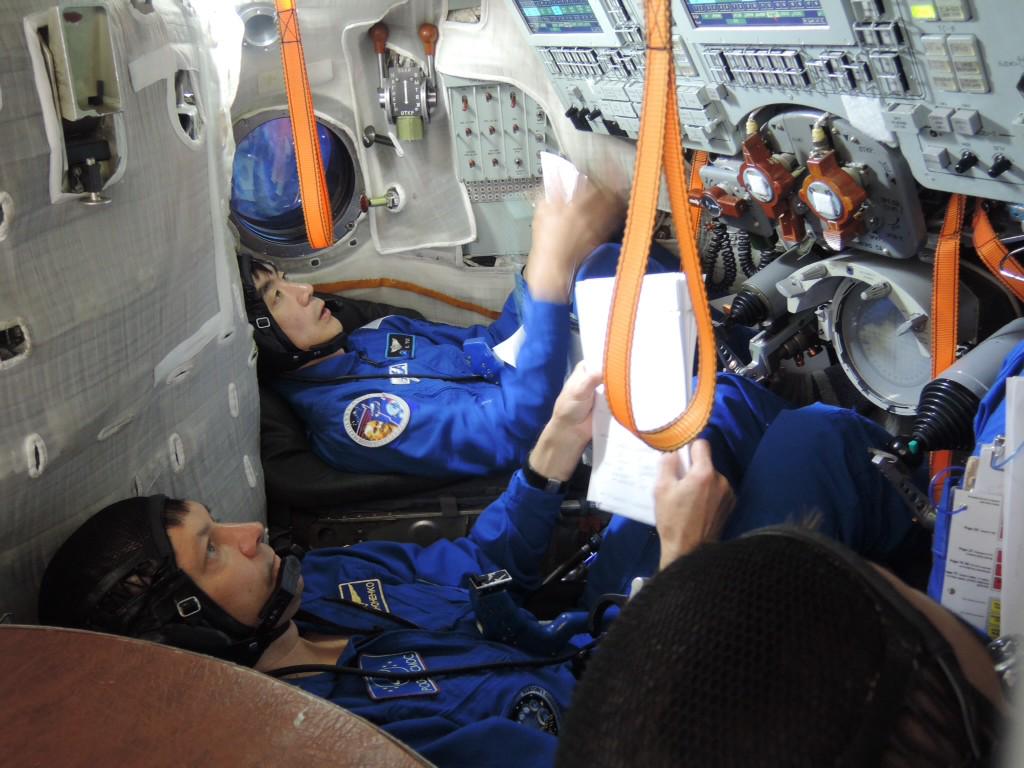
    In early July, Astronaut Kimiya Yui and his crewmates Oleg Kononenko of the Russian Space Agency (RSA) and Kjell Lindgren of NASA underwent final training at the Gagarin Cosmonaut Training Center (GCTC).

    On July 8 (local time), the trio was officially certified as the 43S prime crew, and held a press conference on the same day. Afterwards, as part of traditional preflight events, they visited the vicinity that is linked to the history of Russian space development, featuring a museum in Star City and a statue of Yuri Gagarin.

    On July 11 (local time), the crew moved to Baikonur, Kazakhstan, the launch site of the Soyuz spacecraft.

    Click to enlarge

    Yui checking the Soyuz TMA-17M spacecraft (43S) at the Baikonur Cosmodrome (Credit: S.P.Korolev RSC Energia)

    Click to enlarge

    Launch of the Soyuz TMA-17M spacecraft (Credit: JAXA/NASA/Aubrey Gemignani)

    Final preparations in Baikonur covered inspection of the actual Soyuz TMA-17M spacecraft, a dress rehearsal that included checking Yui’s Sokol spacesuit for leaks and fit-checking with the seat liner, training on manual Soyuz operations, a medical checkup, and observing assembly of the Soyuz rocket.

    Finally on July 23, the trio was launched aboard the Soyuz TMA-17M (43S) spacecraft from the Baikonur Cosmodrome. Approximately six hours later, 43S docked with the International Space Station (ISS) and the trio commenced their long-duration mission.

    For Yui’s launch, Astronaut Koichi Wakata had traveled to Baikonur in support of Yui’s family.

    Yui is now conducting various experiments and performing system maintenance enthusiastically on the ISS.

    Astronaut Norishige Kanai participates in NEEMO 20

    Click to enlarge

    Kanai (rightmost) posing for a photo during NEEMO 20 training (Credit: JAXA/NASA)

    For two weeks from July 20, Astronaut Norishige Kanai underwent the 20th NASA Extreme Environment Mission Operations (NEEMO 20).

    NEEMO 20 was conducted in an underwater laboratory with a habitable area called Aquarius, located off the Florida Keys at a depth of about 20 meters. NEEMO aims to foster the behavioral capabilities of participants when working as a team, such as teamworking, leadership, self-management, and cross-cultural understanding in an isolated environment, and prepare for a long-duration stay on the ISS.

    Pre-training was held nearby the site since July 13, a week prior to the start of NEEMO.

    On July 20, Kanai and the participants—Astronauts Luca Parmitano of the European Space Agency (ESA) and Serena Aunon of NASA, and NASA EVA Management Office engineer David Coan—commenced their stay in Aquarius. Although fostering teamwork ability had been targeted during NEEMO 20, technical tests and assessments toward future manned space exploration were also conducted. In the submarine outside the laboratory, Extravehicular Activities (EVA) on asteroids and Mars were simulated to verify the usability of sample collection tools and work methods, depending on different surfaces and gravity levels.

    Tests were also conducted to determine whether members could perform work by wearing an eyeglass-type device that displayed the work procedures, as well as whether work could be done well under communication time delays with the controllers. At a press conference held from Aquarius, Kanai explained the content and status of his training to the media.

    Astronaut Takuya Onishi continues training for the ISS long-duration stay

    Continuing from June, Astronaut Takuya Onishi, a crew member for the Expedition 48/49 mission to the International Space Station (ISS), continued training at the NASA Johnson Space Center (JSC).

    At the JSC, Onishi took a simulation exam on responses in the event of emergencies on the ISS. Onishi demonstrated responses to such emergencies as fire, sudden depressurization, and toxic spills in completing the exam. He then completed all other exams as an Operator of the systems in the ISS U.S. segment.

    From July 6, Onishi stayed in Japan for three weeks.

    During his stay, while undergoing training for the Japanese Experiment Module (“Kibo”), Onishi participated in various activities, such as attending meetings for his long-duration mission, making courtesy visits to related parties, and engaging in public relations activities.

    Click to enlarge

    Simulation in concert with the JFCT (Credit: JAXA)

    Training for Kibo started with a review of the knowledge and techniques that he had learned in the previous training series, followed by training on the systems and experiments in Kibo, mainly on Kibo’s Airlock.

    Training on the Airlock was to install the JEM Small Satellite Orbital Deployer (J-SSOD) to Kibo’s Airlock. During the simulation of CubeSat (small satellite) deployment operations alongside the JAXA Flight Control Team (JFCT), Onishi confirmed collaboration with the team in case any irregularities occur.

    Onishi also gained an overview of the Exposed Experiment Handrail Attachment Mechanism (ExHAM), an exposed experiment device attached to Kibo’s Exposed Facility (EF) where experiments have been underway since May.

    Other training included daily operations conducted on Kibo, as well as service and maintenance operations.

    Astronaut Koichi Wakata participates in HTV5 operations simulation as CAPCOM

    From July 9-10 (Japan time), the Flight Control Team (FCT) of the H-II Transfer Vehicle (HTV) KOUNOTORI and the NASA ISS flight controllers engaged in joint simulation training.

    Astronaut Koichi Wakata participated in the simulation training as a member of the NASA flight controllers.

    They simulated a series of operations ranging from KOUNOTORI’s rendezvous with the ISS, capture by the Space Station Remote Manipulator System (SSRMS), and berthing with the ISS, to activation.

    Wakata will serve as the lead Capsule Communicator (CAPCOM: ground communicator with the ISS) to support onboard astronauts who maneuver the SSRMS during KOUNOTORI 5 capture operation. While on orbit, Astronaut Yui will maneuver the SSRMS to grapple KOUNOTORI 5, and Astronaut Wakata will support SSRMS operations from the ground.

    Click to enlarge

    Onishi and Matsuura FD explaining the training (Credit: JAXA)

    The simulation held at the TKSC was open to the press. Mayumi Matsuura, lead HTV5 Flight Director (FD), was joined by Onishi to explain the content of the simulation training. Recalling his experience serving as one of the CAPCOMs during the HTV4 mission, Onishi gave the press his personal insights on the training.

    This entry passed through the Full-Text RSS service – if this is your content and you’re reading it on someone else’s site, please read the FAQ at fivefilters.org/content-only/faq.php#publishers.

  • [ISS / Japanese Experiment Module (KIBO)] KOUNOTORI5 Leaves the ISS

    KOUNOTORI5 Leaves the ISS

    Last Updated: September 29, 2015

    photo

    KOUNOTORI5 being released by the ISS robotic arm
    (Credit: JAXA/NASA)

    KOUNOTORI5 (HTV5) was unberthed from the nadir port of Harmony (node 2) by the Space Station Remote Manipulator System (SSRMS) at 8:12 p.m., September 28 (11:12 a.m., September 28 UTC).

    Captured by the SSRMS, KOUNOTORI5 (HTV5) was moved to the releasing point below the station and released into orbit at 1:53 a.m., September 29 (4:53 p.m., September 28 UTC).

    KOUNOTORI5 will perform three deorbit maneuvers and is scheduled to reenter into the atmosphere at 5:33 a.m., September 30 (8:33 p.m., September 29 UTC).

    Click to enlarge

    HTV Mission Control Room during the HTV5 unberthing operations (Credit: JAXA)

    Click to enlarge

    Astronaut Koichi Wakata serving as lead HTV5 CAPCOM at the NASA Flight Control Center (Credit: JAXA/NASA)

    *All times are Japan Standard Time (JST)

    This entry passed through the Full-Text RSS service – if this is your content and you’re reading it on someone else’s site, please read the FAQ at fivefilters.org/content-only/faq.php#publishers.

  • [ISS / Japanese Experiment Module (KIBO)] The hatch of KOUNOTORI5 has closed

    The hatch of KOUNOTORI5 has closed

    Last Updated: September 28, 2015

    photo

    Astronauts closing the hatch of KOUNOTORI5 (Credit: JAXA/NASA)

    The KOUNOTORI5’s hatch closure was confirmed at around 0:29 a.m., September 28 (3:29 p.m., September 27 UTC).

    Unberthing time of KOUNOTORI5 from the International Space Station is scheduled for 0:20 a.m., September 29 (3:20 p.m., September 28 UTC). JAXA will live broadcast of the unberthing via YouTube, or watch NASA TV.

    [embedded content]

    *All times are Japan Standard Time (JST)

    This entry passed through the Full-Text RSS service – if this is your content and you’re reading it on someone else’s site, please read the FAQ at fivefilters.org/content-only/faq.php#publishers.

  • [Project Topics] Upgraded H-IIA (H-IIA F29) launch on Nov. 24

    Topics List

    Sep. 18, 2015 Updated
    Upgraded H-IIA (H-IIA F29) launch on Nov. 24

    The launch of the H-IIA Launch Vehicle No..29 (H-IIA F29) was set to be between 3:23 p.m. thru 5:07 p.m. on Nov. 24 (Tue.), 2015 (Japan Standard Time).
    Our achievement of developing an upgraded flagship launch vehicle for acquiring global-level launch capacity of a geostationary satellite (upgraded specifications) is incorporated into the second stage of the H-IIA F29. With the upgraded technology, our launch vehicle will be further improved to be more user friendly and useful than the conventional H-IIA.
    H-IIA F29 launch will be broadcasted live.

    Upgraded H-IIA (H-IIA F29) launch on Nov. 24

    Dec. 3, 2014 Updated
    “Hayabusa2” successfully launched!

    H-IIA F26 with the Asteroid Explorer “Hayabusa2” onboard launched at 1:22:04 p.m. on Dec 3, 2014 (JST) from the Tanegashima Space Center.
    The rocket flew smoothly, and, at about approximately one hour, 47 minutes and 21 seconds after liftoff, “Hayabusa2” was separated from the H-IIA F26. We will update you with the latest information on the “Hayabusa2” on the project page.
    Please send your support messages for the mission! (you can send a message from Hayabusa2 Project page or tweet with hashtag #hayabusa2).

    Nov. 30, 2014 Updated
    “Hayabusa2” Launch rescheduled to 1:22:04 p.m. on December 3 (Mon.) 2014

    Mitsubishi Heavy Industries, Ltd. and JAXA have decided to postpone the launch of “Hayabusa2” and piggyback payloads by the H-IIA F26 to 1:22:04 p.m. on Dec 3 (Wed. JST).

    The live launch report will begin at 12:25 p.m. on December 3 (Mon. , JST). The report will be broadcast through the Internet.
    Please send your support messages for the mission! (you can send a message from Hayabusa2 Project page or tweet with hashtag #hayabusa2).

    We decided to postpone as a result of the go/no go decision meeting today which carefully checked the weather forecast and found that strong wind exceeding the weather restrictions was projected around the launch pad at the scheduled launch time on the previous schedule launch day of Dec. 1 (Mon.), 2014.
    *The launch may be delayed further depending on weather conditions and other factors.

    Nov. 29, 2014 Updated
    “Hayabusa2” Launch rescheduled to 1:22:43 p.m. on December 1 (Mon.) 2014

    The launch of the Asteroid Explorer “Hayabusa2” and three micro piggyback payloads by the H-IIA Launch Vehicle No. 26 was rescheduled at 1:22:43 p.m. on December 1 (Mon. Japan Standard Time, JST) after carefully studying the weather conditions.
    Accordingly, the live launch report will begin at 12:25 p.m. on December 1 (Mon. , JST). The report will be broadcast through the Internet.
    Please send your support messages for the mission, or tweet it including the hashtag #hayabusa2.

    Nov. 28, 2014 Updated
    Hayabusa2 launch postponement

    H-IIA Launch Vehicle No.26 with the Asteroid Explorer “Hayabusa2” onboard has been rescheduled as clouds including a freezing layer that exceeds the restrictions for suitable weather are forecast to be generated at around the scheduled launch time on November 30 (Sun.), 2014 (Japan Standard Time.)
    The new launch day will be announced as soon as it is determined.

    Hayabusa2 launch postponement

    This entry passed through the Full-Text RSS service – if this is your content and you’re reading it on someone else’s site, please read the FAQ at fivefilters.org/content-only/faq.php#publishers.

  • [Project Topics] Live Internet broadcast of KOUNOTORI5’s departure from ISS on Sept. 28 (Mon.)

    Topics List

    Sep. 16, 2015 Updated
    Live Internet broadcast of KOUNOTORI5’s departure from ISS on Sept. 28 (Mon.)

    The KOUNOTORI5 will leave the International Space Station (ISS) at 0:20 a.m. on September 29 (Tue.), and re-enter the Earth’s atmosphere at around 5:31 a.m. on the 30th (Wed.) to burn up. JAXA will broadcast the live report of its separation from the ISS through the Internet from around 11:50 p.m. on Sept. 28 (Mon.). Please don’t miss it! (All dates and time are Japan Standard Time.) (Photo: JAXA/NASA)

    Live Internet broadcast of KOUNOTORI5’s departure from ISS on Sept. 28 (Mon.)

    Aug. 25, 2015 Updated
    KOUNOTORI5 captured and berthed at the ISS

    The “KOUNOTORI5” launched by the H-IIB F5 on Aug. 19 (Wed. Japan Standard Time) was captured by the robotic arm of the International Space Station (ISS), which was maneuvered by Astronaut Kimiya Yui, at 7:29 p.m. on August 24 (Mon. JST). The HTV5 was then successfully berthed at the ISS at 2:28 a.m. on August 25 (Tue. JST).
    The internal cargo as well as external cargo, such as CALET, on the KOUNOTORI5 will be unloaded by the onboard crew. (Photo: NASA TV)

    KOUNOTORI5 captured and berthed at the ISS

    Aug. 19, 2015 Updated
    KOUNOTORI5 successfully launched by H-IIB F5!

    The KOUNOTORI5, a regular cargo transporter to space, was launched by the H-IIB Launch Vehicle No.5 (H-IIB F5) at 8:50:49 p.m. on August 19 (Wed.) 2015 (Japan Standard Time, JST) from the Tanegashima Space Center. The launch vehicle flew smoothly, and, at about 14 minutes and 54 seconds after liftoff, the separation of the KOUNOTORI5 was confirmed.
    The KOUNOTORI5 will fly near the International Space Station, and Astronaut Yui will maneuver the robotic arm to capture it. We plan to broadcast his performance through the Internet from around 7:05 p.m. on Aug. 24 (Mon.) Please don’t miss it!

    KOUNOTORI5 successfully launched by H-IIB F5!

    Aug. 17, 2015 Updated
    KOUNOTORI5 launch rescheduled to 8:50:49 p.m. on August 19 (Wed.) 2015

    The KOUNOTORI5(HTV5)/H-IIB F5 launch was postponed to 8:50:49 p.m. on August 19 due to adverse weather.
    Accordingly, the live launch report will begin at 8:00 p.m. on August 19 (Wed. , JST). The report will be broadcast through the Internet.
    Please send your support messages for the mission, or tweet it including the hashtag #HTV5.

    KOUNOTORI5 launch rescheduled to 8:50:49 p.m. on August 19 (Wed.) 2015

    Aug. 16, 2015 Updated
    KOUNOTORI5 launch postponed to Aug. 19 (Wed., JST)

    The launch date of the H-IIB Launch Vehicle No. 5 carrying the KOUNOTORI5 has been postponed as unfavorable weather is forecasted. The launch was originally scheduled for August 17. The live broadcast of the launch will also be put off accordingly.
    Your support messages are very much welcome through Twitter (Hashtag “#HTV5”) or via the following website.

    KOUNOTORI5 launch postponed to Aug. 19 (Wed., JST)

    Aug. 15, 2015 Updated
    New launch date and time of KOUNOTORI5/H-IIB F5 decided

    Aug. 14, 2015 Updated
    KOUNOTORI5 launch postponed to Aug. 17 (Mon., JST)

    The launch date of the H-IIB Launch Vehicle No. 5 carrying the KOUNOTORI5 has been postponed as unfavorable weather is forecasted. The launch was originally scheduled for August 16. The live broadcast of the launch will also be put off accordingly.
    Your support messages are very much welcome through Twitter (Hashtag “#HTV5”) or via the following website.

    KOUNOTORI5 launch postponed to Aug. 17 (Mon., JST)

    Jul. 21, 2015 Updated
    Dates set for capturing the KOUNOTORI5 and its berthing with ISS Astronaut Yui to be in charge of operation

    After international coordination, the dates for capturing the KOUNOTORI5, a cargo transporter to the International Space Station (ISS), and its berthing have been respectively set as August 20 (Thu.) and 21 (Fri.) The KOUNOTORI5 is scheduled to be launched on August 16 (Sun.) from the Tahegashima Space Center.
    It was also decided that Astronaut Kimiya Yui will manipulate the ISS robotic arm to capture the KOUNOTORI2.

    Dates set for capturing the KOUNOTORI5 and its berthing with ISS Astronaut Yui to be in charge of operation

    Jul. 10, 2015 Updated
    KOUNOTORI5 and operation simulation training opened to the press

    On July 1, the KOUNOTORI5, a cargo transporter to the ISS, was revealed to the media at the Tanegashima Space Center. The mission was also explained there.
    From the evening of July 9 to the morning of the 10th, simulation training for the KOUNOTORI5 operation and control was held in the KOUNOTORI operation room at the Tsukuba Space Center, and part of it was also open to the press. This training was a last opportunity for a joint session between JAXA and NASA before the KOUNOTORI5 launch. On the NASA side, Astronaut Wakata participated in the training as a CAPCOM (capsule/spacecraft communicator).

    KOUNOTORI5 and operation simulation training opened to the press

    Jun. 9, 2015 Updated
    Launch day set for KOUNOTORI5/H-IIB F5!

    The launch date and time for the H-IIB Launch Vehicle No. 5 (H-IIB F5) with the H-II Transfer Vehicle “KOUNOTORI5” (HTV5) onboard was set for around 10:01 p.m. on August 16 (Sun.), 2015 (Japan Standard Time).
    The H-IIB F5 has already been transported to the TNSC, and it is now being assembled there.
    * Launch time will be determined by the updated orbit of the ISS.

    Launch day set for KOUNOTORI5/H-IIB F5!

    Sep. 7, 2013 Updated
    KOUNOTORI4 completed its mission with re-entry!

    The KOUNOTORI4 (HTV4, a cargo transporter to the International Space Station) left the ISS on Sept. 5 and re-entered the atmosphere at 3:37 p.m. on Sept. 7 (Japan Standard Time.)
    The KOUNOTORI 4 successfully achieved its mission of taking cargo to the ISS, then completed all its tasks over about 36 days.
    We would like to send our sincere appreciation to all of you who have been supporting the KOUNOTORI project.

    KOUNOTORI4 completed its mission with re-entry!

    Sep. 3, 2013 Updated
    Re-entry date and time for KOUNOTORI4 decided

    Schedules of departure from the International Space Station (ISS) and of re-entry to the atmosphere for the H-II Transfer Vehicle “KOUNOTORI 4” (HTV4) are determined as follows.

    Departure from the ISS:
    September 5, 2013 / 1:00 a.m.(Japanese Standard Time, JST)*
    Re-entry to the atmosphere:
    September 7, 2013 / 3:36 p.m.(JST)*

    * The time may vary according to the actual operation.

    Aug. 10, 2013 Updated
    KOUNOTORI4 berthed at ISS!

    The KOUNOTORI4 (HTV4, a cargo transporter to the International Space Station) was captured by the ISS robotic arm at 8:22 p.m. on August 9 (Japan Standard Time) and berthed at the ISS at 3:38 a.m. on August 10 (JST). The KOUNOTORI4 was launched by the H-IIB Launch Vehicle No.4 on August 4. ISS astronauts will take cargo out from the Pressurized and Unpressurized Logistic Carriers into the ISS.

    Aug. 9, 2013 Updated
    Live broadcast of KOUNOTORI4 trip to ISS!

    The KOUNOTORI3 (HTV4, the cargo transporter to the International Space Station) launched on August 4 has been traveling to the ISS while adjusting its altitude. Between the evening on August 9 and early on the morning of August 10, the KOUNOTORI4 will make a final approach and berth at the ISS. JAXA will provide a live broadcast of its final access, capture, and berthing.
    The KOUNOTORI4’s approach and the ISS’s capture of the vehicle by the robotic arm is scheduled for about one hour from 7:40 p.m. on the 9th (Japan Standard Time.) Then the telecast of its berthing will last for about one hour from 22:00 p.m. on the 9th (JST.)
    Please don’t miss the broadcast!
    (Photo: The KOUNOTORI3 approaching the ISS, JAXA/NASA)

    Aug. 4, 2013 Updated
    Launch Success of KOUNOTORI4/H-IIB F4

    The H-IIB Launch Vehicle No. 4 with the KOUNOTORI4 (HTV4, a cargo transporter to the International Space Station) onboard lifted off from the Tanegashima Space Center at4:48:46 a.m. on August 4 (Sun., Japan Standard Time.)
    The launch vehicle flew smoothly, and at 14 minutes and 59 seconds after liftoff, the KOUNOTORI4 separation was confirmed.
    The KOUNOTORI4 will gradually go closer to the International Space Station, and it will be berthed at the ISS. We will broadcast the berthing on our website, so don’t miss it!

    Jun. 19, 2013 Updated
    KOUNOTORI4 revealed at TNSC

    On June 19, the H-II Transfer Vehicle (HTV, a cargo transporter to the International Space Station) “KOUNOTORI4” was shown to the media at the Tanegashima Space Center (TNSC.)
    The KOUNOTORI4 will be launched by the H-IIB Launch Vehicle No. 4 on Aug. 4 from the TNSC. It will carry various goods to the ISS including food and water for astronauts, as well as experiment devices and materials for the Japanese Experiment Module “Kibo.” Launch preparations continue for the KOUNOTORI4.

    May 21, 2013 Updated
    KOUNOTORI4/H-IIB F4 launch schedule decided!

    The H-IIB Launch Vehicle No. 4 (H-IIB F4) carrying the H-II Transfer Vehicle (HTV4, a cargo transporter to the International Space Station) will be launched on August 4 (Sunday, Japan Standard Time.) The launch time will be around 4:48 a.m. (JST.) It will be blasted off from the Yoshinobu Launch Complex at the Tanegahsima Space Center. Why don’t you take this opportunity to come to Tanegahima to witness the liftoff at hand!

    Sep. 14, 2012 Updated
    KOUNOTORI3 completed its mission with re-entry!

    The KOUNOTORI3 (HTV3, a cargo transporter to the International Space Station) left the ISS on Sept. 13 and re-entered the atmosphere at 2:27 p.m. on Sept. 14 (Japan Standard Time.)
    The KOUNOTORI 3 successfully achieved its mission of taking cargo to the ISS, then completed all its tasks over about 56 days.
    We would like to send our sincere appreciation to all of you who have been supporting the KOUNOTORI project.

    Sep. 11, 2012 Updated
    KOUNOTORI3 departure and re-entry live report!

    The H-II Transfer Vehicle “KOUNOTORI3” (HTV3,a cargo transporter to the International Space Station) will leave from the ISS at around 0:50 a.m. on Sept. 13 (Japan Standard Time, all the following dates and time are JST,) and will re-enter the atmosphere at around 2:24 p.m. on Sept. 14.
    JAXA will offer a live report of its departure from the ISS from 0:20 a.m. on the 13th (Thu.), then a live scene of the HTV operation room at the time of its re-entry from 1:45 p.m. on the 14th (Fri.) through the Internet. Please do not miss the footage!

    Sep. 7, 2012 Updated
    Re-entry date and time for KOUNOTORI3 decided

    The re-entry schedule for the KOUNOTORI3 was set as follows after extended mooring at the International Space Station due to an additional extravascular activity.

    Departure from the ISS:
    September 13, 2012 / 0:50 a.m.(Japanese Standard Time, JST)*
    Re-entry to the atmosphere:
    September 14, 2012 / 2:24 p.m.(JST)*

    * The time is subject to change due to actual operational status.

    The KOUNOTORI3 will carry a re-entry data recorder, the i-Ball, which was developed in cooperation between the public and private sectors to acquire atmosphere re-entry data as well as scenes of KOUNOTORI3’s destruction.

    Jul. 28, 2012 Updated
    KOUNOTORI3 berthed at ISS!

    The KOUNOTORI3 (HTV3, a cargo transporter to the International Space Station) was captured by the ISS robotic arm at 9:23 p.m. on July 27 (Japan Standard Time) and berthed at the ISS at 2:31 a.m. on July 28. The KOUNOTORI3 was launched by the H-IIB Launch Vehicle No.3 on July 21. ISS astronauts will take cargo out from the Pressurized and Unpressurized Logistic Carriers into the ISS.
    (Photo: The KOUNOTORI3 to a Common Berthing Mechanism at the nadir port of Harmony, JAXA/NASA)

    Jul. 21, 2012 Updated
    Launch Success of KOUNOTORI3/H-IIB F3

    The H-IIB Launch Vehicle No. 3 with the KOUNOTORI3 (HTV3, a cargo transporter to the International Space Station) onboard lifted off from the Tanegashima Space Center at 11:06:18 on July 21 (Sat., Japan Standard Time.)
    The launch vehicle flew smoothly, and at 14 minutes and 53 seconds after liftoff, the KOUNOTORI3 separation was confirmed.
    The KOUNOTORI3 will gradually go closer to the International Space Station, and it will be berthed at the ISS. We will broadcast the berthing on our website, so don’t miss it!

    Jun. 21, 2012 Updated
    KOUNOTORI3/H-IIB F3 Special Site now open!

    JAXA will launch the KOUNOTORI3 (a cargo transporter to the International Space Station, ISS) by H-IIB Launch vehicle No.3 on July 21 from the Tanegashima Space Center. We have opened the KOUNOTORI3/H-IIB F3 Special Site to be ready for the launch.
    Please check the special site for more information. We have also started welcoming your support messages, so please send them to us!

    Jun. 7, 2012 Updated
    KOUNOTORI3 revealed to the media at TNSC

    On June 1 (Fri.), the H-II Transfer Vehicle “KOUNOTORI3” (HTV3, a cargo transporter to the International Space Station) was revealed to the media at the Spacecraft and Fairing Assembly Building 2 at the Tanegashima Space Center. The KOUNOTORI3 will be packed with food and daily necessities for astronauts aboard the ISS, test equipment for aquatic organisms, and other experiment devices including a small satellite, then will be launched by the H-IIB Launch Vehicle No. 3 at 11:18 a.m. on July 21, 2012 (Japan Standard Time.) The KOUNOTORI is currently under preparations for its journey to space.

    Mar. 21, 2012 Updated
    KOUNOTORI3/H-IIB F3 launch schedule decided!

    The launch date and time for the H-IIB Launch Vehicle No. 3 (H-IIB F3) with the H-II Transfer Vehicle “KOUNOTORI3” (HTV3), a cargo transporter to the International Space Station, has been set to be at around 11:18 a.m. on July 21 (Sat.), 2012 (Japan Standard Time.) The launch preparation operation for the KOUNOTORI is smoothly in progress at the Tanegashima Space Center.

    Mar. 30, 2011 Updated
    KOUNOTORI2 re-entered the atmosphere to complete its mission!

    The KOUNOTORI2 (HTV2, a cargo transporter to the International Space Station,) which left the ISS at around 0:46 a.m. on March 29 (Japan Standard Time,) re-entered the atmosphere at around 12:09 p.m. on March 30 (JST.)
    The KOUNOTORI2 successfully completed its role to transport materials to the ISS, then re-entered the Earth’s atmosphere to complete its mission of approximately 67 days.
    Thank you very much for supporting the KOUNOTORI2 and H-IIB Launch Vehicle No.2 missions.

    Mar. 29, 2011 Updated
    KOUNOTORI2 left ISS!

    The KOUNOTORI2 (HTV2, a cargo transporter to the ISS) was detached from the International Space Station (ISS) using the ISS robotic arm at 10:29 p.m. on March 28 (Japan Standard time,) and it emitted a jet to leave the ISS after being transported to the release point at 0:46 a.m. on the 30th.
    The KOUNOTORI2 will re-enter the Earth’s atmosphere at around 12:09 on March 30. From some areas, you can see the KOUNOTORI2 flying around the Earth between the 29th and the 30th. Also, please witness the scene of the HTV operation and control room when it re-enters the atmosphere through the live Internet broadcast, which will begin at 11:30 a.m. on the 30th.

    Mar. 25, 2011 Updated
    KOUNOTORI2 leaving ISS on the 29th! Live broadcast scheduled

    The KOUNOTORI2 (HTV2, a cargo transporter to the International Space Station) will depart from the ISS with used material loaded on March 29 (Japan Standard Time,) and will be slated for re-entry to the atmosphere on the 30th (JST.) JAXA will broadcast a live Internet report of the KOUNOTORI departure from the ISS from 0:00 a.m. on the 29th (JST,) then its re-entry to the atmosphere from 11:30 a.m. on the 30th (JST.) Please watch the events through the Internet!

    Mar. 22, 2011 Updated
    KOUNOTORI2 to leave ISS

    The departure date of the KOUNOTORI2 (HTV2, a cargo transporter to the ISS), which is loaded with used materials, from the International Space Station (ISS) has been decided.
    The KOUNOTORI2 will leave the ISS at around 0:45 a.m. on March 29 (Japan Standard Time) after completing its role at the ISS. After departure, it will be burned when it re-enters the atmosphere at around 12:10 p.m. on March 30. Following its combustion, its mission will be accomplished.
    We will broadcast a live report of the departure and re-entry of the KOUNOTORI2. More details will be posted on our website. (Photo by NASA)

    Mar. 11, 2011 Updated
    KOUNOTORI2 relocation to the earth-facing port completed

    At 8:49 p.m. on March 10 (Japan Standard Time), the KOUNOTORI2 (HTV2, a cargo transporter to the International Space Station) began to be moved from the zenith port to the earth-facing port using the robotic arm of the International Space Station. At 3:55 a.m. on the 11th (JST,) KOUNOTORI2’s electric and communication systems were connected to the ISS to complete the relocation. After being loaded with used items, the KOUNOTORI2 will re-enter the atmosphere to be burned.

    Mar. 9, 2011 Updated
    KOUNOTORI2 to return to earth-facing port from March 10

    The KOUNOTORI2 (HTV2, a cargo transporter to the International Space Station), will move back to the earth-facing port of the Harmony (Node 2) from its zenith port now that the Space Shuttle Discovery left the ISS to go home on March 7 (Japan Standard Time.) The relocation is scheduled to be performed on the 10th and 11th (JST.) More cargo will be taken out of the KOUNOTORI2, then, after being packed with used materials, the KOUNOTORI2 will re-enter the atmosphere.
    (Photo by NASA)

    Feb. 21, 2011 Updated
    KOUNOTORI2 relocation to the zenith port completed

    As part of preparations for the Space Shuttle Discovery’ s docking with the International Space Station (ISS,) the KOUNOTORI2 , or the HTV2, a cargo transporter to the ISS, was moved from the earth-facing port of the Harmony (Node 2) to its zenith port. This was the first time to perform such a relocation. The KOUNOTORI2 was successfully transported at 1:45 a.m. on Feb. 19 (Japan Standard Time,) and the electric cables were connected with the Harmony at 4:26 a.m. (JST) to complete its relocation.

    Jan. 28, 2011 Updated
    KOUNOTORI2 berthing at ISS

    The KOUNOTORI2, or the HTV2, a cargo transporter to the International Space Station (ISS) launched by the H-IIB Launch Vehicle No.2, was captured by the ISS robotic arm at around 8:41 p.m. on January 27 (Japan Standard Time,) and, at around 3:34 a.m. on the 28th (JST,) the KOUNOTORI berthed at the ISS. Cargo in the Pressurized Section will be transported to the ISS by the ISS astronauts followed by cargo in unpressurized areas.

    Jan. 22, 2011 Updated
    KOUNOTORI2/H-IIB F2 successfully launched

    The H-IIB Launch Vehicle No. 2 with the KOUNOTORI2 (HTV2, a cargo transporter to the International Space Station, ISS) onboard was launched from the Tanegashima Space Center at 2:37:57 p.m. on January 22 (Sat., Japan Standard Time.) The launch vehicle flew smoothly, and, at about 15 minutes and 13 seconds after liftoff, the separation of the KOUNOTORI2 was confirmed.
    The KOUNOTORI2 will fly to the ISS, then, on Jan. 28 (Fri., JST,) it is slated for berthing with the ISS.

    Dec. 14, 2010 Updated
    KOUNOTORI2 system checkup completed

    At the Tanegashima Space Center, all parts of the H-II Transfer Vehicle “KOUNOTORI2” (HTV2) were integrated electrically and mechanically in the end of October. Throughout November, the assembled KOUNOTORI2 has been checked as one system to confirm that no problem was found in the vehicle.
    After a thorough inspection, propellants were loaded onto the KOUNOTORI2 tanks, and currently the tank pressure is being adjusted. Preparation for launch is smoothly progressing.
    The final launch preparation including battery charge and loading onto the H-IIA Launch Vehicle No.2 will now be carried out for the KOUNOTORI2.

    Dec. 1, 2010 Updated
    KOUNOTORI2 control and operation simulation revealed to the press

    On November 30, JAXA showed part of the control and operation simulation of the KOUNOTORI2 to the media at the Tsukuba Space Center. The KOUNOTORI2 (HTV2) is a cargo transfer vehicle to the International Space Station (ISS.)
    The purpose of the simulation was to train and improve operators’ skills. It takes about 20 hours with NASA to simulate events, from the KOUNOTORI2’s arrival at around 12-km beneath the ISS, to its gradual approach to the ISS, to the capture of the KOUNOTORI2 by the ISS robotic arm, and then the docking of the KOUNOTORI2.

    Nov. 26, 2010 Updated
    KOUNOTORI2 shown to the Press at TNSC

    On Nov. 25, the H-II Transfer Vehicle “KOUNOTORI”2 (a cargo transporter to the International Space Station) was revealed to the media at the Spacecraft and Fairing Assembly Building No. 2 at the Tanegashima Space Center. We are engaging in preparation for the launch of the KOUNOTORI2 including propellant loading and mating with the launch vehicle.
    JAXA provides updated information about the KOUNOTORI2 and H-IIB Launch Vehicle No.2 at the special site. Your support messages are welcome there, too.

    Nov. 11, 2010 Updated
    HTV nickname selected & special site open!

    “KOUNOTORI” (meaning “a white stork” in English) was chosen as the nickname of the H-II Transfer Vehicle (HTV, a cargo transfer vehicle to the International Space Station.)
    During a month-long nickname campaign, we received 17,236 suggestions.
    Among them, “KOUNOTORI” was selected because a white stork carries an image of conveying an important thing (a baby, happiness, and other joyful things); therefore, it precisely expresses the mission to transport essential materials to the ISS.
    The KOUNOTORI2 is scheduled to be launched by the H-IIB Launch Vehicle No. 2 (H-IIB F2) at around 3:29 p.m. (Japan Standard Time) on January 20 (Thu.), 2011.
    Taking this opportunity of selecting the nickname, we would also like to open the “KOUNOTORI2/H-IIB F2 Special Site.” We will provide you with updated information about the project including a column by project personnel and launch related matters. Please enjoy the site!
    * Launch time will be determined by the updated orbit of the ISS.

    Nov. 10, 2010 Updated
    Launch day set for HTV2/H-IIB F2!

    The launch date and time for the H-IIB Launch Vehicle No. 2 (H-IIB F2) with the H-II Transfer Vehicle (HTV2) onboard was set for around 3:29 p.m. on January 20 (Thu.), 2011 (Japan Standard Time). The HTV2 is a cargo transporter to the International Space Station (ISS.) The integration of all modules of the HTV2 was completed at the Tanegashima Space Center (TNSC), and it will enter the final launch preparation phase. The H-IIB F2 has already been transported to the TNSC, and it is now being assembled there.
    * Launch time will be determined by the updated orbit of the ISS.

    Nov. 2, 2010 Updated
    HTV2: all modules connected, moved to final launch preparations

    (Left) All HTV2 modules are being connected (Center) Integrated HTV2 (front side) (Right) Integrated HTV2 (back side) (Images by JAXA)

    On Oct. 29, we completed connecting all modules of the second H-II Transfer Vehicle (HTV2, a cargo transporter to the International Space Station) electrically and mechanically at the Second Spacecraft and Fairing Assembly Building (SFA2) at the Tanegashima Space Center. The HTV2 is now in its configuration for launch.
    After a comprehensive check on the integrated HTV2, it will go through final launch preparations including propellant loading and fairing encapsulation. The HTV2 is scheduled to be launched in the winter launch period of Japan Fiscal Year 2010.

    Oct. 13, 2010 Updated
    Full assembly started for the second HTV

    The assembly operation for all modules of the second H-II Transfer Vehicle (HTV, the cargo transporter to the International Space Station) started on October 6 at the second Spacecraft and Fairing Assembly Building (SFA2) at the Tanegashima Space Center. Prior to full assembly, in mid September, cargo to the ISS was loaded onto the Pressurized and Unpressurized Carriers.

    Apr. 7, 2010 Updated
    Development of HTV/H-IIB received Japan industry technology/MEXT award

    JAXA was selected as one of 12 organizations to receive the Ministry of Education, Culture, Sports, Science and Technology award at the 39th Japan industry technology awards for its development of the HTV and H-IIB launch vehicle.
    The Japan industry technology awards are presented by Nikkan Kogyo Shimbun Ltd. (Business and Technology Daily News, Japan) to encourage development of original and unique technology that contributes to the promotion of industry. The news company bestows the awards to development projects of distinctive large-scale technological systems.

    Feb. 10, 2010 Updated
    HTV Project Team awarded for research

    Since 2005, the National Institute of Science Technology Policy (NISTEP) of the Ministry of Education, Culture, Sports, Science and Technology (MEXT) has been choosing researchers who have made significant contributions to science and technology every year to praise their efforts. In 2009, the demonstration flight of the H-II Transfer Vehicle (HTV, a cargo transporter to the International Space Station) was highly evaluated, and on February 9, Mr. Torano, HTV Project Manager, Mr. Koyari, Sub-project Manager, and Mr. Sasaki, Functional Manager, received a memento of the selection.

    Nov. 2, 2009 Updated
    HTV re-entered the atmosphere, mission completed

    The H-II Transfer Vehicle (HTV) Demonstration Flight, which departed from the International Space Station (ISS) on October 31, re-entered the atmosphere at around 6:26 a.m. on November 2.
    The HTV successfully completed its cargo transportation operations to the ISS, and accomplished all its missions in about 52 days following the re-entry today.

    Oct. 31, 2009 Updated
    HTV released from ISS

    The H-II Transfer Vehicle (HTV) Demonstration Flight, which completed its cargo transportation mission at the International Space Station (ISS), was unberthed from the ISS by its robotic arm (SSRMS) at 0:02 a.m. on October 31 (Japan Standard Time, the following dates and times are JST.) The HTV departed from the ISS at 2:32 a.m. on the 31st. The HTV will leave the ISS orbit, and is scheduled to re-enter the Earth’s atmosphere at around 6:25 a.m. on November 2 (Mon.)
    You may be able to see the HTV just prior to re-entry from Okinawa at around 6:13 a.m. on the 2nd if the deorbit process goes smoothly and the weather cooperates. (Photo by NASA)

    Oct. 27, 2009 Updated
    Internet Live Report: HTV leaving ISS on Oct. 31 (Sat)

    The H-II Transfer Vehicle (HTV) Demonstration Flight, which is currently berthed at the International Space Station (ISS), is scheduled to depart from the ISS at 2:30 a.m. on Oct. 31 (Sat) (Japan Standard Time, all the following days and times are in JST.) The HTV will be unberthed from the ISS by the ISS robotic arm (SSRMS) late at night on Oct. 30 (Fri) after its hatch to the ISS is closed at dawn of Oct. 30, then depart from the ISS. If everything goes smoothly, the HTV will re-enter the Earth’s atmosphere around 6:25 a.m. on Nov. 2 (Mon).

    We will broadcast a live report of the HTV unberthing and departure from the ISS through the Internet from 11:45 p.m. on Oct. 30 (Fri) and from 2:15 a.m. on Oct. 31 (Sat) respectively. (Sorry, the live reports are broadcasted only in the Japanese language.) Please enjoy the HTV live reports over the weekend!
    The live broadcast time schedule has changed due to the delay of the HTV departure.

    Oct. 21, 2009 Updated
    The HTV PLC unloading operations completed, trash loading continues

    HTV-1, being berthed to the ISS, is operating nominally. The Small Fine Arm (SFA) of the Kibo Remote Manipulator System (JEMRMS), packed in a Cargo Transfer Bag (CTB) and delivered to the ISS, was transferred from the HTV Pressurized Logistics Carrier (PLC) to Kibo on October 4. The Pressurized Stowage Resupply Rack (PSRR), also delivered on the HTV-1, was transferred to Kibo’s Experiment Logistics Module-Pressurized Section (ELM-PS) on October 14. All the cargo transfer operation from the HTV PLC to the ISS was completed on October 20.
    Aboard the ISS, trash loading into the HTV PLC is currently underway. With this trash stow activity completed, the HTV-1 will depart from the ISS, and enter the atmosphere early next month.
    Photo (provided by NASA): Astronaut Robert Thirsk taking cargo out from the HTV Pressurized Carrier.

    Oct. 14, 2009 Updated
    HTV operations running smoothly, cargo unloading continues

    Cargo unloading operations continued from the Pressurized Logistics Carrier of the H-II Transfer Vehicle (HTV) Demonstration Flight berthed at the International Space Station (ISS). On Oct. 4, the Small Fine Arm (SFA) of the Kibo’s Robotic Arm was moved to the ISS. The SFA was transported to the ISS as it was still packed in the Cargo Transfer Bag. One unit of the Pressurized Stowage Resupply Rack will be transferred to the ISS on the 14th.
    Photo (provided by NASA): Astronaut Nicole Stott taking cargo out from the HTV Pressurized Carrier.

    Sep. 26, 2009 Updated
    Exposed Pallet stored back in HTV

    The Exposed Pallet of the H-II Transfer Vehicle (HTV) Demonstration Flight was retrieved and stored back in the HTV Unpressurized Carrier at 10:20 p.m. on Sept. 25 (Japan Standard Time) by the robotic arms of the Kibo and the International Space Station (SSRMS) after its two cargoes, the experiment devices in the unpressurized environment, had been installed in the Kibo’s Exposed Facility.
    Cargo in the HTV Pressurized Carrier will now be unloaded by the astronauts aboard the ISS. After the unloading, used material and equipment on the ISS will be packed into the Pressurized Carrier. The HTV will depart from the ISS in mid-November to re-enter the atmosphere. (The detailed schedule will be decided based on the ISS/HTV operational status.) (Photo by NASA)

    Sep. 25, 2009 Updated
    Two experiment devices installed onto Kibo Exposed Facility

    On Sept. 24 and 25 (Japan Standard Time), two experiment devices that were shipped by the H-II Transfer Vehicle (HTV) Demonstration Flight were unloaded from the HTV Exposed Pallet and installed onto the Exposed Facility of the Japanese Experiment Module “Kibo.”
    The two devices are the “Superconducting Submilimeter-Wave Limb-Emission Sounder (SMILES)” and the “Hyperspectral Imager for the Coastal Ocean (HICO) & Remote Atmospheric & Ionospheric Detection System (RAIDS) Experimental Payload (HREP.)” The HREP and the SMILES were mounted at 8:15 p.m. on the 24th and 1:12 a.m on the 25th respectively. (Photo by NASA)

    Sep. 24, 2009 Updated
    HTV Exposed Pallet attached to the Kibo Exposed Facility

    At 6:06 p.m. on Sept. 23rd (Japan Standard Time, JST), the Exposed Pallet was taken out from the H-II Transfer Vehicle (HTV) Demonstration Flight, which is now berthed at the International Space Station (ISS). The Pallet was then attached onto the Exposed Facility of the Japanese Experiment Module “Kibo” at 11:33 p.m. (JST). The experiment devices on the Pallet will be moved to be installed onto the Kibo’s Exposed Facility. (Photo by NASA)

    Sep. 18, 2009 Updated
    HTV Demonstration Flight successfully berthed at ISS

    The H-II Transfer Vehicle (HTV) Demonstration Flight, launched by the H-IIB Launch Vehicle Test Flight at 2:01 a.m. on Sept. 11 (Japan Standard Time, JST,) took almost one week to approach the International Space Station (ISS) and arrived at the Berthing Point 10 meters below the ISS at 4:27 a.m. on the 18th (JST, following times are all JST.) At 4:51 a.m., the HTV was captured by the ISS robotic arm (Space Station Remote Manipulator System, SSRMS) manipulated by the ISS crew, and it was installed onto the Common Berthing Mechanism (CBM) on the lower side (earth side) of the Harmony (Node 2) at 7:26 a.m. At 10:49 a.m., electric and communication lines were connected, and the HTV was successfully berthed at the ISS.

    Sep. 15, 2009 Updated
    Live reports of the HTV final approach to the ISS on Sept. 18 (Fri.)

    The H-II Transfer Vehicle (HTV) Demonstration Flight, which was launched by the H-IIB Launch Vehicle at 2:01:46 a.m. on September 11 (Fri.) has been smoothly flying on its scheduled course. Its final approach to the International Space Station (ISS) was approved at the ISS Mission Management Team (IMMT) meeting on Sept. 15, thus, from the 16th, the altitude of the HTV will be maneuvered to gradually approach the ISS. The HTV is scheduled to be berthed at the ISS on Sept. 18 (Fri.)
    JAXA will broadcast the live reports of the ISS robotic arm capturing the HTV from 4:00 a.m., and the berthing of the HTV at the ISS from 7:00 a.m. They are early in the morning, but don’t miss them!

    Sep. 11, 2009 Updated
    HTV/H-IIB Successfully Launched!!

    The Japan Aerospace Exploration Agency (JAXA) launched the H-II Transfer Vehicle (HTV) Demonstration Flight aboard the H-IIB Launch Vehicle Test Flight (H-IIB TF1) at 2:01:46 a.m. on September 11, 2009 (Japan Standard Time, JST) from the Tanegashima Space Center. The launch vehicle flew smoothly, and, at about 15 minutes and 6 seconds after liftoff, the separation of the HTV Demonstration Flight was confirmed.

    The HTV will gradually approach the International Space Station (ISS) and berth at the ISS on the 18th (Friday, JST.)

    Aug. 31, 2009 Updated
    HTV moved to the VAB! Final launch preparation phase

    On August 30, the encapsulated HTV Demonstration Flight was transported to the Vehicle Assembly Building (VAB.) It will be loaded onto the H-IIB Launch Vehicle to be ready for the launch on September 11. We published a promotion movie of the HTV/H-IIB mission. Please watch it before witnessing the actual launch!

    Aug. 24, 2009 Updated
    HTV encapsulated

    On August 21, the H-II Transfer Vehicle (HTV) Demonstration Flight was mated with the Payload Attach Fitting (PAF) at the Spacecraft and Fairing Assembly Building #2.
    On the 23rd, the HTV on the PAF was encapsulated by the payload fairing, which covers the payload to protect it from air resistance, friction and the acoustic vibrations of launch. The fairing for the HTV is a 5S-H type and is about 5 meters in diameter and about 15 meters in length. It was developed for the HTV launch.
    The encapsulated HTV Demonstration Flight will be transported to the Vehicle Assembly Building (VAB) and loaded onto the H-IIB Launch Vehicle Test Flight.

    Jul. 9, 2009 Updated
    HTV opened to the press at TNSC

    On July 9, the H-II Transfer Vehicle (HTV, a cargo transporter to the International Space Station) was opened to the press at the Spacecraft and Fairing Assembly Building #2 (SFA2) at the Tanegashima Space Center (TNSC.)
    We are providing updated information on the HTV and H-IIB at the HTV/H-IIB Special Site.

    Jul. 8, 2009 Updated
    HTV/H-IIB launch date decided! Special site opened

    The H-IIB Launch Vehicle Test Flight with the H-II Transfer Vehicle (HTV, a cargo transporter to the International Space Station) will be launched at 2:04 a.m. on September 11 (Fri.). (*)
    The HTV has been fully assembled at the Tanegashima Space Center, and it will be under final launch preparations including comprehensive checkout and propellant loading to be ready for launch.
    The ground comprehensive test for the H-IIB Launch Vehicle using the Ground Test Vehicle (the GTV test) is scheduled on the 11th.
    Please check the updated information on the HTV and H-IIB at the “HTV/H-IIB Special Site,” which was opened today. We hope you enjoy the site.
    (*) Time will be determined by the updated orbit of the International Space Station (ISS.)

    Jun. 30, 2009 Updated
    Preparations for the HTV Demonstration Flight going smoothly at TNSC

    Preparations for the Demonstration Flight of the H-II Transfer Vehicle (HTV) are underway at the Tanegashima Space Center (TNSC).
    At dawn on April 23, the HTV arrived at the TNSC and was moved into the Spacecraft and Fairing Assembly Building #2 for a post-transportation inspection on each element of the vehicle.
    Payloads to be shipped to the International Space Station (ISS) by the HTV were then loaded onto the HTV’s Pressurized Logistic Carrier and Unpressurized Logistic Carrier.

    In the Pressurized Logistic Carrier, life-related supplies, such as food and clothes, which were packed in the Cargo Transfer Bag (CTB) and other experiment materials were stored on the HTV Re-supply Rack (HRR) of the Carrier. In the Unpressurized Logistic Carrier, the Superconducting Submilimeter-Wave Limb-Emission Sounder (SMILES,) which is an experiment device for the Kibo’s Exposed Facility, and NASA experimental equipment were loaded onto the Exposed Pallet of the Carrier.

    After completing the payload loading, the two carriers were mated.
    On June 24, all HTV modules including the Avionics Module and Propulsion Module were connected.
    The HTV demonstration flight is now fully assembled, and will start final launch preparations such as a comprehensive vehicle inspection and propellant loading.

    Apr. 24, 2009 Updated
    HTV arrives at TNSC

    At dawn on April 23, the First H-II Transfer Vehicle (HTV) was transported from Shimama Port at Tanegashima to the Tanegashima Space Center (TNSC.) The HTV left the Tsukuba Space Center on April 17. The Pressurized Logistic Carrier, Unpressurized Logistic Carrier, the Avionics Module, and the Propulsion Module were detached for the transportation, thus they will be assembled after arrival. A final functional checkup will be held prior to the launch.

    Apr. 17, 2009 Updated
    HTV left for the TNSC

    The first H-II Transfer Vehicle (HTV), or the HTV Technology Demonstrator, left the Tsukuba Space Center at dawn on April 17, 2009, for the Tanegashima Space Center (TNSC.) After arrival, the HTV will be assembled and checked for launch by the H-IIB Launch Vehicle, which is now under testing.


    The first HTV leaving the TKSC (Unpressurized Logistics Carrier, Avionics Module, and Plopulsion Module)

    The first HTV arrived at Tsuchiura Port
    (Unpressurized Logistics Carrier)

    Dec. 26, 2008 Updated
    HTV open to the press

    On Dec. 25, 2008, JAXA revealed the maiden H-II Transfer Vehicle (HTV), an unmanned supply transfer vehicle that will fly to the International Space Station (ISS), to the press at the Tsukuba Space Center (TKSC.) It was the first press conference since assembling all the modules of the first HTV.

    At the press conference, the HTV and its launch by the H-IIB Launch Vehicle were explained by HTV Project Manager Yoshihiko Torano and H-IIB Launch Vehicle Project Manger Tomihisa Nakamura. The Superconducting Submilimeter-Wave Limb-Emission Sounder (SMILES,) which will be transported to the ISS by the first HTV, was also introduced by Professor Masato Shiotani of the Research Institute for Sustainable Humanosphere of Kyoto University. The SMILES is one of the experiment devices that will be installed onto the Exposed Facility of the Japanese Experiment Module “Kibo.”

    Also at the press conference, the first HTV and the SMILES undergoing an all-vehicle functional test were shown to the media at the Spacecraft Integration and Test Building at the TKSC. The modules of the cargo section (“Pressurized Carrier” and “Unpressurized Carrier,”) “Avionics Module” and “Propulsion Module” were assembled for the test. The “Exposed Pallet” loaded with a dummy cargo for the test and the SMILES were also displayed.

    We will conduct comprehensive functional tests with the mechanically and electrically integrated HTV, such as conductivity verification of the pipes and electric system, and other compatibility tests. The HTV is then scheduled to be transported to the Tanegashima Space Center in April, 2009, at the earliest, and be launched by the H-IIB Launch Vehicle in the summer launch season of 2009 or later.

    Dec. 18, 2008 Updated
    All flight modules assembled for first time for inaugural HTV flight

    On Dec. 12, all the parts of the H-II Transfer Vehicle (HTV,) the supply transfer vehicle to the International Space Station, were assembled for an all-vehicle functional test ahead of its first flight. They are the “Logistic Carrier Pressurized Section,” the cargo section of the “Un-pressurized Carrier,” the “Exposed Pallet,” the “Avionics Module” and the “Propellant Module.” This was the first time that all the modules were assembled. The size of the assembled HTV was about the same size as the Pressurized Module of the Japanese Experiment Module “Kibo.” The HTV will be the largest payload that JAXA has ever launched.

    During the all-vehicle functional test, all the modules are mechanically and electrically connected to verify their function as one piece of the vehicle such as proper pipe routing and electric conductivity.

    The first HTV is scheduled to be launched by the H-IIB Launch Vehicle in September 2009 at the earliest.

    Aug. 28, 2008 Updated
    Thermal Vacuum Test for first flight of HTV

    A thermal vacuum test on the first flight vehicle of the H-II Transfer Vehicle (HTV) has been carried out at the Spacecraft Integration and Test Building at the Tsukuba Space Center.
    The purpose of the test is to evaluate the thermal design of the structure and to verify its endurance in the harsh environment of space by simulating the vacuum and thermal environment in space.
    Thermal vacuum tests for the Pressurized Carrier and Unpressurized Carrier have already been completed, and the main part with the Avionics Module and Propulsion Module combined is now in the 13-meter diameter space chamber for testing.
    The test will be completed in early September before the acoustic test and functional test are performed. After all the test results are reviewed to make sure that no problem is left unsolved, the vehicle will be transported to the Tanegashima Space Center for final launch preparations.

    (Photo: The main part of the HTV (Avionics Module and Propulsion Module) moved into the 13-meter diameter space chamber)

    Apr. 18, 2008 Updated
    The first model HTV (Technology Demonstration Model) was shown to the press

    On April 17, 2008, a press review was held for the first model H-II Transfer Vehicle (HTV) (Technology Demonstration Model), which is an unmanned cargo transfer spacecraft to the International Space Station. On display separately were the Pressurized Logistics Carrier for supply transportation, the Avionics Module for vehicle body control and the Propulsion Module which carries the propulsion system. When the HTV is completed and fully equipped, it will be the largest spacecraft in Japan with a length of 10 meters and a weight of 16.5 tons. After going through performance tests like the Thermal Vacuum Test and Acoustic Test, the first model HTV is scheduled for launch from Tanegashima on the H-IIB Launch Vehicle No. 1 (Test Model) in the summer of 2009.

    Jul. 2, 2007 Updated
    Proximity Communication System (PROX) undergoes testing

    Tests are currently being performed on the Proximity Communication System (PROX) at NASA’s Kennedy Space Center (KSC).

    The PROX system will be installed in the Japanese Experiment Module “Kibo” to communicate between the H-II Transfer Vehicle (HTV) and transmit and receive data between the International Space Station (ISS). It will also measure the relative distance and speed between the ISS and the HTV in order to support the HTV’s rendezvous with the ISS.

    Since last year, tests on the PROX and a compatibility test for the PROX/rack had been carried out before it went through a pre-shipping examination and was shipped out to the U.S. in January 2007. After performing several tests like the JEM/PROX compatibility test, it will be installed in the Experiment Logistics Module Pressurized Section (ELM-PS) and is scheduled for launch on Assembly Flight 1J/A at the end of February 2008.

    Photo1 : A general view of the PROX (Bottom right is the PROX before shipping at Tsukuba Space Center).
    Photo2 : A scene from a test on the PROX at the Kennedy Space Center.
    Photo3 : A crew review scene performed by astronaut Furukawa (taken from behind the PROX rack.)

    Jun. 26, 2006 Updated
    Prototype HTV unveiled to press at Tsukuba Space Center

    On June 23, a prototype of the H-II Transfer Vehicle (HTV) was unveiled to the press at the Tsukuba Space Center (TKSC.) The HTV is an unmanned orbital carrier to the International Space Station (ISS.) It is equipped with both the function of a “manned cargo carrier” for ISS crews to actually embark and carry out supportive work on it and the function of an “inter-orbital carrier” to perform “inter-orbit transportation to a selected attitude,” “rendezvous flights to the ISS,” and “re-entry” to aim to acquire the necessary technology for autonomous activities in space.

    The prototype will be used for various environment tests to make sure it can bear the extreme temperatures in space and acoustic and vibration environment at the time of launch. Through the tests, the project team will verify basic design data, and incorporate test results into future development.

    Outline of the HTV project

    Length about 10 m (including thruster)
    Diameter about 4.4 m
    Mass about 10.5 ton (excluding cargo)
    Loading capacity (for supply) about 6 tons
    Loading capacity (for waste) about 6 tons
    • Target orbit: ISS orbit
      Altitude: 350 to 460 km
      Inclination: about 51.6 degrees
    • Mission hours
      Solo flight: about 100 hours
      Stand-by: more than a week
      Docked with the ISS: about 30 days

    May 28, 2004 Updated
    Debris protection function was verified by shooting aluminum balls at the HTV at 6 km per second.

    Each module of the Space Station including the Japan Experiment Module has a “debris bumper” for protecting itself from losing its functions by colliding with space debris.
    The level of protection depends on the location (position) of each module and the probability of collision. Many technological ideas are incorporated to achieve the required protection effect, such as making the distance between the debris bumper and the pressurized wall longer.
    Solar array panels around the HTV have been considered to be part of the protective walls, but they needed to be verified.
    The verification was performed by a high-speed collision test using a HTV mockup. Aluminum balls of various sizes were shot at the protective walls at a speed of 6 km per second. After the test, the pressurized wall behind the protective walls was checked for holes. As a result, the solar array panels and the panel structure (an aluminum honeycomb structure) were verified to be effective for protection, and necessary data were also acquired for the further debris protection design assessment for the HTV.

    Upper Photo: A mockup for the verification (The thick wall on the right is a solar array panel.)
    Lower Photo:A solar panel from the back after the verification.

    Upper Photo: A mockup for the verification (The thick wall on the right is a solar array panel.)/Lower Photo:A solar panel from the back after the verification.;

    Mar. 28, 2003 Updated
    Manufacturing “Thermal Structural Test Models ” for Tests in the Next Fiscal Year

    HTV is about four meters in diameter and a bit shorter than 10 meters in length. In other words, its size can be explained as a container that could accommodate a sightseeing bus. In the process of developing HTV, therefore, it is divided into four modules namely Logistic Carrier Pressurized section, Logistic Carrier Un-Pressurized section, Avionics module, and Propulsion module. Thermal structural test models are being manufactured for each module. A thermal structural test model is a mimic model to test it in simulated harsh launch and space environments for checking acoustic condition, vibration, shock at separation and endurance in the space.

    The main structure is in conical semi-monocoque structure based on a launch vehicle design, and four modules will be assembled at the final fabrication phase and be tested for evaluating comprehensive strength and stiffness.

    Furthermore, tests for evaluating strength, pressure, acoustic data, shock, and heat balance, and acquisition of resonance frequency will be carried out to collect data for specifying environmental conditions of onboard loads and to find environmental characteristics data. The series of these tests will start in the next fiscal year.

    Upper Photo: Structural Thermal Test Model for Main Structure
    Lower Photo: Thermal Structural Test Model for Propulsion System “Helium Gas Supply Sub-Module”

    Oct. 5, 2001 Updated

    After HTV’s arrival to International Space Station (ISS), Exposed Pallet is taken out of HTV, and cargoes are replaced by robotic arm. This Exposed Pallet has rollers on its sides to minimize the friction and to keep the position accurately when it is brought back to HTV.
    A series of roller rotation slip tests was conducted from August to September 2001. The rollers are made of plastic to reduce the weight and they have solid lubricant on their surfaces. This combination of plastic and solid lubricant is rare. The purpose of this test is to confirm the manufacturing process and to collect the basic data of friction in the various environments (hot, cold, vacuum, air) and the wearing life.
    In addition, by conducting the test with the full-size model, the friction data closer to the actual operation were collected. The data will be applied not only for the HTV design and robotics analysis but also the future satellite programs and space equipment.

    Upper Photo: Setup for the rotation test in vacuum heat chamber
    Lower Photo: Setup for the full-size roller test

    Jun. 29, 2001 Updated

    Post Development Review of HTV Pressurized Carrier Aft Dome
    NASDA conducted additional preliminary design review (delta-PDR) with lots of participant from NASA and CSA (including ISS program manager) at Tsukuba Space Center as following schedule.
    Pre-Board Meeting : May 15th and 16th, 2001
    Board Meeting : May 18th, 2001
    We focused on two kinds of items in this review panel. One was a kind of additional items which were not reviewed in PDR held in 1999 (e.g.Un-pressurized carrier / Exposed pallet, GPS receivers in JEM, Crew operation panel, etc.) and another was a kind of items which had been changed the design from PDR (e.g. Solar power generation system, Approaching trajectory, etc.).
    Prior to holding the review panel, NASDA delivered review documents toward NASA, CSA and ESA and received a thousand of “Review Item Disposition Sheets (RID)” on these documents. We determined all dispositions for these RIDs after the discussions within three weeks. NASDA/NASA/CSA founded a few issues related to the ISS safety in this review panel and we determined to give high priority to these issues.

    Photo: HTV Delta-PDR Pre-Board Panel

    Feb. 19, 2001 Updated

    Post Development Review of HTV Pressurized Carrier Aft Dome A pressurized carrier equipped in HTV was designed based on the JEM Experiment Logistics Module Pressurized Section (ELM-PS). NASDA determined to use a newly designed integral molded structure for the Aft Dome of pressurized carrier to reduce the weight of 260 kg and the similar structure has already been used by the propellant tanks of Launch vehicles. Similar to H-IIA rocket, MAN-Technologie in Germany took the charge of the development under the supervision of Mitsubishi Heavy Industries LTD. Through this development, MAN-Technologie cleared the manufacturing problems such as thickness, welding, strength, etc., and completed them successfully. The photo shows a manufacturing sample that will be used for following engineering tests in Japan. After this review, NASDA will start manufacturing of the Flight Model and mass production.

    Photo: Aft Dome Structure for HTV Pressurized Carrier Engineering Test

    Dec. 8, 2000 Updated

    Succeeding to the previous tests conducted from April 18 to 20, 2000, NASDA/NASA/CSA conducted a series of real-time HTV capturing operation tests with expanded SSRMS conditions, evaluators, and facility by following schedule.
    Date: Nov. 8th to Nov. 10th, 2000
    Place: Canadian Space Agency Headquarter in Saint-Hubert, Quebec, CANADA
    In this series of tests, Astronaut Doi and other four astronauts executed total of up to 120 simulation- run cases with MOTS (MSS Operations and Training Simulator) in CSA, the facility with more complicated and numerous equipments. Just like previous tests, Astronauts evaluated the operability, by controlling SSRMS and executing capturing operation with free drifting HTV within predefined time. Though the results are still under investigation, the operation time was improved by re-designed operation sequence based on the experience in last tests.
    Photo (Upper): Astronaut Doi trying to capture Photo (Lower): CSA members supporting

    Nov. 9, 2000 Updated

    When crew enters HTV pressurized carrier berthed to ISS, it is necessary to circulate atmosphere in pressured cabin. The fan system for air circulation should meet several requirements such as large flow rate, low noise, lightweight, compact size, and high durability for severe environment during launch. Because each HTV mission period is relatively short, NASDA plans to develop a new air circulation fan system that is appropriate to HTV requirements.
    NASDA is conducting a series of development tests with this new fan system in Shinko-Denki Co. The purpose of tests is to ensure the silent and low vibration design with multi-stage/coaxial concept and new blade/housing shape. NASDA will then review the test results and reflect them to the final fan design.

    Photo: Test Setup

    Oct. 6, 2000 Updated

    The Pre-Shipping Review (PSR) for 28 R-1E thrusters, that will be used for HTV attitude control was held by Primex Space Systems Co. in the United States. These thrusters will be delivered to Ishikawajima-Harima Heavy Industries Co. Then after used in System Firing Test (SFT) in which NASDA confirms the Propulsion-system performance, they will be installed to the first HTV.
    The same thrusters have been used in Space Shuttle for attitude control and they will be installed in Propulsion Module of International Space Station.

    Photo: 28 sets of R-1E thruster (Offered by Primex Space Systems Co.)

    Jul. 7, 2000 Updated

    HTV has two carrier sections, one is a pressurized section which carries the logistics to ISS pressurized section and another is an un-pressurized section which carries experiment devices in ISS exposed section. The exposed experiment devices will be taken out from un-pressurized section with exposed pallet by ISS manipulator (SSRMS).
    From April 10 to June 8, NASDA had conducted Breadboard test in Mizuho facility of Ishikawajima-Harima Heavy Industries Ltd. for Paraffin Actuator that will be used for separation mechanism between exposed pallet and experiment devices. The Paraffin Actuator drives the output pin using phenomena of increasing of volume when paraffin changes its phases from solid to liquid and this attracts attention as a shock-less separation mechanism. In this series of tests, NASDA conducted a nominal driving test, environmental (vacuum/high temperature/low temperature) driving tests and a data-gathering test. NASDA obtained several data and the results will be used to improve the design of HCAM (HTV Cargo Attachment Mechanism).

    May 26, 2000 Updated

    HTV will perform autonomous rendezvous flight to the ISS, however, in the final operation, HTV will be captured by ISS manipulator system (SSRMS) controlled by ISS crew and be berthed to the ISS. Such operation is a peculiar requirement for HTV and we must confirm that it can be certainly captured by ISS crew within the limited time.
    To investigate the feasibility of this operation, a series of SSRMS capturing simulation test was conducted at MD-R (MacDonald Dettwiler Space and Advanced Robotics Limited) in Brampton City, Ontario, Canada from April 18 through 20. Besides four astronauts including Mr. Takao Doi, engineers from NASDA, CSA, and NASA had joined this test.
    In this simulation test, astronauts evaluated by controlling SSRMS and executing capturing operation in computer simulator: MDSF-RT (Manipulator Development and Simulation Facility in Real-Time) which HTV dynamics data from NASDA had been already input. Though details of the result are still under investigation, astronauts judged that this operation is feasible difficulty and it seemed that there are not any critical issues.

    Photo: HTV Capture Real-Time Crew Evaluation (offered by MD-R)

    Apr. 21, 2000 Updated

    In this month, NASA held the following safety review panel toconfirm the HTV safeness regarding to the International Space Station.
    HTV Safety Review Panel (Phase 1): March 13th to March 17th at Johnson Space Center in Houston.
    NASA holds the Safety Review Panel to all segments that compose the ISS and all approaching vehicles in rendezvousing to the ISS. Especially, HTV, which is the first newly designed transfer vehicle, turned out to be reviewed first in this panel. In this review panel, NASA and NASDA members had an animated discussion focused not only upon the hardware safety for the transfer vehicles such as logistics carrier and propulsion system but also upon the safety of flight-plan for rendezvous to the ISS. As a result, NASA confirmed the feasible of the HTV safety design and approved NASDA to progress the next design phase.

    Photo: Safety Review Panel Members

    Jan. 31, 2000 Updated

    PDR (Preliminary Design Review) for SIGI (Space Integrated GPSR/IMU) which is most important sensor of HTV Guidance and Navigation System was conducted at Honeywell co. in Tampa, Florida in United States from Dec. 9 to 10.
    In addition to accelerometers and ring laser gyros for control of HTV attitude/maneuver, this sensor unifies GPS receiver for navigation into one package.
    SIGI is also used in International Space Station to measure the attitude, and H764, the base of SIGI, are used in many aircraft.

    Figure: HTV Guidance and Control Schematic

    Dec. 17, 1999 Updated

    PDR (Preliminary Design Review) for Rendezvous Sensor which to be used during the HTV final approach was conducted at Daimler Chrysler Jena-Optronik in Jena, Germany from Nov.15 to 18. This sensor will also be used for ATV(Autonomous Transfer Vehicle) being developed by ESA.
    We expect a cost reduction / risk decrease become possible by this joint supply of NASDA-ESA.

    The figure: rendezous sensor function during final approach

    Nov. 19, 1999 Updated

    NASDA conducted the Approach/Release (Rendezvous) Flight Technology Test on the ETS-VII, which has close relation to the HTV rendezvous technology from Oct. 26 to 27.
    During the test, ETS-VII tried the R-bar approach which simulates the HTV final approach trajectory to the ISS. HIKOBOSHI satellite regarded as HTV, approached to the virtual R-bar formed by ORIHIME, using the algorithm developed for HTV. As a result, HIKOBOSHI raised the appropriate orbit within the expected corridor determined for rendezvous sensor and successfully finished at the 114 meters close.
    We are now analyzing the data obtained from this experiment. It will greatly contribute to the establishment of all HTV flight algorithm.

    Sep. 17, 1999 Updated

    NASDA held two major review meetings. One was the HTV Phase 1 Safety Review, which examined the HTV design from the point of safety. The another was HTV Preliminary Design Review (PDR), which examined the HTV design from the point of technique.
    The safety review meeting was held from August 18 to 20. The safety design of HTV was generally confirmed. After some additional study, HTV project will take a NASA safety review.
    The HTV PDR meeting was held by NASDA from August 23 to September 3. Approximately forty NASA, European Space Agency (ESA), and Canadian Space Agency (CSA) people attended the meeting and examined the HTV design. As the result of review, design of HTV was confirmed to be adequate. Therefore, the production of HTV Engineering Model (EM) and the progress to detailed design phase were admitted.

    Jul. 26, 1999 Updated

    The documents for PDR (Preliminary Design Review), which will be conducted from July 15th to September 3rd have been released. These documents have also been sent to NASA, CSA, and ESA in the end of June.
    We will continue to coordinate with reviewers of both NASDA and other organizations on matters which they point out until PDR Main Board.
    At the same time, the documents for Phase 1 Safety Review have been released.

    This entry passed through the Full-Text RSS service – if this is your content and you’re reading it on someone else’s site, please read the FAQ at fivefilters.org/content-only/faq.php#publishers.

  • [ISS / Japanese Experiment Module (KIBO)] JAXA Astronaut Activity Report, June 2015

    JAXA Astronaut Activity Report, June, 2015

    Last Updated: September 17, 2015

    This is JAXA’s Japanese astronaut activity report for June, 2015.

    Astronaut Kimiya Yui continues training for his upcoming long-duration ISS mission

    Astronaut Kimiya Yui, who was assigned as a crew member for the Expedition 44/45 mission to the International Space Station (ISS), underwent training for this long-duration mission at the NASA Johnson Space Center (JSC) in the U.S. and at the Gagarin Cosmonaut Training Center (GCTC) in Russia.

    At the JSC, mission-specific operations and the grappling of an unmanned resupply vehicle using the Space Station Remote Manipulator System (SSRMS) were reviewed, and the usage of cameras on the ISS were confirmed.

    Yui obtained pre-flight data for medical research themes including JAXA’s Synergy (Experiment title: The elucidation of the re-adaptation on the attitude control).

    Click to enlarge.

    Yui and his crewmates training in the Soyuz simulator (Photo courtesy of Kimiya Yui on Twitter)

    During the training, Yui had an opportunity to visit with the on-duty CAPCOM (Capsule Communicator) in the Mission Control Center (MCC) and increased his understanding of how the CAPCOM communicates with the onboard astronauts.

    In late June, Yui traveled to Russia and conducted flight simulations aboard the Soyuz spacecraft. Yui practiced docking with the ISS using manual operations, and alongside Oleg Kononenko of Roscosmos and Kjell Lindgren of NASA, reviewed the procedures from launch to docking.

    Follow Astronaut Kimiya Yui on Twitter: @Astro_Kimiya

    Astronaut Takuya Onishi continues training for the ISS long-duration stay

    Astronaut Takuya Onishi, assigned as a crew member for the Expedition 48/49 mission to the International Space Station (ISS), underwent training for a long-duration mission at the NASA Johnson Space Center in the U.S. and at the European Astronaut Centre (EAC) of the European Space Agency (ESA) in Cologne, Germany.

    At the JSC, training was given on overall ISS operations.

    Click to enlarge

    Dressed in the EMU, Onishi checking the operability of switches (Photo courtesy of Takuya Onishi)

    During the training for Extravehicular Activity (EVA), Onishi simulated operations to remove and replace exposed equipment installed on the exterior of the ISS in the Neutral Buoyancy Laboratory (NBL), which is a large pool containing a submerged full-scale ISS mockup.

    Onishi also learned how to conduct periodic maintenance and fit-checking on an Extravehicular Mobility Unit (EMU), as well as Simplified Aid for EVA Rescue (SAFER) operations. Alongside his crewmates Anatoly Ivanishin and Kathleen Rubins, Onishi also underwent training in preparation for emergencies that might occur on the ISS.

    Fire was simulated this time. In the ISS mockup, they cooperatively dealt with the situation as prescribed by the Operation Data File (ODF). The trio also simulated a case where one of the crewmates had suffered cardiac arrest, and how to give artificial respiration and cardiac massage, as well as how to operate the Automated External Defibrillator (AED) were confirmed. To experience onboard daily operations, they underwent tasks according to a predetermined schedule.

    Onishi also took an exam on in-orbit maintenance operations for the U.S. segment of the ISS, and became qualified as an Operator for the U.S. segment upon being recognized as possessing the necessary maintenance techniques, knowledge, and skills to properly address cases of failure in cooperation with the ground team.

    For medical data, Onishi obtained the pre-flight data for JAXA’s Synergy experiment.

    Click to enlarge

    Onishi after the training for Columbus (Photo courtesy of Takuya Onishi)

    At the EAC visited from June 8-12, Onishi was trained on the systems and experimental devices in the Columbus laboratory module. Onishi learned the overall systems in Columbus and was certified as an Operator. Training for the experimental devices included the Muscle Atrophy Research and Exercise System (MARES), which is a device used to study how the muscles of astronauts deteriorate over time in microgravity.

    Astronaut Norishige Kanai attends pre-training for the upcoming NEEMO20

    Astronaut Norishige Kanai attended pre-training at the NASA JSC in preparation for the 20th NASA Extreme Environment Mission Operations (NEEMO20).

    Alongside other participants, Kanai attended a lecture giving an overview of the 20th NEEMO training and a seabed laboratory (called Aquarius) where the participants would stay during the training. They also learned how to use various tools during Extravehicular Activity (EVA).

    NEEMO aims to further improve the behavioral abilities of participants when working as a team, such as teamwork, leadership, self-management, and cross-cultural understanding in an isolated environment, and prepare for an ISS long-duration stay.

    Astronaut Satoshi Furukawa conducts flight piloting training

    From June 1-12, at Oita Airport, Astronaut Satoshi Furukawa conducted flight training aboard the Hawker Beechcraft Type G58 (Baron), a twin-engine plane owned by Honda Airways.

    The flight is conducted by maneuvering the plane while communicating with the ground and making judgments to maintain and improve multi-tasking ability—one of the qualifications required for astronauts.

    Before the flight, Furukawa used a flight simulator to familiarize himself with flying and was lectured on various disciplines necessary for flight. During the flight training, Furukawa piloted the aircraft by only using information shown on the instrumentation to determine the aircraft’s attitude, altitude, position, and course, performed an aborted landing (go-around), and operated the aircraft in response to irregular conditions.

    Astronaut Akihiko Hoshide appears at the preview of the renewed “Space Dome”

    Click to enlarge

    Hoshide making a speech (Credit: JAXA)

    Prior to the opening of the renewed “Space Dome,” the exhibition pavilion at the Tsukuba Space Center on June 22, a preview event was held on June 22, with Tsukuba city officials and the representatives of cooperative institutions being invited.

    The renewed Space Dome features a mockup of the Japanese Experiment Module (“Kibo”) that was replaced by a new one exhibited at Space Expo 2014 (in Makuhari). Its appearance and interior now look the real Kibo. At the preview, Hoshide introduced the mockup’s must-see points to the participants.

    This entry passed through the Full-Text RSS service – if this is your content and you’re reading it on someone else’s site, please read the FAQ at fivefilters.org/content-only/faq.php#publishers.

  • [ISS / Japanese Experiment Module (KIBO)] The Exposed Pallet (EP) of the HTV5 was reinstalled into KOUNOTORI's Unpressurized Logistics Carrier (ULC).

    The Exposed Pallet (EP) of the HTV5 was reinstalled into KOUNOTORI’s Unpressurized Logistics Carrier (ULC).

    Last Updated: September 16, 2015

    After removed from the Kibo’s Exposed Facility(EF) by the JEM Remote Manipulator System (JEMRMS), the Exposed Pallet (EP) was handed over to the station’s robotic arm (Space Station Remote Manipulator System: SSRMS).

    Then, the EP was stowed into KOUNOTORI’s Unpressurized Logistics Carrier (ULC) at 11:41 p.m. (2:41 p.m. UTC) on September 15

    The Superconducting Submillimeter-Wave Limb-Emission Sounder (SMILES), Multi-mission Consolidated Equipment (MCE), and the U.S. payload Space Test Program – Houston 4 (STP-H4), all completed their missions, are mounted on the EP. They will be disposed with the KOUNOTORI5’s fiery reentry.

    *All times are Japan Standard Time (JST)

    This entry passed through the Full-Text RSS service – if this is your content and you’re reading it on someone else’s site, please read the FAQ at fivefilters.org/content-only/faq.php#publishers.

  • [ISS / Japanese Experiment Module (KIBO)] Kibo-ABC Member Countries' News: Indonesia

    Kibo-ABC Member Countries’ News: Indonesia

    Last Updated: September 11, 2015

    Finalists of the Scientific Writing Competition for high school students in Indonesia, “Clinostat Experiment, Space Simulation on Life Science,” are conducting simulated microgravity experiments for the final competition in October

    The Scientific Writing Competition “Clinostat Experiment, Space Simulation on Life Science” has begun, in cooperation with the School of Life Sciences & Technology, ITB (Institut Teknologi Bandung) and the Indonesian space agency LAPAN. Using a Clinostat provided by LAPAN, five high school finalists are now conducting experiments in preparation for the final competition on October 10, 2015. A “Clinostat” is an experimental device that simulates microgravity environments, often used to study the effects of microgravity on cell cultures and animal embryos. It has a rotating disc to which the plant or animal cell sample is attached; the sample thus receives equal stimulus on all sides, negating the effects of gravitational pull on plant or cell growth.

    The five finalists were selected from among 28 proposals from high schools nationwide. Each experiment will be conducted by a team of three students with one assisting teacher. Finalists were selected by a panel of judges, based on their experiment’s feasibility and the potential benefit of its results. The winners of the final competition will be decided by scores based on their experiment’s process and results. The first-, second-, and third-place winners will be awarded certificates, trophies, telescopes, and Android tablets! The other two finalists will also be awarded certificates and small telescopes.

    These experiment ideas from Indonesia’s next generations are highly anticipated to one day grow into ideas for microgravity experiments in the Kibo module on the International Space Station, and to contribute to better utilization of the space environment by Indonesia and other Asia-Pacific countries.

    The competition is held as a part of “Space Science Festival,” an annual event organized by LAPAN to celebrate World Space Week (worldspaceweek.org). The event encourages students to learn more about space science and astronomy, and also promotes space experiments for better utilization of space technology. There will be an exhibition open to the public, and approximately 200 participants will attend the festival including 150 students already registered. The exhibition will feature reports from last year’s observation events, a mini planetarium, games, a bazaar, and an open house for space and atmospheric research laboratories in Indonesia.

    For further information, please visit LAPAN’s website: http://pussainsa.lapan.go.id/fsa

    This entry passed through the Full-Text RSS service – if this is your content and you’re reading it on someone else’s site, please read the FAQ at fivefilters.org/content-only/faq.php#publishers.

  • [Special] Interview: Dante S. Lauretta, Ph.D. Principal Investigator, NASA Asteroid Explorer OSIRIS-REx

    Two Missions, One Goal Probing the Birth of the Solar System Dante S. Lauretta, Ph.D. Principal Investigator, NASA Asteroid Explorer OSIRIS-REx

    Launched in December 2014, the asteroid explorer Hayabusa 2 is now cruising in outer space as scheduled. It will arrive at the asteroid 1999 JU3 in 2018, the same year that NASA’s OSIRIS-REx is due to arrive at the asteroid Bennu. Both the Japanese and American explorers are attempting to unlock the mystery of the birth of the solar system. We interviewed the principal investigator of the OSIRIS-REx mission, which is now in preparation for launch, scheduled a year from now.

    Going after organic material

    — What is the purpose of OSIRIS-REx?

    OSIRIS-REx will drop its capsule to Earth, but will not land (courtesy of NASA/Goddard/University of Arizona)OSIRIS-REx will drop its capsule to Earth, but will not land (courtesy of NASA/Goddard/University of Arizona)

    OSIREX-REx is an asteroid sample return mission. The purpose is to send a robotic spacecraft to a near-Earth asteroid called Bennu. We will spend almost one year mapping the asteroid, looking at the minerals, the geology and the physics of its surface, and then we will select a site and send our spacecraft down for a “touch and go.” We will collect a sample, and then leave the asteroid’s surface and return the material to Earth for scientific analysis.

    We will launch OSIREX-REx in September 2016. The spacecraft will come back to Earth one year later for an Earth gravity assist – that is, using the gravity of the Earth to change the trajectory of the spacecraft – and then reach the asteroid in August 2018. The plan right now is to get the sample in October 2019, 14 months after we arrive at the asteroid. But the spacecraft won’t leave the asteroid until March 2021, coming back to Earth in September 2023. It’s a very long journey – same as Hayabusa 2, only the capsule comes back and the spacecraft stays in orbit around the sun. So maybe we can send it on another mission, to another asteroid or something.

    — How will you collect the sample?

    Collecting the sample using TAGSAM (courtesy of NASA/Goddard/University of Arizona)Collecting the sample using TAGSAM (courtesy of NASA/Goddard/University of Arizona)

    TAGSAM under development (courtesy of Lockheed Martin)TAGSAM under development (courtesy of Lockheed Martin)

    We have a device we call TAGSAM – the Touch-and-Go Sample Acquisition Mechanism. The head is a filter that’s about 30 cm in diameter – like an air filter. It’s on the end of a robotic arm, which also carries three bottles of nitrogen gas. We put the head out in front of the spacecraft, the filter touches the surface – just a very short contact. And it’s like a vacuum cleaner – we send the gas down, it swirls around, and then we suck it up through the filter, which catches the soil. It’s like we’re vacuum cleaning the surface of the asteroid. We can do it three times if we have to, but hopefully we just have to do it once, because I worry a lot about what will happen when we hit the asteroid – the properties of the surface are uncertain.

    So we take our sample, we open up the return capsule, we put the sample in, remove the head, and then close it. A camera watches and makes sure that everything is lined up properly. And if we get enough of a sample, then we just come home. The science requirement is a 60-gram sample.

    — Why did you choose Bennu?

    We chose Bennu as the target because its orbit is very close to Earth, so the energy needed to get there and bring a sample home was low compared to many other asteroids. We also chose it because its surface looks like it has a lot of carbon, and we’re very interested in organic molecules. Maybe asteroids led to the origin of life on Earth, so we want to understand the organic chemistry of these asteroids, which are ancient pieces from the early history of the solar system. One of objectives of this mission is solving the mystery of the solar system’s birth. So it’s a combination of engineering – the asteroid is easy to get to – and science, which requires organic material.

    The biggest challenge: touchdown

    — What is the most challenging thing about the mission?

    Asteroid Bennu imaged by radar (left) and shape model (courtesy of NASA/JPL-Caltech (left), NASA/NSF/Cornell/Nolan)Asteroid Bennu imaged by radar (left) and shape model (courtesy of NASA/JPL-Caltech (left), NASA/NSF/Cornell/Nolan)

    The most challenging thing is touching the asteroid to get the sample, because we don’t understand the nature of the soil on the asteroid. Asteroid Bennu is very small – only 500 meters across. To most telescopes, that’s just one point of light. We have radio telescope data from the Arecibo Observatory in Puerto Rico, and we were able to get a radar map, but that’s not really a picture. We know the shape of the asteroid from the radar data, but… we don’t know if it’s like quicksand? Is it very hard? Is it slippery? Is it dangerous? The radio map doesn’t give us this kind of important information for touching the asteroid. So the first thing I worry about is, is it really going to be difficult, or is it going to be like we imagine? Will our design work well? We’ll know that in August 2018, when we get the spacecraft’s camera close enough to take a picture.

    We watched the Hayabusa mission very carefully, and something happened when they touched the asteroid. We don’t know what happened, and so we wonder why Hayabusa had problems when it touched the asteroid Itokawa. We’ve tried to think of everything that might go wrong, and to make sure our spacecraft is strong and can survive, but still, you are flying a spacecraft into an asteroid that you don’t understand very well. Even touching the asteroid is a science experiment. So, obviously, the engineering is a challenge, but the harder challenge is other things.

    — What are those things?

    The harder challenge is keeping up the team morale. Even though I’m a professor at a university, NASA put me in charge of the mission, and I have control of the science and also the budget and the schedule. My team consists of 450 people. I have to make sure they are happy and healthy, because it’s a stressful job; make sure they have the resources they need to do their work; and make sure they understand how valuable they are. So the job really is managing a very large team of people with very different skills and personalities, and keeping everybody focused on the mission’s success. The engineering is hard, but the really hard part is the big team.

    OSIRIS-REx is a partnership between the University of Arizona, which is an academic institution, NASA, which is a government agency, and Lockheed Martin, which is a private company – very different cultures. So that is the biggest challenge.

    I started in 2004, and sample analysis will be done in 2025. Making this mission succeed will take 21 years of my life. So I have to think about the whole story from beginning to end. And I will definitely make it a success.

    — What are your hopes for OSIRIS-REx?

    OSIRIS-REx (courtesy of NASA/Goddard/University of Arizona)OSIRIS-REx (courtesy of NASA/Goddard/University of Arizona)

    I have many hopes for OSIRIS-REx. First, I hope we are successful, that everything works well: the Atlas V rocket gets us into space, the spacecraft gets to the asteroid. We want it to be interesting, but also safe to get a sample from the surface. And then of course I hope that Bennu has many secrets about the early solar system, and that we bring back a sample that is a scientific treasure that many people can study for generations. We hope the asteroid is exciting, but not too exciting – because it may be too challenging.

    — What’s the current state of development of OSIRIS-REx?

    We are one year from launch. The spacecraft is almost completely built. The hardware – the flight system – is coming along very well, and we are now installing scientific instruments on the spacecraft. So we will leave Colorado, where Lockheed Martin is located, and go to Cape Canaveral, Florida in May 2016, and make the final preparation for launch in September.

    Making the most of Hayabusa’s results

    — What is the influence of the first Hayabusa?

    Itokawa imaged by HayabusaItokawa imaged by Hayabusa

    Hayabusa was a great mission – an amazing accomplishment. I was very excited to see the data come back from the Hayabusa mission. We started OSIRIS-REx in 2004; we got the first pictures of Itokawa in 2005. So when we were first designing the mission, we had no pictures of Itokawa, and we thought we were going to get a sample like from the moon, which is very fine powder. We were still going to go with the vacuum, but we thought we would be designing a vacuum for fine dust. And then we saw Itokawa, and we said, “Oh my God, that’s what a small asteroid looks like?” It was so strange and different than anything we had ever imagined, because it was lots of big boulders and no fine particles, and a strange shape, like two big boulders touching each other. And then the Muses-C region, which is where the smallest particles were, had gravel – rocks one or two centimeters in size. And so we decided we needed to design to grab gravel and bigger rocks, because there was probably no fine dust on the surface of the asteroid.

    We have telescope data on Bennu. Bennu is bigger than Itokawa, and it’s shaped like a sphere, while Itokawa is more like a peanut. And Bennu also looks smoother. Its surface is smoother, and the grains look like they’re smaller, maybe less than a centimeter on average. So I told my team, “Design the spacecraft to go to Itokawa.” I think Itokawa is more rugged than Bennu, so if we can design a mission that will get a sample from Itokawa, then we should be able to get a sample from Bennu. We’ve used Itokawa as our “design case.” We’ve designed the mission for Itokawa, and we think Bennu’s environment may be a little more gentle in comparison.

    And then we also saw the challenge of touching the asteroid, because they had some problems when they tried to get the sample – the spacecraft was damaged when it contacted the asteroid’s surface. We have studied what happened to Hayabusa, and how can we make sure OSIRIS-REx survives the same kind of event. So the Hayabusa mission was really valuable to us. And of course the sample from Itokawa came back, and we are now thinking about everything we’ve learned about the asteroid from the sample. There were small dust particles that came back, and that is helping us plan our sample science for OSIRIS-REx as well. So Hayabusa was a great mission.

    — What do you think about the Hayabusa 2 mission?

    Hayabusa 2Hayabusa 2

    I think it’s a very bold mission, because they want to get three samples, and, as I said, I worry about getting just one sample. So to go for three is bold. And they also have a bomb that will explode and dig a crater on the surface of the asteroid. That’s a very challenging experiment. By coincidence, the Hayabusa 2 and OSIRIS-REx operations are happening at the same time. They launched in 2014, we launch in 2016, but they both arrive in 2018. It takes them four years to get to the asteroid, it takes us two years to get to our asteroid, and then it takes them two years to come home and it takes us four years to come home. It’s a very interesting coincidence in many ways. We want to make good use of the opportunity.

    “We’re much stronger if we help each other”

    — What are your plans for promoting cooperation with Hayabusa 2?

    OSIRIS-REx probe nearing asteroid Bennu (courtesy of NASA/Goddard/University of Arizona)OSIRIS-REx probe nearing asteroid Bennu (courtesy of NASA/Goddard/University of Arizona)

    There’s an agreement between NASA and JAXA that says NASA will get part of the Hayabusa 2 sample and JAXA will get part of the OSIRIS-REx sample. So we are talking to each other about collaboration between the science teams. The timing is really great because we will be at the two asteroids at the same time, so we can really talk to each other and share personnel. We will have some Japanese scientists in Tucson, Arizona, and we’ll have some of our scientists here in Japan helping each other explore. It is important to exchange information while we are operating our spacecraft.

    The plan is for Hayabusa 2 to get the first sample in, I think, October 2018. That’s about one year before we go for our sample, so I want to know what happens to Hayabusa 2 when they touch the asteroid. This is the biggest unknown and the biggest danger for OSIRIS-REx, so we really want to understand what the surface is like when you touch it. You know, it could be so soft that you just sink, or it could be so hard that you bounce off. So we really want to know what the soil is like on the asteroid surface, and then we have a year to study before OSIRIS-REx goes and gets its sample. This is very valuable to OSIRIS-REx. It’s very good for reducing the risk for our mission, so I’m very grateful.

    On the other hand, one of the areas where we can help Hayabusa 2 is software. We have spent a lot of time and money developing software that can create a three-dimensional image of the asteroid. We have offered to share the software and our people who work on it with the Hayabusa 2 team, so that we can help them with the shape model and with the navigation around the asteroid. We are talking with JAXA about all of these areas. We’re much stronger if we help each other, and share lessons learned and ideas about how to make the mission safe.

    — So it sounds like collaboration can produce great synergies.

    Hayabusa 2 will collect samples from an artificial crater (courtesy of Akihiro Ikeshita)Hayabusa 2 will collect samples from an artificial crater (courtesy of Akihiro Ikeshita)

    We really have an opportunity to come up with one sample-science plan to study both types of materials. For example, Hayabusa 2 wants three samples, and we want one. We kind of look at it like it’s really four samples of asteroid. And so if parts of 1999 JU3 look like parts of Bennu, and Hayabusa 2 gets that sample, then we probably won’t go to that spot on Bennu. We’ll pick something that looks different from the Hayabusa 2 area, so that we can get diversity of material. We can make sample collection more valuable by working together to pick the four sites, three from JU3 and one from Bennu.

    I’m very good friends with the people who are working on Hayabusa 2. I look at us as pioneers. Hayabusa 2 and OSIRIS-REx are both pioneers studying asteroids, and we have the same will toward studying asteroids. The science is very similar. And by studying two asteroids, the science is increased maybe four times, because not only do you get two samples, but you get to compare the samples to each other and learn why they are different, and how they are the same. So the science becomes more powerful because of the diversity of material.

    Space is the best place for exploration

    — What is your research specialty in planetary science? How did you become interested in it?

    Dr. Dante S. Lauretta

    I studied meteorites for most of my career. My interest started when I was a college student in 1993, and I got a research grant to study the search for extraterrestrial intelligence – in other words, aliens that have technology. We were using radio to see if we could find another planet where there were intelligent people with technology. We didn’t find anything, but it got me thinking about who else it out there. Are there other planets? Is there life on these planets? And is that life intelligent and does it have technology? That really was exciting to me. I wanted to learn how life started, and how common it is. So I decided I needed to understand the origin of our solar system. How did the Earth form? Why does the Earth have oceans? Why does the Earth have life? And that led me to meteorite science, because meteorites are pieces from the early solar system.

    — Were you interested in space as a child?

    I always wanted to be an explorer. I wanted to go someplace where nobody had ever been before, like climb a mountain or go to the bottom of the ocean, or something like that. But on Earth there are not very many places left to discover. That’s what made me interested in outer space, because that’s where there’s still a lot of places to explore. I don’t get to go personally, but I can build a robot and send it, and that’s kind of like a part of me that is going. So it was really the desire to be an explorer that led me to think about outer space as the best place for exploration.

    “Each mission will keep building on the one that came before it”

    — What is the attraction of exploration?

    Comet 67p/Churyumov-Gerasimenko imaged by Rosetta (courtesy of ESA/Rosetta/Navcam)Comet 67p/Churyumov-Gerasimenko imaged by Rosetta (courtesy of ESA/Rosetta/Navcam)

    Exploration is being the first to see a new world, when you go somewhere nobody has ever been before and it’s beautiful. We saw the pictures from Rosetta, the European Space Agency mission. That comet is amazing, and unlike anything we ever imagined. Every time we go to a new world we are surprised and in awe of the beauty and the diversity of the solar system. And there are so many places to explore. The Earth is so tiny compared to the vastness of even our solar system, and the solar system is so tiny compared to the galaxy. It’s just almost incomprehensible what a tiny piece of the universe we are, yet we are so special because we can think, and we can build machines, and we can ask questions about all these things. Only mankind has always had a great curiosity about an unknown world.

    — What are your expectations for the Japanese planetary mission?

    Dr. Dante S. Lauretta

    I have many Japanese colleagues from meteorite science and from planetary science, and they’re the best in the world. I think the Japanese have a very excellent space program. Our Japanese colleagues should be very proud of the vision of the leaders here. I heard that after Hayabusa 2, they may go to Phobos or Deimos, one of the moons of Mars. This would be an amazing mission, and a very important mission for science. I really am impressed by the technology that has been developed in Japan, and with that technology, picking this challenge makes sense. JAXA has clearly developed excellent capabilities for asteroids, so it’s a perfect combination to do Mars exploration by going to one of its moons and bringing a sample back. I’m hopeful that maybe we can be a partner, or contribute to this great mission.

    What’s really important, I think, is that you have a continuous set of opportunities, because the missions are so challenging. As I said, it’s hard to manage a big team, but once you have a team that has succeeded, the chance of the next project succeeding is so much higher if you can put them to work right away: “Okay, you just finished Hayabusa 2, now go to Deimos and get a sample.” If you just said, “We’ve got Hayabusa 2, now we’re not going to do anything for ten years,” you’re going to have to almost go back to the beginning and learn again how you did it. So I think the plan right now looks very promising, that each mission will keep building on the people and technology of the one that came before it. That is the real key to success, I think.

    Dr. Dante S. Lauretta

    Dr. Dante S. Lauretta

    Principal Investigator, NASA Asteroid Explorer OSIRIS-REx
    Professor of planetary science at the University of Arizona’s Lunar and Planetary Laboratory

    Dr. Lauretta began his studies at the University of Arizona, receiving a B.S. in Math and Physics and a B.A. in Oriental Studies in 1993. In 2001, after earning a Ph.D. in Earth and Planetary Sciences from Washington University in St. Louis, he joined the faculty of the Lunar and Planetary Laboratory. Dr. Lauretta was selected as a Kavli Fellow of the National Academy of Sciences in 2008, and received the Antarctica Service Medal of the United States of America in 2010, for his service as a member of the 2002-03 Antarctic Search for Meteorites. He is an expert in the analysis of extraterrestrial materials, including lunar samples, meteorites and comet particles.
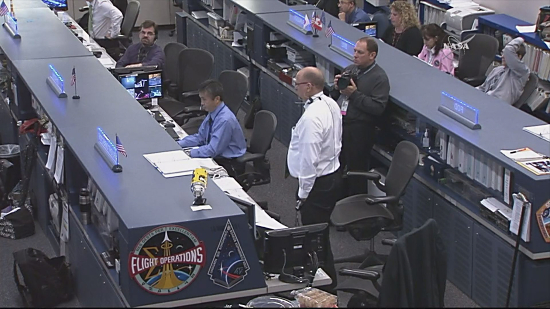
    [September 4, 2015 ]

    This entry passed through the Full-Text RSS service – if this is your content and you’re reading it on someone else’s site, please read the FAQ at fivefilters.org/content-only/faq.php#publishers.