<div data-cycle-pager-template=” ” readability=”33″>
Heart of Crab Nebula
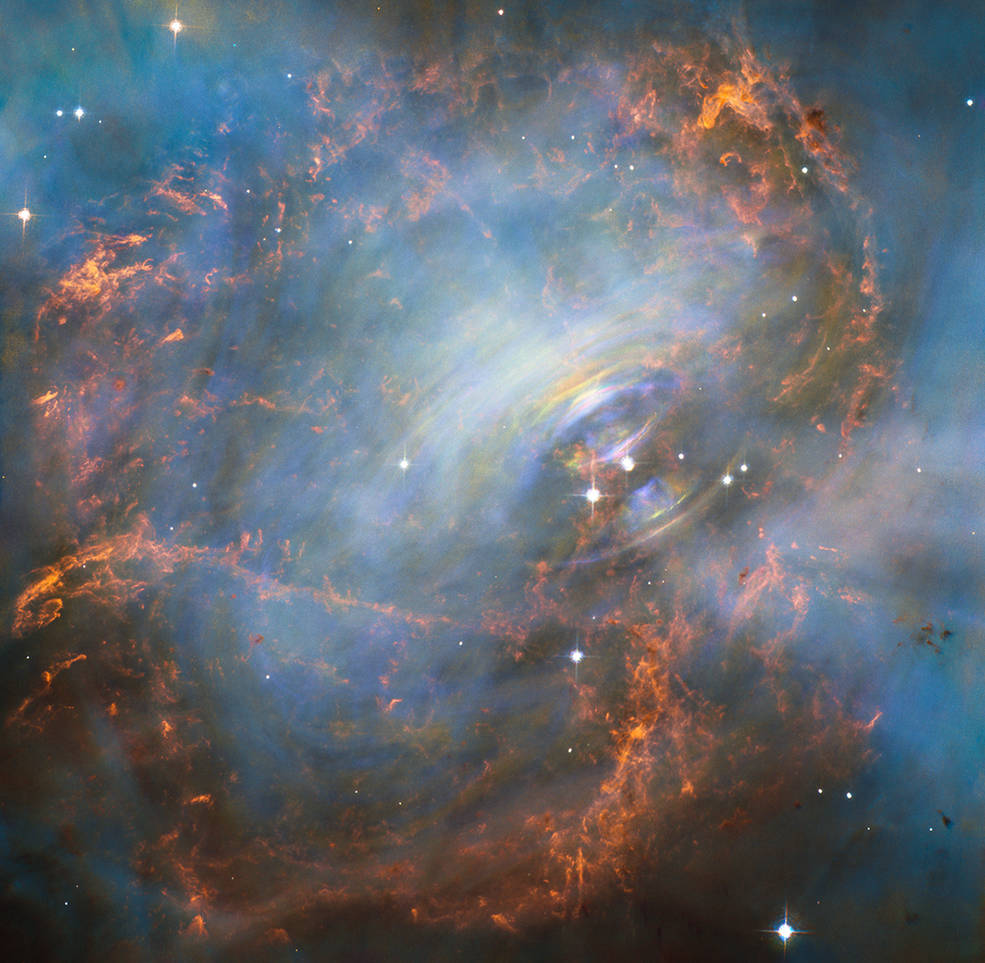
NASA’s Hubble Space Telescope captured a stunning image of the central neutron star of the Crab Nebula, which spins at a rate of 30 times per second with a visible pulsating appearance, much like a heart.
<div data-cycle-pager-template=” ” readability=”31.5″>
Intricate Crab Nebula Poses for Hubble Close-Up

The Hubble Space Telescope has caught the most detailed view of the Crab Nebula in one of the largest images ever assembed by the space-based observatory.
<div data-cycle-pager-template=” ” readability=”34.5″>
Crab Nebula Superflare – Fermi’s Large Area Telescope
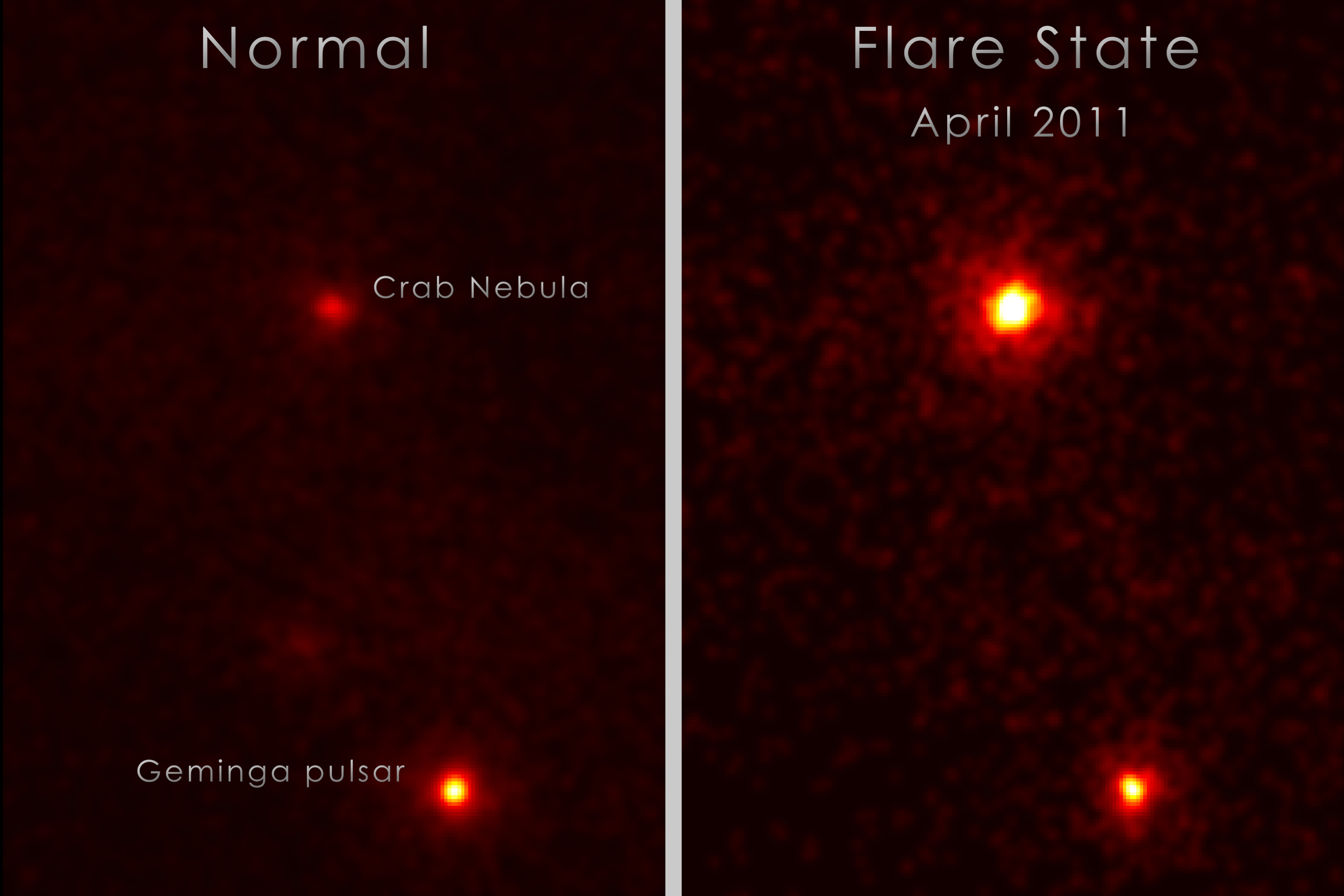
Fermi’s LAT discovered a gamma-ray ‘superflare’ from the Crab Nebula on April 12, 2011. These images show the number of gamma rays with energies greater than 100 million electron volts from a region of the sky centered on the Crab Nebula. Both views eliminate emission form the Crab pulsar by showing the sky in between its pulses. In both images, the bright source below is the Geminga pulsar. At left, the region 20 days before the flare; at right, April 14.
<div data-cycle-pager-template=” ” readability=”31.5″>
Crab Nebula – Hubble Space Telescope Visible Light Photo
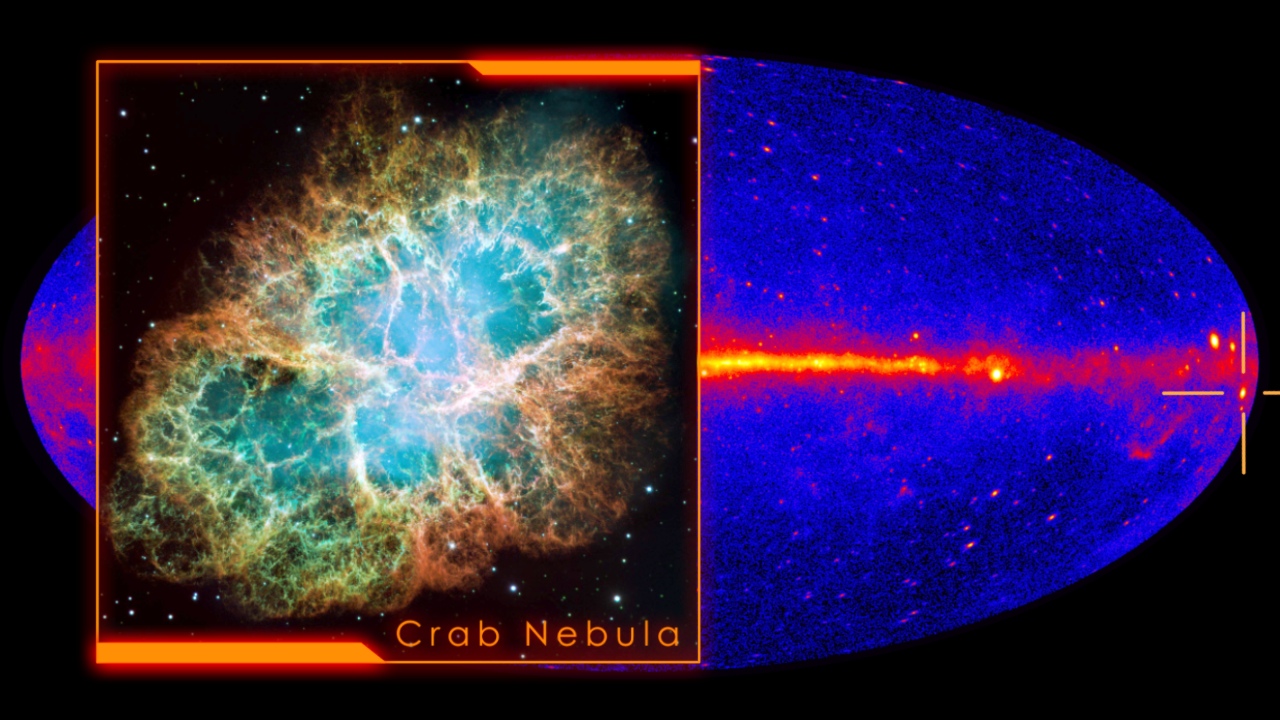
A Hubble visible light image of the Crab Nebula inset against a full-sky gamma ray map showing the location of the nebula (crosshairs).
<div data-cycle-pager-template=” ” readability=”33″>
Crab Nebula Pulsar Unleashes Powerful Gamma-Ray Beams
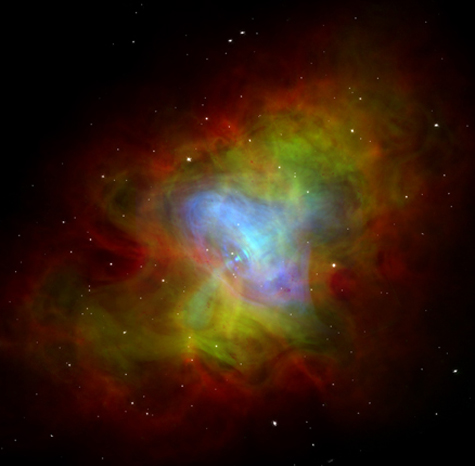
This image of the Crab Nebula combines visible light (green) and radio waves (red) emitted by the remnants of a cataclysmic supernova explosion in the year 1054, and the X-ray nebula (blue) created inside the optical nebula by a neutron star (the collapsed core of the massive star destroyed in the explosion).
<div data-cycle-pager-template=” ” readability=”32.5″>
Crab Nebula’s Powerful Gamma-Ray Beams
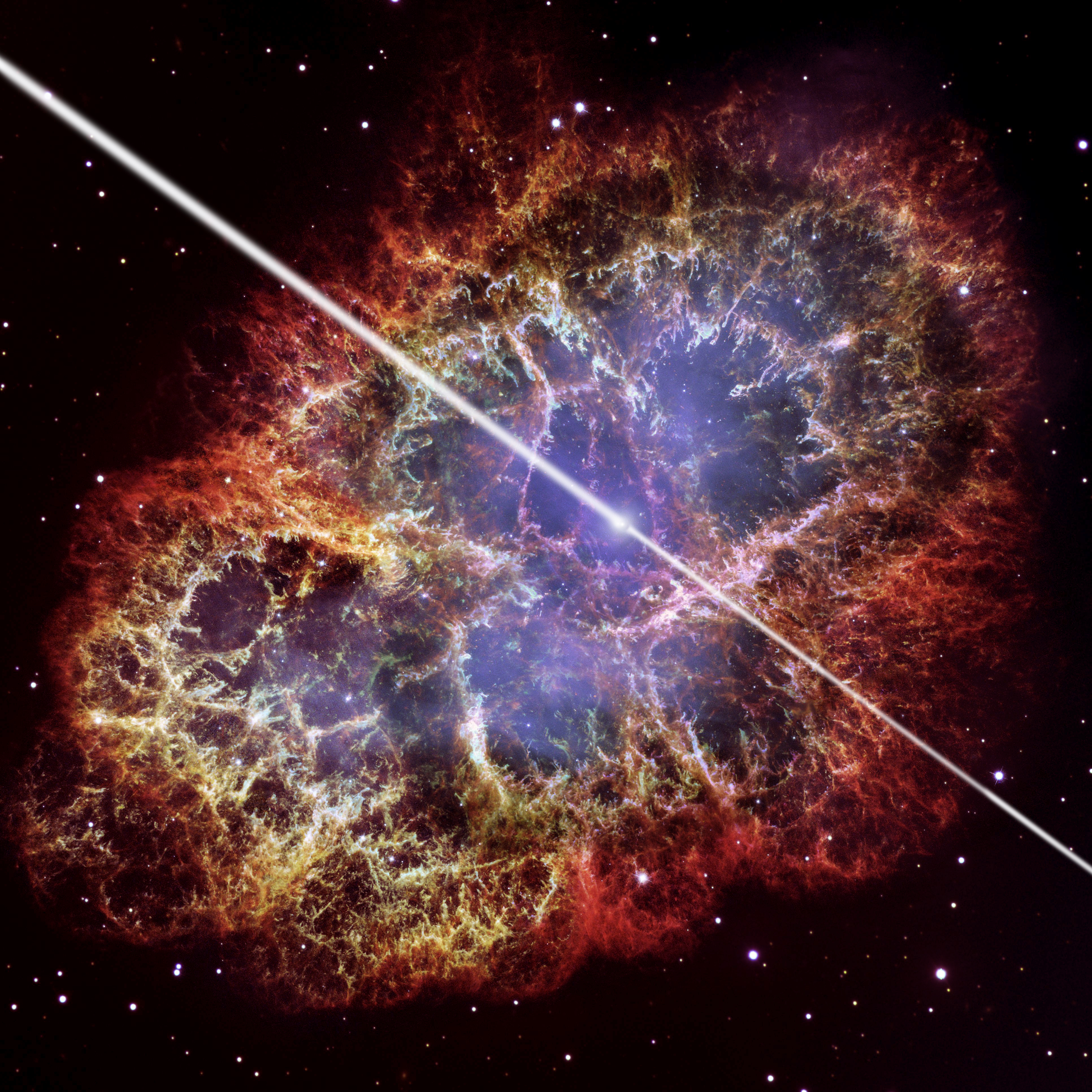
An artist’s conception of the pulsar at the center of the Crab Nebula, with a Hubble Space Telescope photo of the nebula in the background. Researchers using the VERITAS telescope array have discovered pulses of high-energy gamma rays coming from this object.