Tag: planethunt

  • 3-in-1 Launch

    A rocket lifts off into the sky, leaving a bright trail of flame in its wake. White vapor clouds billow out along the ground. There are also various structures in the image, including a gantry and a white structure that looks like a water tower.
    NASA/Kim Shiflett

    A SpaceX Falcon 9 rocket lifts off from NASA’s Kennedy Space Center in Florida on Sept. 24, 2025, carrying three missions that will investigate the Sun’s influence across the solar system.

    NASA’s IMAP (Interstellar Mapping and Acceleration Probe), the agency’s Carruthers Geocorona Observatory, and National Oceanic and Atmospheric Administration’s (NOAA) Space Weather Follow On–Lagrange 1 (SWFO-L1) spacecraft will each focus on different effects of the solar wind – the continuous stream of particles emitted by the Sun – and space weather – the changing conditions in space driven by the Sun – from their origins at the Sun to their farthest reaches billions of miles away at the edge of our solar system.

    Image credit: NASA/Kim Shiflett

  • NASA-ISRO Satellite Sends First Radar Images of Earth’s Surface

    Captured on Aug. 21, this image from NISAR’s L-band radar shows Maine’s Mount Desert Island. Green indicates forest; magenta represents hard or regular surfaces, like bare ground and buildings. The magenta area on the island’s northeast end is the town of Bar Harbor.
    Captured on Aug. 21, this image from NISAR’s L-band radar shows Maine’s Mount Desert Island. Green indicates forest; magenta represents hard or regular surfaces, like bare ground and buildings. The magenta area on the island’s northeast end is the town of Bar Harbor.
    Credit: NASA/JPL-Caltech

    The NISAR (NASA-ISRO Synthetic Aperture Radar) Earth-observing radar satellite’s first images of our planet’s surface are in, and they offer a glimpse of things to come as the joint mission between NASA and ISRO (Indian Space Research Organisation) approaches full science operations later this year.

    “Launched under President Trump in conjunction with India, NISAR’s first images are a testament to what can be achieved when we unite around a shared vision of innovation and discovery,” said acting NASA Administrator Sean Duffy. “This is only the beginning. NASA will continue to build upon the incredible scientific advancements of the past and present as we pursue our goal to maintain our nation’s space dominance through Gold Standard Science.”

    Images from the spacecraft, which was launched by ISRO on July 30, display the level of detail with which NISAR scans Earth to provide unique, actionable information to decision-makers in a diverse range of areas, including disaster response, infrastructure monitoring, and agricultural management.

    “By understanding how our home planet works, we can produce models and analysis of how other planets in our solar system and beyond work as we prepare to send humanity on an epic journey back to the Moon and onward to Mars,” said NASA Associate Administrator Amit Kshatriya. “The successful capture of these first images from NISAR is a remarkable example of how partnership and collaboration between two nations, on opposite sides of the world, can achieve great things together for the benefit of all.”

    On Aug. 21, the satellite’s L-band synthetic aperture radar (SAR) system, which was provided by NASA’s Jet Propulsion Laboratory in Southern California, captured Mount Desert Island on the Maine coast. Dark areas represent water, while green areas are forest, and magenta areas are hard or regular surfaces, such as bare ground and buildings. The L-band radar system can resolve objects as small as 15 feet (5 meters), enabling the image to display narrow waterways cutting across the island, as well as the islets dotting the waters around it.

    Then, on Aug. 23, the L-band SAR captured data of a portion of northeastern North Dakota straddling Grand Forks and Walsh counties. The image shows forests and wetlands on the banks of the Forest River passing through the center of the frame from west to east and farmland to the north and south. The dark agricultural plots show fallow fields, while the lighter colors represent the presence of pasture or crops, such as soybean and corn. Circular patterns indicate the use of center-pivot irrigation.

    On Aug. 23, NISAR imaged land adjacent to northeastern North Dakota’s Forest River. Light-colored wetlands and forests line the river’s banks, while circular and rectangular plots throughout the image appear in shades that indicate the land may be pasture or cropland with corn or soy.
    On Aug. 23, NISAR imaged land adjacent to northeastern North Dakota’s Forest River. Light-colored wetlands and forests line the river’s banks, while circular and rectangular plots throughout the image appear in shades that indicate the land may be pasture or cropland with corn or soy.
    Credit: NASA/JPL-Caltech

    The images demonstrate how the L-band SAR can discern what type of land cover — low-lying vegetation, trees, and human structures — is present in each area. This capability is vital both for monitoring the gain and loss of forest and wetland ecosystems, as well as for tracking the progress of crops through growing seasons around the world.

    “These initial images are just a preview of the hard-hitting science that NISAR will produce — data and insights that will enable scientists to study Earth’s changing land and ice surfaces in unprecedented detail while equipping decision-makers to respond to natural disasters and other challenges,” said Nicky Fox, associate administrator, Science Mission Directorate at NASA Headquarters in Washington. “They are also a testament to the years of hard work of hundreds of scientists and engineers from both sides of the world to build an observatory with the most advanced radar system ever launched by NASA and ISRO.”

    The L-band system uses a 10-inch (25-centimeter) wavelength that enables its signal to penetrate forest canopies and measure soil moisture and motion of ice surfaces and land down to fractions of an inch, which is a key measurement in understanding how the land surface moves before, during, and after earthquakes, volcanic eruptions, and landslides.

    The preliminary L-band images are an example of what the mission team will be able to produce when the science phase begins in November. The satellite was raised into its operational 464-mile (747-kilometer) orbit in mid-September.

    The NISAR mission also includes an S-band radar, provided by ISRO’s Space Applications Centre, that uses a 4-inch (10-centimeter) microwave signal that is more sensitive to small vegetation, making it effective at monitoring certain types of agriculture and grassland ecosystems.

    The spacecraft is the first to carry both L- and S-band radars. The satellite will monitor Earth’s land and ice surfaces twice every 12 days, collecting data using the spacecraft’s drum-shaped antenna reflector, which measures 39 feet (12 meters) wide — the largest NASA has ever sent into space.

    The NISAR mission is a partnership between NASA and ISRO spanning years of technical and programmatic collaboration. The successful launch and deployment of NISAR builds on a strong heritage of cooperation between the United States and India in space.

    The Space Applications Centre provided the mission’s S-band SAR. The U R Rao Satellite Centre provided the spacecraft bus. The launch vehicle was provided by Vikram Sarabhai Space Centre, and launch services were through Satish Dhawan Space Centre. Key operations, including boom and radar antenna reflector deployment, are now being executed and monitored by the ISRO Telemetry, Tracking and Command Network’s global system of ground stations.

    Managed by Caltech in Pasadena, NASA JPL leads the U.S. component of the project. In addition to the L-band SAR, reflector, and boom, JPL also provided the high-rate communication subsystem for science data, a solid-state data recorder, and payload data subsystem. NASA’s Goddard Space Flight Center in Greenbelt, Maryland, manages the Near Space Network, which receives NISAR’s L-band data.

    To learn more about NISAR, visit:

    https://nisar.jpl.nasa.gov

    -end-

    Liz Vlock
    Headquarters, Washington
    202-358-1600
    elizabeth.a.vlock@nasa.gov

    Andrew Wang / Jane J. Lee
    Jet Propulsion Laboratory, Pasadena, Calif.
    626-379-6874 / 818-354-0307
    andrew.wang@jpl.nasa.gov / jane.j.lee@jpl.nasa.gov

  • NASA & STEM Learning Ecosystems: Opportunities & Benefits for Everyone

    2 min read

    NASA & STEM Learning Ecosystems: Opportunities & Benefits for Everyone

    STEM learning ecosystems are intentionally designed, community-wide partnerships that enable all Americans to actively participate in science, technology, engineering, and math (STEM) throughout their lifetimes. Lifelong STEM learning helps people build critical knowledge and skills, access economic opportunities, drive innovation, and make informed decisions in a changing world. STEM learning ecosystems draw on expertise and resources to provide access to these benefits for the entire community.

    NASA’s Science Activation (SciAct) program, a competitively-selected network of collaborative projects that connect NASA science with people of all ages and backgrounds, includes new and growing STEM learning ecosystems in American communities from Alaska to Maine and creates free, high-quality resources that educators across the country can use to share the excitement of Earth and space science.

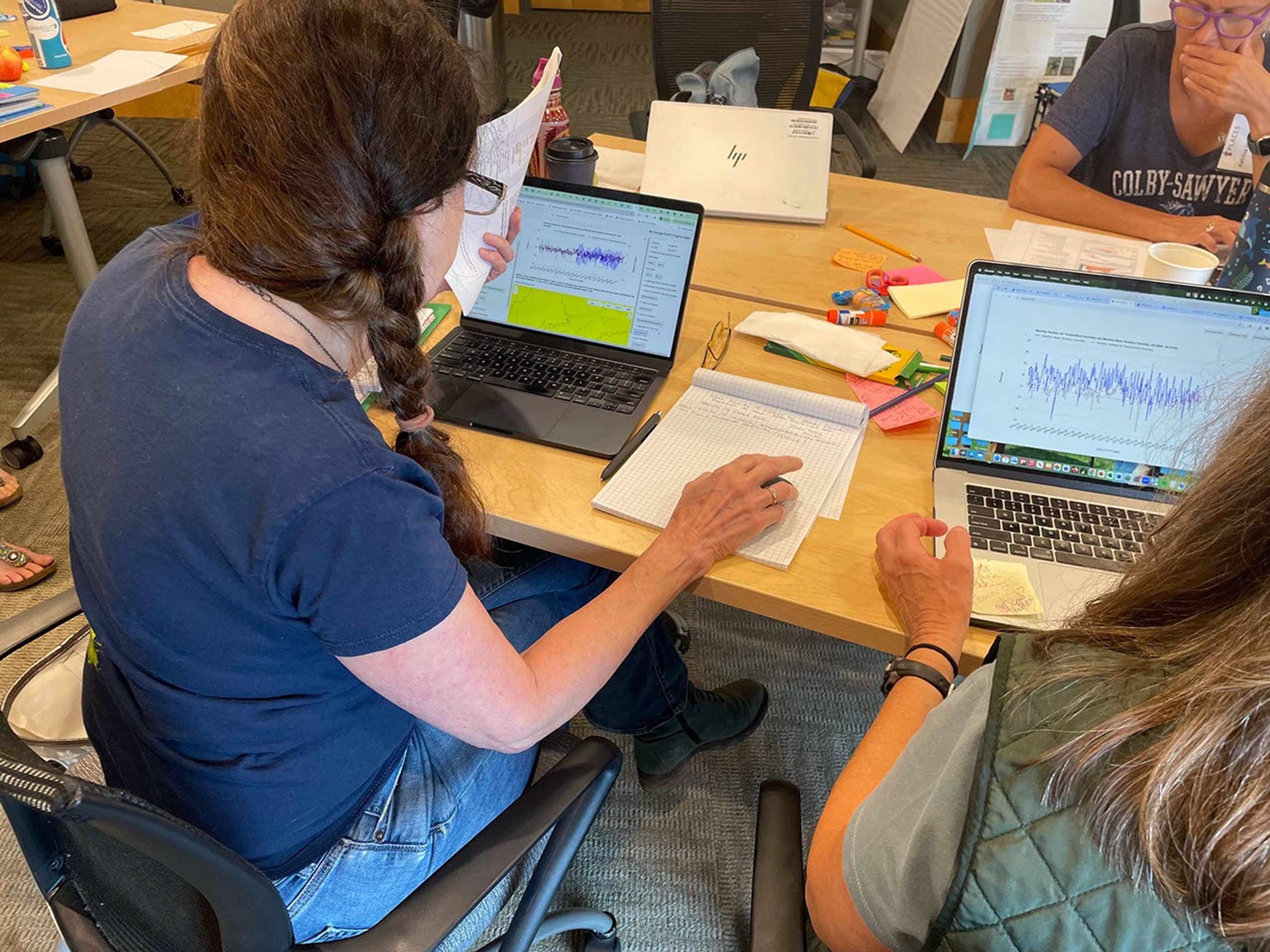
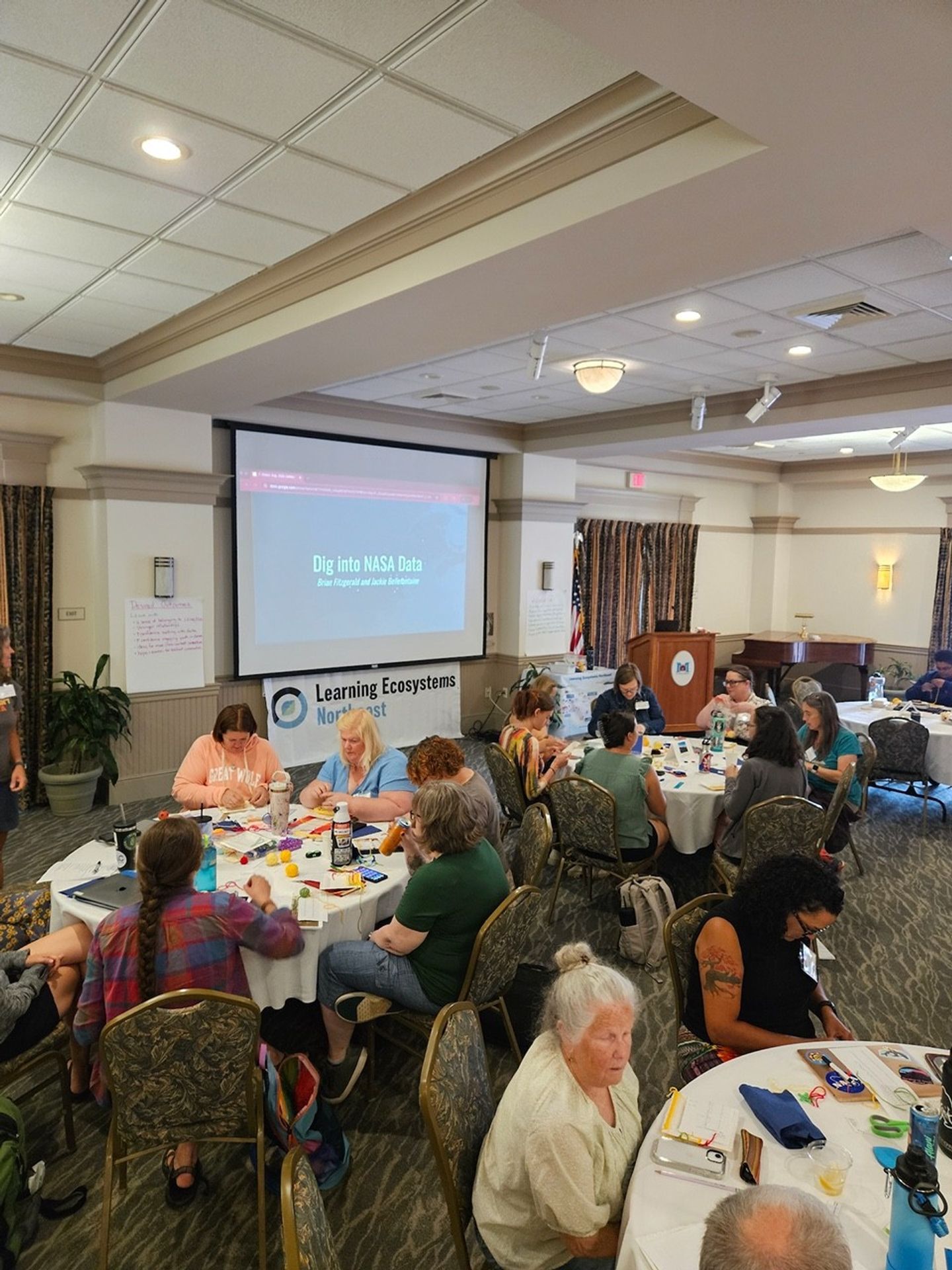
    To further support connections among STEM learning ecosystems and NASA, the SciAct STEM Ecosystems project held a meeting in Saint Paul, Minnesota on August 4-6, 2025. Approximately 100 educators, evaluators, subject matter experts, and other STEM learning facilitators from around the nation participated to share approaches, learn about resources, and build relationships. The gathering offered an opportunity to connect NASA SciAct teams with each other and with external networks and learning ecosystems for mutual benefit.

    Meeting goals included sharing ways to create effective partnerships and engage learners in Earth and space science, discovering NASA resources and assets to use in STEM education efforts, and strengthening connections among participants. To accomplish these goals, meeting activities included plenaries, breakout sessions, and networking opportunities.

    Led by Arizona State University, the SciAct STEM Ecosystems project is a collaboration among several regional partnerships/SciAct project teams: Arctic and Earth SIGNs, Learning Ecosystems Northeast, Rural Activation and Innovation Network, and the Smoky Mountains STEM Collaborative. The project also partners with the National Informal STEM Education Network to create professional resources.

    For those who were unable to attend in person, the STEM Ecosystems project makes a variety of resources available online: https://www.nisenet.org/stem-learning-ecosystems.

    SciAct STEM Ecosystems is supported by NASA under cooperative agreement award number 80NSSC21M0007 and is part of NASA’s Science Activation Portfolio. Learn more about how Science Activation connects NASA science experts, real content, and experiences with community leaders to do science in ways that activate minds and promote deeper understanding of our world and beyond: https://science.nasa.gov/learn/about-science-activation/.

    Several small groups of people talking.
    Meeting participants took advantage of opportunities to network and strengthen their relationships.
    Emily Maletz/NISE Network

    Details

    Last Updated

    Sep 25, 2025

    Editor
    NASA Science Editorial Team
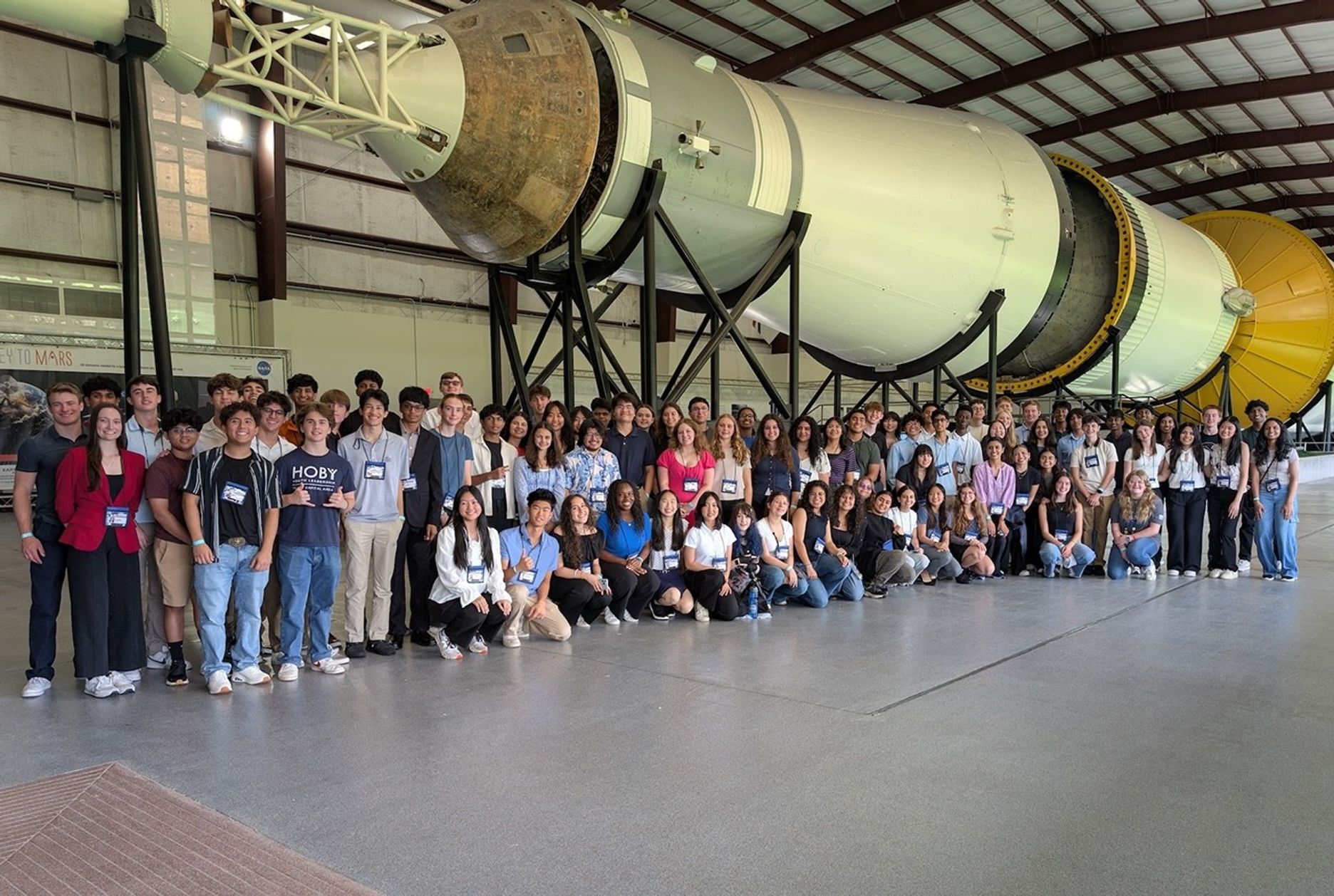
  • NASA Astronaut Chris Williams to Discuss Upcoming Launch, Mission

    NASA astronaut Chris Williams poses for an official portrait at the agency’s Johnson Space Center in Houston.
    NASA astronaut Chris Williams poses for an official portrait at the agency’s Johnson Space Center in Houston.
    Credit: NASA

    NASA will host a news conference at 2 p.m. EDT Wednesday, Oct. 1, from the agency’s Johnson Space Center in Houston to highlight the upcoming mission of astronaut Chris Williams to the International Space Station.

    The news conference will stream live on NASA’s website and YouTube channel. Learn how to watch NASA content through a variety of platforms, including social media.

    The Soyuz MS-28 spacecraft, targeted to launch Nov. 27 from the Baikonur Cosmodrome in Kazakhstan, will carry Williams on his first flight, as well as Sergey Kud-Sverchkov and Sergey Mikaev of Roscosmos, to the space station for an eight-month mission as part of Expeditions 73/74.

    Media interested in participating must contact the newsroom at NASA Johnson no later than 5 p.m., Monday, Sept. 29, at 281-483-5111 or jsccommu@mail.nasa.gov. A copy of NASA’s media accreditation policy is online. Media interested in participating by phone must contact the Johnson newsroom by 10 a.m. the day of the event.

    Selected as a candidate in 2021, Williams graduated with the 23rd astronaut class in 2024. He began training for his first space station flight assignment immediately after completing initial astronaut candidate training.

    Williams was born in New York City, and considers Potomac, Maryland, his hometown. He holds a bachelor’s degree in physics from Stanford University in California and a doctorate in physics from the Massachusetts Institute of Technology in Cambridge, where his research focused on astrophysics. Williams completed medical physics residency training at Harvard Medical School in Boston. He was working as a clinical physicist and researcher at the Brigham and Women’s Hospital in Boston when he was selected as an astronaut candidate.

    The International Space Station is a convergence of science, technology, and human innovation enabling research not possible on Earth. For nearly 25 years, NASA has supported a continuous U.S. human presence aboard the orbiting laboratory, where astronauts have learned to live and work in space for extended periods of time. The space station is a springboard for developing a low Earth economy and NASA’s next great leaps in human exploration at the Moon under the Artemis campaign and Mars.

    Learn more about the International Space Station:

    https://www.nasa.gov/international-space-station

    -end-

    Jimi Russell / Joshua Finch
    Headquarters, Washington
    202-358-1100
    james.j.russell@nasa.gov / joshua.a.finch@nasa.gov

    Shaneequa Vereen
    Johnson Space Center, Houston
    281-483-5111
    shaneequa.y.vereen@nasa.gov

  • NASA Aircraft Coordinate Science Flights to Measure Air Quality

    4 min read

    NASA Aircraft Coordinate Science Flights to Measure Air Quality

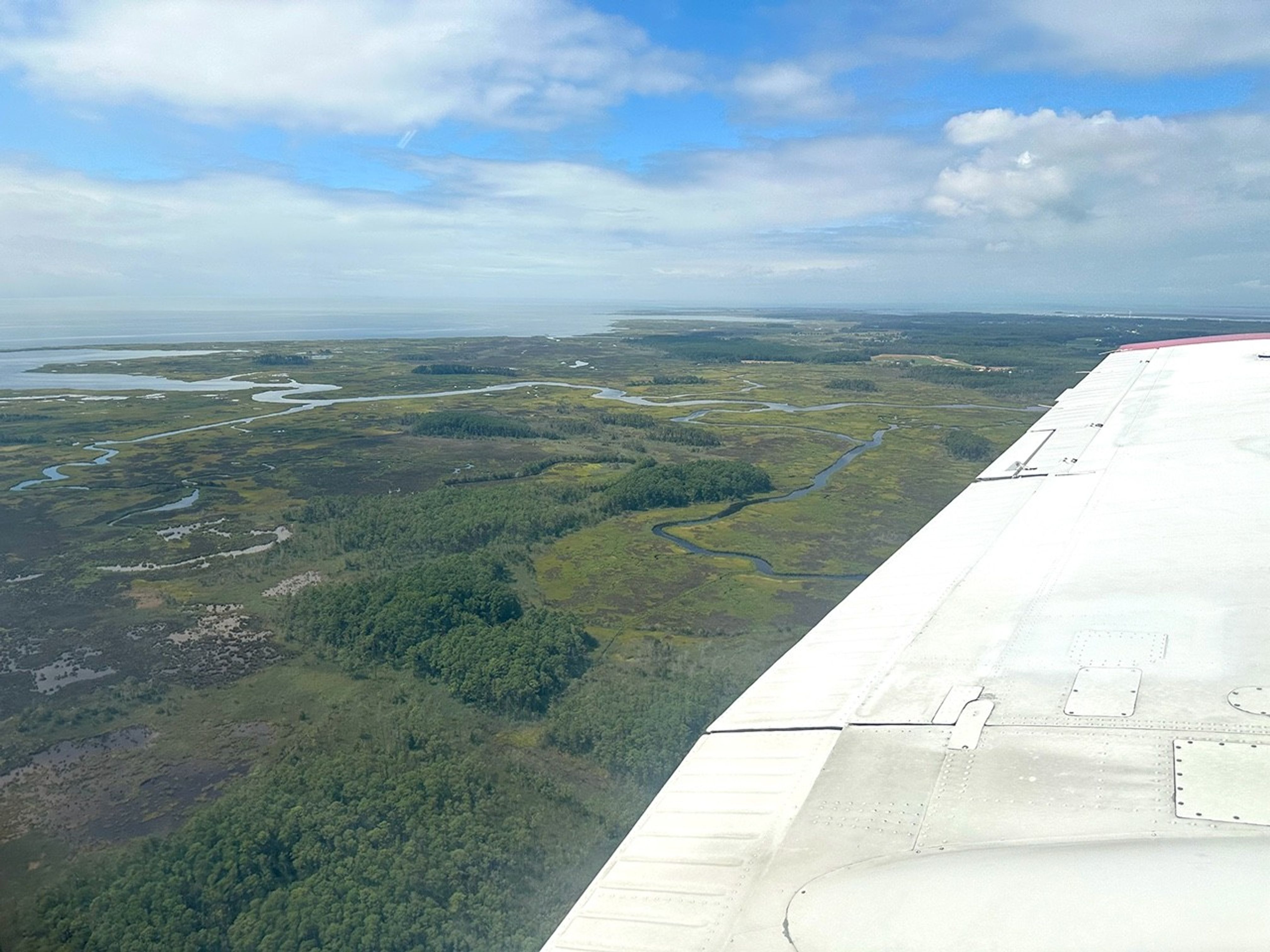
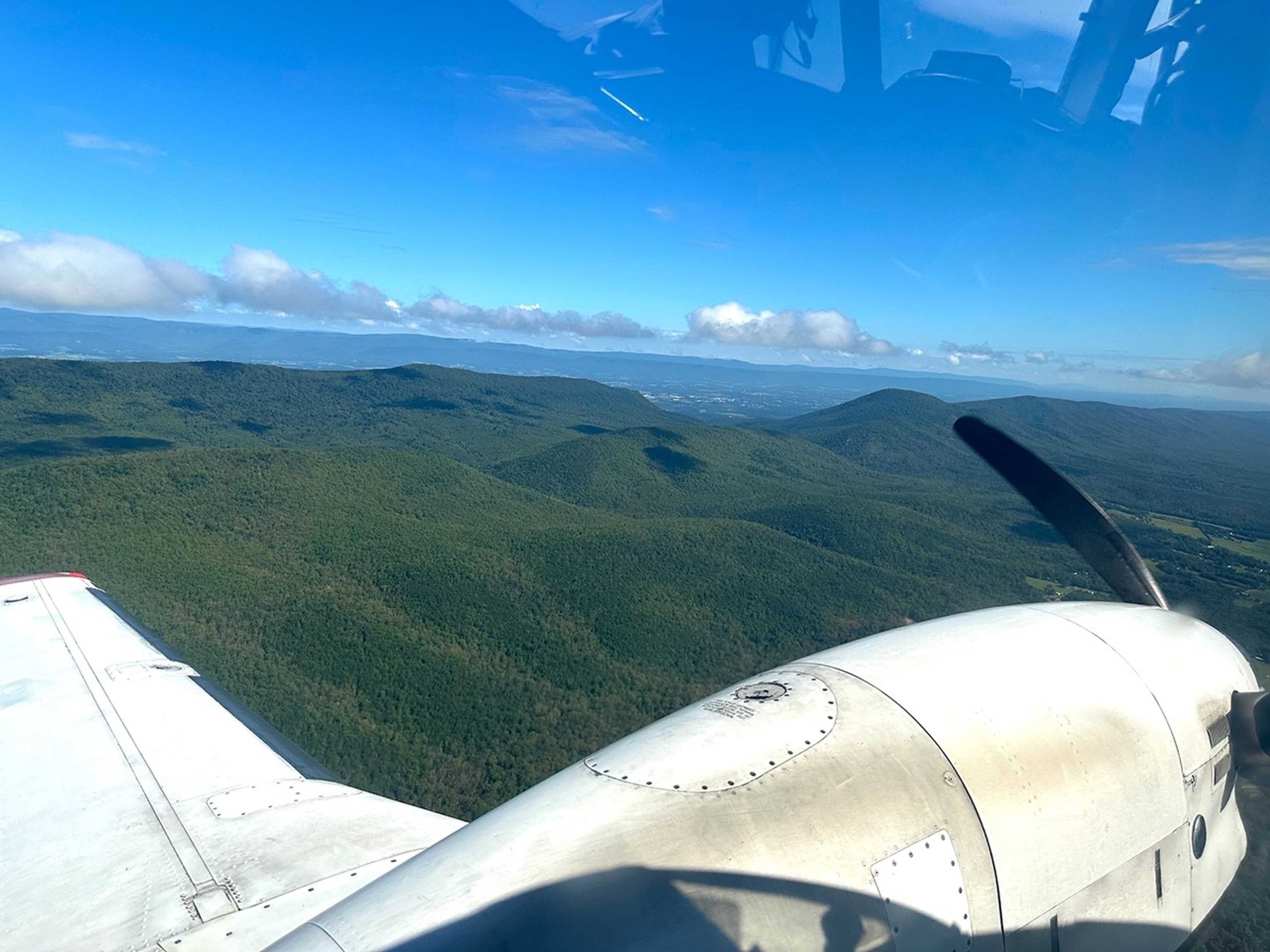
    The image shows an aerial view of the Chesapeake Bay, with groves of trees, rivers, a body of water in the distance, and green land. The horizon, a third of the way down the image, separates the blue cloudy sky from the land. On the right of the image is a white wing of a plane.
    NASA Goddard’s G-LiHT flying on the A90 flies over Shenandoah Valley in the US East Coast during the week of August 11-15.
    Credit: Shawn Serbin/NASA GSFC

    Magic is in the air. No wait… MAGEQ is in the air, featuring scientists from NASA centers across the country who teamed up with the National Oceanic and Atmospheric Administration (NOAA), the University of Maryland Baltimore County, and several other university and government partners and collaborators.

    This summer, six planes collectively flew more than 400 hours over the mid-Atlantic United States with a goal of gathering data on a range of objectives, including air quality, forestry, and fire management.

    This was part of an effort called MAGEQ, short for Mid-Atlantic Gas Emissions Quantification. Rather than one mission, MAGEQ consists of several individual missions across more than a dozen organizations and agencies, along with university students. Over the course of around six weeks, aircraft flew over cities, wetlands, farms, and coal mining areas.

    An aerial view of Shenandoah, showing green mountains and land. The horizon separates the bright blue sky from the land. At the top of the image is a reflection of inside the aircraft, showing this image was taken through a window. At the bottom of the image is a white wing of a plane and the engine and propellor of the same plane.
    NASA Goddard’s G-LiHT flying on the A90 flies over the Chesapeake Bay near the Big Annemessex River.
    Credit: Shawn Serbin/NASA GSFC

    “Each aircraft team is comprised of highly skilled and motivated people who understand how to fly their particular plane to achieve the science they want,” said Glenn Wolfe, research scientist at NASA’s Goddard Space Flight Center in Greenbelt, Maryland, and project lead for MAGEQ. “The complexity comes in identifying how each platform can complement or supplement the others.”

    Coordinating flights required both advanced planning and flexibility to get the best outcome. Weather proved to be a primary challenge for the team, as members worked around cloudy days, wind, and storms to ensure safe flights.

    The six aircraft had different objectives and requirements. For example, some carried instruments that needed to fly high to simulate a satellite’s view of the atmosphere and the Earth’s surface and could not measure through clouds. Others were equipped with instruments that directly measured the air particles and could work under the clouds, provided there was no rain.

    Despite weather challenges, flight teams worked together to coordinate as many multi-aircraft flight days as possible, meeting the overall objective of the MAGEQ campaign.

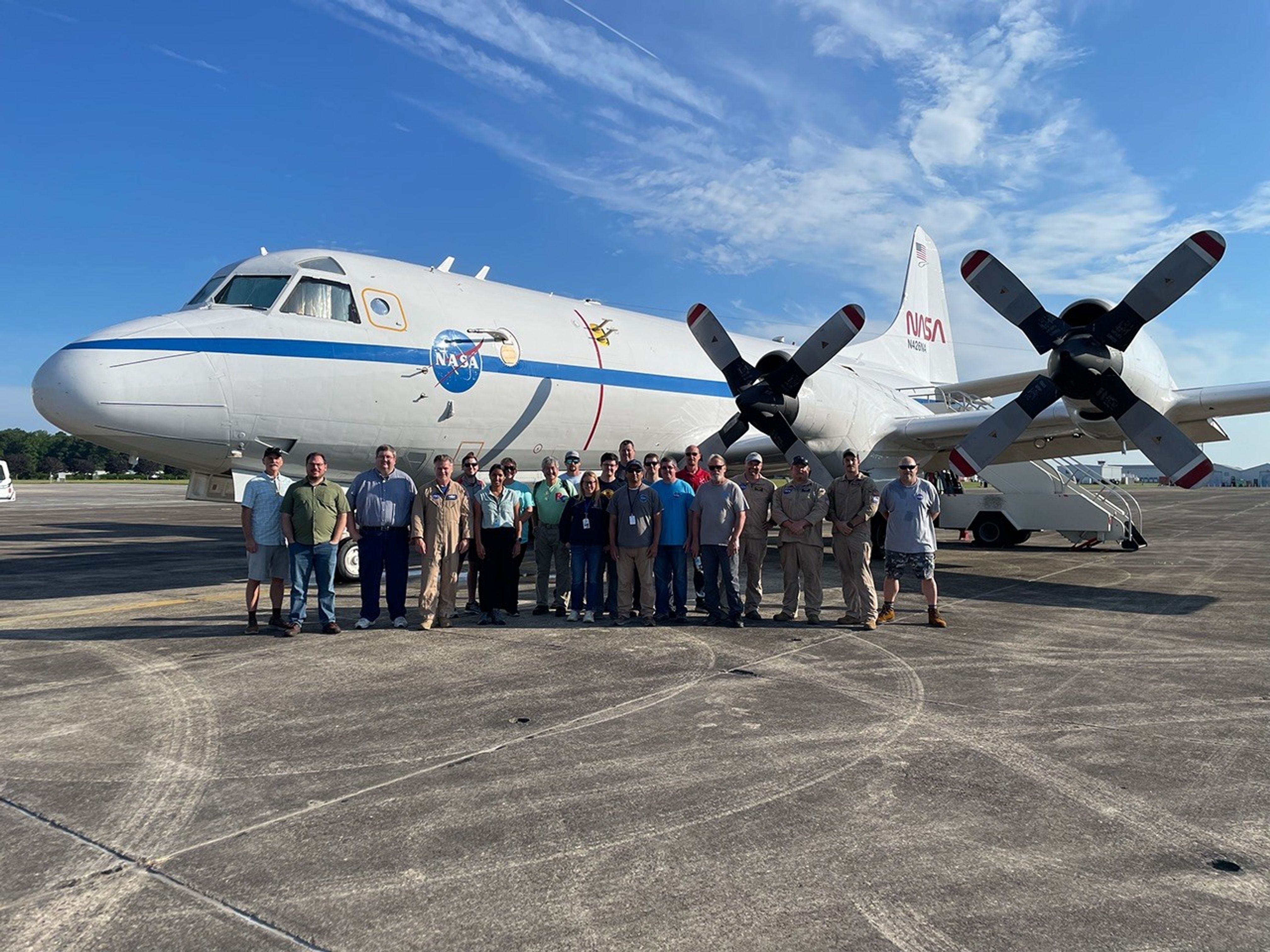
    A group of twenty one people stand in front of a large, white aircraft with propellors. The NASA meatball logo is seen on the side of the aircraft. The people are all smiling and looking at the camera.
    The MAGEQ team members pose in front of the P-3 aircraft.
    Credit: Roy Johnson/NASA

    “It’s been inspiring to see how everybody worked together,” said Lesley Ott, research meteorologist and lead carbon cycle modeler for NASA’s Global Modeling and Assimilation Office at NASA Goddard. “By collecting data together, not only can we do a better job as scientists in having more complete understanding, we can also do a better job making usable data sets that meets the needs of different stakeholders.”

    State resource managers in North Carolina and Virginia, for example, could benefit from this data as they monitor the health of wetlands, which provide resilience to storms, absorb carbon from the atmosphere and support local tourist industries. The data could also help operators at energy-producing facilities detect methane leaks or equipment failures quickly. Faster detection could speed up intervention and minimize waste, as well as lessen environmental impacts. Stakeholders were an integral part of the planning process, Ott said. They made suggestions about measurement sites and data needs that informed the flight planning.

    Scientists will also use the measurements to verify satellite data from both public and commercial data providers. Satellites like the Tropospheric Emissions: Monitoring of Pollution (TEMPO) instrument collect similar data. Scientists can compare the airborne and satellite data to get a more complete picture of the atmosphere. They also will use MAGEQ data to evaluate atmospheric chemistry modeling from the Goddard Earth Observing System (GEOS) model, which connects atmospheric, oceanic, and land data to help create a more comprehensive picture of Earth science.

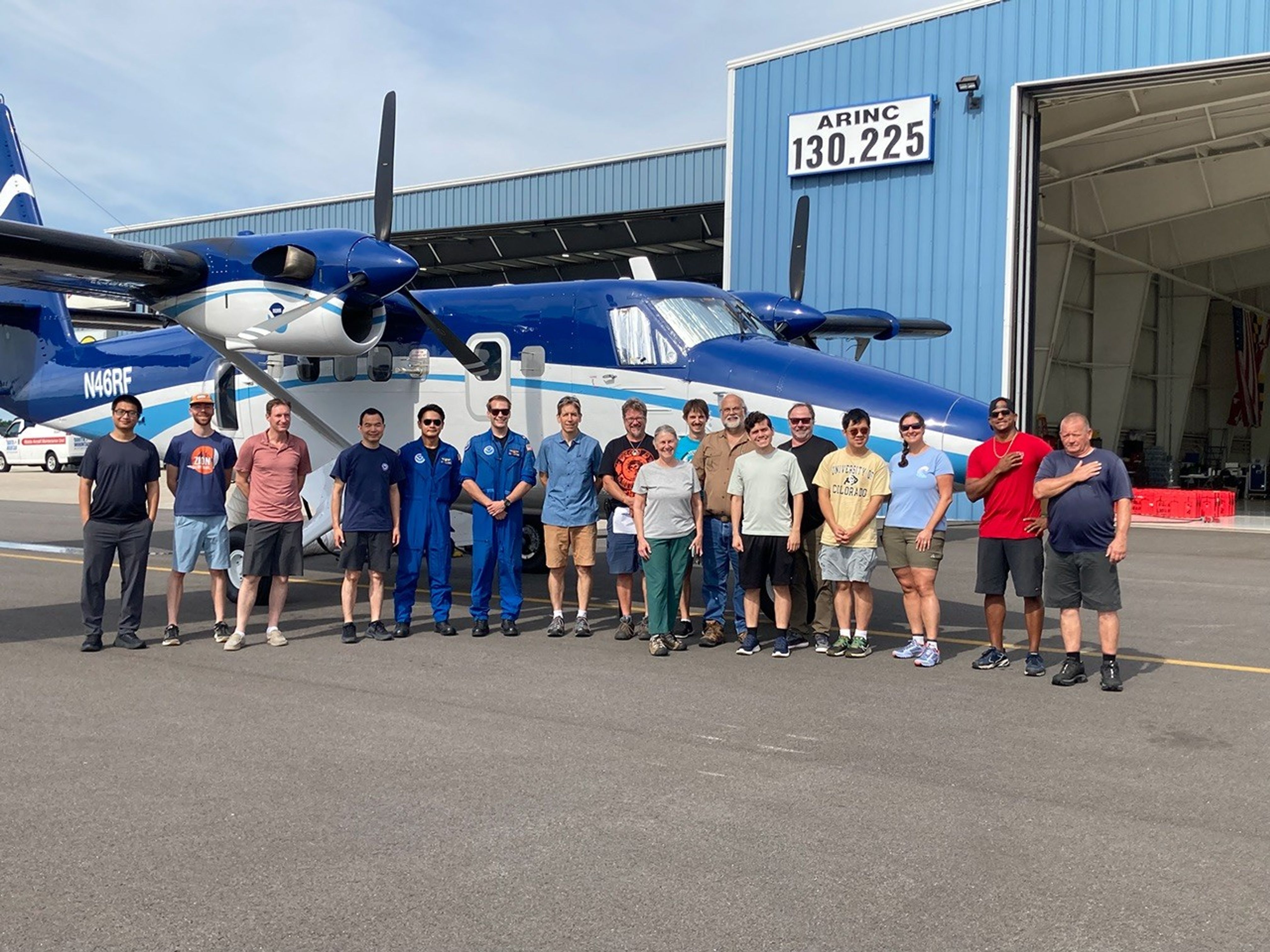
    A group of seventeen people stand in a line in front of a blue aircraft with propellors. They all smile at the camera, which is taking a picture of them from a distance.
    The MAGEQ team members from NOAA and NASA pose in front of the Twin Otter aircraft.
    Credit: Steve Brown

    “Every aircraft does something different and contributes a different type of data,” said Steve Brown, leader of the tropospheric chemistry and atmospheric remote sensing programs at the NOAA Chemical Sciences Laboratory in Boulder, Colorado. “We’re going to have a lot of work to do at the end of this to put all these data sets together, but we will make the best use of all these measurements.”

    By Erica McNamee

    NASA’s Goddard Space Flight Center, Greenbelt, Md.

    Details

    Last Updated

    Sep 24, 2025

    Editor
    Jenny Marder
    Contact
    Erica McNamee
    Location
    Goddard Space Flight Center
  • NASA Data Powers New Tool to Protect Water Supply After Fires

    6 Min Read

    NASA Data Powers New Tool to Protect Water Supply After Fires

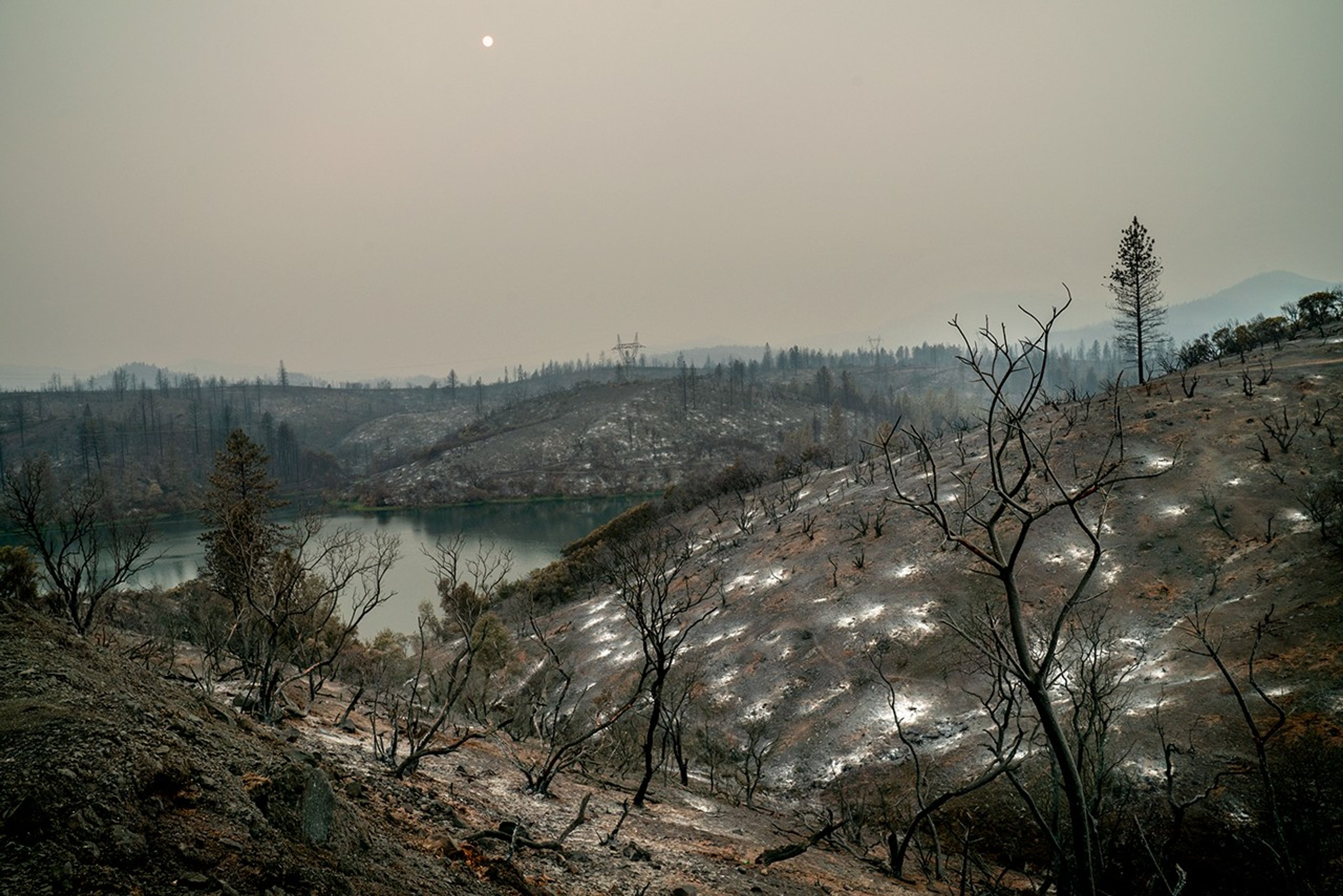
    Wildfire-scorched hills with charred trees rise above a body of water under a hazy, smoke-filled sky.

    Wildfire-scorched terrain above a water body underscores risks to downstream supplies.

    Credits:
    USFS/Cecilio Ricardo

    When wildfires scorch a landscape, the flames are just the beginning. NASA is helping communities across the nation foresee and prepare for what can follow: mudslides, flash flooding, and contaminated surface water supplies.

    A new online tool called HydroFlame, built with support from NASA’s Earth Science Division, relies on satellite data, hydrologic modeling, and artificial intelligence to predict how wildfires could affect water resources, from tap water to the rivers and streams where people fish. The project is being developed with the University of Texas at Arlington, Purdue University, the U.S. Geological Survey, and other partners.

    For now, the tool includes data only for Montana’s Clark Fork Basin, where it is being piloted. But new applications are underway in California and Utah. Researchers will soon begin fieldwork in Los Angeles County to collect on-the-ground data to refine HydroFlame’s predictive approach — an important step toward expanding it beyond the pilot site.

    “As wildfires intensify across the country, so do their ripple effects on regional water resources,” said Erin Urquhart, program manager for NASA’s water resources program at NASA Headquarters in Washington. “HydroFlame could help communities in the U.S. see what’s coming and plan for it, before a fire becomes a water crisis.”

    That kind of foresight is exactly what local officials are looking for.

    “For someone managing a trout fishery or drinking water supply, knowing when a stream might be overwhelmed with debris after a fire can mean the difference between preparedness and a crisis,” said Morgan Valliant, who is part of the project’s advisory group and the associate director of ecosystem services for Missoula Parks and Recreation in Montana. “This tool could let us move from reacting to planning.”

    When fire reshapes land

    In the wake of a wildfire, charred hillsides are often unstable. With the protective blanket of plants burned away, rain that once soaked gently into the soil can race downhill, sending ash, debris, and sediment into rivers and reservoirs. That runoff can trigger flash floods and contaminate drinking water.

    Severe wildfires can also bake soil into a water-repelling crust. With less absorption, the same slopes can swing from drought to destructive floods, and those runoff risks can persist for decades.

    HydroFlame, developed by a team led by Adnan Rajib at the University of Texas at Arlington, is built to anticipate those extremes.

    “NASA is constantly pushing the boundaries when it comes to sensing and predicting fire,” Rajib said. “But there is still a huge gap when it comes to translating that fire information in terms of water. That’s where HydroFlame comes in.” 

    The tool will include three components:

    • a historical viewer that maps past fire impacts on streamflow and sediment
    • a “what-if” scenario builder to simulate future fires
    • a predictive tool that generates weekly forecasts using near-real-time satellite data as initial conditions

    When a wildfire is identified, the tool will identify how severely areas are burned across watersheds and track shifts in vegetation, soil wetness, and evapotranspiration, or the release of water from the land and plants to the atmosphere. HydroFlame uses data from satellite missions and instruments including MODIS (Moderate Resolution Imaging Spectroradiometer), Landsat, and SMAP (Soil Moisture Active Passive).

    Those observations, combined with stream records from gauged rivers, feed into simulations of possible fire-driven changes in water flow and quality. A machine-learning component will fill in where gauges are absent, making it possible to predict impacts up to two weeks in advance.

    HydroFlame’s online interface shows historical fire data for Montana’s Clark Fork Basin watershed from 2006 to 2020.
    This screenshot shows HydroFlame, a NASA-supported online tool that will help U.S. communities better understand and forecast how wildfires may affect water supplies in their region.
    A. Rajib

    The historical viewer, which is publicly accessible, lets users explore how past fires altered streamflow and sediment levels across the basin. The other components are still in development: The prototype of the “what-if” scenario builder tool is expected to launch in December 2025, with the full version planned for May 2026.

    HydroFlame’s ability to capture compounding factors — drought before a fire, flooding afterward — and simulate their cascading effects on water systems is what makes it different from other tools, Rajib said. “Many traditional models treat each fire as a one-off,” he said. “HydroFlame looks at the bigger picture.”

    Just as important, the tool is built for people who aren’t experts in satellite data.

    “It’s a practical starting point for scenario planning,” said Kelly Luis, associate program manager for NASA’s water resources program and an aquatic ecosystem scientist at NASA’s Jet Propulsion Laboratory in Southern California. The tool’s “what-if” function, she explained, will let water managers, city planners, and other officials apply their local knowledge. For example, they might zero in on the rivers and streams most important to a city’s water supply. “That kind of insight is essential for building solutions that are both scientifically grounded and locally relevant.”

    For watershed organizations or local and state agencies with limited staff and resources, that ease of use is crucial — saving time and effort while helping keep costs down.

    “These groups need holistic ways to understand potential impacts of fires to their rivers and streams and plan, without always having to bring in someone from the outside,” said Amy Seaman, the executive director of the Montana Watershed Coordination Council. Seaman works with community watershed organizations across Montana and is also part of the project’s advisory group.

    This effort is part of a broader NASA focus on understanding how fire reshapes water systems and what that means for American communities.

    A real-world trial in Los Angeles

    Rajib’s team put HydroFlame’s predictive capabilities to the test during the January 2025 wildfires in Los Angeles. As fires burned through the region, researchers ran real-time model simulations using NASA satellite data, tracking changes in vegetation, soil moisture, and burn severity almost as they happened. By the end of the month, the team had generated forecasts for mud and debris flows expected in February.

    False-color Landsat 9 image from Jan. 14, showing burned areas near Los Angeles. Green indicates vegetation; brown shades show land burned in the Kenneth, Franklin, and Palisades fires.
    This false-color Landsat 9 image, acquired Jan. 14, shows burned areas from the 2025 fires in and around Los Angeles, highlighting unburned vegetation (green) and burned land (light to dark brown) using shortwave infrared, near infrared, and visible light. Similar types of NASA fire data are used in HydroFlame.
    NASA Earth Observatory

    Those predictions turned out to be accurate. In early February, mudflow events struck the areas of Altadena and Sierra Madre in Los Angeles County, following the Eaton Fire. HydroFlame had been run specifically for that fire and flagged both neighborhoods as at risk, Rajib said.

    “It wasn’t a formal, data-verified result because we didn’t have ground sensors in place,” Rajib said. “But it was a practical validation. The timing and severity of what we modeled lined up with what occurred.”

    Rajib’s team is now working with NASA JPL, the University of California, Merced and Los Angeles County to formally test and expand the tool in the Los Angeles area. The team plans to begin collecting on-the-ground data no earlier than Friday, Sept. 26. That work will include installing stream sensors to measure sediment levels in the county’s streams during California’s rainy season and integrating those data into the tool — a step toward building an early-warning system.

    HydroFlame invites those interested in the tool to share their ideas and feedback, and to get involved, through a web form available on the project’s Explore Tools webpage.

    About the Author

    Emily DeMarco

    Emily DeMarco

    Details

    Last Updated

    Sep 24, 2025

    Location
    NASA Headquarters
  • Lettuce Find Healthy Space Food! Citizen Scientists Study Space Salads

    Lettuce Find Healthy Space Food! Citizen Scientists Study Space Salads

    Diagram illustrating research on lettuce grown in space stations and its effects on astronaut health. Lettuce nutritional content is linked to astronaut diet, potential diseases, and astronaut biological response. Missions including I4, JAXA, and NASA’s Twin Study are shown, with graphics of spacecraft, astronauts, the ISS, and biological diagrams.
    Volunteer members of the OSDR-Analysis Working Groups examined the nutritional quality of crops grown in Low Earth Orbit and the physiological effects of space-induced nutrient deficiencies on astronauts. You can join the team here!
    Credit: npj Microgravity/Barbero et al., 2025

    Missions to the Moon and Mars pose nutritional challenges for astronauts, but volunteers from NASA’s Open Science Data Repository Analysis Working Groups (OSDR-AWG) are working together to analyze data on astronaut health. The Analysis Working Groups examine biomedical data from NASA missions and space experiments collected in the NASA Open Science Data Repository. These teams use the data to answer questions in basic science, applied science, and health outcomes for space exploration.

    For example, a recent paper on space-grown food examined data on lettuce grown on the International Space Station and the Tiangong II space station. It found that the crop contained 29-31% less calcium and 25% less magnesium than Earth lettuce, falling short of astronaut requirements.

    Lettuce tell you more! The study revealed two further health challenges for astronauts relying on space grown veggies.

    • Disrupted calcium signaling: the analysis revealed that astronauts experienced changes in the expression of 163 calcium genes, which could accelerate bone loss. 
    • Leaky gut syndrome: data from the Japan Aerospace Exploration Agency (JAXA) show astronauts experienced compromised intestinal barriers due to altered protein production and regulation, likely disrupting their ability to absorb nutrients.

    The researchers proposed a solution to these problems, too: bioengineered crops.! Perhaps plants could be developed that are enriched in calcium or therapeutic proteins to compensate for the deficiencies observed in the space-grown lettuce. 

    This research was a collaboration between the ALSDA (Ames Life Sciences Data Archive), the Human Analysis and Plant Working Groups of the OSDR (the expansion of NASA Genelab centered at NASA Ames), along with BioAstra, a space life science non-profit. The data came primarily from OSDR with contributions from the Space Omics and Medical Atlas at Weill Cornell.

    You can join the OSDR-Analysis Working Groups yourself and help plan the future of human space exploration. Dozens of project groups are active at any time. Learn more about the AWGs: Learn more about the AWGs.

    Details

    Last Updated

    Sep 23, 2025

  • IC Stars

    Material resembling a tangle of dark pink hair swirls dramatically across the image. The picture is dotted with dozens of colorful orbs in various sizes.
    IC 348 is a star-forming region in our Milky Way galaxy.
    X-ray: NASA/CXC/SAO; Infrared: NASA/ESA/CSA/STScI; Image Processing: NASA/CXC/SAO/J. Major

    Data from NASA’s Chandra X-ray Observatory and NASA’s James Webb Space Telescope combine to reveal an otherworldly view of the star-forming region IC 348. In this image released on July 23, 2025, X-rays from Chandra are red, green, and blue, while infrared data from Webb are pink, orange, and purple.

    The wispy structures that dominate the image are interstellar material that reflect the light from the cluster’s stars; this is known as a reflection nebula. The point-like sources in Chandra’s X-ray data are young stars in the cluster developing there.

    Text credit: Megan Watzke

    Image credit: X-ray: NASA/CXC/SAO; Infrared: NASA/ESA/CSA/STScI; Image Processing: NASA/CXC/SAO/J. Major

  • La NASA selecciona a los candidatos a astronauta de la promoción 2025, totalmente estadounidense

    Ten members of NASA’s astronaut class in blue flight suits look and smile at the camera while gathered around a large NASA Worm logo.
    La NASA anunció su promoción de candidatos a astronautas de 2025 el 22 de septiembre de 2025. Los diez candidatos, que aparecen aquí en el Centro Espacial Johnson de la NASA en Houston, son: el suboficial mayor de 3.ª clase del Ejército de los Estados Unidos Ben Bailey, el mayor de la Fuerza Aérea de los Estados Unidos Cameron Jones, Katherine Spies, Anna Menon, la capitana de corbeta de la Marina de los Estados Unidos Erin Overcash, el mayor de la Fuerza Aérea de los Estados Unidos Adam Fuhrmann, la Dra. Lauren Edgar, Yuri Kubo, Rebecca Lawler y la Dra. Imelda Muller.
    Crédito: NASA

    Read this press release in English here.

    Diez nuevos candidatos a astronauta de la NASA fueron presentados el lunes tras un competitivo proceso de selección en el que participaron más de 8.000 aspirantes de todo Estados Unidos. Ahora, la nueva clase completará casi dos años de formación antes de poder optar a asignaciones de vuelo en apoyo de futuras misiones científicas y de exploración a la órbita terrestre baja, la Luna y Marte.

    El administrador interino de la NASA, Sean Duffy, dio la bienvenida a la promoción de candidatos a astronautas estadounidenses de 2025 durante una ceremonia celebrada en el Centro Espacial Johnson de la agencia en Houston.

    “¡Es un honor para mí dar la bienvenida a nuestra agencia a la próxima generación de exploradores estadounidenses! Más de 8.000 candidatos se presentaron a esta convocatoria: científicos, pilotos, ingenieros y soñadores, de todos los rincones del país. Los diez hombres y mujeres que hoy se sientan aquí personifican la realidad de que, en Estados Unidos, independientemente de dónde se empiece, no hay límites para lo que un soñador decidido puede lograr, ni siquiera ir al espacio”, afirmó Duffy. “Juntos, daremos paso a la Edad de Oro de la exploración”.

    La 24.ª promoción de astronautas de la agencia se presentó al servicio en el centro Johnson a mediados de septiembre y comenzó inmediatamente su entrenamiento. Su plan de estudios incluye instrucción y adquisición de destrezas para operaciones complejas a bordo de la Estación Espacial Internacional, en misiones Artemis a la Luna y más allá. En concreto, la capacitación incluye robótica, supervivencia en tierra y agua, geología, idiomas extranjeros, medicina y fisiología espaciales, entre otras materias, además de simulacros de caminatas espaciales y vuelos en aviones de alto rendimiento.

    Tras su graduación, la promoción de 2025 se incorporará al cuerpo de astronautas activos de la agencia. Los astronautas en activo llevan a cabo investigaciones científicas a bordo de la estación espacial, a la vez que se preparan para la transición a estaciones espaciales comerciales y los próximos grandes avances en la exploración humana de la Luna y Marte. La experiencia operativa, los conocimientos científicos y la formación y experiencia técnica de los candidatos son esenciales para avanzar en los objetivos de exploración del espacio profundo de la NASA y mantener una presencia humana a largo plazo más allá de la órbita terrestre baja.

    Los candidatos a astronauta de 2025 son:

    Ben Bailey, de 38 años de edad, suboficial mayor de 3.ª clase del Ejército de los Estados Unidos, nació y se crio en Charlottesville, Virginia. Es licenciado en Ingeniería Mecánica de la Universidad de Virginia y está completando una maestría en Ingeniería de Sistemas en la Escuela Naval de Postgrado en Monterrey, California. Bailey es graduado de la Escuela de Pilotos de Prueba de la Marina de los Estados Unidos, y tiene más de 2.000 horas de vuelo en más de 30 aeronaves diferentes, tanto de ala fija como rotatoria. En el momento de su selección, Bailey era responsable de las pruebas de desarrollo de tecnologías emergentes a bordo de aeronaves de ala rotatoria del Ejército, especializándose en el UH-60 Black Hawk y el CH-47F Chinook.

    Lauren Edgar, de 40 años de edad, considera a Sammamish, Washington, su ciudad natal. Obtuvo una licenciatura en Ciencias de la Tierra en Dartmouth College, y una maestría y un doctorado en Geología en el Instituto Tecnológico de California. Edgar se ha desempeñado como investigadora principal adjunta del equipo de geología de Artemis III. En este cargo, ayudó a definir los objetivos científicos lunares, las actividades de geología que llevarán a cabo los astronautas de la NASA y las operaciones científicas para el regreso de la NASA a la Luna. También dedicó más de 17 años a apoyar a los rovers de exploración de Marte. Era científica participante en el Laboratorio de Ciencias de Marte en el momento de su selección.

    Adam Fuhrman, de 35 años de edad, mayor de la Fuerza Aérea de los Estados Unidos, es originario de Leesburg, Virginia, y ha acumulado más de 2.100 horas de vuelo en 27 aeronaves diferentes, incluyendo el F-16 y el F-35. Es licenciado en Ingeniería Aeroespacial por el Instituto de Tecnología de Massachusetts y tiene una maestría en Ingeniería de Pruebas de Vuelo y otra en Ingeniería de Sistemas de la Escuela de Pilotos de Pruebas de la Fuerza Aérea de los Estados Unidos y la Universidad de Purdue, respectivamente. Ha participado en las operaciones Centinela de la libertad y Apoyo decidido, con 400 horas de combate a sus espaldas. En el momento de su selección, Fuhrmann ocupaba el cargo de director de operaciones de una unidad de pruebas de vuelo de la Fuerza Aérea.

    Cameron Jones, de 35 años de edad, mayor de la Fuerza Aérea de los Estados Unidos, es oriundo de Savanna, Illinois. Tienes una licenciatura y una maestría en Ingeniería Aeroespacial de la Universidad de Illinois en Urbana-Champaign. También es graduado de la Escuela de Pilotos de Pruebas de la Fuerza Aérea de los Estados Unidos en la Base Aérea Edwards, en California, y en la Escuela de Armas de la Fuerza Aérea de los Estados Unidos en la Base Aérea Nellis, en Nevada. Es un piloto de pruebas con amplia experiencia, con más de 1.600 horas de vuelo en más de 30 aeronaves diferentes, incluyendo 150 horas de combate. En el momento de su selección, Jones era miembro académico de la Fuerza Aérea en la Agencia de Proyectos de Investigación Avanzada de Defensa.

    Yuri Kubo, de 40 años de edad, es oriundo de Columbus, Indiana. Obtuvo una licenciatura en Ingeniería Eléctrica y una maestría en Ingeniería Eléctrica e Informática de la Universidad de Purdue. Trabajó durante 12 años en diferentes equipos de SpaceX, incluyendo como director de lanzamiento de los cohetes Falcon 9, director de aviónica para el programa Starshield y director del Segmento Terrestre. Al principio de su carrera, Kubo fue estudiante en el Programa de Educación Cooperativa del centro Johnson, donde completó varias rotaciones en apoyo a la nave espacial Orion, la Estación Espacial Internacional y el programa del transbordador espacial. En el momento de su selección, Kubo era vicepresidente sénior de Electric Hydrogen.

    Rebecca Lawler, de 38 años de edad, es originaria de Little Elm, Texas, y excapitana de corbeta de la Marina de los Estados Unidos. Es expiloto de aviones P-3 de la Marina y expiloto de pruebas experimentales con más de 2.800 horas de vuelo en más de 45 aeronaves. Lawler es licenciada en Ingeniería Mecánica de la Academia Naval de los Estados Unidos y tiene maestrías de la Universidad Johns Hopkins y la Escuela Nacional de Pilotos de Pruebas. También es graduada de la Escuela de Pilotos de Pruebas de la Marina de los Estados Unidos. Lawler voló anteriormente como cazadora de huracanes para la Administración Nacional Oceánica y Atmosférica y pilotó vuelos de la Operación IceBridge de la NASA. En el momento de su selección era piloto de pruebas de United Airlines.

    Anna Menon, de 39 años de edad, es originaria de Houston y obtuvo su licenciatura en la Universidad Cristiana de Texas con una doble especialización en Matemáticas y Español. También tiene un máster en Ingeniería Biomédica de la Universidad de Duke. Menon trabajó anteriormente en el Centro de Control de Misión del centro Johnson de la NASA, prestando apoyo al hardware y software médico a bordo de la Estación Espacial Internacional. En 2024, Menon voló al espacio como especialista de misión y oficial médico a bordo de la misión Polaris Dawn de SpaceX. En esta misión, se estableció un nuevo récord de altitud para una mujer, se realizó la primera caminata espacial comercial y se completaron aproximadamente 40 experimentos de investigación. En el momento de su selección, Menon era ingeniera sénior en SpaceX.

    Imelda Muller, de 34 años de edad, considera a Copake Falls, Nueva York, su ciudad natal. Fue teniente de la Marina de los Estados Unidos y prestó servicio como oficial médico de buceo tras formarse en el Instituto Médico para Buceo de la Escuela Naval. Muller obtuvo una licenciatura en neurociencia conductual de la Northeastern University y una licenciatura en medicina de la Facultad de Medicina de la Universidad de Vermont. Su experiencia incluye la prestación de apoyo médico durante el entrenamiento operativo en buceo de la Marina en el Laboratorio de Flotabilidad Neutral de la NASA. En el momento de su selección, Muller estaba completando su residencia en anestesia en la Escuela de Medicina Johns Hopkins en Baltimore.

    Erin Overcash, de 34 años de edad, capitana de corbeta de la Marina de Estados Unidos, es originaria de Goshen, Kentucky. Es licenciada en Ingeniería Aeroespacial y tiene una maestría en Bioastronáutica de la Universidad de Colorado, Boulder. Graduada por la Escuela de Pilotos de Pruebas de la Marina de los Estados Unidos, Overcash es una experimentada piloto de aeronaves F/A-18E y F/A-18F Super Hornet con participación en múltiples despliegues militares. Ha acumulado más de 1.300 horas de vuelo en 20 aeronaves, incluyendo 249 aterrizajes de apontaje en portaaviones. Overcash formó parte del Programa de Atletas de Clase Mundial de la Marina y se entrenó a tiempo completo en el Centro de Entrenamiento Olímpico con el Equipo Nacional Femenino de Rugby de Estados Unidos. En el momento de su selección, se estaba entrenando para una rotación como jefa de departamento de escuadrón.

    Katherine Spies, de 43 años de edad, es originaria de San Diego y tiene una licenciatura en Ingeniería Química de la Universidad del Sur de California y una maestría en Ingeniería de Diseño de la Universidad de Harvard. Es expiloto de helicópteros de ataque AH-1 del Cuerpo de Marines y expiloto de pruebas experimentales, con más de 2.000 horas de vuelo en más de 30 aeronaves diferentes. Graduada de la Escuela de Pilotos de Pruebas de la Marina de los Estados Unidos, ocupó el cargo de oficial de proyectos para aviones UH-1Y/AH-1Z y coordinadora de la plataforma AH-1W durante su servicio activo. En el momento de su selección, Spies era directora de ingeniería de pruebas de vuelo en Gulfstream Aerospace Corporation.

    Con la incorporación de estos diez candidatos, la NASA ha seleccionado a un total de 370 candidatos a astronauta desde que eligió al grupo original, conocido como “Mercury Seven”, en 1959.

    “Hoy en día, nuestra misión nos impulsa aún más mientras nos preparamos para nuestro próximo gran avance con la nueva clase de candidatos a astronauta de la NASA”, afirmó Vanessa Wyche, directora del centro Johnson de la NASA. “Esta promoción, que representa a los mejores y más brillantes de Estados Unidos, marcará el comienzo de la edad de oro de la innovación y la exploración conforme avanzamos hacia la Luna y Marte”.

    Se ofrecerán entrevistas con los candidatos a astronauta de forma virtual y en persona el martes 7 de octubre. Los representantes de medios de comunicación interesados en esta oportunidad limitada deben ponerse en contacto con la sala de prensa del centro Johnson llamando al teléfono +1 281-483-5111 o por correo electrónico en jsccommu@mail.nasa.gov. La política de acreditación de medios de la NASA está disponible en línea.

    Para obtener más información (en inglés) y fotos de los nuevos aspirantes a astronautas, consulte el sitio web:

    https://www.nasa.gov/astronauts

    -fin-

    Bethany Stevens / Jimi Russell / María José Viñas
    Sede central, Washington
    202-358-1100
    bethany.c.stevens@nasa.gov / james.j.russell@nasa.gov / maria-jose.vinasgarcia@nasa.gov

    Chelsey Ballarte
    Centro Espacial Johnson, Houston
    281-483-5111
    chelsey.n.ballarte@nasa.gov

    Details

    Last Updated

    Sep 22, 2025

    Editor
    Jessica Taveau

  • NASA Selects All-American 2025 Class of Astronaut Candidates 

    NASA announced its 2025 Astronaut Candidate Class on Sept. 22, 2025. The 10 candidates, pictured here at NASA’s Johnson Space Center in Houston are: U.S. Army CW3 Ben Bailey, U.S. Air Force Maj. Cameron Jones, Katherine Spies, Anna Menon, U.S. Navy Lt. Cmdr. Erin Overcash, U.S. Air Force Maj. Adam Fuhrmann, Dr. Lauren Edgar, Yuri Kubo, Rebecca Lawler, and Dr. Imelda Muller.
    Credit: NASA

    Lee este comunicado de prensa en español aquí.

    NASA’s 10 new astronaut candidates were introduced Monday following a competitive selection process of more than 8,000 applicants from across the United States. The class now will complete nearly two years of training before becoming eligible for flight assignments supporting future science and exploration missions to low Earth orbit, the Moon, and Mars.

    Acting NASA Administrator Sean Duffy welcomed the all-American 2025 astronaut candidate class during a ceremony at the agency’s Johnson Space Center in Houston.

    “I’m honored to welcome the next generation of American explorers to our agency! More than 8,000 people applied – scientists, pilots, engineers, dreamers from every corner of this nation. The 10 men and women sitting here today embody the truth that in America, regardless of where you start, there is no limit to what a determined dreamer can achieve – even going to space,” said Duffy. “Together, we’ll unlock the Golden Age of exploration.”

    The agency’s 24th astronaut class reported for duty at NASA Johnson in mid-September and immediately began their training. Their curriculum includes instruction and skills development for complex operations aboard the International Space Station, Artemis missions to the Moon, and beyond. Specifically, training includes robotics, land and water survival, geology, foreign language, space medicine and physiology, and more, while also conducting simulated spacewalks and flying high-performance jets.

    After graduation, the 2025 class will join the agency’s active astronaut corps. Active astronauts are conducting science research aboard the space station while preparing for the transition to commercial space stations and the next great leaps in human exploration at the Moon and Mars. The candidates’ operational expertise, scientific knowledge, and technical backgrounds are essential to advancing NASA’s deep space exploration goals and sustaining a long-term human presence beyond low Earth orbit.

    The 2025 astronaut candidates are:

    Ben Bailey, 38, chief warrant officer 3, U.S. Army, was born and raised in Charlottesville, Virginia. He has a bachelor’s degree in mechanical engineering from the University of Virginia and is completing a master’s in systems engineering at the Naval Postgraduate School in Monterey, California. Bailey is a U.S. Naval Test Pilot School graduate with more than 2,000 flight hours in more than 30 different rotary and fixed-wing aircraft. At the time of his selection, Bailey was responsible for the developmental testing of emerging technologies aboard Army rotary wing aircraft, specializing in the UH-60 Black Hawk and CH-47F Chinook.

    Lauren Edgar, 40, considers Sammamish, Washington, her hometown. She earned a bachelor’s degree in Earth sciences from Dartmouth College, and her master’s and doctorate in geology from the California Institute of Technology. Edgar has served as the deputy principal investigator for the Artemis III Geology Team. In this role, she helped define lunar science goals, geology activities NASA astronauts will conduct, and science operations for NASA’s return to the Moon. She also spent more than 17 years supporting Mars exploration rovers. She was working at the U.S. Geological Survey at the time of her selection.

    Adam Fuhrmann, 35, major, U.S. Air Force, is from Leesburg, Virginia, and has accumulated more than 2,100 flight hours in 27 aircraft, including the F-16 and F-35. He holds a bachelor’s degree in aerospace engineering from the Massachusetts Institute of Technology and master’s degrees in flight test engineering and systems engineering from the U.S. Air Force Test Pilot School and Purdue University, respectively. He has deployed in support of Operations Freedom’s Sentinel and Resolute Support, logging 400 combat hours. At the time of his selection, Fuhrmann served as the director of operations for an Air Force flight test unit.

    Cameron Jones, 35, major, U.S. Air Force, is a native of Savanna, Illinois. He holds bachelor’s and master’s degrees in aerospace engineering from the University of Illinois at Urbana-Champaign. He is also a graduate of the U.S. Air Force Test Pilot School at Edwards Air Force Base in California and the U.S. Air Force Weapons School at Nellis Air Force Base in Nevada. He’s an experienced test pilot with more than 1,600 flight hours in more than 30 different aircraft, including 150 combat hours. The majority of his flight time is in the F-22 Raptor. At the time of his selection, Jones was an Air Force Academic Fellow at the Defense Advanced Research Projects Agency.

    Yuri Kubo, 40, is a native of Columbus, Indiana. He earned a bachelor’s degree in electrical engineering and a master’s in electrical and computer engineering from Purdue University. He spent 12 years working across various teams at SpaceX, including as launch director for Falcon 9 rocket launches, director of avionics for the Starshield program, and director of Ground Segment. Earlier in his career, Kubo was a co-op student at NASA Johnson, where he completed multiple tours supporting the Orion spacecraft, the International Space Station, and the Space Shuttle Program. At the time of his selection, Kubo was the senior vice president of Engineering at Electric Hydrogen.

    Rebecca Lawler, 38, is a native of Little Elm, Texas, and a former lieutenant commander in the U.S. Navy. She is a former Navy P-3 pilot and experimental test pilot with more than 2,800 flight hours in more than 45 aircraft. Lawler holds a bachelor’s degree in mechanical engineering from the U.S. Naval Academy and master’s degrees from Johns Hopkins University and the National Test Pilot School. She also is a U.S. Naval Test Pilot School graduate. Lawler also flew as a National Oceanic and Atmospheric Administration hurricane hunter and during NASA’s Operation IceBridge. She was a test pilot for United Airlines at the time of selection.

    Anna Menon, 39, is from Houston and earned her bachelor’s degree from Texas Christian University with a double major in mathematics and Spanish. She also holds a master’s in biomedical engineering from Duke University. Menon previously worked in the Mission Control Center at NASA Johnson, supporting medical hardware and software aboard the International Space Station. In 2024, Menon flew to space as a mission specialist and medical officer aboard SpaceX’s Polaris Dawn. The mission saw a new female altitude record, the first commercial spacewalk, and the completion of approximately 40 research experiments. At the time of her selection, Menon was a senior engineer at SpaceX.

    Imelda Muller, 34, considers Copake Falls, New York, her hometown. She formerly was a lieutenant in the U.S. Navy and served as an undersea medical officer after training at the Naval Undersea Medical Institute. Muller earned a bachelor’s degree in behavioral neuroscience from Northeastern University and a medical degree from the University of Vermont College of Medicine. Her experience includes providing medical support during Navy operational diving training at NASA’s Neutral Buoyancy Laboratory. At the time of her selection, Muller was completing a residency in anesthesia at Johns Hopkins School of Medicine in Baltimore.

    Erin Overcash, 34, lieutenant commander, U.S. Navy, is from Goshen, Kentucky. She holds a bachelor’s degree in aerospace engineering and a master’s in bioastronautics from the University of Colorado, Boulder. A U.S. Naval Test Pilot School graduate, Overcash is an experienced F/A-18E and F/A-18F Super Hornet pilot with multiple deployments. She has logged more than 1,300 flight hours in 20 aircraft, including 249 carrier arrested landings. Overcash was part of the Navy’s World Class Athlete Program and trained full-time at the Olympic Training Center with the USA Rugby Women’s National Team. She was training for a squadron department head tour at the time of selection.

    Katherine Spies, 43, is a native of San Diego and holds a bachelor’s degree in chemical engineering from the University of Southern California and a master’s in design engineering from Harvard University. She is a former Marine Corps AH-1 attack helicopter pilot and experimental test pilot, with more than 2,000 flight hours in more than 30 different aircraft. A graduate of the U.S. Naval Test Pilot School, she served as UH-1Y/AH-1Z project officer and AH-1W platform coordinator during her time on active duty. At the time of her selection, Spies was the director of flight test engineering at Gulfstream Aerospace Corporation.

    With the addition of these 10 individuals, NASA now has recruited 370 astronaut candidates since selecting the original Mercury Seven in 1959.

    “Today, our mission propels us even further as we prepare for our next giant leap with NASA’s newest astronaut candidate class,” said Vanessa Wyche, director of NASA Johnson. “Representing America’s best and brightest, this astronaut candidate class will usher in the Golden Age of innovation and exploration as we push toward the Moon and Mars.”

    The astronaut candidates will be available to speak with media virtually and in-person on Tuesday, Oct. 7. Media interested in this limited opportunity should contact the NASA Johnson Newsroom at 281-483-5111 or jsccommu@mail.nasa.gov. NASA’s media accreditation policy is available online. 

    Find photos and additional information about the new astronaut candidates at:

    https://www.nasa.gov/astronauts

    -end-

    Bethany Stevens / Jimi Russell
    Headquarters, Washington
    202-358-1100
    bethany.c.stevens@nasa.gov / james.j.russell@nasa.gov

    Chelsey Ballarte
    Johnson Space Center, Houston
    281-483-5111
    chelsey.n.ballarte@nasa.gov

    Details

    Last Updated

    Sep 22, 2025

    Editor
    Jessica Taveau

  • The Ancient Mars Variety Show

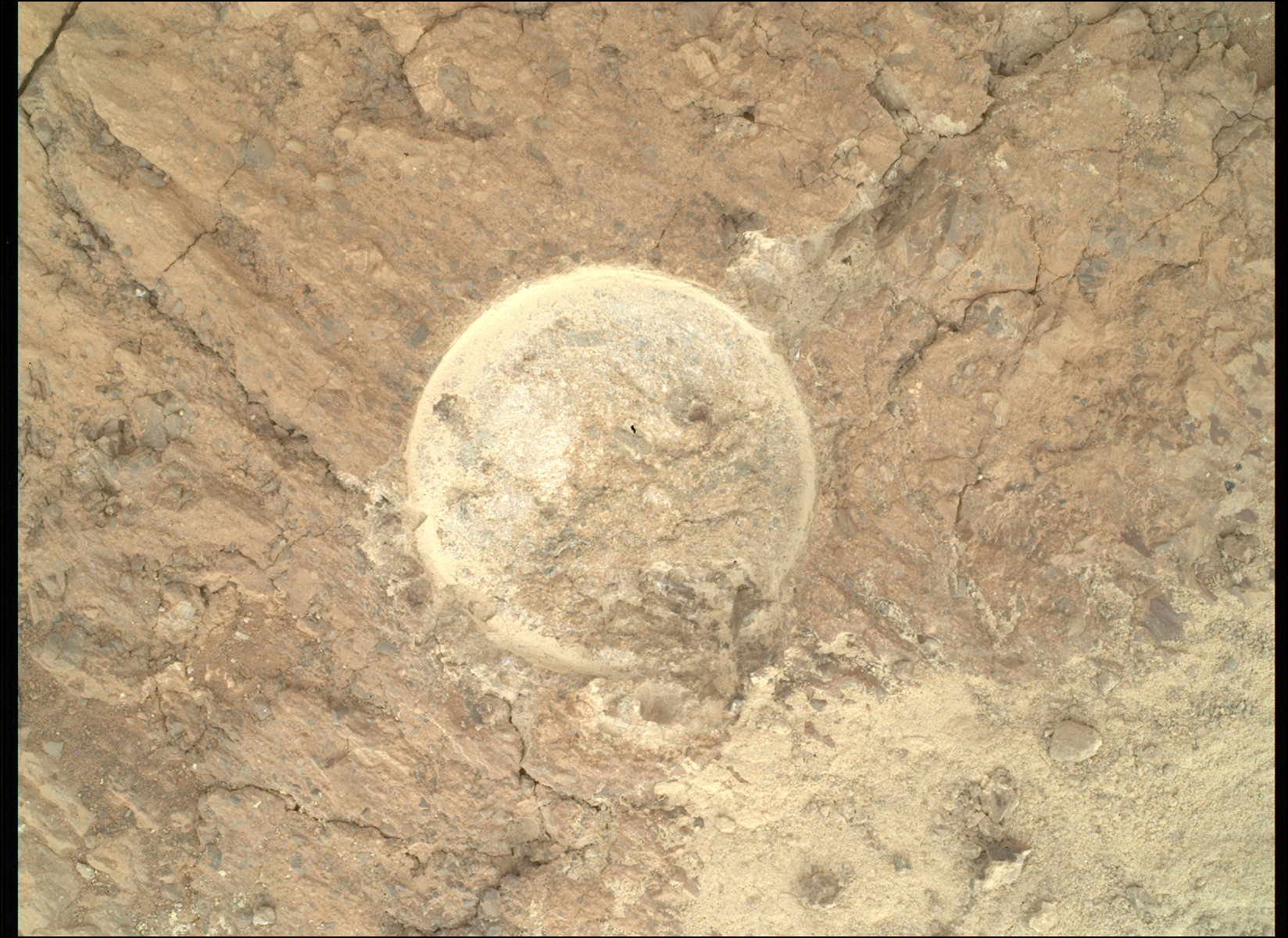
    Image of the “Peachflya” abrasion spot
    Image of the “Peachflya” abrasion spot, from Perseverance’s WATSON Camera on sol 1620.
    NASA/JPL-Caltech

    Written by Melissa Rice, Professor of Planetary Science at Western Washington University

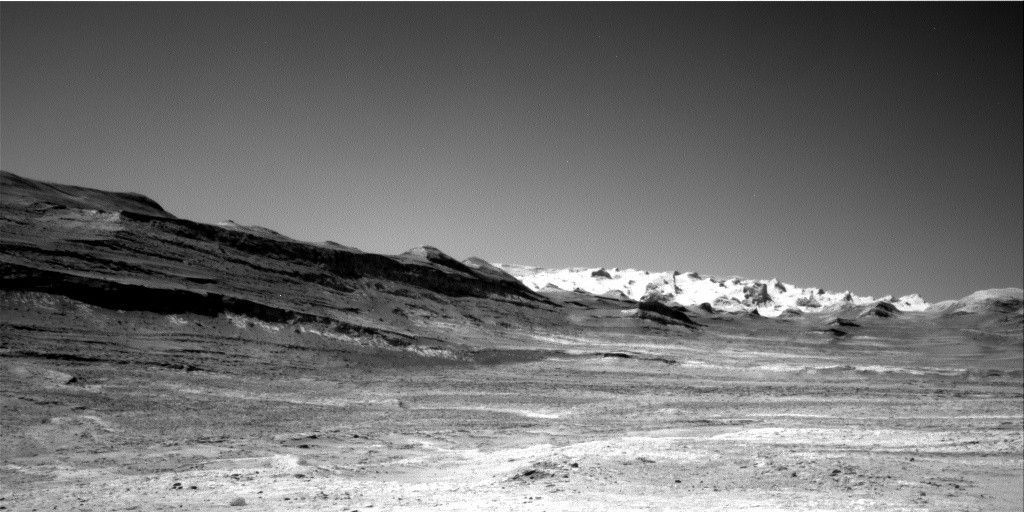
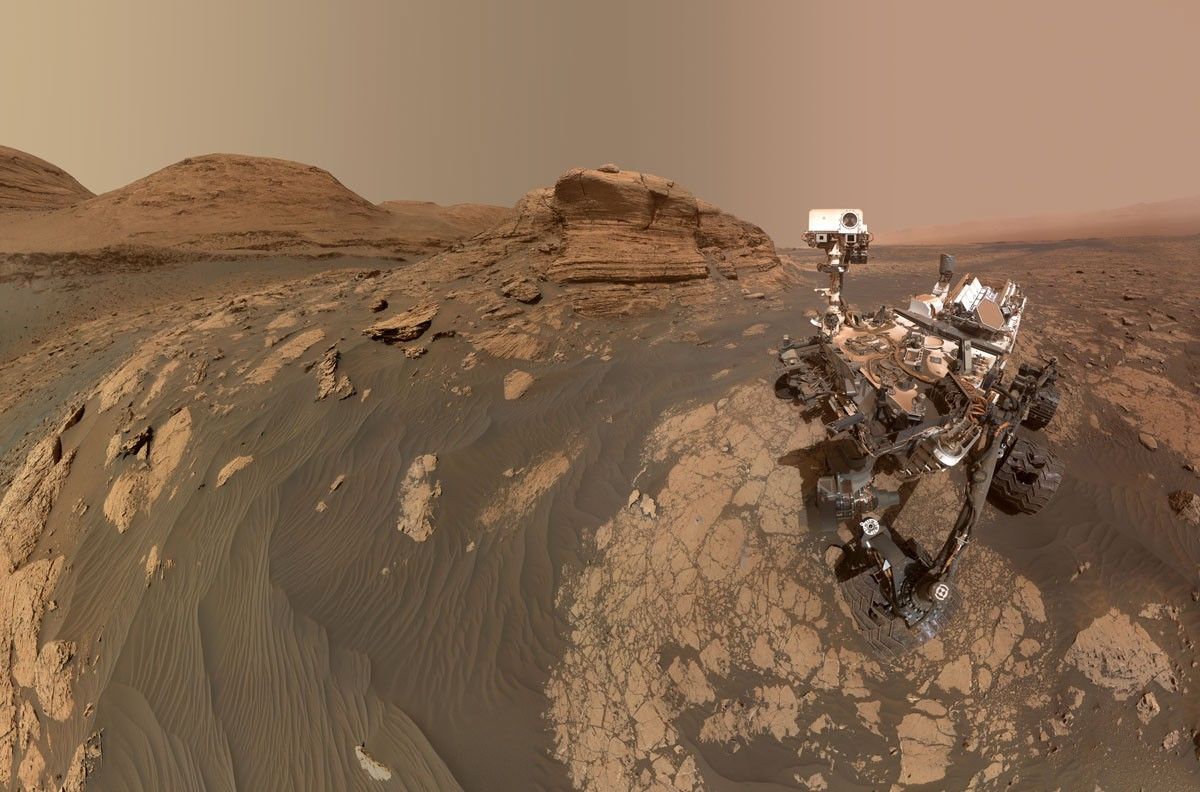
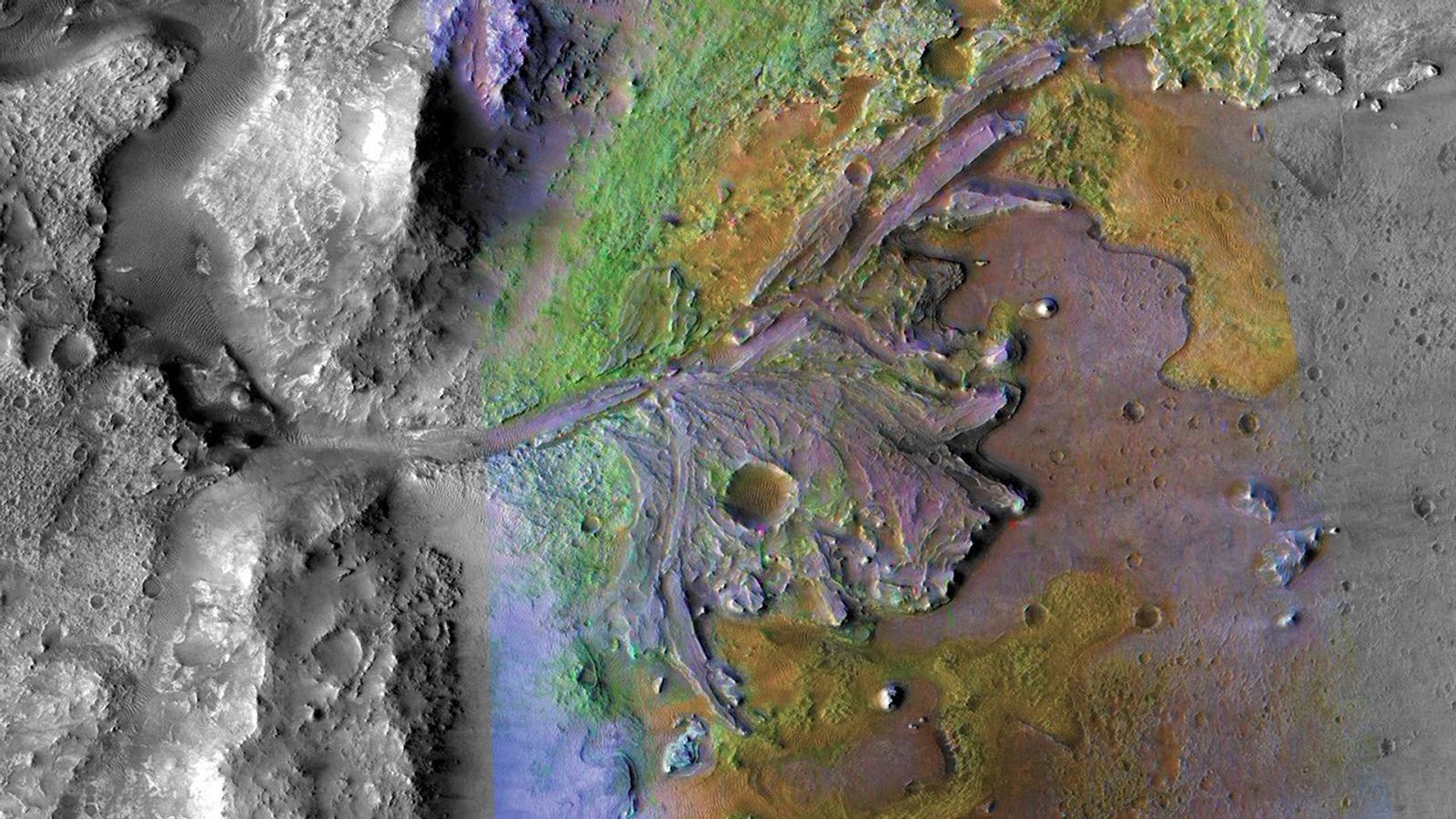
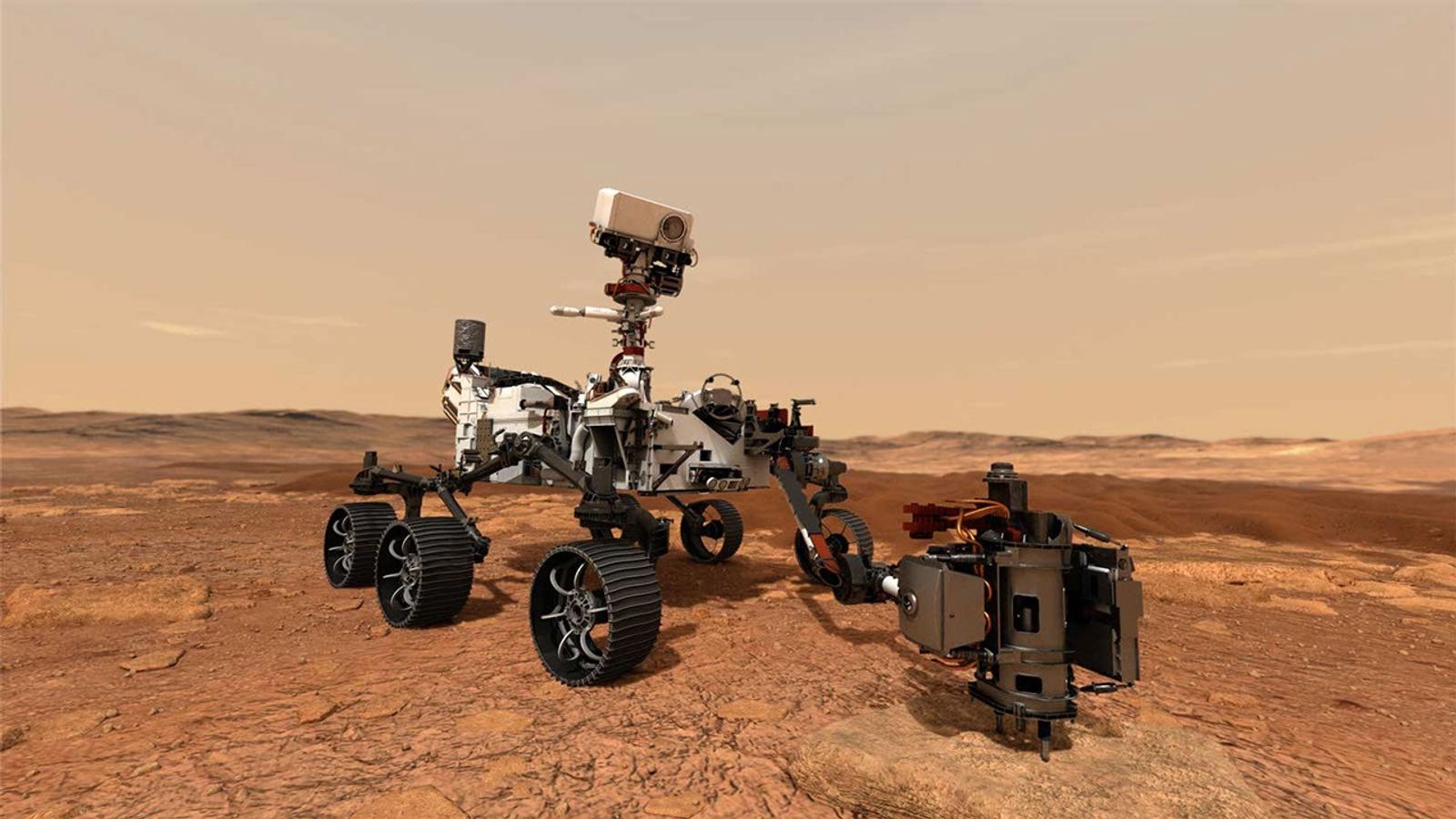
    Perseverance accomplished something unusual this week: abrading two dramatically different rocks within the span of a few days. While exploring the Vernodden area along Jezero crater’s rim, the rover has been studying what might be “megablocks,” a variety of ancient crustal materials with clues to Mars’ early geological history.

    The target “Peachflya,” abraded on sol 1618, revealed clasts of different mineral compositions. This could mean the rock is a breccia formed from fragments of even older materials that were broken up, transported, and cemented together – possibly during an impact in Mars’ distant past.

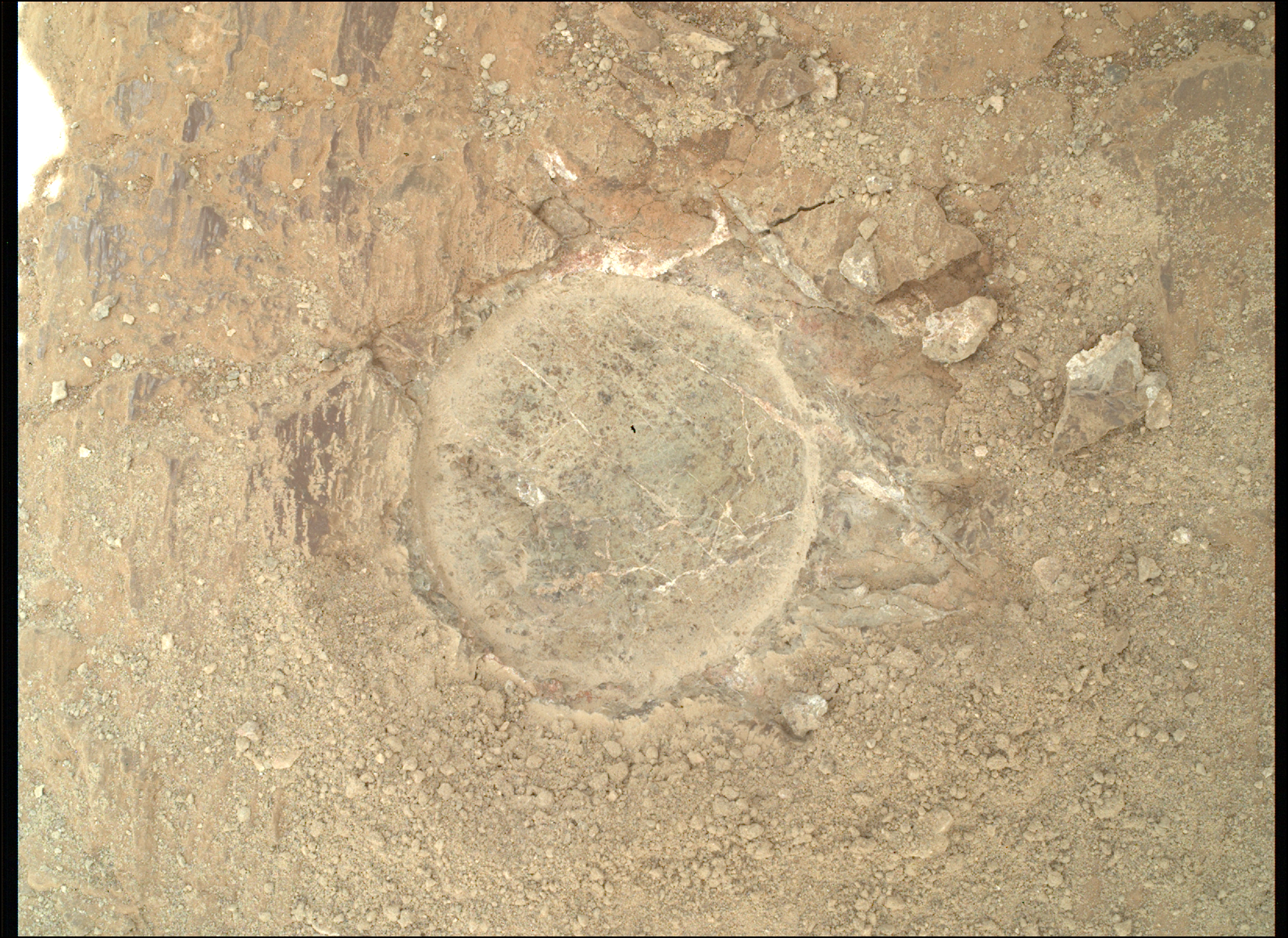
    Image of the “Klorne” abrasion spot, from Perseverance’s WATSON Camera on sol 1623.
    Image of the “Klorne” abrasion spot, from Perseverance’s WATSON Camera on sol 1623.
    NASA/JPL-Caltech

    Just meters away, the target “Klorne” was abraded on sol 1623 and it tells a completely different story. The fresh surface is greenish, with some dark spots and white veins—evidence of significant chemical alteration. Klorne’s green hue is consistent with the mineral serpentine, and reminiscent of Perseverance’s abrasion of “Serpentine Lake” back on sol 1404.

    Next, Perseverance will examine the “Monacofjellet” megablock, which shows yet another distinct spectral signature. Each of these ancient fragments can help the Science Team reconstruct the complex geological processes that shaped early Mars billions of years ago.

  • NASA Selects Blue Origin to Deliver VIPER Rover to Moon’s South Pole

    This artist’s concept shows Blue Origin’s Blue Moon Mark 1 lander and NASA’s VIPER (Volatiles Investigating Polar Exploration Rover) on the lunar surface.
    This artist’s concept shows Blue Origin’s Blue Moon Mark 1 lander and NASA’s VIPER (Volatiles Investigating Polar Exploration Rover) on the lunar surface.
    Credit: Blue Origin

    As part of the agency’s Artemis campaign, NASA has awarded Blue Origin of Kent, Washington, a CLPS (Commercial Lunar Payload Services) task order with an option to deliver a rover to the Moon’s South Pole region. NASA’s VIPER (Volatiles Investigating Polar Exploration Rover) will search for volatile resources, such as ice, on the lunar surface and collect science data to support future exploration at the Moon and Mars.

    “NASA is leading the world in exploring more of the Moon than ever before, and this delivery is just one of many ways we’re leveraging U.S. industry to support a long-term American presence on the lunar surface,” said acting NASA Administrator Sean Duffy. “Our rover will explore the extreme environment of the lunar South Pole, traveling to small, permanently shadowed regions to help inform future landing sites for our astronauts and better understand the Moon’s environment – important insights for sustaining humans over longer missions, as America leads our future in space.”

    The CLPS task order has a total potential value of $190 million. This is the second CLPS lunar delivery awarded to Blue Origin. Their first delivery – using their Blue Moon Mark 1 (MK1) robotic lander – is targeted for launch later this year to deliver NASA’s Stereo Cameras for Lunar-Plume Surface Studies and Laser Retroreflective Array payloads to the Moon’s South Pole region.

    With this new award, Blue Origin will deliver VIPER to the lunar surface in late 2027, using a second Blue Moon MK1 lander, which is in production. NASA previously canceled the VIPER project and has since explored alternative approaches to achieve the agency’s goals of mapping potential off-planet resources, like water.

    “NASA is committed to studying and exploring the Moon, including learning more about water on the lunar surface, to help determine how we can harness local resources for future human exploration,” said Nicky Fox, associate administrator, Science Mission Directorate, NASA Headquarters in Washington. “We’ve been looking for creative, cost-effective approaches to accomplish these exploration goals. This private sector-developed landing capability enables this delivery and focuses our investments accordingly – supporting American leadership in space and ensuring our long-term exploration is robust and affordable.”

    The task order, called CS-7, has an award base to design the payload-specific accommodations and to demonstrate how Blue Origin’s flight design will off-load the rover to the lunar surface. There is an option on the contract to deliver and safely deploy the rover to the Moon’s surface. NASA will make the decision to exercise that option after the execution and review of the base task and of Blue Origin’s first flight of the Blue Moon MK1 lander. This unique approach will reduce the agency’s cost and technical risk. The rover has a targeted science window for its 100-day mission that requires a landing by late 2027.

    Blue Origin is responsible for the complete landing mission architecture and will conduct design, analysis, and testing of a large lunar lander capable of safely delivering the lunar volatiles science rover to the Moon. Blue Origin also will handle end-to-end payload integration, planning and support, and post-landing payload deployment activities. NASA will conduct rover operations and science planning.

    “The search for lunar volatiles plays a key role in NASA’s exploration of the Moon, with important implications for both science and human missions under Artemis,” said Joel Kearns, deputy associate administrator for exploration, Science Mission Directorate, NASA Headquarters. “This delivery could show us where ice is most likely to be found and easiest to access, as a future resource for humans. And by studying these sources of lunar water, we also gain valuable insight into the distribution and origin of volatiles across the solar system, helping us better understand the processes that have shaped our space environment and how our inner solar system has evolved.”

    Through CLPS, American companies continue to demonstrate leadership in commercial space advancing capabilities and accomplishing NASA’s goal for a commercial lunar economy. NASA’s Ames Research Center in California’s Silicon Valley led the VIPER rover development and will lead its science investigations, and NASA’s Johnson Space Center in Houston provided rover engineering development for Ames.

    To learn more about CLPS and Artemis, visit:

    https://www.nasa.gov/clps

    -end-

    Alise Fisher
    Headquarters, Washington
    202-358-2546
    alise.m.fisher@nasa.gov

    Kenna Pell / Nilufar Ramji
    Johnson Space Center, Houston
    281-483-5111
    kenna.m.pell@nasa.gov / nilufar.ramji@nasa.gov  

  • NASA’s Orion Spacecraft Secures Critical Abort System Hardware for Artemis II

    All the pieces are stacking up – literally – for NASA’s first crewed mission of the Artemis program coming in 2026.

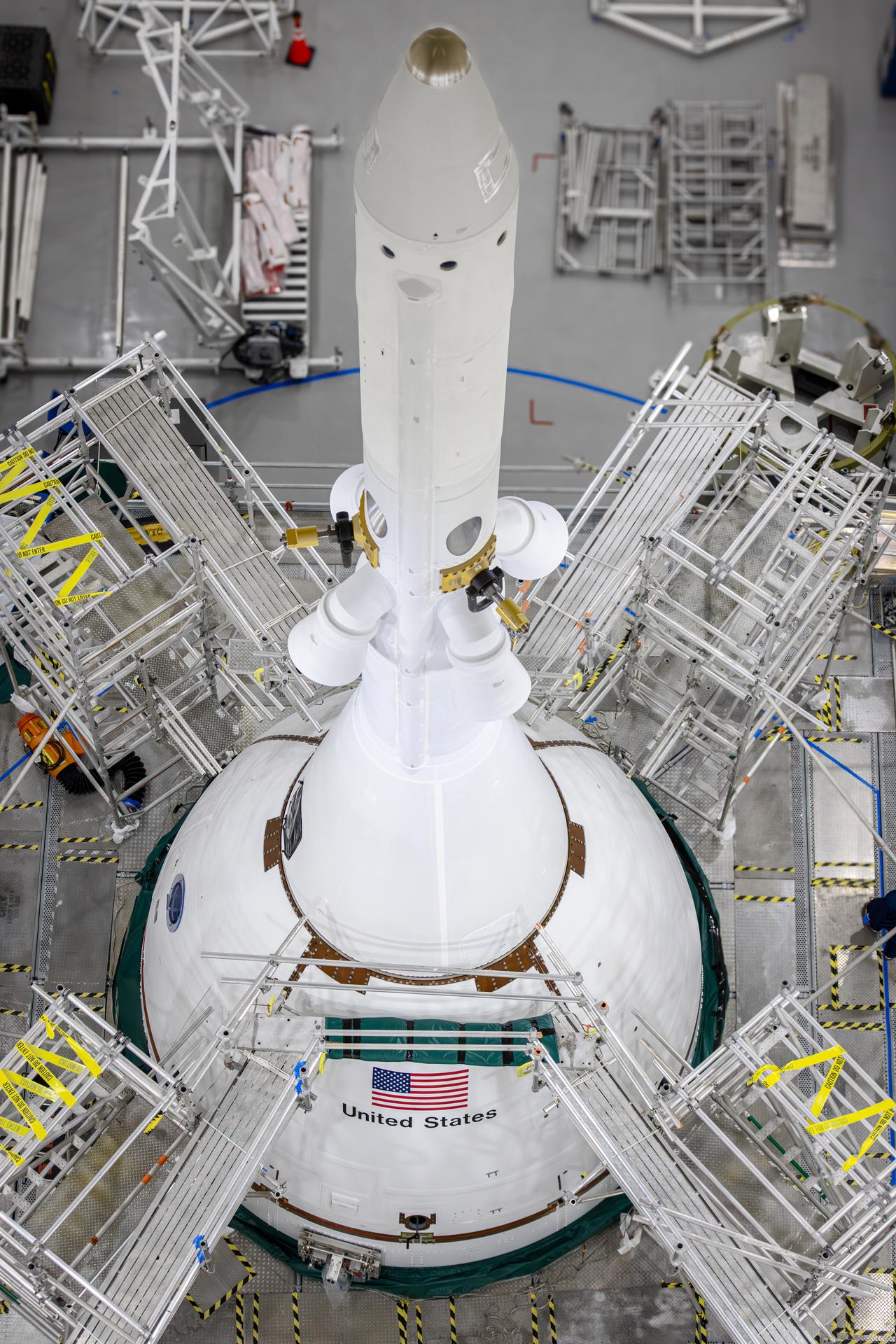
    Teams are finishing integration of the Orion spacecraft for the Artemis II test flight with its launch abort system on Sept. 17 inside the Launch Abort System Facility at NASA’s Kennedy Space Center in Florida. The 44-foot-tall tower-like abort structure would swiftly carry the four-person crew inside Orion to safety in the unlikely event of an emergency during launch or ascent atop the SLS (Space Launch System) rocket.

    Over the next few weeks, teams will complete remaining closeout activities before moving the spacecraft to its final stop before the launch pad: the agency’s Vehicle Assembly Building. There it will be added to the top of the rocket, before the finished stack is rolled out to the launch pad on its way to the Moon.

    The abort system is comprised of three solid rocket motors: the jettison, attitude, and abort motors. In the case of an emergency, these motors work together to propel the astronauts inside Orion’s crew module to safety: the abort motor pulls the crew module away from the launch vehicle; the attitude control motor steers and orients the capsule; then the jettison motor ignites to separate the abort system from the crew module prior to parachute deployment. During a normal launch, Orion will shed the abort system and leave it behind once the crew is safely through the most dynamic part of ascent, leaving Orion thousands of pounds lighter for the rest of its journey.

    Image credit: NASA/Frank Michaux