Tag: NASA

  • Curiosity Blog, Sols 4573-4574: Welcome to the Uyuni Quad

    3 min read

    Curiosity Blog, Sols 4573-4574: Welcome to the Uyuni Quad
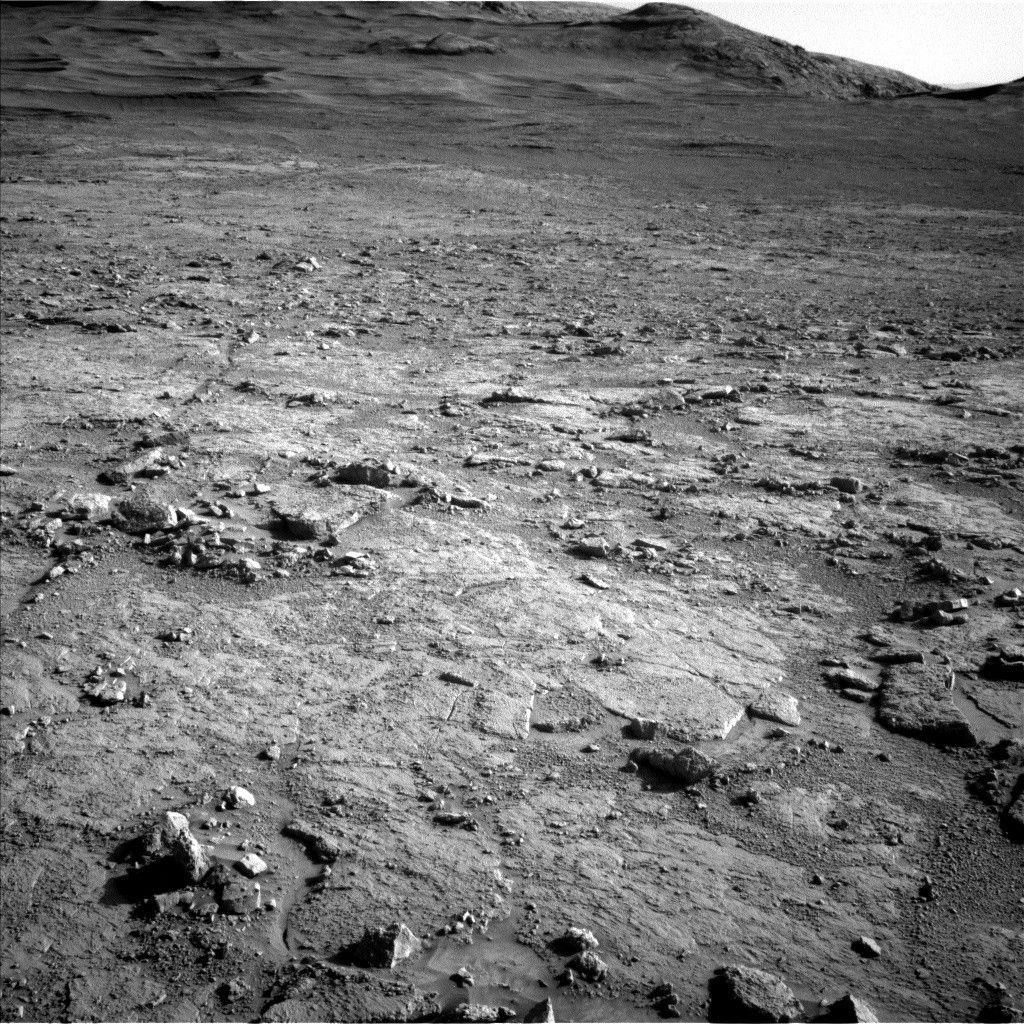
    A grayscale photograph of the Martian surface from the Curiosity rover shows a mostly flat, stony field, with rough and jagged medium-sized rocks scattered around, extending to hills in the background, all medium to dark gray. The hills appear smoother overall, with waves on the left side that look like windblown dunes.
    NASA’s Mars rover Curiosity acquired this image, looking southwest toward the distant large boxwork structures in the Uyuni quad, using its Left Navigation Camera on June 15, 2025 — Sol 4571, or Martian day 4,571 of the Mars Science Laboratory mission — at 21:27:38 UTC.
    NASA/JPL-Caltech

    Written by Lauren Edgar, Planetary Geologist at USGS Astrogeology Science Center

    Earth planning date: Monday, June 16, 2025

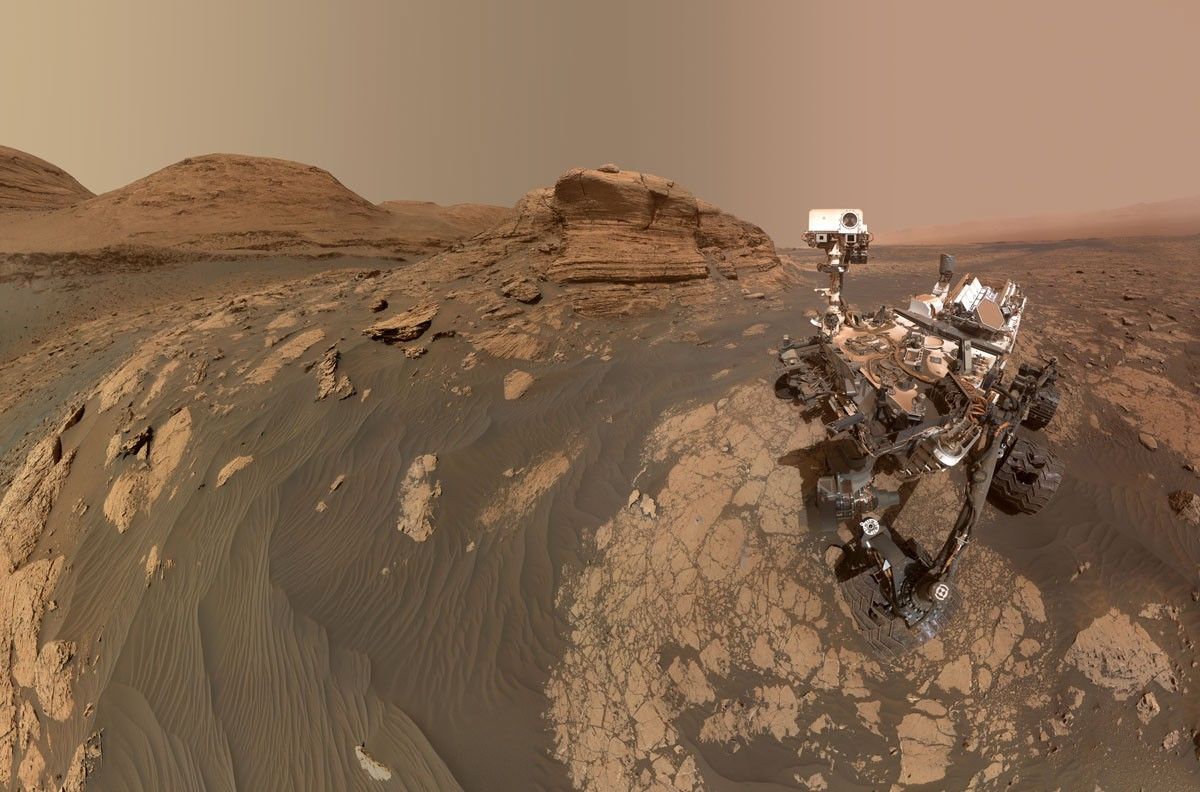
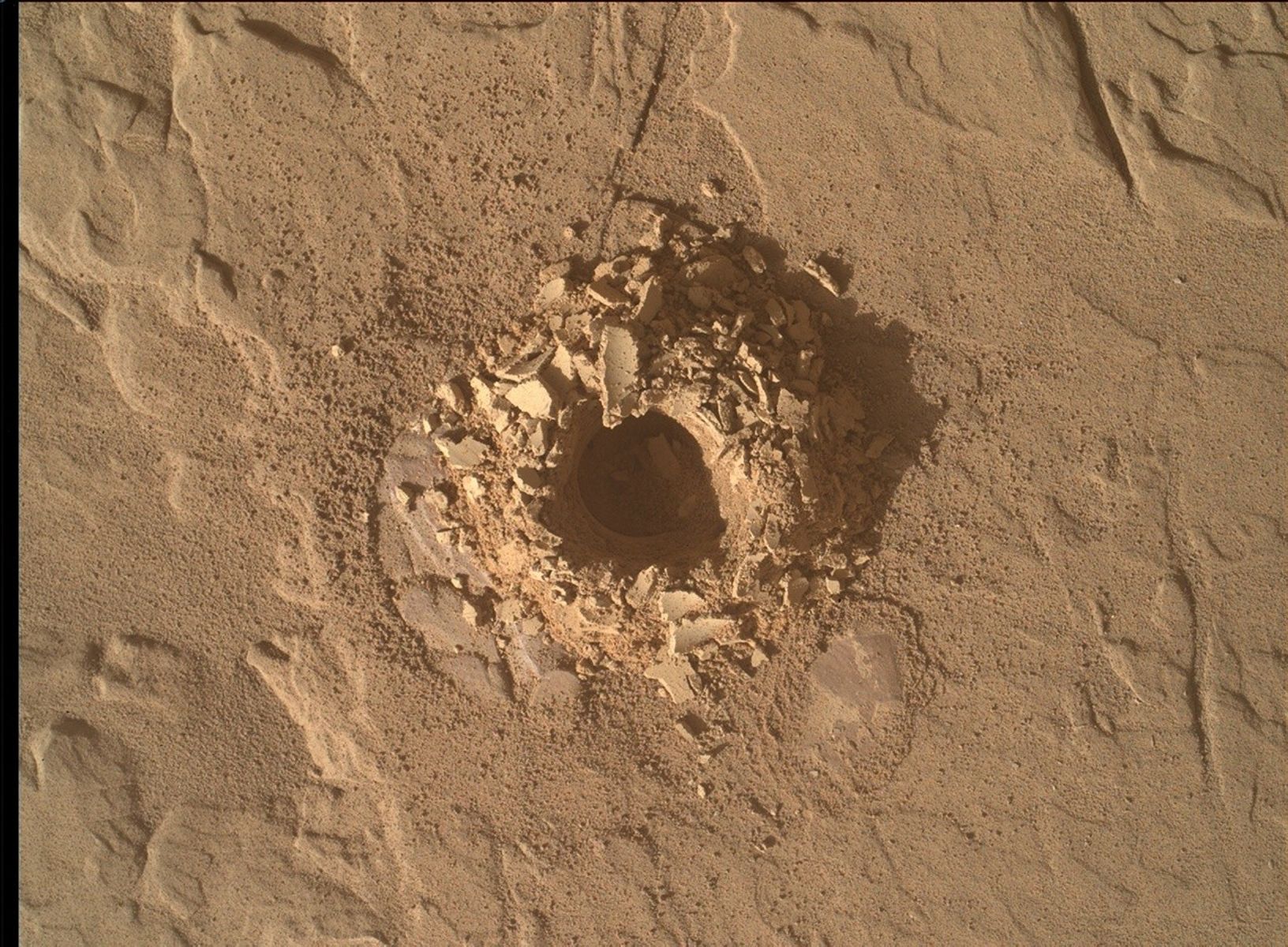
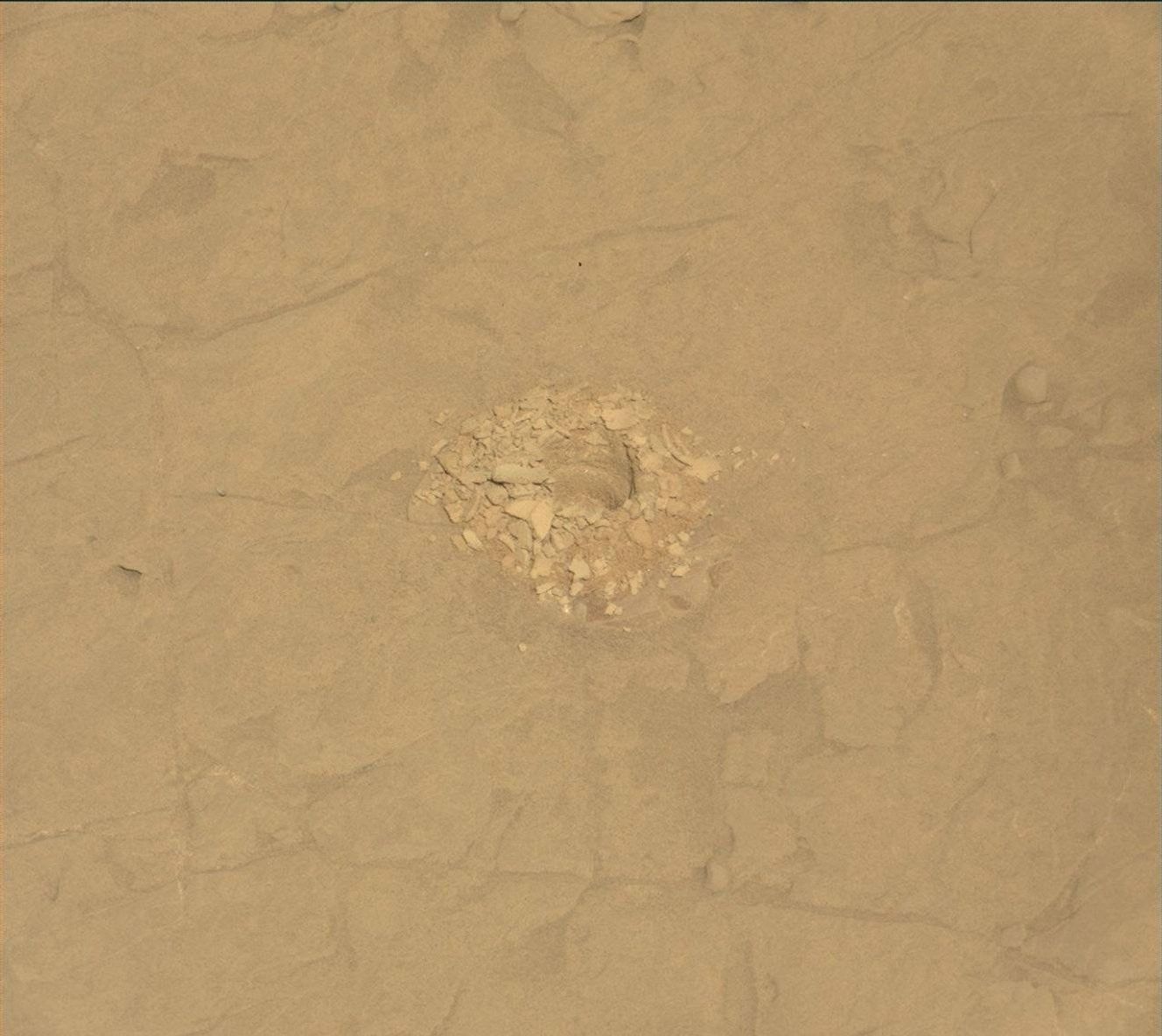
    Over the weekend Curiosity successfully wrapped up activities at the “Altadena” drill site and got back on the road. The approximately 48-meter drive (about 157 feet) was successful, and placed the rover in the next mapping quadrangle (informally referred to as a quad). 

    As a reminder, the rover’s exploration area has been divided into 1.5 kilometer by 1.5 kilometer square quads, and each quad is named after a town of less than 100,000 people. As Curiosity explores features within a quad, we assign informal target names that correspond to geologic formations and features from that town on Earth.

    Uyuni, Bolivia, is the gateway city near the world’s largest salt flats (salars), and it seems like an appropriate name as Curiosity explores drier depositional environments higher in the Mount Sharp stratigraphy. The team is excited to use some new target names that will draw from Uyuni and surrounding areas, including the Atacama Desert in Chile, which hosts many Mars analog sites including eolian features, studies of life in extreme environments, and some of the world’s great observatories. A fitting theme for this next phase of exploration!

    As for today’s two-sol plan, we have a good balance of contact science, remote sensing, and another long drive. The team planned APXS and MAHLI on a nodular bedrock target named “Flamingo” to assess its chemistry and texture. In the targeted remote sensing block, the science team planned a Mastcam mosaic of “Los Patos” to characterize a depression which may be related to a small impact crater or boxwork structures, along with a Mastcam image of “La Lava” to investigate an interesting dark block. There are also several Mastcam mosaics of nearby troughs to assess active surface processes, and documentation images for ChemCam observations. The plan includes a ChemCam LIBS observation on a target named “Tacos” to assess the local bedrock, and a long-distance RMI mosaic to evaluate sedimentary structures at “Mishe Mokwa” butte. Then the rover will drive about 56 meters (about 184 feet) to the southwest, and take post-drive imaging to prepare for the next plan. On the second sol, Curiosity will complete a ChemCam calibration target activity, a Mastcam data management activity, and a few Navcam activities to monitor clouds and dust in the atmosphere.

    We’re looking forward to exploring more of Uyuni as we work our way toward the larger exposure of boxwork structures that lie ahead, and the clues they hold to ancient Mars conditions.
    Details

    Last Updated

    Jun 18, 2025

    Related Terms

  • NASA Astronauts to Answer Questions from Students in New York, Utah

    NASA astronauts (left to right) Anne McClain and Nichole Ayers, pose for a portrait together aboard the International Space Station. Moments earlier, Ayers finished trimming McClain's hair using an electric razor with a suction hose attached that collects the loose hair to protect the station's atmosphere.
    NASA astronauts (left to right) Anne McClain and Nichole Ayers pose for a portrait together aboard the International Space Station. Moments earlier, Ayers finished trimming McClain’s hair using an electric razor with a suction hose attached that collects the loose hair to protect the station’s atmosphere.
    NASA

    Students from New York and Utah will hear from NASA astronauts aboard the International Space Station as they answer prerecorded questions in two separate events.

    At 11:30 a.m. EDT on Monday, June 23, NASA astronauts Nichole Ayers and Anne McClain will answer questions submitted by students from P.S. 71 Forest Elementary School in Ridgewood, New York. Media interested in covering the event must RSVP by 5 p.m. Friday, June 20, to Regina Beshay at: rbeshay2@school.nyc.gov or 347-740-6165.

    At 11:05 a.m. on Friday, June 27, Ayers and McClain will answer questions submitted by students from Douglas Space and Science Foundation, Inc., in Layton, Utah. Media interested in covering the event must RSVP by 5 p.m. Wednesday, June 25, to Sarah Merrill at: sarahmonique@gmail.com or 805-743-3341.

    Watch the 20-minute Earth-to-space calls on NASA STEM YouTube Channel.

    P.S. 71 Forest Elementary School will host kindergarten through fifth grade students. Douglas Space and Science Foundation will host participants from the Science, Technology, Achievement Research camp. Both events aim to inspire students to imagine a future in science, technology, engineering, and mathematics careers through ongoing collaborations, mentorship, and hands-on learning experiences.

    For nearly 25 years, astronauts have continuously lived and worked aboard the space station, testing technologies, performing science, and developing skills needed to explore farther from Earth. Astronauts aboard the orbiting laboratory communicate with NASA’s Mission Control Center in Houston 24 hours a day through SCaN’s (Space Communications and Navigation) Near Space Network.

    Important research and technology investigations taking place aboard the space station benefit people on Earth and lays the groundwork for other agency missions. As part of NASA’s Artemis campaign, the agency will send astronauts to the Moon to prepare for future human exploration of Mars; inspiring explorers and ensuring the United States continues to lead in space exploration and discovery.

    See videos of astronauts aboard the space station at:

    https://www.nasa.gov/stemonstation

    -end-

    Gerelle Dodson
    Headquarters, Washington
    202-358-1600
    gerelle.q.dodson@nasa.gov

    Sandra Jones
    Johnson Space Center, Houston
    281-483-5111
    sandra.p.jones@nasa.gov

  • NASA’s Human Exploration Rover Challenge

    NASA’s Human Exploration Rover Challenge

    More than 500 students with 75 teams from around the world participated in the 31st year of NASA’s Human Exploration Rover Challenge (HERC) on April 11 and April 12, 2025, near NASA’s Marshall Space Flight Center in Huntsville, Alabama. Participating teams represented 35 colleges and universities, 38 high schools, and two middle schools from 20 states, Puerto Rico, and 16 other nations.

  • NASA’s Human Exploration Rover Challenge

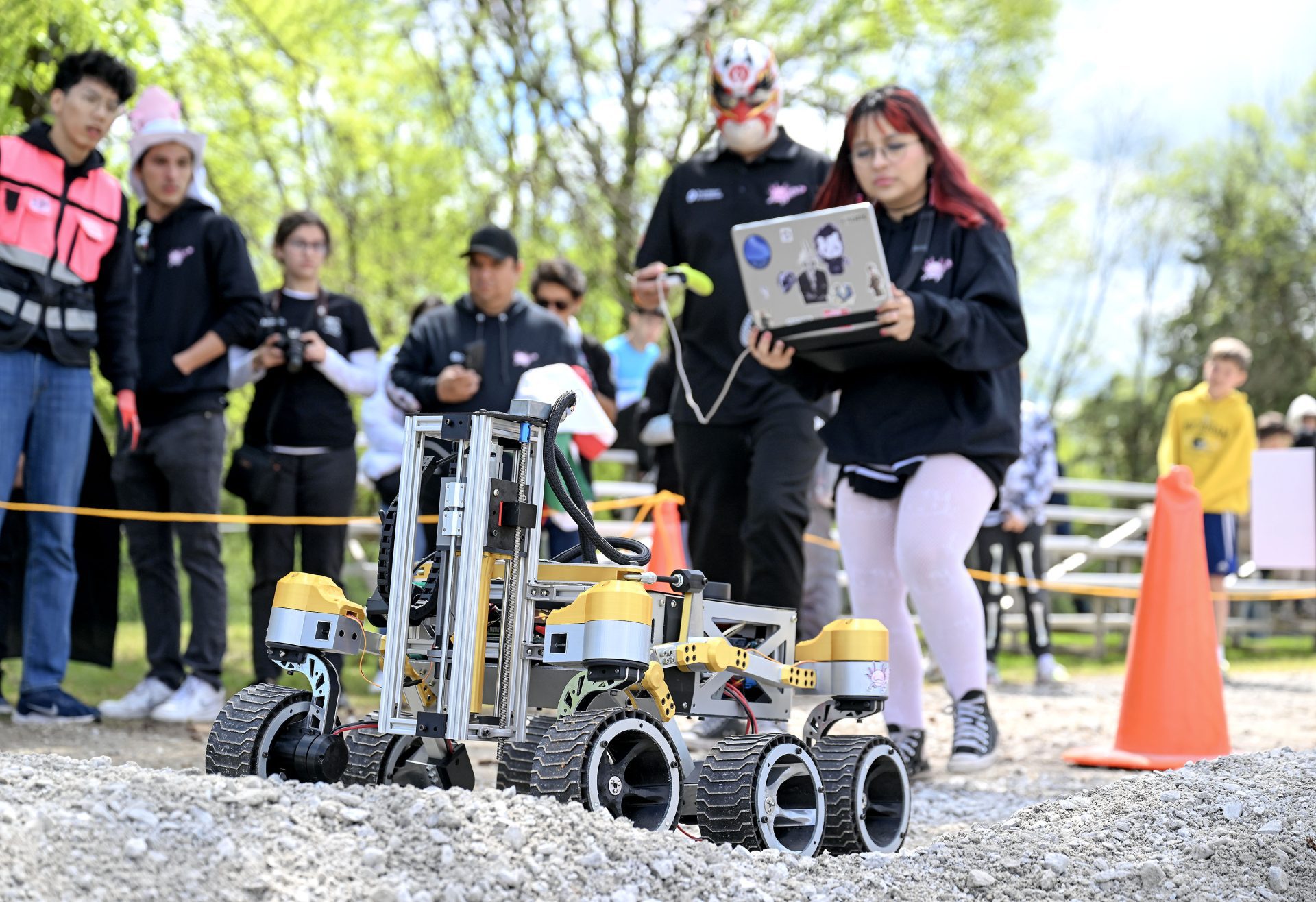
    In the foreground, a small rover with six wheels drives over rocky ground. The rover is silver with yellow accents. Walking behind it are the two students who are steering it. One student wears a luchador-like mask and holds a neon green game controller connected to a laptop. The other student holds the laptop. Onlookers watch on the sidelines behind a thin yellow rope.
    NASA/Charles Beason

    Two students guide their rover through an obstacle course in this April 11, 2025, image from the 2025 Human Exploration Rover Challenge. The annual engineering competition – one of NASA’s longest standing student challenges – is in its 31st year. This year’s competition challenged teams to design, build, and test a lunar rover powered by either human pilots or remote control. More than 500 students with 75 teams from around the world participated, representing 35 colleges and universities, 38 high schools, and two middle schools from 20 states, Puerto Rico, and 16 other nations.

    See the 2025 winners.

    Image credit: NASA/Charles Beason

  • Digital Information Platform Library

    1 min read

    Preparations for Next Moonwalk Simulations Underway (and Underwater)

    Digital book selected on a dark blue background.

    Library

    Scientific papers, industry forum presentations, and videos covering the concepts used in the digital information platform are available to the public. For those interested in a deeper understanding of the technical workings of DIP, please refer to these resources.

    Newsletters

    April 2025
    December 2024
    August 2024
    June 2024
    March 2024
    November 2023

    NASA Feature Stories

    NASA Partners With Airlines to Save Fuel, Reduce Flight Delays

    NASA Flight Rerouting Tool Curbs Delays, Emissions

    NASA Cloud-Based Platform Could Help Streamline, Improve Air Traffic

    NASA Machine Learning Air Traffic Software Saves Fuel

    Technical Papers

    View the Technical Papers

    Events

    View all the Events

    Fuser information from Airspace Technical Demonstration-2 industry day workshop

    Fuser Architecture Overview

    Video recordings of the presentations at the ATD-2 Industry Days

    Online Videos

    2023 Jan 21 – AIAA LA LV NASA’s Digital Information Platform DIP to Accelerate NAS Transformation

    DIP Collaborative Digital Departure Reroute Overview

    Digital Information Platform

    Details

    Last Updated

    Jun 18, 2025

    Editor
    Lillian Gipson
    Contact
    Jim Banke

  • DIP Events

    1 min read

    Preparations for Next Moonwalk Simulations Underway (and Underwater)

    Smartphone with two speech bubbles. One says events and the other workshops.
    Getty Images

    November 20, 2024 at 10:00 AM EST
    Digital Information Platform Virtual Workshop: A Virtual Workshop on Service Quality, Data Governance, Cybersecurity, and Interoperability

    June 28, 2023 at 10:00 AM EDT
    DIP Information Session: Announcement of Collaborative Opportunity (ACO) for Service Providers

    July 27, 2022 at 10:00 AM EDT
    DIP Announcement of Collaborative Opportunity (ACO) for Flight Operators

    February 23, 2022 at 10:00 AM EST
    DIP Workshop Series 3: DIP for Consumers

    January 12, 2022 at 10:00 AM EST
    DIP Workshop 2: DIP for Service Providers

    November 17, 2021 at 10:00 AM EST
    DIP Workshop Series 1: DIP Architecture and Data Integration Services

    August 18, 2021 at 10:00 AM EDT
    DIP RFI Outbrief Session

    April 14, 2021 at 11:00 AM EDT
    DIP Request for Information (RFI) Information Session

    Digital Information Platform (DIP)

    DIP Library

    Details

    Last Updated

    Jun 18, 2025

    Editor
    Lillian Gipson
    Contact
    Jim Banke

  • DIP Request for Information (RFI) Information Session

    1 min read

    Preparations for Next Moonwalk Simulations Underway (and Underwater)

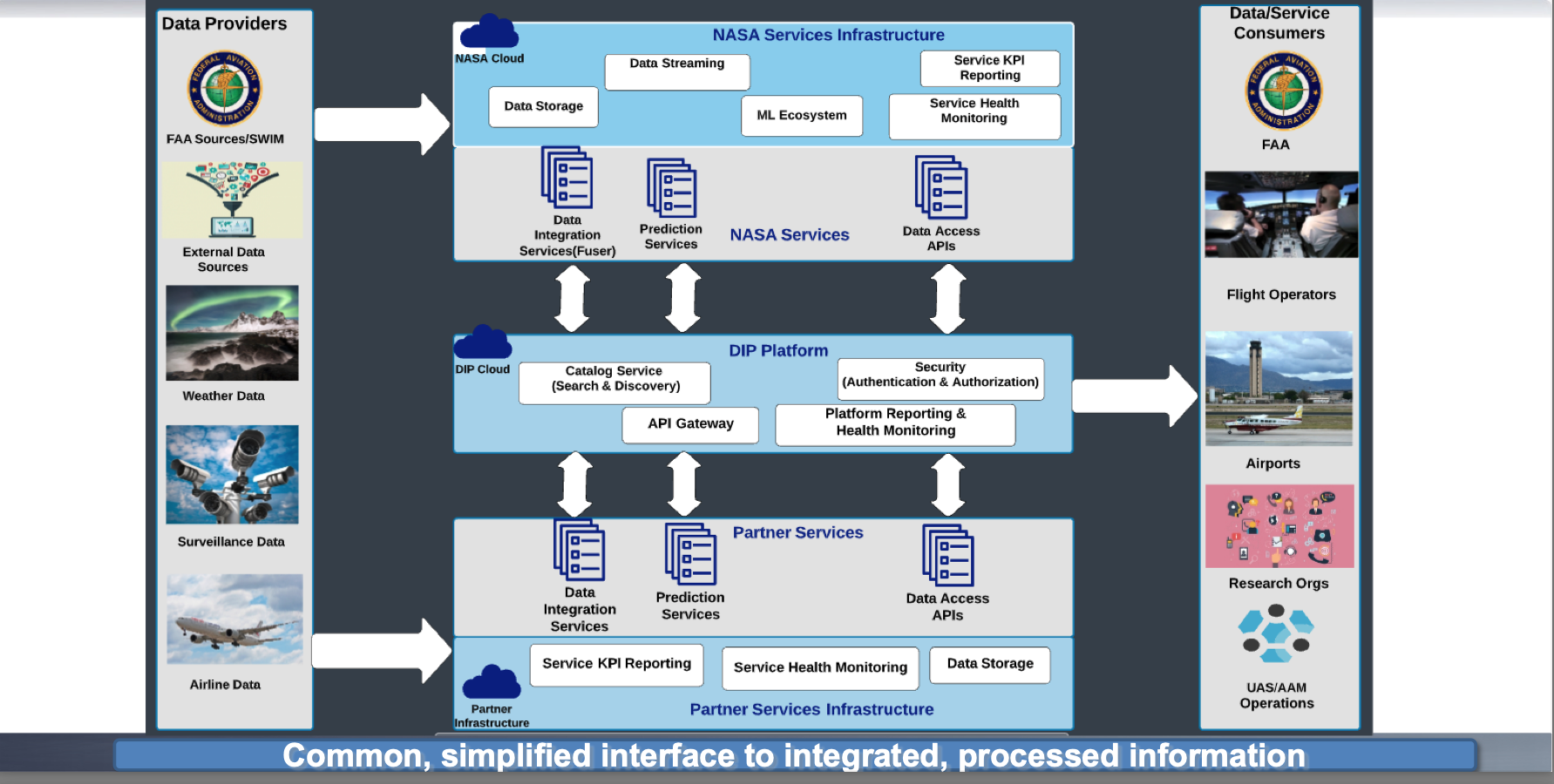
    Screenshot of RFI Information Session showing the notational digital information platform.
    Start
    April 14, 2021 at 11:00 AM EDT
    End
    April 14, 2021 at 1:00 PM EDT

    NASA’s Digital Information Platform (DIP) sub-project as part of Air Traffic Management -eXploration (ATM-X) project has recently released the Request for Information (RFI) to obtain information to define collaboration strategy and identify community needs and goals. As a follow-on activity, DIP hosted an online information session to provide the stakeholder community with background of DIP sub-project, example use cases, collaboration approach, and areas of potential contributions both from NASA and interested parties. The purpose of the information session was to help the community understand the scope of the sub-project and thus respond to the RFI in a meaningful way.

    • Date: Wednesday, April 14, 2021
    • Time: 11 am – 1 pm (Pacific Time)

    Agenda

    • DIP Vision and Motivation
    • Example Use Cases
    • Collaboration Approach
    • Demonstration Progression
    • Information Requested
    • RFI Instructions to Submit
    • Question & Answer

    Resources

    Digital Information Platform

    Digital Information Platform Events

    Details

    Last Updated

    Jun 18, 2025

    Editor
    Lillian Gipson
    Contact
    Jim Banke

  • DIP RFI Outbrief Session

    2 min read

    Preparations for Next Moonwalk Simulations Underway (and Underwater)

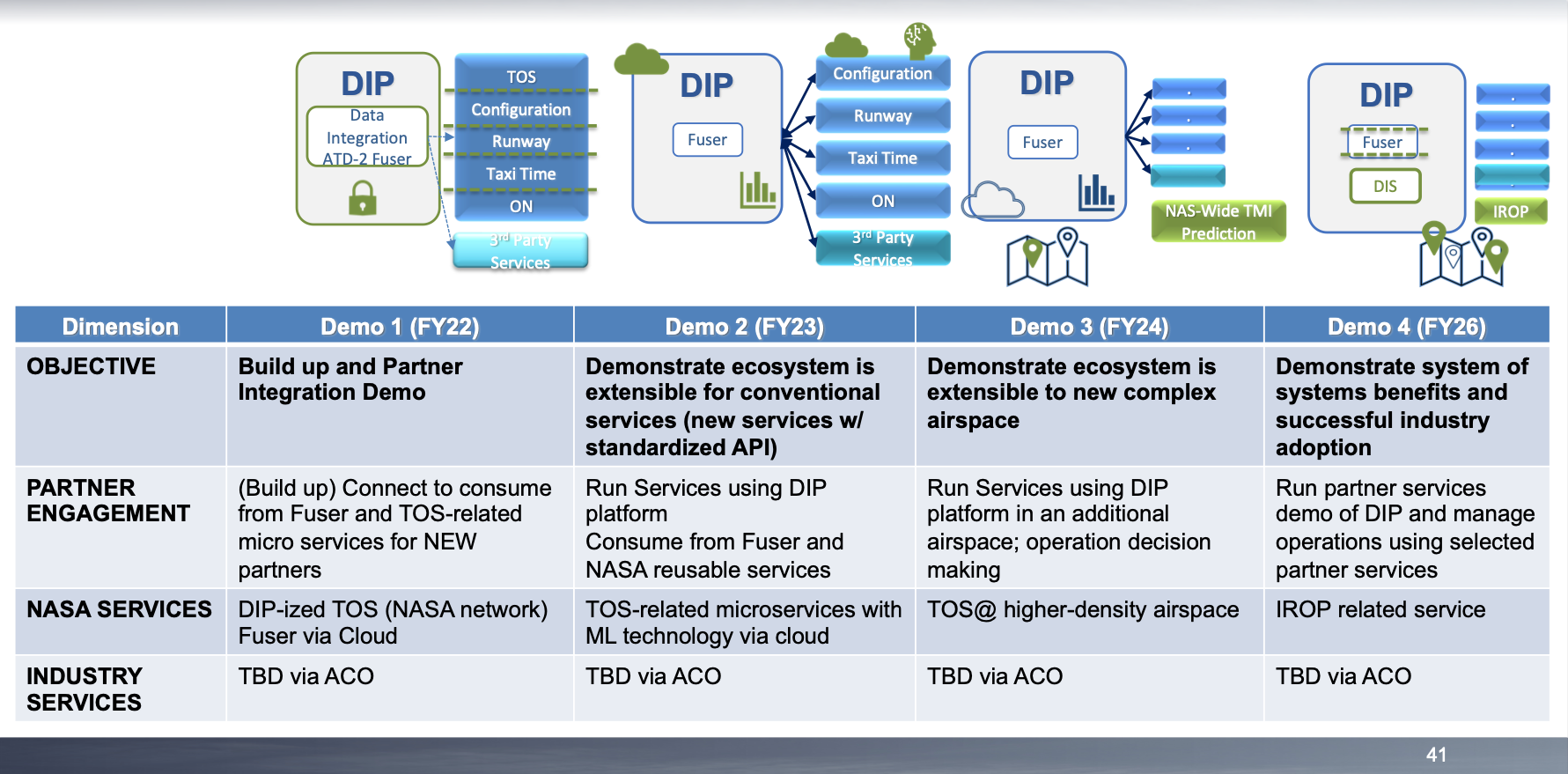
    DIP RFI Outbrief screen shot showing the DIP Collaborative Demo Milestones.
    Start
    August 18, 2021 at 10:00 AM EST
    End
    August 18, 2021 at 12:00 PM EST

    DIP RFI Outbrief Session

    NASA’s Digital Information Platform (DIP) sub-project as part of Air Traffic Management -eXploration (ATM-X) project has received responses to the Request for Information (RFI) from aviation community. As a follow-on activity, DIP is hosting an online information session to brief out to the community with the summary of RFI inputs as well as the latest updates on DIP sub-project planning. The purpose of this session is to share the valuable inputs from the RFI responses on data & service needs for airspace operations, recommended use cases for DIP collaborative demos, and potential data and technology services that can be provided by the DIP platform through NASA-industry collaboration.

    Interested parties are encouraged to register for the outbrief session by submitting the registration form shown below. The outbrief session will be organized by a series of presentation followed by a Q&A session, and will be available through MS Teams.

    • Date: Wednesday, August 18, 2021
    • Time: 10 am – 12 pm Pacific

    Agenda

    • DIP Overview
    • Partner Engagement Strategy
    • Request for Information
    • Responses Summary
    • Demo Plan Overview
    • Next Steps,
    • Q&A

    Resources

    Digital Information Platform

    Digital Information Platform Events

    Details

    Last Updated

    Jun 18, 2025

    Editor
    Lillian Gipson
    Contact
    Jim Banke

  • DIP Workshop Series 2: DIP for Service Providers

    2 min read

    Preparations for Next Moonwalk Simulations Underway (and Underwater)

    Screenshot from the DIP Workshop Series 2: DIP for Service Providers graphic.
    Start
    January 12, 2022 at 10:00 AM EST
    End
    January 12, 2022 at 12:00 PM EST

    Workshop Series: What It’s About

    The Digital Information Platform (DIP) workshop series intends to provide a deeper dive and a closer look at some of the core features being developed by the DIP sub-project under ATM-X.

    These workshops will give insight into DIP development, technology, and assumptions as well as providing a forum for engaging with the DIP team to pose questions and provide feedback on proposed designs. Engagement with the broader aviation community is a critical component to success of the DIP sub-project!

    There will be several workshops within this series spanning a variety of topics. Participants are encouraged to sign up for any workshop topics they feel they could contribute to or provide feedback on.

    Please keep an eye on the DIP homepage, under the upcoming events section, for future announcements of additional workshop topics!

    Workshop #2: DIP for Service Providers

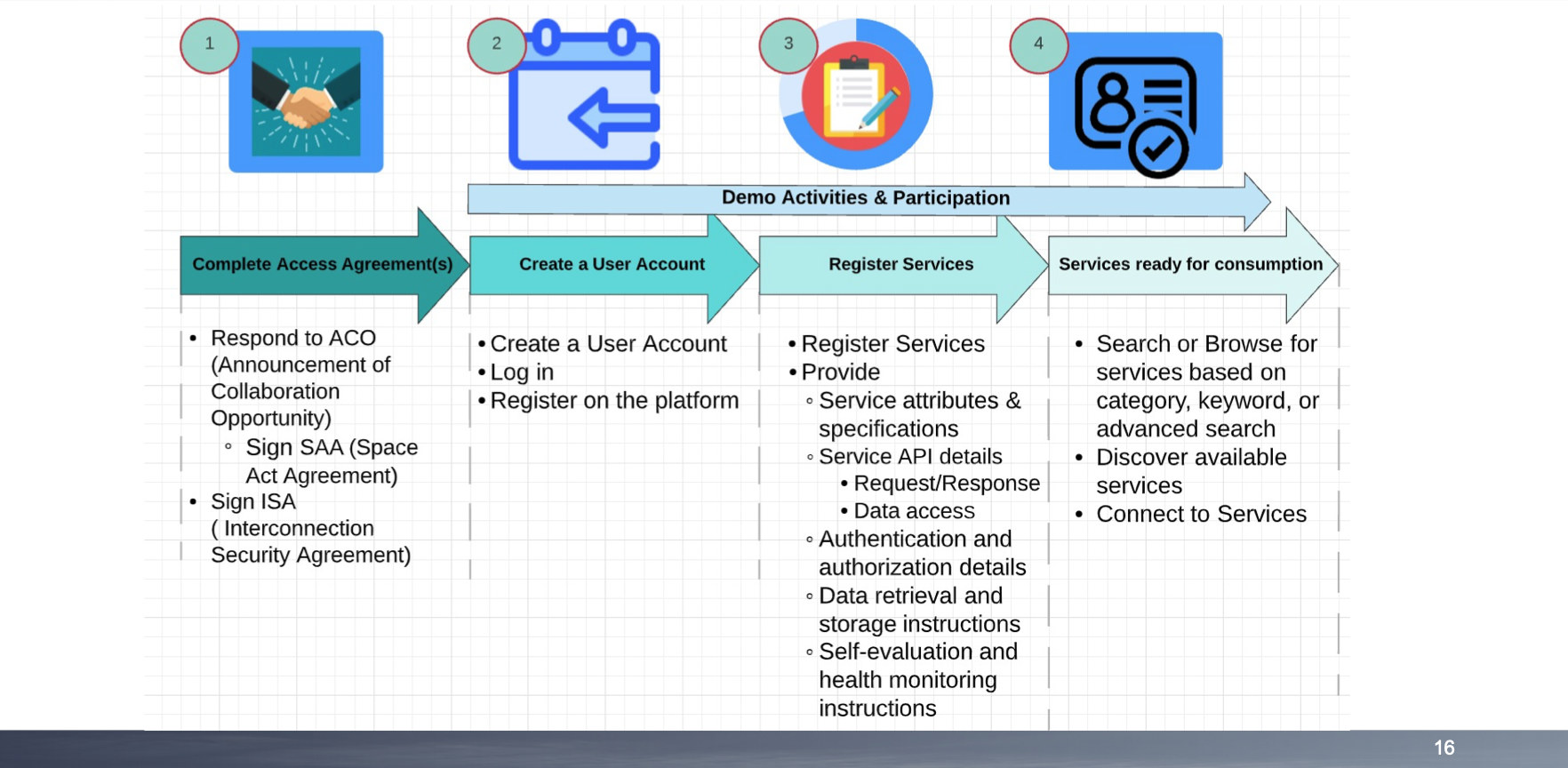
    This workshop will cover topics related to Service Providers. Participants will get a look at how the DIP architecture supports the onboarding process as well as how NASA services are planned to be made available via the platform.

    The DIP for Service Providers is intended to cover how DIP was envisioned with regards to the following:

    • Onboarding​
    • Announcement for Collaborative Opportunity, Space Act Agreements
      • Interconnection Security Agreements & Authentication​
    • Catalog Service Capabilities​
    • Service Registration, Discovery & Try it now feature​
    • API Requirements, Service Specifications​
    • NASA Services and Access Points​
    • Machine Learning Services​
      • Data Access APIs​
      • Streaming Fuser Data​
      • S3 Bucket​
    • Data Requirements for Service Providers

    Who Should Register?

    Participants interested in partnering with DIP and registering their service with the DIP platform are highly encouraged to attend this workshop. This is a unique opportunity for the aviation community to provide feedback and input on how this platform is structured to meet your needs.

    Data and service consumers as well as data and service providers are encouraged to attend this workshop to provide their feedback and input for DIP development.

    Participants looking to gain insight into upcoming DIP demonstrations or to learn more about DIP are encouraged to attend this workshop.

    Agenda

    • Onboarding​
    • Catalog Service Capabilities​
    • API Requirements, Service Specifications​
    • NASA Services and Access Points​
    • Data Requirements for Service Providers

    Resources

    Digital Information Platform

    Digital Information Platform Events

    Details

    Last Updated

    Jun 18, 2025

    Editor
    Lillian Gipson
    Contact
    Jim Banke

  • NASA to Gather In-Flight Imagery of Commercial Test Capsule Re-Entry

    4 Min Read

    NASA to Gather In-Flight Imagery of Commercial Test Capsule Re-Entry

    During the September 2023 daytime reentry of the OSIRIS-REx sample return capsule, the SCIFLI team captured visual data similar to what they’re aiming to capture during Mission Possible.

    Credits:
    NASA/SCIFLI

    A NASA team specializing in collecting imagery-based engineering datasets from spacecraft during launch and reentry is supporting a European aerospace company’s upcoming mission to return a subscale demonstration capsule from space.

    NASA’s Scientifically Calibrated In-Flight Imagery (SCIFLI) team supports a broad range of mission needs across the agency, including Artemis, science missions like OSIRIS-REx (Origins, Spectral Interpretation, Resource Identification, and Security – Regolith Explorer), and NASA’s Commercial Crew Program. The SCIFLI team also supports other commercial space efforts, helping to develop and strengthen public-private partnerships as NASA works to advance exploration, further cooperation, and open space to more science, people, and opportunities.

    Later this month, SCIFLI intends to gather data on The Exploration Company’s Mission Possible capsule as it returns to Earth following the launch on a SpaceX Falcon 9 rocket. One of the key instruments SCIFLI will employ is a spectrometer detects light radiating from the capsule’s surface, which researchers can use to determine the surface temperature of the spacecraft. Traditionally, much of this data comes from advanced Computational Fluid Dynamics modeling of what happens when objects of various sizes, shapes, and materials enter different atmospheres, such as those on Earth, Mars, or Venus.

    “While very powerful, there is still some uncertainty in these Computational Fluid Dynamics models. Real-world measurements made by the SCIFLI team help NASA researchers refine their models, meaning better performance for sustained flight, higher safety margins for crew returning from the Moon or Mars, or landing more mass safely while exploring other planets,” said Carey Scott, SCIFLI capability lead at NASA’s Langley Research Center in Hampton, Virginia.

    A rendering of a space capsule from The Exploration Company re-entering Earth's atmosphere.
    A rendering of a space capsule from The Exploration Company re-entering Earth’s atmosphere.
    Image courtesy of The Exploration Company
    The Exploration Company

    The SCIFLI team will be staged in Hawaii and will fly aboard an agency Gulfstream III aircraft during the re-entry of Mission Possible over the Pacific Ocean.

    “The data will provide The Exploration Company with a little bit of redundancy and a different perspective — a decoupled data package, if you will — from their onboard sensors,” said Scott.

    From the Gulfstream, SCIFLI will have the spectrometer and an ultra-high-definition telescope trained on Mission Possible. The observation may be challenging since the team will be tracking the capsule against the bright daytime sky. Researchers expect to be able to acquire the capsule shortly after entry interface, the point at roughly 200,000 feet, where the atmosphere becomes thick enough to begin interacting with a capsule, producing compressive effects such as heating, a shock layer, and the emission of photons, or light.

    Real-world measurements made by the SCIFLI team help NASA researchers refine their models, meaning better performance for sustained flight, higher safety margins for crew returning from the Moon or Mars, or landing more mass safely while exploring other planets.

    Carey Scott

    Carey Scott

    SCIFLI Capability Lead

    In addition to spectrometer data on Mission Possible’s thermal protection system, SCIFLI will capture imagery of the parachute system opening. First, a small drogue chute deploys to slow the capsule from supersonic to subsonic, followed by the deployment of a main parachute. Lastly, cloud-cover permitting, the team plans to image splashdown in the Pacific, which will help a recovery vessel reach the capsule as quickly as possible.

    If flying over the ocean and capturing imagery of a small capsule as it zips through the atmosphere during the day sounds difficult, it is. But this mission, like all SCIFLI’s assignments, has been carefully modeled, choreographed, and rehearsed in the months and weeks leading up to the mission. There will even be a full-dress rehearsal in the days just before launch.

    Not that there aren’t always a few anxious moments right as the entry interface is imminent and the team is looking out for its target. According to Scott, once the target is acquired, the SCIFLI team has its procedures nailed down to a — pardon the pun — science.

    “We rehearse, and we rehearse, and we rehearse until it’s almost memorized,” he said.

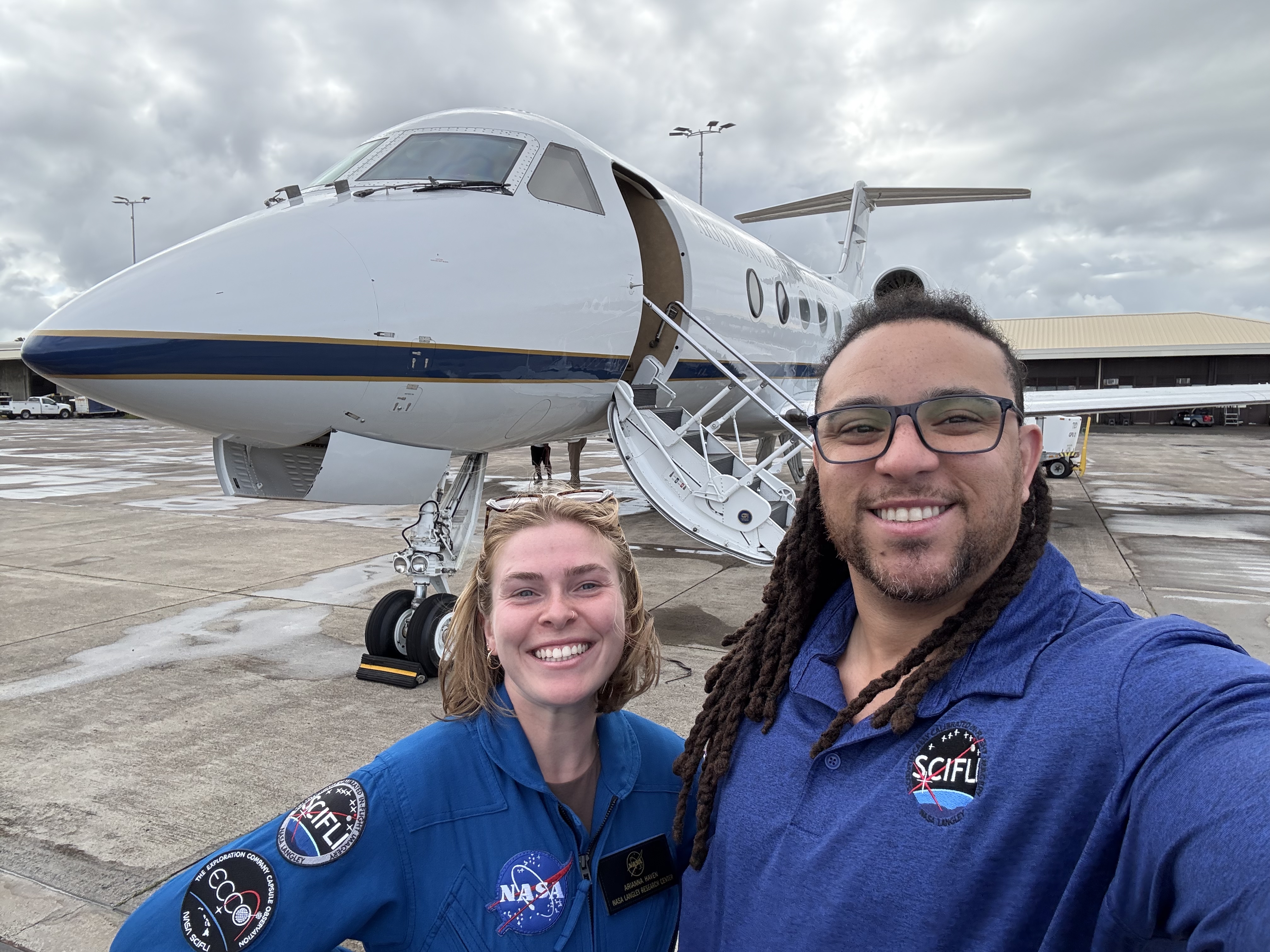
    SCIFLI Asset Coordinator Ari Haven, left, and Principal Engineer Carey Scott in front of the G-III aircraft that will help the team image The Exploration Company’s Mission Possible demonstration capsule as it reenters Earth’s atmosphere.
    Ari Haven, left, asset coodinator for SCIFLI’s support of Mission Possible, and Carey Scott, principal engineer for the mission, in front of the G-III aircraft the team will fly on.
    Credit: NASA/Carey Scott
    NASA/Carey Scott

    The Exploration Company, headquartered in Munich, Germany, and Bordeaux,

    France, enlisted NASA’s support through a reimbursable Space Act Agreement and will use SCIFLI data to advance future capsule designs.

    “Working with NASA on this mission has been a real highlight for our team. It shows what’s possible when people from different parts of the world come together with a shared goal,” said Najwa Naimy, chief program officer at The Exploration Company. “What the SCIFLI team is doing to spot and track our capsule in broad daylight, over the open ocean, is incredibly impressive. We’re learning from each other, building trust, and making real progress together.”

    NASA Langley is known for its expertise in engineering, characterizing, and developing spacecraft systems for entry, descent, and landing. The Gulfstream III aircraft is operated by the Flight Operations Directorate at NASA’s Armstrong Flight Research Center in Edwards, California.

  • DIP Workshop Series 1: DIP Architecture and Date Integration Services

    3 min read

    Preparations for Next Moonwalk Simulations Underway (and Underwater)

    Screenshot of the DIP Architecture.
    NASA / DIP
    Start
    November 17, 2021 at 10:00 AM EST
    End
    November 17, 2021 at 12:00 PM EST

    Workshop Series: What It’s About

    The Digital Information Platform (DIP) workshop series is intended to provide a deeper dive and a closer look at some of the core features being developed by the DIP sub-project under ATM-X.

    These workshops will give insight into DIP development, technology, and assumptions as well as providing a forum for engaging with the DIP team to pose questions and provide feedback on proposed designs. Engagement with the broader aviation community is a critical component to success of the DIP sub-project!

    There will be several workshops within this series spanning a variety of topics. Participants are encouraged to sign up for any workshop topics they feel they could contribute to or provide feedback on.

    Please keep an eye on the DIP homepage, under the upcoming events section, for future announcements of additional workshop topics!

    Workshop #1: DIP Architecture and Data Integration Services

    This workshop will cover DIP architecture and data integration services. Participants will get a look at how the DIP architecture is set-up as well as how data integration services are planned to be hosted on the platform.

    The DIP architecture review is intended to cover how DIP was envisioned and how DIP is being developed to address data needs across the industry. Participants will have a chance to provide feedback on the DIP architecture and gain insight into how one might interface with the DIP to send or receive data.

    The data integration services portion is intended to cover DIP’s technical approach to data integration. As an example implementation, there will be a first look at possible data fusion on the platform , including utilizing NASA’s Fuser, and tailoring for industry data consumers. Descriptions, at a high-level, of input to and output of the Fuser will also be discussed.

    Who Should Register?

    Participants interested in partnering with DIP and registering their service with the DIP platform are highly encouraged to attend this workshop. This is a unique opportunity for the aviation community to provide feedback and input on how this platform is structured to meet your needs.

    Data and service consumers as well as data and service providers are encouraged to attend this workshop to provide their feedback and input for DIP development.

    Participants looking to gain insight into upcoming DIP demonstrations or to learn more about DIP are encouraged to attend this workshop.

    Resources

    Digital Information Platform

    Digital Information Platform Events

    Details

    Last Updated

    Jun 18, 2025

    Editor
    Lillian Gipson
    Contact
    Jim Banke

  • NASA Tech to Measure Heat, Strain in Hypersonic Flight

    4 min read

    Preparations for Next Moonwalk Simulations Underway (and Underwater)

    NASA/Jacob Shaw

    A NASA system designed to measure temperature and strain on high-speed vehicles is set to make its first flights at hypersonic speeds – greater than Mach 5, or five times the speed of sound – when mounted to two research rockets launching this summer.

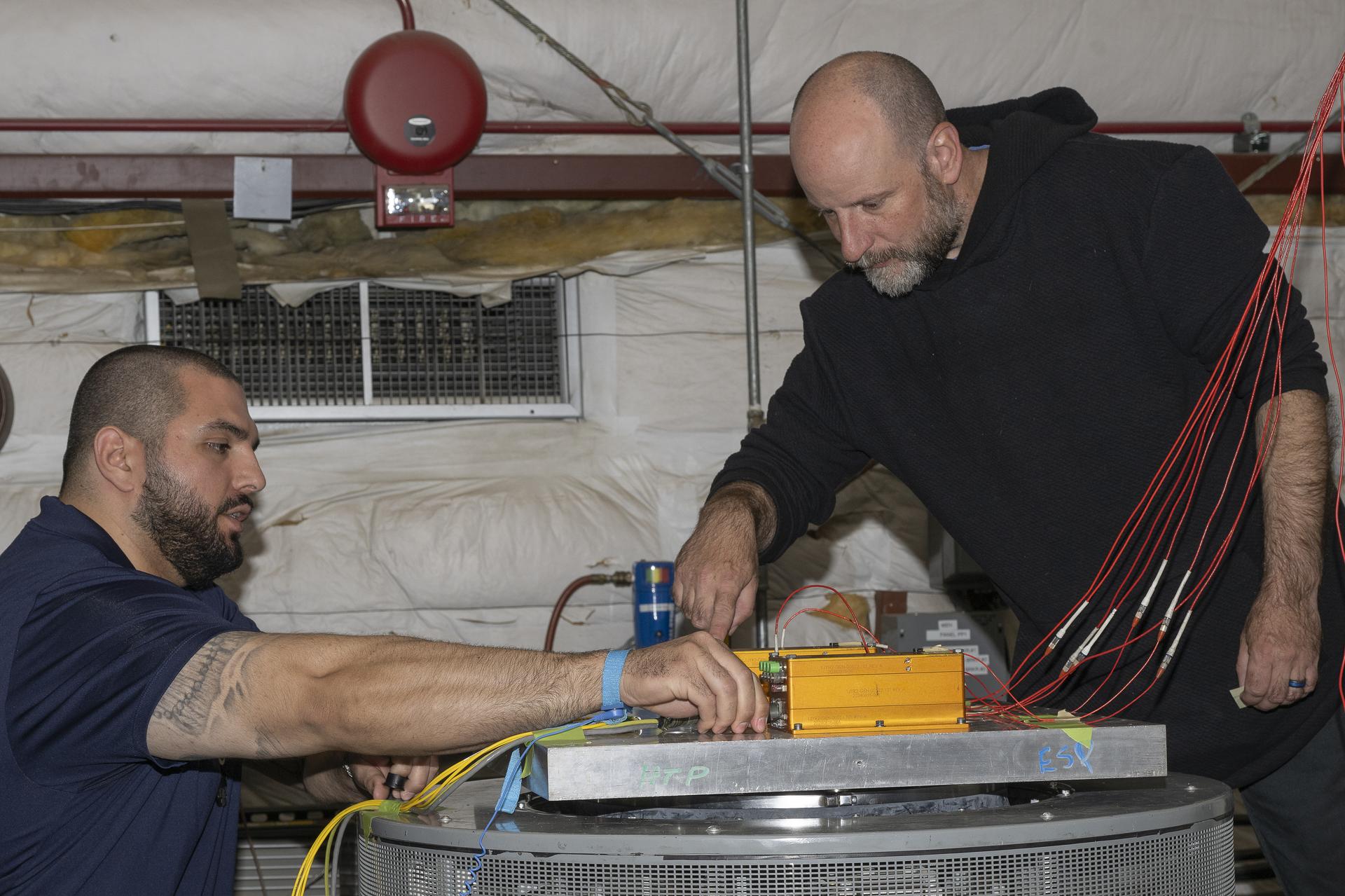
    Technicians in the Environmental Laboratory at NASA’s Armstrong Flight Research Center in Edwards, California, used machines called shakers to perform vibration tests on the technology, known as a Fiber Optic Sensing System (FOSS), on March 26. The tests confirmed the FOSS could operate while withstanding the shaking forces of a rocket launch. Initial laboratory and flight tests in 2024 went well, leading to the recently tested system’s use on the U.S. Department of Defense coordinated research rockets to measure critical temperature safety data.

    Hypersonic sensing systems are crucial for advancing hypersonics, a potentially game-changing field in aeronautics. Capitalizing on decades of research, NASA is working to address critical challenges in hypersonic engine technology through its Advanced Air Vehicles Program.

    Using FOSS, NASA will gather data on the strain placed on vehicles during flight, as well as temperature information, which helps engineers understand the condition of a rocket or aircraft. The FOSS system collects data using a fiber about the thickness of a human hair that collects data along its length, replacing heavier and bulkier traditional wire harnesses and sensors.

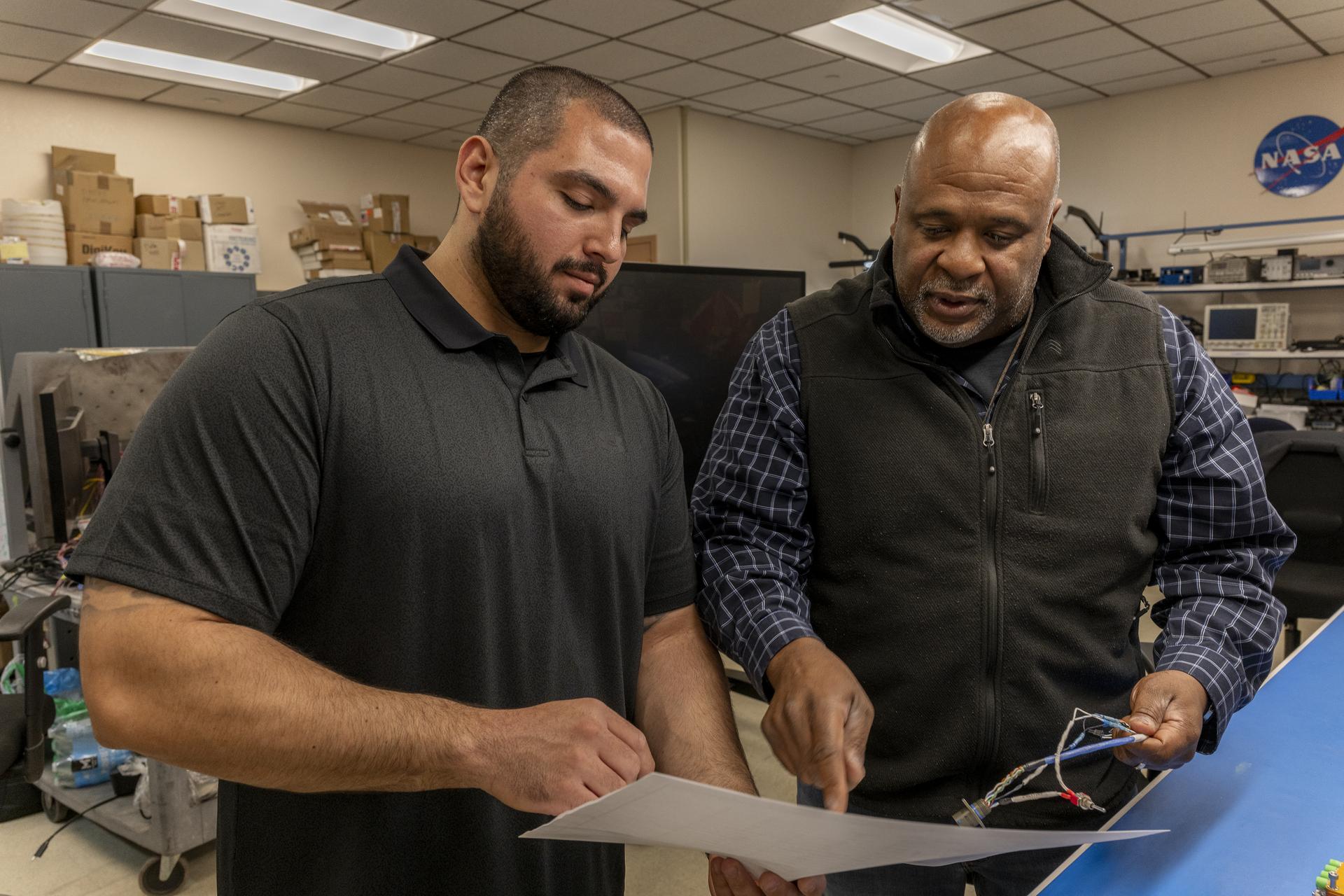
    Two men look at a long, rectangular paper in a laboratory. One of the men is holding wires and pointing to the paper.
    Jonathan Lopez and Allen Parker confer on the hypersonic Fiber Optic Sensor System at NASA’s Armstrong Flight Research Center in Edwards, California, on February 13, 2025. The system measures strain and temperature, critical safety data for hypersonic vehicles that travel five time the speed of sound.
    NASA/Steve Freeman

    “There is no reliable technology with multiple sensors on a single fiber in the hypersonic environment,” said Patrick Chan, FOSS project manager at Armstrong. “The FOSS system is a paradigm shift for hypersonic research, because it can measure temperature and strain.”

    For decades, NASA Armstrong worked to develop and improve the system, leading to hypersonic FOSS, which originated in 2020. Craig Stephens, the Hypersonic Technology Project associate project manager at NASA Armstrong, anticipated a need for systems and sensors to measure temperature and strain on hypersonic vehicles.

    “I challenged the FOSS team to develop a durable data collection system that had reduced size, weight, and power requirements,” Stephens said. “If we obtain multiple readings from one FOSS fiber, that means we are reducing the number of wires in a vehicle, effectively saving weight and space.”

    The research work has continually made the system smaller and lighter. While a space-rated FOSS used in 2022 to collect temperature data during a NASA mission in low Earth orbit was roughly the size of a toaster, the hypersonic FOSS unit is about the size of two sticks of butter.

    Two men prepare a rectangular system on a rectangular metal surface, which is connected to a cylinder-shaped machine that will severely shake it. Sets of wires are attached to both ends of the rectangular system.
    Jonathan Lopez and Nathan Rick prepare the hypersonic Fiber Optic Sensing System for vibration tests in the Environmental Laboratory at NASA’s Armstrong Flight Research Center in Edwards, California. Testing on a machine called a shaker proved that the system could withstand the severe vibration it will endure in hypersonic flight, or travel at five times the speed of sound.
    NASA/Jim Ross

    Successful Partnerships

    To help advance hypersonic FOSS to test flights, NASA Armstrong Technology Transfer Office lead Ben Tomlinson orchestrated a partnership. NASA, the U.S. Air Force Test Pilot School in Edwards, California, and the U.S. Air Force’s 586th Flight Test Squadron at Holloman Air Force Base in New Mexico, agreed to a six-flight series in 2024.

    The test pilot school selected an experiment comparing FOSS and traditional sensors, looking at the data the different systems produced.

    The hypersonic FOSS was integrated into a beam fixed onto one end of a pod. It had weight on the other end of the beam so that it could move as the aircraft maneuvered into position for the tests. The pod fit under a T-38 aircraft that collected strain data as the aircraft flew.

    “The successful T-38 flights increased the FOSS technology readiness,” Tomlinson said. “However, a test at hypersonic speed will make FOSS more attractive for a United States business to commercialize.”

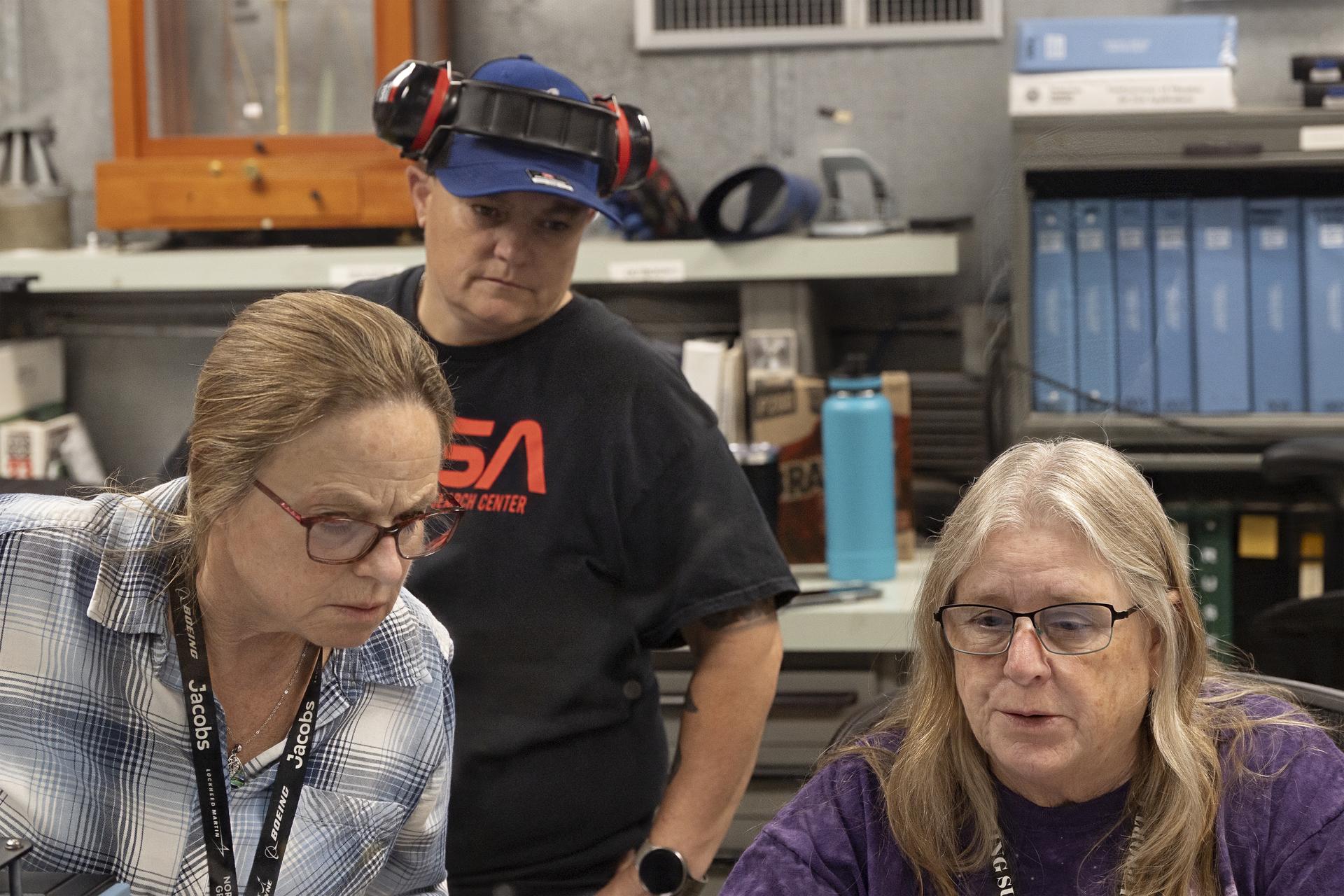
    Three people watch a data stream on a monitor. The experiment is happening on the other side of the control room, which they can see on the other side of the large rectangular window they are near.
    April Torres, from left, Cryss Punteney, and Karen Estes watch as data flows from the hypersonic Fiber Optic Sensing System at NASA’s Armstrong Flight Research Center in Edwards, California. Testing on a machine called a shaker proved that the system could withstand the severe vibration it will endure in hypersonic flight, or travel at five times the speed of sound.
    NASA/Jim Ross

    New Opportunities

    After the experiment with the Air Force, NASA’s hypersonic technology team looked for other opportunities to advance the miniaturized version of the system. That interest led to the upcoming research rocket tests in coordination with the Department of Defense.

    “We have high confidence in the system, and we look forward to flying it in hypersonic flight and at altitude,” Chan said.

    Eight people stand on the left side of a jet with a pod that underneath that is carried for flight experiments. Five additional people are on the other side of the pod. The two-seat jet has the canopies open. The sky behind the people and aircraft is cloudy.
    A hypersonic Fiber Optic Sensing System, developed at NASA’s Armstrong Flight Research Center in Edwards, California, is ready for a test flight on a T-38 at the U.S. Air Force 586th Flight Test Squadron at Holloman Air Force Base in New Mexico. NASA Armstrong, the flight test squadron, and the U.S. Air Force Test Pilot School in Edwards, California, partnered for the test. From left are Earl Adams, Chathu Kuruppu, Colby Ferrigno, Allen Parker, Patrick Chan, Anthony Peralta, Ben Tomlinson, Jonathan Lopez, David Brown, Lt. Col. Sean Siddiqui, Capt. Nathaniel Raquet, Master Sgt. Charles Shepard, and Greg Talbot.
    U.S. Air Force/Devin Lopez

  • Career Exploration: Using Ingenuity and Innovation to Create ‘Memory Metals’

    Othmane Benafan is a NASA engineer whose work is literally reshaping how we use aerospace materials — he creates metals that can shape shift. Benafan, a materials research engineer at NASA’s Glenn Research Center in Cleveland, creates metals called shape memory alloys that are custom-made to solve some of the most pressing challenges of space exploration and aviation.

    “A shape memory alloy starts off just like any other metal, except it has this wonderful property: it can remember shapes,” Benafan says. “You can bend it, you can deform it out of shape, and once you heat it, it returns to its shape.”

    An alloy is a metal that’s created by combining two or more metallic elements. Shape memory alloys are functional metals. Unlike structural metals, which are fixed metal shapes used for construction or holding heavy objects, functional metals are valued for unique properties that enable them to carry out specific actions.

    NASA often needs materials with special capabilities for use in aircraft and spacecraft components, spacesuits, and hardware designed for low-Earth orbit, the Moon, or Mars. But sometimes, the ideal material doesn’t exist. That’s where engineers like Benafan come in.

    “We have requirements, and we come up with new materials to fulfill that function,” he said. The whole process begins with pen and paper, theories, and research to determine exactly what properties are needed and how those properties might be created. Then he and his teammates are ready to start making a new metal.

    “It’s like a cooking show,” Benafan says. “We collect all the ingredients — in my case, the metals would be elements from the periodic table, like nickel, titanium, gold, copper, etc. — and we mix them together in quantities that satisfy the formula we came up with. And then we cook it.”

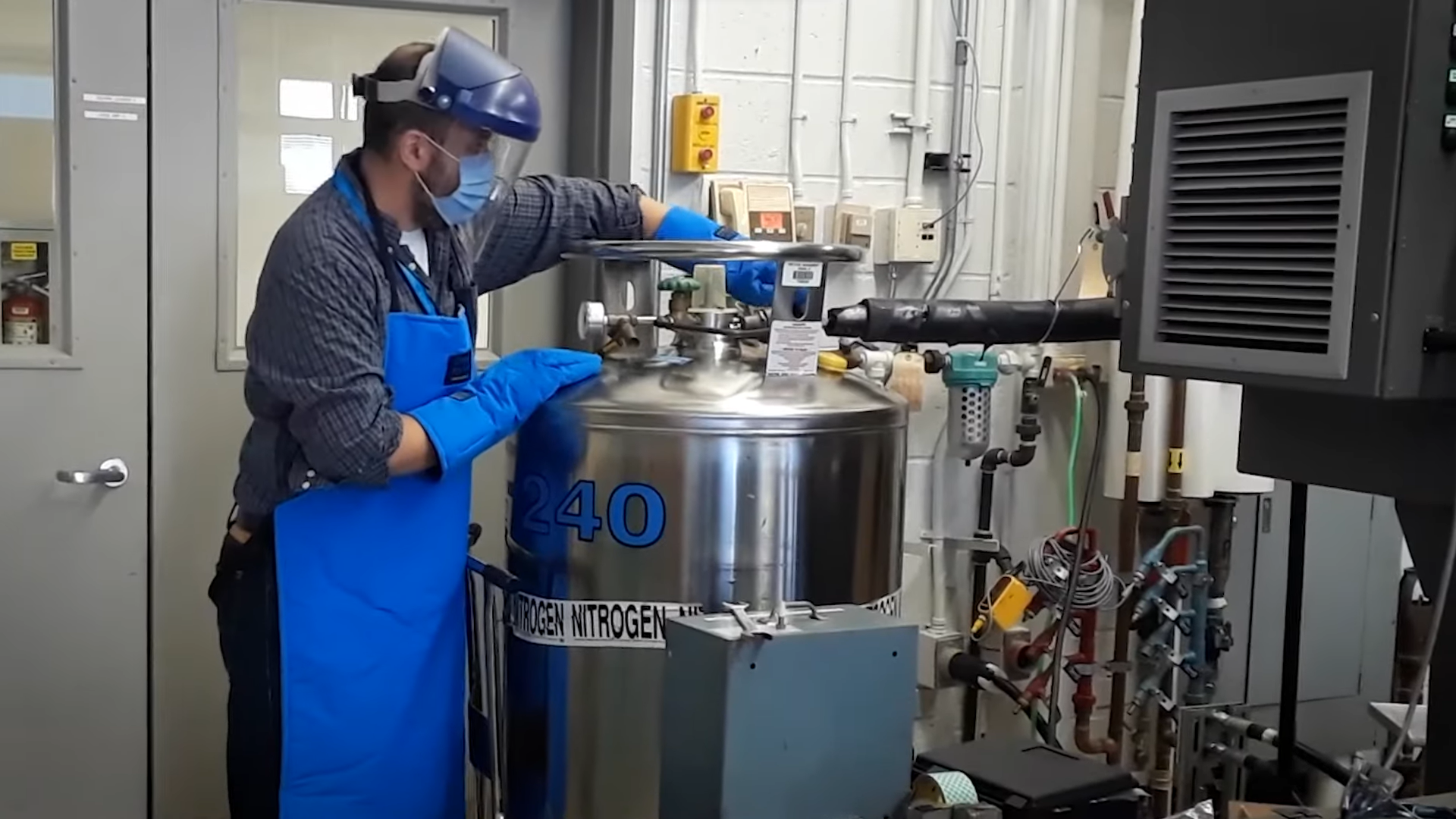
    A man wearing a surgical mask, protective plastic face covering, and thick blue gloves, works with a large metal can that has the text
    Othmane Benafan, a materials research engineer, develops a shape memory alloy in a laboratory at NASA’s Glenn Research Center in Cleveland.

    These elemental ingredients are melted in a container called a crucible, then poured into the required shape, such as a cylinder, plate, or tube. From there, it’s subjected to temperatures and pressures that shape and train the metal to change the way its atoms are arranged every time it’s heated or cooled.

    Shape memory alloys created by Benafan and his colleagues have already proven useful in several applications. For example, the Shape Memory Alloy Reconfigurable Technology Vortex Generator (SMART VG) being tested on Boeing aircraft uses the torque generated by a heat-induced twisting motion to raise and lower a small, narrow piece of hardware installed on aircraft wings, resulting in reduced drag during cruise conditions. In space, the 2018 Advanced eLectrical Bus (ALBus) CubeSat technology demonstration mission included the use of a shape memory alloy to deploy the small satellite’s solar arrays and antennas. And Glenn’s Shape Memory Alloy Rock Splitters technology benefits mining and geothermal applications on Earth by breaking apart rocks without harming the surrounding environment. The shape memory alloy device is wrapped in a heater and inserted into a predrilled hole in the rock, and when the heater is activated, the alloy expands, creating intense pressure that drives the rock apart.

    Benafan’s fascination with shape memory alloys started after he immigrated to the United States from Morocco at age 19. He began attending night classes at the Valencia Community College (now Valencia College), then went on to graduate from the University of Central Florida in Orlando. A professor did a demonstration on shape memory alloys and that changed Benafan’s life forever. Now, Benafan enjoys helping others understand related topics.
     
    “Outside of work, one of the things I like to do most is make technology approachable to someone who may be interested but may not be experienced with it just yet. I do a lot of community outreach through camps or lectures in schools,” he said.
     
    He believes a mentality of curiosity and a willingness to fail and learn are essential for aspiring engineers and encourages others to pursue their ideas and keep trying.

    “You know, we grow up with that mindset of falling and standing up and trying again, and that same thing applies here,” Benafan said. “The idea is to be a problem solver. What are you trying to contribute? What problem do you want to solve to help humanity, to help Earth?”

    To learn more about the wide variety of exciting and unexpected jobs at NASA, check out the Surprisingly STEM video series.