Tag: NASA

  • Astronomers Map Stellar ‘Polka Dots’ Using NASA’s TESS, Kepler

    5 min read

    Astronomers Map Stellar ‘Polka Dots’ Using NASA’s TESS, Kepler

    Scientists have devised a new method for mapping the spottiness of distant stars by using observations from NASA missions of orbiting planets crossing their stars’ faces. The model builds on a technique researchers have used for decades to study star spots.

    By improving astronomers’ understanding of spotty stars, the new model — called StarryStarryProcess — can help discover more about planetary atmospheres and potential habitability using data from telescopes like NASA’s upcoming Pandora mission.

    “Many of the models researchers use to analyze data from exoplanets, or worlds beyond our solar system, assume that stars are uniformly bright disks,” said Sabina Sagynbayeva, a graduate student at Stony Brook University in New York. “But we know just by looking at our own Sun that stars are more complicated than that. Modeling complexity can be difficult, but our approach gives astronomers an idea of how many spots a star might have, where they are located, and how bright or dark they are.”

    A paper describing StarryStarryProcess, led by Sagynbayeva, published Monday, August 25, in The Astrophysical Journal.

    Watch to learn how a new tool uses data from exoplanets, worlds beyond our solar system, to tell us about their polka-dotted stars.
    NASA’s Goddard Space Flight Center

    NASA’s TESS (Transiting Exoplanet Survey Satellite) and now-retired Kepler Space Telescope were designed to identify planets using transits, dips in stellar brightness caused when a planet passes in front of its star.

    These measurements reveal how the star’s light varies with time during each transit, and astronomers can arrange them in a plot astronomers call a light curve. Typically, a transit light curve traces a smooth sweep down as the planet starts passing in front of the star’s face. It reaches a minimum brightness when the world is fully in front of the star and then rises smoothly as the planet exits and the transit ends.  

    By measuring the time between transits, scientists can determine how far the planet lies from its star and estimate its surface temperature. The amount of missing light from the star during a transit can reveal the planet’s size, which can hint at its composition.

    Every now and then, though, a planet’s light curve appears more complicated, with smaller dips and peaks added to the main arc. Scientists think these represent dark surface features akin to sunspots seen on our own Sun — star spots.

    The Sun’s total number of sunspots varies as it goes through its 11-year solar cycle. Scientists use them to determine and predict the progress of that cycle as well as outbreaks of solar activity that could affect us here on Earth.

    Similarly, star spots are cool, dark, temporary patches on a stellar surface whose sizes and numbers change over time. Their variability impacts what astronomers can learn about transiting planets.

    Scientists have previously analyzed transit light curves from exoplanets and their host stars to look at the smaller dips and peaks. This helps determine the host star’s properties, such as its overall level of spottiness, inclination angle of the planet’s orbit, the tilt of the star’s spin compared to our line of sight, and other factors. Sagynbayeva’s model uses light curves that include not only transit information, but also the rotation of the star itself to provide even more detailed information about these stellar properties.

    This artist’s concept illustrates the varying brightness of star with a transiting planet and several star spots.
    NASA’s Goddard Space Flight Center

    “Knowing more about the star in turn helps us learn even more about the planet, like a feedback loop,” said co-author Brett Morris, a senior software engineer at the Space Telescope Science Institute in Baltimore. “For example, at cool enough temperatures, stars can have water vapor in their atmospheres. If we want to look for water in the atmospheres of planets around those stars — a key indicator of habitability — we better be very sure that we’re not confusing the two.”

    To test their model, Sagynbayeva and her team looked at transits from a planet called TOI 3884 b, located around 141 light-years away in the northern constellation Virgo.

    Discovered by TESS in 2022, astronomers think the planet is a gas giant about five times bigger than Earth and 32 times its mass.

    The StarryStarryProcess analysis suggests that the planet’s cool, dim star — called TOI 3384 — has concentrations of spots at its north pole, which also tips toward Earth so that the planet passes over the pole from our perspective.

    Currently, the only available data sets that can be fit by Sagynbayeva’s model are in visible light, which excludes infrared observations taken by NASA’s James Webb Space Telescope. But NASA’s upcoming Pandora mission will benefit from tools like this one. Pandora, a small satellite developed through NASA’s Astrophysics Pioneers Program, will study the atmospheres of exoplanets and the activity of their host stars with long-duration multiwavelength observations. The Pandora mission’s goal is to determine how the properties of a star’s light differs when it passes through a planet’s atmosphere so scientists can better measure those atmospheres using Webb and other missions.

    “The TESS satellite has discovered thousands of planets since it launched in 2018,” said Allison Youngblood, TESS project scientist at NASA’s Goddard Space Flight Center in Greenbelt, Maryland. “While Pandora will study about 20 worlds, it will advance our ability to pick out which signals come from stars and which come from planets. The more we understand the individual parts of a planetary system, the better we understand the whole — and our own.”

    By Jeanette Kazmierczak
    NASA’s Goddard Space Flight Center, Greenbelt, Md.

    Media Contact:
    Alise Fisher
    202-358-2546
    alise.m.fisher@nasa.gov
    NASA Headquarters, Washington

  • NASA Accepts Proposals for 2026 Student Launch Challenge 

    3 min read

    Preparations for Next Moonwalk Simulations Underway (and Underwater)

    NASA is kicking off the 2026 Student Launch challenge, looking for new student teams to design, build, and launch high-powered rockets with a scientific or engineering payload next April. 

    The agency is seeking proposals until Monday, Sept. 22. Details about this year’s challenge are in the 2026 handbook, which outlines the requirements for middle school, high school, and college students to participate. After a competitive proposal selection process, selected teams must meet documentation milestones and undergo detailed reviews throughout the activity year. 

    NASA’s Student Launch, a STEM competition, officially kicks off its 26th anniversary with the 2026 handbook.
    NASA’s Student Launch, a STEM competition, officially kicks off its 26th anniversary with the 2026 handbook.

    “These bright students rise to a nine-month challenge for Student Launch that tests their skills in engineering, design, and teamwork,” said Kevin McGhaw, director of NASA’s Office of STEM Engagement Southeast Region. “They are part of the Golden Age of explorers – the future scientists, engineers, and innovators who will lead us into the future of space exploration.”

    Student Launch will culminate with on-site events starting on April 22, 2026. Final launches are scheduled for April 25, at Bragg Farms in Toney, Alabama, near NASA’s Marshall Space Flight Center in Huntsville, Alabama. 

    Each year, NASA updates the university payload challenge to reflect current scientific and exploration missions. For the 2026 season, the payload challenge will take inspiration from the Artemis missions, which seek to explore the Moon for scientific discovery, technology advancement, and to learn how to live and work on another world as we prepare for human missions to Mars. This year’s payload challenge tasks college and university teams with designing, building, and flying a habitat to safely house four STEMnauts – non-living objects representing astronauts – during extended missions. The habitat must include equipment capable of both collecting and testing soil samples to support agricultural research operations.

    Nearly 1,000 students participated in the 2025 Student Launch competition – making up 71 teams from across the United States. Teams launched their rockets to an altitude between 4,000 and 6,000 feet, while attempting to make a successful landing and executing the payload mission.

     Former NASA Marshall Director Art Stephenson started Student Launch in 2000 as a student rocket competition at the center. Just two university teams competed in the inaugural challenge – Alabama A&M University and the University of Alabama in Huntsville. The challenge continues to soar with thousands of students participating in the STEM competition each year, and many going on to a career with NASA.

    NASA Marshall’s Office of STEM Engagement hosts Student Launch to provide students with real-world experiences that encourage them to pursue degrees and careers in science, technology, engineering, and mathematics. Student Launch is one of several NASA Artemis Student Challenges – a variety of activities that expose students to the knowledge and technology required to achieve the goals of the agency’s Artemis campaign. 

    In addition to NASA Office of STEM Engagement’s Next Generation STEM project, NASA Space Operations Mission Directorate, Northrop Grumman, National Space Club Huntsville, American Institute of Aeronautics and Astronautics, National Association of Rocketry, Relativity Space and, Bastion Technologies provide funding and leadership for the Student Launch competition. 

    To learn more about Student Launch, visit: 
    www.nasa.gov/studentlaunch

  • Harmonized Landsat and Sentinel-2: Collaboration Drives Innovation

    Feature Article header

    9 min read

    Harmonized Landsat and Sentinel-2: Collaboration Drives Innovation

    Introduction

    Landsat, a joint program of NASA and the U.S. Geological Survey (USGS), has been an invaluable tool for monitoring changes in Earth’s land surface for over 50 years. Researchers use instruments on Landsat satellites to monitor decades-long trends, including urbanization and agricultural expansion, as well as short-term dynamics, including water use and disaster recovery. However, scientists and land managers often encounter one critical limitation of this program: Landsat has a revisit time of eight days (with Landsat 8 and 9 operating), which is too long to capture events and disasters that occur on short timescales. Floods, for example, can quickly inundate a region, and cloud cover from storms can delay Landsat’s ability to get a clear observation on damage.

    In 2015, the European Space Agency’s (ESA) Copernicus Sentinel-2A mission joined Landsat 7 and 8 in orbit. It was designed to collect comparable optical land data with the intention of leveraging Landsat’s archive. Two years later, ESA launched Sentinel-2B, a satellite identical to Sentinel-2A.

    Led by a science team at NASA’s Goddard Space Flight Center (GSFC), the USGS, NASA, and ESA began to work on combining the capabilities of Sentinel-2 and Landsat satellites. This idea was the impetus behind Harmonized Landsat and Sentinel-2 (HLS) project, a NASA initiative that created a seamless product from the Operational Land Imager (OLI) and Multi-Spectral Instrument (MSI) aboard Landsat and Sentinel-2 satellites, respectively. HLS Version 2.0 (V2.0) is the most recent version of these data and had a global median repeat frequency of 1.6 days in 2022 by combining observations from Landsat 8 and 9 and Sentinel-2A and B. The recent addition of Sentinel-2C data will provide even more frequent observations. With near-global coverage and improved harmonization algorithms, HLS V2.0 paves the way for new applications and improved land monitoring systems – see Animation 1. HLS data are available for download on NASA Earthdata: HLSL30v2.0 and HLSS30v2.0. These data can also be accessed through Google Earth Engine: HLSL30v2.0 and HLSS30v2.0

    Animation 1. This visualization shows the change in vegetation in Maryland from January 1 to December 30, 2016, using Normalized Difference Vegetation Index (NDVI) data from Harmonized Landsat Sentinel-2 (HLS). The visualization shows land on both sides of the Chesapeake Bay, where red represents bare soil and green indicates healthy, growing vegetation.
    Animation credit: Michael Taylor [Science Systems and Applications Inc. (SSAI)], Matthew Radcliff [USRA], and Jeffrey Masek [GSFC]. Caption adapted from Laura Rocchio [SSAI]

    The Dawn of HLS

    The story of HLS begins before the launch of Sentinel-2A in 2015. Jeffrey Masek [GSFC], who was at that time project scientist for Landsat 8, led a group of researchers who wanted to find a way to harmonize Landsat data with other satellite data. Their aim was to create a “virtual constellation” similar to how weather satellites operate.

    “HLS meets a need that people have been asking for for a long time,” said Masek.

    What began as a research question with an experimental product evolved into an operational project with the involvement of the Satellite Needs Working Group (SNWG). SNWG is an interagency effort to develop solutions that address Earth observation needs of civilian federal agencies. Every two years, SNWG conducts a survey of federal agencies to see how their work could benefit from satellite data. The answers span the gamut of application areas, from water quality monitoring to disaster recovery to planning how best to protect and use natural resources. SNWG brings these ideas to NASA, USGS, and the National Oceanic and Atmospheric Administration (NOAA) – the three main U.S. government providers of satellite data. These agencies work together to create and implement solutions that serve those needs. NASA plays a critical role in every step of the SNWG process, including leading the assessment of survey responses from over 30 federal agencies, managing and supporting the implementation of identified solutions, and encouraging solution co-design with federal partners to maximize impact.

    The HLS surface reflectance product was an outcome of the very first SNWG solution cycle in 2016. This product was expanded, following additional SNWG requests in 2020 and 2022. The 2020 cycle saw the creation of nine HLS-derived vegetation indices, and the 2022 cycle aimed for a six-hour latency product.

    The U.S. Department of Agriculture (USDA) now uses HLS to map crop emergence at the field scale in the corn belt, allowing farmers to better plan their growing seasons. Ranchers in Colorado use the dataset to decide where to graze their cattle during periods of drought. HLS also informs the use and termination of cover crops in the Chesapeake Bay area. In 2024, the Federal Emergency Management Agency (FEMA) employed HLS to identify where to focus aid in the aftermath of Hurricane Helene.

    A New and Improved HLS

    In the July 2025 issue of Remote Sensing of Environment, a team of researchers outlined the HLS V2.0 surface reflectance dataset and algorithms. The team included seven NASA co-authors, members of the 2018–2023 Landsat Science Team, and ESA. The lead author, Junchang Ju [GSFC—Remote Sensing Scientist], has been the technical lead on HLS since its inception. Co-author Christopher Neigh [GSFC—Landsat 8/9 Project Scientist] is the principal investigator on the HLS project. V2.0, which was completed in Summer 2023, incorporates several major improvements over HLS V1.4, the most recent publicly available HLS product. The HLS production team at NASA’s Marshall Space Flight Center (MSFC), led by Madhu Sridhar [University of Alabama in Huntsville—Research Scientist], ensures consistent data access through close collaboration with ESA and the Land Processes Distributed Active Archive Center (LP DAAC). HLS V1.4 covered about 30% of the global land area, providing data on North America and other select locations. HLS V2.0 provides data at a spatial resolution of 30 m (98 ft) with near-global coverage from 2013 onward. The dataset includes all land masses except Antarctica. HLS V2.0 also has key algorithmic improvements in atmospheric correction, cloud masking, and bidirectional reflectance distribution function (BRDF) correction. Together, these algorithms “harmonize” the data, or ensure that the distinct Landsat and Sentinel-2 datasets can effectively be used interchangeably – see Animation 2.

    Animation 2: The visualization provides the Normalized Difference Vegetation Index (NDVI) data from Harmonized Landsat Sentinel-2 (HLS) for farm fields south of Columbus, NE. The red represents bare soil and green represents healthy, growing vegetation. The animation runs from January 1 to December 30, 2016.
    Animation credit: Michael Taylor [SSAI], Matthew Radcliff [USRA], and Jeffrey Masek [GSFC]. Caption adapted from Laura Rocchio [SSAI]

    HLS V2.0 in Action

    The increased frequency of observations improved the ability of the scientific community to track disaster recovery, changes in phenology, agricultural intensification, rapid urban growth, logging, and deforestation. Researchers are already putting these advances to use.

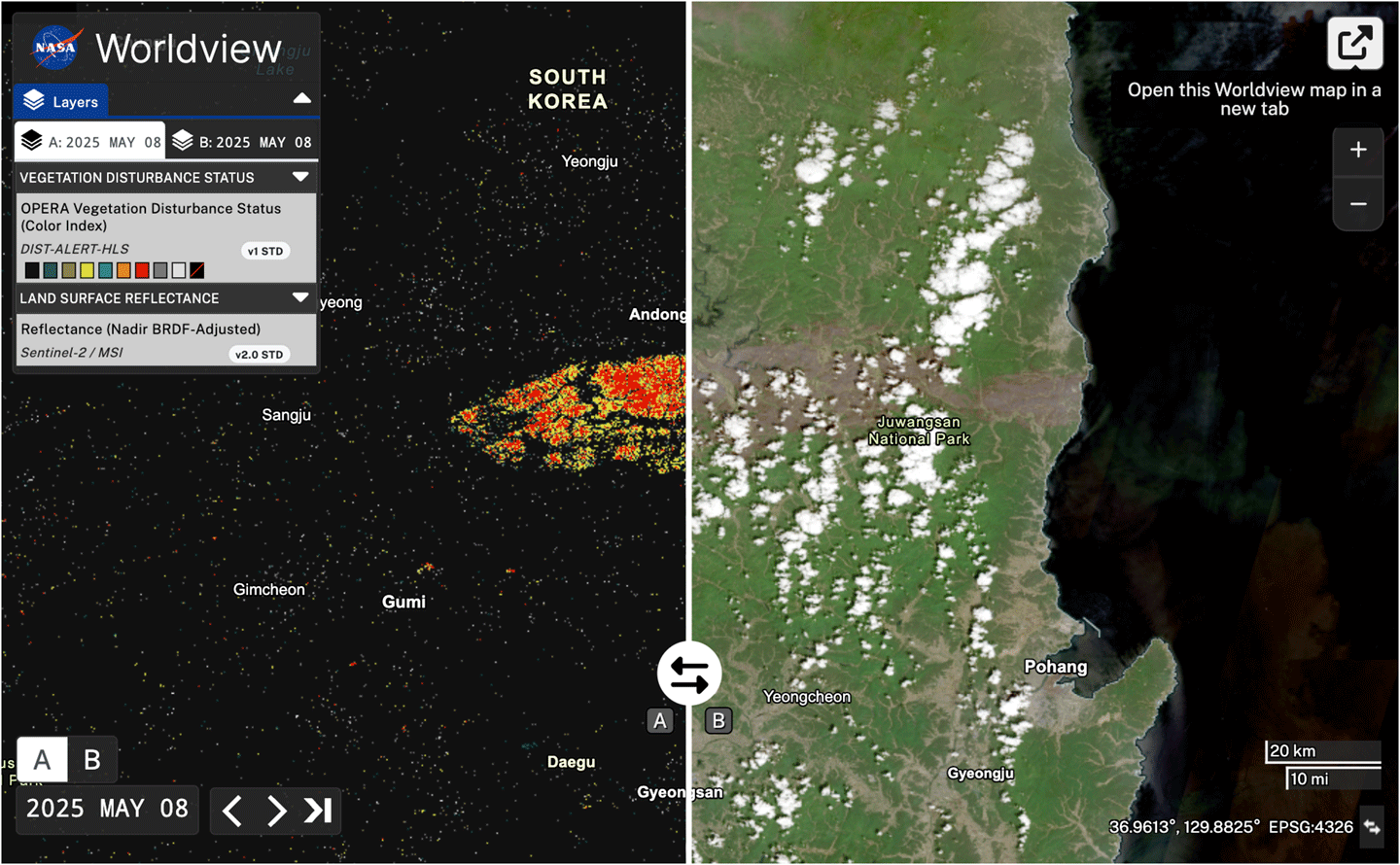
    The land disturbance product (DIST-ALERT) is a global land change monitoring system that uses HLS V2.0 data to track vegetation anomalies in near real-time – see Figure 1. DIST-ALERT captures agricultural expansion, urban growth, fire, flooding, logging, drought, landslides, and other forces of change to vegetation. Amy Pickens [University of Maryland, Department of Geographical Sciences—Assistant Research Professor] said that HLS is the perfect dataset for tracking disturbances because of the frequency of observations.

    DIST-ALERT was created through Observational Products for End-Users from Remote Sensing Analysis (OPERA), a project at NASA/Jet Propulsion Laboratory (JPL). OPERA products respond to agency needs identified by the SNWG. In 2018, SNWG identified tracking surface disturbance as a key need. OPERA partnered with the Global Land Analysis and Discovery (GLAD) lab at University of Maryland to develop the change detection algorithm.

    To track changes in vegetation, the DIST-ALERT system establishes a rolling baseline – meaning that for any given pixel, the vegetation cover is compared against vegetation cover from the same 31-day window in the previous three years. The primary algorithm detects any vegetation loss relative to the established baseline. A secondary algorithm flags any spectral anomaly (i.e., any change in reflectance) compared to that same baseline. This approach ensures that the algorithm catches non-vegetation change (e.g., new building or road projects in unvegetated areas). Used together, these algorithms can identify long-term changes in agricultural expansion, deforestation, and urbanization alongside short-term changes in crop harvest, drought, selective logging, and the impacts of disasters. On average, DIST-ALERT is made available on LP DAAC within six hours of when new HLS data is available. Currently, the dataset does not provide attribution to disturbances.

    Landsat figure 1
    Figure 1. In March 2025, wildfires burned through South Korea, resulting in heavy vegetation loss. [left] Output of the DIST-ALERT product on NASA Worldview from May 8, 2025, with vegetation loss in percent flagged with varying levels of confidence. Yellow and red represent areas with confirmed vegetation cover losses of <50% and ≥50%, respectively. [right] Natural-color image captured by the Multi-Spectral Instrument (MSI) aboard Sentinel-2C on May 8, 2025. The large brown burn scar in the center of the image corresponds to vegetation loss detected by DIST-ALERT. It stands in contrast to the surrounding green vegetation.
    Figure credit: NASA Earthdata

    Disturbance alerts already exist in some ecosystems. Brazil’s National Institute for Space Research [Instituto Nacional de Pesquisas Espaciais (INPE)] runs two projects that detect deforestation in the Amazon: Programa de Cálculo do Desflorestamento da Amazônia (PRODES) and Sistema de Detecção de Desmatamento em Tempo Real (DETER). The GLAD lab created its own forest loss alerts – GLAD-L and GLAD-S2 – using Landsat and Sentinel-2 data respectively. Global Forest Watch integrates GLAD-L and GLAD-S2 data with Radar for Detecting Deforestation (RADD) observations – derived from synthetic aperture radar data from Copernicus Sentinel-1 – into an integrated deforestation alert.

    The implementation of these alert systems, some of which have been around for decades, have been shown to impact deforestation rates in the tropics. For example, a 2021 study in Nature Climate Change found that deforestation alerts decreased the probability of deforestation in Central Africa by 18% relative to the average 2011–2016 levels.

    DIST-ALERT is distinct from other alert systems in a few ways. First, it has global coverage. Second, the rolling baseline allows for tracking changes in seasonality and disturbances to dynamic ecosystems. When HLS V2.0 data are input to DIST-ALERT, the system is also better at identifying disturbances in cloudy ecosystems than other individual alert systems – because it is more likely to obtain clear observations. This also enables it to identify the start and end of the disturbance more precisely.

    Pickens said that the DIST-ALERT team is already working with end-users who are implementing their data product. She has spoken to some who use the system to help logging companies prove that they are complying with regulations. The U.S. Census Bureau is also using DIST-ALERT to monitor fast-growing communities so that they can do targeted assessments in the interim between the larger decennial census.

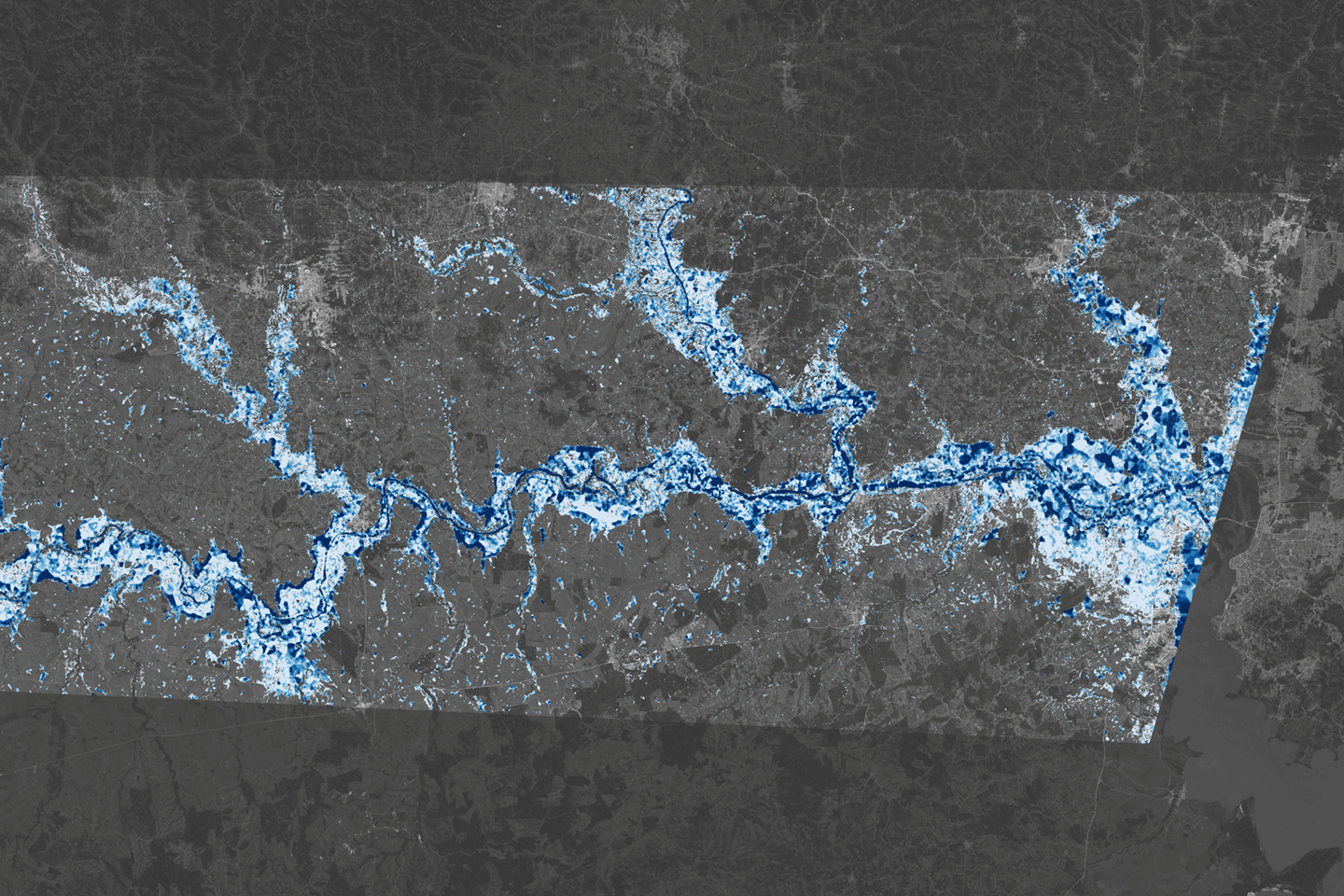
    Alongside DIST-ALERT, OPERA has also been developing the Dynamic Surface Water eXtent (DSWx) product suite, which employs HLS to track surface water (e.g., lakes, reservoirs, rivers, and floods) around the globe – see Figure 2. These new products represent the new applications made possible by the HLS interagency and international collaboration.

    Landsat figure 2
    Figure 2. The map shows flood extent and estimates of flood depth in areas west of Porto Alegre, Brazil on May 6, 2024. The flood extent is from the Observational Products for End-Users from Remote Sensing Analysis (OPERA) Dynamic Surface Water eXtent product, which uses Harmonized Landsat Sentinel-2 data. The flood depth estimate is from the Floodwater Depth Estimation Tool (FwD ET). The darkest blue areas represent floodwater at least 5 m (20 ft) deep. Much of the inundated floodplain is light blue, which equates to depths of between 0.1–1 m (4–40 in).
    Figure credit: Lauren Dauphin [NASA’s Earth Observatory], Dinuke Munasinghe [JPL], Sagy Cohen [University of Alabama], and Alexander Handwerger [JPL]

    Conclusion

    HLS is set to continue improving land monitoring efforts across the globe. Meanwhile, the HLS science team is working to improve the algorithms for a more seamless harmonization of Landsat 8 and 9 and Sentinel-2 data. They are also working to improve the cloud-masking algorithm, have recently released vegetation indices, and are working on developing a low-latency (six-hour) HLS surface reflectance product, all while incorporating user feedback.

    Looking ahead, the launch of future Sentinel and Landsat satellites will further the development of HLS. The additional data and unique capabilities will continue to meet researchers’ need for more frequent, high-quality satellite observations of Earth’s land surface.

    Madeleine Gregory
    NASA’s Goddard Space Flight Center/Science Systems and Applications Inc.
    madeleine.s.gregory@nasa.gov

    Details

    Last Updated

    Aug 26, 2025

    Related Terms

  • NASA Implementation of Executive Order 14303

  • Lindy Garay: Supporting Space Station Safety and Success

    Lindy Garay always knew she wanted to develop software. She did not anticipate that her work would contribute to human spaceflight.

    The electrical and software engineering degree Garay earned from the University of Texas at Austin paved the way for a 25-year career with NASA’s Johnson Space Center in Houston. Her first job out of college was developing software for the International Space Station Program’s original space station training facility simulator. “I had not always been interested in working in the space program, but I became enamored with being able to contribute to such an important mission,” she said.

    A woman wearing a black button down shirt sits in front of an American flag and a NASA flag.
    Official portrait of Lindy Garay.
    NASA

    Today, Garay serves as a training systems software architect and is the technical lead for training system external interfaces. That means she leads the team that helps connect training simulations from NASA’s external partners with simulations run by Johnson’s Mission Training Center (MTC) to support crew and flight controller training. The MTC currently provides training capabilities for the International Space Station Program, the Commercial Crew Program, and Artemis campaign components such as the Orion Program and the human landing system.

    Garay said that not having an aerospace background was challenging at the beginning of her career, but she overcame that by leaning on teammates who had knowledge and experience in the field. “Every successful endeavor depends on having a solid team of dedicated people working toward one goal,” she said. “Success also depends on good communication, flexibility, and being willing to listen to different opinions,” she added.

    Garay was recently named as a 2025 NASA Space Flight Awareness Program Honoree – one of the highest recognitions presented to the agency’s workforce. Recipients must have significantly contributed to the human spaceflight program to ensure flight safety and mission success. Garay’s commendation acknowledged her “sustained superior performance, dedication, and commitment to the Flight Operations Directorate’s goals” and her instrumental role in the success of several major training systems projects. In particular, she was recognized for contributions to the High-Level Architecture simulation framework, which is used to create realistic simulations of visiting vehicles’ arrival, docking, and departure from the space station.

    A group of men and women hold certificates on a stage, with an astronaut wearing a blue flight suit on the side.
    From left to right, Johnson Space Flight Awareness (SFA) Lead Jessica Cordero, SFA Coordinator Michelle Minor, Johnson Space Center Acting Director Stephen Koerner, Drew Faulkner, Adam Korona, Teresa Sindelar, Lindy Garay, Lindsay Kirk, Keith Barr, Ephram Rubin, and NASA astronaut Randy Bresnik.
    NASA/Kim Shiflett

    Garay and 36 other agency honorees were celebrated during a special ceremony in Cocoa Beach, Florida, and had the opportunity to attend the launch of NASA’s SpaceX Crew-10 mission at NASA’s Kennedy Space Center. “That was quite an honor,” she said.

    Outside of work, Garay may be found cheering on Houston’s sports teams. She enjoys traveling to watch the Texans and the Astros play.

    Garay is also rooting for the Artemis Generation as NASA prepares to return to the Moon and journey on to Mars. She offered this advice: “Always remember the importance and the magnitude of the whole mission.”

  • NASA Science, Cargo Launch on 33rd SpaceX Resupply Mission to Station

    NASA’s SpaceX 33rd commercial resupply mission successfully launched to deliver supplies and science investigations to the International Space Station from Space Launch Complex 40 at Cape Canaveral Space Force Station in Florida on Aug. 24, 2025.
    Credit: NASA

    Following a successful launch of NASA’s SpaceX 33rd commercial resupply mission, new scientific experiments and cargo for the agency are bound for the International Space Station.

    The SpaceX Dragon spacecraft, carrying more than 5,000 pounds of supplies to the orbiting laboratory, lifted off at 2:45 a.m. EDT on Sunday, on the company’s Falcon 9 rocket from Space Launch Complex 40 at Cape Canaveral Space Force Station in Florida.

    “Commercial resupply missions to the International Space Station deliver science that helps prove technologies for Artemis lunar missions and beyond,” said acting NASA Administrator Sean Duffy. “This flight will test 3D printing metal parts and bioprinting tissue in microgravity – technology that could give astronauts tools and medical support on future Moon and Mars missions.”

    Live coverage of the spacecraft’s arrival will begin at 6 a.m., Monday, Aug. 25, on NASA+, Netflix, Amazon Prime, and more. Learn how to watch NASA content through a variety of platforms, including social media.

    The spacecraft is scheduled to dock autonomously at approximately 7:30 a.m. to the forward port of the space station’s Harmony module.

    In addition to food, supplies, and equipment for the crew, Dragon will deliver several experiments, including bone-forming stem cells for studying bone loss prevention and materials, to 3D print medical implants that could advance treatments for nerve damage on Earth. Dragon also will deliver bioprinted liver tissue to study blood vessel development in microgravity, as well as supplies to 3D print metal cubes in space.

    These are just a sample of the hundreds of biology and biotechnology, physical sciences, Earth and space science investigations conducted aboard the orbiting laboratory. This research benefits people on Earth while laying the groundwork for other agency deep space missions. As part of NASA’s Artemis campaign, the agency will send astronauts to the Moon to prepare for future human exploration of Mars, inspiring the world through discovery in a new Golden Age of innovation and exploration.

    During the mission, Dragon also will perform a reboost demonstration of station to maintain its current altitude. The hardware, located in the trunk of Dragon, contains an independent propellant system separate from the spacecraft to fuel two Draco engines using existing hardware and propellant system design. The boost kit will help sustain the orbiting lab’s altitude starting in September with a series of burns planned periodically throughout the fall of 2025. During NASA’s SpaceX 31st commercial resupply services mission on Nov. 8, 2024, the Dragon spacecraft performed its first demonstration of these capabilities.

    The Dragon spacecraft is scheduled to remain at the space station until December, when it will depart the orbiting laboratory and return to Earth with research and cargo, splashing down off the coast of California.

    Learn more about the International Space Station at:

    https://www.nasa.gov/international-space-station

    -end-

    Joshua Finch
    Headquarters, Washington
    202-358-1100
    joshua.a.finch@nasa.gov

    Steven Siceloff
    Kennedy Space Center, Fla.
    321-876-2468
    steven.p.siceloff@nasa.gov

    Sandra Jones / Joseph Zakrzewski
    Johnson Space Center, Houston
    281-483-5111
    sandra.p.jones@nasa.gov / joseph.a.zakrzewski@nasa.gov

    Details

    Last Updated

    Aug 24, 2025

    Editor
    Jessica Taveau

  • NASA Tests Tools to Assess Drone Safety Over Cities

    2 min read

    Preparations for Next Moonwalk Simulations Underway (and Underwater)

    Two men stand in an office looking at four smaller computer screens and one larger computer screen. There is a tan desk in the foreground housing two computer monitors and a small grey drone. In the background stands a man in a white polo shirt facing two other computer monitors on a desk. Behind this set up is a large TV monitor with a man standing with his arm reached out in front. The man is wearing a black polo shorts and tan shorts as well as white tennis shoes. The screen shows a map and different pieces of software working in unison.
    ResilienX employees Angelo Niforatos, left, and Ryan Pleskach, right, overview the NASA safety tools integrated into the company’s commercial system, July 11, 2025, at the ResilienX Headquarters in Syracuse, New York.
    Credit: ResilienX

    A future with advanced air mobility aircraft populating the skies will require the U.S. to implement enhanced preflight planning that can mitigate potential risks well before takeoff – and NASA is working to develop the tools to make that happen. 

    Preflight planning is critical to ensuring safety in the complex, high-risk environments of the future airspace. Timely, predictive, and up-to-date risk assessment within a single platform makes it much easier for drone or air taxi operators to check flight plans for high-risk concerns.  

    NASA is working on tools to deliver those services, and in June, the agency and aviation safety company ResilienX Inc. demonstrated how these tools can be integrated into commercial systems.  

    During a series of tests conducted at ResilienX’s facility in Syracuse, New York, researchers used NASA services that allowed flight operators to submit flight plans prior to departure, obtain risk assessment results, and then decide whether to proceed with flights or change their flight plans and re-assess risks. Allowing operators to perform these tasks quickly reduces the safety risk to flight passengers as well as humans on the ground. 

    The three NASA-developed services are intended to assess unique risks associated with highly automated aircraft flying at low altitudes over cities.  

    The partnership was managed under a Phase III NASA Small Business Innovation Research (SBIR) contract, which is an extension of prior work to assess weather-related risks. This collaboration is already leading to direct technology transfer of safety systems into ResilienX’s platform. The partnership is also intended to provide indirect benefits for ResilienX partners and customers, such as the U.S. Air Force and regional operators, helping to advance the overall safety of future airspace operations.  

    This work is led by NASA’s System-Wide Safety project under the Airspace Operations and Safety program in support of the agency’s Advanced Air Mobility mission. The mission seeks to deliver data, findings, and recommendations to guide the industry’s development of future air taxis and drones. 

  • La NASA revela los finalistas del concurso de diseño de la mascota lunar de Artemis II

    4 Min Read

    La NASA revela los finalistas del concurso de diseño de la mascota lunar de Artemis II

    The Artemis II crew stands in front of the Orion spacecraft. They are wearing orange spacesuits without helmets. Orion is silver-colored and reflective. There is a round railing surrounding the spacecraft. There is also a group of people wearing blue jumpsuits, hairnets, and gloves standing behind Orion; they are members of the Artemis II closeout crew.

    Read this story in English here.

    La NASA ya tiene 25 finalistas para el diseño del indicador de gravedad cero de Artemis II que volará con la tripulación de esta misión alrededor de la Luna y de regreso a la Tierra el próximo año.

    Los astronautas Reid Wiseman, Victor Glover y Christina Koch de la NASA, y el astronauta de la CSA (Agencia Espacial Canadiense) Jeremy Hansen pronto seleccionarán uno de los diseños finalistas para que les acompañe dentro de la nave espacial Orion como su mascota lunar.

    “El indicador de gravedad cero de Artemis II será especial para la tripulación”, dijo Reid Wiseman, comandante de Artemis II. “En una nave espacial llena de equipos y herramientas complejas que mantienen viva a la tripulación en el espacio profundo, el indicador es una forma amigable y útil de resaltar el elemento humano que es tan crítico para nuestra exploración del universo. Nuestra tripulación está entusiasmada con estos diseños provenientes de muchos lugares del mundo y esperamos con interés llevar al ganador con nosotros en este viaje”.

    Un indicador de gravedad cero es un pequeño peluche que típicamente viaja con la tripulación para indicar visualmente el momento en que llegan al espacio. Durante los primeros ocho minutos después del despegue, la tripulación y el indicador, que estará situado cerca de ellos, seguirán siendo presionados contra sus asientos por la gravedad y la fuerza de la subida al espacio. Cuando se apaguen los motores principales de la etapa central del cohete Sistema de Lanzamiento Espacial (SLS, por sus siglas en inglés), se eliminarán las restricciones de la gravedad, pero la tripulación seguirá atada de manera segura a sus asientos: la capacidad de flotar de su indicador de gravedad cero será la evidencia de que han llegado al espacio.

    Artemis II será la primera misión en la que el público haya participado en la creación de la mascota de la tripulación.

    Estos diseños, con ideas que abarcan desde versiones lunares de criaturas terrestres hasta visiones creativas sobre la exploración y el descubrimiento, fueron seleccionados entre más de 2.600 propuestas procedentes de más de 50 países, e incluyen diseños de estudiantes desde primaria a secundaria. Los finalistas representan a 10 países, entre los que están Estados Unidos, Canadá, Colombia, Finlandia, Francia, Alemania, Japón, Perú, Singapur y Gales.

    Mira aquí los diseños finalistas:

    En marzo, la NASA anunció que buscaba propuestas de creadores de todo el mundo para el diseño de un indicador de gravedad cero que volaría a bordo de Artemis II, la primera misión tripulada de la campaña Artemis de la NASA. Se pidió a los creadores que presentaran ideas que representaran la importancia de Artemis, la misión, o la exploración y el descubrimiento, y que cumplieran con requisitos específicos de tamaño y materiales. La empresa de crowdsourcing (colaboración abierta) Freelancer sirvió como facilitadora del concurso en nombre de la NASA, a través del Laboratorio de Campeonatos de la NASA, el cual es gestionado por la Dirección de Misiones de Tecnología Espacial de la agencia.

    Una vez que la tripulación haya seleccionado un diseño final, el Laboratorio de Mantas Térmicas de la NASA lo fabricará para el vuelo. El indicador estará amarrado dentro de Orion antes del lanzamiento.

    La misión, que tendrá alrededor de 10 días de duración, es otro paso adelante hacia misiones en la superficie lunar y sirve como preparación para futuras misiones tripuladas a Marte de la agencia.

    Mediante Artemis II, la NASA enviará astronautas a explorar la Luna para llevar a cabo descubrimientos científicos, obtener beneficios económicos y sentar las bases para las primeras misiones tripuladas a Marte.

  • NASA Shares Final Contenders for Artemis II Moon Mascot Design Contest

    3 Min Read

    NASA Shares Final Contenders for Artemis II Moon Mascot Design Contest

    The Artemis II crew stands in front of the Orion spacecraft. They are wearing orange spacesuits without helmets. Orion is silver-colored and reflective. There is a round railing surrounding the spacecraft. There is also a group of people wearing blue jumpsuits, hairnets, and gloves standing behind Orion; they are members of the Artemis II closeout crew.

    Lee esta historia en español aquí.

    NASA is down to 25 finalists for the Artemis II zero gravity indicator set to fly with the mission’s crew around the Moon and back next year.

    Astronauts Reid Wiseman, Victor Glover, and Christina Koch of NASA, and CSA (Canadian Space Agency) astronaut Jeremy Hansen will soon select one of the finalist designs to join them inside the Orion spacecraft as their Moon mascot.

    “The Artemis II zero gravity indicator will be special for the crew,” said Reid Wiseman, Artemis II commander. “In a spacecraft filled with complex hardware to keep the crew alive in deep space, the indicator is a friendly and useful way to highlight the human element that is so critical to our exploration of the universe. Our crew is excited about these designs from across the world and we are looking forward to bringing the winner along for the ride.”

    A zero gravity indicator is a small plush item that typically rides with a crew to visually indicate when they are in space. For the first eight minutes after liftoff, the crew and their indicator nearby will still be pushed into their seats by gravity, and the force of the climb into space. When the main engines of the SLS (Space Launch System) rocket’s core stage cut off, gravity’s restraints are lifted, but the crew will still be strapped safely into their seats – their zero gravity indicator’s ability to float will provide proof that they’ve made it into space.

    Artemis II will mark the first time that the public has had a hand in creating the crew’s mascot.

    These designs – ideas spanning from Moon-related twists on Earthly creatures to creative visions of exploration and discovery – were selected from more than 2,600 submissions from over 50 countries, including from K-12 students. The finalists represent 10 countries including the United States, Canada, Colombia, Finland, France, Germany, Japan, Peru, Singapore, and Wales.

    View the finalist designs:

    In March, NASA announced it was seeking design ideas from global creators for a zero gravity indicator to fly aboard Artemis II, the first crewed mission under NASA’s Artemis campaign. Creators were asked to submit ideas representing the significance of Artemis, the mission, or exploration and discovery, and to meet specific size and materials requirements. Crowdsourcing company Freelancer facilitated the contest on NASA’s behalf though the NASA Tournament Lab, managed by the agency’s Space Technology Mission Directorate.

    Once the crew has selected a final design, NASA’s Thermal Blanket Lab will fabricate it for flight. The indicator will be tethered inside Orion before launch.

    The approximately 10-day mission is another step toward missions on the lunar surface and helping the agency prepare for future human missions to Mars.

    Through Artemis, NASA will send astronauts to explore the Moon for scientific discovery, economic benefits, and to build the foundation for the first crewed missions to Mars.

  • Epic Research Can Help Mars Missions

    Epic Research Can Help Mars Missions

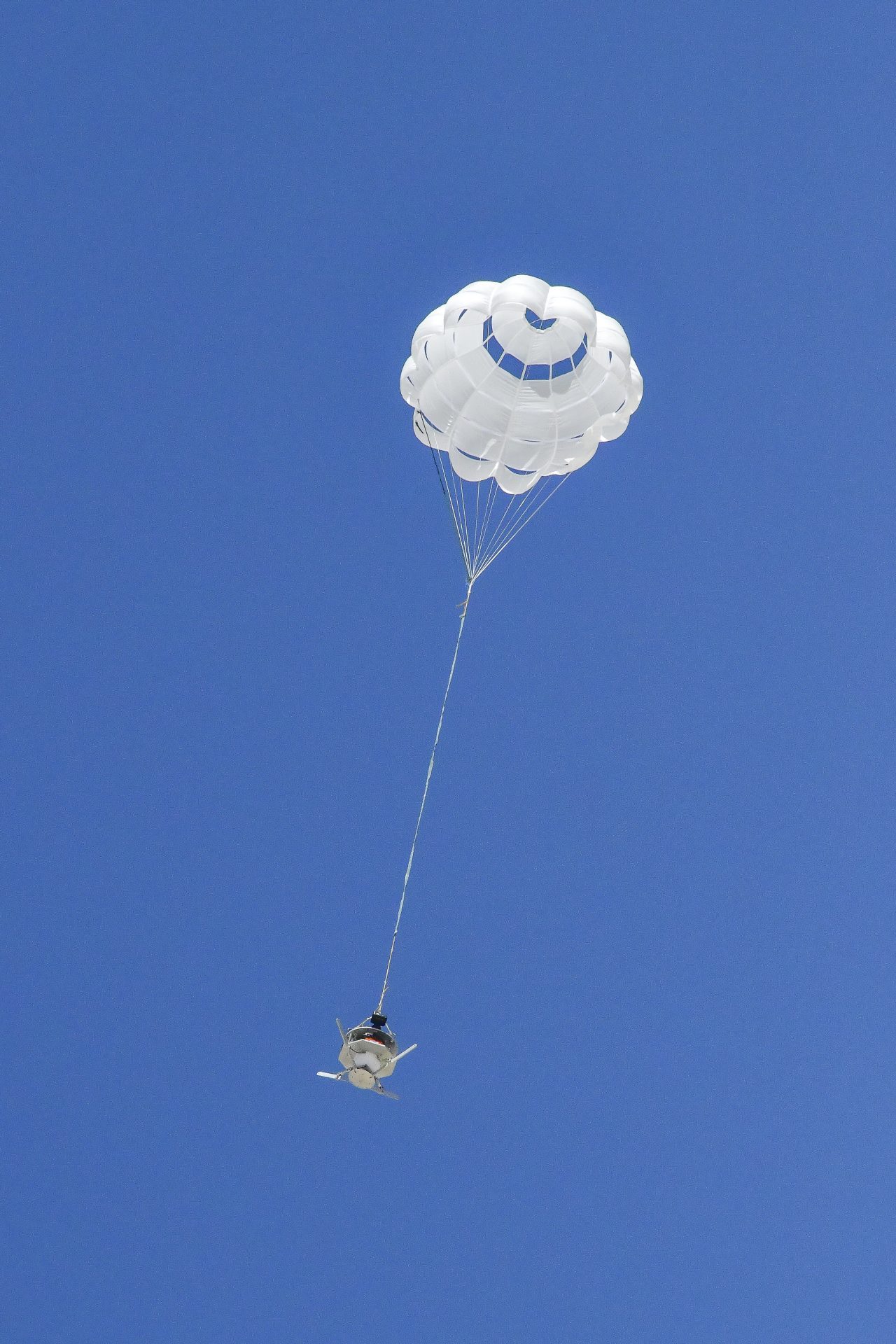
    The parachute of the Enhancing Parachutes by Instrumenting the Canopy test experiment deploys following an air launch from an Alta X drone on June 4, 2025, at NASA’s Armstrong Flight Research Center in Edwards, California.

  • Epic Research Can Help Mars Missions

    A parachute carrying a capsule is fully open against a canvas of deep blue sky.
    NASA/Christopher LC Clark

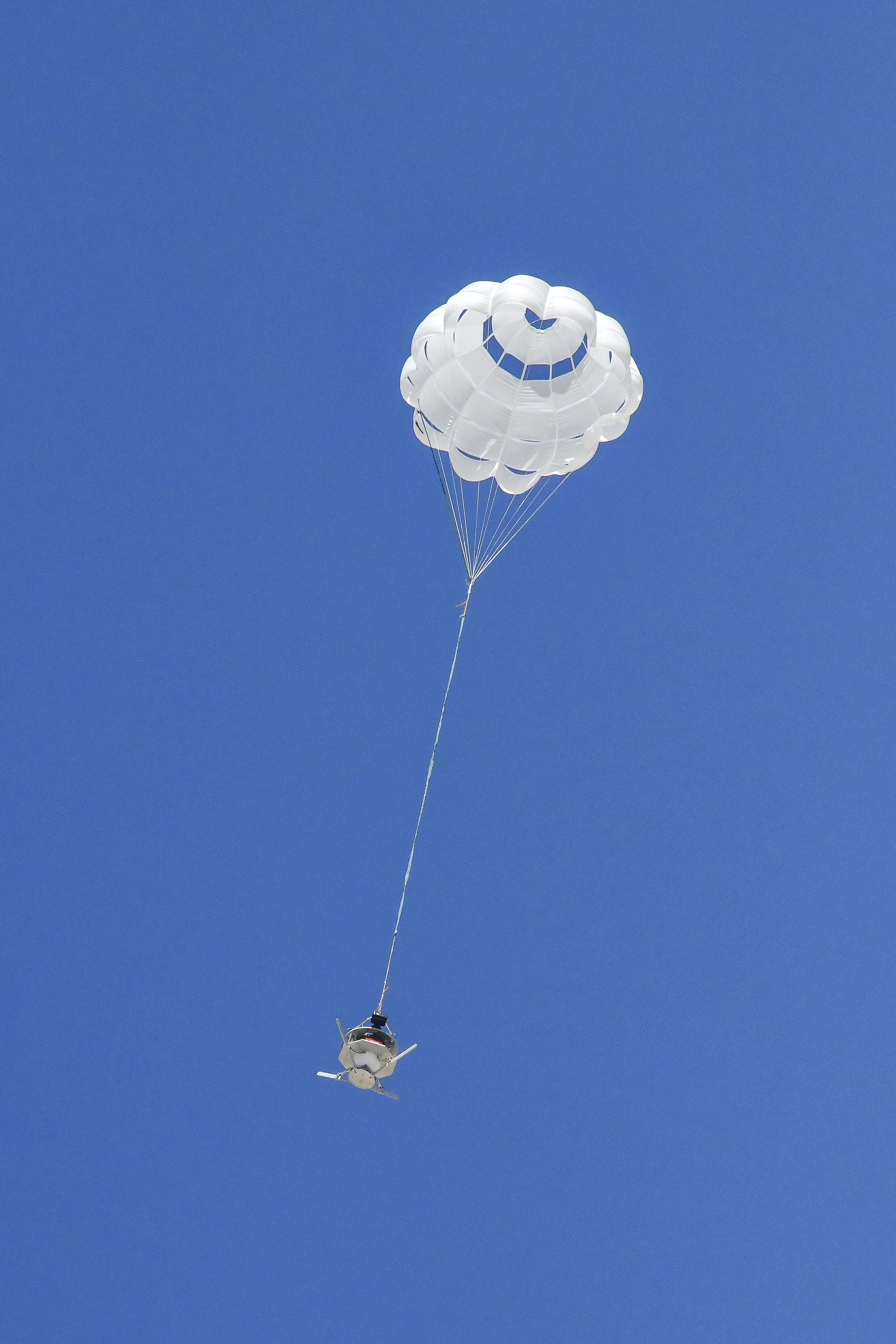
    The parachute of the Enhancing Parachutes by Instrumenting the Canopy, or EPIC, test experiment deploys following an air launch from an Alta X drone on June 4, 2025, at NASA’s Armstrong Flight Research Center in Edwards, California. NASA researchers are developing technology to make supersonic parachutes safer and more reliable for delivering instruments and payloads to Mars.

    The flight tests were a first step toward filling gaps in computer models to improve supersonic parachutes. This work could also open the door to future partnerships, including with the aerospace and auto racing industries.

    Image Credit: NASA/Christopher LC Clark

  • NASA’s Bennu Samples Reveal Complex Origins, Dramatic Transformation

    A scanning electron microscope image of a micrometeorite impact crater in a particle of asteroid Bennu material.
    A scanning electron microscope image of a micrometeorite impact crater in a particle of asteroid Bennu material.
    Credits: NASA/Zia Rahman

    5 min read

    NASA’s Bennu Samples Reveal Complex Origins, Dramatic Transformation

    Asteroid Bennu, sampled by NASA’s OSIRIS-REx mission in 2020, is a mixture of dust that formed in our solar system, organic matter from interstellar space, and pre-solar system stardust. Its unique and varied contents were dramatically transformed over time by interactions with water and exposure to the harsh space environment.

    These insights come from a trio of newly published papers based on the analysis of Bennu samples by scientists at NASA and other institutions.

    Bennu is made of fragments from a larger parent asteroid destroyed by a collision in the asteroid belt, between the orbits of Mars and Jupiter. One of the papers, co-led by Jessica Barnes at the University of Arizona, Tucson, and Ann Nguyen of NASA’s Johnson Space Center in Houston and published in the journal Nature Astronomy, suggests that Bennu’s ancestor was made up of material that had diverse origins—near the Sun, far from the Sun, and even beyond our solar system.

    The analyses show that some of the materials in the parent asteroid, despite very low odds, escaped various chemical processes driven by heat and water and even survived the extremely energetic collision that broke it apart and formed Bennu.

    “We traced the origins of these initial materials accumulated by Bennu’s ancestor,” said Nguyen. “We found stardust grains with compositions that predate the solar system, organic matter that likely formed in interstellar space, and high temperature minerals that formed closer to the Sun. All of these constituents were transported great distances to the region that Bennu’s parent asteroid formed.”

    The chemical and atomic similarities of samples from Bennu, the asteroid Ryugu (sampled by JAXA’s (the Japan Aerospace Exploration Agency) Hayabusa2 mission) and the most chemically primitive meteorites collected on Earth suggest their parent asteroids may have formed in a similar, distant region of the early solar system. Yet the differences from Ryugu and meteorites that were seen in the Bennu samples may indicate that this region changed over time or did not mix as well as some scientists have thought. 

    We found stardust grains with compositions that predate the solar system, organic matter that likely formed in interstellar space, and high temperature minerals that formed closer to the Sun.

    Ann Nguyen

    Planetary Scientist

    Though some original constituents survived, most of Bennu’s materials were transformed by reactions with water, as reported in the paper co-led by Tom Zega of the University of Arizona and Tim McCoy of the Smithsonian’s National Museum of Natural History in Washington and published in Nature Geoscience. In fact, minerals in the parent asteroid likely formed, dissolved, and reformed over time.

    “Bennu’s parent asteroid accumulated ice and dust. Eventually that ice melted, and the resulting liquid reacted with the dust to form what we see today, a sample that is 80% minerals that contain water,” said Zega. “We think the parent asteroid accumulated a lot of icy material from the outer solar system, and then all it needed was a little bit of heat to melt the ice and cause liquids to react with solids.”

    Bennu’s transformation did not end there. The third paper, co-led by Lindsay Keller at NASA Johnson and Michelle Thompson of Purdue University, also published in Nature Geoscience, found microscopic craters and tiny splashes of once-molten rock – known as impact melts – on the sample surfaces, signs that the asteroid was bombarded by micrometeorites. These impacts, together with the effects of solar wind, are known as space weathering and occurred because Bennu has no atmosphere to protect it.

    “The surface weathering at Bennu is happening a lot faster than conventional wisdom would have it, and the impact melt mechanism appears to dominate, contrary to what we originally thought,” said Keller. “Space weathering is an important process that affects all asteroids, and with returned samples, we can tease out the properties controlling it and use that data and extrapolate it to explain the surface and evolution of asteroid bodies that we haven’t visited.”

    A picture of a woman sitting at a desk, working at a computer. She is in a lab, and a large, complex machine can be seen behind her. On the wall is a plaque that has the logo for the OSIRIS-REx mission.
    Ann Nguyen, co-lead author of a new paper that gives insights into the diverse origin of asteroid Bennu’s “parent” asteroid works alongside the NanoSIMS 50L (nanoscale secondary ion mass spectrometry) ion microprobe in the Astromaterials Research and Exploration Science Division at NASA’s Johnson Space Center in Houston.
    Credit: NASA/James Blair

    As the leftover materials from planetary formation 4.5 billion years ago, asteroids provide a record of the solar system’s history. But as Zega noted, we’re seeing that some of these remnants differ from what has been found in meteorites on Earth, because certain types of asteroids burn up in the atmosphere and never make it to the ground. That, the researchers point out, is why collecting actual samples is so important.

    “The samples are really crucial for this work,” Barnes said. “We could only get the answers we got because of the samples. It’s super exciting that we’re finally able to see these things about an asteroid that we’ve been dreaming of going to for so long.”

    The next samples NASA expects to help unravel our solar system’s story will be Moon rocks returned by the Artemis III astronauts.

    NASA’s Goddard Space Flight Center provided overall mission management, systems engineering, and the safety and mission assurance for OSIRIS-REx. Dante Lauretta of the University of Arizona, Tucson, is the principal investigator. The university leads the science team and the mission’s science observation planning and data processing. Lockheed Martin Space in Littleton, Colorado, built the spacecraft and provided flight operations. Goddard and KinetX Aerospace were responsible for navigating the OSIRIS-REx spacecraft. Curation for OSIRIS-REx takes place at NASA’s Johnson Space Center in Houston. International partnerships on this mission include the OSIRIS-REx Laser Altimeter instrument from the Canadian Space Agency and asteroid sample science collaboration with JAXA’s Hayabusa2 mission. OSIRIS-REx is the third mission in NASA’s New Frontiers Program, managed by NASA’s Marshall Space Flight Center in Huntsville, Alabama, for the agency’s Science Mission Directorate in Washington.

    Melissa Gaskill
    Johnson Space Center

    For more information on NASA’s OSIRIS-REx mission, visit:

    https://science.nasa.gov/mission/osiris-rex/

    Karen Fox / Molly Wasser
    Headquarters, Washington
    202-358-1600
    karen.c.fox@nasa.gov / molly.l.wasser@nasa.gov

    Victoria Segovia
    Johnson Space Center
    (281) 483-5111
    victoria.segovia@nasa.gov

  • Lunar Environment Structural Test Rig

    3 min read

    Preparations for Next Moonwalk Simulations Underway (and Underwater)

    The Lunar Environment Structural Test Rig simulates the intense cold of the lunar night, ranging from 40 Kelvin (K) to 125 K while maintaining a vacuum environment. This creates a tool by which scientists and engineers can test materials, electronics, and flight hardware for future Moon and Mars missions, characterizing their behaviors at these temperatures while also validating their ability to meet design requirements.

    A black-and-white photo of a cryogenic engineer viewed through a circular opening of a large metallic chamber with evenly spaced bolts along its rim. Inside, a square component is mounted with wires connected to it. The man viewed through the porthole appears to be adjusting settings for the machine.
    Cryogenic engineer Adam Rice tests the Lunar Environment Structural Test Rig to simulate the thermal-vacuum conditions of the lunar night on Thursday, May 22, 2025.
    NASA/Jef Janis

    Facility Overview

    The Lunar Environment Structural Test Rig (LESTR) approaches the problem of creating a simulated lunar environment by departing from typical fluid immersion or jacketed-and-chilled chamber systems. It does this by using a cryocooler to reject heat and bring the test section to any point desired by the test engineer, as low as 40 K or as high as 125 K in a vacuum environment. By combining high vacuum and cryogenic temperatures, LESTR enables safe, accurate, and cost-effective testing of materials and hardware destined for the Moon and beyond. Its modular setup supports a wide range of components — from spacesuits to rover wheels to electronics — while laying the foundation for future Moon and Mars mission technologies.

    Quick Facts

    LESTR is a cryogenic mechanical test system built up within a conventional load frame with the goal of providing a tool to simulate the thermal-vacuum conditions of the lunar night to engineers tasked with creating the materials, tools, and machinery to succeed in NASA’s missions.

    • LESTR replicates extreme lunar night environments — including temperatures as low as 40 K and high vacuum (<5×10⁻⁷ Torr) — enabling true-to-space testing without liquid cryogens.
    • Unlike traditional “wet” methods, LESTR uses a cryocooler and vacuum system to create an environment accurate to the lunar surface.
    • From rover wheels to spacesuits to electronics, LESTR supports static and dynamic testing across a wide range of Moon and Mars mission hardware.
    • With scalable architecture and precision thermal control, LESTR lays critical groundwork for advancing the technologies of NASA’s Artemis missions and beyond.

    Capabilities

    Specifications

    • Temperature Range: 40 K to 125 K
    • Load Capacity: ~10 kN
    • Vacuum Level: <5×10⁻⁷ Torr
    • Test Volume (Cold Box Dimensions): 7.5 by 9.5 by 11.5 inches
    • Maximum Cycle Rate: 100 Hz
    • Time to Vacuum:
      • 10⁻⁵ Torr in less than one hour
      • 10⁻⁶ Torr in four hours

    Features

    • Dry cryogenic testing (no fluid cryogen immersion)
    • “Dial-a-temperature” control for precise thermal conditions
    • Integrated optical extensometer for strain imaging
    • Digital image correlation and electrical feedthroughs support a variety of data collection methods
    • Native support for high-duration cyclic testing

    Applications

    • Cryogenic Lifecycle Testing: fatigue, fracture, and durability assessments
    • Low-Frequency Vibration Testing: electronics qualification for mobility systems
    • Static Load Testing: material behavior characterization in lunar-like environments
    • Suspension and Drivetrain Testing: shock absorbers, wheels, springs, and textiles
    • Textiles Testing: evaluation of spacesuits and habitat fabrics
    • Dynamic Load Testing: up to 10 kN linear capacity, 60 mm stroke

    Contact

    Cryogenic and Mechanical Evaluation Lab Manager: Andrew Ring
    216-433-9623
    Andrew.J.Ring@nasa.gov

    LESTR Technical Lead: Ariel Dimston
    216-433-2893
    Ariel.E.Dimston@nasa.gov

    Using Our Facilities

    NASA’s Glenn Research Center in Cleveland provides ground test facilities to industry, government, and academia. If you are considering testing in one of our facilities or would like further information about a specific facility or capability, please let us know.

    A tall, industrial machine with metallic and gray components stands in a laboratory. Multiple cables and tubes connect to the central chamber, which is cylindrical. Some cables are silver and braided, others are orange or yellow. The test rig has vertical support columns and a black base. In the background there are white brick walls, ceiling ducts, and a work station with a desk and chair.
    The Lunar Environment Structural Test Rig simulates the intense cold of the lunar night on Friday, June 6, 2025.
    NASA/Steven Logan
    : This is a close-up view through a circular opening of a large metallic chamber with evenly spaced bolts along its rim. Inside, a square copper component is mounted with red and solver wires connected to it. The background is out of focus, showing part of a chair and lab equipment.
    The Lunar Environment Structural Test Rig uses a cryocooler to reject heat and bring the test section as low as 40 Kelvin in a vacuum environment on Thursday, May 22, 2025.
    NASA/Jef Janis