Category: News

http://www.subtome.com/#/subscribe?feeds=http%3A%2F%2Fftr.fivefilters.org%2Fmakefulltextfeed.php%3Furl%3Dglobal.jaxa.jp%252Frss%252Fnew.rdf%26max%3D3%26links%3Dpreserve&back=http%3A%2F%2Fftr.fivefilters.org%2Fmakefulltextfeed.php%3Furl%3Dglobal.jaxa.jp%252Frss%252Fnew.rdf%26max%3D3%26links%3Dpreserve

  • Kibo-ABC Member Countries' News: Asian Try Zero-G 2018 Result Meeting

    Kibo-ABC Member Countries’ News: Asian Try Zero-G 2018 Result Meeting

    Last Updated: November 2, 2018

    On the 27th of July, the proposers of eight experiments performed at Asian Try Zero-G 2018 gave presentations of their results based on the on-orbit experiment, and had a discussion with the JAXA astronaut Norishige Kanai. Approximately 100 participants from seven countries connected with Dr. Kanai and other Japanese proposers in Japan via video-conference.

    Mr. Norimitsu Kamimori

    Mr. Norimitsu Kamimori (JAXA Director) (Credit: JAXA)

    At the beginning, Mr. Norimitsu Kamimori (JAXA Director) made the opening remarks.
    “Today I’m so happy in participate to this debriefing meeting. I also joined the space experiment last February. I remember the hope and anticipation in all of your faces. I’m impressed with your successful experiments, and I expect good reports from everyone. Finally, I would like to express that everyone please enjoy today’s meeting and get to know each other more closely.”


    Asian Try Zero-G 2018 result meeting
    Asian Try Zero-G 2018 result meeting

    Asian Try Zero-G 2018 result meeting (Credit: JAXA)

    Each presentation consisted of the proposer’s hypothesis, on-orbit results and their points of discussion. All proposers had 5 minutes for their presentation, and after that, they asked Dr. Kanai questions and had a discussion with him. Dr. Kanai expressed interest in the presentations.

    –Contents–
    1. Wire top experiment team (Japan)
    2. Paper spring experiment team (Japan)
    3. Spinning ring experiment team (Malaysia)
    4. Balls inside slinky experiment team (Thailand)
    5. Gyroscope and Tippe top experiment team (Vietnam, Philippines, Singapore)
    6. Paper Boomerang experiment team (Indonesia, Singapore)
    7. Aircraft Stability experiment team (Singapore)
    8. Double-Layered Liquid Ball experiment team

    The presentations and questions of each experiment:

    1. Wire top experiment team (Japan)

    Wire top experiment team

    Wire top experiment team (Credit: JAXA)

    Wire Top presentation

    Wire Top presentation (Submitted by proposers)
    (Click picture to open the PDF file)[PDF: 565KB]

    Japanese Proposers: Compared to on earth, was it easy to spin the top in orbit?
    Kanai: Yes, the turning technique was easier, On the ground, it stays on the table, but in orbit, it’s just flying so it was a little tricky chasing it with the video camera, but technically it wasn’t so difficult.
    Japanese Proposers: Which result was most surprising for you?
    Kanai: I used the same technique on Type A, B, and C but only Type B didn’t flip. It was surprising to me.
    Japanese Proposers: Did you try to spin the pliers?
    Kanai: I think I did a couple of times. And yes, it was turned upside down as you might think. Just like type B, it was very interesting turning the motion.

    2. Paper spring experiment team (Japan)

    Paper spring experiment team

    Paper spring experiment team (Credit: JAXA)

    Paper spring presentation

    Paper spring presentation (Submitted by proposers)
    (Click picture to open the PDF file)[PDF: 12MB]

    Japanese Proposers: We guess that the Cabin Air circulation in Kibo was not suspended when Dr. Kanai rehearsed in orbit. Did you recognize if the Cabin Air flow made any impact on the movement of springs?
    Kanai: The location where we conducted the experiment had relatively less air flow and I didn’t feel obvious air circulation. It was relatively accurate and had less impact on the experiment.

    3. Spinning ring experiment team (Malaysia)

    Spinning Ring experiment team and all participants from Malaysia
    Spinning Ring experiment team and all participants from Malaysia

    Spinning Ring experiment team and all participants from Malaysia
    (Credit: National Planetarium)

    Spinning ring presentation

    Spinning ring presentation (Submitted by proposers)
    (Click this picture to open the PDF file)[PDF: 745KB]

    Malaysia Proposers: If the ring were heavier, do you think it would be harder to spin it?
    Kanai: The answer is yes. In space, of course, there is no weight but the mass of the item still exists. Spinning heavier items need more force than spinning with the stick.
    Malaysia Proposers: If we make the diameter of the ring longer, will it be easier or harder to make the ring escape from the stick?
    Kanai: I think it’s harder to spin the bigger ring. But I don’t know if that makes it easier or more difficult for the ring to escape.

    4. Balls inside slinky experiment team (Thailand)

    Balls inside slinky proposer and participants from Thailand
    Balls inside slinky proposer and participants from Thailand

    Balls inside slinky proposer and participants from Thailand
    (Credit: NASTDA)

    Balls inside slinky presentation

    Balls inside slinky presentation (Submitted by proposers)
    (Click this picture to open the PDF file)[PDF: 1.4MB]

    Thailand Proposers: When the balls are filled up inside the slinky, did you feel the vibration from the weight of the balls? Like holding the ball?
    Kanai: Yes, I did feel the vibration from the balls, especially the heavier one.
    Thailand Proposers: If a bigger slinky is used with objects of various shapes but with the same weight, what would be the predicted movement of the objects inside the slinky? (Do you think shape is a factor of movement?)
    Kanai: If I use a bigger slinky, and wider space for the movement the result of the experiment could be different. Though I cannot tell for sure, the balls moving around inside the slinky may change location.

    5. Gyroscope and Tippe top experiment team
    (Vietnam, Philippines, Singapore)

    Session1: Vietnam presentation

    Participant from Vietnam

    Participant from Vietnam (Credit: VAST-STI)

    Tippe Top presentation from Vietnam

    Tippe Top presentation from Vietnam (Submitted by proposers)
    (Click this picture to open the PDF file)[PDF: 120KB]

    Vietnam Proposer: Were there any difficulties when you executed our project?
    Kanai: Yes, as you mentioned I applied some force when I turned the tippe top. That’s why the tippe top was moving in different directions whenever I tried.

    Session2: Philippines presentation

    Gyroscope and Tippe top experiment team from Philippines

    Gyroscope and Tippe top experiment team from Philippines (Credit: DOST)

    Gyroscope presentation from Philippines

    Gyroscope presentation from Philippines (Submitted by proposers)
    (Click this picture to open the PDF file)[PDF: 1.4MB]

    Philippines Proposer: How long would the gyroscope stay on its axis before it started to tumble without external forces affecting it?
    Kanai: To me, it would turn forever.
    Philippines Proposer: Is the stability of the gyroscope in space comparable to the way planets balance themselves?
    Kanai: I’m pretty sure in the beginning of space flight, we used a gyroscope to stabilize the space craft. We can use gyroscopes not only for air crafts, but also space crafts.

    Session3: Singapore presentation

    Gyroscope and Tippe top experiment team and participants from Singapore

    Gyroscope and Tippe top experiment team and participants from Singapore
    (Credit: SSTA)

    Gyroscope presentation from Singapore

    Gyroscope presentation from Singapore (Submitted by proposers)
    (Click this picture to open the PDF file)[PDF: 173KB]

    Singapore Proposer: When you conducted the experiment with one weight, did you feel resistance when you pushed the gyroscope?
    Kanai: Yes, as you mentioned it was less stable and easier to apply force compared to no weight.
    Singapore Proposer: How do you think the gyroscope would behave if more weights were attached, or if the weights were attached on different axis?
    Kanai: Yes, with 3 weights, it would be much less stable, and if I pushed the axis it would move quite a bit.

    6. Paper Boomerang experiment team
    (Indonesia, Singapore)

    Participants from Indonesia
    Participants from Indonesia

    Participants from Indonesia
    (Credit: LAPAN)

    Paper Boomerang presentation from Indonesia

    Paper Boomerang presentation from Indonesia (Submitted by proposers)
    (Click this picture to open the PDF file)[PDF: 1MB]

    Paper Boomerang experiment team and participants from Singapore

    Paper Boomerang experiment team and participants from Singapore (Credit: SSTA)

    Paper Boomerang presentation from Singapore

    Paper Boomerang presentation from Singapore (Submitted by proposers)
    (Click this picture to open the PDF file)[PDF: 709KB]

    Kanai: If the space in Kibo were big enough, do you think the boomerang would eventually return?
    Singapore Proposer: We think it would because if the lift force is always at the right angle to the velocity, then it will continue in a circle because the circular motion is where your acceleration, for uniform circular motion, its perpendicular all the time. So that’s what we think it is.
    Singapore Proposer: Do you have any insights on why the boomerang returned on Earth but not in microgravity?
    Kanai: At this time, I think the difference of the two environments is the gravity. But more discussion is needed to explain this phenomenon.

    After two countries’ presentation of Paper Boomerang finished, Dr. Kanai and two countries’ proposers discussed each presentation.

    Kanai: Very interesting. Both teams (Singapore and Indonesia team) concluded that eventually the boomerangs would return. But their discussions are certainly different. I’d like to ask the proposer from Singapore for their opinion of this discussion. To the Singaporean proposer, what do you think about this (Indonesia’s) presentation?
    Singapore Proposer: Overall the same conclusion that exhibits the circular motion, but the way we wright is slightly different. He explained using the concept of angular momentum, but we are at first considering points mass, and we didn’t consider rotation. This is because the angular momentum is always perpendicular to the boomerang itself and the lift force is also perpendicular.
    Indonesia Proposer: Should it be pointing toward the center?
    Singapore Proposer: Yes.
    Indonesia Proposer: Then, it’s quite similar.
    Kanai: Very interesting. How could we confirm your theory? Do you have any suggestions for improving the experiment in the future?
    Indonesia Proposer: I don’t have any ideas for how to improve this experiment, but we need a wider space, maybe bigger ISS if it’s possible.

    7. Aircraft Stability experiment team (Singapore)

    Aircraft Stability experiment team and participants from Singapore

    Aircraft Stability experiment team and participants from Singapore (Credit: SSTA)

    Aircraft Stability presentation from Singapore

    Aircraft Stability presentation from Singapore (Submitted by proposers)
    (Click this picture to open the PDF file)[PDF: 120KB]

    Singapore Proposer: The aircraft was launched manually, so it was difficult to maintain launch parameters such as throwing strength or throwing angle. Is it possible to have a simple launcher set-up on board the ISS such as a catapult?
    Kanai: If we used a catapult, it could be very stable. And we could collect good data. But with the current configuration of the aircraft, it still goes upward, and I’m wondering if you could design a special aircraft that could fly straight even when using manual launching.
    Singapore Proposer: I don’t think it’s possible due to the lift itself. On Earth there is gravity to compensate for lift, but in space there is only lift so I suppose there is not any possibility.
    Kanai: I see.
    Singapore Proposer: The aircraft was thrown only once per setting: with the wing in front, middle, and back. Do you think if the experiment was repeated, the results would change?
    Kanai: I don’t think so. I tried throwing many times before starting the event. It always went upward with the same tendency, and the same kind of motion.
    Singapore Proposer: The aircraft was released in a pressurized environment. How do you minimize the influence of cabin airflow on the trajectory of the aircraft?
    Kanai: During this experiment, we stopped air flow in KIBO. It’s because of my technique. But we could still see the tendency of the air craft going upward; it was very interesting.

    8. Double-Layered Liquid Ball experiment team
    (Philippines)

    Since the Double-Layered Liquid Ball team could not participate in the result meeting, their presentation file and experiment movies are introduced here.

    Double-Layered Liquid Ball presentation from Philippines

    Double-Layered Liquid Ball presentation from Philippines (Submitted by proposers)
    (Click this picture to open the PDF file)[PDF: 2.7MB]


    JAXA Astronaut/Dr. Norishige Kanai

    JAXA Astronaut/Dr. Norishige Kanai (Credit: JAXA)

    At the end of this result meeting, Dr. Kanai made the closing remarks;
    “Thank you everybody for joining this meeting and having with us great discussions sharing insights of the unique experiments. It was a great honor being a part of the mission and being a part of the experiments. Thank you so much. Please continue asking questions, and please continue making questions for yourselves. You guys rock! Thank you.”

    Let’s block ads! (Why?)

  • Results of Protein Crystal Growth experiment in Kibo (Flash report)

    Results of Protein Crystal Growth experiment in Kibo (Flash report)

    Last Updated:
    November 1, 2018

    The protein crystals acquired in the High-Quality Protein Crystal Growth (PCG) experiment during Astronaut Kanai’s stay on the International Space Station (ISS) were brought back to Earth by the Dragon SpX-14 spacecraft on May 6, 2018. The crystals were handed over to the researchers and are currently undergoing various analyses including data collections at synchrotron facilities such as SPring-8 and Photon Factory. Here is a brief report of a part of the experiment results.

    AoMan134A, a protein derived from aspergillus was discovered by the research team headed by Assistant Professor Motoyuki Shimizu from Meijo University. It is a hydrolase, which plays a key part in degrading mannans, polysaccharides found in legume seed and cell wall of softwood. Mannans constitute a part of the common natural biomass, and Ao134A is expected to contribute to industrial utilization of softwood biomass.

    The experiment in space of this session has brought about larger crystals of AoMan134A (see photos below). Ground-based experiments only had given the maximum resolution of 2.5Å, while the crystals in this space experiment diffracted up to a 1.5Åresolution. The data helped to determine the precise structure of the AoMan134A for the first time. The team from Meijo University is currently working on mutant enzymes having altered functions. JAXA is determined to provide more results of PCG experiments to academic researchers and institutes of the private sector, hoping to make contributions in this field.

    Click Here to visit the website (Japanese) of the Laboratory of Applied Microbiology, Meijo University.

    写真: Click to enlarge 写真: Click to enlarge

    Protein crystals produced in ground-based experiments
    (Credit: Meijo University/JAXA)

    Protein crystal produced in space
    (Credit: Meijo University/JAXA)

    *All times are Japan Standard Time (JST)

    Let’s block ads! (Why?)

  • A Japan-US joint study has revealed that artificial gravity load is effective to reduce impairment in eyeball tissues during long stay in space: an achievement of "Kibo" rodent mission stepping to future human space exploration to Moon and Mars

    A Japan-US joint study has revealed that artificial gravity load is effective to reduce impairment in eyeball tissues during long stay in space: an achievement of “Kibo” rodent mission stepping to future human space exploration to Moon and Mars

    Last Updated:
    October 30, 2018

    Japan Aerospace Exploration Agency (JAXA)

    【Summary】

    • Certain alterations and disorders due to microgravity occur in an astronaut’s body during his/her long stay in space. One of such alterations is impairment in eyeball tissues that may result in visual impairment after return to the Earth. Such alteration is recognized as one of the key issues that should be resolved in view of long stay in the International Space Station (ISS) and future human space exploration.
    • Various research activities are going on in the ISS to identify the causes of and possible countermeasures against the eyeball impairment. Among such, it will be prospective to evaluate gravitational effects on animal eyeball tissues and accumulate precise, molecular-level analysis data through rodent research that NASA and JAXA are focusing on respectively.
    • Only JAXA’s Kibo module has such an experiment capability that strict evaluation of the gravitational effect on mice is possible by comparing groups of mice reared under microgravity and artificial gravity conditions.
    • As a new Japan-US collaborative framework, the “Japan-US Open Platform Partnership Program (JP-US OP3)” was established in 2015 to make use of precious opportunities in the ISS for space experiments in more efficient and effective ways and to maximize outcomes. In this framework, a Japan-US joint analysis to resolve eyeball tissue impairment has been conducted for the first time in both rodent missions to collaboratively tackle common challenges in human space activities.
    • The joint analyses of the tissues obtained by JAXA’s first 35-day rodent mission of July to August 2016 revealed that the impairment (apoptosis and appearance of protein associated with it) was shown in the retina of mice reared under the microgravity condition, but reduced in those reared under the artificial gravity environment.
    • Although it has been reported that the impairment in eyeball tissues of mice occurred in some space experiments, the effects of small-dose radiation and gravity load during launch and reentry phases were not discrimnated, and thus not eliminated, since the previous experiments were based on comparison with mice reared on the Earth. In this study, however, the use of the JAXA’s unique on-orbit artificial “1G” environment revealed for the first time that the microgravity may cause impairment in eyeball tissues that affects the visual system. Further analyses will probably help us understand its mechanism more precisely.
    • It addition, this study was achieved only through the collaboration of the Japanese team led by professor Satoru Takahashi of the University of Tsukuba which is engaged in the unique detailed analysis of the effect of on-orbit artificial gravity load on mice and the US research team which has studied for many years the effect of space flight stresses on visual system.
    • The results were published in the on-line International Journal of Molecular Sciences of August 28, 2018, as the first scientific achievement of the collaboration under JP-US OP3.
    • Regarding these results as the first step for further collaborative activities, JAXA and NASA will lead to accumulate analysis data required for advancing human space exploration.

    【Information on the Article】

    Journal:International Journal of Molecular Sciences

    Title:Impact of Spaceflight and Artificial Gravity on the Mouse Retina:Biochemical and Proteomic Analysis

    Co-authors:Xiao W. Mao (1), Stephanie Byrum (2,3), Nina C. Nishiyama (1), Michael J. Pecaut (1), Vijayalakshmi Sridharan (4), Marjan Boerma (4), Alan J. Tackett (2,3), Dai Shiba (5), Masaki Shirakawa (5), Satoru Takahashi (6) and Michael D. Delp (7)

    1) Department of Basic Sciences, Division of Biomedical Engineering Sciences (BMES), Loma Linda University School of Medicine and Medical Center, Loma Linda, CA 92350, USA

    2) Department of Biochemistry and Molecular Biology, University of Arkansas for Medical Sciences, Little Rock, AR 72205, USA.

    3) Arkansas Children’s Research Institute, Little Rock, AR 72202, USA

    4) Division of Radiation Health, Department of Pharmaceutical Sciences, University of Arkansas for Medical Sciences, Little Rock, AR 72205, USA

    5) JEM Utilization Center, Human Spaceflight Technology Directorate, JAXA, Tsukuba 305-8505, Japan

    6) Department of Anatomy and Embryology, University of Tsukuba, Tsukuba 305-8575, Japan

    7) Department of Nutrition, Food and Exercise Sciences, Florida State University, Tallahassee, FL 32306, USA

    Related Link

    *All times are Japan Standard Time (JST)

    Let’s block ads! (Why?)

  • Joint research starts for experiments in "Kibo" as part of the "Study on Phase Behavior of Multi-component Colloidal Clusters under Microgravity," a feasibility study theme using "Kibo" selected in 2015

    Joint research starts for experiments in “Kibo” as part of the “Study on Phase Behavior of Multi-component Colloidal Clusters under Microgravity,” a feasibility study theme using “Kibo” selected in 2015

    Last Updated:
    October 30, 2018

    Following the elaboration and technical reviewing of the experiment plan of the “Study on Phase Behavior of Multi-component Colloidal Clusters under Microgravity,” a feasibility study (FS) theme using an environment of the Japanese Experiment Module “Kibo” proposed by professor Jumpei Yamanaka at the Graduate School of Pharmaceutical Sciences, Nagoya City University, preparation toward the experiment in the International Space Station (ISS) has started. An agreement for this joint research between JAXA and Nagoya City University was concluded. Both parties will work closely together to be able to launch the materials and start the experiment in late 2019.

    This study aims to collect more precise data on the structures of microcrystals (clusters) formed of two types of titania fine particles (with positive and negative charges) under the microgravity environment that disables particles from settling. Such clusters are expected to be a material for manufacturing future innovative optical elements.

    What is Colloid?

    Colloid is a phase of fine particles (or molecules) dispersed in a liquid. Any liquid in such a state is referred to as colloidal solution or colloidal suspension. A typical example of colloid is milk. This study will use particles of less than one micrometer (1 µm) dispersed in water as colloidal solution.

    *All times are Japan Standard Time (JST)

    Let’s block ads! (Why?)

  • Three CubeSats successfully deployed from "Kibo"!

    Three CubeSats successfully deployed from “Kibo”!

    Last Updated:
    October 26, 2018

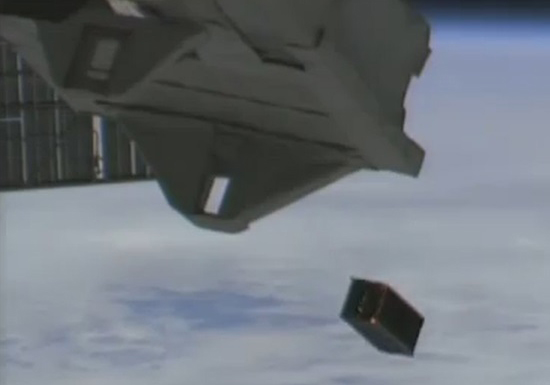
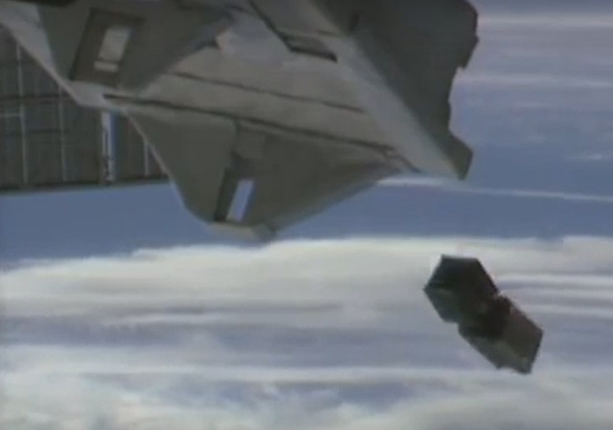
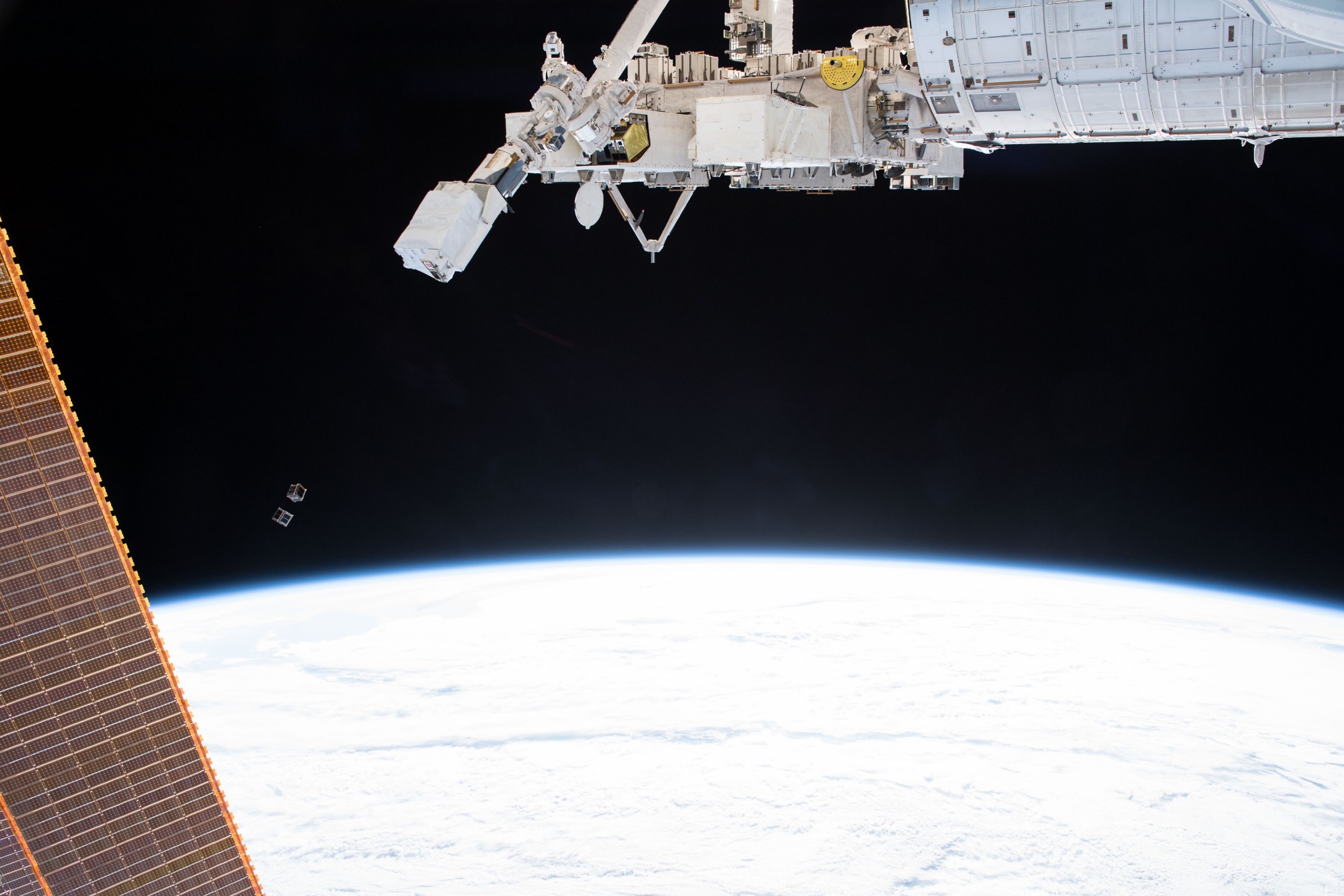
    Three ultra-small satellites (“CubeSats”) were successfully deployed on October 6, 2018 from the Japanese Experiment Module “Kibo”: “SPATIUM-I” of Nanyang Technological University (Singapore)/Kyushu Institute of Technology (Japan), “RSP-00” of Ryman Sat Spaces General Incorporated Association and “STARS-Me” of Shizuoka University (Japan).

    写真:より大きな写真へ 写真:より大きな写真へ

    The pictures show how the CubeSats were deployed (Credit: JAXA/NASA)
    Left: SPATIUM-I (2U); Right: STARS-Me (2U) and RSP-00 (1U)

    写真:超小型衛星の放出成功を喜ぶ関係者

    The people concerned with the projects in joy at the successful deployments of the CubeSats (Credit: JAXA)

    [Name of satellite]
    SPATIUM-I [Size: 2U]
    [Organizations]
    Nanyang Technological University (Singapore)/Kyushu Institute of Technology (Japan)
    [Mission]
    A demonstration of technologies in view of a chip-scale atomic clock to be mounted on CubeSat and measurement/3D mapping of the densities of electrons in the ionosphere.

    [Name of satellite]
    RSP-00 [Size: 1U]
    [Organizations]
    Ryman Sat Spaces General Incorporated Association
    [Mission]
    Picture-taking and a demonstration of technologies of to-the-Earth transmission with a camera mounted on CubeSat, and operation tests of new high-rate radio equipment.

    [Name of satellite]
    STARS-Me [Size: 2U]
    [Organizations]
    Shizuoka University
    [Mission]
    A small-scale demonstration of an orbital elevator and a demonstration evaluation of a configuration of two CubeSats and a climber (moving mechanism).

    Related Topics

    Small Satellites Deployment from Kibo were success(October 5, 2012)

    First CubeSat from Brazil(February 5, 2015)

    Successful Deployment of DIWATA-1,First Microsatellite developed by the Republic of the Philippines,from ISS Kibo (JAXA’s first success of 50 kg-class microsatellite deployment)(April 27, 2016)

    Successful deployment of a CubeSat delivered by KOUNOTORI6(January 13, 2017)

    Successful deployment of six CubeSats delivered by KOUNOTORI6(January 16, 2017)

    Successful deployment of five “BIRDS project” CubeSats from the “Kibo”(July 7, 2017)

    The Republic of Turkey hands over its CubeSat “UBAKUSAT” to Japan. Launch preparation starts. Scheduled to be deployment during Astronaut Kanai’s stay onboard!(March 12, 2018)

    Costa Rica hands over to JAXA its first CubeSat “Irazu”, the first artificial satellite from Central America.Launch preparation starts. Scheduled to be deployment during Astronaut Kanai’s stay onboard!
    (March 12, 2018)

    Three CubeSats successfully deployed from “Kibo”!(June 26, 2018)

    Three CubeSats handed over to JAXA and shipped to Tanegashima for HTV7 launch!(August 30, 2018)

    List of deployed CubeSats using J-SSOD

    *All times are Japan Standard Time (JST)

    Let’s block ads! (Why?)

  • Utilization of Electrostatic Levitation Furnace (ELF) has been started to obtain thermophysical properties of high-temperature melts

    Utilization of Electrostatic Levitation Furnace (ELF) has been started to obtain thermophysical properties of high-temperature melts

    Last Updated:
    October 23, 2018

    多目的実験ラック2(MSPR-2)に設置された静電浮遊炉(ELF) ELFミッションロゴ

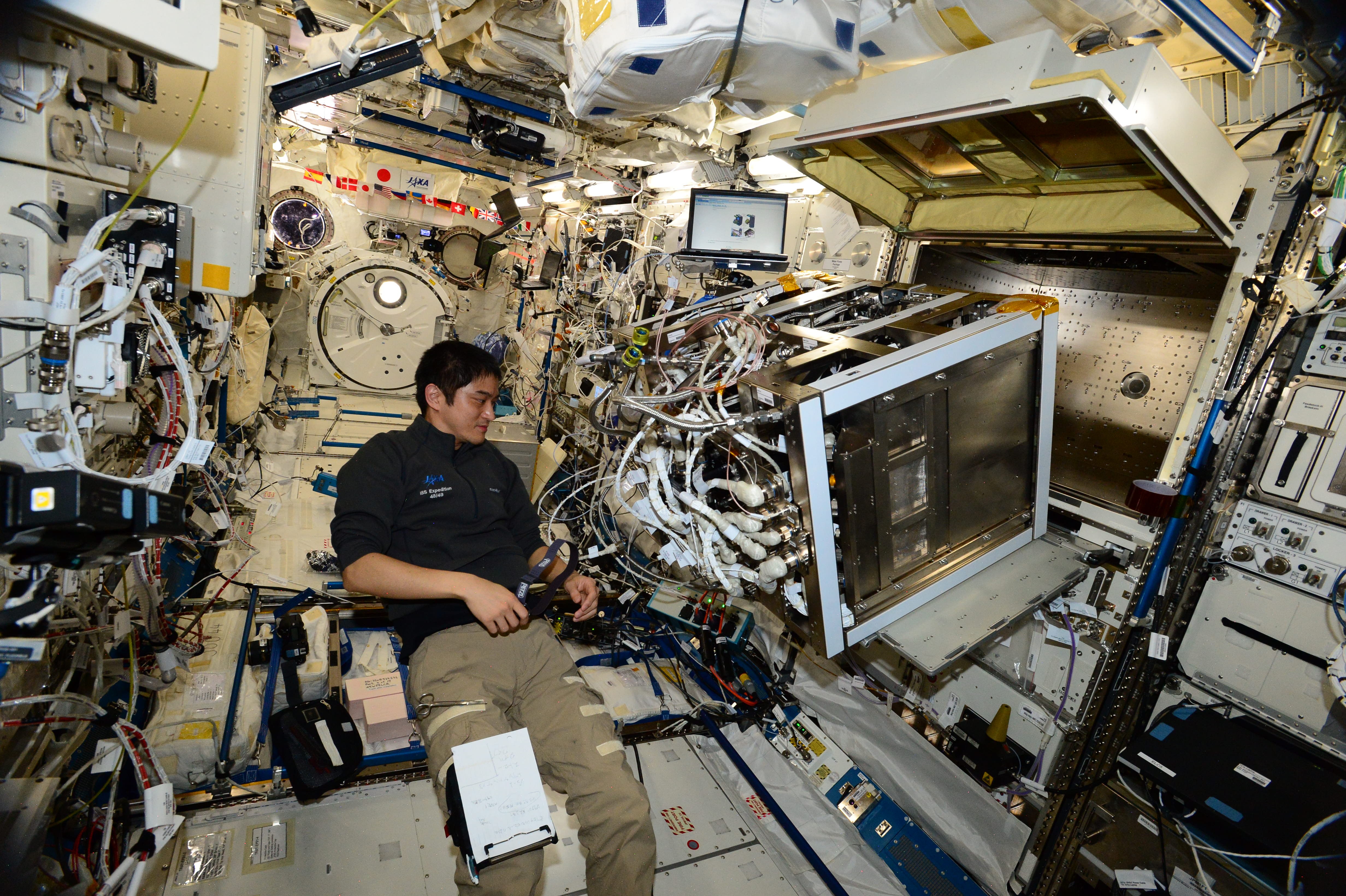
    Electrostatic Levitation Furnace (ELF) attached to the Multi-purpose Small Payload Rack 2 (MSPR-2) (Credit: JAXA/NASA)

    The logo of the ELF Mission
    (Credit: JAXA)

    Summary

    The checkout of the Electrostatic Levitation Furnace (ELF) installed in the Japanese Experiment Module (JEM) “Kibo”/International Space Station (ISS) has been completed and the experiments proposed from users have been started. The ELF is an experiment device which electrostatically levitates small samples (diameter=2 mm) and heats them. Refractory materials (melting points of up to 3000℃) can be melted in this furnace to measure their thermophysical properties without crucibles.

    Fig.1 shows how the experiment on aluminum oxide was going during the checkout phase of the ELF.

    Still Image

    6つの電極間で浮遊する溶融酸化アルミニウム(中央)(平成29年7月取得)

    Fig.1
    A molten aluminum oxide sample (central bright sphere) levitating in the midst of six electrodes (photo taken in July 2017)(Credit: JAXA)

    Video

    Video(mp4: 5.84 MB) taken during the experiments
    (Fig.1 corresponds to the top left of the four-square indication)(Credit: JAXA)

    High power lasers were used to melt stably levitated aluminum oxide sample (melting point=2054℃). The images of molten aluminum oxide were analyzed to determine the volumes of the samples. Their densities were calculated from their masses measured after recovery on the Earth. The obtained data were compared with the ones in the literature to verify the validity of the data with the ELF (Fig.2).

    図2 酸化アルミニウムの密度

    Fig.2 Density of molten aluminum oxide as a function of temperature
    (Credit: Tamaru, H. et.al., Microgravity Sci. Technol. doi.org/10.1007/s12217-018-9631-8)

    At present, a research team headed by Dr. Masahito Watanabe, professor at Gakushuin University is conducting an experiment using the ELF, “the thermophysical properties of high-temperature melting materials and interface phenomena: a basic study on ore refining process based on electrostatic levitation method.” Experiments planned for the years to come include the “clarification of the origin of the fragility of high-temperature molten oxides in view of development of non-equilibrium oxide with unprecedented functions,” an experiment headed by Dr. Shinji Kohara, Principal Researcher at the National Institute for Materials Science.

    Article Information

    The results of the Checkout of the ELF and the experimental results were published in the on-line issue of the international journal “Microgravity Science and Technology” on June 16, 2018.

    Journal:Microgravity Science and Technology

    Article:Status of the Electrostatic Levitation Furnace (ELF) in the ISS-KIBO

    Inquiry

    Services related to paid utilization of the ELF are available. If you have interest in the matter, send an e-mail to
    Z-KIBO-PROMOTION[at]ml.jaxa.jp.
    The demand situation depends on the target material. (When an e-mail is prepared, replace [at] with @.)

    *All times are Japan Standard Time (JST)

    Let’s block ads! (Why?)

  • MASCOT lands safely on asteroid Ryugu(DLR Press Release)

    Focus: Space, explorartion

    The near-Earth asteroid Ryugu, located approximately 300 million kilometres from Earth, has a new inhabitant: On 3 October 2018, the Mobile Asteroid Surface Scout (MASCOT) landed on the asteroid and began to work. The lander successfully separated from the Japanese Hayabusa2 space probe at 03:58 CEST. The 16 hours in which the lander will conduct measurements on the asteroid’s surface have begun for the international team of engineers and scientists. The day before, the Japanese Space Agency’s Hayabusa2 began its descent towards Ryugu. MASCOT was ejected at an altitude of 51 metres and descended in free fall – slower than an earthly pedestrian – to its destination, the asteroid. The relief about the successful separation and subsequent confirmation of the landing was clearly noticeable In the MASCOT Control Centre at the German Aerospace Center (Deutsches Zentrum für Luft- und Raumfahrt; DLR) as well as in the adjoining room: “It could not have gone better,” explained MASCOT project manager Tra-Mi Ho from the DLR Institute of Space Systems. “From the lander’s telemetry, we were able to see that it separated from the mothercraft, and made contact with the asteroid surface approximately 20 minutes later.” The team is now in contact with the lander.

    The moment of separation was one of the risks of the mission: If MASCOT had not successfully separated from Hayabusa2 as planned and often tested, the lander’s team would hardly have had the opportunity to solve this problem. But everything went smoothly: Already during the descent on the asteroid, the camera switched MASCAM on and took 20 pictures, which are now stored on board the Japanese space probe. “The camera worked perfectly,” says Ralf Jaumann, DLR planetary scientist and scientific director of the camera instrument. “The team’s first images of the camera are therefore safe.” The magnetometer team was also able to recognise in the data sent by MASCOT that the MASMAG instrument had switched on and performed measurements prior to the separation. “The measurements show the relatively weak field of the solar wind and the very strong magnetic disturbances caused by the spacecraft,” explains Karl-Heinz Glaßmeier from the Technical University of Braunschweig. “At the moment of the separation, we expected a clear decrease of the interference field – and we were able to recognise this clearly.”

    MASCOT came to rest on the surface approximately 20 minutes after the separation. Now, the team is analysing the data that MASCOT is sending to Earth to understand the events occurring on the asteroid Ryugu. The lander should now be on the asteroid’s surface, in the correct position thanks to its swing arm, and have started to conduct measurements independently. There are four instruments on board: a DLR camera and radiometer, an infrared spectrometer from the Institut d’Astrophysique Spatiale and a magnetometer from the TU Braunschweig. Once MASCOT has performed all planned measurements, it is expected to hop to another measuring location. This is the first time that scientists will receive data from different locations on an asteroid. “With MASCOT, we have the unique opportunity to study the Solar System’s most primordial material directly on an asteroid,” emphasises DLR planetary researcher Ralf Jaumann. With the data acquired by MASCOT and the samples that Hayabusa2 brings to Earth from Ryugu in 2020, scientists will not only learn more about asteroids, but more about the formation of the Solar System. “Asteroids are very primordial celestial bodies.”

    About the Hayabusa2 mission and MASCOT

    Hayabusa2 is a Japanese space agency (Japan Aerospace Exploration Agency; JAXA) mission to the near-Earth asteroid Ryugu. The German-French lander MASCOT on board Hayabusa2 was developed by the German Aerospace Center (Deutsches Zentrum für Luft- und Raumfahrt; DLR) and built in close cooperation with the French space agency CNES (Centre National d’Etudes Spatiales). DLR, the Institut d’Astrophysique Spatiale and the Technical University of Braunschweig have contributed the scientific experiments on board MASCOT. The MASCOT lander and its experiments are operated and controlled by DLR with support from CNES and in constant interaction with the Hayabusa2 team.

    The DLR Institute of Space Systems in Bremen was responsible for developing and testing the lander together with CNES. The DLR Institute of Composite Structures and Adaptive Systems in Braunschweig was responsible for the stable structure of the lander. The DLR Robotics and Mechatronics Center in Oberpfaffenhofen developed the swing arm that allows MASCOT to hop on the asteroid. Das DLR Institute of Planetary Research in Berlin contributed the MASCAM camera and the MARA radiometer. The asteroid lander is monitored and operated from the MASCOT Control Center in the Microgravity User Support Center (MUSC) at the DLR site in Cologne.

    Let’s block ads! (Why?)

  • UNOOSA and JAXA open Fourth Round of KiboCUBE!

    UNOOSA and JAXA open Fourth Round of KiboCUBE!

    Last Updated:
    October 2, 2018

    Japan Aerospace Exploration Agency (JAXA) and the United Nations Office for Outer Space Affairs (UNOOSA) is pleased to announce the opening of the fourth round of KiboCUBE.

    KiboCUBE: Fourth Round
    1) Application
    Application Submission 31 January, 2019
    Eligibility Criteria Entities located in developing countries that are member states of the United Nations (please refer to the “Announcement of Opportunity” for further details.
    Deployment Deployment expected by September 2020, subject to the ISS operational requirements and progress of the CubeSat development.
    2) Selection
    Selection and notification of applicants 30 April, 2019
    Maximum of two entities (1U CubeSat per entity) will be selected.

    Please refer to the following website for further details regarding the applications for the KiboCUBE fourth round (“Announcement of Opportunity”). The application due date is January 31. We look forward to receiving many applicants and contributing to the capacity building of your country!

    Application details:

    The United Nations/Japan Cooperation Programme on CubeSat Deployment from the International Space Station (ISS) Japanese Experiment Module (Kibo) “KiboCUBE”

    Reference 1

    KiboCUBE programme is a collaboration programme between JAXA and UNOOSA to offer developing countries the opportunity to deploy small satellites from the Japanese Experiment Module “Kibo” on the International Space Station (ISS).

    Reference 2

    A team from the University of Nairobi (Kenya) was granted e for the 1st round of KiboCUBE, and the satellite was deployed from Kibo in May, 2018.

    A team from Universidad del Valle de Guatemala (Guatemala) was granted for the second round of KiboCUBE, and the satellite is scheduled to be deployed in JFY 2018.

    A team from Mauritius Research Council (Mauritius) and a team from Surya University (Indonesia) was granted for the third round of KiboCUBE. The satellites are scheduled to be deployed in JFY 2019.

    写真

    Successful deployment of 1KUNS-PF (Kenyan Satellite, selected as first round of KiboCUBE) from Kibo in May, 2018 (Credit: JAXA)

    写真

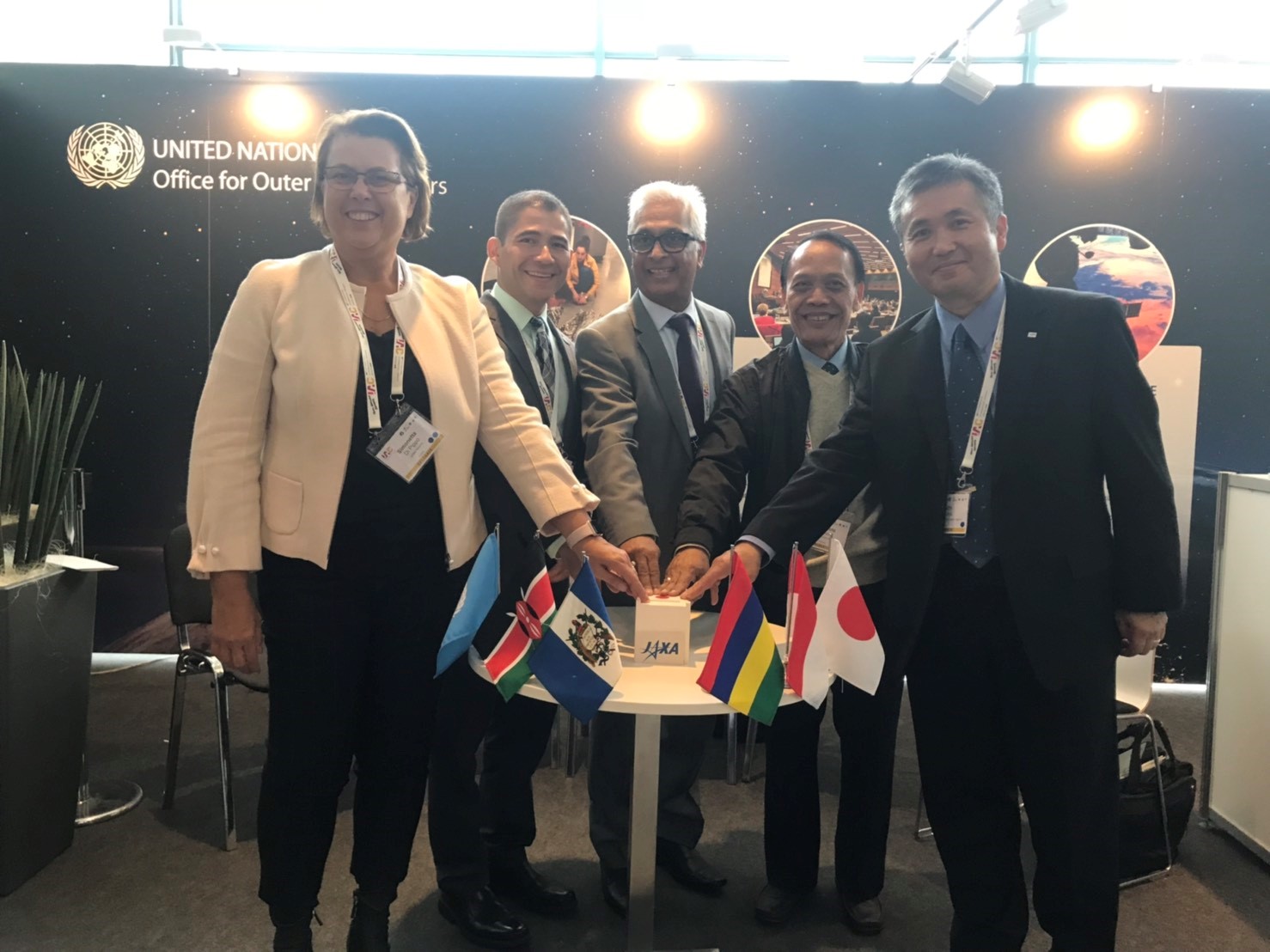
    Media Briefing at IAC 2018 in Bremen, Germany on October 1st, 2018. Representatives from the selected entities for second and third round of KiboCUBE gathered for the media briefing.
    (from left) Ms. Simonetta DiPippo, UNOOSA; Mr. Luis Zea, Universidad del Valle de Guatemala; Dr. Arjoon Suddhoo, Mauritius Research Council; Mr. Sunartoto Gunadi, Surya University of Indonesia; Dr. Koichi Wakata, JAXA (Credit: JAXA)

    *All times are Japan Standard Time (JST)

    Let’s block ads! (Why?)

  • Transfer of the Exposed Pallet (EP) begins

    Transfer of the Exposed Pallet (EP) begins

    Last Updated: September 29, 2018

    The Exposed Pallet (EP) with the new ISS battery Orbital Replacement Units (ORUs) onboard was pulled out from the Unpressurized Logistics Carrier (ULC) of KOUNOTORI7 on September 29 , at 5:27 a.m.

    The EP will be transferred and temporarily placed on the designated location of an ISS truss.

    *All times are Japan Standard Time (JST. UTC + 9 hours)

    Let’s block ads! (Why?)

  • Kibo-ABC Members and Students from Philippines Participated in the Special Lecture of the "Double Layered Liquid Ball" Experiment

    Kibo-ABC Members and Students from Philippines Participated in the Special Lecture of the “Double Layered Liquid Ball” Experiment

    Last Updated: September 28, 2018

    Dr. Matsumoto (Credit: JAXA)

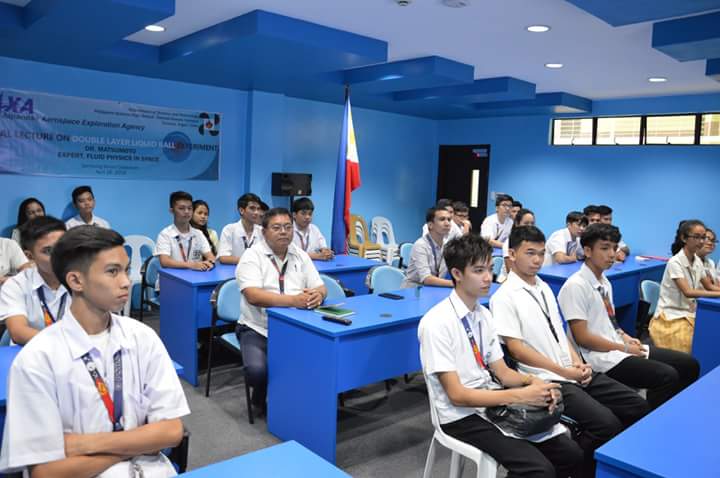
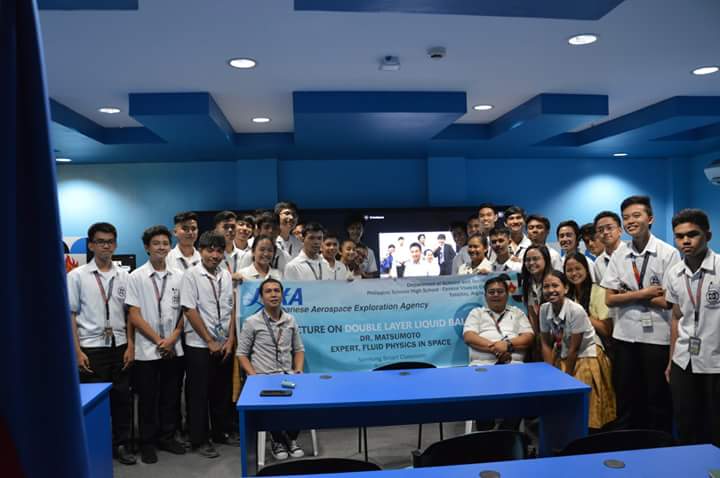
    Dr. Satoshi Matsumoto joined the Kibo-ABC regular monthly web conference on April 26th. He gave a special lecture on the “Double Layered Liquid Ball” experiment which was carried out as part of JAXA astronaut Norishge Kanai’s Asian Try Zero-G 2018 in February 2018. Approximately 30 students–the proposers of this experiment along with their classmates–from Philippine Science High School Central Visayas Campus joined the lecture and had an enriching experience through a lively discussion with Dr. Matsumoto.

    Dr. Matsumoto is a specialist of fluid physics experiments in space. From March 2018 for half a year he is also assigned as a JAXA Increment Manager, and is in charge of managing the entire Kibo operations including onboard utilizations to maximize outcomes. He started the lecture by introducing the International Space Station and Kibo experiment facilities such as Ryutai Rack, which is the experiment rack for fluid physics experiments.

    写真

    The classroom of Philippine Science High School Visayas Campus (Credit: PSHSVC)

    After that he explained the “Law of Universal Gravitation” and “Why does the Micro Gravity occur in the International Space Station” as background knowledge for understanding the nature of the micro gravity experiments.
    To have the students understand the results of the “Double Layered Liquid Ball” experiment, he explained “Surface and Interfacial Tension” as fundamental factors of the experiment.

    After that, participants reviewed a movie of the onboard experiment results performed by Dr. Kanai, who tried to make a double layered liquid ball with “Silicone Oil (transparent)” and “Water (blue)”. During the first run, he injected water (blue) into a silicone oil ball. As a result, the double layered liquid ball was successfully formed. (See figure 1)

    During the next run he did the opposite: he injected silicone oil into a water ball. Unlike in the first run, the silicone oil moved away from the center, and the silicone oil covered the water ball. (See figure 2)

    Fig.1 Water injected into the Silicone Oil ball
    (Credit: JAXA)

    Fig.2 Silicone oil injected into the water ball
    (Credit: JAXA)

    The students listened eagerly to the lecture, which was helpful for a deep understanding of physical phenomena of the liquid ball behaviour under micro-gravity. They are developing their own report about the result of this ATZ-G experiment.

    During his closing remarks, Dr. Matsumoto quoted a message from Astronaut Kanai: “Please keep asking questions and continue making questions. Sometimes no one can answer your question, but it’s OK. Because eventually you can try experiments and find the answer to your original question yourself.”

    Major Questions and Answers

    Q: What happens if the two liquids are miscible?

    A: Miscible liquids may easily contact each other. After that, the mixture becomes a uniform consistency slowly. Complete mixing is not easy. For example, when you put sugar in coffee, you need to stir it vigorously with a spoon.

    Q: Are frictional forces present, considering that friction is typically based on the normal force?

    The frictional force comes from the viscosity of the liquid. When the liquid changes its shape, shear stress arises. Please imagine moving your hand in the air and in the water. You will probably feel more friction in the water.

    写真

    The students of Philippine Science High School Visayas Campus (Credit: ???)

    Let’s block ads! (Why?)

  • Keeping an eye on climate change(nature>spotlight)

    ADVERTISEMENT FEATURE
    Advertiser retains sole responsibility for the content of this article
    Orbiting hundreds of kilometres above the Earth’s surface, satellites launched by the Japan Aerospace Exploration Agency (JAXA) are at the forefront of climate change

    In association with

    The Greenhouse gases Observing SATellite-2 (GOSAT-2) in orbit © JAXA

    Climate change caused by humans threatens to have serious consequences for populations around the world through its impact on both terrestrial and marine ecosystems. More frequent and extreme weather events, including heat waves, droughts and flooding, will exact significant tolls for generations to come.Understanding how climate is influenced by greenhouse gases, such as the main drivers of global warming, carbon dioxide and methane, is essential to tackle the problem. But this presents an enormous scientific challenge, since it requires monitoring the factors that influence climate at local, regional and global scales over decades. That is where satellite observations play a vital role.

    Using state-of-the-art satellite technology, the Japan Aerospace Exploration Agency (JAXA) is at the vanguard of climate science and research. “Continuous and detailed monitoring by satellites allows us to observe changes at the global scale,” says JAXA’s president, Hiroshi Yamakawa. “They provide scientists with the data to better understand the changes occurring in the Earth’s climate.”

    JAXA’s president, Hiroshi Yamakawa@ JAXA

    Satellites join a global network

    An extensive network of atmospheric, oceanic and land-based monitoring systems — including weather stations, buoys, ships, balloons and aircraft — collect data on more than 50 parameters that influence the planet’s climate, including sea ice coverage, forest cover and precipitation. JAXA, the National Institute for Environmental Studies (NIES) and the Japanese Ministry of the Environment (MOE) jointly launched the first satellite dedicated to monitoring the sources and sinks of greenhouse gases in 2009. Since then, greenhouse-gas observation satellites have joined this global network, becoming an integral tool in climate research.

    The Greenhouse gases Observing SATellite (GOSAT) — a collaboration between JAXA, NIES and MOE — has provided invaluable data for verifying the reductions in greenhouse-gas emissions agreed under the Kyoto Protocol to the United Nations Framework Convention on Climate Change, adopted in 1997.“We’re now integrating data from GOSAT with observations from aircraft, ships and land-based monitoring systems,” explains Nobuko Saigusa, director of the Center for Global Environmental Research at NIES. “This is leading to significant improvements in monitoring greenhouse gases emitted by man-made and natural systems.”

    Arctic sea ice cover in September 2012© JAXA

    Tracking water and ice from space

    Of the many factors that influence climate, the Earth’s water cycle is particularly important. To understand how climate change impacts the global water cycle, JAXA is driving the Global Precipitation Measurement (GPM) mission and the Global Change Observation Mission (GCOM), which consists of two satellites, GCOM-W and GCOM-C.

    Since its launch in 2012, GCOM-W has been monitoring precipitation, sea ice, sea surface temperature, and soil moisture. Using the world’s largest scanning antenna — the Advanced Microwave Scanning Radiometer 2 (AMSR2) — GCOM-W is able to cover over 99% of the Earth’s surface in just two days. In September 2012, AMSR2 measured the smallest extent of Arctic sea ice on record. And in July 2017, AMSR2 captured dramatic images of a giant iceberg splitting from the Larsen C ice shelf in Antarctica. At nearly 6,000 square kilometres — more than twice the size of Luxembourg — and weighing over a trillion metric tonnes, the calving event reduced the ice shelf by 10%. Launched by JAXA in 2017, GCOM-C is monitoring aerosols, clouds, vegetation and temperatures over land and oceans, which is helping to enhance the accuracy of forecasting environmental changes.

    Nobuko Saigusa, director of the Center for Global Environmental Research at the National Institute for Environmental Studies (NIES)© JAXA

    GPM is a joint mission between JAXA and NASA to measure global rain and snow with high frequency and high accuracy by using multiple satellites. Its core observatory, which carries a dual-frequency precipitation radar and GPM microwave imager, was launched in 2014. By mapping global precipitation from the Arctic to Antarctic, GPM is providing greater insights into the Earth’s weather and climate change studies.

    “Modern satellites collect huge amounts of data from across the oceans, the Arctic and other sparsely populated zones, which are difficult for humans to monitor,” notes Teruyuki Nakajima, chief scientist of JAXA’s Earth Observation Research Center.

    Satellite image showing surface temperatures in central Japan on 1 August 2018© JAXA

    The future of Earth observation

    This year, JAXA, NIES and MOE will jointly launch GOSAT-2, the successor to GOSAT. Carrying advanced pointing capabilities that allow it to avoid cloud cover, GOSAT-2 will measure carbon dioxide, methane and carbon monoxide levels with greater accuracy across a broader range of locations, including industrial and densely populated areas. Its data will contribute to the first global greenhouse-gas inventory required under the Paris Agreement, which is scheduled for release in 2023.

    Simulated global distribution of surface carbon dioxide on 1st February 2015 based on GOSAT data (https://data2.gosat.nies.go.jp/index_en.html)© JAXA/NIES/MOE

    Scheduled for launch, the EarthCARE is an international collaboration between JAXA, Japan’s National Institute of Information and Communications Technology (NICT) and the European Space Agency (ESA). Japan is contributing one of its on-board instruments, the cloud profiling radar. It will monitor the structures of clouds and aerosols in three dimensions and promises to significantly reduce uncertainties in estimates of the Earth’s radiation budget for better climate change prediction.

    Teruyuki Nakajima, chief scientist ofJAXA’s Earth Observation Research Center© JAXA

    JAXA is also leading international collaboration on the deployment of Earth-observation technologies, through agreements with NASA and ESA, as well as the French and German space agencies. “Reliable data that can be analysed and transformed by scientists into useful information for policymakers cannot be achieved by one agency,” says Yamakawa. “It requires collaboration between space agencies around the world.”

    Let’s block ads! (Why?)

  • JAXA and NASA joint workshop on ISS utilization!

    [unable to retrieve full-text content]

  • Zeldovich Medal awarded to Japanese researcher for research results of fluid dynamics experiments on-board "Kibo" at COSPAR 2018

    Zeldovich Medal awarded to Japanese researcher for research results of fluid dynamics experiments on-board “Kibo” at COSPAR 2018

    Last Updated:
    September 13, 2018

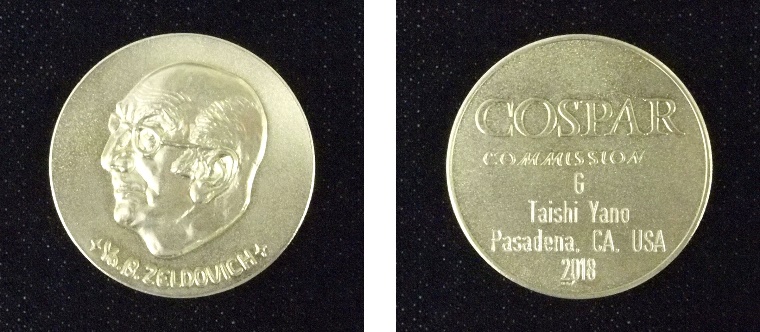
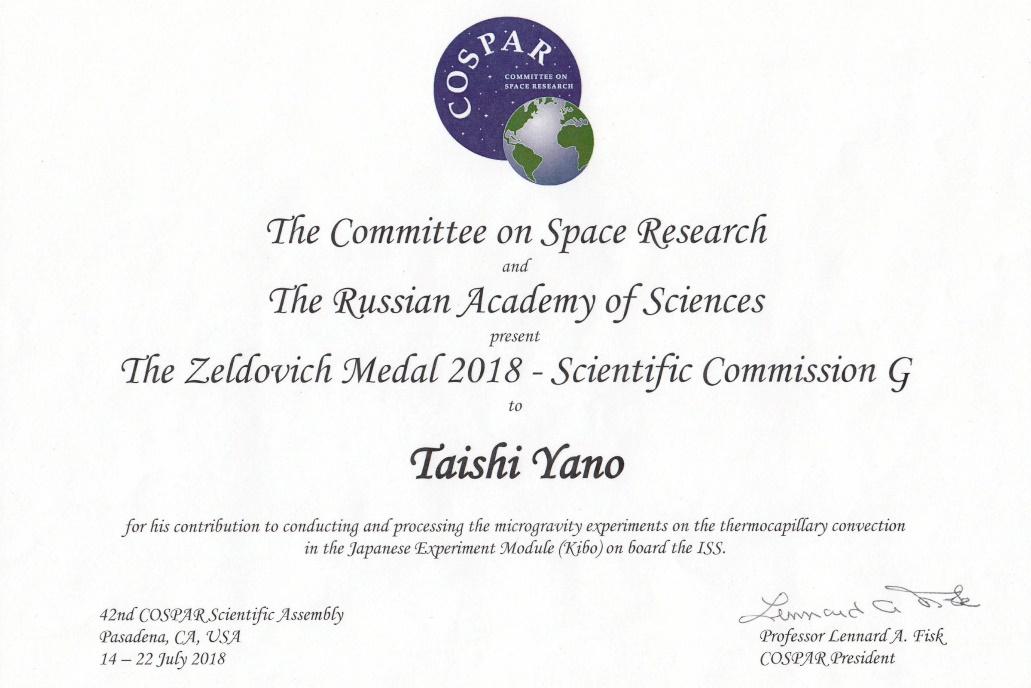
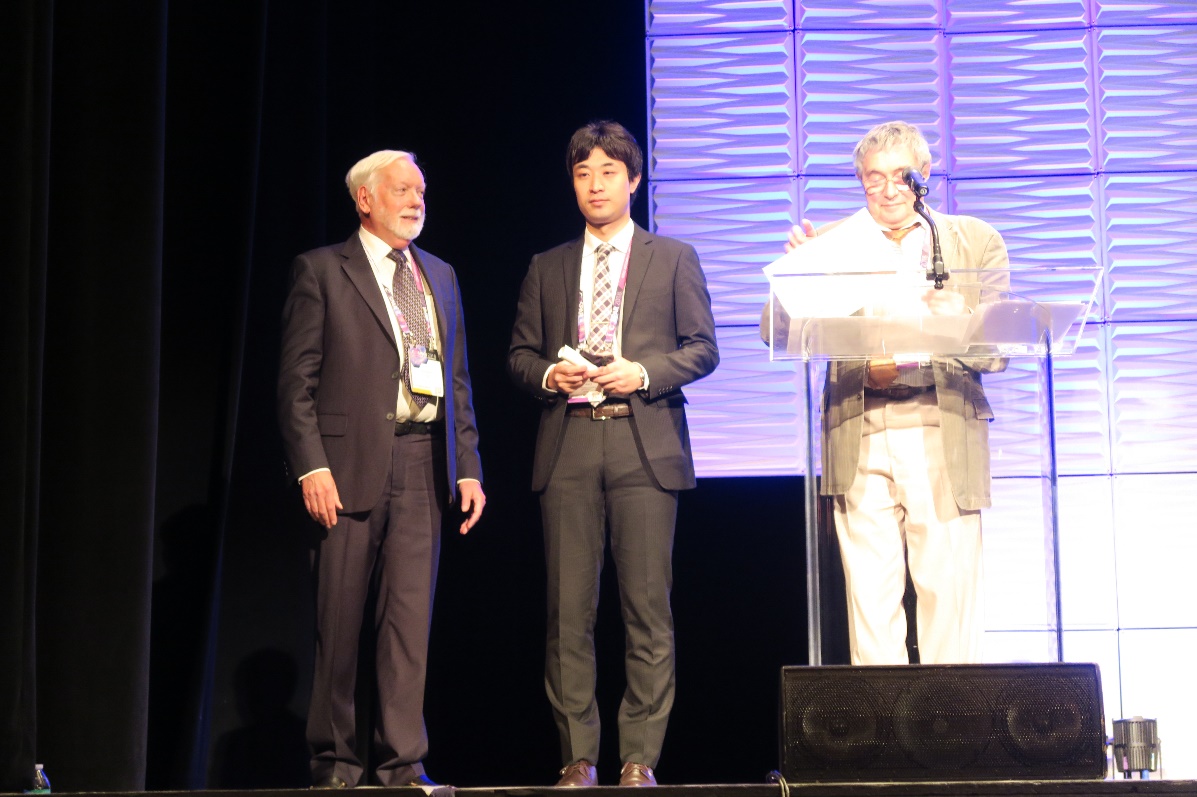
    At COSPAR 2018, the scientific assembly of the Committee on Space Research (COSPAR) held on July 14 – 22 in the US, Dr. Taishi Yano, Assistant Professor of Faculty of Engineering at Yokohama National University, was awarded the Zeldovich Medal. The medals are conferred by the Russian Academy of Sciences and COSPAR to young researchers for their outstanding contribution to space research.

    メダル

    Medal (Credit: Dr.Yano Yokohama National University)

    Dr. Yano has been involved in Marangoni convection experiments* using the microgravity environment on-board Japanese Experiment Module “Kibo” on the International Space Station (ISS) since 2009. His internationally recognized contributions to research, including both discovery of a new convection structure with improving measurement technique and clarification of the fluid transition conditions, gave him the medal.

    * Chaos, Turbulence and its Transition Process in Marangoni Convection (Marangoni Exp/ Marangoni Experiment in Space (MEIS))
    Experimental Assessment of Dynamic Surface Deformation Effects in Transition to Oscillatory Thermo capillary Flow in Liquid Bridge of High Prandtl Number Fluid (Dynamic Surf)

    Reason for the Medal

    For his contribution to conducting and processing the microgravity experiments on the thermocapillary convection in the Japanese Experiment Module (Kibo) on-board the ISS.

    Research achievements

    (1) Yano T., Nishino K., Matsumoto S., Ueno I., Komiya A., Kamotani Y., Imaishi N., “Report on Microgravity Experiments of Dynamic Surface Deformation Effects on Marangoni Instability in High-Prandtl-Number Liquid Bridges”, Microgravity Sci. Technol., pp 1-12, (2018)

    (2) Yano T., Nishino K., Ueno I., Matsumoto S. & Kamotani Y., “Sensitivity of hydrothermal wave instability of Marangoni convection to the interfacial heat transfer in long liquid bridges of high Prandtl number fluids,” Phys. Fluids, 29(4) (2017) 044105 (11 pages).

    (3) Yano T., Nishino K., Kawamura H., Ueno I. & Matsumoto S., “Instability and associated roll structure of Marangoni convection in high Prandtl number liquid bridge with large aspect ratio,” Phys. Fluids, 27(2) (2015) 024108 (13 pages).

    Honoree speech

    I am very honored to receive the prestigious award at COSPAR 2018. I would like to extend my sincere gratitude to JAXA, student staff, the operation team and many people concerned that have supported our space experiments. I will strive to contribute to the further development of space research.

    Certificate

    Certificate (Credit: Dr.Yano Yokohama National University)

    授賞式(中央が受賞者の矢野氏)

    Medal-conferring ceremony (Dr. Yano in the center)
    (Credit: Dr.Yano Yokohama National University)

    *All times are Japan Standard Time (JST)

    Let’s block ads! (Why?)