
On 19 June 2022, Jupiter’s intriguing moon Europa will pass in front of a distant star, making that star appear to disappear for at least a minute. This event will be easy to see with any size of telescope from certain parts of Africa.
http://www.esa.int/rssfeed/Our_Activities/Space_Science
On 19 June 2022, Jupiter’s intriguing moon Europa will pass in front of a distant star, making that star appear to disappear for at least a minute. This event will be easy to see with any size of telescope from certain parts of Africa.

One solar stormy day in November 2018, 13 spacecraft including ESA’s Cluster mission were in the right place at the right time to spot a process that has never been seen in its entirety before. Their observations explain how vortices at the edge of Earth’s magnetosphere can cause auroral beads to dot the sky a hundred thousand kilometres below.

Video:
00:02:54
Spacecraft are not so different to humans – whilst the Sun can be a great source of vital energy, both people and machines must also be protected from its harmful effects.
In this video, engineers at Thales Alenia Space in Turin are attaching a combined sunshield and solar panel module to the main body of ESA’s Euclid spacecraft. This process took place on 23 May 2022 and lasted an entire day.
The module has two functions: whilst the solar panels will provide the spacecraft with power, the sunshield will shade the instrument-carrying payload module from the Sun’s intense radiation.
The video also includes interviews with the ESA and Thales Alenia Space Euclid project managers, who tell us more about the importance of the sunshield and Euclid’s ambitious goals.
Euclid is a space telescope designed to explore the dark Universe. It will make a 3D-map of the cosmos (with time as the third dimension) by observing billions of galaxies out to 10 billion light-years, across more than a third of the sky. In doing so, Euclid will tackle some of the most fundamental questions in cosmology – questions like: How did the Universe originate? Why is the Universe expanding at an accelerating rate? What is the nature of dark matter? What is dark energy?
The previous step in Euclid’s journey, taking place on 24 March 2022, involved attaching Euclid’s payload module to its supporting service module. Next up, engineers will add the communications antenna and then Euclid will be complete. Finally, Euclid will be taken to Cannes where the complete spacecraft will be tested to check that it is ready for launch from Europe’s Spaceport in French

Image:
ESA has selected 9 new Fellows to pursue their own independent research in 2022. The Research Fellowships in Space Science represent one of the highlights of the ESA Science programme. Early career postdoctoral scientists are offered the unique opportunity to carry out advanced research related to the space science areas covered by ESA Science missions at one of three ESA establishments (ESAC, ESTEC or STScI) for a period of up to three years.
The 2022 Research Fellows in Space Science are Guadalupe Cañas Herrera, Quentin Changeat, Chiara Circosta, Willi Exner, Nicola Pietro Gentile Fusillo, Adam Hepburn, Samuel Pearson, Alicia Rouco Escorial, and Sascha Zeegers. The research areas that they cover span a broad range of topics, including deciphering exoplanet atmospheres, understanding the evolution of ice sheets on Mars, and understanding the primordial density perturbation that lead to today’s shape of our Universe. More information about the Fellows and their research can be found here.
The calls for the Space Science Research Fellowships open yearly. The next call is expected to open in August 2022 with a deadline mid-September 2022. For more information, see: https://www.cosmos.esa.int/web/space-science-faculty/opportunities/research-fellowships

Image:
Click here to download the gif.
The James Webb Space Telescope is aligned across all four of its science instruments, as seen in a previous engineering image showing the observatory’s full field of view. Now, we take a closer look at that same image, focusing on Webb’s coldest instrument: the Mid-Infrared Instrument, or MIRI.
The MIRI test image (at 7.7 microns) shows part of the Large Magellanic Cloud. This small satellite galaxy of the Milky Way provided a dense star field to test Webb’s performance.
Here, a close-up of the MIRI image is compared to a past image of the same target taken with NASA’s Spitzer Space Telescope’s Infrared Array Camera (at 8.0 microns). The retired Spitzer was the first observatory to provide high-resolution images of the near- and mid-infrared Universe. Webb, by virtue of its significantly larger primary mirror and improved detectors, will allow us to see the infrared sky with improved clarity, enabling even more discoveries.
For example, Webb’s MIRI image shows the interstellar gas in unprecedented detail. Here, you can see the emission from ‘polycyclic aromatic hydrocarbons’ – molecules of carbon and hydrogen that play an important role in the thermal balance and chemistry of interstellar gas. When Webb is ready to begin science observations, studies such as these with MIRI will help give astronomers new insights into the birth of stars and protoplanetary systems.
In the meantime, the Webb team has begun the process of setting up and testing Webb’s instruments to begin science observations this summer. Today at 17:00 CEST, Webb experts will preview these next two months of instrument preparations in a teleconference for media. Listen to the audio stream live at nasa.gov/live.
Webb is an international partnership between NASA, ESA and CSA. MIRI is part of Europe’s contribution to the Webb mission. It is a partnership between Europe and the USA; the main partners are ESA, a consortium of nationally funded European institutes, the Jet Propulsion Laboratory (JPL) and NASA’s Goddard Space Flight Center (GSFC).
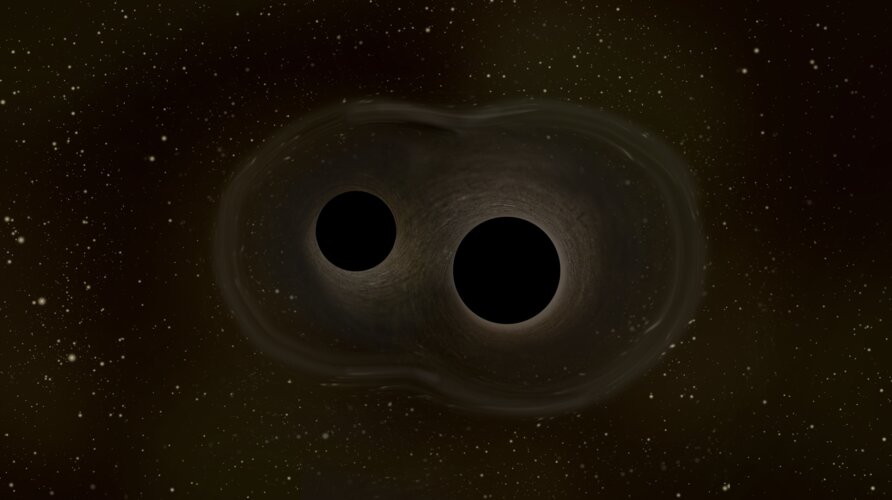
ESA’s Laser Interferometer Space Antenna (LISA) passed an important review that marks the mission as feasible for final technology development and design before adoption.

Video:
00:03:53
This video shows the payload module for the Solar wind Magnetosphere Ionosphere Link Explorer (Smile) undergoing a series of different environmental tests at both Airbus Madrid, Spain, and the European Space Research and Technology Centre (ESTEC) in Noordwijk, the Netherlands.
These milestones include integration of the Soft X-ray Imager and ultraviolet instruments on the payload module (October 2021, Airbus Madrid); preparing and completing thermal testing of the payload module (11–24 Jan 2022, ESA/ESTEC); deploying the 3 m-long magnetometer boom under helium-filled balloons to simulate the weightlessness of space (27 Jan 2022, ESA/ESTEC); vibration testing (Feb 2022, Airbus Madrid); and finally preparing the payload module for transport to China (17 Mar, 2022).
The payload module has now arrived in Shanghai, China. It will now be integrated on the Smile platform, beginning in April-May 2022. Once the satellite is complete, it will be subjected to a comprehensive five-month-long qualification test campaign including thermal, mechanical and electromagnetic compatibility testing, and magnetic, deployment and functional tests at system level.
Smile is a joint mission between ESA and the Chinese Academy of Sciences (CAS), and will aim to build a more complete understanding of the Sun-Earth connection by measuring the solar wind and its dynamic interaction with the magnetosphere.

Image:
Celebrating Hubble’s 32nd birthday with a galaxy grouping

Image:
Hubble confirms largest comet nucleus ever seen

Image:
Hubble finds a planet forming in an unconventional way

Video:
00:01:00
Spectroscopy is a tool that astronomers use to better understand the physics of objects in space.
The spectrographs on board the James Webb Space Telescope (Webb) provide scientists with the data needed to analyse the materials that make up stars, nebulae, galaxies and the atmospheres of planets.
Light that enters the telescope is split into its different wavelengths by a grating or a prism, forming a spectrum. This spectrum is then focused onto a detector. Light from each chemical element has a unique spectrum, like a fingerprint. The spectrum’s pattern is analysed by astronomers to decipher which atoms and molecules are present in the source of light, and understand the physical and chemical characteristics of the source.
Instruments like NIRSpec and MIRI make spectroscopic observations of extended and complex targets (such as galaxies, nebulae, or crowded fields of stars or galaxies) in one single shot.
Webb is an international partnership between NASA, the European Space Agency (ESA) and the Canadian Space Agency (CSA).

This image from ESA’s Mars Express shows part of possibly the largest single source of dust on Mars: a wind-sculpted feature known as the Medusae Fossae Formation, or MFF.
