Author: jappe

  • Best Telescopes for the Money – 2016 Reviews and Guide

    Space.com Editors have selected 12 Great Telescopes in 4 Categories. Are you a traveler? Student of the sky? On a budget? Live in a small home? Do you like digital tech? Or prefer an analog approach?

    *Editor’s Note: Start saving on your entire gift list. Get up to 15% cash back and exclusive deals on gadgets, gear, electronics, computers and more through Purch, Space.com’s parent company. And check out our picks for the Best Space Gifts and Best Kids’ Space Gifts and Toys for more ideas.*

    A photon leaps off the sun and, about 500 seconds later, bounces off our Earth. Light has been dancing and rebounding from faraway and nearby celestial objects for more than 13 billion years. It’s time you caught some of it for your very own.

    That’s what telescopes do; they gather light. But to collect that radiance, you’ll need to pick the telescope that fits your needs and budget. Our editors have selected a few of the best options in five categories. Click on each to read a deep review of the telescopes in these groups: 

    Once you’ve picked a great telescope, you might also like to check into what else you might need, using our Astronomy Guide: Tools, Tips and Equipment page.

    Now, let’s see which telescopes are the best fit for your needs: 

    1. See our Best Telescopes for Kids (Preschool and Up) pages for full reviews by age group 

    Toy store telescopes are mostly junk. We’ve selected several better-quality ones, which will be easy to use and fun for all family members. Here are some highlights: 

    • Dobsonian / AltAz / Tripod
    • Totally intuitive and simple 

    Average price: $49.95 + $19.95 Optional Accessory Kit

    The Celestron FirstScope is a Space.com top pick for Best Telescopes for Kids.

    The Celestron FirstScope is a Space.com top pick for Best Telescopes for Kids.

    Credit: Celestron

    Remarkably fine optical quality at a very low price makes this surprising telescope a great choice for kids with an interest in the night sky. With patience and a dark location, planets, nebulae and even a few galaxies are in range of this telescope.

    The Celestron FirstScope’s tabletop spin-and-tilt design makes the device easy for kids to use. The optical tube is decorated with the names of noteworthy astronomers throughout history, inspiring kids even when it’s sitting on their desk or on a shelf indoors. It comes with two eyepieces (20 millimeters and 4 mm) for wide and close-up views. FirstScope’s 3-inch (76 mm) aperture is small, but its fast focal ratio (3.95) lets kids see objects in the deep sky on dark (moonless) nights. An optional accessory kit adds a finder scope, anti-glare moon filter, two more eyepieces and a DVD-ROM of very useful astronomy software for the PC and Mac.   

    • Telescope / Binoculars / Microscope + Slide Prep Kit
       
    • Lets kids engage the universe at all scales 

    Average Price: $59.95

    Buy Levenhuk LabZZ MTB3 Microscope & Telescope & Binoculars Kit on Amazon.com

    You get kid-size versions of instruments to extend vision to the very big, the very faraway and the very small. A 2-inch aperture refractor telescope works at night for moon, planets and stars, and during the day for animals and sports. [Never point a telescope at the sun!] Note that 6x binoculars are made for little hands and faces. A three-objective microscope (150x, 450x and 900x) brings the subvisible to giant size.

    Other Options:

                GeoSafari Talking Telescope

                Galileoscope Refractor Telescope Kit

    [Read our Full Reviews and comparison of Best Telescopes for Kids]

    +++++++++++++++++++++++++++++++++++++++++++++++++++++++++++++ 

    See our Best Telescopes for Hobbyists pages for full reviews 

    After carefully looking at a variety of telescopes, we selected the ones that have enough horsepower to drive many years of satisfying observation, but that don’t break the bank.

    • Reflector / AltAz / Tripod / Go-To
       
    • Easiest setup; totally self-aligning on the sky

    Average price: $589.99

    <img class=”pure-img lazy” big-src=”http://www.space.com/images/i/000/053/039/original/celestron-skyprodigy-130-telescope.jpg?1454522389?interpolation=lanczos-none&downsize=*:1400″ data-src=”http://www.space.com/images/i/000/053/039/i02/celestron-skyprodigy-130-telescope.jpg?1454522389?interpolation=lanczos-none&downsize=640:*” alt=”This telescope aligns itself to the stars in just 3 minutes and brings a lot of power and clarity to the table, letting beginners and experts alike lose themselves in the cosmos. Celestron SkyProdigy 130“/>
    This telescope aligns itself to the stars in just 3 minutes and brings a lot of power and clarity to the table, letting beginners and experts alike lose themselves in the cosmos. Celestron SkyProdigy 130

    Credit: Celestron

    The Celestron SkyProdigy 130 is the first consumer telescope to offer fully automatic alignment. Once you set it up under the night sky, it takes about 3 minutes for the scope to find itself. Then you can use the wired remote keypad to drive this high-quality Newtonian reflector. The SkyProdigy comes with two 1.25-inch Kellner eyepieces (25 mm and 9 mm). The nicely machined focuser can also accept 2-inch eyepieces.

    • Reflector / AltAz / Dobsonian
       
    • Most “Big Bang” for your buck; largest aperture

    Average price: $659.99

    Buy Orion 10018 SkyQuest XT8i IntelliScope Dobsonian Telescope on Amazon.com

    Much “Big Bang” for your buck, has this large aperture Dobsonian telescope.

    Credit: Orion Telescopes and Binoculars

    Orion’s SkyQuest is an 8-inch (203 mm) Dobsonian telescope. It’s a big light bucket with an excellent-quality primary mirror that’s great for hauling in the old, tired photons of distant galaxies and nebulae. As long as you don’t intend to take long-exposure astrophotos, the SkyQuest is a fabulous tool. Also, be aware that it’s a bit of a kit: You must screw together the altitude-azimuth mount, fit up the tilting optical tube and do a few more bits of assembly. But it’s fun to do, and the result is a wonderful scope that you can use for decades.

    Also Consider:

                Levenhuk SkyMatic 135 GTA computerized Newtonian reflector

    Levenhuk SkyMatic 135 GTA computerized Newtonian reflector

    Levenhuk SkyMatic 135 GTA computerized Newtonian reflector

    Credit: Dave Brody/Space.com

    [Read our Full Reviews and comparison of Best Telescopes for Hobbyists and Learners]

    +++++++++++++++++++++++++++++++++++++++++++++++++++++++++++++

    3. See our Best Small, Portable Telescopes for Travelers and City Dwellers pages for full reviews

    • Refractor (tripod sold separately)
       
    • Clearest and sharpest grab-and-go compact telescope

    Average price: $849.95

    Buy Celestron 52306 Regal M2 100ED Spotting Scope on Amazon.com

    The Celestron Regal M2 100ED is a Space.com top pick for spotting scopes.

    The Celestron Regal M2 100ED is a Space.com top pick for spotting scopes.

    Credit: Dave Brody/Space.com

    Loved for their rugged portability, spotting scopes are favored by daytime sports and outdoors enthusiasts. Now, Celestron brings you a spotting scope that is excellent for grab-and-go astronomy as well. The Regal M2 100ED can pull a lifetime of visual memories into its 19.25-inch (48.9 centimeters), 8.6-lb. (2.1 kilograms) frame. The M2’s body is cast of lightweight magnesium alloy. You’ll need to buy a tripod separately, and possibly a 1.25-inch astronomy eyepiece or two for skywatching.

    • Refractor / Small Tripod
       
    • Most cost-effective grab-and-go compact telescope

    Average price: $214.95

    Loved for their rugged portability, spotting scopes are favored by daytime sports and outdoors enthusiasts.

    Loved for their rugged portability, spotting scopes are favored by daytime sports and outdoors enthusiasts.

    Credit: Dave Brody/Space.com

    Levenhuk’s Blaze 90 Spotting Scope lets you pack 3.5 inches (9 cm) of starlight-snagging aperture into your go-anywhere bag. For about one-fifth the cost of Celestron’s M2 100ED, you can get about three-quarters the thrill if you buy the Levenhuk. Try pairing it with Orion’s heavy-duty model tripod and head for no-wiggle skywatching. The Blaze 90 comes in a highly functional field pouch that’s built of tough ballistic nylon.

    Other Options:

                Celestron TravelScope 60 – National Park Edition

    [Read our Full Reviews and comparison of Best Small, Portable Telescopes for Travelers and City Dwellers.]

    +++++++++++++++++++++++++++++++++++++++++++++++++++++++++++++

    4. See our Best Telescope for Beginners (Easy to Use) pages for full reviews 

    • Maksutov-Cassegrain / AltAz Tripod / Go-To
    • Most innovative, future proof and “digital”

    Average price: $419.95

    The Celestron AstroFi 102 computer-driven telescope.

    The Celestron AstroFi 102 computer-driven telescope.

    Credit: Dave Brody/Space.com

    Also comes as a refractor at the same price:

    Celestron AstroFi 90 Refractor Wi-Fi

    • Refractor / AltAz Tripod / Go-To

    Average price: $419.95

    Celestron AstroFi 90 Refractor Wi-Fi

    Celestron AstroFi 90 Refractor Wi-Fi

    Credit: Dave Brody/Space.com

    The Celestron AstroFi telescopes take their observing orders from your Apple or Android smartphone or tablet via the free SkyPortal app [App Store or Google Play]. You won’t need access to a network; your new AstroFi scope is itself a network. It will even work where your cellular networks don’t. The 3.5-inch (90 mm) refractor is our choice for planet watching. The 4-inch (102 mm) Maksutov-Cassegrain hybrid wonderfully resolves tiny point-source stars. And there’s a slightly more expensive AstroFi 5-inch (130 mm) Newtonian reflector, as well. Just be a little careful not to bend the lightweight aluminum tripod.

    • Reflector/ AltAz Rocket Box
    • Simplest to use; gobbles big gulps of photons 

    Average price: $339.99 (or $499.99 for IntelliScope model)

    This simple-to-use tabletop Dobsonian comes out of the box ready to observe. The “IntelliScope” computer guides you to manually move the ‘scope to objects on the sky.

    Credit: Orion Telescopes and Binoculars

    If you want to escape your phone and concentrate on the sky, Orion’s StarBlast 6 Dobsonian reflector might be your ticket out. The 6-inch (15 cm) mirror is broad enough to gobble light waves from millions of years ago, or from just a few seconds past. Unlike many Dobsonians, the StarBlast pops out of its shipping box ready to work, which makes it a nice gift buy.

    [Read our Full Reviews and comparison of Best Telescopes for Beginners (Easy to Use).]

    +++++++++++++++++++++++++++++++++++++++++++++++++++++++++++++

    5. See our Best Inexpensive Telescopes (A Great Gift Idea) pages for full reviews 

    5a. Editors’ Choice:

    Astronomers Without Borders OneSky 130

    • Reflector / AltAz “Rock and Roll” Turntable
    •   Best gift under $200 and helps developing nations

    Average price: $199.99

    This clever pop-up Newtonian reflector gives you a remarkably large aperture and super-easy operation at very low cost. Nearly half your purchase price goes to support science education in developing nations.

    This clever pop-up Newtonian reflector gives you a remarkably large aperture and super-easy operation at very low cost. Nearly half your purchase price goes to support science education in developing nations.

    Credit: Space.com – Jeremy Lips and Dave Brody

    Give this OneSky telescope as a gift (even to yourself!) and you automatically make a donation to the nonprofit Astronomers Without Borders (AWB). Young science students a world away will benefit from enhanced education programs as you enjoy your astronomy hobby. We are all under one sky.

    And you’ll be getting an extraordinarily good telescope: 5.1 inches (130 mm) of aperture, good-quality glass, two Plossl eyepieces and an innovative compact-expanding design. It’s a truss tube Newtonian reflector on a simple-to-work altitude-azimuth mount, with a built-in handle. We truly love this telescope.

    5b. Also Consider:

    Levenhuk Strike 80

    • Refractor / AltAz Tripod
    • A classic “spyglass” plus a colorful learner’s kit

    Average price: $139.95

    Buy Levenhuk Strike 80 NG Telescope achromatic refractor 80 mm on Amazon.com

    Levenhuk Strike 80 NG Telescope

    Levenhuk Strike 80 NG Telescope

    Credit: Dave Brody/Space.com

    A durable optical tube, strong mount and stainless-steel tripod with accessory tray, along with two eyepieces and a Barlow lens, add up to excellent value. Levenhuk offers this 3-inch (80 mm) aperture refractor — not very different from old Galileo’s — on an altitude-azimuth yoke. It’s a simple and solid instrument.

    Other Options:

                Celestron Cometron 114AZ Reflector / AltAz

                Levenhuk Skyline 130 x 900 EQ Reflector / Equatorial

                Celestron ExploraScope 60AZ NPF Edition Long Tube Refractor / AltAz

    [Read our Full Reviews and comparison of these budget-minded Best Inexpensive Telescopes.]

    The long view of astronomy

    Here’s the deep truth of telescopes: It does not matter what price you pay to get into amateur astronomy. Telescopes gather light. And, yes, more light — or purer light — is better.

    But once you tune in to the reality that the universe is coming directly to you — to meet you wherever you are, as long as you look up — you will never be the same. Once you start observing with a telescope, you will likely never stop. 

    May the photons be with you.

  • Celestron NexStar 130SLT Review | What is the Best Beginner Telescope?

    Best Reflector Telescope for Beginners
    130mm Aperture Newtonian Reflector Telescope with SkyAlign Go-To Computer
    Credit: Space.com

    Reflector Telescopes: Newton Astride a Tripod

    Bright guy, Sir Isaac Newton: He managed to distill the mechanics of our local universe down to three simple laws of motion. He developed much of mathematical calculus. And he harnessed the magnification properties of concave mirrors to drive a new type of telescope.

    His new “reflecting” telescope solved a problem: It didn’t cause light to break apart into colors (as Galileo’s refractor did). It made for telescopes that could gulp more light for their length. In 1668, Newton opened up the universe for closer inspection.

    Buy a Reflector: Celestron NextStar 130 SLT

    Modernizing Newton: Celestron’s NexStar 130SLT

    Over the past three and a half centuries, Newton’s Reflectors have evolved into comfortable, powerful, elegant instruments that are simple to use. Among the best we’ve found for under $500 is Celestron’s NexStar 130SLT.

    That “130” refers to the aperture (“opening”) expressed in millimeters. This model is a recent upgrade from a smaller 114mm Celestron. It’s now more than 5 inches. Aperture is nearly everything in telescopes; more photons reach your eye, camera or spectroscope. And the more starlight you grab, the more illuminated your understanding of the cosmos.

    Optics:

    You’ll have many chances to be thus enlightened by the 130SLT. We found it’s aluminized glass mirror to be surprisingly well ground and polished for a scope in this price-range. A thin, but strong “spider” holds a well-milled secondary mirror securely in position to reflect photons through your eyepiece. Newton would be pleased.

    Celestron supplies two nice eyepieces with the NexStar 130. The “wider” of the two, the 25mm, is about right to stare at galaxies or – with an added lunar filter – at the moon. The “tighter,” a 9mm, will show you larger details on planets. But you will probably want a higher power eyepiece (or a magnification doubling Barlow) to see phenomena like the moons of Jupiter casting shadows on the Big World’s face.

    This NexStar is compatible with 2″ eyepieces. That opens up some great possibilities for wide field “space-walking” – a real feeling of being out there among them.  It also lends an element of future proofing; your next telescope (after this NexStar) is likely to crave 2” glass. And eyepieces can last for generations; you’ll pass them to your grandchildren.

    Like cars and musical instruments, telescopes do need occasional tune-ups. Reflectors in particular must be “collimated” from time to time. Our NexStar showed up from the factory not needing adjustment. Its optical axis was nicely aligned to make sharp images. Stars (except for our Sun) are effectively point sources on the sky. If you notice stars starting to “bloom” in your eyepiece, it’s probably time to collimate.

    Finding & Tracking Targets: Celestron’s “Go-To” Computer

    Celestron’s SkyAlign system is a masterpiece. It lets you use objects in the night sky to set up the scope’s tracking without know which they actually are. Yes, I’m championing ignorance in saying this but that’s a huge improvement. In most other systems, you must know what star you’re looking at.

    With SkyAlign, you don’t. In fact, you can even use a planet (it’s hard for beginners to tell the difference). You just need to level the tripod; then tell the system your rough location, plus the date and time. Then just introduce the telescope to any three bright lights (well, not an airplane or satellite) and the computer will be happy as a clam.

    You will be too, as you slew around to your choice of 4000 objects; planets, galaxies, nebulae, stars and clusters. There aren’t as many in the database as some other beginner scope system. But as a practical matter, if you find time to observe even half of those 4k, you long since ceased being a beginner!

    Easy to use

    Our reviewers were happy the Celestron NexStar’s battery pack in located within the mount. That means no cable to wrap and tangle as the telescope moves. But, to be fair, an external “power tank” will hold much more charge for much longer observing and can power other devices (say, your laptop … or heated gloves!).

    Set-up is dead simple. I’m a monkey-see/monkey-do type: I loved that there’s a cute, helpful online video. The tripod and mount are lightweight. Good for portability; maybe bad for durability. But only time will tell.

    We did notice the images wiggle a bit for a second or so after the optical tube was nudged, a consequence of that relatively light duty mount and tripod. But telescope makers must trade-off something, somewhere, to stay in business.

    And, when observing faint objects, there’s one actual benefit to a bit of “shimmer” or “dance”: Your eye and brain will work harder to build up a mental picture. You’ll actually see more small details if you “ping” the telescope by tapping your eyepiece, or the optical tube, gently. Try it!

    This telescope isn’t for targets on Earth. It’s Newtonian design demands that you stand or sit at the side of the optical tube.  And the image is inverted. So it’s not a point and shoot spyglass. [For that, you would want a Refractor or Hybrid.] But take the NexStar 130 out on star-date night and your view will be truly stellar.

    With a 130mm (5inches) of beefy main mirror, we didn’t expect this unit to be a featherweight. But its 18lbs is quite doable, even if you have a long-ish carry to your dark sky site. And the whole rig is small enough for most cars if you’re outbound to escape local light pollution.

    Help & Support

    If, like me, you’re fundamentally lazy, it’s nice to have a computerized “go-to” scope out there under the stars. But it’s even nicer to know what you could see hours or days before your observing session. Celestron wants to help you here too: They’ve provided a disk of “The Sky” astronomy software, one of the best software planetariums out there for laptop, notebook or desktop computers.

    And speaking of computers, Celestron also gives you a 2nd disk with utilities to control your 130. [Sorry no tablet support … yet.] To pull this trick off, you will need the correct cable.  It’s available (but not included) from Celestron. Order it online.

    Celestron’s telephone support can be a bit frustrating. But our review crew loved their website. It’s packed with knowledge bases, set-up videos, downloads and complete issue resolution procedures. Any beginner with a web connection and time to spend at Celestron.com won’t be a beginner for long.

    Enjoy!

    Out under the night sky, with million year-old photons coming to rest on the back of your eyeball, you will sense his presence; Old Sir Isaac Newton, standing there at your shoulder.

    Buy a Reflector: Celestron NextStar 130 SLT

    More beginner telescope types:

    Hybrid:  Compact Power & Cool Design

    Refractor:  Galileo’s Elegant Simplicity

    Dobsonian:  A Universe For Every Person

    Beginner Telescope Buying Guide (Main Page)

    For more choices, please check this interactive chart comparing our top ten telescope picks for beginners.

    Or look at some accessories – and lots of other space gear–in our SPACE.com Store.

    Follow SPACE.com for the latest in space science and exploration news on Twitter @Spacedotcom and on Facebook.

  • Solar Eclipses: An Observer's Guide (Infographic)

    When the moon covers up the sun, skywatchers delight in the opportunity to see a rare spectacle.

    Editor’s note: The next solar eclipse will occur on Sunday, Sept. 13, 2015. It will be a partial solar eclipse that will be visible primarily from South Africa and Antarctica. The next lunar eclipse will be a total lunar eclipse on Sept. 27. It will occur while the moon is at perigee, making it a rare Supermoon Blood Moon lunar eclipse. Such an event won’t happen again until 2033.

    Solar eclipses are one of the cosmic wonders of our solar system. They occur when the new moon blocks part or all of the sun as seen from the surface of the Earth. Check out the SPACE.com Infographic above to see how solar eclipses work.

    When the moon passes in front of sun, as viewed from Earth, the eclipse that occurs is visible from a narrow path on Earth that corresponds to the location of the moon’s shadow. During a total solar eclipse, this path is known as the path of totality. WARNING: Never look directly at the sun during an eclipse with a telescope or your unaided eye. Severe eye damage can result and scientists use special filters to safely view the sun.

    There are several other types of solar eclipses.

    In addition to total eclipses of the sun, the moon can block part of the sun’s disk (a partial solar eclipse), or leave only an outer ring of the sun visible in a so-called annular solar eclipse. A hybrid solar eclipse occurs when the tip of the moon’s shadow lifts off the surface of the Earth at some point, allowing some observers to see a total eclipse while others witness an annular eclipse.

    Embed: Paste the code below into your site.

    More Infographics

    As the Earth and moon orbit the sun together, the moon goes through several ‘phases.’ SPACE.com explains the 8 major named phases of the moon.

    Earth’s Moon Phases, Monthly Lunar Cycles (Infographic)

    Diagram of day length on various planets.

    Whirling Dervish: Fastest-Spinning Exoplanet Beta Pictoris b Explained (Infographic)

    The Russian experimental Mars mission simulates an expedition to the Red Planet is an isolation experiment.

    Mars500 Mock Mission to Mars

  • NASA's Kepler Releases New Catalog- 2,321 Planet Candidates

    Since science operations began in May 2009, the Kepler team has released two catalogs of transiting planet candidates.

  • Mini Planetary System

    This artist’s concept depicts an itsy bitsy planetary system – so compact, in fact, that it’s more like Jupiter and its moons than a star and its planets. Astronomers using data from NASA’s Kepler mission and ground-based telescopes recently confirmed that the system, KOI-961, hosts the three smallest exoplanets known so far to orbit a star.

  • Latest Photos from NASA's Mars Reconnaissance Orbiter

    PREVIOUS | NEXT

    1 of 58

    NASA’s Next Mars Probe Takes Aim at Red Planet

    Credit: NASA.

    NASA’s Mars Reconnaissance Orbiter is a powerful spacecraft that launched in 2005 and arrived in orbit around the Red Planet a year later. See amazing…Read More » photos from the MRO mission here in this Space.com gallery.   Less «

    2 of 58

    Spider Veins on Mars

    Credit: NASA/JPL-Caltech/University of Arizona

    This photo, captured by NASA’s Mars Reconnaissance Orbiter in February 2009, shows spidery troughs on the Red Planet likely formed by the sublimation of…Read More » carbon dioxide. NASA released the photo on Jan. 11, 2016. Read the full story here   Less «

    3 of 58

    Curiosity on Mars from MRO

    Credit: NASA/JPL-Caltech/Univ. of Arizona

    NASA’s Mars Reconnaissance Orbiter took this image of the Curiosity rover (inset) on the surface of the Red Planet on Dec. 13, 2014. Image released Feb. 5, 2015. Read the Full Story.

    4 of 58

    Curiosity Seen By MRO

    Credit: NASA/JPL-Caltech/Univ. of Arizona

    NASA’s Mars Reconnaissance Orbiter took this photo of the Curiosity rover on Mars on Dec. 13, 2014. Image released Feb. 5, 2015 Read the Full Story.

    5 of 58

    Strange Martian Landform Spotted by MRO

    Credit: NASA/JPL-Caltech/University of Arizona

    This strange Martian landform, photographed by NASA’s Mars Reconnaissance Orbiter, possibly has a volcanic origin, scientists say. The photo was released…Read More » on Dec. 3, 2014. Read the Full Story.   Less «

    6 of 58

    Mars Boulder Trail Wide

    Credit: NASA/JPL-Caltech/Univ. of Arizona

    This photo by NASA’s Mars Reconnaissance Orbiter shows the trail left behind by a tall boulder after it apparently tumbled down a slope. MRO captured this…Read More » view on July 3, 2014, with NASA releasing it on Aug. 13. Read the Full Story Here.   Less «

    7 of 58

    Mars Boulder Trail Closeup

    Credit: NASA/JPL-Caltech/Univ. of Arizona

    A close-up of the tall boulder (bottom right) and its trail as seen by the Mars Reconnaissance Orbiter. Read the Full Story Here.

    8 of 58

    Fresh Crater on Mars

    Credit: NASA/JPL-Caltech/Univ. of Arizona

    Scientists discovered a fresh crater carved into the surface of Mars by a March 2012 impact. This image was taken by the High Resolution Imaging Science…Read More » Experiment (HiRISE) camera on NASA’s Mars Reconnaissance Orbiter. [Read the Full Story]   Less «

    9 of 58

    Impact Scar Detected in Mars Weathercam Image

    Credit: NASA/JPL-Caltech/MSSS

    This March 20, 2014, image from the MARCI camera on NASA’s Mars Reconnaissance Orbiter has a dark spot (at center of inscribed rectangle) noticed while…Read More » the image was being examined for a weather report. [Read the Full Story]   Less «

    10 of 58

    Before and After Crater

    Credit: NASA/JPL-Caltech/MSSS

    The left image was taken during Martian afternoon on March 27, 2012; the right one on the afternoon of March 28, 2012 by the Mars Color Imager (MARCI)…Read More » weather camera on NASA’s Mars Reconnaissance Orbiter. [Read the Full Story]   Less «

    11 of 58

    NASA Mars Weathercam Helps Find Big New Crater

    Credit: NASA/JPL-Caltech/MSSS

    This April 6, 2014, image from the Context Camera on NASA’s Mars Reconnaissance Orbiter was taken as a follow-up to discovery of a possible 2012 impact…Read More » scar in images from the orbiter’s Mars Color Imager. [Read the Full Story]   Less «

    12 of 58

    CTX Before and After Martian Crater

    Credit: NASA/JPL-Caltech/MSSS

    Before-and-after images taken with the Context Camera (CTX) on NASA’s Mars Reconnaissance Orbiter show the impact site on Jan. 16, 2012, at left, and on…Read More » April 6, 2014, at right. [Read the Full Story]   Less «

    13 of 58

    Landslides Near Fresh Crater on Mars

    Credit: NASA/JPL-Caltech/Univ. of Arizona

    This April 6, 2014, image from the High Resolution Imaging Science Experiment (HiRISE) camera on NASA’s Mars Reconnaissance Orbiter shows numerous landslides…Read More » in the vicinity of where an impact crater was excavated in March 2012. [Read the Full Story]   Less «

    14 of 58

    A New Gully Channel in Terra Sirenum, Mars

    Credit: NASA/JPL-Caltech/Univ. of Arizona

    This pair of before (left) and after (right) images from the High Resolution Imaging Science Experiment (HiRISE) camera on NASA’s Mars Reconnaissance Orbiter…Read More » documents the formation of a substantial new channel on a Martian slope between Nov. 5, 2010, and May 25, 2013. The location is on the inner wall of a crater at 37.45 degrees south latitude, 222.95 degrees east longitude, in the Terra Sirenum region. Image released March 19, 2014. [Read the Full Story Behind this Photo Here]   Less «

    15 of 58

    New Martian Impact Crater

    Credit: NASA/JPL-Caltech/Univ. of Arizona

    A dramatic, fresh impact crater on Mars dominates this image taken by the High Resolution Imaging Science Experiment (HiRISE) camera on NASA’s Mars Reconnaissance…Read More » Orbiter on Nov. 19, 2013. NASA unveiled the image on Feb. 5, 2014. [Read the Full Story Behind the Stunning Photo Here]   Less «

    16 of 58

    Curiosity Mars Rover from Space: Color

    Credit: NASA/JPL-Caltech/Univ. of Arizona

    NASA’s Curiosity Mars rover and tracks left by its driving appear in this portion of a Dec. 11, 2013, observation by the High Resolution Imaging Science…Read More » Experiment (HiRISE) camera on NASA’s Mars Reconnaissance Orbiter. The rover is near the lower-left corner of this view. For scale, the two parallel lines of the wheel tracks are about 10 feet (3 meters) apart. Image released Jan. 9, 2014. [Read the Full Story Behind the Photo Here]   Less «

    17 of 58

    Curiosity Mars Rover from Space

    Credit: NASA/JPL-Caltech/Univ. of Arizona

    NASA’s Curiosity Mars rover and tracks left by its driving appear in this portion of a Dec. 11, 2013, observation by the High Resolution Imaging Science…Read More » Experiment (HiRISE) camera on NASA’s Mars Reconnaissance Orbiter. The rover is near the lower-left corner of this view. For scale, the two parallel lines of the wheel tracks are about 10 feet (3 meters) apart. Image released Jan. 9, 2014. [Read the Full Story Behind the Photo Here]   Less «

    18 of 58

    Curiosity Trekking, Viewed from Orbit in December 2013

    Credit: curiosity rover, mars rover, curiosity, nasa, planetary exploration, hirise, mars reconnaissance orbiter, mro, science

    NASA’s Curiosity Mars rover and tracks left by its driving appear in this portion of a Dec. 11, 2013, observation by the High Resolution Imaging Science…Read More » Experiment (HiRISE) camera on NASA’s Mars Reconnaissance Orbiter. The rover is near the lower-left corner of this view. For scale, the two parallel lines of the wheel tracks are about 10 feet (3 meters) apart. Image released Jan. 9, 2014. [Read the Full Story Behind the Photo Here]   Less «

    19 of 58

    Olympus Mons SE Flank

    Credit: ESA/DLR/FU Berlin (G. Neukum)

    A portion of the southeastern flank of Olympus Mons as imaged by the High Resolution Stereo Camera on ESA’s Mars Express on January 21, 2013.

    20 of 58

    Mars Blasted With Space Rocks More Frequently

    Credit: NASA/JPL-Caltech/MSSS/UA

    Mars gets blasted with space rocks much more frequently than Earth because they are less likely to burn up in its thinner atmosphere. This photo shows…Read More » several recent impact scars on Mars seen by NASA’s Mars Reconnaissance Orbiter since 2006. [Read the Full Story]   Less «

    21 of 58

    Fresh Impact Crater on Mars

    Credit: Photo: NASA/JPL-Caltech/MSSS/UA

    One of many fresh impact craters spotted by the UA-led HiRISE camera, orbiting the Red Planet on board NASA’s Mars Reconnaissance Orbiter since 2006. [Read the Full Story]

    22 of 58

    New Impact Craters on Mars

    Credit: NASA/JPL-Caltech/MSSS/UA

    Images taken by the UA-led High Resolution Imaging Experiment, or HiRISE, reveal new impact craters that formed between 2010 and 2011. [Read the Full Story]

    23 of 58

    Soviet Mars 3 Lander

    Credit: NASA/JPL-Caltech/Univ. of Arizona

    This set of images shows what might be hardware from the Soviet Union’s 1971 Mars 3 lander, seen in a pair of images from the High Resolution Imaging Science…Read More » Experiment (HiRISE) camera on NASA’s Mars Reconnaissance Orbiter. Image released April 11, 2013. [Full Story]   Less «

    24 of 58

    Dry Ice Carves Grooves in Martian Dunes

    Credit: NASA/JPL-Caltech/Univ. of Arizona

    NASA’s Mars Reconnaissance Orbiter snapped this series of pictures of sand dunes in the north polar region of Mars, showing how dark sand rises to the…Read More » top as spring progresses (from left to right) and a surface layer of carbon dioxide ice cracks . The area covered in each panel is about 0.8 mile wide.   Less «

    25 of 58

    Dust Storm on Mars: November 2012

    Credit: NASA/JPL-Caltech/MSSS

    This nearly global mosaic of observations made by the Mars Color Imager on NASA’s Mars Reconnaissance Orbiter on Nov. 18, 2012, shows a dust storm in Mars’…Read More » southern hemisphere. Small white arrows outline the area where dust from the storm is apparent in the atmosphere. [Full Story]

    Locations of NASA’s Mars rovers Opportunity and Curiosity are labeled. Black areas in the mosaic are the result of data drops or high angle roll maneuvers by the orbiter that limit the camera’s view of the planet. Equally-spaced blurry areas that run from south-to-north (bottom-to-top) result from the high off-nadir viewing geometry, a product of the spacecraft’s low-orbit.   Less «

    26 of 58

    New Images Used to Pick Mars Lander Site

    Credit: NASA/JPL/University of Arizona

    The Nili Fossae region of Mars is one of the largest exposures of clay minerals discovered. In this HiRISE false-color image, dark blue regions are volcanic…Read More » minerals. Light-toned areas are clay-rich material and may contain water and organic materials–a possible place where life can be supported.   Less «

    27 of 58

    Gullies Mark Most Recent Water Flow on Mars

    Credit: NASA/JPL/University of Arizona

    The gully system in the Promethei Terra region of Mars appears to have been carved by melt water and may be the most recent period when water was active on the planet.

    28 of 58

    First Images from Mars Orbiter’s High Resolution Camera Wow Researchers

    Credit: NASA/JPL/University of Arizona

    This is the first color image of Mars from the High Resolution Imaging Science Experiment (HiRISE) on NASA’s Mars Reconnaissance Orbiter. This is not natural…Read More » color as seen by human eyes, but infrared color, shifted to longer wavelengths. The image has been processed to enhance subtle color variations. Seen in the image is what appears to be early-morning fog in the atmosphere. Large-scale streaks are due to the action of wind on surface materials. The blankets of material ejected from the many small fresh craters are generally brighter and redder than the surrounding surface, but a few are darker and less red. Image   Less «

    29 of 58

    ‘Another New Mars’: NASA Orbiter Ready for Red Planet Science

    Credit: NASA/JPL/Univ. of Arizona.

    This enhanced-color view shows gullies in an unnamed crater in the Terra Sirenum region of Mars. It is a sub-image from a larger view imaged by the High…Read More » Resolution Imaging Science Experiment (HiRISE) camera on NASA’s Mars Reconnaissance Orbiter on Oct. 3, 2006. This scene is about 254 meters (about 830 feet) wide.   Less «

    30 of 58

    MRO: Delicate Dips into the Martian Atmosphere

    Credit: JPL/Corby Waste

    Putting on the brakes! Mars Reconnaissance Orbiter is now dipping into the martian atmosphere to adjust its orbit. The controlled use of atmospheric friction…Read More » is a process called “aerobraking”, a technique that changes the initial, very elongated orbit of the orbiter into a rounder shape optimal for science operations at Mars. Image   Less «

    31 of 58

    New Mars Craft Sends Back First Detailed Images

    Credit: NASA, Univ. of Arizona

    The first image from HiRISE reveals a small portion of the floor of Ius Chasma, one branch of the giant Valles Marineris system of canyons on Mars. The…Read More » MRO spacecraft was about 174 miles (280 km) above the Martian surface when this picture was taken.   Less «

    32 of 58

    Mars Orbiter Spies Rover Landing Site

    Credit: NASA/JPL/University of Arizona.

    The bright irregularly-shaped feature in area “a” of the image is Opportunity’s parachute, now lying on the martian surface. Near the parachute is the…Read More » cone-shaped “backshell” that helped protect Opportunity’s lander during its seven-month journey to Mars. Dark surface material may have been disturbed when the backshell touched down, exposing the lighter-toned materials seen next to the backshell.   Less «

    33 of 58

    Underground Plumbing System Discovered on Mars

    Credit: Science

    The upper-most layers of rock in many areas of Valles Marineris on Mars have been stripped away by erosion, providing a glimpse of the subsurface that…Read More » was once buried deep underground. Some fractures in the rock show evidence of fluid alteration, yielding clues into the ancient fluid chemistry and habitability of the subsurface.   Less «

    34 of 58

    Avalanche Photographed on Mars

    Credit: NASA/JPL-Caltech/University of Arizona

    This image has captured at least four Martian avalanches, or debris falls, in action. It was taken on February 19, 2008, by the High Resolution Imaging…Read More » Science Experiment (HiRISE) camera on NASA’s Mars Reconnaissance Orbiter.   Less «

    35 of 58

    Mars Moon Seen Up Close

    Credit: NASA/JPL/University of Arizona

    The Martian moon Phobos as seen by the Mars Reconnaissance Orbiter’s HiRISE camera on March 23, 2008.

    36 of 58

    Phoenix Mars Lander Spotted from Space

    Credit: NASA/JPL-Caltech/University of Arizona.

    The butterfly-like object in this picture is NASA’s Phoenix Mars Lander, as seen from above by NASA’s Mars Reconnaissance Orbiter.

    37 of 58

    Orbiter Catches Sounds from Phoenix Mars Descent

    Credit: NASA/JPL-Caltech/University of Arizona

    Mars Reconnaissance Orbiter’s High Resolution Imaging Science Experiment (HiRISE) camera acquired this image of Phoenix hanging from its parachute as it…Read More » descended to the Martian surface. Although it appears that Phoenix is descending into the crater, it is actually about 20 kilometers (about 12 miles) in front of the crater.   Less «

    38 of 58

    Signs of Underground Plumbing Seen on Mars

    Credit: NASA/JPL-Caltech/Univ. of Arizona

    Dense clusters of crack-like structures called deformation bands form the linear ridges in this Mars image from the High Resolution Imaging Science Experiment…Read More » (HiRISE) camera on NASA’s Mars Reconnaissance Orbiter.   Less «

    39 of 58

    Impact Crater Exhumed from Mars Ice

    Credit: NASA/JPL/University of Arizona

    This image shows a trough that has been carved in Mars’ north polar layered deposits by erosion. The conical mound part-way down the slope is indicate…Read More » a buried crater underneath the ice-rich deposits.   Less «

    40 of 58

    New Signs That Ancient Mars Was Wet

    Credit: NASA/JPL-Caltech/Univ. of Arizona

    Images taken by NASA’s Mars Reconnaissance Orbiter have revealed Martian rocks containing a hydrated mineral similar to opal (these are light-toned and…Read More » appear cream-colored in this false-color image taken by the High Resolution Imaging Science Experiment camera). The opal minerals are located in distinct beds of rock outside of the large Valles Marineris canyon system and are also found in rocks within the canyon.   Less «

    41 of 58

    Strange Sand Ripples on Mars Explained

    Credit: NASA/JPL/UofA

    This HiRISE image shows TARs near Schiaparelli Crater in the equatorial region of Mars. The TARs (lighter tones) seem to have a dominant SW-NE trend, suggesting…Read More » that they formed from winds that blew from the NW or SE. The TARs are very young (or at least have been mobile in the very recent past) as there are almost no small impact craters visible on them.   Less «

    42 of 58

    Mars Wobbles Created Climate Swings

    Credit: Topography: Caltech; HiRISE Images: NASA/JPL/Univ. of Arizona

    Sequences of cyclic sedimentary rock layers exposed in an unnamed crater (located at 8N, 353E) in Arabia Terra, Mars.

    43 of 58

    Discovery Indicates Mars Was Habitable

    A close-up view of the eroded terrain in Nili Fossae using a CRISM infrared image to colorize a high-resolution HiRISE camera image. Beneath a rough-textured…Read More » capping rock unit (purple) are banded olivine-bearing layers (yellow) which in some places have been partially altered to carbonate (bright green). The image is approximately 2.5 km across. Credit NASA/JPL/JHUAPL/University of Arizona/Brown University   Less «

    44 of 58

    Signs of Spring on Mars

    Credit: NASA/JPL-Caltech/University of Arizona

    Solid carbon dioxide, commonly known as dry ice, thaws directly to gas and forms starburst patterns under the seasonal carbon dioxide ice caps when spring…Read More » comes to Mars’ polar regions. Image taken by the HiRISE camera on the Mars Reconnaissance Orbiter.   Less «

    45 of 58

    Landforms on Mars Add to Evidence for Recent Water

    Credit: NASA/JPL/UofA

    Domed polygons found throughout the Athabasca Vallis head-regions area.

    46 of 58

    Mars’ Victoria Crater Seen from New Angle

    Credit: NASA/JPL-caltech/University of Arizona.

    An image of the Victoria Crater on Mars was captured by the High Resolution Imaging Science Experiment on NASA’s Mars Reconnaissance Orbiter.

    47 of 58

    Ancient Mars Lakes Revealed in New Images

    Credit: NASA/JPL/Imperial College of London

    This close-up view of Mars from Mars Reconnaissance Orbiter zooms in on Close-up channels connecting ancient depressions, suggesting that lakes once drained…Read More » into each other about 3 billion years ago, researchers say.   Less «

    48 of 58

    Strange Mars Photo Includes Tantalizing ‘Tree’ Illusion

    Credit: NASA/JPL/University of Arizona.

    This new image of Mars taken by NASA’s Mars Reconnaissance Orbiter shows an optical illusion. What appears to be trees rising from the Martian surface…Read More » are actually dark streaks of collapsed material running down sand dunes due to carbon dioxide frost evaporation. The image was released in Jan. 2010.   Less «

    49 of 58

    Mars Rock Pile Shows a Layered History

    Credit: NASA/JPL-Caltech/University of Arizona/USGS

    This oblique view shows geological layers of rock exposed on a mound inside Gale Crater on Mars. This is a lower portion of the mound, with the crater…Read More » floor at the left (and lowest) edge of the image. Layers near the bottom of the mound contain clay and sulfate minerals that indicate wet conditions. Overlying rock layers contain sulfates with little or no clay, consistent with these layers forming in an environment in which water was evaporating and Mars was drying out.   Less «

    50 of 58

    Exaggerated 3-D View Reveals Mars Crater Details

    Credit: NASA/JPL-Caltech/University of Arizona

    A digital terrain model generated from a stereo pair of images provides this synthesized, oblique view of a portion of the wall terraces of Mojave Crater…Read More » in the Xanthe Terra region of Mars. This view, in which the vertical dimension is exaggerated three-fold compared with horizontal dimensions, shows the ponding of material backed up behind massive wall-terrace blocks of bedrock.   Less «

    51 of 58

    Hidden Glaciers Are Common on Mars

    Credit: NASA/JPL-Caltech/ASI/University of Rome/Southwest Research Institute

    The Shallow Radar instrument on NASA’s Mars Reconnaissance Orbiter has detected widespread deposits of glacial ice in the mid-latitudes of Mars. This map…Read More » of a region known as Deuteronilus Mensae, in the northern hemisphere, shows locations of the detected ice deposits in blue.   Less «

    52 of 58

    Most Powerful Mars Camera Snaps People’s Choice Photos

    Credit: NASA/JPL-Caltech/University of Arizona

    A composite of the first images of Martian sites suggested by the public as part of a participatory exploration program with NASA’s Mars Reconnaissance…Read More » Orbiter. The eight images were released March 31, 2010. Full story.   Less «

    53 of 58

    Mystery Spirals on Mars Finally Explained

    Credit: NASA/Caltech/JPL/E. DeJong/J. Craig/M. Stetson

    View of the north polar region of Mars from orbit. The ice- rich polar cap (quasi-circular white area at center) is about 1,000 km across. It is bisected…Read More » by a large canyon, Chasma Boreale, on the right side. Chasma Boreale is about the size of the Grand Canyon in the U.S. and up to 2 km deep.   Less «

    54 of 58

    Deep Hotspots on Ancient Mars Looked Habitable

    Credit: NASA/JPL/University of Arizona

    Color HiRISE image of the central peak of Leighton Crater showing inter-layered carbonate (light colored) and chlorite (dark colored) units. These rocks…Read More » suggest that inter-layered carbonate and clay sediments have been metamorphosed at depth due to hydrothermal conditions.   Less «

    55 of 58

    Mysterious Mars Gullies Likely Carved By Carbon Dioxide

    Credit: NASA/JPL-Caltech/University of Arizona [Full Story]
    These gullies on a Martian sand dune resemble features on Earth that are carved by water. However, they were likely formed by processes related to the…Read More » winter buildup of carbon-dioxide frost, according to a new study. The top photo was taken in March 2008 (Martian autumn), the middle one in July 2009 (summer) and the bottom photo in October 2010 (winter). All were taken by NASA’s Mars Reconnaissance Orbiter.   Less «

    56 of 58

    MRO Sees Gullies on Mars

    Credit: NASA/JPL-Caltech/University of Arizona

    Images like this from the High Resolution Imaging Science Experiment (HiRISE) camera on NASA’s Mars Reconnaissance Orbiter show portions of the Martian…Read More » surface in unprecedented detail. This one shows many channels from 1 meter to 10 meters (approximately 3 feet to 33 feet) wide on a scarp in the Hellas impact basin. On Earth we would call these gullies. Some larger channels on Mars that are sometimes called gullies are big enough to be called ravines on Earth.    Less «

    57 of 58

    Signs of Possible Water on Mars at Newton Crater

    Credit: NASA/JPL-Caltech/Univ. of Arizona

    This image combining orbital imagery with 3-D modeling shows flows that appear in spring and summer on a slope inside Mars’ Newton crater.

    58 of 58

    Mars Shifting Sand Dunes – Mars Reconnaissance Orbiter

    Credit: NASA/JPL-Caltech/Univ. of Ariz./JHUAPL

    A dune in the northern polar region of Mars shows significant changes between two images taken on June 25, 2008 and May 21, 2010 by NASA’s Mars Reconnaissance Orbiter.

  • How Lunar Eclipses Work (Infographic)

    What makes the moon turn dark and red? Find out in this SPACE.com infographic.

    Editor’s note:  The next lunar eclipse will be a total lunar eclipse on Sept. 27, 2015. It will occur while the moon is at perigee, making it a rare Supermoon Blood Moon lunar eclipse. Such an event won’t happen again until 2033.

    A total lunar eclipse occurs when the moon passes completely beneath Earth’s shadow. 

    Photos: The Long Total Lunar Eclipse of June 2011

    Video: Inside the June 15 Total Lunar Eclipse

    Photos: Amazing Views of November 2011 Solar Eclipse

    Embed: Paste the code below into your site.

    More Infographics

    Details of the dust cloud found circling the moon.

    Dust Cloud Around the Moon Explained (Infographic)

    Infographic: Inside Star Trek's Galileo Shuttlecraft.

    Inside Star Trek’s Galileo Shuttlecraft (Infographic)

    Infographic: How neutron stars, pulsars and magnetars work.

    Inside a Neutron Star (Infographic)

  • NASA Completes Orion Spacecraft Parachute Testing In Arizona

    NASA this week completed the first in a series of flight-like parachute tests for the agency’s Orion spacecraft.

  • Top 10 Perseid Meteor Shower Facts

    <div class=”multiPageItem slideContainer” data-cycle-pager-template=” Intro ” readability=”38.191640378549″>

    Perseids From the Sky

    Perseids From the Sky

    Credit: NASA/MSFC/D. Moser, NASA’s Meteoroid Environment Office

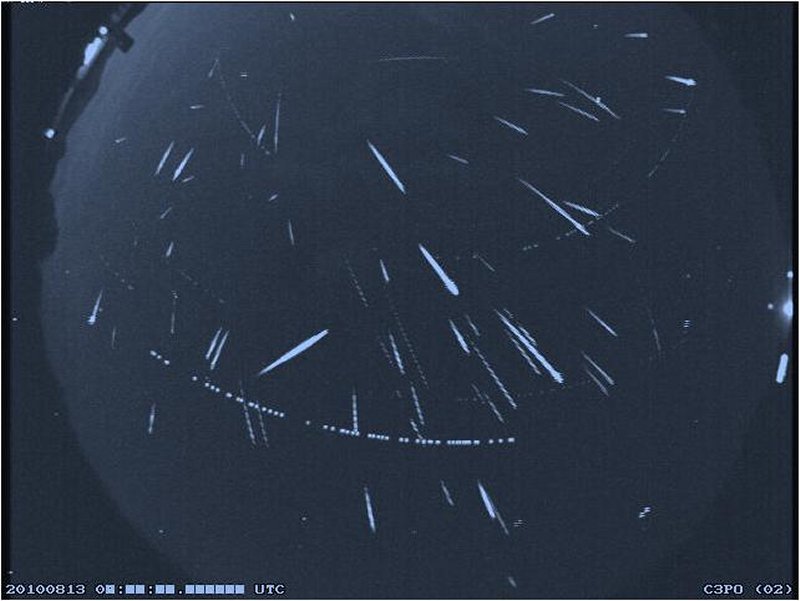
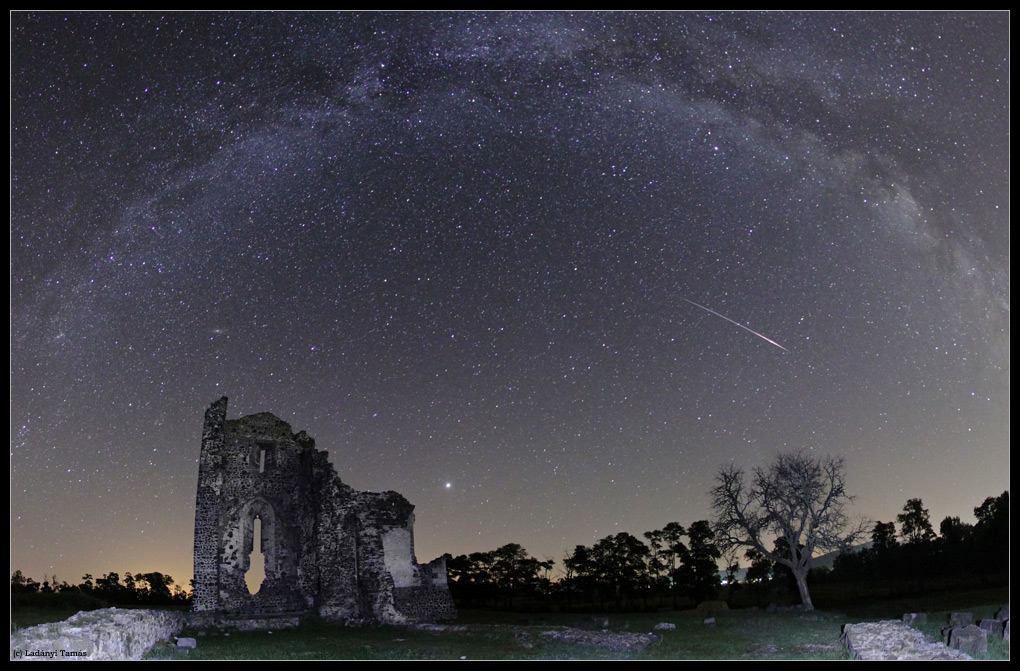
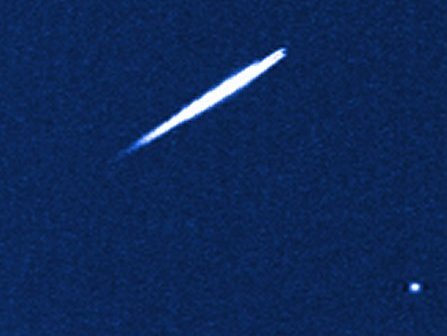
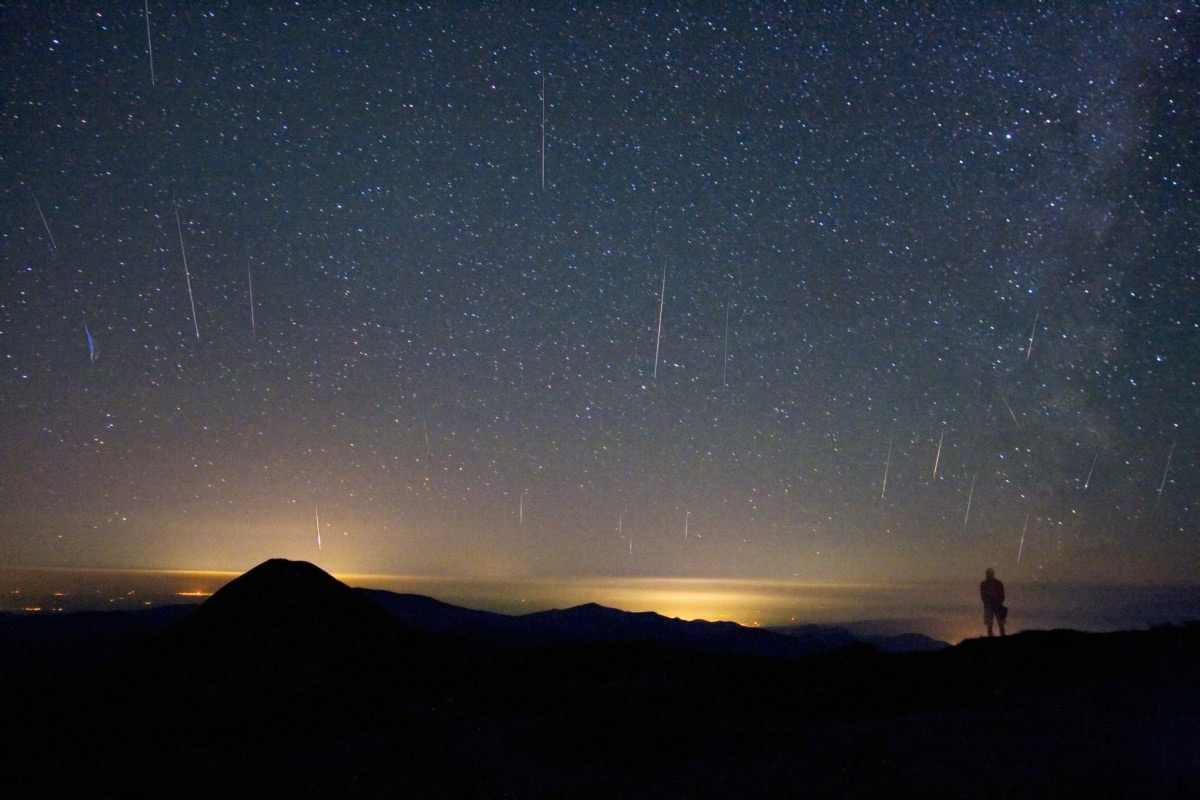
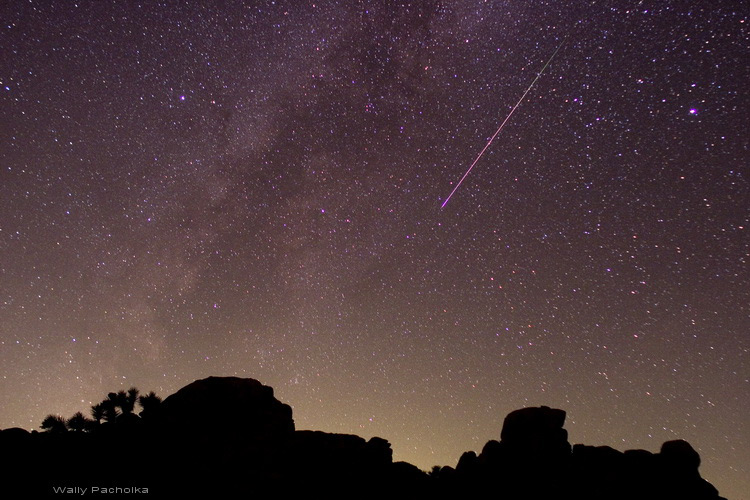
    Every August, the night sky is peppered with little bits of comet debris in what we call the annual Perseid meteor shower. In 2016, the Perseids will peak on Aug. 12 and 13, with up to 100 meteors per hour possible for observers with clear, dark skies, according to NASA. The Perseids are bits of the comet Swift-Tuttle and often create the most amazing meteor shower of the year.

    Here are 10 cool facts you can use to impress friends and family late at night or early in the morning while watching for shooting stars:

    FIRST STOP: Perseids are FAST

    <div class=”multiPageItem slideContainer” data-cycle-pager-template=” 10 ” readability=”38.5″>

    Largest Object

    Largest Object

    Credit: NASA/MSFC/D. Moser, NASA’s Meteoroid Environment Office

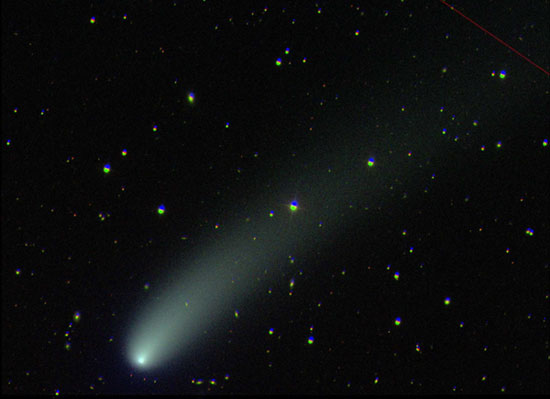
    Comet Swift-Tuttle, whose debris creates the Perseids, is the largest object known to make repeated passes near Earth. Its nucleus is about 6 miles (9.7 kilometers) across, roughly equal to the object that wiped out the dinosaurs.

    <div class=”multiPageItem slideContainer” data-cycle-pager-template=” 9 ” readability=”39.5″>

    Near-miss Coming?

    Near-miss Coming?

    Credit: NASA/MSFC/D. Moser, NASA’s Meteoroid Environment Office

    Back in the early 1990s, astronomer Brian Marsden calculated that Swift-Tuttle might actually hit Earth on a future pass. More observations quickly eliminated all possibility of a collision. Marsden found, however, that the comet and Earth might experience a cosmic near miss (about a million miles) in 3044.

    <div class=”multiPageItem slideContainer” data-cycle-pager-template=” 8 ” readability=”39.5″>

    Perseids Aren't Slowpokes

    Perseids Aren’t Slowpokes

    Credit: NASA/MSFC/D. Moser, NASA’s Meteoroid Environment Office

    Perseid meteoroids (which is what they’re called while in space) are fast. They enter Earth’s atmosphere (and are then called meteors) at roughly 133,200 mph (60 kilometers per second) relative to the planet. Most are the size of sand grains; a few are as big as peas or marbles. Almost none hit the ground, but if one does, it’s called a meteorite.

    <div class=”multiPageItem slideContainer” data-cycle-pager-template=” 7 ” readability=”45.5″>

    Heated Air

    Heated Air

    Credit: NASA/MSFC/D. Moser, NASA’s Meteoroid Environment Office

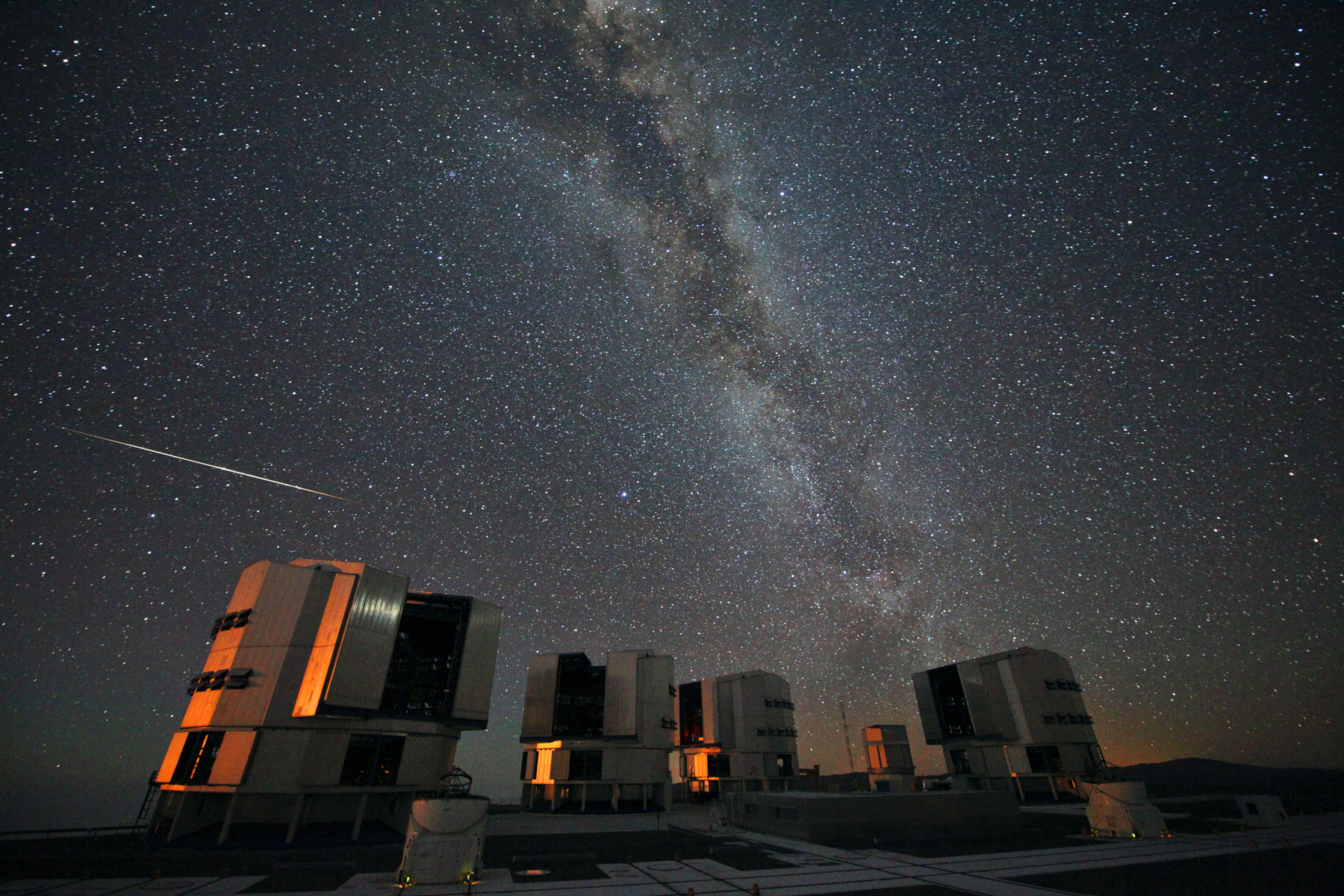
    When a Perseid particle enters the atmosphere, it compresses the air in front of it, which heats up. The meteor, in turn, can be heated to more than 3,000 degrees Fahrenheit (1,650 Celsius). The intense heat vaporizes most meteors, creating what we call shooting stars. Most become visible at around 60 miles up (97 kilometers). Some large meteors splatter, causing a brighter flash called a fireball, and sometimes an explosion that can often be heard from the ground.

    <div class=”multiPageItem slideContainer” data-cycle-pager-template=” 6 ” readability=”40.5″>

    Lots of Comets

    Lots of Comets

    Credit: NASA/MSFC/D. Moser, NASA’s Meteoroid Environment Office

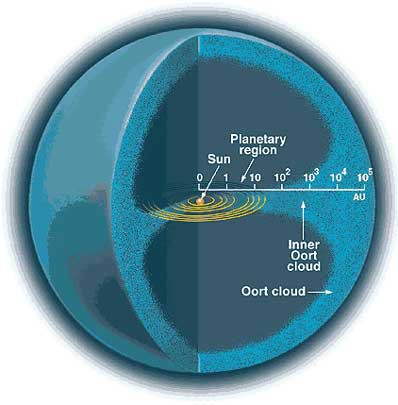
    Comet Swift-Tuttle has many comet kin. Most originate in the distant Oort cloud, which extends nearly halfway to the next star. The vast majority never visit the inner solar system. But a few, like Swift-Tuttle, have been gravitationally booted onto new trajectories, possibly by the gravity of a passing star long ago.

    <div class=”multiPageItem slideContainer” data-cycle-pager-template=” 5 ” readability=”43.5″>

    Many Streams

    Many Streams

    Credit: NASA/MSFC/D. Moser, NASA’s Meteoroid Environment Office

    Perseid meteoroids (and if you’ve been following along, you know these are things in space before they hit Earth’s atmosphere) are anywhere from 60 to 100 miles apart, even at the densest part of the river of debris left behind by comet Swift-Tuttle. That river, in fact, is more like many streams, each deposited during a different pass of the comet on its 130-year orbit around the Sun. The material drifts through space and, in fact, orbits the Sun on roughly the same path as the comet while also spreading out over time.

    <div class=”multiPageItem slideContainer” data-cycle-pager-template=” 4 ” readability=”38.5″>

    Predawn Showers

    Predawn Showers

    Credit: NASA/MSFC/D. Moser, NASA’s Meteoroid Environment Office

    As Earth rotates, the side facing the direction of its orbit around the Sun tends to scoop up more space debris. This part of the sky is directly overhead at dawn. For this reason, the Perseids and other meteor showers (and also random shooting stars in general) are usually best viewed in the predawn hours.

    <div class=”multiPageItem slideContainer” data-cycle-pager-template=” 3 ” readability=”38.5″>

    Last Time Around

    Last Time Around

    Credit: NASA/MSFC/D. Moser, NASA’s Meteoroid Environment Office

    Comet Swift-Tuttle was last seen in 1992, an unspectacular pass through the inner solar system that required binoculars to enjoy. Prior to that, it had last been seen in the year it was “discovered” by American astronomers Lewis Swift and Horace Tuttle, 1862. Abraham Lincoln was president.

    <div class=”multiPageItem slideContainer” data-cycle-pager-template=” 2 ” readability=”35.5″>

    Longtime Companion

    Longtime Companion

    Credit: NASA/MSFC/D. Moser, NASA’s Meteoroid Environment Office

    Swift-Tuttle’s orbit has been traced back nearly 2,000 years and is now thought to be the same comet that was observed in 188 AD and possibly even as early as 69 BC.

    <div class=”multiPageItem slideContainer” data-cycle-pager-template=” 1 ” readability=”36.848484848485″>

    Next Time Around

    Next Time Around

    Credit: NASA/MSFC/D. Moser, NASA’s Meteoroid Environment Office

    Swift-Tuttle is due back in 2126 (as you know now, it won’t hit us) and astronomers think it might become a spectacular naked-eye comet like Hale-Bopp. If historical calculations are correct (see Fact #9) then the 2126 appearance will mark the comet’s 3rd millennium of human observation, assuming someone is in fact around to see it.

    Editor’s Note: If you snap an amazing picture of the 2013 Perseid meteor shower or any other night sky view that you’d like to share for a possible story or image gallery, send photos, comments and your name and location to managing editor Tariq Malik at spacephotos@space.com.

    <div class=”multiPageItem” data-cycle-pager-template=”More“>

    More Countdowns

  • Mars Illusion Photos: The 'Face on Mars' and Other Martian Tricks

    PREVIOUS | NEXT

    1 of 20

    The Face on Mars

    Credit: NASA

    Mars is a weird place, and has long been a source of optical illusions. Here: You see the famed Face on Mars, as seen by NASA’s Viking spacecraft in 1976.…Read More »

    But wait, there’s more. Click through to see more photos of Mars illusions here.   Less «

    2 of 20

    Floating Spoon on Mars Circled

    Credit: NASA/JPL-Caltech/MSSS

    Is that really a floating spoon on Mars? No, but this photo from NASA’s Mars rover Curiosity this week does show a weird rock that looks like a floating…Read More » spoon. It was likely sculpted by Martian winds, NASA says.   Less «

    3 of 20

    Curiosity’s Spoon on Mars: Raw Image

    Credit: NASA/JPL-Caltech/MSSS

    This photo by NASA’s Curiosity rover shows the raw image of Mars that includes a spoon-shaped rock at the lower center. Curiosity took this photo with…Read More » its Mastcam camera on Aug. 30, 2015, the rover’s 1,089th day on Mars.   Less «

    4 of 20

    Martian Rock “Person”

    Credit: NASA/JPL-Caltech/Cornell University

    NASA’S Mars Exploration Rover Spirit captured this westward view from atop a low plateau where Spirit spent the closing months of 2007.

    5 of 20

    Mars canals diagram

    Credit: Tom Ruen, Eugene Antoniadi, Lowell Hess, Roy A. Gallant, HST, NASA

    (Left) This 1894 map of Mars was prepared by Eugene Antoniadi and redrawn by Lowell Hess. (Right) A Hubble Space Telescope photo of Mars shows the modern view of our neighboring planet.

    6 of 20

    Lowell’s Mars Canals

    Credit: Public domain

    Martian canals as depicted by Percival Lowell.

    7 of 20

    Rat on Mars

    Credit: NASA/JPL-Caltech

    Once seen, it cannot be unseen. The “Mars rat” captured by Curiosity’s lens.

    8 of 20

    Mars ‘Lizard’ Photographed by Curiosity Rover

    Credit: NASA/JPL-Caltech/MSSS

    This image taken by NASA’s Mars rover Curiosity on Jan. 10, 2013 shows a rock that looks a bit like an iguana (upper right).

    9 of 20

    Gandhi face on Mars

    Credit: Matteo Ianneo/ESA/Google Maps/Before It’s News

    A Martian surface feature, as seen on the Google Mars database, that one man says looks like the profile of Mahatma Gandhi.

    10 of 20

    Flash of Light Spotted on Mars Close-Up

    Credit: NASA/JPL-Caltech

    A bright flash of light appears to be visible in this image taken by the right-side navigation camera on NASA’s Mars rover Curiosity on April 3, 2014.

    11 of 20

    Flash of Light Spotted on Mars

    Credit: NASA/JPL-Caltech

    A bright flash of light appears to be visible in the distance in this image taken by the right-side navigation camera on NASA’s Mars rover Curiosity on April 3, 2014.

    12 of 20

    Mars Face Makeover: Controversial Formation Observed from New Angles

    A perspective view showing the so-called ‘Face on Mars’ located in the Cydonia region. The image shows a remnant massif thought to have formed via landslides…Read More » and an early form of debris apron formation. The massif is characterized by a western wall that has moved downslope as a coherent mass. The image, created with data from the Mars Express orbiter, was released Sept. 21, 2006. Credits: ESA/DLR/FU Berlin (G. Neukum), Malin Space Science Systems   Less «

    13 of 20

    Bunny Rabbit on Mars

    Credit: NASA/JPL

    This photo from NASA’s Mars rover Opportunity shows what at first glance appears to be a bunny rabbit head on the Red Planet. The image was released in…Read More » March 2004 in the “mission success” panorama, and the bunny is an illusion likely created by a piece of Vectran cloth from Opportunity’s lander.   Less «

    14 of 20

    Gandhi face on Mars, high resolution

    Credit: ASU Mars Space Flight Facility

    Photo taken of the Gandhi face geologic feature by the Mars Reconnaissance Orbiter.

    15 of 20

    Gandhi face on Mars, low-resolution

    Credit: ASU Mars Space Flight Facility

    Photo taken of the Gandhi face geologic feature by the Mars Express Orbiter.

    16 of 20

    Mars Rover Spirit’s ‘Phallic’ Tracks

    Credit: NASA/JPL/Cornell

    NASA’s Spirit Mars rover created these tracks shortly after touching down in 2004 to execute a turn, not amuse its handlers.

    17 of 20

    Strange Mars Photo Includes Tantalizing ‘Tree’ Illusion

    Credit: NASA/JPL/University of Arizona.

    This new image of Mars taken by NASA’s Mars Reconnaissance Orbiter shows an optical illusion. What appears to be trees rising from the Martian surface…Read More » are actually dark streaks of collapsed material running down sand dunes due to carbon dioxide frost evaporation. The image was released in Jan. 2010.   Less «

    18 of 20

    Secret Mars ‘Bio Base’?

    Credit: Google

    A mysterious object spotted on the surface of Mars by David Martines while he was perusing the planet using Google Mars, a mapping program. What Martines…Read More » described as a Martian “Bio Base” is actually an artifact caused by a cosmic ray interference, experts say.   Less «

    19 of 20

    Happy Face on Mars Exposed

    Credit: ESA/DLR/FU Berlin (G. Neukum)

    A close-up view (from above) the Martian Happy Face, Crater Galle, in false-color.

    20 of 20

    Psychics Claim of Evidence of Life on Mars Debunked

    Credit: NASA/JPL/Malin Space Science Systems

    This image of Mars taken by NASA’s Mars Reconnaissance Orbiter shows what some psychics have claimed to be evidence of life on Mars.

  • NASA's Kepler Mission Discovers Its First Rocky Planet

    NASA’s Kepler mission confirmed the discovery of its first rocky planet, named Kepler-10b. Measuring 1.4 times the size of Earth, it is the smallest planet ever discovered outside our solar system.

  • Solar System Facts: A Guide to Things Orbiting Our Sun

    solar system
    Our solar system is a vast place, with lots of mostly empty space between planets. But out there are comets, asteroids and more rocky, frozen objects (including dwarf planets) yet to be discovered in the Kuiper Belt and Oort Cloud.
    Credit: NASA

    The solar system is made up of the sun and everything that orbits around it, including planets, moons, asteroids, comets and meteoroids. It extends from the sun, called Sol by the ancient Romans, and goes past the four inner planets, through the Asteroid Belt to the four gas giants and on to the disk-shaped Kuiper Belt and far beyond to the giant, spherical Oort Cloud and the teardrop-shaped heliopause. Scientists estimate that the edge of the solar system is about 9 billion miles (15 billion kilometers) from the sun.

    Discovery

    For millennia, astronomers have followed points of light that seemed to move among the stars. The ancient Greeks named these planets, meaning “wanderers.” Mercury, Venus, Mars, Jupiter and Saturn were known in antiquity, and the invention of the telescope added the Asteroid Belt, Uranus, Neptune, Pluto and many of these worlds’ moons. The dawn of the space age saw dozens of probes launched to explore our system, an adventure that continues today. The discovery of Eris kicked off a rash of new discoveries of dwarf planets. [Infographic: Structure of the Solar System]

    Astronomers are now hunting for another planet in our solar system, a true ninth planet, after evidence of its existence was unveiled on Jan. 20, 2016. The so-called “Planet Nine,” as scientists are calling it, is about 10 times the mass of Earth and 5,000 times the mass of Pluto. 

    [The Evidence for ‘Planet Nine’ in Our Solar System (Gallery)]

    Formation

    Many scientists think our solar system formed from a giant, rotating cloud of gas and dust known as the solar nebula. As the nebula collapsed because of its gravity, it spun faster and flattened into a disk. Most of the material was pulled toward the center to form the sun. Other particles within the disk collided and stuck together to form asteroid-sized objects named as planetesimals, some of which combined to become the asteroids, comets, moons and planets.

    The solar wind from the sun was so powerful that it swept away most of the lighter elements, such as hydrogen and helium, from the innermost planets, leaving behind mostly small, rocky worlds. The solar wind was much weaker in the outer regions, however, resulting in gas giants made up mostly of hydrogen and helium.

    The sun

    The sun is by far the largest object in our solar system, containing 99.8 percent of the solar system’s mass. It sheds most of the heat and light that makes life possible on Earth and possibly elsewhere. Planets orbit the sun in oval-shaped paths called ellipses, with the sun slightly off-center of each ellipse.

    Uncle Milton Solar System In My Room

    Uncle Milton Solar System In My Room. Buy Here
    Credit: Space.com Store

    Inner solar system

    The four inner four planets — Mercury, Venus, Earth and Mars — are made up mostly of iron and rock. They are known as terrestrial or earthlike planets because of their similar size and composition. Earth has one natural satellite — the moon— and Mars has two moons — Deimos and Phobos.

    Between Mars and Jupiter lies the Asteroid Belt. Asteroids are minor planets, and scientists estimate there are more than 750,000 of them with diameters larger than three-fifths of a mile (1 km) and millions of smaller asteroids. The dwarf planet Ceres, about 590 miles (950 km) in diameter, resides here. A number of asteroids have orbits that take them closer into the solar system that sometimes lead them to collide with Earth or the other inner planets.

    Outer solar system

    The outer planets — Jupiter, Saturn, Uranus and Neptune — are giant worlds with thick outer layers of gas. Nearly all their mass is made up of hydrogen and helium, giving them compositions like that of the sun. Beneath these outer layers, they have no solid surfaces — the pressure from their thick atmospheres liquefy their insides, although they might have rocky cores. Rings of dust, rock, and ice encircle all these giants, with Saturn’s being the most famous.

    Comets are often known as dirty snowballs, and consist mainly of ice and rock. When a comet’s orbit takes it close to the sun, some of the ice in its central nucleus turns into gas that shoots out of the comet’s sunlit side, which the solar wind carries outward to form into a long tail. Short-period comets that complete their orbits in less than 200 years are thought to originate from the disk-shaped Kuiper Belt, while long-period comets that take more than 200 years to return are thought to come from the spherical Oort Cloud.

    Give Me Some Space Posters

    Give Me Some Space 24″x36″ Posters. Buy Here
    Credit: Space.com Store

    Trans-Neptunian region

    Astronomers had long suspected that a band of icy material known as the Kuiper Belt existed past the orbit of Neptune extending from about 30 to 55 times the distance of Earth to the sun, and from the last decade of the 20th century up to now, they have found more than a thousand of such objects. Scientists estimate the Kuiper Belt is likely home to hundreds of thousands of icy bodies larger than 60 miles (100 km) wide, as well as an estimated trillion or more comets.

    Pluto, now considered a dwarf planet, dwells in the Kuiper Belt. It is not alone — recent additions include Makemake, Haumea and Eris. Another Kuiper Belt object dubbed Quaoar is probably massive enough to be considered a dwarf planet, but it has not been classified as such yet. Sedna, which is about three-fourths the size of Pluto, is the first dwarf planet discovered in the Oort Cloud. NASA’s New Horizons mission performed history’s first flyby of the Pluto system on July 14, 2015, and continues to explore the Kuiper Belt. [Related: New Horizons’ Pluto Flyby: Latest News, Images and Video]

    Planet Nine orbits the sun at a distance that is 20 times farther out than the orbit of Neptune. (The orbit of Neptune is 2.7 billion miles from the sun at its closest point.)  The strange world’s orbit is about 600 times farther from the sun than the Earth’s orbit is from the star. Scientists have not actually seen Planet Nine directly. Its existence was inferred by its gravitational effects on other objects in the Kuiper Belt.

    [‘Planet Nine’: Facts About the Mysterious Solar System World (Infographic)]

    The Oort Cloud lies well past the Kuiper Belt, and theoretically extends from 5,000 to 100,000 times the distance of Earth to the sun, and is home to up to 2 trillion icy bodies, according to NASA. Past the Oort Cloud is the very edge of the solar system, the heliosphere, a vast, teardrop-shaped region of space containing electrically charged particles given off by the sun. Many astronomers think that the limit of the heliosphere, known as the heliopause, is about 9 billion miles (15 billion km) from the sun.

    Additional reporting by Nola Taylor Redd, Space.com Contributor

    Additional resource

    Learn more about the solar system:

  • NASA Astronaut John Grunsfeld, Instrumental to Hubble Telescope Repair, Will Help Oversee its Science Operations

    NASA astronaut John Grunsfeld, who participated in three spaceflights to service the Hubble Space Telescope, is leaving the agency to become the deputy director of the Space Telescope Science Institute in Baltimore.